
Tag Archives: 147 Stanley Street

Born to Be Bad

By Ed Staskus   

   Maggie Campbell was a Bay Brat, which means she grew up in Bay Village, Ohio, where the well-off live west of Cleveland, while the not so-well-off live back east in Cleveland. She lived there her whole life growing up. When she was a girl, she picked up every lost bird and squirrel, every lost cat and dog, and every injured anything still alive and brought it home to protect it.

   She was an animal lover from the get-go. She got it partly when she was born, in the blood, partly from her dad, Fred, but not from her mom. Alma never liked any of the animals they ever had in the house basement garage backyard.

   Her parents met at Lycoming College in Williamsport, Pennsylvania, a few hours from Philadelphia. Her grandparents on her dad’s side had moved from Ohio to Philadelphia a few years earlier and enrolled in college there after high school. Alma was working in the town library, which is how they met. He fell head over heels for her, swept her off her feet, or at least he thought so, and they got married.    

   “We’re out of here,” is what he said the minute they got married. They moved right back to Cleveland. Even though they were married for more than forty years it might have been the worst thing either of them ever did. But Fred was stubborn, and Alma could be mean as a junkyard dog.

   Maggie had a mom who didn’t love her dad, and a dad who was frustrated about it, and the way he tried to make his wife happy was to rough up their kids. So, it was a tough childhood. Either you were being totally ignored or you were being roughed up.

   There were four of them. First, there was Elaine, then two years later Maggie, and then Bonnie hard on her heels, and last, three years later, Brad. Alma always said Fred tricked her four times. He zipped it up and from then on kept his thoughts to himself.

   He was from Cleveland, from the west side, where he grew up almost rich for his time. Alma was from Jersey Shore, just a few miles from Williamsport, where she grew up poor. Jersey Shore isn’t anywhere near New Jersey, the Jersey shoreline, and the shoreline it had didn’t live up to the name. There used to be silk mills and cigar factories in Jersey Shore. Later, factories made steel rails for train tracks there.

   During the Depression Maggie’s paternal grandfather was the only teenager in his high school who had a car. He used to follow her grandmother down the street trying to get her to come in his car with him, saying he wanted to help carry her books, so along the way what happened was they got cozy and got married.

   Her grandfather in Jersey Shore had three jobs the minute he stopped being a teenager. He was a coal miner, a school bus driver, and a milkman, but his family still stayed in the dumps. They were too poor to paint but too proud to whitewash. Even though they were always short they built their own house on the Susquehanna River. Maggie didn’t know how they got it built since they were strapped for hard cash most of the time.

   The river was their front yard. Susquehanna means Oyster River and it was on the Susquehanna where the Mormons say they got their holy orders delivered to them by divine beings. It was a big comfortable house. It’s still standing, although it’s not been taken care of, so it’s falling apart fast.

   Her grandmother lived in the house into her 80s, but then sold it and moved into a trailer, in a trailer park in the mountains above Jersey Shore. She started believing people in the other trailers were trying to shoot her with laser guns. She slept wrapped up in foam rubber holding an umbrella over her head for protection. Alma never wanted to talk about her mom because she thought she was crazy, and a Jesus freak to boot.

   Maggie didn’t know her Jersey Shore grandfather. He died young. He had arthritis from tip to toe, and it finished him off. It didn’t help working underground coal mining. She knew her grandmother well enough. Whenever her sisters and she visited her, she taught them how to pull taffy and fudge. They played with her paper dolls. She didn’t have any real dolls. They sat on the front porch in the afternoon and waited for the bean truck.

   “Before dinnertime she sent my older sisters to the side of the road. When the bean truck, or sometimes the vegetable truck, went by on the unpaved road beans bounced off the back of it and they would run and gather them up. My grandmother cooked them for dinner. If no beans fell off the truck, there was no dinner, although she usually had a little something else in the house.” Most of the time it was something cold she had canned months earlier.

   Fred went to Upper Darby High School, starting when he was a sophomore. His parents moved him to Philadelphia from Cleveland, and he never stopped saying he hated it. He was a Cleveland Browns fan and wore their colors, so he got into fights every day with the other kids who were Philadelphia Eagles fans.

   “My dad liked telling us stories when we were growing up, like the one about how one day he and his friends went to the second story of their high school and jumped up and down all at once all together until the second floor fell in on the first floor.” The school’s mascot is a lion, but when Fred was there it was a court jester.

   Fred’s parents were from Akron and lived in Lakewood for a long time. They had to move when the new I-90 highway was being built. It was called the “Main Street of Northern Ohio.” When they were growing up Fred would drive them to a bridge over the highway and show them the exact spot below the bridge where their house used to be.

   It was when they had to sell the house to the state that they moved to Philadelphia. After Fred and Alma came back, they lived in Lakewood in a rented house for a few years. Maggie’s sister Elaine was born there. The rest of them made the scene in Bay Village. The family had moved to a short cul-de-sac, five blocks south of Lake Erie. Her dad designed the house, and it was built just the way he wanted it. He died when she was thirty-three years old. The next thing she did was get married to Steve de Luca.

   The crow’s nest was where Maggie grew close to Brad, who when he was small fry looked just like Bamm Bamm in the Flintstones cartoons. They even called him Bamm Bamm, although after he got his drum set, they called him Boom Boom. Brad brought home a drum set somebody had thrown out on their tree lawn and set it up in the basement. He taught himself how to play. He called himself Ginger Boom after Ginger Baker, his favorite drummer. He had thrown down the gauntlet. After he did no animal nor human would go down to the basement. It was too noisy, to begin with, and damp as his underarms, besides.

   They all had our own rooms, although Brad and Maggie shared a room because the house was a room short. Her sisters had separate bedrooms down the half-story stairway from them, and her parents were at the other end of the hallway. They lived in the crow’s nest until Elaine moved out and got married and Maggie finally got her own room.

   Maggie was Brad’s number one protector when he was growing up, like she was with all the neighborhood’s lost cats and dogs. She and Brad sold bananas, bread and butter sandwiches, and hard-boiled eggs on their front lawn whenever their mom wasn’t looking. They ran to Bracken Way with money in their hands when they heard Uncle Marty’s Ice Cream truck coming.

   But Maggie could never protect Brad from Coco, their poodle, who bit and tore his diapers off when he was little. He could never crawl away fast enough, no matter how fast he scurried on his hands and knees. The dog was quick as the devil and cut him off.

   Sometimes Maggie didn’t try to stop Coco, even if she could have. She had some of her mom’s tough love in her. Other times Brad had done something she didn’t like, and it was just his tough luck that Coco was on the rampage. She could be a brat when she had to be.

Ed Staskus posts stories on 147 Stanley Street http://www.147stanleystreet.com and Cleveland Daybook http://www.clevelandohiodaybook.com. To get the site’s monthly feature in your in-box click on “Follow.”

One Man Army

By Ed Staskus

    There has never been an excess of men who fight for a guerrilla band and three armies, one of the armies twice, quitting it the first time around, during any single war. An armed force a day keeps most men busy enough. Leonas Lucauskas stayed busier than many other combatants during the struggle that was World War Two. He fought with partisans in the forests. He served in the Lithuanian, German, and American militaries. He may not have had as many lives as a cat, but it was close.

   “My father Leonas was born in 1916, in the Ukraine,” his son Leo Lucas said. “My grandfather Juozas and grandmother Stanislava were living in Poltava, insanely far from Lithuania, which was their home.” He meant the seven hundred miles was insanely far given the state of Russian roads and their rundown railroads. The Eastern Front, where millions of men were slaughtering each other at the time, was closer.

   “My grandfather was a professor, teaching there during the war.”

   The school was the Poltava National Technical University. It was founded in 1818 by the wife of the governor-general of the province, the granddaughter of the last Ukrainian strongman before the Russian Empire absorbed the country in the 18th century. For hundreds of years Lithuanian and Polish freebooters had controlled vast tracts of the Ukraine and were a law unto themselves. They were no match for the Cossacks, however, who were later no match for the Russians.

   After the war the family, including Leonas’s older brother and sister, who were twins, went back to Lithuania. They settled near Iglauka, not far from Lake Yglos, His father taught school in Marijampole, twelve miles to the west, and they lived on a farm. His mother’s family were prosperous owners of farmland and personal property.

   In 1924 the state-sponsored revolt in Klaipeda was signed, sealed, and delivered, the country competed in the Summer Olympics for the first time, and Leonas’s older brother unexpectedly died of a contagion. The next year his mother went to a wedding. In the middle of the reception she was shot dead.

   It had been Russian Imperial policy to leave Lithuania in a non-industrial state. The inheritance system after the land reform of 1863 forbade the partition of plots. There were many landowners at the reception. They stuck together socially, friends, neighbors, and families bound by the old-time way.

   The Communist party of Lithuania was formed in 1918, declared illegal, and remained illegal until 1940. The Reds didn’t care about legality. They were out for blood and land. There is only so much land to go around in small Baltic-like countries. It was a zero-sum disagreement. “A group of Communist agitators, people who wanted other people’s land, came to the wedding, started a ruckus, started shooting guns, and my grandmother was coincidentally shot and killed.”

   Years later, Leonas told his son the challenge of his life after his mother’s death was, should he take revenge when he grew up? They lived in small towns, everybody knew everybody else, and everybody knew who the Communists were. Should he kill them when he grew up? He decided he wouldn’t, although he never got over the ill will he felt.

   When he grew up, he got married, had a daughter, and was planning on going to school to study medicine, but then World War Two happened. His father was shot and killed by fifth column collaborators in his own living room. Leonas joined the Lithuanian Army and the Soviet Union invaded. 

   It was never a fair fight. In mid-June 1940 a half-million Red Army troops poured across the borders. Within a week the Baltics were overrun, one week before France fell to Nazi Germany.Josef Stalin blew his nose into his walrus mustache. Adolf Hitler did an awkward jig, grinning behind his toothbrush mustache.

   Leonas took to the forest, joining a group of partisans, staying in the fight for the next year. It wasn’t any more dangerous than anything else in dangerous times. He had been working in their fields when his father was killed. “They were killing landowners. My father’s luck was just the luck of being in the fields,” Leo said. “They would have shot him if they had been able to track him down.”

   A year later Lithuania was invaded by the German army. Most Russian aircraft was destroyed on the ground. The Wehrmacht advanced rapidly, assisted by Lithuanians, who saw them as liberators. They helped by bringing their weapons to bear, controlling railroads, bridges, and warehouses. The Lithuanian Activist Front and Lithuanian Territorial Corps formed the native backbone of the anti-Soviet fighting.

   Leonas was one of many who joined the German Army, being assigned to a Baltic Unit. Three years later he was having second thoughts. The Russian Baltic Offensive of 1944 was in full swing. The Red Army was on the march to “liberate the Soviet Baltic peoples.” An NCO by then, Leonas and his men were ordered to man the front line and hold it at all costs. It was costing them dearly every day. 

   “The rich Lithuanians were officers,” Leo said. “They weren’t in the tranches getting their heads shot off. The enlisted men were getting killed. They all wanted to get away.”

   There was a small airstrip nearby for reconnaissance and resupply. Junker 52s were flying in and out with ammunition, first aid, food, and hope in the grim hopelessness. Leonas and three other men from his unit were unloading one of the planes at a side door by means of a ramp, the front and wing-mounted engines roaring, when with hardly a word spoken between them they made up their minds on the spot to steal it and fly somewhere safe and sound.

   Two of the men rushed up the ramp and threw the German pilots out the door, while the other Lithuanian and Leonas kept watch, guns at the ready. He was the last one to scramble into the plane and was shot in the back of the foot just before slamming the door shut.

   “I was playing on the floor one day,” Leo said. It was the late 1960s. “My dad was relaxing, shoes and socks off, sitting on the sofa in the living room reading a newspaper. I saw a scar on his heel and asked him what it was. He said it was a bullet wound. He rolled up his pants and showed me three more on both legs.”

   One of the Lithuanians returned the shooting with a MG15 machine gun set in the dustbin turret, while the other two men dragged Leonas to the cockpit. None of them had ever flown an airplane. He was the only one of them who had ever even driven a car.

   How hard can it be? he thought. With bullets slamming into the corrugated aluminum fuselage, he found out it wasn’t hard at all. He pushed on the throttle, got the Junker going as fast as he thought it would go, raised the nose, and “Iron Annie” lifted itself up into the air.

   They quickly came up with a plan, planning to fly to Switzerland. They got as far as the Poland to Germany border when they ran out of gas. The plane wasn’t the fastest, 165 MPH being its top speed, and it could go about six hundred miles on a tankful. When they went down, they were headed in the right direction. All they needed was another full tank.

   It solved their landing problem, since Leonas had already told his confederates he had no idea how to land the plane. The Junker hit the ground hard and every part of it broke into pieces. When Leonas came back to life he was in a German field hospital. He never found out what happened to his countrymen.

   The doctors and military men asked him who he was and what happened. He answered them in German, in High Deutsch, not Low. “My father spoke Lithuanian, Polish, Russian, and German.” He was wearing the right uniform when found, was speaking like a householder, and they assumed he was one of them. Leonas bit his tongue about who he really was, thanking God for his good fortune.

   After he got out of the hospital he was deemed not fit enough for combat and assigned to the motor pool. Soon after that he drew a lucky number and was assigned to be the driver for a Wehrmacht general. It was lucky enough until several months later, when early one morning, in the middle of winter, he got a wake-up call from one of his motor pool sidekicks.

   “Don’t come to work today,” the man said.

   “What do you mean?”

   “Your general died late last night. One of the first people the Gestapo will want to talk to is you.”

   He knew it was true. He knew what had happened to anybody and everybody involved in the attempt to assassinate Adolf Hitler in mid-July. Nearly five thousand people were executed. He would never be able to stand up to scrutiny. They would stand him up in front of a firing squad in no time.

   His general was probably out carousing in their Tatra 87, slid on some ice, smashing into a tree, but it didn’t matter. It didn’t matter whether the general died in the arms of his mother or was assassinated. His goose was cooked if the SS got him. They were known to literally cook people to death.

   The Tatra 87 had been the Nazi Car of the Year five years running. Sleek, futuristic, BMW-engine fast and high-tech as could be, it was the vehicle of choice for German officers. Unfortunately for them, it handled like pudding, killing its passengers right and left. Leonas always kept it under 40 MPH. It was the vehicle of choice of the Allies, too, at least for their mortal enemy. They thought of it as a secret weapon, killing more high German officers than died fighting the Red Army.

   He jumped to his feet, got himself into his uniform, threw on a winter coat, and fled his room. Making his way to the motor pool, he found a truck with keys in the ignition and a full tank of gas. There were plenty to go around. Opel manufactured ninety five thousand of the 4 x 4 Blitz trucks during the war. He quickly signed it out, turned it over, and drove away. He drove straight for the front. His plan was to break through the line and surrender to the Americans. When you’re at the end of your rope, tie a knot and hang on.

   He didn’t run out of gas and didn’t get shot by either side. In the event, he surrendered. He was relieved and confident that the war was over for him. But by the time the war raised the white flag he was in his third army. At least he was finally on the winning side.

   “My grandfather Juozas was a gigantic guy,” Leo said. “I’m six foot four myself. But my father Leonas was five nine and maybe one hundred forty pounds.” In the end, what counts is what you do. Dwight Eisenhower was the Supreme Commander of what he called “the whole shebang” in Europe. He knew there was more to winning the war than armor. “What counts is not necessarily the size of the dog in the fight, it’s the size of the fight in the dog,” he said.

   At the beginning of 1945 the Allied Expeditionary Force on the Western Front had seventy three divisions ready to go. The Germans had twenty six divisions. The Battle of the Bulge ended in an Allied victory. Adolf Hitler held a meeting with his top men, instructing them to hold the Americans and British off at all costs. By that time, however, his top men were flat tires. The Fuhrer boarded a train and never went back to the Western Front. At the end of January, he gave the last speech he was ever to give. It was all hot air.

   After surrendering, Leonas spent time in a DP camp, until being recruited by the Americans. They were looking for men who spoke multiple languages and he fit the bill. He had been picking up bits and pieces of English in the meantime. Russian and Polish are among the Top 10 hardest languages to learn. English is no slouch, either. He persevered with his new grammar book and was made a Sergeant. In 1946 and 1947 he was in Nuremberg, where war crime trials were being conducted, translating the misdeeds. He watched the men who propagated the National Socialist German Party commit suicide, get executed, or get locked up forever.

   As the hard-fought decade of the 1940s wound itself down, Leonas made his way to North America, finding work as a lumberjack near Sudbury, Ontario. “It was an indentured servant kind of job,” said Leo. More than two-thirds of the Canadian province is forest, in land mass the equivalent of Fascist Germany and Fascist Italy combined. “He was never quite sure where he was when he was in the forest.” He preferred it, though, to being a mile down in the Sudbury Basin nickel mines. Up a tree he could, at least, see for miles.

   Making it in a company town is hard to do. Since there is no competition, housing costs and grocery bills can become exorbitant, and workers build up large debts they are required to pay off before leaving. It can be bondage by another name. Leonas determined to find another way, his own way.

   He and several other immigrants pooled their resources, found a broken-down car, scavenged parts from other wrecks, filled the tires with enough rags to get them to roll, and hit the road. He ended up in St. Catherine’s, near Niagara Falls, and later, sensing an opportunity to get into the United States, he took it. He settled down outside Buffalo, New York in 1950, where he stayed the rest of his life. He never saw his wife and child, trapped behind the Iron Curtain, again.

   He got married to an American woman. His new wife Louise taught school. They raised a family. He went to work as a butcher in the meat department of a grocery store for more than thirty years, rarely missing a day. He built a house on three acres of land. One acre of it was devoted to a garden. “I must have moved five thousand wheelbarrows of manure as a child,” Leo said. “Whenever our factory friends went on strike, I delivered food from our garden to them in the morning before school.” His sister Katherine still lives in the family home.

   Leonas often hung from his heels in the garage to prove he could still do it. “My father was a strong man.” Sometimes men are strong because it’s the only choice they have. Spinning your wheels doesn’t get it done. Leonas smoked and drank with his friends at the local Italian and Polish social clubs. They played cards. They rarely talked about the past. They stuck to the present. The past was a dead letter.

   He was a sociable man in post-war society. He was friendly and approachable. He rarely missed a dance at the social clubs. He believed that if you can dance, you always have a chance. He had more lives than a cat, although he stopped testing the limits. He never fought in another man’s army ever again.

Ed Staskus posts stories on 147 Stanley Street http://www.147stanleystreet.com and Cleveland Daybook http://www.clevelandohiodaybook.com. To get the site’s monthly feature in your in-box click on “Follow.”

Making the Scene

By Ed Staskus

“Now it’s time for change, nothing stays the same.”  Motley Crue

Yoga has never been what it has been or what it is. It’s not one thing, even though it doesn’t say one thing and mean another. Not everyone brings the same curiosity interest hunger to it, nor does everyone get the same thing out of it. There are a lot of drops in the ocean of it, which is apropos, given hatha yoga’s beginnings.

Matsyendranath, the founder of hatha yoga, was tossed into the ocean about a thousand years ago by his parents when they determined he had been born under a bad sign. He was swallowed by a big fish, stayed swallowed but survived, and grew up. One day when the fish dove to the bottom of the ocean, he overheard Siva and Parvati, who happened to be nearby, talking about yoga. He made notes, practiced what they preached for twelve years while inside the belly of the whale, and when he finally made it back to dry land became a yoga teacher.

Everyone called him ‘Jonah, Jr.’ behind his back, but his students called him ‘Lord of the Fishes’ face forward.

The Yoga Alliance has nothing on Matsyendranath’s credentials, since he put in more than one hundred thousand hours of groundwork compared to YA’s 200 and 500-hour teacher training certificates.

For about five thousand years yoga was largely a mind game, focusing on energy and awareness. The right stuff was life force, the vital principle, discernment and consciousness. Yoga exercise wasn’t a big part of the package. It was hardly part of the package, at all. When almost everybody was working dawn to dusk to just get by, there wasn’t a big demand for vinyasa classes.

In the Industrial Age, when machines make our machines, and we sit in cars, sit in the glow of our flat screens, and sit around telling Alexa what to do, a little get up and go has become a priority. Yoga has become primarily a physical practice, for good reason. “Birds born in a cage think flying is a sickness,” said Alejandro Jodorowsky. But, many people still crave strength and movement skills. Coupled with the mental fortitude the practice brings to bear, yoga has become a go-to for tens of millions.

In the last one hundred-or-so years yoga has become whatever anybody says it is, from Yogananda to BKS Iyengar, from Pierre Bernard to Bikram Choudhury, from Lilian Folan to Tara Stiles. In the 1970s it was Ashtanga Yoga, in the 1990s it was Power Yoga, and in the 2000s it was Anusara Yoga.

Back in the day it was build your own internal fire. Today it’s the warm and hot and very hot room. Tomorrow is up for grabs, given the implications of climate change.

In the last twenty-or-so years it has become a cornucopia, yoked to acrobatics and paddleboards, booze and barnyards, therapy and retreats. There are conferences and festivals. It’s the ever-changing life-changing magic of the practice. If yoga is about transformation, it is living up to its mission in the new millennium.

In the same way that when you change the way you look at things, the things you look at change, the age-old practice is going through some changes.

AntiGravity Yoga and Fitness, developed by Christopher Harrison, a former gymnast and dancer, in 2007, is about getting hitched to a fabric swing hung from a ceiling and stretching and working out on it. The device is called the AntiGravity Hammock.

“Suspend your disbelief, and I can bring you to better health, less pain, and allow you to feel the joy of flying,” he says.

The yoga has its roots in his AntiGravity, an entertainment brand established in 1991, which has conceived and collaborated in over 400 productions since that time, from Broadway shows to the Olympics to the Academy Awards. Chris Harrison designed bungee dance technology and developed hanging silk as a performance apparatus. His AntiGravity Theater and National Aerial Performance Training Center is based in Florida.

AntiGravity Yoga has spread to gyms and studios in more than 30 countries, including Madonna’s Hard Candy Fitness. “It’s not as hard as it looks, and it’s actually not as terrifying as it seems,” observed Jessica Booth after taking a class at Studio Anya in NYC. “Once you’re in the hammock correctly, you’re so much more secure than you’d think. If you do exactly what you’re told, you’ll find yourself doing front and back flips, handstands galore, and even hanging upside down.”

Some people hang on for dear life, while others get a great workout in. You can even fly back and forth like it’s a playground swing set. Since a good part of the exercise is done upside down, everyone feels taller when they’re finished.

“It makes you feel like a total badass,” Jessica added.

AcroYoga is yoga melded with acrobatics and healing arts. It got off the ground in the early part of the 21st century, although Krishnamacharya used to do it in the 1930s, playing the role of the base, while a child played the flyer, doing asanas above him. It’s a vigorous workout usually involving three people, base, flyer, and spotter.

The base is on the ground, on his or her back, while the flyer is the person elevated off the ground, moving through a series of dynamic postures. The spotter is there to make sure things don’t go haywire, and save the day, if need be. The circle ceremony, promoting openness and communication within the group, is what everyone does before class.

Jason Nemer and Jenny Sauer-Klein founded AcroYoga International in 2003. It blended gymnastics with playfulness with yoga. They systematized the terms and training and execution of the practice. They made common poses a matter of teamwork.

It’s the yoga of trust, because you’ve got to trust the person whose hands and feet you are balanced on. You are moving up there, but are being moved from below, as well. It is move play connect. It is leaning on each other, believing your partner will always be there to lend a hand.

It isn’t easy, requiring muscles, core strength, and kinesthetic awareness. It takes long-established practice to new heights. It’s more fun than sweating your ass off at a Bikram Yoga studio, too.

SUP Yoga is doing yoga on a paddleboard, and it’s also more fun than sweating your ass off at a Bikram studio. For one thing, you’re outside, on the open water, in the fresh air, not in a steam bath of a mirrored torture chamber. For another thing, if you fall, you fall into clean water, not face first onto a Bikram-mandated moldy carpet.

Standing up on canoes and rafts and propelling yourself with the help of a pole or paddle is thousands of years old. The Waikiki Beach Boys of Oahu pioneered the modern style of stand up paddle boarding in the 1960s. Although nobody knows who actually premiered SUP Yoga, Rachel Brathen is one of the pioneers.

“My fiancée was always surfing on a longboard with big dogs, and I thought, if he can surf with a dog on a board, I should be able to do a down dog on a board,” she said.

On shore, people asked her, “Do you teach classes in this?”

“Sure!” she said, channeling her inner and outer teacher, which she is, as well as the author of the New York Times bestseller “Yoga Girl”.

A week later she started giving her first classes.

SUP Yoga is a little more complex than posture yoga, which barely requires a mat, if that. It calls for essential gear, including a paddleboard, paddle, leash, personal flotation device, and an emergency whistle. It takes some getting used to. Just about anything that is done on a mat can be done on a board, but the board is wobbly all the time, which engages on-land muscles in a different way. It demands you be intentional with all your movements, and stay in the present, every split second.

Otherwise, it’s over the side.

On the far side, from kooky to cute, is doing yoga while under the influence, and practicing with pets.

Boozy yoga got its start when studios started pairing their classes with cheese and wine tasting afterwards, cocktails at the local saloon after Friday night classes, and mimosas after Sunday morning flow classes. There’s nothing like a pick-me-up after the pick-me-up of a good yoga class, although it can get to be too much of a good thing.

One in eight American adults meet diagnostic criteria for alcohol use disorder.

Beer Yoga is happy hour on the mat. Pop-up classes get sponsored by a local bar or brewery. There are 24 hours in a day. There are 24 beers in a case. It can’t be a coincidence. It’s got to be destiny, karma. It’s also got to be a new revenue stream for beer makers. Who knew yogis would be getting into suds?

There is even Drunk Yoga, created by Eli Walker, a yoga teacher in Brooklyn, NYC, for those unconcerned about hitting the bottle hard. A plastic tumbler of wine is near to hand at every mat, although everyone is limited to one glass just before class and one glass during class. All bets are off after class.

“With Drunk Yoga, I wanted to create a safe and silly space for yogis and non-yogis alike to just have fun and move their bodies,” says Eli Walker.

“I’ll drink to that,” say her students.

“We make new friends over a glass of wine and just lighten the fuck up about yoga,” observed Jamey Powell. “And you know what? It worked for me. It is as fun as it sounds.”

Getting in the groove with pets and barnyard animals are surefire ways to lighten the mood of any yoga class. Yoga with your dog, or Doga, for short, is changing it up from a daily walk and into the yoga studio. They don’t actually do anything once they are there, except maybe keep you company and relax in corpse pose for an hour, but it keeps them from chasing squirrels.

“Dogs really benefit from Doga whether they participate, or not,” says Mahny Djahanguiri, who has been bonding with canines for about five years. “In my class the dogs are dogis and humans are yogis.” The idea is that animals lower anxiety levels and generate feel good hormones.

She has written “Doga: Yoga for You and Your Dog”. The how-to book includes pictures of how to deploy large dogs as bolsters and small dogs as hand weights.

Yoga with animals has spread to horses, cats, and baby goats. Goat Yoga got started at Lainey Morse’s farm in Oregon in 2016 when a friend suggested she host yoga classes. “I said OK,” said Lainey, “but the goats have to join in.” She had eight goats. The goats joined in. Within a year there was a waiting list to get in on the classes.

“The most fun part for me is watching people’s faces when a little goat comes up to them while they’re doing a yoga pose,” she said. “It’s a distraction, but it’s a happy distraction. It’s hard to be sad and depressed when there’s baby goats jumping on you.”

In the past two years Caprine Vinyasa, better known as Baby Goat Yoga, has grown by leaps and bounds. The goat kids might distract you with their melt-your-insides cuteness, might climb on your back when you’re in plank pose, and might leave little pools of goat pee here and there, but they are ideal therapy partners.

Jut watch out when you’re in headstand, as goats tend to butt heads.

Rooftop Yoga, Silent Disco Yoga, Naked Yoga, TRX Yoga, Broga, MMA Yoga, and Soul Flow Yoga are among a myriad of other niche practices that have suddenly sprouted on the scene in recent years. It’s always great to take risks and try new things, but new roads sometime mean superhighways and other times just mean new ruts.

On the other side of redesigned ways of doing things at your local studio, festivals and conferences drawing national and international audiences have proliferated in the past twenty years. Some of the best festivals are Sat Nam Fest, OM Yoga Show, and Wanderlust. They are launching pads for the old school that endures and the cutting edge that works.

The OM Yoga Show is a yoga gathering in London. Studio owners from around the world come to participate and network at one of the biggest such expos in the world. “If you’re in the yoga industry bring business cards with you,” said Sarah Highfield, founder of Yogarise. “Come in your yoga clothes – there are lots of classes on offer. Finally, turn up hungry, because there are plenty of tasty food stands to try.”

Sat Nam Fest is five days of asana, mantras, and meditation, revolving around Kundalini Yoga. Wanderlust is yoga by day and concerts by night, celebrations of mindfull living, living it up, summer surfing with “great nature, great food, great people, and more!” It has grown to 8 festivals annually in the USA and Canada.

Even though there are many ways to sharpen skills nowadays, from blogs to podcasts to instructional videos, one of the best ways is still the live event, workshops and conferences.  They are about meeting influencers and experts face-to-face, learning new know-hows and relearning classic ways of doing things, and sharpening the saw. Almost everybody comes home from conferences, from investing in themselves, from being in rooms with the energy of like-minded individuals, with a greater focus.

The Omega Institute hosts an annual Yoga Service Conference. “The conference is a wonderful opportunity to connect with folks whose yoga, meditation, and mindfulness practices are primarily focused on service to the world,” said Sue Julian of the Yoga Prison Project. The Toronto Yoga Conference has grown to 300 exhibitors and 700 hours of seminars and training sessions. The Yoga Journal Conferences have long been venues to experience the diversity of the practice, get inspired, work on your skills, and experiment with new ones.

The modern world is about change. Yoga is a practice of moxie and awareness. The first step in riding the wave of change is awareness.

In its own domain, yoga in the modern world has been experimenting, experiencing growing pains, shooting off in all directions. It gets hare-brained at times, shooting itself in the foot, electrifying at other times, shooting for the stars. It can do whatever it wants, even though it can’t do whatever it wants. It can only do what works, which is why it is still in business, still breathtaking.

Although new isn’t always progress, all yoga was once new.

Ed Staskus posts stories on 147 Stanley Street http://www.147stanleystreet.com and Cleveland Ohio Daybook http://www.clevelandohiodaybook.com. To get the site’s monthly feature in your in-box click on “Follow.”

Splatter Man

By Ed Staskus

   “What the hell am I doing?” Jackson Pollack asked himself, giving a once over to the rising road, driving up too fast toward the top of it for what was on the other side. He couldn’t dope it out. He wasn’t planning on going over the rainbow, or was he? He was driving like a crazy man, like what all the couch men he had ever gone to always told him he wasn’t.

   Not crazy, at least not exactly. One of them said, “You’re just in search of a nervous breakdown.” He didn’t tell that one about 1938. It didn’t matter. He knew he was raw on the inside. That’s why the work on the floor had worked. It was raw, just like him. He wasn’t a nutcase because he saw psychiatrists. But in the last five minutes he had twice caught himself steering the car straight at the soft shoulder.

   He might be a nutcase, but he was usually on the ball behind the wheel, even though he could be dangerous. He was the next-best driver in Springs, next to Harry Cullum, who told him he was second best on a late afternoon one day in mid-winter when the two of them were having cherry yellow pickled eggs and cheap beer at Jungle Pete’s. The eggs were spicy like Harry, who gulped them down twice as fast as Jack.

   “You’ll have the last laugh, just wait and see, Jack,” Harry said, laughing and clapping him on the back. “Maybe not on the road, but you’ll get ‘er done, son.”

   Jackson Pollock’s convertible didn’t have seat belts. Harry, the best driver in town, had recently outfitted his family car with belts. He told everyone it was for his wife’s sake. “In stock car racing we never used seat belts if there wasn’t a roll bar, suicide if you do,” he said. “Family life is different, different kind of suicide. You need a belt, for sure, for that.”

   The young woman in the middle of the front seat, squeezed between Ruth and him, was screaming. “Stop the car, let me out, let me out!” He wasn’t going to stop the car, he knew that, but he had a bad feeling. It was a clear night, splashed with stars and no moon dark, hot and muggy. The road felt spongy. He felt strange, not himself, not yours truly.

   It was the second weekend of August 1956. The car was an Oldsmobile Rocket 88. It was an open-air car, robust and fast. Jackson had taken his shoes off and was driving in his bare feet. It made him feel alive. He got his first convertible, a Cadillac, when his action paintings started to get some action, after Life Magazine put him on the cover almost exactly seven years ago. He was wearing denim pants and a denim jacket in the photograph showcasing him. The jacket was dirty and spattered. It was his high-octane light-of-day “look at me now ma” year of success. They said he was the new phenomenon of American art. 

   “I don’t know about that,” Willem de Kooning said. “He looks more like some guy who works at a service station pumping gas.” 

   When the year 1950 got done, the next month Art News published a list of the best exhibitions of the past year. The top three shows belonged to him. It wasn’t bad for somebody who never graduated from high school. He never talked to anybody about high school. It was a lifetime ago. It didn’t mean anything then and it didn’t mean anything now.

   Even though he used to purposely throw his car keys in the bushes whenever he was getting drunk at parties, he had smashed the Caddy after a party. He got off easy, only a citation and no broken bones. The car didn’t get off so lucky. It went to the graveyard.

   Action painting, he thought, and snorted, spraying saliva on the steering wheel. What the hell did that mean? There wasn’t any action, at least not the kind they meant. It was all just headlines. What critics didn’t know wasn’t worth a pot to piss in.  “If people would just look at my paintings, I don’t think they would have any trouble enjoying them,” he said. “It’s like looking at a bed of flowers. You don’t tear your hair out over what it means.” He had meant it when he said it. He’d say it again.

   Most of the art critics these days, if they saw him walking on water, crossing the Hudson River at Canal Street, would scribble something about him not being able to swim. All they wanted was to see the other guy go down. The only time he met Man Ray, at the Cedar Tavern when the Dadaist was on his way back to Paris, Man Ray told Jackson, over a boatload of drinks, that he hated critics.

   Franz Kline laughed across the table. “Manny, tell us what you really think.”

   “All critics should be assassinated,” Man Ray said. Jackson liked the Frenchman because he liked fast cars and beautiful women, like him. Jackson hated critics, too. He thought Man Ray wasn’t wrong about them.

   Lee Krasner wasn’t beautiful, but he had long since gotten over it. His wife called his work all over painting because he got it all over the flat canvases nailed down on the floor, the hard plank floor itself, and his boots and jeans and hands. Bugs and bits of litter and blackened shag from his cigarettes fell into the paint.

   “Is Jackson Pollock the greatest living painter in the United States?” is what Life Magazine asked, blowing the balloon up, with a picture of him slouching against a wall with a gasper dangling from his mouth, and a couple of pictures of his paintings. He looked good, like he didn’t have a care in the world, didn’t give a damn, like he had the world by the balls. Now it was different. He hadn’t made a painting in more than a year. He knew the ballgame was over. He was washed up. He didn’t have anything to say anymore. He was sure of it. There wasn’t a place for him at the art world table anymore.

   “She started to scream,” said Clement Greenberg, one of the city’s kings of culture. “He took it out on this pathetic girl by going even faster. Then he lost control on the curve. The screaming is what did the killing, finally.” The Clem had a strong opinion about everything, no matter whether he knew anything about it, or not. When he was done holding court about the killing he went on to the next thing.

   What was her name? Jackson chewed it over, tossing a glance at the woman next to him. He couldn’t remember. He had a headache. His headaches had been getting worse and worse for months. They were on the Fireplace Road in East Hampton, not far from his home. It couldn’t be more than a mile. Not much of a home anymore, though. Lee was in Paris with her friends. She said she was coming back, but he had his doubts. He thought she might have her own frogman across the ocean. He wanted her back, but it had all gone wrong.

   Hell-bent in his Rocket 88 with two broads in the car while his wife was gone free and easy to Europe wasn’t going to get it done, wasn’t going to get it all back. He had to get back on track. Maybe he could start painting again. Maybe the last analyst he’d seen was right, maybe there was something gumming up the works. “We are going to try a fresh approach,” that shrink said. He called it hypnotherapy.

   He was one of the top downtown brain doctors. “It’s not hypnosis, at least not how most people think of it,” Dr. Robert Baird said. “We’re not going to try to alter or correct your behavior. We’ll try to seed some new ideas, sure, but we’ll talk those out before we go ahead.” Jackson told Lee he was going to get his head clear this time. “He isn’t full of the old-time shit,” he said about his new man.

   Whenever his neighbors saw his car fast and sloppy coming down the road they laughed and said it was like his paintings. Most of them still thought he was nuts, even though they didn’t say so anymore to his face, not now that he was in galleries and museums. When he was a nobody, they looked down on him like he was a nobody.

   “I could see right away he wasn’t from here,” Frank Dayton said after he first bumped into Jackson Pollack. “I asked a fellow later who he was. ‘Oh,’ the fellow said, ‘that’s just a loony artist.’”

   “To some people he was a bum, just someone to laugh at,” Sid Miller said. “They didn’t think much of his work. They didn’t think he was doing anything.” Ed Cook said the same thing. “Folks said he painted with a broom. Near everybody made jokes about his paintings and never thought they’d amount to anything.”

   “To hell with them all,” Jackson said to Ruth, his elbow twitching on the shelf of the door. Ruth was a looker, that’s for sure, the kind of juice he needed to get him going again. He had gone dead inside. He knew he had. She was the kind of gal who could crank him up. What’s-her-name at his other elbow kept bawling.

   “What?” Ruth asked, leaning towards him, twisting around the screamer.

   “To hell with them,” he muttered to himself again. “What do they know?”

   “Slow down just a bit, Jack, the car’s a little out of control, take it easy.”

   The joke was on them. When he was painting, straddling a canvas, it was when he was most in control. It was when he didn’t have any doubts about himself or what he was doing. He knew exactly what he was doing. “I can control the idea, the flow of paint. There is no accident in the end, not by my hand,” he told anybody interested in listening to him.

   “He picked up a can and paint brush and started to move around the canvas,” Hans Namuth said. “It was as if he suddenly realized the painting was not finished, His movements, slow at first, gradually became faster and more dance-like as he flung black, white, and rust-colored paint onto the canvas. He completely forgot that Lee and I were there. Finally, he said, ‘This is it.’”

   “I work from the inside out,” he told Hans. “That’s when I’m in the painting, in the middle of life, but outside of it at the same time. I can see the whole picture.” A gallery owner told him his pictures didn’t have any beginning or any end. He didn’t mean it as a compliment, more like a sneer, but it was fine by him. It was a fine enough compliment. All the twisted lips who said it didn’t know what they were talking about.

   He knew what he was doing driving his Rocket 88, too, even when he was drunk as could be, which was what he was now. “He came in for his eye-opener, a double, just after breakfast before train time, the day it happened,” said the morning bartender at Jungle Pete’s. “Start your day the way he did sometimes, you’d be in the same fix he was. If you said he was half bagged, you’d be about right.”

   Doc Klein, his on-again off-again family doctor, said it was OK for him to drink and drive. Jackson liked that. He knew trees never hit cars except in self-defense. “But stay on the road,” said Doc Klein, a big man laughing his big laugh. “Goddamn right, I always stay on the road,” Jackson said. “Except when I’m pulling into Al’s or Pete’s, then I get off the road. I have to. There’s no trees in those parking lots, anyway, thank God.” If there had been they wouldn’t have lasted long.

   Everybody who was an artist in their neck of the woods was drunk at night, especially the writers and painters. They liked to drive around in their cars when the streets were more empty than alive. If Jackson was out in the dark, he was at the head of the parade.

   He wasn’t driving right tonight. He was driving wrong. The screamer grabbing at his arm was right. He usually lived it up driving. But tonight, instead of being sure handed with the steering wheel, like he was with paint out of a can, he was being clumsy, as though he was at cross-purposes, heavy and herky-jerky. The on-target gestures he put to use to stream paint from a stick when he was working were usually the same when he drove his car. Tonight, they were too big around, whiplash gestures, like they had a life of their own.

   “He had to be moving fast, 85 to 90, anyway,” Harry Cullum said. “There is a crown where the town tar road begins at the beginning of the left curve. Jeez, I almost lost my car a couple of times there when I was a kid, but finally you smarten up and ride that crown, the one they fixed after Pollock got killed.” It was after the fact, though, like an empty bottle of beer thrown out a car window at a stop sign that isn’t there anymore. “Jackson died of drink and the Town of East Hampton Highway Department,” Wayne Barker said.

   It was close to three years ago, the last week of November, when he had stormed over the crown of the road like a firecracker. He had come back from the city on a Friday, on the train. It snowed all morning and afternoon and it was still snowing at the end of the day when he found his wheels in the lot, brushing a mound of snow off the front window with his hands, rubbing the cold out of them at the car’s heating vent. When he finally got on the road to Springs, he was one of only a handful of cars. A nor’easter was blowing in off the ocean. The car shuddered whenever the road flattened out and he was sideways to the coast.

   “I crawled up there, I could barely see, and stopped when I saw the pile of snow,” he told Lee later at home, their windows in their sash frames rattling in the wind gusts. “There was a snowdrift, five feet, six feet high, down the other side blocking the way. I backed up a little, to where my rear tires could get a grip on a stretch of clear road and stomped on the gas. I went as fast as I could, hit the snow head on, everything went white, everything disappeared, no color, just white. By the time I came out the other side the car was barely moving, just crawling.” They laughed about it all night, over dinner, and later in bed, curling up close together under a pile of blankets.

   Loose lips beside him was still screaming. How long could she keep it up? She was driving him crazy. He was driving wrong, all wrong. There was a reason. He knew it, but he also thought, how can there be a reason? His head hurt. What was it? He could feel it. Where was it? He knew it was right there, right at the front of his brain. It was like the images behind the abstractions in his paintings, right there but hard to see. When he tried to think of why he was driving wrong his head hurt bad like a next day hangover, before he could get his hands on some hair of the dog.

   He had a hangover all the time now, more than five years-worth of hangovers, but it wasn’t just from booze. It was from having catapulted to fame, putting everything he had into it, until he didn’t have anymore, and he quit pouring paint. He quit cold turkey. It was all over. When it was over he couldn’t make a painting anymore that anybody wanted. The magic was gone. When he finished his black paintings, he couldn’t give them away. Even his fame wasn’t enough to prime the pump. Nobody thought they were any good. He knew they weren’t any good. He had gone round the bend for good.

   “An artist is a person who has invented an artist,” Harold Rosenberg burst out apropos of nothing one night near the tail end of a long night of poker and drinking.

   Rosie always thinks he is right, Jackson thought. “He got it wrong on the train the day we were riding into the city together,” he told Lee. “When I said the canvas was an arena, I meant it like it was a living thing, not a dead thing. I didn’t mean slugging it out in the ring. He thought I meant it literally, even though both of us were sober at the time, and the next thing I knew I was an action painter. At least he got the inventing part right at the card game.” 

   Not like Hoffman, who was like all the others. When Lee brought her teacher, Hans Hoffman, to Springs to meet Jackson, he saw the sour look on the great man’s face right away. Hans was a neat freak, everything in its place, clean as starch and orderly. His own studio was a mess. Nothing was in its rightful place, even though he knew where everything was. There wasn’t a sign of a still life or a life model anywhere.

   “You do not work from nature,” Hans complained. “You work by heart, not from nature. This is no good, you will repeat yourself.”

   “I am nature,” Jackson said, and left it at that.

   There wasn’t a light at the end of the tunnel on the other side of his windshield. He finally got to the curve at the dip, where the concrete stopped and the town’s blacktop started. He veered off the road, suddenly aiming for the trees. What the hell was he thinking, he thought. He stopped thinking. The car skidded in the sand. He let it slide, its front-end dead set on the big oak tree to their left.

   Going into a skid in the dirt off the road didn’t surprise him. He was going too fast, that’s all. It didn’t mean anything. The screaming woman stopped screaming. She got small next to him and her eyes got big. She was squeezing her handbag in her hands with all her might. His hands felt dry and relaxed on the steering wheel. He didn’t tense up at the wheel even when he smashed into the tree head-on. 

   The Rocket 88 broke every bone in its body when it hit the one-hundred-year-old tree. The one-time painter was catapulted over the windshield and into the woods. The front end flipped over, tossing Ruth into the weeds. When the car landed upside down, splintering the windshield, the young woman with the handbag in her hands suddenly stopped gripping it. She let out a gasp. The car horn blared, stuck in place. Gasoline poured out of the punctured gas tank. The taillights blinked on and off and on and off.

   He hit the oak tree hard as a meteor. “I’m going to become one of my paintings,” Jackson Pollack realized in mid-air, no longer in the crosshairs, on the way to forever. “I’m going to splatter all over. I’m going to be in nature, be nature, once and for all.” 

   When he caromed off the tree he landed with a wallop, even though it was soft ground. There was a lump of rock mottled with luminous moss jutting out of the ground that had waited a lifetime for him. His neck hit the rock like a falling star. Gravity had been the heaven-sent hand that gave life to the paint and flotsam that dripped splashed flowed down onto his canvasses. It was now the hand that dealt him a death blow. He had stuck his neck out and now it was broken. He lay there like a lopped-off tree branch, cracked in the head, shoeless, arms and legs every which way.

Excerpted from the crime novel “Cross Walk.”

Ed Staskus posts monthly on 147 Stanley Street http://www.147stanleystreet.com, Made in Cleveland http://www.clevelandohiodaybook.com, Atlantic Canada http://www.redroadpei.com, and Lithuanian Journal http://www.lithuanianjournal.com

“Cross Walk” by Ed Staskus

“A Cold War thriller that captures the vibe of mid-century NYC.” Sam Winchell, Beyond Books

Available on Amazonhttps://www.amazon.com/dp/B0CRPSFPKP

Late summer, New York City, 1956. The Mob on the make. The streets full of menace. President Eisenhower on his way to Brooklyn for the opening game of the World Series. A killer waits in the wings. A private eye working out of Hell’s Kitchen scares up the shadows.

A Crying of Lot 49 Publication

Monkey On My Back

By Ed Staskus

On the northeastern coast of the Atlantic Ocean, the town of North Truro is on the Outer Cape, on the other side of Route 6, on the other side of the ocean by about a mile, and looks across Cape Cod Bay. It is 20 minutes past Wellfleet, and 10 minutes to Provincetown, which is the last town at the end of the line.

US Route 6, once known as the Grand Army of the Republic Highway, runs from Bishop, California to Provincetown, Massachusetts. Before Dwight Eisenhower got the federal interstates built, it was the longest highway in the country.

Going into town for scallops and an IPA is as easy as pie. The road from North Truro to Wellfleet rolls past scrubby trees, while the road to Provincetown narrows, tucked into sand dunes. The National Seashore, from Race Point to Marconi Beach, ranges for many miles.

When President John Kennedy created the new National Seashore in the early 1960s, he created something old by leaving it alone. From the overlook at Marconi there is a broad view of the Atlantic Ocean. Down the steep sand dunes is a long wide flat stretch of beach. Hotel and resort developers and real estate interests haven’t been able to turn the seashore from Orleans to Provincetown into their version of hellish happiness.

Although Provincetown gets jammed to the gills in July and August, the summer before summer and the summer after summer are laid back on the Outer Cape. It’s laid back, but there is plenty to do.

There is plenty of green space on the Outer Cape.

There is the Monomoy National Wildlife Refuge, almost 8,000 acres of dunes, salt and freshwater marshes, and an old lighthouse. There is a nine-mile long sandbar accessible by kayak. Nickerson State Park is several thousand acres of woods, home to fox and deer, and hiking trails. Walk or jog or ride the Cape Cod Rail Trail.

Explore Provincetown’s Commercial Street, chock full of restaurants, funky shops, and art galleries. There are street performers, although not all of them are official street performers. Some are in the flesh performance artists. There are comedy clubs and night clubs.

At the Wellfleet Drive-in, starting in September, old school movies like “Jaws” and “Grease” and “Back to the Future” are shown on the big screen. Families back their pick-up trucks in, flip the tail gates down, and spread sleeping bags out on the bed of the truck. Teenagers bring gigantic flamingo lounge pool floats and flop on them between the cars.

Or, don’t do much. Grab a book, a folding chair, a tube of sunscreen, and head to the beach. There’s plenty of sunshine. It’s always chill on the sand. There are always clams, mussels, and oysters afterwards.

There is some yoga on the Outer Cape, a very nice studio in Wellfleet, and several in Provincetown. They are smallish and on the small side spaces. Yoga East on Race Point Road might fit a dozen people on their polished sunlit floor. In the summer, unless it rains, they are half empty.

There is plenty of air and space to do yoga outside, on the shady grass behind the North Truro Library, at spots all over in the parks, and on the seashore. Not many do, however, an opportunity lost. Unless it is a class that has moved outside, spotting a yoga mat on the Outer Cape is like spotting Moby Dick.

Thar she blows!

Not that you need a mat to get it done. If you want to practice poses on the beach, it’s best to ditch the mat, anyway, and go natural. The hard sand closer to the water is great for standing poses and the soft sand farther back is great for floor work.

If yoga is a personal practice, meant to get you to go inwards, the ocean shore and many of the beaches on the bay side are great places to go solo. They are easy to find, all of them have parking lots, and either stairs or tracks down to the beaches. Almost everyone is usually tucked in within a few hundred yards of one another. Go in either direction, go a few hundred yards, and you will suddenly find yourself alone.

It’s where to go to get the monkey off your back.

You may be able to see Head of the Meadow Beach over one shoulder, and Coast Guard Beach over the other shoulder, but it will be just you and low tide and the seagulls and gray seals somewhere in between the two. The gray seals ply the shoreline, their way of steering clear of sharks, who stay away, aware of the shallow water and the dangers of getting stranded in the sand.

Although most yoga is practiced in group settings at studios, gyms, and community centers, back in the day yogic fundamentals recommended practicing alone. The idea was to connect with your breath and body without anybody else breathing on you or sweating up a storm in headstand on their mat inches away from you. Practicing yoga in a group setting, with somebody at the head of the class, is a structured ready-to-wear way to get your yoga in, but it’s somebody else’s structure.

Going it alone, there’s no need to keep an eye out for anybody tilting swaying and falling over on top of you. There isn’t any shake and bake, keeping up with the vinyasa, staying in step with the playlist. There’s no list of any kind.

Practicing alone means there aren’t any teachers telling you what to think, making sure you don’t have to think for yourself, since that is what you are paying them for, anyway. Practicing alone means you are free, on the loose to think for yourself, instead of ingesting received wisdom. Practicing alone means you can make yourself up, steering clear of holiness and hipster cant.

On the bay side of Cape Cod, from North Truro, where there are always front row seats to sunsets over Provincetown, it is about four miles south down the beach, past Pilgrim Beach Village, Cold Storage Beach  and Corn Hill Beach to Pamet Harbor in Truro, where the sand abruptly ends at the mouth of the harbor. For much of the walk, as far as Cold Storage Beach, houses are perched high on the sea cliff, out of sight, squatting quietly at the top of long steep weather-beaten stairs.

At the base of the escarpment, all along the narrow beach, the Atlantic Ocean stretching three thousand miles on the backside and Cape Cod Bay seventy-some miles into the distance, is a good place to practice yoga alone, walking the line, except when it isn’t.

“Are you all right?”

They were an older couple, out for a walk. He was wearing a snap brim straw hat and she was wearing a Boston Red Sox cap. There was a concerned expression on her face.

“Yes, it’s just a yoga pose. It’s called Twisted Monkey. I do it for my hip flexors and for my lower back.”

“Oh, we thought maybe you had hurt yourself.”

“I did hurt myself, but that was an accident, and now I do this to get better.”

“Does it help?”

“It does help, in more ways than one, even though it’s not the be all and end all. It helps my backside, and it helps keep my head on straight, too, which is a good thing.”

“Did you hurt your head, too?”

“No, but I get headaches sometimes in this crazy world.”

“I’m with you about the craziness,” the man in the old summer hat laughed. “Maybe I should try some of that yoga.”

“Take some classes, learn the fundamentals, what have you got to lose?”

Take a step to the side, around the billboard, and there’s a different way of looking at things on the other side.

Yoga classes, under the direction of an accredited teacher, are the way to learn the practice. They are also a way to be in a community. They engender and reinforce a sense of purpose and place.

At the end of the day, at the end of the line, everyone practices on their own, even when they practice cheek to jowl in a crowded yoga studio. Unless they don’t like being alone, and the class is a way of pretending everyone in a crowd is on your side. They are, of course, as long as you stay in the crosswalk.

Practicing on your own internalizes what you’ve learned. Yoga isn’t rocket science. There is a bucketful of learning to it, but it’s as much horse sense as it is wisdom. Going it alone, without anyone bending your ear, listening to your own breath, shucking shellfish, walking on sunshine, can be the best way to get to whatever fresh clear air thinking is out there.

Ed Staskus posts stories on 147 Stanley Street http://www.147stanleystreet.com and Cleveland Ohio Daybook http://www.clevelandohiodaybook.com. To get the site’s monthly feature in your in-box click on “Follow.”

Born Again (Yellow House)

DPP_7641

By Ed Staskus

The Yellow House on the south side of North Rustico on Prince Edward Island isn’t any different than most houses. It has a front door and back door, two stories, two gables, two chimneys, plenty of windows, and a latter-day addition The only difference is that it’s on a fishing harbor on the ocean, has its own parking lot, and isn’t strictly a family house anymore.

It’s a family restaurant, takeout, and catering house.

On sunny days the Yellow House looks like it is painted in sunlight. On its open to close days, if it’s overcast on the Gulf of St. Lawrence, light streams out of the windows brightening the gloom. On catering days it buzzes with energy and deadlines.

When Marie “Patsy” Gallant died in 2009, the home she had lived in on Harbourview Drive, next to Barry Doucette’s Deep Sea Fishing, went empty and dark.

“She let the town buy the house, but they didn’t have any money to renovate or turn it anything,” said Mike Levy. “They wanted a restaurant, something that would service the community.” Six years later he and his wife, Jennifer, recently become residents on the north-central shore of PEI, decided to give it their best shot.

“We had to fix it up so we started looking for funding. We couldn’t find any. Nobody wants to risk a restaurant, even though we had worked in finance and banking and worked in the food and beverage industry, been servers bartenders cooks managers.”

Between them they had two university degrees, two degrees from the Culinary Institute of Canada at Holland College, and had already gotten a business, the Green Island Catering Company, off the ground. They had been catering the Prince Edward Island Legislature’s “Speaker’s Tartan Tea” for three years.

“It’s easier to get a loan for a food truck, since the truck is an asset,” said Mike.

Lenders are understandably skittish, given that 60% of eatery start-ups go out of business within a year and 80% within five years. Even though many entrepreneurs believe failure isn’t an option so long as their determination to succeed is strong enough, it is more often the case, as Winston Churchill said, “Success consists of going from failure to failure without loss of enthusiasm.”

No matter what your best shot is, doing almost anything worthwhile carries with it some kind of risk. It’s only when you don’t try, on the other hand, when you don’t play ball with failure as a possibility, you don’t take any risks. But, since Mike Levy getting to the Yellow House was, in the first place, only made possible by playing poker, he stepped up to the plate.

“Some friends and I were playing poker on-line,” he said. “I had written a paper in university about gambling sites. I loved poker because there is a way to play that isn’t just pure luck.”

A native of Unionville, a once-farmland suburb of Toronto, Mike was living and working in Calgary, Alberta, after graduating from nearby Lethbridge College. “The money we won that night didn’t split evenly, so I let my buddies have it so long as they let me have the ticket to get into the next tournament.”

He couldn’t lose.

“I knew enough to know it wasn’t skill. No matter what I did it didn’t matter. I made it up to twenty grand. Anybody tells you gambling isn’t an addiction is full of it. I could feel myself itching to go back to the computer and play more. The only thing that saved me was the thought, in the back of my mind, Jen will kill me.”

Jennifer Johnston, his wife-to-be, was finishing her degree at Leftbridge College. Mike was working at the Dockside Bar & Grill. A meat packing plant squatted next door to the restaurant. Working behind the bar, some of his tips were in lieu of cash.

“I’d come home with a box of steaks.”

After dinner – after watching “After the Sunset” – a movie about a master thief who retires to the archipelago following his last big score, Mike popped the question one night. “There was a song in the movie, the pineapple song, and I couldn’t get it out of my head. I finally said, Jen, do you want to try the Caribbean?”

“What? Where?” Jennifer asked.

“I figured she was going to ask.” He had done his research beforehand. “The Grand Cayman Islands fit all of our requirements. The history was British, the laws were similar to what we were used to, and the currency was stable. It was safe and everyone spoke English.”

They parlayed their winnings into moving lock stock and barrel three thousand miles southeast of the Canadian Rockies, from where high temperatures in summer in Cowtown meant the mid-70s, to where low temperatures never fall below the mid-70s, summer or winter.

Grand Cayman is the largest of the three islands. Hundreds of offshore banks and tourism drive the economy. Orchids, mahogany and palm trees, and many kinds of fruit trees dot the landscape, as do turtles and racer snakes. They are known as racer snakes because they tend to race away when encountered.

After living in town they found lodgings on the seashore. “A doctor who owned a beach house needed somebody to look after the property,” he said. They lived in the caretaker’s apartment. “It was only rented twice a year, by a nun who was a writer, very active politically. She drank me under the table twice a year.”

Jennifer found work immediately as a server at the Royal Palms on Seven Mile Beach. “She’s a cute blonde girl, she got hired in ten seconds.” The Royal Palms is the closest beach bar to the cruise ship port. She later worked as one of the managers at the Dolphin Swim Club, where tourists paid to swim with fish.  “I’d visit her and a dolphin would go flying by her office window.”

It took Mike a few weeks, but he finally found a job as a junior bartender at the Westin. “You get all the bad shifts at first,” he said. “You get screwed. You make no money. I put in my dues. After a few months I got better shifts.”

Mike and Jennifer worked in Grand Cayman for almost three years. “It’s a very stratified economy,” said Mike. “You’re either very rich or very poor. But it was semi-affordable for us.” On off days they rode their Vespa around the island, taking martial arts and yoga classes on the beach. “Afterwards we’d swim in the ocean, go out for brunch.”

He learned to get along with his boss. “He had been down there for more than thirty years, from Saskatchewan. He was a bald-headed, serious-looking, aggressive-looking guy. Everybody called him Bitter Bob. When I found out why, I felt bad.”

Thirty-or-so years earlier, with his island sweetheart, visiting Miami where he planned to propose, she was killed in an accident in the street, run down by a city bus. He went back to Grand Cayman and never talked about what happened.

Many years later, shortly before Mike and Jennifer’s leave-taking of Grand Cayman, Bitter Bob and his friend Fabio Carletti came out on top.

“Fabio grew up in rural Italy, flamboyantly gay, and his village chased him out,” said Mike. “He and Bob bought a nothing-special plot of land on the west end of the island, except it turned out their little acre had the only deep-water well in the area. They sold it for millions.”

Fabio went back to Italy and bought his mother a car. He bought her a big house. He told off all the villagers, as well.

“Bob sorted himself out, was getting happy, but when I told him we were leaving he held a grudge for months. You get attached to people down there.”

The couple returned to Toronto to get married in order that both of their Ontario families could celebrate the nuptials. It was just in time for Mike’s grandfather to make it to the wedding, too. “He passed away a few months later on the only golf course he ever got a hole-in-one in his entire life.”

He suffered a heart attack walking up the hill to the green of that same hole.

Mike’s family has long been entrepreneurs and business people. They broke ground for Mastermind Toys, a 300-square-foot store, in 1984 in Toronto. It became a chain of toy stores that became Canada’s largest specialty toy and children’s books retailer. “I picked up our first shipment of Beanie Babies,” said Mike Levy, who was then a teenager. “I remember thinking, this is the stupidest thing ever.” By the mid-1990s Beanie Babies had become a craze. In 2010 Andy and Jon Levy collaborated with Birch Hill Equity Partners, masterminding the company’s national expansion.

After high school Mike joined the army. He was 18-years-old when he was sent on his first out-of-country mission. “They sent us to Fort Benning to train with the Rangers.”  The US Army Rangers describe themselves as an agile, flexible, and lethal force. One of their beliefs is “complete the mission, though I be the lone survivor.“

The only thing they’re afraid of, it turns out, are snow snakes.

Fort Benning is named after a Civil War-era Confederate States general and is ‘Home of the Infantry’ in the United States. The Canadians marched in the woods all day carrying nearly a hundred pounds of gear and rucksack. They went on simulated search-and-destroy exercises at night. They set up bivouacs in the dark, exhausted, in the middle of nowhere.

When they befriended a troop of American counterparts being posted to the far north, they warned them about Canada’s deadly snow snakes. “Heading up north, eh? The snow snakes are bad this year.” They were met with blank stares.

“What’s a snow snake?”

“They tunnel through the snow. They’ve got long fangs and can bite right through your boots.”

“My God! Are they poisonous?”

“You know the two-step? With those things, they bite you, it’s more like one step.”

The entrepreneurial Canadians offered the Americans their own down-home antidote. It looked like a can of tuna fish with a label that said “Arctic Snow Snake Bite Kit”. The reason it looked like a can of tuna fish was because it was a can of tuna fish with an improvised label the Canadians had designed and printed and stuck on the can.

They sold the antidote like hot cakes for ten dollars a can until they were caught. “Some moron had done it the year before, so they caught us in about twenty minutes.”

“Don’t be idiots,” their commanding officer said.

“They let us go even though they were mad.”

When Mike Levy boarded the plane back to Canada the following month he was told to never come back to Fort Benning. “I’m not sure if the ban is still in place,” he said. In any event, he was leaving the army. “I went off to university the next year.”

After getting married Mike and Jennifer flew to Prince Edward Island for their honeymoon. They stayed at the Inn at St. Peters. “We loved it.” They went to the Provincial Plowing Match and Agricultural Fair in nearby Dundas. Jennifer entered the Wife Hollering Contest.

“You literally had to call your husband to dinner,” said Mike. “I was wandering around a field when I heard my name shrieked out. I stood at attention. The guys around me, I could see them thinking, the poor bastard, I wonder what he did.”

Jennifer Levy won first prize.

“Many of the Canadians we knew in Grand Cayman were from Prince Edward Island,” said Mike. “They always said PEI had good people, good food, and was a great place. That is where you want to go.”

In 2011 the Levy’s moved to PEI and enrolled in the two-year program at the Culinary Institute. In the meantime they cut their teeth working in the kitchen at the Inn at St. Peters, the Orange Lunch Box, the province’s first food truck, and the Delta Hotel in downtown Charlottetown. On his first shift his first day at the Delta, the chef, Javier Alarco, asked him if he had ever shucked a lobster.

“A couple, at school,” said Mike.

“Oh, good. There is a dinner party for the Liberal party tonight. We’ve got 600 lobsters. The kitchen’s got three hours to shuck them.”

Shucking a lobster means twisting off the large claws, separating the tail from the body, breaking off the tail flippers, opening the body, and extracting all the meat. “My first thought was, that’s not going to happen. But, we got it done.” The next day a hundred pounds of potatoes, a hundred pounds of carrots, a hundred pounds of celery, and a hundred pounds of turnips were delivered to his work surface.

“Small dice, three hours, go,” said Chef Alarco.

“That hurt!” said Mike.

The politicians wining and dining in the ballroom at the Delta might have wondered, how hard can it be to boil a lobster? The work in a commercial professional kitchen is hard, hard keeping track of all the sharp knives and sharp edges of stainless steel, hard on your arms and shoulders and back from lifting all during your shift, hard on your legs from being on them all the time. There is nothing that requires a chair for the doing. There isn’t any time to sit, anyway.

There isn’t any time for explaining and complaining.

After finishing culinary school the Levy’s had a plan. Their plan was to work on privately owned yachts plying the high seas. “We were going to find a billionaire who wanted a private chef,” said Mike. “We had the connections from working in Grand Cayman. The pay is outrageous.”

Most super-yachts spend winters in the Caribbean and summers in the Mediterranean. Sometimes they are chartered and other times they are anchored in quiet spots with their owner. Produce has to be bought in port towns, but fishermen often deliver fresh catch to the boat. Although chefs are disconnected from their family and friends for weeks and months, they accrue their wages since there is nowhere to spend it.

“When you’re done they give you a check and away you go,” said Mike. “I thought that was brilliant. That’s what we were preparing to do.” But, sometimes your way of life happens to you, not the other way around, or as John Lennon said, “Life is what happens while you’re busy making other plans.”

Before Mike and Jennifer could sail away they got a phone call from Ontario’s Child Protective Services. Jennifer’s sister, beset by problems with drugs and drink, and the mother of two children, emotionally neglected and in-and-out of care, was on the threshold of losing her children.

“We are going to adopt the children out, unless you, as eligible family members, take them, and agree to make PEI their home,” they were told.

“You have to declare your intent within 24 hours, yes or no.”

The children, Jacob and Madeline, were 7 and 12-years-old. “They had been moving from shelter to shelter, living in crappy apartments. They weren’t living, just surviving, no opportunities. It’s not that I love kids so much, but it was take it or leave it. I could never say no,” said Mike.

“No cruise, two kids, it was a hell of a change.”

They stayed on Prince Edward Island, buying a house in Rusticoviille, where the North Rustico Harbour meets the Hunter River. “My family strongly supported us, they helped us get our house, and a small allowance to take care of the kids, so that we wouldn’t just be scraping by, so they could lead a normal life.”

The Levy household turned on the lights.

“The kids were a stabilizing factor in our lives, too, even though they cost me years of idyllic luxury.”

Not only had they lost the life of Riley, now they had to support their newfound children. Their fledgling catering company was growing, but it wasn’t enough. “We needed a more solid income,” said Mike. When they found the vacant Yellow House, Jennifer Levy was dead set on getting it. “Ten years from now people are going to look back, how did you get so lucky and find a nice spot like this,” she said.

They still needed funding to bring it to life. They got it when they put the problem on the doorstep of Anne Kirk, the mayor of North Rustico. “She was so pissed, so incensed,” said Mike. “I’ve got three or four businesses like yourself and nobody’s helping them,” she said. “Come back in few days.”

The mayor went to Charlottetown, the capital of the province. “She lambasted everybody about helping small businesses in rural areas,” said Mike. “Sure enough, we got our funding.” They got some from the non-profit Futurepreneur, a loan from the Bank of Canada, and kicked in the balance themselves. They opened in July 2016.

The Yellow House is not a halfway house on the way to a sandwich.

“We had Lester the Lobster Roll for lunch,” said a man with his hands full of a lobster roll. “A wonderful taste of lemon zest on a fresh and flaky roll, yummy.”

“The best ever cod burger with homemade tartar sauce,” said a woman eating a cod burger.

It’s not duck soup, either.

“The service is limited, the menu is limited, but we would go back in a heartbeat,” said a man finishing a bowl of chowder. “The food is outstanding.”

The first year their menu was take-out only. “We didn’t have any indoor seating or a public access washroom,” said Mike. They fried with a small portable unit and lived without a commercial fume hood. Mike and Jennifer did all the work. Mike was the boss and Jennifer was the decision-maker. “We cooked all the food from scratch. It was exhausting.”

The second year they renovated their washroom, added indoor and outdoor seating, and added staff. “Jen and I still do a good chunk of the cooking, but we hired a young guy, Jake, who has the right temperament to work in a hot stressful environment with lots of people yelling around you. He’s ambidextrous, too. When he’s chopping vegetables and his hand gets tired, he flips his knife into the other hand.”

Their adopted family helps out, likewise. “Maddie does a great job maintaining the garden and cleaning up after us.”

They fill their larder locally as much as possible. “We’ve got an intense island focus,” said Mike. They procure garlic from nearby Eureka Garlic. It has a deep earthy sweet flavor. Their gouda cheese comes from nearby Glasgow Glen Farm. Their cured meats come from nearby Mt. Stewart. “They smoke them like they would have a hundred years ago.”

Moving into their third year, the Levy’s continue to cater, working out of the Yellow House, servicing weddings, meet-and-greets, and Buddhist retreats.

Even though fewer than a few hundred natives of the province identify themselves as Buddhists, there are two large religious communities on the southeastern end of Prince Edward Island. The Great Enlightenment Buddhist Institute Society is for monks and the Great Wisdom Buddhist Institute is for nuns. Monks and nuns typically study for fourteen years.

“They were having a retreat and Molly Chang, the coordinator, reached out to us. We had no idea about Buddhists. When I asked her how many people would be there, she said, oh, maybe five hundred.”

There was a pause. Mike Levy tried to downplay the numbers. “Oh, we do those all the time, no problem.”

”It’s got to be vegan.”

“Sure, no problem,” repeated Mike.

The problem was how to plan prepare lick into shape that much food in the limited space of the Yellow House, transport it an hour-and-a half away, keeping the hot food hot and the chilled food chilled, get it ready to be served on time, and then serve it. “There was a lot of fear and anxiety,” said Mike. “But they were great. When you watch TV and see the super wise calm thing Buddhists do, the first nun we met did that, and it all went well.”

At the end of the event the organizers showed their gratitude to the vendors and suppliers on hand by asking them to step up on stage and take a bow. “We had taken Jacob, our eleven-year-old, with us, and after the applause, leaving the auditorium, I looked around, where’s Jacob? I looked back to the stage. There he was center stage, alone, bowing to all the Chinese people, thinking he might be the next Buddha.”

He wasn’t the next Buddha, just that day’s Buddha.

“The nuns thought he was cute as anything.”

Buddhists take as gospel that we existed before we were born and we will have another life after we die. They believe the cycle of life and death continues endlessly, or at least until one achieves enlightenment, or liberation, losing the attachment to existence in the first place.

In the meantime, no matter how many times you’re born again, they believe in being mindful of what you say and do, mindful in your livelihood, and having care and concern in your heart for others so you can, in the end, understand yourself.

Once Jacob was coaxed off stage, however, it was back to work, loading up for the road back to North Rustico.

If kitchens are the heart of all houses, the Yellow House is all heart.

Ed Staskus posts stories on 147 Stanley Street http://www.147stanleystreet.com and Cleveland Ohio Daybook http://www.clevelandohiodaybook.com. To get the site’s monthly feature in your in-box click on “Follow.”
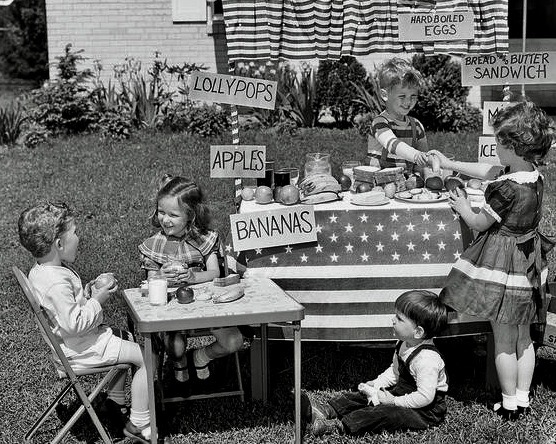
Busting Out the Yoga Pants

By Ed Staskus

Slightly less than 20% of everyone in yoga classes are men. That is sharply down from the 100% it was one hundred years ago. Since then the practice has been annexed by gals bending like pretzels. Even when they aren’t lithe and limber, they’ve fine-tuned in to the mental and physical health benefits of yoga.

The twist is that for thousands of years it was a men’s club. No women need apply. The idea of Daisy Dukes doing yoga was anathema. The prohibition was laughed out of the closet about fifty years ago. Now it’s a closet full of clothes with nothing to wear.

“I’ve been teaching yoga for over 25 years and I can’t believe how the number of men participating in yoga has not really increased,” says Yogi Aaron, director and master teacher at Blue Osa in Costa Rica.

When it comes to the practice nowadays, many men are like honey badgers. They just don’t care. Some of them have thought about it but never taken the first step. They don’t think it is intense hardcore challenging enough. The “no pain no gain” school of thought is still going strong. A few strong men, like Chuck Norris, do some yoga for flexibility and balance, even though they don’t need to, being Chuck Norris.

They don’t worry about anybody’s pantywaist deconstruction of the practice. They roll up their sleeves. They bust out the action pants.

The action movie star and martial artist never loses his balance in any posture. Balance loses to Chuck Norris. When he does inversions, he doesn’t go upside down. He tips the universe over. In honor of this feat the new 7th series in Ashtanga Yoga is called “Chuckitsa.” It cleanses every drop of lily liver from your body and soul.

“Many men have misconceptions about it,” says Gwen Saint Romain, a wellness instructor and registered yoga teacher at the Rex Wellness Center in Raleigh, N. Carolina.

“I think that one of the misconceptions is that it is always very gentle, meditative and mindful, that there aren’t physical benefits,” she says. “But it’s definitely not just meditating. Some yoga classes, like power yoga, are extremely rigorous, sweaty workouts. A lot of guys come to a yoga class for the first time because they are invited by a friend, a spouse or girlfriend. They find out quickly that yoga can be a very intense workout.”

Chuck Norris finds intense yoga classes right up his sleeve, although he doesn’t break out into a sweat about them, cool as a cucumber. “How many push-ups can you do in chaturanga?” he was asked. “All of them,” he said. He pulls his Action Pants on both legs at a time. The secret ingredient in Red Bull is Chuck Norris’s piss and vinegar.

The yoga entrepreneur Bikram Choudhury challenged him to 90 minutes of super-hot yoga in his LA-based “torture chamber.” He said it would make a man of him.

“I’ve got to tell you, partner, I once bet NASA a cold beer I could survive re-entry without a spacesuit,” Chuck told the Speedo-clad taskmaster.

“Nothing is impossible, believe me I know” said Bikram. “Girls hang all over me and thousands of people pay me thousands of dollars to tell them how to lock their knees, but that’s impossible.”

In respect for the ancient practice of yoga, an esteem he didn’t necessarily feel for the fitness guru, he let the comment slide.

When he pulled the space stunt a stark-naked Chuck Norris re-entered the earth’s atmosphere, streaking over 14 states, and reaching a temperature of 3000 degrees. He landed on his feet and ran two hundred miles to the nearest airport for a flight home. An embarrassed NASA was compelled to deliver a growler of ale to his front door.

When Bikram demanded he lock his knee in class, Chuck Norris stormed the big wig’s throne and put him in a headlock. He didn’t release Bikram until he had counted to infinity. The groupies in class got impatient, although Mrs. Bikram wasn’t even aware her husband hadn’t been home in a long time.

“From physique to mental health, yoga is one of the most beneficial practices in the world. Most Western yoga classes are dominated by women, but more and more men are starting to become interested in getting on the mat,” says Lanai Moliterno, a yoga instructor in Encinitas, California.

“A lot of men have jumped on board, have discovered the numerous benefits yoga can bring, physically, mentally, and spiritually. Enhanced strength? Injury prevention? Better sexual performance? Increased calm and focus? Who knew stretching and breathing could do all this?”

Chuck Norris agrees yoga is a steady hand to helping stay calm and focused, even though he has never not been calm and focused. When he goes target shooting, he always hits 11 out of 10 targets. With nine bullets. He always wins games of Connect Four in three moves. He wins every game of chess in only one move, a roundhouse kick to the face.

Although there was little confusion a hundred years ago about what and who yoga was for, the case for the practice today is a little more complex, especially in the mano a mano world.

“Years ago, just as Jay Cutler was ascending to the top of the bodybuilding world, he told me about a secret he’d recently begun to incorporate into his training,” says Steven Stiefel, an LA-based writer for health and fitness magazines.

“It was yoga! He credited his improved flexibility with his ability to train more efficiently and avoid injury. And then he won the Mr. Olympia title.

“Today, there are more yoga classes than ever, but a lot of people, men in particular, remain confused about what happens inside those classes and how they should feel about it. Is it stretching, meditation, some combination, or something else entirely? Could it be the secret to unlocking your tight hips and superhuman athletic potential, or will it just make you sprout a man bun and go all new age?”

You don’t want to get it wrong, unless you live in Brooklyn or San Francisco, in which case you’ll hit the nail on the head.

The only time Chuck Norris was ever wrong was when he thought he had made a mistake. His computer has no backspace button. He doesn’t make mistakes. Chuck Norris has done yoga and not gone new age or sprouted anything under his cowboy hat. He has cows in the back forty grilling his steaks for him.

Many weightlifters have added yoga to their fitness routine. There are several ways it can improve lifting, including increasing range of motion, reducing soreness, minimizing risk of injury, and fomenting correct posture.

Holding and releasing poses in yoga class relaxes tight muscles and encourages flexibility. Yoga draws oxygen into muscles. It flushes lactic acid. The practice enlivens balance and strengthens joints and smaller stabilizing muscles, helping prevent injury. Big men tend to be top-heavy. Core strengthening work, emphasis on the back, and chest and shoulder opener poses are instrumental at improving bearing and carriage.

There are many reasons why yoga might not be a good fit for many men, however. While it’s true their postures would probably improve, most men never have any trouble with back pain. What would they do with all the balance and flexibility they gained? Yoga sharpens focus, but men are fee-fi-fo focus fighters, anyway. Their heartrates and blood pressure are fine exactly where they are. It’s square enough yoga is a stress buster, but stress makes life more interesting. Busting out a mat is getting on the road to dullsville.

Nothing Chuck Norris does is ever dull. He can roundhouse kick his enemies yesterday. He sleeps with a night light because the dark is afraid of him. He can drive in Braille, and when he misspells a word, the Oxford English Dictionary changes the actual spelling of it.

Despite the best efforts of yoga promotors vendors marketers and merchandisers, there are still more gals than there are guys in classes. Studio owners and teachers say that the number of women to men is usually 80 to 20. Surveys by Yoga Journal have consistently found that the practice attracts far more womenfolk than menfolk.

Why don’t more men do yoga?

“My husband said he felt bored,” says Praneetha Akula, a Silver Spring, Maryland, resident who dragged her man to the studio.

Chuck Norris never gets bored, inside or outside a yoga studio. Getting bored is an insult to yourself. Chuck Norris’s head would explode if he ever insulted himself. Anybody else’s head, if they insulted him, would instantly explode just from the thought of it.

Maybe men shouldn’t bother doing yoga, unless they are like Chuck Norris, which is impossible. When he meditates, going inward, he finds a smaller tougher Chuck Norris inside himself.

“In a society that places people in convenient ticky-tacky boxes, it seems today’s yoga is clearly for women,” says Dr. Phil Maffetone, an endurance athlete, sports medicine clinician, and author of the “Big Book of Health and Fitness.”

Do real men do yoga?

“Knowing its potential value in health and fitness, various forms of yoga are something I have recommended over my career, to both men and women. But I don’t do it. Having tried various styles, there are more than 100 different types of yoga, I never enjoyed any of them,” he says.

“I get the same benefits of yoga, its scientific and perceived values, from other approaches, without the formality, the special clothes, or going anywhere. I wonder if men are turned off to things like chanting, Sanskrit terms for poses, cliché yoga music, and pretzel poses. Or, maybe men are too aggressive in their workout ethics to even try yoga, which might be the reason they are more often injured than women.”

On the other hand, maybe that’s exactly the reason more real men should get their get up and go butts down on the mat. Take a breath. Slow it down. Forget the finish line.

On top of that, it’s more manly than most men think. It was originally created designed practiced by men, taught by men, for men. It stayed that way for thousands of years. It was physically demanding enough in an age when everything was physically demanding. In the last half century women have crashed the party, which is all to the good.

Who wants to do yoga in a room full of dads, dudes, and varmints? Rooster Cogburn in tree pose would be a sight for sore eyes, but it would also be a sore sight.

Yoga makes everyone, women and men, better at what they do. If you’re flexible, it will help you build strength. If you’re strong as hell, it helps you find balance. Ethically, it grounds you in the Golden Rule. Mentally, it gives you a way to handle pressure and stress.

We can’t all be Chuck Norris. In fact, no one can be Chuck Norris. He once inhaled for 108 seconds – 108 million seconds. He has never read the Yoga Sutras. He stared them down until the Sutras squealed and told him everything he wanted to know. He would be the crazy best yoga teacher of all time. His classroom adjustments would never be forgotten by anyone, ever.

Since he could sail around the world in boat pose, if he ever wanted to, it wouldn’t hurt men to jump the Ship of Fools and join him on the USS Chuck Norris. But Chuck don’t care if you do, or not. Why should he? After all, when Chuck Norris does yoga, starting with sun salutations, the sun salutes him.

At the end of the day, yoga is about the self. Gird your loins and find some sunshine on the forward deck. Do your own warrior poses. Don’t worry about Chuck Norris. He’s the only man dead or alive who can divide by zero. He can take care of himself. Zero in on yourself.

Ed Staskus posts on 147 Stanley Street http://www.147stanleystreet.com and Made in Cleveland http://www.clevelandohiodaybook.com. To get the site’s monthly feature in your in-box click on “Follow.”

Bomb City USA

By Ed Staskus

   When I went to work as the night clerk at the Versailles Motor Inn on East 29th St. and Euclid Ave. in the mid-70s, Cleveland, Ohio was the bomb capital of the country. There were 21 bombings in the city in 1976, and 16 more in the county, carnage every ten days, making it tops in the United States, according to the Bureau of Alcohol, Tobacco, and Firearms. The federal lawmen christened the community “Bomb City USA.”

   “A bombing sends a real message. It commands a lot of attention,” said Rick Porello, a northeast Ohio career police officer. “Danny Greene was said to have paid Art Sneperger, his main explosives guy, extra if the bombing generated news coverage. Art got paid a bonus if the thing got on television or in the newspapers.” If it bleeds it leads was the motto of newsmen everywhere.

   Art Sneperger made his own headlines in 1971 when, working for gangster Danny Greene, he suddenly found himself consumed by hellfire while planting explosives under the car of the Irishman’s old friend and new enemy Mike Frato. Fumble fingers don’t pay, although the word on the street was that Danny Greene had set the bomb off from across the street. He had come to believe Art had ratted him out to the FBI.

   The plus-sized bomb was in a small Chevy Nova parked next to his Lincoln Continental. It was a Trojan Horse. When it went off, set off by remote control, the Nova, Continental, and the Irishman were reduced to corn flakes. The gangster usually wore all green clothes, wrote in green ink, and drove a green car. He wasn’t going incognito. It was easy to see it was him getting into the Lincoln. The bomb blew one of his arms one hundred feet across the parking lot. The lucky Celtic Cross he wore around his neck was driven into the asphalt. The coroner didn’t bother trying to put him back together.

   The used car came from Fairchild Chevrolet in Lakewood. “We heard the owner of the car lot might have been involved,” said Bob Gheen, a teenager at the time. The Chevy Nova had once been his father’s car. “They never transferred the title out of my dad’s name. Rick Porello from the Lyndhurst Police Department showed up at our door on Saturday morning and drove us to identify what was left of the car. We had to answer several questions and that’s pretty much the last we heard of it.”

   I was taking classes at Cleveland State University but because I didn’t have a scholarship or any grants, and nobody would give me a loan, I had to pay tuition fees and book costs myself. I was living in Asia Town, in a Polish double on East 34th St, upstairs in a two-bedroom with a roommate, but even though I knew how to live on next to nothing, I needed something to pay the bills and some more to pay for school. I was sick of Manpower and their deplorable paychecks. I went looking for a steady job.

   The Versailles Motor Inn was built in the mid-60s, meant to piggyback on the Sahara Motor Inn a few blocks away at East 32nd St., which was built a few years earlier. The Sahara wasn’t hiring, but the Versailles was, and I thought if it is anything like the Sahara, I am the young man for the job. I later found out I was the only young man to apply for the job.

   All the rooms at the four-story Sahara featured a television, air conditioning, piped-in music, and a dial phone, the first ones in rooms in northeast Ohio. There were three presidential suites and three bridal suites. There was a heated swimming pool, a dance floor, and a patio on the second floor. There was a continental dining room with velvet armchairs and a starlight ceiling. There were four cocktail lounges. The waitresses wore Egyptian outfits, and the waiters wore fezzes. There were eight-foot paintings of Cleopatra, King Tut, and Queen Nefertiti in the lobby.

   Other than that the Versailles had 150 rooms, exactly the same as the Sahara, that is where the resemblance ended. The Versailles had a bar restaurant, a coffee shop, and a lobby. It featured sunken pit seating in the lobby where nobody ever went. The lighting was bad. The front doors facing Euclid Ave. were kept locked under penalty of death. Unlike the Sahara where the plants in the lobby were real geraniums, rhododendrons, and palm trees, everything at the Versailles was fake. The front desk was cheap veneer and the carpet was cheap, too, going threadbare. There was a drive-up entrance on the side of the building at one end of the front desk and the door to the bar restaurant at the other end of the desk. There were two elevators that made a racket going up and down.

   The Sahara attracted weddings, conventions, and business meetings. TV crews filming episodes for “Route 66” stayed there sometimes. The Versailles attracted business like peddlers, couples on a tight budget, short-term construction workers, dodgers who left small tips and said hold all their calls, and the John and Jane trade.

   I was glad to get the job since I could walk there from where I lived in Asia Town, it paid reasonably well, and I would have about half of my hours from 11 PM to 7 AM to do homework. I reconciled the day’s receipts before and after my shift. We had a floor safe bolted down in the back office. My responsibilities were mainly checking in guests and taking reservations. I gave directions to late-night callers, answered inquiries about our hotel services, which was easy enough since there were hardly any, and made recommendations to guests about nighttime dining and entertainment options, which was also easy.

   “In the 1970s, downtown was dead,” said John Gorman, disc jockey and program director at radio station WMMS. “The Warehouse District and Playhouse Square weren’t happening yet. There was no reason to come.” The nickname of the progressive rock station was ‘The Buzzard.’ Downtown Cleveland’s nickname was ‘The Wasteland.’

   One night, while nothing much was happening on my side of downtown, and I was in the back office boning up for an exam the next week, Shondor Birns, Public Enemy No. 1 in Cleveland for a long time, strolled out of Christy’s Lounge, a strip club on Detroit Ave. on the near west side. It was across the street from St. Malachi Catholic Church. It was Holy Saturday, easing into Easter Sunday. As it happened, there wasn’t going to be any resurrection for the gangster after what was going to come off happened.

   During Prohibition the Birns family turned to bootlegging, working a still in their basement for Cleveland Mafia boss Joe Lonardo. Mother Birns went up in smoke when the still exploded. After Shondor dropped out of high school, he was subsequently arrested 18 times in 12 years. After his 6th or 7th arrest a Cleveland prosecutor declared, “It is time the court put away this man whose reputation is one of rampant criminality.”

   He hooked up with the Maxie Diamond gang and got into the protection rackets. He muscled into the numbers and policy games. He opened restaurants like the Ten-Eleven and Alhambra. His big mistake was hiring Danny Greene as an enforcer. The relationship soured and Birns put a contract out on Greene. When the Irishman discovered a bomb in his car, he disarmed it himself and showed it to Cleveland Police Lieutenant Ed Kovacic, who offered him police protection. “No, for whatever it’s worth,” Danny Greene said, leaving the Central Station and taking the bomb with him. “I’m going to send this back to the old bastard that sent it to me.”

   When the old bastard left the girlie show, got comfortable behind the wheel of his car, and turned the key in the ignition, a package of C-4 exploded underneath him. His head was blown through the roof of his Lincoln Mark IV. The cigarette he had been meaning to light was still between his lips. His torso landed somewhere outside the passenger door. His legs landed somewhere farther away. 

   Mary Nags owned a print shop on Detroit Rd. It shared a common parking lot with the strip club. She got a call from the police telling her not to come to work on Monday. “They said a man had been blown up and parts of him were scattered around in our back lot.” The forensics men spent a day finding all the bits and pieces of the once infamous and intact Shondor Birns.

   Police detectives focused on the numbers men in the ghetto with whom the gangster had been feuding. That turned out to be a dead end. “It’s dumb to talk about blacks doing Shondor,”one of the numbers men said.  “He wasn’t no bad fella. He was white but it didn’t make no difference. Shon had a black soul. He was black through and through.”

   Everybody knew Danny Greene had ordered it done, but charges were never brought after the actual bomber died. The Irish mobster had contracted Hells Angel Enis “Eagle” Crnic to do the job. The biker was later blown to bits while placing explosives to the underside of a car belonging to “Johnny Del” Delzoppo. If the district attorney wanted to pursue the case, he would have to deliver his subpoena to the bottomless pit, where the Eagle was living next door to Art Sneperger.

   The first time I was robbed at the Versailles Motor Inn I wasn’t robbed, because I was surprised and reacted without thinking. A young black man filled out a registration card, handed me a twenty, and when I turned around to get him his key, started rifling the cash drawer. “Hey!” I shouted, lunging forward and smashing the drawer shut on his hand. He ran out yelping and cursing.

   The second time I was robbed I was robbed. The young black man didn’t bother registering. The bandit was wearing a jacket and suggested he had a gun in his jacket pocket by pointing the pocket at me. “Know what I mean?” he said. I had seen plenty of cops and robbers movies. I knew what he meant.

   “It’s not my money,” I said opening the drawer, stepping back, and raising my hands to the ceiling. What’s a simple man to do staring at the wrong end of a gun barrel? He said I could put my hands down. “This ain’t no western movie matinee, but don’t mess around.” He took all of the night’s take except the loose change. I called the police, a patrol car pulled up, I made out a report, and they left. The men in blue seemed more indifferent than not.

   “Don’t let it happen again,” my boss said in the morning. He wasn’t indifferent about the missing money.

   “What do you suggest?”

   “Do you want to keep your job?”

   “I guess so,” I said hedging my bets.

   “All right then,” he said, and that was the end of his word to the wise.

   My last night at the Versailles Motor Inn was the same as most nights, until it wasn’t. I was busy until 2:30, then it was slow as a shuttered orphanage. I sat in the back office reading until I got drowsy. I took a walk through the gloomy lobby to wake myself up and was standing behind the front desk doing nothing when in the next split second there was a bright flash and a roaring bang. The doors of the bar restaurant flew off their hinges and every single bit of glass the length of the hallway was blown to smithereens.

   Other than the echo from the blast I couldn’t hear anything, slowly backing away from the desk and backing out the side door, sidling along the outside wall until I came to the front of the building. I stood outside until I was breathing again, and my hearing started to come back. I decided I wasn’t hurt since nothing hurt. Back inside the dust was settling and it didn’t look like too much was on fire. The phone was still working. I called the police and they arrived in the matter of a minute, the fire department hard on their heels.

  The firemen hauled hoses inside and sprayed water on everything from one end of the bar restaurant to the other. The hardwood bar was split in half. All the tables and chairs were helter-skelter. Many of them were splintered. All of the bottles and glasses and mirrors were shattered. It was a soggy mess when the firemen got done with it.

   There were forty or fifty guests tucked into their beds when the bomb went off. Some of them on the lower floors  were woken up by the ka-boom. A policeman stood by the elevator and whenever somebody came down asking what the noise had been told them to go back to bed.

   I went over what happened with a detective, twice. He asked me a hundred questions but finally told me to go home. It was five in the morning. I walked up East 30th St. to Payne Ave, past Dave’s Grocery and Stan’s Deli, to my rented second floor on East 34th St. I didn’t see another soul, although a couple of cars went by. My roommate was dead asleep. Mr. Moto my Siamese cat followed me into my bedroom and jumped on top of me when I fell into it. He curled up while I lay awake.

   I quit by phone the next day. The only time I went back was to collect my last paycheck. The big cheese looked at me sideways like I had something to do with the bombing. When I asked, he said the police had found a door forced at the back of the coffee shop, and believed that’s how the intruder got in, taping three sticks of dynamite to the underside of the bar. He said I was lucky the wood was oak.

   “One stick can blow a 12-inch-thick tree right out of the ground, do you know?” he said.

   “I don’t know and I don’t care,” I said. There were sheets of plywood hammered up everywhere. A month later I heard talk that the bar restaurant proprietor, who leased it from the Versailles Motor Inn, had fallen behind paying his protection money and the bombing was a way of settling accounts.

   The Mob was big in Cleveland in the 1970s. When John Scalish died after 30-odd years as the power broker, Jack “King of the Hill” Licavoli took over. He lived in an unassuming house in Little Italy, up the hill towards Cleveland Heights. “Jack was the last of the old-school Cleveland mobsters,” said James Willis, his downtown lawyer. “Cleveland had the best burglars, thieves, and safe crackers in the country. I know, I represented a lot of them.”

   Jack White, another of his names, a play on his dark Sicilian complexion, got his start bootlegging in St. Louis. He came to Cleveland in 1938 and worked his way up. “A lot of the guys coming up were just out for themselves, but not Jack. He looked out for the operation and he was so good at his job that I thought it would never end,” his enterprising lawyer said. “He was very secretive and not at all flamboyant. We would only ever talk in person.”

   “No one thought it would be Licavoli taking over,” Rick Porello said. “He was an old miser. One time he was caught by store security for switching the price tag on a pair of trousers. When they found out who he was they dropped the charges.”

   I soon found work in the Communications Department at Cleveland State University, on the 16th floor of Rhodes Tower, working for their new film studies professor. I was an English major, but movies were close enough. They were becoming the new literature, anyway. My job was picking up whatever art house film my boss was showcasing from the mail room, roll the 16 mm projector out of storage, screen the movie to his class, and send it on to the next place that wanted it. In return I got free tuition and a closet that passed for an office.

   I watched many French New Wave movies, Japanese samurai movies, and 1940s Warner Brothers crime movies during my work-study year, films that the Cleveland State University library had tucked away in secret places. I projected them on my office wall at the end of the day. I didn’t have a TV at home, but the movies I watched were better than anything on TV, anyway.

   Two years after I left the Versailles Motor Inn, John Nardi, who was secretary-treasurer of Vending Machine Service Employees Local 410 and high up in the Mob’s chain of command, sauntered out of his office a couple of blocks away from where I had worked, stepped up to his Oldsmobile 98, and turned the key in the door lock. The small car parked next to him exploded. It was a Trojan Horse attack. The bomb was packed with nuts and bolts. John Nardi was blown to kingdom come. Bomb City USA was alive and well.

Ed Staskus posts monthly on 147 Stanley Street http://www.147stanleystreet.com, Made in Cleveland http://www.clevelandohiodaybook.com, Down East http://www.redroadpei.com, and Lithuanian Journal http://www.lithuanianjournal.com

“Cross Walk” by Ed Staskus

“Captures the vibe of mid-century NYC, from stickball in the streets to the Mob on the make.” Sam Winchell, Beyond Fiction

Available on Amazon: https://www.amazon.com/dp/B0CRPSFPKP

Late summer and early autumn. New York City, 1956. President Eisenhower on his way to the opening game of the World Series. A hit man waits in the wings. A Hell’s Kitchen private eye scares up the shadows.

A Crying of Lot 49 Publication

Fish Out of Water

By Ed Staskus

   It was a late morning in May when Frank and Betty Glass went visiting Barron Cannon, who they hadn’t seen much since they first ran into him picketing Cleveland Vegan, a café and bakery near where they lived in Lakewood, Ohio. They had dropped by his yurt, which was on a bluff overlooking the Rocky River Metropark Reservation, once in November but after winter got cold and snowy had not paid him another social call, not that Betty minded, or even gave it a thought.

   The first time they ever saw Barron had been the past September, when they were attracted by the red and blue flashing lights of a Ford Police Interceptor at the vegan eatery, and were greeted by the sight of a slender pony-tailed man in his early 30s waving a picket sign on a stick. Faces peered through the plate glass windows. Passersby stopped to see what was going on. There was a single word scrawled on the placard. The word was HYPOCRITES! It was in capital letters. It was written in blood red crayon. 

   The exasperated policeman who had been called to the scene by one of the outraged servers was telling him he had to call it a day. He told him protesting without a permit wasn’t permitted. Although Barron maintained he had more than enough reason, and cited his first amendment rights, making an impromptu speech about animal rights, he finally agreed to go home and strode off, his picket sign bouncing up and down on his shoulder.

   The bemused policeman walked away shaking his head. “He’s like the cranky old guy who’s always on his front porch yelling at the neighborhood kids,” he said to the offended server standing in the doorway with her hands on her hips.

   Betty and Frank were going the same way as Barron, up West Clifton Blvd., and after falling into step with him were astonished to find out he was himself a vegan. “Eating is an act of nourishing my body and soul,” he said. “I choose to do no harm to myself or other living beings.”

   He did not eat animals, drink their milk, or wear their hides. He eschewed all animal products. He didn’t eat anything deep-fried and never snacked on refined sugar. He avoided Worcestershire sauce because it contained anchovies. He considered eating honey exploitive. He had more reasons to not eat something than most people had to eat anything.

   “I can’t stomach people who eat animals, and since that’s just about everybody, and since that is not changing anytime soon, here I am, a lonely voice in the wilderness. At least I don’t have to live with them.” At least as long as they weren’t his parents. Although he lived alone, he lived with his parents. He lived in their backyard.

   “My parents are as bad as everybody else. They are always bringing chicken, pork, and ground beef home from the grocery. I see them in their kitchen every day, sticking forks into decomposing flesh and animal secretions. They chew on Slim Jim’s while they watch the TV news, which is full of Trump’s lies and misery in general. Then there are all the fast food commercials. Everybody worries about terrorism. Maybe twenty or thirty people are killed by terrorists in the United States in any given year. Almost half a million people die from obesity issues in the United States every year.”

   Barron lived overlooking the Metropark Reservation, about a mile-and-a-half south of Lake Erie. He had built a Mongolian-style wigwam for himself. He didn’t have a job, a car, a refrigerator, a wife, or any pets.

   “Don’t even get me started on pet slavery,” he said.

  Betty gave him a sharp look. She and Frank had two house cats, who were Mr. Moto and Sky King. They slept with them on their bed most nights. The cats were rescues. She didn’t think of them as slaves and was sure they didn’t think of themselves as slaves, either.

   “Have we met before?” Frank asked as they stopped at the corner of their side street off Riverside Dr. while Barron went his own way to where he lived on the south side of I-90.

   “I don’t think so. I would know. I have an excellent memory.”

   A college graduate with a master’s degree in philosophy and a hundred thousand dollars in unpaid student debt, Barron was unqualified for nearly any job, even if he had been remotely interested in seeking employment. He didn’t vote, although he enjoyed public sector antics whenever he heard about them. “Suppose I was talking about a grifter, and suppose I was talking about a politician, but I repeat myself,” he said. He disdained pro sports, calling the athletes “millionaires throwing, catching, and kicking some kind of damn ball.”  He didn’t read anything popular or know anything about current trends. He dressed like the 21st century had never happened.

   He didn’t take any drugs, over or under the counter. “By FDA requirement,” he explained, “each and every pharmaceutical is tested on animals. Insurance, HMO’s, meds, doctors, it’s all a racket so the silk stockings can live the high life.” He was a vegan purist, pursuing his ideals to their logical conclusion. Betty thought of his pursuit as a dead end, but didn’t say so.

   Barron didn’t have a bank account or any credit cards. He had few friends, other than some bicycle-riding neo-hippies and a handful of retirees in the neighborhood for whom he did odd jobs on a cash basis. He only worked for them if they could prove they didn’t have cars and agreed never to talk about their problems, especially their health problems.

   The one time Frank and Betty had visited Barron they had walked, because if he knew they had driven to see him he would have refused to see them. Burning fossil fuels was anathema to him. “That is some queer duck who lives at the top of Hogsback Lane,” Betty said. Hogsback Lane was an entry road down to the river valley and the Metropark Reservation.

   “Can’t we just drive and park a block away?” she asked.

   “No, he’s got a sixth sense about it.”

   Barron lived on an allowance his parents begrudged him. He shopped at a once-a-week farmer’s market. He had recently gotten his yurt connected to his parent’s power supply. Unbeknownst to them, he had gone on-line at the Lakewood Library, read about the work he had in mind, and dug a trench from the back of their house to his yurt. He buried a transmission line in the trench.

   “They got a solar roof last year and got off the fossil fuels, which I will tell you is a blessing,” he said. “It gets dark and cold in this yurt in the middle of winter. I used to heat with firewood from the park. I had to collect it at night, otherwise the park rangers gave me grief. I don’t think they like me.”

   He now heated his big top with a 5,000 BTU infrared quartz heater and LED’s were strung  overhead in a kind of loopy chandelier. He put his vegan candles, made of plant-based wax, away. He cooked on a Cuisinart 2-burner cast iron hot plate. He had long refused to use either electricity or natural gas, on the premise that both are petroleum products, in which are mixed innumerable marine organisms.

   “That’s one of the things I can’t stand about those leaf-eaters at the restaurant, cooking their so-called vegan cuisine with gas made from the bodies of dead fish,” he said. “They’re too busy ringing up the cash register to know or care.”

   Vegetarians drew his ire, too, although he tolerated them. “I can put up with vegetarians if I have to,” he said, which Frank reluctantly admitted to being when Barron quizzed him. Barron gave Frank a mirthless grin. “At least you’re only half lying to yourself.”

   Betty, who described herself as an omnivore, on the side of free range and organic, shot a bright smile at Barron, keeping her eating habits to herself while gnashing her teeth at the same time. Frank knew his wife was savvy enough to know when to bite her tongue.

   As they approached Hogsback Lane they saw a sea of green treetops in the valley below. It was always a welcome sight after a long winter. Barron’s yurt was at the far end of a sprawling backyard on the edge of the valley, where the long downhill of the road intersects with Stinchcomb Hill, named after the founder of the park system. It is a bucolic spot in the middle of the big city. Frank was reluctant to mention that William Stinchcomb had been a pork roast and beef tenderloin man in his day, as well as president of the Cleveland Automobile Club, so he didn’t mention it.

   “Vegans are as bad as my parents, the whole lot of them,” Barron said. “Show me a vegan who isn’t an elitist, or someone who spouts veganism who is not a do-gooder, or making boatloads of money from it, explaining how it’s all one big happy family, yoga and veganism and new-age capitalism and flying to their immersions in the Bahamas, and everywhere else around the planet on their holiday retreats, never mind the carbon footprint, and I’ll show you the sanctimonious side of who’s burning up the planet.”

   Since Barron didn’t have a doorbell they had been glad to find him out of doors, although Betty was less happy about it than Frank. She had been hoping to find him away. Barron was laying out rows of seeds and tubers outside his yurt. They joined him, sitting down on canvas field chairs. He had opened the flap over the roof hole of the yurt. Betty poked her head inside it, remarking how pleasant and breezy it was inside his house.

   “Inside your tent, I mean,” she said.

   “It’s a yurt,” he said.

   It was round and fronted by a half-circle of large white stones, like what children do at summer camps in front of their tents.

   “Whatever,” Betty said under her breath.

   Frank was nonplussed to see a new Apple laptop on a small reading table.

   “I keep up, especially now that I have power,” Barron said. “It’s not like I’m a caveman.”

   Frank noticed a rolled up yoga mat, a strap, and two blocks in the shade of a sweet gum tree.

   “Where do you practice yoga?” 

   “Here in the backyard, every day, and sometimes at the studio on Lake Road in Rocky River. The owner and I trade cleaning the studio for classes.”

   “That’s probably where I’ve seen you before,” Frank said.

   “Maybe,” Barron said, not bothering trying to remember.

   “I thought you were down on yoga, you know, burning all that carbon.”

   “I’m down on the phonies who practice it, not the practice itself,” Barron said.

   He led them to his new garden. He had dug up most of his mother’s backyard, uprooting her wild roses and rhododendrons and was planting rows of root crops, including beets, onions, and potatoes. He was especially proud of his celery.

   “I cover my celery with paper, boards, and loose soil. They will have a nutty flavor when I dig them up at the end of the year. I don’t eat anything from factory farms. They make you a chattel to the supermarket.”

   Neither Frank nor Betty knew what to say. As they got ready to leave Barron scooped handfuls of birdseed from a large barrel into a brown paper bag and handed the bag to Frank. He was still unsure about Betty. She seemed to always be giving him the stink eye.

   “You should take every chance to feed the birds and other animals you see outside your house,” he said. “Give them good food, organic food, not processed. It will make such a difference in their lives.”

   On the driveway of his parent’s ranch-style house at the top of Hogsback Lane, looking across the valley towards the Hilliard Bridge, Barron tapped the brim of his dog-earred Chief Wahoo baseball cap in farewell.

   “Be a real vegan,” he said. “That’s the best thing any of us can do.”

   Frank and Betty walked the long way around before circling back to home, first crossing the Hilliard Bridge to Rocky River, from where they would make for Lakewood. The nine hundred foot long concrete bridge wasn’t the first one at that spot. The first one was known as the “Swinging Bridge.” It was a rope bridge with wooden planks that was used by school children and pedestrians to cross the river back then. It hung thirty feet above the water and swayed in strong winds. Sometimes a child fell into the river and had to be saved from fate.

   Betty was unusually quiet. She was usually a talkative woman. Frank gave her an inquisitive glance. As they came upon the Erie Island Coffee Co. on Detroit Road., where there was outdoor seating, she suggested they stop for refreshments, since Barron hadn’t offered them any.

   “Man, oh man, I know chocolate brownies have eggs in them,” Betty said, “and cappuccino has milk in it, and I know Barron would have a cow, but right now I think I need to sit down and enjoy myself for a few minutes, not thinking about that lone ranger.”

   They agreed that the vegans they knew were ethical and compassionate, their lives complementing their health, humanitarian, and environmental concerns. They could not agree on whether Barron Cannon was a determined idealist, a mad ideologue, or simply lived in an alternate universe. Or maybe he was just his own incarnation of the cranky old guy on the porch.

   They sat at a small metal table outside the entrance door. They had cappuccino, scones with gobs of butter, and chocolate brownies. They people-watched and admired a 1950s Chevy Bel Air when it cruised past. The V8 engine rumbled. They watched the sun slip in and out of the springtime clouds and walked the rest of the way home in the late afternoon in good spirits.

Ed Staskus posts monthly on 147 Stanley Street  http://www.147stanleystreet.com, Made in Cleveland http://www.clevelandohiodaybook.com, Down East http://www.redroadpei.com, and Lithuanian Journal http://www.lithuanianjournal.com. To get the site’s monthly feature in your in-box click on “Follow.”

“Cross Walk” by Ed Staskus

“A Cold War thriller that captures the vibe of mid-century NYC.” Sam Winchell, Beyond Books

Late summer, New York City, 1956. The Mob on the make and the streets full of menace. President Eisenhower on his way to Brooklyn for the opening game of the World Series. A killer waits in the wings. Stan Riddman, a private eye working out of Hell’s Kitchen, scares up the shadows looking for a straight answer.

Available on Amazon: https://www.amazon.com/dp/B0CRPSFPKP

A Crying of Lot 49 Publication

Feet to the Fire

13557805_10154300185528894_3079540249849818272_N.jpeg

By Ed Staskus

The first summer Doug McKinney joined the staff at the Landmark Café in Victoria, on the south shore of Canada’s Prince Edward Island, he joined at the bottom. He was a busboy. One of the first times he cleaned a table in the newer back dining room of the restaurant, he miscalculated the ceiling.

“I was clearing a mussel dish off a table, stood straight up, and hit my head,” he said. “It was like somebody hitting you right on the top of your head. I blacked out for a second.”

Doug is slightly taller than six feet eight inches. The ceiling is slightly shorter than six feet six inches. Something had to give.

He didn’t make the same mistake twice, although there were several more close calls. Almost knocking yourself out one time is often the charm, never mind any more times.

“I’ve always been the kind of person, if I don’t know how to do something, I’m going to ask, or I’m just going to go ahead and do it. Maybe I do it right. Maybe I do it wrong. If I do it wrong, I’ll probably only do it wrong once.”

An only child, Doug grew up on the eastern end of the island, near Montague. The small town is known as “Montague the Beautiful” for its river, tree-lined streets, and heritage homes. His father was a Royal Canadian Mounted Police officer. In 1993 his dad was struck by a fatal heart attack. The boy was 7-years-old.

The 33-year-old man has a tattoo on his chest honoring his father.

The following year his mother and he moved to Charlottetown, the capitol city of the province.

“The RCMP relocated them, bought them a house,” said Rachel Sauve, Doug’s fiancée.

“They are good for that,” said Doug. “I went from living in a rural community to a brand new suburb. My mom spoiled me a lot, for sure. There were lots of kids my own age. I was playing sports, basketball, and we had more than two TV channels.”

By the time he was 15 he was growing more and playing more basketball. He spent early mornings and late evenings at hoops. You can’t do it by loafing around. Practice makes it happen, not just wanting it to happen, and his growth spurt, which can’t be taught, took him up a notch.

As much as basketball was becoming his life, life and death came knocking.

“I was playing in the Canada Games in 2001 when my mother was diagnosed with cancer,” he said. “I came back home, and even though she had only been given until Christmas, she made it until April.”

An inking honoring his mother joined his father’s tattoo on his chest.

“When I lost her, I put more emphasis on basketball.” Not yet grown up, he had to grow up on his own. It was get up stand up for yourself on your own two feet. He treated every day on the hardwood like every day was his last day draining a jump shot.

“Basketball was developed to meet a need,” said James Naismith, the inventor of the game.

Doug played basketball at university and professionally until he was thirty. A graduate of Charlottetown Rural High School, he played five seasons with the UPEI Panthers. Later he played internationally in Lebanon, and after returning to Prince Edward Island, played four seasons with the Island Storm of Canada’s National Basketball League.

He had his ups and downs fast breaking crashing the boards shooting floaters, like every player, since even the superstars barely shoot 50% for the season, but he knew how to recognize his mistakes, learn from them, and then forget them. He never let an opponent try harder than he did.

”It’s basically grown men who do this for a job,” he said when trying out for the Island Storm in 2011. “Everybody is strong, everybody is athletic. I just try to play hard, sweat as much as I can every day, show that I’m willing to work.” Going nose to nose with grown men means proving yourself every day.

He was named to the NBL All-Star Second Team the 2012 – 2113 season.

When his team needed him to score, he scored. During game seven of the NBL Canada Finals in 2014 he went 7 of 8 from the field, 4 of 4 from the 3-point line, threw in an assist, a steal, and three rebounds, and set a playoff record that still stands for most points scored in the fewest minutes.

Basketball is a team game, to the extent that even the best basketball players, like Michael Jordan and LeBron James, could never have won multiple championships without solid teams around them. Doug McKinney’s pro career as a power forward was solid on getting it done.

Ask not what your teammates can do for you. Ask what you can do for your teammates. Make the extra pass.

After retiring from the pro game he has continued to work with the sport. Last year he was the Minor Basketball Advisor for Basketball Prince Edward Island, helping players and coaches of grassroots programs in PEI communities.

In the meantime, he re-connected with Rachel Sauve.

“We first met in 2002-or-so,” she said. “I was dating one of Doug’s teammates at UPEI.”

Years later they ran into each other at Baba’s Lounge in Charlottetown.

“One of my Storm teammates texted me that he was there, and even though I usually never went there, I went,” said Doug. “I saw her, she gave me a big hug, we hung out for a little bit, and after I left I couldn’t stop thinking about her.”

“I don’t think either of us were looking for a relationship, but we didn’t want to pass it up,” said Rachel. ”We both are islanders and want to be here.”

“I think we both knew there was something other than the fact that I’m really tall and she’s definitely shorter, something special about our energy together,” said Doug.

Rachel was working at the Landmark Café, her family’s homemade soup signature quiche traditional meat pies hot-off-the-press seafood all made fresh daily sit-down in the heart of their small town. The produce is local organic and they make their own salad dressings. Her father, Eugene, and mother, Julia, had staked out the restaurant, several times expanded since, excavating a new basement for storage and coolers, building new dining rooms, and adding an outdoor deck, twenty nine years earlier in what had once been Annie Craig’s Grocery Store and Post Office, kitty corner from the Victoria Playhouse.

“As kids my brother and I were always helping, doing stuff at the restaurant, washing dishes, running to the freezers for ice cream,” said Rachel.

Her father’s entrepreneurship rubbed off on her.

“I sat out front at a picnic table and sold stuff,” she said. “ I was 11, 12-years-old.”

She sold wood figurines, creating faces and outfits for them. She sold bootleg Anne of Green Gables straw hats with red braids. She sold wax jewelry that she and a friend designed and molded out of leftover wax from the café.

“We had a problem with it, though, because the wax would melt in the sun. We put it in boxes so it wouldn’t start melting until the tourists had left the village.”

The family has worked together at the Landmark from the word go.

Shortly after Doug and Rachel had gone from an encounter to a thing together, the restaurant posted a “Help Wanted” for the summer season sign.

Once Doug got the parameters of the back dining room’s ceiling right, he went from busboy to server to integral part of the roster, picking up vittles in the morning, working long into the night cleaning up and closing down.

“It goes back to growing up and playing on teams,” he said. “I’ve played on good ones. I’ve played on bad ones. I’ve always prided myself on being a team player. The Landmark is the kind of place, you’re either going to swim or you’re going to sink.”

“You either do the dance or you don’t do the dance,” said Rachel.

Working for a family business is a dynamic unlike other work. Your mom and dad or grandparents started it from scratch and you’re never going to be one of the founding fathers. Sometimes it’s one big happy family at the dinner table, but sometimes it’s like the Mafia. Whatever the big cheese says is what goes, and you have to come to grips with it.

Doug spent four years at the Landmark Café.

“I was actually the tallest server east of Montreal,” said Doug. “I didn’t want to just serve anywhere, except the Landmark.”

Their lives took a turn toward the end of last winter when they came to a fork in the road and took it. They had just come back to Prince Edward Island from several weeks in Cuba. “That was our last hurrah before the summer,” said Rachel. But once at home, instead of going back to work at the Landmark Café, Doug and Rachel took jobs with Fairholm Inn and Properties.

The collection of archetypal inns in downtown Charlottetown, including the eponymous Fairholm Inn, the Hillhurst Inn, and the Cranford House, share the same grounds, gardens, and outdoor fire-pit. The Fairholm Inn is a National Historic Site, originally a large family home built in 1838 for Thomas Haviland, a many times mayor of the capitol city.

Doug and Rachel are the Jack and Jill of all trades at Fairholm.

“I do the front desk, maintenance work, a little bit of everything,” said Doug.

“They wanted me to learn how to edit websites,” sad Rachel. “Now I know how to edit websites.”

“After Rachel got hired, they needed more help on their team, and thought I could help them out,” said Doug.

“He’s been building cabinets there,” said Rachel.

“It’s awesome working together,” said Doug “We’ve found that even when we’re not working, we go golfing together, go places on the island, have adventures.”

Fairholm Properties schedules most of their days off at the same time.

“It’s evolved into us realizing we work well together. After five years we’re at a spot where we’re trying to figure out our next life,” said Rachel.

“Our next play,” said Doug. “I’m adding stuff to my tool belt, but at the same time, we want to work for ourselves.”

“It might be a tabletop, food truck, catering, something,” said Rachel. “We’re lucky on this island. We have the best local seafood and meat. I can’t see myself being out of that line of work. My dad taught me. All my cooking skills are from him. I’ve got his cooking style in my blood.”

Her father and his Landmark Café have long made the list in the independent guide ‘Where to Eat in Canada’. He is known for his fusion of Asian, Cajun, and native PEI foods, and was once known as a pioneer for his never fried and healthy fare. He is still known for his tasty healthy never fried fare.

Doug’s mother had been a manager at Myron’s in Charlottetown, which was one of eastern Canada’s biggest and most popular sports bar restaurant nightclub concert venues of its time.

“I grew up in the industry without even realizing it,” said Doug.

There isn’t much needed to make your life. It’s all within you, in your way of thinking, in knowing what you want. Being an entrepreneur is a mindset. What it takes is taking the plunge, putting everything you’ve got into being your own boss, exploiting your opportunities when you get them.

It’s jumping off the Confederation Bridge to catch a flying fish. You might go splat in the Northumberland Straight. It will test your risk aversion, but it is, at least, one way to start swimming. You might, on the other hand, land in the fish market, show you’re worth your salt, because you saw something and built your wings on the way down.

No risk no reward.

“We have ideas for our own food venue,” said Rachel, “We’re not chefs, but we’re both great cooks.”

“We eat like kings at home,” said Doug.

“I want the lifestyle, the lifestyle I’ve been living all my life,” said Rachel.

“I’ve gotten to love it, too,” said Doug. “Grind all summer and then find summer somewhere else.”

“I’m not going to sit at a desk,” said Rachel. “That’s not going to happen.”

Whatever does happen, the two of them are undeniably hand to the plow. When they were with the Landmark Café they often worked seven days a week, twelve and fourteen hours a day, most of those hours on their feet. Restaurant work is hard enough, but seasonal restaurant work is getting down to business, not a moment to lose.

“We know many people in the food industry on the island, and some of them want us to work for them, but we want to have our own thing,” said Rachel.

Although raising capital is always a problem for new ventures, especially those related to food enterprises, Rachel Sauve and Doug McKinney are willing to work steadfast persevering to achieve their ends.

“I’m not too good to wash dishes, to do whatever it takes,“ said Doug. “There are a lot of opportunities to capitalize on the food scene on Prince Edward Island in the summertime.”

“When I do a post-up of something we’re cooking at home at night, and I see the reaction, I know it’s something I should be doing,” said Rachel. “We’re trying to mold our future.”

Rachel and Doug may be on a small team at the moment, since it is only the two of them on the roster, far from first place in the standings, but they are on one another’s side, both of them no ifs buts or maybes, their minds made up to make it happen.

“That’s the difference maker,” said Doug. “When you know what you want, you can make a difference.”

Everything’s on the front burner, pots and pans, the kitchen sink, plans goals around the corner, their feet to the bright side of the fire.

Ed Staskus posts stories on 147 Stanley Street http://www.147stanleystreet.com and Cleveland Ohio Daybook http://www.clevelandohiodaybook.com. To get the site’s monthly feature in your in-box click on “Follow.”