Tag Archives: 147 Stanley Street

Our Daily Bread

By Ed Staskus

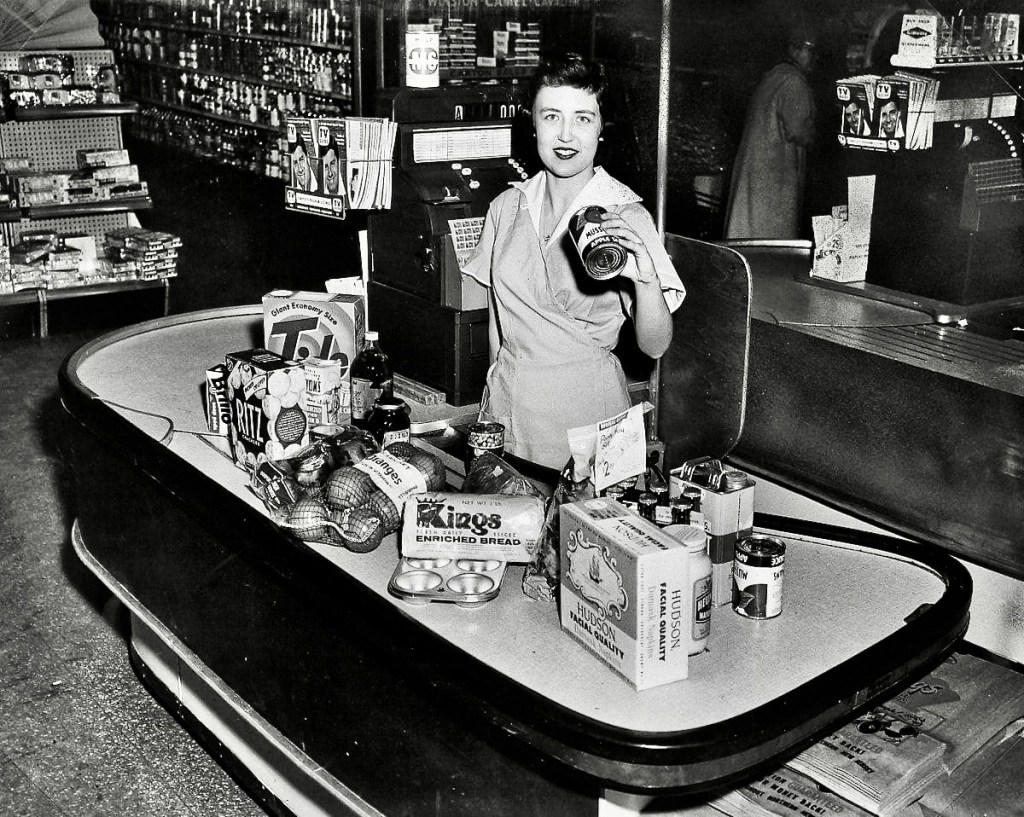
   My mother started working at Pick-N-Pay when my sister was 7 years old and had reached the age of reason. It was 1964. My brother and I were a few years older than our sister, but listening to my mother anybody would have thought we were still trying to catch up to her in smarts. We told our mother we knew our way around.

   She was mending a skirt. She put her needle down and said, “Boys, the young know everything, the middle-aged are suspicious of everything, and the old believe everything. I’m not young but I’m not old, either. Do you understand what I’m saying?”

   “Come on mom, we’re not stupid.”

   “Good,” she said.

   The next day we found out what she was saying when we asked an older student at school what she was saying.

   “What she’s trying to tell you is, she suspects everything, especially you two,” he said, walking away and shaking his head.

   “Oh, right, that’s what we thought,” my brother improvised. 

   We were living in a two-family house in the St. Clair-Superior neighborhood. The house had been built in 1903. There were tornado doors leading into the basement from the backyard and an out-of-date coal room. The anthracite chute had been bolted shut. There was a sweet gum tree in the backyard. It was where we played William Tell with rubber arrows. We attended St. George’s Catholic School, taking two city buses there in the morning and two city buses back home in the afternoon.

   “Every day Vytas drove to work and the kids went to school,” my mother said. “I was left all alone. Most of my friends worked, helping provide, but Vytas said under no circumstances did he want me to go to work outside of the house. We didn’t agree about that. One day after I learned how to drive I thought I would try to find a job in a bank. I looked in the newspaper. There was an ad for a new bank opening on Noble Rd. in Cleveland Hts. Vytas didn’t know I was going, but I went.”

   By that time we had moved to North Collinwood and were living east of E. 185th St. The bank’s main office was on Rockside Rd., 25 miles away. She had yet to drive five miles in any one direction. It took her an hour to get there. She didn’t get the job, but there were Pick-N-Pay offices in a building next door. She saw a sign saying they were hiring cashiers for a new store on the same Noble Rd. as the bank.

   Pick-N-Pay got started in the 1920s when Ed Silverberg opened a dairy store in Cleveland Hts. During the Great Depression he surprisingly expanded and called his new stores Farmview Creamery. He changed the name to Pick-N-Pay in 1940 and by 1951 they had grown to 10 locations. When my mother went to work for the supermarket chain there were more than 40 locations.

   “There were maybe 50 people filling out applications. They asked me if I played the piano. No, I said. They asked me if I knew how to type. No, I said.”

    The interviewer looked up from his desk. “He asked me if there was anything at all that recommended me. I told him I worked nights with a relative, an immigrant like us, who was an accountant. He moonlighted doing the books for more than a dozen women who staged Tupperware home parties.”

   The sales parties took place in living rooms. Tupperware was a plastic storage container invented by Earl Tupper. They were going like gangbusters. Our next-door neighbor Arlene Noga had a full set. She put leftovers in them instead of throwing the food away. Only after she forgot about the leftovers and they finally spoiled in the containers did she throw the food away. 

   “I am very good on adding machines is what I said to the man interviewing me.”

   Four women were hired that day. My mother was one of them. She started her new job on Noble Rd. two weeks later.

   “When I got home it was late. Vytas had made supper. As soon as I walked in the door he wanted to know where I had been. I hadn’t left a note. When I told him I had gotten a job he was unhappy.”

   “Who’s going to take care of the kids?” he asked.

   “They’re old enough to take care of themselves,” she said.

    It wasn’t exactly true but our father didn’t know that. He had a full time and a part-time job on top of that. We hardly saw him Monday through Friday. On weekends he told us what we must do and must not do. We didn’t have to deserve our mother’s love. We had to deserve our father’s.

   “My first day on the job, after my training, the head cashier showed me around the store. ‘Do your best,’ she told me. ‘You’ll never be as good as me but do your best.’  Everything had to be rung up one at a time. If there was a sale, like seven for a dollar, I had to do the division. Very soon, I didn’t have to look at the keys on the register, just push the groceries with one hand while my other hand rang them up while I talked to the customer. I got to be as good as the head cashier. Even she said so.”

   Starting in the 1970s, after cashiers rang up orders, they gave customers S & H Green Stamps based on their total purchase. It was a loyalty program. Shoppers pasted the stamps into booklets and redeemed them for ash trays, bicycles, and appliances. “We had boxes on the floor next to us where we kept the booklets and rolls of stamps. I didn’t like the boxes because there wasn’t much room to move around in the first place, what with all the circulars down there.”

   One day my father was complaining about the competitive spirit in the land. “It’s dead in America,” he said. 

   “If you believe it’s dead,” my mother said, “you’ve never been in my grocery store when a cashier opens another check-out line.”

   My mother had a falling out with the manager at the Noble Rd. store. “I told him I needed time off every summer. We took the kids to a Lithuanian summer camp on the Georgian Bay north of Toronto. My husband and I were volunteers and stayed the whole two weeks. He said OK but when summer came he wouldn’t let me go. I said, I’m going, no matter what you say. He said no, again, although I didn’t listen. He had no choice, because I went, but he punished me. I worked eight-hour days three days a week, but never on Saturdays. He made me work on Saturdays, at least until he was fired. He got the ax when they found out he was stealing steaks.”

   Her intention was to work 20-some years and retire with a good pension. “It wasn’t hard work. I enjoyed it. We had to bag the groceries but on weekends we had kids bagging. I didn’t lift anything heavy. I just pushed it.” I spent a summer while in high school bagging at a Pick-N-Pay store on E. 72nd St. and St. Clair Ave. I did more heavy lifting than I expected. A gallon of anything weighs eight pounds. Hundreds of gallons a day weigh thousands of pounds a day.

   “Sometimes customers would help. Old people were always coming into my check-out line. I tried to remember their names and we talked because they often didn’t have anybody else to talk to. One lady believed in ancient aliens while another one liked describing the butterflies in her backyard. They had long faces whenever they saw me working the express line.”

   After we moved out of North Collinwood and were living in Euclid on the Lake Erie side of Lakeshore Blvd. she asked the new manager to be transferred. Pick-N-Pay had opened a new store within walking distance and my mother wanted to work there. “The manager was a good man, but because I was good worker he didn’t want to let me go. One day the guy who hired me was at the store, bagging groceries for the cashiers. He was married to the daughter of the man who owned the stores. He often went to them unannounced and got his hands dirty. I asked him if I could go to the new store. I lied and said I didn’t have a car. He said, ‘Wait until tomorrow.’ The next day he stopped in and said, ‘Monday, go to the new store.’”

   She walked home for lunch every day. One day before lunch she went into the basement to throw some clothes in the washer and discovered the basement was flooded. “Vytas didn’t know how to do anything around the house but I called him anyway. He didn’t know where the main shut-off was. I ran back to the store and told the manager. He ran back to our house with me and turned the water right off. He knew everything.”

   When my parents moved to Sagamore Hills she again had to ask for a transfer. The manager said, “No problem.” He threw a staff party for my mother. “He brought his wife and their triplets. He was a hands-on man but having triplets was no walk in the park. He said, ‘It’s a whole lot of love, a whole lot of diapers, and a whole lot of who’s crying now. It’s three times the blessings but three times the chaos, too.’”

   She went to work at the Pick-N-Pay store on Emery Rd. “The head cashier, Katie, and I became best friends. Her husband and she liked music shows. We often went to the Carousel Dinner Theater together.”

   The Carousel was in Ravenna a half hour away. It had opened in 1973 with Arte Johnson, a cast member of “Rowan & Martin’s Laugh-In,” starring in Neil Simon’s “Last of the Red Hot Lovers.” Arte Johnson called the show “ver-r-r-ry in-te-res-ting.” Performances ran Tuesday through Sunday at the 500-seat complex. Tickets ranged from $6.95 on weekdays to $10.95 on Friday and Saturday nights. The tickets were for dinner and a play. Entrees included roast beef, chicken almondine, ham steak, and seafood casserole. Seconds and thirds were included. My parents ate light to save room the day of the show. My mother never made breakfast the next day.

   Dave Fulford, the founder and manager of the Carousel, favored light comedies. He didn’t care for the “snob hits” of New York City, saying they were “so intellectual they go beyond entertainment. I don’t think dinner theater audiences want to work. They don’t want an algebra test after dinner.”

   My parents and their friends went to the last show in Ravenna in 1988 before the Carousel moved to Akron. The show was “Big Bad Burlesque.” It was an off-Broadway revue, a musical salute to the golden days of burlesque. The show was made up of skits and girls, lots of girls. The skits were based on one joke, which was unsatiated and unrequited lust. My father had trouble keeping his eyes on his dinner plate.

   “By today’s standards, burlesque is the only family show left in town,” Katie’s husband grumbled.

   After the show my mother told her friend she was retiring from Pick-N-Pay. “She tried to talk me out of it, but I had worked long enough. My husband had moved up at TRW and I wanted to start volunteering, especially at our church.”

   My mother worked three days a week every week her 24 years at the supermarket chain. What she didn’t know was that the trouble with retirement is you never get a day off. Her church sold frozen Lithuanian dumplings every Sunday to raise money, just like they hosted bingo on Friday nights. She worked the bingo games and twice a week made dumplings with six or seven other women. After mass she worked in the community hall selling them. After they were all sold she helped clean up. She worked at all the church’s special events.

   One evening while visiting my parents I observed that she was working more in her retirement than she had when she was a working woman.

   “I retire when I go to bed,” she said.

Ed Staskus posts monthly on 147 Stanley Street http://www.147stanleystreet.com, Made in Cleveland http://www.clevelandohiodaybook.com, Down East http://www.redroadpei.com, and Lithuanian Journal http://www.lithuanianjournal.com. To get the site’s monthly feature in your in-box click on “Follow.” His books are available on Amazon and Apple Books.

“Hell’s Kitchen” 

New York City, 1956. Times Square, Coney Island, and the World Series. A high profile Mob contract in the works. Stan Riddman, a private eye working the edges, stirs up the shadows.

A Crying of Lot 49 Publication
On the Warpath

By Ed Staskus

   Bernard Shaw was on a roll in the Roaring Twenties. For over a decade he had been scoring  theatrical winners, spirited satires of the times, breezy comedies revolving around artificial circumstance, and melodramas based on marriage and family life. When he switched gears it was with “Heartbreak House” in 1920. It was produced in New York City and was well-received.  The theme of the play dealt with the ethics of humanism and scientific determinism at loggerheads with each other. It marked a return of a sense of high purpose in the playwright’s work. 

   It met with less success in London a year later.  “It was partly because of miscasting, but chiefly because the London audience was a failure,” Bernard Shaw said with a splash of venom. He was always ready to speak his mind. “The secret of success is to offend the greatest number of people,” he said.

   “Back to Methuselah” hit the stage in 1921. An elaborate speculative fantasy, it met with critical acclaim and public listlessness when performed in the United States, which had until then taken Bernard Shaw to its bosom and heaped honors on him in a form everybody understood, namely dollars and cents.

   For all of his success as a writer, there were a few cracks in Bernard Shaw’s happiness. He was closing in on his threescore and ten. “Threescore-and-ten’s the mark, and no man with a conscience, and a proper sense of what’s expected of him, has any business to live longer, flying in the face of the Bible,” Charles Dickens wrote. Even though he eventually exceeded the Biblical edict, he knew the remarkable energy of his so far long lifetime was waning. The death of his older sister served as a reminder that even he would one day pass away.

   Although “Back to Methuselah” was a good play, there were some critics, like Homer Woodbridge, who believed “as a playwright he has shot his bolt, and that as a preacher he is getting very tiresome.” Even though Bernard Shaw was capable of great disdain, he was still irked by the criticism. He wanted to write another play right away, but had trouble getting started. “Sometimes the urge to write comes over me and I cannot think what to write about,” he said. “This happened before I started ‘Saint Joan.’ I wanted to get to work on something but I hadn’t a subject. ‘Why not write a play on Joan of Arc?’ said my wife. So, I did.”

   “Saint Joan” was written in 1923 and produced in 1924. It was a success in both New York City and London. It stilled his most obstinate detractors. The play incorporated two themes Bernard Shaw was interested in, which were history and religion.  (Two earlier plays, “Androcles and the Lion” and “The Devil’s Disciple,” had focused on those same concerns.) Essentially a tragedy concerned with a universal issue, namely the conflicts that arise between individuals and the institutions they erect, “Saint Joan” has come to be considered Bernard Shaw’s “last great hurrah.”

   Many critics approach the play as one of Bernard Shaw’s best efforts, comparable in importance and popularity to “Man and Superman.” The Oxford History of English Literature has called it his outstanding work, “conceivably the finest and most moving English drama since ‘The Winter’s Tale’ or ‘The Tempest.’ It owns that sure mark of greatness, a stature that remains intact after every consideration has been given to its evident and undeniable imperfections.”

   In 1910, long before the appearance of “Saint Joan,” G. K. Chesterton published a biography of Bernard Shaw, even though he had said, “It is indefensibly foolish to attempt to explain a man whose whole object through life has been to explain himself.” After it was published the playwright said, “It is the best work of literary art I have yet provoked. It is a fascinating portrait study and is in the great tradition of literary portraiture.”

   G. K. Chesterton and Bernard Shaw had been good friends for many years. They enjoyed debating one another about the world’s problems. The biography begins with a preface that outlines the headaches of preparing a preface for a book about the ‘Master of Prefaces,’ which Bernard Shaw was. The book itself is divided into six parts. The first three parts, “The Irishman,” “The Puritan,” and “The Progressive” describe the soil out of which Bernard Shaw sprang. The last three parts, “The Critic,” “The Dramatist,” and “The Philosopher” delineate the playwright’s activities with and relationship to the stage up to about 1909.

   My purpose is to examine the parts of the biography and see to what extent G. K. Chesterton’s observations about Bernard Shaw anticipate the creation of “Saint Joan.” The question I hope to answer is whether or not Bernard Shaw was in a sense ordained to write the play, or something very like it. I don’t think the playwright would scoff at my proposal that there was something miraculous going on.  He once said it was funny being asked why he denied miracles “because I never do deny them, but, on the contrary, spend my life largely affirming them. The world is full of miracles.”

   Bernard Shaw was an Irishman. A connection between his ancestry and Joan of Arc can be made in this way: the maid was a virgin and in the 15th century was considered to be a saint, which she became in actuality 500 years later.  Bernard Shaw came from a land variously known as “The Land of Virgins” and “The Land of Saints.” G. K. Chesterton writes that in some other time, in another kind of civilization, Bernard Shaw might have been regarded as a saint, albeit an ascetic and negative one. He embellished the image by marking a strange note in Bernard Shaw, which is “that he is literally unworldly. Worldliness has no human magic for him; he is not bewitched by rank nor drawn on by conviviality at all.” 

   There is a clear relationship between Bernard Shaw and Joan of Arc. She is “unworldly” to the extent of communicating with spirits and with God himself. In the preface to “Saint Joan” the storyteller writes that this trick of the imagination visits many of those burdened with genius, which he considers Joan of Arc to be.

   Bernard Shaw was not unaware of his own genius. In 1924 he concluded that “if Paris perishes in ignorance of my works, the loss will be for Paris and not for me. I do not say that the loss would not be serious; for I am as indispensable as Bergson for a complete modern culture.” He may not have heard voices, but he could appreciate the reason Joan of Arc did. 

   Like Bernard Shaw, Joan of Arc is not attracted by the trappings of rank .She does not aspire to generalship in the usual sense. Throughout the play she remains aware of her origins and breeding. Conviviality does not strike a chord in her. If it had she would not have alienated almost all of her compatriots. But if she had not she could not have been heroic, since her heroism depends on willfulness and stubbornness, which are antithetical to conviviality. As it happens, her heroic virtues are given free rein.

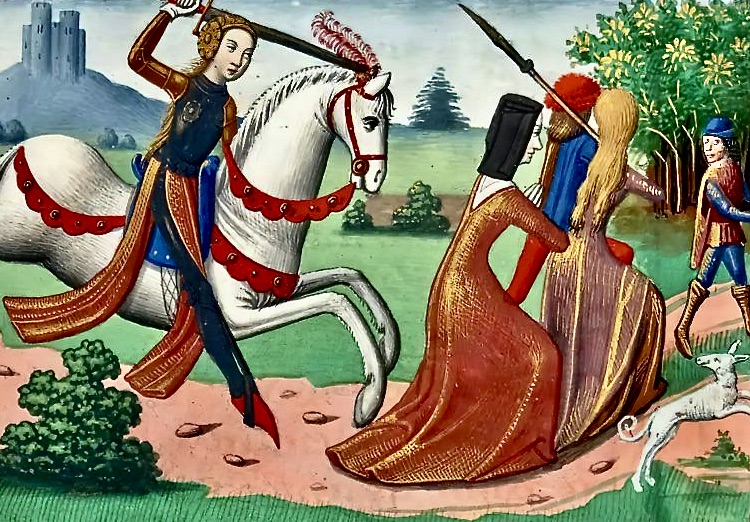
   According to G. K. Chesterton, there are several modal elements that can be ascribed to the Irish. He believes Irishmen succeed in those labors that “require a certain crystalline realism; such professions are the lawyer and the soldier.” Joan of Arc becomes a soldier and argues her own case like a lawyer before the Inquisition. The Irishman is “aggressive, and he attacks, he goes on asking for a thing because he wants it, and he tries really to hurt his enemies because they are his enemies.” Joan of Arc’s arrival on the front signals the beginning of an implacable campaign to oust the English from France and, in the process, to crown the Dauphin king, which she alone seems to want.  

   The Irish mentality embraces a kind of peculiar and “wild chastity” in regards to sex. Joan of Arc is a peasant girl who is able to remain chaste amid a mob of soldiers, whose sexual desires were often held in abeyance for lengthy periods with great difficulty. She wears armor for more reasons than one.

   The last general truth G. K. Chesterton asserts is that “Ireland is a country in which the political conflicts are at least genuine; they are about something.” He goes on to say that they are real because they hinge on the “ three great realities” of patriotism, religion, and hard cash. “Saint Joan” has nothing to do with money, but everything to do with the other two realities. Without being actually cognizant of the issues, Joan of Arc nevertheless promotes nationalism at the cost of the nobles, and undermines the Catholic Church’s contention that one can apprehend God only with the assistance of an assigned intermediary. If political contests are contests for power, “Saint Joan” is unquestionably a story of such a struggle.

   Besides being an Irishman, which endowed him with a kind of “intellectual chastity and the fighting spirit,” Bernard Shaw was an Orangeman. He was a Protestant in a Roman Catholic land. There were many Nationalist Irishmen who condemned him as a “West Briton.” Bernard Shaw was “an exile from Ireland living in Ireland,” much as Joan of Arc was an outsider to the land and church she fought for.

   The kind of Protestant that Bernard Shaw was amounted to  Puritanism. G. K. Chesterton defines the basic tenet of Puritanism in this way: “It is a refusal to contemplate God or goodness with anything lighter or milder than the most fierce concentration of the intellect.” Bernard Shaw wrote in 1912 that if he could “conceive a God as deliberately creating something less than himself, I should class him as a cad. If he were simply satisfied with himself, I should class him as a coxcomb. My God must continually strive to surpass himself.” Just like God must reaffirm and surpass himself so must a Puritan in service to his God.

   This touches on Joan of Arc in two ways. First, she eschews, however unwittingly, dealing with her God except on the most immediate basis. She brings all of herself to it. Second, she reaffirms her stance, though in a roundabout way, during and at the conclusion of her trial. Her faith wavers momentarily, but her fierceness wins out in the end. She unequivocally returns to the essential and demanding Puritan idea that “God can only be praised by direct contemplation of him.”  

   G. K. Chesterton maintains that, because he is a Puritan, Bernard Shaw is never frivolous. The same can be said for Joan of Arc. She does not make war wearing a ball gown. While talking to the artist Walter Tittle in 1924 George Shaw said Joan of Arc’s idea “in wearing man’s clothes was a sensible one; she was a soldier, and could not be bothered with skirts, and as she was associated with soldiers constantly it was more modest to dress as one of them.” But this was one of the counts against her at the trial, and was interpreted by the Catholic Church as wanton immodesty. Joan of Arc never uses her wit for fun  – so much like Bernard Shaw’s, in that it is not a sense of humor, which implies that truth is tricky. She rather uses it as one of the means to attain her goals. She joshes the Dauphin to give him courage. When she pokes fun at religious leaders it is because she understands they are her enemies. She uses her wit like a weapon. It is, like a Calvinist’s and like Bernard Shaw’s, consistent as a sharp tongue eager to engage.

   An aspect of all Puritans is that they are austere. Bernard Shaw’s Puritan teachers “could not prevent him from taking up theatricals, but they made him take theatricals seriously .” Joan of Arc is similarly austere. During her trial she declares that she could comfortably live on bread and water. Her aversion to excess is signaled by her reaction to everlasting imprisonment as punishment for her heresy. Her recantation is recanted. She instinctively recoils from that judgment because it would deny her the lifeforce of nature, and also because she believes the verdict is wildly extravagant. Death   has preference because it pales in the face of profligacy.

   He austerity in the play is occasionally belied by some historical inaccuracies. The critic J. Van Kan has observed that Joan of Arc would sooner have endured diabolical cruelties at the hands of her torturers than to admit a naturalistic explanation for her “voices.” On the whole, though, considering her sincerity, background, and mission, and the means she employs to fulfill her destiny, she is an austere character. Bernard Shaw answered for his errors of strict fact when he wrote to a critic of his representation of Joan of Arc’s nature that he had “ no theory about Joan, and understand her no more than I understand myself.”

   If Bernard Shaw’s vocation was as a playwright, then his avocation was as a progressive. G. K Chesterton writes that he was born in an epoch that had taken the great political and moral successes of the 19th century and fashioned them into portals of nothing. “The moral world was pretty well all windows and no house by the time George Bernard Shaw arrived on the scene.” The reason it was mostly windows by the time he got to London was that morality had morphed into mud. Bernard Shaw waded into the mudflat and “thoroughly trashed all competitors in the difficult art of being at the same time modern and intelligent.” He kept revolutionists on their toes by such declarations as that physical science was a mystical fake. He didn’t go into details and left it at that.

   As a progressive Bernard Shaw concentrated on two crusades. The first was the humanitarian cause. “At its best and noblest it meant a sort of mystical identification of our life with the whole life of nature,” G. K. Chesterton says, though he does not mention what it is at its worst. Joan of Arc’s identification with a similar cause can be shown by two examples. First, although she went to war, it was specifically to save her homeland. On the battlefield she did not actually kill anyone. Second, she prefers the stake to exile from nature.

   Another cause Bernard Shaw committed himself to was Socialism. G. K. Chesterton says that this exemplifies the same trait as his humanitarianism. If it does, then Joan of Arc leaving the farming life of her parents to live among a gaggle of soldiers is a reflection of her sociological leanings and human compassion

   G. K Chesterton admires Bernard Shaw’s moral and social persuasions, but says thst his “great defect was and is the lack of democratic sentiment.” This particular lack is exactly what sends Joan of Arc on the warpath and to her death. She fails to see that her trial is political, not religious. In addition, she is unable or unwilling to delegate authority, and consequently comes to be considered arrogant and disagreeable. She and her spirit  oracles cannot make a mistake. He body will fail Joan of Arc. She may not be a democrat, but, like Bernard Shaw, she makes an excellent republican. Her death will be a success. The two of them “are more for the Public Thing than the Private Thing.”

   I have emphasized the first three parts of G. K. Chesterton’s biography because they have the most to reveal about Bernard Shaw’s nature and character, and by inference Joan of Arc herself. The last three parts say less about who Bernard Shaw was and more about what he did up to 1910, which was that he wrote a few lackadaisical novels and a good many good  plays. Each of these imaginings had a plot and a theme. Some of the attitudes expressed in the plays and other writings can be brought to bear on “Saint Joan.” 

   When Bernard Shaw was a critic for the Saturday Review he defended the Norwegian playwright Henrik Ibsen. He informed everyone that Ibsen “was not artistic, but moral; that his dramas were didactic and that all great art was didactic.” Bernard Shaw might as well have been talking about himself.. He went to great lengths to make his plays didactic. The original version of “Back to Methuselah” took three days to perform. If one was willing to stay and listen, one couldn’t help but get the point. Many of his plays sport prefaces and epilogues intended to make the meaning clear as a bell. With “Saint Joan” Bernard Shaw was doing what Socrates believed to be the highest duty of a teacher, which was exposing prejudices and misconceptions in order to arrive at the truth.

   In Plato’s “The Last Days of Socrates” the doomed philosopher invents a persona for “The Laws and Constitution of Athens” in order to find out whether or not he should flee the sentence of death that hangs over him. It is worthwhile pointing out that Bernard Shaw likewise creates spokesmen for the political and religious adventures of the time, and then posits Joan of Arc against them. The dialogues that ensue set forth the relative positions of all involved and then, in the epilogue, synthesize those positions. This is done subtly enough so that Bernard Shaw’s conception of the truth is set forth forthrightly, and yet space is left for the audience to come to their own conclusions. In this vein the critic F. F. Rattray said that “it is a tribute to Shaw that both Catholics and Protestants have been satisfied with how their respective cases have been dealt with in it.”

   G. K. Chesterton writes that in “Arms and the Man” there was, among other elements of style, “one thing not unimportant; there was savage sincerity.” In the future, out of the remote past, Joan of Arc lay in wait. A warrior of ferocious sincerity, she seems an apt character for Bernard Shaw’s pen. She fits right into his style.

   Idealism is not the same as sincerity. Bernard Shaw published “The Philanderer” in 1898 as part of “Plays Unpleasant.” It was in part an exposition of the ”dangers of ideals, the sacrifice of people to principles.” It strongly suggested that “ the idealist is more concerned about the sin than the sinner.” Bernard Shaw went on to recapitulate this idea in “Saint Joan.” He used the Catholic Church to demonstrate the inhumanity of doggedly adhering to a single creed. That might be their only crime. They harm not only others, but eventually themselves, as well. They disregard the fact that happiness is a practical, not an abstract concern.

   One of Bernard Shaw’s most important plays, and the last one I will talk about in relation to “Saint Joan,” is “Man and Superman.” The play mixes many themes but one stands out, which is his discovery of Frederick Nietzsche and the concept of the Superman. Frederick Nietzsche believed that just as man had evolved from primates, leaving them behind on the evolutionary ladder, man would ultimately give rise to a new breed of man, higher than Homo Sapiens as he is higher than the apes. In Frederick Nietzsche’s mind this eventually became interwoven with anachronistic ideas about valor and a hatred of pity. Bernard Shaw was not taken in by these latter beliefs, for, as G. K. Chesterton says, “It would require more than ten thousand mad Polish professors to make Bernard Shaw anything but a generous and compassionate man.” 

   Bernard Shaw came to believe that man’s only hope was in evolution. Consequently, he made the hero of “Man and Superman” a woman, whose justification in seeking a mate suitable for producing a better race is that she will be the mother of the coming Superman. One of the ideas buttressing the play is that nature desires ideal marriages.

   Insomuch as it must be a woman who produces the Superman, it may be that Bernard Shaw envisioned Joan of Arc as a precursor to the woman who would do it. One of Joan of Arc’s achievements is that she promotes a redefinition of the role of women in society. Her other achievement is that she is an example of how evolution is thought to work, which is along the lines of sudden changes or mutations. The tragedy of Joan of Arc is that she appeared to soon, too fast, and too insistent in the 15th century.   An unlikely  pioneer, she was crucified in the name of conventional morality. Her gifts and genius doomed her, as the old customs and obligations proved too strong. But she signals a new set of virtues and indicates that the time will come. It is inevitable, even though she raises the cry “How long, how long?” to her God.

   Posing the question of whether Bernard Shaw was fated to write “Saint Joan” reveals the answer to be “Who knows?” There is some evidence suggesting the seed of the play was in him, but the evidence must remain circumstantial. Nobody knows enough about the secret workings of fate to make assertions about its nature. Everybody knows enough about it to  connect some of the dots. We are not prisoners of fate, even though some people meet their destiny on the road they take to avoid it.  Rather, for good or ill, we are prisoners of our own minds.

Ed Staskus posts monthly on 147 Stanley Street http://www.147stanleystreet.com, Made in Cleveland http://www.clevelandohiodaybook.com, Down East http://www.redroadpei.com, and Lithuanian Journal http://www.lithuanianjournal.com. To get the site’s monthly feature in your in-box click on “Follow.” His books are available on Amazon and Apple Books.

“Hell’s Kitchen” 

New York City, 1956. Times Square, Coney Island, and the World Series. A high profile Mob contract in the works. Stan Riddman, a private eye working the edges, stirs up the shadows.

A Crying of Lot 49 Publication
Dancing With the Stars

By Ed Staskus

   Folk dancing costumes are by and large traditional, except when they aren’t. When Gabriele Baltrunaite traveled from Cleveland, Ohio to the 2024 Centenary Song and Dance Celebration in Vilnius, the capital of Lithuania, she had to borrow one, even though she had one. “I had to borrow a dancing costume because, although I had one, but it was too Lithuanian,” she said. “They wanted us to wear our own versions for the festival.”

   “It is important for us that every participating ensemble bring their own tradition, their own songs, those they inherited from their own place, their own dances and customs,” said Vida Šatkauskienė of the Folklore Day creative group. “And all that diversity, every region, every ensemble, every individual performer, are what makes up our day.”

   The day lasted a week through the first week of July. It featured Folklore Day, Dance Day, Ensembles Evening, and Song Day. More than 9,000 dancers performed on Dance Day. Gabriele went with the Cleveland folk dance group Svyturys.   

  The dance group was established in 2003, when 16 young dancers got together to prepare for the XII Lithuanian Folk Dance Festival in Chicago. They perform at shows, festivals, and special events. They have appeared throughout the United States and Europe, as well as South America. They have organized  “Concerts of Friendship”  to which dancers from the Lithuanian diaspora are invited to participate.

   “I started dancing at St. Casimir’s when I was in 2nd grade,” Gabriele said. “In the 8th grade I started dancing with Svyturys.” She has danced with the group since she was 13 years old, participating in many of its overseas excursions. “Sweden was my favorite trip,” she said. It’s hard to beat a breath of fresh Scandinavian air. In between breathing there is fika, the coffee break ritual of the Swedes.

   “Dancing is fun and I like the exercise, although sometimes it can suck practicing every Sunday.” The group practices Sundays from 10:30 to 1:30 at the Kirtland Community Center on the east side of Cleveland. “It’s partner dancing in a group. It’s highly choreographed, with lots of circles, polkas, and spinning. I like the social aspect of being in the group, making friends and making deeper connections. When it’s getting close to a concert, we have boot camp and practice even more. I love dancing at concerts, the forms and shapes we make on the dance floor, and the attention, the fact that people are looking at me.”

   Gabriele was born in Lithuania but grew up in the United States. In 1999 when she was three years old her parents Ausra and Gintaras tried their luck at the Green Card Lottery, a result of the Immigration Act of 1990. The new law allowed hundreds of thousands of immigrants to enter the United States. Lithuania was one of thirty one qualifying countries. Their luck was good. They were awarded visas. More immigrants were admitted into the United States from 1991 to 2000 than in any prior decade in American history, with11 million documented entries.

   “My parents were doing all right, but the economy was bad,” Gabriele said. “They wanted more success in life. They wanted a change of pace, something new, even though all they knew about the United States was what they had seen on TV.”

   Gabriele attended Eastlake North High School, Lakeland Community College, and graduated with a degree in Business Economics from Cleveland State University. She is a real estate agent with EXP Realty and operates her own commercial cleaning service with several employees. “I live by my phone,” she said.

   The 2024 Centenary Song and Dance Celebration was one hundred years in the making. The first Song Day was staged in Kaunas in 1924 and continued to be staged all through the Soviet Occupation after World War Two. It became a World Celebration after the fall of the Iron Curtain, and in 1994 more than 1,200 singers, dancers, and musicians from ten countries participated in the event

   This year’s event described itself as, “We, the singing and dancing people, make the living tradition that has survived through this century. We are the unique kin that meets every few years and speaks its own language. The language of this kin resembles the language of the earth – the language of the bird and the river, the culture and the memory, for our language is the one of life, spoken by all the members of the Cantor Lituanus kinship.”

   Flying from Cleveland to Helsinki to Vilnius takes about a full day and night with layovers. It takes a couple of days to get over the jet lag. The Svyturys group numbered more than forty on the plane, from dancers to teachers to volunteer support. They got to Lithuania a week before the big show. They stayed in the Old Town of Vilnius, brought back to life after the country recovered its independence in 1991. Nearly $30 million euros have been spent on restoration projects. Everybody got a complimentary bus pass with which to explore the city, of which there is much to explore. There are the Gates of Dawn, the Palace of the Grand Dukes, and the notorious Soviet-era Lukiskes Prison, which has morphed into a go-to for hundreds of artists and musicians who have set up their studios in renovated spaces there. Kankles are mightier than the sword.

   On Friday, the day after they arrived,  the group boarded a chartered bus and went to Palanga for the weekend to lay their jet lag out in the sun. Palanga is a resort town in western Lithuania on the shore of the Baltic Sea. In the height of summer, the sun comes up at 5 AM and doesn’t set until after 10 PM. “It doesn’t get totally dark until 11,” Gabriele said. It is the country’s largest seasonal resort, sporting beaches 11 miles long and 1,000 feet wide, with sand dunes to boot.

   Lithuania was the last European country to give up paganism and adopt Catholic Christianity. There used to be a pagan shrine at the base of a hill in Palanga watched over by a beautiful priestess by the name of Birute. She tended the ceremonial fire. One day Kestutis, the Grand Duke of Lithuania, laid eyes on her and decided he had to have her, even though she had promised the sky god Perkunas to remain a virgin as long as she lived. Kestutis wasn’t going to be denied, however, and took her back to Trakai, his fortress home. There was a lavish wedding, but the joy didn’t last long. Kestutis was murdered soon after and buried with his weapons and horses. Once free, Birute went back to Palanga, resumed her duties at the shrine, and when she died was buried at the top of the hill, as close to the stars as she could get.

   When the group got back to Vilnius from Palanga on Sunday they had a free night and the next day visited Seimas Palace, which is where the Parliament of the Republic of Lithuania meets. After that they had the rest of the day to themselves. Everybody tried to hit the hay early, although with little success, there being too much to do and see. 

   Each and every one of them knew that the next day the hard work was going to begin. The hard work coming up was going to be three straight days of practice. “Our practices were at a nearby park deep in the woods,” Gabriele said. “It was an athletic complex with fields, food trucks, and port-a-potties. Our practices were on one of two fields depending on the choreography. One part of one of the fields was super dusty. We had to run the field while dust kicked up, for two hours, running back and forth. When I got done my nose was full of dark boogers. It was tough.”

   What was tougher was the eagle-eyed man on the platform calling out instructions. “He was on a platform maybe 30 feet up, with a microphone and loudspeakers,” Gabriele said. “He had written the part of the concert we were going to perform. He had a  PhD in folk dancing.” There wasn’t going to be any easy way of explaining away missteps. “He knew every group’s assigned number.”

   As the first and second 12-hour days of practice unfolded Gabriele heard less of “Number 37, you’re doing it wrong.” Her group was Number 37. Nobody wanted to be the group whose number was being repeatedly called out. Svyturys kept their eyes open and their feet moving.

   “During one dance, which is actually technically easy, but it’s hard to remember, it’s always changing from a circle to a square to a diamond, he had to keep calling out and reminding us of the order,” Gabriele said. “But one group couldn’t get it right, no matter what.”  

   “Number 13, stop it, you keep doing it wrong!” the man on the platform finally barked. “Get out of here.”

   “They had to leave and practice on their own until they got it right,” Gabriele said.

   The last day of practice was Thursday. The practice and subsequent dress rehearsal ended close to midnight, a 16-hour day instead of a 12-hour day. “It went so long they ran out of food,” Gabriele said. “I was sick tired. My calves were cramping so bad. I was praying to God, let me get through this. At one point I had to stop. And then the man on the platform pointed at me and said, ‘You need to run!’”

   In the end it ended well. The man on the platform announced they wouldn’t have to brush anything up on Friday morning. “Thank you so much for everything you’ve done,” he said. “I really appreciate it. I know I’ve been yelling at you guys, but you have all been fantastic. I love you.”

   “It was so heartfelt and moving,” Gabriele said. “ He told us to go out and just dance.”

   The theme of the 2024 Centenary Song and Dance Celebration was “May the Green Forest Grow.” It brought together 37,000 artisans, singers, and dancers. The audience for the 14 large scale events during the week was in the hundreds of thousands. Song Day on July 6th featured 400 choirs on the outdoor stage. The performance was in the spirit of the Singing Revolution of 1987-91, when Latvia, Estonia, and Lithuania defied their Soviet occupiers by breaking out into native songs. When the Soviet Union collapsed in 1991 everybody sang “Hit the Road Jack.” They put some oomph into it by finishing with “and don’t you come back no more, no more.”

   “The event shows our resilience and that music unites people and inspires them to break free from repressive regimes and fight for their country’s sovereignty,” said Saulius Liausa, director of the Lithuanian Song Celebration. “We had to fight for freedom to preserve our cultural identity, traditions, and language.”

   Friday was Dance Day. Svytutys performed at 1 PM and again at 9 PM. “The dance concert was close to where we were staying,” Gabriele said. “We walked there in our costumes.” The were many other groups walking to the venue as well. The streets were soon overflowing with them. “There were thousands of us.” The groups gathered and waited on adjoining fields for their turn to dance in the stadium. At the event groups rotated in and out during the two-hour shows. Video cameras on the ground and in the sky recorded the carousal.

   “My mom went to the show,” Gabriele said. “She said it was OK, but when she saw the replay on LRT TV, she said it was amazing.”

   On Saturday morning a parade of the singing and dancing participants walked the several miles to the Song Day venue. “All of us had our full costumes on,” Gabriele said. “It was very cool.” The participants included children, teenagers, adults, and older folks. “My uncle lives in Lithuania, on a farm. He’s in his late 60s but came to Vilnius to dance.”

   When the last song faded away late Saturday night, the 2024 Centenary Song and Dance Celebration was officially over. The participants from 21 countries said their goodbyes and went their own way. The Australians had the longest flight home. They smeared their crackers with Vegemite, the down under by-product paste.

   “History is pretty clear today,” Saulius Liausa said  “Our festival was the only way to keep the tradition alive, to not forget.” It kept the cultural fires burning through the war years and the occupation years. The flames reached free Lithuanian communities everywhere. A fair highlighting those communities around the world was sponsored by the Vilnius Town Hall Square.

   The song and dance showcase on native soil happens every four years. The next one is in 2028. Lithuanian folk dancers worldwide are tapping their toes and waiting for their cue. Gabriele is sprucing up her old school costume and going back to practice.

Ed Staskus posts monthly on 147 Stanley Street http://www.147stanleystreet.com, Made in Cleveland http://www.clevelandohiodaybook.com, Down East http://www.redroadpei.com, and Lithuanian Journal http://www.lithuanianjournal.com. To get the site’s monthly feature in your in-box click on “Follow.” His books are available on Amazon and Apple Books.

“Hell’s Kitchen”

New York City, 1956. Times Square, Coney Island, and the World Series. A high profile Mob contract in the works. Stan Riddman, a private eye working the edges, stirs up the shadows.

A crying of Lot 49 Publication

Working Side of the Altar

By Ed Staskus

   “Mom, can you write me a note for school tomorrow saying I can’t be an altar boy,” I asked my mother after we had finished watching every minute of “The Wide World of Disney” and “The Ed Sullivan Show.” She pulled a face. I gave her my best first-born smile. I didn’t have a plan so much as a hope.

   Every Sunday night my parents snacked on smoked eels while my brother, sister, and I munched on handfuls of popcorn from yellow plastic bowls sitting in front of our Zenith console in the basement. It was a family ritual. We loved Walt Disney, but the ‘Great  Stone Face’ wasn’t a chip off the old block. He was the unfunniest man on TV. The circus acts and comedians were fun, but the opera singers and dramatic monologues were dull as turned off. None of us understood what the Little Italian Mouse was up to, either.

   I asked my mother for the note after I was out of the tub, in pj’s, and my book bag was ready for the coming up Monday morning. I wanted it to be short and sweet, as though it were no big deal, routine, really. I thought pleading something along the lines 

of all my spare time already being spent on my studies would be the way to go. I knew I was walking a thin line, though. My parents wanted me to be an altar boy. They went to mass every Sunday, which meant we all went. “Everybody went to church back then,” according to my mother. “There were two masses every Sunday. The church was full of people. We went early to get a pew.”

   My mother always went to church because she had always gone. “I grew up that way,” she said. My father, on the other hand, was a true believer. He was an accountant and counted on getting to Heaven. Even though he wasn’t a betting man, he put his money on Pascal’s Wager. The wager argues that a thinking person should live as though God exists and try to believe in him. If God doesn’t exist, there will only be a few finite losses, like no good times with too much money and too many girlfriends. When you are dead and gone you won’t miss them. But if God does exist, there are infinite gains, like spending eternity in Heaven, and no infinite losses, like spending eternity in Hell. 

   After he told me about the parlay there was no arguing with him about whether I was going to faithfully serve as an altar boy. “St. George is one of the Holy Helpers,” he said. The nuns at school thought George was a stud, the Trophy Bearer. I helped myself out by biting my tongue. As far as my father was concerned, I was going to be an altar boy, no dust up about it.

   The most embarrassed I ever was as a child was when my parents made me go to a Sunday mass one morning dressed up in a Buster Brown sailor suit. Something happened to the costume before the next Sunday. It was never found alive again. I had to go to confession after telling my mother I had no idea what happened to it. The fashion show took months to live down at school. I had to wrestle my way out of several mean-spirited jibes. There will be blood in grade school.

   St. George’s church, school, and parish hall were a three-in-one package, a rectangular two-and-a-half story brick building on Superior Ave. and E. 67th St. The church was on the top floor, the school on the middle floor, and the hall on the half-in-the-ground floor. The hall doubled as a civil defense shelter in case of a nuclear war, even though it was unclear what we going to do down there after the atomic bomb had blown the city to kingdom come.

   I was glad my mother didn’t downpress me about it, but wrote a note, sticking it in an envelope, sealing it, and finishing it off with my teacher’s name on the front. A small whitecap of uncertainty took shape in my mind at my mother’s readiness to do my bidding, but I put my doubts to rest and slept well that night. The next morning I gave the envelope to my third-grade teacher, Sister Matilda, a gnarly disciplinarian who had press-ganged me and a half-dozen other boys into the altar boy operation the second week of school. I found out later it was an annual recruitment drive.

   She read the note, smiled, and said, “Very good, you start next Monday.”

   How could that be? What happened between last night and now?  I realized my own mother had monkey wrenched me. When I asked her about it, she said, “As a mother I do the possible and leave the impossible to God.” I had already heard God helps those who help themselves, but that didn’t seem to be working out for me.

   St. George’s edifice was the biggest Lithuanian building in Cleveland. It was built in 1921. It was at the center of the ethnic neighborhood and some parishioners had Lithuanian-related businesses, like a newspaper and some kind of historical outfit, nearby. The east side along Lake Erie was full of Poles, Slovenians, Croatians, and Lithuanians.

   The parish priest, Father Ivan, short for his civvy name Balys Ivanauskas, lived in a seven-bedroom Italianate-style rectory a stone’s throw from the church. It had originally been built for a big family in the 1880s. Our teachers, the Sisters of St. Francis of the Providence of God, lived together in a smaller house on Superior Ave. two or three minutes away. There were eight of them, not including the Mother Superior. They could have used some of Father Ivan’s empty bedrooms. As it was they had to double up.

   The sisters were a hard-boiled bunch. They were strict as could be about us taking our studies seriously and behaving in class. Those were rules number one and two. There were no other rules. They weren’t above hitting us with rolled-up Catholic Universe Bulletins. Nobody’s parents ever complained about it, so none of us ever complained about it to them. What would have been the point? Our parents would only have asked, “What did you do?” There was never a good answer to that.

   The nuns never sweated getting the job done. In fact, they didn’t sweat at all. Wearing thick bulky habits they should have been the first to perspire whenever it got hot, but they never did. Nobody knew how they did it, if it was part of their training or some kind of black magic from the Middle Ages.

   Even though I hadn’t been baptized at St. George’s I was an altar boy at many baptisms there. One time at the font a baby streamed pea green apple sauce puke on my surplice and another time one burped and farted and messed up Father Ivan. I had to run back to the supply closet and get wet rags. I sprayed the boss with a new kind of aerosol called Lysol some busybody had donated.

   I received my First Communion at St. George’s and was confirmed there. The First Communion happens when as a Catholic you attain the Age of Reason. I don’t know how any of us were ever awarded the sacred host when we were, because I definitely didn’t attain the Age of Reason in grade school, nor had anyone else in my class, unless they were faking it.

   My reason was affected by reading boy’s books in my spare time, adventures about running for your life, spies, foreign lands, full moons, secrets, ray guns, tommy guns, femme fatales, hooded supervillains, back alleys, conspiracies, and the bad guys foiled at the last minute by the good guys. The paperbacks seeded my nightly dreams and I cooked up twisty exploits all night long, waking up glad I had survived. 

   Before we got thrown to the lions we got trained in the performance basics, how to dress, the call and response, and how to arrange the corporal, the purificator, the chalice, the pall, and the big Missal. We learned how to hold liturgical books for Father Ivan when he was proclaiming prayers with outstretched hands. We brought him thuribles, the lavabo water and towel, and vessels to hold the consecrated bread.

   We helped with communion, presenting cruets of wine and water for him to pour into the chalice. When he washed his hands standing at the side of the altar we poured the water over them. If incense was used, we presented the thurible and incense to Father Ivan, who smoked the offerings, the cross and the altar, after which we smoked the priest and people. It had one flavor, a rotting pomegranate smell. The thurible was a two-piece metal chalice with a chain that we swung side to side. God forbid anybody got slap happy and swung it too high, hitting something with it, and spilling the hot coals, threatening to burn the church down. That was when Father Ivan became Ivan the Terrible.

   We rang a handbell before the consecration, when the priest extended his hands above the holy gifts. We rang the bell again when, after the consecration of the bread and wine, the priest showed the host and then the chalice. “Ring dem’ bells” is what we liked doing best.

   I started low man on the totem pole, which meant the 7 o’clock weekday morning shift. Even though everybody went to church, nobody went to church first thing in the morning Monday through Friday. At least, almost nobody. The man in charge was always there for sure with one of his altar boys. I had to get up at 5:30 in the morning, pour myself a bowl of Cheerios and a glass of orange juice, catch a CTS bus on the corner of St. Clair Ave. and E. 127th St., toss exact change into the fare box, stay away from the crazy people on the bus, run through the church to the sacristy, get into my uniform, and make sure I had my cheat sheet. Among other things I had to be on time, or else.

   The mass was performed in Latin, most of the time the priest’s back to the congregation, and we followed his lead. There were prescribed times we had to respond by voice to something Father Ivan recited. It was only when we offered Holy Communion that I finally faced the nave and saw the only people in church were old and older, unemployed, worried about something, or simply in the wrong place. 

   One benefit to hardly anybody being in the pews first thing in the morning was whenever I made a mistake it usually stayed between me and my maker. That is, unless Ivan the Terrible, who had eyes in the back of his head and whose hearing was better than a moths, saw and heard what I had done wrong.

   Moths have the best hearing in the world, next to priests, who are accustomed to listening to whispers in the confessional. I was waiting for my turn one afternoon after school when I heard Father Ivan bellow, “What did you say?” and the next thing I knew a red-faced boy burst out of the booth running, followed by the dark-faced priest. I slipped quietly away. There was no need to put myself in harm’s way for somebody else’s mortal sins.

   When I started Father Bartis was in charge, but the next year Father Ivan became the parish priest. He was a burly man. None of us knew where he came from or how old he was, although we guessed he was between thirty and sixty. I could never tell the age of adults. All I knew was they weren’t new anymore. He ran the parish until 1980. He smoked a lot, which we could smell on his breath when he got close to us, and sometimes we caught a whiff of spirits. We all knew what strong drink smelled like because almost everybody’s parents drank. They were Lithuanian, after all.

   He liked to take walks and mind his own business, unless he was minding ours. We were always under the gun. He was irascible to begin with and screwing around with his life’s work brought out the worst in him. Our school janitor said he had never met anyone worth a damn who wasn’t irascible, just like Father Ivan. He was short-tempered but his bark was worse than his bite. The nuns put him to shame when it came to crime and punishment.

   All of us carried cheat sheets at mass. Latin was a foreign language, as well as a dead language. None of us were taking classes in it and none of us knew what we were saying. Our responses during mass were rote, except when something went wrong, when we improvised with mumbles. It wasn’t speaking in tongues, but Father Ivan warned us exorcism was imminent if we didn’t learn our lines.

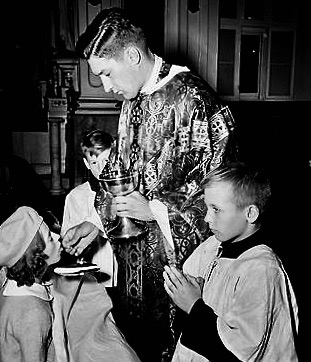
   The Eucharist was the high point of mass. It got us off our knees and on our feet. We helped in the distribution by holding a communion plate under everybody’s chin when the priest gave them the wafer. There would have been hell to pay if there was an accident, like the wafer falling out of somebody’s mouth and landing on the floor. It would have meant saying a million Hail Mary’s and a thousand turns around the Stations of the Cross.

   After gaining seniority I was promoted off the morning shift and started serving at Sunday masses, funerals, and weddings. Sunday mass was more of the same, only longer and more elaborate, but at least I got to sleep in and go to church in the family car instead of a city bus full of nobody I knew.

   Funerals were usually scheduled on Mondays and Fridays. I began to think weekends coming and going were a dangerous time. At one Friday funeral Father Ivan spoke glowingly of all the good works the deceased had done and how he was sure the man was going to Heaven. “The way to the brightness is through good works,” he said. “The first thing we all have got to do is do good.”

   The other altar boy and I were standing on either side of the dead man in his pine box. The boy’s name was Zedonas. Everybody called him Zed. He leaned over the open casket and whispered, “What you got to do first is be dead.”

   The corpses always looked like wax figures. They didn’t bother us over much, but the occasional mewling coffin sounds freaked us out. None of us especially enjoyed funerals, not because we were near at hand to the dead, but because everybody was down in the dumps, and on top of everything else we were rarely gifted with cash. It dismayed us to see the family light candles at a votive stand and push folded ones and fives into the offering box.

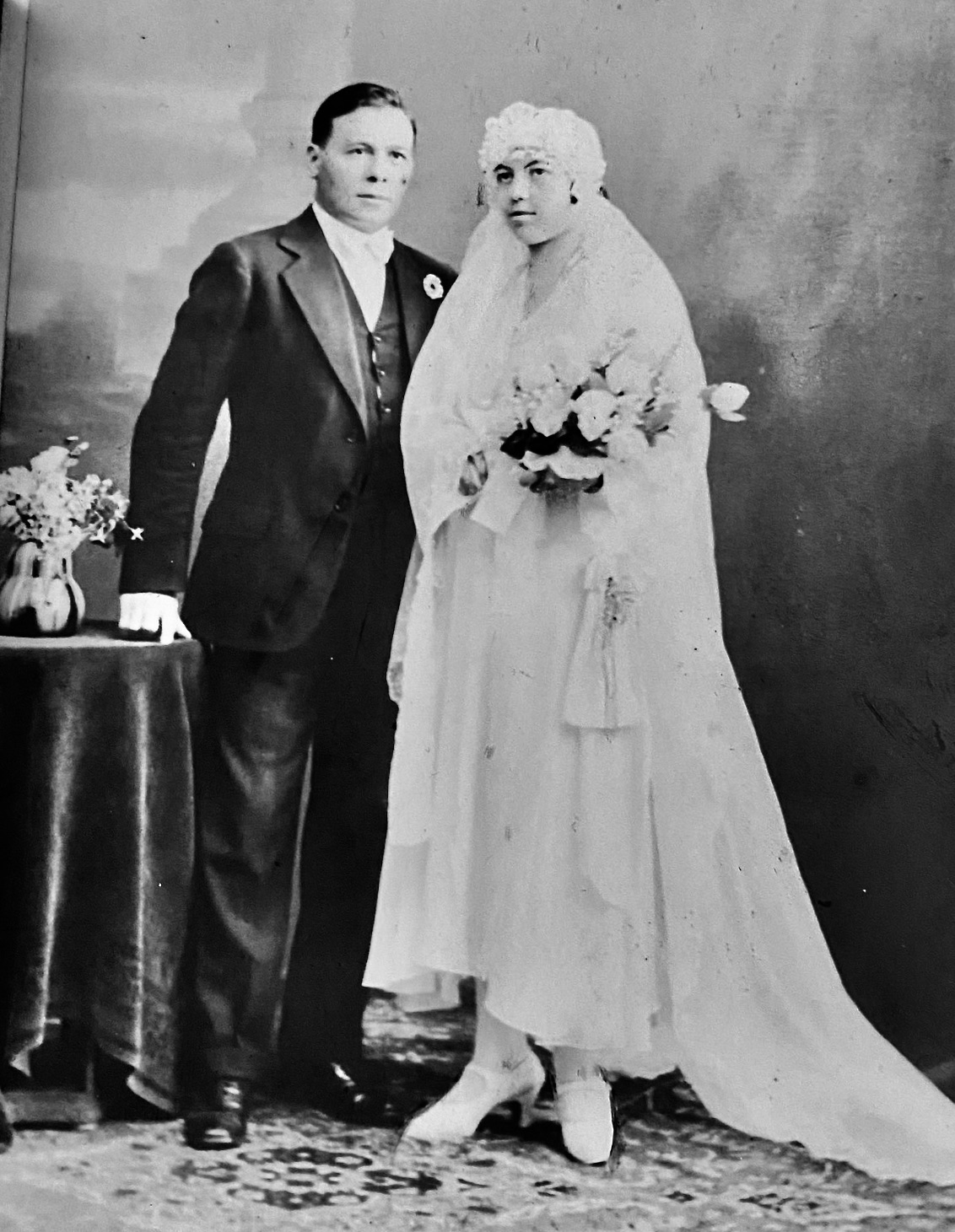
   Weddings were a different story. Everybody was in a good mood. They were festive. It was always a sunny day. The brides looked great in their white dresses with trains. Heaven help the altar boy who stepped on a moving train and yanked it off. The number one perk of serving at a wedding was we were always rewarded. The best man was usually the man who slipped us an envelope and told us what a great job we had done, even though we never did anything great beyond kneeling and standing around, like we always did.

   Weddings in July and August were usually hot and humid happenings. One time the groom himself paid us in advance in silver dollars, ten of them for each of us. It was an unexpected windfall. I wrapped mine up in a handkerchief. Everybody was sweating during the ceremony. When it came time for communion I reached into my pocket for the handkerchief to dry my hands. It would have been bad if I let the cruet slip. 

   When I did, a silver dollar slipped out from my handkerchief, rolled down the two steps in the gap between the altar rail, past the bride and groom, and down the center aisle of the nave. A man stuck his foot out and corralled it with his shoe. I was relieved when I saw it was my uncle, who was an accountant like my father. He knew the value of a dollar.

   One time Jon Krokey, a fellow traveler at Holy Family Church, dropped the Roman Missal, which was very bad. It is a large heavy book that includes all the words and prayers the priest uses during mass, except for the readings. It is second in line only to the Holy Bible

   “I was the bottom man, so I got to get up in the middle of the night to serve at morning mass,” he said. “While transporting the giant book I dropped it and it bounced down the stairs all the way to the communion rail. Father Andrel chewed me out in front of the congregation, which was ten elderly women in the front pews, all wearing babushkas. When he was done spewing, I quit. After that all the nuns at school mean face mugged me like I was the Antichrist.”

   My tour of duty ended at the end of sixth grade when my parents moved out of the neighborhood and I transferred to another Catholic school. They already had a full complement of altar boys and my services weren’t needed. I was happy enough to go back to being a spectator.

   When St. George’s Catholic Church closed in 2009 it was the oldest Lithuanian parish in North America. At the last mass three priests presided and there were a host of altar boys and girls. Back in the day we would have welcomed girls to our ranks, even though they weren’t allowed. They were better at cleaning than us and we knew we could boss them around, although they were also slowly but surely getting to be nice to have around as friends.

   The altar was given away to another church. The playground and parking lot were sold, and the grounds converted to greenhouses. The rectory was boarded up. The convent was already long gone, since the school had closed years before. A chain link fence was set up all around the building and that was that. There were no more dragons real or imagined for the soldier saint to slay. The day of the Holy Helper was done. St. George took a knee.

Ed Staskus posts monthly on 147 Stanley Street http://www.147stanleystreet.com, Made in Cleveland http://www.clevelandohiodaybook.com, Down East http://www.redroadpei.com, and Lithuanian Journal http://www.lithuanianjournal.com. To get the site’s monthly feature in your in-box click on “Follow.” His books are available on Amazon and Apple Books.

“Hell’s Kitchen” 

New York City, 1956. Times Square, Coney Island, and the World Series. A high profile Mob contract in the works. Stan Riddman, a private eye working the edges, stirs up the shadows.

A Crying of Lot 49 Publication

Not Fade Away

By Ed Staskus

   I hadn’t been to a funeral in several years, but when we got the news that my wife’s uncle Romas Bublys had died, we made a point of going. Even though I am not a faithful churchgoer, I go to church for weddings and funerals. When grieving, obsequies are a way to create connection and acceptance about something beyond our control, and a way to begin moving forward. The ritual inspires catharsis, helping everybody, especially the immediate family, feel better. 

   Even if you didn’t know the deceased very well, going to a funeral to support a friend or a family can be the best reason of all. Funerals are one of the few times when saying “I’m sorry” doesn’t mean “I apologize.” It means “I understand.” It means you understand it is a difficult time. We are all in our own boat but everybody is in the same ocean.

   The requiem mass was at the Church of Gesu in University Hts. next to the campus of John Carroll University. Romas was a life-long devout Catholic. The church is a Jesuit church, one of only 60-some in the United States, and the university is a Jesuit school. Jesuit parishes are guided by the Spiritual Exercises of St. Ignatius Loyola, encouraging adherents to ponder their experiences and search for God’s presence in their lives. 

   I didn’t know Romas Bublys well. Even though we both lived in northeastern Ohio, we travelled in different circles. I might have met him face-to-face and spoken to him for the first time the day I got married in the Lithuanian church on the east side of Cleveland. Some of his daughters, my wife’s cousins, and nieces were in our wedding party. I knew them slightly, although I knew their mother, Ingrid, well enough through her undying work in the ethnic community.

   Romas was born in Taurage, Lithuania in 1936. The small city is on the Jura River not far from the Baltic Sea. Most of it was destroyed by fire in 1836 and again during World War One. After the war it was rapidly rebuilt, industrializing with new up-to-date factories. A revolt against the national authorities broke out there in 1927 but was suppressed. His family fled the country when the Red Army invaded in 1944. Romas was six years old. After five years of treading water in displaced person camps, the family emigrated to the United States.

   The funeral wasn’t standing room only, but it was close. There were 400-some mourners in attendance, almost filling the large church. There was a line snaking out the door to get inside when we got there. While we inched forward more cars crept into the parking lot and more people got in line. Even though I assumed most of everybody at the service was Lithuanian American like me, most of them were strangers to me.

   Romas grew up in Detroit before relocating to Cleveland, Ohio. He served in the US Army with the 82ndAirborne Division. He earned a master’s degree from Cleveland State University and an MBA from Baldwin Wallace University. He went to work for TRW. It was a systems and  aerospace company. They built spacecraft, including the Pioneer series. His professional life revolved around engineering.

   The Church of Gesu is spacious and almost regal. It isn’t new, built in 1958,  but it looks new. The superstructure is steel so there are no interior pillars. By the time we got in we were lucky to find a pew in the back. We sat with my brother-in-law’s family. The service was conducted by Fr. Lukas Leniauskas, the son of somebody I grew up with. He was 20 years old when he left Cleveland and went to Lithuania where he entered the Jesuit Novitiate. He professed perpetual vows two years later and was ordained a priest in 2015.

   Romas’s eldest daughter gave the eulogy. I wasn’t sure if she ever got to the end of it, or not. She choked up and seemed to cut it short. She said her father loved to travel and read. He was proud of his children. He believed in faith, family, and the homeland. He loved life. He was wise and funny, a family man as well as a businessman. She said their father taught the five children in the family how to be successful. “One thing he always said was dress for success. He never wore blue jeans.” The burly man in the pew in front of us was wearing a blazer with gilt buttons and blue jeans. He didn’t seem to take her remark the wrong way.

   Romas was big on keeping Lithuania alive in the hearts of his compatriots who had emigrated to the New World. He was on the National Board of Directors of the Lithuanian American Community. He was the Director of the Lithuanian Club in Cleveland and its Chairman for six terms. He didn’t sit on the sidelines. He got involved and stayed involved.

   Two more of Romas’s daughters spoke. A cellist played “Ave Maria.” There is a hymn sung at many Protestant funerals called “The Day Thou Gave Us Lord is Ended.” It wasn’t sung at the Jesuit church, although the sense of it hung in the air. Romas had a good voice and had performed with the Cleveland Male Octet. He would have done the song justice.

   The service ended with a homily and prayer of commendation. Two men guided the coffin from one end of the nave to the other end and into the narthex. They were accompanied by the priest, a cross-bearer, and the altar girls. In my day it was a boy’s club. One of the girls swung a thurible burning incense. She swung it forward and back in time with her steps. What I could smell of the smoke was pungent.

   I had been an altar boy and served at many funerals at St. George Catholic Church. The funerals were usually on Thursday and Friday afternoons. After the final blessing we always finished with a recessional, no matter how few or how many were in attendance. If there were many people, and I had my hands on the thurible, whenever I saw a friend of mine in a pew, as I passed by, I swung my thurible sideways so my friend would get a good whiff of the smoke. My passing was always marked by coughing in the pews. 

   When Romas’s coffin came to rest in the narthex, two unformed US Army servicemen draped an American flag over it. One of them saluted, holding the salute for several minutes. The other one said a few words. When they were done they ceremoniously folded the flag. The funeral was over when they were done.

   Everybody was invited to the parish hall in the basement. I exchanged small talk with some grown-ups and bantered talk with my brother-in-law’s kids until I noticed a man I thought I recognized. I stepped over to his table where he was alone. He was Arunas Bielinis, somebody from the east side ethnic crowd back in the day. He had made a career as a lawyer, so after we established our bona fines, he asked me twenty questions about myself. He told me his friend Kestutis Susinskas and he used to borrow books from me when we were teenagers. “We liked that you were always reading books by James Michener and Leon Uris,” he said. “I’m not sure we returned all of them to you.” I told him it was water under the bridge.

   The Lithuanian Club catered the food and drink. Vic Stankus, a long-time local dentist, and long-time friend of Romas Bublys, was eating when something went down wrong. He started choking. A man stepped up and applied the Heimlich maneuver. Standing behind the dentist he placed a fist slightly above Vic’s navel. Grasping his fist with the other hand he shoved his fist inward and upward. The deadly morsel stuck in Vic’s throat went pop and flew out of his mouth. 

   Romas wasn’t going to be buried in the All Souls Cemetery in Chardon, where many of Cleveland’s Lithuanians are buried. My father is buried there. My mother is going to be buried there. Anatanas Smetona, the President of Lithuania during the inter-war years, is buried there. Romas was going to be buried in Luksai, not far from where he was born. A year removed from passing away, his relatives will visit him, spending the day, cleaning his grave, and leaving flowers.

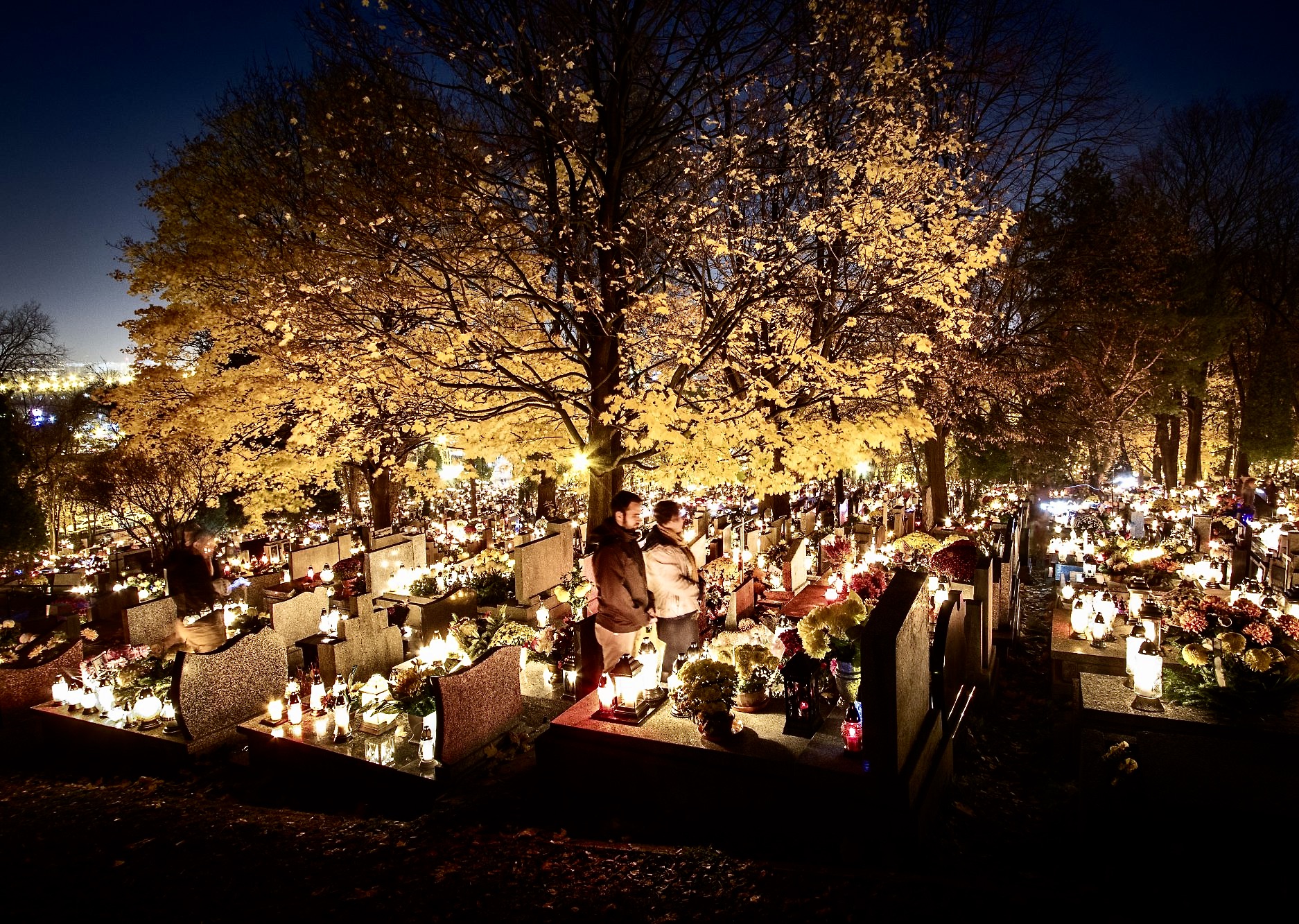
   The 31st of October is Halloween. The 1st of November is All Saint’s Day. The 2nd of November is All Souls Day, or Velines, in Lithuania. It has nothing to do with trick or treating. It has everything to do with not fade away. It is the Day of the Dead. Shops and schools close on the first day of November for a couple of days. Everybody heads to their cemeteries to visit those who have given up the ghost. 

   All Souls Day, also called Commemoration of All the Faithful Departed, is a day of remembrance. Families visit gravesites, lighting candles on the tombs of loved ones, and soliciting for their well-being. Many cemeteries become a sea of candles at night. It is one of the most important holidays on the Lithuanian calendar. Some people pray for those they suspect are in purgatory and try to win indulgences for them.

   Velines is a Catholic observance, even though some Lithuanians who get into the spirit of it on that day are not Catholic or even identify as the same. “Vėlinės has overflowed the banks of the church,” is how one churchman has described it. All Souls Day got started in the year 933 at Cluny Abbey in France when Pope Gregory V proclaimed November 2nd as a day to pray for the departed. Lithuanians were pagans at the time and didn’t pay any attention to the news bulletin. They had their own Day of the Dead. They called it Liges. It wasn’t just one day, either. It lasted three days and nights as soon as all the crops were harvested. Life is for the living and the living need bread.

   Lithuanians were the last Europeans to abandon paganism. The cemeteries of Kernave, the one-time pagan capital of Lithuania, had always been bereft of crosses. The Grand Duchy finally gave up and accepted Christianity near the end of the fourteenth century. During the centuries they were holding out, families gathered food and gathered in their boneyards in mid-autumn. Wine and honey mead were sprinkled on graves. It was a flock together as well as an observance. Romas had always enjoyed his cocktail hour. Although a modern man, he might have approved of some ancient pagan practices, although he wasn’t the kind of man to waste a drop of distilled spirits.

   Fresh farm eggs painted red and black were left on graves as good luck charms for next year’s crops. Tables were set up. Black bread and black pudding were served. Whatever was left over was given to the poor in return for their prayers. When the three days of Liges were over, branches were culled and thrown into a bonfire while everyone sang songs for the souls of the departed. They drank whatever wine and honey mead was left over.

   Returning to one’s birthplace to spend eternity is a promised land kind of return. When Romas Bublys went back to where it all started, he was rounding a circle that is not often unbroken. Very few are afforded a resting place that is the same place where they came to life. Promised lands lie on the other side of wilderness lands.

   After the post-funeral gathering at the Church of Gesu, when I thought about memory and remembrance, about what is between the saints and the deep blue sea, I thought if there is a promised land for me on the other side of time, I will probably be the last to know. I won’t mind as long as there is a candle to light my way.

Ed Staskus posts monthly on 147 Stanley Street  http://www.147stanleystreet.com, Made in Cleveland http://www.clevelandohiodaybook.com, Down East http://www.redroadpei.com, and Lithuanian Journal http://www.lithuanianjournal.com. To get the site’s monthly feature in your in-box click on “Follow.”

“Hell’s Kitchen” 

New York City, 1956. Times Square, Coney Island, and the World Series. A high profile Mob contract in the works. Stan Riddman, a private eye working the edges, stirs up the shadows.

Available on Amazon and Apple Books

A Crying of Lot 49 Publication

Saving Ernest Hemingway

By Ed Staskus

   The day Frank Domscheit pulled Ernest Hemingway out of the de Havilland Rapide, the day it crashed and caught fire, he didn’t know who the man in the airplane was, although he knew who Ernest Hemingway was. He had read one of his books before the war and liked it. It was about bullfighting. The man he pulled out of the airplane was covered in blood and babbling. Frank beat out the flames on the man’s arms and hands. He pulled him away from the airplane as fast as he could. The man was big and heavy but able to stumble forward with his help.

   Frank was in the Upper Nile lands of Uganda the last week of January 1954 tending to the wife of an Egyptian businessman, getting her ready to fly back to Cairo, when Ernest Hemingway’s airplane crashed and caught fire. It was more bad luck for the writer. It was his second airplane crash in two days. The Cessna 180 he and his wife had been on the day before, sightseeing the wilds surrounding the Great Rift Valley and Murchison Falls, encountered a large flock of birds. The pilot dove to avoid them but clipped an abandoned telegraph line, lost control, and crashed. Mary Hemingway, the writer’s fourth wife, suffered two cracked ribs, and Ernest Hemingway’s head got banged hard. Roy Marsh, the pilot, was unhurt. 

   They couldn’t send a distress call. Their on-board radio was broken. They walked away from the airplane where it was wedged in scrub trees. They walked to the Victoria Nile River. When night came they built a fire. They had some apples and biscuits. They had bottles of Carlsberg beer and  a bottle of Scotch that survived the crash. The men drank warm beer while Mary eased the pain of her cracked ribs with whiskey. Elephants trumpeted and hippos snorted at the waterline.

   “We held our breath while an elephant twelve paces away from us was silhouetted in the moonlight, listening to my wife’s snores,” Ernest Hemingway said.

   The British Colonial Administration sent search planes. They found the Cessna 180 soon enough. “One wheel of the undercarriage was broken, but otherwise the plane appeared little damaged,” said Capt. R. C. Jude, the pilot of the British Overseas Airways Corporation plane that circled the crash three miles below Murchison Falls. “The chap did a neat job getting her down.” When a ground rescue team reached the airplane, however, they discovered the Hemingway’s and their pilot were not there. 

   Uganda was more than 2,000 miles from where Frank Domscheit lived and worked in Cairo. He wasn’t an Egyptian. He was a Prussian Lithuanian. He had settled in Cairo after deserting the Afrika Corps. During World War Two the Afrika Corps was the 15th and 21st Panzer Divisions. There were some Italian armored and infantry divisions, as well. The Germans were highly skilled at desert tactics and noted for their esprit de corps. The Italians didn’t want to be in North Africa, surrendering whenever they could. When the British Eighth Army broke through the Axis defense lines and minefields at El Alamein, forcing General Erwin Rommel to withdraw, the war ended for Frank. The Afrika Corp went west, retreating to Tunisia. Frank went east, escaping to northern Egypt. 

   His family were fish merchants south of Klaipeda in Lithuania Minor on the Baltic Sea. They were herring wholesalers. He had been conscripted by the German Army in 1940, ending up as an ambulance driver. He served during the assault on France until France fell. After that he stayed in Paris. It might have been the best year of his life. He shipped out to North Africa in September 1941. The next year was the worst year of his life.

   Soldiers desert for many reasons, including home sickness, harsh conditions, and fear of combat. Frank deserted because he was sick of the day-to-day bloodshed. He didn’t know enough about why the war had started or why it was still going on. He didn’t disagree with German military policies or the leadership of his superiors. But he wasn’t invested in the war like they were. He didn’t care anymore. It seemed like a pointless struggle. He was sick of stitching some men up and burying the rest of them.

   When Ernest Hemingway, his wife, and their pilot were reconnoitering the morning after the crash, the writer spotted a launch on the river. “We had seen mirages when the sun got high, and at the sight of the launch, I thought, I must check my eyesight,” he said. “I called Mary and told her it looked like a launch was coming up the river. She looked and said it was.”

   The launch was the SS Murchison, the same boat that had been used in the 1951 movie “The African Queen.” It was piloted by Edwiges Abreo, a Goan from the west coast of India. “It was an excellent launch, fairly old-fashioned in lines,” Ernest Hemingway said. The captain told them it would cost one hundred shillings per person for the rescue. The writer paid the captain and they set off downriver to Butiaba on Lake Albert.

   When they got to Butiaba they disembarked and sat down under a silky oak tree to keep the sun off them. They waited for another airplane to arrive and take them to Nairobi for medical attention. It was a little-used airstrip. It was very hot and humid. When a de Havilland Rapide arrived they boarded it with their pilot and a policeman. They were near the end of the runway, a few seconds from liftoff, when the airplane hit an anthill, lost its balance, and crashed. The fuel tank exploded and they were engulfed in flames.

   Frank was watching the take-off from a thatched-roof hut. His Egyptian patient was napping in a folding canvas chair. She had fallen off a horse while on safari and hurt her head. When she didn’t improve, but rather got worse, Frank was eventually sent for. He was a neurologist, some said among the best in Egypt. He had studied medicine at Cairo University, starting before the war ended. He spoke German, Lithuanian, and English. He learned to speak Arabic. He became a doctor and trained at the Qasr El-Eyni Hospital. He was going to take his patient there for treatment.

   When he saw the airplane crash and explode he leapt to his feet and ran towards it. By the time he got to the airplane the policeman had gotten out, the bush pilot was dragging Mary Hemingway out through a broken front window, but Ernest Hemingway was trapped. The doors were jammed. He was banging on a side window with his head, trying to break it and get out that way. Frank could see that he would never get through the window frame, being too large of a man. He found a stick, jimmied the door with it, and when the door popped open, quickly frog marched Ernest Hemingway to safety. 

   He sat him down on the dry Nile mud. The writer had a scalp wound and burns up and down his arms. A part of his face was scorched. Frank found out later he had suffered a crushed vertebra and damage to his liver, spleen, and kidney. Their passports, all their money and clothes, and three pairs of the writer’s glasses were lost in the fire.

   He removed the rings on Ernest Hemingway’s fingers. He carefully cut away his shirt. He cooled his burns with water and covered them loosely with gauze. He checked him for shock, but his skin wasn’t clammy and his pulse was good. He thought the man might be in his 60s, although he seemed strong enough. He later found out he was in his 50s. His eyes were glassy. He was disoriented. There was something wrong.

   “How is your head?” Frank asked.

   “My head hurts,” Ernest Hemingway said.

   “You might have a concussion.”

   “I probably do.”

   “Have you had one before?”

   “I’ve had half-a-dozen, maybe more. I  tore my shoulder and banged my head yesterday when we went down at the falls. My head hasn’t killed me yet. I’m a writer. I need my head on straight. My luck is still good.”

   What he didn’t know was his luck was running out fast. It wasn’t ever going to be as good as it had been. His luck was getting worse and worse.

   “Do you have a headache?’

   “Yes.”

   “Are you dizzy at all?”

   “Yes.”

   “I want you to look to the right of the sun.”

   The African sky was clear and the sun was high. When Ernest Hemingway looked in the direction Frank indicated, he quickly looked away.

   “Are you sensitive to the light?”

   “Yes.”

    “Let me stand you up for a second.”

   “All right.”

   “How’s your balance?”

   “Not very good.”

   “That’s fine, let’s sit you down again.”

   “I need a drink.”

   “That would be a bad idea.”

   “My father was never the same after those two plane crashes,” Patrick Hemingway said. “When he visited me in Shimoni afterwards the atmosphere was bad.”  Patrick was Ernest Hemingway’s second son. Shimoni was a small village on Kenya’s south coast, popular with divers and fishermen.

   “It was like King Lear. He would shout, ‘What’s going on here? Aren’t I king?’” Ernest Hemingway had been a heavy drinker most of his life. He was drinking heavier in Shimoni. “I sympathized with his problems but you have to show some restraint. The last few weeks in Africa, he lost all restraint. I finally had enough. We never saw each other again.”

   The policeman who had been on the de Havilland Rapide stepped up and stopped beside Frank. He was a native. His black face was shiny with sweat. There was blood on his shirt.

    “How is he?”

   “He’s got some burns that need to be treated as soon as possible. I think he’s got a concussion. He needs to be examined in a hospital.”

   “Are you a doctor?”

   “Yes.”

   “He’s a famous writer,” the policeman said.

   “That’s what he said, that he’s a writer. I once read one of his books.”

    “I don’t read anything. I don’t know how to read.”

   A dark green Land River pulled up beside them. Two British Colonial Police Officers stepped out. Uganda was a British protectorate. They were wearing khaki jackets and short pants, black knee-high boots, black Sam Browne belts, and shiny billed black caps.

   “Is he fit enough to travel?”

   “Yes,” Frank said. “But he needs a hospital.”  

   One of the policemen led Ernest Hemingway to the Land Rover. Frank walked beside the writer, offering his arm in support. The native policeman helped Mary Hemingway into the back seat next to her husband. They were both quiet. They looked very tired.

   “I liked your book about Spain, about the bullfighting,” Frank said.

   “Thank you but I’m not getting into the ring with Tolstoy,” Ernest Hemingway said. “I love bullfighting, have for a long time. Bullfighting is the only art in which the artist is always in danger of death.”

   The Land Rover took them to Masindi, which was on the road from Murchison Falls towards Entebbe. They stayed at the Masindi Hotel, the oldest hotel in Uganda. That night the bar ran short of gin while Ernest Hemingway entertained a pack of reporters with tales about his near death. “I’ve never felt better,” he said. “It’s just a bump on the head.” When they got to Entebbe he was admitted to a hospital where he stayed for several weeks. His head was leaking cerebral fluid. Doctors told him he had fractured his skull.

   Three months later Frank got a hand-written letter from Ernest Hemingway thanking him for his help. He opened it while having lunch at the Tahrir Café opposite the Egyptian Museum. He had a bowl of koshary, which was vermicelli, fried rice, and brown lentils topped with garlic vinegar. He read the letter while he was eating.

   “I want to thank you for your help, even though I can’t write letters much on account of right arm which was burned to the bone third degree and it cramps up on me. Fingers burned and left hand third degree too, so can’t type and can’t get any work done. The big trouble is inside where right kidney was ruptured and liver and spleen injured. I am weak from so much internal bleeding. Being a good boy and trying to rest.”

   Seven months later Frank was at the Tahrir Café again reading the International Herald Tribune when he saw a news item about Ernest Hemingway. He had won the 1954 Nobel Prize for Literature. The prize cited “The Old Man and the Sea.”  As it turned out, it was his last novel. He never wrote another book.

   Frank bought a copy of the book and read it. He didn’t like it. It seemed solemn and maudlin. The old man was a Christ-like fisherman. The book was full of Christian symbolism. It was about redemption, as if there were such a thing. The only parts of the book he liked were the parts about Joe DiMaggio. Baseball players weren’t symbols. They were like the bullfighters in the other book he had read.

   He had seen the flesh and blood of Ernest Hemingway in Africa. The only sense of it in “The Old Man and the Sea” was the sharks who devoured the marlin the old man had landed. The book didn’t feel true to him. The writer had once been able to take the bull by the horns. He had been a correspondent during the Spanish Civil War and World War Two. The writing was clear-headed and hard-eyed. Frank wondered if the man’s concussions had made him sentimental. He wondered if his pen had dried up.

   When he had been talking to Ernest Hemingway in Butiaba, leaning into the Land Rover, he heard him say, “I never knew a morning all my years in Africa when I woke up and was not happy. I’m always happy to be alive, but I’m not happy about anything else anymore.”

   It was a broken-hearted thing to say. It ached of loneliness. Frank had never gone back to Lithuania, even though he was lonely for it. He couldn’t go even if he wanted to. The Iron Curtain was securely in place. Eight years after helping save the writer, when Frank read about him again in the International Herald Tribune, he read that Ernest Hemingway had committed suicide. He wasn’t surprised. Committing suicide is braving death, although there is rarely anything brave about it.  It is a desperate act. 

   “There is no lonelier man in death except the suicide,” is what Ernest Hemingway said. It was a desperate man’s way of escaping ills that had no remedy. There were no more i’s to dot or t’s to cross.

Ed Staskus posts monthly on 147 Stanley Street  http://www.147stanleystreet.com, Made in Cleveland http://www.clevelandohiodaybook.com, Down East http://www.redroadpei.com, and Lithuanian Journal http://www.lithuanianjournal.com. To get the site’s monthly feature in your in-box click on “Follow.”

“Hell’s Kitchen” 

New York City, 1956. Times Square, Coney Island, and the World Series. A high profile Mob contract in the works. Stan Riddman, a private eye working the edges, stirs up the shadows.

Available on Amazon and Apple Books

A Crying of Lot 49 Publication

One Way or Another

By Ed Staskus

   When I was taking yoga classes I learned much about the practice, from the thinking side of it to the action side of it. It learned yoga wasn’t any one thing but many things. It was a melting pot of ways and means. The core of it was simple enough, but the branches bore investigation, from meditation to headstand, no matter how exasperating the branches might be.

    I wasn’t able to do headstand for a long time, except against a wall, until one day I was doing it, no problem. After that I flipped wrong side up at the drop of a hat. I went from hating it to loving it. When a woman toppled out of the pose and crashed into me in a class, I thought, man, what an amateur! I changed my tune when I almost killed myself trying to get a grip on handstand. I never did get the hang of it.

   When it came to the doing of yoga the instructors were all different, all sincere, all good coaches with good intentions. They demonstrated the nuts and bolts of poses. They explained the idea behind them. They helped with adjustments. They encouraged us, which was a good thing, if encouragement was what you needed. Hope and encouragement are two of the best things you can give another person. For my part, lack of encouragement has never been a problem. I am irascible enough to not care too much about sticks and carrots. I mind my own business and keep in mind what Ezra Pound said, which was, “I have never known anyone worth a damn who wasn’t irascible.”

   One element of studio classes always bothered me, however, which was the catch phrases the instructors used. Some lingo like drishti, bandhi, and chaturanga was helpful to know. Everything seemed to revolve around down dog and tadasana, making it easy to jump to attention when hearing those words. Lift your leg, open your chest, and bring your feet together were sensible and understandable. Most of the new age cliches, however, got under my skin.

   “Love yourself” was one of the new age cliches. I understand living in your own skin but always thought loving yourself was either narcissism or some kind of mental disorder reserved for celebrities. I sometimes thought being a celebrity might be fun because, if I was boring somebody they would naturally think it was their own fault, they being nobody’s.

   “Inhale the future, exhale the past” was another one. Breathing is breathing. It’s not a trick or a metaphor. It’s a fact of life. Breathing consciously or unconsciously, awake or asleep, running a 10K or while doing Chair Yoga, is staying alive. Not breathing for a couple of minutes is losing life’s good luck charm. As for me, whenever I feel blue I go for a walk in the Cleveland Metroparks where the breathing is free and easy.

   What did exhaling the past mean? Exhaling the past would mean puffing away everything you have learned and know. The past informs the present. The past is gone, sure, but it isn’t going anywhere. As for inhaling the future, who can wait that long? When I was on the yoga mat scuffling to keep up, I had to gulp air right now, not in the future. Besides, instructors were always saying, “Be in the present.” Today was yesterday and is going to be tomorrow soon. Every asana, which is what the poses are called, was always right now. Breathing right now is what matters, never mind the past or the future.

   “Letting go is the hardest asana” was hard to take. Nobody who has ever taken a Bikram Yoga or Ashtanga Yoga class can possibly believe this. Bikram in a sweatbox is a torture chamber and Ashtanga is simply torture. After finishing those classes letting go isn’t hard. It is the easiest most wonderful thing in the world to breathe a sigh of relief. I have seen men and women letting go at Bikram Yoga studios and never coming back. What is so hard about letting go and kicking back on the sofa with a cold one after sweating out a gallon of life’s salt water?

   “Release the toxins” was a shopworn chesnut. Hearing it always reminded me of “Release the hounds.” What if I released my toxins and they started attacking others, for God’s sake? The instructors never explained the mechanics of it, except for saying nonsense like toxins come out in perspiration. There is no such thing as toxins that come out in sweat. Anyway, if I knew how to release them, assuming I was keeping toxins prisoner in my own body, I would do so without anybody having to cajole me. 

   The maxim that dazzled and perplexed the most was “It’s all yoga.” It was like saying, “It is what it is.” When I asked what it meant all I got was well-meaning mush that implied yoga was woven into the fabric of life. The life of the Mafia or the Taliban? The life of Nazis and Commies? The zany cesspool of the NRA and MAGA? There are many monsters running rampant who think they are gods and yoga is unquestionably not in their DNA. The nut cases who spill blood at schools and shopping centers with their AR-15’s don’t have a drop of yoga blood in them. They could use it but eschew it in favor of their dark fantasies.

   Even yoga isn’t exactly yoga nowadays. It might have been in the Old World, but much of it in the New World is a hodgepodge of calisthenics, jazzercize, and core work. Some studio owners don’t even bother paying lip service to the ethical and spiritual side of the practice anymore. They have bought in to the capitalist side of yoga by endlessly promoting teacher training, which costs thousands of dollars. Bikram Yoga teacher training, lasting nine weeks, cost ten thousand dollars before Bikram Choudhury fled the country, leaving behind charges of mischief behind closed doors. 

   There are practices like Naked Yoga and We’re Stoned Yoga that have as much to do with yoga as the Three Stooges have to do with Schrodinger’s cat. “Now you see it, now you don’t,” is what the cat says. Better to sleep it off than try to figure it out, although figuring it out isn’t difficult. “A child of five would understand this,” Groucho Marx once said. “Send someone to fetch a child of five.”

   Many yoga masters, like Greg Gumucio and John Friend, oozing sincerity have been the most insincere yogis ever, opting for sex and dollars. They are always banging on Heaven’s door with news of their next Ponzi scheme, except they don’t call them schemes. They call them something like conscious surrender. It is a showboat they sail on the open river, a fishing line leading back to what they are really all about. Don’t follow leaders, watch the parking meters, especially when the leaders tell you their sole aim in life is to help you. 

   When I looked around the west side of the North Shore it was the haves who were enjoying “It’s all yoga” the most. Those in Rocky River had the time and energy levels. Next door to Rocky River in Lakewood, where I lived, they enjoyed some of “It’s all yoga.” The problem was their income levels didn’t match up, so they didn’t have the same time or energy. The city of Cleveland, where yoga isn’t a halo except for scattered gentrified islands, it wasn’t all yoga, at all. The streets are meaner there and there isn’t the time or money to kid yourself that classes are necessary.

   It was when the head honcho at the yoga studio I went to in Rocky River started trying to convince me I should deepen my practice by taking teacher training that I stopped taking classes there. I was in my late 50s with a bad hip and skeptical about more than a few of the claims of yoga. I wasn’t teacher material, far from it. I was more anarchist than love your neighbor. They didn’t seem to be enlightened enough to see that. I wasn’t grist for the mill, either. I didn’t have the readies teacher training would require just lying around waiting for something to happen.

   I don’t take classes anymore. I practice at home by myself almost every day. There’s nothing complicated about yoga once a few basics have been mastered. It’s easier than grafting plants or installing a garbage disposal. It has lots of benefits to it, like staying in shape and finding some peace of mind. When I get on the mat at home, I get to be me, not what somebody else is telling me I should be, using buzz words that mix up being grounded with pie on the sky.

   That’s the best thing about the practice, the freedom of it, at least once I broke free of the conceits and capitalism of yoga studios.

Ed Staskus posts monthly on 147 Stanley Street  http://www.147stanleystreet.com, Made in Cleveland http://www.clevelandohiodaybook.com, Down East http://www.redroadpei.com, and Lithuanian Journal http://www.lithuanianjournal.com. To get the site’s monthly feature in your in-box click on “Follow.”

“Hell’s Kitchen” 

New York City, 1956. Times Square, Coney Island, and the World Series. A high profile Mob contract in the works. Stan Riddman, a private eye working the edges, stirs up the shadows.

Available on Amazon and Apple Books

A Crying of Lot 49 Publication

Crackerjack in the Kitchen

eb991025b477fc57a3b24206f6b28192.jpg

By Ed Staskus

   “I see you’ve made it back,” Michelle said. She was sporting retro eyeglasses and handcrafted rings on nearly every finger of every hand. Waiting tables, delivering three, four, and five plates at a time, is all hands on deck kind of work.

   “I want to try the pad Thai this time, after seeing the folks next to us digging into it the last time we were here,” Vera said.

   “That’s one of Emily’s best, definitely,” Michelle said. “Would you like to start with a drink?” She was one of three servers on the floor the mid-September evening Frank and Vera Glass were there for dinner. It was busy but nobody had to wait long for liquids and solids. The place was The Mill in New Glasgow on Prince Edward Island.

   “What is a good mixed drink?” Vera asked, running her eyes up and down the menu.

   “Everything is good, but Kim can mix up anything if we don’t have it on the list.”

   “What is Straight Shine?”

   “Shine.”

   “Like moonshine?”

   “Just like that. It’s our island-made moonshine.”

   “Like Ole Smoky in a mason jar?” Frank asked.

   “Not the same, it’s more like a margarita,” Michelle said.

   “That’s a step in the right direction.”

   “My God, I should moonshine,” Vera said. “My grandfather used to make his own vodka at home. All his friends from Lithuania, who escaped during the war, would come over on Sunday afternoons after church, drinking the rest of the day, yakking it up and singing their old country songs all night. I’ll try it, for sure”

   “Not for me,” Frank said, “I’ll have a pint, something IPA.”

   The Mill is in a two-story Dutch Colonial-like blue building built in 1896. It served as a community center and later as a courthouse, among its many incarnations. It was converted to a restaurant in the 1990s by the Larkin’s, nearby poultry farmers who are the largest turkey growers in the province.

   “We used to have a guy in shipping where I worked, in the warehouse, from West Virginia, who brought back moonshine every time he went home for a visit,” Frank said. Vera sipped her Straight Shine. “He always said you could tell it was good if you put a match to it and the flame burned blue. That meant it was good to go and wouldn’t make you go blind.”

   Michelle walked up and lit the tea candle on their table.

   “How is it?”

   “It looks good to me,” Vera said. “What I mean is, it tastes good.”

   When the Larkin’s transitioned out of the dining room business, The Mill stayed where it was when chef Emily Wells took over, putting her fusion-style stamp on the dining room. Diners soon put their stamp of approval on the fare.

   Vera ordered the stir-fried garlic ginger cilantro rice noodle fettucine pad Thai with lobster and Frank ordered the special, which was curry sweet potato soup, baby back ribs with mac and cheese, and dessert. It was East meets West meets Italy. Fusion cooking is the art of mixing ingredients and preparation styles from different cultures into a distinctive plate of tastiness.

   The window Frank and Vera were sitting at had gone dark by the time they finished their dinners, although Vera was still coming around the bend. She was a slow eater and her plate had been stacked. A quarter-moon in a cloudless sky reflected a milky light on the Clyde River below them in the hollow. Frank leaned back in his chair as Vera lifted a final forkful to her mouth.

   “Since we both ordered something new to us, why don’t we try something new for dessert, too?” Frank said.

   They had eaten at The Mill several times and usually ordered coffee and carrot cake after dinner, since the carrot cake was just about the best they had eaten anywhere.

   “It’s better than my mom’s, and she’s a pro,” Vera said.

   Vera’s mother was a freelance pastry chef in Cleveland, Ohio, providing sundry restaurants with sweet treats. During the holidays she made website-ordered Russian Napoleon cakes, shipping them frozen solid all around the country by Fed-Ex next-day air.

   “How about the chocolate cake that couple from Boston told us about?” Vera asked.

   “When we’re here we drive around the island,” the husband from Boston said. “We’ve eaten at a lot of restaurants but overall this is our absolute favorite. What’s so great about it? The unique combination of flavors and menu options, for one, and there’s not a deep fryer in the kitchen, for another thing. They’re dedicated to local sourcing, which means super fresh food and vegetables. Make sure to try the chocolate cake even if you’re full. It melts in your mouth.”

   He added that the portion was large, too, enough to share. Unlike some restaurants with a glowing reputation on Prince Edward Island, in the meantime serving prison camp portions at penthouse prices, The Mill gets it done with a square deal, even though it has as much, if not more, in the culinary arts to crow about.

   “Do you bake the chocolate cake here?” Vera asked.

   “Our baker does,” Michelle said.

   They ordered  a slice of the chocolate cake and two coffees. Michelle stopped at their table. She asked them how they liked the cake.

   “It’s totally delicious, the dark chocolate, if you want to let the baker know,” Frank said. A few minutes later a strapping youngster with disheveled hair walked up to their table. She said she was the baker and her name was Anna. She looked like she was maybe a sweet sixteen teenager.

   “You made this?” Frank asked, pointing to the half-eaten slice of cake he was sharing with his wife.

   “Yeah,” Anna said, wiping her hands on her apron.

   “Do you make the carrot cake, too?”

   “Yeah.”

   “This cake is what chocolate cake should taste like, up-to-the-minute,” “era said. “They can be boring, the same thing over and over again. This is definitely a bomb cake, in more ways than one.”

   “You seem awfully young to be making something this good,”  Frank said.

   “Yeah,” Anna said, shrugging and smiling.

   “How old are you?”

   ““I was 15 years old when I first started cooking here two years ago.. I came in to work one day, I was bussing tables, and my boss said, you’re scaring everybody out there. You have to go into the kitchen. From that point on I’ve worked in the kitchen.”

   “Scaring everybody?” 

   “Yeah, they said my personality was too big.”

   “Too big?” 

   “I was just barely fifteen. How scary could I be? I guess I can be scary sometimes. Nothing’s really changed.”

   “I told her when she worked out front that she was scaring the customers with her huge personality,” Kim, the mixologist, said “Now that she’s in the kitchen she can still be scary, I’ll teel you. She’s come up with nicknames for all of us. We won’t talk about that, though. It can get gross.”

   “What did you guys eat?” Anna asked..

   “She had the Thai and I had the special,” Frank said. “We often have the big seafood chowder bowl, the unofficial one.” 

   “Ahhh,” Anna said.

   “I’ve heard you have a name for it in the kitchen.”

   “We have a nickname for it.”

   “That would be Big Ass Bowl?”

   “Yeah.”

   “I always taste orange in the soup,” Vera said.

   “Yeah, there are orange peels, marinated, and bay leaves, that we take out right before service. We make our own fish broth.”

   The restaurant, brainchild of Emily Wells, who was named one of Canada’s top chefs by the Matador Network in 2016, serves local food made with global flair. She works in an adaptive vein, adapting her recipes to what’s in place and on time. “We’re buying local lettuce, local tomatoes,” Emily said. “A huge chunk of it is seafood since it’s seafood season.” A graduate of the first class at the Culinary Institute of Canada, she cut her teeth in kitchens in Ontario and later made a name for herself at The Dunes in Brackley Beach.

   “I’ve been at it for thirty-five years,” she said.

   “Oh, I’ve got mussels on the stove, back in a minute,” Anna said, striding out of the dining room.

   “I thought Emily was making the desserts, or they were buying them from some high-end bakery,” Vera said.

   “If that teenager is the pastry chef, all I can say is, she’s totally up to speed,”  Frank said.

   “Do you make all the desserts?” Vera asked when Anna came back to their table.

   “Yeah, I’m a line cook and the baker.”

   “My mother is a pastry chef. You’re darned good.”

   “How did you learn to bake so well?” Frank asked.

   “Emily taught me. I‘m a quick study. I learned a lot from my grandmother, too I used to spend all my time with her when I was a kid. She taught me how to pickle and bake.”

   Not everybody is good with pastry, not by any means. Not even celebrity chefs. “I make no bones about it,” says Michael Symon, chef, author, and restaurateur. “I have no understanding of pastry whatsoever.”

   “Honestly, I hate to say this,” Anna said, “but my aunt makes an even better carrot cake than I do.”

   “You’re early on to be nearly as good as your aunt,” Frank said.

   “Most of our staff is young,” Anna said. “Everybody in the kitchen is under 20, except Andrea and Emily. We have a 19-year-old, another 17-year-old, and a 13-year-old, who I   is my sister. Luke, our other prep, has three younger brothers who work here.”

   “It’s like the family line on the line,” Frank said..

   If you are under sixteen in the province of Prince Edward Island and want to work, you must have permission from your parents, must work only between 7 AM and 11 PM, and not work in an environment that is harmful to your health, safety, or moral development, among other things. If you are over sixteen, those limits don’t apply.

   Sometimes known as the Million-Acre Farm, farming is king on the island. Farming for a living is hard work. You probably don’t need a gym membership. There are some advantages. You are your own boss, you can go to work in boots and a t-shirt, and you eat like a king.

   “I started as a dishwasher,” Anna said.

   Working the dish pit means long hours on your feet, getting wet a lot, and ending the day smelling like food and soap. It’s not markedly different than farming, except farming is at the head of the line and washing dishes is at the end of the line.

   “The kids are great,” Kim said. “Ours is a teaching kitchen, so they get an education, and get paid. They all have a great work ethic. The little hostess, she’s fifteen, a crackerjack like Anna. It’s good to see that they want to work. I’ve worked in other places, and it’s like pulling teeth, all standing around. Here, they’re eager to learn and do.”

   “A lot of people, their idea of baking is buying a ready-made mix and throwing in an egg,” Vera said. “I make carrot cake at home, but it’s just carrots and stuff. One of our cats likes a piece now and then. Yours is both simple and complex. It’s subtle, really fine,”

   “The main spices we use are ginger, cloves, and cinnamon, and a bit of all-spice, and that’s about it.”

   “The cake isn’t heavy, which is what I like.”

   “There’s pineapple in it, too.”

   “The frosting is terrific.”

   “I was supposed to whip up more frosting yesterday, but I couldn’t come to work,” Anna said. “I decided my cat must have died.”

   “Oh, my gosh, that’s too bad!”  Vera said. “What happened to make you decide that?”

   “She was an outdoor cat. I had her since I was six, I came home one day and asked, where’s my cat, but nobody had seen her for days. It’s been a month now. I sat outside yesterday in my lawn chair until it got dark, hoping she would come back but she never did. I’m pretty sure she got eaten by a coyote.”

   After paying the bill, Frank and Vera lingered outside at the rail on the front deck. The band that had been playing in the upstairs loft was in the parking lot, still hooting it up. The night air was damp but brisk. The moon hovered in the inky sky. Across the street lights glowed over the bay doors of the New Glasgow Volunteer Fire Department.

   “That girl might be one of the best 17-year-old pastry chefs no one has ever heard of,” ” Frank said.

   “Between the known and the unknown, what else is there?” Vera said.

   “That moonshine seems to have gone to your head,” Frank said.

   “Ha, ha, ha. Anyway, she’s got a big smile, big energy, and some big cake talent. Somebody will hear about her, sooner or later.”

    There’s always a ‘Surprise Inside’ every box of Cracker Jack, Frank thought.

   They walked to the end of the deck leading to the side lot. Fluorescent lights blazed in the windows of the kitchen. Dishes clattered in sinks, the kitchen staff having a gab fest as they cleaned up. They heard high-spirited laughter, which followed them down the steps and a stretch of parking lot gravel to their car. A red fox chasing a brown rabbit ran past them into the bushes. 

   “You know how they say you are what you eat,” Frank said.

   “Of course.”

   “This is as good a place to be what you eat as any.”

Ed Staskus posts monthly on 147 Stanley Street  http://www.147stanleystreet.com, Made in Cleveland http://www.clevelandohiodaybook.com, Down East http://www.redroadpei.com, and Lithuanian Journal http://www.lithuanianjournal.com. To get the site’s monthly feature in your in-box click on “Follow.”

“Hell’s Kitchen” 

New York City, 1956. Times Square, Coney Island, and the World Series. A high profile Mob contract in the works. Stan Riddman, a private eye working the edges, stirs up the shadows.

Available on Amazon and Apple Books

A Crying of Lot 49 Publication

Head Over Heels

By Ed Staskus

   It was wetter than not wet the front end of summer and too muddy to ride the single tracks in the Rocky River valley. It rained nine days the first two weeks of July. Instead of the single tracks, I rode my Specialized on the all-purpose trail and left my Schwinn hanging in the garage. The Schwinn was outfitted for dirt, with front shocks and a low stem. The Specialized was outfitted with road tires, knobby on the outside and smooth rolling on the flat side, making for better going on asphalt.

   It made for even faster going down Hogsback Lane, which is the entryway off Riverside Dr. into the valley. It is laid down on a steep shale hill. It’s about a half mile to the bottom. When the shale slumps and slides, the two-lane surface crumbles, and it becomes vital to keep your eyes glued to the road. Hunched over the handlebars I could hit 40 MPH downhill, no problem, unless I feathered the brakes, which I usually did, lessening the chances of flying over the handlebars. That would have been a misadventure.

   I rode alone most of the time, especially that summer because my brother Rick, with whom I occasionally rode, was getting married. He said he didn’t have much time to get on his bike anymore. “I’ve got a lot going on,” he explained. He had been married once before, but it only lasted two months before his bride hit the road.

   “I don’t want him racing that crazy hill and crashing,” his fiancée Amy said. She didn’t want a train wreck walking down the aisle with her. She and Rick had met earlier in the year on a blind date. One whirlwind after another led to the one-way street they were on.

   “You be careful, too” my wife said, watching me hitching up in the backyard.

   The summer of 1995 was hot, in the high 80s when it wasn’t in the high 90s. I could have ridden the single tracks, since they had dried up going into August, but I stayed on the all-purpose trails. Towards the end of one week, after getting home from work, I rode twelve miles out, almost all the way to Berea. It was on the way back that I passed a man wearing a red helmet. Inside a few minutes the red helmet was behind me, drafting, but when I slowed down for a car at the crossroads to the entrance of Little Met, he slipped past me when the car paused to let us go by. The trail went up a long hill. I finally caught up at the top.

   He tucked in behind me and we rode to where the trail zigzagged through some curves  where he got sloppy. He tried to pass two women on roller blades, except on an inside-out curve, and when another bike came up on the other side, he had to slalom wide onto the grass. He had to loop back.

   “That was a good pace,” he said before I peeled away to go home, while he kept going his own way. Pedaling up Hogsback Lane is a long slog, which is what I did, shifting into lower gears. By the time I got close to the crest I was on the verge of stalling. When I made it to flat land I sucked air, returning to the land of the living.

   The next weekend Rick had an appointment for a haircut at Planet 10, on W. 9th St. and wanted to ride there. We rode through Ohio City to Church St. He pointed out an old church whose rectory had been converted into a recording studio. “That’s where we’re having our reception,” he said. Amy was a sometime actress and sometime singer. She had the looks and the voice. She made a living doing nails, since nailing roles in Cleveland wasn’t a paying proposition. Her showbiz earnings were her drinking money.

   Rick was Roman Catholic and of Lithuanian stock, like me, but they were getting married in an Episcopalian church instead of the ethnic church where we had grown up. Even though Amy was an atheist, her well-off grandmother wasn’t and wanted her to be married in a house of God. Amy didn’t like the old Lithuanian church in North Collinwood, so it was going to be someplace else.

   We went south on W. 25th St., crossed the bridge to Jacobs Field, and rode to the Warehouse District. The bride-to-be was still all right with Rick riding city streets, but not any farther into the near east side, which I often did, to Cleveland Hts. through the ghetto along Cedar Rd. She quashed that by stamping her foot. “I don’t want him getting killed by any porch monkey,” she said.

   Rick pushed his bike into Planet 10’s lobby and I rode away. After zigzagging around downtown, on my way home, stopping at a narrow strip of grass near the Hope Memorial Bridge, squeezing a drink from my water bottle, I saw a black woman with shopping bags easing herself down to a patch of grass at the side of an RTA sign. She looked up at me and smiled. One of her teeth was chipped. She was probably going back to the ghetto where she would make plans to ambush Rick if he ever rode his bike past her house.

   I was standing outside my garage when Rick and Amy pulled up in her baby blue Ford Tempo. His bike was sticking out of the trunk. The trunk was bungee cord shut. “Jerry screwed up Rick’s appointment,” she complained. “He’s so unprofessional.” She jabbed the air with a finger. She was angry. She reminded me of Jayne Mansfield in the movie “The Wayward Bus.”

   Planet Ten was owned and operated by a gay man named Jerry who was a junkie. He lived near Gordon Square where he could score smack in the blink of an eye. He was up-and-down on any given day. He was good with clippers and shears, though, when he was on the up-and-up.

   It was mid-week before I rode back into the valley and got on the dirt trails that branch off from the horse stables at Puritas Rd. They were dry where they were level, but they weren’t level over much. I had to ford a stream where a tree had fallen. I jumped some baby stumps and went sideways once. When I got home I got the hose and sprayed cold water on myself. It was a hot day and I had gotten hot.

   My wife and I drove to Amy’s bridal shower that weekend, which was at her best friend’s house in Avon Lake. Wendy was a big-faced woman married to a ruddy-faced man who was a barge pilot on the Mississippi River. It was a very steamy that day, even though it was just barely August. I was sitting on a leather sofa in the air-conditioned family room when I noticed a small dog on the coffee table. I couldn’t tell if it was a dog dead asleep or a dead dog who had been stuffed. When I reached for whatever the thing was, it snapped at my fingers.

   “You better watch out,” Wendy said. “He’s blind, so he bites at everything.”

   I went for a spin after we got home. Twilight was turning to dusk by the time I got back. Snapper, our Maine Coon cat, came running out of the neighbor’s backyard. Just when I was ready to close the garage door, Rick pulled into the driveway. Snapper ran the other way. He didn’t trust my brother. I had gotten to not exactly trusting him anymore, either. He was always explaining something or other.

   “Can I borrow your lawn mower?” he asked.

   “All right, but bring it back.”

   He was notorious for never returning borrowed tools. He had Kate, Amy’s three-year-old daughter, with him. I picked her up, held her upside down, and spun her by her heels in circles. When we were done we talked about a nickname for her, finally settling on Skate.

   “It rhymes with Kate,” I said. She waved goodbye through the window of the car as Rick pulled out with the lawn mower. If the child hadn’t been with him I wouldn’t have lent him the mower. That was probably why he brought her along. He was shrewd that way.

   By mid-August cumulus clouds were dotting the sky and the weather was surprisingly cooler. I rode my Schwinn down Hogsback Lane and got off the all-purpose trail at Mastick Woods, veering onto the dirt track there. I rode the track and then double-backed on the horse trail. As I did, I noticed somebody was coming up. When he went by I saw he was wearing a baseball cap instead of a helmet and was on a Trek. He was riding fast, and even though I followed him as best I could, I couldn’t catch him until he suddenly slowed down. I saw why when he pulled up. Horses were coming around a bend. We waited as the nags cantered past.

   The baseball cap turned to the right and rode into the trees toward the river and the single tracks on the bank. I followed him, bumping over ruts and logs and through underbrush, but soon lost sight of him. He pushed up the hill running along Big Met, then down, and as he came into the clear jumped onto the trail. He had gone around and was riding faster than before. We sped through a thicket, then across a baseball field where he widened the gap by jumping a wood guardrail, something I couldn’t do, even if I tried as hard as I could. It would have ended badly. I went around. It went well enough.

   I thought I might catch the baseball cap on the Detroit Rd. climb out of the valley, except he climbed so fast I lost more ground. I finally caught up to him where he was waiting at a red light. “I wasn’t planning on doing much today, but it ended up being a fun ride,” he said. “I saw the Vytis decal on your fender.” There was a red decal of the Lithuanian coat of arms on my rear X-Blade fender. 

   “Not many people know what that is.”

   “I know my Baltic heroes,” he said, waving goodbye.

   JoJo was Amy’s friend who had arranged the blind date when Amy had been on the prowl after her latest divorce. She was promised she could be the maid of honor if the date led to anything. She was a travel agent. Amy gave her a cash down payment for a Cancun honeymoon. But then the travel agency called and said they were getting anxious about the down payment, since they hadn’t received it, yet. When Rick telephoned JoJo she said she hadn’t gotten any cash, but when Amy overheard that she rushed to the phone. There was a heated argument and JoJo somehow found the money. The honeymoon was back on. JoJo as bridesmaid was off.

   The next day Rick called. “Are you going riding?” he asked.

   “I’m just going out the door,” I said.

   “I’ll be there in ten minutes. I need some fresh air.”

    I was working out the kinks in my lower back when Rick rode up the driveway.

   “Amy’s sick,” he said.

   “What’s wrong with her?”

   “Cramps,” he said. “I think it’s nerves.”

   “Let’s go,” I said.

   The sky was overcast and gusts from the southwest pushed us around as we rode on the rim of the valley. We glided down and rode single tracks. The ruts were bad but we rode fast enough. My back wheel went in wrong directions a few times. Rick held back. He didn’t want to face plant.

   “A little out of control there,” he said when we crossed over to a horse path and relaxed.

   “Maybe a little,” I said.

   “I want to make it to the altar in one piece,” he said.

   “Getting married is risky business,” I said. “Take a look at you and Amy. You were married once and it only lasted two months. Amy’s been married twice. She’s got a kid by one of the husbands and another kid by a free agent. You might want to throw caution to the wind between now and the wedding day.”

   “I don’t think so,” he said, shooting me an aggrieved look. 

   “Then keep your eyes wide open before the wedding and half-shut afterwards.”

   Leaving the valley Rick suddenly braked ahead of me. I got tangled up in his back tire and went over the handlebars. I skinned my knee, but we were going too slow for much else to happen. “Crash test dummies,” a watching crow squawked. It took me longer to put my derailleur chain, which had fallen off, back on than it did to get over my injuries. The chain was trapped against the frame. I had to loosen the rear wheel. I cleaned my greasy hands on some of last year’s fallen leaves.

   The morning of the wedding, while my wife went shopping for a gift, I sped down into the valley. I felt good, but a strong crosswind was blowing and I got tired. The bike felt sloppy, too. Going home I pushed hard because I didn’t want to be late for the ceremony. When I finally got home I found out I had been riding on a nearly flat back tire.

   The wedding went off without a hitch, but during the reception, when my wife was congratulating him, Rick made the shape of a handgun with his hand, with his index finger pressed to his temple. The next day I drove to his house with the gift we had forgotten to bring to the reception. Amy was lounging in the living room in a thick white bathrobe, poring over Cancun brochures. Skate was in her pajama’s watching SpongeBob Squarepants.

   “How’s the new life?’

   “Couldn’t be better.”

   By the beginning of October the valley was starting to glow with maple red. One Sunday morning my wife and I had breakfast down the street at the Borderline Café and went for a walk together on the horse trails behind South Mastick. That night, while we were watching a movie on TV, Rick called.

   “I won’t be able to ride anymore.”

   “Amy?” 

   “No, it’s my shoulder.”

   I had noticed how he couldn’t lift his right arm above his head without trying hard. “After any ride,” he said, “any ride at all, potholes or no potholes, my shoulder is in a lot of pain. I’ve been taking Celebrex, but my doctor told me it’s rubbing bone on bone. There’s almost no cartilage left. He said sometime in the next couple of years, depending on how fast the rest of it goes, I’ll need a replacement shoulder.”

   “Oh, man!” I exclaimed.

   The last Saturday of the month was the last day of the year I rode in the valley. It was getting too wet and cold. I was adjusting the strap on my helmet when some neighborhood boys and girls came walking up with rakes, brooms, and a wagon. They asked if they could rake our yard for $5.00. They started pushing wet leaves into piles. The biggest of the girls walked up to me.

   “Mister, can I ask you something?” she said.

   “Sure,” I said.

   “That small boy,” she said pointing to a small boy. “He’s having an emergency.”

   I rang the doorbell for my wife. She came outside, saying she would take care of the boy, who was doing a potty dance, and supervise the raking. “Go before it gets dark,” she said. It was getting dark earlier and earlier. It would soon be dark the minute I got off work at 5 PM.

   I cut across a field where Hogsback Lane intersects with the Valley Parkway and rode onto a single track. It was littered with slapdash. A flock of Canadian geese went by overhead. They honked at me. I came around a quick bend and the branches of a fallen tree on the side of the track jabbed at my face. I swerved to the left and pulled on the brakes, jumping off the bike when the tree I was going to run into became the tree I ran into. I landed on my feet. The bike was good to go when I picked it up, thank God.

   On the way home I rode on the road, instead of the trail, hugging the shoulder’s white line. A man in a Ford F-150 pick-up leaned on his horn behind me, and when he went past, tried to shrug me off the road, giving me his middle finger for good measure. Some people are sons of bitches. There’s no getting around it. At home I hosed off the Schwinn and hung it up in the garage. I checked the tires. They looked good, although I knew hanging upside down in the garage all winter long the air would slowly seep out of them.

   When you ride with somebody you’ve got to wait until they’re as ready as you are. When you ride by yourself you can go whenever your bike is ready. Nobody wants to be alone, but sometimes you just need to be left alone. I did yoga at home that winter to give my lower back a helping hand. I went to classes sometimes even though I couldn’t abide the pie in the sky talk. I had an indoor bike and pedaled on it. I would have to pump up my road bike tires the coming April before going back into the valley. When I did, I would keep my eyes on the road ahead, not looking back, feeling for the smell of springtime after a long winter.

   I never did ride with Rick again, even though he and Amy didn’t work out. They got divorced and she drank herself to death. Another blind date got him married a third time to a stiff-necked school teacher whose husband had left her. She didn’t like my looks. She didn’t want me to be a part of their happy family. I didn’t mind. One of her grown-up sons was a gun nut and the other one was white bread. Leaving them alone to grind their teeth was for the best. I slapped on a shaggy dog smile whenever I saw them and left it at that.

Ed Staskus posts monthly on 147 Stanley Street  http://www.147stanleystreet.com, Made in Cleveland http://www.clevelandohiodaybook.com, Down East http://www.redroadpei.com, and Lithuanian Journal http://www.lithuanianjournal.com. To get the site’s monthly feature in your in-box click on “Follow.”

“Hell’s Kitchen” 

New York City, 1956. Times Square, Coney Island, and the World Series. A high profile Mob contract in the works. Stan Riddman, a private eye working the edges, stirs up the shadows.

Available on Amazon and Apple Books

A Crying of Lot 49 Publication

X Marks the Spot

By Ed Staskus

   As many times as I met Matt X. Sysack was as many times I didn’t meet his father Russell X. Sysack. Matt was my brother-in-law’s best friend. They met during their freshman year at St Ignatius High School on Cleveland’s near west side. My wife and I and my brother-in-law and Matt often went out together to weekend breakfasts, to shows, and to haunted houses. We went to honky-tonks to listen to the rock and roll band my brother-in-law played lead guitar for. After the two young men finished college and started on career tracks, they decided to not be too serious about life, at least not just yet. They decided to be fun guys while there was still some fun to be had.

   Neither of them lived on their own at the time. When they bought motorcycles they kept them in our garage. When they bought a Jet Ski together they kept it and its trailer in our garage. They launched the Jet Ski from Eddy’s Boat Harbor in the Rocky River Metropark a couple of minutes from our garage. We called the Metropark by its local name, which was the Valley. There was a bait shop at Eddy’s that sold ice cream. I had a cone one day while I watched the Sunday sailors launch their craft.

   It was only a couple thousand feet down the river to Lake Erie and fun riding the waves, except when they ran out of gas a half-mile out on the lake. When they did they discovered there wasn’t a paddle on board. A Good Samaritan in a power boat threw them a towline and got them safely to shore. It wasn’t long after that before they stopped cranking the throttle on the craft’s impeller. 

   Both Matt and my brother-in-law eventually sold their motorcycles and their Jet Ski and mothballed fun and games for the foreseeable future. “Hustle it up” is what they said. They put their noses to the grindstone. Matt’s father, Russell, always had his nose to the grindstone. He was a hard-working man with a family to support. At the same time, he never put his irreverent sense of fun away. He wasn’t going over the hill anytime soon. He knew over the hill meant picking up speed on the other side.

   Russell X. Sysack was born in Cleveland and went to John Carroll University, a Jesuit school in University Hts. After graduation he became co-owner and manager of the family business, Sysack Sign Co., in Old Brooklyn on Cleveland’s near west side. He sported a Waylon Jennings beard and overalls at work. The work he did was hand-painted signs, from small displays to big-size displays. When Russell’s father Harry X., who opened the business in 1940, punched the time clock for the last time, Russell took over. Over the years the Sysack Sign Co. gave the high life to innumerable storefronts.

   Russell mixed business with pleasure. He was a libertarian and provocateur, more in your face than subtle. He was outspoken. He was subtle as a sledgehammer. His signs were everywhere around northeastern Ohio. In the meantime, he had his own op-ed billboard at the front of his sign shop. It was across the street from a public library. His work for others expressed what their goods and services were about. His personal billboard was where he expressed himself. It was where he expressed himself In 2002 when he compared Martin Luther King, Jr. to Osama bin Laden. The comparison let the terrorist play his own tune; it insulted Martin Luther King, Jr. The billboard was set on fire one night. The Cleveland Police wrote up an incident report and filed it. Congresswoman Stephanie Tubbs Jones led a protest march. 

   “Mr. Sysack has said that over the years he’s been sued and received bomb threats because of his signs,” the Sun Press reported. Russell explained his resilience by saying “I take the right of free speech very seriously.” Stephanie Tubbs Jones wasn’t having any of it. “The right to free speech is limited,” she said. Nobody is allowed to falsely shout “fire” in a crowded theater, she added. The First Amendment doesn’t protect words “that incite people to violence.”

   The community was divided. “Those signs were the highlight of my day when I was stuck in traffic on W. 25thSt.,” Anna Namoose said. For some, his words were signposts. “I love his truthfulness,” Dale Bush said. “Sorry if the truth hurts.” Some were perplexed. “Every time I see his signs I’m struck with the same thought,” ‘Silent Dot’ said. “Sir, what do you think happens next? Do you think that someone driving by will stop and read your sign and go ‘Holy cow!’ this guy with the sign is a genius. I’m going to drive to the State House to speak my mind right now!” Others were outraged. “I hope your racist business closes,” Monica Green said. Some took an art school approach. “This is a special kind of batshit insane outsider art,” Adam Ohio said.

   One man, at least, took a philosophical approach. “Russell Sysack has been in our consciousness since the ’80s,” Tim Ferris said. “He really got going on issues in the ’90s when Mayor Mike White began compromising the public interest. He might be extreme, but he’s necessary. He forces us to think back towards a middle position. By temperament, perhaps by training, he’s a cartoonist, and it’s his purpose to distort and amplify so as to reveal or enlighten. We shouldn’t take cartoons too literally. Those who do, do so with the intent of silencing him. We also need to realize that we can’t look for good taste when it comes to addressing outrageous or extreme abuses. He speaks to big problems, and he uses strong talk.”

   He posted his strong talk on his personal billboard year after year and appeared regularly on local mouth-foam talk radio. His targets were Martin Luther King, Jr., the city’s African American mayors, and Black History Month. Politicians weren’t his favorite creatures. If they were Democrats, so much the worse for them. He celebrated Edward Kennedy’s death on his personal billboard, despite the Massachusetts senator being still very much alive. Public education and the Catholic church were targets of his ire. Anything new-fashioned was fair game. He compared environmentalists to Nazis. “The only way to make the earth green and stop global warming is for all humans to die” was what one sign said.

   The near west side sign man worked in the “Simon Sez” tradition even though he worked outside of the tradition.  Buddy Simon was the sign man on the near east side of town. He hung a “Simon Sez” sign outside his Carnegie Ave. shop every week for more than 30 years. They were usually wry and funny observations about the way we live today. He kept his nose out of race, religion, and politics. He stayed on the Mr. Rogers side of the street. Nobody ever set any of his signs on fire. 

   Russell X. Sysack was more of a soapbox man than Buddy Simon, although his soapboxing was more diatribe than not. He was a worried man singing a worried song. He was worried about how the present was going to affect the future. He stood by Abraham Lincoln, who said, “You cannot escape the responsibility of tomorrow by evading it today.”

   Splashing his op-ed sign on the street where everybody could see it, he wasn’t holding back.  He said he standing up for the taxpayer and the small businessman. He told anybody who would listen he was a defender of the American way of life, by which he meant capitalism. He said he was a patriot. He was met with threats, vandalism, and litigation. There were widespread complaints of racism. “I’m just expressing my opinion,” he told the Cleveland Plain Dealer, the city’s morning newspaper. 

   In this corner, still undefeated, it was Russell X. Sysack’s long-held opinions and beliefs. He didn’t need a referee. He gave as good as he got, even though his facts weren’t always reliable. Free speech advocates argued he was entitled to his own opinion. His detractors said he wasn’t entitled to his own facts. “Opinion has caused more trouble on this earth than plagues and earthquakes,” said the French Enlightenment writer Voltaire. The trouble with opinion is, more often than not, the fewer the facts the stronger the opinion. The White House under the thumb of a latter-day rabblerouser testifies to the trouble that can ensue.

   In retirement, Russell X. Sysack became a crossing guard for the Parma schools, working the streets in his neighborhood. He helped children cross the street safely. His presence made parents feel easy in their minds about their children walking to school. He reminded drivers in no uncertain terms of the presence of underage pedestrians. Nobody was ever run down on his watch. Pity the fool who tried to barrel down the road at 21 MPH.

   After he stepped aside from the sign company his sister Nancy took over the business, She lived in a house attached to the back of the sign shop. She was a chip off the old block. She kept up the family practice of posting the Sysack point of view on the op-ed billboard in front of their building. One of them had to do with migrants.

   “The head of DHS is a Communist & a Treasonist. On May 11th he will open the southern border. No illegal will be refused entry. US troops will transport them to every city in the US. They went to Panama to organize this invasion using NGO’s & the cartels with taxpayer money. 8 million will enter this country by year’s end from 150 countries. China has warships in the Bahamas. The plan is to overwhelm our system, crash our economy, and create a national emergency. There will be a fundamental change of our country into Communism. What are u going to do about this invasion?” 

   As it happened, nobody did anything because there were no Chinese warships in the Bahamas and no US troops were escorting anybody anywhere. The secret messages and conspiracies went up in smoke. The invasion was a nonstarter. Nancy went back to the drawing board.

   Her “Ugly Ugly Ugly” sign ruffled more than one feather in 2017.  It featured a woman’s wide open Rolling Stones-like mouth outlined in bright red lipstick. It said “All Women Are Beautiful Until They Open Their Mouth” and listed some women the sign maker considered loudmouths. It was in the tradition of bad taste making more millionaires than good taste.

   “The sign suggests women only have, or their mouths in particular, only have one purpose, and I find that greatly offensive,” said Christopher Demchak, one of the organizers of a demonstration. “Particularly in this political climate and particularly when young children and families are driving by.” The protestors were hoping a demonstration would influence the sign company to stop posting offensive content. They didn’t know who they were going up against.

   “We don’t want to cover up this message and stop somebody’s voice, since this was a woman who put this message out, interestingly enough,” said Christen DuVernay, the other organizer. “But, we do want to provide alternative messages for young girls in the community to say ‘your voice does matter.'” 

   President Barack Obama became the dartboard for Nancy’s darts when he was elected. “Now that red-necked and facist America elected Obama on a campaign of change, will blacks show their gratitude & change? Hell no. Will Jesse Jackson & Rev. Al stop being racists? Hell no. Will blacks stop using slavery as an excuse? Hell no.”

   When Russell invoked the First Amendment one of the things he meant was, if you can guarantee never offending anybody, you don’t need the amendment. It doesn’t guarantee you the right to be heard, though. Nobody has to read or listen to anything you have to say. All media has an on-off switch, even billboards, Look the other way if it rubs you the wrong way. You don’t need a weatherman to know which way the message blows.

   Russell X. Sysack died in 2009. He was in his mid-60s. He had run whatever race he was running. Wherever he has ended up, with the stand-up saints or the fallen angels, he is undoubtedly making his idiosyncratic voice heard, loud and clear.

Ed Staskus posts monthly on 147 Stanley Street  http://www.147stanleystreet.com, Made in Cleveland http://www.clevelandohiodaybook.com, Down East http://www.redroadpei.com, and Lithuanian Journal http://www.lithuanianjournal.com. To get the site’s monthly feature in your in-box click on “Follow.”

“Hell’s Kitchen” 

New York City, 1956. Times Square, Coney Island, and the World Series. A high profile Mob contract in the works. Stan Riddman, a private eye working the edges, stirs up the shadows.

Available on Amazon and Apple Books

A Crying of Lot 49 Publication