On the Spot

By Ed Staskus

   When Frank Gwozdz and Tyrone Walker sat down in front of Lieutenant Ed Kovacic’s desk, Tyrone had a thick sheaf of files with him. Their ranking officer behind the desk looked at them. Tyrone looked at his ranking officer. Frank looked at the windows. It was windy and raining hard. The Central Station wasn’t what it used to be. Frank watched rain leaking in through the windows. He believed in keeping the out of doors where it belonged, which was out of doors. It wasn’t his problem, though. The city’s solution to  problems was often as bad as the problem. He turned his attention back to the matter at hand.

   “These are files of all the bombings the past five years in northeast Ohio, including the Youngstown bombings, which are almost as everyday as ours,” Tyrone said. Youngstown had long since been dubbed “Crime Town USA” by the Saturday Evening Post. Their gang wars had been going on as long as those in Cleveland. 

   “You can keep those on your lap for now, son,” Lieutenant Kovacic said. “Never mind about northeast Ohio. Forget about Youngstown. Concentrate on Cleveland.” A close second to Tyrone not liking being called nigger was not liking being called son. He did a slow burn but didn’t say anything. Saying something would have been a mistake. He bit his tongue.

   Ed Kovacic wasn’t born a police officer. He was born a Slovenian and baptized at St. Vitus Catholic Church, but everybody knew he was going to die a police officer. When he did the funeral mass was going to be at St. Vitus. Whenever anybody called him a cop, he reminded them with a stern look that he was a police officer. He hardly ever had to say it twice. When he did have to say it twice, his fellow police officers took a step away from whoever had called him a cop one too many times.

   “We don’t mind the Irish and Italian mobs blowing each other up, it keeps our cells spick and span, but they’ve started killing bystanders,” he said. “We can’t stand for that, which is why we are adding men to this investigation.”

   When Ed Kovacic graduated the police academy the first assignment he had was to walk a beat in the 6th District. He worked his way up to the Decoy Squad, the Detective Bureau, and finally the Bomb Squad. He married his high school sweetheart in 1951 before shipping off to the Korean War. When he got back he and his wife got busy in bed making six children. After that his wife stayed busy raising them. They lived in North Collinwood. 

   “We want to get them before they get more civilians. That’s your number one job from now on. When you’ve got the goods on one of them report to me. Make sure the charges are tight as a drum so we don’t wind up wasting our time. If you apprehend somebody red-handed, do what you have to do. Try to get him back here in one piece so we can question him.” He gave his police detectives a sharp look. 

   “Are we clear about that?”

   “Yes, sir,” Tyrone said. He knew his rulebook inside and out. Frank nodded. He had his own rule book spelling out what one piece meant. It meant still breathing.

   “The first thing I want you to do is go over to Lakewood. I talked to the chief there and he’s expecting you. After you see him, I want you to find Richie Drake and find out what he knows, or at least what he’s willing to tell you. He’s one of our on-again off-again informers. He’s a west side man. I understand he spends most of his life at the Tam O’Shanter there in Lakewood.”

   “I know the man and I know the place,” Frank said. He knew every stoolie in town, just like he knew every bar on every side of town that served food and drink to wrongdoers.

   “Which reminds me, the Plain Dealer boy who saw it happen, his father called, said the boy has something to tell us. Here’s the address.” He handed Frank a slip of paper.  “Stop there while you’re on that side of town and find out what he has to say.”

   Lakewood City Hall, its courtroom, and the police department, were on Detroit Ave., closer to Cleveland than the rest of the near west side suburb. Frank parked in the back. He and Tyrone went inside and waited. When they met with the police chief there wasn’t much he could tell them, other than to say his department would do all it could do to help. 

    “We believe in law and order here,” he said. “You point them out, we’ll lock them up.”

   Lakewood’s first jail was in the Halfway House, which was a bar on Detroit Ave., in one of the back rooms that had a locking door. It was soon relocated to a barn where lawbreakers were kept in two steel cages. After that they were kept in the basement of a sprawling house at the corner of Detroit Ave. and Warren Rd.

   After World War One Lakewood’s main streets, like Detroit Ave. and Clifton Blvd., began to be paved. When they were, speeding problems surfaced. The police force grew, adding two motorcycle men, to patrol Clifton Blvd. and Lake Ave., the streets where the better half lived. A Friday Night Burglar plied his trade on those streets, forcing the police to work overtime while those they were protecting were out on the town. The burglar was never caught. The better half bought more valuables to replace those that went missing.

   When Frank and Tyrone walked into the Tam O’Shanter the late afternoon crowd was starting to fill it up. They made their way to the bar. The bartender asked them what they would have.

   “Don’t I know you?” Frank asked.

   Jimmy Stamper was the bartender. “Maybe, but I don’t know you,” he said, wiping his hands with a damp rag.

   “Are you in a band?”

   “I’m a drummer, been in plenty of bands,” Jimmy said.

    “Are you in a band called Standing Room Only.”

   “You have a good memory,” Jimmy said. “That would have been around 1969, maybe 1970. It sounds like you liked our sound.”

   Frank didn’t tell Jimmy he had been tailing a suspect who was at a bar the band was playing at. The man stayed there until closing time which meant Frank stayed there until closing time. Surveillance was the easiest but most time-consuming part of his job. He had never liked rock and roll and after that night he disliked it even more. Standing Room Only played rock and roll covers. The only one Frank liked was their cover of the Venture’s tune “Hawaii Five-O.”

   “We’re looking for Richie,” Frank said, flashing his badge just long enough for Jimmy to get a peek of it. The bartender hitched his thumb over his left shoulder. “Last booth over there by the men’s toilets. He’s got a blonde with him. He should still be sober. At least he’s still doing all the sweet talking.”

   Frank sat down on the other side of Richie Drake after giving the blonde the thumb. “Drift” is what he said to her. She sat at the bar sulking. Tyrone stood to the side, neither near nor far, but close enough so that Richie knew he was between him and the door. Pinball machines and their pinball wizards were making a racket opposite the booth.

   “What can I do for you?” Richie Drake asked.  He didn’t bother asking who they were.

   Somebody slid a dime into the Rock-Ola jukebox. “It’s just your jive talkin’, you’re telling me lies, yeah, jive talkin’” the Bee Gees sang in their trademark falsetto style. Frank thought they sounded like pansies.

   “That business last Sunday down the street,” Frank said.

   “What business?”

   “You can either tell me here or out back while my partner has a Ginger Ale.”

   “Hold your horses,” Richie said. “Everybody knows it was the Italians.”

   “Why?”

   “I don’t know, exactly, but it had something to do with the Irishman. The guy who got it was a bog hopper. They can’t get to the main man, but they got to him.”

   “One more time, why?”

   “So far as I know, it was a message more than anything else.”

   “A message from who exactly?”

   “The way I hear it, it was Jack White.”

   Frank let it go at that. It seemed to him that Richie Drake didn’t know a hell of a whole lot. The police detective stood up and walked away. He stopped at the Rock-Ola jukebox and glanced at the playlist. He walked back to the booth. “I need a dime,” he said. Richie gave him a dime. He selected a song by B. J. Thomas. The juke box was playing the tune when he and Tyrone left.

   “Hey, wontcha play another somebody done somebody wrong song, so sad that it makes somebody cry, and make me feel at home.”

   Frank and Tyrone drove to Ethel Ave. They stopped and looked at Lorcan Sullivan’s corner house but didn’t bother getting out of the car. They drove to Tommy Monk’s house, parking across the street. Frank pressed the doorbell. When nobody answered they walked up the driveway to the backyard. The family was grilling out and having burgers and corn at a picnic table. A sweet gum tree kept them shaded. Chain link fencing and Japanese yews kept the yard private. Tommy’s father Einar invited them to sit down, bringing two lawn chairs out from the garage. Einar had changed the Old World family name but kept his given name. For all that, everybody and his wife called him Eddie.

   “How did you know the man in the corner house?” Frank asked Tommy. 

   “I delivered his paper every day,” Tommy said. “I knew him better than most because he tipped me better than most.”

   “Did you see anything before it happened?”

   “No, it was like any other Sunday morning, except it wasn’t raining or snowing.”

   “Did you see anything special after it happened?”

   “No.”

   “What is it you have to tell us?”

   “Mr. Sullivan asked me to keep an eye out for anybody prowling our street who didn’t look right. He always gave me a big bonus at Christmas. He told me what to look for. I never saw anybody until yesterday. The man I saw was just like what Mr. Sullivan said he might be. I memorized his license plate.”

   “What is it?”

   “Wait a minute,” Tommy said. “I need a copy of the newspaper.”

   He ran to the back door. A minute later he burst back through the door and ran to the picnic table. He had the front page of yesterday’s Cleveland Plain Dealer with him. He crossed out the headline and in its place wrote down the license plate number. He handed it to Frank.

   “Are you sure this is the number?”

   “I never make a mistake whenever I memorize anything this way.”

   “Good work, son,” Frank said. “If you see that man again, be careful. Don’t draw any attention to yourself. Tell your father right away.”

   He gave Eddie Monk his number. “Call me if your son spots anything else. I don’t think there’s any danger to him, but you never can tell. Make sure he knows not to talk to strangers.”

   “All my children already know that,” Eddie Monk said.

   “Good,” Frank said.

   The police detectives walked back to their car. Tyrone called in the license plate number. Frank smoked a cigarette while they waited. Tyrone had already formed  the impression Frank wasn’t big on small talk. He seemed to keep most talk to himself. When they got the license plate’s address, Tyrone wrote it down and handed it to his partner.

   “That’s in South Collinwood,” Frank said. “Let’s go there and pay Earnest Coote a visit.”

Excerpted from the book “Bomb City.”

Ed Staskus posts monthly on 147 Stanley Street  http://www.147stanleystreet.com, Made in Cleveland http://www.clevelandohiodaybook.com, Down East http://www.redroadpei.com, and Lithuanian Journal http://www.lithuanianjournal.com. To get the site’s monthly feature in your in-box click on “Follow.”

“Bomb City” by Ed Staskus

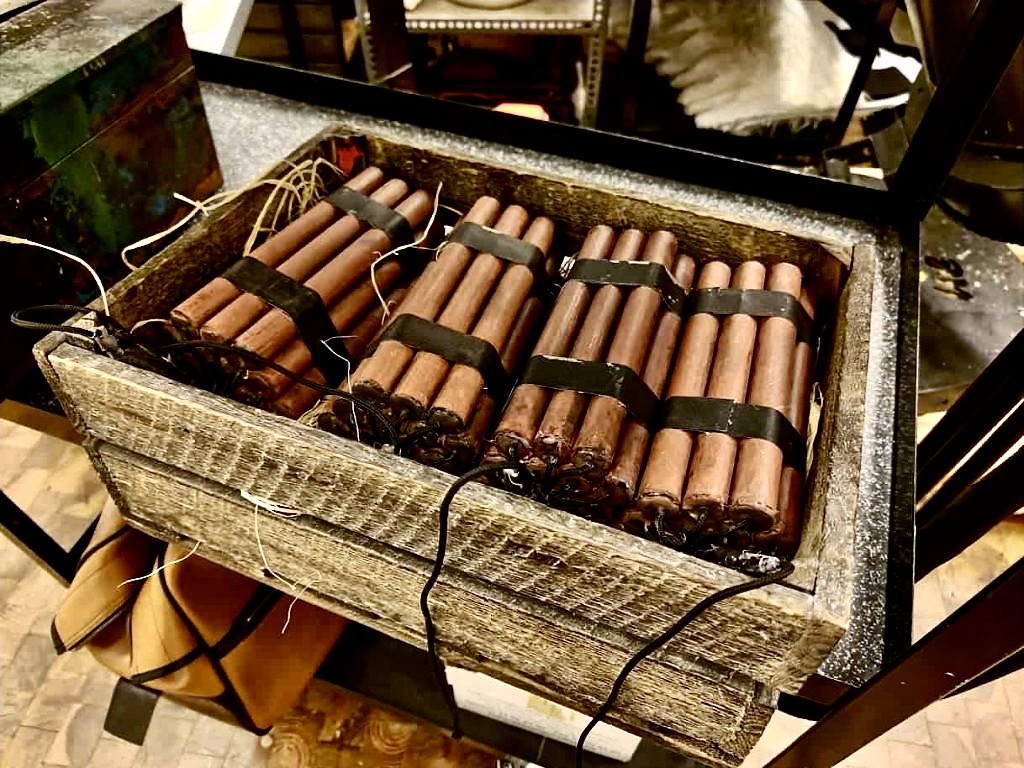
It is Cleveland, Ohio in 1975. The John Scalish Crime Family and Danny Greene’s Irish Mob are at war. Car bombs are the weapon of choice. Two  police detectives are assigned to find the bomb makers. It gets personal. Revenge is always personal.

Available on Amazon and Apple Books

A Crying of Lot 49 Publication

Beware the Lithuanians

By Ed Staskus

   Before the Battle of Blue Water was fought in the fall of 1363 the Russians had been under the thumb of Mongolia’s Golden Horde for more than a century. The Mongols invaded and conquered most of what is now Russia in the mid-1200s. They devastated the lands of the Kievan Rus. They crushed everyone in their way and sacked both Kiev and Chernigov, two of the largest cities. From then on the Russians paid bribes in gold and silver to the Golden Horde to keep them at bay. 

   After the Mongol Empire was divided into four Khanates, Genghis Khan’s grandson Batu Khan established his capital at Sarai on the Volga River.  It was near enough to the principalities of the Russians to keep them under control and close enough, whenever the need arose, to speedily get back to Mongolia, which was  across the treeless steppe of what is now Kazakhstan.

   The Mongols were known in Europe as Hell’s Horsemen. They could ride up to eighty miles a day if they had to. Their horses were short, stocky, and shaggy. They were never stabled, even during Mongolia’s brutal winters when temperatures dropped to thirty below zero. 

   “They are not very great in stature, but exceedingly strong, and maintained with little provender,” a 13th century Italian missionary priest said about the horses. Deadly accurate composite bows and innovative tactics won them battle after battle. By the time Genghis Khan and his sons were done the Mongol Empire was the largest contiguous land empire in the world, then or now. It covered more than nine million square miles from Hungary in the west to China in the east.

   In the middle of the 14th century the Golden Horde was preparing to move against the Grand Duchy of Lithuania. It was the largest sovereign state in Europe, being the lands of present-day Lithuania, Belarus, Ukraine, as well as parts of Poland and Russia. The Mongols weren’t trying to bite off more than they could chew. They had already overrun Asia and the Middle East. Only the Turkish Mamluks had ever defeated them. When they invaded Europe Batu Khan inflicted a crushing defeat on King Béla IV’s Hungarian army, which had the best cavalry on the continent. The Mongols burned the city of Pest and seized control of the Hungarian plain. The Golden Horde wasn’t overly concerned about the Lithuanians.

   Kochubey, the strongman of the Golden Horde in southern Russia, was sitting on his horse at the top of a knoll looking westward in the spring of 1363. He had a small group of his commanders with him, as well as two mercenary Russian warlords. They had overrun Poland six years earlier, destroying Lublin. They were feeling their oats. The Golden Horde had meant to engage the Lithuanians the year before, but the weather had been bad, wet and soggy. It didn’t suit the Mongol horses. The recent spring had been dry and the summer promised to be a good one for campaigning. Kochubey was eager to be on the move. He had dynastic issues with his brothers, who were trying to kill him, if he didn’t kill them first. He needed to be at war somewhere. It was what he did best.

   Before the group broke up, their commitment and decisions made, the two Russians rode up to Kochubey. They had fought the Lithuanians before. One of the warlords leaned over his horse and said, “Beware the Lithuanians.” Kochubey snorted at the warning and puffed himself up. “The Lithuanians need to beware of us.” He wheeled his horse around and rode away. The Russians watched him go. They were hard men, but knew better than say anything more to their overlord. He was a harder man than them.

   Grand Duke Algirdas of Lithuania didn’t give a damn how dangerous the Mongols thought they were. He knew that ever since their empire had been split after the death of Genghis Khan they had been plagued by internal discord. The Golden Horde was in the middle of multiple succession disputes. They were fracturing into separate domains. The  resulting disorder was having a ruinous effect on their fighting men. It was a golden opportunity for Grand Duke Algirdas to expand  his southern territories. He wasn’t like the Russians who were content to pay tribute in return for an uneasy peace. If the Mongols wanted to come to him, all the better. He would make it easy for them by marching to the Don River near where they were. He would wait there while putting together his plan of action.

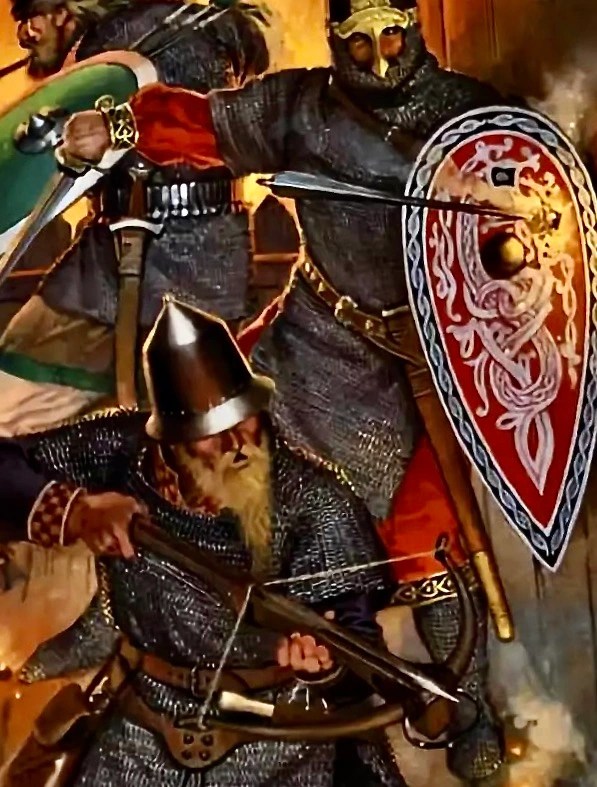
   The Lithuanian forces were made up of lightly armored knights on fast horses, foot soldiers armed with swords and spears, and crossbow men. They were disciplined and determined. They were not under any illusions. They knew the Golden Horde, despite its problems, was a formidable force. Mongols were merciless on the field of battle. They took few prisoners. They had proven that at Samarkand and Bukhara. There would be blood. The Baltic men were confident it would be the blood of Mongol men.

   Ianiunas was a crossbowman man. He was from western Lithuania, from near the Curonian Spit. For hundreds of years the Curonian Spit had been the location of a pagan trading center. The Teutonic Knights took it over in the 13th century, building a castle at Memel. It was where Ianiunas trained on the crossbow.  He joined Grand Duke Algirdas’s forces after getting sick and tired of the Order of Brothers of the German House of St. Mary in Jerusalem trying to convert him to Christianity. He was a pagan. He wasn’t going to convert to the White Christ, now or ever. He was going to live and die by the light of his own gods.

   Grand Duke Algirdas hadn’t converted, either. He worshiped the thunder god Perkunas. He was pagan to the core, like Ianiunas, even though he allowed Orthodox Christians living in Vilnius to build a church where the city’s gallows had once stood. It was the Grand Duke’s own private joke. He was a pagan, but he was a politician, too. He appointed Orthodox officials in the Slavic territories of Lithuania. He married one Orthodox princess after another. He didn’t need a weathercock to know which way the wind was blowing. 

   He was willing to bend but he wasn’t going to break. He and his brother Kestutis wanted the Teutonic Knights out of Lithuania. They were Germans. They were a threat to the throne. He had led Lithuanian and Slavic armies against them. During  the Uprising of the Night of Yury in 1345 one of the leaders of a provincial rebellion told the Grand Duke he had been elected king of the rebels. He was a peasant farmer. He informed the Grand Duke that if he followed him into battle the Germans would be driven away. Grand Duke Algirdas didn’t wet nurse the man. He cut his head off right away. A peasant farmer pretending to be a king was as much a threat as the Teutonic Knights.

   It was a sunny day in October when the Lithuanians engaged the Golden Horde. Grand Duke Algirdas moved his forces west and crossed the Dnieper River towards Podolia. The Mongols met the Lithuanians on the banks of a river near present-day Torhovytsia in southern Ukraine. The town was then known as Sinie Vody, or Blue Water. 

   The Lithuanians organized themselves into six groups arranged in a half circle. The Mongols began the battle with a barrage of arrows from their horsemen into both sides of the Lithuanian formation. The Lithuanians darkened the sky with bolts from their crossbows. Arrows from composite bows like what the Golden Horde fought with fly at 250 feet a second. Bolts from a crossbow fly at 350 feet a second. The leather armor many Mongols wore offered some protection from the bolts, at least until they didn’t. 

   A row of pikemen with shields protected the crossbowmen, as did a row of pavises. The crossbowmen fired from behind their wall. Every man had two men behind him loading crossbows and rotating them from the back to the front. They held firm, ignoring Mongolian feints. Ianiunas killed one Mongol after another until he ran out of bolts. When he did he unsheathed his sword and joined the foot soldiers.

   The Lithuanians moved forward with pikes, lances, and spears, breaking the front line of the Mongol army. The men of the Naugardukas attacked the disorganized flanks of the Golden Horde with fresh crossbows. The liegemen of Karijotas Gediminas, the son of the former Grand Duke Gediminas, moved in for the kill. The Mongols weren’t able to maintain their formation and broke into a retreat which became a rout. The field of battle became a killing field, the soil wet with blood. 

   At the end of the day Grand Duke Algirdas achieved an open and shut victory. Without meaning to, the nascent threat to European Christendom had been forestalled by a pagan. The victory secured Kiev and the northern Black Sea lands for the Lithuanians. The Grand Duchy gained access to the Black Sea. Grand Duke Algirdas left his son Vladimir in charge. Vladimir became a bitter rival to the Grand Duchy of Moscow on the day he assumed power. From that day on there was no love lost between the Lithuanians and the Russians.

   Ianiunas went home to his wife and children. He had a farmstead on the banks of the Nemunas River in the south of Lithuania. It was on the edge of an impenetrable forest. A fort had been built in nearby Alytus to protect against Crusader raids seeking cattle, slaves, and conversions. When he left the battlefield he walked while an ox pulled a two-wheeled tumbrel filled to the gills with spoils. It took him a month to get home. He got there in the middle of November in the middle of a snowstorm. He got hot kisses from his wife and fierce hugs from his children before they dug into the loot he had brought back. His favorite hound sniffed him up down and sideways before becoming his favorite hound again. The neighbors came over for tales of war told over a barrel of honey wine. Everybody got drunk as skunks.

   Three years later Ianiunas celebrated the marriage of his eldest daughter to an immigrant  Mongol by the name of Chagatai. He had fought on the losing side at the Battle of Blue Water. The train wreck that was the Golden Horde was hemorrhaging its own. Many of them went seeking refuge in faraway places, including Lithuania. Nearly fifty thousand Mongols migrated to the Grand Duchy in the 14th century. Their first settlements were near Grodno and Trakai. 

   The first thing they did was learn the Lithuanian language and where to pay their taxes. The Grand Duke didn’t in fact care what language they spoke, but he cared a great deal about taxes. They were permitted to build mosques, most of them being Muslims. They were allowed to marry Lithuanian women and raise Muslim children. In return, they were required to serve in the Grand Duchy’s soldiery. They had to provide their own weapons and horses. They patrolled borders and defended  towns and castles from attacks. 

   When it came to warfare they rode with own kind. Although they admitted the power of bolts, they had grown up learning to stand on the back of a galloping horse and hit a moving target with their composite bows. Their weapon was made of wood, sinew, and laminated horn. It was what steppe warriors had been using for a thousand years. They carried two or three bows and multiple quivers holding hundreds of arrows. The arrowheads were hardened by plunging them into brine after heating them until they were red hot. The Mongols were adept at firing their arrows at the split second all four of their horse’s hooves were off the ground, affording them a split second of stillness.

   Chagatai put his bows and arrows away the day of his wedding. By the time the spousal ceremony, the dinner of roasted wild boar, and the revelry were over, almost everybody’s feet were off the ground, except for Ianiunas and Chagatai. They stood on a grassy spot on the edge of a pond next to the family house. Ianiunas’s favorite hound had flopped down and was napping at his feet. Chagatai looked at the hound.

   “I will have many dogs,” he said.

   “Dogs are useful animals and good companions,” Ianiunas said.

   “They are loyal, too.”

   “Yes, dogs are the only creatures on this earth who will never betray you.”

   Chagatai was of the same mind. The two men stood next to each other gazing at star clusters in the inky sky. When Ianiunas’s hound started growling in his sleep and suddenly farted, both their faces creased up. Chagatai leaned down and patted the hound’s flank, who rolled over onto his feet and shook himself. The three of them watched for shooting stars but there weren’t any, until suddenly there was one. It was gone in the blink of an eye. They went back to the family house for whatever karvojus cake and honey wine was still to be had.     

Ed Staskus posts monthly on 147 Stanley Street  http://www.147stanleystreet.com, Made in Cleveland http://www.clevelandohiodaybook.com, Down East http://www.redroadpei.com, and Lithuanian Journal http://www.lithuanianjournal.com. To get the site’s monthly feature in your in-box click on “Follow.”

“Bomb City”

It is Cleveland, Ohio in 1975. The John Scalish Crime Family and Danny Greene’s Irish Mob are at war. Car bombs are the weapon of choice. Two  police detectives are assigned to find the bomb makers. It gets personal. Revenge is always personal.

Available on Amazon and Apple Books

A Crying of Lot 49 Publication