Category Archives: Baltic Place

Beware the Lithuanians

By Ed Staskus

   Before the Battle of Blue Water was fought in the fall of 1363 the Russians had been under the thumb of Mongolia’s Golden Horde for more than a century. The Mongols invaded and conquered most of what is now Russia in the mid-1200s. They devastated the lands of the Kievan Rus. They cut down everyone in their way and sacked both Kiev and Chernigov, two of the largest cities. From then on the Russians paid bribes in gold and silver to the Golden Horde to keep them at bay. 

   After the Mongol Empire was divided into four Khanates, Genghis Khan’s grandson Batu Khan established his capital at Sarai on the Volga River.  It was near enough to the principalities of the Russians to keep them under control and close enough, whenever the need arose, to speedily get back to Mongolia, which was  across the treeless steppe of what is now Kazakhstan.

   The Mongols were known in Europe as Hell’s Horsemen. They could ride up to eighty miles a day if they had to. Their horses were short, stocky, and shaggy. They were never stabled, even during Mongolia’s brutal winters when temperatures dropped to thirty below zero. 

   “They are not very great in stature, but exceedingly strong, and maintained with little provender,” a 13th century Italian missionary priest said about the horses. Deadly accurate composite bows and innovative tactics won them battle after battle. By the time Genghis Khan and his sons were done the Mongol Empire was the largest contiguous land empire in the world, then or now. It covered more than nine million square miles from Hungary in the west to China in the east.

   In the middle of the 14th century the Golden Horde was preparing to move against the Grand Duchy of Lithuania. It was the largest sovereign state in Europe, being the lands of present-day Lithuania, Belarus, Ukraine, as well as parts of Poland and Russia. The Mongols weren’t trying to bite off more than they could chew. They had already overrun Asia and the Middle East. Only the Turkish Mamluks had ever defeated them. When they invaded Europe Batu Khan inflicted a crushing defeat on King Béla IV’s Hungarian army, which had the best cavalry on the continent. The Mongols burned the city of Pest and seized control of the Hungarian plain. The Golden Horde wasn’t overly concerned about the Lithuanians.

   Kochubey, the strongman of the Golden Horde in southern Russia, was sitting on his horse at the top of a knoll looking westward in the spring of 1363. He had a small group of his commanders with him, as well as two mercenary Russian warlords. They had overrun Poland six years earlier, destroying Lublin. They were feeling their oats. The Golden Horde had meant to engage the Lithuanians the year before, but the weather had been bad, wet and soggy. It didn’t suit the Mongol horses. The recent spring had been dry and the summer promised to be a good one for campaigning. Kochubey was eager to be on the move. He had dynastic issues with his brothers, who were trying to kill him, if he didn’t kill them first. He needed to be at war somewhere. It was what he did best.

   Before the group broke up, their commitment and decisions made, the two Russians rode up to Kochubey. They had fought the Lithuanians before. One of the warlords leaned over his horse and said, “Beware the Lithuanians.” Kochubey snorted at the warning and puffed himself up. “The Lithuanians need to beware of us.” He wheeled his horse around and rode away. The Russians watched him go. They were hard men, but knew better than say anything more to their overlord. He was a harder man than them.

   Grand Duke Algirdas of Lithuania didn’t give a damn how dangerous the Mongols thought they were. He knew that ever since their empire had been split after the death of Genghis Khan they had been plagued by internal discord. The Golden Horde was in the middle of multiple succession disputes. They were fracturing into separate domains. The  resulting disorder was having a ruinous effect on their fighting men. It was a golden opportunity for Grand Duke Algirdas to expand  his southern territories. He wasn’t like the Russians who were content to pay tribute in return for an uneasy peace. If the Mongols wanted to come to him, all the better. He would make it easy for them by marching to the Don River near where they were. He would wait there while putting together his plan of action.

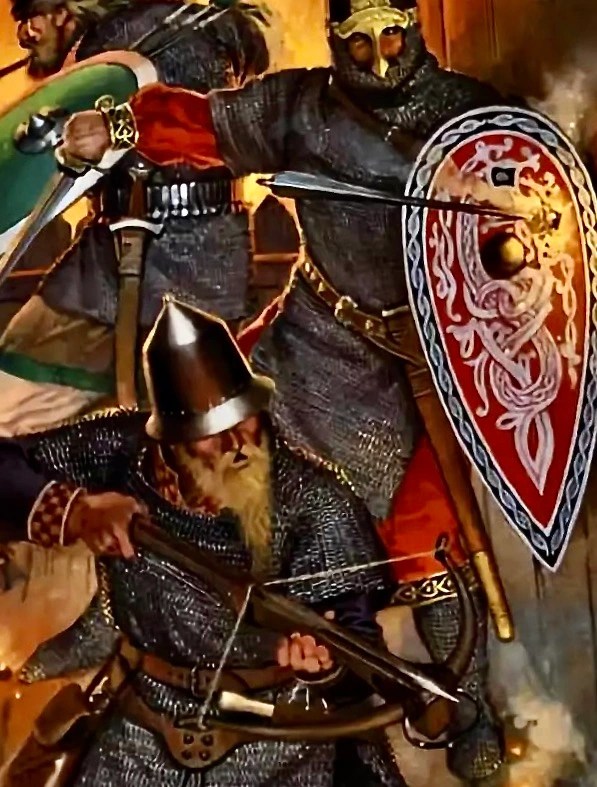
   The Lithuanian forces were made up of lightly armored knights on fast horses, foot soldiers armed with swords and spears, and crossbow men. They were disciplined and determined. They were not under any illusions. They knew the Golden Horde, despite its problems, was a formidable force. Mongols were merciless on the field of battle. They took few prisoners. They had proven that at Samarkand and Bukhara. There would be blood. The Baltic men were confident it would be the blood of Mongol men.

   Ianiunas was a crossbowman man. He was from western Lithuania, from near the Curonian Spit. For hundreds of years the Curonian Spit had been the location of a pagan trading center. The Teutonic Knights took it over in the 13th century, building a castle at Memel. It was where Ianiunas trained on the crossbow.  He joined Grand Duke Algirdas’s forces after getting sick and tired of the Order of Brothers of the German House of St. Mary in Jerusalem trying to convert him to Christianity. He was a pagan. He wasn’t going to convert to the White Christ, now or ever. He was going to live and die by the light of his own gods.

   Grand Duke Algirdas hadn’t converted, either. He worshiped the thunder god Perkunas. He was pagan to the core, like Ianiunas, even though he allowed Orthodox Christians living in Vilnius to build a church where the city’s gallows had once stood. It was the Grand Duke’s own private joke. He was a pagan, but he was a politician, too. He appointed Orthodox officials in the Slavic territories of Lithuania. He married one Orthodox princess after another. He didn’t need a weathercock to know which way the wind was blowing. 

   He was willing to bend but he wasn’t going to break. He and his brother Kestutis wanted the Teutonic Knights out of Lithuania. They were Germans. They were a threat to the throne. He had led Lithuanian and Slavic armies against them. During  the Uprising of the Night of Yury in 1345 one of the leaders of a provincial rebellion told the Grand Duke he had been elected king of the rebels. He was a peasant farmer. He informed the Grand Duke that if he followed him into battle the Germans would be driven away. Grand Duke Algirdas didn’t wet nurse the man. He cut his head off right away. A peasant farmer pretending to be a king was as much a threat as the Teutonic Knights.

   It was a sunny day in October when the Lithuanians engaged the Golden Horde. Grand Duke Algirdas moved his forces west and crossed the Dnieper River towards Podolia. The Mongols met the Lithuanians on the banks of a river near present-day Torhovytsia in southern Ukraine. The town was then known as Sinie Vody, or Blue Water. 

   The Lithuanians organized themselves into six groups arranged in a half circle. The Mongols began the battle with a barrage of arrows from their horsemen into both sides of the Lithuanian formation. The Lithuanians darkened the sky with bolts from their crossbows. Arrows from composite bows like what the Golden Horde fought with fly at 250 feet a second. Bolts from a crossbow fly at 350 feet a second. The leather armor many Mongols wore offered some protection from the bolts, at least until they didn’t. 

   A row of pikemen with shields protected the crossbowmen, as did a row of pavises. The crossbowmen fired from behind their wall. Every man had two men behind him loading crossbows and rotating them from the back to the front. They held firm, ignoring Mongolian feints. Ianiunas killed one Mongol after another until he ran out of bolts. When he did he unsheathed his sword and joined the foot soldiers.

   The Lithuanians moved forward with pikes, lances, and spears, breaking the front line of the Mongol army. The men of the Naugardukas attacked the disorganized flanks of the Golden Horde with fresh crossbows. The liegemen of Karijotas Gediminas, the son of the former Grand Duke Gediminas, moved in for the kill. The Mongols weren’t able to maintain their formation and broke into a retreat which became a rout. The field of battle became a killing field, the soil wet with blood. 

   At the end of the day Grand Duke Algirdas achieved an open and shut victory. Without meaning to, the nascent threat to European Christendom had been forestalled by a pagan. The victory secured Kiev and the northern Black Sea lands for the Lithuanians. The Grand Duchy gained access to the Black Sea. Grand Duke Algirdas left his son Vladimir in charge. Vladimir became a bitter rival to the Grand Duchy of Moscow on the day he assumed power. From that day on there was no love lost between the Lithuanians and the Russians.

   Ianiunas went home to his wife and children. He had a farmstead on the banks of the Nemunas River in the south of Lithuania. It was on the edge of an impenetrable forest. A fort had been built in nearby Alytus to protect against Crusader raids seeking cattle, slaves, and conversions. When he left the battlefield he walked while an ox pulled a two-wheeled tumbrel filled to the gills with spoils. It took him a month to get home. He got there in the middle of November in the middle of a snowstorm. He got hot kisses from his wife and fierce hugs from his children before they dug into the loot he had brought back. His favorite hound sniffed him up down and sideways before becoming his favorite hound again. The neighbors came over for tales of war told over a barrel of honey wine. Everybody got drunk as skunks.

   Three years later Ianiunas celebrated the marriage of his eldest daughter to an immigrant  Mongol by the name of Chagatai. He had fought on the losing side at the Battle of Blue Water. The train wreck that was the Golden Horde was hemorrhaging its own. Many of them went seeking refuge in faraway places, including Lithuania. Nearly fifty thousand Mongols migrated to the Grand Duchy in the 14th century. Their first settlements were near Grodno and Trakai. 

   The first thing they did was learn the Lithuanian language and where to pay their taxes. The Grand Duke didn’t in fact care what language they spoke, but he cared a great deal about taxes. They were permitted to build mosques, most of them being Muslims. They were allowed to marry Lithuanian women and raise Muslim children. In return, they were required to serve in the Grand Duchy’s soldiery. They had to provide their own weapons and horses. They patrolled borders and defended  towns and castles from attacks. 

   When it came to warfare they rode with own kind. Although they admitted the power of bolts, they had grown up learning to stand on the back of a galloping horse and hit a moving target with their composite bows. Their weapon was made of wood, sinew, and laminated horn. It was what steppe warriors had been using for a thousand years. They carried two or three bows and multiple quivers holding hundreds of arrows. The arrowheads were hardened by plunging them into brine after heating them until they were red hot. The Mongols were adept at firing their arrows at the split second all four of their horse’s hooves were off the ground, affording them a split second of stillness.

   Chagatai put his bows and arrows away the day of his wedding. By the time the spousal ceremony, the dinner of roasted wild boar, and the revelry were over, almost everybody’s feet were off the ground, except for Ianiunas and Chagatai. They stood on a grassy spot on the edge of a pond next to the family house. Ianiunas’s favorite hound had flopped down and was napping at his feet. Chagatai looked at the hound.

   “I will have many dogs,” he said.

   “Dogs are useful animals and good companions,” Ianiunas said.

   “They are loyal, too.”

   “Yes, dogs are the only creatures on this earth who will never betray you.”

   Chagatai was of the same mind. The two men stood next to each other gazing at star clusters in the inky sky. When Ianiunas’s hound started growling in his sleep and suddenly farted, both their faces creased up. Chagatai leaned down and patted the hound’s flank, who rolled over onto his feet and shook himself. The three of them watched for shooting stars but there weren’t any, until suddenly there was one. It was gone in the blink of an eye. They went back to the family house for whatever karvojus cake and honey wine was still to be had.     

Ed Staskus posts monthly on 147 Stanley Street  http://www.147stanleystreet.com, Made in Cleveland http://www.clevelandohiodaybook.com, Down East http://www.redroadpei.com, and Lithuanian Journal http://www.lithuanianjournal.com. To get the site’s monthly feature in your in-box click on “Follow.”

“Bomb City”

It is Cleveland, Ohio in 1975. The John Scalish Crime Family and Danny Greene’s Irish Mob are at war. Car bombs are the weapon of choice. Two  police detectives are assigned to find the bomb makers. It gets personal. Revenge is always personal.

Available on Amazon and Apple Books

A Crying of Lot 49 Publication

Not Fade Away

By Ed Staskus

   I hadn’t been to a funeral in several years, but when we got the news that my wife’s uncle Romas Bublys had died, we made a point of going. Even though I am not a faithful churchgoer, I go to church for weddings and funerals. When grieving, obsequies are a way to create connection and acceptance about something beyond our control, and a way to begin moving forward. The ritual inspires catharsis, helping everybody, especially the immediate family, feel better. 

   Even if you didn’t know the deceased very well, going to a funeral to support a friend or a family can be the best reason of all. Funerals are one of the few times when saying “I’m sorry” doesn’t mean “I apologize.” It means “I understand.” It means you understand it is a difficult time. We are all in our own boat but everybody is in the same ocean.

   The requiem mass was at the Church of Gesu in University Hts. next to the campus of John Carroll University. Romas was a life-long devout Catholic. The church is a Jesuit church, one of only 60-some in the United States, and the university is a Jesuit school. Jesuit parishes are guided by the Spiritual Exercises of St. Ignatius Loyola, encouraging adherents to ponder their experiences and search for God’s presence in their lives. 

   I didn’t know Romas Bublys well. Even though we both lived in northeastern Ohio, we travelled in different circles. I might have met him face-to-face and spoken to him for the first time the day I got married in the Lithuanian church on the east side of Cleveland. Some of his daughters, my wife’s cousins, and nieces were in our wedding party. I knew them slightly, although I knew their mother, Ingrid, well enough through her undying work in the ethnic community.

   Romas was born in Taurage, Lithuania in 1936. The small city is on the Jura River not far from the Baltic Sea. Most of it was destroyed by fire in 1836 and again during World War One. After the war it was rapidly rebuilt, industrializing with new up-to-date factories. A revolt against the national authorities broke out there in 1927 but was suppressed. His family fled the country when the Red Army invaded in 1944. Romas was six years old. After five years of treading water in displaced person camps, the family emigrated to the United States.

   The funeral wasn’t standing room only, but it was close. There were 400-some mourners in attendance, almost filling the large church. There was a line snaking out the door to get inside when we got there. While we inched forward more cars crept into the parking lot and more people got in line. Even though I assumed most of everybody at the service was Lithuanian American like me, most of them were strangers to me.

   Romas grew up in Detroit before relocating to Cleveland, Ohio. He served in the US Army with the 82ndAirborne Division. He earned a master’s degree from Cleveland State University and an MBA from Baldwin Wallace University. He went to work for TRW. It was a systems and  aerospace company. They built spacecraft, including the Pioneer series. His professional life revolved around engineering.

   The Church of Gesu is spacious and almost regal. It isn’t new, built in 1958,  but it looks new. The superstructure is steel so there are no interior pillars. By the time we got in we were lucky to find a pew in the back. We sat with my brother-in-law’s family. The service was conducted by Fr. Lukas Leniauskas, the son of somebody I grew up with. He was 20 years old when he left Cleveland and went to Lithuania where he entered the Jesuit Novitiate. He professed perpetual vows two years later and was ordained a priest in 2015.

   Romas’s eldest daughter gave the eulogy. I wasn’t sure if she ever got to the end of it, or not. She choked up and seemed to cut it short. She said her father loved to travel and read. He was proud of his children. He believed in faith, family, and the homeland. He loved life. He was wise and funny, a family man as well as a businessman. She said their father taught the five children in the family how to be successful. “One thing he always said was dress for success. He never wore blue jeans.” The burly man in the pew in front of us was wearing a blazer with gilt buttons and blue jeans. He didn’t seem to take her remark the wrong way.

   Romas was big on keeping Lithuania alive in the hearts of his compatriots who had emigrated to the New World. He was on the National Board of Directors of the Lithuanian American Community. He was the Director of the Lithuanian Club in Cleveland and its Chairman for six terms. He didn’t sit on the sidelines. He got involved and stayed involved.

   Two more of Romas’s daughters spoke. A cellist played “Ave Maria.” There is a hymn sung at many Protestant funerals called “The Day Thou Gave Us Lord is Ended.” It wasn’t sung at the Jesuit church, although the sense of it hung in the air. Romas had a good voice and had performed with the Cleveland Male Octet. He would have done the song justice.

   The service ended with a homily and prayer of commendation. Two men guided the coffin from one end of the nave to the other end and into the narthex. They were accompanied by the priest, a cross-bearer, and the altar girls. In my day it was a boy’s club. One of the girls swung a thurible burning incense. She swung it forward and back in time with her steps. What I could smell of the smoke was pungent.

   I had been an altar boy and served at many funerals at St. George Catholic Church. The funerals were usually on Thursday and Friday afternoons. After the final blessing we always finished with a recessional, no matter how few or how many were in attendance. If there were many people, and I had my hands on the thurible, whenever I saw a friend of mine in a pew, as I passed by, I swung my thurible sideways so my friend would get a good whiff of the smoke. My passing was always marked by coughing in the pews. 

   When Romas’s coffin came to rest in the narthex, two unformed US Army servicemen draped an American flag over it. One of them saluted, holding the salute for several minutes. The other one said a few words. When they were done they ceremoniously folded the flag. The funeral was over when they were done.

   Everybody was invited to the parish hall in the basement. I exchanged small talk with some grown-ups and bantered talk with my brother-in-law’s kids until I noticed a man I thought I recognized. I stepped over to his table where he was alone. He was Arunas Bielinis, somebody from the east side ethnic crowd back in the day. He had made a career as a lawyer, so after we established our bona fines, he asked me twenty questions about myself. He told me his friend Kestutis Susinskas and he used to borrow books from me when we were teenagers. “We liked that you were always reading books by James Michener and Leon Uris,” he said. “I’m not sure we returned all of them to you.” I told him it was water under the bridge.

   The Lithuanian Club catered the food and drink. Vic Stankus, a long-time local dentist, and long-time friend of Romas Bublys, was eating when something went down wrong. He started choking. A man stepped up and applied the Heimlich maneuver. Standing behind the dentist he placed a fist slightly above Vic’s navel. Grasping his fist with the other hand he shoved his fist inward and upward. The deadly morsel stuck in Vic’s throat went pop and flew out of his mouth. 

   Romas wasn’t going to be buried in the All Souls Cemetery in Chardon, where many of Cleveland’s Lithuanians are buried. My father is buried there. My mother is going to be buried there. Anatanas Smetona, the President of Lithuania during the inter-war years, is buried there. Romas was going to be buried in Luksai, not far from where he was born. A year removed from passing away, his relatives will visit him, spending the day, cleaning his grave, and leaving flowers.

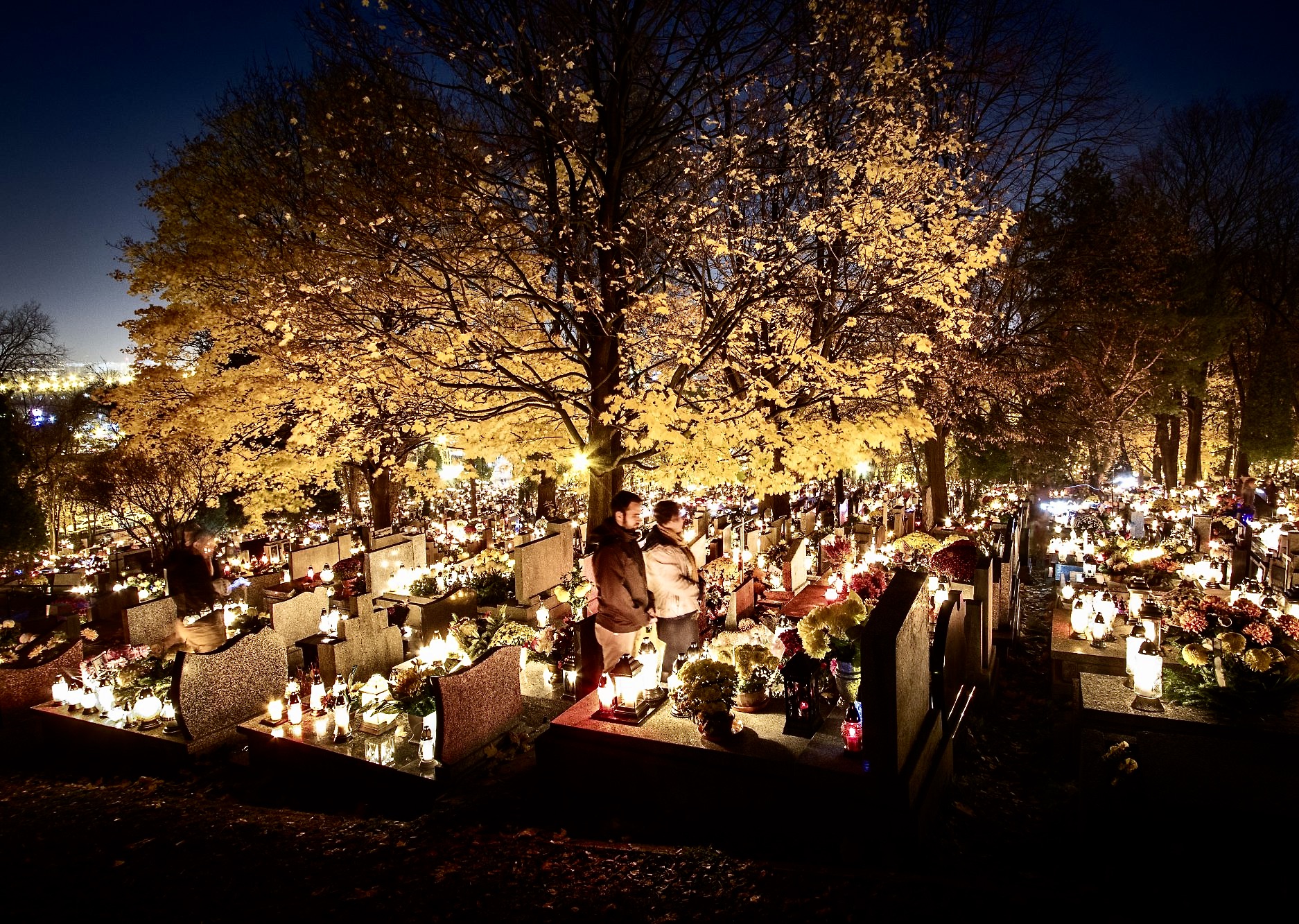
   The 31st of October is Halloween. The 1st of November is All Saint’s Day. The 2nd of November is All Souls Day, or Velines, in Lithuania. It has nothing to do with trick or treating. It has everything to do with not fade away. It is the Day of the Dead. Shops and schools close on the first day of November for a couple of days. Everybody heads to their cemeteries to visit those who have given up the ghost. 

   All Souls Day, also called Commemoration of All the Faithful Departed, is a day of remembrance. Families visit gravesites, lighting candles on the tombs of loved ones, and soliciting for their well-being. Many cemeteries become a sea of candles at night. It is one of the most important holidays on the Lithuanian calendar. Some people pray for those they suspect are in purgatory and try to win indulgences for them.

   Velines is a Catholic observance, even though some Lithuanians who get into the spirit of it on that day are not Catholic or even identify as the same. “Vėlinės has overflowed the banks of the church,” is how one churchman has described it. All Souls Day got started in the year 933 at Cluny Abbey in France when Pope Gregory V proclaimed November 2nd as a day to pray for the departed. Lithuanians were pagans at the time and didn’t pay any attention to the news bulletin. They had their own Day of the Dead. They called it Liges. It wasn’t just one day, either. It lasted three days and nights as soon as all the crops were harvested. Life is for the living and the living need bread.

   Lithuanians were the last Europeans to abandon paganism. The cemeteries of Kernave, the one-time pagan capital of Lithuania, had always been bereft of crosses. The Grand Duchy finally gave up and accepted Christianity near the end of the fourteenth century. During the centuries they were holding out, families gathered food and gathered in their boneyards in mid-autumn. Wine and honey mead were sprinkled on graves. It was a flock together as well as an observance. Romas had always enjoyed his cocktail hour. Although a modern man, he might have approved of some ancient pagan practices, although he wasn’t the kind of man to waste a drop of distilled spirits.

   Fresh farm eggs painted red and black were left on graves as good luck charms for next year’s crops. Tables were set up. Black bread and black pudding were served. Whatever was left over was given to the poor in return for their prayers. When the three days of Liges were over, branches were culled and thrown into a bonfire while everyone sang songs for the souls of the departed. They drank whatever wine and honey mead was left over.

   Returning to one’s birthplace to spend eternity is a promised land kind of return. When Romas Bublys went back to where it all started, he was rounding a circle that is not often unbroken. Very few are afforded a resting place that is the same place where they came to life. Promised lands lie on the other side of wilderness lands.

   After the post-funeral gathering at the Church of Gesu, when I thought about memory and remembrance, about what is between the saints and the deep blue sea, I thought if there is a promised land for me on the other side of time, I will probably be the last to know. I won’t mind as long as there is a candle to light my way.

Ed Staskus posts monthly on 147 Stanley Street  http://www.147stanleystreet.com, Made in Cleveland http://www.clevelandohiodaybook.com, Down East http://www.redroadpei.com, and Lithuanian Journal http://www.lithuanianjournal.com. To get the site’s monthly feature in your in-box click on “Follow.”

“Cross Walk” by Ed Staskus

Late summer, New York City, 1956. Big city streets full of menace. A high profile contract killing in the works. A private eye working out of Hell’s Kitchen scares up the shadows.

Available on Amazon: https://www.amazon.com/dp/B0CRPSFPKP

A Crying of Lot 49 Publication

All in the Family

   By Ed Staskus

   Matt Poska twisted around in his seat, glaring at and swatting his brother’s hand off his shoulder. “Keep your hands off me” he said. “Who the hell do you think you are? You touch me again, there’s going to be trouble.” He couldn’t have been more to the point, although he didn’t necessarily want there to be a fight. He wanted his brother, however, to know exactly how he felt. Matt hadn’t trusted him for a long time and now disliked him on top of it. He knew having finally sold their mother’s house that push was coming to shove. The sooner the better, he thought.

   Ignoring Matt, his brother extended a warm salesman’s smile and a firm hand to the attorney on the other side of the big desk. “Call me Ray,” Raimondas said. He shook hands with the attorney. Ray’s new teeth glistened like Chiclets. His thinning hair was combed straight back.

   “You’ve got a nice tan for this time of year,” the attorney said. His hair was streaked with gray, his skin was grayish, and he was wearing a dark suit that might have been gray. A blizzard was blowing in from Lake Erie. The attorney’s back was to the window. Matt glanced through the window at snow whirling in the cold.

   “The wife and I just got back from two weeks in Jamaica,” Ray said. “We had a great time, great place.”

   “How’s the new car?” Ruta asked, shooting a venomous glance at her brother.

   “Couldn’t be better, drives like a charm, no problems.”

   “Just so I am clear about this, you three are related, brothers and sisters?” the attorney asked.

   “We used to be related,” Matt said.

   Their mother Irena’s problems began the day after their father’s funeral. She lost her appetite and couldn’t sleep. She had been married for sixty four years. She met her husband-to-be in Germany in a refugee camp after World War Two. They met again after both of them emigrated to the same small mining town in Canada. There had been no future for them in Europe. There were good-paying jobs in the Sudbury Basin. They got married in 1949 and were able to get into the United States in the late 1950s. It was where they raised their three children. They had been hard-working and by and large happy.

   Irena fell down in the kitchen in the middle of the night two years after her husband died. She had been thirsty and looking for something cold in the fridge. She fractured her right leg and lay on the ceramic tile floor until Ruta found her in the morning. She spent ten days at the Cleveland Clinic in Avon, two weeks recuperating at the Welsh Home in Rocky River, and a month of physical therapy at home.

   A year later she was back on her feet. She and Ruta visited relations in Toronto. She drove some of the way there and back on the New York Thruway. But the next year she had a mini-stroke and never drove again. Ray’s son Tyler convinced her to give up her Ford Taurus, telling her it was unsafe for her to be on the road. “You shouldn’t be driving,” Ray piped in. She signed it over to Tyler, but was sorry to see it gone. The car had represented independence, whether she drove it or not.  After it was gone she rarely left the house.

   Tyler immediately sold the Ford Taurus, even though it was more new than not. He bought a Toyota 4Runner. “This is more like it, not like that granny mobile,” he told his girlfriend. She didn’t like it when he told her to keep her dog out of the SUV, especially when he called her dog a mutt.

   When Irena caught Covid-19 she spent three weeks at the Cleveland Clinic in Avon. She was never the same after she got home. She had been in good health all her life, having grown up on a farm in Lithuania, but she was in her 90s. She craved salt, even though she had high blood pressure. Ray indulged her craving for it.

   “Stop bringing her those salted nuts,” Matt told his brother every time he saw a bowl of them in the house. “Are you trying to kill her?” He was exasperated. He threw the nuts away, but they always came back, along with bags of Malley’s chocolates and bottles of Gatorade.

   When she died the cause of death was listed as natural causes. Her last week was spent talking with ghosts during her wakeful hours and lost in dreams the rest of the time. Broken mirrors littered her memories. The real world no longer meant anything to her. Her greatest desire was to join her husband. Her last day was spent shutting down. She was tired and died of old age.

   Matt, Ray, and Ruta were in Saul Ammon’s legal office in the Marlowe Building on Detroit Ave. in downtown Lakewood, Ohio. Matt and Ruta both lived in Lakewood. Their mother had lived further west in well-heeled Rocky River. Their brother Ray lived in a new development in Sheffield Lake, even further west. They had sold their mother’s house, but Ray hadn’t lived up to their mother’s will. He had given Matt and Ruta half of what the will spelled out. He told them he was the trustee and had power of attorney and was doing what he thought best.

   “You mean best for you, like stealing all of mom’s savings and CD’s,” Ruta said. She was seething.

   Ray shrugged it off like it was something everybody did. He was never going to give his siblings access to their mother’s financial records. He wasn’t going to give them any of the nearly two hundred thousand dollars he had realized on the sly in the past two years. He wanted it to be understood he had his reasons, but he wasn’t going to talk about them. They didn’t need to know anything, although he wanted everybody to know he was honest as the day was long. 

   “Mom said she wanted to pay me for everything I was doing for her.”

   “You’re saying she paid you so much in two years that on the day she passed away she had less than nine thousand dollars left in the bank,” Ruta said. “She wasn’t a fool and I’m not a fool, either. Where are all her savings? If she hadn’t died she would have found out she was a pauper. How was she going to pay her bills?”

   “I have to take care of Tyler.”

   Ray’s son Tyler was a part-time drug dealer and a full-time party boy. He wasn’t able to stay out of jail or hold down a steady job. He had been fired from one job after another for thievery and lack of effort. Ray had been paying Tyler’s rent and bills for almost a year.

   “I took care of mom 24/7,” Ray said.

   “You are a liar,” Ruta said. “I was at her house every day. When she broke her leg I lived with her for a month. When she got a stroke I lived with her for another month. When she got the Covid I lived with her again. All I ever saw you do was run in, make her the same ham and cheese sandwich day after day, make sure she had taken her medications, and run out. You never stayed more than ten or fifteen minutes.”

   “How about all the times I took her to see doctors?”

   “I took her most of the time.”

   “I did everything for mom but nobody appreciates it. Matt didn’t do anything.”

   “Let’s stop arguing and get down to business,” Matt said. “I’m not going to go after you for what you did with mom’s Third Federal accounts. Our lawyer has told us it would be costly and time consuming. I don’t want it preying on my mind for however many years it might take.”

   Ruta didn’t say anything. Matt had asked her to sit tight until they wrapped up getting their share of the proceeds from the sale of their mother’s house. She had agreed, although she hadn’t told him she had talked to the Lakewood Law Department about elder abuse. She was going to someday make Ray pay for what he had done.

   Ray had been a problem for a long time. In the 1980s he fell deep in debt to a bookie who worked out of a back room at the Mentor Diner. Day after day none of his horses paid off. His bookie kept a strict ledger and got impatient. When Ray got married to a rich girl from Columbus their wedding reception was a gala. At the end of the day they had collected nearly forty two thousand dollars. Ray paid his bookie the thirty nine thousand dollars he owed him but neglected to tell his wife about it. When she started shopping for a house, planning the down payment, he had to spill the beans. They had been married fifty eight days on that day. She left him on the fifty ninth day and went home to Columbus. He never saw her again. The divorce was certified by mail.

   He dated several women after that, each one of them breaking it off with him after a year-or-so. He finally married Anita, a Jayne Mansfield with a family, who were two children by two passing boyfriends. They had a third child, who was Tyler. Anita was a beautician and a part-time actress. She was also an alcoholic. Three years after they divorced she drank herself to death. Ray married a woman named Karen soon afterwards. They both believed greed was good and lived the good life together.

   Ray put his greed to work when it dawned on him his mother had dementia and was dying. Her trustee was a second cousin who had long worked for Jones Day, one of the biggest law firms in the United States. Ray’s wife had a nephew who was an ambulance chaser in Pittsburgh. He drew up new trustee paperwork. Irena signed the documents without knowing what she was signing. The ambulance chaser also drew up new power of attorney paperwork. Irena signed those documents, too. Ray became the trustee and got power of attorney into his hands.

   He took the new power of attorney paperwork to a hair salon. Ray knew the manager from his marriage to Anita. He asked her to witness the document. She did, and so did a customer they asked, in return for a bottle of shampoo. Ray was pleased with his work that day, although he didn’t know his sister Ruta got her hair done at that same salon. One day, in passing, the manager told her about Ray and the documents. Ruta wrangled affidavits from her and the customer.

   “We have got two separate affidavits that swear you got their signatures on the power of attorney documents fraudulently,” Matt said. “They say mom was never present for them to witness her signature.”

   The lawyer pushed the two affidavits across his desk. Ray didn’t look at them. He looked at Matt.

   “What do you want?” he asked. 

   “You used your power of attorney to empty mom’s accounts at Third Federal but I don’t want to drive myself crazy over that,” Matt said. “What I want is, I want you to pay us the full amount that Ruta and I are due from the sale of the house, like it says in mom’s will.”

   “And if I don’t?”

   “If you don’t I will leave this office, go to City Hall, and file a criminal complaint with the Clerk of Court.” 

   “Can we make a deal?” Ray asked.

   “I’m not selling any alibis,” Matt said.

   “Remember me? I’m your brother.”    

   “I’ve got better things to do than remember you. Save your breath to cool your soup.”

   “Give me a break.”

   “No,” Matt said. “The banks are open right now. We’ll wait one hour. Bring certified checks. If you’re not back in an hour, I’ll go straight to City Hall.”

   “You know I didn’t do anything wrong,” Ray said, beside himself. “This is just a rip-off. I need that money. Tyler needs it, too. Karen might divorce me if she finds out about this, do you know that? Is that what you want? You want to see me homeless? The two of you, you’re both evil.”

   “Is that so?” Matt said. He knew Ray’s talk was horseradish.

   Ray shot Matt a dirty look. He was the kind of mother’s son who got mad when anybody didn’t believe whatever he was saying. Ray believed everything he conjured up, no matter what. He couldn’t distinguish between truth and lies anymore and so he couldn’t distinguish between right and wrong anymore. To be on the safe side, whenever he caught himself telling the truth, he reflexively told an untruth to keep his hand in. 

   It was a few minutes short of an hour when Ray returned and tossed two certified checks down on the lawyer’s desk. Matt slid one over to his sister.

   “You know we’re never going to see each other again after this,” Ray said, vexed and angry. Everybody’s got plans until you get hit in the face, he thought to himself bitterly.

   “That doesn’t make any difference anymore,” Matt said. “Go away and stay away.”

   “I can’t believe he would do that to mom,” Ruta said when Ray was gone. “Everything about this is too bad, really bad, but I don’t think he’s ever going to change. He’ll just find somebody else to fleece and blame whoever is handy.”

   “You’re probably right,” Matt said. “At least the joker has left the building,”

Ed Staskus posts monthly on 147 Stanley Street  http://www.147stanleystreet.com, Made in Cleveland http://www.clevelandohiodaybook.com, Down East http://www.redroadpei.com, and Lithuanian Journal http://www.lithuanianjournal.com. To get the site’s monthly feature in your in-box click on “Follow.”

“Cross Walk” by Ed Staskus

“A Cold War thriller that captures the vibe of mid-century NYC.” Sam Winchell, Beyond Books

Late summer, New York City, 1956. The Mob on the make. The streets full of menace. President Eisenhower on his way to Brooklyn for the opening game of the World Series. A killer waits in the wings. A private eye working out of Hell’s Kitchen scares up the shadows.

Available on Amazon: https://www.amazon.com/dp/B0CRPSFPKP

A Crying of Lot 49 Publication

Flesh and Blood

By Ed Staskus

   The day Angele Jurgelaitis knocked on her aunt’s door in the spring of 1944 the sky was clear and sunny. Ona Kreivenas lived on a farm near Alvitas, where she taught grade school and had a family on her hands. There were four children, Mindaugas, Carman, Ramute, and the youngest, Gema. None of them were older than Angele. Even Mindaugas, the eldest, was three years younger than their sixteen year-old cousin from Gizai.

   Gizai is twelve miles from Alvitas, which is a village on a lake of the same name. It is on a main road. Angele had walked there. There was a parish church built of stone, an elementary school, more than thirty houses, a general store, neighboring farmsteads, and almost four hundred inhabitants. None of them knew what was coming, although they all knew.

   When Ona came to the front door she was by herself. She had been deprived of her husband. He had been transported to Siberia by the Russians. “He was a police chief,” Angele said about her uncle, Jonas Kreivenas. “The Russians took him. He didn’t do anything bad. It didn’t matter, they just took him away.”

   Ona had since then become austere. “She was pretty, like a doll, but I was afraid of her. She could be very mean. I broke a dish one day and was scared to death of what she would say when she found out.” Her aunt welcomed the teenaged girl, who she had been half-expecting, if not warmly, at least with a measure of relief.

   Angele had spent the day walking to her aunt’s house from her family’s farm, where she had decided she could no longer live with the stepmother her father had married two months before, six months after her mother’s death from pneumonia. She left three older brothers and a sister behind. Ona put her to work caring for her young children, among other things.

   The Russians initiated arrests and deportations in 1940, after the Red Army occupied Lithuania and the adjacent Baltic countries. The Russians targeted government officials, nationalists, the well-to-do, Catholics, policemen, and everyone else they dubbed an “anti-Soviet element.” If you were a party member, you were going to prosper. If you weren’t, a Siberian slave labor camp might be in the cards.             

   “I had a friend not far from our farm whose father was a blacksmith, who couldn’t even read or write. When the Russians came they threw out the mayor in the town where they lived and made the blacksmith the mayor because he was a communist. Everyone high up, they threw out.”

   Mass arrests began a year later on the night of June 13, 1941. when NKVD men fanned out across the country, scooping up men and women and entire families, carrying them to Vilnius. Jonas Kreivenas was among the first arrested. Nearly twenty thousand Lithuanians were forced into the boxcars of trains on June 19th  and railroaded to the far end of Russia. Three days later the Wehrmacht invaded Lithuania, the Luftwaffe catching the Soviet air force unaware on the ground and destroying it. By mid-week the Germans had swept all resistance aside. The Russians were out. The Germans were in. 

   “The Germans weren’t good, but life was better for us. At least they didn’t deport us. Most of us hated the Russians.”

   A puppet Lithuanian government was put in place. It soon became clear that the German occupiers held all the power. Lithuanian Jews began to bear the brunt of the occupation. They were forced to wear yellow stars and their money and property was taken away. Worse was in store.

   Before Jonas Kreivenas was deported by the Russians he had gotten everything he needed to build an indoor bathroom, lumber, tiles, fixtures, a sink, toilet, and a bathtub. It was going to be his summer project. When World War Two ended the second floor was still torn up and the bathroom was still not a bathroom, but by that time nobody was living in the house.

   The house was brick instead of clapboard or notched logs, fitted with large front windows, four rooms on the ground floor, a kitchen and dining room and two bedrooms. “My aunt lived on a farm that was bigger and much nicer than my father’s. It wasn’t primitive.” Her father had been a landless peasant until the Land Reform of 1922 when large Polish owned estates were confiscated and redistributed to farmhands and soldiers.

   “Everyone where we lived had either a big farm or a small farm, although almost everyone had small farms. My aunt had a large farm. She sometimes had men come and do work, but I still ended up having to work much harder than I ever did at my family’s farm.”

   There was a cellar where dried, pickled, and canned food and barrels of  apples were kept in the winter. There were chickens, cows, two work horses, another horse for a buggy, and many pigs. “She had a herd of them. She had one of them slaughtered whenever we needed food.” Angele had to feed the pigs while they lived and fattened. “We kept a pot in the kitchen where I boiled potatoes for the pigs every day. I had to bring all the water in from the well, not just for the pigs, but for everything.”

   In the summer of 1941, within days of the Red Army’s collapse, the Einsatzgruppen followed the Wehrmacht into Lithuania, their mission being to exterminate Jews. Synagogues were set on fire and thousands of Jews killed in the streets. The German authorities claimed rioting was a menace to public order and rounded up the country’s Jews, isolating them in ghettos to “protect them.”  

   By the middle of summer Angele was still working hard but tired of being a hired hand. “I was young, and I had a lot of energy. I didn’t get tired. I watched the kids. I loved Gema the most. Carman was my best friend. Ramute cried too much. She bent her own fingers backwards until they hurt and then started crying, saying that her hand hurt. I had to work all the time.”

   She worked from before sunup to sundown. “I was the cook and made soup every day. I made the beds and I had to work all around the farm.” She washed dishes and put them away. She washed clothes by hand and hung them on a line outside to dry. She washed the children, too, keeping them spic and span.

   “I was her sister’s daughter, but I was her house maid.”

   She made the fire that had to get going every day. Mindaugas was a strong boy and helped as much as he could. Carman helped, too. Ramute was unwilling to do much and Gema was too small to do anything. Ona went to town to teach school every day, although in the summer she worked in the fields. 

   Angele put feed and water out for the chickens. She gathered eggs early and often. She collected them twice a day, so they stayed clean. Twice a day also kept the chickens from eating them. She herded cows to their milking stalls. She wore knee-high boots when walking knee-deep in pig mire. She put pebbles in the manger with the oats so the horses wouldn’t eat too fast. She mended fences the best she could when the pigs and cows bumped into them.

   One day she was on the second floor and overheard through an open window her aunt talking to a man in the front yard about next spring’s seeding.

   “I have a servant, but she’s still young, and only so good to me,” Ona said.

   Angele realized her aunt was talking about her, about her being more of a servant and less of a niece. “I promised myself from that moment that when I grew up I would never be anyone’s servant, that no one would ever say that about me again.”

   One day she and her father were sitting together in the yard of the family farm in Gizai. The dusk was gathering. “My father always called me Aneluke.” He told her his plans for the future. “Aneluke, when I die, I am going to leave the farm to you.”

   Her aunt had talked to her about vocational classes at a nearby farm school, where she could learn animal husbandry, vegetable production, and seasonal planning. But after working on her father’s farm, and then working on her aunt’s farm, she had made up her mind farming wasn’t in her blood. “I didn’t like animals, and I hated the ground, the earth. I was never going to grow up to be a farmer.” She was sixteen years old. She didn’t say anything to her father about the vocational classes, but she told her aunt no.

   When Angele’s grandfather died, Ona and her children went to Gizai for the funeral, but Angele had to stay behind and watch both Gemas and the house. “I was so unhappy,” she said. She thought about her future, even though in the here and now a war going on all around them. She thought about meeting boys. She thought about changing her name.

   “I never liked my name. My father understood. That’s why he called me Aneluke.”

   Her youngest brother didn’t like his name, either. Even though he been christened Mindaugas, after the legendary king, he changed it. When he told everybody far and wide, young and old, that his new name was Jozukas, everybody went along with him and he became Jozukas from then on.

   She made friends with a boy she met at a dinner at a neighboring farm. They sat next to each other and talked. “I liked him, but one day Mindaugas and I were going to town in the buggy when I saw him on the road. He was on a bike and a girl was walking beside him, walking towards us. They were holding hands. After that, I didn’t like him at all.”

   Her aunt decided to bring electricity to the farm. Although electricity was available in the cities, voltage drops over distance often made rural electrification too costly or simply impossible. When farmers had the chance to tap into a network they often jumped at the chance. She arranged for the work to be done, making plans through her relations. They found an electrician to do the work for her. “My aunt sent me to Vilkaviskis to pick him up, the electrician from Kaunas, who was coming on the train.”

   Until 1941 Vilkaviskis had a large Jewish community. That summer SS death squads, assisted by Lithuanian auxiliaries, killed more than three thousand Jews. It was virtually every single one of them in the town. In 1943 many Jewish ghettos in Lithuania were demolished and the still living were transferred to concentration camps. When the war ended almost none of them were alive anymore. The genocide rate in the country, where anti-Semitism had been endemic for generations, was more than 90%, the highest in Europe.

   Vilkaviskis, on the banks of the Seimina River, is eight miles west of Alvitas. After Angele hitched up the horse to their buggy, it took her and her cousin Mindaugas several hours to get there. They skirted the ruins of the Jewish quarter. That night they slept in the wagon and the next morning set off for home, taking the electrician with them.

   “He was hard to understand,” she said. Lithuanians from different regions of the country have accents and dialects and often have their own way of saying things. “There was a man from Zemaitija once, we could hardly understand anything he was saying. They drop the endings of their words.”

   There was a severe shortage of sugar throughout Europe, disrupted by worldwide conflict and blockade. The German military needed it to support its armed forces and its war effort at home. Sugar beet planting in Poland and the Baltics was ramped up. In 1942 more than 20% of Lithuanian farmers, the most ever, cultivated sugar beets. Production was expected to increase by 25% in 1943. Potatoes were in high demand. Grain was in high demand. The Third Reich paid in Reichsmarks, better money in Europe than anybody else’s.

   Ona Kreivenas invested her bounty from sugar beets into electrification. “The electrician put in wires and lights. The black box was in the kitchen.” The children were warned to never touch it. “We didn’t have to use oil lamps anymore. We were so happy.”

   Carman, Ramute, and Angele slept in the dining room, an improvised bedroom in the four-room house. To the left of the foyer was the kitchen and to the right was the dining room. Ona had the large bedroom and Mindaugas the small one. Gema slept with Ona. At the back of the house stairs led to the root cellar.

   “We read books at night until Ona told us lights out. She was a strict mother. We had to turn the light off right away. She knew when we did because she had a blinking light in her room which told her when the lights had been turned off. We pretended being quiet until we knew she was asleep and then turned the light back on so we could read some more. After we got tired of reading we turned the light off and talked until we finally fell asleep.”

   In March 1943 the Germans closed the Academy of Education and all Lithuanian schools of higher education. Ona taught grade school and wasn’t affected. She continued going to work. Everybody was uneasy. The war on the Eastern Front wasn’t going well for the Wehrmacht. They were losing the ability to mount offensive operations.

   “I couldn’t go to school because I had to work so much. I finished six grades and I wanted to learn, so my aunt found a tutor for me. I went to her house, studying high school.” She wanted to be somebody other than a maid or a farmhand.

   Two months later in May the Gestapo shut down Lithuania’s local electorates. In September the last Jews in the ghetto of Vilnius were dragged out of their homes. Those who could work were sent to labor camps. The rest were shot and buried in pits they were forced to dig themselves beforehand,

   When the new year of 1944 came, news was broadcast that Antanas Smetona, the first and last president of independent Lithuania, who had fled his home and country in 1940, had died in a house fire in Cleveland, Ohio. His death closed the chapter on the interwar years, when Lithuania had been free and independent.

   “We had a radio and listened to the news every day. We knew it was bad for the Germans all that spring and summer. We knew the Russians were coming back.” Everybody was worried and scared about the return of the Red Army. “We all knew something bad was going to happen.”

   In early August 1944, the Wehrmacht was driven out of most of Lithuania by Soviet forces and Russian hegemony was re-established. They were the same days that marked the Battle of Normandy in the west, which soon led to French liberation and the invasion of what was left of the Third Reich.

   “When the Russians came it all happened in one day. In the morning we got our wagon, the horses, the four children, and a cow. We needed the cow to give milk for Gema. We left as fast as we could.” They and hundreds of other families camped at a large farm a few miles from the East Prussian border, biding their time. When the Red Army again pushed west in September, and the remnants of the Wehrmacht forces fled before them, the refugees crossed the frontier.

   “We got across the border into East Prussia at night. It was a wet cold night. There wasn’t a single border guard. Nobody else in my family, none of my brothers or my sister, nobody, made it out before the border was closed by the Russians.”

   She was free in Germany for the moment, and would stay for four years, in and out of DP camps until finally securing a Canadian work visa, but her kinsmen and friends and the rest of the country stayed under the  thumb of Moscow for the next nearly fifty years. She never saw her parents again and by the time she saw her brothers and sister again, after the rise of Mikhail Gorbachev in the mid-1980s, they had all grown old and their own children had all grown up.

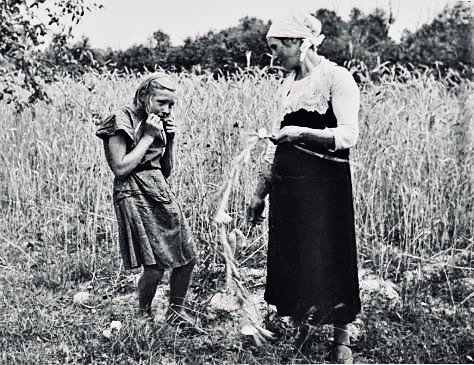
Photograph by Antanas Sutkus.

Ed Staskus posts monthly on 147 Stanley Street  http://www.147stanleystreet.com, Made in Cleveland http://www.clevelandohiodaybook.com, Down East http://www.redroadpei.com, and Lithuanian Journal http://www.lithuanianjournal.com. To get the site’s monthly feature in your in-box click on “Follow.”

“Cross Walk” by Ed Staskus

“A Cold War thriller that captures the vibe of mid-century NYC.” Sam Winchell, Beyond Books

Late summer, New York City, 1956. The Mob on the make. The streets full of menace. President Eisenhower on his way to Brooklyn for the opening game of the World Series. A killer waits in the wings. A private eye working out of Hell’s Kitchen scares up the shadows.

Available on Amazon: https://www.amazon.com/dp/B0CRPSFPKP

A Crying of Lot 49 Publication

Change of Heart

By Ed Staskus

   There was no love lost for Jews among my father’s generation. He was born and raised in northwestern Lithuania. His father was a police chief and his mother was a schoolteacher.  They weren’t empty-headed, but they were full of the zeitgeist of the times. The general consensus in Lithuania before and during World War Two was that Jews were no good. It was partly economic. Most Lithuanians were farmers then. They saw Jews as middlemen exploiting them. It was partly nationalist. Many saw them as against the country for siding with Russian and Polish interests. It was partly because Lithuanians in general aligned with Germanic beliefs, including their hatred of Jews, which the Germans had kept alive from the Middle Ages on.

   Most of the time it was simply traditional Christian antisemitism. Lithuanians were the last Europeans to give up paganism and take up Christianity. It wasn’t always a blessing for Jews. Grand Duke Jagiellon expelled all of them from the Grand Duchy in 1495. They eventually returned, but in the mid 17th century the Khmelnytsky Uprising and Deluge Wars led to the deaths of many of them.

   In the 19th century pogroms came and went. Jews had to endure smashed up and burned down houses, public beatings, and some murders. Half-baked blood libel stories ran rampant, especially in Panevizys and Siauliai. My father was from Siauliai.

   When in the summer of 1996 he told me he was going to Kaunas to deliver yarmulkes, tallitots, which are prayer shawls, and three thousand dollars to an impoverished synagogue in Kaunas, Lithuania’s second largest city, I was dumbfounded. He had never been loud-mouthed about his animus for Jews, but I had heard enough over the years to know exactly how he felt.

   “Does this have something to do with the $!8.00 Rita took to a synagogue two years ago?”

   “Yes, it’s the same synagogue.”

   My sister, Rita, had gotten the ball rolling in 1994. She was working at a travel agency  called Born to Travel. It was in Beachwood, on Cleveland’s east side, and was owned by two sisters. They were Jewish. It got started when Sally Steiger, another travel agent, asked Rita to deliver what is called a chai of $18.00 to the first synagogue she saw in Lithuania, where she was going to visit relatives. The $18.00 is symbolic. The toast “L ‘Chaim” means “To Life!”

   During the interwar years there were more than two hundred thousand Jews living in Lithuania. When World War Two ended there were fewer than two thousand left alive. There were eight hundred in Vilnius, seven hundred in Kaunas, and handfuls scattered here and there. The rest had been killed by Nazi death squads and Lithuanian auxiliaries. They called it extermination, as though Jews were bugs or mice. The victim rate was the highest of any country where the Holocaust happened.

    “I was walking around with a friend of mine in Kaunas checking out the sights while at the same time in the back of my mind I was searching for a random synagogue,” Rita said. No one she had asked knew whether there was one in the city, or not. “We turned a corner and suddenly right before us was an old synagogue.”

   It was the Ohei Jacob Synagogue. It was built in the mid-19th century and featured a two-story classical façade. By 1910 more than thirty thousand Jews lived in Kaunas, almost 40% of the population. The city became a center of European Judaism. They had their own seminary, prison, and kosher slaughterhouse. There were twenty five active synagogues in the city before the war.  

   The Nazis used the synagogue as a warehouse during their occupation of Kaunas, which ironically led to its survival. The other synagogues were destroyed or fell into disrepair. The Ohei Jacob Synagogue was the only one left. There had once been a school and an orphanage, but by the 1990s both were long gone.

   In 1941 Lithuania’s Jews began to find themselves locked up in ghettos. The Nazis, led by their number one killers the Einsatzgruppen, transformed them into death camps. It was during this time that the vast majority of the country’s Jews were murdered. Those that weren’t had somehow made themselves scarce.

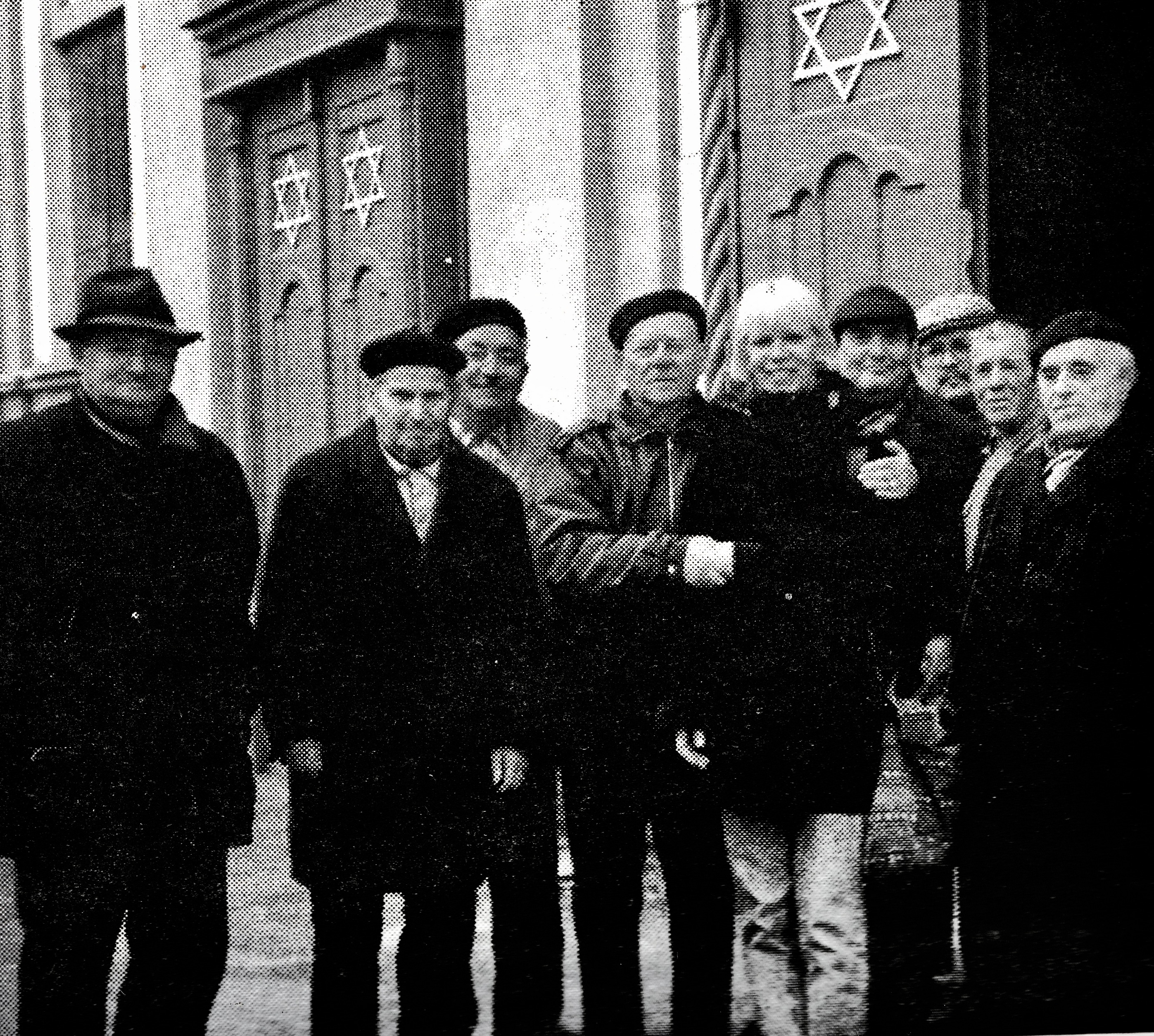
   “I went inside and found a few elderly men in prayer,” Rita said. “The synagogue looked poor and the prayer books the men were holding were ancient and tattered. I gave them the chai.”

   Two years earlier, faced with a financial crisis, Rabbi Yecheska Zach had gone to a nearby Catholic church and asked for help. The synagogue was at the point of closing. The Catholic priest gave him enough money to keep the shul’s doors open.

   Before she left she met Rabbi Zach. When it came time to leave she extended her hand to shake hands with him. “That was a mistake.” Orthodox rabbis don’t shake hands with women outside their immediate family. “It was kind of awkward.”

   When she returned home and went back to work, telling her co-workers about the synagogue, they decided to adopt it. They set up a collection box wrapped in glossy blue paper at the front of the office. ”Some people mailed in checks, Others brought in cash. One man slapped a hundred dollar bill down on my desk. I opened an account in the bank next door.”

   A local synagogue invited her to speak about her experiences in Lithuania. A group of Hebrew genealogists asked her to speak to their group. The Park Synagogue, an historic modernist landmark in Cleveland Heights, invited her to address their congregation. ”More than three hundred people were there, all looking at me. it was an out of body experience. Some people had questions when I was done. One lady stood up and said, ‘You know, you Lithuanians killed all the Jews.’ I didn’t know what to say. An older man stood up and said, ‘Leave her alone. If it wasn’t for her we wouldn’t even know about any synagogues in Lithuania.’ At the end a collection was taken. There was nearly a thousand dollars in the bag when they gave it to me.”

   My father had already planned a trip to Lithuania, partly to visit relatives, some of whom, after the Iron Curtain had been drawn shut, he hadn’t seen in more than forty years, and partly on business. He agreed to take material and money with him. “It got to the point that, before he left for Lithuania, he would call my office and ask, ‘Where’s the chai money to give to the shul?’ I didn’t know he even knew what shul meant.”

   When he set off from Vilnius to the synagogue in Kaunas he took a suitcase full of yarmulkes and prayer shawls with him. He wore a money belt stuffed with thousands of American dollars. The yarmulkes were white, left over from a wedding. The Park Synagogue donated two dozen used prayer shawls.  D. O. Summers dry cleaned them at no charge. When he delivered them the congregation would at last be properly dressed.

   “I told him to not go on a Sunday because nobody would be there,” Rita said. “I told him to go on a Saturday. I didn’t know it was going to be Rosh Hosana, but it was.”

   Rosh Hashanah is the Jewish New Year. It is a two-day holiday that begins on the first day of the Hebrew month of Tishrei. It ushers in the Days of Awe, ten days culminating in Yom Kippur. It is a time for prayer, repentance, and self-reflection. The holiday celebrates the creation of the world and is observed with special ceremonies like sounding a shofar. The shofar is a hollowed out horn made from a ram’s horn. The person who blows it is usually called the Master of the Blast.

   There is food and drink. Everybody has some symbolic foods like challah and apples dipped in honey and then gets down to business. Dishes include matzo ball soup, chicken, and  brisket washed down with grape juice or wine. When my father showed up they put out the feedbag.

   “Those guys were very friendly,” he said. “They clapped me on the back, brought me more food than I could eat, and kept refilling my wine glass. I thought they were going to take down the picture of the rabbi that was on the wall and replace it with my picture.” He went back to Vilnius filled with good cheer, in more ways than one.

   After my father got back to Cleveland he toned down his long-time antisemitism. It got so he only had neighborly things to say about Jews. It was a change of heart, an old dog learning a new trick.

   Rita went  back to Lithuania the following year, visiting uncles, aunts, and cousins. She delivered more garments and money to the Ohei Jacob Synagogue in Kaunas. “What impressed me most about Rabbi Zach was that he never asked me for anything. He just said how appreciative he was.” He took a picture of her standing with a clutch of congregants. She was the only one in the photograph legally blonde.

   Before she left Lithuania she visited the Paneriai Memorial outside of Vilnius. It is where a village and railway station had long stood. In 1940 the Red Army began work on a fuel storage base there. They didn’t finish it, interrupted by the German invasion in the summer of 1941. The pits that had been dug for fuel were repurposed. In December 1941 thirty three thousand Jews from Vilnuis were killed there and thrown into the pits. More than five thousand Red Army prisoners of war were also killed and thrown into the pits. 

   In 1944, before the Nazis retreated from the Baltics, they began digging the pits out, burning the corpses, and mixing the ashes with sand. They were trying to hide the evidence of what they had done. The corpse burners were all Jews brought to the pits from forced labor camps. It was a choiceless choice for them. Machine guns compelled them to do the work. The Nazis called the corpse burners Sonderkommandos.

   “When I got there I took a tour, but it was too much. I sat down on a bench by the railroad tracks that came from the nearby main line. They used to bring the Jews to the pits packed in boxcars. It was eerie sitting there and even more eerie when I heard a train whistle and saw a train going past in the distance. That was all I could take.”

   A letter from Kaunas arrived at Born to Travel after Christmas.  “A Happy New Year,” Rabbi Zach wrote. “The Jewish Association of Kovno has received tallitots, yarmulkes, and money.” Kovno is what Jews called Kaunas. “We now have all the Jews in our synagogue wearing the tallitot you brought us and everyone is happy about it. We thank you again. We hope you won’t forget us.”

Ed Staskus posts monthly on 147 Stanley Street  http://www.147stanleystreet.com, Made in Cleveland http://www.clevelandohiodaybook.com, Down East http://www.redroadpei.com, and Lithuanian Journal http://www.lithuanianjournal.com. To get the site’s monthly feature in your in-box click on “Follow.”

“Cross Walk” by Ed Staskus

“A Cold War thriller that captures the vibe of mid-century NYC.” Sam Winchell, Beyond Books

Late summer, New York City, 1956. The Mob on the make and the streets full of menace. President Eisenhower on his way to Brooklyn for the opening game of the World Series. A killer waits in the wings. Stan Riddman, a private eye working out of Hell’s Kitchen, scares up the shadows.

Available on Amazon: https://www.amazon.com/dp/B0CRPSFPKP

A Crying of Lot 49 Publication

Motor City Breakdown

By Ed Staskus

   Antanas Kairis was two years older than me, sure of himself, and quick on the uptake. He was even quicker when things took a twist. I met him at a party at a small mansion on Magnolia Dr. in University Circle, around the corner from the Music Settlement. Dalia and Algis Nasvytis, who were near my age and who I knew through the community, lived there with their younger sister, Julia, and their parents. It was two weeks before Christmas.

   They threw their house open occasionally, clearing the big room in the back for kids, teenagers, and young adults to dance to records. The grown-ups mingled, smoking and drinking and chatting. The house was brick, two stories with a front facing slate roof and gables and windows galore. Mid-December was cold and it had snowed for days. All lit up the house sparkled in the frosty night.

   Antanas was from Boston and had come to Cleveland, Ohio, to see his girlfriend, who was from Dearborn, Michigan. When I called him Antanas he said, “Call me Andy.” His girlfriend Aida was blonde and beautiful and visiting friends. She didn’t know our hosts, but her friends did, and she knew Andy.

   I didn’t know I was standing next to him until Aida sauntered off to dance with another boy. “What do you know, I drive all day, and she slips off with somebody else,” he grumbled, grinning devilishly. It took me a second to realize he was talking to me. I was wall flowering more than dancing. At least he had a girl to complain about. The field I was playing was empty. I didn’t often strike up conversations with strangers. Andy was more silver-tongued than me, by far.

   He wanted a cigarette. We went out on the back terrace and he lit up. He offered me one but I didn’t smoke. He did most of the talking. By the time we went back inside it seemed like we were fast friends. I didn’t see much of him the rest of the night. He had eyes only for Aida. He clapped me on the back when I was leaving with my ride, saying he hoped we would meet again. I said sure, even though I didn’t expect to ever see him again.

   I don’t know how Andy got my phone number but two months later I found myself on the phone with him. He was driving to Dearborn to see Aida the next weekend and wanted to know if I wanted to go along. I cleared it with my parents, even though they didn’t know him or his family. It was enough for them that he was Lithuanian. He picked me up the next Friday morning. When he arrived he looked like he had driven all night.

   He was driving an almost new hardtop GTO 428. GTO stands for Grand Turismo Omologato. It was red, what Pontiac called Montero Red. It was a cool car inside a hot color. It had street cred, and more. I waved goodbye and jumped in. When we got to the corner of our street, he asked me if I minded driving. I said I didn’t mind and drove all the way to Dearborn while he slept. Dearborn was one hundred and seventy miles away. We made it in record time in the smooth as silk muscle car. The engine had a throaty sound and handled like doing simple arithmetic.

   Henry Ford was born on a farm in Dearborn and later built an estate there. He pioneered the mass production of automobiles and his world headquarters was based there. He forged the River Rouge Complex there, the largest factory of his industrial empire. He had a reconstructed historic village and museum built nearby, immortalizing his youth. The back lot was planted with sunflowers and his favorite crop, which were soybeans. The crops were never harvested.

   There were lots of Poles, Germans, and Lithuanians in Dearborn. If there were any African Americans, I didn’t see them. “Negroes can’t get in here. Every time we hear of a Negro moving in, we respond quicker than reporters do to a fire,” said Orville Hubbard, the mayor of Dearborn for thirty two years. “As far as I am concerned, it is against the law for a Negro to live in my town.” 

   The Michigan Civil Rights Commission found him guilty of posting racist newspaper clippings on City Hall bulletin boards. However, he never saw jail time. He was an equal opportunity bigot. He complained that “the Jews own this country” and that the Irish “are even more corrupt than the Dagos.” When Middle Easterners started moving into Dearborn after the Six-Day War he said “the Syrians are even worse than the niggers.” In 1970 his son John Jay Hubbard ran for mayor against him but got beaten to a pulp. The unofficial slogan of the town was “The Sun Never Sets on a Negro in Dearborn.”

   We got to Aida’s house without too much trouble, except for stopping at several gas stations to ask for directions. Her parents had reservations about Andy but brushed me off as a harmless sidekick. They agreed to let us sleep in their furnished basement that night and Saturday night and made supper. It was cold beet soup with black rye bread and kugelis. I wasn’t surprised it wasn’t burgers and fries. They were true blue Baltic folks.

   We went out on the town, visiting the Automotive Hall of Fame. We went to the Henry Ford Museum and rode in a Model-T. We went to the Fairlane and sat in an old bus. We went to the movies and saw “In the Heat of the Night.” We stopped at a tavern with a neon sign in the window saying “EATS.” Andy explained I was with him and they let me in. We had burgers and fries. Andy had a beer. Aida and I had cans of Sprite.

   On the way back Andy and Aida rolled around in the back seat making out. We were at a stop light minding our own business, waiting for the green light, when a car pulling up next to us got too close and broke off the GTO’s sideview mirror. There wasn’t one to begin with on the passenger side which meant now we didn’t have any. The young woman driving the white Chevy Corvair looked at me, looking chagrined. She put the car in park and got out. I noticed her compact car didn’t had side mirrors from the get-go. The Corvair is on most lists of “The Ten Most Questionable Cars of All Time.” 

   I was standing beside the driver’s door looking at the broken mirror lying in the road when I noticed Andy bolting out of the back seat and making a beeline to who-knows-where. He hit the pavement running and disappeared down a side street. When the police appeared, I pointed to the broken mirror and explained what happened. Aida and I stood next to the GTO while they went about their business. They wrote a ticket and gave it to the guilty girl. She drove away in her Corvair waving goodbye.

   “We’ve called your parents and they’ll be here to pick you up soon,” one of the policemen told Aida. She looked stricken. 

   “Are your parents strict?” I asked. She nodded yes.

   “What about me?” I asked one of the policemen.

   “You’re coming with us,” the policeman said.

   “Where are we going?”

   “You’re going to jail,” he said.

   “Why? I didn’t do anything.”

   “This is a stolen car,” he said.

   The city hall, the police station, and the district court were all in a row on Michigan Ave. I was taken to the police station, photographed and fingerprinted. They put me in a holding tank. It smelled bad, like a toilet with a dead rat in it. A man in a suit showed up and took my statement. 

   “I didn’t steal that car,” I said. “Find Andy. He’ll tell you.”

   “We already found him.”

   “And?”

   “He said you stole the car.”

   “What! That’s not true. Why did he run away if he didn’t steal it? I didn’t steal anything. He did all the stealing, the rat.”

   “Have you ever been to Massachusetts.”

   “No, except once a couple of years ago when there was a Boy Scout Jamboree there.”

   “All right, sit tight,” he said.

   I sat tight that night and the next night and the night after that until my court appearance on Monday. I was stuffed into a cell with three other men, two of them there for drunk and disorderly and one of them, an African American, for being in Dearborn after the sun went down. He called us honkies every so often. After a while we ignored him.

   “I don’t trust anyone that hasn’t been to jail at least once in their life,” the movie director John Waters once declared. “You should have been, or something’s the matter with you.” I was in jail for the first time in my life, working on my trustability.

   I was suspicious of the two drunks and slept with one eye open. My fears were put to rest the next day when they sobered up. They built Ford Mustangs at River Rouge. The complex included ninety three buildings with nearly sixteen million square feet of factory floor space. It had its own docks on the dredged-our Rouge River, one hundred miles of interior railroad track, a private electricity plant, and an integrated steel mill. It was able to turn raw materials into complete cars all within its own space. 

   “You leave your brain at the door,” one of the men said. “Just bring your body, because they don’t need any other part. It’s a good thing, otherwise I would lose my mind. They tell you what to do and how to do it. No thinking allowed.”

   “Hey, there ain’t a lot of variety in the paint shop either,” the other one complained. “You clip on the color hose, bleed out the old color, and squirt. Clip, bleed, squirt, clip, bleed, squirt, stop and scratch your nose. Only now the bosses have taken away the time to scratch my nose.” 

   “Yeah, the line speed used to be forty-some cars an hour twenty years ago but now it’s working its way up to a hundred cars. A lot of the time I have to get into the car and do my job sitting on base metal. I was always going home with black and blue marks on the back of my legs. I made a padded apron to wear backwards so I would be more comfortable.”

   “I was a two-bolt man for a while,” the painter said. “There were two bolts and I put in one and secured it. Then I put in the other one and secured it. They came pretty fast, so it was time after time all of the time. I always had a sore shoulder. It just wears you down in your bones.”

   A rolling rack of paperback books came by and I grabbed a couple of Perry Mason mysteries. We were fed morning, noon, and night. I took naps whenever I wanted to. Being behind bars was better than it was cracked up to be. By Monday morning I had gained a pound or two, was working on my jailbird tan, and was well rested.

   On the way to the courtroom I saw Andy in another group and jumped him, only to be separated from him by force of arms. I spit out curses, calling him a dirty liar. He gave me the finger and that ended our so-called friendship on the spot. In the courtroom I saw my father, who had taken the day off and driven to Dearborn. He was poker-faced. When my turn came a police detective and an assistant district attorney talked to the judge. When they were done the judge crooked his finger at me to approach the bench.

   “Your friend has admitted stealing the car in Boston to go joyriding and so we are dropping all charges against you,” he said.

   “He’s not my friend,” I said.

   “In any case, you’re free to go.”

   Automobile theft was rampant all over the country, with almost a million of them going missing every year. Michigan was one of the states that led the way. My case was open and shut, thank God. Stealing cars was a trap door to prison. I left with my father, who wasn’t at all happy, but was happy I had been sprung loose.

   “I still can’t believe another Lithuanian would do that to me, especially lying about stealing the car,” I said on our way back to Cleveland.

   My father brushed my naivete aside. “In Lithuania, whenever anyone is driving, they are cautious of people on the side of the road trying to flag them down, trying to get them to pull over,” he said. “Those are usually up to no good.” The only time anybody had to stop, he said, no questions asked, was when a Russian in a uniform told them to stop.

   The Russians had their clamps on Lithuania in those years. They didn’t care whose car you stole, as long as it wasn’t one of their cars. When that happened they got their commie private eye kits out and went looking for the thieves. When they got their ma it was payback time.

   “More often than not it’s a trick to get you out of your car so that a second man can either steal what’s in it or drive off with it,” my father continued. “Everybody knows that if you absolutely must leave your car, let’s say you are involved in an accident, be sure to turn off the ignition, take the keys, and lock the car. Lithuanians are not all saints, believe me.”

   He was from the homeland. He knew the score better than me. He tapped out a Pall Mall, lit it, and drove in silence while he smoked.

   “What do you think the moral of your lost weekend might be?” he asked ten minutes later while stubbing out his cigarette.

   I looked at the pivoting globe compass and the small painted statue of St. Christopher on top of the dashboard, wiggling slightly on their magnetic bases. Even though the compass told him what direction he was going, my father was terrible with directions, often getting lost. He didn’t like asking for them, in any case, and relied on St. Christopher, the patron saint of travelers. Unfortunately, St. Christopher never said a word about anything.

   I couldn’t think what the moral of my weekend in Motor City might or might not be. I was sure there was going to be some kind of sermon. He surprised me, though, tempering sternness with advice.

   “Trust everybody, but always cut the cards.” He was a very good bridge player. He knew when to bid and when to pass. “Be careful when somebody calls himself your friend, no matter whether he’s Lithuanian, or not. You never lose when you lose a false friend.”

Ed Staskus posts monthly on 147 Stanley Street  http://www.147stanleystreet.com, Made in Cleveland http://www.clevelandohiodaybook.com, Down East http://www.redroadpei.com, and Lithuanian Journal http://www.lithuanianjournal.com. To get the site’s monthly feature in your in-box click on “Follow.”

“Cross Walk” by Ed Staskus

“A Cold War thriller that captures the vibe of mid-century NYC.” Sam Winchell, Beyond Books

Late summer, New York City, 1956. The Mob on the make and the streets full of menace. President Eisenhower on his way to Brooklyn for the opening game of the World Series. A killer waits in the wings. Stan Riddman, a private eye working out of Hell’s Kitchen, scares up the shadows looking for a straight answer.

Available on Amazon: https://www.amazon.com/dp/B0CRPSFPKP

A Crying of Lot 49 Publication

Dancing in Circles

By Ed Staskus

   When the Juventus Folk Dance Festival showed up towards the end of June, I didn’t brush off my dancing shoes or brush up on my steps. I never had many steps to begin with, even though I had once been in the game. I had done some stepping with a minor league folk dancing group who practiced at the Lithuanian Catholic church in North Collinwood, near where my family lived. I grew up in a household with one bathroom which everybody wanted to use at the same time in the morning. I picked up most of my ad lib two-steps waiting for my turn. In the end, which wasn’t long coming, I was kicked out of the minor league group. Being clumsy isn’t especially a problem bunny hopping by yourself, but it can be in a group of twenty-or-more in close quarters going in circles and branching out in all directions.

   Something on the order of three hundred dancers from five countries cut the rug at the show in the Berkman Hall Auditorium on the campus of Cleveland State University. “They represent every region of Lithuania,” said Ingrida Bublys, the Honorary Consul of Lithuania for Ohio, Indiana, and Kentucky. The event was sold-out and sponsored by the dance group known as Svyturys, which means Beacon. The Beacon has been lighting the way in Cleveland for twenty years.

   Although Lithuania has been around for ages, Lithuanian folk dancing has only been around for an age. It got started in the late nineteenth century during the National Awakening, when the country was under the thumb of Moscow. The native language and native writing were proscribed, but the Czar turned a blind eye to busting moves, so long as the busting didn’t have anything to do with treason and dynamite. The first Lithuanian folk dance, known as Suktinis, was performed in St. Petersburg in 1903. Suktinis means winding or twisting. The first down home dance festival was held in Kaunas, then the capital of the country, in 1937. There were 448 dancers hoofing it, most of them going around and around.

   Lithuanian folk dances are usually one of two kinds. There are sokiai, which are ordinary dances, and there are rateliai, which are ring dances. Sokiai are often accompanied by instrumental music and sometimes by songs. One of the most popular dances is called Malunelis, which means windmill. Ring dances are more-or-less walked, sometimes slowly, sometimes faster, sometimes in a slow trot. The secret is in the center of the ring for anybody who knows where to look. The movements are simple and usually repeated over and over. They take the form of circles and double circles, as well as rows, bridges, and chains. The circles transform into lines and snakes as the dancing progresses. The dancers sometimes break up into pairs. The high stepping that follows is usually of foreign origin, like the Polish polka.

   Raganaites, which means the Dance of the Little Witches, is performed by young girls wielding straw brooms. They pretend to ride them. They twirl them, do some mock jousting with them, and try not to poke anybody’s eye out. A witch taking time off from her cauldron must be at least a hundred years old and have memorized the 7,892 spells in the Great Book of Magic before being allowed to do the dance. But the rules are always waived for Lithuanian kids.

   If an honest-to-goodness witch ever threatened me by saying she planned on dancing on my grave, I would tell her, “Be my guest. Even though I’m the grandson of landed farmers, I plan on being buried at sea.” 

   Before there was Svyturys there was Grandinele, which means Little Chain, and before there was Grandinele there were six refugees who in 1948 performed at the Slovak Cultural Gardens. It was One World Day. Nearly 40,000 Lithuanians landed in the United States after World War Two. Four thousand of them landed in Cleveland, joining the 10,000-some who already lived in the northern Ohio city. Even though the Lithuanian Cultural Garden was officially dedicated in 1936, the garden was only big enough on its lower level to hold the bust of Jonas Basanavicius, a freedom fighter who never gave up fighting tyranny. Over time a middle and upper level were created. The upper level is where the Fountain of Birute is. She was a priestess in the Temple of the God of Thunder. In her day the Russians stayed away from the Baltics. Even the Golden Horde was known to warn freebooters, “Beware the Lithuanians.” The Grand Dukes weren’t anybody the Russians wanted to mess with. They kept to their dachas, which were dry except for cupboards full of vodka. There were lightning rods on the roofs.

   My sister Rita was a dancer in Grandinele, the by-then acclaimed folk dancing group, in the mid-1970s. My brother Rick was not in any dancing group. He was smooth with the spoken word, but had two left feet like me, except I could tell my two feet apart, while he couldn’t. He was banned for fear of kicking up his heels in too many directions. Rita danced in Grandinele for almost five years. During that time, she toured Argentina, France, and Germany with the group. “We danced in front of large audiences,” she said. “Before I went I had no idea there were so many Lithuanians in South America.” The group wasn’t allowed to perform in Lithuania, which was behind the Iron Curtain at the time. The Kremlin didn’t let anybody beat feet in Eastern Europe.

   Grandinele was formed by Luidas and Alexandra Sagys in 1953. The dancers were mostly high school and college students. They rehearsed twice a week at a YMCA in Cleveland Heights. A second group composed of tadpoles was formed in 1973, to teach them the basics and get them ready for the limelight. They didn’t perform in front of the public, but they performed in front of Luidas and Alexandra, which could be even more unnerving.

   “He was strict but creative,” Rita said. “Not everybody in the community liked him making up his own folk dances, which were almost like ballets with a story. She was strict and could be mean.” Alexandra was the group’s business manager. She took care of the costumes. Nobody wanted to get on the wrong side of her, unless they wanted to risk being dressed up like Raggedy Ann.

   Luidas Sagys had been a professional dancer with the National Folk Dance Ensemble in Lithuania before World War Two. He fled the country after the Red Army came back in 1944. They seemed to always be coming back, even though the Baltics were sick of them. The apparatchik’s thought Lithuania was theirs to do with as they pleased. Their revolutionary ideals were long gone and not coming back. They had turned into rats. Their reasoning was that since the Nemunas River rises in central Belarus and flows through Lithuania, it was Russian water and wherever it went the land was part of Mother Russia. They have applied the same reasoning to the flow of the Dnieper River, which rises near Smolensk before flowing through Ukraine to the Black Sea. Ukraine is still living with the consequences of Moscow’s crazy reasoning.

   When Luidas Sagys formed Grandinele he could shake a leg with the best of them. In 1963 he directed the Second American and Canadian Folk Dance Festival. He looked authentic as could be whenever he donned indigenous garb and got into the act. Even though his culture and imagination were the genesis of his art, the art of him was his body in motion for all to see. He ran the Folk Dance Festival in Cleveland for many years. He liked to wear bow ties and sported a puckish grin when he wasn’t working on new choreography. When he was done, he liked to have a drink or two.

   My wife and I were by chance in Toronto when the XI North American Lithuanian Folk Dance Festival was staged there in 2000. The quadrennial festival, known as the Sokiu Svente, which means Dancing Celebration, was first staged in Chicago in 1957. We found tickets at the last minute and hurriedly got our bottoms in place. We sat in the cheap seats of the big auditorium. We didn’t mind since the view was better, anyway. Zilvitis, a musical ensemble from Lithuania, accompanied the performance of 1,600 dancers.

   The show was a swirl of color and action. A couple of thousand dancers dressed in the red, green, and yellow colors of Lithuania is a lot to look at in the space of a few hours, not to mention the mass maneuvering and the music. The performers and jam-packed audience were more Lithuanians than I had ever seen in one place. On top of that most of them were speaking the natal tongue. I grew up with the lingo and was able to keep up.

  One of the dance groups at the show was Malunas, which means to mill. Back in the day, before they did much dancing, most Lithuanians were either peasants or farmers. There were grindstones far and wide. Baltimore was the dance group’s homestead. They had been performing up and down the East Coast for nearly thirty years. They have appeared on PBS-TV and at presidential inauguration festivities. Toronto was their fifth Sokiu Sevente.

   A tradition at every Sokiu Svente during the rehearsal before the big show is for every group to wear a distinguishing practice outfit. When silk-screened t-shirts became popular in the 1970s, groups began to design and wear custom t-shirts. They came up with their own silk-screened identities. After the last practice groups trade identities, which become mementoes. In Toronto, Malunas came up with a new idea. They were inspired by the Grateful Dead shirts of the 1992 and 1996 Lithuanian Olympic Basketball teams. One of their own, Michelle Dulys, dreamed up a design of skeletons as dancers rather than basketball players. The t-shirts were a knockout. The ones not exchanged were sold fast, faster than we could buy one. We watched the last skeleton sauntering off from the concession stand.

   The Lithuanian Folk Dance Festival Institute was formed soon after the Sokiu Svente became a going concern to liaison with dance groups worldwide. The institute hosts a week-long training course at Camp Dainava, in southeastern Michigan. Although it is an educational, recreational, and cultural summer camp for children and young adults, the name of the camp derives either from the past tense of the word sing, from a village in the middle of nowhere back in the homeland, or from a Lithuanian liqueur of the same name, made with grain spirits and fruit juices. The booze has a vibrant red color and a complex, sour-like flavor. Even though Lithuanians are ranked among the top ten barflies in the world, it is forbidden on all 226 acres of the campground.

   The two-and-a-half-hour divertissement that was the Juventas Festival started with a parade and a song. There was some speech-making. There was a violin, a couple of wind instruments, and a drummer, while an accordion led the way. There were costumes galore and faux torches. There was circle dancing. There was pairs dancing. The pairs dancing got fast and lively. There was more singing. Before every part of the show a young man and a young woman in civilian clothes explained, in both English and Lithuanian, what was coming up. A group of kids did their own version of a circle dance. Not one of them got dizzy and fell over. There was a courtship dance, the young men and women taking their wooden shoes off and going at the romance barefoot. Whenever the top guns came back, everybody sat up. They were good as gold. They had it going.

   In the end all the dancers somehow squeezed themselves onto all the parts of the stage. There was waving and rhythmic clapping. There were loads of smiles. A half dozen men lifted a half dozen women up on their shoulders and did an impromptu circle dance. It was a wrap.

   Most of June in Cleveland had been dry, so much so that lawns were going yellow. But it had rained a few days earlier. The smoke from the Canadian forest fires that had made the sky hazy gray for more than a week had gone somewhere else. Driving home everything smelled fresh and clean. The dancing had been traditional but not hidebound. It had been fresh and alive.

   Life can often be more like wrestling than dancing. Many people believe living has meaning only in the struggle. That’s just the way things are. But nobody can wrestle all day and all night. “The one thing that can solve most of our problems is dancing,” said James Brown, the boogaloo man known as Soul Brother No. 1. What he didn’t say was that, in a way, it’s like going to church. Nobody bends a knee in the sanctuary to find trouble. They go there and the dance hall to lose it.

Ed Staskus posts monthly on 147 Stanley Street  http://www.147stanleystreet.com, Made in Cleveland http://www.clevelandohiodaybook.com, Down East http://www.redroadpei.com, and Lithuanian Journal http://www.lithuanianjournal.com. To get the site’s monthly feature in your in-box click on “Follow.”

“Cross Walk” by Ed Staskus

“A Cold War thriller that captures the vibe of mid-century NYC.” Sam Winchell, Beyond Books

Late summer, New York City, 1956. The Mob on the make and the streets full of menace. President Eisenhower on his way to Brooklyn for the opening game of the World Series. A killer waits in the wings. Stan Riddman, a private eye working out of Hell’s Kitchen, scares up the shadows looking for a straight answer.

Available on Amazon: https://www.amazon.com/dp/B0CRPSFPKP

A Crying of Lot 49 Publication

Never Look Back

NEVER LOOK BACK.jpeg

By Ed Staskus

   The blitzkrieg that started World War Two in 1939 won the Third Reich most of Europe and substantial parts of Russia. Five years later the Red Army was poised to take revenge on its enemy. When the Wehrmacht on the Eastern Front tried to weather the storm and fight out of encirclements, the Russians did what the Germans would have done, fed armor into the attack, maintaining mobility, and forcing the issue deep into rear areas, faster than the enemy could respond. Their M4A2 Sherman tanks, built by the United States, could be replaced when destroyed faster than German factories could take a breath.

 “Gute trauer” was all the Third Reich’s war machine could say while falling behind.

   “The Russians came fast,” Angele Jurgelaitis said. “We listened to the radio every day. We could hear booming in the distance, the bombs and cannons. The Germans were all over the roads. The Russians were to the north and the east of us. Everybody knew they were coming.”

   The youngst of her aunt’s family, the family Angele was child minding near Alvitas, in southwestern Lithuania, didn’t know, but everybody else in the Baltics knew the Red Army was coming back and there was going to be hell to pay. “Everybody was worried and unhappy.” Most Lithuanians had sided with the Germans. The Russians were implacable imperialists. There were centuries of enmity between Vilnius and Moscow.

   It was in the summer of 1944 that Soviet forces went on the offensive. The Germans were pushed back on a shifting front. Armored tank columns from both sides advanced on Vilkaviskis, four miles away from where Angele was. If it wasn’t for land mines she could have walked there in an hour. The Russian 33rd Army entered the town a few days later and then secured the rail depot at Marijampole. The Third Panzer Army mounted a counterattack, but after several grim tank battles was finally forced to retreat to Kybartai, rolling back to a last-ditch defensive line. Neither the Germans nor the Russians listened to a single Lithuanian who said the land wasn’t their land to begin with.

   “It was one day in the afternoon that a lady, a teacher, who was one of my aunt’s friends, with two kids, a small boy and a small girl, came to our farm from Vilnius,” Angele said. The woman and Angele’s aunt, Ona Kreivenas, had studied and graduated together from a teacher’s college. She was in a horse drawn wagon with her children and what chattels and valuables she could  carry. She had come from Vilnius in a hurry. She told them there was Russian armor hiding on farm tracks in the woods.

   The next morning Ona, Angele, and the children, Mindaugas, Carmen, and Ramute, loaded their wagon with clothes, blankets, food, and the two year-old Gema. They hitched two horses to the wagon and tied a cow to the back. “We took milk with us when we left, for Gema, and hoped we would find more when we were gone.” They took whatever they could carry. They left their Sunday buggy behind and let the riding horse, the rest of the cows, and all the pigs and chickens loose. The friend followed them.

   “My aunt had to let all the animals go. What could we do? The Russians would have just stolen all of them.”

   Ona Kreivenas took all her money and what jewelry she possessed with her in a handbag that she could keep close to the vest. She and the children filled a trunk with her sewing machine, china, vases, and family heirlooms. They lugged it behind the barn, where the remains of months of potato scraps thrown down to feed the pigs were piled up.

   They cleared a space, dug a four-foot deep hole, and buried the trunk. They threw scraps over the overturned ground. When they were done, they left with their friend. They were two wagons, two women, seven children, and a cow on the move, suddenly homeless in their own homeland.

   “We moved back about fifteen miles.” They went southwest towards East Prussia. “We stopped at a big farm. When we got there, there were already hundreds of people in the fields, with their wagons, and their families. The farmer slaughtered and cut pigs up for us. All the women made food. Everybody was talking about the war, about what to do.”

   There was heavy fighting between German and Soviet troops in the Baltics. As the fighting raged, more than a hundred thirty thousand Latvians escaped to Sweden and Germany. In total, the country lost almost 20% of its population during the war, either dead or gone. The ‘Great Escape’ in Estonia started in the summer and continued through the fall. It is estimated eighty thousand Estonians fled from the Red Army to anywhere else. Almost one hundred thousand Lithuanians joined them, clogging the roads to Poland, Prussia, and Germany.

   Ona Kreivenas crept back to her farm during the week the Panzer divisions were holding their own. The countryside was a ghost town. She discovered the trunk they had buried behind the barn had been dug up and was gone. “There was just a big hole. The Russians took it. They used metal sticks to poke into the ground. Her sewing machine was gone, all gone, everything gone.”

   They slept rough, out of doors, like everybody else. “We slept on blankets on the ground. When it rained, we slept under the wagon and stretched a tarp out to keep the water away.” Every day it got darker. Over the course of September, the length of day in Lithuania rapidly decreases. By the end of the month the daylight is two hours less than it was at the start of the month.

   Their encampment stretched out for six weeks. They dug latrines and filled barrels with water. They picked apples off trees and blueberries from bushes. They took especial care of their horses. They greased the axles of their wagons, making sure the grease bucket was always full of animal fat and tar, and making sure they had a spare axle. Without one a broken axle would be a disaster, bringing them to a standstill.

   The children played games whenever they had idle time. “We played the ring game,” Angele said. “We all sat in a circle and passed around a pretend ring, like a twig or a pebble. Sometimes we passed it, but other times we didn’t. We just pretended to give it to who was next to us. One of us was it, like in tag, who had to guess who had the ring. If they were right, they got a prize, like a pencil. If they were wrong, they had to sing a silly song or do a dance in the middle of the circle.”

   When they finally left, they left in the early evening. They had heard over the radio that morning that the Russians had come closer. They spent the day packing and preparing. It was now or never. “Most of us left, although some stayed. Some of the farmers wanted their land back. They didn’t want to leave.” It was all they had. It was all they had ever known. They were loath to give it up. “My aunt had to go, no matter what. The farm didn’t matter. Her husband had already been taken by the Communists. She knew they would take her, too, if they caught her, send her away to Siberia, and her children would be left behind, orphans or worse.”

   It rained that day and the rest of the night. “The road was crowded on both sides. There were thousands of wagons, wagon after wagon, all going one way. There wasn’t a single car or truck, just horses. We knew the Germans were somewhere ahead of us and the Russians somewhere behind us, but we didn’t see any soldiers anywhere”

   Ona Kreivenas was at the reins of the two-horse team, her seven-year-old daughter Ramute holding the baby, and the rest of the children walking. Most of the refugees were walking, their wagons jam-packed with possessions and provisions. Their friend from Vilnius with her two small children stayed in line behind them.

   Before the war, Lithuania’s population was almost three million. After the war it was closer to two million. Some Lithuanians were killed. Many were deported. Others ran for their lives. The displaced were forced to make new lives in different countries all around the world, whatever country they could get to, whatever country would take them, whatever country they could sneak into.

   When the second Soviet invasion of the 1940s happened, some Lithuanians tried to flee across the Baltic Sea to the Nordic countries, but only a few were successful. Patrol boats apprehended them and they ended up hauled off to labor camps. Most fled west, while others went south to Hungary, Romania, and the Balkans.

   “On the way we met my uncle on the road, Uncle Jankauskas and his family.” Her uncle’s wagon fell into line with them. The progression of wagons stretched as far as the eye could see, ahead and behind. They soon crossed into East Prussia. There were no guards. They had all fled. The borderland was a mess.

   “I was so sad leaving Lithuania,” Angele said.

   Russian warplanes strafed and bombed the column of evacuees several times. The Red Air Force was bombing and strafing at will, both German and refugee columns alike. Forest and brush on both sides of the road were on fire. There was smoke in the sky day and night. Wagons and carts slowly wended their way around craters.

   “It was all just wagons. They knew we were refugees They dropped bombs and shot their machine guns. I don’t know why they did that. Whenever we heard airplanes, we all ran and jumped into ditches beside the road. I was afraid, but somehow I knew I wouldn’t be hurt by them.”

   What was called the Baltic Gap had grown so menacing to the Third Reich that Adolf Hitler moved his headquarters from Berchtesgaden to Rastenburg in East Prussia. The German situation on the Eastern Front was desperate. The fighting was hard. It was a fight to the finish. The hinterland was torn up, abandoned and forlorn.

   “Most of the people on farms had run away. We would go into their houses and find dried fruit, pickles, mushrooms, pork, and wine.” They ransacked barns, pantries, and root cellars. “We took all the food we could find, all of it. It rained most of the time, it was cold, and we walked and walked. Everybody was hungry.”

   The hard road were hurtful to their cow. The animal was careful as could be on the poor traction of the road, wet and slippery, stepping timidly with its hind legs spread wide. It compensated by walking with an arched back. They finally had to do something. They knew the long miles and pavement weren’t good for it. They thought she might be going lame. Angele’s uncle looked at the cow’s hooves and saw lesions. An ulcer was forming on one hoof.

   “Mindaugas and I found a family that hadn’t run away. We went to their farmhouse and sold the cow to them.” They gave the money to Ona Kreivenas and she hid it on her person with the rest of her money. She had plans for it. Her plans were all about survival.

   One cold night when they stopped to rest her uncle said, “Kids, jump up and down to warm yourselves up.” When Angele stopped jumping, he grasped her under the armpits. “He grabbed me. We were jumping up and down and he dropped me by accident.” She broke her wrist. “It hurt bad, but there were no doctors to help me.” When they got to a town with a railroad station, there weren’t any doctors there, either. The smart and the skilled had already left. Everybody else was hoping against hope. Angele’s wrist had to take care of itself.

   After the New Year the German population of East Prussia, most of whom had not yet cut and run, began to evacuate as the Red Army rapidly advanced. Within weeks it turned into  a helter-skelter flight as more than two million of the two-and-half million men, women, and children of the enclave bolted into the Polish Corridor heading for Germany. The winter weather was bad, the roads were caving in, and the civil authorities were overwhelmed. There was panic and quagmire and many thousands died, some caught in combat, others swept away in the chaos.

   But before that happened, Ona Kreivenas had already sold their wagon and horses and everything they couldn’t carry and managed against the odds to get passage on a train going to Berlin. The Prussian Eastern Railway connected Danzig and Konigsberg to Berlin. A month later, the last week of January 1945, the last train to Berlin ran the rails. There was no traffic on the line after that.

   “The train was completely full. The corridors were full, too.” They stood clumped together in the corridor. The passenger cars were red and had ten large windows on both sides. They were pressed against one of the windows. Some of the windows were broken and the passageway was as cold as the outside. “We had a pillow for Gema, who slept on the floor, but we stood that night and the next day.”

   The twin locomotives pulling the long line of passenger cars and baggage cars were in camouflage livery. On their front was painted the Hoheitsadler, an eagle, Germany’s traditional symbol of national sovereignty, holding a swastika in its talons. By the time they crossed Poland and entered Germany the talons and swastika were obscured by coal soot.

   Lehrter Bahnhof was the Berlin terminus, adjacent to Hamburger Bahnhof, built in the late 19th century just outside of what was then Berlin’s boundary on the Spree River.  It was built in the French neo-Renaissance style, the façade covered in glazed tiles. The station had long been known as a “palace among stations.” But it had been severely damaged by Allied bombing and was near to being a shambles.

   When they finally got off the train in Berlin they were met on the platform by Bishop Brizgys. The clergyman was Ona’s husband’s cousin. Vincentas Brizgys had been the assistant to Juozapas Skvireckas, the archbishop of Kaunas. During the summer of 1944 he and the archbishop and more than two hundred other Lithuanian priests fled the country with several retreating German army divisions. Ona Kreivenas had somehow located him by telephone and he arranged to meet them at the train station. He was wearing a dark suit and a homburg and carrying a basket of hot buns.

   “He gave one to each of us. I was so happy,” Angele said.

   She was sixteen years-old, somewhere between childhood and adulthood. She was very tired. In the meantime, hope in tomorrow was the only thing keeping her on her feet.

   The Third Reich’s war economy was on the verge of collapse. The whole country was a sinking ship. There was a shortage of bread, sausage, cabbage, and everything else. When they looked around, the buns the bishop had brought were the only cheer they could see. There wasn’t going to be any traditional roast goose during the holiday season.

   Angele looked at the four children and her aunt. She looked up and down the platform. Their friend from Vilnius and her uncle were long gone, lost in the fog of war. Bishop Brizgys led them out of the station into the city. The Red Army numbering over four million men was massing on the Vistula River and along the East Prussian border. Their superiority was ten to one in infantry and twenty to one in artillery and planes. They would be coming soon. Berlin and its three million residents were already a wreck, the day and night Allied bombing taking a monstrous toll. She thought she wouldn’t be able to stay long.

   The early afternoon light was a gray haze. There was smoke in the sky. It was a kind of darkness at noon. She saw heaps of rubble in the street. When she looked all around she knew in her bones it was going to be a bare-bones winter on German soil. There was no looking back, not today. She walked towards what was left of Berlin.

Ed Staskus posts monthly on 147 Stanley Street at http://www.147stanleystreet.com, Made in Cleveland http://www.clevelandohiodaybook.com, Down East http://www.redroadpei.com, and Lithuanian Journal http://www.lithuanianjournal.com. To get the site’s monthly feature in your in-box click on “Follow.”

“Cross Walk” by Ed Staskus

“A Cold War thriller that captures the vibe of mid-century NYC.” Sam Winchell, Beyond Books

Available on Amazon: https://www.amazon.com/dp/B0CRPSFPKP

The end of summer, New York City, 1956. Stickball in the streets and the Mob on the make. President Eisenhower on his way to Ebbets Field for the opening game of the World Series. A killer waits in the wings. A Hell’s Kitchen private eye scares up the shadows.

A Crying of Lot 49 Publication
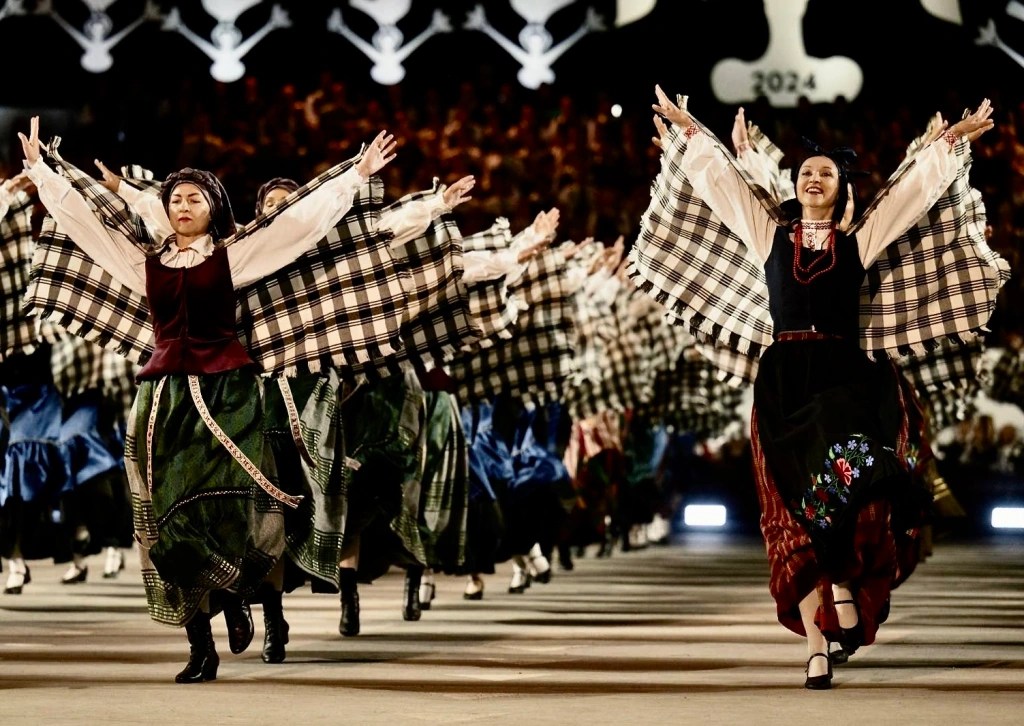
No Place Like Home

By Ed Staskus

   Sigitas Kazlauskas didn’t know J. Edgar Hoover from the man in the moon. He didn’t necessarily want to make his acquaintance, either. He wanted to go home, even though he knew he didn’t have nearly the funds for the passage. The passage was across the Atlantic Ocean and over the North Sea. His home was far away in Lithuania. He didn’t know the Justice Bureau man was going to be his ticket back.

   Sigitas was living in Cleveland, Ohio. It was Thanksgiving week in 1919. He had left home in late 1914, dodging forced conscription into the Czar’s Imperial Army. He knew being drafted meant the meat grinder. He also knew his socialist views were hazardous to his health. The Czar didn’t brook his kind of man. He made his way to the United States on a tramp steamer. He was living in Dope Town, a neighborhood west of East 9th St. and north of Superior Ave. Suicide Pier on the Cuyahoga River was down one end of the street and the town dump was down the other end of the street. Lake Erie was on the north side and Little Poland was on the south side. 

   None of his friends called him Sigitas. Everybody called him Dave. When he asked why, they laughed and said, “David and Goliath, like in the Bible.” They didn’t bother with his family name since they weren’t his kith and kin, although they were Eastern Europeans like him who had ended up in Cleveland for the same reason as him, which was opportunity. His opportunity had come and gone, which was why he was living in Dope Town. It was the only place he could afford a furnished room. The wrist a Cleveland policeman had broken with a truncheon during the May Day Riot six months earlier had gotten him there, making him unemployable for three months and draining his savings.

   Since then he had been living on homemade bread and homemade beer. When the beer was ready he called his Polish friends, “Hey Polska, come get your right piwo.” He was well-known for his beer, attracting friends who were as friendly with his brew as they were with him, maybe more. They sang, “In Heaven there is no beer, which is why we drink it here.” He was hoping somebody would invite him to their turkey feast on the big day. He needed a square meal to go with his barley pop.

   Cleveland was going strong in 1919. It was the fifth largest city in the country. Iron and steel dominated the economy. Foundries and machine shops were everywhere. Skyscrapers were being built. The population was nearing one million. A third of the population was foreign born, working in the steel plants and garment factories. They worked long hours for low pay, but it was better than where they had come from, where they worked longer hours for even less pay.

   More than a quarter million Lithuanians left the Russian controlled Baltics between 1900 and 1914. When World War One broke out all immigration from Europe to the United States was brought to a halt. The new labor force that came into being was from the American South. There had been fewer than 10,000 Negroes in Cleveland in 1910. Ten years later there were nearly 40,000. There was enough work for everybody, though. Commercial construction was booming. The problem Sigitas had wasn’t finding work. The problem he had was keeping the work he found.

   He was a socialist, which was his problem. He believed in social ownership of the means of production. He didn’t believe in private ownership of it. The word socialism comes from the Latin word “sociare” which means to share. The modern use of the word was coined by the London Cooperative Magazine in 1827. The First International was founded in 1864 in Great Britain. After that it was off to the races. The Second International was founded in 1889. Anarchists were banned as a practical matter. Socialists didn’t want bomb throwers in their ranks, if only because bombs can be unpredictable about who they blow up.

   The May Day Riot in Cleveland on May 1, 1919 pitted trade unionists and socialists against police and military troops. The city was bursting at the seams with blue-collar foreign-born laborers. The activist Charles Ruthenberg got it into his head to organize a mass demonstration on Public Square on International Workers’ Day. He had run for mayor of the city on the Socialist Party ticket two years earlier, polling nearly a third of the vote. He was well-known among the disaffected. He marched at the head of the assembly.

   Sigitas and his friends heeded the call. They joined the more than 30,000 men and women who showed up for the demonstration. They marched from Acme Hall on Upper Prospect to Lower Prospect to Public Square. The marchers wore red shirts and waved red flags. A parallel procession of army veterans in full uniform clashed with the socialists. Fights broke out and the police were called, who then quickly called for reinforcements and mounted forces. Harry Davis, the city’s mayor, called for the National Guard, who mustered in front of a beer hall before going into action with fixed bayonets. Tanks led the way, even though the socialists were unarmed. When Sigitas’s wrist was broken a woman standing beside him used the 8 inch ivory hatpin holding her hat to her hair bun to stab the policeman who had broken it in the butt. It was how Sigitas managed to break loose and not get arrested. 

   Several marchers were killed, nearly a hundred were injured, and many hundreds more were arrested. The Socialist Party headquarters at Acme Hall was ransacked by a “loyalist” mob. The next day all of Cleveland’s newspapers blamed the marchers for the riot, labelling them as “foreign agitators” even though most of them were native-born or naturalized citizens. The fourth estate demanded their deportation. The Immigration Acts of 1921 and 1924 later restricted immigration of “undesirable” Southern and Eastern Europeans, whether they were socialists, or not.

   It was at Thanksgiving dinner with his friend Teodor Wojcik and his family that his friend hatched a plan about how to get Sigitas out of the United States and back to Europe. Agnieszka was Teodor’s wife. They had two children and were moving up in the world. Teodor went by Teddy and Agnieszka went by Agnes. They weren’t socialists, but didn’t argue with Sigitas about it. They believed the United States was a free country where everyone was free to believe what they wanted. They weren’t foolish enough, however, to say so in public.

   “There’s a man at the Justice Bureau who is heading up the new Radical Division,” Teddy said. “He’s already gone after the Negroes.” J. Edgar Hoover was the new man. He was after what he called “terroristic and similar classes.” He was a law and order man schooled in bigotry. “Something must be done to the editors of Negro publications as they are beyond doubt exciting the darkie elements of this country to riot,” he said in the summer when white soldiers and sailors rioted in D. C., killing more than a dozen darkies, after a rumor spread that a Negro man had raped a white woman. The rumor was fake. The Negro deaths were real.

   J. Edgar Hoover turned his attention to anarchists and communists at the end of the summer. He got busy sending the notorious Emma Goldman back to Russia. He helped engineer the arrest of more than a thousand radicals in early November, with the intent of deporting them. “The Communist Party is a menace,” he said. He meant to send them all back to where they had come from.

   “What does this new man have to do with me?” Sigitas asked.

   “Are you a patriot?”

   “Patriotism is just a way of convincing the poor to die for the rich.”

   “Your views about that are what that man has to do with you.”

   Agnes brought a plate of paczek to the table. They were deep-fried pastries filled with jam, caramel, and chocolate. The outer layer was sprinkled with powdered sugar and dried orange bits. They drank coffee the Polish way, which was strong with full-fat cream.

   “What you have to do is forget about socialism and become a communist,” Teddy said. “Join the Communist Party. Volunteer for the dirty work. Become a firebrand. Make yourself known to the Radical Division. Make enough trouble and you should be on a boat on your way back to Lithuania in no time. It won’t cost you a penny for the fare and they will feed you during the voyage, too, so by the time you get home you’ll be back to your old self.”

   “They won’t shoot me?”

   “Probably not.”

   “They won’t throw me in jail?”

   “They probably will for a month-or-so, but they don’t want to keep anarchists and communists in jail. They don’t want them here. They want to send them somewhere else, anywhere else, which will be easy enough in your case since you were never naturalized.” Sigitas had never forgotten Lithuania and had never become a full-fledged American.

   Becoming an official communist was easy as pie. Charles Ruthenberg had split from the socialists after the May Day Riot and joined several splinter groups to form Cleveland’s Communist Party. They allied with the Communist Party of America. The woman who had saved him during the May Day Riot was a close associate of Charles Ruthenberg’s. She put in a good word for him. He was brought into the circle of fellow travelers. He was given a revolver but no bullets. He gave the gun back. J. Edgar Hoover’s Radical Division had numerous informers and inside men. They put Sigitas on their list soon enough. He didn’t have to wait long for the Palmer Raids.

   Seven months earlier the anarchist Carlo Valdinoci had put a bomb on the doorstep of newly appointed Attorney General A. Mitchell Palmer’s house in Washington, D. C. When the bomb went off no one inside the house was hurt, although the anarchist mishandled the explosive and blew himself up, as well as the whole front of the house. Across the street where Franklin and Eleanor Roosevelt were sleeping the blast shook them out of bed. The attack was coordinated with  attacks in eight other cities on judges, politicians, and policemen. The Attorney General had his eye on the White House. He got to work hyping the Red Scare. He put J. Edgar Hoover in charge of identifying and arresting as many socialists, anarchists, and communists as he could and deporting them as fast as he could.

   The first raids in December filled a freighter dubbed the “Red Ark.” It sailed out of New York City bound for Russia. Its passengers were foreigners and suspected radicals. A month later the Justice Department went big. A series of further raids netted 3,000 men and women in 30 towns and cities in 23 states. Search warrants and habeas corpus were an afterthought, if not completely ignored. Sigitas was one of the communists swept up in the net.

   Once everybody was locked up in holding facilities, J. Edgar Hoover admitted there had been “clear cases of brutality” during the round-up. His admission was beside the point. His point-of-view was guilty until proven innocent. Not everybody agreed. “We appear to be attempting to repress a political party,” said the U. S. Attorney for the Eastern District. “By such methods, we drive underground and make dangerous what was not dangerous before.” A. Mitchell Palmer answered that he couldn’t arrest radicals one by one to treat an “epidemic” and claimed fidelity to constitutional principles. The Constitution didn’t necessarily see it that way, but it was just a piece of paper, after all.

   Sigitas knew it was all hot air. He knew letting the cat out of the bag was easier than getting it back in. After he was arrested he couldn’t wait to be frog-marched onto a boat bound for the Old World. The New World wasn’t for him anymore. There was too much capitalism and double-dealing. He was sick and tired of Dope Town.

   He had been rousted out of bed in his furnished room in the middle of the night by two uniformed Flying Squad men and a Justice Bureau man. “Are you the Hoover men?” he asked. “The only Hoover here is the vacuum cleaner kind,” one of the policemen said. “You got one minute to throw some clothes on.” A minute later he was in the back seat of their Buick Touring squad car.

   More than a week passed before Teddy was allowed to visit Sigitas at the Champlain Avenue Police Headquarters, The complex of offices, jail cells, and courtrooms was overdue for replacement. A new Central Station was already on the drawing boards. “The moment the new station at E. 21st St. and Payne Ave. opens for business, the ancient Champlain Avenue mausoleum of crime, rats, and malodors which has been functioning as a police headquarters for perhaps twenty-five years too long will start to crumble before the wrecking engines,” is what the Cleveland Plain Dealer said.

   “How are you doing?” Teddy asked. “They do anything bad to you?”

   “No, except the food is terrible, which is bad enough. There’s no beer, either.”

   “They tell you what is going to happen?”

   “They are taking me to New York City on the train tomorrow. They made it sound like I will be on a boat soon after that.”

   “That’s what you want, right?”

   “That’s what I want, yes. There’s no place like home. It isn’t just a place, it’s a feeling. That’s where I feel the best. It’s where my heart is.”

   “You’re taking a chance,” Teddy said. “The Russians are gone now, sure, but the new Lithuania doesn’t like socialists any more than Americans do here. Socialism is no good. Sooner or later, you run out of other people’s money.”

   “Capitalism is no good, either,” Sigitas said. “Sooner or later all the money has been sucked up by the tycoons.”

   “Good luck,” Teddy said.

   The next day Sigitas was taken to the New York Central depot. He was handcuffed to a police detective who rode with him the full day it took to get to Grand Central Station. A day later, in a courtroom deciding his fate, was the only time he ever saw J. Edgar Hoover, who was sitting with the prosecutors. The man never said a word in open court. 

   He was younger than Sigitas had imagined him, maybe in his mid-20s. His short hair was shaved even closer at the temples. Sigitas was five foot eight and trim. J. Edgar Hoover was slightly shorter and just as trim. He looked him in the face repeatedly, but the Radical Division man never made eye contact with him. He left before the proceeding was over. He knew what the verdict was going to be before it was announced. 

   A week later Sigitas was on board a refitted troop carrier. It was a leaky old tub. It took twenty eight days to get to Finland. The deportees were assigned cabins in pairs. Sentries stood at the cabin doors day and night. Sentries patrolled the deck for the one hour every day they were allowed to walk in the outside air. Once they got to Finland everybody was taken to a special train, guarded by U. S. Marines and Finnish White Guards. They were put thirty men to an unheated boxcar fitted with benches, tables, and beds. Each boxcar had seven boxes of army rations, which included bully-beef and hard bread. They were taken to Terijoki, about two miles from the Russian border. Most of the men were being dumped into Russia like so much garbage. Sigitas was the only deportee going to Lithuania. The Russians dumped him out like garbage, too.

   He took a train from St. Petersburg to Riga, Latvia, and from there he hitched a ride on a sugar beet truck across the border to Lithuania. Sigitas walked the fourteen miles to the farmlands outside of Kursenai. It felt good to stretch his legs. He found his family home without a problem, as though he had never left. “Labas, mamyte,” he said when he stepped through the front door and saw his mother peeling potatoes at the kitchen table. After the kissing and crying, after he had sat his mother back down, and his brothers and sisters were peppering him with questions, he knew he had made the right decision in returning to Lithuania.

   The worst feeling in the world is homesickness. Sigitas felt like a new man. He had shed all his political theories on board the troop carrier. He could no longer determine which political way was the more wrong way. Ideologies were full of lies. “Eik i velnius” was all he had to say about the matter. If he had still been in the New World it would have come out of his mouth as “Go to hell.” Lithuania was a free country again after more than one hundred years. The Russians were good and gone, except when they weren’t. Everybody knew they were land grabbers, unpredictable and dangerous. 

   Sigitas worked on the family farm for the next twenty years. He harvested hay starting on St. John’s Day. He raised his own pigs and brewed his own beer. He broke the necks of his own chickens. He always had enough to eat and drink, at least until before the Russians came back in force in 1944. The politics of the 20th century caught up to him. The Russians weren’t school style idealogues. They were barrel of a gun idealogues. Either you believed in them, or else. 

   He fought them first with the Territorial Defense Forces and later with the Forest Brothers. They engaged the Russians in guerilla warfare in the woodlands surrounding their homes. Sigitas Kazlauskas was shot and killed in the Dainava Forest in late January of 1946. His body was abandoned on the battlefield and decomposed in the spring. He slowly sank into the bloom. He stayed there, at home in native soil until there was nothing left of him but a memory.

Ed Staskus posts monthly on 147 Stanley Street at http://www.147stanleystreet.com, Made in Cleveland http://www.clevelandohiodaybook.com, Down East http://www.redroadpei.com, and Lithuanian Journal http://www.lithuanianjournal.com. To get the site’s monthly feature in your in-box click on “Follow.”

“Cross Walk” by Ed Staskus

“A Cold War thriller that captures the vibe of mid-century NYC.” Sam Winchell, Beyond Books

Available on Amazon: https://www.amazon.com/dp/B0CRPSFPKP

The end of summer, New York City, 1956. Stickball in the streets and the Mob on the make. President Eisenhower on his way to Ebbets Field for the opening game of the World Series. A torpedo waits in the wings. A Hell’s Kitchen private eye scares up the shadows.

A Crying of Lot 49 Publication
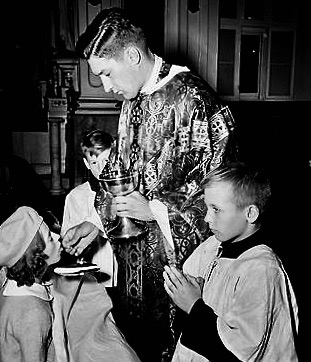
Tailor Made

SCAN 2.jpeg

By Ed Staskus

   My uncle Justinas was a short man with a long face and a bald dome fringed with tufts of gray hair. He lived in Marijampole, which is in southern Lithuania. Whenever anybody in our family visited the motherland they stayed at his house, even though his house didn’t have an indoor bathroom or running water. He was always in hot water, though. Everybody loved Justinas. That was the problem. At least, that was the way his wife saw it.

   “He’s always coming home with bobby pins in his hair,” his wife Janina complained.

   Plenty of women liked him. He was silver-tongued. They wore their best dresses whenever visiting. Even Rasa Jurgelaityte, his niece, looked swank when she dropped by, clad in a bluish-purple shag sweater, sitting at the table drinking strong tea in the afternoon. There wasn’t anything untoward about it. Justinas had an Andy Kaufman meets Roger Moore vibe about him.

   When he moved from Gizai to Marijampole fewer than 20,000 people lived there. It was a small town. More than forty years later about 40,000 people lived there. It was still a small town. He always wore a sports coat or an old suit jacket. When the weather was bad he wore a herringbone newsboy cap. He was good working with his hands, deft and quick. His face was wrinkled, he could look gnomish slightly hunched over, but he was usually on the uptake.

   Nobody ever told him how young he looked, so he never heard how old he was. He was born a year after World War One ended, on a family farm near the border with East Prussia, one of eleven children, six of whom survived infancy. He was a cavalryman in the Lithuanian Army when World War Two broke out. “He was so handsome in his uniform,” my mother said. In the end, however, his war lasted only a few days after the Red Army in 1940 sent a half million troops and three thousand tanks into the Baltic states. It was Goliath vs. David, except David didn’t have a nearly big enough slingshot.

   He trained as a tailor when he was a teenager. He went back to that line of work after his horse was shot dead. “What did I ever do to you?” the horse wanted to ask the Russian who shot him. After the war, and all during the annexation, he took in or let out seats and waists, replaced zippers, buttons, and liners, and made custom pants and jackets. He got married and raised four children. The Russians controlled the money supply, however, and he was hard-pressed getting ahead, at least in any straightforward way.

   Justinas played the accordion like any minute was a good time for a good time. He couldn’t read music, not that it mattered. He knew what it was supposed to sound like. Squeezebox skills back then were passed on generation to generation, one-on-one. He belted out songs, too, even though his voice was thin and scratchy.  He could be the life of the party. He wasn’t planning on going to the grave with any music left inside of him.

   He was in good spirits most of the time, which was surprising. Until 1990, when the Soviet Union finally got the boot, Lithuania was a gray country, surly Russians and unhappy Lithuanians in the grip of the Russians. Even the post-war reconstruction looked miserable. There were busts and statues of Lenin everywhere. The tyrant didn’t look remotely happy in a single one of them. Justinas was happy enough to be alive, somehow staying on the sunny side of the street behind Lenin’s sour Iron Curtain.

    No matter how affable he could be, if you messed with his private Idaho museum or his pigeons, you would get yours, for sure. He dropped the hammer on the occasional black rat and red fox in the wrong place at the wrong time. When a neighbor’s cat mauled one of his favorite birds, Justinas got his shotgun and hunted the cat down. He shot it pointblank in the street where he found it. The neighbor never said anything about it, either to him or the police. The rest of the neighborhood warned their cats about the madman in their midst.

   My uncle’s home was a small two-story house. It was painted green. It backed up to railroad tracks. They had an electric stove, but no basement or furnace. They heated the house with a fireplace and a Franklin-style stove. They burned coal and dried turf. Justinas said the stove could burn anything with hardly any smell. His driveway and the road in front of the house were hard-packed dirt. The road was slightly higher than the surrounding terrain but there were no side ditches for rainwater to flow to. Whenever it stormed the pathway turned into a quagmire. When it was dry, except for an occasional man-eating pothole, it was like driving on rock bed.

   Justinas owned a four-door early-1970s Lada, manufactured by Fiat in collaboration with the Soviet Union. It was black. Everybody’s Lada’s were black. It had heavy-duty steel body panels and cheap components. It rode like a tank on the bumpy roads. It was a manual four-speed with slightly elevated ground clearance. It was made to be worked on by its owners, which is what my uncle did. The Lada was not a hot car but it ran hot. He changed the oil once a month. He replaced the muffler and the drum brakes when he had to. He installed a rack on the top and kept the outside of the car reasonably clean, although the inside was a dump. It wasn’t filthy dirty, just trashy, like a teenager owned it. 

   Justinas pumped his gasoline from child-sized pumps set on cinder blocks with fifteen-foot long snaky hoses. The concrete islands at their neighborhood gas station were unusually wide. The station looked like it had been built before the beginning of time. Motorists pulled in willy-nilly. They tried to ignore the long lines for fuel.

   Lithuanians are keen on wolves, bears, and moose. According to legend, Grand Duke Gediminas dreamt an iron wolf told him to create Vilnius and make the city his capital. The bear is a symbol of Samogitia, one of the country’s regions, and is part of the coat of arms of Siauliai, another region. The Lazdijai region features a moose as its hero, although when it shows up uninvited townsfolk stay behind closed doors. Birds don’t take a back seat. Everybody likes the cuckoo because its call is said to sweep away the last bits and pieces of winter. The pigeon, which is called balandis, gets its own month, which is April, or balanzio menuo.

    There was a barn-like garage behind Justinas’s house. He kept his old sewing machines and tailoring goods on the ground floor. Upstairs, up a ladder, he kept a coop of rock pigeons. Even though they can always find their way home, even when released blindfolded from no matter where, navigating by the earth’s magnetic fields, and even though they had carried messages across battlefields for armies during both world wars, Justinas never let his pigeons go anywhere without him. They weren’t prisoners, exactly, but they were there to stay.

   He loved his birds and they loved him. He fed them as well as he fed himself. He and his friends bred and traded them. Thieves sometimes tried to steal the pigeons, so there was a padlock fixed to the garage door. He kept a dog on a long leash chained to a stake in front of the garage, just in case. The dog was ready to bite whenever strangers approached.

   Behind the garage was a chicken wire enclosure brimming with white rabbits. My uncle raised them for the family’s dinner table. When the time came he would catch and pin one of the rabbits to the ground, put a stick across its neck, step on one side of the stick, quickly step on the other side of it, and pull the rabbit upward by its hind legs, breaking its neck. After cutting off its head he hung it upside down to clean it. Janina seasoned and cooked the bunnies, frying and braising them and mixing them into stews.

   His private Idaho museum was on the second floor of their house. Nobody had ever stolen anything from it, but God pity the fool who tried. Justinas might have committed murder in the event. The door was never locked, but you had to be invited to get in. He never gave anything in his museum away, either, not even to his own children, although he traded with his friends, just like he traded his birds with them.

   There was a glass case filled with gold and silver coins, military medals, and men’s pocket watches. There were framed pictures of Catholic saints, Lithuanian kings and politicians, and British luxury liners on the walls. He had carved figures, including an eagle, talons and wings outstretched and its head thrust forward. He had a restored Victrola with a new needle, new springs, new crank and motor, and a burnt orange sound horn. There were a dozen clocks, which were his prized possessions. They were grandfather wood wall clocks with pendulums and chimes. Every one of them was set to a random time of day. They all worked whenever he wanted them to work.

   Two smaller rooms adjoined the museum on the second floor. They were bedrooms where his four children had grown up. Both of the rooms had pint-sized windows. The rooms were stuffy, filled with dust motes and memories.

   Justinas and Janina were always accusing each other of having extra-marital affairs. She made great-tasting potato pancakes morning, noon, and night. One day while they were having a pancake lunch with two neighborhood widows in the living room, since there wasn’t a dining room, she told her husband to go outside for a minute. 

   “Oh, my God, he’s such a womanizer, always chasing women,” she said out of the blue. The two widows didn’t know what to say. She was in her late 60s and he was in his early 70s. He never talked about his wife, but she talked about him constantly. Somebody said she was the one having all the affairs. Nobody knew what to believe.

   When he walked back into the living room he was smiling. “What were you talking about?” he asked innocently enough. He wasn’t planning on living a century-or-more and giving up all the things that make you want to live that long. He believed it was best to die in the prime of life at a ripe old age.

   Justinas had a water well operated by a wheel pulley in the backyard. There was a red plastic bucket to get water and bring it into the house. Whenever anybody wanted to brush their teeth or wash their face, they took from the bucket. The outhouse was beside the garage. Everybody called it the little house. They kept cut-up scraps of Russian newspapers on a ledge inside the side door of the little house. Whenever relatives were visiting Janina gave them a vessel to keep beside their bed in case they needed to go in the middle of the night and didn’t want to go outside. Everybody made sure to not drink too much too late into the evening.

   They didn’t have a tub, either. They went to a nearby public bath to take showers once a week. Once when my sister was visiting she declared the outhouse was more than enough. She wasn’t going to any public bathhouse. Justinas told her he had a lady friend who had a bathtub. When they got there, it was full of turnips. The lady took them all out, but the water never warmed up above tepid. She took a bath anyway, since it was better than nothing.

   Even when Justinas retired from tailoring he was always out doing something, up to something. ”I have responsibilities,” he would say. It was never clear what those responsibilities were, although he stayed busy fulfilling them.

   My uncle Sigitas and his wife Terese had a pig farm near Gizai, near where my mother’s side of the family had originally come from. Terese worked for the Russians in a building supplies warehouse. She smiled politely and stole them blind. Nobody knew what my younger uncle Juozukas did. He had a truck and could fix anything, including stoves and electric circuits. He never got up in the morning at the same time and never went to work to the same place.

   He had patched together a kiosk and attached it to the side of his house. The hand-painted sign said, “Odds and Ends.” He and his wife sold soft drinks, chocolate bars, gum, and cigarettes. On the first of every month he had to pay off the local Lithuanian mobsters. They demanded a cut of everything, including gum. It was like Spanky and Our Gang.

   Everybody in Lithuania complained about everything and they especially complained about money. It was easier and more prudent to never ask anybody what they did. “This and that,” is what many of them said. They were always going to Poland and across the Baltic Sea to Sweden and bringing back clothes, food, prescription drugs, as well as cigarettes and more cigarettes. They smuggled contraband goods across borders without declaring anything, traversing forests and crossing rivers on the sly. Whenever they bootlegged cars or trucks they drove the long way around at night with the headlights off.

   After the fall of the Berlin Wall, the collapse of the Soviet Union, and the resumption of Lithuania, we collected financing from family members and sent enough to Justinas and Janina so they could get an indoor bathroom built and running water installed. The lady of the house absolutely wanted a toilet and faucets. She was more than happy when she got the funds. She even stopped complaining about her supposedly over-sexed husband for a while.

   When Justinas found out about the proposed toilet he said thanks, but no thanks. He said he had grown up and lived his whole life without the modern convenience. “What was good for my father is good for me,” he said. He wasn’t hidebound but wasn’t going to change anything more than he had to after all the years of his life. “I was coming down the ladder from the coop just now carrying a drink in one hand and a pigeon in the other hand,” he told anybody who asked about his reasons. “Don’t try that when you get to be my age.” His explanations were often elliptical.

   He was swimming upstream with Janina about the plumbing. She eventually got what she wanted. Over time, given Lithuania’s long and cold winters, he learned to like the indoor bathroom more than his wife or anybody else. He was an old dog who had sussed out a new trick. He never gave up visiting his lady friends, though. He didn’t forget how to make hot water.

Photograph by Rita Staskus. Juozukas Jurgelaitis, Justinas Jurgelaitis, and Rasa Jurgelaityte, 1994.

Ed Staskus posts monthly on 147 Stanley Street http://www.147stanleystreet.com, Made in Cleveland http://www.clevelandohiodaybook.com, Down East http://www.redroadpei.com, and Lithuanian Journal http://www.lithuanianjournal.com. To get the site’s monthly feature in your in-box click on “Follow.”

“Made in Cleveland” by Ed Staskus

Coming of age in the Rust Belt in the 1960s and 1970s.

“A collection of first-person street level stories blended with the historical, set in Cleveland, Ohio. The storytelling is plugged in.” Sam Winchell, Beyond Books

Available on Amazon:

A Crying of Lot 49 Production