Heart to Heart

By Ed Staskus

   When Francie Chmielewski’s husband Steve doubled over while putting his shoes on, she didn’t bother asking him if he was all right. “I have to sit down,” he said in the backyard. It was a Sunday evening in late May. He was feeling a great deal of pressure on the left side of his chest. “I don’t think it’s my heart, but maybe we should go to Fairview Hospital.” One look at him fumbling and dropping his shoes on the steps of their kitchen told her everything she needed to know. He was not all right. He was having a heart attack.

   “Steve is a very fit man,” Francie said. He wasn’t a man so out of shape he might have a heart attack watching that day’s bad news on TV. “He doesn’t smoke, eats right, and rides his bike to work every day, even in the winter.” His bike ride to work takes an hour one way, from Rocky River to the near east side of Cleveland, and then another hour back home. Two days earlier, on a Friday, he complained to a co-worker about being out of breath during his ride. His co-worker urged him to call his doctor. Steve’s doctor said, “OK, come in on Tuesday.” 

   “What happened on Sunday was the widow maker,” Francie said. ”His main artery shut down.”

   Heart problems were one of the most uncommon causes of death in the United States until 1900. Heart disease had always been uncommon. Fifty years later it was the most common cause of death in the country. It became the go-to way to die. Everybody was smoking their heads off. Doctors routinely appeared in print and on TV promoting their favorite fag. Everybody was eating as much pork and beef as they could get their hands on. The protein was good. The saturated fat was sketchy. The off-the-chart serum cholesterol was terrible.

   It is still the most common cause of death in the United States, despite almost everybody having given up smoking and many former junk foodies eating a more balanced diet. “After I had a heart attack, it was a very simple choice,” said one-time football player and coach Mike Ditka. “What the doctor told me, I did and I did it religiously. I ate nothing but lean turkey breast or chicken breast or a piece of fish that was very lean. I mean, I stayed away from everything.” The misguided popularity of maintaining an unhealthy weight has kept it in the top spot, as has the notion that exercising at least thirty minutes a day five days a week is for somebody else.

   There is never a good time to have a heart attack. The worst time to have one might be during a game of charades. Steve wasn’t playing games. What was happening to him was sudden and massive. He was down and the clock was ticking. Around half of all heart attack deaths occur within one hour, especially if the victim isn’t able to get immediate help and get to a hospital fast. It is called the Golden Hour. The longer a person goes without treatment, the faster the clock ticks.

   “One day my father went hunting,” the French movie director Alain Resnais recalled. “He had a good day. He killed a lot of game. He was with his best friends. He said, ‘Ah, I’m still a good hunter.’ Then he said, ‘I don’t feel well.’ In thirty seconds, it was all over.”

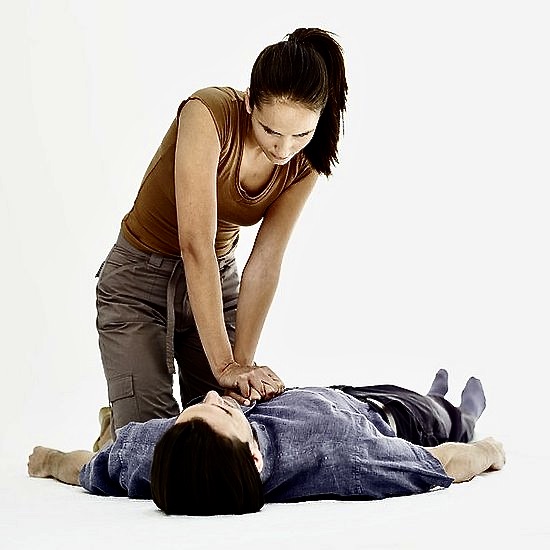
   Steve started to shake and his eyes rolled up and back. One of the issues with heart problems is that the first symptoms can be fatal. “This isn’t looking good,” Francie thought. She got serious as a heart attack and sprang into action. She had been ready for the moment for a long time. She stretched Steve out and began performing CPR on him, at the same time hurriedly calling 911 on her cell phone. She wasn’t the kind of wife who mailed in her request for help, checking the spelling before sealing the envelope. 

   “He had cardiac arrest,” she said. “His heart stopped. When I saw he wasn’t breathing my adrenaline kicked in. I just reacted.” When the Rocky River EMS team got there they checked his heart’s rhythm, gave him oxygen, and administered a blood thinner. They sped him to the Cleveland Clinic in Fairview Park where he spent the next two weeks in the Intensive Care Unit flat on his back hooked up to a ventilator. “I never saw anybody like him,” an ICU nurse told Francie. “Most people in his circumstances die.” 

   “Steve isn’t most people,” Francie told the nurse.

  “The quicker we can get a person having a heart attack into the cardiac catheterization lab the better,” explained Erica Spatz, a cardiologist at Yale Medicine. “Time matters in treating heart attacks.” The heart pumps oxygen-rich blood to the rest of the body through a network of arteries. However, the arteries around the heart can get clogged up, usually by a blood clot. When that happens, blood flow is slowed or blocked. The obstruction is seriously dangerous.

   Nearly a million people in the United States suffer a heart attack every year. It happens about every forty seconds. The cost of care for coronary heart disease is more than $100 billion dollars annually. One of the least expensive and front of the line interventions is CPR. Francie was ready to bust it. “I teach CPR at the Rocky River Recreation Center,” she said. “But I never had to actually do it on a real person. I never thought the first time would be on my own husband.”

   CPR, officially known as Cardiopulmonary Resuscitation, is an emergency lifesaving procedure performed when the heart stops beating. It can double or triple the odds of survival after cardiac arrest. It is a critical step in what is called the Chain of Survival. Keeping blood flow active multiplies the chances of a successful resuscitation once medical staff arrives. Professional CPR is about chest compressions and mouth-to-mouth breathing at a ratio of 30 compressions to 2 breaths. The basic recommendation to bystanders who happen upon a heart attack victim is hands-only CPR until help arrives.

   After two weeks in ICU Steve was transferred  to a Step Down Unit at the Cleveland Clinic in Avon, where he stayed for a week-and-a-half. His last five days in the hospital were spent in rehab. One of his daughters was visiting him when a doctor walked in reviewing a chart. “This guy us really sick,” the doctor said to himself. Steve and his daughter dropped what they were doing and stared at him.

   “Oh, sorry, not you, somebody else,” the doctor said, stopping dead in his tracks, quickly flipping to Steve’s chart. “You are actually doing very well.”

   “The doctor told me he was doing well because he had never smoked, was more than fit enough for his age, and had gotten to the hospital soon enough to make a difference,” Francie said. “Only about one out of ten people with his kind of heart attack survive. If he had been a smoker he would have had a zero chance.”

   When Steve got home he wasn’t allowed some of the small pleasures of life, like ice cream and beer. He had to take a handful of prescription drugs every day. He was wired to a heart monitor. He wasn’t allowed to go back to work. He had to take several months off. “His doctor said he could go back in September.” He was allowed to work from home. “They told him not to overdo it.”

   He was hazy about what happened during his near-fatal weekend. “He can’t remember anything about it, from Friday through Sunday,” Francie said. Many of the memories surrounding heart attacks are lost to cardiac arrest survivors. They don’t always come back because the brain didn’t have enough time to store them. It doesn’t always want to remember near death experiences, no matter that the ordeal tends to put things into perspective.

   In some ways life itself is a near death experience. Like the song says, the end is always near. Francie wasn’t patting herself on the back for saving her husband’s life. “I wasn’t sure if he had life insurance or not, so I had to do it,” she explained. Buddha long ago said in plain English that the act of saving a life was a greater good than spending the whole of one’s life making religious offerings to the gods.

   Steve spent the rest of the summer resting, walking up and down stairs, and making further strides with short walks outdoors. He progressed to varied aerobic activities designed to improve circulation, lower blood pressure, and strengthen his heart. Francie watched him like a mother hen. “He is the kind of man who pushes it,” she said. “I told him not to push it.”

   World Heart Day is celebrated every year on September 29th. This year Francie and Steve hope to enjoy the holiday together. “Keep a Healthy Heart So We Won’t Be Apart” has become their new married couple motto.

Ed Staskus posts monthly on 147 Stanley Street http://www.147stanleystreet.com, Made in Cleveland http://www.clevelandohiodaybook.com, Down East http://www.redroadpei.com, and Lithuanian Journal http://www.lithuanianjournal.com. To get the site’s monthly feature in your in-box click on “Follow.” His books are available on Amazon and Apple Books.

“Bomb City”

Cleveland, Ohio 1975. The John Scalish Crime Family and Danny Greene’s Irish Mob are at war. Car bombs are the weapon of choice. Two police detectives are assigned to find the bomb makers. It gets personal. Revenge is always personal.

A Crying of Lot 49 Publication

Jimmy Crack Corn

By Ed Staskus

   When Layla told Jimmy she had called the police, he hustled to his pick-up truck and started scrounging, searching for his paraphernalia and drugs, especially the crack. He took a garbage bag full of narcotics into the big house and hid it. Afterwards he couldn’t remember where he had put it.

   “The devil knows where I stashed it!” he said. He was so mad about what had happened he could barely talk, which for him was spitting mad, since he talked at ninety miles an hour.

   “The pony run, he jumped, he pitched, he threw the master in the ditch, Jimmy, crack corn and I don’t care.”

   Layla and Jimmy had gotten into a knockdown fight a month earlier and he had left the big house in Florida, going to work in Pennsylvania. He was a heavy machine operator. When she called him after a month he high-tailed it back to her. But it wasn’t what he thought it was going to be.

   “Do you know this could put me back in prison?” Jimmy asked.

   “I’m sorry, I didn’t mean to, but my lawyer said I had to.” She was already regretting it.

   The police arrived and before he knew it slapped handcuffs on him. 

   “Whoa, whoa, whoa,” he said. “What are you arresting me for?”

   “You stole that pick-up truck,” one of the policemen said, pointing at the truck.

   “That is bullcrap,” Jimmy said. “I’ve been making payments every month to her for it. I was just in Pennsylvania for a month with it. She was fine with that. I can show you our text messages, where she always says, your truck, your truck, not my truck, yours.”

   “Let me see those text messages,” the policeman said.

   He went to their squad car. He scrolled through the texts. He fiddled with his vehicle’s mobile radio. When he came back he returned the cell phone to Jimmy.

   “I’d say it’s his pick-up truck,”  the policeman said to Layla. “That’s what you’ve been saying in all your text messages.”

   They took the cuffs off. They had to work out a few more details but finally drove away. Jimmy heaved a sigh of relief

   “You called the police on me,” he said to Layla, glaring at her.

   “We can work this out,” she said. She gave him a piece of paper, signed and dated, saying, this is my truck, in my name, but I have given Jimmy full power over it. 

   “There’s no working this out, night and day” he said. “You ruined everything.” 

   “No, Jimmy,” I told him later. “You ruined everything by going out and having a crack weekend. Maybe you shouldn’t have been that stupid.” He didn’t like that. “Don’t blame Layla because she called the cops. Yeah, it’s a crappy thing to do, but it gets to the point where you don’t give people too much choice. It’s always your way or the highway, and if they don’t like it, they can go, so, honestly, I can see where she’s coming from.”

   “Hey, I’m paying her every month for the pick-up,” he said.  “I’m not going to go back on my word. I’m never going back to her, either. She ruined everything.”

   He was talking on his cell phone. I could tell he was driving. I asked him where he was going. “I packed my stuff and I’m going to Colorado,” he said. His boys lived in Colorado. One of them was a Marine. The other one wanted to be a pilot, but his eyes were bad. 

   “Are you high?” I asked him. 

   “I don’t want to answer that,” he said.

   “You’re a special kind of stupid,” I said. “Getting high and drinking and driving, putting yourself and others at risk, you selfish bastard. What’s wrong with you?” 

   “They can’t nail me. I’m not drunk enough.” He had a forever taste for drink and cocaine. I was at a loss for words.

   “Your brother was an addict,” he said.

   “What’s that got to do with anything?”

   “He’s fat, too.” 

   “What? Are you two?” 

   “He replaced drugs with food.” 

   “I have no idea why you’re bringing Brian into this. And he’s not fat, not by far.” 

   “Don’t bother defending your fatso brother,” he said. He hung up and blocked me. He unblocked me a few days later. I sent him a text.

   “This friendship has reached its end. There’s nowhere for it to go.” 

   A month later I got an oversized letter in the mail. It was addressed to Jimmy. He had lived in our house for the best part of a year, getting back on his feet. Some of his mail was still being delivered to our home. He never bothered going to the post office to set up a forwarding address.

   He doesn’t want to hear how he used Shirley and me and never paid us back for everything we paid for while he was living in our house. He doesn’t want to acknowledge we took him in when no one else would, fed him, clothed him, and got him on his feet. What we got in return was nothing, not even a thank you.

   Inside the oversized letter were his new heavy machinery training certificate and new union membership card. Jimmy is notorious for ignoring people. I wasn’t like him. I texted him about the letter.

   “I got your working stuff, where do I mail them to? If I don’t hear from you, they’re in the trash tomorrow.”  He sent me his new address right away.

   We weren’t friends anymore, but we were still friends on Facebook. He posted things about me, playing the victim. “When people throw you out of your life” are the kinds of things he posted. He became a drama queen. 

   I admit when I’m wrong, and I would say to Jimmy, don’t be a dirtbag your whole life. I didn’t know what to do with him. He was constantly pretending he never did anything  wrong, no matter what side of the truth he was on.

   Jimmy and my brother Brian were once best friends, better friends than Jimmy and me, but not anymore.

   “I don’t want to see you again,” he said. “You bent over backwards for your brother but you’re always laying into me. This is the end of the road.”

   But Jimmy is a bad penny and bad pennies always turn up. He complains and explains night and day. “Inside of me are two dogs. One is mean and the other one is good. They fight each other all the time. When asked which one wins, I answer, the one I feed the most.” I expected Jimmy to resurface someday soon.

   When I couldn’t find my favorite suitcase a few days before Shirley and I were going down to Mexico for a week, I called him.

   “Do you have my suitcase?” I asked.

    “I’ve had it for three years,” he said.

   “We take it to Mexico every year. You haven’t had it for three years.”

   “Yes, I have, you’re wrong,” he said.

   “No, you’re wrong,” I said. 

   “No, I’m not.” 

   “Are you ever wrong, Jimmy?” 

   “No.”

   “You sound like you’ve had a few drinks,” I said.

   “Yeah, a few, but I work hard and I need recreation. After this I’m off to see the smoke  wizard. I’m not telling you for fun. I’m telling you because you want me to be honest. I don’t need any judgement from friends.”

   “I’m sorry, but you can’t have it both ways,” I said. “Either you have friends who care about you, or not, so I’m going to say you’re a good for nothing for smoking crack.”

   “I work hard all week. Layla knows what I’m doing,” he said. He was back in Florida in the big house.

   “Then she’s a bigger fool than I thought she was, for letting you smoke crack while you’re supposedly taking care of her.” Layla had more than one health issue. On top of that, she liked watching horror movies on TV and liked being disturbed by them.

   “What are you doing this weekend?” he asked, out of the blue.

   “It’s a blizzard outside, so I’m in the house cooking.”

   I did the cooking at home, although Shirley boiled water, peeled potatoes, and washed the dishes. I like to cook when it’s storming.

   “What are you making?”

   “I’m making spanakopita. It’s a Greek spinach pie, with onions, cheese, and herbs. It’s folded up in a flaky crispy dough.”

   “Oh, you mean spanakapita.”

   “I’m pretty sure it’s pronounced with an O,” I said. 

   “You’re a dimwit,” he said. “You never admit when you’re wrong, do you?” 

   “OK, you’re right. I’m making spanakapita. Happy now?” Why do I talk to Jimmy, I asked myself. Shirley refuses to speak to him.

   “Why do you even talk to that jackass?” she asks me.

   “Why are we even friends?” I asked Jimmy.

   “Are you going to tell me you’re not my friend anymore?”

   “Unfortunately, Jimmy, you and I have been friends since the 3rd grade. There’s just no getting rid of you.”

   “I took Layla to a French restaurant last week.”

   “So, you’re back in her good graces?”

   “Yeah.” 

   “How’s your dad? Is he still alive and kicking?”

   “Yeah.”

   I didn’t ask if his father hung out at Layla’s house anymore. For a while Jimmy’s father, an ex-Cleveland cop who retired south and lived nearby, had tried to get Layla for himself, before Jimmy finally won her over.

   “I heard Layla’s dad has showed up again down there.”

   “Yeah.”

  Layla’s father was a rich man with a twisted mind. like many rich men. Last year, when Jimmy started seeing Layla, he had a fit. In the first place, he hated Jimmy. He called him a loser. He said he was going to shoot him, although he never did. He was a coward at heart. He had an undying love for his daughter, but not the right kind of love.

   “I’m not allowed to be there when he comes over,” Jimmy  said. “I take off.”

   He knows it’s weird, but he makes himself scarce when Layla’s father comes over. She has a big spread, what with her polo ponies, so there’s a lot of landscape to lose yourself in. He didn’t lose himself on horseback. He couldn’t ride to save his life.

   “I don’t understand your life,” I said.

    “I’m being honest,” he said.

   “That doesn’t mean I have to like it. It doesn’t mean I don’t worry about you. You’re romancing a woman 20-some years older than you, who has a father who’s like a hundred, and who, we won’t even talk about that, and you are smoking crack every chance you get.”

   “Everybody has a few drinks. Why can’t I have some crack?”

   “They don’t serve crack at bars in this country, not even Florida, that’s why,” I said.

   “I can control it,” he said.

   “Right, says every crackhead and none ever did,” I said.

   “When I was young I used to wait on master and give him his plate, and pass him the bottle when he got dry, and brush away the blue tail fly, Jimmy, crack corn and I don’t care.”

   “I do my work, then I chill, hang out, be myself,” Jimmy said. He works construction all week, and had started working for Layla, too, doing small jobs, in her house and around her property.

   “Why shouldn’t I do the work, instead of the wetbacks?” he said. “Why shouldn’t I earn the money?”

   What Jimmy likes is Layla has got money and a big house. What she likes is the fun, games, and sex. They are both getting what they think they want. They don’t care about rain as long as they get their rainbows.

   “Basically, you’re doing whatever the hell you want, and she’s doing whatever the hell she wants,” I said. “You’re both femme fatales.”

   That didn’t go over well. Jimmy says he’s being honest whenever he says whatever he says, but he doesn’t want any trueness in return. He thinks you’re getting in his face. Every time we talk, he tells me why he’s the greatest and why Shirley and I are idiots. 

   “Why won’t your wife talk to me?” he asked. 

   “Because you ran out on us after we took care of you when you were down and out,” I said. 

   “That’s not true,” he said.

   “How do you see it in your world?”

   The crack he’s smoked for years hasn’t changed Jimmy all that much. He’s still as selfish and self-righteous as he always was. Shirley says that he will never grow up because he thinks he’s not wrong and will never be wrong, 

   When I told him Shirley’s new business had turned the corner and was doing well, he didn’t want to hear it. When I first told him about it, what she was planning, he told me she would fail, for sure. Nothing is what Jimmy said when I told him her business was growing. For once, he had nothing dismissive to say.

   When Jimmy broke up with Layla the second time it was because, when she got fussy about his drug use, he told her that her addiction to pain medicines and her drinking weren’t any different than his smoking crack and drinking. He told her he was going to smoke crack every day, and that was that. When Jimmy gets it into his head that something is going to be, there’s no changing his mind. Layla thought he was crazy. They got into a knockdown fight.

   “I’m never coming back,” he said at the end of the fight. He walked out of the big house and gave his pick-up truck back to her, but before he did he went mud bog racing with it. When he was done, the first place trophy in his lap, the pick-up truck wasn’t good for anything anymore. He left with his suitcase, his phone, and his wallet. He walked to the bus station.

   “I dropped a truth bomb on her,” he said.

   “I’m going to drop a truth bomb on you,” I said. “You’re homeless, you’re living out of your son’s van, and you don’t have a job.”

   “I’m trying to find work,” he said.

    JJ and Alex, his sons, had a house in Colorado. They invited him to visit them, with the intention of doing an intervention on their father. He got stoned and stayed stoned the whole way, hitching rides with truckers, lost his phone, lost his wallet, and lost his way, but somehow made it there. When he found out what they were up to, he got his hands on Alex’s new van one night and beat feet. 

   “How dare they pull that bullcrap on me!” he fumed.

   Trying to get Jimmy to do something he doesn’t want to do is like trying to dam up Niagara Falls with toothpicks. He drove to Oklahoma where he drove the van into a ditch. He stole two old tires and got back on the road. He made it to Georgia. He called me. He had gotten another phone, somehow.

   “I’m coming to Cleveland.”

   “Why?”

   He showed up a week later. He didn’t have any money. He had stolen his way from Atlanta to Cleveland. He would go to a Walmart, steal bread and cold cuts, go to gas stations, and steal gasoline and snacks. When he had to, he found a backyard bird feeder and ate all the seeds.

   “I have a Home Depot gift card,” he said. “Can you buy it off me?”

   “I’ll think about it.” 

   “You know it’s stolen, don’t you?” Shirley asked me.

   “Yes.”

   Jimmy steals merchandise from big box stores, returns it later for a refund, claiming he has lost the receipt, and gets gift cards in return. He can be slick when he’s beggared.

   We met him for breakfast when he got to Cleveland.

   “I don’t have any gas,” he said, wolfing down ham and eggs and a plate of pancakes.

   “I’ll fill your tank up,” I said.

   He was hoping we would ask him to stay at our house. I could tell. I brought it up to Shirley later at home. But, buying him breakfast and filling up his gas tank was as far as it was going to go.

   “He’s not sitting on our sofa, much less staying at our house,” she said.

   Jimmy called me again about buying the Home Depot card.

   “How much is it?” I asked.

   “It’s $186.00, but you can have it for a hundred.”

   I knew it was throwing money away. We would never use it. It would just be something to help Jimmy out.

   “I have to get out of Cleveland,” he said.

   “Who did you piss off?”

   “Nobody,” he said. 

   “Did you steal some drugs?”

   “I just need to go,” he said.

   “You are such an asshole.”

   “All right, but are you going to buy this gift card, or not?” 

   “OK, I’ll come and get it. I just need to stop at an ATM.”

   “No, I’ll come and get you,” he said.

   Like a fool, when he came over, I got into his van to go to the ATM. He went flying down Detroit Rd. in Lakewood and sideswiped a parked car. He didn’t stop. He just kept going.

   “Stop the car,” I yelled. He stopped some blocks later when he ran into a fire hydrant. It began to spay water.

   The side of his son’s new van, on the passenger side, where I was sitting, was potholed from bumper to bumper. The front bumper had fallen off when he hit the hydrant. Trash and empty cans of Mountain Dew were scattered everywhere inside the van.

   “Do you know you just smashed your kid’s new van? And you drove away. You could have killed me.”

   “I know, but I promise I’ll be good.”

   “Did you steal all that food?” I asked. There were loaves of white bread, jars of Jiffy peanut butter, and half-eaten candy bars a gogo.

   “A guy’s got to eat,” he said.

   The next day JJ called.

   “Alex is in Cleveland,” he said. “He’s gone there to get the van back from our dad.”

   “JJ, why didn’t you tell me he was coming? Jimmy was here yesterday, but now he’s gone.”

   “We called him yesterday and said Alex was coming.”  

   “That was a mistake,” I said. “He’s gone to Canton.”

   “Why Canton?”

   “Because Alex isn’t in Canton, that’s why. He’s hiding from you.”

   They finally located him and Alex went to see him. They met in Canton behind a bowling alley. But Jimmy parked the van a couple of blocks away, so Alex wouldn’t see it and take it away from him. They talked, but Alex never got the van back. He went back to Colorado and Jimmy went back to living in parking lots.

   “When he’d ride in the afternoon, I’d follow after with a hickory broom, the pony being rather shy when bitten by blue tail fly, Jimmy, crack corn and I don’t care.”

   Jimmy thought I had led his sons to him. He thought I was conspiring with them to take the van away from him. He called me on the phone and called me every name in the book.

   “Even though you do what you do to your kids?”

   “That’s right,” he said.

   “You treat them worse than junk yards treat their dogs.”

   He barked like a dog, trying to get under my skin.

   “The only way you’ll ever get that van back is if you report it stolen,” I told JJ when I talked to him later.

   “No, I can’t do that,” he said. “My dad would go to jail if I turned him in.”

    “Maybe that’s what he needs,” I said. “Maybe he needs to be behind bars for a while breaking rocks and thinking things through.” JJ and I both knew he would end up behind bars sooner or later, but whether he would turn things over was anybody’s guess. Jimmy was not especially a thinking kind of man. He was a cracking the corn kind of man.