Category Archives: Baltic Place

Duck and Cover

By Ed Staskus

   Lithuania has lots of historical show-and-tell. There is the Ninth Fort, Trakai Island Castle, and the Hill of Crosses. The capital city Vilnius has the Gates of Dawn, the Palace of the Grand Duke of Lithuania, and the Bernardine Cemetery. The cemetery can be hard going, though. The dead get restless when it rains. After heavy rainfall old bones from ancient  graves tend to float to the top. They stick out of the ground and trip up passers-by.

   Gothic, Renaissance, and Baroque buildings are extant all around the city. There are 16th and 17th century churches. Narrow winding streets characterize the oldest stretches of Vilnius. The historic center was designated a UNESCO World Heritage Site in the early 1990s, soon after the country threw out its Russian overlords. They went back to Moscow, scouring the map for other countries to oppress.

   There are dozens of tour groups in the country, from Baltic Holidays to Discover Lithuania to Vilnius with Locals. There are hundreds of tour guides who can guide you to places both in plain sight and off the beaten path, brimming with anecdotes and history. They also have the know-how of when and where to stop for a cup of coffee or cold beet soup.

   Pavelas Puzyna, a native of the city, got his start in the heritage business while studying archaeology at Vilnius University. When he was a student he dug up something new. It was a small rusty metal box. “I was at the market and saw a box with the Sigma logo on it,” he said. “Inside the box was the flash for a camera. They made cameras and the first Lithuanian computers. Finding the box was like a drug to me. I immediately started to research Soviet-era factories and got interested in the history of industrial Vilnius. I’m a big fan of the city. I thought it would be a good idea to make a tour.”

  He had already been having second thoughts about archaeology. “There are some job problems with it,” he said. Never underestimate the cold feet of an empty piggybank. Pavelas put his mind to discovering ways to fund his new plans.

   The Age of Discovery led to the Age of Colonialism, when European countries went far and wide to Asia, Africa, and the Americas, trading, conquering, and controlling natural resources, while benefitting themselves strategically and economically. They created sugar plantations in the West Indies and rubber plantations in the East Indies. They commanded herds of elephants to explore and exploit India. When they found oil anywhere they pumped it out of the ground as fast as they could.

   The world was their oyster. It was tasty, but it was hazardous work, no matter that they were playing the natives for suckers. Caravan routes thousands of miles long were plagued by bandits and ships routinely sank in storms or were pirated, their treasures gone for good. It wasn’t a swords, sandals, and babes movie.

   That wasn’t for the Russians. “Why bother?” the czars said, chain-smoking and downing their strong coffee. “We’ll just go next door.” They sent their conscripts, whose military service was for life, or the end of the conscript’s life, to the Ukraine, the Khanates, and the United Kingdom of Poland Lithuania. The faceless minions of the Russian Empire followed, sucking the life out of whatever the Imperial Army had won.

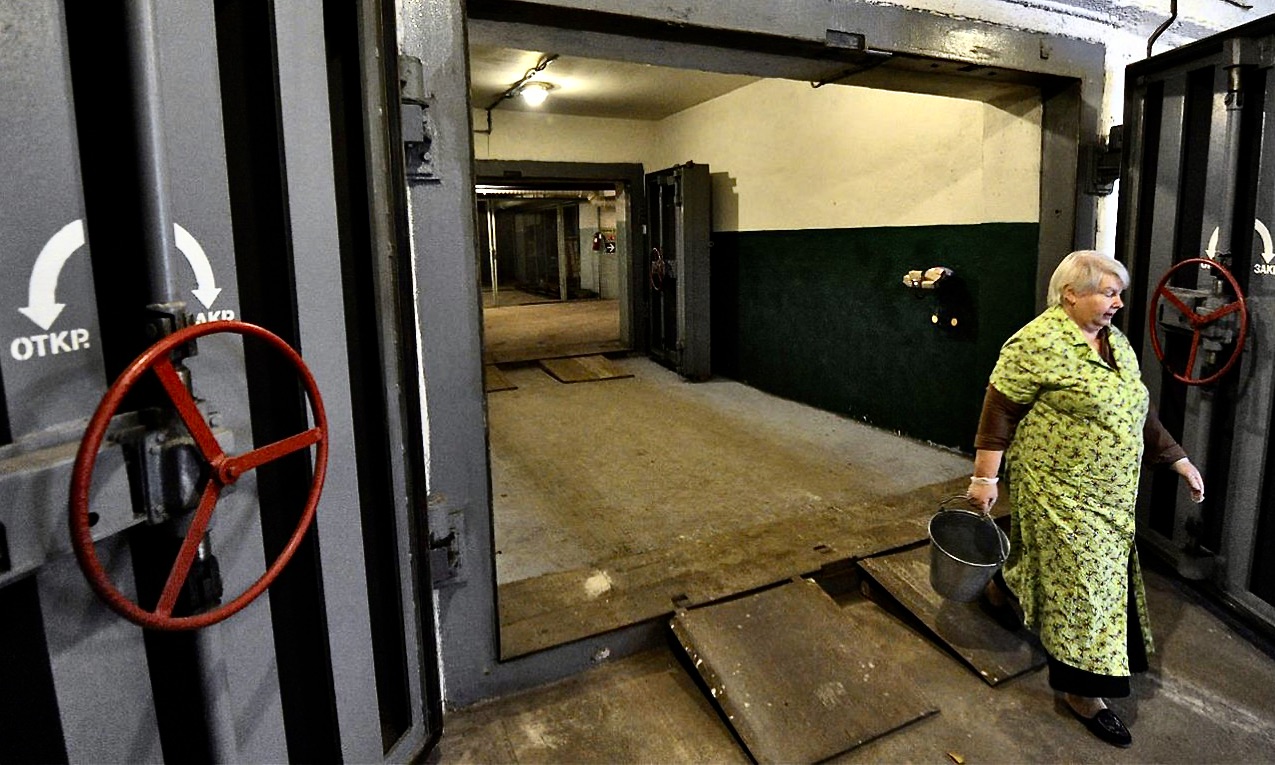
   The Iron Curtain got drawn over the window of Eastern Europe in 1945. When the curtain encircling Lithuania got to be full of holes, and after the Russians were pushed out once and for all in 1991, they left most of their relics behind. Some of the things they left behind, besides a bad taste, were zavody, which are Eastern Bloc factories. Even though Pavelas went looking for zavody, the first thing he found was a 1975-built civil defense bunker underneath a communist sweat shop in Naujamiestis, a former industrial district next to Naujaninkai, the district where he lives.

   “The bunker was underneath a factory that used to make sliding electric garage doors,” he said. “It was all trashed out. I thought maybe I could talk to the person in charge and offer to look after it. Small enterprises were renting space in the former factory and one of them, a car repair shop, gave me the phone number of the owner of the place.”

   He called and was able to get through. “He’s a real millionaire, a Lithuanian guy, and I was able to talk to him. I told him your bunker is a mess, can I maybe look after it, clean it up, be like the overseer?” Although he didn’t expect an answer that very minute, the man on the other end of the line said yes. 

   “It was bizarre but after that I was like a little kid on Christmas.”

   The Russians started building bomb shelters in Lithuania in the early 1950s, underneath schools, apartment complexes, government buildings, railway stations, and smokestack enterprises. “There was an all-important rule then, that big factories had to have a bunker,” Pavelas said. They were equipped with steel doors, filtered ventilation, food, water, and medical supplies. Participation in civil defense training was compulsory for all able-bodied men and women. 

   “If World War Three had started, like the Russians were afraid of, people would have had to live there.” 

   Nobody said anything about what they were going to do in their bomb shelters after a rocket from the tombs had wiped Lithuania off the map. When I was in grade school in Cleveland, Ohio we had a safety drill once a week. It was called Duck and Cover. We crawled under our desks and stayed there for a few minutes until our teacher nun sounded the all-clear. It was never clear to us what exactly was going on, although we knew well enough it was scary.  

   Nuclear weapons in the Iron Curtain days blasted holes in the ground 200 feet deep and 1,000 feet in diameter, blowing everything within a half mile to smithereens. Only skeletal remains would have been left within three miles of impact. After a month-or-two of radiation decay it might be safe enough to go outside, except it wouldn’t be safe.

   There wouldn’t be any power for light, heat, or refrigeration, no running water, no sanitary systems, millions of unburied dead, and an ecological balance thrown out of whack. Stress, malnutrition, and damaged immune systems would be fecund ground for the contraction and transmission of disease among survivors.

   Pavelas took rags, brooms, and candles to the bunker. “The place didn’t have electricity. It was dark, but I cleaned it” He came back with a tool box and light bulbs. He restored the electricity. He came back with curtains for the no-window windows. A year later he was conducting his first tours of the bomb shelter.

   Tour guides escort people on sightseeing excursions, cruises, or through public buildings, art galleries, and native places of significance. They describe points of interest and respond to questions. Many of them research topics related to their site, such as history and culture.  

   “What’s special about our shelter is it’s almost all authentic, just like from the Soviet times,” Pavelas said. Some bunkers had been transformed into Cold War museums, but he played it close to the vest. “Ours is original, what you would have seen in those days. It’s the only one in Vilnius like it.”

   A year after his first tour he teamed up with Albertas Kazlauskas to form Gatves Gyvos, which means Streets Alive, and Albertas bought the bunker. “He was working for a bank and when the Litas was being converted to the Euro, he thought it would be an opportunity to make a tour company. He’s the owner, a great guy, and a great friend. I’m the main tour guide and main handyman.” They upgraded the bunker tour and made it a success, at least until the viral pandemic brought it to a standstill.

   “We did non-stop tours,” said Pavelas. “I was working nine in the morning until ten at night. The bunker was a money maker although it also eats money.” Despite his success, or perhaps because of it, he expanded his tours to include Soviet-era factories located in the Naujamiestu and Zirmunu districts. “They used to make everything, from vodka to electronics. After learning a lot about Soviet Lithuanian factories, I thought people would be interested in them, too.” His favorite is the former ELFA factory.   

   When the Russians occupied Lithuania during World War Two, the country was largely agricultural. To communize it, they industrialized it. From 1940 to 1959 industrial production in Lithuania increased nine times, while in Russia itself it increased only half as much. Much of the industry was in tools, metal processing, and automobiles, and most of it was exported to the Union of Soviet Socialist Republics. The home folks drove old East German automobiles.

   It was full speed ahead in 1963, with plans on the books to build more than seven hundred new factories, including a synthetic materials factory in Kaunas, a refrigerator plant in Ukmergė, and a glass factory in Panevėžys. A furniture factory in Vilnius was going to be one of the largest in the USSR. Some of it got built. Some of it was a Potemkin Village.

   “At the time the Soviet Union collapsed all the factories were owned by the government, by Moscow,” Pavelas said. “It became like a race after independence, about who could take over the factories first. ELFA was bought and sold and bought again until the last CEO standing, who wasn’t that great of a person, shut it down. There’s still a small office on the fifth floor, but it doesn’t exist anymore.”

   After the USSR went belly up Lithuania suffered a significant recession, as well as a corrective inflation. It was a mess. There were major trade disruptions because the Russians had been the country’s main trade partner. Radical privatization didn’t helpsince much of it was out and out thievery, resulting in a 40% drop in GDP in the first half of the 1990s.

   “The ELFA factory produced electric motors for fridges, washing machines, and drills. They made reel to reel tape recorders and record players, by the millions a year. They were crappy compared to Japanese and American production but in Soviet terms the quality was as good as it got.”  

   The Lithuanians who worked there worked at what was in effect a company town. Entire families were employed in the factories, fathers and mothers and their progeny. “It was son, father, and grandpa,” Pavelas said. Some of the factories had their own campgrounds, on their own lakes, and sponsored soccer teams and singing chorales. When a conductor’s baton wasn’t enough the Russians led sing-a-longs with their special batons. Chin music was the consequence of being out of tune.

   “The complex takes up about 5 hectares of space and had more than five thousand workers, many of them women. The most memorable item they made is the ELFA-001 reel to reel machine. It cost thousands and only fifty of them were ever made. Another is a small and very powerful windshield washer motor made for Soviet submarines. Subs have a tower and towers have windows. The windows needed wipers like in a car.”

   Another of his favorites is the Sparta plant. “Their name means speed and fast work,” he said. “Their main product was socks, which they made millions of year after year. Now the factory is being demolished. I’m glad I had the opportunity to save some items, like stained glass from the canteen.”

   Albertas makes traditional tours of the Old Town, his wife Victoria leads tours for children, mixing entertainment with snippets of history, and Pavelas makes what he calls non-traditional tours, both on the job and privately. “My main goal is to research industry in Vilnius, its economics mostly during the Soviet times, why and what it was doing here,” he said. “I’m also interested in the industrial history of Lithuania, from the end of the Industrial Revolution, through the inter-war years and into today.”

   The onset of the viral pandemic in 2020 threw businesses of every kind everywhere for a loop, although if anyone needed to isolate, an underground bunker built with two-foot-thick reinforced concrete walls might have been the ideal place. In the meantime, waiting for vaccination efforts to ramp up and results to happen, Pavelas sat it out.

   “My guess is that if not for the pandemic our bunker would be one of the famous places in Lithuania,” he said. “What we have is the only one in Vilnius and the very first. We have had many different people come and see it, from deaf people to many foreigners. The bad days came when the lockdown started.” 

   During the second lockdown in Lithuania the sightseeing business was declared out of business for the duration. “We didn’t get any money, and we just tried to survive, but now that it’s over, people are going to be pouring back in. Our site is unique, in a class by itself.”

   He felt they were on the tip of something big. It doesn’t always pay to call it a day. The smart money is usually on history repeating itself, which it usually does. The sticks and stones from a long time ago is an unbroken line to today’s masters of war and their bomb shelters. Pavelas was putting his money on walking that immemorial line.

Ed Staskus posts on 147 Stanley Street http://www.147stanleystreet.com and Made in Cleveland Daybook http://www.clevelandohiodaybook.com. To get the site’s monthly feature in your in-box click on “Follow.”

Tough as Nails

By Ed Staskus

   My grandmother hit the deck pretty as a prayer book the day she was born. She didn’t come into the world tough as nails. She wasn’t that way as a girl, a young woman, a schoolteacher, a newlywed, or a wife and mother. But that was the way she was when World War Two ended and she was waking up to her second year in a Siberian prison camp. She survived by being that way for more than ten years, in the middle of nowhere, slaving away. She stayed alive, somehow. It was no way of life stuck in the Soviet dark ages.

   She was born near the tail end of the Gilded Age, although it wasn’t anywhere near anything gilded. She missed out on the mischief of the robber barons. She was born in Russia during the fin de siècle. She missed the debates convulsing Europe at the time concerning the moral responsibility of art. Even if she had heard the arguments, it’s doubtful she would have cared. She missed the Boxer Rebellion, the Second Boer War, and the Philippine-American War. When the pea shooters of those conflicts were put away, she got to live through the blitzkrieg of World War Two.

   Growing up she had an inkling most Lithuanians hated Muscovites, for taking over their homeland, forbidding the native language, and exploiting everything they touched. By the time she was grown and gone to Lithuania she knew for sure Russia was feared and distrusted on all its borders.

   My grandmother Antonina met my grandfather Antanas when he was stationed in Saransk. It is in the Volga basin where the Saranka and Insar Rivers meet. The garrison was four hundred miles east of Moscow. Antanas Staskevicius was a Lithuanian officer in the Russian Imperial Army. He was more than a thousand miles from home. My grandmother came from a nearby small town. She earned her teacher’s certificate in Saransk. She was teaching kids their Cyrillic ABC’s.

   The whistle-stop was founded as a fort, on the left bank of the Isar River, at the crossroads of Moscow and the Crimea. Before World War One its commercial life revolved around honey, meat, and leather. After the war its factories stayed closed for more than ten years when there weren’t any available fuels or raw materials.

   “My father was trained as an officer and sent to serve there with an infantry regiment,” my father said. “It was a hard post for him, because back then they used to say drinkers go to the navy and dimwits go to the infantry.” The Imperial Army had more than a million men in uniform, most of them conscripted, most of them peasants. There were a quarter million Cossacks, too. Only the Cossacks knew what they were doing.

   Antanas courted Antonina and they got married sooner than later. They had a daughter, Eugenia, in 1917. They called her Genute. Another daughter, Gaile, was born the next year. My father was born six years later, in 1924, in Siauliai in the north of Lithuania. He was named after King Vytautas the Great. His mother called him Vytas. His sisters called him many things, including the little prince, the pickle prince, and the rotten prince.

   Siauliai is home to the Hill of Crosses, which is a hill less than ten miles from the town. It is covered with tens of thousands of wooden crosses, crucifixes, and statues. It was after Tsarist forces crushed the November Uprising of 1831 when the first of them appeared.

   By 1918 Lithuania had been missing from the map for more than a hundred years, having been disappeared after the Partition of Poland. Since that time, it had been under the thumb of the Russian Empire. Late that year, when the war finally ended, and Russia was being convulsed by its Bolshevik revolution, Antanas and his new family went home to a newly independent country.

   “Lithuania didn’t have many officers when they formed their own army,” my father said. “Most of them were men who had been conscripted into the Imperial Army before the war.” Most of them burned their Russian uniforms as soon as they could. “My father fought in the post-war battles around Klaipeda and after that he served in the secret service in Kaunas, which was the capital.”

  Lithuania had declared independence in February 1918 and for almost three years fought Soviet Russians, West Russians, and Poles for their homeland. Finally, in 1920 they formed their own government, although they later lost Vilnius to the Poles, with whom they remained officially at war with little blood spilled. In September 1939 Poles found out they were in the frying pan. Vilnius was suddenly off the menu.

   After the fighting my grandfather was awarded land for serving his country. The family had a house in town but lived on a farm most of the time. They spoke Russian at home. Except for what he picked up among his friends, so that he had a sprinkle of street cred, my father spoke little Lithuanian until he started school.

   During World War One most of Siauliai’s buildings were destroyed and the city center was obliterated. Since its founding in the 13thcentury, it had burned down seven times, been struck by pandemics seven times, and World War Two was the seventh war that wrecked it. It was a winsome town between the disasters.

   “When my father became the governor of the district, we moved to the city there,” Vytas said. It is a royal town founded in the early 16th century on the plain of the Nevezis River, about fifty miles east of Siauliai. During the interwar years Lithuania was divided into 24 districts and each district had its own governor. Antanas was the governor of Panevezys until 1938.

   Vytas went to grade school and high school there, but then his father was made governor of Zerasai, which was more-or-less a summer resort. In 1834 Zerasai had burned down and been rebuilt. Two years later it was renamed Novoalexandrovsk, in honor of Tsar Alexander’s son, but after the war to end all wars was over and done with the name was thrown out the window.

   “No sooner was my father made governor, my mother didn’t want to move there, since it was far from where we lived, so I stayed with her,” Vytas said. “But I didn’t get along with the other students in town. It was a strict school, and everybody had to dress nice. On my first day of high school, I was dressed too nice, like I was going to a wedding, with a tie and everything, and everybody laughed at me. ‘Where are you from, the sticks?’ they all said. I didn’t make any friends there.”

   He told them, “I’m going to Zerasai.” He moved there in 1939 and lived with his father. “We always studied a second language in school, and since my mother was Russian, studying that was easy for me. But when I got there, I found out they only had English as a second language. My father had to hire a tutor to help me.” He soon spoke Lithuanian, Russian, and English.

   All during the 1930s the world had been changing fast. It changed a lot faster the last year of the decade. Father and son moved back to Siauliai. “The Russians came in 1940. All the high officials were let go and they selected new people who they wanted in the driver’s seat. They said they didn’t run the country themselves, we Lithuanians did, but it was the Lithuanian Communists who were in charge, so it was the Russians.”

   The family spent more and more time on their farm, renting out their house in Siauliai. “It was only a few miles from our farm to town. I used to walk or bicycle there. But the mood was bad. Everybody was on edge. Everybody thought something terrible was going to happen.”

   The Russian invasion of Lithuania was completed by the late summer. Businesses were nationalized and collectivization of land began. As the Soviet presence expanded the family discussed leaving the Baltics. “Why don’t we go to Germany?” Antonina asked. She wasn’t a fan of her Muscovite kith and kin. She had an insider’s track making judgment calls about them.

   “We had a chance to leave the country and go somewhere else. My mother wanted to go. We talked about it often.” But my grandfather didn’t want to leave his native land. “I have never done anything wrong that they would put me in jail,” he told his family. “I have always been good to people. They aren’t going to put me in jail.”

   In the fall of 1940, a company of Red Army infantry commandeered their house and farm for several days. “They didn’t do anything crazy, or mistreat us, but they hadn’t washed in months. They stunk and they rolled their cheap tobacco in newspaper. They smoked all the time. It took us a week to air out the house.”

   The family stayed on the farm through the winter. Then, as the mass arrests and deportations of more than17,000 Lithuanians began in June 1941, my grandfather was picked up by NKVD plainclothesmen. “He was gardening in our yard, wearing a shirt, old pants, and slippers when they drove up, a carload of Russians, and stopped, saying there was something wrong with their engine,” Vytas said. “I’ll help you out, my father said. He walked over to the car with them. They pushed him into it and drove away.”

   Vytas was in school taking his final exams that morning. “My mother called the school and told me my father had been taken. I ran out of class and went home right away on my bike.” His mother packed up clothes, socks and shoes, and soap for her husband. They went to see him the next day.

   “The man who was running the jail was a Jewish fellow. He had grown up with us and was a friend of our family, but when my mother asked him to help us, he said times have changed.” The old order was out. There was a new order. Asking for help meant getting nowhere.

   “He was a Communist and had been in and out of jail because of it. He was always in trouble. My father always let him go after a few days, telling him to not get involved in politics anymore. Just be a nice boy, he would tell him, but then the next thing we knew he would be in jail again. He wouldn’t help my father when he was arrested. Everything’s different now, he said.”

   My grandfather, who had once commanded the local police, stayed stuck in his jail cell. “They didn’t let my mother talk to my father,” Vytas said. “We went there several times, but they didn’t let us see him. We never saw him again.”

   Antanas Snieckus, the top dog of the Lithuanian Commies, supervised the mass deportations. He decided who was an “Enemy of the People.” Teachers, priests, policemen, civil servants, politicians, anybody who was a member of the Nationalist Union or the Rifleman’s Union, and landowners were on the list. Tens of thousands of them were deported. When they checked their tickets, they discovered the deportations had no expiration date.

   My grandfather was taken to Naujoji Vilnia and shoved into a boxcar. The train left Lithuania on June 19, 1941. Four days later, at the Battle of Raseiniai, the 4th Panzer Group, part of the first phase of Operation Barbarossa, the German invasion of Russia, wrapped up the complete destruction of Red Army armor and air forces in Lithuania. Within a week the Nazis were the feet on the ground.

   The Russians transported my forefather to a forced labor camp near Krasnojarsk in Siberia. He was put to work sawing down trees all that winter. He starved to death the next winter of 1942. Anton Chekhov, a noted Russian short story writer, once wrote that Krasnojarsk was the “most beautiful city in Siberia.”

   “The morning after my father was arrested, I drove our horse and wagon to school to finish my exams,” Vytas said. “I had to deliver milk to my teacher’s family, too. But when I stopped at his house, he ran out with his family and said, please take us to the railroad station. I said OK and they all got into my wagon. It was him and his wife and their two children. I took them to the station. After that I never saw them again. The next day one of our neighbors told me the secret police had come to the teacher’s house that same afternoon looking for him. Anybody from an educated family, the Russians were worried about all of them. They were afraid all the high-class people were against them.”

   When the NKVD began mass arrests of Lithuanians, Soviet officials seized their property, and there was widespread looting, especially by the body politic. It was every man for himself and God against all, unless you were a dyed in the wool comrade. “If you were a Communist then you were all right. The father of one of my friends was a metal worker. He didn’t even know how to read and write, but the Russians made him the mayor of Siauliai because he was a Communist.”

   My father’s mother Antonina, sister Genute, and he stayed on the farm after the Nazi takeover. His sister Gaile was living in Vilnius. There was an uneasy peace. “The day the Russians left and before the Germans came, I was in Vilnius,” Vytas said. “Everybody rushed to the food warehouses and broke into them. It wasn’t that we were robbing them, but everybody was doing it, since there was no food. Gaile and I went, too. We filled up our bags with bread and pork, all kinds of food, and took everything home. When the Germans arrived, they put a stop to it.”

   He stayed in Vilnius for several months, but then decided to go home before the end of summer. The family farm had to be cared for, but first, he had to get a travel permit. “I couldn’t get to see a single German to apply for a permit, but finally I talked to somebody who had known my father and got an appointment. The officer told me they weren’t issuing any for the time being and to come back, but after we talked about my father a little, he said all right, and wrote one out for me.”

   He took a train north and walked home, but when he got there, he discovered a company of Wehrmacht had taken over the farm. “They were there three weeks, more than seventy of them. I couldn’t even get into our house since the officers had taken it over. But those Germans were good men. They didn’t do our farm any harm. They had their own tents and their own mess. I made friends with some of them. We drank beer together at night.”

   His father’s practice had been to have a foreman run the farm. The foreman hired three men and three women every spring. Although the farm had chickens and pigs, and draft horses to do the heavy work, it was mostly a dairy farm with more than twenty cows.

   “When I came back, my sister Genute was there, but she wasn’t interested, so she didn’t do any work. I started taking care of things, even though I didn’t know anything. I knew the cows had to be milked and the milk had to go to the dairy. But about growing crops, and the fields, I didn’t know anything. But I did everything as though I knew what I was doing.”

   That fall he sent farmhands out to till the ground in a nearby field. When his nearest neighbor saw them working, he ran across the road towards them.

   “What the hell are you doing?” he shouted waving his arms.

   “I told him we were preparing the ground for next year. He said, you’re ruining this year’s seed and you won’t have any grass next year. We stopped right away. I learned what to do.”

   A year later he was on a horse-drawn mower cutting hay when he saw storm clouds gathering. He thought he would be better served walking the horses, so they could pull the mower faster, and jumped down from his seat. “As I hopped down, I stumbled and fell on the blades of the mower. The horses stopped. My hand was almost cut off. The boy who was helping me ran over. When he saw what happened, and saw my injured hand, he passed out.”

   While the war dragged on across Europe, he had problems keeping the farm going. He had only partial use of his impaired hand and farmhands everywhere were deserting the land. “I went to the prisoner-of-war camp where I knew the Germans gave Russians out. They gave me five of them. They were nice guys, worked hard, and sang at night while they got drunk. One morning I woke up and there wasn’t one of them left. They were all gone. I had to go back to the Germans and ask for five more. My God, how they yelled about it. One officer exploded, shouting that I hadn’t looked after them, shouting that I needed to lock them up at night, and shouting that they weren’t going to give me anymore. In the end I said, I need five more, so they gave me five more. I kept them locked up after that and they were still there when the Russians came back.”

   In 1944 the Red Army stormed back into Lithuania. My father escaped with a mechanized company of Wehrmacht, whisked up by them as they passed. They had been stationed near the prisoner-of-war camp. They told him he had five minutes to decide whether he was coming with them as they retreated.

   “An officer said the Russians were on the other side of the Hill of Crosses.” The hill was on fire. “They were in a big hurry. I only had time to fill a bag with a few clothes, a little money, and photographs of my parents.” It was time to go, come hell or high water.

   His sister Genute, not on the farm that day, fled separately. She got across the border into East Prussia, and later into Germany. His sister Gaile didn’t make it out. “She had a problem at the border. The Russians had taken that area, so she was forced to stop in a town there. She had her daughter and her husband’s mother with her. After the war she finished trade school, became a nurse, and never told anybody where she was from. The Communists never found out anything about her.”

   In July the Red Army captured Panevezys. Later that month they took Siauliai, inflicting heavy damage on the city. Two months later the counterattacking German 3rd Panzer Army was destroyed and for the next nearly fifty years Lithuania became part of the Union of Soviet Socialist Republics.

   “I was glad to get out of Lithuania in 1944,” my father said.

   He found out his mother, my grandmother, had been deported. “Somebody complained and informed on her. We had land, 160 acres, so we were considered capitalists. We weren’t rich, but we weren’t poor, either. There was no real reason that I ever found out about for why they took her. She was sent to a prison camp.”

   Between the tail end of World War Two and 1950 more than 87,000 Lithuanians were deported, forced to work in logging and gold mines, forced to live in barracks with leaky roofs and drafty windows, if there were any windows. More than a third of them died. Some of them resigned themselves to their lot. A few escaped into the wild.

   My grandmother was released from the Gulag in the early 1960s, one of the last deportees to be let go. She was not allowed to return to her home in Siauliai. She was forced to relocate to Silute, to an aboveground bomb shelter-style apartment. She was still on somebody’s shit list. 

   Silute is to the west of Marijampole, in the south of the country. The Nemunas River floods there almost every year, soaking the lowland pastures. Migrating birds call it home away from home because of the delta and all the water. A large part is forested and home to more than three hundred villages.

   My mother’s family, none of whom escaped the country during the war, lived near there. When my mother and sister visited Lithuania in the early 1980s, they made plans to visit Antonina. They kept their plans close to the vest. The scheme was for there to be three of our uncles, three wives, my mother and sister, and some of our cousins in three cars. “My mother would be in one of the cars, I would be in another, and the third car would be a decoy, if it came to that,” my sister Rita said.

   The secrecy was necessary because they weren’t allowed to go anywhere except within the city limits of Vilnius, where they were staying. When they asked about Silute and Siauliai, they were told they were out of bounds. Every place outside of Vilnius was out of bounds. The Intourist official at the front desk of the Gintaras Hotel leaned forward and told my mother it was because of missile installations.

   “Are there missile installations in every town in the whole country?” she asked.

   “I know sarcasm from naïve American when I listen to it,” the official sneered.

   Their convoy didn’t get far the first day of the familial excursion. They were stopped by a roadblock on the outskirts of Vilnius. The police were waiting for them. “They knew,” Rita, my sister, said. “Somebody had overheard something. Somebody talked. They waved us off the road.”

   The police glanced at my Uncle Justinas’s papers and told him to go back. They went to the second car. Everybody had to show their papers. My mother was the best dressed of everybody in all three cars. She was decked out. They asked her where she lived.

   “The Gintaras Hotel.”

   “Turn around, fancy lady, go back to the hotel.”

   They went to the third car. My Uncle Sigitas and his wife Terese showed their papers. Rita was sitting in the back with our cousins. They showed their papers. When it was Rita’s turn, she said, “You’ve seen their papers. I live in the same place.”

   “What’s your name?”

   “Jurgelaitis, just like them,” she lied.

   He asked her something in Russian. She didn’t understand a word of it and glared at him. The stare-down between Soviet cop and American gal took a few minutes. It was a stalemate at the end of the staring contest.

   “The next time I see this one she is going to have to answer,” the policeman warned my uncle. it was bluster until he said, “Turn back.”

   They turned around and the convoy went back to Vilnius.

   Undaunted, a few days later, a day before leaving the USSR, Rita was picked up by Uncle Sigitas before dawn before breakfast at the back of the hotel for an end run to Silute. She skittered into the car, and they sped off. The streets were empty in the autumn gloom.

   “He was a crazy driver, always yelling, ‘Somebody’s following us!’ He stayed off the highway, and the main roads, instead going up and down different ways. I thought the drive was going to take two hours, but it took much longer.” It took five hours on empty stomachs. It was worse than the Aeroflot flight from Moscow, which had been bad enough. Rita had slipped their bad food tray under her seat in mid-flight.

   They were stopped several times, but every time Uncle Sigitas was allowed to stay the course. The roadblock police didn’t explain why. They just waved him onward. When they got to Silute they asked around and found the house where Antonina was living.

   “She lived in a two-room apartment, in a rectangular four-unit building, almost like a concrete log cabin, that looked like it was built hundreds of years, before there even was concrete,” said Rita. She had a low-tech security system, a rusty nail she used to lock the front door. There wasn’t a back door. There was no running water or indoor plumbing. The windows needed caulking. The roof was long overdue.

   She was in her late 80s. She had gone through tough times, but she still had a lot of life in her. She had seven grandchildren in the United States. Rita was the first one she ever saw. She gave my sister a big smile and a big hug, even though she was a small woman and had to reach up. She was barely five feet tall.

   She wasn’t the Man of Steel, like the ringleader who squashed her and the Baltics under his thumb, but he was dead and gone, a downspout memory, and she still had plenty of what it takes. How you start is how you finish. They had lunch, cold beet soup, potato dumplings, and mushroom cookies with strong tea. It was a roots buffet on a beat-up wood table. Rita didn’t slip anything under her chair.

   “How did you like it?” Uncle Sigitas asked on their way back to Vilnius.

   “It’s the best food I’ve had in Lithuania so far,” Rita answered.

   Antonina passed away in 1985. She didn’t die of anything special. She died in her sleep. She was in her early 90s. She had fought tooth and claw to survive in a no mercy Siberia and was worn out. Even the toughest nails one day become the last nail in the coffin. Her time was up on this earth.

   When she died my father bought a mass for her at our Lithuanian American church in Cleveland, Ohio. He had been raised a Catholic and was still a true believer. I wasn’t on the same page, but I wasn’t going to slam the good book shut in anybody’s face that day. When my turn came to say a prayer, I said a prayer for the dead, asking God to grant my grandmother peace and quiet. I was sure where she was going it was a sure thing, not like the third planet from the sun she was leaving behind.

Ed Staskus posts on 147 Stanley Street http://www.147stanleystreet.com and made in Cleveland  http://www.clevelandohiodaybook.com. To get the site’s monthly feature in your in-box click on “Follow.”
Hammer the Sickle Blues

By Ed Staskus

   “Man, I had a dreadful flight, I’m back in the USSR, you don’t know how lucky you are, boy, back in the USSR.”  The Beatles

   When Angele Staskus went to Lithuania in 1977 with her daughter, she had not been on native ground for thirty-three years. Her daughter, Rita, 17 years old, had never been there. They flew from Cleveland, Ohio, to New York City to Moscow to Vilnius. It took two days to travel the five thousand miles.

   It was in 1944 that Angele Jurgelaiyte, then a 16-year-old farmer’s daughter, fled Alvitas near Marijampole in the south of the country, the German Army retreating pell-mell and the Red Army storming the front. She shared a wagon drawn by two horses with her aunt and her aunt’s four children. A milk cow was tied to the back of the wagon. She fled to East Prussia to Germany to Canada. Nobody else in her immediate family got away before the clampdown. They got to stay in the USSR for the next five decades.

   Angele got married to Vic Staskevicius, another Lithuanian refugee, in Sudbury, Ontario. They had three children and the family emigrated to the USA in the late 1950s. After they got there they became Mr. and Mrs. Staskus. They started at the bottom. Everything looked like up to them.

   The first time Rita saw her first Russian  airport, she wasn’t impressed. “The Moscow airport was crappy, gray on gray, and there were birds and bats flying around inside the terminal. Everybody looked sick, like stomach flu was going around.”

   “The color of truth is gray,” said the French writer Andre Gide. He was wrong. The Commies were wrong, too, and their favorite color was wrong. Social material political truth at any cost is more trouble than it’s worth, sparing no one, not during the countless bloodthirsty 20th century grabs for glory and power, for sure. It’s not black and white either, no matter what the insincere masterminds say. The color of truth is more like Sgt. Pepper’s Crayola 64 Colors. 

   The Sheremetyevo airport served most of the international flights arriving and departing the capital city. The airport was originally built as a military airfield in the late 1950s with one runway. In the early 1970s a second runway was added. A single terminal still served both runways. Half the people waiting for their flights looked like they might commit suicide any second.

   “We had to go through customs. The higher-ups, police, and soldiers all looked grim. Everybody going to Lithuania was smuggling something. My mom kept telling me to flash a smile at the soldiers, most of whom were young, like me. We had gum and cigarettes in my suitcase, but they never went through it.”

   A woman behind them wearing an oversized fur coat wasn’t so lucky. “She had all kinds of stuff sewn into the lining of her coat. They ripped the lining apart and took all of it.” The police put her stuff in their pockets.

   There were several eateries in the terminal, but neither mother nor daughter ate while waiting for their connection. “The food looked horrible, and what was the point of bad food and bad service without a smile?” asked Rita.

   They flew Aeroflot to Vilnius. “They brought us food, butter and buns, but they were hard as rocks,” Rita said. “You couldn’t even bite into them.” She tossed them under her seat. “The stewardesses were all so surly, down at the mouth, that I started laughing about it.” The flight attendants did a slow burn.

   When they landed in Vilnius, the stale buns rolling to the front of the airplane, passenger loading stairs were rolled to the door. The terminal was built in 1954. “It was a gray rectangular building, like a warehouse, like in Moscow.” There were sculptures of soldiers and workers outside and wreaths, bay leaves and stars, and the Soviet hammer and sickle inside.

   “It was even crappier than the Moscow airport.”

   Inside the terminal was a tight-knit group of more than forty of their relatives. “They came running up to us. One of them asked, do you speak Lithuanian? When I said yes, everybody started talking at once.” Some of the people looked a little like her, while others looked a lot like her mother. They were her uncles, Justinas, Juozukas, Sigitas, and her aunt Irena. There were nieces and nephews. When the excitement died down, they drove to the Gintaras Hotel, near the railroad station.

   The Gintaras was where foreigners stayed, all foreigners from anywhere, who visited Lithuania. It was a hard and fast rule. Signs warned against making a commotion. “The kids were running up and down the hallway, while the adults were all in our room. It was crowded since it wasn’t a big room, at all.”

   They had brought pens, gum, and cigarettes. “My uncle Justinas lost the pen I gave him, and when I offered him another one, he said, no, he wanted the same pen I had given him. Nobody could find it, so I pretended to find it, and gave him a new one.”

   Everybody wanted the American cigarettes they had smuggled in. “Russian cigarettes were nasty. They smelled bad.” The Belomorkani cigarettes didn’t come with a filter, but with a hollow cardboard tube attached to a thin paper tube filled with tobacco. The tube was like a disposable cigarette holder. They were popular in the Baltics because of their cheap price. They were notorious for being the strongest cigarette in the world.

   “Everybody was smoking in minutes, the men, the women, and the older kids. It was non-stop.” 

   The Prima brand was imported from Bulgaria. It was a better quality of tobacco. But since the Belomorkani was the only available fag in most of the hinterland, that is what everybody smoked. A low-lying ashy cloud soon hung down from the ceiling. Even though cigarette advertising wasn’t allowed in the USSR, almost everybody smoked. 

   “After twenty minutes you couldn’t see across the room.” Rita noticed one of her cousins was chain-smoking. “I didn’t know you smoked.”

   “I don’t,” he said.

   “We brought Bubble Yum because that’s what they wrote us they wanted. All they had was crappy hard gum that would break your teeth when you started to chew it.” Introduced just two years earlier by Life Savers, Bubble Yum was the first soft bubble gum ever created. “They would chew the Bubble Yum for a half hour and then put it back in its wrapper, putting it away in their pockets or purses.”

   One afternoon Rita was sitting in a nearby park talking with her uncle Sigitas. He took his wallet out of his back pocket. He filled his hand with a wad of cash.

   “We have money, but there’s nothing to buy,” he said.

   “We went to a butcher shop. There were only two kinds of meat and both of them were loads of white fat. My aunts were always cutting fat off. It was gross. Even the herring was bad. I mostly hated the food. It turned my stomach.”

    There was a store near the hotel. It was called the Dovana Krautuve, or Gift Store. It was for Western tourists only. Lithuanians weren’t allowed to shop there, or even go inside it. They went there one day on a tour bus. “They had amber, wooden dolls, artsy stuff there. They just wanted our American dollars. When we were leaving, they gave each of us a bottle of Coca-Cola.”

   Back on the bus, Rita asked the driver if he liked Coke.

   “Yes, I had some in 1955,” he said. “It was good.”

   “That was twenty-two years ago,” she said. 

   “Yes, I understand,” said the bus driver.

   She gave him her bottle of the sweet soda.

   “The Young Communists were always following us around, telling us their world was just as good as ours, that they had everything we had, and more. When I had to take my contacts out on the bus, one of them said, we have those, too. That was wacky because none of my relatives had contacts and none of them knew where to get any unless it was the black market.” She finally told the Young Communists to cut it out. “Your BS isn’t doing anything for me,” she said.

   While inside the hotel, nobody talked about anything that might compromise them. “All the rooms were bugged. Everything was bugged.” Everybody was constantly watched, one way or another. Telephones were tapped. Mail was opened. Black government sedans followed people around.

   Angele and Rita stayed at the Ginraras Hotel for a week. Everybody knew somebody was always listening in. Nobody said anything. Their room wasn’t small, but it wasn’t large, and the bathroom was even smaller. The room was a bathroom and a shower all at once. There weren’t any sliding doors or shower curtains. “There was a drain in the middle of the floor, and whenever we showered the spray would get all over the tiled walls and sink and toilet. Everything got wet. The whole room became a shower.”

   After they towel dried the room and themselves off, they visited with their relatives. It was what they did more than anything else. There weren’t many sights to see in Vilnius, even if you could go there.

   “You never asked anybody, even your own flesh and blood, what they did. They would always say, ‘I have responsibilities.’ If you lived in Vilnius, you probably had a normal job, but not in Marijampole.” Most of her kinfolk lived in the country and farmlands southwest of the rural town. They finagled and horse traded, going to Poland, smuggling whatever they could, doing things that weren’t altogether legal, or so the Russians said, so it wasn’t prudent to ask them too much

   The goal was to be a ‘pasikaustes,’ somebody who has the smarts prowess right stuff to make it happen. It literally means putting a horseshoe on yourself. Everybody needed good luck in the clampdown. That’s why they were always wheeling and dealing.

   They were waiting for the Russians to get the hell out of their country. They had once waited more than a hundred years. They could wait another hundred if they had to, although who wanted to do that? They were already bitter and alienated. ‘Laikiu nesulaukiu’ means not being able to wait for something to happen. “I wait but I can’t wait.” It’s like being in jail for a crime you didn’t know you had committed.

   They made plans to go to Silute to see Rita’s paternal grandmother, who was in her 80s. Angele had never met her. Rita couldn’t imagine her.

   Silute is to the northwest of Marijampole, two-some hours away. The Nemunas River floods there almost every year, soaking the lowland pastures. Migrating birds call it home away from home because of the delta and all the water. A fifth of the area is forested. It is home to more than three hundred villages.

   Antonina was Angele’s husband’s mother. She was a Russian woman, had been a young schoolteacher in the middle of nowhere, and married Rita’s grandfather when he was an officer in the Imperial Army, stationed in the middle of nowhere. “She was taken a few years after my grandfather was deported in 1941 and dragged away to Siberia for more than ten years.”

   Rita’s mother’s family, who lived in the south of the country, made plans to take them to Silute. They kept their plans close to the vest. The scheme was for there to be three brothers, three wives, three cars, Angele and Rita, and some of their cousins. “My mother would be in one of the cars, I would be in another, and the third car would be a decoy, if it came to that.”

   The secrecy was necessary because they weren’t allowed to go anywhere except within the city limits. When they asked about Silute, Siauliai, and Zarasai, the other points of the compass to Vilnius, they were told they were all out of bounds. Everywhere outside of Vilnius was off limits. The Intourist official, the Soviet tourism monopoly, at the front desk of the hotel leaned forward and told Angele and Rita it was because of missile installations.

   “Are there missiles in every town in the whole country?” asked Angele.

   “I know sarcasm from naïve American when I listen to it,” the official scowled.

   Their convoy didn’t get far the day of the familial excursion. They were stopped by a roadblock on the outskirts of Vilnius. The police were waiting for them. “They knew,” Rita said. “Somebody had overheard something. Somebody talked. They waved us off the road.”

   The police glanced at Justinas’s papers and told him to go back.

   They went to the second car. Everybody had to show their papers. Angele was the best dressed of everyone in all three cars. She was all decked out. They asked her where she lived.

   “The Gintaras Hotel.”

   “Turn around, fancy lady, go back to the Gintaras.”

   They went to the third car.

   Sigitas and his wife Terese showed their papers. Rita was sitting in the back with three of her cousins. They all showed their papers. When it was Rita’s turn, she said, “You’ve seen their papers. I live in the same place.”

   “What’s your name?”

   “Jurgelaitis, just like them.”

   He asked her something in Russian. She didn’t understand a word and glared at him. The stare-down between cop and girl took a long minute.

   “The next time I see this one she is going to have to answer,” the policeman warned Rita’s uncle.

   “Turn back,” he said, shooting everybody a dirty look. They turned around and the convoy went back to Vilnius.

   Undaunted, a few days later, a day before leaving the USSR, Rita was picked up by Sigitas before dawn before breakfast at the back of the hotel for an end run to Silute. She skittered into the car, and they sped off. The streets were empty in the gloom.

   “He was a crazy driver, always yelling, ‘Somebody’s following us!’ He stayed off the highway, and the main roads, instead going up and down different streets. I thought the drive was going to take two hours, but it took much longer.” It took five hours on empty stomachs. It was worse than the Aeroflot flight.

   They were stopped several times, but every time her uncle was allowed to stay the course. The roadblock police didn’t explain why. They just waved him on. When they got to Silute they asked around and found the house where Antonina Staskevicius was living. 

   After Josef Stalin’s death many political prisoners in Siberia were set free. She was one of them. Her chain gang days were over. Her husband was long dead, dead of starvation in 1942, in a forest labor camp. She was sent back to Lithuania, but not back to Siauliai where the family farm didn’t exist anymore. She still wanted to go there but was told to go live in Silute. The Russians shrugged her off when she asked why.

   “She lived in a two-room apartment, in a rectangular four-unit building, almost like a log cabin, that looked like it was built a thousand years ago,” said Rita. There was no running water or indoor plumbing. The floors were dirt. The windows needed caulking. The roof was several generations overdue.

   “She was in her 80s. She had gone through tough times, but still had a lot of life in her.” She had seven grandchildren in the United States. Rita was the first one she ever saw. She gave her granddaughter a big smile and a big hug, even though she was a small woman and had to reach up.

   She wasn’t made of steel, like the Muscovite ringleader who squashed her and the Baltics under his thumb, but he was gone, a tinhorn memory, and she still had plenty of what it takes. How you start isn’t always how you finish.

   They had lunch, cold beet soup, potato dumplings, and mushroom cookies with strong hot tea. Rita didn’t throw anything under the table. It was an old-school buffet on an old round wood table.

   “How did you like it?” her uncle asked on their way back to Vilnius.

   “It was the best food I’ve had since I left home,” Rita said.

Ed Staskus posts stories on 147 Stanley Street http://www.147stanleystreet.com and Cleveland Daybook http://www.clevelandohiodaybook.com. To get the site’s monthly feature in your in-box click on “Follow.”
Stairway to Heaven

By Ed Staskus

   Zenius Petrauskas would have traded any day in the real world, whether it was reheated meatballs with his folks the slow drumbeat of his sophomore year at St. Ed’s or hanging out with the boys doing nothing special nowhere special, for five minutes of summer camp. After the next two summers were come and gone, after his last year in Cabin 6, when he couldn’t be a camper anymore, he was determined to go back as a counselor. 

   “That’s a sure thing,” Zen said. “I’ll be on my way to being a senior by then and I’ll know a thing-or-two. I’ll be older and wiser. I’ll know how to handle the boys who are on track and off track, no wool over my eyes.”

   Camp is different than being at home. There are fewer grown-ups, which is a good thing, and nobody’s parents are there, even better. The teenage counselors are almost like the vassals. They let them run amok and hope no one dies. Everybody’s friends are together again and there are more of them than anywhere else. Nobody yells at you for two weeks. The counselors don’t like it if somebody does something stupid, but nobody gets yelled at for doing something wrong just by mistake.

   “Even when it happens, it’s all over in a minute, not like back home, where it never ends,” Zen said, looking glum. “No sir, it never ends, it just goes on and on. You’re on the bottom, mom is on top, and you’ve got to keep your trap shut.”

   The summer sky at camp is big and fresh and windy. It’s a bird in the hand. There are swallows, thrushes, woodcocks, and buffleheads. It’s in Canada, on the Georgian Bay, at Wasaga Beach, the world’s longest freshwater beach. It takes all day to drive there from Lakewood, Ohio, across the border at Buffalo, through Toronto, and to Barrie, where you take a sharp left at Lake Simcoe.

   It was never spic and span, not like the Dainava summer camp in Michigan where the Lithuanian righteous gather on their bantam pond, but clean enough. Some boys didn’t shower when they were at Kretinga and that could be disgusting, although nobody cared too much about it. 

   Somebody’s parents wouldn’t let their boy in the car when his two weeks were over, and he hadn’t showered even once. “No, go back, go hose yourself off, and brush your teeth!” his mother coughed through her nose. “What is wrong with you?” The Kretinga summer camp used to be the Ausra summer camp. In the pioneer days there were latrines but no showers. After two weeks everybody had to use a hose.

   Kretinga is named after a city of the same name, where Franciscan monks first hunkered down in Lithuania. At the time the natives were pagans. The camp is owned by the religious order. It includes a small chapel and a pet cemetery. The Franciscans have a habit of keeping a pet in their monastery in Toronto and the camp is where their dogs and cats are buried after dying.

   One year Zen’s cabin had bedbugs. The boys caught them with scotch tape and pushed them into a glass jar. Zen tried to kill some of them with poison spray, because when they sucked blood, they left itchy clusters behind, but the bugs didn’t seem to care. They shrugged the poison off. When the camp commander found out about it, he hired a sniffing dog.

   It was a Beagle, just a little bigger than Rufus, Zen’s Beagle at home. The scent hound was lean, with floppy ears and a loopy smile. He knew what was up, though, stepping into the cabin Chuck Norris in his eyes.

   He was a scent dog, not like Rufus, who was a hearing dog. Rufus heard all, searching out BS wherever it was, like up in Jack’s room. Jack was Zen’s older half-brother who thought he knew everything and talked down to him. The family lived on a better-off street in Lakewood, wide tree lawns and a concrete roadway, but Rufus still stayed on his haunches on the front lawn looking both ways, ready to bark. He knew the future might not be what it used to be. 

   The search-and-destroy flea bag was so good he sniffed out a bedbug hiding behind the plastic cover of an electric outlet. The next day everybody stuck their stuff into big black garbage bags and threw them inside the cars at camp, in the hot sun, with the windows closed. 

   All the bugs died. They didn’t get buried in the pet cemetery. Zen set fire to some of them and scattered their ashes.

   He and his friends were in the smallest of the nine boy’s cabins. The only free floor space they had was just enough to shuffle back and forth to their beds. Matias was number one with Zen. He had shiny blue eyes like buttons and was stick slender. They liked to run around, not get too uptight, and soft chill at the end of the day. They had roomed together in the same cabin for seven years.

   Lukas was Zen’s second-best friend. He was a little taller, all funny smiles and chunky. He chewed green frog gummies and spit them out on the cabin floor where they got squashed flat like pancakes. By the end of camp, the floorboards were dried goo. He was strong as a bull, but not loud or belligerent. He suffered from in-grown toenails. 

   “Don’t step on them, or else!” Zen explained to newcomers. “It can be big trouble. One night he punched somebody who accidentally stepped on his bad toe.”

   They were at the ‘Night of the Super Starz’ in the mess hall. They were sitting there watching the show when the misstep happened. Lukas stood up and pushed the boy. “Watch out, dude!” He got punched in the stomach for it. He punched him back in the face. The goat started bleating when Lukas did him. He had a bruise on his cheek and a black eye.

   There was a special midnight mass after the show, but Lukas wasn’t allowed to stay. He had to go back to his bunk, although all that happened the next day was the counselors made him sweep the mess hall. The camp commander noticed Lukas waving a broom and thought he had volunteered. He came back to the cabin with serious points pinned to his chest.

   Lukas liked being hip hop rundown. He was from Toronto and lived uptown, although Zen didn’t know where that was. He said he lived in a neighborhood of chinksters. He smoked weed sometimes, even though he wasn’t good at it. He and his dope friends went to a creek on the far end of camp one night and smoked some. He got funky and dreamed up disasters.

   “I thought I was going to die,” he said.

   Story time with Lukas at the head of the cabin was always gut-busting. When he spit out a gummy, ready to go, it was a high old time. He knew a lot of dirty jokes, too. At night they talked about movies, TV shows, and their favorites on YouTube. They talked about girls, some of them more than others. They talked about video games a lot, even though they didn’t have any at camp. They weren’t allowed. The one boy in their cabin who didn’t talk much was Titus, who they called Tits. 

   “He just sits in his corner all secluded,” Zen said. “He does play some kind of video game, so I talk to him about that, sometimes, but not much.”

   Nobody knew what was wrong with Titus. “We love Tits, but he’s quiet. He doesn’t do anything, which is the problem. At night when we’re all laying around in our cabin he’ll start crying. His eyes get soggy, and his hair tuft goes limp. He will just sit teary-eyed on his bed, looking at the floor. When we ask him what’s wrong, he says, ‘I don’t know. My head hurts.’”

   They didn’t ignore him all the time, and they never did much of anything to him. “We punch him sometimes, but not hard, just on the arms. Mostly when he’s looking, but sometimes when he’s not looking.” He got pinkeye every summer. They didn’t make fun of him about it, though. But then he got double pink eye. That was too much for everybody. They were all, “Damn it, Tits!” Everybody made fun of him, and he cried and got mad.

   The girl cabins were on the other side of the flagpoles, up a sandy hill. Amelia, who was part of Natalie’s tootsie tribe, had a reddish birthmark on her face, in the shape of a dog. Zen thought she was self-conscious about it because she always turned to her left whenever anybody took her picture, away from the birthmark.

   They never said anything about it to her. They dabbled the birthmark in their own cabin, but nothing bad, although sometimes somebody said, “What’s that thing crawling on her face?” One night, Titus was laid out on his bunk in the corner while everybody was telling home stories when out of nowhere, he said, “Did somebody have their period and rub it on Amelia’s face?”

   Everybody stopped dead quiet for a minute. Who says that? Matias looked embarrassed. Then he got mad. “Shut up!” he yelled. Zen knew his best friend had the hots for Amelia. It was a brutal thing to say, especially coming from Tits. Everybody called him that because he had them. He had always been flabby and lately was getting flabbier. 

   “He doesn’t play sports or chase girls, that’s his problem. He’s going to grow up a fatso.”

   Kajus slept in the corner opposite Titus. He thought he could play guitar, but all he did was play the same part of ‘Stairway to Heaven’ over and over. Everybody except Titus was always yelling at him to stop. Zen and Lukas finally took matters into their own hands and broke his guitar. The rest of the cabin blew off the commotion. They all knew it was a piece of junk, anyway.

   They broke the new fan his parents got him, too. Lukas was frustrated, and angry, his toes hurt, and he started taking it out on the fan. They took it out behind the cabin and beat it with a hockey stick. It was hanging on a paper clip when they were done. The spiny part was smashed, chunks were missing, but they just kept beating it. They threw bottles of water at it. Kajus wasn’t happy when he found out. He complained and gave them a sour look. He pushed the busted fan under his bed.

   When his parents came mid-week from Toronto, they asked him what happened to it. He told them Zen and Lukas did it, but they didn’t believe him. When they left, he tipped a Mountain Dew over on Zen’s bunk. Zen grabbed it and poured the rest on Kajus’s bed, pushing and shoving started, Kajus elbowed Zen, he elbowed him back harder but not crazy hard, and they both stopped when they got tired of it.

   There was a food-eating contest every summer after the ‘Counselor Staff Show.’ The small fry had to go to bed, but the boys and girls stayed up late to play the game. Whoever volunteered was blindfolded and had to eat whatever was on their plate. Everybody had to keep their hands behind their backs and lap it up like a dog. Sometimes the others puked, but Zen never did.

   There were bowls of moldy Rice Krispies with ketchup mustard strawberry jelly lots of salt and all mashed together like potatoes. It was horrible. It was like eating last place on one of his stepmom’s cooking shows on TV. Everybody cheered the belly brave and they had to eat as fast as they could if they wanted to win.

   The counselors woke the camp up every morning at seven-thirty for calisthenics. They marched everybody to the sports field and made them do a butt load of jumping jacks, push-ups, and crunches, and the boys and girls had to run the track, even though the sun was barely breaking the tops of the trees. The small fry got to do their own thing, whatever that was.

   If the counselors saw somebody was slacking, they made them do more. Everybody jumped on the used tire jungle gym and messed around whenever they could, having fun. The counselors made whoever overstayed their welcome do pull-ups on it, but it was a small price to pay.

   “We get up every morning to music,” Zen said. “It’s always Katy Perry or Duck Sauce, or whatever the big cheeses want, played from loudspeakers hidden in the trees. Sometimes I don’t hear anything because I’m dead asleep. The counselors carry water blasters. If they say you have twenty seconds to wake up, and you don’t jump right out of bed, they start spraying you. They shake your bed and jump on you, but they’re always on the way to the next bed, so it doesn’t last long.”

   After they were done exercising, they went back to their cabins, cleaned up, and raised the flags before breakfast. There are three flags, American, Canadian, and Lithuanian. “But sometimes we’re too tired to clean up and instead fall back asleep in our cabins and are late for the flag-raising. When that happens it’s time to swallow the pill. Whoever is late has to step into the middle of everybody on the parade ground and do the chicken dance. All the boys on their side of the parade ground do the chop, swiveling their arms like tomahawks and chanting. Nobody knows what it means. They all do it, and the girls stand there watching. Then they do their own dance, like cheerleaders, except they aren’t cheering for you.”

   All the cabins had to keep a diary for the two weeks of camp. Everybody got graded on it every day. If anybody wrote something stupid, like “Ugi Ugi Ugi” or anything that didn’t make sense, they got a bad grade. The counselors told them to “Be yourselves, be sincere.”

   “What does that mean?” Lukas asked, but they just laughed.

   Matias always wrote their diary because everybody agreed they were all retards. Titus wrote something dumb once, even though he said it was sincere, and at the flag lowering that night they had to do the Rambo, running down the slope to the flagpoles with no shirts on and singing “Cha Cha Cha” while everybody did the chop. That night, in the middle of the night, they rolled Tits down the same slope wrapped up in a scratchy old blanket.

   They wrestled in the oldest boy’s cabin. It was the biggest cabin, too, so it had space for fighting. They moved the beds and duct taped a sleeping bag to the wood floor. There was no punching allowed, no hammer blows, but kicking and throwing each other on the ground was fair game. They weren’t supposed to fight, because the camp commander didn’t like it, but everybody wrestled and got poked bruised blooded.

   One night at their Wrestlemania, Donatas and Arunas were locked up when Donny grabbed Arnie’s head and flipped him over. Arnie slammed hard into a bedpost and got knocked out. They let him lay there, but when he didn’t wake up, even though they screamed in his face, they threw wet dirt on him. He jumped up and was fine after that.

   The next day they were walking to New Wasaga Beach, which is where the whole camp went every afternoon for a swim, and Arnie jumped on Donny’s back and almost cracked it. But they didn’t punch each other. It was just a couple of seconds of retaliation. They weren’t haters. Besides, the counselors were watching, and that would have been trouble. They always said, “Only we can get physical.” The grown-ups stood near and far in the water and made sure nobody drowned. The boys and girls and small fry never noticed. They were busy splashing swimming splurging in the sunshine.

   Every year another year went by and when Zen was back at camp it was like he had never left. As soon as he got there, he unloaded everything he’d brought, his clothes flip flops sleeping bag. All his stuff had his initials written on it with a Sharpie. Everybody found their cabins and claimed their beds, and then all the parents were gone before anybody knew it. 

   They saw their friends again, everybody in their cabin, and everybody they had ever camped with. “What’s up dude!” There were high-fives knuckle-touches bro-hugs all around. They fake punched each other and laughed it up.

   They reunited with the girls and got overdue squeezes from them. When all the moms and dads that nobody in his right mind thought about from that moment on were gone, they had sandwiches in the mess hall. The priest said a prayer and the camp commander made a speech. He wrote the camp rules in big block letters on a chalkboard.

   He was big on shaming boys but not girls when his rules were broken. There was a bonfire most nights. They acted out skits, sang songs, whooped it up, but if you were on his list, he called you out in front of everybody and you had to try to explain why you did what you did when you did it. Most of the time the explanations were lame as diarrhea. Zen believed in never explain, never complain, although it was hard facing a determined grown-up.

   The best night of summer camp was every night, but the best night was the night they played their manhunt game. Sometimes it was called ‘Fugitive’ or ‘Stealing Sticks’ or ‘Capture the Flag.’ It was always the same, although it was always different. Lukas told everybody he saw a movie about Jews battling Nazis in Warsaw, chases in the dark ghetto and shoot-outs, but nobody could understand what he was talking about. Nobody else had seen the movie. 

   Lukas said, “Let’s play it that way.” 

   Everybody said, “OK, that’s what it is.” They were the good guys, and the counselors were the bad guys. Some of the counselors thought it was sketchy but didn’t disagree. It was as much fun as ever. It was like ‘Bunnytrack’ with no holds barred. 

   Tits never played, and he didn’t play ‘Nazis and Jews,’ either. He said it was wrong and started explaining about Lithuania, where their parents and grandparents were from, and how terrible things had happened there. He said it was a holocaust, not a fun run around, but they told him to shut up, and he got sulky. Nobody knew what’s wrong with Titus. Zen knew what was wrong with him. 

   “Titus knows he’s low man on the totem pole and nobody cares what he says.”

   The game started when the counselors led them to the mess hall. They turned the lights off and made everybody sit on the damp concrete floor. After they left it got super quiet. It was eerie. When the counselors came back, they were dressed in black, charcoal from the cold bonfire rubbed on their faces. They split everybody into groups and spit out the rules. They had to find books and save them from being burned. They weren’t real books, just pieces of paper. The more papers they dug up the more Liberty Dollars they got for the next day’s auction. The more of them in their group who got caught the more their Liberty Dollars were taken away.

   The papers were scattered around the camp in the hands of three counselors, who were hidden in the woods, and who kept moving around. They had to find them and when they did, they were supposed to hand over the prize. But sometimes they had to beg them for it. Other times they had to fight tooth and nail for the paper.

   If the counselors who were the Nazis caught anyone, they took their papers away, ripped them up, and it was back to square one. Many of the boys and girls hid them in their shoes, or their underwear.

   “It gets dirty, in more ways than one,” Zen said. “The dirtiest I got was when I was by myself, not far from the sports field, but on the edge of the woods. One of the counselors came walking past and I dropped flat fast. I lay in a bunch of leaves, twigs, mud, bugs, worms, and moldy stuff and he just walked right past me.”

   Anybody could try to get away when the counselors caught somebody, but it’s hard to do because the ones who catch you are the strong ones, while the other ones can’t catch a breath. The strong ones don’t like it when anybody makes them look bad by breaking away. It doesn’t matter what the other ones think. The bold could try to break free when no one was looking, but if they were captured, they had to stay even longer in the lock-up. The more sitting the less chance there was to win Liberty Dollars.

   Matilda, who played for a college basketball team, decked Zen, blind-siding him out of the blue, just when he thought he was home free. At first, he wasn’t sure what happened. When he got up, he tripped her, and started running away. When she caught him, he fell on the ground like he was wiped out. She was forced to drag him by his arms and legs. While she was dragging him, he noticed a large lump on her chest. When he asked her what it was, she gave him a sly look.

   “It’s a tumor,” she said. “I have cancer.” 

   “I couldn’t believe it. She seemed so healthy. I jumped to my feet so she wouldn’t have to drag me. While we were walking the tumor started to jerk back and forth. I didn’t know what to do. Was she going to die? Then, just as we walked into the lock-up, her baby gerbil poked its head out of her bra.”

   One summer the lock-up was inside the art house, where supplies and costumes are stored. It’s at the farthest end from the sand dunes. Makayla was the guard, and although she wasn’t musclebound, she was strong and determined. There were two rooms. She had to patrol them by herself.  She carried a broom, pacing back and forth, her head swiveling in all directions. Everybody had to sit in straight chairs and be quiet. If you talked too much you had to stay longer. If you got up from your chair you had to stay longer. If you messed with her in any way at all you had to stay longer.

   Campers could try to escape, but it wasn’t easy. Makayla would hit you, not hard, but hard enough. She hit everybody with her broom, although usually with the soft twine end. But when anybody got nervy, she jabbed the broom handle down on them and yelled, “Shut the hell up!”

   It was not a good idea to try escaping too many times, because if anybody tried a couple of times and they caught you both times, they would kick you out of the game. It wasn’t fair, but that’s what they did if they got annoyed about it. If you sat there quietly and sweet-talked Makayla, “I’ll be good,” she would smile and let you out before the others. 

   That’s what Zen did. “I was good. I play it smart. It’s the only way.”

   He broke off from his group right away. He had planned to run with his Cabin 6 friends, anyway. They made it to one of the storage sheds and hid there, catching their breath, and then started running around. They searched for the counselors with the scraps of paper and dodged all the others.

   “The counselors are fast,” Zen said. “Make no mistake about it. They aren’t sludges and even the sludges have some fast up their sleeves. The girl counselors can catch you if you don’t see them right away and they are sprinting straight at you. You can push them away, but not punch them, although you can punch them, just not all of them, only the ones who don’t care. Your friends can help you, and if the counselor is alone, you have a good chance of getting away. He can’t catch both of you at the same time, no matter how big and fast he is.”

   The counselors tackle hard when they want to. They can be bottle rockets and they don’t mess around. If somebody is your cabin’s counselor, they’ll cut you some slack. They’ll use you as a distraction. The trick is to act like you’re getting caught when somebody else is walking by, yelling, “Help me!” Then your counselor will throw you to the side and get them, instead.

   Another summer the lock-up was the boy’s bathroom. They took out the light bulbs. It was dark dank soggy clammy. There was only one door, so it was hard to escape. They had to sit in there with the bad smells and daddy long-legs crawling all over them. Titus stayed snug in the cabin with a package of Oreos.

   The summer they played ‘Nazis and Jews’ the lock-up was on the edge of the sports field under a pole lamp. It was a pressboard box used to store basketball backboards. The box wasn’t big, the size of a dining room table, but high and deep going backwards. The counselors squeezed them in, and then made more of them stand in the middle. They nailed two-by-fours to the sides so they wouldn’t spill out. Everybody was packed in like rats. Somebody could try to crawl out, but they would have already gotten you by then, dragging you back.

   All of Cabin 6 escaped when counselors nabbed a pack of new runners and were bringing them in, but there wasn’t any space because it was so crowded. They got pushed sideways to make room. They had a couple of seconds of daylight. There weren’t enough counselors to grab everybody, so they ran into the woods to the Hill of Crosses.

   It was on a sandy knoll modeled after the Hill of Crosses in Lithuania. One of the crosses was the Ateitininkai symbol and one had fallen over. Nobody knew what the other ones were about. Everybody’s parents knew all about the crosses. It had something to do with their past, the old country, where there are tens of thousands of them on a big hill in Siauliai. 

   They went there sometimes at night for horseplay. It was secluded and private. Everything has its good points, Zen thought. When some of their dry as tinder crosses caught fire the Wasaga Beach Fire Department had to drag their spray hoses to the knoll and take care of business.

   They were cutting through, talking about what they were going to do next, when Lovett the Loose Goose, who was fit and fast, jumped out of a sand dune. He was waving a flashlight like a crazy man. Somebody smashed into him. He singled out Nojus for it, running after him. Everybody flipped, scattering, none of them going the same way.

   Dovydas sprinted to the border of the camp where there was an old crappy barbed wire fence. It was his first year at camp and he didn’t know it was there. When he tried to jump it, he got tangled. He ended up stuck, his t-shirt ripped, and his hands scratched. He couldn’t get off the sharp wire.

   After they found each other, they saw Lovett again with his flashlight. He was still looking for Nojus. Everybody lay down in the sand, quiet as moles, and he ran right past them. They stayed behind a little hill where they usually hung their clothes after coming back from the beach, and later snuck back into Cabin 6. All of them were sitting on their beds, laughing it up in the dark, when Nojus started freaking out.

   “See what happens,” Titus said.

   Nojus was so worked up and down at the mouth he got on his knees, put his hands together in front of his bunk bed, and started praying. He was praying out loud, crying, and saying “I don’t feel good” when the Loose Goose walked in with the flashlight stuck in his back pocket.

   “What’s wrong with him?” he asked.

   “I don’t feel good,” Nojus said, walking outside the cabin and throwing up. He tried to throw up in a bin, but his aim was way off. The next morning, everybody heckled him about it, but all he wanted to say was he just didn’t feel good during the manhunt and didn’t want to talk about it anymore.

   Zen almost broke his neck playing that night. It happened when Big Al started chasing him. He was ripped out of his mind and jacked up. He climbed trees and survived out on the tundra. Zen had been jogging lazily away from Ned, who was a lard and slow, when Big Al jumped him. Zen screamed and went into adrenaline mode. When he saw Big Al’s even bigger girlfriend waiting at the fork in the path, he sprinted the other way into the woods.

   He got away clean, but it was when he lost them that a madman came out of nowhere and found him. Ginty was wearing a bandana and waving a basketball in his hands. Zen knew he was going to throw it straight at his shins, because that’s what he was doing to everybody. It was a basketball he had inflated crazy hard. He could sling it like a lightning bolt. It smashed boys on the legs. Runners were face planting and giving up.

   Zen was running all out and jumped when Ginty threw the ball. He jumped right into the low-lying branch of a pine tree. It bruised him, a branch raking across his neck. It felt like his main man artery was going to pop.

   “That really hurt!” Zen cried out. “I kept running, but I was suddenly scared, so I stopped. My neck was gashed and bleeding, but not gushing blood, thank God. When Ginty found me, he took his bandana off and wrapped it around my neck.”

   “You’ll be fine,” Ginty said.

   “Then he grabbed me and tried to drag me to the lock-up. You can always trust a counselor to be a sly dog. But I got away. I kept the bandana wrapped around my neck so he couldn’t track me down by any drops of blood. I made sure the Liberty Dollars I had collected were still in my pocket. I slept with them curled up in my fist and my fist tucked under my pillow.”

   The next morning, he ran to the front row of the manhunt auction. The camp commander stood at a podium with a wooden mallet. There was a pegboard behind him full of a boat load of the things everybody might get, and everybody started bidding. There were t-shirts and baseball hats, breakfast in bed, and true-blue God-fearing counselors having to clean your cabin.

   There was stargazing with a girl cabin of your choice.  But Zen put everything he had on the first shower of the night. It was the day of the big night at the end of camp dance in the mess hall and he wanted to look his best for it. He made sure nobody outbid him because it was do-or-die for the hot water.

   You got to shower first, all by yourself, for as long as you wanted. The camp commander posted a counselor to stand guard at the door and they didn’t let anyone in except you. It was only you and a bar of soap, and you could gush as much of the hot water as there was. There was only so much of it at camp, the tanks not being the best or biggest, and you could take it all. Everybody else was left with cold leftovers.

   “Oh, yeah, that’s what you always do, because everybody else would do it to you.”

Ed Staskus posts stories on 147 Stanley Street http://www.147stanleystreet.com and Cleveland Daybook http://www.clevelandohiodaybook.com. To get the site’s monthly feature in your in-box click on “Follow.”

Close to the Bone

SCAN.jpeg

By Ed Staskus

   Afterwards, my mother could never remember exactly where she met her first grown-up boyfriend, Vladas the soldier. “It was in Nuremberg, but I don’t know if I met him at one of the dances at the hospital or at a coffeehouse or out walking,” she said.

   It might have been at the city zoo, where she went most days weather permitting, leading twenty thirty children from the ward where she worked, children who were recovering from the war, for a walk in the fresh air and sunshine. Her youngest niece, Gema, was one of the kids.They threw groundnuts to the elephants, even though elephants don’t like nuts and hardly ever eat them.

   Angele and her friend Maryte, her friend from the same DP camp in Bavaria, who was the friend who told her about starting over in Nuremberg, when they had the chance the two of them jumped on the tram for the two-mile ride to town, where they slipped into a restaurant or coffeehouse, ordered coffee and got an earful of music for an hour-or-so.

   “Someone was always playing a piano. We would sit and listen and order another coffee if we had to so we could stay and listen some more.”

   Angele Jurgelaityte was living at the Army Hospital in Nuremberg, studying to be a nurse assistant. She fled Lithuania in late 1944, when she was 16 years old, on her aunt’s horse-drawn wagon, in a line of carts and wagons miles long. Three other Lithuanian women and she shared a small room, all of them training and working, on the grounds of the hospital.

   Vladas was a Lithuanian Army officer who served as a guard at the war crime trials a couple of years earlier and was still stationed in the city. He wanted back to the homeland, but it wasn’t looking likely.

   Many Baltic military officers, Estonian, Latvian, Lithuanian, were assigned security functions in the Allied zones after the war. They guarded bridges and buildings. Some of them kept an eye on Germany’s war criminals during the series of thirteen Nuremberg trials. After the suicides and executions of those Nazis judged to have committed genocide and crimes against humanity, some of the officers and their units stayed in the city, protecting weapon arsenals, food supplies, and the airport.

   “He was my first boyfriend. He was my friend, but he was a father to me, too,” Angele said. It was summer, three years after the end of the war. She was 20 and he was 33. He had access to food most Germans and no refugees had access to. He brought her some of it. He brought her oranges and apples. One day he brought bananas.

   “I had never had one before.”

   Vladas was married with a home and a six-year-old daughter in Lithuania. He told Angele his wife was dead. He explained how he had been deployed when the Russians swarmed the Baltics, got caught up in the retreat, and couldn’t rescue retrieve his wife and child. They were left behind to fend for themselves. When his wife died soon afterwards, his daughter was taken in by his mother.

   “When he told me his wife was dead, I didn’t believe him. I told him that, about not believing him, but he didn’t say anything.” Instead of trying to explain, he wrote a letter to his mother. She sent him a letter in return. He took it to Angele.

   “He brought it to me unopened. We sat down together on a sofa and he gave it to me. I opened it.” The only thing inside the envelope was a black and white snapshot of the headstone on the grave of his wife.

   “I was dumbstruck, but no matter, I wasn’t ready to get married. At the same time, I was friends with Vytas.” She was getting only so close to Vladas. She hadn’t told and he didn’t know about Vytas, her other boyfriend in the making, a young man her own age, who was in the fast lane.

   “I told Vladas, sorry, we have to end it. Besides, he had only talked to me about marriage once, while Vytas told me a hundred times we were going to get married.”

   Vytas Staskevicius was from Siauliai. It is both a district and a city in northern Lithuania. The road getting there is the gateway to the Hill of Crosses, a pilgrimage site created in the 19th century as a symbol of resistance to Russian rule. There are more than 100,000 crosses on and around the hill.

   His father, who had been governor of the province, was arrested in 1940 and died of starvation in a forest labor camp in Siberia. His mother, a native of Russia, was picked up and deported to Siberia in 1944, where she still was and would remain for another eight years.

   He severely hurt his hand in an accident on the family farm during the war, and after fleeing Lithuania in early fall 1944, black marketed whatever he could get his hands on, worked on and off for the American Army, and was now working for a relief agency. He had gone to the Army Hospital in Nuremberg several times, starting in 1947, where Dr. Rudaitis, a Lithuanian specialist, was performing reconstructive surgery on his injury.

   Angele met Vytas the second day he first came to the hospital. He was unconscious on an operating table. They met again and started talking and seeing each other after he was back on his feet. “We went for walks and to the movies,” she said. They didn’t go to any theaters, as much as Angele enjoyed musical theater. The show would have got in the way. They didn’t hold hands, being careful not to get off on the wrong foot, since his hand was healing.

   “I liked him. He was a steady man, not a fancy man.” When he came back to the hospital in spring 1948, they got reacquainted, getting more intimate, growing closer. Intimacy is healing when the lifeline to your home has been broken and your bones broken, too. They heal better when they have a reason.

   When he went back to Hanau, she put her nose to the grindstone. It was all she could do. She had gotten her certification and was saving everything she could for passage to North America, where she was determined to go to build a new life.

   “I couldn’t go home, I couldn’t stay in Germany, and there wasn’t any future for us in Europe,” she said. “All of us were trying to go somewhere.”

   She was being paid in the new Deutsche Marks for working at the hospital, unlike many others who were paid partly with money and partly with cigarettes, or only with cigarettes, which were a kind of currency in post-war Germany. Vytas was paid room and board and 32 packs of Turkish cigarettes a month working for an international relief outfit in Hanau.

   “Everybody smoked,” said Angele.

   She was smoking in a hallway one day when Vytas’s bone doctor approached her. “I put my hand behind my back,” she said. There was no hiding the smoke, however.

   “Dr. Rudaitis gave me a long lecture about not smoking. Finally, he left.”

   By the time he did the cigarette had smoldered down to a butt and she had to stub it out. It was like burning money. Deutsche Marks cost too much to burn, she thought, and thought about quitting, but didn’t, not just then.

   Apart from study and work and more work, writing letters, breakfast dinner sleep, the four Lithuanian roommates, Ele, Koste, Monica, and Angele, talked, played cards, and talked some more in their single room.

   “We played rummy and talked all the time, about our friends, politics, the future, and the movies.” They all enjoyed the circus, too, but only Angele went to the city’s theaters.

   “I loved going to the musical shows. Maryte and I would go together.” One day on their way they stopped and got a strip of pictures taken of themselves, their heads close together, in a coin-operated photo booth kiosk.

   “We were in our seats, during the show looking at our pictures, and laughing when someone behind us complained. An usher came and told us we had to move to the back row and be quiet or we would have to leave.”

   They sat in the back row quiet as mice the rest of the show.

   Their room at the Army Hospital was fitted with four twin beds, a sofa, and a table. The table barely sat the four of them. They played cards among themselves and sometimes with friends, although men rarely played with them, except Vytas.

   “He would come to our room when he was having another operation on his hand and always play cards with us, squeezing himself in. He was the only man who did.”  By then she was almost certain he was the one she was going to marry.

   “None of my friends wanted me to be friends with him. Koste and Monica thought he was the wrong man. Ele wanted me to be friends with her brother, but he and I both knew we didn’t like the other one, at all.”

   She was hoping Vytas would be able to get a job at the Army Hospital. One of the maintenance men, a fellow Lithuanian refugee, told them he was moving on and had recommended Vytas. When the time came, though, he changed his mind at the last minute, deciding to stay.

   “After that we weren’t friends,” Angele said. She was vexed her man was not going to be able to be nearby all the time. The more she thought about it the more ticked off she became.

   One evening she saw the maintenance man walking down the long corridor towards their room. She dashed inside, poured a thick glass tumbler full of water, opened the door slightly, and positioned the glass on top of the door. She left it ajar. When she heard him passing, she called his name out. He pushed the door open, the glass tumbled over, and his head shoulders shirt were drenched with water.

   “He got so mad!” said Angele.

   “Who did this?” he yelled.

   “The girls were all in the room. They saw what I had done but all of them said they didn’t know who did it.”

   “This is so childish!”

   It probably was a childish prank. At least it wasn’t deadly serious. He changed his shirt and toweled off his drenched head. Many heavy bombs had fallen on the heads of everyone in and around Nuremberg for more than a year. Better a tumbler of water than being rumbled by explosions. Better to be a rumble fish with a chance to swim away.

   “You did it,” he said, pointing at Angele.

   “I did not do it,” she lied.

   During the war Nuremberg was a production center for armaments. It was densely populated, as well, well-suited for the purposes of the deadly area bombing strategy the British had devised. They used a mix of explosive and incendiary bombs, seeking to create firestorms on the ground.

   From February 1944 until the end of the war nearly twenty major raids involving more than eight thousand USA Army Air Force and RAF Pathfinder planes bombed the city. B-17’s, B-24’s, and Lancaster’s attacked plants making motorcycles, engines for submarines, and parts for tanks. They destroyed more than a hundred other factories. They destroyed the marshaling yard, the main railway lines, and the Reichsbahn. They destroyed industrial and infrastructure targets everywhere, since by that time the Allies exercised air supremacy.

   It was mess at the end of the war, blown up, torn apart, families lost and separated. Koste, Monica, and Angele were alone in Germany. Only Ele had family with her, two brothers. By 1947 all were looking for a way out.

   At the end of summer 1948 Angele was ready to go. She had not been able to get permission to go to the United States. She was going to Canada, instead. She didn’t have a sponsor, but since she worked in the children’s ward at the Army Hospital, she had the skills to be a nanny once she was there.

   All she had to do was get there. It was now or never. It was time to stop marking the time.

   After VE Day there were about twelve million DP’s in Europe. Some half of them were repatriated to their homelands within a few months. Almost four hundred refugee camps were set up in the Allied zones in Germany for the rest.

   Two years after the end of the war American policy was revised so that every refugee who wanted to emigrate had to have a sponsor. When not enough were found, Congress passed the Displaced Persons Act, providing for more than 200,000 DP’s to enter the United States. Nearly half of those designated were Ukrainian, who under no circumstances wanted to go home, home meaning almost certain death.

   Many Russian refugees flatly refused to board transports bound for Mother Russia. Some Baltics killed themselves rather than be repatriated. General Dwight Eisenhower banned the use of forced repatriation in the American zone.

   By the 1950s about a million DP’s had been absorbed by Western European countries. Approximately half a million were accepted by the United States and a further half million by other nations, more than forty of them. Some refugees remained in camps through the decade. It was only near the end of 1960 that the last refugee camp was finally closed.

   As she was packing to go to Hamburg, Angele got a note from Vladas. “Merry Christmas on the first day of the holidays. My squad visited my quarters to wish me a happy holiday, but I wasn’t happy with them or myself.”

   On November 16, 1948, she caught a morning train for the Port of Hamburg, boarded a repurposed troop carrier, sailed up the Elbe River, the next day crossed the North Sea, and the rest of the week rode out the rough Atlantic Ocean. It was the second half of the month of Lapkritis.

   Lapas means leaf in Lithuanian and kristi means fall.

   “It took nine days to cross the ocean and I was sick for nine days,” Angele said. She landed in Halifax, Nova Scotia, boarded a train with the Canada-bound refugees who had been on the S.S. Marine Flasher, disembarking 27 hours later in Montreal, where she was shuffled around like a second cousin for several weeks before getting her walking papers, and caught a second train to Sudbury, Ontario, riding the rails for another 24 hours.

   Sudbury is the largest city in northern Ontario and by land area the largest in the province and the fifth largest in the country. Its economy was dominated by the mining industry for most of the 20th century. The big mining companies were the major employers in the city and the world’s leading producers of nickel. Outside the city proper the landscape looked like the landscape of the moon.

   The use of open coke beds into the mid-20th century and logging for material to burn resulted in the nearly complete loss of trees far and wide. By the 1940s all the pink-gray granite for fifty miles had long been turned black by air pollution from the roasting yards.

   She was going to be the nanny for the Lapalme’s, one of the leading families in the city, reportedly “the largest family in Sudbury.” Five of the children were under ten. They were going to be her responsibility. She celebrated Christmas alone that winter, at a desk writing a letter to Vytas.

   “Two of the grown-up Lapalme’s, in their early 20s, are in the next room with their friends, young French couples, dancing, as I write to you. They invited me to join them since one of them had been in a prisoner-of-war camp in Germany and speaks German, but I said thank you, no.”

   She stayed by herself in her room. The song “Chattanooga Choo Choo” on the record player bubbled through the gap under the door. The Lapalme’s were dancing to the Glenn Miller Orchestra. The big-band man’s airplane had disappeared in bad weather over the English Channel four years earlier when he was traveling to France to entertain Allied troops. Only his music was still alive.

   “You don’t understand how lonely it is to be here. I am waiting,” Angele wrote.

   “She’s gonna cry, until I tell her that I’ll never roam, so Chattanooga choo choo, won’t you choo-choo me home?” She skipped over the rest of the song as the needle grooving the record started to skip, marking the time now and then and shaping the time to come in her own mind’s eye.

Ed Staskus posts stories on 147 Stanley Street http://www.147stanleystreet.com and Cleveland Ohio Daybook http://www.clevelandohiodaybook.com. To get the site’s monthly feature in your in-box click on “Follow.”
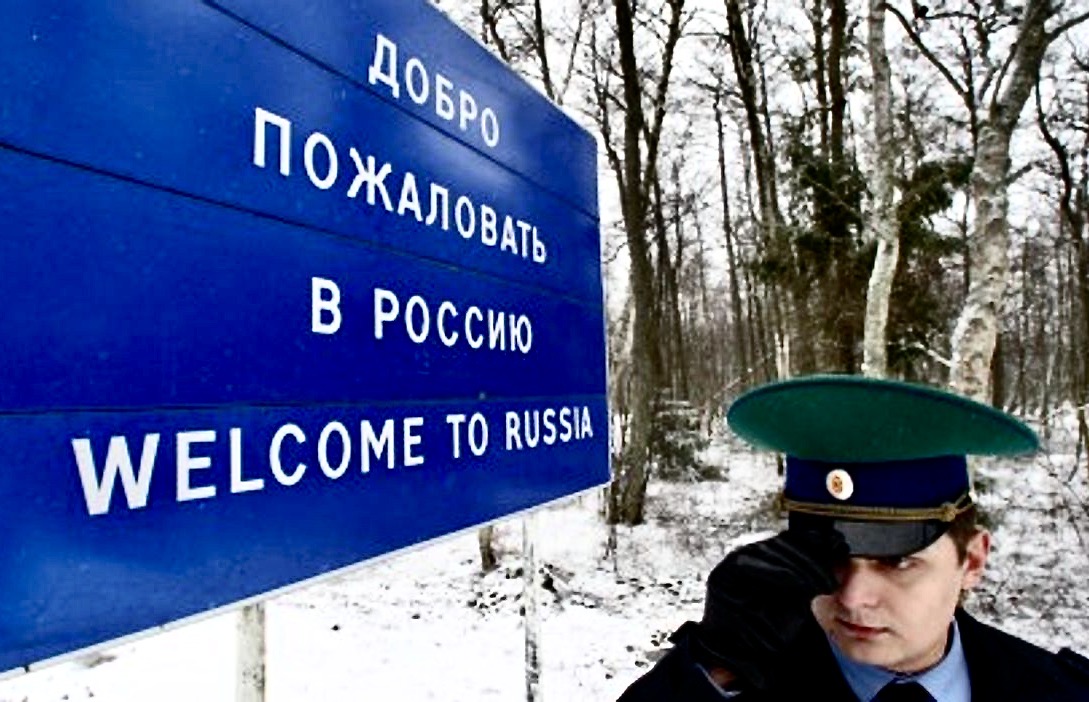
Farm Girl

By Ed Staskus

   When my mother Angele was born it snowed until it got too cold to snow anymore. By the end of the month the thermometer rose to ten degrees below zero. When it warmed up the next month and the snow melted, a half-foot of slush was left behind. The next week there was heavy rain and her father’s fields were left under water. If it froze again there would be acres of ice rink. It froze and everybody went skating.

   “I was born in an area we called the New Farm, in Suvalkija, near Gizai,” said Angele. It was mid-January 1928.

   Suvalkija is the smallest of the five regions of Lithuania. It is girdled by the Nemunas River to the north and Poland to the south. The region’s identity was molded in the 19th century when it was a part of Congress Poland. Suvalkija was an agricultural area, generating substantial sugar beet harvests. Sugar beet yield in Lithuania in the early 20th century was almost half what it was in the United States, even though the country is 151 times smaller than the United States.

   “My father’s name was Jonas Jurgelaitis. My mother’s name was Julija. I had four brothers and a sister. I was so happy when my sister was born. We lived on a small farm. It was three or four miles from Marijampole.”

   Marijampole is in the far south of Lithuania, bordering Poland and Kaliningrad. Lake Vistytis is nearby. The town was a center of book spreaders and freedom fighters in the long struggle leading to the country’s independence in 1918. Speaking Lithuanian was forbidden, but they did it anyway. Reading Lithuanian books was forbidden but they read them anyway. Many of them ended up in Russian prisons, where they spoke Lithuanian among themselves.

   Their farm was 10-some acres. The nearest neighbors were out of sight, even though they were nearby. Small woodlands of Scots Pine and Norway Spruce were scattered along the periphery of their land. Her father kept a pair of horses, three to four cows, lots of chickens, and a sounder of swine. Every week he loaded 10-gallon 90-pound milk cans into his wagon and took them to a local dairy. He rented croplands from a childless widow. The ground was devoted to sugar beets, a cash crop, harvested in early autumn.

   Suvalkija has less forest than any other part of Lithuania. It had long since been brought to bear for tillage. Kazlu Ruda, a large forest, nearly 230 square miles of it, is in Suvalkija, but it is on sandy soil that doesn’t work for farming. Rye, wheat, and barley have been cultivated in Lithuania for two thousand years. Potatoes got rolling three hundred years ago. The country has always been able to sustain itself with foodstuffs. After gaining home rule from the Russians, land reforms in 1922 turned over ground suitable for the plow to tens of thousands of new landowners. Two years later the Academy of Agriculture was established to oversee land exploitation and management.

   “My mother was tall and thin.,” Angele said. “She was pretty. She looked like a Romanian, even though she was born near where we lived. I didn’t look like her, at all. I looked like my father.” Her mother gave birth to eleven children in less than twenty years. Six of them survived infancy. Five of them survived World War Two, the forty-six-year subsequent Soviet occupation that happened next, and lived to see Lithuania regain its independence.

   Justinas was the oldest boy, born in 1919. “Justinas and my other older brother Bronius would invite their friends, and all the girls, to our house in the summer for dancing, before he joined the army.” Irena and the boys Sigitas and Jozukas were the youngest. Jozukas, the tenderfoot of the family, was two years old in 1938.

   Julija started suffering chest pains that year, losing her appetite and losing weight. She was diagnosed with tuberculosis, a major killer in the 19th and early 20th centuries. Almost ninety years later tuberculosis is still prevalent in Lithuania, one of the most highly TB-burdened countries in the world.

   “She went to the sanitorium in Kaunas the next year and got better.” When family responsibilities and the family’s finances called her back, she got worse. Angele helped with the housework and cooking. She kept up her schoolwork, kept up her chores, and with her two older brothers nursed their mother.

   “Irena and I went to a school in Gizai, which was less than a mile from our house. In the winter, when it was snowy, my father hitched one of the horses to a sled and took us there. I went for six years.” The family farm wasn’t far from Marijampole. It was forty miles southwest of Kaunas, the country’s second largest city. Vilnius, the largest city, home to nearly a half million, was eighty miles away. It might as well have been a million miles away.

   “Even though my father did everything, we all had to work, since we were poor.” There were no hired men or seasonal laborers. “I mixed feed for the pigs and fed them. We earned our money by growing sugar beets. Irena and I helped, but Sigitas and Jozukas were too small. We pulled them out of the ground in the fall and used a big knife to cut the leaves away. We threw them in a cart and when we had enough to fill our wagon, my father hitched a horse and took the beets to Marijampole.”

   The family home was a frame house, clapboard siding painted green, two stories, although the second story was an attic for storage and for smoking pork. “We had a barn, but we had another small house, too, a small barn where we kept wood for the fireplace.” They sawed and split their own cordwood. “On the second floor, up a ladder, there was rye and barley for bread. Justinas and Bronius slept in a room beneath the loft.” A brick-lined jumper duct fed heat from the house fireplace to the barn. Still and all, all winter long the young men gathered their blankets and warmed them up at the fireplace before going to bed. In deep winter in the Baltics the nights are 16 hours long. The stars twinkle but they are icy.

   Lithuania is a flat fertile country overlooking the Baltic Sea. The summers are mild, and the days are long, but the winters are longer. They are cold and dark. Temperatures often drop well below freezing. The ground is ice and snow-covered from mid-December to mid-March.

   “We had a dog, in a dog house next to the barn, whose name was Sargis.” Saugotis in Lithuanian means beware or watch out. “He was our guard dog, always tied up at night, who barked whenever a stranger came near. We had cats, too, who killed the mice and rats who ate our grain. We never let them into the house, though. They were only for the outside.” Barn cats lead a rough life, hunting vermin in outbuildings and fields. They sleep where they can, stay warm if they can. Living feral, they don’t live long. Whenever they could they snuck into the small, heated barn and slept under the blankets next to the two brothers.

   The family knew everybody in their neck of the woods. Everybody was wary of strangers. Although they had no immediate neighbors, her mother’s father, a tailor, lived nearby, and her father’s mother also lived within walking distance. “Whenever my mother made potato pancakes, she would give me a platter of them, and I took them to grandma’s house.” Her grandmother lived on the other side of the woods, with one of her father’s older sisters.

   After her mother got sick, from about the time she was ten years old, Angele did the cooking for the family. “My oldest brother Justinas helped me until he went into the army, and then Bronius helped.” She cooked pork logs, made soup, and served bread and butter every day. She washed the pots and pans and dishes and utensils twice a day.

   Justinas was apprenticed to a tailor, and learning the trade, but joined the army in the late 1930s. Every country cousin knew war was coming. “He became a cavalryman and was stationed near Marijampole. He rode home a few times, on his horse, in his uniform. He was so handsome.” He had just turned twenty-one. He didn’t know his horse was going to be useless in the coming war.

   When the Red Army invaded the Baltic states in June 1940, their troops numbering some fifty divisions, supported by armor and an air force, they swept the Estonian, Latvian, and Lithuanian forces aside in a matter of days. Justinas spent the rest of the war feeding his horse, and sewing and mending clothes, first under the thumb of the Russians, then the Germans, and then the Russians again.

   A woman whose husband had died and who lived nearby helped Angele learn to bake bread in their brick-lined oven. They made a half-dozen loaves at a time, kneading up to ten pounds of dough at a time, baking the free-standing loaves loosely arranged in front of a smoldering pile of coals that had been left burning for several hours. They kept the coals pushed to the back of the oven. They added wood as they needed it, shifting the fire from side to side. “We always had bread. We always had tea and sometimes coffee. When times were hard we collected herbs and had herbal tea.”

   The house did not have electricity or indoor plumbing. They had oil lamps and an outhouse and a well. There was a sink with a pump handle in the kitchen. “The outside well had a pulley and a bucket until we finally got a hand crank.” In January 1940 a bitter cold wave enveloped Lithuania, driving temperatures down to 40 degrees below zero Fahrenheit. The next month it crashed to 54 degrees below zero, the coldest in 160 years. The cats didn’t leave the small barn for weeks. The well froze. The Baltic Sea iced over. Some people froze to death and more than 10,000 throughout the Baltics were severely frostbitten, losing fingers and toes.

   When Julija had a relapse, she went back to the sanitorium in Kaunas, but returned home soon afterwards. “A taxi brought her back. My mother said she had to be with her children.” She was not fully recovered. When winter bore down again, she became run down and became bedridden. Jonas built an addition with a window, putting down rough planks over the packed dirt floor. He moved a free-standing cast iron furnace into the room. His wife died in her bed, the head of the bed facing the window, early the next spring. She was forty-three years old.

   Angele’s father re-married four months later. “He needed a woman to take care of Sigitas and Jozukas, my baby brothers.” Jonas had decided to ask the nearby widow with the farm, the woman who had helped Angele bake bread, but by then she was spoken for by another man. He found a single woman in Gizai and didn’t waste any time proposing.

   “Gizai was where we always went. My school was there, and there was a church, a police station with a policeman, and a hardware store that had everything. Whenever we had a coin we bought candy at the coffee shop there.”

   Jonas’s new wife was younger than Julija had been and healthy as a horse. She had a daughter a year older than Angele, even though she had never been married. The wedding was in early September. It wasn’t long after the move-in before Angele realized she couldn’t stay. “My new mother and my father started arguing. She loved the younger ones, and she loved her own daughter, but they started arguing about me. My father stood up for me, but he needed a wife. I don’t know what I was thinking, but one day I left.”

   It was late September. She packed a loaf of bread, some cold pork, what clothes she could carry, and a picture of her mother. She set off on foot in the morning for Alvitas, for her aunt’s house. Ona Kreivenas was her mother’s sister. Her aunt’s husband, a police captain, had been deported to Siberia by the Russians that summer, leaving her with three children and pregnant with a fourth. She could use a hand around the house.

   “I knew life wasn’t going to be any easier in Alytus, but I had to go,” Angele said

   Even though two German army groups smashed into the country in late June that summer, ousting the Russians, by then it was too late for Jonas Kreivenas, who didn’t come back from a slave labor camp in Siberia for nearly fifteen years, and when he did, found out his wife wasn’t in Lithuania anymore. She had fled post-war Europe. She was living in Philadelphia, in the United States.

   Alvitas is about fifteen miles from Gizai. It took Angele most of the day to walk there. She passed a prisoner of war camp crowded with Soviet soldiers captured by the Wehrmacht. One of them asked her for bread but she turned her head away. His war had amounted to little and ended in nothing. When she got to her aunt’s farm the sun was close to setting. 

   “I lived with my aunt for the next three years, until the Russians came again, and we had to run to Germany. I never went back home, except to visit, as a guest. I loved my father, and my brothers and sister, but I couldn’t go back.” When Angele woke up early the next morning, she had a new home and a new mother. “She was my parent now. They were my family.” She helped her aunt make breakfast. There was strong black tea at the table. The first frost wasn’t far away, but that morning was an Indian summer morning.

A version of this story appeared in Draugas News.

Ed Staskus posts on 147 Stanley Street http://www.147stanleystreet.com and Made in Cleveland http://www.clevelandohiodaybook.com. To get the site’s monthly feature in your in-box click on “Follow.”
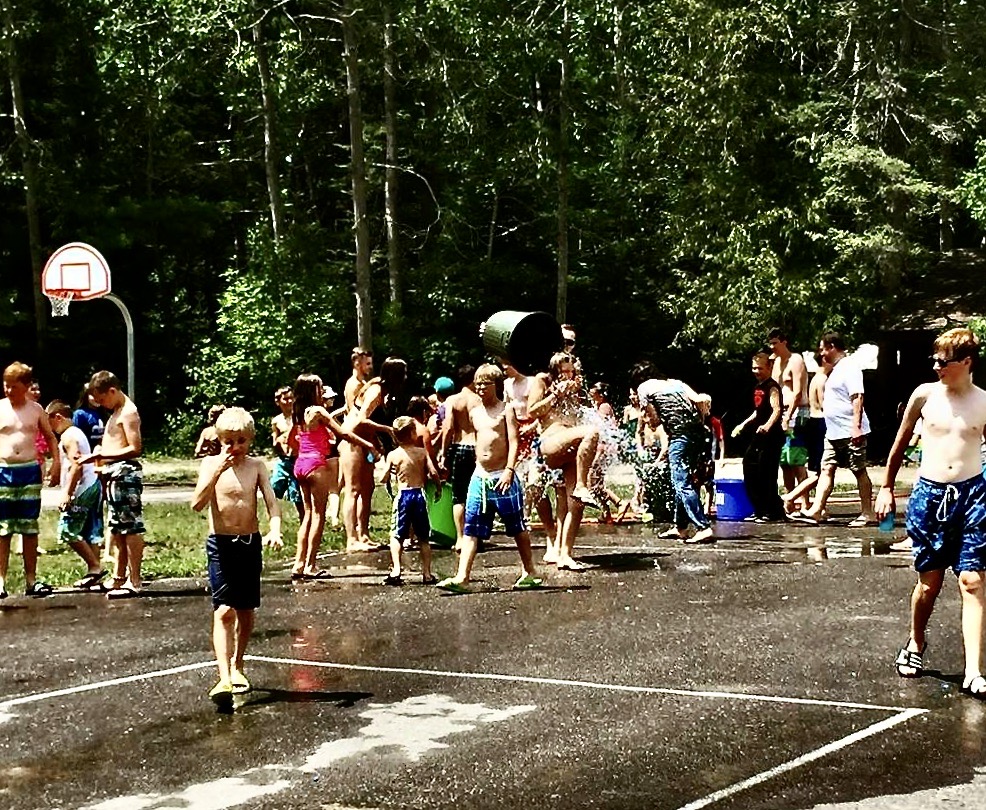
One Man Army

By Ed Staskus

    There has never been an excess of men who fight for a guerrilla band and three armies, one of the armies twice, quitting it the first time around, during any single war. An armed force a day keeps most men busy enough. Leonas Lucauskas stayed busier than many other combatants during the struggle that was World War Two. He fought with partisans in the forests. He served in the Lithuanian, German, and American militaries. He may not have had as many lives as a cat, but it was close.

   “My father Leonas was born in 1916, in the Ukraine,” his son Leo Lucas said. “My grandfather Juozas and grandmother Stanislava were living in Poltava, insanely far from Lithuania, which was their home.” He meant the seven hundred miles was insanely far given the state of Russian roads and their rundown railroads. The Eastern Front, where millions of men were slaughtering each other at the time, was closer.

   “My grandfather was a professor, teaching there during the war.”

   The school was the Poltava National Technical University. It was founded in 1818 by the wife of the governor-general of the province, the granddaughter of the last Ukrainian strongman before the Russian Empire absorbed the country in the 18th century. For hundreds of years Lithuanian and Polish freebooters had controlled vast tracts of the Ukraine and were a law unto themselves. They were no match for the Cossacks, however, who were later no match for the Russians.

   After the war the family, including Leonas’s older brother and sister, who were twins, went back to Lithuania. They settled near Iglauka, not far from Lake Yglos, His father taught school in Marijampole, twelve miles to the west, and they lived on a farm. His mother’s family were prosperous owners of farmland and personal property.

   In 1924 the state-sponsored revolt in Klaipeda was signed, sealed, and delivered, the country competed in the Summer Olympics for the first time, and Leonas’s older brother unexpectedly died of a contagion. The next year his mother went to a wedding. In the middle of the reception she was shot dead.

   It had been Russian Imperial policy to leave Lithuania in a non-industrial state. The inheritance system after the land reform of 1863 forbade the partition of plots. There were many landowners at the reception. They stuck together socially, friends, neighbors, and families bound by the old-time way.

   The Communist party of Lithuania was formed in 1918, declared illegal, and remained illegal until 1940. The Reds didn’t care about legality. They were out for blood and land. There is only so much land to go around in small Baltic-like countries. It was a zero-sum disagreement. “A group of Communist agitators, people who wanted other people’s land, came to the wedding, started a ruckus, started shooting guns, and my grandmother was coincidentally shot and killed.”

   Years later, Leonas told his son the challenge of his life after his mother’s death was, should he take revenge when he grew up? They lived in small towns, everybody knew everybody else, and everybody knew who the Communists were. Should he kill them when he grew up? He decided he wouldn’t, although he never got over the ill will he felt.

   When he grew up, he got married, had a daughter, and was planning on going to school to study medicine, but then World War Two happened. His father was shot and killed by fifth column collaborators in his own living room. Leonas joined the Lithuanian Army and the Soviet Union invaded. 

   It was never a fair fight. In mid-June 1940 a half-million Red Army troops poured across the borders. Within a week the Baltics were overrun, one week before France fell to Nazi Germany.Josef Stalin blew his nose into his walrus mustache. Adolf Hitler did an awkward jig, grinning behind his toothbrush mustache.

   Leonas took to the forest, joining a group of partisans, staying in the fight for the next year. It wasn’t any more dangerous than anything else in dangerous times. He had been working in their fields when his father was killed. “They were killing landowners. My father’s luck was just the luck of being in the fields,” Leo said. “They would have shot him if they had been able to track him down.”

   A year later Lithuania was invaded by the German army. Most Russian aircraft was destroyed on the ground. The Wehrmacht advanced rapidly, assisted by Lithuanians, who saw them as liberators. They helped by bringing their weapons to bear, controlling railroads, bridges, and warehouses. The Lithuanian Activist Front and Lithuanian Territorial Corps formed the native backbone of the anti-Soviet fighting.

   Leonas was one of many who joined the German Army, being assigned to a Baltic Unit. Three years later he was having second thoughts. The Russian Baltic Offensive of 1944 was in full swing. The Red Army was on the march to “liberate the Soviet Baltic peoples.” An NCO by then, Leonas and his men were ordered to man the front line and hold it at all costs. It was costing them dearly every day. 

   “The rich Lithuanians were officers,” Leo said. “They weren’t in the tranches getting their heads shot off. The enlisted men were getting killed. They all wanted to get away.”

   There was a small airstrip nearby for reconnaissance and resupply. Junker 52s were flying in and out with ammunition, first aid, food, and hope in the grim hopelessness. Leonas and three other men from his unit were unloading one of the planes at a side door by means of a ramp, the front and wing-mounted engines roaring, when with hardly a word spoken between them they made up their minds on the spot to steal it and fly somewhere safe and sound.

   Two of the men rushed up the ramp and threw the German pilots out the door, while the other Lithuanian and Leonas kept watch, guns at the ready. He was the last one to scramble into the plane and was shot in the back of the foot just before slamming the door shut.

   “I was playing on the floor one day,” Leo said. It was the late 1960s. “My dad was relaxing, shoes and socks off, sitting on the sofa in the living room reading a newspaper. I saw a scar on his heel and asked him what it was. He said it was a bullet wound. He rolled up his pants and showed me three more on both legs.”

   One of the Lithuanians returned the shooting with a MG15 machine gun set in the dustbin turret, while the other two men dragged Leonas to the cockpit. None of them had ever flown an airplane. He was the only one of them who had ever even driven a car.

   How hard can it be? he thought. With bullets slamming into the corrugated aluminum fuselage, he found out it wasn’t hard at all. He pushed on the throttle, got the Junker going as fast as he thought it would go, raised the nose, and “Iron Annie” lifted itself up into the air.

   They quickly came up with a plan, planning to fly to Switzerland. They got as far as the Poland to Germany border when they ran out of gas. The plane wasn’t the fastest, 165 MPH being its top speed, and it could go about six hundred miles on a tankful. When they went down, they were headed in the right direction. All they needed was another full tank.

   It solved their landing problem, since Leonas had already told his confederates he had no idea how to land the plane. The Junker hit the ground hard and every part of it broke into pieces. When Leonas came back to life he was in a German field hospital. He never found out what happened to his countrymen.

   The doctors and military men asked him who he was and what happened. He answered them in German, in High Deutsch, not Low. “My father spoke Lithuanian, Polish, Russian, and German.” He was wearing the right uniform when found, was speaking like a householder, and they assumed he was one of them. Leonas bit his tongue about who he really was, thanking God for his good fortune.

   After he got out of the hospital he was deemed not fit enough for combat and assigned to the motor pool. Soon after that he drew a lucky number and was assigned to be the driver for a Wehrmacht general. It was lucky enough until several months later, when early one morning, in the middle of winter, he got a wake-up call from one of his motor pool sidekicks.

   “Don’t come to work today,” the man said.

   “What do you mean?”

   “Your general died late last night. One of the first people the Gestapo will want to talk to is you.”

   He knew it was true. He knew what had happened to anybody and everybody involved in the attempt to assassinate Adolf Hitler in mid-July. Nearly five thousand people were executed. He would never be able to stand up to scrutiny. They would stand him up in front of a firing squad in no time.

   His general was probably out carousing in their Tatra 87, slid on some ice, smashing into a tree, but it didn’t matter. It didn’t matter whether the general died in the arms of his mother or was assassinated. His goose was cooked if the SS got him. They were known to literally cook people to death.

   The Tatra 87 had been the Nazi Car of the Year five years running. Sleek, futuristic, BMW-engine fast and high-tech as could be, it was the vehicle of choice for German officers. Unfortunately for them, it handled like pudding, killing its passengers right and left. Leonas always kept it under 40 MPH. It was the vehicle of choice of the Allies, too, at least for their mortal enemy. They thought of it as a secret weapon, killing more high German officers than died fighting the Red Army.

   He jumped to his feet, got himself into his uniform, threw on a winter coat, and fled his room. Making his way to the motor pool, he found a truck with keys in the ignition and a full tank of gas. There were plenty to go around. Opel manufactured ninety five thousand of the 4 x 4 Blitz trucks during the war. He quickly signed it out, turned it over, and drove away. He drove straight for the front. His plan was to break through the line and surrender to the Americans. When you’re at the end of your rope, tie a knot and hang on.

   He didn’t run out of gas and didn’t get shot by either side. In the event, he surrendered. He was relieved and confident that the war was over for him. But by the time the war raised the white flag he was in his third army. At least he was finally on the winning side.

   “My grandfather Juozas was a gigantic guy,” Leo said. “I’m six foot four myself. But my father Leonas was five nine and maybe one hundred forty pounds.” In the end, what counts is what you do. Dwight Eisenhower was the Supreme Commander of what he called “the whole shebang” in Europe. He knew there was more to winning the war than armor. “What counts is not necessarily the size of the dog in the fight, it’s the size of the fight in the dog,” he said.

   At the beginning of 1945 the Allied Expeditionary Force on the Western Front had seventy three divisions ready to go. The Germans had twenty six divisions. The Battle of the Bulge ended in an Allied victory. Adolf Hitler held a meeting with his top men, instructing them to hold the Americans and British off at all costs. By that time, however, his top men were flat tires. The Fuhrer boarded a train and never went back to the Western Front. At the end of January, he gave the last speech he was ever to give. It was all hot air.

   After surrendering, Leonas spent time in a DP camp, until being recruited by the Americans. They were looking for men who spoke multiple languages and he fit the bill. He had been picking up bits and pieces of English in the meantime. Russian and Polish are among the Top 10 hardest languages to learn. English is no slouch, either. He persevered with his new grammar book and was made a Sergeant. In 1946 and 1947 he was in Nuremberg, where war crime trials were being conducted, translating the misdeeds. He watched the men who propagated the National Socialist German Party commit suicide, get executed, or get locked up forever.

   As the hard-fought decade of the 1940s wound itself down, Leonas made his way to North America, finding work as a lumberjack near Sudbury, Ontario. “It was an indentured servant kind of job,” said Leo. More than two-thirds of the Canadian province is forest, in land mass the equivalent of Fascist Germany and Fascist Italy combined. “He was never quite sure where he was when he was in the forest.” He preferred it, though, to being a mile down in the Sudbury Basin nickel mines. Up a tree he could, at least, see for miles.

   Making it in a company town is hard to do. Since there is no competition, housing costs and grocery bills can become exorbitant, and workers build up large debts they are required to pay off before leaving. It can be bondage by another name. Leonas determined to find another way, his own way.

   He and several other immigrants pooled their resources, found a broken-down car, scavenged parts from other wrecks, filled the tires with enough rags to get them to roll, and hit the road. He ended up in St. Catherine’s, near Niagara Falls, and later, sensing an opportunity to get into the United States, he took it. He settled down outside Buffalo, New York in 1950, where he stayed the rest of his life. He never saw his wife and child, trapped behind the Iron Curtain, again.

   He got married to an American woman. His new wife Louise taught school. They raised a family. He went to work as a butcher in the meat department of a grocery store for more than thirty years, rarely missing a day. He built a house on three acres of land. One acre of it was devoted to a garden. “I must have moved five thousand wheelbarrows of manure as a child,” Leo said. “Whenever our factory friends went on strike, I delivered food from our garden to them in the morning before school.” His sister Katherine still lives in the family home.

   Leonas often hung from his heels in the garage to prove he could still do it. “My father was a strong man.” Sometimes men are strong because it’s the only choice they have. Spinning your wheels doesn’t get it done. Leonas smoked and drank with his friends at the local Italian and Polish social clubs. They played cards. They rarely talked about the past. They stuck to the present. The past was a dead letter.

   He was a sociable man in post-war society. He was friendly and approachable. He rarely missed a dance at the social clubs. He believed that if you can dance, you always have a chance. He had more lives than a cat, although he stopped testing the limits. He never fought in another man’s army ever again.

Ed Staskus posts stories on 147 Stanley Street http://www.147stanleystreet.com and Cleveland Daybook http://www.clevelandohiodaybook.com. To get the site’s monthly feature in your in-box click on “Follow.”

Shake a Leg

teen-zumba

By Ed Staskus 

   “Rhythm is something you either have or don’t have, but when you have it, you have it all over.”  Elvis Presley.

   On a Saturday morning in mid-fall, Olga Capas, Rita Zvirblis, and Vanessa Staskus ordered late breakfast early lunch at the Diner on Clifton, finding a table on the outdoor patio and easing into their seats twenty minutes after their ever first Zumba class. Over cups of steaming coffee, three-cheese omelets, patty melts, and shared sweet potato fries, they caught up with their breath and with tuning in to the sunny-side up movement exercise scene.

   “We got to class early and found our space in the back,” said Vanessa, “but then every minute somebody went behind us, so in no time we went from being in the back row to being in the front row.”

   If you’re in the front row you’re leading the parade. It wasn’t what they planned, but once the class started, they had to look alive. If you stop, you’re going to melt back into the tuba section, where you might get laid low.

   “I thought they were going to kick me out,” said Rita, “I have no rhythm, but it’s so fast, you can’t think about anything else besides keeping your feet moving.”

   She was being modest. She danced with the Grandinele folk dancers as a teenager and young adult. She traveled with the troupe to Chicago and Toronto, Europe, and South America. Folk dancing reflects the life of people from a place or country. It can be the upbeat southern Italian Tarantella, the rhythmic Turkish Haly, the Polish carnival party dance Polonaise, Kentucky clogging, and Korean sword dancing. Zumba is along the lines of a street dance.

   Grandinele was formed in Cleveland in the early 1950s by Liudas Sagys, who began his career as a professional dancer with the National Folk Dance Ensemble in Lithuania. He taught the steps and choreographed Grandinele’s country hoedowns while his wife Alexandra made the costumes and kept the books. He was the longtime director of the Cleveland Folk Dance Festival which in 1976 was recognized as “the best ever.”

   “I loved the Zumba, the music and moving,” said Olga. She always had tennis shoes at the ready in her hallway when she was ready to move.

   The three women are all of Lithuanian descent, one of them from the homeland, two of them immigrant stock, living west of the Cuyahoga River, on the west side of Cleveland, Ohio, active and fit enough. Plump pale and healthy as an ox without batting an eyelash was the touchstone once upon a time, but the signs of the times have long since changed. Never fit and trim enough is where walking jogging running working out and Zumba come in.

   Zumba is a dance and fitness program created by exercise instructor and choreographer Alberto “Beto” Perez in Colombia during the 1990s when he improvised salsa music into an aerobics class. Since the turn of the century, it has expanded to 125 countries, taught by more than 20,000 certified instructors. Practiced weekly by approximately 14 million people worldwide it is today’s most popular dance fitness phenomenon.

   In 2012 Zumba was named the”‘Company of the Year” by Inc. Magazine and is today one of the largest fitness brands in the world, practiced everywhere from big-box gyms to church halls to community centers.

   At the Harrison Elementary School, sponsored by the Lakewood Recreation Department, classes are taught by Amy Annico, a hale hearty black-haired young woman sporting a quick smile, bright blue sneakers, and hauling a yellow Dewalt boom box about the size of an air compressor from her car to the class.

   “One minute she was monkeying with that big yellow thing,” said Rita, “and then at nine o’clock in the morning exactly it was blasting.”

   It was the blast off.

   “I’m not really for nightclubbing first thing in the morning,” Rita said, “but she makes it a lot of fun. It’s like partying yourself into shape.”

   Zumba is different than many other fitness programs because people don’t always take it for the fitness benefits, more often than not for the boogie and socializing, even though the results can be transforming.  It is a cardiovascular calorie-burning hour of twisting and turning in varying states of synchronization to loud bouncy infectious music.

   “They are taking it for the happiness and joy that they feel while they are doing it, and the fitness is just the result of this,” said Alberto Perlman, who with Alberto Perez was a co-founder of the Zumba enterprise.

   Zumba is essentially an aerobic fitness program, including basic core fitness, married to dance routines. Set to full of life Latin American beats, it burns up to 600 calories an hour, according to Harvard Health Publications. Sweating is not optional, since everybody starts sweating within a couple of minutes and doesn’t stop until the end of class.

   “Zumba is hard,” said Olga, “but it’s not hard like going to the gym. Sometimes I have to force myself to do that, but with Zumba the music is going, and you just want to move.”

   “It’s fast-paced and you’re watching Amy’s feet up on the stage,” said Rita between bites on a Reuben sandwich. “It’s those blue shoes she wears the whole time, trying to follow what she’s doing, and then you immediately start sweating.”

   “Immediately!” echoed Vanessa. “Sweat was dripping down the small of my back before the warm-up was even over.”

   Amy Annico, a music teacher as well as part-time actress, has taught Zumba since 2008 at area YMCA’s, Live Well Lakewood, health fairs, and retirement homes. She attends the annual Zumba Instructor Convention in Orlando, Florida, every year, upgrading her skills

   “I’m trained in Zumba, which is for everyone,” she said, “and Zumba Gold, which is for older, active adults, and Zumbatomic for kids.” There is even Aqua Zumba, a water-based workout integrating Zumba with aqua fitness themes. A great deal of jumping and splashing is involved. Strapless bathing suits are strongly discouraged, for good reason.

   “The Harrison school class is a great community class,” Amy said. “Everyone’s dancing, it’s like a party, people are hooting and hollering and shaking, and the hour flies by and you don’t even know it.”

   By all accounts shimmying, shaking and sliding, hooting and hollering, as well as chest pumping and bootie shaking, are encouraged subscribed to and applauded. You may not get a gold star, but you’ll be a shooting star.

   “I always say, don’t be shy, give it a try,” said Amy Annico. “It’s all about spreading the joy of music from around the world with fantastic fitness and dance moves.”

   The word zumba is Colombian slang and means “move fast and have fun.” It has been described as exercise in disguise. Set to four basic rhythms based on salsa, merengue, cumbia, and reggaeton, it is a non-stop workout that works all your endorphins out endorphins as well as working out your muscles.

   Some people lose inches off their waistlines, others see their cholesterol drop and their energy levels rise, while still others simply reduce their stress levels. Some men even learn to dance and not make fools of themselves at weddings anymore.

   Just as sweating is mandatory, so is staying hydrated.

   “I told Vanessa to bring water, even though she doesn’t like water, because I heard you get really thirsty at Zumba,” said Rita.

   “My whole bottle of water was gone before half the class was over, and I never drink water,” said Vanessa. “Everybody was going back and forth to the water fountain getting more of it all class long. You don’t get totally winded, even though it’s non-stop dancing, but you do get totally thirsty.”

   Their dishes cleared off the table at the diner, coffee cups re-filled, and lingering over their lunchtime, the three women agreed that Zumba was the best way they could think of to exercise without actually exercising.

   “The salsa moves are really good for you, your whole body is going, your hips are going,” said Rita. “Amy is so animated, she makes all these noises, those sounds of hers, like she is definitely having fun doing it, and she makes it the same for everybody.”

   “It’s loke dancing from beginning to end, but it’s exercise, too. You do it with joy, and afterwards you feel so good,” added Olga. “It’s guaranteed to put a smile on your face.”

   They all agreed Zumba was the best of both worlds. There are shortcuts to happiness and dancing is one of them. “Your whole body is moving, and you don’t have time to think about working out,” said Rita while walking back to their car. “It’s like having your cake and eating it, too.”

   Some words are triggers. Cake is one of them. If staying healthy and fit is a priority, since vegetables are a good way of getting there, there is always pumpkin pie and carrot cake.

   “Why don’t we drive down to Tremont, have some dessert, and go for a walk along the river?” Vanessa suggested. “It’s going to start getting cold soon.” The winter in Cleveland was only six weeks away, when the sky would go dark gray and storms started blowing in over Lake Erie.

   That’s what the three Baltic hoofers doing Columbian slimnastics for the day did, before the sun set, and the night’s new frost crept in unnoticed.

Ed Staskus posts stories on 147 Stanley Street http://www.147stanleystreet.com and Cleveland Ohio Daybook http://www.clevelandohiodaybook.com. To get the site’s monthly feature in your in-box click on “Follow.”
No Man’s Land

By Ed Staskus

   My grandmother was a Russian, a schoolteacher in Saransk, when my grandfather met her before the start of World War One. He was a Lithuanian. The town and the garrison were in the Penza, four hundred miles southeast of Moscow. It was somewhere but in the middle of nowhere. Antanas Staskevicius was an officer in the Russian Imperial Army, not that he wanted to be, but the Muscovite landlords of the Baltics demanded it.

   Saransk later became the capital city of the Republic of Soviet Monrovia, but long before that happened my grandfather had returned to Lithuania. Native soil is always better than the Saransk’s of the world. Home is where the heart is, but not necessarily where the heart is forcibly relocated.

   The town in the Volga Basin was founded as a fort, on the left bank of the Isar River, at the crossroads of Moscow and the Crimea. Before the First World War its commercial life revolved around leather, meat, and honey. After the war its factories were closed for more than ten years when there weren’t any available fuels or raw materials. In the meantime, the Kremlin stayed stocked with vodka and caviar.

   “My father was trained as an officer and sent to serve there in the Czar’s army with an infantry regiment,” my father, Vytas Staskevicius, said. “It was a hard post for him, because back then they said drinkers go to the navy and dimwits to the infantry.” The Imperial Russian Army had more than a million men, most of them conscripted, and most of them dirt-poor peasants. There were a quarter million Cossacks, too. Only the Cossacks knew what they were doing.

   “He met and courted my mother, Antonina, and they got married. They had my older sister, Eugenia, in 1917. We called her Genute. My sister Gaile was born the next year.” Vytas was born six years later, in 1924, in Siauliai. “My father named me after King Vytautas the Great.” His mother called him Vytas. His sisters called him many things, including the little prince and the rotten prince.

   Siauliai is home to the Hill of Crosses, a hill where there had once been a fortification less than ten miles from the town. It is covered with tens of thousands of crosses, crucifixes, and holy statues. It was after Czarist forces crushed Lithuania’s November Uprising of 1831 when the first of them appeared.

   By 1918 Lithuania had been missing from the map for more than one hundred years, having been disappeared after the Partition of Poland. Since that time, it had been under the thumb of the Czars. In late 1919, when the Bolshevik Revolution had become a Civil War, Antanas Staskevicius went home to a newly independent Lithuania.

   “Lithuania didn’t have many officers when they formed their own army,” said Vytas. “Most of them were men who had been conscripted into the Imperial Army before the war. My father fought in the post-war battles around Klaipeda and after that he served in the secret service in Kaunas, which had been made the capital.”

   Lithuania declared independence in February 1918 and for almost three years fought Russians, West Russians, and Poles for their land. Finally, they formed their own government, although they lost Vilnius, their historic capital, to the Poles, with whom they remained officially at war with no warfare after 1920. “After the post-war fighting with the Poles my father got some land for serving his country, near Siauliai. We lived on a farm.”

   During World War One most of Siauliai was destroyed and the city center was obliterated. Since its founding in the 13thcentury, it had burned down seven times, been struck by plague seven times, and World War Two was the seventh conflict that wrecked the town. It was rebuilt after every catastrophe.

   “We lived there for several years, but then my father became the governor of the Panevezys district and we moved to the city there.” Panevezys, a royal town founded in the early 16th century, is on the plain of the Nevezis River, about fifty miles east of Siauliai. During the years between the world wars Lithuania was divided into 24 districts and each district had its own governor. My grandfather was the governor of Panevezys until 1938.

   Vytas went to grade school and high school in Panevezys, but his father was later transferred to Zerasai, a place that was a summer resort. In 1834 Zerasai had burned down and been rebuilt. Two years later it was renamed Novoalexandrovsk, in honor of Czar Alexander’s son, but after the Great War the name was expunged. There was no love lost between the Baltics and the East Slavs.

   “When my father became the governor of Zerasai, my mother didn’t want to move there, since it was more than seventy-five miles from where we lived, so I stayed with her. But I didn’t get along with the students at the high school there. It was a strict school and everyone had to dress nice. On my first day of classes I was dressed up too nice, like I was going to a wedding, with a tie and everything, and everybody laughed at me. Where are you from, they all said. I didn’t make any friends there.”

   He told everyone, “I’m going to Zerasai.” He moved there in 1939 and lived with his father. “We always studied a second language in school, and since my mother was Russian, studying it was easy for me. But when I got to Zerasai I found out they only had English as a second language, no Russian. My father had to hire a tutor to help me.”

   All during the 1930s the world had been changing fast. In 1940 the Lithuanian world changed even faster. Father and son moved back to Siauliai. “The Soviets came that year. All the high officials were let go and the Russians selected new people who they wanted to run the country. They said they didn’t run the country themselves, we Lithuanians did, but it was the Lithuanian Communists who were in charge, so it was actually the Rus.”

   The family went to their farm, while renting a house in Siauliai, dividing their time between town and country. “It was only a few miles from our farmhouse to town. I used to walk or bicycle to Siauliai. But the mood was bad, very bad. Everybody thought something terrible was going to happen.”

   The Russian annexation of Lithuania was completed by the late summer of 1940. Businesses were nationalized and collectivization of land began. As the Russian presence expanded the family discussed leaving the Baltics.

   “Why don’t we go to Germany?” my grandmother asked.

   “We had a chance to leave the country then and go somewhere else.,” my father explained. “My mother wanted to go. We talked about it often, about going to Germany.”

   But my grandfather didn’t want to leave Lithuania. “I have never done anything wrong that they would put me in jail,” he told his family. “I have always been good to people. They aren’t going to put me in jail.” He stopped short of laughing it off.

   In the fall of 1940, a passing troop of Russian infantry commandeered their farm for several days. “They didn’t mistreat us or do anything bad,” my father recalled. “They stunk bad, though. They hadn’t washed in months. They rolled their Bulgarian tobacco in newspaper. They smoked all the time. It took a week to air out the house.” The tobacco came from the infertile fields of the Rhodope mountains, which were suited to little else other than tobacco.

   The family stayed on their farm through the winter. Then, as the mass arrests and deportations of almost 20,000 Lithuanian policemen and politicians, dissidents, and Catholics began in June 1941, my grandfather was picked up by NKVD plainclothesmen. It was a mild cloudless day.

   “He was gardening in our yard, weeding the cabbages, wearing a shirt, old pants, and slippers when they drove up, a carload of Russians, and stopped, saying there was something wrong with their engine. ‘I’ll help you out,’ my father said. He walked over to their car with them. They shoved him into the back seat and drove him to jail. He never came back.”

   Vytas was in school in Siauliai taking his final exams that morning. “My mother called the school and told me my father had been taken. I ran out of class and went home right away on my bike.” His mother packed clothes, socks and shoes, and soap for her husband. She went to see him the next day.

   “The man who was running the jail was a Jewish fellow. He had grown up with us and was a friend of our family, but when my mother asked him to help us he said the old days were over.” There was a new boss in town. There was a new order.

   “He was a Communist and had been in and out of jail because of his political activities. He was always in trouble. My father usually let him go after a few days, telling him to not get involved in politics anymore. ‘Just be a nice boy,’ he would tell him, but then the next thing we knew he was in jail again. He wouldn’t help my father when he was arrested. ‘Everything is different now,’ he said. Times had changed. Everybody was looking out for themselves, only themselves.”

   The man who had once commanded the local police stayed in stir. “They didn’t let my mother talk to my father. We went to the jail several times, but they never let us see him. We didn’t ever see him again.”

   Antanas Staskevicius was taken to Naujoji Vilnia and loaded onto a boxcar. The train left Lithuania on June 19, 1941. Four days later, between June 23 and 27, at the Battle of Raseiniai, the 4th Panzer Group, part of the first phase of Operation Barbarossa, the German invasion of Russia, effected the almost complete destruction of Russian armored forces in Lithuania. Within a week Nazi Germany seized all of Lithuania.

   My grandfather was transported to Russia’s far east to a labor camp near Krasnojarsk in Siberia. He was put to work logging in the thick forests and starved to death in the winter of 1942. Anton Chekhov, a noted Russian short story writer, once wrote that Krasnojarsk was the most beautiful city in Siberia. My grandfather was never able to catch the tour bus there.

   “The morning after my father was arrested, I drove our horse and wagon to school to finish my exams. I had to deliver milk to my teacher’s family, too. But when I stopped at his house, he ran out with his family and said, ‘Help take us to the railroad station.’ I said OK and they all got into my wagon, his wife and he and their two children. I took them to the station. After that I never saw them or ever found out what happened to them. The next day one of our neighbors told me the Russians had gone to the teacher’s house that same afternoon looking for him. Teachers, lawyers, anybody from an educated family, they were worried about all of them. They were afraid high-class people were against them.”

   When NKVD men began mass arrests of Lithuanians, officials seized their property, and there was widespread looting by Lithuanians among themselves. It was every man for himself, unless you were a Red. “If you were a Communist then you were all right. The father of one of my friends was a metal worker. He didn’t even know how to read, but the Russians made him the mayor of Siauliai because he was a Communist.”

   Antonina, Genute, and Vytas stayed on the farm after Antanas’s arrests arrest. Gaile was living in Vilnius. When the mass arrests intensified, they became alarmed. “We were determined about leaving the farm. It was dangerous everywhere. We went into the forest. But then my mother told me to go to Vilnius and tell Gaile our father had been arrested. She wanted her to know to be careful. I took a train to Vilnius, but as soon as I got there, I got a phone call saying my mother had been arrested. When I got back to Siauliai, I found out she was being deported. Somebody probably complained and informed on her. We had land, 160 acres, so we were considered capitalists. We weren’t rich, but we weren’t poor, either. There was no real reason that I ever found out about for why they took her. I went to the train station but didn’t see her anywhere. She was sent to a prison camp.”

   His mother was released from the Gulag in 1956, after Stalin’s death, but not allowed to return to her home in Siauliai. The Communists didn’t want her stirring up trouble, even though they were stirring the pot. “My God, you’ve gotten older,” was the first thing Antonina said when she saw her son again in 1979, come from the United States to behind the Iron Curtain. It was thirty-eight years after she had been transported.

   After his mother’s arrest and exile my father, not yet 17-years-old, left Siauliai and moved to Vilnius, staying with his sister Gaile and her husband. At the time almost everyone living in Vilnius was either Polish or Jewish. Lithuanians in the former capital city of Vilnius were relative strangers in their own land.

   “The day the Russians left and before the Germans came, everybody rushed to the food warehouses and broke into them. It wasn’t that we were robbing them, but everybody was doing it, since there was no food. Gaile and I went, too. We filled up our bags with bread and pork, all kinds of food, and took as much as we could home. When the Germans arrived, they put a stop to it.”

   He stayed in Vilnius for several months, but then decided to go home before the end of summer. The family farm had to be cared for, but, first, he had to get a travel permit. “I couldn’t get in to see a single German to apply for a permit, but finally I talked to someone who had known my father and got an appointment. The officer told me they weren’t issuing any for the time being and to come back, but after we talked about my father a little more, he said all right, and wrote one out for me.”

   He took a train back to Siauliai and walked to the farm, but when he got there, he discovered a company of Wehrmacht had taken over the  homestead. “They were there about two weeks, more than seventy of them. I couldn’t even get into our house since the officers had taken it over. Those Germans were good men. They didn’t do our farm any harm. They had their own quarters and their own mess. I made friends with some of them. We drank wine together at night.”

   His father’s business practice had been to have a foreman run the farm. The foreman hired three men and three women every spring. Although the farm had chickens and pigs, and draft horses to do the heavy work, it was mostly a dairy farm with more than twenty cows.

   “It was a model farm,” said Vytas. “Every summer students from the agricultural academy would tour our farm. When I came back, my sister Genute was there, but she wasn’t interested, so she didn’t do any work. I started taking care of things, even though I didn’t know much, which was almost nothing. I knew the cows had to be milked and the milk had to go to the dairy. But about growing crops, and the fields, I didn’t know anything. But I did everything as though I knew what I was doing.”

   That fall he sent his hired hands out to till the ground in a nearby field. When his nearest neighbor saw them working, he ran across the road towards them, waving his arms.

   “What in the hell are you doing?” he yelled.

   “I told him we were preparing the ground for next year. He said, ‘You’re ruining this year’s seed and you won’t have any grass next year.’ We stopped right away. I learned what to do.”

   A year later he was on a horse-drawn mower cutting hay when he saw storm clouds gathering. He thought he would be better served walking the horses, so they could pull the mower faster, and jumped down from his seat. “As I hopped down, I stumbled and fell on the blades of the mower. The horses stopped right away. My hand was almost cut off. The boy who was helping me ran over. When he saw what happened, he passed out.”

   While the war dragged on across Europe, he had problems keeping the farm going. He had only partial use of his injured hand and farmhands everywhere were deserting the land. “I went to the prisoner-of-war camp where I knew the Germans used to give Russians out. They gave me five of them. They were nice guys, worked hard, and sang at night. One morning after a month I woke up and there wasn’t one of them left. They were all gone. I had to go back and ask for five more. My God, how they yelled about it. One officer shouted that I hadn’t looked after them, shouted that I needed to lock them up at night, and shouted that they weren’t going to give me anymore. In the end I said, I need five more, so they gave me five more. I kept them locked up after that and they were still there when the Russians returned.”

   In 1944 the Red Army stormed back into Lithuania. My father escaped with a mechanized company of Germans, whisked up by them in their vehicles as they passed. They had been stationed near the prisoner-of-war camp. They told him he had five minutes to decide whether or not he was coming with them as they retreated.

   “They told me the Russians were on the other side of the Hill of Crosses. They were in a big hurry. I only had time to fill a bag with a few clothes, a little money, and photographs of my parents.”

   His sister Genute, not at the farm that day, fled separately. She got across the border into East Prussia, and later into Germany. His other sister, Gaile, wasn’t able to escape Lithuania in time. “She had a problem at the border and didn’t make it. The Russians had taken that area, so Gaile was forced to stop in a little town there. She had her daughter and her husband’s mother with her.” In the end the three of them were compelled to remain where they were.

   “She stayed there after the war and finished a trade school, became a nurse, and never told anyone where she was from. The Communists never found out anything about her. If they had, it would have been the end of her.”

   In July the Red Army captured Panevezys. Later that month they took Siauliai, inflicting heavy damage on the city. Black smoke filled the sky. Two months later the counterattacking German 3rd Panzer Army was destroyed and for the next nearly fifty years Lithuania became part of the Union of Soviet Socialist Republics.

   “I was glad to get out of Siauliai in 1944,” my father said. He fled to the German border and landed in Hamburg. “There was no future in Lithuania anymore. I was very glad to get out in time.”

Ed Staskus posts on 147 Stanley Street http://www.147stanleystreet.com and Made in Cleveland http://www.clevelandohiodaybook.com. To get the site’s monthly feature in your in-box click on “Follow.”

Eat Sleep Scout Repeat

By Ed Staskus

   “Scouting is a man’s job cut down to a boy’s size.”  Robert Baden-Powell

   My father was born on a family farm outside of Siauliai in 1924, six years after Lithuania’s Declaration of Independence and two years before the start of what is known as the Smetonic Era. The small city, the capital of northern Lithuania, is home to the Hill of Crosses, a protest site, folk-art collection, and spiritual statement of about one hundred thousand Christian crosses.

   Siauliai goes back to 1236 to the Battle of Saule against the Teutonic Knights. The bitter war between the Teutonic Order and Lithuania was one of the longest in the history of Europe. The first Christian church in the country was built in 1445. Until then Lithuanians were steadfast pagans. When they first encountered missionaries they came to the conclusion that Hell was a fine place to end up, if it came to that, since Lithuania was very cold and Hell was warm.

   My grandfather had been conscripted as an officer in the Czarist Army. My grandmother was Russian and a former schoolteacher. They met when he was stationed in the badlands southeast of Moscow. “In those days drunks went into the navy and dimwits into the infantry,” he said about his time as an officer in the Russian armed forces. After returning to Lithuania he served in its military and was awarded farmland outside of Siauliai.

   My father was a Boy Scout early on. Since my grandfather had been made the police chief of the province, and since Antanas Smetona, the President of the country, was the Chief Scout, and since there were privileges accorded to scout troops by the Ministry of Education, my grandfather involved my father in scouting as soon as he grew to be of school age.

   I became a Boy Scout in the early 1960s when my father became the Scoutmaster of  Troop 311. We wore official Boy Scouts of America neckerchiefs and carried unofficial knives in scabbards on our belts. We went camping summer and winter. We learned how to set up base camps and how to build temporary shelters. We hiked trails through forests, although most of us were hapless with a compass, instead relying on ingenuity, stamina, and dumb luck to find our way.

   Boy Scouts got their start in 1907 when a British Army officer gathered up twenty boys and took them camping, exploring, and pioneering on an island off England’s southern coast. The next year the army officer, Robert Baden-Powell, wrote “Scouting for Boys.” That same year more than ten thousand Boy Scouts attended a rally at the Crystal Palace in London.

   The first scout patrol of ten boys and two girls in Lithuania was organized in 1918. The next year there were two patrols, one for boys and another one for girls. During the inter-war years more than 60,000 boys and girls participated in scouting, making it one of the most popular activities among the young at that time. In 1939, just before the start of World War Two, there were 22,000 Lithuanian scouts.

   Four out of five Lithuanians were farmers or lived in the country and camping was everyone’s favorite part of scouting. It’s what probably accounts for my father’s fondness for the outdoors and all the scout camps he was later Scoutmaster of. They weren’t all sun-kissed and starlit camps, either.

   Winter Blasts were camps in thin-skinned cabins in the highlands of the Chagrin Valley at which we earned cold weather Merit Badges. We were informed that exploring outdoors in December was fun. We always built a fire first thing in the morning in the cabin’s Franklin stove, kept it well stoked, and hoped we wouldn’t freeze to death in the long night.

   In the summer a grab bag of Merit Badges was up for grabs. There were more than a hundred of them, from sports to sciences. I learned the six basic Boy Scout knots, from the sheet bend to the clove hitch. I earned my Pioneering Badge and eventually learned how to tie every knot known to man, although I never learned how to properly knot a tie, even later in life, when my wife always had to help me with it.

   My father was forever transporting, putting up and tearing down tents, finding lost stakes and poles, and persuading my mother to repair rips in canvas. He told us sleeping outdoors was manly, robust, and healthy, no matter how much rain leaked onto our sleeping bags. He had a maxim that a week of camp was worth six months of theory.

   The outdoors wasn’t just the Boy Scouts, either. For many years he was the boss at Ausra, a two-week sports-related, Lithuanian-inflected, and Franciscan-inspired summer camp at Wasaga Beach, which was on the Georgian Bay two hours north of Toronto. Although we did calisthenics every morning, went to Mass after breakfast, and spoke Lithuanian whenever we had to, what we actually did most of the time was run around in the woods like madmen, play tackle football in the shallow water of the bay, and sing off-key long into the night at the nightly bonfires. Singing around a bonfire is even better than singing in the car or the shower.

   When my father was nine years old he was one of the nearly two thousand cohorts at the 1933 Reception Camp in Palanga when Robert Baden-Powell, founder of the Boy Scouts, came to Lithuania. Palanga is a seaside resort on the Baltic Sea known for its beaches and sand dunes. Then a sleepy resort, today it is a summer party spot.

   He never forgot having been at the camp, seeing scouting’s leader and guiding light, if only on that one occasion. “He was a hero to us, someone who gave his life to something bigger than himself, even though we were all smaller than him,” he said. The scouting founder’s son, who was with him in 1933, didn’t forget, either. “I particularly remember the warm and friendly welcome we received as we came ashore on Lithuanian soil,” recalled Peter Baden-Powell in 1956.

   Five years later, in 1938, my father was at the Second National Jamboree in Panemune, the smallest city in the country, which commemorated both the 20th anniversaries of the foundation of the Lithuanian Boy Scout Association and the restoration of Lithuania’s independence.

   Things change fast, though. Two years later the Soviet Union invaded, the country’s independence was overturned, and scouting was outlawed. During the war and successive occupations, first by the Russians, then the Nazis, and then the Russians again, both of my father’s parents were arrested and transported to concentration camps. My grandfather died of starvation in a Siberian labor camp. My grandmother spent twelve years in the Gulag.

   In 1ate 1944 my father fled to Germany, making his way buying and selling black market cigarettes, and after the war worked for relief organizations dealing with the masses of displaced people. He met his wife-to-be in a hospital in Nuremberg, where she was a nurse’s aide, and he was being operated on several times for a wound that almost cost him his right hand.

   He found passage to Sunbury, Ontario in Canada in 1949, married my mother, who had emigrated there a year earlier, and by 1956 was the father of three children. While in Canada he wasn’t involved in scouting. “There weren’t any children, or they were all still babies,” my mother said. “All of us from Lithuania, and there was a large community of us in Sudbury in the early 1950s. We were all so young. We were just starting to rebuild our lives, getting married and having children, but it was taking time for them to grow up to scouting age.”

   Robert Baden-Powell said that Bot Scouts should always be prepared for the unexpected and not be taken by surprise. “A scout knows exactly what to do when anything unexpected happens,” he said. By that guiding light scouting stood my father in good stead through the 1940s.

   When his parents were arrested and deported, he took over the family farm. He was 17 years old. When he fled the farm in 1944 with the Red Army on the horizon it was with ten minutes notice. When he stepped off a re-purposed troop carrier in Halifax, Nova Scotia in 1949, everything he had was in a rucksack and there were twenty dollars in his wallet. In the event, he eventually knocked on my mother’s door in Sudbury, almost six hundred miles away.

   He left Sudbury in 1957, where he had worked in nickel mines for almost seven years, first as a black powder blaster and then as an ore hauler, and moved to Cleveland, Ohio. We followed six months later. He worked as an elevator operator for seventy-five cents an hour, less than half of what he had been making in the mines, swept floors, stocked warehouses, and did whatever he could for a paycheck. He started taking classes in accounting at Western Reserve University.

   In Cleveland, living in a Polish double he bought in collaboration with his sister’s family, who had also fled Lithuania, he found work full-time at the Weatherhead Corporation, continued going to school at night, and after earning a degree in accounting went to work for TRW. He made his way up the ladder, finally managing his division’s financial operations in South America.

   After taking early retirement in the late-1980s he helped found the Taupa Lithuanian Credit Union and as its director built its assets into the tens of millions. In the 1990s he formed NIDA Enterprises and managed it through 2008, when he was in his 80s. He believed the workingman was the happy man. “Nothing works unless we do,” he said. He believed there was value in work. He believed work without effort was valueless.

  Because of World War Two and its dislocations, and his subsequent emigration overseas, as well as the demands of rebuilding a life and building a family, he didn’t participate in scouting for many years. But once a scout always a scout. “What you learn stays with you long after you’ve outgrown the uniform,” he said.

   When he took over from Vytautas Jokubaitis as Scoutmaster of Troop 311 they were big shoes to fill. Vytas Jokubaitis was a tireless advocate for his countrymen who became director of Cleveland’s Lithuanian American Club. He was awarded the Ohio Governor’s “Humanitarian of the Year” award in 1994. He was a true believer I scouting.

   My father worked with Cleveland’s Lithuanian scouts for nearly twenty years. While Scoutmaster he helped affiliate Troop 311 with the American Boy Scouts, opening up camping and jamboree venues, as well as linking it to the traditions and activities of scouting worldwide. In the late 1960s he established an ancillary scouting camp at Ausra, the campsite on the Georgian Bay, where Cleveland’s scouts enjoyed two weeks of camping, and by many accounts, some of the biggest nighttime bonfires they ever experienced.

   “Your dad loved bonfires,” recalled Paul Kazlauskas, a friend of mine who was also a scout. “It was a rule with him, that there be one every night. Some of our fires were as big as small cars and were still smoldering in the morning when we got up for our morning exercises and raising the flags.” When asked what bonfires meant to him, my father said, “Sometimes it takes looking through campfire smoke to see the world clearly.”

   Although we never exactly warmed to it, he introduced us to winter camping and hiking, even encouraging us to try snowshoes. I don’t remember ever falling down as much as when I tried walking on top of snow drifts wearing snowshoes. He said it didn’t matter how many times we fell down, it only mattered that we get up and try again, although getting up while stuck in snowshoes is easier said than done.

   He stressed achievement by encouraging the pursuit of Merit Badges, especially those that involved self-reliance. One summer at a Canadian camp at Blue Mountain we were taken on an overnight canoe trip. We were supervised, but only given a compass, a canteen, and a bag of chocolate chip cookies. We had to make the round-trip up the bay and back to the camp ourselves without any help. We all somehow made the round-trip without the need of a search party.

   In the 1970s he inaugurated Scautiu Kucius, a kind of Boy Scout’s Christmas celebration. Every year, the weekend before Christmas, Cleveland’s Lithuanian scouts gather and feast on twelve foods representing the twelve apostles, sing carols, and kick their shoes off over their heads to see what girl they will land near, which is old-school marriage-making..

   Another annual event he was involved in was the Kazuke Muge, a scouting craft fair, fund-raiser, and parade held every March in the community hall of Our Lady of Perpetual Help, Cleveland’s Lithuanian church. He organized and promoted it for many years, making sure stalls were assembled for the craft sales, arranging indoor games and entertainment, and encouraging everyone to support the scouts.

   Although he did much for the movement, as a Scoutmaster he didn’t try to do everything for his charges. He thought it better to encourage boys to educate themselves instead of always being educated. “When you want a thing done ‘Don’t do it yourself’ is a good motto for a Scoutmaster,” said Robert Baden-Powell. Like him, my father believed that to be true.

   “There is no ideal way to do things,” he explained to Gintaras Taoras, one of his scouts. “There is no absolute wrong way to do things. Everyone has different ways to accomplish something. It will just take some faster to accomplish the task and others longer, but you both end up at the same end point. Learn through your mistakes.”

   Gintaras, who would become a Scoutmaster in his own right, when asked what person had made a difference in his scouting career, said it was my father. “Brother Vytas was never afraid to try anything new. He always gave us the chance to do things ourselves, like getting our camps organized and set up. If we got it wrong, he didn’t harp on us getting it wrong. He would ask us how we could have done things differently, what we learned, and we would then move on.”

   After World War Two the Lithuanian Boy Scouts Association began to re-organize. In 1948 a National Jamboree was held in the German Alps. More than a thousand displaced Boy Scouts and Girl Scouts were there. In 1950 there was the first Lithuanian presence at the Boy Scouts of America Jamboree in Valley Forge, Pennsylvania.

   In 2014 Gintaras Taoras was in the front ranks when the 65th anniversary of scouting for Lithuanian immigrants on four continents was recognized at the Lithuanian Embassy in Washington, D. C.  “Scouting is a powerful movement providing life-changing opportunities to today’s Lithuanian youth,” said Zygimantas Pavilionis, the Lithuanian ambassador. “I wish to personally congratulate the Lithuanian Scouts Association,” said Robert Gates, former Secretary of Defense under Presidents Bush and Obama and National President of the Boy Scouts of America.

   The Centennial of Lithuanian scouting was celebrated in 2018. My father was one of many Scoutmasters who helped keep scouting alive. Although he passed away seven years before the celebration, whatever scout camp in the sky he is at today, he is sure to be smiling through the smoke of a campfire in the sky at how Lithuanian scouting has resurrected itself one hundred years later.

Ed Staskus posts stories on 147 Stanley Street http://www.147stanleystreet.com and Cleveland Ohio Daybook http://www.clevelandohiodaybook.com. To get the site’s monthly feature in your in-box click on “Follow.”