Tag Archives: West Park Cleveland Ohio

Poor Little Retard Kid

By Ed Staskus

   After Maggie Campbell was born family vacations became a sore point. “I have to drag those two around?” her mother Alma complained, pointing to Maggie and her older sister Elaine. Fred her husband took a slurp of his Manhattan. The day Bonnie and Brad came on board vacations came to a dead stop, except for once. When Elaine had been the one and only, she went all the time, mostly to Florida to see their grandparents, where she would ride fan boats and go fishing, and all her other fun stuff.

   Maggie screwed up the scheme of things, but still had her summer fun. When Bonnie and Brad rounded out the family her mother blew her top. “Too many kids,” she complained after they were born. The family vacations were more-or-less over and done with after that.

   “I never wanted you kids. You are all your father’s idea,” Alma told them their entire lives. She meant the children were a bad idea since they were her husband’s handiwork. “Why are you even here? You’ve ruined my life!”

   Her mom never wanted any of them, so she was sullen whenever one of them was in the house. Anytime one of them would walk into a room she got irate that they were living and breathing and asking her for something. Whenever all of them walked in all at once she hit the roof, exasperated. 

   “It’s a good thing she doesn’t have a gas chamber in the basement,” Maggie told her brother and sisters. She didn’t know gas chambers were frowned on in Bay Village, Ohio. Even so, knowing wouldn’t have helped.

   Later, when they got older, Elaine was ostracized from the family, and Bonnie cut herself off. Elaine locked herself in her room and never came out. Bonnie was always fuming if she was within a mile of the house. 

   Whenever Brad made his parents mad, Maggie would jump in and take his punishment. She couldn’t stand to see him get it. None of them wanted to get hit. But the sisters were always throwing each other under the bus. “The bad part is your sisters then grow up hating you.” That’s how there was the mess between them and Maggie, a mess that wouldn’t go away. She wasn’t saying there weren’t good times, but it was tough sledding.

   The one and only all in the family vacation they went on her whole life was to Disneyland. Her mom was sullen about it, complaining that it was like corralling cats. One morning Maggie was with her. They were out searching for breakfast. No one knew where Elaine was. She had just walked off by herself. Bonnie took Brad with her, and their dad went to find tickets to see the Country Bears Jamboree.

  That’s the only reason he had agreed to go to Disneyland to begin with. He was a stockbroker and vice-president at Prudential Bache in downtown Cleveland where moneybags went every day but loved the Country Bears and couldn’t get enough of them. He laughed ear-splittingly at the mention of them.

   When her mom and she finally got trays of breakfast for everybody they couldn’t find anybody, so they sat down on a curb. A minute later, sitting on the curb, looking up, they saw Bonnie and Brad go slowly past, leaning back in a horse-drawn carriage, waving at them like movie stars

   Alma and Maggie looked at each other. Where were the rest of the lost and found? Their food was getting cold.

   They saw the Bear Jamboree later, and the next day Maggie spotted Donny Osmond riding the same monorail with them out of their hotel. Her sisters loved Donny Osmond but wouldn’t go up to him. They were scared skittish. Maggie was gun-shy, too, but her dad pushed her in Donny’s direction, anyway.

   “Go get his autograph,” Fred said.

   “No, no, no,” she said.

   Fred pushed her forward. She got a push in the small of the back running start, and the next thing she knew was standing in front of Donny Osmond. Maggie was just flabbergasted. She had seen him on TV and now she was standing less than a foot from him. She stammered and bumbled fumbled with her hands. She got his autograph, although she didn’t know how. Maybe he felt bad because he thought she was special needs.  

   “Poor little retard kid,” he probably thought and gave her his autograph. He could be cavalier, unless they were lookers, when he got even more cavalier. When the wheels of the monorail stopped, Maggie ran off the car as fast as she could. One of her shoes went flying. Donny Osmond ducked. It hit Micky Mouse who was behind him. Mickey gave Donny a dirty look.

   “Why would you do that to me?” she asked her dad. “Why me?”

   After the vacations stopped Maggie went to Bay Village High School. She was a lifeguard at the Bay Pool and a Bay Rockette on the kick line for two years. She had many friends growing up, but hardly ever had them over to her house. She went to their houses. She was always leery of having them over because she never knew if her dad would out of the blue lose his temper or her mom would out of the blue start something disastrous.

   If anybody liked something Alma was always going to find a way to not like it. After Maggie moved away, her sister Elaine, who had long since moved away, wanted a family heirloom their mom had, a bench that had been in their great grandparent’s house, but Alma wouldn’t let her take it.

   Her parents had the bench in their split-level family house in Bay Village, at the end of their bed, but when Fred passed away and Alma re-married in the blink of an eye, marrying her old high school sweetheart from Jersey Shore, and moving to a new house in North Ridgeville, she put it away in her garage.

   Elaine wanted the bench bad. Maggie told her mom over and over that she wanted it, but Alma said, “No, she can’t have it, and that’s final.” It was like talking to a blockhead of wood.

   “What are you doing with it?” Maggie asked. She knew the answer, which was nothing, but wanted to hear Alma say it. “No, no, no,” was all she said. It was because she knew Elaine wanted it that she wouldn’t give it to her. That’s the way Alma was. If someone loved something, then she hated it. She had always been like that. Their dad could be cool sometimes, at least. Maggie knew, even though he beat the tar out of them, that he cared about them. But, their mom, not so much, if at all.

   Maggie had a Rockette party at their house before her senior year, at the tail end of August. The party came out of left field. They were at practice and their coach said the first football game was coming up soon. It was on September such-and-such, but they didn’t have a place scheduled for their potluck, yet.

   “We can have it at our house,” Maggie blurted out. Just like that, thirty high school girls were going to be coming over to their house. She called her dad at work. He sounded happy to hear from her.

   “Hey, dad,” she said. “I just invited all my friends over for a potluck.”

   “Sweet,” Fred said. “We’ll make it work.” Maggie was amazed and hung up before he could say anything else. She didn’t say anything about the potluck party to her mom. It would have been like poking a hornet’s nest with a stick.

   Her dad came home early from work the day of the party, brought all the hot dogs hamburgers buns and pickles, and enjoyed having her friends in the backyard. He was all over the place with his camera and took a ton of pictures. It was a good time. Her mom stayed in the house and never came out. Fred loved it, but Alma was angry and sulking that her daughter had all her friends over.

   Maggie loved being a Rockette. She was one of the in crowd during her sophomore and junior years in high school until the night not long after the party when she tore her hamstring in three places. It was an act of God, but a misadventure that was going to take three or four months to mend. She had to give up being a Rockette her last year of high school because of her leg.

   It was terrible, like she had lost something special, something she could never get back.

Ed Staskus posts stories on 147 Stanley Street http://www.147stanleystreet.com and Cleveland Ohio Daybook http://www.clevelandohiodaybook.com. To get the site’s monthly feature in your in-box click on “Follow.”
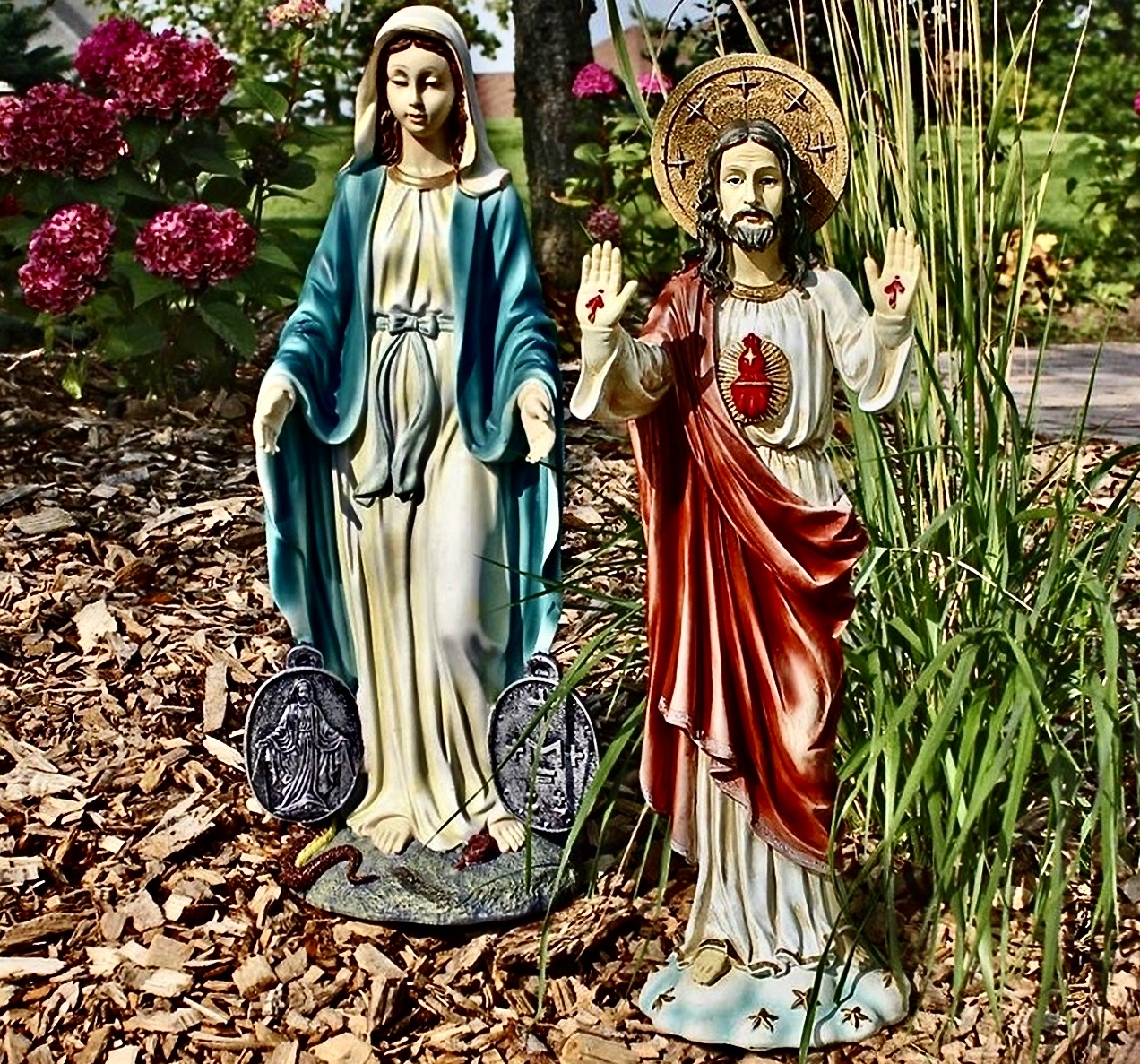
Jesus and Mary Chain

By Ed Staskus

   Maggie Campbell and Steve de Luca’s good-hearted neighbors lived on the driveway side of them. They were elderly sisters. A woman who was mean-spirited lived on the other side of them. She was somebody who didn’t know how to laugh at herself. A Transylvanian man and his wife lived behind them, their backyards butting together. They were friendly and loved their dogs.

   Mariam and Josephine lived together in the two-story brick bungalow next door on the east end of West Park for more than sixty years. Neither of them ever married. Josephine cooked pigs in a blanket, brought them to the fence, and fed them to Maggie and Steve’s dogs every day. They hardly ever saw Mariam since she hardly ever came out of the house.

   After they departed this life Steve fixed up a timer and security light in their living room and mowed their lawn every Saturday. He parked Maggie’s Honda Element in their driveway to make it look like it wasn’t vacant, at least until the house was sold and being lived in. It wasn’t the kind of neighborhood where vacant houses were safe for long. If they stayed empty too long their world was brought down to earth. The angel sky was only so good for so long.

   There were statues of Jesus and Mary in front of a red hydrangea in the front yard of the brick bungalow. They were there for a long time, almost an eternity. There were chains attached to the bases of both statues. The chains were buried beneath mulch and led to a bolt fixed to the side of the house. Mary and Josephine were determined to keep the holy family where they were. They didn’t want them spirited away to a devilish place.

   Dolores lived with her husband Chuck. She was no Mr. Rogers. She was all about a million rainy days. Chuck bought his house before Maggie and Steve bought theirs. He had been a confirmed bachelor until he made a mistake and got married. Before Dolores moved in Chuck was their nice neighbor. She was not so nice, tense and quarrelsome.

   “She’s from New Jersey,” Maggie told Buster their Border Collie. He had memorized and understood hundreds of words. “She started in on us right at the start. Whenever we waved to her, she would never wave back. If she caught Chuck talking to either one of us, he had to pay the price. It got so he had to sneak over to say hello and chat. The things she says to him about us, I don’t even want to imagine.”

   “All my time in hell is spent right here with her,” Chuck said.

   Steve called her Cruella behind her back. After a while many of the neighbors on the street called her the same thing behind her back. The dogs thought the byname was fitting and would have called her that if they could. They growled at her instead.

   Dolores called the dog warden on Maggie and Steve every week-or-so, even when the dogs were sleeping in the heat of the summer. Her complaint was always about the dogs barking. It didn’t matter to her that they hardly ever did. She hated them for her own reasons. What she didn’t know was that the dogs were licensed and the licenses were renewed every year.

   “Here’s the thing, lady,” the dog warden finally told Dolores. “Those dogs are licensed, and everyone’s dogs bark sometimes, so stop barking us up.” She finally got tired of her fun and games and stopped calling the dog warden.

   “Most of the rest of our neighborhood loves it when our dogs are out,” Maggie said to Buster. “It is Dolores who gives us the most trouble. I don’t care if you’re from the bottomless pit, or not. It doesn’t give you the right to be a son of a bitch. But that’s all changed now that she needs me. When she couldn’t afford to have her hair done at the Charles Scott Salon in Rocky River anymore, I became good enough for her.” Maggie was a hairdresser in Lakewood.

   “Chuck doesn’t pay for anything for the kids,” Dolores complained bitterly. She had two children from an earlier marriage. Her ex-husband had killed himself. She never said why. “Everything falls on me. I have to pay for their school.” They went to the West Park Lutheran School, even though Dolores was an atheist. She didn’t have much money of her own anymore. She had blown through her dead husband’s life insurance in Las Vegas. She depended on whatever she could  squeeze out of Chuck.

   Then, when Maggie started doing her hair, knowing that she didn’t have kids herself, it was kids in her chatterbox all the time. “Do you think you could come over and watch them for a few minutes?”

   “No,” Maggie said. “That’s why I don’t have kids of my own. I don’t want to sit yours.” She might have done it to be a good neighbor, but she knew Dolores would have started taking advantage of her, so she put a stop to it right away.

   The old couple behind them bought their house the year Maggie was born. That had been almost fifty years ago. They were straight out of Transylvania, which was a part of Romania. Their English was sketchy. Maggie and Steve couldn’t always understand them, her less than him. His name was Anthony, but they had never been able to make out what her name was. They called her Mrs. Anthony.

   Their big back yard was like a farm. They grew everything they ate, except for animals, in the back yard during the summer. When Maggie and Steve first moved into the neighborhood they already had grandkids, who fed their dogs doggie cookies.

   They would hear the pack of grandkids while sitting on their back porch. “Can we go see the dogs?” they shouted. “Go, go,” their grandpa said.

   The children had become teenagers, but they still came to visit their grandparents. The dogs ran to the back fence and lined up, waiting. “You can’t stop filling the feedbag now. You have to keep giving them cookies,” Maggie told the teenagers.

    Steve walked their dogs every day. He stopped and talked to their neighbors. They asked him about their dogs, some of whom came and went, so a lot of them found out they rescued the animals, finding them better homes. That’s how they came to be called the Dog People. One day a distraught woman was walking up and down the street looking for her lost Dachshund.

   “Try the Dog People,” somebody suggested.

   “Have you seen my dog?” she asked Maggie.

   “No, but I’ll keep an eye out for the wiener,” Maggie said.

   Sometimes neighbors donated dog food to them. They found forty pound bags of it left on their front porch. It was nice to have a little community support.

   They started taking their canines to the Lakewood Dog Park in the Metropark instead of walking them in the neighborhood because Rudy their Husky was a screamer. The second they put a leash on him the wailing started. It sounded like somebody was ripping out his toenails. Neighbors came out to make sure they weren’t torturing their dogs. Explaining got to be so embarrassing that Steve put their walks to a stop. He drove them to the dog park, instead.

   It turned out Rudy hated it there, too. He didn’t like other people or other dogs coming up to him, or even up to Maggie or Steve. One day they thought they would hide from him so he would learn to run around with other dogs. They hid behind a tree. But what happened was unsettling. He ran around like a madman looking for them.

   “Steve, we can’t hide from him,” Maggie said. “He’s never going to relax.”

   When they came out from hiding and he saw them he ran over right away. “He’s back to guarding us again,” Maggie told Steve. “He’s giving us his warm glow.”

   One of their neighbors fell in love with Grayson, their silver Lab, after he sniffed out who had bolt cut and stolen the Jesus and Mary statues. When Steve retrieved them he set them in cement so it wouldn’t happen again. Grayson had a great nose and was a cutie patootie, too. Their neighbor did everything she could to get them to give Grayson to her.

   “He’s not for sale,” Maggie said. “He’s my dog.”

   “But I love him.”

   “We love him, too,” Maggie said.

   One morning they took Grayson to Project Runway on Whiskey Island to a fundraiser for dog shelters. From there, later in the afternoon, they did Doggies on the Patio, another fundraiser. Afterwards they took him out for gelato. He loved it, the whole day, and the gelato, too. Maggie could not sell him. She couldn’t see that ever happening. It didn’t matter that he had a gluttonous food drive and was always sneaking upstairs to sleep on their bed, which was against the rules

   Besides, Grayson was their early warning system, barking up a storm whenever Dolores came within smelling distance. He knew bad news when he smelled the newsprint. As soon as she was in range the Lab got going on the firing range. He could analyze people’s intentions immediately. He never said a prayer or spit out a curse beforehand, knowing he would get it done without any help from Jesus and Mary. Dolores always went the other way when Grayson raised the roof. She had heard many dogs were all bark and no bite, but she wasn’t taking any chances. 

   “Barking dogs never lie” is what Maggie said.

Ed Staskus posts monthly on 147 Stanley Street http://www.147stanleystreet.com, Made in Cleveland http://www.clevelandohiodaybook.com, Atlantic Canada http://www.redroadpei.com, and Lithuanian Journal http://www.lithuanianjournal.com

“Cross Walk” by Ed Staskus

“Captures the vibe of mid-century NYC, from stickball in the streets to the Mob on the make.” Sam Winchell, Beyond Fiction

Available on Amazon: https://www.amazon.com/dp/B0CRPSFPKP

Late summer and early autumn. New York City, 1956. Jackson Pollack opens a can of worms. President Eisenhower on his way to the opening game of the World Series where a hit man waits in the wings. A Hell’s Kitchen private eye scares up the shadows.

A Crying of Lot 49 Publication