Tag Archives: Ed Staskus

Hot Room Badass

brian-paquette-chair-pose-chagrin-yoga.jpg

By Ed Staskus

“I’ll have the whole grain pancakes and coffee,” said Barron Cannon.

“Cream and sugar?” asked Chris, the bartender, wearing a “Best Burgers” black sweatshirt.

“Black,” said Barron.

He was a vegan.

“And you?”

“Three eggs easy over, sausage links, whole wheat toast, cream for my coffee,” said Frank Glass.

He was not a vegan.

Barron and Frank were sitting at the bar at Herb’s Tavern in Rocky River for a late Saturday morning breakfast. “Add a lemon slice to the iced water, and no straw,” said Barron. “If you’re over three years old, or not disabled, you shouldn’t be drinking out of a straw. On top of that, whoever thought of disposable plastic straws should be horse whipped.”

“What got into you today?” Frank asked, changing the subject. Something was always getting into Barron. When it came to the environment and climate change, he wore blinders, always ready to get into it.

“I don’t know,” said Barron. “I was feeling good alert, just feeling it.”

They had come from Barron’s warm flow yoga class earlier that morning. Both of them, and probably everyone else in the class, had worked up an appetite. Barron owned and taught at a yoga studio on the east end of Lakewood, a ten-minute drive away.

“It reminded me of the way Kristen Zarzycki used to teach her Sunday afternoon five-dollar classes at Inner Bliss.”

“Is she still teaching?” asked Barron. “I thought she had gone into biotechnology sales.”

“I don’t know, but when she was teaching, she was a tiger by the tail.”

Frank Glass had gone to three yoga classes a week for three or four years, and then twice a week Bikram Yoga classes for two more years. He had a herniated disk in his lower back. Almost nothing helped. A hot water bottle helped, a daily NSAID helped, and yoga helped. He had attended a dozen-or-so workshops in his time. He practiced at home now, only going to Barron’s studio once or twice a month to stay in touch.

“That way you can stay in touch with me,” said his wife, Vera.

“There would be a eighty ninety people crammed into the class, you know how Inner Bliss is, some of them in trim, most of them trying as hard as they could to keep up, sucking air, it was a fast flow, and Kristen would be on her mat, doing all the poses, and doing the dialogue, cheerful and upbeat, while half the class was dying, just trying to make it to the end. In the summer, even with the windows open, it could get hot in there.”

“My classes are fun yet challenging, taught from a base of gratitude and commitment to taking care of your body so that students can shine in their space on the mat,” says Kristen. “On the mat, I have learned that as in life, each person has areas where they struggle and those where they shine, and that the collaboration of all of our gifts is what makes our world so amazing.”

When asked what was in the backpack she carried to and from class, she said, “Gum, lip gloss, and binkie.”

Whether she meant a baby’s pacifier, the high hop a rabbit performs when happy, or a stuffed animal, was unclear.

“Was she your toughest teacher?” asked Barron, a flapjack shard on his fork dripping maple syrup.

“No, Deanna Black was a boat load. She was freelance, thank God, so I only ran into her when she was subbing. She drove her classes at breakneck pace, and every few minutes we had to do ten push-ups, or twenty sit-ups, or some damn thing, and then it was back to the flow.”

“Push-ups are good for you,” said Barron.

“Never mind about your two cents’ worth,” said Frank. “The thing is, if you faltered, say you collapsed in a push-up, she would come over and do twenty push-ups right next to you, smiling like a wolf. She didn’t actually do the class, instead she prowled around, explaining cajoling threatening, but one look at her was all you needed to know she could it, all the physical stuff, and another class after that, with no problem. She was incredibly fit.”

“Climb every mountain, ford every stream,” Barron sang, lilting.

“She did that in the off-season.”

“The benefits are more than meet the eye,” says Deanna. “Your reactions to the challenges in your physical practice often reflect and carry over to those from the challenges of daily living.”

“OK, so she was lusty and tough as nails, good for her,” said Barron.

“But she wasn’t the toughest teacher I ever met,” said Frank. “That would be Brian Paquette.”

“Who is Brian Paquette.”

“He taught Bikram Yoga at Chagrin Yoga, although they didn’t call it that because they weren’t one of the Brainiac’s licensed studios.”

Bikram Yoga was masterminded by Bikram Choudhury, practiced in a carpeted room heated to 105 degrees with a humidity of 40%, like India even before climate change. The walls were covered in mirrors. Instructors were taught to be high-handed and to teach from a hands-off literal platform at the front of the class.

“That man was a nut,” said Barron.

“He was a nut, but if you wanted to climb the mountain of posture yoga, his 26 postures in the torture chamber was the mountain.”

Bikram Choudhury’s philosophy of yoga was making pupils work through pain. “I am a butcher and I try to kill you, but don’t worry, yoga is the best death,” he told his followers.

“You took classes in Chagrin Falls? That’s a forty-minute drive one way.”

“Twice a week for two years, until I had enough of the most unrelenting remorseless cramps I have ever had in my life. I couldn’t drink electrolytes fast enough to replenish. I got a vicious cramp driving home one night and had to pull off on the shoulder before I killed myself and everyone around me. That was the beginning of the end, although by then the economics of taking classes wasn’t making sense to me anymore.”

“Whoa, there, my friend,” said Barron. “You’re talking about my bread and butter.”

“It wasn’t just that, although bread and butter played a part. It dawned on me there wasn’t any magic, not that yoga teachers aren’t magic, most of them are, any magic in going to classes anymore. Sure, it was engaging to practice in a collective atmosphere, but I knew enough by then to stand on my own two feet. What I didn’t know, I knew I could just ask you over breakfast or lunch. Can you pass the butter?”

“What made him so tough?” asked Barron

“What made Brian tough was that he didn’t come across as tough, at all. He came across as a good-natured guy. And he was a good-natured guy, patient affable understanding. Most Bikram Yoga teachers, not if but when you had to stop, always wanted you to stay in the room.”

“Just sit down on the mat for a minute,” the apostle on the platform would say. “It’s cooler at floor level.”

“That sounds like Bugs Bunny physics,” Barron laughed.

“It was maybe one half of a degree cooler on the floor,” said Frank. “Brian let people leave the room. He told us, if you have to, you have to. Try to come back if you can. He encouraged us to drink as much water as possible. I had one teacher, she trotted out the harebrained idea that water weighed you down and we should only be taking a missionary-sized sip once in a while.”

“He sounds like a simpatico kind of guy. Is he from Ohio, from here?”

“I’m not sure, although I don’t think so. When I was taking classes in Chagrin Falls, he told me he lived nearby, maybe even within walking distance. One night, after class, we were standing around, he mentioned he had gone through some hard times. He had been a professional gambler, something like that, for a while, and had fallen into a downward spiral. He got connected to yoga, somehow scraped up enough cash for Bikram Yoga teacher training, and trained in Las Vegas, of all places.”

Bikram Yoga teacher training is learning the world-famous system and learning to teach it, according to Bikram HQ.  They are dedicated to teaching trainees the precise nature of yoga. Everyone is nurtured in a challenging, but safe environment, no kidding.

Trainees learn how to greet students professionally and jawbone intelligently about the mental and physical benefits of yoga. Everyone is encouraged to develop a dedicated hatha practice. They are taught how to speak clearly and how to teach the sequence confidently, correcting students appropriately and compassionately, no fooling.

They learn how to grow their own personal yoga practice, sans steam, since it impractical in most apartments condos homes anywhere. There’s no kidding about that.

The training takes about four weeks and costs between $12 and $15 thousand, depending on what paradise on earth the training is set. The total costs include tuition, hotel accommodation, transportation, lectures, classes, towels, and all the water you need to complete the training in one piece.

Even though Bikram Choudhury has recently fled the United States after losing a multi-million-dollar civil suit for sexual shenanigans, he continues to stage his tent show around the rest of the world.

“Brian taught hot yoga, but he was more engaged with Kriya Yoga, which was crazy at odds with the Bikram way of life, which was fancy cars and fancy girls and cash on the barrelhead. He didn’t ever say much about Bikram Choudhury, although he once said yoga had been around a long time and no one had a proprietary claim to it.”

“So, he was more a Kriya kind of guy than a fancy pants?”

“That’s right. You’d ask him what his favorite pose was, and he’d say, ‘Meditation posture, straight spine, because it brings peace.’ His favorite books were the Bhagavad Gita, the Bible, Holy Science, and Autobiography of a Yogi. If you asked him what made him happy, he’d say, ‘Meditation, singing the names of God, and spending time with my family.’ His favorite quote was, ‘Read a little. Meditate more. Think of God all the time.’ I forgot to ask him who said that, but it was probably some old-school yogi.”

“My God, he sounds like a saint, not a badass,” said Barron. “I mean, one of my favorite quotes is, ‘You better take care of me Lord, because if you don’t, you’re gonna have me on your hands.’ What does that make me?”

“Who said that?”

“Hunter S. Thompson.”

“Fear and Loathing?”

“Right-o.”

“Brian wasn’t like that,” said Frank. “He wasn’t a saint, just a regular guy, really, although he did a hell of a lot of meditation. I mean, hours of it. What I mean about him being a badass is the way he went about his business in the hot room. He always came in last, wearing mid-thigh compression shorts, no shirt, and carrying a jug of water. He ran the class like a grade-school teacher. He wasn’t like a drill sergeant, which was a persona most Bikram teachers took on in some way shape or form.”

“Why did he need water?” asked Barron. “I thought Bikram Yoga teachers just shouted out the poses from their soapbox. Why did he need a jug?”

“He did just about the whole thing, which is why he needed it. That’s why he takes the gold medal of badass yoga teacher, in my eyes, at least. Every class there were plenty of people who had to take a break or leave the room. A lot of them were young and fit. Brian did it day after day, no sweat. Getting through ninety minutes of the torture chamber wasn’t any walk in the park, man, it was hard.”

“How hard can it be?”

“Believe me, beyond hard,” said Frank. “You don’t see me doing it anymore.”

“You finally accept an offer to go to a class thinking, easy, I can do this.” said Benny Johnson about his first Bikram class.

“I played real sports for a few years, so how hard can it be? You arrive at the class thinking, let’s do this! But then you walk into the class and the heat hits you. It is ninety-one thousand degrees. You set up your mat in an open space. Little do you realize the hell awaiting you. The poses are relatively easy but holding them is hard. And you actually really start needing water, but it does not help! By the final stretches, you’re just limping along. Then the torture ends, and you lay down in a haze and total defeat.”

“More iced water?” asked Chris, walking up to the bar.

“Yes, please,” Frank and Barron both said.

They drank their water, paid the bill of fare, and left Herb’s Tavern.

“How did Brian reconcile Kriya with Bikram,” Barron asked as they walked to the back of the parking lot. “The two seem mutually exclusive. Kriya is about selflessness and Bikram was only in it for himself.”

“I don’t know, we never talked about it, but his actions, how he did things, seem to say he did. He was both a badass and one of the more sincere people I ever met. He was a quiet sparkplug. If you asked him what inspired him, he would say, ‘My guru, my wife and my children.’ If you asked him who sees the real you in this sketchy world, he’d say God.”

“It sounds to me that the way he practiced in the studio was the test of his sincerity,” said Barron. “He was melding the two, but not selling out.”

“He’s a religious guy in a secular world, a spiritual guy teaching a totally incarnate practice,” said Frank. “He was always urging us to meditate, even though we were all there for the crazy boot camp workout because all of us needed it for our own almost always physical reasons. He was hard to make out.”

“The good of the body depends on the goodness of the spirit, and the other way around,” said Barron.

They got into Frank’s Hyundai Tucson and pulling up to Detroit Road, a black squirrel built like the tailback Barry Sanders, crazy quick and elusive as the all-Pro, vaulted over the brick wall surrounding the outdoor front terrace with a chuck of stale bagel in his mouth. Frank feathered the brakes, but there was no need. He wasn’t the kind of squirrel who ran in circles and got run over. He dashed to the bushy endzone at the back of Century Cycles and disappeared into the trees.

“Have you ever noticed squirrels never say things like, if I had my life to live over, I would do whatever?” asked Frank.

“I know what you mean,” said Barron, chewing on a fresh bagel he had squirreled away in his pocket before leaving. “They’re just rats in better clothes, but they’ve got it going, for sure. They’re not vegans, but what’s more free and right in the head than a squirrel?”

They might get run over by us, squashed flat like pancakes by car after car, but they never fall out of trees into a world not of their making. They are second to none at planting their own trees, too. They bury their acorns, but often forget where they put them. The forgotten acorns become oak trees.

Ed Staskus posts stories on 147 Stanley Street http://www.147stanleystreet.com and Cleveland Ohio Daybook http://www.clevelandohiodaybook.com. To get the site’s monthly feature in your in-box click on “Follow.”

Loose as a Goose

By Ed Staskus

Godzilla came to yoga late in life. He was 68 years old and getting long in the tooth. His rear end hurt. He thought it might be sciatica. He had trouble twisting to see who was gaining on him. When he tried to touch his toes, it seemed like they were miles away, even though they were only a couple of hundred feet away. He was losing his vim and vigor. He was on the edge of losing his edge. He knew it better than anybody. He had to do something about it.

   The first thing he had done after being accidentally brought up from the deep in the 1950s and getting on his land legs was stomp on Tokyo. When he was done, he lapped up all the spilled milk he could find. Then he took a long nap, sleeping all day and part of the next day.

   No sooner did Tokyo rebuild itself than he destroyed it again and again. In the ensuing years he destroyed New York City three times. He destroyed Osaka and Paris twice. In between he traveled extensively and destroyed London, Moscow, Sydney, and Las Vegas, among others.

   It seemed like his pulverizing days might be over. He tried supplements and new-fangled devices. He tried long walks and strength training. He tried massage and acupuncture. He tried leafy vegetables, even though his favorite meal was eating cars and transmission towers.

   When he went to a wellness clinic, they told him there wasn’t anything they could do for him. First of all, he didn’t have medical insurance. On top of that he had never worked a day in his life and didn’t have Medicare. No cash no wellness. Don’t let the door slam on your way out. Besides, there wasn’t anything fundamentally wrong with him, except for his advancing years.

   He didn’t like their answers and stomped on the building, flattening it like a pancake. His best days might be behind him, but he still had his trademark stomp. However, he lumbered away with a pronounced limp.

   “Man, oh man,” he muttered. “I think I hurt my back.”

   He was ready to take advice from anybody, including his grandson Goo Goo Godzilla, who was an insufferable know-it-all. He thought he knew everything just because he could ask the Gods of Google anything. Whenever Godzilla saw a cell phone tablet laptop desktop he chewed it up and spit it out because it tasted so bad. That was what he thought about knowing everything all the time.

   “You can’t turn back the hands of time, pops, but you can slow them down,” Goo Goo said. “I’ve heard one way to do that is by doing yoga.”

   Godzilla had never heard of yoga.

   “It’s a mind spirit body discipline,” Goo Goo said. “It’s thousands of years old. Ask Oliver, the Monster Hunter in Perry, my pal in Ohio. They have a friend of the family who’s a yoga teacher. His name is Barron Cannon.”

   “There’s nothing wrong with my mind or spirit,” Godzilla said. “It’s my body that needs a tune-up. I’m ready to try anything, even if it’s mumbo jumbo.”

   Although few were aware he could fly, Godzilla could fly. When he let loose an atomic breath of fire he could blast off like a missile and rocket himself anywhere in the world. In the summer one of his favorite places for R & R was Middle Sister Island. It was one of the Lake Erie islands. It was small but big enough for him. It was uninhabited. It was quiet. Goo Goo didn’t know where it was, and Godzilla meant to keep it that way. His grandson was a busybody.

   One evening it rained hard. In the middle of the night fog rolled in. The next morning, he woke up stiff and achy. It had been happening lately, too often for comfort. He was finally determined to do something about it. He blasted off for Perry, where Oliver the Unofficial Monster Hunter of Lake County lived. Unfortunately, the shades were drawn. A neighbor told Godzilla the family had gone on vacation. 

   Godzilla took off and headed back towards Cleveland.  When he landed, he looked for a phone book to locate a yoga studio, but there were none to be had. The Yellow Pages had disappeared. Phone booths had disappeared. He put his quarter away.

   He roared off again, circling the city, and with his still keen eyesight located a studio on the west side of town. So long as he could see and stomp, he was still the boss man. He just had to limber up his old bones, get lean and mean again.

   He signed up for a complimentary class at the front desk. He didn’t have a mat, so the yoga instructor unfurled a hundred studio mats for him. The first pose, mountain pose, was just the right one for him. He was, after all, as big as a mountain. After that it was all downhill. Midway through class, frustrated and peevish, he let loose a breath of atomic fire and accidentally burnt the studio down. All the men and women fled, and the fire department raced to the scene.

   The same thing happened at the next yoga studio and the one after that. Cleveland’s yoga owners called a hasty business meeting and quickly resolved to ban the monster from all their places of business. They were, however, undecided about how to keep him out. He was as big as a forty- story building. He wasn’t hiding in any corners. He weighed in at 90,000 tons

   Godzilla was determined to learn the moves and carry the lessons away with him. He had too many mean streets to cross to adopt yoga as a lifestyle, but he had too many enemies to not do yoga. He had to be able to do to his archenemies what they wanted to do to him.

   “How about if we offer him free private lessons, somewhere outdoors, somewhere there is plenty of outdoors?” one teacher offered.

   Everybody thought it was a good idea, but nobody wanted to be the teacher doing the teaching. One false move and they might get squashed. After much hemming and hawing all eyes turned to Barron Cannon. He was a single man, didn’t have a family who would mourn him, and was an anarchist to boot. Most of Cleveland’s yoga teachers avoided him, his social and political views making them fit to be tied, no matter how much they meditated and tried to think the better of their fellow man. It struck them he was the perfect candidate. He was self-centered and hot-tempered and would give Godzilla as good as he got. 

   What Barron thought was that he had never met anyone worth a damn who wasn’t irascible.

   “How about it, Barron?” one of the teachers asked.

    “Sure,” he said and left the meeting to find Godzilla.

   Barron was notoriously tight-lipped when it came to small talk. Another teacher once bet him two dollars that she could get him to say more than two words.

   “You lose,” he said.

   The behemoth wasn’t hard to find. It was like looking for a skyscraper. He wasn’t hard to convince, either. He thought one-on-one lessons were just the ticket. 

   “I’ve heard of you,” the monster said to Barron. “Do you know the Monster Hunter?”

   “I know the little rascal,” Barron said.

   Godzilla motioned for him to hop on his back, and when he was hanging on tight, Godzilla rocketed back to Middle Sister Island. Before he did, he landed in the parking lot of a Heinen’s grocery store so Barron could stock up on protein bars and bottled water.

   They were no sooner airborne again than they heard sirens and watched police cars and SWAT teams from Cleveland, Lakewood, Rocky River, and Fairview Park descend on the grocery store, where shoppers were scattering in every direction. It wasn’t often that the King of the Monsters visited and didn’t destroy your city. They should have counted their blessings, but they were all boomers and echo boomers and felt as blessed as they were ever going to feel.

   On the island Barron got to work early the next day, even though Godzilla was cranky, wanting to sleep in. Hour after hour, day after day, he led Godzilla through endless sun salutations, until he could do them in his sleep. When he tried to beg off, Barron tongue lashed him.

   “Do you think Ghidora is laying around gazing at his navel? Do you think Mothra is lounging around eating grapes? Do you think Destoroyah is gaping the gals at a dance hall?”

   Godzilla had to admit none of them were doing any of that. They were all probably on the prowl. They were all like him. None of them had a friend in the world, only enemies. King Kong was the only creature Godzilla was remotely close to. They had fought to a draw several times and harbored a sullen respect for each other. 

   “I’m not going to bother you with the beliefs and principles of yoga,” Barron said. “I’m not going to read to you from ‘The Light of Yoga.’ It’s not because I don’t think it’s vital to the practice, but because that’s the nature of the yoga beast these days. You’re only interested in what yoga can do for you right now. I get it. We’re going to move on to intermediate practice next, and after that to Ashtanga Yoga. You’re a quick study, big guy. Another week-or-so and I think you’ll be ready to make these exercises your own.”

   Godzilla whooped his approval. Barron dodged the monster’s inadvertent bad breath. At the end of the day Godzilla curled up and Barron curled up inside Godzilla’s curl, staying warm. At the end of the week Barron pinned a gold star on Godzilla’s chest and declared him ready to go. The monster touched his toes with ease and beamed his appreciation. He was loose as a goose.

   After dropping Barron off at his apartment in Lakewood and promising to never destroy his hometown no matter what so long as Barron lived there, Godzilla got ready to blast off back to Japan. He had some scores to settle. He had nothing left to prove, but he thought he might destroy Tokyo again, just to show he could still do it.

   He circled over downtown Cleveland before turning west for the Pacific. Below him was the Rock & Roll Hall of Fame. Thousands of people on thousands of mats were doing sun salutations in the sunshine on the plaza in front of the blue glass tent. It was the annual Believe in Cleveland yoga love-in. He swooped low and belched fire. Everybody looked up and saluted his mighty yogic Breath of Fire.

   His enemies were going to pay for all the slanderous things they had been saying about him, things like blobby slow and over the hill. With his newfound reptilian quickness, he was going to make mincemeat of them. He was as physically fast and aware as he had ever been, slimmed down to 80,000 tons.

   He couldn’t wait to put the moves on his glib grandson Goo Goo, either. He would show him the path to Hell was paved with good intentions, even though he knew no monsters, not even his kith and kin, had anything but bad intentions. Barron Cannon had been right to not bring up the “Light of Yoga.” The light in Godzilla’s eyes had nothing to do with yoga.

Ed Staskus posts stories on 147 Stanley Street http://www.147stanleystreet.com and Cleveland Ohio Daybook http://www.clevelandohiodaybook.com. To get the site’s monthly feature in your in-box click on “Follow.”

Eat Sleep Scout Repeat

By Ed Staskus

   “Scouting is a man’s job cut down to a boy’s size.”  Robert Baden-Powell

   My father was born on a family farm outside of Siauliai in 1924, six years after Lithuania’s Declaration of Independence and two years before the start of what is known as the Smetonic Era. The small city, the capital of northern Lithuania, is home to the Hill of Crosses, a protest site, folk-art collection, and spiritual statement of about one hundred thousand Christian crosses.

   Siauliai goes back to 1236 to the Battle of Saule against the Teutonic Knights. The bitter war between the Teutonic Order and Lithuania was one of the longest in the history of Europe. The first Christian church in the country was built in 1445. Until then Lithuanians were steadfast pagans. When they first encountered missionaries they came to the conclusion that Hell was a fine place to end up, if it came to that, since Lithuania was very cold and Hell was warm.

   My grandfather had been conscripted as an officer in the Czarist Army. My grandmother was Russian and a former schoolteacher. They met when he was stationed in the badlands southeast of Moscow. “In those days drunks went into the navy and dimwits into the infantry,” he said about his time as an officer in the Russian armed forces. After returning to Lithuania he served in its military and was awarded farmland outside of Siauliai.

   My father was a Boy Scout early on. Since my grandfather had been made the police chief of the province, and since Antanas Smetona, the President of the country, was the Chief Scout, and since there were privileges accorded to scout troops by the Ministry of Education, my grandfather involved my father in scouting as soon as he grew to be of school age.

   I became a Boy Scout in the early 1960s when my father became the Scoutmaster of  Troop 311. We wore official Boy Scouts of America neckerchiefs and carried unofficial knives in scabbards on our belts. We went camping summer and winter. We learned how to set up base camps and how to build temporary shelters. We hiked trails through forests, although most of us were hapless with a compass, instead relying on ingenuity, stamina, and dumb luck to find our way.

   Boy Scouts got their start in 1907 when a British Army officer gathered up twenty boys and took them camping, exploring, and pioneering on an island off England’s southern coast. The next year the army officer, Robert Baden-Powell, wrote “Scouting for Boys.” That same year more than ten thousand Boy Scouts attended a rally at the Crystal Palace in London.

   The first scout patrol of ten boys and two girls in Lithuania was organized in 1918. The next year there were two patrols, one for boys and another one for girls. During the inter-war years more than 60,000 boys and girls participated in scouting, making it one of the most popular activities among the young at that time. In 1939, just before the start of World War Two, there were 22,000 Lithuanian scouts.

   Four out of five Lithuanians were farmers or lived in the country and camping was everyone’s favorite part of scouting. It’s what probably accounts for my father’s fondness for the outdoors and all the scout camps he was later Scoutmaster of. They weren’t all sun-kissed and starlit camps, either.

   Winter Blasts were camps in thin-skinned cabins in the highlands of the Chagrin Valley at which we earned cold weather Merit Badges. We were informed that exploring outdoors in December was fun. We always built a fire first thing in the morning in the cabin’s Franklin stove, kept it well stoked, and hoped we wouldn’t freeze to death in the long night.

   In the summer a grab bag of Merit Badges was up for grabs. There were more than a hundred of them, from sports to sciences. I learned the six basic Boy Scout knots, from the sheet bend to the clove hitch. I earned my Pioneering Badge and eventually learned how to tie every knot known to man, although I never learned how to properly knot a tie, even later in life, when my wife always had to help me with it.

   My father was forever transporting, putting up and tearing down tents, finding lost stakes and poles, and persuading my mother to repair rips in canvas. He told us sleeping outdoors was manly, robust, and healthy, no matter how much rain leaked onto our sleeping bags. He had a maxim that a week of camp was worth six months of theory.

   The outdoors wasn’t just the Boy Scouts, either. For many years he was the boss at Ausra, a two-week sports-related, Lithuanian-inflected, and Franciscan-inspired summer camp at Wasaga Beach, which was on the Georgian Bay two hours north of Toronto. Although we did calisthenics every morning, went to Mass after breakfast, and spoke Lithuanian whenever we had to, what we actually did most of the time was run around in the woods like madmen, play tackle football in the shallow water of the bay, and sing off-key long into the night at the nightly bonfires. Singing around a bonfire is even better than singing in the car or the shower.

   When my father was nine years old he was one of the nearly two thousand cohorts at the 1933 Reception Camp in Palanga when Robert Baden-Powell, founder of the Boy Scouts, came to Lithuania. Palanga is a seaside resort on the Baltic Sea known for its beaches and sand dunes. Then a sleepy resort, today it is a summer party spot.

   He never forgot having been at the camp, seeing scouting’s leader and guiding light, if only on that one occasion. “He was a hero to us, someone who gave his life to something bigger than himself, even though we were all smaller than him,” he said. The scouting founder’s son, who was with him in 1933, didn’t forget, either. “I particularly remember the warm and friendly welcome we received as we came ashore on Lithuanian soil,” recalled Peter Baden-Powell in 1956.

   Five years later, in 1938, my father was at the Second National Jamboree in Panemune, the smallest city in the country, which commemorated both the 20th anniversaries of the foundation of the Lithuanian Boy Scout Association and the restoration of Lithuania’s independence.

   Things change fast, though. Two years later the Soviet Union invaded, the country’s independence was overturned, and scouting was outlawed. During the war and successive occupations, first by the Russians, then the Nazis, and then the Russians again, both of my father’s parents were arrested and transported to concentration camps. My grandfather died of starvation in a Siberian labor camp. My grandmother spent twelve years in the Gulag.

   In 1ate 1944 my father fled to Germany, making his way buying and selling black market cigarettes, and after the war worked for relief organizations dealing with the masses of displaced people. He met his wife-to-be in a hospital in Nuremberg, where she was a nurse’s aide, and he was being operated on several times for a wound that almost cost him his right hand.

   He found passage to Sunbury, Ontario in Canada in 1949, married my mother, who had emigrated there a year earlier, and by 1956 was the father of three children. While in Canada he wasn’t involved in scouting. “There weren’t any children, or they were all still babies,” my mother said. “All of us from Lithuania, and there was a large community of us in Sudbury in the early 1950s. We were all so young. We were just starting to rebuild our lives, getting married and having children, but it was taking time for them to grow up to scouting age.”

   Robert Baden-Powell said that Bot Scouts should always be prepared for the unexpected and not be taken by surprise. “A scout knows exactly what to do when anything unexpected happens,” he said. By that guiding light scouting stood my father in good stead through the 1940s.

   When his parents were arrested and deported, he took over the family farm. He was 17 years old. When he fled the farm in 1944 with the Red Army on the horizon it was with ten minutes notice. When he stepped off a re-purposed troop carrier in Halifax, Nova Scotia in 1949, everything he had was in a rucksack and there were twenty dollars in his wallet. In the event, he eventually knocked on my mother’s door in Sudbury, almost six hundred miles away.

   He left Sudbury in 1957, where he had worked in nickel mines for almost seven years, first as a black powder blaster and then as an ore hauler, and moved to Cleveland, Ohio. We followed six months later. He worked as an elevator operator for seventy-five cents an hour, less than half of what he had been making in the mines, swept floors, stocked warehouses, and did whatever he could for a paycheck. He started taking classes in accounting at Western Reserve University.

   In Cleveland, living in a Polish double he bought in collaboration with his sister’s family, who had also fled Lithuania, he found work full-time at the Weatherhead Corporation, continued going to school at night, and after earning a degree in accounting went to work for TRW. He made his way up the ladder, finally managing his division’s financial operations in South America.

   After taking early retirement in the late-1980s he helped found the Taupa Lithuanian Credit Union and as its director built its assets into the tens of millions. In the 1990s he formed NIDA Enterprises and managed it through 2008, when he was in his 80s. He believed the workingman was the happy man. “Nothing works unless we do,” he said. He believed there was value in work. He believed work without effort was valueless.

  Because of World War Two and its dislocations, and his subsequent emigration overseas, as well as the demands of rebuilding a life and building a family, he didn’t participate in scouting for many years. But once a scout always a scout. “What you learn stays with you long after you’ve outgrown the uniform,” he said.

   When he took over from Vytautas Jokubaitis as Scoutmaster of Troop 311 they were big shoes to fill. Vytas Jokubaitis was a tireless advocate for his countrymen who became director of Cleveland’s Lithuanian American Club. He was awarded the Ohio Governor’s “Humanitarian of the Year” award in 1994. He was a true believer I scouting.

   My father worked with Cleveland’s Lithuanian scouts for nearly twenty years. While Scoutmaster he helped affiliate Troop 311 with the American Boy Scouts, opening up camping and jamboree venues, as well as linking it to the traditions and activities of scouting worldwide. In the late 1960s he established an ancillary scouting camp at Ausra, the campsite on the Georgian Bay, where Cleveland’s scouts enjoyed two weeks of camping, and by many accounts, some of the biggest nighttime bonfires they ever experienced.

   “Your dad loved bonfires,” recalled Paul Kazlauskas, a friend of mine who was also a scout. “It was a rule with him, that there be one every night. Some of our fires were as big as small cars and were still smoldering in the morning when we got up for our morning exercises and raising the flags.” When asked what bonfires meant to him, my father said, “Sometimes it takes looking through campfire smoke to see the world clearly.”

   Although we never exactly warmed to it, he introduced us to winter camping and hiking, even encouraging us to try snowshoes. I don’t remember ever falling down as much as when I tried walking on top of snow drifts wearing snowshoes. He said it didn’t matter how many times we fell down, it only mattered that we get up and try again, although getting up while stuck in snowshoes is easier said than done.

   He stressed achievement by encouraging the pursuit of Merit Badges, especially those that involved self-reliance. One summer at a Canadian camp at Blue Mountain we were taken on an overnight canoe trip. We were supervised, but only given a compass, a canteen, and a bag of chocolate chip cookies. We had to make the round-trip up the bay and back to the camp ourselves without any help. We all somehow made the round-trip without the need of a search party.

   In the 1970s he inaugurated Scautiu Kucius, a kind of Boy Scout’s Christmas celebration. Every year, the weekend before Christmas, Cleveland’s Lithuanian scouts gather and feast on twelve foods representing the twelve apostles, sing carols, and kick their shoes off over their heads to see what girl they will land near, which is old-school marriage-making..

   Another annual event he was involved in was the Kazuke Muge, a scouting craft fair, fund-raiser, and parade held every March in the community hall of Our Lady of Perpetual Help, Cleveland’s Lithuanian church. He organized and promoted it for many years, making sure stalls were assembled for the craft sales, arranging indoor games and entertainment, and encouraging everyone to support the scouts.

   Although he did much for the movement, as a Scoutmaster he didn’t try to do everything for his charges. He thought it better to encourage boys to educate themselves instead of always being educated. “When you want a thing done ‘Don’t do it yourself’ is a good motto for a Scoutmaster,” said Robert Baden-Powell. Like him, my father believed that to be true.

   “There is no ideal way to do things,” he explained to Gintaras Taoras, one of his scouts. “There is no absolute wrong way to do things. Everyone has different ways to accomplish something. It will just take some faster to accomplish the task and others longer, but you both end up at the same end point. Learn through your mistakes.”

   Gintaras, who would become a Scoutmaster in his own right, when asked what person had made a difference in his scouting career, said it was my father. “Brother Vytas was never afraid to try anything new. He always gave us the chance to do things ourselves, like getting our camps organized and set up. If we got it wrong, he didn’t harp on us getting it wrong. He would ask us how we could have done things differently, what we learned, and we would then move on.”

   After World War Two the Lithuanian Boy Scouts Association began to re-organize. In 1948 a National Jamboree was held in the German Alps. More than a thousand displaced Boy Scouts and Girl Scouts were there. In 1950 there was the first Lithuanian presence at the Boy Scouts of America Jamboree in Valley Forge, Pennsylvania.

   In 2014 Gintaras Taoras was in the front ranks when the 65th anniversary of scouting for Lithuanian immigrants on four continents was recognized at the Lithuanian Embassy in Washington, D. C.  “Scouting is a powerful movement providing life-changing opportunities to today’s Lithuanian youth,” said Zygimantas Pavilionis, the Lithuanian ambassador. “I wish to personally congratulate the Lithuanian Scouts Association,” said Robert Gates, former Secretary of Defense under Presidents Bush and Obama and National President of the Boy Scouts of America.

   The Centennial of Lithuanian scouting was celebrated in 2018. My father was one of many Scoutmasters who helped keep scouting alive. Although he passed away seven years before the celebration, whatever scout camp in the sky he is at today, he is sure to be smiling through the smoke of a campfire in the sky at how Lithuanian scouting has resurrected itself one hundred years later.

Ed Staskus posts stories on 147 Stanley Street http://www.147stanleystreet.com and Cleveland Ohio Daybook http://www.clevelandohiodaybook.com. To get the site’s monthly feature in your in-box click on “Follow.”

When Esme Got Married

Stephanie and Joe's wedding at Casa Golondrinas in La Manzanilla, Mexico.

By Ed Staskus

Check this out. It’s just the New Year now and I lost my job.

They re-organized the place and I got let go. I am really bitter since I left there for here. The good news is a headhunter has to help me and I got three months pay to enjoy myself. I’ve gone to Hawaii. Yup, it’s January and I’m here for more than a month and Brent’s coming next week.

Later!

San Francisco is very fun, little bars and clubs, like the movies, even the ratty neighborhoods, like the Mission. I am not complaining until I run out of money. I have two months.

Hehehehe…

I have sent out some resumes and talked about a job in Milwaukee. It’s the same as I was doing, except it’s a start-up. I’ll be back home at the end of February and then I am moving out. I’ll move in with my mother for a while, at least until Brent is back.

I am finally moving! I will be leaving for Indianapolis on Sunday. This week is flying by! There is so much to do. No, I do not have a job. We will be living with Brent’s sister for a month until we are on our own. If you feel like visiting Hoosierville, I think they did well in basketball this year.

Don’t forget me.

Things are crazy here. Moving is a huge pain. Brent and I got a three-bedroom, two-bath apartment right on the highway, which is good since it looks like I might be working in Indianapolis, which is an hour away. Not having a job still blows. I am lucky I haven’t gotten fatter, or anything like that. I am definitely less high maintenance than I was before.

Things in the wedding area are about finished, only a few details to nail down. Are you guys planning on coming?

I miss you all very much. I know I have been crappy, but now that I am settled in Indianapolis I will be much better. If you get any calls, please say nice things about me. I have been interviewing, so hopefully something will break, more on that later. Please send gossip. I am dying out here. Must…have…gossip!

Brent is good, although he is missing both Hawaii and the Army, but not Afghanistan so much. He is not working either, yet, because he is in the National Guard and has to go away for two weeks next Saturday. I am sorry Bob and Jan aren’t happy. That place was too negative for me. Maggie and Cathy? Yikes! How do you stand it? I saw John at a bar and he was friendly. I always liked him the most out of that dysfunctional clan. Speaking of dysfunctional, how is Skip? Brent’s brother-in-law displays similar personality traits.

Blah!

Hey! What is going on? I haven’t seen you guys in sooo long! How has everything been? I still have no job. It totally freaks me out. There are some prospects, so hopefully not much longer for this crap. Brent might be called up for that homeland stuff. We really want him to because you get paid to guard an airport and he wouldn’t even have to do that! He would just organize the people. Then he could get state tuition for Indiana U. Wedding invitations are going out soon. Keep your eyes peeled!

Later!

Things are busy, although I am not sure how. I am sending out wedding invitations any day now. I hope you can come. I think it will be fun. If not, it is always free food.

All of our church requirements are done and we have registered for gifts. That sucks the fun out of shopping. The final fitting for my dress is next Friday. I will be in town then, but Brent’s mom will be here, too. Brent will be in Montana fishing, so I can’t really hang out. How are the mean people you work for? Bob said Cathy had another baby. Yuck. None for me, thanks!

See you soon!

What is going on? Did you get the wedding invitation? Are you planning on coming? I hope so. We’d love to see you guys there. Hopefully you can make it. I hope there aren’t any trade shows that weekend. I still have no job. I am a loser. Things are getting better, though, I think.

Is anything new going on? Keep in touch!

Hey! Didn’t you and Vera get the wedding invitation? You ARE coming, right? I am not going to be home much until the wedding, but I am definitely looking forward to seeing you there. Thanks for the massage salon gift. It works for me as long as Dick isn’t giving it!

Hehehehe…

I am evil, I know. Make sure you send back your response card soon! I am so excited to see you guys!

OK! I am finally employed!

I am going to be a marketing manager for a company called Keter Plastics. They make the same kind of things that Rubbermaid makes. They are in Costco, Walmart, and Lowes. Their latest venture is with Black and Decker and I will be working a lot with them. Yippee! I have no idea when I start and a limited idea of the money involved, but I do not think I care anymore. Yippee! It was my second choice job. My first choice was Delta Faucet, but their new department won’t begin until late October and I can’t wait that long! Now I can shop!

I am so excited!

Hey! My mom got your reply today! I am so glad you guys are coming. I am getting so excited. Make sure you come to the church. I think it will be nice. We are going to have a place for everyone to go for appetizers between the church and the reception. Medina is full of little coffee shops and pubs. It should be a fun day.

Yippee!

I am glad to see you and Vera are coming to the wedding. I think I am going to stop into your work on Thursday to say hi. I haven’t seen you in ages and I will be in the area picking up my dress from Coming Attractions in Lorain. OK, it is not exactly the area. Anyhow, do you guys want to adopt Brent? We decided his family sucks and he is looking for a new family. You don’t have any kids and he is potty-trained for the most part. He just needs a better family. OK, so all families suck, but his is really bad. His sister isn’t coming to the wedding because it might stress out her babies. She is the first woman to ever have a baby.

Sense the sarcasm!

So, think about adopting Brent.

Oh my! I am so busy. Blah! I am planning on stopping in to say hi sometime before the wedding. I need to know how everything is. Is Maggie still in the front office? Can you unlock the back door for me? I can’t believe it is July and two weeks away. I am dying! How fun!

Hey, would it be possible for me to stop in and say hello on Thursday at your work? I am coming home Wednesday night and would like to say hi to everyone before all the chaos of the wedding. Tell Bob and Jan, but don’t say anything to Cathy and Maggie.

I come in next Wednesday night, so basically Thursday morning. I have an appointment to get waxed, ouch, at 9 AM. At least I am hoping to have it then.

Later!

Whoever is in the mood to hang out at Friday’s in Strongsville on Thursday, let me know. I have a ton of wedding high maintenance girl stuff to do that day, like getting my ass waxed. Oh, wait, I mean my back. I will need a drink by the end of the night, and a smoke, and some fattening food. Let me know if you are interested so I can call ahead and get a table. If no one wants to go I will be embarrassed, but that is OK, too. You already have to see me this weekend!

Holy shit, you are busy. You are flying back from the Chicago trade show for my wedding? That is hilarious. I am sorry. You didn’t have to! That is so cool, though. I hope it is not too much of a pain for you to come back. At least it is a cheap flight. Cathy is probably so annoyed!

So, all the mean people have lots of babies. Maggie is driving a Lexus, oh, God! Where do I start the jokes? She is not the type. You can’t have a Lexus and look like you are from the 80s. I want to rip on Maggie so bad. Too easy, though… I don’t want to bring on that bad karma. When is Maggie having a brat of her own? Cathy and Dave suck. She is mean, he is oblivious, but at least he is nice. He made that place tolerable.

My life is nuts. We are going to Chicago next weekend for our “honeymoon.” We only have two days. We are staying at the Crowne Plaza, the same one we all stayed at for the trade show. Remember that place with the velvety drapes? You all got rooms with Jacuzzi’s, except me. I am so excited! I really appreciate you coming home to see us get married.

I can’t wait to see you guys. I really appreciate you ditching that fishy trade show to see me get hitched. That is so great! See you on Saturday. I am leaving work now.

My friends totally loved you. I hope you and Vera had a good time. I was so busy I didn’t get to talk to you more. It is sooo hard to do anything you actually want to do when there are a hundred people who want to be around you. Usually no one wants to be around me!

Hehehehe…

Thank you so much for coming. I hope it was worth the trip!

Did you and Vera have fun at the wedding? My friends thought you were hilarious. I wish someone would come to this cornfield. How is work? When are you leaving there? Is it any day now? Kristin told me she told you how miserable I was when I worked there. Nothing like airing dirty laundry! Sorry if you had to listen.

We went house shopping this weekend. Now I am sick. I don’t think the two are related. It’s wet and cold here. Houses are so fun to look at.

Not much is going on here. Brent is getting great grades at Indiana. He is in the top third of his class and getting recruited from companies like Proctor and Gamble, Miller Brewing, his favorite, and Kraft. He is happy.

Me, on the other hand, I am hating life. I am one of those people who let one thing get them down. I hate my job and do just about nothing all day, which gives me plenty of time to think about how much I hate my job. I have made a few friends, which makes things easier. My best friend is a lawyer and she hates her job, too, so we laugh a lot and make fun of Hoosierville. I am taking classes again, for my MBA, after a year hiatus, seeing as I had no income for most of the year.

Hopefully it will get me out of this hellish job.

Married life is fun. Brent and I do a lot of poor people things together. We have fun inventing things to do, although we are much better at it when we have money. Nikki, my old roommate and best friend, you met her a few times, is getting married right after the New Year, or maybe in the spring, That is the next thing I am looking forward to. I am excited to be the one not getting married.

I am getting pretty adjusted to my new little life.

Is there anything new with you? 

Ed Staskus posts stories on 147 Stanley Street http://www.147stanleystreet.com and Cleveland Ohio Daybook http://www.clevelandohiodaybook.com. To get the site’s monthly feature in your in-box click on “Follow.”

A Fateful Trip

dlyqag1w0aat8ib.jpg

By Ed Staskus

“Just sit right back and you’ll hear a tale, a tale of a fateful trip.” Gilligan’s Island

“I’ve sailed my whole life,” said Michelle Boyce.

A native of London, Ontario, where she grew up, where her father worked for the Board of Education, Michelle raised her own children in Aylmer, a half hour down from London and less than a half hour from the north shore of Lake Erie. There is plenty of sailing from Port Dover to Long Point to the Port Stanley Sailing Squadron. It is Ontario’s south shore.

It isn’t Margaritaville, but it’s laid back. In Port Stanley, on the shoreline, making yourself at home with lemonade or a cold beer on GT’s Beach patio, making time is watching the town’s drawbridge go up and down. Lift bridges can get stuck up, but that’s the only thing stuck up in town.

“At one time we owned five sailboats,” she said.

“The kids and I used to sail across the lake to Cedar Point every summer. My daughter and I are roller coaster fanatics. We would spend a week in the harbor at Cedar Point and then sail back home.”

During the day cannons can be heard when pirates attack riverboats at the amusement park.

Although she still calls her neck of the woods home, where she spends half the year, the other half of the year she now spends on Prince Edward Island. The country’s smallest province, PEI is almost a thousand miles east of Canada’s seed corn hinterland.

“Sailing to PEI, it got really bad before it got really good.”

It started when Michelle, her kids, and her partner, Monika Chesnut, went to Prince Edward Island in 2008.  They went for a wedding. They liked what they saw.

“We fell in love with the island. We felt at home there, so on the way home we tossed around ideas about how we could spend more time on PEI. We’re an entrepreneurial family. We dreamt up the sailing business.”

The sailing business is Atlantic Sailing PEI, weighing anchor out of North Rustico on the north-central coast of the island. The three-hour cruises start at the dock, boarding the only sailboat in the harbor, turning out to sea, looking for dolphins and whales. The sunset sails are on the romantic side.

It’s OK to bring a bottle of champagne and get cloud nine.

Two years after first setting foot on PEI, Michelle and her daughter Jessica took the first step toward turning their dream into reality. “We knew nothing about the marine industry on PEI, but we went ahead,” said Michelle. The person with a vision is often more single-minded and able-bodied than somebody with all the facts.

The facts can be helpful, though, sooner or later.

“We went on a sailing trip, from Lake Erie, across Lake Ontario, and up to Montreal. We spent a couple of weeks there and went up the river to Ottawa. Near there we stopped at a marina and found a 38-foot boat we fell in love with.”

The name of the boat was Folie. It was going to be the boat Atlantic Sailing PEI would sail the starry-eyed to idyllic sunsets on the Gulf of St. Lawrence. It wasn’t meant to be, however, maybe because folie is a French word meaning, more-or-less, delusional.

“It can also mean crazy mad person,” said Michelle. “The gentleman we bought it from was 90-years-old. He had sailed it to the Caribbean and back. He had pictures. I don’t know how he did it without dying.”

Folie is a 1960s-era strong as an ox medium-sized cruising yacht capable of offshore passage. It is a serious no-nonsense boat. The first fiberglass sailboat, the Chinook 34, was built in 1956. “Who built the Folie had no idea how thick they had to make the fiberglass,” said Michelle. “They decided they had to make it as thick as wood. The thing was built like a tank.” Since indestructible is what they ended up needing, indestructible ended up standing them in good stead.

Michelle Boyce knows her ragtops, from stem to stern. She knows what makes them go, and she knows the free enterprise end of them, too. “When Detroit was going down, I used to buy sailboats there, sell them, and sail them all over the Great Lakes to the people who bought them.”

The first thing she did to the Folie was replace its engine. “Everything on that boat was end of life.” The engine was a Universal Atomic 4, last manufactured in the early 1980s. The Atomic 4 used to be the Utility Four, used extensively during WW2 to power lifeboats.

“I found a brand new one in a barn in northern Ontario, still in its shipping crate from the factory,” said Michelle.

After the new motor was installed, she and her daughter set off for Prince Edward Island. They planned on the trip taking two weeks, sailing to and around the Gaspe Peninsula, down the New Brunswick coast, and landing on PEI at Northport. They began accepting on-line reservations for summer cruises.

They got to Northport seven weeks later.

Halfway down the channel out of their first harbor their new Atomic 4 started to overheat. “She was red-lining on the temperature gauge. There was nothing we could do. I couldn’t stop in the middle of the channel.” They raced the boat out to the St. Lawrence Seaway, shut off the engine, and threw out the anchor.

“We spent the next five days in the middle of the seaway fixing the boat.”

The engine was undamaged, but the hoses carrying the coolant to the engine had melted. “The gentleman I bought the boat from had used crappy transparent hosing that you use for fish tanks. Fortunately, I’m anal about repairs, and I had another boat on the boat.”

One rule of thumb on the high seas is, whatever it is, if you can’t repair it, it probably shouldn’t be on board in the first place. The other rule is always have spare parts.

No sooner, however, did they make it through the Iroquois Canal lock, when the boat floundered again. This time the impeller melted. “The old gentleman was also anal, and he had left spare parts scattered all around the boat, so every time we broke down, it was a scavenger hunt. We knew he had one on board, but where?”

They found it, because they had to. In the event, ‘Regulations Governing Minimum Equipment & Accomodations Standards’ state that the owner, or owner’s representative, the captain, “must ensure that all equipment is properly maintained and stowed and that the crew know where it is kept and how it is to be used.”

After replacing the water pump, they sailed down the seaway, staying on the cruising side of the buoys, cruising the wide river. They kept the engine quiet, not dousing their sails, keeping them set to the way they were going.

It was a windy day, the waves like rippled potato chips, leaving the last lock outside of Montreal, when their steering went. “The boat would only turn right. It wouldn’t turn left. We were heading for a sandbar. One of the locals in his boat beside me was screaming, ‘Turn, turn, turn, you’re going to hit ground.’ We hit ground and came to a stop.”

“Only two sailors, in my experience, never ran aground,” observes Dan Bamford, a veteran sailor. “One never left port and the other one was an atrocious liar.”

“A cable fastener broke,” said Michelle, “which was a minor happening of all the happenings. We plugged a hand tiller on, but we were still stuck on the sandbar.”

She took a low-tech approach to the problem. Michelle had lowered the sails, but now got them back up, and when the wind blew into them it threw the boat over. “The wind in the sails took the boat off the shallow water,” she said.

“The goal is not to sail the boat, but rather to help the boat sail herself,” John Rousmaniere, one time editor at Yachting magazine, has pointed out.

They pulled into a marina, filled their tank, and got started, except they couldn’t get going. “They filled our tank with dirty gas. I got it running off a jerry can, running a hose directly from the carburetor to the can, bypassing the tank on the boat. But then, we weren’t twenty minutes out of the harbor when we picked up a rope on our prop.”

She was done with problems for the day. “The wind was going in the right direction, so I just threw up the sails and we sailed from Montreal to Quebec City.”

They ended up floating in one spot off Quebec City for five days. “The wind died and we had no propulsion,” she said. “Our cooler went warm and we were eating dry reserves. We didn’t have any idea the tides were going to be 24 feet. There was either a 10-knot current going this way or a 10-knot current going that way. The current was so crazy there was no rowing our dinghy to shore. We couldn’t dive under the boat to get the rope off our prop, either, too much current.”

When the wind finally picked up slightly they slowly hove into a marina on sail power.

“My daughter chickened out, and so even though my holding my breath under water days are long past, I dove in and got the rope off the prop.”

At the next marina they followed a friendly local in. He had a sailboat similar to theirs. He waved to them. “We’re fine following you,” she shouted across to him. “You’ll be safe,” he shouted back.

He got stuck.

Then they got stuck.

“Fortunately we were stuck in mud and stayed afloat,” said Michelle. “He ended up on dry land. “

The next day, having gotten unstuck, back on the St. Lawrence, they fought a following sea all day. “The waves behind you throw your boat this way and that. It’s hard to steer. At the end of the day I was exhausted.”

It might be why she misread her charts.

“I thought I was in 25 feet of water at low tide. Actually, I was in 25 feet of water at high tide. The water all disappeared in the middle of the night. My daughter and I were sound asleep when, all of a sudden, BANG! We were sideways.”

Waking up with a start, she saw their cats, Cali and Pablo, jump from the bed to the wall, which was now the floor. “They were totally confused.”

Keeping her wits about her, she remembered a story the man they bought the boat from had told them, about the same thing happening to him in the Caribbean. “He just went to sleep when it happened, the water came back, and it was fine. So, that’s what we did. We made a bed on the wall and went to sleep.”

In the morning the tide came in and the Folie floated up and away. “It is a tough, tough boat,” said Michelle. ”It was fine. We had pretty much worked out the bugs by then.”

At least, she thought so. “A tale of a fateful trip, aboard this tiny ship, the mate was a mighty sailin’ lad, the skipper brave and sure.” Assumptions, on the other hand, are like termites.

They picked up Monika, her partner, at Riviere-du-Loup, a city near where boats turn towards Atlantic Canada. One of the best places for whale watching in the world is at the Saguenay-St. Lawrence Marine Park offshore from Riviere-du-Loup. Beyond the small town are scattered even smaller towns hugging the coastline, and lots of forest.

“Every so often you’ll see a town and a church steeple. There were almost no other boats around, just the three of us on the Folie, when a superfast black Zodiac came on our horizon. He circled me until he got behind me, and started coming up my wash.”

There were no markings on the Zodiac. There were four men, clad in black, on the boat. Michelle got on her radio.

“Vessel approaching, please identify yourself.”

There was no response.

She tried again. There was no response. She tried the Coast Guard. “I have a vessel of unknown origin approaching me, unknown intent, mayday, mayday.” There was no response. She grabbed her flare gun.

“He was coming up my tail. Pirates are a real thing,” she said. “Since we’re a floater, our decks were lined with water and gasoline cans. I had a pirate plan, which was open a gas can, throw it at them, and shoot the flare gun, lighting them on fire.”

It was when they came within range, the flare gun cocked, that the blue lights on the boat blinked on. It was the police.

“Slow down,” one of the policemen shouted.

“Whatever,” Michelle muttered.

“Where are you going?”

“Prince Edward Island.”

“Where are you putting into next?”

“There,” she said.

“Where’s the man on board?”

“Pardon me?” The man on board was news to her.

“You guys are by yourselves?”

Michelle. Monika, and Jessica looked from one end of the boat to the other. “The cops finally left us alone.” The Zodiac sped away and the Folie got back on track. Time was their enemy.

“The whole time we had all these bookings in North Rustico. We were booked solid. Every single day I wasn’t on the island I was hitting the refund button.”

They hadn’t got much farther when their alternator blew, stuff started to seize, belts got red hot, and smoke filled the boat, which ended up sideways to the waves. “We instantly got into our deal with it mode.” Jessica ran the jib up, Michelle stabilized the boat, the smoke cleared, and they found a spare alternator, although they were starting to run out of the other boat on the boat.

By the time the Folie flooded a few days later she was already starting to wonder what the difference is between an ordeal and an adventure.

They had dropped Monika off near Dalhousie, New Brunswick, so she could pick up her car and rendezvous later on PEI, when they noticed with a jolt that the boat was half full of water.

“It still wasn’t over!” said Michelle. “One of the grease fittings, a cap at the prop shaft, had popped, and water was shooting into the boat. The bilge pump was pumping like crazy, but it couldn’t keep up.”

It was sink or swim.

She grabbed a length of rubber hose, some clamps, and a broom handle. She stuffed the handle into the rubber and stuffed the works into the hole. “I clamped it tight so water would stop coming into the boat.” They pumped the seawater out, but by then it had gotten into the engine oil. “It turned it into chocolate mllk. It was like a chocolate milkshake.” They sailed to open water, threw the anchor out, and the next day replaced the oil.

They could see the oxidized red of Prince Edward Island in the far distance.

Taking it easy in a bay one morning, having coffee, they watched baby belugas approach the boat. They are sometimes called sea canaries because of their high-pitched twitter. Big whales were blowing in deeper water. A herd of seals slipped in close to the sailboat.

“The cats were running around the boat,” said Michelle. “The seals were lined up beside the boat, their noses stuck up, and the cats were on top of the boat with their noses stuck down, trying to figure each other out. It was like first contact.”

When they once and for all pulled into Northport on the west end of Prince Edward Island, they were beyond a shadow of a doubt on the island.

“I’m not a quitter,” said Michelle.

That is when they found out the harbors they were going to sail in and out of were too shallow for the Folie’s keel. They also found out there wasn’t a crane-lift big enough to lift their sailboat out of the water. It couldn’t stay where it was. Boats on PEI get winterized in the fall and summerized in the spring. Setting and forgetting your pride and joy from January to April in the water is leaving your boat on the frozen hot seat.

The first thing Michelle did was to channel the Professor, one of those marooned on Gilligan’s Island. A science teacher, he could build anything, hammocks and houses, so the castaways could live comfortably. He rigged up washing machines, supplied water, and generated electric power, using nothing but indigenous coconuts and bamboo, although he was never able to repair the Minnow.

“The hole on that boat defies all of my advanced knowledge,” said the Professor.

Michelle built her own 10-ton hydraulic trailer with which to back up, get under the Folie, pick it up, and carry it away.

“There must have been thirty guys standing around there watching being brutal.”

“Do you know what you’re doing?”

“That’s not going to work.”

“You’re going to kill yourself.”

“Are you sure that’s going to work?” asked Monika, who had joined them.

When she had the boat on the trailer and the trailer hooked up to her pick-up, and was driving the boat away, to be stored away safe and sound and out of sight in Summerside for the unforeseeable future, none of the bystanders were there anymore.

“They scattered like flies,” she said. “Not one of them was there for I told you so.”

The second thing she did was drive home to Ontario, pick up her 29-foot sailboat, the Calypso, and haul it back to land’s end, across the Confederation Bridge, and to North Rustico.  To this day the Calypso is Atlantic Sail PEI’s bread and butter, three cruises a day, private charters, and special events.

“Awesome experience,” said Donna Burgoyne.

“Monika and Michelle were fabulous hosts, very knowledgeable,” said Andre Pelletier.

“Elle nous fait decouvrir la faune marine et les magnifiques paysages de PEI,” said Sabrina Bottega. “Avec Michelle, c’est super capitaine.”

“The Folie drained us, in more ways than one,” said Michelle. “It almost bankrupted us. We had to refund tens of thousands of dollars, although we ended up doing some tours at the end of the season.”

Before landing at Northport, they spent the day anchored off West Point. “It’s where all the windmills are,” said Michelle. It’s where ship yards built sailboats long ago. It’s where sightings of a sea serpent still happen. It is where buried treasure is reportedly buried, still a secret.

Michelle made herself at home on her back in the sun on the deck while Jessica lolled at the stern.

“There is nothing like lying flat on your back on the deck, alone except for the helmsman aft at the wheel, silence except for the lapping of the sea against the side of the ship,” Errol Flynn once said.

The three-bladed wind turbines on West Point go around and around. There are 55 of them, rock steady as long as the epoxy sails stay full, at the West Cape Wind Farm. Tilting at windmills is quixotic, like running in circles. But if you can stay the course, and square the circle, making your energy making it a go, you might end up where you wanted to be all along.

When Michelle Boyce stepped off the plank she landed on the sure-footed red sandstone of Prince Edward Island.

Ed Staskus posts stories on 147 Stanley Street http://www.147stanleystreet.com and Cleveland Ohio Daybook http://www.clevelandohiodaybook.com. To get the site’s monthly feature in your in-box click on “Follow.”

Rhythm of the Saints

By Ed Staskus

The word yoga is first mentioned in the Rig Veda. Assuming the practice to be five millennia in the making, it got rolling in northern India during Harappan times. By then the folks in the valley were the largest civilization in the ancient world, stretching across the plains of the Indus River from the Arabian Sea to the Ganges. Its estimated population of five million made it bigger than Egypt.

   They didn’t waste their time building pyramids for the top dog, either. Even though their burial sites reflect social structure and hierarchy, the burials are all in brick or stone lined rectangular or oval pits. Bones are bones in the long run, no matter how big the pine box.

   Brahmans developed and refined the practice and wrote up what they were doing in volumes, more than two hundred scriptures. They taught sacrifice of the ego through action wisdom and self-knowledge. One of the most famous scriptures still read far and wide today is the Bhagavad Gita, an unfortunate recruiting poster for Uncle Krishna. If it wasn’t so plausible and beautifully written, it would be laughable. As it is, it’s more quicksand than bedrock.

   Everybody knows yoga started in India, and that anybody who wants to be somebody has to dive into the ocean of the practice across the ocean. India is where it’s at. It’s like baseball, there’s first place and no place. Especially if you are training to be a teacher. The overseas rates for spring training are very good. Courses usually include the instructor and all the yoga you can do, accommodation, meals, props, and outdoor activities. 

   One caveat is that in India they tell you don’t eat too much food. The other caveat is they say don’t take group classes and make yoga your life. In the West everybody eats as much as they please, they take all the group classes they want, and they aren’t making yoga their life. Westerners are crazy in many ways, but they aren’t that crazy.

   A non-caveat is that a month-long 200-hour yoga teacher training program averages between $1200.00 and $1500.00, which is a bargain in any language.

   Amish Tripathi, who writes best-selling novels set thousands of years ago, said his heroes all practice yoga. “In ancient India it was part of daily life, both the physical and the mental aspects. Every culture has gifted something to the world, and this is our gift,” he said.

   At least it used to be.

   It has been estimated that 300 million people practice yoga worldwide, at least sometimes. More than 55 million are in the United States, 16% of the population, and 100 million-some are in India, 8% of the population. Far more people statistic-wise do it in the Land of Mammon than in the Homeland.

   It’s like the Spanish Steps got shipped from Rome to San Diego, and the natives are clanking up and down the steps, lighting up legal weed, laughing up a storm, splashing soft drinks littering crunchy chips and leaving wads of old chewing gum behind.

   It would seem to make sense that the Birthplace of Yoga would be the Land of Yoga. It would seem to make sense that the natives are all in. It would seem so, but is not the case, by all accounts. 

   “Most Indians I know don’t do yoga,” said Sandip Roy, a writer based in California. “My friend Rajasvini Bhansali is an exception. And she’s often the only Indian in class. She recalled one class in particular.”

   “The instructor pointed to me, saying Indians are better oriented towards squats,” she said. “And I realized he was holding me up as an example of how we primitive people are better squatters and have looser hips.”

   He had the same experience. “I show up at my first yoga class in San Francisco. It’s steamy hot. There are more than one hundred people, and sure enough, my friends and I are the only four Indians.”

   “It’s easy to count the number of Indians in a yoga class in America,” says Nikita Taniparti. “Often, I’m the only one. I’ve taken to counting the number of Sanskrit tattoos. In a class of around 25, I typically spot around ten. Only one of them is my own. Combing the magazine covers of Yoga Journal, the most recent evidence of an Indian on the front cover seems to be 2009.”

   It’s not just Indians living in the West. “There are hordes of them who are ignorant about the history of yoga,” she added.  Even though it is their own backyard, they don’t necessarily have ownership of the practice.

   Kate Churchill, director of the 2008 documentary “Enlighten Up,” interviewed yoga pioneer Pattabhi Jois at his school in southern India. “We might as well have been in the Puck building in New York,” she said. “There were over one hundred Westerners and not a single Indian. I was looking around and saying, ‘Well, where are the Indians?’”

   “With the exception of Rishikesh in Uttarahkand, there won’t be yoga classes everywhere. Regular, everyday Indians do not practice yoga at a studio,” said Sandy Kingsley of Inspired Exploration.

   Maybe they are finding inspiration at home. Maybe not. Maybe they’ve got something else at home that needs doing.

   “India is the birthplace of yoga,” said New Delhi native Raju Kumar. “I think lots of people do yoga in India, but most people cannot give time for it due to the survival of their family. They sleep late and arise early to catch the bus or train for their job. They have no more time to spend on yoga so cannot take the advantage of natural fitness. But all the people should do yoga for internal and external benefit.”

   When this came to the attention of Narendra Modi, the newish Hindu nationalist strongman savior of the sub-continent, his head almost exploded, and he was ready to order riots. He knew from past experience with his archenemies, who are the Muslims, that they always work. His circle of advisors finally got his head turned around, the riots were called off, and he went soapbox, instead.

   Even though yoga helps most people fall asleep more quickly and wake up rested, Narendra Modi is not most people. He practices it to be able to stay up most of the night, and after a pre-dawn nap, wake up raring to go ready to solve his country’s problems. Nobody gets in front of him. 

   The first thing he did was establish International Yoga Day, set to be June 21st every year. The second thing he did was lay out plans for yoga to be taught in schools. The third thing he did was emphatically suggest compulsory yoga for India’s notoriously out-of-shape police. Maybe they could finally start chasing down some of the serial rapists in the country. 

   He also said yoga lessons would be offered free to civil servants and their families. He didn’t say, if you were a householder, your taxes were going to foot the bill for the lessons. There is never any need to upset the voting public.

   “Yoga is an invaluable gift of India’s ancient tradition. It embodies unity of mind and body, thought and action, restraint and fulfilment, harmony between man and nature, a holistic approach to health and wellbeing. It is not about exercise but discovering the sense of oneness with yourself, the world and nature,” he said.

   Suneel Singh, a guru in south Delhi, agreed, saying, “It is a complete package for everybody’s body and a cheap way for keeping you hale and hearty.”

   The Muslims didn’t necessarily agree that making yoga a national priority was the way to go. Many of them felt like they were stuck in a closet full of wire hangers. One false move could be their last move. They could end up being hung out to dry.

   “Many Muslim scholars say that yoga is against the fundamental tenets of Islam, to pray to the sun, for example,” said Asaduddin Owaisi, a Muslim member of Parliament. “Why make this a nationalist issue? Just because I do not want to do yoga does not mean I am not a patriot.”

   Mark Twain once said that a patriot is “a person who can holler the loudest without knowing what he is hollering about.” Nobody talks to Narendra like that in India, not if they know what’s good for them. They hunker down in cow pose and keep their thoughts to themselves. The two-time current Prime Minister has centralized power and takes no guff.

   “As a seasoned yoga practitioner, our great leader Modi is able to embody unity of his mind and body, take thought action, restrain himself and achieve fulfilment, create harmony between man and nature and provide a holistic approach to health and wellbeing,” explained Kaballi. 

   Many Indians don’t have a surname and are known by only one name.

   “If he wasn’t practicing yoga and being trained to restrain himself from all forms of passion, we would have seen a real blood bath in Gujarath in 2002,” he added. The top dog is a saint, although saintly on his own terms, at his own rhythm. It was just a minor bloodbath in Gujarath. Most of the blood was the blood of Muslims. It was their own fault, though. If they had practiced more yoga maybe they would have bled less.

   “The important point is that India is proving it’s a country of undiluted democracy with an ancient old civilization. The minorities are a pain on the spine, all crybabies. It is high time the West stops its underhand dealings with them hoping to make India kneel. I too am now organizing yoga for everyone!”

   Is yoga an important part of life for everyone in India? It is and it isn’t. Everybody thinks they know all about it, the same as everybody in the United States thinks they know everything about the 2nd Amendment. Since so much of India is poorer than not, and since much of it is outside the mainstream of growth and development, development is the front of the line issue. Finding a good job is important. Putting food on the table is important. Tossing and turning at night with no air conditioning in one hundred-degree temperatures is an issue. The air and water are foul. Sanitation is atrocious. Governance and corruption are big problems. 

   Narendra Modi ran for the throne in 2014 on slogans of better sanitation and better governance. Everybody already knew what he thought about Muslims, so he didn’t have to say much on that thorny issue. Yoga was an after-thought after the election was signed sealed and delivered.

   When he sponsored a proposal to make the first day of summer International Yoga Day the resolution was supported by 177 nations at the United Nations General Assembly. It was an easy yes vote. There is a halo of virtue that surrounds the practice, no matter how many people like Modi Bikram Osho and all the other self-serving saints wrap themselves up in it.

   “Rhythm is something you either have or don’t have, but when you have it, you have it all over,” Elvis Presley said.

   Yoga is like that too. When you have it you have it all over. The way to get it is to go find it for yourself and make it your own. If your mom and dad and the president and prime minister have to tell you to go to your room and do yoga, it is possible it will get ingrained in you, but it goes against the grain of the practice.

   When Narendra Modi and his right-wing BJP state politicos try to impose it from the top down, they will hopefully be as successful as the commies were when they tried to impose all the rules from headquarters. Unless you’ve turned your gaze to turning a profit on yoga, the top-down approach is not any good.

   In business it is about the hierarchy of high versus low employees. The high-ranking people make decisions relating to goals and plans while the low-ranking people perform tasks and achieve the goals set for them. It creates clear lines of authority, standardizes products and services, and facilitates quality control.

   There aren’t many things in this manmade bossman world that are personal anymore. From state control to corporate control to message control it’s gone under my thumb, from overt to invisible. Yoga is one of the personal things, since its premise is, it’s all in your head. Get your head right and all will be right as rain.

   “Get up, stand up, stand up for your rights,” sang Peter Tosh, one of the original Wailers.

   Yoga is a bottom-up personal business undertaking. Somebody telling you to get on your mat has got the business end of it all wrong. Listening to those kinds of top-down orders is wasting your time and the time of the last five thousand years.

   Better to put the earbuds on, tune out the Narendra Modi’s of the world, and listen to the vintage rhythm of the saints.

Ed Staskus posts stories on 147 Stanley Street http://www.147stanleystreet.com and Cleveland Ohio Daybook http://www.clevelandohiodaybook.com. To get the site’s monthly feature in your in-box click on “Follow.”
Slap Happy

71571,1300122962,schuhplattler-500

By Ed Staskus

By all accounts Ryan Woidke seems to be a normal 19-year-old born and bred in Lakewood, Ohio, where he still lives on weekends while in his second year at Kent State University. A graduate of Lakewood High School now majoring in Criminal Justice, trim and athletic, a full-time academic with two part-time jobs, he blends in with most other backpacking students.

Except on Friday nights, when he changes his t-shirt and blue jeans for deer-hide leather shorts, wide embroidered suspenders, a white cotton shirt, a green wool hat with a grouse feather ornament, knee socks, and black shoes with thick two-inch heels and cleats as big as horseshoes.

Once transformed he goes shoe slapping at the Donauschwaben German-American Cultural Center in Olmsted Township on Cleveland’s southwest side. The shoe slap dance is schuhplattler.

The Donauschwaben are the Danube Swabians of Eastern Europe, a German people who colonized parts of the Austro-Hungarian Empire along the Danube River in the 18th century. After WWI their lands were parceled out to Romania, Yugoslavia, and Hungary. After WWII most fled their farms and towns when faced with the advance of the Iron Curtain. Many relocated to Ohio, to Cincinnati, Akron, and Cleveland.

The Donauschwaben have a Coat of Arms. It is made of a German Eagle on top and a fortress below. The eagle is black and the fortress towers are between a sun, symbolizing the rise of Christianity, and a crescent moon, symbolizing the setting of Islam.

“What happened was that in my freshman year at Lakewood High one of my best friends asked me to help serve dinner at their winter dance event,” said Mr. Woidke. “Later on he invited me to a practice, and, of course, when you show up they start making you dance. I was hooked on it right away.”

Schuhplattler, or hitting the shoe, as it is called, is native to the mountainous regions of Bavaria and Tyrolean areas of Germany, in which women spin around their partners or simply spin in place and men execute a syncopated series of loud slaps on lederhosen-clad legs and soles of their shoes.

Between slaps men and women both waltz to the accompaniment of accordions, sometimes three or four or more of them, a wall of wheezy but smooth sound ranging from very soft to very loud.

Accordions are assembled with wax and the best ones are always fully handmade.

“I had never danced before,” said Mr. Woidke. “I don’t know if I have plattle or not, but at least for this I do.”

Rhythm is known as plattle in schuhplattler circles.

Schuhplattling requires flexibility, stamina, and unity of the group, so that the slapping isn’t just loud only, but is one loud slap in concert. Men slap themselves on the knees, thighs, and feet. Traditionally a courtship dance, a means to attract the opposite sex, it became a way to showcase the agility and strength of men and a spectacle to dazzle women.

Watschenplattle is a variation of schuhplattle. During the slap dancing men smack each other firmly on the butt in addition to everywhere else.

Schuhplattler is almost a millennium old, first described in 1050. In modern times washing one’s hands afterwards, especially if watschenplattling, has become a rite before starting up any other courtship-like activities.

“Some of us are younger and have the endurance for it,” said Mr. Woidke. “Others are in their 50s, but they’ve been doing it since they were little kids, so they’re used to it.”

Schuhplattling originally came to Cleveland in the early 1920s when four couples toured the city demonstrating the European folk dance at civic functions. The dance group Schuhplattler und Trachtenverien, better known as STV Bavaria, was formed in the mid-60s and today thrives with more than a hundred members, ranging in age from 7 to 70.

“Many of our young adults grew up within the club, but Ryan came to us as a teenager,” said Paul Beargie, vice-president of STV Bavaria and a long-time Lakewood resident.

“He has taken to the dance and fully immersed himself in the culture. It is encouraging to see his enthusiasm to learn and pass on what he has learned.”

Five years of weekly practices, competitions, and cultural events have immersed Ryan Woidke in the history and customs of his adopted Bavarian Alps and the dancing that dates back 40 generations.

“Ryan is more than a dancer,” said Kenny Ott, president of STV Bavaria. “He’s second-in-command of the men’s teaching. He’s a young man who has stepped up and assumed a role of responsibility, perpetuating the culture for at least another generation.”

One of four dance directors for the group, Ryan Woidke brings a young man’s energy to the thousand-year-old tradition.

“I’m at the point where they can show me five dances a night and I’ll know all of them,” he said

Every year STV Bavaria participates at the Cleveland Labor Day Oktoberfest, drawing large crowds. It is the club’s major fund-raising event, as well as an opportunity to perform their native dances, and sometimes even strut their stuff before an audience often unfamiliar with schuhplattler.

‘We do all kinds of funny skits,” said Mr. Woidke. “In one of them we come out dressed as old men with canes. A lady comes out with a sign saying she’s got a special brew, and we drink it, go around the glockenspiel, and when we come back, we’ve lost our beards and scraggly wigs, and we’re dancing upright. It’s like the beer that makes you younger.”

A recent poll on the Oktoberfest Facebook page rated the colorful STV Bavaria pavilion and their folk dances in full costume tops for the holiday weekend, for more reasons than one.

“We have sponsors who donate bead necklaces and sunglasses, and we toss stuff out to the crowds right after the shows, “said Mr. Woidke. “One year they gave us Jagermeister apparel to throw out.

“Another time it was thongs. That was nuts, everybody was grabbing for those.”

Affiliated with Gauverband Nordamerika, a non-profit foundation formed in 1966 to preserve and carry on the cultural heritage of Bavaria and Tyrol, including their ethnic costumes and dances, Cleveland’s STV Bavaria group regularly competes in the biennial Gaufest national competition. Since 1973 they have won 7 gold medals.

In Orlando, Florida, in July 2011, STV Bavaria brought home first place in the Gaufest group dance, and well as placing two couples in the top three of the singles competitions. They qualified for the 2012 Bayrischer Loewe in Germany, at which event they will go shoe-to-shoe against teams from both the fountainhead and from around the world.

Mr. Woidke can’t wait.

“We’re going to go and compete against all of their best,” he said. “I’ve only been here five years, so there are many things I don’t know, but I’m still going.”

By his own reckoning part German, largely on his father’s side, Mr. Woidke dances schuhplattler for the heritage, for the competition, but mostly for the camaraderie.

“The people are great,” he said. “It’s like one big family. They’re fun to hang out with.” What he meant was the energy and community of putting on a show, the village atmosphere of people who care about what they’re doing and about each other.

Mr. Woidke’s future plans include getting his undergraduate degree, attending the police academy at Kent State University, possibly enlisting in the Marine Corps, and definitely schuhplattler.

“No matter what, even if I go into the military, I’ll keep it up,” he said. “I can jump right in when I’m on leave. You can’t beat it.”

At the Bayerischer Lowe in Gauting, Bavaria, in May 2012 Mr. Woidke and the Cleveland group, STV Bavaria, took 5th place in the Gruppenpreisplattein, or group dance.

In 2013 STV Bavaria defended their first place North American Gaufest medal, again taking the gold.

After transferring to and graduating from Cleveland State University, Mr. Woidke, a life-long gun enthusiast, enlisted in the United States Army. He is currently stationed in South Korea, where he works as a Military Weapons Specialist.

Slap dancing is unknown in South Korea, although the actor Tom Hiddleston improvised a schuhplattle one night for his fantasy fans in Seoul, South Korea, during the premiere of the movie Thor: The Dark World.

Ryan Woidke, meanwhile, continues to work on his plattle, with the thought in mind that it’s never smart to give a sword to a man who can’t dance.

Ed Staskus posts stories on 147 Stanley Street http://www.147stanleystreet.com and Cleveland Ohio Daybook http://www.clevelandohiodaybook.com. To get the site’s monthly feature in your in-box click on “Follow.”
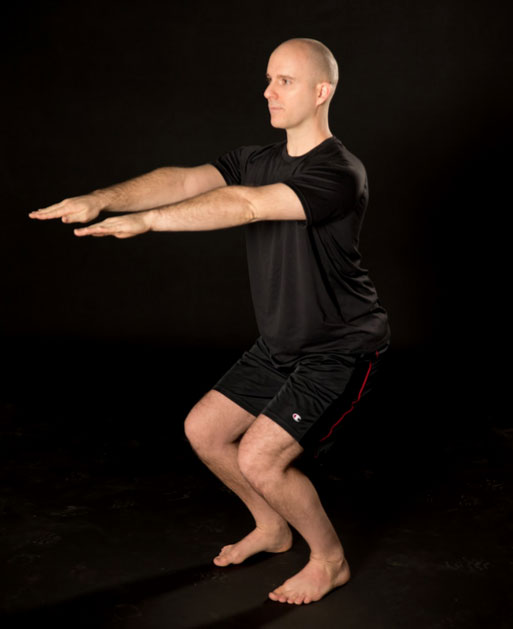
Deconstructing Chocolate George

By Ed Staskus

   “Chocolate George is at my house now because Keegan hates it,” said Tim Loomis, co-restaurateur and owner with Keegan Konkoski of the gastropub Liquids and Solids at the Handlebar on the outskirts of Lake Placid, New York.

   “Let me just say something,” Keegan jumped in, leaning back on her bar stool.

   “I don’t hate anything, but whenever we talked about the theme of our artwork we always said at some level it had to be about food and drink.”

   “You’re right, it didn’t totally match,” said Tim.

   What Tim tactfully didn’t point out was that the framed print that eventually found its way to his house was Chocolate, which is a food preparation, George’s Funeral, not Good Old George or Hells Angel George, which is what George was when he wrecked his motorcycle in the Haight-Ashbury neighborhood of San Francisco in 1967 at the tail end of the Summer of Love.

   “So, when I got our last piece of artwork, I don’t even remember what it is, but I was, oh, Tim, I have to move Chocolate George. There’s just no room for him anymore.”

   “I told her I would put it in the butcher shop in the meantime,” Tim said

   He took Chocolate George next door, literally next door from Liquids and Solids, to the Kreature Butcher Shop that they opened in 2013. Liquids and Solids at the Handlebar opened its doors in 2010.

   Charles George Hendricks was a Hells Angel in the San Francisco chapter who was hit by a car while swerving around a stray cat one August afternoon in 1967 as the Summer of Love was winding down. He was thrown from his motorcycle and died later that night from his injuries. He was known as Chocolate George because he was rarely seen without a quart of his favorite beverage, which was chocolate milk.

   “He drank chocolate milk because he had an ulcer,” explained Mary Handa, a friend of his in the 1960s. “He spiked it with whiskey from time to time.” He snagged nips all day long.

   “We got the print when we opened,” said Tim. “We had no artwork, but we had an old friend of ours who had followed both of us around to multiple restaurants. He was a lithograph teamster, from the city, and he had a lot of vintage stuff, stuff by Ralph Steadman, and he had Chocolate George.”

   Chocolate George’s Funeral is the Holy Grail of biker posters, and although neither Tim nor Keegan are bikers, at least not in the sense of the Hells Angels – Keegan is an avid mountain biker – it found a place in their restaurant on a back wall just outside the swinging door into the kitchen.

   “The walls were pretty barren,” Tim said about their first year.

   “There’s never been a restaurant like this here before. Nobody would come in, not nobody,” Keegan said.

   “Our friend walked in about a month after we opened and gave us the print,” said Tim. “He was a great guy and he loved us, was always really supportive. He was a portrait of unhealthiness, but a great guy.”

   Charles George Hendricks was a strapping 34-year-old when he died. He was a favorite among the hippies in Haight-Ashbury because he was funny and friendly. Sometimes he sported a Russian fur hat, making him look like a Cossack. His mustache and goatee were almost as long as his long hair, he wore a pot-shaped helmet when riding his Harley, and his denim vest was dotted with an assortment of round tinny pin badges.

   One of the badges said, “Go Easy on Kesey.”

   The writer Ken Kesey had been the de facto head of the Merry Pranksters. Much of the hippie aesthetic traced back to them and their Magic Bus.

   “The artwork came one by one,” said Keegan. “It’s a hodge-podge, but that’s how we got started. It was the same with everything, we slowly got more and more ingredients, built up our larder, and the bar.”

   “We had a pool table originally,” said Tim. “I wanted to play up the whole laid-back feeling, so we kept the pool table. I should have known better. It just attracts children and takes up seats that people can eat at. But, when we got rid of it rumors started floating around, there goes the pool table, they’re already going out of business.”

   Tim and Keegan were novice business owners introducing a new dynamic of craft beers and creative farm-to-table cuisine to a small town popular with travelers, but still, essentially, a small town with well-established tastes.

   “When we opened we decided we weren’t just a door with a light on that anyone could stumble into,” said Keegan. “We thought you either have to have a little bit of knowledge or a little adventure in you to make it work.

   “We didn’t want to hold hands or educate anyone. We always wanted people to appreciate what we had to offer, and if they were as passionate about it as us, then yeah, we’ll get to know you and chat, answer as many questions as you want. But, some people, they come in here and, I don’t want to sound judgmental, but they just don’t look like they’re going to like it here. All of our hostesses know to ask, have you been here before, you might want to check out the menu, it’s really different.”

   “We’d rather have them leave and not sit down and be unhappy,” said Tim. “Because once they sit down and it’s gone south there’s just no fixing it.”

   Five days after his death more than two hundred bikers trailed a hearse and the family car up and down San Francisco’s narrow streets, pausing and revving their engines at the Straight Theater, near where the accident happened. Two quarts of chocolate milk got warm slowly next to the cold body in the back of the hearse. The funeral ceremony was performed at the Cypress Lawn Cemetery, Chocolate George was cremated, and his ashes scattered over Twin Peaks, which are in the center of the city.

   The funeral procession became a motorcycle cavalcade, roaring to Golden Gate Park where, joined by hundreds of hippies from Haight-Ashbury, a daylong wake erupted. Big Brother & the Holding Company and the Grateful Dead were the live music send-offs. There was dancing and tripping.  

   “Sometimes the lights all shining on me, other times I can barely see, lately it occurs to me, what a long strange trip it’s been,” Jerry Garcia sang in his mid-western twang.  

   There was free beer courtesy of the Hells Angels and free food supplied by the Diggers.

   The Haight Street Diggers were said at the time to be a “hippie philanthropic organization.” They used the streets of San Francisco for theater, gatherings, and walkabouts. The organization fed the flock that made the scene in the Panhandle with surplus vegetables from the Farmer’s Market and meat they routinely stole from local stores.    

   Two months after Chocolate George’s funeral the Diggers announced “The Death of the Hippie” by tearing down the store sign of the Psychedelic Shop and secretly burying it in the night.

   “Our reputation in Lake Placid is really mixed,” said Keegan.

   “We’re the weirdo’s down here,” said Tim.

   Not everyone agrees.

   “This gastropub with Western saloon flare has the best beer selection, both draft and bottle, in the Adirondacks,” wrote Lauren Matison in Thrillist NYC. “Also awesome, their next-door butcher shop churns out rillettes, pates, cured tongue, sausages, and cheeses.”

   “Much credit is due to chef Tim Loomis and his business partner, Keegan Konkoski, the competent and adventuresome mixologist,” Walter Siebel wrote in his review in the Watertown Daily Times.

   “I’m definitely probably known more as the bitchy bartender than anything,” said Keegan. “If you want a macro brew, I say we don’t have that and suggest the bar across the street. I don’t pour shots and I say no to drunks. I don’t serve them. They’ll look at me and say, ‘You don’t want me here!’ That’s right, I say. After we opened, I had to do a lot of weeding out and getting rid of some people who just wanted to come in here and get wasted.”

   The craft beer and craft cocktail-focused bar at Liquids and Solids is more in the vein of the Experimental Cocktail Club than it is Happy Hour, of which there is none, although since the drinks are fine and delicious it could be said that any time at the Handlebar is a good time.

   When asked why they were having such a big going away into the yonder party for George Hendricks, Henry ‘Hairy’ Kot, his best friend, said, “George loved be-ins and happenings, so we thought we’d have a happening just for him.”

   The wake was advertised as “George’s Wail!” on psychedelic-style posters hung in the Haight-Ashbury neighborhood. The next day a photograph of the funeral cortege stretching away on a long loping street ran in the San Francisco Chronicle, along with a story titled “The Gang Gathers.”. The photograph was taken by Bob Campbell and later printed as a poster by the Print Mint in San Francisco.

   The words “Chocolate George’s Funeral” at the top of the poster are in brown and gold. The rest of the photograph is in black and white, except for the funeral car, which is a bright fluorescent pink.

   “We never knew what the pink was about,” said Beth Hendricks, George Hendricks’s second-youngest daughter.

   Three years after struggling out of the red Tim and Keegan collaborated again on the Kreature Butcher Shop. Tim found a new favorite t-shirt emblazoned with “Meatatarian.” He grew a beard.

   “We have a counter guy there, but he’s not the butcher,” said Keegan. “Tim is the butcher. He takes the whole animal and breaks it down.”

   “When we started Liquids and Solids a friend of mine and I went and got our first pigs together,” said Tim. “When we talked about it later, we remembered how long it took to break that pig down. Man, it took six hours.”

   He went home with achy hands and slept on it.

   “I can do a pig cleaner in an hour now than I did back then, no problem. It’s partly just knowing what I’m doing and partly having the right tools. We didn’t even have a saw then. We still only have a hand saw, but at least we can saw through bone.”

   “We prefer to get our animals whole,” said Keegan. “Then we can use everything. We try not to waste anything. The whole sustainability, consumption thing is important to both of us. Wastefulness really irks us.”

   Kreature’s beef comes from Kilcoyne Farms in the St. Lawrence Valley and its pork from several suppliers in the North Country. Their yogurt comes from North Country Creamery in Keeseville and their cheese from Sugar House in Upper Jay.

   “They keep doing more and more plots up in Keeseville every year, some cool stuff,” Keegan said

   “No one can hold a candle to Margot’s cheese,” Tim said.

   “But just because it’s local doesn’t mean we carry it,” said Keegan. “If it’s good and local, two thumbs up. We try to support folks in anything that’s delicious, absolutely.”

   “We always get our beef from Pat Kilcoyne Farms, which is grass-fed and finished on grain,” said Tim. “I’m not a huge meat eater but, wow, sometimes I have a steak and it’s phenomenal. We were approached by Asgard about taking one of their cows, which are all only grass-fed. When Pat asked me if we needed a cow in the next couple of weeks I said, not this time Pat, I’m getting one from Asgard.”

    “Well, have fun chewing on it,” Pat Kilcoyne said.

   “I tell beer makers, if you brew something and think it’s dynamite, bring it down,” said Keegan. “The ones that are well-done and are great, awesome. But it has to be good. I’ve made mistakes before, put something on the menu and, oh, my God, it’s horrible.”

   “There are so many young passionate people that are part of our restaurant lives right now,” said Tim

   It’s the passion of people who act it out because the energy is in the action, not just the thought or feeling. Even though it’s the thought that results in the act, it’s action that sets priorities.

   “I remember the day I met Lucas at Fledging Crow,” said Tim. “I had no idea who they were. I was, like, I’m opening a restaurant and I need some vegetables.”

   Every day is the day that time opens its door, never a minute too late, never waiting for the next minute, sometimes leaving an impression behind. On one level “Chocolate George’s Funeral” is a moment in time, an historical document of something that happened in one place on one day, but on another it’s an unsettling existential document, a ripple in the veneer of everyday life, so that its black and white reality seems suddenly illusory.

   The signifiers in the picture are the street and medians, the flat-fronted buildings, and the receding line of electric power poles. A single person in white shorts stands at the corner of one of the crossroads in the deep focus photograph, either watching the funeral procession of black-clad bikers or simply waiting to cross the street.

   What makes the picture unstable are the other, contrasting signifiers, the motorcycles and their riders. There are hundreds of them, a restless band bound together by their outcast and yet conservative ideology, riding Harleys which are both emblems engineered real things, parsing an age-old ceremony as they rumble slowly up the street.

   They are in rows and lines as orderly and mundane as the street, the rows of apartments, and lines of power poles. Even still, they are troublesome men.

   “The Hells Angels try not to do anything halfway and anyone who deals in extremes is bound to cause trouble,” said Hunter S. Thompson, the author of “Hells Angels: A Strange and Terrible Saga.”

   “Our friend who gave us Chocolate George used to bring us moonshine-soaked cherries, the real deal, not the stuff you buy from Old Hickory, or whatever,” said Keegan. “But he was a weirdo. We got a tour of his bomb shelter once. It was full of serious stuff and more canned food than you could eat in a year. The guy was ready.”

   “He had gone up to Au Sable to live, escape from New York City,” said Tim.

   “He’s now deceased, bless his soul,” said Keegan.

   The poster they had been given stayed at the far back of Liquids and Solids, gracing a wall above a small round two-chair table just outside the kitchen, for more than three years.

   “Tim liked it,” said Liz Yerger, one of the gastropub’s servers. “He never said why, exactly, except that a friend had given it to him.”

   “Maybe we were too scared to take the picture down all that time,” observed Keegan.

   Maybe that’s when she broke out a bottle of spirits and mixed up something strong, her own Maple & Spices, a heady brew of bourbon, maple syrup, cayenne pepper, and lemon and apple juices, and after all that time all that long strange trip took leave of the ghost of Chocolate George.

Photograph by Eugene Anthony.

A version of this story appeared in Literary Heist Magazine.

Ed Staskus posts on 147 Stanley Street http://www.147stanleystreet.com and Made in Cleveland http://www.clevelandohiodaybook.com. To get the site’s monthly feature in your in-box click on “Follow.”
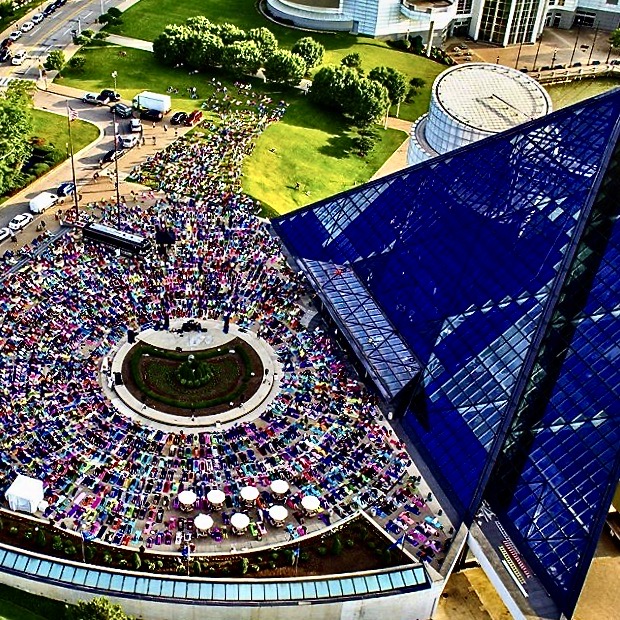
Gray Matter (On the Mat)

By Ed Staskus

“I’ve got the brain of a four-year-old. I’ll bet he was glad to be rid of it.” Groucho Marx

Even though yoga practice is far-ranging, not just all in your head, it is all in your head.

The brain is the center of the nervous system, 100 billion nerve cells protected by a skull and each nerve cell linked to almost 10,000 other cells. A real human brain lifted out of a jar in a pathology lab weighs about three pounds. Although often described as gray matter, it isn’t gray, but rather red, very soft and jelly-like.

The neural network of the brain is affected by everything that happens during its lifetime, for better or worse. Our genes and our environment impact every step. The brain’s lifelong development is activity-dependent. Every sensory, motor, and cognitive activity shapes the way neural circuits end up being wired.

Our experiences lead to cells that fire together, leading to cells that are wired together, leading to a mind that can count the stars in the sky and how many sprinkles are left at the bottom of an ice cream sundae at the same time.

Your brain on math is like it’s gone to the thinking gym. Your brain on money, on the other hand, is your brain shouting out greed is good, greed is good, greed is good! Your brain on meth is 100 MPH in a dirty sundress.

Brains in the thrall of sports are described in Your Brain On Sports as bubbling with “all the batshit craziness that courses through the sports ecosystem.” The kookiness includes fans leaning over balcony bleacher railings into mid-air trying to grab t-shirts shot out of a cannon.

Our neurons can misfire across synaptic gaps, raising Cain and spinning nonsense, from the NRA’s zany Cold Dead Hands to Climate Change Ain’t Happening. Only crazy people take themselves seriously.

Human being brains are always humming and roaring. They are our best friend and worst enemy. Everyone has to do the best they can with it. In the same way it is impacted by most things the brain is changed by most things, too, including yoga.

By some accounts yoga, from exercise on the mat to breath control to meditation, is a game-changer over and above many other things. Neuroplasticity is how the brain rewires itself through experience. The experience of yoga is plasticity itself, especially what goes on twisting and turning on the mat. The more anyone unrolls their mat is the more new neural pathways are made in the brain. It is a pattern that can reshape one’s brain and one’s life, too.

“Our life is the creation of our mind,” said Buddha.

Not only that, practicing yoga seems to make the brain bigger, especially the somatosensory cortex, where the mental map of our bodies is located, and the superior parietal cortex, which is the part of the brain that directs attention.

Who doesn’t want a bigger brain and a better GPS of themselves?

“We found that with more hours of practice per week, certain areas were enlarged,” said Chantal Villemure, one of a team at the National Center for Complementary and Alternative Medicine, which studied people practicing regularly. They presented their work, focused on MRI scans, to the Society for Neuroscience in 2013.

The health benefits of yoga exercise, from increased flexibility to stronger bones to relieving chronic pain, are well known. It even lowers the risk of heart disease, according to Harvard Health Publications. What is less well known is that it stimulates brain function, improving inhibitory control and working memory.

A University of Illinois study published in the ‘Journal of Physical Activity and Health’ found that cognitive reaction times and accuracy were better after hatha-style yoga practice than after other kinds of exercise.

“It appears that following yoga practice, the participants were better able to focus their mental resources, process information quickly, more accurately and also learn, hold and update pieces of information more effectively than after performing an aerobic exercise bout,” said Neha Gothe, who led the study.

The brain gets stronger after yoga exercise. Working out on the mat boosts the body’s production of B.D.N.F., a protein called ‘Miracle-Gro’ for the brain.

Downward doggers know that getting long feels awesome. Beyond flexibility they also know it brings to heel something in their brains. That something is stress, which yoga helps to counteract. Yoga boosts GABA levels in the brain, according to research at both the University of Utah and Boston University. The higher the GABA levels, the better and brighter you feel. The lower the levels, the darker the day gets. Yoga literally switches off some genes related to stress.

Hatha yoga nowadays is closely associated with physical practice. The word means forceful in Sanskrit. But, before yoga and physical culture became synonymous in the last hundred-or-so years, hatha meant all eight limbs of yoga. Yoga is an eight-limb union leading to the last limb, which is equilibrium. Two of them, pranayama, which is breath control, and dhyana, or meditation, may affect life and limb of the brain even more than physical practice.

“Yoga isn’t about the shape of your body, but the shape of your life,” said Aadil Pakhivavl, author of Fire of Love. Everybody wants to be in good shape, but getting in shape is about more than jump throughs and plank pose. Like Buddha said, life is what the mind makes it.

Breathing is as essential as it gets. The words chi, psyche, and spirit are all related to breath. In the Bible God breathed life into clay making Adam. In Your Atomic Self it is breath that connects us to all aerobic creatures in the world. Prana is the Sanskrit word for life energy or life force. Pranayama is regulating and controlling the breath.

Patanjali, the founder of yoga philosophy, believed the ultimate goal of it was not breathing anymore, in other words, no more inhales or exhales. It’s an idea that literally takes your breath away.

Whether it’s bellow’s breath, skull shining breath, or breath of fire, the many forms of pranayama are all designed to concentrate one’s energy and attention. When under the influence of pranayama our brains ramp up in alpha and beta activity, whose electrical impulses can be detected by EEG testing. These dissimilar brain activities, paradoxically, are related to increased awareness and increased relaxation.

“The immediate effect of Nadi Shuddhi Pranayama and Bhramari Pranayama compared with controls shows that these yogic practices are related with increased orderliness of brain functioning,” noted ‘Yoga for Academic Performance: A Brain Wave Coherence Analysis’ in the European Journal of Psychology and Educational Studies.

Meditation has long been known to generate measurable changes in the brain. Hundreds of studies have been conducted since the 1950s. They have largely confirmed that the new found benefits of meditation are the same as the centuries-old benefits, from reducing activity in the selfish centers of the brain to enhancing and enlarging the links of neural pathways.

In ‘Brain Gray Matter Changes Associated with Mindfulness Meditation in Older Adults’, published in the open journal Neuro in 2014, a “significant gray matter increase was identified within the precuneus” after a six-week test period. The precuneus is located near the back of the brain and is involved with aspects of consciousness and the self.

Meditation is about bringing awareness to the breath, slowing down into stillness, and going inward. It is the conscious action of getting to the unconscious crossroads of the something that isn’t there and the nothing that is. Immanuel Kant, the 18th century German philosopher, described art as purposive without a purpose. The same can be said about meditation. It is about nothing and everything and everything in between.

Meditation acts on the brain in many ways, from reducing anxiety and depression to improving concentration to helping keep brains tip top in older people. It leads to volume changes, actually changing the structure of the brain. A study at UCLA has demonstrated that people who meditate have more gray matter volume from one end of their pates to the other. “What we actually observed was a widespread effect of meditation that encompassed regions throughout the brain,” said study author Florian Kurth.

The act of meditation is the action of focusing one’s mind for a period of time, usually in silence, sometimes while chanting, as in Kirtan Kriya, to get grounded and become more self-aware.

Anybody can meditate, as long as they are willing to acknowledge that the mind has a mind of its own. All you have to do is sit down, or even go for a walk by yourself, and try to be quiet for a few minutes. Even though it doesn’t have to be a huge undertaking, it can have a huge impact. It’s not like climbing a mountain, but it does help cut most mountains down to molehills.

Even busy people too busy to meditate, who think they don’t have time to do nothing, are meditating nowadays, since it makes them more productive when they get back to being busy. “Half-an-hour’s meditation each day is essential, except when you are busy,” said Saint Francis de Sales more than four hundred years ago. “Then a full hour is needed.”

Today’s modern set calls it mindfulness meditation.

Back in the day it wasn’t even called meditation, which is a word dating from the 12th century, from the Latin word meditatum. It had more to do with attention and consciousness exploration. Meditation was closely aligned with dharana, or concentration, as in focusing one’s attention in continuous meditation.

Your brain on yoga is your brain diving into 5,000 years of the practice. It is also your brain being poked and prodded by the Harvard Medical School. Sat Bir Singh Khalsa, Ph.D, an Assistant Professor of Medicine at Harvard and a certified Kundalini Yoga instructor, has conducted clinical case studies on yoga for more than a decade. The results he has presented in research papers, articles, and books offer compelling evidence that getting on the mat boosts brainpower.

The brain might be a mush melon-sized lump of gray matter, but yoga lights it up like a rainbow. In the end, though, yoga isn’t a thinking man’s game. Anyone who spends too much time thinking about the practice never gets any of it done. While it is true that it’s a mind-body discipline, it’s not just exercise on a sticky mat, keeping us fit as fleas, nor is it just the latest contribution to positive thinking.

“Yoga is a way to freedom,” said Indra Devi.

We are more than our bodies and brains. The spirit is the third rail of yoga, so that the train becomes a body-mind-spirit practice. Albert Einstein believed that “spirit is manifest in the laws of the universe.” Like the electric action potential of neurons, the electric third rail of yoga is what supplies energy to the practice. When Buddha observed that our lives are what we think them to be, he meant thinking as a state of mind made up of cognition, words, and actions.

The humans of planet earth may be snared by force and their minds made small by propaganda, but the only constraints on the spirit are those we ourselves make. It’s great to have a good brain, but where the spirit lives is the good heart. We change our lives by changing what’s in our hearts. If there is a sweet spot of yoga, it is the heart, not the brain. It is the downtown of spirit and gateway to consciousness.

The heart is the ever-winding ever-adventurous ever-surprising yellow brick road to the incomprehensible. On the way to the Emerald City, no matter how big and better anyone’s brain gets, even when it makes a scarecrow’s leap from Groucho Marx to Albert Einstein, your brain on yoga is ultimately your brain emptying as the heart fills.

Ed Staskus posts stories on 147 Stanley Street http://www.147stanleystreet.com and Cleveland Ohio Daybook http://www.clevelandohiodaybook.com. To get the site’s monthly feature in your in-box click on “Follow.”

Please, No Sensitive People

By Ed Staskus

There’s an old saw that says if you can’t stand the heat, get out of the kitchen. That’s exactly what most people do, assuming they’ve stepped foot into the kitchen in the first place. Restaurants have one the highest employee turnover rates of any kind of business. Voluntary turnover across all businesses, according to the Department of Labor, is about one of every five every year. In the food service business, the voluntary turnover rate is more than one of two every year, never mind the involuntary rate.

   But before there can be turnover there has to be staff. Since the end of the Great Recession in 2009 both hoagie shop and fancy restaurant owners have seen more and more vacancies for positions from part-time hostess to experienced sous chef. From San Francisco to New York City there are not enough restaurant staffers.

   “It’s become a much tighter and more competitive work environment,” said Bob Luz, president of the Massachusetts Restaurant Association, in 2013. “The economy is on the road to recovery and the talent pool is thinner.”

   “If he’s a dog we’ll figure it out and we’ll get rid of him in the first week,” said Jeff Black of the upscale Black Restaurant Group in Washington, DC. “But we need bodies. We need people that want to wait on tables.”

   The recruitment problems big restaurants in big cities suffer from are not much different than the problems small restaurants in small towns do.

    Still looking for experienced staff for front and back of the house. This will probably be your best job ever. Liquids and Solids on Facebook.

   Liquids and Solids, a small, edgy new wave gastropub in the Adirondacks, in Lake Placid, New York, opened in June 2010. “When we opened it was just us,” said Keegan Konkoski, co-owner with Tim Loomis. “Tim would be in the kitchen all day and I’d be at the bar all day and we had two servers.” One of the servers was Keegan’s sister, Jamie.

   “Before we opened, we thought Tim would have no problem staffing his kitchen. He’s a culinary graduate of Paul Smith’s, a lot of their students will want to be here and work with him, do a little internship.”

   An alumnus of Paul Smith’s College in nearby Paul Smith, New York, Tim Loomis interned in France and has worked at, among others, the Wawbeek Lodge, Lake Placid Lodge, and the Freestyle in Lake Placid.

   “We thought finding him help would be so easy, but we are picking bones.”

   Looking in from the outside work done by other people can sound easy. How hard is it to cut carrots and wash dishes? But, working in a restaurant, being on your feet all the time, is physically demanding. “The business, it sucks. It’s hard,” said Bryan Dayton of OAK at Fourteenth in Denver, Colorado.

   “It can be back-breaking work,” Keegan agreed.

  Dishwashers are unsung and underpaid and it’s easy to overlook how important they are, hunched over and hidden away in a steamy back corner, until you don’t have one. Then it’s a mess.

   We are looking for a special guest sanitation engineer for Thursday night. All you can eat and drink! Liquids and Solids on Facebook.

   “The worst days of service that I have had, both as hourly employee and as manager, have been when there was no dishwasher,” said Matthew Stinton, beverage director at several New York City restaurants and wine bars. “Not having a dishwasher will fuck your world up and make you rethink the way you do things.”

   One of the predicaments Liquids and Solids faces every year is that it is a seasonal eatery. It is open year-round, but has to deal with summertime spikes, which complicates staffing and inventory levels.

   Need summer help, both departments, liquids and solids. Liquids and Solids on Facebook.

   “We definitely have our downtime,” said Keegan, “so we try to make as much as we can when we’re busy because it slowly depletes after that.”

   “We try to bang it,” said Tim.

   After Columbus Day Liquids and Solids cuts its hours, closing Sundays and Mondays, refreshes itself for several weeks during the Christmas and New Year holidays, and then sits back on its haunches waiting for spring. When spring comes the snow melts, birds sing, and the heavy lifting starts.

   L & S needs some strong bodies tomorrow to help move some equipment. Volunteers will be rewarded! Contact Tim if you want to help. Liquids and Solids on Facebook.

   A challenge all hands-on restaurant owners face is the amount of time their restaurants demand of them. “If you are not prepared to never see your family, never have a holiday, then you are not prepared to be in the restaurant business,” observed Cory Bahr of Nonna in Monroe, Louisiana.

   Tim Loomis’s day starts at 8 o’clock in the morning. It ends 14 or 15 hours later.

   “One of the main guys I’ve worked with over the years, as soon as service was done, he was out,” said Tim. “I don’t like doing that. I try to be there and help clean, but if it’s not clean by 11 o’clock, I’ve got to go.”

   No one can do everything. While Tim is in the kitchen with his crew, and Keegan is behind the bar, and the hostess and servers are at their stations, the bathrooms at Liquids and Solids are left unattended. Largely a relic of the past, bathroom attendants who clean the facilities and dispense mints, mouthwash, chewing gum and cigarettes, are today usually only found in big-time night clubs and restaurants. In Japan they are being replaced with ladybug robots. 

   It isn’t a bathroom attendant who’s needed sometimes so much as a bathroom bouncer.

   L & S is seeking a full-time bathroom attendant due to recent acts of vandalism on the bathrooms. Three air fresheners have gone missing, pennies are dropped in the toilet daily, and stickers from the paper towel dispenser have been removed. A picture was ripped off the wall and thrown into the garbage can! Two screws were holding it up. It had beautiful boobs on it. Who does not like boobs? Please apply in person. Protect against prudes. Liquids and Solids on Facebook.

   Recruiting, training, and retaining staff is one of the toughest jobs most restaurant owners have. They are always, especially if they are small businesses, at the mercy of unforeseen absences, such as sick leave or a family emergency. They don’t have the back-up staff to provide coverage.

   “Food may rot and burn, but at least it doesn’t run off to Alaska with an oil-pipeline worker before lunch. Help will do that, and much, much more, creating an anarchy that acts upon the kitchen’s atmosphere like a handful of sand thrown into a spinach salad,” wrote Kimberly Snow in ‘Why You Don’t Want to Run a Restaurant’. 

   According to the Bureau of Labor Statistics almost 370,000 people are employed as dishwashers nationwide. And they aren’t just the dish crew. They clean and mop, take out the garbage, and unclog toilets. They are sanitation engineers.

   L & S is looking for a guest sanitation engineer for Saturday night, no experience needed. A good grasp of 80s movies is helpful. $60.00 plus food and beverages. Must be 21. Liquids and Solids on Facebook.

   The position has been filled by Ryan MacDonald, who will be making the trek from East Burke, Vermont, just to make a guest appearance in the pit. Liquids and Solids a few hours later.

   “We generally don’t have any problems early in the morning,” said Keegan. “We have our meeting between 9 and 10 and everything is usually copasetic.” After their morning meeting Keegan does the books, goes mountain biking or cross- country skiing, and then returns to work in the early afternoon, where she remains until the end of the night.

   “Hopefully I don’t get a text from Tim about a catastrophe,” she said. “But there’s always something, the air conditioning broke, someone’s dog died, and they can’t come to work, it could be anything. Every week there’s something.”

   Sometimes that something is a chore most restaurants don’t have to contend with anymore in the 21stcentury.

   Well, here we are lookin’ for help again. Winter wood is being delivered tomorrow and we need help moving it. Start time around 11. Dinner to all volunteers. Liquids and Solids on Facebook.

   “We do our own town dump runs, too,” said Keegan.

   While hostesses and servers are charming, and bartenders are patient and accommodating, working in a hot kitchen, a very hot kitchen, where you are not supposed to drop anything no matter how hot the thing is, dead-lifting heavy boxes on a floor that is slippery and slightly pitched for drainage reasons, on your feet for 10 hours straight, where it’s not OK to not have whatever you’re cooking ready when the chef says it has to be ready, in a tight space where there is no personal space, is another matter.

   “When it’s busy, in the heat of service, Tim is awesome, but he can get ornery,” said Keegan. “We don’t need to sugarcoat that.” 

   Kitchen staffs can be thick as thieves and at each other’s throats at the same time. That’s why so many off-color jokes are bantered in restaurant kitchens. “They would make every inappropriate joke in the book,” said Marla Gilman, who worked the line at Liquids and Solids for a year, about her colleagues. “But it wasn’t real. There were never any hard feelings.”

   Team Kitchen is now seeking a sanitation engineer for 2 – 3 nights a week. Must have a strong background in 80s and 90s pop culture and appreciate both punk rock and classic country. If this sounds like you, walk right into the kitchen and talk to Tim. Please, no sensitive people. Liquids and Solids on Facebook.

   The mom-and-pop eatery at a bend in the road is a laid-back gastropub in a small town on a quiet street across the street from a lumberyard. Like all businesses they have their own standards. Unlike many businesses, especially those that are seemingly laid-back, those standards are first-class.

   “The farm-to-table cuisine at Liquids and Solids wins rave reviews,” wrote Diane Bair and Pamela Wright in 2013 in the Boston Globe. “Creative plates like beef heart ragout with gnocchi. Among the liquids, the sinus-clearing ‘maple and spice’ bourbon cocktail gets its kick from cayenne pepper.”

   Although being the best may be a false goal, measuring success by doing your best is certainly a true goal. Servers and wait staff are said to be the front of the house and cooks and chefs the back of the house. Some restaurants, especially those with a reputation for great food, employ expediters, the middle of the house, who make sure that orders are cooked and plated in a timely fashion. 

   Looking for an exciting Friday and Saturday night from 8:30 – 10 PM? We need an expediter! Pays money, food, drink, and time with Tim. If you don’t know what an expediter is, don’t volunteer. Liquids and Solids on Facebook.

   “We try to create a fun atmosphere because we know it’s hard work,” said Keegan. “But it has to be professional. We have to make sure everything gets done correctly.”

   “At the end of the day that needs to go there and that needs to be cleaned,” said Tim.

   All of which is easier said than done unless you stick to it all day long. “This job will consume you,” said Bryan Dayton of OAK. “We work long hours. Yesterday I worked an 18-hour day. On a Wednesday.”

   Attention to detail means restaurant owners often have little in the way of a social life. Their husbands, wives, boyfriends, and girlfriends have to be saints because their loved one is the one who unlocks and locks the doors every day and night. Not only that, your loved one is always on call. Personal time for holidays becomes a thing of the past.

   Need someone to spend Valentine’s evening with? We need a dishwasher that evening. In fact, we are looking for a full time or part time person. Liquids and Solids on Facebook.

   “Restaurant work is a hard life,” said Keegan. “One of the things that burns us a lot is when someone working at a restaurant says, oh, that’s not my real job. I say, say it’s not your real job one more time…” 

   Busy restaurant kitchens are not just barely tolerable hot rooms full of people in fire resistant white jackets. They are fast-paced pressure cooker rooms in which you don’t want to be wearing glasses because they soon will be clouded by oily steam, keeping you from keeping track of your fellow cooks and chefs who might or might not be in a bad mood that day, but who are certainly armed with sharp knives and cleavers.

   “I attacked the last croissant with a cleaver, not stopping until I’d mashed every little flake of pastry into a greasy mass,” wrote Kimberly Snow, describing how “something just naps in you.”

   “It’s tough,” said Tim. “Our guys work hard, so it’s hard to walk away, to not be here.”

   hiring IN KITCHN. don’t NEED TO BE SMRT. JUST HARDWERKIN. Liquids and Solids on Facebook.

   Commercial restaurant work is not for everyone because it is hard work. It is the kind of hard work that needs to be done even though you are dog-tired from already working hard all day. There is the laundry issue, too. When kitchen staff does their wash, it is always smelly laundry.

   Restaurants don’t pool tips for the back-of-the house dishwashers, cooks, and chefs like they do for wait staff. But, at Liquids and Solids, just like you can add an egg to a menu item for a buck, you can add a buck to your bill at the end of the night for the kitchen’s beer fund.

   “One thing we had no idea about when we opened was how much employees cost,” said Tim. 

   “When it’s all said and done, though, when they’re worth it they’re worth it,” said Keegan. “Besides, you can’t show up and not have them be here. Everything here is truly made from scratch.”

   It is shortly after Columbus Day, when their summer season has drawn to a close, that the beer fund at Liquids and Solids comes into play. That’s when the hardwerkin’ staff takes some time off and leaves the country.

   Bye, bye blackbird for a long, long weekend.

   For all of you that bought a beer for the kitchen this summer, they totaled $887.00 in earnings and will be in Montreal celebrating soon thinking of you all that made it possible knowing they be appreciated for the daily grind. Thanks!

   It was what Tim and Keegan the damp dishwasher the gassed kitchen staff all posted on Facebook before turning off the lights.

Ed Staskus posts stories on 147 Stanley Street http://www.147stanleystreet.com and Cleveland Daybook http://www.clevelandohiodaybook.com. To get the site’s monthly feature in your in-box click on “Follow.”