
Tag Archives: Ed Staskus

No Stone Unturned

By Ed Staskus

   When JT Markunas checked the weather report it looked like the outdoors was going to be in the 20s and sunny. It had been in the 20s and sunny yesterday, too. It was mid-summer. Sitting on a lawn chair outside his rented house in Milton he thought the forecast was like the murder he had been investigating on-and-off the past few months. It wasn’t any different today than it had been yesterday and looked like it wasn’t going to be different anytime soon.

   The difference was nobody could do anything about the weather. The RCMP could do something about the murder. They knew how the woman with the empty briefcase had been killed but didn’t know where or why. They still didn’t know who she was, nor did they have a clue about who might have done it. The more days went by the more it got pushed back in everybody’s minds. It was starting to go unresolved and cold.. Nobody had seen or heard anything the past fall and by the time anybody knew something had happened, winter was over and it was spring. Now it was summer.

   It was a hell of a shame, he thought. Nobody should get away with murder. Murders are often a spur of the minute violent outburst, but what happened in Conor Foyle’s field wasn’t a mistake. It was deliberate. It rankled him to think whoever did it thought they could get away with it. It was usually some poor slob who couldn’t get away with jaywalking. They got locked up. The rich hired somebody to talk their way out of it. They walked away free. JT thought what happened had to involve money, and lots of it. The rich didn’t brandish axes to get what they want. They had fountain pens for that.

   An execution is justice, but murder is injustice. There was no justice in taking the law into your own hands. There was money in farming and fishing, which Prince Edward Island did a lot of. Farmers and fishermen rarely shot each other, or anybody else. At one time lenders got rough when it came to collecting from debtors, but that time was gone. Criminal gangs shot first and didn’t ask questions whenever they were crossed, but there were no criminal gangs like that on the island. There were some with criminal minds. That’s why the force existed. He thought it likely that whoever did the killing was a lone wolf. That meant whoever it was, was likely to keep to themselves. Whoever it was, he was going to be hard to find. JT wasn’t holding his breath. He was a patient man, though. He believed he would get his man eventually.

   It was going to be a tough nut to crack but it was a nut that would have to keep. It was his day off. He tossed his bicycle into the back of his pick-up. The bike was a Specialized Rockhopper, nothing special, but virtually indestructible. It went up and down potato roads and single tracks just fine and rode smooth enough on pavement. Brackley Beach was about 20 kilometers away. He drove there.

   JT parked at the west end of the beach. It was 15 kilometers to Dalvay By the Sea. He was going to keep going another 5 kilometers farther on to Grand Tracadie, stop and stretch his legs, and ride back. Forty kilometers in the saddle would be enough for him. When he started the wind was at his back and the living was easy, until he realized it would be in his face on the way back. He thought he would find somewhere in Grand Tracadie to have a bite and a drink before turning around.

   He rode past the Harbour Lighthouse, some cottages, Ross Beach, some more cottages, Stanhope Beach, Long Pond, and stopped at Dalvay By the Sea. He rode to the front steps, parked his bike, and walked down the sloping lawn to a set of red Adirondack chairs in front of the big house. He was sitting there looking out at the ocean when somebody walked up and asked if he would like tea and biscuits.

   “Make it black tea and butter for the biscuits,” he said. He need not have asked for butter. If there was anything homegrown plentiful on the island, it was homegrown butter. There were enough cows in all directions that everybody on the island could go on an all-butter diet if they wanted to and there still wouldn’t be a shortage. There would still be plenty to export.

   Dalvay By the Sea was a big house and seasonal rooms. Before becoming lodgings, it was only a house. The Gilded Age industrialist Alexander Macdonald, who was an American, built it just before the end of the 19th century on grounds of 120 acres. The lower half of the house and all the fireplaces were island sandstone. Windmills supplied power and water. He kept horses and carriages and a cohort of grooms to look after them. He and his wife entertained all summer when they weren’t riding their horses and at the end of every summer hosted a lavish dance for the locals. They were like patroons from an even earlier  age.

   By 1909 Alexander Macdonald was dying. At the beginning of that fall he stood on Long Pond for the last time staring at his house. He missed it already. He knew his heirs were spendthrifts and nothing good would come of them or his house. He died the next year. After his children squandered the family fortune the house was sold to the man who had been tending it. William Hughes had asked the family what should be done with the 26-room mansion. They said, “You can have it for the back taxes.” He bought it and all the furnishings for less than $500.00. Fifteen years earlier it had cost more than $50,000.00 to build. The furnishings were gotten during family travels to France and England. They were transported to Prince Edward Island by ocean steamer. Nobody knew what it had all cost. William Hughes turned around and sold the house for a handsome profit. The last owner went broke and sold it to the government in 1938, which turned it over to Parks Canada, which under a concession had been operating it for the past fifty years as a summer hotel.

   JT finished his tea and biscuits, saddled back up, and buckled his helmet. Before he got started, he saw two young women on bicycles going his way. They were noodling it. He rode past them giving them a friendly wave. They waved back. He thought they were both good-looking, one more than the other. He had a job, a house, and a bed, but he didn’t have a girlfriend. His job was the problem. The job was a Catch-22. Most of the women he met who liked policemen, he didn’t like them. Most of the women he liked, they didn’t like policemen.

   There wasn’t much other than houses and fields in Grand Tracadie. He rode as far as MacDougalls Cove and turned around. At first, riding back to Brackley, the breeze was at him from the side. Once he got back on the parkway, though, it was in his face. It wasn’t a windstorm, but it wasn’t a gentle breeze, either. He dropped his bike into a lower gear and plodded on. He rode the bike for fun and fitness. The ride back to his pick-up was going to be about fitness.

   He had just passed Cape Stanhope when ahead of him he saw the two young women he had seen earlier on their bicycles. It almost looked like they were riding in place, although he could see they were peddling. He was thirty-some yards behind them when a red motorcycle went past him fast. He had barely heard the motorcycle and was taken aback when it zipped by him. It was going 140 KPH for sure, maybe faster on a road where the speed limit was a third of that. When it passed the women the rider wiggle waggled his motorcycle at them and flashed away. The women were riding on the shoulder. The one closest to the road got shaky and see-sawed, lost control, and fell over. She bounced, her arms outstretched, and bounced again sideways into the sand. The other woman stopped and ran back to the fallen woman.

   If he had been working traffic enforcement in the Mustang Police Interceptor he could have caught the motorcycle, maybe. It had to be a Japanese bike. They made the quietest motorcycles. He hadn’t gotten the plate, but he knew high-tech when he saw it. It looked new and was probably faster than his Ford Mustang Interceptor. He stopped where the fallen woman was rolling over and sitting up. Her hands and forearms were scraped and bleeding. She had broken her fall with them. Both of her knees were scraped and bleeding, one of them worse than the other. He put his hand on her shoulder and pressed her back down when she tried to stand up. “No, don’t do that,” he said. “I’m with the RCMP. Stay where you are.” He turned to the other woman.

   “Don’t let her get up until I come back. It should just be a few minutes.” Some gulls flew up from the beach to see what was happening. They made a choking ha-ha-ha sound. After they saw there was no food to be had, they flew away.

   He rode back across the bridge the way he had come, turned down Wharf Rd., and stopped at the first deep-sea fishing shack at  Covehead Harbour where he saw somebody working. He telephoned for an ambulance and rode back to the two women. They were where he had left them, except a man and woman had stopped to help. Their Ford Taurus was half on the road and half on the shoulder behind the women, its flashers blinking. The man was Barry MacNeil and his wife Gloria.

   “We saw it happen,” Barry said. “That jackass must have the brain of a paper cup. If he had done something like that on the track, there would have been hell to pay, believe you me.”

   An emergency truck from the North Rustico Fire Department arrived and carried the injured woman away. The other woman went with them. Barry put their bicycles in the trunk of his car, securing the trunk with a bungee cord.

   “I got the address where to take the bikes,” he said  “She’s got road rash all over and there’s something wrong with her leg. At least they won’t have to shoot her.”

   JT stopped at the Queen Elizabeth Hospital the next morning. It was almost new, the biggest hospital in the province, having replaced two smaller and older hospitals seven years earlier. He was told the woman had been treated and released.

   “Is she an islander?” he asked.

   The woman at the desk said, “I don’t know, but she lives here in town.”  An islander was anybody who had been born on Prince Edward Island. The designation was closely watched. When a woman who had been brought to the province from elsewhere as a baby died 90 years later her obituary in the newspaper read, “Woman From Away Dies Peacefully in Her Home.”

   Some said you had to be conceived on the island to make the grade. A boy living in Souris was flummoxed when he found out he might not be an islander, even though both his parents were, and he was born on the island. It turned out he was brought into existence on an impulse in a dark corner of the ferry crossing the Northumberland Strait. “He was not conceived on the island so he’s not an islander,” his uncles and aunts said, their noses out of joint. His parents took the matter to his father’s father. 

   “It all depends on whether the ferry was going away or coming back,” the boy’s grandfather said.

   The fallen bicyclist’s name  was Kayleigh Jurgelaitis. JT got her address and went to work. After he was done wasting his time arresting a teenaged dishwasher smoking pot behind an all-you-can-eat seafood restaurant, he clocked out at the end of the day, changed his clothes, and went looking for the address. He didn’t have far to go. She lived near Holland College. It was a two-year trade school, home to the Culinary Institute of Canada and the Atlantic Police Academy.

   He recognized the friend when she opened the door and she recognized him. When Kayleigh limped out of a hallway into the living room, she was limping up a storm.

   “How’s the leg?”

   “Better than yesterday, believe it or not. I couldn’t even walk. You’re the cop, right?”

   ”Constable.”

   “Right.”

   “So, what happened to your leg?”

   “They said I have a slight meniscus tear in the knee,” she said, sitting down and elevating her bad leg. “I’m supposed to keep it elevated and put ice on it every couple of hours. They think I should be back on my feet in a week or two.”

   “I’m glad to hear it. So long as I have it on my mind, did either of you get the license plate of that motorcycle?”

   They both said no.

   “Neither did I,” JT said. “He was too far ahead and it happened too fast. We might be able to find him, but probably not, except maybe by accident.”

   “If I never see him again it will be soon enough,” Kayleigh said. “I wouldn’t mind seeing him lose his license.”

   “I couldn’t help taking notice of your name,” JT said. “Are you Lithuanian?”

   “Yes and no,” she said. “My mother was Irish, from here, and my father was Lithuanian, from there. I’m half of the one and half of the other. Why do you ask?”

   “Because my name is Justinas Markunas,” he said, explaining he went by JT.

   “I was wondering if I was the only Lithuanian on this island among all the Irish, Scots, and the Acadians,” Kayleigh laughed. “Now I know there are two of us.”

   “Spud Island is immigrants through and through,” JT said. “Everybody here came from somewhere else. I’ve run into a few Jews, some Swedes and Hungarians, not to mention the Mi’kmaqs. There aren’t many of them even though they were here first. I’ve even heard some Asians are thinking of setting up a Buddhist community in Kings County, which will probably make everybody’s heads spin when they do their chanting.”

   Before leaving, pausing at the door, he asked, “Since it seems it’s just the two of us on the island, we should have lunch or dinner sometime and toast our native selves.”

   “I think I might take you up on that,” Kayleigh said. “In the meantime, I’ll keep my eye out for the Tasmanian Devil on two wheels.”

Excerpted from the book “Ebb Tide.”

Ed Staskus posts stories on 147 Stanley Street http://www.147stanleystreet.com and Cleveland Daybook http://www.clevelandohiodaybook.com. To get the site’s monthly feature in your in-box click on “Follow.”

“Ebb Tide” by Ed Staskus

“A thriller in the Maritimes, out of the past, a double cross, and a fight to the finish.” Sam Winchell, Beyond Books

Available at Amazon: https://www.amazon.com/dp/B0CV9MRG55

Summer, 1989. A small town on Prince Edward Island. Mob money on the move gone missing. Two hired guns from Montreal. A constable working the back roads stands in the way.

A Crying of Lot 49 Publication

Wear and Tear

By Ed Staskus

“When I get older losing my hair, many years from now, will you still be sending me a valentine, birthday greetings, bottle of wine?”  The Beatles

Every so often a yoga magazine website feature article speaker at a seminar blog FB Instagram Huffington Post will trot out the oldest yoga teachers in the world as examples of what can be accomplished when the body mind and spirit are all set firmly on the practice. They extol their example. They direct our attention to them, pillars of light.

The old-timers are shopworn though not the worse for wear, faded, but still lit up, the sparkle of the light of yoga still in their eyes.

There are the Big Three, gone but not forgotten. K. Pattabhi Jois kept at it to the age of 93, B. K. S. Iyengar, 95, and Indra Devi, an astonishing 102. There are many people in their 50s who say they just hope to make it to retirement age. Indra Devi not only never retired, she died still in the saddle.

The yoga teacher and scholar Krishnamacharya, known as the “father of modern yoga,” started in the mid-1920s and inspired a new interest in the practice. He taught and worked at it until the day he fell into a coma and died in 1989. He was 100 years old. It’s too bad he never knew he made the century mark.

Only .01% of anybody lives to be one hundred or beyond. Those that do often credit diet, exercise, and environment. Not always, however. Edith Atkinson Wylie, a 106-year-old living in Montana, who has never done a minute of yoga in her life, credits her longevity to “bourbon and Cheetos while watching the 5 o’clock news. And good genes, too.”

Edith played the gene card. She had to, otherwise forget shouting “Bingo!” The pay-off was another glass of bourbon and somebody else’s bad news on the TV.

“Do be do be do,” Frank Sinatra sang. He didn’t make it. Not that he didn’t try, wig and all.

There’s one in every crowd, especially the 100-year crowd, who have earned whatever eccentricity they want to play up to. Edith probably wears white gloves out in public, but the liver spots still show through. Don’t argue with the 100-year crowd though. They’ll see you in the grave first.

Besides the Big Three, there are the second stringers who accomplished the same longevity.

Nanammal, born in 1919, was the oldest yoga teacher in India. Her father taught it to her when she was 8 years old. She went on to teach more than a million students over 45 years. She died late last year. Tao Porchon-Lynch, born on a ship in the English Channel in 1918, also discovered yoga when she was 8 years old. She studied with Jois and Iyengar. She was a model and actress in the 40s and 50s but in the 1960s went into yoga full-time, teaching right up to her death early this year. She was 102.

Ida Herbert, born in 1916, hit it big as the oldest yoga teacher in the world in the Guinness Book of World Records. She was 96 years old at the time. When she turned the corner on the century mark, she was still teaching a group of older women she called “Ida’s Girls.” She didn’t get into yoga until she was in her 50s, taking private lessons, reading books, and practicing on her own. She started teaching yoga at the local YMCA. Everyone was drawn to her feisty energy and repeated message to “keep moving.”

When she died in April of this year, she was 103 years old. Her ashes were scattered at “Ida’s Rock” on the lakeshore where she lived. The wind blew them into the water.

The reason the 100-year crowd gets demonstrated is because there are more old older oldest people in the world now than ever before. The planet’s population is ageing faster than in the past. The number of people 60 years and older today outnumbers children younger than 5 years. Between now and 30 years from now, the proportion of the world’s population over 60 years will nearly double from 12% to 22%.

125 million people are aged 80 years or older today. By 2050, there will be almost this many in China alone, and 434 million people in this age group worldwide. It is why yoga has significantly expanded in the past ten years. 30 to 49-year-olds are still the group doing it the most, but the numbers show that it is growing exponentially in popularity with those over 50 60 70 and 80. Adults over 50 practicing yoga tripled from 2014 to 2018.

“Let go of excuses that you’re too old,” says Carol Krucoff, a yoga therapist at Duke Integrative Medicine in Durham, N.C., and co-author of “Relax into Yoga for Seniors.”

“You don’t have to be young or fit or flexible to try yoga. If you can breathe, you can practice it,” she said.

About a million-and-a-half people live in nursing homes in the United States, according to the Centers for Disease Control and Prevention. More than 10 million more, mostly 65-or-older, need long-term support to help them with daily activities, according to the Kaiser Family Foundation. They are all breathing, but it’s a moot point whether they can totter forward to a yoga mat and get going into one asana and another.

“Age is an issue of mind over matter,” said Mark Twain. “If you don’t mind, it doesn’t matter.”

Mind over matter is a great concept, but sometimes, no matter how much you don’t mind, it does matter. When you can barely shuffle forward in a walker, and barely breathe doing it, it is more likely a matter of matter over mind. It matters getting started, but sometimes the starter motor has gone bad.

Yoga studios are a business, and most yoga teachers are free agents, and everybody has got to make a living, so it is being touted as the new remedy for whatever ails golden agers. We age as the result of the accumulation of molecular and cellular damage over time. What happens is a downgrade in physical and mental capacity, a growing risk of disease, and ultimately, death.

Why it’s called golden is anybody’s guess.

Mental capacity and physical fitness are the bedrocks of yoga. It is what yoga teachers are best at doing, getting people fit and thinking straight. That’s why if senior citizens can get there, the mat is good for them.

Yoga has a lot to do with death, but nobody wants to hear about that, no matter what the Dalai Lama says, which is, “Awareness of death is the very bedrock of the path. Until you have developed this awareness, all other practices are useless.”

That’s all well and good for him, given his beliefs. He is thought by Buddhists to be able to choose the body into which he is reincarnated. That person then becomes the next Dalai Lama. Most people in the United States either never give a thought to the afterlife, are on the fence about it, or don’t believe in it.

It’s now or never.

Yoga in the main is recommended for seniors, a tonic that reduces stress, improves sleep, lessens depression, takes the edge off aches and pains, and enhances balance, flexibility, and strength. It is also said to help prevent the onset of osteoporosis, which causes bones to become weak and brittle. Most oldsters practice one or more of several popular versions, Restorative, Yin, Hatha, and Iyengar. If they can’t get up and go, they do Chair Yoga.

The AARP is on board with yoga for seniors. They say it protects your joints, which by your 60s aren’t as fluid as they used to be. “It’s important to start caring for your joints, to help maintain your independence and preserve your ability to perform daily activities as you get older, things like brushing your teeth, combing your hair, getting dressed,” says Amy Wheeler, yoga professor at California State University at San Bernardino.

It builds strength and better balance, helping prevent falls, which are the leading cause of injuries among oldsters. “About 80 percent of proprioception is in your ankles, so standing poses are important, particularly for people in their 70s,” says Larry Payne, yoga director at Loyola Marymount University in Los Angeles. “As you get more sedentary, your sense of balance atrophies. ‘Use it or lose it’ really does apply.”

It sharpens the mind. As we get older, our thought processes aren’t as keen anymore as they used to be. We get addled, disoriented, at sea. The Babadook in the closet is Alzheimer’s. Almost 6 million Americans age 65-and-older are living with it in 2020. Eighty percent are age 75-or-older. One in 10 people age 65-and-older has dementia.

A 2016 International Review of Psychiatry study reported that practicing yoga relaxation techniques for 30 minutes a day had immediate beneficial effects on brain function. “Focusing on the breath and synchronizing it with movement helps keep the mind clear and engaged,” says Melinda Atkins, a yoga teacher in Miami.

If worse comes to worse, there’s always Corpse Pose, which is good for any age. Lie on your back, eyes closed, splay your feet to the sides, arms alongside your body, palms facing up, surrender to the floor, and breathe deeply evenly consciously.

Seniors being old-timers, they’ve got to be careful, even doing something as bathed in the virtuous glow of yoga. “In general, older adults have less joint range of motion, less strength and poorer balance than younger men and women,” says Gale Greendale, a professor of medicine and gerontology at the David Geffen School of Medicine at UCLA. “They also have more limiting musculoskeletal conditions, such as osteoarthritis and low back conditions, that may put them at higher risk of musculoskeletal side effects from yoga.”

In other words, they can get hurt.

“There were 29,590 yoga-related injuries seen in hospital emergency departments from 2001 to 2014,” according to the National Center for Biotechnology Information. “The trunk was the most frequent region injured. The injury rate increased overall from 2001 to 2014, and it was greatest for those aged 65 years-and-older compared with those aged 18 to 44 years and 45 to 64 years in 2014.”

In the six years since, injuries among seniors have shot up as their participation in yoga has shot up.

As good as yoga is for everybody, including everybody war-horse age and up, it isn’t the whole pie, but rather a slice of the pie. Investing in it to the exclusion of other kinds of activity and movement is pie in the sky. There is more to move mind spirit than plank down dog and half-moon pose.

“Yoga goes a long way for the mind and spirit, but a little bit of it goes a long way for the body, especially as we get older,” said Frank Glass, a former sportswriter who covers the yoga scene in the metropolitan Cleveland, Ohio area. “I get on my mat at home most days and sometimes I take a class at Quiet Mind, but I’ve adapted as I’ve gotten older.”

Quiet Mind on the east side of Lakewood, one of Cleveland’s inner ring western suburbs on the Lake Erie shoreline, is owned and operated by Barron Cannon, a yoga idealist and sometime anarchist who still manages to turn a profit at his studio.

“I don’t stand on my head anymore, and I’ve put wheel pose away in the garage,” said Frank. “What I do now is a blend of yoga, Pilates, and band work. I walk in the park, walk on my treadmill in the winter months, and work out on a Concept 2 rower.”

Like many people, Frank Glass started taking yoga classes in his early-50s. “I played too much racquetball and squash in my 30s and 40s,” he said. It took a toll. Playing got painful. Playing got impossible.

“The problem with relying on yoga was that the better I got at it the worse I got at real life. Not mentally or spiritually. I got better there. It was the physical part I got a little disenchanted with. Less is more, as far as I’m concerned. Walking, biking, rowing, lifting weights, or band work, is just as bottom-line as sun salutations”

There is wide agreement that along with yoga, activities like walking and cycling, aerobic classes, bodyweight training, and resistance band workouts are especially well-suited for mossbacks. Swimming is encouraged because it is often called the world’s perfect exercise.

“Getting in the pool is a great way to increase your cardiovascular fitness while also strengthening your muscles,” says Victoria Shin, a cardiologist at Torrance Memorial Medical Center in California. Exercising in water puts minimal stress on your bones and joints, which is a plus for anyone who has arthritis or osteoporosis. It hydrates the moss. The Journal of Aging Research suggests that swimming keeps minds as sharp as it does bodies fit. It’s like doing yoga with your yellow rubber ducky.

Many studies of healthy older people indicate that strength, stamina, and flexibility drop significantly after age 55. These declines were once considered an inevitable consequence of aging. Not necessarily anymore.

But a study by Harvard and Tufts researchers showed that many functional losses could be reversed. “In the study, 100 nursing-home residents, ages 72 to 98, performed resistance exercises three times a week for 10 weeks. At the end of that time, the exercise group could lift significantly more weight, climb more stairs, and walk faster and farther than their sedentary counterparts, who continued to lose strength and muscle mass.”

“I may not live to be a hundred, although my father was in his late 80s when he died, and my mother is still kicking around in her 90s, so I think my genes are on the better side, which gives me a chance,” said Frank Glass. “So, I’ll just keep doing what Mr. Natural does.”

Fred Natural, known as Mr. Natural, is a slightly overweight bald man with a long white beard wearing a sack making him look like a prophet. He is a comic book character created by the 1960s underground cartoon artist Robert Crumb. Fred was once kicked out of heaven for telling God it all “looks a little corny up here.”

His goal in life is to “Keep on Truckin’.”

Although he has much in common with the Big Three, there is no recorded instance of Mr. Natural ever doing yoga, even though he is approaching 150 years of age. Knowing him, he probably kept it a secret. Wherever he is today, on a remote island or mountaintop, he would certainly recommend doing some yoga and would absolutely recommend staying on the move. He has a nimble way of saying, “Use it or lose it, baby.”

It’s the only way to get in with the 100-year in-crowd. And since an apple a day keeps the doctor away, when you’re done with whatever you’ve done, on the mat or off, have a big slice of apple pie. And a glob of ice cream. It goes great with a slice of pie.

Ed Staskus posts stories on 147 Stanley Street http://www.147stanleystreet.com and Cleveland Ohio Daybook http://www.clevelandohiodaybook.com. To get the site’s monthly feature in your in-box click on “Follow.”

Breathless (All’s Well That Ends Well)

By Ed Staskus

America’s greatness is premised on open competition and the profit motive, in other words, capitalism. In the past the fundamentals of capitalism were production and trade. In the modern world the keystones are CEO’s, movie stars, and sports.

Competitive sports hew to the original and still abiding spirit of capitalism, which is that everybody loves a winner.

Sports are an essential avatar of capitalism. That is why they are more popular than, say, ballet or book clubs. “Sport is a capitalist competition,” said the philosopher Ljubodrag Simonovix, a former star player for the national basketball team of Yugoslavia in the 1970s.

“It corresponds to the market economy and the absolutized principle of profit.”

But, sports matter in America not because of their impact on regional and local economies. In a society that is individualized and even to some extent atomized they generate expressions of enthusiasm and unity in their communities.

The professional sports sector represents annual revenue in the range of $50 to $80 billion in the United States, according to the International Association of Sports Economists. This is in an economy that’s almost $15 trillion in size.

“It’s a very small part of the economic output of the United States,” said Andrew Zimbalist, Professor of Economics at Smith College, Northampton, Massachusetts. “One can easily explain the interest in having professional sports teams as primarily social and cultural in nature. People in America certainly enjoy and love sports.”

A widespread adoption of yogic principles would throw sports for a loss, since an essential component of the practice is non-competition. For example, tapas, one of the niyamas, refers to “keeping the body fit, or to confront and handle the inner urges without outer show,” writes William Doran in The Eight Limbs. It doesn’t mean being fit so you can slam-dunk or stiff-arm someone in your way. Instead of grasping after Lombardi trophies and big paydays, yoga’s physicality is wedded to its philosophy, intended for the expansion of awareness and consciousness.

Hatha yoga is non-competitive. The practice is personal, played out within the individual, not played on a team on a field facing an enemy opponent. The Bhagavad Gita, an epic poem from the second century BC often cited within yoga culture, is about this cognitive orientation, and whether the struggle to make sense of the world is primarily an internal or external one.

Yoga is a collaboration of the body, mind, and spirit. Sports are a zero-sum game. There are no winners or losers in yoga. There are only winners and losers in sports. Yoga is first and foremost about a specific person pursuing the practice. Sports are always about the “other” through whom one is defined.

“The only things that matter in yoga practice are you, exactly as you are right then, yourself, your breath, your thoughts, and if you are practicing on one, your mat,” says Heidi Kristoffer of Strala Yoga in New York City. “To be sure, no one else matters.”

Sports are always about the short-term goal of winning right now. No one loves a loser. Yoga is about folding all its aspects into the broader tradition of self-inquiry.

Not only would the nationwide practice of yoga probably obviate sports, emptying our arenas and stadiums, and KOing up to $80 billion in economic impact, it would knock the legs out from an enterprise that underscores many of the premises that gird our society. Without the lure of winning and the goad of failure, sports would cease to be relevant. If sports became irrelevant in America, capitalism itself could become the next victim.

Capitalism is the great engine that drives the United States. It was in America in the latter half of the 19th century that “the tendencies of Western capitalism could find fullest and most uncontrolled expression” writes the economic historian William Parker.

Capitalism’s basic characteristics are the private ownership of the means of production, social classes organized to facilitate the accumulation of profit by private owners, and the production of commodities for sale. All capitalist economies are commercial, although not all commercial economies are capitalist.

I own, therefore I am, is the sound bite of capitalism.

The United States is a commercialized society. The creation and expansion of the modern business corporation is one of our most notable achievements. In America economic power dominates. We conceive of ourselves as producers and sellers. As such, this makes for several problems. “In a productive society the superiority of things produced is the measure of success. In a commercial society the amount of wealth accumulated by the dealer is the measure of success,” wrote the English historian and social theorist Hilaire Belloc.

Capitalism is as much, if not more, about amassing wealth as it is about serving men’s needs.

“Capitalism has turned our society into a commercial society, a society inclined to measure everything by a money standard,” writes Thomas Storck of the Center for Morality in Public Life. “Our modern world, and especially the United States, has elevated the acquisition of wealth to such a point that it tends to distort almost all social relations. Capitalism, the separation of ownership from work, of economic activity from serving man’s needs, is at the root of this.”

Capitalism’s problems are many, including that it tends to degrade the conditions of its own production, constantly seeking to increase profits. It works to expand without end in order to fulfill its reason for being, justifying all the means at its disposal to monopolize its market. Lastly, it polarizes the rich and poor, a process in the United States that has accelerated since the late 1960s. According to the Census Bureau the common index of inequality in America rose to an all-time high in 2011.

The yoga project does not reject goal-oriented activities or success, nor concern with outcomes. It does reject focusing on outcomes.

“Money cannot buy me everything, “ said Swami Tyagananda, the head of the Ramakrishna Vedanta Society in Boston. “It can buy me ‘stuff’ but not happiness, peace of mind, or a loving relationship with my family and friends, and stress-free life. If success is measured not simply in terms of wealth, then one’s life becomes more meaningful. If my answer is only in terms of dollars, then I am in trouble.”

Commercial activities, sales goals and success, profits and wealth building are not in and of themselves anathema to yoga. Rejecting success and the fruits of success are not its mantra. However, the competitive pressure of making more and more money, always maximizing the gap between cost and price, focusing on extracted profits as a matter of life and death, which are central to capitalism, are contrary to the maxims of yoga.

“Selfishness is the root of all bondage,” wrote Swami Vivekananda.

Santosha, one of the niyamas, means to take from the marketplace and life only what is necessary, not exploiting others. “It means being happy with what we have rather than being unhappy about what we don’t have,” writes William Doran in The Eight Limbs. Aparigraha, one of the yamas, counsels possessing only what we have fairly earned, not hoarding our possessions, and letting go of attachment.

“If we take more, we are exploiting someone else,” writes William Doran.

Capitalism is inherently exploitive, as seen through the lens of the labor theory of value, a view supported by both classical economists like Adam Smith and radicals like Karl Marx. The practice of yoga neutralizes the desire to acquire and hoard wealth. The ultimate aim of capitalism is to make 100% profits, or, in other words, get everything in exchange for nothing. The goal of yoga practice is to get nothingness, or the here and now right now, in exchange for everything.

According to the Bhagavad Gita yoga practice is not about gaining material ease. The ultimate purpose of yoga is consciousness.

“When the consciousness moves towards an object, that is called bondage,” wrote Swami Krishnananda in The Study and Practice of Yoga. “Consciousness should rest in itself. That is called freedom.”

If yoga were to attain widespread currency in the United States capitalism would come under severe scrutiny and risk collapse as a way of life, throwing the economy completely off kilter, cutting off at its roots American exceptionalism.

The United States has survived many threats since the founding of the republic 200-some years ago, from anarchists to terrorists and civil wars to world wars. The nation has survived Prohibition, the Red Scare, and Wall Street bankers. But, if yoga were to become the law of the land the American way-of-life as we know it might be irrevocably changed. From health care to the NFL the economic, cultural, and social landscape could undergo a profound transformation.

Whether such a paradigm shift would be for good or ill is an issue open for argument. With yoga expanding at its current rate it is an argument ripe for social scientists, futurists, and policy makers. What is a moot point is that if yoga did expand from sea to shining sea, in the space of the next twenty years America might see a return to its original founding vision as an entirely new ‘City Upon a Hill’, except this time it might be the ‘Ashram on a Hill’.

A version of this story appeared in Yoga Chicago Magazine.

Ed Staskus posts stories on 147 Stanley Street http://www.147stanleystreet.com and Cleveland Ohio Daybook http://www.clevelandohiodaybook.com. To get the site’s monthly feature in your in-box click on “Follow.”

Raise High the Roof Beam

By Ed Staskus

   When I moved into the Plaza Apartments on Prospect Ave. at the intersection of E. 32nd St., which wasn’t even a street since the other end of it dead-ended into a parking lot, it was by accident, including a car accident and bumping into Arunas Petkus a few days later.  The car accident happened when a flash of sunshine distracted me. Bumping into Arunas was simply by chance.

   I was living at Dixon Hall up the street near E. 40th St. A decade after I moved out it was designated a legacy building and historic location but when I lived there it was a rat’s nest, full of students, day laborers, and deadbeats. It was a solid four-story stone and brick building that had gone to seed. 

   Hookers and boozehounds roamed Prospect Ave. in the evening after the blue collars and shop owners went home. The junkies stayed in the shadows, hapless and harmless, mumbling and nodding off. I avoided roughnecks on the prowl, who were hoping to stumble on a sucker. Nobody from the suburbs ever came day-tripping, much less set foot on Upper Prospect at night.

   My roommate Gary was ten years older than me and was drinking himself to death, day by day, from the bottom of his heart. I first met him the day before moving in with him, when I answered a worse for wear note on a bulletin board at Cleveland State University, a ten-minute walk away. He was stocky, bearded, and sullen, but I needed a cheap room, and his second bedroom was available.

   It wasn’t any great shakes of an apartment, which was a living room, walk-in kitchen, and two small bedrooms. There were more cockroaches than crumbs in the kitchen. The sofa and upholstered chairs were a flop. Gary kept cases of beer stacked up by the back door and his whiskey under lock and key.

   I didn’t know much about spirits except that all the grown-ups I knew, who were most of them Lithuanian, drank lots of it, some more than others. I didn’t know why Gary was going breakneck down the river, but he was and wasn’t in in any kind of shape anymore to do much more than sit around and drink.

   The day he told me he was going out to pick up his car was a surprise, since he was living on some kind of inheritance and almost never went out. I didn’t even know he knew how to drive. I was even more surprised when he asked me if I wanted to go along.

   “Where is it?” I asked.

   “Down by 36th and Payne,” he said.

   We could walk there since it was a sunny day. E. 36th and Payne Ave. was only about twenty minutes away by foot.

   “All right,” I said, which was my first mistake.

   His car was a 1963 VW Beetle with a new engine block and repainted a glossy lime. He paid cash in hundred dollar bills and we drove off, down E. 55th St. to the lake, up E. 72nd St. to St. Clair Ave., and back to Dixon Hall. When he pulled up to the curb, he asked me if I knew how to drive a standard shift.

   “Sure,” I said.

   “Do you want to try it?”

   “Sure,” I said, which was my second mistake.

   I didn’t get far, about a quarter mile. As we were approaching the intersection of E. 30th St. and Prospect Ave. a flash of sunshine glancing off the glossy yellow-green hood of the car distracted me. I turned my head to the left. That was my third and last mistake.

   I didn’t see the four-door sedan going through the red light to my right and never touched the brake. He smashed into the front fender of the VW, sending us spinning, and a car behind us smashed into our rear engine compartment. The opposed 4 engine made a last gasp and went dead.

   When we came to a stop the VW Beetle was finished and I was finished as Gary’s roommate. I was just barely able to talk him into giving me a week to scare up another roof over my head. The fall quarter at Cleveland State University was rolling along and winter wasn’t far away.

   I was playing beggar-my-neighbor with friends in the Stillwell Hall ground floor cafeteria when Arunas Petkus joined us, snagging a card game in his free time. He was Lithuanian like me. We had gone to St. Joe’s together, a Catholic high school on the east side, and he was an art major at Cleveland State University. He had a deft hand drawing and painting. He piped up when he heard about my predicament.

   “Try the Plaza,” he said. “There’s a one bedroom on the second floor that’s come open. Somebody I know moved out in the middle of the night.”

   The Plaza was just down the street from Dixon Hall. I had never paid much attention to it, but when I gave it a closer look, I liked what I saw. It was built in 1901 in an eclectic style, on a stone foundation, with some blocks of the same stone in the exterior, and facing of yellow brick in front and around the courtyard. Some of the brick was sprouting ivy. The top of the five stories was crenellated. It had a cool vibe when I walked around it, eyeballing the stamping ground.

   Dave Bloomquist and Allen Ravenstine, who was the synthesizer player for the Cleveland-based art-rock band Pere Ubu, owned and operated the building.

   “I grew up at the Plaza. It’s where I became an adult,” Allen said. “I was a kid from the suburbs. When we bought this building in 1969, we did everything from paint to carpentry. When it was first built, it had 24 apartments. When we bought it in a land contract, there were 48 apartments. We tried to restore it unit by unit.”

   I knocked on Dave Bloomquist’s door. His apartment was at the crown, in the front, facing north, looking out across Chinatown, Burke Lakefront Airport, and out to Lake Erie. When he answered the door, I don’t know what I expected, but what I got was a tall young man, maybe six and a half feet of him, a thick mop of black hair, and an old-school beard.

   “I’m here about the apartment on the second floor,” I said.

   He led me through the kitchen, down a hallway, and into an office full of books, records, a big desk, and sat me down in a beat-up leather armchair.

   I didn’t blanch when he told me what the rent was because it wasn’t much, but I didn’t have much. I could make the first month, maybe the second. I hemmed and hawed until he finally asked me if I was short.

   “More or less,” I said.

   “Would you be willing to work some of it off?”

   “Yes, you bet.”

   “Good, we can work that out. Do you play chess, by any chance? You look like you might.”

   “I know how to play,” I said, but didn’t say anything about my reading chess how-to books.

   “Great, do you want to play a game?”

   “Sure.”

   He had a nice board and played a nice game, but I finished him off in less than twenty moves.

   “Beginner’s luck,” I said.

   “After you’ve moved in stop by, we’ll talk more about some work for you, and play again,” he said.

   I went down the front steps, out the door, and sat down on what passed for a stoop. A young woman stuck her head out of a basement window behind me. I looked at her. She was a looker.

   “I haven’t seen you around here before,” she said. “Are you moving in?”

   “Yes, in the next couple of days.”

   “Do you have a car?”

   “No.”

   “That’s good,” she said. “I’ve lost two cars living here.”

   “That’s too bad.”

   “I love living here, but it drives me crazy at night,” she said. Her name was Nancy and she was studying art. She wanted to be a teacher. “The junkies sit right here on this ledge and party all night long. They never see anything happening, like my cars being stolen.” The dopeheads didn’t have the smarts to steal cars. The making off happened when bad guys came down Cedar Rd. looking for easy pickings.

   I moved in over the course of one day, since I didn’t have much other than my clothes, bedsheets, kitchen dishes, utensils, pots and pans, schoolbooks, and a dining room table and chairs my parents bought for me. I lived on pancakes, pasta, and peanut butter. The apartment wasn’t furnished, but whoever had left in a hurry left a queen bed, a dresser, and a livable sofa. 

   A man by the name of Bob Flood, who lived on the same second floor like me, but in the front, not the back like me, helped me carry the table and chairs up. He was dressed in denim, wore a denim cap, making him look like a railroad engineer, had a little shaggy beard and bright eyes, and was on the rangy side. He walked in a purposeful way, like an older man, even though he wasn’t an old man. Everybody called him Mr. Flood.

   I found out later he was divorced and had two children who visited him, but I never found out if he worked for a railroad or what he did, at least not for a fact. He was either at home for days on end or he wasn’t. I had worked at Penn Central’s Collinwood Yards the winter before as a fill-in, sometimes unloading railcar wheels, sometimes walking the yard with a pencil and waybill clipboard. I didn’t remember ever seeing him there.

   “What kind of people live here?” I asked him.

   “All kinds,” he said. “There are a lot of musicians, artists, writers, some students and even a couple of professors.”

   “It’s an energy house,” said Scott Krause, who was the drummer for Pere Ubu.

   “Not everybody’s in the arts,” Mr. Flood said. “There are beauticians, bartenders, and bookstore clerks, too.” 

   “If you want to stick your head out the window and sing an aria, someone might listen, and someone might even applaud,” said Rich Clark from his open window. Nobody had window air conditioners.

   I found out almost everybody was more younger than older, except for an Italian couple and their parrot. The parrot never sang or spoke outside the family, no matter how much the Italians coaxed and cajoled him. The bird was as stubborn as a mule.

   Once winter was done and spring was busting out, I was reading a book for fun in the courtyard when Arunas Petkus stepped up to the bench I was sprawled out on. He wanted to know if I wanted to go to California with him once classes at Cleveland State University were done for the summer.

   “All that tie dye is finished there,” I said. “Even the hippies say so.”

   “I thought we could visit Chocolate George’s grave.”

   “Who’s Chocolate George?”

   George Hendricks was a Hells Angel in the San Francisco chapter who was hit by a car while swerving around a stray cat one August afternoon in 1967 as the Summer of Love was winding down. He was thrown from his motorcycle and died later that night from his injuries. He was known as Chocolate George because he was rarely seen without a quart of his favorite beverage, which was chocolate milk.

   “He drank chocolate milk because he had an ulcer,” explained Mary Handa, a friend of his. “He spiked it with whiskey from time to time.” He scored nips of the booze all day long.

   George Hendricks was a strapping 34-year-old when he died. He was a favorite among the hippies in Haight-Ashbury because he was funny and friendly. Sometimes he sported a Russian fur hat, making him look like a Cossack. His mustache and goatee were almost as long as his long hair, he wore a pot-shaped helmet when riding his Harley, and his denim vest was sprinkled with an assortment of round tinny pin badges. One of the badges said, “Go Easy on Kesey.”

   The writer Ken Kesey had been the de facto head of the Merry Pranksters. Much of the hippie aesthetic traced back to them and their Magic Bus.

   “I bought a used car,” Arunas said.

   It was parked in the back next to the nerve-wracking back stairs. The stairs were sketchy. Going up and down them always felt like it might be the last time as they twitched and shook and seemed on the verge of yanking themselves off the brick façade. I avoided them whenever I could.

   The car was a two-door 1958 VW Karmann Ghia. “You know how the Beetle has got a machine-welded body with bolt-on fenders,” Arunas said.

   I didn’t know, but I nodded agreement keeping my distance from the car. It looked like a soul mate to the stairs. It was pock-marked with rust and seemed like it might fall apart any second.

   “Well, the Karmann Ghia’s body panels are butt-welded, hand-shaped, and smoothed with English pewter.”

   I didn’t know what any of that meant, either, but nodded again.

   “Does it drive?”

   “It got me here.”

   “From where?”

   He bought the VW at a used car lot on E. 78th and Carnegie Ave.. It was two or three miles away, on the Misery Mile of used car lots.

   “Where is Chocolate George buried, exactly?” I asked.

   “He’s not buried, not exactly,” Arunas said.

   Five days after his death more than two hundred bikers followed a hearse up and down San Francisco’s narrow streets, pausing and revving their engines at the Straight Theater, near where the accident happened. Two quarts of chocolate milk were perched next to the cold body in the back of the hearse. The funeral ceremony was performed at the Cypress Lawn Cemetery, Chocolate George was cremated, and his ashes scattered over Twin Peaks, which are in the center of the city.

   The funeral procession became a motorcycle cavalcade, roaring to Golden Gate Park where, joined by hundreds of hippies from Haight-Ashbury, a daylong wake erupted. Big Brother & the Holding Company and the Grateful Dead were the live music send-offs. There was dancing and psychedelic merrymaking.   

   “Sometimes the lights all shining on me, other times I can barely see, lately it occurs to me, what a long, strange trip it’s been,” Jerry Garcia sang in his mid-western twang. There was free beer courtesy of the Hells Angels and free food supplied by the Diggers.

   The Haight Street Diggers were said to be a “hippie philanthropic organization.” They used the streets of San Francisco for theater, gatherings, and walkabouts. The organization fed the flock that made the scene in the Panhandle with surplus vegetables from the Farmer’s Market and meat they routinely stole from local stores.

   Two months after Chocolate George’s funeral the Diggers announced “The Death of the Hippie” by tearing down the store sign of the Psychedelic Shop and secretly burying it in the middle of the night.

   “So, do you want to go?” Arunas asked, his hand on the hood of the Karmann Ghia.

   “Sure,” I said, short on memory and long on summertime.

Ed Staskus posts stories on 147 Stanley Street http://www.147stanleystreet.com and Cleveland Ohio Daybook http://www.clevelandohiodaybook.com. To get the site’s monthly feature in your in-box click on “Follow.”

Close to the Bone

SCAN.jpeg

By Ed Staskus

   Afterwards, my mother could never remember exactly where she met her first grown-up boyfriend, Vladas the soldier. “It was in Nuremberg, but I don’t know if I met him at one of the dances at the hospital or at a coffeehouse or out walking,” she said.

   It might have been at the city zoo, where she went most days weather permitting, leading twenty thirty children from the ward where she worked, children who were recovering from the war, for a walk in the fresh air and sunshine. Her youngest niece, Gema, was one of the kids.They threw groundnuts to the elephants, even though elephants don’t like nuts and hardly ever eat them.

   Angele and her friend Maryte, her friend from the same DP camp in Bavaria, who was the friend who told her about starting over in Nuremberg, when they had the chance the two of them jumped on the tram for the two-mile ride to town, where they slipped into a restaurant or coffeehouse, ordered coffee and got an earful of music for an hour-or-so.

   “Someone was always playing a piano. We would sit and listen and order another coffee if we had to so we could stay and listen some more.”

   Angele Jurgelaityte was living at the Army Hospital in Nuremberg, studying to be a nurse assistant. She fled Lithuania in late 1944, when she was 16 years old, on her aunt’s horse-drawn wagon, in a line of carts and wagons miles long. Three other Lithuanian women and she shared a small room, all of them training and working, on the grounds of the hospital.

   Vladas was a Lithuanian Army officer who served as a guard at the war crime trials a couple of years earlier and was still stationed in the city. He wanted back to the homeland, but it wasn’t looking likely.

   Many Baltic military officers, Estonian, Latvian, Lithuanian, were assigned security functions in the Allied zones after the war. They guarded bridges and buildings. Some of them kept an eye on Germany’s war criminals during the series of thirteen Nuremberg trials. After the suicides and executions of those Nazis judged to have committed genocide and crimes against humanity, some of the officers and their units stayed in the city, protecting weapon arsenals, food supplies, and the airport.

   “He was my first boyfriend. He was my friend, but he was a father to me, too,” Angele said. It was summer, three years after the end of the war. She was 20 and he was 33. He had access to food most Germans and no refugees had access to. He brought her some of it. He brought her oranges and apples. One day he brought bananas.

   “I had never had one before.”

   Vladas was married with a home and a six-year-old daughter in Lithuania. He told Angele his wife was dead. He explained how he had been deployed when the Russians swarmed the Baltics, got caught up in the retreat, and couldn’t rescue retrieve his wife and child. They were left behind to fend for themselves. When his wife died soon afterwards, his daughter was taken in by his mother.

   “When he told me his wife was dead, I didn’t believe him. I told him that, about not believing him, but he didn’t say anything.” Instead of trying to explain, he wrote a letter to his mother. She sent him a letter in return. He took it to Angele.

   “He brought it to me unopened. We sat down together on a sofa and he gave it to me. I opened it.” The only thing inside the envelope was a black and white snapshot of the headstone on the grave of his wife.

   “I was dumbstruck, but no matter, I wasn’t ready to get married. At the same time, I was friends with Vytas.” She was getting only so close to Vladas. She hadn’t told and he didn’t know about Vytas, her other boyfriend in the making, a young man her own age, who was in the fast lane.

   “I told Vladas, sorry, we have to end it. Besides, he had only talked to me about marriage once, while Vytas told me a hundred times we were going to get married.”

   Vytas Staskevicius was from Siauliai. It is both a district and a city in northern Lithuania. The road getting there is the gateway to the Hill of Crosses, a pilgrimage site created in the 19th century as a symbol of resistance to Russian rule. There are more than 100,000 crosses on and around the hill.

   His father, who had been governor of the province, was arrested in 1940 and died of starvation in a forest labor camp in Siberia. His mother, a native of Russia, was picked up and deported to Siberia in 1944, where she still was and would remain for another eight years.

   He severely hurt his hand in an accident on the family farm during the war, and after fleeing Lithuania in early fall 1944, black marketed whatever he could get his hands on, worked on and off for the American Army, and was now working for a relief agency. He had gone to the Army Hospital in Nuremberg several times, starting in 1947, where Dr. Rudaitis, a Lithuanian specialist, was performing reconstructive surgery on his injury.

   Angele met Vytas the second day he first came to the hospital. He was unconscious on an operating table. They met again and started talking and seeing each other after he was back on his feet. “We went for walks and to the movies,” she said. They didn’t go to any theaters, as much as Angele enjoyed musical theater. The show would have got in the way. They didn’t hold hands, being careful not to get off on the wrong foot, since his hand was healing.

   “I liked him. He was a steady man, not a fancy man.” When he came back to the hospital in spring 1948, they got reacquainted, getting more intimate, growing closer. Intimacy is healing when the lifeline to your home has been broken and your bones broken, too. They heal better when they have a reason.

   When he went back to Hanau, she put her nose to the grindstone. It was all she could do. She had gotten her certification and was saving everything she could for passage to North America, where she was determined to go to build a new life.

   “I couldn’t go home, I couldn’t stay in Germany, and there wasn’t any future for us in Europe,” she said. “All of us were trying to go somewhere.”

   She was being paid in the new Deutsche Marks for working at the hospital, unlike many others who were paid partly with money and partly with cigarettes, or only with cigarettes, which were a kind of currency in post-war Germany. Vytas was paid room and board and 32 packs of Turkish cigarettes a month working for an international relief outfit in Hanau.

   “Everybody smoked,” said Angele.

   She was smoking in a hallway one day when Vytas’s bone doctor approached her. “I put my hand behind my back,” she said. There was no hiding the smoke, however.

   “Dr. Rudaitis gave me a long lecture about not smoking. Finally, he left.”

   By the time he did the cigarette had smoldered down to a butt and she had to stub it out. It was like burning money. Deutsche Marks cost too much to burn, she thought, and thought about quitting, but didn’t, not just then.

   Apart from study and work and more work, writing letters, breakfast dinner sleep, the four Lithuanian roommates, Ele, Koste, Monica, and Angele, talked, played cards, and talked some more in their single room.

   “We played rummy and talked all the time, about our friends, politics, the future, and the movies.” They all enjoyed the circus, too, but only Angele went to the city’s theaters.

   “I loved going to the musical shows. Maryte and I would go together.” One day on their way they stopped and got a strip of pictures taken of themselves, their heads close together, in a coin-operated photo booth kiosk.

   “We were in our seats, during the show looking at our pictures, and laughing when someone behind us complained. An usher came and told us we had to move to the back row and be quiet or we would have to leave.”

   They sat in the back row quiet as mice the rest of the show.

   Their room at the Army Hospital was fitted with four twin beds, a sofa, and a table. The table barely sat the four of them. They played cards among themselves and sometimes with friends, although men rarely played with them, except Vytas.

   “He would come to our room when he was having another operation on his hand and always play cards with us, squeezing himself in. He was the only man who did.”  By then she was almost certain he was the one she was going to marry.

   “None of my friends wanted me to be friends with him. Koste and Monica thought he was the wrong man. Ele wanted me to be friends with her brother, but he and I both knew we didn’t like the other one, at all.”

   She was hoping Vytas would be able to get a job at the Army Hospital. One of the maintenance men, a fellow Lithuanian refugee, told them he was moving on and had recommended Vytas. When the time came, though, he changed his mind at the last minute, deciding to stay.

   “After that we weren’t friends,” Angele said. She was vexed her man was not going to be able to be nearby all the time. The more she thought about it the more ticked off she became.

   One evening she saw the maintenance man walking down the long corridor towards their room. She dashed inside, poured a thick glass tumbler full of water, opened the door slightly, and positioned the glass on top of the door. She left it ajar. When she heard him passing, she called his name out. He pushed the door open, the glass tumbled over, and his head shoulders shirt were drenched with water.

   “He got so mad!” said Angele.

   “Who did this?” he yelled.

   “The girls were all in the room. They saw what I had done but all of them said they didn’t know who did it.”

   “This is so childish!”

   It probably was a childish prank. At least it wasn’t deadly serious. He changed his shirt and toweled off his drenched head. Many heavy bombs had fallen on the heads of everyone in and around Nuremberg for more than a year. Better a tumbler of water than being rumbled by explosions. Better to be a rumble fish with a chance to swim away.

   “You did it,” he said, pointing at Angele.

   “I did not do it,” she lied.

   During the war Nuremberg was a production center for armaments. It was densely populated, as well, well-suited for the purposes of the deadly area bombing strategy the British had devised. They used a mix of explosive and incendiary bombs, seeking to create firestorms on the ground.

   From February 1944 until the end of the war nearly twenty major raids involving more than eight thousand USA Army Air Force and RAF Pathfinder planes bombed the city. B-17’s, B-24’s, and Lancaster’s attacked plants making motorcycles, engines for submarines, and parts for tanks. They destroyed more than a hundred other factories. They destroyed the marshaling yard, the main railway lines, and the Reichsbahn. They destroyed industrial and infrastructure targets everywhere, since by that time the Allies exercised air supremacy.

   It was mess at the end of the war, blown up, torn apart, families lost and separated. Koste, Monica, and Angele were alone in Germany. Only Ele had family with her, two brothers. By 1947 all were looking for a way out.

   At the end of summer 1948 Angele was ready to go. She had not been able to get permission to go to the United States. She was going to Canada, instead. She didn’t have a sponsor, but since she worked in the children’s ward at the Army Hospital, she had the skills to be a nanny once she was there.

   All she had to do was get there. It was now or never. It was time to stop marking the time.

   After VE Day there were about twelve million DP’s in Europe. Some half of them were repatriated to their homelands within a few months. Almost four hundred refugee camps were set up in the Allied zones in Germany for the rest.

   Two years after the end of the war American policy was revised so that every refugee who wanted to emigrate had to have a sponsor. When not enough were found, Congress passed the Displaced Persons Act, providing for more than 200,000 DP’s to enter the United States. Nearly half of those designated were Ukrainian, who under no circumstances wanted to go home, home meaning almost certain death.

   Many Russian refugees flatly refused to board transports bound for Mother Russia. Some Baltics killed themselves rather than be repatriated. General Dwight Eisenhower banned the use of forced repatriation in the American zone.

   By the 1950s about a million DP’s had been absorbed by Western European countries. Approximately half a million were accepted by the United States and a further half million by other nations, more than forty of them. Some refugees remained in camps through the decade. It was only near the end of 1960 that the last refugee camp was finally closed.

   As she was packing to go to Hamburg, Angele got a note from Vladas. “Merry Christmas on the first day of the holidays. My squad visited my quarters to wish me a happy holiday, but I wasn’t happy with them or myself.”

   On November 16, 1948, she caught a morning train for the Port of Hamburg, boarded a repurposed troop carrier, sailed up the Elbe River, the next day crossed the North Sea, and the rest of the week rode out the rough Atlantic Ocean. It was the second half of the month of Lapkritis.

   Lapas means leaf in Lithuanian and kristi means fall.

   “It took nine days to cross the ocean and I was sick for nine days,” Angele said. She landed in Halifax, Nova Scotia, boarded a train with the Canada-bound refugees who had been on the S.S. Marine Flasher, disembarking 27 hours later in Montreal, where she was shuffled around like a second cousin for several weeks before getting her walking papers, and caught a second train to Sudbury, Ontario, riding the rails for another 24 hours.

   Sudbury is the largest city in northern Ontario and by land area the largest in the province and the fifth largest in the country. Its economy was dominated by the mining industry for most of the 20th century. The big mining companies were the major employers in the city and the world’s leading producers of nickel. Outside the city proper the landscape looked like the landscape of the moon.

   The use of open coke beds into the mid-20th century and logging for material to burn resulted in the nearly complete loss of trees far and wide. By the 1940s all the pink-gray granite for fifty miles had long been turned black by air pollution from the roasting yards.

   She was going to be the nanny for the Lapalme’s, one of the leading families in the city, reportedly “the largest family in Sudbury.” Five of the children were under ten. They were going to be her responsibility. She celebrated Christmas alone that winter, at a desk writing a letter to Vytas.

   “Two of the grown-up Lapalme’s, in their early 20s, are in the next room with their friends, young French couples, dancing, as I write to you. They invited me to join them since one of them had been in a prisoner-of-war camp in Germany and speaks German, but I said thank you, no.”

   She stayed by herself in her room. The song “Chattanooga Choo Choo” on the record player bubbled through the gap under the door. The Lapalme’s were dancing to the Glenn Miller Orchestra. The big-band man’s airplane had disappeared in bad weather over the English Channel four years earlier when he was traveling to France to entertain Allied troops. Only his music was still alive.

   “You don’t understand how lonely it is to be here. I am waiting,” Angele wrote.

   “She’s gonna cry, until I tell her that I’ll never roam, so Chattanooga choo choo, won’t you choo-choo me home?” She skipped over the rest of the song as the needle grooving the record started to skip, marking the time now and then and shaping the time to come in her own mind’s eye.

Ed Staskus posts stories on 147 Stanley Street http://www.147stanleystreet.com and Cleveland Ohio Daybook http://www.clevelandohiodaybook.com. To get the site’s monthly feature in your in-box click on “Follow.”
Flower Power

By Ed Staskus

   My father was a firm believer in the harder you work the better your station. He meant better car, better house, more money in the bank, and basically better everything. He was a refugee from Lithuania, getting out of Europe in 1949 with a duffel bag and twenty-five dollars in his pocket. By the time he got to Sudbury, Ontario he was down to five dollars, but found employment at a cement factory the next day. Even though I wasn’t sure the long march to better was better, I was barely 15 years old the summer of 1966 and not about to argue with him.

   When I came home from my last two-week Lithuanian boys and girls summer camp on Wasaga Beach I was immediately put to work. My father got a job for me on the chain gang of a landscaper who was redoing the grounds at Mt. Sinai Hospital. We trimmed trees, ripped out dead shrubs, replacing them with new ones, buried bulbs, and planted flowers.

   Mount Sinai Hospital began in 1892 as the Young Ladies’ Hebrew Association “caring for the needy and sick.” It opened as a hospital in 1903 on E. 32nd St., catering to east side Jews, then moved to a bigger building on E. 105th  St. in 1916. In time it became the healthcare provider to Cleveland’s urban poor.

   My number one thankless assignment was helping unload soggy clods of rolled-up sod and laying them down to make new lawns. That meant removing the old grass and some of the worn-out soil beneath it, preparing the ground with a bow rake, breaking up large chunks, laying the sod, neatening the edges, and finally watering it. Handling the hose was the easiest best part of the job. By the end of the first day, I was damp, dirty, tired, and underpaid. 

   I got a ride to work every morning from Val, a Lithuanian American like me home from college. He drove a 1960 Plymouth Valiant with push-button transmission shifters. There was no button for park, but there was a lever for it. Moving the lever to the end put the transmission into park and popped out whatever button was in gear. It was for laughs watching him smack the buttons from first to second to drive.

   We hopped on I-90 at E. 185th St. and took the Liberty Blvd. exit, driving along the winding road through Rockefeller Park to the work site. The 200-acre park was given to the city by John D. Ruthless in 1897. Four stone bridges carried traffic and trains over the road, there was a lagoon for rowing, fishing, and ice skating at the end of it, and a couple dozen Cultural Gardens down the three-mile length of it.

   The gardens are a series of landscaped green spots honoring ethnic communities in Cleveland, set up from the south shore of Lake Erie to University Circle. The first one was the Shakespeare Garden in 1916, which later became the British Garden. The Cultural Garden League carved out the next one, the Hebrew Garden, in 1926. After that they were off to the races. In the next ten years 14 more gardens were created, including the Italian, Hungarian, and Lithuanian. The idea was to rave on the city’s immigrant groups, which at the time made up about a third of the population.

   In 1936 the city unified the gardens with bordered paths. Busts and statues were installed in many of them. The first One World Day took place in 1946. A parade of nationality floats and bands blaring old hometown tunes started downtown at Public Square, crept six miles along Euclid Ave. to the Cultural Gardens, where there were speeches and a ceremony. Afterwards there was food, souvenir stands, strolling around the gardens, hobnobbing, and dancing to more music. By the middle of the day it sounded like the Tower of Babel.

   We were listening to “Hanky Panky” by Tommy James and the Shondells on the car radio one Wednesday morning, curving down onto Liberty Blvd. on our way to work, when we were brought up short by a Jeep with a machine gun mounted on the back. It was blocking the road. There were more Jeeps scattered in the distance. “One of the Jeeps had a plastic lei hanging down from the .50 caliber gun,” said Wayne Baker, who lived in the St. Clair – Superior neighborhood. A line of cars was backing up and going the way they had come. Val pulled over to the side until a National Guardsman walked up to our car. 

   “Turn around fellas,” he said. “This road is going to be closed today, maybe the rest of the week.”

   “Why, what’s going on?” Val asked.

   “The niggers are raising hell, busting into stores, burning them down.”

   “What about the parade?” I asked. One World Day was scheduled for the weekend. My parents, brother, sister, and I always went. All my friends went. It was a big thing.

   “I don’t know about no parade, but there ain’t going to be one until things cool down.”

   The street fighting had started Monday when a black man walked into the white-owned Seventy-Niners Café at Hough Ave. and E. 79th St. He asked for a glass of cold water to cool down. It had been a hot day in a long hot summer. The bartender said no, get the hell out of here. Somebody else posted a hand-written sign. It said “No water for niggers.” 

   One thing led to another and before long the Cleveland Police Department had a riot on its hands. The more policemen who showed up the bigger the mob got. By the next day there weren’t enough policemen in the city to handle the uproar. Mayor Ralph Locher asked Ohio Governor James Rhodes to send in the National Guard. They showed up through the night and deployed in the morning.

   Helen Provenzano’s father got a call early that morning that all the windows in his restaurant on E. 97th St. and Euclid Ave. were broken and he should bring plywood pronto. The eatery was the family’s bread and butter. By the end of the day there was a run on sheets of plywood at hardware stores.

    “Why are you home so early,” my mother asked after Val dropped me off. “Did you do something wrong?”

   “No, the colored people did, there’s a riot going on and we couldn’t get to work,” I said.

   In the mid-1960s 60% of northern whites agreed that Negro students should be able to go to the same schools.70% agreed with residential integration. 80% agreed that they should be able to get the same jobs as white folks. 90% agreed that they should enjoy public transportation just like everybody else. 100% of Lithuanian Americans didn’t care what bus Negroes rode to whatever job, but the same 100% was opposed to colored kids in their schools and colored families moving into their neighborhoods. When the moving started was when the white flight started.

   My parents weren’t any different than any other Lithuanian I ever heard say anything about it. They hated Russians, disliked Jews, and looked down on Negroes. Their culture was one of religion, property, and community. They thought Negroes were bad Americans, slow-moving and shiftless, belonged to the wrong religion, and didn’t respect private property.

   Where we lived there were no Negroes, at all. I delivered the Cleveland Press afternoon newspaper door-to-door six days a week and collected money for it once a week. I knew the faces of who lived on our street of one hundred-some houses. There weren’t any black hands on my route handing me their payment of 50 cents and a tip if they wanted the rubber-banded paper to land securely on their front porch the following week.

   Our high school, St Joseph’s, was the same as my paper route. I might see a black face once in a blue moon, but not in any of my classes. They were the janitors. There were lots of big Catholic families in our neighborhood of North Collinwood, and they were a solid block of European stock.

   After Brown v. Board of Education of Topeka and the emerging Civil Rights movement, the times were slowly changing, but it was a bumpy change. Integration meant ill will and uproar. There had been a couple of incidents at Collinwood High School, a few miles southwest of us, the year before. “With the passage of each year, the western fringes of the Collinwood area are being occupied by the Negro overflow from Glenville,” according to the Cleveland Plain Dealer, which was the morning paper.

   The Five Points riot happened four years later. Four hundred white students and their parents milling around Collinwood High School in the morning started throwing rocks, smashing more than 50 windows. The 200 newly enfranchised Negro students attending the school fled to the third-floor cafeteria. When the mob stormed into the building the Negroes blocked the stairs to the third floor with tables and chairs, breaking off the legs to arm themselves. Cleveland police from the 3rd, 4th and 5th Districts poured in, forming a cordon to keep the whites from attacking the blacks who were boarding buses. 

   “Always be careful around them,” my mother said, meaning Negroes. “They might have a knife.”

   My mother and father believed Negroes went nuts at the drop of a hat. I took my parents at their word. It was always touch-and-go messing with their point-of-view. They survived three invasions while growing up in Lithuania, were in Germany during the convulsive last months of the Third Reich, emigrated to North America with just about nothing except willpower, and worked their way up to be devout Republicans in the New World. They were short-tempered about anybody questioning their beliefs.

   Once, goofing around, I said, “And in this corner, still undefeated, my mom and dad and their long-held beliefs.” That was a big mistake, especially since they were within earshot.

   Hough was a powder keg the summer of 1966. Downtown was white, University Circle to the east was white, and in the middle was Hough, which was black. The housing was substandard and overcrowded. The area stores were crappy and overcharged for their wares. The police were surly about who they were serving and protecting. When the race riot got rolling, there was rock throwing, looting, arson, and some gunfire. Four people were killed, all four of them Negroes. Two were caught in crossfires, one was killed by a white passerby while waiting at a bus stop, and one was shot by a Little Italy man who said it was self-defense. More than 30 were injured, close to 300 were arrested, and 240-some fires were set. There was an estimated $2 million in property damage. Many homes burned to the ground, most of them in Hough. 

   A friend of mine’s grandmother, born at the turn of the century in Lithuania, was upset and wanted to go home to “my own place,” which was her home on White Ave. north of Hough Ave. She was staying with the family in the meantime. The big houses all around her small house had all been made into boarding houses. They were overcrowded, but what could anybody do who was chronically short of hard cash?

   Real family income rose rapidly in the 1960s. From 1960 to 1970, median family income, adjusted for inflation, rose to $20,939 from $15,637. It did, at least, if you were white. It didn’t if you were black. It went the other way.

   “It is a stark reality that the black communities are becoming more and more economically depressed,” Bayard Rustin wrote in 1966. “There has been almost no change or change for the worse in the daily lives of most blacks,” Carmichael and Hamilton wrote in 1967. “Although it is true that the income of middle-class Negroes has risen somewhat, the income of the great mass of Negroes is declining,” Martin Duberman wrote in 1968.

   You can only do so much with less. It’s smooth sailing when there’s money in the piggybank. It’s a hard slog when the piggybank is starving. Living on bits and pieces is bitter and maddening.

   “The white man is reaping what he has sown. He is learning you can’t push people around. The trouble is here because the white man won’t treat the black man right,” the owner of a barber shop in Hough said. 

   A grand jury later concluded that the Communist Party, outside agitators, and black nationalists organized the uprising, but the finding was laughed off. No Communists had been seen in Cleveland for years and not even outside agitators nor black nationalists wanted to be caught dead in Hough, fearing for their health and safety.

   An angry crowd started a big fire at Cedar Ave. and E. 106th St. at the start of the weekend, burning down most of a block of stores, but that was the high and low point of the disturbance. Life in the ghetto returned to normal on Sunday and the next day merchants started reopening. The National Guard was released from duty. Val and I went back to work mid-week.

   From where we stood on the grounds of Mt. Sinai Hospital it looked like nothing had happened. But there were two Cleveland Police cars parked at the front, and one near the back, that whole week. There had always been police cars around the hospital, but those three stayed around the clock.

   Nobody talked much about the riot, except to say, “those spades are crazy.” My parents and their friends said, “it’s a damned shame about the parade.” Val and I shouldered on for another two-some weeks. When the project was done, we were sent out to Bratenahl, mowing lawns for the millionaires who lived in the east side village’s lakeside mansions.

   Our last day at Mt. Sinai, which was a Friday and payday, driving home on Liberty Blvd, the Cultural Gardens looking great in the summer sun, Val said, “Have you noticed there isn’t an African American garden?”

   “No,” I said.

   “They were some of the first immigrants, not that they wanted to come here, but still, you would think there would be a garden for them, especially since this is all in their neighborhood.”

   “I guess so,” I said.

    Val was five years older and much wiser than me. He was going to an east coast college, majoring in philosophy. He wore his hair long. Some Lithuanians called him a dirty hippie, even though he worked like a sharecropper.

   The idea of building a garden for Cleveland’s Negro community was brought up in 1961 by Cleveland councilman Leo Jackson. He proposed a “Negro Cultural Garden.”  The mayor supported the proposal, but it was voted down by his finance committee. In 1968 the idea came back, including a statue of Martin Luther King, Jr., who had been assassinated that year. Nothing came of the comeback until 1976, when Congressman Louis Stokes brought it to life again. Ground for the garden was broken and dedicated in 1977, but the project remained unfinished until 2016, almost forty years later, when it was finally finished.

   When we turned off Liberty Blvd., racing up the entrance ramp to I-90, Val punched the spunky Valiant’s push buttons through its gears, and we rode the current of rush hour traffic back to North Collinwood. The weekend was coming up. We were both ready as could be.

   “I’m glad to be going home,” I said.

   “You and me both, man,” Val said. “Shelter from the storm.”

Ed Staskus posts stories on 147 Stanley Street http://www.147stanleystreet.com and Cleveland Ohio Daybook http://www.clevelandohiodaybook.com. To get the site’s monthly feature in your in-box click on “Follow.”

Strike Zone

By Ed Staskus

   Mr. Moto knew a hepcat when he saw one, so when he saw Bumpy Williams stepping out of a cab and walking up to Stan Riddman’s Hell’s Kitchen digs, he didn’t sweat it. He had sweated the hoods who had kidnapped Dottie, and he had sweated the hurt they had put on him, but he was back to his old self. He could see black and white and blue colors best, like all cats. He wasn’t good with reds and greens. Bumpy looked like a blues man to him. Mr. Moto liked the blues. He could feel the crossroads in his bones whenever he heard 12 bars thrumming.

   He knew a thing or two about how baseball was played and knew for a fact he could steal home plate faster than the Colored Comet could blink. He knew Dottie was big on stickball. He didn’t know she was going to Ebbets Field this afternoon for the first game of the World Series between the Bums and the Bombers. Dottie was waiting downstairs on the inside stairs. When she saw Bumpy reaching for the door, the cab tailpipe spewing smoke behind him, she jumped up and barged her way outside.

   “I’m ready!”

   She was wearing a Brooklyn Dodgers pinback button on her shirt, had Pee Wee Reese’s 1956 Topps baseball card in her hand, and a blue cap with Chief Wahoo inside a red wishbone “C” on top of her head.

   “You got buck teeth on top of your head,” Bumpy said.

   “My dad is from Cleveland,” Dottie said. “He gave it to me. He said we have to stay true to our roots. I don’t let anybody say anything about it when I’m wearing it.” She gave Bumpy a pointed look.

   “Yes, ma’am,” he said, and pushed the brim of her cap down.

   “I’m hungry,” Dottie said, looking up.

   “So am I. How are you with waffles?”

   “I love waffles.”  

   “Me too. Let’s go.”

   When they drove past the Socony Mobil building, finished that year to stand at 42nd Street between Lexington and Third Avenue, Dottie pointed out the window of their cab.

   “It’s a shiny waffle building.”

   The world’s first stainless steel skyscraper was sheathed in thousands of panels studded with pyramid designs. The architectural critic Lewis Mumford, who wrote on high from Flushing, wrote that the building looked like it had the measles. He thought the ideal city was the medieval city. He didn’t say what living in that kind of city without indoor plumbing and running water and power at the push of a button might be like. If Dottie had known about his medieval mania, she would have told him to flush his crummy ideas down the toilet.

   “You said the ballpark, right?” the hook-nosed cabbie asked, the toothpick in his mouth staying still as a crack in cement, stuck between two close-set teeth.

   “Close enough but drop us off at Childs on Flatbush and Lincoln.”

   “Can do.”

   Childs Restaurant on the northwest corner was a two-story building with a grimy fish window featuring an urn. It faced Flatbush Avenue. A red-faced grill cook was in the window flap-jacking as fast as he could. He didn’t look up. Sweat from his face dripped onto the pancakes.

   “That’s where he’s going to make our waffles,” Bumpy said, swinging the front door open for Dottie. They sat in a booth. It was purple vinyl with an upside-down white triangle on the back rest. The table was pale green flecked with small white slashes.

   “No need for a bill of fare,” Bumpy said to the waitress. “Two big plates of waffles, butter and syrup, joe for me and lemonade for my baseball girl.”

   “I don’t want lemonade.” Dottie said.

   “What do you want?”

   “Squirt.”

   “That’s the same as lemonade.”

   “No, it’s not, it’s grapefruit, and it’s carbonated. And one more thing, please make mine a Belgian waffle.”

   The waitress went away, smoothing her white apron, which matched her white collar and her white trim around the sleeves. She looked like a maid in a big house. She checked her no-nonsense non-slip work shoes for coffee stains every half-hour.

   “Well cut my legs off and call me a duckpin if it isn’t Bumpy Williams,” a tall, handsome, more-or-less Negro man said stopping at their table. Bumpy and Dottie looked, taking the bait. 

   “If it isn’t my congressman who still has never done nothing for me,” Bumpy said. “How are you?”

   “Keeping the faith, baby, keeping the faith,” Adam Clayton Powell said.

   “How’s Hazel?” Bumpy asked, looking the leggy lady standing next to the congressman up and down and up again.

   “My secretary,” Adam Clayton Powell said, nodding at the curves next to him.

   “Does she make you work hard?”

   “All play and no work makes Adam a dull boy.”

   “Hazel?”

   “She’s better.”

   “See her much?”

   “Now and then,” the congressman said.

   Adam Clayton Powell’s wife Hazel had been summoned and appeared before the House Un-American Activities Committee six years earlier. She was a jazz piano player and singer and hosted a variety show on TV. She denied “ever knowingly being connected with the Communist Party or any of its front organizations.” She admitted being associated with socialists, a group she said “has hated Communists longer and more fiercely than any other.” 

   When the Red Scare in Congress leaned on her, she shot back that they should try “democratic methods to eliminate a good many irresponsible charges.” They didn’t like that and started huffing and puffing. Hazel lamented that entertainers were already “covered with the mud of slander and the filth of scandal” by congressional goons trying to disprove their loyalty to the United States. 

   Her TV show “The Hazel Scott Show” was cancelled immediately. She suffered a nervous breakdown. The next few years she played on and off with Charles Mingus and Max Roach, more often in Europe than in the United States. 

   “I think she might be on her way to France, maybe for good,” Adam Clayton Powell said.

   “Are you a Negro like Bumpy,” Dottie asked, looking into his hazel eyes.

   “No, honey, I’m a man who is part African, part American Indian, and part German.”

   “What part of you are you today?” Bumpy asked.

   “I’m all Bums today,” he laughed.

   Dottie pointed to the button on her shirt.

   “You and me both, sister,” he said.

   “I hear you came out for Ike,” Bumpy said.

   “I did, and I’ve been taking a lot of heat for it, but I got some great seats.”

   Bumpy could have told him to stay as far away from the president as possible but he didn’t. He was tight-lipped when it came to business, especially when business was a bomb. His job was to look out for Dottie, not for politicians who were always looking out for themselves, anyway. He looked away and saw waffles coming their way.

   “See you at the ballpark, then.”

   “How’s that? One of your numbers hit to pay for the ticket?”

   “No, that’s for chumps. Dottie here is going to be on the Happy Felton TV show before the game. I’m her escort.”

   “Good for you, young lady, and put a good word in for your congressman.”

   “She lives in Hell’s Kitchen, not Harlem,” Bumpy said.

   “Close enough,” the congressman said, and wrapping his arm around the waist of his secretary, walked to his table, where a table tent “Reserved” sign was waiting for them.

   “Why did he want me to say something about him?” Dottie asked.

   “He’s a politician, a Washington politician. He never spends his own money except by accident, so a good word free of charge on TV is like gold to him.”

   “Oh, he’s a government man. Dad gets sour as a mean old man when anybody talks about the government.”

   “Honey, just be glad we aren’t getting all the government we’re paying for,” Bumpy said, and dug into his stack of waffles, topped with fried eggs and bacon. Dottie pushed butter into the pockets of her plate-sized Belgian waffle and poured Sleepy Hollow syrup into what was left of the pockets, spreading it with her knife and licking the blade clean.

   “Hey, don’t lick that off your knife, you’ll cut your tongue,” Bumpy said. “How are you going to be able to talk to Pee Wee if that happens?”

   “Oh my gosh!” Dottie exclaimed, putting the knife down in a hurry.

   After their breakfast they walked up Flatbush to Empire Blvd. to Ebbets Field. The streets were full of cars and the sidewalks were full of fans. Vendors were doing gangbusters. Scalpers were peddling tickets. The Mounted Police Unit was out in force, their horses leaving piles of shit behind them. The ballpark stood on one square block. It was surrounded on all four sides by shops and apartments and parking lots. 

   “Did you know Bugs Bunny was born right here right down the left field foul line?” Bumpy asked Dottie.

   “He was not! Was he? Who says so?”

   “Warner Brothers says so, the outfit he works for. He was born there just before his first cartoon in 1940.”

   “He was born on the field, out in the open?”

   “That’s the way rabbits do it,” Bumpy said. “They build their nests out in the open, in plain sight, the last place anybody would expect, and that keeps them safe.”

   “So, they are right there but nobody can see them?”

   “That’s right, it’s like they’re invisible.”

   “But Bugs Bunny always pops up out of a hole.”

   “That’s just in the movies.”

   The stadium was named after Charlie Ebbets, who started his life’s work as a ticket taker for the team and grew up to become its owner. He laid the foundation for the new diamond by buying land in secret starting in 1905, more than a thousand small parcels of it, finally accumulating enough ground to build the ballpark eight years later.

   Fans bought tickets at gilded ticket windows, went into the marble rotunda through gilded turnstiles, and if they looked up saw a big gilded chandelier with twelve baseball bats supporting twelve baseball look-a-like lamps. Dottie flashed her Happy Felton pass at one of the turnstiles.

   “Who’s he?” the ticket taker, flanked by a policeman, asked, pointing at Bumpy.

   “That’s my Uncle Bumpy,” Dottie said.

   “You pulling my leg? That guy is your uncle?”

   “I work for Duluc Detective, and the boss asked me to watch his kid while she was here for the TV show, seeing as he couldn’t make it.”

   “All right, just don’t let the TV camera see you down there. You aren’t any Dark Destroyer, not on my beat,” the policeman said.

   “Yes, boss,” Bumpy said.

   “That policeman sounded mean,” Dottie said as they walked towards the field.

   “A happy raisin in the sun is a field of dreams, munchkin, a field of dreams.”

   Happy Felton was glad to see them, especially since they were on time. He explained the skit, where Dottie would stand, and where the camera would be. He showed her the certificate Pee Wee Reese would be handing her. “Hey, somebody roust Pee Wee, tell him we’re almost ready to go with the girl.” He told Dottie her time in the spotlight would last five minutes and to not be nervous.

   “I’m not nervous,” she said. “But I can’t wait to meet him.”

   He was more, not less, what she thought he was going to be. He was stronger and taller. He was top-notch.

   “You’re not a pee wee,” she said.

   “Not me, kid,” he said.

   Harold Reese was five-foot-ten in his bare feet and pushing nearly 170-pounds. He played small ball, bunting, slashing singles, and stealing bases, but he wasn’t a small man. He played shortstop in the hole, was the team captain, and wore number one on the back of his uniform shirt. 

   “He takes charge out there in a way to help all of us, especially the pitchers,” said Jackie Robinson, the team’s second baseman. “When Pee Wee tells us where to play or gives some of us the devil, somehow it is easy to take. He just has a way about him of saying the right thing,”

   Pee Wee and Jackie were aces in the hole, the men who plugged the gaps between the bags. Not many balls got by them. They played shoulder to shoulder turning double plays. They ignored the crackers and their insults on the road. They made themselves heard ending innings. When they did the KKK fell silent.

   “I like your button, but I don’t know about that cap,” Pee Wee said.

   “My dad is from Cleveland.” 

   “Well, that makes it all right then. It seems to fit you A-OK.”

   “I took a hot bath in it and wore it until it dried. Then I curved the bill and stuck it in one of my dad’s favorite coffee mugs overnight. The next morning, he was mad about it, and made me wash his mug out twice, but the hat came out swell.”

   Happy Felton took over, introducing the baseball player and the stickball player to each other and to the TV audience.

   “Your name is Dottie?” Pee Wee asked.

   “Yes.”

   “That’s my wife’s name. Not only that, you look a lot like her.”

   Dottie beamed, happy as could be.

   “Would you sign my baseball card?”

   “I sure will.”

   When he did, he congratulated her on her ball skills, said he appreciated her rooting heart and soul for the team, and presented her with an official Dodger’s Certificate of Achievement. She held it up for the camera. He pulled a big marble out of his pants pocket, handing it to her.

   “I played marbles when I was your age. This one is a shooter. The smaller ones are called ducks. You’ve heard about playing for keeps.”

   “That’s what my dad always says to do.”

   “That’s what you always do playing marbles, and baseball, and everything else. This shooter is yours to keep. You never know when it might come in handy.”

   Her five minutes were over in the blink of an eye. Pee Wee Reese walked away, Happy Felton eased her to the side, and Bumpy waved for her to come with him. As they went down the right field foul line Dottie looked toward the opposite dugout.

   “Look, there’s dad,” Dottie suddenly said, pointing past Bumpy.

   Stan and Ezra were in front of the third base home team dugout talking to a short thickset man smoking an old cigar. The man pointed down the left field line. Another man, who had been leaning over the dugout, waved, and shouted something, and the cigar waggled him onto the field. The man stepped onto the roof of the dugout and jumped down to the field. Stan, Ezra, the cigar man, and the man who jumped on the field put their heads together, and then went running up the foul line.

   “You stay here,” Bumpy said, starting to go around home plate. Dottie hesitated, but then ran straight across the field, cutting the corner in front of the pitcher’s mound, her heels kicking up a cloud of dust.

   “Oh, hell, “Bumpy swore under his breath, and broke into a sprint after her.

Excerpted from the crime novel “Cross Walk.”

Ed Staskus posts on 147 Stanley Street http://www.147stanleystreet.com and Made in Cleveland  http://www.clevelandohiodaybook.com. To get the site’s monthly feature in your in-box click on “Follow.”

Breathless (Wonder Wheel)

By Ed Staskus

Before today’s groundswell of yoga there was Charles Atlas in the 1920s and Joe Wieder in the 1930s, he-men manufacturing “97-pound weaklings into men.” Jack LaLanne, the godfather of physical fitness, opened his first health studio in California. Resistance training gained ground and Nautilus was invented in the 1940s. Isometrics or “motionless exercise” was the rage in the 1950s, and Universal introduced its first multi-station weight-training machines.

Dr Kenneth Cooper’s aerobic training popularized jogging in the 1960s and in the 1970s modern health clubs began to spring up. In the 1980s Jane Fonda brought aerobics to the masses. Aerobicise, the world’s highest-grossing exercise video of all time, was produced, and the weight-loss fitness personality Richard Simmons became a household name. In the 1990s step aerobics was wildly popular, Madonna inspired women to weight train, riding a bike became spinning, and Tae Bo, or fitness kickboxing, was the hottest trend of the 1990s.

In the new century boot-camp style workouts, Latin dance, or Zumba, and Pilates were top fitness trends. But, in terms of growth, from the late 1990s through today, nothing has matched the marketplace expansion of yoga. In 2009 the National Sporting Goods Association reported that among activities in which more than 10 million people participated, yoga was the fastest growing of them all, its rise measured at a rate of 21% annually. This compared to 3% for aerobic exercise, 2% for weight lifting, and 1% for jogging.

Spending on yoga products has increased by 87% in the past 5 years, according to the Yoga Business Academy. Doctors sometimes recommend it to their patients and a few insurance companies already pay for the practice. The wellness industry is bringing it into its fold and the corporate world is busy mainstreaming it. Approximately one in sixteen Americans currently practice yoga.

“If the rate of growth continues,” said Mathew Schaser of Equity Engineering, “every American will be practicing yoga by the year 2032.”

The consequences for the American way of life would be both confounding and devastating.

Many people practice yoga on a physical level, going to yoga exercise studios or unrolling their mats at home. Yoga practice has specific health benefits, including greater range of motion, strength, muscle tone, pain prevention, and better breathing. Yoga breathing calms the central nervous system, which has both physical and mental benefits.

Scientific studies have proven that spinal flexibility and cardiovascular health markers improve with yoga exercise.

“There are all these wonderful cardio effects that come from the other end of the spectrum,” said William Broad, author of The Science of Yoga. “The relaxation of the heart, rather than the pumping-up phenomena that you get from aerobic sports.”

According to the Yoga Health Foundation the health issues yoga addresses include chronic backache, depression, diabetes, menopause, stress, asthma, obesity and heart disease, not to mention arthritis.

More than one in five Americans suffer from arthritis, according to the Centers for Disease Control and Prevention. The number of Americans with arthritis is expected to climb to 67 million by 2030, estimates the Arthritis Foundation.

“People with rheumatoid arthritis may benefit from low-impact exercises like yoga to help improve overall health and fitness without further damaging or hurting the joints,” said Dr. Cheryl Lambing, Assistant Clinical Professor at the University of California Los Angeles. “It may optimize both physical and mental health and play a vital role in disease management.”

Bikram Yoga benefits bad knees through poses that focus on stability and alignment, keeping the kneecap moving smoothly along its track. Iyengar Yoga provides relief from lower back problems. In a 6-month research study in 2009 at the University of West Virginia, subjects suffering from chronic back pain who engaged in Iyengar Yoga reported less ”functional disability and pain.”

For many people who practice yoga it is a game changer.

“I started yoga in 2002 and it has become a way of life for me,” said Dr. Rathore Ramkashore, a biologist and former editor of the Journal of Agricultural and Scientific Research who suffered from back problems. “It has given me physical and mental well-being.”

Given its applicability and success in dealing with many physical ailments, yoga practice poses a serious threat to the American healthcare industry.

Americans spend more than $8 thousand dollars per person, man, woman, and child, on healthcare every year. The American healthcare industry is the largest of its kind in the world. According to the World Health Organization spending in the USA on healthcare is close to 20% of GDP, the highest by far on the globe, even though American healthcare is ranked 37th in overall performance and only 72nd in overall health of its population.

American health insurance companies increased their profits by 56 percent in 2009. A recent report by Health Care for America Now noted that the country’s five biggest for-profit health insurance companies ended 2009 with a combined profit of $12.2 billion.

There are 784,626 healthcare companies employing almost 17 million people in the United States. According to the US Department of Labor the healthcare industry added on average 26,000 jobs to the economy every month in 2012.

The more people practice yoga the less likely they might be to need the services of the healthcare industry. That could spell trouble for an industry that employs approximately one of every eight Americans. For example, more than $86 billion dollars are spent annually in the USA treating back pain, according to The Journal of the American Medical Association. If most of that money were extracted from the economy because everyone was practicing yoga and there were far fewer back problems for doctors to treat, it would result in significant downsizing and unemployment among healthcare workers.

Arthritis is one of the top 5 health problems plaguing Americans today. The total annual tab for treating arthritis exceeds $100 billion dollars annually, from prescription drugs to surgery. Everyone recommends exercise, or simply movement of any kind, from family doctors to the Arthritis Foundation. The reason is that exercise makes synovial fluid move within joints. The element that supplies nourishment and lubrication to joints is specifically this fluid. The flexibility and pivoting of joints is only possible because of it.

One positive effect of yoga practice is to get synovial fluid flowing. “One thing that yoga does for sure is move the joints into extreme but safe positions, allowing the obscure corners and crevices of each joint to be awash with lubricating, life-sustaining fluid,” write Dr. Loren Fishman and Ellen Saltonstall in Yoga for Arthritis.

If everyone practiced yoga asanas, and if even half of them were able to stabilize or reverse their arthritis issues, the end result would be a loss in the range of $50 billion annually to the healthcare industry, forcing more contractions and subsequent lay-offs of personnel.

Heart disease is the leading cause of death in the United States, according to the American Heart Association. Approximately 600,000 people died because of it in 2011. Among those who practice yoga it has long been known to be good for the heart, in more ways than one. Now even the medical community is chiming in. “A small but promising body of research suggests that yoga’s combination of stretching, gentle activity, breathing, and mindfulness may have special benefits for people with cardiovascular disease,” writes Harvard Health Publications.

“Yoga is designed to bring about increased physical, mental, and emotional well-being,” said M. Mala Cunningham, Ph.D., counseling psychologist and founder of Cardiac Yoga. “Hand in hand with leading a heart-healthy lifestyle, it really is possible for a yoga-based model to help prevent or reverse heart disease. It may not completely reverse it, but you will definitely see benefits.”

Even if not a panacea, if yoga practice could make a dent in half of the heart disease in the USA, it would not only alleviate a great deal of suffering, it would significantly cut into the direct medical costs of the malady. One study estimated that over the course of a person’s lifetime, the cost of coming down with severe coronary artery disease is more than $1 million.

Even if you don’t develop heart disease, it is still costing you.

“You’re paying for cardiovascular disease whether you have it or not,” said Paul Heidereich, a cardiologist at the VA Palo Alto Health Care System in California, and Associate Professor of Medicine at Stanford University. “You’re paying for it in your taxes and your health insurance premiums.” He estimates that the average person in the USA is paying $878 per year for the societal costs of heart disease.

The consequences for the healthcare industry of everyone in America practicing yoga become clear when focusing on lower back pain, arthritis, and heart disease. The result would be severe dislocations and unemployment, as well as the loss of significant revenue for hospitals, clinics, and doctors, not to mention support personnel and vendors.

Obesity in America would also likely be trimmed to manageable levels, or reduced to nothing, if everyone practiced yoga.

More than one-third of all Americans are obese, according to the Centers for Disease Control and Prevention. Obesity is defined as having an excessive amount of body fat, or a body mass index over 30, says the Mayo Clinic. Since 1988 in the USA obesity has dramatically increased in adults at all income and education levels. Current estimates suggest that the yearly medical costs of adult obesity are between $147 billion and $210 billion. The weight loss and diet control market has been estimated to have reached $60 billion a year, led by commercial diet chains, multi-level marketing diet plans, and retail meal replacements and diet pills.

Although not primarily known as an aerobic activity, or an activity that raises ones metabolic rate, which is belied by such 90-minute practices as Ashtanga and Vinyasa, yoga has long been known to be a practice that changes people’s bodies and keeps them changed.

“Yoga practice can influence weight loss, but not in the traditional sense,” said Beth Lewis, Associate Professor at the University of Minnesota School of Kinesiology in Minneapolis. “Many yoga practices burn fewer calories than traditional exercise, but yoga can increase one’s mindfulness and the way one relates to their body. So, individuals will become more aware of what they are eating and make better food choices.”

Yoga professionals are more emphatic about yoga’s weight loss capabilities.

“Yoga facilitates weight loss in several ways and, when combined with evidence-based nutritional guidance, can be highly effective,” said Annie Kay, Lead Nutritionist at the Kripalu Center for Yoga & Health.

What people who have lost weight through yoga say about it is the proof in the pudding. In 2008 Claudia Azula Altucher lost 30 pounds “and the weight never came back.”

“When it comes to losing weight I find that it does not so much matter what kind of yoga one practices, but that one does,” said the author of 21 Things to Know Before Starting an Ashtanga Yoga Practice. “The simple act of getting on the mat every day sends the body the message that one cares.”

Doing an about-face on obesity could cost the American economy $270 billion a year.

Although universal yoga practice would be dire for the healthcare industry, the picture for normative life in America gets worse when a light is shone on the rest of yoga, not simply on the physical exercise aspect of it. If everyone practiced all eight limbs of yoga, society in America as we know it could very well be transformed, or collapse.

A version of this story appeared in Yoga Chicago Magazine.

Ed Staskus posts stories on 147 Stanley Street http://www.147stanleystreet.com and Cleveland Daybook http://www.clevelandohiodaybook.com. To get the site’s monthly feature in your in-box click on “Follow.”
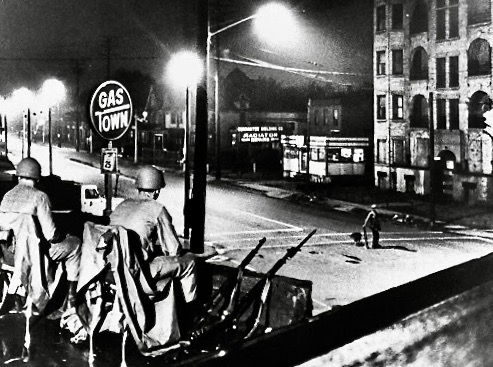
Poor Little Retard Kid

By Ed Staskus

   After Maggie Campbell was born family vacations became a sore point. “I have to drag those two around?” her mother Alma complained, pointing to Maggie and her older sister Elaine. Fred her husband took a slurp of his Manhattan. The day Bonnie and Brad came on board vacations came to a dead stop, except for once. When Elaine had been the one and only, she went all the time, mostly to Florida to see their grandparents, where she would ride fan boats and go fishing, and all her other fun stuff.

   Maggie screwed up the scheme of things, but still had her summer fun. When Bonnie and Brad rounded out the family her mother blew her top. “Too many kids,” she complained after they were born. The family vacations were more-or-less over and done with after that.

   “I never wanted you kids. You are all your father’s idea,” Alma told them their entire lives. She meant the children were a bad idea since they were her husband’s handiwork. “Why are you even here? You’ve ruined my life!”

   Her mom never wanted any of them, so she was sullen whenever one of them was in the house. Anytime one of them would walk into a room she got irate that they were living and breathing and asking her for something. Whenever all of them walked in all at once she hit the roof, exasperated. 

   “It’s a good thing she doesn’t have a gas chamber in the basement,” Maggie told her brother and sisters. She didn’t know gas chambers were frowned on in Bay Village, Ohio. Even so, knowing wouldn’t have helped.

   Later, when they got older, Elaine was ostracized from the family, and Bonnie cut herself off. Elaine locked herself in her room and never came out. Bonnie was always fuming if she was within a mile of the house. 

   Whenever Brad made his parents mad, Maggie would jump in and take his punishment. She couldn’t stand to see him get it. None of them wanted to get hit. But the sisters were always throwing each other under the bus. “The bad part is your sisters then grow up hating you.” That’s how there was the mess between them and Maggie, a mess that wouldn’t go away. She wasn’t saying there weren’t good times, but it was tough sledding.

   The one and only all in the family vacation they went on her whole life was to Disneyland. Her mom was sullen about it, complaining that it was like corralling cats. One morning Maggie was with her. They were out searching for breakfast. No one knew where Elaine was. She had just walked off by herself. Bonnie took Brad with her, and their dad went to find tickets to see the Country Bears Jamboree.

  That’s the only reason he had agreed to go to Disneyland to begin with. He was a stockbroker and vice-president at Prudential Bache in downtown Cleveland where moneybags went every day but loved the Country Bears and couldn’t get enough of them. He laughed ear-splittingly at the mention of them.

   When her mom and she finally got trays of breakfast for everybody they couldn’t find anybody, so they sat down on a curb. A minute later, sitting on the curb, looking up, they saw Bonnie and Brad go slowly past, leaning back in a horse-drawn carriage, waving at them like movie stars

   Alma and Maggie looked at each other. Where were the rest of the lost and found? Their food was getting cold.

   They saw the Bear Jamboree later, and the next day Maggie spotted Donny Osmond riding the same monorail with them out of their hotel. Her sisters loved Donny Osmond but wouldn’t go up to him. They were scared skittish. Maggie was gun-shy, too, but her dad pushed her in Donny’s direction, anyway.

   “Go get his autograph,” Fred said.

   “No, no, no,” she said.

   Fred pushed her forward. She got a push in the small of the back running start, and the next thing she knew was standing in front of Donny Osmond. Maggie was just flabbergasted. She had seen him on TV and now she was standing less than a foot from him. She stammered and bumbled fumbled with her hands. She got his autograph, although she didn’t know how. Maybe he felt bad because he thought she was special needs.  

   “Poor little retard kid,” he probably thought and gave her his autograph. He could be cavalier, unless they were lookers, when he got even more cavalier. When the wheels of the monorail stopped, Maggie ran off the car as fast as she could. One of her shoes went flying. Donny Osmond ducked. It hit Micky Mouse who was behind him. Mickey gave Donny a dirty look.

   “Why would you do that to me?” she asked her dad. “Why me?”

   After the vacations stopped Maggie went to Bay Village High School. She was a lifeguard at the Bay Pool and a Bay Rockette on the kick line for two years. She had many friends growing up, but hardly ever had them over to her house. She went to their houses. She was always leery of having them over because she never knew if her dad would out of the blue lose his temper or her mom would out of the blue start something disastrous.

   If anybody liked something Alma was always going to find a way to not like it. After Maggie moved away, her sister Elaine, who had long since moved away, wanted a family heirloom their mom had, a bench that had been in their great grandparent’s house, but Alma wouldn’t let her take it.

   Her parents had the bench in their split-level family house in Bay Village, at the end of their bed, but when Fred passed away and Alma re-married in the blink of an eye, marrying her old high school sweetheart from Jersey Shore, and moving to a new house in North Ridgeville, she put it away in her garage.

   Elaine wanted the bench bad. Maggie told her mom over and over that she wanted it, but Alma said, “No, she can’t have it, and that’s final.” It was like talking to a blockhead of wood.

   “What are you doing with it?” Maggie asked. She knew the answer, which was nothing, but wanted to hear Alma say it. “No, no, no,” was all she said. It was because she knew Elaine wanted it that she wouldn’t give it to her. That’s the way Alma was. If someone loved something, then she hated it. She had always been like that. Their dad could be cool sometimes, at least. Maggie knew, even though he beat the tar out of them, that he cared about them. But, their mom, not so much, if at all.

   Maggie had a Rockette party at their house before her senior year, at the tail end of August. The party came out of left field. They were at practice and their coach said the first football game was coming up soon. It was on September such-and-such, but they didn’t have a place scheduled for their potluck, yet.

   “We can have it at our house,” Maggie blurted out. Just like that, thirty high school girls were going to be coming over to their house. She called her dad at work. He sounded happy to hear from her.

   “Hey, dad,” she said. “I just invited all my friends over for a potluck.”

   “Sweet,” Fred said. “We’ll make it work.” Maggie was amazed and hung up before he could say anything else. She didn’t say anything about the potluck party to her mom. It would have been like poking a hornet’s nest with a stick.

   Her dad came home early from work the day of the party, brought all the hot dogs hamburgers buns and pickles, and enjoyed having her friends in the backyard. He was all over the place with his camera and took a ton of pictures. It was a good time. Her mom stayed in the house and never came out. Fred loved it, but Alma was angry and sulking that her daughter had all her friends over.

   Maggie loved being a Rockette. She was one of the in crowd during her sophomore and junior years in high school until the night not long after the party when she tore her hamstring in three places. It was an act of God, but a misadventure that was going to take three or four months to mend. She had to give up being a Rockette her last year of high school because of her leg.

   It was terrible, like she had lost something special, something she could never get back.

Ed Staskus posts stories on 147 Stanley Street http://www.147stanleystreet.com and Cleveland Ohio Daybook http://www.clevelandohiodaybook.com. To get the site’s monthly feature in your in-box click on “Follow.”

Horrible House

By Ed Staskus

   Mike Butler was catching some zzz’s beneath a clear night sky and three-quarter moon. When he woke up, he woke up quickly. The car came to a stop below him, the engine went dead, and a car door opened. It closed quietly, a trunk opened, and closed quietly.  He peeked down through the slats of the second story deck. The trunk wasn’t a trunk. It was a hatch. The car wasn’t a car. It was a black Lexus SUV.

   A man carrying a rolled-up bundle, like a carpet, wrapped in plastic, over his shoulder, went into the house through the side door. He beeped his way in with his set of keys. Mike rolled quietly off his folding chair. He stood to the side of the sliding glass door. No lights had come on and he couldn’t hear the man in the house. Was he coming upstairs or staying downstairs?

   Should he go or should he stay? He knew he could ignore the stairs, swing over the railing, and drop soundlessly down on the sand at the back of the house. He didn’t know where the windows there were, not exactly, even though he had helped cater some parties in the house last year. He decided to stay.

   He didn’t have to wait long. When the man came out of the house he walked to the front of the Lexus, leaned back on it, facing the dark ocean, and lit a cigar. In the flare of the lighter his lips were pinkish, like pink goo. The ash from the cigar flaked off and floated like charred mercury onto his safari jacket.

   Mike stayed in the shadow of the eaves where he could see the man but the man couldn’t see him. He could hear Cape Cod Bay at high tide on the other side of the beach. The man with the cigar in his mouth got into the SUV and drove away.

   Mike went the way he had come, walking up Chequessett Neck Road to Great Island where he had parked. At home he rolled a smoke. He had been surprised as anyone would be surprised by anybody showing up at a seasonal mansion in early May, in the middle of the night, even though the weather was unusually fine.

   Vera Nyberg was and wasn’t in a hurry. If she left in the next five minutes she might be on time for work. If she took Archie for a walk she would be late for sure. Halfway into spring, halfway to summer, her job wasn’t so much work as it was holding down the fort. It’s never too late to go and get that fresh air feeling, she thought, thinking about going for a walk.  

   Besides, unless it was summer, when everyone on the Outer Cape worked like dogs, she tried as much as possible to get to the office late and make up for it by leaving early. If she left early today she could make the five o’clock Strong Flow class at Quiet Mind in Wellfleet.

   “Come on Archie,” she clapped, reaching for the Airedale’s leash. They left the house on Washington Avenue and walked up Commercial Street. When they got to Lopes Square they turned down MacMillan Pier to the end where the ferry came and went to Plymouth. 

   Archie was her constant companion, her watchdog, and one of her best friends. He liked running full speed ahead into streams ponds ocean. In the 1920s President Warren Harding had an Airedale. His name was Laddie Boy. President Harding always included the dog in his cabinet meetings at the White House. Laddie Boy had his own special hand-carved chair.

   They’re all mongrels now, Vera thought

   “Come on, boy, let’s go home,” she said.

   Archie liked Vera more than anyone. He felt like there were three faithful friends in this life, ready money, a good dog like himself, and a good master like Vera. He liked everything about her. She enjoyed reading books at night. He curled up at her feet, keeping her feet warm and his belly warm, too. “Outside of a dog a book is man’s best friend,” said Groucho Marx. “Inside of a dog it’s too dark to read.”

   Archie didn’t take it the wrong way. Besides, he didn’t know how to read. He wasn’t planning on learning, either, although Vera sometimes read stories out loud to him. Learning to read was the first step on the path to a career. He was not a working dog.

   Dick Armstrong was a well-built man with thick lips and a crooked smile. At least Vera Nyberg thought so. She smiled back at him as he sat down carelessly. He wore a cotton safari jacket and aviator sunglasses. He had scrupulously white teeth, but she didn’t like the way he smiled, or the way he sat down. His face was scabrous and she found herself looking away, only glancing at him.

   Vera shot an eye at his driver’s license. He did and didn’t look like himself, two-faced.  She thought she might not like him. What if she had planted a bomb in the seat cushion by mistake?

   “What can I help you with, Mr. Armstrong?” she asked.

   “You work for me,” he said. “You watch our house.”

   Vera smiled politely and imagined a small bomb in the seat cushion, again.

   Vera Nyberg was an Ashtanga Yoga teacher, but yoga didn’t pay the bills in the off-season, or the on-season, either. She worked part-time for Focus Home Security, in Orleans, in a small office condo off Cove Road behind the Orleans Post Office. The office was on the first floor and faced south, lit by bright natural light on sunny days and gray natural light on cloudy days.

   The drive was more than forty minutes from her rented room in Provincetown, but since she worked part-time, and since it was an off-season job most of the time, it wasn’t too long or too much. Route 6 was never overburdened in the off-season. Besides, most of her work was on-the-road work like property checks home watch resetting smart home features in Wellfleet, Truro, and P-Town itself, all of which were closer than the office.

   She baby sat summer vacation mansions and held the hands of absentee landlords. Vandalism, storm damage, and frozen pipes were usually as nerve wracking as it got. Property surveillance was Focus Security’s bread and butter.

   “I pay for your key-holding service, and since I was passing through, I want to stop at our house and walk through it, look everything over, before we come up next month,” said Dick Armstrong.

   Who passes through the back end of a peninsula? Vera asked herself.

   “Of course, we can arrange that,” she said. “When would you like to inspect the house?”

   “Now.”  

   Twenty minutes later they got off Route 6 and drove through Wellfleet to the bay side of the town. The Lexus blotted out the sun as Vera followed behind Dick Armstrong down the curvy Chequessett Neck Road. Archie lolled in the back seat of Vera’s Honda CRV.  

   She had never been inside the Armstrong house, but had seen it often enough. She took Archie for walks on the long beach past what was called The Gut. After parking at Great Island, unless she cut through the woods and took a track on a backside dune, she walked past the house at the end of the road. She had even parked in their driveway several times, when she knew the house wasn’t occupied, when she was short on time for a quick short hike. 

   The Focus Security magnetic vehicle sign came in handy then.

    The house was on the edge of the Cape Cod National Seashore and stuck out like a sore thumb. She knew it had a reputation. Eight years ago, when it was being built, it was sometimes called Horrible House. 

   An older, smaller house had been bought and torn down and the Armstrong’s had somehow convinced the town’s building inspector to give them a permit to build a house three times the size. It dominated the view across the Herring River. Wellfleet’s homeowner’s association and the National Park Service appealed the permit, but the house got built, anyway.

   “Kill the Rich!” had been spray-painted below the garage door windows before the house was even finished. Focus Security parked a man in the driveway until the commotion died down. Since then, the Armstrong’s spent three or four or five middle-of-the-summer weeks on the Outer Cape. Sometimes their children, extended family, and friends took the house over for a weekend. After Labor Day it was shut up for the winter.

   Everything about the house was Cape Cod-like, from the cedar shingle siding to the paired windows on both sides of the central front door to the fishy weathervane. Everything was right about it, perched on the sea, except for the King Kongness of it.

   They parked in the driveway. Vera looked up at the second story deck. She liked the deck, round high facing the ocean.

   “Unlock this door,” said Dick Armstrong, pointing to the side door. “I don’t want that in the house,” he said, pointing to Archie in the back seat.

   Archie didn’t like the way the man said it, but he didn’t bark about it.

   As soon as they were inside the house, he jumped out of the car window Vera had left open for him. He barked at the Lexus. He sniffed at one of the rear tires, lifted his hind leg, and peed on it. Archie could hear and smell the ocean. In a minute he saw it and in the next minute he was at the shore, in the water.

   Inside the house Vera sat at the kitchen table while Dick Armstrong strode through the rooms, strode upstairs, and strode back into the kitchen.

   “Everything looks good,” he said. “Come down to the panic room. I want to check the alarm system and security cameras.”

   “I thought they were called safe rooms.”

   He gave her a sharp look. “Panic room.”

   The basement floor was a mirror-like epoxy painted slab. There were a pool table, a billiards table, a snooker table, and a bar with eight or nine stools. The safe room was a concrete square in the corner. The door was a steel door. The hinges and strike plate were reinforced. A table with four chairs was to the right of the door. An open bathroom with a first aid kit on the wall was behind the table. On the left a two-door cabinet held dry goods, bottled water, and gas masks. In the left corner were an office chair and table, an iMac, shortwave radio, and closed-circuit monitors.

   A woman was splayed on the floor, dress disordered eyes closed face blank, dark red blood drying in her blonde hair.

   Vera looked up as Dick Armstrong took a step at her and grabbed her by the throat. His face looked like murder. She slashed at his mouth. His lips came off in her hand. He hit her with a short hard right to the temple and her legs went wobbly. She leaned into him. A black inky film filled her eyes. She lost consciousness as he let her go to the ground.

   Archie was almost dry by the time he ran back to the car. He had a hard dense wiry coat. Thick heavyset dark clouds were rolling in across the bay. When Dick Armstrong came through the side door Archie wondered, where’s Vera? The side door slammed, and the man strode towards his car.

   Archie didn’t like the smell of it. The man had a sour smell. He wanted to ask him where Vera was, but the man, opening his car door, kicked at him. Archie was an Oorang Airedale. His great-great-great-great grandfather had been a fierce competitor in water-rat matches. He jabbed headfirst at the man’s leg, slashing through the pant fabric, and biting into warm flesh. He could taste blood in his mouth.

   It tasted good.

   Dick Armstrong yawped and flung himself into the Lexus, lurching and grabbing at the door. Backing out of the driveway he swerved at the Airedale, but Archie was graceful fast lissome, and it was child’s play jumping to the side.

   The better I get to know people, thought Archie. He wasn’t trying to be narrow-minded, but what he liked about people most of the time was their dogs. Dogs never bite me, only people. He jumped into the CRV. The rain fell like dread.

   Vera Nyberg blinked her eyes open. She was lying prone on a medical exam table. The ceiling was white. She took ten twenty then a hundred slow steady breaths staring into the white. When she was done, she tried to prop herself up on her elbows. She slowly deliberately wary lay back down on her back. Her head hurt like somebody had hit it with a hammer. Hedging her bets, she closed her eyes and fell back into the inky blackness. 

   Officer Matheus Ribeiro was stocky and had short stocky black hair. Besides routine patrol work, he was the medical supply officer and detainee monitor. He sat across from Vera in an interview room in the Wellfleet Police Department checking and double-checking a sheaf of papers on a clipboard. Vera knew him, not so much as a policeman, but more as a friend of Rachel Amparo, her friend on the Provincetown Police Department.

   He was from Brazil, Porto Velho, one of the state capitals in the upper Amazon River basin. He was a graduate of the Plymouth Police Academy and had been on the Wellfleet force for six years. He spoke Portuguese, Rachel spoke Portuguese, he was a great cook, and Rachel loved great food.

   One night, over plates of bacalhau, Vera asked him what he liked about being a policeman.

   “I get to drive as fast as I want,” he said.

   Rachel, whose duties routinely involved foot patrols, scowled.

   “What the hell, Vera,” he said. “What happened?”

   “Where’s Archie?” she asked.

   “He was asleep in the back of your car. We called Bruce. He and a friend of his picked Archie up and your car and took them home. Now tell me what happened.”

   When she was done, she laced her fingers, reached up and behind the chair, and stretched. Officer Ribeiro leaned back in his chair, tipping on the back legs. He straightened up.

   “Mr. Armstrong was who called us about you,” he said.

   “What?”

   “He called the department and said he was worried, said he had called from Boston and asked that somebody from Focus walk through his house, that he was coming up for the weekend, since the weather was so good. He said you volunteered and would call him back within the hour. When you didn’t call by the end of the day he called your office, no answer, and then called us.”

   The policeman drank from a bottle of Poland Spring.

   “He asked us to drive by, see if everything was OK. When we pulled up your car and Mrs. Armstrong’s car were in the driveway.”

   “Mrs. Armstrong? There was no Mrs. Armstrong, only him, by himself. And the woman.”

   “The woman was Mrs. Armstrong. She was in the safe room in the basement, with you, except she was dead.”

   “That was the first and only time I ever saw her.”

   “I was going to ask you about that. We’ve told Mr. Armstrong about her death, and he’ll be here today.”

   “If that’s him in the picture you showed me, that’s not exactly him. That’s not the man who slugged me.”

   “There’s something at odds here.”

   “What time is it?”

   “Nine, nine in the morning.”

   “When did Mrs. Armstrong die?”

   “The medical examiner so far is saying ten, eleven o’clock, the same time you were there.”

   “How did she die?”

   “The same as you, blunt force, but you didn’t die.”

   “Am I a suspect?”

   “Yes and no.”

   “I like the no part better. Can I go have breakfast?”

   “How’s your head?”

   “It could be better.”

   “There’s no substitute for a hard head. Where are you going?”

   “The Lighthouse, then home, I’ve got to shower, and change. I’ll be back.”

   “How are you going to do that?”

   “I was hoping you could drive me to the Lighthouse. I’ll call Sandra on the way. She can take me home. Archie and I will be back by five.”

   “This isn’t exactly how murder investigations are supposed to go.”

   “You’re right about that, about this being murder. He was the man who slugged me, with his wrong face or no wrong face. I think it’s all just sand in our faces, just some sleight of hand.”

   “We’ve confirmed him to be in Boston with a friend yesterday.”

   “What kind of a friend?”

   The policeman hesitated. “A close friend.”

   “It has to be something about the house, something personal. Why not solve your problem in Boston, or get someone else to solve your problem, make it disappear? I’ve got a friend, one of Sandra’s catering guys, who was once a jailhouse lawyer, before he went more-or-less straight. He’s an IT jack-of-all-trades, good at following the money. He’ll know how to find out.”

   “I know Mike Butler, so let’s drop that within earshot of me,” said Officer Ribeiro.

   “Man, that’s crazy, I was there the night before last, hanging out on that second story deck of theirs,” said Mike Butler.

   Vera, Sandra, and Mike were having a late breakfast at the Lighthouse. They sat at the bar. Sandra lived in Eastham but worked part-time at Herridge Books in Wellfleet. It was a small bookstore with no magazines and no café, just books. There were books in stacks on chairs tables and the floor. It smelled like a bookstore even with the windows open.

   Sandra catered private parties on the side. Mike was one of the local men who worked with her. In the off-season, in the late afternoon or evening, he often roosted on decks and porches of unoccupied seasonal houses on seaside lots. “What they don’t know won’t hurt them,” he said. He never brought his iPhone. He never parked in the driveways. He always brought his own Eddie Bauer folding chair.

   “Yeah, there was a guy, some kind of black car, a big one, like a Caddy, or a Lexus, maybe” he said. “He carried something into the house, didn’t stay long. As soon as he was gone, I made myself gone, too.”

   “Can you find out about that house, about them, who held the purse strings, and who was on the outs with who?”

   “Sure, after breakfast, give me a few hours. Call me if I don’t call you. I might be taking a nap.”

   Men are most sincere when they’re in love, when they’ve been empowered, and when they’re committing murder. Dick Armstrong must have fallen out of love with his wife, thought Vera. Murder wasn’t the next step, but it might be if his love had turned to hate. Murders are always a problem when they’re spur of the moment crimes, when they’re mistakes. But Dick Armstrong had gotten too clever for his own good trying to send a message to the graveyard. When someone has thought and thought about something it isn’t hard working backwards and reading their thoughts.

   Vera showered, fed Archie, and meditated for an hour. Most days she meditated for half an hour, except when she was busy. Then she meditated longer. She had been busy the past day-and-a half. Breathing exercises and meditation were about everything and nothing at the same time. They were acts of slowing down, getting centered, and finding some understanding and compassion for the living and the dead.

   “It’s his money, real estate money, plenty of it and plenty of it shady, but all the personal property was in her name,” said Mike Butler as they sped down Route 6 to Wellfleet.” She was after a divorce, she’s saying abuse, but she wanted more than alimony, she wanted the summer house.”

   “The horrible house,” said Vera.

   “It’s not so horrible, kind of big, but a great view of the bay.”

   “Why did she want the house?”

   “She wanted it because he wanted it. He planned the house just the way he wanted it, he bought off everybody and his brother, he went to court, fought off the do-gooders, the Feds, got it built even though they made him jump through hoops, got it done. Hell, he probably loved that house a lot more than he loved her. She probably knew that, too.”

   Mike Butler had grown up in old Provincetown before it became new Provincetown, when property was cheap and rents low and gays and hippies were starting to show up. He didn’t downpress anyone one way or the other. His father had fished for cod on his own boat out of Provincetown Harbor. Mike still called Commercial Street Front Street and Bradford Street Back Street.

   He didn’t care about bankers and stockbrokers buying up land, either. He had his family’s old small house in Provincetown. The front door still faced the ocean, unlike most of the town’s waterfront houses, which had been turned round so the front doors faced the street. He kept to himself, except when he was working, or watching a BoSox game at the Lighthouse, a Pabst Blue Ribbon at hand.

   Mike lived with a box turtle he’d had since he was a kid. Inscribed on the underside of the shell of the turtle were the initials M. B. and the year 1979, where he had carved them with a pocketknife on his 18th birthday, six years after his father gave him the baby turtle for his birthday.

   Archie liked riding in the CRV with the windows open, just in case anything came up that he needed to bark at. But he had a bad habit of barking at anything that moved, a crossing guard, a passing bicyclist, a rafter of wild turkeys on the side of the road. Sometimes Vera told him to “Shut the hell up.” He didn’t know exactly what hell was, but he knew exactly what she meant when she said it. She wasn’t shy or dry nor someone who beat the sense out of words.

   When they pulled into the Wellfleet Police Department parking lot and Archie barked at Dick Armstrong getting out of his white Lincoln Navigator, Vera said, “Good dog.” Two men in suits went into the station with him. “At least one of them is a lawyer,” said Mike. He rubbed the top of Archie’s head.

   The police station was on Gross Hill Road off Route 6, tucked beneath Oakdale Cemetery where Cemetery Road began and ended. “I’ll stay here, maybe go for a walk in the graveyard,” said Mike. Vera and Archie went into the station. Vera sat on a plastic chair in the lobby and Archie flopped down on the floor. She had gotten a good look at Dick Armstrong and couldn’t swear he was Dick Armstrong.

   A half-hour later, when Officer Matheus Ribeiro came out to the lobby and asked her if she could identify Dick Armstrong as the man who had attacked her in the safe room, she said, “No.”

   “Too bad,” he said. “I don’t think we’re going to be able to charge him with anything.”

   Ten minutes later Dick Armstrong and the two men accompanying him pushed into the lobby on their way out of the police station. One of the men gave her a look-see. Dick Armstrong stopped and eyeballed Archie.  

   Archie jumped up and started barking his head off. It was the sour-smelling man he had bitten outside the big house. He barked and barked but could tell no one was making heads or tails of what he was trying to say. “Keep that damned dog away from me,” shouted Dick Armstrong.

   Archie lunged at him, got his teeth into the right pants leg, and tugging violently tore the fabric off the leg at the knee. One of the men started to beat Archie with his briefcase. The police dispatcher, another policeman, and finally Officer Ribiero burst into the lobby, manhandling Dick Armstrong away from Archie, pulling Archie away from him, and pushing the lawyer with the angry briefcase away from the fracas.

   “Look what that goddamned dog did to my pants,” yelled Dick Armstrong.

   Everyone looked

   “Look at his leg,” said Vera. “Look at the bite mark on his shin.”

    Everyone looked.

   The bite mark was black and blue in an ugly ring where the skin had been broken. Five inflamed red marks defined where canine teeth had drawn blood. Some kind of antiseptic cream was smeared over the wound. Two of the red marks were back-to- back.

   “That’s Archie’s bite,” said Vera. 

   “What?” asked Officer Ribiero.

   “One of his baby canines got retained, and since it wasn’t bothering him when his permanent teeth came in, I just let it go. He’s got two canine teeth on that one side, which is why his bite mark is the way it is. I’d know it anywhere, because that Dick Armstrong isn’t the first Dick Armstrong he’s bitten. If this man was in Boston yesterday, how did he get bitten by my dog on the same day?”

   “Get the Medical Examiner on the phone,” Officer Ribiero said to the police dispatcher. “In the meantime, I think it’s best if we all go back inside and go over this from the beginning. And you,” he said, pointing to Vera, “bring that dog with you.”

   Only the lawyer with the out of gas briefcase objected.

   “They took photos, took some measurements, and took some samples from Archie and Armstrong,” said Vera.

   Rachel Amparo and Vera were at Terra Luna in North Truro.  They sat at the bar and shared plates of artichoke heart pate and grilled sardines. Rachel sipped on a Flower Power cocktail while Vera pulled from a bottle of Tank 7 Farmhouse Ale.

   “If the DNA matches it’ll throw a new light on everything,” said Rachel. “That’s when the trouble will start. One lie will lead to another until it’s all a house of cards.”

   “I’m always telling Archie he’s not allowed to bite people,” said Vera, crunching on a sardine. “He agrees, I think, but he seems to think it’s OK to bite anyone who’s in the wrong place at the wrong time doing the wrong thing.”

   “He’s a good dog,” said Rachel.

   Archie was on his stomach lounging in the orangey sunset at the back of the small restaurant. Tony was working in the kitchen. He could see him through the screen door. Archie’s chin was flat on the warm grass, back legs tucked up under him. His front legs were extended before him. He could clearly smell pork chops being grilled.

   Maybe Tony will bring me something to eat soon.

   He was glad he had been able to help by biting the sour-smelling man. He didn’t often bite people. He preferred to bump them when he had to.

   One night Vera had read a story to him called The Dog Who Bit People, about Muggs, an Airedale like him, but unlike him a dog who bit everyone in sight, although he didn’t bite his family as often as he bit strangers. “When he starts for them, they scream and that excites him,” explained the mother of the house. The city police wanted him tied up, but he wouldn’t eat when he was tied up.

   Archie thought Muggs lacked good sense.

   When the screen door swung open Archie jumped up. Tony was bringing out a bowl of water and a plate of pieces of pork chop and the raw meat bone.

   “The bone is for after your meal,” said Tony.

   Later, chewing on the bone, he thought the sour-smelling man may have had the wrong mug shot, but he knew in his bones he had bitten the right leg on the right man at the right time.

Ed Staskus posts stories on 147 Stanley Street http://www.147stanleystreet.com and Cleveland Ohio Daybook http://www.clevelandohiodaybook.com. To get the site’s monthly feature in your in-box click on “Follow.”