Category Archives: Home Movies

Circle the Wagons

By Ed Staskus

   Rytas Kleiza was born in the same neighborhood the same day as his dog, on a Monday, at the start of the week. The Lithuanian Village, the new community center in their North Collinwood neighborhood, was built the same year. He could have seen it from his crib on Chickasaw Avenue if he had been ahead of his time enough to look. He was able to stand at an early age, although he couldn’t make out what was what.

   Ugne was his best friend, more good-hearted friendly closer to him than anybody except his parents. Unlike many of his friends she only tried to bite him once. Dogs never bit him, only people.

   “Stop messing with her,” his mother yelled from the kitchen where she was making cepelinai, spilling her sentences into the dining room. But he wouldn’t stop messing with her, and suddenly she growled, bared her teeth, and jabbed at his arm.

   They were under the dining room table. Ugne had a deadly scissors bite, but she looked up at him with her round eyes when he squawked, and didn’t squeeze her teeth into his skin, after all.

   “You deserved it,” his mom declared, rolling up another whopping-sized potato and meat dumpling, not realizing the dog hadn’t bitten him.

   Ugne, which means fire in Lithuanian, was a cross breed between a Cocker Spaniel and a Poodle, parti-colored, black with a white patch on her chest. One of his friends told him Poodles were a weird religious cult, but Ugne wasn’t like that. She was on the level. She was on the small side, big ears and big feet, and a wavy tail.

   Rytas got Ugne eleven months after he was born. His dad got Bandit, who was more-or-less a Beagle, two years later. Rytas grew up with both dogs. Ugne slept on his bed and Bandit slept underneath the bed, except when it was winter, when they slept together curled up around and on top of him.

   His mother Gaile and father Andrius were from Lithuania, where almost everybody had dogs. They ran away from their Russian overlords in the mid-1970s, burning down their little farmhouse before leaving, setting their dogs free, knowing they would find a new home fast enough, giving the thumb to the Reds. They stole a small sailboat in Ventspils and made for Gotland, more than a hundred miles away. They made it there in record time. They made it to the United States soon enough.

   Ugne and Bandit were his best pals. They laughed with their tails. They laughed it up every day and he gave both of them a brisk goodbye rub on the head every day before school.

   His dad got Bandit because he wanted a hunting dog. But at the end of the day Bandit was gun-shy. They never found out why, no matter how many vets they took him to. They all ended up scratching their heads, saying they couldn’t explain it, since he was the only hunting dog any of them had seen who was scared that way.

   Andrius had to put his guns away and learn to hunt with a bow and arrow. “Rupuze,” he swore under his breath. At least he didn’t bust out with “Goddamnit!” which meant real trouble. Rytas knew full well what “Goddamnit!” meant.

   Ugne got stopped in her tracks in their driveway on Thanksgiving Day when they were both 14-years-old. She was still full of life, still kicking around, other than being blind and deaf. One minute she was standing in the driveway and the next minute she had a heart attack and dropped dead. By the time his brothers and he rushed to her, she was lying on her side, quiet and still. They buried her in the backyard before the ground froze.

   They had to put Bandit down when spring broke the next year. After Ugne died he started to slip away. They were like an old couple that had always been together. He went from being a healthy dog to being a decrepit dog. He gained weight, but then lost his appetite, lost weight, and started dragging his hind legs behind him like a cripple. When they took him to the vet’s office, he told them there was nothing wrong with him.

   Bandit was just giving up on life. They all knew that. The house got quiet and sad.

   When his dad carried him into the vet’s office to be put down, Bandit lifted his head and looked at his mom standing next to the exam table. He looked Gaile right in the eye. Everyone could see that a thought was going back-and-forth between them.

   “That was hard,” his mom said, and after they buried Bandit next to Ugne, she said they couldn’t have any more dogs.

   But two years later his younger brother told all of them he wanted a dog. “Everybody else has dogs. I want a dog, too,” he said. Their neighbor’s Lab down the street played footsies with a Shepherd that summer. In the fall there was a bushelful of black puppies. Everyone they knew took one, including his brother, which meant their mom got a new dog.

   His dad named him Buddy, after the baseball player Buddy Bell. Andrius had been a big fan back in the day when the third baseman played for the Cleveland Indians. He grew up to be like a full-sized Lab with a delicate face, small ears, and a spotted tongue. When he was a puppy Buddy liked digging holes in the backyard, sitting in them, and staring out at everybody.

   Sometimes he was The Shining. Other times he was a one-man Tasmanian Devil.

   Whenever they left their shoes in the open by mistake Buddy would chew them to pieces. He gnawed on electric cords in the house and telephone wires on the outside of the house. Their phone once went dead for a week. He ripped the aluminum siding off the house, but couldn’t chew it, and so gave it up. But the garage was still sided in clapboard. He tore one side of it off, as far up as he could reach, and chewed the wood to shreds.

   “Seriously, I was only outside for five minutes,” was the look he gave Andrius when he confronted him about it. His father had to contract for aluminum siding and get the garage done up. Buddy calmed down after three years, but not before being the most destructive dog anyone in their neighborhood ever heard of.

   On his second Kucios they left him in a cage for the night while they went to Midnight Mass at St. George’s in the old neighborhood. The church was going on eighty years, the first church ever for Roman Catholic Lithuanians in Cleveland. Before that they went to Polish churches, even though there was never a lot of love lost between them and Poles.

   They stayed overnight with relatives and the next morning after Christmas Day breakfast drove home. Coming up the driveway they noticed all the windows were open. They weren’t actually open, they just looked open because most of the curtains in the house were gone.

   Buddy was in the kitchen and beyond happy to see them when they walked in. The cage he had been locked up in was still locked. His dad rattled the door and inspected the sides. He couldn’t understand how the dog had escaped. Buddy Bell never said because dogs never talk about themselves.

   The curtains were torn down and lay on the floor. In the second-floor bedrooms their beds were set beneath windows and Buddy had jumped up on them so he could reach those curtains, too, and pull them down.

   “He tore the curtains down so he could see us coming,” his dad figured out when he realized Buddy hadn’t put the snatch on all the curtains, only those in the windows facing the front yard and the driveway.

   His father bought padlocks to secure the crate door so Buddy couldn’t ever escape again whenever they had to lock him up, but he did, over and over, like he was the Houdini Wonder Dog, no matter how many padlocks Andrius put on the latches. There was never a scratch on him, either. He wasn’t squeezing out. But by then he was finding his way in the world and his Christmas Eve rampage turned out to be a turning point.

   When Buddy came of age Andrius started taking him hunting. Labs are bred to be bird dogs, but Buddy wasn’t the best retriever of all time. He loved running around outdoors, and chasing anything that moved, but was terrified of water. Labs are water dogs, but even giving Buddy a bath was a titanic struggle. He whined and cowered when they rinsed him off with the hose.

   His father felt like he was cursed, like it was Bandit all over again.

   When they found out what happened, how the curse came about, they didn’t like it. Their next-door neighbor Emma Jean, whenever they were away the first summer they had Buddy, not liking his barking in his own backyard, sprayed him with their own garden hose until he stopped. Every time he barked, she snuck into their yard and sprayed him full in the face again

   After they found out Rytas and his brothers, the day Emma Jean flew to Las Vegas with her husband to eat drink and lose money, broke every window of her station wagon with baseball bats. They left her husband’s car alone, since he was innocent. It was in the garage, anyway.

   At home Buddy was their around-the-clock guard dog. He could wake up from a dead sleep in the blink of an eye, ready to go. He mistrusted all other dogs. They always knew when one was on the loose, thanks to him. He mistrusted all strangers, too. If a stranger came by their house, he watched them closely, and if they came up the driveway, he barked to let them know there was a dog in the house.

   One summer a dog living two doors down started barking all the time and wouldn’t stop. Somebody called the police and complained, saying it was their dog. They were sure it was Emma Jean, but by then the families weren’t talking. When the animal warden came up the drive, Buddy sat in the living room window watching him. He didn’t bark once. When the warden came to the front door and rang the bell, Buddy went to the door and waited. Gaile answered the door. Buddy looked up at the animal warden and the animal warden looked down at him.

   He told Gaile about the complaint. “But that can’t be right,” he said. “He didn’t bark when I walked up, or when I rang the bell, and he’s not barking now.”

   “That’s right,” Buddy said to himself, giving the warden a soft eyed loopy grin.

   None of them understood how Buddy knew to be quiet the day the authorities came to their house. But Emma Jean was off the hook. The three brothers put their baseball bats away.

   Buddy was wild crazy for doggie treats. Whenever they gave him one, he wanted another one right away. He wanted more for the next minutes hours days. When they let him out of the house after treat time he would run right back in, barging through the door, his doggo tongue slobbering for more.

   “Show some dignity,” they scolded him. “Do you want to be a fatso?” They never were able to break him of it. It was all just grist for the mill to him. He never got fat, either.

   After graduating from college, Rytas moved away from home, to the other side of Cleveland, to the west end of Lakewood, living alone most of the time, except for an occasional girlfriend and weekends when one of his brothers dropped Buddy off. He missed having a dog in the house. Her had a busy life, between work, jogging in the valley, getting together with friends for a Cleveland Browns game, but at a certain point he wanted something anything in the house day-to-day.

   Buddy was growing old. He was getting thin shaggy grayer by the month and having a hard time walking. Rytas knew he was dying and wouldn’t be seeing him much longer. He hoped the dog didn’t know, like Bandit had known. He decided to go to the SPCA shelter in Parma and find a puppy, sooner or later.

   Rytas grew up with mutts. No matter what breed they dressed them up to be, Ugne was a mutt, Bandit was a mutt, and Buddy was a mutt. His family didn’t pay for dogs. They found them for free. He knew that, but his brothers had forgotten. His younger brother Matas bought a Victorian Bulldog for a thousand dollars. Since then, he had spent thousands more on special kennels, training, and designer food, not to mention weekly canine whisperer sessions.

   His older brother Lukas and his wife bought a long-legged Jack Russell terrier. His name was Hank and he looked like Wishbone in the TV series. The real Wishbone read books and dressed up like Shakespeare, but Hank couldn’t read and had epilepsy. Whenever he had seizures he twitched and lost all his motor skills.

   Hank was high-strung and drove Buddy crazy whenever Lukas brought him along for a visit. Hank would go at him like a puppy even though Buddy was already of a certain age, and it pissed him off. He would bare his teeth and remind Hank that he had once chewed up and spit out garages. Hank would just get crazier, crossing the line, barking like a madman.

   “You’re in time out,” Rytas would say, pointing at him, shoving him down on his haunches. “Sit down there and don’t move.” He never really liked the dog but tried to hide it.

   Hank couldn’t be left alone because he might have a seizure any minute. Rytas baby-sat him while he was in college, which was how he paid for his over-priced textbooks. No matter that Lukas complained, it was cash on the barrelhead. He had to have it. His brothers had done better with pork barrels than him.

   Hank’s medication came with an eyedropper and Rytas had to be careful because a drop of it could and would burn human skin. He never understood why it didn’t burn going down Hank’s throat. The infernal pooch was inhuman.

   Rytas knew when Hank was having a seizure because he always got stuck behind the sofa. There was a wall at one end. Something would happen in his fido brain, he would walk behind the sofa, and then couldn’t move backwards. He froze until Rytas noticed. With all his medication, vet bills, and emergency room visits, his sister-in-law told him, when Hank died at five years, he cost more than their first child.

   He wanted to get a puppy at the start of summer, since he was a high school teacher, and had summers to himself. Knowing he probably wanted a Lab mutt, and knowing how Labs can be, he knew it would be best getting one when he was going to have free time. He wanted to be at home with the dog for three months. It would make the training easier.

   Rytas called the animal shelter at nine o’clock in the morning the day his vacation started. They told him they had twenty-some new puppies just in from Tennessee. When he got there at in the afternoon there were only three left. Everybody wants puppies and snatches them up like snapping your fingers. He got that. Everybody wants to start with a new dog.

   He had been to several shelters on his side of town, but all they had was full-grown Labs other people had given up on. He lived on the second floor of a Polish double and Labs start to have trouble walking when they get older. They get hip dysplasia. He couldn’t take a 60 or 70 pound already older dog to his second-floor rooms without taking on grief right off the bat. He had to be realistic.

   Going up and down aisles of stacked cages in an animal shelter is a down in the dumps experience. It smells like underarms and hot dog water. There are signs on all the cages. “My name is Kimmy. I am a 7-year-old Labrador. I love playing with children.” Wanting to take them all home is a cheerless dead-end. It’s like walking through a prison where everybody is on death row and you can only pardon one of them.

   The three dogs that were left at the shelter at the end of the day were two Boxers and a Lab mix. He didn’t know much about Boxers, and some other people were looking at both of them, anyway, so he turned his attention to the Lab.

   Shelters say to lay the puppy you are interested in on its back. If it looks at you and shows submission, that’s a good dog. If they don’t, they might be headstrong. He put the 8-week-old mutt on his back. He held him down even though the dog wasn’t trying to go anywhere. He looked everywhere except up at him.

   Rytas loved the white on his chest, and his one white paw, and that he was missing his tail. He thought it was a unique personality trait, even though he could tell that the no tail was a deformity.

   “I’ll take the Lab,” he told the attendant at the counter.

   “Are you sure?” he said. “He’s shifty-eyed, and did you see his tail?” That bothered Rytas. Because of the tail he didn’t have, he might not make it. That’s why he took him, finally, because of his missing tail.

   He named him Bronislovas, which means glorious protector, but called him Bron, after LeBron James, who was bringing championship glory back to Cleveland. When he went to work in the fall, he enrolled Bron at Pawsitive Influence, a cage-free doggie day care. It took more than a week, but he warmed up to it. After the first month he got excited every time they drove there, passing landmarks like the Speedway gas station and Merl Park. A friend of his worked there. He paid special attention to Bron, clipping his toenails, training him to sit and heel, and keeping Rytas up to date on his progress.

   Rytas never knew what got into him, but he started to think Bron needed a companion. He went back to the animal shelter. It was October, rainy and cold. He thought to himself, you know what, the puppies are all going to get adopted, so I’ll look at some of the slightly older ones. But most of them were either too old or too big for him, until he came to a row of cages full of puppies, all jumping up and down. In a cage by himself was a bigger black pup about the same age and size as Bron.

   “No one’s going to look at me, and that’s OK, la, la, la,” the dog was thinking, laying there, his paws crossed in front of him.

   “Can I walk him,” Rytas asked, and was given a leash.

   He didn’t just walk when he walked. He pranced when we got going, which surprised Rytas because he was a stray, although not a common stray. He had been trucked up to Ohio from the south somewhere, where there are lots of strays and kill shelters, but he was different. Even though things had gone wrong for him, he hadn’t gone wrong.

   “We think he came from a dog-fighting ring, a big one that got broken up. Even though he’s young, he still has a few scars, his front and back dewclaws are missing, and his tail’s been clipped,” a vet technician cleaning a nearby pen told him.

   Tails are a weak point because they can be grabbed. When dewclaws are ripped off, they get infected, so psycho dog fighters surgically remove them. It’s painful if the dog is older than even a few weeks because dewclaws are more like an extra toe than a toenail.

   The inside of his mouth was scarred, and there were lesions on his snout. He was a little less than a year old and a wide smile was pasted on his face as Rytas walked him around the perimeter of the cages.

   “I’ll take him,” he said.

   “He’s got a lot of Pit Bull in him.”

   “That’s OK, I’m good with mixes.”

   “What about his tail?”

   “It will grow back.” It was the tail of two pups. It grew back better.

   The new dog was timid around Bron for weeks, even though they were almost twins. Rytas named him Sabonis, after Arvydas Sabonis, the best Lithuanian basketball player of all time, so he and Bron would get along, and they did, finally. Sometimes he called him Bonehead, but only when he had to. He stopped taking Bron to the doggie day care since he and Sabonis had each other all day.

   He bought leashes for them and took them for walks in the Rocky River Metropark. Off the leash they ran across the meadows and right to the river, and all that fall had a ball. Whenever another dog came near him, though, Sabonis would get skittish and aggressive, barking and feinting at them, although Rytas could see he was shaking. He was careful at the Lakewood Dog Park, making sure there weren’t too many other dogs for him to worry about.

   He was walking them down Rockway Avenue one day, a nearby side street, when he overheard talk on a front porch, talk about his dogs. “I think they’re mini-Doberman Pinschers,” a thick-set man with eel-like lips hissed, as though they were supersized rats. “Dude, you should shut up, you don’t know dogs, at all,” he said. He knew how to talk down to teenagers when he had to. He knew how to talk down to nitwits, too.

   Rytas had a vet look at Sabonis, but they weren’t sure what breed he was. He could have had him genetically tested, but that wasn’t going to happen. He needed a new hard-working vacuum cleaner before he paid for anything like that.

   Sabonis was black and, like Bron, looked like a Lab Pit Bull cross. When he pinned his ears back his face went sleek. Rytas got nervous about it sometimes because so many people are anti-Pit. Bron was Mister Independent, but Boner wanted attention. He wasn’t a biter, although if he did, there would be trouble. His jaws were ripcord dangerous. When he had a branch in his jaws, the branch didn’t stand a chance.

   Both of them loved ice cream. Rytas was not the guy who said, “No more ice cream.” He always had it in the house. If the dogs learned how to break into his fridge, they would.

   Whenever he took them to the neighborhood DQ, they were ready to lick it, life and ice cream. They drove to the cone shack in his drop-top Chrysler 200. There was an Iron Wolf, the Gelzinus Vilkas, decal sticker on the back bumper. Anybody can be in a sour mood even on a sunny day, but not in a convertible. The dog days of summer are the wind in your face days. When they were ready to go, Bron and Sabonis vaulted into their seats like the Dukes of Hazard.

   They both liked to have people around them and got excited when his friends come over. They enjoyed company. They barked and warned him about strangers, but the people they knew, they get beyond excited.

   His brother had a cage for Hank. It was bigger and sturdier than the one their father had for Buddy, the escape artist who couldn’t be stopped. “God, why did you buy that big-ass cage for that little dog?” he asked Lukas one day after Hank was gone. It looked like it cost the heavy end of a week’s pay, at least his pay.

   “I don’t know,” he said. “I think I felt it had to be escape-proof.”

   Rytas’s mutts were his best friends. They were the living breathing things he loved and spoiled. If it wasn’t for them, he would have spent too much time alone. They got him out of the house twice a day. There were fringe benefits, besides fresh air and exercise. Young women were always coming up to them, asking if the dogs were friendly, and he always said yes with a bright smile.

   He knew his roommates were freeloaders. They didn’t pay rent and he had to feed them and clean up after them, too. He knew some people said they were just dogs. Why go to the trouble? He didn’t care what they said. He made sure to come home after work every day, so they weren’t by themselves. He walked them in the morning before work, after work, and sometimes before bedtime on summer nights. He could have read the collected works of Dickens Tolstoy Pynchon and become a literate smart man given the amount of time he spent walking his dogs.

   At least they hardly shed. There was no problem with hair all over the house. He gave them a vigorous brushing twice a month, keeping them shiny and smooth.

   He made sure to always be home for Bron and Sabonis and take them with him whenever he had to leave for more than a day-or-two. He never put them in a shelter or a kennel, even for a weekend, even if it was clean modern beyond words, because in a kennel they would be shut up in a cage for twelve hours a day. It would be like being traded to the Cleveland Cavs with the Chosen One gone.

   His dogs were free of the grip of crates. They couldn’t handle it, locked up instead of down at the foot of his bed. They knew there was no safety at the wrong end of the leash. East or west, home is best. Whenever there was a thunderstorm, or a big snowstorm, it was circle the wagons at his house, rustle up the chuck wagon, and surf the flat screen for the most exciting NBA game they could find.

Ed Staskus posts stories on 147 Stanley Street http://www.147stanleystreet.com and Cleveland Ohio Daybook http://www.clevelandohiodaybook.com. To get the site’s monthly feature in your in-box click on “Follow.”

Up the Country

By Ed Staskus

   The morning Arunas Petkus and I left for California 2500-some miles from Cleveland, Ohio, the Summer of Love was a few years over. It had been a phenomenon in 1967 when as many as 100,000 people, mostly young, mostly hippies, converged on the neighborhood of Haight-Ashbury in San Francisco, hanging around, listening to music, dropping out, chasing infinity, and getting as much free love as they could.

   We were both in high school at the time and stumbled into the 1970s having missed the hoopla. The Mamas & the Papas released “San Francisco (Be Sure to Wear Flowers in Your Hair)” and it got to number four on the Billboard Hot 100. It stayed there for a month, a golden oldie in the making, while the parade across Golden Gate Bridge went on and on. The vinyl single sold more than 7 million copies worldwide. 

   Arunas found a bucket of bolts, a 1958 VW Karmann Ghia, somehow got it running, brush painted it parakeet green, and was determined to hit the open road to see what all the excitement had been about. He also wanted to visit the spot at Twin Peaks where Chocolate George’s ashes had been scattered.

   George Hendricks was a Hells Angel who was hit by a car while swerving around a stray cat on a quiet afternoon in as the Summer of Love was winding down, dying later that night from his injuries. He was known as Chocolate George because he was rarely seen without a quart of his favorite beverage, which was chocolate milk, usually spiked with whiskey. He was a favorite among the hippies because he was funny and friendly. His goatee was almost as long as his long hair, he wore a pot-shaped helmet when riding his Harley, and his denim vest was dotted with an assortment of  tinny pin badges.

   One of the badges said, “Go Easy on Kesey.” The writer Ken Kesey had been the de facto head of the Merry Pranksters. Much of the hippie aesthetic can be traced back to them and their Magic Bus. Arunas was an art student and liked the way the bus was decked out.

   The Karmann Ghia was a two-door four-speed manual with an air-cooled 36 horsepower engine in the back. The trunk was in the front. Unlike most cars it had curved glass all the way around and frameless one-piece door glass. My friend’s rust bucket barely ran, unlike most of the sporty Karmann Ghia’s on the road, but it ran. There was still some magic left in it.

   When Arunas asked me if I wanted to join him, I signed up on the spot. The two of us had gone to the same Catholic boy’s high school and were both at Cleveland State University. We threw our gear and backpacks in the front trunk of the car, sandwiches, apples, and pears in what passed for a rear seat, a bag of weed in the glove compartment, and waved goodbye to our friends at the Plaza Apartments.

   The Plaza was on Prospect Ave., on the near east side, near Cleveland State University. It was an old but built to last four-story apartment building. Secretaries, clerks, college students, bohemians, bikers, retirees, and musicians lived there. Arunas was still living with his parents in North Collinwood, while I was a part-time undergraduate and part-time manual laborer trying to keep my head above water in a one-bedroom on the second floor.

   We got almost as far as the Indiana border before an Ohio State Highway Patrolman stopped us. “Where do you think you’re going in that thing?” he asked after Arunas showed him his driver’s license. He wrinkled his nose looking at the car’s no-primer paint job.

   “California.”

   “Do you know you’re burning oil, lots of it?”

   We knew that full well. That was why we had a case-and-a half of Valvoline with us. We had worked out the loss of motor oil at about a quart every two hundred miles and thought our stockpile would get us out west before the engine seized up.

   “All right, either get this thing off the road or go back to Cleveland,” the patrolman said, waving us away with his ticket book.

   On the way back home, we decided to go to Kelly’s Island, since we had sleeping bags and could more-or-less camp out, staying under a picnic table in case of rain. We took the Challenger ferry out of Sandusky, leaving the Kharmann Ghia behind. We landed at East Harbor State Park and stayed here until the end of the week. There were a campground, beach, and trails at the park, which were all we needed. We bought homemade granola and a couple gallons of spring water at a small store and settled down on a patch of sunshine. We met some high-class girls from Case Western Reserve University and played volleyball with them.

   When we got back to Cleveland everybody marveled at our quick turnaround from the west coast and attractive tans. “We didn’t actually make it to California,” we had to explain to one-and-all.  “We didn’t even make it out of Ohio.” We had to endure many snarky comments. When Virginia Sustarsic, one of my neighbors at the Plaza, said she was going to San Francisco and invited me to try again, joining her, I jumped at the chance. My feet got tangled up coming down when she said she was hitchhiking there.

   “You’re going to thumb rides across the country?”

   “Yes,” she said, in her detached but friendly way. She was a writer, photographer, and cottage craftsman. Virginia was a raconteur when she wanted to be one. She made a living dabbling in what interested her. She lived alone. Her boyfriend was an unrepentant beatnik.

   “How about getting back?”

   She explained she had arranged a ride as far as Colorado Springs. She planned on going knockabout the rest of the way, stay a week-or-so with friends on the bay, and hitchhike back. When I looked it up on a map, she was planning on hitchhiking four thousand-some miles. I didn’t know anything about bumming my way on the highway. When I asked, she confessed to having never tried it.

   Our ride to Colorado Springs was a guy from Parma and his girlfriend in a nearly new T2 Microbus. Although it was unremarkable on the outside, the inside was vintage hippie music festival camper. It was comfortable and stocked. We stopped at a lake in Illinois and had lunch and went for a walk. I veered off the path and got lost, but spotted Virginia and our ride, and cut across a field to rejoin them. I tripped while running, fell flat on my face, but was unhurt.

   We got to Colorado Springs in two days. The next day I found out what I had fallen into in Illinois was poison ivy. An itchy rash was all over my calves, forearms, and face. I tried Calamine lotion, but all I accomplished was giving myself a pink badge that said, ‘Look at me, I’m suffering.’” Virginia’s friends where we were staying let me use their motorcycle to go to a clinic. The doctor prescribed prednisone, a steroid, and by the time we got to San Francisco I was cured.

   In the meantime, leaving the clinic, since it was a warm and sunny summer day, I went for a ride on the bike, which was a 1969 Triumph Tiger. I rode to the Pikes Peak Highway, 15 miles west, and about half the way up, until the bike started to dog it. What I didn’t know was at higher altitudes there wasn’t enough air for the carburetor. By that time, anyway, I had gotten cold in my shorts and t-shirt. It felt like the temperature had dropped thirty degrees. I turned around and rode down. There was a lot of grit and gravel on the road. I rode carefully. The last thing I wanted to happen was to dump the bike. I found out later that Colorado snowplows spread sand, not salt, in the winter. 

   All the way back to town, as dusk approached, I saw jumbo elk deer and walloping antelope. Even the racoons were enormous. I stayed slow and watchful, not wanting to bang into one of the beasts. We stayed a few days and hit the open road when my rash was better. There was no sense in scaring anybody off with my pink goo face. We had a cardboard sign saying “SF” and finally hit the jackpot when a tractor trailer going to Oakland picked us up.

   The Rocky Mountains, left behind when the glaciers went back to where they came from, were zero cool to see, although I wouldn’t want to be a snowplow driver assigned to them. The weather was fair but cold with a high easterly wind the day we crossed them. Every switchback opened onto a panorama.

   Virginia’s friends in San Francisco lived in Dogpatch, which was east of the Mission District and adjacent to the bay. It was a working class partly industrial partly residential neighborhood. They lived in a late nineteenth century house they were restoring. They went to work every day while we went exploring.

   We stayed away from downtown where there was an overflow of strip clubs, peep shows, and sex shops. Skyscrapers were going up, there were restaurants, offices, and department stores, but it still looked like the smut capital of the United States. Elsewhere, rock-n-roll, jazz fusion, and bongo drums were in the air, especially the Castro District and Haight-Ashbury. Dive bars seemed to be everywhere.

   Virginia went to Golden Gate Park and took pictures of winos, later entering one of them in a show at Cleveland State University. She had a high-tech 35mm Canon. When her photograph was rejected with the comment that it was blurry, she said, “That was the point.” I went to Twin Peaks and took a picture of the spot where Chocolate George’s ashes had been strewn. When Arunas saw it later on, he said there wasn’t much to see. I showed him some pictures from the summit facing northeast towards downtown and east towards the bay. “Those are nice,” he said, being polite. My camera was a Kodak Instamatic.

   Twin Peaks is two peaks known as “Eureka” and “Noe.” They are both about a thousand feet high. They are a barrier to the summer coastal fog pushed in from the ocean. The west-facing slopes get fog and strong winds while the east-facing slopes get more sun and warmth. The ground is thin and sandy. George was somewhere around there..

   We stayed for more than a week, riding Muni city  busses for 25 cents a ride. No matter where we went there seemed to be an anti-Vietnam War protest going on. We rode carousel horses at Playland-at-the-Beach and went to Monkey Island at the zoo. We ducked into Kerry’s Lounge and Restaurant to chow down on French fries. We stayed away from all the Doggie Diners. We listened to buskers singing for tips at Pier 45 on Fisherman’s Wharf. Jewelry makers were all over the place. Virginia was on Cloud 9, being an artisan herself.

   When we saw “The Human Jukebox” we went right over. Grimes Proznikoff kept himself out of sight in a cardboard refrigerator box until somebody gave him a donation and requested a song. Then he would pop out of the front flap and play the song on a trumpet. I asked him to play “Stone Free,” but he played “Ain’t Misbehavin’” instead.

   “I don’t know nothing about Jimi Hendrix,” he said.

   Everywhere we looked almost everybody was wearing groovy clothes made of bright polyester, which looked to be the material of choice. Tie-dye was on the way to the retirement home. Virginia dressed in classic hippie style while I dressed in classic Cleveland-style, jeans, t-shirt, and sneakers. I didn’t feel out of place in San Francisco, but I didn’t feel like I belonged, either. There were no steel mills and too many causes to worry about.

   When we left, we started at the Bay Bridge and got a ride right away. By the time we got to the other end of the bridge the man at the wheel had already come on to Virginia. We asked him to drop us off. When he stopped on the shoulder and I got out of the back seat, he pushed Virginia out the passenger door, grabbed her shoulder bag, and sped away. She didn’t keep her traveling money in it, but what did he know? We saw the bag go sailing out the car window before he disappeared from sight and retrieved it. We smelled a brewery on the breath of the next driver and turned him down. After that a pock-marked face stopped and  asked us if we were born again. When I said I had been raised a Catholic, he cursed and drove off.

   We liked talking to the people who gave us rides but avoided talking about race, religion, and politics. I carried a pocket jackknife but wasn’t sure what I would do with it if the occasion ever arose. We never hitchhiked once it got dark, because that was when lowlifes and imbeciles were most likely to come out.

   We went back the way we had come, to Nevada, through Utah, Nebraska, and Iowa to Chicago, and returning in the middle of the day to the south shore of Lake Erie. We thumbed rides at entrances to highways, at toll gates, and especially at off-the-ramp gas stations whenever we could. Gas stations were good for approaching people and asking them face-to-face if they were going our way. 

   One of the best things about hitchhiking is you can take any exit that you happen to feel is the right one. One of the worst things is running into somebody who says, “I can tell you’re not from around these parts.” We avoided big cities because getting out of them was time-consuming. We avoided small towns because we didn’t want to be the new counterculture archenemies in town. We got lucky when a shabby gentleman in a big orange Dodge with a cooler full of food and drink in the back seat picked us up outside of Omaha on his way to Kalamazoo. He listened to a border blaster on the radio all the way. We ate the sandwiches he offered us.

   Our last ride was in an unmarked Wood’s County sheriff’s car. He picked us up near Perrysburg on his way to Cleveland’s Central Police Station to pick up a criminal. It was the same station where Jane “Hanoi Jane” Fonda was put behind bars a couple of years earlier. She was famous and not a real criminal and so didn’t stay long.

   “They said they were getting orders from the White House, that would be the Nixon White House,” she said about the arrest. “I think they hoped the ‘scandal’ would cause my college speeches to be canceled and ruin my respectability. I was handcuffed and put in jail.” The day  she was arrested at Cleveland Hopkins Airport, she pushed Ed Matuszak, a special agent for the U. S. Customs Bureau, and kicked Cleveland Policeman Pieper in a sensitive place.

   The city policeman later sued Jane Fonda for $100,000 for the kick that made him “weak and sore.” The federal policeman shrugged off the shove. The charges and suit were eventually dropped.

   The Wood County sheriff was a friendly middle-aged man who warned us about the dangers of hitchhiking and drove us to near our home. When we got out of the car, he gave us ten dollars. “Get yourselves a square meal,” he said. We walked the half dozen blocks to the Plaza, dropped off our stuff, and walked the block and half to Hatton’s Deli on East 36th St. and Euclid Ave. where Virginia worked part-time. There was an eight-foot by eight-foot neon sign on the side of the three-story building. It said, “Corned Beef Best in Town.” We had waffles and scrambled eggs.

   The waitress lingered at our table pouring coffee, chatting it up while we dug into apple pie. We split the big slice. The butter knife was dull, so I used my jackknife. She asked how our cross-country trip had gone. I gave her the highlights while Virginia went into details. When the waitress asked why we hadn’t gone Greyhound, Virginia smiled like a cat, but I put my cards on the table.

   “I had an itch to go and the stone free way was the way to go.”

Ed Staskus posts stories on 147 Stanley Street http://www.147stanleystreet.com and Cleveland Ohio Daybook http://www.clevelandohiodaybook.com. To get the site’s monthly feature in your in-box click on “Follow.”

Animal Crackers

By Ed Staskus

   Dave Bloomquist ran the show at the Plaza Apartments, trying to make it work on the near east side, on the fringe of downtown. The apartment building we called the house was on Prospect Ave., a $.25 fare on a rundown Cleveland Transportation System bus about five minutes from Public Square. The ghetto was uptown and all around us. Liquor, deadbeats, hookers, old cars, and  boarded-up windows were the order of the day. The house, however, was its own enclave.

   Dave was from Sandusky. “The town, which is sluggish and uninteresting, is something like an English watering-place out of season,” Charles Dickens wrote after visiting it. A hundred years later it was known for Cedar Point, an amusement park on a peninsula jutting out into Lake Erie. After high school Dave moved to Cleveland to study visual and fine arts at Cleveland State University.

   “Art held a natural attraction for me, and it was something I wanted to pursue,” he said. “My dad was an electrician. II helped him run wires and other simple tasks. I also worked during college, renovations, painting, things like that. After graduation, my business partner and I scraped together a down payment on the 48-unit Victorian-style Plaza. We decided to restore it ourselves.”

   Dave was always in in and around the building. Whenever anything went wrong, it didn’t take long to find him. He was the owner, superintendent, and maintenance man. If he wasn’t nearby, his ex-wife-to- be, Annie, tall and slim, her hair done up in braids, was right there cooking, cleaning, and taking care of their baby boy. Built in 1901 for middle-class residents, something was always making trouble at the Plaza.

   “We learned to sweat pipe, patch the roof, and fix windows,” Dave said. “We had to operate with just rent money. We couldn’t afford to call on anyone for help.”

   Back in the day Upper Prospect was the second most prestigious place to live in Cleveland, next to Millionaire’s Row on Euclid Ave. Prospect Ave. and Euclid Ave. were where to be, the smoking rooms of the city’s economic and social elite. Most of the homes on Prospect Ave. were brick two-story single-family houses in the Italianate style. The street was lined with elm trees.

   By the time I moved onto Prospect Ave., as the 1960s leaked into the 1970s, all the rich folks were long gone, and Dutch elm disease had killed most of the trees. It was killing most of the elms in all but two states east of the Missouri River. Those that hadn’t died were being sprayed with DDT or removed. The entry point for the bug was Northeast Ohio in 1929, on a train bringing in a shipment of elm veneer logs from France. The train stopped south of Cleveland to load up on coal and water. Not long afterwards elm trees along the railroad tracks started to die. The elm bark beetle doesn’t kill the tree, but the fungus it carries is deadly.

   There were rowhouses scattered among the single-family homes, which included the Prospect Ave. Rowhouses that Dave was throwing his eye on. He had more than enough work on his hands, but he was a no slouch go-getter. Preservation and restoration efforts on Upper Prospect were beginning to pick up steam.

   Before moving in I walked to Mecca Keys on Rockwell Ave. off East 9th St. and had a key for my apartment made. The Plaza was home to students, secretaries, both beatniks and hippies, machinists, artists, bikers, clerks, musicians, court reporters, dogsbody men, anarchists, and writers, some shaking and baking, others simply doing their best to keep the wolf away from the door. 

   “We were urban pioneers before the term was coined,” said Scott Krauss, a drummer for the art-rock band Pere Ubu. “Like the Jefferson Airplane and the Grateful Dead had their band houses, we had the Plaza.”

   “There were scores of wonderful community dinners, insipid and treacherous burglars,” Dave said years later when it was all over. “Innocence was lost. There were raucous outrageous parties. Families were formed and raised and there were tragic early deaths of close friends. But music, art, and life were in joyful abundance all the time.”

   There was plenty of old-fashioned seediness, too. “I remember coming home at four in the morning and there would still be people in the courtyard drinking beer and playing music,” said Larry Collins. “We would watch the hookers and their customers play hide-and-seek with the undercover vice cops.”

   One of the first friends I made there was Virginia Sustarsic. I had seen her around Dixon Hall up the street when I lived there before I moved to the Plaza. She was close to John McGraw, a trim bohemian who lived alone on the third floor, read obscure European poets, drank Jack Daniels from the bottle, and drove a 1950s windowless Chevy panel truck. It was a black panel truck.

   Virginia had interned at the Cleveland Press, worked on Cleveland State University’s’s student newspaper, and wrote for the school’s poetry magazine. Since she was settled in at the Plaza, was friendly, and worked for herself, she made friends easily, and I subsequently made friends at the Plaza by hanging around with her.

   She knew all about art. I didn’t know much about anything. When she showed me a reproduction of a Jackson Pollack painting, I thought, what a mess. When she showed me a picture of an American flag by Jasper Johns, I found a ragged old flag and thumbtacked it to the wall at the head of my bed. I thought I was being au courant.

   Virginia made candles, incense, and roach clips for a head shop on the near west side. The owner of the shop, Jamie, was a little older than us. He wore fake glasses to disguise a pear-shaped nose. He wore a red checked bandana and liked to go barefoot. He pulled up in a mid-60s VW T2 bus, Virginia delivered the goods, he would say he had a great idea for going someplace fun, as many people as could fit would pile into the Splittie, and he would drive to a park, a beach, or a grassy knoll somewhere.  

   Jamie always played The Who’s “Magic Bus” at least once every trip, there and back. “Thank you, driver, for getting me here, too much, Magic Bus, now I’ve got my Magic Bus.” The speakers were tinny, but the volume made up for it.

   We went to see “Woodstock” the movie at a drive-in, since none of us had gone to the music festival. Virginia’s roach clips came in handy. The Splittie’s back and middle seats could be pulled out. It was useful at drive-ins, backing the bus in to face the screen, some of us in the seats on the ground, others in the open rear of the bus, and Jamie with his gal on top of the VW, an umbrella at the ready. 

   Nobody wanted to be sitting behind Mike Cassidy, who was skinny enough, but had a massive head of long electrified red hair. Virginia got him a shower cap to keep his mop top under control, but he refused to wear it.

   Virginia was hooked on photography and showed me the ropes, letting me use her camera. When a photography contest was announced at Cleveland State University, she entered a picture she had taken in San Francisco. I entered a picture of Mr. Flood.

   Bob Flood lived on the second floor, like me. None of us knew what he did, exactly, although he wore a hat suggesting he was a locomotive engineer. Virginia thought he was a professor of some kind. Everybody called him Mr. Flood. Nobody knew why. He was a lanky careful man, sported a shaggy looking beard, was divorced, but had visitation rights to his two children, who came and played in his apartment on weekends.

   My picture was a portrait and Virginia’s a full-scale shot of two homeless men in San Francisco’s Golden Gate Park, passing a bottle of booze between them. The trees in the background disappeared into a triangle. After I won the blue ribbon, Virginia went to the Art Department and talked to one of the judges. She told him she had been trying to conjure the Pointillism of Georges Seurat.

   “Well,” he said. “The portrait and your picture were our top picks. But yours was kind of grainy.”

   “That was the whole point,” she groused. 

   Virginia’s best friend at the Plaza was Diane Straub. Diane had a straight job. She was a secretary downtown. She got up every morning, got on the bus, went to work, and came back at night. Monday through Friday she took care of her apartment and her cats. On weekends she got loose. She got dressed up as Bogie’s old lady.

   Bogie was Diane’s live-in boyfriend. He was fit and strong and always wore black, tip to toe. He had a Harley Davidson he kept in the back lot. Nobody ever tried to steal it, because everybody knew that would be a big mistake.

   He was one of the Animals, although he and the other Animals had been forced to go freelance. They used to have a clubhouse, its walls pockmarked with bullet holes, on Euclid Ave. in Willoughby, until the day the Willoughby police raided it. “The police couldn’t get anything on us, so they hot-wired the landlord to force us out,” one of the Animals, Gaby, told the Cleveland Press, which was the afternoon newspaper. “We never did anything worse than use the clubhouse walls for target practice.”

   Gaby knew full well there was more to the story. His biker clubmate Don Griswold had been arrested the day before for being involved in a shooting with members of Cleveland’s Hells Angels that left two dead. “The Angels were going to take care of me if the cops didn’t do it first,” he said. “Misery loves company.”

   The spring before my first full summer at the Plaza, Cleveland’s Breed and the Violators got into it at a motorcycle show at the Polish Women’s Hall southeast of the Flats. The 10‐minute riot with fists, clubs, knives, and chains left 5 men dead, 20 Injured, and 84 arrested. The dead were buried, the injured rushed to hospitals, and the arrested hauled away to the Central Police Station on Payne Ave. The Black Panthers were always demonstrating outside the front doors, but they had to make way that day. Armed guards were posted in the hallways of the station as a precaution. When the injured bikers recovered, they were arrested at the hospital’s exit door.

   Art Zaccone, headman of the Chosen Few, said the fight broke out because of trouble between the two groups going back to a rumble in Philadelphia two years earlier. The biker gangs didn’t ride on magic busses. They rode hogs. They made their own black magic. They had long memories and nursed never forgotten or forgiven grievances.

   After Bogie moved out, Diane took up with Igor, a math wizard. He was tall, had long wiry hair, and played air guitar. Even though he was egg-headed about numbers, he often looked like he was only half there. He was vivid but baffling.

   “We all thought he was tripping a lot,” Virginia said.

   I lived in a back apartment on the second floor, although I avoided the back stairs and porches. They were falling apart in their old age. Virginia lived in a courtyard-facing apartment on the same floor and an older Italian couple, Angeline and Charlie Beale, lived in the front. They always had their apartment door open. Charlie was short and stout, a retired mailman. He read newspapers and magazines all day long. Angie was short and stout, too. She stayed in the kitchen in a black slip cooking and drinking coffee from a Stone Age espresso machine. 

   They had an orange and green parrot. Whenever Angie spied Virginia walking by, she called out, “Oh, honey, come in, let me see if I can get him to talk to you.” She would coo and try to convince the bird to talk. He never did, even when she poked him with a stick. When she did, he whistled and squawked, sounding offended.

   “How long have you had that parrot?” Virginia asked, thinking they were still training him.

   “Oh, we’ve had him for sixteen years, honey.”

   Angie and Charlie went shopping for foodstuffs twice a week. They walked down Prospect Ave. to the Central Market. “They always started out together, but ended up a block or more apart,” Dave said. They both carried handmade cotton shopping bags, one in each hand.

   The Central Market was on E. 4th St., nearly two miles away by foot. The only people who went there were people who couldn’t get to the West Side Market. It was grimy and the roof leaked. “Some panels are out, and when it rains, we got to put plastic tarp down, which looks like hell,” said produce stall owner Tony LoSchiavo.

   “She always ended up walking twenty feet behind him,” Virginia said. “A couple of hours later, same thing, both of them their two bags full, he would be walking twenty feet ahead of her as they came back to the Plaza.”

   He waited at the front door, holding it open for her. She trudged up, he followed her, and the parrot every time said, “Welcome back!” when they stepped into their apartment. Angie returned with vegetables like asparagus and nuts like filberts for the thick billed brightly colored bird.

    Most of the tenants at the Plaza were on good terms with one another. Many of us were single and sought out company up and down the floors and down the hallways, especially in January and February when snow piled up unshovelled. We swung by unannounced and chewed the fat.

   “Friends would just drop in,” Virginia said. ”All the time.”

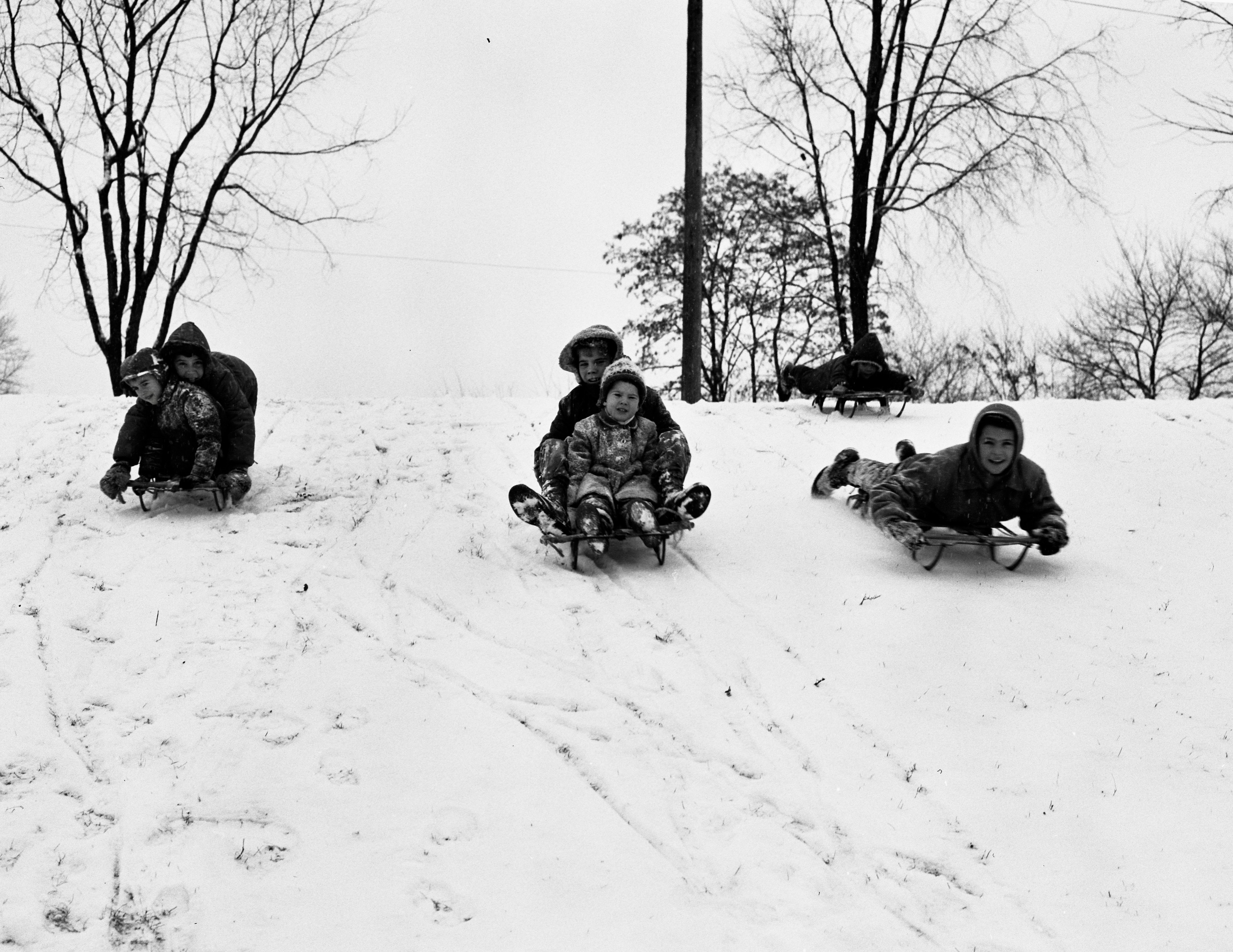
   One Siberian Sunday afternoon Mr. Flood’s children were visiting and went exploring in the basement. They found a Flexible Flyer. Their father bundled them up and carried the sled outside. When they got tired of pushing each other back and forth in the parking lot, they found a shovel and scooped snow onto the back stairs as far up as the first landing. They shoveled enough snow on the stairs to make a ramp and spent the rest of the day running across the landing, throwing themselves on the sled, racing down the ramp, and zooming across the icy lot.

   Mr. Flood and I watched them from the second-floor landing. “They’re up to snow good,” he said when they hit bottom, bumped upwards, and got some air under their sled. Mr. Flood was the kind of man who talked low, talked slow, and didn’t say too much. He wasn’t, for all that, above cracking a joke.

    “They’re on their own magic carpet ride,” I said.

   “Animal crackers!” the children whooped back at their father, living it up without a care in the world.

Ed Staskus posts stories on 147 Stanley Street http://www.147stanleystreet.com and Cleveland Ohio Daybook http://www.clevelandohiodaybook.com. To get the site’s monthly feature in your in-box click on “Follow.”
Bat Out of Hell

By Ed Staskus

   What I didn’t expect the hot summer night my wife, brother-in-law, and I went to the Lorain County Speedway was how loud the cars were going to be when the drivers stepped on the fast pedal, how bad the oil, gasoline, and rubber smelled in the humidity, how many crashes there were, and the fight that broke out on the track immediately after one of the crashes.

   The minute my brother-in law Matt sat down he pulled a pair of earplugs out of his pocket and pushed them firmly into his ears. We tried asking him where ours were, but he couldn’t hear a word we were saying. My wife and I finally decided to soak in the full experience, not like some people who couldn’t bear to enjoy the primal roar of engines going all out.

   The Lorain County Speedway is more-or-less in South Amherst, 30-some miles west of Cleveland, Ohio. It opened in 1949 as a third of a mile dirt oval. It was paved over in 1960. The night we were there the track had long since been upgraded to a 3/8-mile oval with 12-degree banking in the turns and a slight bank on the straightaways. It wasn’t NASCAR by any means, although NASCAR was the reason we were there.

   The racing at the Speedway that night was billed as street stock. I had never been closer to race cars than a TV screen, and the only reason I had ever gotten that close was because Matt came over our house every Saturday afternoon during the racing season, plopped himself down on our sofa, and for the next three, four, five hours watched brightly decaled handmade cars built from sheet metal with engines assembled from a bare block and frames constructed from steel tubing take tight left turns over and over and over at 200 MPH. The NASCAR four-wheelers resembled street stock about as much as cheetahs resemble wart hogs, even though both kinds of cars were essentially doing the same thing.

   The big story that summer was Jeff Gordon going up against Dale Earnhardt until it became the only story. Dale Earnhardt had won his seventh Winston Cup Championship in 1994 tying Richard Petty’s record for Cup Championships. Everybody was looking for him to win his eighth in 1995 and make history. It wasn’t to be, not with Jeff Gordon burning up the tracks.

   Jeff Gordon was young, only 24, but he had won the Coca-Cola 600 and the Brickyard 400 the year before. He wasn’t exactly wet behind the ears. He was off to the races. He landed in victory lane in three of the first six races of 1995. As the season wore on, he racked up 14 straight top ten finishes. Earnhardt was game, but the game was up. Gordon finished at the top of the board, the youngest champion since 1971. He toasted “The Intimidator” with a glass of milk instead of champagne, a nod to being barely legal.

   When he wasn’t watching NASCAR on TV, Matt and a school friend of his spent weekends driving to and camping out at nearby NASCAR events. They went to the Miller Genuine Draft 400 at the Michigan International Speedway, the Bud at the Glen at Watkins Glen, and the Mountain Dew Southern 500 at the Darlington Raceway. One weekend Matt asked if we wanted to go see some slam bang racing. We said alright, we’re not doing anything tonight, so long as it’s not out of state. He said it was close-by.

   The grandstand at the Lorain County Speedway was right on top of the racing. The bleacher seats were half full, like a high school football game where the fans are family and friends. There was a protective screen between the front row and the track. When I looked it up and down, I thought it might keep a flock of seagulls from assaulting us, but not a crate engine or the whole 3000-pound car. 

   “If one of those cars rolls and flips and comes up into the stands, that screen is going to stand the same chance as toilet paper,” I told my wife.

   “What?” she asked trying in vain to hear me over the noise.

   Five years earlier a man was killed and five people hurt when a race car went out of control and crashed into the pit area of the Lorain County Speedway. The man who was killed was another driver from another race. The driver of the wayward car said the accelerator on his car stuck, causing him to lose control on a turn. Eight years earlier at Talladega, Bobby Allison’s car going at the speed of light ran over debris and a tire burst. His car went airborne and smashed into the safety catch wall. Shrapnel sprayed the fans. From then on restrictor plates, which cap engine speeds from climbing too high and keep all race cars at around the same speeds, were made mandatory.

   The thought of shrapnel gave me the heebie-jeebies. My brother-in-law must have thought it through because he had led us to the second-to-last row. Even though the stands were only some twenty rows deep, it was better than nothing. The group of guys in front of us had their own cooler of hop juice. They offered us some. My brother-in-law didn’t drink, and my wife didn’t drink beer.

   “What the hey,” I said, accepting a Budweiser, my least favorite beer. Beggars can’t be choosers. In the heat of the night, to my surprise, the cold tasteless suds were delicious.

   My brother-in-law was a chemical engineer working in a General Electric lab in Willowick, but was transitioning to mechanical engineering, which meant going back to school part-time. He didn’t have a girlfriend, which meant he had time outside of work and school to take up a hobby. He bought a hulk of scrap metal that was once a 1970 Monte Carlo. His plan was to tear it apart piece by piece and rebuild it. Unfortunately, he didn’t have the space to get it done. Unfortunately, we did. The next thing I knew our two-car garage was a no-car garage. The hulk of scrap metal took up all the space. What space was left was devoted to a worktable, a tool locker, and an air compressor.

   He took the engine out. He took the seats out. He took the dash out. He took everything out and off the car. He built a rotisserie on wheels and fitted the frame to it, so he could wheel it in and out of the garage, working on it in our driveway. He sanded all the rust away and primed it. When the time came, he had the car hauled away and professionally painted. The color was Tuxedo Black.                                               

   When the weather turned foul, he turned a room in our basement into a work room, working on the engine and God knows what all else. He fabricated a new dash from scratch. He slowly but surely bought original parts and started to put the Monte Carlo back together. It took years and tens of thousands of dollars. Some nights, drifting off to sleep, we could hear him through our back window still working in the driveway in the glow of a bank of lights he had fixed up for the purpose.

   NASCAR race cars have almost nothing in common with street cars. By the 1990s they were being built to optimize aerodynamics. The focus was on speed. They stopped looking like stock cars. Stock car racing uses production models somewhat customized for racing purposes. It got started in the 1930s when moonshiners transporting white lightning souped up their Fords to evade revenue agents. One thing led to another, and they started racing each other on weekends on tracks carved out of corn fields.

   Street stock is racing a car that can be bought off a dealer’s lot. It is sometimes called hobby stock or showroom stock. Most of the tracks are short ovals, less than a mile. The speeds at the Lorain County Speedway that night hit 80 to 90 MPH on the straightaways, but slower in the turns. There were crashes galore in the turns. One of them happened in the turn coming around to the grandstand, when two cars bumped, tangled, and tore into each other. The driver on the outside track ran out of talent halfway through the turn. They both slid skidded to a stop in front of us. The drivers got out of their cars unhurt. When they did one of the drivers got hurt. 

   What happened was, when the two drivers got out of their banged-up cars, they started arguing. “What the hell, bumping me like that,” one of them yelled, his face red and splotchy.

   “I didn’t bump you,” the older of the two drivers said, calm as a fighting fish swimming back and forth in a tank. “I rubbed you. Rubbin’, son, is racin’.”

   They started pushing each other The younger driver got pushed too far out on the track and a car going slowly by under the caution flag ran over his foot. He fell to the ground and banged his head. Blood flowed down his chin. When he fell a woman bolted out of the stands, down the stairs, over the catch wall, and onto the track. She made a beeline for the older driver still standing.

   “This here is going to be trouble,” one of the men in front of us said cracking open another King of Beers.

   My brother-in-law’s 1970 two-door Chevrolet Monte Carlo was on a 116-inch wheelbase A-body platform with the longest hood Chevy had ever made. It stretched from the windshield to tomorrow. The styling was influenced by the Cadillac Eldorado, which came out in 1967. The Monte Carlo borrowed its firewall, dashboard, windshield, decklid, and rear window from the Chevelle. Matt’s model was an upgrade with a console-shift four-speed manual and a four-barrel-topped Turbo-Fire V-8 350 rated at 300 horsepower. It weighed in at 4,000 pounds curbside. It wasn’t built for baby showers. Shotgun weddings were more its speed. When I first heard the engine fire up so did all my neighbors within two or three blocks. Some of them came outside, standing on their lawns and in the street, looking up our driveway.

   “Mommy, what is that?” a boy driving a Little Tikes Cozy Coupe asked his mother.

   When the angry woman running onto the track got to the spot of the crash, she leapt onto the back of the driver who had pushed the other driver, screamed like a banshee, wrapped her legs around his midsection, and started to pummel the top and back of his head with her fists. It took half a dozen drivers and security staff to pull her off and keep her off. A policeman finally handcuffed her to a fence post.

   An ambulance showed up, the driver with the pancaked foot was put on a stretcher and put in the ambulance, wreckers drove onto the track, removed the damaged cars, and before we knew it the race was back on like nothing had ever happened. A policeman came back mid-way through the rest of race to retrieve the fists of fury, still handcuffed, who everybody had forgotten about. They put her in a squad car, legs kicking and lips flapping, and drove away, lights flashing. Everybody gave her a King of Beers salute.

   Thirteen years after Matt started work on the Monte Carlo it was ready to go. It was 2003. The day he put license plates on it was the day he asked me if I wanted to go for a ride. 

   “Sure,” I said.

   It looked like a new car inside and out. It smelled like a new car. He turned the key in the ignition and flipped a rocker switch. It was like cracking a bullwhip. The car rumbled to life. It sounded like something going after prey. He backed it out of the driveway and set off for Lake Rd. We went west through Rocky River, Bay Village, nearly to Avon Lake, and then to the Huntington Reservation, where we turned around. When we got to the Clifton Blvd. bridge that crosses the Rocky River, he pulled over to the shoulder.

   “Do you want to drive it?” he asked.

   “You bet,” I said.

   As I got out of the car to walk around to the driver’s side, I noticed a red fire extinguisher bolted down in the back. It was a Kidde dry chemical vehicle extinguisher. “Are you expecting something?” I asked.  “Great balls of fire?”

   “You never know,” he said. “If it happens, pull, aim, squeeze, and sweep.”

   I buckled up, buckling the five-point harness belt. The car was a bat out of hell of muscle and acceleration, but no matter how fast it went I wasn’t going anywhere. The five-point belt was the kind used to restrain madmen. I waited until there was no traffic. I put the car in first, got started, burned rubber, put it in second, third, then fourth, and flew across the bridge. The engine was just as loud driving the car as it was standing next to the car. I got it up to sixty in about ten seconds before starting to down shift. The bridge was far behind us by then.

   “That was fun,” I said. 

   It was like being Buckaroo Banzai for a couple of minutes. I checked for flashing red lights in the rearview mirror. We drove halfway through Lakewood before turning around. Heads turned when we approached, and heads followed our progress. At a red light a graybeard next to us said through his open window, “That is some meat and potatoes.” 

   “So long as you don’t mind getting nine miles to the gallon,” I said. He was driving a brand-new Toyota Prius. The Monte Carlo was AC/DC to its folk singing purr. 

   We got the car back in our garage without a scratch. That would have been a nightmare. My brother-in-law was fussy as a newborn with his old car made new. Even though he kept it bedded down indoors, he secured a waterproof car cover over it, just in case.  As the garage door was closing itself, I noticed the vanity license plate mounted on the chrome rear bumper.

   “NGHTMRE,” is what it said.

Ed Staskus posts on 147 Stanley Street http://www.147stanleystreet.com and Made in Cleveland http://www.clevelandohiodaybook.com. To get the site’s monthly feature in your in-box click on “Follow.”

Law of the Land

By Ed Staskus

   When I moved from the near east side of downtown Cleveland to Carpenter, Ohio the post office there had been gone more than ten years. The Baptist church was still standing, but the minister didn’t live in the whistle-stop. He drove in on Sundays, performed his mission, and drove away after shaking a few hands. I went to the service one morning, but the minister looked like the talent scout for a graveyard, and it was the last time I went. The general store had closed even before the post office, which was good for Virginia Sustarsic and me, because that is what we moved into, staying the spring summer and into the early fall.

   The post office was opened in 1883 and stayed there until 1963. Nobody knew who the town was named for, although three men who had been natives of the place took credit. There was Amos Carpenter, an old geezer who talked too much, Jesse Carpenter, a farmer who hardly ever talked, and State Senator J. L. Carpenter, who only talked when it counted. He brought tracks and a railroad station to the town. Those were long gone, too.

   It wasn’t my idea to go live local yokel on the banks of Leading Creek, but Virginia argued living in the country was the way to go. She was a hippie and wore its ethos of going back to the roots on her sleeve. I countered that the hippies happened in coastal cities like San Francisco and New York, flowered in college towns like Austin and Ann Arbor, and were trucking along in cities like Omaha, Atlanta, and Cleveland. We were both from Cleveland, born of immigrant stock, she Slovenian and me Lithuanian.

   My reasoning fell on deaf ears.

   A friend of ours with a van drove us and our stuff to Carpenter, dropped us off, and waved goodbye. I had never been there before. Virginia had been there twice, having a friend who lived in that neck of the woods. It took less than ten seconds to look the town over. There wasn’t much to see. We stashed everything away in the sturdy but dilapidated 19th century-era store and walked up Carpenter Hill Rd. to Five Mile Run, detouring down what passed for a driveway to a small house where Virginia’s friend and his bloodhound lived.

   He was somewhere between not young and middle-aged, lean and scraggly, literate and friendly. He was the kind of man who was a hippie long before there were hippies. He read lots of books and smoked lots of weed. There was a Colt cap and ball pistol on his coffee table, laying there as relaxed as could be. It was a Walker .44. It was big, old as dirt, spic-n-span workable. 

   “That’s an imposing handgun,” I said.

   “They call it the Peacemaker,” he said. “Even though it can get you into a load of trouble the same as not. I call it the Devil’s Right Hand.”

   He shot rabbits with it for his stew pot. The large percussion revolver could have taken deer in season. He let me shoot it at a tree later that summer. It was heavy when I lifted it. I shot it stiff-armed expecting more recoil, which turned out to be modest. What I didn’t expect was the “BOOM!” at the end of my arm. I was glad I missed the tree. Even though it was a full-grown maple the ball hitting it might have put it on the woodpile.

   We spent a week sweeping dusting cleaning arranging the ground floor front room of the general store. There were two storerooms in the back and an upstairs we didn’t mess with. Two long broad oak tables served as platforms for working and preparing food. We ate in rocking chairs we set up at one of the windows. We found a braided round rug in a closet, beat the hell out of it, and rolled it out in the middle of the floor.

   After laying in a garden, we stuck a scarecrow of Grace Slick on a stick to guard the plot. The scarecrow, however, fell down on the job. Birds shat on her and rabbits ran riot. We ended up hunting and gathering.

   A kitten walked in out of the blue one morning, worn out and hungry as a horse. He was white with a black blob on his chest and a masked face. Virginia gave it a bowl of water, but we didn’t have cat food. “We should go into town, get some, and some food for us, too,” I said.

   Virginia was a genius at living off the land, but we still needed some store-bought stuff, salt pepper coffee pasta peanut butter and pancake mix, as well as toilet paper. The outhouse was bad enough without the comfort of Charmin.

   There were two municipalities within driving distance, Athens, which was 15 miles northeast of us, and Pomeroy, which was 17 miles southeast. Ohio University was in Athens, had several grocery stores, and plenty of citizens our own age. Pomeroy was on the Ohio River, was notorious for being repeatedly destroyed, and there was nobody our age there. We never went to Pomeroy except once to look around.

   The town was consumed by fire in 1851, 1856, 1884, and 1927. The floods of 1884, 1913, and 1937 were even more disastrous. 1884 was an especially bad year, what with fire and flood both. Why the residents kept rebuilding the place was beyond us, although we speculated they must have been plain stubborn.

   We stopped at the courthouse to lay eyes on the excitement. We had read in “Ripley’s Believe or Not!” that there is a ground floor entrance to each of its three stories, the only one of its kind in the world The sight of the phenomenon wasn’t all that exciting. A plaque explaining that the courthouse served as a jail for more than 200 of Morgan’s Raiders after their capture in the Battle of Buffington Island during the Civil War caught our attention. It was exciting to learn that Ohio boys had gotten the better of Johnny Reb when they ventured north.

   The county seat of Meigs County is mentioned in Ripley’s a second time for not having any cross streets. We took a stroll and didn’t see any. It didn’t seem deserving of mention in Ripley’s, but what did we know?

   Once he had a steady supply of food, out kitten got better and bigger. He spent his days outside and after sunset inside. He learned fast there were plenty of hungry owls, racoons, and coyotes in the dark. At first, when he was a tyke, he slept on top of my head at night. As he grew, I had to move him to the side. It was like wearing a Davey Crocket racoon hat to bed. 

   Meigs County, in which Carpenter lay, is 433 square miles with a population of around 20,000, or 54 people per square mile. Where we came from, Cuyahoga County, it was more like 3,000 people per square mile. At night in the middle of Meigs County it often seemed like 2 people per square mile, Virginia and me.

   There wasn’t much crime in the county, thank goodness, because the law enforcement amounted to one sheriff, one lieutenant, one sergeant, and six deputies. We had been in town a week-or-so when the sheriff stopped by to say hello. He was a pot-bellied man with fly belly blue eyes. He made sure we had the cop and fire department phone numbers even though we didn’t have a phone. He warned us not to mess around with the marijuana market. Virginia made roach clips for sale in head shops, but only smoked so much, and said so. 

   “No, I don’t mean that girlie,” he said. “I don’t care what you do on your own time. What I mean is, don’t mess with the growers. They’ve got it tucked in all around here. Some of them have been to Vietnam and back, and they learned a thing or two from Charlie. Even the DEA is careful when they chopper around these hills spraying their crop.”

   He pronounced Vietnam like scram.

   Meigs County is on the Allegheny Plateau. It is especially hilly where we were. The soil isn’t the greatest. The top crop by far is forage, followed by soybeans and corn. Layers and cattle are the top livestock. The marijuana growers hid their fruitage in corn fields, where it was hard to spot.

   Moonshine was made from the first day Meigs County was settled, for themselves and for whenever a farmer needed hard cash in a hurry, as long as they were near water and could haul a barrel of yeast and a hundred feet of copper line to the still. The yeast is stirred with sugar and cracked corn until it ripens. When the mash is ready it’s poured into an airtight still and heated. When it vaporizes it spirals through copper pipes, is shocked by cold water, returns to its original liquid form, and drips into a collection barrel.

   After that it is ready to go and all anyone needed was a fast Dodge to get it to market.

   The marijuana growers were mostly young, a loose-knit group known as the Meigs County Varmits, which was also the name of their championship softball team. They drove Chevy and Ford pick-ups. They stopped by and said hello, just like the sheriff. One of them told us to keep our heads down the middle of October.

   “What’s that all about?” I asked.

   “That’s when we harvest our green and that’s when the state cops and Feds get busy. You’ll see their cars and spotter planes. They ask you any questions, play dumb. You hear any noise, ignore it.”

   They had a hide-out in the woods where they had private stoner parties. Hardly anybody knew where it was, although everybody called it Desolation Row. It was some bench car seats thrown down on the ground and a rude shelter.

   Meigs County Gold was high quality highly sought weed. It was the strain of choice for the Grateful Dead and Willie Nelson when they toured Ohio and West Virginia. Meigs County folk learned to not lock their cars and to keep their windows partly rolled down when they went to the Ohio State Fairgrounds in Columbus or Kings Island near Cincinnati.

   When I asked why, a man said, “Because people see the Meigs County tag and it’s almost for sure you’ll have busted windows if you don’t. They will be looking for your pot.”

   Our pots and pans were always filled with grub Virginia gleaned in the forest lands where she found nuts greens fruits and tubers. She collected walnuts chestnuts papaws raspberries blueberries and strawberries. She dressed up salads with dandelions fiddleheads and cattails. In the late summer she hunted for ginseng, selling it to a health food store in Athens.

   She kept two goats in a shed. I fed them and cleaned up after them. They were more trouble than they were worth, especially after one of them head butted the minister who walked over late one Sunday morning inquiring about my spiritual frame of mind. The goat lowered his head and got him from behind, in the butt, knocking him down. He scuffed up his hands breaking his fall and got mad as the devil. He told the sheriff about it and the sheriff had to stop by and warn us to keep our goats civil.

   “Yes, sir,” I said.

   Carpenter was the kind of place where tomorrow wasn’t any different than a week ago. But it had its moments. A week-or-so after the sheriff paid us his official visit, we watched him drive slowly past our grocery store summer home on State Route 143 dragging an upright piano on rollers behind him, chained to his rear bumper. A deputy was walking beside the piano trying to keep it from falling over. It looked like a bad idea on the way to going wrong. We waved but didn’t ask any questions.

   Our nearest neighbor was Jack, his two brothers, and their mother, on the other side of Leading Creek, a quarter mile down the state route. Velma looked like she could have been their grandmother, but Jack Jerome and Jesse called her mam. It was a one-story house with a front porch. They had running water and a bathroom, but no cooking stove or furnace. Velma did the cooking in the fireplace and they heated the house with the fireplace and a cast-iron potbelly stove. It was more than we had, which was just the potbelly thing.

   “Food cooked in a fireplace tastes better than food cooked any other way, including charcoal grills,” Velma said. It was big talk, but she backed it up. She might not have been able to whip up a cake or a souffle, but she made just about everything else. We never turned down an invitation to dinner.

   There were always half-dozen-or-more barely alive cars and trucks in their backyard, which was more like a field. There was a chicken house and a pen for pigs. They slaughtered and smoked their own pork. There was a big deep pond near enough to the house and they let us go floating and swimming in it whenever we wanted. They had an arsenal of rifles and shotguns, even though they didn’t mess around with marijuana. Moonshine might have been a different matter. 

   “How come you’ve got all those guns?” I asked Jack.

   “That’s how our daddy raised us,” he said.

   They were born and bred right there. The folks in the ranch-style houses up Carpenter Hill Rd. avoided them. Sometimes when we went swimming the sheriff’s car was there. I had the impression he wasn’t there on lawman business, but rather visiting.

   By the end of summer, we realized we couldn’t stay. The Velma family already had enough cords of dried wood beside their house to keep themselves warm if winter went Siberian in Ohio. We didn’t even have a pile of twigs. We could have ordered coal, which was plentiful, but neither of us had ever started and stoked a coal furnace. We didn’t know anything about air vents. All we knew was dial-up thermostats for gas furnaces.

   Our friend returned with his van and helped us move back to the Plaza Apartment in Cleveland. Prospect Avenue was the Wild West, but winter was coming, and it would be quiet for a while. We wouldn’t need a Peacemaker. We said goodbye to Virginia’s hippie friend and his bloodhound, and to Jack up the hill. Jerome and Jesse had gone hunting waterfowl, the first day for it. Velma gave us an apple pie for the drive home.

   The cat, who was left-handed and so went by Lefty, decided to stay. He wasn’t a city boy. He wouldn’t have been able to make sense of the Cuyahoga River catching fire. Lefty had made friends with all the cats and dogs a half-mile in every direction, knew how to sneak into the grocery store closed doors or no doors, and had grown up enough to take care of himself. We slit open the 20-pound cat food bag and opened it like a book. We left it on the floor so he and his friends could have a party.

   When we drove away, he was sitting on his haunches on the gravel in front of the store’s double front doors. I watched him in the rearview mirror and Virginia waved goodbye through the open passenger window. The last I saw of him he was sauntering into the high Meigs County grass.

Ed Staskus posts stories on 147 Stanley Street http://www.147stanleystreet.com and Cleveland Daybook http://www.clevelandohiodaybook.com. To get the site’s monthly feature in your in-box click on “Follow.”

Summertime Blues

By Ed Staskus

“Well, I called my congressman, and he said I’d like to help you, son, but you’re too young to vote, there ain’t no cure for the summertime blues.”  Eddie Cochran

   “Mom said you’re not leaving and you’re coming to my birthday party this year,” Maggie said, putting down her ear of corn, her lips peppered with flecks of salt and smeary with   butter.

   “That’s right,” said Frank Glass.

   Vera Glass’s brother, sister-in-law, nephew and niece, Frank’s sister and her new boyfriend, a policeman who lived nearby, were visiting on the Fourth of July, in the backyard, a breezy sunny day in the shade, crowded around a folding table-clothed table doing double duty, food and drink and board games.

   Independence Day has been a federal holiday since 1941, but the tradition goes back to the American Revolution. Since then it’s been celebrated with festivities like fireworks parades concerts big and small and family barbecues. This year the fireworks parades concerts were scratched.

   Maggie was born seven almost eight years earlier. She was due to officially come to life the third week of September, four five days after Frank and Vera expected to be back from Atlantic Canada but was born on the first day of the month.

   She was a once in a blue moon baby. To do something once in a blue moon means to do it rarely. It is the appearance of a second full moon within a calendar month, which happens about once every three years.

   “Where do you go in the summer?” Maggie asked.

   “We go to Prince Edward Island, a small town called North Rustico, but we stay in a cottage in the National Park, a family owns the land, they’ve been there for almost two hundred years. We leave in mid-August and stay through the first couple of weeks of September, which is why we miss your birthday party.”

   “You always send me a present. I like that. But last year you sent me a sweatshirt with a red leaf on it that was ten times too big.”

   “You’ll grow into it,” said Frank.

   “Maybe I will, but maybe I won’t,” said Maggie. She was a genial child but could be a testy cuss. She thought she knew her own mind rounding out her seventh year, although it could go both ways.

   “Do you like it there?”

   “Yes, we like it a lot.”

   “Why aren’t you going? Is it the virus?”

   The 20th century was the American Century. The United States led the way socially economically brain-wise learning-wise and in every other wise way. In 2020 it led the way in virus infections, far outpacing the next two contenders, Brazil and India. The flat tires in charge nowadays can’t get anything right, from building their useless wall, all three miles of new wall, to securing a useful virus test.

   North Korea and Iran keep making atom bombs, there’s no China trade deal, the deficit has skyrocketed, and race relations have gotten worse. All that’s left is for the other shoe to drop. On top of that, Hilary Clinton still isn’t in jail.

   “Yes, the bug,” said Frank. “The Canadian border is closed, and even if we could get into Canada somehow, the bridge to the island is closed except for business.”

   In May President Trump said, “Coronavirus numbers are looking MUCH better, going down almost everywhere, cases are coming way down.” In June he said the pandemic is “fading away. It’s going to fade away.” On July 2nd he said, “99% of cases are totally harmless.” Four days later, on July 6th, he said, “We now have the lowest Fatality Rate in the World.”

   John Hopkins University subsequently reported that the United Sates has the world’s ninth-worst mortality rate, with 41.33 deaths per 100,000 people. It was a bald-faced report. They didn’t capitalize the numbers.

   “Are you sad that you can’t go?”

   “Yes.”

   “They built a new bridge to our house. I know all about it, we drove over it two weeks ago. Mom was so happy. It’s a big bridge, too, the other one was small and always breaking.”

   “You know the bridge you go across from downtown, when you go up the rise past the baseball stadium where the Indians play ball, on your way to Lakewood?”

   “That’s a long bridge.”

   “It’s called the Main Avenue Bridge and it’s two miles long. The bridge that goes from Canada to Prince Edward Island is almost 5 times longer than that. It’s as long as the distance from downtown to our house.”

   “That’s far!”

   “That can’t be,” Frank’s nephew Ethan blurted out. “That bridge is too long!”

   “How do you know, Bud, you can hardly count,” said Maggie. She called Ethan Bud. They were buddies, although they didn’t always see eye-to-eye.

   “I can so count, I know all the dinosaurs, there are a million of them,” said Ethan.

   “I’m going into third grade and we’re going to learn division. You’ve been learning to finger paint.”

   “What’s a million and a million?”

   “2 million.”

   “OK, what’s the biggest dinosaur ever?”

   “The Brontosaurus.”

   “No! It’s the Argentinosaurus, and he weighed a million pounds.”

   “That can’t be,” said Maggie.

   “My math is my math,” Ethan simply said.

   “If you can’t explain it simply you don’t understand it well enough,” said Albert Einstein.

   As of July, there were more than 300,000 cases of the virus reported in children since the start of the pandemic. The Executive Office of the Federal Government has repeatedly maintained it poses almost no threat to them. “The fact is they are virtually immune from this problem,” President Trump said.

   “How do you know about the virus?” Frank asked.

   “Everybody knows about it. The whole world knows.”

   “They even know in Antarctica,” said Ethan.

   “Do you know anybody who got it?”

   “A girl in school got it from her mom,” Maggie said. “I took piano lessons with her.”

   “That’s too bad,” Frank said.

   “Are there going to be fireworks tonight?” Maggie asked.

   “No, the city cancelled them.”

   “Where we live, too.”

   “Here there were fireworks last night, we sat on the front porch, until after midnight, but it was just people in the street or their yards. There were some big pops over there by Madison Avenue. I think they were shooting them off from the empty lot. We could see bottle rockets over the trees.”

   “Wow!”

   “You said you knew about the virus, but how do you know?” asked Frank.

   “The news about it is on every day on TV,” said Maggie.

   “That’s right,” said Ethan.

   “We have a TV, but we don’t have TV,” said Frank. “We only have a couple of streaming services for movies.”

   “We have real TV,” said Maggie, “and it’s on all the time. The news is on every single hour every single day and all the news is about the virus.”

   “Do you watch TV all the time?”

   “We don’t watch TV, but we watch it all day,” said Ethan.

   “We don’t really watch it, but it’s always there,” said Maggie.

   Parents are urged to pay attention to what their children see and hear on radio online television. They are cautioned to reduce screen time focused on the virus since too much information on one topic can lead to anxiety in kids. Talk to them about how stories on the web might be rumors and wildly inaccurate.

   “That’s OK, it’s all in your head, anyway,” said Maggie.

   “All in your head?”

   “That’s what dad says.”

   “Well,” Frank said, “your father knows best.” He wasn’t going to get into a no-win argument with his brother-in-law. His sister’s boyfriend was a policeman at Metro Hospitals. Frank didn’t want his ears pricking up. He wouldn’t understand it’s all in your head.

   “Are you worried about the virus?” Frank asked.

   “Would that help?” Maggie asked, biting into a burger. “This is yummy good.”

   “No, it would probably just make you crazy.”

   “Dad said your name wasn’t always Frank Glass.”

   “Yes and no,” said Frank. “My given name has always been Frank, which is short for Francis, like we call you Maggie even though your name is Margaret, but my family name, what they say is your surname, used to be Kazukauskas.”

   “What happened to it?” asked Maggie. “Why is it different now.”

   “When my father came here, to America after World War Two, the immigration people said he should change it to something other people could pronounce, that they could say without too much trouble, so he changed it to Glass.”

   “Where did he come from?”

   “Lithuania, a little country, north of Germany.”

   “That’s a nice name,” Maggie said. “I like Glass.”

   “At least he didn’t have to climb another brick in the wall once he got here.”

   “What does that mean?”

   “I’ll tell you when you’re older. Are you staying home more because of the virus?”

   “Yes!” both of them exclaimed.

   “Do you have to wear a mask when you go somewhere?”

   “We cover up,” Maggie said. “My face gets hot, my head gets hot, and my hair get hot. It makes my glasses fog up.”

   “I have a tube mask with rhino’s and bronto’s on it,” Ethan said. “But I can’t breathe, so I just rip it off until mom sees.”

   There was a box of Charades for Kids on the table. “Three or More Players Ages Four and Up.” Frank pointed at it.

   “Are you ready to play?”

   Maggie rolled around on the lawn, flapped her arms, rolled her eyes, and hugged herself. Nobody had any idea what she was doing.

   “Going to bed!” she yelped.

   Ethan did a somersault.

   “Somersault?”

   “Yes!”

   Maggie rolled on the ground holding her head and grimacing like a mad chipmunk. Everybody watched with blank faces, stumped.

   “Headache!” she blared.

   Ethan slashed the air with his hands.

   “Karate?”

   “Yes!”

   Maggie jumped, waved her right arm in circles, flapped it back and forth, and licked her lips. As the one-minute hourglass dropped the last grain of sand to the bottom, she fell down on the grass. Everybody was stumped again.

   “Frosting a cake! I can’t believe nobody got it.”

   Ethan got on all fours like an anteater, pretended to be eating something with great chomping motions, and clomped to the driveway and back.

   “Argentinosaurus?”

   “Yes!”

   Summer signals freedom for children. It’s a break from the structure of school days, a time for more days spent at the pool, a time for more play, for exploring the outdoors.

   One day his mom asked Ethan if he wanted to go out on his scooter.

   “So much,” he said. “I have got to get out of this house.”

   “Every single day I see the Amazon truck and the FedEx and the white trucks go past me,” said Maggie. “They turn around at the cul-de-sac thing, they just rush back, driving crazy. I run to the backyard.”

   “There’s a big field and woods past our backyard,” Ethan said.

   “We’re stuck at home but it’s summer, it’s nice outside, the sun is shining, and we all go for walks,” Maggie said.

   She hadn’t been to school since April, studying remotely. Ethan hadn’t been to pre-school for just as long.

   “Are you going back to school in the fall?” asked Frank.

   “I hope so,” said Maggie. “I miss it.”

   “I’m supposed to start first grade,” said Ethan.

   About two months away from hopes there will be a return to school, many parents were looking to new findings which suggest children are less likely to get and spread the virus. In late June the American Academy of Pediatrics, which advocates for “having students physically present in school,” published reopening guidelines. They stated that children “may be less likely to become infected” with the coronavirus and to spread the infection.

   Living and breathing in-person face-to-face time is what makes school a school. “Better than a thousand days of diligent study is one day with a great teacher,” is what a Japanese proverb says.

   “I want to play something else,” Maggie said. “Can you teach us how to play Pictionary?”

   “Sure,” Frank said.

   They put the never-ending news of the pandemic away, cleared one end of the table, and unfolded the game board, setting out the pencils note pads special cards. “Quick Sketches, Hilarious Guesses” is what it said on the yellow box, and that is what they did the rest of Independence Day, the clear sky going twilight, lightning bugs flashing on off on off, and neighborhood kids shooting off Uncle Sam Phantom fire flowers in the alley behind them.

   There wasn’t a dud in the caboodle, not that they saw. Uncle Sam got it right, rockets red glare.

Ed Staskus posts stories on 147 Stanley Street http://www.147stanleystreet.com and Cleveland Ohio Daybook http://www.clevelandohiodaybook.com. To get the site’s monthly feature in your in-box click on “Follow.”
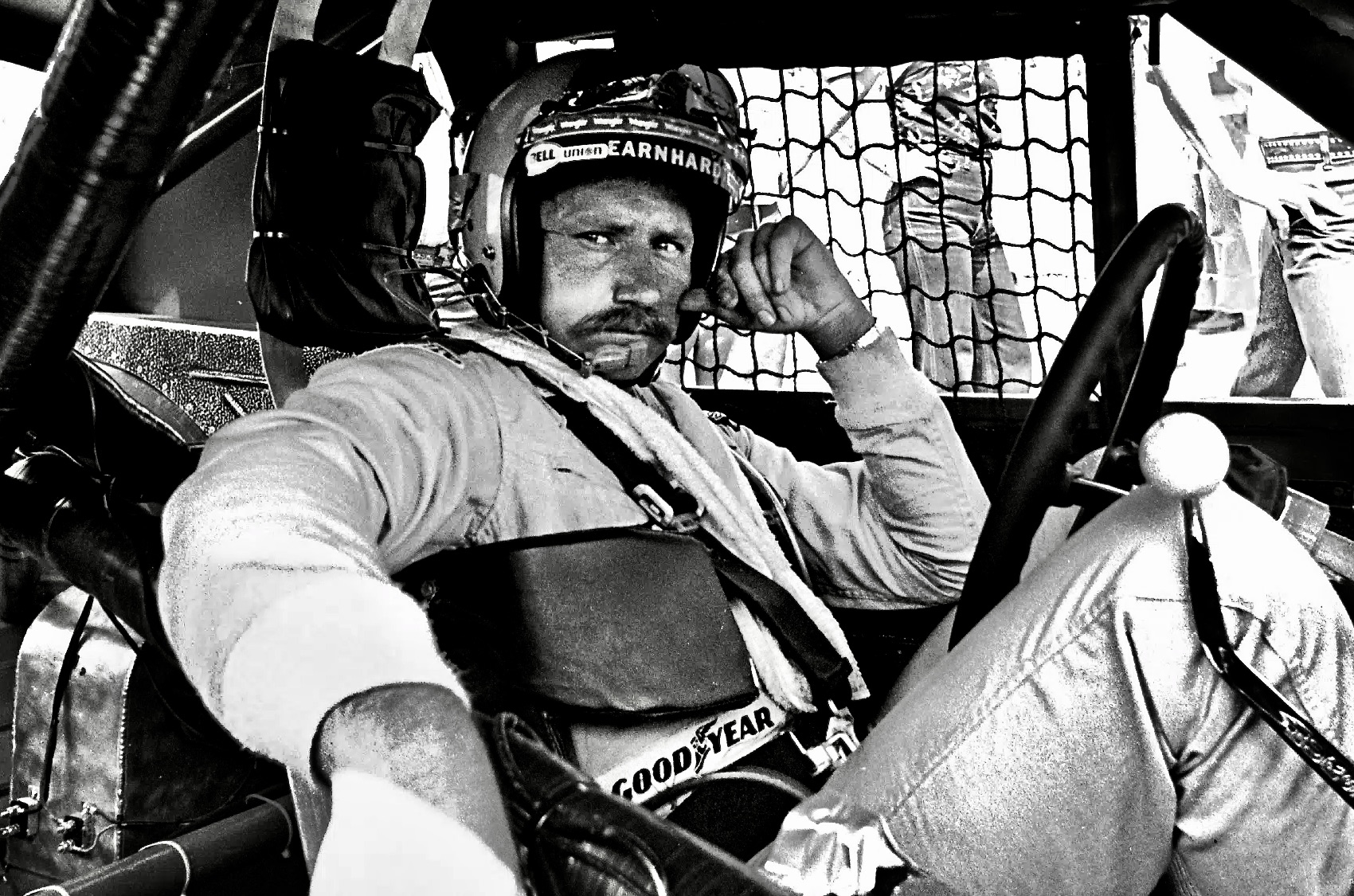
Raise High the Roof Beam

By Ed Staskus

   When I moved into the Plaza Apartments on Prospect Ave. at the intersection of E. 32nd St., which wasn’t even a street since the other end of it dead-ended into a parking lot, it was by accident, including a car accident and bumping into Arunas Petkus a few days later.  The car accident happened when a flash of sunshine distracted me. Bumping into Arunas was simply by chance.

   I was living at Dixon Hall up the street near E. 40th St. A decade after I moved out it was designated a legacy building and historic location but when I lived there it was a rat’s nest, full of students, day laborers, and deadbeats. It was a solid four-story stone and brick building that had gone to seed. 

   Hookers and boozehounds roamed Prospect Ave. in the evening after the blue collars and shop owners went home. The junkies stayed in the shadows, hapless and harmless, mumbling and nodding off. I avoided roughnecks on the prowl, who were hoping to stumble on a sucker. Nobody from the suburbs ever came day-tripping, much less set foot on Upper Prospect at night.

   My roommate Gary was ten years older than me and was drinking himself to death, day by day, from the bottom of his heart. I first met him the day before moving in with him, when I answered a worse for wear note on a bulletin board at Cleveland State University, a ten-minute walk away. He was stocky, bearded, and sullen, but I needed a cheap room, and his second bedroom was available.

   It wasn’t any great shakes of an apartment, which was a living room, walk-in kitchen, and two small bedrooms. There were more cockroaches than crumbs in the kitchen. The sofa and upholstered chairs were a flop. Gary kept cases of beer stacked up by the back door and his whiskey under lock and key.

   I didn’t know much about spirits except that all the grown-ups I knew, who were most of them Lithuanian, drank lots of it, some more than others. I didn’t know why Gary was going breakneck down the river, but he was and wasn’t in in any kind of shape anymore to do much more than sit around and drink.

   The day he told me he was going out to pick up his car was a surprise, since he was living on some kind of inheritance and almost never went out. I didn’t even know he knew how to drive. I was even more surprised when he asked me if I wanted to go along.

   “Where is it?” I asked.

   “Down by 36th and Payne,” he said.

   We could walk there since it was a sunny day. E. 36th and Payne Ave. was only about twenty minutes away by foot.

   “All right,” I said, which was my first mistake.

   His car was a 1963 VW Beetle with a new engine block and repainted a glossy lime. He paid cash in hundred dollar bills and we drove off, down E. 55th St. to the lake, up E. 72nd St. to St. Clair Ave., and back to Dixon Hall. When he pulled up to the curb, he asked me if I knew how to drive a standard shift.

   “Sure,” I said.

   “Do you want to try it?”

   “Sure,” I said, which was my second mistake.

   I didn’t get far, about a quarter mile. As we were approaching the intersection of E. 30th St. and Prospect Ave. a flash of sunshine glancing off the glossy yellow-green hood of the car distracted me. I turned my head to the left. That was my third and last mistake.

   I didn’t see the four-door sedan going through the red light to my right and never touched the brake. He smashed into the front fender of the VW, sending us spinning, and a car behind us smashed into our rear engine compartment. The opposed 4 engine made a last gasp and went dead.

   When we came to a stop the VW Beetle was finished and I was finished as Gary’s roommate. I was just barely able to talk him into giving me a week to scare up another roof over my head. The fall quarter at Cleveland State University was rolling along and winter wasn’t far away.

   I was playing beggar-my-neighbor with friends in the Stillwell Hall ground floor cafeteria when Arunas Petkus joined us, snagging a card game in his free time. He was Lithuanian like me. We had gone to St. Joe’s together, a Catholic high school on the east side, and he was an art major at Cleveland State University. He had a deft hand drawing and painting. He piped up when he heard about my predicament.

   “Try the Plaza,” he said. “There’s a one bedroom on the second floor that’s come open. Somebody I know moved out in the middle of the night.”

   The Plaza was just down the street from Dixon Hall. I had never paid much attention to it, but when I gave it a closer look, I liked what I saw. It was built in 1901 in an eclectic style, on a stone foundation, with some blocks of the same stone in the exterior, and facing of yellow brick in front and around the courtyard. Some of the brick was sprouting ivy. The top of the five stories was crenellated. It had a cool vibe when I walked around it, eyeballing the stamping ground.

   Dave Bloomquist and Allen Ravenstine, who was the synthesizer player for the Cleveland-based art-rock band Pere Ubu, owned and operated the building.

   “I grew up at the Plaza. It’s where I became an adult,” Allen said. “I was a kid from the suburbs. When we bought this building in 1969, we did everything from paint to carpentry. When it was first built, it had 24 apartments. When we bought it in a land contract, there were 48 apartments. We tried to restore it unit by unit.”

   I knocked on Dave Bloomquist’s door. His apartment was at the crown, in the front, facing north, looking out across Chinatown, Burke Lakefront Airport, and out to Lake Erie. When he answered the door, I don’t know what I expected, but what I got was a tall young man, maybe six and a half feet of him, a thick mop of black hair, and an old-school beard.

   “I’m here about the apartment on the second floor,” I said.

   He led me through the kitchen, down a hallway, and into an office full of books, records, a big desk, and sat me down in a beat-up leather armchair.

   I didn’t blanch when he told me what the rent was because it wasn’t much, but I didn’t have much. I could make the first month, maybe the second. I hemmed and hawed until he finally asked me if I was short.

   “More or less,” I said.

   “Would you be willing to work some of it off?”

   “Yes, you bet.”

   “Good, we can work that out. Do you play chess, by any chance? You look like you might.”

   “I know how to play,” I said, but didn’t say anything about my reading chess how-to books.

   “Great, do you want to play a game?”

   “Sure.”

   He had a nice board and played a nice game, but I finished him off in less than twenty moves.

   “Beginner’s luck,” I said.

   “After you’ve moved in stop by, we’ll talk more about some work for you, and play again,” he said.

   I went down the front steps, out the door, and sat down on what passed for a stoop. A young woman stuck her head out of a basement window behind me. I looked at her. She was a looker.

   “I haven’t seen you around here before,” she said. “Are you moving in?”

   “Yes, in the next couple of days.”

   “Do you have a car?”

   “No.”

   “That’s good,” she said. “I’ve lost two cars living here.”

   “That’s too bad.”

   “I love living here, but it drives me crazy at night,” she said. Her name was Nancy and she was studying art. She wanted to be a teacher. “The junkies sit right here on this ledge and party all night long. They never see anything happening, like my cars being stolen.” The dopeheads didn’t have the smarts to steal cars. The making off happened when bad guys came down Cedar Rd. looking for easy pickings.

   I moved in over the course of one day, since I didn’t have much other than my clothes, bedsheets, kitchen dishes, utensils, pots and pans, schoolbooks, and a dining room table and chairs my parents bought for me. I lived on pancakes, pasta, and peanut butter. The apartment wasn’t furnished, but whoever had left in a hurry left a queen bed, a dresser, and a livable sofa. 

   A man by the name of Bob Flood, who lived on the same second floor like me, but in the front, not the back like me, helped me carry the table and chairs up. He was dressed in denim, wore a denim cap, making him look like a railroad engineer, had a little shaggy beard and bright eyes, and was on the rangy side. He walked in a purposeful way, like an older man, even though he wasn’t an old man. Everybody called him Mr. Flood.

   I found out later he was divorced and had two children who visited him, but I never found out if he worked for a railroad or what he did, at least not for a fact. He was either at home for days on end or he wasn’t. I had worked at Penn Central’s Collinwood Yards the winter before as a fill-in, sometimes unloading railcar wheels, sometimes walking the yard with a pencil and waybill clipboard. I didn’t remember ever seeing him there.

   “What kind of people live here?” I asked him.

   “All kinds,” he said. “There are a lot of musicians, artists, writers, some students and even a couple of professors.”

   “It’s an energy house,” said Scott Krause, who was the drummer for Pere Ubu.

   “Not everybody’s in the arts,” Mr. Flood said. “There are beauticians, bartenders, and bookstore clerks, too.” 

   “If you want to stick your head out the window and sing an aria, someone might listen, and someone might even applaud,” said Rich Clark from his open window. Nobody had window air conditioners.

   I found out almost everybody was more younger than older, except for an Italian couple and their parrot. The parrot never sang or spoke outside the family, no matter how much the Italians coaxed and cajoled him. The bird was as stubborn as a mule.

   Once winter was done and spring was busting out, I was reading a book for fun in the courtyard when Arunas Petkus stepped up to the bench I was sprawled out on. He wanted to know if I wanted to go to California with him once classes at Cleveland State University were done for the summer.

   “All that tie dye is finished there,” I said. “Even the hippies say so.”

   “I thought we could visit Chocolate George’s grave.”

   “Who’s Chocolate George?”

   George Hendricks was a Hells Angel in the San Francisco chapter who was hit by a car while swerving around a stray cat one August afternoon in 1967 as the Summer of Love was winding down. He was thrown from his motorcycle and died later that night from his injuries. He was known as Chocolate George because he was rarely seen without a quart of his favorite beverage, which was chocolate milk.

   “He drank chocolate milk because he had an ulcer,” explained Mary Handa, a friend of his. “He spiked it with whiskey from time to time.” He scored nips of the booze all day long.

   George Hendricks was a strapping 34-year-old when he died. He was a favorite among the hippies in Haight-Ashbury because he was funny and friendly. Sometimes he sported a Russian fur hat, making him look like a Cossack. His mustache and goatee were almost as long as his long hair, he wore a pot-shaped helmet when riding his Harley, and his denim vest was sprinkled with an assortment of round tinny pin badges. One of the badges said, “Go Easy on Kesey.”

   The writer Ken Kesey had been the de facto head of the Merry Pranksters. Much of the hippie aesthetic traced back to them and their Magic Bus.

   “I bought a used car,” Arunas said.

   It was parked in the back next to the nerve-wracking back stairs. The stairs were sketchy. Going up and down them always felt like it might be the last time as they twitched and shook and seemed on the verge of yanking themselves off the brick façade. I avoided them whenever I could.

   The car was a two-door 1958 VW Karmann Ghia. “You know how the Beetle has got a machine-welded body with bolt-on fenders,” Arunas said.

   I didn’t know, but I nodded agreement keeping my distance from the car. It looked like a soul mate to the stairs. It was pock-marked with rust and seemed like it might fall apart any second.

   “Well, the Karmann Ghia’s body panels are butt-welded, hand-shaped, and smoothed with English pewter.”

   I didn’t know what any of that meant, either, but nodded again.

   “Does it drive?”

   “It got me here.”

   “From where?”

   He bought the VW at a used car lot on E. 78th and Carnegie Ave.. It was two or three miles away, on the Misery Mile of used car lots.

   “Where is Chocolate George buried, exactly?” I asked.

   “He’s not buried, not exactly,” Arunas said.

   Five days after his death more than two hundred bikers followed a hearse up and down San Francisco’s narrow streets, pausing and revving their engines at the Straight Theater, near where the accident happened. Two quarts of chocolate milk were perched next to the cold body in the back of the hearse. The funeral ceremony was performed at the Cypress Lawn Cemetery, Chocolate George was cremated, and his ashes scattered over Twin Peaks, which are in the center of the city.

   The funeral procession became a motorcycle cavalcade, roaring to Golden Gate Park where, joined by hundreds of hippies from Haight-Ashbury, a daylong wake erupted. Big Brother & the Holding Company and the Grateful Dead were the live music send-offs. There was dancing and psychedelic merrymaking.   

   “Sometimes the lights all shining on me, other times I can barely see, lately it occurs to me, what a long, strange trip it’s been,” Jerry Garcia sang in his mid-western twang. There was free beer courtesy of the Hells Angels and free food supplied by the Diggers.

   The Haight Street Diggers were said to be a “hippie philanthropic organization.” They used the streets of San Francisco for theater, gatherings, and walkabouts. The organization fed the flock that made the scene in the Panhandle with surplus vegetables from the Farmer’s Market and meat they routinely stole from local stores.

   Two months after Chocolate George’s funeral the Diggers announced “The Death of the Hippie” by tearing down the store sign of the Psychedelic Shop and secretly burying it in the middle of the night.

   “So, do you want to go?” Arunas asked, his hand on the hood of the Karmann Ghia.

   “Sure,” I said, short on memory and long on summertime.

Ed Staskus posts stories on 147 Stanley Street http://www.147stanleystreet.com and Cleveland Ohio Daybook http://www.clevelandohiodaybook.com. To get the site’s monthly feature in your in-box click on “Follow.”
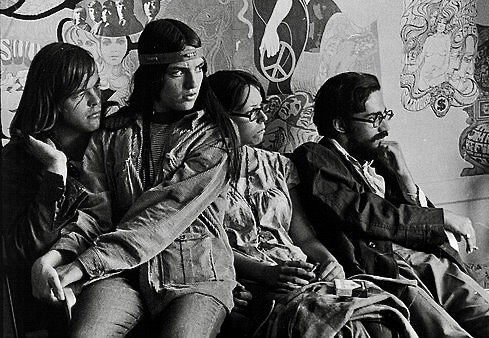
Flower Power

By Ed Staskus

   My father was a firm believer in the harder you work the better your station. He meant better car, better house, more money in the bank, and basically better everything. He was a refugee from Lithuania, getting out of Europe in 1949 with a duffel bag and twenty-five dollars in his pocket. By the time he got to Sudbury, Ontario he was down to five dollars, but found employment at a cement factory the next day. Even though I wasn’t sure the long march to better was better, I was barely 15 years old the summer of 1966 and not about to argue with him.

   When I came home from my last two-week Lithuanian boys and girls summer camp on Wasaga Beach I was immediately put to work. My father got a job for me on the chain gang of a landscaper who was redoing the grounds at Mt. Sinai Hospital. We trimmed trees, ripped out dead shrubs, replacing them with new ones, buried bulbs, and planted flowers.

   Mount Sinai Hospital began in 1892 as the Young Ladies’ Hebrew Association “caring for the needy and sick.” It opened as a hospital in 1903 on E. 32nd St., catering to east side Jews, then moved to a bigger building on E. 105th  St. in 1916. In time it became the healthcare provider to Cleveland’s urban poor.

   My number one thankless assignment was helping unload soggy clods of rolled-up sod and laying them down to make new lawns. That meant removing the old grass and some of the worn-out soil beneath it, preparing the ground with a bow rake, breaking up large chunks, laying the sod, neatening the edges, and finally watering it. Handling the hose was the easiest best part of the job. By the end of the first day, I was damp, dirty, tired, and underpaid. 

   I got a ride to work every morning from Val, a Lithuanian American like me home from college. He drove a 1960 Plymouth Valiant with push-button transmission shifters. There was no button for park, but there was a lever for it. Moving the lever to the end put the transmission into park and popped out whatever button was in gear. It was for laughs watching him smack the buttons from first to second to drive.

   We hopped on I-90 at E. 185th St. and took the Liberty Blvd. exit, driving along the winding road through Rockefeller Park to the work site. The 200-acre park was given to the city by John D. Ruthless in 1897. Four stone bridges carried traffic and trains over the road, there was a lagoon for rowing, fishing, and ice skating at the end of it, and a couple dozen Cultural Gardens down the three-mile length of it.

   The gardens are a series of landscaped green spots honoring ethnic communities in Cleveland, set up from the south shore of Lake Erie to University Circle. The first one was the Shakespeare Garden in 1916, which later became the British Garden. The Cultural Garden League carved out the next one, the Hebrew Garden, in 1926. After that they were off to the races. In the next ten years 14 more gardens were created, including the Italian, Hungarian, and Lithuanian. The idea was to rave on the city’s immigrant groups, which at the time made up about a third of the population.

   In 1936 the city unified the gardens with bordered paths. Busts and statues were installed in many of them. The first One World Day took place in 1946. A parade of nationality floats and bands blaring old hometown tunes started downtown at Public Square, crept six miles along Euclid Ave. to the Cultural Gardens, where there were speeches and a ceremony. Afterwards there was food, souvenir stands, strolling around the gardens, hobnobbing, and dancing to more music. By the middle of the day it sounded like the Tower of Babel.

   We were listening to “Hanky Panky” by Tommy James and the Shondells on the car radio one Wednesday morning, curving down onto Liberty Blvd. on our way to work, when we were brought up short by a Jeep with a machine gun mounted on the back. It was blocking the road. There were more Jeeps scattered in the distance. “One of the Jeeps had a plastic lei hanging down from the .50 caliber gun,” said Wayne Baker, who lived in the St. Clair – Superior neighborhood. A line of cars was backing up and going the way they had come. Val pulled over to the side until a National Guardsman walked up to our car. 

   “Turn around fellas,” he said. “This road is going to be closed today, maybe the rest of the week.”

   “Why, what’s going on?” Val asked.

   “The niggers are raising hell, busting into stores, burning them down.”

   “What about the parade?” I asked. One World Day was scheduled for the weekend. My parents, brother, sister, and I always went. All my friends went. It was a big thing.

   “I don’t know about no parade, but there ain’t going to be one until things cool down.”

   The street fighting had started Monday when a black man walked into the white-owned Seventy-Niners Café at Hough Ave. and E. 79th St. He asked for a glass of cold water to cool down. It had been a hot day in a long hot summer. The bartender said no, get the hell out of here. Somebody else posted a hand-written sign. It said “No water for niggers.” 

   One thing led to another and before long the Cleveland Police Department had a riot on its hands. The more policemen who showed up the bigger the mob got. By the next day there weren’t enough policemen in the city to handle the uproar. Mayor Ralph Locher asked Ohio Governor James Rhodes to send in the National Guard. They showed up through the night and deployed in the morning.

   Helen Provenzano’s father got a call early that morning that all the windows in his restaurant on E. 97th St. and Euclid Ave. were broken and he should bring plywood pronto. The eatery was the family’s bread and butter. By the end of the day there was a run on sheets of plywood at hardware stores.

    “Why are you home so early,” my mother asked after Val dropped me off. “Did you do something wrong?”

   “No, the colored people did, there’s a riot going on and we couldn’t get to work,” I said.

   In the mid-1960s 60% of northern whites agreed that Negro students should be able to go to the same schools.70% agreed with residential integration. 80% agreed that they should be able to get the same jobs as white folks. 90% agreed that they should enjoy public transportation just like everybody else. 100% of Lithuanian Americans didn’t care what bus Negroes rode to whatever job, but the same 100% was opposed to colored kids in their schools and colored families moving into their neighborhoods. When the moving started was when the white flight started.

   My parents weren’t any different than any other Lithuanian I ever heard say anything about it. They hated Russians, disliked Jews, and looked down on Negroes. Their culture was one of religion, property, and community. They thought Negroes were bad Americans, slow-moving and shiftless, belonged to the wrong religion, and didn’t respect private property.

   Where we lived there were no Negroes, at all. I delivered the Cleveland Press afternoon newspaper door-to-door six days a week and collected money for it once a week. I knew the faces of who lived on our street of one hundred-some houses. There weren’t any black hands on my route handing me their payment of 50 cents and a tip if they wanted the rubber-banded paper to land securely on their front porch the following week.

   Our high school, St Joseph’s, was the same as my paper route. I might see a black face once in a blue moon, but not in any of my classes. They were the janitors. There were lots of big Catholic families in our neighborhood of North Collinwood, and they were a solid block of European stock.

   After Brown v. Board of Education of Topeka and the emerging Civil Rights movement, the times were slowly changing, but it was a bumpy change. Integration meant ill will and uproar. There had been a couple of incidents at Collinwood High School, a few miles southwest of us, the year before. “With the passage of each year, the western fringes of the Collinwood area are being occupied by the Negro overflow from Glenville,” according to the Cleveland Plain Dealer, which was the morning paper.

   The Five Points riot happened four years later. Four hundred white students and their parents milling around Collinwood High School in the morning started throwing rocks, smashing more than 50 windows. The 200 newly enfranchised Negro students attending the school fled to the third-floor cafeteria. When the mob stormed into the building the Negroes blocked the stairs to the third floor with tables and chairs, breaking off the legs to arm themselves. Cleveland police from the 3rd, 4th and 5th Districts poured in, forming a cordon to keep the whites from attacking the blacks who were boarding buses. 

   “Always be careful around them,” my mother said, meaning Negroes. “They might have a knife.”

   My mother and father believed Negroes went nuts at the drop of a hat. I took my parents at their word. It was always touch-and-go messing with their point-of-view. They survived three invasions while growing up in Lithuania, were in Germany during the convulsive last months of the Third Reich, emigrated to North America with just about nothing except willpower, and worked their way up to be devout Republicans in the New World. They were short-tempered about anybody questioning their beliefs.

   Once, goofing around, I said, “And in this corner, still undefeated, my mom and dad and their long-held beliefs.” That was a big mistake, especially since they were within earshot.

   Hough was a powder keg the summer of 1966. Downtown was white, University Circle to the east was white, and in the middle was Hough, which was black. The housing was substandard and overcrowded. The area stores were crappy and overcharged for their wares. The police were surly about who they were serving and protecting. When the race riot got rolling, there was rock throwing, looting, arson, and some gunfire. Four people were killed, all four of them Negroes. Two were caught in crossfires, one was killed by a white passerby while waiting at a bus stop, and one was shot by a Little Italy man who said it was self-defense. More than 30 were injured, close to 300 were arrested, and 240-some fires were set. There was an estimated $2 million in property damage. Many homes burned to the ground, most of them in Hough. 

   A friend of mine’s grandmother, born at the turn of the century in Lithuania, was upset and wanted to go home to “my own place,” which was her home on White Ave. north of Hough Ave. She was staying with the family in the meantime. The big houses all around her small house had all been made into boarding houses. They were overcrowded, but what could anybody do who was chronically short of hard cash?

   Real family income rose rapidly in the 1960s. From 1960 to 1970, median family income, adjusted for inflation, rose to $20,939 from $15,637. It did, at least, if you were white. It didn’t if you were black. It went the other way.

   “It is a stark reality that the black communities are becoming more and more economically depressed,” Bayard Rustin wrote in 1966. “There has been almost no change or change for the worse in the daily lives of most blacks,” Carmichael and Hamilton wrote in 1967. “Although it is true that the income of middle-class Negroes has risen somewhat, the income of the great mass of Negroes is declining,” Martin Duberman wrote in 1968.

   You can only do so much with less. It’s smooth sailing when there’s money in the piggybank. It’s a hard slog when the piggybank is starving. Living on bits and pieces is bitter and maddening.

   “The white man is reaping what he has sown. He is learning you can’t push people around. The trouble is here because the white man won’t treat the black man right,” the owner of a barber shop in Hough said. 

   A grand jury later concluded that the Communist Party, outside agitators, and black nationalists organized the uprising, but the finding was laughed off. No Communists had been seen in Cleveland for years and not even outside agitators nor black nationalists wanted to be caught dead in Hough, fearing for their health and safety.

   An angry crowd started a big fire at Cedar Ave. and E. 106th St. at the start of the weekend, burning down most of a block of stores, but that was the high and low point of the disturbance. Life in the ghetto returned to normal on Sunday and the next day merchants started reopening. The National Guard was released from duty. Val and I went back to work mid-week.

   From where we stood on the grounds of Mt. Sinai Hospital it looked like nothing had happened. But there were two Cleveland Police cars parked at the front, and one near the back, that whole week. There had always been police cars around the hospital, but those three stayed around the clock.

   Nobody talked much about the riot, except to say, “those spades are crazy.” My parents and their friends said, “it’s a damned shame about the parade.” Val and I shouldered on for another two-some weeks. When the project was done, we were sent out to Bratenahl, mowing lawns for the millionaires who lived in the east side village’s lakeside mansions.

   Our last day at Mt. Sinai, which was a Friday and payday, driving home on Liberty Blvd, the Cultural Gardens looking great in the summer sun, Val said, “Have you noticed there isn’t an African American garden?”

   “No,” I said.

   “They were some of the first immigrants, not that they wanted to come here, but still, you would think there would be a garden for them, especially since this is all in their neighborhood.”

   “I guess so,” I said.

    Val was five years older and much wiser than me. He was going to an east coast college, majoring in philosophy. He wore his hair long. Some Lithuanians called him a dirty hippie, even though he worked like a sharecropper.

   The idea of building a garden for Cleveland’s Negro community was brought up in 1961 by Cleveland councilman Leo Jackson. He proposed a “Negro Cultural Garden.”  The mayor supported the proposal, but it was voted down by his finance committee. In 1968 the idea came back, including a statue of Martin Luther King, Jr., who had been assassinated that year. Nothing came of the comeback until 1976, when Congressman Louis Stokes brought it to life again. Ground for the garden was broken and dedicated in 1977, but the project remained unfinished until 2016, almost forty years later, when it was finally finished.

   When we turned off Liberty Blvd., racing up the entrance ramp to I-90, Val punched the spunky Valiant’s push buttons through its gears, and we rode the current of rush hour traffic back to North Collinwood. The weekend was coming up. We were both ready as could be.

   “I’m glad to be going home,” I said.

   “You and me both, man,” Val said. “Shelter from the storm.”

Ed Staskus posts stories on 147 Stanley Street http://www.147stanleystreet.com and Cleveland Ohio Daybook http://www.clevelandohiodaybook.com. To get the site’s monthly feature in your in-box click on “Follow.”

Hole in One

By Ed Staskus

   When Hal Schaser met him at the Kenwood Village Apartments, Wade Riddell had two bum knees, although they were the least of his problems. The burly man had been a Cleveland Police Department detective for fifteen years and a uniformed officer before that. He told Hal that in all that time he only drew his service handgun a handful of times and never once fired it. He lived with the same bullets on his belt all his life.

   He had bad knees from playing handball at the downtown YMCA.

   “I probably never should have played that game, but I loved it, although it and my job cost me my legs and my marriage,” he said.

   Hal met Wade after his own marriage fell apart and he lost his house, which was a lot like what happened to his new pal. They met on the grassy courtyard of the apartment complex on East 222nd St. in Euclid, where they both lived, when Hal saw him messing around with golf clubs on a warm spring day. The ex-cop was retired and living alone.

  Hal wasn’t retired, not exactly, but he lived alone, too.

  They played golf together for the next three years. He was the best friend Hal ever had, even more than the Jew, even though he ended up doing more for Hal later. Wade was affable and did things for him that he never even asked him to do. After Hal moved to Lakewood, Wade got him a car, convincing his lady friend to give him the old Ford she was planning on trading in when she got her new car. He later mailed a check to him for five hundred dollars, to live on, knowing Hal was strapped for cash, knowing his ex-wife had taken him to the cleaners.

   It wasn’t his fault the Ford’s transmission blew out, stranding him in the middle of nowhere. His son-in-law picked him up, driving him home, but wouldn’t lend him the money to get it repaired.

   “Fixing it will cost more than the car is worth,” he said. “You’re better off sending it to the scrap yard.”

   He knew he was right but knew at the same time his son-in-law didn’t want to lend him even one dollar. He could tell he didn’t trust him, even though he had always been an honest man. All his friends said so. He wasn’t sure what his daughter thought, whether she was just backing her husband up, or not.

   He junked the Ford and got a hundred bucks for it.

   After that he had to walk to the Lakewood Library and McDonald’s, the grocery and the bus stop all that winter, the winter Wade blew his head off, and the next spring until Charlie Taylor died and left him a hundred thousand dollars. The trust sold the dead man’s house and old furniture and threw everything else out. They converted his bonds and insurance to cash. Hal was able to buy a new car, a two-door Suzuki that never ran out of gas.

   When his wife Teresa walked out on him, and took all the money out of their joint accounts, swooping up the kids and talking him into taking a second mortgage out on their house so she and her new boyfriend from Rochester could open a restaurant, and Palmer Bearings went bankrupt, putting him out of the only work he had ever done since getting shipped home from the Korean War with a Purple Heart, it was then he played more golf than he ever played in his life, and waited to be thrown out of his house.

   When he finally got the boot and moved out of Indian Hills, down the hill to the flatlands, he was in his late 50s. “I was hanging on, waiting to get to 62, so I could get my Social Security early. I needed the money bad. When I worked for Palmer Bearings, they gave me a new car every year, with an expense account no one ever questioned, and I was in line to be made a vice-president, up to the day the Shylocks closed the doors without a word of warning to me.”

   Hal had a chip on his shoulder about it. He was aggrieved and bitter. Sometimes he went for a walk to cool down. He didn’t hate Charlie Taylor, but he could do without Jews.

   “There were years when I almost always had a thousand dollars, or more, in my pockets every day. Those days were gone. I made the day for them. I made them rich. In the end they took it all away from me, just like my wife did. They broke me and my wife broke me down.”

   When he moved to Euclid he moved into a no-rent apartment, an apartment that Angelo, the maintenance man at the apartment complex, who he met through Stan, a Pole he often had breakfast with at a railroad car diner on Green Road, not far from the giant Fisher Body and TRW plants, got for him when he was hired to be his helper.

   “Stan and I talked all the time over cups of coffee. We got to be good friends, even though he was a thick-headed Polack. He was a hell of a bowler. He was good enough to bowl in tournaments, and I went to a couple of them to watch him. It was hop, skip, and glide to the line. He was always pounding out strikes. It got old, though, and I stopped going, except when the drinks and pretzels were free.”

   Angelo was from Texas and was a Korean War veteran, like Hal. He talked to the man who was the boss, who owned the apartment complex, into hiring him. Hal didn’t like the man, didn’t like his thin shrewd face, but kept his mouth shut.

   “That’s who runs the country. They run the money, which means they run everything else, too. They own most of the gold in the world. They marry inside the family, keeping it all together for themselves.”

   He shoveled snow, did some of the gardening, and vacuumed the hallways. He cleaned apartments when they went vacant and got paid extra whenever he had to clean kitchens, scrubbing the stove and emptying out the fridge, throwing away spoiled food. He made a few bucks here and there, one way or another. He stayed sharp on the uptake whenever it was there. He kept his head above water.

   The apartment complex had been built during World War Two for government workers. It was built like a tank, sturdy as a fort. The brown brick buildings were three stories with garages in the back. Fox Ave. intersected the complex and ran all the way to Babbitt Ave., where there was the Briardale Greens Golf Course. Wayne and he shuttled to it on good days, getting in eighteen holes.

   “He wasn’t any good, and complained about the walking, but we got along. I always went looking for the balls he shanked. That way there wouldn’t be any problems about where they lay.”

   Wade worked part-time at night, in a booth selling betting slips at the Thistledown horse racing track in North Randall. He was on his own during the day, which was how he and Hal were able to go golfing together whenever Hal was free to go. They went to tournaments in Akron, to watch the professionals. Stan went with them once, but he wasn’t used to hiking around anywhere wider or longer than a bowling lane and got worn out.

   After Hal didn’t have a car anymore, Wade always drove the two of them. He had gotten a new dark blue Mercury four-door sedan. “He loved that car and talked his lady friend into getting one, too. That was how I got her old Ford.”

   When Hal moved to Lakewood, on the west side, to the no-frills Elbur Manor apartment building across the street from St. Ed’s High School, Wade visited him a few times, even though he didn’t like Hal’s small apartment.

   “It’s a dump,” he said. It wasn’t the apartment’s fault. Hal wasn’t a tidy man. He hoarded whatever came his way

    Hal took Wade to McDonald’s for breakfast. “I could tell he was suffering. It wasn’t just his knees. He had prostate cancer and was hurting. It was just a matter of time. I called him on Christmas Eve and wished him happy holidays. He didn’t sound good, but he didn’t sound bad, either. At least, that’s what I thought. I was dead wrong.”

   Wade’s son was a pre-law student at Miami University. He had tried out for the football team as a walk-on and made the cut. That fall he saw playing time as the team’s back-up quarterback when the starter was injured. “He was a hell of an athlete,” Hal said. He drove to Euclid from Oxford to see his dad the Christmas weekend. Wade told him all about his new Mercury.

   “Take my car and give it a little ride,” he said. “I haven’t driven it for a while. It needs to be out on the road.”

   His son got the car and drove it up and down Lakeshore Boulevard. It had snowed overnight, but not much, and what snow there was had been plowed to the side. When he got back, he found his father in bed. Wade had put a pillow over his head and a gun in his mouth. When he pulled the trigger, it was the first and last time he ever shot a gun at a living human being.

   After the funeral Hal hoofed it around Lakewood until summer, when Charlie Taylor, his golfing buddy for many years, who was in his 80s, got sick. He was taken to Fairview Hospital, and when there wasn’t anything else the doctors could do, they moved him to the Welsh Home in Rocky River.

   “Charlie was a great guy and great friend of mine, my other best friend for a long time. He was on our golf team in the Cleveland Metropolitan Golf Association. We had about ninety members and most of us were friends. We played golf until it was too cold to walk the courses. After that, any of us who could afford it went south to play. I went to sunny parts of the country to play golf many times, when I was married, and in the clover, and even afterwards, until I couldn’t afford to go anymore.”

   Charlie Taylor passed away in his sleep and a month after his funeral Hal got a registered letter from a lawyer saying he had been included in the will. “He left me his house. It surprised me but didn’t surprise me. I was the only person who ever listened to what he had to say, who stuck around when he lost track of his train of thought, who waited for him to reminisce about something else he was bound to remember sooner or later, even though it was a lot of nothing. After the house was sold, I got a check for a bundle.”

   He bought his new car, paying cash for it. He paid off his credit card debt, the plastic he had been living on, and bought a new laptop computer, so he didn’t have to always go to the library to work on his get-rich schemes. He stopped sending e-mails to his son-in-law when he exploded about them one day, saying he was sick of the Ponzi schemes. He told Hal he was never going to buy in to any of them, so don’t bother.

   “I was always a good friend with different people, including Wade and Charlie, who were my two best friends. It’s good to be best friends with the good guys. Otherwise, you end up with duck eggs. My ship is coming in one day. When it does, I’ll dump the Suzuki in the blink of an eye and get an Audi convertible.  I’ll go to Florida every winter. I’ll play golf in the sunshine again.”

   He bought new shirts and shoes and ate better. After squirreling the rest of Charlie’s money away he was in good shape. He stayed in his dog-eared apartment to keep costs down. He thought about buying birthday presents for his grandson and granddaughter, even though he hardly ever saw them, and when he did see them, hardly paid any attention to them. He didn’t work at much of anything and played golf all the next summer at new nicer courses. He carried the certificates for the two holes in one he had made over the years in his wallet. He went to both Wade and Charlie’s graves and paid his respects. He only went once, but it was enough.

   He made some new best friends, joining a coffee klatch at the new McDonald’s on Detroit Rd. across the street from the Lutheran church that was closing soon. They sat around shooting the bull and drinking free re-fills. “Don’t play too much golf,” he told them. “Two rounds a day are plenty.”

Ed Staskus posts stories on 147 Stanley Street http://www.147stanleystreet.com and Cleveland Ohio Daybook http://www.clevelandohiodaybook.com. To get the site’s monthly feature in your in-box click on “Follow.”

Messing With Bigfoot

By Ed Staskus

   The week we went to our last Boy Scout camp at Lake Pymatuning State Park wasn’t any seven days longer than any other summer camp we had gone to, but since it was going to be our last camp, my friends and I were determined to make the most of it, stay up most of the time, lengthening the days and nights, mess around in the woods and the lake, raid the girl’s side, and play mumble the peg.

   Most of us carried jackknives and some of us had fixed-blade sheath knives. We were always whittling on something. “No mumbledy peg,” our scoutmaster told us in no uncertain terms, in uncertain English, in his strong Lithuanian accent, speaking through his Chiclet teeth.

   One way we played mumble the peg was to first stick a twig into the ground. We threw our knives at the ground, flipping from the palm, back of the hand, twist of the fist, and every which way. Whatever the other scout did, if he threw it backward over his head, and it stuck, you had to do it, too. If you failed, then you had to mumble the peg. You had to get on your hands and knees and pull the twig out of the ground with your teeth.

   The other way we played was to stand opposite each other with our legs shoulder-width. Taking turns, we would flip and try to stick our knife into the ground as close to our own foot as possible. The first toss was always in the middle, but when the other guy got closer, you had to get closer, and the closer and closer it went. Whoever stuck his knife closest to his own foot, and the other guy chickened out, was the winner.

   If you stuck the knife into your own foot you won on the spot, although nobody ever wanted to win that way. It was why everyone who had not gotten their first aid merit badge and was going to get in on mumble the peg at camp took the class at the park ranger cabin a half mile away. It was taught by an older scout who wore leopard-print camouflage pants and shirt. One of us read from the only available Red Cross manual, while he was the hands-on guy.

   It was the only book-learning merit badge on the program. Sticking our noses in a book at summer camp was the last thing anybody except the bookworms wanted to do. They read what somebody else had dreamed up about fun. We dreamed up our own fun.

   We were going to look for Bigfoot and nab him if we could. He was the hide and seek world champion, but we knew he was somewhere around the lake. What we were going to do with him once we got him, none of us knew. We thought, if we did find him, and he was friendly, we would ask him where he lived and what he did all day. 

   “His name is Sasquatch,” the cammo-clad scout told us, looking like he thought we were retards.

   There were more of us than Bigfoot, or whatever his name was, for sure. There were seven of us, first-generation immigrant children like all the boys and girls at the camp, and we were all Eagle Scouts. None of us had earned any Palms, though, since none of us had gotten more than the twenty-one merit badges needed to get to Eagle, but all of us were going for twenty-two, since Somebody’s dad had brought two canoes. We were looking forward to it after we heard what getting a canoeing badge was all about.

   What it was about was jumping out of a canoe in deep water and getting back in without capsizing, then performing a controlled capsize, and swimming, towing, or pushing the swamped canoe fifty feet to shallow water. Once in the shallow water, empty the swamped canoe and reenter it. Back in deep water, rescue a swamped canoe and its paddlers by emptying it and helping the paddlers reenter their boat without capsizing. We were all about that, come hell or high water

   We had searched for Bigfoot at camp before, but sporadically, never having a plan. This time we had a plan. We brought flashlights, we had a map of the landscape north of our camp, and a compass, and we made sure all of us had sharpened our knives just in case the creature tried to mess with us. Finding Bigfoot would put Troop 311 on the map.

   Seven years earlier Bigfoot had terrorized a weekend Cub Scout camp at the park in the middle of the night. The scoutmaster was jolted out of a sound sleep by the screams of his boys. He stumbled out of his tent to find the 11-year-olds crying and running around in circles. Using a whistle and a flashlight he got them to stop and form a line. He then asked them what was going on.

   It turned out four of the boys had been woken up suddenly by a loud noise. Their tent started to shake. They thought it was a prank being played by their friends, until the tent was ripped from the ground and thrown into a tree. A very large shadow bellowed at them. It was Bigfoot. Two of the boys immediately shut their eyes. The other two were mesmerized by its glowing eyes. They couldn’t look away.

   The beast was satisfied with scaring them and left. The scoutmaster searched, but only found the tent high in the tree. He built a fire and gathered all the boys around him. In the morning he cut the camping weekend short and they all rushed home.

   Troop 311 was the Lithuanian American scout troop on the east side of town. Our headquarters was the community hall at Our Lady of Perpetual Help Church, just off E. 185th St., the principal road, and the spine of Lithuanian life and culture in Cleveland. Our group was all 15 and 16 years old. 

   The younger kids didn’t know anything. The older guys who were still scouts were Explorers, in it for life. We knew this was our last camp at Lake Pymatuning. Next year we were hoping to go out on a high note at the 12th World Scout Jamboree at Farragut State Park in the Rocky Mountains.

   “I will bust a gut if we make it there,” said Linas, our camel train’s wise guy.

    The first thing we did when we got to Lake Pymatuning on late Saturday morning was haul our stuff, clothes, sleeping bags, tents, food and supplies out of the fleet of Ford station wagons, Chevy station wagons, and Pontiac station wagons our parents had driven us in to the camp site. We set up our tents in a perpendicular line to the lake, hoisted the communal tent, dug a fire pit and a latrine trench, after which we built a 30-foot-high abstract frame sculpture out of dead tree branches. Everybody went for a swim when we were done.

   The lake is partly in Ohio and partly in Pennsylvania, on land that used to be a swamp. It is named for Pihmtomink, the chief of the tribe who lived in the swamp. When the Indians were pushed off their land, and told to go somewhere else, the first farmers had a hell of a time. The swamp was infested by mosquitoes carrying yellow fever. Farm animals were eaten by bears and mountain lions or sank in quicksand. There was a massive flood in 1913. Finally, the Pymatuning Land Company bought all the land, thousands of men worked from 1931 to 1934, and built a dam. The lake they made is 17 miles long and 2 miles wide.

   There’s a spot called “Where the Ducks Walk on the Fish,” where people throw bread to thousands of carp and Canadian geese. Birds of a feather rush around like madmen on top of the fish to snag their share of it.

   Our scoutmaster’s tent was nearest to the lake. Vytas Jokubaitis was a short barrel-chested man with blondish hair and a red face. He wore a wide-brimmed hat, the same kind that Robert Baden-Powell wore, to keep the sun off his face. But he usually had the front brim pushed up. That wasn’t why his face was red, anyway. He wasn’t a bad man, but he had a bad temper that boiled over at the drop of a hat. Nobody ever wanted to get on the wrong side of the scout oath, or scout motto, or the scout code with him. There was the devil to pay when that happened.

   He was our Scoutmaster, or Scouter, so we called him Scooter since we couldn’t call him Vito. He didn’t like that. He was a grown man, and we were kids. He didn’t like us calling him Scooter, either, but what could he do? Besides, we never called him that to his face. He was a “Yes, sir” and “No, sir” kind of man.

   He was from Alytus, the same town where my mother had been baby-sitting when the Russians stormed into Lithuania in 1944. She got out in the nick of time with her aunt and her aunt’s four kids on a horse drawn wagon with a cow tied to the back. By 1966 it had been 22 years since she had seen anyone from her family, who were all stuck behind the Iron Curtain.

   Vytas Jokubaitis organized Zaibas and the Lithuanian American Club in Cleveland, and had gotten medals, although he never wore them to camp. The CYO gave him the “Saint John Bosco Award.” We all went to Catholic schools, but none of knew who John Bosco was. He sounded like chocolate syrup.

   Vytas’s wife Ona was industrious and not about to be outdone by her husband. She ran the camp as much as he did, although she stayed on the girl’s side. She was the head of the Parents Committee of Zaibas, raised mounds of money for the Lithuanian Relief Fund, and was Outstanding Citizen of the Year in 1960. Cleveland mayor Ralph Locher gave her the award and a handshake to boot.

   They told us about Lithuania at the night-time campfire like it was the best place in the world, but none of had ever been there. Lithuania was like Bigfoot, something we heard about, but didn’t know if it was real or not.  When they talked about the Baltic and the dunes at Nida, all we could picture were the dunes at Mentor Headlands State Park on Lake Erie. That’s what we knew. We didn’t know Lithuania from the man in the moon.

   We got up early every morning, raised our flags on poles we had brought, did exercises in a field, made breakfast, and took a break after that. We washed our clothes in the lake and dried them on our tent lines. Scooter was focused on physical fitness, so before lunch we had to go on a forced march. We wore Lemon Squeezer campaign hats and uniform green knee socks and were burdened with backpacks full of responsibility. Our only consolation was being let loose afterwards to run and dive into the lake.

   The younger scouts worked on merit badges in the afternoon. We were free to drift off, which we did, fooling around, exploring the shoreline, and mumbling the peg in secluded top-secret spots.

   We did service projects, planting seedlings, and raking out the beach. We climbed trees and had our own “Big Time Wrestling” match with a Negro Scout Troop from Louisville. We went on more hikes before dinner. They were supposed to be short, two to three miles, but Scooter always took us out four and five miles. We hiked every day, rain or shine. We went on a night hike and got lost every which way.

   “It’s like training to be a mailman,” Linas grumbled.

   The last night of camp started after the campfire and lights out. A half hour later we snuck out of our sleeping bags, out of the campsite, and to the grove of crabapple trees on the other side of the girl’s side. There were plenty of last year’s old crabapples littering the ground that squirrels hadn’t gotten. We filled our pockets with them. When we got close to the girl’s tents we unleashed our barrage of missiles. They thunked the canvas and the girls woke up screaming. The next second, though, they were screaming mad. As soon as we were out of ammo, they rushed from their tents, led by the irate Milda, followed by the captivating Ruta, picked up the sour fruits, and started throwing them at us. We scattered and they ran after us, pelting us, but stopped when they ran out of fireworks. 

   Algis had a lump on his head where he got hit. We rubbed it to rub it away, but he said, “Cut it out, you’re making it hurt even more.” He was good to go in a minute. We went looking for Bigfoot, following the beams of our flashlights. We thought he had to be somewhere in the woods, away from the water, where there were always tents and trailers all summer long. Bigfoot was beyond any doubt a loner.

   We knew he was going to be hard to find in the dark even though he was probably nine feet tall. He was covered head-to-toe in swarthy hair. We were hoping to find footprints, which had to be enormous. We tramped around for hours looking for him, but all we found was a skunk, who raised his tail before we backed off, and two racoons on their hind legs, peering at us from behind their masks.

   “Maybe he avoids white people, since they chased off his ancestors,” Gediminas said.

   “You think he’s an Indian?” Andrius said . We called him Andy since calling him Andrius annoyed the crap out of him.

   “He’s got to be. Why would he live in the woods, all naked, no furniture or TV? Only Indians do that.” 

   “That makes sense to me,” Linas said.

   Looking for Bigfoot turned out to be a wild-goose chase. We whacked our heads on tree branches, tripped over roots, looked high and low, left no stone unturned, but he wasn’t anywhere to be found. We trudged back to camp, tired and disappointed.

   I don’t know what got into us. One minute we were sneaking back to our tents and the next minute we were sneaking up to Scooter’s car. It was a four-door Ford Country Sedan. After checking the driver’s door, finding it was unlocked, and quietly opening it, putting the manual gear into neutral, the next minute we were all at the back pushing the car down the slope toward the lake.

   Nobody said a word when it got stuck in the muck. The water slurped up to the front bumper. Nobody still said a word when we slouched back to our tents and threw ourselves down on our sleeping bags.

   The next morning we were woken up by ferocious bursts of anger and dismay. We were bum rushed out of our tents and lined up in a row. We could see the shipwrecked Ford down the bank. Scooter read us the riot act. None of us had any idea he knew so many swear words. He gave each of us the third-degree, face to face, glaring, but nobody was talking.

   “I will give you one last chance,” he finally said. “Whoever did this step forward, apologize, know that you broke the code of scouting, and we will forgive.”

   We all knew that wasn’t going to happen. Scooter wasn’t one to ever forgive and forget. His face was getting redder and redder. It looked like he might explode. Then Linas stepped up before he blew up.

   It was hard to believe he was going to spill the beans. He was the least tame scout among us. He was no chicken, either. He proved that every day. He had thrown down the mumble the peg gauntlet the first day and fended off all challengers. Playing the peg was forbidden but he played it more than anyone else and played it best, yet there he was ready to tell all about pushing our scoutmaster’s car into Lake Pymatuning.

   “Yes?” asked Scooter.

   “I think it was Bigfoot, sir,” Linas said.

A version of this story appeared in Lithuanian Heritage Magazine.

Ed Staskus posts stories on 147 Stanley Street http://www.147stanleystreet.com and Cleveland Ohio Daybook http://www.clevelandohiodaybook.com. To get the site’s monthly feature in your in-box click on “Follow.”