Tag Archives: Ed Staskus

Stand and Deliver

By Ed Staskus

   The law office’s front door was meant to be a ten-thousand-dollar door, but I got lucky, and got in and out for only two hundred fifty dollars. I never went back. One shake down is more than enough. I found out the door was the entrance to a dog and pony show. There weren’t that many apples on my tree that I could afford to give bushels of them away for flimflam in return. 

   I was at the law office to make sure, even though I had lived in the United States for decades, that I was a citizen. My immigrant parents had naturalized in the 1960s, but it was unclear, at least to me, whether their citizenship extended to me. My father, who knew how to read contracts like the back of his hand, said I was a full-fledged citizen, but I wanted to make sure.

   When I first started going to Toronto by myself in my late teens it was by Greyhound. I rode the bus to Buffalo and walked across the Peace Bridge. When I got to the Canadian side, the border police asked me where I was from and for identification. I showed them my driver’s license. They waved me through. When I went home I did the same thing. The American border police waved me through, the same as the Canadians.

   After I got married my wife and I often went to Canada, to Wasaga Beach, to Penetanguishene, to Nova Scotia, and finally to Prince Edward Island, which we liked and made a habit of returning to. We did, at least, until Osama bin Laden’s towelheads went jihad and flew jetliners into NYC’s Twin Towers. We had just gotten back from Prince Edward  Island a few days earlier. I was standing in line in a drug store when I saw it happening on a TV above the cash register. After that, crossing borders slowly but surely became more officious. We found out soon enough we would need passports to get into Canada and back into the USA.

   My wife applied for and got her passport in five weeks. I didn’t apply at first because I wasn’t absolutely certain of my status. I had never been sure, no matter how sure I sounded at the border, asserting I was an American citizen. My parents grew up in Lithuania, fled the Red Army to Germany in 1944, emigrated to Canada after the war, and finally settled in the United States in the late 1950s. They were naturalized in the mid-1960s. I knew my brother and sister were citizens, but was uncertain because of my age when my parents became citizens.

   When we decided the red sand beaches and blue water of Prince Edward Island was the place to go in the summer, I resolved to settle my body politic issue. Push came to shove and I asked one of our Lithuanian American community’s bigwigs if she knew anybody she could recommend to help me out. She told me about a friend of hers who was a lawyer. The lawyer had been in the resettlement business for more than 30 years and was herself an immigrant, she said.

   I made an appointment and went to the lawyer’s office. The lobby was sizable and almost full, full of worried-looking people sitting and waiting their turn. Some of them were Latino’s. The rest of them looked like they were from Asia or the Indian sub-continent. The citizenship business seemed to be booming. When my number was called I was shown into the boss’s office. That was my first surprise. I had not thought I would be talking to the main man, even though she was a woman. 

   The boss was a squat woman with a round face. Her hair was jet black. Her lips were dolled up in red. She glanced at the paperwork and documentation I had brought with me and said, “I will be your helping hand.” She shot me a cherry bomb smile. “Thanks,” I said. I thought she would be working on my behalf going forward. I found out later she was trying to work me over.

   She told me I had a big problem with my citizenship and might be deported at any minute. She said she wanted to get started right away before that happened. She explained the initial consultation fee was going to be $250.00 and the balance to resolve my problem was going to be $9,750.00. 

   “This is going to cost me ten thousand dollars?” I asked, incredulous. It was my second surprise. It was an unwelcome bombshell. Back in the day highwaymen stuck a gun in your back and hissed, “Stand and deliver, your money, or else.” Nowadays they tell you to sit down and stick a fountain pen in your face.

   I was in her office for five minutes before she ushered me out. “Time is money,” her red lips said. It took me fifteen minutes to drive home, where I mulled over the problem of finding ten thousand dollars. It was winter and we weren’t planning on going back to Canada until the next summer, so there was no rush on that account. But what she had said about being deported was worrisome. I had fond memories of my hometown of Sudbury, Ontario, but being uprooted was not what I wanted to happen. We had bought a house which we were renovating, and I had both full-time and part-time jobs. We had a mortgage and friends and family in town. We had a cat who would miss chasing birds in our backyard.

   I went back to the law office the next month. I was introduced to a young associate and escorted to a small room in the back. A table and two chairs were in the room. I sat down in one of the chairs and the associate sat down in the other chair. He handed me a contract for the work they were going to be doing. I handed him the same paperwork and documentation I had shown to the woman in the corner office. He started to peruse the contract. After a few minutes he looked up, cleared his throat, and said, “I don’t exactly know why you’re here. According to what I’m looking at, you already are a citizen.” 

That was my third surprise. “Are you sure?” I asked.

   “I think so, but I better doublecheck with my boss,” he said, quickly backtracking, but the cat was out of the bag.

   “All right,” I said, and as soon as I said it I made ready to be gone.

   “I can’t stay,” I said, lying and standing up. “I’ve got to get to work. Let me know what you find out and in the meantime I will read this contract.” We shook hands, I gave him a watery smile, got into my car, and drove the other way..

   The next day I drove to the Rocky River post office where I knew they processed passport applications. When the line in front of me inched forward and I finally found myself at the counter, I said I wanted to apply for a passport. A middle-aged woman in a drab uniform walked up from the back and motioned me towards a chair and a camera. She handed me an application and told me how much applying for safe conduct was going to cost. It was ninety-seven dollars.

   “All right, but would you look at my birth certificate and this other paper work first. I was born in Canada and I’m not sure I am actually an American citizen.” She spread everything out on the counter and looked it over. It didn’t take her long. Less than five minutes into it she said, “Sure, honey, you’re a citizen, no doubt about it.”

   I filled out the application, got my picture taken, paid the fee, and thanked the post office woman for her help. ”You’re welcome,” she said. I got my passport in the mail about a month and a half later. The passport had my stone-faced picture in it and was good for ten years. I could travel anywhere in the world with it.

   A week later the associate I had talked to called. He wanted to know if I had read the contract and was ready to go ahead with it. “No, I am going to pass on that,” I didn’t say I had thrown the contract in the trash long since.

   “That could mean a lot of problems for you,” he cautioned. “The State Department is cracking down, what with all this terrorism.”

   “I don’t think so,” I said. Nevertheless, he kept up his patter. I hung up.

   Somebody else from the law office called me the following week. I hung up the minute he started into his song and dance. After that the phone calls stopped. We went to Prince Edward Island for two weeks the following June. Except for the long lines at the border, everything went off without a hitch. The Canadian border police said, “Welcome to Canada.” Two weeks later the American border police said, “Welcome to the United States.”

   My wife and I bumped into our Lithuanian American bigwig at a get together a few years later. I mentioned my immigration lawyer travail. My wife tugged on my sleeve, urging me to be polite. I told my adviser how her legal beagle had tried to pull the wool over my eyes. I told her about getting my passport in the end with no run around. I told her ten grand was hard cash and how fortunate it was I hadn’t lost more than the consultation fee, never mind the lawyer’s vexing trickery. It is often the case that the only way to beat a lawyer deadest on your money is to die with nothing.

   “I know her well, she’s a friend, and she would never do anything like that,” the bigwig said, huffing and puffing. She might as well have called me a liar. “She’s nationally known for helping immigrants. She’s helped thousands of people and is one of our city’s leading citizens. Who do you think you are? Don’t say bad things about her.”

   She wasn’t somebody who ever listened to anything I said, so I didn’t argue. What would have been the point? It would have been in one ear and out the other. It was her way of letting you know you didn’t matter all that much. After that, though, I never took anything she said at face value, the same as I never took anything any lawyer ever said at face value.

Ed Staskus posts monthly on 147 Stanley Street http://www.147stanleystreet.com, Made in Cleveland http://www.clevelandohiodaybook.com, Atlantic Canada http://www.redroadpei.com, and Lithuanian Journal http://www.lithuanianjournal.com

“Cross Walk” by Ed Staskus

“Captures the vibe of mid-century NYC, from stickball in the streets to the Mob on the make.” Sam Winchell, Beyond Fiction

Available on Amazon: https://www.amazon.com/dp/B0CRPSFPKP

Late summer and early autumn. New York City, 1956. Jackson Pollack opens a can of worms. President Eisenhower on his way to the opening game of the World Series where a hit man waits in the wings. A Hell’s Kitchen private eye scares up the shadows.

A Crying of Lot 49 Publication
From Here to Someday

By Ed Staskus

   Sly and the Family Stone drifted into the kitchen where I was making pancakes, stood up on his hind legs, and slapped his tongue against the side of my face. I didn’t mind too much. His mouth was cleaner than that of most of my friends. His kiss was less risky than kissing another person, like my girlfriend. Whatever germs were in his mouth were mostly incompatible to human beings. I never caught the flu from him since his nose never ran. Sometimes it seemed like he had more of a soft spot for me than any living being I knew.

   My brother left his Great Dane behind when he moved out. The dog cost me an arm and a leg to feed. I had to walk him twice a day. I had to shove him out of my bed whenever he tried to sleep next to me. His germs might have been harmless, but his bad breath was sewer gas. He was good-natured, though, and we got along. I called him Sly for short. He called me the man, by which he meant the grocery deliveryman. He didn’t know how to talk, but I always knew what he meant when he barked.

   Sly was in his formative years and fascinated by cars. He was reckless chasing them. I put a stop to it by sitting him down on the tree lawn and driving slowly past with a squirt gun in my lap. The gun was loaded with vinegar. Whenever he lunged at the car, I squirted him in the face through the open window. It only took five minutes to teach him cars were dangerous and guns were even more dangerous. After that I rarely had to put him on a lead when we walked to the pocket park on Lake Erie for runaround time. He walked beside me and the only time I reached for his collar was when I spied another dog coming our way.

   I was living upstairs in a Polish double on the west end of North Collinwood, on a forgotten street, a couple of blocks from the lake. Ray Sabaliauskas lived downstairs with his prize German Shepherd and the woman he brought back from the Vietnam War. He was Lithuanian like my brother and me. I was going to Cleveland State University and paying for it by taking a quarter off every now and then to work for an electro-static painting outfit. We did most of our work on-site out of town. Ray fed and walked my dog whenever I was on the road.

   The day Sly became my dog was the week after my brother’s fiancée Brenda Watson, a girl from Vermont who my brother met while in the U. S. Army at Fort Riley, was killed on Rt. 20 coming home from her part-time job at a restaurant in Mentor. She had been enrolled full-time at Cuyahoga Community College the rest of the time. She didn’t spend much time fooling around.

   The night Brenda didn’t come home was the night I woke up at two in the morning from a bad dream with a bad feeling. I got up and sat looking out window. It had rained earlier and the worms were out. The backyard grass glistened. The lettuce in the garden was glistening. A stray cat sat under the eaves of the garage, keeping an eye out for late-night snacks.

   When I noticed Brenda’s Subaru station wagon wasn’t in the driveway, I somehow felt certain something bad had happened to her. I couldn’t shake the feeling. I stayed up, sitting by the window, until I finally went back to bed, thinking it was the dream that had upset me. Even so, I couldn’t fall back asleep, and when I did, I slept fitfully.

   The next morning a Cleveland Police squad car pulled up outside the house and broke the news to my brother. At first, I thought he hadn’t heard what the policeman said. He stood stock still. But then he asked where Brenda was and reached for his car keys. I didn’t see him the rest of the day or the next day. Brenda’s parents arrived later in the week and took her back to Vermont for burial in the family’s hometown cemetery. When my brother got back from the funeral he moved out.

   Brenda fell asleep at the wheel coming home the night she died, but that wasn’t what killed her. She wasn’t even hurt when the car drifted off the highway and halfway down the embankment. She was able to hit the brakes and stop the car from overturning. She even coaxed it back up to the shoulder, where she discovered she had a flat tire. She turned on the flashers and was getting the jack and spare tire out of the back of the car when a drunk driver going her way drifted out of his lane and rear-ended her. She was propelled into and over the Subaru. She died on the spot, blind-sided, never knowing what hit her.

   When I finished my pancakes, I took Sly for a short walk. Brenda and my brother were gone and the dog was my only roommate now. He didn’t say much, which suited me, but he needed tending. I was running late for school. Back home I left him on the front porch to sleep the day away and made my way to Lakeshore Blvd, where I caught the 39B bus downtown for a class. It was cheaper than driving my bucket of bolts and paying for parking. It was Friday and I was babysitting a friend’s motorcycle for the weekend.

   Saturday morning I scarfed down a cream cheese bagel and a glass of Joe Wieder’s. The motorcycle was in the driveway behind the house where nobody could see it. Our streets were sketchy. Brothers from the hood and home-grown hoodlums prowled for loot at night. The bike was a 1950s Vincent Black Shadow, only a couple of years younger than me. My friend had dropped it that spring when the front wheel locked up. One of the handlebars was bent and made tight right turns tricky. Even though it was beat up, it handled well, and had great acceleration.

   Thirty years earlier Rollie Free, wearing a helmet, swimming trunks, and tennis shoes, broke the motorcycle land speed record riding a Black Shadow at the Bonneville Salt Flats. He did it lying outstretched flat on his stomach and hanging on to the handlebars for dear life. Two years later he did it again, breaking his own record.

   I tied my backpack down across the handlebars, turned the key, and kicked it into life. The air-cooled V-twin engine made a happy sound. I dropped it into gear. At the sidewalk I nodded at a blonde walking by. She turned her nose up at me but looked the bike up and down. I rode west on Lakeshore Blvd, halfway through Bratenahl, and turned south on East 105th St. I meant to connect with Euclid Ave. I wanted to sneak a peek at the urban decay in Glenville I had been hearing about. It was still there. I took in the ruins. The mess was a place, I thought, but not the best place to live.

   I met my former roommate Carl Poston at Mary Jane McGinty’s rented clapboard house on East 33rd St. off Payne Ave. Carl was with Mary Jane, taking it easy in her deep-set backyard. It was a tangle of overgrown hedges, monstrous bean plants, sunflowers, roses run riot, and dwarf trees, all trying to make sense of it all.

   Twin blue-eyed albino cats ran past us, across the lawn, and over a low fence. One of them was cross-eyed. They were from next door. The hippie artist next door let them do their own thing. They were rolling stones who only ate and slept at home. Carl’s motorcycle was in the driveway. It was a 1965 Harley Davidson. We decided to ride west along the lake, nowhere special, just drifting in the direction the sun was going.

   We gassed up on the other side of the Cuyahoga River and stopped at an Ohio City diner for coffee. Carl was a bean counter but had taken some philosophy classes at Cleveland State University that year and was in a frame of mind all summer, trying to realize something that might or might not matter as a way of exercising his mind. 

   We rode on Lake Rd. through Lakewood, Rocky River, and Bay Village. We were riding into a strong headwind, but it was no match for our motorcycles. The sun reached its zenith and kept going. We kept going, too, until we reached Vermilion. There were crowds milling in the streets. We slowed down to almost nothing. Children gamboled here and there. We inched our way to the harbor. A stout lady with a perky freckle face told us it was the annual Fish Festival. 

   We caught a break coming into town that day. There were vintage cars on parade, men wearing fezzes and sashes, marching high school bands in starched uniforms, a covey of Boy Scouts, floats carrying gals looking like movie stars, garish looking clowns, and oafish looking town officials. Brenda had been an outdoorsman. She would have jumped at the chance to cruise the Fish Festival. She had just turned legal that year. Now she was gone with no future. I couldn’t get her out of my mind. She was like the opening pages of a good book whose remaining pages had been torn out and thrown away.

   We had heaping plates of buttered perch with potatoes and sage. Carl wanted to talk about the future, but I didn’t. I was in a state. I thought of the past as nothing but debris and the present as grist for the mill. I left the future in God’s hands. Carl was becoming a thinking man, so he told me I was being irresponsible. 

   “Mind your own business,” I said. He sounded like my father who sometimes knew everything about everything.

   “That kind of attitude is even more irresponsible,” he said.

   “You’ll be an old man soon enough. Wait until then to talk that way.”

   “I’ll have to look you up when that happens,” he said.

   A shapely young woman wearing a bikini with ruffles came our way. She was topped off with a peaked hat two feet high, four feet wide, made of wire mesh, and adorned with red, white, and blue rosettes. We admired her glide. When we left Vermilion, we followed a road along the lakeshore winding past small frame houses and cottage resorts. There were big trees everywhere and the air smelled sweet.

   After we reached Marblehead we took the ferry to Kelly’s Island. We saw sailboats bobbing up and down, leaning to one side of the wind. The ferry rode rough on the choppy water. Carl’s Harley didn’t have a center stand and he had to lean on it to keep it from falling over. A tow-headed boy getting soaked at the bow laughed like Soupy Sales every time a wave crashed onto the deck. When he saw Perry’s Monument he jumped and pointed that way. 

   Don’t Give Up the Ship” was on Commander Oliver Perry’s battle flag during the Battle of Lake Erie in 1813. It recapitulated the dying words of a fellow commander who fell in an earlier naval engagement against the British. Oliver Perry didn’t give up and the British squadron was sent packing.

   We rode around the island aimlessly with our helmets off and the wind in our hair. The blacktop dipped and curved. There were boats stashed in harbors tied to docks all over the place. We took a break at a public beach, ogling skin sizzling in baby oil from behind our sunglasses. Back on our bikes we rode across a field to an abandoned baseball field. The chain link of the backstop was rusted and the painted stands were weathered, cracking, and peeling. The pitcher’s mound was overgrown with weeds.

   We shared some reefer sitting on the outfield grass. Carl started expounding on the problem of good and evil. I suspected I was in for it and took a short drag on the reefer. “The Nazi’s thought what they did to the Jews was righteous, but at the same time many other people didn’t,” he said.

   “Especially the Jews,” I said.

   “Who was right?”  

   I said we both knew Adolf Hitler and his henchmen were insane monsters.

   “Sure, but that’s not the point,” he said. 

   “What is the point?”

   “Just trying to touch on something metaphysical here.”

   “All right, but metaphysics is more fantasy than not. Arguments about good and evil are useless. Just about everything except food, water, and breathing is relative. Most of it is all made up.”

   “What about your brother’s girlfriend who got killed? Was that relative? Did the drunk driver have the right to decide her life and death?”

   “I hope they hang that guy like they hung the Nazi’s.”

   We took a quarry road back to the ferry dock. We were early for our return ride and walked to a nearby tavern. It had a Louisiana ceiling and wide plank floor. Fishing paraphernalia filled the walls. Teenagers were playing pinball and yakking it up. They looked too young to drink but had bottles of Blatz at hand. Over the cash register somebody had scrawled in magic marker that an Irishman was not drunk so long as he could hold on to a blade of grass and not fall off the edge of the planet.

   Carl and I each had a Blatz while we waited for the ferry. Back on the mainland, we took secondary roads as far as Avon, where Carl waved goodbye and roared off for home. I laced up my skates and got on the highway. I crossed the Flats going 75 MPH. Passing the Municipal Stadium I fell in with three other motorcyclists who were making good time. I hit 105 MPH keeping up, then taking the lead, leaning low over my handlebars. Every part of me was focused on the road flowing backwards in front of me. I had never gone that fast on a car or motorcycle or anything else other than a jet plane. Nothing mattered except keeping my tail on the seat and not wiping out. 

   Hunter Thompson once said, “If you ride the Vincent Black Shadow at top speed for any length of time, you will almost certainly die. That is why there are not many life members of the Black Shadow Society.” It took less than three minutes to pass the Cleveland Aquarium and veer away from the pack down the ramp of my exit onto Waterloo Rd. I caught my breath at the stop sign before an impatient horn behind me made me jump and I tapped the gear shift.

   Back home I chained and tucked the Vincent out of sight in the backyard. I watered and fed Sly before throwing myself down on the sofa. My legs felt like worn out rubber bands. My left palm was sore from handling the clutch all day. I wasn’t used to it. I wasn’t used to anybody my age dying, either, but Brenda had died and there wasn’t anything anybody could do about it. 

   A good idea is to die as young as late in life as possible. It hadn’t worked out for Brenda. Her life was still in the memory of the living. Nobody had forgotten her, at least not yet. When that happens, it happens slowly, counting down to zero, until nobody remembers. It was a shame, I thought, before I stopped thinking about time and fate and fell into a simple as ABC sleep while Sly and the Family Stone snored on the floor at the foot of the bed.

Ed Staskus posts monthly on 147 Stanley Street http://www.147stanleystreet.com, Made in Cleveland http://www.clevelandohiodaybook.com, Atlantic Canada http://www.redroadpei.com, and Lithuanian Journal http://www.lithuanianjournal.com

“Cross Walk” by Ed Staskus

“Captures the vibe of mid-century NYC, from stickball in the streets to the Mob on the make.” Sam Winchell, Beyond Fiction

Available on Amazon: https://www.amazon.com/dp/B0CRPSFPKP

Late summer and early autumn. New York City, 1956. Jackson Pollack opens a can of worms. President Eisenhower on his way to the opening game of the World Series where a hit man waits in the wings. A Hell’s Kitchen private eye scares up the shadows.

A Crying of Lot 49 Publication
Spoiling for a Fight

By Ed Staskus

   Even though Ukraine wasn’t Ukraine in the 14th century lots of folks called it that so that is what it was. The word itself means borderland. The Lithuanians visited every summer. They did it for their health, if not for the health of the natives. When they did they had good times marauding and looting and drinking too much whenever the devil got the better of them. They didn’t control the land so much as take advantage of it. The less governance the better is the way they saw it. “We do not change old traditions and do not introduce new ones,” they said.

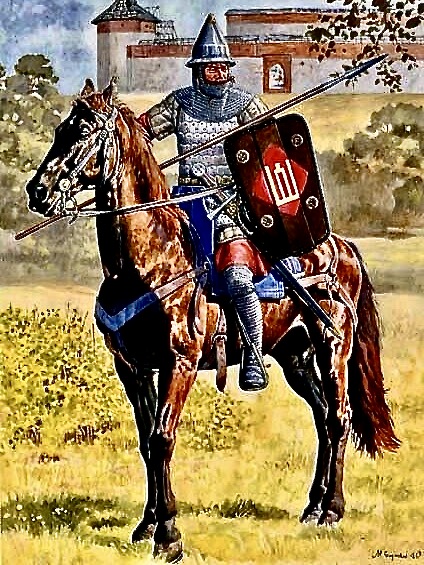
   They were freebooters who became empire builders. The boyars rode fast horses, big and fit, were outfitted in chain mail, wore conical metal helmets, were armed with lances, swords, and knives, and carried a black shield emblazoned with the red emblem of the Columns of Gediminas. They weren’t draftees or recruits. Those who were, walked and died where they stood. The boyars were tough men who could be dangerous in the blink of an eye. The Golden Horde warned would-be enemies of them, “Beware the Lithuanians.” That was all they ever said.

   They had to be rough and tough. When they went to war they didn’t launch cruise missiles and kill their enemies at great distance, checking the body count with drones. They hacked their enemies to pieces with long swords face to face and watched them bleed to death in the mud at their feet.

   By the end of the 14th century the Grand Duchy of Lithuania was the biggest country in Europe. Today it is one of the smallest countries in Europe. When they were growing fast and furious they didn’t do it by being soul brothers or good trading partners. They did it by getting on their horses and taking what they wanted. They didn’t bother explaining.

   The Grand Duchy got started in the early 13th century when Prince Mindaugas united his Baltic forest clans, swamp tribes, and fiefdoms into a feudal state. They were desperate times. The Teutonic Knights were on a rampage. They wanted to incorporate all of Lithuania into the Teutonic Order. They never stopped trying. Between 1305 and 1409 they launched 300-some military campaigns. They slaughtered more peasants than anything else. The Lithuanians beat them back time and again. Finally, in 1410, at the Battle of Grunwald the Lithuanians and Poles destroyed the Teutonic Knights. Most of the order’s leadership was killed or taken prisoner. The Grand Master ran away. They never recovered their former power. When the carnage was over, the Lithuanian-Polish alliance became the dominant political and military force in the region.

   When I was a kid almost everybody called the Ukrainians Russians. We didn’t call them that because we knew what was up with the Reds. They had done the same thing to Lithuania, enslaving the country, and reaping something anything everything for nothing. Both of my parents came from there after WW2, so we knew what was up. We didn’t have to read between the lines of whatever Washington and Moscow were forever saying.

   Even though Ukraine didn’t become a nation-state until 1991, after getting their feet wet for a few years after WW1, it was extant in the 14th century, and well before that. We all knew about the Ukrainians when I was growing up, The first Ukes came to Cleveland, Ohio in the 1880s. They settled in the Tremont neighborhood. Their idea was work hard in the factories of the industrial valley, get rich, go back home, buy some land, and live happily ever after. Between the world wars lots of former freedom fighters came. They were goners if they had stayed. Stalin was itching to get his hands on them. Most of them settled in Parma, a southwest suburb, where they built churches, schools, and started their own aid associations and credit unions.

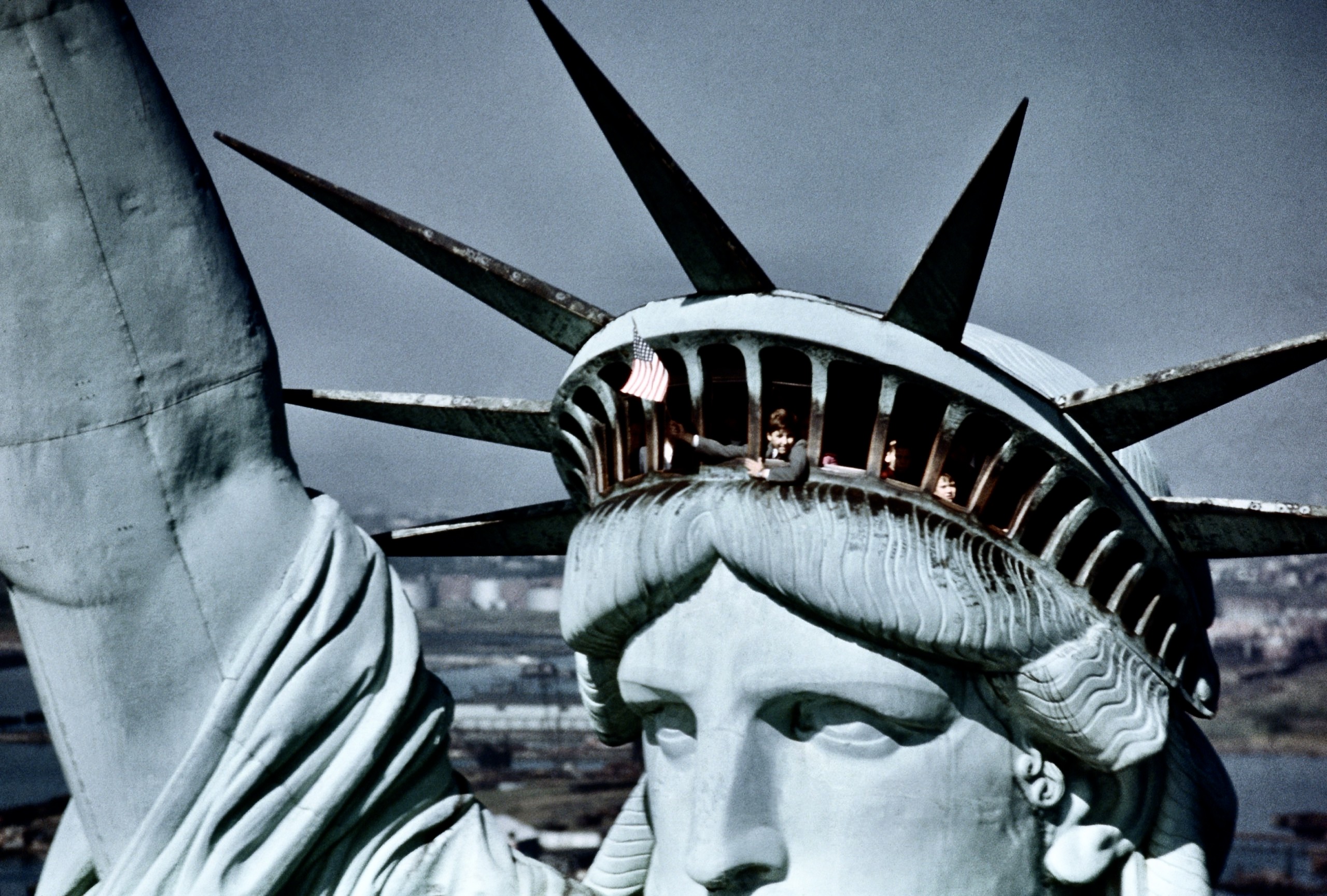
   We didn’t live in Parma, but on the east side along the lake. Nevertheless, among the Poles, Hungarians, Croatians and Slovenians, and anybody else who could sneak into the country when the Statue of Liberty wasn’t looking, there were some Ukrainian families in our neck of the woods. One of them operated a gas station on St. Clair Ave. not far from where we lived. One of their handful of sons who was our age messed around with us summers, when we had three no-school months to mess around in. His name was Lyaksandra. It sounded like a girl’s name, so we called him Alex.

   We played pick-up baseball at Gordon Park, from where we could see Lake Erie. We once asked him, taking a break in the action, what he thought about the Russians. He growled, made an obscene gesture, spit sideways, and said, “There are lots of Russki’s in Ukraine. They are liars about everything. They aren’t all bad, but they all hate themselves. We hate them, too.”

   Ukraine is the second-largest country in Europe. It is bordered by Russia and Belarus, as well as Poland, Hungary, and Romania, among others. It has coastlines along the Black Sea and the Sea of Azov. It has its own language. Most people speak Russian, as well. The Muscovites are always trying to convince them to drop the Uke talk and speak only Russian.

   “We don’t talk that Russki talk anymore,” Alex said. “Not here, no way.”

   In the Middle Ages Ukraine, which is about the size of Texas, was the epicenter of East Slavic culture. It was, at least, until the Kievan Rus was destroyed by Mongol invasions in the 13th century. Somebody is always trying to beat up on Ukraine. From then to the 20th century Ukraine was variously ruled by the Lithuanian-Polish Commonwealth, the Ottoman Empire, the Austrian Empire, and the Tsars of Russia. Everybody wanted to be the boss of the Ukes. It’s a miracle they have prevailed and are still prevailing, facing the long odds of going against the vaunted Red Army.

   The Russians are finding out what it is like to go toe to toe with somebody who is not afraid of them and has the up-to-date American rockets and artillery to back up their bravado. The Ukrainians are fighting an existential battle. Their backs are against the wall. They have nowhere to fall. The Red Army is fighting to save its skin and make it home alive for Defenders of the Fatherland Day. The soldiers throw their uniforms into the nearest sewer when they desert.

   When I was a boy I played with toy soldiers. There wasn’t any such thing as a Lithuanian mounted  boyar toy soldier, so I pretended that anybody on a horse was a Lithuanian knight. They were always the good guys. They won every fight battle and war. They were my heroes. I didn’t know what sons of bitches they must have been. They weren’t any different than anybody else in power back then. They were all sons of bitches, including the Holy Roman Church, whose popes ruled by the sword whenever the pen wasn’t convincing enough. 

   In the early 16th century Pope Julius I, the Fearsome Pope, imported Swiss Guards to be his personal bodyguards. He strapped on armor and led the Papal State armies against the Venetians, the French, and the Spanish. His armor plating covered every inch of him just in case the grace of God didn’t get it done, including a helmet made to look like a miter. Everybody on his side was allowed to join the Holy League. Everybody else was badmouthed and excommunicated.

  After Pope Julius died a rumor had it that if he was denied entrance at the Pearly Gates, there would be hell to pay. He would storm them, St. Peter or no St. Peter, and never mind his set of silver and gold keys. It was every man for himself and God against all.

   Until the end of the 14th century Lithuanians didn’t give a damn what the Vatican did. They were pagans. They were the last pagans in Europe. The word “Lithuania” is first mentioned in 1009, in an account of the murder of Saint Bruno by “pagans on the border of Lithuania and Rus.” He was trying to convert them. That was a mistake. Their headman, whose name was Dievas, ruled the universe from his kingdom in the sky. He didn’t like anybody popping up with new ideas about Heaven and Hell. Perkunas, the god of thunder and lightning, was his right-hand man and enforcer. The holy fires were guarded by Vaidilutès, the Lithuanian equivalent of Vestal Virgins. They buried their dead with food and household goods. The last pagan grand duke was buried with his hounds, horses, and falcons.

   When they finally joined the God-fearing club it was a political move. They were doing a dynastic union with Poland, and one of the conditions the Poles laid down was that the Lithuanians had to convert to church-going and dump their veneration of the forces of nature. It didn’t change their business plan in Ukraine, other than to make them more organized. They transitioned from frat parties to fancy dress balls.

   The Grand Duchy of Lithuania had controlled Belarus for some time and when they went after Ukraine they got it, extending their control to the open steppe and eventually to the Black Sea. The Ukes learned to “Beware the Lithuanians.” When they started to get what they wanted they left their freebooting days behind and started building castles to keep their loot secure. It was  a ten-day ride from Vilnius to Kiev. Why not ditch the seasonal exploitation and make the most of the four seasons?

   It wasn’t their land, but it is finders keepers. They meant to keep what they had subjugated. The Ukrainians didn’t have a say in the matter. They told the Ukes, “We may not be perfect but we’re Lithuanians so it’s almost the same.” The Ukes said, “We promise not to laugh when your oven is on fire.” The Lithuanians weren’t offended. They just said, “Show us the goats.”

   They built the Lutsk Castle, which later became a museum. They built the Olyka Palace, which later became an insane asylum. They built the Kremenets Castle, which later fell into ruins after the Cossacks sacked the city at the bottom of the hill. In the meantime, the boyars lived the high life. They started with red borscht, green borscht, and cold borscht. They feasted on holubtsi, cabbage leaves stuffed with minced meat, rice, and stewed in tomato sauce. They ate slabs of kholodets, a cold jellied meat broth. They drank vodka between courses. Ukrainians to this day drink more vodka than beer. When they were done with dinner they went to bed, snoring and cabbage farting in their sleep.

   Even though the Lithuanians always said the Ukrainians welcomed them with open arms, they built their castle-fortresses on high hills with steep inclines, the rockier the better, fitted with one main gate and plenty of towers, arrow slits, battlements, and dungeons. They kept big rocks and hot oil handy to toss down on door-to-door salesmen. If you ended up in the dungeon you found out soon enough they weren’t playing Dungeons and Dragons.

   Imperialism is never cozy and consensual. It’s more like assault and battery. The movers and shakers of power politics don’t get thrown in jail until long after they are dead. My friend Alex had never heard of Lithuanians living it up in Ukraine. He was surprised to hear they had once been a super power. He was chagrined to find out there were more invaders of his homeland than he had realized.

   “How come the Lithuanians push us around back then?” he asked. Most of us playing ball at Gordon Park were second generation Lithuanian Americans. We weren’t even teenagers, yet. None of us had a good answer, much less a sensible answer of any kind.

   “Somebody always wants to be the top dog,” Kesty said.

   “No, that wasn’t it,” Arunas said. “They just wanted to have somebody else do all the work, like make dinner and clean the toilets.”

   “It was the Ukrainian girls,” Romas said. “Ukrainian girls are hot.”

   Romas was over-sexed, and everybody knew it. Nobody had any other ideas. We went back to playing ball in the summer sun. When we got overheated we walked to the shore and sat on the edge of a cliff in the breeze. Lake Erie was in front of us, the water rippling, the tips of the waves white.

   “Can we see Ukraine from here?” Alex asked.

   “No, it’s that way,” Arunas said pointing over his right shoulder. When we looked all we could see was Bratenahl, where rich people lived in mansions. They made the rules, for what they were worth. Our grade school class practiced duck and cover once a month, just in case the Russki’s dropped an atomic bomb on Cleveland. We brought our own lunches every day but wondered where our next lunch was going to come from if all the food stores got blown up. Many of the Bratenahl bluebloods had their own fallout shelters. They didn’t worry overmuch about starving.

   All good things must come to an end. The Lithuanians were strong in Ukraine for several centuries, but the deal they made with Poland reaped a better harvest for their next-door neighbors than my ancestors. The Poles say, “A good appetite needs no sauce.” By the mid-16th century Lithuanians were sauce. Their goose was cooked. The dynastic link was changed to a constitutional one by the Union of Lublin in 1569. Ukraine was set free of the Lithuanians but was annexed by Poland the next day.

   The more things change the more they stay the same, until they don’t. The new would-be colonialists calling the shots in the Kremlin are finding that out, to their discomfiture. They make a wasteland and call it New Russia. They have been looking grim lately. The once-mighty boyars are rolling over in their graves, their visions of conquest and glory gone sour, their iron fists gone rusty. Lithuania has gone egalitarian, joined NATO, and gotten out of the plunder and pillage business. 

Ed Staskus posts monthly on 147 Stanley Street http://www.147stanleystreet.com, Made in Cleveland http://www.clevelandohiodaybook.com, Atlantic Canada http://www.redroadpei.com, and Lithuanian Journal http://www.lithuanianjournal.com

“Cross Walk” by Ed Staskus

“Captures the vibe of mid-century NYC, from stickball in the streets to the Mob on the make.” Sam Winchell, Beyond Fiction

Available on Amazon: https://www.amazon.com/dp/B0CRPSFPKP

Late summer and early autumn. New York City, 1956. Jackson Pollack opens a can of worms. President Eisenhower on his way to the opening game of the World Series where a hit man waits in the wings. A Hell’s Kitchen private eye scares up the shadows.

A Crying of Lot 49 Publication

Crossroad at Nuremberg

By Ed Staskus

   “The holy bishop from Kaunas fixed it up for us,” Angele Jurgelaitis said when she got to Berlin in the middle of the night. There was nothing holy about the last days of World War Two. It was a godless maelstrom. It helped to have a man of the cloth on your side when the devil was doing his best on the other side. There was more than enough hellfire on earth that winter.

   When Angele, sixteen years old, Ona Kreivenas, who was her aunt, and Ona’s four children got off one of the last trains that the Eastern Railway ran from East Prussia to Germany they were met at the station by Bishop Vincentas Brizgys. The clergyman was Ona’s husband’s cousin. Her husband, a Chief of Police, had been arrested by the Russians in 1941 and deported to Siberia, where he was stuck in a slave labor camp. By the early fall of 1944 Bishop Brizgys and more than two hundred other priests had already fled the Baltics on the heels of retreating German forces.

   Many Lithuanians barreled out of the Baltics in the fall and winter of 1944 as the Red Army overwhelmed the Wehrmacht and overran the land. The fighting was tenacious and terrible. Wartime losses of Estonians, Latvians, and Lithuanians were among the highest in Europe. They didn’t go down without protest. They were out-gunned, though.

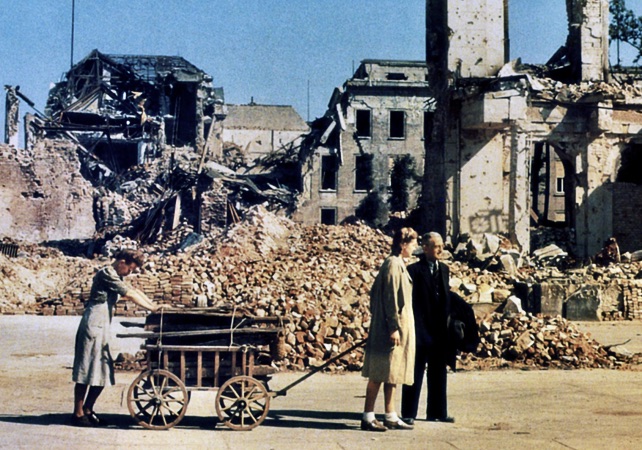
   Ona had somehow located the bishop by telephone from East Prussia and he arranged to meet them at the train station. He was wearing a dark suit and a homburg. He was carrying a basket of hot buns. He looked like the churchman he was. Berlin didn’t look like the city it had once been. It looked like a wasteland.

   “He gave one of the buns to each one of us. I was so happy.”

   What the churchman fixed up for them was passage to Bavaria. They ended up in the north of the southeastern state. Bavaria shares borders with Austria, Switzerland, and the Czech territories. The Danube and Main rivers flow through it, the Bavarian Alps border Austria, and the highest peak in Germany is there. The Bohemian forests are nearby. The major cities of the region are Munich and Nuremberg. 

   “The bishop found a pig farm for us, people he knew,” Angele said. “We lived in a two-room apartment above the slaughterhouse. There was another Lithuanian with us, a woman in her 20s. She was a fancy woman.” One of the two rooms was a kitchen. They lived and slept in the larger room, two adults, a teenager, and four children. The fancy woman kept to herself. 

   There were three cots. “We took turns sleeping on them. We worked for our keep, helping with the cows, and cutting clover. There was no town, just country everywhere. The German family we stayed with fed us. They were good people.” There was no combat in their corner of the world. “We didn’t see any fighting all winter long. The war ended when the Americans came. They wore nice uniforms, not like the Russians, who were filthy and stank. They were friendly, completely different. They threw candy to us as they went past.”

   Bavaria was one of Adolf Hitler’s favorite places during the twelve years of his planned one thousand year Third Reich. He had a lavish residence at the Obersalzberg. Bavaria had been the scene of protests against Nazi rule in the late 1930s, but it didn’t matter to the Fuhrer. He had his own ask no questions security men. Their orders were to shoot first. After the war Nuremberg was chosen for the military tribunals trying Nazi war criminals because it had been the ceremonial birthplace of the party. It was where their annual propaganda rallies were held.

   Allied air forces bombed the hell out of the city in 1944 and 1945. One night in January 1945 more than five hundred British bombers dropped six thousand high-explosive bombs and more than a million incendiary devices. The historic old town was destroyed. Half of the rest of the city was destroyed. What wasn’t blown to bits or burnt down was damaged. Surviving the bombing meant you had to then survive the aftermath. The city was left with practically no heat, no electricity, and  no water supply in the middle of winter. The Palace of Justice and the prison that was part of the sprawling complex were spared. It was a sign of what was in store. It was spared because justice and revenge were in store.

   “In the fall after the war ended, we had to leave the pig farm and went to an American refugee camp near Regensburg. We had two rooms, but there was a Lithuanian man in the other room, so we had one room. We lived there and didn’t do anything. We waited and waited.”

   Before the Russians closed the borders, padlocking the Baltics behind the Iron Curtain, about seventy thousand Lithuanians were able to escape the country, almost all of them ending up in Germany. By the time the war ended nearly eleven million refugees had flooded the country, more than the total population of Austria. Many of them ended up in Displaced Persons camps in Bad Worishofen, Nordlingen, and Regensberg.

   In the spring of 1946, Angele, Ona, and the children moved to a new camp. “It was a castle that you got to down a long road through a forest in front of a lake. There was a big chapel and two big barracks. There were no owners anymore, and no workers, nobody. There were only the Americans and refugees. There were many of us, all of us homeless. We were almost all Lithuanians.”

   The Schwarzenberg castle on the outskirts of Scheinfeld in Bavaria is northwest of Nuremberg. From 1946 until 1949 thousands of Lithuanians were housed at the DP camp there while they waited for their chance to get to Australia, Canada, the United States, or anywhere else. “There was no future for us in Germany,” Angele said. There was flat out no going back. The system of revolving displacement the Russians proposed would have meant the end for many of them and suspicion and persecution for the rest of them. The Russians had no plans of letting repatriated Lithuanians off easy. They had no plans of letting any Lithuanians of any kind, unless they had converted to Communism, off easy. Even then it was dicey. If they wanted you to live and die in Siberia, and got their hands on you, the far east is where you went.

   The camp outside Nuremberg was administered by an American Army officer of Lithuanian descent. The military’s concern was providing shelter, nutrition, and basic health care. Although the Americans looked after vital supplies, everybody in the camp had to lend a hand. The refugees prepared their own food. They sewed new clothes from old cloth. They printed their own daily newspaper. They printed their own money, too. The currency could be earned by working around the camp and spent at the canteen, where you could buy shaving cream, combs, and cigarettes.

   “We had our own doctors, our own church, and even a school. My best friend was Maryte. Her parents were teachers. They taught the high school classes in the camp. Her mother knew how to sew.. She would take hand-me-downs that had been donated to us by the Red Cross, take them apart, and make new dresses. Whenever she made a dress for Maryte she made one for me, too.”

   Angeles’s aunt talked to her about becoming a seamstress. “She wanted me to learn how to sew, like my older brother Justinas, so I would have some way to make a living, but I said no.” She had already turned down her aunt’s advice about becoming a farmer’s wife. She wasn’t sure what she wanted to do, but she knew for sure what she didn’t want to do, which was no sewing and no farming.

   After her friend Maryte moved to Nuremberg, taking classes in x-ray technology, and was on the way to becoming a nurse assistant at the Army Hospital there, she wrote Angele. “She told me about it, told me it was a ten month course, and told me to come join her.” Angele packed a satchel with her clothes and slipped away as the weather warmed up in 1947. She waved goodbye to Ona and her four children. “By then my aunt was teaching kindergarten at the camp and she had her kids around her.” The boy Mindaugas had grown a few years older, was now a  teenager, and could take care of his three sisters.

   She hitchhiked the forty miles to Nuremberg. Even though there were travel restrictions, a German government barely existed to enforce its own laws, and the only thing she had to worry about was an over-zealous American officer in a Jeep who might take her back to where she came from. When she got to Nuremberg she asked where the hospital was and found her way there. It had been rebuilt after the bombings two years earlier. She was assigned a bed in a small room, which was twelve feet by twelve feet. She shared it with three other women.

   “There was Ele, who was twenty four and tall, Koste, who was twenty eight and stocky, Monica, who was the oldest and had been a nurse in Kaunas, and me. One of our teachers was Lithuanian and she helped me. We lived in the barracks. I worked in the hospital, cleaned, changed beds, and did whatever they told me to do. I studied whenever I could. There wasn’t time to do much else.”

   They had to do something, though. Most of them were young and raring to go. They staged dances at the hospital. “Somebody would play the accordion and we would all dance. There were never enough men to go around, so many had died.” Whenever they could they went to town on Saturdays. “We took a train, went to the movies, and the music shows. We loved it. Everything was so clean. It was all smashed during the war but two years later you wouldn’t have believed there had ever been a war.”

   There had not only been repeated bombing and shelling of the city, especially the medieval part of it, there had been street-by-street, house-to-house, and room-by-room fighting in April 1945. The city was rebuilt after the war and was partly restored to its pre-war aspect. “The Americans did it,” said Angele. “You could see them doing it every day.”

   The German government was being resurrected, as well, and order was the order of the day. “One day we were waiting in line for the movies, eating grapes, and spitting the seeds on the sidewalk. When a policeman saw us, he came over, and told us it was our responsibility to keep the city clean. He made us pick up all the seeds.”

   The circus was even better than movies or musical theater. It is in the movies and on stage that people fall in love and there is always a happy ending. The boy and girl kiss in a glowing haze. It is the circus, however, that is a live action fantasy. “Whenever it came to town, none of us could sleep,” Angele said.

   The Nazi era was good for circuses since they were not considered subversive. They were left alone by the tyrants. Between the two wars, through the 1930s, Germany was the epicenter of  European circus companies. There were more than forty of them on the road with clowns, acrobats, and animals. They were mostly family-run enterprises with large tents. The last year of World War Two, however, was bad for business. Many circuses lost all their equipment and animals. The postwar roadshows boomed after 1946. Circus Europa toured Germany in 1947. 

   “I loved the circus. I would have gone alone if I had to.”

   In mid-summer 1948 she got a week’s vacation from the Army Hospital. She and her friend Benas, his best friend Porcupine, and two of the Porcupine’s friends took a train the one hundred and seventy miles to Zugspitze on the border of Germany and Austria. On two sides of the Zugspitze are glaciers, the largest in Germany. Mountain guides lead climbers up three different routes to the summit at nearly ten thousand feet.

   “Benas was handsome with dark hair and his father was a minister back home. He was a good friend to me. Everybody called his friend Porcupine because my roommate Koste called him that. Nobody knew why. He thought he was Koste’s boyfriend, although that’s not what she thought.”

   They got to the mountains at night and stayed in a small hotel. “There were two rooms at the end of the corridor. We three girls went into one of them. There were two beds, so we pushed them together and slept together. The boys took the other room. In the morning I went to the window and threw open the heavy drapes. I had to take a step back. The mountain was right there. I was astonished and frightened. For a second I thought it was going to fall in on us.”

   They rode a rack railway up the northern flank of the mountain. “It went around and around.” At a landing they sunned themselves. “Even though there was snow everywhere, and people were skiing, looking like ants below us, we lay in the sun before going farther up.” They took the Eibsee cable car to an observation deck. “The gondola was all glass. You could see the whole world.” From the top a path led to the Cross of God.

   A fourteen-foot gilded iron cross had been lifted to the peak of the Zugspitze in 1851 by twenty-eight bearers under the direction of Karl Kiendl, a forester, and Christoph Ott, a priest. Father Ott was the brainstorm behind the cross, motivated by a vision of the mountain, “the greatest prince raising its head into the blue air towards heaven, bare and unadorned, waiting for the moment when patriotic fervor and courageous determination would see that his head too was crowned with dignity.”

   The Porcupine and his two companions wouldn’t go to where the cross was. They said the path was too icy and narrow. “Only Benas and I went. There was a ladder attached to a rock face you had to climb to get to where the cross stood on a flat space.” In 1888 the cross had been taken down and repaired after being struck by lightning. It had holes gouged out by the lightning bolts. A year later it was taken back to the top, onto the East Summit, where it had stayed ever since.

   The side rails of the metal ladder going up were secured by bolts to the rock. “I was near the top when a bolt came loose and the ladder jerked free,” Angele said. “I stopped and couldn’t go up or down. I stayed as still as I could. I was scared to death.”

   She had survived a Russian invasion, her mother’s untimely death, a subsequent German invasion, followed by another Russian invasion, making tracks out of Lithuania, the invasion of the Reich, the collapse of the German government, landing in DP camps in Bavaria, and finding her way to work at the Army Hospital in Nuremberg, all in the past eight years, all by the time she was nineteen years old. A broken ladder was not going to be the end of her. Benas helped her get down, extending his belt from the top, and another pilgrim helped her from below, coming partway up and carefully easing her down. Benas slid down the side rails without incident.

   Faith can be church-going or it can be personal. Life and death at ten thousand feet is personal, Cross of God or no Cross of God. Who thinks about God when they are about to meet their maker? They took their time on the icy path back to the observation deck. The rest of the week they hiked, took local trains to nearby alpine towns, ate, drank, smoked, talked, and had fun while it lasted.

   At the end of their vacation they went back to Nuremberg. In her room, Angele thought about the men in her life. There were two of them. One of them was Vladas, who was a Baltic soldier. The other one was Vytas, a Baltic civilian, who worked part-time for the Red Cross and part-time in the black market. They were both refugees from Lithuania, like her. Vladas brought her food and Vytas played cards with her. Vladas watched while she made dinner for him while Vytas let her win at the card table.

   Getting married might not be a matter of life and death, except when it is. She thought she was probably going to marry one of them, and thought she knew which one it would be, but knew for sure she wasn’t going to be staying in Europe. She was going to break free of nowhere. Making her way some place where there was a future was the most important thing on her mind. She wanted a bright future, not a dark past. The only way was up the ladder. 

   No matter what, she was going to have to make what lay ahead worth its while. Nobody else was going to do it for her. When she got a visa to go to Canada and work as a nanny for a family of thirteen children in Sudbury, an Ontario mining town, she took the chance. It was the chance she had been waiting for. She didn’t look back.

Ed Staskus posts monthly on 147 Stanley Street http://www.147stanleystreet.com, Made in Cleveland http://www.clevelandohiodaybook.com, Atlantic Canada http://www.redroadpei.com, and Lithuanian Journal http://www.lithuanianjournal.com

“Cross Walk” by Ed Staskus

“Captures the vibe of mid-century NYC, from stickball in the streets to the Mob on the make.” Sam Winchell, Beyond Fiction

Available on Amazon: https://www.amazon.com/dp/B0CRPSFPKP

Late summer and early autumn. New York City, 1956. Jackson Pollack opens a can of worms. President Eisenhower on his way to the opening game of the World Series where a hit man waits in the wings. A Hell’s Kitchen private eye scares up the shadows.

A Crying of Lot 49 Publication

Down to the Waterline

By Ed Staskus

   The summer Jeff Saghy and I went to New York City for a working weekend it is doubtful we would have gone to see the Twin Towers. They were just two more office skyscrapers in skyscraper city. We would not have gone to eat at Windows on the World, the restaurant on the 106th and 107th floors of the North Tower, either. But we were staying next door, at the Marriott, it had been a long Saturday, so we walked over and took one of the jumbo elevators up into the sky.

   The hotel had been collateral damage eight years earlier. Diehard towelheads parked a rental truck loaded with 1,500 pounds of explosives in the North Tower’s parking garage below the ballroom. They weren’t interested in being martyrs, so they set the timer and left for their jihadi snacks of halvah and qahvah. The explosion mangled the lower and sub levels of the World Trade Center complex. It was more than a year before the Marriott reopened. 

   The restaurant opened 25 years before we ever set foot in it, in 1976, as a private club. Everybody not a member had to pay $10.00 in dues on the spot before eating there. New York magazine called it the “most spectacular restaurant in the world.” They put the food makers on a pedestal and gushed about the view.

   “Every view is brand-new, a miracle. In the Statue of Liberty Lounge, the harbor’s heroic blue sweep makes you feel like the ruler of some extraordinary universe. All the bridges of Brooklyn and Queens and Staten Island stretch across the restaurant’s promenade. Even New Jersey looks good from here. Down below is all of Manhattan. Everything to hate and fear is invisible.”

   We were wearing pressed slacks and our monogrammed trade show shirts. The slacks were OK, but our shirts sans jackets were verboten. The maître d’ rustled up spare sports jackets for both of us. Mine was several sizes too small. It was loud checked, the kind a burlesque comedian might once have donated to the Salvation Army.

   “All you have to do is wear it walking to your table,” the front of the room man said when I gave him an unhappy look. “Once you’re in your seat you can take it off and your server will bring it back to me.”

   I squeezed into it, making like Mr. Magoo, enduring the local yokel looks on the way to our table. It was set inside a curved half wall. The tablecloth was cloth. The waiters wore white jackets and black pants. They were soft-spoken. The dining room was large and fancy. I had a slab of salmon. The charge we put on the company credit card would have paid most of my home mortgage for the month back in Ohio.

   After we knocked back a bottle of fine wine, we stepped over to the nearest window to take in the vaunted view. There wasn’t any panorama, however. All we saw was an inky sky above us and thick gray clouds below us, down ten-or-so floors. There wasn’t a gap in them for us to see any part of the world anywhere. We ate tortes sprinkled with ground nuts and had coffee. Jeff did most of the talking. He wasn’t interested in anything I had to say, although he was ladylike about it.

   I woke up in the middle of the night with an upset stomach. The booze at Windows on the World had been good, the dinner better, and dessert even better, but something wasn’t agreeing with me. It might have been something greasy I grazed on at the trade show. I dressed and went downstairs, where I drank a ginger ale. I went for a walk. It was big-city lukewarm dark. The streets smelled bad, but I felt better. I walked down to the waterline on Liberty St., ending up at Pumphouse Park. 

   It wasn’t listed in my New York City Parks Department guidebook. It was just there, next to a marina, lots of trees and flowers around an oval-shaped lawn. I walked to where there was a grove of shrubs and birch trees. I kicked back on one of the benches. In a city of eighteen million people, I didn’t see another person for the next hour, although a tough-looking black and white cat limped past without even giving me a sideways glance.

   Jeff and I and Chris Hayes and Doug Clarke, who was the big cheese at Efficient Lighting, landed at JFK International Airport in Queens on Thursday. Construction of the people-mover system was still going on, three years along, so we walked. We checked into the Marriot and took a cab to the Jacob Javits Convention Center in Hell’s Kitchen. It was enormous, more than three million square feet of floor space. We had come to New York City for the annual International Beauty Show.

   “Stock up on all your salon needs at show-special pricing,” was the way the razzmatazz went. “Top notch education to boost your skills and business. Products and tools that will boost your business and streamline your craft. Network with like-minded colleagues and professionals.”

   We were there to showcase a new tanning bed the branch of the business under the name of Ultraviolet Resources International had developed. Chris Hayes was the nominal brains behind the Sunsource. Doug Clarke was married to Kathy Hayes, second-in-command. She was the louder by far of the couple. Her other brothers Kevin and John Hayes, and sister Maggie Hayes, were the rest of the in-charge team. Maggie was sneaky mean and always bore watching. Some more brothers and sisters from the family of thirteen came and went, hardly making a dent, except when they were at each other’s throats.

   Doug Clarke had built a state-of-the-art 45,000 square-foot multi-million-dollar warehouse and offices on nearly three acres in Brook Park, next to Holy Cross Cemetery, the year before, after ten years of leasing and outgrowing space in the Lake Erie Screw building in Lakewood. It was a new building for a new millennium. The enterprise sold lots of stuff under lots of names, commercial lighting to restaurants and municipalities, saltwater fish lights, sign lights, disinfectant lighting, but its bread and butter was tanning bulbs. We sold gazillions of the fluorescent tubes every quarter, to dealers and end users. The phones never stopped ringing. Doug and Kathy built a McMansion in North Ridgeville on the back of the bronze look.

   Doug’s wine cellar at his mansion looked like it was worth more than he was willing to pay me in my lifetime if I continued working for him the rest of my life. I didn’t like it, but I bit my tongue. I was surprised the wine he poured wasn’t better. It tasted bitter to me.

   The trade show boomed, although we didn’t. Our last-minute space was near the back of a dead-end walkway. We spent more time talking to the other vendors around us than we did talking to prospects. The end of the day Friday didn’t come soon enough. Jeff could talk all day and night, but I had long since run out of anything to say to our neighboring nail and hair folks, who weren’t selling anything, either.

   Doug and Chris were busy with other big shots, the guys who called the shots at Wolff and Light Sources, so Jeff and I went to dinner in Greenwich Village by ourselves. We didn’t know one place from another. All of them were busy. We found a table at Pico, a Portuguese eatery. The inside of the place was exposed brick and beams. We sat next to a six-foot tall wire sculpture of a rooster. Our waiter told us it was a Portuguese good luck symbol. 

   We were staring at our pemeiro prato, which included bacalao cakes with blood orange-radish salad, steamed cockles, and foie gras, when our waiter came back. He asked if we would mind sharing our table with two young women, since space was at a premium. Jeff said he didn’t mind and the next thing I knew there were two more chairs squeezing in at our table. 

   The women were in their mid to late 20s, both blonde, one of them from London and the other one from South Africa. We shared our appetizer with them while we got acquainted. The gal from London was working in NYC and living at a YWCA and the other one was visiting her friend. The South African’s family had emigrated to Savannah, Georgia from the dark continent after the Afrikaners lost their argument with the African National Congress.

   The London native had been to Pico before and recommended the Segundo prato. I ordered the dish. It included duck braised in terra cotta and roast saddle of rabbit with chickpea cake. Our newfound friends told us more about themselves, and Jeff told them all about himself. Even though he and I had worked in the same office for about ten years some of it was new to me.

   We ordered another bottle of wine midway through dinner. Before I knew it, it was after eleven. We ordered coffee and sonhos, miniature doughnuts, cinnamon-dusted puffs of dough dipped into molten chocolate and fruit fondues, for dessert. Sonhos mean “beautiful little dream” in the lingo. Nobody needs to speak Portuguese to describe their goodness.

   Jeff had been looking and talking up the cutie-pies non-stop. I didn’t like the gleam in his eye, wondering if he was angling after a farmer’s daughter in the city that never sleeps. I wasn’t a back door man, though. Besides, tomorrow was another working man’s day. I hailed a cab and coaxed Jeff into the back seat. 

   Saturday was more of the same at the trade show. We finished up mid-afternoon on Sunday. We had brought our suitcases and were ready to go as soon as soon as the whistle blew. Unfortunately, everybody else had the same idea and by the time we were out the door the plaza in front of the convention center was swarming with people. There wasn’t a cab to be had for love or money.

   We were standing around like orphans when a black man with bloodshot eyes and wearing a black suit approached us. He was wearing a white shirt, a black tie, and a black newsboy cap. He was a gypsy cabbie, driving a four-door black Volvo. 

   “Airport?” he asked.

   “JFK,” I said. 

   “$50.00,” he said.

   “Let’s go,” I said, dragging a protesting Jeff behind me. He didn’t like the black man, the black car, and the black hole of no license no regulations no insurance of the pirate transport. The man was from Nigeria. “They call our kind of driving kabu kabu there,” he said. He drove more than sixty hours a week and drove fast. He stopped some distance from the cab stand at the airport and helped carry our bags. 

   “I got to be careful about the medallion guys,” he said.

   It was just getting dark when we took off, circling northwest back over Manhattan, the lights of the city twinkling in the dusk. We flew through a booming thunderstorm that had rumbled over Ohio hours earlier and landed at Cleveland Hopkins, where our wives picked us up.

   The summer heated up, getting ungodly hot and humid on Lake Erie. I went to the office Monday through Friday and did my service work catch-as-catch-can. I would have quit my day job long since if I could have, but I needed both jobs. The office work was easy enough, and so long as I kept to myself, I could put up with my salaried co-workers. The rest of the guys and girls who punched the clock were no problem.

   My job wasn’t especially high paying since I worked for a family firm, but it was steady. Their motto was “Family First.” It meant the immediate family. We had first-class health insurance, though, and I was socking money slowly but surely away in a 401K. I got two weeks paid vacation. We went to Prince Edward Island in late August, chilling out on the north coast. Manhattan is 96 times smaller than PEI, but the borough is home to 12 times as many people as the province. We didn’t have any trouble keeping ourselves to ourselves on the ocean shore.

   We got back the second weekend of September. I took Monday off to unpack and unwind from the 22-hour drive home. The next morning, I was in line at a Drug Mart cash register when I looked up and saw the Twin Towers on a TV mounted on the opposite wall. One of the buildings was gushing smoke and the newscaster was gushing alarm.

   “Christ,” I thought. “How did that happen?”

   By the time I got to work everybody was crowded into the lunchroom eyes glued to the flat screen mounted on the wall. We found out what happened was that passenger jets slammed into both buildings. We watched the 110-floor towers collapse. The Marriott Hotel where Jeff and I stayed disappeared into a pile of rubble. It looked surreal to all of us, even those of us who didn’t know what surreal meant. Doug walked in looking somber and told everybody to go home. It was just after 11 o’clock in the morning. The last fires at the World Trade Center site were finally extinguished in December, exactly 100 days after the terrorist attacks.

   It was a sunny day, mild and pleasant. My wife and I watched the grim news on TV the rest of the day. We had never seen anything like the Twin Towers disaster happen. Even Snapper our cat sensed something wasn’t right and spent the day sleeping in the basement.

   The next day I rode my mountain bike on the all-purpose trail in the Rocky River Metropark. The only people I saw were an older couple chatting strolling aimlessly. There were no fitness walkers, baby carriages, rollerbladers, runners, or any other bikers besides me. There were no cars on the parkway. I could have ridden down the middle of the road blindfolded. I saw flashing red and blue lights of police cars on every bridge I rode under. There were military jets screaming overhead, not that it mattered. The horse was out of the barn.

   I stopped on the far side of Tyler Barn, on the other side of a small bridge, where I spotted a fisherman going after steelhead trout. I rode through the parking lot to where he was walking out of the river. He was wearing flesh-colored waders and carrying an eight-foot rod. I could see some big fish in the creel bag slung over his shoulder. He sat down at a picnic table and started gutting them on a copy of yesterday’s newspaper. 

   He was wearing a baseball cap and a week’s worth of whiskers. His left forearm, hand, and fingers were heavily tattooed. The letters ‘CALM’ were tattooed on the back of his four fingers. We shot the bull for a minute and talked about the terror attacks in New York City. I told him about having stayed at the no more Marriott.

   “I’ll tell you what partner, if folks concentrated on the important things in life, there would be a shortage of fishing poles, not no shortage of skyscrapers,” he said, sucking on a Lucky Strike without taking it from his lips. He stuck his knife into the top of the picnic table. A gust of wind wafted cigarette ash away into the early end of summer.

Ed Staskus posts monthly on 147 Stanley Street http://www.147stanleystreet.com, Made in Cleveland http://www.clevelandohiodaybook.com, Atlantic Canada http://www.redroadpei.com, and Lithuanian Journal http://www.lithuanianjournal.com

“Cross Walk” by Ed Staskus

“Captures the vibe of mid-century NYC, from stickball in the streets to the Mob on the make.” Sam Winchell, Beyond Fiction

Available on Amazon: https://www.amazon.com/dp/B0CRPSFPKP

Late summer and early autumn. New York City, 1956. Jackson Pollack opens a can of worms. President Eisenhower on his way to the opening game of the World Series where a hit man waits in the wings. A Hell’s Kitchen private eye scares up the shadows.

A Crying of Lot 49 Publication

Down Dogs and Buffalo Wings

By Ed Staskus

   Very few, if any, men or women finish doing down dog pose at their neighborhood yoga studio, roll up their mats, and that night eat the family dog for dinner. Some might have Buffalo wings, which have nothing to do with buffalos, and someone might even have a buffalo burger, which are actual buffalos made into sandwiches.

   Although cats and dogs are out of bounds, many people eat an animal of some kind for dinner, usually a bird, a pig, or a cow. When they do, it always looks like something it wasn’t when it was alive. Sometimes it’s invisible, hidden by sauces and batter and squeezed inside a bun.

   Whether they practice yoga, or not, almost everyone eats animals. In the United Staes 96% of everybody eats them, according to Vegetarian Times. In the birthplace of yoga, however, which is India, close to 40% of the population is vegetarian. The remainder, other than the affluent, eat meat only occasionally, mainly for economic reasons.

   Many people who engage in yoga the modern world understand the historical and conservative underpinnings of the practice that forswears eating animals. Most of them, however, sit on the farm fence about it when it comes to taking sides.. They don’t want to pick a bone with their friends and family.

   Old-school yoga masters like K. Pattabhi Jois, the man who made vinyasa what it is today, and B. K. S. Iyengar, the man who made alignment what it is today, eschewed eating animals. “A vegetarian diet is the most important practice for yoga,” Pattabhi Jois said.. “Meat eating makes you stiff.”

   “If animals died to fill my plate, my head and heart would become heavy,” B. K. S. Iyengar said. “Becoming a vegetarian is the way to live in harmony.” He had a sense of what bolt guns sound like and what they do.

   Some modern yoga masters like Sharon Gannon, the founder of Jivamukti Yoga, believe a strict adherence to not only a vegetarian, but a vegan diet, is a vital part of the practice. She calls it the diet of enlightenment. She regards today’s protein food choices as not only harming animals, since they end up being killed, but harming the physical health and spiritual well-being of people, too. On top of that, she says it endangers and degrades the environment.. She might be right on all counts.

   Eating animals raises the risk of type 2 diabetes, hardens blood vessels, is directly linked to heart disease, significantly increases the possibility of stroke, and triples the chances of colon cancer. In short, eating animals shortens life spans, theirs and yours.

   There’s also the cruelty factor, which can be, literally, sickening. Factory farming is “by far the biggest cause of animal suffering in the world” according to Paul Shapiro of the Humane Society. The factory farming of pigs as it is practiced in the 21st century is as wholesome as toad’s juice. No disrespect to toads is intended.

   The meat business is responsible for 85% of all soil erosion in the United States and according to the EPA raising animals for food is the number one source of water pollution. It takes 2400 gallons of water to make one pound of beef. Every vegetarian saves the planet hundreds of thousands of gallons of water a year.

   The consequences for the climate are also freighted with a black brass tack, which is that more than half of all greenhouse gas emissions are caused by animal husbandry, according to the Worldwatch Institute. But, everyone’s got to eat, because everyone’s continued existence depends on food. What’s for chow might be an ethical choice for some people, but eat you must.

   Killing animals and eating meat have been elements of human evolution since there was human evolution. Meat was part of the diet of our forefathers from about 2.5 million years ago. Nobody for many millions of years could be a vegan because it isn’t possible to get Vitamin B12 from anything other than meat, milk, eggs, or a modern day supplement.

   B12 is essential to life. It protects the nervous system. Mania is one of the nastier end results of a lack of it. Humans became human by eating meat. In other words, it was meat that fueled human brain development. The “meat-eating gene” known as apoE is what boosted our brains to become what they are today. But, that doesn’t mean that anybody necessarily has to eat meat, then or now. There have always been vegetarians, just as there are today. Their brains and bodies have done just fine.

   Many athletes are all in on plant-based foods. Hannah Teter, a two-time Olympic snowboard medalist, Bill Pearl, a five-time Mr. Universe body building champion, and dozens-of-times winning tennis star Serena Williams are all vegetarians. Walter “Killer” Kowalski, a former Canadian pro wrestler, was a vegetarian.

   Some vegans, like UFC fighter Mac Danzig and Iranian strongman Patrik Baboumian, dominate their sports. In 2013, after hauling a yoke weighing 1210 pounds a distance of more than thirty feet, the Iranian Ironman roared to the crowd, “Vegan power!” It gives the lie to the myth of the need for animal protein.

  Yoga is a growth industry everywhere. It’s been estimated more than thirty million Americans practice it, even more throughout Europe, and as hundreds of millions of waistlines expand in China, it has been mushrooming there. At the same time that yoga is spreading worldwide, global meat production has more than quadrupled in the past 65 years. More people are eating more animals than ever before. Even though the rest of the world is trying to catch up to the United States, in the United States meat is eaten at more than three times the global average.

   Most Americans who practice yoga eat animals. They cherry pick what they are willing to do. There is a fast food meat-centered eatery on every corner in America. Look in the back seat of any car in the parking lot and you will spot a yoga mat in the back seat soon enough..

   The practice of yoga is made up of eight parts, often called the Eight Limbs, which range from the discipline’s golden rules to breath control and exercise postures to meditation. Non-violence, or ahimsa, is one of the central tenets of the practice. It means non-harming living things. Living things include all animals, like chickens, pigs, and cows.

   At some stage many people who practice yoga think about going vegetarian. They usually have one-or-more reasons for changing their diet. Among them are health, non-violence, and karma. Since most people benefit by eating less meat, and since much of today’s yoga is about fighting stress and keeping your body toned, the healthy halo of going vegetarian dovetails with the practice.

   The do-no-harm principle behind going vegetarian is stoked by the inescapable harm done to the animals we eat. We raise them in pens and cages, kill them, and chop them up into pieces for our pots and pans. Since violence is a choice, and since eating animals isn’t necessary to stave off starvation, ahimsa strongly implies vegetarianism.

   Satchidananda, the man behind Integral Yoga, believed being vegetarian was imperative to achieving self-realization. “Because when you eat animal food, you incur the curse of the animals,” he said.

   It’s like ending up in a cheesy B movie, “Dawn of the Dead,” for example. Everybody knows what they are up to. “The zombies kill for one reason. They kill for food.” However, they can’t just pull up at a McDonald’s because they never have any money. If they do show up at the golden arches, and you are working the drive-through, run for your life,

   At the crossroads of yoga and yummy, what Satchidananda was basically saying was eating meat is bad karma. It means taking in the fear, pain, and suffering of the animals you are eating. It obviates the benefits of poses, breathwork, and meditation.

   “The law of karma guarantees that what we do to others will come back to us,” Sharon Gannon said about eating animals. In other words, beware becoming a pot of stew yourself someday.

   But, the goal of yoga is to change yourself, not specifically anybody’s eating habits. Whether it’s turkey or tofu on somebody’s dinner plate is not going to buff up their yoginess. Not eating animals doesn’t make anybody a good person in the same way that walking slow doesn’t necessarily make anybody a patient person.

   Besides, according to the Yoga Sutras of Patanjali, you don’t have to become a vegetarian to practice yoga fully. “Nowhere in the Vedas or in the ancient teachings is it said that you must be a strict vegetarian,” said T. K. V. Desikachar. He is, nevertheless, himself a vegetarian, and his father, Krishnamacharya, modern yoga’s founder, was also a vegetarian.

   Eating animals is in our blood, or more precisely, in our DNA. Most primates like us feed on meat sporadically and it represents less than 1% of their diet in all 89 species of them. People have been going big on carnivorous for a long time. We are always eating our way through Noah’s Ark. In hindsight, however, it is  unlikely any of God’s creatures who survived the Great Flood survived with the expectation of ultimately ending up on somebody’s plate of hash. That kind of dinner table would mean being the life of the funeral.

   It wouldn’t hurt anybody to give the birds and animals of the world a break by eating either fewer or none of them. In 1940 the average American ate about 80 pounds of meat a year. Today the average American eats about 220 pounds of meat a year. Our flocks and herds would surely appreciate another sunny day of home on the range, rather than the fluorescent lighting of the supermarket cooler.

   It might benefit the average American, as well. No one, after all, ever said a hot dog a day keeps the doctor away.

Ed Staskus posts monthly on 147 Stanley Street http://www.147stanleystreet.com, Made in Cleveland http://www.clevelandohiodaybook.com, Down East http://www.redroadpei.com, and Lithuanian Journal http://www.lithuanianjournal.com

“Cross Walk” by Ed Staskus

“Captures the vibe of mid-century NYC, from stickball in the streets to the Mob on the make.” Sam Winchell, Beyond Fiction

Available on Amazon: https://www.amazon.com/dp/B0CRPSFPKP

Late summer and early autumn. New York City, 1956. President Eisenhower on his way to the opening game of the World Series. A hit man waits in the wings. A Hell’s Kitchen private eye scares up the shadows.

A Crying of Lot 49 Publication

Public Enemy No. 1

By Ed Staskus

   There were five of us on the big elevator going up to the 4th floor of the Global Center. One of us asked the others if we were all on the way to jury duty. All of us said yes, or something along those lines. “This is a pain in the ass,” one young man grumbled.

   “Better to be on this side of things than the other side,” the man next to him said.

   “You got that right, brother,” another man said.

   The Global Center is at the corner of Ontario St. and St. Clair Ave. It is across the street from the Justice Center. It is part of the Medical Mart and Convention Center that made history in 2011. Six buildings were demolished to make way for the development. Half a million tons of debris were removed, and more than 12,000 tons of new steel was used to create the infrastructure of the new complex. It was the most steel used on any one project in Cleveland’s history.

   When we got off the elevator I immediately regretted being on time. The line snaked from the elevators backwards then forwards to the sign-in tables. It looked like everybody was in line all at once. I took my place and shuffled forward like everybody else. If I need to come back tomorrow, I thought, I’m showing up late. The next day, when I did arrive late, there was hardly anybody in line.   

   The Global Center is mostly about conventions and industry conferences. It was the media center for the 2016 Republican National Convention, held in downtown Cleveland, when the far-right spun fantasies and the fantastic happened. The Grand Old Party put a bunko artist at the top of its ticket. The 4th floor is where those called for jury duty report every Monday morning every week of every month. The pool of jurors is usually between 300 and 400 people.

   Before I went through the full-body scanner, I told one of the policemen, “I’m breaking in an after-market hip, so I’m going to set off your fire alarm.” He said all right and told me to go ahead. When I did, nothing happened, except the light blinked green for GO. The high-tech scanners are supposed to detect a wide range of metallic threats in a matter of seconds. “Essentially, the machine sends waves toward a passenger’s insides,” said Shawna Redden, a researcher who studies the devices. “The waves go through clothing and reflect whatever might be concealed, and bounce back a signal, which is interpreted by the machine.”

   “Do you want me to try again?” I asked. 

   “No, go ahead,” the policeman said, barely paying any attention to me.

   Six feet apart and masks were back in effect, even though there was no official ruling in the city, where hardly anybody was paying attention to the pandemic anymore. Only the odd man and woman wore a mask in the lobby or anywhere else. All the hard-backed chairs in the big room were in rows a social distance apart and everybody wore a mask. You can’t fight City Hall. Almost everybody kept their heads down looking at their cell phones. Some people read books. A few went to sleep on the sofas lining the walls.

   When the jury pool bailiff stepped to the front of the room everybody perked up. The boss lady looked casual but was anything but, even though she sprinkled in some stale jokes. She wore a short-sleeved blouse, and her forearms were tattooed. The first thing she did was thank us for coming.

   She explained since we were on the voting rolls we had been randomly selected. She thanked us for opting into our civic duty. She showed a video about the history of juries and what jury duty amounts to. A judge from Cuyahoga County Common Pleas Court showed up and thanked us some more. She was wearing a dark skirt. I didn’t know judges could be so friendly and good-looking. When she was done everybody went back to their cell phones and books. The sleepy heads went back to their napping.

   The bailiff said she would be calling groups of 8 for civil cases and groups of 20-and-more for criminal cases. I didn’t mind serving on either kind of jury but was hoping I wouldn’t be called to serve on a criminal case. I didn’t want to be on the jury that was going to convict Tamara McLoyd for shooting and killing Shane Bartek, a Cleveland policeman.

   What would be the point? She seemed to be as guilty as Machine Gun Kelly. Somebody matching her description had been caught on surveillance video pulling the trigger. Her DNA was on the .357 Magnum. She confessed to the crime after being arrested. Why she pled not guilty and was demanding a jury trial was beyond me.

   I brought my Apple tablet with me and read “Empire of the Scalpel” on it all morning. It was about the history and advancement of surgery. No matter their newfound skills of restoring life and limb, there was no bringing Shane Bartek back to life. He was gone to stay. Several groups of jurors trooped out when their names were called. When lunch was announced, I went for a walk on Lakeside Ave.

   The criminal complaint against Tamara McLoyd said she walked up to the off-duty Shane Bartek on Cleveland’s west side on New Year’s Eve and robbed him at gunpoint. He was outside his apartment on his way to a Cleveland Cavs game. When he tried to take her gun away, she shot him twice during the struggle. After the shooting, she stole the policeman’s civilian car and fled. Shane Bartek was taken to Fairview Hospital and pronounced dead. He was 23 years old. She was 18 years old.

   Tamara McLoyd gave the stolen car to a no-good companion of hers who was hunted down later that night by a swarm of suburban police. After a high-speed chase he lost control of the car and slammed into a fence. He didn’t bother saying he was innocent. The police didn’t bother being polite. They tracked the shooter by following videos she was posting on Instagram. She was nothing if not clueless about crime and punishment. She was run to ground, doing her best to curse her way out of capture, and was hauled away to a jail cell. Her handgun was found hidden in the back seat of the not so joyful joy ride. 

   She was Public Enemy No. 1 for a day. The next day she went back to being just an enemy to herself. She never interrupted that side of her whenever it was making a mistake.

   The young woman had been on a crime spree most of the year. Two months earlier, five days after she was sentenced to probation in Lorain County on firearms and robbery charges, she and two accomplices robbed a man in Lakewood, robbed a woman in Cleveland Heights, and robbed Happy’s Pizza in Cleveland. They had worked up an appetite robbing people.

   City Hall and the Cuyahoga County Court House are both on Lakeside Ave. I took self-guided tours during lunchtime and walked around Mall C. I looked down at the Cleveland Browns gridiron and the Science Center across the railroad tracks on the other side of Route 2. There are small parks beside both City Hall and the Court House. I checked out Claes Oldenburg’s rubber stamp sculpture in Willard Park. I checked out John T. Corrigan’s statue in Fort Huntington Park. The over-sized stamp sculpture is whimsical. The life-sized Corrigan statue is stone-faced.

   Tamara McLoyd made her first court appearance on murder charges two days after New Year’s Day. “I didn’t know he was a cop,” she explained, even though nobody was asking for explanations. The cops are like the armed forces, who don’t leave their wounded or dead behind. Killing a policeman is a one-way ticket to the Big House, if not Old Sparky. A city prosecutor read into the record her admission to shooting Shane Bartek. The judge set bail at $5 million dollars and told her to find a lawyer. She hadn’t stolen enough money to make bail. She stayed locked up in the Justice Center the next seven months.

   While there she talked to her friends and mother by jailhouse phone, telling them exactly what happened, and saying she expected to be famous for shooting a policeman. Her lawyers tried to suppress her original confession, but after hearing recordings of her phone calls, nixed the idea. “After consulting with our client, she has authorized and instructed us to withdraw the motion to suppress,” her lawyers said at a hearing.

   John T. Corrigan was Cleveland born and bred, graduating from a local high school and university and law school. He served in the Army during World War Two, losing an eye during the Battle of the Bulge. He was elected Cuyahoga County’s prosecutor in 1956 and re-elected repeatedly, serving for thirty-five years. “It is a large office with more than 300 employees. It’s the second largest public law firm in the state of Ohio,” said Geoffey Means, a former federal prosecutor. John T. was a stern man when it came to law and order. He sent his former law partner to jail. Hoodlums knew there wouldn’t be any sympathy coming their way from the one-eyed legal eagle.

   Nothing had changed since his retirement. When murder was the charge, the office was no-nonsense going forward. When the murder of a policeman was the charge, the office was bound and determined to get it done.

   Tamara McLoyd was bound and determined to say it was an accident. “This shit wasn’t no aggravated,” she told her mother after she was charged with aggravated murder. “This shit was an accident.” Later in the month she told a friend, “We was tussling, he reached for the gun, he fell, and then pow.” She made it sound like a Bugs Bunny cartoon.

   When Monday came to an end at 3 o’clock and I went home, well more than a hundred of us had been picked for actual jury duty. The rest of us came back on Tuesday. More of us were picked, lunchtime was again announced, and I went for another walk. We filtered back at 1 o’clock. I dove back into my sawbones book. A few more of us were picked for a civil trial. Just after 2 o’clock the bailiff cleared her throat.

   “The last judge has just sent word that his trial has been postponed until next week,” she said. “Thank you for coming and you are free to go.”

   We all cheered, collected our certificates of appreciation, and marched away to the elevators. I walked to the lot on W. 3rd St. where I had left my car. It was a cloudless day. There weren’t many people on the sidewalks. The tables and chairs of downtown’s Al Fresco dining were empty. Everybody had gone back to work after eating.

   Al Fresco comes from the Italian and loosely means “in the cool air.” Unlike everybody else, Italians don’t use the term for eating outside. In Italy it means “spending time in the cooler.” When they say cooler, they mean jail.

   Tamara McLoyd was found guilty of theft, grand theft, aggravated robbery, felonious assault, murder, and aggravated murder. It didn’t take the jury long. The courtroom was packed with Cleveland police officers and Bartek’s family. Some of the dead man’s relatives broke into tears. Tamara McLoyd turned 19 during the trial. She was a cold fish, standing unblinking when the verdict was read. 

   “What would you think after being found guilty of aggravated murder?” her lawyer Jaye Schlachet offered up, even though she didn’t seem to be thinking about anything special. Shane Bartek was probably the last thing on her mind.

   “The tragedy is that this individual who committed this crime was on a spree of violence through our community,” Cuyahoga County Prosecutor Michael O’Malley said. “We see it every day in our county. She had opportunities to get on track. At every crossroad she could have turned her life around. She declined that opportunity. She was a terrorist on our streets, and for our community’s sake she is going to face the music for all the crimes she committed over those several months.”

   A sheriff’s deputy put the convicted killer in handcuffs. She was led away. She was facing a life sentence. The judge would decide at her sentencing the following month whether there was going to be the possibility of parole after 25 or 30 years, or whether it was going to be life without parole.

   “We are quite confident that the only thing she will see for the rest of her life are bars,” police union chief Jeff Follmer said.

   Tamara McLoyd tried to explain away the shooting of Shane Bartek. I was glad I wasn’t there to hear it. After a while it’s sickening having to listen to lies. Murder is inherently wrong. She thought she was just offing somebody who was getting in her way, like brushing away a bug. She didn’t realize she was committing suicide as well as murder. She was 1-2-3 down for the count. She was going to Marysville Prison where nobody cared whether jailbirds lived or died, where she could kill time day-in and day-out.

Ed Staskus posts monthly on 147 Stanley Street http://www.147stanleystreet.com, Made in Cleveland http://www.clevelandohiodaybook.com, Atlantic Canada http://www.redroadpei.com, and Lithuanian Journal http://www.lithuanianjournal.com

“Cross Walk” by Ed Staskus

“Captures the vibe of mid-century NYC, from stickball in the streets to the Mob on the make.” Sam Winchell, Beyond Fiction

Available on Amazon: https://www.amazon.com/dp/B0CRPSFPKP

Late summer and early autumn. New York City, 1956. Jackson Pollack opens a can of worms. President Eisenhower on his way to the opening game of the World Series where a hit man waits in the wings. A Hell’s Kitchen private eye scares up the shadows.

A Crying of Lot 49 Publication

Don’t Scare the Fish

By Ed Staskus

   I never thought I would be spending two weeks in East Texas in the middle of a blast furnace summer but there I was. I was deep in the heart of Dixie. It rained every afternoon for a half hour and was bone dry a half hour later, racing right back up to 100 degrees in the shade. But by that time, we were on our way to work.

   Tyler, Texas was the second last leg of a month-long job. The last leg would be Louisiana and then back home. I was working for American Electro Coatings, a Cleveland, Ohio outfit that refinished desks, files, and cabinets on site. We traveled in three-man crews in white Ford Econoline vans, carrying our gear and luggage. There were two bucket seats and a custom-made bunk that doubled as storage behind the seats. The van was big enough for a sofa if we wanted to. One of us was always sleeping. We rotated the driving.

   We started in Chicago, went to Des Moines, OK City, Tyler, slowing down in Louisiana for crawfish, and then got on the hillbilly highway back to the Buckeye State. Our ride never broke down because Ralph, the crew leader and painter, made sure it never broke down. He did an all-points inspection beforehand, had it tuned up, oil changed, and confirmed the steel belts were on the newer side. He didn’t believe in 4-60 air conditioning, four windows open going 60 MPH, and made sure our on-board AC was in perfect working order. The van looked like a creeper on the outside but ran like an angel.

   Our workday started when everybody else’s workday was ending. We worked from about six to about two in the morning. Ralph was an old hand. He always got a motel as close as possible to where we would be working to cut down on drive time. “Efficiency is doing things right,” he said. Effectiveness is doing the right things. Ralph was both, not that anybody could tell by looking at him. He looked like a skinny chain-smoking Jackie Gleason.

   I wasn’t a full-time employee and didn’t work with the same crew all the time. I always asked for Ralph, though. He was fifteen-some years older than me, testy but steady, smoked too much, but drank less than he smoked. He had a wife and two kids and was as stingy as Scrooge. He didn’t spend much of his own money on the road. When we got back to our motel room in the middle of the night it was lights out, Ralph’s orders. In the afternoon we were free to do whatever we wanted, but he expected us to be ready to go at five o’clock.

   Some of the employees were Americans at American Electro Coatings. The rest weren’t. They were from Mexico and Central America. Some of them got paid cash on payday. Jose was Ralph’s right hand man. We always got a room with two beds which meant, since I was the odd man out, I always slept on a rollaway. Some of them were better than others. The first thing Ralph and Jose did when they woke up was hack up a storm and have a cigarette. They shared an ashtray on the bed stand between them. 

   When they asked me if I wanted to join them in a smoke, I said, “Thanks, but I don’t need one of my own. I’ll just breathe the air.”

   Our job in Chicago was smooth sailing, some old-time law office, but we hit a bump in the road in Des Moines. It was a downtown bank and the first day we started on the first floor, which was the lobby. Jose and I were cleaning and taping desks. He called me over to one of them. There was a kind of fancy doorbell button screwed to the well of the desk and wires coming and going to it. 

   “What we gonna do about this?” Jose asked.

   We were going to have to do something to be able to move it to the painting tarp. There were several screws that the wires were attached to. “Let’s make a drawing of where the wires go, unscrew them, and put them back later,” I suggested.

   “OK,” he said

   Five minutes later three police cars screamed up to the front doors and five seconds later a half dozen cops with guns drawn were bellowing, “Down on the floor, face down!” We couldn’t go flat fast enough. It got straightened out after a while but not before a stern warning from the peace officer in charge to stop messing around with alarm wires.

   Every night we drove down East Grand Ave. back to our motel near the State Fairgrounds. The streets were always deserted. We could have burgled anything we wanted. We navigated by the lit-up gold dome of the early-20th century Iowa State Capital building.

   OK City was a two-day job like Chicago. We didn’t like short jobs, so when we got to Texas, we were glad to unload our gear and settle in for two weeks. We were going to be working at the Kelly Springfield tire plant. The factory went back to 1962 and was on the order of a million square feet. A rail spur ran alongside an inside platform from one end to the other end of the factory, bringing raw materials in and hauling new tires away.

   The front offices were routine, all of them together, and no fuss about setting up and getting it done. The other offices were on the factory floor on raised platforms. It was where foremen worked. We had to wheel our gear there and carry it up. We got a platform-or-two done a night. We met Barry and Skip on one of them. They kept their eyes open on the down below. They got us acquainted with Tad, another one of the foremen, a friend of theirs who worked at ground level. He had gotten his legs shot out from under him at the Battle of Xuan Loc, the last major battle fought during the Vietnam War. He was discharged with a Purple Heart and a wheelchair.

   One night we had lunch just past midnight in the cafeteria with the three of them. I noticed all the white men were sitting at one end of the eatery and all the black men were sitting at the other end. The brown men and yellow men sat where nobody else wanted to. I knew black people were held in low esteem in Cleveland. They were held in no esteem in East Texas. If they weren’t outright hated, they were disliked and shunned. 

   “We can’t call them niggers no more, so we don’t,” Barry said. “But we don‘t got to eat with niggers. They can’t make us do that. Besides, they don’t want to eat with us either.” Their racism was a great time saver. They were busy men at work, home, and church. They could stick to their long-held beliefs without bothering about the facts.

   Barry invited us to go night fishing with them on their next day off. We had been at it at the plant for seven days and were ready for a day off. Barry picked us up in his GMC Sierra Grande pick-up. It had plush carpeting, a padded front seat, and an AM/FM radio. The only stations in town were AM. We listened to a radio minister whoop it up. Ralph sat up front with Barry and Skip and the gun rack. Jose and I hung on to Tad’s wheelchair strapped down to the bed of the truck.

   Their 28-foot deck boat was docked at Lake Palestine, west of Tyler. Besides rods and reels hooks bobbers sinkers and bait, they brought lots of ice and a couple hundred cans of Lone Star beer. They did their best to drink it all. We helped out but couldn’t keep up. 

   We fished for crappie and catfish. Tad was deadest on crappie and used minnows. There were more catfish than anything else. We drift fished for them using worms and chicken livers. Skip was targeting blue catfish using cut fish as bait. The best catfishing is done at night. Flats, river bars, shorelines, and weeds are good places to find them. 

   Everybody caught a load of everything, tossing them into five-gallon buckets half full of water. Tad forgot to chock his wheels and almost went over the side before Barry grabbed him by the nape, saving his neck.

   “We can’t have him yelling and splashing,” Barry said. “The number one rule of fishing is to be quiet. Don’t scare the fish!” We did some firefly and star gazing and lots of mosquito swatting. There was a full moon. I looked carefully and steadily for the Swamp Thing to surface, but he never did.

   The next day was Sunday. Barry invited us to his house for a fish fry. We ate our fill. The fish was fresh and tasty. The catfish weren’t as scary dead as alive, their heads cut off. Ralph had a Lone Star, but Jose and I had sworn off it for the Lord’s Day. The Texans were unfazed and drank their fill. Barry brought his family Bible out to the backyard. It was as big as a suitcase and had all the names of his known forebears inscribed on the inside cover.

   It was hot and swampy the day later. The tire factory was noxious, like it was every day. We were lucky to be working in the air-conditioned offices. There were enormous exhaust fans for the working men, but the only fresh air was the air that flowed from one end of the railroad tracks to the other through the big bay doors.

   The plant reeked of rubber, special oils, carbon black, pigments, silica, and an alphabet soup of additives. Banbury mixers mixed the raw materials for each compound into a batch of black material with the consistency of gum. It was processed into the sidewalls, treads, or other parts of the tire. The first thing to go on the building machine was the inner liner, a special rubber resistant to air and moisture penetration. It takes the place of an inner tube. Next came the body plies and belts, made from polyester and steel. Bronze-coated strands of steel wire, fashioned into hoops, were implanted into the sidewall of the tires to form a bead, so there was an airtight fit with the rim of the wheel. The tread and sidewalls were then put into position over the belt and body plies, and all the parts pressed firmly together. 

   The result was a green tire. The last step was to cure the tire. Working at the Kelly Springfield factory for two weeks cured me of any inclination I might have ever had about working for a tire manufacturer.

   The day before we were due to be done and gone, Barry found us and led us to the open west end of the track platform. He and Skip had rigged up a sail and mounted it to the back of Tad’s wheelchair. There was a stiff breeze blowing through the bay door heading due east from the other open bay door. “We got him some new rubber on those wheels of his,” Barry explained. “He wanted to give them a good test, so we arranged a scoot.”

   They pivoted the sail, Tad let go his chokehold on the wheels, and set off rolling down the platform. He picked up speed and we started walking fast. He picked up more speed and we started jogging. He picked up even more speed and we started running. Before long we couldn’t keep up and watched him becoming a crazy fast speck in the distance. 

   Then he disappeared.

   When we got to the other end of the plant and looked down from the platform to the railroad tracks below, we gawked at the runaway. He and his wheels were a mess. Tad had old rail grease all over his work shirt. He rolled off the overturned wheelchair and cursed up a storm. Barry and Skip jumped, got Tad back up to the platform, lifted his dented wheelchair, and set him back to rights. The sail was a shambles. They left it where it lay.

   “You sons of bitches ain’t going be doing that again anytime soon, believe you me,” Tad grumbled.

   We loaded up the next day and headed for Louisiana. It was a three-day job. We stayed at a motel with a pool and ate crawfish at a roadhouse next door. “You got to suck on the head first thing, before you peel the tail, honey,” our waitress said. We drank Falstaff beer kept cold in galvanized bins full of ice water and salt. We stayed an extra day for more crawfish and to hear a zydeco band everybody said was the best in the parish.

   The day we left for home was the hottest most humid day in the history of the world. We rolled up the windows and cranked up the air conditioning. Jose tucked himself in on the bunk behind us and was asleep in no time. I glanced back at him as we drove north up through Mississippi.

   “I’ll take the next turn at the wheel,” I told Ralph. “Jose is sleeping like a baby.”

   “That’s because he doesn’t have his baby here with him,” Ralph said. “He’ll be making noise on his old squeezebox soon enough.”

Ed Staskus posts monthly on 147 Stanley Street http://www.147stanleystreet.com, Made in Cleveland http://www.clevelandohiodaybook.com, Atlantic Canada http://www.redroadpei.com, and Lithuanian Journal http://www.lithuanianjournal.com

“Cross Walk” by Ed Staskus

“Captures the vibe of mid-century NYC, from stickball in the streets to the Mob on the make.” Sam Winchell, Beyond Fiction

Available on Amazon: https://www.amazon.com/dp/B0CRPSFPKP

Late summer and early autumn. New York City, 1956. Jackson Pollack opens a can of worms. President Eisenhower on his way to the opening game of the World Series where a hit man waits in the wings. A Hell’s Kitchen private eye scares up the shadows.

A Crying of Lot 49 Publication

Knees Up Mother Brown

By Ed Staskus

   The mid-summer day I walked across the Rainbow Bridge the sky was getting dark and stormy. I had gotten to the border by leaving the driving to Greyhound. The driver wore a uniform and cap. It made him look like a mix of state trooper and doorman. Since the bus had no acceleration to speak of, once he got it up to speed he drove all-out all the way from Cleveland, Ohio to Niagara Falls, New York. We passed sports cars and muscle cars.

   The driver’s seat was high up with a vista vision view of the highway. The transmission was a hands-on four-speed. There were four instruments visible on the panel on the other side of the steering wheel, a speedometer, air pressure gauge for the brakes, oil pressure gauge, and a water temperature gauge.

   When I stepped foot on the Canadian side of the bridge it wasn’t raining, yet. The Border Patrol officer asked me where I was from, where I was going, for how long, and waved me through without any more questions. I found the bus station and bought a ticket for Toronto, where I was going. I was going to see a girl, Grazina, who I had met at a Lithuanian summer camp on Wasaga Beach a couple of years before.

   It rained hard all the way there, past Hamilton and Mississauga on the Queen Elizabeth Way, until I got to the big city, where the clouds parted and the sun came out. Everything smelled clean. I picked up a map of the bus and subway system and found my way to my friend Paul’s house where I was going to stay. His family was friends with my family from back when we lived in Canada.

   The Kolyciai lived in a two-story brick row house off College St. near Little Italy. I was polite to his parents and ignored his two younger sisters. I roomed with Paul, but ditched him every morning after breakfast, hopping a bus to Grazina’s house. Girls came first. It wasn’t far, 5-or-so minutes away near St. John the Baptist Church. Lithuanians bought the church in 1928 and redesigned it in the Baltic way in 1956. They tore the roof off and replaced it with a traditional Lithuanian village house roof with a sun-cross on top.

   Grazina, whose name meant “beautiful” in English, met me on her front porch and took me on a guided tour of Toronto. We went by tennis shoe, streetcar, and the underground. We looked the city over from the observation deck on top of City Hall and went to the waterfront. We strolled around Nathan Philips Square. We had strong tea and swarm cones at an outdoor café. Grazina popped in and out of shops on Gerrard St. checking out MOD fashions. At the end of the day I was dog tired. I begged off a warmed-over dinner Paul’s mother offered me back at home away from home and fell into bed. 

   The next morning, she had a surprise for me. We weren’t going wandering, even though I felt refreshed. We were going to a funeral. 

   “Who died?” I asked.

   “Nobody I probably know and for sure nobody you know,” she said.

   She was dressed for death, all in black. I wasn’t, wearing blue jeans and a madras shirt. We stopped at a second-hand clothes store. I bought a black shirt so I wouldn’t stick out like a sore thumb.

   “Why are we going to this funeral?” I asked.

   “Because it’s Friday and it’s a Greek funeral,” she said as though that explained everything.

   I was an old hand at funerals, having swung a thurible at many of them when I was an altar boy at St George Catholic Church. I had only ever been to Lithuanian funeral services. “Because it’s Friday and a Greek funeral” were obscure reasons to me, but I was willing to go along.

   Toronto was full of immigrants. Immediately after the World War Two both war-time brides and children fathered by Canadian soldiers showed up. Post-WW2 refugee Italians, Jews, Poles, Ukrainians, Central Europeans, and Balts poured in. In 1956 after Soviet tanks rolled through Budapest, Hungarians came over. Through the 1950s and 60s the old-stock Anglo-Canadianism of Toronto was being slowly transformed.

   The church, Holy Trinity Greek Orthodox, in the former Clinton Street Methodist building, was somewhere up Little Italy way. We got on a bus. When we got there a priest sporting a shaggy beard, Father Pasisios, was leading the service. He wore a funny looking hat. The church was small on the outside but big on the inside. We sat quietly in the back. When the service was over I finally asked Grazina, “Why are we here?”

   “For the repast.”

   “What’s that?”

   “Food, usually a full meal.”

   “Doesn’t your family feed you?”

   “It’s not that,” she said. “I went to a Romanian funeral with a friend a few months ago, and they served food afterwards, and it was great, the kind of food I had never had before. After a while I started going to different funerals whenever I could, always on Fridays. It didn’t matter if they were Sicilian, Czechoslovakian, Macedonian, only that I could sample their national food.”

   “How do you know where to go?”

   “I read the death notices in the newspaper.”

   I had heard of wedding crashers, but never a funeral crasher.

   The repast was at a next-door community hall. Grazina was dodgy when asked, telling both sides of the family she was distantly related to the other side of the family. “Memory eternal” is what she always said next, shaking somebody’s hand. She knew the lingo. The lunch was delicious, consisting of moussaka, mesimeriano, and gyros. We had coffee and baklava for dessert. By the time we left we were well fed and ready for the rest of the day..

   We went to Yorkville and hung around the rest of the day. There were coffee houses and music clubs all over Yonge and Bloor Streets. The neighborhood went back to the 1830s when it was a suburban retreat. Fifty years later it was annexed by the city of Toronto and until the early 1960s was quaint and quiet turf. Then it morphed into a haven of counterculture.

   “An explosion of youthful literary and musical talent is appearing on small stages in smoky coffee houses, next to edgy art galleries and funky fashion boutiques offering trendy garb, blow-up chairs, black light posters and hookah pipes, all housed in shabby Victorian row houses,” the Toronto Star said.

   It was fun roaming around, hopscotching, ducking in and out, even though a police paddy wagon was parked at the corner of Hazelton and Yorkville. There had been love-ins, sit-ins, and so-called “hippie brawls” in recent years. Some of the leading citizens were up in arms. The politician Syl Apps said the area was a “festering sore in the middle of the city.” There were wide-eyed teenagers and tourists, hippies and bohemians, hawkers and peddlers, and sullen-looking bikers.

   A young man was slumped on the sidewalk, We stopped to take a peek at him lying dazed against a storefront. An old woman wearing a babushka and walking with a cane crept carefully past him. I couldn’t tell who was more over a barrel. We went our own way.

   We weren’t able to get into the Riverboat Coffeehouse, which wasn’t really a coffeehouse, but a club with the best music in town. We peeked through the porthole windows but all we saw were shadows. The Mynah Bird featured go-go dancers in glass cases. Some of the glass cases were on the outside front of the club. We saw Rompin’ Ronnie Hawkins perform back flips across the stage while doing guitar solos at Le Coq d’Or.

   Starvin’ Marvin’s Burlesque Palace was somewhere upstairs, but we didn’t go there. All the clubs were small and most of the doors open to catch a breeze. We sat on curbs and heard a half-dozen bands free of charge. We stayed until midnight. By the time I got back to Paul’s house I was more than tired again and fell into bed. I caught more than forty winks.

   The sky on Saturday morning was clear and bright over Lake Ontario. Grazina and I went to the Toronto Islands. We took the Sam McBride ferry and rented bikes. There were no cars or busses. We stopped at the new Centreville Amusement Park on Middle Island and rode the carousel. When we found a beach we changed, threw a towel down, and spent the remainder of the afternoon in the sun. We had bananas and threw the peels to the seagulls, who tore them apart and downed them like it was their last meal.

   Grazina invited me over for dinner. She told me her mother was a bad cook, but I went anyway. She set the table while her mother brought platters of cepelinai, with bacon and sour cream on the side, serving them piping hot and covered with gravy. They were fit for a king. I told Grazina her mother was the queen of the Baltic kitchen.

   The next morning was Sunday. After going to mass with Grazina and her family I caught a bus for home. At the border I waited my turn to answer the Border Patrol man’s questions. I had all the answers except one. When he asked me for I. D., I said I didn’t have any.

   “How did you get into Canada?”

   “I walked over the bridge.”

   “Didn’t they ask you for I. D.?”

   “No,” I said.

   “Jesus Christ! Well, you can’t come into the United States without identification.”

   I was born in Sudbury, Ontario and had returned to Canada many times since for summer camps, but had never overconcerned myself with the legalities. I left that to whoever was driving the car, who were my parents or somebody else’s parents.

   I was speechless. Distress must have showed on my face. The Border Patrol man told me to call my parents and ask them to bring identification. It sounded like a good idea, except that it wasn’t. My father was out of town on business and my mother worked at a supermarket. Even if she was willing, she had never driven a car that far in her life.

    “Is there any place I can stay?”

   “Do you have any money?

   “Just enough for a bus ticket home.”

   He said Jesus Christ a few more times and finally suggested what he called a “hippie flophouse” on Clifton Hill. He gave me directions and I found it easily enough. I used the pay phone to call my mother, reversing the charges. After she calmed down, she said she would send what I needed the next morning by overnight mail. I was in for two nights of roughing it.

   The flophouse was an old motel advertising “Family Rates.” It was next to a Snack Bar selling hot dogs and pizza by the slice. There were young guys and girls loitering, lounging, and smoking pot in the courtyard. One of them offered me a pillow and the floor. I accepted on the spot before he drifted down and out. It was better than sleeping in the great outdoors.

   I spent the next day exploring Niagara Falls. There were pancake houses and waffle houses. There were magic museums and wax museums There were arcades and Ripley’s Odditorium. I took a walk through the botanical gardens and to the Horseshoe Falls. That summer the Horseshoe Falls were tilting water over the edge like there was no tomorrow. The American Falls, on the other hand, had been shut down by the Army Corp of Engineers to study erosion and instability. They had built a 600-foot dam across the Niagara River, which meant 60,000 gallons of water a second were being diverted over the larger Canadian waterfall. It was loud as a mosh pit and a vast mist floated up into my face. 

   The Niagara River drains into Lake Ontario. I lived in Cleveland a block from Lake Erie. If I threw myself into the Niagara River I would first have to avoid the falls and then swim upstream all the way to Buffalo before I could relax and float home on Lake Erie. It was an idea, but the practical side of me discarded the idea.

   Many people have gone over the falls. As far as anybody knows the first person to try it was Sam Patch, better known as the Yankee Leaper, who jumped 120 feet from an outstretched ladder down to the base of the falls. He survived, but many of the daredevils who followed him didn’t. The first person to successfully take the plunge in a barrel was schoolteacher Annie Taylor in 1901. Busted flat, she thought up the stunt as a way of becoming rich and famous. The first thing she did was build a test model, stuff her housecat into it, and throw it over the side. When the cat made it unscathed, she adapted a person-sized pickle barrel and shoved off. It was her birthday. She told everybody she was 43, although she was really 63.

   After she made it to safety with only bumps and bruises she became famous, but missed out on riches. Everybody said she should have sold tickets to the show, but it was Monday morning quarterbacking. She never tried it again. Two years later the professional baseball player Ed Delahanty tried it while dead drunk. The booze didn’t help. He drowned right away. About twenty people perish going over the falls every year. Most of them are suicides. The others amount to the same thing.

   The last person in the 1960s to go over the falls with the intention of staying alive was Nathan Boya in a big rubber ball nicknamed the “Plunge-O-Sphere.” When it hit the rocks at the bottom it bounced and bounced. He didn’t break any bones, although he had friction burns all over him.

   I got my official papers on Tuesday, dutifully displayed them at the border, and walked into the United States. I bought a bus ticket home. I sat in the back of the Greyhound and stretched my legs out. When it lumbered off, I took a look back, but it was all a blur through the smudgy window.

   Grazina and I wrote letters to one another that winter until we didn’t. We slowly ran out of words and by the next year were completely out of them. She was enrolled in a Toronto university full-time by then while I was working half the year and going to Cleveland State University the other half of the year. She found a hometown boyfriend and I found an apartment on the bohemian near east side of Cleveland.

   It was a few years later that Henri Rechatin, his wife Janyck, and friend Frank Lucas rode across the Niagara River near the downstream whirlpool on a motorcycle, riding the cables of the Spanish Aero Car. The friend piloted the motorcycle while Henri and Janyck balanced on attached perches. Since they didn’t have passports, when they got to the far side, they hauled the motorcycle and themselves into the aero car and rode back in comfort.

   The Border Patrol was waiting for them. They were arrested for performing a dangerous act, but formal charges were never filed. They were free to go. For my part, I made sure to always have something official with my picture on it whenever I went anywhere foreign after that. I had learned my lesson in Niagara Falls. Getting stuck in limbo, no matter if it’s one of the ‘Seven Natural Wonders of North America’ or not, is captivating for only so long.

Ed Staskus posts monthly on 147 Stanley Street http://www.147stanleystreet.com, Made in Cleveland http://www.clevelandohiodaybook.com, Down East http://www.redroadpei.com, and Lithuanian Journal http://www.lithuanianjournal.com

“Cross Walk” by Ed Staskus

“A Cold War thriller that captures the vibe of mid-century NYC.” Sam Winchell, Beyond Books

Available on Amazon: https://www.amazon.com/dp/B0CRPSFPKP

The end of summer, New York City, 1956. Stickball in the streets and the Mob on the make. President Eisenhower on his way to Ebbets Field for the opening game of the World Series. A torpedo waits in the wings. A Hell’s Kitchen private eye scares up the shadows.

A Crying of Lot 49 Publication

Mexican Stand-Off

By Ed Staskus

   The day my nephew, who was going to be known by the name of Ike from that day on, told me he was changing his name to Wyatt, all I could think of saying was, “Why?” He looked up from his Xbox. He was sitting in a special gaming chair. There was carnage all over the big screen. The game was called Legends of War. It looked like everybody was losing.

   “What do you mean, why?” he asked.

   It turned out he had watched the horse opera “Tombstone” the night before and been enchanted by Wyatt Earp.

   “That might not work,” I said. 

   “Why not?”

   “Wyatt Earp was a lawman through and through. Your law-abiding ways are sketchy at best.”

   “Oh, right, I see what you mean. How about Doc, like Doc Holliday? He was smack.”

   “He was that, but he’s more along the lines of a Greek tragedy. I don’t see you as tragic.”

   “Hell no, I’m not tragic. The girls wouldn’t like that.”

   “How about Ike?” I suggested.

   “Who’s that?”

   “He was one of the cowboys in the movie, fast with a gun.”

   “OK, that sounds good. Ike it is from now on.”

   I didn’t tell him Ike was one of the bad cowboys who had tried to kill Wyatt Earp at the OK Corral.

   Ike was smart enough to make the grade and get admitted into St. Edward High School but scatterbrained enough to get suspended. St Ed’s is a Catholic school in Lakewood, Ohio in the Holy Cross tradition. Thousands of teenage boys apply to get in every year. A couple of hundred make it. Ike  had enough applesauce in him to not get expelled. He made it to graduation day by the skin of his teeth.

   He wasn’t so lucky at Cleveland State University. CSU is a state school. So long as your high school grades are somewhere near consciousness there is no problem getting admitted. After one thing and another he was told in no uncertain terms he had to find another school. When he left CSU, leaving his student housing apartment in need of disaster relief, he started looking for another place to live.

   His problem was no landlord with even a grade school education would rent to him. He camped out at his sister’s apartment until she said he had to go. His father suggested his uncles. He stayed with one after another until the last one told him he had to go. He stayed at my mother’s house, throwing parties for his friends whenever she broke a leg and was recovering at the Cleveland Clinic or had a stroke and was recovering at the Welsh Home in Rocky River. 

   When my brother asked me to throw some work his son’s way, I was of a mind to say no. It was almost the first thing I said. It was what I should have said. I had already hired Ike to waterproof our basement walls and repaint the concrete floor some months earlier. Every time I looked, he was easing himself down onto one of our lawn chairs and lighting up. He liked to smoke reefer rather than attend to the job at hand. When he wasn’t blazing, he was talking on his cell phone. In the end it was such a makeshift effort that I spent almost as much time in the basement as he had done, following up on his no effort work.

   I thought, that’s the last time. What I said, though, when my brother asked, was OK. I could have kicked myself.

   I worked more-or-less full-time for Light Bulb Supply in Brook Park. There were no brooks or parks anywhere in Brook Park. The biggest greenspace was Holy Cross Cemetery, 240 acres of it, across the street. I went there for walks instead of taking lunch whenever the day was dry and sunny. The office work more-or-less paid the bills. It was a family business, however, and I wasn’t a part of the family. I wasn’t going to get anywhere by relying on their good will, of which there was little. It was like my paycheck, on the stingy side.

   I got ahead by repairing tanning equipment part-time, on my own time, stand-ups and lay-downs, at tanning salons, beauty salons, gyms, and people’s homes. Indoor tanning was booming. I bought a tool box and electrical tools. I taught myself how to do it. My hourly rate was more, by far, than what Light Bulb Supply paid me. If it was an insurance job, I raised the price. If the insurance agent protested, I hung up.

   Allstate Insurance sent me to Dearborn, Michigan to inspect a tanning bed that had been under water for a few days in a family’s basement rec room. They found out their sump pump had failed when they got home from vacation. I drove there on a Saturday morning. It was going to be an all-day job getting there and back.

   Dearborn is just west of Detroit. and home to the most Muslims in the United States. It is also home to the largest mosque in the country. I thought I would stop and check it out. I got my signals crossed, missed the turn-off off I-75,  and missed the mosque. When I got to Detroit what I saw was an exit for Dearborn St. I took it. It was the wring exit. When all I saw were bars, funeral parlors, beauty shops, empty lots, and no white faces, I parked, found a phone booth, and called the folks with the soggy tanning bed. I told them where I thought I was.

   There was a pause. “Get back in your car and drive away from there right now,” the man of the house said. “It’s not safe.” There was no sense in tempting fate by sightseeing. I got back into my car and followed the Rouge River to Dearborn.

   I told Ike I had a job at a big tanning salon in North Royalton south of Cleveland. There were some repairs involved and re-lamping 9 or 10 tanning beds. It was going to take Ike and me a weekend and two or three nights. In the end it took me closer to a weekend and a week of nights. Ike was supposed to re-lamp during the day, since he was unemployed and had the free time, while I did the repairs at night, except he only showed up once and didn’t finish even one of the tanning beds.

   One day he wasn’t feeling well. His stomach hurt. Another day his garage door broke with his car inside it. Another day he didn’t bother to call me to say he needed a mental health day. The last time before I told him not to bother anymore, he said the laundromat was closed and he didn’t have any clean clothes to wear to work. In the end I chalked it up to experience.

   “Nobody wants to hire me,” he complained, one of his many complaints. He seemed to think he could get the job done without going to work. He liked to say, “I don’t want to be tied down.” He didn’t want to be another cog in the wheel. There was little chance of that. Who wants a buzzkill of a cog?

   My brother asked my sister to let Ike move into her house. She lived nearby, had the space, but was reluctant. There was finally some peace and quiet in her house. She and her husband had split up. He had moved out and was on the road most of the time working as a long-haul trucker. Her daughter had graduated from Miami University and struck out on her own. There were two empty bedrooms. She could use the rent money. I suggested she get it up front.

   She told my brother she had reservations, especially since everybody knew Ike wasn’t just smoking reefer. He was selling reefer and branching out into fun pills. She didn’t want a drug dealer in her house.

   “He doesn’t have anywhere else to go,” my brother said.

   “What about your house?”

   “My wife doesn’t want him in our house.” His wife was Ike’s foster mother. She was a schoolteacher. Ike had been a student in her class during middle school. She probably knew what he was up to, although she was close-mouthed about it.

   Ike was arrested strolling down Detroit Rd. on the Cleveland side of its west side border in the middle of the night. He was puffing on a stogie-sized spliff. It was before reefer was legal. He was packing pills and cash in his pockets and having a high old time. A year later he appeared in court and was rewarded with intervention instead of jail time. My brother spent a small fortune sending him to assessment counseling treatment and prevention classes. I drove Ike to the classes now and then. He was chill as a cottonmouth.

   When he moved into my sister’s house, he brought clothes, shoes, and a safe with him. He kept the key to the safe on his person at all times. He moved into one of the vacant bedrooms. My brother paid his rent occasionally. Ike kept his clothes within easy reach and his shoes on display. “He thought nothing about buying $150.00 tennis shoes,” my sister said. “He had lots of them.”

   She didn’t ask what he kept in the safe. She didn’t want to know. One day she noticed one of the floorboards in his bedroom had been pried up and put back in place. When she looked under the board, she saw a green stash. She put the board back in its place. Boys and girls drove up to her house day and night, leaving their cars running at the curb. When they did, Ike ran outside, handed them something through their open car windows, and they gave him something in return.

   He texted his girlfriend a photograph of tens, twenties, and fifties fanned out across his bed cover. “Top of the world,” he seemed to be saying. When he was done with the display, he neatly packed the dough up and put it back in his safe. He was feeding the crocodile, hoping it would eat him last.

   My sister had told Ike, “No friends in the house.” A week later, pulling into her driveway after work, she saw more than a dozen boys and girls on her front porch and front steps. Two of them were sprawled over a railing. They were waiting for Ike. My sister called my brother.

   “Get over here right now and tell your son’s friends to leave.” 

   I happened to be driving by and stopped to see what was going on with the crowd on the front porch. When I asked if they were waiting for somebody, one of the youngsters on the railing said, “We are the ones we’re waiting for.” I assumed it was a smarmy Millennial trope. “Never talk to the monkey when the organ grinder is out of the room,” I said. “I understand,” the youngster said, which surprised me. I barely understood it myself. I left when I saw my brother’s car coming down the street and my sister storming down the driveway

   When Ike showed up, she asked him, “What do you not understand about no friends?”

   He was fluent when it came to complaining and explaining. Before he was done my sister cried uncle. “Just don’t let it happen again,” she said. He promised it wouldn’t happen again. It happened again and again. Ike could be sincerely insincere when he had to be.

   The driveway was delineated by the two houses on its sides. It wasn’t a wide driveway by any means. There was a grass strip on one side of the driveway but no buffer on her house’s side. Fortunately, Ike drove a compact car. Unfortunately, he had forgotten what he learned in driver’s education. He bounced off the house several times, denting his car, and ripping vinyl siding off the house.

   He liked to text my sister, asking if she needed anything done around his crash pad. When he wiggled down the driveway and hit the house he texted her, promising to fix it right away. He never did. He never did anything else, either, except breaking into the house through the back kitchen window whenever he locked himself out. Every time he did my sister had to replace the screen. A neighbor called the Lakewood Police Department when they noticed one of the break-ins, but Ike was able to explain it away. 

   After the intervention went bust, he was arrested again and charged with drug possession, possessing criminal tools, and a trafficking offense. He pled guilty since law enforcement had the goods on him. His charm, good looks, and a silver tongued lawyer carried the day. He was ordered to be drug tested on a week-to-week basis. 

   Something needed to save the day for my sister. She wanted Ike gone but didn’t know how to get it done. He was a blood relative and needed a place to live, even though he wasn’t willing to do what it takes to civilize an apartment and stock the shelves. It was a stand-off. My brother insisted there wasn’t anywhere else Ike could go. He had burned one bridge too many. She bit the bullet, but it tasted bitter.

   The magic bullet turned out to be the court-mandated drug-testing Ike was obliged to undergo. When spring turned to summer and summer turned to fall, he fell over his up-market tennis shoe laces and tested positive. Boys just want to have fun, even though I had told him not to squat with his spurs on. It meant the slammer. It meant he was packing up, shoes and safe and all. It meant my sister could slam and lock the door behind him the minute he left, which is what she did.

   The state of Ohio has the power to seize cash and property involved in drug trafficking. Asset seizures and forfeitures are a deterrent and a tool to take down criminal activity. “We generally seize assets that are believed to be the fruits of drug trafficking or used to facilitate the crime of drug trafficking,” Paul Saunders, a senior police official, said. “The courts have a litany of rules that are applied to each case to determine whether assets will be forfeited.”

   The last thing my sister needed was to have her home seized and taken away from her because of somebody else’s bad behavior. Fortunately, no searchlights were searching for her. She went back to mowing her lawn, walking her dogs, and watching “Law and Order” on TV.  When the crime drama wrapped everything up on a happy note, she went to bed snug as a bug with nothing bristling in her bonnet.

   I chewed on the idea of telling Ike who Ike really was, but never got around to it. It’s been said the truth will set you free. Sometimes it can feel good. Other times it can feel bad. I wasn’t in the advice business, however. I thought it best that Ike take whatever fork in the road he thought best.

Ed Staskus posts monthly on 147 Stanley Street http://www.147stanleystreet.com, Made in Cleveland http://www.clevelandohiodaybook.com, Atlantic Canada http://www.redroadpei.com, and Lithuanian Journal http://www.lithuanianjournal.com

“Cross Walk” by Ed Staskus

“Captures the vibe of mid-century NYC, from stickball in the streets to the Mob on the make.” Sam Winchell, Beyond Fiction

Available on Amazon: https://www.amazon.com/dp/B0CRPSFPKP

Late summer and early autumn. New York City, 1956. President Eisenhower on his way to the opening game of the World Series. A hit man waits in the wings. A Hell’s Kitchen private eye scares up the shadows.

A Crying of Lot 49 Publication