Tag Archives: Ed Staskus

Monkey Business

By Ed Staskus

   Kevin Rourke was an engaging young man with handsome eyes, handsome hair, and a handsome man’s love for all women, from Plain Jane’s to Jane Russell’s. He was charming but unscrupulous, especially when it came to sexpots. He was slowly going to paunch but still young enough that nobody noticed it except us, his roommates, who saw him flip flopping to and from bedroom and bathroom every morning with a towel wrapped around his spreading mid-section.  

   He was in his late-20s, but his belly was going on late-40s. He liked food as much as he liked women. He was always eating sirloins and plucking daisies. The only time he wasn’t was when he went to Florida, which he did for one week twice a year. When he did he only took toothpaste and a toothbrush, two pairs of clean socks and underwear, and a fistful of cash with him. He had a small safe in his closet full of paper money.

   He always wore a baseball cap, safari shorts, and a yellow shirt on the flight. He wore the baseball cap because his hair was thinning.

   “Why yellow?” we asked. 

   “It’s a cheerful color,” he said.

   “What do you do there?”

   “I don’t do anything. I hardly ever leave my room. I sit on the balcony sometimes at night.”

   “How about getting some sun?”

   “No,” he said. “I keep the outside where it belongs, which is outside.”

   “What do you mean? There’s a beach right there.” He always stayed in the same hotel, the Pier 66 Hotel, within sight of the Atlantic Ocean. “What do you do in your room?”

   “I sleep, and other things,” he said.

   “What about food?”

   “It’s my week to diet.”

   “You can’t lay around doing nothing all day every day for a week.”

   “I’ll take that bet,” he said.

   His Lebanese fiancée Leyla took the bet and won. When she did she wouldn’t take his calls for three weeks, but he wormed his way back into her good graces after he got back to Cleveland and their wedding back on track, except when it wasn’t. They had been engaged for more than a year. Day after day went by and they were unable to set a firm date. In the meantime, Kevin kept hedging his bets, sowing his wild oats.

   He took more showers than anybody we knew. He showered every morning and again in the evening after work. He even showered those nights he wasn’t going out but staying in. He wrapped his dampness up in a bathrobe those nights and watched TV. Neither Matt Lavikka, our other roommate, nor I minded. We didn’t watch much on the boob tube, anyway, except in the fall when the Cleveland Browns were launching pigskins.

   When he was spic and span, Kevin worked for ABF Freight Systems, which was a national LTL motor carrier based in Arkansas. We called it All Broken Freight. After calling it that to his face a few times and seeing frown lines break out around his mouth, we eased off and stopped with the buzz talk. His paycheck meant everything to him.

   He was an orphan, or at least said he was an orphan, and had thrown in with ABF like it was a second family. He had a desk in a bare bone’s office in Brook Park, although he hardly ever went there. His paycheck depended, since he was largely commissioned, on being on the road. He never missed a day of work. Most of the time he worked overtime, pressing the flesh day and night. Some nights he slept in his car in his suit when the drive back to Cleveland from Akron or Canton was going to take too long. When he showed up in the morning he took a shower, changed his clothes, and went back to work.

   Even though he was making a boatload of money, he didn’t seem to own anything except half a dozen expensive suits, a rack of long-sleeved starched white shirts, a trove of status symbol ties, comfortable Italian leather shoes, and a 1980 Mercury Marquis. The car was nearly new and was reddish purple with a leather-and-velour interior. It featured split-bench seats and the driver’s seat reclined. We called it the land yacht. He kept it even cleaner than he kept himself. If there was anything he loved beyond any doubt, it was that car.

   I was taken aback the first time I saw Leyla, Kevin’s girlfriend and treasure chest in the making. She was dark-skinned like she had just crossed the Jordan River, with black hair and a hook nose. Her nose was problematic, but he wasn’t marrying her for that. She was swank the night I met her, with some kind of fur wrapped around the top of her. Her dress was cream-colored and designer. She wasn’t half as good-looking as Kevin. I pegged her at about ten years older.

   Kevin lived by the mantra that when he found a woman with millions of dollars, who would sign over most of it to him, and promised to be dead within a couple of years at the most, that was the woman he was going to marry. “It’s just as easy marrying a rich woman as it is marrying a poor one,” he explained. Leyla didn’t look like she was going to drop dead any time soon, although she looked like she had a million dollars, for sure. We found out her father was a big-time import-export businessman.

   The groom-to-be knew that married couples become in the eyes of the law one person, and that one person was going to be him. Even though it is true enough that one shouldn’t marry for money, since it is cheaper to simply borrow it, he had a one-track mind. He had a bad case of the gimmes. He ran the rat race day and night.

   I was dating a queen bee by the name of Dana Price the year I roomed with Matt and Kevin. Her family lived in a new house in a new development in Solon, a bedroom suburb about twenty minutes southeast of Cleveland. She was a saleswoman for IBM, selling hardware systems to banks, and lived in an apartment twice as large as she needed at the top of Cedar Rd. in Cleveland Heights. Her father was the head honcho of Mrs. Weiss’ Noodles.

   The business had been another family’s business for more than forty years. They were Hungarian, churning out Ha-Lush-Ka noodles for casseroles and dumpling-style Kluski egg noodles at their Woodland Ave. plant. When it burned down in 1961 they built a new plant in Solon. By 1968, after they merged with American Mushroom, they were a multi-million-dollar company and still growing. After the Hungarians retired, and ten years after the merger, Dana’s father Jim Price became president.

   I called him Big Jim because he was a big man with a big mouth. He knew everything about everything. There was no mistaking where you stood with him. He told me so himself when he told me to stay away from his daughter. He didn’t want her marrying an immigrant son with nothing in the bank and anarchist leanings. But she was as stubborn and determined as her father and ignored him.

   We talked about her father’s concerns. She wasn’t planning on marrying me or anybody else to reform them. “That’s what reform schools are for,” she said. Dana was like the highway between Akron and Cleveland, no curves, being up-to-date fit and trim, but I liked her for sticking up for me.

   Kevin hated Dana. She had swagger to spare, and he knew it. She wasn’t curvier than his Lebanese steady but was better-looking by far. He resented her faux Boston accent. He resented her family, her family’s wealth, and their lifestyle. The family house in Solon had four bedrooms and a hot tub on the back deck. Big Jim drove a Caddy. It seemed like it was a new model every year. Kevin hated all of Big Jim’s Caddy’s.

   Dana had gone to college in Boston and flew there every two months-or-so to get her hair done by her favorite stylist. That winter, when I was thinking of breaking up with her, she asked me if I wanted to go to Aspen for some skiing. Before I could say anything, she stuck an airline ticket in my hand and said she would meet me there. She was going a few days in advance. She was more like her father than she knew.

   “I’ve only down hilled a few times,” I told her. “I mostly cross-country ski on the golf courses around town, which are mostly flat.”

   “You’ll get the hang of it,” she said. She was a can-do gal. She could be unconsciously smug.

   I felt like I was being hung out to dry with a broken leg in the making. Aspen Mountain is almost 12,000 feet up and has a vertical drop of more than 3,000 feet. The ticket was like an albatross around my neck. I went for a walk around the block to work it out. I couldn’t work up an angle to get out of the suicide mission.

   “Why don’t you give the plane ticket to Matt?” Kevin suggested. “He’s always skiing. He would love to go to Aspen.” Matt’s parents were from Finland, where skiing is second nature. They always said, “One cannot ski so softly that the tracks cannot be seen.” It was some kind of Finnish proverb. I had no idea what it meant.

   That’s what I did. I gave the ticket to my roommate. I didn’t say a word to Dana about it. She could be a hothead. After he got back from Aspen, Matt told me Dana was dumbfounded when he arrived in my place, his gear in tow. After she got her feet back under her, she swore up a storm and swore it was over between us. She was true to her word.

   “How was the skiing?” I asked.

   “It was great,” Matt said. “You should try it.”

   The on-again off-again wedding of Kevin and Leyla was back on when spring began to bust out all over. They planned to get hitched in June. I had majored in English at Cleveland State University and when my school days were over was minoring in unemployment, and so had time to spare for errands and lending a helping hand. I addressed all the invitations, sealed, and stamped them. I mailed them out. The replies started coming back the beginning of May. It was shaping up to be a sizable wedding followed by a chock-full reception. Kevin was opting out of hot wet love and into cold hard cash.

   I thought all his talk about marrying for money was just talk since a lot of what he said was all talk. I found out otherwise. He was going to marry for money. He was inviting anybody and everybody, no matter how distantly related by blood or friendship, adding up what their envelopes stuffed with fifties and hundreds might amount to.

   Kevin was like the Three Musketeers of repartee. There was nothing any woman could say to him that he didn’t have a better retort for. That was his number one problem. What woman was going to put up with a smart-ass day in and day out, much less for the rest of her life? The second problem was he never dated anybody who was better looking than him. When that became clear to whoever was princess for the day, she chopped his head off with words and moved on. Leyla was willing to put up with both problems. She wanted Kevin so she could make him into what she wanted him to be. The wedding was supposed to be at St. Marion’s, which was a downtown Maronite church. The congregation had been around since before World War One.  It was the center of Lebanese culture in Cleveland, both religious and ethnic.

   Kevin was still wrestling with doubt and indecision a week before the wedding. When he went down for the count, he called it off. He was giving up the task of loving his lady love. He had enough money in his safe so that he could stay a playboy for a few more years. Leyla was going to find out soon enough she had been made a monkey of.

   Matt and I were watching the Kardiac Kids on an old black and white TV when we found out what was happening. The Kardiac Kids were the exciting new version of the Cleveland Browns. They snatched victory out of the jaws of defeat most Sundays. Kevin walked in on the broadcast and tried to break his news flash to us. Brian Sipe was lofting a Hail Mary Pass. We motioned for Kevin to wait. When the Dawg Pound erupted, their prayers answered, we turned to him.

   “What’s that you were saying?” we asked, high fiving each other.

   “The wedding is off,” he said.

   “It’s off?” we asked, flummoxed.

   “Finito,” he said in an Italian accent phony as a bag of baloney, making a slashing motion across his throat. “You’re going to have to let everybody know.”

   “Hey, that’s all right,” I said turning back to the football game, making sure Don Cockcroft had kicked the extra point. “No man should get married until he’s studied some anatomy and carefully dissected the corpses of one or two women, so he knows exactly what he’s going up against.”

   Matt and I were at his parent’s house the next Sunday. They were from the old country. They had gotten a new Philips color television and we were watching the adventures of the Kardiac Kids again. The game hung by a thread. In the middle of the drama a slew of commercials interrupted the action. We told the old folks all about Kevin’s misadventure.

   “Life is not a waiting game for better times,” Matt’s dad said when the commercials were wrapping up, the game coming back on, and we were done with our account of the no-wedding.

   What does that mean? I wondered. I thought it had to be another Finnish proverb. What about all good things come to those who wait? “Even in Helsinki they don’t keep a maid on the dresser too long,” Matt’s mom said as though she had read my mind. I didn’t have to parse that. Matt and I went back to watching Brian Sipe side-stepping a defensive bull rush and pitching a tight spiral. It was flying colors right, left, and center.

Ed Staskus posts monthly on 147 Stanley Street http://www.147stanleystreet.com, Made in Cleveland http://www.clevelandohiodaybook.com, Atlantic Canada http://www.redroadpei.com, and Lithuanian Journal http://www.lithuanianjournal.com

“Cross Walk” by Ed Staskus

“Captures the vibe of mid-century NYC.” Sam Winchell, Beyond Fiction

Available on Amazon: https://www.amazon.com/dp/B0CRPSFPKP

Late summer and early autumn, New York City, 1956. Stickball in the streets and the Mob on the make. President Eisenhower on his way to Ebbets Field for the opening game of the World Series. A killer waits in the wings. A Hell’s Kitchen private eye scares up Cold War shadows.

A Crying of Lot 49 Publication

Fried Eggs on Toast

By Ed Staskus

   The first language I spoke was Lithuanian and until I started meeting other kids on the street it was the only language I spoke. All my Baltic friends in Sudbury, Ontario, were other small change in the same boat. We brushed up on our language skills while their Old World parents visited my Old World parents. When spring broke early my second year of life, I started meeting other children, boys and girls living on the block of nine houses on our dead-end street. 

   They all spoke English and most of them spoke French., too. We spoke English on the street, which was how I picked up enough of it to get by. French was for talking about cooking, girls, and fashion. We didn’t know anything about those things, so we stuck to English.

   My friend and arch-enemy Regina Bagdonaite, who I called Lele, lived a block away. She and I played together, burning up the pavement, except for those times that she saw me dragging my favorite red blanket behind me. When she tried to take it away and I resisted, starting a tug of war, she resorted to biting me on the arm. It was then squabbling and pushing started in earnest, all hell breaking loose.

   Lele didn’t begin learning English until the first day she went to school. “All my friends were Lithuanian during my childhood in Sudbury,” she said. “When I started kindergarten, I didn’t speak a word of English. Many people over my lifetime had a chuckle when I told them I was born in Canada, but English is my second language.”

   Time is money is the watchword in the grown-up world, but time is candy is what works for many children. The young lady who lived next door to my parents had a daughter my age and they visited some afternoons. She always brought candy and while our mothers talked, Diana and I sat at the kitchen table with a paper bag full of candy between us. Whenever one of us was ready for another piece, we jiggled the table like crazy before making a grab for the bag.

   My parents, who were an immigrant couple, bought a house as soon as they could, the same as every other Lithuanian who ended up in Sudbury. They had three children inside of five years. They didn’t have a TV, but they had a telephone and a radio, as well as a washing machine and a fridge. They knew their neighbors, but all their close friends were other post-war DP’s, most of them working in the nickel mines. Sudbury was a municipality, but it was a company town first and foremost.

   By 1950 it had long been associated with mining, smelting, and a broken-down landscape. The environment was said to be comparable to that of the moon. Decades of mining and smokestacks had acidified more than 7,000 lakes inside a circle of 10,000 square miles. 

   “I never liked Sudbury,” my mother said. “All the trees were dried up and dead. It was god-forsaken as far as the eye could see.” More than 50,000 acres of the hinterland were barren. Nothing grew there. Another 200,000 acres were semi-barren. There was erosion everywhere. It wasn’t a wasteland, but it was a wasteland. All anyone had to do was walk up a rocky promontory and look around.

   As early as the 1920s “The Hub of the North” was open roasting more than twice as much rock ore as any other smelting location in North America. The result was poisoned crops far and wide. The aftermath made it one of the worst environments in Ontario. It blackened the native pink granite, turning the rose and white quartz black. 

   “My husband worked two weeks during the day and two weeks during the night,” my mother said. “He walked to work, except when it was too cold. Then whoever had a car would pick him and others up. In the morning he left at seven in the morning and got home at seven at night. When he worked nights, he got home at seven in the morning. The kids and I would wait by the window for him to get back.”

   Sudbury lies within a gigantic basin. It is the third-largest impact crater on Earth. It was created about 200 million years ago when an enormous asteroid rocketed through the atmosphere and hit the ground with a blast. World-class copper and nickel deposits are found there and mined extensively.

   The city’s reputation as a rocky badlands was known far and wide by the time my parents, Angele and Vytas, got married in 1949 and bought their house on Stanley Street a year later. Despite the industrial blight of the past half-century, there was a growing working-class population. They were a part of that population. The newlyweds were two of the wartime displaced willing to take whatever work was offered in return for getting out of the Old World.

   “All our friends, the Zizai, Simkai, Bagdonai, all had children,” my mother said. “Since our living room was a little bigger than most, they often came over on Saturday nights. The men played bridge while we made dinner. The kids ran around. We drank and danced. We put the kids away and talked all night.”

   Whoever had the opportunity to get married got married as fast as they could. There wasn’t an overabundance of eligible women in Sudbury. Henry and Maryte Zizys saw each other three times before they got hitched. The Simkai and Bagdonai stretched it out for a few months. The married men drank at home. The single men drank in bars, usually with other single men.

   The early Lithuanians who went to the New World weren’t Lithuanians, since the country didn’t exist at the time. It had once been its own realm but had since been taken over and was part of the Russian state. Many who fled to the United States were mistakenly documented as Polish, since the Russians had banned the Lithuanian language in the homeland and scores of them spoke Polish as a second language.

   The first Lithuanians in Canada were men who fought in the British Army against the Americans in the War of 1812. For the next 130 years most of those who left the Baltics and went to Canada did so for economic reasons. After World War Two they fled toil and trouble after the Soviet Union reincorporated Lithuania into its evil empire. 

   “All of us hated the Russians for what they did” my mother said. They deported hundreds of thousands of Lithuanians to Siberian labor camps during and after the war. Sometimes they had their conniving reasons. Other times the reason was slaphappy. The neighbors might have complained about you. The new Communist mayor might have taken a dislike to you. A cross-eyed apparatchik might have thought you were somebody else. It didn’t matter, because if you ended up in a boxcar going east, your future was over.

   The house Vytas and Angele moved into was on a new extension of Stanley Street north of Poplar Street. It wasn’t in any of the city’s touted neighborhoods, but Donovan was nearby, and so was Little Britain. Downtown was less than two miles to the east. Stanley Street started at Elm Street where there was a drug store, a tobacconist, five-and-dime, fruit market, bakery and butcher shop, restaurants, a liquor store, and the Regent movie theater. The streetcars were being replaced by busses and the tracks asphalted over. The other end of Stanley Street dead-ended at a sheer rock face on top of which were railroad tracks. The Canadian Pacific ran day and night hauling ore. When the train wailed, we wailed right back.

   My mother and her friends shopped on Elm Street. When I was still a toddler, I rode in a baby carriage. After my brother and sister were born, they rode in the carriage. I didn’t fit anymore, having become a third wheel. I was unhappy about it.

   “I told him he was a big boy now and had to walk to help his brother and sister, but he still didn’t like it,” my mother said. “He made a sour face.”

   My father spread topsoil in the front yard of our new house and threw down grass seed. The backyard was forty feet deep but sandy and grass wouldn’t grow there. He built a fence around it to discourage us from climbing the rocky hill over which the railroad tracks curved west. 

   Even though children imitate their elders, they don’t always listen to them. “We always told the kids they weren’t allowed to climb the rock hills,” my mother said. “One day I couldn’t find Edvardas. He wasn’t in the house or in the yard or anywhere on our part of the street. I called and called for him. When he didn’t answer, all I could do was wait outside. When he finally came home, he had pebbles in his pockets. Where have you been? I asked him. I was angry.”

   “I was looking for gold, mama,” I said, handing my mother pebbles that had a glint of sparkle to them. “I found some and brought them back for you.”

   Our house on Stanley Street was ten blocks from the vast open pits on the other side of Big Nickel Mine Drive. Logging and farming were what men had worked at through the middle of the 19th century, but after 1885 big copper and nickel deposits were discovered in the basin. The impact of decades of roasting ore on open wood fires killed most of the trees not being logged for the fires, except poplar and birch, which dotted the city and our street.

   “We had two bedrooms, a small kitchen, and a nice living room,” my mother said. “Upstairs was a half bath and two rooms. We rented those rooms. We usually rented to women or a couple who were new to Sudbury. Where they took a bath, I don’t know. We charged $11.00 a week for a room and saved all the money we got. Right before we left for America, my husband was able to buy a used car.”

   When Bruno and Ingrid Hauck came to Sudbury from Germany, they rented a room for several years. “She watched the kids sometimes, so Vytas and I could go to the Regency to see a movie,” my mother said. They saw “The Greatest Show on Earth” and “20,000 Leagues Under the Sea.” My friends and I saw “Lady and the Tramp” and fell in love with the movies.

   When I was four years old my parents had a New Year’s Eve party at our house, inviting all their friends. A few minutes before the magic moment my mother cut her eye adjusting the elastic strap of a party hat under her chin while sliding it up over the front of her face. “I had to lay down and didn’t see New Year’s Day,” she said, disappointed.

   When she woke up my father and Rimas Bagdonas, her dancing partner in the local Lithuanian folk dancing group, were washing the night’s dishes. Rimas worked in the mines, and wrote plays in his spare time, staging them in the hall of the nearby French Catholic church hall. “I was just in my twenties, but in one of Rimas’s plays I was the mother of a dying partisan,” my mother said. “I made myself cry by thinking about the time I cut my eye.” We all went to church  once a month when the visiting Lithuanian priest made his rounds. It cost ten cents to sit in a pew. My brother, sister, and I sat for free. Piety and silence were mandatory.

   September through November are cold, December through February are freezing cold, and March into mid-May are still cold in Sudbury. The first snow by and large falls in October, but it can show up as early as September. The season’s last snow comes and goes in April, although May sometimes experiences a late icy shower. There are never any flurries in June, July, or August. 

   My father knew how to ice skate and taught us on an improvised rink in the front yard. He hosed water out on the lawn on bitter cold days where it started freezing in minutes. When it was frozen hard as rock, we laced up our skates and went skating. Whenever all the kids on the block joined in it got pell-mell fast. My two friends from across the street and I entertained ourselves with our figure 8s.

   In the 1950s in Sudbury sulfur dioxide was an opaque, cloud-like formation across the horizon as seen from a distance. There was lead, arsenic, and God knows what else in it. The ground-level pollution wasn’t as bad, more of a gray haze, but was worse on some days than others. When it got worse, my father built an igloo for us to play in.

   It snows a hundred and more inches in Sudbury. After the streets and sidewalks are cleared there is plenty of building material. He formed blocks 4 inches high and 6 inches thick. When there were enough blocks to start, he made a circle leaving space for a door. After he stacked them, he used loose snow like cement, packing it in. He put a board across the top of the igloo door and another at the top of the dome for support. Halfway up were small windows and around the top several air holes. As long as there was daylight there were daylong Eskimos in the igloo.

   Our furnace in the basement ran on coal. It was delivered once a week by truck, the coal man filling up the bin in the basement down a chute. Every morning my father shoveled coal into it, lit the fire, and stoked the coal. At night either my mother or he banked the furnace, salvaging unburned coal and putting the ashes in bags. They saved some in a container on the front porch for the steps whenever they got iced over.

   My mother told us to never go in the basement. She didn’t invent a Babadook lurking down there, but she didn’t want us in the basement messing around. One day I started down the stairs to see what it was my dad did there every morning. I tripped over my own feet and tumbled the rest of the way down. I was back on my feet in a second, ran up the stairs and into the kitchen, and started to bawl, even though I was unhurt.

   The furnace heated a boiler that created steam delivered by pipes to radiators throughout the house. We were forbidden to stand on the pipes or scale the radiators. It was the basement all over again. “I didn’t have to worry about Richardas and Rita, they were too small, but Edvardas was always trying to climb up on the radiator in the living room,” my mother said. “I told him he was going to fall off and one Sunday night, while I was cooking, he fell off and broke his collarbone, although he didn’t cry when it happened. He seemed more surprised than anything else.”

   For the rest of the next week, my arm in a sling, my mother fed me my favorite food every morning, fried eggs on toast. I was the envy of my sidekicks, the two Canadian boys across the street from whom I had learned most of my English. After finishing their porridge, they ran over to our back porch and watched me through our kitchen window go one-handed at my sunny side up breakfast.

   I saluted my pals with my fork before getting back to business.

Photograph by Rimas Bagdonas.

Ed Staskus posts monthly on 147 Stanley Street http://www.147stanleystreet.com, Made in Cleveland http://www.clevelandohiodaybook.com, Down East http://www.redroadpei.com, and Lithuanian Journal http://www.lithuanianjournal.com

“Cross Walk” by Ed Staskus

“Captures the vibe of mid-century NYC, from stickball in the streets to the Mob on the make.” Sam Winchell, Beyond Fiction

Available on Amazon: https://www.amazon.com/dp/B0CRPSFPKP

Late summer and early autumn. New York City, 1956. President Eisenhower on his way to the opening game of the World Series. A hit man waits in the wings. A Hell’s Kitchen private eye scares up the shadows.

A Crying of Lot 49 Publication
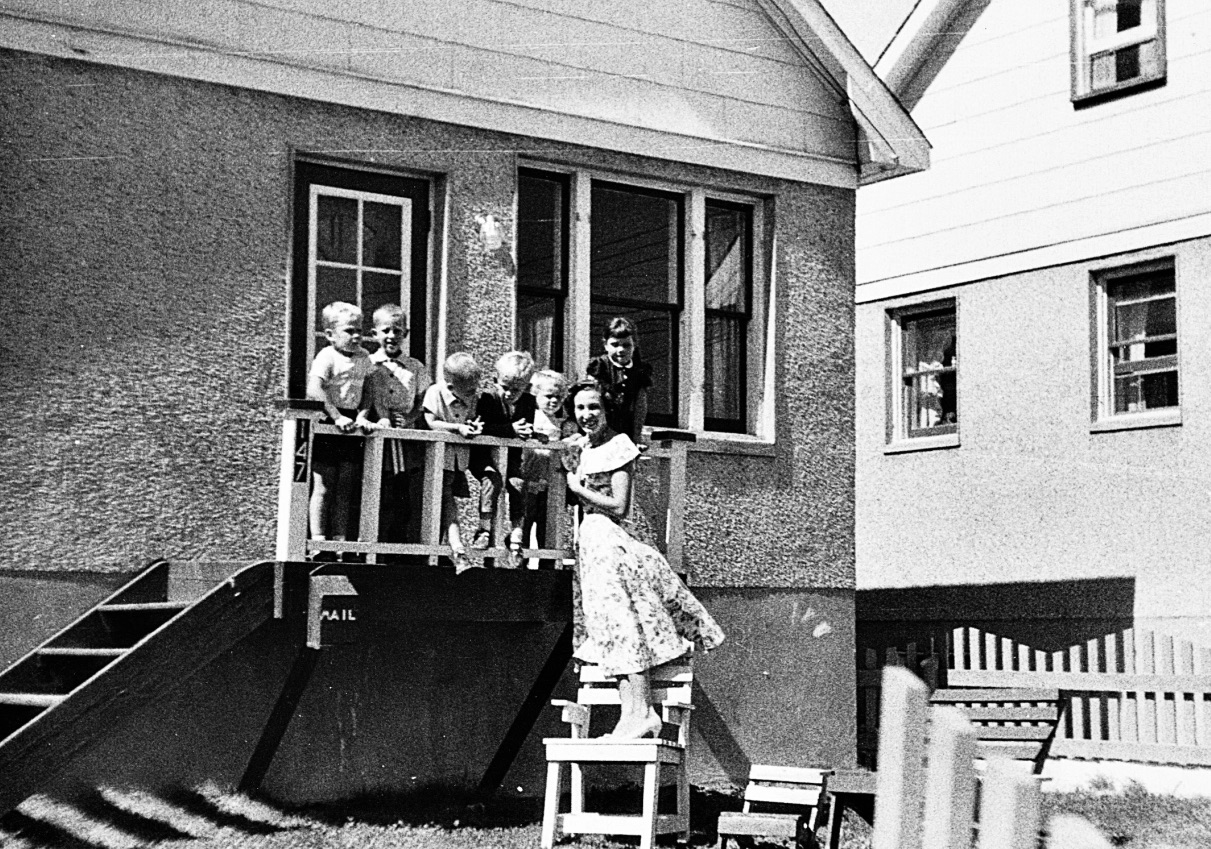
High and Low

By Ed Staskus

   When your back is to the wall, you’ve only got one place to fall, which is face down. I didn’t want to do that. I had gotten married the year before and it was time to buckle up. I needed a steady job. I called Doug Clarke and asked if I could see him. I was looking for a piece of the pie.

   “Absolutely,” he said.

   “What’s a good time?”

   “Any time after lunch.”

   We made a time for the following Monday. I made sure to be on time. Doug was behind his desk at the back of the office, which was a bullpen style office. A half-eaten sandwich lay at his elbow. He was a few years younger than me and at least a hundred times the capitalist I was. He had his own Gilded Age going. Phones were ringing off the hook. Merchandise were being talked up. Money was being made, by hook or by crook.

   I first met Doug when he was in a small building on Linda St. in Rocky River, Ohio. It was going on the late 1980s. He had been set up in business by his father, who was an account manager for Philips Lighting. Doug was selling commercial lighting and had lately started selling tanning bulbs. Philips had developed fluorescent tanning tubes for the European market. They were new on the American market. They were going like hot cakes.

   Light Bulb Supply was three of them in the beginning, Doug, the owner operator, his salesman Marty Gallagher, and Chuck Pampush, who ran the warehouse and did the driving. The company truck was a red F150 Econoline and was called the Lightmobile. Doug had an office, but Marty’s desk was in a hallway leading to the warehouse. They had been friends growing up, but weren’t going to stay friends for long. As tanning bulb sales grew by leaps and bounds Marty jumped ship and set up his own distributorship. The split went to court, there were claims and counterclaims of theft of trade secrets, but in the end, they both stayed in operation, personal enemies and business rivals.

   Randy Bacon, Chuck’s brother-in-law, helped in the warehouse now and then unloading deliveries and stocking shelves. He had a tattoo inside his mouth under his front lip. It said, “Fuck You.” I gave him a wide berth whenever I saw him. I gave his junkyard dog a wider berth. The pooch was unusually tense and snarled all the time.

   By the time I sat down with Doug he wasn’t in Rocky River anymore. He had outgrown his start-up warehouse. He had moved five miles east to Lakewood on the third floor of a hybrid industrial and commercial building, renting space and then more space.

   “What can you offer us?” he asked me.

   “I can offer you 20-some years. After that it’s up for grabs.”

   “Steady Eddie, is that right?”

   “Whatever you say,” I said unwittingly, saying something I ended up saying over and over for a long time.

   “All right, you’re hired.”

   We shook hands. Doug clapped me on the back. It ended up being twenty-two years of the daily grind. In the end I didn’t get a handshake on my way out, although I had not expected one, given the family business I had signed up with. I wasn’t part of the family.

   When Doug was still in Rocky River I had teamed up with a friend of mine and set up a small tanning salon across the street from the Cleveland State University campus. We were in a five-story brick building at East 21st St. and Euclid Ave. The Rascal House Saloon was across the street. It was where concert goers at Peabody’s Down Under went for a middle of the night  fest after shows. The Plain Dealer called it “Cleveland’s Best Pizza.” I went there whenever I was famished and down to a couple of bucks. 

   We were on the lower level. Bill Stech, an architect, and the landlord, was on the top floor. He always wore the same black suit, white shirt, and black tie. He had black hair that looked phony. He always made promises and usually broke his promises. After a while I stopped taking it personally. Whenever he didn’t want to see me, his receptionist said he wasn’t in, even though his car was parked in the back lot in its customary space. Sometimes I could even see him in his office, at his desk, his back turned to me.

   My business partner was a full-time fireman in Bay Village, so I did most of the full-time work at the tanning salon. I also drummed up side jobs at other salons, trying to make myself useful, doing repairs, selling, delivering, and installing bulbs. I kept my head above water, but I was treading water. When Doug hired me for part-time sales, I opened a savings account.

   Doug had moved to the Lake Erie Screw building in Lakewood. Madison Park was in front of the building and Birdtown was all around us. The neighborhood was not the greatest. Everybody made sure their cars were locked up tight in the parking lot. One day after work, as I walked to my car, I saw a dead bird stuck headfirst in my front grill. I hadn’t heard or felt him hit the car that morning. He was stiff and there were flies buzzing around him. I pulled him out, rolled him up in a newspaper, and took him to the park, where I laid him down in a pile of rotting leaves.

   The brick pile we were in was going on a hundred years. It was on 18 acres with plenty of parking. From 1917 to 1924 it had been the Templar Automotive Plant. They built cars, trying to compete with Detroit. Dave Buehler, a Lakewood native, collected cars and had more than a dozen of the Templars. He restored them and kept them stashed in our building on the same floor where they had first been assembled. I sat in one of them one day. It was sizable enough but uncomfortable. The steering wheel was king-size and the mirrors were tiny. It looked like it would transition into a coffin at the first whiff of an accident.

   The building became Lake Erie Screw in 1946 when John Wasmer took it over and started manufacturing fasteners. In the 1970s he added large bolts to their line-up and growth accelerated. When most fastener manufacturers moved to China, the Wasmer family kept up the beat of the hometown and their growth continued apace. By the mid-90s the company was doing about a hundred million dollars in annual sales, all of it in cap screws and structural bolts.

   In the beginning my job was as thankless as it gets in the world of commerce. I had a cubicle the width of a toilet stall and was expected to make cold calls until the end of time. I got sick of it every day at the beginning of the day. There were few overworked business owners who wanted to talk to an eager beaver trying to sell them something. The other salesmen sat back and waited for calls to come to them. They racked up commissions while I racked up zeros.

   It took longer than I wanted, but I finally went full-time, got a real desk, and got to answer in-coming calls. I sat between Betty the typist and Jim Bishop. Betty was a looker who never looked at me, except when she had something obnoxious to say. She was doe-eyed about Doug. Even though Doug had a girlfriend who was going to be his wife soon enough, the gossip was that he and Betty were close.

   He had a bedroom through a locked door behind his desk.. There was an immense waterbed and a mini fridge. There were posters of muscle cars and hot girls on the walls. There were piles of dirty clothes and old mail everywhere. He wasn’t especially tidy. Being the boss, he didn’t need to be.

   One day when I was on the phone with a customer, Betty broke into her song and dance about what I was doing wrong and what I should be doing right to win more friends and influence people enough to make them buy our goods. She didn’t stop even when I finished the call and was writing up the sale. I finally got fed up and said so.

   “Look, shit for brains,” I said loud enough for anybody listening to hear. “You take care of your business at that typewriter over there and I’ll take care of mine over here.” Nobody dropped a pin in case I had more to say. Betty sniffed and went to the bathroom. I went to Doug’s desk and apologized for the outburst. He laughed it off. I never apologized to Betty. She was never going to be Mrs. Doug Clarke, anyway.

   We were riding the wave of the tanning boom. We had more sales than we knew what to do with. Doug rented additional space to stock our bulbs and hired more packers. They worked overtime day after day. Trailer loads of bulbs from Cosmedico, Wolff Systems, and Light Sources rolled in every Friday. We sent small orders out by UPS and FedEx, and pallet orders out by LTL. We were busy as bees.

   Doug started out as Light Bulb Supply selling run-of-the mill commercial lighting. The tanning bulbs we sold under the name of Ultraviolet Resources were making him rich, but we still sold all kinds of incandescent, fluorescent, and high-pressure bulbs. I got into the swing of it and lent a hand, even though the commissions were less. Jim Bishop was the lead man. He sat on the other side of me. Betty hated him more than she hated me. He never stopped baiting her, no matter what, staring intently at her while twisting a strand of hair.

   I couldn’t make him out. He looked like hell, even though John Elias, another salesman one desk down, told me he was trying to “hold on to his youth.” That horse was out of the barn. He lived in the Warehouse District, in the Bradley Building, which was an early pioneer of downtown Cleveland’s revitalized housing. He wore his hair long, down to his shoulders, dressed better than anybody else in the office, and only took calls when he wanted to. He snorted coke on his lunch hour and was always more personable when he got back to the office.

   He was never personable to Betty. Coming back from lunch he liked to stop at her desk and hover over her without saying a word and breathing heavily.

   “What do you want now?” she asked.

   “What if I told you I was gay?” he asked.

   “Just go away, please,” she hissed.

   Kathy Hayes was Mrs. Doug Clarke in the making. There was no mistake about that. She was Doug’s pit bull sales manager. She brought her sister Maggie into the business, then her brothers Kevin and John. Kathy came from a family of thirteen. More brothers and sisters came and went as the need arose. Kevin, John, and Maggie stayed. Kevin and John became Archie and Jughead in my mind. Maggie became the Wicked Witch of the West. I put her out of my mind.

   Kathy was the Queen of Mean. She was a mix of go-getter, unapologetic yuppie greed, and a hair trigger temper. She calmed down after her kids were born, but never lost the mean streak. She was my immediate boss, so I watched my step. She was a sharp gal. I was fake polite to Archie, Jughead, and the Wicked Witch. They were easy enough to do that to, like pretending to water fake plants.

   After I cold called myself into Kathy’s good graces, I settled into a routine of Monday through Friday. It wasn’t what I wanted to do but it was what I had to do. The only concession I was able to wrangle was a starting time of 11 AM to be able to work at my part-time job, which was more remunerative but not as steady. My steady job meant I would be getting a predictable paycheck every two weeks, making good on my bills, and paying into a 401k, which were good things. I never worked overtime and never volunteered for anything. They didn’t pay me enough to go an extra inch, much less a mile. The American Dream is only real for those who say so.

   Towards the end of the millennium Doug broke ground on a new state-of-the-art warehouse and offices in Brook Park. He spared no expense. It was 45,000 square feet next door to the 230-acre Holy Cross Cemetery. There were dedicated 18-wheeler loading docks and a separate dock for the delivery services. The head honchos had sizable offices with windows. There was a gym and a party center on the second floor. The lunchroom was all stainless steel and a huge flat screen. Christ on a cross was fixed to the wall above the front entrance doors. The cross looked like a cactus. Jesus looked like he needed to scratch an itch.

   It rained money like nobody’s business. One day a Middle Eastern man walked in with a paper bag stuffed with more than $50,000 in cash. He was setting up a tanning salon. We were outfitting it with the equipment. I wrote up the sale but didn’t bother counting the loot. I left that to the Wicked Witch, who scowled testily when I poured the legal tender out on her desk.

   We moved into our new building, shiny and up to date, at the beginning of the new century. It was the beginning of the end. It took five or six years but Light Sources, whose tanning bulbs were Doug’s meal ticket, decided they wanted a bigger slice of the pie. They offered Doug a choice. He could sell the tanning division to them, they would send somebody from headquarters to run things, or he could decline their offer, in which case they would open their own operation somewhere else, bypassing him entirely . Doug went with the flow. Everything and everybody stayed put.

   It didn’t do any good. Inside a few years Light Sources moved themselves to Westlake. Archie, Jughead, and the Wicked Witch jumped ship and went with them and Doug was left holding the bag. He lost a boatload of money in the stock market downturn of 2007. As the second decade of the century unfolded, he had to shed most of his remaining staff, including me, sell his deluxe building, find an older, smaller building, then find something even smaller, until he finally ended up in a strip of mom-and-pop shops in Avon selling odds and ends. His kids didn’t re-enroll at their private schools. He lost his McMansion in North Ridgeville. His rich friends became his former friends.

   In life Doug bore a resemblance to the late-night TV talk-show host Johnny Carson. He had a warm smile and went out of his way to make most people feel good, even though he was as oriented to the bottom line as any manhunter. He was elected president of the Brook Park Chamber of Commerce, where everybody was a manhunter. He spent money on himself and his family like he had money to burn. The money ran out slowly but surely. By the time he died there wasn’t much left to burn.

   Doug died when he was struck by a semi-truck trailer on Interstate 90 near his mom-and-pop. It was 2018 in the middle of a sunny day at the beginning of summer. He was taken to University Hospital in Avon where he was pronounced dead. He had been standing outside of his car on the shoulder for a few minutes before he walked onto the marked lanes of I-90, according to the Ohio State Highway Patrol. They couldn’t explain why he had stepped into oncoming traffic.

   It happened so fast the truck driver didn’t have a chance to touch his brakes. “I feel bad for the victim,” Dan Darko of nearby Elyria said. “It sucks to feel pushed to that point. But I feel worse for the driver. One person’s choice will affect him for the rest of his life to the point where he may never be able to do his chosen profession again.”

   It was hard to believe it was an accident, but it was harder to believe Doug had deliberately stepped onto the highway. He was a Roman Catholic, taught Sunday School at his church, and was a member of Religious Readiness. According to Rome, death by suicide is a grave matter. The church holds that one’s life is the property of God and to destroy that life is to wrongly assert dominion over God’s creation. I never knew how sincere Doug was about his faith. I knew he sincerely valued prosperity. I don’t know if he had lost his faith. I knew he had lost his prosperity.

   The funeral was at St Clarence in North Olmsted. He left a wife and four kids behind him. All his in-laws who had bailed on him when Light Sources swallowed the golden goose were there. I didn’t go to the service. I had never been close to Doug or Kathy, anyway, keeping my distance. His in-laws liked to talk loud about what they were contemptuous of. The less I saw of them the better. 

   If Doug stepped in front of the semi-truck trailer on I-90 on purpose, I wondered if he did it for his kids. He probably had a locked and loaded life insurance policy. There might have been a suicide clause limiting the payment of benefits. Maybe he thought he could kill two birds with one stone if it looked like an accident. He could stay in the good graces of the church and still provide for the future of his family.

   Nobody never does not have a good reason for ending it all, especially if they believe hope is gone and not coming back. My memory of Doug is dulled by how he died. The chief thing I now remember about him is how his determined drive for riches and status in this life came to an end on a stretch of godforsaken concrete.

Ed Staskus posts monthly on 147 Stanley Street http://www.147stanleystreet.com, Made in Cleveland http://www.clevelandohiodaybook.com, Down East http://www.redroadpei.com, and Lithuanian Journal http://www.lithuanianjournal.com

“Cross Walk” by Ed Staskus

“Captures the vibe of mid-century NYC, from stickball in the streets to the Mob on the make.” Sam Winchell, Beyond Fiction

Available on Amazon: https://www.amazon.com/dp/B0CRPSFPKP

Late summer and early autumn. New York City, 1956. President Eisenhower on his way to the opening game of the World Series. A hit man waits in the wings. A Hell’s Kitchen private eye scares up the shadows.

A Crying of Lot 49 Publication

Red Hook Tough

By Ed Staskus

   It was a hot and humid day. The city as far as the eye could see smelled bad. The sky was dotted with dull clouds. The old hot dog Ezra Aaronson had wolfed down for breakfast was giving his stomach trouble. On top of that, the bunion topping his left big toe was throbbing in the new shoes he had forgotten to stretch beforehand. 

   It was a bad day to be having a bad day but that’s what it was turning into. Now the other penny was dropping. One of them was big and looked mean. The other one was smaller and looked meaner. He kept his eyes on the big bad penny. He kept his sense of preservation on the small bad penny. Ezra was sure nobody else was behind him to trip him up but running fast and far was going to be a problem with his bunion. He kept his hands at his sides, his right hand balled into a fist.

   “You can forget about that roll of pennies in your hand,” said the small bad man next to Big Paulie. 

   Luca Gravano was Big Paulie. He wasn’t tall as in tall. Instead, he was all around big, a dark suit, dark tie, and a white shirt. His face was sweaty and pockmarked. He wore browline glasses. The lenses looked like they were smeared with a thin film of Vaseline. His brown eyes were slippery behind the glasses. It was no picnic trying to focus on them. His shoes were spit shined. He stank of five-and-ten store cologne.

   “They’re not Lincoln’s,” Ezra said. “They’re Jefferson’s.” He could use a lucky penny. A rolled-up copy of the Declaration of Independence wasn’t going to get it done. Maybe Honest Abe might come around the corner with the axe he used to spilt logs back in the day. Maybe he could help. Ezra wasn’t going to hold his breath.

   “OK, let’s cut the crap,” Big Paulie said. “We ain’t going to get up to anything here, broad daylight, all these guys around, left and right.”  He waved a beefy hand over his shoulder. “We just wanna know what it is you wanna know.”

   Ezra looked past the big man. On the finger pier side of where he was a freighter lay at rest Hemp slings were lifting swaying pallets off the boat. In the distance he could see the Statue of Liberty. On the dockside was a two-story brick building. A loose group of longshoremen was coming their way, baling hooks swinging on their belts. They would be DD&B if anything did get up to something. 

   “I don’t know nothing about it,” they would all say, deaf, dumb, and blind after it was all said and done. But they might be the smoke screen Ezra needed to be on his way. He could see plainly enough he needed a way out.

   “I’m trying to get a line on Tommy Dunn,” Ezra lied. He never told anybody what he was really working on. He wasn’t working on these two goons. Why were they getting in his face?

   “Never heard of him,” Big Paulie’s small man said.

   “Fair enough,” Ezra said.

   “You a private dick?” Big Paulie asked.

   “Yeah.” 

   “Who you work for?” the small man asked. He had yellow fingernails and sharp front teeth. He wore a felt pork pie hat. He was in shirtsleeves. There were spots of spaghetti sauce on the pocket on the front of his shirt.

   “Ace Detectives,” Ezra lied again.

   “OK, I’ve heard of them.”

   “Best you beat feet,” Big Paulie said, staring at Ezra. It was a fixed look. “Tough Tony don’t like nobody nosing around for no good reason, know what I mean?”

   “I take your meaning,” Ezra said. 

   “Don’t forget what I said here today.”

    Ezra took a step back, smiling like warm milk, and walked away in stride with the group of longshoremen going his way. He hated shucking and jiving, but he knew enough to hedge his bets. The rackets ran the shaping-up, the loading, and the quickie strikes. They hired you for the day if you were willing to kick back part of your day’s pay. At the shape-up you let them know you were willing to play ball by putting a toothpick behind your ear or wearing a red scarf or whatever it was they wanted to see. If they liked you they saw it.

   They controlled the cargo theft, the back-door money stevedores paid to keep the peace, and the shylocking from one end of Red Hook to the other end. They didn’t steal everything, although they tried. The unions were hoodlums. The businessmen were hoodlums. The pols were hoodlums. The whole business was crooked left and right and down the middle.

   The Waterfront Commission hadn’t gotten much done since they got started, even though the State of New York and the Congress of the United States had gotten on board in thought and word. It was taking time finding the gang plank leading to deeds. It was just two-some years ago on Christmas week when a new union full of do-gooder ideas butted heads with the ILA. Tough Tony flooded the streets with the faithful. It took hundreds of club-swinging policemen from four boroughs to break up the riot at the Port of New York. Staten Island sat the melee out. In the end, only a dozen men were sent to Riker’s Island while emergency rooms filled up and mob rule continued to rule the roost on the docks.

   Ezra put the roll of nickels back in his pants pocket. He walked the length of the wire fence to the gate. Through the gate he turned his back on the Buttermilk Channel. He couldn’t settle himself down, a sinking feeling in his gut making him feel queasy. Red Hook was surrounded by water on three sides. A longshoreman leaning on a shadow stared at him. He crossed the street into the neighborhood. The houses, six-story brick apartment buildings, were less than twenty years old, but they had already gone seedy.

   “I need a drink bad,” he said to himself.

   Most days Ezra ran on caffeine and nicotine. Most nights he ran on alcohol and nicotine. Even though it was only late morning, today wasn’t most days. He found a bar and grill at the corner of Court Street and Hamilton Avenue. Sitting down at the bar he ordered a shot and a chaser. He looked up at the bartender. The man was broad and wearing a bow tie. He looked like a king-size mattress wearing a bow tie. 

   “What have you got on tap?” Ezra asked.

   “Ballantine, Schlitz, Rheingold.”

   Two longshoremen sat on stools a couple of stools away. Bottles of beer, most of them empty, squatted in front of them. Neither man had a glass. They ate pickles from a jar. The TV on a shelf behind the bar was on, although the sound had been turned down to nothing. A beer commercial was running. It was a ticker tape parade through Times Square, but instead of war heroes or celebrities everybody in the parade was a bottle of Rheingold. 

   “Nobody knew what that was about,” said one of the longshoremen, pulling a pack of Lucky Strikes out of his shirt pocket. The bartender knew what they were talking about. Ezra didn’t have a clue.

   “I got no trouble,” the other one said. “Me, I support my family. It’s good work, keeps me out of trouble. I got my old lady and three kids.”

   “Nothing changes,” the Lucky Strike man said lighting his cigarette. “You just live every day as if it’s your last.”

    “I’ll have that Rheingold now,” Ezra said after throwing his shot back, feeling it burn going down his throat. “Make sure the glass is as cold as can be.”

   “Sure thing, bud,” the man mattress said.

Photograph by Sam Falk.

Excerpted from the crime novel “Cross Walk.”

Ed Staskus posts monthly on 147 Stanley Street http://www.147stanleystreet.com, Made in Cleveland http://www.clevelandohiodaybook.com, Down East http://www.redroadpei.com, and Lithuanian Journal http://www.lithuanianjournal.com.

“Cross Walk” by Ed Staskus

“Captures the vibe of mid-century NYC, from stickball in the streets to the Mob on the make.” Sam Winchell, Beyond Fiction

Available on Amazon: https://www.amazon.com/dp/B0CRPSFPKP

Late summer and early autumn. New York City, 1956. President Eisenhower on his way to the opening game of the World Series. A hit man waits in the wings. A Hell’s Kitchen private eye scares up the shadows.

A Crying of Lot 49 Publication

Pinball Wizard

By Ed Staskus

   In 1984 the Cleveland Browns finished the season 5 in the win column and 11 in the loss column. They were nearly dead last in the NFL in points scored. The Municipal Stadium on Lake Erie was a lonely ballpark that winter with no  happy memories to keep it warm. Two years later, in Bernie Kosar’s first full season as the starting quarterback, the team went 12 and 4, their best record in nearly twenty years, and scored points right, left, and center. 

   Webster Slaughter and Brian Brennan pulled in TD passes while Earnest Byner and Kevin Mack punched it in when they were knocking on the door. They only kicked field goals when it was absolutely necessary, like when it was 4th and forever to go. Even then, all bets were off.

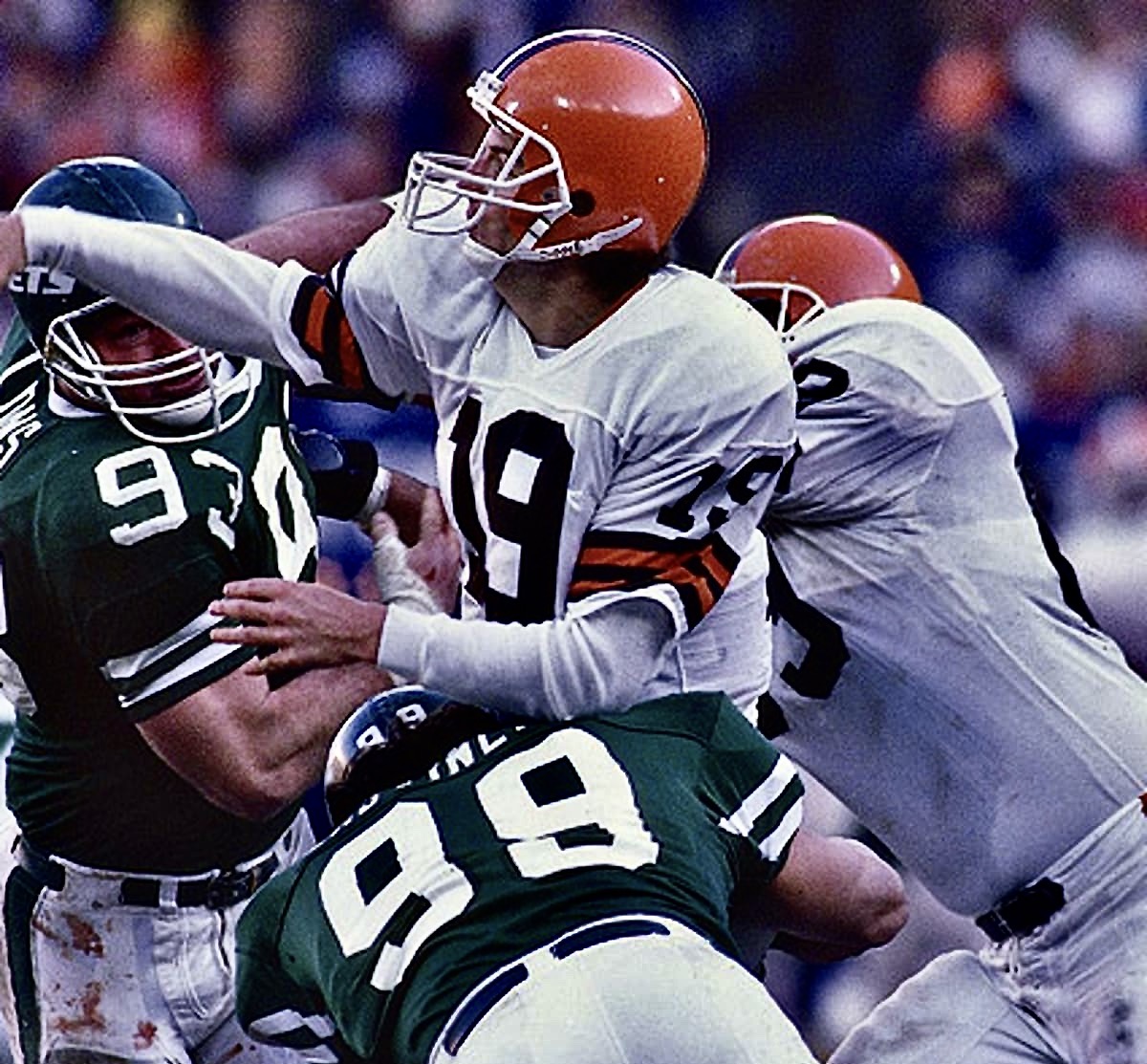
   Facing the New York Jets in 1986 in the playoffs, Bernie Kosar led the Browns to a double-overtime win, leading two come-back scoring drives in the final four minutes of regulation. He set a playoff record for passing yards. The team got knocked out of the playoffs the next round when they lost the AFC Championship Game by a field goal, again in overtime. It was close, but no cigar.

   Bernie Kosar was from Youngstown. His parents were Hungarian. He grew up in Boardman Township and went to Boardman High School. He didn’t play pinball then but was a hell of an athlete, slinging baseballs and footballs where they needed to go. The baseballs were strikes and the footballs were completed passes. In 1981 Parade Magazine named him Ohio’s Division I “Player of the Year.”

   My friends and I got hooked on the Cleveland Browns when they were the Kardiac Kids and Bernie Kosar was still in high school. We looked forward to the Sunday afternoon games and never missed them no matter what. If it was a Monday night game, it turned into a party. After their glory days in the 1960s the team hit a dry spell in the 1970s. The party was over. Then 1979 happened. They were losing their first game of the season, and time was running out, when quarterback Brian Sipe threw up a 45-yard prayer and Dave Logan answered the prayer by hauling in the pigskin. In no time flat the game was tied, and the Browns pulled it out in overtime. Municipal Stadium went nuts.

   The following week a doctor from the Cleveland Clinic stopped in at the team’s training center. “He showed us a paper readout of a cardiac machine,” Brian Sipe said. “It showed that somebody had died right at the moment we won the game. I think the story was that he was watching the game, sat up and cheered, and died.” The team was the Kardiac Kids from then on.

   The 1980 season was more of the same, a few crushing defeats and a slew of miraculous wins, until it all came to an end with Right Red 88. The Browns were knocking on the door towards the end of a tight game against the Oakland Raiders. The play call from Head Coach Sam Rutigliano was “Red slot right, halfback stay, 88.” As Brian Sipe started back out onto the field his coach told him, “Throw it into Lake Erie if no one is open.” Instead of throwing it to Dave Logan or Lake Erie, he threw it to Oakland safety Mike Davis and that was the end of the Kardiac Kids.

   It took six years, but when Bernie Kosar got to Cleveland and started working his magic, the glow inside the lakeside stadium came back. For two years he was the second-best quarterback in the world, behind only Dan Marino. He had half as many interceptions and half as many fumbles as Boomer Esiason. He threw for more yards, more touchdowns, and had fewer interceptions than John Elway.

   He almost didn’t make it to Cleveland. On the first play of the first game of his college career at the University of Miami a defensive lineman tracked him down. They were playing the Florida Gators in Gainesville. “It was a guy named Wilbur Marshall,” Bernie said. “We were backed up on the one-yard line and he cracked me into the brick wall that goes around Gator-land. The first thing I thought as I was laying there was, ‘I better do good in school because this football thing is not going to work out.’”

   He stuck it out, though, graduating with a degree in economics and leading Miami to a National Championship. When he got to the NFL, he found out there were more than brick walls to worry about. All the men on the defensive line were brick walls. “The league was encouraging crown of the helmet, top of the helmet blows,” he said. “The beginning of Monday Night Football was two helmets smashing together. The pregame show had a segment called ‘Jacked Up,’ about how hard did you hit a guy ,and you were glorified for using your helmet as a weapon.”

   Bernie Kosar played tough football in tough times. He also played a mean pinball. He was a team member on the football field, but he played pinball for himself. It wasn’t about burning off steam. It wasn’t about a need to conquer the machine age. It wasn’t a metaphor for sexual fulfillment. Pinball was like black magic in his hands.

   The Tam O’Shanter was a bar and grill in Lakewood, which was a bus line suburb on the west side of Cleveland. I had recently moved there and was living a couple of blocks from the Rocky River and a half-mile from Lake Erie. The bar and grill wasn’t far from where I lived. It was where I saw Bernie playing pinball one Thursday night.

   “He comes in for dinner and a draft and to play pinball every Thursday after the team film sessions are over,” Tom Gannon, who owned and operated the place, said. “He gets a buzz out of it.”

   Bernie was a big man, six foot five, but just a hearty dinner over two hundred pounds. He looked as fit as fit could be, even though he was gangly. He lived in a swank pink apartment building down Detroit Rd. across the Rocky River on the west side of the bridge. It overlooked the river. When he was done with whatever pinball game he had been dominating it was a five-minute drive home.

   He played new-style digital electronic machines. Even though he was tall, he didn’t hunch over them. No matter how fast things got he stayed slow on the flippers, never getting overly excited. He played the Fathom, the Firepower, and the Eight Ball Deluxe. He excelled on the Flash Gordon. It was the toughest of the pinball machines at the Tam O’Shanter. Everybody said it was the toughest single game of them all. The aim of it was trying to hit targets within a few allotted seconds to get double or triple points. Bernie made it look easy.

   “The first inches of a pinball game are always the same,” Eric Meunier, a game designer at Jersey Jack Pinball, said. “But after that, the ball can go anywhere.” A spring-loaded plunger propels the ball up the shooter alley and the next second it is rolling inside an amusement park maze of obstacles. There are ramps, spinners, and blinking lights. The goal is to keep the ball in play and away from the drain, a hole at the bottom of the playfield where the ball ends up when you lose control of it.

   Training camp for the Cleveland Browns was at Lakeland Community College in nearby Kirtland. “All of a sudden, I graduated college quick, and you’re in camp,” Bernie said. “It’s seven weeks of training camp with Marty Schottenheimer. You’re right in the thick of it.” It was thick or thin on and off the field. “In between two-a-day practices, players and reporters mingled in the dormitories,” Tony Grossi, a beat reporter for the Cleveland Plain Dealer, said. “Lakeland College had a couple of vintage pinball machines in the players’ lounge. Players competed against reporters in daily pinball contests.” 

   Nobody ever reported beating the curly-haired rookie at pinball. He played it clean, like he could feel the bumpers. He always got the replays. The reporters didn’t know what to say.

   He never replayed the first snap he took in the NFL for the Cleveland Browns against the New England Patriots. He fumbled the snap from center, and their rivals took advantage by kicking a field goal, going up 3 – 0. “I just dropped it,” he admitted. When his chance came on the following series, he handled the ball like an old pro, completing seven straight passes, and the Browns downed the Patriots 24- 20. He led the team to five playoff appearances and three trips to the AFC Championship Game in five years. By 1990, despite his risky sidearm throws, he held the all-time league record for fewest interceptions when calculated against attempts.

   The Tam O’Shanter was near St. James Catholic Church. Fridays and Saturdays were for the O’Shanter. Sundays were for St. James and the Browns. Men tacked on morning prayers for the home team and wives racked up time serving snacks and drinks during the game. Bernie was raised a religious boy and didn’t change his stripes when he landed in Cleveland as a grown man. He attended church in his parish and appeared at pep rallies whenever asked. One morning more than four hundred kids gave him a big cheer when he stepped into their school gym, the nuns with their rulers keeping order. Two of the kids sang “Bernie Bernie” from the stage. It had been a big hit on the radio the year before.

   When question time came, after all the football questions, and all the questions about what he did and didn’t like, one kid asked, “How much beer can you drink?”

   “Never mind about that, and stay away from that stuff,” he answered, and started autographing notebooks. After the rally, walking out with a reporter, a nun approached them. “If you ever find out anything bad about Bernie, we don’t want to know about it,” she said to the reporter. She tapped a ruler on the palm of her free hand. Bernie gave her a thumb’s up.

   I had played a few games of pinball in my time, but I was no wizard at it. Far from it. After watching Bernie play several times, I thought I might be able to get the hang of it. He made it look easy. I was older and wiser. There was only one objective, which was to keep the ball in play and score as many points as possible. The longer the ball was in play, more free balls could be won and more free replays could be earned. How hard could it be?

   The Tam O’Shanter was nearly empty the Tuesday afternoon I stopped in to find out. I went to the Flash Gordon and studied it. The rocketman in ripped biceps and a red muscle T, a babe wearing a metallic bra with pointy tips that could poke a man’s eye out, and a bald mean-looking dude with a goatee were on the back box display. The playfield looked challenging. There were lights and colors galore. I thought, it stands on four legs, pulling its pants up one leg at a time like we all do. If it can do it, I can do it, too. I dropped a quarter into the coin slot and went exploring.

   Pinball was going to celebrate its 60th anniversary soon. It got rolling during the Great Depression. At first the machines didn’t have flippers. Players leaned and banged on them to try to get the ball to fall into a hole. Flippers were invented in 1947. It had been a rocky road since then. The amusement was outlawed almost everywhere in the 1940s. Gambling on the game had become rampant. All the pinball machines in New York City were confiscated in 1942. Mayor Fiorello LaGuardia and his moral crusaders smashed them to bits and pieces with sledgehammers and dumped them into the East River. In the 1970s they were still outlawed in Chicago and Los Angeles. Video games nearly wiped the pastime out. But it was back. Pinball machines raked in more than 10 billion quarters in 1988.

   I put another quarter into Flash Gordon. My first quarter had gone down the drain in a flash. I took a deep breath and squared my shoulders. Ball control and shot accuracy are the one-two punch of pinball. Trapping the ball with a flipper and tip passing it between flippers are important skills. It’s handy knowing how to bounce pass and post pass. Nudging is body language, although getting a feel for the machine’s tilt sensitivity is vital. The death save comes into play when it’s all gone suddenly wrong.

   By the end of the afternoon, I was out of quarters and nowhere near being better at pinball than I had been when I walked in. I walked home. I saved my quarters for the rest of the week and went back to the Tam O’Shanter the next Tuesday. One day I brought twenty-five quarters, another day fifty quarters. I kept it up through the fall and into winter. I gave it up after the New Year. I wasn’t ready to give pinball years of practice. I didn’t have enough loose change, anyway.

   I could not for the life of me get the hang of it. I played racquetball in state-wide amateur tournaments and squash on a club team. I was good enough to hold my own most of the time. Both racquet sports were like pinball, the ball bouncing all over the place. But there was something helter-skelter about pinball that I couldn’t master. I wasn’t a mind reader, especially not my own mind, and I couldn’t put my finger on it. I knew there was some luck and chance involved in playing pinball, but there was luck and chance involved in everything.

   It wasn’t a physical struggle. Making the flippers slap was no great strain. It was a mental struggle. I wasn’t nervous and never distracted by the lights and noise of the machine. I kept my eyes on the prize, especially when the ball was coming down the middle of the table and there wasn’t anything I could do about it.

   When he was in the pocket Bernie Kosar usually stayed there. He was the kind of quarterback who always ended up dead last in foot races, anyway. He was wily and patient, though, waiting to throw the pigskin at the last second while defensive linemen and blitzing linebackers bore down on him. He kept looking downfield no matter the topsy turvy of linemen all around him.

  I followed the pinball wherever it went. I knew that was a mistake but kept doing it. There was no reason to focus on the ball when it was in the top half of the machine. The time to focus was when it was in the bottom half. Then it was flipper time. I made myself dizzy watching the bouncing ball too much. I was thinking all the time, wearing myself out, sucking all the fun out of the game.

   I was smacking the flippers and getting an occasional big score, but not controlling the hubbub. I couldn’t reconcile the hit-or-miss ricochets of the silver ball. There were hardly ever any random bounces on racquetball and squash courts. There were good shots and bad shots, but not many random shots. They were far and few between. I couldn’t tap into the uncertainty principle of pinball to save my life.

   By 1990 Bernie Kosar had a nearly dead elbow, a torn ligament in the front finger of his throwing hand, and was limping like Ahab on a bad day. Handheld signs were asking “Bernie Who?” and popping up all over Municipal Stadium. He was only 25 years old, but on his way out. When the home team lost to the Denver Broncos in the playoffs again, the Browns became the first AFC team to ever lose their first three conference championship games. The team let Bernie Kosar go.

   He wasn’t deaf, dumb, or blind, though, and once his hand healed, he won a Super Bowl ring playing for the Dallas Cowboys, where he had been traded. In his free time in the Big D, he touched base with Flash Gordon. The Rocket Man flashed a ray gun bristling with energy coils, but when the Ohio boy threw down his quarter and put his fingers on the flipper controls, both of them knew all bets were off.

A version of this story appeared in the Lakewood Observer.

Ed Staskus posts monthly on 147 Stanley Street http://www.147stanleystreet.com, Made in Cleveland http://www.clevelandohiodaybook.com, Down East http://www.redroadpei.com, and Lithuanian Journal http://www.lithuanianjournal.com.

“Cross Walk” by Ed Staskus

“Captures the vibe of mid-century NYC, from stickball in the streets to the Mob on the make.” Sam Winchell, Beyond Fiction

Available on Amazon: https://www.amazon.com/dp/B0CRPSFPKP

Late summer and early autumn. New York City, 1956. President Eisenhower on his way to the opening game of the World Series. A hit man waits in the wings. A Hell’s Kitchen private eye scares up the shadows.

A Crying of Lot 49 Publication
Flim Flam Man

By Ed Staskus

   “There’s a sucker born every minute.” PT Barnum

   “John McCain is not a war hero. He was a war hero because he was captured. I like people who weren’t captured.” Donald Trump

   “I will build a great wall, and nobody builds walls better than me, believe me, and I’ll build them very inexpensively. I will build a great, great wall on our southern border, and I will make Mexico pay for that wall. Mark my words.” Donald Trump

   “The only way they can take this election away from us is if this is a rigged election.” Donald Trump

   “Nothing in all the world is more dangerous than sincere ignorance and conscientious stupidity.” Martin Luther King, Jr.

   “Why are we having all these people from shithole countries coming here?” Donald Trump

   “We are effectively run in this country via the Democrats, via our corporate oligarchs, by a bunch of childless cat ladies who are miserable at their own lives and the choices that they’ve made.” JD Vance

   JD Vance, a convert to Catholicism, has said that childless women shouldn’t be teachers. It begs the question, what about nuns teaching in Catholic schools?

   “If you believe that today’s ‘climate change’ is caused by too much carbon, you have been fooled. Climate change is natural. The push for clean energy is a scam.” Marjorie Taylor Greene

   “In politics stupidity is not a handicap.” Napoleon Bonaparte

   “On January 6th, when that happened, we were respected all over the world. All over the world, we were respected” Donald Trump

   “Childless Americans should have less voting power than parents.” JD Vance

    “We are producing fossil fuels. That keeps people’s houses warm in the winter. That saves people’s lives, people die in the cold. This earth warming and carbon is actually healthy for us. It helps us to feed people, it helps keep people alive. The earth is more green than it was years and years ago, and that is because of the Earth warming.” Marjorie Taylor Greene

   “Stupidity is also a gift of God, but one mustn’t misuse it.” Pope John Paul II

   “I don’t think Ivanka would do that inside Playboy magazine, although she does have a very nice figure. I’ve said that if Ivanka weren’t my daughter, perhaps I would be dating her.” Donald Trump

   “The people that came, most of them that came to Washington, D.C., that day, January 6th, were there to support President Trump. On one side of the Capitol, people were singing, they were praying. I mean it was, you know, amazing. Other side of the Capitol, yeah, there was a little riot going on. Approximately over 800 people went inside the Capitol, but there was a very small percent there in total that day, out of all the people that were there that actually did anything wrong. And they are being persecuted. It’s a political witch hunt.” Marjorie Taylor Greene

   “Randi Weingarten – president of the American Federation of Teachers – doesn’t have a single child. If she wants to brainwash and destroy the minds of children, she should have some of her own and leave ours the hell alone.” JD Vance

   “Stupidity is infinitely more fascinating that intelligence. Intelligence has its limits while stupidity has none.” Claude Chabrol

   “The concept of global warming was created by and for the Chinese in order to make U.S. manufacturing non-competitive.” Donald Trump

   “Our message is it’s not your fault that you’re a loser. It’s the government’s fault.” JD Vance

   “Wildfires in California are not natural. Forests don’t just catch fire, you know. Rather, the blazes have been started by Pacific Gas & Electric, in conjunction with the Rothschilds, using a space laser, in order to clear room for a high-speed rail project.” Marjorie Taylor Greene

   “Stubborn and ardent clinging to one’s opinion is the best proof of stupidity.” Michel de Montaigne

   “No matter what you do – guns, no guns – it doesn’t matter. They’re gonna come through the cracks.” Donald Trump

   “If I have to create stories to get attention, then that’s what I’m going to do.” JD Vance

   “We are witnessing a communist takeover of our judicial system to target political enemies.” Marjorie Taylor Greene responding to news that the former national leader of the Proud Boys, Enrique Tarrio, was sentenced to 22 years for his role in the Jan. 6 attack on the U.S. Capitol. Enrique Tarrio was found guilty by a jury and the judge who sentenced him was appointed by former President Donald Trump.

   “If stupidity got us into this mess, then why can’t it get us out?” Will Rogers

   “Sorry losers and haters, but my I.Q. is one of the highest -and you all know it! Please don’t feel so stupid or insecure, it’s not your fault.” Donald Trump

   “I used to use the word incompetent. Now I just say stupid. I went to an Ivy League school. I’m very highly educated. I know words. I have the best words. I have the – but there’s no better word than stupid.” Donald Trump

   “You know, I do the weave. You know what the weave is? I’ll talk about, like, nine different things, and they all come back brilliantly together. And it’s like – and friends of mine that are, like, English professors – they say, it’s the most brilliant thing I’ve ever seen.” Donald Trump

   “Genius may have its limitations, but stupidity is not so handicapped.” Elbert Hubbard

   “Our country is in serious trouble. We don’t have victories anymore. We used to have victories, but we don’t have them. When was the last time anybody saw us beating, let’s say China, in a trade deal? I beat China all the time. All the time.” Donald Trump

   “I probably wouldn’t tell Republicans voting for Comrade Harris anything, because usually it would be maybe a personality problem, maybe they don’t like the way I was tough on China, You know a lot of them don’t want me to be tough on China. A lot of them don’t want me to be tough on anybody because they’re taken care of by people. But for every one they have, I have many, I have so many that have left the Democrats and they’ve come here.” Donald Trump  

   “To be blunt, people would vote for me. They just would. Why? Because I’m so good looking.” Donald Trump

   “Stupidity is infinitely more fascinating that intelligence. Intelligence has its limits while stupidity has none.” Karl Kraus

   “The line of ‘Make America great again,’ the phrase, that was mine, I came up with it about a year ago, and I kept using it, and everybody’s using it, they are all loving it. I don’t know, I guess I should copyright it, maybe I have copyrighted it.” Donald Trump

   “I’m the most successful person ever to run for the presidency, by far. Nobody’s ever been more successful than me. I’m the most successful person ever to run.” Donald Trump

   “All rich, job creating people, that support Comrade Kamala Harris, you are STUPID.  She is seeking an UNREALIZED TAX ON CAPITAL GAINS. If this tax actually gets enacted, it guarantees that we will have a 1929 style Depression. Perhaps even the thought of it would lead to calamity. But at least appraisers and accountants would do well!” Donald Trump

   “Stupidity really gets me going, when it’s just plain stupid, obvious stupidity.” Lewis Black

   “All I know about magnets is this, give me a glass of water, let me drop it on the magnets, that’s the end of the magnets.” Donald Trump

   “Water does not significantly affect a magnet’s strength or function because water is essentially non-magnetic, meaning it doesn’t interact with magnetic fields in a noticeable way.”  Wikipedia

   “I don’t agree with Trump politically, I don’t think he should be anywhere near the White House. I don’t hate the guy. The people who vote for him, I think they’re stupid. I do. I’ll be honest with you.” Howard Stern

   “My candidate is Donald Trump. He has the business sense that the country needs to make the economy go in the direction it needs to go. For too long we’ve gotten into bad trade deals and watched jobs disappear. I have been laid off from several jobs because my jobs relocated either south of the border or into another country altogether. Donald Trump can end a lot of these stupid trade negotiations and get American jobs back in our country. He has built a billion-dollar empire, and yeah, he’s had a few bankruptcies in his past, but what successful businessman hasn’t? So, if it works, hey, you made money, and, if it doesn’t work, that’s what bankruptcy is for. It’s part of the process.” Dan Koehler

   “He’s a man that speaks his mind and he tells the facts the way they are. I think it’s interesting because it’s gonna to determine the direction of the country. If we are going to become just another country where our government is basically the babysitter, or if we’re going to become a country that shows self-efficiency again, like it did when I was a young man. The country I grew up in is definitely not the country I live in.” Pat Acciavatti

   “I guess the stance he’s taken on closing the borders and enforcing, you know, an emphasis on homeland security, that’s my biggest thing with Donald Trump. We need somebody like that that is going to take a stance and do something about it and not just talk about it. Some people think I’m joking, some people think it’s funny, I’ve come across, where people think because I’m Hispanic I’m automatically a Democrat or that’s the way I’m going. It’s a stereotype. I’m more worried because, I mean, Trump, he’s a firecracker. So, it’s scary, yes, it’s scary, we don’t know where we’re going from here.” Herman Delgado

   “Disinformation is more than just lying. it’s the denial and twisting of reality in order to present some desired image to the rest of the world.” Will Hurd

   On August 7, 2024, Vice President Kamala Harris arrived at the Detroit Airport for a rally, where she was received by a large crowd. Four days later Donald Trump posted claims on social media that the crowd was not real, but AI-generated: “She was turned in by an airport maintenance worker who noticed the fake crowd picture. There was nobody at the plane, and she ‘A.I.’d’ it, and showed a massive ‘crowd’ of so-called followers, BUT THEY DIDN’T EXIST! She should be disqualified from the election because the creation of a fake image is ELECTION INTERFERENCE. Anyone who does that will cheat at ANYTHING!”

   Photo images of the event were analyzed with two computer models that can detect patterns associated with AI-generated images. “Both of these models reveal no evidence of AI-generation,” Hany Farid of the University of California stated. “In addition, the text on the signs and plane show none of the usual signs of generative AI,” which can often garble the details in images. So, the crowd was clearly present at Harris’ Detroit-area rally, and there’s no evidence to suggest that the image shown on social media was created or altered with AI. 

   “Some men are just very good at cheating and lying.” Colleen Nolan 

   During the presidential debate with Kamala Harris on ABC Donald Trump said, “In Springfield, Ohio, Haitians are eating the dogs. The people that came in, they are eating the cats. They’re eating, they are eating the pets of the people that live there.”

   The claim spread on social media, with Republican vice-presidential candidate JD Vance promoting it on X. The post had more than 11 million views. However, the Republican governor of Ohio said none of it was true. “Springfield is having a resurgence in manufacturing and job creation,” he said. “Some of that is thanks to the dramatic influx of Haitian migrants who have arrived in the city over the past three years to fill jobs.” Springfield city officials and law enforcement said there have been “no credible reports” that any killing of pets had actually happened. US National Security Council spokesman John Kirby called Vance’s comments “dangerous” and a “conspiracy theory based on an element of racism”.

   “When we first started cataloguing President Donald Trump’s false or misleading claims, we recorded 492 suspect claims in the first 100 days of his presidency. On Nov. 2 alone, the day before the 2020 vote, Trump made 503 false or misleading claims as he barnstormed across the country in a desperate effort to win reelection. This astonishing jump in falsehoods is the story of Trump’s tumultuous reign. By the end of his term, Trump had accumulated 30,573 untruths during his presidency, averaging about 21 erroneous claims a day.” Washington Post Fact Checker Team

   “Global warming will cause the oceans to rise just an eight of an inch in the next 355 years.” Donald Trump

   Sea levels are currently rising more than an eighth of an inch a year according to  scientific estimates.

   “Tariffs on imported Chinese goods will be paid by China, not Americans. No previous president has generated even 10 cents from tariffs on Chinese goods.” Donald Trump

   Tariff payments are made by American importers, not Chinese exporters, and the American government was generating billions from such payments long before Donald Trump took office in 2017.

   “I created the Veterans Choice health care program and got it passed in Congress after others had wanted to do so for 57 years.” Donald Trump

   President Barack Obama was the president who signed the Veterans Choice health care program into law in 2014. 

   “My God Bless the USA Bible is a reminder that the biggest thing we have to bring back in America, and to make America great again, is our religion.” Donald Trump

   The real estate mogul’s God Bless the USA Bibles were printed in a country that he has repeatedly accused of stealing American jobs and engaging in unfair trade practices, namely China. Global trade records reviewed by the Associated Press show a printing company in China’s eastern city of Hangzhou shipped close to 120,000 of the Bibles to the United States earlier this year. The estimated value of the three separate shipments was $342,000, or less than $3 per Bible, according to databases that track exports and imports. The selling price for the Trump-backed Bible is $59.99, putting the potential sales revenue at about $7 million.

   “You can fool all of the people some of time. You can fool some of the people all of the time. But you can’t fool all the people all the time.” Abraham Lincoln

Ed Staskus posts monthly on 147 Stanley Street http://www.147stanleystreet.com, Made in Cleveland http://www.clevelandohiodaybook.com, Atlantic Canada http://www.redroadpei.com, and Lithuanian Journal http://www.lithuanianjournal.com

“Cross Walk” by Ed Staskus

“Captures the vibe of mid-century NYC, from stickball in the streets to the Mob on the make.” Sam Winchell, Beyond Fiction

Available on Amazon: https://www.amazon.com/dp/B0CRPSFPKP

Late summer and early autumn. New York City, 1956. President Eisenhower on his way to the opening game of the World Series. A hit man waits in the wings. A Hell’s Kitchen private eye scares up the shadows.

A Crying of Lot 49 Publication

Calling the Corner Pocket

By Ed Staskus

   Joe Tuma’s Billiard Club wasn’t a big place, although it was big enough. There were two snooker tables, two billiards tables, six straight pool tables, a scrappy ping pong table, and half a dozen mismatched beat-up stools at a beat-up front counter. There was an eight ball table in a corner for tourists. Nobody else ever went near it. All the tables were clean as a whistle except for the eight ball table. The floor was swept nightly but never mopped. The front windows were filthy. The bathroom was filthy. There was no bathroom for women. Nobody had ever seen a woman inside Joe Tuma’s anyway, so it didn’t matter.

   The pool hall was on the south side of Euclid Ave. at E. 19th St. on the second floor of a two-story building. Pool halls were usually in basements or on second floors to save on rent. The Morse Graphic Art Supply Co. was on the ground floor. Fine art students came and went. Cleveland State University was two blocks up the street. As many times as I went to Joe Tuma’s was as many times I didn’t go to the art supply store. I wasn’t interested in art.

   Cleveland State University was where I was a freshman, at least until I dropped out instead of getting flunked out. I spent more time at the pool hall than I did attending lectures in the humanities and sciences. My teachers were always asking me who I was and if I was in the right class.

   I wasn’t the only one in the thrall of pool. Ron Mabey graduated from the Cleveland Institute of Art, lost his student deferment, but was still waiting to be drafted. He and a cousin with the same 1-A ticket to Vietnam rented cheap office space in the nearby Corlett Building. They did odd jobs. “We started going to Joe Tuma’s and spent less and less time at the office,” Ron said. “We were killing time waiting for our letters from Uncle Sam. The billiard club was more enjoyable than the 3rd Platoon, D Company, 14th Battalion, 4th Brigade, where I eventually ended up, although by the time I ended up in the army  the war against the pajama’s was over.” The United States military had been killing the NVA and Viet Cong by the score, winning battles up and down Vietnam for more than a decade, until the day it suddenly lost the war.

   Joe Tuma’s called itself a “Billiard Club” and advertised “Bowling and Billiard Supplies” on its front window. I never saw anybody wearing a monogrammed club sweater and never saw supplies of anything except balls, chalk, and cue sticks. There were no bowling supplies of any kind. I never saw Joe Tuma,, either. After a few months I stopped looking for him.  Eventually I came to doubt his existence.

   Warmed over hot dogs and lukewarm beer were both twenty five cents at Joe Tuma’s. The wieners were cooked on a Carnival King rotisserie. The beer was P. O. C. out of a keg packed in not enough ice under the front counter. P. O. C. was Pride of Cleveland brewed by the Pilsener Brewing Company. It had been Cleveland-made ever since Wenzel Medlin from Bohemia founded the brewery in 1892, although it spent several aimless years in Pittsburgh in the 1960s before coming back. When it did it celebrated by giving away limited edition giant P. O. C. bottles. One of the giant beer bottles was behind the counter. It was where the quarters for the next keg went.

   The pool hall didn’t have slot machines, darts, or foosball, staying true to pool, billiards, and  snooker. When my father found out I was playing pool he said it would only lead to gambling, laziness, and philandering. He said it was a “social ill.” I told him I didn’t have any ready money to gamble with, learning to play was elbow grease not laziness, and I didn’t know what philandering meant, even though I did. My mother had just seen the movie “The Music Man” and referred me to the song “Trouble.”

   “You got trouble, folks, right here in River City, trouble with a capital ‘T’ and that rhymes with ‘P’ and that stands for pool.”

   The Cuyahoga River was right around the bend from the pool hall and it was always in trouble. It was always catching fire. My father was an accountant and said it was the price of progress. My mom didn’t say much about it. She was a cashier at a Pick-N-Pay supermarket, racing home to make dinner for my father, brother, and sister after work. By then I had already moved to the beatnik neighborhood on Upper Prospect and heated up my own pork and beans.

   The front door of Joe Tuma’s was at the side of the building and the front stairs were lit by a 40-watt light bulb on its last legs. Inside, most of what lights there were, were situated over the tables. There were no radios and no TV’s. It was always quiet, like a church, except for the clacking sound of balls hitting each other.

   Pool balls used to be made of stone, back in the 14th century when high society played a game that was a cross of croquet and billiards. When the game moved up to a table, balls were made of wood and clay. When the makers of balls discovered ivory, they started making them out of ivory. It was a slow go, though. One elephant tusk yielded only five or six of them. They were prone to discoloring and cracking if struck with too much force. A family of Waloons in Belgium hit the jackpot after World War Two when they developed a resin and plastic combination called phenolic resin. They became the biggest manufacturers of billiard balls in the world. Every ball racked and stacked at Joe Tuma’s was an Aramith branded ball that had been made and inspected at the Sulac family factory four thousand miles away.

   Nobody ever argued about anything at Joe Tuma’s. They didn’t give a damn about politics or society’s troubles. “Less talk and more chalk,” is what they said. Somebody might tap his cue stick on the wood frame of a table to show appreciation for a shot, but that was about as demonstrative as anybody ever got.

   One of the most soft-spoken men who came and went to Joe Tuma’s was Baby Face. “I was given that tag when I was 15 years old,” he said. “I had just played Buddy Wallace right here. Buddy played straight pool in championships where he ran large numbers to beat some world class players. I played him for money to 50 points and won decisively.” Life is a game of chance and money is to keep score. It’s draw for show and follow for the dough.

   “As I was going out the door with my winnings after I beat Buddy the man who covered the pool tables for Joe, who was named Butch, asked, ‘Who’s the baby face?’ When I got into my 30s, I was on the road busting everyone I ran up on. I busted Reid Pierce at the Office Lounge in Mississippi. I busted Tommy Sanders and Gabby in Texas. I busted Rich Geiler in Washington.”

   “Who is he talking about?” I wondered, even though I knew full well he was talking about Minnesota Fats kinds of guys.

   “I was pretty much undefeated except when I ran into Mike Siegal. He showed me what a world champion could do. I played him on the big table. It was painless. He only gave me a couple of opportunities. I started stalling with him the first rack out and he hit me with a 4 pack. I never came out of it. It was painless in the end.” 

   “The easiest way to win is to not let the other guy shoot,” is what road players say.

   I didn’t know much about pool when I started playing between classes. I had played eight ball on coin-operated bar tables with my friends, but it meant nothing except some fun. When I first saw the tables at Joe Tuma’s I knew for sure I knew nothing. There were always old timers hanging around, playing an occasional game on their social security money. One of them, Brooklyn Bob, who lived in Old Brooklyn near the Cleveland Zoo and took the bus downtown, helped me. He taught me how to play straight pool. I learned how to play billiards and snooker, too. I didn’t take to billiards, although I liked the caroms on the pocketless table.

   The first thing Brooklyn Bob told me was to “stroke it, don’t poke it. The ball will go where you look, but you don’t have to aim straight if you stroke straight. Let your cue stick do the work. Take what the table offers. Don’t try to get perfect shape when good shape will do.”

   The rules were simple enough and keeping score was even simpler. Every table had sliding scoring beads on a wire perpendicular to the table, using the light centered over the pool table as the middle string mount. The beads were made of wood. Fifty of them were dark and the other set of fifty were light colored. First color to fifty carried the day.

   At first my shooting was loose and clumsy, like I was shooting with a rope. I lost more games fifty to zero than I could count. I was on the hit and hope bandwagon. After I got a little better my nickname at the pool hall became One in a Row. It got so nobody wanted to play me, so I practiced by myself.

   “It’s not the cue, it’s you,” Brooklyn Bob said. “Hold the stick like you’re shaking a lady’s hand. Don’t crush it, but don’t be limp, either. Squat the rock. If you already have position, don’t play for it. Be steady.  Don’t cry in your beer about it, though.” Bob always had bottles of Blatz he brought with him in a Pan Am stewardess’s flight bag and always had a cigarette burning down in a tin ashtray on the table beside his stool. 

   The big open room on the second floor stank from years of incessant smoking. Everybody drank beer and smoked. I didn’t drink much but started tucking a cigarette behind my ear to stay in the swim of things. The sharks smoked Camels and Lucky Strikes. The tobacco was strong stuff. I tried to not breathe too much. After a while I had a pool hall tan like everybody else.

   The fewer school classes I went to and the more I practiced at Joe Tuma’s the worse I got at erudition and the better I got at pool. I started picking up games. I never played for money because the only loose change I ever had went to pay for table time. “Never gamble with a man named after a state or a city,” Brooklyn Bob told me. When he tried to get me to play him for money, I followed his advice.

   Some of the town players and lots of the road players had nicknames, all of them more flattering than mine. There were Frisco Jack, Rocket, Handsome Danny, Cadillac Ed, and Cue Ball Kelly. Before the movie “The Hustler” came out Minnesota Fats was simply Fats, even though his real name was Rudolf Wanderone.

   “Perhaps the most striking aspect of the pool hustler’s argot is the use of nicknames. The percentage of them who have nicknames is not only higher than among either professionals or hustlers in other sports but is higher than in any other adult group in America,” Ned Polsky wrote in “Hustlers, Beats and Others.” 

   Oklahoma Flash sounded good, and he was a good shooter, but his handle had nothing to do with pool. “I had a friend who started calling me that when we played softball together in Oklahoma,” he said. “Every time I ran to first base, he said a dust cloud could beat me there.”

    I learned how to handle the cue stick and how to stand in the right stance, keeping my head down on the ball with the cue below my chin. I got in the groove of gradually approaching the cue ball keeping my follow through straight and relaxed. I stayed down after the shot. I hit thousands of practice shots, then tens of thousands, until I realized getting to the level of guys like Baby Face was going to mean hitting practice shots until the end of time. “HAMB is the only fool-proof aiming system,” Brooklyn Bob said. HAMB meant ‘Hit a Million Balls.’ I didn’t think I had it in me.

   One afternoon after attending an occasional school class I stopped at Joe Tuma’s. A crowd was gathered around the ping pong table where a man was playing all comers with a small rusty garbage can lid. His off hand was tied behind his back. Nobody was having any luck scoring any points, even when he played two opponents with two balls in play at the same time. It was Danny Vegh, who was from Hungary, where he had been the country’s boy champion, junior champion, and adult champion. 

   He came to the United States after the Hungarian Uprising. “The border opened up and I ran like hell!” he said, landing at Camp Kilner Air Force Base in New Jersey. “I knew no one in this country.” Somebody on the base told him many Hungarians were going to Cleveland. He and his wife packed up and went to Cleveland. Four years later he was the USA Singles and Doubles Table Tennis Champion. It didn’t pay the bills, though, so he opened a ping pong center.

   “The business was a complete failure,” he said.

   Since he was a good pool player, too, he moved to the Hippodrome Building just west of E. 9th St. and opened Gaylord’s Pool Hall. It was a big success. He added four ping pong tables “just because I loved it.” He started staging pool tournaments with hundreds of players competing. The entry fees went to the Cleveland Plain Dealer Charities “so we had a lot of publicity.” Kids played in age divisions. “I was in the 9 to 10-year-old group and my cousin John was in the 8 and under,” Tim Goggin said. “He could barely see over the top of the table, but still made it to the quarterfinals.”

   Now and then, somebody would blow into town, do a demonstration at Gaylord’s, give some lessons, play whoever was up to it, and blow out of town better off than the day before. They didn’t usually come to Joe Tuma’s, but one morning when I walked in a road player was showing off trick shots. He was Jew Paul. He was from the Rack & Cue in Detroit. There were dark circles under his eyes. He looked like he had been up all night. 

   “He was here all night and he’s still here,” Butch said. “He ordered breakfast for everybody, should be here soon. Make sure you stay.”

   Paul Bruseloff was Jew Paul’s real name. He was in Cleveland with a friend of his by the name of Cornbread, whose real name was Billy Joe Burge. Jew Paul was from East New York City. The first time he played pool was in 1939 when he was 12 years old. The first time he played was also the first time he gambled on the game. It was for one cent. He needed three cents to pay for an 8-ball rack and twenty cents for an hour of straight pool. He won enough to play all he wanted.

   Jew Paul made a white-collar living selling kitchenware and a no-collar small fortune betting on his cue stick. He preferred one-pocket on a snooker table but played anything and everything. What he liked most was “come out a few games behind but win all the money.” One day he was doing just that, betting $300 a game in the center and $500 a game on the side. “But the hapless guy I was playing was running out of dough, so I accidentally dropped a couple of hundred on the floor so he could keep playing and I could find out just how hapless he was.”

   After breakfast somebody tried to take Jew Paul’s picture with an Instamatic. He pushed the man away. “Pictures are for movie stars,” he said.

   “That man don’t let nobody take his picture,” Butch said.

   He wasn’t the only one. I had started taking artsy black-and-white pictures, guided by Virginia Sustarsic, a friend of mine who was a hippie photographer and some-time writer. She had access to a dark room where we developed film and pictures ourselves. I borrowed her 35mm Nikon camera and brought it to the pool hall to take some character shots, but was firmly and not-so-politely told, “No pictures.”

   When I finally went back to school full-time, after dropping out came to seem like a bad idea, I dropped playing pool. I couldn’t do both. I was majoring in English literature and film studies and going to all my classes, reading and writing at night, and working part-time to keep the wolf away from the door. It took up all my time. Playing pool would have snookered me. 

   “All gents know how to play pool,” Brooklyn Bob told me one day when I was messing around with a friend during spring break, showing him how to put English on the cue ball. The old timer took a pull on a bottle of warm Blatz. “But any gent who plays too good, he ain’t no gentleman.”

Photograph by Helaine Garren.

Ed Staskus posts monthly on 147 Stanley Street http://www.147stanleystreet.com, Made in Cleveland http://www.clevelandohiodaybook.com, Atlantic Canada http://www.redroadpei.com, and Lithuanian Journal http://www.lithuanianjournal.com

“Cross Walk” by Ed Staskus

“Captures the vibe of mid-century NYC, from stickball in the streets to the Mob on the make.” Sam Winchell, Beyond Fiction

Available on Amazon: https://www.amazon.com/dp/B0CRPSFPKP

Late summer and early autumn. New York City, 1956. President Eisenhower on his way to the opening game of the World Series. A hit man waits in the wings. A Hell’s Kitchen private eye scares up the shadows.

A Crying of Lot 49 Publication
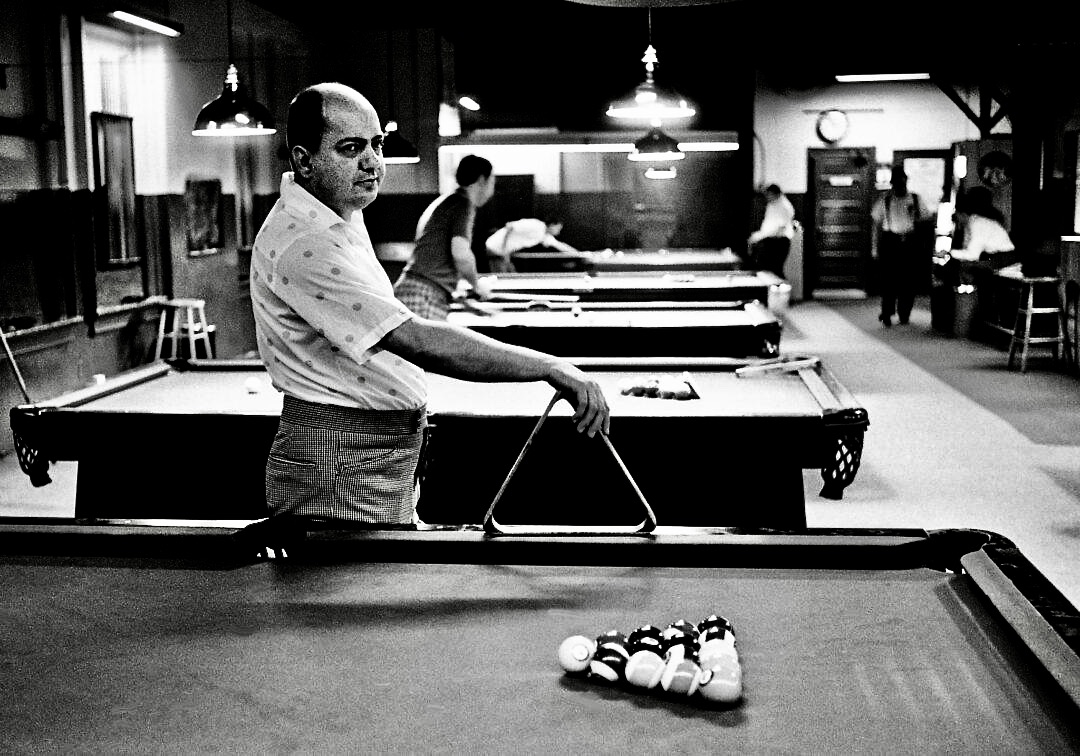
Staying Alive

By Ed Staskus

   One of the concerns of Cleveland’s early settlers was that Canada might invade at any time. They were just on the other side of Lake Erie and they had plenty of boats. They might land their Canuck army somewhere in the middle of the night and lay siege to the city. Nobody knew what they would do if they captured Cleveland, they being foreigners who lived on bacon and poutine and littered their mother tongue with ”eh?” Everybody was convinced it was going to happen soon. What could they do?

   When the city fathers finally acted they formed the Cleveland Grays, a volunteer military company, to protect themselves from Canucks on the loose. They weren’t called the Grays at first. At first they were called the Cleveland City Guards but since their uniforms were gray from tip to toe they changed the name the next year. They wore Queen’s Guard bearskin hats that made them look a foot taller than they really were. They adopted “Semper Paratus” as their motto. Nobody knew what it meant because it was in Latin until the man upstairs finally explained it meant “Always Prepared.” Everybody liked that. There were 65 of them. They stayed prepared after that.

   The Cleveland Grays stayed busy even though the Canadians eventually decided to stay on their side of the border. In 1852 they put down a two-day riot at Cleveland’s Medical College. A mob bearing clubs and cleavers attacked the school, protesting the work of Resurrection Men. They were men who robbed graves of the recently deceased for dissection lectures. The rioters broke into the college. The doctors, teachers, and students fled while the bully boys destroyed all the furnishings and equipment. They ransacked the lower level looking for the body of a local woman who they believed had been body snatched. The Grays restored order, but the next day the roughnecks were on their way to burn down the house of one of the anatomy teachers when the Grays had to save the day again. The rioters saw their bearskin hats a mile away and snuck away.

   In 1861 they were the first militia in the country to form a company and respond to the call for Union soldiers. They fought at the First Battle of Manassas. They hauled the first ever captured Johnny Reb cannon of the war from the Cheat River battlefield back to Camp Cleveland in Tremont. The troops called it ‘Cannon Sesech’ after the secessionists. They fired it after every Union victory. They whooped it up loud and clear every hour for 24 hours on the day the war ended. Nobody complained about the noise. Over the years, after a Gray had been a member for twenty-five or more years, he was entitled to be called a “Pioneer” and to wear a leather apron with his uniform. He was also entitled to carry an axe when on parade. Nobody messed with them when they were on parade. They fought in the Spanish-American War and World War One. 

   After that the Militia Act proscribed them and their like from fighting in wars anymore on their own initiative. Uncle Sam still wanted them but only if they wore his regulation uniform. The Cleveland Grays lasted as a “Businessmen’s Camp” into the 1990s.

   They first set up shop on the fourth floor of a building called the Mechanics Block. Thirty years later they needed more space. They moved into a former fire station. Ten years later they moved into the newly built City Armory, sharing it with the Ohio National Guard. Soon after that a fire destroyed the building. They decided to build their own place that would stand the test of time. 

   A three-ton block of sandstone was set in place in 1893 where Bolivar Rd. meets Prospect Ave. for the foundation of the Grays Armory. It grew to be three stories high with a five-story tower on the northeast corner. It was built as an urban fortress. There is a black iron drop-gate and iron barriers in front of the solid oak front doors. Iron rods were bolted to the brick walls as window protectors. 

   The armory was built to store weapons and ammo. The drill room, which doubled as a ballroom, was where the Grays marched up and down in tight formations. But it wasn’t long before it became a kind of Blossom Music Center. The Cleveland Orchestra’s first concert in 1918 was staged there. The first time the Metropolitan Opera came to town they sang songs of doomed love and hellfire there. When John Philip Souza first marched into town his band played there. 

   Even though in the early 1970s I was living on Prospect Ave. near Cleveland State University, and later in nearby Asia Town, I didn’t know the first thing about Grays Armory. The few times I saw it I dismissed it as an old ramshackle castle with a cool-looking tower. I did, at least, until Joe Dwyer invited me to his new digs there.

   Joe and I went to St. Joseph’s High School the same four years in the 1960s and for a few years in the 1970s lived a street apart in Asia Town. Many of the suburban kids who went beatnik and hippie in those days moved downtown like us. Many of us lived in reduced circumstances, trying to keep our heads above water, living catch as catch can in our counterculture world. Joe was living rent-free in the caretaker’s quarters on the top floor of the tower. He was keeping a part-time caretaking eye on the armory.

   He showed me around the building. He told me it had just been added to the National Register of Historic Places. It looked like a forest had been chopped down for the floors, doors, stairs, and wainscoting. It was a sunny day and sunlight poured in through the windows. Everything was old but gleaming like new. We played a game of pool in the Billiard Room. We peeked into the basement where there was a 140-foot-long shooting range. We played some haphazard notes on the Wurlitzer pipe organ that had been installed a couple of years earlier. It came from a silent movie theater in Erie, Pennsylvania. It sounded creepy in the empty ballroom. Three or four concerts a year were being sponsored by the Western Reserve Theater Organ Society.

   Twenty years later my wife and I were living in Lakewood when we received a friend’s wedding invitation in the mail. The reception was being held in the main ballroom of Grays Armory. We checked the box saying we would be attending the festivities. My wife bought a new dress and I polished my dress shoes,

   We parked on Erie Ct. alongside the Erie Street Cemetery on the day of the big day. It was where Lorenzo Carter, the first permanent settler of Cleveland, was buried. It was where Chief Joc-O-Sot, who fought the first settlers, was buried. It was where almost a hundred Civil War veterans were buried, including General James Barnett, who was a commander of the Cleveland Grays. After the war he served on the commission that got the Soldiers’ and Sailors’ Monument built on Public Square. We walked to the end of the block to the armory. The lobby was carpeted in red. There was some kind of ancient ticket booth off to the side. There was a grand staircase. The posts and railings were carved from a single slab of wood. The posts were engraved with ‘CG’ for Cleveland Grays.

   After toasts, dinner, a slice of wedding cake, and some dancing, we were standing around when somebody in our group said the armory was haunted. “Lots of people have seen ghosts here,” the man in the know said.

   “Like who?” I asked. 

   “Plenty of people,” he replied.

   “I saw a handsome young man with light brown hair, parted on one side, with a crown imperial goatee,” said Chris Woodyard, who has written a series of books about haunted places. “The spirit was wearing a Cleveland Grays woolen jacket, decorated with a glockenspiel pattern down the front, formed by braids and buttons.” Staff members said a woman wearing white often appeared at the armory’s piano. She didn’t play it but no matter where it was moved to, she was always there. She wanted to dance but didn’t have a partner. Day and night doors locked and unlocked themselves and disembodied sinister voices whispered in the shadows. Ghostly footsteps were forever setting off security alarms.

   One day the spirit of a soldier walked through a wall to get into the ballroom. A cleaning man was mopping up after a party. He watched the spirit watching him. A woman spirit wearing a party dress appeared and walked up to the man spirit. When the cleaning man coughed the spirits melted away. Another day a maintenance man was working at the back of the ballroom when a glowing green hand closed the door. He ran to the door, and opened it, but there was nobody there. The door knob oozed wormwood.

   After another drink my wife and I went looking for spooks. “Don’t bother looking for Lou,” we heard a voice behind us say. “He’ll find you.” My wife didn’t like the sound of that, but she was game and went with me. “Who is Lou?” she asked.

   Lou was a caretaker who once lived at the top of the tower in the same quarters Joe had lived in. He died of a heart attack making his rounds. He still made his rounds. Most ghosts are about unfinished business. He often walked behind people in the ballroom. When they heard his footsteps they turned to see who it was, but there was never anybody there, although they could smell the aroma from his cherry-vanilla pipe. Whenever there was a meeting in the first-floor tower room, where there was an oversized potted plant, he liked to shake it violently until it fell over.

   “Do you believe in ghosts?” I asked my wife.

   “Not during the day,” she said.  

   “How about at night?”

   “I’m a little more open-minded at night.”

   It had gotten to be night when we went on our self-guided tour of Grays Armory. We went upstairs. We stepped into the Club Room where the Grays used to sit around and puff on stogies. There were comfy leather sofas. The mahogany was dark and the atmosphere cozy. We stepped into the Billiard Room where Joe and I had shot pool years earlier. There were antlers of long dead deer on the walls. We peeked into the rooms on the upper floors. One of them was a smaller ballroom for meetings. Back in the day folks wanted to be high up so they wouldn’t have to smell the horse shit in the street. There were unlit fireplaces everywhere. We found cupboards in the Mess Room where members used to hide their booze during Prohibition. There wasn’t a drop of spirits left.

   With every step we took we had the feeling somebody or something was behind us, but every time we looked around we were alone. After a while being alone got scary. It’s better to be alone than to be in bad company, I reassured myself.

   “Maybe we should go back,” my wife suggested.

   “We’re not after fish but let’s do a little more fishing,” I said.

   We went up and down the tower. We stepped into the ground floor room. The lights went on by themselves. We heard footsteps and bumps in the night. A big dusty potted plant that looked like it was a hundred years old started to shake. It fell over.

   “That’s enough fishing for the day,” my wife said, backing up.

   In the end we didn’t see any ghosts, except for maybe Lou, which wasn’t to say we were ready to say there weren’t any. The Ghost Hunters, a paranormal team on the TV show SyFy, rooted around Grays Armory one day and found evidence of hauntings. Every time they left a room something closed the door behind them. When they investigated the basement they heard an unseen somebody say “Hello.” When they left the voice said “Goodbye.” They concluded there were spirits, but they seemed to want to have a good time more than cause a ruckus. Ghosts just want to have fun sometimes.

   “Have you ever noticed that ghosts are always wearing clothes?” my wife asked.

   “I’ve noticed without really noticing it,” I said.

   “How do their clothes get into the other dimension with them?” she asked.

   “That’s a good question,” I said. “If you ever get the chance, ask one of them.”

   “There’s a fat chance of that ever happening,” she said.

   We hadn’t seen anything substantial but we had seen enough. We had felt the presence of spirits in the shadows. We went back to the wedding reception in the ballroom. The bride and groom were the life of the party on the dance floor. True love can be like a ghost. Everybody talks about it but not many have ever seen it. They were doing the hustle to a Bee Gee’s tune being spun by the DJ. Disco is a surefire remedy for ghost sightings. The Lady in White, the lonely dancing spirit who had long haunted the armory, was nowhere in sight. She was dancing to her own tune.

   “Feel the city breakin’ and everybody shakin’, and we’re stayin’ alive, stayin’ alive,”  the Bee Gees sang in their eerie falsetto voices.

Ed Staskus posts monthly on 147 Stanley Street http://www.147stanleystreet.com, Made in Cleveland http://www.clevelandohiodaybook.com, Atlantic Canada http://www.redroadpei.com, and Lithuanian Journal http://www.lithuanianjournal.com

“Cross Walk” by Ed Staskus

“Captures the vibe of mid-century NYC, from stickball in the streets to the Mob on the make.” Sam Winchell, Beyond Fiction

Available on Amazon: https://www.amazon.com/dp/B0CRPSFPKP

Late summer and early autumn. New York City, 1956. Jackson Pollack opens a can of worms. President Eisenhower on his way to the opening game of the World Series where a hit man waits in the wings. A Hell’s Kitchen private eye scares up the shadows.

A Crying of Lot 49 Publication
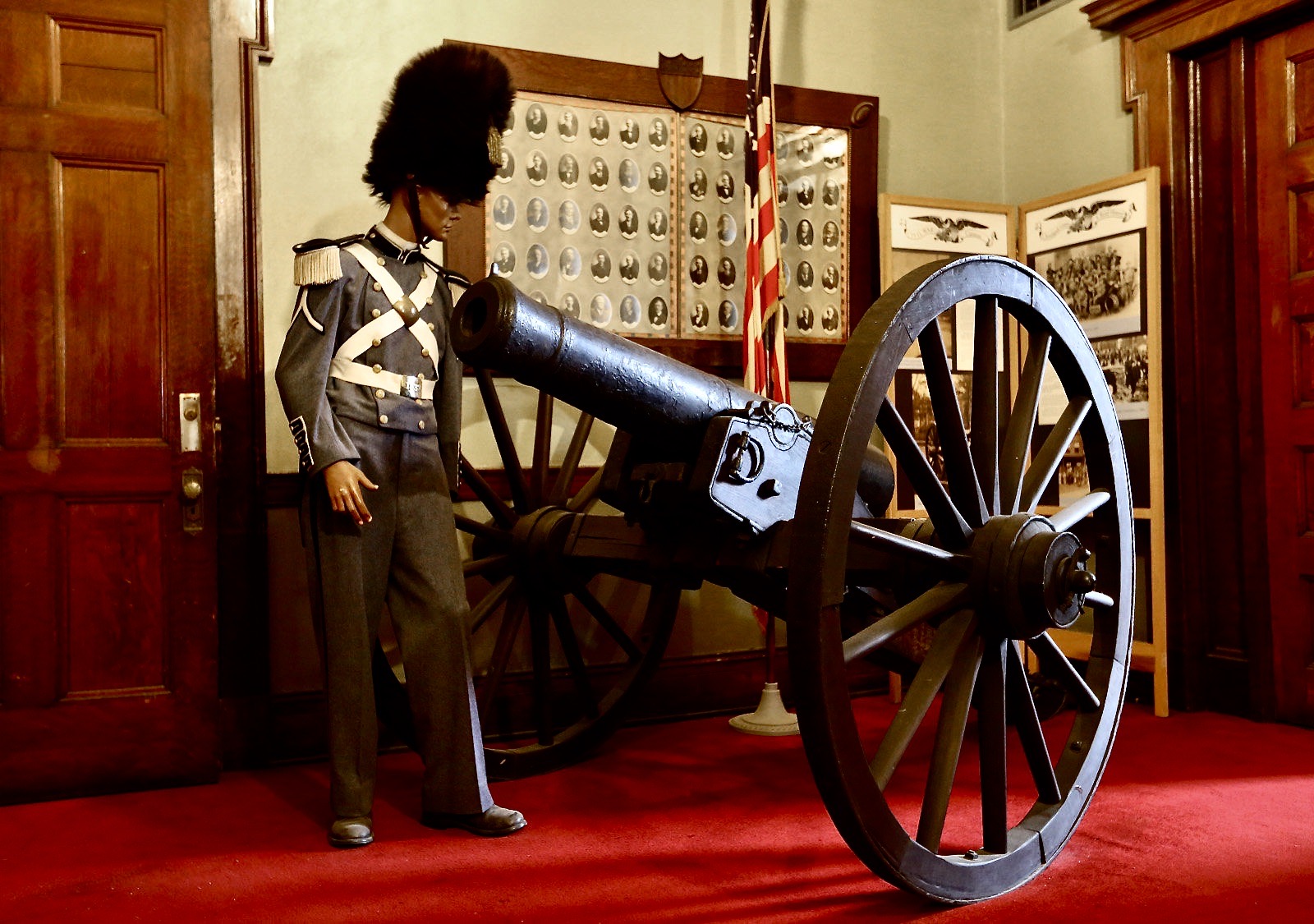
Hard Bargain

By Ed Staskus

   Uncle Ernie was no fool.  He knew this moment had been waiting to happen for a long time, even though it came out of the blue. He wasn’t fooled by the nondescript car that slid up to the curb across the street. He wasn’t surprised, either, that the two men in the car didn’t get out right away. He knew they were getting their bearings and that he had enough time to do what he had practiced doing when the time came. He got all the cash he kept in a Premium Plus cracker tin in the kitchen and stuffed it into his pants pockets. There was more than $78,000 of it, most of it in one hundred dollar bills. His pants bulged on both sides of his crotch with the wads of cash.

   He grabbed a pack of Pall Malls and put his bucket hat on. He slipped a belly gun into his back pocket. It was a Smith & Wesson Model 10. It was illegal to carry a concealed weapon in Ohio, but that was the least of his concerns. He quickly went into the basement, set an alarm clock wired to a bundle of dynamite, and went out the kitchen door. He stood still on the back porch for a second. He walked down the alley. A cat on top of a fence post watched him. His car was parked in a rented garage at the end of the alley. The widow who lived there didn’t have a car and appreciated the monthly rental money. He walked to the garage, unlocked it, unlocked his car, pulled it out, locked the garage up again, and drove away. He would miss his house, but he didn’t want to end up in the big house, where he knew his life would be worth nothing. It would only be worth something to the men who would want to kill him once they found out who he was. He had no doubt they would find out.

   Frank Gwozdz and Tyrone Walker watched the house for five minutes from their Crown Victoria. The front porch was in shadows. No lights were on in the windows. There was no blue flicker of a TV. Tyrone thought nobody was at home and suggested they come back in the morning.

   “Take the back door,” Frank told him, ignoring his suggestion. “Don’t do anything unless somebody comes out. I’ll go in the front door.”

   “What if the door is locked?” Tyrone asked. “We don’t have a warrant and this Earnest Coote doesn’t have a record.”

   “Like I said, I’ll take the front,” Frank said.

   The alarm clock ticked down toward the minute it had been set for. Uncle Ernie had set it for ten of them. Zero hour was coming up fast. As the timer got to where it was going Tyrone was standing behind a line of shrubs at the rear of the backyard. Frank was walking up the front walk. When the clock struck its appointed hour and the contacts made contact, the house blew up.

   The blast catapulted both Frank and Tyrone backwards. Frank landed hard on his butt, partly breaking his fall with his hands. It happened fast. The breath was knocked out of him. Tyrone was thrown backwards into the chain link fence that the shrubs were a border for. The fence absorbed then repulsed him. He bounced off the chain links and landed on his face, splitting his lower lip. The house blew up, but not outwards, saving Frank and Tyrone and the houses on both sides of Uncle Ernie’s house from too much damage. Frank scurried on his hands and knees away from the house to behind a maple tree on the tree lawn, gasping for air. Tyrone stayed on the ground. He sheltered his head with a garbage can lid. When shards of glass and splintered wood stopped raining down on them, they both stayed where they were, hoping the next shoe wouldn’t fall. The house fell in on itself. A gas line exploded and the clapboard caught fire.

   Five minutes later an engine truck from Fire Station No. 31 pulled up. The firemen began to spray water on the house with their deluge gun. They left their ladders on the truck. The second floor of the house didn’t exist anymore. When their water tank ran dry they switched to the uncurled hoses which they had attached to a hydrant. A patrol car pulled up, followed soon enough by two more of them. The policemen stood to the side. There wasn’t anything for them to do. All the neighbors who had rushed out of their houses stayed at a careful distance gaping at the fire.

   After an East Ohio Gas truck arrived, and the gas line had been shut off, the firemen finished their work. Before long all that was left of the house was a smoldering heap of charred wood and rubble. The mess had once been a place, but it wasn’t anymore. Frank and Tyrone stood in the street leaning on their Crown Victoria. Other than some cuts and bruises, neither man was hurt overmuch, although Frank had a gash on the back of his hand. He knew it needed stitches. He wrapped a handkerchief around it to staunch the bleeding.

   “Come on,” he said. “Let’s get over to Mt. Sinai.”

   “Mt. Sinai?” 

   “The hospital, not the mountain. Right now, I need a doctor, never mind Moses. They can look at your lip, too.”

   An hour later, his hand sewn up and a tetanus shot working its magic, Frank drove the few minutes to Uptown at E. 105 St. and Euclid Ave. He needed to catch his breath. He needed food. He needed a drink even more. He looked around for a place that might have both. 

   “Uptown used to be Cleveland’s second downtown,” he said as Tyrone licked his sewn up swollen lip and took in what amounted to the sights.

   “What happened to it?”

   “The race riots and Winston Willis happened to it.”

   Uptown started life as Doan’s Corners when Nathaniel Doan opened a tavern and a hotel in the early 1800s. They were built because the spot was a stagecoach stop between Cleveland and Buffalo. In the early 1900s the Alhambra Theater opened. It was a vaudeville house until it became a movie house. It sat more than a thousand in the mezzanine and nearly five hundred in the balcony. There was a pool hall next door. The young Bob Hope hustled nickels there playing the new game of nine-ball and cracking wise through misunderstandings. He was good at pocketing the number nine ball on the break, winning the game outright. The Alhambra was followed by restaurants, clubs, and more theaters. By mid-century the Circle Theater was hosting Roy Acuff and his Grand Ole Opry and Keith’s 105th Street Theater was showing first-run motion pictures on a new wide screen. 

   Ten years later Uptown started going downhill. When it did it went down fast, picking up speed on the wrong side of the hill. The neighborhood went from mostly white skin to mostly black skin. The Towne Casino had already been bombed in the 1950s. The reason was the popular music club attracted an interracial audience. The city’s grand dragons in their civil defense shelters didn’t like anything interracial. The Hough riots and Glenville shootings sealed Uptown’s fate. Nobody liked bullets flying. White flight sped up until there were almost no whites left. Those who stayed, stayed inside their homes behind closed curtains, watching the value of their properties fall to nothing. Winston Willis stepped into the breach, snapping up as many holdings as he could, opening penny arcades and adult bookstores. The Performing Arts Theater became the Scrumpy Dump Cinema. The Scrumpy Dump showed low-budget B movies about the sewer looking like up to their sad sack stars.

   Frank rolled his side window down and propped his elbow on the rim of the door. Nothing looked inviting. Everything looked like a greasy dump. He swung the wheel, took Liberty Blvd. to Larchmere Blvd., and when he got to the Academy Tavern parked on E. 128 St. He and Tyrone walked to the bar. It was a two story brick building. The electric sign read, “Food & Liquor Since 1939.” The front door was catty-corner to the corner. A dark green awning was over the door. The police detectives went inside and found seats at the far end of the bar. Frank ordered a cheeseburger with a fried egg on top and a side of pickles. Tyrone had the same except for the pickles. He didn’t like anything brined. He ordered mashed potatoes. They each had a glass of Falstaff on tap.

   “What do you think happened back there?” Tyrone asked while they waited for their food.

   “I think Earnest Coote saw us coming,” Frank said. “I don’t think it was an accident. He either rigged something up fast, or had it set up beforehand. I’m guessing he had it set up, like a fail-safe. I think he went out the back. If we had gone in a minute-or-two sooner we wouldn’t be here talking, but we didn’t, thank God. I don’t want to be laid to rest in the Badge Case before my time. I’m sure you don’t either.”

   “You think he blew his own house up?”

   “That’s what I think happened, yes.”

   “Who does something like that?”

   “Somebody who has a good reason for doing something like that. The Bomb Squad will fill us in on what happened. I wouldn’t be surprised if our man-made bombs in the basement.”

   “How’s the hand?” Tyrone asked.

   “It doesn’t hurt, yet. It’s the pills the doc gave me working their magic. He had to stitch it up because the cut was two inches long and jagged.”

   “How many stitches?”

   “Seven.”

   “Ouch,” Tyrone said as their cheeseburgers were delivered. “At least it’s your left hand.”

   “I suppose, although I’m left-handed,” Frank said.

   They ate in silence. The bar was half-empty. The Cleveland Indians were losing another game in living color on a TV behind the bar. Herb Score and Joe Tait were broadcasting the bad news. When the police detectives were done eating they finished their glasses of Falstaff. Frank paid the bill of fare for both of them. They left the Academy Tavern and walked up East 128 St. Approaching their Crown Victoria they saw two Negroes huddled beside the car. It was parked under a leafy tree. One of the men was fiddling with the driver’s side door. He had a cleft chin. The other man was the watchdog, except he was busy watching his partner getting nowhere. Both of them had one-track minds. Neither of them saw the jim-jams coming.

   “It looks like those soul brothers are trying to borrow our car,” Frank whispered.

   “Does that mean you want me to take care of it?” Tyrone whispered in his turn.

   “You’re soul brother number one in my book.”

   “All right, give me a minute,” Tyrone said, reaching for his badge to display as he started walking towards the two men. He believed in law and order by the book.

   Frank reached for the roll of dimes in his pocket, making a fist around the Roosevelts. He tucked his left hand away in his pants pocket for safe keeping. He squeezed his right hand, getting a good grip on the dimes. He believed in getting the job done right. He kept his eyes on the big man who was doing the fiddling with the lock. Frank hoped to God he didn’t break anything in his hand when he sent the man nosediving.

   He went dead set towards the thief at the car door. There was going to be trouble when he got there. He would have preferred believing the best of what he was seeing happen, since it would save toil and trouble. Oh, hell, I might as well get it over with, he thought.

Excerpted from the crime novel “Bomb City.”

Ed Staskus posts monthly on 147 Stanley Street http://www.147stanleystreet.com, Made in Cleveland http://www.clevelandohiodaybook.com, Atlantic Canada http://www.redroadpei.com, and Lithuanian Journal http://www.lithuanianjournal.com

“Bomb City” by Ed Staskus

“A police procedural when the Rust Belt was a mean street.” Sam Winchell, Beyond Books

Available on Amazon: https://www.amazon.com/dp/B0F1LM1WF9/ref=sr_1_1?crid=2MYAQAOZIC2U9&dib=eyJ2IjoiMSJ9.hTm7BGbiQbSe5ZapFwYPPfcwOpTe-Vdg6VLE4aGyTyk.Z0R-VNBWWEcvKcNaO9LdCOUnNIOOXgvYkRS_FXiXuHk&dib_tag=se&keywords=bomb+city+ed+status&qid=1742136726&sprefix=bomb+city+ed+staskus%2Caps%2C84&sr=8-1

Cleveland, Ohio 1975. The John Scalish Crime Family and Danny Greene’s Irish Mob are at war. Car bombs are the weapon of choice. Two police detectives are assigned to find the bomb makers. It gets personal.

A Crying of Lot 49 Publication

One Way Ticket

By Ed Staskus

   “I don’t like this jacket, dad,” I said. “It’s too white.”

   “The first communicant has to wear special clothing,” my father said. “It’s white to symbolize purity.” He could be pontifical whenever he wanted to be. There was nothing I could do about it. I had to live with his pronouncements. He had grown up in northern Lithuania in the shadow of the Hill of Crosses. Unlike my mother, he was a true believer in Roman Catholism.

   “That’s right,” my younger brother piped up. “At least you’ll look like a saint.” I could tell from his face that he wanted to add “or a fag” but couldn’t with our father in the same room. I gave him a look we both knew meant we would settle that wisecrack later, when our parents were out of range of his cries for help. His time would come. When it did, his time would be up.

   First Communion was a big deal. Girls wore dresses passed down to them from their sisters or mothers. They sported a veil or a wreath. Boys wore a suit and tie, their Sunday best, or the national dress, with embroidered armbands and white gloves. Thank God all I had to wear were a sports jacket and a pressed pair of clean pants. A folk costume and white gloves in front of my relatives would have been mortifying, especially if they started nodding approvingly at one other. In front of my friends, it would have been unbearable.

   My father was devout and my brother wasn’t far behind, even though his guile was legendary among everybody except grown-ups. I was sure he would find some goofy jacket to wear the day of my First Communion, just to show me up. That is exactly what happened. I couldn’t do anything about it. I had to keep my JFK-style hairdo in place. Even though my parents voted Republican like playing Whac-A-Mole, my mother thought John F. Kennedy the envy of the Western world, new, vibrant, and handsome. She wasn’t going to vote for him, but that was beside the point.

   We lived on Bartfield Ave. at East 128th St. and St. Clair Ave. in the Forest Hills vicinity of the Glenville neighborhood. There were no forests, hills, or glens. Lake Erie wasn’t far away, though it was so polluted nobody but the reckless ever swam in it. Our church was St. George’s on E. 65th St. and Superior Ave. It was also our school. During the week my brother, sister, and I took two city busses, transferring while halfway there, a half-hour ride to get to school, but on Sunday mornings our father drove the family the ten minutes there.

   After the First Communion ceremony a photographer took portraits of us, a prayer book and rosary in our hands, looking pious and glowing in soft focus. Gifts were parceled out. Some parents gave their children holy cards, religious statues, and daily devotional books. My father and uncle were thankfully both accountants and gave me envelopes alive with cash.

   The next day was Jesus Day. We took a prayer walk around the school grounds, which was a big asphalt parking lot, were led on a tour of the church, which I knew full well since I was training to be an altar boy, created a personal bookmark, and sat through a special liturgy. We were reminded that Holy Communion was very special, a matter of life and death. St. Ignatius of Antioch called the Eucharist the “medicine of immortality.”

   The first dead man I ever saw happened the Sunday after my First Communion. It was before we went to church, when one of my friends ran past our front porch shouting something about life and death. I took off after him to St. Clair Ave. where on the corner was a Gulf gas station and repair shop. Police cars and an ambulance were scattered along the street. Their lights were flashing. One policeman was writing in a notebook. Another one was standing around doing nothing. A man was lying in the gutter akimbo all sprawled arms and legs. 

   We walked up to him and looked down. He was missing a shoe. There was a crusty puddle of red goo on the front of his white t-shirt. He looked asleep, except his head was bent sideways in a way I had never seen before. An ugly purple gash on his temple was getting crusty.

   “Run along boys, there’s nothing for you to see here,” a policeman said, prodding us to move along.

   “Did somebody shoot him?”

   The policeman gave my friend a push. We ran home and went to church. We forgot all about the dead man until Monday when we told everybody at school about it. We were the talk of the hallway. I could have run for class president and won handily.

   Less than a year before I had seen John F. Kennedy when he campaigned for the presidency in Cleveland, smiling and waving from the back of a convertible crawling along Superior Ave. It was a sunny early fall day. A little more than two years later I saw reruns on TV over and over of him getting his head blown off in another convertible. Flags went half-mast. One of his children saluted his father during the memorial parade in Washington D. C.

   There were five houses on the north side of Bartfield Ave. where it met Coronado Ave. Our house was the second from the corner. A family of hillbillies who had migrated to Cleveland from West Virginia lived in the corner house. One of their boys my brother’s age and my brother were always wrestling and smacking each other. One day I saw him waving a rake at my brother.

   “Stop that!” I yelled. “Mom said dinner is ready.” It was nearly a mortal sin in our house to be late for dinner.

   A boy my age from South Carolina lived in a two-story brick apartment building on the corner opposite the Gulf gas station. He was one of the new Negro’s in our neighborhood. We were friends and played together but didn’t always get along. One day he called me a dirty DP. Both  of my parents had come to the United States after World War Two. One thing led to another. I called him a dirty nigger and he tried to hit me. I slapped him on the ear. He lunged at me and when I put my hands up, he clamped his teeth onto my right thumb. He wouldn’t let go no matter what. I had to say I was sorry. When he finally let go, he ran away up his back steps. My thumb hurt like the devil and I had to wipe tears out of my eyes.

   When John F. Kennedy debated Richard Nixon in late September 1960, it was the first televised presidential debate in the United States. The TV man Howard Smith moderated the debate. A pack of journalists faced off with the candidates. My mother and father watched it that Sunday evening, so we watched it. My brother, sister, and I were mad about missing our favorite weekend nighttime shows. We complained but our parents were long on civics and short with stir-crazy children. John F. Kennedy looked good. He had style and charisma. Richard Nixon was sweaty, shifty, and no match for his younger competitor.

   “He should have shaved,” my father, a lifelong Republican, lamented. “He looks bad.” He looked pasty and haggard is what he looked like. JFK looked fit and self-assured. He looked like a winner. After the debate he flew out of Chicago and flew to Cleveland. His plane landed at Lost Nation Airport at two in the morning. Students from Western Reserve University turned out to greet him and provide an “Honor Guard.” In the morning his motorcade rolled down Euclid Ave. and around University Circle to a cheering throng.

   On his way to a rally in Lorain Stadium, the motorcade wound its way west along city streets. I was 10 years old and waiting farther east on Superior Ave. with my South Carolina friend. We got one good look at JFK. We were behind everybody, trying to find a hole in the crowd to squeeze through to the front, when there he was, in a convertible, sitting on the back of the car with his feet on the seat. He was waving. We waved back and cheered. He wasn’t the only self-assured grown-up I had ever seen, but he was the youngest-looking best-looking grown-up. He looked like a movie star, baseball player, and war hero all rolled up in one.

   After the rally in Lorain, and lunch at the Moose Hall, John F. Kennedy went to the annual Democratic steer roast at Euclid Beach Park. More than 125,000 people heard him speak, more people than had ever assembled at the amusement park. Lakeshore Blvd. was a mess of cars and busses going nowhere. Drivers chewed the cud in the traffic jam, the smell of the steer roast in their noses.

   “The forgotten man of 1960 is the American consumer,” he said. “The forgotten woman is the American housewife. In 1952 they were promised lower prices. They heard endless Republican commercials about a stable dollar and a cheaper market basket. But under 8 years of Republican rule, the cost of living has gone up and they have done nothing about it. Families are concerned about the missile gap, but they are equally concerned about the gap between what they earn and what they have to spend.”

   It struck a chord with my mother and father, but they voted the GOP slate top to bottom., no matter what. Richard Nixon would have had to shoot Pope John XXIII stone cold dead in front of the Vatican’s Easter Sunday crowd to get my Catholic parents to vote for the Catholic on the ticket. John F. Kennedy wasn’t a Republican and that was that.

   Halloween was a month later. Time is candy was our motto. We knew our neighborhood forward and backward. We knew who handed out old fruit and who handed out new chocolate. We knew what houses to avoid because the householders were mean, stingy, or simply slow, and which houses were gold mines. My brother and I never wasted time with costumes, simply dressing like bums. The freeloader look was best because that is what we were.

   Once back home my sister hid her candy in the attic. The attic was as empty as the day we moved in. Our parents were immigrants and still scraping by, still buying only what we needed and were going to use, not things to forget about as soon as we bought them. My sister found a loose floorboard in a corner and hid her candy there. My brother had a sweet tooth and wasn’t to be trusted. No one knew or ever found out where he hid his candy. He believed loose lips sank ships and never told anybody. I hid mine in the basement, on a shelf behind a box of summer fun beach gear. 

   The next week John F. Kennedy won the White House, although he did it without winning Ohio. Tricky Dick defeated JFK, 53 percent to 47 percent, in the Buckeye State. He took all but 10 of Ohio’s 88 counties. The Democrat won the Cleveland area, though, to the displeasure of my Lithuanian kinfolk.

   That winter was cold although not a lot of snow fell. When it finally did, we built snow forts on Blind Man’s Hill. The hill was the side yard of a house on the other end of our short stretch of Bartfield Ave. A blind man lived alone in the house. We had an arrangement with him. In return for keeping an eye out for anybody messing with his house, he let us mess around on his side lawn. It was a knoll, inclining about four feet, but it was enough for us, especially when we were behind the walls of our fort hurling snowballs down on our enemies.

   The next summer on a rainy afternoon Romas Povilaitis and I almost killed my brother in the attic of our house. It wasn’t our fault, since we were only playing, but after my sister raised the roof there was no explaining it and we just had to take our lumps. We heaved a sigh of relief when my brother exonerated us, saying we were only playing, even though wrath then fell on his head, too.

   Our friend Romas lived in Chicago with his small-fry brother Viktoras, his mother Irma, and father Vytas. The man of the house was muscular and handsome. He was my sister’s godfather. He had wavy blonde hair shiny with Brylcreem. He was better looking even than his wife. Irma said she was glad he worked in a factory and wasn’t trying to better himself, because if he did, she was sure he would leave her. Even though he was blue collar, they lived in a big house in the Marquette Park neighborhood. Chicago has the largest Lithuanian community outside of the homeland. It is known as Little Lithuania among those in the know. 

   Whenever they visited us, we ran around like 10,000 maniacs. Romas was enamored of Spiderman, a new Marvel Comics superhero. He scuttled around our house pretending to squirt web fluid from his wrists. He tried to cling to walls but tumbled to the floor. We were in the attic arguing the merits of Superman, Batman,  and Spiderman when my brother insisted for the last time that Superman was the best of the three.

   “He could crush Batman and Spiderman with his little finger and besides, only he can fly,” he said.

   It finally drove us to distraction. We put a Superman cape on him and hung him by his heels out the third-floor window. He was all for it, except when the cape went flapping over his head and he complained he couldn’t see. It was then my sister walked through the door. Our brother almost nose-dived when she screamed and we were startled. We were pulling him back inside when our mother burst in.

   She dropped a dozen eggs and bum rushed the three of us downstairs. Thank God my father and Vytas Povilaitis were out. As it was, we had to listen to Irma and my mother lay down the law of the land. They seemed deadly serious, so we listened with grim attention.

   “Don’t ever do that again!” is what we heard over and over until we stopped paying attention.

   There were only two bedrooms in our Polish double on Bartfield Ave. Our sister shared a bedroom with my brother and me. Vytas and Irma slept on the living room sofa when visiting. Romas and Viktoras slept on the floor in sleeping bags between our beds. We read comic books by flashlight long into the night. We kept our sister up, but she had the good sense to keep her sleeplessness to herself. She knew she was no match for Superman, Batman, and Spiderman.

   The Friday John F. Kennedy was assassinated I was in my eighth-grade classroom at Holy Cross Catholic School in Euclid, where I had transferred after we moved from our old neighborhood that had gone civil rights to the white community of North Collinwood. My parents had said our house was becoming worthless and we had to leave. The school loudspeaker unexpectedly crackled to life. It was the principal on the broadcast system. She said the president had been shot.

   “Here is a flash from Dallas,” NBC Radio announced. “Two priests who were with President Kennedy say he is dead of bullet wounds suffered in the assassination attempt today. I repeat, a flash from Dallas, two priests say President Kennedy is dead of bullet wounds.”

   We were stunned. It wasn’t something any of us had ever thought about or expected to happen. Nobody knew what to do or say. Everybody was struck dumb. Our teacher asked us to stand and recite the rosary. We did until the principal came back on the PA and told us all to go home. Some kids were crying as they went through the door. 

   Everybody stayed glued to their TVs at home, watching the news. There wasn’t anything else to watch, anyway. The networks suspended their commercials and regular programming for the first time ever and ran coverage on a non-stop basis. The assassin was caught, but a few days later was shot in the stomach in the basement of Dallas Police headquarters. We saw it happen live on TV. It was unbelievable. Even more unbelievable was that the man who killed Lee Harvey Oswald was a strip club owner who went by the nickname of “Sparky.” I didn’t know what strip clubs were, but my father was incredulous.

   “What is this country coming to?” he asked. There was no love lost for John F. Kennedy in our house and community, but nobody wished him dead. They may not have believed in the man, but they believed in law and order. That was why they fled Europe, where law and order had fallen apart after World War Two.

   I started to wonder about God. Why did he want John F. Kennedy dead? Did he have a plan or was he just flipping a coin? When I asked our teacher why God had given him a one-way ticket to get halfway to where he was going, she started into chapter and verse, but then ran out of air. She sent me to the parish priest who told me God always has a plan and to not use words like one-way ticket.

   “Keep your mind clean and on track,” he said. “That way you will always have a one-way ticket to Heaven in your pocket.”

Ed Staskus posts monthly on 147 Stanley Street http://www.147stanleystreet.com, Made in Cleveland http://www.clevelandohiodaybook.com, Atlantic Canada http://www.redroadpei.com, and Lithuanian Journal http://www.lithuanianjournal.com

“Cross Walk” by Ed Staskus

“Captures the vibe of mid-century NYC, from stickball in the streets to the Mob in the shadows.”” Sam Winchell, Beyond Fiction

Available on Amazon:

Late summer and early autumn. New York City. A Hell’s Kitchen private eye. The 1956 World Series. President Eisenhower at the opening game. An assassin in the dugout.

A Crying of Lot 49 Publication.