Tag Archives: 147 Stanley Street

Independent People

By Ed Staskus

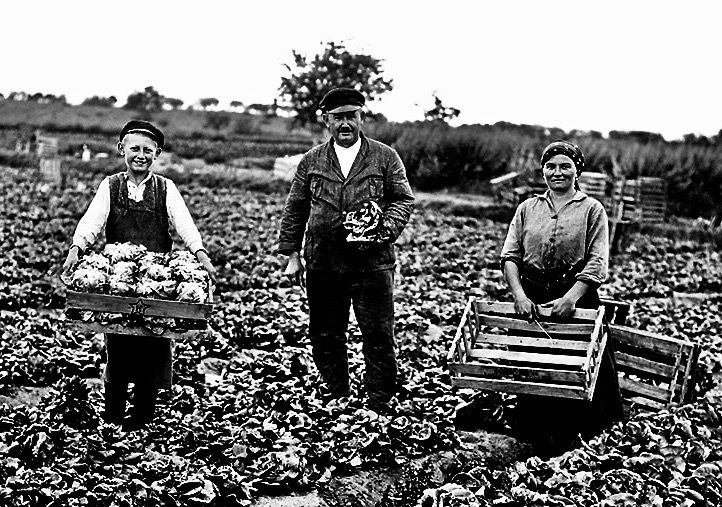
   “I started to help in the sugar beet fields when I was 9 years old,” my mother said. “My sister Irena started helping me two years later when she turned nine.” The year was 1939 when the sisters worked together for the first time. Six years later my mother was in a refugee camp outside of Nuremberg and my aunt was on her way to a slave labor camp in Siberia. My mother was lucky Americans ran the camp she ended up in. My aunt was unlucky Russians ran the camp she ended up in. She was lucky to survive her first year, much less the next decade.

   “We worked with our father, who had a one-row horse-drawn puller.” My grandfather Jonas Jurgelaitis followed on foot behind the puller, picked up the beets, scalping the tops with a small machete, and dropped them behind him as he went. He recycled the heads for animal feed. His daughters brought up the rear, shaking dirt off the beets, and loading them into a side slat cart. When it was full he made his way to Mariampole, the nearest market town, where there was a storehouse and a train station to later take the root vegetables to a sugar beet factory. 

   Their other major crop was cabbage. They could harvest upwards of ten thousand heads an acre. When they cut the cabbage head out of the plant they left the outer leaves and root in the ground. That way they got two crops. Jonas took them to Mariampole, too.

   “My older brothers Bronius and Justinas helped handle the livestock, and they did field work and repairs. Something always needed to be fixed. My younger brothers were still growing up. My father did everything outside the house and my mother did everything inside the house. All of us worked around the clock at harvest time, even the boys.” Most of the food and drink the family of eight ate and drank came from their own fields and pastures, although their sugar beets were grown on land they rented from a neighboring childless widow.

   The farm was in the Naujeji Gizai region hallway between Lake Paezeriu and Mariampole, although it was far closer in spirit to the lake than it was to the city. Some farmers had tractors. Most farmers had draft horses. They preferred tractors, but the Great Depression had put a dent into what they preferred. Some big land owners had cars. Everybody else had a horse and carriage to get the family to church on time on Sundays.

   My grandfather kept cows, pigs, and chickens. “We made our own bread and butter, made cheese, gathered eggs, and collected berries.” There were patches of wild blueberries at the edge of their fields. Although they didn’t have a cellar, my grandmother Julija still canned pickles and beets and stored them in the well. “We raised our own pigs and my father killed them.” When the time came, Jonas selected a pig for slaughter, walked it to a clearing beside the barn, hit the animal hard between the eyes with a club hammer, and cut its throat. With the help of his two eldest sons, he cleaned and skinned the pig with a sharp knife, keeping a knife sharpener at hand.

   Once the skin was separated from the muscle and fat, he cleaned out the guts and sawed the pig’s head off. After quartering the animal, Jonas found the hip joints and slid his knife into them, cutting off the two hams. He did the same thing when cutting off the shoulders of the pig. At the center, where the ribs are, he took whatever meat he could find. They made sausages, bacon, and cured slabs of pork with salt and pepper. Jonas had built a closet around the chimney in the attic of the house, which could be gotten to by ladder. There were no stairs. He smoked the pork in the closet, laying the meat on grates, opening a damper to vent smoke into the closet. “I was scared to death of the upstairs, of the fire up there, although the pig meat was delicious,” my mother said. “When we ran out of food, my father killed another animal. He was a serious man.”

   The dining room was big enough for all of them at once. There were no chairs. There were two long benches. My mother always sat cross-legged when eating. “I was scared that a Jew would sneak under the table.” She was afraid he would bite her legs and suck her blood. “Everybody said the Jews had killed God and they drank the blood of Christians.”

   One of my mother’s chores was killing chickens for dinner. She didn’t like chopping their heads off, so she grabbed them by the neck instead and swung them in a circle around her until their necks snapped. There were barn cats and a watchdog. They chained the dog up at night. There were potatoes and fruit trees. They grew barley and summer wheat, putting in a barnful of hay every autumn. Sugar beets were my grandfather’s number one cash crop, followed by cabbage and hemp. He grew some stalks of marijuana and tobacco behind the barn. He didn’t puff on pot himself. He smoked his homegrown tobacco instead, packed in a pipe, taking a break at the end of a long hard day. 

   “I let the young men smoke their stinkweed and get silly,” he said. My grandfather got silly in a different way. He brewed his own beer and krupnickas. My grandmother didn’t smoke or drink. She kept a close eye on her husband. He kept a close eye on her, never smoking in the house. She had chronic tuberculosis, coughing and running a fever, and wasn’t long for this world.

   Making home brew is the simplest thing in the world. Sumerian farmers brewed beer from barley more than 5,000 years ago. The Codes of Hammurabi, that were the laws during the Babylonian Empire, decreed a daily beer ration to everybody from laborers to priests. Laborers got two liters a day. Priests got five liters a day. In the Middle Ages Christian monks were the artisanal beer makers of the time. Since my grandfather had water, malt and hops, and yeast within easy reach, he had beer within easy reach year-round.

   Krupnikas is a spiced honey liqueur. The Order of Saint Benedict whipped it up for the first time in the 16th century. It can be spiced with just about anything, including cardamon, cinnamon, and ginger. If they had them, farmers added lemons, oranges, and berries. Honey was essential, although not as essential as a gallon or two of 190 proof grain alcohol. There was grain as far as the eye could see, and everybody knew somebody who made moonshine, so making krupnikas full-bodied was never a problem. Lithuanians pour it down on holidays and weddings. Everybody likes a warm snort of it in the dead of winter, whether they have a cold or not.

   Next to the lowlands of central Lithuania, the carbonate soils of the west are the best. That is where my grandfather was. More than half of the country’s land area was farmland. Most of the rest of it was meadow and forest. What was left was where the towns and cities were. The agrarian reform of 1922 promoted farmsteads. Landless peasants got some acres of land, if not a mule. Most holdings, except those Polonized, were between 5 and 40 acres. The Poles were Lithuania’s rural aristocracy. My grandfather had been a landless peasant. He got 10-some acres of his own and rented more of it. During the interwar years more than 70% of the population depended on agriculture for its livelihood. In the 1930s Lithuanians fed themselves and were the source of 80% of the country’s export income. Lithuania is roughly two-thirds the size of the state of Maine. The small country was the sixth-largest butter exporter in the world.

   My grandfather didn’t know anything about the legality of cannabis. He didn’t know it was called “Sacred Grass” three thousand years ago in India. He didn’t know the Romans had used it as medicine. He didn’t know Queen Elizabeth in 1563 ordered all English land owners with 60 or more acres to grow it or face a 5 pound fine. One year later King Philip of Spain ordered cannabis be grown throughout his empire from Spain to Argentina. George Washington cultivated it at Mount Vernon and smoked it when his teeth hurt too much to bear.

   After World War One some nations began to outlaw marijuana. It became seriously illegal in the 1930s. The United States led the way. The plow breaking new ground was “Reefer Madness” and the man behind the plow was William Randolph Hearst. His chain of newspapers ran one article after another demonizing marijuana. There were articles about Mexicans gone crazy after smoking it, running around with a “lust for blood,” and articles about reefer-mad Negroes dancing to voodoo jazz music and raping white women.

   Harry Anslinger, head of the Federal Bureau of Narcotics, turned the nativist, as well as racist, battle against marijuana into a war. “Reefer makes darkies think they’re as good as white men,” he said. He believed it had a bad effect on the weak-minded “degenerate races.” He was especially worried that white women might smoke it at parties and consort with black men. 

   “Most marijuana smokers are Negroes, Hispanics, and Filipinos,” he said. “Their satanic music, jazz, and swing, result from its usage. This marijuana causes white women to seek sexual relations with Negroes, and entertainers, and many others. I consider it the worst of all narcotics, far worse than the use of morphine or cocaine.” The soft drink Coca-Cola contained cocaine from 1894 until 1929. It was why kids could walk five miles to school, both ways, uphill in the snow, jumping barbed wire fences. 

   The town of Gizai is situated at a crossroad. There was a small school, church, police station, hardware store, and a coffee shop in the 1930s. “We went to church every Sunday and my father went to the store whenever he needed a tool or something he couldn’t make himself,” my mother said. “When he took us along he treated us to candy at the coffee shop while he drank coffee and had a slice of lazy cake.”  

   Back on the farm everybody slept on the ground floor of the house. The bedrooms were three side rooms. One was for Jonas and Julija. One was for my mother and her sister. The third room was for the four boys. There was no electricity. The house was lit by kerosene lamps. The dining room was the biggest room. It was lit by a big kerosene lamp that was raised and lowered from the ceiling by a pulley attached to a counterweight. Everybody washed their meals down with tea. My grandfather bought tea from a German smuggler rather than pay the taxes levied on it. In the winter the fireplace was stuffed with wood and turf. The boys had the chore of making sure it never died out November through March.  Once a year a chimney cleaner came with ladders, brooms, and brushes. The sweep used a long rope attached to a weight for pushing out the soot.  

   In Washington, D. C. Harry Anslinger could blow smoke with the best of them. “Under the influence of marijuana men become beasts. It destroys life itself,” he declared. He called for a nationwide ban on the weed. Just in case anybody had missed the point, he added, “Smoking it leads to pacifism and communist brainwashing.” The top pot cop got the Marijuana Tax Act passed in 1937. It effectively made the weed illegal from coast to coast. Other countries worldwide got on the bandwagon. Even the Netherlands criminalized cannabis for a few years. The American law was declared unconstitutional in 1969, but Richard Nixon replaced it with the Controlled Substances Act the next year. Darkies couldn’t catch a break any which way.

   The Nixon administration quickly changed the name of the Controlled Substances Act to the War on Drugs. The next Republican president dragged out the big guns. “I now have absolute proof that smoking even one marijuana cigarette is equal in brain damage to being on Bikini Island during an H-bomb blast,” said President Ronald Reagan. The First Lady consulted advertising executives and her astrologer and they came up with a snappy slogan: “Just Say No!” When asked what she meant she said she wasn’t talking about H-bombs but about marijuana.

   My grandparents couldn’t afford a washerwoman, so my grandmother did all the laundry. She put a tripod inside the fireplace and heated water in a copper kettle. After the clothes were washed she rinsed them in another kettle. She hung some of the clothes on a line in the attic to dry. She used a mangler on other laundry to get the wrinkles out. It was a wooden box with rollers like a wringer that squeezed and smoothed water-soaked clothes. When she was done she didn’t need any marijuana to help her relax. She fell asleep the minute she was done.

   My grandmother Julija died of tuberculosis in 1941. She had been in and out of a sanatorium in Kaunas. When she decided to go home for the last time it was to go home to die. My grandfather built an addition for her, which was a bedroom with a window. He built a new bed and stuffed a new mattress with clean straw. He moved their wedding cask to a corner of the bedroom. When the end was near he stood a coffin up beside the door. She was buried in a cemetery outside Gizai a few months before the German Army suddenly invaded.

   My grandfather Jonas died in 1947 after the Russians took the country over and collectivized everybody’s farms. The authorities told him he could keep one cow and one pig. They didn’t care about his chickens. They told him to stop growing marijuana and tobacco. All his crops had to be delivered to the state and the state would pay him whatever they thought was appropriate. He had differences with them about it, but what could he do? What he did was die soon afterwards of some kind of brain disease. His head probably exploded. Who wants to be a slave of the state? His farm disappeared down the Soviet sinkhole.

   Lithuania criminalized cannabis in 2017, a hundred years behind the times. The country was going against the grain. Almost everybody else in the world outside of China and Russia was decriminalizing it as fast as they could. They were sick of the drug gangs and lost tax revenue and prisons bulging with one-time losers. By then everybody knew marijuana didn’t make anybody sex-crazy or lust after blood. The country pivoted four years later and decriminalized small amounts for personal use. Growing any amount of jazzy stinkweed remains illegal. God forbid a seed in your personal Mason jar sprouts and flowers.

   My grandfather was a simple man with only a handful of overriding concerns, doing what had to be done, leaving the rest to take care of itself. He might have mulled the matter over on his front porch, drawing on his pipe to get it going, but I doubt he would have paid too much attention to whatever monocratic laws the boss men promulgated regarding his farm and crops, unless it was at the point of a gun. 

Ed Staskus posts monthly on 147 Stanley Street http://www.147stanleystreet.com, Made in Cleveland http://www.clevelandohiodaybook.com, Atlantic Canada http://www.redroadpei.com, and Lithuanian Journal http://www.lithuanianjournal.com

A New Thriller by Ed Staskus

Cross Walk

“A once upon a crime whodunit.” Barron Cannon, Adventure Books

“Captures the vibe of mid-century NYC.” Sam Winchell, Beyond Fiction

Available on Amazon: https://www.amazon.com/dp/B0CRPSFPKP

Late summer and early autumn. New York City. A Hell’s Kitchen private eye. The 1956 World Series. President Eisenhower at the opening game. A killer in the dugout.

Cloak and Dagger

By Ed Staskus

   Frank Gwozdz kept his eyes fixed on the middle of nothing. He wasn’t minding his own business even though it looked that way. He wasn’t tall or short. He wasn’t thin or chunky, either, except when he wore a bulletproof vest, which made him look chunky. He was able-bodied enough, although he was near-sighted. The closer something was to him the better he saw it. When he had to, he wore glasses to see far away. He read the Cleveland Plain Dealer every morning except Sundays when there was too much of it. There was hardly anything about him likely to draw anybody’s attention, even though he kept his hair not-too-neat and didn’t shave too often. When he was in a bar, at the bar with a beer in front of him, a Lucky Strike smoking itself at his elbow, nobody gave him a second glance. 

   He  was a Cleveland Police Department detective. He worked out of the third floor of Cleveland’s Central Station at E. 21 St. and Payne Ave. The Central Station had been in business for fifty years. It had replaced the Champlain Street Headquarters long ago. When it did the Cleveland Plain Dealer reported, “The minute the new station opens, the ancient Champlain Avenue mausoleum of crime and rats which has been functioning as a police headquarters for perhaps twenty-five years too long will start to crumble before the wrecking engines.” Fifty years later the Central Station was in the same boat, overflowing with crime and rats.

   Frank looked at the bottle of beer in front of him. He took a short pull. It was getting lukewarm. It didn’t matter to him. It was only there so he could sit beside it. He loosened his already loose tie and the top button of his shirt. Mitzi Jerman was working the bar. She asked if he wanted fresh peanuts. “Thanks, but no,” he said. He hadn’t touched the bowl at his elbow. It was still full of old peanuts. The bar didn’t serve food, just peanuts, pretzels, and pickled eggs. He hadn’t touched anything, yet, although he might if the two men he was watching stayed long enough. He was getting hungry. He knew the man with jug ears doing all the talking had worked the numbers game for Shondor Birns before his boss was blown up. He thought the other one had probably been up to the same thing. He wondered why they were near downtown and not the near east side where the Negroes lived. That’s where their bread and butter was at this time of night. 

   Jerman’s Café was on E. 39 St. and St. Clair Ave., although it wasn’t actually on any street. It wasn’t a storefront like most corner bars, and it wasn’t on a corner, either. It was on the ground floor of a house. It was set back from St. Clair Ave. with a parking lot on the side. If a drinker didn’t know the bar was there he might end up high and dry. It opened in 1908 when a Slovenian immigrant and his wife opened it. It had lived through World War One, the New Deal, World War Two, and the 1956 Cleveland Indians World Series win when the celebrating didn’t stop for days. It stayed open as a speakeasy during Prohibition, not missing a beat. Mitzi’s uncle smuggled booze from Canada during those years, making the run across Lake Erie in a speedboat by himself. Mitzi’s mother and father hid the rum and whiskey with neighbors whenever Elliot Ness was on the rampage.

   After cleaning a table with a wet rag Mitzi came back to where Frank was sitting and parked herself in front of him. “Working tonight, young and handsome?” she asked, drying freshly washed glasses with a bar towel. Frank wasn’t exactly young anymore, just like he wasn’t exactly handsome anymore. He took her sweet talk in stride.

   “I’m working right now,” Frank said in a quiet voice.

   Mitzi had been born upstairs in the apartment above the bar. It was where her parents lived all their working lives. She slept in the room she had been born in. There was a piano and a juke box in the bar. A pool table was at the rear, ignored and lonely. Mitzi watched baseball games in living color on a TV set placed high up on a wall. She was a born and bred Tribe fan. Her dog Rosco slept at her feet. The bar Frank was sitting at was oak. The ceiling above him was zinc. Mitzi served Pabst, Stroh’s, and Budweiser on tap.  Everything else came in a bottle. Frank fiddled with his bottle of Anchor Liberty Ale.

   One of the men at the back table snapped his fingers. Mitzi threw them a look. They were looking at Betty, the neighborhood girl who worked nights for Mitzi. She was an eye-catcher. Many men wanted to hang their hats on her. Mitzi sent Betty to their table. They ordered two more glasses of Pabst and gave her a pat on the behind for her trouble.

   “Are you working those two bums?” Mitzi asked.

   “I only work bums, and it looks like they are the only two of their kind in this place right now.”

   “Is anything going to happen in my place tonight?”

   “Not if I can help it,” he reassured her.

   “Are they the Jew’s men?”

   “Yeah, Shondor ran them, at least until lately. They’re not pulling any Dutch act about what happened to him. Those two are on the go.”

   Shondor Birns had run the numbers game for years, until he was blown up a few months earlier on Easter Saturday outside of his favorite strip club. “SHONDOR BIRNS IS BOMB VICTIM” the Cleveland Plain Dealer headline trumpeted the news. The strip club was Christie’s Lounge, where Shondor Birns spent the evening drinking and ogling naked girls bumping and grinding. When he was good and drunk, he staggered out to his Lincoln Continental parked in a lot across from St. Malachi’s Catholic Church. As soon as he turned the key in the ignition a package of dynamite wired to the ignition came to life. He was blown in half, his upper body catapulted through the roof of his car. Some of him landed in the parking lot. Some of him was sling shotted into the webbing of the surrounding chain link fence. The rest of him disappeared. Celebrants at the Easter Vigil rushed out of the church when the explosion rattled the stained-glass windows.

   The numbers man had been arrested more than fifty times since 1925 but was hardly ever convicted. He had killed several men, but no charges ever stuck. He ran a theft ring. He ran the vice game. He became Cleveland’s “Public Enemy No. 1.” When he got into the protection racket many small businessmen discovered they needed protection. 

   “He was a muscleman whose specialty was controlling numbers gambling on the east side, keeping the peace among rival operators, and getting a cut from each of them,” was how the Cleveland Press, the city’s afternoon newspaper, put it. “He was a feared man because of his violent reaction to any adversary.”

   Shondor Birns was always blowing up about something. After he was blown up what little was left of him was buried in Hillcrest Cemetery on April Fool’s Day. When the last shovelful of dirt topped him off he was officially gone. Nobody promised to keep his grave clean. Everybody forgot about him. His mug shot was taken down from the top row of the big board at the Central Station. Somebody else was going to take his place, although the new man’s picture wasn’t on the board, yet. The squeeze wasn’t going to stop with Shondor Birns gone. The next boss was already taking care of business. Frank would find out who that was soon enough.

   When the two men at the back table got up and left, Frank got up and left, too. They got into a red Plymouth Duster. He wasn’t going to have any trouble following it. He got into his Ford Crown Victoria. The dark blue car wasn’t much to look at, since it looked like every other unmarked police car in the country, but no other car was going to outrun it if it came to a chase. The Duster drove to E. 55 St. and turned on Euclid Ave, When it got to Mayfield Rd. it turned again going up the hill to Little Italy. They parked behind Guarino’s Restaurant and went in the back door. Frank parked five spaces away, near the entrance to the lot.

   He turned the car off. He was hungry but didn’t go inside right away. He thought about going home. Nobody had assigned him this shadow job. He had taken it upon himself. He could go home anytime he wanted to but he didn’t want to go home. He wanted to see his boy but didn’t want to see his wife. Sandra had been getting unhappier by the day since the day she had stopped nursing their son. That was three years ago. She was miserable at home and had taken to drinking. Frank threw away every bottle he found hidden somewhere, but he never found the last bottle. He could smell it on her breath every day when he got home.

   She was eleven years younger than Frank. He knew marrying her was a mistake but at the time he hadn’t been able to control himself. She had become spiteful and patronizing. She complained about him being a policeman. She complained about his unpredictable hours. She complained about his pay and how he dressed. When he tried to explain the dress code behind being a plainclothes man, she was snotty about it, calling him “you poor dear man.” 

   They didn’t kiss anymore, much less talk. She complained about the housework, even though she did less and less of it. She had started to neglect their child, leaving the boy with a teenaged babysitter those afternoons when she went to the Hippodrome Theater.

   “What’s at the Hippodrome?” he asked.

   “The movies,” she said.

   “What’s showing today?”

   “I’ll find out when I get there.”

   The Hippodrome had the second largest stage in the world when it was built in 1907. It was in an eleven-story office building with theater marquees and entrances on both Prospect Ave. and Euclid Ave. in the heart of downtown. It hosted plays, operas, and vaudeville, at least until the movies took over. After that it was all movies. It became the country’s biggest theater showing exclusively big screen fare. A new air conditioning system pumped in cold water from Lake Erie, keeping everybody cool on sweltering summer nights.

   Frank followed her there one day on the sly. She went to the Hippodrome but didn’t go to the movies. She went downstairs to the lower-level pool hall. She walked to the back and through a door marked “Private.”

   “What’s behind that door?” Frank asked one of the pool players.

   “The boss is behind that door,” the pool player said.

   “Would that be Danny Vegh?”

   “Naw, this is Danny’s joint, but Vince runs the place,” the man said. “Why all the questions?”

   “No reason, just curious.”

   “If you want to see Vince, you don’t want to right now. He’s got a woman in there and it’s going to be some time before they finish up their business.”

   “Thanks pal,” Frank said. “How about a game of nine ball?”

   An hour later and fifteen dollars the worse for wear, Frank gave up. His wife was still in Vince’s office. The door was still shut tight. He walked out and up the stairs to Euclid Ave. He crossed the street, leaned against a light pole, and lit a Lucky Strike. Sandra walked into broad daylight a half hour later. A car pulled up to the curb and she got into the front seat. Frank followed the car to their home in North Collinwood. The car pulled into the driveway. His wife got out and went in the front door. The car drove away.

   “Son of a bitch,” Frank muttered. It was looking like she was a wife and mother gone wrong, gone over to monkey business. She had promised him at the altar far more than he was getting. He wasn’t getting any of her love. There was no mistake about that. He could kill her for what she was doing, except for the boy. Stanley deserved better than a whore for a mother. He might kill her for that reason alone. There was more than enough room in the backyard for an unmarked grave. He could plant poison ivy to memorialize the spot.

   Frank’s stomach grumbled. He was dog hungry at the end of a long day. He hadn’t popped even one peanut into his mouth at Jerman’s Café. He could eat at the trattoria and keep an eye on the two collectors at the same time. He got out of the Crown Victoria, locked it, and walking across the brick patio went into Guarino’s. The restaurant had been around since before the 1920s. A Sicilian family ran it then and the same Sicilian family ran it now. It had been redecorated in a Victorian style in 1963, but the décor didn’t affect the food. Mama Guarino led him to a two-top table. He ordered veal saltimbocca. The waitress brought him half a carafe of chianti. He took his time eating, making sure his wife would be asleep when he got home.

   He had always thought there was nothing more romantic than Italian food. He wasn’t feeling romantic tonight, but leastways the food was good. He took a bite of veal and gulped down a forkful of angel hair. No man could love a cheater and not pay the price for it. Things fall apart when they’re held together by lies. His thoughts grew dark. He filled his wine glass with relief and drank it slowly. His thoughts were dark as the bottom of an elevator shaft.

Excerpted from the crime novel “Bomb City.”

Ed Staskus posts monthly on 147 Stanley Street http://www.147stanleystreet.com, Made in Cleveland http://www.clevelandohiodaybook.com, Atlantic Canada http://www.redroadpei.com, and Lithuanian Journal http://www.lithuanianjournal.com

“Bomb City” by Ed Staskus

“A police procedural when the Rust Belt was a mean street.” Sam Winchell, Beyond Books

Available on Amazon: https://www.amazon.com/dp/B0F1LM1WF9/ref=sr_1_1?crid=2MYAQAOZIC2U9&dib=eyJ2IjoiMSJ9.hTm7BGbiQbSe5ZapFwYPPfcwOpTe-Vdg6VLE4aGyTyk.Z0R-VNBWWEcvKcNaO9LdCOUnNIOOXgvYkRS_FXiXuHk&dib_tag=se&keywords=bomb+city+ed+status&qid=1742136726&sprefix=bomb+city+ed+staskus%2Caps%2C84&sr=8-1

Cleveland, Ohio 1975. The John Scalish Crime Family and Danny Greene’s Irish Mob are at war. Car bombs are the weapon of choice. Two police detectives are assigned to find the bomb makers. It gets personal.

A Crying of Lot 49 Publication

Going Heavy

By Ed Staskus

   In the year 1120 after the First Crusade captured Jerusalem for Christendom, massacring the Jewish and Muslim population, a new monastic order was created to assist and protect caravans making pilgrimage to the Holy Places. But, unlike earlier monastic orders, the Poor Fellow-Soldiers of Christ and the Temple of Solomon, or Knights Templar, was different. They weren’t interested in withdrawing from the world.

   Christian monasticism had always been a devotional practice. The basic idea of the practice, even today, is withdrawal from the world. It is similar to Pratyahara, one of the forgotten limbs of yoga. Pratyahara literally means, “gaining mastery over external influences.” It is firmly grounded in the same tradition. Christian monks lived ascetic, often cloistered lives, dedicated to worship.

   The Knights Templar, however, was a military monastic order, among the most skilled fighting men of the Crusades. In 1177, at the Battle of Montgisard, 500 mounted and armor-plated Knights Templar, backed by only a few thousand ground troops, defeated the Muslim Sultan Saladin’s army of more than 26,000.

   Although arms and monks may seem like strange bedfellows, they are not. In the 13th century St. Thomas Aquinas, the influential Roman Catholic scholastic philosopher, wrote, “A religious order can be fittingly established for the military life, for the defense of divine worship.” In the 16th century the monks of the Shaolin Temple battled Japanese pirates, who had been raiding their Chinese coastline for decades. In the 17th century Christian monks acted as shock troops during Europe’s Wars of Religion.

   Buddhist monks have not hesitated to join the likes of fundamentalist Christians, Hindu nationalists, Muslim radicals, and ultra-Orthodox Jews in advancing their religious views at the point of a gun. Since they have all the answers, it is questionable whether they have any faith, the kind of faith that implies there might be a mystery at the heart of things.

   Yoga has long been perceived as being built on several core principles, among them non-violence. “The first yama, ahimsa or non-harming, which asks us to embrace non-violence at the level of speech, thought, and action, is truly the cornerstone of yoga as a way of life,” Rolf Gates wrote in his book “Meditation From the Mat.”

   Both cornerstone and culture, it is a behavior essential to the yogic lifestyle. “Practicing ahimsa is a way of cultivating an attitude of kindness, gentleness, and forgiveness in all situations,” said Heather Church, an Adjunct Teaching Professional at Ohio University, where she teaches yogic philosophy.

   But, in a country that possesses 50% percent of all the guns on the planet, even though it accounts for only 5% of the world’s population, according to the United Nations Office on Drugs and Crime, and where more than 20 million people practice yoga of some kind or other, according to Yoga Journal, it was inevitable that guns and yoga would one day become bedfellows.

   In the brave new world of today’s yoga, some are taking a different tack at tackling the issue of violence, eschewing self-restraint. Rather than, for example, trying to live what Jesus or the Buddha taught, they are taking an Old Testament approach. The Pentagon has hired ‘Yoga Defense Contractors’ to deal with changes in basic training, combat readiness, and issues such as PTSD. On a personal level, others are meeting the problem head-on by arming themselves. 

   “I’ll be damned if some religious extremist decides in his twisted head that he thinks he’ll clean the world by popping off some godless hippies and decides to walk in and spray some bullets into my studio with my students,” Cheryl Vincent wrote in an op-ed piece for Elephant Journal.

   “You better believe I’ll be packing,” she said.

   When yogis pack pistols their accuracy is generally better than most, making them daunting adversaries. Writing in Women’s Self Defense Weekly, which offers advice such as “Less-Than-Lethal Defense Options” and “The Neck Grab and Throat Punch,” Laura Simonian pointed out that the best-kept secret about yoga is that “it helps your shooting.”

   She added it was “great” for mental strength, core strength, balance strength, and breathing control strength, all leading to an aim that is true. “I bet you didn’t know all those core conditioning boat, crow, and warrior poses were benefitting you in more ways than flexibility and mental well-being,” she said. “Yoga can actually aid your shooting.”

   Shooting guns takes focus and concentration. “Yoga’s Zen-like quality can be applied to shooting guns in a lot of ways,” said Deirdre Gailey, a yoga teacher and vegan chef in New York City. “I like to shoot guns.”

   Female participation in shooting in the United States has grown rapidly in this century, according to the National Sporting Goods Association, leading to pink pistols and purses with holster slots. It was once said Samuel Colt made all men equal. Now women are catching up.

   Brandon Webb, who trained Laura Simonian on bolt-action rifles, described her as a “natural born killer” and explained that he has “definitely witnessed firsthand the positive effects yoga has had on my own shooting.” Laura Simonian trained with a Glock 34 handgun, as well. Although its longer barrel results in a slightly slower draw time out of the holster, it is still used by some as a concealed weapon. No one should try messing with yoga girl Laura once she’s got her handgun in her hand.

   Gallup Polls consistently reveal that protection is the top reason Americans own guns, followed by hunting, sport and target shooting, and 2nd Amendment rights. Gun owners say that having a gun makes them feel safer. The NRA argues that if more law-abiding citizens had guns everyone would be safer from gun violence.

   “You see peace and tranquility in the country and I see the ‘Blair Witch Project,’” Texas novelist Ruth Pennebacker writes in “Yoga and Guns.” Danger can be real or it can be in the eye of the beholder  “You see cows and horses and I see lethal rattlesnakes ready to strike. You see friendly, down-to-earth farmers and homespun families and I see the two murderers from In Cold Blood.’ A gun. Shooting lessons. Sign up now. Before it’s too late.”

   But, a study in the Southern Medical Journal found that owning a gun is 12 times more likely to result in the death of a family member or guest than in the death of an intruder. The more guns there are the more shootings there are. That is why in countries with few guns there are few shootings. It is the protection paradox: the risks of gun ownership often overshadow the benefits.

 “Every shotgun and rifle in my family’s gun safe is brimming with stories,” writes Babe Winkleman in “The Sportsman’s Guide.” For many people the joy of owning guns is entwined with the joy of hunting. “I wonder where those walnut tress grew for my rifle stock. Was there ever a deer shot from the very tree that grew the wood for my deer rifle?”

   Although more and more people in the United States live in cities, hunting has expanded in the new millennium.  Some tramp through fields and woods because “doing things outdoors is healthy,” says Dan Ashe, director of the Fish and Wildlife Service. 

   Some hunt because it is a rite of passage, growing up in families that have always hunted, and passing their knowledge down. Writing in “Buddhists With Guns,” Justin Whitaker, a Buddhist scholar, noted that he and his sister, a yoga instructor, grew up in rural Montana and were introduced to guns early in life. “I think I skipped the ‘you’ll shoot your eye out!’ bb-gun that many friends were getting and moved on to a pump-action single shot pellet-gun around the age of 8.”

   Others hunt to harvest their own food. Millions of Americans go hunting, shooting squirrels, pheasants, turkey, and deer, among other wildlife.  Eating animals is an instinct, although old-school yoga eschews eating meat. Sri Pattabhi Jois, progenitor of Ashtanga Yoga, recommended not eating it because, “It will make you stiff.” 

   Most people who practice yoga today eat animals, but are sometimes sensitive about the issue. “When the rare occasion does arise for me to indulge in animal food, I do so with great respect and meditation on the sacrifice of the animal,” said Jerry Anathan of Yoga East in Cape Cod.

   More than 150 billion animals are killed every year for food, both in slaughterhouses and forests. That is a great deal of butchery, no matter how you slice it or how much anybody meditates about it. It may be that’s the way things are, but whether that much bloodshed aligns with yogic values is an open question.

   Shooting guns is enjoying a renaissance in the United States. 35 million-and-more Americans participate in formal and informal sport and target shooting, surpassing all earlier estimates of the sport. “Firearms sales are way up, so it’s really no surprise that more people are enjoying the shooting sports than ever before,” said Steve Sanetti, president of the National Shooting Sports Foundation, based in Newtown, Connecticut. “AR-style rifles are rugged, accurate, fun to shoot, and they’re here to stay.”

   Fun on the mat and fun at the range sometimes vibrate on the same plane. “Shooting guns and doing yoga on the same day was the biggest ‘You got chocolate in my peanut butter!’ moment I’ve had so far in my life,” wrote Patton Oswalt in The New York Times. “I was one with my target, and my target was bliss. Namaste. Lock and load.”

   Guns are the “new yoga” CBS News reported. However, instead of rubber mats and foam props, parts of the new yoga include high-velocity metal projectiles. “Although it is usually hard to hear over the racket of gunfire, shooting a gun can be “just like yoga – meditative,” Caitlin Talbot recounted in an article in Elephant Journal

   In the same way that consciously relaxing your body, focusing your thoughts and your gaze, and breathing evenly are the basic tools of meditation, so are they the basic tools of shooting, too. When shooting a gun, the fewer muscles in use the steadier the shooter’s position will be. Focusing on the task at hand puts the shooter in the zone, making their efforts effortless. Lastly, shooters use breathing cues, relaxing on each expired breath as they squeeze the trigger.

   It’s just like yoga, except you don’t want to be on the wrong end of a gun. It’s not like being on a yoga mat, where any end of the mat is the right end. At least, until recently, when Mattthew Remski observed in “Should Yogis Want Their Guns Back”, that his yoga mat “sometimes smells like gunpowder” and that “authentic peace seems to thrive on the juice of authentic violence.” 

   Many gun enthusiasts, industry spokesmen, and the NRA cite the 2nd Amendment as justification for the right everyone has to keep and bear arms. Owning guns is framed as a fundamental right, although they seemingly never defend the merits of gun ownership without referring to the amendment, as though guns in and of themselves are only signifiers, not actual things.

   The hue and cry is made despite the wording of the amendment itself, which is, “A well-regulated militia being necessary to the security of a free state, the right of the people to keep and bear arms shall not be infringed.” What Thomas Jefferson seems to have meant was that the right to possess firearms exists in relation to the militia, not in relation to teenagers possessing Sig-Sauer 9mm handguns, Bushmaster semi-automatic rifles, and Izhmash 12-gauge shotguns, and then using them to shoot and kill grade school children in Newtown, Connecticut.

   Until this century all federal courts, liberal and conservative alike, agreed that the 2nd Amendment did not confer gun rights on individuals. However, in 2010 the Supreme Court ruled otherwise in a 5 – 4 decision, affirming a fundamental right to bear arms. Now that many of the arguments about who can have a gun – there are no federal laws requiring licensing to own a gun – have been settled, the Supreme Court might in the next few years try resolving the question of whether or not the Supreme Court should be held to a Code of Ethics.

   Gun aficionados from Rush Limbaugh to Arnold Schwarzenegger applauded the decision. “I have a love interest in every one of my films – a gun,” said the Terminator. Guns can be testy lovers, however. “The recoil from a .357 Magnum can really do a number on your chakras,” said one of the shooting yogis in “Higher Caliber, Higher Mindedness: The Story of YoGun”, an award-winning short film from SofaCouch MovieFilms.

   As yoga has matured in the United States, it has begun to embrace the notion of gun ownership. “Yoga is starting to become more associated with the cultural right wing and promoting Ayn Rand,” writes Carol Horton, a former political science professor and certified Forrest Yoga teacher.

   “Until all governments disarm, the people have a right to bear arms,” argues Avananda, a self-styled philosopher yogi and registered Yoga Alliance teacher. The argument is the same as the abridged 2nd Amendment photo-shopped on the front of NRA headquarters: ”The right of the people to keep and bear arms shall not be infringed.” Like the NRA, many prefer the amended version of the amendment.

   Michelle Comeaux Howard, a yoga teacher and mother of two in Mission Viejo, California, has argued that only by being armed can we successfully defend ourselves from being victimized. “I believe strongly in our Second Amendment rights because there will always be crime and I want to exercise the right to protect myself and my children in the event we were to become victims of a home invasion or if someone ever attacked us in public.” She believes all “law-abiding” citizens, including her, should be allowed to legally carry a concealed weapon.

   Non-violence is one of yoga’s self-restraints, but it is being pushed out the door at the same time as gun control is coming to mean being able to hit your target. But, maybe old-school yogis today have it wrong about ahimsa, and what is really old-school are yogis toting the monkey. Back in the day many believed you could get more with a kind thought and a gun than with just a kind thought.

   “From the fifteenth century until the early decades of the nineteenth century, highly organized bands of militarized yogins controlled trade routes across Northern India,” writes Mark Singleton in “Yoga Body.” Yoga exercise, or hatha yoga, was a kind of boot camp or military training, keeping them in trim for the wear and tear of guerilla warfare. As Birgette Gorm Hansen writes in “Wild Yogis,”an article in Rebelle Society, yoga back then “was a bad ass practice.”

   After putting down the Mutiny of 1857, the British colonial government of India began to systematically disarm the sub-continent’s population, and in 1878 introduced the Indian Arms Act, forbidding almost all Indians from possessing firearms of any kind. Although not specifically targeting yogis, it effectively ended the marauding of the armed yogi gangs, who threatened both princely states and British economic interests.

   They were forced to lay down their guns and turn to showmanship as a livelihood. In the meantime, they kept yoga exercise alive into the 20th century, when in the 1920s Krishnamacharya, the father of modern yoga, took up the mantle and revived the practice of hatha, crafting it to become the booming posture practice it is today

   Nowadays, modern yoga studios preach breath and exercise to keep us fit and healthy, sprinkling in concepts like Dharana and Dhyana to keep a few of the other limbs of yoga alive. But, back in the day, yogis were keeping the peace by going heavy. Maybe yogis armed to the teeth in the here and now are just getting back to the real roots of yoga. 

   After all, even the Dalai Lama, arguably one of the most peaceable men on the planet, when asked by a schoolchild at the Educating Heart Summit in Oregon what he would do if someone came to his school with a gun, replied, ”If someone has a gun and is trying to kill you, it would be reasonable to shoot back with your own gun.”

Ed Staskus posts monthly on 147 Stanley Street http://www.147stanleystreet.com, Made in Cleveland http://www.clevelandohiodaybook.com, Atlantic Canada http://www.redroadpei.com, and Lithuanian Journal http://www.lithuanianjournal.com

“Cross Walk” by Ed Staskus

“Captures the vibe of mid-century NYC, from stickball in the streets to the Mob on the make.” Sam Winchell, Beyond Fiction

Available on Amazon: https://www.amazon.com/dp/B0CRPSFPKP

Late summer and early autumn. New York City, 1956. Jackson Pollack opens a can of worms. President Eisenhower on his way to the opening game of the World Series where a hit man waits in the wings. A Hell’s Kitchen private eye scares up the shadows.

A Crying of Lot 49 Publication

Big Bang on Ethel Ave.

By Ed Staskus

   Tommy Monk’s alarm clock sat on the nightstand next to his bed, but except for Saturdays and Sundays he never set it. When 5:30 in the morning happened on weekdays he knew his father would be coming through the door shaking him and making him get up. There was no turning back time those mornings. His father was more commanding than his Westclox Baby Ben.

    It was Sunday, the morning of July 6, 1975, and since it was, Tommy had set his alarm the night before. His father always slept in on weekends, snoring his head off, and reading the newspaper the rest of the morning, catching up on that week’s news. His mother was up at the crack of dawn on weekends making meat pies and casseroles for the family for the rest of the week. She kept a cup of coffee and a slice of flaky pirukas near to hand while she worked.

   His mother was from Estonia. She grew up on a family farm. His father was from Finland. He grew up in a city. They met and married in Finland after she fled Estonia and the Russians. She slipped through the Iron Curtain in a stolen rowboat, making her way across the Baltic Sea. When they were awarded green cards after a new American immigration law came into effect in 1964, they emigrated to the United States, to Lakewood, Ohio. Tommy was a two-year-old toddler when he was followed by a brother and soon after that by a sister. His father changed their family name from Muukkonen to Monk when he went to work as a bookkeeper for TRW. He was still working for TRW, except he had moved up the ladder to accountant and gotten a raise. When he did, he bought a Pontiac Grand Safari station wagon. He kept it at the front of the driveway for a week so all the neighbors could see it.

   “You’re the best dad ever,” his children said a month later when they were driving to Pymatuning State Park in their new car for camping and campfires. Tommy and his brother sat in the rear-facing seat telling each other scary stories about mad dog bank robbers on the run. Their sister had the middle bench seat to herself. She liked it that way since she considered both her brothers to be nitwits. Her father was the strong silent type. Only her mother was worth talking to.

   Tommy was called Tommy by everybody except his mother and father and his friends. His mother called him Tomas. His father called him Bud. His friends called him Tommy One Shoe because one day, getting on the CTS bus that took him to grade school at the West Park Lutheran School, he discovered he was only wearing one shoe. It was too late to get off the bus and go home for the other one. He spent the rest of the day limping to class, to lunch, back to class, and back home. When he got home there was a hole in his shoeless sock. A blister was peeking through the hole. The next day at school he found out he was the One Shoe boy.

   After Tommy got the alarm clock calmed down, got dressed, and got himself to the garage, he started inserting the front page and sports page sections into the Sunday edition of the Cleveland Plain Dealer. He had already gotten the comics and classifieds and the rest of the newspaper on Friday when his route manager tossed the bundles out the back of his truck onto their driveway. He put those parts together on Saturday afternoon, after which he went collecting payments.

   He collected the week’s payments once a week. Most people left them in an envelope under their doormat or taped to the front door. Some old folks liked handing it to him personally and liked hearing him say thank you. He kept the money in a cigar box in his mother’s dining room cabinet. The route manager stopped by every Monday morning, counted the money, and left him a receipt. Tommy lost the receipts as soon as possible. He worked hard but wasn’t a bean counter like his father. He delivered the newspapers seven days a week, fifty two weeks a year, on foot, as fast as he could. The houses in his neighborhood were close together, which was helpful. He had to be done in time to catch the bus to school. 

  His paper route was all of Ethel Ave. between Clifton Blvd. and Detroit Ave. There were ninety seven houses on his route. He lived on the lake end of the street, making his life easier than it might have been. He walked a loop, first north to Clifton Blvd., then south to Detroit Ave., and finally north again. He crossed the Conrail tracks twice. When he was done with the next-to-last newspaper he was back at home, back where he had started. His dad’s newspaper was the only one he white glove delivered. The rest got delivered flying from his hand to a front porch. He never looked behind him to see whether anything unpredictable had happened, like a paper rolling off a porch in a rainstorm or being torn apart by a dog.

   Monday through Saturday he stuffed the newspapers into his shoulder bag. Every time he threw one on a porch the bag got a little lighter. He left it in the garage on Sundays. The paper was too big that day to carry. He pulled a Radio Flyer with removable side panels on Sundays. The panels kept the stacks of newspaper in place. The wheels were old rubber. They were slick as baloney skins. They gripped the sidewalk well enough three seasons out of the year. They slid every which way in snow and ice.

   The last house on the northeast corner of Ethel Ave. and Clifton Blvd. was one of the first houses on his route. It was a two-story brick home with a detached garage to the side, unlike all the others on the street whose garages were in the back. The front door of the dwelling faced Clifton Blvd. The driveway was a short slab of concrete. Lorcan Sullivan lived in the house with a good-looking woman nobody ever saw. Lorcan had been born and grew up in Lakewood after his mother married an American soldier in the 50th Field Artillery Battalion. The newlyweds left Belfast to raise a family in the United States the minute World War Two ended. Lorcan’s neighbors always wondered what he did for a living once he was grown up. He only ever said he was in business.

   Tommy knew to throw the paper at the base of the house’s back door, which he could do without even trying. That Sunday, however, he didn’t have to throw the paper. Lorcan Sullivan came out the back door as Tommy was rolling up with his Radio Flyer. The man unlocked his car and got in. He never parked in the garage. He always parked in the driveway, the nose of the car facing the street. The car was an Imperial LeBaron, the heaviest and most expensive car in the Chrysler line-up.

   “Hey kid, over here,” Lorcan called out, waving for him to bring the paper to him. Tommy knew the man’s name. He didn’t know everybody’s names on his route, but he knew who the man in the black pinstripe suit was. He gave him better tips than anybody else. There was always an extra dollar in the envelope inside the back screen door. That was for Tommy being his neighbor’s unofficial look-out on the street.

   “You ever see anybody funny hanging around, you tell me right away.”

   “What do you mean funny?” 

   “Funny like they look like they don’t live around here. It will be a man, probably one man, sitting in a car looking like he’s just doing nothing. He might be wearing an old-fashioned kind of hat. He might be pretending to be reading the paper. He’ll be oily and dark-skinned, for sure, like a Dago.”

   “All right, I’m on it, “Tommy said.

   “You’re on the mark, kid.”

   He hadn’t spotted anybody suspicious the whole year nor the year before. Ethel Ave. was a quiet street. Their mid-town neighborhood was a quiet neighborhood. Lakewood was a quiet suburb, not like the big city, where bad things happened day in and day out. He handed Lorcan Sullivan his copy of the Cleveland Plain Dealer. The front page was full of the yesterday’s bad news.

   Tommy walked to the crosswalk, crossed the street, and turned left. It was getting on 6:30, a half-hour after sunrise. It wasn’t light, yet, but it wasn’t dark, either. A man and a woman pushing a sleeping baby in a stroller went by on their way to Lakewood Park. Lake Erie was only two blocks away. He was just about to throw a newspaper at the first house on the corner, the first house starting up the west side of Ethel Ave., when a thunderclap knocked him down. He fell face first, barely able to break his fall with his hands. When he landed he cupped them over the back of his head. He did it without thinking. Something landed with a thud beside him. The noise of the explosion became an intense silence. He stayed on the ground for a minute.

   He couldn’t hear anything except for his ears ringing. He looked back across the street. The Chrysler LeBaron was a fireball. He stood up, unsteady, staying where he was. People were looking out their windows. His hearing came back. A dog was barking like a nut case. A fat man in a bathrobe ran out of a white house. “Don’t move, stay there,” he shouted, gesturing with his hands, inching toward the fireball before turning around and coming back. They both stayed on their side of the street watching the flames and smoke. It wasn’t a few minutes before they heard sirens coming from two different directions.

   Tommy looked down at what had landed beside him. It was a hand. There was a silver ring on the pinkie finger. It was Lorcan Sullivan’s hand. The hand was a charred fist clutching a part of the newspaper. The paper was smoking, tiny flames licking at the edges trying to become bigger flames. It was a section of the Cleveland Plain Dealer, a section called ‘The Spotlight.’ The headline of the full-page lead feature jumped out in king-size block letters. It said “BOMBING BUSINESS BOOMING HERE.”

   Tommy Monk’s alarm clock sat on the nightstand next to his bed, but except for Saturdays and Sundays he never set it. When 5:30 in the morning happened on weekdays he knew his father would be coming through the door shaking him and making him get up. There was no turning back time those mornings. His father was more commanding than his Westclox Baby Ben.

    It was Sunday, the morning of July 6, 1975, and since it was, Tommy had set his alarm the night before. His father always slept in on weekends, snoring his head off, and reading the newspaper the rest of the morning, catching up on that week’s news. His mother was up at the crack of dawn on weekends making meat pies and casseroles for the family for the rest of the week. She kept a cup of coffee and a slice of flaky pirukas near to hand while she worked.

   His mother was from Estonia. She grew up on a family farm. His father was from Finland. He grew up in a city. They met and married in Finland after she fled Estonia and the Russians. She slipped through the Iron Curtain in a stolen rowboat, making her way across the Baltic Sea. When they were awarded green cards after a new American immigration law came into effect in 1964, they emigrated to the United States, to Lakewood, Ohio. Tommy was a two-year-old toddler when he was followed by a brother and soon after that by a sister. His father changed their family name from Muukkonen to Monk when he went to work as a bookkeeper for TRW. He was still working for TRW, except he had moved up the ladder to accountant and gotten a raise. When he did, he bought a Pontiac Grand Safari station wagon. He kept it at the front of the driveway for a week so all the neighbors could see it.

   “You’re the best dad ever,” his children said a month later when they were driving to Pymatuning State Park in their new car for camping and campfires. Tommy and his brother sat in the rear-facing seat telling each other scary stories about mad dog bank robbers on the run. Their sister had the middle bench seat to herself. She liked it that way since she considered both her brothers to be nitwits. Her father was the strong silent type. Only her mother was worth talking to.

   Tommy was called Tommy by everybody except his mother and father and his friends. His mother called him Tomas. His father called him Bud. His friends called him Tommy One Shoe because one day, getting on the CTS bus that took him to grade school at the West Park Lutheran School, he discovered he was only wearing one shoe. It was too late to get off the bus and go home for the other one. He spent the rest of the day limping to class, to lunch, back to class, and back home. When he got home there was a hole in his shoeless sock. A blister was peeking through the hole. The next day at school he found out he was the One Shoe boy.

   After Tommy got the alarm clock calmed down, got dressed, and got himself to the garage, he started inserting the front page and sports page sections into the Sunday edition of the Cleveland Plain Dealer. He had already gotten the comics and classifieds and the rest of the newspaper on Friday when his route manager tossed the bundles out the back of his truck onto their driveway. He put those parts together on Saturday afternoon, after which he went collecting payments.

   He collected the week’s payments once a week. Most people left them in an envelope under their doormat or taped to the front door. Some old folks liked handing it to him personally and liked hearing him say thank you. He kept the money in a cigar box in his mother’s dining room cabinet. The route manager stopped by every Monday morning, counted the money, and left him a receipt. Tommy lost the receipts as soon as possible. He worked hard but wasn’t a bean counter like his father. He delivered the newspapers seven days a week, fifty two weeks a year, on foot, as fast as he could. The houses in his neighborhood were close together, which was helpful. He had to be done in time to catch the bus to school. 

  His paper route was all of Ethel Ave. between Clifton Blvd. and Detroit Ave. There were ninety seven houses on his route. He lived on the lake end of the street, making his life easier than it might have been. He walked a loop, first north to Clifton Blvd., then south to Detroit Ave., and finally north again. He crossed the Conrail tracks twice. When he was done with the next-to-last newspaper he was back at home, back where he had started. His dad’s newspaper was the only one he white glove delivered. The rest got delivered flying from his hand to a front porch. He never looked behind him to see whether anything unpredictable had happened, like a paper rolling off a porch in a rainstorm or being torn apart by a dog.

   Monday through Saturday he stuffed the newspapers into his shoulder bag. Every time he threw one on a porch the bag got a little lighter. He left it in the garage on Sundays. The paper was too big that day to carry. He pulled a Radio Flyer with removable side panels on Sundays. The panels kept the stacks of newspaper in place. The wheels were old rubber. They were slick as baloney skins. They gripped the sidewalk well enough three seasons out of the year. They slid every which way in snow and ice.

   The last house on the northeast corner of Ethel Ave. and Clifton Blvd. was one of the first houses on his route. It was a two-story brick home with a detached garage to the side, unlike all the others on the street whose garages were in the back. The front door of the dwelling faced Clifton Blvd. The driveway was a short slab of concrete. Lorcan Sullivan lived in the house with a good-looking woman nobody ever saw. Lorcan had been born and grew up in Lakewood after his mother married an American soldier in the 50th Field Artillery Battalion. The newlyweds left Belfast to raise a family in the United States the minute World War Two ended. Lorcan’s neighbors always wondered what he did for a living once he was grown up. He only ever said he was in business.

   Tommy knew to throw the paper at the base of the house’s back door, which he could do without even trying. That Sunday, however, he didn’t have to throw the paper. Lorcan Sullivan came out the back door as Tommy was rolling up with his Radio Flyer. The man unlocked his car and got in. He never parked in the garage. He always parked in the driveway, the nose of the car facing the street. The car was an Imperial LeBaron, the heaviest and most expensive car in the Chrysler line-up.

   “Hey kid, over here,” Lorcan called out, waving for him to bring the paper to him. Tommy knew the man’s name. He didn’t know everybody’s names on his route, but he knew who the man in the black pinstripe suit was. He gave him better tips than anybody else. There was always an extra dollar in the envelope inside the back screen door. That was for Tommy being his neighbor’s unofficial look-out on the street.

   “You ever see anybody funny hanging around, you tell me right away.”

   “What do you mean funny?” 

   “Funny like they look like they don’t live around here. It will be a man, probably one man, sitting in a car looking like he’s just doing nothing. He might be smoking, pretending to be reading the paper, something like that. He’ll be oily for sure, like a Dago.”

   “All right, I’m on it, “Tommy said.

   “Do right by me, kid, and there’ll be something in it for you.”

   He hadn’t spotted anybody suspicious the whole year nor the year before. Ethel Ave. was a quiet street. Their mid-town neighborhood was a quiet neighborhood. Lakewood was a quiet suburb, not like the big city, where bad things happened day in and day out. He handed Lorcan Sullivan his copy of the Cleveland Plain Dealer. The front page was full of yesterday’s bad news.

   Tommy walked to the crosswalk, crossed the street, and turned left. It was getting on 6:30, a half-hour after sunrise. It wasn’t light, yet, but it wasn’t dark, either. A man and a woman pushing a sleeping baby in a stroller went by on their way to Lakewood Park. Lake Erie was only two blocks away. He was just about to throw a newspaper at the first house on the corner, the first house starting up the west side of Ethel Ave., when a thunderclap knocked him down. He fell face first, barely able to break his fall with his hands. When he landed he cupped them over the back of his head. He did it without thinking. Something landed with a thud beside him. The noise of the explosion became an intense silence. He stayed on the ground for a minute.

   He couldn’t hear anything except for his ears ringing. He looked back across the street. The Chrysler LeBaron was a fireball. He stood up, unsteady, staying where he was. People were looking out their windows. His hearing came back. A dog was barking like a nut case. A fat man in a bathrobe ran out of a white house. “Don’t move, stay there,” he shouted, gesturing with his hands, inching toward the fireball before turning around and coming back. They both stayed on their side of the street watching the flames and smoke. It wasn’t a few minutes before they heard sirens coming from two different directions.

   Tommy looked down at what had landed beside him. It was a hand. There was a silver ring on the pinkie finger. It was Lorcan Sullivan’s hand. The hand was a charred fist clutching a part of the newspaper. The paper was smoking, tiny flames licking at the edges trying to become bigger flames. It was a section of the Cleveland Plain Dealer, a section called ‘The Spotlight.’ The headline of the full-page lead feature jumped out in king-size block letters. It said “BOMBING BUSINESS BOOMING HERE.”

Excerpted from the crime novel “Bomb City.”

Ed Staskus posts monthly on 147 Stanley Street http://www.147stanleystreet.com, Made in Cleveland http://www.clevelandohiodaybook.com, Down East http://www.redroadpei.com, and Lithuanian Journal http://www.lithuanianjournal.com

“Bomb City” by Ed Staskus

“A police procedural when the Rust Belt was a mean street.” Sam Winchell, Beyond Books

Available on Amazon: https://www.amazon.com/dp/B0F1LM1WF9/ref=sr_1_1?crid=2MYAQAOZIC2U9&dib=eyJ2IjoiMSJ9.hTm7BGbiQbSe5ZapFwYPPfcwOpTe-Vdg6VLE4aGyTyk.Z0R-VNBWWEcvKcNaO9LdCOUnNIOOXgvYkRS_FXiXuHk&dib_tag=se&keywords=bomb+city+ed+status&qid=1742136726&sprefix=bomb+city+ed+staskus%2Caps%2C84&sr=8-1

Cleveland, Ohio 1975. The John Scalish Crime Family and Danny Greene’s Irish Mob are at war. Car bombs are the weapon of choice. Two police detectives are assigned to find the bomb makers. It gets personal.

A Crying of Lot 49 Publication

Behind the Mask

By Ed Staskus

   Most law enforcement agencies like the FBI and Interpol thought Dr. Mabuse was long gone and never gave him another thought. They were glad to see him go. They believed he died in 1933 in Dr. Baum’s asylum outside Berlin. They didn’t know that he had been controlling Dr. Baum’s mind for years before his death. Many years earlier, minutes before the minute he went to meet his maker, he had used his powers of body transference to become the asylum’s head honcho.

   Before Dr. Baum died he used those same powers and made a new Dr. Mabuse. The Reign of Crime didn’t miss a beat. It kept up the drumbeat until it crossed the Potomac River. When it did the snare drums played rat-a-tat-tat for his new soulmate, at least until Dr. Mabuse belatedly realized the face on the dollar was chump change. The criminal mastermind hated wasting his time with flat tires who spent all their time complaining and explaining. He was going to have to find somebody new, especially after the ill-fated attack on the U. S. Capital.  

   Dr. Mabuse was able to project his spirit into the bodies of other people. If things got too hot to handle, he could escape his host, leaving him alive but insane, and move on to a replacement. If need be, he could inhabit several people at once and whip up a crime wave. In the 1890s he became Professor James Moriarty, the master criminal running riot in London. “He was a man of good birth endowed by nature with a phenomenal mathematical faculty,” said Sherlock Holmes. “But he had tendencies of the most diabolical kind. A criminal strain ran in his blood. He was the Napoleon of crime. He was the organizer of half that was evil and of nearly all that was undetected in this great city.”

   Dr. Mabuse was sad to see the evil professor go when Sherlock Holmes bested him at the Reichenbach Falls in Switzerland. “If you are clever enough to bring destruction upon me, rest assured that I shall do as much to you,” the professor had warned the consulting detective. “I want to end the world, but I’ll settle for ending yours.” When push came to shove, however, at the end of their hand-to-hand grappling, it was Professor Moriarty who went over the side of the waterfall, and it was Sherlock Holmes who went back safe and sound to Baker Street.

   In 1920 the criminal mastermind briefly body transferred into Dr. Caligari, a hypnotist who employed sleepwalkers to commit murders. Dr. Mabuse was himself a master hypnotist. It didn’t work out, though. Dr. Caligari went off the deep end, got himself strapped into a straight jacket, and became an inmate in his own clinic.

   The next year Dr. Mabuse transferred into Al Capone, where he stayed for more than decade. He was pleased with the ruthless man’s ruthlessness. He especially liked the timing of the St. Valentine’s Day Massacre. He bid Scarface a fond farewell when he was convicted of tax evasion and sent to Alcatraz. He was later disappointed to hear that Public Enemy No. 1 had taken up playing a banjo with the prison band at their Sunday concerts for other inmates.

   He was looking for somebody new when all hell broke loose. He had to put his plans and ambitions on the back burner during World War Two. He didn’t have the firepower to fight good on that scale, no matter how much he admired the strong men of the Axis Powers. He thought Adolph Hitler was Wagnerian, even in his toothbrush mustache. He thought Mussolini’s chin wag was big and bold. In any  event, he knew when to lay low, and stayed close to home for the duration. When the war ended he got busy again.

   In 1947 Dr. Mabuse body transferred into Tony Accardo, who had become the Boss of the Chicago Outfit, where he stayed until the gangster’s death in 1992. The gang was the most successful crime organization in the country for many years. They realized profits of $1 billion annually and controlled Las Vegas. He never spent a minute in jail. He spread misfortune far and wide. Who says crime doesn’t pay? He lived in the lap of luxury.

   Dr. Mabuse didn’t care about cement overshoes, or the needle and the damage done. What he cared about was creating a Society of Crime. “When humanity, subjugated by the terror of crime, has been driven insane by fear and horror and when chaos has become supreme law, then the time will have come for the Empire of Crime,” he said. If there was anything he believed in, it was that. “I am everywhere and nowhere at once,” he liked to say. It was no childish boast. Everybody walks in the garden of good and evil, light and dark.

   When Dr. Mabuse first became aware of Donald Trump, all he knew about the man was that he was a notorious womanizer and much-rumored fraudster. He didn’t care about the womanizing, but he liked the rumors of shady dealing and crooked doings. He liked the gambling. He had himself once been known as “The Gambler.” He explained to an associate, “Nothing is interesting in the long run, except for one thing, which is gambling with the fates of people.”

   He liked Donald Trump’s braggadocio. Bragging about untruths was a stroke of genius. He was disappointed in himself for not having thought of it first. He went to New York City the summer of 2015 to hear the mogul’s presidential campaign announcement speech. He sat in the front row at Trump Tower. Hardly a soul noticed him.

   “Whoa, whoa, this is some group of people, thousands,” Donald Trump said. “It’s great to be here at Trump Tower. There’s never been no crowd like this. Some of the other candidates, they didn’t know the air-conditioning wasn’t working. They sweated like dogs. Our country is in serious trouble. When was the last time anybody saw us beating China in a trade deal? They kill us! I beat China all the time, all the time. When Mexico sends us its people, they’re rapists. They’re sending us not the right people.”

   “He is going to be silly putty in my hands,” Dr. Mabuse chortled, trying to keep ahead of the big wig’s stream-of-consciousness. “I can finally realize my dream, so long as he doesn’t run off the rails. He knows how to point the Finger of Blame, though. I will give him that.”

   “Hey, I know what I’m doing,” Donald Trump whined.

   “Just remember,” Dr. Mabuse said. “There is no love. There is only desire! There is no happiness. There is only the will to power!”

   “Damn right!” the presidential candidate exclaimed, making small fists with his small hands. His face got red. Flecks of spit landed on his tie. “Humanity’s soul must be shaken to its very depths, frightened by unfathomable and seemingly senseless crimes, crimes that benefit no one, whose only objective is to inspire fear and terror,” Dr. Mabuse said, his thumb on the button. There was a big thumb’s up from the would-be Caesar with the trifling hands. Dr. Mabuse wormed his way into Donald Trump on the spot.

   Dr. Mabuse never committed any crimes himself. He was more careful about that than even Donald Trump. The mastermind’s network of agents carried out his schemes. They never knew they were doing what he wanted them to do. “About to make a fuss, you swine?” he sneered whenever his henchmen screwed up. “What am I paying you for if you flounder around like schoolgirls?” He saw himself in Donald Trump, a real estate wheeler-dealer bred on greed and deceit, who portrayed himself being more sinned against than sinner. Dr. Mabuse liked the topsy turvy nature of the man. What he especially liked about the man was that no matter what, no faultfinding ever stuck to him. He huffed and he puffed, and everything blew away in a cloud of swamp gas.  

   Donald Trump believed he was a Nietzsche-like Superman who could rip open the social fabric of society. He was childish that way in his red tie and smug smile. He wore a MAGA baseball cap at his airport rallies, proclaiming his greatness, whipping crowds into a frenzy, dreaming up straw men and excoriating them. He was going to expose and drain the swamp, he said. His mind was a jack-in-the-box. Confusion and mayhem were the tools of his trade. He was opportunistic and unrepentant. He swallowed Delmonico steaks whole whenever he saw one on somebody’s plate. 

   The Donald’s Loyalty Street was notorious for being a one-way street. He had nothing on Dr. Mabuse, though. The doctor had the market cornered on my way or the highway. The mad mogul was always ready with Twitter in hand to destroy a man. Dr. Mabuse, on the other hand, was always ready with a Heckler & Koch. Insults are one thing. Hot lead is another thing.

  The test of Donald Trump’s reign came when COVID-19 arrived early in 2020. Dr. Mabuse could not have been more pleased. Epidemics and the fear they arouse were part of his game plan. The World Health Organization and Centers for Disease Control were urging social distancing and wearing masks in public. Donald Trump waved them away. He had his own ideas. He made sure everybody knew what his ideas were.

   “I think the virus is going to be, it’s going to be fine,” he said in February. “It looks like by April, when it gets a little warmer, it’s going to disappear, like a miracle.” In March the United States had the most confirmed cases in the world. By the end of April POTUS was promoting Hydroxychloroquine as a cure-all. It treats malaria caused by mosquito bites. It does nothing for COVID-19 unless you’re a mosquito. After the national death toll passed 40,000 he recommended trying bleach and shining UV light on people’s insides. He had ideas up the wazoo. “I am the hardest working president in history,” he said.

   “This is going to go away without a vaccine,” he declared while pharmaceutical manufacturers worked around the clock to develop a vaccine. “We’re doing a great job on COVID response. We are in a good place.” Deaths passed 130,000 in May. “It is what it is,” he said. As the year ended, the death toll passed 330,000. 

   “I think we’re rounding the corner very much,” the Donald concluded. He thought he was rounding the corner on a second term, too, but it wasn’t to be. Joe Biden beat him at the polls in November. Dr. Mabuse was disappointed. The still-warm officeholder reassured him, saying he had some tricks up his sleeve. Dr. Mabuse agreed to be patient. When the trick popped its top he found himself more disappointed than ever.

   Early in January POTUS fomented a riot among his supporters to overturn the 2020 election results and put him back in power. “Stop the Steal” was their chant, although the lack of firepower they brought to bear was their downfall. The weapons they brought to the fray were stun guns, pepper spray, and  baseball bats. One of them wielded a flagpole as a club. They stormed Congress. There were Oath Keepers, Proud Boys, and Three Percenters.  QAnon was there in disguise. Jacob Chansley, a QAnon shaman, sported a bearskin headdress, horns, and red, white, and blue face paint. “I came with other patriots at Donald Trump’s request,” he said, heating up an old slice of pizza with a cigarette lighter.

   It made Dr. Mabuse sick. He had done consulting work for the Gestapo back in the day. He knew the feeble goings-on at the Capital weren’t going to accomplish anything. They should have burned it down like the Reichstag had been torched in 1933. Then they could have blamed it on the liberal elite and suspended everybody’s constitutional rights. They had taken the capital lawmen by surprise, but by the end of the day they were being chased away and rounded up. Those who weren’t immediately arrested had filmed their antics and posted them on social media. The cops went on social media and wrote down their names. All Dr. Mabuse could do was shake his head. How had he ever believed in the silver spoon boy? The boy had been born on third base and gone through life pretending he had hit a triple.

   Dr. Mabuse swallowed his pride and stuck with his namesake until the 2022 mid-term elections. They didn’t go well for his man. It looked like his kingmaker days were over. After the elections mis-fired he entertained Nick Fuentes, a white supremacist poobah, and Kanye West, a celebrity antisemite, at his mansion on the Florida coast. Dr. Mabuse like that. He floated a plan to rip up parts of the Constitution. Dr. Mabuse liked that, too. But his handpicked candidate for the Senate in a run-off Georgia election stumbled and fumbled. Dr Mabuse didn’t like that. His business corporation was convicted on all 17 counts in a tax-fraud case. Dr. Mabuse didn’t like that, either.

   “I know a lot of people in our party love the former president,” Senator Mitt Romney said in Washington, D. C. “But he is, if you will, the kiss of death for somebody who wants to win a general election. And at some point, we’ve got to move on and look for new leaders that will lead us to win.”

   When he heard that, Dr. Mabuse knew for sure it was time to move on. He hastily body transferred down the throat of a Camp Fire Jewish Laser Beam conspiracy theorist, on the assumption the congresswoman was so dim-witted she wouldn’t notice, biding his time until he found the right host. “Mein Gott, this woman has bad breath,” he muttered. When he became aware of Vladimir Putin, he realized his mistake of taking a flier on the Donald. He asked Tucker Carlson for advice, which the gab show host was happy to supply, for a price. The Russian Federation’s top dog was the man to cozy up to. Dr. Mabuse jumped on the first plane to Moscow. He was greeted with open arms. He was hoisted on to the back of a missile and immediately rocketed to the Kremlin.

   “What can I do for you?” Vladimir Putin asked.

   “It’s not what you can do for me but what I can do for you,” Dr. Mabuse replied. The tyrant slapped the master criminal on the back. They laughed heartily at the inside joke. They both hated idealistic rhetoric, especially from the 1960s. They both knew they were going to be the best of friends, and it was going to be bread, water, and barbed wire in Siberia for their enemies.

Ed Staskus posts monthly on 147 Stanley Street http://www.147stanleystreet.com, Made in Cleveland http://www.clevelandohiodaybook.com, Atlantic Canada http://www.redroadpei.com, and Lithuanian Journal http://www.lithuanianjournal.com

A New Thriller by Ed Staskus

Cross Walk

“A once upon a crime whodunit.” Barron Cannon, Adventure Books

“Captures the vibe of mid-century NYC.” Sam Winchell, Beyond Fiction

Available on Amazon: https://www.amazon.com/dp/B0CRPSFPKP

Late summer and early autumn. New York City. A Hell’s Kitchen private eye. The 1956 World Series. President Eisenhower at the opening game. A killer in the dugout.

Storm of the Century

By Ed Staskus

   When I was growing up in Sudbury, Ontario in the 1950s it started snowing the last day of summer, snowed through Halloween, Thanksgiving, and Christmas, and got down to business on New Year’s Eve. Barreling into the new year it snowed some more. It kept up its business until mid-April with a fire sale now and then in the month of May. All told between o  hundred and a hundred forty inches of snow fell every winter during my childhood. 

   My father built an igloo in the back yard so that when we were lobbing snowballs at each other we would have someplace to shelter if a blizzard roared down from the Northwest Territories. My brother, sister, and I sat inside on crates looking out of windowless windows as heavy clouds lowered the boom on us. When Canadian Pacific trains hauling copper and nickel rumbling past on top of the cliff face behind our house on Stanley St. wailed, we wailed right back. 

   Snow cover in Sudbury gets deep in December and stays deep through most of January to mid-March. By the end of April, the snow is usually gone. The city is free of snow every year in July and August. Extreme cold and winter storms kill more Canadians than floods, lightning, tornadoes, thunderstorms, and hurricanes put together.

   A year before I was born the Great Appalachian Storm struck. It was Thanksgiving weekend. It dumped snow on Sudbury every day that holiday. A blustery wind made sure everybody got their fair share. Ramsey Lake froze solid. My father-to-be was not able to get to the INCO mine where he worked as a blaster, but he was able to get to the lake and go ice skating. He was from northern Lithuania and had seen worse. When the snowfall was finally cleared away it was on to the official start of winter.

   After we moved to Cleveland, Ohio, I sent a postcard to my friends back on Stanley St. saying Americans were snowflakes when it came to snow. “They complain about a couple of inches. Most days there isn’t nearly enough of it to make a decent snow angel.” It wasn’t exactly true, but it was true enough. In general, snowfall in Ohio is fifty inches a year. 

   Twenty years later I had to eat my words. The Blizzard of 1978 came from Canada. The Canucks could have kept it to themselves but they didn’t. It swept across the Great Lakes into Indiana near the end of January. The Hoosiers could have kept it to themselves, but they didn’t. The day after the storm buried their state it buried Ohio. A foot-and-a-half of snow fell in one day, on top of a foot of old snow that was already on the ground. The wind huffed and puffed. Squirrels stayed in their tree top nests. Snow shovels were lost in snowdrifts. The wind chill made it feel like forty below zero. East Ohio Gas pumped record amounts of natural gas to needy furnaces.

   “My dad made me shovel a path out the back door for our dachshund so he wouldn’t do his business in the house,” Joe Bennett said. “I got about two feet out and called it a day.” 

   The storm was characterized by an unusual merger of two weather systems. Warm moist air slammed into bitter ice-cold air. “The result was a strong area of low pressure that reached its lowest pressure over Cleveland,” the National Weather Service reported. That day’s barometric pressure reading of 28.28 is the lowest pressure ever recorded in Ohio and one of the lowest readings in American history. By the end of the month, a few days later, Cleveland recorded forty three inches of snowfall for the month, which is still a record. 

   It was called “The Storm of the Century.” The wind averaged nearly 70 MPH the day it started. Gusts hit 120 MPH on Lake Erie. Ore boats coming from Lake Superior hunkered down and crewmen stayed close to oil heaters. “I was a deckhand on a lake freighter,” said August Zeizing. “We were stuck in ice about nine miles off Pelee Point when the storm hit. We had steady 111 MPH winds gusting up to 127 MPH for about six hours. Our orders were to stay below decks and keep our movements to a minimum.” 

   More than fifty people died, trapped in stuck cars and unheated homes. A woman froze to death walking her dog. There was more than $100 million in property damage, what many said was a conservative estimate. The governor called up more than five thousand National Guardsmen, who struggled to reach the cities they were assigned to. The Guardsmen used bulldozers and tanks outfitted with plows to clear streets, highways, and rescue the stranded.

   “My dad and I drove down I-71, which was closed, to get to our farm in Loudonville,” said Paula Boehm.  “We had chains on all four tires of our Buick station wagon. We made it, thank goodness.” The only other traffic was National Guard M113 personnel carriers. Car owners stuck homemade signs saying “Car Here” on top of mounds of snow. It alerted snowplow drivers to what was under there. Motorists abandoned their vehicles helter-skelter. It was a three-dog Siberian day, night, and the next day. In some places it went on and on, often in the dark, as power wires were blown loose or broke off poles from the weight of ice.

   I was in Akron the morning the storm struck. I had no idea a blizzard was on the way. The forecast the night before didn’t sound awful. “Rain tonight, possibly mixed with snow at times. Windy and cold Thursday with snow flurries.” I was visiting a friend and had stayed overnight, and was driving my sister’s 1970 Ford Maverick. I was supposed to get the car back to her that day. I set off on the one and a half hour drive.

   National Weather Service Meteorologist Bob Alto got to work at the Akron-Canton Airport at six in the morning on Thursday. He was finally able to go home late Sunday night. “Nobody could get in and nobody could get out,” he said. “The roads were all closed. There were three of us and we had to ride it out there at the airport.” Cessna and Beechcraft two-seaters were flipped over like paper airplanes. Meteorologists didn’t call the storm a “Superbomb” like many did. They called it a “Bombogenesis.” It was their term for an area of low pressure that “bombs out.” 

   I got up early and got going. When I did the temperature started falling fast. By the time I got coffee and an egg sandwich and got on I-77 to go home the temperature had fallen from the mid-thirties to the mid-teens. It was a sudden cold snap. The rain turned to ice and snow, snowing like there was no tomorrow. I soon couldn’t see any lane markers and could barely see the road. The Maverick was a rear wheel-drive with no traction to speak of. I kept it at a steady 25 MPH unless I had to slow down even more, which I did plenty of. Jack-knifed tractor trailers littered the shoulders. One truck and its trailer were upside down. There were spun-out cars everywhere. When I passed the Ohio Turnpike, I saw it was closed, the first time that had ever happened in the history of the road. I found out later that I-77 was the only highway that didn’t close. 

   Marge Barner’s husband drove a yellow bus full of children to their school as the blizzard started. He dropped them off. Not long afterwards he got a call saying the school was closing. He went back, got the children, and that afternoon started plowing parking lots. “He was out for thirteen hours in an open tractor and ran out of gas several times. He didn’t have a radio to call for help,” Marge said. He had to help himself, walking with a can to gas stations. “He lost feeling in his arms when he got home, which only came back as he warmed up. His ears were frostbitten.”

   I kept on slow poking north. I had plenty of gas, having filled up the tank the night before after noticing I was driving on fumes. The car radio was no help, broadcasting the same bad news over and over. The car heater wheezed and groaned but stayed alive. Driving in the swirling snow hour after hour straining to see and stay on the road was nerve-wracking. I kept my gloves on and my eyes glued to the road.

   “I was seven years-old and we lived in a drafty old farmhouse in Fremont,” Susan Beech said. “The power went out, so the furnace went out, but our oven ran on propane, so it still worked. My dad set up cots and sleeping bags in our kitchen and stapled blankets over the doorways. We ran the stove around the clock, leaving the oven open so the heat filled the room. It was like winter camping in the kitchen.” 

   After I passed yet another overturned truck I thought, if that happens in the middle of the road somewhere in front of me, we are goners. I am going to end up in a miles long traffic jam. Snowplows won’t be able to get around the mess. Wreckers won’t be able to get to the wreck to move it out of the way. We will all be at a standstill and run out of gas and either freeze or starve to death. I saved half my egg sandwich for later. I checked my gas gauge and was relieved to see I still had well more than half a tank.

   “I was a teenager living four miles from the nearest town during the 1978 Blizzard,” John Knueve said. “We lost power the first night and had to rely on a small generator, which could power just one appliance at a time.” They fed the generator drops of gasoline one at a time. “A two-lane state highway ran in front of our house, but even when they finally managed to clear it, an 18-wheeler would pass by and we could hear it but we couldn’t see it for the thirteen-foot drifts which encircled the entire house. We were trapped for most of a week before my brother-in-law made it down with his tractor to break through.” In some parts of the state snowdrifts as high as twenty five feet buried dog houses, sheds, garages, and ranch homes.

   I got close to Cleveland before nightfall. I-90 looked closed, so I took St. Clair Ave. to Lakeshore Blvd. to North Collinwood. I lived two blocks from Lake Erie. When I tried to pull into my driveway the Maverick got stuck on the apron. I didn’t try digging it out. My sister would have to wait to get her car back. Spring was only a few months away, anyway.

   It was even windier and colder in our neighborhood on the lakeshore than the rest of the world. The furnace was trying hard, but the house stayed cold no matter how hard it tried. I wrapped myself up in a comforter. The windows rattled and the house shook whenever a hurricane-like blast of wind hit it. 

   “Oh, that was awful,” Mary Jo Anderson said about the howling of the wind. “Nobody slept much that night. We had never heard that kind of noise. You know, how your house shakes and squeals.” 

   Her husband, Rich, had set off in his Ford Pinto for work that morning. He was wearing a heavy sweater and a heavy coat. The Pinto wasn’t the ugliest and most unsafe car ever made, but it was a close call. The seats made for sore cheeks after an hour-or-so and God forbid getting rear-ended. The gas tank had a design flaw that made it prone to exploding on impact. Two years earlier news had broken that the Ford Motor Corporation’s company policy was that it was cheaper to pay the lawsuits resulting from the car’s exploding gas tank rather than re-design the problem. After that news flash there was hell to pay.

   Rich Anderson was about a mile up the road about a mile from his house when he was brought to a standstill. He couldn’t drive any farther because the wind was so forceful. The car was a lightweight, barely breaking two thousand pounds. “Ice was on the window of his car, and he was trying to reach his arm out and scrape the ice off,” Mary said. “He opened the car door and the wind almost ripped it off. The car spun around in a circle. The door wouldn’t close. It was broken. He had to hold it shut all while he drove home with the other hand. He was very happy to make it back.”

   That night I watched the WEWS Channel 5 news show. There wasn’t a lot of footage of the storm even though a film crew had gone searching for news on downtown streets. “It was impossible to see,” Don Webster the weatherman said. “Wind howling. Bitter, bitter cold.” “They couldn’t shoot anything because of the cold and wind. “I couldn’t even talk because I got so cold. I couldn’t say anything.” When I changed the station to WJW Channel 8, their weatherman Dick Goddard called it a “white hurricane.”

   Susan Downing-Nevling drove her Chevy Chevette to work. It was a basic reliable car. Her boss had been mad because she hadn’t made it in to work on Thursday, even though she told him people couldn’t get to their cars because the wind was knocking them down as they tried to walk to their vehicles. “So, on Friday I got up, dug my Chevette out, and drove to work on W. 44th St. and Lorain in Cleveland from Middleburg Hts. I didn’t stop once but it still took me four hours to go those few miles. When I got to work, I found out work was closed. My boss was stuck at home. A couple of others like me who made it and I went to the Ohio City Tavern for lunch.” They cheered the bartender who walked over from where he lived up the street. If you want to see the sunshine you have to weather the storm.

   When the weather moved on that weekend it moved toward the Atlantic Ocean, hooked up with a nor’easter, and walloped New England, as well as New York, New Jersey, and Pennsylvania. Instead of “Superbomb” it was called “Storm Larry.” Philadelphia got sixteen inches of snow, Atlantic City got twenty inches, and Boston was buried by twenty seven inches. The ice, snow, and bitter wind killed almost one hundred people and injured more than four thousand. It caused approximately $500 million dollars in damage. 

   The next day my father called. My parents were living in Sagamore Hills in what is called the Lake Erie snow belt. My father called me about the snow on the roof of their ranch home. He was afraid the weight of the snow might make the roof collapse. I thought he was exaggerating until my brother and I climbed a ladder to see for ourselves. The roofline was long and low-pitched. We found ourselves thigh-deep in heavy wind slab-style snow. We spent the rest of the afternoon shoveling and pushing it over the side of the eaves.

   Once it was all over local stores started selling t-shirts that read, “I Survived the ’78 Blizzard!” I didn’t buy one. What would have been the point? A t-shirt wasn’t going to keep me warm and dry if the blizzard came back. I bought a puff coat instead. I was hedging my bets. The ‘78 Blizzard might have been “The Storm of the Century” but there were twenty two more years left in the century. I wasn’t expecting to see it’s like anytime soon, but you never can tell. 

Ed Staskus posts monthly on 147 Stanley Street  http://www.147stanleystreet.com, Made in Cleveland http://www.clevelandohiodaybook.com, Down East http://www.redroadpei.com, and Lithuanian Journal http://www.lithuanianjournal.com. To get the site’s monthly feature in your in-box click on “Follow.”

“Cross Walk” by Ed Staskus

“Old school, a Cold War thriller that captures the vibe of mid-century NYC.” Sam Winchell, Beyond Books

Available on Amazonhttps://www.amazon.com/dp/B0CRPSFPKP

Late summer, New York City, 1956. The Mob on the make and the streets full of menace. President Eisenhower on his way to Brooklyn for the opening game of the World Series. A killer waits in the wings. Stan Riddman, a private eye working out of Hell’s Kitchen, scares up the shadows.

A Crying of Lot 49 Publication

Stand and Deliver

By Ed Staskus

   The law office’s front door was meant to be a ten-thousand-dollar door, but I got lucky, and got in and out for only two hundred fifty dollars. I never went back. One shake down is more than enough. I found out the door was the entrance to a dog and pony show. There weren’t that many apples on my tree that I could afford to give bushels of them away for flimflam in return. 

   I was at the law office to make sure, even though I had lived in the United States for decades, that I was a citizen. My immigrant parents had naturalized in the 1960s, but it was unclear, at least to me, whether their citizenship extended to me. My father, who knew how to read contracts like the back of his hand, said I was a full-fledged citizen, but I wanted to make sure.

   When I first started going to Toronto by myself in my late teens it was by Greyhound. I rode the bus to Buffalo and walked across the Peace Bridge. When I got to the Canadian side, the border police asked me where I was from and for identification. I showed them my driver’s license. They waved me through. When I went home I did the same thing. The American border police waved me through, the same as the Canadians.

   After I got married my wife and I often went to Canada, to Wasaga Beach, to Penetanguishene, to Nova Scotia, and finally to Prince Edward Island, which we liked and made a habit of returning to. We did, at least, until Osama bin Laden’s towelheads went jihad and flew jetliners into NYC’s Twin Towers. We had just gotten back from Prince Edward  Island a few days earlier. I was standing in line in a drug store when I saw it happening on a TV above the cash register. After that, crossing borders slowly but surely became more officious. We found out soon enough we would need passports to get into Canada and back into the USA.

   My wife applied for and got her passport in five weeks. I didn’t apply at first because I wasn’t absolutely certain of my status. I had never been sure, no matter how sure I sounded at the border, asserting I was an American citizen. My parents grew up in Lithuania, fled the Red Army to Germany in 1944, emigrated to Canada after the war, and finally settled in the United States in the late 1950s. They were naturalized in the mid-1960s. I knew my brother and sister were citizens, but was uncertain because of my age when my parents became citizens.

   When we decided the red sand beaches and blue water of Prince Edward Island was the place to go in the summer, I resolved to settle my body politic issue. Push came to shove and I asked one of our Lithuanian American community’s bigwigs if she knew anybody she could recommend to help me out. She told me about a friend of hers who was a lawyer. The lawyer had been in the resettlement business for more than 30 years and was herself an immigrant, she said.

   I made an appointment and went to the lawyer’s office. The lobby was sizable and almost full, full of worried-looking people sitting and waiting their turn. Some of them were Latino’s. The rest of them looked like they were from Asia or the Indian sub-continent. The citizenship business seemed to be booming. When my number was called I was shown into the boss’s office. That was my first surprise. I had not thought I would be talking to the main man, even though she was a woman. 

   The boss was a squat woman with a round face. Her hair was jet black. Her lips were dolled up in red. She glanced at the paperwork and documentation I had brought with me and said, “I will be your helping hand.” She shot me a cherry bomb smile. “Thanks,” I said. I thought she would be working on my behalf going forward. I found out later she was trying to work me over.

   She told me I had a big problem with my citizenship and might be deported at any minute. She said she wanted to get started right away before that happened. She explained the initial consultation fee was going to be $250.00 and the balance to resolve my problem was going to be $9,750.00. 

   “This is going to cost me ten thousand dollars?” I asked, incredulous. It was my second surprise. It was an unwelcome bombshell. Back in the day highwaymen stuck a gun in your back and hissed, “Stand and deliver, your money, or else.” Nowadays they tell you to sit down and stick a fountain pen in your face.

   I was in her office for five minutes before she ushered me out. “Time is money,” her red lips said. It took me fifteen minutes to drive home, where I mulled over the problem of finding ten thousand dollars. It was winter and we weren’t planning on going back to Canada until the next summer, so there was no rush on that account. But what she had said about being deported was worrisome. I had fond memories of my hometown of Sudbury, Ontario, but being uprooted was not what I wanted to happen. We had bought a house which we were renovating, and I had both full-time and part-time jobs. We had a mortgage and friends and family in town. We had a cat who would miss chasing birds in our backyard.

   I went back to the law office the next month. I was introduced to a young associate and escorted to a small room in the back. A table and two chairs were in the room. I sat down in one of the chairs and the associate sat down in the other chair. He handed me a contract for the work they were going to be doing. I handed him the same paperwork and documentation I had shown to the woman in the corner office. He started to peruse the contract. After a few minutes he looked up, cleared his throat, and said, “I don’t exactly know why you’re here. According to what I’m looking at, you already are a citizen.” 

That was my third surprise. “Are you sure?” I asked.

   “I think so, but I better doublecheck with my boss,” he said, quickly backtracking, but the cat was out of the bag.

   “All right,” I said, and as soon as I said it I made ready to be gone.

   “I can’t stay,” I said, lying and standing up. “I’ve got to get to work. Let me know what you find out and in the meantime I will read this contract.” We shook hands, I gave him a watery smile, got into my car, and drove the other way..

   The next day I drove to the Rocky River post office where I knew they processed passport applications. When the line in front of me inched forward and I finally found myself at the counter, I said I wanted to apply for a passport. A middle-aged woman in a drab uniform walked up from the back and motioned me towards a chair and a camera. She handed me an application and told me how much applying for safe conduct was going to cost. It was ninety-seven dollars.

   “All right, but would you look at my birth certificate and this other paper work first. I was born in Canada and I’m not sure I am actually an American citizen.” She spread everything out on the counter and looked it over. It didn’t take her long. Less than five minutes into it she said, “Sure, honey, you’re a citizen, no doubt about it.”

   I filled out the application, got my picture taken, paid the fee, and thanked the post office woman for her help. ”You’re welcome,” she said. I got my passport in the mail about a month and a half later. The passport had my stone-faced picture in it and was good for ten years. I could travel anywhere in the world with it.

   A week later the associate I had talked to called. He wanted to know if I had read the contract and was ready to go ahead with it. “No, I am going to pass on that,” I didn’t say I had thrown the contract in the trash long since.

   “That could mean a lot of problems for you,” he cautioned. “The State Department is cracking down, what with all this terrorism.”

   “I don’t think so,” I said. Nevertheless, he kept up his patter. I hung up.

   Somebody else from the law office called me the following week. I hung up the minute he started into his song and dance. After that the phone calls stopped. We went to Prince Edward Island for two weeks the following June. Except for the long lines at the border, everything went off without a hitch. The Canadian border police said, “Welcome to Canada.” Two weeks later the American border police said, “Welcome to the United States.”

   My wife and I bumped into our Lithuanian American bigwig at a get together a few years later. I mentioned my immigration lawyer travail. My wife tugged on my sleeve, urging me to be polite. I told my adviser how her legal beagle had tried to pull the wool over my eyes. I told her about getting my passport in the end with no run around. I told her ten grand was hard cash and how fortunate it was I hadn’t lost more than the consultation fee, never mind the lawyer’s vexing trickery. It is often the case that the only way to beat a lawyer deadest on your money is to die with nothing.

   “I know her well, she’s a friend, and she would never do anything like that,” the bigwig said, huffing and puffing. She might as well have called me a liar. “She’s nationally known for helping immigrants. She’s helped thousands of people and is one of our city’s leading citizens. Who do you think you are? Don’t say bad things about her.”

   She wasn’t somebody who ever listened to anything I said, so I didn’t argue. What would have been the point? It would have been in one ear and out the other. It was her way of letting you know you didn’t matter all that much. After that, though, I never took anything she said at face value, the same as I never took anything any lawyer ever said at face value.

Ed Staskus posts monthly on 147 Stanley Street http://www.147stanleystreet.com, Made in Cleveland http://www.clevelandohiodaybook.com, Atlantic Canada http://www.redroadpei.com, and Lithuanian Journal http://www.lithuanianjournal.com

“Cross Walk” by Ed Staskus

“Captures the vibe of mid-century NYC, from stickball in the streets to the Mob on the make.” Sam Winchell, Beyond Fiction

Available on Amazon: https://www.amazon.com/dp/B0CRPSFPKP

Late summer and early autumn. New York City, 1956. Jackson Pollack opens a can of worms. President Eisenhower on his way to the opening game of the World Series where a hit man waits in the wings. A Hell’s Kitchen private eye scares up the shadows.

A Crying of Lot 49 Publication

From Here to Someday

By Ed Staskus

   Sly and the Family Stone drifted into the kitchen where I was making pancakes, stood up on his hind legs, and slapped his tongue against the side of my face. I didn’t mind too much. His mouth was cleaner than that of most of my friends. His kiss was less risky than kissing another person, like my girlfriend. Whatever germs were in his mouth were mostly incompatible to human beings. I never caught the flu from him since his nose never ran. Sometimes it seemed like he had more of a soft spot for me than any living being I knew.

   My brother left his Great Dane behind when he moved out. The dog cost me an arm and a leg to feed. I had to walk him twice a day. I had to shove him out of my bed whenever he tried to sleep next to me. His germs might have been harmless, but his bad breath was sewer gas. He was good-natured, though, and we got along. I called him Sly for short. He called me the man, by which he meant the grocery deliveryman. He didn’t know how to talk, but I always knew what he meant when he barked.

   Sly was in his formative years and fascinated by cars. He was reckless chasing them. I put a stop to it by sitting him down on the tree lawn and driving slowly past with a squirt gun in my lap. The gun was loaded with vinegar. Whenever he lunged at the car, I squirted him in the face through the open window. It only took five minutes to teach him cars were dangerous and guns were even more dangerous. After that I rarely had to put him on a lead when we walked to the pocket park on Lake Erie for runaround time. He walked beside me and the only time I reached for his collar was when I spied another dog coming our way.

   I was living upstairs in a Polish double on the west end of North Collinwood, on a forgotten street, a couple of blocks from the lake. Ray Sabaliauskas lived downstairs with his prize German Shepherd and the woman he brought back from the Vietnam War. He was Lithuanian like my brother and me. I was going to Cleveland State University and paying for it by taking a quarter off every now and then to work for an electro-static painting outfit. We did most of our work on-site out of town. Ray fed and walked my dog whenever I was on the road.

   The day Sly became my dog was the week after my brother’s fiancée Brenda Watson, a girl from Vermont who my brother met while in the U. S. Army at Fort Riley, was killed on Rt. 20 coming home from her part-time job at a restaurant in Mentor. She had been enrolled full-time at Cuyahoga Community College the rest of the time. She didn’t spend much time fooling around.

   The night Brenda didn’t come home was the night I woke up at two in the morning from a bad dream with a bad feeling. I got up and sat looking out window. It had rained earlier and the worms were out. The backyard grass glistened. The lettuce in the garden was glistening. A stray cat sat under the eaves of the garage, keeping an eye out for late-night snacks.

   When I noticed Brenda’s Subaru station wagon wasn’t in the driveway, I somehow felt certain something bad had happened to her. I couldn’t shake the feeling. I stayed up, sitting by the window, until I finally went back to bed, thinking it was the dream that had upset me. Even so, I couldn’t fall back asleep, and when I did, I slept fitfully.

   The next morning a Cleveland Police squad car pulled up outside the house and broke the news to my brother. At first, I thought he hadn’t heard what the policeman said. He stood stock still. But then he asked where Brenda was and reached for his car keys. I didn’t see him the rest of the day or the next day. Brenda’s parents arrived later in the week and took her back to Vermont for burial in the family’s hometown cemetery. When my brother got back from the funeral he moved out.

   Brenda fell asleep at the wheel coming home the night she died, but that wasn’t what killed her. She wasn’t even hurt when the car drifted off the highway and halfway down the embankment. She was able to hit the brakes and stop the car from overturning. She even coaxed it back up to the shoulder, where she discovered she had a flat tire. She turned on the flashers and was getting the jack and spare tire out of the back of the car when a drunk driver going her way drifted out of his lane and rear-ended her. She was propelled into and over the Subaru. She died on the spot, blind-sided, never knowing what hit her.

   When I finished my pancakes, I took Sly for a short walk. Brenda and my brother were gone and the dog was my only roommate now. He didn’t say much, which suited me, but he needed tending. I was running late for school. Back home I left him on the front porch to sleep the day away and made my way to Lakeshore Blvd, where I caught the 39B bus downtown for a class. It was cheaper than driving my bucket of bolts and paying for parking. It was Friday and I was babysitting a friend’s motorcycle for the weekend.

   Saturday morning I scarfed down a cream cheese bagel and a glass of Joe Wieder’s. The motorcycle was in the driveway behind the house where nobody could see it. Our streets were sketchy. Brothers from the hood and home-grown hoodlums prowled for loot at night. The bike was a 1950s Vincent Black Shadow, only a couple of years younger than me. My friend had dropped it that spring when the front wheel locked up. One of the handlebars was bent and made tight right turns tricky. Even though it was beat up, it handled well, and had great acceleration.

   Thirty years earlier Rollie Free, wearing a helmet, swimming trunks, and tennis shoes, broke the motorcycle land speed record riding a Black Shadow at the Bonneville Salt Flats. He did it lying outstretched flat on his stomach and hanging on to the handlebars for dear life. Two years later he did it again, breaking his own record.

   I tied my backpack down across the handlebars, turned the key, and kicked it into life. The air-cooled V-twin engine made a happy sound. I dropped it into gear. At the sidewalk I nodded at a blonde walking by. She turned her nose up at me but looked the bike up and down. I rode west on Lakeshore Blvd, halfway through Bratenahl, and turned south on East 105th St. I meant to connect with Euclid Ave. I wanted to sneak a peek at the urban decay in Glenville I had been hearing about. It was still there. I took in the ruins. The mess was a place, I thought, but not the best place to live.

   I met my former roommate Carl Poston at Mary Jane McGinty’s rented clapboard house on East 33rd St. off Payne Ave. Carl was with Mary Jane, taking it easy in her deep-set backyard. It was a tangle of overgrown hedges, monstrous bean plants, sunflowers, roses run riot, and dwarf trees, all trying to make sense of it all.

   Twin blue-eyed albino cats ran past us, across the lawn, and over a low fence. One of them was cross-eyed. They were from next door. The hippie artist next door let them do their own thing. They were rolling stones who only ate and slept at home. Carl’s motorcycle was in the driveway. It was a 1965 Harley Davidson. We decided to ride west along the lake, nowhere special, just drifting in the direction the sun was going.

   We gassed up on the other side of the Cuyahoga River and stopped at an Ohio City diner for coffee. Carl was a bean counter but had taken some philosophy classes at Cleveland State University that year and was in a frame of mind all summer, trying to realize something that might or might not matter as a way of exercising his mind. 

   We rode on Lake Rd. through Lakewood, Rocky River, and Bay Village. We were riding into a strong headwind, but it was no match for our motorcycles. The sun reached its zenith and kept going. We kept going, too, until we reached Vermilion. There were crowds milling in the streets. We slowed down to almost nothing. Children gamboled here and there. We inched our way to the harbor. A stout lady with a perky freckle face told us it was the annual Fish Festival. 

   We caught a break coming into town that day. There were vintage cars on parade, men wearing fezzes and sashes, marching high school bands in starched uniforms, a covey of Boy Scouts, floats carrying gals looking like movie stars, garish looking clowns, and oafish looking town officials. Brenda had been an outdoorsman. She would have jumped at the chance to cruise the Fish Festival. She had just turned legal that year. Now she was gone with no future. I couldn’t get her out of my mind. She was like the opening pages of a good book whose remaining pages had been torn out and thrown away.

   We had heaping plates of buttered perch with potatoes and sage. Carl wanted to talk about the future, but I didn’t. I was in a state. I thought of the past as nothing but debris and the present as grist for the mill. I left the future in God’s hands. Carl was becoming a thinking man, so he told me I was being irresponsible. 

   “Mind your own business,” I said. He sounded like my father who sometimes knew everything about everything.

   “That kind of attitude is even more irresponsible,” he said.

   “You’ll be an old man soon enough. Wait until then to talk that way.”

   “I’ll have to look you up when that happens,” he said.

   A shapely young woman wearing a bikini with ruffles came our way. She was topped off with a peaked hat two feet high, four feet wide, made of wire mesh, and adorned with red, white, and blue rosettes. We admired her glide. When we left Vermilion, we followed a road along the lakeshore winding past small frame houses and cottage resorts. There were big trees everywhere and the air smelled sweet.

   After we reached Marblehead we took the ferry to Kelly’s Island. We saw sailboats bobbing up and down, leaning to one side of the wind. The ferry rode rough on the choppy water. Carl’s Harley didn’t have a center stand and he had to lean on it to keep it from falling over. A tow-headed boy getting soaked at the bow laughed like Soupy Sales every time a wave crashed onto the deck. When he saw Perry’s Monument he jumped and pointed that way. 

   Don’t Give Up the Ship” was on Commander Oliver Perry’s battle flag during the Battle of Lake Erie in 1813. It recapitulated the dying words of a fellow commander who fell in an earlier naval engagement against the British. Oliver Perry didn’t give up and the British squadron was sent packing.

   We rode around the island aimlessly with our helmets off and the wind in our hair. The blacktop dipped and curved. There were boats stashed in harbors tied to docks all over the place. We took a break at a public beach, ogling skin sizzling in baby oil from behind our sunglasses. Back on our bikes we rode across a field to an abandoned baseball field. The chain link of the backstop was rusted and the painted stands were weathered, cracking, and peeling. The pitcher’s mound was overgrown with weeds.

   We shared some reefer sitting on the outfield grass. Carl started expounding on the problem of good and evil. I suspected I was in for it and took a short drag on the reefer. “The Nazi’s thought what they did to the Jews was righteous, but at the same time many other people didn’t,” he said.

   “Especially the Jews,” I said.

   “Who was right?”  

   I said we both knew Adolf Hitler and his henchmen were insane monsters.

   “Sure, but that’s not the point,” he said. 

   “What is the point?”

   “Just trying to touch on something metaphysical here.”

   “All right, but metaphysics is more fantasy than not. Arguments about good and evil are useless. Just about everything except food, water, and breathing is relative. Most of it is all made up.”

   “What about your brother’s girlfriend who got killed? Was that relative? Did the drunk driver have the right to decide her life and death?”

   “I hope they hang that guy like they hung the Nazi’s.”

   We took a quarry road back to the ferry dock. We were early for our return ride and walked to a nearby tavern. It had a Louisiana ceiling and wide plank floor. Fishing paraphernalia filled the walls. Teenagers were playing pinball and yakking it up. They looked too young to drink but had bottles of Blatz at hand. Over the cash register somebody had scrawled in magic marker that an Irishman was not drunk so long as he could hold on to a blade of grass and not fall off the edge of the planet.

   Carl and I each had a Blatz while we waited for the ferry. Back on the mainland, we took secondary roads as far as Avon, where Carl waved goodbye and roared off for home. I laced up my skates and got on the highway. I crossed the Flats going 75 MPH. Passing the Municipal Stadium I fell in with three other motorcyclists who were making good time. I hit 105 MPH keeping up, then taking the lead, leaning low over my handlebars. Every part of me was focused on the road flowing backwards in front of me. I had never gone that fast on a car or motorcycle or anything else other than a jet plane. Nothing mattered except keeping my tail on the seat and not wiping out. 

   Hunter Thompson once said, “If you ride the Vincent Black Shadow at top speed for any length of time, you will almost certainly die. That is why there are not many life members of the Black Shadow Society.” It took less than three minutes to pass the Cleveland Aquarium and veer away from the pack down the ramp of my exit onto Waterloo Rd. I caught my breath at the stop sign before an impatient horn behind me made me jump and I tapped the gear shift.

   Back home I chained and tucked the Vincent out of sight in the backyard. I watered and fed Sly before throwing myself down on the sofa. My legs felt like worn out rubber bands. My left palm was sore from handling the clutch all day. I wasn’t used to it. I wasn’t used to anybody my age dying, either, but Brenda had died and there wasn’t anything anybody could do about it. 

   A good idea is to die as young as late in life as possible. It hadn’t worked out for Brenda. Her life was still in the memory of the living. Nobody had forgotten her, at least not yet. When that happens, it happens slowly, counting down to zero, until nobody remembers. It was a shame, I thought, before I stopped thinking about time and fate and fell into a simple as ABC sleep while Sly and the Family Stone snored on the floor at the foot of the bed.

Ed Staskus posts monthly on 147 Stanley Street http://www.147stanleystreet.com, Made in Cleveland http://www.clevelandohiodaybook.com, Atlantic Canada http://www.redroadpei.com, and Lithuanian Journal http://www.lithuanianjournal.com

“Cross Walk” by Ed Staskus

“Captures the vibe of mid-century NYC, from stickball in the streets to the Mob on the make.” Sam Winchell, Beyond Fiction

Available on Amazon: https://www.amazon.com/dp/B0CRPSFPKP

Late summer and early autumn. New York City, 1956. Jackson Pollack opens a can of worms. President Eisenhower on his way to the opening game of the World Series where a hit man waits in the wings. A Hell’s Kitchen private eye scares up the shadows.

A Crying of Lot 49 Publication

Spoiling for a Fight

By Ed Staskus

   Even though Ukraine wasn’t Ukraine in the 14th century lots of folks called it that so that is what it was. The word itself means borderland. The Lithuanians visited every summer. They did it for their health, if not for the health of the natives. When they did they had good times marauding and looting and drinking too much whenever the devil got the better of them. They didn’t control the land so much as take advantage of it. The less governance the better is the way they saw it. “We do not change old traditions and do not introduce new ones,” they said.

   They were freebooters who became empire builders. The boyars rode fast horses, big and fit, were outfitted in chain mail, wore conical metal helmets, were armed with lances, swords, and knives, and carried a black shield emblazoned with the red emblem of the Columns of Gediminas. They weren’t draftees or recruits. Those who were, walked and died where they stood. The boyars were tough men who could be dangerous in the blink of an eye. The Golden Horde warned would-be enemies of them, “Beware the Lithuanians.” That was all they ever said.

   They had to be rough and tough. When they went to war they didn’t launch cruise missiles and kill their enemies at great distance, checking the body count with drones. They hacked their enemies to pieces with long swords face to face and watched them bleed to death in the mud at their feet.

   By the end of the 14th century the Grand Duchy of Lithuania was the biggest country in Europe. Today it is one of the smallest countries in Europe. When they were growing fast and furious they didn’t do it by being soul brothers or good trading partners. They did it by getting on their horses and taking what they wanted. They didn’t bother explaining.

   The Grand Duchy got started in the early 13th century when Prince Mindaugas united his Baltic forest clans, swamp tribes, and fiefdoms into a feudal state. They were desperate times. The Teutonic Knights were on a rampage. They wanted to incorporate all of Lithuania into the Teutonic Order. They never stopped trying. Between 1305 and 1409 they launched 300-some military campaigns. They slaughtered more peasants than anything else. The Lithuanians beat them back time and again. Finally, in 1410, at the Battle of Grunwald the Lithuanians and Poles destroyed the Teutonic Knights. Most of the order’s leadership was killed or taken prisoner. The Grand Master ran away. They never recovered their former power. When the carnage was over, the Lithuanian-Polish alliance became the dominant political and military force in the region.

   When I was a kid almost everybody called the Ukrainians Russians. We didn’t call them that because we knew what was up with the Reds. They had done the same thing to Lithuania, enslaving the country, and reaping something anything everything for nothing. Both of my parents came from there after WW2, so we knew what was up. We didn’t have to read between the lines of whatever Washington and Moscow were forever saying.

   Even though Ukraine didn’t become a nation-state until 1991, after getting their feet wet for a few years after WW1, it was extant in the 14th century, and well before that. We all knew about the Ukrainians when I was growing up, The first Ukes came to Cleveland, Ohio in the 1880s. They settled in the Tremont neighborhood. Their idea was work hard in the factories of the industrial valley, get rich, go back home, buy some land, and live happily ever after. Between the world wars lots of former freedom fighters came. They were goners if they had stayed. Stalin was itching to get his hands on them. Most of them settled in Parma, a southwest suburb, where they built churches, schools, and started their own aid associations and credit unions.

   We didn’t live in Parma, but on the east side along the lake. Nevertheless, among the Poles, Hungarians, Croatians and Slovenians, and anybody else who could sneak into the country when the Statue of Liberty wasn’t looking, there were some Ukrainian families in our neck of the woods. One of them operated a gas station on St. Clair Ave. not far from where we lived. One of their handful of sons who was our age messed around with us summers, when we had three no-school months to mess around in. His name was Lyaksandra. It sounded like a girl’s name, so we called him Alex.

   We played pick-up baseball at Gordon Park, from where we could see Lake Erie. We once asked him, taking a break in the action, what he thought about the Russians. He growled, made an obscene gesture, spit sideways, and said, “There are lots of Russki’s in Ukraine. They are liars about everything. They aren’t all bad, but they all hate themselves. We hate them, too.”

   Ukraine is the second-largest country in Europe. It is bordered by Russia and Belarus, as well as Poland, Hungary, and Romania, among others. It has coastlines along the Black Sea and the Sea of Azov. It has its own language. Most people speak Russian, as well. The Muscovites are always trying to convince them to drop the Uke talk and speak only Russian.

   “We don’t talk that Russki talk anymore,” Alex said. “Not here, no way.”

   In the Middle Ages Ukraine, which is about the size of Texas, was the epicenter of East Slavic culture. It was, at least, until the Kievan Rus was destroyed by Mongol invasions in the 13th century. Somebody is always trying to beat up on Ukraine. From then to the 20th century Ukraine was variously ruled by the Lithuanian-Polish Commonwealth, the Ottoman Empire, the Austrian Empire, and the Tsars of Russia. Everybody wanted to be the boss of the Ukes. It’s a miracle they have prevailed and are still prevailing, facing the long odds of going against the vaunted Red Army.

   The Russians are finding out what it is like to go toe to toe with somebody who is not afraid of them and has the up-to-date American rockets and artillery to back up their bravado. The Ukrainians are fighting an existential battle. Their backs are against the wall. They have nowhere to fall. The Red Army is fighting to save its skin and make it home alive for Defenders of the Fatherland Day. The soldiers throw their uniforms into the nearest sewer when they desert.

   When I was a boy I played with toy soldiers. There wasn’t any such thing as a Lithuanian mounted  boyar toy soldier, so I pretended that anybody on a horse was a Lithuanian knight. They were always the good guys. They won every fight battle and war. They were my heroes. I didn’t know what sons of bitches they must have been. They weren’t any different than anybody else in power back then. They were all sons of bitches, including the Holy Roman Church, whose popes ruled by the sword whenever the pen wasn’t convincing enough. 

   In the early 16th century Pope Julius I, the Fearsome Pope, imported Swiss Guards to be his personal bodyguards. He strapped on armor and led the Papal State armies against the Venetians, the French, and the Spanish. His armor plating covered every inch of him just in case the grace of God didn’t get it done, including a helmet made to look like a miter. Everybody on his side was allowed to join the Holy League. Everybody else was badmouthed and excommunicated.

  After Pope Julius died a rumor had it that if he was denied entrance at the Pearly Gates, there would be hell to pay. He would storm them, St. Peter or no St. Peter, and never mind his set of silver and gold keys. It was every man for himself and God against all.

   Until the end of the 14th century Lithuanians didn’t give a damn what the Vatican did. They were pagans. They were the last pagans in Europe. The word “Lithuania” is first mentioned in 1009, in an account of the murder of Saint Bruno by “pagans on the border of Lithuania and Rus.” He was trying to convert them. That was a mistake. Their headman, whose name was Dievas, ruled the universe from his kingdom in the sky. He didn’t like anybody popping up with new ideas about Heaven and Hell. Perkunas, the god of thunder and lightning, was his right-hand man and enforcer. The holy fires were guarded by Vaidilutès, the Lithuanian equivalent of Vestal Virgins. They buried their dead with food and household goods. The last pagan grand duke was buried with his hounds, horses, and falcons.

   When they finally joined the God-fearing club it was a political move. They were doing a dynastic union with Poland, and one of the conditions the Poles laid down was that the Lithuanians had to convert to church-going and dump their veneration of the forces of nature. It didn’t change their business plan in Ukraine, other than to make them more organized. They transitioned from frat parties to fancy dress balls.

   The Grand Duchy of Lithuania had controlled Belarus for some time and when they went after Ukraine they got it, extending their control to the open steppe and eventually to the Black Sea. The Ukes learned to “Beware the Lithuanians.” When they started to get what they wanted they left their freebooting days behind and started building castles to keep their loot secure. It was  a ten-day ride from Vilnius to Kiev. Why not ditch the seasonal exploitation and make the most of the four seasons?

   It wasn’t their land, but it is finders keepers. They meant to keep what they had subjugated. The Ukrainians didn’t have a say in the matter. They told the Ukes, “We may not be perfect but we’re Lithuanians so it’s almost the same.” The Ukes said, “We promise not to laugh when your oven is on fire.” The Lithuanians weren’t offended. They just said, “Show us the goats.”

   They built the Lutsk Castle, which later became a museum. They built the Olyka Palace, which later became an insane asylum. They built the Kremenets Castle, which later fell into ruins after the Cossacks sacked the city at the bottom of the hill. In the meantime, the boyars lived the high life. They started with red borscht, green borscht, and cold borscht. They feasted on holubtsi, cabbage leaves stuffed with minced meat, rice, and stewed in tomato sauce. They ate slabs of kholodets, a cold jellied meat broth. They drank vodka between courses. Ukrainians to this day drink more vodka than beer. When they were done with dinner they went to bed, snoring and cabbage farting in their sleep.

   Even though the Lithuanians always said the Ukrainians welcomed them with open arms, they built their castle-fortresses on high hills with steep inclines, the rockier the better, fitted with one main gate and plenty of towers, arrow slits, battlements, and dungeons. They kept big rocks and hot oil handy to toss down on door-to-door salesmen. If you ended up in the dungeon you found out soon enough they weren’t playing Dungeons and Dragons.

   Imperialism is never cozy and consensual. It’s more like assault and battery. The movers and shakers of power politics don’t get thrown in jail until long after they are dead. My friend Alex had never heard of Lithuanians living it up in Ukraine. He was surprised to hear they had once been a super power. He was chagrined to find out there were more invaders of his homeland than he had realized.

   “How come the Lithuanians push us around back then?” he asked. Most of us playing ball at Gordon Park were second generation Lithuanian Americans. We weren’t even teenagers, yet. None of us had a good answer, much less a sensible answer of any kind.

   “Somebody always wants to be the top dog,” Kesty said.

   “No, that wasn’t it,” Arunas said. “They just wanted to have somebody else do all the work, like make dinner and clean the toilets.”

   “It was the Ukrainian girls,” Romas said. “Ukrainian girls are hot.”

   Romas was over-sexed, and everybody knew it. Nobody had any other ideas. We went back to playing ball in the summer sun. When we got overheated we walked to the shore and sat on the edge of a cliff in the breeze. Lake Erie was in front of us, the water rippling, the tips of the waves white.

   “Can we see Ukraine from here?” Alex asked.

   “No, it’s that way,” Arunas said pointing over his right shoulder. When we looked all we could see was Bratenahl, where rich people lived in mansions. They made the rules, for what they were worth. Our grade school class practiced duck and cover once a month, just in case the Russki’s dropped an atomic bomb on Cleveland. We brought our own lunches every day but wondered where our next lunch was going to come from if all the food stores got blown up. Many of the Bratenahl bluebloods had their own fallout shelters. They didn’t worry overmuch about starving.

   All good things must come to an end. The Lithuanians were strong in Ukraine for several centuries, but the deal they made with Poland reaped a better harvest for their next-door neighbors than my ancestors. The Poles say, “A good appetite needs no sauce.” By the mid-16th century Lithuanians were sauce. Their goose was cooked. The dynastic link was changed to a constitutional one by the Union of Lublin in 1569. Ukraine was set free of the Lithuanians but was annexed by Poland the next day.

   The more things change the more they stay the same, until they don’t. The new would-be colonialists calling the shots in the Kremlin are finding that out, to their discomfiture. They make a wasteland and call it New Russia. They have been looking grim lately. The once-mighty boyars are rolling over in their graves, their visions of conquest and glory gone sour, their iron fists gone rusty. Lithuania has gone egalitarian, joined NATO, and gotten out of the plunder and pillage business. 

Ed Staskus posts monthly on 147 Stanley Street http://www.147stanleystreet.com, Made in Cleveland http://www.clevelandohiodaybook.com, Atlantic Canada http://www.redroadpei.com, and Lithuanian Journal http://www.lithuanianjournal.com

“Cross Walk” by Ed Staskus

“Captures the vibe of mid-century NYC, from stickball in the streets to the Mob on the make.” Sam Winchell, Beyond Fiction

Available on Amazon: https://www.amazon.com/dp/B0CRPSFPKP

Late summer and early autumn. New York City, 1956. Jackson Pollack opens a can of worms. President Eisenhower on his way to the opening game of the World Series where a hit man waits in the wings. A Hell’s Kitchen private eye scares up the shadows.

A Crying of Lot 49 Publication

Crossroad at Nuremberg

By Ed Staskus

   “The holy bishop from Kaunas fixed it up for us,” Angele Jurgelaitis said when she got to Berlin in the middle of the night. There was nothing holy about the last days of World War Two. It was a godless maelstrom. It helped to have a man of the cloth on your side when the devil was doing his best on the other side. There was more than enough hellfire on earth that winter.

   When Angele, sixteen years old, Ona Kreivenas, who was her aunt, and Ona’s four children got off one of the last trains that the Eastern Railway ran from East Prussia to Germany they were met at the station by Bishop Vincentas Brizgys. The clergyman was Ona’s husband’s cousin. Her husband, a Chief of Police, had been arrested by the Russians in 1941 and deported to Siberia, where he was stuck in a slave labor camp. By the early fall of 1944 Bishop Brizgys and more than two hundred other priests had already fled the Baltics on the heels of retreating German forces.

   Many Lithuanians barreled out of the Baltics in the fall and winter of 1944 as the Red Army overwhelmed the Wehrmacht and overran the land. The fighting was tenacious and terrible. Wartime losses of Estonians, Latvians, and Lithuanians were among the highest in Europe. They didn’t go down without protest. They were out-gunned, though.

   Ona had somehow located the bishop by telephone from East Prussia and he arranged to meet them at the train station. He was wearing a dark suit and a homburg. He was carrying a basket of hot buns. He looked like the churchman he was. Berlin didn’t look like the city it had once been. It looked like a wasteland.

   “He gave one of the buns to each one of us. I was so happy.”

   What the churchman fixed up for them was passage to Bavaria. They ended up in the north of the southeastern state. Bavaria shares borders with Austria, Switzerland, and the Czech territories. The Danube and Main rivers flow through it, the Bavarian Alps border Austria, and the highest peak in Germany is there. The Bohemian forests are nearby. The major cities of the region are Munich and Nuremberg. 

   “The bishop found a pig farm for us, people he knew,” Angele said. “We lived in a two-room apartment above the slaughterhouse. There was another Lithuanian with us, a woman in her 20s. She was a fancy woman.” One of the two rooms was a kitchen. They lived and slept in the larger room, two adults, a teenager, and four children. The fancy woman kept to herself. 

   There were three cots. “We took turns sleeping on them. We worked for our keep, helping with the cows, and cutting clover. There was no town, just country everywhere. The German family we stayed with fed us. They were good people.” There was no combat in their corner of the world. “We didn’t see any fighting all winter long. The war ended when the Americans came. They wore nice uniforms, not like the Russians, who were filthy and stank. They were friendly, completely different. They threw candy to us as they went past.”

   Bavaria was one of Adolf Hitler’s favorite places during the twelve years of his planned one thousand year Third Reich. He had a lavish residence at the Obersalzberg. Bavaria had been the scene of protests against Nazi rule in the late 1930s, but it didn’t matter to the Fuhrer. He had his own ask no questions security men. Their orders were to shoot first. After the war Nuremberg was chosen for the military tribunals trying Nazi war criminals because it had been the ceremonial birthplace of the party. It was where their annual propaganda rallies were held.

   Allied air forces bombed the hell out of the city in 1944 and 1945. One night in January 1945 more than five hundred British bombers dropped six thousand high-explosive bombs and more than a million incendiary devices. The historic old town was destroyed. Half of the rest of the city was destroyed. What wasn’t blown to bits or burnt down was damaged. Surviving the bombing meant you had to then survive the aftermath. The city was left with practically no heat, no electricity, and  no water supply in the middle of winter. The Palace of Justice and the prison that was part of the sprawling complex were spared. It was a sign of what was in store. It was spared because justice and revenge were in store.

   “In the fall after the war ended, we had to leave the pig farm and went to an American refugee camp near Regensburg. We had two rooms, but there was a Lithuanian man in the other room, so we had one room. We lived there and didn’t do anything. We waited and waited.”

   Before the Russians closed the borders, padlocking the Baltics behind the Iron Curtain, about seventy thousand Lithuanians were able to escape the country, almost all of them ending up in Germany. By the time the war ended nearly eleven million refugees had flooded the country, more than the total population of Austria. Many of them ended up in Displaced Persons camps in Bad Worishofen, Nordlingen, and Regensberg.

   In the spring of 1946, Angele, Ona, and the children moved to a new camp. “It was a castle that you got to down a long road through a forest in front of a lake. There was a big chapel and two big barracks. There were no owners anymore, and no workers, nobody. There were only the Americans and refugees. There were many of us, all of us homeless. We were almost all Lithuanians.”

   The Schwarzenberg castle on the outskirts of Scheinfeld in Bavaria is northwest of Nuremberg. From 1946 until 1949 thousands of Lithuanians were housed at the DP camp there while they waited for their chance to get to Australia, Canada, the United States, or anywhere else. “There was no future for us in Germany,” Angele said. There was flat out no going back. The system of revolving displacement the Russians proposed would have meant the end for many of them and suspicion and persecution for the rest of them. The Russians had no plans of letting repatriated Lithuanians off easy. They had no plans of letting any Lithuanians of any kind, unless they had converted to Communism, off easy. Even then it was dicey. If they wanted you to live and die in Siberia, and got their hands on you, the far east is where you went.

   The camp outside Nuremberg was administered by an American Army officer of Lithuanian descent. The military’s concern was providing shelter, nutrition, and basic health care. Although the Americans looked after vital supplies, everybody in the camp had to lend a hand. The refugees prepared their own food. They sewed new clothes from old cloth. They printed their own daily newspaper. They printed their own money, too. The currency could be earned by working around the camp and spent at the canteen, where you could buy shaving cream, combs, and cigarettes.

   “We had our own doctors, our own church, and even a school. My best friend was Maryte. Her parents were teachers. They taught the high school classes in the camp. Her mother knew how to sew.. She would take hand-me-downs that had been donated to us by the Red Cross, take them apart, and make new dresses. Whenever she made a dress for Maryte she made one for me, too.”

   Angeles’s aunt talked to her about becoming a seamstress. “She wanted me to learn how to sew, like my older brother Justinas, so I would have some way to make a living, but I said no.” She had already turned down her aunt’s advice about becoming a farmer’s wife. She wasn’t sure what she wanted to do, but she knew for sure what she didn’t want to do, which was no sewing and no farming.

   After her friend Maryte moved to Nuremberg, taking classes in x-ray technology, and was on the way to becoming a nurse assistant at the Army Hospital there, she wrote Angele. “She told me about it, told me it was a ten month course, and told me to come join her.” Angele packed a satchel with her clothes and slipped away as the weather warmed up in 1947. She waved goodbye to Ona and her four children. “By then my aunt was teaching kindergarten at the camp and she had her kids around her.” The boy Mindaugas had grown a few years older, was now a  teenager, and could take care of his three sisters.

   She hitchhiked the forty miles to Nuremberg. Even though there were travel restrictions, a German government barely existed to enforce its own laws, and the only thing she had to worry about was an over-zealous American officer in a Jeep who might take her back to where she came from. When she got to Nuremberg she asked where the hospital was and found her way there. It had been rebuilt after the bombings two years earlier. She was assigned a bed in a small room, which was twelve feet by twelve feet. She shared it with three other women.

   “There was Ele, who was twenty four and tall, Koste, who was twenty eight and stocky, Monica, who was the oldest and had been a nurse in Kaunas, and me. One of our teachers was Lithuanian and she helped me. We lived in the barracks. I worked in the hospital, cleaned, changed beds, and did whatever they told me to do. I studied whenever I could. There wasn’t time to do much else.”

   They had to do something, though. Most of them were young and raring to go. They staged dances at the hospital. “Somebody would play the accordion and we would all dance. There were never enough men to go around, so many had died.” Whenever they could they went to town on Saturdays. “We took a train, went to the movies, and the music shows. We loved it. Everything was so clean. It was all smashed during the war but two years later you wouldn’t have believed there had ever been a war.”

   There had not only been repeated bombing and shelling of the city, especially the medieval part of it, there had been street-by-street, house-to-house, and room-by-room fighting in April 1945. The city was rebuilt after the war and was partly restored to its pre-war aspect. “The Americans did it,” said Angele. “You could see them doing it every day.”

   The German government was being resurrected, as well, and order was the order of the day. “One day we were waiting in line for the movies, eating grapes, and spitting the seeds on the sidewalk. When a policeman saw us, he came over, and told us it was our responsibility to keep the city clean. He made us pick up all the seeds.”

   The circus was even better than movies or musical theater. It is in the movies and on stage that people fall in love and there is always a happy ending. The boy and girl kiss in a glowing haze. It is the circus, however, that is a live action fantasy. “Whenever it came to town, none of us could sleep,” Angele said.

   The Nazi era was good for circuses since they were not considered subversive. They were left alone by the tyrants. Between the two wars, through the 1930s, Germany was the epicenter of  European circus companies. There were more than forty of them on the road with clowns, acrobats, and animals. They were mostly family-run enterprises with large tents. The last year of World War Two, however, was bad for business. Many circuses lost all their equipment and animals. The postwar roadshows boomed after 1946. Circus Europa toured Germany in 1947. 

   “I loved the circus. I would have gone alone if I had to.”

   In mid-summer 1948 she got a week’s vacation from the Army Hospital. She and her friend Benas, his best friend Porcupine, and two of the Porcupine’s friends took a train the one hundred and seventy miles to Zugspitze on the border of Germany and Austria. On two sides of the Zugspitze are glaciers, the largest in Germany. Mountain guides lead climbers up three different routes to the summit at nearly ten thousand feet.

   “Benas was handsome with dark hair and his father was a minister back home. He was a good friend to me. Everybody called his friend Porcupine because my roommate Koste called him that. Nobody knew why. He thought he was Koste’s boyfriend, although that’s not what she thought.”

   They got to the mountains at night and stayed in a small hotel. “There were two rooms at the end of the corridor. We three girls went into one of them. There were two beds, so we pushed them together and slept together. The boys took the other room. In the morning I went to the window and threw open the heavy drapes. I had to take a step back. The mountain was right there. I was astonished and frightened. For a second I thought it was going to fall in on us.”

   They rode a rack railway up the northern flank of the mountain. “It went around and around.” At a landing they sunned themselves. “Even though there was snow everywhere, and people were skiing, looking like ants below us, we lay in the sun before going farther up.” They took the Eibsee cable car to an observation deck. “The gondola was all glass. You could see the whole world.” From the top a path led to the Cross of God.

   A fourteen-foot gilded iron cross had been lifted to the peak of the Zugspitze in 1851 by twenty-eight bearers under the direction of Karl Kiendl, a forester, and Christoph Ott, a priest. Father Ott was the brainstorm behind the cross, motivated by a vision of the mountain, “the greatest prince raising its head into the blue air towards heaven, bare and unadorned, waiting for the moment when patriotic fervor and courageous determination would see that his head too was crowned with dignity.”

   The Porcupine and his two companions wouldn’t go to where the cross was. They said the path was too icy and narrow. “Only Benas and I went. There was a ladder attached to a rock face you had to climb to get to where the cross stood on a flat space.” In 1888 the cross had been taken down and repaired after being struck by lightning. It had holes gouged out by the lightning bolts. A year later it was taken back to the top, onto the East Summit, where it had stayed ever since.

   The side rails of the metal ladder going up were secured by bolts to the rock. “I was near the top when a bolt came loose and the ladder jerked free,” Angele said. “I stopped and couldn’t go up or down. I stayed as still as I could. I was scared to death.”

   She had survived a Russian invasion, her mother’s untimely death, a subsequent German invasion, followed by another Russian invasion, making tracks out of Lithuania, the invasion of the Reich, the collapse of the German government, landing in DP camps in Bavaria, and finding her way to work at the Army Hospital in Nuremberg, all in the past eight years, all by the time she was nineteen years old. A broken ladder was not going to be the end of her. Benas helped her get down, extending his belt from the top, and another pilgrim helped her from below, coming partway up and carefully easing her down. Benas slid down the side rails without incident.

   Faith can be church-going or it can be personal. Life and death at ten thousand feet is personal, Cross of God or no Cross of God. Who thinks about God when they are about to meet their maker? They took their time on the icy path back to the observation deck. The rest of the week they hiked, took local trains to nearby alpine towns, ate, drank, smoked, talked, and had fun while it lasted.

   At the end of their vacation they went back to Nuremberg. In her room, Angele thought about the men in her life. There were two of them. One of them was Vladas, who was a Baltic soldier. The other one was Vytas, a Baltic civilian, who worked part-time for the Red Cross and part-time in the black market. They were both refugees from Lithuania, like her. Vladas brought her food and Vytas played cards with her. Vladas watched while she made dinner for him while Vytas let her win at the card table.

   Getting married might not be a matter of life and death, except when it is. She thought she was probably going to marry one of them, and thought she knew which one it would be, but knew for sure she wasn’t going to be staying in Europe. She was going to break free of nowhere. Making her way some place where there was a future was the most important thing on her mind. She wanted a bright future, not a dark past. The only way was up the ladder. 

   No matter what, she was going to have to make what lay ahead worth its while. Nobody else was going to do it for her. When she got a visa to go to Canada and work as a nanny for a family of thirteen children in Sudbury, an Ontario mining town, she took the chance. It was the chance she had been waiting for. She didn’t look back.

Ed Staskus posts monthly on 147 Stanley Street http://www.147stanleystreet.com, Made in Cleveland http://www.clevelandohiodaybook.com, Atlantic Canada http://www.redroadpei.com, and Lithuanian Journal http://www.lithuanianjournal.com

“Cross Walk” by Ed Staskus

“Captures the vibe of mid-century NYC, from stickball in the streets to the Mob on the make.” Sam Winchell, Beyond Fiction

Available on Amazon: https://www.amazon.com/dp/B0CRPSFPKP

Late summer and early autumn. New York City, 1956. Jackson Pollack opens a can of worms. President Eisenhower on his way to the opening game of the World Series where a hit man waits in the wings. A Hell’s Kitchen private eye scares up the shadows.

A Crying of Lot 49 Publication