
Tag Archives: 147 Stanley Street

On Thin Ice

By Ed Staskus

   When I lived on the far west side of North Collinwood there wasn’t anything unusual about a dog barking. What was unusual was barking that never stopped. The dog was an American pit bull who was chained all day long to a stake in a front yard two houses down. He had good reason to bark. He was a full-grown pooch, tan with a white chest. At night he vanished and the street was quiet.

   Nobody liked the barking, but nobody ever worked up the courage to say anything. The dog was Lou’s dog. Lou was some kind of gangster on our side of town.

   I walked Sylvester, my Great Dane, every day and night and avoided the barker, going the other way. There was no point in messing with his school of thought. One day I was preoccupied and there we suddenly were right in front of him. He was so surprised he didn’t make a peep. We crossed the street. He started barking up a storm. Before I knew it, he jerked, lunged, and ripped the stake out of the ground. In an instant he was running across the street at us snarling, the metal stake on the other end of the chain kicking up sparks behind him on the concrete.

   The west end of North Collinwood butts up to Bratenahl, which is its own posh enclave six miles from downtown Cleveland. The two neighborhoods couldn’t be any more different. In the 1970s Bratenahl’s median household income was wondrous and North Collinwood’s median household income was lousy. 

   Bratenahl is a village on the south shore of Lake Erie. It is one of Cleveland’s oldest streetcar suburbs, strategically cut off from the city to the south by railroad tracks and the Memorial Shoreway, bordered by Gordon Park on one side and the Northeast Yacht Club on the other side. The village police station is on the road that dips under the highway and becomes East 105th St, the main north south artery in Glenville. Bratenahl is 98% white while Glenville is 98% black. The neighborhood is notorious for the late-60s Glenville Shootout, back when bussing was making headlines and racial tensions were boiling over.

   Bratenahl’s famous sons are too many to count, although they are trumped by Collinwood’s George Voinovich, 54th mayor of Cleveland, 65th governor of Ohio, and two-time United States Senator. Joe Shuster and Jerry Siegel lived in Glenville when they were creating Superman. My neck of the woods was sketchy. There were wicked men in the shadows.

   I could have used Superman when the pit bull charged us. I had a Great Dane, though, who was no shrinking violet of a Clark Kent. I let him loose, he whirled on the pit bull, got behind and on top of him, and clamped his jaws on the back of the other dog’s neck. By the time Lou came running out of his house it was all over.

   He apologized up and down. I knew he was sincere because he was in the crime business and never went out of his way to apologize to anybody about anything. My dog sat on his haunches looking out into the distance while we talked. He was feeling like Bratenahl. The pit bull smoldered, his eyes going slit-like and red. He was feeling misunderstood.

   A thousand-some people live in Bratenahl within one tree-lined square mile. Twenty thousand-some people live in North Collinwood within three close-knit square miles. A two-bedroom two-bath unit in the Bratenahl Towers sells for between three and four hundred thousand dollars nowadays. There is a $1,000 monthly maintenance fee. A three-bedroom three-bath house in North Collinwood sells for a hundred thousand and change. Maintenance is up to you. It wasn’t much different in the 1970s.

   Lou was in his late 20s, single, and plenty of young women came and went. He drove a black 1973 Pontiac Luxury LeMans. It was one of the biggest cars on the road, the size of a rhino, cruising down the road like a Barco lounger. He never went into details, but everybody knew he worked for the underworld. Lou didn’t call it the Mob or the Mafia. He called it the Group. He made it sound like a fraternal outfit, getting together with the guys to chew the fat.

   John Scalish was the top dog. He took control in 1944 and stayed on the throne of blood for thirty-two years, taking his last breath in 1976 after hardened arteries got the better of him. His gang was allies of the Chicago Outfit and the Genovese Crime Family. Nobody asked what Lou did during the day, but we all knew when it got dark he hung out at the not-so-secret members-only nightclub around the corner on Lakeshore Blvd.

   It was a squat one-story building with a flat roof and no sign. There was a no fooling around steel entrance door. A hand-written square of cardboard taped to the back door said, “Keep Away” in block letters. A burly man in a blue Dodge Coronet lay low in the back of the parking lot from dusk to dawn, keeping his eyes open for troublemakers. The joint jumped with babes and booze. Lou worked the inside, making sure everybody stayed happy and keeping a semblance of order in play.

   My lodgings were on Westropp Avenue, a few blocks away. It runs parallel to Lakeshore Blvd. from East 140th St. to East 152nd St. It doesn’t end at East 152nd, but becomes Waterloo Rd. My front porch was within spitting distance of Bratenahl. I stayed snug as a bug upstairs in the Polish double. Ray Sabaliauskas owned the house, living it up with the pint-sized Asian wife he had brought back from the Vietnam War.

   Although I had never had a dog and didn’t want one, I had a dog. He had been left behind when my brother’s fiancée was killed by a drunk driver out in the suburbs. My brother moved out the funeral. We had been roomies. I stayed because I could sort of afford to live on my own and liked being within walking distance of Lake Erie. The CTS 39B bus stopped right on Lakeshore Blvd., slowly but surely getting me downtown to Cleveland State University.

   The Great Dane’s name was Sylvester, although I called him called him Sly and the Family Stone. I walked him every morning and again in the evening. Our morning walk was so he could do his business and the evening walk was so he could do his business and stretch his legs. We crossed Lakeshore Blvd. to the open field between Bonniewood Dr. and Overlook Park Dr. Once there I removed his lead and he ran around like a nut. When he got it out of his system, we walked to the beach. In the winter, if the lake was frozen, we walked on the ice.

   Early on an overcast February evening, already as dark as midnight, we were about one hundred feet from the shore when Sly broke through the ice and fell into Lake Erie. He couldn’t get up and out, although he was able to keep his head above water. When I tried to walk to him the ice started cracking under my feet. I stopped. There wasn’t anybody anywhere except us. I had to get him out of the water. It was windy and his whiskers were going frozen icicles by the minute.

   I got on my belly and crawled to where he was. I had to be careful. If I fell in, we might both end up in Davey Jones’s locker. I grabbed his collar. He didn’t like it and pulled away. I got a better grip and yanked as hard and fast as I could, getting him halfway out. He got the idea and heaved himself out the rest of the way. When he tried to stand up his legs splayed apart and he flopped. I gripped his collar and we slowly on all fours made our way to land. I was wet and cold. Sly was wetter and colder. On the way home he stopped and shook himself all over trying to get dry. He got drier but got me wetter with the spray.

   It was warm inside the house. I rubbed Sly with bath towels, spread one on the floor in front of the living room space heater, and he lay down, licking the big wet spot he was. I filled the tub with hot water and took a long soak. The next day neither of us showed any aftereffects, except that Sly ate two big helpings of Bil-Jac in one sitting.

   In the winter Lou’s pit bull lived indoors. I hardly ever saw the dog. I saw Lou coming and going. He seemed to be on the go day and night. I thought he might be a runner for the Italian lottery in Hough and Glenville, picking up the bets and doling out the winnings. The Ohio Lotto was still more than a decade away.

   Even though Lou’s house and yard were bare bones, it was clear he had dough to burn. The lock on his front door was Fort Knox. He had a big car. The garage door lock was Fort Knox’s best friend. He dressed well and carried himself with confidence. He always had a roll of twenty-dollar bills held together by a rubber band inside his pants pocket.

   John Nardi controlled Teamsters Local 410. He wanted to control more. Leo “Lips” Moceri was known to be one of the most violent and ruthless criminals in the city. One day he walked into the council hall on East 22ndStreet. “Keep your hands off the Akron rackets and get rid of Danny Greene,” Lips shouted at John Nardi.

   “I’ll do what I damn well please!” John Nardi shouted back.

   “Do you know who I am?” Lips exploded. “I’m Leo Moceri and no one pushes me around!” 

   They went their separate ways after spitting in each other’s faces. Lips got the better of it since he had more to work with. That weekend he went to the Feast of Assumption in Little Italy where he snacked on cannoli’s and pawed the bottoms of passing teenage girls. He disappeared on Monday. Two weeks later his car was found abandoned in the parking lot of an Akron motel. There were a pair of new shoes in the back seat. The spare tire was missing and the trunk was drenched in blood. Not a trace was ever seen of Leo Moceri again, dead or alive.

   What the John Scalish Crime Family was up to in Cleveland was loansharking, bookmaking, narcotics, and labor racketeering. They were also blowing up the Irish gangsters led by Danny Greene. Cleveland was known as Bomb City USA. Danny Greene found and disarmed bomb after bomb targeting him until he finally didn’t find the last one. John Nardi was planning on taking over the whole shebang, no matter what he had to do, bombs or no bombs. He later went to pieces the same as Danny Greene.

   One morning I noticed Lou’s pit bull was panting in the heat of the sun and his water bowl was empty. It was still empty when I got home from Cleveland State University. I filled it up, keeping a wary eye on the beast. He slurped it down. The next day it was empty again. I filled it up again and brought him dried kibble. The dog and I made a separate peace.

   The next week a truck from Animal Control Services pulled up to the curb. Two men got out, one of them threw treats to the side of the dog, and when he turned that way, the other man got a slip lead around his neck. They loaded him into the back of their truck. It was the last I saw of him. It was also the last I saw of Lou, who I hadn’t seen for a while. When he was found what was left of him was deposited in a closed coffin. 

   The funeral was at Holy Rosary Church on Mayfield Rd. Even though many of Holy Rosary’s pioneer members were immigrant stone cutters, the church is built of brick. There are life-size statues of saints on top of the facade and the east corner is topped by a domed cupola. It was the first Italian parish in Cleveland.

   After the mass and the procession to the burying ground went its way, I was lingering at the base of the flight of stairs to the street. A tight-knit group of men in black suits were talking nearby. They were smoking cigars and cigarettes. There was a white gray cloud over their heads.

   “What’s the word on what happened?”

   “It was the niggers in Glenville. They stabbed him bad and then emptied a Saturday night special into his face. He was a mess.”

   “Anybody on it?”

   “Yeah, the coons are going to pay, first with what they stole from him, and then for what they did to him.”

   “Who’s on it?”

   “Shon is on it.”

   Shondor Birns was a gangster from the Little Caesar days. Even though he specialized in the numbers and loansharking, he was mostly an enforcer on the streets and back alleys. By the time he was 13 he already had a reputation for violence. The neighborhood toughs steered clear of him as somebody not to be fooled with. He lived by his wits and his fists. When he was arrested for the twentieth time as an adult and indicted as an enemy alien, he beat the rap, but the deportation order against him remained in play. No other country would admit him, however, so he stayed in Cleveland.

   Lou’s car and the loot he was carrying were lost and not found. I never found out if his confederates resolved the issue, whether Shondor Birns made anybody pay up, or not. By the mid-1970s homicides in Cleveland were setting records with more than 300 of them a year. Ten years earlier there had been about one murder a week, not one murder a day. There were too many of them going around to pay attention to what happened to Lou. I forgot about him and put his homeless dog out of my mind.

   The next winter was just as cold as the one before it and even snowier. I took Sly and the Family Stone for walks along Lake Erie, but we stayed on the shore. The Great Dane sniffed up the ice but thought better of it. He knew where he wasn’t wanted. He romped on the frozen beach and the dunes, instead, flailing up and down snow drifts. There was no sense in putting himself and me in harm’s way by setting foot on thin ice.

Ed Staskus posts stories on 147 Stanley Street http://www.147stanleystreet.com and Cleveland Ohio Daybook http://www.clevelandohiodaybook.com. To get the site’s monthly feature in your in-box click on “Follow.”

Backbend Bombshell

By Ed Staskus

Breaking with rigid societal control, secretive totalitarianism, and his own familial tradition, North Korea’s Supreme Leader Kim Jong-un has proclaimed his nation will cease to be a Stalinist throwback and alternately intends to adopt yoga as its ruling ideology.

“We will no longer be a Cold War relic,” he asserted while making his stunning announcement.

When asked if the unprecedented changeover would be immediate or phased in over time, he proclaimed August 15th, Liberation Day, as the day yoga would officially become the new law of the land.

Liberation Day commemorates the independence of the Korean Peninsula after the defeat of the Japanese by the Allies during World War Two. It is the only official holiday celebrated in both South and North Korea.

Several immediate changes were made public.

“We are dissolving the Worker’s Party of Korea, demobilizing 90% of the Korean People’s Army, and abandoning all atomic bomb and guided missile development,” said Kim Jong-un in his role as Supreme Commander of the Korean People’s Army and Chairman of the Central Military Commission.

Under the decades-long Songun – “military first” – policy of the country there are almost 6 million paramilitary personnel on duty, nearly 25% of North Korea’s population. The regimen emphasizes the military over all other aspects of state and society. Decommissioning 90% of the military and reservists will return more than 5 million men and women to civilian life.

Junta power was quickly brought to an end. The arrest and detention of numerous vice-marshals, generals, and flag officers of the ground forces, navy, air force and rocket services was reported concomitant to Kim Jong–un’s statement.

A North Korean spokesman said the Supreme Leader would brook no dissent regarding his revolutionary about-face.

“A revolutionary party is, in its essence, the party of its leader that carries out his ideology and cause, and the main thing in its building is to ensure the unitary character and inheritance of his ideology and leadership,” said Kim Jong-un, asserting his authority.

Radio and television sets, pre-tuned to government stations that until the announcement delivered a steady stream of propaganda, began broadcasting yoga philosophy lectures and youtube videos of the practice.

When asked about his prospects of success in transforming North Korea from an armed military camp to a nationwide yoga studio, Kim Jong-un replied, “It is a proud tradition and fighting trait of out people to rise up like mountains and go through fire and water to unfailingly carry through the party’s orders and instruction.”

Stepping away from the podium, he deftly demonstrated Mountain Pose.

World leaders were flummoxed.

Theresa May, Prime Minister of the United Kingdom, who has been quoted as saying North Korea needed to “change paths” and put the interests of its people first, was speechless, deferring comment.

“We will continue to work closely with the international community to ensure that pressure on North Korea continues and sanctions are strictly enforced until Kim Jong-un matches his words with concrete actions,” said an official spokesman for Mrs. May.

“Kim Jong-un is shrewd and mature,” said Russian President Vladimir Putin. “He has stated his strategic task. He has outplayed his rivals. I think he has obviously won this round.”

President Putin recently admitted he admires those who achieve results in yoga. “Even though I prefer to look at yoga from the outside, I very much envy those who achieve some tangible results. This just shows the character of the people who achieve such results in this activity. Sometimes you look and just cannot believe your eyes.”

“Fake news, fake news,” said Donald Trump, who was recently derided as a “mentally deranged dotard” by Kim Jong-un.

John Bolton, Donald Trump’s national security advisor, who has described the North Korean state as a “hellish nightmare,” reserved response, saying the matter required further analysis.

“We all agree on one goal, a denuclearized North Korea,” said Nikki Haley, the United States Ambassador to the United Nations, applauding the implications of the announcement.

The hermit kingdom’s nuclear saber-rattling had been on the rise since its young leader came to power in 2011. During the Obama administration Secretary of State John Kerry said, “What Kim-Jong-un has been choosing to do is provocative, it is dangerous, reckless, and the United States will not accept North Korea as a nuclear state.” Since then North Korea has conducted at least three successful nuclear tests and developed intercontinental ballistic missiles capable of reaching the United States mainland.

In late 2017 President Trump threatened North Korea with “fire and fury” if it refused to abandon its nuclear ambitions and “totally destroy” it if pushed to the brink.

Kim Jong-un’s unexpected pivot away from launching pad politics and nuclear blackmail has made the extreme scenario of atomic retaliation moot. ”There can be neither today without yesterday nor tomorrow without today,” he said.

“It is our party’s unshakeable stand to prevent a new war from breaking out on the Korean peninsula and accelerate economic construction in a peaceful environment, thus resolving at an early date the problems related with the people’s livelihood.”

“I’ll believe the Little Rocket Man when I see it,” tweeted President Trump.

“The North Korean leader was ‘very aware’ of his image and reacted to comments made about him in a ‘relaxed manner’ by joking about himself from time to time,” according to Reuters, the international news service.

Ironically, as the United States has demanded nuclear disarmament from North Korea, it has overhauled its existing arsenal and spent billions of dollars expanding the Savannah River Site in South Carolina. On the same day the White House announced Donald Trump was on again for the on-again off-again meeting with Kim Jong-un in Singapore in June, the Pentagon revealed plans to both revitalize America’s weapons and create a next generation of them.

According to a report released In February the Pentagon highlighted North Korea’s “illicitly producing nuclear warheads” as grounds for the advanced undertakings at both Savannah River and the Los Alamos National Laboratory in New Mexico.

In “The Yogi and the Commissar” – a collection of essays by Arthur Koestler published the same year that the only atomic bombs ever deployed as weapons of mass destruction were detonated – the commissar is the man who wants to change society by any means necessary, while the yogi is the man who wants to change the individual through an emphasis on yoga.

The 34-year-old Supreme Leader with the Fred Flintstone haircut appears to have shed his commissar cloak and donned basketball shorts and a muscle tee. Dennis Rodman, who has made multiple visits to North Korea, advised the country’s commander-in-chief on proper attire for the yoga mat.

“For some reason, he trusts me,” the former NBA star and flamboyant cross-dresser said, sporting a white PotCoin shirt with images of Donald Trump and Kim Jong-un on the front.

“My job is to be a human being, to try and connect us with him.”

He was unable, however, to explain the elusive leader’s taking up yoga and declaring it the national belief and value. “What makes him tick? He’s always smiling, man, with his people, his sister, his brother. Just like regular people. Maybe that’s it.”

When asked what led to the unexpected change of heart, Kim Jong-un said, ”The year 2016 was a year of revolutionary event, a year of great change, worthy of note in the history of our party and country.”

In the latter half of 2016 the Obama administration sanctioned Kim Jong-un and ten other regime officials for human rights abuses. Before year’s end South Korea announced it had elite troops on standby to assassinate the North Korean despot if the need arose.

It seems unlikely, however, that threats were the impetus for change. “I will surely and definitely tame the Trump with fire,” declared Kim Jong-un after the American election season. Nevertheless, since then he has unexpectedly met with President Xi Jinping of China, who is his closest ally, visited South Korea, the only member of North Korea’s ruling dynasty to do so since the Korean War, and parlayed with CIA Director Mike Pompeo.

“Our cause is just, and the might of Korea that is united with truth is infinite,” he said.

A State Department spokesman, requesting anonymity, speculated the North Korean leader had taken up yoga as a solution for his health problems.

Four years ago the North Korean leader disappeared from sight for several months with what was described as “an uncomfortable physical condition.” At various times he has been reported to be suffering from gout, diabetes, hypertension, and heart disease. Last year his weight appeared to balloon to almost 300 pounds. While visiting a cosmetics factory he had to be helped off his feet and onto a folding chair, his face bathed in sweat.

“Kim’s health is something out own intel community is trying to gain every possible insight on,” said Harry Kazianis, director of defense studies at the Center for the National Interest.

Regardless, no matter still fluffy and pudgy-cheeked, he has this year, by all accounts, looked slimmer and more active and cheerful.

There are many physical benefits to the practice of yoga, from muscle strength, endurance, and flexibility, to cardiovascular effects, to weight loss. “Researchers have found that people who practice yoga have lower body mass indexes compared to those who do not practice yoga,” according to the Harvard Medical School.

Yoga develops awareness, including mindful eating, which may have helped Kim Jong-un develop a more self-assured relationship with food and eating, according to several experts. However, whether he achieves a svelte yoga body in the next few years is both an open question and beside the point.

Whether or not he moves beyond the mat is what matters.

“True yoga is not about the shape of your body, “said Aadil Palkhivala. “It is about the shape of your life. Yoga is not to be performed. It is to be lived. Yoga doesn’t care about what you have been. It cares about the person you are becoming.”

Very few, if any, dictators have ever practiced yoga in its long history. The practice is antithetical to tyranny, or buffoonery.

In our own time the glamorous daughter of Uzbekistan’s dictator has posted pictures of herself on a yoga mat. A broadcast on Radio Free Europe pointed out her “skimpy workout clothes and the prurient nature of some of the yoga poses overstepped the boundaries of propriety.”

The children of the powerful usually believe they know everything.

Kim Jong-un making the eight limbs of yoga government policy in North Korea is anybody’s guess.  “Suddenly, the whole country is engulfed with happiness and the people endlessly inspired,” the Supreme Leader said. Observers have been hard-pressed to believe the newfound true believer yogi will be able to execute his ambitions, given the unwonted transformation.

“Kim can presume a benevolent dictatorship provided he is the dictator, and he is the ultimate dictator,” said a White House senior advisor. “However, his coterie, his family, the military, and the senior members of the government, all have to benefit, otherwise he risks being overthrown.”

Just slightly more than a year removed from the Oval Office, Barack Obama pointed out the difficulty of making wholesale changes.

“Sometimes the task of government is to make incremental improvements or try to steer the ocean liner two degrees north or south so that ten years from now we’re in a very different place than we were,” he said. “Some people may feel like a we need a 50 degree turn. They say, if I turn 50 degrees, the whole ship turns. But, you can’t turn 50 degrees.”

Nevertheless, even though Kim Jong-un has proposed turning his ship of state 180 degrees, there is a chance he can make it happen.

“There is a tremendous sense of optimism by the leadership and by the people I met with and hopes that they will be turning a new chapter in history, a new page,” said David Beasley, the executive director of the World Food Program, a United Nations agency. He visited North Korea the first week of May. He said he saw “a genuine desire to be more open.”

Former First Lady Michele Obama introduced yoga to the White House. In 2009 it became part of the annual White House Easter Egg Roll on the South Lawn. The Obama’s were the only presidential couple to have ever practiced yoga.

Kim Jong-un may have laid an egg with his proclamation.

On the other hand, when it comes to yoga, as K. Pattabhi Jois once said when asked what it was all about, “Just do.”

Ed Staskus posts stories on 147 Stanley Street http://www.147stanleystreet.com and Cleveland Ohio Daybook http://www.clevelandohiodaybook.com. To get the site’s monthly feature in your in-box click on “Follow.”
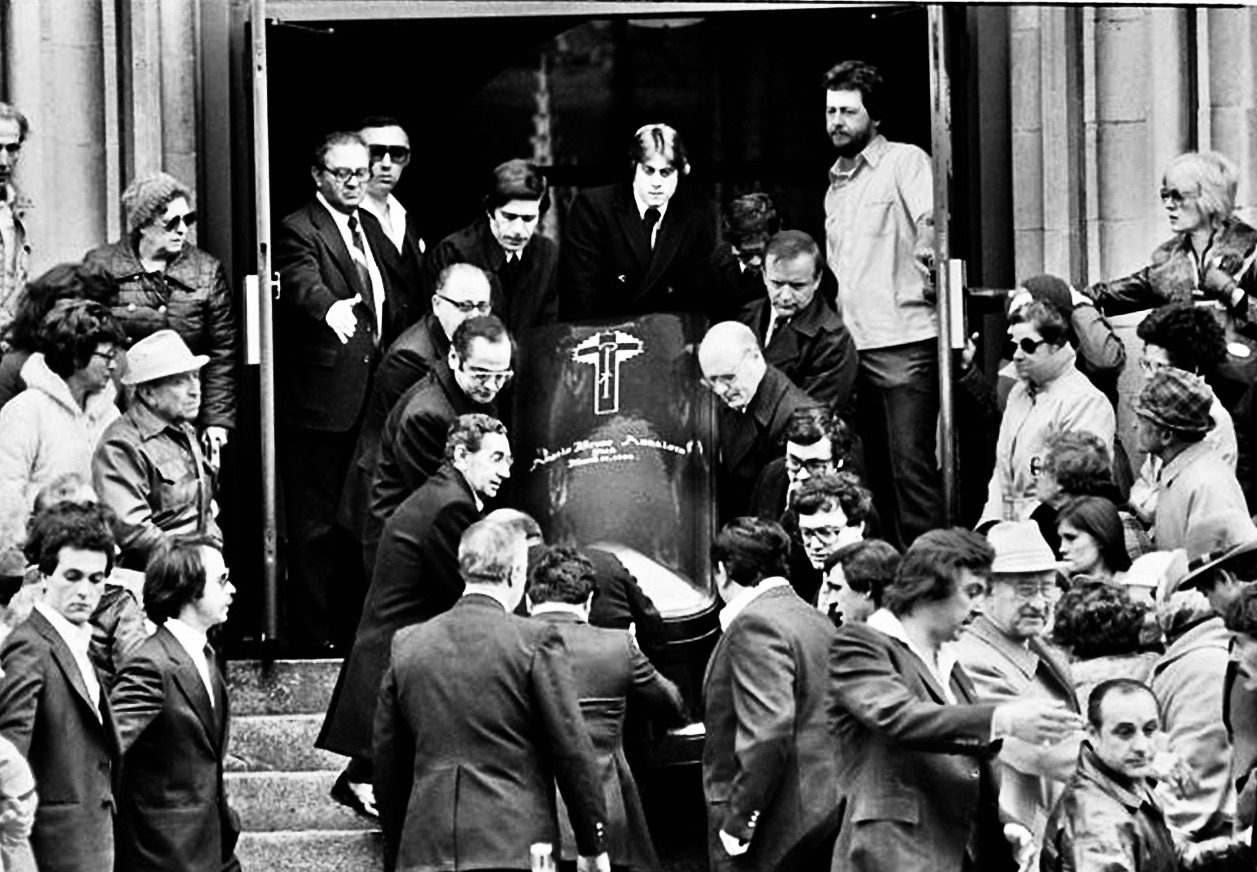
All Hands On Deck

img_1220.jpg

By Ed Staskus

“What were we thinking?” Kate Doucette asked her mother, who was peeling potatoes in the kitchen of their eatery as they geared up for the second week of their new restaurant’s first season the summer before last.

“I know, we need fish-n-chips on the menu,” said Joanne Doucette.

On the Dock is at the far end of Harbourview Drive in North Rustico, around the bend of the harbor up from the lighthouse, catty-corner to Bob’s Deep Sea Fishing, on the north central coast of Prince Edward Island. The dining room is literally on the dock. More than two-thirds of the tables and chairs are outside, spread out over a big deck, on the edge of a square wharf on the ocean.

“I’ll go over to Doiron’s and get some,” said Kate.

She walked down the street and got five pounds of fish.

Doiron Fisheries, a fish market on the Inner Harbour, chock full of shellfish, lobsters, and fresh Atlantic seafood, is about a half-mile away, by way of a boardwalk, at the other end of the street.

“It wasn’t that much,” said Kate. “But mom wondered, what are we going to do with all this fish? Maybe we should freeze some of it, she thought, just to be safe. By the time she put it in the freezer, though, she had to take it out, since we were selling so much of it.”

When they sold out the fish-n-chips, Kate Doucette took another walk back down the street to Doiron’s, this time for more than just five pounds.

“It’s a simple menu, chowder, fish cakes, but it works,” she said. “We had lobster rolls from the beginning, because dad catches all of our lobster. After working here, me and mom go home and shell lobsters a couple of hours every night.”

The fish cakes are chips off the old block from her father’s handcrafted cakes. “On Boxer Day, Christmastime, parties, the whole family would come over for dad’s fish cakes. He served them with homemade mustard pickles.”

Joanne Doucette has made mustard pickles for a long time. “It’s a recipe that’s known around here,” said Kate. Every week is National Pickle Month when it has to be. “We make batches of them for the restaurant.”

“It’s hearty home-style cooking with the freshest seafood,” said Megan Miller, sitting outside in the sun on the seaside, pushing back from her table and empty plate of fish and pickles.

Kate’s father, Robert Doucette, is Bob’s Deep Sea Fishing. He ties his 45-foot fiberglas boat up at the end of the dock outside the restaurant. He harvests lobster in season and takes tourists out to catch cod and mackerel in July and August. His brother Barry and he bait hooks for tuna in September.

“His boat used to be called the ‘Jillian Marie’, who is my older sister,” said Kate. “But, when I got old enough to realize my name wasn’t on the boat, I got a little ticked off. When he got his next boat he called it ‘My Two Girls’.”

Bob Doucette has been working out of the North Rustico harbor for more than 40 years. “He grew up in a little white house right here,” said Kate. “He hasn’t gone far. Their house used to be up Lantern Hill, but it was moved down here, on the back of a big truck.”

Joanne and Bob Doucette met when they were 14-years-old. “They’re both from here, North Rustico, born and raised.”

Kate and her sister grew up in a house in a thicket of trees a mile-or-so up the road, behind her Uncle Ronnie’s Route 6 Fish-n-Chips “We were so lucky to grow up where we were in the woods all the time,” she said.

There’s something about woods that you can’t find in books, at school, or on the infobahn. Moss grass shrubs insects birds trees will teach you what you can never learn from flatscreens. Trees wise you up to being grounded from the trunk down and limber on top from the branches out.

North Rustico is a community of about 600 residents. The bay is sheltered by Robinsons Island and houses a fleet of forty-some lobster boats. Fishing is the town’s main focus, although, since it has direct access to Prince Edward Island National Park, it has long been popular with vacationers.

All summer long kayakers launch their boats from Outside Expeditions at the mouth of the harbor, paddling up and down the north coast. It’s a way to get focused on the wide-open water. When you’re tucked into a kayak and paddling, there’s literally nothing else you can do.

“Dad used to bring me down here when I was a kid,” said Kate. “I was a huge little tomboy. He bought me a kit with a saw and hammer for my seventh birthday. He made me a miniature lobster trap to work on while he was repairing his traps.”

By the late 1990s the wharf was rotting. “Dad still had a slip for his boat, but you could hardly walk anywhere, it was just run down.” The wharf was rebuilt and a new red-roofed building, the front half housing the Fisheries Museum and the back half housing the Skipper’s Café, was built with provincial and town funding, built on the spot where Bob’s Deep Sea Fishing shanty had stood.

“They moved all the shanties to the side when they built this,” said Kate.

“We grew up down on the harbor. My sister Jill and I worked in the canteen from the time I was 12-years-old, in the shanty, where reservations were made. We sold chips and chocolate bars and soda, except Jill and I ate all the chips and chocolate until dad finally ended up only selling ice cream.”

Kate Doucette’s grandmother opened the first restaurant in North Rustico in the 1940s. It was the Cozy Corner, at the convergence of Route 6, Church Hill Road, the gas station, the post office, and the road down the harbor. Her grandparents later opened the Isles, a sizable seafood restaurant, up the road.

“My Uncle Ronnie was a big part of it and mom served there for years. The whole family worked there. They had a bakery in the basement and I’d run over every afternoon and get fresh rolls.”

One day the restaurant burned to the ground.

“It was a pretty big upset,” said Kate. “We were lucky there wasn’t any wind and none of it got into our woods.”

Towards the snowy front end of 2016 Kate Doucette was living in Charlottetown, the capital and largest city on Prince Edward Island, taking business classes part-time at UPEI and working full-time, while her boyfriend Sam roughnecked oil rigs more than three thousand miles away in Grande Prairie, Alberta. One evening her mother paid her a visit. Joanne Doucette had a proposal for her daughter.

Kate was surprised by what her mother stumped for that night.

“I wasn’t thinking of doing a restaurant, for sure,” she said. “I never in my wildest dreams thought that was going to be our conversation.”

The Skipper’s Café on the ocean side of the Fisheries Museum in North Rustico was closing. The Port Authority was leasing out the space. She was being offered first crack at it.

Kate Doucette called her boyfriend in Alberta.

“Go for it,” said Sam MacLeod. “You’ve got to take a risk sometime.” Even though it was going out on a limb, it wasn’t necessarily risky, since most risk comes from not knowing what you’re doing.

“It’s in our blood,” said Kate. “I’ve been serving since I was 16-years-old. I’ve had a hell of a lot of other jobs, but I’ve always had a serving position on the side.”

Her family and she began making plans.

“The guy who owned Skipper’s Café, he was closing since he wasn’t feeling wellish,” said Kate. “Then he told us, ‘Oh, I might run it for another year,’ but by the first of May he closed and took absolutely everything out of the place.”

Many of the restaurants on the north shore of Prince Edward Island are seasonal, opening roughly at the first sign of summer and closing more or less at the start of fall. From a business point-of-view, there are two seasons, June July August and winter.

“We started from fresh, but it was a crazy month. We had to get all our licensing, buy all our equipment, and design our menu. Our tables were made by a local carpenter. We rebuilt the kitchen, which is very small, and the first summer we worked with table fryers. It was insane. I don’t know how we did it.“

The difference in fryers is that the oil capacity of tabletop models might be seven or eight pounds. The capacity of commercial deep fryers, which can have two tanks, is often 50 to 85 pounds.

“The first thing we did when we closed in October was get a commercial fryer, a grill, and a seven-foot range hood,” said Kate. “We still peel all of our potatoes with a little hand cutter. There’s a machine that can do it, if we could find the space to put it. Right now, Sam does it. He calls it his corner office.”

The reason Sam MacLeod gives a leg up at the potato peeler back in the corner is that Kate Doucette called him one day in the middle of their second summer, when he was working in Alberta. He is on rigs twenty days in the oil fields northwest of Calgary, and then off ten days, which he often spends having flown back to PEI.

“I was crying,” said Kate. “I don’t know what I’m going to do, either I’m going to kill my mother with all the work she’s doing or I’m going to have to close down.” After working all day, and after closing everything down at night, her mother was spending two more hours peeling potatoes for the next day, every day.

“It was just too much,” said Kate.

“I’m going to take August off and come back and help you guys,” said Sam.

Sam MacLeod and Kate Doucette met in a Subway on the eastern end of the island at the moment Kate knocked over her young niece. She and her sister, Jill, were distributing Bob’s Deep Sea Fishing fliers at tourist cottages. They stopped for lunch. She and Mila, Jill’s daughter, were walking across the dining room to the soda fountain.

“I had my hand on top of her head and I accidentally pushed her over,” explained Kate. “She fell down.”

Sam MacLeod, who had just pulled into the parking lot and walked in the door, stopped where Mila was lying on the floor in front of him.

“Is she all right?” he asked.

“I hadn’t even noticed it happened.” Kate looked down at her niece. “Oh, she’s fine, she just kind of fell over.” Sam gave Mila a helping hand up.

“He’s nice, he’s cute,” said Jill as they watched Sam drive away in his white knight white pick-up truck.

Six months later, on a Friday night, while in a bar and grill in Charlottetown with friends, she recognized a young man wearing a red hat at the bar. She walked up to him

“Do you remember me?” she asked.

“You’re the girl who pushed that kid down on the floor,” he said.

“She survived,” said Kate, grasping at straws.

They exchanged phone numbers. Twenty days later, a few days after Christmas, Kate and Jill were loafing in their apartment in Charlottetown. “Jill and I were going to hang out, have a chill night.” But then, out of the blue, she got a text from Sam.

“Do you want to go out to dinner?”

“I told him to give me a second. He took me to Cuba the next month. We’ve never spent a night apart since then, except when he’s out west.”

The couple built a house in Stratford, outside Charlottetown, but then rented it out on Airbnb. They planned on building something in North Rustico, but in the meantime realized they needed somewhere to live. They considered buying a camper and parking it in her mom and dad’s backyard.

“We found a reasonably-priced one on-line. It wasn’t the nicest, though, kind of shitty, and I was thinking, at the same time, do I want to shower in a camper all summer?”

She showed a picture of the camper to her parents. They took a close look at it, retreating to the other end of the room to compare notes. “I could see them kind of talking. They knew we were trying to save money.”

“Just stay with us,” said her mom. “We’ll fix you up a room. We’ll make it work.”

What she meant was, since they were already all working together, if they were all living together, it would make seeing one another all the time sticky. It might be too close for comfort. That’s why, since God has given us our relatives, many thank God they can pick their friends.

It would take some sufferance, fifty-fifty payoffs. They made it work.

“We’re only there to sleep, anyways,” said Kate. “We don’t cook there, we don’t hang out there, we don’t do anything, really. We’re always working. You give up your whole life half the year when you work at the restaurant.“

On the other hand, if you’re doing what you want need and enjoy doing, you’re never actually  clocking in to the daily grind rat race any day of your life.

“The one place I’d rather be in the world is down at the harbor,” said Kate. “It’s hard, you see everyone working so hard, but to be with the people you love the most, my mom and my dad, my sister, my boyfriend, I can’t think of anywhere’s else I’d want to be.”

Joanne Doucette runs the show in the kitchen. “You’re not going to have anyone in the kitchen who cares more about you than your mom.” Kate is the hostess server business manager, Jill busses serves odd jobs, while Sam and Bob run errands deliver seafood peel potatoes and take out the trash.

Kate’s niece Mila is in training.

One evening at closing time, looking for something to do, her Crocs at the ready, Mila asked if she could clear the outside tables.

“You can take the salt and pepper shakers and candles in, but leave the flowers,” Kate instructed her.

When Mila was done, two men were still at the last occupied table on the far side of the deck, their plates pushed to the side, kicking back at the edge of the ocean. “She went right up and took their empty plates off the table. They ended up giving her five dollars.”

“Kiki, Kiki!” Mila whooped, running up to the front counter, waving her five-dollar bill.

“She calls me Kiki. It just happened. She just one day decided,” said Kate. Since no one is allowed to give themselves a nickname, it might as well be your six-year-old niece. Catching a break, Kiki is better than, say, having to answer to Pickles.

“I don’t work here, but I help out all the time,” said Mila on a warm breezy sparkly afternoon, a broom a head taller than her in her hands, sweeping up around the chairs and under the tables on the deck, in the interval between lunch and dinner.

When you’re helping out it’s all hands on deck.

There’s no keeping Mila down.

Photograph by Vanessa Staskus.

Ed Staskus posts on 147 Stanley Street http://www.147stanleystreet.com and Made in Cleveland Ohio http://www.clevelandohiodaybook.com. To get the site’s monthly feature in your in-box click on “Follow.”

Cooling Off the Cops

By Ed Staskus

It’s never easy working on the slopes of a live volcano. There’s molten lava, debris-flow avalanches, volcanic gases, not to mention pyroclastic density currents, which are gravity-driven, rapidly-moving, ground-hugging mixtures of rock fragments and fluid as hot as 1700 degrees That’s why most volcanologists study either dormant or dead volcanoes.

They don’t go hiking up into harm’s way.

Policemen don’t usually work anywhere near volcanoes, either, except when some excitable dumb-ass with one of America’s 357 million guns goes trigger happy. At that point the arm of the law might as well be on the lip of Mt. Vesuvius, staring down into a maw of lava.

Your body armor best be fire-proof, your aim true.

Since 1784, the year the Revolutionary War ended and the United States became the United States, there have been 708 volcano-related deaths in the country. In that same time 21,541 police officers have been killed in the line of duty. Policemen put their badges on in the morning not being completely sure they’ll be taking them off that same night at home.

Even though only a small percentage of the nation’s nearly one million police officers are ever killed by criminals, nearly one out of every ten are attacked every year, for one reason or another. There’s a reason they wear bullet proof vests and carry guns.

It’s a dangerous beat. It comes with a lot of risk and hazard. It’s not just punching a clock. There’s a load of stress built into it. It’s a wonder more cops don’t blow their tops. Even still, the suicide rate among policemen is one-and-a- half times higher than the general population.

The thin blue line can get thin ragged worn out.

Recruits train like nobody’s business at police academies to learn their trade. They study state and national laws, computers and patrol procedures, first aid, cop car driving, and drill with firearms. They get physically fit. Contrary to the myth of the boys and girls in blue stuffing their faces with donuts, because police work is physically demanding, almost all officers routinely work out their capacity for the work.

They ain’t flatfoots, if they ever were.

Policing in the real world is physically and mentally demanding. Officers have to enforce the law of the land, but have to be flexible, as well, when serving the public. Yoga is a mind-body practice based on strength and flexibility. That’s why some police officers have been turning to it and meditation as a kind of continuing education.

It’s yoga mats in the squad room, calming down the cops.

“Police officers are suffering,” said Richard Goerling, a lieutenant on the Police Department in Hillsboro, Oregon, outside Portland. “There are so many stressors to being a police officer today. The job is incredibly complicated. The organizations are complicated. The legal climate is complicated, and our relationship with our public is complicated.”

He started a meditation and mindfulness program for his department in 2013.

“We’re driving fast, we’re riding with sirens. It’s game on. Mindfulness teaches us to mitigate the stress response. I started looking at what professional athletes and what elite performers in the military do. That led me to yoga.”

It works, which is why professional athletes from the NBA’s LeBron James to the NFL’s Travis Benjamin to the NHL’s Jared Boll have added yoga to their fitness regimens. Except when it doesn’t work. When Shaquille O’Neal, a former NBA all-star, got on the mat he wasn’t able to down dog it, much less slam dunk it.

“I’m the worst yoga student in the history of yoga,” he admitted.

He’s still trying to touch his toes.

On the yoga mat at the floor level, the practice brings together physical and mental disciplines in one place at one time. It is physical postures breathing being aware of the moment without judgment. It is improved strength range of motion fitness and reduced stress anxiety blood pressure. It’s multifunctional.

It is an ice cream swirl that feels guaranteed good.

It might be the silver bullet lawmen need in their holsters, to serve, protect, and breathe, shifting from police officers to peace officers.

“It is meant for them,” said Olivia Kvitne of Yoga for First Responders. She founded and directs the program, addressing common problems policemen face. It has been estimated 30 percent of police officers have stress-based physical health problems and 40 percent suffer from sleep disorders.

“Why is it meant for them? It’s because the original and true intents of yoga are to obtain a mastery of the mind and achieve an optimal functioning of the entire being, from the subtle nervous system to the whole physical body. They become more resilient in the face of adversity.”

When it comes to policework, adversity isn’t a question of whether it’s going to get in your face, it’s when and where. Even though crime rates are at historic lows, policemen on the street deal with people who have mental problems, people round the bend on drugs and drink, and people crazed by anger or desperation and carrying weapons that are dangerous.

The daily tour of duty can be a front row seat to despair.

“Not everybody likes police officers,” observed Oskaloosa, Iowa, Police Officer Blaine Shutts. “We see them at their worst times and we are used to that. But we have to watch out so that they can’t take a swing, punch, kick, or hit us with anything.”

Safety is the number one priority of all lawmen.

“We say everybody comes to work and everybody goes home,” said Officer Shutts.

The training intensives of Yoga for First Responders focus on tactical breathing, physical postures for fleshing out muscular stability, and “neurological reset exercises to return the system to a balanced state.”

Everyone is in a safe spot when they’re balanced, their legs under them, stretching out into Warrior Pose.

Resilience is a trait shared by all warriors. It’s a necessary aspect of the breed. But a lack of empathy is not. Policemen are prone to expecting the worst and becoming cynical, given the day–to-day rough-and-tumble they encounter every day and night.

Police officer Richard Goerling found himself questioning his approach to encounters with the public almost ten years ago. “I’d leave a radio call thinking, ‘Hmm, I probably could have been more kind’ and really questioning whether or not the abrasive approach was an appropriate response,” he said.

When he proposed a yoga program for his Hillsboro department it was because he wanted “to cultivate an empathetic warrior culture that allows a police officer to see someone holding a sign that says ‘I can’t breathe’ and instead of responding with some defensive statement, it’s really an interrogative, tell me more about that.”

Yoga is about showing up when you fit the description, about fitting the bill, standing out in the line-up. It is about listening to your body, listening to yourself, and listening to others. It is about opening your heart a little and lending an ear

“I wish the community had a greater understanding of why the police do what we do, and sometimes we have to do a better job of putting ourselves in their shoes, as well,” said Don De Lucca, the chief of police in Doral, Florida, and president of the International Association of Chiefs of Police.

“We’re at a crossroads, and we both need to be willing to listen.”

Yoga fosters mindful listening. Police are trained to sort out, advise, and clean up things that have gone wrong. Yoga trains us to listen with openness and your whole attention. When policemen listen actively they get things right more often than not. When they practice buddhi, which is witnessing, mindful listening, they are able to listen with less judgment and more understanding.

The same goes for members of the body politic.

“As much as police need to learn to listen, listening to police is the simplest way to avoid conflicts with them,” said South Florida Law Enforcement Officer Jay Stalien.

Listening to what the other side has to say is good all around. It is a sincere kind of respect. The opposite of talking shouldn’t be waiting for your turn to talk. It should be about being present, not rummaging around in your bag of tricks for what you’re about to say next. Listening is active. It’s about paying attention. If you’re not listening, you’re not looking at what is right in front of you and you’re not learning.

“Officers are faced with life-and-death situations daily,” said Shayleen Halloran, a yoga instructor and wife of a Chicago-area patrolman.

They are always being confronted by bad ideas gone wrong. “That kind of stress can have a huge impact on their emotional and physical health. Yoga can help even out the roller coaster.”

Whether you’re writing out a parking complaint, running after a suspect, picking somebody up for shoplifting, pointing your firearm at somebody else, you’re on the incident coaster, sharply winding trestles, steep inclines, and speedy plunges.

“It’s a good way to limber up and to bring you back down from that hyper vigilance,” said her husband. It’s packing handcuffs and yoga mats.

Lawmen often drive alone in police cars working 10-hour shifts. Sitting and driving all day is not good for your back. Not only is yoga a proven remedy for stress, it’s great for lower back pain. Rolling out your standard issue peacemaker mat at the end of a long day is like Car 54 to the rescue.

“There’s a holdup in the Bronx, Brooklyn’s broken out in fights. There’s a traffic jam in Harlem, that’s backed up to Jackson Heights. There’s a Scout troop short a child. Car 54, Where Are You?”

“As an officer, you’re supposed to go in and do your job, handle the call and leave,” said Michele Garcia, an Arizona policewoman for more than twenty years. “After a few months of doing yoga, I noticed I was nicer to the people I was dealing with every day.”

It’s like karma lawmen on the beat. If yoga makes cops better lawmen, there’s no reason for them to cop out on the next yoga class.

The next time you’re involved in toil and trouble, have need of assistance out in the wide world, or just scratched the surface of lawbreaking and are pulled over for something, like turning on red when you haven’t seen the sign saying not to, and the peace officer lets you off with a warning, try saying “Namaste” as he walks away.

If he’s a policeman who shapes himself, personally professionally, whose beat is in his head as much as it is out there, he might know what you’re talking about.

Ed Staskus posts stories on 147 Stanley Street http://www.147stanleystreet.com and Cleveland Daybook http://www.clevelandohiodaybook.com. To get the site’s monthly feature in your in-box click on “Follow.”
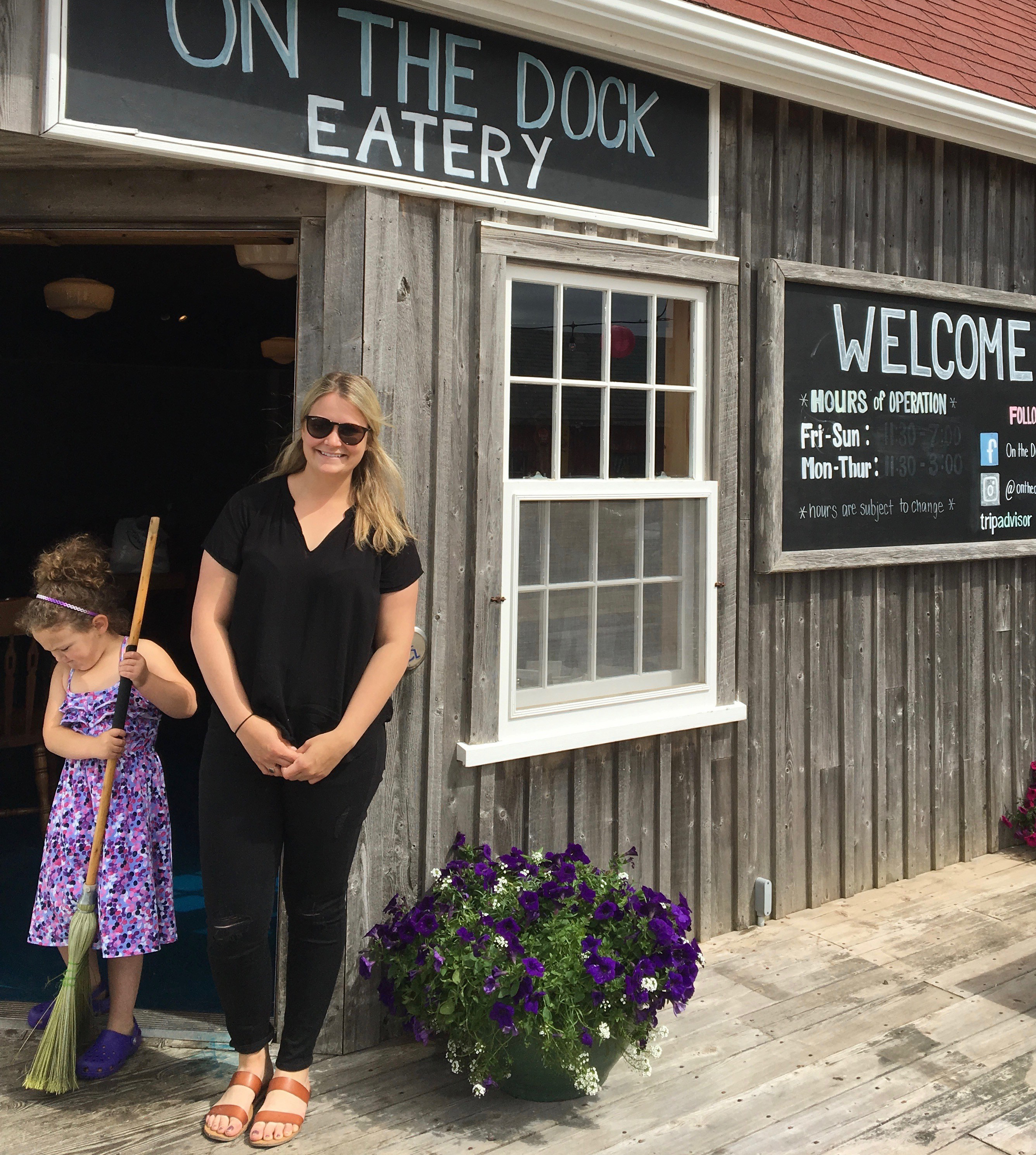
Gone Gros Morne

Leah Pritchard

By Ed Staskus

“The secret to acting is don’t act. Be you, with add-ons.” Michael Sheen

“I’m going to take off now,” said Leah Pritchard. “I’m going to go. I’m going to do what I want. I’m going to leave. That’s what’s going to happen.”

It was the tail end of her last year at Gros Morne Academy in Rocky Harbour, Newfoundland. Closing in on the end of theater studies with Sarah McDonald, the teacher pulled Leah aside. “Of all the students here, the one we think would be feasible as a professional actor is the one who’s always saying they don’t want to do it. You would be the one strong enough and talented enough to actually make it.”

Leah Pritchard had other plans. She was geared up about joining the Mounties.

When the class mounted their year-end play, everybody’s parents coming to see the show, Sarah McDonald gathered up Ross and Marion Fraser-Pritchard.

“We’re going to put her in theater school at university, so that’s the plan,” she told Leah’s parents.

“My dad did not want me leave Newfoundland and did not want me to be in the RCMP,” said Leah.

“Fine, great, we’ll keep her here,” said her father, despite himself and his wife both being Royal Canadian Mounted Police.

“I was still very angry about being in Newfoundland, about being moved around, leaving Nova Scotia.” She was 17-years-old. “I was a surly teenager, a willful child. I didn’t want to be here anymore.”

She turned 18 her first day three months later at Memorial University of Newfoundland. “She can’t get into the theater program right away, but we’re going to make sure she gets into it,” Sarah McDonald told Leah’s father. “She was my mentor,” said Leah.

In the meantime, she snuck into theater classes.

“I was hanging with my friends one day when I got locked in the class by accident when the professor came in. After I didn’t get called out for it, after a few weeks I started answering questions,” she said.

“Who are you?” Todd Hennessey, the teacher and Head of the Division of Fine Arts, finally asked her. “Do you take this class?”

“Um, no,” she answered.

“Don’t worry,” her friends said. “You’ll meet her officially next year.”

In her last year at Memorial University she headlined Hard Ticket Theatre’s production of “Venus in Fur.” Todd Hennessey directed the two-person spooky sex comedy. “It takes one heck of an actress to convincingly play a character who is regarded as being a fantastic actress, and Leah Prichard nails it,” wrote Rachael Joffred in her review.

The campus she attended was the Sir Wilfred Grenfell College at Corner Brook, where the bulk of the theater program was, and which was only two hours from her family in Rocky Harbour. Wilfred Grenfell was an English doctor who opened hospitals, orphanages, and cooperatives one hundred years ago to serve the coastal inhabitants of Labrador and Newfoundland. He was an able-bodied doughty man. Once marooned on a slab of floating ice slob, he killed some of his dogs to make himself a fur coat in order to survive.

“They wanted to keep track of me, since I was just 18.” Two years later her mother was reassigned to RCMP Headquarters in Halifax. Her father took a post in the capital city, as well. Leah Pritchard lived and studied and worked in Newfoundland for the next nearly seven years.

Rocky Harbour is on the far western edge of Newfoundland. The town is home to Gros Morne National Park. There is a fjord lined with cliffs and waterfalls, formed by long-gone glaciers. There are caribou and moose, rainy moody fog-bound mountains, and the tablelands, where you can walk on the earth’s mantle. The landscape is ancient.

“If you ever see tourism commercials for Newfoundland,” said Leah, “there’s always this big fjord where somebody is standing with arms outstretched saying, “Look at the world!’ That’s where I lived. You can spend a long time by yourself there. I ended up loving it.”

A native of Nova Scotia, Leah Pritchard grew up in Lower Sackville, a fast-growing suburb of Halifax. In the 1950s it was known for its drive-in theater, harness racing track, and WW2 bomber plane ice cream stand. It is today a family-oriented commuter community.

Her parents, now both retired, were RCMP policeman and policewoman. The Force, as it is known, is both a federal and national police force. It enforces the law on a contract basis in the territories and most of the provinces. In many rural areas it is the only police force. Its French acronym, GRC, is sometimes repurposed as Gravel Road Cops.

Despite its name, the Mounties is not an actual mounted police force anymore, although it still was in the 1930s when they brought the Mad Trapper of Rat River to justice.

Her grandfather was a RCMP officer. “It’s just a family thing,” she said. “It also makes you very popular in high school, let me tell you,” she added with a booming laugh guffaw.

She is the youngest of five children. Her sister and two older brothers were adopted by her father when he was 21-years-old. “Their dad was a motorcycle cop and died on duty. My dad fell super in love with his widow and made a bold choice. The kids were 3, 2, and 1-years-old. The RCMP has always been a part of our lives. There’s a sense of honor and tradition.”

Growing up, the family moved whenever and wherever her parents were assigned. It was how they moved to Newfoundland, when her mother was made a detachment commander there. Leah spent most of her teen years in Yarmouth, on the Bay of Fundy in southwestern Nova Scotia. The seaside town is proximate to the world’s largest lobster fishing grounds.

“You get real accustomed to small town life real fast. There’s a lot of space in and around Yarmouth to get weird.”

No matter what efforts you summon to make sense of it, the world can still be a strange place. Small towns impart a sense of place, but often feelings of self-consciousness, too. It can mean the opportunity to create your own options out of the weird mix of things.

It is where Leah caught the acting bug.

“I was at a production of “Arsenic and Old Lace” at our high school when two of the actors started laughing hysterically on stage about something and couldn’t control themselves. I thought that looks like fun.”

She took fine arts and acting classes in both French and English. In lieu of lunch the drama students staged short one-act plays at a nearby small theater, declaiming their dialogue and handing out sandwiches to show goers who needed a bite. “We were just harmless theater geeks, so the teachers let us go and do that. I started spending all my time in theaters.”

Once in the acting stream at Memorial University she discovered the program was the only one of its kind in Atlantic Canada. It combined practical and academic training with small class sizes and one-on-one attention to detail by actors directors production professionals doubling up as faculty and staff.

“It’s a fabulous program, especially learning to handle Shakespeare,” said Leah. “The Newfoundland accent is the least bastardized accent in North America, the closest to what it would be in Shakespeare’s time. It’s got that time’s rhythm and music to it.”

Many Newfoundlanders work in classic theater, especially at Canada’s Stratford Festival, the internationally known repertory theater festival that showcases William Shakespeare. “The music is in our DNA,” said St. John’s native Robin Hutton, who has performed at Stratford for close to a decade. ”We can’t have a party without a sing song.”

Natives of ‘The Rock,’ as the province is sometimes known, at Stratford include Brad Hotter, Jillian Keiley, and Deidre Gillard-Rowlings. “We’re storytellers in Newfoundland,” said Brad Hotter. “Theater is a craft handed down, where you learn from people who pass it down from generation to generation.”

Leah Pritchard’s last semester at Memorial University was spent in England, taking master classes with working professionals and seeing shows in the West End and Stratford-upon-Avon. “You see as many plays as you can, you write reviews, and you rehearse a play. When you come back you put it up. It’s the culmination of all the work you’ve done the past four years.”

One of the plays she saw in London was “The 39 Steps,” accompanied by her brother, Ian, a six-foot-six young man with curly ginger hair who at the time was also in the theater program. The show is a comic treatment of the Alfred Hitchcock movie. It is played for laughs, so Leah and Ian laughed their heads off

“Most people would unanimously agree that I’m a very loud person,” said Leah. “If I’m being quiet, there’s something wrong. Ian has an even bigger laugh, a booming laugh, not subtle, at all. We were there laughing our heads off, Eastern Canadians watching a comedy. Everyone around us was quiet. Somebody said, ‘That’s not why we’re here.’ English audiences are reserved. Come on! I said. That’s exactly why we’re here. Join in the jokes, please.”

Sometimes being the loud enough voice for quiet thoughts is what works. Leah sang with the Xara Choral Theatre Ensemble on their debut CD “Here On These Branches” about northern cultures, communities, and landscapes. It was nominated for best classical recording of 2015 at the East Coast Music Awards.

It’s what she does getting ready to go on stage every night, too. She sings to herself, pop jazz show tunes by Julie London, Ella Fitzgerald, and Julie Andrews.

Back in Newfoundland with a newly minted BFA in acting on her resume, she found work as a bartender, a nanny, and an usher. “I’d get up at 6 in the morning, nanny the three kids, drop them off at their family’s restaurant, jump into a shower, get into my uniform, and go usher at the Gros Morne Theatre Festival.”

She worked in a candy store to make ends meet.

“You eat a lot of candy,” she said.

She got a job at a dinner theater in Halifax.

“You gotta do it,” she said. “It’s like cutting your teeth.”

Madrigals in the Middle Ages were a kind of dinner theater. They made a comeback in the 1970s, featuring mysteries and musicals. Actors like Lana Turner and Van Johnson performed between appetizers and dessert. Burt Reynolds owned his own dinner theater.

“You’re a performer, but you’re a waiter, too,” said Leah. “You sing and dance and run off stage to pick up six plates on a tray, deliver them, and run back on stage. You get into wicked shape doing it.”

The bane of dinner theaters is the hubbub. “You’re a waiter as well as a performer and you have to deal with eaters. But there isn’t a fourth wall. If someone starts talking on their phone, because they don’t really give a fuck about you, you can stop and say, do you mind?”

It’s best said with an upturned nose, mock haughtiness, and a snooty English accent. “It’s not like you’re in the middle of a soliloquy.”

Breaking into the arts world is often a matter of catching a break. ”My first Equity gig was in the fall after I graduated, which is very lucky.” In late 2013, another teacher from the university, Jerry Etienne, saw her in a remount of “Venus in Fur.” He has directed more that thirty productions as Artistic Director of Theatre Newfoundland Labrador and founded the Gros Morne Theatre Festival.

When he signed on to direct “The Rainmaker” at the Watermark Theatre on Prince Edward Island the next summer he asked her if she would consider signing on at the same time.

“Yes, please,” she said.

She played the plain spinster in the drought-ridden story set in Depression-era America whose family worries center on her slim marriage prospects and their dying cattle. “Leah Pritchard tunes into the right emotional channel,” wrote The Buzz, Prince Edward Island’s arts and entertainment monthly tabloid.

Summer stock at the Watermark Theatre in North Rustico on the north central coast of the island means finding a place to live and a place to eat. “The stage manager and I roomed together for four years.” She ate at Amanda’s that became Fresh Catch that became Pedro’s Island Eatery when it was taken over by a Portuguese couple. “This village has been crying out for Pedro’s,” she said. “They give you so much food, delicious, and a beer. I get passionate about their haddock.”

Meanwhile, she worked up and down the east coast. “I’m very much an eastern girl,” she said. “I’d go insane without the ocean.”

In the spring of 2016 Leah appeared in “The Drowning Girls” at the Neptune Theatre in Halifax, a play about the real-life early 20th-century British wife killer George Joseph Smith, who married three women in succession and drowned all three in succession. “There was a lot of sitting in water for long periods of time. There was even a splash zone by the first row.“

Later that fall she played Balthazar in “The Spanish Tragedy” at The Villain’s Theatre in Halifax. All the actors were actresses in the new adaptation and the revenge story unfolded with a plentiful dose of black humor.

By the end of the summer season of 2017, after four seasons at the Watermark Theatre, she had appeared in productions of “Blithe Spirit” “The Rainmaker” “The Lion in Winter” “Romeo and Juliet” “An Ideal Husband” “The Glass Menagerie” and most recently “Mrs. Warren’s Profession” and the perky newlywed in “Barefoot in the Park”.

“The Watermark has been very kind to me,” she said. “I’ve gotten the opportunity to do Oscar Wilde and Bernard Shaw and Tennessee Williams.”

“Leah Pritchard and Jordan Campbell have genuine chemistry together, an innocent quality which is very watchable and perfectly suited to the play,” wrote Colm Magner in his review of “Barefoot in the Park” for The Guardian.

Some roles are more challenging than others.

“The Glass Menagerie was hard,” she said. “It was physically challenging, limping around, and I couldn’t figure Laura out, at first. She’s someone who lives inside herself, although as an actor on stage you can’t be too inside yourself. She’s a character who withdraws from the world, is quiet and reserved, and doesn’t want to be in confrontation. But on stage you need to be present, need to be seen, and need to be physically heard.

“It was weird.”

In the fall of 2017 Leah went on tour with Xara Choral Theatre’s adaptation of “Fatty Legs,” a children’s book true story about a plucky eight-year-old Inuit girl gone off to a residential school. “They called me Fatty Legs because a wicked nun forced me to wear a pair of red stockings that made my legs look enormous,” says the heroine. The larger theme is the cultural genocide of Canada’s defunct Indian boarding school system, which separated children from their traditional skills, language, land, and family.

Working with youngsters isn’t new for her. She has been a teaching assistant for Neptune Theatre’s youth theater workshops and led PEI Watermark Theatre’s youth theater acting conservatory the past three summers.

Still a self-professed east coast girl, Leah Pritchard has recently moved to Toronto. The city boasts one of the liveliest theater scenes in the world, from major musicals at the Mirvish Theatres to Soulpepper, North America’s only year-round repertory company, to Buddies in Bad Times, the world’s largest and longest running queer theater.

“I want to be on the coast, but I understand the opportunities are in Ontario. I know what stages I want to be on and I’m going to keep working as hard as I can to get on those stages, by hook or by crook.”

Getting in the front door is easy to do if you’ve got a ticket. Getting in the stage door is hard to do if you’re an aspiring actor. Trying to make it in Toronto is a long uphill row to hoe.

“In Toronto no one needs to see you, no one needs to let you into the audition room, because there are thousands of you out there,” said Leah. “The way I approach my career is, there are thousands of good actors, but there aren’t thousands of me. There’s only one of me and they should be so lucky.”

Sometimes she tosses her head back when she laughs, like an actress from another generation, a Myrna Loy or Angela Lansbury, who she bears a resemblance to. If she hasn’t laughed ten twenty times a day it hasn’t been a good day. “I get that I’m a young Angela Lansbury, a lot. I should be as lucky as that. I tell them I’m like a young old lady, not like how people are trying to be beautiful today.”

Moving forward owning her career in the big city, she has several pokers in the fire, for the coming summer, as well, including Prince Edward Island. “It depends if there are roles for me in the plays they choose,” she said. “Five years in that theatre would be amazing. Even if they don’t, if I can manage a visit, the ocean, Pedro’s, it would be fabulous.”

She will be touring again in the fall with Xara Choral Theatre’s production of “Fatty Legs”.

“I’m always working to better myself as an actor,” she said. “I’m an independent artist, so I’m not in Toronto desperate to be liked. I’m older, a little wiser, although maybe not very wise. I’m still only 27. How wise can a 27-year-old be?”

It’s the sharp-eyed 27-year-old on the way to doing what she wants who understands the first word line page in the manuscript of horse sense keenness awareness is about being unfailing about being you, adding-on but no second-handing and no pretending about what you’re doing to make yourself happen.

Photograph by Matthew Downey.

Ed Staskus posts stories on 147 Stanley Street http://www.147stanleystreet.com and Cleveland Ohio Daybook http://www.clevelandohiodaybook.com. To get the site’s monthly feature in your in-box click on “Follow.”

In Your Face

By Ed Staskus

Attendance at church services in the United States has been steadily declining for more than sixty years. Today, scarcely one in four Americans go to church, at all. When they do go, they don’t go, since more and more of them are going to online rites by way of app. Churchome Global – the brainchild of celebrity pastor Judah Smith – has set everyone free to worship in their bathrobes, thumbing bright icons and releasing glowing hearts to float around their laptop screens.

Jonathan Edwards, the Colonial Christian preacher who declared we are all sinners in the hands of an angry God, is rolling over in his grave right now. “What the hell happened?” he cries out. “What happened to the Wrath of God?”

In Europe and Australia fewer than 20% say religion is relevant to them. The Japanese and Chinese barely even respond to the question. Only in the Middle East and Third World countries do more than less respondents believe religion is important in their lives.

The yoga project, on the other hand, has been growing by leaps and bounds the past half century in the United States, Europe, Australia, and even Russia, once the motherland of godless Communism, where it has ballooned to a billion-dollar-and-more industry. Even though India, the birthplace of the practice, remains a hotbed, the rest of the world, especially the Islamic World and the Third World, has kept its cool.

When bead-wearing hippies began doing yoga in the 1960s they were drawing on a vibrant yoga culture that had thrived in the USA in the early 20th century, but which by their time had run its course. In the 1940s and 1950s the practice was nothing if not holding down the fort, what there was of it.

In the next 50 years the fort would grow to an arsenal overflowing with blocks, straps, and yoga mats, until today almost 40 million Americans say they do yoga. Nine out of ten of everybody say they have heard of yoga, no doubt far more than have ever heard of Jonathan Edwards, or want to hear anything he ever had to say.

Older Americans, the kind of people who once filled pews, are more likely than most to be found on mats. The number of them over 50 tromping to studios has tripled in the past five years. They believe “yoga is good for you.” They do it for their aches and pains. They do it to smooth out the rough patches, to tamp down the stress, to slow their breathing. It’s a way of counting to ten. They do it because it makes their lives better.

Even though yoga is a good fit when it comes to improving health, from flexibility to cardiovascular fitness, from reducing stress and pain, from overall quality of body to overall quality of life, they might be fooling themselves that yoga in its overall aspects is compatible with the way we have structured our lives and fortunes in the modern world.

Yoga made a lot of sense when it washed up on the shores of America in the Progressive Era, during the progressivism of the New Deal, and when Flower Power was free and easy, but it is questionable whether it is or ever will be relevant in our own age of post-modern capitalism, an age long since devoted to the idea that nature is a commodity to be marketed and consumed, that consumption must be encouraged at all costs, that unrestrained competition is a free market fundamental, and accumulation of wealth is the best of all possible worlds.

Talk to the cold hard cash fist full of money ’cause the face ain’t listening.

When the Grand Coulee Dam was proposed in the 1930s, there were myriad problems, not the least of which was that there were long-standing Native Americans living on the land that would be flooded, there were no manufacturers who needed the power and barely any farmers who needed the water, and the salmon and steelhead that ran the river would end up being cut off from their spawning grounds. It was the mid-30s, too, the middle of the Great Depression, and money was tight.

But the power that would be generated, its promoters promised, and the irrigation created would stimulate a need for itself. It would, just like the cutting-edge economists of the day said, create its own demand. And it did. The fish ended up swimming with the fish.

Fifteen years ago, as we were rounding into the new millennium, the richest 10% of the world got 55% of the world’s income, according to the World Bank. The poorest 50% got about 6%. Since then the only thing that has changed is that wealth concentration, especially among older Westerners, has grown faster than poverty reduction.

Non-greed and non-possessiveness are markers and moral guidelines on the path of yoga practice. Nevertheless, who wants to give up their two cars in the garage, their flat screens and stainless steel, their expanding portfolios and growing non-limit line on their credit cards. The good life has become what you’ve got in this life, not what you might get by making a life meditating on the mat.

Cold hard cash can buy you a fine warm purebred puppy. It’s uncertain a king’s ransom can make him wag his tail. You can offer your dog $10 million dollars and he might or might not wag his tail. Offer him $50 million and he might or might not do the same thing. Pat him on the head and say “Let’s go for a walk” and you will get his tail wagging, for sure.

In the same way that one of yoga’s core principles is non-violence, one of the core principles of today’s world is funding armed forces. United States defense expenditures are projected to rise from $682 billion dollars to $1335 billion dollars in the next 25 years, China’s from $251 to $1270 billion, India’s from $117 to $654 billion, and Russia’s from $113 to $295 billion.

When you add nine zeros to a number, you are talking real money. The human brain has approximately 100 billion neurons. Putting a gun to your head puts every one of those neurons in mortal danger.

Every neuron in every brain is connected to ten thousand other neurons. The aim of yoga is to get all of them firing in unison, all on the same page, all together now. The aim of the world’s armed forces is to keep their hands steady on the butts of their guns.

It’s talk to the gunhand ‘cause the face ain’t listening.

The essential aims of military might and yoga practice aren’t on the same page, no matter that the same millions of people who do yoga also pay for and support their armed forces. Everyone rallies around the flag. Nobody wants their patriotism questioned, no matter what. Wrong may be wrong, no matter who says it, but when it comes to patriotism, it means supporting your government and country all the time, no matter what anybody says.

“A patriot is the person who can holler the loudest without knowing what he is hollering about,” said Mark Twain.

Yoga is about finding your own way to knowing what you are all about. It’s not about hollering it up. It’s not about getting on a soapbox, or taking the word of some blowhard on his soapbox. Patriots are enemies of the rest of the world. The practice of yoga is about becoming a compatriot to the rest of the world. You don’t necessarily have to love everybody else, but you don’t necessarily have to hate them, either.

If yoga is about letting go of judgment, it is a problematic undertaking today. The rise of social media has led to the rise of a judgmental culture. It has long been thought judgment is inherently genetic, along with free will and the ability to choose, although it is much more probable that it is a learned behavior. It’s a way of living that goes back a long way, back to when we had to protect ourselves from harm on a day-to-day basis.

It was talk to the fist ’cause the face ain’t listening.

Even though snap judgments are no longer necessary for survival, at least not most of the time, it has morphed into our social behavior. Yoga advocates empathy and compassion. Social media is as much about pigeon holing as it is about cross-culturalism. For every curious explorer there is an angry nationalist. The practice of yoga is about creating a purposeful existence. The practice of judgment is living in lockstep with prejudice and bigotry.

Yoga isn’t a religion, there aren’t any churches or cathedrals, there are no martyrs or jihads, no shrines or wailing walls, no holy men or holy books. It is, however, a spiritual practice. It wasn’t a bad fit a hundred years ago, but it’s awkward today. The best thing that could have happened to the business, stripping it of all its aspects except for the physical dimension, is what has happened, and is why it is as popular as it is in the modern world.

It flies in the face of reason to believe that yoga can make it in the new world, at least not old world old school old fashioned yoga. It has little to no chance of making it in the Amazon Wall Street White House Big Oil Big Banking Big Corporations Big Ego scheme of things. When you throw in Big Tech, it becomes a Big Scheme.

Almost all of the principles of yoga are at odds with the way we live today. Something had to give. What gave was the last five thousand years. What broke into the open the past fifty-or-so years is the yoga we know works, the yoga we need, and the yoga we deserve. “You can’t always get what you want, but if you try sometime you find, you get what you need,” the Rolling Stones sang at about the same time the 1960s Flower Children got yoga going in the USA.

The future of yoga was always uncertain because the future ain’t what it used to be. But, there’s no living life backwards. We all have to look ahead, because that’s where from here to eternity is. Maybe the memory of what yoga was, and might be, will be the key not to the past, but to what is in the future.

After all, no fist can stay clenched forever, not in the face of the Wrath of God, which might be forever, or just simply more than the Hand of Man, just like every face has to face up to what it really wants and needs when rafting down the big river of time space and your own backyard.

Ed Staskus posts stories on 147 Stanley Street http://www.147stanleystreet.com and Cleveland Ohio Daybook http://www.clevelandohiodaybook.com. To get the site’s monthly feature in your in-box click on “Follow.”
Riding the Om Bus

By Ed Staskus

“It was twenty year ago today, Sgt. Pepper taught the band to play, they’ve been going in and out of style, but they’re guaranteed to raise a smile.”  The Beatles

It was twenty years ago that Cyndi Lee opened the OM Yoga Studio. It prospered and grew to 25 teachers offering 65 hatha vinyasa classes weekly. The sunlit wood floor space took up an entire floor of Manhattan real estate near Union Square. It was the union of a faraway and long ago tradition with modernity. The trendsetting crowd had long since been won over to bending.

It was no mean feat. “In New York City people have way more opportunities to take classes than in most other cities,” she said. If you don’t enjoy a challenge, the Big Apple isn’t what you want to try sinking your teeth into. There are more than 8 million people speaking more than 200 languages in the 5 boroughs. It’s hard getting them on the same page.

The page turned fifteen years later when she lost her lease. “The landlord didn’t give us the option to renew,” said Cyndi. “She just didn’t want a yoga studio there anymore.” The only thing harder than winning shrewd New Yorkers over to your yoga studio is staying on the winning side of shrewd New York property owners.

She took it well.

“Yoga has a sly, clever way of short-circuiting the mental patterns that cause anxiety,” says Baxter Bell. Yoga practice is filled with exercises in respect to balance, not just physically, but inwardly, too. It’s all about holding on and letting go.

“Honestly I feel fine,” she said at the time. “I’m just super grateful that the conditions arose for me to build that yoga studio and that the community grew and developed. I feel proud because there has been no badness, only goodness.”

Only there was more around the bend. Her marriage of almost twenty years was coming to an end, too.

When you come to a fork in the road, take it. Or, as Cyndi Lee has said, “Everything we’re doing is planting a seed that will come to fruition at some point.” Never mind about making plans that hit the nail on the head, better to make options.

“The opposite if being active in yoga is not being passive,” she said. “It’s being receptive.”

She met someone who became her boyfriend. She and Brad moved to Ohio. It didn’t get off on the right foot. “I was a hardcore New Yorker,” said Cyndi. “What the hell am I doing?” she thought. New York is a fast-paced around-the-clock lifestyle. It’s the city that never sleeps.

“Ohio was so quiet and the food was terrible.”

They moved to Virginia. Her boyfriend became her husband. The energy and the food got better. She didn’t open another yoga studio. “We do need more yoga, but when people say to me, can you give me advice about starting a yoga studio, my advice is, don’t. Instead of making places where people have to come to us, we need to go out.”

She got her footing back on solid ground. Cyndi is a longtime Buddhist. Buddha was an aimless wanderer when he started out, but once he got his clear thinking together he devoted forty-five years to traveling and teaching the Dharma to anyone who would listen. Cyndi has been traveling and teaching all over the world the past six years, since OM closed, except last year when she wasn’t.

“When the orthopedist says, ‘You have no cartilage left, you’re bone on bone, that’s why it hurts so bad,’ that’s called end-stage arthritis, and you need a hip replacement,” said Cyndi.

Or two hip replacement surgeries, as the case might be, slowing her down that year. At least, until she was back on her own two feet. And back on the mat, back in action.

“I was a professional dancer for almost twenty years,” she said.

Twenty years of two-stepping is a long time. Dancers often sound like a box of Rice Krispies, snap, crackle, and pop. Ankles click and knees go crunch. In the morning, on the way to get a bowl of cereal, their joints click, clack, and squeak on the way to the kitchen.

“I wasn’t an aggressive yogi, I didn’t push it, but the vinyasa style that I practiced is a dynamic, rhythm-based movement system. There is a sense of carving space, of feeling wind and water on your face, of an earthy downward connection and an uplifted sense of goodness.”

Nevertheless, in the flow of time the on-the-go has morphed into slow flow. Cyndi Lee now offers a “practice you can carry with you for decades to come.” It has been reborn as Sustainable Vinyasa Yoga.

By the time OM Yoga closed its doors she had been practicing yoga for more than 40 years. She took her first class in 1971, her first year in college. “I don’t remember having a moment of great inspiration and knowing that I had found my path, but somehow I just kept doing yoga and meditation and I’ve been practicing steadily almost my whole life now.”

Cyndi has an MFA in Dance from the University of California at Irvine. Her graduate thesis was “Women, Spirituality, and Indian Dance.” She won an Art History Fellowship at the Whitney Museum of American Art.

She moved to Greenwich Village in 1978, footless tights in hand, to an animated dynamic dance scene. It wasn’t just the Funhouse, Club 57, and Paradise Garage, either, although you can’t beat clubs full of late 70s pointy-toed hipsters and girls in thrift-store stiletto heels at three in the morning. It was Twyla Tharp and Merce Cunningham and the modern dance scene.

“Yoga started out in dance, both in-depth studies of the integration of body, breath and heart,” she said. “They are opposite, too. As a performing dancer, the goal is to offer a visceral experience. But yoga is a personal practice, always.”

She became a professional dancer. She had been dancing since she was a tot. “I learned the waltz by standing on my dad’s feet,” she said. Hoofing it became her life. She danced up a storm. She became a professional choreographer. She performed with XXY Dance/ Music and Cyndi Lee Dance Company/Big Moves. In 1994 her own dance company staged its last performance. The show was called “Dharma Dances.”

It was influenced by meditation philosophy and the choreography referenced yoga poses. The performance featured Allan Ginsburg singing songs and accompanying himself on harmonium. The word of mouth about the show was good, although Allen Ginsburg’s singing was left unsaid. The less said the better, God rest his soul.

After “Dharma Dances” Cyndi Lee kicked up her heels and became a professional yoga teacher.

OM Yoga was a successful studio in arguably the most opinionated and competitive city in the country because it was authentic, clean and bright, with a diversified schedule, offered special events and teacher trainings, and featured a snazzy retail space. The teachers were hard-core enough to specialize in their craft and soft-core enough to connect one-on-one. The studio became a community and the community became the studio’s dedicated core. Over the years many people unrolling their mats at OM Yoga became the studio’s heralds and evangelists.

“Whenever I am feeling like crap I don’t mind making the long commute to OM because I know I will feel peaceful and happy afterwards,” said a woman from the Upper West Side.

“One of the better, more genuine experiences I’ve had in the city,” said a Manhattan native. “The instructors are knowledgeable and not pushy. If you’re a newcomer to yoga, take the beginner classes, as the intermediate classes are very, ahem, thorough. And they have showers!”

“Keeping this place open and going,” said Cyndi when the studio was open and going. “I get wrapped up in the business of it. But just having a yoga studio, it’s a real Dharma community, it helps a lot of people.”

“The only negative comment I have is that this place is a little too business-like, which, in my opinion is not very Buddha-like,” said a young woman across the river in Brooklyn, where capitalism is occasionally frowned upon.

“Work out your own salvation,” said Buddha. “Do not depend on others.”

But even he had to eat so he could get his message out. If most successful businesses are owned and operated by people who are the first to get to work and the last to leave, then OM Yoga was a successful business because someone did that, and Cyndi Lee was the person who opened the doors in the morning and turned off the lights at night.

As home away from home wrapped up its tenure, the e-mails started rolling in. “I’ve gotten hundreds,” said Cyndi after word about OM Yoga’s sign-off hit the streets. “I’m sitting there crying. The things that people are saying and sharing. I’m just feeling the love.”

When one door closes and your brick and mortar has been mortar and bricked up, it’s time to open a new door.

“We’re excited about our online presence expanding. We’re excited about putting classes and trainings online and developing an app. We’re going to go full speed ahead on that and develop our teacher network.”

At the same time the Cyndi Lee bus was moving ahead full speed, gathering momentum going from here to eternity, it was slowing down to Buddha-time. Between gangbusters and reflection she traveled and taught and put pen to paper.

Her think pieces, write-ups, and how-to articles have appeared in Yoga International, Yoga Journal, and Tricycle. The magazine isn’t about the three-wheel bike kids ride. It’s known as The Buddhist Review, or the independent voice of Buddhism. It’s won the Folio Award for “Best Spiritual Magazine” three times, which since Buddhism is a win or lose struggle, is faith in Buddhism manifested.

She has written several books, including “Yoga Body, Buddha Mind” and ”OM Yoga: A Guide to Daily Practice,” as well as the recent critically acclaimed “May I Be Happy: A Memoir of Love, Yoga and Changing My Mind.”

It was Buddha who said, “What we think, we become.”

She has been seen frequently on TV as herself, including The Dr. Oz Show, Live with Regis and Kathy Lee, and Good Morning, America. During her days on the dance scene she worked on music videos, choreographing for Rick James, Simple Minds, and Cyndi Lauper. She choreographed the ‘Girls Just Want to Have Fun’ music video.

The video won the 1983 MTV Best Female Video of the Year award. Cyndi’s just want to have fun and celebrate. When the working day is done Cyndi Lee just wants to ride her red bike. She rides with mindful awareness, however, mindful that a bike’s passenger is its engine and that to keep your balance you must keep moving.

Cyndi got started in the practice of Buddhism in 1990. Over time she became the first female yoga teacher in the western world to integrate yoga asana and Tibetan Buddhism in her practice and into her message. When asked what her aspirations were, she said, “To get better at balancing on time and off time and to get better at understanding that they can be the same thing, if I can live like a yogi/Buddha.”

The four points of order she brings to meditation practice might as well apply to smooth sailing on two wheels like it does to mindfulness. “Sit up nice and tall. Feel your seat on the cushion. Feel the space all around you. Slowly begin to deepen your breathing, little by little, breath by breath.” Meditating when out of sorts is recommended, but meditation when out of balance and out of breath is like a fish pedaling a bicycle.

She has recently been ordained as a lay Buddhist chaplain.

“I met a man at a retreat at Upaya and we hit it off. At the end of the weekend he said, ‘Why don’t you sign up for chaplaincy training with me?’ I wasn’t interested, but then I was. I decided to do it. That guy did not take the training and I haven’t seen him again. Somehow he was the catalyst, like an angel.”

One of the ideas embedded in the Four Noble Truths of Buddhism is that everyone should take responsibility for their own lives and actions. One of the right ways on the Eightfold Path is living honestly and helping others. One of the basic tenets of the practice is that everything in life is impermanent and always changing.

“One thing I’m good at is being brave and riding the winds of change,” said Cyndi. “To keep on keeping on with a real aliveness to how life changes and how I change.”

Life isn’t lived by mottoes, no matter how trenchant they are. Travel like a pro, not a hobo, is as good a motto as any. Cyndi Lee goes like a pro.

She doesn’t live by mottoes, but one of her favorites is, “Just show up.” When you show up day in and day out, whether at your big city studio or helping a hobo on your chaplain rounds, you’re staying true to yourself, not anybody else’s version of you. “In the end you’re still stuck with yourself,” she said.

“Knowing others is wisdom, knowing yourself is enlightenment,” said Lao Tzu.

In Cyndi’s case, when she shows up, it’s her good better best real self.

Ed Staskus posts stories on 147 Stanley Street http://www.147stanleystreet.com and Cleveland Ohio Daybook http://www.clevelandohiodaybook.com. To get the site’s monthly feature in your in-box click on “Follow.”
On the Wire

By Ed Staskus

   “For you,” Bettina Goertzen said, frowning, putting her hand over the handset. “He said it was about Dottie and you would want to talk to him. It’s not the school.”

   “Police? Hospital?”

   “I don’t think so, didn’t say, doesn’t sound like it.”

   “Young or old?”

   “Younger.”

   Stan Riddman glanced at his watch and noted the time. “Listen in to it, Betty.” He waited for her to pick up a pencil and pull a notepad close. When she quietly put the phone to her ear again, he picked up his receiver.

   “This is Stan Riddman,” he said, his voice flat.

   “We’ve got the girl,” the voice on the other end said. 

   “What girl?”

   “Your girl.”

   “Why do you want her?”

   “We want you to take the cure for the next couple of days, put everything on hold, don’t do nothing about nothing. You do that, you get your girl back. You don’t do that, you don’t ever get her back.”

   “Where is she?”

   The phone went dead.

   “Somebody’s got Dottie.”

   “Why? What we’re doing?”

   “They didn’t say, not exactly. They want me to sit on my hands for a few days, don’t do anything, and I’ll get her back. Or else. It’s got to be that wop we’re after. Nothing else that amounts to anything is going on except the Jackson Pollack business. Goddamn it to hell!”

   “What are you going to do?”

   Stan stood up and went into the utility room. He spun the combination on the office safe and removed two handguns. They were Colt Commander models, aluminum framed, with short barrels and rounded hammers. The plastic grips were brown. The guns were unloaded. He put four 7-round magazines in his pockets. He reached into the safe a second time.

   “Get hold of Ezra, tell him what’s going on, that I’ve got our .45’s, and to meet me at the house. If I’m not there, I’ll be talking to the neighbors, tell him to find me, the sooner the better.”

   “Be careful,” Bettina said.”

   “You too,” he said, handing her a snub-nosed .32 and six rounds. “If you have to, shoot first, never mind the questions.” She didn’t ask if she should call the police. She knew better than that. This had nothing to do with them, even though they would have to clean up the consequences afterwards.

   “Somebody’s a dead man,” Stan said. “They just don’t know it, yet.”

   There were two beat cops, two more uniforms standing beside their radio car, and a plainclothes car on the street when Stan’s taxi eased up to his Hell’s Kitchen walk-up.

   “We don’t know much,” one of the plainclothes men said. “Lots of people saw it happen, but nobody saw anything useful, except that there were two of them and they drove a black panel truck.”

   “Thanks,” Stan said, and walked up to his apartment. It was neat and clean, the windows open, an autumn breeze cooling the rooms. He walked into Dottie’s room and saw Mr. Moto lying in a heap on the bed. There was blood on the bedspread. The cat lifted his head and Stan saw the blood was from his paw. When he touched the cat, Mr. Moto hissed. Stan could hear his breathing was fast and choppy. He saw the bloodstained scrap of paper and the letters and numbers scrawled on it. When he picked it up, he knew in an instant that the cat had scratched out the message with his paw and it was the license plate number of the black truck.

   Stan got a bowl of milk and crumbled up a chunk of tuna, put it in the milk, and placed the bowl on the bed. “Ezra and I will take it from here,” he said to Mr. Moto. “You stay here and take care of yourself.” The cat eased himself over to the bowl and lapped up the milk, nibbled at the tuna, and went back to sleep, curling up into a ball.

   By the time Ezra came through the front door, Stan had the address the truck was registered to and was sitting in an armchair waiting for him. They talked it over for a minute and five minutes later were in a cab. Stan gave the cabbie an address in Gravesend three blocks away from where they were going. 

   It was a single-family house that had been converted into a two-family house. There were unkempt bushes on both sides of the concrete front porch. The only anything in the drive was a black panel truck. There were closed blinds in every window. “I make them on the ground floor, in case they have to leave quick,” Ezra said. “If they were upstairs, they might get stuck.”

   “You take the back door,” Stan said. “I’ll go in through the front. The doors will be locked, maybe chained. When you hear me shoot into the lock, you do the same, kick out the chain, go head over heels.”

   The two men, one of them his face slathered in iodine, barely had time to lunge up from the card table they were sitting at, reaching for their guns, when Stan and Ezra stopped them in their tracks. Their drop-in visit was breakneck. Nobody exchanged greetings.

   “Throw those on the floor in front of you and kick slide them to me.” Stan’s face was the hard face of the Old Man on the Mountain.

   The men did as they were told. One of the guns was an Orbea Hermanos, a Spanish handgun. It was a Smith & Wesson copycat. It was a piece of junk. The other one was a Smith & Wesson Centennial. Stan kicked the Spanish handgun under the sofa. He picked up the Centennial, opened the cylinder, saw it was loaded, put his own gun away, and trained the honest Smith & Wesson on the men.

   “Both of you on your knees, hands behind your backs,” Stan said. “Where is she?” 

   “Who the fuck is where, fuckface?” Iodine Face spit out. One of his eyes was swollen shut. The other eye was a cesspool.

   Stan whirled and shot him twice in the chest, the two shots following so fast upon the other it sounded like one gunshot. The man toppled over backward surprised and astonished, the sneer still on his lips, too late to say his prayers, a blink of an eye away from dying, which he did when he hit the floor, a puddle of blood forming under him, the two holes in his chest leaking the life out of him.

   “Jesus Christ!” the other man blurted, jumping to his feet, crazy to run, a stain forming at his crotch. “Why did you do that?”

   “It’s like they say in Chinatown,” Stan said, deadpan and wrathful. “Sometimes you’ve got to kill a chicken to scare the monkeys.”

   “What the fuck are you talking about?”

   Ezra clubbed him on the back of the head with the butt of his Colt and the man went down moaning with a concussion in the making. 

   “I said, where is she?” 

   “I don’t know.”

   Stan jerked the moaning man’s head up by a handful of hair. He held tight, shaking the man’s head, tearing out a tuft from the greasy thatch. Red and brown spittle ran down the man’s chin. His eyes started to focus slightly when Stan loosened his grip.

   “Last time, or you join your friend,” Stan said. 

   “Not my friend,” the man mumbled.

   “I’m not asking for explanations. Where is she?”

   “At Luca’s place.”

   “What place is that?”

   “The house, next to the mattress shop.”

   “Where?”

   “I don’t know the address.”

   “Let’s go, you can show us.”

   “Luca will kill me if he sees me.”

   “You’ve got the brains of a crayon. You’re halfway to the boneyard right now.”

   “My head hurts bad.”

   Stan wiped the handle of the Smith & Wesson clean and threw it to the side.

   “Where are the truck keys?”

   The still living man pointed to the dead man. “On him.”

   Ezra felt for the keys with the toe of his shoe, probing the dead man’s pockets.

   “I’ve got them,” he said.

   Ezra drove the panel truck, the hoodlum in the passenger seat, and Stan crouching behind the passenger seat, the barrel of his Commander pressing into the back of the man’s neck. The man was bound at the wrists and ankles.

   “Slow down and don’t bang into any potholes,” Stan said to Ezra. “We don’t want an accident.”

   “Business is booming,” Mario Pugo always said. His place was Always Tire Service on Atlantic Avenue. “The roads are good for my business but they’re bad for my customers. I repair blown tires and bent rims daily. One customer, he picked up his repaired car and drove straight into another pothole. He was back in five minutes.”

   “You know how this gun is, loose as a goose,” Stan said. “We blow a tire, it could go off just like that.”

   The man in the passenger seat stiffened. The truck hit a pothole and shuddered. Stan kept a grip on the man, his hand tight on his shoulder. His Colt stayed quiet. The man told them the store was a front. A steel door in the middle of the store led into the house where they lived. The brothers might or might not be there, but the mother was always there. 

   “She’s more them than all of them put together, including the lion in the basement,” he said.

   When Ezra drove past the Murphy Bed store across the street, Stan threw it a glance. It was flush to a three-story brick brownstone. Ezra downshifted into second, turned the corner, and found an alley. He parked and Stan dragged their hoodlum into the back of the truck. He found a pile of oily rags, stuffed one into the man’s mouth, gagged him to make sure, blindfolded him, and tied two rags together to fasten him to a u-bolt.

   “He might have trouble breathing,” Ezra pointed out.

   “That’s not my problem,” Stan said.

   Going towards the door of the store, Stan and Ezra had their handguns in their hands and their arms down at their sides. They moved slowly, but once they stepped across the threshold, they moved fast. Ezra flipped the open sign the other way, stayed at the door, his back to it, and Stan strode straight to the only man in the store, sitting behind a desk at the back of the store. He was a big man. It was Big Paulie. His hands silently slid off the top of the desk.

   “Don’t,” Stan said. “I won’t stand for it.” 

   Big Paulie eased the top drawer he had been sliding open back until it closed. He looked at Stan with hollow eyes. They were hollow with rage.

   “Get up, come around to the front of the desk, rest your ass on it, and talk to me like I’m looking for a better night’s sleep.”

   “The big sleep is what you’ll be getting,” Big Paulie hissed.

   “Shut the fuck up. I would just as soon finish you and walk away, but I want my girl back. Where is she?”

   “You don’t know what you’re getting mixed up in.”

   “I don’t know, and I don’t care. I want my girl. Where is she?”

   When Kid Blast came through the steel door briskly confident smug, he saw the two guns first, then the two men, and could have killed himself for not bringing his gun with him. He could have killed himself for not whirling and running, although that would have gotten him killed on the spot.

   “Next to the fat man, junior,” Ezra said. “Same rules.”

   Kid Blast joined Big Paulie, the young man’s face twisted, hatred burning in his eyes. There was a roar behind the back door, somewhere underneath them, followed by a loud yawn. It was Big Paulie’s lion, the beast he kept in the basement to preserve order in his world. Nobody moved, nobody looked anywhere else but where they had been looking. Stan took a few steps back, training his handgun on both gangsters.

   “Check the cat out,” he said to Ezra. “Be careful. And you two, squeeze a little closer together, and no lip.”

   Ezra opened the back door gently and immediately stepped away forced back by the rancid smell. He flipped the light switch and looked into the gloom, trying not to breath too much.  There was hay all over, a large cage, and a skinny-looking, tired-looking, sad-looking lion in the cage. 

   “She doesn’t look like much, like she needs sunlight and some fresh air. They’ve got a contraption beside the light switch, so they can open and close the cage from up here.”

   “Lots of people are breathing without living,” Kid Blast said. “You ain’t going to be doing either soon enough.”

   Stan stepped up to him. “I said no lip.” He hit him hard in the face with the butt of his Colt. It broke the young man’s jaw, some teeth, and laid him flat. Stan grabbed him by the scruff and threw him down the stairs into the basement. He sprang the cage door open and slammed the basement door shut, locking it with the skeleton key that was in the lock. 

   “Last time, big man, or you’re next. Where’s my girl?”

   “Upstairs,” Big Paulie said. Stan didn’t bother asking if anybody else was in the house. If there was anybody, it was going to be their problem.

   “Sit back down, hands on the desk,” Ezra said, seating himself at a table to the side, his gun nonchalant in his lap. “I don’t like what you did to me, so don’t tempt me with any monkey business.”

   Stan stepped into the house, up three steps, and into a dining room. To his left was a kitchen, to his right a living room, foyer, and a flight of stairs leading to the second floor. He knew the mother was in the house, maybe some more of her sons, and for sure somebody keeping the clamps on Dottie. He went up the stairs soundlessly. He smelled garlic seeping out from under one of the bedroom doors. A brown house spider made his way up the edge of the door frame. He watched the spider until it stopped. They both waited. He took a step, took a deep breath, and burst into the room.

   A late middle-aged mama in a black apron was feeding soup to Dottie, whose hands were free, but not free enough to throw hot soup in anybody’s face. The hand on the spoon was Raffaella Gravano’s hand. The gunsel was Italian, like the woman, but not one of the sons. He had the face of a ferret, not the family face. He was sitting in a chair next to the bed, and the instant he saw Stan he grabbed Dottie. The bowl of soup tipped and spilled all over the mattress. He lunged to his feet, Dottie held in front of him, a gun at her temple.

   “Drop the piece or the girl dies.”

   Stan lifted his gun until it was shoulder high, sighting it.

   “Put the gun down, or you go down.”

   “No, I’ve got the upper hand, you lay your no-hand down.”

   The stand-off lasted another few seconds before Stan fed the facts of life to the man. “You’ve got a losing hand. I can make another girl, but nobody is ever making another one of you,” he said, his Colt Commander pointed at the man’s forehead. “The only way you stay alive is the girl and I walk away together.”

   “Is that some kind of fucking joke?” the gunsel asked.

   When Stan shot and the bullet zipped whooshing past the man’s face so close he could feel the heat of it, and smell the burnt powder, it slammed into the plaster wall. Everyone in the room stopped hearing anything except the echo of the boom. The gunsel blinked. He kept his head, but his grip on the gun handle was tense and sweaty.

   “And you,” Stan said to the woman, “sit down on the bed and don’t move.” She had been slowly but surely moving. She sat down. “Turn so I can see your hands.” She turned slightly, her hands in her lap.

   “Whatever you’re thinking, stop thinking it.” He jabbed his eyes back at the gunsel.

   “Make up your mind.”

   The man hesitated. “Never get into a card game with the devil,” Stan said. “He will always deal you a bad hand.”

   The man wavered and finally lowered his gun. Dottie ran to Stan, clutching at him, bawling.

   “Dad, dad!” She was trembling.

   “You should be ashamed of yourself, taking a kid for a hostage,” Stan said to Rafaella. “Tear that bed sheet into strips.” He waited while the woman under his thunb did what she was told.

   “Stand outside the door, honey,” he said to Dottie prying her off of him. He hog-tied the gunman and Ma Gravano. He kicked the gunman as hard as he could. He heard something break. He didn’t give a damn. He spat on the floor an inch away from Ma Gravano’s face. He left both of them on the ground, slamming the door behind him.

   Down the stairs and through the house, keeping his daughter behind him, when he and Dottie stepped past the open steel door into the mattress shop, Ezra was alone. He saw the question in Stan’s face.

   “When I asked the big man who it was that we threw down into the basement, he said it was his younger brother. I thought he wouldn’t mind being his brother’s keeper, so I sent him down to join the family. The cat is harmless, anyway. It’s missing most of its teeth.”

   They left the store by the front door, shutting the lights off, walked to the alley, and rolled the tied-up man out the back door of the panel truck. Ezra found a scrap of paper. He wrote “I KIDNAP CHILDREN” on the paper and thumb tacked it to the man’s chest with tacks he found in the glove box. When they drove away a stray dog trotted up and sniffed at the hoodlum. When they spotted another alley, they abandoned the truck, wiping it clean, and hailed a cab on the street. 

   Dottie curled up in Stan’s warm embrace. Ezra stayed steadfast on her other side. “Dad, how did you find me so fast?” Ezra scanned the street behind them. He was ready to think slow and act fast if he had to.

    “Mr. Moto got the license plate number of the guys who grabbed you, and the rest was easy enough, once we knew where to go to find you.”

   “I saw Mr. Moto try to get at them, but it was two against one, and then they were shooting at him, and I was being gassed, and that’s all I remember. I woke up in that bed and that old witch came in with soup and then there you were. Dad, dad, I’m so happy, so happy you found me,” she said, squeezing him tight, crying again, a flood of tears. Stan let her cry, stroking her hair.

   When they got back to Hell’s Kitchen, after slowly wending up the stairs to their apartment, Dottie ran into her bedroom, and threw herself on her bed next to Mr. Moto. She reached for him. Startled, the cat jumped down to the floor, looked up at the girl, arched his back, yawned, and walked out of the room, his tail held high.

Excerpted from the crime novel “Cross Walk.”

Ed Staskus posts on 147 Stanley Street http://www.147stanleystreet.com and Made in Cleveland http://www.clevelandohiodaybook.com. To get the site’s monthly feature in your in-box click on “Follow.”

Jesus and Mary Chain

By Ed Staskus

   Steve De Luca and Maggie Campbell’s neighbors who have passed away lived in the house on the driveway side of them. The woman who was horrible to all the neighbors lived on the other side of them. The Romanian man and wife who loved them and their dogs lived behind them.

   Mary and Josephine, who were sisters, lived together in the two-story brick bungalow on the east side of West Park for 62 years. Neither of them ever married. Josephine cooked hot dogs, brought them to the fence, and fed them to Steve and Maggie’s dogs every day. They hardly ever saw Mary. She hardly ever came out of the house.

   After they died Steve fixed up a timer and security light in their living room and mowed their lawn every Saturday. He parked Maggie’s Honda Element in their driveway to make it look like it wasn’t vacant, at least until the house was cleaned and sold. It wasn’t the kind of neighborhood where vacant houses were safe. If they stayed vacant too long their world went tumbling down. The angel sky was only so good for so long.

   There were statues of Jesus and Mary in front of a red hydrangea. They stood in Mary and Josephine’s front yard for an eternity. There were chains attached to the bases of both statues. The chains were buried beneath woody mulch and led to a bolt fixed to the side of the house. Mary and Josephine were determined to keep the holy family where they were. They didn’t want them spirited away to a sinful place.

   Dawn lived with her husband Chuck on the left side of next door. She was no Mr. Rogers. She was all about nine million rainy days. Chuck bought his house long before Steve and Maggie bought theirs. He had been a confirmed bachelor until he made a mistake and got married. He was a calm polite man. Before Dawn moved in Chuck was their nice neighbor. She was not so nice, disagreeable, and noisome.

   “She’s from New Jersey,” Maggie said. “She started in on us right at the start. Whenever we waved to her, she would never wave back. If she caught Chuck talking to either of us, he had to pay the price. He would sneak over to say hello and chat. The things she says to him about us I don’t even want to imagine.”

   “All my time in Hell is spent with her,” Chuck said.

   Dawn called the dog warden on them every other week, even when the dogs were on vacation. It was always about their dogs barking. It didn’t matter that they hardly ever barked. What she didn’t know was that the dogs were licensed, all of them, all the time.

   “Here’s the thing,” the Cleveland dog warden finally told Dawn. “Their dogs are licensed, and everyone’s dogs bark sometimes, so stop barking us up.” She finally got tired of her fun and games.

   “Most of the rest of our neighborhood loves it when our dogs are out,” Maggie said. “It is Dawn who gives us the most trouble. I don’t care if you’re from the bottomless pit, or not. It doesn’t give you the right to be a son of a bitch. But that’s all changed now that she needs me. When she couldn’t afford to have her hair done at the Charles Scott Salon anymore, I became good enough for her.”

   “Chuck doesn’t pay for anything for the kids,” Dawn complained bitterly. She had two children from an earlier marriage. Her ex-husband had killed himself. “Everything falls on me. I have to pay for their school.” They went to the West Park Lutheran School, even though Dawn was an atheist. She didn’t have much money of her own anymore. She had blown through her dead husband’s life insurance in Atlantic City. She depended on the good graces of Chuck.

   Then, when Maggie started doing her hair, knowing that she didn’t have kids herself, it was kids in her chatterbox all the time. “Do you think you could come over and watch them for a few minutes?”

   “No,” Maggie said. “That’s why I don’t have kids of my own. I don’t want to sit yours.” She might have done it to be a good neighbor, but she knew Dawn would have started taking advantage of her, so she put a stop to it.

   The old Romanian couple behind them bought their house the year Maggie was born. That was almost fifty years ago. They were straight out of Transylvania, which was part of Romania. Steve and Maggie could hardly understand a word they said, her more than him. His name was Anthony, but they had never been able to understand what her name was. They always called her Mrs. Anthony.

   Everything in their big back yard was a farm. They grew everything they ate, except for animals, in the back yard during the summer. When Steve and Maggie first moved into the neighborhood, they had grandkids who fed their dogs doggie cookies.

   They would hear the pack of them while sitting on their back porch. “Can we go see the dogs?” they asked. “Go, go,” their grandpa said.

   The children had become teenagers, but they still came to visit their grandparents. The dogs always ran to the back fence and lined up, waiting. “You can’t stop the feedbag now. You have to keep giving them cookies,” Maggie told the teens.

    Steve showed the dogs the lay of the land every day. He stopped and talked to their neighbors. They asked him about the dogs, so a lot of them found out they rescued dogs, finding them better homes. “That is so cool,” one of them said. That’s how they came to be called the Dog People. That’s what they’re known as. One day a distraught lady was walking up and down the street looking for her lost Dachshund.

   “Did you try the dog people,” everybody asked.

   “Have you seen my dog?” she asked Maggie.

   “No, but I’ll keep an eye out for the wiener,” she said.

   Sometimes neighbors donated dog food to them. They found 40-pound bags of it left on their front porch. It was nice to have a little community support.

   They started taking their tail-waggers to the dog park in the Rocky River Metropark instead of walking them because their Husky was a screamer. The second they put a leash on him the wailing started. It sounded like somebody was ripping out his toenails. He screamed the whole way on the way. Neighbors came out to make sure they weren’t torturing their dogs. Explaining got to be so embarrassing, Steve put their excursions to a stop. He drove them to the Metropark, instead.

   But the Husky hated the dog park, too. He didn’t like other people or other dogs coming up to him, or even up to his folks. One day they thought they would hide from him so he would learn to run around with other dogs. They hid behind a tree. But what happened was unsettling. He ran around like a madman looking for them.

   “Steve, we can’t hide from him,” Maggie said. “He’s never going to relax.”

   When they came out from hiding and he saw them he ran over right away. “He’s back to guarding us again,” Maggie told Steve. “He’s giving us his warm glow.”

   One of their neighbors fell in love with Grayson, their silver Lab, after he sniffed out who had bolt cut the Jesus and Mary statues and stolen them. Steve set them in cement so it wouldn’t happen again. Grayson had a great nose and was a cutie patootie, too. The neighbor lady did everything she could to get them to give Grayson to her.

   “He’s not for sale,” Maggie said. “He’s my dog.”

   “But I love him,” she said.

   “We love him, too,” Maggie said.

   One morning they took Grayson to Project Runway on Whiskey Island to a fundraiser for dog shelters. From there, later in the afternoon, they did Doggies on the Patio, another fundraiser. It was a long day. Afterwards they took him out for gelato. He loved it, the whole day, and the gelato. Maggie could never sell him. She couldn’t see that happening. It didn’t matter that he kept trying to sneak upstairs to sleep on their bed.

   Besides, Grayson had issues with Dawn, and was their early warning system, barking up a storm whenever she was in range. When she was, the Lab got going to the firing range. He never said a prayer, knowing he could get it done without any divine help.

Ed Staskus posts monthly on 147 Stanley Street http://www.147stanleystreet.com, Made in Cleveland http://www.clevelandohiodaybook.com, Atlantic Canada http://www.redroadpei.com, and Lithuanian Journal http://www.lithuanianjournal.com

“Cross Walk” by Ed Staskus

“Captures the vibe of mid-century NYC, from stickball in the streets to the Mob on the make.” Sam Winchell, Beyond Fiction

Available on Amazon: https://www.amazon.com/dp/B0CRPSFPKP

Late summer and early autumn. New York City, 1956. Jackson Pollack opens a can of worms. President Eisenhower on his way to the opening game of the World Series where a hit man waits in the wings. A Hell’s Kitchen private eye scares up the shadows.

A Crying of Lot 49 Publication

Until Triangle Do Us Part

By Ed Staskus

There are many reasons men and women become couples of all kinds, and even get married, even when they know better. They grow up, the clock is ticking, or they get cold feet about staying single. It seems like the next step, maybe there’s a baby on the way, and sometimes, best of all, they’re in love.

However, about half of all marriages in America end up in divorce, according to the United States Census Bureau. The separation rate for subsequent marriages is even higher. The unmarried break up faster than the married. Cohabitating parents are four times more likely to split up than those who are wed.

Couples stay together because they have made a family, or they’ve made their love last, or because they simply have shared interests. When they do have similar interests they always have something to share together. They are able to understand one another better during hard times and have great holidays and weekends. What’s better than having a mate who likes to explore for antiques or go rock climbing, just like you?

Or practice yoga?

“When you merge your practice with another’s, you fall into sync with that person,” said Michelle Fondin, a yoga teacher and member of the National Ayurvedic Medical Association. “Your breath, movement, and body positions find a rhythm together.”

Couples don’t and can’t do everything together. Even if they have the most fun of all fun times together, they still need to give it a rest now and again, and have some fun with their friends. They have their own lives, a life for each of them, even though they have a life with one another.

Although common interests don’t have anything to do with compatibility, it’s helpful to have interests in common. It may be true that two dog-lovers who don’t know how to communicate are probably not going to make it, but it’s more true that a dog-lover and a dog-hater are certainly not going to make it, no matter what their communication skills are.

Unlike sharing a tub of popcorn and a movie at the multiplex, sharing a yoga practice and traveling the same spiritual journey are more likely to join couples closer together, uniting them in a similar flow.

The word yoga, itself, means to yoke or join.

“When you focus on the breath, body, and movement of another person in yoga practice, your physical body will entrain with the other,” said Ms. Fondin. “It creates harmony within the couple.”

When couples get together on the mat, instead of “me” time on the elliptical it becomes “us” time at the yoga studio. Instead of focusing on the flat screen in front of the NordicTrack, they share the benefits of drishti, which in yoga means concentrated intention, or a focused gaze. Instead of being connected to iPod earbuds, they are connected to their partner, not Justin Belieber, I mean, Bieber.

“Both partners come away with feelings of synchronicity, cooperative spirit, and shared passion,” said Dr. Jane Greer, a marriage and family therapist. “Then you throw in some spicy endorphins and it can be a real a real power trip for the relationship.”

Maybe that’s why there’s a kind of practice called Power Yoga.

There is a yoga crafted specifically for couples, called Partners Yoga. Unlike some rites of Tantra, which are sexual in nature, it eschews those aspects, although it emphasizes intimacy through touch and movement.

“Partners rely on each other’s support to keep proper body alignment, balance, and focus in a posture,” said Elysabeth Williamson, a yoga teacher and author of The Pleasures and Principles of Partner Yoga. “When you feel physically supported, not only do you experience a yoga posture differently, but you also begin to allow yourself to trust someone else.”

When you grab a loved one and hit the mat together good things happen, and it’s not just about creating shared moments. The power of touch alone is powerful, whether it’s doing double downward dog or simply a partner twist, cultivating emotional as well as physical support in the relationship.

“Partner yoga is the medium for building stronger communication and intimacy between human beings in any relationship,” said Cain Carroll, co-author of Partner Yoga: Making Contact for Physical, Emotional and Spiritual Growth.

When partners expand beyond the mat, delving into the other seven of the eight limbs of yoga, they often deepen their connection with one another. When they dive into the spiritual side of yoga they find there’s a lot more below the lotus floating on the surface of the swimming pool.

In many senses asana, or yoga exercise, is largely an external practice, a device or technique of disposing the body in postures to satisfy a hankering for loose hamstrings or to alleviate back pain.

The rest of yoga, from meditation to the morals of the practice, is largely an internal practice. One of the eight limbs of yoga is even called dharana, which is commonly translated as introversion. Another, meditation, is about as private as it gets.

Yoga is partly about what goes on when touching your toes on the mat, but mostly about what goes on off the mat. Standing on your head is one thing, but what goes on inside your head is the rest of the thing. It isn’t nailing headstand that’s important, even though nailing it is nice. It’s about keeping your peace of mind when you fall out of headstand that’s important.

“Spirituality and the spiritual life give us the strength to love,” said the writer bell hooks. Everyone draws strength from the people they love and who love them in return. When couples are on the same page in body, mind, and spirit, it’s as good as gold.

Except when it isn’t. “You can make your relationship your yoga, but it is the hardest yoga you will ever do,” said Ram Dass, a spiritual teacher and the author of Be Here Now.

What happens when one of the partners falls off the yoga wagon? What happens when the shared awareness of yoga goes downstream? What happens when yoga becomes a triangle and something’s got to give?

There are many ways that yoga brings mindfulness to a relationship. One of them is the idealism of the practice. There are also many ways that people break up, separate, and file for divorce. They’re always squabbling, or lying to each other, or they simply fall out of love. Communication issues are a common problem and infidelity has long been a betrayal that can’t be forgiven.

Balance in the bedroom can be tricky.

Losing interest in shared hobbies or interests might throw a relationship out of whack, or not. How we spend out spare time doesn’t necessarily separate us. Losing interest in shared values, however, is usually deadly. Values are beliefs that are a fundamental part of who a person is. They are important in the sense that they are a man or woman’s rules of life.

“The mind endlessly grasps after things, clings to expectations, and resents your partner if he or she doesn’t share the same values,” said Philip Moffitt, founder of the Life Balance Institute.

Yoga on the mat is exercise, which is valuable, but the rest of yoga is a value system. Practicing yoga is a way of trying to lead a conscious, ethical life. Staying in a relationship with someone who behaves and relates to the world in a completely different way than you do would take a saint, and there ain’t many saints in this world.

Any couple can get healthy by practicing Core Yoga together. However, if their core values are mismatched, it’s doubtful whether they can have a healthy partnership.

But, if three’s a crowd, when it comes to yoga, two’s a crowd.

Yoga is not a solitary pursuit. It’s a way of staying present, not just on the mat, but off the mat, too. It’s a minute-to-minute experience. But, at the same time, it’s a solitary pursuit in the sense that no matter how open to the day it helps one to be, it’s a deeply private, self-centered practice.

Even though being self-centered is often thought of as bad, it’s not necessarily the case. “You can search throughout the entire universe for someone who is more deserving of your love and affection than you are, and that person is not to be found anywhere,” said the Buddha.

Most yoga classes start with a moment of focusing the mind and breath. It’s a way of centering, forfending the external and self-centering, setting a baseline for the practice. On the other hand, turning one’s attention during class to the birds and bees in the room will off-center anybody.

Triangles can be deadly, on and off the mat, but yoga isn’t just triangle pose, nor is it just a love triangle on which love can get caught on one dead side. Rather, if there’s anything that can help weather the loss of shared interests, shared values, and even the loss of a shared love, it’s the electric third rail of yoga, if only because it’s the practice of freedom.

Freedom for you and freedom for me.

A version of this story appeared in Rebelle Society.

Ed Staskus posts stories on 147 Stanley Street http://www.147stanleystreet.com and Cleveland Ohio Daybook http://www.clevelandohiodaybook.com. To get the site’s monthly feature in your in-box click on “Follow.”