Bird On the Wing

By Ed Staskus

   Some men are good at farming. Other men are good at fishing. Merchants and tradesmen keep them in gear and goods. Most men are good for something, although some are good for nothing. Kieran Foyle wasn’t a man good at doing nothing. He didn’t know fishing or farming but was familiar with horses. He was going to make a horse farm and make his way on Prince Edward Island that way.

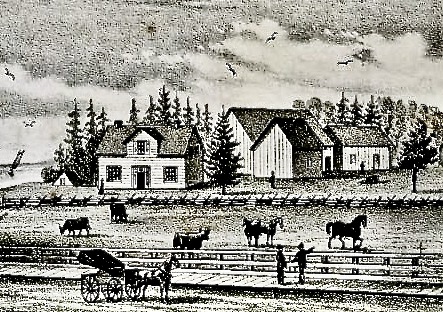
   He stayed on the cove where he landed, building a house. He cut, limbed, and sawed trees by hand and split blocks with an axe. The wood would be ready for a stove and fireplace next year. In the meantime, he bought a load of coal from a passing schooner. He found dampness nearby and looked for an underground spring. When he found it, he dug it out for drinking water, saving himself the work and expense of digging a well. Whenever he could he cleared land. It was one stump at a time, pulling them out with a team of draft horses. Sometimes it seemed like it was all he did.

   “The islander making a new farm cuts down the trees as fast as possible until a few square yards of the blue sky can be seen above. Roots and branches lying on the ground are set on fire and sometimes the forest catches fire acres of timber are burned,” is how Walter Johnson, who came to the island to start Sunday schools, described it.

   Kieran put enough salted cod away to feed a God-fearing family of Acadians. When the weather changed for the worse, he ate, smoked, read, and slept through the season, living in his union suit. The dead of winter arrived near the beginning of January and kept at it through February. The daytime high temperatures were below zero and the overnight low temperatures were less than below zero. After spring arrived and the Prince Consort proved true to his word, his land grant delivered, stamped with officialdom, he continued clearing land and building his house.

   He wasn’t a food growing man, but he had to eat. His first task was putting in a root garden of beets, turnips, and potatoes. They would store well during the winter. He made sure there were onions. They added flavor to food and were a remedy to fight off colds. Whenever he started coughing or sneezing, he stripped and rubbed himself all over with goose grease, stuffing a handful of sliced onions into his underwear. He always felt better afterwards. 

   Corn, peas, and beans could be dried and stored for soup. A bachelor might even live on the fare. Rhubarb was a perennial and a harbinger of warmer days. After a long winter it was the first fresh produce. He planted plenty of it. The island had a short but robust growing season. He woke up before sunrise and worked until dusk. He kept at it every day. The Sabbath meant nothing to him.

   The Prince of Wales visited Prince Edward Island that summer during his tour of British North America, arriving in a squadron consisting of the Nile, the Flying Fish, and three more men-of-war. The Nile accidentally grounded trying to enter Charlottetown’s harbor. Once the tide came in the unlucky boat sailed away towards Quebec. Spectators cheered Bertie’s progress to Government House on streets decorated with spruce arches. 

   “The town is a long straggling place, built almost entirely of wood, and presents few objects of interest,” the Prince of Wales wrote home to his mother Queen Victoria. She was too busy to reply with commiseration. England had been importing loads of Southern cotton for its textile industries, which were exporting loads of cloth back to the United States. Queen Victoria was on the side of Johnny Reb, but Prince Albert cautioned her to not take sides and meddle in foreign affairs. When the Union Navy seized a British ship with two Johnny Reb’s on board, there was an outcry in Parliament. A declaration of war was submitted for the queen’s signature. In the meantime her consort hid her quill pen.

   Prince Albert died within the year, but not his admonishments about politics. Queen Victoria stuck to his guns for the next forty years. “I love peace and quiet,” she said. “I hate politics and turmoil. We women are not made for governing, and if we are good women, we must dislike these masculine occupations.” A third war with the United States would have been problematic.

   It was a cloudy afternoon, but when it cleared, the Prince of Wales went horseback riding. That evening there was a dress dinner and ball at the Province Buildings. His lordship took a minute to step out onto a balcony. “Some Indians grouped themselves on the lawn, dressed in their gay attire, the headgear of the women recalling the tall caps of Normandy,” he told an aide. When the squadron ferrying the royal party embarked towards the mainland it was in a heavy rain. No one who didn’t need to be on deck wasn’t on deck. There were no spectators in the harbor waving hats and kerchiefs. Even the Mi’kmaq stayed away.

   “Our visit it is to be hoped has done much good in drawing forth decided evidence of the loyalty of the colonists to the Queen,” the Prince of Wales proclaimed. Colonial loyalty and Queen Victoria’s confidence in her colonists were soon to be tested. It was not yet viable, but Confederation was rearing its head. He played cards and lost money on his way to Quebec. He was loath to ante up. The wealthy are always more tight-fisted than the beggarly.

   Kieran hadn’t bothered making the long trip into town, having already gotten what he wanted from the royal family. The Prince of Wales was a playboy. Kieran knew he didn’t care whether any of his subjects lived or died. When the Irishman was able to at last move into his house, he started work on a horse barn. It would be large, more than large enough for stabling animals, milking cattle, and storing tools. The haymow would hold more than forty tons to feed his animals during the winter.

   At the same time, he started looking for a wife. He needed help inside the house so he could work outside the house. He needed somebody he could trust and talk to. Life without a woman on Prince Edward Island was a hard life. He found his wife-to-be at the same time he was finally finishing the barn.

   He met her in the cash provision store in Cavendish. Siobhan Regan was 19 years old, a few years older than half his age. She wasn’t pretty or well off but looked sturdy and round bottomed. He was sure she could bear children without killing herself or the infant. She could read, although she seldom did, except for the Good Book. She was ruddy cheeked with big teeth. She was a quiet woman, which suited him, who used the spoken word only for what it was worth.

   They were married and snug in their new house, home from the wedding in a buggy retrofitted with sleigh runners, the night before the last big snowfall in April. She got pregnant on Easter Sunday and stayed more-or-less pregnant for the next ten years, bearing six children, all of whom survived. Her husband refused the services of the village’s midwives, refused the services of the doctor, and delivered the children himself. He threw quacksalvers out the door with a curse and a kick. He trusted them as much as he trusted the Prince of Wales. They peddled tonics saturated with moonshine and opium. He had had some of both, enough to know they were no good for the sick or healthy, more likely to kill than not. He never drank port, punch, or whiskey, rather drinking his own homemade beer. He liked to wrap up the day with a pint and his pipe.

   He knew cholera and typhus had something to do with uncleanliness, although he didn’t know what. He had seen enough of it on ships, where straw mattresses were rarely destroyed after somebody died from dysentery while laying on them. He ran a tight ship, keeping his house and grounds in working order. He didn’t let his livestock near the spring, instead taking them downstream. He had seen the toll in towns where garbage was thrown into the street and left there to rot. He and his wife were inoculated against smallpox, and as the children got on their feet, so were they. He brooked no objections about it.

   Kieran wasn’t going to throw the dice with the lives of his children. Five of his ten brothers and sisters had died before they reached adulthood in the Land of Saints and Scholars. Their overlords had something to do with it, famine had something to do with it, and their rude lives the rest of it, putting them into early graves. One of them died on the kitchen table where a barber was bleeding him. He bled to death. They buried him in cold sod. The family shunned the barber for always afterwards.

   Siobhan took a breather from childbearing towards the end of the decade. Her husband and she went to Charlottetown twice that summer to see shows at St. Andrew’s Hall. They saw “Box and Cox” and “Fortune’s Frolic.” Both of them were directed by the eccentric Wentworth Stevenson, an actress and music teacher trained in London who had formed the Charlottetown Amateur Dramatic Club. 

   They stayed at Mrs. Rankin’s Hotel, having breakfast and dinner there, walking about the city, stopping for tea when the occasion arose, and spent their otherwise not engaged hours making a new baby. When they were done, they went home. The children weren’t surprised months later when told another one of them was on the way.   

   Every farm on Prince Edward had a stable of horses for work and transport. Most farmers used draft horses for hard labor, the nearly one-ton animals two-in-hand plowing fields, bringing in hay, and hauling manure. It was his good fortune to know horses inside and out, whether big or small. The carrying capacity of his land was more than a hundred horses. He wasn’t planning on that many, although a hundred would suit him well enough if it came to that. He was going to grow most of his own food and sell horses for the rest of life’s essentials and pleasures.   

   By 1867 when Prince Edward Island rejected the thought of joining the Confederation, even though it hosted the Charlottetown Conference in 1864 where it was first proposed, he was well on his way to making his horse farm a going concern. Confederation didn’t concern him, one way of the other. Many islanders wanted to stay part of Great Britain. Others wanted to be annexed by the United States. Some thought becoming a dominion on their own was best. He kept his eyes on the prize, which were his family and his farm.

   John Macdonald, the country’s first Prime Minister, who was always worried about American expansionism, tried to coax the island into the union with incentives, but it wasn’t until they were faced with a crisis that Prince Edward Island’s leaders reconsidered his various offers. It was when they put themselves into a hole that John Macdonald’s efforts paid off.

   A coastline-to-coastline railway-building plan gone bad put Prince Edward Island into debt. It spawned a banking crisis. Ottawa agreed to take over the debt and prop up the financing needed to resume railway construction. Parliament Hill had only been in business for ten years, but it learned its business fast. There was a demand for year-round steamer service between the island and the mainland. Ottawa agreed to the demand. The province wanted money to buy back land owned by absentee landlords. Ottawa agreed to that, too. In the event, the politics and wrangling went on. “Let us pray,” Kieran said, even though he wasn’t a church-going man. “Oh, Lord, give us strength to bear that which is about to be inflicted upon us. Be merciful with them, oh, Lord, for they know not what they are doing.” He neglected to say amen.

   He was better off than many people on the island. He had some amount of hard cash while most islanders had no cash to speak of and bartered almost everything. When the chance arose to make a killing during the horse disease of 1872, he took it. The pandemic started in a pasture near Toronto. Inside a year it spread across Canada. Mules, donkeys, and horses got too sick to work. They suffered from exhaustion. They coughed, ran a fever, and keeled over getting out of their barns and stables. Delivering lumber from sawmills or beer barrels to saloons killed them outright. They died like flies.

   “There are not a hundred horses in the city free from the disease,” a newspaper editor in Ottawa wrote. “We have very few horses unaffected,” another editor in Montreal wrote.“ The only place the pandemic didn’t touch was Prince Edward Island. “When the disease was raging in the other provinces, our navigation was closed, and our island entirely cut off, in the way of export or import from the mainland, which in fact must have been the reason it did not cross to our shores,” wrote the editor of the island’s Patriot newspaper.

   Kieran drove forty horses to Summerside where they were loaded on two ships for crossing the Northumberland Straight. Once on shore they were walked to the railhead in New Brunswick and shipped by railcar to Montreal, where money for horses was better than anywhere else. After he was paid he secreted the money inside his shirt. He kept his jacket buttoned up to the collar all the way home.

   The next year the island’s voters were given the option of accepting Confederation or going it alone and seeing their local taxes go sky high. “I hope they can finally make up their minds,” Kieran said. Most voters chose Confederation, voting their pocketbooks. Prince Edward Island officially joined Canada on July 1, 1873. The weather that day was foul and then a storm rolled in. Lightning lit up the low dark clouds, followed a second later by sonic booms. Foxes lay low in their foxholes. The night wasn’t fit for man or beast.

   It was two years later in August, lightning bolts slashing the sky, that the prize horse on Foyle land spooked and kicked Kieran in the head, knocking an eye out, breaking his jaw, and fracturing his skull. Everything he knew about horses, as well as the money from the sale of them in Montreal, which he had hidden in a hole behind the barn, flew out the window with his soul. The gates of both Heaven and Hell opened wide to admit him. He tossed the Devil’s invitation aside.

   Flags flew on the island that same August when George Coles died in Charlottetown. He had been the first premier of Prince Edward Island and one of the Fathers of Confederation. It hadn’t kept him from fighting a duel with Edward Palmer, another Father of Confederation. He had been a feisty man. He was convicted of assault over the duel. He spent a month in jail while still serving in the provincial government. His twelve children visited him every day and brought him beer every day. He had been a brewer earlier in life. He always said, “There is no beer in Heaven which is why we drink it here.”

   Siobhan folded her flag and buried it with her husband in the St. Peter’s boneyard up the hill. After the interment, her children gathered around her, she looked out on the Atlantic Ocean from the top of the rise. Her husband had crossed the western ocean at peril to himself to make his fortune, no matter what it might be. He was gone now but the land was still theirs. She would never give it up. It would always be theirs. Her children’s children would bear fruit there.

   Siobhan wasn’t going anywhere, no matter whether it was Canada or the United States or anywhere else on the island. She couldn’t raise the dead, but she could raise her children on the farm her husband had made. She was determined none of them would ever forget their father. Foyle’s Cove would stay what it was and where it was.

   She started the slow walk home with her sick at heart brood. They walked down the red road to the cove and their farm. The smallest of her issue, a girl with pigtails flapping, pulled at her mother’s dress.

   “Mammy, I have a secret to tell you.”

Excerpted from the book “Ebb Tide.”

Ed Staskus posts stories on 147 Stanley Street http://www.147stanleystreet.com and Cleveland Daybook http://www.clevelandohiodaybook.com. To get the site’s monthly feature in your in-box click on “Follow.”

“Ebb Tide” by Ed Staskus

“A thriller in the Maritimes, out of the past, a double cross, and a fight to the finish.” Sam Winchell, Beyond Books

Available at Amazon: https://www.amazon.com/dp/B0CV9MRG55

Summer, 1989. A small town on Prince Edward Island. Mob money on the move gone missing. Two hired guns from Montreal. A constable working the back roads stands in the way.

A Crying of Lot 49 Publication

Tough as Nails

By Ed Staskus

   My grandmother hit the deck pretty as a prayer book the day she was born. She didn’t come into the world tough as nails. She wasn’t that way as a girl, a young woman, a schoolteacher, a newlywed, or a wife and mother. But that was the way she was when World War Two ended and she was waking up to her second year in a Siberian prison camp. She survived by being that way for more than ten years, in the middle of nowhere, slaving away. She stayed alive, somehow. It was no way of life stuck in the Soviet dark ages.

   She was born near the tail end of the Gilded Age, although it wasn’t anywhere near anything gilded. She missed out on the mischief of the robber barons. She was born in Russia during the fin de siècle. She missed the debates convulsing Europe at the time concerning the moral responsibility of art. Even if she had heard the arguments, it’s doubtful she would have cared. She missed the Boxer Rebellion, the Second Boer War, and the Philippine-American War. When the pea shooters of those conflicts were put away, she got to live through the blitzkrieg of World War Two.

   Growing up she had an inkling most Lithuanians hated Muscovites, for taking over their homeland, forbidding the native language, and exploiting everything they touched. By the time she was grown and gone to Lithuania she knew for sure Russia was feared and distrusted on all its borders.

   My grandmother Antonina met my grandfather Antanas when he was stationed in Saransk. It is in the Volga basin where the Saranka and Insar Rivers meet. The garrison was four hundred miles east of Moscow. Antanas Staskevicius was a Lithuanian officer in the Russian Imperial Army. He was more than a thousand miles from home. My grandmother came from a nearby small town. She earned her teacher’s certificate in Saransk. She was teaching kids their Cyrillic ABC’s.

   The whistle-stop was founded as a fort, on the left bank of the Isar River, at the crossroads of Moscow and the Crimea. Before World War One its commercial life revolved around honey, meat, and leather. After the war its factories stayed closed for more than ten years when there weren’t any available fuels or raw materials.

   “My father was trained as an officer and sent to serve there with an infantry regiment,” my father said. “It was a hard post for him, because back then they used to say drinkers go to the navy and dimwits go to the infantry.” The Imperial Army had more than a million men in uniform, most of them conscripted, most of them peasants. There were a quarter million Cossacks, too. Only the Cossacks knew what they were doing.

   Antanas courted Antonina and they got married sooner than later. They had a daughter, Eugenia, in 1917. They called her Genute. Another daughter, Gaile, was born the next year. My father was born six years later, in 1924, in Siauliai in the north of Lithuania. He was named after King Vytautas the Great. His mother called him Vytas. His sisters called him many things, including the little prince, the pickle prince, and the rotten prince.

   Siauliai is home to the Hill of Crosses, which is a hill less than ten miles from the town. It is covered with tens of thousands of wooden crosses, crucifixes, and statues. It was after Tsarist forces crushed the November Uprising of 1831 when the first of them appeared.

   By 1918 Lithuania had been missing from the map for more than a hundred years, having been disappeared after the Partition of Poland. Since that time, it had been under the thumb of the Russian Empire. Late that year, when the war finally ended, and Russia was being convulsed by its Bolshevik revolution, Antanas and his new family went home to a newly independent country.

   “Lithuania didn’t have many officers when they formed their own army,” my father said. “Most of them were men who had been conscripted into the Imperial Army before the war.” Most of them burned their Russian uniforms as soon as they could. “My father fought in the post-war battles around Klaipeda and after that he served in the secret service in Kaunas, which was the capital.”

  Lithuania had declared independence in February 1918 and for almost three years fought Soviet Russians, West Russians, and Poles for their homeland. Finally, in 1920 they formed their own government, although they later lost Vilnius to the Poles, with whom they remained officially at war with little blood spilled. In September 1939 Poles found out they were in the frying pan. Vilnius was suddenly off the menu.

   After the fighting my grandfather was awarded land for serving his country. The family had a house in town but lived on a farm most of the time. They spoke Russian at home. Except for what he picked up among his friends, so that he had a sprinkle of street cred, my father spoke little Lithuanian until he started school.

   During World War One most of Siauliai’s buildings were destroyed and the city center was obliterated. Since its founding in the 13thcentury, it had burned down seven times, been struck by pandemics seven times, and World War Two was the seventh war that wrecked it. It was a winsome town between the disasters.

   “When my father became the governor of the district, we moved to the city there,” Vytas said. It is a royal town founded in the early 16th century on the plain of the Nevezis River, about fifty miles east of Siauliai. During the interwar years Lithuania was divided into 24 districts and each district had its own governor. Antanas was the governor of Panevezys until 1938.

   Vytas went to grade school and high school there, but then his father was made governor of Zerasai, which was more-or-less a summer resort. In 1834 Zerasai had burned down and been rebuilt. Two years later it was renamed Novoalexandrovsk, in honor of Tsar Alexander’s son, but after the war to end all wars was over and done with the name was thrown out the window.

   “No sooner was my father made governor, my mother didn’t want to move there, since it was far from where we lived, so I stayed with her,” Vytas said. “But I didn’t get along with the other students in town. It was a strict school, and everybody had to dress nice. On my first day of high school, I was dressed too nice, like I was going to a wedding, with a tie and everything, and everybody laughed at me. ‘Where are you from, the sticks?’ they all said. I didn’t make any friends there.”

   He told them, “I’m going to Zerasai.” He moved there in 1939 and lived with his father. “We always studied a second language in school, and since my mother was Russian, studying that was easy for me. But when I got there, I found out they only had English as a second language. My father had to hire a tutor to help me.” He soon spoke Lithuanian, Russian, and English.

   All during the 1930s the world had been changing fast. It changed a lot faster the last year of the decade. Father and son moved back to Siauliai. “The Russians came in 1940. All the high officials were let go and they selected new people who they wanted in the driver’s seat. They said they didn’t run the country themselves, we Lithuanians did, but it was the Lithuanian Communists who were in charge, so it was the Russians.”

   The family spent more and more time on their farm, renting out their house in Siauliai. “It was only a few miles from our farm to town. I used to walk or bicycle there. But the mood was bad. Everybody was on edge. Everybody thought something terrible was going to happen.”

   The Russian invasion of Lithuania was completed by the late summer. Businesses were nationalized and collectivization of land began. As the Soviet presence expanded the family discussed leaving the Baltics. “Why don’t we go to Germany?” Antonina asked. She wasn’t a fan of her Muscovite kith and kin. She had an insider’s track making judgment calls about them.

   “We had a chance to leave the country and go somewhere else. My mother wanted to go. We talked about it often.” But my grandfather didn’t want to leave his native land. “I have never done anything wrong that they would put me in jail,” he told his family. “I have always been good to people. They aren’t going to put me in jail.”

   In the fall of 1940, a company of Red Army infantry commandeered their house and farm for several days. “They didn’t do anything crazy, or mistreat us, but they hadn’t washed in months. They stunk and they rolled their cheap tobacco in newspaper. They smoked all the time. It took us a week to air out the house.”

   The family stayed on the farm through the winter. Then, as the mass arrests and deportations of more than17,000 Lithuanians began in June 1941, my grandfather was picked up by NKVD plainclothesmen. “He was gardening in our yard, wearing a shirt, old pants, and slippers when they drove up, a carload of Russians, and stopped, saying there was something wrong with their engine,” Vytas said. “I’ll help you out, my father said. He walked over to the car with them. They pushed him into it and drove away.”

   Vytas was in school taking his final exams that morning. “My mother called the school and told me my father had been taken. I ran out of class and went home right away on my bike.” His mother packed up clothes, socks and shoes, and soap for her husband. They went to see him the next day.

   “The man who was running the jail was a Jewish fellow. He had grown up with us and was a friend of our family, but when my mother asked him to help us, he said times have changed.” The old order was out. There was a new order. Asking for help meant getting nowhere.

   “He was a Communist and had been in and out of jail because of it. He was always in trouble. My father always let him go after a few days, telling him to not get involved in politics anymore. Just be a nice boy, he would tell him, but then the next thing we knew he would be in jail again. He wouldn’t help my father when he was arrested. Everything’s different now, he said.”

   My grandfather, who had once commanded the local police, stayed stuck in his jail cell. “They didn’t let my mother talk to my father,” Vytas said. “We went there several times, but they didn’t let us see him. We never saw him again.”

   Antanas Snieckus, the top dog of the Lithuanian Commies, supervised the mass deportations. He decided who was an “Enemy of the People.” Teachers, priests, policemen, civil servants, politicians, anybody who was a member of the Nationalist Union or the Rifleman’s Union, and landowners were on the list. Tens of thousands of them were deported. When they checked their tickets, they discovered the deportations had no expiration date.

   My grandfather was taken to Naujoji Vilnia and shoved into a boxcar. The train left Lithuania on June 19, 1941. Four days later, at the Battle of Raseiniai, the 4th Panzer Group, part of the first phase of Operation Barbarossa, the German invasion of Russia, wrapped up the complete destruction of Red Army armor and air forces in Lithuania. Within a week the Nazis were the feet on the ground.

   The Russians transported my forefather to a forced labor camp near Krasnojarsk in Siberia. He was put to work sawing down trees all that winter. He starved to death the next winter of 1942. Anton Chekhov, a noted Russian short story writer, once wrote that Krasnojarsk was the “most beautiful city in Siberia.”

   “The morning after my father was arrested, I drove our horse and wagon to school to finish my exams,” Vytas said. “I had to deliver milk to my teacher’s family, too. But when I stopped at his house, he ran out with his family and said, please take us to the railroad station. I said OK and they all got into my wagon. It was him and his wife and their two children. I took them to the station. After that I never saw them again. The next day one of our neighbors told me the secret police had come to the teacher’s house that same afternoon looking for him. Anybody from an educated family, the Russians were worried about all of them. They were afraid all the high-class people were against them.”

   When the NKVD began mass arrests of Lithuanians, Soviet officials seized their property, and there was widespread looting, especially by the body politic. It was every man for himself and God against all, unless you were a dyed in the wool comrade. “If you were a Communist then you were all right. The father of one of my friends was a metal worker. He didn’t even know how to read and write, but the Russians made him the mayor of Siauliai because he was a Communist.”

   My father’s mother Antonina, sister Genute, and he stayed on the farm after the Nazi takeover. His sister Gaile was living in Vilnius. There was an uneasy peace. “The day the Russians left and before the Germans came, I was in Vilnius,” Vytas said. “Everybody rushed to the food warehouses and broke into them. It wasn’t that we were robbing them, but everybody was doing it, since there was no food. Gaile and I went, too. We filled up our bags with bread and pork, all kinds of food, and took everything home. When the Germans arrived, they put a stop to it.”

   He stayed in Vilnius for several months, but then decided to go home before the end of summer. The family farm had to be cared for, but first, he had to get a travel permit. “I couldn’t get to see a single German to apply for a permit, but finally I talked to somebody who had known my father and got an appointment. The officer told me they weren’t issuing any for the time being and to come back, but after we talked about my father a little, he said all right, and wrote one out for me.”

   He took a train north and walked home, but when he got there, he discovered a company of Wehrmacht had taken over the farm. “They were there three weeks, more than seventy of them. I couldn’t even get into our house since the officers had taken it over. But those Germans were good men. They didn’t do our farm any harm. They had their own tents and their own mess. I made friends with some of them. We drank beer together at night.”

   His father’s practice had been to have a foreman run the farm. The foreman hired three men and three women every spring. Although the farm had chickens and pigs, and draft horses to do the heavy work, it was mostly a dairy farm with more than twenty cows.

   “When I came back, my sister Genute was there, but she wasn’t interested, so she didn’t do any work. I started taking care of things, even though I didn’t know anything. I knew the cows had to be milked and the milk had to go to the dairy. But about growing crops, and the fields, I didn’t know anything. But I did everything as though I knew what I was doing.”

   That fall he sent farmhands out to till the ground in a nearby field. When his nearest neighbor saw them working, he ran across the road towards them.

   “What the hell are you doing?” he shouted waving his arms.

   “I told him we were preparing the ground for next year. He said, you’re ruining this year’s seed and you won’t have any grass next year. We stopped right away. I learned what to do.”

   A year later he was on a horse-drawn mower cutting hay when he saw storm clouds gathering. He thought he would be better served walking the horses, so they could pull the mower faster, and jumped down from his seat. “As I hopped down, I stumbled and fell on the blades of the mower. The horses stopped. My hand was almost cut off. The boy who was helping me ran over. When he saw what happened, and saw my injured hand, he passed out.”

   While the war dragged on across Europe, he had problems keeping the farm going. He had only partial use of his impaired hand and farmhands everywhere were deserting the land. “I went to the prisoner-of-war camp where I knew the Germans gave Russians out. They gave me five of them. They were nice guys, worked hard, and sang at night while they got drunk. One morning I woke up and there wasn’t one of them left. They were all gone. I had to go back to the Germans and ask for five more. My God, how they yelled about it. One officer exploded, shouting that I hadn’t looked after them, shouting that I needed to lock them up at night, and shouting that they weren’t going to give me anymore. In the end I said, I need five more, so they gave me five more. I kept them locked up after that and they were still there when the Russians came back.”

   In 1944 the Red Army stormed back into Lithuania. My father escaped with a mechanized company of Wehrmacht, whisked up by them as they passed. They had been stationed near the prisoner-of-war camp. They told him he had five minutes to decide whether he was coming with them as they retreated.

   “An officer said the Russians were on the other side of the Hill of Crosses.” The hill was on fire. “They were in a big hurry. I only had time to fill a bag with a few clothes, a little money, and photographs of my parents.” It was time to go, come hell or high water.

   His sister Genute, not on the farm that day, fled separately. She got across the border into East Prussia, and later into Germany. His sister Gaile didn’t make it out. “She had a problem at the border. The Russians had taken that area, so she was forced to stop in a town there. She had her daughter and her husband’s mother with her. After the war she finished trade school, became a nurse, and never told anybody where she was from. The Communists never found out anything about her.”

   In July the Red Army captured Panevezys. Later that month they took Siauliai, inflicting heavy damage on the city. Two months later the counterattacking German 3rd Panzer Army was destroyed and for the next nearly fifty years Lithuania became part of the Union of Soviet Socialist Republics.

   “I was glad to get out of Lithuania in 1944,” my father said.

   He found out his mother, my grandmother, had been deported. “Somebody complained and informed on her. We had land, 160 acres, so we were considered capitalists. We weren’t rich, but we weren’t poor, either. There was no real reason that I ever found out about for why they took her. She was sent to a prison camp.”

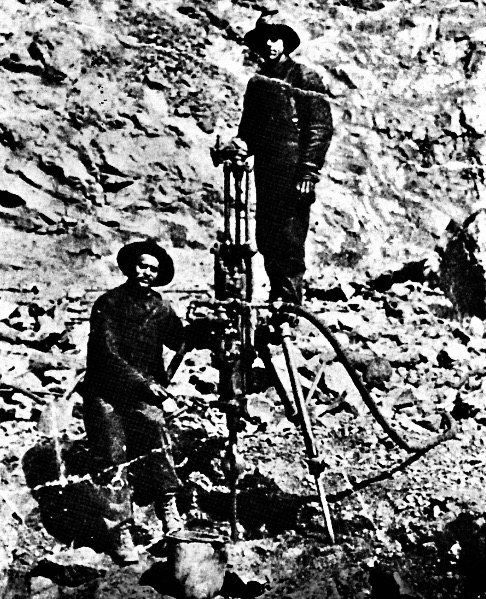
   Between the tail end of World War Two and 1950 more than 87,000 Lithuanians were deported, forced to work in logging and gold mines, forced to live in barracks with leaky roofs and drafty windows, if there were any windows. More than a third of them died. Some of them resigned themselves to their lot. A few escaped into the wild.

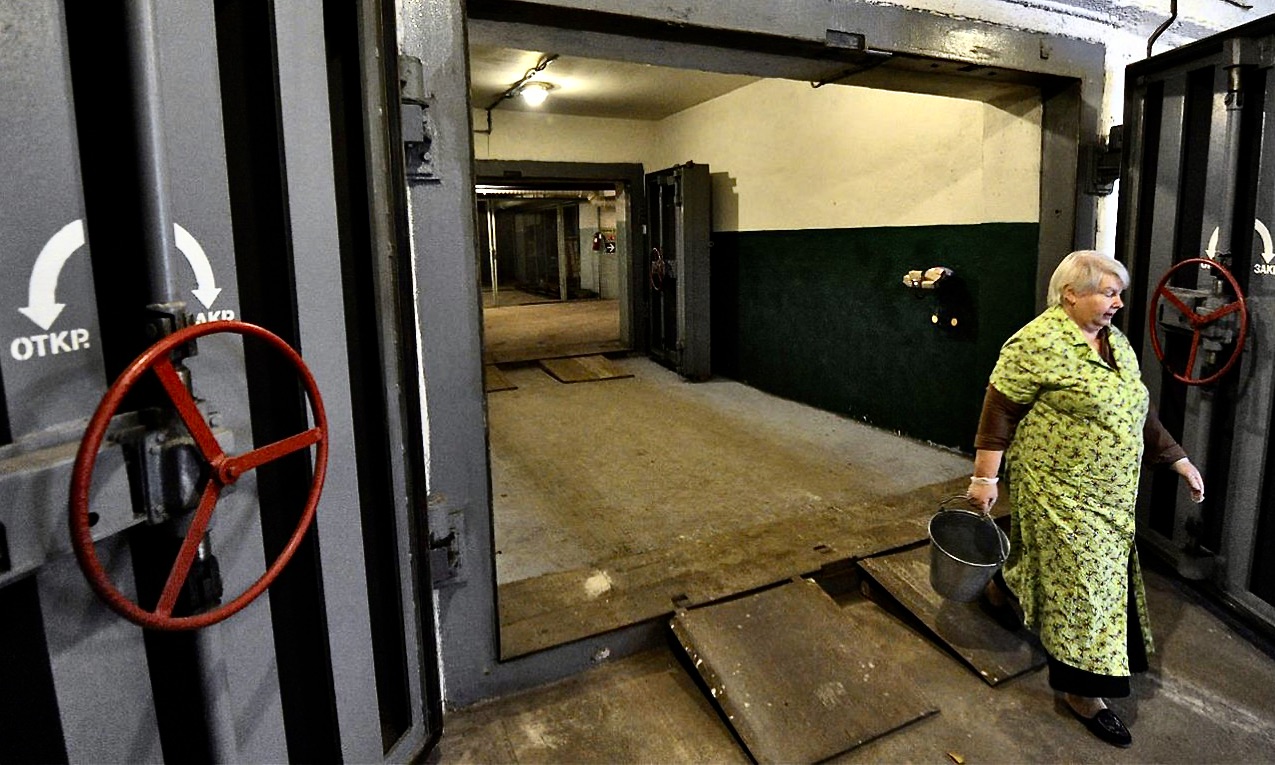
   My grandmother was released from the Gulag in the early 1960s, one of the last deportees to be let go. She was not allowed to return to her home in Siauliai. She was forced to relocate to Silute, to an aboveground bomb shelter-style apartment. She was still on somebody’s shit list. 

   Silute is to the west of Marijampole, in the south of the country. The Nemunas River floods there almost every year, soaking the lowland pastures. Migrating birds call it home away from home because of the delta and all the water. A large part is forested and home to more than three hundred villages.

   My mother’s family, none of whom escaped the country during the war, lived near there. When my mother and sister visited Lithuania in the early 1980s, they made plans to visit Antonina. They kept their plans close to the vest. The scheme was for there to be three of our uncles, three wives, my mother and sister, and some of our cousins in three cars. “My mother would be in one of the cars, I would be in another, and the third car would be a decoy, if it came to that,” my sister Rita said.

   The secrecy was necessary because they weren’t allowed to go anywhere except within the city limits of Vilnius, where they were staying. When they asked about Silute and Siauliai, they were told they were out of bounds. Every place outside of Vilnius was out of bounds. The Intourist official at the front desk of the Gintaras Hotel leaned forward and told my mother it was because of missile installations.

   “Are there missile installations in every town in the whole country?” she asked.

   “I know sarcasm from naïve American when I listen to it,” the official sneered.

   Their convoy didn’t get far the first day of the familial excursion. They were stopped by a roadblock on the outskirts of Vilnius. The police were waiting for them. “They knew,” Rita, my sister, said. “Somebody had overheard something. Somebody talked. They waved us off the road.”

   The police glanced at my Uncle Justinas’s papers and told him to go back. They went to the second car. Everybody had to show their papers. My mother was the best dressed of everybody in all three cars. She was decked out. They asked her where she lived.

   “The Gintaras Hotel.”

   “Turn around, fancy lady, go back to the hotel.”

   They went to the third car. My Uncle Sigitas and his wife Terese showed their papers. Rita was sitting in the back with our cousins. They showed their papers. When it was Rita’s turn, she said, “You’ve seen their papers. I live in the same place.”

   “What’s your name?”

   “Jurgelaitis, just like them,” she lied.

   He asked her something in Russian. She didn’t understand a word of it and glared at him. The stare-down between Soviet cop and American gal took a few minutes. It was a stalemate at the end of the staring contest.

   “The next time I see this one she is going to have to answer,” the policeman warned my uncle. it was bluster until he said, “Turn back.”

   They turned around and the convoy went back to Vilnius.

   Undaunted, a few days later, a day before leaving the USSR, Rita was picked up by Uncle Sigitas before dawn before breakfast at the back of the hotel for an end run to Silute. She skittered into the car, and they sped off. The streets were empty in the autumn gloom.

   “He was a crazy driver, always yelling, ‘Somebody’s following us!’ He stayed off the highway, and the main roads, instead going up and down different ways. I thought the drive was going to take two hours, but it took much longer.” It took five hours on empty stomachs. It was worse than the Aeroflot flight from Moscow, which had been bad enough. Rita had slipped their bad food tray under her seat in mid-flight.

   They were stopped several times, but every time Uncle Sigitas was allowed to stay the course. The roadblock police didn’t explain why. They just waved him onward. When they got to Silute they asked around and found the house where Antonina was living.

   “She lived in a two-room apartment, in a rectangular four-unit building, almost like a concrete log cabin, that looked like it was built hundreds of years, before there even was concrete,” said Rita. She had a low-tech security system, a rusty nail she used to lock the front door. There wasn’t a back door. There was no running water or indoor plumbing. The windows needed caulking. The roof was long overdue.

   She was in her late 80s. She had gone through tough times, but she still had a lot of life in her. She had seven grandchildren in the United States. Rita was the first one she ever saw. She gave my sister a big smile and a big hug, even though she was a small woman and had to reach up. She was barely five feet tall.

   She wasn’t the Man of Steel, like the ringleader who squashed her and the Baltics under his thumb, but he was dead and gone, a downspout memory, and she still had plenty of what it takes. How you start is how you finish. They had lunch, cold beet soup, potato dumplings, and mushroom cookies with strong tea. It was a roots buffet on a beat-up wood table. Rita didn’t slip anything under her chair.

   “How did you like it?” Uncle Sigitas asked on their way back to Vilnius.

   “It’s the best food I’ve had in Lithuania so far,” Rita answered.

   Antonina passed away in 1985. She didn’t die of anything special. She died in her sleep. She was in her early 90s. She had fought tooth and claw to survive in a no mercy Siberia and was worn out. Even the toughest nails one day become the last nail in the coffin. Her time was up on this earth.

   When she died my father bought a mass for her at our Lithuanian American church in Cleveland, Ohio. He had been raised a Catholic and was still a true believer. I wasn’t on the same page, but I wasn’t going to slam the good book shut in anybody’s face that day. When my turn came to say a prayer, I said a prayer for the dead, asking God to grant my grandmother peace and quiet. I was sure where she was going it was a sure thing, not like the third planet from the sun she was leaving behind.

Ed Staskus posts on 147 Stanley Street http://www.147stanleystreet.com and made in Cleveland  http://www.clevelandohiodaybook.com. To get the site’s monthly feature in your in-box click on “Follow.”

Swimming With the Fish

By Ed Staskus

   There are thousands of restaurants in Cleveland Ohio. Captain Frank’s isn’t one of them anymore. It used to be and when it was it was one of the best places to eat if you liked seafood and Lake Erie waves and wind shaking the building on the E. 9th St. pier. Every so often somebody full of cheer and careless after a hearty meal, or simply drunk as a skunk, drove off the pier into the lake. 

   “It was always my last stop after a night of drinking in the Flats,” said Nancy Wasen. “Every night I was surprised no one fell off the pier and drowned.” It wasn’t for want of trying.

   In 1964 Mary Jane Jereb was 16 years old. She was in a car with her cousin and a neighbor and a driver’s education instructor. “He took us downtown, to prepare for city driving. I wasn’t driving, my neighbor was. He directed her to this particular parking lot.” It was Captain Frank’s parking lot. They drove straight to the edge of the slimy pier. Spray from the Great Lake spotted their windshield.

   “The instructor told my neighbor to turn around and head back to Parma. My short young life flashed before me as she pulled into a parking space and backed out and headed home.” They slowly carefully left the dark deep behind.

   Captain Frank’s was a “Lobster House” or a “Sea Food House” depending on the signage of the year. It changed now and then. There was a panhandler who called himself Captain Frank who hung around outside the restaurant day and night, his hand stuck out. Demoted cops who had kept quiet about hidden rooms in gambling joints and pocketed cash in job-buying schemes were assigned to seagull patrol on the pier, always in the dead of winter. They ignored the panhandler and did their best to walk the chill off. Sometimes they helped the innocent just to stay on the move.

   Francesco Visconti was the Captain Frank who ran the restaurant. He was a Sicilian from Palermo whose parents beat it out of Europe the year World War One started. At first, as soon as he could handle a horse, he sold fish from a wagon. After that he operated the Fulton Fish Market on E. 22nd St. He was 40 years old in 1940 and lived with his wife, Rose, a son, as well as three daughters.

   He bought a beat-up passenger ferry building on the E. 9th pier in 1953 and opened Captain Frank’s. I was a child living the easy life in Sudbury, Ontario at the time and missed the grand opening. Kim Rifici Augustine’s grandfather was the original chef at Captain Frank’s. “The wax matches he used for flambé caused a fire back in the 1958,” she said. The fish shack burned down. Frank Visconti built it back bigger and better the next year.

   By the late 1950s my family had emigrated from Canada to Cleveland Ohio. We lived nearby, but never went to the restaurant. My parents were Lithuanians and ate bowls of beetroot soup and plates of potato pancakes and meat-filled zeppelins at their own table. They didn’t know a Mediterranean Diet from Micky Mouse.

   In the Old Country they had feasted on pigs and crows. My mother’s father was a family farmer who kept porkers, slaughtering them himself, and smoking them in a box he built in the attic of the house, the box built around their fireplace chimney. “It was the best bacon and sausage I ever had in my life,” my mother said eighty years later.

   They hunted wild crows. “Those birds were tasty,” my mother said. The younger the birds the better. Those still in the nest and unable to get away were considered delicacies. Their crow cookouts involved breaking necks and boiling the birds in cooking oil over a bonfire. They served them with whatever vegetables they had at hand.

   Since I was part of the family, I ate with my parents, my brother, and sister. My mother prepared every meal. I ate whatever she made, even the fried liver and God-awful Baltic headcheese, although we never, thank God, had carrion-loving crows. Even if I had wanted to go to the Lobster House, I didn’t have a dime to my name

   Captain Frank’s boomed in the 1960s and 1970s. There were views of the lake out every window. There was an indoor waterfall. If you had water on the brain, it was the place to be. The food was terrific. Judy Garland, Nelson Eddy, and Flip Wilson ate there whenever they were in town doing a show. The Shah of Iran and Mott the Hoople partied there, although not at the same time. They weren’t any which way on the same wavelength, other than under the spell of Captain Frank. He never asked them to leave, no matter how late it was.

   There was a luncheonette behind the restaurant that doubled as a custard stand in the summer. When the Shah or Mott the Hoople stayed later than ever, they could sit in the back in the morning in the breezy sunshine with a cup of custard while lake freighters went back-and-forth. “I never went inside Captain Frank’s, but I remember the ice cream shop in the back well,” recalled Bob Peake, a homegrown boy who was a frozen sweets connoisseur.

   Frank Visconti was a made member of the Cleveland Mob. His criminal record dated back to 1931, including arrests for narcotics, bootlegging, and counterfeiting. The restaurant was frequented by high-echelon hoods and low-minded politicians alike. Many criminal family meetings were held there. 

   “It was the hangout for Cleveland Mafia Enterprises,” said Tom James on Cleveland Crime Watch.

   Longshoremen went to Kindler’s and Dugan’s to drink before and after work, but between their double shifts went to Captain Frank’s for power shots. When they were done it was only a short walk back to the docks. When the weather was bad, they were warmed up and sobered up by the time they clocked back in.

   The restaurant was a football field’s length from Lakefront Stadium, where Chief Wahoo and the Browns played. The ballpark sat nearly 80,000 fans. The Indians were always limping along, their glory days long gone, but the Browns were exciting, and on game day crazy loud cheering rocked the windows of the restaurant. Cold biting winds blew into the stadium in spring, fall, and winter. In the summer under the lights, swarms of midges and mayflies sometimes brought baseball games to a standstill.

   In 1966 the Beatles played the stadium and after that the Beach Boys, Pink Floyd, and the Rolling Stones showed up to rock the home of rock-n-roll. It was a walloping paycheck for a night’s work. In the 1980s U2 brought its big show to town, raking in millions singing about lovesickness and hope. Every so often they threw in something about social injustice.

   Even though I was grown-up by the 1970s, I still didn’t dine at Captain Frank’s. I was living in a rented house in a forgotten part of town, and it was all I could do to feed myself at home. I didn’t have pocket money to eat out. When I finally joined the way of the world and could afford to go whenever I had some spare change and wasn’t too tired from working with my hands all day, I ate out. Most of my friends were already racing to the top. I was starting at the bottom.

   There was a kind of magic eating at Captain Frank’s at night. I watched the lights of ships making their way slowly into Cleveland’s harbors while munching on scampi and warm rolls swimming in garlic butter. They served steaks the cooks seared, but the seafood was usually just threatened with heat and served. That’s why it was good. Students from St. John College on E. 9th and Superior Ave. walked there to have midnight breakfast because it was nearby and substantial

   The Friday night in September 1984 my friend Matti Lavikka and I treated my brother to dinner on his 31st birthday at Captain Frank’s was almost the last birthday he celebrated on this earth. We didn’t know Frank Visconti had died earlier that year, but in the car on the pier after dinner we thought my brother was dying. He was gasping for air. The dinner had been very good, but he looked very bad. We were afraid he might end up swimming with the fish.

   He was getting over a marriage to a Columbus girl that had lasted 56 days. We picked him up in Mentor, where he was living alone, and went downtown. It was a starry late summer evening. We ordered a bottle of Chianti, some pasta, and lots of shellfish. We didn’t know, and he didn’t know, that he was allergic to shellfish. 

   “I don’t know why, but I hardly ever eat fish,” he said. “It doesn’t usually agree with me.” Our dinner at Frank’s that night included scallops, oysters, shrimp, and lobster. He might not have been allergic to all of them, but he was allergic to one of them, for sure.

   Halfway through coffee and dessert, which was sfogliatelle, layers of crispy puff pastry that bundle together in a lobster-like way, he was itching, wheezing, and his head was swelling. His lips, tongue, and throat were like silly putty. He was breaking out into hives. He was getting dizzy and dizzier. It was like he had eaten a poisoned apple.

   Shellfish allergy is an abnormal response by the body’s immune system to proteins in all manner of marine animals. Among those are crustaceans and mollusks. Some people with the allergy react to all shellfish. Others react to only some of them. It ranges from mild symptoms, like a stuffy nose, to life-threatening.

   Matt was a fireman and paramedic in Bay Village. Looking at my brother he didn’t like what he was seeing. We frog-marched him to the car and made a beeline for the nearest hospital. Matti put the pedal to the metal. The Cleveland Clinic wasn’t far, and we had him at the front door of the emergency room in ten minutes. Five minutes later a doctor was injecting him with epinephrine and a half-hour later he was his old self.

   “Thanks, guys,” he said when we dropped him off at his bachelor pad in Mentor. He staggered away to bed.

   After Frank Visconti died the restaurant limped along. The service and food got worse and worse. The tables and chairs and walls looked like they needed to be scrubbed down. Fewer and fewer people went downtown for any reason other than work. I was working downtown near the Cleveland State University campus, where Matt and I had started a small two-man business. One evening when I got off work, I called my girlfriend and invited her to dinner at Captain Frank’s. I had seen her eat buffets of seafood. She had a hollow leg. I knew she wasn’t allergic to any of it. When we got there, however, the pier was dark in all directions. There were no parked cars in the lot and no lights in any of the windows.

   Rudolph Hubka, Jr., the owner the past five years, had given up the ghost and declared bankruptcy in 1989. Nobody said a word. Hardly anybody noticed. The building was demolished in 1994. The only thing left was dust and litter blowing around in the wind.

   We drove to Little Italy and snagged a table at Guarino’s, a woman out front pointing the way. Sam Guarino had died two years earlier, but his wife Marilyn was carrying on with the aid of Sam’s sister Marie, who lived upstairs and helped with the cooking in the basement kitchen. “Marilyn sat in front, and she was like the captain on a ship, making sure everything was just right,” said Suzy Pacifico, who was a waitress at the eatery for fifty-two years.

   We had a farm-to-table dinner before there was farm-to-table, red wine, and coffee with tiramisu. Mama Guarino asked us how we liked the cake. We told her we liked it very much. We didn’t see any fishy characters. When I drove my girlfriend home that night we were both happy as clams.

Ed Staskus posts stories on 147 Stanley Street http://www.147stanleystreet.com and Cleveland Ohio Daybook http://www.clevelandohiodaybook.com. To get the site’s monthly feature in your in-box click on “Follow.”

Dead Man’s Curve

By Ed Staskus

   Maggie Campbell was almost 22 years-old the morning she drove face first into a cement truck. She was driving a yellow 1973 coupe a girlfriend of hers at the Bay Deli, where they both worked, had sold her for one hundred and eighty-five dollars in cash. It was a rust bucket, but it was a Jap car so the two hundred thousand miles on it hadn’t made a dent in it running, at least not yet.

   She had gotten up late that frosty spring morning and shoveled down a Fudgsicle, a hot dog, and a cup of joe for breakfast. “I better go,” she said to herself, throwing the Fudgsicle stick in the trash with the other Fudgsicle sticks.

   Her roommate and she were sharing a small house on Schwartz Road behind St. John’s West Shore Hospital in Westlake. She was late for class at the Fairview Beauty Academy. She bolted out to the car. When she got into it, she couldn’t wait for the front window to defrost more than the small square absolutely needed to look through. She was squinting through one square inch of windshield taking the curve at Excalibur Ave. and bopping to Jan and Dean on the radio.

   “It’s no place to play, you’d best keep away, I can hear ’em say, won’t come back from Dead Man’s Curve.”

   “I never touched the brakes,” she said after hitting the cement truck headlong.

   The truck was parked on her side of the street. The front end was facing her. That was the first surprise. She knew she was on the right side of the street as she came around the curve since she could see full well out her driver’s side window. At first, Maggie didn’t know what happened. The second surprise was that when she tried to get out of her car she couldn’t move. When she looked down to see why she couldn’t move she saw the steering wheel jammed into her legs. She was sandwiched between the wheel and the seat. Some days you are the dog and other days you are the fire hydrant.

   She finally got out of the car by swinging one and then the other leg over the steering wheel. Standing next to her coupe, looking at the man suddenly standing in front of her, she realized why no one had come to help her. He was white as a ghost. The rest of the cement men behind him looked like they were looking at a ghost, too. They thought she had died in the car, which had turned into scrap metal in an instant.

   “I tried to wave you off,” one of them said.

   “Hey, here’s a clue, bub, I didn’t see you and I didn’t see the truck,” she said. “Thanks for the heads up, but I didn’t see anything.” The next thing she knew a woman walked up to her and shoved Kleenex up her nose.

   “You better sit down,” she said.

   “That’s OK,” Maggie said. “I’m good. Besides, I’ve got to get to school.”

   “No, you better sit down. I’ve called an ambulance. They should be here in just a minute.”

   “Seriously, thanks, but no. I just bumped my nose.”

   She sat Maggie down. When she did Maggie’s white beauty school skirt rode up and she saw her mangled knees. The skirt was bleeding.

   The convertor radio underneath the dash had slammed into them. Even though she couldn’t feel anything bad, she could see shinbones and a thighbone. That looks bad, she thought. It had only been a minute since she had gotten out of the car. The front end of it was jack-knifed. She left patches of raw skin behind her on the front seat. 

   It was when the excitement was over that she went for real. She lost her eyesight. It was her next-to-last surprise. She blinked. It didn’t help. She blinked again. It still didn’t help.

   “Everything’s gone fuzzy, like an old TV on the fritz.”

   “Just close your eyes. The paramedics are here.”

   “OK, open your eyes,” one of the paramedics said.

   “Are they open?” she asked.

   “Yeah,” he said.

   “Are you sure? I can’t see anything.”

   “Is it like in a closet, or more like the basement, with the lights all out?”

   “A closet or a basement? What kind of as question is that? Oh, my God, you are such a smart ass. Who sits in a dark closet except crazy people?”

   They laid her down and out in the ambulance and, suddenly, her sight came back.

   “It was just the shock,” she told them.

   “Stop self-diagnosing,” the medic said.

   “I was a lifeguard at the Bay Pool. I know my stuff!”

   St John’s West Shore Hospital must have thought she was younger than she was. Underage is what they thought, so they called her parents. Her mom was on the way, they said. It was Maggie’s last surprise.

   “You did what? You called who? I’m 21-years-old. You didn’t need to call my parents.”

   “It’s done.”

   “You rat bastards!” Maggie was beyond mad. She hadn’t talked to either of her parents for more than a year. “Fuck off and die” had been the last thing she had said to them.

   She planned on moving out as soon she turned 21, but her dad didn’t want her to grow up or move out. Maggie wanted both, to be 21 and gone. Her parents wanted her out, too, but they didn’t want her to go, either. When she told them she would be leaving the day of her birthday, first, they slapped the crap out of her, and then they threw her out of the house. She had no money, no clothes, and nowhere to go.

   She called her dad from a phone booth about picking up her clothes.

   “If you come grovel for them, you can get them out of the trash,” he said.

   “You keep them, dad, because I’m not going to grovel.”

   At the very least they raised a true-blue Scottish kid, Maggie thought. She never knew if her dad really threw her clothes in the trash because she never called or went back, at least not for the clothes.

   Her mom burst through the emergency room door at St. John’s at the same time as her dad got her on the phone. Before that she had been joking with the doctors, saying she cut her legs shaving.

   “Oh, my God, look at her legs!” her mom started shouting.

   “Who let that woman in here?” Maggie blew up.

   “Who’s the president?” her dad asked over and over on the phone until the line went dead. The next thing she knew her whole family, sisters, brother, her dad rushing in from work, were all in the room, and then the adrenaline started to wear off fast. She had been laying there, not too panicked, and suddenly her constitutional joy juice was all gone. She hurt like hell. She went banshee.

   AAARRRGHHHHHH!!

   Her younger sister started crying and everybody got so upset about her crying that they put her in her dad’s lap. Her mom stroked her hair. Maggie was left on her back on the table in pain and agony, ignored and all alone until a nurse finally wheeled her away to surgery. No one noticed she was gone.

   At the end of the day, what happened wasn’t off the charts. She broke her nose and had two black eyes along with a concussion. One of her teeth was loose. She hurt both of her knees. One of them had to be operated on. She was released three days later. A policemen told her afterwards if she had hit the back of the cement truck instead of the front she would have been decapitated.

   If that had happened and she had been driving a rag top instead of her hard shell, then “HEADLESS GIRL IN TOPLESS CAR” would have been the headline on the front page of the next day’s West Life News. As it happened, she ended up in the middle of the back page.

Ed Staskus posts on 147 Stanley Street http://www.147stanleystreet.com and Cleveland Daybook http://www.clevelandohiodaybook.com. To get the site’s monthly feature in your in-box click on “Follow.”

Nowhere to Hide

By Ed Staskus

   JT Markunas was assigned to the Queens County RCMP detachment.  He routinely patrolled the north coast of Prince Edward Island. He didn’t mind pulling duty in a police pursuit vehicle. He didn’t mind the car he had drawn today, either. He could have done without the blue velour interior but he liked everything else about it. It was plenty fast enough. It was a Ford Mustang Police Interceptor.

   He had rented a two-bedroom farmhouse in Milton. It was small but the appliances had been updated and it sported a new roof. He planted a root garden. His parents were pleased when they saw the photograph of beets, turnips, and carrots that he mailed them. JT was from Sudbury, Ontario and Prince Edward Island was his second assignment since joining the force. His first tour of duty had been at Fort Resolution in the Northwest Territories. He missed his hometown but didn’t miss Fort Resolution.

   When he was growing up, the Canadian Pacific hauled ore on tracks behind the family house on Stanley St. in Sudbury. When he was a boy, astronauts from the United States trained for their moon landings in the hinterland, where the landscape resembled the moon. After he grew up, he trained for the RCMP at a boot camp in Regina. He was surprised to see women at the camp, the first ones ever allowed on the force. They kissed the Bible and signed their names, like all the recruits, and wore the traditional red serge when on parade, although they wore skirts and high heels and carried a hand clutch, too. 

   He was sitting in his Police Interceptor under a sky that had opened up that morning. Even though Ford had built more than 10,000 of them since 1982, the RCMP had only gotten 32 of the cars. He had one of the two on the island. The car’s motto was “This Ford chases Porsches for a living.” There were lights on the roof, front grille, and rear parcel shelf. He was in Cavendish, on the other side of Rainbow Valley. He was watching for speeders, of whom he hadn’t seen any that morning. He was thinking of stopping somebody for whatever reason, if only to justify the pursuit car. He was also thinking more seriously about having a second cup of coffee, but was waiting until he started yawning. He thought it was going to happen soon. When it did, he would 10-99 the radio room and take a break from doing nothing.

   Cavendish was Anne’s Land. It was where Lucy Maud Montgomery’s book “Anne of Green Gables” was set. He had never read the book, but doubted it had much to do with what he could see in all directions, although the amusement park across the street was named after her book “Rainbow Valley.” It featured waterslides, swan boats, a sea monster, monorail, roller coasters, animatronics, castles and suspension bridges, and a flying saucer gift shop. The paratrooper ride might have been everyone’s favorite, at least if they were children who didn’t know what fear meant.

   Earl Davison, the man behind Rainbow Valley, had been looking for a roller coaster when he found the paratrooper ride. He was in Pennsylvania searching for a bargain at a park that had gone bust. Their coaster seemed to fit the bill at first sight. “It’s a terrific ride, but you’ll need to have a good maintenance team to keep ’er running,” the Pennsylvania man said with unexpected candor.

   When Earl hemmed and hawed, the man suggested his paratrooper ride instead. “It’s the best piece of equipment I have. I will sell you that for $25,000 and we’ll load it for you.” By the end of the next day Earl had written a check and the ride was ready to go for the long drive back to Prince Edward Island. He flipped a coin about it fitting on the ferry. The coin came up heads.

   Earl dreamed up Rainbow Valley in the 1960s, buying and clearing an abandoned apple orchard and filling in a swamp, turning it into a pond. “We borrowed $7,500.00,” he said. “It seemed like an awful lot of money at the time.” When they opened in 1969 admission was 50 cents. Children under five got in free. Ten years later, he bought his partners out and expanded the park. Most of the attractions were designed and fabricated by him and his crew.

   “We add something new every year,” Earl said. “That’s a rule.” The other rule was launching smiles on the faces of children. “Some of the memories you hear twenty years later are from people whose parents aren’t with them anymore. But they remember their visits to Rainbow Valley and that lasts a lifetime.”

   When his two-way radio came to life, instructing him to go to Foyle’s Cove to check on the report of a suspicious death, JT hesitated, thinking he should get a coffee first, but quickly decided against it. Suspicious deaths were far and few between in the province. Homicides happened on Prince Edward Island once in a blue moon. If it was a homicide, it might be his only chance to work on one. When he drove off it was fast with flashing lights but no siren. He reported that the address was less than ten minutes away. 

   Conor Foyle saw the Police Interceptor pull off the road onto the shoulder and tramped down the slope to it. Some people called the RCMP the Scarlet Guardians. Conor called them gavvers. JT put his cap on and joining Conor walked up to where Bernie Doiron was waiting beside the tractor. When he saw the arm handcuffed to the briefcase, he told Conor and Bernie to not touch anything and walked back to his pursuit car. He wasn’t sure what code to call in, so he requested an ambulance and asked for the commander on duty. He described what he had seen and was told to sit tight.

   “Yes sir,” he said.

   It wouldn’t be long before an ambulance and more cars showed up. They couldn’t miss his Mustang, but he turned the lights on top of it back on just in case and backtracked to the tractor.

   “Who found this?” he asked, pointing at the arm. 

   “I did,” Bernie said

   “Is it the same as you found it?” JT asked. “Did you move or disturb anything?”

   “No, we left it alone,” Bernie said. 

   “And you are?” JT asked Conor.

   “I’m across the street in the green house,” Conor said. “These are my fields. Bernie was plowing. He came down and got me when he found this. A fox has been at the arm.”

   “I see that,” JT said, even though he didn’t know what had happened to the arm. He rarely jumped to conclusions. The arm was flayed and gruesome, whatever had happened. He wasn’t repulsed by it. He was patient and objective. The quality that made him a good policeman was that he was patient. He waited alongside Conor and Bernie for backup resources to show up. None of the three men said much of anything..

   JT looked at the ground around him. It was ready for the growing season. There was no growing season where he grew up. Farming had been blighted by smelting. His father had worked the nickel mines in Sudbury his whole working life, never missing a day. He had been an explosives man and made it through his last year, last week, and last day unscathed. He had always known there was no one to tap him on the shoulder if he ever made a mistake.

   His mother raised four children. She dealt with powder burns every day. The family was among the few post-war Lithuanians still left in Sudbury. The rest of them had worked like dogs, scrimping and saving, leaving for greener pastures the first chance they got. His parents put their scrimping and saving into a house on the shore of Lake Ramsey and stayed to see Sudbury transition from open pit roasting to ways and means less ruinous to the land they lived on.

   An ambulance from a funeral home in Kensington was the first to arrive, followed within minutes by two more RCMP cars. A rescue truck from the North Rustico Fire Department rolled to a stop, but there wasn’t anything for the volunteer firemen to do. They thought about helping direct traffic, but there was hardly any traffic to speak of. The summer season was still at least a month away. They waited, suspecting they were going to be the ones asked to unearth the remains. They brought shovels up from their truck and leaned on them.

   A doctor showed up, as well, and bided his time, waiting for a commissioned officer to arrive. When he did there were two of them, one an inspector and the other one a superintendent. They talked to JT briefly and then to the fire department. The firemen measured out a ten-foot by ten-foot square with the arm in the center, pounded stakes into the ground, demarcated the space with police tape, and slowly began to dig, opening a pit. They had not gotten far when the arm fell over. It had been chopped off above the elbow. One of the firemen carried the arm and the briefcase to a gray tarp and covered them with a sheet of thick translucent plastic.

   “Has anybody got a dog?” the inspector asked.

   Many of the firemen farmed one way or another. Most of them had dogs. One of them who lived less than two miles away on Route 6 had a Bassett Hound. When he came back with the dog, he led him to the pit. The hound sniffed around the perimeter and then jumped into it, digging with his short legs, barking and looking up at his master. The fireman clapped his hands and the dog jumped out of the pit.

   “There’s something more there,” he said. “Probably the rest of him.”

   They started digging again slowly and steadily. When they found the rest of him twenty minutes later and three feet under, he was a woman. She was wearing acid wash jeans and an oversized tangerine sweatshirt. She was covered in dirt and blood. One of her shoes was missing. What they could see of her face had been ruined by burrowing insects and worms. She was decomposing inside her rotting clothes. The doctor stepped up to the edge of the pit with the two men who had come in the ambulance. “Be careful, she’s going to want to fall apart as soon as you start shifting her weight,” he said. 

   The two men were joined by two of the firemen. When all four were astride the dead woman they carefully moved her into a mortuary bag, zipped it up, and using the handles on the bag lifted it up to two constables and two more of the firemen. They carried the bag slowly down the hill, the dog following them, placing it on a gurney and inside the ambulance.

   The two constables went back up the hill to join the rest of the men, who were getting ready to sift through the pit looking for evidence. They would scour the ground in all directions, to the tree line and the road. JT had gotten his Minolta out of the trunk and took photographs before and during the excavation. When he was done, he joined the others. They spread out and with heads bowed started looking for anything and everything.

   The ambulance was ready to go when Conor came down to the shoulder of the road. He stopped beside it and tapped on the driver’s side window. When the driver rolled it down, Conor pointed up the slope.

   “Don’t forget the arm,” he said.

Excerpted from the book “Ebb Tide.”

Ed Staskus posts stories on 147 Stanley Street http://www.147stanleystreet.com and Cleveland Ohio Daybook http://www.clevelandohiodaybook.com. To get the site’s monthly feature in your in-box click on “Follow.”

“Ebb Tide” by Ed Staskus

“A thriller in the Maritimes, out of the past, a double cross, and a fight to the finish.” Sam Winchell, Beyond Books

Available at Amazon: https://www.amazon.com/dp/B0CV9MRG55

Summer, 1989. A small town on Prince Edward Island. Mob money on the move gone missing. Two hired guns from Montreal. A constable working the back roads stands in the way.

A Crying of Lot 49 Publication

Behind Bulletproof Glass

By Ed Staskus

   I should have known better when I told the young woman on the other side of the Walgreen’s bulletproof drive-thru window that I needed the kind of coronavirus test that would get my wife and me into Canada and she breezily said, “For sure, this is it.” She was a trained pharmacy technician, but made up her harebrained reply, assuring me all was well even though she didn’t know what she was talking about. We found out three days later trying to cross the border at Houlton, Maine into Woodstock, New Brunswick.

   Getting a straight answer from the young can sometimes be like trying to give fish a bath. They often have a quippy answer for everything. Their answers are in earnest no matter what they’re asked and no matter their wealth or lack of knowledge. Whenever they are fazed by anything they say, “Oh, whatever.” 

   They say whatever they want when they are behind bulletproof glass.

   My wife and I were going to Prince Edward Island, where we didn’t go the summer before because of the 19 virus. Canada closed itself up tight as a clam in March of that year and didn’t reopen for Americans until early August of this year. Once we heard the opening was going ahead, we got in touch with the folks who operate Coastline Cottages in the town of North Rustico on PEI and let them know we were coming on August 21st and staying for three weeks.

   The cottages are on a hillside, on land that has been in the Doyle family going on two hundred years. A park road cut through their farm when it was built in the 1970s, but unlike other landowners they didn’t sell their remaining acreage to the state, so it sits snug inside the National Park. There are several homes on the bluff side of the eponymous Doyle’s Cove, some old and some brand new. In one way or another every one of them houses a homegrown north shore family, except for Kelly Doyle, who has lived on the cove the longest and lives alone.

   It takes two and half days to drive from Lakewood, Ohio to Prince Edward Island. At least it did every other year we had driven to the island. This year it took us six and half days.

   When we got to the Canadian border the black uniform in the booth asked for our passports. We forked them over to the tall trim guard, forearms tattooed, a Beretta 9mm on his hip. He was young and just old enough to be on this side of Gen Z. He looked our documents over and asked where we were from and where we were going.

   “Cleveland, Ohio,” I said. Although we live in Lakewood, an inner ring suburb, we always tell red tape we live in Cleveland. No one has heard of Lakewood. Everybody has heard of Cleveland, for good or bad. At least nobody calls it “The Mistake on the Lake” anymore. 

   I almost preferred the insult. “It keeps the riff raff rich away,” I explained to my wife. “There is no need for Cleveland to become the next new thing. They will just use up all the air and water and our real estate taxes will go ballistic. On top of that, we would end up knee deep in smarmy techies with their cheery solutions to all the world’s problems.”

   We handed our ArriveCAN documents over. We handed our virus inoculation cards over. We had both gotten Moderna shots. We handed our virus tests over, proving we had both tested negative.

   “You are cutting it close,” the border guard sniffed, shuffling everything in his hands like a deck of cards. I was hoping he wouldn’t turn a Joker up.

   The negative test had to be presented at the border within 72 hours of taking it. We were there with an hour to spare, although it would have been two hours if we hadn’t had to wait in line in our car for an hour. We had driven a thousand miles. It was tiresome but waiting in an idling car wasn’t any more skin off our noses.

   It started to smell bad when a second border guard stepped into the booth and the two guards put their heads together.

   “The antigen tests you took aren’t accepted in Canada,” the Joker said. “It has to be a molecular test. You can go ahead, since you’re from Canada, but your wife has to go back.”

   I was born in Sudbury, Ontario, and have dual citizenship, although I only carry an American passport. I couldn’t tell if he was being serious, so I asked him to repeat what he said. He repeated what he said and gave us a turn-around document to return to the USA when I told him I wasn’t ready to abandon my wife.

   We went back the way we had come, just like two of the six cars ahead of us, although we had to wait in line at the American crossing for an hour. Once we returned to Maine, we found out we could get the molecular test, but it would be a week-or more before we got the results. Nobody we talked to, not even the Gods of Google, was any help. A friendly truck driver mentioned New Hampshire was faster, only taking a day or two.

   The truck driver was stout, bowlegged, wearing a Red Sox baseball cap, a two-or-three-day growth of beard on his face, with a small shaggy dog to keep him company on the road. He wasn’t a Gen Z man. It was hard to tell what generation he belonged to, other than the changeless working-class generation.

   We drove six hours the wrong way to Campton, New Hampshire and checked into the Colonel Spencer Inn. It was Saturday night. We got on-line and made test appointments for noon at a CVS in Manchester, an hour away. We streamed “Castle of Sand” on our laptop. It was a 1970s Japanese crime thriller movie and kept us up past our bedtime.

   Over breakfast the next morning our innkeeper told us to go early since the traffic leaving New Hampshire for home on Sunday mornings was heavy. We gave ourselves an hour and a half to drive the 55 miles and barely made it. Luckily, we hadn’t made appointments for an hour later. We never would have made it. The traffic on I-93 going south was a snarl of stop and go by the time we started north back to Campton.

   We got our test tubes and swabs and stuck the swabs up our noses. I spilled some of the liquid in my tube and asked the Gen Z pharmacy technician behind the bulletproof glass if I should start over with a new kit.

   “You’re fine, it doesn’t matter,” she said, lazy as a bag of baloney. She couldn’t have been more wrong, which we discovered soon enough.

   Gen Z is self-centered and self-sacrificing both at the same time. “My goals are to travel the world and become the founder of an organization to help people.” They want to stand out. “Our generation is on the rise. We aren’t just Millennials.” They say they are the new dawn of a new age. “We are an unprecedented group of innovation and entrepreneurship.”

   Welcome to the future, just don’t take the future’s word for it.

   We spent the night at the Colonel Spencer. It was built in 1764, a year after the end of the French and Indian War. During the war the British, allied with American colonists, weaponized smallpox, trading infected blankets to Indians. The virus inflicts disfiguring scars, blindness, and death.

   “Could it not be contrived to send the smallpox among those disaffected tribes of Indians? We must on this occasion, use every stratagem in our power to reduce them,” the British commander Sir Jeffrey Amherst wrote to his subordinates.

   The results were what the continent’s newest immigrants from the Old World expected.

   “They burned with the heat of the pox, and they died to feed the monster. And so, the village was deserted, and never again would the Indians live on that spot,” is how one of the natives described the deadly epidemic.

   We had dinner at Panorama Six82, not far from our inn. The hostess seated us outside on the patio which looked out over a valley and a series of cascading White Mountain hilltops. The sun went down behind one of them and we finished our dessert in the dark.

   Our server was a middle-aged man from Colombia wearing jeans, a Panorama Six82 signature shirt, and a Sonoma-style straw hat. He went back to the homeland every year to visit relatives.

    “They always want money, so I don’t bring too much of it,” Fernando said. “It’s not as dangerous as most Americans think it is. I avoid some neighborhoods, sure, and I avoid riding in cabs. The rebels are in the hills, not the cities, and besides, they don’t do much anymore. The Venezuelans are a problem, all of them leaving their god-forsaken country. But they do a lot of the dirty work for us these days.”

   We drove back to Houlton on I-95. The speed limit north of Bangor is 75 MPH. I set the cruise to 85 MPH and kept my eyes peeled for moose. The fleabags lumber onto the roadway, sometimes standing astride one lane or another. Hitting a moose is a bad idea. A full-grown bull moose stands six to seven feet tall and tips the scales at 1500 pounds. It isn’t certain that the collision will kill the beast, but it will kill your car, and maybe you. They do most of their roaming around after nightfall. We made sure we got to our motel before dusk.

   In the morning my wife was winding down a business meeting on Zoom when there was a knock on our door. It was the housekeeper. She wore a black uniform and black hair pulled back in a bun. She was young. She was part of the Z crowd.

   “We’ll be out in about a half-hour,” I said.

   “Can I replace the towels and empty the trash?”

   “Sure.”

   “Weren’t you here a few days ago?”

   “Yes,” I said, and told her about trying and failing to get across the border and our search for a fast 19 test.

   It turned out the explanation for the motel being sold-out was because of the same problem. Every other person lodging there had been turned around for one reason or another.

   “You should go to the Katahdin Valley Medical Center,” she said. “A friend of mine went there, they did the test, she got it back the next day, and went to Nova Scotia.”

   “Thanks,” I said. We packed and followed Apple Maps to the medical center. The receptionist didn’t know anything about a fast molecular test. She sent us to Jesse, the man upstairs, who was the man in charge.

   “We test on Mondays, Wednesdays, and Fridays,” he said. “It takes about a week to get the results back from the lab.” It was Tuesday. We were already three days late. I started looking over my shoulder for Chevy Chase.

   “Not the next day?”

   “No.”

   We left Houlton and drove to Presque Isle, had lunch, messed around, my wife went running on the town’s all-purpose trail, and we drove to the Caribou Inn in the next town north. While the receptionist checked her computer for our reservation, we heard a wolf whistle through the open door of the office behind the front desk. A minute later we heard it again.

   “That’s just Ducky,” the receptionist said. “She belongs to the manager.”

   “Does she do that often, whistle, I mean?” I asked.

   “Whenever she sees a pretty girl.”

   Another wolf whistle came my wife’s way.

   I must have looked cross, because the receptionist said, “Ducky is a parrot.”

   Ducky was a parrot in a tall white cage just inside the door of the office. Her plumage was green with some red and yellow mixed in. She was a saucy character.

   “She’s twenty years old,” the receptionist said.

   “How long has she been here?”

   “Twenty years.”

   Ducky was spending all her Gen Z years locked up at the Caribou Inn, where flocks came and went. The only lasting relationship she had was with Betty, the hotel’s manager, and the bird’s keeper.

   “I didn’t know parrots lived that long.”

   “They can live to be seventy, eighty years old,” Betty said.

   “Ducky wolf whistles women?”

    “And men. We thought she was a he until she started laying eggs not long ago.”

   The parrot was going to outlive most of us, the 19 or no 19. They sometimes play dead in response to threats. They can also look dead when they are asleep. But if a parrot is lying still and not breathing, looking lifeless, you can assume it is dead.

   We had a non-smoking room, although every hallway that led to our room was lined with smoking rooms. The hallways smelled sad and stale. We were settling in with a bottle of wine and a movie when we got a phone call. It was the lab in New Hampshire that was doing our 19 molecular tests. They had good news and bad news. My wife tested negative, but my test was discarded. 

   “There wasn’t enough liquid in the test vial to maintain the sample,” the lab technician said. “Did you happen to spill some of it?”

   I didn’t bother trying to explain. I got on-line and filled out another ArriveCAN form. When we got to the border my wife had no problem. The only problem I had wasn’t make or break, since they couldn’t deny me entry, test or no test. A health officer gave me a self-test kit and told me to make sure I performed it within four days. She was in her early 30s. I had no reason to be skeptical. She was just out of Gen Z range. I should have been leery since she was wrong. She wasn’t as far out of the field of friendly fire as I thought.

   Four days later, when I went on-line and followed the directions for the self-test, the Indian-looking Indian-sounding woman on the other side of screen was nonplussed when I apologized for waiting to the last minute.

   “I don’t understand.” she said. “You are four days early. You are supposed to test after eight days of self-quarantine.”

   When I started to spell out what had happened, she wasn’t in the mood, and said she would schedule Purolator to pick my test up the next day. Purolator sent me an e-mail saying they would pick up between nine and noon. The truck pulled up just before five. I was grilling dogs and corn on the front deck. The next day I got an e-mail informing me my test came back negative. I had been tested four times in ten days and was finally officially virus-free.

   No matter the generation, Prince Edward Island was the only place and people who got it right. When we arrived late Wednesday afternoon and crossed the nine-mile-long bridge to the province, we waited in one of the many lines edging towards checkpoints. It didn’t take long. A young woman took our vitals while an older man in a spacesuit swabbed our noses.

   “If we don’t call you within two hours you tested negative,” he said.

   We drove to the Coastline Cottages. “Welcome to Canada,” our hosts said. “You made it.” 

   No one from Health PEI called us. We unpacked, watching the day get dark over the Atlantic Ocean, and fell into bed. I drifted off thanking God somebody on our part of the planet knew what the 19 score was, not some mumbo jumbo they dreamed up because they neglected to check the scoreboard.

Ed Staskus posts stories on 147 Stanley Street http://www.147stanleystreet.com and Cleveland Ohio Daybook http://www.clevelandohiodaybook.com. To get the site’s monthly feature in your in-box click on “Follow.”

Queen and Country

By Ed Staskus

   Kieran Foyle was a black-haired man who knew how to get things done. He was Black Irish. He was a careful man, too. He only took chances when there was a good chance of making good. It was why Prince Albert sent him to the Canadian outlands on the clipper ship “Antelope of Boston’” to deliver vengeance on the man who had tried to kill his wife. It didn’t matter that it was an American ship. It didn’t matter that he was an Irishman sent to kill an Englishman. When it came to killing each other the Irish and English were good at it.

   “Either bring the evil-minded rogue back to be hung or, better yet, put him in the ground where you find him and spare us the trouble,” Queen Victoria’s consort said. He had had enough of assassination attempts. There had been one too many. He loved his wife and wanted her to die in bed.

   The Irishman nearly lost his chance when he stepped out of the long boat landing him on the north coast of Prince Edward Island too soon for comfort and almost drowned. The water was deeper near the shore of the cove than he  knew. He sank to the bottom not knowing how to swim and only made it to land on the back of one of the sailors who knew how to dog paddle.

   The man he was after was Thomas Spate, a disgruntled veteran of the Crimean War. He had known how to kill Russians. When he was awarded the Crimea Medal, he threw it in his rucksack and forgot about it. When he was one of the first soldiers to receive the Victoria Cross for bravery at the Battle of Balaclava, he thought about throwing it in his rucksack, too, but didn’t. Instead, he wore it every day pinned to his coat over his heart. He kept it cleaner than anything else he possessed.

   During the war Queen Victoria knitted woolens for the troops and inspected military hospitals, wearing a custom-made red army jacket. When the war ended, she hosted several victory balls in her new ballroom. Tom Spate watched from the outside, driving himself crazy. He was alone and down on his luck. He blamed everybody except himself for the bad things happening to him. He walked incessantly, from one end of London to the other. He goose-stepped up and down Hyde Park. Small groups gathered to watch the performance. The queen saw him often enough to become familiar with him, although she never approached him.

   It was on one of his walks around London he spied Queen Victoria and Prince Albert outside Cambridge House. As their carriage left, it came to a stop outside the gate. Tom Spate had taken to carrying two flintlock coat pocket pistols. They were always loaded. He walked up to the carriage and pulled them out. He didn’t ask himself what he was doing. He straightened one arm and pulled the trigger. Nothing happened. It was a dud. He brought the other pistol to bear and pulled the trigger. It misfired. He had just enough time to jump at Queen Victoria and strike her on the head with the butt of one of his guns before Prince Albert grabbed him, shoving him off the carriage. Men on the walk swarmed the would-be assassin and beat him.

   Queen Victoria stood up in her carriage and proclaimed in a firm voice, “I am not hurt,” even though she was gushing blood from a gash on her forehead. The blood was crimson on her yellow crocheted shawl. Prince Albert staunched the bleeding with his handkerchief.

   Tom Spate was arrested, jailed, tried, convicted, and sentenced to transportation and twenty years of hard labor in the penal colony on Tasmania. There was no appeal. There was no changing anybody’s mind. By most calculations he got what he deserved. Prince Albert’s calculations were more severe. “I would have had the rascal drawn and quartered,” he said.

   When Tom Spate escaped his jailers and disappeared, Prince Albert summoned Kieran Foyle, a mercenary adventurer who it was said always got his man. It took almost a year, but in the spring of 1859 he was making his way soaking wet up the hill from the cove to the village of North Rustico. He knew where Tom Spate was and knew he could take his time about the matter. He needed to get out of his clothes. He needed a hot cider and dinner. He needed a good night’s sleep in a feather bed on dry land that didn’t heave-ho all night long. He found the only boarding house in North Rustico and took a room.

   Kieran Foyle’s chuff was living on the far side of the Stanley River, nine miles northwest up the coast. The Irishman had grown up calling miles chains. His man was 720 chains away. It would take him about three hours to walk there on the coastal footpath. He had no intention of taking anybody back to England. The voyage itself took a month. “Jesus and Mary chain,” he grumbled. He had every intention of collecting his reward.

   Tom Spate lived in a rough-and-ready hut he had thrown together, living in it with his new wife and new baby. He had no land to farm and no craft to make his way. He made his way by operating a ferry service from one side of the Stanley River to the other. In the winter he closed it down when the water froze and everybody walked across. In January the ice got thick enough so that horses and wagons could cross. 

   He bought ice skates, carved sticks with a curve at the bottom by hand, and made rough and ready pucks. His wife rented them to youngsters who had eggs, salt cod, and potatoes to trade for playing shinny on the ice. It was a game of fast skating and trying to hit the puck between two sticks of wood marking the goal.

   Most of North Rustico was Acadian. They were Catholic like Kieran Foyle. St. Augustine’s had been built in nearby South Rustico twenty years earlier. It boasted an 80-foot-high tower. A man could see everything from the top of it. The harbor at North Rustico was filled with boats and the fishing was good. There were cattle and horses grazing and fields of turnip and cabbage. Piles of mud dotted the fronts of fields. On his way to send Tom Spate to his maker, stopping to rest, he asked a passing man what the piles of mud were about.

   “It is mussel mud,” the man, a farmer, said. “The land needs lime to breathe new life into it. We use the mud from bays and riverbeds. It is beneficial, filled with oyster shells.”

   “Do you dig it up?” Kieran asked. He didn’t ask why they called it mussel mud instead of oyster mud.

   “We go out in canoes at high tide and dam up a small space so we can dig it from the bottom. When we are full, we go back and unload it at low tide.”

   “It sounds like a great deal of work.”

   “It is, but without the mud we would starve on the farms, both man and beast. I couldn’t keep one horse but for it. Your cow needs at least a ton of hay to survive the winter. We have been doubling our harvests with the mud. We will have even more of it soon.”

   “How’s that?” 

   “We have got a man engineering a mechanical digger to harvest the mud in the winter through holes in the ice and carry it across the island by sleigh. There’s talk that we will be able to increase our crops of hay five and ten times. And then there’s the ice besides. We cover it in sawdust and put it into an icehouse so that we can preserve foods that go bad in the summer’s heat.”

   Kieran Foyle parted with the farmer, shaking his hand. He liked what he heard about mussel mud. It was a sunny day and the uplands looked fine to him. When he got to the Stanley River, he rang a bell hanging from a post. Tom Spate’s face appeared at a window on the other side. He waved and the next minute was guiding his flatboat across the water, using a rope anchored to oak trees. He pushed with a pole along the riverbed. Kieran paid him his two pennies and put his back to a pillar as Tom Spate pushed off.

   Near the middle of the river the Irishman felt for the sidearm in his pocket. He was carrying a new Beaumont-Adams percussion revolver. The cylinder held five rounds, although he knew he wasn’t going to miss his man with his first shot. He intended to be standing face to face with him when he dispatched the villain. He walked up to Tom Spate.

   “Thomas Spate, I have a message for you from your queen,” he said.

   Tom Spate’s face went white as a ghost when the barrel of the gun pressed into his chest, pressing against the Victoria Cross he was wearing.

   “For God’s sake, I have a wife and child.”

   “For crown and country,” Kieran Foyle said and pulled the trigger. The bullet rocketed out of the barrel slamming into and driving the Victoria Cross into Tom Spate’s heart, putting an end to the one-time war hero’s life.

   Kieran stood over him and decided in an instant that he was going to stay on Prince Edward Island. There was nothing in Ireland or the rest of the United Kingdom for him other than more killing and waiting for the day he would be the one killed. He had neither wife nor family. He would find a woman here, he thought. He would have sons by the colleen. He would raise horses fed with abundant hay grown in the goodness of mussel mud. He didn’t love his fellow man, but he loved horses.

   He bent a knee and using both hands pried open the hole in Tom Spate’s chest. He stuck his fingers into the man, feeling for the bullet and the medal. He couldn’t find the bullet at first but found the Victoria Cross easily enough. He yanked the medal out. It had been cast from the cascabels of two cannons captured from the Russians at the siege of Sevastopol. He probed for the bullet until he found it. He washed the blood on his hands off in the water. He pushed the body off the ferry with his boot. It bobbed in the river and slowly floated out to the ocean on the ebb tide.

   He walked back to North Rustico the way he had come. In his room he packaged the bullet, the medal, and a letter in an envelope. The letter didn’t have a word in it about what he had done, only asking for land on the shoreline where he had landed and the right to name the cove “Foyle’s Cove.”

   He posted the letter in Charlottetown, paying an extra penny to make it a “Registered Letter.” It would sail on the Gazette to Liverpool the next week. He hoped to have a reply by the fall. In the meantime, he would start building a house on the west side of the cove. The land might already be owned by somebody, not that it mattered. It was nearly all forest. Whoever the landlord was, there was no tenant. When and if the landlord showed up from England, the Irishman was sure he could set him straight.

   He sat in his room and fired up his Meerschaum pipe. When he was young and poor, he smoked spone, which was coltsfoot mixed with wild rose petals. Now he carried good tobacco in his purse. The smoke curled up from the Irish clay. He had found a kitten on the ferry and brought it back with him from the the Stanley River. The kitten watched the smoke, jabbing at it with its paws.

   “All the old haunts and the dear friends, all the things I used to do, the hopes and dreams of boyhood days, they all pass me in review.” It was a song they still sang in military barracks. He had been dragooned into the army while still a boy after being plied with drink by a sergeant in a pub. He took the “Queen’s Shilling” and there was no going back, especially after he deserted and went to work for himself, plying a new trade. 

   The window of his room faced west. The setting sun slanted in, the orange glow warming his face. When he was done with his pipe he would go downstairs for haddock, potatoes, and beer. He would bring some bits of fish and milk back for the kitten. Until then, he would sit where he was, smoking and letting his plans slowly unwind themselves from the back of his mind.

Excerpted from the book “Ebb Tide.”

Ed Staskus posts on 147 Stanley Street http://www.147stanleystreet.com and made in Cleveland http://www.clevelandohiodaybook.com. To get the site’s monthly feature in your in-box click on “Follow.”

“Ebb Tide” by Ed Staskus

“A thriller in the Maritimes, out of the past, a double cross, and a fight to the finish.” Sam Winchell, Beyond Books

Available at Amazon: https://www.amazon.com/dp/B0CV9MRG55

Summer, 1989. A small town on Prince Edward Island. Mob money on the move gone missing. Two hired guns from Montreal. A constable working the back roads stands in the way.

A Crying of Lot 49 Publication

Feed Your Head

By Ed Staskus

   I was in my early 20s in 1973 the first time I visited Lake View Cemetery. I was in the back seat of a 1964 Oldsmobile Jetstar 88 convertible. Bill Neubert was driving and his wife Bonnie was beside him. Everybody called Bonnie Buck, although I called her Bonnie. It was a mid-summer day, warm, bright, and breezy. The top of the car was down. Bill stopped in front of an old headstone. We got out of the car and walked over to it. The name on the grave was Louis Germain DeForest. The dates were 1838 – 1870. There was moss on the base of the stone.

   “He was the first guy buried here,” Bill said.

   Captain Louis Deforest was from Cleveland, Ohio, one of ten children, served in the Union Army during the Civil War, and went home after Johnny Reb gave up the fruitless struggle. He married Theresa Luidham before the war, got her pregnant during the war, and again after the war. Once back in Cleveland he went into the jewelry business. The sparkle didn’t last long. He died unexpectedly at the age of 31.

   Two sites in the graveyard were on the National Register of Historic Places, the second one added that year. I didn’t know much about places with a past. I had enough trouble making sense of the present. Bill filled me in, even though he wasn’t interested in historic places. He was more interested in the flow of history.

   Bill and Bonnie were mimes clowns comedians, putting on shows around town, working out of town when they got offers. They were a few years older than me, friends of my roommate Carl Poston. That Saturday morning Carl begged off messing around town, leaving me the odd man out. Bill and Bonnie made me feel at home. Bill didn’t act or look anything like Humphrey Bogart, but he talked just like him. We drove to Little Italy and had pastries and coffee. Back in the car they both dropped acid and asked me if I wanted to try it.

   “All right,” I said.

   They didn’t call it LSD. They called it Uncle Sid. It was the first time I took LSD. A half hour later I was finding it and everything else incredibly interesting. Everything seemed fresh and bright. Uncle Sid wasn’t the disheveled uncle with yesterday’s stogie trying to take your picture with his dime store camera. He was my best friend that day.

   The Jefferson Airplane released “White Rabbit” in 1967. “One pill makes you large and one pill makes you small, feed your head,” Grace Slick sang with her eyes full of stars.. My head was full to the brim the rest of the day. Everything was freaky but close and personal.. No matter what it was, it all felt, looked, smelled, and sounded new. My eyes stayed wide open like a baby’s all day long.

  “What’s it like to be a child?” asked Robin Carhart-Harris of Imperial College in London. “That sense of wonder, that sense of awe is what you certainly see with psychedelics. Sometimes it’s framed in a sort of mystical or spiritual way. But it’s interesting if you look at some literature, someone like William Wordsworth, who talks about the infant state as being a kind of heavenly state where we’re closer to what you would call God.”

   LSD was first synthesized in 1938 in Switzerland. It was introduced as a psychiatric drug in 1947 and marketed as a psychotropic panacea, in other words “a cure for everything from schizophrenia to criminal behavior, sexual perversions, and alcoholism.” The abbreviation LSD is from the mouthful of the German word lysergsäurediethylamid. The drug was brought to the United States by the CIA. The spy agency bought the world’s entire supply for a quarter million dollars and promoted its use in clinics, research centers, and prisons. They administered it to their own employees, soldiers, doctors, prostitutes, the fruity, the mentally ill, the down and out, and plain folks to study their reactions, usually without those given the drug knowing what they were taking. The idea was that LSD is like psychoanalytical Drano.

   Lake View Cemetery is a graveyard straddling Cleveland, East Cleveland, and Cleveland Heights. It was founded in 1869. It was where the city’s wealthy buried themselves during the Gilded Age. There are many lavish funerary monuments and mausoleums. Little Italy up and down Mayfield Rd. was settled by stone masons from Italy who came to the United States to make monuments for God’s 280 acres. Many of the monuments they made were symbols. It’s better to be a symbol than a monument. Pigeons do bad things to monuments.

   In the 1960s Aldous Huxley, Alan Watts, and Timothy Leary got their hands on LSD and started advocating its use to the counterculture. It was supposed to be the drug of choice for consciousness expansion. Owsley Stanley got the blotter rolling in San Francisco. Ken Kesey and the Merry Pranksters popularized it during their road trips, giving it away to anybody who wanted it. Nick Sands created Orange Sunshine, the most pure, highest-quality LSD made at the time, better than the CIA’s. In 1966 the Psychedelic Shop opened, selling acid over the counter. It was legal as cookies and milk. If you were a gal, wearing a pants suit was problematical, but not downing the hallucinogenic.

   Bill drove his Olds 88 to Section 9 on Lot 14, to the marble gravestone of Francis Haserot and his family. The bigger than life tomb marker was “The Angel of Death Victorious.” The angel’s wings were outstretched, and she held an extinguished torch upside-down. I stepped up to her and saw what looked like black tears dripping from her eyes and down her neck. I wasn’t unnerved, but rather impressed with the sculptor’s skill, until I realized the tears were a result of rain and aging bronze.

   W. H. Auden wasn’t impressed with LSD. “Highly articulate people under it talk absolute drivel,” he said. After he tried it, he reported, “Nothing much happened but I did get the distinct impression that some birds were trying to communicate with me.” The Beatles jumped on the bandwagon with “Day Tripper” in 1966 and “Lucy in the Sky with Diamonds” in 1967. “The first time I took LSD, it just blew everything away,” said George Harrison. “I had such an incredible feeling of well-being.”

   Not everybody was all in. “We don’t take trips on LSD in Muskogee, we are living right and free,” Merle Haggard sang on “Okie from Muskogee.” Living free in the home of the brave is one thing. Living right is in the eye of the beholder. The city is on the Arkansas River in Oklahoma. It is home to a museum of Native American history and the USS Batfish, a WWII submarine with an onboard museum. Between 1858 and 1872 the Texas Rangers and U. S. Cavalry battled Creeks, Kiowa, and Comanche Native Americans in more than a dozen major engagements, eventually wearing them down, rounding them up, and telling them to stay the hell on the reservation. In the 1970s the USS Batfish was becalmed bewildered on the river, many miles from its native ocean hunting grounds.

   After we left the angel we drove to the Garfield Memorial. It’s the final resting place of assassinated President James Garfield, who was from nearby Mentor. The memorial is built of Ohio sandstone in a combination of Gothic, Byzantine, and Romanesque styles. It took five years to build and was dedicated on Memorial Day, 1890. James Garfield, and his wife, Lucretia, are entombed in the crypt.

   The circular tower is 180 feet high. We stood on the broad front steps and looked up. Before we went in, we gave the once-over to the bas-reliefs depicting President Garfield’s life and death, which included more than one hundred life-size figures. Inside was a gold dome and a statue of the main man. Below the Memorial Hall were two bronze caskets and two urns, the urns holding the ashes of the presidential couple’s daughter and her husband. I followed Bill and Bonnie up a stairway to a balcony with a view of Lake Erie. We stayed for twenty minutes, taking a long look at the downtown skyline before we left. It was like IMAX a year before IMAX happened, but without the motion sickness.

   “My feelings about LSD are mixed,” said Jerry Garcia of the Grateful Dead. “It’s something that I both fear and love at the same time. I never take any psychedelic, have a psychedelic experience, without having that feeling of, I don’t know what’s going to happen. In that sense, it’s fundamentally an enigma and a mystery to me.” 

   “The function of the brain is to reduce available information and lock us into a limited experience of the world” said the Czechoslovakian psychiatrist Stanislav Grof. “LSD frees us from this restriction and opens us to a much larger experience.”

   When he was dying of cancer Aldous Huxley asked his wife to inject him with LSD. The drug has analgesic properties for the terminally ill. When the acid trip was over so was his trip on earth. He died that night. The doors of perception closed on the man who wrote “The Doors of Perception.” Two years later Jim Morrison and Ray Manzarek named their new band The Doors.

   In the United States LSD was scaring the bejesus out of Washington D. C. They thought it was undermining American values and undermining the war effort in Vietnam. The Air Force might have dropped puff powder bombs of it on Charlie instead of napalm to keep the dominoes in place, but they didn’t. It was made illegal in the late 1960s. It was classified as a substance with no legitimate medical use and a lack of accepted safety. The DEA said it had a high potential for abuse. Although the drug had never caused any documented deaths, that was that. If you wanted to be in the sky with diamonds, once you landed back on earth your next stop might be prison.

   After we left Garfield’s Memorial we left the Olds 88 where it was and set off on foot. The memorial is on a hill which is the boneyard’s high point. We rambled downhill in the sunshine, making our way on twisty paths, stopping at the graves of Charles Brush, Elroy Kulas, John D. Rockefeller, and Garrett Morgan.

   Charles Brush was an inventor with fifty patents to his name. His arc lights were the first to illuminate Cleveland’s Public Square. When he later sold his company, it merged with the Edison Electric Co. to form General Electric. Elroy Kulas was the president of Midland Steel from the day it was organized in 1923 until his death in 1952. He was one of the driving forces behind the city’s steelmaking. During World War Two he built hulls for tens of thousands of M4 Sherman Tanks. The Nazis had a low opinion of them, but in the end the Sherman’s played chin music with the Panzer’s, blasting them to kingdom come. The Kulas Auditorium at the Institute of Music is named after him.

   We found John D. Rockefeller’s grave without any problem. It was at the base of an almighty obelisk. We didn’t stay long, only long enough to pay our respects to the Age of Oil. John D. Rockefeller was a son-of-a-gun, bleeding anybody and everybody who crossed him bone dry. It was how he made it to the top of the world, making himself the richest man in the world. He gave it away at the end so people would stop spitting in the gutter when they heard his name. 

   Garrett Morgan founded the Cleveland Call newspaper for the Negro community. He patented a breathing device that was used in 1916 during a mining disaster in gas-filled tunnels under Lake Erie to rescue workers and bring back those who died. Twenty-one men died. He and his brother rescued two of them and recovered four dead. He developed the modern traffic light and was the first black man in town to own a car.

   We went flaneur hoofing it around the graveyard, spending all day there. By early evening we were dog tired and coming down from the LSD. We needed bread and water. We hopped into the Olds 88 and drove back own to Little Italy. Instead of bread and water we had espresso, ham sandwiches, and biscotti.

   When Bill and Bonnie dropped me off back home it was nighttime. I ignored the mail, fed Ollie my Siamese cat, who was meowing up a storm, brushed my teeth, and got into bed. Ollie jumped up and got comfortable beside me.

   I had spent the day with the dead but felt incredibly alive. More than one hundred thousand men women and children are buried in Lake View Cemetery, their eyes closed forever. My eyes had never been more open. I didn’t drop much LSD after that, and when I did stuck to small doses. I didn’t think it was especially dangerous, but it is unpredictable stuff that can go wrong, like children one minute are laughing their heads off and the next minute bawling their eyes out. 

   I thought maybe I would take it again when I was dying, like Aldous Huxley, and go out on a high note.

Ed Staskus posts stories on 147 Stanley Street http://www.147stanleystreet.com and Cleveland Ohio Daybook http://www.clevelandohiodaybook.com. To get the site’s monthly feature in your in-box click on “Follow.”

Inside the Box

By Ed Staskus

   I started playing racquetball in my mid-20s, at Cleveland State University, while taking my mandatory physical education class. I got good enough to play on an intramural team and some small tournaments around town. By the time I had played enough and worked my way through the B and A divisions to the Open division, I was in my 30s and getting too old to play in the Open division. It took a year-or-so of beating my head against the wall, but when the discontent went away I started playing in the 30-plus division.

   Racquetball is played with a small rubber ball on an indoor 20-foot-wide by 40-foot-long court. It is basically a box made of concrete or laminate with a hardwood floor. A door is set flush in the back wall, the wall sometimes made of tempered glass. The floor, walls, and ceiling are legal playing surfaces, with the exception that the ball off the racquet must not hit the floor first. Hinders are interference. It happens when somebody gets in the way. Unlike tennis, there is no net to hit the ball over, and, unlike squash, there is no out of bounds tin at the bottom of the front wall requiring the ball be hit above it.

   The game’s roots are in handball and Squash 57, a British game sometimes called racketball.Joe Sobek invented what would become racquetball in 1950, adding a stringed racquet to the game of paddleball in order to increase velocity and control. At the start he called his new sport Paddle Rackets. He was the first person to be inducted into the Racquetball Hall of Fame.

   When I started playing, the school supplied racquets, which were warped antiques that generated little velocity. Controlling the ball with them was along the lines of magic realism. Playing a game took forever because nobody could score points, unless it was by accident. Fortunately, Ektelon was on the way.

   Founded by Frank “Bud” Held, it was one of the first manufacturers to go big in a still small sport. Working from his garage in San Diego, he got his start designing and patenting a new kind of stringing machine. Ektelon introduced their first racquetball racquet in 1970. The next year they made the first ever racquet of high-strength aluminum. Six years later they pioneered hand-laid composite racquets and six years after that the first oversized models. They became foremost in the hearts of racquetball players.

   Ektelon racquets made a fast game even faster. The leading amateurs and top pros regularly hitdrive serves in the 130-and-up MPH range. Even club players hit serves and set-up shots at 90 MPH and better. There is no outrunning the ball. Fortunately, given the parameters of the court, there isn’t far for the ball to run.

   Not only is it a flat out fast game, it works every muscle group known to man. The arms and upper body are involved in hitting the ball, legs are involved in getting to remote spots where the opponent has sent the ball, and the core is involved in keeping legs and arms on the same page. The more I played the better my balance became as my hip and leg strength improved. I became more flexible, too, stretching before and after matches so I could contort and lunge for difficult shots. My hand-eye coordination got better. I developed some playmaking skills.

   They weren’t classic life skills like reading, writing, and arithmetic, but they were classic skills for staying relevant on the racquetball court. The game is good for staying trim, too, since it is aerobic involving constant motion, burning up to 800 calories an hour. On the other hand, burning a boatload of calories isn’t so great at tournaments, which require not only playmaking to get to Sunday’s semi-finals and finals, but stamina to endure the Friday and Saturday matches and so make it to Sunday.

   I asked Danny Clifford, a heavy hitting high seeded Open player from Cincinnati, how he did it, usually  making his way to Sundays. He was about the same age as me. He never looked the worse for wear at tournaments. Whenever I made it to a Sunday, I looked bedraggled for days afterward.

   “You don’t want to see me Monday mornings,” he said. “I usually have to roll out of bed and crawl on all fours to the bathroom, where I run a hot bath and soak for as long as I can before I need to go to work. If I didn’t have a cushy enough job, I wouldn’t be playing in tournaments.” 

   Playing in an age division was the best thing I could have done. It wasn’t that anyone’s shot making was any the worse, but they were slowly and surely becoming slower like me and got sore and achy just as fast as me. They recovered slower, too. They didn’t party hardy Saturday nights anymore, opting for a good night’s sleep, instead. Dave Scott, my doubles partner when I played doubles, was an exception. His motor was along the lines of his Oldsmobile’s V8.

   Dave was the student at Cleveland State University with whom I started playing racquetball. I was an English and film major and he was in the accounting program, not that anybody could tell by looking at him. He wore his clothes loose and his hair long and smoked marijuana. When we started playing doubles together racquetball was the fastest-growing sport in America. Entrepreneurs around the country were busy building courts. Back Wall clubs popped up like mushrooms around northeast Ohio. The sport expanded internationally thanks to its fast pace and high intensity. The first world championship was held in 1981.

   “It’s the hottest recreational sport in America, spearheading the whole fitness craze,” said Marty Hogan, the world’s top-ranked player at the time.

   We didn’t know it was happening, but something happened to the hottest recreational sport over the course of the 1980s. Even though there were more than 12 million participants in 1982, the boom was over.  Aerobics and body building “had a definite impact” on racquetball, said Chuck Leve, editor of National Racquetball Magazine. “You have to understand that a lot of people do things that are ‘in.’ There was a time when racquetball was the thing to do. The people who played racquetball because it was a fad are long gone.”

   The morning Dave and I were scheduled to play a semi-finals doubles match at the Hall of Fame in Canton was a sunny mid-spring Sunday morning. it was a men’s Open match at one of Ohio’s biggest racquetball clubs. I got up early, drove to his house, parked on the street, and knocked on his back door. With one thing and another, by the time we got into his Rocket 88 it was 10 minutes after 9. Dave drove big cars with plenty of legroom and beefy engines. The match was scheduled for 10 o’clock. The club in Canton was an hour away.

   “Don’t worry, we’ll be there with time to spare,” Dave said. When we pulled onto the highway I found out why he was so confident. He flattened the accelerator pedal and sped to Akron at 90 MPH. He slowed down going through Akron, but once we were just south of it, he picked it up a notch, hitting 100 MPH an hour. Even though there were few cars on the road that early in the morning I gnashed my teeth and hung on to the ‘Oh God!’ handle above the passenger door. My takeaway coffee got cold. We walked into the club with 5 minutes to spare.

   The Hall of Fame was a large club with 25 racquetball courts, among other things like tennis courts, basketball courts, and a swimming pool. We were at one of the glass back walled courts ringing the lobby, putting on our sweatbands and sticky gloves, when Kelvin Vantrease strolled in. He had two blondes with him, one on each arm. Heads swiveled as he strolled towards the locker room. Only Kevin Deighan, an Open player from Mentor who hit line drives and nothing but line drives, kept himself to himself. He was a staunch Republican and didn’t suffer rascals, unless they were good for his wallet.

    Kelvin Vantrease looked like he had been up all night. He was scheduled to play on one of the two center courts in an Open semi-final singles match at the same time as us. He looked like he needed a nap, a shower and shave, and a fisherman’s breakfast. He didn’t look like he was going to unleash his vaunted forehand anytime soon. I couldn’t have been more wrong. There was thunder in his shot-making that morning and it was all over before his opponent knew what hit him.

   I played Kelvin in an Open quarter-final match once. He crushed me in the first game. I eked out the second game, mostly because he was horsing around and I wasn’t. I scored the first point of the tie breaker. Feeling my oats, I served again, tempting him with a lob serve. He didn’t take the bait, we rallied, with Kelvin hitting the ball harder and harder and me trying to match him. I don’t know what got into me, but I started diving for the ball whenever I couldn’t get to it on my feet. I finally left a  floater that hung around the front of the court. He attacked it, taking it out of the air hip-high, hitting a splat shot, and barking, “Return that!” I didn’t return it and didn’t score another point.

   A couple of years later the four-time Ohio junior racquetball state champion and 1984 United States doubles champion needed surgery. “When I had back surgery for a ruptured disc, the doctor told me I would never play sports again,” Kelvin said. ”I had never planned to go pro or even play much on the amateur level, but when someone tells you that you can’t do something, it makes you want to do it more.”

   He bought a motor home and supported himself giving lessons, churning out up to 40 of them a week. ”I’m like a rat,” he said. ”I can adapt. If I can live in a motor home for three years, I can live anywhere.” Half-Dutch, half-Cherokee Indian, he trimmed his Samson locks and cut down on the cornpone, like playing with a frying pan instead of a racquet and wearing swimming flippers instead of sneakers. He started playing tournaments again and by 1986 stood second in the men’s Open national rankings.

   Our doubles match turned out to be the match of the day. The men’s and women’s single’s finals were scheduled for the early afternoon. Other matches were going on, but ours went on and on and drew a crowd, in part because of the commotion.

   Our opponents were a lefty righty team, making it tough on us. Right from the start Dave did not like the lefty, who was a walking rule book. Hinders are inevitable when playing doubles and the rule book and his partner were no exception to the rule. They were worse. They were both hefty men and phlegmatic. They had no problem with never giving way. There were hinders galore. Dave took it in stride in the beginning. Then he started to seethe and smolder. Then he went off. He argued with them and started harping on the referee about blown calls. The referee put up with it for a while but finally ripped up the score sheet and tossed the crumbs down on the court, walking away. Another referee was rustled up.

   Refereeing was voluntary although the losers of the previous match on the same court were expected to referee the next match. The second referee did the best he could but wasn’t able to control or put up with the repeated flare ups, by now involving all four of us on the court. The crowd grew when a third referee had to be recruited. It was standing room only. There was cheering and catcalls, clapping and jeering, hoorays and laughter.

   We went to a tiebreaker game before finally losing by one point. It was an exciting match. The walking rule book was smug about their victory. Dave was gracious except on the ride home when he vented spleen for ten minutes before lighting up a blunt and calming down. I drank a bottle of Gatorade to keep from cramping up and took a toke to be companiable.

   I continued to practice and play and got a job at the Back Wall in Solon as an Activities Director so I could practice and play for free. I met others around town who were willing to play practice matches with me. Kevin Deighan and Gaylon Finch played in Mentor. Bobby Sanders and Jerry Davis played in Cleveland Heights. Steve Schade and Dominic Palmieri played in Middleburg Heights. At my home club I gave lessons, although there was no need to give lessons to local boy Doug Ganim, who was half my age and twice the playmaker. His t-shirts were emblazoned with “Eye of the Tiger” on the back. His backhand was already a rally killer. 

    Over the years he reached the finals of the National Doubles Championships eight times with four different partners, winning the national title four times. He is considered one of the best right-handed left-side players to have ever played the game, all the while promoting the sport as an executive for Head/Penn Racquetball for 28 years and as the President of the Ohio Racquetball Association for almost as long.

   I played racquetball through most of the 1980s, although not as much and not nearly as many tournaments as I had earlier in the decade. I started riding a mountain bike and was thinking of trying yoga. I began playing squash and one day put my racquetball gear away for good. Dave continued to play the game and play well with his old-school all-steel Dayton racquet. After a time it became the only one of its kind left in existence.

   My wife and I bought a house in Lakewood and I put my nose to the grindstone. I played squash whenever I could at the 13th Street Racquet Club in downtown Cleveland and found more than enough competition because many of the better players in the city played there. It was only a 10-minute drive from home instead of driving all over town looking for a skirmish inside the box. They had a Nautilus circuit and a running track. They had a sauna. They had food and drink at the bar for afterwards. It was a one-stop shop.

   The only thing squash didn’t have was a kill shot or a rollout. A kill shot in racquetball is hit low and bounces twice in the blink of an eye coming off the front wall. It is nearly impossible for an opponent to return. A rollout is hit so low that it rolls back flat after hitting the front wall, never bouncing at all. It is like a fingertip touchdown catch in the back corner of the end zone, irremediable and final.

   Although squash is a gentleman’s game, gentlemen with squash racquets can be hardhearted at the drop of a top hat. Some of them are patient wolves, the most dangerous in the animal world. The game has its own pleasures, like long rallies vying for position, but nothing like the pleasure of ending a rally with a perfect kill shot, rolling it out, and going Foghorn Leghorn.

   “Try and return that, son!”

Ed Staskus posts stories on 147 Stanley Street http://www.147stanleystreet.com and Cleveland Ohio Daybook http://www.clevelandohiodaybook.com. To get the site’s monthly feature in your in-box click on “Follow.”

Hammer the Sickle Blues

By Ed Staskus

   “Man, I had a dreadful flight, I’m back in the USSR, you don’t know how lucky you are, boy, back in the USSR.”  The Beatles

   When Angele Staskus went to Lithuania in 1977 with her daughter, she had not been on native ground for thirty-three years. Her daughter, Rita, 17 years old, had never been there. They flew from Cleveland, Ohio, to New York City to Moscow to Vilnius. It took two days to travel the five thousand miles.

   It was in 1944 that Angele Jurgelaiyte, then a 16-year-old farmer’s daughter, fled Alvitas near Marijampole in the south of the country, the German Army retreating pell-mell and the Red Army storming the front. She shared a wagon drawn by two horses with her aunt and her aunt’s four children. A milk cow was tied to the back of the wagon. She fled to East Prussia to Germany to Canada. Nobody else in her immediate family got away before the clampdown. They got to stay in the USSR for the next five decades.

   Angele got married to Vic Staskevicius, another Lithuanian refugee, in Sudbury, Ontario. They had three children and the family emigrated to the USA in the late 1950s. After they got there they became Mr. and Mrs. Staskus. They started at the bottom. Everything looked like up to them.

   The first time Rita saw her first Russian  airport, she wasn’t impressed. “The Moscow airport was crappy, gray on gray, and there were birds and bats flying around inside the terminal. Everybody looked sick, like stomach flu was going around.”

   “The color of truth is gray,” said the French writer Andre Gide. He was wrong. The Commies were wrong, too, and their favorite color was wrong. Social material political truth at any cost is more trouble than it’s worth, sparing no one, not during the countless bloodthirsty 20th century grabs for glory and power, for sure. It’s not black and white either, no matter what the insincere masterminds say. The color of truth is more like Sgt. Pepper’s Crayola 64 Colors. 

   The Sheremetyevo airport served most of the international flights arriving and departing the capital city. The airport was originally built as a military airfield in the late 1950s with one runway. In the early 1970s a second runway was added. A single terminal still served both runways. Half the people waiting for their flights looked like they might commit suicide any second.

   “We had to go through customs. The higher-ups, police, and soldiers all looked grim. Everybody going to Lithuania was smuggling something. My mom kept telling me to flash a smile at the soldiers, most of whom were young, like me. We had gum and cigarettes in my suitcase, but they never went through it.”

   A woman behind them wearing an oversized fur coat wasn’t so lucky. “She had all kinds of stuff sewn into the lining of her coat. They ripped the lining apart and took all of it.” The police put her stuff in their pockets.

   There were several eateries in the terminal, but neither mother nor daughter ate while waiting for their connection. “The food looked horrible, and what was the point of bad food and bad service without a smile?” asked Rita.

   They flew Aeroflot to Vilnius. “They brought us food, butter and buns, but they were hard as rocks,” Rita said. “You couldn’t even bite into them.” She tossed them under her seat. “The stewardesses were all so surly, down at the mouth, that I started laughing about it.” The flight attendants did a slow burn.

   When they landed in Vilnius, the stale buns rolling to the front of the airplane, passenger loading stairs were rolled to the door. The terminal was built in 1954. “It was a gray rectangular building, like a warehouse, like in Moscow.” There were sculptures of soldiers and workers outside and wreaths, bay leaves and stars, and the Soviet hammer and sickle inside.

   “It was even crappier than the Moscow airport.”

   Inside the terminal was a tight-knit group of more than forty of their relatives. “They came running up to us. One of them asked, do you speak Lithuanian? When I said yes, everybody started talking at once.” Some of the people looked a little like her, while others looked a lot like her mother. They were her uncles, Justinas, Juozukas, Sigitas, and her aunt Irena. There were nieces and nephews. When the excitement died down, they drove to the Gintaras Hotel, near the railroad station.

   The Gintaras was where foreigners stayed, all foreigners from anywhere, who visited Lithuania. It was a hard and fast rule. Signs warned against making a commotion. “The kids were running up and down the hallway, while the adults were all in our room. It was crowded since it wasn’t a big room, at all.”

   They had brought pens, gum, and cigarettes. “My uncle Justinas lost the pen I gave him, and when I offered him another one, he said, no, he wanted the same pen I had given him. Nobody could find it, so I pretended to find it, and gave him a new one.”

   Everybody wanted the American cigarettes they had smuggled in. “Russian cigarettes were nasty. They smelled bad.” The Belomorkani cigarettes didn’t come with a filter, but with a hollow cardboard tube attached to a thin paper tube filled with tobacco. The tube was like a disposable cigarette holder. They were popular in the Baltics because of their cheap price. They were notorious for being the strongest cigarette in the world.

   “Everybody was smoking in minutes, the men, the women, and the older kids. It was non-stop.” 

   The Prima brand was imported from Bulgaria. It was a better quality of tobacco. But since the Belomorkani was the only available fag in most of the hinterland, that is what everybody smoked. A low-lying ashy cloud soon hung down from the ceiling. Even though cigarette advertising wasn’t allowed in the USSR, almost everybody smoked. 

   “After twenty minutes you couldn’t see across the room.” Rita noticed one of her cousins was chain-smoking. “I didn’t know you smoked.”

   “I don’t,” he said.

   “We brought Bubble Yum because that’s what they wrote us they wanted. All they had was crappy hard gum that would break your teeth when you started to chew it.” Introduced just two years earlier by Life Savers, Bubble Yum was the first soft bubble gum ever created. “They would chew the Bubble Yum for a half hour and then put it back in its wrapper, putting it away in their pockets or purses.”

   One afternoon Rita was sitting in a nearby park talking with her uncle Sigitas. He took his wallet out of his back pocket. He filled his hand with a wad of cash.

   “We have money, but there’s nothing to buy,” he said.

   “We went to a butcher shop. There were only two kinds of meat and both of them were loads of white fat. My aunts were always cutting fat off. It was gross. Even the herring was bad. I mostly hated the food. It turned my stomach.”

    There was a store near the hotel. It was called the Dovana Krautuve, or Gift Store. It was for Western tourists only. Lithuanians weren’t allowed to shop there, or even go inside it. They went there one day on a tour bus. “They had amber, wooden dolls, artsy stuff there. They just wanted our American dollars. When we were leaving, they gave each of us a bottle of Coca-Cola.”

   Back on the bus, Rita asked the driver if he liked Coke.

   “Yes, I had some in 1955,” he said. “It was good.”

   “That was twenty-two years ago,” she said. 

   “Yes, I understand,” said the bus driver.

   She gave him her bottle of the sweet soda.

   “The Young Communists were always following us around, telling us their world was just as good as ours, that they had everything we had, and more. When I had to take my contacts out on the bus, one of them said, we have those, too. That was wacky because none of my relatives had contacts and none of them knew where to get any unless it was the black market.” She finally told the Young Communists to cut it out. “Your BS isn’t doing anything for me,” she said.

   While inside the hotel, nobody talked about anything that might compromise them. “All the rooms were bugged. Everything was bugged.” Everybody was constantly watched, one way or another. Telephones were tapped. Mail was opened. Black government sedans followed people around.

   Angele and Rita stayed at the Ginraras Hotel for a week. Everybody knew somebody was always listening in. Nobody said anything. Their room wasn’t small, but it wasn’t large, and the bathroom was even smaller. The room was a bathroom and a shower all at once. There weren’t any sliding doors or shower curtains. “There was a drain in the middle of the floor, and whenever we showered the spray would get all over the tiled walls and sink and toilet. Everything got wet. The whole room became a shower.”

   After they towel dried the room and themselves off, they visited with their relatives. It was what they did more than anything else. There weren’t many sights to see in Vilnius, even if you could go there.

   “You never asked anybody, even your own flesh and blood, what they did. They would always say, ‘I have responsibilities.’ If you lived in Vilnius, you probably had a normal job, but not in Marijampole.” Most of her kinfolk lived in the country and farmlands southwest of the rural town. They finagled and horse traded, going to Poland, smuggling whatever they could, doing things that weren’t altogether legal, or so the Russians said, so it wasn’t prudent to ask them too much

   The goal was to be a ‘pasikaustes,’ somebody who has the smarts prowess right stuff to make it happen. It literally means putting a horseshoe on yourself. Everybody needed good luck in the clampdown. That’s why they were always wheeling and dealing.

   They were waiting for the Russians to get the hell out of their country. They had once waited more than a hundred years. They could wait another hundred if they had to, although who wanted to do that? They were already bitter and alienated. ‘Laikiu nesulaukiu’ means not being able to wait for something to happen. “I wait but I can’t wait.” It’s like being in jail for a crime you didn’t know you had committed.

   They made plans to go to Silute to see Rita’s paternal grandmother, who was in her 80s. Angele had never met her. Rita couldn’t imagine her.

   Silute is to the northwest of Marijampole, two-some hours away. The Nemunas River floods there almost every year, soaking the lowland pastures. Migrating birds call it home away from home because of the delta and all the water. A fifth of the area is forested. It is home to more than three hundred villages.

   Antonina was Angele’s husband’s mother. She was a Russian woman, had been a young schoolteacher in the middle of nowhere, and married Rita’s grandfather when he was an officer in the Imperial Army, stationed in the middle of nowhere. “She was taken a few years after my grandfather was deported in 1941 and dragged away to Siberia for more than ten years.”

   Rita’s mother’s family, who lived in the south of the country, made plans to take them to Silute. They kept their plans close to the vest. The scheme was for there to be three brothers, three wives, three cars, Angele and Rita, and some of their cousins. “My mother would be in one of the cars, I would be in another, and the third car would be a decoy, if it came to that.”

   The secrecy was necessary because they weren’t allowed to go anywhere except within the city limits. When they asked about Silute, Siauliai, and Zarasai, the other points of the compass to Vilnius, they were told they were all out of bounds. Everywhere outside of Vilnius was off limits. The Intourist official, the Soviet tourism monopoly, at the front desk of the hotel leaned forward and told Angele and Rita it was because of missile installations.

   “Are there missiles in every town in the whole country?” asked Angele.

   “I know sarcasm from naïve American when I listen to it,” the official scowled.

   Their convoy didn’t get far the day of the familial excursion. They were stopped by a roadblock on the outskirts of Vilnius. The police were waiting for them. “They knew,” Rita said. “Somebody had overheard something. Somebody talked. They waved us off the road.”

   The police glanced at Justinas’s papers and told him to go back.

   They went to the second car. Everybody had to show their papers. Angele was the best dressed of everyone in all three cars. She was all decked out. They asked her where she lived.

   “The Gintaras Hotel.”

   “Turn around, fancy lady, go back to the Gintaras.”

   They went to the third car.

   Sigitas and his wife Terese showed their papers. Rita was sitting in the back with three of her cousins. They all showed their papers. When it was Rita’s turn, she said, “You’ve seen their papers. I live in the same place.”

   “What’s your name?”

   “Jurgelaitis, just like them.”

   He asked her something in Russian. She didn’t understand a word and glared at him. The stare-down between cop and girl took a long minute.

   “The next time I see this one she is going to have to answer,” the policeman warned Rita’s uncle.

   “Turn back,” he said, shooting everybody a dirty look. They turned around and the convoy went back to Vilnius.

   Undaunted, a few days later, a day before leaving the USSR, Rita was picked up by Sigitas before dawn before breakfast at the back of the hotel for an end run to Silute. She skittered into the car, and they sped off. The streets were empty in the gloom.

   “He was a crazy driver, always yelling, ‘Somebody’s following us!’ He stayed off the highway, and the main roads, instead going up and down different streets. I thought the drive was going to take two hours, but it took much longer.” It took five hours on empty stomachs. It was worse than the Aeroflot flight.

   They were stopped several times, but every time her uncle was allowed to stay the course. The roadblock police didn’t explain why. They just waved him on. When they got to Silute they asked around and found the house where Antonina Staskevicius was living. 

   After Josef Stalin’s death many political prisoners in Siberia were set free. She was one of them. Her chain gang days were over. Her husband was long dead, dead of starvation in 1942, in a forest labor camp. She was sent back to Lithuania, but not back to Siauliai where the family farm didn’t exist anymore. She still wanted to go there but was told to go live in Silute. The Russians shrugged her off when she asked why.

   “She lived in a two-room apartment, in a rectangular four-unit building, almost like a log cabin, that looked like it was built a thousand years ago,” said Rita. There was no running water or indoor plumbing. The floors were dirt. The windows needed caulking. The roof was several generations overdue.

   “She was in her 80s. She had gone through tough times, but still had a lot of life in her.” She had seven grandchildren in the United States. Rita was the first one she ever saw. She gave her granddaughter a big smile and a big hug, even though she was a small woman and had to reach up.

   She wasn’t made of steel, like the Muscovite ringleader who squashed her and the Baltics under his thumb, but he was gone, a tinhorn memory, and she still had plenty of what it takes. How you start isn’t always how you finish.

   They had lunch, cold beet soup, potato dumplings, and mushroom cookies with strong hot tea. Rita didn’t throw anything under the table. It was an old-school buffet on an old round wood table.

   “How did you like it?” her uncle asked on their way back to Vilnius.

   “It was the best food I’ve had since I left home,” Rita said.

Ed Staskus posts stories on 147 Stanley Street http://www.147stanleystreet.com and Cleveland Daybook http://www.clevelandohiodaybook.com. To get the site’s monthly feature in your in-box click on “Follow.”

Design a site like this with WordPress.com
Get started