All posts by Edward Staskus

Edward Staskus is a freelance writer from Sudbury, Ontario. He lives in Lakewood, Ohio. His crime thrillers "Cross Walk" and "Bomb City" can be found on Amazon.

Please, No Sensitive People

By Ed Staskus

There’s an old saw that says if you can’t stand the heat, get out of the kitchen. That’s exactly what most people do, assuming they’ve stepped foot into the kitchen in the first place. Restaurants have one the highest employee turnover rates of any kind of business. Voluntary turnover across all businesses, according to the Department of Labor, is about one of every five every year. In the food service business, the voluntary turnover rate is more than one of two every year, never mind the involuntary rate.

   But before there can be turnover there has to be staff. Since the end of the Great Recession in 2009 both hoagie shop and fancy restaurant owners have seen more and more vacancies for positions from part-time hostess to experienced sous chef. From San Francisco to New York City there are not enough restaurant staffers.

   “It’s become a much tighter and more competitive work environment,” said Bob Luz, president of the Massachusetts Restaurant Association, in 2013. “The economy is on the road to recovery and the talent pool is thinner.”

   “If he’s a dog we’ll figure it out and we’ll get rid of him in the first week,” said Jeff Black of the upscale Black Restaurant Group in Washington, DC. “But we need bodies. We need people that want to wait on tables.”

   The recruitment problems big restaurants in big cities suffer from are not much different than the problems small restaurants in small towns do.

    Still looking for experienced staff for front and back of the house. This will probably be your best job ever. Liquids and Solids on Facebook.

   Liquids and Solids, a small, edgy new wave gastropub in the Adirondacks, in Lake Placid, New York, opened in June 2010. “When we opened it was just us,” said Keegan Konkoski, co-owner with Tim Loomis. “Tim would be in the kitchen all day and I’d be at the bar all day and we had two servers.” One of the servers was Keegan’s sister, Jamie.

   “Before we opened, we thought Tim would have no problem staffing his kitchen. He’s a culinary graduate of Paul Smith’s, a lot of their students will want to be here and work with him, do a little internship.”

   An alumnus of Paul Smith’s College in nearby Paul Smith, New York, Tim Loomis interned in France and has worked at, among others, the Wawbeek Lodge, Lake Placid Lodge, and the Freestyle in Lake Placid.

   “We thought finding him help would be so easy, but we are picking bones.”

   Looking in from the outside work done by other people can sound easy. How hard is it to cut carrots and wash dishes? But, working in a restaurant, being on your feet all the time, is physically demanding. “The business, it sucks. It’s hard,” said Bryan Dayton of OAK at Fourteenth in Denver, Colorado.

   “It can be back-breaking work,” Keegan agreed.

  Dishwashers are unsung and underpaid and it’s easy to overlook how important they are, hunched over and hidden away in a steamy back corner, until you don’t have one. Then it’s a mess.

   We are looking for a special guest sanitation engineer for Thursday night. All you can eat and drink! Liquids and Solids on Facebook.

   “The worst days of service that I have had, both as hourly employee and as manager, have been when there was no dishwasher,” said Matthew Stinton, beverage director at several New York City restaurants and wine bars. “Not having a dishwasher will fuck your world up and make you rethink the way you do things.”

   One of the predicaments Liquids and Solids faces every year is that it is a seasonal eatery. It is open year-round, but has to deal with summertime spikes, which complicates staffing and inventory levels.

   Need summer help, both departments, liquids and solids. Liquids and Solids on Facebook.

   “We definitely have our downtime,” said Keegan, “so we try to make as much as we can when we’re busy because it slowly depletes after that.”

   “We try to bang it,” said Tim.

   After Columbus Day Liquids and Solids cuts its hours, closing Sundays and Mondays, refreshes itself for several weeks during the Christmas and New Year holidays, and then sits back on its haunches waiting for spring. When spring comes the snow melts, birds sing, and the heavy lifting starts.

   L & S needs some strong bodies tomorrow to help move some equipment. Volunteers will be rewarded! Contact Tim if you want to help. Liquids and Solids on Facebook.

   A challenge all hands-on restaurant owners face is the amount of time their restaurants demand of them. “If you are not prepared to never see your family, never have a holiday, then you are not prepared to be in the restaurant business,” observed Cory Bahr of Nonna in Monroe, Louisiana.

   Tim Loomis’s day starts at 8 o’clock in the morning. It ends 14 or 15 hours later.

   “One of the main guys I’ve worked with over the years, as soon as service was done, he was out,” said Tim. “I don’t like doing that. I try to be there and help clean, but if it’s not clean by 11 o’clock, I’ve got to go.”

   No one can do everything. While Tim is in the kitchen with his crew, and Keegan is behind the bar, and the hostess and servers are at their stations, the bathrooms at Liquids and Solids are left unattended. Largely a relic of the past, bathroom attendants who clean the facilities and dispense mints, mouthwash, chewing gum and cigarettes, are today usually only found in big-time night clubs and restaurants. In Japan they are being replaced with ladybug robots. 

   It isn’t a bathroom attendant who’s needed sometimes so much as a bathroom bouncer.

   L & S is seeking a full-time bathroom attendant due to recent acts of vandalism on the bathrooms. Three air fresheners have gone missing, pennies are dropped in the toilet daily, and stickers from the paper towel dispenser have been removed. A picture was ripped off the wall and thrown into the garbage can! Two screws were holding it up. It had beautiful boobs on it. Who does not like boobs? Please apply in person. Protect against prudes. Liquids and Solids on Facebook.

   Recruiting, training, and retaining staff is one of the toughest jobs most restaurant owners have. They are always, especially if they are small businesses, at the mercy of unforeseen absences, such as sick leave or a family emergency. They don’t have the back-up staff to provide coverage.

   “Food may rot and burn, but at least it doesn’t run off to Alaska with an oil-pipeline worker before lunch. Help will do that, and much, much more, creating an anarchy that acts upon the kitchen’s atmosphere like a handful of sand thrown into a spinach salad,” wrote Kimberly Snow in ‘Why You Don’t Want to Run a Restaurant’. 

   According to the Bureau of Labor Statistics almost 370,000 people are employed as dishwashers nationwide. And they aren’t just the dish crew. They clean and mop, take out the garbage, and unclog toilets. They are sanitation engineers.

   L & S is looking for a guest sanitation engineer for Saturday night, no experience needed. A good grasp of 80s movies is helpful. $60.00 plus food and beverages. Must be 21. Liquids and Solids on Facebook.

   The position has been filled by Ryan MacDonald, who will be making the trek from East Burke, Vermont, just to make a guest appearance in the pit. Liquids and Solids a few hours later.

   “We generally don’t have any problems early in the morning,” said Keegan. “We have our meeting between 9 and 10 and everything is usually copasetic.” After their morning meeting Keegan does the books, goes mountain biking or cross- country skiing, and then returns to work in the early afternoon, where she remains until the end of the night.

   “Hopefully I don’t get a text from Tim about a catastrophe,” she said. “But there’s always something, the air conditioning broke, someone’s dog died, and they can’t come to work, it could be anything. Every week there’s something.”

   Sometimes that something is a chore most restaurants don’t have to contend with anymore in the 21stcentury.

   Well, here we are lookin’ for help again. Winter wood is being delivered tomorrow and we need help moving it. Start time around 11. Dinner to all volunteers. Liquids and Solids on Facebook.

   “We do our own town dump runs, too,” said Keegan.

   While hostesses and servers are charming, and bartenders are patient and accommodating, working in a hot kitchen, a very hot kitchen, where you are not supposed to drop anything no matter how hot the thing is, dead-lifting heavy boxes on a floor that is slippery and slightly pitched for drainage reasons, on your feet for 10 hours straight, where it’s not OK to not have whatever you’re cooking ready when the chef says it has to be ready, in a tight space where there is no personal space, is another matter.

   “When it’s busy, in the heat of service, Tim is awesome, but he can get ornery,” said Keegan. “We don’t need to sugarcoat that.” 

   Kitchen staffs can be thick as thieves and at each other’s throats at the same time. That’s why so many off-color jokes are bantered in restaurant kitchens. “They would make every inappropriate joke in the book,” said Marla Gilman, who worked the line at Liquids and Solids for a year, about her colleagues. “But it wasn’t real. There were never any hard feelings.”

   Team Kitchen is now seeking a sanitation engineer for 2 – 3 nights a week. Must have a strong background in 80s and 90s pop culture and appreciate both punk rock and classic country. If this sounds like you, walk right into the kitchen and talk to Tim. Please, no sensitive people. Liquids and Solids on Facebook.

   The mom-and-pop eatery at a bend in the road is a laid-back gastropub in a small town on a quiet street across the street from a lumberyard. Like all businesses they have their own standards. Unlike many businesses, especially those that are seemingly laid-back, those standards are first-class.

   “The farm-to-table cuisine at Liquids and Solids wins rave reviews,” wrote Diane Bair and Pamela Wright in 2013 in the Boston Globe. “Creative plates like beef heart ragout with gnocchi. Among the liquids, the sinus-clearing ‘maple and spice’ bourbon cocktail gets its kick from cayenne pepper.”

   Although being the best may be a false goal, measuring success by doing your best is certainly a true goal. Servers and wait staff are said to be the front of the house and cooks and chefs the back of the house. Some restaurants, especially those with a reputation for great food, employ expediters, the middle of the house, who make sure that orders are cooked and plated in a timely fashion. 

   Looking for an exciting Friday and Saturday night from 8:30 – 10 PM? We need an expediter! Pays money, food, drink, and time with Tim. If you don’t know what an expediter is, don’t volunteer. Liquids and Solids on Facebook.

   “We try to create a fun atmosphere because we know it’s hard work,” said Keegan. “But it has to be professional. We have to make sure everything gets done correctly.”

   “At the end of the day that needs to go there and that needs to be cleaned,” said Tim.

   All of which is easier said than done unless you stick to it all day long. “This job will consume you,” said Bryan Dayton of OAK. “We work long hours. Yesterday I worked an 18-hour day. On a Wednesday.”

   Attention to detail means restaurant owners often have little in the way of a social life. Their husbands, wives, boyfriends, and girlfriends have to be saints because their loved one is the one who unlocks and locks the doors every day and night. Not only that, your loved one is always on call. Personal time for holidays becomes a thing of the past.

   Need someone to spend Valentine’s evening with? We need a dishwasher that evening. In fact, we are looking for a full time or part time person. Liquids and Solids on Facebook.

   “Restaurant work is a hard life,” said Keegan. “One of the things that burns us a lot is when someone working at a restaurant says, oh, that’s not my real job. I say, say it’s not your real job one more time…” 

   Busy restaurant kitchens are not just barely tolerable hot rooms full of people in fire resistant white jackets. They are fast-paced pressure cooker rooms in which you don’t want to be wearing glasses because they soon will be clouded by oily steam, keeping you from keeping track of your fellow cooks and chefs who might or might not be in a bad mood that day, but who are certainly armed with sharp knives and cleavers.

   “I attacked the last croissant with a cleaver, not stopping until I’d mashed every little flake of pastry into a greasy mass,” wrote Kimberly Snow, describing how “something just naps in you.”

   “It’s tough,” said Tim. “Our guys work hard, so it’s hard to walk away, to not be here.”

   hiring IN KITCHN. don’t NEED TO BE SMRT. JUST HARDWERKIN. Liquids and Solids on Facebook.

   Commercial restaurant work is not for everyone because it is hard work. It is the kind of hard work that needs to be done even though you are dog-tired from already working hard all day. There is the laundry issue, too. When kitchen staff does their wash, it is always smelly laundry.

   Restaurants don’t pool tips for the back-of-the house dishwashers, cooks, and chefs like they do for wait staff. But, at Liquids and Solids, just like you can add an egg to a menu item for a buck, you can add a buck to your bill at the end of the night for the kitchen’s beer fund.

   “One thing we had no idea about when we opened was how much employees cost,” said Tim. 

   “When it’s all said and done, though, when they’re worth it they’re worth it,” said Keegan. “Besides, you can’t show up and not have them be here. Everything here is truly made from scratch.”

   It is shortly after Columbus Day, when their summer season has drawn to a close, that the beer fund at Liquids and Solids comes into play. That’s when the hardwerkin’ staff takes some time off and leaves the country.

   Bye, bye blackbird for a long, long weekend.

   For all of you that bought a beer for the kitchen this summer, they totaled $887.00 in earnings and will be in Montreal celebrating soon thinking of you all that made it possible knowing they be appreciated for the daily grind. Thanks!

   It was what Tim and Keegan the damp dishwasher the gassed kitchen staff all posted on Facebook before turning off the lights.

Ed Staskus posts stories on 147 Stanley Street http://www.147stanleystreet.com and Cleveland Daybook http://www.clevelandohiodaybook.com. To get the site’s monthly feature in your in-box click on “Follow.”


Slam Dunk

By Ed Staskus

A commonplace of most yoga advice is the advice to let go of expectation, judgment, and competition when stepping on the mat. The importance placed on themes of tolerance, cceptance, and non-competition is round-the-clock, streamed from beginner classes to advanced asana practice.

On the web sites of many studios, under headings like Yoga Etiquette, is the injunction: “Leave your ego at the door. The yoga mat has no space for your ego, competitiveness, or judgment.” The community class teacher at our local big box studio is fond of saying, “It’s your practice, not anyone else’s.” It’s likely every yoga teacher in America reworks this refrain day in and day out.

Whether the no competition no judgment message is a viable message in our world, driven as it is by ego and judgment, and an everyday workaday world of going for the dollar peso euro yen gold, is between sixes and sevens.

Themes such as moving forward, continual progress, and goals are the modern mantra, not non-competition and non-judgment. The way we live today is nothing if not teleological, so that we are always looking for the cause and purpose of all we make happen, of all we do.

It seems naïve to posit the physical exercise yoga has become as a special case non-competitive activity in the western world, the font of the rat race. Western culture is defined by strife and competition, from our classical past to the way we live now. Everybody gets nervous before a competition, whether it’s a Spelling Bee or the Olympics. They get competitive, too.

Doing warrior pose in the middle of your brain in the middle of the yoga room in the middle of the after work A-Team crowd ain’t any different. Nobody wants to be slam-dunked on.

We are judged and graded from the time we step into school, from tykes in kindergarten through college. The better we do in school the higher the status we carve out for ourselves, until finally carving out a better job when we go out into the working world.

Our marketplace economy is predicated on struggle and competition. We are either making more money than the next man, and so are successful, or we are making less, and so unsuccessful. How much money we make determines how and where we live, our luxury brands, to the better schools we send our children to.

Materialism and its many benefits is a deeply ingrained point-of-view in the western world.

Today’s cultural icons and heroes are businessmen, politicians, and athletes. Follow the money, follow the front page, follow the parade.

“The business of America is business,” said Calvin Coolidge almost 100 years ago. The New Gilded Age has brought President Coolidge’s maxim to life. The ethics involved in the business of making money are subservient to the making of money itself, because losing money is a failure that puts right and wrong to shame.

Politics is only occasionally about doing the right thing. It is necessarily about winning and losing, from debating and campaigning to making your ideology the ideology that matters. The upper hand trumps conscience and scruples among thousand dollar suits without a drop of human kindness in them.

Sports are arguably the passion of our times, from children’s CYO leagues to pro teams playing in stadiums seating tens of thousands. Up to 16 million people may practice yoga in America, but Division 1 college basketball and football attract 70 million paying fans between them, while the four major pro sports draw more than 140 million through the turnstiles every year.

Sports on TV are ubiquitous. More than 127,000 hours of sports programming were available on broadcast and cable TV in 2015. Americans spent more than 31 billion hours watching balls bounce in all directions, sometimes through the net or over the goal, more often not if their home team was hapless.

The average American watches a total of 5 hours of TV a day. The average American never sets foot on a yoga mat. They pay an arm and a leg to watch other people pretend to be super heroes. The mainstream culture isn’t interested in his or her own unified state of mind.

“What the hell does that mean? What does it cost? What’s in it for me?” they ask.

It has been estimated that yoga is a 6 billion dollar business, but that pales in comparison to the college and professional sports team industry, comprising more than 800 organizations with a combined net worth and annual revenues in the hundreds of billions.

Many Americans are intimately bound up in the winning and losing of their home teams. Late in the 2007 season, when the luckless Cleveland Browns were having some success and threatening to go to the NFL playoffs, a large local studio full of men and women at the end of a weekend yoga class unabashedly chanted OM three times for the team, hoping for God’s sake some psychic energy would rub off on the players for that night’s big game.

“The person who said winning isn’t everything, never won anything,” says Mia Hamm, two-time Olympic gold champion.

In the event, the yoga gods played their own little private joke on the fans. Even though the Cleveland Browns won the game, they lost in a statistical tie-breaker to another team and failed to make the playoffs.

How did yoga become a supposed  non-competitive activity in our world, a world defined and bound by competition, especially since in its birthplace many define it as a sport? In the sub-continent where it all got started yoga has had a competitive aspect to it for more than millennia.

“Yoga sport has been a traditional sport in India since more than 1,200 years,” said Yogasiromani Gopali, executive director of the World Yoga Council.

“Yoga sport is holy sport in our holy land with our holy yoga. All the yoga ashrams have yoga competition,” said Swami Shankarananda, a supporter of the World Yoga Foundation.

“Yoga competition is an old Indian tradition,” said Bikram Choudbury. “It’s a tremendous discipline – a hundred times harder than any other competition.”

Three for three is the trifecta, the original recipe, extra crispy, and Colonel Choudhury’s special.

The European Yoga Alliance organizes an annual European Yoga Championship and the International Yoga Sports Federation hosts an Annual World Yoga Championship. In the United States yoga tournaments have sprung up nationwide, from the Annual Texas Yoga Asana Championships to the New York Regional Yoga Championships.

Writing in Vanity Fair about the New York event, Anna Kavaliunas observed. “I learned you can win at yoga, a practice that is traditionally considered to be more spiritual than competitive.”

Some variations of yoga seem competitive by nature of the practice itself.

“Since its inception in the mid-twentieth century some of Ashtanga’s great masters pitted the most gifted students against one another to see who would perform the absolutely most difficult poses,” said Marcia Camino, a teacher of Amrit Yoga and a studio owner in Lakewood, Ohio.

“Iyengar Yoga demands so much mental attention to the alignment of the body that built into these classes there seems to be a drive for perfection,” she said. “Some systems like Power Yoga are overtly muscle-focused and it makes sense that one could easily engage the spirit of competitive sports when practicing them.”

At Bikram Choudbury’s Yoga College of India in Los Angeles, classes often come to a dead stop as everyone breaks out into applause for a pose executed especially well. “Bikram Yoga is not only challenging, it’s also gratifying to the ego,” said Loraine Despres, who has written about the once-copyrighted practice.

Maybe Bikram Choudbury has his finger on the pulse of what yoga is really all about. The 2014 World Championship of Yoga Sports was held in London, attracting contestants from more than 25 countries. The 2016 event was staged in Italy.

The Choudbury’s, Bikram and Rajashree, his wife, themselves both former all-India yoga champions, believe yoga should qualify as an Olympic sport for the 2020 summer games in Tokyo.

“I strongly believe that yoga has what it takes to become an Olympic sport,” said Joseph Encida, a former international champion. “The skill required is strongly comparable to that of an elite gymnast.”

“There is so much strategy, mental power, physical precision, and control that goes into the sport that I don’t see it any different than curling, skiing, or diving,” said Gianna Purcell, who placed fourth internationally in 2012-13.

It is uncertain how far gung ho yoga will get with its hopes ambitions dreams.

“The Olympics are looking for events that play well on television. If you had combat yoga, maybe that would have a better chance of making it, ”said David Wallechinsky, an author and Olympic expert, in a BBC interview.

Not everyone agrees that competition is good for the practice.

“I don’t think it should be competitive,” said Tara Fraser, of London’s Yoga Junction. “Competing is not embedded in yoga’s philosophical framework and makes no sense if you want to achieve self-realization.”

Michael Alba, a teacher in Boston who also instructs at the Brookline Ballet School, said competition limits and stereotypes the practice. “It perpetuates the idea that yoga is for the lithe-bodied contortionists. One of the challenges of yoga is to be less competitive.”

Competition and its complications are apparently one of the reasons more women than men engage yoga on even a physical level. According to Yoga Journal women make up 72% and men only 28% of the people who practiced in 2016. The two most important reasons men cite for not taking up yoga are a lack of interest in the quiet, non-competitive aspects of the practice and a fear of embarrassment or failure.

Which begs the question, is yoga competitive, or not, and do men want to compete, or not?

Competition problematizes yoga at its most accessible level, which is what goes on on the mat. A goal-oriented approach contradicts what even tournament competitors like Luke Strandquist, a Bikram Yoga instructor in New York City, seem to believe. “As a teacher, it’s the opposite of what I’m always telling my students, that you’re here to practice your yoga, and it doesn’t matter what anyone else is doing.”

Setting one’s sights on doing what the man you see in the perfectly balanced headstand on the mat next to you is doing, or your sights on becoming the mediated image of the slim and strong young woman you’ve always wanted to be, turns the practice away from its focus on the values of self-acceptance and inner growth and turns it into monkey see monkey do.

“Competition exists in the yoga classroom when we see students trying to outdo each other,” said Marcia Camino.

“It’s also there when students struggle to best themselves, their latest efforts, on the road to yoga advancement. That said, there are many systems that balk at the notion of competition, because the focus of real yoga, claim these systems, is inward.”

Separating yoga exercise from the rest of yoga is like separating chaff from wheat and taking the chaff home.

“Unfortunately, yoga has been conflated with asana, which is a huge misapprehension,” says Richard Rosen, director of the Piedmont Yoga Studio in Oakland, California. As integral to yoga as exercises on the mat are, they are only part of the picture, in the same way that bridges are more than the sum of their piers, beams, and decks. Focusing on exercise and competition is mistaking the nuts and bolts of the craft for the art of the craft.

Competition is ultimately driven by the ego and is based on a zero-sum game of loss and gain. Competitors seek to satisfy their own personal ends. Applause and prizes animate the fear and desire of the ego in accomplishment. Winners and losers are inevitably segregated, so that winners are enthroned and losers forgotten. Who remembers last year’s second-place finisher?

Nobody does, because losers don’t get the headlines.

Contests are defined from without, not from within, since referees, audiences, and media analysts are what validate the competitors, not their own efforts. Vince Lombardi, the legendary NFL coach who is a symbol of single-minded determination to win at all costs, once said, “If winning isn’t everything, why do they keep score?”

The answer might be because without a scoreboard the contest would be meaningless.

Prime time competitors often say they are their own competition, their own worst enemy. My biggest competition is myself. I’m always trying to top myself. I don’t worry about what other people are doing. I’m not in competition with them. I’m only in competition with me.

Competing with yourself is a slippery game when the ego competes against the sub-conscious even though the ego rarely knows what the sub-conscious is up to. Not only that, they are not best friends. It’s not necessarily in our own best interest to compete with our past, in the belief that progress is the measure of all things, and the asana we do today must necessarily be better than yesterday’s pose.

One Sunday afternoon, at the end of a crowded community class, a tall lanky older man on the mat next to me said, “I shouldn’t have even come today. I couldn’t do anything right.” He hadn’t fallen out of any balancing poses on top of me, but when I pointed that out to him, he said, “I’ll do better next time.”

The next time I saw him at the yoga studio his practice was constrained by a bad wing. “I hurt it here,” he said. “I think I was trying too hard.”

Self-consciousness and arbitrary reference to past standards compromises the here and now of yoga. The immediacy of the practice becomes a mishmash of then, now, and whenever.

Competition and progress take the man and woman out of himself and herself and out of the moment, positing a judge as the ultimate arbiter of their efforts. Even Rajashree Choudbury admits, “If you think you are competing against others, you won’t win.” Winning is freighted in terms of dollars and cents so that it makes commercial sense when applied to sports, but ultimately makes no sense when applied to the fabric of yoga practice.

“In the course of time asana or yoga postures gained more popularity in the physically-minded West, and the Vedantic aspects of the teachings fell to the sidelines,” David Frawley wrote in ‘Vedantic Meditation’.

Vedanta, or the philosophy of self-realization, underpins the concept of yoga as a spiritual system with a physical component, not a physical system with a spiritual component. Competition turns yoga on its head so that physical practice and fitness are conflated with yoga success, while spiritual discipline and self-realization are shunted to the sideline.

The prevailing modern view of yoga is that the means and end are the same. Yoga means exercise and exercise means yoga. Fitness is the means and fitness success is the goal. Articulated like that competition and tournaments make sense.

Most physical activities, such as throwing a ball, kicking a ball, or hitting a ball with a stick, can and probably will end up as grist for the mill. Most contemporary yoga flies in the face of its past, in which yoga exercise becomes both a means to an end and an end in itself.

While it is true practicing asana is practicing asana, moment to moment sweating on the mat, there’s no reason one’s sweat should just go down the drain. At the same time that you’re sweating up a storm in warrior pose, for example, you can be expanding into other aspects of yoga life and death, such as breath control, symmetry, and stillness. In this more traditional way of practice, competition is beside the point. In modern terms competition posits the ‘Other’ as superior to the self. In pre-modern practice the ‘Self’ is the center, not some imaginary logos.

Hatha Yoga, which is the physical branch of Raja Yoga – itself the meditative school of yoga – is simply a system of bodily postures meant to teach stillness under duress, breath control, and ultimately the strength to sit in meditation without squirming. As such it is folded into the other three traditional schools, which have to do with karma, self-enquiry, and surrender to the divine.

“The main objective of hatha yoga is to create an absolute balance of the interacting activities and processes of the physical body, mind, and energy. If hatha yoga is not used for this purpose, its true objective is lost,” says Swami Satyananda Saraswati, the founder of the Bihar School of Yoga. Separating asana from the rest of yoga, and mixing it up with competition as though it were a circus act or a sport, is to confuse the part with the whole, or the steps on the path with the pilgrimage.

“Yoga is a mess in the west. And you can quote me on that,” said Georg Feuerstein, a yoga scholar and teacher. “People shortchange themselves when they strip yoga of its spiritual side.”

The stuff of body sense mind are the means to achieve union with knowledge, whether it is self-knowledge or knowledge of a universal spirit. Commingling asana and competition trivializes yoga practice. When the breath, mind, and spirit are separated from the body, the gaze of the man or woman on the mat is lowered to the near horizon.

Sometimes during especially difficult asana classes at her Inner Bliss studio Tammy Lyons reminds everyone, “It’s a practice, not a performance. Connect through the breath, and remember you are more than your accomplishments.”

Handstand may be athletic and acrobatic, but yoga is not athletics in search of handstand. Although yoga studios are being redefined as gyms in our performance-driven world, it is a problematic change. Rather than reducing yoga to Hobbesian metaphysics, it might be better to restructure it back into its traditional guise as a spiritual practice with a physical component.

Yoga postures are ultimately meant to lead to the breath, which hopefully leads to Kundalini, and maybe somewhere down the long bendy road to a last second slam dunk on the podium of Samadhi, where there are no cash prizes no first place last place no jazzed up trophies no trips to the Dream of Winner Takes All.

Ed Staskus posts stories on 147 Stanley Street http://www.147stanleystreet.com and Cleveland Ohio Daybook http://www.clevelandohiodaybook.com. To get the site’s monthly feature in your in-box click on “Follow.”

Making Liquids and Solids

13697163_1196860093678695_7300491911162051760_n-3-e1579568660399.jpg

By Ed Staskus

It is a tough road to hoe starting up a new business. More than 30% fail within two years, 50% within five years, and less than a third survive ten years, according to the Small Business Administration. The numbers for restaurants are even worse.

Within three years of opening 60% of new restaurants close, says Randy White of the White Hutchinson Leisure Group. Business Insider calculates that 80% of New York restaurant start-ups fail within five years while American Express puts the number at a scary 90%.

It’s a wonder anyone ever opens a new restaurant at all.

When Liquids and Solids at the Handlebar, an edgy gastropub, opened five years ago across the street from the Lamb Lumber Yard on the quiet side of Lake Placid in the Adirondacks, in northern New York, the odds were stacked even higher.

Tim Loomis and Keegan Konkoski, co-restaurateurs and owners, had never been in business for themselves, had no marketing or financial experience, and were an ex-romantic-couple-to-be.

They had almost no capital to get their restaurant off the ground, either. “Our financial backing was family members,” said Keegan.

“We bare-boned it. Every time we made a dollar, we put it back into the restaurant. We couldn’t even afford to buy bar stools with backs.”

“We lost some customers who said the stools didn’t have backs,” added Tim. “Nothing about the food and drink, just the stools.”

Anyone stumbling into Liquids and Solids its first year had to locate the stools first.

“We only had two floor lamps, so nobody could see,” said Keegan. “It was funny, but frustrating, so every time we made another dollar, we bought a new lamp.”

Their building at the bottom of the curve on Sentinal Road across from the Chubb River for which they had signed a seven-year lease was also a problem. Several previous restaurants had already failed in the same space.

“We knew it was tiny and needed a lot of love,” said Keegan.

“Really, it was a total piece of crap.”

Mr. Loomis and Ms. Konkoski plowed ahead and opened in June 2010 on Tim Loomis’s birthday.

“We were young and dumb and didn’t know what we were doing,” said Keegan. ”But when we talked about it we thought, let’s just try it.”

Their first special was grilled chicken thigh with tarragon, creamed spinach, goat cheese, arugula salad, garbanzo beans, baby beets, and preserved lemon, followed by what they called their painkiller dessert, caramelized pineapple, orange scented coconut ice cream, nutmeg tuile, and dark rum sauce.

It was a taste of things to come, but then the roof fell in. The New York State Liquor Authority held up their liquor license for two months.

Gross profit margins on food are usually 32 to 38 percent, according to John Nessel of the Restaurant Resource Group, while gross margins on liquor are usually 60 to 80 percent. No one sat on the backless bar stools for the first part of the summer even if they had wanted to.

“When we finally got liquor that helped,” said Keegan. “But Lake Placid is a tough place to open something like this.”

What she meant was a place whose menu is printed on reused paper, but which features avant-garde small-plate finesse. A place which is often crazy creative, combining ingredients like oranges, ‘chic’ peas, and licorice on the same plate, but which sources almost all of its ingredients locally, most of them from the off-the-beaten-path town of Keeseville in an off-the-beaten-path corner of the Adirondacks. And a place whose plates would stand out at any restaurant anywhere, but whose food wizard, Tim Loomis, keeps understated and, in his own words, modest.

“I use very simple ingredients,” said Tim.

Although the name suggests the basics of food and drink, solids and liquids, it is with artless grace anything but basic.

“Don’t be fooled by its dive-bar façade and no-frills interior,” wrote Lionel Beehner in the New York Times in December 2011. “This recently opened gastropub boasts an inventive ‘solids’ menu, combining farm-to table dishes like Utica-style chard and rabbit confit gnocchi.”

“What we offer is the kind of cuisine we like ourselves,” said Keegan. “When the Spotted Pig in New York City came on our radar way back when I thought, gosh, that’s more our style, more our speed.”

The Spotted Pig in Greenwich Village, which like Liquids and Solids is small, doesn’t take reservations, and serves what has been described as “heroically satisfying” food, was one of the first upscale gastropubs, opening in 2004, and setting the standard since.

“I did a short stint at the Lake Placid Lodge and that was the undoing of fine dining for me,” said Tim. “I just wanted no part of it. It wasn’t fun. It should be a celebration, not just sit there stuffy with linens.”

Tim Loomis and Keegan Konkoski are both from the North Country. Tim is from the Northeast Kingdom area of Vermont and Keegan is from Tupper Lake in the Adirondacks, although they came to Liquids and Solids by different paths. Mr. Loomis trained in the culinary program at Paul Smith College and interned in France while Ms. Konkoski graduated from the school of hard knocks.

“Interning in France was pretty phenomenal,” said Tim. “I learned more there than I did at culinary school.”

Keegan plied her trade at the Foot Rest Café in Saranac Lake, a small town fronting on Lake Flower.

“I was always a cook there, since I was 16,” she said.

They met at the Wawbeek Lodge, a late19th-century Great Camp on the Upper Saranac Lake that is no longer there, which, until it closed in 2007, was renowned for its Adirondacks-style cuisine. The restaurant, with a stone chimney that split to let a double staircase pass through, was in a building perched on a bluff of boulders.

A large blank-faced moose shot and killed and beheaded by President Theodore Roosevelt looked down from a wall of the Moose and Bear Lounge upstairs from the restaurant. Craft beers were served there before there were craft beers.

“It always had a great reputation and chef,” Tim said. “I worked there the whole time I was in school.  It was my first introduction to good food.  It was at Wawbeek that they met. “I was dating one of Tim’s co-workers,” said Keegan. “When the Wawbeek closed everybody went to work at the Freestyle, which was opening in Lake Placid. I was at North Country College then, but I told them, hey, I don’t have a day job, do you want me to help paint, schlep chairs, whatever.”

Schlepping led to bussing tables to eventually becoming Freestyle’s bartender, while Tim worked on the line in the kitchen. “We dated for a long time,” said Keegan. “We were together romantically for eleven years. Tim says ten, but it was eleven.”

When the first incarnation of Freestyle closed Tim and Keegan moved on to Lisa G’s, a longstanding casual dining restaurant popular with both locals and out-of-towners. It was across the street from the Handlebar, which would become Liquids and Solids at the Handlebar.

“We knew we wanted to own a restaurant one day, and we loved the area,” said Keegan.

Lake Placid is one of the gateways to the High Peaks of the Adirondacks, a range of 46 mountains. Canoeing and kayaking in the innumerable rivers and lakes, hiking, and mountain biking are popular in the summer. “Mountain biking is my passion,” said Keegan.

Skiing and snowboarding are go-to’s in the cold-be-damned winter. It is the kind of cold that warps snowflake crystals so that they sparkle.

One week in 2013 when Liquids and Solids was having a bad week, they posted a notice on their Facebook page that they would be closed that day because of a broken sink.

“We did have a lot of broken stuff that week, but the sink wasn’t broken,” said Keegan. “It was just a great, beautiful day and we were, like, let’s go snowboarding. But we said to everyone, the only way we’re going is if everyone who works here goes to Whiteface. We all went to the mountain.”

By the spring of 2010 Tim and Keegan were ready to abandon their social lives, work harder than they ever had before in their lives, and be paid a salary starting at $0. They opened Liquids and Solids.

“When we left Lisa G’s we told Lisa we are not going to step on your feet,” said Tim. “It’s going to be completely different.”

It was completely different.

Liquids and Solids is a haven of craft beers and creative cocktails and an upscale, irreverent kitchen. ‘Put an egg on it for a dollar’ is one of the options on the menu.

“People would say, what, you don’t have Budweiser? You’re never going to make it,” said Keegan.

“Or meat and potatoes,” added Tim.

The Liquids and Solids menu reads as a list of items and ingredients.

“They would read the menu and say, just give me that, but without those things,” said Keegan.

“That’s when we decided we don’t show up for our 15-hour days for someone to change what we care about. We don’t do any substitutions, except if it’s an allergy.”

Their legs went slowly white the pasty repercussion of long hours working at the bar and in the kitchen. Their friends told them they had to get out more. They got out less.

A part of Aida Management’s ‘10 Ways How Restaurant Failure Can Be Avoided’ is the admonition to customize offerings to guests: “The restaurant menu should be adapted to the needs of your guests. It is not as simple as cooking what you love to cook.”

“Liquids and Solids was born whenever we went out of town and found cuisine we liked,” countered Keegan.

“I try to showcase everything that’s going on in Keeseville, everything I like, from the vegetables and now all the cheeses that are coming out of there,” said Tim.

A take it or leave it attitude can be the death knell for a business, except when it isn’t. Sometimes it’s better to have a hundred people get what you are doing than a million people who can take it or leave it.

“The irreverence so clearly in evidence at this restaurant is the irreverence of an artist who with passion and integrity offers his voice for the sake of the art itself,” was how Pete Nelson described Liquids and Solids in the Adirondack Almanack. “They have a deep understanding of excellent cooking, of the ingredients they use, of balance.”

In 2013 Tim Loomis was a semi-finalist for the prestigious James Beard Best Chef in the Northeast award. The New York Times in 1954 characterized James Beard, a pioneer foodie, author, and teacher at his own cooking school, as the ‘Dean of American Cookery’.

“Wow!” the staff at Liquids and Solids posted on their Facebook page. “Tim’s always telling us he’s awesome, we always believed him, but just never told him.”

By then, their 4th summer, the bar stools had backs, the pool table next to the bar had been removed to add more tables, and the word was out.

“World-class innovative cuisine and drinks,” said Jon Deutsch of Philadelphia. “Seriously, I hope you don’t go because I don’t want a longer wait.”

By their 5th year Liquids and Solids had not only survived, but was prospering on its own terms. It’s when you’ve beaten the odds that the odds don’t matter anymore, not that they ever seemed to matter much at Liquids and Solids.

For all that, Tim Loomis and Keegan Konkoski had transitioned from doing all the dirty work to doing all the dirty work. It continued to consume most of their waking life.

“When it’s 10 o’clock and it’s non-stop, and people are still coming in the door, sometimes you lose it,” said Keegan.

“The board will be full for four hours, and I’m just trying to whack the food out, but sometimes you can’t get a pan hot enough to sear a scallop properly, there’s no time,” said Tim. “That’s when I get frustrated. “But, when you’re having a good night and it’s just that perfect amount of busy and you can get that pan hot enough, I mean it’s nice.”

“I like the groaning,” Keegan laughed.

“When you ask people how everything is and they can’t even tell you in words and they’re just saying yummmmm, I like that a lot.”

There are many different kinds of success. Sometimes the best success is being able to spend your life your own way, even though it may preclude monetary gain. Although everyone wants to get ahead, it can be difficult finding success working just for money.

“Success is having to worry about every damn thing in this world, except money,” said the country singer-songwriter Johnny Cash.

“When we started this, we said we wanted to hopefully become thousandaires,” said Keegan. “With our size and low budget, we’re still trying to get there.”

One of the reasons they are still wannabe thousandaires is the large inventory they maintain of craft beers and complex array of specialty drinks, as well as the integrity of their food.

“At the bar I try to make my drinks as delicious as possible and as big as I can,” said Keegan.

Although their suppliers are largely local, from the Sugar House Creamery in Upper Jay to Kilcoyne Farms in the St. Lawrence Valley, Liquids and Solids chooses its suppliers carefully. From the crème fraiche to the Brussels sprouts, the duck prosciutto to the ham, quality is of paramount importance in the kitchen.

“Taste is the first thing I look for, absolutely,” said Tim. “It’s the fundamentals of everything.”

They don’t 86 anything when they’re running on empty, either, at the bar or in the kitchen. “Nine times out of ten nobody would even notice,” said Keegan. “It’s just me being me. I would know I cheated.”

Having reached the high-water five-year mark, in the meantime setting standards for plain deliciousness in Lake Placid, Tim and Keegan are less certain about Liquids and Solids’s future than its present. Their lease expires in 2017 and they have talked about downsizing.

“When we talk about the future, we definitely use the word small a lot,” said Keegan.“One of my favorite places I’ve been to is LePigeon in Portland,” said Tim. “With the entire bar, and every seat filled, there are 36 seats. The bar is around the line and food comes plated right to you. You get to see everything, it’s a little more intimate, and I really enjoy that.”

“When we talk about leaving, the lease, not the area, I get a pit in my stomach,” said Keegan.

Whatever the future bodes for the making or unmaking of Liquids and Solids, Tim Loomis and Keegan Konkoski, who remain good friends as well as business partners, will be a part of that future, which is not any more uncertain than the present.

“We get to do amazing things because we want to do them. Nothing is set in stone. It might be a different story,” said Keegan.

From the Foot Rest Café to the Wawbeek Great Camp to Liquids and Solids, on foot bike car, white legs and all, food and drink never change until they do.

Ed Staskus posts stories on 147 Stanley Street http://www.147stanleystreet.com and Cleveland Ohio Daybook http://www.clevelandohiodaybook.com. To get the site’s monthly feature in your in-box click on “Follow.”

 

Breathless (Brew Crew)

By Ed Staskus

The first two limbs of the eight limbs of yoga are ten fundamental precepts called the yamas and niyamas. Unlike the Ten Commandments they are more like ethical guidelines. The first of the yamas is ahimsa, or non-violence. The word literally means not to injure or show cruelty to any person or creature. Ahimsa is one of the major reasons many people who practice yoga are vegetarians, seeing it as connected to the meatless path.

“The slaughter of animals obstructs the way to heaven,” says a verse in the Dharma Sutras.

More than a third of those who practice yoga are vegetarians, according to the Yoga Site, and more than half of all yoga teachers are vegetarians, according to Ryan Nadloneks, a Prana Flow Vinyasa Yoga teacher and journalist. Approximately 5% of all Americans are vegetarians, and 2% are vegans, according to the latest Gallup Poll.

“A vegetarian diet is essential for one who wants to follow a spiritual life,” writes Stephen Sturgess in The Yoga Book.

Sharron Gannon, the founder of Jivamukti Yoga and an advocate of ethical vegetarianism, is even more outspoken. A core concept of Jivamukti, as articulated by her and co-founder David Life, is that understanding the ultimate connectedness of all creatures is the goal of yoga. Her take on eating animals is that it amounts to “enslaving, degrading, torturing, raping, and slaughtering billions of them.”

For Sharron Gannon one of the first steps in advancing enlightenment is marrying yoga and vegetarianism. “If you wish to truly step into transcendental reality and have a lighter impact on the planet, adopting a compassionate vegetarian diet is a good place to start,” she writes in Yoga and Vegetarianism: The Path to Greater Health and Happiness. “Not everyone can stand on his or her head every day, but everyone eats. You can practice compassion three times a day when you sit down to eat.”

But, practicing such compassion would devastate the meat industry, shutting down innumerable farms in top livestock and poultry slaughtering states such as Minnesota, North Carolina, and Arkansas, as well as shuttering the doors of the 6,278 federally inspected meat and poultry processing plants in the USA. Close to a half-million workers might be thrown out of work and their combined salaries of $19 billion lost. The effect would cascade to the suppliers, distributors, retailers, and ancillary industries that employ 6.2 million people with jobs that total $200 billion in wages. In addition, more than $81 billion in tax revenues would be lost to federal, state, and local governments.

The meat and poultry industry contributes a total of about $832 billion to the economy, based on a 2009 study by John Dunham and Associates, or just under 6% of GDP. Through all its various production and distribution linkages it impacts firms in all 509 sectors of the American commercial landscape.

America’s exports would be affected, too, since in 2010 almost 7 million metric tons of meat products were shipped overseas. This would throw a monkey wrench into the USA’s balance of payments, already in the negative.

But, not only would the livestock and poultry industry be severely impacted, if not completely bankrupted, the healthcare industry would also receive another shock.

Heart disease, cancer, and stroke are the three leading causes of death in the USA. These diseases, as well as type 2 diabetes, have all been linked to the Western diet of processed animal-based foods. Eating red meat is associated with a significant increased risk of premature death from cancer and heart disease, according to a 26-year study published in the Archives of Internal Medicine in 2012.

”When you have these numbers in front of you, it’s pretty staggering,” said the study’s lead author, Dr Frank Hu, a professor of medicine at Harvard, referring to the strong link between red meat consumption and mortality.

The China-Cornell-Oxford Project, a 20-year study begun in 1983, one of the most comprehensive health investigations ever undertaken, concluded that these diseases, some forms of cancer among them, could almost always be prevented by eating plant-based whole foods.

If everyone in the United States practiced yoga and vegetarianism, the healthcare industry would be dealt what might be a fatal blow.

If everyone were to turn to a plant-based diet, many of the major diseases Americans suffer from would in most likelihood be stunted. Without the customers that make up the bulk of their work, doctors and healthcare workers would be forced to return to general practice, at a fraction of the income the major diseases now generate for them.

A further consequence of everyone in America practicing yoga and subscribing to ahimsa, or non-violence, would be the collapse of the firearms and ammunition industry and the Department of Defense, both bulwarks of the American economy.

American companies manufacturing firearms, ammunition, and supplies for domestic use are a significant part of the country’s economy. They provide well-paying jobs and contribute substantial amounts in taxes at state and federal levels. They employ more than 98,000 people and generate an additional 111,000 jobs in supplier and ancillary industries. These specific jobs pay an average of $46,000 in wages and benefits. In total, the firearms and ammunition industry supports more than 986,000 jobs, says the Sporting Arms and Ammunition Manufacturer’s Institute.

In 2012 the firearms and ammunition industry was responsible for as much as $31 billion in total economic activity in the country, and paid over $2 billion in taxes including property, income, and sales-based levies, according to the National Shooting Sports Foundation.

A major trade association for the firearms industry, the National Shooting Sports Foundation represents more than 7,000 manufacturers, distributors, retailers, and organizations. They are located in Newtown, Connecticut.

Parenthetically, in December 2012, in Newtown, Connecticut, a young man wielding several legally purchased high-powered weapons massacred 26 people, among them 20 children at an elementary school.

In the past two years, amid difficult economic times and high unemployment rates nationally, the firearms and ammunition industry created over 26,000 new jobs “Our industry is proud to be one of the bright spots in the economy,” noted the National Shooting Sports Foundation in its Impact Report 2012.

Hunting and target shooting activities employ more people than Chrysler, Philip Morris, UPS, and Ford, combined. The economic activity generated by the hunting and shooting industries exceed the annual sales of most “Fortune 500” companies.

The consequences of a nationwide yogic adoption of the principle of non-violence would have multiple, ripple effects.

For one thing, although here are currently more than 300 million guns currently in circulation in the USA, a widespread belief in non-violence would mean far fewer people getting shot than are currently being shot in our times. For example, in 2008 there were 39 fatalities from crimes involving firearms in England and Wales, where all handguns and automatic weapons have been effectively banned. The population of the United States is approximately 6 times that of England and Wales. By comparison, in the United States there were 12,000 gun-related homicides in 2008, or 307 times as many.

Every year in the USA there are more than 100,000 deliberate or accidental gunshot injuries, and more than 30,000 gun-related deaths, every one of them treated at emergency rooms and hospitals. The costs for these shootings run into the hundreds of millions of dollars, and as a line item represent a profit center for the healthcare industry. If shootings were largely eliminated from the American landscape the healthcare industry would be adversely impacted in terms of its bottom line.

Of greater import would be the jobs and industries lost. It is no exaggeration to suppose that more than $30 billion a year could and would be drained from the American economy, affecting the wallets of workers, the stock of publically traded companies, and the coffers of government, from the local to national level.

If everyone practiced yoga and the attendant yama of non-violence, the intense debates over gun-control laws, which never seem to change very much, would cease to be relevant, or irrelevant, whichever may be the case.

Another victim of a widespread adoption of non-violence would be the elephant in the room, the Department of Defense, a $900 billion business. The Defense Department is America’s largest employer with over 1.4 million active duty and 720,000 civilian personnel. More than 450,000 employees are stationed overseas in 163 countries. Nearly 3 million people receive income from the Defense Department, either as National Guard or veterans and their families. Over half of the discretionary expenditure in the American budget goes to the Defense Department.

If the Department of Defense were to lay down its sword the ranks of the unemployed would increase by more than 25% overnight, throwing the country into another instant recession, if not a depression. It is instructive that among economists the common thought is that the Great Depression was resolved not because of the New Deal, but with the advent of World War II.

It is clear that an ethos of non-violence could be a death knell for the American dream, closing innumerable factories, throwing millions of people out of work, and extracting hundreds of billions of dollars annually from the economy.

It might also shake America to its core, splitting the bedrock upon which it is built.

A version of this story appeared in Yoga Chicago Magazine.

Ed Staskus posts stories on 147 Stanley Street http://www.147stanleystreet.com and Cleveland Daybook http://www.clevelandohiodaybook.com. To get the site’s monthly feature in your in-box click on “Follow.”

Meditation on the Make

By Ed Staskus

When did the ancient practice of meditation become the hot topic tool in the toolbox of stress reduction and weight loss, a push-up for the brain, and the credit card of getting ahead in the world?

When did it morph from keeping the mind fixed on the self in order to unite with the divine to a way of improving scores in schools, as was recently reported by the journal Health Psychology?

When did meditation veer from a practice meant to quiet the mind of the world’s noise in order to attain enlightenment to a means of mitigating the common cold, so demonstrated in a study at the University of Wisconsin-Madison?

It probably happened the minute Vivekenanda began his speech “Sisters and brothers of America…” on the main stage of the Parliament of the World’s Religions in Chicago in 1893. A key figure in bringing yoga to America, and the man who helped catapult Hinduism to the status of a major world religion, Vivekenanda assumed Americans were intensely religious.

He couldn’t have been more wrong.

Even though more than 80% of Americans, even today, describe themselves as being religious or very religious, spiritual or very spiritual, the American soul is not found in any church. It is found in the American workplace because the American character is bound up with materiality and wealth.

Alexis de Tocqueville had it right when he wrote in Democracy in America that Americans were more practical than theoretical.

“As one digs deeper into the national character of the Americans, one sees that they have sought the value of everything in this world only in answer to this single question: how much money will it bring in?”

The last of America’s three Great Awakenings, religious revivals characterized by sharp increases of interest in religion, was over by the time Vivekenanda arrived in the United States. There was no fourth awakening after he returned to India in 1899, nor have there been any more to the present day.

Vivekenanda was considered an expert in meditation, what is called a dhyana-siddha. Introducing meditation to the West he defined it as a bridge connecting the soul to God.

“When the mind has been trained to remain fixed on a certain internal or external location, there comes to it the power of flowing in an unbroken current, as it were, towards that point.”

Both of his approaches to meditation, whether the practical approach through yoga or the philosophic approach through Vedanta, had the same objective, which was illumination through the realization of what he called the Supreme, more commonly known as God.

One hundred years later God has been marginalized, if not swept into the dustbin of history, by the emerging culture of the United States and meditation has been re-defined as mindfulness meditation. The difference is that in the 21st century, unlike all other centuries, no one has to sit quietly in lotus position for hours.

All they have to do is train the brain to be mindful and mindfulness then becomes a state of mind.

In the past mindfulness was known as awareness. Today it’s called focus, as in sharpening your focus. It used to be if you were paying attention to what you were doing you were being mindful. Now you need to meditate in order to learn how to be engrossed in what’s going on.

Or, in modern parlance, it teaches you to live fully in the moment.

A new set of meditation benefits have been formulated, implicitly guaranteed to make everyone happier and healthier. The benefits include: better memory; performing at a high level; losing weight; lowering stress; boosting immunity; improving decision-making; and coping with anxiety and depression, among others.

Some studies claim it speeds recovery from heart disease and psoriasis.

Vivekenanda would probably be astonished at how widely meditation has spread in the past one hundred and twenty years since his groundbreaking appearance in Chicago. It is no longer just the pursuit of quiet yogis seeking a spiritual breakthrough.

Dan Harris, ABC newsman and co-anchor of Nightline, who after self-medicating with cocaine and Ecstasy and crash landing on Good Morning America, turned to meditation as an alternative.

“When I say meditation, I’m talking about mindfulness meditation. It’s completely secular,” he explained.

“It’s like doing neurosurgery on yourself,” he added.

The Marine Corps has begun teaching its troops how to be even tougher on the battlefield by teaching them mindfulness meditation. The military’s pilot program began at Camp Pendleton in 2013 and is being duplicated at other bases.

“It’s like doing pushups for the brain,” said one enthusiastic general.

“Meditation used to have this reputation as a hippie thing for people who speak in a particularly soft tone of voice,” said Jay Michaelson, author of Evolving Dharma: Meditation, Buddhism, and the Next Generation of Enlightenment.

“But, samurai practiced meditation to become more effective killers,” he pointed out.

On Wall Street stock market traders and bond managers have taken up the mantle. Hedge-fund manager David Ford credits his newfound serenity and recently bulging wallet to the twenty minutes he spends every morning meditating.

“I react to volatile markets much more calmly now,” he said. “I have more patience.”

Another hedge-fund manager, Paul Dalio of Bridewater Associates, who is worth $14 billion according to Bloomberg Billionaires Index, claims meditation has been the biggest factor in his success.

Even congressmen have gotten on the meditation bandwagon.

Congressional job approval in December 2014 stood at 15%, close to that year’s record-low of 14%, according to the Gallup Poll. The 86% disapproval rate in 2014 was the worst ever measured in more than 30 years of tracking the rating. And that was a century after Mark Twain said, “Suppose you were an idiot, and suppose you were a member of Congress. But, I repeat myself.”

Henry Kissinger, former National Security Advisor and Secretary of State, once pointed out that 90% of politicians give the other 10% a bad name. He did not say who the 10% were.

Nevertheless, Ohio Congressman Tim Ryan recently published A Mindful Nation: How a Simple Practice Can Help Us Reduce Stress, Improve Performance, and Recapture the American Spirit. In it he touted the perks of mindfulness, pointing out improved school test scores and workplace job output.

As far and near as meditation has spread, it’s newfound fame is not limited to U. S. Marines and the wolves of Wall Street. Even Mob assassins, at least the noir crime novel kind, are taking advantage of mindfulness meditation, although not in the sense of overcoming delusion in pursuit of enlightenment, but more in the sense of overcoming delusion to make sure their aim is true.

In Walter Mosley’s The Long Fall the implacable hit man aptly known as Hush has a reputation of always getting his man, to the point that when you know he’s after you the only thing left for you to do is get your affairs in order. He practices zazen, a form of meditation at the heart of Zen, in order to stay at the top of his game.

Commanding a five-figure fee the assassin meditates to make a killing.

The rub about meditation is that there are moral principles embedded in it. Some teachers are concerned that those moral principles are being ignored.

“You can train people with meditation to be sharpshooters,” said Joan Halifax of the Upaya Zen Center in Santé Fe, New Mexico. “Are they trying to get smarter so they can exploit more people?”

Meditation is elastic in the sense that it has been practiced for millennia and there are many forms of it. The classic sense of it is the Buddhist notion that everything is impermanent and all anyone has is the here and now.

The modern brain hacking or on the make sense of it is that it imparts an edge to the practitioner. As Paul Dalio, the $14 billion dollar man, explained in a February 2014 panel discussion on meditation: “It makes me feel like a ninja in a fight.”

Vivekenanda may have thought he knew what he was doing in 1893, but he might have been better served reading Tocqueville first, getting ready for the U. S. Marines and Paul Dalio’s of the New World.

Ed Staskus posts stories on 147 Stanley Street http://www.147stanleystreet.com and Cleveland Ohio Daybook http://www.clevelandohiodaybook.com. To get the site’s monthly feature in your in-box click on “Follow.”

Rearview Mirror

Scene_in_the_rear_view_mirror_of_a_car

By Ed Staskus

It wasn’t until the movers took the legs off the dining room table and hauled it and the six chairs out that I realized the two town paintings in their glossy walnut frames were still on the wall. I stood in a pool of damp late October sunlight at the other end of the room. I hadn’t noticed Lucy had painted the wall a light green color until the room was empty.

A Stacey’s Moving and Storage truck was on the street. The trailer and cab were longer than the width of my house. One of the Montreuil’s and three other men were methodically tramping up and down a ramp into and out of the back of the truck. Sugar maple and white cedar leaves stuck to the soles of their boots.

Autumn was stripping the trees so that the neighborhood, concealed all summer, was becoming clear.

I turned away from the window and faced the paintings. I had seen them every day for years, but hadn’t looked at them for a long time.

The painting on the left was of the fishing docks on the Niagara River. Two men spin nets while a third slumps on the ground, his back against a two-story shingled building. He sits with his legs splayed out while a dog squats beside him. Fort Niagara is on top of the cliff face across the river, below a leaden gray and white streaked sky.

The other painting was of Art’s Coffee Shop on Main Street, or what is now called Queen Street. The pregnant woman wearing a red hat, leaning back as she walks, and carrying what would be twins is Betty White. Nineteen years later Lucy White and I got married.

The large purple dog trailing a small boy on a tricycle in the center of the painting is an Airedale, as are the other four dogs in the painting, including the one peeing on a lamppost. You probably couldn’t paint that from real life anymore. Niagara-on-the-Lake has by-laws about it.

One night my new neighbor reminded me it was against the law for a dog to bark more than twenty minutes after 8 PM.

“Your dog’s been barking for twenty two minutes,” she said over the phone.

“I’m sorry,” I said. “I was out and I haven’t had a chance to walk him, yet.”

She hung up.

“What the hell?” I thought, the dog’s lead in my hand.

I have a Jack Russell terrier. He misses me when I go out in the evening. The dog burns himself up whenever he spots a rat in Paradise Grove Park behind the Festival Theater. He always used to get what he was after, but he’s grown older and slower, and sometimes the rats get away.

The fisheries closed when Lake Ontario became polluted and there was too much DDT in the water. Algae blooms got so thick waves couldn’t break. It’s better now. There are even walleye to be had, although they don’t reproduce anymore. They have to be restocked year after year.

Lake sturgeon used to be the King of Fish. Then they were hunted down. They were even burned as fuel to power steamboats. No one’s allowed to try for lake sturgeon anymore, even if someone could miraculously find one.

Art’s Coffee Shop is gone, too, and it’s now called Cork’s Wine Bar and Eatery. They serve Hawaiian Meatballs and Beef Panini’s for lunch. A John MacDonald is what needs to be in your wallet for a bowl of soup and a cup of coffee.

My father got the paintings in trade from Bruce Rigg, the town doctor, the same year he got our dining room set. After he died and I inherited the house they stayed where they were on the wall where they’d always hung. We only ever took them down the year we tore off the wallpaper and whenever we repainted the room.

Bruce Rigg was our family doctor. My father was a mason and worked on Dr. Rigg’s office building on Davy Street whenever repairs were needed. It had been the high school gymnasium until after World War Two, when there weren’t any more children in town. Bruce Rigg and his brother Jackson bought the building and converted it into a medical office. They were the town doctors for the next forty-some years.

In 1957 another high school had to be built since there were suddenly so many soon-to-be teenagers in town. That one closed four years ago. I remember its mascot was a Trojan with a Jay Leno chin and a blue plumed helmet. When the Parliament Oak elementary school closes next year there won’t be any schools left in Niagara-on-the-Lake.

At the front of the Art’s Coffee Shop painting two boys wrestle like spitfires, a boy in a green shirt rides a tricycle, a girl in a red jumpsuit pushes a wheel and paddle on a stick, and a woman with a yellow stroller carrying a round-faced toddler stops to talk to Betty White.

Whenever there were sleet storms my sister and I would tie our shoes around our necks and skate down Main Street to school.

The trustees and the town debated for months about Parliament Oak. Everyone said the school was essential for the Old Town’s vitality. The Lord Mayor argued no one appreciated the growth anticipated for the town. One of the parents cried she was flabbergasted by the decision. But, there are barely any children left in Niagara-on-the-Lake.

No one’s setting their houses on fire at night.

By the time the movers took the dining room table out all the rooms were vacant. I had emptied the bookcases, packed my clothes, and taken everything off the walls, except the paintings, the day before. It was when everything else was gone that the paintings stood out, like a sudden, sharp image in a dream.

The summer before my sister was born my father drove the more than two hundred kilometers to Owen Sound and came back with our dining room set and a china cabinet. He drove a Chevy pick-up he had hired from Tommy May’s Livery Stable. The truck had a wood slat deck, so none of the furniture got scratched, although the Jack Russell’s we always had in the house left their mark.

My father lived in Niagara-on-the-Lake, went to school, and worked here his whole life, but he was born in Lancashire. He and my uncles and aunts were all born there. Whenever she was seven months along my grandmother went back to Britain to her mother to have the baby.

She took a train from Buffalo to New York City and sailed on the White Star ocean liner Cedric. She went back and forth five times in third class. She never got seasick and was on the Cedric when it collided with another ship in Morcombe Bay and sank it. The last time she sailed to Lancashire she died in childbirth and my grandfather had to take the boat to bring the baby back.

I was one of the first children delivered at the new Niagara-on-the-Lake Hospital on Wellington Street when it opened in 1953, replacing the old cottage hospital. Dr. Rigg was the attending doctor, although my father said he hardly did anything. My mother said she did all the hard work.

That’s all changed. No one works hard here anymore. The growth industry in Niagara-on-the-Lake is lawn care. Every time I look out my window some guy goes by in a pick-up with a lawn mower in the back. They cut the grass for people who are too lazy to cut their own.

No one is born or dies here, either.

They tore down the general hospital outside St. Catherine’s and built a mammoth, new one. Now all the small local hospitals are closing in its wake. Ours is turning off its lights at year’s end and children won’t be born in Niagara-on-the-Lake anymore.

They say it makes economic sense, but I don’t think it matters. Once you get involved with anything under the rule of no one, like the National Health Service, you’re not going to save even a dime. That’s a given.

When there were still docks in town Dr. Rigg painted the river and the fishermen on weekends. He and his artist colony friends had social parties at Bill Richardson’s, the local coal yard owner. Mary Jones wore a cape and Betty Lane, the bohemian of the group, played a fiddle.

They lived here all their lives.

Almost no one in Niagara-on-the-Lake now has been here long. They’re all from somewhere else. The sub-divisions are full of them. At first I noticed their high-end cars, like Audis and Mercedes. I thought it was the tourists. Everyone in town used to drive Chevy’s and Pontiacs.

But, they weren’t tourists. They were living here. And they’re all retired, getting a pension from somebody or other, most of the time the government. That’s why there are no children anymore and the schools are all closing.

Last year the veteran’s house on the corner, a story-and-a-half, like mine, was sold. They built a little porch around it, which was nice, but it was something anyone could have done on a weekend. Seven or eight years ago the house would have sold for a hundred grand.

They sold it for four hundred and thirty thousand dollars.

Nobody who actually lives here, and was in their right mind, would pay that kind of money for that house.

The out-of-towner who bought it was a single woman. She had a self-satisfied spinsterish look on her face when I met her. She was a retired schoolteacher from Toronto who had sold her house, that she bought for fifty thousand 35 years ago, for nine hundred thousand, and come to Niagara-on-the Lake.

She drove a metallic blue Audi A4 and had plenty of money left over.

A few years from now she’ll probably look like a seer.

“Oh, yes, I only paid $430,000.00 for my house. The man next door might sell you his for God knows what.”

When you live here, with one bathroom, in a small, funny house you can’t swing a cat in, and someone offers you a half million for it, you take it. Very few people are left in Niagara-on-the-Lake. They’ve all sold out and moved to St. Catherine’s, where they can get a real house for half the price.

Niagara-on-the-Lake has become, like Oakville, one of the beautiful places to live. It’s nostalgic, the houses have been tarted up, and it’s close to Toronto. Everybody used to know everybody. But, now nobody knows anybody. It’s a wealthy ghetto, although no one calls it a ghetto. They call it the good life.

People used to work here, but all the manufacturing jobs have left. General Motors is still in St. Catherine’s, but even GM is just a shadow of what it used to be.

The federal provincial government backstopped all the pensions when it went under. It’s a gravy train if you’re on the train.

The woman from St. Catherine’s who cleaned my house once a month is retired from General Motors. She was there for twenty-five years. She’s figured out carpal tunnel. She doesn’t have it, but she got a check for $30,000.00 for having it, and she gets a monthly check, to boot, for the rest of her life.

Her first, second, and third husbands all worked for GM. The one she’s getting rid of now worked for GM, too, and they double-dip everything from the drug store to eyeglasses.

We had our own government here, in the town, once, but then it was amalgamated, and the town lost control. The barbarians in the township took over. Everybody asked what was going on, but that was it. It was all down hill from there.

A town planner from Scarborough was sent to Niagara-on-the-Lake. He was a big man with cornflower blue eyes in a black suit. He stood on the corner of Mississauga and Queen Streets twenty years ago and said, “When you look left, that’s going to be residential. When you look right, that’s going to be commercial.“

That would have been news to lot of people in town.

Scarberia is what we called Scarborough. Niagara-on-the-Lake has the oldest, largest collection of Georgian architecture in Canada and the man from Toronto was taking over. No one with any sense believed it. But, what he had in mind is what it is today.

When the bureaucrats take over there will be problems. It’s hard making sense of anything. Everything gets very commercial. There used to be fine big trees on Queen Street, their branches almost touching over the street. They’ve slowly been cutting them all down so they can grow annuals in the sidewalk flowerbeds. They think the tourists like it.

It’s a terrible idea.

There were once a block-or-two of shops, but now the whole street is commercial, although not so you can buy baby food, drop your shoes off to be repaired, or get a haircut.

There were always a few bed and breakfasts in town. Widows and orphans ran them. They couldn’t afford the taxes on their houses, so they let a room, or two. Now it’s an industry. They’re all out-of-towners running the bed and breakfasts, retired teachers and bureaucrats from Toronto with time and money on their hands.

They walk around the town, strolling here and there with a dog on a leash because it makes it seem like they’re doing something, which is the same thing they were doing when they were working.

They watch television during the day and drink at night, and after a few years give up and someone else takes their place.

The next step was to turn houses into guest cottages. They aren’t widows and orphans and they don’t live there. They rent the house and live somewhere else. There are people in the house and no one’s got a clue who they are. I mow my lawn and every few weeks I notice I’ve got new neighbors.

The Chinese own the hotels. They had to get their money out of Hong Kong in the 1990s before the Communists got their hands on it, and so they brought some of it here. They own the Queen’s Landing, the Oban Inn, the Prince of Wales, and all the other big places.

When the Queen’s Royal Hotel was still open, before the bust, the Prince of Wales was a run-down dump. It was a weasely small thing on the corner. Now the town is booming and it’s got more than a hundred rooms at $300.00 a night.

You can’t smoke in any of the rooms, either, no matter what you pay. You can’t smoke anywhere indoors. Anyone can smoke in his own house, but you can’t smoke in your own car if there is a child in the car. Or, even if a child is going to be in the car.

My wife asked me to stop smoking seven-or-eight years. I promised her I would, and I did. I didn’t mind the gruesome pictures on the packages, but the price got to be too much. The hell with it; I wasn’t a big-time smoker, anyway. She never smoked, but she got cancer, somehow, and died two years ago.

She died in the same hospital on Wellington Street she was born in.

The stores that sell cigarettes don’t let you see them anymore. They’re behind a curtain, the way they used to hide alcohol. The liquor stores would give you a pencil and a piece of paper. You wrote down the number of what you wanted, brandy or whiskey, handed it to them, and the clerk went into the back room to get it for you.

Cigarettes used to be good and booze was bad. Now cigarettes are bad and booze is good. There are more than eighty wineries in Niagara. Drugs used to be bad, too, but lately greenhouses have gone up on the escarpment growing pot. They’re going to make it profitable and then they’re going to tax it.

Niagara-on-the-Lake isn’t really a town anymore. It’s a group of people who show up here once in a while. It looks pretty because there’s so much money floating around, but it’s more a show town than anything else.

The Shaw theaters could be anywhere. They just happen to be in Niagara-on-the-Lake. Most of the theater people live here part-time, and even those who have houses aren’t here for half the year. They go somewhere else to work. Old Town is a very quiet village in the winter. The actors and musicians and everybody used to rent in the town, but they can’t afford to anymore. It’s one of their big problems, finding accommodations for all the show people.

Trains used to bring summer visitors from Buffalo and Toronto up the tracks on King Street. They stayed for a few weeks or a month and the trains went back loaded with fruit. Now the summer people come for a few days, walk up and down Queen Street shopping, go to dinner, see a play, and tramp to the wineries.

“It’s such a cute little quaint town and everyone is so nice.”

Then they drive away down the parkway back to the USA or up Mississauga Street to the QEW, racing past one sub-division after the other.

“Are you taking those pictures?” Emil Montreuil asked, coming up behind me.

“You bet,” I said, taking them off the wall. “I can’t leave them here.”

“Do you want me to bubble wrap them?”

“No, I’ll just take them this way.”

I climbed up into the moving truck with Emil and laid the paintings side-by-side face up on the wide recessed dash. I lowered the passenger side window for my Jack Russell. The dog leaned on the armrest barking at our retired schoolteacher neighbor as she crossed the street. She looked away as she went up her walk.

The low watery sky, the tops of the thinning trees, and dark house rooftops reflected off the glass of the two paintings as we slowly rolled from one stop sign to the next stop sign on Mary Street. We turned away from the town on Mississauga Street. When it became Niagara Stone Road Emil picked up speed past the big wineries.

As we passed the Niagara District Airport he reached into his jacket pocket.

“Smoke?” he asked, gesturing with a pack of Export A’s.

In the painting of the fishermen spinning nets the man with his hands jammed into his pockets and sitting on the ground, leaning on a wall, his legs splayed out and his dog beside him, is smoking a pipe.

“What the hell, sure,” I said.

Ed Staskus posts stories on 147 Stanley Street http://www.147stanleystreet.com and Cleveland Ohio Daybook http://www.clevelandohiodaybook.com. To get the site’s monthly feature in your in-box click on “Follow.”
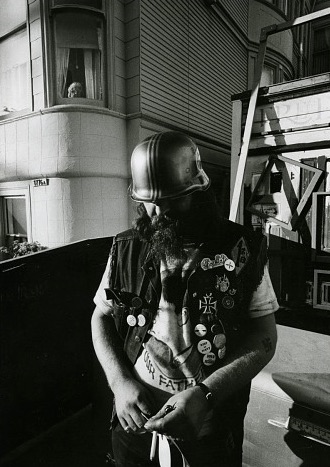
Home on the Farm Cafe

marla-gilman.jpg

By Ed Staskus

“It starts with the cows,” said Marla Gilman, her hand tracing an arc across shelves of cheese. “They make good, good milk.”

At the top of a big slate board behind her was written in chalk: “All dairy comes from our farm and creamery.” The creamery is North Country and the farm is Clover Mead. The counter where Marla was standing was the Clover Mead Café and Farm Store.

When asked where the cows were she pointed to a dirt path across the street.

“Just up there” she said, “where there’s a bunch of poop and some electric fences.”

The farm-to-table eatery in Keeseville, NY, which had been shuttered after its owners retired, re-opened in May 2014. Ashlee Kleinhammer and Steven Googin, co-owners of the farm and creamery since 2013, worked with Ms. Gilman to bring the café back to life, expanding and refreshing it.

“They decided to amp it up,” Marla said. “We busted our butts to get this place in shape.” She became the cook and manager.

“Great flavors,” said Jean-Audouin Duval of Keeseville, by way of 40 years living in New York City. “After eating there I take home some insane cheeses and yogurt to die for. I’m in heaven!”

The 25-year-old Marla Gilman, a New Jersey native and University of Vermont graduate of the Department of Agriculture, whose kitchen work includes NYC’s Blue Hill at Stone Barns and Lake Placid’s Liquids and Solids, moved to Keeseville in the spring.

“All my friends and boyfriend were here,” she said. “I wanted to live here.”

Her boyfriend, Dylan Badger, who opened the Ausable Brewing Company with his brother Dan in September, described their malted grain wares as “unfiltered beers from unfiltered brewers.”

“They re-built a barn that was falling to the ground and turned it into their brew space and tasting room,” said Marla.

The café, farm, creamery, and brewery are all on Mace Chasm Road, as is Mace Chasm Farm, whose chickens, pigs, and cows are rotationally grazed on 60 acres of pasture. Just down the street is Fledging Crow Vegetables, a Certified Naturally Grown farm.

The nascent resurgence of farming up and down Mace Chasm Road is reminiscent of Vermont’s ecologically minded “Back to the Land” movement of the 1970s. Just across Lake Champlain from Keeseville, Vermont today ranks first on the Locavore Index for its commitment to local food, which is part of the state’s economic growth strategy.

“There’s a food scene happening here,” Marla said. “It’s not big, but it’s definitely starting. I don’t think Mace Chasm Farm has ever seen as much action before. They even did a taco night this summer.”

Dylan Badger of Ausable Brewing agreed. “On this road alone there are four farms. We want people to enjoy what we have to offer, just this whole incredible scene here.”

Ms. Gilman is emblematic of Millennials taking up farm work. “I felt this thing going on here, super cool young farmers and motivated entrepreneurs starting something, and I totally wanted to be a part of it.”

Farm internships have skyrocketed in the last five years, according to the National Agriculture Information Service.

“If you talk to any really good farmer they’ll tell you that they’ve had a doubling and tripling of the applicant pool over the last few years,” said Severine von Tscharner Fleming, an upstate New York farmer activist who founded the National Young Farmers Coalition.

Even though farming can be notoriously dogged work, working one to the bone, and midsized farms, which account for most people who try to make a living off the land, have been increasingly marginalized by agribusinesses, many young people are taking up the mantle of farming, often specializing in the local, organic market.

“New England is now home to young kids becoming farmers – not the old back-to-the-landers type with political or religious missions, but focusing entirely on food,” said Helena Worthen, a retired professor from Berkeley, California.

After eating at the Clover Mead Cafe she praised the food, especially the “Cheeseville” cheese, but explained that outdoor seating meant the picnic table. “If there’s room,” she added.

Clover Mead features all things locally grown on the area’s farmlands. “It’s elevated comfort food,” said Stephanie Fishes of nearby Au Sable Forks. “It’s totally worth a menu detour.”

The café’s coolers brim with cheeses, yogurts, and milk, and the menu features Marla’s homemade breads, breakfast, and lunch foods. The egg sandwiches are a favorite, as are the Camembert Panini’s. The Camembert is theirs and the apples come from a neighboring orchard.

“Our chicken salad sandwich is definitely number one for lunch,” she said. “I roast whole, organic chickens, pick all the meat off, chop it up, and all the goodness in the pan goes back in. The moisture comes from that and then I add a bunch of spices.”

It isn’t plain Jane chicken mixed with mayonnaise. It’s chicken salad spreading its wings.

“I’m surrounded by really awesome farms, so the point is to create really good food,” Marla explained.

Off the beaten path, even in the off the beaten path town of Keeseville, re-opening the café was a risk. “It was scary at first,” said Marla. “It’s so unassuming here. But, this is a really cool place.”

People will go far and wide for good food. “We haven’t met our goal business-wise just yet,” said Ashlee Kleinhammer. “But, we’re close.”

Ms. Gilman has been buoyed by the community’s support.

“Keeseville has been great,” she said.

“They could have been, what are those young idiots doing? But, I think they’re happy to see it coming back. It used to be a booming, fun town back in the day. And then it plummeted. I think they’re happy to see something happening again with the town they grew up in.”

When asked what her plans were for the North Country winter she explained the café would be closed for a month in January.

“I’m going to San Francisco and eat a bunch of food. That’s what I like to do when I’m not working, try new things, and develop my palette.”

She pointed to the bottom of the slate board, which said: “We proudly source organically, locally, from scratch, and always with love.”

“We’ll figure out our plan from there,” she said. “Five years from now this is going to be a totally happening place.”

Photograph by Vanessa Staskus.

Ed Staskus posts stories on 147 Stanley Street http://www.147stanleystreet.com and Cleveland Ohio Daybook http://www.clevelandohiodaybook.com. To get the site’s monthly feature in your in-box click on “Follow.”

Topsy Turvy

By Ed Staskus

The biggest yoga event of 2013 in Cleveland, Ohio, went off at the tail end of the summer without a hitch. It was as though the gods were smiling down on it. The Friday evening was dry, without a thunderstorm in sight, the hot day tempering as the sun sank into Lake Erie so that when the festivities began the temperature had settled into the mid-70s. The humidity was kept at bay by the breeze off the lake.

“The yoga, the assists, the people, the music, the weather, the views. Cleveland rocks!” said Deanna Broaddus of Beachwood.

Several thousand people unrolled their mats on the Collection Auto Group Plaza of the Rock and Roll Hall of Fame and Museum on the city’s re-developed North Coast Harbor. The mass class took place in front of the I. M. Pei-deigned dual-triangular-shaped glass tent that is the main entry facade to the museum and which extends onto the 65,000-square-foot plaza.

It is modeled after Pei’s Louvre Pyramid in Paris.

‘Believe in Cleveland’ was sponsored by Inner Bliss, Cleveland’s largest yoga studio with locations in Rocky River and Westlake, the athletic apparel company Lululemon, and the Rock Hall.

“We are so thrilled to have you here,” said Greg Harris of Brecksville, CEO of the Rock Hall. “This is the first time, but it won’t be the last,” he added, to a roar from the crowd.

The keynote address was by Ohio Congressman Tim Ryan, who spoke on mindfulness, the subject of his recent book, ‘A Mindful Nation’.

Tammy Lyons of Bay Village, owner of Inner Bliss, led the yoga exercise class. “Lift up your neighbor, breath in, a little higher, go up,” she urged the throng.

After the 90-minute practice, set to music by Prince, Led Zeppelin, U2, Billy Idol, and the Rolling Stones, among others, there was dancing and food, including the novelty of a vegan food truck.

But, on a night filled with inspiring speeches, asana, music, laughter, dancing, and fun, food was not uppermost in most people’s minds.

“The yoga, the location, the weather, it was perfect in Cleveland,” said Heather Moore of Cleveland Heights.

It was easily not only the largest outdoor yoga event in Cleveland; it was the largest yoga event in Cleveland of any kind, attesting to the practice’s growing popularity in a changing city.

“We came. We saw. We believed,” said Jeffrey Jones of Willoughby. “This event gave me hope for the city I love.”

But, it was an event edgy with surprising alliances, some more surprising than others. It was a night when politicians, of all things, shone brighter and truer than professed yoga boosters like Lululemon and professed counter culture icons like rock-and-roll bands.

Congressional job approval stands at less than 20% according to most polls, including Fox News and the Gallup Poll. The 80% disapproval rating is the worst Gallup has measured in more than 30 years of tracking congressional approval. And this is more than a century after Mark Twain said, “Suppose you were an idiot, and suppose you were a member of Congress. But, I repeat myself.”

It has long been observed that politics have little or no relation to morals. It is rarely a good idea to give a politician the keys to the city. Better to change the locks.

Henry Kissinger, the National Security Advisor and Secretary of State in the administrations of Presidents Richard Nixon and Gerald Ford, once noted that 90 percent of politicians give the other 10 percent a bad name.

Congressman Ryan is one of the 10 percent. He might be the only percent of politicians who believe meditation can result in well being on a nationwide basis, and who practice it themselves.

A five-term incumbent from a rust belt northeastern Ohio district, the congressman is a 6-foot-4-inch former football star, an unlikely candidate for the meditative world. He is a career politician whose re-elections are fueled by the jobs he brings to his district, from the Lordstown Chevy plant to the expansion of the Air Force Reserve Base, and the tens of millions of federal dollars in earmarks he routinely delivers. The Additive Manufacturing Center in downtown Youngstown, which he was instrumental in making happen, is poised to become the linchpin in a Pittsburgh-Youngstown-Cleveland technology belt.

But, as much as he caters to the meat-and-potato concerns of his district’s residents, as well as dealing with national issues like immigration, gun control, and balancing the budget, Congressman Ryan is breaking ground in Washington by proposing that America can be transformed by practicing simple forms of meditation to develop what he calls “mindfulness”.

In his book ‘A Mindful Nation: How a Simple Practice Can Help Us Reduce Stress, Improve Performance, and Recapture the American Spirit’, Congressman Ryan asserts that meditation, or mindfulness, is a simple tonic for the national angst.

“Mindfulness will be a response to the wars, struggling to make ends meet, the general anxiety out there. This can be transformational. It should be mainstream. We need this.”

‘A Mindful Nation’ was the result of a retreat he attended after the 2008 elections, conducted by Jon Kabat-Zinn, founder of the Stress Reduction Clinic at the University of Massachusetts Medical School, and a leading mindfulness advocate.

“When you taste this stuff, it has profound effects,” said Mr. Kabat-Zinn. “That’s why it has lasted 2,600-plus years. It’s not just some silly quaint thing they used to do in Asia because they had nothing better to do. It’s a way to stay healthy.”

While writing his book Congressman Ryan met with Richard Davidson, a neuroscientist who studies the effects of meditation on the brain.

“Tim was interested in the potential of this, the impact this research might have to shape policy, bringing these kinds of methods into education, health care, leadership,” said Mr. Davidson, the director of the University of Wisconsin’s Lab for Affective Neuroscience.

“There’s a huge amount of suffering that can be prevented with healthy habits of the mind, decreased substance abuse, suicide, bullying, drunk driving, anxiety, and depression. The benefits are considerable and wide-ranging.”

Starting with scientists conducting Transcendental Meditation research since the late 1960s, numerous studies have shown that meditation helps reduce chronic pain and depression, protects against heart disease by reducing the marker C-reactive protein, and lowers acute stress response by actually changing the structure of the brain.

“It did to my mind what going to the gym did to my body – it made it both stronger and more flexible,” says Dr. Hedy Kober, a neuroscientist who studies the effects of mindfulness meditation at her lab at Yale University.

Since the publication of his book Congressman Ryan has started a once-a-week quiet time caucus for members of Congress as well as spoken on the subject at seminars and public events coast-to coast. He said he has been surprised by how many members of Congress have asked him about the practice and how to better deal with stress.

“A lot of people don’t understand mindfulness,” he said.

“But, when you talk about slowing down and being in the present moment they get enthusiastic, across partisan lines. It’s about participating in your own health care, in education, in politics, and becoming more resilient, and there’s no reason why people should rule this out because it doesn’t fit into their political philosophy.”

Even before the publication of his book Congressman Ryan secured almost a million dollars in federal funding for programs to teach mindfulness at elementary schools in his district.

“We are basically teaching them how to calm down the part of the brain that is preventing them from learning how to pay attention. It’s a beautiful thing to walk in to classrooms and hear stories about how it’s transforming them.”

Congressman Ryan may have been the warm-up band at ‘Believe in Cleveland’, but he deserved to be the headliner.

It is rare when the unexpected sincerity of a politician trumps the supposed sincerity of yoga boosters like Lululemon. Politicians are bred to seem sincere, even when they usually don’t mean it. Congressman Ryan was a breath of fresh air. Lululemon, on the other hand, is as fresh as its next advertising campaign, or in whatever direction the hot air balloon is blowing.

Lululemon is a high-end yoga-inspired multi-billion dollar apparel retailer. It pronounces itself as a company “where dreams come to fruition.” One of the slogans most prominent in its manifesto is: “Friends are more important than money.”

However, most of Lululemon’s apparel is manufactured in third-world countries at the behest of the company’s founder, Chip Wilson, who believes, according to a speech he made at a conference of the Business Alliance of Local Living Economies in Vancouver, British Columbia, that third-world children should be encouraged to work in factories because it provides their families with much-needed wages.

Lululemon’s former CEO, Christine Day, recently ousted after overseeing the introduction of its ill-fated see-through yoga pants, explained the company’s philosophy of purposefully keeping inventories low in order to drive demand for its one hundred dollar separates by saying: “Our guests know that there’s a limited supply, and it creates these fanatical shoppers.”

When Lululemon opened a new store in Kingston, Ontario, in the middle of winter in 2011, it advertised free clothes at its grand opening. Full-page ads blared: “Grin and Bare It! Let us dress you from head to toe. The first 30 people wearing only their undies will receive a free Lululemon top and bottom.” Since another of the company’s slogans is, “Do one thing a day that scares you,” and since stripping in public is scary for most people, on the big day the sidewalks of Kingston were overflowing with Girls Gone Wild, although some couldn’t stop shivering while patiently waiting for their free Bhakti capris.

Corporate public relations representative Sara Gardiner described the come-as-you-are campaign as a “great way of grassroots marketing and creating conversations.”

“Our product is unique because it’s infused with passion,” said the manager of Lululemon when it opened in the up-scale Eton Square Mall in a suburb of Cleveland. “Each step of the process is committed to greatness, fun, integrity, and quality. The culture of Lululemon is one that inspires me. When I put on a pair of groove pants I feel like I’m a part of that inspiration.”

A New York Times investigation revealed that Lululemon’s Vitasea line of seaweed fabric – whose seaweed it claimed released “marine amino acids, minerals, and vitamins into the skin” – contained no seaweed at all.

The Wall Street Journal has reported that the company’s employees are trained to routinely eavesdrop on customers.

In the past five years Lululemon has tripled its annual revenue, expanding from 70 stores to more than 200, giving substance to the notion that if you can fake sincerity, you have surely got it made.

Two years ago Lululemon introduced new shopping bags sporting the shadowy question: “Who is John Galt?”

John Galt, a pivotal character in Ayn Rand’s novel ‘Atlas Shrugged’, believes in and defends the right of the individual to employ his mind and life solely for his own benefit.

Few people become engaged with yoga as a result of reading Ayn Rand’s potboilers, and for good reason. An unabashed advocate of individualism and unbridled capitalism, she rejects faith in favor of rational selfishness.

In notes for her novel she describes John Galt as without “inner conflict because he is perfect.” In other words, he is the Superman of our modern times. In the book he is compared to Prometheus, who in Greek mythology created man from clay.

The philosophy of Ayn Rand holds that there is no greater moral good than achieving happiness. It is an idealistic message burdened by the simplistic flaw that it confuses what are necessary conditions for happiness with sufficient conditions.

Ayn Rand blithely pronounces, in the words of John Galt, that if we all pursue whatever is in our own self-interest then the world will be a better place. Most of today’s libertarians justify their political views by citing Ayn Randism, or Objectivism, as it is better known.

Ayn Rand is considered the matriarch of the Tea Party, even though she herself enjoyed the benefits of Medicaid and Social Security.

Chip Wilson, Lululemon’s founder and guiding light, was influenced by ‘Atlas Shrugged’ when he read it at age eighteen. “Only later, looking back, did he realize the impact the book’s ideology had on his quest to elevate the world from mediocrity to greatness,” according to the company.

“Our bags are visual reminders for ourselves to live a life we love and conquer the epidemic of mediocrity.”

It begs the question of whether the children working in Lululemon’s overseas factories are on the fast track to conquering mediocrity, or if they need to get on the fast track to reading more of Ayn Rand to understand how they have been misled. Maybe they should reconsider sewing see-through pants twelve hours a day and instead, as Lululemon urges, break free of “the constraints and limitations on ourselves, which impede us from living our best lives.”

But, it may not be as easy to do in Bangladesh as it is in North America, given that practically all of the profit margins on clothes made for pennies on the dollar flow into the coffers of Lululemon and its shareholders, and not into the savings accounts of its workers.

In the spring of 2013 workers at the Sabrina Garment Manufacturing factory in Cambodia, where Lululemon clothes are made, went on strike, complaining about “slave wages”.

Lululemon replied by saying: “We share your concern about the situation, and are in close contact with our factory partners.”

They might as well have said nothing.

Carol Horton, a yoga teacher and author of ‘Race and the Making of American Liberalism’, writes: “I strongly suspect that the overwhelming majority of Lululemon customers and ambassadors haven’t thought into the politics of the company they’re supporting.”

But, social and economic concerns aside, the issue of pursuing our own self-interest no matter what not only leads to innumerable dead ends, it is contrary to the teachings of yoga, a core component of which is building community. “The feeling we get from being part of a community, or kula, is an important part of why many of us embrace yoga,” says Kelle Walsh, the editor of Yoga Journal.

“The notion of self-interest, in fact, runs completely against that,” argues Simon Houpt, senior media writer for the Canadian newspaper the Globe and Mail, writing about Lululemon’s love affair with Ayn Rand.

The path of yoga is admittedly a path towards one’s own fulfillment, but it is not the path of narcissism. It is a commonplace that we have to be selfish to get ahead in this world. But, the idea that selfishness is an overarching virtue to be pursued at all cost, as Ayn Rand and Lululemon espouse, is both shortsighted and solipsistic.

Every man for himself and God against all is not one of the eight limbs of yoga.

“Self-cherishing is the cause of all misery and dissatisfaction,” according to the Tibetan Buddhist Panchen Lama, “while holding other sentient beings dearer than oneself is the foundation of all realization and knowledge.”

It may seem churlish to not see the good in sexy, form fitting yoga pants, but yoga is ultimately a practice whose focus is meant to be internal, rather than focused on how shapely one’s butt can be in a pair of Wunder Under tights. Nor is it a practice meant to further the fortunes of companies doing anything and everything they can to claw their way up the NASDAQ ladder. Although yoga is America’s favorite eastern philosophy, because it is so accepting of SUV’s, one of its central tenets is non-grasping, or non-greed.

None of its tenets bears any resemblance to Lululemonism. To suppose otherwise is to pretend to understand what Led Zeppelin meant by the lyrics of ‘Stairway to Heaven’.

As antithetical as the presumptions of Lululemon are to yoga, the mantra of sex, drugs, and rock-and-roll is equally peripheral to the yoga project. Rock-and-roll’s carousal of multi-millionaire stars has long since turned the music on its head. Given the luxurious lifestyles of many of the Rock Hall’s inductees, from the Gloved One to Elton John, my generation’s Liberace, it cannot be any wonder that Miley Cyrus, famous for faux-masturbating with a foam finger, is banging the gong at No. 1 on the Billboard Hot 100 chart with her smash hit ‘Bangerz’.

With five chart-toppers by the tender age of twenty, Miley is on a roll and the Rock Hall is probably already planning the induction of and shiny mausoleum for Cyrus the Great in the 2030s when she becomes eligible.

Although rock-and-roll is not, admittedly, my favorite genre of music, I do enjoy listening to the likes of Sonic Youth, Social Distortion, and even Bikini Kill, who recorded on the label ‘Kill Rock Stars’, as much as the next man. It is to their credit, however, that they aren’t and hopefully never will be in the Rock and Roll Hall of Shame, so-called by Johnny Rotten of the Sex Pistols.

“It’s a place where old rockers go to die.”

In 1994 Jerry Garcia of the Grateful Dead did not attend his induction because he was opposed to the idea of a Rock and Roll Hall of Fame and Museum. The rest of the band disagreed, dragging a cardboard cutout of Garcia onstage. Grace Slick of the Jefferson Airplane skipped the ceremony in 1996, saying: “All rock-and-rollers over the age of 50 look stupid and should retire.”

When the Sex Pistols were named as inductees in 2006, alongside Blondie and Lynyrd Skynyrd, they refused to attend, sending a note instead: “Rock and roll and the hall of fame are a piss stain. We’re not coming. We’re not your monkey, and so what? Fame at $25,000 if we paid for a table, selling us a load of old famous. We’re not coming. You’re not paying attention.”

What they meant was that rock and roll has long since become as corporate as it can possibly become. The genre is immensely popular worldwide and has morphed into a multi-billion dollar business with little connection to what used to be known as the counter-culture, or to anything that means anything except the sound and fury of a tune with a backbeat. Since punk rock stripped back the curtain in the late 1970s, big-time rock-and-roll bands have routinely sold out to sell everything from Royal Caribbean Cruises (Iggy Pop) to Jaguar S-class sedans (Sting).

The Rock Hall’s signature exhibition in 2013 was the ‘Rolling Stones: 50 Years of Satisfaction’. The aptly named Stones have spent fifty years snorting kilos of cocaine and making tons of money. In the years 2000 through 2010 the bad boys of rock grossed almost $900 million dollars at their live shows alone. In the form of twenty-dollar bills it amounts to 36,000 pounds, or literally eighteen tons of twenty-dollar bills.

From its explosive springboard in the 1950s rock-and-roll became a cultural revolution. Bookended by Woodstock and Live Aid it responded to the issues of its day like war, race, sexuality, power, and world hunger. But, 25 years after Live Aid it has become predictable and irrelevant. Rock-and-roll may once have been on its way to changing the world, but then came Matchbox 20 and Vertical Horizon.

There is a reason Fall Out Boy’s ‘Save Rock and Roll’ was the most successful rock album of 2013, and it’s not even really rock-and-roll.

The nadir may have been 2008 when the pop icon Madonna was inducted into the Rock Hall, which Gene Simmons of KISS said was an insult to her because she should have been in the Dance Hall of Fame, instead. The Material Girl is to rock-and-roll as Ben Affleck is to the Baseball Hall of Fame because he goes to so many Red Sox games at Fenway Park.

For a performer whose career has been built on a platform of bawdiness, it is surprising that since 1996 Madonna has practiced and stayed in shape with Ashtanga Yoga workouts. “Yoga is a metaphor for life,” she says. “It is a workout for your mind, your body, and your soul.”

It is surprising, but maybe she simply has never heard of Pattabhi Jois’s emphasis on bramacharya, or the wise use of sexual energy, in the practice of Ashtanga Yoga. But, then again, that is not the kind of idea that sells records and concert tickets costing hundreds of dollars for ringside seats.

As yoga has become more mainstream stars have taken to writing and singing yoga tunes. Madonna had a hit with ‘Shanti/Ashtangi’ in which she crooned, “Beyond comparison, working like the jungle physician/To pacify loss of consciousness from the poison of existence.” The album ‘Ray of Light’ on which the song appeared sold 16 million copies. Abandoning her white top hat, black panties and bra, and black knee-high go-go boots in favor of a shapeless ankle-length sackcloth, the Queen of Pop performed with a troupe of traditionally-clad Indian women.

Although the Boston Globe described the album as “deeply spiritual dance music,” not everyone agreed that ‘Shanti/Ashtangi’ was Madonna’s best work, no matter the weird intensity of its lyrics. Nor does everyone agree that any and all performers are the best vehicles for sacred songs.

“Some people think they can find some melodies and put some mantras to them, and now they’re chanting,” Krishna Das said in an interview with Shannon Sexton, a former editor of Yoga International. “But they may not understand that this is spiritual practice. This is not entertainment. These chants have power. They have the ability to change us.”

The venue for ‘Believe in Cleveland’ was centrally located in downtown Cleveland, accessible to all the city’s many suburbs and exburbs along its myriad of highways. Like pilgrims flowing downstream the area’s yogis descended to the mouth of the Cuyahoga River as though it were the Ganges. The show was a hit.

However, it could have been staged in many different places in Cleveland, including the 22,000 green acres of the Metroparks circling the city. Edgewater State Park on Cleveland’s west shoreline of Lake Erie has hosted large gatherings of yogis practicing 108 sun salutations on summer solstice, as well.

Wade Oval, one of northeast Ohio’s premier public spaces, only minutes from the Rock Hall, might have made a natural choice. Its amenities include a seven-acre park, the hundred-foot wide Kulas Community Stage, and on-site access to water and electricity. Wade Oval is directly opposite the entrance to the Cleveland Museum of Art, as well, which has a large collection of art related to yoga.

One of its best pieces, ‘Yoga Narasimha: Lord Vishnu in his Man-Lion Avatar’, is headlining ‘Yoga: The Art of Transformation’, a major show billed as the world’s first exhibition on yogic art. It will explore yoga over time, as spiritual training as well as physical exercise, and its connections to both well-being and enlightenment. The exhibition, a result of the museum’s traditional strength in Asian art, premiers in June, 2014. It will travel to Washington, D. C. later in the fall for a three-month engagement at the Feer Sackler Gallery at the Smithsonian’s Museum of Asian Art.

At first glance it might seem like a park adjoining a museum co-organizing an historic exhibit of yogic art would have been a better fit for a groundbreaking yoga night out than a pay-per-view depository venerating the likes of Guns N’ Roses, the Stooges, and Black Sabbath.

At second glance, too.

“In retrospect,” the Village Voice recently noted, “it’s hard not to see the Osbournes [of Black Sabbath fame] as the first sign that the modern world was entering its Post-Dignity era.”

It might be said, as it often is, that “It’s all yoga.” There is a fondness for promoting the practice no matter what, in the belief that it is both immediately and ultimately beneficial, even if higgledy-piggledy alliances have to be made with Lululemon and the Rock Hall to bring the practice to the people.

But, that’s like Yogi Berra saying, “I didn’t really say everything I said.”

One of the yamas of yoga is satya, or honesty and truthfulness. Lululemon is consistently disingenuous and rock-and-roll chronically two-faced. Both wear the rubric of peace, love, and understanding over their shoulders, proving Mark Twain right when he said, “Honesty is the best policy, when there is money in it.”

Since many politicians don’t believe what they say, sitting on the fence with both ears to the ground, they are often surprised when they are believed. Hall of Fame rock bands and Lululemon are corporations in pursuit of unfettered wealth.

“Groups are corporations now,” says John Lee Hooker, father of the boogie. “They have pension plans. Musicians have saw the daylight.”

Bono of U2 is on track to, literally, become the world’s first billionaire rock star.

Corporations always seek to be believed, no matter what it is they are selling, that being the platform on which success and failure ultimately rests. No one likes to be lied to.

Who listens to Milli Vanelli anymore?

It was refreshing to hear Congressman Ryan speak candidly about an issue that does not benefit him directly in terms of votes and campaign contributions, but rather touches on larger issues affecting citizens and the republic itself. “It’s not very common for elected officials to talk about the psychological and mental factors that are involved in things going well or badly in public policy,” says Rick Hanson, a neuropsychologist and author of ‘Just One Thing: Developing a Buddha Brain One Simple Practice at a Time’.

“Tim is shining a spotlight on this, and that’s brave.”

It was dismaying to listen to the la-la-la’s of Lululemon and Led Zeppelin, especially when they barely believe and dimly understand what they are talking about. ‘Stairway to Heaven’, one of the most beloved and most played rock songs of all time, was written by Robert Plant, who has admitted the lyrics have no actual meaning. Whatever sounds good to keep turning the turnstiles.

The company we keep, fairly or unfairly, judges us.

When yoga aligns itself with the likes of Tim Ryan, who envisions for the nation mindfulness as a way to “prevent a lot of suffering, prevent a lot of war, and suffering in the healthcare system,” it associates with men of good company.

When yoga locks elbows with the likes of Chip Wilson and Mick Jagger, who can never get no satisfaction no matter how many dollar bills they accumulate by whatever means best suited to serve their self-interest, it associates with men of bad company.

“Associate with men of good quality if you esteem your own reputation; for it is better to be alone than in bad company,” said the man whose face is on the greenback.

Better the greenback than the shell game.

Postscript: In February 2014, ‘Believe in Cleveland’ sponsored its second mass event, this time in the renovated Atrium of the Cleveland Museum of Art. Several hundred people unrolled their mats in the glistening, new space, practicing to folk, roots, and world music, with a little bit of acoustic U2 thrown in.

Ozzy Osbourne was not allowed in the building.

“This is the first yoga practice within these walls, ever,” said Tammy Lyons.

The museum was founded in 1913 and opened its doors in 1916. The yoga class ended with a group OM echoing magically in the high-ceilinged space.

It was a sweet-sounding step up from the Rock Hall.

Ed Staskus posts stories on 147 Stanley Street http://www.147stanleystreet.com and Cleveland Ohio Daybook http://www.clevelandohiodaybook.com. To get the site’s monthly feature in your in-box click on “Follow.”
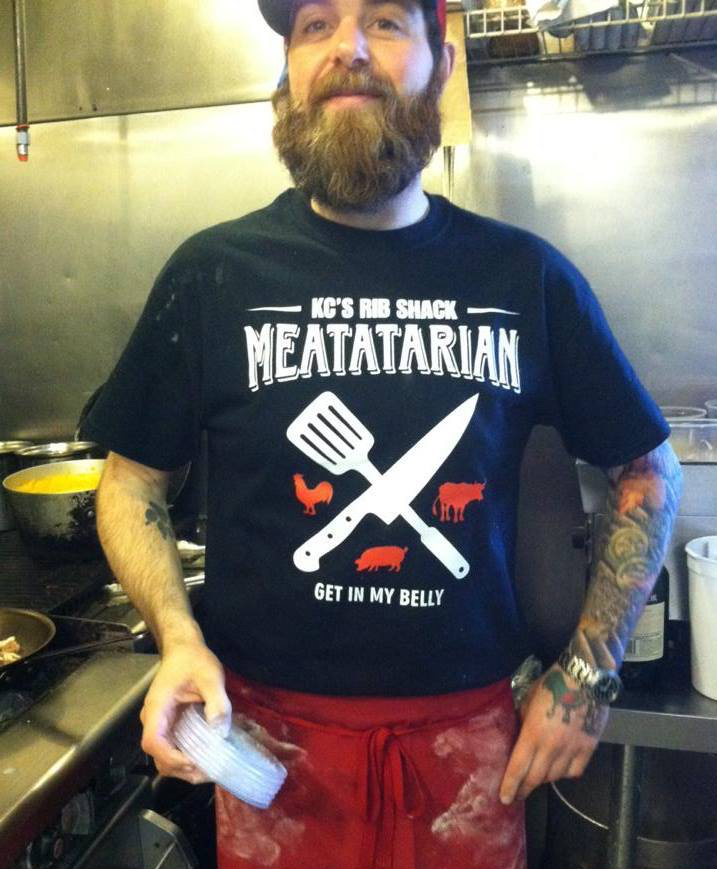
On the Line at Liquids and Solids

By Ed Staskus

   “It took me awhile to understand the vibe that makes Liquids and Solids so special,” said Marla Gilman, a summer removed from her year working in the kitchen of the edgy gastropub in Lake Placid, New York.

    “I was visiting friends in Keeseville and they kept talking about this great little restaurant,” she said. “You would love this place, my friends kept telling me. Their food is awesome. They kept talking about it, and so, finally, during another visit to town, my boyfriend Dylan took me to eat there. It was awesome.”

   A graduate of the University of Vermont, the 25-year-old Marla began her college career focused on business and ended it focused on food and drink. “I took a farm to table class, just kind of randomly, where we read Michael Pollan,” she said. “That’s where the whole thing started. I realized I needed to re-think the way I was eating.”

   She went from being conscious of food by counting the calories in her mouth to getting in touch with sun soil rain through the taste of what she was putting into her mouth. She learned to enjoy food rather than think about it.

   After graduating from the College of Agriculture at UVM with a degree in Community Entrepreneurship and a minor in Food Systems, she spent the summer backpacking through Italy, Germany, and France. Her last stop was at the Ballymaloe Cookery School in Ireland, where she had enrolled to dovetail with her traveling.

   “I was on that side of the ocean, anyway,” Marla said. 

   The 12-Week Certificate at Ballymaloe, a one hundred acre working organic farm west of Dublin, is an intensive immersion-cooking course. Its track proceeds from fundamental skills to increasingly practical techniques, training its graduates to become ready-to-go cooks able to pursue a culinary career.

   But, certificate or no certificate, it didn’t prepare her for Liquids and Solids.

   “I was the first girl to work the line there, with the guys, with their raw, sarcastic stuff, and I was just this little girl from New Jersey who cared about local food. I couldn’t keep up at first. I didn’t talk for a while, at all. I just kept my mouth shut.”

   It was at Ballymaloe that Marla cultivated her personal palette for food. “I learned to taste by eating. I simply ate a lot of locally grown fresh food. I learned the difference between something tasting alive and something tasting dead.”

   However, since she knew little to nothing about wine, learning to drink took more patience. “People would talk about wine and I didn’t get what they were tasting. I couldn’t understand how wine could taste like apricots.”

   One of her friends at the school came to the rescue. The friend parsed a book about wine, cataloging essential flavors, and filled the small holes of eggs crates with those flavors. “Anna blindfolded me and I had to smell each one and be able to say what it was,” she said. “It was one of the nicest things anyone has ever done for me. It pulled it out for me. I learned what I was smelling for.” 

   After returning home she wrangled work at Blue Hill at Stone Barns. 

   Blue Hill in New York’s Greenwich Village, melding fresh local sources with inspired preparation, has been described as a go-to dining destination since it opened in 2000. Their restaurant at Stone Barns, opened four years later in the Hudson Valley, has no menus. Instead, diners are proffered a Grazing, Rooting, and Pecking bill of fare, featuring the farm’s best from field and market.

   “I was obsessed with Stone Farms for years and years, so in the end I staged there. I mean, I worked for free,” Marla said. “A stage is usually a week long, but I wouldn’t leave. I ended up working there for more than three months.”

   In the meantime, her boyfriend-in-waiting moved to the rolling farmlands of Keeseville, on the New York side of Lake Champlain, going to work for Fledging Crow Vegetables, an organic farm based on the Community Supported Agriculture model.

   “Dylan and I had been friends for 6 years and were just starting to see each other,” she said. “I thought I’d like to move there, but not right there, where my boy was. I didn’t want to do that.” Instead, she made plans to move not too far away, to the Keene Valley, known as the home of the High Peaks in the Adirondacks.

   “At first everything was just a thought in my head, and then, literally, within a week-and–a-half I had a place to live and a job.” The job was at Liquids and Solids.

   “I shot Tim Loomis, the head chef and co-owner, an e-mail, and I just said that I’m friends with Dylan at Fledging Crow, and I ate at your restaurant, which I thought was amazing. Just curious, any work opportunities?”

   A week later she got a return call. “Your resume looks awesome,” Tim said. ”We’ll be looking for someone soon and we’d love to have you.”

   “Whoa, you don’t even know me!” she said to Tim, who she had yet to meet. “But, Tim is close with Fledging Crow. He buys so locally. If he could, everything would come from local farms. So, when they dropped the good word about me, Tim being trustworthy about his friends, when they said this girl is cool, he was pretty much OK with it.”

   It was Marla’s first real job in a commercial kitchen. In a kitchen slightly bigger than a family van, serving hundreds of exactly orchestrated plates a night, she worked alongside the head chef, a sous chef, and a dishwasher.

   “I was the pantry person, although we rotated the work. I would do sous chef some nights and wash dishes other nights, and the sous chef would do the pantry some nights. Tim was always Tim every night. He was the main man.”

   At Blue Hill everything needed to be accounted for, from where ingredients were stored to the preparation and presentation of dishes.  “I had to show them every cut I made, and if I wasn’t sure about something, they expected me to ask. At Liquids and Solids, the flavors are all high-end, it tastes so eloquent, and I was always asking, is this all right, is that cut OK?”

   “Yeah, it’s fine, you don’t have to ask me,” Tim grumbled.

   She wasn’t sure how to take the no-questions rule, although she understood he wanted food done as well as she could do it. Nor did she understand the organization of the kitchen. “The kitchen was so disorganized,” she said. The management of the pantry and walk-in made sense to those in the know, but didn’t make any sense to her, at first.

   “It’s such amazing food, but we would forget to order chocolate chips for weeks and have to run to Lisa G’s, the restaurant across the street, to get some. The spices on the shelves were all shoved together. If there’s something on a shelf below where I originally put it I freak out. For me, a thing has to have a spot.”

   At Liquids and Solids salt and pepper could be in any one of six places. “Tim always knew those six places,” she said. Everybody else read Tim’s mind.

   When she asked where something was, she heard, “Stop asking me where things are.” She was expected to know, like the rest of the kitchen staff, who were more interested in what everything was for, that purpose being the end result. It was the plating of the food, and the appreciation of it in the dining room, that was the proof of the pudding of the kitchen’s organization skills. Electricity is organized thunder and lightning.

   “Tim doesn’t call himself the head chef,” Marla said. “He will laugh at you if you call him that.” As Alton Brown of the Food Network has pointed out, a cook who calls himself a chef one day will probably make the worst food you have ever eaten.

   “Tim’s food is so well put together you would think he has every little detail worked out. He does, in a way, but it’s a super laid-back kitchen. He puts a lot of trust in his staff.” She recounted days when Tim, on his day off, would nonetheless turn up in the kitchen and ask that she create a new offering.

   “I’ll do something with it tomorrow,” he said.

   “I was essentially the lowest person in the kitchen,” she said, “and for him to tell me to create something and have enough trust in me that I will apply it to a special that will be on the menu, that was really cool for me.” We are often made trustworthy when someone puts their trust in us. It is the glue of life, like eggs, flour, and breadcrumbs.

   The kitchen at Liquids and Solids was not especially ready for her, partly by accident, partly by design. She worked on a small table on top of a lowboy fridge behind a wall. “They didn’t bring tickets to me, either,” she said. “They would yell out the order and I had to scribble it down, in the right order, for the right tickets. It was totally new to me and super stressful.”

   Working in close quarters with the tight-knit Liquids and Solids crew unnerved her, as well. “They would listen to country stations, and the songs were all about sex, and they would make every inappropriate joke in the book,” she said. “I had no idea how to handle it. It took me a long time to realize it wasn’t real, it was just jokes, and appreciate that rank humor of theirs.“

   In some kitchens saying ‘Sancho’ to a co-worker means someone is at their house being carnal with their husband or wife. The proper response is, “I’m not worried about Sancho.”

   “There were never any hard feelings. It was just me having to adjust to that environment.” In the meantime, Marla was learning to work quickly and safely, be organized when preparing food, and stay responsible for holding up her end. “It was really hard for me at first,” she said. “I had pretty much never done line work before.”

   Line cooks need to be strong, both physically and mentally. Anthony Bourdain, a long-time cook, has likened the work to being in the trenches of a war. They are the foot soldiers in any functioning kitchen. “When the rest of the world is relaxing you’re working harder and going crazier than you ever have before,” Marla said. She was compelled to do her best in the face of toil and trouble. 

   “I found out if you over think it you will drive yourself crazy,” she said. “You have an order board in front of you, you’re trying to coordinate with the other cooks, and working on something else in the oven, too. You have to train your brain to take all that in at once and not forget any of it.”

   Memory separates what you know and don’t know. In a kitchen it’s like a rail yard with trains coming and going all the time, emptying out and filling up, working their way into and out of the yard. The kitchen swing doors at restaurants like Liquids and Solids never stop revolving as wait staff tack tickets to kitchen boards and deliver orders to diners.

   “I can barely remember what I did two days ago, but in a kitchen I can have four things going in the oven, be doing six other orders at once, don’t forget about the carrots, plate those two desserts, oh, here comes a new ticket, which is a charcuterie plate and an oyster, write that down, and, Oh, shit! the carrots are still in the oven, grab them, and handle the heat without passing out. That’s strictly from my experience there.”

   Two ovens and eight burners burning all the time were where liquids were brought to a boil and solids were baked, roasted, and broiled in the small kitchen. That’s why shouts of “HOT BEHIND!” are frequently heard in kitchens as pots of bubbling liquid are being moved.

   “It was hot in there,” Marla said. “You’re moving faster with hot objects than you’ve ever moved in your entire life. It was easy to get upset, get angry, because we were moving so fast and it was so damned blazing.”

   Except for Tim Loomis. “He was always moving fast, and sweating like the rest of us, but there was a calmness about him. His friends came into the kitchen all the time, shooting the shit with him. I always thought that if someone was talking to me I would freak out.”

   It wasn’t all noses to the grindstone, however. “They are really good at having a good time in the kitchen,“ Marla said. “Sometimes I thought they shouldn’t be having such a good time, but they definitely knew how to have fun.”

   One night in mid-July, on the third anniversary of the opening of the restaurant, despite it being the height of their busy season, they threw a party in the kitchen. A pick-up crew from Fledging Crow helping with the work.

   “It was a great night while we were all still working, and then we drank a little bit afterwards.” The life of a kitchen is making lemonade from lemons. Afterwards it’s refreshing to have a gin-soaked lemon gingerini at the bar.

   Over the course of her year at Liquids and Solids she grasped that Tim Loomis was sourcing and cooking food like what her teachers at Ballymaloe had recommended. “Tim’s cooking is fairly simple. It’s just picking good, fresh ingredients and doing it really well. We had a beet dish. It was just roasted beets with the skin peeled, with avocadoes and carrot and lime vinaigrette on top. It was so simple. I never would have thought of it. People loved it. Even beet haters loved it.”

   Tim didn’t brainstorm his ideas verbally. When Marla asked him what inspired him, he said, “I don’t know.” She discovered he was being full of air with her. He had his own method whenever the menu was changing. “He would sit at the bar all day, talking to farmers, finding out what was on the horizon.” 

   She found out how many local ingredients he was using, the attention he paid to their provenance, and how good he was at seasoning them. “He came up with a sauce for fried Brussels sprouts that is awesome,” she said.

   Brussels sprouts have been almost universally disliked for most of their history.  Parents urge their children to eat the mildly bitter vegetable, saying, “If you keep trying, you will probably like them in the end.” One reason they are misunderstood is most people don’t know how to cook them. At Liquids and Solids, they were transformed into a godly creation that has become a staple on the menu.

   “Tim’s mind works in a very different way than mine, and I think, from a lot of other chefs. Learning how to create his kind of food, his style, and his sauces was really special for me. That’s what was very satisfying about working there.”

   But, when the winter of 2013 became the spring of 2014 Marla began to think she was ready for something new. One tip-off was her nightmares. Marla’s monsters came in the form of cremated duck and shriveled asparagus. “The hours were really hard for me,” she said. “You work at such a high energy until one in the morning, and I’d stay wired until three. When I finally chilled and got to sleep I’d have weird dreams, kitchen dreams of everything going wrong. I’d wake up in the middle of the night in a panic.”

   The work itself took a toll on her, too.

   “I had back issues to begin with, and you’re always hunched over, on your feet, and my feet would be killing me. Your whole body just hurts. I don’t know how people do it for twenty years. I literally don’t get it.”

   Many cooks suffer sore backs from repeated heavy lifting and bone spurs in their feet from constantly standing. According to the Bureau of Labor Statistics they are affected by more injuries than the average American worker.  Falls on slippery floors are commonplace. Cuts and burns are common mishaps. Cooks suffer the highest number of work-related burns of anybody in any industry in the United States.

   She also felt out of sync with her friends, especially her boyfriend. “I felt like I needed a normal schedule. I was getting bug-eyed, and I wanted to be closer to my friends and boyfriend in Keeseville, too,” she said. “When you’re a cook you never get to see your friends. Dylan was farming, so he was up at six in the morning, while I was working nights and living almost an hour away. I wasn’t aligning with that.”

   As spring turned to summer she moved to Keeseville, taking over the Clover Mead Café and Farm Store, an off-the-beaten path eatery with fresh-from-the-farm flavors and creative food combinations, as well as artisanal cheeses and yogurt made from their own cows.

   Tim Loomis bade her farewell and went looking for somebody new. “Our pantry cooker Marla is leaving us for something new. We need to replace her. As usual, an appreciation for punk rock, classic country, and 80s pop culture is useful, but not necessary.”

   At the farm café in Keeseville, she is the menu planner, cook, and manager, as well as the face at the front counter. “Marla’s a great baker and cook,” said Clover Mead Farm co-owner Ashlee Kleinhammer. “She was excited about starting her own thing.”

   “When you’re cooking you never get to see anyone enjoying the food,” Marla said. “You sweat and cut your fingers and burn yourself and then what you created just disappears. I wanted to see the satisfaction that people get from my hard work.”

   By the end of summer, the café was beginning to meet its business goals and Marla was already planning for the next year, including adding meats from Mace Chasm Farms, a neighboring farmstead butcher shop, and beer from the newly opened Ausable Brewing Company down the street. 

   She still eats at Liquids and Solids. “I hate how far I live from it, but I drive the fifty minutes to Lake Placid because it’s so great,” she said. “I love the food there and I love going back.”

   What makes the long drive worthwhile is she doesn’t have to sweat like a sailor, either, to get a plate of homegrown, subversively creative, and expertly prepared food. She doesn’t set foot in the kitchen. She leaves that to somebody else, although she has been known to stand just outside of it and take in the smell of liquids and solids being transformed into culinary fare.

Ed Staskus posts on 147 Stanley Street http://www.147stanleystreet.com and Made in Cleveland http://www.clevelandohiodaybook.com. To get the site’s monthly feature in your in-box click on “Follow.”

Marching Orders

By Ed Staskus

Ask any army navy marine air force officer recruiter chief of staff what is important about basic training and he will tell you it prepares recruits for all aspects of martial service, physical, mental, and emotional. Most important and far-reaching, however, is it forces individuals to put personal freedom aside and act as a group.

Ask any corporate recruiter what they look for in new hires and they will tell you the ability to make decisions and solve problems. Nevertheless, the skill they most look for is the ability to work effectively in a group.

Ask any yoga teacher whether it’s better to practice alone or in a studio setting and most of them will say yoga is an individual practice. It isn’t supposed to be groupthink. “Do what serves you” is often said and heard. In other words, think for yourself.

Singing from the same sheet of music doesn’t necessarily serve you.

But, they will point out, there are many valuable lessons to be learned exercising in a studio beyond just discovering the nuts and bolts of the practice, such as gaining insights and corrections from experts, sharing energy and purpose, raising consciousness, taking you out of your comfort zone when practicing mat to mat with different kinds of folks, and breathing in union with like-minded people in a dedicated space.

It unifies everyone in the studio in the team spirit of yoga. You can still be yourself, no matter the size of the flock, or so the thinking goes. Singing from the same sheet of music can make great choral societies.

Practicing solo at home, of course, has its go-to reasons.

“If you are self-conscious around other people, being in the safety of your own home can be comforting,” explains Mia Togo, a Yoga Works certified teacher and Life Coach.

However, going at it at home brings with it inevitable distractions, your family, your friends, your pets, your smart phone, and your own physical needs, like hunger, the bathroom, and hitting the sack. On the other hand, you don’t have to wear hundreds of dollars of fashionable apparel to earn your wings.

A t-shirt and a pair of sweatpants usually gets it done.

When did Lululemon’s Reveal Tight Precision Pants become the first serious step in suiting up for a studio yoga class? Do the Reveal Pants have something to do with revealing the inner self? Whatever happened to the fun of wearing sweatpants?

Although it’s true they’re old-fashioned and nobody looks good in them, it’s equally true they are made for one reason, which is exercise, and they fulfill their reason for existing without breaking a sweat or blabbing on and on about airflow and wicking.

The famous fashion designer Karl Lagerfeld looked down his nose on them, saying, “Sweatpants are a sign of defeat. You lost control of your life so you bought some sweatpants.” Nevertheless, they trap heat close to your body and help warm your muscles up quickly. You sweat more, you burn more calories, and you get a great workout.

After all, that’s what most commercial yoga is all about.

When did yoga become a studio practice? The easy answer is when it became a $16 billion dollar business in the United States and a $30 billion dollar-plus business worldwide. The real answer is it happened when it became a multi-billion dollar business everywhere.

When it comes to dollars and cents, even meditation and mindfulness are raking it in, more than a billion a year in the last calendar year in the United States. Group meditation classes, oxymoronic as that may be, have sprung up nationwide, costing real money for going inward. The “Muse” headband, if you want to know exactly what’s going on in the back of your mind, measures brain activity during meditation for only $299.95.

It doesn’t take any brains to know that is $299.95 too much.

Just like it doesn’t take any brains to tease out what the wizard behind the curtain is up to.

There is great good feeling to be found in yoga classes. That’s why millions of consumers go to them. That’s why many of them go to classes twice a week-or-more. That’s why they are willing to pay $12.00 to $16.00 a class. In some cosmopolitan areas it is almost double that. The wizardry of yoga studios is their awareness of the mesmerizing effect unrolling a yoga mat has on many patrons.

Just about everybody feels better walking out than walking in to a yoga class. It’s not because they’re happy it’s over. It’s because their muscles have been lengthened and strengthened and because they’ve spent an hour breathing calmly evenly steadily. The flow of prana, or life force, has been unlocked balanced juiced by the practice

GABA is a neurotransmitter. Low levels of it are associated with anxiety, mood disorders, and chronic pain. Higher levels are associated with the opposite. One way to replicate the activity of GABA is to drink beer, wine, or cocktails. Alcohol binds to some GABA receptors in the brain.

Another way is go to a yoga class.

According to the Boston University Medical School, people who practice yoga regularly have higher levels of GABA. In addition they have lower levels of cortisol, which is associated with a higher propensity towards depression. More GABA and less cortisol let the sun shine through.

Who wouldn’t rather be on the Virgin Islands than, say, Siberia at night in January?

In any case, a sunny disposition always trumps a cloudy day.

Loosening and lubricating joints muscles myofascial tissue and the mind all feel good. Rubbing the Aladdin’s lamp of endorphins, releasing the genie, leads to feelings of euphoria, appetite modulation, release of sex hormones, and enhancement of the immune response. Endorphins interact with the opiate receptors in your brain to reduce your perception of pain and stress.

That’s why 91% of regular yoga practitioners are satisfied with their yoga studio, among other reasons. That’s why yoga can be addictive, like happiness can be addictive. That’s why you go with the flow.

There is great well-being to be found in yoga classes. It’s always been like going to the store and buying a light bulb. The top two reasons people do yoga is its impact on health and stress. That’s what is behind what yoga studios market, often without actually marketing it. That’s why there are almost 14 million yoga practitioners over the age of 50 in the United States. Many older adults have three-or-more chronic health conditions. As we age, not only does existence become more painful, we become more sensitive to pain, as well.

Who isn’t up for an elixir?

It’s more than a tonic for what ails you. If the key aspects of life are physical, spiritual, intellectual, and emotional, then yoga is the three-point shot goal kick touchdown pass, all rolled up into a home run.

“Yoga, with its philosophical roots, flowing movements, and capacity to aid in regulation of our thoughts and feelings, hits all of these elements to provide an overall sense of well-being,” explains Sarah Sung in ‘What Makes Yoga Feel So Good’.

Yoga is about getting you feeling good in your own skin.

But why don’t more people, after they’ve mastered the basics of the practice, down dog their skins at home? Why march through rain snow sleet to the studio when you can throw on your sweatpants and roll out your mat in the rec room? Why go with the flow when even dead done fish go with the flow?

Why not get it done for yourself?

Even though 65% of yoga practitioners say they have practiced at home at least once, fewer than one out of four yoga practitioners in the United States have practiced yoga on their own in the past 12 months.

Yoga teachers stress it is important to be attentive to every individual in class so every individual can get the most out of their practice. That is easier said than done when there are a dozen-or-two people in class, much less fifty or a hundred. The larger the class the more cookie cutter it necessarily becomes.

Yoga studios advertise trust as an essential of their business. That’s the problem. Studios are businesses. Mutual trust devoid of mutual interest is sentimental nonsense. When yoga becomes a mutual transaction, it becomes a problem.

Just like guppies and most mammals, we are admittedly herd animals. When you’re in a herd you base your decisions on the actions of others. If you’re a guppy or a cow, that strategy works just fine. If you’re trying to walk the eight-limb path, that strategy is self-defeating.

Even though everyone in a herd is a self-serving individual, crowds are the phenomenon of people all acting in the same way at the same time. In a yoga class, the teacher on the platform is the opinion leader influencing persuading and leveraging. If you’re good at headstand, that’s good for you. If you’re not, make sure you let your neighbor know.

Herd behavior is all about being harnessed.

Who wants to live all their life with the bit between their teeth?

The key to creating lasting change is to do things on your own. Developing a personal yoga practice is part of that package. Doing what everybody else is doing in yoga class week month year after year, which doesn’t take too much willpower to do since it’s follow the leader, makes you just like everybody else. When you’re a member of the team, you rely on the team.

That’s why everybody knows there’s no ‘I’ in ‘TEAM’.

Self-practice, which takes no small measure of self-discipline, makes you into you.

“I think self-discipline is something, it’s like a muscle. The more you exercise it, the stronger it gets,” points out the cognitive psychologist Daniel Goldstein.

If yoga is a personal journey, as is touted far and wide, no one can truly be oneself in a flow yoga class. It is impossible to be yourself in the middle of a herd. It’s like sporting events, religious gatherings, and riots. Everyone goes with the flow. Getting down with the group mind is antithetical to standing up for oneself.

The private self in the public world is always at risk of being subsumed by the mass of marching orders of congregation corporation government.

Standing up for oneself is not up to a public vote. What you make of your yoga practice doesn’t have anything to do with studio classes or influencers. It’s OK to listen to others. It’s not OK to become a follower. It’s not a team game. It’s an individual game.

The biggest mistake anyone can make is to believe somebody else is pivotal central or crucial to one’s development. The best thing anyone can do is own their own practice. Watch the parking meters. There’s a reason there’s a slot for your money. Follow the leader long enough and you end up being an old abandoned car being towed away to the junk yard.

It isn’t about what you ought to be. It’s about what you can be.

Can you get the same results doing yoga at home as you can get at a studio class?

You’ll never know until you try it. Making oneself specific original and a conscious human being means marching the other way, away from the marching orders from on high, whether it’s parents teachers leaders ringleaders or bosses.

Shepherds are for flocks of sheep.

Bust out the dog-earred loose-fitting sweatpants. Just don’t look in the mirror. You might not like what you see. Are they chill? Yes. Are they all the rage? No. At least, all alone on your mat, there won’t be anyone around to judge you in your sweats and own original skin.

Ed Staskus posts stories on 147 Stanley Street http://www.147stanleystreet.com and Cleveland Ohio Daybook http://www.clevelandohiodaybook.com. To get the site’s monthly feature in your in-box click on “Follow.”