All posts by Edward Staskus

Edward Staskus is a freelance writer from Sudbury, Ontario. He lives in Lakewood, Ohio. His crime thrillers "Cross Walk" and "Bomb City" can be found on Amazon.

Swimming With the Fish

By Ed Staskus

   There are thousands of restaurants in Cleveland Ohio. Captain Frank’s isn’t one of them anymore. It used to be and when it was it was one of the best places to eat if you liked seafood and Lake Erie waves and wind shaking the building on the E. 9th St. pier. Every so often somebody full of cheer and careless after a hearty meal, or simply drunk as a skunk, drove off the pier into the lake. 

   “It was always my last stop after a night of drinking in the Flats,” said Nancy Wasen. “Every night I was surprised no one fell off the pier and drowned.” It wasn’t for want of trying.

   In 1964 Mary Jane Jereb was 16 years old. She was in a car with her cousin and a neighbor and a driver’s education instructor. “He took us downtown, to prepare for city driving. I wasn’t driving, my neighbor was. He directed her to this particular parking lot.” It was Captain Frank’s parking lot. They drove straight to the edge of the slimy pier. Spray from the Great Lake spotted their windshield.

   “The instructor told my neighbor to turn around and head back to Parma. My short young life flashed before me as she pulled into a parking space and backed out and headed home.” They slowly carefully left the dark deep behind.

   Captain Frank’s was a “Lobster House” or a “Sea Food House” depending on the signage of the year. It changed now and then. There was a panhandler who called himself Captain Frank who hung around outside the restaurant day and night, his hand stuck out. Demoted cops who had kept quiet about hidden rooms in gambling joints and pocketed cash in job-buying schemes were assigned to seagull patrol on the pier, always in the dead of winter. They ignored the panhandler and did their best to walk the chill off. Sometimes they helped the innocent just to stay on the move.

   Francesco Visconti was the Captain Frank who ran the restaurant. He was a Sicilian from Palermo whose parents beat it out of Europe the year World War One started. At first, as soon as he could handle a horse, he sold fish from a wagon. After that he operated the Fulton Fish Market on E. 22nd St. He was 40 years old in 1940 and lived with his wife, Rose, a son, as well as three daughters.

   He bought a beat-up passenger ferry building on the E. 9th pier in 1953 and opened Captain Frank’s. I was a child living the easy life in Sudbury, Ontario at the time and missed the grand opening. Kim Rifici Augustine’s grandfather was the original chef at Captain Frank’s. “The wax matches he used for flambé caused a fire back in the 1958,” she said. The fish shack burned down. Frank Visconti built it back bigger and better the next year.

   By the late 1950s my family had emigrated from Canada to Cleveland Ohio. We lived nearby, but never went to the restaurant. My parents were Lithuanians and ate bowls of beetroot soup and plates of potato pancakes and meat-filled zeppelins at their own table. They didn’t know a Mediterranean Diet from Micky Mouse.

   In the Old Country they had feasted on pigs and crows. My mother’s father was a family farmer who kept porkers, slaughtering them himself, and smoking them in a box he built in the attic of the house, the box built around their fireplace chimney. “It was the best bacon and sausage I ever had in my life,” my mother said eighty years later.

   They hunted wild crows. “Those birds were tasty,” my mother said. The younger the birds the better. Those still in the nest and unable to get away were considered delicacies. Their crow cookouts involved breaking necks and boiling the birds in cooking oil over a bonfire. They served them with whatever vegetables they had at hand.

   Since I was part of the family, I ate with my parents, my brother, and sister. My mother prepared every meal. I ate whatever she made, even the fried liver and God-awful Baltic headcheese, although we never, thank God, had carrion-loving crows. Even if I had wanted to go to the Lobster House, I didn’t have a dime to my name

   Captain Frank’s boomed in the 1960s and 1970s. There were views of the lake out every window. There was an indoor waterfall. If you had water on the brain, it was the place to be. The food was terrific. Judy Garland, Nelson Eddy, and Flip Wilson ate there whenever they were in town doing a show. The Shah of Iran and Mott the Hoople partied there, although not at the same time. They weren’t any which way on the same wavelength, other than under the spell of Captain Frank. He never asked them to leave, no matter how late it was.

   There was a luncheonette behind the restaurant that doubled as a custard stand in the summer. When the Shah or Mott the Hoople stayed later than ever, they could sit in the back in the morning in the breezy sunshine with a cup of custard while lake freighters went back-and-forth. “I never went inside Captain Frank’s, but I remember the ice cream shop in the back well,” recalled Bob Peake, a homegrown boy who was a frozen sweets connoisseur.

   Frank Visconti was a made member of the Cleveland Mob. His criminal record dated back to 1931, including arrests for narcotics, bootlegging, and counterfeiting. The restaurant was frequented by high-echelon hoods and low-minded politicians alike. Many criminal family meetings were held there. 

   “It was the hangout for Cleveland Mafia Enterprises,” said Tom James on Cleveland Crime Watch.

   Longshoremen went to Kindler’s and Dugan’s to drink before and after work, but between their double shifts went to Captain Frank’s for power shots. When they were done it was only a short walk back to the docks. When the weather was bad, they were warmed up and sobered up by the time they clocked back in.

   The restaurant was a football field’s length from Lakefront Stadium, where Chief Wahoo and the Browns played. The ballpark sat nearly 80,000 fans. The Indians were always limping along, their glory days long gone, but the Browns were exciting, and on game day crazy loud cheering rocked the windows of the restaurant. Cold biting winds blew into the stadium in spring, fall, and winter. In the summer under the lights, swarms of midges and mayflies sometimes brought baseball games to a standstill.

   In 1966 the Beatles played the stadium and after that the Beach Boys, Pink Floyd, and the Rolling Stones showed up to rock the home of rock-n-roll. It was a walloping paycheck for a night’s work. In the 1980s U2 brought its big show to town, raking in millions singing about lovesickness and hope. Every so often they threw in something about social injustice.

   Even though I was grown-up by the 1970s, I still didn’t dine at Captain Frank’s. I was living in a rented house in a forgotten part of town, and it was all I could do to feed myself at home. I didn’t have pocket money to eat out. When I finally joined the way of the world and could afford to go whenever I had some spare change and wasn’t too tired from working with my hands all day, I ate out. Most of my friends were already racing to the top. I was starting at the bottom.

   There was a kind of magic eating at Captain Frank’s at night. I watched the lights of ships making their way slowly into Cleveland’s harbors while munching on scampi and warm rolls swimming in garlic butter. They served steaks the cooks seared, but the seafood was usually just threatened with heat and served. That’s why it was good. Students from St. John College on E. 9th and Superior Ave. walked there to have midnight breakfast because it was nearby and substantial

   The Friday night in September 1984 my friend Matti Lavikka and I treated my brother to dinner on his 31st birthday at Captain Frank’s was almost the last birthday he celebrated on this earth. We didn’t know Frank Visconti had died earlier that year, but in the car on the pier after dinner we thought my brother was dying. He was gasping for air. The dinner had been very good, but he looked very bad. We were afraid he might end up swimming with the fish.

   He was getting over a marriage to a Columbus girl that had lasted 56 days. We picked him up in Mentor, where he was living alone, and went downtown. It was a starry late summer evening. We ordered a bottle of Chianti, some pasta, and lots of shellfish. We didn’t know, and he didn’t know, that he was allergic to shellfish. 

   “I don’t know why, but I hardly ever eat fish,” he said. “It doesn’t usually agree with me.” Our dinner at Frank’s that night included scallops, oysters, shrimp, and lobster. He might not have been allergic to all of them, but he was allergic to one of them, for sure.

   Halfway through coffee and dessert, which was sfogliatelle, layers of crispy puff pastry that bundle together in a lobster-like way, he was itching, wheezing, and his head was swelling. His lips, tongue, and throat were like silly putty. He was breaking out into hives. He was getting dizzy and dizzier. It was like he had eaten a poisoned apple.

   Shellfish allergy is an abnormal response by the body’s immune system to proteins in all manner of marine animals. Among those are crustaceans and mollusks. Some people with the allergy react to all shellfish. Others react to only some of them. It ranges from mild symptoms, like a stuffy nose, to life-threatening.

   Matt was a fireman and paramedic in Bay Village. Looking at my brother he didn’t like what he was seeing. We frog-marched him to the car and made a beeline for the nearest hospital. Matti put the pedal to the metal. The Cleveland Clinic wasn’t far, and we had him at the front door of the emergency room in ten minutes. Five minutes later a doctor was injecting him with epinephrine and a half-hour later he was his old self.

   “Thanks, guys,” he said when we dropped him off at his bachelor pad in Mentor. He staggered away to bed.

   After Frank Visconti died the restaurant limped along. The service and food got worse and worse. The tables and chairs and walls looked like they needed to be scrubbed down. Fewer and fewer people went downtown for any reason other than work. I was working downtown near the Cleveland State University campus, where Matt and I had started a small two-man business. One evening when I got off work, I called my girlfriend and invited her to dinner at Captain Frank’s. I had seen her eat buffets of seafood. She had a hollow leg. I knew she wasn’t allergic to any of it. When we got there, however, the pier was dark in all directions. There were no parked cars in the lot and no lights in any of the windows.

   Rudolph Hubka, Jr., the owner the past five years, had given up the ghost and declared bankruptcy in 1989. Nobody said a word. Hardly anybody noticed. The building was demolished in 1994. The only thing left was dust and litter blowing around in the wind.

   We drove to Little Italy and snagged a table at Guarino’s, a woman out front pointing the way. Sam Guarino had died two years earlier, but his wife Marilyn was carrying on with the aid of Sam’s sister Marie, who lived upstairs and helped with the cooking in the basement kitchen. “Marilyn sat in front, and she was like the captain on a ship, making sure everything was just right,” said Suzy Pacifico, who was a waitress at the eatery for fifty-two years.

   We had a farm-to-table dinner before there was farm-to-table, red wine, and coffee with tiramisu. Mama Guarino asked us how we liked the cake. We told her we liked it very much. We didn’t see any fishy characters. When I drove my girlfriend home that night we were both happy as clams.

Ed Staskus posts stories on 147 Stanley Street http://www.147stanleystreet.com and Cleveland Ohio Daybook http://www.clevelandohiodaybook.com. To get the site’s monthly feature in your in-box click on “Follow.”

Dead Man’s Curve

By Ed Staskus

   Maggie Campbell was almost 22 years-old the morning she drove face first into a cement truck. She was driving a yellow 1973 coupe a girlfriend of hers at the Bay Deli, where they both worked, had sold her for one hundred and eighty-five dollars in cash. It was a rust bucket, but it was a Jap car so the two hundred thousand miles on it hadn’t made a dent in it running, at least not yet.

   She had gotten up late that frosty spring morning and shoveled down a Fudgsicle, a hot dog, and a cup of joe for breakfast. “I better go,” she said to herself, throwing the Fudgsicle stick in the trash with the other Fudgsicle sticks.

   Her roommate and she were sharing a small house on Schwartz Road behind St. John’s West Shore Hospital in Westlake. She was late for class at the Fairview Beauty Academy. She bolted out to the car. When she got into it, she couldn’t wait for the front window to defrost more than the small square absolutely needed to look through. She was squinting through one square inch of windshield taking the curve at Excalibur Ave. and bopping to Jan and Dean on the radio.

   “It’s no place to play, you’d best keep away, I can hear ’em say, won’t come back from Dead Man’s Curve.”

   “I never touched the brakes,” she said after hitting the cement truck headlong.

   The truck was parked on her side of the street. The front end was facing her. That was the first surprise. She knew she was on the right side of the street as she came around the curve since she could see full well out her driver’s side window. At first, Maggie didn’t know what happened. The second surprise was that when she tried to get out of her car she couldn’t move. When she looked down to see why she couldn’t move she saw the steering wheel jammed into her legs. She was sandwiched between the wheel and the seat. Some days you are the dog and other days you are the fire hydrant.

   She finally got out of the car by swinging one and then the other leg over the steering wheel. Standing next to her coupe, looking at the man suddenly standing in front of her, she realized why no one had come to help her. He was white as a ghost. The rest of the cement men behind him looked like they were looking at a ghost, too. They thought she had died in the car, which had turned into scrap metal in an instant.

   “I tried to wave you off,” one of them said.

   “Hey, here’s a clue, bub, I didn’t see you and I didn’t see the truck,” she said. “Thanks for the heads up, but I didn’t see anything.” The next thing she knew a woman walked up to her and shoved Kleenex up her nose.

   “You better sit down,” she said.

   “That’s OK,” Maggie said. “I’m good. Besides, I’ve got to get to school.”

   “No, you better sit down. I’ve called an ambulance. They should be here in just a minute.”

   “Seriously, thanks, but no. I just bumped my nose.”

   She sat Maggie down. When she did Maggie’s white beauty school skirt rode up and she saw her mangled knees. The skirt was bleeding.

   The convertor radio underneath the dash had slammed into them. Even though she couldn’t feel anything bad, she could see shinbones and a thighbone. That looks bad, she thought. It had only been a minute since she had gotten out of the car. The front end of it was jack-knifed. She left patches of raw skin behind her on the front seat. 

   It was when the excitement was over that she went for real. She lost her eyesight. It was her next-to-last surprise. She blinked. It didn’t help. She blinked again. It still didn’t help.

   “Everything’s gone fuzzy, like an old TV on the fritz.”

   “Just close your eyes. The paramedics are here.”

   “OK, open your eyes,” one of the paramedics said.

   “Are they open?” she asked.

   “Yeah,” he said.

   “Are you sure? I can’t see anything.”

   “Is it like in a closet, or more like the basement, with the lights all out?”

   “A closet or a basement? What kind of as question is that? Oh, my God, you are such a smart ass. Who sits in a dark closet except crazy people?”

   They laid her down and out in the ambulance and, suddenly, her sight came back.

   “It was just the shock,” she told them.

   “Stop self-diagnosing,” the medic said.

   “I was a lifeguard at the Bay Pool. I know my stuff!”

   St John’s West Shore Hospital must have thought she was younger than she was. Underage is what they thought, so they called her parents. Her mom was on the way, they said. It was Maggie’s last surprise.

   “You did what? You called who? I’m 21-years-old. You didn’t need to call my parents.”

   “It’s done.”

   “You rat bastards!” Maggie was beyond mad. She hadn’t talked to either of her parents for more than a year. “Fuck off and die” had been the last thing she had said to them.

   She planned on moving out as soon she turned 21, but her dad didn’t want her to grow up or move out. Maggie wanted both, to be 21 and gone. Her parents wanted her out, too, but they didn’t want her to go, either. When she told them she would be leaving the day of her birthday, first, they slapped the crap out of her, and then they threw her out of the house. She had no money, no clothes, and nowhere to go.

   She called her dad from a phone booth about picking up her clothes.

   “If you come grovel for them, you can get them out of the trash,” he said.

   “You keep them, dad, because I’m not going to grovel.”

   At the very least they raised a true-blue Scottish kid, Maggie thought. She never knew if her dad really threw her clothes in the trash because she never called or went back, at least not for the clothes.

   Her mom burst through the emergency room door at St. John’s at the same time as her dad got her on the phone. Before that she had been joking with the doctors, saying she cut her legs shaving.

   “Oh, my God, look at her legs!” her mom started shouting.

   “Who let that woman in here?” Maggie blew up.

   “Who’s the president?” her dad asked over and over on the phone until the line went dead. The next thing she knew her whole family, sisters, brother, her dad rushing in from work, were all in the room, and then the adrenaline started to wear off fast. She had been laying there, not too panicked, and suddenly her constitutional joy juice was all gone. She hurt like hell. She went banshee.

   AAARRRGHHHHHH!!

   Her younger sister started crying and everybody got so upset about her crying that they put her in her dad’s lap. Her mom stroked her hair. Maggie was left on her back on the table in pain and agony, ignored and all alone until a nurse finally wheeled her away to surgery. No one noticed she was gone.

   At the end of the day, what happened wasn’t off the charts. She broke her nose and had two black eyes along with a concussion. One of her teeth was loose. She hurt both of her knees. One of them had to be operated on. She was released three days later. A policemen told her afterwards if she had hit the back of the cement truck instead of the front she would have been decapitated.

   If that had happened and she had been driving a rag top instead of her hard shell, then “HEADLESS GIRL IN TOPLESS CAR” would have been the headline on the front page of the next day’s West Life News. As it happened, she ended up in the middle of the back page.

Ed Staskus posts on 147 Stanley Street http://www.147stanleystreet.com and Cleveland Daybook http://www.clevelandohiodaybook.com. To get the site’s monthly feature in your in-box click on “Follow.”

Nowhere to Hide

By Ed Staskus

  JT Markunas was stationed in Charlottetown with the Queens RCMP detachment. He was a grade above constable, but still pulled service in a police pursuit vehicle. He didn’t mind the car he had drawn today, not at all. He could have done without the blue velour interior. It was plenty fast enough, though.

   He rented a two-bedroom farmhouse in Milton. It was small. The appliances had been updated and it sported a new roof. He planted a root garden. His parents were pleased when they saw the photograph of beets, turnips, and carrots that he mailed them. JT was from Sudbury, Ontario and Prince Edward Island was his third assignment since joining the force. His first assignment had been at Fort Resolution in the Northwest Territories. He missed Sudbury but didn’t miss Fort Resolution.

   When he was a child, the Canadian Pacific hauled ore on tracks behind their house. When the trains wailed, he wailed right back. When he was a boy, astronauts from the USA trained for their moon landings in the hinterland, where the landscape resembled the moon. After he grew up, he trained for the RCMP at a boot camp in Regina. He was surprised to see women at the camp, the first ones ever allowed on the force. They kissed the Bible and signed their names, like all the recruits, and wore the traditional red serge when on parade, but they wore skirts and high heels and carried a hand clutch, too. 

   He was sitting in his blue and white Mustang Interceptor. Even though Ford had built more than 10,000 of them since 1982, the RCMP had only gotten 32 of the cars. He had one of the two on the island. There were lights on the roof, front grille, and rear parcel shelf. He was in Cavendish, across the street from Rainbow Valley. He was watching for speeders, of whom he hadn’t seen any that morning. He was thinking of stopping somebody for whatever reason to justify the pursuit car. He was also thinking about his second cup of coffee but waiting until he started yawning. He thought it was going to happen soon. When it did, he would 10-99 the radio room and take a break from doing nothing.

   Cavendish was Anne’s Land. It was where “Anne of Green Gables” was set. He hadn’t read the book, but doubted it had anything to do with what he could see in all directions. The amusement park was named after Lucy Maud Montgomery’s 1919 book “Rainbow Valley.” It was waterslides, swan boats, a sea monster, monorail, roller coasters, animatronics, castles and suspension bridges, and a flying saucer gift shop. The paratrooper ride might have been everyone’s favorite, at least if they were children who didn’t know what fear meant.

   Earl Davison, the man behind Rainbow Valley, was looking for a roller coaster when he found it.  He was in Pennsylvania searching for a bargain at a park that had gone bust. The coaster seemed to fit the bill at first sight.

   “It’s a terrific ride, but you’ll need to have a good maintenance team to keep ’er running,” the Pennsylvania man said.

   When Earl hemmed and hawed, the man suggested his paratrooper ride instead. “It’s the best piece of equipment I have. I will sell you that paratrooper for $25,000 and we’ll load it for you.” By the end of the next day Earl had written a check and the ride was ready to go for the long drive back to Prince Edward Island. He crossed his fingers about it fitting on the ferry.

   Earl dreamed up Rainbow Valley in 1965, buying and clearing an abandoned apple orchard and filling in a swamp, turning it into ponds. “We borrowed $7,500.00,” he said. “It seemed like an awful lot of money at the time.” When they opened in 1969 admission was 50 cents. Children under 5 got in free. Ten years later, he bought his partners out and expanded the park. Most of the attractions were designed and fabricated by him and his crew.

   “We add something new every year,” Earl said. “That’s a rule.” The other rule-of-thumb was smiles plastered all over the faces of children. “Some of the memories you hear twenty years later are from people whose parents aren’t with them anymore. But they remember their visits to Rainbow Valley and that lasts a lifetime.”

   When his two-way radio came to life, instructing him to go to Murphy’s Cove to check on the report of a suspicious death, JT hesitated, thinking he should get a coffee first, but quickly decided against it. Suspicious deaths were far and few between in the province. Homicides happened on Prince Edward Island once in a blue moon. This might be his only chance to work on one. When he drove off it was fast with flashing lights but no siren. He reported that the cove was less than ten minutes away. 

   Conor Murphy saw the patrol car pull off the road onto the shoulder and tramped down the slope to it. Some people called the RCMP Scarlet Guardians. Most people in Conor’s neck of the woods called them Gravel Road Cops, after the GRC on their car doors, the French acronym for Royal Canadian Mounted Police. Conor didn’t call them anything. He had been on the force once and didn’t mess with what they might or might not be. 

  JT put his cap on and joining Conor walked up to where Bernie Doiron was waiting beside the tractor. When he saw the arm handcuffed to the briefcase, he told Conor and Bernie to not touch anything and walked back to his pursuit car. He wasn’t sure what code to call in, so he requested an ambulance, and asked for the commander on duty. He described what he had found and was ordered to sit tight.

   “Yes sir,” he said.

   It wouldn’t be long before an ambulance and many more cars showed up. They couldn’t miss his Mustang, but he turned the lights on top of it back on just in case and backtracked to the tractor.

   “Who found this?” he asked, pointing at the arm. 

   “I did,” said Bernie.

   “Is it the same as you found it?” JT asked. “Did you move or disturb anything?”

   “No, we left it alone,” Bernie said. 

   “And you are?” JT asked Conor.

   “I’m across the street in the green house,” Conor said. “These are my fields. Bernie came down and got me when he found this. A fox has been at the arm.”

   “I see that,” JT said, even though he didn’t know what had happened to the arm. He didn’t jump to conclusions. It was flayed and gruesome, whatever had happened. He wasn’t repulsed by it. He was being patient and objective. The quality that made him a good policeman was that he was patient. He waited with Conor and Bernie for reinforcements to show up. None of the three men said a word.

   JT looked at the ground around him ready for the growing season. There was no growing season where he grew up. His father worked the nickel mines in Sudbury his whole working life, never missing a day. He had been an explosives man and made it through his last year last week last day unscathed. The miner had always known there was no one to tap him on the shoulder if he made a mistake.

   His mother raised four children. She dealt with powder burns among her brood every day. They were among the few post-war Lithuanians still left in Sudbury. The rest of them had worked like dogs and scrimped and saved, leaving for greener pastures the first chance they got. His parents put their scrimping and saving into a house on the shores of Lake Ramsey and stayed to see Sudbury transition from open pits and wood fire roasting to methods less ruinous to the land they lived on.

   An ambulance from a funeral home in Kensington was the first to arrive, followed within minutes by two more RCMP cars. A pumper from the North Rustico Fire Department rolled to a stop, but there wasn’t anything for the volunteer firemen to do. They thought about helping direct traffic, but there was hardly any traffic to speak of. The summer season was still a month-and-a-half away. They waited, suspecting they were going to be the ones asked to unearth the remains. They brought shovels up from their truck and leaned on them.

   A doctor showed up, and bided his time, waiting for a commissioned officer to show up. When he did there were two of them, one an inspector and the other one a superintendent. They talked to JT briefly, and then to the fire department. The firemen measured out a ten-foot by ten-foot square with the arm in the center, pounded stakes into the ground, demarcated the space with police tape, and slowly began to dig, opening a pit 

   They had not gotten far when the arm fell over. It had been chopped off above the elbow. One of the firemen carried the arm and briefcase to a gray tarp and covered it with a sheet of thick translucent plastic.

   “Has anybody got a dog nearby?” the inspector asked.

   Most of the firemen farmed in one way or another. Most of them had dogs. One of them who lived less than two miles away on Route 6 had a Bassett Hound. When he came back with the dog, he led him to the pit. The hound sniffed around the perimeter and then jumped into it, digging with his short legs, barking, and looking up at his master. The fireman clapped his hands and the dog jumped out of the pit.

   “There’s something more there,” he said. “Probably the rest of him.”

   They started digging again carefully and methodically. When they found the rest of the man twenty minutes later and three feet under, he was a woman. She was wearing acid wash jeans and an oversized tangerine sweatshirt. She was covered in dirt and blood. One of her shoes had come off. What they could see of her face was ruined by burrowing insects. She was decomposing inside her rotting clothes.

   The doctor stepped up to the edge of the pit with the two men who had come in the ambulance.

   “Be careful, she’s going to want to fall apart as soon as you start shifting her weight,” he said. 

   The two men were joined by two of the firemen. When all four were astride the dead woman they slowly moved her into a mortuary bag, zipped it up, and using the handles on the bag lifted it up to two RCMP constables and two more of the firemen. They carried the bag slowly down the hill, the dog following them, placing it on a gurney and inside the ambulance.

   The constables went back up the hill to join the rest of the RCMP team, who were getting ready to sift through the pit looking for evidence. They would scour the ground in all directions, to the tree line and the road. JT had gotten his Minolta out of the trunk and took photographs. When he was done, he joined them. They spread out and with heads bowed started looking for anything and everything.

   The ambulance was ready to go when Conor came down to the shoulder of the park road. He stopped beside it and tapped on the driver’s side window. When it rolled down, he pointed up the slope.

   “Don’t forget the arm,” he said.

Excerpted from “Ebb Tide.”

Ed Staskus posts stories on 147 Stanley Street http://www.147stanleystreet.com and Cleveland Ohio Daybook http://www.clevelandohiodaybook.com. To get the site’s monthly feature in your in-box click on “Follow.”

“Ebb Tide” by Ed Staskus

“A thriller in the Maritimes, out of the past, a double cross, and a fight to the finish.” Sam Winchell, Beyond Books

Available at Amazon: https://www.amazon.com/dp/B0CV9MRG55

Summer, 1989. A small town on Prince Edward Island. Mob money on the move gone missing. Two hired guns from Montreal. A constable working the back roads stands in the way.

A Crying of Lot 49 Publication
Behind Bulletproof Glass

By Ed Staskus

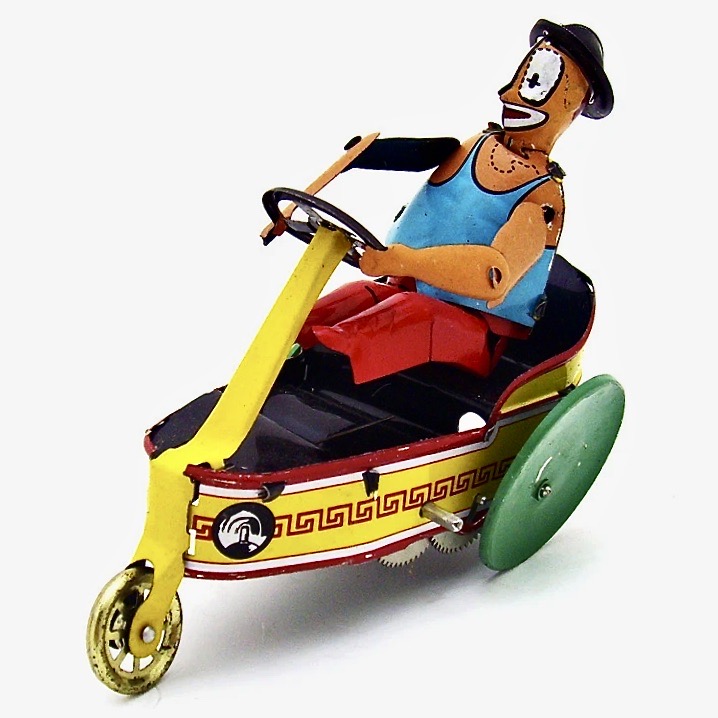
   I should have known better when I told the young woman on the other side of the Walgreen’s bulletproof drive-thru window that I needed the kind of coronavirus test that would get my wife and me into Canada and she breezily said, “For sure, this is it.” She was a trained pharmacy technician, but made up her harebrained reply, assuring me all was well even though she didn’t know what she was talking about. We found out three days later trying to cross the border at Houlton, Maine into Woodstock, New Brunswick.

   Getting a straight answer from the young can sometimes be like trying to give fish a bath. They often have a quippy answer for everything. Their answers are in earnest no matter what they’re asked and no matter their wealth or lack of knowledge. Whenever they are fazed by anything they say, “Oh, whatever.” 

   They say whatever they want when they are behind bulletproof glass.

   My wife and I were going to Prince Edward Island, where we didn’t go the summer before because of the 19 virus. Canada closed itself up tight as a clam in March of that year and didn’t reopen for Americans until early August of this year. Once we heard the opening was going ahead, we got in touch with the folks who operate Coastline Cottages in the town of North Rustico on PEI and let them know we were coming on August 21st and staying for three weeks.

   The cottages are on a hillside, on land that has been in the Doyle family going on two hundred years. A park road cut through their farm when it was built in the 1970s, but unlike other landowners they didn’t sell their remaining acreage to the state, so it sits snug inside the National Park. There are several homes on the bluff side of the eponymous Doyle’s Cove, some old and some brand new. In one way or another every one of them houses a homegrown north shore family, except for Kelly Doyle, who has lived on the cove the longest and lives alone.

   It takes two and half days to drive from Lakewood, Ohio to Prince Edward Island. At least it did every other year we had driven to the island. This year it took us six and half days.

   When we got to the Canadian border the black uniform in the booth asked for our passports. We forked them over to the tall trim guard, forearms tattooed, a Beretta 9mm on his hip. He was young and just old enough to be on this side of Gen Z. He looked our documents over and asked where we were from and where we were going.

   “Cleveland, Ohio,” I said. Although we live in Lakewood, an inner ring suburb, we always tell red tape we live in Cleveland. No one has heard of Lakewood. Everybody has heard of Cleveland, for good or bad. At least nobody calls it “The Mistake on the Lake” anymore. 

   I almost preferred the insult. “It keeps the riff raff rich away,” I explained to my wife. “There is no need for Cleveland to become the next new thing. They will just use up all the air and water and our real estate taxes will go ballistic. On top of that, we would end up knee deep in smarmy techies with their cheery solutions to all the world’s problems.”

   We handed our ArriveCAN documents over. We handed our virus inoculation cards over. We had both gotten Moderna shots. We handed our virus tests over, proving we had both tested negative.

   “You are cutting it close,” the border guard sniffed, shuffling everything in his hands like a deck of cards. I was hoping he wouldn’t turn a Joker up.

   The negative test had to be presented at the border within 72 hours of taking it. We were there with an hour to spare, although it would have been two hours if we hadn’t had to wait in line in our car for an hour. We had driven a thousand miles. It was tiresome but waiting in an idling car wasn’t any more skin off our noses.

   It started to smell bad when a second border guard stepped into the booth and the two guards put their heads together.

   “The antigen tests you took aren’t accepted in Canada,” the Joker said. “It has to be a molecular test. You can go ahead, since you’re from Canada, but your wife has to go back.”

   I was born in Sudbury, Ontario, and have dual citizenship, although I only carry an American passport. I couldn’t tell if he was being serious, so I asked him to repeat what he said. He repeated what he said and gave us a turn-around document to return to the USA when I told him I wasn’t ready to abandon my wife.

   We went back the way we had come, just like two of the six cars ahead of us, although we had to wait in line at the American crossing for an hour. Once we returned to Maine, we found out we could get the molecular test, but it would be a week-or more before we got the results. Nobody we talked to, not even the Gods of Google, was any help. A friendly truck driver mentioned New Hampshire was faster, only taking a day or two.

   The truck driver was stout, bowlegged, wearing a Red Sox baseball cap, a two-or-three-day growth of beard on his face, with a small shaggy dog to keep him company on the road. He wasn’t a Gen Z man. It was hard to tell what generation he belonged to, other than the changeless working-class generation.

   We drove six hours the wrong way to Campton, New Hampshire and checked into the Colonel Spencer Inn. It was Saturday night. We got on-line and made test appointments for noon at a CVS in Manchester, an hour away. We streamed “Castle of Sand” on our laptop. It was a 1970s Japanese crime thriller movie and kept us up past our bedtime.

   Over breakfast the next morning our innkeeper told us to go early since the traffic leaving New Hampshire for home on Sunday mornings was heavy. We gave ourselves an hour and a half to drive the 55 miles and barely made it. Luckily, we hadn’t made appointments for an hour later. We never would have made it. The traffic on I-93 going south was a snarl of stop and go by the time we started north back to Campton.

   We got our test tubes and swabs and stuck the swabs up our noses. I spilled some of the liquid in my tube and asked the Gen Z pharmacy technician behind the bulletproof glass if I should start over with a new kit.

   “You’re fine, it doesn’t matter,” she said, lazy as a bag of baloney. She couldn’t have been more wrong, which we discovered soon enough.

   Gen Z is self-centered and self-sacrificing both at the same time. “My goals are to travel the world and become the founder of an organization to help people.” They want to stand out. “Our generation is on the rise. We aren’t just Millennials.” They say they are the new dawn of a new age. “We are an unprecedented group of innovation and entrepreneurship.”

   Welcome to the future, just don’t take the future’s word for it.

   We spent the night at the Colonel Spencer. It was built in 1764, a year after the end of the French and Indian War. During the war the British, allied with American colonists, weaponized smallpox, trading infected blankets to Indians. The virus inflicts disfiguring scars, blindness, and death.

   “Could it not be contrived to send the smallpox among those disaffected tribes of Indians? We must on this occasion, use every stratagem in our power to reduce them,” the British commander Sir Jeffrey Amherst wrote to his subordinates.

   The results were what the continent’s newest immigrants from the Old World expected.

   “They burned with the heat of the pox, and they died to feed the monster. And so, the village was deserted, and never again would the Indians live on that spot,” is how one of the natives described the deadly epidemic.

   We had dinner at Panorama Six82, not far from our inn. The hostess seated us outside on the patio which looked out over a valley and a series of cascading White Mountain hilltops. The sun went down behind one of them and we finished our dessert in the dark.

   Our server was a middle-aged man from Colombia wearing jeans, a Panorama Six82 signature shirt, and a Sonoma-style straw hat. He went back to the homeland every year to visit relatives.

    “They always want money, so I don’t bring too much of it,” Fernando said. “It’s not as dangerous as most Americans think it is. I avoid some neighborhoods, sure, and I avoid riding in cabs. The rebels are in the hills, not the cities, and besides, they don’t do much anymore. The Venezuelans are a problem, all of them leaving their god-forsaken country. But they do a lot of the dirty work for us these days.”

   We drove back to Houlton on I-95. The speed limit north of Bangor is 75 MPH. I set the cruise to 85 MPH and kept my eyes peeled for moose. The fleabags lumber onto the roadway, sometimes standing astride one lane or another. Hitting a moose is a bad idea. A full-grown bull moose stands six to seven feet tall and tips the scales at 1500 pounds. It isn’t certain that the collision will kill the beast, but it will kill your car, and maybe you. They do most of their roaming around after nightfall. We made sure we got to our motel before dusk.

   In the morning my wife was winding down a business meeting on Zoom when there was a knock on our door. It was the housekeeper. She wore a black uniform and black hair pulled back in a bun. She was young. She was part of the Z crowd.

   “We’ll be out in about a half-hour,” I said.

   “Can I replace the towels and empty the trash?”

   “Sure.”

   “Weren’t you here a few days ago?”

   “Yes,” I said, and told her about trying and failing to get across the border and our search for a fast 19 test.

   It turned out the explanation for the motel being sold-out was because of the same problem. Every other person lodging there had been turned around for one reason or another.

   “You should go to the Katahdin Valley Medical Center,” she said. “A friend of mine went there, they did the test, she got it back the next day, and went to Nova Scotia.”

   “Thanks,” I said. We packed and followed Apple Maps to the medical center. The receptionist didn’t know anything about a fast molecular test. She sent us to Jesse, the man upstairs, who was the man in charge.

   “We test on Mondays, Wednesdays, and Fridays,” he said. “It takes about a week to get the results back from the lab.” It was Tuesday. We were already three days late. I started looking over my shoulder for Chevy Chase.

   “Not the next day?”

   “No.”

   We left Houlton and drove to Presque Isle, had lunch, messed around, my wife went running on the town’s all-purpose trail, and we drove to the Caribou Inn in the next town north. While the receptionist checked her computer for our reservation, we heard a wolf whistle through the open door of the office behind the front desk. A minute later we heard it again.

   “That’s just Ducky,” the receptionist said. “She belongs to the manager.”

   “Does she do that often, whistle, I mean?” I asked.

   “Whenever she sees a pretty girl.”

   Another wolf whistle came my wife’s way.

   I must have looked cross, because the receptionist said, “Ducky is a parrot.”

   Ducky was a parrot in a tall white cage just inside the door of the office. Her plumage was green with some red and yellow mixed in. She was a saucy character.

   “She’s twenty years old,” the receptionist said.

   “How long has she been here?”

   “Twenty years.”

   Ducky was spending all her Gen Z years locked up at the Caribou Inn, where flocks came and went. The only lasting relationship she had was with Betty, the hotel’s manager, and the bird’s keeper.

   “I didn’t know parrots lived that long.”

   “They can live to be seventy, eighty years old,” Betty said.

   “Ducky wolf whistles women?”

    “And men. We thought she was a he until she started laying eggs not long ago.”

   The parrot was going to outlive most of us, the 19 or no 19. They sometimes play dead in response to threats. They can also look dead when they are asleep. But if a parrot is lying still and not breathing, looking lifeless, you can assume it is dead.

   We had a non-smoking room, although every hallway that led to our room was lined with smoking rooms. The hallways smelled sad and stale. We were settling in with a bottle of wine and a movie when we got a phone call. It was the lab in New Hampshire that was doing our 19 molecular tests. They had good news and bad news. My wife tested negative, but my test was discarded. 

   “There wasn’t enough liquid in the test vial to maintain the sample,” the lab technician said. “Did you happen to spill some of it?”

   I didn’t bother trying to explain. I got on-line and filled out another ArriveCAN form. When we got to the border my wife had no problem. The only problem I had wasn’t make or break, since they couldn’t deny me entry, test or no test. A health officer gave me a self-test kit and told me to make sure I performed it within four days. She was in her early 30s. I had no reason to be skeptical. She was just out of Gen Z range. I should have been leery since she was wrong. She wasn’t as far out of the field of friendly fire as I thought.

   Four days later, when I went on-line and followed the directions for the self-test, the Indian-looking Indian-sounding woman on the other side of screen was nonplussed when I apologized for waiting to the last minute.

   “I don’t understand.” she said. “You are four days early. You are supposed to test after eight days of self-quarantine.”

   When I started to spell out what had happened, she wasn’t in the mood, and said she would schedule Purolator to pick my test up the next day. Purolator sent me an e-mail saying they would pick up between nine and noon. The truck pulled up just before five. I was grilling dogs and corn on the front deck. The next day I got an e-mail informing me my test came back negative. I had been tested four times in ten days and was finally officially virus-free.

   No matter the generation, Prince Edward Island was the only place and people who got it right. When we arrived late Wednesday afternoon and crossed the nine-mile-long bridge to the province, we waited in one of the many lines edging towards checkpoints. It didn’t take long. A young woman took our vitals while an older man in a spacesuit swabbed our noses.

   “If we don’t call you within two hours you tested negative,” he said.

   We drove to the Coastline Cottages. “Welcome to Canada,” our hosts said. “You made it.” 

   No one from Health PEI called us. We unpacked, watching the day get dark over the Atlantic Ocean, and fell into bed. I drifted off thanking God somebody on our part of the planet knew what the 19 score was, not some mumbo jumbo they dreamed up because they neglected to check the scoreboard.

Ed Staskus posts stories on 147 Stanley Street http://www.147stanleystreet.com and Cleveland Ohio Daybook http://www.clevelandohiodaybook.com. To get the site’s monthly feature in your in-box click on “Follow.”

Queen and Country

By Ed Staskus

   Kieran Foyle was a black-haired careful man who knew how to get things done. It was why Prince Albert sent him to the Canada East outlands on the clipper ship “Antelope of Boston’” to wreak vengeance on the man who had tried to kill his wife. It didn’t matter that he was an Irishman sent to drop the hammer on an Englishman. When it came to killing each other the Irish and English were good at it.

   “Either bring the evil-minded rogue back to be hung or put him in the ground where you find him and spare us the trouble,” Queen Victoria’s consort said. He had had enough of assassination attempts.

   The Irishman nearly lost his chance for blood when he stepped out of the long boat landing him on the north coast of Prince Edward Island too soon for comfort and almost drowned. The water was deeper near the shore of the cove than anyone knew. He sank to the bottom not knowing how to swim and only made it back up on the back of one of the sailors who knew how to dog paddle, at least.

   The evil-minded man he was after was Thomas Spate, a disgruntled veteran of the Crimean War. He had known how to kill Russians. When he was awarded the Crimea Medal, he threw it in his rucksack and forgot about it. When he was one of the first soldiers to receive the Victoria Cross for bravery in action at the Battle of Balaclava, he thought about throwing it in his rucksack, too, but didn’t. He wore it every day pinned on his coat over his heart. He kept it brighter and cleaner than anything else he possessed.

   During the war Queen Victoria knitted woolens for the troops and inspected military hospitals, wearing a custom-made red army jacket. When the war ended, she threw a series of victory balls in her new ballroom. Tom Spate watched from the outside, driving himself crazy. He was alone and down on his luck. He blamed everybody except himself for the bad things happening to him. He walked incessantly, from one end of London to the other. He goose-stepped up and down Hyde Park. Small groups gathered to watch the performance. The queen saw him often enough to become familiar with him, although she never approached or spoke to him.

   During one of his walks around London he spied Queen Victoria and Prince Albert outside Cambridge House. As their carriage left, it came to a stop outside the gate. Tom Spate had taken to carrying two old-fashioned flintlock coat pocket pistols. They were always loaded. He walked up to the carriage and pulled them out. He didn’t ask himself what he was doing. He straightened one arm and pulled the trigger. Nothing happened. He brought the other pistol to bear and pulled the trigger. It misfired. He had just enough time to jump at his monarch and strike her on the head with the butt of one of the guns before Prince Albert grabbed him, shoving him off the carriage. Men on the walk swarmed the would-be assassin and beat him almost to death.

   Queen Victoria stood up in her carriage and proclaimed in a firm voice, “I am not hurt,” even though she was gushing blood from a penetrating gash on her forehead. The blood was crimson on her yellow crocheted shawl.

   Tom Spate was arrested imprisoned tried convicted and sentenced to transportation and twenty years of hard labor in the penal colony on Tasmania. There was no appeal. There was no changing anybody’s mind. By their calculations he got what he deserved. “I would have had the rascal drawn and quartered,” Prince Albert complained, speaking his mind about crime and punishment.

   When he escaped his jailers and disappeared, Prince Albert summoned Kieran Foyle, a mercenary who it was said always got his man. He told his monarch’s consort as much. It took almost a year, but in the spring of 1859, he was making his way soaking wet up the hill from the cove to the village of North Rustico. He knew where Tom Spate was and knew he could take his time. He needed to get out of his clothes. He needed a hot cider and dinner. He needed a good night’s sleep in a feather bed on dry land that didn’t heave-ho all night long. He found the only boarding house in North Rustico and took a room.

   Kieran Foyle’s prey was living on the far side of the Stanley River, nine miles northwest up the coast. The Irishman had grown up calling miles chains. His man was 720 chains away. It would take him about three hours to walk there on the coastal footpath. He had no intention of dragging anybody back to England. The voyage itself took a month. “Jesus and Mary chain,” he grumbled. He had every intention of collecting his bounty.

   Tom Spate lived in a rough-and-ready hut he had thrown together, living in it with his new wife and new baby. He had no land to farm and no craft to make his way. He made his way by operating a ferry service from one side of the Stanley River to the other. In the winter he closed it down when the water froze, and folks either walked or ice skated across. In January the ice got thick enough that horses and wagons could cross. He bought ice skates, carved sticks with a curve at the bottom by hand, and made homemade pucks. His wife rented them to youngsters with eggs, butter, salt cod, and potatoes to trade for playing shinny on the ice. It was a game of fast skating and trying to hit the puck between two sticks of wood marking the goal.

   Most of North Rustico was Acadian French, and Catholic like Kieran Foyle. The north coast was the religious hub of the church. St. Augustine’s had been built twenty years earlier. It boasted an 80-foot-high tower. A man could see everything from the top of it. The harbor was filled with boats and the fishing was good. There were cattle and horses grazing and fields of turnip and cabbage. Piles of mud dotted the fronts of fields. On his way to introduce Tom Spate to his maker, stopping to rest, he asked a passing man what it was.

   “It is mussel mud,” the man, a farmer, said. “The land needs lime to breathe new life into it. We use the mud from bays and riverbeds. It’s filled with oyster shells.”

   Kieran didn’t ask why they called it mussel mud instead of oyster mud. “Do you dig it up?” he asked.

   “We go out in canoes at high tide and dam up a small space so we can dig it from the bottom. When we are full, we go back and unload it at low tide.”

   “It sounds like a great deal of work.”

   “It is, but without the mud we would starve on the farms, both man and beast. I couldn’t keep one horse but for it. Your cow needs at least a ton of hay to survive the winter. We have been doubling our harvests with the mud. We will have more of it soon.”

   “How’s that?” 

   “We have got a man engineering a mechanical digger to harvest the mud in the winter through holes in the ice and carry it across the island by sleigh. There’s talk that we will be able to increase our crops of hay five and ten times. And then there’s the ice besides. We cover it in sawdust and put it into an icehouse, and we can preserve foods that go bad in the summer’s heat.”

   Kieran Foyle parted with the farmer, shaking his hand. He liked what he heard about mussel mud. It was a sunny day and the uplands looked fine to him. When he got to the Stanley River, he rang a bell hanging from a post. Tom Spate’s face appeared at a window on the other side. He waved and the next minute was guiding his flatboat across the water, using a rope anchored to oak trees. He pushed with a pole along the riverbed. Kieran paid him his two pennies and put his back to a pillar as Tom Spate pushed off.

   Near the middle of the river the Irishman felt for the sidearm in his pocket. He carried the new Beaumont-Adams percussion revolver. The cylinder held five rounds, although he knew he wasn’t going to miss his man with his first shot. He intended to be standing face to face with him when he dispatched the villain. He walked up to Tom Spate.

   “Thomas Spate, I have a message for you from your queen,” he said.

   Tom Spate’s face went white as a carcass when the barrel of the gun pressed into his chest, pressing against his Victoria Cross.

   “For God’s sake, I have a wife and child.”

   “For crown and country,” Kieran Foyle said and pulled the trigger. The bullet rocketed out of the barrel slamming and driving the medal into Tom Spate’s heart, ripping the spirit and strength out of it, and putting an end to the unhappy war veteran’s life.

   Kieran stood over him and decided in a flash that he was going to stay on Prince Edward Island. There was nothing in Ireland or the rest of the United Kingdom for him other than more killing and waiting for the day he would be the one killed. He had neither wife nor family. He would find a colleen here, he thought. He would have sons. He would raise horses fed with abundant hay grown in the goodness of mussel mud. He didn’t love his fellow man, but he loved horses. 

   He bent a knee and using both hands pried open the hole in Tom Spate’s chest. He stuck his fingers into the man, feeling for the bullet and the medal. He couldn’t find the bullet at first but found the Victoria Cross easily enough. He yanked the medal out. It had been cast from the cascabels of two cannons captured from the Russians at the siege of Sevastopol. He searched for the bullet until he found it. He washed the blood on his hands off in the water. He pushed the body off the ferry with his boot. It bobbed in the river and slowly floated out to the ocean.

   He poled the ferry back to the side he had come from and walked back to North Rustico. In his room he packaged the bullet, the medal, and a letter in a stout envelope. The letter didn’t have a word in it about what he had done, only asking for land on the shoreline where he had landed, and the right to name the cove “Foyle’s Cove.”

   He posted the letter in Charlottetown, paying an extra penny to make it a “Registered Letter.” It would sail on the Gazette to Liverpool the next week. He hoped to have a reply by the fall. In the meantime, he would start building a house on the western side of the cove. The land might already be owned by somebody, but it was nearly all forest. Whoever the landlord was, it was still waiting for a tenant, or the man in the moon. When and if he showed up, the Irishman was sure he could set him straight.

   He sat in his room and fired up his Meerschaum pipe. When he was young and poor, he smoked spone. It was coltsfoot mixed with wild rose petals. Now he carried good tobacco in his purse. The smoke curled up from the Irish clay. The kitten he had found and brought back with him from the no-contest on the Stanley River watched the smoke, jabbing at it with his paws.

   “All the old haunts and the dear friends, all the things I used to do, the hopes and dreams of boyhood days, they all pass me in review.” It was a song they still sang in military barracks. He had been dragooned into the army while still a lad after being plied with drink by a sergeant in a pub. He took the “Queen’s Shilling” and there was no going back, especially after he deserted and went to work for himself, plying his trade. 

   The window of his room faced west. The setting sun slanted in, the orange glow warming his face. When he was done with his pipe he would go downstairs for haddock, potatoes, and beer. He would bring some fish and milk back for the kitten. Until then, he would smoke and let his plans slowly unwind themselves from the back of his mind.

Excerpted from “Ebb Tide.”

Ed Staskus posts on 147 Stanley Street http://www.147stanleystreet.com and made in Cleveland http://www.clevelandohiodaybook.com. To get the site’s monthly feature in your in-box click on “Follow.”

“Ebb Tide” by Ed Staskus

“A thriller in the Maritimes, out of the past, a double cross, and a fight to the finish.” Sam Winchell, Beyond Books

Available at Amazon: https://www.amazon.com/dp/B0CV9MRG55

Summer, 1989. A small town on Prince Edward Island. Mob money on the move gone missing. Two hired guns from Montreal. A constable working the back roads stands in the way.

A Crying of Lot 49 Publication

Feed Your Head

By Ed Staskus

   I was in my early 20s in 1973 the first time I visited Lake View Cemetery. I was in the back seat of a 1964 Oldsmobile Jetstar 88 convertible. Bill Neubert was driving and his wife Bonnie was beside him. Everybody called Bonnie Buck, although I called her Bonnie. It was a mid-summer day, warm, bright, and breezy. The top of the car was down. Bill stopped in front of an old headstone. We got out of the car and walked over to it. The name on the grave was Louis Germain DeForest. The dates were 1838 – 1870. There was moss on the base of the stone.

   “He was the first guy buried here,” Bill said.

   Captain Louis Deforest was from Cleveland, Ohio, one of ten children, served in the Union Army during the Civil War, and went home after Johnny Reb gave up the fruitless struggle. He married Theresa Luidham before the war, got her pregnant during the war, and again after the war. Once back in Cleveland he went into the jewelry business. The sparkle didn’t last long. He died unexpectedly at the age of 31.

   Two sites in the graveyard were on the National Register of Historic Places, the second one added that year. I didn’t know much about places with a past. I had enough trouble making sense of the present. Bill filled me in, even though he wasn’t interested in historic places. He was more interested in the flow of history.

   Bill and Bonnie were mimes clowns comedians, putting on shows around town, working out of town when they got offers. They were a few years older than me, friends of my roommate Carl Poston. That Saturday morning Carl begged off messing around town, leaving me the odd man out. Bill and Bonnie made me feel at home. Bill didn’t act or look anything like Humphrey Bogart, but he talked just like him. We drove to Little Italy and had pastries and coffee. Back in the car they both dropped acid and asked me if I wanted to try it.

   “All right,” I said.

   They didn’t call it LSD. They called it Uncle Sid. It was the first time I took LSD. A half hour later I was finding it and everything else incredibly interesting. Everything seemed fresh and bright. Uncle Sid wasn’t the disheveled uncle with yesterday’s stogie trying to take your picture with his dime store camera. He was my best friend that day.

   The Jefferson Airplane released “White Rabbit” in 1967. “One pill makes you large and one pill makes you small, feed your head,” Grace Slick sang with her eyes full of stars.. My head was full to the brim the rest of the day. Everything was freaky but close and personal.. No matter what it was, it all felt, looked, smelled, and sounded new. My eyes stayed wide open like a baby’s all day long.

  “What’s it like to be a child?” asked Robin Carhart-Harris of Imperial College in London. “That sense of wonder, that sense of awe is what you certainly see with psychedelics. Sometimes it’s framed in a sort of mystical or spiritual way. But it’s interesting if you look at some literature, someone like William Wordsworth, who talks about the infant state as being a kind of heavenly state where we’re closer to what you would call God.”

   LSD was first synthesized in 1938 in Switzerland. It was introduced as a psychiatric drug in 1947 and marketed as a psychotropic panacea, in other words “a cure for everything from schizophrenia to criminal behavior, sexual perversions, and alcoholism.” The abbreviation LSD is from the mouthful of the German word lysergsäurediethylamid. The drug was brought to the United States by the CIA. The spy agency bought the world’s entire supply for a quarter million dollars and promoted its use in clinics, research centers, and prisons. They administered it to their own employees, soldiers, doctors, prostitutes, the fruity, the mentally ill, the down and out, and plain folks to study their reactions, usually without those given the drug knowing what they were taking. The idea was that LSD is like psychoanalytical Drano.

   Lake View Cemetery is a graveyard straddling Cleveland, East Cleveland, and Cleveland Heights. It was founded in 1869. It was where the city’s wealthy buried themselves during the Gilded Age. There are many lavish funerary monuments and mausoleums. Little Italy up and down Mayfield Rd. was settled by stone masons from Italy who came to the United States to make monuments for God’s 280 acres. Many of the monuments they made were symbols. It’s better to be a symbol than a monument. Pigeons do bad things to monuments.

   In the 1960s Aldous Huxley, Alan Watts, and Timothy Leary got their hands on LSD and started advocating its use to the counterculture. It was supposed to be the drug of choice for consciousness expansion. Owsley Stanley got the blotter rolling in San Francisco. Ken Kesey and the Merry Pranksters popularized it during their road trips, giving it away to anybody who wanted it. Nick Sands created Orange Sunshine, the most pure, highest-quality LSD made at the time, better than the CIA’s. In 1966 the Psychedelic Shop opened, selling acid over the counter. It was legal as cookies and milk. If you were a gal, wearing a pants suit was problematical, but not downing the hallucinogenic.

   Bill drove his Olds 88 to Section 9 on Lot 14, to the marble gravestone of Francis Haserot and his family. The bigger than life tomb marker was “The Angel of Death Victorious.” The angel’s wings were outstretched, and she held an extinguished torch upside-down. I stepped up to her and saw what looked like black tears dripping from her eyes and down her neck. I wasn’t unnerved, but rather impressed with the sculptor’s skill, until I realized the tears were a result of rain and aging bronze.

   W. H. Auden wasn’t impressed with LSD. “Highly articulate people under it talk absolute drivel,” he said. After he tried it, he reported, “Nothing much happened but I did get the distinct impression that some birds were trying to communicate with me.” The Beatles jumped on the bandwagon with “Day Tripper” in 1966 and “Lucy in the Sky with Diamonds” in 1967. “The first time I took LSD, it just blew everything away,” said George Harrison. “I had such an incredible feeling of well-being.”

   Not everybody was all in. “We don’t take trips on LSD in Muskogee, we are living right and free,” Merle Haggard sang on “Okie from Muskogee.” Living free in the home of the brave is one thing. Living right is in the eye of the beholder. The city is on the Arkansas River in Oklahoma. It is home to a museum of Native American history and the USS Batfish, a WWII submarine with an onboard museum. Between 1858 and 1872 the Texas Rangers and U. S. Cavalry battled Creeks, Kiowa, and Comanche Native Americans in more than a dozen major engagements, eventually wearing them down, rounding them up, and telling them to stay the hell on the reservation. In the 1970s the USS Batfish was becalmed bewildered on the river, many miles from its native ocean hunting grounds.

   After we left the angel we drove to the Garfield Memorial. It’s the final resting place of assassinated President James Garfield, who was from nearby Mentor. The memorial is built of Ohio sandstone in a combination of Gothic, Byzantine, and Romanesque styles. It took five years to build and was dedicated on Memorial Day, 1890. James Garfield, and his wife, Lucretia, are entombed in the crypt.

   The circular tower is 180 feet high. We stood on the broad front steps and looked up. Before we went in, we gave the once-over to the bas-reliefs depicting President Garfield’s life and death, which included more than one hundred life-size figures. Inside was a gold dome and a statue of the main man. Below the Memorial Hall were two bronze caskets and two urns, the urns holding the ashes of the presidential couple’s daughter and her husband. I followed Bill and Bonnie up a stairway to a balcony with a view of Lake Erie. We stayed for twenty minutes, taking a long look at the downtown skyline before we left. It was like IMAX a year before IMAX happened, but without the motion sickness.

   “My feelings about LSD are mixed,” said Jerry Garcia of the Grateful Dead. “It’s something that I both fear and love at the same time. I never take any psychedelic, have a psychedelic experience, without having that feeling of, I don’t know what’s going to happen. In that sense, it’s fundamentally an enigma and a mystery to me.” 

   “The function of the brain is to reduce available information and lock us into a limited experience of the world” said the Czechoslovakian psychiatrist Stanislav Grof. “LSD frees us from this restriction and opens us to a much larger experience.”

   When he was dying of cancer Aldous Huxley asked his wife to inject him with LSD. The drug has analgesic properties for the terminally ill. When the acid trip was over so was his trip on earth. He died that night. The doors of perception closed on the man who wrote “The Doors of Perception.” Two years later Jim Morrison and Ray Manzarek named their new band The Doors.

   In the United States LSD was scaring the bejesus out of Washington D. C. They thought it was undermining American values and undermining the war effort in Vietnam. The Air Force might have dropped puff powder bombs of it on Charlie instead of napalm to keep the dominoes in place, but they didn’t. It was made illegal in the late 1960s. It was classified as a substance with no legitimate medical use and a lack of accepted safety. The DEA said it had a high potential for abuse. Although the drug had never caused any documented deaths, that was that. If you wanted to be in the sky with diamonds, once you landed back on earth your next stop might be prison.

   After we left Garfield’s Memorial we left the Olds 88 where it was and set off on foot. The memorial is on a hill which is the boneyard’s high point. We rambled downhill in the sunshine, making our way on twisty paths, stopping at the graves of Charles Brush, Elroy Kulas, John D. Rockefeller, and Garrett Morgan.

   Charles Brush was an inventor with fifty patents to his name. His arc lights were the first to illuminate Cleveland’s Public Square. When he later sold his company, it merged with the Edison Electric Co. to form General Electric. Elroy Kulas was the president of Midland Steel from the day it was organized in 1923 until his death in 1952. He was one of the driving forces behind the city’s steelmaking. During World War Two he built hulls for tens of thousands of M4 Sherman Tanks. The Nazis had a low opinion of them, but in the end the Sherman’s played chin music with the Panzer’s, blasting them to kingdom come. The Kulas Auditorium at the Institute of Music is named after him.

   We found John D. Rockefeller’s grave without any problem. It was at the base of an almighty obelisk. We didn’t stay long, only long enough to pay our respects to the Age of Oil. John D. Rockefeller was a son-of-a-gun, bleeding anybody and everybody who crossed him bone dry. It was how he made it to the top of the world, making himself the richest man in the world. He gave it away at the end so people would stop spitting in the gutter when they heard his name. 

   Garrett Morgan founded the Cleveland Call newspaper for the Negro community. He patented a breathing device that was used in 1916 during a mining disaster in gas-filled tunnels under Lake Erie to rescue workers and bring back those who died. Twenty-one men died. He and his brother rescued two of them and recovered four dead. He developed the modern traffic light and was the first black man in town to own a car.

   We went flaneur hoofing it around the graveyard, spending all day there. By early evening we were dog tired and coming down from the LSD. We needed bread and water. We hopped into the Olds 88 and drove back own to Little Italy. Instead of bread and water we had espresso, ham sandwiches, and biscotti.

   When Bill and Bonnie dropped me off back home it was nighttime. I ignored the mail, fed Ollie my Siamese cat, who was meowing up a storm, brushed my teeth, and got into bed. Ollie jumped up and got comfortable beside me.

   I had spent the day with the dead but felt incredibly alive. More than one hundred thousand men women and children are buried in Lake View Cemetery, their eyes closed forever. My eyes had never been more open. I didn’t drop much LSD after that, and when I did stuck to small doses. I didn’t think it was especially dangerous, but it is unpredictable stuff that can go wrong, like children one minute are laughing their heads off and the next minute bawling their eyes out. 

   I thought maybe I would take it again when I was dying, like Aldous Huxley, and go out on a high note.

Ed Staskus posts stories on 147 Stanley Street http://www.147stanleystreet.com and Cleveland Ohio Daybook http://www.clevelandohiodaybook.com. To get the site’s monthly feature in your in-box click on “Follow.”

Inside the Box

By Ed Staskus

   I started playing racquetball in my mid-20s, at Cleveland State University, while taking my mandatory physical education class. I got good enough to play on an intramural team and some small tournaments around town. By the time I had played enough and worked my way through the B and A divisions to the Open division, I was in my 30s and getting too old to play in the Open division. It took a year-or-so of beating my head against the wall, but when the discontent went away I started playing in the 30-plus division.

   Racquetball is played with a small rubber ball on an indoor 20-foot-wide by 40-foot-long court. It is basically a box made of concrete or laminate with a hardwood floor. A door is set flush in the back wall, the wall sometimes made of tempered glass. The floor, walls, and ceiling are legal playing surfaces, with the exception that the ball off the racquet must not hit the floor first. Hinders are interference. It happens when somebody gets in the way. Unlike tennis, there is no net to hit the ball over, and, unlike squash, there is no out of bounds tin at the bottom of the front wall requiring the ball be hit above it.

   The game’s roots are in handball and Squash 57, a British game sometimes called racketball.Joe Sobek invented what would become racquetball in 1950, adding a stringed racquet to the game of paddleball in order to increase velocity and control. At the start he called his new sport Paddle Rackets. He was the first person to be inducted into the Racquetball Hall of Fame.

   When I started playing, the school supplied racquets, which were warped antiques that generated little velocity. Controlling the ball with them was along the lines of magic realism. Playing a game took forever because nobody could score points, unless it was by accident. Fortunately, Ektelon was on the way.

   Founded by Frank “Bud” Held, it was one of the first manufacturers to go big in a still small sport. Working from his garage in San Diego, he got his start designing and patenting a new kind of stringing machine. Ektelon introduced their first racquetball racquet in 1970. The next year they made the first ever racquet of high-strength aluminum. Six years later they pioneered hand-laid composite racquets and six years after that the first oversized models. They became foremost in the hearts of racquetball players.

   Ektelon racquets made a fast game even faster. The leading amateurs and top pros regularly hitdrive serves in the 130-and-up MPH range. Even club players hit serves and set-up shots at 90 MPH and better. There is no outrunning the ball. Fortunately, given the parameters of the court, there isn’t far for the ball to run.

   Not only is it a flat out fast game, it works every muscle group known to man. The arms and upper body are involved in hitting the ball, legs are involved in getting to remote spots where the opponent has sent the ball, and the core is involved in keeping legs and arms on the same page. The more I played the better my balance became as my hip and leg strength improved. I became more flexible, too, stretching before and after matches so I could contort and lunge for difficult shots. My hand-eye coordination got better. I developed some playmaking skills.

   They weren’t classic life skills like reading, writing, and arithmetic, but they were classic skills for staying relevant on the racquetball court. The game is good for staying trim, too, since it is aerobic involving constant motion, burning up to 800 calories an hour. On the other hand, burning a boatload of calories isn’t so great at tournaments, which require not only playmaking to get to Sunday’s semi-finals and finals, but stamina to endure the Friday and Saturday matches and so make it to Sunday.

   I asked Danny Clifford, a heavy hitting high seeded Open player from Cincinnati, how he did it, usually  making his way to Sundays. He was about the same age as me. He never looked the worse for wear at tournaments. Whenever I made it to a Sunday, I looked bedraggled for days afterward.

   “You don’t want to see me Monday mornings,” he said. “I usually have to roll out of bed and crawl on all fours to the bathroom, where I run a hot bath and soak for as long as I can before I need to go to work. If I didn’t have a cushy enough job, I wouldn’t be playing in tournaments.” 

   Playing in an age division was the best thing I could have done. It wasn’t that anyone’s shot making was any the worse, but they were slowly and surely becoming slower like me and got sore and achy just as fast as me. They recovered slower, too. They didn’t party hardy Saturday nights anymore, opting for a good night’s sleep, instead. Dave Scott, my doubles partner when I played doubles, was an exception. His motor was along the lines of his Oldsmobile’s V8.

   Dave was the student at Cleveland State University with whom I started playing racquetball. I was an English and film major and he was in the accounting program, not that anybody could tell by looking at him. He wore his clothes loose and his hair long and smoked marijuana. When we started playing doubles together racquetball was the fastest-growing sport in America. Entrepreneurs around the country were busy building courts. Back Wall clubs popped up like mushrooms around northeast Ohio. The sport expanded internationally thanks to its fast pace and high intensity. The first world championship was held in 1981.

   “It’s the hottest recreational sport in America, spearheading the whole fitness craze,” said Marty Hogan, the world’s top-ranked player at the time.

   We didn’t know it was happening, but something happened to the hottest recreational sport over the course of the 1980s. Even though there were more than 12 million participants in 1982, the boom was over.  Aerobics and body building “had a definite impact” on racquetball, said Chuck Leve, editor of National Racquetball Magazine. “You have to understand that a lot of people do things that are ‘in.’ There was a time when racquetball was the thing to do. The people who played racquetball because it was a fad are long gone.”

   The morning Dave and I were scheduled to play a semi-finals doubles match at the Hall of Fame in Canton was a sunny mid-spring Sunday morning. it was a men’s Open match at one of Ohio’s biggest racquetball clubs. I got up early, drove to his house, parked on the street, and knocked on his back door. With one thing and another, by the time we got into his Rocket 88 it was 10 minutes after 9. Dave drove big cars with plenty of legroom and beefy engines. The match was scheduled for 10 o’clock. The club in Canton was an hour away.

   “Don’t worry, we’ll be there with time to spare,” Dave said. When we pulled onto the highway I found out why he was so confident. He flattened the accelerator pedal and sped to Akron at 90 MPH. He slowed down going through Akron, but once we were just south of it, he picked it up a notch, hitting 100 MPH an hour. Even though there were few cars on the road that early in the morning I gnashed my teeth and hung on to the ‘Oh God!’ handle above the passenger door. My takeaway coffee got cold. We walked into the club with 5 minutes to spare.

   The Hall of Fame was a large club with 25 racquetball courts, among other things like tennis courts, basketball courts, and a swimming pool. We were at one of the glass back walled courts ringing the lobby, putting on our sweatbands and sticky gloves, when Kelvin Vantrease strolled in. He had two blondes with him, one on each arm. Heads swiveled as he strolled towards the locker room. Only Kevin Deighan, an Open player from Mentor who hit line drives and nothing but line drives, kept himself to himself. He was a staunch Republican and didn’t suffer rascals, unless they were good for his wallet.

    Kelvin Vantrease looked like he had been up all night. He was scheduled to play on one of the two center courts in an Open semi-final singles match at the same time as us. He looked like he needed a nap, a shower and shave, and a fisherman’s breakfast. He didn’t look like he was going to unleash his vaunted forehand anytime soon. I couldn’t have been more wrong. There was thunder in his shot-making that morning and it was all over before his opponent knew what hit him.

   I played Kelvin in an Open quarter-final match once. He crushed me in the first game. I eked out the second game, mostly because he was horsing around and I wasn’t. I scored the first point of the tie breaker. Feeling my oats, I served again, tempting him with a lob serve. He didn’t take the bait, we rallied, with Kelvin hitting the ball harder and harder and me trying to match him. I don’t know what got into me, but I started diving for the ball whenever I couldn’t get to it on my feet. I finally left a  floater that hung around the front of the court. He attacked it, taking it out of the air hip-high, hitting a splat shot, and barking, “Return that!” I didn’t return it and didn’t score another point.

   A couple of years later the four-time Ohio junior racquetball state champion and 1984 United States doubles champion needed surgery. “When I had back surgery for a ruptured disc, the doctor told me I would never play sports again,” Kelvin said. ”I had never planned to go pro or even play much on the amateur level, but when someone tells you that you can’t do something, it makes you want to do it more.”

   He bought a motor home and supported himself giving lessons, churning out up to 40 of them a week. ”I’m like a rat,” he said. ”I can adapt. If I can live in a motor home for three years, I can live anywhere.” Half-Dutch, half-Cherokee Indian, he trimmed his Samson locks and cut down on the cornpone, like playing with a frying pan instead of a racquet and wearing swimming flippers instead of sneakers. He started playing tournaments again and by 1986 stood second in the men’s Open national rankings.

   Our doubles match turned out to be the match of the day. The men’s and women’s single’s finals were scheduled for the early afternoon. Other matches were going on, but ours went on and on and drew a crowd, in part because of the commotion.

   Our opponents were a lefty righty team, making it tough on us. Right from the start Dave did not like the lefty, who was a walking rule book. Hinders are inevitable when playing doubles and the rule book and his partner were no exception to the rule. They were worse. They were both hefty men and phlegmatic. They had no problem with never giving way. There were hinders galore. Dave took it in stride in the beginning. Then he started to seethe and smolder. Then he went off. He argued with them and started harping on the referee about blown calls. The referee put up with it for a while but finally ripped up the score sheet and tossed the crumbs down on the court, walking away. Another referee was rustled up.

   Refereeing was voluntary although the losers of the previous match on the same court were expected to referee the next match. The second referee did the best he could but wasn’t able to control or put up with the repeated flare ups, by now involving all four of us on the court. The crowd grew when a third referee had to be recruited. It was standing room only. There was cheering and catcalls, clapping and jeering, hoorays and laughter.

   We went to a tiebreaker game before finally losing by one point. It was an exciting match. The walking rule book was smug about their victory. Dave was gracious except on the ride home when he vented spleen for ten minutes before lighting up a blunt and calming down. I drank a bottle of Gatorade to keep from cramping up and took a toke to be companiable.

   I continued to practice and play and got a job at the Back Wall in Solon as an Activities Director so I could practice and play for free. I met others around town who were willing to play practice matches with me. Kevin Deighan and Gaylon Finch played in Mentor. Bobby Sanders and Jerry Davis played in Cleveland Heights. Steve Schade and Dominic Palmieri played in Middleburg Heights. At my home club I gave lessons, although there was no need to give lessons to local boy Doug Ganim, who was half my age and twice the playmaker. His t-shirts were emblazoned with “Eye of the Tiger” on the back. His backhand was already a rally killer. 

    Over the years he reached the finals of the National Doubles Championships eight times with four different partners, winning the national title four times. He is considered one of the best right-handed left-side players to have ever played the game, all the while promoting the sport as an executive for Head/Penn Racquetball for 28 years and as the President of the Ohio Racquetball Association for almost as long.

   I played racquetball through most of the 1980s, although not as much and not nearly as many tournaments as I had earlier in the decade. I started riding a mountain bike and was thinking of trying yoga. I began playing squash and one day put my racquetball gear away for good. Dave continued to play the game and play well with his old-school all-steel Dayton racquet. After a time it became the only one of its kind left in existence.

   My wife and I bought a house in Lakewood and I put my nose to the grindstone. I played squash whenever I could at the 13th Street Racquet Club in downtown Cleveland and found more than enough competition because many of the better players in the city played there. It was only a 10-minute drive from home instead of driving all over town looking for a skirmish inside the box. They had a Nautilus circuit and a running track. They had a sauna. They had food and drink at the bar for afterwards. It was a one-stop shop.

   The only thing squash didn’t have was a kill shot or a rollout. A kill shot in racquetball is hit low and bounces twice in the blink of an eye coming off the front wall. It is nearly impossible for an opponent to return. A rollout is hit so low that it rolls back flat after hitting the front wall, never bouncing at all. It is like a fingertip touchdown catch in the back corner of the end zone, irremediable and final.

   Although squash is a gentleman’s game, gentlemen with squash racquets can be hardhearted at the drop of a top hat. Some of them are patient wolves, the most dangerous in the animal world. The game has its own pleasures, like long rallies vying for position, but nothing like the pleasure of ending a rally with a perfect kill shot, rolling it out, and going Foghorn Leghorn.

   “Try and return that, son!”

Ed Staskus posts stories on 147 Stanley Street http://www.147stanleystreet.com and Cleveland Ohio Daybook http://www.clevelandohiodaybook.com. To get the site’s monthly feature in your in-box click on “Follow.”

Hammer the Sickle Blues

By Ed Staskus

   “Man, I had a dreadful flight, I’m back in the USSR, you don’t know how lucky you are, boy, back in the USSR.”  The Beatles

   When Angele Staskus went to Lithuania in 1977 with her daughter, she had not been on native ground for thirty-three years. Her daughter, Rita, 17 years old, had never been there. They flew from Cleveland, Ohio, to New York City to Moscow to Vilnius. It took two days to travel the five thousand miles.

   It was in 1944 that Angele Jurgelaiyte, then a 16-year-old farmer’s daughter, fled Alvitas near Marijampole in the south of the country, the German Army retreating pell-mell and the Red Army storming the front. She shared a wagon drawn by two horses with her aunt and her aunt’s four children. A milk cow was tied to the back of the wagon. She fled to East Prussia to Germany to Canada. Nobody else in her immediate family got away before the clampdown. They got to stay in the USSR for the next five decades.

   Angele got married to Vic Staskevicius, another Lithuanian refugee, in Sudbury, Ontario. They had three children and the family emigrated to the USA in the late 1950s. After they got there they became Mr. and Mrs. Staskus. They started at the bottom. Everything looked like up to them.

   The first time Rita saw her first Russian  airport, she wasn’t impressed. “The Moscow airport was crappy, gray on gray, and there were birds and bats flying around inside the terminal. Everybody looked sick, like stomach flu was going around.”

   “The color of truth is gray,” said the French writer Andre Gide. He was wrong. The Commies were wrong, too, and their favorite color was wrong. Social material political truth at any cost is more trouble than it’s worth, sparing no one, not during the countless bloodthirsty 20th century grabs for glory and power, for sure. It’s not black and white either, no matter what the insincere masterminds say. The color of truth is more like Sgt. Pepper’s Crayola 64 Colors. 

   The Sheremetyevo airport served most of the international flights arriving and departing the capital city. The airport was originally built as a military airfield in the late 1950s with one runway. In the early 1970s a second runway was added. A single terminal still served both runways. Half the people waiting for their flights looked like they might commit suicide any second.

   “We had to go through customs. The higher-ups, police, and soldiers all looked grim. Everybody going to Lithuania was smuggling something. My mom kept telling me to flash a smile at the soldiers, most of whom were young, like me. We had gum and cigarettes in my suitcase, but they never went through it.”

   A woman behind them wearing an oversized fur coat wasn’t so lucky. “She had all kinds of stuff sewn into the lining of her coat. They ripped the lining apart and took all of it.” The police put her stuff in their pockets.

   There were several eateries in the terminal, but neither mother nor daughter ate while waiting for their connection. “The food looked horrible, and what was the point of bad food and bad service without a smile?” asked Rita.

   They flew Aeroflot to Vilnius. “They brought us food, butter and buns, but they were hard as rocks,” Rita said. “You couldn’t even bite into them.” She tossed them under her seat. “The stewardesses were all so surly, down at the mouth, that I started laughing about it.” The flight attendants did a slow burn.

   When they landed in Vilnius, the stale buns rolling to the front of the airplane, passenger loading stairs were rolled to the door. The terminal was built in 1954. “It was a gray rectangular building, like a warehouse, like in Moscow.” There were sculptures of soldiers and workers outside and wreaths, bay leaves and stars, and the Soviet hammer and sickle inside.

   “It was even crappier than the Moscow airport.”

   Inside the terminal was a tight-knit group of more than forty of their relatives. “They came running up to us. One of them asked, do you speak Lithuanian? When I said yes, everybody started talking at once.” Some of the people looked a little like her, while others looked a lot like her mother. They were her uncles, Justinas, Juozukas, Sigitas, and her aunt Irena. There were nieces and nephews. When the excitement died down, they drove to the Gintaras Hotel, near the railroad station.

   The Gintaras was where foreigners stayed, all foreigners from anywhere, who visited Lithuania. It was a hard and fast rule. Signs warned against making a commotion. “The kids were running up and down the hallway, while the adults were all in our room. It was crowded since it wasn’t a big room, at all.”

   They had brought pens, gum, and cigarettes. “My uncle Justinas lost the pen I gave him, and when I offered him another one, he said, no, he wanted the same pen I had given him. Nobody could find it, so I pretended to find it, and gave him a new one.”

   Everybody wanted the American cigarettes they had smuggled in. “Russian cigarettes were nasty. They smelled bad.” The Belomorkani cigarettes didn’t come with a filter, but with a hollow cardboard tube attached to a thin paper tube filled with tobacco. The tube was like a disposable cigarette holder. They were popular in the Baltics because of their cheap price. They were notorious for being the strongest cigarette in the world.

   “Everybody was smoking in minutes, the men, the women, and the older kids. It was non-stop.” 

   The Prima brand was imported from Bulgaria. It was a better quality of tobacco. But since the Belomorkani was the only available fag in most of the hinterland, that is what everybody smoked. A low-lying ashy cloud soon hung down from the ceiling. Even though cigarette advertising wasn’t allowed in the USSR, almost everybody smoked. 

   “After twenty minutes you couldn’t see across the room.” Rita noticed one of her cousins was chain-smoking. “I didn’t know you smoked.”

   “I don’t,” he said.

   “We brought Bubble Yum because that’s what they wrote us they wanted. All they had was crappy hard gum that would break your teeth when you started to chew it.” Introduced just two years earlier by Life Savers, Bubble Yum was the first soft bubble gum ever created. “They would chew the Bubble Yum for a half hour and then put it back in its wrapper, putting it away in their pockets or purses.”

   One afternoon Rita was sitting in a nearby park talking with her uncle Sigitas. He took his wallet out of his back pocket. He filled his hand with a wad of cash.

   “We have money, but there’s nothing to buy,” he said.

   “We went to a butcher shop. There were only two kinds of meat and both of them were loads of white fat. My aunts were always cutting fat off. It was gross. Even the herring was bad. I mostly hated the food. It turned my stomach.”

    There was a store near the hotel. It was called the Dovana Krautuve, or Gift Store. It was for Western tourists only. Lithuanians weren’t allowed to shop there, or even go inside it. They went there one day on a tour bus. “They had amber, wooden dolls, artsy stuff there. They just wanted our American dollars. When we were leaving, they gave each of us a bottle of Coca-Cola.”

   Back on the bus, Rita asked the driver if he liked Coke.

   “Yes, I had some in 1955,” he said. “It was good.”

   “That was twenty-two years ago,” she said. 

   “Yes, I understand,” said the bus driver.

   She gave him her bottle of the sweet soda.

   “The Young Communists were always following us around, telling us their world was just as good as ours, that they had everything we had, and more. When I had to take my contacts out on the bus, one of them said, we have those, too. That was wacky because none of my relatives had contacts and none of them knew where to get any unless it was the black market.” She finally told the Young Communists to cut it out. “Your BS isn’t doing anything for me,” she said.

   While inside the hotel, nobody talked about anything that might compromise them. “All the rooms were bugged. Everything was bugged.” Everybody was constantly watched, one way or another. Telephones were tapped. Mail was opened. Black government sedans followed people around.

   Angele and Rita stayed at the Ginraras Hotel for a week. Everybody knew somebody was always listening in. Nobody said anything. Their room wasn’t small, but it wasn’t large, and the bathroom was even smaller. The room was a bathroom and a shower all at once. There weren’t any sliding doors or shower curtains. “There was a drain in the middle of the floor, and whenever we showered the spray would get all over the tiled walls and sink and toilet. Everything got wet. The whole room became a shower.”

   After they towel dried the room and themselves off, they visited with their relatives. It was what they did more than anything else. There weren’t many sights to see in Vilnius, even if you could go there.

   “You never asked anybody, even your own flesh and blood, what they did. They would always say, ‘I have responsibilities.’ If you lived in Vilnius, you probably had a normal job, but not in Marijampole.” Most of her kinfolk lived in the country and farmlands southwest of the rural town. They finagled and horse traded, going to Poland, smuggling whatever they could, doing things that weren’t altogether legal, or so the Russians said, so it wasn’t prudent to ask them too much

   The goal was to be a ‘pasikaustes,’ somebody who has the smarts prowess right stuff to make it happen. It literally means putting a horseshoe on yourself. Everybody needed good luck in the clampdown. That’s why they were always wheeling and dealing.

   They were waiting for the Russians to get the hell out of their country. They had once waited more than a hundred years. They could wait another hundred if they had to, although who wanted to do that? They were already bitter and alienated. ‘Laikiu nesulaukiu’ means not being able to wait for something to happen. “I wait but I can’t wait.” It’s like being in jail for a crime you didn’t know you had committed.

   They made plans to go to Silute to see Rita’s paternal grandmother, who was in her 80s. Angele had never met her. Rita couldn’t imagine her.

   Silute is to the northwest of Marijampole, two-some hours away. The Nemunas River floods there almost every year, soaking the lowland pastures. Migrating birds call it home away from home because of the delta and all the water. A fifth of the area is forested. It is home to more than three hundred villages.

   Antonina was Angele’s husband’s mother. She was a Russian woman, had been a young schoolteacher in the middle of nowhere, and married Rita’s grandfather when he was an officer in the Imperial Army, stationed in the middle of nowhere. “She was taken a few years after my grandfather was deported in 1941 and dragged away to Siberia for more than ten years.”

   Rita’s mother’s family, who lived in the south of the country, made plans to take them to Silute. They kept their plans close to the vest. The scheme was for there to be three brothers, three wives, three cars, Angele and Rita, and some of their cousins. “My mother would be in one of the cars, I would be in another, and the third car would be a decoy, if it came to that.”

   The secrecy was necessary because they weren’t allowed to go anywhere except within the city limits. When they asked about Silute, Siauliai, and Zarasai, the other points of the compass to Vilnius, they were told they were all out of bounds. Everywhere outside of Vilnius was off limits. The Intourist official, the Soviet tourism monopoly, at the front desk of the hotel leaned forward and told Angele and Rita it was because of missile installations.

   “Are there missiles in every town in the whole country?” asked Angele.

   “I know sarcasm from naïve American when I listen to it,” the official scowled.

   Their convoy didn’t get far the day of the familial excursion. They were stopped by a roadblock on the outskirts of Vilnius. The police were waiting for them. “They knew,” Rita said. “Somebody had overheard something. Somebody talked. They waved us off the road.”

   The police glanced at Justinas’s papers and told him to go back.

   They went to the second car. Everybody had to show their papers. Angele was the best dressed of everyone in all three cars. She was all decked out. They asked her where she lived.

   “The Gintaras Hotel.”

   “Turn around, fancy lady, go back to the Gintaras.”

   They went to the third car.

   Sigitas and his wife Terese showed their papers. Rita was sitting in the back with three of her cousins. They all showed their papers. When it was Rita’s turn, she said, “You’ve seen their papers. I live in the same place.”

   “What’s your name?”

   “Jurgelaitis, just like them.”

   He asked her something in Russian. She didn’t understand a word and glared at him. The stare-down between cop and girl took a long minute.

   “The next time I see this one she is going to have to answer,” the policeman warned Rita’s uncle.

   “Turn back,” he said, shooting everybody a dirty look. They turned around and the convoy went back to Vilnius.

   Undaunted, a few days later, a day before leaving the USSR, Rita was picked up by Sigitas before dawn before breakfast at the back of the hotel for an end run to Silute. She skittered into the car, and they sped off. The streets were empty in the gloom.

   “He was a crazy driver, always yelling, ‘Somebody’s following us!’ He stayed off the highway, and the main roads, instead going up and down different streets. I thought the drive was going to take two hours, but it took much longer.” It took five hours on empty stomachs. It was worse than the Aeroflot flight.

   They were stopped several times, but every time her uncle was allowed to stay the course. The roadblock police didn’t explain why. They just waved him on. When they got to Silute they asked around and found the house where Antonina Staskevicius was living. 

   After Josef Stalin’s death many political prisoners in Siberia were set free. She was one of them. Her chain gang days were over. Her husband was long dead, dead of starvation in 1942, in a forest labor camp. She was sent back to Lithuania, but not back to Siauliai where the family farm didn’t exist anymore. She still wanted to go there but was told to go live in Silute. The Russians shrugged her off when she asked why.

   “She lived in a two-room apartment, in a rectangular four-unit building, almost like a log cabin, that looked like it was built a thousand years ago,” said Rita. There was no running water or indoor plumbing. The floors were dirt. The windows needed caulking. The roof was several generations overdue.

   “She was in her 80s. She had gone through tough times, but still had a lot of life in her.” She had seven grandchildren in the United States. Rita was the first one she ever saw. She gave her granddaughter a big smile and a big hug, even though she was a small woman and had to reach up.

   She wasn’t made of steel, like the Muscovite ringleader who squashed her and the Baltics under his thumb, but he was gone, a tinhorn memory, and she still had plenty of what it takes. How you start isn’t always how you finish.

   They had lunch, cold beet soup, potato dumplings, and mushroom cookies with strong hot tea. Rita didn’t throw anything under the table. It was an old-school buffet on an old round wood table.

   “How did you like it?” her uncle asked on their way back to Vilnius.

   “It was the best food I’ve had since I left home,” Rita said.

Ed Staskus posts stories on 147 Stanley Street http://www.147stanleystreet.com and Cleveland Daybook http://www.clevelandohiodaybook.com. To get the site’s monthly feature in your in-box click on “Follow.”

Fallen Angel

By Ed Staskus

   The day we told Old Nick we were getting there as fast as we could was our day off. We were leaving Louisiana on our way home. Pete the painter, the Mexican, and I got it into our heads to head south, towards Garden Island Bay, before swinging back around to Cleveland. We got as far as Port Sulphur. It is on the Mississippi River, approximately 50 miles away from New Orleans by way of Route 23.

  We had stayed a week in Metairie, which is on the shore of Lake Pontchartrain, between New Orleans and Kenner. There were three of us on the crew, Pete, the Mexican, and me. We worked nights from about six in the evening to about two in the morning, electrostatically painting desks and filing cabinets. The week we spent in Metairie we spent at a ten-story office building on Causeway Blvd.

   Neighborhoods were always blowing up in Metairie, so we avoided the neighborhoods, sticking to the city center. Houses on concrete slab foundations tilted and buckled when laid down on the city’s drained swampland. Buried gas lines twisted and ruptured. Leaking gas accumulated in cavities and wafted into bedrooms and bathrooms. Cap guns and cigarette lighters ignited infernos.

   Since we worked nights, by the time we woke up it was always past breakfast. We made it a habit to have a substantial lunch. It was the only full meal we were going to get. Sometimes we had lunch at R & O’s, a family-owned place that was home to the Roast Beef Debris Po’ Boy. After lunch was our time to do what we wanted

   We went to the Clearview Shopping Center to see an over-sized photograph of a 600-pound birthday cake. One day we went to get a look at the John Calvin Presbyterian Church. There were churches all over, many of them Catholic. Another day we drove across the world’s longest bridge, the twin span 24-mile-long Lake Pontchartrain Causeway that connects Metairie to the north shore of the lake, just to say we had done it. When we got to Mandeville on the other side we turned around and went back the way we had come.

   I told Pete and the Mexican about the Metairie Cemetery in New Orleans, about the fancy burial plots, but they begged off, so I went alone.

   The cemetery is on the Metairie Ridge which follows the course of a bayou. It’s on high ground, away from the Mississippi River. A racetrack used to be there. At the time New Orleans was the numero uno horse racing city in the country. At the beginning of the Civil War the Confederate Army built a camp and supply depot there. After the Union Navy invaded and captured the city in 1862, Johnny Reb went somewhere else.

   Charles Howard was a rich man from the Northeast who got richer in New Orleans by running the lottery, but no matter how much money he made the big man couldn’t get his hands on a membership in the Matairie Jockey Club. He vowed, if he ever had the chance to get even, to buy the whole shebang, close it down, and convert it into a cemetery. In 1872 the social climber got his chance.

   He made his investment back in no time selling plots to the best families. The plots were on what he called Millionaire’s Row. Immigrants like Germans and Italians formed benevolent societies so they could build their own mausoleums. The Army of Northern Virginia, Louisiana Division, made a burial mound, burying their dead all together. They erected a 38-foot column at the top of it and hoisted a statue of Stonewall Jackson to the top of it.   

   The Army of Tennessee, Louisiana Division, wasn’t going to be outdone. They made their own burial mound near the entrance and put a statue of General Albert Sidney Johnston, who was killed at the Battle of Shiloh, up where everybody could see him. His pint-sized buddy P. G. T. “The Little Creole” Beauregard is buried beside him. 

   I could have driven right into the boneyard but parked on a side street and took a streetcar whose roll board said “CEMETERIES.” It dropped me off at the corner of Pontchartrain Blvd. and Metairie Rd. from where I stepped through the original front entrance and made my rounds. 

   I went to see the graves of “Marvelous Melvin” Ott the baseball player who was a small man with a big bat and Louis Prima the jazz musician, who was the orangutan king in Walt Disney’s 1967 movie “The Jungle Book.” I stopped at the headstone of Norman Treigle the opera singer who died unexpectedly in his hometown ‘The City That Care Forgot’ one night when he lost count of how many sleeping pills he was taking. I paid my respects to deLesseps Story Morrison, the long-time mayor of New Orleans in the 1940s and 50s. He got on the wrong plane at the wrong time in 1964. He thought he was going to Mexico. It crashed and he died.

   Rambling down a narrow canal lined with trees I saw a memorial statue that had fallen over sideways. It was a life-sized angel. One of its outstretched wings had stuck into the ground like a spear and stopped its fall. The other wing was pointing up into the sky.

   Pete and the Mexican usually went to Fat City after we knocked off work, where there were plenty of bars restaurants nightclubs and havens of vice that never closed. It was named for a small wooden snowball stand named Fat City Snowballs painted bright yellow that stood at Severn Avenue and Seventeenth Street. I went back to our motel room for seven hours of shut eye. They were able to burn the candle at both ends, but I wasn’t. Whenever we were done in one city and on our way to another city, I always did the driving while the two of them slept, sleeping off the burnt down candle.

   Our last day in Metairie was the day we went to Delerno’s in Old Metairie. It was on Pink St. There were lots of bright colors everywhere. The man who did the cooking was J. B. Delerno. Pete and I had turtle soup, seafood gumbo, and stuffed artichokes. The Mexican had a crawfish festival platter, which was jambalaya, crawfish pie, crawfish etouffee, crawfish salad, and fried crawfish tails. He washed it down with two glasses of home-style steam beer.

   The next day we slept in, packed up, and checked out. We weren’t due back for three days, so we went joyriding along the river, the Big Muddy, heading south before we were obliged to be northbound again.

   It was election day, the first Tuesday of November. Bedtime for Bonzo was going to kick the Peanut Farmer back to the red dirt of Plains. All the lawn signs said so. Some of the signs said, “Let’s Make America Great Again.” The Mexican spit out the side window. Pete was a G.O. P. man through and through but knew better than say anything. The Mexican had a hair-trigger temper. Ronald Reagan had made a deal with the towelheads, who hated Jimmy Carter more than anything. As soon as Dutch was elected President of the USA, Ayatollah the Iranian was going to release the hostages, and that was that. It was in the bag.

   We stopped at Nervous Ned’s Fireworks and All-Night Liquor Store. It was on the wrong side of the road in the middle of nowhere. We parked on the grass since there wasn’t a parking lot. We bought two dozen Texas Pop bottle rockets. Pete bought a bottle of Seagram’s VO while the Mexican and I went halves on a six-pack of Dixie in cans. Pete drank more and more often than the three of us put together.

   Port Sulphur is in Plaquemines Parish. It is one of only two parishes that have kept their same boundaries from the beginning of Louisiana’s parishes in 1807 to today. There wasn’t much to see especially since the Lake Grande Ecaille mine, the largest sulphur deposit in the world for almost fifty years, had closed two years earlier. There was a sprawling brick building right on Route 23 with a broad stand of oak trees next to it. It was the Plaquemines Parish Government building. We took a walk through the oaks.

   Pete smoked Marlboro cigarettes like the Marlboro Man was his best friend, even though he didn’t have any friends. He was a sourpuss with a pork belly. He didn’t like his wife and two kids or anybody. He was a hell of a painter, though, and neither the Mexican nor I had any problem with that since we got paid by the piece cleaned taped painted and put back in place.

   He wanted a smoke bad, so we stopped beside a bench where two older black men were sitting. He lit up. After a couple of minutes, I asked the men if they knew where we might get a bite a drink and maybe kick up our heels.

   “You boys aren’t from around here.”

   “No, we’re from Cleveland.”

   “That be up north?”

   “Yeah, just north of Kentucky.”

   “All right son, here’s what you do, go towards New Orleans on 23 there, until you get to a crossroad with no stop signs, about five six miles, take a left, first gravel road you see, turn left again, and keep going until you get to the juke joint. You’ll know it when you get there. They should have a band there tonight, it being election day and all.”

   “Thanks partner.”

   “I ain’t your partner, but you’re welcome.”

   Walking back to our truck Pete reached for another smoke. “That’s all they ever do is sit in the woodpile,” he said.

   When we found the place, we weren’t sure we had found it. It was a one-story weather-beaten place with a broad front porch. All the windows were boarded up. There wasn’t a sign that said it was a bar a restaurant or a juke joint. There wasn’t a sign of any kind. There were cars motorcycles bicycles and a horse drawn wagon in the dirt parking lot. The nag was tied to a post and had a feedbag on. 

   I parked our extended wheelbase Ford Econoline, even though Pete was complaining about “crazy drunk-ass niggers.” I was driving and stuck the keys deep into my back pocket. The closer we got to the front door the more signs of life we heard. There was a band inside playing Texas blues along the lines of Lil’ Son Jackson, but with a little bit of swing thrown in. I thought Ray Wylie Hubbard might be in the shadows with a double six domino snug in his inside pocket.

   Pete stopped dead in his tracks when we stepped onto the porch. There was no address and no mailbox. There was an ungodly big dried-up rooster claw nailed to the door. 

   “I’m not going in there.”

   The Mexican and I shrugged our way past him and went inside. Pete was hard on our heels. 

   “I’m not staying out there by myself,” he said.

   We crossed the threshold and looked around. The first thing we noticed was everybody inside the joint was black. We were the only whites. The second thing we noticed was that the band had paused in mid-note. The last thing we noticed was that everybody had stopped drinking and eating talking playing pool dancing messing around and were staring at us. We sat down at the bar on the first three vacant seats we came to. A bartender as big as a queen mattress walked up and looked down on us. 

   “We don’t see white boys around here much,” he said.

   “We don’t walk into tar pit bars much,” the Mexican said.

   The bartender shot us a wry grin.

   “How come there’s no sign or address?” I asked.

   “We don’t get no mail,” he said. “Don’t need none. What we got is white lightning in Mason jars buried at the four corners of the house. Nobody knows we are here except those who know. What’ll you have?”

   We ordered three Natty Boh’s from the tap and the joint came back to life. Behind the bar was a framed one-dollar bill. It looked ancient. It was a silver certificate from 1901. Martha Washington was on the face of it. The man sitting next to me was lanky and wearing a handsome jacket. We got to talking.

   “You play heads or tails?”

   “Sometimes,” I said. 

   “You ever win?”

   “Sometimes.”

   He flipped a penny in the air. 

   “You know what this is, boy?”

   “No.” 

   “This is an Indian Head penny made in a leap year.”

   “Does that make it special?”

   “Call heads or tails.”

   I called it ten or twenty times and was wrong every time.

   “My turn, boy.”

   He called it flipped it and was right ten or twenty times every time.

   “That’s my magic, son.”

   “More like black magic,” I said.

   When the pool table opened for next up the Mexican and I shot nine-ball. We ordered another draft of Natty Boh and sandwiches from a sandwich board. When we snagged a table, it was beside four men. One of them was standing in front of a cracked mirror on the wall pulling a comb through his oily hair.

   “Got to look good for the syndicating gals,” he said.

   “Syndicating?” I asked.

   “Yeah, gabbing gossiping,” he said, nodding at a table where four women were talking.

   “My old gal is slow and easy,” one of the seated men said. “I don’t never got to look good for her.”

   “Man, what I got is a mean woman,” another one said. “Thank God she ain’t here.”

   We listened to the band, who were a drummer, an electric bass, and a Fender Stratocaster. They were playing “Be Careful with a Fool.” The man on the Fender was playing it in a shuffle groove, the downbeats twice that of the upbeats. Two young women joined us. When we were done eating, we danced. I had never danced with a black woman. Pressed against me she felt just like a white woman. The slower we danced the better she felt. Something rubbed against my leg. When I looked down it was a cat the color of the dead of night.

   “We call him Snake Eyes,” my dancing partner said.

   When the band picked up the pace a woman wearing a white sweater and knee-high black boots and a man wearing a tie thin belt and snap brim fedora did some showing off. The man did the splits with a hi-ho. “Never give a pig sticker to a man who can’t dance,” the woman said.

   Towards the end of the night a fight broke out. A man cleaning gunk from under his fingernails with a switchblade got into it with another man. We didn’t catch what it was about, although the Mexican thought it had to be about a woman. They started by shoving each other and ended with the switchblade being knocked across the room and the switchblade man taking a right cross in the face.

   When the mattress-sized bartender came around the bar straightening his bow tie and carrying a baseball bat we left.

   I took Route 23 to I-10 and drove east through Biloxi and Pascagoula towards Mobile, where we planned to stop over.  Before we did, we crossed St. Louis Bay and stopped outside of Shaggy’s Pass Harbor. It was the three in the morning. There wasn’t a soul anywhere, except us.

   We lined up our Texas Pop bottle rockets in a field on the far side of the harbor and Pete went down the row lighting the fuses with his BIC lighter. The rockets zoomed into the night sky one after another They left a spark trail behind them as they went up. All of them except one stayed vertical, their fins guiding them. The one of them that went rogue performed several loop de loops and started back down. It headed right for us. It headed right for the Mexican. He noticed it at the last second and hit the deck.

   “Are you OK?” I asked running over to him.

   He nodded yes, tucking the gold crucifix he always wore back inside his Santana World Tour t-shirt.

   “That was a close call.”

   “Dios me poteja,” he said.

Ed Staskus posts stories on 147 Stanley Street http://www.147stanleystreet.com and Cleveland Ohio Daybook http://www.clevelandohiodaybook.com. To get the site’s monthly feature in your in-box click on “Follow.”

Searching for the Surfside

By Ed Staskus

“Whenever we leave home, to Ontario or New Brunswick, I always say we are crossing into another world, into a strange world, into Canada,” said Marie Bachand. “I always ask Louie did you bring our passports?” She always asks in French because her partner Louie Painchaund doesn’t speak English.

It was a cumulus cloud high sky day when they went to Prince Edward Island. They didn’t have their passports. Who wants to look like their passport picture on a sunny summer day, anyway?

They live in Saint-Gregorie in Quebec, a community of the city of Becancour, on the south side of the St. Lawrence River. Their house dates to the 1780s, built by refugee Acadians after the French and Indian War. “They came down the St Lawrence River, four hundred families. It was a rough time. They stopped, said OK, looks good, and settled here.”

It is about six hundred miles to Prince Edward Island, up the St. Lawrence, down New Brunswick, and across the Confederation Bridge to PEI. The first time they went they were touring the Maritimes. The island was a spur of the moment runaround. They drove across the Northumberland Straights on the nine-mile-long bridge to the other side.

“We thought we could run over and visit PEI in one or two days,” Marie said. “It’s so small.”

Even though it is pint-sized, the smallest of the ten Canadian provinces at just a little more than two thousand square miles, compared to Quebec’s almost six hundred thousand square miles, it goes over big.

Ten years later, even after Andy’s Surfside Inn is no more, they still go to Prince Edward Island two weeks in the summer, staying at the Coastline Cottages up the hill across the street, riding their bikes all over the place, still finding substantial fresh things to rack up on the to-do list.

The inn was on the ocean side of North Rustico, near the entrance to the harbor, a white clapboard two-story house with a dozen windows, two dormers and three porches on the side facing the water. A broad lawn slopes down to the cliffs. It wasn’t always the Surfside Inn and isn’t the Surfside Inn anymore, having since taken up where it left off, back to being a home.

“The first house was bigger,” said Kelly Doyle.

Kelly’s grandparents, Mike and Loretta Doyle, were visiting and playing cards at a neighbor’s house one winter night in 1929. Their friends lived about a mile away. At the end of the evening, going home in their horse-drawn sled, they crested a frozen hill. A red glow lit up the sky and flared across the flat cove below them.

The house was being swallowed up by fire. The pitch-dark night was blazing. They had left seven children behind in the care of the eldest.

“It was a flue fire,” said Kelly. “It burnt down because of the stove.”

By the time the Doyle’s raced their sled down to the house, and finding all the children safe and sound outside, there wasn’t much they could do. There were no neighbors nearby to help and there was no fire department. Mike Doyle was able to drag some furniture from the first floor out the front door and saved as many fox furs as he could.

The house was rebuilt the next year and finished the following year.

“The foxes my grandfather saved built the new house.” Kelly’s grandfather was a fox farmer. What he sold the pelts for paid for the work of the itinerant immigrant tradesmen who built the house.

Furry garments are made of furry animal hides. Even though it has lately fallen on hard times, fur is one of the oldest forms of clothing. Once we started globe-trotting out of Africa, to where everywhere else was colder, we started wearing furs. Ever since, people have worn beaver racoon sable rabbit coyote wolf chinchilla opossum mink and foxes.

Mountain men wore the bears they shot and killed.

In the 1880s foxes were bred for the first time, accomplished on Prince Edward Island by locals Charlie Dalton and Robert Oulton. Theirs was the original fur farm in 1884. Within several years the rush was on. But the rush didn’t really and truly mushroom until after a pelt sale a few years later when their harvest of 25 skins brought them nearly $35 thousand dollars. It was a boat load of a barn door of money, bearing in mind that the average island farm worker those days made less than $30 dollars a month.

In 1926 nearly nine hundred live silver foxes were shipped from Summerside to the United States. It was the most valuable shipment in the history of Prince Edward Island up to that time and is still called the ‘Million Dollar Train’. Andy Doyle was born the same year, spunky and healthy, although nobody ever called him the ‘Million Dollar Baby’.

By the 1930s the fox farm industry was strong as a bull, raking in multi-millions of dollars. There were hundreds of thousands of foxes being farmed and skinned coast to coast throughout Canada and the United States.

“The furs my grandfather was able to rescue from the fire were worth five thousand. In the end the new house cost five thousand,” said Kelly.

“We stayed at a country inn, at the information center at the bridge they said it was nice, but it was a little room, yuk,” said Marie. She picked up the official PEI tourist book. Where to stay next? She thumbed through the book. She put her finger on Andy’s Surfside Inn. “I say to Louie, what’s that, the north shore? We had already decided to stay three or four more days. We went looking for it.”

Gavan Andrew “Andy” Doyle was 81 years old in 2007 when Marie and Louie went driving up and down the north shore looking for his eponymous inn. Andy had been born in the white house that was the inn. Years later, grown-up a young man, pushing off after World War Two, he landed in Montreal, married, brought up three stepchildren, and years later, when his wife Vivienne died, went back to Prince Edward Island.

His mother died shortly after and he inherited the house on Doyle’s Cove. “My aunt, his sister in Montreal, always had a soft spot for Gavan. She helped him get the place up and running. She bought a bunch of nice furniture for him,” said Kelly Doyle. It was the late 80s. Andy Doyle resurrected the Surfside Inn that had been his mother’s brainchild in the late 40’s.

“When my grandfather died in 1948, my grandmother wanted to make some money with the house and started taking in tourists,” said Kelly. “There was a white picket fence, she had ducks and geese and sheep in a big barnyard, and she kept a garden.” It was a large working garden. “She fed the bed and breakfasts herself.”

As her six girls and two boys grew up and left home, she converted their rooms to guest rooms.

“She filled those rooms all through the 50s and 60s,” said Kelly. “PEI wasn’t like the rest of the world back then. Tourists found the way of life interesting, honest and down-to-earth. There wasn’t much entertainment, but there was always lots to do. They just liked the place.”

When Marie telephoned the Surfside Inn, a Japanese woman answered the call.

“Andy always had Japanese girls, three girls, housekeepers for the season who were exchange students who wanted to learn English. They shared a small bedroom over the kitchen. She told us, yes, we have a room.”

Louie and Marie drove up and down Route 6 between Cavendish and North Rustico searching for the Surfside Inn. When they couldn’t find it, they finally stopped at a National Parks kiosk and got directions. It was in the park, although on private land, Doyle’s Land on Doyle’s Cove. They drove down the Gulf Shore Parkway, past Cape Turner and Orby Head, and down to the coastal inlet.

When they got there, there wasn’t a room. There were four rooms that shared a bath. They were all taken. What Marie and Louie didn’t know was that there was a fifth room on the ground floor, which was Andy’s bedroom with a private bath.

“When we are full, he gives you that room,” explained the young woman.

“We’ll take that,” said Marie. “Where does Andy go to sleep?”

“He sleeps in the boat.”

The Japanese girls did the heavy lifting in return for being able to learn English. “I don’t know where they learned it, but it wasn’t from Andy,” said Marie. “He never talked to them.”

Outside the house was a castaway wooden lobster boat. The hull and forward cabin were worthy enough, although it needed some planks and rib work. it looked like it still had some spirit to it, like it could still make a living at sea.

“It smelled bad, all old stuff papers tools junk a small bed,” said Marie. “It should have been burned long ago.”

The Surfside Inn had a kitchen with several refrigerators. “We thought it was just for breakfast, but we saw other people storing food and making supper.” They started shopping at Doiron’s Fish Market on the harbor road. One suppertime Andy saw them coming into the kitchen with lobsters.

“Let me fix those for you,” he said.

“Oh, my God,” said Marie, “he was good. Tack, tack, tack, all done.”

They started bringing their own wine from home, though.

“I don’t like PEI Liquor wines. We brought Italian and French whites and rose for the fish.”

Coming back from Doiron’s one day, putting away fresh cod wrapped in Kraft paper, Marie noticed small buckets of frozen milk in the freezer.

“There was a Muslim couple staying at Andy’s, the guy was always in the living room, but she was wrapped up, always going to the bedroom. She didn’t talk. At breakfast, no words. She looked at her iPad, that’s all.”

The mother was expressing her breast milk and storing it. She kept it in the back of the freezer, the coldest part of fridges. One day all the milk was gone.

“We never saw the baby, though, maybe it was somewhere else, with a grandma.”

“Tourists in the 50s and 60s weren’t from Monkton or Toronto,” said Kelly. “Some were from the States, but a lot of them were from Europe. We lived next door and ran around the yard, having fun, meeting people. In 1970 my grandmother got a little bit ill and couldn’t keep it going. She lived alone for seven years until my dad moved her into the senior citizen’s home in North Rustico.”

The white house was empty for about ten years, for most of the 80s. It came back to life as the rooms filled up. In summertime it was never vacant.

“You could see the sea right in front of you,” said Marie. “We sat on the porch every day. It was a special place. After a week we would say, let’s stay another day, then another day. Other people, too, were crazy about this place.”

One day Andy asked Louie to help him take an old heavy bicycle out of the lobster boat. “You’re a big guy, you can do it,” said Andy.

When the bike was on the ground Andy straddled it and pedaled to the downhill on the all-purpose path. “He was going down the hill, but Louie told me there were no brakes. Stop! Stop! I yelled but he yelled back, I’ve been riding this bike for thirty years!”

Whenever Andy pulled his four-door sedan out to run errands or go to the grocery, Marie and Louie kept their distance. “I don’t think there were any brakes on his car, either,” she said.

He seemed to own only three short-sleeve shirts. “I have three nice ones,” he said. “I got them for a dollar each at the Salvation Army.” One was yellow, one green and one blue. The blue shirt was his favorite. He dried all his laundry on an outside clothesline, in the sun and ocean breeze.

“All the guests, they were from Canada, the United States, Italy, England, all over. A Chinese couple had a four-year-old who had been born in Quebec, so they named him Denis. Whenever we saw a Chinese child after that we always called the child Denis Wong. There was a couple from Boston, they lived in the harbor on a boat there. He was 80 and she was in her 70s.”

“I didn’t come with my boat. I came with my girlfriend,” he said.

“There is no age,” said Marie. Until you find out your grade school class is running the town city province country.

Aging and its consequences usually happen step-by-step, sometimes without warning. One minute you’re only as old as you feel and the next minute you don’t feel good. It’s like going on a cruise. It can be smooth sailing or a shipwreck. Once you’re on board, though, there’s not much you can do about it.

“There were always many guests, but suddenly a few years ago Andy started getting mixed up. He forgot reservations, there were two Japanese girls instead of three, it wasn’t the same.” What it takes to make an inn work wasn’t getting done. By 2016 it was far more vacant than occupied and Marie and Louie were staying at Kelly Doyle’s Coastline Cottages up the hill across the street.

“Andy introduced us to him,” Marie said.

Like Dorothy said at the end of ‘The Marvelous Land of Oz’, “Everything has to come to an end, sometime.”

In 2018 Andy Doyle moved to the Garden Home in Charlottetown and his nephew Erik Brown took the house over, renovating it and transforming it into his home. In November Andy died. He was 92. It was the end of the Surfside Inn.

“On the ocean was wonderful,” said Marie. “Once we found it, Louie and I loved the Surfside.”

Ed Staskus posts stories on 147 Stanley Street http://www.147stanleystreet.com and Cleveland Ohio Daybook http://www.clevelandohiodaybook.com. To get the site’s monthly feature in your in-box click on “Follow.”