Dangerous Passage

By Ed Staskus

   The Police Department’s Central Station was the end of the line for many criminals. It was also the end of the line for some policemen. The police force had been created in 1866 by the Metropolitan Police Act. Before that there were a few constables and night watchmen. Cleveland wasn’t a safe place even with them doing the best they could. The Cleveland Grays, a private military-style company, took over in 1837 but they couldn’t keep suspicions and arrests in the right order. In the 110 years since the police became official one hundred and eight of them had died in the line of duty. Seventy-five of them were gunned down by handguns, rifles, and shotguns. The rest died of assault and battery. All the policemen who were killed were men.

   When Frank Gwozdz’s partner was shot and killed his badge was retired, like the badges of all the other policemen who had been killed. Patrolmen wear numbered silver-colored badges. Detectives carry numbered gold-colored badges on their person. The rest of the force, Sergeant and higher, wear unnumbered gold-colored badges. The Badge Case was on the wall of a landing between the first and second floors. Frank never took the elevator to the third floor where the desks of the General Duty Detective Squad were. He always took the stairs. He saw his partner’s badge every day.

   Frank had been on the landing with other detectives when his partner’s badge was put in the case. The Police Chief, his partner’s wife, and partner’s son had been there. too. The boy wore a little boy’s man suit, bow tie, and a fresh haircut. He frowned through the ceremony and frowned when Frank told him his father was a brave man who died protecting Cleveland’s citizens. He was the first detective on the force to be shot and killed since 1960, fifteen years earlier.

   “Did you catch the bad man?”

   “Not yet, son, but we will.”

   The boy frowned more than ever. He looked like he wanted to kill the man who had murdered his father. Frank wanted to nail the man who had murdered his partner. There will be blood. Frank knew that and the man who killed his partner knew that.

   His partner’s bloated body had been found floating in Lake Erie with a bullet in his face near the White Beach City Park. Two days earlier Danny Greene had shot and killed Mike Frato, with whom he had been disagreeing about garbage collecting, at the same place. Danny Greene, who ran the Celtic Club, had set up a sham union. He meant to strong-arm garbagemen for their dues and anything else he could get. Mike Frato didn’t want to join any mob union. He had ten children and meant to keep the family money in the family. Danny Greene sent his personal bomber, Art Sneperger, to plant a bomb underneath  Mike Frato’s car. Something went wrong and the bomber blew himself to kingdom come. Two months later Mike Frato drove into the park and shot at Danny Greene, who was walking his dog, shooting through the open passenger window of his car. He emptied his gun, shooting wildly. The Irishman dropped to the ground. He shot back. His aim was true. He killed Mike Frato with a single shot. He was later acquitted of all charges after pleading self-defense.

   Not a day went by that Frank didn’t think about it. He was still standing on the landing looking at the Badge Case when another plainclothes man walking past said, “The captain is looking for you,” he said. “He’s in the dep’s office.”

   “OK, thanks” Frank said, turning to go down the stairs to the Deputy Commander’s office. It was on the first floor. He stopped at the snack stand run by the Society for the Blind and bought a pack of Beech-Nut chewing gum. There were five sticks in the pack. He unwrapped two sticks and pulled them into his mouth with his tongue. Chewing gum kept his blood pressure under control and raised the blood pressure of his superior officer. It helped keep their meetings short and sweet.

   The Central Station was built of white limestone with pinkish pillars fronting the main entrance. It was five floors of command and control. On the first floor were the information bureau, traffic division, chief’s office, inspector’s office, record room, property room, and newspaper reporters’ room. One floor up were the municipal courts and rooms for prosecutors and probation officers. Several holding cells serviced the four courtrooms. Bondsmen, lawyers, and private dicks did their dirty work in the bathrooms at the back end of the second floor. The third floor housed the detectives, with offices for the inspector, superintendent of criminal identification, and lieutenants. There were rooms for photographic equipment and record keeping. There were seven small airless rooms for detectives to interview their prisoners. The fourth floor was the jail. The fifth floor housed the radio department and battery rooms. 

   There was a line up room on the fourth floor. It was divided by a screened wall and bright lights. Suspects couldn’t see into the other side. Detectives were supposed to attend lineups before roll call three days a week. Newly arrested men and women were marched behind the screen. Detectives and witnesses sat in the dark less than three feet away. Many run-of-the-mill street crimes were solved this way. 

   When Frank walked into the Deputy Commander’s office his captain was there, as well as a black man dressed like a detective. It wasn’t a uniform but any detective could sniff the suit out.

   “Have a seat,” the Deputy Commander said.

   “Thanks, I’ll stand,” Frank said.

   “I said have a seat.”

   Frank sat down and waited. His captain had on a poker face. The black man had on a poker face. He put one on, too.

   “You’ve been doing a good job running down the numbers, but we are going to reassign you,” the Deputy Commander said. “There are too many bombings in this city. It’s gotten so the papers are calling us ‘Bomb City USA.’ I want you to get up to speed on it and then find out where the bombings are coming from. When you find names that can be prosecuted report to me first before filing your report. Is that clear?”

   “It’s clear enough, but everybody knows it’s the micks and dagos killing each other.”

   “Don’t tell me what I know and don’t know,” the Deputy Commander said. “And while we’re at it, this new assignment is not shoot first and ask questions later. Put the bounty hunter attitude away. We want answers, not DOA’s piling up.”

   “Yes, sir.”

   “You’ve been working alone, but there’s an element of more danger involved in your new assignment, so we are assigning you a partner.” He nodded at the black man.

    Frank looked the man up and down, looked at his hands, and shook his head from side to side.

   “That’s not going to work,” he said.

   “What’s not going to work?”

   “The Negro is not going to work,” Frank said pointing at the baby-faced man sitting next to him. “First, I don’t need a partner. I work better alone. Second, he’s too young. I’m not a babysitter. The last thing is, he’s the wrong color. He’ll stick out like a sore thumb.”

   “We determine whether you need a partner, or not,” the Deputy Commander said. “It’s not up to you. Second, he’s old enough to be a police detective, which is what he is. And the last thing, I don’t like his color any better than you do, but orders are to get him out in the field. There’s no other Negro we can pair him with. You drew the short straw because nobody else is champing at the bit to work with you.”

   “Yes, sir,” Frank said.

   “You and you partner will be running a parallel investigation with the Bomb Unit. When you’ve got something to report, report it to Ed Kovacic, and me personally. Is that understood?”

   “Loud and clear, sir.”

  “Whatever extra you need for this assignment, go to your captain. He’ll make sure you get it.”

   The short and sweet conference was over. Frank stood in the hallway with his new partner. He tossed the wad of now tasteless Beech-Nut gum in the trash. It disappeared without a trace, sticking to a court summons somebody had thrown away.

   “Don’t call me Negro again,” Tyrone said.

   “What should I call you?” Frank asked.

   “Call me partner or call me by my name, which is Tyrone Walker. Drop the Negro thing. You’re behind the times. We’re called black now.”

   “Like in black and white?”

   “That’s right, like in black and white.”

   They took the stairs to the third floor. When they walked into the bullpen, Frank saw that an old unused desk had been pushed in place, its back butting up to the back of Frank’s desk.

   “It looks like we’re joined at the hip, brother,” Frank said.

   “I don’t think so,” Tyrone said. “This desk looks like a shack. And don’t call me brother.”

   “Don’t call you Negro and don’t call you brother?”

   “That’s right.”

   “Anything else?”

   “I’ll let you know.”

   “Let’s stop right there,” Frank said. “We need to get off the wrong foot and on the right foot. I’ll call you whatever you want to be called. I’ve got no problem with that. What I said downstairs stays downstairs. We are going to be working together. When we are on the street we have to trust one another. Most of the time it won’t matter, but sometimes it will. If we can’t or won’t watch one another’s backs, whether it matters or not, it will come back to bite us.”

   Tyrone sat at his new beat-up desk, leaning forward.

   “All right,” he said. “I can live with that. We don’t have to be friends. I get that. I’ll watch your back if you’ll watch mine.”

   “All right,” Frank said.

   “One thing you should know,” Tyrone said.

   “What’s that?”

    “I don’t like being called nigger. I hate it. It riles me up. I see red.”

   “Somebody calls you that, I will remind them you are servant of the law and deserve respect. If they disagree, we can try convincing them in other ways.”

   “What ways?”

   “Talking some sense into them might be one way. Getting in their face might be another way. Threatening them with thirty days in the hole on a trumped up charge might be the best way.”

   “It looks like I’m going to get the hang of big city police work my new partner’s way,” Tyrone laughed.

   “Where are you from?”

   “Montgomery, Alabama.”

   “That’s a big enough city.”

   “It’s small like a fishbowl when you’re one of the few black men on the city police force,” Tyrone said. “The first sheriff in Alabama was only elected nine years ago. Until D. C. imposed hiring quotas there weren’t any black uniformed state policemen. Now it’s all the way up to 5% of the force in a state where we are almost 30% of the population. In our state the governor says, ‘Segregation now, segregation tomorrow, and segregation forever.’ He says D. C. can go to hell.”

   What Tyrone didn’t know was that Governor George Wallace had also said, “I look like a white man but my heart is as black as anyone’s.” He meant what he said, everything he said.

   “All right, let’s take a drive up to Little Italy,” Frank said.

   “That’s the launching pad, right?”

   “That’s right, but more like a shooting gallery,” Frank said. “Make sure you bring your peacemaker with you.”

Excerpted from the crime novel “Bomb City.”

Ed Staskus posts monthly on 147 Stanley Street http://www.147stanleystreet.com, Made in Cleveland http://www.clevelandohiodaybook.com, Atlantic Canada http://www.redroadpei.com, and Lithuanian Journal http://www.lithuanianjournal.com

“Bomb City” by Ed Staskus

“A police procedural when the Rust Belt was a mean street.” Sam Winchell, Beyond Books

Available on Amazon: https://www.amazon.com/dp/B0F1LM1WF9/ref=sr_1_1?crid=2MYAQAOZIC2U9&dib=eyJ2IjoiMSJ9.hTm7BGbiQbSe5ZapFwYPPfcwOpTe-Vdg6VLE4aGyTyk.Z0R-VNBWWEcvKcNaO9LdCOUnNIOOXgvYkRS_FXiXuHk&dib_tag=se&keywords=bomb+city+ed+status&qid=1742136726&sprefix=bomb+city+ed+staskus%2Caps%2C84&sr=8-1

Cleveland, Ohio 1975. The John Scalish Crime Family and Danny Greene’s Irish Mob are at war. Car bombs are the weapon of choice. Two police detectives are assigned to find the bomb makers. It gets personal.

A Crying of Lot 49 Publication
Good Old Boy

By Ed Staskus

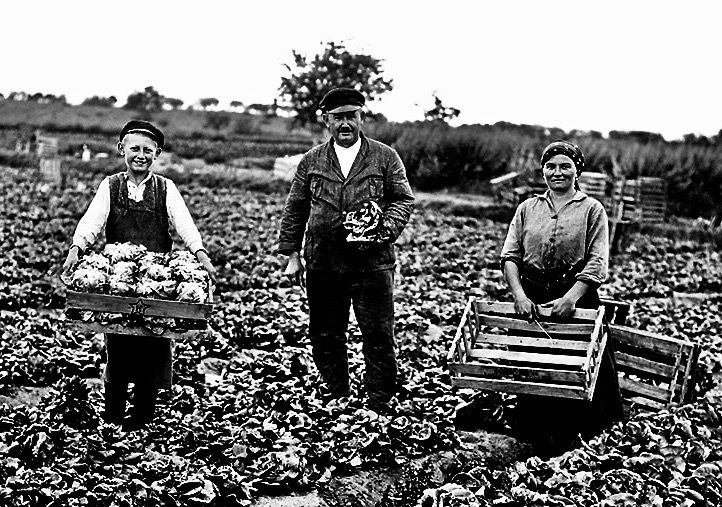
   “I started to help in the sugar beet fields when I was nine years old,” Angele Jurgelaitis said. “My sister Irena started helping me two years later when she turned nine.” The year was 1937 when the sisters worked together for the first time. Seven years later Angele was in a refugee camp outside of Nuremberg and Irena was on her way to a slave labor camp in Siberia. Angele was lucky Americans ran the camp she ended up in. Irena was unlucky Russians ran the camp she ended up in.

   “We worked with our father, who had a one-row horse-drawn puller.” Her father Jonas followed on foot behind the puller, picked up the beets, scalping the tops with a small machete, and dropped them behind him as he went. He recycled the heads for animal feed. His daughters brought up the rear, shaking dirt off the beets, and loading them into a side slat cart. When it was full Jonas hitched up and made his way to Mariampole, the nearest market town, where there was a storehouse and a train station to later take the root vegetables to a sugar beet factory. 

   Their other major crop was cabbage. They could harvest upwards of ten thousand heads an acre. When they cut the cabbage heads off they left the outer leaves and root in the ground. That way they got two crops. Jonas took most of his cabbages to Mariampole, too. The rest went into hanging baskets waiting to be made into soup.

   “My older brothers Bronius and Justinas helped handle the livestock. They did field work and repairs. Something always needed to be fixed. My younger brothers were still growing up. They couldn’t do much. My father did everything outside the house and my mother Julija did everything inside the house. We worked around the clock at harvest time.” Most of the food and drink the family of eight ate and drank came from their own fields and pastures, although most of their sugar beets were grown on land they rented from a neighboring childless widow.

   The farm was along the flatlands of the Naujeji Gizai region hallway between Lake Paezeriu and Mariampole, although it was far closer in spirit to the lake than it was to the city. The land bordered East Prussia and Poland. Some farmers had tractors. Most farmers had draft horses. They preferred tractors, but the Great Depression had put a dent into what they preferred. Some big land owners had cars. Everybody else had a horse and buggy to get the family to church on time on Sundays.

   Jonas kept cows, pigs, and chickens. “We made our own bread and butter, made cheese, gathered eggs, and collected berries.” There were patches of wild blueberries at the edge of their fields. Although they didn’t have a cellar, Julija still canned pickles and beets and stored them in the well. “We raised our own pigs and my father killed them.” When the time came, Jonas selected a pig for slaughter, walked it to a clearing beside the barn, hit the animal between the eyes with a club hammer, and cut its throat. With the help of his two eldest sons he cleaned and skinned the pig with a knife, keeping a knife sharpener at hand.

   Once the skin was separated from the muscle and fat he cleaned out the guts and sawed the pig’s head off. After quartering the animal, Jonas found the hip joints and slid his knife into them, cutting off the two hams. He did the same thing when cutting off the shoulders of the pig. At the center, where the ribs are, he took whatever meat he could find. Julija made sausages, bacon, and cured slabs of pork with salt and pepper. Jonas had built a closet around the chimney in the attic of the house, which could be gotten to by ladder. There were no stairs. He smoked the pork in the closet, laying the meat on grates, opening a damper to vent smoke into the closet. “I was scared to death of the upstairs, of the fire up there, although the pig meat was delicious,” Angele said. “When we ran out of food, my father killed another animal.”

   The kitchen was big enough for all of them to eat together. There were two long benches. There were no chairs. Angele always sat cross-legged when eating. “I was scared that a Jew would sneak under the table.” She was afraid he would bite her legs and suck her blood. “Everybody said the Jews had killed God and they drank the blood of Christians.” Fear and loathing of Jews was endemic in Lithuania.

   One of Angele’s chores was killing chickens for dinner. She didn’t like chopping their heads off, so she grabbed them by the neck instead and swung them in a circle around her until their necks snapped. There were barn cats and a watchdog. They chained the dog up at night. There were potatoes and fruit trees. They grew barley and summer wheat, putting in a barnful of hay every autumn. Sugar beets were Jonas’s number one cash crop, followed by cabbage. He grew some marijuana and tobacco behind the barn. He didn’t smoke marijuana himself. He smoked his homegrown tobacco instead, packed in a pipe, taking a break at the end of a long day. 

   “I let the young men smoke their kanape and get silly,” he said. Jonas got silly in a different way. He brewed his own beer and krupnickas. Julija didn’t smoke or drink. She kept a close eye on her husband. He kept a close eye on her, never smoking his pipe in the house. She suffered from tuberculosis, coughing and running a fever, and wasn’t long for this world.

   Making home brew is the simplest thing in the world. Sumerian farmers brewed beer from barley more than 5,000 years ago. The Codes of Hammurabi, which were the laws during the Babylonian Empire, decreed a daily beer ration to everybody from laborers to priests. Laborers got two liters a day. Priests got five liters a day. In the Middle Ages Christian monks were the artisanal beer makers of the time. Since Jonas had water, malt, hops, and yeast within easy reach, he had beer within easy reach year-round.

   Krupnikas is a spiced honey liqueur. The Order of Saint Benedict whipped it up for the first time in the 16th century. It can be spiced with just about anything, including cardamon, cinnamon, and ginger. If they had them, farmers added lemons, oranges, and berries. Honey was essential, although not as essential as a gallon or two of grain alcohol. There was grain as far as the eye could see, and there was a Copperhead Road around every bend, so making krupnikas full-bodied was never a problem. Lithuanians still pour it down on holidays and weddings. Everybody likes a warm snort of it in the dead of winter, whether they have a cold or not.

   Next to the lowlands of central Lithuania, the carbonate soils of the west are the best. That is where Jonas was. More than half of the country’s land area was farmland. Most of the rest of it was meadow and forest. What was left was where villages, towns, and cities were. The agrarian reform of 1922 promoted farmsteads. Landless peasants got some acres of land, if not a mule. Most holdings, except those Polonized, were between five and forty acres. The Poles were Lithuania’s rural aristocracy. Jonas had been a landless peasant before the land reform. He got twenty-some acres of his own and rented more of it. 

   During the interwar years more than 70% of the population depended on agriculture for its livelihood. In the 1930s Lithuanians fed themselves and were the source of 80% of the country’s export income. Lithuania is roughly two-thirds the size of the state of Maine. The small country was the sixth-largest butter exporter in the world at the time.

   Jonas didn’t know anything about the legality of the marijuana he grew. He didn’t know it was called “Sacred Grass” three thousand years ago in India. He didn’t know Queen Elizabeth in 1563 ordered all English land owners with sixty or more acres to grow it or face a five pound fine. One year later King Philip of Spain ordered it be grown throughout his empire from Spain to Argentina. George Washington cultivated it at Mount Vernon and smoked it when his teeth hurt too much to bear.

   Biology doesn’t care if it’s sugar beets or marijuana. Biology doesn’t judge anything to be good or bad. The only thing that matters to biology is survival and reproduction. It is our own constructed reality that does the judging. After World War One some nations began to outlaw marijuana. It became seriously illegal in the 1930s. The United States led the way. Harry Anslinger, head of the Federal Bureau of Narcotics, turned the nativist as well as racist battle against marijuana into a war. “Reefer makes darkies think they’re as good as white men,” he said. He believed it had a bad effect on the weak-minded “degenerate races.” He was especially worried that white women might smoke it at parties and consort with the wrong kind of man.

   “Most marijuana smokers are Negroes, Hispanics, and Filipinos,” he said. “Their satanic music, jazz and swing, result from its usage. This marijuana causes white women to seek sexual relations with Negroes, and entertainers, and many others. I consider it the worst of all narcotics, far worse than the use of morphine or cocaine.” Coca-Cola’s secret formula contained cocaine from 1894 until 1929. It was the reason children could walk five miles to school, uphill in knee-deep snow, jumping barbed wire fences along the way.

   The town of Gizai sits at a crossroad. There was a small school, church, police station, hardware store, and a coffee shop in the 1930s. “We went to church every Sunday and my father went to the store whenever he needed a tool or something he couldn’t make himself, When he took us along he treated us to candy at the coffee shop while he drank coffee and had a slice of lazy cake, talking with his friends.”  

   On the farm everybody slept on the ground floor of the house. The bedrooms were three side rooms. One was for Jonas and Julija. One was for Angele and Irena. The third room was for the four boys. There was no electricity. The house was lit by kerosene lamps. The kitchen was the biggest room. It was lit by a bulbous kerosene lamp that was raised and lowered from the ceiling by a pulley attached to a counterweight. Everybody washed their meals down with tea. Jonas bought tea from a German smuggler to avoid paying  the taxes levied on it. In the winter the fireplace was stuffed with wood and turf. The elder boys had the responsibility of making sure it never died out November through March.  Once a year a chimney sweep came with ladders, brooms, and brushes. The sweep used a lead ball at the end of a long rope for pushing out the soot.  

   Jonas was in thrall to his pens and fields. It was all he knew.  He never took a day off. It would only have meant more work the next day. “I knew growing up I never wanted to be a farmer when I grew up,” Angele said. “Working the earth wasn’t for me.”

   In Washington, D. C. Harry Anslinger could blow smoke with the best of them. “Under the influence of marijuana men become beasts. It destroys life itself,” he declared. Just in case anybody had missed the point, he added, “Smoking it leads to pacifism and communist brainwashing.” He got the Marijuana Tax Act passed in 1937. The Nixon administration dreamed up the War on Drugs. The next president brought out the big guns. “I now have absolute proof that smoking even one marijuana cigarette is equal in brain damage to being on Bikini Island during an H-bomb blast,” President Ronald Reagan said.

  Jonas couldn’t afford a washerwoman, so Julija did all the laundry. She put a tripod inside the fireplace and heated water in a copper kettle. After the clothes were washed she rinsed them in another kettle. She used a mangler to get the wrinkles out. It was a wooden box with rollers like a wringer that squeezed and smoothed water-soaked clothes. She hung clothes on a line to dry. In the winter she hung them in the attic. When she was done she didn’t need home brew or marijuana to help her relax. She took a nap the minute she was done.

   Julija passed away in 1941. She had been in and out of a tuberculosis sanatorium in Kaunas. The disease was the leading cause of death in the country. When she decided to go home for the last time it was to die. Jonas built an addition for her, which was a small bedroom with a window. He knocked together a new bed and stuffed a new mattress with clean straw. He moved their wedding cask to a back corner. He fabricated a coffin when the end was near and stood it up outside the bedroom door. Julija was buried in the local cemetery two months before the German war machine invaded.

   The Russians took the country over in 1944 and collectivized everybody’s farms in 1947. The new authorities told Jonas he could keep one cow and one pig for himself. They didn’t care about his chickens. They told him to stop growing marijuana and tobacco. All his crops had to be delivered to the state and the state would pay him whatever they thought was appropriate. He had differences with them about it, but what’s a simple man to do? What he did was sicken and die of a brain disease. Who wants to be a half-witted slave of the state? His farm disappeared down the Soviet Union sinkhole.

   Lithuania criminalized marijuana in 2017, many years behind the times. The country was going against the grain. Almost everybody else in the world outside of China and Russia was decriminalizing it as fast as they could. They were sick of the drug gangs and lost tax revenue and prisons bulging with one-time losers. By then almost everybody knew marijuana didn’t make anybody sex-crazy or lust after blood.

   Jonas was a good old boy with only a handful of overriding concerns, doing what had to be done, leaving the rest to take care of itself. His concerns were biological, not cultural. He didn’t care about the wider world. He cared about his family and their twenty acres. He cared about some of his neighbors. He might have mulled social and political matters over on his front porch, drawing on his pipe to get it going, but probably would not have paid too much attention to whatever narratives the state constructed about his way of life. He believed heart and soul in his liberty. He left this world before it all went wrong for him. In the event, he wouldn’t have been able to endure many of the next forty five years of the post-war Baltic world unless he had been willing to load his pipe with marijuana and smoke himself silly.

Ed Staskus posts monthly on 147 Stanley Street http://www.147stanleystreet.com, Made in Cleveland http://www.clevelandohiodaybook.com, Atlantic Canada http://www.redroadpei.com, and Lithuanian Journal http://www.lithuanianjournal.com

Cross Walkby Ed Staskus

“A once upon a crime whodunit.” Barron Cannon, Adventure Books

“Captures the vibe of mid-century NYC.” Sam Winchell, Beyond Fiction

Available on Amazon: https://www.amazon.com/dp/B0CRPSFPKP

Late summer and early autumn. New York City. A Hell’s Kitchen private eye. The 1956 World Series. President Eisenhower at the opening game. A killer in the dugout.