Tag Archives: The Mill New Glasgow PEI

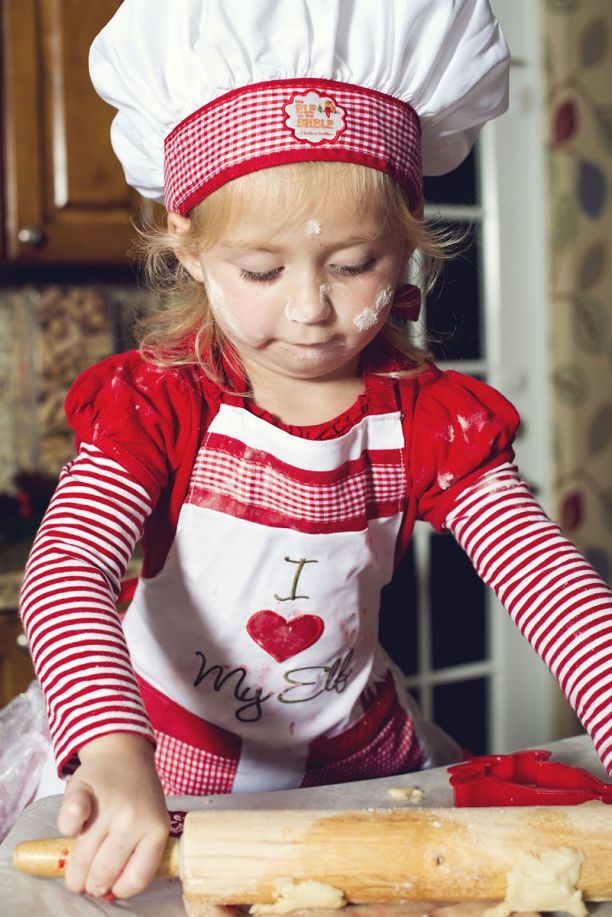
Crackerjack in the Kitchen

eb991025b477fc57a3b24206f6b28192.jpg

By Ed Staskus

   “I see you’ve made it back,” Michelle said. She was sporting retro eyeglasses and handcrafted rings on nearly every finger of every hand. Waiting tables, delivering three, four, and five plates at a time, is all hands on deck kind of work.

   “I want to try the pad Thai this time, after seeing the folks next to us digging into it the last time we were here,” Vera said.

   “That’s one of Emily’s best, definitely,” Michelle said. “Would you like to start with a drink?” She was one of three servers on the floor the mid-September evening Frank and Vera Glass were there for dinner. It was busy but nobody had to wait long for liquids and solids. The place was The Mill in New Glasgow on Prince Edward Island.

   “What is a good mixed drink?” Vera asked, running her eyes up and down the menu.

   “Everything is good, but Kim can mix up anything if we don’t have it on the list.”

   “What is Straight Shine?”

   “Shine.”

   “Like moonshine?”

   “Just like that. It’s our island-made moonshine.”

   “Like Ole Smoky in a mason jar?” Frank asked.

   “Not the same, it’s more like a margarita,” Michelle said.

   “That’s a step in the right direction.”

   “My God, I should moonshine,” Vera said. “My grandfather used to make his own vodka at home. All his friends from Lithuania, who escaped during the war, would come over on Sunday afternoons after church, drinking the rest of the day, yakking it up and singing their old country songs all night. I’ll try it, for sure”

   “Not for me,” Frank said, “I’ll have a pint, something IPA.”

   The Mill is in a two-story Dutch Colonial-like blue building built in 1896. It served as a community center and later as a courthouse, among its many incarnations. It was converted to a restaurant in the 1990s by the Larkin’s, nearby poultry farmers who are the largest turkey growers in the province.

   “We used to have a guy in shipping where I worked, in the warehouse, from West Virginia, who brought back moonshine every time he went home for a visit,” Frank said. Vera sipped her Straight Shine. “He always said you could tell it was good if you put a match to it and the flame burned blue. That meant it was good to go and wouldn’t make you go blind.”

   Michelle walked up and lit the tea candle on their table.

   “How is it?”

   “It looks good to me,” Vera said. “What I mean is, it tastes good.”

   When the Larkin’s transitioned out of the dining room business, The Mill stayed where it was when chef Emily Wells took over, putting her fusion-style stamp on the dining room. Diners soon put their stamp of approval on the fare.

   Vera ordered the stir-fried garlic ginger cilantro rice noodle fettucine pad Thai with lobster and Frank ordered the special, which was curry sweet potato soup, baby back ribs with mac and cheese, and dessert. It was East meets West meets Italy. Fusion cooking is the art of mixing ingredients and preparation styles from different cultures into a distinctive plate of tastiness.

   The window Frank and Vera were sitting at had gone dark by the time they finished their dinners, although Vera was still coming around the bend. She was a slow eater and her plate had been stacked. A quarter-moon in a cloudless sky reflected a milky light on the Clyde River below them in the hollow. Frank leaned back in his chair as Vera lifted a final forkful to her mouth.

   “Since we both ordered something new to us, why don’t we try something new for dessert, too?” Frank said.

   They had eaten at The Mill several times and usually ordered coffee and carrot cake after dinner, since the carrot cake was just about the best they had eaten anywhere.

   “It’s better than my mom’s, and she’s a pro,” Vera said.

   Vera’s mother was a freelance pastry chef in Cleveland, Ohio, providing sundry restaurants with sweet treats. During the holidays she made website-ordered Russian Napoleon cakes, shipping them frozen solid all around the country by Fed-Ex next-day air.

   “How about the chocolate cake that couple from Boston told us about?” Vera asked.

   “When we’re here we drive around the island,” the husband from Boston said. “We’ve eaten at a lot of restaurants but overall this is our absolute favorite. What’s so great about it? The unique combination of flavors and menu options, for one, and there’s not a deep fryer in the kitchen, for another thing. They’re dedicated to local sourcing, which means super fresh food and vegetables. Make sure to try the chocolate cake even if you’re full. It melts in your mouth.”

   He added that the portion was large, too, enough to share. Unlike some restaurants with a glowing reputation on Prince Edward Island, in the meantime serving prison camp portions at penthouse prices, The Mill gets it done with a square deal, even though it has as much, if not more, in the culinary arts to crow about.

   “Do you bake the chocolate cake here?” Vera asked.

   “Our baker does,” Michelle said.

   They ordered  a slice of the chocolate cake and two coffees. Michelle stopped at their table. She asked them how they liked the cake.

   “It’s totally delicious, the dark chocolate, if you want to let the baker know,” Frank said. A few minutes later a strapping youngster with disheveled hair walked up to their table. She said she was the baker and her name was Anna. She looked like she was maybe a sweet sixteen teenager.

   “You made this?” Frank asked, pointing to the half-eaten slice of cake he was sharing with his wife.

   “Yeah,” Anna said, wiping her hands on her apron.

   “Do you make the carrot cake, too?”

   “Yeah.”

   “This cake is what chocolate cake should taste like, up-to-the-minute,” “era said. “They can be boring, the same thing over and over again. This is definitely a bomb cake, in more ways than one.”

   “You seem awfully young to be making something this good,”  Frank said.

   “Yeah,” Anna said, shrugging and smiling.

   “How old are you?”

   ““I was 15 years old when I first started cooking here two years ago.. I came in to work one day, I was bussing tables, and my boss said, you’re scaring everybody out there. You have to go into the kitchen. From that point on I’ve worked in the kitchen.”

   “Scaring everybody?” 

   “Yeah, they said my personality was too big.”

   “Too big?” 

   “I was just barely fifteen. How scary could I be? I guess I can be scary sometimes. Nothing’s really changed.”

   “I told her when she worked out front that she was scaring the customers with her huge personality,” Kim, the mixologist, said “Now that she’s in the kitchen she can still be scary, I’ll teel you. She’s come up with nicknames for all of us. We won’t talk about that, though. It can get gross.”

   “What did you guys eat?” Anna asked..

   “She had the Thai and I had the special,” Frank said. “We often have the big seafood chowder bowl, the unofficial one.” 

   “Ahhh,” Anna said.

   “I’ve heard you have a name for it in the kitchen.”

   “We have a nickname for it.”

   “That would be Big Ass Bowl?”

   “Yeah.”

   “I always taste orange in the soup,” Vera said.

   “Yeah, there are orange peels, marinated, and bay leaves, that we take out right before service. We make our own fish broth.”

   The restaurant, brainchild of Emily Wells, who was named one of Canada’s top chefs by the Matador Network in 2016, serves local food made with global flair. She works in an adaptive vein, adapting her recipes to what’s in place and on time. “We’re buying local lettuce, local tomatoes,” Emily said. “A huge chunk of it is seafood since it’s seafood season.” A graduate of the first class at the Culinary Institute of Canada, she cut her teeth in kitchens in Ontario and later made a name for herself at The Dunes in Brackley Beach.

   “I’ve been at it for thirty-five years,” she said.

   “Oh, I’ve got mussels on the stove, back in a minute,” Anna said, striding out of the dining room.

   “I thought Emily was making the desserts, or they were buying them from some high-end bakery,” Vera said.

   “If that teenager is the pastry chef, all I can say is, she’s totally up to speed,”  Frank said.

   “Do you make all the desserts?” Vera asked when Anna came back to their table.

   “Yeah, I’m a line cook and the baker.”

   “My mother is a pastry chef. You’re darned good.”

   “How did you learn to bake so well?” Frank asked.

   “Emily taught me. I‘m a quick study. I learned a lot from my grandmother, too I used to spend all my time with her when I was a kid. She taught me how to pickle and bake.”

   Not everybody is good with pastry, not by any means. Not even celebrity chefs. “I make no bones about it,” says Michael Symon, chef, author, and restaurateur. “I have no understanding of pastry whatsoever.”

   “Honestly, I hate to say this,” Anna said, “but my aunt makes an even better carrot cake than I do.”

   “You’re early on to be nearly as good as your aunt,” Frank said.

   “Most of our staff is young,” Anna said. “Everybody in the kitchen is under 20, except Andrea and Emily. We have a 19-year-old, another 17-year-old, and a 13-year-old, who I   is my sister. Luke, our other prep, has three younger brothers who work here.”

   “It’s like the family line on the line,” Frank said..

   If you are under sixteen in the province of Prince Edward Island and want to work, you must have permission from your parents, must work only between 7 AM and 11 PM, and not work in an environment that is harmful to your health, safety, or moral development, among other things. If you are over sixteen, those limits don’t apply.

   Sometimes known as the Million-Acre Farm, farming is king on the island. Farming for a living is hard work. You probably don’t need a gym membership. There are some advantages. You are your own boss, you can go to work in boots and a t-shirt, and you eat like a king.

   “I started as a dishwasher,” Anna said.

   Working the dish pit means long hours on your feet, getting wet a lot, and ending the day smelling like food and soap. It’s not markedly different than farming, except farming is at the head of the line and washing dishes is at the end of the line.

   “The kids are great,” Kim said. “Ours is a teaching kitchen, so they get an education, and get paid. They all have a great work ethic. The little hostess, she’s fifteen, a crackerjack like Anna. It’s good to see that they want to work. I’ve worked in other places, and it’s like pulling teeth, all standing around. Here, they’re eager to learn and do.”

   “A lot of people, their idea of baking is buying a ready-made mix and throwing in an egg,” Vera said. “I make carrot cake at home, but it’s just carrots and stuff. One of our cats likes a piece now and then. Yours is both simple and complex. It’s subtle, really fine,”

   “The main spices we use are ginger, cloves, and cinnamon, and a bit of all-spice, and that’s about it.”

   “The cake isn’t heavy, which is what I like.”

   “There’s pineapple in it, too.”

   “The frosting is terrific.”

   “I was supposed to whip up more frosting yesterday, but I couldn’t come to work,” Anna said. “I decided my cat must have died.”

   “Oh, my gosh, that’s too bad!”  Vera said. “What happened to make you decide that?”

   “She was an outdoor cat. I had her since I was six, I came home one day and asked, where’s my cat, but nobody had seen her for days. It’s been a month now. I sat outside yesterday in my lawn chair until it got dark, hoping she would come back but she never did. I’m pretty sure she got eaten by a coyote.”

   After paying the bill, Frank and Vera lingered outside at the rail on the front deck. The band that had been playing in the upstairs loft was in the parking lot, still hooting it up. The night air was damp but brisk. The moon hovered in the inky sky. Across the street lights glowed over the bay doors of the New Glasgow Volunteer Fire Department.

   “That girl might be one of the best 17-year-old pastry chefs no one has ever heard of,” ” Frank said.

   “Between the known and the unknown, what else is there?” Vera said.

   “That moonshine seems to have gone to your head,” Frank said.

   “Ha, ha, ha. Anyway, she’s got a big smile, big energy, and some big cake talent. Somebody will hear about her, sooner or later.”

    There’s always a ‘Surprise Inside’ every box of Cracker Jack, Frank thought.

   They walked to the end of the deck leading to the side lot. Fluorescent lights blazed in the windows of the kitchen. Dishes clattered in sinks, the kitchen staff having a gab fest as they cleaned up. They heard high-spirited laughter, which followed them down the steps and a stretch of parking lot gravel to their car. A red fox chasing a brown rabbit ran past them into the bushes. 

   “You know how they say you are what you eat,” Frank said.

   “Of course.”

   “This is as good a place to be what you eat as any.”

Ed Staskus posts monthly on 147 Stanley Street  http://www.147stanleystreet.com, Made in Cleveland http://www.clevelandohiodaybook.com, Down East http://www.redroadpei.com, and Lithuanian Journal http://www.lithuanianjournal.com. To get the site’s monthly feature in your in-box click on “Follow.”

“Cross Walk” by Ed Staskus

Late summer, New York City, 1956. Big city streets full of menace. A high profile contract killing in the works. A private eye working out of Hell’s Kitchen scares up the shadows.

Available on Amazon: https://www.amazon.com/dp/B0CRPSFPKP

A Crying of Lot 49 Publication
Calm Before the Storm

By Ed Staskus

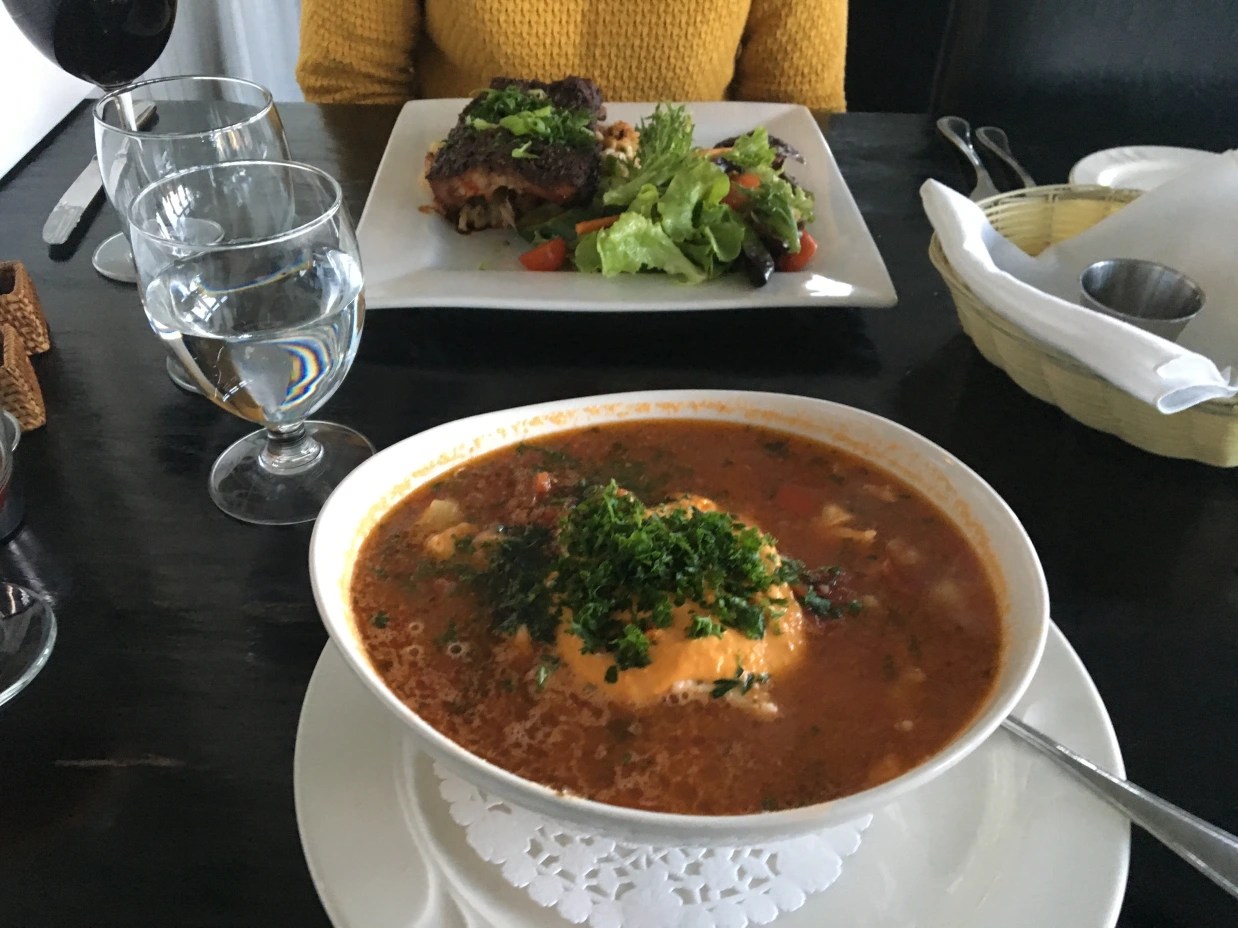
   There is plenty of good better best even better seafood chowder on Prince Edward Island, since there is plenty of seafood on all sides of the crescent-shaped province. There are cultured mussels and lean white halibut and wild-caught lobster. They go into the chowder. It comes in cups and bowls. Some of the bowls are bigger than others and can be meals in themselves.

   Or more than a meal in themselves.

   “We had a large bowl of chowder last year, but I don’t see it on the menu anymore,” Frank Glass said to the young man who was putting glasses of water down on their table.

   “We have a really good seafood chowder,” he said, pointing to the menu.

   “Is it a big bowl?” asked Frank.

   The young man sized up an imaginary bowl with his hands.

   “No, the chowder we had was in a bowl about twice that size,” Frank said.

   “Oh, you mean the big ass bowl.”

   “What kind of bowl?” asked Vera Glass, sitting across from her husband. They were at a table at one of the windows overlooking the Clyde River. On the far bank the red roof of the PEI Preserve Company, where jams and jellies are made, glowed in the rolling up of dusk.

   “That’s what we call it in the kitchen,” the young man said. “We don’t call it that on the menu, obviously. If you want it, I can ask, and I’m sure we can make it for you.”

   “You’ll just clear the decks and whip it up, even though it’s not on the menu?” Vera asked.

   “Sure,” said the young man.

   “Sweet,” she said.

   Vera and Frank Glass were at the Mill, a snug as a bug up-to-speed restaurant in New Glasgow on Prince Edward Island. It is neither a small nor big roadhouse, seating maybe fifty diners, right on the road, on a zigzag of Route 13 as it runs south from coastal Cavendish through New Glasgow to Hunter River. There is a performance space on the second floor. A deli case just inside the front door is always full of fruit pies and meat pies. The building is blue, two–story, and wide front-porched. It is kitty-corner to the bridge that crosses the snaky river. The Mill describes itself as “carefully sourcing seafood, steaks and entrees served in a rustic yet refined space with scenic views.”

   That’s hitting the nail square on the head.

   It was the night before Hurricane Dorian slammed into PEI, even though it wasn’t a hurricane anymore when it did. It was a post-tropical storm, which is like saying you took it on the chin from a cruiserweight rather than a heavyweight boxer.

   “Under the right conditions, post-tropical storms can produce hurricane-strength winds,” said CBC meteorologist Jay Scotland the day after the storm. “Dorian serves as a good example that the difference between a hurricane and a post-tropical storm is more about the storm’s structure and not its intensity.” On Saturday morning, moving north, it sucked up energy from another weather system moving in from the west. The winds spreading over the island grew to hurricane strength during the day and the storm unrolled over a larger area than Hurricane Juan, the “storm of the century,” had done in 2003.

   “Look who’s back,” said Vera, looking over Frank’s shoulder.

   “Who?”

   “Michelle.”

   “Good, maybe she’ll be our waitress.”

   “She looks better tonight, not so spaced.”

   “Didn’t she have to go home the last time we were here?”

   “I think so.”

   “Hi, how are you?”

   “Good,” said Michelle. “I see you two have made it back again.”

   “This is our third time here in three weeks, although we’re leaving for home on Sunday,” said Vera.

   “So, you’ll be here for the storm.”

   “It looks like it.”

   “Where’s home?”

   “In Ohio, Lakewood, which is right on the lake, just west of Cleveland,” said Frank. “We get thunderstorms that come across Lake Erie from Canada, but nothing like what we’ve been hearing is going to blow up here in your neck of the woods.”

   Hurricane Dorian hit home like a battle-ax.

   “The result was much higher rainfall and more widespread destructive winds across PEI with Dorian compared to Juan,” said Jay Scotland, the weatherman. On Monday Blair Campbell, the chief executive officer of PEI Mutual Insurance, said they logged the most claims ever on Sunday, the day after the storm. More than four hundred policy holders called in property damage.

   “These are damage claims in the frequency and magnitude that we have not seen before,’’ he said.

   Fishing boats from Stanley Bridge to Covehead were smashed submerged sunk.

   “Sobeys in Charlottetown this morning was worse than Christmas time,” said Michelle. “You couldn’t get anywhere with your cart. Everybody was buying dry cereal, canned fruit, ready-to-eat, and cases of water.”

   Frances MacLure was stocking up like everybody else.

   “So far I have just bought batteries,” she said. “I have two radios and I’m going to make sure one of them is going to work. It’s always nice to be able to keep in touch if the power is out for any length of time,” she said.

   There were sandwich makings on her list, as well.

   “Just for a quick bite if the power goes off.”

   “Everybody was buying batteries,” said Michelle. “The last time a hurricane came to the island, power was out for more than a week.”

   “We are very concerned, we’ve certainly spent the last three days in readiness, in going through all of our checklist and checking our equipment,” said Kim Griffin of Maritime Electric as the weekend approached. “There is a lot of greenery and foliage on the trees, that is a concern to us. So, we are really asking our customers to make sure they are prepared and ready.”

   “When was that?” asked Frank.

   “About fifteen years ago,” said Michelle. “Summerside has its own power, but if it goes out in New Brunswick, this whole part of the island won’t have any power.”

   “Do you still have that moonshine cocktail?” asked Vera.

   “We do,” Michelle said.

   Vera had an Island Shine and Frank had a pint of Charlottetown lager.

   “Are you going to have the big chowder?” asked Vera.

   “Yes,” Frank said.

   “I’m going to have a small bowl of soup and the ribs,” Vera said. “What about going halves on the lamb and feta appetizer? It’s good with everything.”

   “Sure,” Frank said. “You can’t go wrong with the ribs, and the mac and cheese they come with. That cheese from Glasgow Glen, it’s good. I had it the last time we were here.”

   “I hope Emily has the sweet potato curry soup tonight,” said Vera. “Curry is my number one favorite thing in the world.”

   “What about me?”

   “You’re close, maybe third or fourth.”

   “That close, huh?”

   “You don’t like curry, which is a problem. It drops you in the standings. I think Emily is a curry person, like me. She probably does a great Fall Flavors menu.”

   The Mill’s owner and chef Emily Wells was born in England and lived on the continent before coming to Prince Edward Island in 1974 when her parents bought Cold Comfort Farm. She is a graduate of the Culinary Institute of Canada, committed to local healthy food and ethical food production. She has worked in restaurants in PEI and Ontario for more than three decades and is a key contributor to the River Clyde Pageant. The pageant is about the tidal river, and features great blue herons, trout puppets, schools of dressed-up jellyfish, bridge trolls and mermaids and fishermen.

   “I love it when you put curry in things, but sometimes all of a sudden you don’t taste anything else. I feel like you can taste everything in her soups.”

   “It’s like her chowder, it’s chock-full, but nothing’s drowned out, all the parts stand out,” Frank said. “It’s not too busy.”

   “Everything here is always better than I expect, even though I always expect it to be good,” Vera said.

   “My boyfriend is a chef at the Blue Mussel in North Rustico, and it’s hard for us to get a day off in the summer on the same day, so we hardly ever eat out,” Michelle said.

   “After eating here and at the Mussel, we don’t always want to go, anyway, but we ate out in Charlottetown a few weeks ago, and the chowder we got was mostly a milky liquid, with so little fish in it. We poked around for whatever we could find but ended up asking for another loaf of bread. We got it to dunk into the chowder, because there were hardly any pieces of anything.”

   From one end of Prince Edward Island to the other pieces of preparation for the storm were coming together.

   “We have been busy as a team,” said Randy MacDonald, chief of the Charlottetown Fire Department, the day before the storm. “Our team has been making preparations for tomorrow.”

   He said chainsaws and generators were on hand. “We may see trees down, branches down, large branches taking down power lines, that sort of thing.” Rapid response cars, trucks, and ambulances were gassed up full and staff was on the alert, ready to go.

   While the tempest was rolling up the coast, Michelle didn’t only rush to Sobeys. She took matters into her own hands, in her own kitchen, in her own house.  “I live just down the road from here, next to the Gouda place. I send my son there for pizza, since he can walk over.”

   The Gouda place makes artisan cheese.

   “I’ve passed my name and my expertise on to Jeff McCourt and his new company Glasgow Glen Cheese,” said the former Cheese Lady, Martina ter Beek.

   Glasgow Glen Farm slaps out skins from scratch, down the line doing the dough to sprinkling homegrown veggies and meats on the pie, featuring their own made from scratch gouda, working behind the front counter at two long tables just inside the door, wood firing the pizzas in a brick oven.

   In the summer there are picnic tables on the side of the gravel parking lot, a grassy field sloping away from a pile of cordwood.

   “I made chowder,” said Michelle. “It was a fishy stew, like Mel does. I ended up using cod, clams, and scallops. I made everything else, clam juice, potatoes, carrots, onions, and tomatoes out of my garden. Once the potatoes were almost completely cooked, I took the pieces of cod and sat them on top. I put a lid on it and all the flavor of the cod went into it, yeah.”

  She didn’t need any bread to help her chowder out, either.

   While Vera pulled gently at her baby back ribs, Frank started scooping out his large bowl of broth and seafood.

   “How’s the sinkhole?” Vera asked.

   “So far so good,” said Frank. “It’s sort of like a Manhattan clam chowder, like the Portuguese make, and like a seafood goulash at the same time.”

   “Like a cioppino.”

   “Like a what?”

   “That’s the official name of it,” Vera said.

   “Anyway, I can taste bay leaves and thyme, and there might be some oregano in it. It’s loaded with stuff. She must have hit the motherload at the fish market. There are mussels, halibut, lobster, a chuck of salmon, and shrimp.”

   “Emily probably uses whatever she has on hand,” Vera said.

   “On top there’s a red pepper rouille, almost like a pesto, which gives it a kick.”   

   “Are you going to be able to finish it?”

   “I’m going to give it my best shot.”

   Halfway through their meal, when Vera spotted a plate of maple mousse walking by, she said to Frank, “That’s what I want to try for dessert tonight. It’s frozen mousse, like ice cream. I thought it might not be good for sharing, but that thing is more than big enough.”

   “All right,” said Frank, “since that Anna kid is a wizard. First, we eat well, then we face tomorrow, no matter what happens.”

   The Mill was almost vacated evacuated when they paid their bill of fare and left.

   “You wouldn’t know a hurricane is blowing in,” Frank said to Vera as they lingered in the front lot after dinner, leaning against the back hatch of their Hyundai, watching the no traffic on the quiet road, the starry northern sky inky and still above them.

   When Saturday morning rolled around, it started getting dark, and by noon it started raining. It got windy and windier. The Coastline Cottages and the Doyle houses on the other side of the park road lost power in the late afternoon. Churchill Avenue in town was shut down. The Gulf Shore Parkway east from Brackley was shut down. Roads in all directions were shut down, as utility wires and branches blew away. Fences were flattened, roofs torn off, and hundred-year-old trees toppled.

   The damage to the Cavendish Campground, seven-some miles away from where Frank and Vera were staying, was so bad it was closed for the rest of the year. An arc from Cavendish to Kensington to Summerside was walloped. Islanders tarped their roofs, sawed up tree limbs, and hauled away debris for days afterwards. On Sunday morning all the trails administered by Parks Canada everywhere on PEI were shut down until they could be assessed.

   After their cottage lost power, Frank and Vera packed for their drive home the next day and tidied up while there was still some light. “At least we know the mondo bridge is as sturdy as it gets,” said Vera. When it got dark, 19th century-style dark, they popped open the remains of a bottle of red wine and spent the rest of the night riding out the lashing all-out rain and gusting big ass wind.

Ed Staskus posts monthly on 147 Stanley Street http://www.147stanleystreet.com, Made in Cleveland http://www.clevelandohiodaybook.com, Atlantic Canada http://www.redroadpei.com, and Lithuanian Journal http://www.lithuanianjournal.com

“Cross Walk” by Ed Staskus

“Captures the vibe of mid-century NYC, from stickball in the streets to the Mob on the make.” Sam Winchell, Beyond Fiction

Available on Amazon: https://www.amazon.com/dp/B0CRPSFPKP

Late summer and early autumn. New York City, 1956. Jackson Pollack opens a can of worms. President Eisenhower on his way to the opening game of the World Series where a hit man waits in the wings. A Hell’s Kitchen private eye scares up the shadows.

A Crying of Lot 49 Publication