Tag Archives: Rita Staskus

Change of Heart

By Ed Staskus

   There was no love lost for Jews among my father’s generation. He was born and raised in northwestern Lithuania. His father was a police chief and his mother was a schoolteacher.  They weren’t empty-headed, but they were full of the zeitgeist of the times. The general consensus in Lithuania before and during World War Two was that Jews were no good. It was partly economic. Most Lithuanians were farmers then. They saw Jews as middlemen exploiting them. It was partly nationalist. Many saw them as against the country for siding with Russian and Polish interests. It was partly because Lithuanians in general aligned with Germanic beliefs, including their hatred of Jews, which the Germans had kept alive from the Middle Ages on.

   Most of the time it was simply traditional Christian antisemitism. Lithuanians were the last Europeans to give up paganism and take up Christianity. It wasn’t always a blessing for Jews. Grand Duke Jagiellon expelled all of them from the Grand Duchy in 1495. They eventually returned, but in the mid 17th century the Khmelnytsky Uprising and Deluge Wars led to the deaths of many of them.

   In the 19th century pogroms came and went. Jews had to endure smashed up and burned down houses, public beatings, and some murders. Half-baked blood libel stories ran rampant, especially in Panevizys and Siauliai. My father was from Siauliai.

   When in the summer of 1996 he told me he was going to Kaunas to deliver yarmulkes, tallitots, which are prayer shawls, and three thousand dollars to an impoverished synagogue in Kaunas, Lithuania’s second largest city, I was dumbfounded. He had never been loud-mouthed about his animus for Jews, but I had heard enough over the years to know exactly how he felt.

   “Does this have something to do with the $!8.00 Rita took to a synagogue two years ago?”

   “Yes, it’s the same synagogue.”

   My sister, Rita, had gotten the ball rolling in 1994. She was working at a travel agency  called Born to Travel. It was in Beachwood, on Cleveland’s east side, and was owned by two sisters. They were Jewish. It got started when Sally Steiger, another travel agent, asked Rita to deliver what is called a chai of $18.00 to the first synagogue she saw in Lithuania, where she was going to visit relatives. The $18.00 is symbolic. The toast “L ‘Chaim” means “To Life!”

   During the interwar years there were more than two hundred thousand Jews living in Lithuania. When World War Two ended there were fewer than two thousand left alive. There were eight hundred in Vilnius, seven hundred in Kaunas, and handfuls scattered here and there. The rest had been killed by Nazi death squads and Lithuanian auxiliaries. They called it extermination, as though Jews were bugs or mice. The victim rate was the highest of any country where the Holocaust happened.

    “I was walking around with a friend of mine in Kaunas checking out the sights while at the same time in the back of my mind I was searching for a random synagogue,” Rita said. No one she had asked knew whether there was one in the city, or not. “We turned a corner and suddenly right before us was an old synagogue.”

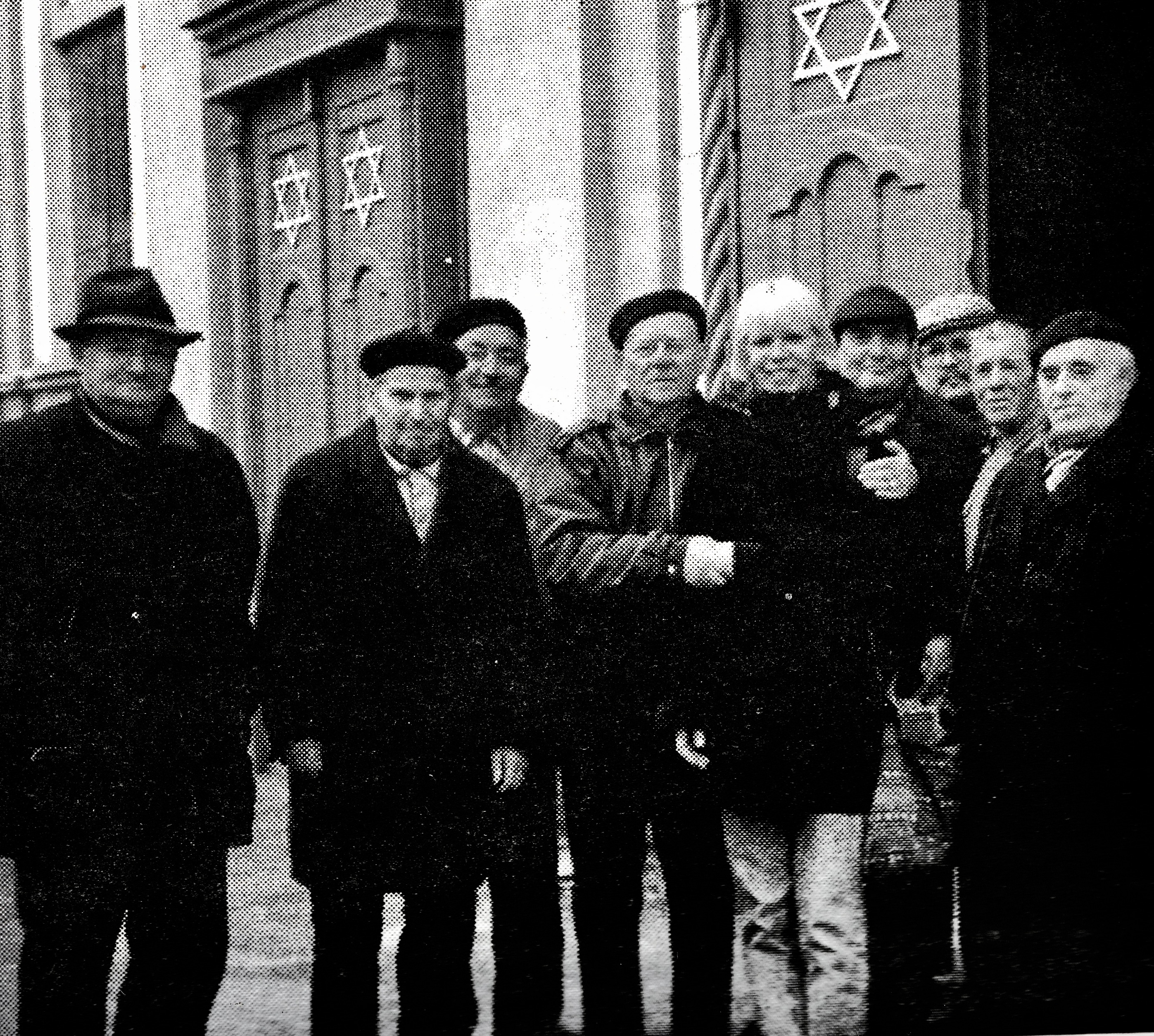
   It was the Ohei Jacob Synagogue. It was built in the mid-19th century and featured a two-story classical façade. By 1910 more than thirty thousand Jews lived in Kaunas, almost 40% of the population. The city became a center of European Judaism. They had their own seminary, prison, and kosher slaughterhouse. There were twenty five active synagogues in the city before the war.  

   The Nazis used the synagogue as a warehouse during their occupation of Kaunas, which ironically led to its survival. The other synagogues were destroyed or fell into disrepair. The Ohei Jacob Synagogue was the only one left. There had once been a school and an orphanage, but by the 1990s both were long gone.

   In 1941 Lithuania’s Jews began to find themselves locked up in ghettos. The Nazis, led by their number one killers the Einsatzgruppen, transformed them into death camps. It was during this time that the vast majority of the country’s Jews were murdered. Those that weren’t had somehow made themselves scarce.

   “I went inside and found a few elderly men in prayer,” Rita said. “The synagogue looked poor and the prayer books the men were holding were ancient and tattered. I gave them the chai.”

   Two years earlier, faced with a financial crisis, Rabbi Yecheska Zach had gone to a nearby Catholic church and asked for help. The synagogue was at the point of closing. The Catholic priest gave him enough money to keep the shul’s doors open.

   Before she left she met Rabbi Zach. When it came time to leave she extended her hand to shake hands with him. “That was a mistake.” Orthodox rabbis don’t shake hands with women outside their immediate family. “It was kind of awkward.”

   When she returned home and went back to work, telling her co-workers about the synagogue, they decided to adopt it. They set up a collection box wrapped in glossy blue paper at the front of the office. ”Some people mailed in checks, Others brought in cash. One man slapped a hundred dollar bill down on my desk. I opened an account in the bank next door.”

   A local synagogue invited her to speak about her experiences in Lithuania. A group of Hebrew genealogists asked her to speak to their group. The Park Synagogue, an historic modernist landmark in Cleveland Heights, invited her to address their congregation. ”More than three hundred people were there, all looking at me. it was an out of body experience. Some people had questions when I was done. One lady stood up and said, ‘You know, you Lithuanians killed all the Jews.’ I didn’t know what to say. An older man stood up and said, ‘Leave her alone. If it wasn’t for her we wouldn’t even know about any synagogues in Lithuania.’ At the end a collection was taken. There was nearly a thousand dollars in the bag when they gave it to me.”

   My father had already planned a trip to Lithuania, partly to visit relatives, some of whom, after the Iron Curtain had been drawn shut, he hadn’t seen in more than forty years, and partly on business. He agreed to take material and money with him. “It got to the point that, before he left for Lithuania, he would call my office and ask, ‘Where’s the chai money to give to the shul?’ I didn’t know he even knew what shul meant.”

   When he set off from Vilnius to the synagogue in Kaunas he took a suitcase full of yarmulkes and prayer shawls with him. He wore a money belt stuffed with thousands of American dollars. The yarmulkes were white, left over from a wedding. The Park Synagogue donated two dozen used prayer shawls.  D. O. Summers dry cleaned them at no charge. When he delivered them the congregation would at last be properly dressed.

   “I told him to not go on a Sunday because nobody would be there,” Rita said. “I told him to go on a Saturday. I didn’t know it was going to be Rosh Hosana, but it was.”

   Rosh Hashanah is the Jewish New Year. It is a two-day holiday that begins on the first day of the Hebrew month of Tishrei. It ushers in the Days of Awe, ten days culminating in Yom Kippur. It is a time for prayer, repentance, and self-reflection. The holiday celebrates the creation of the world and is observed with special ceremonies like sounding a shofar. The shofar is a hollowed out horn made from a ram’s horn. The person who blows it is usually called the Master of the Blast.

   There is food and drink. Everybody has some symbolic foods like challah and apples dipped in honey and then gets down to business. Dishes include matzo ball soup, chicken, and  brisket washed down with grape juice or wine. When my father showed up they put out the feedbag.

   “Those guys were very friendly,” he said. “They clapped me on the back, brought me more food than I could eat, and kept refilling my wine glass. I thought they were going to take down the picture of the rabbi that was on the wall and replace it with my picture.” He went back to Vilnius filled with good cheer, in more ways than one.

   After my father got back to Cleveland he toned down his long-time antisemitism. It got so he only had neighborly things to say about Jews. It was a change of heart, an old dog learning a new trick.

   Rita went  back to Lithuania the following year, visiting uncles, aunts, and cousins. She delivered more garments and money to the Ohei Jacob Synagogue in Kaunas. “What impressed me most about Rabbi Zach was that he never asked me for anything. He just said how appreciative he was.” He took a picture of her standing with a clutch of congregants. She was the only one in the photograph legally blonde.

   Before she left Lithuania she visited the Paneriai Memorial outside of Vilnius. It is where a village and railway station had long stood. In 1940 the Red Army began work on a fuel storage base there. They didn’t finish it, interrupted by the German invasion in the summer of 1941. The pits that had been dug for fuel were repurposed. In December 1941 thirty three thousand Jews from Vilnuis were killed there and thrown into the pits. More than five thousand Red Army prisoners of war were also killed and thrown into the pits. 

   In 1944, before the Nazis retreated from the Baltics, they began digging the pits out, burning the corpses, and mixing the ashes with sand. They were trying to hide the evidence of what they had done. The corpse burners were all Jews brought to the pits from forced labor camps. It was a choiceless choice for them. Machine guns compelled them to do the work. The Nazis called the corpse burners Sonderkommandos.

   “When I got there I took a tour, but it was too much. I sat down on a bench by the railroad tracks that came from the nearby main line. They used to bring the Jews to the pits packed in boxcars. It was eerie sitting there and even more eerie when I heard a train whistle and saw a train going past in the distance. That was all I could take.”

   A letter from Kaunas arrived at Born to Travel after Christmas.  “A Happy New Year,” Rabbi Zach wrote. “The Jewish Association of Kovno has received tallitots, yarmulkes, and money.” Kovno is what Jews called Kaunas. “We now have all the Jews in our synagogue wearing the tallitot you brought us and everyone is happy about it. We thank you again. We hope you won’t forget us.”

Ed Staskus posts monthly on 147 Stanley Street  http://www.147stanleystreet.com, Made in Cleveland http://www.clevelandohiodaybook.com, Down East http://www.redroadpei.com, and Lithuanian Journal http://www.lithuanianjournal.com. To get the site’s monthly feature in your in-box click on “Follow.”

“Cross Walk” by Ed Staskus

“A Cold War thriller that captures the vibe of mid-century NYC.” Sam Winchell, Beyond Books

Late summer, New York City, 1956. The Mob on the make and the streets full of menace. President Eisenhower on his way to Brooklyn for the opening game of the World Series. A killer waits in the wings. Stan Riddman, a private eye working out of Hell’s Kitchen, scares up the shadows.

Available on Amazon: https://www.amazon.com/dp/B0CRPSFPKP

A Crying of Lot 49 Publication
Hammer the Sickle Blues

By Ed Staskus

   “Man, I had a dreadful flight, I’m back in the USSR, you don’t know how lucky you are, boy, back in the USSR.”  The Beatles

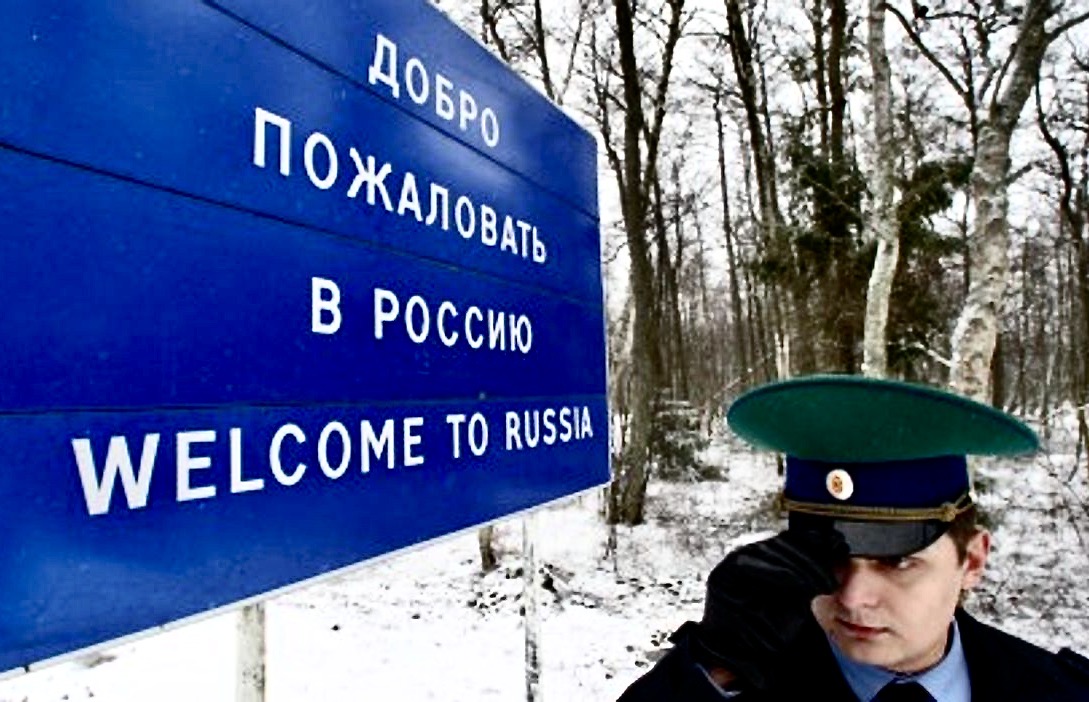
   When Angele Staskus went to Lithuania in 1977 with her daughter, she had not been on native ground for thirty-three years. Her daughter, Rita, 17 years old, had never been there. They flew from Cleveland, Ohio, to New York City to Moscow to Vilnius. It took two days to travel the five thousand miles.

   It was in 1944 that Angele Jurgelaiyte, then a 16-year-old farmer’s daughter, fled Alvitas near Marijampole in the south of the country, the German Army retreating pell-mell and the Red Army storming the front. She shared a wagon drawn by two horses with her aunt and her aunt’s four children. A milk cow was tied to the back of the wagon. She fled to East Prussia to Germany to Canada. Nobody else in her immediate family got away before the clampdown. They got to stay in the USSR for the next five decades.

   Angele got married to Vic Staskevicius, another Lithuanian refugee, in Sudbury, Ontario. They had three children and the family emigrated to the USA in the late 1950s. After they got there they became Mr. and Mrs. Staskus. They started at the bottom. Everything looked like up to them.

   The first time Rita saw her first Russian  airport, she wasn’t impressed. “The Moscow airport was crappy, gray on gray, and there were birds and bats flying around inside the terminal. Everybody looked sick, like stomach flu was going around.”

   “The color of truth is gray,” said the French writer Andre Gide. He was wrong. The Commies were wrong, too, and their favorite color was wrong. Social material political truth at any cost is more trouble than it’s worth, sparing no one, not during the countless bloodthirsty 20th century grabs for glory and power, for sure. It’s not black and white either, no matter what the insincere masterminds say. The color of truth is more like Sgt. Pepper’s Crayola 64 Colors. 

   The Sheremetyevo airport served most of the international flights arriving and departing the capital city. The airport was originally built as a military airfield in the late 1950s with one runway. In the early 1970s a second runway was added. A single terminal still served both runways. Half the people waiting for their flights looked like they might commit suicide any second.

   “We had to go through customs. The higher-ups, police, and soldiers all looked grim. Everybody going to Lithuania was smuggling something. My mom kept telling me to flash a smile at the soldiers, most of whom were young, like me. We had gum and cigarettes in my suitcase, but they never went through it.”

   A woman behind them wearing an oversized fur coat wasn’t so lucky. “She had all kinds of stuff sewn into the lining of her coat. They ripped the lining apart and took all of it.” The police put her stuff in their pockets.

   There were several eateries in the terminal, but neither mother nor daughter ate while waiting for their connection. “The food looked horrible, and what was the point of bad food and bad service without a smile?” asked Rita.

   They flew Aeroflot to Vilnius. “They brought us food, butter and buns, but they were hard as rocks,” Rita said. “You couldn’t even bite into them.” She tossed them under her seat. “The stewardesses were all so surly, down at the mouth, that I started laughing about it.” The flight attendants did a slow burn.

   When they landed in Vilnius, the stale buns rolling to the front of the airplane, passenger loading stairs were rolled to the door. The terminal was built in 1954. “It was a gray rectangular building, like a warehouse, like in Moscow.” There were sculptures of soldiers and workers outside and wreaths, bay leaves and stars, and the Soviet hammer and sickle inside.

   “It was even crappier than the Moscow airport.”

   Inside the terminal was a tight-knit group of more than forty of their relatives. “They came running up to us. One of them asked, do you speak Lithuanian? When I said yes, everybody started talking at once.” Some of the people looked a little like her, while others looked a lot like her mother. They were her uncles, Justinas, Juozukas, Sigitas, and her aunt Irena. There were nieces and nephews. When the excitement died down, they drove to the Gintaras Hotel, near the railroad station.

   The Gintaras was where foreigners stayed, all foreigners from anywhere, who visited Lithuania. It was a hard and fast rule. Signs warned against making a commotion. “The kids were running up and down the hallway, while the adults were all in our room. It was crowded since it wasn’t a big room, at all.”

   They had brought pens, gum, and cigarettes. “My uncle Justinas lost the pen I gave him, and when I offered him another one, he said, no, he wanted the same pen I had given him. Nobody could find it, so I pretended to find it, and gave him a new one.”

   Everybody wanted the American cigarettes they had smuggled in. “Russian cigarettes were nasty. They smelled bad.” The Belomorkani cigarettes didn’t come with a filter, but with a hollow cardboard tube attached to a thin paper tube filled with tobacco. The tube was like a disposable cigarette holder. They were popular in the Baltics because of their cheap price. They were notorious for being the strongest cigarette in the world.

   “Everybody was smoking in minutes, the men, the women, and the older kids. It was non-stop.” 

   The Prima brand was imported from Bulgaria. It was a better quality of tobacco. But since the Belomorkani was the only available fag in most of the hinterland, that is what everybody smoked. A low-lying ashy cloud soon hung down from the ceiling. Even though cigarette advertising wasn’t allowed in the USSR, almost everybody smoked. 

   “After twenty minutes you couldn’t see across the room.” Rita noticed one of her cousins was chain-smoking. “I didn’t know you smoked.”

   “I don’t,” he said.

   “We brought Bubble Yum because that’s what they wrote us they wanted. All they had was crappy hard gum that would break your teeth when you started to chew it.” Introduced just two years earlier by Life Savers, Bubble Yum was the first soft bubble gum ever created. “They would chew the Bubble Yum for a half hour and then put it back in its wrapper, putting it away in their pockets or purses.”

   One afternoon Rita was sitting in a nearby park talking with her uncle Sigitas. He took his wallet out of his back pocket. He filled his hand with a wad of cash.

   “We have money, but there’s nothing to buy,” he said.

   “We went to a butcher shop. There were only two kinds of meat and both of them were loads of white fat. My aunts were always cutting fat off. It was gross. Even the herring was bad. I mostly hated the food. It turned my stomach.”

    There was a store near the hotel. It was called the Dovana Krautuve, or Gift Store. It was for Western tourists only. Lithuanians weren’t allowed to shop there, or even go inside it. They went there one day on a tour bus. “They had amber, wooden dolls, artsy stuff there. They just wanted our American dollars. When we were leaving, they gave each of us a bottle of Coca-Cola.”

   Back on the bus, Rita asked the driver if he liked Coke.

   “Yes, I had some in 1955,” he said. “It was good.”

   “That was twenty-two years ago,” she said. 

   “Yes, I understand,” said the bus driver.

   She gave him her bottle of the sweet soda.

   “The Young Communists were always following us around, telling us their world was just as good as ours, that they had everything we had, and more. When I had to take my contacts out on the bus, one of them said, we have those, too. That was wacky because none of my relatives had contacts and none of them knew where to get any unless it was the black market.” She finally told the Young Communists to cut it out. “Your BS isn’t doing anything for me,” she said.

   While inside the hotel, nobody talked about anything that might compromise them. “All the rooms were bugged. Everything was bugged.” Everybody was constantly watched, one way or another. Telephones were tapped. Mail was opened. Black government sedans followed people around.

   Angele and Rita stayed at the Ginraras Hotel for a week. Everybody knew somebody was always listening in. Nobody said anything. Their room wasn’t small, but it wasn’t large, and the bathroom was even smaller. The room was a bathroom and a shower all at once. There weren’t any sliding doors or shower curtains. “There was a drain in the middle of the floor, and whenever we showered the spray would get all over the tiled walls and sink and toilet. Everything got wet. The whole room became a shower.”

   After they towel dried the room and themselves off, they visited with their relatives. It was what they did more than anything else. There weren’t many sights to see in Vilnius, even if you could go there.

   “You never asked anybody, even your own flesh and blood, what they did. They would always say, ‘I have responsibilities.’ If you lived in Vilnius, you probably had a normal job, but not in Marijampole.” Most of her kinfolk lived in the country and farmlands southwest of the rural town. They finagled and horse traded, going to Poland, smuggling whatever they could, doing things that weren’t altogether legal, or so the Russians said, so it wasn’t prudent to ask them too much

   The goal was to be a ‘pasikaustes,’ somebody who has the smarts prowess right stuff to make it happen. It literally means putting a horseshoe on yourself. Everybody needed good luck in the clampdown. That’s why they were always wheeling and dealing.

   They were waiting for the Russians to get the hell out of their country. They had once waited more than a hundred years. They could wait another hundred if they had to, although who wanted to do that? They were already bitter and alienated. ‘Laikiu nesulaukiu’ means not being able to wait for something to happen. “I wait but I can’t wait.” It’s like being in jail for a crime you didn’t know you had committed.

   They made plans to go to Silute to see Rita’s paternal grandmother, who was in her 80s. Angele had never met her. Rita couldn’t imagine her.

   Silute is to the northwest of Marijampole, two-some hours away. The Nemunas River floods there almost every year, soaking the lowland pastures. Migrating birds call it home away from home because of the delta and all the water. A fifth of the area is forested. It is home to more than three hundred villages.

   Antonina was Angele’s husband’s mother. She was a Russian woman, had been a young schoolteacher in the middle of nowhere, and married Rita’s grandfather when he was an officer in the Imperial Army, stationed in the middle of nowhere. “She was taken a few years after my grandfather was deported in 1941 and dragged away to Siberia for more than ten years.”

   Rita’s mother’s family, who lived in the south of the country, made plans to take them to Silute. They kept their plans close to the vest. The scheme was for there to be three brothers, three wives, three cars, Angele and Rita, and some of their cousins. “My mother would be in one of the cars, I would be in another, and the third car would be a decoy, if it came to that.”

   The secrecy was necessary because they weren’t allowed to go anywhere except within the city limits. When they asked about Silute, Siauliai, and Zarasai, the other points of the compass to Vilnius, they were told they were all out of bounds. Everywhere outside of Vilnius was off limits. The Intourist official, the Soviet tourism monopoly, at the front desk of the hotel leaned forward and told Angele and Rita it was because of missile installations.

   “Are there missiles in every town in the whole country?” asked Angele.

   “I know sarcasm from naïve American when I listen to it,” the official scowled.

   Their convoy didn’t get far the day of the familial excursion. They were stopped by a roadblock on the outskirts of Vilnius. The police were waiting for them. “They knew,” Rita said. “Somebody had overheard something. Somebody talked. They waved us off the road.”

   The police glanced at Justinas’s papers and told him to go back.

   They went to the second car. Everybody had to show their papers. Angele was the best dressed of everyone in all three cars. She was all decked out. They asked her where she lived.

   “The Gintaras Hotel.”

   “Turn around, fancy lady, go back to the Gintaras.”

   They went to the third car.

   Sigitas and his wife Terese showed their papers. Rita was sitting in the back with three of her cousins. They all showed their papers. When it was Rita’s turn, she said, “You’ve seen their papers. I live in the same place.”

   “What’s your name?”

   “Jurgelaitis, just like them.”

   He asked her something in Russian. She didn’t understand a word and glared at him. The stare-down between cop and girl took a long minute.

   “The next time I see this one she is going to have to answer,” the policeman warned Rita’s uncle.

   “Turn back,” he said, shooting everybody a dirty look. They turned around and the convoy went back to Vilnius.

   Undaunted, a few days later, a day before leaving the USSR, Rita was picked up by Sigitas before dawn before breakfast at the back of the hotel for an end run to Silute. She skittered into the car, and they sped off. The streets were empty in the gloom.

   “He was a crazy driver, always yelling, ‘Somebody’s following us!’ He stayed off the highway, and the main roads, instead going up and down different streets. I thought the drive was going to take two hours, but it took much longer.” It took five hours on empty stomachs. It was worse than the Aeroflot flight.

   They were stopped several times, but every time her uncle was allowed to stay the course. The roadblock police didn’t explain why. They just waved him on. When they got to Silute they asked around and found the house where Antonina Staskevicius was living. 

   After Josef Stalin’s death many political prisoners in Siberia were set free. She was one of them. Her chain gang days were over. Her husband was long dead, dead of starvation in 1942, in a forest labor camp. She was sent back to Lithuania, but not back to Siauliai where the family farm didn’t exist anymore. She still wanted to go there but was told to go live in Silute. The Russians shrugged her off when she asked why.

   “She lived in a two-room apartment, in a rectangular four-unit building, almost like a log cabin, that looked like it was built a thousand years ago,” said Rita. There was no running water or indoor plumbing. The floors were dirt. The windows needed caulking. The roof was several generations overdue.

   “She was in her 80s. She had gone through tough times, but still had a lot of life in her.” She had seven grandchildren in the United States. Rita was the first one she ever saw. She gave her granddaughter a big smile and a big hug, even though she was a small woman and had to reach up.

   She wasn’t made of steel, like the Muscovite ringleader who squashed her and the Baltics under his thumb, but he was gone, a tinhorn memory, and she still had plenty of what it takes. How you start isn’t always how you finish.

   They had lunch, cold beet soup, potato dumplings, and mushroom cookies with strong hot tea. Rita didn’t throw anything under the table. It was an old-school buffet on an old round wood table.

   “How did you like it?” her uncle asked on their way back to Vilnius.

   “It was the best food I’ve had since I left home,” Rita said.

Ed Staskus posts stories on 147 Stanley Street http://www.147stanleystreet.com and Cleveland Daybook http://www.clevelandohiodaybook.com. To get the site’s monthly feature in your in-box click on “Follow.”