Tag Archives: Justinas Jurgelaitis

Tailor Made

SCAN 2.jpeg

By Ed Staskus

   My uncle Justinas was a short man with a long face and a bald dome fringed with tufts of gray hair. He lived in Marijampole, which is in southern Lithuania. Whenever anybody in our family visited the motherland they stayed at his house, even though his house didn’t have an indoor bathroom or running water. He was always in hot water, though. Everybody loved Justinas. That was the problem. At least, that was the way his wife saw it.

   “He’s always coming home with bobby pins in his hair,” his wife Janina complained.

   Plenty of women liked him. He was silver-tongued. They wore their best dresses whenever visiting. Even Rasa Jurgelaityte, his niece, looked swank when she dropped by, clad in a bluish-purple shag sweater, sitting at the table drinking strong tea in the afternoon. There wasn’t anything untoward about it. Justinas had an Andy Kaufman meets Roger Moore vibe about him.

   When he moved from Gizai to Marijampole fewer than 20,000 people lived there. It was a small town. More than forty years later about 40,000 people lived there. It was still a small town. He always wore a sports coat or an old suit jacket. When the weather was bad he wore a herringbone newsboy cap. He was good working with his hands, deft and quick. His face was wrinkled, he could look gnomish slightly hunched over, but he was usually on the uptake.

   Nobody ever told him how young he looked, so he never heard how old he was. He was born a year after World War One ended, on a family farm near the border with East Prussia, one of eleven children, six of whom survived infancy. He was a cavalryman in the Lithuanian Army when World War Two broke out. “He was so handsome in his uniform,” my mother said. In the end, however, his war lasted only a few days after the Red Army in 1940 sent a half million troops and three thousand tanks into the Baltic states. It was Goliath vs. David, except David didn’t have a nearly big enough slingshot.

   He trained as a tailor when he was a teenager. He went back to that line of work after his horse was shot dead. “What did I ever do to you?” the horse wanted to ask the Russian who shot him. After the war, and all during the annexation, he took in or let out seats and waists, replaced zippers, buttons, and liners, and made custom pants and jackets. He got married and raised four children. The Russians controlled the money supply, however, and he was hard-pressed getting ahead, at least in any straightforward way.

   Justinas played the accordion like any minute was a good time for a good time. He couldn’t read music, not that it mattered. He knew what it was supposed to sound like. Squeezebox skills back then were passed on generation to generation, one-on-one. He belted out songs, too, even though his voice was thin and scratchy.  He could be the life of the party. He wasn’t planning on going to the grave with any music left inside of him.

   He was in good spirits most of the time, which was surprising. Until 1990, when the Soviet Union finally got the boot, Lithuania was a gray country, surly Russians and unhappy Lithuanians in the grip of the Russians. Even the post-war reconstruction looked miserable. There were busts and statues of Lenin everywhere. The tyrant didn’t look remotely happy in a single one of them. Justinas was happy enough to be alive, somehow staying on the sunny side of the street behind Lenin’s sour Iron Curtain.

    No matter how affable he could be, if you messed with his private Idaho museum or his pigeons, you would get yours, for sure. He dropped the hammer on the occasional black rat and red fox in the wrong place at the wrong time. When a neighbor’s cat mauled one of his favorite birds, Justinas got his shotgun and hunted the cat down. He shot it pointblank in the street where he found it. The neighbor never said anything about it, either to him or the police. The rest of the neighborhood warned their cats about the madman in their midst.

   My uncle’s home was a small two-story house. It was painted green. It backed up to railroad tracks. They had an electric stove, but no basement or furnace. They heated the house with a fireplace and a Franklin-style stove. They burned coal and dried turf. Justinas said the stove could burn anything with hardly any smell. His driveway and the road in front of the house were hard-packed dirt. The road was slightly higher than the surrounding terrain but there were no side ditches for rainwater to flow to. Whenever it stormed the pathway turned into a quagmire. When it was dry, except for an occasional man-eating pothole, it was like driving on rock bed.

   Justinas owned a four-door early-1970s Lada, manufactured by Fiat in collaboration with the Soviet Union. It was black. Everybody’s Lada’s were black. It had heavy-duty steel body panels and cheap components. It rode like a tank on the bumpy roads. It was a manual four-speed with slightly elevated ground clearance. It was made to be worked on by its owners, which is what my uncle did. The Lada was not a hot car but it ran hot. He changed the oil once a month. He replaced the muffler and the drum brakes when he had to. He installed a rack on the top and kept the outside of the car reasonably clean, although the inside was a dump. It wasn’t filthy dirty, just trashy, like a teenager owned it. 

   Justinas pumped his gasoline from child-sized pumps set on cinder blocks with fifteen-foot long snaky hoses. The concrete islands at their neighborhood gas station were unusually wide. The station looked like it had been built before the beginning of time. Motorists pulled in willy-nilly. They tried to ignore the long lines for fuel.

   Lithuanians are keen on wolves, bears, and moose. According to legend, Grand Duke Gediminas dreamt an iron wolf told him to create Vilnius and make the city his capital. The bear is a symbol of Samogitia, one of the country’s regions, and is part of the coat of arms of Siauliai, another region. The Lazdijai region features a moose as its hero, although when it shows up uninvited townsfolk stay behind closed doors. Birds don’t take a back seat. Everybody likes the cuckoo because its call is said to sweep away the last bits and pieces of winter. The pigeon, which is called balandis, gets its own month, which is April, or balanzio menuo.

    There was a barn-like garage behind Justinas’s house. He kept his old sewing machines and tailoring goods on the ground floor. Upstairs, up a ladder, he kept a coop of rock pigeons. Even though they can always find their way home, even when released blindfolded from no matter where, navigating by the earth’s magnetic fields, and even though they had carried messages across battlefields for armies during both world wars, Justinas never let his pigeons go anywhere without him. They weren’t prisoners, exactly, but they were there to stay.

   He loved his birds and they loved him. He fed them as well as he fed himself. He and his friends bred and traded them. Thieves sometimes tried to steal the pigeons, so there was a padlock fixed to the garage door. He kept a dog on a long leash chained to a stake in front of the garage, just in case. The dog was ready to bite whenever strangers approached.

   Behind the garage was a chicken wire enclosure brimming with white rabbits. My uncle raised them for the family’s dinner table. When the time came he would catch and pin one of the rabbits to the ground, put a stick across its neck, step on one side of the stick, quickly step on the other side of it, and pull the rabbit upward by its hind legs, breaking its neck. After cutting off its head he hung it upside down to clean it. Janina seasoned and cooked the bunnies, frying and braising them and mixing them into stews.

   His private Idaho museum was on the second floor of their house. Nobody had ever stolen anything from it, but God pity the fool who tried. Justinas might have committed murder in the event. The door was never locked, but you had to be invited to get in. He never gave anything in his museum away, either, not even to his own children, although he traded with his friends, just like he traded his birds with them.

   There was a glass case filled with gold and silver coins, military medals, and men’s pocket watches. There were framed pictures of Catholic saints, Lithuanian kings and politicians, and British luxury liners on the walls. He had carved figures, including an eagle, talons and wings outstretched and its head thrust forward. He had a restored Victrola with a new needle, new springs, new crank and motor, and a burnt orange sound horn. There were a dozen clocks, which were his prized possessions. They were grandfather wood wall clocks with pendulums and chimes. Every one of them was set to a random time of day. They all worked whenever he wanted them to work.

   Two smaller rooms adjoined the museum on the second floor. They were bedrooms where his four children had grown up. Both of the rooms had pint-sized windows. The rooms were stuffy, filled with dust motes and memories.

   Justinas and Janina were always accusing each other of having extra-marital affairs. She made great-tasting potato pancakes morning, noon, and night. One day while they were having a pancake lunch with two neighborhood widows in the living room, since there wasn’t a dining room, she told her husband to go outside for a minute. 

   “Oh, my God, he’s such a womanizer, always chasing women,” she said out of the blue. The two widows didn’t know what to say. She was in her late 60s and he was in his early 70s. He never talked about his wife, but she talked about him constantly. Somebody said she was the one having all the affairs. Nobody knew what to believe.

   When he walked back into the living room he was smiling. “What were you talking about?” he asked innocently enough. He wasn’t planning on living a century-or-more and giving up all the things that make you want to live that long. He believed it was best to die in the prime of life at a ripe old age.

   Justinas had a water well operated by a wheel pulley in the backyard. There was a red plastic bucket to get water and bring it into the house. Whenever anybody wanted to brush their teeth or wash their face, they took from the bucket. The outhouse was beside the garage. Everybody called it the little house. They kept cut-up scraps of Russian newspapers on a ledge inside the side door of the little house. Whenever relatives were visiting Janina gave them a vessel to keep beside their bed in case they needed to go in the middle of the night and didn’t want to go outside. Everybody made sure to not drink too much too late into the evening.

   They didn’t have a tub, either. They went to a nearby public bath to take showers once a week. Once when my sister was visiting she declared the outhouse was more than enough. She wasn’t going to any public bathhouse. Justinas told her he had a lady friend who had a bathtub. When they got there, it was full of turnips. The lady took them all out, but the water never warmed up above tepid. She took a bath anyway, since it was better than nothing.

   Even when Justinas retired from tailoring he was always out doing something, up to something. ”I have responsibilities,” he would say. It was never clear what those responsibilities were, although he stayed busy fulfilling them.

   My uncle Sigitas and his wife Terese had a pig farm near Gizai, near where my mother’s side of the family had originally come from. Terese worked for the Russians in a building supplies warehouse. She smiled politely and stole them blind. Nobody knew what my younger uncle Juozukas did. He had a truck and could fix anything, including stoves and electric circuits. He never got up in the morning at the same time and never went to work to the same place.

   He had patched together a kiosk and attached it to the side of his house. The hand-painted sign said, “Odds and Ends.” He and his wife sold soft drinks, chocolate bars, gum, and cigarettes. On the first of every month he had to pay off the local Lithuanian mobsters. They demanded a cut of everything, including gum. It was like Spanky and Our Gang.

   Everybody in Lithuania complained about everything and they especially complained about money. It was easier and more prudent to never ask anybody what they did. “This and that,” is what many of them said. They were always going to Poland and across the Baltic Sea to Sweden and bringing back clothes, food, prescription drugs, as well as cigarettes and more cigarettes. They smuggled contraband goods across borders without declaring anything, traversing forests and crossing rivers on the sly. Whenever they bootlegged cars or trucks they drove the long way around at night with the headlights off.

   After the fall of the Berlin Wall, the collapse of the Soviet Union, and the resumption of Lithuania, we collected financing from family members and sent enough to Justinas and Janina so they could get an indoor bathroom built and running water installed. The lady of the house absolutely wanted a toilet and faucets. She was more than happy when she got the funds. She even stopped complaining about her supposedly over-sexed husband for a while.

   When Justinas found out about the proposed toilet he said thanks, but no thanks. He said he had grown up and lived his whole life without the modern convenience. “What was good for my father is good for me,” he said. He wasn’t hidebound but wasn’t going to change anything more than he had to after all the years of his life. “I was coming down the ladder from the coop just now carrying a drink in one hand and a pigeon in the other hand,” he told anybody who asked about his reasons. “Don’t try that when you get to be my age.” His explanations were often elliptical.

   He was swimming upstream with Janina about the plumbing. She eventually got what she wanted. Over time, given Lithuania’s long and cold winters, he learned to like the indoor bathroom more than his wife or anybody else. He was an old dog who had sussed out a new trick. He never gave up visiting his lady friends, though. He didn’t forget how to make hot water.

Photograph by Rita Staskus. Juozukas Jurgelaitis, Justinas Jurgelaitis, and Rasa Jurgelaityte, 1994.

Ed Staskus posts monthly on 147 Stanley Street http://www.147stanleystreet.com, Made in Cleveland http://www.clevelandohiodaybook.com, Down East http://www.redroadpei.com, and Lithuanian Journal http://www.lithuanianjournal.com. To get the site’s monthly feature in your in-box click on “Follow.”

“Made in Cleveland” by Ed Staskus

Coming of age in the Rust Belt in the 1960s and 1970s.

“A collection of first-person street level stories blended with the historical, set in Cleveland, Ohio. The storytelling is plugged in.” Sam Winchell, Beyond Books

Available on Amazon:

A Crying of Lot 49 Production
Hammer the Sickle Blues

By Ed Staskus

   “Man, I had a dreadful flight, I’m back in the USSR, you don’t know how lucky you are, boy, back in the USSR.”  The Beatles

   When Angele Staskus went to Lithuania in 1977 with her daughter, she had not been on native ground for thirty-three years. Her daughter, Rita, 17 years old, had never been there. They flew from Cleveland, Ohio, to New York City to Moscow to Vilnius. It took two days to travel the five thousand miles.

   It was in 1944 that Angele Jurgelaiyte, then a 16-year-old farmer’s daughter, fled Alvitas near Marijampole in the south of the country, the German Army retreating pell-mell and the Red Army storming the front. She shared a wagon drawn by two horses with her aunt and her aunt’s four children. A milk cow was tied to the back of the wagon. She fled to East Prussia to Germany to Canada. Nobody else in her immediate family got away before the clampdown. They got to stay in the USSR for the next five decades.

   Angele got married to Vic Staskevicius, another Lithuanian refugee, in Sudbury, Ontario. They had three children and the family emigrated to the USA in the late 1950s. After they got there they became Mr. and Mrs. Staskus. They started at the bottom. Everything looked like up to them.

   The first time Rita saw her first Russian  airport, she wasn’t impressed. “The Moscow airport was crappy, gray on gray, and there were birds and bats flying around inside the terminal. Everybody looked sick, like stomach flu was going around.”

   “The color of truth is gray,” said the French writer Andre Gide. He was wrong. The Commies were wrong, too, and their favorite color was wrong. Social material political truth at any cost is more trouble than it’s worth, sparing no one, not during the countless bloodthirsty 20th century grabs for glory and power, for sure. It’s not black and white either, no matter what the insincere masterminds say. The color of truth is more like Sgt. Pepper’s Crayola 64 Colors. 

   The Sheremetyevo airport served most of the international flights arriving and departing the capital city. The airport was originally built as a military airfield in the late 1950s with one runway. In the early 1970s a second runway was added. A single terminal still served both runways. Half the people waiting for their flights looked like they might commit suicide any second.

   “We had to go through customs. The higher-ups, police, and soldiers all looked grim. Everybody going to Lithuania was smuggling something. My mom kept telling me to flash a smile at the soldiers, most of whom were young, like me. We had gum and cigarettes in my suitcase, but they never went through it.”

   A woman behind them wearing an oversized fur coat wasn’t so lucky. “She had all kinds of stuff sewn into the lining of her coat. They ripped the lining apart and took all of it.” The police put her stuff in their pockets.

   There were several eateries in the terminal, but neither mother nor daughter ate while waiting for their connection. “The food looked horrible, and what was the point of bad food and bad service without a smile?” asked Rita.

   They flew Aeroflot to Vilnius. “They brought us food, butter and buns, but they were hard as rocks,” Rita said. “You couldn’t even bite into them.” She tossed them under her seat. “The stewardesses were all so surly, down at the mouth, that I started laughing about it.” The flight attendants did a slow burn.

   When they landed in Vilnius, the stale buns rolling to the front of the airplane, passenger loading stairs were rolled to the door. The terminal was built in 1954. “It was a gray rectangular building, like a warehouse, like in Moscow.” There were sculptures of soldiers and workers outside and wreaths, bay leaves and stars, and the Soviet hammer and sickle inside.

   “It was even crappier than the Moscow airport.”

   Inside the terminal was a tight-knit group of more than forty of their relatives. “They came running up to us. One of them asked, do you speak Lithuanian? When I said yes, everybody started talking at once.” Some of the people looked a little like her, while others looked a lot like her mother. They were her uncles, Justinas, Juozukas, Sigitas, and her aunt Irena. There were nieces and nephews. When the excitement died down, they drove to the Gintaras Hotel, near the railroad station.

   The Gintaras was where foreigners stayed, all foreigners from anywhere, who visited Lithuania. It was a hard and fast rule. Signs warned against making a commotion. “The kids were running up and down the hallway, while the adults were all in our room. It was crowded since it wasn’t a big room, at all.”

   They had brought pens, gum, and cigarettes. “My uncle Justinas lost the pen I gave him, and when I offered him another one, he said, no, he wanted the same pen I had given him. Nobody could find it, so I pretended to find it, and gave him a new one.”

   Everybody wanted the American cigarettes they had smuggled in. “Russian cigarettes were nasty. They smelled bad.” The Belomorkani cigarettes didn’t come with a filter, but with a hollow cardboard tube attached to a thin paper tube filled with tobacco. The tube was like a disposable cigarette holder. They were popular in the Baltics because of their cheap price. They were notorious for being the strongest cigarette in the world.

   “Everybody was smoking in minutes, the men, the women, and the older kids. It was non-stop.” 

   The Prima brand was imported from Bulgaria. It was a better quality of tobacco. But since the Belomorkani was the only available fag in most of the hinterland, that is what everybody smoked. A low-lying ashy cloud soon hung down from the ceiling. Even though cigarette advertising wasn’t allowed in the USSR, almost everybody smoked. 

   “After twenty minutes you couldn’t see across the room.” Rita noticed one of her cousins was chain-smoking. “I didn’t know you smoked.”

   “I don’t,” he said.

   “We brought Bubble Yum because that’s what they wrote us they wanted. All they had was crappy hard gum that would break your teeth when you started to chew it.” Introduced just two years earlier by Life Savers, Bubble Yum was the first soft bubble gum ever created. “They would chew the Bubble Yum for a half hour and then put it back in its wrapper, putting it away in their pockets or purses.”

   One afternoon Rita was sitting in a nearby park talking with her uncle Sigitas. He took his wallet out of his back pocket. He filled his hand with a wad of cash.

   “We have money, but there’s nothing to buy,” he said.

   “We went to a butcher shop. There were only two kinds of meat and both of them were loads of white fat. My aunts were always cutting fat off. It was gross. Even the herring was bad. I mostly hated the food. It turned my stomach.”

    There was a store near the hotel. It was called the Dovana Krautuve, or Gift Store. It was for Western tourists only. Lithuanians weren’t allowed to shop there, or even go inside it. They went there one day on a tour bus. “They had amber, wooden dolls, artsy stuff there. They just wanted our American dollars. When we were leaving, they gave each of us a bottle of Coca-Cola.”

   Back on the bus, Rita asked the driver if he liked Coke.

   “Yes, I had some in 1955,” he said. “It was good.”

   “That was twenty-two years ago,” she said. 

   “Yes, I understand,” said the bus driver.

   She gave him her bottle of the sweet soda.

   “The Young Communists were always following us around, telling us their world was just as good as ours, that they had everything we had, and more. When I had to take my contacts out on the bus, one of them said, we have those, too. That was wacky because none of my relatives had contacts and none of them knew where to get any unless it was the black market.” She finally told the Young Communists to cut it out. “Your BS isn’t doing anything for me,” she said.

   While inside the hotel, nobody talked about anything that might compromise them. “All the rooms were bugged. Everything was bugged.” Everybody was constantly watched, one way or another. Telephones were tapped. Mail was opened. Black government sedans followed people around.

   Angele and Rita stayed at the Ginraras Hotel for a week. Everybody knew somebody was always listening in. Nobody said anything. Their room wasn’t small, but it wasn’t large, and the bathroom was even smaller. The room was a bathroom and a shower all at once. There weren’t any sliding doors or shower curtains. “There was a drain in the middle of the floor, and whenever we showered the spray would get all over the tiled walls and sink and toilet. Everything got wet. The whole room became a shower.”

   After they towel dried the room and themselves off, they visited with their relatives. It was what they did more than anything else. There weren’t many sights to see in Vilnius, even if you could go there.

   “You never asked anybody, even your own flesh and blood, what they did. They would always say, ‘I have responsibilities.’ If you lived in Vilnius, you probably had a normal job, but not in Marijampole.” Most of her kinfolk lived in the country and farmlands southwest of the rural town. They finagled and horse traded, going to Poland, smuggling whatever they could, doing things that weren’t altogether legal, or so the Russians said, so it wasn’t prudent to ask them too much

   The goal was to be a ‘pasikaustes,’ somebody who has the smarts prowess right stuff to make it happen. It literally means putting a horseshoe on yourself. Everybody needed good luck in the clampdown. That’s why they were always wheeling and dealing.

   They were waiting for the Russians to get the hell out of their country. They had once waited more than a hundred years. They could wait another hundred if they had to, although who wanted to do that? They were already bitter and alienated. ‘Laikiu nesulaukiu’ means not being able to wait for something to happen. “I wait but I can’t wait.” It’s like being in jail for a crime you didn’t know you had committed.

   They made plans to go to Silute to see Rita’s paternal grandmother, who was in her 80s. Angele had never met her. Rita couldn’t imagine her.

   Silute is to the northwest of Marijampole, two-some hours away. The Nemunas River floods there almost every year, soaking the lowland pastures. Migrating birds call it home away from home because of the delta and all the water. A fifth of the area is forested. It is home to more than three hundred villages.

   Antonina was Angele’s husband’s mother. She was a Russian woman, had been a young schoolteacher in the middle of nowhere, and married Rita’s grandfather when he was an officer in the Imperial Army, stationed in the middle of nowhere. “She was taken a few years after my grandfather was deported in 1941 and dragged away to Siberia for more than ten years.”

   Rita’s mother’s family, who lived in the south of the country, made plans to take them to Silute. They kept their plans close to the vest. The scheme was for there to be three brothers, three wives, three cars, Angele and Rita, and some of their cousins. “My mother would be in one of the cars, I would be in another, and the third car would be a decoy, if it came to that.”

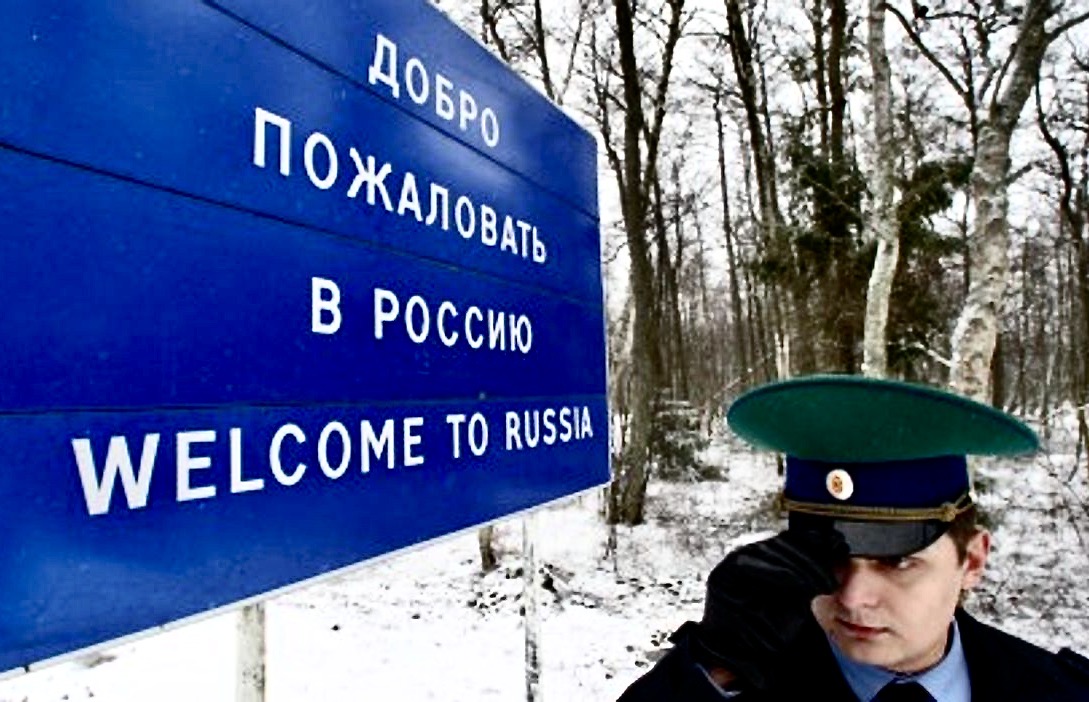
   The secrecy was necessary because they weren’t allowed to go anywhere except within the city limits. When they asked about Silute, Siauliai, and Zarasai, the other points of the compass to Vilnius, they were told they were all out of bounds. Everywhere outside of Vilnius was off limits. The Intourist official, the Soviet tourism monopoly, at the front desk of the hotel leaned forward and told Angele and Rita it was because of missile installations.

   “Are there missiles in every town in the whole country?” asked Angele.

   “I know sarcasm from naïve American when I listen to it,” the official scowled.

   Their convoy didn’t get far the day of the familial excursion. They were stopped by a roadblock on the outskirts of Vilnius. The police were waiting for them. “They knew,” Rita said. “Somebody had overheard something. Somebody talked. They waved us off the road.”

   The police glanced at Justinas’s papers and told him to go back.

   They went to the second car. Everybody had to show their papers. Angele was the best dressed of everyone in all three cars. She was all decked out. They asked her where she lived.

   “The Gintaras Hotel.”

   “Turn around, fancy lady, go back to the Gintaras.”

   They went to the third car.

   Sigitas and his wife Terese showed their papers. Rita was sitting in the back with three of her cousins. They all showed their papers. When it was Rita’s turn, she said, “You’ve seen their papers. I live in the same place.”

   “What’s your name?”

   “Jurgelaitis, just like them.”

   He asked her something in Russian. She didn’t understand a word and glared at him. The stare-down between cop and girl took a long minute.

   “The next time I see this one she is going to have to answer,” the policeman warned Rita’s uncle.

   “Turn back,” he said, shooting everybody a dirty look. They turned around and the convoy went back to Vilnius.

   Undaunted, a few days later, a day before leaving the USSR, Rita was picked up by Sigitas before dawn before breakfast at the back of the hotel for an end run to Silute. She skittered into the car, and they sped off. The streets were empty in the gloom.

   “He was a crazy driver, always yelling, ‘Somebody’s following us!’ He stayed off the highway, and the main roads, instead going up and down different streets. I thought the drive was going to take two hours, but it took much longer.” It took five hours on empty stomachs. It was worse than the Aeroflot flight.

   They were stopped several times, but every time her uncle was allowed to stay the course. The roadblock police didn’t explain why. They just waved him on. When they got to Silute they asked around and found the house where Antonina Staskevicius was living. 

   After Josef Stalin’s death many political prisoners in Siberia were set free. She was one of them. Her chain gang days were over. Her husband was long dead, dead of starvation in 1942, in a forest labor camp. She was sent back to Lithuania, but not back to Siauliai where the family farm didn’t exist anymore. She still wanted to go there but was told to go live in Silute. The Russians shrugged her off when she asked why.

   “She lived in a two-room apartment, in a rectangular four-unit building, almost like a log cabin, that looked like it was built a thousand years ago,” said Rita. There was no running water or indoor plumbing. The floors were dirt. The windows needed caulking. The roof was several generations overdue.

   “She was in her 80s. She had gone through tough times, but still had a lot of life in her.” She had seven grandchildren in the United States. Rita was the first one she ever saw. She gave her granddaughter a big smile and a big hug, even though she was a small woman and had to reach up.

   She wasn’t made of steel, like the Muscovite ringleader who squashed her and the Baltics under his thumb, but he was gone, a tinhorn memory, and she still had plenty of what it takes. How you start isn’t always how you finish.

   They had lunch, cold beet soup, potato dumplings, and mushroom cookies with strong hot tea. Rita didn’t throw anything under the table. It was an old-school buffet on an old round wood table.

   “How did you like it?” her uncle asked on their way back to Vilnius.

   “It was the best food I’ve had since I left home,” Rita said.

Ed Staskus posts stories on 147 Stanley Street http://www.147stanleystreet.com and Cleveland Daybook http://www.clevelandohiodaybook.com. To get the site’s monthly feature in your in-box click on “Follow.”