Tag Archives: 147 Stanley Street

800 Pound Gorilla

By Ed Staskus

Theatre patron: “Say, what is it, anyhow?” 2nd Theatre patron: “I hear it’s a kind of gorilla.” Theatre patron: “Gee, ain’t we got enough of them in New York?”  King Kong

I never thought I would see an 800-pound gorilla in headstand, but then again, I never thought I would see a fleet of gold SUV’s filling up the parking lot of the yoga studio in Rocky River, Ohio, that I sometimes practice at, either.

The car repair lot next door, where no one is supposed to park, was filled, too. I parked across the street. It was early March, but winter had been mild, either because of climate change or El Nino, and there were no snowdrifts to climb over or icy sidewalks to flat foot across.

The SUV’s were parked in a line along the front of the building. As I squeezed past the lead one I glanced inside and saw a red baseball cap on the passenger seat.

Donald Trump? I thought.

I knew the Ohio GOP primary was coming up soon, I knew it was Donald Trump’s chance to derail John Kasich, our governor still in the race, and I also knew what Marco Rubio had said about Donald Trump during the FOX News debate in Detroit a few days earlier.

“He’s very flexible,” said Marco Rubio, pointing out that Donald Trump was primed for yoga because of his cherry picking politics. I wasn’t sure I agreed with Senator Rubio. Donald Trump’s policy positions seemed more like blobs of mercury, impossible to pin down and toxic, too.

At the top of the stairs, the yoga studio being on the second floor, two burly security men in dark glasses and darker suits looked me up and down. They asked me to unroll my mat for their inspection.

“Democrat or Republican?” they asked as I was rolling up my mat again.

“Canadian,” I said, lying.

They smiled, grimly.

I stepped into the studio wondering if Canada might ever build a wall from their side of the border to keep out their scary neighbors. When did the United States become the scary neighbor?

The yoga room was packed to the gills.

I had several times attended workshops staged by celebrity teachers, one with Janet Stone and another led by Max Strom, and thought then that the room was packed to the gills. I was wrong. If it all comes down to turnout, as is often said about elections, it was “Mission Accomplished”.

Both of my favorite spots in the yoga room were overflowing. The only available spot I saw was one in front, my least favorite place to be, but beggars can’t be choosers. I set up camp next to a vacant, extra-thick, extra-long, tangerine-flecked purple mat that faced the teacher’s mat.

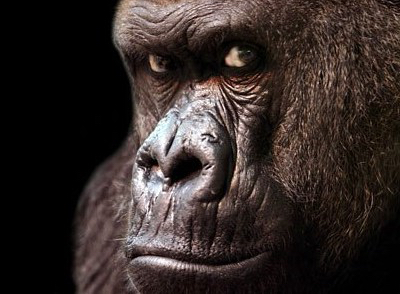
Where do 800-pound gorillas practice yoga?

Anywhere they want to.

Donald Trump was in the center of the room. He wore a gold Speedo and nothing else, not even a headband. He was surrounded by a crowd and speaking, waving his arms as he spoke.

“I was always a good athlete,” he said. “I was always the captain of my teams. Staying in shape is very important. If you’re physically happy and healthy, it’s a lot easier to keep a relationship going. Taking care of your body is a great thing for love.

“Don’t even think about Marco Rubio saying my hands are small, and if they’re small something else must be small. My fingers are long and beautiful, as, it has been well documented, are various other parts of my body.” He pointed to the front of his Speedo. “I guarantee you there’s no problem.”

Some of the women in the crowd being regaled by Donald Trump lifted their eyes from his gold Speedo, gathered up their mats, and left the yoga room. One of them stopped and asked the teacher, “What is that?”

“That’s Donald Trump, the Republican running for president.”

“I know,” she said. “Did you lose a bet?”

“Of course not. This is part of our yoga on and off the mat program.”

“This is the same man who said women were dogs, slobs, fat pigs, and disgusting animals, right?”

“It’s all yoga,” said the teacher, looking increasingly uncomfortable.

“Blah,” said the woman, slipping out the door.

Since the yoga room was less crowded at the start of class than it had been beforehand, everyone rearranged their mats. The teacher cued her iPod and class began.

“Before we start,” said the teacher, “I’d like to welcome Donald Trump to our studio and say that I really believe in the essential goodness of Republicans.”

“Wait a minute, not all goodness,” exclaimed Donald Trump, jumping up out of Easy Pose. “There’s Lying Ted, he’s an unstable person. His whole deal is he will lie. He will lie and after the lie takes place he will apologize. Little Marco, he’s always hiding his palm sweat. Once a choker always a choker. Kasich, he’s a nice guy, but he’s a baby. He can’t be president.”

My mat was next to Donald Trump’s, giving me an up-from-your-bootstraps view of the man as he stood straddling his mat. He was tall, over six foot, and big, well over 200 pounds. He had large feet, size 12 or 13. It was clear he had recently gotten a pedicure.

As he sat back down I heard muttering behind me. I glanced over my shoulder and saw another dozen-or-so people leaving the yoga room. “Mitt Romney was right when he talked about your bullying and absurd third grade theatrics,” said a middle-aged man, pausing as he passed by.

“Get him out of here,” said Donald Trump, tilting his chin up to one of his security men. “They’re always sticking a certain finger up in the air. I love the old days. You know what they used to do to protestors like that when they got out of line. They’d be carried away on a stretcher, folks.”

There was a low moan from the back and a few more people walked out. The yoga room had gone half empty and class hadn’t even actually started. Our teacher, looking out at what had been a multitude just minutes earlier, hurriedly got us on our feet for sun salutations, a traditional warm-up.

We were midway through our second sequence of sun salutations when Donald Trump jumped out of down dog to the front of his mat, but instead of staying in the sequence he stood upright and began flapping his arms.

“What language is that?” he demanded to know.

The teacher had been speaking partly in Sanskrit, the classical Indian language used in yoga to define poses.

“Is that Mexican? That’s bad. When Mexico sends people, they’re bringing drugs. They’re bringing crime. They’re rapists. I will build a great wall. Nobody builds walls better than me. I’ll make Mexico pay for that wall. Mark my words.”

“Oh, man, that’s all I can take.” It was a voice I recognized, although I hadn’t seen her in the room. When Lola stormed to the front I was sure there was going to be a confrontation. She grew up in a Polish-American neighborhood on Cleveland’s south side and taught high school in Lorain, a nearby rust belt town. Many of her students were either first or second-generation immigrants, mostly from Mexico and Central America.

“It’s scary to actually think about what you in office would mean for equality,” she said, standing high on her toes to get up into his suntanned face. Although, when I looked closely, it looked like he was using a self-tanner. The color was orangey.

“The truth is that all men having power ought to be mistrusted,” said James Madison.

“Nobody’s done so much for equality as I have,” said Donald Trump. “When it comes to my $100,000.00 membership club, Mar-a-Lago in Florida, it’s totally open to everybody. I set a new standard in Palm Beach.”

“Yikes,” she said and stormed out, followed by what was now a throng.

“How did she get that close to me?” asked Donald Trump, glaring at his security men. “You could see there was blood coming out of her eyes, blood coming out of her wherever.”

He turned to face what was left of the class. “We need strong borders. We need a wall. I’m the king of building buildings, the king of building walls. Nobody can build them like Donald Trump.” He was starting to slip into the third person, as though there were two of him. “I’m opposed to new people coming in. We need Predator drones.”

By this time there weren’t many darker-skinned people of any kind left in the room, only a handful of women, and no one who practiced yoga for more than the exercise. Most of the remainder, scattered in the corners and shadows, were either younger men or older men. They began chanting, but not OM, the chant most commonly heard in yoga classes.

“USA! USA! USA!”

“We’re going make our country rich again,” Donald Trump shouted over the din. “We’re going make our country great again and we need the rich in order to make the great.”

“USA! USA! USA!”

“It’s better to live one day as a lion than one hundred years as a sheep,” he shouted, even louder. “I know who said it, Mussolini, OK. But what difference does it make?”

“USA! USA! USA!”

The teacher tried to regain control of the class, but it was too late, in more ways than one. If yoga is about focus, the focus of everyone left in the room was elsewhere. All eyes were on Donald Trump. He whirled on the teacher.

“You’re fired, done,” said the King of Skull Island. “What a moron, lightweight.”

He gathered up his mat and unfurled it where the teacher’s had been, perpendicular to the class.

“I promise you I’m much smarter than her. I focus exclusively on the present. I’m speaking with myself,” said Donald Trump.

“I’m the super genius of all time. I was a great student. I was good at everything. We need a president with tremendous intelligence, smarts, and cunning. My whole life is about winning. I don’t like losers. Everybody loves me. The haters and losers refuse to acknowledge it, but I do not wear a wig. My hair may not be perfect, but it’s mine.

“It’s all about living your words, walking your talk, and talking your walk.”

Our yoga class was almost over. Since he had flipped the GOP head over heels this campaign season, Donald Trump said we were going to finish by doing an inversion. He spun his hair into a bun and to my astonishment lifted up into a pinpoint headstand, his new updo making a comfy cushion.

Most people who practice headstand hold the pose for about a minute. If they stick with it and get seasoned, some hold headstand for up to five minutes. Donald Trump’s eyes were open and his gaze straight ahead. His legs were parallel and butt tucked in.

Five minutes later everyone had rolled up their mats and left the room. Donald Trump was still in headstand. His security men stared out the windows. Ten minutes later the yoga receptionist cracked open the door and peeked in.

“Mr. Trump, I don’t mean to interrupt,” she said. “Our next class is scheduled, we’re running late, and everyone’s waiting out here in the lobby.”

“That’s so inappropriate,” he said. “You’re a flunkie, treating me very badly.”

She closed the door softly behind her.

I lay on my mat in corpse pose. I could hear Donald Trump’s breathing next to me, slow and steady. When I was finished I rolled my mat up, nodded to the bored-looking security men, and left the yoga room. Everyone’s eyes fell on me as I stepped into the lobby.

“Is he still in there?” someone asked.

“Yes,” I said.

“When is he going to be done?”

If there’s an 800-pound gorilla in the room, the yoga class is over when the beast says so.

Ed Staskus posts stories on 147 Stanley Street http://www.147stanleystreet.com and Cleveland Ohio Daybook http://www.clevelandohiodaybook.com. To get the site’s monthly feature in your in-box click on “Follow.”

In the Rough

mv5bmtyzndk4ota5m15bml5banbnxkftztcwndq2odaymw-_v1_-e1541716884822.jpg

By Ed Staskus

   “It’s a good day for it,” Dwight Eisenhower said, smiling his disarming trademark smile.

   It was going to be his first full round of golf since June. He had suffered a heart attack last year. Then when this summer rounded into shape, he needed surgery for ileitis. The past week had been filled to the brim with the Republican National Convention at the Cow Palace in San Francisco, Even though he had been unopposed, no need for a stampede, there had been some hard campaigning trying to get Richard Nixon off the ticket, to no avail.

   Dwight Eisenhower wasn’t overly enthusiastic about being president. He did it because he thought of the work as a duty. “This desk of mine is one at which a man may die, but from which he cannot resign,” he said. Richard Nixon wanted to be president. He didn’t think of it as a duty. He wanted it for himself, himself in the executive’s chair, at the top, giving orders and being obeyed. The conniving public official didn’t think it had anything to do with civil service.

   “Any man who wants to be president is either an egomaniac or crazy,” Dwight Eisenhower told Turk Archdeacon, his caddy standing next to him with a bag of clubs. Turk thought he was simply shifty, but didn’t say so. It wasn’t his place.

   Nat King Cole the Negro singer had spoken at the Cow Palace yesterday, the last day of the convention, to some cheers and more jeers. The president made the speech happen, no matter the carping about it. He knew he had to give in on his second-in-command, who was a hardline anti-Communist, who the rank-and-file supported with cheers and campaign donations. “I don’t want those Commie bastards to be successful,” Richard Nixon always said. But the president knew he didn’t have to give in to Jim Crow, at least not always. He could take the high road and leave the jeering to the dirty tricks gang.

   They drove up to Pebble Beach before the convention ended, before his VP could invite him to dinner. Besides, Richard Nixon’s father was seriously ill. The president urged him to go see him before it was too late. The VP mumbled something and in the end was almost too late. The night he visited his father, Frank Nixon said, “Good night, Dick. I don’t think I’ll be here in the morning.” He died in the morning. Dick wasn’t there. The funeral was three days later at the East Whittier Friends Meeting House. Richard Nixon had to ask for directions. The Quakers had become a lost heritage to him.

  There were three cars full of Secret Service men fore and aft. Charlie Taylor, who’d been at it for many years, was in one of the cars. One night when the president was having trouble opening his safe, and asked for help, his agents told him safecracking wasn’t part of their training. He was beside himself, giving them his ten-pound hammer look. Charlie got the cranky combination to give in without a struggle. He had been an anti-submarine officer during the war. Safes weren’t safe when he got his hands on them.

    “I won’t know whether to trust you, or not, after this,” Dwight Eisenhower told him, glancing at the trim crew-cut man.

   Dwight Eisenhower was driven to his golf outing in a black Lincoln Cosmopolitan. It was one of ten presidential touring cars. They all had extra headroom to accommodate the tall silk hat the president wore on formal occasions. The cars were almost 20 feet long, with Hydra-Matic transmissions, and heavily armored, weighing in at close to ten thousand pounds. One of them, a convertible, a 1950 model built for Harry Truman, had been fitted with a Plexiglas top. The president called it the Bubble Top. Charlie Taylor called it a pain-in-the-ass. Mamie Eisenhower didn’t like sitting under a plastic dome, but she put up with it, like she did with everything else.

   It was a clear day, sunny, the high sky dotted with seashore clouds. A steady breeze blew up from the water. It was refreshing. Dwight Eisenhower nodded at the man standing behind him.

   “It’s a pleasure, Mr. President,” Turk said.

   “Why, that’s fine,” President Eisenhower said.

   Turk had been caddying at Cypress Point since he was nine years-old, from almost 40 years ago. They walked to the practice tee. The president started whacking balls into the distance. He played Bobby Jones woods with his official five-star insignia engraved on their heads. At the putting green he lined up three balls 20-some feet away from the cup. He sank all three.

   “I should quit right here,” he grinned.

   “Yes, sir,” Turk said.

   Dwight Eisenhower had been practicing on a green on the White House grounds, hitting wedges, irons, and 3-woods, sometimes sending balls sky-high over the south fence. Whenever he did, he sent his valet to retrieve them. The squirrels that prowled the lawn dug up his putting green, burying acorns, nuts, and hardtack. When they buried their loot they left small craters behind. One morning the president finally had enough. “The next time you see one of those goddamned squirrels go near my putting green, take a gun and shoot it!” The Secret Service asked the groundskeepers to trap the squirrels, instead, and release them in a park somewhere far away.

   In a week August would be come and gone.  He would be 66 years-old soon. “I’m saving my rocker for the day when I feel as old as I really am,” he said, pointing to the rocker in the Oval Office. More days than not, he felt like that day was creeping closer, step by step, and there was no stopping it.

   His birthday was in October. CBS was planning a “Person to Person” TV show the night beforehand. Eddie Fisher was going to sing ‘Counting Your Blessings Instead of Sheep.’  Kathryn Grayson and Howard Keel were going to sing ‘Down Among the Sheltering Palms.’ Nat King Cole, with the Nelson Riddle Orchestra, was going to sing ‘It’s Just a Little Street Where Old Friends Meet.’ He was looking forward to it.

   In six weeks, he would be throwing out the first pitch for the first game of the World Series. There were five or six teams in the hunt, although the New York Yankees looked like a lock, at least to get there. If he were a betting man, which he was, he would be putting his money on the Bronx Bombers to take the kaboodle. He wouldn’t be at the game in the Bubble Top, either, but in the Cream Puff, which didn’t have a dome. He would be  getting some sunshine and fresh air, at least what there was of it in New York City.

   He liked Cypress Point because it was set in coastal dunes, wandered into the Del Monte forest along the front nine, and then reemerged on the rocky Pacific coastline. The last holes played right along the ocean. He’d played golf on many courses around the world. This was one of the best of them.

   Dwight Eisenhower looked out over the par-5 10th hole. He had taken off his tan sweater, but still had a white cap on his head. Seven months ago, Ben Hogan and Byron Nelson, professional living legends, had taken on the talented amateurs Ken Venturi and Harvie Ward in a white-knuckle not-so- friendly foursome at the same Cypress Point. The same 10th hole turned out to be the key to unlocking the contest.

   “I bet they can beat anybody,” said San Francisco car dealer Eddie Lowery about the two amateurs, who were his employees. He was talking to fellow millionaire George Coleman. The bet and the match were on in that minute. The bet was in the four figures.

   Harvie Ward was a two-time U.S. Amateur champion. Three months later Ken Venturi came within one stroke of winning the Masters. The cypress-strewn rolling dunes of the course on the wind-swept coast, the deep ravines, knee-deep grass, sand on all sides of the fairways, weren’t redoubtable, not to them.

   Ben Hogan turned the corner on the 10th when he rolled in a wedge shot for a 3. The eagle and 27 overall birdies testified to the competiveness of the match. The drinks at the bar afterwards rubber-stamped the camaraderie. There were backslaps about made shots and groans about missed shots.

   Dwight Eisenhower was playing with Harry Hunt, the president of Cypress Point, Sam Morse, a one-time football star who had developed Pebble Beach, and John McCone, a businessman who had been the undersecretary of the Air Force. He was partnered with Harry Hunt. They were playing a dollar-dollar-dollar Nassau bet. It was even-steven at the halfway mark, even though the president had stunk up the 8th hole.

   “Where is it?” he asked getting there, searching for the green on the 8th somewhere across the dogleg.

   He sliced his tee shot into sand. When he got to it, he hit it less than ten feet further on. Then he hit it fat, the ball limping head-high less than twenty feet, and falling into somebody’s heel print.

   “I’ve had it, pick it up,” he said.

    “Having a little trouble?” Sam Morse asked.

   “Not a little,” he said. “A lot.”

   On the tee of the 17th hole Dwight Eisenhower lined up his shot. Sea lions on the rocks below him barked. “It’s hard to hit a shot and listen to those seals at the same time,” he complained, but not so either of the Secret Service agents with them could hear him. He didn’t want them taking unnecessary potshots at the seals.

   Dwight Eisenhower was accustomed to having bodyguards around him, during the campaign in North Africa, and later as commander of the Allied Army in Europe. The Nazis had tried to kill him several times. Secret Service agents near his person nearly every minute of the day felt like a second skin. He knew what it took to save his skin. When he moved into the White House he didn’t mingle mindlessly, shake hands in crowds, or do anything foolish.

   “Protecting Ike works like clockwork,” said agent Gerald Blaine.

   Mamie Eisenhower gave her Secret Service men nicknames. One of them, who was a good dancer, was called ‘Twinkletoes.’ He asked Mamie to keep it between themselves. Some of the bodyhuards called her mom. Other bodyguards had never had mothers and called her Mrs. President.

   “You don’t have to worry about me, but don’t let anything happen to my grandchildren,” the president told Secret Service chief U. E. Baughman. The Diaper Detail guarded the four kids. Dwight Eisenhower changed the name of the presidential retreat in Maryland from Shangri-La to Camp David in 1953. “Shangri-La is just a little fancy for a Kansas farm boy,” he said. He renamed it in honor of his 5-year-old grandson, David. When Nikita Khrushchev, the Soviet Union boss man, visited the retreat he said the name sounded like a place where “stray dogs are sent to die.” 

   Dwight Eisenhower looked for the fairway on the 18th hole. “Where do we aim here?” he asked.

   “Keep it away from the left,” Harry Hunt said. There was a stand of pine trees on the left. “That’s the Iron Curtain. You’ll never get through that stuff.” The president laughed and hit a long drive. His next shot was a 4-iron and he nailed it onto the green, 20 feet short of the pin. He was going out with a bang.

   In 1954 eighty people were convicted of threatening the president and sent to prison or locked away as madmen. In 1955 nearly two thousand threats were made against Dwight Eisenhower’s life. The year before, the Russian KGB officer Peter Deryabin, after defecting, told the CIA about a Soviet plot to kill the president in 1952. “We were preparing an operation to assassinate Eisenhower during his visit to Korea in order to create panic among the Americans and win the war there.”

   Whenever he played golf, bad-tempered men with good eyesight and high-powered rifles took up vantage points on hills, surveying the course with telescopic sights. Other men, dressed in golf clothes, carried guns and ammo in their golf bags as they tagged along. The Queen Mary, a specially outfitted armored car, was their rolling command center.  

   Shortly after Mother’s Day the Secret Service had investigated a threat to plant two boxes of explosives at a baseball park where the president was planning on taking in a game. “Demoralize the enemy from within by surprise, terror, sabotage, and assassination,” Adolf Hitler had said not very many years before. “This is the war of the future.” Dwight Eisenhower and the Allied Army derailed the Nazi night train. No one was going to take him by surprise. He was planning on sitting in his rocking chair one day, rocking back and forth, watching his grandchildren trundle on the carpeting.

   He served in the armed forces from one end of his adult life to the other. After he retired, he was dean at Columbia University, and then president of the country. He was still the president and, he was sure, he was going to beat Adlai Stevenson like he had four years ago. Adlai didn’t know how to get close to folks. He was full of sanctimonious bull.

   Even though he’d commanded millions of men in the last war, Dwight Eisenhower thought war was rarely worth going to war for. He hated it. “I hate war as only a soldier who has lived it can, only as one who has seen its brutality, its futility, its stupidity.”

   “Didn’t you once say that we are going to have peace even if we have to fight for it?” Harry Hunt slyly asked.

   “When we have to, but always remember, the most terrible job in the world is to be a second lieutenant leading a platoon when you’re on the battlefield. There is no glory in battle worth the blood it costs. When people speak to you about a preventive war, you tell them to go and fight it themselves.” 

   The Cold War wasn’t nearly as hot as it had been ever since Nikita Khrushchev denounced Joseph Stalin’s cult of personality earlier in the year, as well as admitting the Man of Steel’s crimes, and the outrages committed against Mother Russia. The iron door had been cracked open. The president had long thought war settles nothing, even when it’s all over. He was worried about the arms race, which was a race towards nuclear catastrophe.

   “You just can’t have that kind of war,” he told his inner circle. “There aren’t enough bulldozers in the world that could ever scrape all the bodies off the streets.”

   “Disarmament, with mutual honor and confidence, is a continuing imperative” is what he had written in his daybook and wanted to say at the Cow Palace, but didn’t, not with Richard Nixon and the Red Scare and the military hand-in-hand with industry. He wanted to call it what it was, a military-industrial complex that was always crying “fire” in a crowded theater. But he couldn’t, at least not until after he was re-elected. In the meantime, he planned on speaking softly and carrying a big stick, even if it was only a long shaft wood driver, the biggest stick he had in his golf club bag.

Excerpted from the crime novel “Cross Walk.”

Ed Staskus posts on 147 Stanley Street http://www.147stanleystreet.com and Made in Cleveland http://www.clevelandohiodaybook.com. To get the site’s monthly feature in your in-box click on “Follow.”
The 4th Om

By Ed Staskus

The biggest and brightest OM I know is the OM Kristen Zarzycki begins and ends her ‘Follow the Yogi’ class with at Inner Bliss on Sunday afternoons, joined by many if not everybody in what is usually the biggest and most popular class of the week. Kirby is a young teacher with an OM voice like an ocean liner steaming into port through a thick fog. The first time I heard her I realized what the talk about the sound of OM being a primordial vibration was all about.

I could feel the vibration in the room and I wasn’t even chanting.

I began thinking about yoga in my early fifties, when decades-long issues with arthritis had advanced so my knees and hips either hurt all the time or really hurt all the time. At first, I tried yoga at home, checking out videotapes about one practice and another, checking them out from our local library. I even bought a purple sticky mat. After a year I felt stalemated, as though I had no idea what I knew. I was aware of yoga studios and thought professional instruction a good idea. But, I was reluctant to go because of my impression yoga classes were chock-full of lissome young women and the certainty I would look like an oaf.

One afternoon towards the end of summer, at the counter of our company’s lunchroom, while waiting for our marketing director Maria Kellem to make tea, yoga somehow came up as we talked. I was surprised to find out she not only practiced, but taught yoga part-time, as well. For the next several months she never tired of leaning into my cubicle and encouraging me to take a class.

I finally did, partly to appease her, partly because I didn’t see any other way to learn more, but mostly just to do it, at least once. From the end of my first novice class on a dark and wet October morning, slapping my hand to my temple in the car as I drove away, surprised it had taken me so long, I was attracted to the practice, simply because I felt surprisingly good afterwards.

The first two years I practiced was at a once-a-week beginner’s class, to which I eventually added a second evening class. Although my focus was on the physical postures, I began to notice our classes often began with a homily and a chant, usually OM. Preferring my own uneasy grown-up postmodern skepticism, I ignored the spiritual advice. I was drawn to the chanting, but when I participated, which wasn’t often, it was with a small uncertain voice from the back of the room.

After another year of moderate flow under my belt, I started taking on more physically challenging classes, time-distorting vinyasa practices with unnerving names like ‘Hot Power Yoga Challenge’. One evening near the end of an especially hard class, at least for me, after our teacher reminded us yet again to breathe with mindfulness, I asked her if it was the same as breathing desperately.

She was kind enough to say it was.

As the year wore on I began to buy into the spirit of yoga, reading about its principles and way of life, and listening to our teachers with a newfound openness. I took a workshop about meditation and another about the chakras – to which I reacted at the time with both incredulity and admiration for the teacher who tried with all her might, I thought, to explain the fantastic and unexplainable. I was even chanting OM more often, but still with a dry small pinched voice.

When I began to OM with more than less frankness was at the end of the first class Kimberly Payne taught at Inner Bliss, the yoga studio in Rocky River, Ohio, where I had started and where I still often practiced. By then I was emboldened by what I knew, which later turned out to be less than I thought, to try new kinds of classes, like Kundalini, and diverse teachers. Kim Payne’s class, a different kind of powerful flow, turned out to be more than I bargained for.

On the way to the studio that evening, gathering storm clouds darkened my rearview mirror as I crossed the beam bridge over the heavily forested Rocky River valley. A red-orange light from the sun setting over Lake Erie slanted between the houses across the street onto the black asphalt parking lot as I walked to the two-story loft-style brick building, the studio being on the second floor. Inside, I unrolled my mat, facing across the wide room towards the dusk. As we started our practice I was quickly thrown off balance by the unfamiliar sequence and difficulty of the asanas.

Then the noise started.

First one and then another double-stacked freight train rumbled past on the CSX tracks on the abutment behind the building towards downtown Cleveland. At both public grade crossings – one block to the west and four blocks the other way – the diesel’s compressed air horns let loose blasts of 15-second warnings.

Next the two men working late at Mason’s Auto Body next door started cutting sheet metal with what sounded like a gigantic Sawzall, a high-pitched gnashing pouring in through the closed windows as though they were not closed at all.

No sooner had they finished than the wind rain deluge started, a gusting thunderstorm that lasted through an interminable series of unsettling balancing poses and to the end of class.

Coming out of corpse pose I suddenly noticed the studio was quiet, the factory-style windows no longer lashed by rain. We sat cross-legged in the dark, and chanted three long, slow OM’s, the asanas all done and the noise, too, and the only thing mattering just then and there being the chant. Our voices echoed in the still damp air when we finished.

It was the first time I practiced OM with sincerity.

The loudest OM I ever heard was the OM Kristen Zarzycki’s class chanted for her the Sunday before she ran her first marathon. In Chicago. In the tropics on Lake Michigan.

Kristen describes her flow classes as “funky and challenging.” Challenging they are, so much so I nicknamed her Kirby, after Jack Kirby, the Marvel Comics artist who created Sgt. Fury, the snarling but tenderhearted NCO who led the First Attack Squad the “Howling Commandos” in the short-lived 1960’s comic book series. Although a head shorter than the cigar-chomping bandoleer-draped Sgt. Fury, she seamlessly morphs him as she leads –and herself practices – her ‘Follow the Yogi’ class centering on core asanas, for what she insists is our own good, and watches out so we all survive her ruthless boot camp approach.

At the close of her classes Kristen invites everyone to a “big and huge” OM to seal the practice. That Sunday someone impulsively interrupted and said, “Let’s chant for Kristen running the marathon next week.“

So prompted the whole class did. The OM was loud and long and heartfelt. The chant was so long I almost ran out of breath. Kristen seemed flushed with emotion when we were finally done.

The next Sunday she ran in record-setting heat and smothering humidity. More than ten thousand of thirty five thousand participants dropped out, hundreds more were treated by medical teams, and the organizers tried to shut down the course twenty-one miles into the event. Kristen was one of the runners who finished, and sometimes I think what kept her safe and sound was the big and huge OM we chanted for her.

The car repair OM incident happened on a clear mid-summer evening as we sat cross-legged at Inner Bliss, palms together, thumbs at the heart center, at the tail end of Tammy Lyons’s hot flow class. The casement windows overlooking the flat roof and cords of firewood stacked against the yellow outside wall of Mason’s Auto Body were tilted open, and I could sense a breeze. We chanted OM once, breathed in, and chanted OM a second time.

“There they go again,” said a body shop man unseen below us somewhere beside the umbrella table between our two buildings, more than loud enough to be heard throughout the studio.

“Whatever floats your boat,” a second man said.

Tammy Lyons paused, and paused again. She has the patience of a mother of two small boys and the forbearance of a small-business owner – namely the yoga studio – yet when she paused I glanced warily at the windows. Then we chanted OM a third time. The class over she thanked the twenty-or-so of us for coming, told us it was privilege to share her practice with us, and updated everyone on the studio’s schedule.

Then said in a clear, firm voice more than clear firm loud enough to be heard outside, “Yes, it does float our boats.”

Later that night, nursing a bottle of beer in my backyard beneath the Milky Way obscured by the city’s lights, I thought about the sarcastic guys at Mason’s. They weren’t really all that different from Tammy Lyons, although maybe they thought they were. Just like she worked on our bodies by leading us in asana sequences, they worked on the bodies of automobiles.

Cars like SUV’s and bodies like ourselves are not only uniquely themselves, but they are vessels as well. Practicing yoga exercises is like taking care of your body in the same way a skilled mechanic will take care of a car, both with the same idea in mind – so our bodies and our cars will be better able to take us where we want to go, whether it’s to a meditation practice or Disneyland.

But, if the body shop men were indeed different, maybe it was because they didn’t know where they were going.

The 4th OM unfolded on a quiet April Sunday when Max Strom, an itinerant yoga teacher, came to Inner Bliss. Neither the workshop nor he was what I expected, even though I couldn’t have said what I expected. Dressed all in black with a grayish ponytail and a gregarious manner, Max Strom was built more like a football player than a tightrope walker. Other than a few warm-up exercises and moving around now-and-then, we sat on our mats and he devoted most of the sold-out two-hour workshop to breathing, both explaining his ideas about it and leading us in exercises of it.

He seemed to think asanas alone were inadequate as a way of making a kind of spiritual connection, which he defined as the goal of yoga. He thought asana practice could and did serve a purpose, but to arrive at some meaning beyond simple exercise the next step was to connect with one’s breath.

He said yoga appeared to be primarily physical, but that it wasn’t. Rather, it was a practice meant to harmonize the body and the mind, our inner body, which he formulated as mental focus and intention, and breath, which he further defined as emotional focus and concentration on spirit, or the divine.

We practiced lots and lots of breathing exercises, breathing fast and breathing slow, holding our inhales and then our exhales, alternate nostril breathing, bellows breath and breath of fire, and long slow breathing until even sitting cross-legged for all that time became less and less distressing, even restful. Mr. Strom instructed us to breathe into the heart center, to breathe in the present and breathe out the past.

After a break, when we were all back on our mats, he unfurled a 10-minute OM. He explained we were to all start together, but as we finished an OM to go on to the next one, not waiting for the others in class. He said in a minute or so we would all be intoning separately, but it would in the long run resolve itself into a single continuous chant, which is exactly what happened.

It turned into a long rolling resonant OM.

As we chanted I found myself subsumed by the sound, and then midway through the OM’s I suddenly had a distinct feeling of emptiness within me, from the sacrum to the collarbone. It wasn’t that I felt full of hunger or filled with yearning; I just felt empty. As we chanted it seemed my body was like a hollow shell lit up from within by a bright but diffused light.

I was conscious that the quiet, bright emptiness was only a feeling, that my heart was beating slowly and I was breathing rhythmically, but for all that it was a remarkable sensation. I didn’t feel better, or worse, I just felt light and lit up. It was an experience that lasted about a minute.

Max Strom’s message to us at the end of class was to breathe with intention, and he sent us on the way with a simple namaste and hearty endorsement for his new DVD being sold in the lobby.

Since then I have not again felt the interesting bright emptiness I did during his workshop, but as a result of it have added a little breath training and meditation to my at-home practice. What has surprised me is the patience it takes to learn to sit quietly, not thinking of nothing or something or anything, and breathe mindfully.

What hasn’t surprised me is what I still don’t know about yoga, even the simplest things like chanting the simple sound of OM.

A version of this story appeared in Integral Yoga Magazine.

Ed Staskus posts on 147 Stanley Street http://www.147stanleystreet.com and Made in Cleveland http://www.clevelandohiodaybook.com. To get the site’s monthly feature in your in-box click on “Follow.”
Soap Box Saviors

By Ed Staskus

“We don’t get fooled again.”  The Who

The difference between policies and principles is the difference between Santa, saviors, and savasana, or what is known as corpse pose in yoga practice. Santa and our many saviors, ranging from Islam to Christianity, much like our Messiah-like political leaders, have a heavy hand. They lay down policy like train tracks.

It’s my way or the highway. They enjoin the carrot and stick approach to order the reality they’ve carefully resolutely ruthlessly constructed. It’s often the kind of reality that even when you stop believing in it, it won’t go away.

Savasana is practiced at the end of yoga exercise classes. It’s a simple thing. You lie down on your back on the mat with your arms at your sides, close your eyes, and breathe naturally. When you surrender to Santa and the Savior you agree to live by their rules. When you surrender to savasana it’s just you as you are, not as what anybody else says you should be, not surrendering to somebody else’s magic kingdom.

Savasana only works when you’re being honest about it.

You don’t have to be an honest man or woman to live in the world of Santa and the Savior. You only have to do what you need to do to get along and get what you want. It’s playing hardball with a wiffle ball. It’s OK to lie to yourself. Who cares about the spirit of the thing?

“Next to a circus there ain’t nothing that packs up and tears out faster than the Christmas spirit,” said Kin Hubbard a hundred years ago.

You have to be an honest man and woman to dive into the ocean of yoga. Otherwise, what would be the point? It’s sink or swim. There’s no one looking over your shoulder. There’s no lifeguard.

In the making of the modern age of mass media, mass merchandising, and mass more-of-everything, Claus and Christ are staples from about the beginning of November until the Big Day. The Savior once had pride of place, since Christmas used to be about celebrating his birth, but Santa is the Top Dog in the 21st century.

“Christmas is a baby shower that went totally overboard,” Anthony Borowitz has pointed out.

Sometimes it seems like the celebration is more about the birth of Santa Claus than Jesus Christ. Even though he doesn’t exist, Santa is everywhere during the holiday season, selling jewelry electronics cars, whatever. Besides cash checks credit cards, there are even Christmas Club bank accounts to pay for last year’s presents.

A capitalist is someone who loves his fellow man and woman in groups of a million-or-more. The Money Markets and Scrooge never had it so good. They are laughing all the way to their McMansions, golden arches and all.

Santa Claus is a portly red-clad man who brings gifts to good straight arrow well-behaved children on Christmas Eve, or the morning of Christmas Day. He spends most of the rest of the year supervising elves in his workshop and making out a list of kids who have been naughty or nice. You don’t want to be on Santa’s shit list.

Children who have been on the up and up get gifts. Children who have stepped off strait is the gate and narrow is the way do not get gifts, unless it’s a lump of coal. Santa Claus can be judgmental. There are some roofs he won’t land on.

Santa Claus is everywhere, in California in shorts, in Nigeria shooting off knockouts, which are like firecrackers, and in China playing the saxophone. Most Chinese reenactor Santa Claus’s, ubiquitous on street corners and at the entrances to shopping malls, are almost always jamming on a sax.

No one, not even the Chinese, seems to know the reason why. The Beijing-based Helen Gao thinks it might be because “the saxophone is portable so Santa can  make Christmas music anywhere.” Santa Claus used to have the right idea, which was to only visit people once a year.

Not anymore – he’s all over creation nowadays.

You don’t want to be the only one who doesn’t believe in Santa Claus, because then you’d ruin everyone else’s Christmas. Some black people are on the fence about him because they don’t believe a white dude would ever come to their neighborhood after dark. If he did dare, they ask, what’s in that pipe he’s smoking?

In any event, nobody shoots at Santa Claus.

Many children believe in him, up to a point. Shirley Temple’s faith was shaken at the age of six when her mother took her to a department store and the bearded legend asked her for an autograph.

Christmas was once the first step to getting safely home to your Loving Father in Heaven.  It was the start of the story, the starting gate in the stable. Over time it became more a state of mind, a tradition of good cheer for communities, retaining most of its original values. Today it’s a mash-up of visiting family and friends, of the economic miracle of gift giving “Make It a December to Remember With a Lexus,” and the NBA national broadcast on Christmas Day.

The Cleveland Cavs stormed back late in the 4th quarter in 2016 and beat the Golden State Warriors by a point in the last seconds. Some broadcasters said it was a miracle. It was The Miracle on the Corner of Ontario Street in Cleveland, Ohio. Other broadcasters said what Cavs forward Richard Jefferson did to Warriors forward Kevin Durant on the sidelines at game’s end was a sin.

But, when it comes to professional sports, and many other professions, sins don’t matter, one way or the other. They don’t actually affect the reckoning under the tree as long as you believe whatever works is what works. Who soldiers on when there’s no hope of a payoff?

The problem with Christmas has always been God the Old Testament at the front and center of it, not just Christ, the New Testament third arm of God the Father, God the Holy Ghost, and God the Son. If Santa is a judgmental old man, then God is an infinitely more judgmental, eternally older man. Santa Claus may not give you a gift this year, but there’s always next year. When it comes to Heaven and Hell, however, we all get one chance at it and the outcome is forever. There are no last-second miracles.

To accept the Savior, or any savior, into your fibre being life is to accept the belief that God has a plan for you. Hearing from him about the big picture is vital, the cog in the wheel of life. Listening following obeying the plan is everyone’s own personal decision. That’s why God grants us Free Will. Many people believe it’s in their own best interest to stick to the game plan both chapter and verse.

Blaise Pascal, a French mathematician, proposed a bet about God. Sensible folk should live as though God exists. If he doesn’t exist you lose very little, maybe a roll in the hay and some good times on this earth. However, if he does exist and you live by his rules, you stand to win the Grand Prize of Heaven. You also avoid the Big Bust, namely eternity in Hell.

In the end, if you bet against God you bet against yourself.

Like it says in the Bible, “Whoever believes in him should not perish, but have eternal life.” You can say no to God’s way of doing things, but, come hell or high water, God will have his way, one way or the other.

The snag in this approach is inherent in the story of the angel walking down a road of good intentions with a bucket of water in one hand and a torch in the other. When someone asks the angel what he is going to do with them, he says that with the torch he will burn down the mansions of Heaven and with the bucket of water he intends to put out the fires of Hell.

“Then,” the angel says, “we’ll see who really loves God.”

Santa and the Savior rule from the top-down. They don’t necessarily care if you love them, or not. They didn’t get to where they are with a ho, ho, ho or a free ride. Santa Claus’s doppelganger is Krampus and God has many millennia of the Old Testament behind him, not just some forward-looking centuries of the New Testament.

The consequence of breaking the rules is dire risky consequential. The naughty are denied the sparkly magic of Christmas and sinners are turned away at the Gate of Heaven. “He who breaks the law goes back to the House of Pain,” said Dr. Moreau to the Beast-Men in the “Island of Dr. Moreau.”

Students follow rules. They have to please their teachers. Until recently women followed the rules because men made the rules. Dogs follow the rules. That’s why they’re man’s best friend. Women have recently been changing the rules, getting out of the dog pound.

There’s only one rule worth following. That’s the Golden Rule. Treat other people the way you want to be treated. It’s a homespun peg to hang your hat on, outside of school outside the workshop outside the law courts.

Santa Claus and Saviors, like everyone who has ever wielded power, are puppet masters pulling the strings. God is all-loving, but he’s all-powerful, too. A bag full of loot coming down the chimney is one thing. The power to fill the bag is another thing. “If you must break the law, do it to seize power,” said Julius Caesar a long time ago. Like Jesus Christ, Julius Caesar was worshipped as a God.

From then until now the love of power has more often than not trumped the power of love.

However, there are no puppet masters in yoga, no Santa Claus and no Savior.

The reason the practice is puppet master-less is that the power of the practice doesn’t flow from the top-down. It’s not just another kind of trickle down from on high, economic or otherwise. It flows from the bottom-up.

“You cannot believe in God until you believe in yourself,” said Vivekananda, a key figure in the introduction of yoga to the western world in the late 19th century.

Power lives and dies in a hierarchical tradition. There is no hierarchy in yoga, no Wizard of Oz. Power is like the Trump Tower. There is a penthouse at the top and a mailroom at the bottom. The Great Wizard is in the penthouse and the monkeys are in the mailroom. Yoga is more like a 5000-year-old tree with many branches. Power never stops blowing its bugle. Yoga quiets the body and mind.

The fly in the ointment of top-down power is when was the last time anyone at the top had a good idea? When was the last time Tim Cook Bill Gates Jay Y. Lee wrote computer code? When was the last time Barrack Obama Vladimir Putin Xi Jinping reduced their country’s armed forces? When was the last time Mark Cuban Dan Gilbert James Dolan sank a three-pointer from the corner office with time running out?

Savasana is sometimes thought of as the most important pose of yoga practice on the mat. It comes at the end of class and no one needs a teacher at the head of the room to tell them what to do. It is the nonpareil bottom-up posture, since you have to lie down on your backside to do it.

Corpse pose is about the self, and the non-self, and self-discovery. It’s about letting go of rewards and reincarnation and an afterlife in Heaven or Hell. When you’re in dead man’s pose nobody, not even the Downpresser Man, can boss your better half. You’re not doing something that somebody else told you to do. Nobody can tell you what to do because there’s nothing to do.

Letting Santa and the Savior read the riot act is a backwards way of living life, from the outside in, rather than from the inside out. Yoga is a practice of learning who you are by exploring yourself, not by reading the manual written by The Man. Marching in the ranks is fine on a parade ground, but who wants to be marching to a drill sergeant’s drumbeat all day and night?

“The question of whether or not there is a God or truth or reality, or whatever, can never be answered by books, by priests, philosophers or saviors,” said Jiddu Krishnamurti. “Nobody and nothing can answer the question but you yourself, and that is why you must know yourself.”

Be your own hero, not a moving part in the puppet show.

Anybody can do hero pose, even though it’s on the challenging side of the practice. You just have to have faith in yourself. It’s better to challenge yourself than be dogged by gods and monsters and the ruling class always trying to cut you down at the knees.

It’s never question and answer time in corpse pose, because it’s the end of yoga class, and you’re tired, and everybody and their brother is just going to have to wait while you and your breath take a break and recharge.

Putting Santa and the Savior and all the self-appointed Messiahs and their sticks and carrots on the back burner is to be up front, at the front of the class, knowing and being your own self, yourself as you are from the inside out.

Ed Staskus posts stories on 147 Stanley Street http://www.147stanleystreet.com and Cleveland Ohio Daybook http://www.clevelandohiodaybook.com. To get the site’s monthly feature in your in-box click on “Follow.”
Cabin Fever

By Ed Staskus

The nearly 80,000 people who plug away every day on Prince Edward Island go to work in lots of places, including groceries school offices, aerospace and bioscience and pouring coffee and serving breakfast, but mostly in agriculture, fisheries, and tourism.

Grains, fruits, and potatoes lead production on farms, bringing in cash receipts of about $500 million.  “Good soil is better than money in the bank” was once a commonly used expression on Prince Edward Island. It is still true, although it doesn’t hurt to have a bundle in the bank, something for a rainy day.

The lobster fishery lands 40 million-some pounds, valued at more than $200 million. Every last person on PEI is too few to eat all the lobster, so exports are vital. There are more than 4,000 commercial fishers and 47 licensed processing facilities. The enterprise employs as many as 8,000 people during peak production times.

Tourism rounds out the big three. A million-and-a-half visitors come from all over the world to golf, eat, relax, and experience “Anne of Green Gables.” It is far more come and go in summertime than lives on the island.

When you live and work on PEI summer starts when the snow melts and the days get longer. If you are in a business dependent on tourism, ice cream theaters restaurants transportation accommodation, summer starts when summer is over.

Tourism on PEI generates 15,000 to 17,000 full-time, part-time, and seasonal jobs. When summer is over many in the trade go somewhere starting in mid-autumn, looking for a few weeks of summer in another country. The sweltering heat of Cuba is a sticky thing, but it is super in winter, when there are plenty of dry sunny days and lots of blue sky.

Visiting Prince Edward Island in summer means warm enough to go to the beach, swim sail kayak, and go walking, running, and biking. There are plenty of days in July and August when t-shirts and short sleeves are the order of the day, and maybe a pullover for cooler nights. It’s about four months on PEI of being able to get out the door and outdoors.

It is aces having a big cabin if you get cabin fever. But nothing is as wide open big as being out in the open air. Besides, not everyone has a big cabin, or a cabin big enough. Even the largest cabin is dwarfed by the overarching sky.

Yoga means “to yoke.” Even though nobody gets paid for doing it, it is a kind of work. It is also its own reward.

Most people consider yoga an indoor activity. It is mostly practiced indoors, the weather being what it is in North America. Yoga studios are almost always inside buildings, anyway. That is a good thing if it’s the middle of winter in Vermont, or the armpit of summer in Mississippi, or fall winter a wet spring on Prince Edward Island.

Almost 120 inches of snow falls during the winter on PEI. Skiers going to Vermont are happy if 80 inches has fallen during the season. The wind off the ocean can make everything feel colder than it is on the island. Sometimes harbors are still frozen stiff into May.

That was why Frank and Vera Glass never left northern Ohio on the edge of Lake Erie to go to Prince Edward Island until June. Although it was never a sure thing, they tried to make sure they could get outside as much as possible.

Doing yoga indoors means being able to practice in the middle of a blizzard or a thunderstorm, or even a light sprinkle. It means doing it in a space set aside for exercise and breathwork, or just meditation, without interruption. It means being able to be consistent in one’s effort, a good habit thought to be fundamental to gaining ground.

No rain checks are ever needed when unrolling a mat at your local studio or your rec room. They are private spaces, spaces in which the environment is controlled. If you’re looking for insight, lightning might strike, but it won’t be literal lightning. If you’re just looking for a dry place to exercise, you’re in the right place.

Some yoga, like Bikram Yoga, is only done indoors only, in sealed-up steam-filled rooms, like heat-ravaged parts of the world in the grip of a climate change event, when you might as well be outside. Even then it probably wouldn’t live up to what Bikram Choudhury, the eccentric mastermind of hot room yoga, calls his “torture chambers.”

K. P. Jois, the man who inspired and developed Ashtanga Yoga, on which most yoga exercise of the last half-century is based, recommended that it be practiced indoors.

“Outside don’t take,” he said. “First floor is a good place. Don’t go upstairs, don’t go downstairs.” When asked about yogis in in the past practicing in the forest, he simply said, “That is very bad.” K. P. Jois was a man of few words.

Even though there are problems associated with practicing outdoors, including that it will inevitably defy the weather forecast and rain the one day you try it, people do it all the time. Southern California is littered with classes like ‘Beach Yoga with Brad.’

“Ditch the confines of the indoors!” recommended CBS-TV Los Angeles, reporting from the great outdoors.

“If you’re doing yoga indoors then you’re cheating yourself,” said Sarah Stevenson, a Yoga Alliance-certified instructor in Orange County. “The sun’s rays and fresh air provide not only improved physical health, but also spiritual and emotional wellbeing.”

It isn’t just warm clime folks, either, who roll out mats regardless of rocks and roots and bugs. From Missoula to Minneapolis, any place where the winters are long and dark, the sun-starved come out in droves in the summertime.

Frank was a fair weather man, but some don’t wait for the solstice.

Members of ‘Y-8’ routinely practice their ‘Alsteryoga’ on the thick ice of the rock- hard Lake Alster outside the northern German town of Hamburg. They make sure to pull the hoods of their insulated sweatshirts over their heads when in headstand.

Whether it’s ice or sand or grass, the instability of ground outdoors makes for an easier said than done experience. Some people even practice on paddleboards when rivers and lakes have defrosted. “When you’re not on a solid wood floor surface, you end up using different parts of your body,” said Jennifer Walker, an instructor in Maine. “Outside, you end up engaging your core much more to stabilize your whole body.”

Although Frank Glass often got out into their backyard in the summer and fall, he still rolled out his mat indoors more often than not because he had carved out a space he liked at home, and because the weather in Lakewood, just outside of Cleveland, is unpredictable, while the midges and mosquitoes that fly up out of the Rocky River valley are predictable.

Sometimes, though, he jumped the traces.

The three mostly sunny weeks he and his wife Vera spent in North Rustico, on the north central coast of the island, at the Coastline Cottages, he moved his mat outside. Sometimes in the morning, but more often in the afternoon, when the crab apple trees at the back of their cottage cast welcome shadows, he unspooled it on the grass and set about doing yoga exercises, warming up with sun salutations.

“When I practice outdoors, there is this amazing energy,” said Angela Jackson, an instructor in Oakville, Ontario. “I feel more connected to the earth, the birds, the animals, the sky, and to myself.”

He did it almost every day, because they were on vacation with plenty of time, and because the days were warm, and it was fair and breezy where they were on the Atlantic Ocean. He was bitten every one of those days, sometimes more often than less, by creeping flying bugs, occasionally by black flies from the scrubby conifer woods next to the fifty acres of soybeans behind the cottages.

Prince Edward Island is predominately a farming and fishing province. There are croplands and cattle and fishing boats everywhere. A few years earlier they had stayed in a cottage one town down next to a field and a barn full of cows and thousands of flies. Every room in the cottage came equipped with a fly swatter. They checked to be sure all the screens were safe and sound and in place.

The reason we feel more connected to the earth when we do yoga outdoors is because we are standing directly on the earth, on the soil and grass of it. PEI is made of soft sandstone and its soil is an iron oxide red. The contrast of bright green grass and red land beneath a high blue sky on a sunny summer day is always striking.

Frank saw lots of sky doing things on his back on his mat behind the cottage. Insects crawling took shortcuts under him, the long way over him, or just bumped into him and zigzagged away. Seaside birds flew overhead. Most of them were cormorants, an easy to spot coastal bird with short wings and a long neck. There were plenty of wood warblers and a couple of yellow-bellied sapsuckers, darting in and out of the crab apple trees.

One afternoon behind their cottage a week-and-a-half into their stay on the island, a red fox hunkered down thirty-some feet away on the grass and kept his eyes on Frank for a long time. The fox surprised him, out in the open, even though he knew they were all over the north shore. They had seen plenty of them, on the shoulders of roads, or the edge of woods, always looking for handouts.

Vera ran on the all-purpose path every day and kept a wary eye out for them.

From 1900 until the 1930s black silver fox farming – the silver fox is a mutation of the island’s ubiquitous red fox – was a booming cash crop on PEI farms. Fox pelts were in high style but used to cost an arm and a leg because they could only be got from trappers. No one knew how to raise them until in the 1890s two men, a druggist and a farmer, perfected a way to domesticate and breed them.

It made many of the locals rich. The price for a bred fox pelt, never mind a trapped pelt, in 1910 was a jaw-dropping $1,200.00. To put that into perspective, farm laborers on the island in 1910 averaged a dollar a day in pay for ten-and- twelve-hour days.

The Great Depression and changing fashion in the 1940s crippled the market and by the 1950s fox farming was finished on the island. Most farmers simply let their animals loose. The foxes were glad to go, glad to be back on their own, glad to not have to be a fashion statement anymore.

“My grandfather raised horses, and kept foxes for their pelts,” said Kelly Doyle, a North Rustico native whose Coastline Cottages they were staying at. “But then they weren’t cool anymore, so he let all his foxes out, and since my father couldn’t make a living at that became a farmer.”

Rubbing eyes with a fox in woods or fields used to be out of the ordinary, but nowadays sighting have become commonplace.

“Whereas foxes once avoided human contact, they now venture up to parked cars, presumably looking for food,” said Ryan O’Connor, who grew up on PEI and is a historian of Canada’s environmental movement.

Although some of the issues with yoga in the great outdoors are biting bugs and bad weather and sometimes too much sunshine, rarely is the issue a wild animal. Red foxes are wild, but not so wild, too. They live in woodlots and sand dunes, are intelligent and adaptable, and have no trouble living in close association with human beings.

They are still wild, though, living out in the wild.

One moonless night, sitting on their deck overlooking Doyle’s Cove, they heard a god-awful noise somewhere out on the long dark sloping lawn. The next morning Kelly Doyle had to clean up the remains of a dismembered rabbit. Every fox hunts every night for mice rabbits voles.

Frank don’t know when the red fox slipped behind their cottage to watch him on the yoga mat. He saw him midway through his series for the day, when he lengthened into plank from down dog and transitioned into up dog, and there the fox was, nearly near-at-hand.

There is a rule at the Coastline Cottages. “Don’t Feed the Animals.” The rule is to discourage foxes from loitering, looking for food for their kits. Frank and Vera hadn’t seen anyone breaking the rule, because who wants a fox at their door cadging for a handout? But there was the red fox, plain as day, behind their cottage, giving Frank the once over.

“They won’t bother you, or bite you,” Kelly had told them.

Frank had no reason to doubt him, so he continued doing what he was doing, sneaking a peek at the animal now and then. The fox wasn’t small or overly large, maybe 20 or 25 pounds, with a reddish-brown coat, white under belly, and a black-tipped nose. One of his eyes was cloudy, as though the animal had been hurt or had a cataract.

He lounged and shifted and moved more like a cat than a dog, although foxes are a part of the dog family. His ears were triangular. When he cocked his head and his ears went up erect, he looked like a Maine Coon cat with his muzzle in mousing position.

All during the rest of Frank’s yoga practice that afternoon the fox never made a sound, and even seemed to doze off for a few minutes. He stretched and yawned. When he went away, sliding into the soybean field, he walked on his toes, heels off the ground, agile canny swift. No amount of yoga Frank ever did was ever going to get him to be able to move like that.

He didn’t see the fox with the bad eye again the rest of their stay, although Vera spotted him one day miles away near MacNeill’s Brook.

Living far north of Mason-Dixon, Vera was by necessity forced to run on a treadmill and Frank to do yoga indoors most of the time. But moving one’s mat outdoors isn’t necessarily for the birds, if only because that’s where the energy is. The fountainhead is under the arching sky in the wide blue yonder.

In the world of yoga, the word prana means energy or life force and pranayama means breathing exercises. To practice outdoors is to be immersed in the source of prana, whether you mean it as the source of life or simply as the air we breathe.

Bringing a breath of back roads air into your body mind spirit is refreshing. Great wafts of it are even better. It’s no holds barred taking in the old-school oxygen of the island. There’s more air in the air on the edge of the Atlantic Ocean than there is in most other places.

There was more than enough of it for both the red fox and Frank the afternoon they shared it, both of them dwarfed by a sweeping horizon and puffy white clouds blowing out to the Gulf of St. Lawrence, behind a cottage next to a soybean field.

“How was it?” Vera asked when Frank stepped back inside through the door.

“It was a breath of fresh air in my brain,” he said.

A version of this story appeared in International Yoga Journal.

Ed Staskus posts stories on 147 Stanley Street http://www.147stanleystreet.com and Cleveland Ohio Daybook http://www.clevelandohiodaybook.com. To get the site’s monthly feature in your in-box click on “Follow.”
Just Like Honey

By Ed Staskus

   Steve De Luca’s cousin Clint had been an addict, gone through rehab, and everything seemed to be all right, until the night he decided to stick a needle into his arm again. The problem with smack is junkies think, since they’ve been clean, they can go back to using the same amount of it they had been using before. It tastes just like honey, except when it doesn’t. When it doesn’t it is trouble.

   It becomes the hard stuff.

   He wasn’t thinking straight. He went into the bathroom, sat down on the American Standard toilet, and stuck a needle in his arm like before. He was thinking less a few minutes later. The junk smacked him upside the head. He went down and out. The next morning his roommate awoke and found Clint curled up like a baby on the bathroom floor. He had been lying there all night, it turns out, on goose bump tile in the dark. It had been a long icy Lake Erie winter night.

   “Clint, my man, get up, I have to go pee,” the roommate said.

   When Clint didn’t move, the roommate, being the sleepy head that he was, went back to bed for an hour. When he woke up again Clint was still in the bathroom, still stone cold. Did he call an ambulance? No. Did he call the police? No. He called his girlfriend. She was almost out the door on her way to work.

   “What is it?” she asked, annoyed.

   “Hey, Clint’s on the floor of the bathroom and I need to get in there to wash up and stuff. I need to get to the grocery store. I’m out of coffee.”

   “Who is this genius?” Maggie Campbell asked her husband.

   “Boy wonder, disaster,” Steve said.

   When Maggie and Steve got married at the turn of the century Maggie kept her name and Steve kept his name. Steve came from Italian blood. Maggie came from Scottish blood. He had the oily hair and dark skin to prove it. She had the pale freckled skin to prove it. “There is no sense in trying to make you a Dago,” Steve said.

   The girlfriend rushed over to the drug den. While she was on the way she called the cops and Clint’s mom. She was thinking and reckoning. She knew Clint’s bad habits. EMS rushed him to the emergency room at the Cleveland Clinic in Fairview Park, where the roommate and Clint’s mom were told the bad news.

   “Here’s what is going on. This kid is not in good shape. He’s overdosed on heroin, his kidneys have shut down, and he’s got compartment syndrome. His whole body is shutting down. Before we can work on the kidneys, before we can work on the syndrome, before we can work on anything, he’s got to pull through the heroin overdose. He’s got to come through that first.”

   After forty-eight hours he was still alive, even though he had chased the dragon and lost. Nobody could believe it. It was like a miracle.

   The deadness is what happens when oxygen gets cut off to the muscles in the body. That’s what happened to Clint. It’s the same thing that happens when you fall asleep on your arm in the middle of the night and wake up with it numb and tingling. 

   You shake it off. It’s no big deal. You get up and have breakfast.

   But Clint had been lying on his face, arms and legs crushed beneath him, when he crumpled to the bathroom floor the night before. It was a big deal. He’d been unconscious for ten hours, circulation, and oxygen, everything, cut off. Everything fell into the big sleep. Then his muscles started dying, dying all night.

   In the hospital they slit his hands open at the palms and slit his hands open at the back. The doctors slit his arms all the way up on both sides and slit his legs down the middle. They manipulated his muscles to get them to start coming back to life.

   He was wide open, machines circulating his blood. They did nineteen surgeries over three months. They saved his arms, but both of his legs were gone. They had to be amputated. His leg on the left side was gone above the knee and his leg on the right side was gone below the knee. The Cleveland Clinic couldn’t bring the muscles back for anything. He lost taking a lazy walk to the corner store for smokes for good.

   His spoonful of fun had gone glum woebegone.

   They didn’t tell him they cut his legs off until he was almost done with all the surgeries and out of the recovery room because they needed him to fight and keep going. They didn’t need him down in the dumps. He was almost ready to leave his hospital room for rehab when they talked to him.

   “We have to tell you something,” they said.

   “Is it bad news?” he asked.

   “Yes,” they said.

   “All right, man, give it to me straight.”

   After he got home, he got a small, motorized wheelchair that he rambled around in. He couldn’t use prosthetics because the muscles in his upper thighs were ruined. They had to take some of them out because they were dying. If they had left them in, that might have made the other muscles die, too.

   The doctors had to take all the muscles that had the syndrome in them out of his legs. He had no strength in his upper leg muscles to support prosthetics, so he was going to be in his wheelchair until he went blue in the face. He was thirty-two years old. His fingers were locked up. They were almost like claws. When he talked and tried to gesture, he couldn’t unclench them.

   Clint took antibiotics anti-inflammatories and narcotic pain killers religiously for months. When his therapist’s care was over and done, he went cold turkey. If you can’t swim, you’re not saddled up. You’re only learning how to drown. He asked Maggie and Steve for a pet to keep him company. All his friends and dopehead pals had dropped him like a hot potato. His roommate had long since disappeared. Nobody wanted reminders of bad times.

   “I need a friend,” he said. “I need one bad. I don’t got nobody.”

   The friend they found for him was a puppy mill dog, a Parti Yorkie. They got her from a rescuer who put her up on Facebook. They didn’t even know what kind of dog she was. They thought she was a Maltipoo, but she was really a Parti dog. She was a kind of new-style designer dog.

   Steve and Maggie jumped the rescue by telling Facebook they had a desirable home for the dog. It was only partly a lie. The rest of it was a white lie. Facebook doesn’t know the difference between bona fide and groundless, anyway, no matter how pious the social site pretends to be. They took the dog, not knowing for sure if Clint would go for it. She was under seven pounds, not a family-sized Yorkie. Steve carried her around with him in his bathrobe pocket. That was a mistake, carrying her around, because Steve then started wanting to keep the dog. They cleaned her up before giving her to the lonely ex-junkie. 

   When they delivered the Yorkie to Clint’s apartment Steve told him if it didn’t work out it would be OK, and he would take the dog back. But Clint had nothing to do except sit in his wheelchair and dote on the dog. And the dog was the kind that needed nothing but being doted on. They were two peas in a pod.

   “I love this dog, man, and she loves me,” Clint said. “I am going to call her Honey. I’m keeping her, for sure.”

Ed Staskus posts stories on 147 Stanley Street http://www.147stanleystreet.com and Cleveland Ohio Daybook http://www.clevelandohiodaybook.com. To get the site’s monthly feature in your in-box click on “Follow.”

Jumping Stanley Bridge

Richard Moore, Emma MacIssac and Connor McVey

By Ed Staskus

   “It was terrifying,” Johanna Reid said.

   What was terrifying was standing on the outside ledge of a bridge in the town of Stanley Bridge, on the St. Lawrence side of the Canadian province of Prince Edward Island, looking down into the New London Bay. She was twelve years old. She had never jumped the Stanley Bridge, Her father had already leapt off the overpass. The hard blue water of the bay was more than twenty feet below her. It looked like it was a hundred feet below her.

   “My dad didn’t tell me much. I stood on the opposite side of the rail looking down at the water for probably a half hour,” she said. “I just couldn’t do it. I finally closed my eyes and jumped feet first. It took a lot of effort. After I hit the water I thought, oh, my gosh, why couldn’t I have done that before?”

   Now twenty years old she’s been jumping every summer ever since. The Stanley Bridge is a beam-style bridge on Rt. 6 where it crosses the Stanley River. It was built in the 1960s to replace a worse for the wear wood overpass, The new one is made of steel with a concrete deck. There is a sidewalk on the jumping side.

    “The first couple of times I jumped I screamed, but now I just get up there, crawl over the railing, and go.”

   Prince Edward Islanders living on the Queens County north shore have been jumping the Stanley Bridge for as long as anybody can remember. It’s a tradition. “I used to go there whenever I wanted and jump off the bridge in the 1950s,” said Harriet Meacher. Some traditions are more spur of the minute than others.

   “We all jumped off the bridge,” said Phyllis Carr, whose Carr’s Oyster Bar, on the west shore of the bay, is a hundred-or-so yards from the bridge. Anyone on any summer day can sit on the outdoor dining deck of the eatery with a pint and a plate of shellfish and watch jumpers all day long.

   “My brother Leon was only four years old when he first jumped,” Phyllis said.

   The bridge at Basin Head, one of province’s better-known beaches on the east end of the island, is the other launching pad popular with jumpers. The bridge there spans a fast-flowing boat run that bum rushes jumpers out into the Northumberland Strait, which is one way to get swept off your feet. Although signs prohibit jumping, it is honored more in the breach.

   “It’s one of those time-honored traditions on Prince Edward Island, and from when I was down there watching the activities, people were really enjoying their experience,” said Tourism Minister Rob Henderson.

   “A lot of people do it,” said Johanna about jumping the Stanley Bridge, “especially from around here. My dad lived just up the road and used to jump all the time when he was younger.”

   “I dived since I was little,” her father Earl Reid said.

   “I remember seeing people jumping off of it ever since I was born,” Johanna said . “At first, I told my dad, you forward dive, but I’ll jump feet first. I’m too chicken.”

   Majoring in Kinesiology, which is the study of human body movement, at the University of New Brunswick, Johanna Reid has played hockey since she was four years old, through high school, and continues to play in a women’s conference. A fit young lady, she has played rugby since she was a teenager and competes in her college league.

   “I like making tackles, pulling them down, even when they’re twice my size,” she said. She may have been a chicken once on the Stanley Bridge, but she takes the chicken out of chicken noodle soup everywhere else.

   Some people forward dive off the bridge, others back dive or back flip, but most leap feet first. They do it for good reason. “You can do a starfish, or a belly flop, but that really hurts,” said Denver McCabe, Johanna’s nine year old cousin, who first jumped Stanley Bridge when he was eight years old. “I pencil dive, like a pencil, feet straight in.”

   Belly flops are the bane of jumpers. “You never want to belly flop,” Johanna said. It is always a pancake slap of a bad time. The crack of a belly hitting the New London Bay at velocity is the Frankendive of Stanley Bridge.

   “One day there were a bunch of tourists jumping, and a little boy, he was seven or eight years old, was trying to jump with them,” recalled Johanna. “I was swimming back after a jump. He was going to dive, so I watched him while I paddled around. Halfway down he decided he didn’t want to be diving anymore and started to pull back. He belly flopped. We had to help him out because he was freaking. But, it just smarted at the time and he was fine in the end.”

    “It’s not quite like falling on concrete, but it’s a similar sensation, ” said Dr. Sonu Ahluwalia, a surgeon at Cedars-Sinai Medical Center. “Most of the time, other than ego and the skin, nothing will happen.”

   The curious and adventurous come to Stanley Bridge from around the island, from Victoria, North Rustico, and Kensington, as well as some summertime tourists from the rest of Canada and the United States. They jump alone or with their friends. “Nothing says bonding like jumping off the bridge at Stanley Bridge,” said Rika Kebedie of Burlington, Ontario, about jumping with friends.

   “When I was thirteen years old a lady was biking by,” Johanna said.. “She had just gotten a cottage down the road and we had a chat when she stopped on the bridge. She was wearing her bathing suit, so I said, you should jump off.” The woman gave it a thought. “OK, I’ll jump,” she said, leaning her bicycle on the railing and going over the side.

   “She jumped off the bridge and survived, and now she’s here every summer, and she said I was her first friend on the island.”

   Jumping the Stanley Bridge starts in mid-to-late May, once the water has warmed up. “Some people jump in early May,” Johanna said. “That’s too crazy for me. I usually start at the start of June. When it’s cold, it’s an instant shock, like someone dumping a bucket of ice water on you. You come up from under the water pretty darn fast.”

   Since the harbor on the bay side of the bridge brims with working fishing boats, and pleasure craft go up and down on both rivers, the Stanley and the Southwest rivers, spotters keep an eye out for traffic. “I’ve heard someone once jumped and landed on the deck of a boat, but that could be a myth,” Johanna said..

   Besides passing boats and belly flops, jellyfish are the scourge of jumpers swimming back to the break wall or the shoreline dock ladder. “They just float along, their tentacles floating behind them, and they hit you going by. Some days there are huge ones, as big as a pie plate.”

   Jellyfish are free-swimming marine animals and are called jellyfish because they are jelly-like. They have no brains and have been swimming the oceans from even before there were dinosaurs. Crabs sometimes hitch a ride on top of them so they don’t have to exert themselves swimming to where they want to go. Jellyfish never give their crustacean freeloaders a second thought.

   “Every so often you can see them from the bridge, so you wait until they go by,” Johanna said. “When they sting you it really stings, it can really hurt. What I do is take some mud off the ocean, rub it on the bite, and you’re good to go.”

   The first step off the edge of a bridge into mid-air is a step into a second-or-two of complete freedom. It is where most people never thought they might be. “Once you step off nothing in the world matters,” said Marta Empinotte, a world-class Brazilian BASE jumper, about stepping into space.

   In mid-air jumpers find out that they don’t know anything, only that they’re in the nothing of mid-air, even though there’s no such thing as nothing. Once you’re off firm ground there’s nothing you can do about it, anyway. It’s only when you hit the water that you become something again.

   “Whenever you go out on the bridge it looks kind of scary when you look down,” Denver said. ”The water will be thirty feet, even forty feet down. The last time I jumped, when I checked on my iPad, it was twenty six feet. It felt like nuthin’.”

   The bravery of small boys can sometimes be larger than life, or not.

   “But you don’t want to belly flop, that’s for sure,” he added.

   You don’t want to jump into a mass of eels, either. “We used to jump off Tommy’s,” said Carrie Thompson, whose family owned the aquarium next to Carr’s Oyster Bar. She worked summers at the marine exhibit. “We weren’t allowed to jump off the bridge, so we jumped off the wharf. Maybe the current pushed the eels our way. It was gross.”

   On hot days when there is a crowd on the Stanley Bridge waiting their turns, motorists often honk their horns while driving by, yelling, “Jump, jump!” Sometimes friends encourage their friends to make the leap, usually by daring them. “I dare you, they’ll say,” Johanna, said, “and then they do it, even from the top of the railing, even when they’ve never jumped from the top of the railing or done a back flip.”

   Sometimes the encouragement takes the form of a shove.

   “I wouldn’t push anyone I didn’t know or who was younger than me,” Johanna said, “but if they were my friend, and weren’t going, weren’t doing it, I would just push them right in. The way I do it, I attempt it a few times, freak them out, and when they’re about to jump, it’s get in there! I just push them.”

   The fear of nose diving can take an unlikely turn. “One of my friends from Bermuda was scared to get into the water because in Bermuda you can see everything, the water is so clear, but here it’s dark water. He eventually jumped the bridge, but he would only do it back-flipping.”

   Joanna has jumped the bridge every summer with all of her friends. “Pretty much everyone in my high school did it. You could say, want to go bridge jumping, and everybody would go.”

   A native of Stanley Bridge, “Yup, born and raised,” she spends autumn, winter, and spring at school in New Brunswick, but her summers at home, kayaking, hanging out with friends, and waiting tables at Carr’s Oyster Bar, as well as jumping the bridge at Stanley Bridge.

   “When it’s a nice day, but there’s no wind, and you’re really hot, I will jump ten times, more-or-less. It cools you off.” She never loses her cool, flying thrill downwards off the Stanley Bridge into the hard blue water of New London Bay.

A version of this story appeared in Literary Heist.

Photograph by Andre Forget.

Ed Staskus posts stories on 147 Stanley Street http://www.147stanleystreet.com and Cleveland Ohio Daybook http://www.clevelandohiodaybook.com. To get the site’s monthly feature in your in-box click on “Follow.”
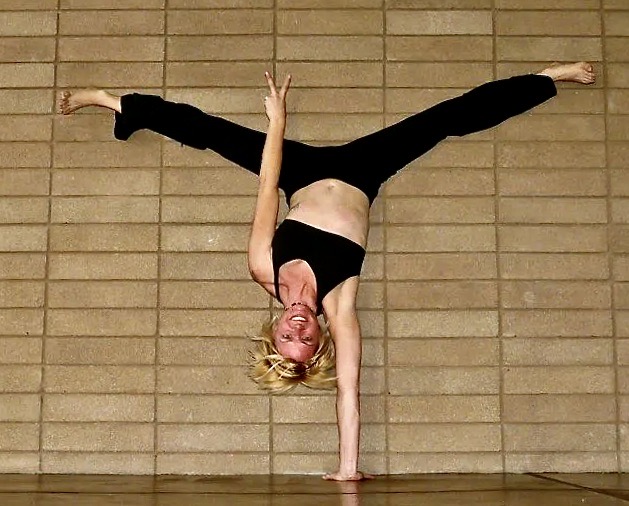
Bye Bye Babs

By Ed Staskus

When the wiseacres known as the Babarazzi, a New York City-based black-clad collective devoted to getting in their two cents’ worth about commercial yoga culture, called it quits in January 2014, after a two-year run, they announced their closing by saying, “We have decided to finally set the monkeys who write our pieces free.”

They were being unduly modest. It’s well known monkeys have always refused to read and write so they won’t be forced to work for a living.

Starting with their first posts during the debacle that became the end of John Friend and Anusara Yoga, the Babarazzi raised the skull and crossbones, firing broadsides at a yoga community they saw as a “silly cocktail party.”

Yo-ho-ho and a bottle of rum.

Their TMZ approach targeted what they called yogilebrities, or ”those who trade in the likes of such stupidity as yoga image, yoga fashion, and yoga lifestyle.” said Aghori Babarazzi, the official unofficial spokesman of the group.

“That’s how cheap yoga marketing works. It turns the seeker into a consumer.”

Reactions in the yoga community ran the gamut. One puzzled reader wrote, “I don’t understand this blog or the writer’s intention.” Another wrote, “Hey, it’s all yoga.” At the same time a curmudgeon wrote, “It’s high time someone shone light on the turd-fest of shameless, salivating self-promotion that has infiltrated the yoga world.”

The tag line of the web site was “giving contemporary yoga the star treatment.” It might as well have been Richard Pryor’s gag line, “I ain’t no movie star, man. I’m a booty star.”

But, behind the trash talk and cutting edge sarcasm was an earnest attempt to point out the many disconnects between the principles of yoga and the actual bread and butter practice of it in America.

“What goes on behind the scenes in yoga studios is the stuff daytime soap operas are made out of,” said Aghori Babarazzi about the wild and wacky world of modern yoga.

“Students who have never crossed that line in the studio have no idea how pig-ish some of the more fame-oriented teachers can be,” he said. “And I’m not talking about the nice piggies that live on farms.”

Although celebrities worry about illnesses and mortgages like everyone else, the magician Penn Jillette has pointed out that “we celebrities are desperate pigs.”

No sooner had the Babarazzi gotten their feet wet than they ran afoul of yogi entrepreneur Sadie Nardini and Elephant Journal by posting an article on Elephant Journal’s site titled ‘Is YAMA Talent More Harmful to the Yoga Community Than John Friend’s Penis Pursuits?’

YAMA Talent is a New York City-based management consultant and booking agency for teachers and brands seeking to be front of the line life of the party and profitable as possible in the yoga marketplace.

Sadie Nardini saw the piece as a below the belt blow aimed at her, YAMA Talent cried foul – “How dare we waste time criticizing our fellow yogi’s?” – while Elephant Journal disappeared the piece from its site, protesting its lack of attribution, arguing that the Barbarazzi was not a person, so could not have an opinion.

This was before the Supreme Court ruled in the recent Citizens United case that corporations are people, just like real people.

“What we do here at Babarazzi HQ is intentionally provocative,” the collective answered the back seat drivers who had forgotten to buckle up for the ride.

For the next year-and-a-half they posted, every three or four days, stories like ‘Whatever Western Yogi’s Touch Turns to Gold (Or Pooh?)’ about the big money leanings of bigger-than-life yoga events; ‘What’s More Boring than Athletic Wannabee Yoga Companies Suing One Another?’ about companies like Yogitoes and Lululemon keeping their steely eyes firmly on their spreadsheets; and ‘Snowshoeing and Yoga: Obviously You Need to Do This in Order to Be a Better Person’ about the endless proliferation of hybrids as subjects for yogic workshops.

The tabloid-style havoc of the Babarazzi’s journalism raised the ire of many in the American yoga community, from Colleen Staidman Yee to Tara Stiles, from Off the Mat Into the World to YogaNation. It’s difficult to take criticism. It’s difficult to take without resentment. It’s difficult to take without lashing back, no matter how much breath control meditation third-eye concentration you’ve done. Standing on your head is easier.

It can be painful, but it’s meant to be. It serves the same function as pain, calling attention to something unhealthy.

“The Babarazzi is a great asset for yoga in this modern world where concerns for what yoga is are increasingly tempered with concerns over what yoga isn’t,” said Paul Harvey of the Centre for Yoga Studies.

Although the Babarazzi seemed to reject the notion that there is one true pure twenty-four carat yoga, they also spurned the cult of personality, the sideshow of personal appearances and trade shows, and the endless merchandising of a practice for which stuff and more stuff is ultimately valueless.

In the commercial world it is a truism that men exploit men for the supposed greater good of everyone. In the world of yoga self-awareness is the same as doing good. Exploitation of oneself and others isn’t the yellow brick road to anywhere. Yoga is more on the order of being between the nothing that isn’t there and the nothing that is, not shopping for something everything anything.

“The Babarazzi does a good job at pointing out the hypocrisies of so many self-proclaimed gurus,” said Jacob Kyle, a philosophy graduate student and yoga teacher in New York City, “and reminds us, in its own way, that the true teacher lies within each of us.”

The bad boys of mindfulness “drew a bead on the wide-ranging techniques and linguistic gimmicks being used to advertise, market, and sell yoga to middle class consumers,” wrote Stewart Lawrence in ‘Yoga’s Court Jesters’.

For all its wit and whistle blowing the Babarazzi were tilting at windmills. The imperative to exploit yoga in America is too strong. There are tens of millions of customers. Lululemon isn’t a multi-billion dollar company because it failed to notice the commodity yoga could be transformed into.

It’s a yoga rave with see-through pants!

Bikram Choudhury, for example, thinks he owns thirty five Rolls Royce cars, but isn’t sure of the exact number. Other than the YogaLife Institute few, if any, yoga companies are Certified B Corporations, or for-profit companies certified as being motivated by more than just a hunger for profit. Hand over fist has long been a fundamental pose on the mat.

Yoga Journal, notwithstanding its endless proselytizing, is not a fair trade concern. It is an arm of Active Interest Media, a privately held company. The principals of the company are privateers, not necessarily interested in the public good. The bottom line, not the eight limbs of the practice, rules. After B. K. S. Iyengar died in August 2014 Yoga Journal celebrated his long life by immediately e-mail blasting advertisements far and wide selling Iyengar DVD’s.

The cult of personality, the creation of an idealized and heroic image, has long been a trick of tyrants. Not anymore. Constant media exposure has changed all that. It’s all fair game now. The practice of yoga is not free of its charms. When Helen Hunt gave credit to Mandy Ingber, a popular LA yoga instructor, for getting her body “Oscar-ready”, out came more cool contemporary yoga advice called ‘Yogalosophy’.

“It’s truly cool!” gushed the magazine Glamour.

Emma Watson and Ryan Kwanten have become certified yoga teachers, completing the circle of yoga teachers becoming celebrities to celebrities becoming yoga teachers.

The Babarazzi’s announcement that they were publishing their last post and desisting from further antagonizing celebrity yoga teachers and organizers of national yoga events both celebrated and snarked the status quo.

“The Babs is Closing Up Shop. Everything Must Go. Crazy Sales and Deals.”

Even though it is uncertain whether the Babarazzi ever had a bunch of monkeys pecking away on keyboards, writing their material, it is certain they never sold out to buy bananas for the monkeys. They doubtless were chronically short on greenbacks, since they never had anything to sell other than their dismantling iconoclasm, which is rarely a commodity in any marketplace.

Ed Staskus posts stories on 147 Stanley Street http://www.147stanleystreet.com and Cleveland Ohio Daybook http://www.clevelandohiodaybook.com. To get the site’s monthly feature in your in-box click on “Follow.”÷≥,mnbvbnm

The Other End of the Leash

By Ed Staskus

Whenever Padma, a white and tan hound dog, hears her master’s namaste marking the end of class at Blue Lotus in Raleigh, NC, she stirs from her Mexican blanket pile, shakes, stretches in urdhva mukha svanasana, better known as upward-facing dog, and with her long nose in full gear makes the rounds of the yoga studio, sniffing out the sweaty yogis.

“It’s like clockwork,” says Jill Sockman. “She thinks namaste is her release command. If I am at the studio she is with me. On the rare occasion I am working and she’s not with me, people come in the front door, look to her empty bed, and the first thing they say isn’t ‘Hello’ or ‘I’m here for class’, but ‘Where is the dog?’ “

“She is my one true love and constant companion.”

The canine has been mankind’s best friend for a long time.

DNA research suggests gray wolves and dogs split into separate species around 100,000 years ago. Domestication began 30,000 years ago, based on archaeological evidence from caves in Europe, and our herding and hunting relationship with them dates back to the end of the Pleistocene Age. Initially tolerated as scavengers of bones and animal remains, over time dogs were co-opted as guardians and trained helpmates.

“It takes only a short journey to get from dogs guarding the village to a personal house dog,” writes Stanley Coren in The Intelligence of Dogs.

There are more than 400 million dogs in the world.  Approximately 78 million of them are in the United States. Almost forty percent of American households own at least one. Among them are many yoga households. Although it is difficult to determine with any accuracy, it often seems like every other-and-more yogi has a dog.

“Almost all the yoga teachers that come to my mind have dogs,” says Dawn Schroeder, a Kundalini Yoga teacher in Cleveland, Ohio. “I have two dogs, both of them rescued.”

For some people, such as the handicapped, dogs are lifesavers. Helen Keller, the deaf and blind social activist, introduced the Akita to the United States and described the dog as an “angel in fur.” For others, like police, farmers, and even corporations, dogs are working partners. The runways of airports like Southwest Florida International are kept clear of large birds by Border Collies. For most people they are better known as pets and companions.

Although more physically diverse than any other land animal, resulting from centuries of intentional breeding, dogs are generally loyal and gregarious by nature, running to the door at the sound of familiar footsteps, not caring whether their owners are young or old, fat or fit, rich or poor. Money can’t buy the wag of a dog’s tail.  They rarely run in packs anymore and nowadays consider people to be part of their posse.

With the rise of suburbanization in the 1950s dog populations boomed and they made the transition from the doghouse to the home, becoming increasingly integrated into the lives of their owners. The modern dog became part of the family. Today many people feel like their pets are their favorite people.

“Our dog Zoe, a Westie terrier, is the light of our lives,” says Regan Burnett, who teaches yoga at the Greater Atlanta Christian School in Norcross, Georgia. “She does a perfect down-dog and up-dog every morning upon waking and practices Centering Prayer with me in the evenings.

“She is very special.”

“Increasingly,” says Jon Katz, the author of The New Work of Dogs, “we are treating them as family members and human surrogates.” Some single people and childless couples, among others, anthropomorphize their pets to the standing of an honorary child. They are called ‘fur babies’. Even families are challenged by children who know the best way to get a puppy is to ask for a baby brother.

“People are leaning on pets to fill the gap in social support mechanisms that earlier might have come from their families or tight-knit neighborhoods,” says Michael Schaffer, author of One Nation Under Dog.

Americans have fallen in love with their dogs. Since the mid-1990’s spending in the United States on pets has almost tripled, from $17 billion to $43 billion, which is nearly seven times as much as is spent on contemporary yoga and its related products. Yesterday’s Fido and Spot are today’s Jake and Bella, part of the family.

Tammy Lyons of Inner Bliss in Rocky River, Ohio, believes yogis engage especially with dogs. “I’m not sure why,” she says. “My guess is our desire to connect with all living beings and to share the vibrational quality of love that is unconditional and undefined. My husband and I rescued an amazing dog eleven years ago. She just passed away late last year, and I still miss her with my whole entire being. I would look into her eyes and know she could see all of me, without words. And she loved me no matter my flaws, failures, or even my not so attractive qualities.”

Dogs hop, skip, and jump when their owners come home. The Odyssey, the second of the two epic poems ascribed to Homer, is the story of a man who returns home after being gone for more than twenty years and is recognized only by his dog, Argos. Once known for his speed and tracking, but now neglected and lying on top of a pile of trash, after waiting ninety-three dog years for Odysseus to come back he wags his tail once and dies.

They lay their heads in our laps and stare up into our eyes, a heartbeat at our feet. They invite our attention and affection.  Never mind that Fred Metzger of Pennsylvania State University, who studies the human-animal bond, believes dogs are highly skilled at parsing social behaviors, especially those having to do with hearth and the food bowl.

“Dogs make investments in human beings because it works for them,” he says.  According to Dr. Metzger they act according to what makes humans happy to get what they want and need. They are den animals just like us integrated into the hubbub of the household, adaptable and attuned to the moment.

“Dogs give to get back,” says Brenda Motsco of Town and Country Veterinary Hospital in Warren, Ohio, who when not rescuing dogs is a feisty Bikram Yoga aficionado.

Unlike most other animals whose lives are not necessarily dependent on people, and whose existences are in some sense solipsistic, the dog is a different breed. When hailed a cat may or may not get back to you that day, but a dog will bust its butt to heed its master’s beck and call.

“Your dog kind of lives for you,” says David Bessler, senior emergency clinician at NYC Veterinary Specialists in New York City. Other than adoption, acquiring a dog may be the only opportunity a person has to choose a relative.

Dogs are social animals, like people, and so need and rely on emotions to bond with other dogs and people. According to Marc Beckoff, a behavioral biologist at the University of Colorado, emotion is one of the foundations of social behavior and connects individuals, whether in society, family, or pack. Dogs have an evolutionary need for close emotional ties.

The dog world intersects that of people in many ways. They almost always feel like doing whatever you feel like doing, whether snoozing while you nap or walking in the woods with you and chasing sticks. The other side of a door is always the wrong side of the door to a dog. They rarely hang out a “Do Not Disturb” sign.

“My Chihuahua is always with me at the studio and is our mascot,” says Ellen Patrick of Yoga Sanctuary in Mamaroneck, NY. “She greets all my students and then sleeps next to me while I’m teaching. People tell me they come more for ‘Chi’ therapy than for the yoga because she has such a sweet spirit.”

Over the course of centuries, through the process of domestication, dogs have come to understand people the better than all other animals, and have most easily adapted to our social circumstances. The average dog may be a better person than the average person. Yogis find their dogs through adoption, rescue, and accidentally, like everyone else, but sometimes their dogs come to them in dreams, figuratively and literally.

“I was searching for a companion dog to my older Cathula Leopard Hound,” says Connie Murphy of Yoga Village in Arroyo Grande, California, “but whenever I found one and did my pendulum on getting them or not, I was always told no. Then I started dreaming about a black and white dog. A few days later a black and white stray, part terrier and part cattle dog came into our yard. Cold, wet, starving, filthy, and afraid. It took several days before he would allow us to touch him. We left the garage open for shelter, and fed him, and after we put out fliers and no one answered, he became part of our family. It’s amazing what food and a bath and love can accomplish.”

Although some people find themselves loving dogs more the more they get to know people, it isn’t always the best of all worlds for dogs in the modern world. In the past dogs hunted with men and were their guardians, but today they are acquired for many other reasons. Children pressure their parents to bring home the cute puppy they saw at the store; the lonely get them to relieve stress and anxiety; others buy intensively bred dogs because it is prestigious.

But, even though dogs may be so smart they can do anything short of calculus, they still rely on their human families for everything, including shelter, groceries, water, exercise, and veterinary care. “The way they think about their world is that people are super important and they can solve any problem if they rely on people,” says Brian Hare, professor of Evolutionary Anthropology at Duke University. Domestic dogs also need social interaction to the degree that without a master and family they grow unhappy and even lost.

Many dogs are abandoned by their owners because of management problems, the pet’s old age, or simply because it is more expedient than taking care of the dog over the course of its 12 or 14-year-life. More than 5 million dogs enter shelters every year, according to the Humane Society of the United States, and those same shelters euthanize several million more when the dogs aren’t rescued. Puppy mills overproduce pets, annually dumping millions of them on the market, according to the ASPCA, marketing their lovability to the ill prepared.

Many people who practice yoga, and live by its ethical guidelines, rescue rather than buy dogs. “As a person’s awareness expands they are more likely to acquire a dog from a shelter as opposed to buying a dog from a pet store or breeder,” says Cassandra Wallick of Gilbert Yoga in Gilbert, Arizona. “As we begin to see things more clearly we may realize that the breeding of animals for pets is somewhat inhumane when in fact there are thousands of animals being euthanized because of careless owners and over-breeding.”

Television shows like the ‘Dog Whisperer’ on the National Geographic Channel and ‘It’s Me or the Dog’ on Animal Planet have grappled with the biting, barking, and bad behavior of dogs made insecure, neurotic, and bullying by uncaring or uninformed breeding practices and by inappropriate human-to-dog interactions. Less than two generations ago neither Lassie nor Rin Tin Tin ever required a dog behaviorist. Today it seems like all our purebreds and even mutts need a couch.

“Ending or preventing suffering should be the main goal of a real animal lover,” says Val Porter, the author of Faithful Companions: Alliance of Man and Dog. Dogs are trusty and vigilant sidekicks to man. Lassie and Rin Tin Tin were always pulling families out of burning buildings and saving the cavalry from marauders. They deserve the reciprocal care and loyalty of committed human companions.

“To live in harmony with all beings, including dogs, is a truly yogic principle,” says Julie Lawrence of the Julie Lawrence Yoga Center in Portland, Oregon. Judging from the principles they live by, known as the yamas and niyamas, the man or woman who practices yoga may be a dog’s best friend.  Dogs probably don’t need yoga, better known as doga, but running with yogis may be good for their health. “Because dogs are pack animals, they are a natural match for yoga’s emphasis on union and connection with other beings,” writes Bethany Lytle in ‘Bonding With Their Downward-Facing Humans’ in The New York Times.

The intersection of dog and man can be fraught with misunderstanding and neglect. But, if there is a yogi at the crossroads, the dog is likely in good hands, since the goal of yoga practice is to be as good a person as your dog already thinks you are. ”In my lifetime I have had rabbits, turtles, a mallard duck, fish, parakeets, many cats, and a wonderful dog,” says Marcia Loffredo of Yoga 4 Health in East Hampton, Connecticut. “I believe we love, honor, and respect all of God’s creation based on what we learn and experience in our yoga practice.”

The way of the yogi encompasses animal rights as well as human rights, because that is the way of the whole human being. “My gut reaction is that yogis are good for dogs because through practice they learn to be more caring and compassionate,” says Brenda Motsco. Even though dogs exist for their own reasons, indifference and callousness results in suffering in dogs, and impoverishes the human spirit, as well.

Yogis seemingly gravitate towards dogs and dogs likewise towards yogis. “I have seen this,” says Mandy Grant of Juluka Yoga in Hillsdale NJ.  “I have a dog who comes to my studio and students love him. Yoga creates compassion and understanding, and the practice of ahimsa, and the knowledge that we are all linked, makes people like dogs more after practicing yoga.”

Dogs have an unrivaled sixth sense, as any dog will tell you. They can predict thunderstorms and earthquakes, epileptic and diabetic seizures, their owner’s imminent return, and whether or not your friend is really your friend. In 1975 Chinese officials, fearing a catastrophe based in part on observation of the alarming behavior of dogs, ordered the evacuation of Haicheng, a city of one million people, just days before a 7.3 magnitude quake, saving an estimated 150,000 lives. Japanese researchers, in one of the world’s most earthquake-prone countries, have long studied the usefulness of dogs as prediction tools.

Seizure-alert dogs are trained to react to the smell, reminiscent of nail polish remover, of the metabolic changes before a seizure induced by low blood sugar. “They are masters of observation,” says Nicholas Dodman of the Animal Behavior Clinic at Tufts Cummings School of Veterinary Medicine. “Their sense of smell is second to none and is beyond our comprehension.”

Sometimes it’s better to have a dog than a doctor in the house.

Dogs have more than 200 million smell sensors in their noses, compared to the 5 million of the average person. Smelling is a dog’s special sense. They discriminate their world through a predominant olfactory cortex and can sniff out fear and friendliness. If a dog snuffs you up and down but will not come to you, it may be time to examine your conscience.

“A dog can sense the softy in us,” says Ginny Walters, an Ashtanga Yoga teacher in Rocky River, Ohio. “They know when a good soul will do no harm”

At a bed and breakfast she and her husband built in Costa Rica, featuring a fifteen-mat deck overlooking the lowlands along the Pacific coast, Ginny Walters hosts yoga retreats every winter, and two years ago found her second home adopted by a dog.

“He appeared one morning with buggy eyes and famished. He had a sore on his ear that would heal for a day and then bleed all over again. I really didn’t know what the retreat participants would say. I figured if we didn’t feed him he would go away. But, he stayed. The retreat group would look out the window and he would immediately go into upward dog and as if on cue downward dog. He would never try to come into the house, just stay on the threshold and look at us. Two years later Rahm the dog is getting fat. He is our protector even though he doesn’t belong to anyone. When we leave the house he goes to his other place and stays until we return. He knows the sound of our car. We had an open heart to accept him. We didn’t give off the sweat of fear or anger. Ahimsa is all he asked for and with the yogis he found it.”

Most pet owners satisfy the fundamental requirements of hunger, thirst, and shelter for their dogs. Many of them tend to their social needs and sense of belonging, making them part of the family. Some address the needs that even dogs have for esteem, recognition, and status, fostering strength and self-confidence in their companion animals. A very few understand that dogs may be candidates for self-actualization.

“At one point in my spiritual growth I began to realize the soul of my dog was simply in a four-legged embodiment,” says Cassandra Wallick. “That soul was evolving just like mine. The attainment of oneness, unity, and self-realization is the ultimate path of the soul, and my dog was on his journey just the same as I was. After this epiphany I looked at my dog very differently. Not as a lesser creature, not even as a ‘dog’ anymore, but as a friend soul who was living out one of his incarnations in a dog’s body.”

Many people, even animal lovers, believe dogs have less potential for freedom than humans, so we are free to feel less compunction about denying it to them. But, since our standards for humane treatment of others is constantly expanding, it may be that every dog will have his day. If the dog’s companion is someone who practices yoga, a person whose core values are freedom and actualization, that dog will probably have its day sooner than later.

A version of this story appeared in Elephant Journal.

Ed Staskus posts stories on 147 Stanley Street http://www.147stanleystreet.com and Cleveland Ohio Daybook http://www.clevelandohiodaybook.com. To get the site’s monthly feature in your in-box click on “Follow.”
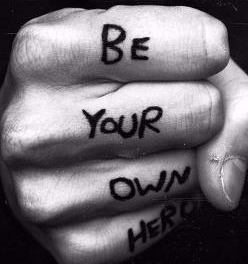
Lobsterman

111209-lobster.jpg

By Ed Staskus

“It will bring tears to a grown man’s eyes,” said Kelly Doyle, a lobsterman who works out of the Prince Edward Island harbor of North Rustico. He was talking about lobster claws. The bite force of a large dog in pounds per square inch is about 500 PSI. A good-sized lobster’s crusher claw exerts about 1000 PSI.

“I had a claw on my hand one morning, he was squeezing my finger, and not letting go. He’s got you and you think, that’s it, he can’t go no more, but then he’ll squeeze some more. My brother Kenny had to take a screwdriver to it. Kenny is a big man, and he had a big screwdriver, but it took him a few minutes to pry it off of my finger.”

A 27-pound lobster was caught off the coast of Maine in 2012. The claws were so large they would “break a man’s arm,” said Elaine Jones of the Department of Marine Resources.

“We don’t catch those kinds of monsters,” said Kelly. “The biggest one I ever caught in my traps was maybe 7 pounds, max. But that’s a damn big lobster, a foot-and-a-half long.”

29 million pounds of lobster were harvested on Prince Edward Island in 2014, much of it during the spring season, which is May and June. It is a limited entry fishery. “1200 lobster fishers land their catches at approximately 42 ports all around the province,” said April Gallant of PEI’s Agriculture and Fisheries. Many of them are pulled up from the north shore, from Malpeque to St Peter’s Bay. The Rustico fisheries are roughly the axis of the lobster world along that shoreline.

Besides North Rustico, there are the towns of Rustico, Rusticoville, and South Rustico, all named after a fisherman by the name of Rene Racicot, a French Norman who came to PEI in 1724. Racicot became Rustico among the Acadian-French settlers.

The reason the north shore was settled was fishing. After the deportation of Acadians by the British in 1758, and the eventual return of those who had hidden or survived drowning and shipboard epidemics, fishing was what meant life or death for their families.

“I’ve been fishing for 30 years,” said Kelly Doyle, “although I took a few years off, which was a little sabbatical.” After leaving PEI for Montreal in his early 20s, he returned in 1983. “I built a cottage, but I couldn’t get a job anywhere. The next spring I got offered a fishing job in North Rustico.”

Although fishing in North Rustico dates back more than two hundred and fifty years, groundfish stocks contracted in the 20th century. Shellfish and crustaceans, especially lobsters, emerged as the species of choice. Lobster landings almost tripled between 1960 and 1990.

In the early 1990s a moratorium was enacted limiting the taking of many kinds of groundfish. “We were shut down completely,” said Kelly. “No more white fish. All we were allowed was lobster, although we could still catch our own bait, like mackerel and herring, at that time.”

Nowadays lobstermen buy their bait. “I come in, pull up to the wharf, and Doiron takes every lobster I’ve got,” said Kelly. “I buy my bait from them, too.”

North Rustico’s Doiron Fisheries got its start when Aiden Doiron bought his first fishing boat in 1957. One day, when a man asked him for a cooked lobster, he said, “I’ll be right back.” He grabbed a lobster, a pot, and cooked the lobster on the spot. The Doirons still sell fresh fish out of a shanty on the wharf.

“We cook lobster on the boat sometimes,” said Kelly Doyle.

Thirty years ago he often bagged his own bait for lobstering, late at night. “There was a freshwater run about 2 or 3 kilometers down Cavendish Beach, where the gaspereau would come up from the ocean, smell the fresh water, and spawn there. When they came back down we caught them in nets.”

Alewife is a herring called gaspereau in Atlantic Canada. Catching them meant waiting for them to swim back to the ocean with the tide at midnight. “We would net them by hand, standing in waist-high water. When we got them on shore they’d be flapping around and sand flying everywhere. We’d fill up 40 or 50 boxes and carry them by hand back to our pick-up trucks.“

Neither motor vehicles nor horses are allowed in the National Park, which is what Cavendish Beach is. “We’d ice them up for the morning, get home by 2, and then back up at 4 o’clock, 6 days a week in the season.”

There are 37 boats in the harbor at North Rustico. All of them are made of fiberglas, all are equipped with diesel engines, and all carry a trove of electronic gear. Hulls cost upwards of a quarter million dollars. The annual cost to operate Kelly Doyle’s boat, which he co-owns with Paul Doiron, a man he’s known since grade school, is nearly $50,000. “The word boat is actually an acronym,” he said. “It means break out another thousand.”

Seventy years ago lobster boats were all wood, ran on 6-cylinder gas engines, and most of them didn’t come with a cabin that anyone could stand up inside of. It wasn’t until the 1960s that windshields were added for protection against the elements.

“In those days in the winter motors were removed and taken home,” said Norman Peters of the Fisheries Museum. “Boats were hauled to a field and turned upside down to keep rain and snow out. I remember playing under the upside boats and finding bits of fishing line to use to fly kites.”

“Our boat is the Flying Spray,” said Kelly. “It’s hull number177, built in Kensington, so it’s called a Provincial. It’s a great lobster boat, very dependable, although a little on the rocky side. It’s good going into it, but it doesn’t like being turned. It throws you around a bit.

“Most of my career was in wood. The best thing about fiberglas is it doesn’t leak. Except, not like wood, they don’t float at all. If you put a hole in them they sink pretty well instantly.”

Lobstermen start their day early. “He gets up at 4:20 in the morning,” said Kelly Doyle’s girlfriend, Ryoko. “I make his breakfast and lunch and he’s gone before 5. I go back to bed and sleep a little more.”

Paul Doiron captains the Flying Spray and Kelly Doyle is the sternman. Both are in long johns through May and sometimes into June. “On top of those I wear insulated overalls and when I get to the boat I oil up,” said Kelly. “We put on oilskins, a full bib, and a jacket. It’s so you can stand in the rain for hours.”

After they’ve cleared the North Rustico harbor the first thing Paul Doiron does is turn on his GPS to locate their traps.

“The first guy I fished with only had a compass,” said Kelly Doyle. “But, it never really worked right for him. They fished by strings back then, by their compasses and landmarks. You would probably find your buoys, but on a dirty morning, no. They’re only so big floating in a big ocean out there.”

Fishermen on the island are restricted to 300 traps by the Department of Fisheries and Oceans. In the early 19th century lobsters were so abundant they washed up after storms. Islanders used wooden tongs to pick them up, although many were ashamed to be seen eating lobster because it was regarded as a poor man’s dinner. There used to be no rules about harvesting lobster. But, by the 1890s there were problems with declining stock.

“Many fishermen had from 1200 to 1500 traps,” said Norman Peters. In the latter half of the 20th century the fishing season has been shortened, fishermen must be licensed, and taking spawning lobsters isn’t allowed. “It’s the responsibility of those who are fishing today to conserve our fishery,” said Mr. Peters.

Once out on the Gulf of St. Lawrence the Flying Spray looks for its traps. “We’ve got 37 bunches of 8 traps and one trap of 4,” said Kelly Doyle. Traps are connected by a line, eight of them along a stringer, and attached to buoys with a unique color for easy identification. “There’s 8 traps between buoys and that’s called a set, or a full trawl. They’re all numbered in our GPS and we pick them up every morning.”

The Prince Edward Island gulf coastline is largely ledge and sand. When the frozen shallow waters thaw in April lobsters move in from the deeper ocean. They return to warm shoal water for egg-bearing females to hatch and release in springtime and early summer.

“Hard rock is what you want for lobsters, rock that looks like mountains,” said Kelly. “Sometimes they’ll cross sand. Most of the time sand is full of crabs and crabs hate lobsters. When lobsters cross sand they scare the crabs out and you can have a tremendous catch the next day. You’ve got to think like a lobster, about the depth of the water, how warm it is, and when you think they’re going to be there.”

When the fishing is good he, and often a hired hand, haul one lobster after another out of the traps they’ve pulled, slip rubber bands over the claws of the keepers, loading them into onboard tanks, and re-bait the traps. As the traps are lowered back into the ocean the most important rule for sternmen is to not step on rope, get snagged in the rope, and get dragged overboard.

“Lots of guys will get caught for a minute,” said Kelly, “but the last guy who drowned out of this harbor was Jackie Dussett in the 1960s. He got his leg caught and was just gone, overnight. The tide worked him loose the next day.”

Lobster fishing on Prince Edward Island is not usually unusually dangerous, but it is hard work, in more ways than one. Everything on a boat is hard. “Everything’s hard as steel,” said Kelly. “Or, it is steel. No matter, whatever you hit hurts.”

Boats bob and toss at sea since the ocean is never steady like dry land. “I’ve been hurt every year I’ve fished, banged up like an old man.” Working on a lobster boat means working on an exposed, slippery, and moving platform in weather that is bad as often as it is good. Tourists drown in small swimming pools. Fishermen are faced with miles of open water.

Next to logging, commercial fishing is statistically the second deadliest kind of work to be in, deadlier even than police work or firefighting. “Fishing at sea is probably the most dangerous occupation in the world,” according to the Food and Agriculture Organization of the United Nations.

“I come out of the cabin one morning last year, coming up the three steps, when something came off the sea and literally threw me out of the cab. The momentum of the boat picked my body up like it was weightless. I banged on the bulkhead and just like that you’re on the ground, hurting, black and bruised.”

Unlike many fishermen on Prince Edward Island, Kelly Doyle doesn’t come from a fishing family. The first Doyle came to the north shore from Ireland in 1847. He was granted land along was is now Doyle’s Cove. They raised thoroughbred horses and later bred black silver foxes for their pelts. When fox furs went out of fashion his grandfather and father mix farmed, growing turnips, barley, and wheat.

“I have three brothers and they all became fishermen,” said Kelly. “We weren’t fishermen, but I think it was in our blood. We were all at ease on the water. None of us got sick. But, I’m the only one who still fishes. It can be hard on you.”

In season the Flying Spray sails for lobster every day it can. Some days, like after a storm when the 7 kilometers of line they carry are tangled and need to be untangled, they are out for up to 15 hours. “Gear starts to move. Before you know it it’s all snarled, mine and everybody else’s. You’ve got to pull it up, bind your gear, and that’s rough.”

Lobster cages weigh about 20 pounds without the 44 pounds of concrete ballast in them. When they are wet they are more than 100 pounds. “Thank you to the man who invented hydraulics!” said Kelly. “Years ago it was all hauled by hand. The forearms of those guys in Rustico back then were like Popeye.”

Although not born to it, although his business interests have expanded to include Coastline Cottages and PEI Select Tours, and although it is exacting, physical work, Kelly Doyle plans to continue lobstering.

“I had been out of fishing for a few years, but bought back into it. My first year back I thought I was going to die. It was a tough spring, shitty weather, and I was going to bed at 7 o’clock, just beat up. It’s all about wind, which creates seas, which creates bouncing around like a cork.”

Seas can be dangerous and storms terrible. But, the lives of commercial fishermen are subsumed by their boats, the waters they sail, and the work they do. “Later part of March, you’ll hear a seagull on the coast, it just seems to draw you back,” said Francis Morrissey, a fifth-generation lobsterman in Tignish, on the northwest tip of the island.

“This is the best place in the world to be fishing,” said Mike McGeoghegan, past president of the PEI Fisherman’s Association.

Oceans are more ancient than anything, including mountains. Men have fished for more than 40,000 years, from about the same time modern humans moved into Europe. 1,100 kilometers of red sandstone shoreline rim Prince Edward Island, some of it sand beaches, some of it cliffs, all surrounded by the wide sea.

“I’m going to fish this year, at least I will as long as I’m on this side of the sod,” said Kelly Doyle. “To tell you the truth, if and when I die, I hope it’s out there.”

Ed Staskus posts stories on 147 Stanley Street http://www.147stanleystreet.com and Cleveland Ohio Daybook http://www.clevelandohiodaybook.com. To get the site’s monthly feature in your in-box click on “Follow.”