Rat in the Hat

By Ed Staskus

   Aksel was a Norwegian rat, although it would have been a matter of rough-and-tumble if anybody had tried to tell him that. He believed he was a Norman rat since his forebears had come to the New World aboard a French ship that sailed from Bayeaux long ago. The Normans were hardy explorers. Norwegians sat around their fjords moon eyed. It had been more than a hundred generations of his family saga since his ancestors landed on the island. He had never met a Norwegian. He had no idea about any Norwegians. He didn’t even know where Norway was.

   He didn’t know what day week or month it was. He didn’t know it was 1989. He didn’t know he was living in North Rustico on Prince Edward Island, either. He had no clue he was on the North American continent, for that matter, although if he had known it wouldn’t have mattered. He knew where Rollings Pond was. The pond was where he spent most of his nights. During the day he slept in the basement of the Stella Maris Catholic Church. He never went to mass or confession, though. It wasn’t that he was an atheist, not exactly. He simply couldn’t wrap his head around the idea of a Supreme Being who had his best interests in mind. Something was always out to get him. He always had to do everything for himself. He didn’t own anything, not even a fork, knife, or plate, but his bedroom was cozy. He stored some dried food there and had a bed of straw and a small pillow. He kept a handful of loose change he had found at Orby Head under his pillow for a rainy day.

   Aksel was known by the nickname of Left-Hand. How he came to be called Aksel the Left-Hand was beyond him, since he was right-handed. In the event, he didn’t gripe about it. It was better than some of the other rat nicknames he had heard in his neck of the woods, like Seaweed Neck and Foul Fart. He liked to think of himself as a man about town and sometimes wore a bowler hat.

   He wasn’t a farmer. He foraged for food instead of sowing seeds. He gleaned grub far and wide. He ate anything and everything. He thought he had probably eaten hundreds of different foods in his lifetime. He ate any discarded morsels he came across as well as all crops from all fields. He ate all the time, snacking on whatever came his way. Some people said he was a glutton. He didn’t bother disagreeing with them. He preyed on chicks, lizards, and other rodents. He caught fish on Fridays, just in case there was a God.

   His mother let it slip one day that their kind only lived two or three years. He was aghast. There was apparently no time to waste. His eyesight had always been bad. He needed glasses. He was colorblind, too. His other senses, smell, taste, touch, and hearing, were outstanding. He wasn’t especially Olympic Games agile, but he could run, jump, climb, and swim enough to keep danger at bay. He used his face whiskers to feel the world around him. He could wiggle each one of them individually, unlike cats like Snaps, who was from Murphy’s Cove and was always messing with him. He and Snaps were going to have it out one day. The cat was a menace. He was always lying in ambush for him. He had to find a way to cancel out the mouser’s claws, which were razor sharp and deadly. He had the scars to prove it. 

   Except for Snaps, cats rarely bothered Aksel. He was too big for most of them, feral or otherwise. Snaps was a different order of things. He was as big as cats come. The beast was a dangerous son-of-a-gun. The cat and the rat were a stop-and-go dance in the dark. When Aksel stopped, Snaps stopped. When he started up again, the cat was on his heels again, low-down and deadly quiet.

   Islanders didn’t always give Aksel his due. Some called him a street rat, even though he was a field rat. Others with college educations called him a Hanover rat. He tried to explain he was a Norman rat, but couldn’t speak the language of the learned. He didn’t like it whenever he was called a dirty rat. He was fastidiously clean. He washed and groomed himself ten times a day. He was a brown rat with a white underside. He was a big boy, his body length almost a foot long with a tail slightly shorter than a foot. All he had to do was flash his teeth and wiggle his tail at passersby to make them jump and lose their sandwiches.

   He  liked hanging out in the back room of Lorne’s Snack Shop, where out of work fishermen hung around looking for something to talk about. Aksel wore morning dress, a bowler hat, and pantomimed Charlie Chaplin on table tops for handouts.

   One night he met one of his own kind in the dumpster behind the co-op store next to Angie’s Eatery. After giving each other the secret handshake, after which both rats were sure the other one was legit, they chewed the fat and gossiped about local doings. His new-found friend, it turned out, had come off a cruise ship in Charlottetown three weeks ago, gone on a self-guided tour, been late getting back, and was now stranded until another boat rolled in. He had strayed up to North Rustico and was thinking of staying

   “I’m a free agent,” he said. “I can hi-jack myself back onto any boat anytime I want to. You know those round things they attach to mooring lines, what they call rat guards, and how they coat them with grease? First, I puff up my cheeks. Second, I suck up the grease. Third, I spit it out over my shoulder when I go over the rat guard.”

   Cruise ships had been docking in Charlottetown since just after the turn of the century, pulling into port to hearty welcomes. They let loose hundreds sometimes thousands of tourists all at once to stretch their legs, eat, drink, see the sights, and buy “Anne of Green Gables” dolls and effigies. They bought on-the-spur memories to put away in their closets.

   It was after midnight when Aksel and Yeoman Purser, which was what his  friend called himself, went their separate ways. “I know I’m just a rat and a mug, to boot, but I have got to say this seaside place here is something else, just beautiful, and everywhere I look there is food.” The hometown boy twitched one whisker in agreement.

   Aksel was more nocturnal than not, so when Bernie Doiron found something sticking out of the ground when he was plowing on the other side of the hill from Rollings Pond and every nearby cop car, ambulance, and fire truck descended on his stomping grounds, the noise that morning woke him up. He had just rolled over in his straw bed. He coughed and cleared his throat, blinking. He was curious and made his way to the top of the field where it was all happening to see what was happening.

   He had a love hate relationship with members of the human race. On the one hand, he preferred living near them since they were a rat’s number one fast food outlet. On the other hand, they were always trying to kill him. They checked his droppings unceasingly and tracked him by them. They were always putting out traps and bait stations. Whenever they found his nest they gassed it. He had gotten to be as cautious as an accountant. He knew full well what glue boards and snap traps were about. It didn’t matter if they were baited with his favorite fish and cereals. He gave them a wide berth.

   “My mama didn’t raise no fool,” he grumbled to himself.

   He saw what Bernie had seen and what the cops were seeing sticking out of the ground. It was an arm that had been chopped off. He guessed the rest of the body was still in the ground. It looked like they were digging it up, although why was beyond him. He knew they weren’t going to eat the remains, so what was the point? What the human race did day in and day out puzzled him more often than not.

   Aksel quickly lost interest in the unearthing. There wasn’t going to be a free meal in it for him anytime soon unless somebody dropped some crumbs. That was something else that baffled him about men and women. They seemed to never want to pick up food they had dropped, especially the women. In his world no rat did that. They ate everything, no matter what, no matter where it was., and no matter how small it was.

   He ran across the open ground behind him. He could run faster than any man alive. He could run six times his body length in a single second, but he couldn’t keep it up for long. When he got to the tree line and was out of sight, he slowed down and caught his breath. When he got to Church Hill Rd., he looked both ways before crossing to the Stella Maris Catholic Church. There was no sense in being run over on his own doorstep by a four wheel bucket of bolts rolling past.

Ed Staskus posts monthly on 147 Stanley Street http://www.147stanleystreet.com, Made in Cleveland http://www.clevelandohiodaybook.com, Atlantic Canada http://www.redroadpei.com, and Lithuanian Journal http://www.lithuanianjournal.com

“Ebb Tide” by Ed Staskus

“A thriller in the Maritimes, out of the past, a double cross, and a fight to the finish.” Sam Winchell, Beyond Books

Available at Amazon: https://www.amazon.com/dp/B0CV9MRG55

Summer, 1989. A small town on Prince Edward Island. Mob money on the move gone missing. Two hired guns from Montreal. A constable working the back roads stands in the way.

A Crying of Lot 49 Publication

Outside the Law

By Ed Staskus

   Everybody called Danny Greene the Irishman. He was almost forty two years old the summer of 1975 and somehow still alive. He had never looked his age, but that had changed, although he still didn’t look his age. He looked older. Water under the bridge hadn’t done him any favors. He grew a mustache to take attention away from his thinning hair. On top of that, at the moment, he felt bad. He didn’t feel bad about Lorcan Sullivan being blown up in Lakewood two days earlier. He was in a rage about that. That was different. His mouth hurt bad. A bum tooth was a different kind of misery. He called his dentist, who knew well enough to get him in no later than right away.

   He lay down with his face on a pillow on the floor of the trailer home in Collinwood that had become the Celtic Club. His live-in girlfriend Denise Schmidt knelt over him and massaged his back. It had been tightening up every night the past two months. He was stiff as a board most mornings. He felt like an old man sometimes. Denise was a senior at Collinwood High School. She was on the young side of more than half his age. She made him feel younger. The bomb blast hadn’t slowed her down. 

   Two months earlier at four in the morning while they were sleeping on the second floor of their two-story storefront home on Waterloo Rd. somebody had thrown two bombs through the ground floor windows. The storefront was where Danny Greene had a phony consulting firm on the ground floor that went by the name of ‘Emerald Enterprises.’ The enterprise was mainly in the business of extortion. The Irishman’s other enterprises were gambling, embezzlement, loansharking, and leg breaking. Murder was taken for granted in his line of work.

   When the sound of glass breaking woke him up, he slipped out of bed and into the kitchen. He had a gun in his hand. When the first bomb that came through the window exploded, he was crouching between the sink and the refrigerator. A cabinet was above him. He was safe in his improvised nook when timbers and bricks started to fall, but when the floor caved in he went down with it. Denise was still in bed. She and the bed went down, too. The bed ended up halfway down from the second floor, tilted and dangling from a beam. She hung on until she couldn’t hang on anymore.

   “I felt the floor give out,” the Irishman said. “The next thing I knew I was in a heap of rubble. A busted icebox was beside me. Denise fell on top of me. I dug the two of us out. I heard dogs barking. I couldn’t hear my cats.”

   “Danny Greene made out like Houdini,” Ed Kovacic, the Central Station police lieutenant investigating organized crime, told Frank Gwozdz and Tyrone Walker. “He was luckier than his cats.” Danny Greene had two street cats who nightly slept inside the building on the first floor. They were both killed. His new 1975 Lincoln Continental was destroyed. A second bomb was connected to a two-gallon can of gasoline. That bomb didn’t go off and the gasoline didn’t ignite. The Irishman had more lives than a clowder of cats.

   The Bomb Unit got to work before dawn after the blast. Across the street a disheveled hippie sat on the curb waving a bottle of Boone’s Farm at anybody who gave him a glance. “You should a heard just what I seen,” he said to anybody who came within earshot. Nobody paid any attention to him. Even he had a hard time paying attention to himself.

   When the rubble was cleared away Danny Greene set up shop in the same place, parking a trailer home there. A TV news crew interviewed him outside his new headquarters. He announced his new address and invited any other would-be bombers to try again. “I’m in between both worlds, the square world and the street world,” he said. “I think I have trust on both sides, but I have no ax to grind. If somebody wants to come after me, we’re over here at the Celtic Club. I’m not hard to find.” He was shirtless, bare-chested, and spilling over with contempt. He pointed to the medal of St. Jude he was wearing around his neck. “This is why nobody is going to get me.” 

   Parents in the neighborhood warned their children not to go near the trailer with the Irish flag flying in front of it. They told them it was best to stay away from that whole block, St. Jude medal or no St. Jude medal.

   Danny Greene’s mother died when he was three days old. His father got drunk and stayed drunk after she was buried. He lost his job with Fuller Brush. When he did he dropped the baby boy off at the Parmadale Orphanage. Six years later, back on his feet, newly married, he took the boy back, but the first grader argued long and loud with his stepmother and ran away again and again. One night he ran away to his grandfather’s house in neighboring Collinwood and never went back.

   His grandfather put him into St. Jerome’s Catholic School where he became an altar boy and all-star basketball player. He joined the Boy Scouts. After graduating from grade school he went to St. Ignatius High School. After that things started to go south. He was thrown out of the Boy Scouts for fighting with other scouts. He was expelled from St. Ignatius for fighting with the Italian pupils and everybody else. He transferred to Collinwood High School but was expelled for “excessive tardiness.” He explained he had to fight his way into the school, fighting the bullies blocking his way, but the principal didn’t believe a word of it and told him, “Leave and don’t ever come back.”

   “He grew up hustling,” said his one-time friend Aggie who ran with Danny Greene when they were kids. “It’s hard to take the hustle and larceny out of somebody who grew up with nothing. Being an orphan and growing up with the nuns, you tend to grow up edgy, tough, and slightly mean.” Hardly anybody stayed friends with the Irishman for too long. The nuns put him in their prayers, to no great effect.

   He enlisted in the Marine Corps. They liked his fighting spirit. He became an expert marksman. Before long he was training other marksmen on Sniper Garand rifles. When he was discharged he was honorably discharged. He went home to Cleveland to be his own man. He was done with running away. He had a brand-new plan. He started working on the waterfront. He was elected president of Cleveland’s Local 1317 International Longshoreman’s Association, the dock workers union, in 1962. The trouble started right away when he began embezzling union funds. He was living large and needed the money. Trouble picked up the pace when he started leaning on his longshoremen for more money.

   “Danny was spending money hand over fist,” said Skip Ponikvar, vice president of the union. “His trips to the Theatrical Grill downtown, trips to Chicago, trips to New York. And he was picking the tabs up. There was only so much a few hundred men could support with dues. He got the idea to have some guys work the grain boats on the side and sign the checks over to the union. The guys started bitching and moaning about it. Well, if you worked on the grain boats, when it came to the hiring hall later on, those guys were given the better job, which is illegal.”

   Longshoremen started shaking down employers for payoffs. One of them threatened to kill the children of a businessman who wouldn’t cooperate. His house had to be put under police protection and his children escorted to school by an armed guard. After one too many complaints, the Cleveland Police Department sent Ed Kovacic and his partner to set Danny Greene straight. It wasn’t a far drive to the union hall. They stopped for coffee and a smoke. Refreshed, they walked into the union hall quietly, looking for the back office. They didn’t mean it to be a pow wow. They hadn’t brought a peace pipe.

   “When we walked in, I felt like I’d fallen in the Atlantic Ocean, because it was all green,” Ed Kovacic said. “Even the walls were green.” The only thing not green was the Irishman, at least from the neck up. “Everything was green except his hair and face. He handed us a pen, which had green ink in it. Everything was pleasant until he asked why we were there.” They told him why they were there. “He got up and started walking around the room. As he did, he got louder and louder. He started talking about how the Italians thought they ran Collinwood, and this was just a bunch of tough Irish and Slovenian kids who were going out there and telling them they didn’t run Collinwood anymore. I handed him our crime report and said, ‘How about this man? Your goons blinded a Chinese American man.’ Boy, that really set him off like a rocket! Finally, he said, ‘Get out. That’s enough. We’re done.’” 

   The policemen were done, too. “When we got in the car, I said, ‘That was like a scene from that waterfront movie. He was acting like Marlon Brando.’ My partner said, ‘Yeah, I was waiting for him to start hollering, ‘Stella! Stella!’” Ed Kovacic didn’t bother telling his partner he was getting his movies mixed up.

   Danny Greene didn’t want or need anybody like Stella. Blanche was more his speed, at least if she had been half her age. He knew how to get what he wanted. He liked blondes who were blonde as sunlight. The nuns at St. Jerome’s had tried to teach him the difference between angels and demons, but he never learned his lesson.

   “He was dynamic,” Skip said. “Dressed to the nines. You never saw him in jeans or street clothes. Suit and tie all the time. He negotiated a hiring hall for the union. It allowed us control. Total control. If you were my friend, I’d send you on a boat that’s going to work ten hours. And if you weren’t my friend, or just an average guy, I’d send you on a boat that’s going to work four hours. He had ‘Don’t fuck with me’ written all over him. You didn’t want to even challenge him. He was always in shape. He didn’t smoke. But when he drank, that was his weakness. He drank to excess, and when he drank to excess, bad things would happen, arguments, fights, all kinds of bad things.”

   Danny Greene was in shape but couldn’t fight everybody in the union. He was outnumbered. Everybody finally wanted him gone. “The men wanted him out,” said John Baker, one of the dock workers. “They didn’t want to work the boats for nothing. When he got into his jam, he asked me for a vote of confidence, and I said, ‘Danny, I can’t do it.’ That was it. We never talked after that.”

   The national union suspended him. He was done running Cleveland’s docks. Somebody drove past his house and pumped five bullets into the clapboard, just to make sure he got the message. When a TV reporter showed up the next morning the Irishman read from a scrap of paper, “Effective immediately, I have resigned as a member and officer of Local 1317. After nearly four years of devoting all my energies to get the dock workers in Cleveland a fair shake, I found that my only compensation is headlines in the newspaper and bullets through my window.” When push came to shove he pled guilty to falsifying union records and was fined $10,000. He never spent a day in jail and never paid a penny of the fine. By that time, he was a part-time FBI informant and the FBI didn’t care whether he paid his fine, or not. They had bigger fish to fry.

   Danny Greene stayed on the floor for ten minutes after Denise was done with his rubdown, rolling over on his back, grasping his knees, and pulling them into his chest. He rocked forward and back. When he stood up he felt like his old self. He went outside and sat down a lawn chair in the dirt front yard in front of his trailer home. Two empty cans of Stroh’s lay at the feet of a plaster leprechaun beside the chair. He used to do next week’s drinking every day of the week but had put a stop to most of it. He had started jogging, gulping vitamins, and steaming vegetables for dinner.

   His dentist’s appointment wasn’t for two more hours. The tooth yanker was in Lyndhurst, twenty some minutes away, so there was plenty of time to think things over between now and then. He had gotten a new Lincoln Continental and enjoyed driving it. What he didn’t enjoy was checking it from front to back and underneath it for anything that might blow its top. Denise wouldn’t go near the car until he was done.

   He was going to make somebody pay for blowing up his building and killing his cats, never mind the car. He was going to make somebody pay for Lorca Sullivan’s death, too. He knew more about revenge than any man alive. He was going to make somebody pay for something, if it was the last thing he did. He was nothing if not a man of his word, no matter how many twists and turns his words might take.

Excerpted from there crime novel “Bomb City.”

Ed Staskus posts monthly on 147 Stanley Street http://www.147stanleystreet.com, Made in Cleveland http://www.clevelandohiodaybook.com, Atlantic Canada http://www.redroadpei.com, and Lithuanian Journal http://www.lithuanianjournal.com

“Bomb City” by Ed Staskus

“A police procedural when the Rust Belt was a mean street.” Sam Winchell, Beyond Books

Available on Amazon: https://www.amazon.com/dp/B0F1LM1WF9/ref=sr_1_1?crid=2MYAQAOZIC2U9&dib=eyJ2IjoiMSJ9.hTm7BGbiQbSe5ZapFwYPPfcwOpTe-Vdg6VLE4aGyTyk.Z0R-VNBWWEcvKcNaO9LdCOUnNIOOXgvYkRS_FXiXuHk&dib_tag=se&keywords=bomb+city+ed+status&qid=1742136726&sprefix=bomb+city+ed+staskus%2Caps%2C84&sr=8-1

Cleveland, Ohio 1975. The John Scalish Crime Family and Danny Greene’s Irish Mob are at war. Car bombs are the weapon of choice. Two police detectives are assigned to find the bomb makers. It gets personal.

A Crying of Lot 49 Publication

Day of the Snapper

By Ed Staskus

   After we got married my wife and I bought a home in Lakewood a few houses east of the Rocky River valley and set up housekeeping. It was the early 1990s. We tore all the lime green shag carpeting out, tore all the false ceilings out, and tore all the wallpaper off the walls, painting them white. We purged the original bathroom. The house was built in 1922 and the bathroom had to go. It was only the beginning, but at least it was a start.

   After a few years we thought we would get a cat. My wife wanted a darkish long haired. I wanted an orange short haired. We got a fluffy orange Maine Coon. He was a half-breed, but well bred. The few times he misbehaved it was mostly because we hadn’t made it clear to him that some behavior, like scratching the furniture, was out of bounds. After we let him become an inside outside cat, all the scratching he did after that was outside. We never asked the local trees shrubs or fences whether they minded, or not.

   He stayed indoors during wintertime, except when it was above freezing, as well as those times he was simply close to the side door and I tossed him outside, which I did whenever there was a snow mound beside the door. If the snow was fluffy enough, he sank into it up to his eyeballs, looked helpless for a second, scrambling to get out of the snow, and giving me a dirty look rushing back inside. Maine Coons have a reputation for enjoying snow. Our cat didn’t live up to the reputation. He was good with rain, tolerated snow showers, but not blizzards or northern Ohio winter wind storms.

   We named him Snapper after a movie we had recently seen, “The Snapper,” which is about a big family in a small house in Dublin whose oldest daughter has gotten pregnant, but won’t tell anybody who the father is, because it happened after a wild night at a pub with a man who is her father’s friend and is her father’s age. She tells everybody it was a friendly Spanish sailor passing through town. The family calls the baby in the belly the Snapper.

   I called our cat Bud. My wife called him Snaps, Snapper Doodle, Kinney, Lambkins, and Goose. He didn’t answer to much unless he was hungry, wanted to go outside, or wanted to come back inside. He didn’t like to be bothered when he was catnapping, which was more often than not. He never answered to Bud, or anything else, when he was wholeheartedly asleep.

   Snapper didn’t tell us who his parents were. He didn’t say a word about his brothers and sisters, or uncles and aunts. He didn’t tell us where he was from or how he had gotten to where I found him, which was the Cleveland Arcade. He was vocal enough when it came to food and creature comforts but didn’t like talking about himself.

   It was Thanksgiving and Christmas time. I was downtown to pick something up from a store in the Cleveland Arcade. The whole placed was dolled up for the holiday. It used to be called the Crystal Palace. I parked near the Main Library and went in through the Superior Ave. doors. When I did, I noticed the Animal Protective League had taken a vacant storefront for the time being and was peddling dogs and cats. When I looked around, I spied our new kitten in a cage at eye level in the middle of the store. I extended my index finger into his jail cell, he took it into his mouth, and bit me. He was a youngster somewhere between 10 and 12 weeks old. He might have been able to puncture paper, but not me.

   “You’re for me, bud,” I told him.

   I told the man behind the sales counter I was going to my car to get money to pay for him. When I got back a young lady had him in her hands and was walking to the counter. I stepped up to her, tapped her on the shoulder, took our cat away from her, and said, “He’s spoken for.” She gave me a sour look and went looking for another one before another one of me came along.

   The Maine Coon is one of the oldest breeds in the United States. Nobody knows exactly where they came from, but many believe they are related to both Siberian and Norwegian Forest cats. They are the official state cat of Maine. Down Easters say the breed originated in their state. Others say they are the only original American cat.

   The legend I like best is that when Marie Antoinette, the ill-fated Queen of France, was trying to beat feet out of the country, she enlisted the help of Captain Samuel Clough. She loaded his ship with all her favorite stuff, including six of her favorite cats, Siberians and Turkish Angoras. Her luck was bad, though. The Gendarmerie dragged her back to Paris before the ship could sail. When the ship sailed the six cats sailed with it. After they reached the town of Wiscasset, Maine they went into town on shore leave, living it up with the local breeds. They didn’t make it back in time when the ship shoved off, developing into the modern kind of Maine Coon. 

   My mother-in-law was owning and operating a deli takeout on the ground floor of the National City Bank building on East 9th St. My trip downtown had also meant picking up dinner for myself and my wife. I needed to get food for the new guy, too. I parked on Short Vincent. I didn’t want to leave the cat in the car, so I smooshed him into the pocket of my winter coat.

   “What’s that wiggling in your coat?” my mother-in-law asked handing me a bag full of good food. The cat stuck his head out of the top of my pocket sniffing at the bag.

   After oohing and awing at the furball she gave me a wicker basket for him to sleep in. He slept in the basket that night and for years afterwards. He never suffered from insomnia. Even when we bought a bigger and better basket for him, he continued sleeping in the original until he couldn’t fit into it anymore. When he grew up, he had a white ruff on his chest and a two-layered coat, a silky undercoat under longer guard hairs. He wasn’t as big as a purebred Maine Coon, but more than hunter savvy enough. He was more than sociable with us since we were his feedbag.

   At first, we thought we would keep him indoors, but he was as much dog as cat and had to go outside, no matter what. When spring arrived, we started letting him out and teaching him to stay away from the street. I let him wander around, following with a squirt gun, and whenever he drifted down the driveway to the apron squirted him in the face. He didn’t like it and learned his lesson, at least until he got older, when all bets were off. Our backyard was fenced on three sides and raised above the alley behind our house. Three or four houses both sides of us was as far as he ranged sideways. 

   I was watching him walk up the sidewalk one day when a full-grown cat came sauntering his way. Snapper was still a tyke. They sniffed at each other. Our guy made a sudden movement and the other guy swatted him. When he went running the other cat followed him. He jumped and I gathered him up in my arms. The neighborhood bully sat at my feet watching while Snapper made faces at him, throwing caution to the wind, snarling, and showing his claws. He could be sassy. Cats fight all the time. Even when they are playing, they get scratched. That doesn’t keep kittens from happening. They are both wild and domestic at the same time.

   Over time he learned and remembered what our cars sounded like and hearing my wife or me pulling into the driveway ran out of the backyard to see us. I didn’t like him doing it and blared my horn to make him stop doing it, but he never did. He went his own way.

   We lost him one day in the night when he got trapped inside a neighbor’s garage after the man unwittingly closed the door on him, but he was such a loudmouth that his cries alerted everybody to where he was. He could have been a civil defense siren. He knew to come inside at sunset, but sometimes forgot, sitting under our bedroom window in the middle of night meowing until we let him in the house. He slept with us on our bed, taking up a third of it. He liked his space.

   Snapper was a mouser, bringing half dead mice to the door for our approval. He messed with anything that moved. Since we lived on the edge of the valley park, there were plenty of squirrels, rabbits, possums, and racoons. He never caught a rabbit, but one day a racoon caught him. We were searching for him the next day when I found him curled up in the back of a closet. There were gobs of dried blood on his face and puncture wounds on one side of his mouth.

   “It looks like a coon hooked him,” the vet said, sewing him up and shoving an antibiotic down his throat. “Give him one of these every day for a week.” Giving him the pills was easier said than done.

   He was a birder, too, although birds were usually too fast for him. One day a pair of blue jays were in our backyard bird feeder when he went after them. That was a mistake. One of the birds flew away but the other one circled back and started dive bombing him. Snapper had no answer for the loud jeers and attacks of the big bird and ducked under a hedge sulking. The rest of the summer he scanned the sky and made sure there were no blue jays in his neck of the woods before he went exploring.

   By the time his second summer rolled around he could jump to the top of any fence, climb any tree, and even make his way to the top of flat-roofed garages. He came down from trees backwards, but I usually had to get a step ladder to get him down from roofs. He often bit off more than he could chew. I kept him in shape by holding him upside down and tossing him up in the air. He twisted at the top of the arc, aligning himself head up feet down, landing on my open hands. He rarely misjudged it, nailing the landing. It stood him in good stead his long lifetime.

   Indoor cats live about 12 to 17 years. One way or another outdoor cats live about 2 to 5 years. Maine Coons live about 10 to 13 years. Snapper was half Maine Coon and half who knows what. He spent half his life indoors and half his life outdoors. The more time he spent in the great outdoors the more wary he became of the animal kingdom, especially people and their ways. He always had the same expression on his face, whether it was a June bug or an ax-murderer coming his way. He was able to snap to attention out of a deep sleep in a split second. Snapper never let anybody get near him unless we were nearby. He was smarter than he knew. He lived to be nearly 18 years old. 

   We fed him wet food in the morning and kibble the rest of the time. We started him off with top shelf wet food until he made it known that anything with gravy was his favorite. After that Iams and Science Diet were out. Cheap-ass Friskies were in. He might have lived on gravy alone if we let him. We didn’t let him, but we tried to keep him happy. “When my cats aren’t happy, I’m not happy. Not because I care about their mood but because I know they’re just sitting there thinking up ways to get even,” the writer Percy Shelly once said.

   As much time as he spent outside, he was a homeboy at heart. When we went on vacation, whether it was for a week or a month, the minute we got back he started complaining about our absence and stayed close to us for days afterwards. After that it was back to his gravy and his basket.

   He got slower towards the end of his life. When winter came, he slept near the furnace registers. His kidneys started going bad. We added a second litter box so he could pee the second he had to. 

   One summer day coming home from work I turned into our street behind another car. Snapper was across the street from our house, on our neighbor’s front porch. Hearing my car, he jumped up and started running across the street. He was still fast enough for his age, but not fast enough that day. The front tires of the car in front of me missed him but when one of the back tires struck him, he went up into the air, landed with a thud, and rolled over. I watched the car not stop. I stopped in the middle of the street. He was still alive when I ran to him, but just barely.

   He was spasming and crying. He was broken. He was choking on blood. I forced his mouth open so he could breathe. He sucked on my finger and died. He wasn’t the kind of cat who had nine lives. Snapper had one life and his life was over in the blink of an eye. I wrapped him up in that week’s issue of the Lakewood Observer and took him down Hog’s Back Lane to the park, burying him on the banks of the Rocky River. He had never been to the park but lived on the edge of it. He saw it every day of his life from our second-floor porch.

   Two years later we got another mixed Maine Coon. He was a black classic style tabby. My wife named him Gladwyn but called him Baby Wodin, after the pagan god of the Anglo-Saxons. She called him Gladdy often enough so that I started calling him Gaylord, after the crafty old Cleveland Indians pitcher Gaylord Perry. When winter came and went, he liked sitting on Snapper’s cat perch on the porch and looking out at the valley going buds and blossoms.

   Every spring I go to where I buried our cat and sit by the river in the sun watching ducks take their young out for a swim on the greenish-brown water. Snapper was like me in some ways. Whenever I chased him he went running. Whenever I ignored him he came purring.

Ed Staskus posts monthly on 147 Stanley Street http://www.147stanleystreet.com, Made in Cleveland http://www.clevelandohiodaybook.com, Atlantic Canada http://www.redroadpei.com, and Lithuanian Journal http://www.lithuanianjournal.com

A New Thriller by Ed Staskus

Cross Walk

“A once upon a crime whodunit.” Barron Cannon, Adventure Books

“Captures the vibe of mid-century NYC.” Sam Winchell, Beyond Fiction

Available on Amazon: https://www.amazon.com/dp/B0CRPSFPKP

Late summer and early autumn. New York City. A Hell’s Kitchen private eye. The 1956 World Series. President Eisenhower at the opening game. A killer in the dugout.

Throne of Blood

By Ed Staskus

   Little Italy was a fifteen minute drive from the Central Station. Frank Gwozdz drove slightly under the speed limit and didn’t try to time the lights. It took them twenty minutes. He parked at the intersection of Euclid Ave. and Ford Dr. on the border of the Negro ghetto and Case Western Reserve University. The run-down near east side was its own world. The school was its own world. Little Italy was up Mayfield Rd. It was its own world, too.

   “We’ll leave the car here,” Frank said. “We can walk the rest of the way.”

   “No respect for the law where we’re going?” Tyrone Walker asked.

   “Let’s just say it’s better to leave the car where the school kids believe in cross walks,” Frank said.

   They walked to Corbo’s Dolceria on Mayfield Rd. where it stood on the corner of Murray Hill Rd. After sitting down at one of a handful of small tables at the front window, Frank ordered a caffe normale and Tyrone ordered a coffee with cream and sugar.

   “Do you want to try a cappuccino instead?” Frank asked.

   “Whatever that is, no,” Tyrone said.

   Frank ordered a cassata for himself and another one for Tyrone.

   “Do you want it the Sicilian way or the American way?”

   “What’s the difference?”

   “The Sicilian way is with cannoli filling and maraschino cherries. The American way is with fresh strawberries and custard.”

   “I’ll take mine the American way.”

   “Suit yourself,” Frank said, ordering the Sicilian way for himself. Antoinette Corbo, who owned the bakery with her husband Joe, brought them their coffees and cassata cakes. She gave Tyrone a sidelong glance. 

   “Did you know the macaroni machine was invented in this neighborhood 70-some years ago?” Frank asked Tyrone.

   “No, I didn’t know that. In fact, I don’t know anything about this neighborhood.” 

   “It’s kind of like an Italian hill town, like in the Middle Ages” Frank said. “Cleveland is down there and Cleveland Hts. is up there at the top of Mayfield Rd. Little Italy has been here in the middle of the hill nearly a hundred years. Most of the first immigrants, who were from around Naples, worked at nearby marble works. They were stone masons. Their women went into the garment trades, mostly lacework and embroidery.”

   “Why are we here?” Tyrone asked.

   “We’re here for you to see the neighborhood,” Frank said.

   “Is this the hot bed of dynamite?”

   “This is one side of the bed. The other side of the bed is the Celtic Club down in Collinwood.”

   “I’ve been boning up on the files,” Tyrone said. “It seems like a bitter thing they’re up to, like a blood feud.”

   “Not here, not now,” Frank said. “After we finish our drinks we can take in the sights and then walk up to the cemetery. We can talk there. The walls have ears, especially around here. Where the dead are, they don’t care.”

   “What cemetery?”

   “Lakeview Cemetery. You can’t see it from here, but we’re sitting right next to it. That why all the Italian stone masons came here in the first place.”

   After finishing their cups of coffee Frank and Tyrone walked two blocks down the hill to the Holy Rosary Roman Catholic Church. It was a Baroque-style building. The house of worship stood four-square on the incline of the street.

   “The Guido’s weren’t here but a few years before they started building this church,” Frank said.

   “Don’t call them Guido’s,” Tyrone said.

   “I agreed to not call you a Negro,” Frank said. “That’s all the agreeing I’m going to do for one day.”

   “Whatever you say,” Tyrone said under his breath.

   “Where was I?”

   “Christian charity,” Tyrone said.

   “I didn’t agree to listen to sarcasm, either.” 

   “All right,” Tyrone said under his breath again. Frank was his partner but partner or not, narrow-minded or not, he was still his superior officer. There was no point in making an enemy of him his first day on the job. That could wait for later. 

   He followed Frank up one of the flights of concrete stairs to the double front doors of the church. There were two outsize arched windows above the doors. There were statues of saints at the top of the façade. A domed bell and clock tower anchored the eastern corner of the church. There was a parochial school in the back that was administered by nuns of Maestre Pie Filippini. Boys and girls were forbidden giving them any lip. The nuns were not above giving them a hard crack. Their parents did worse than that whenever they heard complaining and explaining from their children about their misbehavior in school.

   “Since all the Italians back in the day here were stone masons, like you said, how come this church is built of brick?” Tyrone asked.

   “The foundation is stone,” Frank said.

   “I guess that’s good enough,” Tyrone said.

   “Are you a church goer?” Frank asked as they stepped inside.

   “Yes, I am, Baptist, not Roman. How about you?”

   “Not anymore of any kind.”

   They went inside. The church was empty. It was quiet as a moonbeam. The sanctuary was brightly colored, but the nave was musty. It felt like a tomb. The police detectives looked around. When Frank spoke, he spoke low and slow.

   “This is where the Italians get baptized, get married, and get buried,” he said. “We are always here for the funerals, to make sure whoever is in the casket is the man we won’t miss in this life, making sure he’s really dead, and check out what other hoodlums are in the crowd.”   

   “Do you take pictures of them?”

   “No, we show some respect when we’re here. Besides, we know who’s who.”

   “It sounds like routine enough work.”

   “It’s not the kind of work you’re going to be doing anytime soon, not with your face.”

   “My badge is the same color as everybody else’s,” Tyrone said.

   “The men we’re talking about don’t have any respect for badges, no matter what color they are. They have even less respect for black men carrying badges.”   

   Returning to Mayfield Rd. they went back across the street again. Frank slipped back into Corbo’s and came out with a cold bottle of San Pellegrino. He looked down at the church. “They have a weekend here called the Feast of the Assumption every summer. It’s a kind of fundraiser. They hoist the Virgin Mary up on a platform, march her around, and everybody pins dollar bills on her. There are so many people in the crowd nobody can move.”

   They went up the hill. They stopped when they got to the New Mayfield Repertory Cinema. “Opening Soon – Classic and Foreign Films” an a-frame sign on the sidewalk announced. “It’s some bookworm who lost his job teaching English out in the suburbs,” Frank said pointing at the sign. “He got a year’s pay in the downsize and is re-opening this place. He thinks between the arty college crowd down on Euclid Ave. and the grab bag hippies up on Coventry Rd. he can turn a hobby into a business.” 

   It was dawning on Tyrone that Frank was less a bigot and more pig-headed than not. He wasn’t a babe in the woods by any means, but for a big city policeman he was somehow more small town than big city. He was like white men in Alabama who couldn’t help themselves, although Frank didn’t seem to have intolerant opinions so much as he resorted to blinkered shorthand. White men in Alabama had many intolerant opinions, most of them gotten without having to get the facts.

   A glass encased poster for the opening movie said “La Strada.” It was an Italian movie with Anthony Quin and Richard Basehart in it. Anthony Quinn looked musclebound. Richard Basehart was wearing angel wings and walking a tightrope. The love interest was somebody by the name of Giulietta Masina. She wore a bowler hat and had a clown’s dot on the tip of her nose. She didn’t look like any leading lady Tyrone had ever seen. The director was somebody by the name of Federico Fellini. Tyrone had never heard of him. He had never seen any movies like “La Strada” down south.

   “The funny thing about it is, he had to first talk to Blackie about getting the theater,” Frank said.

   “Who’s that?” Tyrone asked. 

   “That’s Jim Licavoli, one of the Mob bosses here, probably going to be the next top guy. They had lunch together and he finally gave the bookworm his blessing to lease the Mayfield, even though Blackie doesn’t have any ownership in it. His word is more law here than ours. It used to be a vaudeville theater that closed six or seven years ago. The way Blackie sees it, strippers are OK but foreign movies might be immoral.”

   “Why do you call him Blackie? His name came up in a file, but it said he’s called Jack White.”

   “He’s almost as dark as you, which is why we call him Blackie. He calls himself Jack White, God knows why. We never call him by that name.”

   “How do you know they had lunch together?”

   “We were nearby and heard the whole thing, although it was more a waste of time than anything else. The Jew had curly hair and was sincere as Shirley Temple. He wouldn’t stop talking about how much he loved movies. We thought he was a faggot. I think Blackie gave him his blessing just to get rid of him.”

   “You go to the movies?” Tyrone asked.

   “Not since I was in the academy,” Frank said. “’The Music Man’ might have been the last movie I saw.”

   “What do you do to relax?”

   “Fight with my wife,” Frank said.

   “She can’t be all that bad.”

   “She comes the closest.”

   “That’s too bad.” 

   “Yeah, it’s too bad.”

   They continued walking up Mayfield Rd. When they got to E. 126 St. they turned left. At a dead-end past half a dozen houses they walked through a line of trees into the cemetery. Frank led the way, zig zagging his way to the James Garfield Monument.

   “It’s a tragedy what happened to him,” Frank said.

   “It’s a tragedy any time somebody gets shot, president or no president,” Tyrone said.

   “No, I mean it’s too bad about how he died. He had the best doctors in the country, but they didn’t believe in disinfecting their hands and instruments back then. They said only Europeans did that. So, he didn’t die of the gunshot wound. He died of infection. It took him almost three months to die. He had only been president four months.”

   They stopped to look at John D. Rockefeller’s grave, but Tyrone didn’t want to stay. “He was the richest man in the world, selling his black gold, but he wouldn’t give the black man a chance. His kids did better later on, but not John D. He was a mean son-of-a-bitch.”

   They crossed the cemetery’s Hillside Rd. before coming to the Haserot Angel.

   “What is that?” Tyrone asked looking at it. It was a life-sized bronze angel sitting on a marble gravestone. She held an extinguished torch upside down. Her wings were outstretched. She seemed to be crying black tears.

   “They call it ‘The Angel of Death Victorious’ because of the torch that is out,” Frank said. “Some people call it the weeping angel because it looks like she’s crying. It was put up about fifty years ago by a local man who made his fortune in canned goods.” The name ‘Haserot’ was chiseled into the base of the gravestone. “The man who sculpted it is buried in this same boneyard. Lots of people say this place is haunted, especially this spot right here.”

   They heard a cough behind the statue of the angel. There was a bad smell in the air. Frank put a finger to his lips and signaled Tyrone to step back. Tyrone slipped his service weapon into his hand with the barrel pointing to the ground. Frank stepped to the side of the monument. The angel stayed where it was, looking deadpan.

   “All right, come out of there, with your hands where we can see them.”

   What staggered out from behind the marble angel was a small swarthy man who reeked of booze. There was a pint bottle of it peeking out from his back pocket. It was emptier than fuller. He slapped dirt off his hands and shrugged loose grass off his shoulders. One of his shoes was untied. His shirt was checked and his eyes were fly belly blue. His zipper sagged at the crotch of his pants. All of him smelled worse the closer he got to them. He smelled like the Middle Ages.

   “That’s close enough,” Frank said. “What are you doing here?”

   “Visiting old friends,” the man said.

   “Let me introduce you to Joey Bag of Donuts, one of the bomb makers for the Italians,” Frank said to Tyrone, pointing to the man. “Does Danny Greene know you’re here? He might show up with a pick and shovel.”

    “It takes an earlier bird than that dumb-ass paddy to get the better of a worm like me,” Joey said, pursing his lips and purring.

Excerpted from the crime novel “Bomb City.”

Ed Staskus posts monthly on 147 Stanley Street http://www.147stanleystreet.com, Made in Cleveland http://www.clevelandohiodaybook.com, Atlantic Canada http://www.redroadpei.com, and Lithuanian Journal http://www.lithuanianjournal.com

“Bomb City” by Ed Staskus

“A police procedural when the Rust Belt was a mean street.” Sam Winchell, Beyond Books

Available on Amazon: https://www.amazon.com/dp/B0F1LM1WF9/ref=sr_1_1?crid=2MYAQAOZIC2U9&dib=eyJ2IjoiMSJ9.hTm7BGbiQbSe5ZapFwYPPfcwOpTe-Vdg6VLE4aGyTyk.Z0R-VNBWWEcvKcNaO9LdCOUnNIOOXgvYkRS_FXiXuHk&dib_tag=se&keywords=bomb+city+ed+status&qid=1742136726&sprefix=bomb+city+ed+staskus%2Caps%2C84&sr=8-1

Cleveland, Ohio 1975. The John Scalish Crime Family and Danny Greene’s Irish Mob are at war. Car bombs are the weapon of choice. Two police detectives are assigned to find the bomb makers. It gets personal.

A Crying of Lot 49 Publication

Maybe Later Baby

By Ed Staskus

   “The end is always near,” Greg Smith said, sinking back into the firm as Jell-O bench seat. Flying bugs recently alive littered our windshield. One of them left a big yellow blob behind him the instant he hit the glass. It was a fine summer day. Jimi Hendrix’s song “Stone Free” was playing on the car radio.

   Greg’s driving hand was easy on the steering wheel. His other hand was wiggling in the outside air. He was driving well enough to keep us on the road, but his eyes were like pinwheels. The magic mushroom he had popped into his mouth a half hour earlier was working its magic. I couldn’t tell him to slow down because he was going slower than a horse-drawn buggy. I reached for the seatbelt, anyway. When I did I found out the top drop Chevrolet Impala SS didn’t have seatbelts. 

   I had taken a Greyhound bus from Cleveland down the hillbilly highway and hooked up with my friend Greg in Athens. It wasn’t Greece. It was southern Ohio in the northern Appalachians. I called him Jonesy for fun, even though he didn’t think it was funny. “I don’t like glibness,” he complained like an offended grade school teacher.

   SS stood for Super Sport. There was nothing super about the car anymore, which came off the assembly line in 1961, except for the engine. It was still super when it had to be. The rocker panels were rusting out, the front of the hood was gashed, and the tires were bald as baloney skins. The car was Roman Red on the outside while the interior was scuffed black leather. I reached for the grab bar attached to the padded dashboard.

   “Do you know this car was built by union labor right here in the United States?” Greg asked, apropos of the Japanese and German cars we had been seeing here and there.

   “No, I didn’t know that,” I said.

   “It’s got a V-8 engine. One of my uncles might have built it.”

   “Is that right? By the way, what do you mean the end is always near?”

   “Like they say,” he said, “the future’s uncertain and the end is always near.”

   At the moment the Chevy Impala SS was running on one of the V-8’s and none of Greg’s car-making relatives were in sight. What was in sight was the future. There was a flashing red light behind us. It was the kind of light that always looks makes you feel blue. The Meigs County policeman didn’t have any trouble getting on our tail. He had some trouble pulling us over, however, even though the road was straight and narrow as a preacher. The manual steering took several turns of the steering wheel to go from lock to lock. In the state he was in it took Greg a few minutes and a mile-or-so to master the mechanics of pulling off onto the shoulder.

   The policeman didn’t bother asking for his driver’s license. “Step out of the car, son, and let me smell your breath,” he said.

    Greg didn’t like being called son. He scowled patting himself down for his wallet. He huffed and puffed in the policeman’s direction.

   “You smell all right,” the policeman said. “It don’t seem like you been drinking or smoking stinkweed.” The Chevy had a vacuum powered ash tray that sucked ashes to a container in the trunk. “Why are you going so slow when you got that power horse under the hood?”

   “I know this road doesn’t go anywhere but I’m looking for the end of it,” Greg said. “I don’t want to miss it.” The policeman wasn’t fazed by the nonsense. “It don’t go nowhere but it always brings you back again,” he said. Greg was flummoxed for a minute. The policeman looked the Chevy Impala SS up and down. “This is the car the Beach Boys wrote a song about, son.”

   The song was a big hit in its day. “Nobody can catch her, nothing can touch my 409, giddy up, giddy up, my four speed dual quad 409,” Brian Wilson sang in his big falsetto while the rest of the boys layered the harmonies. The fired-up 409 was fitted with a 4-barrel carburetor and a solid lifter camshaft. The pistons were made from forged aluminum. The heads and engine block were made from cast-iron.

   “Those were the days, boys. Make no mistake, that Impala is a real fine car. Try to put some giddy up into your driving. And keep it on the yellow line.” He got back into his black and white Dodge Coronet patrol car and u-turned, going the way he had come. He drove away in good order.

   I was along for the ride on Greg’s ride that day. I had spent the spring, summer, and fall of the previous year in a nearby town called Carpenter living with Virginia Sustarsic in an abandoned general store. She wasn’t my girlfriend, but we got along, even though she was a dyed in the wool hippie and I wasn’t. She rolled her homegrown delicately and deliberately. We kept two goats, gleaned plenty of food, and brewed our own beer. I drank most of the beer. A stray kitten made us his crash pad. The town wasn’t a town so much as a whistle stop. The railroad had long since abandoned the place, though. There were maybe a dozen residents, including us. There were dust balls in all the corners of the crossroad. At night every star in the universe twinkled in the nighttime sky.

   Carpenter was in Meigs County. It was named after Return Meigs, Jr., who was the fourth governor of Ohio. The county is on the Appalachian Plateau in the southeast corner of the state. The Shade River and Leading Creek drain into the Ohio River. Leading Creek ran right through Carpenter. In the 1970s the county’s population was less than 20,000. As far as I could tell there were no Asians, Native Americans, or African Americans anywhere. There were trailer trash on every other hillside.

   Greg was a friend of John McGraw’s, who was Virginia’s on-again off-again boyfriend back home. They both lived on the bohemian near east side of downtown, near Cleveland State University. John was a part-time writer and drank whiskey straight from the bottle. Greg came from a more polite class and drank from a glass. He and John had planned on sight-seeing Meigs County, but at the last minute John bowed out. Greg went anyway, cruising all the way from one end of the state to the other in his big Chevy SS.

   Virginia dressed like it was still the Summer of Love while John more like the Age of Beatniks had never ended. Greg wasn’t any better off than them, living half on and half off the American Dream, but he dressed like a preppy. He read the classics. He was studying Latin so he could read Ovid and Seneca in the original. Nobody ever suspected he kept magic mushrooms in his wallet.

   Something came over him the minute the policeman was out of sight. He fired up the Chevy SS. He spun gravel getting back on the asphalt. The next minute we were doing eighty in a forty. The Doobie Brothers came on the radio belting out “Rockin’ Down the Highway.” I took a peek in the rearview. There was nobody behind us. I looked through the windshield at what was in front of us. All the danger was in front of us.

   “We should maybe slow down,” I calmly suggested as loud as I could. 

   The Chevy SS was a four on the floor. She wasn’t good on gas and burned some oil. Greg picked up speed. We were doing a hundred in no time. There were no more gears to shift up into. His eyes weren’t pinwheels anymore. They glinted like icepicks. He leaned over the steering wheel. The car wasn’t sloppy, nor was Greg’s handling of it sloppy, but we were headed for trouble. We were blasting down a back road. It was cracked and rough and more gravel than not. Meigs County didn’t have the tax base to keep its roads in any kind of Daytona 500 shape.

    “I’m not asking for a miracle, Lord, just a little bit of luck will do,” I whispered.

   “Every minute counts,” Greg shouted above the wind noise.

   “Keep your eyes on the road,” I shouted back. “You never can tell what’s around the corner.”

   He waved at the outdoors with his left arm. Southeastern Ohio on a sunny day in the summer is beautiful. When we roared around a blind curve there wasn’t anything there, to my relief, until there suddenly was. It was a roadhouse with some cars and pick-ups in the front, which was a small parking lot full of potholes. The sign said Frank’s Roadhouse. There were worn-out antlers nailed to the outside wall above the front windows. We pulled in, skidding in three or four different directions. A long-tailed weasel ran the other way. There were half a dozen bungalows in the back.

   Inside there was a bar, a kitchen, some tables, a dance floor, a riser protected by chicken wire, and a pool table. A man and a woman were having mashed potatoes with pulled pork at one of the tables. A bottle of BBQ sauce stood at the ready between their plates. There was some action going on at the pool table but none on the dance floor. Before I knew it Greg had found unexpected action at the bar, where a cute brunette was sitting, a lowball glass half full of red wine at her elbow and a paperback book in front of her.

   There was an oblong mirror on the wall behind the bar. It was too smudged to see into. There was a hand-written warning on a greasy piece of cardboard below it. It said, “Don’t eat the big white mint!” I didn’t ask what it meant. I didn’t want to know. What’s a simple man to do? I looked around for something to do. I put a dollar on the lip of the pool table marking my turn in line. There were two men playing nine ball. It was the middle of the day on a Thursday. Neither of them was on union soil. Neither of them was being especially efficient. There were seven or eight bottles of Burger Beer on a small round table behind them.

   One of the men looked me up and down. “I’m a pretty big man around these parts,” he said, flashing a Mighty Mouse grin. He had sharp yellow teeth. He was shorter than me, but I knew what he meant. “I thought you’d be bigger,” I said. He didn’t laugh. He had the sense of humor of a circus strongman. The other man laughed his head off. My man broke the rack. He was no Minnesota Fats. When my turn came I ran the rack and took my dollar back. I collected a dollar from the local yokel. He tried his luck two more times and paid me two more dollars. He didn’t know, and I didn’t tell him, that I spent more time than I wanted to admit, even to myself, shooting snooker at Joe Tuma’s Pool Hall back in Cleveland.

   I bought them both beers, they clapped me on the back, the circus strongman harder than he needed to, and I went back to the bar, joining my friend and his new friend. He wasn’t paying any attention to her book. He gave me a wink, suggesting the main drag from the eye to the heart doesn’t go through the intellect, or words to that effect.

   Her name was Annie. She was a third-year student at Ohio University in Athens, 20-some miles to the northwest of where we were. She was majoring in English. She wasn’t enrolled in classes that summer but had stayed in Athens instead of going home to Cincinnati. She spent her spare time exploring. She had found Frank’s Roadhouse by accident, liked the looks of it, and stopped in for the afternoon.

   “What do you like about this dump?” I asked.

   “It looks real,” she said.

   I was willing to grant her that. When the bartender approached I ordered a Vernors Ginger Soda. Between the earlier psychedelics and shots of roadhouse whiskey stirring up my tour guide, I knew one of us had to stay on the wagon. 

   “Who is Frank,” I asked the bartender. 

   “There ain’t no Frank, at least not no more,” he said. 

   “What happened to him?” 

   “Nobody knows,” he said.

    The middle of nowhere is as good a place to disappear as any.

   I reminded Greg we had promised our farmhouse friends where we were staying we would stop at the grocery store in Pomeroy and pick up milk, cheese, and toilet paper. Toilet paper was like gold where they lived. Greg’s eyes had gone soft and fuzzy in the meantime. He needed reminding. I had to remind him twice. He finally slid off the bar stool glowing like a full moon in a clear sky.

   Annie followed us out to the Chevy SS. “I like your car,” she said. Greg asked her if she wanted a ride back to college town. She pointed to a VW Beetle. “Fontasse postem infantem,” she said, jotting her name and phone number down on a  scrap of paper. She pressed it into his open hand. She rose up on her tiptoes and gave him a kiss on the cheek. I never saw a man go head over heels as fast as he did that day.

   Once we were in the car, humming along Route 143 on our way to Pomeroy, I asked him what Annie had said.

   “Maybe later baby,” he said. “That’s what she said.”

   The Milky Way was in his eyes. “Keep your eyes on the road and your hands on the wheel,” I reminded him for the last time. I didn’t have to remind him to keep his hands off the magic mushrooms in his wallet. He was riding high on a different kind of magic. Love may not make the world go round, although it can make the ride around the world worthwhile.

Photograph by Elaine Mayes.

Ed Staskus posts monthly on 147 Stanley Street http://www.147stanleystreet.com, Made in Cleveland http://www.clevelandohiodaybook.com, Atlantic Canada http://www.redroadpei.com, and Lithuanian Journal http://www.lithuanianjournal.com

A New Thriller by Ed Staskus

Cross Walk

“A once upon a crime whodunit.” Barron Cannon, Adventure Books

“Captures the vibe of mid-century NYC.” Sam Winchell, Beyond Fiction

Available on Amazon: https://www.amazon.com/dp/B0CRPSFPKP

Late summer and early autumn. New York City. A Hell’s Kitchen private eye. The 1956 World Series. President Eisenhower at the opening game. A killer in the dugout.

Dangerous Passage

By Ed Staskus

   The Police Department’s Central Station was the end of the line for many criminals. It was also the end of the line for some policemen. The police force had been created in 1866 by the Metropolitan Police Act. Before that there were a few constables and night watchmen. Cleveland wasn’t a safe place even with them doing the best they could. The Cleveland Grays, a private military-style company, took over in 1837 but they couldn’t keep suspicions and arrests in the right order. In the 110 years since the police became official one hundred and eight of them had died in the line of duty. Seventy-five of them were gunned down by handguns, rifles, and shotguns. The rest died of assault and battery. All the policemen who were killed were men.

   When Frank Gwozdz’s partner was shot and killed his badge was retired, like the badges of all the other policemen who had been killed. Patrolmen wear numbered silver-colored badges. Detectives carry numbered gold-colored badges on their person. The rest of the force, Sergeant and higher, wear unnumbered gold-colored badges. The Badge Case was on the wall of a landing between the first and second floors. Frank never took the elevator to the third floor where the desks of the General Duty Detective Squad were. He always took the stairs. He saw his partner’s badge every day.

   Frank had been on the landing with other detectives when his partner’s badge was put in the case. The Police Chief, his partner’s wife, and partner’s son had been there. too. The boy wore a little boy’s man suit, bow tie, and a fresh haircut. He frowned through the ceremony and frowned when Frank told him his father was a brave man who died protecting Cleveland’s citizens. He was the first detective on the force to be shot and killed since 1960, fifteen years earlier.

   “Did you catch the bad man?”

   “Not yet, son, but we will.”

   The boy frowned more than ever. He looked like he wanted to kill the man who had murdered his father. Frank wanted to nail the man who had murdered his partner. There will be blood. Frank knew that and the man who killed his partner knew that.

   His partner’s bloated body had been found floating in Lake Erie with a bullet in his face near the White Beach City Park. Two days earlier Danny Greene had shot and killed Mike Frato, with whom he had been disagreeing about garbage collecting, at the same place. Danny Greene, who ran the Celtic Club, had set up a sham union. He meant to strong-arm garbagemen for their dues and anything else he could get. Mike Frato didn’t want to join any mob union. He had ten children and meant to keep the family money in the family. Danny Greene sent his personal bomber, Art Sneperger, to plant a bomb underneath  Mike Frato’s car. Something went wrong and the bomber blew himself to kingdom come. Two months later Mike Frato drove into the park and shot at Danny Greene, who was walking his dog, shooting through the open passenger window of his car. He emptied his gun, shooting wildly. The Irishman dropped to the ground. He shot back. His aim was true. He killed Mike Frato with a single shot. He was later acquitted of all charges after pleading self-defense.

   Not a day went by that Frank didn’t think about it. He was still standing on the landing looking at the Badge Case when another plainclothes man walking past said, “The captain is looking for you,” he said. “He’s in the dep’s office.”

   “OK, thanks” Frank said, turning to go down the stairs to the Deputy Commander’s office. It was on the first floor. He stopped at the snack stand run by the Society for the Blind and bought a pack of Beech-Nut chewing gum. There were five sticks in the pack. He unwrapped two sticks and pulled them into his mouth with his tongue. Chewing gum kept his blood pressure under control and raised the blood pressure of his superior officer. It helped keep their meetings short and sweet.

   The Central Station was built of white limestone with pinkish pillars fronting the main entrance. It was five floors of command and control. On the first floor were the information bureau, traffic division, chief’s office, inspector’s office, record room, property room, and newspaper reporters’ room. One floor up were the municipal courts and rooms for prosecutors and probation officers. Several holding cells serviced the four courtrooms. Bondsmen, lawyers, and private dicks did their dirty work in the bathrooms at the back end of the second floor. The third floor housed the detectives, with offices for the inspector, superintendent of criminal identification, and lieutenants. There were rooms for photographic equipment and record keeping. There were seven small airless rooms for detectives to interview their prisoners. The fourth floor was the jail. The fifth floor housed the radio department and battery rooms. 

   There was a line up room on the fourth floor. It was divided by a screened wall and bright lights. Suspects couldn’t see into the other side. Detectives were supposed to attend lineups before roll call three days a week. Newly arrested men and women were marched behind the screen. Detectives and witnesses sat in the dark less than three feet away. Many run-of-the-mill street crimes were solved this way. 

   When Frank walked into the Deputy Commander’s office his captain was there, as well as a black man dressed like a detective. It wasn’t a uniform but any detective could sniff the suit out.

   “Have a seat,” the Deputy Commander said.

   “Thanks, I’ll stand,” Frank said.

   “I said have a seat.”

   Frank sat down and waited. His captain had on a poker face. The black man had on a poker face. He put one on, too.

   “You’ve been doing a good job running down the numbers, but we are going to reassign you,” the Deputy Commander said. “There are too many bombings in this city. It’s gotten so the papers are calling us ‘Bomb City USA.’ I want you to get up to speed on it and then find out where the bombings are coming from. When you find names that can be prosecuted report to me first before filing your report. Is that clear?”

   “It’s clear enough, but everybody knows it’s the micks and dagos killing each other.”

   “Don’t tell me what I know and don’t know,” the Deputy Commander said. “And while we’re at it, this new assignment is not shoot first and ask questions later. Put the bounty hunter attitude away. We want answers, not DOA’s piling up.”

   “Yes, sir.”

   “You’ve been working alone, but there’s an element of more danger involved in your new assignment, so we are assigning you a partner.” He nodded at the black man.

    Frank looked the man up and down, looked at his hands, and shook his head from side to side.

   “That’s not going to work,” he said.

   “What’s not going to work?”

   “The Negro is not going to work,” Frank said pointing at the baby-faced man sitting next to him. “First, I don’t need a partner. I work better alone. Second, he’s too young. I’m not a babysitter. The last thing is, he’s the wrong color. He’ll stick out like a sore thumb.”

   “We determine whether you need a partner, or not,” the Deputy Commander said. “It’s not up to you. Second, he’s old enough to be a police detective, which is what he is. And the last thing, I don’t like his color any better than you do, but orders are to get him out in the field. There’s no other Negro we can pair him with. You drew the short straw because nobody else is champing at the bit to work with you.”

   “Yes, sir,” Frank said.

   “You and you partner will be running a parallel investigation with the Bomb Unit. When you’ve got something to report, report it to Ed Kovacic, and me personally. Is that understood?”

   “Loud and clear, sir.”

  “Whatever extra you need for this assignment, go to your captain. He’ll make sure you get it.”

   The short and sweet conference was over. Frank stood in the hallway with his new partner. He tossed the wad of now tasteless Beech-Nut gum in the trash. It disappeared without a trace, sticking to a court summons somebody had thrown away.

   “Don’t call me Negro again,” Tyrone said.

   “What should I call you?” Frank asked.

   “Call me partner or call me by my name, which is Tyrone Walker. Drop the Negro thing. You’re behind the times. We’re called black now.”

   “Like in black and white?”

   “That’s right, like in black and white.”

   They took the stairs to the third floor. When they walked into the bullpen, Frank saw that an old unused desk had been pushed in place, its back butting up to the back of Frank’s desk.

   “It looks like we’re joined at the hip, brother,” Frank said.

   “I don’t think so,” Tyrone said. “This desk looks like a shack. And don’t call me brother.”

   “Don’t call you Negro and don’t call you brother?”

   “That’s right.”

   “Anything else?”

   “I’ll let you know.”

   “Let’s stop right there,” Frank said. “We need to get off the wrong foot and on the right foot. I’ll call you whatever you want to be called. I’ve got no problem with that. What I said downstairs stays downstairs. We are going to be working together. When we are on the street we have to trust one another. Most of the time it won’t matter, but sometimes it will. If we can’t or won’t watch one another’s backs, whether it matters or not, it will come back to bite us.”

   Tyrone sat at his new beat-up desk, leaning forward.

   “All right,” he said. “I can live with that. We don’t have to be friends. I get that. I’ll watch your back if you’ll watch mine.”

   “All right,” Frank said.

   “One thing you should know,” Tyrone said.

   “What’s that?”

    “I don’t like being called nigger. I hate it. It riles me up. I see red.”

   “Somebody calls you that, I will remind them you are servant of the law and deserve respect. If they disagree, we can try convincing them in other ways.”

   “What ways?”

   “Talking some sense into them might be one way. Getting in their face might be another way. Threatening them with thirty days in the hole on a trumped up charge might be the best way.”

   “It looks like I’m going to get the hang of big city police work my new partner’s way,” Tyrone laughed.

   “Where are you from?”

   “Montgomery, Alabama.”

   “That’s a big enough city.”

   “It’s small like a fishbowl when you’re one of the few black men on the city police force,” Tyrone said. “The first sheriff in Alabama was only elected nine years ago. Until D. C. imposed hiring quotas there weren’t any black uniformed state policemen. Now it’s all the way up to 5% of the force in a state where we are almost 30% of the population. In our state the governor says, ‘Segregation now, segregation tomorrow, and segregation forever.’ He says D. C. can go to hell.”

   What Tyrone didn’t know was that Governor George Wallace had also said, “I look like a white man but my heart is as black as anyone’s.” He meant what he said, everything he said.

   “All right, let’s take a drive up to Little Italy,” Frank said.

   “That’s the launching pad, right?”

   “That’s right, but more like a shooting gallery,” Frank said. “Make sure you bring your peacemaker with you.”

Excerpted from the crime novel “Bomb City.”

Ed Staskus posts monthly on 147 Stanley Street http://www.147stanleystreet.com, Made in Cleveland http://www.clevelandohiodaybook.com, Atlantic Canada http://www.redroadpei.com, and Lithuanian Journal http://www.lithuanianjournal.com

“Bomb City” by Ed Staskus

“A police procedural when the Rust Belt was a mean street.” Sam Winchell, Beyond Books

Available on Amazon: https://www.amazon.com/dp/B0F1LM1WF9/ref=sr_1_1?crid=2MYAQAOZIC2U9&dib=eyJ2IjoiMSJ9.hTm7BGbiQbSe5ZapFwYPPfcwOpTe-Vdg6VLE4aGyTyk.Z0R-VNBWWEcvKcNaO9LdCOUnNIOOXgvYkRS_FXiXuHk&dib_tag=se&keywords=bomb+city+ed+status&qid=1742136726&sprefix=bomb+city+ed+staskus%2Caps%2C84&sr=8-1

Cleveland, Ohio 1975. The John Scalish Crime Family and Danny Greene’s Irish Mob are at war. Car bombs are the weapon of choice. Two police detectives are assigned to find the bomb makers. It gets personal.

A Crying of Lot 49 Publication

Independent People

By Ed Staskus

   “I started to help in the sugar beet fields when I was 9 years old,” my mother said. “My sister Irena started helping me two years later when she turned nine.” The year was 1939 when the sisters worked together for the first time. Six years later my mother was in a refugee camp outside of Nuremberg and my aunt was on her way to a slave labor camp in Siberia. My mother was lucky Americans ran the camp she ended up in. My aunt was unlucky Russians ran the camp she ended up in. She was lucky to survive her first year, much less the next decade.

   “We worked with our father, who had a one-row horse-drawn puller.” My grandfather Jonas Jurgelaitis followed on foot behind the puller, picked up the beets, scalping the tops with a small machete, and dropped them behind him as he went. He recycled the heads for animal feed. His daughters brought up the rear, shaking dirt off the beets, and loading them into a side slat cart. When it was full he made his way to Mariampole, the nearest market town, where there was a storehouse and a train station to later take the root vegetables to a sugar beet factory. 

   Their other major crop was cabbage. They could harvest upwards of ten thousand heads an acre. When they cut the cabbage head out of the plant they left the outer leaves and root in the ground. That way they got two crops. Jonas took them to Mariampole, too.

   “My older brothers Bronius and Justinas helped handle the livestock, and they did field work and repairs. Something always needed to be fixed. My younger brothers were still growing up. My father did everything outside the house and my mother did everything inside the house. All of us worked around the clock at harvest time, even the boys.” Most of the food and drink the family of eight ate and drank came from their own fields and pastures, although their sugar beets were grown on land they rented from a neighboring childless widow.

   The farm was in the Naujeji Gizai region hallway between Lake Paezeriu and Mariampole, although it was far closer in spirit to the lake than it was to the city. Some farmers had tractors. Most farmers had draft horses. They preferred tractors, but the Great Depression had put a dent into what they preferred. Some big land owners had cars. Everybody else had a horse and carriage to get the family to church on time on Sundays.

   My grandfather kept cows, pigs, and chickens. “We made our own bread and butter, made cheese, gathered eggs, and collected berries.” There were patches of wild blueberries at the edge of their fields. Although they didn’t have a cellar, my grandmother Julija still canned pickles and beets and stored them in the well. “We raised our own pigs and my father killed them.” When the time came, Jonas selected a pig for slaughter, walked it to a clearing beside the barn, hit the animal hard between the eyes with a club hammer, and cut its throat. With the help of his two eldest sons, he cleaned and skinned the pig with a sharp knife, keeping a knife sharpener at hand.

   Once the skin was separated from the muscle and fat, he cleaned out the guts and sawed the pig’s head off. After quartering the animal, Jonas found the hip joints and slid his knife into them, cutting off the two hams. He did the same thing when cutting off the shoulders of the pig. At the center, where the ribs are, he took whatever meat he could find. They made sausages, bacon, and cured slabs of pork with salt and pepper. Jonas had built a closet around the chimney in the attic of the house, which could be gotten to by ladder. There were no stairs. He smoked the pork in the closet, laying the meat on grates, opening a damper to vent smoke into the closet. “I was scared to death of the upstairs, of the fire up there, although the pig meat was delicious,” my mother said. “When we ran out of food, my father killed another animal. He was a serious man.”

   The dining room was big enough for all of them at once. There were no chairs. There were two long benches. My mother always sat cross-legged when eating. “I was scared that a Jew would sneak under the table.” She was afraid he would bite her legs and suck her blood. “Everybody said the Jews had killed God and they drank the blood of Christians.”

   One of my mother’s chores was killing chickens for dinner. She didn’t like chopping their heads off, so she grabbed them by the neck instead and swung them in a circle around her until their necks snapped. There were barn cats and a watchdog. They chained the dog up at night. There were potatoes and fruit trees. They grew barley and summer wheat, putting in a barnful of hay every autumn. Sugar beets were my grandfather’s number one cash crop, followed by cabbage and hemp. He grew some stalks of marijuana and tobacco behind the barn. He didn’t puff on pot himself. He smoked his homegrown tobacco instead, packed in a pipe, taking a break at the end of a long hard day. 

   “I let the young men smoke their stinkweed and get silly,” he said. My grandfather got silly in a different way. He brewed his own beer and krupnickas. My grandmother didn’t smoke or drink. She kept a close eye on her husband. He kept a close eye on her, never smoking in the house. She had chronic tuberculosis, coughing and running a fever, and wasn’t long for this world.

   Making home brew is the simplest thing in the world. Sumerian farmers brewed beer from barley more than 5,000 years ago. The Codes of Hammurabi, that were the laws during the Babylonian Empire, decreed a daily beer ration to everybody from laborers to priests. Laborers got two liters a day. Priests got five liters a day. In the Middle Ages Christian monks were the artisanal beer makers of the time. Since my grandfather had water, malt and hops, and yeast within easy reach, he had beer within easy reach year-round.

   Krupnikas is a spiced honey liqueur. The Order of Saint Benedict whipped it up for the first time in the 16th century. It can be spiced with just about anything, including cardamon, cinnamon, and ginger. If they had them, farmers added lemons, oranges, and berries. Honey was essential, although not as essential as a gallon or two of 190 proof grain alcohol. There was grain as far as the eye could see, and everybody knew somebody who made moonshine, so making krupnikas full-bodied was never a problem. Lithuanians pour it down on holidays and weddings. Everybody likes a warm snort of it in the dead of winter, whether they have a cold or not.

   Next to the lowlands of central Lithuania, the carbonate soils of the west are the best. That is where my grandfather was. More than half of the country’s land area was farmland. Most of the rest of it was meadow and forest. What was left was where the towns and cities were. The agrarian reform of 1922 promoted farmsteads. Landless peasants got some acres of land, if not a mule. Most holdings, except those Polonized, were between 5 and 40 acres. The Poles were Lithuania’s rural aristocracy. My grandfather had been a landless peasant. He got 10-some acres of his own and rented more of it. During the interwar years more than 70% of the population depended on agriculture for its livelihood. In the 1930s Lithuanians fed themselves and were the source of 80% of the country’s export income. Lithuania is roughly two-thirds the size of the state of Maine. The small country was the sixth-largest butter exporter in the world.

   My grandfather didn’t know anything about the legality of cannabis. He didn’t know it was called “Sacred Grass” three thousand years ago in India. He didn’t know the Romans had used it as medicine. He didn’t know Queen Elizabeth in 1563 ordered all English land owners with 60 or more acres to grow it or face a 5 pound fine. One year later King Philip of Spain ordered cannabis be grown throughout his empire from Spain to Argentina. George Washington cultivated it at Mount Vernon and smoked it when his teeth hurt too much to bear.

   After World War One some nations began to outlaw marijuana. It became seriously illegal in the 1930s. The United States led the way. The plow breaking new ground was “Reefer Madness” and the man behind the plow was William Randolph Hearst. His chain of newspapers ran one article after another demonizing marijuana. There were articles about Mexicans gone crazy after smoking it, running around with a “lust for blood,” and articles about reefer-mad Negroes dancing to voodoo jazz music and raping white women.

   Harry Anslinger, head of the Federal Bureau of Narcotics, turned the nativist, as well as racist, battle against marijuana into a war. “Reefer makes darkies think they’re as good as white men,” he said. He believed it had a bad effect on the weak-minded “degenerate races.” He was especially worried that white women might smoke it at parties and consort with black men. 

   “Most marijuana smokers are Negroes, Hispanics, and Filipinos,” he said. “Their satanic music, jazz, and swing, result from its usage. This marijuana causes white women to seek sexual relations with Negroes, and entertainers, and many others. I consider it the worst of all narcotics, far worse than the use of morphine or cocaine.” The soft drink Coca-Cola contained cocaine from 1894 until 1929. It was why kids could walk five miles to school, both ways, uphill in the snow, jumping barbed wire fences. 

   The town of Gizai is situated at a crossroad. There was a small school, church, police station, hardware store, and a coffee shop in the 1930s. “We went to church every Sunday and my father went to the store whenever he needed a tool or something he couldn’t make himself,” my mother said. “When he took us along he treated us to candy at the coffee shop while he drank coffee and had a slice of lazy cake.”  

   Back on the farm everybody slept on the ground floor of the house. The bedrooms were three side rooms. One was for Jonas and Julija. One was for my mother and her sister. The third room was for the four boys. There was no electricity. The house was lit by kerosene lamps. The dining room was the biggest room. It was lit by a big kerosene lamp that was raised and lowered from the ceiling by a pulley attached to a counterweight. Everybody washed their meals down with tea. My grandfather bought tea from a German smuggler rather than pay the taxes levied on it. In the winter the fireplace was stuffed with wood and turf. The boys had the chore of making sure it never died out November through March.  Once a year a chimney cleaner came with ladders, brooms, and brushes. The sweep used a long rope attached to a weight for pushing out the soot.  

   In Washington, D. C. Harry Anslinger could blow smoke with the best of them. “Under the influence of marijuana men become beasts. It destroys life itself,” he declared. He called for a nationwide ban on the weed. Just in case anybody had missed the point, he added, “Smoking it leads to pacifism and communist brainwashing.” The top pot cop got the Marijuana Tax Act passed in 1937. It effectively made the weed illegal from coast to coast. Other countries worldwide got on the bandwagon. Even the Netherlands criminalized cannabis for a few years. The American law was declared unconstitutional in 1969, but Richard Nixon replaced it with the Controlled Substances Act the next year. Darkies couldn’t catch a break any which way.

   The Nixon administration quickly changed the name of the Controlled Substances Act to the War on Drugs. The next Republican president dragged out the big guns. “I now have absolute proof that smoking even one marijuana cigarette is equal in brain damage to being on Bikini Island during an H-bomb blast,” said President Ronald Reagan. The First Lady consulted advertising executives and her astrologer and they came up with a snappy slogan: “Just Say No!” When asked what she meant she said she wasn’t talking about H-bombs but about marijuana.

   My grandparents couldn’t afford a washerwoman, so my grandmother did all the laundry. She put a tripod inside the fireplace and heated water in a copper kettle. After the clothes were washed she rinsed them in another kettle. She hung some of the clothes on a line in the attic to dry. She used a mangler on other laundry to get the wrinkles out. It was a wooden box with rollers like a wringer that squeezed and smoothed water-soaked clothes. When she was done she didn’t need any marijuana to help her relax. She fell asleep the minute she was done.

   My grandmother Julija died of tuberculosis in 1941. She had been in and out of a sanatorium in Kaunas. When she decided to go home for the last time it was to go home to die. My grandfather built an addition for her, which was a bedroom with a window. He built a new bed and stuffed a new mattress with clean straw. He moved their wedding cask to a corner of the bedroom. When the end was near he stood a coffin up beside the door. She was buried in a cemetery outside Gizai a few months before the German Army suddenly invaded.

   My grandfather Jonas died in 1947 after the Russians took the country over and collectivized everybody’s farms. The authorities told him he could keep one cow and one pig. They didn’t care about his chickens. They told him to stop growing marijuana and tobacco. All his crops had to be delivered to the state and the state would pay him whatever they thought was appropriate. He had differences with them about it, but what could he do? What he did was die soon afterwards of some kind of brain disease. His head probably exploded. Who wants to be a slave of the state? His farm disappeared down the Soviet sinkhole.

   Lithuania criminalized cannabis in 2017, a hundred years behind the times. The country was going against the grain. Almost everybody else in the world outside of China and Russia was decriminalizing it as fast as they could. They were sick of the drug gangs and lost tax revenue and prisons bulging with one-time losers. By then everybody knew marijuana didn’t make anybody sex-crazy or lust after blood. The country pivoted four years later and decriminalized small amounts for personal use. Growing any amount of jazzy stinkweed remains illegal. God forbid a seed in your personal Mason jar sprouts and flowers.

   My grandfather was a simple man with only a handful of overriding concerns, doing what had to be done, leaving the rest to take care of itself. He might have mulled the matter over on his front porch, drawing on his pipe to get it going, but I doubt he would have paid too much attention to whatever monocratic laws the boss men promulgated regarding his farm and crops, unless it was at the point of a gun. 

Ed Staskus posts monthly on 147 Stanley Street http://www.147stanleystreet.com, Made in Cleveland http://www.clevelandohiodaybook.com, Atlantic Canada http://www.redroadpei.com, and Lithuanian Journal http://www.lithuanianjournal.com

A New Thriller by Ed Staskus

Cross Walk

“A once upon a crime whodunit.” Barron Cannon, Adventure Books

“Captures the vibe of mid-century NYC.” Sam Winchell, Beyond Fiction

Available on Amazon: https://www.amazon.com/dp/B0CRPSFPKP

Late summer and early autumn. New York City. A Hell’s Kitchen private eye. The 1956 World Series. President Eisenhower at the opening game. A killer in the dugout.
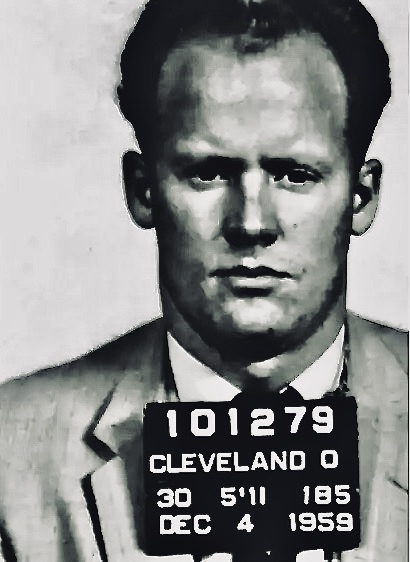
Cloak and Dagger

By Ed Staskus

   Frank Gwozdz kept his eyes fixed on the middle of nothing. He wasn’t minding his own business even though it looked that way. He wasn’t tall or short. He wasn’t thin or chunky, either, except when he wore a bulletproof vest, which made him look chunky. He was able-bodied enough, although he was near-sighted. The closer something was to him the better he saw it. When he had to, he wore glasses to see far away. He read the Cleveland Plain Dealer every morning except Sundays when there was too much of it. There was hardly anything about him likely to draw anybody’s attention, even though he kept his hair not-too-neat and didn’t shave too often. When he was in a bar, at the bar with a beer in front of him, a Lucky Strike smoking itself at his elbow, nobody gave him a second glance. 

   He  was a Cleveland Police Department detective. He worked out of the third floor of Cleveland’s Central Station at E. 21 St. and Payne Ave. The Central Station had been in business for fifty years. It had replaced the Champlain Street Headquarters long ago. When it did the Cleveland Plain Dealer reported, “The minute the new station opens, the ancient Champlain Avenue mausoleum of crime and rats which has been functioning as a police headquarters for perhaps twenty-five years too long will start to crumble before the wrecking engines.” Fifty years later the Central Station was in the same boat, overflowing with crime and rats.

   Frank looked at the bottle of beer in front of him. He took a short pull. It was getting lukewarm. It didn’t matter to him. It was only there so he could sit beside it. He loosened his already loose tie and the top button of his shirt. Mitzi Jerman was working the bar. She asked if he wanted fresh peanuts. “Thanks, but no,” he said. He hadn’t touched the bowl at his elbow. It was still full of old peanuts. The bar didn’t serve food, just peanuts, pretzels, and pickled eggs. He hadn’t touched anything, yet, although he might if the two men he was watching stayed long enough. He was getting hungry. He knew the man with jug ears doing all the talking had worked the numbers game for Shondor Birns before his boss was blown up. He thought the other one had probably been up to the same thing. He wondered why they were near downtown and not the near east side where the Negroes lived. That’s where their bread and butter was at this time of night. 

   Jerman’s Café was on E. 39 St. and St. Clair Ave., although it wasn’t actually on any street. It wasn’t a storefront like most corner bars, and it wasn’t on a corner, either. It was on the ground floor of a house. It was set back from St. Clair Ave. with a parking lot on the side. If a drinker didn’t know the bar was there he might end up high and dry. It opened in 1908 when a Slovenian immigrant and his wife opened it. It had lived through World War One, the New Deal, World War Two, and the 1956 Cleveland Indians World Series win when the celebrating didn’t stop for days. It stayed open as a speakeasy during Prohibition, not missing a beat. Mitzi’s uncle smuggled booze from Canada during those years, making the run across Lake Erie in a speedboat by himself. Mitzi’s mother and father hid the rum and whiskey with neighbors whenever Elliot Ness was on the rampage.

   After cleaning a table with a wet rag Mitzi came back to where Frank was sitting and parked herself in front of him. “Working tonight, young and handsome?” she asked, drying freshly washed glasses with a bar towel. Frank wasn’t exactly young anymore, just like he wasn’t exactly handsome anymore. He took her sweet talk in stride.

   “I’m working right now,” Frank said in a quiet voice.

   Mitzi had been born upstairs in the apartment above the bar. It was where her parents lived all their working lives. She slept in the room she had been born in. There was a piano and a juke box in the bar. A pool table was at the rear, ignored and lonely. Mitzi watched baseball games in living color on a TV set placed high up on a wall. She was a born and bred Tribe fan. Her dog Rosco slept at her feet. The bar Frank was sitting at was oak. The ceiling above him was zinc. Mitzi served Pabst, Stroh’s, and Budweiser on tap.  Everything else came in a bottle. Frank fiddled with his bottle of Anchor Liberty Ale.

   One of the men at the back table snapped his fingers. Mitzi threw them a look. They were looking at Betty, the neighborhood girl who worked nights for Mitzi. She was an eye-catcher. Many men wanted to hang their hats on her. Mitzi sent Betty to their table. They ordered two more glasses of Pabst and gave her a pat on the behind for her trouble.

   “Are you working those two bums?” Mitzi asked.

   “I only work bums, and it looks like they are the only two of their kind in this place right now.”

   “Is anything going to happen in my place tonight?”

   “Not if I can help it,” he reassured her.

   “Are they the Jew’s men?”

   “Yeah, Shondor ran them, at least until lately. They’re not pulling any Dutch act about what happened to him. Those two are on the go.”

   Shondor Birns had run the numbers game for years, until he was blown up a few months earlier on Easter Saturday outside of his favorite strip club. “SHONDOR BIRNS IS BOMB VICTIM” the Cleveland Plain Dealer headline trumpeted the news. The strip club was Christie’s Lounge, where Shondor Birns spent the evening drinking and ogling naked girls bumping and grinding. When he was good and drunk, he staggered out to his Lincoln Continental parked in a lot across from St. Malachi’s Catholic Church. As soon as he turned the key in the ignition a package of dynamite wired to the ignition came to life. He was blown in half, his upper body catapulted through the roof of his car. Some of him landed in the parking lot. Some of him was sling shotted into the webbing of the surrounding chain link fence. The rest of him disappeared. Celebrants at the Easter Vigil rushed out of the church when the explosion rattled the stained-glass windows.

   The numbers man had been arrested more than fifty times since 1925 but was hardly ever convicted. He had killed several men, but no charges ever stuck. He ran a theft ring. He ran the vice game. He became Cleveland’s “Public Enemy No. 1.” When he got into the protection racket many small businessmen discovered they needed protection. 

   “He was a muscleman whose specialty was controlling numbers gambling on the east side, keeping the peace among rival operators, and getting a cut from each of them,” was how the Cleveland Press, the city’s afternoon newspaper, put it. “He was a feared man because of his violent reaction to any adversary.”

   Shondor Birns was always blowing up about something. After he was blown up what little was left of him was buried in Hillcrest Cemetery on April Fool’s Day. When the last shovelful of dirt topped him off he was officially gone. Nobody promised to keep his grave clean. Everybody forgot about him. His mug shot was taken down from the top row of the big board at the Central Station. Somebody else was going to take his place, although the new man’s picture wasn’t on the board, yet. The squeeze wasn’t going to stop with Shondor Birns gone. The next boss was already taking care of business. Frank would find out who that was soon enough.

   When the two men at the back table got up and left, Frank got up and left, too. They got into a red Plymouth Duster. He wasn’t going to have any trouble following it. He got into his Ford Crown Victoria. The dark blue car wasn’t much to look at, since it looked like every other unmarked police car in the country, but no other car was going to outrun it if it came to a chase. The Duster drove to E. 55 St. and turned on Euclid Ave, When it got to Mayfield Rd. it turned again going up the hill to Little Italy. They parked behind Guarino’s Restaurant and went in the back door. Frank parked five spaces away, near the entrance to the lot.

   He turned the car off. He was hungry but didn’t go inside right away. He thought about going home. Nobody had assigned him this shadow job. He had taken it upon himself. He could go home anytime he wanted to but he didn’t want to go home. He wanted to see his boy but didn’t want to see his wife. Sandra had been getting unhappier by the day since the day she had stopped nursing their son. That was three years ago. She was miserable at home and had taken to drinking. Frank threw away every bottle he found hidden somewhere, but he never found the last bottle. He could smell it on her breath every day when he got home.

   She was eleven years younger than Frank. He knew marrying her was a mistake but at the time he hadn’t been able to control himself. She had become spiteful and patronizing. She complained about him being a policeman. She complained about his unpredictable hours. She complained about his pay and how he dressed. When he tried to explain the dress code behind being a plainclothes man, she was snotty about it, calling him “you poor dear man.” 

   They didn’t kiss anymore, much less talk. She complained about the housework, even though she did less and less of it. She had started to neglect their child, leaving the boy with a teenaged babysitter those afternoons when she went to the Hippodrome Theater.

   “What’s at the Hippodrome?” he asked.

   “The movies,” she said.

   “What’s showing today?”

   “I’ll find out when I get there.”

   The Hippodrome had the second largest stage in the world when it was built in 1907. It was in an eleven-story office building with theater marquees and entrances on both Prospect Ave. and Euclid Ave. in the heart of downtown. It hosted plays, operas, and vaudeville, at least until the movies took over. After that it was all movies. It became the country’s biggest theater showing exclusively big screen fare. A new air conditioning system pumped in cold water from Lake Erie, keeping everybody cool on sweltering summer nights.

   Frank followed her there one day on the sly. She went to the Hippodrome but didn’t go to the movies. She went downstairs to the lower-level pool hall. She walked to the back and through a door marked “Private.”

   “What’s behind that door?” Frank asked one of the pool players.

   “The boss is behind that door,” the pool player said.

   “Would that be Danny Vegh?”

   “Naw, this is Danny’s joint, but Vince runs the place,” the man said. “Why all the questions?”

   “No reason, just curious.”

   “If you want to see Vince, you don’t want to right now. He’s got a woman in there and it’s going to be some time before they finish up their business.”

   “Thanks pal,” Frank said. “How about a game of nine ball?”

   An hour later and fifteen dollars the worse for wear, Frank gave up. His wife was still in Vince’s office. The door was still shut tight. He walked out and up the stairs to Euclid Ave. He crossed the street, leaned against a light pole, and lit a Lucky Strike. Sandra walked into broad daylight a half hour later. A car pulled up to the curb and she got into the front seat. Frank followed the car to their home in North Collinwood. The car pulled into the driveway. His wife got out and went in the front door. The car drove away.

   “Son of a bitch,” Frank muttered. It was looking like she was a wife and mother gone wrong, gone over to monkey business. She had promised him at the altar far more than he was getting. He wasn’t getting any of her love. There was no mistake about that. He could kill her for what she was doing, except for the boy. Stanley deserved better than a whore for a mother. He might kill her for that reason alone. There was more than enough room in the backyard for an unmarked grave. He could plant poison ivy to memorialize the spot.

   Frank’s stomach grumbled. He was dog hungry at the end of a long day. He hadn’t popped even one peanut into his mouth at Jerman’s Café. He could eat at the trattoria and keep an eye on the two collectors at the same time. He got out of the Crown Victoria, locked it, and walking across the brick patio went into Guarino’s. The restaurant had been around since before the 1920s. A Sicilian family ran it then and the same Sicilian family ran it now. It had been redecorated in a Victorian style in 1963, but the décor didn’t affect the food. Mama Guarino led him to a two-top table. He ordered veal saltimbocca. The waitress brought him half a carafe of chianti. He took his time eating, making sure his wife would be asleep when he got home.

   He had always thought there was nothing more romantic than Italian food. He wasn’t feeling romantic tonight, but leastways the food was good. He took a bite of veal and gulped down a forkful of angel hair. No man could love a cheater and not pay the price for it. Things fall apart when they’re held together by lies. His thoughts grew dark. He filled his wine glass with relief and drank it slowly. His thoughts were dark as the bottom of an elevator shaft.

Excerpted from the crime novel “Bomb City.”

Ed Staskus posts monthly on 147 Stanley Street http://www.147stanleystreet.com, Made in Cleveland http://www.clevelandohiodaybook.com, Atlantic Canada http://www.redroadpei.com, and Lithuanian Journal http://www.lithuanianjournal.com

“Bomb City” by Ed Staskus

“A police procedural when the Rust Belt was a mean street.” Sam Winchell, Beyond Books

Available on Amazon: https://www.amazon.com/dp/B0F1LM1WF9/ref=sr_1_1?crid=2MYAQAOZIC2U9&dib=eyJ2IjoiMSJ9.hTm7BGbiQbSe5ZapFwYPPfcwOpTe-Vdg6VLE4aGyTyk.Z0R-VNBWWEcvKcNaO9LdCOUnNIOOXgvYkRS_FXiXuHk&dib_tag=se&keywords=bomb+city+ed+status&qid=1742136726&sprefix=bomb+city+ed+staskus%2Caps%2C84&sr=8-1

Cleveland, Ohio 1975. The John Scalish Crime Family and Danny Greene’s Irish Mob are at war. Car bombs are the weapon of choice. Two police detectives are assigned to find the bomb makers. It gets personal.

A Crying of Lot 49 Publication

Going Heavy

By Ed Staskus

   In the year 1120 after the First Crusade captured Jerusalem for Christendom, massacring the Jewish and Muslim population, a new monastic order was created to assist and protect caravans making pilgrimage to the Holy Places. But, unlike earlier monastic orders, the Poor Fellow-Soldiers of Christ and the Temple of Solomon, or Knights Templar, was different. They weren’t interested in withdrawing from the world.

   Christian monasticism had always been a devotional practice. The basic idea of the practice, even today, is withdrawal from the world. It is similar to Pratyahara, one of the forgotten limbs of yoga. Pratyahara literally means, “gaining mastery over external influences.” It is firmly grounded in the same tradition. Christian monks lived ascetic, often cloistered lives, dedicated to worship.

   The Knights Templar, however, was a military monastic order, among the most skilled fighting men of the Crusades. In 1177, at the Battle of Montgisard, 500 mounted and armor-plated Knights Templar, backed by only a few thousand ground troops, defeated the Muslim Sultan Saladin’s army of more than 26,000.

   Although arms and monks may seem like strange bedfellows, they are not. In the 13th century St. Thomas Aquinas, the influential Roman Catholic scholastic philosopher, wrote, “A religious order can be fittingly established for the military life, for the defense of divine worship.” In the 16th century the monks of the Shaolin Temple battled Japanese pirates, who had been raiding their Chinese coastline for decades. In the 17th century Christian monks acted as shock troops during Europe’s Wars of Religion.

   Buddhist monks have not hesitated to join the likes of fundamentalist Christians, Hindu nationalists, Muslim radicals, and ultra-Orthodox Jews in advancing their religious views at the point of a gun. Since they have all the answers, it is questionable whether they have any faith, the kind of faith that implies there might be a mystery at the heart of things.

   Yoga has long been perceived as being built on several core principles, among them non-violence. “The first yama, ahimsa or non-harming, which asks us to embrace non-violence at the level of speech, thought, and action, is truly the cornerstone of yoga as a way of life,” Rolf Gates wrote in his book “Meditation From the Mat.”

   Both cornerstone and culture, it is a behavior essential to the yogic lifestyle. “Practicing ahimsa is a way of cultivating an attitude of kindness, gentleness, and forgiveness in all situations,” said Heather Church, an Adjunct Teaching Professional at Ohio University, where she teaches yogic philosophy.

   But, in a country that possesses 50% percent of all the guns on the planet, even though it accounts for only 5% of the world’s population, according to the United Nations Office on Drugs and Crime, and where more than 20 million people practice yoga of some kind or other, according to Yoga Journal, it was inevitable that guns and yoga would one day become bedfellows.

   In the brave new world of today’s yoga, some are taking a different tack at tackling the issue of violence, eschewing self-restraint. Rather than, for example, trying to live what Jesus or the Buddha taught, they are taking an Old Testament approach. The Pentagon has hired ‘Yoga Defense Contractors’ to deal with changes in basic training, combat readiness, and issues such as PTSD. On a personal level, others are meeting the problem head-on by arming themselves. 

   “I’ll be damned if some religious extremist decides in his twisted head that he thinks he’ll clean the world by popping off some godless hippies and decides to walk in and spray some bullets into my studio with my students,” Cheryl Vincent wrote in an op-ed piece for Elephant Journal.

   “You better believe I’ll be packing,” she said.

   When yogis pack pistols their accuracy is generally better than most, making them daunting adversaries. Writing in Women’s Self Defense Weekly, which offers advice such as “Less-Than-Lethal Defense Options” and “The Neck Grab and Throat Punch,” Laura Simonian pointed out that the best-kept secret about yoga is that “it helps your shooting.”

   She added it was “great” for mental strength, core strength, balance strength, and breathing control strength, all leading to an aim that is true. “I bet you didn’t know all those core conditioning boat, crow, and warrior poses were benefitting you in more ways than flexibility and mental well-being,” she said. “Yoga can actually aid your shooting.”

   Shooting guns takes focus and concentration. “Yoga’s Zen-like quality can be applied to shooting guns in a lot of ways,” said Deirdre Gailey, a yoga teacher and vegan chef in New York City. “I like to shoot guns.”

   Female participation in shooting in the United States has grown rapidly in this century, according to the National Sporting Goods Association, leading to pink pistols and purses with holster slots. It was once said Samuel Colt made all men equal. Now women are catching up.

   Brandon Webb, who trained Laura Simonian on bolt-action rifles, described her as a “natural born killer” and explained that he has “definitely witnessed firsthand the positive effects yoga has had on my own shooting.” Laura Simonian trained with a Glock 34 handgun, as well. Although its longer barrel results in a slightly slower draw time out of the holster, it is still used by some as a concealed weapon. No one should try messing with yoga girl Laura once she’s got her handgun in her hand.

   Gallup Polls consistently reveal that protection is the top reason Americans own guns, followed by hunting, sport and target shooting, and 2nd Amendment rights. Gun owners say that having a gun makes them feel safer. The NRA argues that if more law-abiding citizens had guns everyone would be safer from gun violence.

   “You see peace and tranquility in the country and I see the ‘Blair Witch Project,’” Texas novelist Ruth Pennebacker writes in “Yoga and Guns.” Danger can be real or it can be in the eye of the beholder  “You see cows and horses and I see lethal rattlesnakes ready to strike. You see friendly, down-to-earth farmers and homespun families and I see the two murderers from In Cold Blood.’ A gun. Shooting lessons. Sign up now. Before it’s too late.”

   But, a study in the Southern Medical Journal found that owning a gun is 12 times more likely to result in the death of a family member or guest than in the death of an intruder. The more guns there are the more shootings there are. That is why in countries with few guns there are few shootings. It is the protection paradox: the risks of gun ownership often overshadow the benefits.

 “Every shotgun and rifle in my family’s gun safe is brimming with stories,” writes Babe Winkleman in “The Sportsman’s Guide.” For many people the joy of owning guns is entwined with the joy of hunting. “I wonder where those walnut tress grew for my rifle stock. Was there ever a deer shot from the very tree that grew the wood for my deer rifle?”

   Although more and more people in the United States live in cities, hunting has expanded in the new millennium.  Some tramp through fields and woods because “doing things outdoors is healthy,” says Dan Ashe, director of the Fish and Wildlife Service. 

   Some hunt because it is a rite of passage, growing up in families that have always hunted, and passing their knowledge down. Writing in “Buddhists With Guns,” Justin Whitaker, a Buddhist scholar, noted that he and his sister, a yoga instructor, grew up in rural Montana and were introduced to guns early in life. “I think I skipped the ‘you’ll shoot your eye out!’ bb-gun that many friends were getting and moved on to a pump-action single shot pellet-gun around the age of 8.”

   Others hunt to harvest their own food. Millions of Americans go hunting, shooting squirrels, pheasants, turkey, and deer, among other wildlife.  Eating animals is an instinct, although old-school yoga eschews eating meat. Sri Pattabhi Jois, progenitor of Ashtanga Yoga, recommended not eating it because, “It will make you stiff.” 

   Most people who practice yoga today eat animals, but are sometimes sensitive about the issue. “When the rare occasion does arise for me to indulge in animal food, I do so with great respect and meditation on the sacrifice of the animal,” said Jerry Anathan of Yoga East in Cape Cod.

   More than 150 billion animals are killed every year for food, both in slaughterhouses and forests. That is a great deal of butchery, no matter how you slice it or how much anybody meditates about it. It may be that’s the way things are, but whether that much bloodshed aligns with yogic values is an open question.

   Shooting guns is enjoying a renaissance in the United States. 35 million-and-more Americans participate in formal and informal sport and target shooting, surpassing all earlier estimates of the sport. “Firearms sales are way up, so it’s really no surprise that more people are enjoying the shooting sports than ever before,” said Steve Sanetti, president of the National Shooting Sports Foundation, based in Newtown, Connecticut. “AR-style rifles are rugged, accurate, fun to shoot, and they’re here to stay.”

   Fun on the mat and fun at the range sometimes vibrate on the same plane. “Shooting guns and doing yoga on the same day was the biggest ‘You got chocolate in my peanut butter!’ moment I’ve had so far in my life,” wrote Patton Oswalt in The New York Times. “I was one with my target, and my target was bliss. Namaste. Lock and load.”

   Guns are the “new yoga” CBS News reported. However, instead of rubber mats and foam props, parts of the new yoga include high-velocity metal projectiles. “Although it is usually hard to hear over the racket of gunfire, shooting a gun can be “just like yoga – meditative,” Caitlin Talbot recounted in an article in Elephant Journal

   In the same way that consciously relaxing your body, focusing your thoughts and your gaze, and breathing evenly are the basic tools of meditation, so are they the basic tools of shooting, too. When shooting a gun, the fewer muscles in use the steadier the shooter’s position will be. Focusing on the task at hand puts the shooter in the zone, making their efforts effortless. Lastly, shooters use breathing cues, relaxing on each expired breath as they squeeze the trigger.

   It’s just like yoga, except you don’t want to be on the wrong end of a gun. It’s not like being on a yoga mat, where any end of the mat is the right end. At least, until recently, when Mattthew Remski observed in “Should Yogis Want Their Guns Back”, that his yoga mat “sometimes smells like gunpowder” and that “authentic peace seems to thrive on the juice of authentic violence.” 

   Many gun enthusiasts, industry spokesmen, and the NRA cite the 2nd Amendment as justification for the right everyone has to keep and bear arms. Owning guns is framed as a fundamental right, although they seemingly never defend the merits of gun ownership without referring to the amendment, as though guns in and of themselves are only signifiers, not actual things.

   The hue and cry is made despite the wording of the amendment itself, which is, “A well-regulated militia being necessary to the security of a free state, the right of the people to keep and bear arms shall not be infringed.” What Thomas Jefferson seems to have meant was that the right to possess firearms exists in relation to the militia, not in relation to teenagers possessing Sig-Sauer 9mm handguns, Bushmaster semi-automatic rifles, and Izhmash 12-gauge shotguns, and then using them to shoot and kill grade school children in Newtown, Connecticut.

   Until this century all federal courts, liberal and conservative alike, agreed that the 2nd Amendment did not confer gun rights on individuals. However, in 2010 the Supreme Court ruled otherwise in a 5 – 4 decision, affirming a fundamental right to bear arms. Now that many of the arguments about who can have a gun – there are no federal laws requiring licensing to own a gun – have been settled, the Supreme Court might in the next few years try resolving the question of whether or not the Supreme Court should be held to a Code of Ethics.

   Gun aficionados from Rush Limbaugh to Arnold Schwarzenegger applauded the decision. “I have a love interest in every one of my films – a gun,” said the Terminator. Guns can be testy lovers, however. “The recoil from a .357 Magnum can really do a number on your chakras,” said one of the shooting yogis in “Higher Caliber, Higher Mindedness: The Story of YoGun”, an award-winning short film from SofaCouch MovieFilms.

   As yoga has matured in the United States, it has begun to embrace the notion of gun ownership. “Yoga is starting to become more associated with the cultural right wing and promoting Ayn Rand,” writes Carol Horton, a former political science professor and certified Forrest Yoga teacher.

   “Until all governments disarm, the people have a right to bear arms,” argues Avananda, a self-styled philosopher yogi and registered Yoga Alliance teacher. The argument is the same as the abridged 2nd Amendment photo-shopped on the front of NRA headquarters: ”The right of the people to keep and bear arms shall not be infringed.” Like the NRA, many prefer the amended version of the amendment.

   Michelle Comeaux Howard, a yoga teacher and mother of two in Mission Viejo, California, has argued that only by being armed can we successfully defend ourselves from being victimized. “I believe strongly in our Second Amendment rights because there will always be crime and I want to exercise the right to protect myself and my children in the event we were to become victims of a home invasion or if someone ever attacked us in public.” She believes all “law-abiding” citizens, including her, should be allowed to legally carry a concealed weapon.

   Non-violence is one of yoga’s self-restraints, but it is being pushed out the door at the same time as gun control is coming to mean being able to hit your target. But, maybe old-school yogis today have it wrong about ahimsa, and what is really old-school are yogis toting the monkey. Back in the day many believed you could get more with a kind thought and a gun than with just a kind thought.

   “From the fifteenth century until the early decades of the nineteenth century, highly organized bands of militarized yogins controlled trade routes across Northern India,” writes Mark Singleton in “Yoga Body.” Yoga exercise, or hatha yoga, was a kind of boot camp or military training, keeping them in trim for the wear and tear of guerilla warfare. As Birgette Gorm Hansen writes in “Wild Yogis,”an article in Rebelle Society, yoga back then “was a bad ass practice.”

   After putting down the Mutiny of 1857, the British colonial government of India began to systematically disarm the sub-continent’s population, and in 1878 introduced the Indian Arms Act, forbidding almost all Indians from possessing firearms of any kind. Although not specifically targeting yogis, it effectively ended the marauding of the armed yogi gangs, who threatened both princely states and British economic interests.

   They were forced to lay down their guns and turn to showmanship as a livelihood. In the meantime, they kept yoga exercise alive into the 20th century, when in the 1920s Krishnamacharya, the father of modern yoga, took up the mantle and revived the practice of hatha, crafting it to become the booming posture practice it is today

   Nowadays, modern yoga studios preach breath and exercise to keep us fit and healthy, sprinkling in concepts like Dharana and Dhyana to keep a few of the other limbs of yoga alive. But, back in the day, yogis were keeping the peace by going heavy. Maybe yogis armed to the teeth in the here and now are just getting back to the real roots of yoga. 

   After all, even the Dalai Lama, arguably one of the most peaceable men on the planet, when asked by a schoolchild at the Educating Heart Summit in Oregon what he would do if someone came to his school with a gun, replied, ”If someone has a gun and is trying to kill you, it would be reasonable to shoot back with your own gun.”

Ed Staskus posts monthly on 147 Stanley Street http://www.147stanleystreet.com, Made in Cleveland http://www.clevelandohiodaybook.com, Atlantic Canada http://www.redroadpei.com, and Lithuanian Journal http://www.lithuanianjournal.com

“Cross Walk” by Ed Staskus

“Captures the vibe of mid-century NYC, from stickball in the streets to the Mob on the make.” Sam Winchell, Beyond Fiction

Available on Amazon: https://www.amazon.com/dp/B0CRPSFPKP

Late summer and early autumn. New York City, 1956. Jackson Pollack opens a can of worms. President Eisenhower on his way to the opening game of the World Series where a hit man waits in the wings. A Hell’s Kitchen private eye scares up the shadows.

A Crying of Lot 49 Publication

Fish Tank Blues

By Ed Staskus

   It wasn’t breaking news that Prince Edward Island was an island. It was old news that it had not always been one. It was news that didn’t matter to some who lived on the island, however. They weren’t overly concerned about the past. They were concerned about right now. They cared about heating oil being delivered on time and what time the school bus was coming. They cared about the flu that stopped them dead in their tracks. They cared about how they were going to put food on the table. They knew for sure that nothing from the prehistoric past had anything to do with it. 

   What the land and the sea were all about wasn’t news to the lobsters who lived offshore. They had been around much longer than the fishermen, farmers, and townsfolk who plied their trades in the Maritimes. The crustaceans had seen it all, although they hadn’t seen amnesic shellfish poisoning before. The new toxin was killing Canadians who ate shellfish that year. No lobster ever went to any of their funerals. “That’s a dose of your own medicine,” Louie the Large said, chuckling to himself that the toxin wasn’t bothering his kith and kin.

   Lobsters didn’t have a trade or much else to do, other than eat anything and everything they could all day and night. Everything was grist for their mill. They hated crabs and crabs hated them and it was the Hatfield’s and McCoy’s whenever the shellfish ran into each other. The lobsters were bigger, badder, and more determined than the crabs. Three of their five pairs of legs were outfitted with claws. They usually carried the day. Might makes right was their rule of thumb.

   The number one rock ‘n’ rollers among the island’s lobsters were the B-52’s. They were the house band in their part of the world. Every lobster knew the lyrics to their “Rock Lobster” song. The band had released it ten years earlier and when they did it shot up the shellfish charts, even though every single crab in the Gulf of St. Lawrence scorned it as the devil’s music.

   “We were at the beach, everybody had matching towels, somebody went under a dock, and there they saw a rock, it wasn’t a rock, it was a rock lobster!” 

   Whenever any crab heard the song, it spit sideways and cursed. They were happy to see the island’s fishing boats go after their country cousins every spring. They showed up at the island’s harbors for the blessing of the fleet on Setting Day and shouted “Godspeed!” when the boats broke the waves. There was no love lost between crabs and lobsters. “We don’t need no skunks at our lawn party,” crabs far and wide said.

   Even though lobsters could be as bad as a Hells Angel waking up on the wrong side of the bed, all they really wanted to do was eat and have fun. They were always on the move, moving in parties of twenty, fifty and even a hundred, looking for a party. They ate non-stop so as to have plenty of get up and go at whatever good time they found.

   “Havin’ fun, bakin’ potatoes,” they sang. Prince Edward Island was known as Spud Island. It was no small potatoes when it came to the tuber. It was the smallest province but the top potato producing province in the country. Everybody’s favorite way to eat lobster was boiled in the same pot with fresh corn and new potatoes.

   “Boys in bikinis, girls on surfboards, everybody’s rockin’, everybody’s fruggin’.”

   The blue and brown backed crustaceans couldn’t move fast enough to frug, but it didn’t matter. They got into the spirit of the song. They lived in harmony among themselves ten months out of the year, except when one of them happened to eat another one of them. The other two months of the year all bets were off. That’s when the island’s lobster boats went after them. That’s when the angels sang and it was every man for himself. They didn’t like it, but they had to take their lumps like everybody else.

   There were about 1200 boats on the island sailing out of 45 harbors. More than three dozen boats came out of the North Rustico harbor. Every one of the boats was out to get lobsters. Once they got them their fate was sealed. Every lobster knew it in its bones, even though all they had was an exoskeleton. Their inner selves had no bones. They were going to be boiled alive and there was nothing they could do about it.

   Traps have escape vents to let shorts leave while still on the bottom. The under-sized lobsters who overstayed their welcome were thrown back into the ocean. Egg-bearing females were also thrown back. The female carried her eggs inside of her for about a year and then for about another year attached to the swimmerets under her tail. When the eggs hatch, the larvae float near the surface for a month. The few that survive eventually sink to the bottom and develop as full-fledged and grown-up. For every 50,000 eggs spawned two lobsters survive. The rest of them feed the fish.

   Some diners sporting bibs argue that lobsters don’t have a brain and so they don’t feel pain. They have probably never seen tails shuddering like palm fronds in a hurricane when the shellfish get thrown into a pot of boiling water. They aren’t twitching to the beat of the B-52’s. Their brains might not amount to much, but they have a nervous system. They react to pain like everybody else. The hormone they release when hurt is the same one that human beings release when hurt. 

   “How about coming down here with the rest of us,” they wanted to scream from the boiling pot mosh pit. They would have screamed if they could. As it was, all they could do was click and clack.

   The Prince Edward Island fisheries considered lobster to be their crown jewel. It was a gourmet known for its juicy meat. But that was like getting the Medal of Honor when you weren’t around anymore. Who needs to bask in that kind of glory? The only consolation lobsters had was that the island’s fishermen took care to manage their resource. They didn’t pull up over many of them in their traps. They kept the surrounding waters clean as could be so there would be plenty of them year after year.

   It was small consolation though. It only meant fishermen were in it for the long haul and weren’t going to change their minds about snatching them up anytime soon. The only consolation a lobster ever got was when somebody reached for it and the lobster was able to get the outstretched hand in its crusher claw.

   “We were at a party, his earlobe fell in the deep, someone reached in and grabbed it, it was a rock lobster!”

   When that happened, there was no quarter given. The lobster was going to sell its life dear. The human hand was going to pay dearly for sticking its nose where it didn’t belong. The nose should have stayed where it was before it ever came to the island. Why didn’t they stay in the Old World? What lobsters didn’t know was that fishermen came from the same place they did. Way back when they had come from way down in the ocean. But they weren’t ever going back. The sooner lobsters got that through their thick heads the better.

   “Lots of bubble, lots of trouble, rock lobster.”

Excerpted from the book “Ebb Tide.”

Ed Staskus posts monthly on 147 Stanley Street http://www.147stanleystreet.com, Made in Cleveland http://www.clevelandohiodaybook.com, Atlantic Canada http://www.redroadpei.com, and Lithuanian Journal http://www.lithuanianjournal.com

“Ebb Tide” by Ed Staskus

“A thriller in the Maritimes, out of the past, a double cross, and a fight to the finish.” Sam Winchell, Beyond Books

Available at Amazon: https://www.amazon.com/dp/B0CV9MRG55

Summer, 1989. A small town on Prince Edward Island. Mob money on the move gone missing. Two hired guns from Montreal. A constable working the back roads stands in the way.

A Crying of Lot 49 Publication

Design a site like this with WordPress.com
Get started