
On the Line at Liquids and Solids

By Ed Staskus

   “It took me awhile to understand the vibe that makes Liquids and Solids so special,” said Marla Gilman, a summer removed from her year working in the kitchen of the edgy gastropub in Lake Placid, New York.

    “I was visiting friends in Keeseville and they kept talking about this great little restaurant,” she said. “You would love this place, my friends kept telling me. Their food is awesome. They kept talking about it, and so, finally, during another visit to town, my boyfriend Dylan took me to eat there. It was awesome.”

   A graduate of the University of Vermont, the 25-year-old Marla began her college career focused on business and ended it focused on food and drink. “I took a farm to table class, just kind of randomly, where we read Michael Pollan,” she said. “That’s where the whole thing started. I realized I needed to re-think the way I was eating.”

   She went from being conscious of food by counting the calories in her mouth to getting in touch with sun soil rain through the taste of what she was putting into her mouth. She learned to enjoy food rather than think about it.

   After graduating from the College of Agriculture at UVM with a degree in Community Entrepreneurship and a minor in Food Systems, she spent the summer backpacking through Italy, Germany, and France. Her last stop was at the Ballymaloe Cookery School in Ireland, where she had enrolled to dovetail with her traveling.

   “I was on that side of the ocean, anyway,” Marla said. 

   The 12-Week Certificate at Ballymaloe, a one hundred acre working organic farm west of Dublin, is an intensive immersion-cooking course. Its track proceeds from fundamental skills to increasingly practical techniques, training its graduates to become ready-to-go cooks able to pursue a culinary career.

   But, certificate or no certificate, it didn’t prepare her for Liquids and Solids.

   “I was the first girl to work the line there, with the guys, with their raw, sarcastic stuff, and I was just this little girl from New Jersey who cared about local food. I couldn’t keep up at first. I didn’t talk for a while, at all. I just kept my mouth shut.”

   It was at Ballymaloe that Marla cultivated her personal palette for food. “I learned to taste by eating. I simply ate a lot of locally grown fresh food. I learned the difference between something tasting alive and something tasting dead.”

   However, since she knew little to nothing about wine, learning to drink took more patience. “People would talk about wine and I didn’t get what they were tasting. I couldn’t understand how wine could taste like apricots.”

   One of her friends at the school came to the rescue. The friend parsed a book about wine, cataloging essential flavors, and filled the small holes of eggs crates with those flavors. “Anna blindfolded me and I had to smell each one and be able to say what it was,” she said. “It was one of the nicest things anyone has ever done for me. It pulled it out for me. I learned what I was smelling for.” 

   After returning home she wrangled work at Blue Hill at Stone Barns. 

   Blue Hill in New York’s Greenwich Village, melding fresh local sources with inspired preparation, has been described as a go-to dining destination since it opened in 2000. Their restaurant at Stone Barns, opened four years later in the Hudson Valley, has no menus. Instead, diners are proffered a Grazing, Rooting, and Pecking bill of fare, featuring the farm’s best from field and market.

   “I was obsessed with Stone Farms for years and years, so in the end I staged there. I mean, I worked for free,” Marla said. “A stage is usually a week long, but I wouldn’t leave. I ended up working there for more than three months.”

   In the meantime, her boyfriend-in-waiting moved to the rolling farmlands of Keeseville, on the New York side of Lake Champlain, going to work for Fledging Crow Vegetables, an organic farm based on the Community Supported Agriculture model.

   “Dylan and I had been friends for 6 years and were just starting to see each other,” she said. “I thought I’d like to move there, but not right there, where my boy was. I didn’t want to do that.” Instead, she made plans to move not too far away, to the Keene Valley, known as the home of the High Peaks in the Adirondacks.

   “At first everything was just a thought in my head, and then, literally, within a week-and–a-half I had a place to live and a job.” The job was at Liquids and Solids.

   “I shot Tim Loomis, the head chef and co-owner, an e-mail, and I just said that I’m friends with Dylan at Fledging Crow, and I ate at your restaurant, which I thought was amazing. Just curious, any work opportunities?”

   A week later she got a return call. “Your resume looks awesome,” Tim said. ”We’ll be looking for someone soon and we’d love to have you.”

   “Whoa, you don’t even know me!” she said to Tim, who she had yet to meet. “But, Tim is close with Fledging Crow. He buys so locally. If he could, everything would come from local farms. So, when they dropped the good word about me, Tim being trustworthy about his friends, when they said this girl is cool, he was pretty much OK with it.”

   It was Marla’s first real job in a commercial kitchen. In a kitchen slightly bigger than a family van, serving hundreds of exactly orchestrated plates a night, she worked alongside the head chef, a sous chef, and a dishwasher.

   “I was the pantry person, although we rotated the work. I would do sous chef some nights and wash dishes other nights, and the sous chef would do the pantry some nights. Tim was always Tim every night. He was the main man.”

   At Blue Hill everything needed to be accounted for, from where ingredients were stored to the preparation and presentation of dishes.  “I had to show them every cut I made, and if I wasn’t sure about something, they expected me to ask. At Liquids and Solids, the flavors are all high-end, it tastes so eloquent, and I was always asking, is this all right, is that cut OK?”

   “Yeah, it’s fine, you don’t have to ask me,” Tim grumbled.

   She wasn’t sure how to take the no-questions rule, although she understood he wanted food done as well as she could do it. Nor did she understand the organization of the kitchen. “The kitchen was so disorganized,” she said. The management of the pantry and walk-in made sense to those in the know, but didn’t make any sense to her, at first.

   “It’s such amazing food, but we would forget to order chocolate chips for weeks and have to run to Lisa G’s, the restaurant across the street, to get some. The spices on the shelves were all shoved together. If there’s something on a shelf below where I originally put it I freak out. For me, a thing has to have a spot.”

   At Liquids and Solids salt and pepper could be in any one of six places. “Tim always knew those six places,” she said. Everybody else read Tim’s mind.

   When she asked where something was, she heard, “Stop asking me where things are.” She was expected to know, like the rest of the kitchen staff, who were more interested in what everything was for, that purpose being the end result. It was the plating of the food, and the appreciation of it in the dining room, that was the proof of the pudding of the kitchen’s organization skills. Electricity is organized thunder and lightning.

   “Tim doesn’t call himself the head chef,” Marla said. “He will laugh at you if you call him that.” As Alton Brown of the Food Network has pointed out, a cook who calls himself a chef one day will probably make the worst food you have ever eaten.

   “Tim’s food is so well put together you would think he has every little detail worked out. He does, in a way, but it’s a super laid-back kitchen. He puts a lot of trust in his staff.” She recounted days when Tim, on his day off, would nonetheless turn up in the kitchen and ask that she create a new offering.

   “I’ll do something with it tomorrow,” he said.

   “I was essentially the lowest person in the kitchen,” she said, “and for him to tell me to create something and have enough trust in me that I will apply it to a special that will be on the menu, that was really cool for me.” We are often made trustworthy when someone puts their trust in us. It is the glue of life, like eggs, flour, and breadcrumbs.

   The kitchen at Liquids and Solids was not especially ready for her, partly by accident, partly by design. She worked on a small table on top of a lowboy fridge behind a wall. “They didn’t bring tickets to me, either,” she said. “They would yell out the order and I had to scribble it down, in the right order, for the right tickets. It was totally new to me and super stressful.”

   Working in close quarters with the tight-knit Liquids and Solids crew unnerved her, as well. “They would listen to country stations, and the songs were all about sex, and they would make every inappropriate joke in the book,” she said. “I had no idea how to handle it. It took me a long time to realize it wasn’t real, it was just jokes, and appreciate that rank humor of theirs.“

   In some kitchens saying ‘Sancho’ to a co-worker means someone is at their house being carnal with their husband or wife. The proper response is, “I’m not worried about Sancho.”

   “There were never any hard feelings. It was just me having to adjust to that environment.” In the meantime, Marla was learning to work quickly and safely, be organized when preparing food, and stay responsible for holding up her end. “It was really hard for me at first,” she said. “I had pretty much never done line work before.”

   Line cooks need to be strong, both physically and mentally. Anthony Bourdain, a long-time cook, has likened the work to being in the trenches of a war. They are the foot soldiers in any functioning kitchen. “When the rest of the world is relaxing you’re working harder and going crazier than you ever have before,” Marla said. She was compelled to do her best in the face of toil and trouble. 

   “I found out if you over think it you will drive yourself crazy,” she said. “You have an order board in front of you, you’re trying to coordinate with the other cooks, and working on something else in the oven, too. You have to train your brain to take all that in at once and not forget any of it.”

   Memory separates what you know and don’t know. In a kitchen it’s like a rail yard with trains coming and going all the time, emptying out and filling up, working their way into and out of the yard. The kitchen swing doors at restaurants like Liquids and Solids never stop revolving as wait staff tack tickets to kitchen boards and deliver orders to diners.

   “I can barely remember what I did two days ago, but in a kitchen I can have four things going in the oven, be doing six other orders at once, don’t forget about the carrots, plate those two desserts, oh, here comes a new ticket, which is a charcuterie plate and an oyster, write that down, and, Oh, shit! the carrots are still in the oven, grab them, and handle the heat without passing out. That’s strictly from my experience there.”

   Two ovens and eight burners burning all the time were where liquids were brought to a boil and solids were baked, roasted, and broiled in the small kitchen. That’s why shouts of “HOT BEHIND!” are frequently heard in kitchens as pots of bubbling liquid are being moved.

   “It was hot in there,” Marla said. “You’re moving faster with hot objects than you’ve ever moved in your entire life. It was easy to get upset, get angry, because we were moving so fast and it was so damned blazing.”

   Except for Tim Loomis. “He was always moving fast, and sweating like the rest of us, but there was a calmness about him. His friends came into the kitchen all the time, shooting the shit with him. I always thought that if someone was talking to me I would freak out.”

   It wasn’t all noses to the grindstone, however. “They are really good at having a good time in the kitchen,“ Marla said. “Sometimes I thought they shouldn’t be having such a good time, but they definitely knew how to have fun.”

   One night in mid-July, on the third anniversary of the opening of the restaurant, despite it being the height of their busy season, they threw a party in the kitchen. A pick-up crew from Fledging Crow helping with the work.

   “It was a great night while we were all still working, and then we drank a little bit afterwards.” The life of a kitchen is making lemonade from lemons. Afterwards it’s refreshing to have a gin-soaked lemon gingerini at the bar.

   Over the course of her year at Liquids and Solids she grasped that Tim Loomis was sourcing and cooking food like what her teachers at Ballymaloe had recommended. “Tim’s cooking is fairly simple. It’s just picking good, fresh ingredients and doing it really well. We had a beet dish. It was just roasted beets with the skin peeled, with avocadoes and carrot and lime vinaigrette on top. It was so simple. I never would have thought of it. People loved it. Even beet haters loved it.”

   Tim didn’t brainstorm his ideas verbally. When Marla asked him what inspired him, he said, “I don’t know.” She discovered he was being full of air with her. He had his own method whenever the menu was changing. “He would sit at the bar all day, talking to farmers, finding out what was on the horizon.” 

   She found out how many local ingredients he was using, the attention he paid to their provenance, and how good he was at seasoning them. “He came up with a sauce for fried Brussels sprouts that is awesome,” she said.

   Brussels sprouts have been almost universally disliked for most of their history.  Parents urge their children to eat the mildly bitter vegetable, saying, “If you keep trying, you will probably like them in the end.” One reason they are misunderstood is most people don’t know how to cook them. At Liquids and Solids, they were transformed into a godly creation that has become a staple on the menu.

   “Tim’s mind works in a very different way than mine, and I think, from a lot of other chefs. Learning how to create his kind of food, his style, and his sauces was really special for me. That’s what was very satisfying about working there.”

   But, when the winter of 2013 became the spring of 2014 Marla began to think she was ready for something new. One tip-off was her nightmares. Marla’s monsters came in the form of cremated duck and shriveled asparagus. “The hours were really hard for me,” she said. “You work at such a high energy until one in the morning, and I’d stay wired until three. When I finally chilled and got to sleep I’d have weird dreams, kitchen dreams of everything going wrong. I’d wake up in the middle of the night in a panic.”

   The work itself took a toll on her, too.

   “I had back issues to begin with, and you’re always hunched over, on your feet, and my feet would be killing me. Your whole body just hurts. I don’t know how people do it for twenty years. I literally don’t get it.”

   Many cooks suffer sore backs from repeated heavy lifting and bone spurs in their feet from constantly standing. According to the Bureau of Labor Statistics they are affected by more injuries than the average American worker.  Falls on slippery floors are commonplace. Cuts and burns are common mishaps. Cooks suffer the highest number of work-related burns of anybody in any industry in the United States.

   She also felt out of sync with her friends, especially her boyfriend. “I felt like I needed a normal schedule. I was getting bug-eyed, and I wanted to be closer to my friends and boyfriend in Keeseville, too,” she said. “When you’re a cook you never get to see your friends. Dylan was farming, so he was up at six in the morning, while I was working nights and living almost an hour away. I wasn’t aligning with that.”

   As spring turned to summer she moved to Keeseville, taking over the Clover Mead Café and Farm Store, an off-the-beaten path eatery with fresh-from-the-farm flavors and creative food combinations, as well as artisanal cheeses and yogurt made from their own cows.

   Tim Loomis bade her farewell and went looking for somebody new. “Our pantry cooker Marla is leaving us for something new. We need to replace her. As usual, an appreciation for punk rock, classic country, and 80s pop culture is useful, but not necessary.”

   At the farm café in Keeseville, she is the menu planner, cook, and manager, as well as the face at the front counter. “Marla’s a great baker and cook,” said Clover Mead Farm co-owner Ashlee Kleinhammer. “She was excited about starting her own thing.”

   “When you’re cooking you never get to see anyone enjoying the food,” Marla said. “You sweat and cut your fingers and burn yourself and then what you created just disappears. I wanted to see the satisfaction that people get from my hard work.”

   By the end of summer, the café was beginning to meet its business goals and Marla was already planning for the next year, including adding meats from Mace Chasm Farms, a neighboring farmstead butcher shop, and beer from the newly opened Ausable Brewing Company down the street. 

   She still eats at Liquids and Solids. “I hate how far I live from it, but I drive the fifty minutes to Lake Placid because it’s so great,” she said. “I love the food there and I love going back.”

   What makes the long drive worthwhile is she doesn’t have to sweat like a sailor, either, to get a plate of homegrown, subversively creative, and expertly prepared food. She doesn’t set foot in the kitchen. She leaves that to somebody else, although she has been known to stand just outside of it and take in the smell of liquids and solids being transformed into culinary fare.

Ed Staskus posts on 147 Stanley Street http://www.147stanleystreet.com and Made in Cleveland http://www.clevelandohiodaybook.com. To get the site’s monthly feature in your in-box click on “Follow.”

Marching Orders

By Ed Staskus

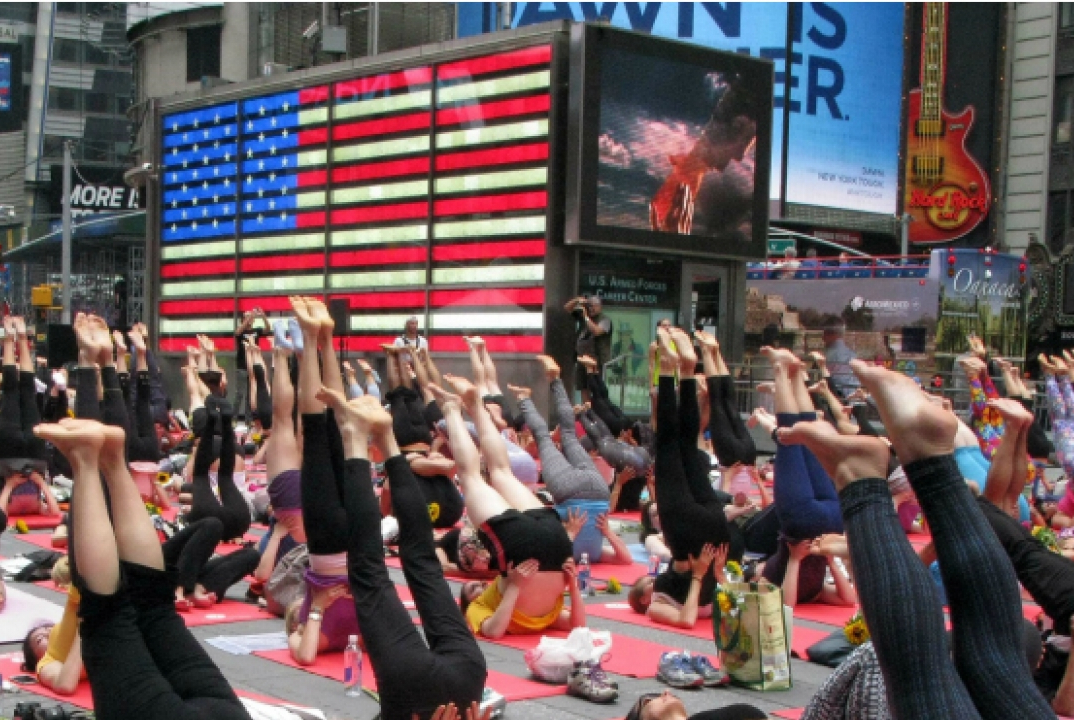
Ask any army navy marine air force officer recruiter chief of staff what is important about basic training and he will tell you it prepares recruits for all aspects of martial service, physical, mental, and emotional. Most important and far-reaching, however, is it forces individuals to put personal freedom aside and act as a group.

Ask any corporate recruiter what they look for in new hires and they will tell you the ability to make decisions and solve problems. Nevertheless, the skill they most look for is the ability to work effectively in a group.

Ask any yoga teacher whether it’s better to practice alone or in a studio setting and most of them will say yoga is an individual practice. It isn’t supposed to be groupthink. “Do what serves you” is often said and heard. In other words, think for yourself.

Singing from the same sheet of music doesn’t necessarily serve you.

But, they will point out, there are many valuable lessons to be learned exercising in a studio beyond just discovering the nuts and bolts of the practice, such as gaining insights and corrections from experts, sharing energy and purpose, raising consciousness, taking you out of your comfort zone when practicing mat to mat with different kinds of folks, and breathing in union with like-minded people in a dedicated space.

It unifies everyone in the studio in the team spirit of yoga. You can still be yourself, no matter the size of the flock, or so the thinking goes. Singing from the same sheet of music can make great choral societies.

Practicing solo at home, of course, has its go-to reasons.

“If you are self-conscious around other people, being in the safety of your own home can be comforting,” explains Mia Togo, a Yoga Works certified teacher and Life Coach.

However, going at it at home brings with it inevitable distractions, your family, your friends, your pets, your smart phone, and your own physical needs, like hunger, the bathroom, and hitting the sack. On the other hand, you don’t have to wear hundreds of dollars of fashionable apparel to earn your wings.

A t-shirt and a pair of sweatpants usually gets it done.

When did Lululemon’s Reveal Tight Precision Pants become the first serious step in suiting up for a studio yoga class? Do the Reveal Pants have something to do with revealing the inner self? Whatever happened to the fun of wearing sweatpants?

Although it’s true they’re old-fashioned and nobody looks good in them, it’s equally true they are made for one reason, which is exercise, and they fulfill their reason for existing without breaking a sweat or blabbing on and on about airflow and wicking.

The famous fashion designer Karl Lagerfeld looked down his nose on them, saying, “Sweatpants are a sign of defeat. You lost control of your life so you bought some sweatpants.” Nevertheless, they trap heat close to your body and help warm your muscles up quickly. You sweat more, you burn more calories, and you get a great workout.

After all, that’s what most commercial yoga is all about.

When did yoga become a studio practice? The easy answer is when it became a $16 billion dollar business in the United States and a $30 billion dollar-plus business worldwide. The real answer is it happened when it became a multi-billion dollar business everywhere.

When it comes to dollars and cents, even meditation and mindfulness are raking it in, more than a billion a year in the last calendar year in the United States. Group meditation classes, oxymoronic as that may be, have sprung up nationwide, costing real money for going inward. The “Muse” headband, if you want to know exactly what’s going on in the back of your mind, measures brain activity during meditation for only $299.95.

It doesn’t take any brains to know that is $299.95 too much.

Just like it doesn’t take any brains to tease out what the wizard behind the curtain is up to.

There is great good feeling to be found in yoga classes. That’s why millions of consumers go to them. That’s why many of them go to classes twice a week-or-more. That’s why they are willing to pay $12.00 to $16.00 a class. In some cosmopolitan areas it is almost double that. The wizardry of yoga studios is their awareness of the mesmerizing effect unrolling a yoga mat has on many patrons.

Just about everybody feels better walking out than walking in to a yoga class. It’s not because they’re happy it’s over. It’s because their muscles have been lengthened and strengthened and because they’ve spent an hour breathing calmly evenly steadily. The flow of prana, or life force, has been unlocked balanced juiced by the practice

GABA is a neurotransmitter. Low levels of it are associated with anxiety, mood disorders, and chronic pain. Higher levels are associated with the opposite. One way to replicate the activity of GABA is to drink beer, wine, or cocktails. Alcohol binds to some GABA receptors in the brain.

Another way is go to a yoga class.

According to the Boston University Medical School, people who practice yoga regularly have higher levels of GABA. In addition they have lower levels of cortisol, which is associated with a higher propensity towards depression. More GABA and less cortisol let the sun shine through.

Who wouldn’t rather be on the Virgin Islands than, say, Siberia at night in January?

In any case, a sunny disposition always trumps a cloudy day.

Loosening and lubricating joints muscles myofascial tissue and the mind all feel good. Rubbing the Aladdin’s lamp of endorphins, releasing the genie, leads to feelings of euphoria, appetite modulation, release of sex hormones, and enhancement of the immune response. Endorphins interact with the opiate receptors in your brain to reduce your perception of pain and stress.

That’s why 91% of regular yoga practitioners are satisfied with their yoga studio, among other reasons. That’s why yoga can be addictive, like happiness can be addictive. That’s why you go with the flow.

There is great well-being to be found in yoga classes. It’s always been like going to the store and buying a light bulb. The top two reasons people do yoga is its impact on health and stress. That’s what is behind what yoga studios market, often without actually marketing it. That’s why there are almost 14 million yoga practitioners over the age of 50 in the United States. Many older adults have three-or-more chronic health conditions. As we age, not only does existence become more painful, we become more sensitive to pain, as well.

Who isn’t up for an elixir?

It’s more than a tonic for what ails you. If the key aspects of life are physical, spiritual, intellectual, and emotional, then yoga is the three-point shot goal kick touchdown pass, all rolled up into a home run.

“Yoga, with its philosophical roots, flowing movements, and capacity to aid in regulation of our thoughts and feelings, hits all of these elements to provide an overall sense of well-being,” explains Sarah Sung in ‘What Makes Yoga Feel So Good’.

Yoga is about getting you feeling good in your own skin.

But why don’t more people, after they’ve mastered the basics of the practice, down dog their skins at home? Why march through rain snow sleet to the studio when you can throw on your sweatpants and roll out your mat in the rec room? Why go with the flow when even dead done fish go with the flow?

Why not get it done for yourself?

Even though 65% of yoga practitioners say they have practiced at home at least once, fewer than one out of four yoga practitioners in the United States have practiced yoga on their own in the past 12 months.

Yoga teachers stress it is important to be attentive to every individual in class so every individual can get the most out of their practice. That is easier said than done when there are a dozen-or-two people in class, much less fifty or a hundred. The larger the class the more cookie cutter it necessarily becomes.

Yoga studios advertise trust as an essential of their business. That’s the problem. Studios are businesses. Mutual trust devoid of mutual interest is sentimental nonsense. When yoga becomes a mutual transaction, it becomes a problem.

Just like guppies and most mammals, we are admittedly herd animals. When you’re in a herd you base your decisions on the actions of others. If you’re a guppy or a cow, that strategy works just fine. If you’re trying to walk the eight-limb path, that strategy is self-defeating.

Even though everyone in a herd is a self-serving individual, crowds are the phenomenon of people all acting in the same way at the same time. In a yoga class, the teacher on the platform is the opinion leader influencing persuading and leveraging. If you’re good at headstand, that’s good for you. If you’re not, make sure you let your neighbor know.

Herd behavior is all about being harnessed.

Who wants to live all their life with the bit between their teeth?

The key to creating lasting change is to do things on your own. Developing a personal yoga practice is part of that package. Doing what everybody else is doing in yoga class week month year after year, which doesn’t take too much willpower to do since it’s follow the leader, makes you just like everybody else. When you’re a member of the team, you rely on the team.

That’s why everybody knows there’s no ‘I’ in ‘TEAM’.

Self-practice, which takes no small measure of self-discipline, makes you into you.

“I think self-discipline is something, it’s like a muscle. The more you exercise it, the stronger it gets,” points out the cognitive psychologist Daniel Goldstein.

If yoga is a personal journey, as is touted far and wide, no one can truly be oneself in a flow yoga class. It is impossible to be yourself in the middle of a herd. It’s like sporting events, religious gatherings, and riots. Everyone goes with the flow. Getting down with the group mind is antithetical to standing up for oneself.

The private self in the public world is always at risk of being subsumed by the mass of marching orders of congregation corporation government.

Standing up for oneself is not up to a public vote. What you make of your yoga practice doesn’t have anything to do with studio classes or influencers. It’s OK to listen to others. It’s not OK to become a follower. It’s not a team game. It’s an individual game.

The biggest mistake anyone can make is to believe somebody else is pivotal central or crucial to one’s development. The best thing anyone can do is own their own practice. Watch the parking meters. There’s a reason there’s a slot for your money. Follow the leader long enough and you end up being an old abandoned car being towed away to the junk yard.

It isn’t about what you ought to be. It’s about what you can be.

Can you get the same results doing yoga at home as you can get at a studio class?

You’ll never know until you try it. Making oneself specific original and a conscious human being means marching the other way, away from the marching orders from on high, whether it’s parents teachers leaders ringleaders or bosses.

Shepherds are for flocks of sheep.

Bust out the dog-earred loose-fitting sweatpants. Just don’t look in the mirror. You might not like what you see. Are they chill? Yes. Are they all the rage? No. At least, all alone on your mat, there won’t be anyone around to judge you in your sweats and own original skin.

Ed Staskus posts stories on 147 Stanley Street http://www.147stanleystreet.com and Cleveland Ohio Daybook http://www.clevelandohiodaybook.com. To get the site’s monthly feature in your in-box click on “Follow.”

Waking Up On Wasaga Beach

   There might be flies on some of you guys, but there ain’t no flies on us.” Traditional Summer Camp Song

   There might be flies on some of you guys, but there ain’t no flies on us.” Traditional Summer Camp Song

   My brother and I both went to Ausra, as Kretinga today was then known, starting in 1959, later joined by our younger sister, who continued going into the 1970s, after we had grown older than the age limit allowed. When that happened there was no love lost in our lukewarm goodbyes to her, watching our sister leave for camp while we were left with crumbs at home.

   Everybody who was going waited all year for the first day of stovykla, or camp, and two weeks later, when it was over, saying goodbye to fellow campers felt like summer was over, even though it was still only mid-July. While there we ran around in the woods like knockabouts, there were humongous bonfires, and it was gangbusters hanging out with our friends. We would have traded any day in the real world for five minutes at summer camp.

   Austra was a summer camp in Wasaga Beach, ninety-some miles from Toronto. It is north of a provincial park and the town’s honky-tonk boardwalk. Americans, Canadians, and anybody who had a drop of Lithuanian blood in them was good to go. After the first year we never wrote letters home. The year we weren’t allowed to be campers anymore we wrote letters asking for an exemption, to no avail.

   Founded in 1957, Ausra was a sports, culture, and religious camp wrapped up in a package on the south shore of Lake Huron’s Georgian Bay. The camp was and still is on twenty-four acres of sand. The sand is everywhere and gets into everything, your ears, shoes, pockets, sleeping bag, and toothbrush, on the first day and stays there until after you get home. The trees surrounding our camp are what we disappeared into for two weeks, far from home.

   The drive from where we lived in Cleveland, Ohio to the camp was longer when we were children. The highways weren’t all highways like they are now. Some of them were just roads. My father had bought a Chevrolet Brookwood as soon as there were three of us, a blue and white station wagon that was twice as big as any sedan. The third-row seat faced backwards. We called it the way back window, playing the license plate game and how many cows on my side game.

   The rear window seat was where my brother and I sat. Our sister had to sit alone on the middle bench seat. She wasn’t allowed in the back with us, although we sometimes let her play rock paper scissors with us, since she was so bad at it. My brother and I found out from a friend of a friend that she counted her lucky stars to have the middle seat to herself. When we asked her why, she just laughed like Woody Woodpecker.

   We were always so excited about going to camp we couldn’t sit still. It took forever to get there. I don’t know how my parents endured the 12-hour trip with the three of us in the back. I do know my father had a globe-like compass on top of the dashboard next to a plastic St. Christopher figurine staring blank-faced ahead. When our father started chain-smoking was when we knew things were getting wayward.

   The year the camp opened it slept eight boys to every Canadian Army surplus tent pitched over a plank floor. By the time my sister went to camp, wood A-frames were replacing canvas. Boys stayed on one side of the camp and girls on the other side, while the smaller kids slept on bunkbeds in roughhewn barracks. There were close to two hundred of us. There was a sports field, a parade ground, and an all-purpose open-air hall, adjoined by an amphitheater of tiered logs. 

   The amphitheater was where we sang songs, acted out skits, and had a lauzas, or bonfire. Everybody ran down to the bonfire and sing-along as soon as it started getting dark. There was so much loose wood everywhere we had a fire every night, as big as a log cabin burning down. “It’s not like now, when you have to drive to the convenience store and buy it,” a latter day camper said. “They only have bonfires on weekends and they are more the size of flashlights than three-alarm blazes.”

   Our camp activities director had been in the Foreign Legion. Bruno wore a black beret, a checked kerchief around his neck, and carried a hand axe on his belt. He didn’t chop any trees down. He mostly just picked up branches from the forest floor. Our woodpile was always sky high ready for a rainy day. Even though we were often reminded to never play with matches in the woods, every night it seemed to take a full box of stick matches and a half gallon of gasoline to start the bonfire. Everybody cheered when the big whoosh happened.

   The days were mostly sunny, sometimes windy and wet, but at camp there was no such thing as bad weather, only different kinds of good weather. The nights were often massively starlit and frequently damp. The summer sky on the Georgian Bay is a wide dome. It’s clean and full of life, too, full of pine warblers and broad-winged hawks.  We didn’t shower when we were at camp. Everybody was expected to clean themselves at the communal sink in the latrine. It wasn’t just a pit. It was a cinder block building that teemed with daddy long-leg spiders.

   Some kids hardly ever washed anything besides their hands and face. It could get disgusting, although none of us cared too much about it. One time somebody’s parents wouldn’t let him get into the car when his two weeks were up and he hadn’t cleaned all over even once.

   “No, go back, go hose yourself off,” his mother said through her nose. “What is wrong with you?”

   One year we had bedbugs. We caught them with scotch tape and stored them in a glass jar. We tried to kill some of them with poison spray, because when they sucked your blood they left itchy clusters on your skin, but the bugs didn’t seem to care. When the camp commander found out about it, he hired a bedbug sniffing dog.

   The Beagle was so good at his work he sniffed out a bedbug hiding in the folded page of a paperback book. The next day everybody whose tents were plagued by the bugs piled their stuff into plastic garbage bags and threw the bags inside whatever cars were at the camp, parked in the hot sun with the windows closed. All the bedbugs died.

   Bruno told us that a Canadian had invented plastic garbage bags. He was proud of that because he had become a Canadian citizen. He always had something historic to tell us, usually something about World War Two. Sometimes we listened to what he had to say. Most of the time we didn’t.

   Every morning at seven o’clock we were rousted from our cots by martial music and rag-tagged to the sports field for calisthenics. We stretched and did jumping jacks and ran the track. Afterwards we ran back to our tents, changed into clean shirts, and after raising the Lithuanian, Canadian, and American flags, sometimes preceded by lowering underpants hoisted during the night, we raced to breakfast.

   We ate porridge and scrambled eggs and Post Top 3 cereal. We always had PB&J on Wonder Bread. Sometimes we had sandwiches all day if something went wrong and there wasn’t anything else. The sweet jelly was a hit with bees and wasps. Metallic colored dragonflies, agile and powerful fliers, had the run of the camp. If the spring had been soggy there were clouds of mosquitos.

   After breakfast we pushed the long tables to the side, lined our benches up in rows, and sat down for religious services. Father Paul, Ausra’s resident Franciscan, said mass every day on a makeshift altar. He didn’t have any children, being a priest, but he was good with children. He cemented his coolness in the early days when a camper swiped the wine meant for communion.

   “I was about 12 years old and drank it with a girlfriend,” Dalia Daugvainyte said. “The trees whirled around us along with the stars that night.”

   She had to go to confession the next morning. Father Paul let her off the hook with less than a million Hail Mary’s and a solemn vow to never do it again. “Knowing him, he probably hid a smile,” she said. Since the confessional was out in the open, he probably had to turn his head to the side.

   Late mornings we were free. We cleaned up our tents, messed around, and played volleyball, the Baltic national game, according to our sports counselor. One day we played volleybat, which was baseball but with a volleyball. We found out it could be hairier than it sounds when the pitcher, who was closer to home plate since he had to lob the volleyball, broke his wrist fending off a line drive.

   Every afternoon, barring mid-afternoon thunder and lightning, we assembled for the best part of the day, which was going to the longest freshwater beach in the world, a ten-minute hike from the camp. We lined up in our swimsuits and towels and tramped through a stand of pines and birches to the Concession Road gate and past the corner variety store to the New Wasaga Beach coastline. Whenever we could, we made a run for the variety store, breaking out of our two-by-two ranks for bottles of Bubble-Up and bags of Maltesers.

   Bruno was unlike most of the other counselors. He wasn’t a parent or a young adult. He was a wiry man in his forties with wavy hair who wore his khaki shorts hiked up to his belly button. He led our expeditions to the beach, a whistle stuck in his mouth. He had been a military man and every summer thought he knew how to assemble children for close order drill, only to see us scatter pell-mell as soon we got close to the shoreline.

   Fish-n-chip shacks on stilts and fat family cars, which were then still allowed to park on the beach, dotted the wide sand flats. The surf line was a hundred yards out and the water was often flat as a pancake. We didn’t swim so much as play in the water, running and belly flopping, tackling one another, flinging Wham-O Frisbees, and splashing every girl we saw.

   “You’re getting us wet,” the girls yelled, even though they were in the lake the same as us. One girl who I liked hated getting water in her eyes and up her nose. She wore enormous green goggles and said they were for swimming, even though she always just stood and floated around in one spot. I never splashed her.

   What none of us ever noticed was the loose cordon of watchful camp counselors on the outskirts of our horseplay, keeping their eyes peeled as we played. Walking back to camp behind Bruno we would sing “Hello, goodbye, Jell-o, no pie” because we knew we would be having Jell-o for dessert when we got back. Sometimes I walked next to the green goggle girl.

   Bruno liked to snack on koseliena, or headcheese, and thought we should, too, but our kitchen had the good sense never to serve it, fearing mass nausea. We ate four times a day, served by eight cooks, volunteer mothers and grandmothers, who made burgers and French fries, pork chops and mashed potatoes, and kugelis, or potato pudding. Potatoes were a staple, like Wonder Bread.

   Going swimming was the only time we were allowed to leave camp. It was a strict rule. Everybody feared the consequences, especially expulsion from the camp. One summer a fifteen-year-old was spotted cavorting on the Wasaga Beach boardwalk and given the choice of going home or spending the remainder of the camp in the small kid’s barracks. He chose a top bunk in the barracks, his new campmates a gaggle of eight and nine-year-old’s.

   Another summer two other boys who had messed up did penance by staging a memorial to Darius and Girenas, the 1930s adventurers who died flying from America to Lithuania. After a week building a model of their orange monoplane, they strung a clothesline over the bonfire pit, and painted rocks depicting the route, from New York to Newfoundland, Ireland, and finally Kaunas.

   That night, with the whole camp assembled at the amphitheater, they pulled the plane along the rope, telling the spellbinding story of the ill-fated flight, when near the marker depicting Kaunas they yanked too hard on the guide rope. The plane careened backwards, shook and shuddered, plunging down too soon and too fast and crashed into the bonfire, exploding into flames.

   Everybody hooted hollered groaned and wolf whistled. It was the buzz of the camp for days. The green goggle girl was quiet. Somebody said one of the pilots had been her great uncle. I bought her a bottle of Orange Crush from the variety store to cheer her up.

   Although Ausra no longer exists, except perhaps in memory, the summer camp on the shore of Georgian Bay is still there in the same place. More than half a century after tens of thousands of Lithuanians fled Europe for North America it thrives on the thin, sandy soil of Wasaga Beach.

   Toronto’s Church of the Resurrection bought the land for the camp from a parishioner for a nominal amount in the 1950s and operated it until 1983, when it was re-christened as Kretinga. Since then it has evolved into three camps. There are two weeks for English-speaking and two weeks for Lithuanian-speaking children of Lithuanian descent, and another week for families whose children are too young for the other camps.

   There is a weeklong basketball camp in August. In 2014 Mindaugas Kuziminskas, a former Kretinga camper, played for the Lithuanian National Team in the World Cup in Spain. Summer after summer many of the same children and families across generations return. “It’s my second home,” one recent camper said, while another said, “Greatest camp in the world!” Another camper wearing a double-sided Kretinga t-shirt summed it up. “I love this camp so much and I have been going since forever.”

   The son of a Lithuanian who lives west of Cleveland, like me, goes to Kretinga and eats in the same mess hall as my brother and I once did, shoots hoops on the same asphalt court, and every summer helps restore the same sand map of Lithuania behind the flagpoles. I asked him if he was going back next summer.

   “Oh, yeah,” he said. “My friends and I have been together for five years in the same cabin. Waking up and being at camp is the best time of the year. We get there the first day and there are high-fives knuckle-touches bro-hugs all around. We punch each other and laugh it up. When all the moms and dads are finally gone, we have sandwiches in the mess hall. Father says a prayer and the camp commander makes a speech. Then it’s off to the races.”

   He had already made plans for when his eligibility for the races went out of date.

   “After next summer, after my last year at camp, when I’m not allowed to be a camper anymore, I’m going back as a counselor,” he said. “That’s a sure thing. I can’t wait to go back.”

Ed Staskus posts stories on 147 Stanley Street http://www.147stanleystreet.com and Cleveland Ohio Daybook http://www.clevelandohiodaybook.com. To get the site’s monthly feature in your in-box click on “Follow.”

Christian Science Goes Country Western

maxresdefault-e1515514229482.jpg Continue reading Christian Science Goes Country Western

Family Affair

images

By Ed Staskus

The first thing Jody Candow does after getting up at 6 AM is quietly slip out of her home and drive herself to Boot Camp.

“It’s where you work with a trainer every morning,” said Mrs. Candow.

Boot Camp fitness mixes calisthenics like pushups, crunches, and other body weight exercises with interval training. The difference lies in the intensity.

“It gets my workout in, which is partly to keep me sane.”

Back from the gym, her house has come to life; her husband, Rich, a Lakewood, Ohio, mail carrier, is preparing for work, and her four children, teenager Riley, twelve-year-old Kameryn Rose, and five-year-old twins Carter and Ethan, are on the lookout for their mother.

“We tag team, make breakfast, get them ready for school,“ she said.

“My husband drives our son, goes to work, I drive my daughter, the twins come along for the ride, then they stay with my mom, and I go to work.”

The work Jody Candow does is her own, which is the management of her new full-service Kameryn Rose Salon on Linda Street in Rocky River.

She got started when being a stay-at-home mother got to be less of a necessity.

“My kids were getting older, so I started working as a receptionist at a salon six years ago.”

In less than a year she was pregnant again.

“That was a surprise.”

In her second trimester she scheduled a follow-up ultrasound because she was measuring large and because of the baby’s liveliness.

“I always said to my husband, this baby is crazy, it was so active.”

Midway through the test the technician turned off the prenatal ultrasound and suggested her husband join them.

“I asked what was the matter and they said there were two heads. I asked if there were two bodies and they said yes.”

After returning to work part-time, she moved up the ladder to manager, finally striking out on her own. Supported by her family and husband, she reached an agreement with the Sean Luis Salon to lease their vacant second floor. After renovations her salon now features three stylists and two nail stations in a space lit by natural light beneath an open beam ceiling.

“It’s a really nice salon,” said Laurie Fox of Cleveland, her head festooned with silver highlighting foils.

“When I go to get my hair done here I can relax, kind of be pampered.”

One of twelve children, Mrs. Candow lives on the same street she has lived on most of her life, which is the same street her parents, Vicky and Paul, have lived on during all of their 42-year marriage. Many of her brothers and sisters continue to live in Ohio, while one sibling serves in the military.

Once at work, Mrs. Candow’s work is seemingly never done. She leaves the salon to take her twins to pre-school in the early afternoon, and leaves again in the late afternoon to retrieve them and her daughter.

“My son is 16, so he does his own thing with his friends.”

After school her husband rides herd on the family while she makes dinner, and afterwards returns to work, massaging the details.

Mrs. Candow’s long-time stylist and friend Julie Jurek describes her detail-oriented boss as ‘a little OCD’.

“Jody runs the business the way I would want to,” she said. “She’s fair and honest, but, she’s a tweak, everything’s got a place, and everything’s got to be in that place.”

It is her attention to detail that makes the salon a preferred destination.

“It is a place you can walk into and not be intimidated,” said Mary Caruso of Rocky River.

“They are down-to-earth girls, but they are smart businesswomen, too.”

New businesses fail at a high rate, more than 50%, according to the Small Business Administration. Poor management and neglect are often cited as the number one reasons. Given Mrs. Candow’s drive, experience, and commitment to customer service, it is success that seems to be her better option.

No matter the care and effort she puts into her work, Jody Candow always reserves some special consideration for her daughter, disabled from birth.

Born with low muscle tone, Kameryn Rose suffered infantile spasms as a baby, and although appears an average 12-year-old, has never spoken a word, read a book, or ridden a bike. She has receptive language skills, but at a 2 or 3-year-old level.

“She looks totally normal,” said Mrs. Candow.

“You would never know. We’ve had a million tests done and all of them have come back normal.”

After multiple tests by doctors at the Cleveland Clinic and elsewhere, she has never been diagnosed with any specific malady.

“We’ve had geneticists tell us she’s a medical mystery.”

One of the biggest challenges Jody Candow faces managing her new business is the time it consumes, taking her away from her family. When it came time to find a name for the salon, she found the decision an easy one.

“I named the salon after her, because her name is totally beautiful, just like she is, and she’s my only daughter, perfect.”

But, like any girl in an otherwise all-boy family, she knows how to bother her brothers and hold her own.

“There’s no resting in Kameryn’s wake,” said Mrs. Candow.

Whenever the weather cooperates the family spends their time outdoors, the back yard, at parks on the lakeshore, and visiting the Cleveland Zoo.

“We always take Kameryn,” she said

“She’s a little slower, she doesn’t keep up, but we hold hands and just take our time with her.”

It is the ability to care that matters, not disability.

Every day clients come to the Kameryn Rose Salon from as far away as Sandusky.

“When people come here they feel welcome, like they are part of our family,” said Mrs. Candow. “We look forward to seeing them.”

Once her children have gone to bed, Jody Candow finishes her day at the salon.

“Then I chill out a little, go to bed about midnight, and start it all again the next day.”

Postscript:

After two years the Kameryn Rose Salon moved into its own dedicated, modernist space on Lake Road on the edge of the Rocky River valley. “A five star rating,” said Wendy Jackson Richardson after having her hair and nails done, looking like a star stepping out on to the street.

Ed Staskus posts stories on 147 Stanley Street http://www.147stanleystreet.com and Cleveland Ohio Daybook http://www.clevelandohiodaybook.com. To get the site’s monthly feature in your in-box click on “Follow.”

Mammon Goes Mantra

By Ed Staskus

Tim Feldmann and Kino MacGregor met in India, studied Ashtanga Yoga with Sri. Pattahi Jois, married and moved to Miami, and co-founded the Miami Life Center in 2008. Tim Feldman is an accomplished teacher much in demand for workshops in Asia and Europe, while Kino MacGregor is the author of books and producer of videos about the practice,

When they were asked by one of their yoga studio employees, who doubled as front desk man and janitor, if they would be interested in his take on their financial performance, it is to their credit “Mind your own business” wasn’t the first thing they said.

“I was the guy who took out the garbage,” says Matt Tashjian. “But, it was perfectly fine with me. I never thought about it.”

What he did think about was the yoga center’s bottom line.

“There’s some down time during classes when you sit behind the front desk. I started poking around the computer, looking at their numbers, and one day I sent Tim an e-mail suggesting there were a couple of things they could do to improve their numbers.”

Over tea at a local coffee shop he shared his thoughts with them. “We never thought about that, that could be of great value to us,” they said, and for the next year they met monthly, talking business. As they did Tim and Kino began to suspect Matt was someone who knew exactly what he was talking about.

For good reason.

After graduating with a degree in economics from Arizona State University Matt Tashjian worked at and then led a wealth management group at Citi in Hartford, CT, and since 2009 has been the chief advisor, and founder, of the Tashjian Group of Merrill Lynch.

But, before leaving Hartford and moving to Miami in 2008 two things happened: he ran out of steam and had a falling out with a close family member.

“My moving was a result of what can happen in the banking world, which is you get burned out,” he said.

“I was in my late 30s and very focused on professional success and money and got pulled into a cycle of achievement and striving.” As the liquidity crisis of 2007 became the global financial crisis of 2008 he withdrew from the economics world almost entirely. “I went from working 90% of the time to working 10% of the time.”

He found relief by doing more yoga, which he had been introduced to some years earlier, and sought advice at a Buddha Sangha.

“I was looking for a way out of the suffering. It opened my eyes,” he said.

“I reconciled with my sister and realized my life was more important than just work, and I needed to meet those needs. It so happened Miami could fill some of them and that was the impetus for me to start a different life.”

While shopping at lululemon for yoga shorts a sales clerk recommended Miami Life Center to him.

“I started taking classes and eventually asked if I could work there, behind the desk and mopping the floors. I went from being one of the top 500 financial advisors in the country to making sure the bathrooms had toilet paper.”

His personal practice started one day in the mid-1990s when he took a yoga class at a local gym instead of lifting weights.

“I didn’t have any predisposition to yoga or spirituality,” he said. “What piqued my interest was our instructor talking about the breath, patience, and being in the body. I got into it a little bit, started studying yoga, and then Buddhism.”

Sometimes one will go to a yoga class and get the exercise they need to get through the day. Other times they will start thinking about connecting to a higher energy.

“I would say my gym’s yoga class led to a transmutation of how I think about the world. Before yoga I experienced the world through the external, but now I experience it through the internal self. The primary takeaway to my practice is that ultimately all yoga leads to being more compassionate and empathetic to everything around us, and more sensitive to how we’re all connected.”

Compassion and empathy are not common benchmarks of stockbrokers and financial planners. Ambition and desire are the normative ideals, rather, as well as a dollop of greed.

In the modern world making money justifies any behavior. The incentives against financial crime are nominally zero. Almost no one, literally, has been arrested for the banking and market meltdown of the past seven years.

“Is it any wonder that we as a nation seem to be in search of spirit?” asked Kino MacGregor. “What else is left for America to invent than an authentic self in the midst of such rampant materialism?”

If yoga is mixed into the cauldron of capitalism the brew can begin to smell sweeter.

“When you’re deeply ingrained in the yogic path you relate to people differently. What I attempt to do with my clients is infuse the virtues of a balanced life,” said Matt Tashjian. “What’s the sense of having all the money in the world if you’re miserable?”

Sometimes a transformation of motivation can lead to healing and redemption.

“I now try to take a more holistic view with respect to how I interact and counsel clients.”

When Tim Feldmann and Kino MacGregor restructured their yoga center in 2013 they invited Matt Tashjian to join them as a partner.

“There are distinct pros and cons to running a yoga studio,” he said. “The pros are you are surrounded by thoughtful people who care not only about themselves, but other people, too.

“But, like any small business, there are many moving parts every day. Who’s going to change the air conditioning filter or update the holiday schedule on the web site? It’s death by a thousand paper cuts,” he laughed.

The Miami Life Center business model is to employ integrated tools, assimilating reiki, arurveda, as well as life coaching, reflecting Kino MacGregor’s approach to supporting people’s paths holistically. “There is a magic there that can’t be expressed in words,” said Claudia Borges about practicing at the studio.

At the heart of the practice is Ashtanga Yoga.

“Ashtanga is definitely very physical in nature,” said Matt Tashjian, “but it really speaks to more of a spiritual practice. Ashtanga studios like ours, by their nature, put their emphasis not only on asana, but on the other limbs of yoga, too.”

But, at most yoga studios it is exercise, not introversion or meditation, that is the de facto breadwinner.

“We’ve Americanized yoga, made it into an exercise,” said Matt Tashjian. “Asana is certainly a component of it, but asana is really to keep the body healthy so we can comfortably sit in a meditative state.”

Sitting and meditating don’t pay the bills, however.

“Studios that are more spiritually oriented face economic dilemmas that exercise-centric studios do not.”

To further their aims he has incorporated economic compromises into Miami Life Center’s mission statement.

“We’re committed to the Ashtanga lineage and we’re committed to the idea of bringing forth something that is more than just vinyasa,” said Matt Tashjian.

“It may not be for everyone, and it’s conceivable that we will make less money, but we want to be the kind of business in the business world that not only does good economically, but more importantly does good, all rolled into one.”

It is the financial advisor in Matt Tashjian that makes him understand it is spiritual snobbery to believe we can be happy without money. It is the yogi in him that reminds him to make sure there is money in his wallet, not in his heart.

Ed Staskus posts stories on 147 Stanley Street http://www.147stanleystreet.com and Cleveland Ohio Daybook http://www.clevelandohiodaybook.com. To get the site’s monthly feature in your in-box click on “Follow.”

Minister of Music

Lavert-Stuart-organist

By Ed Staskus

On any Wednesday evening for the past two decades-and-more whenever anyone looked toward the musician’s pit to the right of the reader’s platform at the Christian Science Church in Rocky River they would have seen, as they still see today, the back of the pony-tailed head of Lavert Stuart.

What they wouldn’t have seen is that serendipity always rewards the prepared. Mr. Stuart has had his fingers on a keyboard from the time he could stand up in a crib. He was ready for the Schantz organ at the Rocky River church

“The substitute for Berdie d’Aliberti, the regular organist at the church, couldn’t make it one night, so I filled in,” said Lavert Stuart. “Then when Berdie’s teaching duties at Baldwin Wallace University got so she could only play on Sundays I became the Wednesday organist, and now we’re looking at more than 25 years.”

What Mr. Stuart didn’t say was that he has been a church musician for almost 50 years, since he started at Cleveland’s Mount Zion Congregational Church in 1965. In the years since he has performed as a pianist and organist at many Protestant churches, from the Historic First Parish in Lexington, Massachusetts, to the Cathedral de St. Trinity in Port au Prince, Haiti.

Although not a member of the Rocky River church he says he is a Christian Scientist “by osmosis”.

The son of a Cleveland policeman, who was cousin to Carl and Louis Stokes, noted Ohio politicians, and a librarian who went on to become the first black insurance saleswoman in Ohio, Mr. Stuart started small.

“When I was a baby my mother kept my playpen next to the upright piano in the front room. It was so she would know where I was. As long as she heard me picking out notes she knew I wasn’t getting into anything else.”

Mr. Stuart grew up in the Glenville neighborhood at a time when it was known as the Gold Coast, crowded with immigrants, delis, clubs, department stores, and churches. He attended Empire Junior High and John Adams High School.

The first in his family to pursue a higher education, he won a scholarship to Ohio University, where he majored in organ. After graduation he moved to Chicago, working for the Board of Education, and playing at several churches, including Salem Lutheran, founded in 1868 by Swedish immigrants. While there he studied with Edward Mondello, the University Organist at the University of Chicago.

“He was a wonderful teacher. I got a lot of the romantic 19th century style from him, playing in the Rockefeller Chapel.”

After being recommended for the New England Conservatory of Music in Boston, he studied there for two years. He was the musical director at the First Congregational Church in Weston and later played his graduation recital at the historic Old West Church, where the phrase “no taxation without representation” was first coined.

While living in Boston he helped coordinate the creation of the 1.6 mile Black Heritage Trail, which winds through the Beacon Hill neighborhood and ends at the African Meeting House, the oldest surviving black church in America.

“The first person to die in the American Revolution was a black man,” Mr. Stuart points out. “It was a terrible time.”

Even in 1976, during the Bicentennial celebrations in Boston, when a man at an anti-busing rally tried to kill an African-American bystander with the pointed pole end of an American flag, captured in a Pulitzer Prize-winning photograph.

“I was only a few steps away from that incident when it happened.”

Thirty-five years later Boston City Council cited Lavert Stuart with a proclamation honoring his “spiritual leadership through music ministry and commitment to developing interest and knowledge in Black heritage and culture.”

Having finished his studies he returned to live in Cleveland.

“It was my experience with institutions, and the sense of history in Boston, which made me interested in the organizations and history that brought me to where I was, and who I was.”

He returned to Mt. Zion Church, serving as their organist and choirmaster for the next ten years, as well as serving as supply organist for several other churches and chapels. He began a 25-year relationship with the Stuphen School of Music, serving as their musical director. The school experienced a renaissance under his leadership.

In 1996 he began his long association with Antioch Baptist Church as their organist for the Sanctuary and Gospel Choirs.

“His ministry of music has been a blessing to me,” said the Reverend Marvin McMickle of the Antioch Church. ”Lavert Stuart has been our local version of the Music Man.”

Mr. Stuart is a long-time supporter of the Antioch Development Corporation, whose mission it is to develop personal and collective self-sufficiency within individuals, families, and organizations throughout impoverished neighborhoods of Greater Cleveland.

“Sometimes you don’t realize the things people have to go through.”

As well as a career in classical, sacred music, Mr. Stuart has had a secular career in jazz and popular music. He got his start at the New England Conservatory under the aegis of Gunther Schuller, a composer, conductor, and performer who was then the president of the music school.

“He really put jazz on the map there,” said Lavert Stuart.

In 1973 Gunther Schuller won a Grammy Award with his Ragtime Ensemble.

In the late 1980s Mr. Stuart was the pianist at the Sweet Water Café in downtown Cleveland, and for more than ten years played three nights a week at Mantell’s in the Radisson in Willoughby.

“They had a grand piano on a platform in the shape of a grand piano.”

As well as playing jazz standards at clubs and restaurants, he has worked as a conductor-pianist for theater productions at both Karamu and the Ensemble Theater. He toured with Karamu when its production of ‘Langston’ performed at Lincoln Center in New York City.

He was the featured pianist in Philip Hayes Dean’s biographical play ‘Paul Robeson’.

“I always wanted to do something on a cruise ship, too,” he said, laughing. “Maybe in a next life I’ll be able to do that.”

As if his plate weren’t full enough, Mr. Stuart volunteers at the McGregor Home, a senior living facility near University Circle, playing the piano in their dining hall.

“One of my last adopted mothers is there,” he said. “She was my car mom when I was a boy, driving me home from church. I sit at the piano, start picking up the vibe, and play for her and her friends. It adds some quality to their lives, which is important, because it’s the little things that count.”

The Reverend Marvin McMickle remembers Mr. Stuart doing the same for his mother. “He would take a keyboard into my mother’s room and play the hymns of the church as she lay in her bed in a nursing home. I believe she is looking on from glory today and sharing in his musical celebration.”

Every Wednesday Lavert Stuart plays a prelude, accompanies three hymns, and finishes with a postlude at the Testimony Meeting at the Christian Science Church in Rocky River. Those who stay for the postlude are sometimes treated to his signature piece, the Carillon de Westminster, written for the organ by the French composer Louis Vierne as an embellishment on the chimes played from the clock tower of the Palace of Westminster.

After nearly two-and-a-half score years the minister of music continues to play organs with consummate skill and enthusiasm.

“It all started when I was a teenager and heard it at Mt. Zion. I would go to the library and get records. I loved to hear that sound,” he said.

For many centuries the organ has been known as ‘the king of instruments’.

“There’s something about the sound of the organ. It’s a light unto itself.” 

Ed Staskus posts stories on 147 Stanley Street http://www.147stanleystreet.com and Cleveland Ohio Daybook http://www.clevelandohiodaybook.com. To get the site’s monthly feature in your in-box click on “Follow.”

Good Vibrations

By Ed Staskus

Before she spent eight years chanting with Frank Barnett, before she took the stage with Brenda McMorrow at Bhakti Fest, and long before she sang back-up harmonies for Jai Uttal, Beth Gatchall sang ‘Dance of the Sleepyheads’ with her grandmother waking up early summer mornings in Chillicothe, Ohio.

“I was always singing with my grandma, singing songs, and learning songs.”

Even kirtan singers start small.

“My grandma was a schoolteacher, she always had a piano in her classroom, and sang songs with the kids,” said Beth. “All the cousins in the family know the sleepyhead song. Whenever we sing the tagline to each other we just crack up.”

Growing up in Chillicothe, a small town on the Scioto River in southern Ohio, home of Bob’s Banjo Barn, Beth Gatchall began taking piano lessons from both her grandmother and a family friend at the age of six.

“I really took to it. I could read music and I practiced as much as I could.”

At ten she decided to branch out and learn how to play drums.

“But, I didn’t think my parents would go for the drums, so I went for the trumpet, instead, although I think it might have been equally boisterous.”

Her parents were between a rock and a hard place.

The sound level of drum kits is usually around 100 decibels, although rim shots can peak at 135. Trumpets typically generate levels in excess of 110 decibels. Chain saws are rated at 100 decibels, meaning that loggers are required to wear hearing protectors.

While in middle school, and throughout high school, she played in bands, sometimes two and three at the same time. When she left Chillicothe to attend Baldwin Wallace College, where she earned a BS in Biology, she took her trumpet with her.

“I was in love with it. I used to play every day.” She didn’t care about getting a ring around her lips.

In her senior year she grew interested in the guitar. “I was just enchanted by the sound of Peter, Paul, and Mary, their guitars and their harmonies.” She took a class, and after graduation studied with a local teacher, Bruce Walker, for seven years.

When she later teamed with Kasimira Vogel in 2009 to form Pale Daisies, an acoustic guitar and rhythm instruments duo, she credited Mr. Walker as one of her influences, along with the Carter Family and Blue Sky Boys.

“But, where I really learned to play was when I went to work at the Cleveland Museum of Natural History.”

The museum’s loosely-knit basement band was well into its more than 20-year tradition of playing roots folk music during their lunch hour when Beth Gatchall started watching and listening to them.

“They would tip their guitars away so I could watch their hands, and if I didn’t get the chords they would show them to me, always encouraging me,” she said.

“They were so kind.”

At the same time that Beth Gatchall was learning to fingerpick the guitar she was beginning to dip her toe into yoga. It was while she was teaching aerobics at the YMCA in Lakewood, the first-ring western suburb of Cleveland she had re-located to, that she took a yoga class, which led her to Bhumi’s Yoga and Wellness.

Harriet Bhumi Russell, a former Director of Yoga Teacher Training at the Kripalu Center who has studied with Amrit Desai and BKS Iyengar, opened the first public yoga center in metropolitan Cleveland in 1992.

After several years of taking classes, as well as practicing with Tom Carney, a Lakewood-based Ashtanga Yoga teacher, in 2003 Ms. Gatchall put on her game face.

“I decided I would do teacher training, so I did that,” she said.

Teacher training typically focuses on yoga exercise, the names of postures, principles of anatomy, an introduction to the subtle body, as well as some history and philosophy. Beth Gatchall’s training was more wide-ranging, even involving kirtan.

Kirtan is a sing-along is which the performer, or leader, sings a mantra, and the audience sings it back. Kirtan is chanting, although chanting is not necessarily kirtan. Call-and-response chants can last 30 and 40 minutes. It’s a way to immerse oneself in sound, or in a meditation of vibration.

“It definitely didn’t resonate with me at first. My reaction was, this is bizarre. But, that’s how I met Frank.”

Frank Barnett, a Cleveland native and fellow yoga teacher trainee, was already immersing himself in Bhakti Yoga and kirtan.

“Frank was doing some kirtans with Bhumi at a Presbyterian church. I went there, but I didn’t have the greatest experience. Frank and I started talking about it and he really listened to me. When that kirtan at the church dried up he took it to his house and we started to do a lot of chanting together.”

They hosted a monthly kitchen party kirtan and for several years a Sunday night sit-in-a-circle-on-the-floor kirtan at Inner Bliss, one of Cleveland’s most popular yoga studios, with Frank on harmonium and Beth on guitar.

“Singing together with Frank is what put the practice in my heart,” said Beth. “It was a powerful experience. He shared so much unconditional love with me through that practice. We got to be great friends.”

Frank Barnett committed suicide in 2011.

“There were growing indications that something wasn’t right, but I didn’t see the bigger picture,” said David Barnett, Frank’s brother and a reporter for National Public Radio. “He became increasingly irritable as his search for a job dragged on, after having been laid off three years before.”

Someone dies by his or her own hand in the United States about every 15 minutes. Most Americans believe adults have a moral right to suicide, according to the Pew Research Center. The Bhagavad Gita, a central yoga text, says that the self is eternal and cannot die. You can kill the body, but you can’t kill the self.

“We had been working on the Hanuman Chalisa,” said Beth. “I said the verses through a million tears every night when Frank passed. After a year of playing it continuously in my car I learned it.”

The Hanuman Chalisa is a 40-verse 16th century devotional hymn. Hanuman is a monkey-like being, sometimes described as an incarnation of Shiva, the God known as the Destroyer, and the hymn invokes his strength and wisdom.

“Then I learned Mere Gurudev. It’s a beautiful melody, and haunting. I sang that when we distributed Frank’s ashes.”

Frank Barnett’s ashes were scattered in the Rocky Mountains by a handful of his friends. “This mind of mine, this body of mine, my every atom is dedicated to you,” Beth Gatchall sang heart and soul. For the next three years she kept up Frank Barnett’s work with the Cleveland Kirtan Community.

“I just continued the practice.”

In 2012 she expanded her horizons by going to Bhakti Fest with her friend Craig Wise, known as Narada Wise, a percussionist and singer-songwriter.

Bhakti Fest Midwest, in Madison, Wisconsin, is a four-day festival of lectures, workshops, and practice. The kirtan ranges from the popular, like the Wild Lotus Band, to the local, like Amy and the Tribal Bliss Band.

Bhakti Fest West, a larger gathering, is a six-day festival in the desert of Joshua Tree, California. Both fests are centered on the devotional paths of yoga, meditation, personal growth, and especially kirtan. The soundtrack never stops.

“They’re huge festivals, beautiful, and just jubilant,” said Beth.

“Kirtan is a practice of singing from your heart. When you chant from your heart it’s the same as my heart, like we’re all in this together. It’s a community experience. I got that from Frank, from my friendship with him. It’s all about giving and receiving the chant, back and forth.”

The first year at Bhakti Fest she worked as a volunteer backstage. The next year she was on stage with Brenda McMorrow.

Brenda McMorrow is a well-known Canadian musician with roots in both folk and jazz. She has described her first encounter with kirtan as not knowing what it was about, only knowing that “every cell in my body started vibrating.”

She needed an extra harmony vocalist for her next day’s set at Bhakti Fest.

“Oh, Beth can sing harmony,” said Narada Wise. Sometimes you just have to step up to the plate and volunteer somebody else to do something.

“So, within an hour I was at Brenda’s campsite and she was teaching me the music,” said Beth. “The next day I was on stage singing with her. It was so fun, so fun.”

Kirtans are usually sung in their native language, which is Sanskrit. “It’s a vibrational language. There’s something powerful about the vibrations of the mantras. When you intend them sincerely from your heart space, they’re potent.”

Kirtan is the participatory chanting of simple melodies. The imaginary fourth wall between performer and audience is not just blurred, but it and the other three walls of the stage are imagined away, so that performer and audience are all on the same stage.

“It’s not about having a great voice or knowing anything about Hanuman,” said Beth.

Krishna Das, the best-known kirtan singer of his time, has said knowing the meaning of the lyrics isn’t the first or even the last step. “It’s about doing it and experiencing. Nothing to join, you just sit down and sing.”

Beth Gatchall recently appeared at the Cleveland State University Student Ballroom with Jai Uttal. She is the singer and guitarist in her own Vandanam Kirtan Band, accompanied by Eric Vogt on drums and George Shumway on upright bass. She performs at kirtan chant events throughout northern Ohio from the Zen Temple to Yoga Rocks the Park.

“The feeling of kirtan is a warmth in my heart that spreads through my body,” she said. “It’s a sense of vibration, of joy, in me.

“Something ignites in your body. It’s the yoga of the heart.”

Ed Staskus posts stories on 147 Stanley Street http://www.147stanleystreet.com and Cleveland Ohio Daybook http://www.clevelandohiodaybook.com. To get the site’s monthly feature in your in-box click on “Follow.”

Flim Flam Man

By Ed Staskus

There are 26 poses in the yoga practice as developed by the Lord of the Flies. There are 26 problems with the practice, notwithstanding Bikram Choudhury still looking super in a Speedo in his 60s.

1) Bikram Teacher Training Guide: “Do not wear green.”

According to Bikram Choudhury green is an unlucky color and is banned from all his studios. “Please try to avoid the color green. Don’t ask, just try.”

Problem: Green signifies rebirth and growth. The “Green Man” of pre-Christianity was a symbol of fertility. Among Muslims it is a holy color. In Ireland it is a lucky color. However, circus and traveling showmen in Australia do consider green to be bad luck.

2) “How many Rolls-Royce do I own? I don’t know. 35?” said Bikram Choudhury.

Bikram Choudhury owns many Rolls-Royces, Bentleys, and Howard Hughes’s Royal Daimler, as well, with a toilet in the back.

Problem: Non-indulgence and non-acquisitiveness, or Aparigraha.

3) Bikram Yoga classes are taught in Hot Rooms heated to 105 degrees and 40% humidity, reaching a heat index greater than 120.

Problem: The risk factor of moderate activity in a heat index in excess of 115 is considered by the Occupational Safety and Health Administration to be “very high to extreme.”

A common reaction to one’s first Bikram Yoga class is, “Man, this might be a mistake, I don’t think I’m going to make it.”

4) “I am a product of Beverly Hills,” said Bikram Choudhury.

Problem: Bikram Choudhury is a product of Beverly Hills.

5) Bikram Choudhury often refers to his studios as “torture chambers.”

Problem: Torture is inflicting severe pain on someone as punishment or to force someone to do or say something. That has nothing to do with yoga. Neither does chewing glass, lying on nails, nor being buried alive, performances often given by 19th century yogi fakirs.

However, this does not obviate the torture many have felt in a Bikram Yoga class.

6) “They are all a bunch of clowns,” Bikram Choudhury told Yoga Journal, referring to other forms of yoga exercise, such as Kundalini and Ashtanga. “Nobody knows what the hell they are doing.” He claims to teach the only true and pure hatha yoga.

Everything else is “shit,” he explained on another occasion.

Problem: Honesty and truthfulness, or Satya, as well as non-harming in deed and word, or Ahimsa.

7) In a sworn legal deposition Bikram Choudhury claimed that Harvard University was constructing a “Bikram building in their campus.”

Problem: “We checked with our capital-projects group and can confirm no new building in the usual sense of the term is under construction funded by Mr. Choudhury or by a donation in his name,” said Kevin Galvin, spokesperson for Harvard University.

8) Bikram Choudhury professes that Eagle Pose is rejuvenating. “It is good for sex. Cootchi, cootchi. You can make love for hours and have seven orgasms when you are ninety.”

Problem: According to the Journal of Sexual Medicine yoga can improve some aspects of sexual function. Wide-angle seated forward bend and other hip-openers are cited; the Eagle Pose is not mentioned.

9) “I’m not dressed like a guru, am I? I dress like a gangster!” said Bikram Choudhury.

When he is wearing clothes Mr. Choudhury flashes in shiny white suits, diamond-studded wristwatches, crocodile shoes, gangster fedoras, and designer accessories.

Problem: Restraint, or Brachmacharya.

10) Bikram Choudhury has claimed that he and his yoga regimen are able to cure cancer and multiple sclerosis, among other serious medical conditions.

Problem: There are treatments for cancer and multiple sclerosis. There are no cures, yogic or otherwise.

11) For more than 10 years of contentious lawsuits Bikram Choudhury claimed copyright protection for his 26 yoga poses.

Problem: Bikram Yoga’s claims were overruled in 2012. The U. S Copyright Office said that sequences of yoga exercise are not the equivalent of a choreographed work.

Bikram Yoga is protected by trademark, not copyright.

Yogis worldwide were relieved to learn they could again touch their toes without fear of subpoena.

12) “I’m in show biz,” said Bikram Choudhury. “I entertain people.”

Problem: When did yoga become a Lady Gaga song and dance?

13) “A warm body is a flexible body,” says Bikram Yoga, explaining that heat softens muscle tissue. “Then you can reshape the body any way you want.”

Problem: About 5 minutes of cardiovascular work is sufficient to warm up muscles, according to Ben Ballinger of Athletic Performance. “The claim that Bikram Yoga allows for deeper stretching due to the heat is untrue.” Overstretching can even compromise joints and ligaments, causing instability and hypermobility.

14) “Did you pay to come here and listen to me?” said Bikram Choudhury “Wow! I am lucky. I go shopping tomorrow!”

Problem: Paying good money to listen to Bikram Choudhury so he can buy more Rolls-Royces.

15) Bikram Yoga offers up many testimonials of metabolisms made new and excess pounds shed. Warm muscles are said to burn fat more easily as the heat flushes and detoxifies the body. Fat will turn into muscle is the mantra.

Problem: According to the Health Status Calorie Counter power yoga burns 594 calories an hour. Bikram Yoga burns 477 calories an hour. Ballroom dancing burns about 250 calories an hour, while running a 10K in under an hour burns about 1000 calories.

“The benefits are largely perceptual,” said Dr. Cedric Bryant, chief science officer of the American Council on Exercise. “People think the degree of sweat is the quality of the workout, but that’s not reality. It doesn’t correlate to burning more calories.”

16) Bikram Choudhury’s home in Beverly Hills is an 8,000-square-foot mansion seemingly built entirely of marble, gold, and mirrors.

Problem: Non-indulgence and non-acquisitiveness, or Aparigraha

17) Bikram Yoga argues that exercising in a heated and humidified room strengthens the body, resulting in greater endurance, internal organ conditioning, and a stronger heart.

Problem: “The human body is designed to tolerate temperatures between 97 and 100 degrees,” said Fabio Comana, exercise physiologist with the American Council on Exercise. “It is not designed to go outside those numbers. Core temperatures can go up very quickly. Over 105 degrees you will start to damage protein.”

18) “An Iyengar class looks like a Santa Monica sex shop with all those props,” said Bikram Choudhury.

Problem: What was Bikram Choudhury doing in a Santa Monica sex shop sizing up the props?

19) Bikram Yoga proclaims itself the detox practice extraordinaire because it induces profuse sweating. “When you sweat, impurities are flushed out of the body through the skin.” Detoxification may be the most touted benefit of the practice, said to “cleanse and purify the system.”

Problem: “That’s silliness,” said Craig Crandall, director of the Thermoregulation Laboratory at the University of Texas Medical Center at Dallas. “I don’t know of any toxins that are released through sweat.”

The liver and kidneys filter toxins from the blood. Sweating too much and becoming dehydrated could stress the kidneys and actually keep them from doing their job.

20) “I should be the most honored man in your country,” said Bikram Choudhury.

Problem: Ahead of Thomas Jefferson, Abraham Lincoln, Helen Keller, Thomas Edison, Eleanor Roosevelt, Martin Luther King, Jr., William Sloane Coffin, and Edward Snowden, among many others, both men and women?

21) The heat and humidity of Bikram Yoga are often explained as replicating the heat and humidity of India, where Bikram Choudhury learned yoga.

Problem: In India yoga was and is traditionally practiced in the early morning to avoid the heat of the day.

22) Bikram Yoga says its practitioners derive aerobic benefits from the practice. “You can derive these benefits [i.e. aerobic] from practicing Bikram Yoga.”

Problem: In a study published in 2013 in the Journal of Strength and Conditioning Research one group of young adults practiced Bikram Yoga three times a week for eight weeks while another group did nothing. By the end of the study researchers found no differences in either group in terms of maximal aerobic fitness or cardiovascular measures.

23) Bikram Yoga studios are required to outfit their Hot Rooms with carpet flooring.

“Don’t throw up on the carpet,” said Bikram Choudhury. “It’s new.”

Problem: Carpets are nearly impossible to clean thoroughly, much less sanitize. Allergens are particularly adept at hiding among carpet fibers. Sweat-soaked carpets are breeding grounds for bacteria, fungus, and pathogens.

Vomit may be the least of anybody’s concerns in a Bikram Hot Room.

24) “Oxygen deprivation is a major cause of sciatica,” says Bikram Yoga, encouraging the use of breath to “break through the fear of pain.”

Problem: The causes of sciatica are varied, including degenerative disc disease, isthmic spondylolisthesis, lumbar spinal stenosis, piriformis syndrome, and sacroiliac joint dysfunction.

Oxygen deprivation is not one of the causes of sciatica, although it can be a cause of death.

25) “Because I have balls like atom bombs, two of them, 100 megatons each. Nobody fucks with me,” said Bikram Choudhury.

Problem: All eight limbs, or aspects, of yoga from the Yamas & Niyamas to Samadhi.

The yoga master confessed he only has two bomb balls, which is fortunate for everyone, not just the girls. The world’s nuclear arsenal is big enough.

26) “The whole Bikram class is one big brainwashing session,” said Bikram Choudhury.

Problem: No problem, as long as you believe applying systematic and forcible indoctrination is the best way to advance yoga.

Ed Staskus posts stories on 147 Stanley Street http://www.147stanleystreet.com and Cleveland Ohio Daybook http://www.clevelandohiodaybook.com. To get the site’s monthly feature in your in-box click on “Follow.”

Dancing the Night Away

120131574-630x419-e1545944266373

By Ed Staskus

I went to our Homecoming dance with a girl. She wasn’t a girlfriend, not exactly, just somebody who happened to be a girl. Nobody is allowed to go by himself or even with another guy, no matter what kind of friends you are. You have to go with a date to go to Homecoming. The dance was in the main gym the night after we smash-mouthed a mouthwatering win over Moeller’s, the Fighting Crusaders.

The big bad Crusaders slouched back to Cincinnati and afterwards we called them the Sad Taters. They weren’t singing the Blue and Gold Fight Song. St. Ed’s takes no prisoners on the football field. No, SIR! Mr. Rote, our religion teacher, says mercy is a virtue, but not on Friday nights.

My dad worked the refreshment table at the dance. He’s a member of the Father’s Club. It was awesome for my friends and me. We had a boat load of free drinks, for sure. I must have had four or five cans of Mountain Dew.

Homecoming was the night Jake and Jess broke up. It isn’t the kind of thing that usually happens at Homecoming, but that’s what happened. It started when I saw Bert making out with Jake’s girlfriend. They were dancing and the next thing anybody knew they started kissing, right on the dance floor. When you’re somebody else’s girlfriend that’s rude and inconsiderate, especially out in the open.

Allan and I both saw it happening. Allan is one of my best friends. He’s a football player, not much taller than me, but he’s at least 250 pounds. He’s a lineman on the team, although he had to sit out after he got a concussion. He’s a white kid and pasty, which isn’t pretty, but he’s on the dot on the line.

We all saw Bert kiss Jess plain as day. Allan walked right up to Bert. He was mad about it.

“Bert, what the fuck, what are you doing?”

Bert plays soccer, is taller than me, but he’s a toothpick. He’s kind of ugly, too, to be honest. He was really scared for a minute.

“I was, like…” he stuttered.

Allan was angry about it and I wasn’t happy, both of us being Jake’s friends. Allan faced Bert down, who started backing away. I stood there for a few seconds and then ran to find Jake. I didn’t want to leave him hanging. Hanging for what? I had to tell him. Bro’s before ho’s. That’s what a brother does. Everybody says so. She was obviously that if she was kissing another kid.

Jess is short skinny blonde and sort of pretty in her own way. I might even have liked her once. She had been to my house for dinner, with Jake, one night when Allan and Paul were over.

Jake was outside getting a drink at the refreshment table when I found him. There was Coke, Diet Coke, Sprite, and Mountain Dew. He was picking up a can of Sprite. The can looked big in his hand. Jake is almost a midget. I’m on the short side, but he’s shorter than me, by a long shot.

“Jake, Jess kissed Bert,” I said.

“What? Are you kidding me?”

“No, dude, I’m sorry, but it’s true.”

He was sad at first, and depressed, that he had just lost his girl. “I’m going to talk to her about this.” We went into the main gym.

“I’m sorry, dude,” I said. He was down in the mouth. But then he jumped her on the spot, surprising everybody.

“Yeah, gangster,” I thought out loud.

“Thanks a lot,” he said, all sarcastic, and then said something to her nobody else could hear.

“We’re done,” he said, flashing his thumb and finger and walking away. He dumped her on the spot. Her jaw dropped. She was left standing there. Jake wasn’t blue about it the rest of the night. He had only been going out with Jess for less than a month, anyway.

I was rocking in the mosh pit later when a girl suddenly threw up all over the floor because she was wasted. Somebody slipped on the mess and fell down, hitting his head and getting puke on his clothes. He smelled like beef liver with onions in a can after that.

Everybody merks their beer and booze before the dance. It used to be weed, but this last summer the school principal’s brother got a sweetheart contract for himself to drug test us, so now it’s drinking instead of drugs. At least it is during the school year. It doesn’t even do any good to shave your head, because they snip a different kind of hair from you, and the drug test works exactly the same way.

“Maybe I’ll just do LSD,” DB said, spinning his head in fast tight circles. DB is a nut, but that’s what happens when grown-ups get involved. They’re so crazy they make everybody else go crazy.

They don’t test for LSD because they have to get your pee, not just your hair, to do that test. The St. Ed’s ’s men would probably start peeing on each other if that was a rule. It’s too expensive, anyway. Our military even stopped testing for it because it costs so much.

I don’t drink much of anything, just sometimes, nor do my friends, but that doesn’t mean anything. If it weren’t such a big deal to drink or not to drink, guys wouldn’t do it so much. HONEST to GOD!

It’s mostly about being rebellious. Kids think it’s cool and it makes them be cool. If guys could drink whatever they wanted they wouldn’t do it as much. They just wouldn’t, honestly, since the temptation would be all gone. But that’s the exact thing, the light in their eyes, they’re doing something forbidden, it makes them feel SO MUCH cooler.

Drugs, drinking, and smoking cigarettes at Homecoming are a tradition. Oh, yeah, I can feel it and smell it when I’m in the mosh pit. When you’re in the pit it’s pushy noisy hot rowdy dowdy. It’s sweaty and the tang is bad, all armpits and hot dog water. You dance and two-step in the pit and have fun. There are a thousand guys and girls all pushed together and the teachers are stuck and dumbstruck on the outside.

Not everybody crams into the mosh pit, but a large crowd does, for sure. There’s a stage at the front of the gym and everybody swirls it, surging in tight, and facing whichever which way and all ways. We dance to slow songs, rock, techno, whatever. The best are Skrillex, Kid Cudi, and M & M. I love ‘Stairway to Heaven,’ except I hate it at summer camp, where the kid on the bunk next to me plays it every night on his guitar. We finally broke his guitar. There’s another song, ‘White Roses,’ I’m high on for slow dancing.

It’s all horseplay in shirts and ties. The girls look sweet in their dress-up. Nobody’s brains are guaranteed in the pit. Everybody goes there to live it up, that’s all. We like it. The girls like it. That works for us. We all get going get amped get excited in the pit. No one can help it. Romping in the pit is the greatest when you’re rubbing up against some girl to Lady Gaga’s ‘Disco Stick.’ You don’t even have to look them in the face since most of the time it’s from behind.

The parents don’t know the grinding that goes on. Girls put their butts on you and figure eight. Sometimes we form lines, forty or fifty of us in a conga line. Nobody’s parents want to know about that.

NO WAY! BELIEVE ME!

You can get in trouble for grinding. All the teachers are there, and they watch out for it. They call it pelvic thrust dancing, or at least Mr. Rote does, who’s got an eagle eye for it. He’s young and knows, and he’s our religion teacher, too, and knows that, too. There’s a strict rule you will get kicked out of the dance for doing it, but none of the teachers can ever get into the pit, so hardly anybody ever gets caught.

They will mark your hand with a Sharpie if they do somehow catch you, which Mr. Rote does all the time, like a weasel after rabbits. If they catch you a second time, they kick you out of the dance. Guys go all crazy, all sweaty and flustered, after the first time, trying to rub the indelible Sharpie mark off as fast as they can.

Not many guys ever get kicked out of the Homecoming dance, but Allan’s older brother did. Qe were all laughing, although he didn’t think it was funny. Girls don’t ever get kicked out because it’s at our school. Just the guys get the boot. I saw a couple of them being dragged from the pit and kicked out of the gym. The Dean of Students got their cell phones and looked through all their messages.

St. Ed’s is a private school. They aren’t funded by the state. They don’t have to stick to the state rules like the public schools. They can’t hit you, but they can, if they want to. If a teacher hit me I would be very upset, but they can do just about anything. THEY CAN DO WHAT THEY WANT! Everybody knows that. The school from end to end is just like Mr. Hittbone’s Rules

They can look through your phone and anything else of yours. I’ve seen cell phones thrown into trash cans. They downpress you and there’s nothing you can say. They can drag you away by the scruff. I don’t even know all the stuff they can do.

They can kick you out of school, for sure. If you do something bad it is suddenly Steck Time. He is the Dean of Students, a completely mean man, tall thin pale. He can say, “Don’t come back tomorrow.” When Mr. Steck-It-To-You says it, he means it and he can make it stick. Because it’s a private school they can lock you out and you can’t ever go back. And then you’re out, that’s all, and you have to try to explain it to your parents and the neighbors, who will for sure never understand what you did.

Nobody ever believes you and they even resent your explanations. I’ve heard of kids who got thrown out once-and-for-all for good no matter how much they begged. That’s bad. You’ve got to watch your step.

They won’t kick you out of school for grinding. We all know that. You have to get caught stealing computers, or smoking weed, or something like that. Not always kick you out, though, since it depends on who’s doing the doing. There’s a guy’s father who owns a jewelry store in Rocky River, and when his son got caught smoking weed on campus, he didn’t get kicked out. Diamond Jim talked to the Dean, somebody probably got a karat, and after the deal was done the kid might still have gotten thrown out, but he didn’t, obviously. It wasn’t even close.

The girls at our dances sometimes come from public schools, but mostly they are from St. Joe’s, Magnificat, and the other Catholic schools. Are good Catholic girls the same as good girls? Are you pooping on my face? God, no, they’re not good! That’s why they’re Catholics. We believe we’re bad right out of the gate. That’s why we can go grinding at the school dances and not worry about it. There’s always confession.

There isn’t much difference between a Catholic girl and a public school girl, although there is. It seems like bad Catholic girls can be even worse than regular bad girls. They go to extremes, like wanting a guy more than regular girls do. They just want to have boyfriends. They want to have somebody, anybody, they can say is their boyfriend, someone to be on their hip side. They are thirsty for guys, like bright-feather barnyard hens at the well.

The Catholic girls aren’t even that hot, at least not most of them, not most of the time. They think they are, but thinking doesn’t make it so. There are hotter public school girls than Catholic girls. Some of the Catholic girls think they are better on the scale of everything than other peeps, which is rude, and mostly mistaken by them.

Many of them seem to think they are on a totally upper level over other girls. They totally believe their status is higher, which I think is ridiculous. They truly think they are better than other people, at least better than public school girls, for sure.

I have some good friends who go to Mag’s, but St. Joe’s, not even. St. Joe’s girls are Catholic girls all out. They are ever not so nice. I will jog past Joe’s with Scar and keep going before I even look at them playing lacrosse on their fancy new playing field on Rocky River Drive.

If you are hanging out with public school girls, or Catholic girls, and the other side walks up, it shakes out that the public school girls are the nicer girls. They can be like your friends right out of the box and they are nice to you, too. The Catholic girls are kind of low and frank. The wrapping stays right in your face. The public school girls are like me, asking what your name is, and being interested in you.

Catholic girls are like, “Oh, hi, WHO are you? I have to GO.” You can tell they don’t care. The only time they CARE is when they’re GRINDING, but that’s a TOTALLY different kind of caring.

It’s the kind of caring you care about for ten minutes, maybe less.

Ed Staskus posts stories on 147 Stanley Street http://www.147stanleystreet.com and Cleveland Ohio Daybook http://www.clevelandohiodaybook.com. To get the site’s monthly feature in your in-box click on “Follow.”

Design a site like this with WordPress.com
Get started