Category Archives: Paperback Yoga

Exercise for the Elite

By Ed Staskus

All women carry a purse on their persons, with their money, car keys, cell phones, and paraphernalia close at hand. They buy their bags at big box marts or department stores or on hundreds of web sites. Their handbags range from seventy-nine cent beaded totes ordered on e-bay to luxury-crafted Louis Vuitton’s found in quiet malls in select cities.

One late afternoon after work I unrolled my yoga mat at a nearby yoga studio, early for class, and settled into child’s pose to loosen up my back. Laying my hands palms up on the floor beside me and letting the business day drain away, I idly listened to two ladies next to me talking. As I rolled up and reached for my toes in a seated forward bend, one of the young women asked the other one about the purse she had secured behind her mat.

The lady with the purse, sitting cross-legged, explained that she didn’t want to leave it in the lobby at Inner Bliss in Rocky River, Ohio, but preferred to have it near her, where she could keep an eye on it. She looked back at it.

It was still there.

“It’s a really nice purse,” said the other one, both of them now looking at the leather bag.

“Thanks, it’s Italian.”

“Oh, where did you get it?’

“In Italy, when I was in Florence. I just had to have it when I saw it.”

I straightened up, sat back on my heels, and snuck a peek at the purse. I can’t really tell one purse from another, but I can tell cheap from expensive.

The purse from Florence oozed expensive.

Inner Bliss, just west of Cleveland, draws its customers from Rocky River and Bay Village, two suburbs on the south shore of Lake Erie. The median household income of Rocky River is $61,000 and the median household income of Bay Village is $83,000. The median income of Cleveland households, just one suburb away to the east, is $27,000.

Almost no one practicing yoga at Inner Bliss is from Cleveland.

In fact, very few Clevelanders practice yoga at all. There are only a handful of yoga studios in the city itself, and those are downtown or near the big universities, catering to the hip and privileged. Yoga in Cleveland is not in Cleveland, but rather in the suburbs, in up-scale neighborhoods like Westlake, Beachwood, and Hudson.

On the other hand Cleveland’s most populous suburb, Parma, a working-class community of auto and steel workers three times bigger than Rocky River and Bay Village put together, does not have a single yoga studio inside its borders.

Inner Bliss, meanwhile, has more than forty classes on its weekly calendar.

Yoga studios in cities nationwide, from San Francisco, Austin, Chicago, and New York reveal the same demographics.  “In general, yoga is a work-out pursued by the well-off,” says Amy Beth Treciokas of Yoga Now in Chicago. Yoga is practiced by the upper classes, not the middle class, and even less so among minorities like blacks and Hispanics and the poor.

“Yoga has become almost a household word now in the United States,” says Aaron Vega of VegaYoga, a struggling studio in a sizable Hispanic neighborhood in Holyoke, Massachusetts. “But it’s an exclusive club.” When Michelle Buteau, the stand-up comedienne, wrote on her blog Who Said It, “Yes, I said it, I’m going to yoga. A black woman, who is not Oprah or Gayle is going to yoga, say what?” it was funny in a way the funniest things are: it was true.

More than a third of the people who frequent yoga studios in the United States have household incomes of $75,000-or-more, while one out of six have an income of more than $100,000. Their levels of education are equally high: 72% of them college-educated, and 27% of them holding post-graduate degrees. Rich people are more likely to exercise than their poorer neighbors, according to a 2009 Gallup poll, partly explaining why yoga studio parking lots overflow with BMW’s and hybrid SUV’s, rather than Fords and Kias.

American yogis spend upwards of 6 billion dollars a year on classes and clothes and designer mats. “Something that has bugged me about yoga for a long time,” writes Yogi Sip on her blog Confessions of a Wayward Yogi, “is that it is unashamedly aimed at the upper classes.”

They take workshops taught by celebrity teachers who command a high fee, spend four-day weekends at regional gatherings and yoga conferences, and vacation at yoga retreats in the mountains or on seashores around the world. Some yogis even jet set coast-to-coast to practice at select studios.

Practicing asanas at yoga studios in America is, if nothing else, an expensive form of exercise that only some can afford, in more ways than one. “I think it’s right to say that the people who typically take yoga are white, with disposable income, and more importantly with disposable time,” says Courtney Bender, a professor in the Department of Religion at Columbia University. “They’re in jobs and professions that allow them enough time to take classes. So there aren’t a lot of working class people, for example.”

Many yoga teachers and studio owners agree that it is the rich who practice yoga. “For the most part, yes, it’s an expensive pursuit, and seen as something for the elite,” says Janet Stone of Janet Stone Yoga in San Francisco. Where studios are located supports her contention. They are in the better neighborhoods of Boston and Los Angeles and all the places in-between where the upper middle class and rich live.

“No one can argue that the Americanization of yoga has taken place and that people with disposable income make up a large percentage of the base that supports the yoga industry in this country. It is true yoga appeals to a predominately white, upwardly mobile segment,” says Gabriel Halpern, founder and director of the Yoga Circle in Chicago.

Some teachers disagree that it is only the rich who can afford to practice at studios. “In my own personal experience of teaching yoga and Yoga Therapy in rural middle America,” says Mary Hilliker of River Flow Yoga in Wausau, Wisconsin, “I have found that my students are rarely elite in income, but that they are certainly rich in heart.”

Even at big studios in big cities there is the sense that a wide stratum of society participates in the practice. “While many of our students are financially well-off, I would guess the majority are middle class and some even lower class,” says Annie Freedom of the Samadhi Center for Yoga and Meditation in Denver. “I see a lot of regular folks in lower tax brackets practicing yoga for greater peace and spiritual awakening.”

But, it may be that the average American cannot afford to exercise at yoga studios. According to the U. S. Census Bureau, the overall median personal income for all Americans over the age of 18 is approximately $26,000. Going to asana classes at a yoga studio three times a week at $12.00 a class would cost $1872.00 a year, or a projected 7% of the average American’s gross income.

“If I wasn’t a teacher,” Deanna Black, an iconoclastic instructor at Fitness One in University Circle, Ohio, told me, “I’m not sure I could afford to practice at a studio.” The average American can join Fitness 19 or Anytime Fitness and work out every day for $29.95 a month. Michael Hellebrekers, a financial consultant for Wells Fargo Bank, estimates that at best monthly and yearly rates for practicing at a local yoga studio are 4 to 5 times more expensive than lifting weights at a franchise gym.

Yoga studios, no matter what else they are, are businesses that need to pay the bills. They may be labors of inspiration and compassion, but they are sole proprietorships and limited-liability corporations, too, and must make sense in terms of profit and loss.  “Creating a studio setting, where the overhead is extensive beyond a student’s comprehension,” says Tammy Lyons of Inner Bliss, “and hiring the staff it takes to even open the doors, isn’t possible without charging what may be outside some people’s ability.”

The economic challenges studios must meet are the same that confront all businesses. “Let’s face it,” says Knekoh Fruge of Yoga Circle Downtown in Los Angeles, “you need a large space and you need to fill it, the rent is high, and teachers have to get paid. That’s why in large part the poor can’t afford it.”

Not everyone believes practicing at yoga studios has anything necessarily to do with yoga. “You’ve got to be kidding,” Ginny Walters, a Cleveland-area Ashtanga teacher said. “Maybe the studios are for the elite, but the practice is for everyone, money or no money.” Putting her pocketbook where her mouth is, Walters teaches many summer evening classes at a Rocky River city park overlooking Lake Erie, charging only a nominal fee.

Tammy Lyons of Inner Bliss, who taught herself yoga from a book checked out of the library, says:  “The practice itself can be done without anything, or at the very least a mat. When I started I went to class maybe once every couple of weeks, and spent less than $12.00 a month.” Yoga asanas, once learned from books, classes, or DVD’s, can be practiced almost anywhere. You don’t even need a roof over your head. Unrolling a mat in the backyard and doing 108-or-less sun salutations is as free as free gets.

Many teachers concede the costs of practicing yoga in a studio setting, but insist it is not a roadblock. “I have always reached out to students who are sincere and need financial assistance to take classes,” says Craig Kurtz of the Iyengar Yoga Center in Denver. “I strive to not let money be the issue that holds students back.”

Many teachers do pro bono work in their communities, at schools and shelters, and even in prisons, because they believe in the good yoga can do. “I would never turn anyone away,” Knekoh Fruge says, “and I guarantee you 90% of the yoga studios would never refuse someone who genuinely needed to practice but didn’t have any money. I offer work exchange, and I teach classes for free to people recently unemployed.”

There is, however, a wide divide between schoolchildren and prisoners, and the rich, and straddling that divide are the working and middle classes. Budgets and necessary economies are everyday issues in their lives. Not disadvantaged enough for charity and not rich enough in time or money to easily take three or four yoga classes a week, they are squeezed from both ends, pressured by desire and conformity. The rich among us may have the means to practice all the asanas we want, but the mass in the middle has harder choices to make.

When I asked Kristen Zarzycki of Inner Bliss whether or not yoga was an elitist activity, she reluctantly agreed it was. But then she added: “Everyone can be elite. Seriously, stop buying junk at Target and take a yoga class instead. Anyone can do it if they want to. I have coffee at Starbucks with my father two or three mornings a week. I could have bought a new sofa by now, with all the drinks we had last year, but I think it’s important to spend time with my dad. It’s the same with yoga.”

What we do with our time and money is what defines us, not what we have or don’t have. What we do, how we act in this life, determines who and what we are. No one practices yoga because they are yogis. They are yogis because they practice yoga. Everyone is a melding of his or her own choices. They are what their priorities have made them. Otherwise they are not themselves; they are someone else’s priorities.

Jean-Paul Sartre said we are all condemned to be free, to choose and to act, adding that we are responsible for everything we do. Not choosing is itself a choice. It is the accepting of conditions as they are. It is choosing the option of letting someone else shape you into a consumer or spectator.

“There is nothing with which every man is so afraid as getting to know how enormously much he is capable of doing and becoming,” said Soren Kierkegaard, the 19th century Danish philosopher. What he meant is that the ontological problem we all face is to find out who we are and what to do with ourselves. It is only in our decisions that we are important. In other words, the choices we make are ultimately what we are made of.

Practicing yoga is not predetermined. We can stay at home watching The Biggest Loser on HD instead of going to a yoga class and doing warrior poses. Americans watch 250 billion hours of TV a year, mesmerized by sports, car chases, and endless commercials for fast food, pharmaceuticals, and the next fad. We can cheer on our favorite celebrities and athletes, buying tickets to their movies and spectacles. Or we can decide to go to a yoga studio and pay $12.00 for a one-hour lesson in how to live our lives as an experience rather than a dog and pony show.

Maybe going to a yoga studio doesn’t have as much to do with money, or the lack of it, as it seems. Maybe it is just a matter of priorities, of deciding what to spend one’s money on. The most recent estimate by Street and Smith Sports Business Journal is that Americans spend upwards of $213 billion annually on sports events, or more than $700 for every man, woman, child, and baby in the country, watching men in bright uniforms throw, bounce, kick, or hit balls with a stick.

We drink $74 billion dollars of beer a year, more than 12 times the amount of money spent on this one alcoholic beverage than all the money spent practicing asanas at a yoga studio. According to the New York Times Magazine, even pornography is more popular than yoga. Americans spend an estimated $12-14 billion dollars a year looking at pictures of naked people.

“Many people avoid yoga because they perceive it as elitist,” said Frank Barnett, a former Cleveland, Ohio-based kirtan teacher.

But, anyone can practice yoga if they want to, not just the elite. Even tight-fisted budgets are only about what we can’t afford. They are not about keeping us from buying what we really need. One way of looking at choices is that they are ways of turning stumbling blocks into stepping-stones. Almost everyone’s resources are limited to the extent that priorities have to be set.  Going to a yoga class is not so much a line item in a budget as it is getting in line at the check-out counter of the mind, body, and spirit store.

“Anybody can afford to take a yoga class if they want to,” says Kristen Zarzycki. “It’s a matter of making it a priority.”

When McDonalds uses yoga and meditation in its advertisements to sell Happy Meals, it does so as grist for the mill to achieve its only goal, which is to generate profits for its shareholders. Yoga is different. “It’s not about getting rich,” says Melissa Johnson of Yoga Ananda in Avondale, Florida. “This is a labor of love for the community. No one is turned away for inability to pay.”

Yoga teachers take empowerment, spiritual, physical, and even economic, out of Sherwood Forest and make life better, not poorer. They even make the rich richer. “I agree it is exercise for the elite, but with certain qualifications,” says Graham Fowler of the Peachtree Yoga Center in Atlanta. “We help everyone become more well-off, more self-aware, confident and balanced, with qualities of heart.”

In the long run we shape our lives and ourselves by what we do. At the Yoga Hive in Atlanta, Renard Mills, a personal chef, started his own yoga practice just as the recession began to impact his business. Bad business or not, he continues to take two classes a week. “I used to be a worrier,” he says, “but I don’t do that anymore. I just breathe. I walk this earth differently now. In my family budget, yoga is the second line item, after food.”

Yoga changes people’s lives for the better, not for the worse. “It’s wonderful to see people get stronger, healthier, more vibrant and happy,” says Tara Rawson of Adashakti Yoga in Riverside, Florida.

Yoga is not about taking from the poor and giving to the rich. It is about making everyone rich. Having disposable money and time is one thing. What we do with the money and time we have is another. It may be true yoga is largely taught in the better neighborhoods of America, but the real goal of American yoga teachers is to make everyone’s neighborhood better.

“Yoga is not elitist!” says Dr. Rajvi Mehta of India’s Yoga Rahasya. “It actually breaks all barriers of economics, religion, class, geography, and politics. Once in a yoga class, we have a driver adjacent to the CEO of a company.” If the practice of yoga were really a matter of money, then the practice wouldn’t really matter. It would just be another commodity. But it isn’t, no matter what the thousand billion dollar advertising engine of the world believes. Choosing yoga is to stop resolving life as a problem and living it as a journey.

Yoga is a practice, not a product. Stepping into a studio is not about buying something – it is about becoming someone. Yoga is many things to many people, but fundamentally it is a pilgrimage. In Mark Twain’s book Innocents Abroad, when the American religion tourists on their luxury steam ship finally reach the Holy Land, and get to the Sea of Galilee, they protest against the cost of the two gold Napoleons for renting a ride on one of the local boats. The boatman, instead of haggling with them, sails away and the pilgrims are left stranded.

Practicing asanas at a yoga studio doesn’t have anything to do with walking on water, but at the end of many hot vinyasa classes one or two yogis will look like they’ve done exactly that, if only because they are totally exhausted or totally refreshed. Yoga does have everything to do with believing in what you do, and being willing to make the sacrifices necessary to become what you believe in, even if it costs one or two gold pieces.

“Nothing in life is really free. If you are serious about something, you are willing to pay for it, “ says Paul Jerard, the director of teacher training at the Aura Wellness Center in North Providence, Rhode Island. “If you truly love yoga, and want to learn more, support your local yoga teacher, or your local studio.”

Teachers keep yoga alive, bringing it to life for their students. Their studios are way stations on the pilgrimage that the practice is.  “One of the things necessary for yoga,” said Swami Krishnananda of the Divine Life Society, “is continuous study under a guide.” Giving ourselves to a yoga teacher is to choose to be elite, because that is what yoga does. It privileges everyone who chooses to make it even a small part of his or her life. It makes anyone who unrolls a mat at their yoga studio as elite as it gets, which has nothing to do with money, but everything to do with awareness and consciousness of self and others.

Even though yoga is not just exercise, asanas are the best known and most accessible of the eight-part path of Patanjali’s Yoga Sutras. “The needs of the body are the needs of the divine spirit which lives through the body,” says B. K. S. Iyengar. “The yogi does not look heaven-ward to find God for he knows God is within.”

Practicing at a yoga studio is never easy physically or financially. It means choosing to be in the company of people who think yoga matters, and not in the company of people who don’t.  It means standing up and making a commitment of time and money. Where we spend our money, rich and poor alike, is where our priorities lie. Ultimately it is not what is in your wallet that is important. It is what you do with what’s in your wallet that really matters.

A version of this story appeared in Elephant Journal.

Ed Staskus posts stories on 147 Stanley Street http://www.147stanleystreet.com and Cleveland Ohio Daybook http://www.clevelandohiodaybook.com. To get the site’s monthly feature in your in-box click on “Follow.”

Yogis Eating Animals

By Ed Staskus

Evin Bodell often brings Napoleon, her Australian sheep dog, to her West Side Yoga studio in Lakewood, Ohio, where he is a kind of shaggy greeter, sniffing everyone up and down as they step out of their shoes in the lobby. Whenever the door to the yoga room is left open the dog snoozes on the threshold during the asana classes. He is an ever-present reminder of how good life can be, food and water in the lobby behind him and friends in front.

After one class, as I sat in the waiting room on a sofa and roughhoused with the dog, scratching his stomach as he rolled over, I asked Evin, a longtime yoga teacher and omnivore, if she had ever considered killing, barbequing, and eating Napoleon.

She said no in more ways than one.

When I asked her what the difference was between her dog and any of the other animals she ate, she said Napoleon was her pet and everything else wasn’t.

According to a 2012 Gallup Poll more than 95% of all Americans 18 years-and-older eat animals. That includes most people who practice and teach yoga. On average Americans eat almost 200 pounds of meat a year, most of it cows, pigs, and birds, and only very rarely dogs. In the United States we manufacture, slaughter, and eat nearly 10 billion animals a year, more than 15 percent of the world’s total.

The world’s production of meat in 1961 was 71 million tons. Today it is estimated to be more than 284 million tons.

We are eating more animals than ever in human history.

We became animal-eaters at the dawn of the genus Homoaround 2.5 million years ago. “Early Homo had teeth adapted to tough food. The obvious candidate is meat,” said anthropologist Richard Wrangtan of Harvard University. Stone Age man lived as a hunter-gatherer eating food based on high-protein meat, fruits, and vegetables. Studies of the collagen in Stone Age humans living in England 13,000 years ago show that their diet, in terms of protein content and quality, was the same as the diet of wolves.

“Carbohydrates derived from cereal grains were not part of the human evolutionary experience,” said Loren Cordain, a professor in the Department at Health at Colorado State University.

Approximately 10,000 years ago people in several parts of the world, most notably in Mesopotamia, independently discovered how to cultivate crops and domesticate animals. Our food staples gradually evolved to become beans, cereals, dairy, some meat, and salt, and remained so until the Industrial Revolution. From the mid-19thcentury to the present mechanized food processing and intensive livestock farming has led to a broader distribution of refined foodstuffs and fatty meat. In the past sixty years the availability of factory farm animals for food has expanded exponentially.

There are many reasons why we eat meat.

One reason is we have mastery over the earth, as most religions and governments preach. Many people believe animals are there for us to eat. In other words, if God didn’t want us to eat animals, why did he make them out of meat? The Genesis chapter of the Bible states, “Man shall have dominion over the animals.”

But, does that necessarily mean we are free to imprison kill eat animals, or might it mean we should take care of them? The Koran forbids eating pigs, but most other animals are fair game. It also insists animals being slaughtered for food must be alive and the name of Allah be invoked at their deaths.

It is ironic mordant double-edged that Muhammad died after eating poisoned lamb.

Some people practicing yoga see meat as essential for their health. “In the past I experimented with vegetarianism and found I felt cleaner and less aggressive,” said Randal Williams, a yoga teacher and restaurateur in Lenox, Massachusetts. “But, on the other hand, I felt ungrounded and light-headed. I went back to eating meat and it was almost as if my cells were happier for having meat available.”

Meat is considered one of the food groups in the USDA’s Food Guide Pyramid and is often eaten for its nutrients. Those nutrients include zinc, iron, selenium, vitamins B6 and B12, and especially the essential amino acids, the building blocks of protein. When I asked Kristen Zarzycki, a powerful flow teacher at Inner Bliss Yoga in Rocky River, Ohio, why she ate animals, she said, “I need the protein.”

But, does anyone really need to eat animals to get the protein required for practicing yoga, even yoga as demanding as powerful flow? Maybe not, since many elite athletes are vegetarians, such as 4-time World Champion Ironman triathlete Dave Scott, 4-time Mr. Universe body builder Bill Pearl, 9-time Olympic Gold winner Carl Lewis, and 9-time NFL Pro Bowl tight end Tony Gonzalez.

The amount of protein we consume is also open to question.

“The average American consumes more than twice the amount of protein that is the absurdly oversized U.S. Recommended Daily Allowance,” Jay Weinstein pointed out in his book ‘The Ethical Gourmet’.

The essential amino acids, or protein, not synthesized by the body must be gotten from food. Meat can be a convenient and tasty when grilled form of that protein, but those same amino acids can be easily gotten from grains and legumes. The Physicians Committee for Responsible Medicine has called for a new Four Food Groups that does not include meat, saying: “Two of the four old food groups, meats and dairy products, are clearly not necessary for health.”

It is rare that anyone has to eat animals for any nutritional reason, at all.

In fact, eating animals for protein can be dangerous. A study in the late 1980s of 88,000 nurses found that those who ate red meat were two-and-a-half times as likely to develop colon cancer as near-vegetarians. Walter Willet, the director of the study and a researcher at Brigham and Women’s Hospital in Boston, said: “The optimum amount of red meat you should eat is zero.”

More than twenty years of research at the Loma Linda University in California has revealed that men who eat animals are three times more likely to suffer from prostate cancer than vegetarians.

Some people say they eat animals because they were raised on meat and our culture accepts the food practice. “If your grandmother is making a wonderful meat dish that you have loved since you were a child, is it yoga to push it away?” asked Mary Taylor, a Boulder, Colorado teacher and one-time student of Julia Child.

Although yoga touts acceptance as one of it virtues, that may not necessarily be the best of reasons, given that our culture once forced African-Americans to work for free less than three generations ago, denied women property and voting rights fewer than two generations ago, and has been imposing its foreign policy by way of nuclear threats and armed conflict for the past generation and up to the present day.

What if your grandmother and our culture accepted cannibalism as proper and fitting?

Many people simply like the way meat tastes. They enjoy eating animals because they are delicious. “I love meat because I love the taste,” said Ginny Walters, an Ashtanga Yoga teacher in the Cleveland, Ohio-area. “Give me a great steak on the grill in the summer and all is right with my world.”

Cookbooks are rife with recipes for beef, pork, fowl, and lamb. Some people, like the famous chef and author Anthony Bourdain, cannot do without eating animals. “To me, life without veal stock, pork fat, sausage, and organ meat is a life not worth living,” he said.

But, what about satisfying our other senses, such as hearing and seeing?

What if someone enjoyed listening to pigs squeal in pain? Would it be okay for them to stick switchblades into pigs to hear them cry out? Is it okay to crowd cows into feedlots that resemble concentration camps where they spend a month-or-so shin deep in their own excrement being fattened up for the dinner table? Would the same practice be acceptable if someone just liked looking at cows stuck in shit all day long?

What harm can there be, many people ask, in eating a double cheeseburger?

As it happens, plenty of harm happens. There is a daunting amount of damage done to our environment in the process of the energy-intensive raising of livestock, the damage bordering on cruelty done to animals during their brief lives, and ultimately the killing dismemberment packaging of the animal itself.

More than 30 percent of the earth’s usable land is involved in the production of animals for food, according to the United Nation’s Food and Agriculture Organization. Even though approximately 800 million people in the world are underfed, most of the corn and soy grown in the world feeds our livestock. James Lovestock, the British scientist best known for his Gaia Hypothesis, has estimated, “If we gave up eating beef we would have roughly 20 to 30 times more land for food than we have now.”

The amount of waste produced by the animals we raise for food is of biblical proportions, roughly 130 times the waste of the entire population of the United States, according to a 1997 report by the U.S. Senate Committee on Agriculture. The hog farms in North Carolina alone generate more fecal matter than all the people in New York and California combined. Nearly none of this hog waste is treated and vast amounts of manure nationwide pollute rivers, lakes, and groundwater. The Environmental Protection Agency estimates that almost thirty thousand miles of American waterways are dead or close to dead due to this pollution.

“When you look at environmental problems in the United States,“ said Gordon Eschel, an environmentalist and geophysicist at Bard College, “nearly all of them have their source in food production and in particular meat production.”

In  2006 the United Nations issued a report saying livestock production caused more damage to the environment than all the cars, trucks, trains, and planes in the world all put together. “I do not eat meat,“ said Rafael Sarango of the Yoga Center in Houston, Texas, “because eating animal products is not good for the environment, which is the greenest act a person can choose.”

Most of the animals we eat are grown in what are known in the meat business as animal feeding operations. These are factories making the most meat at the lowest cost. To achieve economies of scale chickens are crammed by the tens of thousands into enormous windowless sheds where they live their genetically modified forty days in clouds of ammonia created by the accumulated waste of generations of them. Some corporate chicken factories are filled with up to a million birds in cages, a cornucopia of drugs daily mixed into their feed.

Americans take 3 million pounds of antibiotics yearly by prescription. The animals we eat are fed approximately 28 million pounds of antibiotics every year to keep them alive in their Augean stables. Intensive piggeries, often producing hundreds of thousands of swine for slaughter a year, confine their animals in sunless steel buildings in close quarters where the air is so poisonous the animals are routinely sprayed with insecticides. Despite the antibiotics fed to our animals they are still often contaminated.

“The meat we buy is grossly contaminated with both coliform bacteria and salmonella,” said Dr. Richard Novick of the Public Health Institute. To make matters worse, the overuse of antibiotics has led to a scourge of drug-resistant infectious diseases the World Health Organization says is a leading threat to human health.

In the Yoga Sutras the first yama is ahimsa, which means non-violence or non-harming. Like the Golden Rule of Christian ethics, ahimsa is one of the principles central to yoga. “Non-harming is essential to the yogi,” Sharon Gannon says in her book ‘Yoga and Vegetarianism’. “According to the universal law of karma, if you cause harm to others, you will suffer the painful consequences of your actions. The yogi, realizing this, tries to cause the least amount of harm and suffering to others as possible.”

Sharon Gannon includes all breathing beings in her sense of others, and as parts or doubles in the construction of the self. If ahimsa is the practice of non-violence, slaughtering animals for hamburgers cannot be part of the non-violence plan. Killing animals by proxy makes us killers no matter how we cut it.

Many people who practice yoga feel ahimsa is something that should be applied to oneself first and foremost. “If eating meat in moderation works better for the individual to help sustain a well-balanced life, then I think it is important to consume meat,” said David Sunshine of the Dallas Yoga Center. Yogis are not selfish, in principle at least, but putting themselves at the front of the line and justifying it as a matter of balance makes them selfish in practice. We are all born into a Hobbesian world, but it is an interconnected world, and yoga is one of the ways of realizing that complexity and learning to be less, not more, selfish.

Non-violence approaches being a tenet of yoga. But for many it is a method rather than a mantra. “Ahimsa and all the yamas and niyamas are meant to be guidelines of inquiry and empowerment, not about dogma or morality,” said Danny Arguetty, a yoga teacher at Kripalu, a health and yoga retreat in the Berkshires of Massachusetts, as well as a nutrition and health counselor.

This flexible approach stresses yoga’s structure of flow on and off the mat as opposed to any set of commandments. “The yama of ahimsa is not for cementing a fixed morality,” said Randal Williams. “I would offer this inquiry, is it an act of harming to dictate diet to someone else or for someone else to dictate to you what you should eat?” Nevertheless, whether ahimsa was commanded or created, whether old school or redefined in relativist terms, it is a simple proposition espousing the avoiding of harm to living creatures.

To spin the concept is to split hairs.

Wrestling with their appetites, many argue that harm is done to the natural world no matter what we eat. Underpaid and exploited migrant workers harvest our fruits. Corporations grow grains and vegetables in one place and transport them far distances, bankrupting local farmers with their economies of scale and needlessly consuming fossil fuels. Even the sophism that plants feel and suffer is invoked.

At the other end of the spectrum Steve Ross in his book ‘Happy Yoga’ insists that when grocery-shopping we should ask ask, “Are the farmers full of gratitude and love, and do they enjoy growing food, or are they angry and filled with hate for their job and all vegetables?”

These are naïve points-of-view, warping ahimsa as a prescription not to harm other living beings into a merry-go-round of what-ifs and one-upmanship.

Some yogis have made non-violence towards animals a core mandate of their practice. Pattabhi Jois, the man who originated Ashtanga Yoga, on which much of today’s yoga is based, said, “The most important part of the yoga practice is eating a vegetarian diet.” He believed eating animals made his students stiff as a board.

Not everyone agrees.

“I get angry, yes, actually, absolutely indignant, when I see students being frowned upon by some self-righteous teacher. There is a strong ‘don’t ask, don’t tell’ policy in the yoga community that is keeping students, and even many teachers, locked firmly inside the meat-eating closet,” said Sadie Nardini, self-described ‘Ultimate Wellness Expert’ and founder of Core Strength Vinyasa Yoga. She reasons it would be harmful to the health of many yogis to not eat meat, violating ahimsa at its most primal level. “People and animals alike would be far better served if we chose from more carefully regulated, caring and healthful sources,” she said, addressing factory farm meat industry issues

But, that is like being a vegetarian between meals.

In 1780 the English philosopher Jeremy Bentham asked, in his ‘Introduction to Principles of Morals and Legislation’, about animals, “The question is not, Can they reason? nor Can they talk? but, Can they suffer?” The answer to Bentham’s question is hiding in the light, not in the darkness of today’s pigpens. Everyone knows animals suffer when we force them to live in squalor, genetically modify them, separate them from their young at birth, feed them cheap corn laced with antibiotics and hormones, kill them with bolt guns, and finally eat their skin flesh organs after their suffering is over.

Everyone knows, which is why so many people say they don’t want to know when asked if they know how the loin of pork on their plate got there.

If modern feedlots and slaughterhouses had glass walls instead of barbed wire walls it is likely only the heartless would eat animals.  “I am a vegetarian because if I can’t kill it myself, why let someone else do it for me,” said Teresa Taylor of Yoga Quest in Tulsa, Oklahoma. “People continue to eat meat because they are distanced from the suffering and killing of the animal they are eating. Out of sight, out of mind.”

Many people do not want to inquire into the killing of the animals they eat because they perceive the cruelty built into our factory farms, but do not want to internalize how deliberate and unrelenting it is. “I have always eaten animal flesh with a somewhat guilty conscience,” Albert Einstein said before becoming a vegetarian late in life.

The inherent narrative in the yoga world is that it’s all yoga. What matters is how aware and compassionate we are with others and ourselves. What we eat or don’t eat is beside the point. It doesn’t matter.

But, what we do when we buy veal cutlets for ourselves, family, and friends may be more to the point than all the yogic love, reverence, and respect in the world. “Whether someone realizes it or not, if they participate in eating meat they are contributing to and encouraging violence. Not ahimsa by any stretch of the imagination, “ said Carrie Klaus, a teacher in Louisville, Kentucky.

Ahimsa is a personal practice, and everyone has to make his or her own decisions. Those decisions involve more than just thinking outside the bun, such as eating organic grass-fed free-range cows and pigs raised on local farms.

“In the case of animal slaughter, to throw your hands in the air is to wrap your fingers around a knife handle,” says Jonathan Safran Froer in his book ‘Eating Animals’. Is non-violence a cornerstone of yoga or just a concept on the menu? Does it benefit ahimsa to be thankful to the dead animals we eat? Are the yogic precepts of restraint really served by having a t-bone for dinner?

“I do not eat red meat, so that is a start,” says Kristen Zarzycki. “It breaks my heart to know what happens.”

Maybe it’s not that yogis need to change what they think about eating meat, but rather rethink what they think is food. We have transformed animals into commodities and main courses and forgotten they are sentient breathing flesh and blood beings much like us. Many yogis eat animals with compassion and awareness of what they are doing. “On the rare occasion when I do indulge in animal food, I do so with great respect and meditation on the sacrifice of the animal,” said Jerry Anathan of Yoga East in Provincetown, Massachusetts.

It is laudable to be grateful and compassionate for the sacrifice of the cow when sitting down to a steak dinner, but does it speak to the spirit of non-violence? Even though we have eaten meat for a hundred millenniums, perhaps it is time to lose our memory of eating animals and make a new paradigm for ourselves. We don’t live or think like wolves or cavemen and women anymore. Why should we eat like them?

“The food we eat is a profound way in which we connect with the world. Even if you never unroll a mat, you will lift a fork,” said Melissa Van Orman of Tranquil Space Yoga in Washington, D. C.

Eating animals is an instinct. Not eating them is a decision we make or don’t make every time we sit down at the dining room table, just like every other decision we make, from practicing non-violence among ourselves to being nice to our dogs.

“From what I have observed many of the yogis I have met are meat eaters,” said Danny Arguetty.

But, yogis don’t eat their pets. It is a dodgy distinction.

More than thirty-five million cows, a hundred and fifteen million pigs, and some nine billion birds are killed annually in the United States to be made into fodder for our butcher shops and supermarkets. It is an astonishing amount of life and death violence in light of going vegetarian, which never killed anyone at the dinner table.

We all have to eat, but maybe we shouldn’t take part in the killing and eating of animals anymore than absolutely necessary, if only in the interest of restraining ourselves from causing unnecessary harm in this life and to all lives, both ours and the lives of others.

A version of this story appeared in Integral Yoga Magazine.

Ed Staskus posts stories on 147 Stanley Street http://www.147stanleystreet.com and Cleveland Ohio Daybook http://www.clevelandohiodaybook.com. To get the site’s monthly feature in your in-box click on “Follow.”

Hooray for the Home Team

By Ed Staskus

I was excited when I got an e-mail from Inner Bliss on June 3rd, the day before the start of the NBA Finals between the Golden State Warriors and Cleveland Cavaliers. Inner Bliss is one of Cleveland’s premier yoga studios.

“In honor of our CAVS, celebrate the beginning of the NBA Finals at Inner Bliss all day Thursday! Tomorrow, June 4th wear your CLE Cavaliers gear to any class, all day long and get $5 off your class tomorrow!

Show up and show our team that we’re #ALLinCLE.”

Who wouldn’t want to honor the hometown team? And celebrate, too, obviously, although I wondered if that would be appropriate if the Cavaliers lost the series, which seemed likely since the Las Vegas line was all on the side of the Warriors.

After the first game was said and done the smart money line seemed to be as straight as a Stephen Curry free throw: all net.

The pictures illustrating the Inner Bliss e-mail were galvanizing: a dramatic black-and-white shot of the hometown team taken from behind as they faced a sea of fans. The second shot was of a sea of yogis on their mats on the hardwood floor of Quicken Loans Arena meditating, some with their hands in prayer at their hearts. (Inner Bliss is part of a group that sponsors large citywide yoga events at places like the Rock-n-Roll Hall of Fame, Cleveland Museum of Art, and Quicken Loans Arena.) The third shot was of the team’s furry mascot in a kind of lunge, like Warrior Pose, with his biceps flexed in classic muscleman style.

The last image was the corporate logo of the Cleveland Cavaliers.

The difference between Las Vegas and modern yoga is that Las Vegas is more yogic about professional sports than yoga is. The only bandwagon Las Vegas ever jumps on is the one going down the yellow brick road. It doesn’t matter whose corporate sports logo is on the side of the wagon. There are no hometown favorites in Sin City.

At the bottom of the Inner Bliss e-mail it said: LET’S GET FRIENDLY!

But, what to wear to class on June 4th to get my $5.00 discount? I didn’t own any branded athletic gear of any kind, not even Cavalier gear, despite their rumble through the Eastern Conference play-offs. I looked up Cleveland’s NBA store, which was at the Team Shop in Quicken Loans Arena, and drove downtown to buy some gear.

Parking was $15.00, but I thought, it’s the CAVS!

I almost bought the J. R. Smith Adidas Replica Road Jersey, because J. R. has been my favorite player all year, impersonating Ray Allen from behind the 3-point line game after game and a professional basketball player most of the time the rest of the time, and besides, his sleeveless replica was only $69.95.

In the end, though, I bought the King’s jersey, the man who for all intensive purposes had single-handedly both willed and freight-trained his team into the NBA Finals. The LeBron James Adidas Gold Jersey was still in stock at $109.95, so I snapped it up before anyone else could get to the loose ball.

On my way home, since it was a fine, sunny afternoon, I took the old Shoreway, which winds west along the coast of Lake Erie, rather than the interstate. I began to question whether wearing a replica jersey was enough in terms of showing up and showing my hometown team that I was #ALLinCLE.

I should go to the games, I thought.

One of Inner Bliss’s stock-in-trade posts the past few years have been yogi blurbs titled: WHY I SHOW UP.

Sitting on the sidelines, as they say in yoga class, isn’t going to make you stand up true and straight. You need to show up. It’s all about heart. That’s what basketball players do when they make the big shot: thump their chests.

The first two games of the NBA Finals were scheduled in Oakland, the next two in Cleveland, and the series alternated after that until one team or the other finally won four games and snatched the brass ring.

When I got home I started searching for tickets.

At first I was mildly shocked. The worst seats at Quicken Loans Arena, in the nosebleed section, started at more than $400.00. Seats in the lower bowl were in the vicinity of $1,500.00. When I spotted what courtside floor seats cost I was seriously shocked: $60,000.00.

It wasn’t a brass ring the two professional basketball teams were grabbing for. It was a solid gold ring, encrusted with rare gems, and fashioned by the hand of God.

I would have to sell our house to buy two courtside seats, for my wife and myself, for the first two home games. I tried not to think about what popcorn and Big Gulp sodas might cost us.

Hopefully, the Warriors would sweep the Cavaliers in four and there wouldn’t be anymore home games. If there were I would go bankrupt trying to show up.

Mysore, India, is one of the birthplaces of yoga. It is where Krishnamacharya taught in the 1930s, B. K. S. Iyengar honed his craft, and where the K. Pattabbi Jois Yoga Institute is to this day.

If my wife and I moved to Mysore a two-bedroom apartment in a better neighborhood, with a full kitchen, WIFI, and daily maid service, and including utilities, would cost about $600.00 a month. Eating out in Mysore costs between $1.00 – $2.00 for breakfast or lunch and $2.00 – $4.00 for dinner. My wife doesn’t practice yoga, but if I took a daily class at a local non-famous studio it would cost $100.00 – $150.00 a month.

In other words, for the cost of two lower bowl tickets at two NBA Finals games at Quicken Loans Arena my wife and I could live well, and I could practice yoga every day at a studio in Mysore, for about six months. For the cost of two courtside tickets for two games we could stay there for about twenty years.

Since my wife is not interested in professional sports we finally decided against showing up at #ALLinCLE and the NBA Finals, and also decided that, although Mysore sounded good, especially the daily maid service, we would stay in Lakewood, on the west side of Cleveland, for now.

I gave my King jersey away to my 18-year-old nephew, who doesn’t know about yoga, but does know the world about professional basketball.

I didn’t go to Inner Bliss’s CAVS! Gear Yoga Day the day of the start of the NBA Finals. There was something that bothered me about rooting for one or the other team. I’ve read that players on both teams practice yoga as part of their fitness regimen and thought it best to just wish both of them well.

Instead, I practiced on my mat at home, and the next evening on Friday my wife and I went to the Cleveland State University Student Ballroom and heard Jai Uttal’s kirtan band spin long jazzy sing-along chants. Quicken Loans Arena, less than a mile away, seats 20,562 fans, which are about 20,412 more people than were at the Jai Uttal show.

On Sunday night, while the Warriors and Cavaliers battled it out at the Oracle Arena in Oakland, we had dinner at Ty Fun, a small Thai food restaurant in Tremont, a grungy but gentrified Cleveland neighborhood across the industrial valley from downtown.

My home practice doesn’t cost me anything, tickets for Jai Uttal were $30.00, and the fat noodle and tofu entrees at Ty Fun are $12.50. The bottled lager beer from Thailand was $4.50. All in all our weekend cost less than a jumbo box of popcorn and a couple of Big Gulps at Quicken Loans Arena.

We ate on the small outdoor patio at Ty Fun and all dinner long we could hear the groans and whoops of Cleveland sports fans watching the second game of the Finals unfolding down the yellow brick road on the flat screens at the Flying Monkey Pub next door.

Somebody was winning and somebody was losing. We just couldn’t tell who.

EXTRA! EXTRA! EXTRA! The next morning, watching the highlights of the game on nba.com, I found out that the last roar of the night was a groan in Oakland and a whoop in Cleveland, as the Cavaliers edged the Warriors in their record-setting second straight overtime game of the series. That’s what world championships are made of: heart-breakers.

Sri Satchidananda of Integral Yoga once said, “Losses are always great eye openers.” Maybe there is something yogic about pro ball, after all.

Ed Staskus posts stories on 147 Stanley Street http://www.147stanleystreet.com and Cleveland Ohio Daybook http://www.clevelandohiodaybook.com. To get the site’s monthly feature in your in-box click on “Follow.”
Boomer Swarm

By Ed Staskus

“Why don’t you all fade away, talkin’ ’bout my generation, don’t try to dig what we all say, talkin’ ’bout my generation.”  The Who

It’s been said everybody loves yoga nowadays. The love wasn’t always the case, at least not in the United States, which was a problem. It is the case today, which might be a worse problem. Yoga is good for everyone, but not everyone is good for it. Even yoga masters like John Friend and Bikram Choudhury, who created practices of great benefit, have not, because of the sex, drugs, and money scandals surrounding them, been altogether good for it.

Yoga in the western world has faced many challenges, from its philosophy being decried as a menace to society to the corporatization of the practice, but the latest threat may be the most menacing. That threat is being posed by the horde of Baby Boomers, as time catches up to them, swarming studios coast-to-coast.

Just fifty-some years before the first Baby Boomers came into existence, at the 1893 Chicago World’s Fair, lectures and a subsequent speaking tour by Vivekananda inspired many Americans to see the light. They also led to trouble, to yoga being decried as a cult. “Police Break In On Weird Hindu Rites,” blared a New York City newspaper. Twenty years after Vivekanda had come and gone, feature articles like “The Cult of the Yogis Lures Women to Destruction” were still commonplace.

In 1928, Yogananda, the author of Autobiography of a Yogi, was hounded out of Miami, Florida, by hundreds of anxious and angry husbands and fathers who saw him as a sex threat. “Not with my wife or daughter!” they complained and threatened with shouts and clubs.

Throughout the 1930s so-called yogi crimes were a staple of headline writers. During the Cold War some Americans worried about yogis teaching Russian cosmonauts breathing techniques. But, in the 1960s the practice gained traction. It popped up on TV and the Beatles crossed paths with it. By the 1990s new converts were discovering it daily and yoga was off and running.

Baby Boomers led the charge, especially the cadre of Boomers who became teachers, from Sharon Gannon to Ana Forrest to Richard Freeman. “The defining moment when the medical community started taking notice of yoga occurred in 1990,” said Kathryn Arnold, the editor of Yoga Journal at the time. It was also the moment when yoga began to shape shift from a practice of awareness and freedom to a get on your mat get fit get strong sweat out the toxins check out those buns exercise routine.

Postural yoga, a stand-alone practice in pursuit of health, became the vogue it still is today. In A History of Modern Yoga Elizabeth De Michelis fleshed out posture practice as a “secularized healing ritual.” Ben Houhour noted in his History of Yoga in America that the “consolidation of yoga coincided with the coming of age of the Boomer.”

Early on in their reign Boomers got loose on acid with the aim of changing themselves through drug use. The later Boomers of the 1990s flocked to yoga studios and flipped up into headstand with the same resolve. “Turn on, tune in, drop out,” said Timothy Leary, the 1960s guru of LSD. “Drop in, tune in, turn on,” said John Schumacher, a long-time American yoga teacher who spent three decades studying with B. K. S. Iyengar.

In the oughts yoga became the fashion among the better off seeking to become even better off. In the 1970s and 80s the Me Generation had invested in health and exercise fads, self-help programs like EST, and New Age spirituality. As the new decade of doom and diversions unfolded it was yoga’s turn to cater to the Baby Boomers as the practice morphed into exercise for the elite.

Since then yoga has had to go head-to-head with one thing after another, from teachers behaving badly to capitalists doing what they do best. Bikram Choudhury did both, behaving badly and beating the moneymen at their own game, while boasting about it to boot. Some teachers became hatha celebrities, racking up frequent-flier miles, preaching from the pulpit about a practice supposedly sans pulpit.

The corporate world, always looking for the next big thing, licked its lips, liking what it saw of yoga swerving into the mainstream.

Lululemon Athletica, noted for its hundred dollar separates sewn for pennies on the dollar in third world countries, built its apparel empire piggybacking on the practice. In 2012 its sales were $1 billion. Three years later, in 2015, its sales almost doubled to $1.8 billion. Meanwhile, in the birthplace of yoga, most people still wear street shorts and casual t-shirts and women even wear everyday sarees when practicing. They aren’t accessorized for the yoga runway because they don’t push themselves up into shoulder stand on a rock star runway.

In 2002 Trevor Tice founded the CorePower Yoga franchise after taking a class in Telluride, Colorado. “I was very underwhelmed by the facilities and the delivery,” he said. “It was lacking anything a good customer experience should have.” Good yogis now pay up to $170.00 a month to be overwhelmed customers at CorePower Yoga.

Forecasting for 2016 the Advertising Specialty Institute recommended to its promotional pros that the time was ripe to tap into the ever-expanding yoga market. The practice has increasingly been defined, inside and outside its ranks, as a high-end leisure activity, a perception that Rodney Yee in 2011 described as “ass-backwards.”

Backwards never had it so good.

Although commercialization is a problem for a practice that on the face of it eschews commercialization, the immediate problem yoga faces in the next several years is who’s knocking on the door. According to a recent survey conducted by Yoga Alliance and Yoga Journal, nearly 37 million people now practice yoga in the United States, up from 20-some million in 2012. More than half of that recent growth has come from older practitioners, 14 million adults over age 50, up from 4 million in 2012.

It’s the Baby Boomers banging on the door.

As time catches up to them, dragging them down into rocking chairs, they are trying to stay on their feet. “It’s improved my flexibility and balance,” said 66-year-old Len Adelman of Herndon, Virginia.

“The majority of my classes are filled with individuals over the age of sixty,” said Michele Coker, a Certified Yoga Teacher in Maryland. “Many have had injuries and are fed up with physical therapy. They come because their physician suggested it.”

“More doctors are recommending that their patients try yoga to help with healing,” said Carin Gorrell, editor-in-chief of Yoga Journal.

Yoga isn’t Muscle Beach, fortunately for those entering their golden years. No one gets sand kicked in their face. There isn’t the notion of turning anyone away, no matter what, in yoga’s DNA. But, Baby Boomers come bearing baggage. It might be best to open the door slowly and cautiously since what’s on the other side could go boom.

Baby Boomers soaked the economy for all it was worth through the 80s, 90s, and into the 2000s. Greed is good, they chanted, and then left everyone else’s finances a wreck. Gen X is in worse shape than their parents and Millennials are worse off than them. The best Baby Boomer brains built fortunes for themselves on Wall Street. They then drove the country into the worst recession in 80 years. 34% of Boomers believe their own children will not enjoy as good a standard of living as they themselves have now, according to the Pew Research Center.

No one in Washington, D. C. ever says Social Security will be a problem for current retirees, in other words, the Baby Boomers. After that, all bets are off.

When the Greatest Generation had finished its run in the Nation’s Capital, it was time for the Boomer-in-Chiefs, Bill Clinton and George Bush the 2nd, to take up the reins. From his breezy approach to spending and debt to his philandering, Bill Clinton was the Boomer-in-Chief who the Baby Boomers deserved. Besides, they had transitioned from dropping LSD to dropping Viagra.

George Bush the 2nd, who was indulged as a young man, indulged himself in the Oval Office with fantasies of Weapons of Mass Destruction and money growing on trees. When the wars he started stalled he proclaimed victory. When the housing market collapsed he was on his way out of the White House, anyway.

Only Barak Obama hasn’t suffered the black eyes of Boomermania. The 800-pound gorilla with the souffle hairdo will not, hopefully, be the next Boomer-in-Chief.

The worst legacy of the Me Generation is still unfolding, which is the legacy of their burning all the cheap fossil fuels they could get their hands on, and then denying for as long as they could that climate change was happening. They will be long gone and not have to pay the piper for the heat-trapping gasses they’ve left behind. Hurricanes and floods are only now starting to rain on their parade.

It might be appropriate to bring a lump of coal to their memorial services.

Before they go to their just reward they are getting up from the stoop of old age and beating a path to yoga studios. Baby Boomers used to crow about never trusting anyone over 30. Now that more than 10,000 of them cross the threshold of 65 every day, the typical Boomer believes that old age doesn’t begin until 72. In other words, “Never trust anyone over 72.” They are putting their trust in yoga.

“It’s never too late, you’re never too old, you’re never too sick, to start again from scratch,” said the yoga master Bishnu Charan Ghosh.

Everyone who takes up yoga has their own reasons for doing it. It’s often the case that they are dissatisfied with something. If that’s the case, Baby Boomers are primed for the practice. Fully 80% of them are not satisfied with the way things are going and as a group are more downbeat about their lives than all other age groups.

They’re in a collective funk.

It was Baby Boomers who brought into life the health club era. Health is the motivation driving most of them to yoga studios, although calming their crazy minds is also a factor. They are less healthy and more stressed than other age groups, according to the U. S. Centers for Disease Control and Prevention. They are looking for ways to stay energetic and vital in the latter part of their lives. Fortunately for them, yoga can be practiced at any age, since there are so many kinds of it, from action-style Ashtanga to no-impact chair-style.

It’s a no-brainer for the Baby Boomers. Yoga builds strength and balance, keeps excess pounds at bay, and protects joints, according to the AARP. “It’s important to start caring for your joints, to help maintain your independence and preserve your ability to perform daily activities as you get older,” said Amy Wheeler, a yoga professor at California State University at San Bernardino.

As a last resort, there’s always corpse pose, “which is a totally relaxing option everyone can do!” says the AARP.

Better late than never.

There are so many Baby Boomers taking up yoga that some teacher training facilities like the Yoga Sanctuary in Florida have classes where almost all the trainees are themselves Boomers. It takes one to know one seems to be the idea behind the curriculum.

Although Boomers represent a grave threat to the practice, because of their mercenary states of mind and narcissism, yoga’s motto is “Everyone is welcome here.”

It is literally true, to the extent that if you can’t make it to a studio the studio will come to you. The Prison Yoga Project has taught tens of thousands of jailbirds the practice, bringing mindfulness to cell blocks. “Use your body to teach your mind,” is how James Fox, the founder and director of the project, describes their mission.

Hardened criminals are one thing, but Baby Boomers are another, even harder thing. Nevertheless, yoga is a 5,000 year-old practice that has seen it all over the past 50 centuries and is probably up for the challenge. Most Boomers are taking up the practice in order to fix whatever it is they are being confronted by. They may get more, however, than they bargained for.

“I like to emphasize that we’re already completely whole,” said Niika Quistgaard, a clinical Ayurveda specialist in New Jersey. “We can enjoy ourselves even when everything isn’t physically perfect. It comes down to loving ourselves just as we are, which bring its own healing.”

It’s a way of chilling out and doing your best, rather than forever pushing and stressing out about how to become Masters of the Universe.

Baby Boomers may rediscover themselves in ways they never anticipated as they discover yoga. Although they and the practice seem like star-crossed lovers, it could be their way of staying true to themselves. In the end most people can’t be taught anything fundamental. They can only discover it within themselves. Much of life is a do-it-yourself project.

Maybe the Baby Boomers are up to the challenge of negating the self in order to discover the self, finally.

“They are the most self-centered, self-seeking, self-interested, self indulgent, self-aggrandizing generation in American history,” wrote Paul Begala in “The Worst Generation.”

Yoga is about all the aspects of being, which are the body, breath, and inner self. The practice establishes the person in the self. It leads to self-awareness. Awareness of the self is the way to freedom, the freedom to choose and change. The Me Generation, even though burdened with all their special needs, after the long, strange trip they’ve been on, have one last chance to become the Self-Aware Generation.

Ed Staskus posts stories on 147 Stanley Street http://www.147stanleystreet.com and Cleveland Ohio Daybook http://www.clevelandohiodaybook.com. To get the site’s monthly feature in your in-box click on “Follow.”

Hot Room Badass

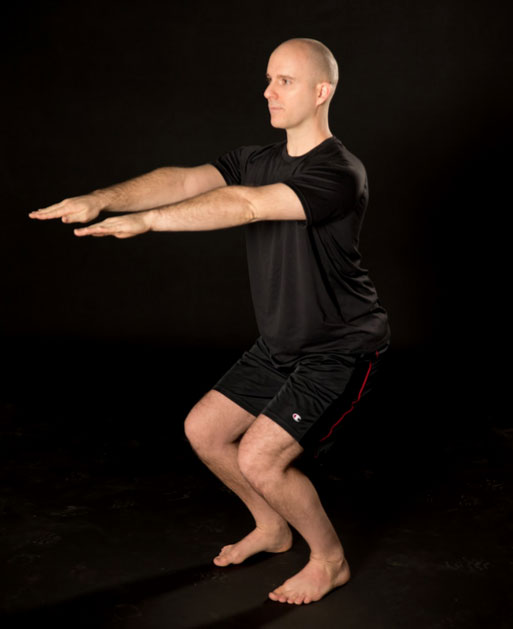
brian-paquette-chair-pose-chagrin-yoga.jpg

By Ed Staskus

“I’ll have the whole grain pancakes and coffee,” said Barron Cannon.

“Cream and sugar?” asked Chris, the bartender, wearing a “Best Burgers” black sweatshirt.

“Black,” said Barron.

He was a vegan.

“And you?”

“Three eggs easy over, sausage links, whole wheat toast, cream for my coffee,” said Frank Glass.

He was not a vegan.

Barron and Frank were sitting at the bar at Herb’s Tavern in Rocky River for a late Saturday morning breakfast. “Add a lemon slice to the iced water, and no straw,” said Barron. “If you’re over three years old, or not disabled, you shouldn’t be drinking out of a straw. On top of that, whoever thought of disposable plastic straws should be horse whipped.”

“What got into you today?” Frank asked, changing the subject. Something was always getting into Barron. When it came to the environment and climate change, he wore blinders, always ready to get into it.

“I don’t know,” said Barron. “I was feeling good alert, just feeling it.”

They had come from Barron’s warm flow yoga class earlier that morning. Both of them, and probably everyone else in the class, had worked up an appetite. Barron owned and taught at a yoga studio on the east end of Lakewood, a ten-minute drive away.

“It reminded me of the way Kristen Zarzycki used to teach her Sunday afternoon five-dollar classes at Inner Bliss.”

“Is she still teaching?” asked Barron. “I thought she had gone into biotechnology sales.”

“I don’t know, but when she was teaching, she was a tiger by the tail.”

Frank Glass had gone to three yoga classes a week for three or four years, and then twice a week Bikram Yoga classes for two more years. He had a herniated disk in his lower back. Almost nothing helped. A hot water bottle helped, a daily NSAID helped, and yoga helped. He had attended a dozen-or-so workshops in his time. He practiced at home now, only going to Barron’s studio once or twice a month to stay in touch.

“That way you can stay in touch with me,” said his wife, Vera.

“There would be a eighty ninety people crammed into the class, you know how Inner Bliss is, some of them in trim, most of them trying as hard as they could to keep up, sucking air, it was a fast flow, and Kristen would be on her mat, doing all the poses, and doing the dialogue, cheerful and upbeat, while half the class was dying, just trying to make it to the end. In the summer, even with the windows open, it could get hot in there.”

“My classes are fun yet challenging, taught from a base of gratitude and commitment to taking care of your body so that students can shine in their space on the mat,” says Kristen. “On the mat, I have learned that as in life, each person has areas where they struggle and those where they shine, and that the collaboration of all of our gifts is what makes our world so amazing.”

When asked what was in the backpack she carried to and from class, she said, “Gum, lip gloss, and binkie.”

Whether she meant a baby’s pacifier, the high hop a rabbit performs when happy, or a stuffed animal, was unclear.

“Was she your toughest teacher?” asked Barron, a flapjack shard on his fork dripping maple syrup.

“No, Deanna Black was a boat load. She was freelance, thank God, so I only ran into her when she was subbing. She drove her classes at breakneck pace, and every few minutes we had to do ten push-ups, or twenty sit-ups, or some damn thing, and then it was back to the flow.”

“Push-ups are good for you,” said Barron.

“Never mind about your two cents’ worth,” said Frank. “The thing is, if you faltered, say you collapsed in a push-up, she would come over and do twenty push-ups right next to you, smiling like a wolf. She didn’t actually do the class, instead she prowled around, explaining cajoling threatening, but one look at her was all you needed to know she could it, all the physical stuff, and another class after that, with no problem. She was incredibly fit.”

“Climb every mountain, ford every stream,” Barron sang, lilting.

“She did that in the off-season.”

“The benefits are more than meet the eye,” says Deanna. “Your reactions to the challenges in your physical practice often reflect and carry over to those from the challenges of daily living.”

“OK, so she was lusty and tough as nails, good for her,” said Barron.

“But she wasn’t the toughest teacher I ever met,” said Frank. “That would be Brian Paquette.”

“Who is Brian Paquette.”

“He taught Bikram Yoga at Chagrin Yoga, although they didn’t call it that because they weren’t one of the Brainiac’s licensed studios.”

Bikram Yoga was masterminded by Bikram Choudhury, practiced in a carpeted room heated to 105 degrees with a humidity of 40%, like India even before climate change. The walls were covered in mirrors. Instructors were taught to be high-handed and to teach from a hands-off literal platform at the front of the class.

“That man was a nut,” said Barron.

“He was a nut, but if you wanted to climb the mountain of posture yoga, his 26 postures in the torture chamber was the mountain.”

Bikram Choudhury’s philosophy of yoga was making pupils work through pain. “I am a butcher and I try to kill you, but don’t worry, yoga is the best death,” he told his followers.

“You took classes in Chagrin Falls? That’s a forty-minute drive one way.”

“Twice a week for two years, until I had enough of the most unrelenting remorseless cramps I have ever had in my life. I couldn’t drink electrolytes fast enough to replenish. I got a vicious cramp driving home one night and had to pull off on the shoulder before I killed myself and everyone around me. That was the beginning of the end, although by then the economics of taking classes wasn’t making sense to me anymore.”

“Whoa, there, my friend,” said Barron. “You’re talking about my bread and butter.”

“It wasn’t just that, although bread and butter played a part. It dawned on me there wasn’t any magic, not that yoga teachers aren’t magic, most of them are, any magic in going to classes anymore. Sure, it was engaging to practice in a collective atmosphere, but I knew enough by then to stand on my own two feet. What I didn’t know, I knew I could just ask you over breakfast or lunch. Can you pass the butter?”

“What made him so tough?” asked Barron

“What made Brian tough was that he didn’t come across as tough, at all. He came across as a good-natured guy. And he was a good-natured guy, patient affable understanding. Most Bikram Yoga teachers, not if but when you had to stop, always wanted you to stay in the room.”

“Just sit down on the mat for a minute,” the apostle on the platform would say. “It’s cooler at floor level.”

“That sounds like Bugs Bunny physics,” Barron laughed.

“It was maybe one half of a degree cooler on the floor,” said Frank. “Brian let people leave the room. He told us, if you have to, you have to. Try to come back if you can. He encouraged us to drink as much water as possible. I had one teacher, she trotted out the harebrained idea that water weighed you down and we should only be taking a missionary-sized sip once in a while.”

“He sounds like a simpatico kind of guy. Is he from Ohio, from here?”

“I’m not sure, although I don’t think so. When I was taking classes in Chagrin Falls, he told me he lived nearby, maybe even within walking distance. One night, after class, we were standing around, he mentioned he had gone through some hard times. He had been a professional gambler, something like that, for a while, and had fallen into a downward spiral. He got connected to yoga, somehow scraped up enough cash for Bikram Yoga teacher training, and trained in Las Vegas, of all places.”

Bikram Yoga teacher training is learning the world-famous system and learning to teach it, according to Bikram HQ.  They are dedicated to teaching trainees the precise nature of yoga. Everyone is nurtured in a challenging, but safe environment, no kidding.

Trainees learn how to greet students professionally and jawbone intelligently about the mental and physical benefits of yoga. Everyone is encouraged to develop a dedicated hatha practice. They are taught how to speak clearly and how to teach the sequence confidently, correcting students appropriately and compassionately, no fooling.

They learn how to grow their own personal yoga practice, sans steam, since it impractical in most apartments condos homes anywhere. There’s no kidding about that.

The training takes about four weeks and costs between $12 and $15 thousand, depending on what paradise on earth the training is set. The total costs include tuition, hotel accommodation, transportation, lectures, classes, towels, and all the water you need to complete the training in one piece.

Even though Bikram Choudhury has recently fled the United States after losing a multi-million-dollar civil suit for sexual shenanigans, he continues to stage his tent show around the rest of the world.

“Brian taught hot yoga, but he was more engaged with Kriya Yoga, which was crazy at odds with the Bikram way of life, which was fancy cars and fancy girls and cash on the barrelhead. He didn’t ever say much about Bikram Choudhury, although he once said yoga had been around a long time and no one had a proprietary claim to it.”

“So, he was more a Kriya kind of guy than a fancy pants?”

“That’s right. You’d ask him what his favorite pose was, and he’d say, ‘Meditation posture, straight spine, because it brings peace.’ His favorite books were the Bhagavad Gita, the Bible, Holy Science, and Autobiography of a Yogi. If you asked him what made him happy, he’d say, ‘Meditation, singing the names of God, and spending time with my family.’ His favorite quote was, ‘Read a little. Meditate more. Think of God all the time.’ I forgot to ask him who said that, but it was probably some old-school yogi.”

“My God, he sounds like a saint, not a badass,” said Barron. “I mean, one of my favorite quotes is, ‘You better take care of me Lord, because if you don’t, you’re gonna have me on your hands.’ What does that make me?”

“Who said that?”

“Hunter S. Thompson.”

“Fear and Loathing?”

“Right-o.”

“Brian wasn’t like that,” said Frank. “He wasn’t a saint, just a regular guy, really, although he did a hell of a lot of meditation. I mean, hours of it. What I mean about him being a badass is the way he went about his business in the hot room. He always came in last, wearing mid-thigh compression shorts, no shirt, and carrying a jug of water. He ran the class like a grade-school teacher. He wasn’t like a drill sergeant, which was a persona most Bikram teachers took on in some way shape or form.”

“Why did he need water?” asked Barron. “I thought Bikram Yoga teachers just shouted out the poses from their soapbox. Why did he need a jug?”

“He did just about the whole thing, which is why he needed it. That’s why he takes the gold medal of badass yoga teacher, in my eyes, at least. Every class there were plenty of people who had to take a break or leave the room. A lot of them were young and fit. Brian did it day after day, no sweat. Getting through ninety minutes of the torture chamber wasn’t any walk in the park, man, it was hard.”

“How hard can it be?”

“Believe me, beyond hard,” said Frank. “You don’t see me doing it anymore.”

“You finally accept an offer to go to a class thinking, easy, I can do this.” said Benny Johnson about his first Bikram class.

“I played real sports for a few years, so how hard can it be? You arrive at the class thinking, let’s do this! But then you walk into the class and the heat hits you. It is ninety-one thousand degrees. You set up your mat in an open space. Little do you realize the hell awaiting you. The poses are relatively easy but holding them is hard. And you actually really start needing water, but it does not help! By the final stretches, you’re just limping along. Then the torture ends, and you lay down in a haze and total defeat.”

“More iced water?” asked Chris, walking up to the bar.

“Yes, please,” Frank and Barron both said.

They drank their water, paid the bill of fare, and left Herb’s Tavern.

“How did Brian reconcile Kriya with Bikram,” Barron asked as they walked to the back of the parking lot. “The two seem mutually exclusive. Kriya is about selflessness and Bikram was only in it for himself.”

“I don’t know, we never talked about it, but his actions, how he did things, seem to say he did. He was both a badass and one of the more sincere people I ever met. He was a quiet sparkplug. If you asked him what inspired him, he would say, ‘My guru, my wife and my children.’ If you asked him who sees the real you in this sketchy world, he’d say God.”

“It sounds to me that the way he practiced in the studio was the test of his sincerity,” said Barron. “He was melding the two, but not selling out.”

“He’s a religious guy in a secular world, a spiritual guy teaching a totally incarnate practice,” said Frank. “He was always urging us to meditate, even though we were all there for the crazy boot camp workout because all of us needed it for our own almost always physical reasons. He was hard to make out.”

“The good of the body depends on the goodness of the spirit, and the other way around,” said Barron.

They got into Frank’s Hyundai Tucson and pulling up to Detroit Road, a black squirrel built like the tailback Barry Sanders, crazy quick and elusive as the all-Pro, vaulted over the brick wall surrounding the outdoor front terrace with a chuck of stale bagel in his mouth. Frank feathered the brakes, but there was no need. He wasn’t the kind of squirrel who ran in circles and got run over. He dashed to the bushy endzone at the back of Century Cycles and disappeared into the trees.

“Have you ever noticed squirrels never say things like, if I had my life to live over, I would do whatever?” asked Frank.

“I know what you mean,” said Barron, chewing on a fresh bagel he had squirreled away in his pocket before leaving. “They’re just rats in better clothes, but they’ve got it going, for sure. They’re not vegans, but what’s more free and right in the head than a squirrel?”

They might get run over by us, squashed flat like pancakes by car after car, but they never fall out of trees into a world not of their making. They are second to none at planting their own trees, too. They bury their acorns, but often forget where they put them. The forgotten acorns become oak trees.

Ed Staskus posts stories on 147 Stanley Street http://www.147stanleystreet.com and Cleveland Ohio Daybook http://www.clevelandohiodaybook.com. To get the site’s monthly feature in your in-box click on “Follow.”

Rhythm of the Saints

By Ed Staskus

The word yoga is first mentioned in the Rig Veda. Assuming the practice to be five millennia in the making, it got rolling in northern India during Harappan times. By then the folks in the valley were the largest civilization in the ancient world, stretching across the plains of the Indus River from the Arabian Sea to the Ganges. Its estimated population of five million made it bigger than Egypt.

   They didn’t waste their time building pyramids for the top dog, either. Even though their burial sites reflect social structure and hierarchy, the burials are all in brick or stone lined rectangular or oval pits. Bones are bones in the long run, no matter how big the pine box.

   Brahmans developed and refined the practice and wrote up what they were doing in volumes, more than two hundred scriptures. They taught sacrifice of the ego through action wisdom and self-knowledge. One of the most famous scriptures still read far and wide today is the Bhagavad Gita, an unfortunate recruiting poster for Uncle Krishna. If it wasn’t so plausible and beautifully written, it would be laughable. As it is, it’s more quicksand than bedrock.

   Everybody knows yoga started in India, and that anybody who wants to be somebody has to dive into the ocean of the practice across the ocean. India is where it’s at. It’s like baseball, there’s first place and no place. Especially if you are training to be a teacher. The overseas rates for spring training are very good. Courses usually include the instructor and all the yoga you can do, accommodation, meals, props, and outdoor activities. 

   One caveat is that in India they tell you don’t eat too much food. The other caveat is they say don’t take group classes and make yoga your life. In the West everybody eats as much as they please, they take all the group classes they want, and they aren’t making yoga their life. Westerners are crazy in many ways, but they aren’t that crazy.

   A non-caveat is that a month-long 200-hour yoga teacher training program averages between $1200.00 and $1500.00, which is a bargain in any language.

   Amish Tripathi, who writes best-selling novels set thousands of years ago, said his heroes all practice yoga. “In ancient India it was part of daily life, both the physical and the mental aspects. Every culture has gifted something to the world, and this is our gift,” he said.

   At least it used to be.

   It has been estimated that 300 million people practice yoga worldwide, at least sometimes. More than 55 million are in the United States, 16% of the population, and 100 million-some are in India, 8% of the population. Far more people statistic-wise do it in the Land of Mammon than in the Homeland.

   It’s like the Spanish Steps got shipped from Rome to San Diego, and the natives are clanking up and down the steps, lighting up legal weed, laughing up a storm, splashing soft drinks littering crunchy chips and leaving wads of old chewing gum behind.

   It would seem to make sense that the Birthplace of Yoga would be the Land of Yoga. It would seem to make sense that the natives are all in. It would seem so, but is not the case, by all accounts. 

   “Most Indians I know don’t do yoga,” said Sandip Roy, a writer based in California. “My friend Rajasvini Bhansali is an exception. And she’s often the only Indian in class. She recalled one class in particular.”

   “The instructor pointed to me, saying Indians are better oriented towards squats,” she said. “And I realized he was holding me up as an example of how we primitive people are better squatters and have looser hips.”

   He had the same experience. “I show up at my first yoga class in San Francisco. It’s steamy hot. There are more than one hundred people, and sure enough, my friends and I are the only four Indians.”

   “It’s easy to count the number of Indians in a yoga class in America,” says Nikita Taniparti. “Often, I’m the only one. I’ve taken to counting the number of Sanskrit tattoos. In a class of around 25, I typically spot around ten. Only one of them is my own. Combing the magazine covers of Yoga Journal, the most recent evidence of an Indian on the front cover seems to be 2009.”

   It’s not just Indians living in the West. “There are hordes of them who are ignorant about the history of yoga,” she added.  Even though it is their own backyard, they don’t necessarily have ownership of the practice.

   Kate Churchill, director of the 2008 documentary “Enlighten Up,” interviewed yoga pioneer Pattabhi Jois at his school in southern India. “We might as well have been in the Puck building in New York,” she said. “There were over one hundred Westerners and not a single Indian. I was looking around and saying, ‘Well, where are the Indians?’”

   “With the exception of Rishikesh in Uttarahkand, there won’t be yoga classes everywhere. Regular, everyday Indians do not practice yoga at a studio,” said Sandy Kingsley of Inspired Exploration.

   Maybe they are finding inspiration at home. Maybe not. Maybe they’ve got something else at home that needs doing.

   “India is the birthplace of yoga,” said New Delhi native Raju Kumar. “I think lots of people do yoga in India, but most people cannot give time for it due to the survival of their family. They sleep late and arise early to catch the bus or train for their job. They have no more time to spend on yoga so cannot take the advantage of natural fitness. But all the people should do yoga for internal and external benefit.”

   When this came to the attention of Narendra Modi, the newish Hindu nationalist strongman savior of the sub-continent, his head almost exploded, and he was ready to order riots. He knew from past experience with his archenemies, who are the Muslims, that they always work. His circle of advisors finally got his head turned around, the riots were called off, and he went soapbox, instead.

   Even though yoga helps most people fall asleep more quickly and wake up rested, Narendra Modi is not most people. He practices it to be able to stay up most of the night, and after a pre-dawn nap, wake up raring to go ready to solve his country’s problems. Nobody gets in front of him. 

   The first thing he did was establish International Yoga Day, set to be June 21st every year. The second thing he did was lay out plans for yoga to be taught in schools. The third thing he did was emphatically suggest compulsory yoga for India’s notoriously out-of-shape police. Maybe they could finally start chasing down some of the serial rapists in the country. 

   He also said yoga lessons would be offered free to civil servants and their families. He didn’t say, if you were a householder, your taxes were going to foot the bill for the lessons. There is never any need to upset the voting public.

   “Yoga is an invaluable gift of India’s ancient tradition. It embodies unity of mind and body, thought and action, restraint and fulfilment, harmony between man and nature, a holistic approach to health and wellbeing. It is not about exercise but discovering the sense of oneness with yourself, the world and nature,” he said.

   Suneel Singh, a guru in south Delhi, agreed, saying, “It is a complete package for everybody’s body and a cheap way for keeping you hale and hearty.”

   The Muslims didn’t necessarily agree that making yoga a national priority was the way to go. Many of them felt like they were stuck in a closet full of wire hangers. One false move could be their last move. They could end up being hung out to dry.

   “Many Muslim scholars say that yoga is against the fundamental tenets of Islam, to pray to the sun, for example,” said Asaduddin Owaisi, a Muslim member of Parliament. “Why make this a nationalist issue? Just because I do not want to do yoga does not mean I am not a patriot.”

   Mark Twain once said that a patriot is “a person who can holler the loudest without knowing what he is hollering about.” Nobody talks to Narendra like that in India, not if they know what’s good for them. They hunker down in cow pose and keep their thoughts to themselves. The two-time current Prime Minister has centralized power and takes no guff.

   “As a seasoned yoga practitioner, our great leader Modi is able to embody unity of his mind and body, take thought action, restrain himself and achieve fulfilment, create harmony between man and nature and provide a holistic approach to health and wellbeing,” explained Kaballi. 

   Many Indians don’t have a surname and are known by only one name.

   “If he wasn’t practicing yoga and being trained to restrain himself from all forms of passion, we would have seen a real blood bath in Gujarath in 2002,” he added. The top dog is a saint, although saintly on his own terms, at his own rhythm. It was just a minor bloodbath in Gujarath. Most of the blood was the blood of Muslims. It was their own fault, though. If they had practiced more yoga maybe they would have bled less.

   “The important point is that India is proving it’s a country of undiluted democracy with an ancient old civilization. The minorities are a pain on the spine, all crybabies. It is high time the West stops its underhand dealings with them hoping to make India kneel. I too am now organizing yoga for everyone!”

   Is yoga an important part of life for everyone in India? It is and it isn’t. Everybody thinks they know all about it, the same as everybody in the United States thinks they know everything about the 2nd Amendment. Since so much of India is poorer than not, and since much of it is outside the mainstream of growth and development, development is the front of the line issue. Finding a good job is important. Putting food on the table is important. Tossing and turning at night with no air conditioning in one hundred-degree temperatures is an issue. The air and water are foul. Sanitation is atrocious. Governance and corruption are big problems. 

   Narendra Modi ran for the throne in 2014 on slogans of better sanitation and better governance. Everybody already knew what he thought about Muslims, so he didn’t have to say much on that thorny issue. Yoga was an after-thought after the election was signed sealed and delivered.

   When he sponsored a proposal to make the first day of summer International Yoga Day the resolution was supported by 177 nations at the United Nations General Assembly. It was an easy yes vote. There is a halo of virtue that surrounds the practice, no matter how many people like Modi Bikram Osho and all the other self-serving saints wrap themselves up in it.

   “Rhythm is something you either have or don’t have, but when you have it, you have it all over,” Elvis Presley said.

   Yoga is like that too. When you have it you have it all over. The way to get it is to go find it for yourself and make it your own. If your mom and dad and the president and prime minister have to tell you to go to your room and do yoga, it is possible it will get ingrained in you, but it goes against the grain of the practice.

   When Narendra Modi and his right-wing BJP state politicos try to impose it from the top down, they will hopefully be as successful as the commies were when they tried to impose all the rules from headquarters. Unless you’ve turned your gaze to turning a profit on yoga, the top-down approach is not any good.

   In business it is about the hierarchy of high versus low employees. The high-ranking people make decisions relating to goals and plans while the low-ranking people perform tasks and achieve the goals set for them. It creates clear lines of authority, standardizes products and services, and facilitates quality control.

   There aren’t many things in this manmade bossman world that are personal anymore. From state control to corporate control to message control it’s gone under my thumb, from overt to invisible. Yoga is one of the personal things, since its premise is, it’s all in your head. Get your head right and all will be right as rain.

   “Get up, stand up, stand up for your rights,” sang Peter Tosh, one of the original Wailers.

   Yoga is a bottom-up personal business undertaking. Somebody telling you to get on your mat has got the business end of it all wrong. Listening to those kinds of top-down orders is wasting your time and the time of the last five thousand years.

   Better to put the earbuds on, tune out the Narendra Modi’s of the world, and listen to the vintage rhythm of the saints.

Ed Staskus posts stories on 147 Stanley Street http://www.147stanleystreet.com and Cleveland Ohio Daybook http://www.clevelandohiodaybook.com. To get the site’s monthly feature in your in-box click on “Follow.”
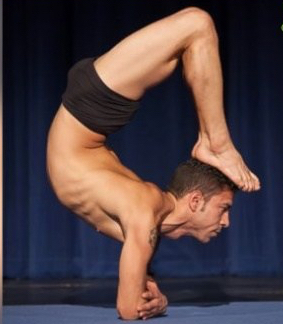
Gray Matter (On the Mat)

By Ed Staskus

“I’ve got the brain of a four-year-old. I’ll bet he was glad to be rid of it.” Groucho Marx

Even though yoga practice is far-ranging, not just all in your head, it is all in your head.

The brain is the center of the nervous system, 100 billion nerve cells protected by a skull and each nerve cell linked to almost 10,000 other cells. A real human brain lifted out of a jar in a pathology lab weighs about three pounds. Although often described as gray matter, it isn’t gray, but rather red, very soft and jelly-like.

The neural network of the brain is affected by everything that happens during its lifetime, for better or worse. Our genes and our environment impact every step. The brain’s lifelong development is activity-dependent. Every sensory, motor, and cognitive activity shapes the way neural circuits end up being wired.

Our experiences lead to cells that fire together, leading to cells that are wired together, leading to a mind that can count the stars in the sky and how many sprinkles are left at the bottom of an ice cream sundae at the same time.

Your brain on math is like it’s gone to the thinking gym. Your brain on money, on the other hand, is your brain shouting out greed is good, greed is good, greed is good! Your brain on meth is 100 MPH in a dirty sundress.

Brains in the thrall of sports are described in Your Brain On Sports as bubbling with “all the batshit craziness that courses through the sports ecosystem.” The kookiness includes fans leaning over balcony bleacher railings into mid-air trying to grab t-shirts shot out of a cannon.

Our neurons can misfire across synaptic gaps, raising Cain and spinning nonsense, from the NRA’s zany Cold Dead Hands to Climate Change Ain’t Happening. Only crazy people take themselves seriously.

Human being brains are always humming and roaring. They are our best friend and worst enemy. Everyone has to do the best they can with it. In the same way it is impacted by most things the brain is changed by most things, too, including yoga.

By some accounts yoga, from exercise on the mat to breath control to meditation, is a game-changer over and above many other things. Neuroplasticity is how the brain rewires itself through experience. The experience of yoga is plasticity itself, especially what goes on twisting and turning on the mat. The more anyone unrolls their mat is the more new neural pathways are made in the brain. It is a pattern that can reshape one’s brain and one’s life, too.

“Our life is the creation of our mind,” said Buddha.

Not only that, practicing yoga seems to make the brain bigger, especially the somatosensory cortex, where the mental map of our bodies is located, and the superior parietal cortex, which is the part of the brain that directs attention.

Who doesn’t want a bigger brain and a better GPS of themselves?

“We found that with more hours of practice per week, certain areas were enlarged,” said Chantal Villemure, one of a team at the National Center for Complementary and Alternative Medicine, which studied people practicing regularly. They presented their work, focused on MRI scans, to the Society for Neuroscience in 2013.

The health benefits of yoga exercise, from increased flexibility to stronger bones to relieving chronic pain, are well known. It even lowers the risk of heart disease, according to Harvard Health Publications. What is less well known is that it stimulates brain function, improving inhibitory control and working memory.

A University of Illinois study published in the ‘Journal of Physical Activity and Health’ found that cognitive reaction times and accuracy were better after hatha-style yoga practice than after other kinds of exercise.

“It appears that following yoga practice, the participants were better able to focus their mental resources, process information quickly, more accurately and also learn, hold and update pieces of information more effectively than after performing an aerobic exercise bout,” said Neha Gothe, who led the study.

The brain gets stronger after yoga exercise. Working out on the mat boosts the body’s production of B.D.N.F., a protein called ‘Miracle-Gro’ for the brain.

Downward doggers know that getting long feels awesome. Beyond flexibility they also know it brings to heel something in their brains. That something is stress, which yoga helps to counteract. Yoga boosts GABA levels in the brain, according to research at both the University of Utah and Boston University. The higher the GABA levels, the better and brighter you feel. The lower the levels, the darker the day gets. Yoga literally switches off some genes related to stress.

Hatha yoga nowadays is closely associated with physical practice. The word means forceful in Sanskrit. But, before yoga and physical culture became synonymous in the last hundred-or-so years, hatha meant all eight limbs of yoga. Yoga is an eight-limb union leading to the last limb, which is equilibrium. Two of them, pranayama, which is breath control, and dhyana, or meditation, may affect life and limb of the brain even more than physical practice.

“Yoga isn’t about the shape of your body, but the shape of your life,” said Aadil Pakhivavl, author of Fire of Love. Everybody wants to be in good shape, but getting in shape is about more than jump throughs and plank pose. Like Buddha said, life is what the mind makes it.

Breathing is as essential as it gets. The words chi, psyche, and spirit are all related to breath. In the Bible God breathed life into clay making Adam. In Your Atomic Self it is breath that connects us to all aerobic creatures in the world. Prana is the Sanskrit word for life energy or life force. Pranayama is regulating and controlling the breath.

Patanjali, the founder of yoga philosophy, believed the ultimate goal of it was not breathing anymore, in other words, no more inhales or exhales. It’s an idea that literally takes your breath away.

Whether it’s bellow’s breath, skull shining breath, or breath of fire, the many forms of pranayama are all designed to concentrate one’s energy and attention. When under the influence of pranayama our brains ramp up in alpha and beta activity, whose electrical impulses can be detected by EEG testing. These dissimilar brain activities, paradoxically, are related to increased awareness and increased relaxation.

“The immediate effect of Nadi Shuddhi Pranayama and Bhramari Pranayama compared with controls shows that these yogic practices are related with increased orderliness of brain functioning,” noted ‘Yoga for Academic Performance: A Brain Wave Coherence Analysis’ in the European Journal of Psychology and Educational Studies.

Meditation has long been known to generate measurable changes in the brain. Hundreds of studies have been conducted since the 1950s. They have largely confirmed that the new found benefits of meditation are the same as the centuries-old benefits, from reducing activity in the selfish centers of the brain to enhancing and enlarging the links of neural pathways.

In ‘Brain Gray Matter Changes Associated with Mindfulness Meditation in Older Adults’, published in the open journal Neuro in 2014, a “significant gray matter increase was identified within the precuneus” after a six-week test period. The precuneus is located near the back of the brain and is involved with aspects of consciousness and the self.

Meditation is about bringing awareness to the breath, slowing down into stillness, and going inward. It is the conscious action of getting to the unconscious crossroads of the something that isn’t there and the nothing that is. Immanuel Kant, the 18th century German philosopher, described art as purposive without a purpose. The same can be said about meditation. It is about nothing and everything and everything in between.

Meditation acts on the brain in many ways, from reducing anxiety and depression to improving concentration to helping keep brains tip top in older people. It leads to volume changes, actually changing the structure of the brain. A study at UCLA has demonstrated that people who meditate have more gray matter volume from one end of their pates to the other. “What we actually observed was a widespread effect of meditation that encompassed regions throughout the brain,” said study author Florian Kurth.

The act of meditation is the action of focusing one’s mind for a period of time, usually in silence, sometimes while chanting, as in Kirtan Kriya, to get grounded and become more self-aware.

Anybody can meditate, as long as they are willing to acknowledge that the mind has a mind of its own. All you have to do is sit down, or even go for a walk by yourself, and try to be quiet for a few minutes. Even though it doesn’t have to be a huge undertaking, it can have a huge impact. It’s not like climbing a mountain, but it does help cut most mountains down to molehills.

Even busy people too busy to meditate, who think they don’t have time to do nothing, are meditating nowadays, since it makes them more productive when they get back to being busy. “Half-an-hour’s meditation each day is essential, except when you are busy,” said Saint Francis de Sales more than four hundred years ago. “Then a full hour is needed.”

Today’s modern set calls it mindfulness meditation.

Back in the day it wasn’t even called meditation, which is a word dating from the 12th century, from the Latin word meditatum. It had more to do with attention and consciousness exploration. Meditation was closely aligned with dharana, or concentration, as in focusing one’s attention in continuous meditation.

Your brain on yoga is your brain diving into 5,000 years of the practice. It is also your brain being poked and prodded by the Harvard Medical School. Sat Bir Singh Khalsa, Ph.D, an Assistant Professor of Medicine at Harvard and a certified Kundalini Yoga instructor, has conducted clinical case studies on yoga for more than a decade. The results he has presented in research papers, articles, and books offer compelling evidence that getting on the mat boosts brainpower.

The brain might be a mush melon-sized lump of gray matter, but yoga lights it up like a rainbow. In the end, though, yoga isn’t a thinking man’s game. Anyone who spends too much time thinking about the practice never gets any of it done. While it is true that it’s a mind-body discipline, it’s not just exercise on a sticky mat, keeping us fit as fleas, nor is it just the latest contribution to positive thinking.

“Yoga is a way to freedom,” said Indra Devi.

We are more than our bodies and brains. The spirit is the third rail of yoga, so that the train becomes a body-mind-spirit practice. Albert Einstein believed that “spirit is manifest in the laws of the universe.” Like the electric action potential of neurons, the electric third rail of yoga is what supplies energy to the practice. When Buddha observed that our lives are what we think them to be, he meant thinking as a state of mind made up of cognition, words, and actions.

The humans of planet earth may be snared by force and their minds made small by propaganda, but the only constraints on the spirit are those we ourselves make. It’s great to have a good brain, but where the spirit lives is the good heart. We change our lives by changing what’s in our hearts. If there is a sweet spot of yoga, it is the heart, not the brain. It is the downtown of spirit and gateway to consciousness.

The heart is the ever-winding ever-adventurous ever-surprising yellow brick road to the incomprehensible. On the way to the Emerald City, no matter how big and better anyone’s brain gets, even when it makes a scarecrow’s leap from Groucho Marx to Albert Einstein, your brain on yoga is ultimately your brain emptying as the heart fills.

Ed Staskus posts stories on 147 Stanley Street http://www.147stanleystreet.com and Cleveland Ohio Daybook http://www.clevelandohiodaybook.com. To get the site’s monthly feature in your in-box click on “Follow.”
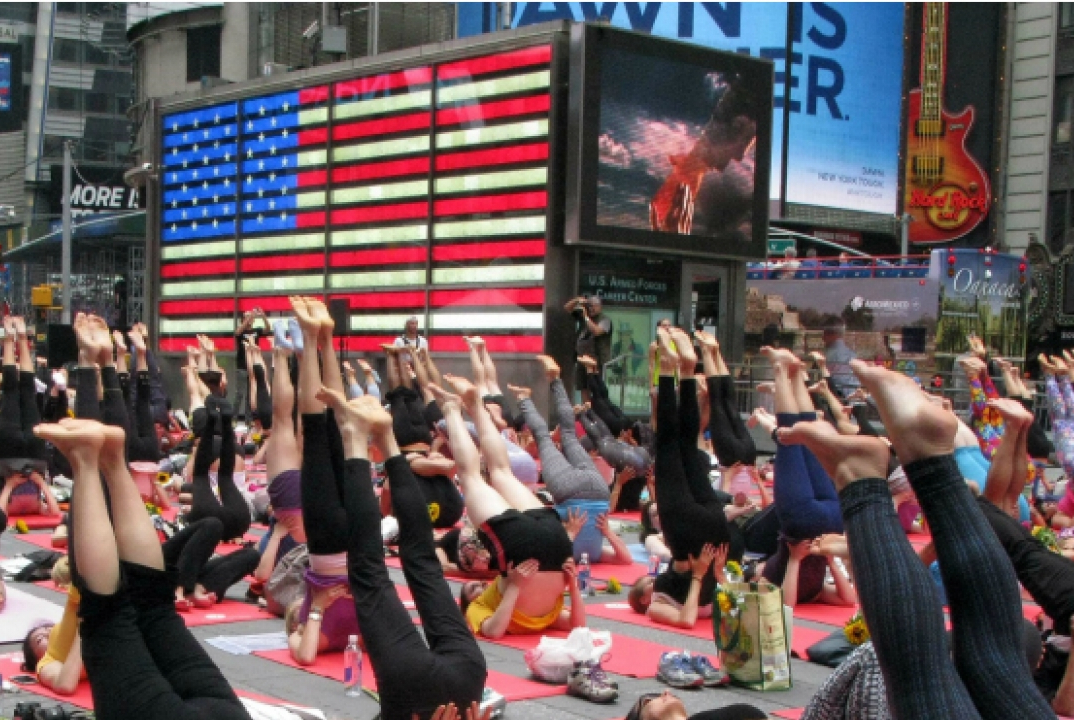
Slam Dunk

By Ed Staskus

A commonplace of most yoga advice is the advice to let go of expectation, judgment, and competition when stepping on the mat. The importance placed on themes of tolerance, cceptance, and non-competition is round-the-clock, streamed from beginner classes to advanced asana practice.

On the web sites of many studios, under headings like Yoga Etiquette, is the injunction: “Leave your ego at the door. The yoga mat has no space for your ego, competitiveness, or judgment.” The community class teacher at our local big box studio is fond of saying, “It’s your practice, not anyone else’s.” It’s likely every yoga teacher in America reworks this refrain day in and day out.

Whether the no competition no judgment message is a viable message in our world, driven as it is by ego and judgment, and an everyday workaday world of going for the dollar peso euro yen gold, is between sixes and sevens.

Themes such as moving forward, continual progress, and goals are the modern mantra, not non-competition and non-judgment. The way we live today is nothing if not teleological, so that we are always looking for the cause and purpose of all we make happen, of all we do.

It seems naïve to posit the physical exercise yoga has become as a special case non-competitive activity in the western world, the font of the rat race. Western culture is defined by strife and competition, from our classical past to the way we live now. Everybody gets nervous before a competition, whether it’s a Spelling Bee or the Olympics. They get competitive, too.

Doing warrior pose in the middle of your brain in the middle of the yoga room in the middle of the after work A-Team crowd ain’t any different. Nobody wants to be slam-dunked on.

We are judged and graded from the time we step into school, from tykes in kindergarten through college. The better we do in school the higher the status we carve out for ourselves, until finally carving out a better job when we go out into the working world.

Our marketplace economy is predicated on struggle and competition. We are either making more money than the next man, and so are successful, or we are making less, and so unsuccessful. How much money we make determines how and where we live, our luxury brands, to the better schools we send our children to.

Materialism and its many benefits is a deeply ingrained point-of-view in the western world.

Today’s cultural icons and heroes are businessmen, politicians, and athletes. Follow the money, follow the front page, follow the parade.

“The business of America is business,” said Calvin Coolidge almost 100 years ago. The New Gilded Age has brought President Coolidge’s maxim to life. The ethics involved in the business of making money are subservient to the making of money itself, because losing money is a failure that puts right and wrong to shame.

Politics is only occasionally about doing the right thing. It is necessarily about winning and losing, from debating and campaigning to making your ideology the ideology that matters. The upper hand trumps conscience and scruples among thousand dollar suits without a drop of human kindness in them.

Sports are arguably the passion of our times, from children’s CYO leagues to pro teams playing in stadiums seating tens of thousands. Up to 16 million people may practice yoga in America, but Division 1 college basketball and football attract 70 million paying fans between them, while the four major pro sports draw more than 140 million through the turnstiles every year.

Sports on TV are ubiquitous. More than 127,000 hours of sports programming were available on broadcast and cable TV in 2015. Americans spent more than 31 billion hours watching balls bounce in all directions, sometimes through the net or over the goal, more often not if their home team was hapless.

The average American watches a total of 5 hours of TV a day. The average American never sets foot on a yoga mat. They pay an arm and a leg to watch other people pretend to be super heroes. The mainstream culture isn’t interested in his or her own unified state of mind.

“What the hell does that mean? What does it cost? What’s in it for me?” they ask.

It has been estimated that yoga is a 6 billion dollar business, but that pales in comparison to the college and professional sports team industry, comprising more than 800 organizations with a combined net worth and annual revenues in the hundreds of billions.

Many Americans are intimately bound up in the winning and losing of their home teams. Late in the 2007 season, when the luckless Cleveland Browns were having some success and threatening to go to the NFL playoffs, a large local studio full of men and women at the end of a weekend yoga class unabashedly chanted OM three times for the team, hoping for God’s sake some psychic energy would rub off on the players for that night’s big game.

“The person who said winning isn’t everything, never won anything,” says Mia Hamm, two-time Olympic gold champion.

In the event, the yoga gods played their own little private joke on the fans. Even though the Cleveland Browns won the game, they lost in a statistical tie-breaker to another team and failed to make the playoffs.

How did yoga become a supposed  non-competitive activity in our world, a world defined and bound by competition, especially since in its birthplace many define it as a sport? In the sub-continent where it all got started yoga has had a competitive aspect to it for more than millennia.

“Yoga sport has been a traditional sport in India since more than 1,200 years,” said Yogasiromani Gopali, executive director of the World Yoga Council.

“Yoga sport is holy sport in our holy land with our holy yoga. All the yoga ashrams have yoga competition,” said Swami Shankarananda, a supporter of the World Yoga Foundation.

“Yoga competition is an old Indian tradition,” said Bikram Choudbury. “It’s a tremendous discipline – a hundred times harder than any other competition.”

Three for three is the trifecta, the original recipe, extra crispy, and Colonel Choudhury’s special.

The European Yoga Alliance organizes an annual European Yoga Championship and the International Yoga Sports Federation hosts an Annual World Yoga Championship. In the United States yoga tournaments have sprung up nationwide, from the Annual Texas Yoga Asana Championships to the New York Regional Yoga Championships.

Writing in Vanity Fair about the New York event, Anna Kavaliunas observed. “I learned you can win at yoga, a practice that is traditionally considered to be more spiritual than competitive.”

Some variations of yoga seem competitive by nature of the practice itself.

“Since its inception in the mid-twentieth century some of Ashtanga’s great masters pitted the most gifted students against one another to see who would perform the absolutely most difficult poses,” said Marcia Camino, a teacher of Amrit Yoga and a studio owner in Lakewood, Ohio.

“Iyengar Yoga demands so much mental attention to the alignment of the body that built into these classes there seems to be a drive for perfection,” she said. “Some systems like Power Yoga are overtly muscle-focused and it makes sense that one could easily engage the spirit of competitive sports when practicing them.”

At Bikram Choudbury’s Yoga College of India in Los Angeles, classes often come to a dead stop as everyone breaks out into applause for a pose executed especially well. “Bikram Yoga is not only challenging, it’s also gratifying to the ego,” said Loraine Despres, who has written about the once-copyrighted practice.

Maybe Bikram Choudbury has his finger on the pulse of what yoga is really all about. The 2014 World Championship of Yoga Sports was held in London, attracting contestants from more than 25 countries. The 2016 event was staged in Italy.

The Choudbury’s, Bikram and Rajashree, his wife, themselves both former all-India yoga champions, believe yoga should qualify as an Olympic sport for the 2020 summer games in Tokyo.

“I strongly believe that yoga has what it takes to become an Olympic sport,” said Joseph Encida, a former international champion. “The skill required is strongly comparable to that of an elite gymnast.”

“There is so much strategy, mental power, physical precision, and control that goes into the sport that I don’t see it any different than curling, skiing, or diving,” said Gianna Purcell, who placed fourth internationally in 2012-13.

It is uncertain how far gung ho yoga will get with its hopes ambitions dreams.

“The Olympics are looking for events that play well on television. If you had combat yoga, maybe that would have a better chance of making it, ”said David Wallechinsky, an author and Olympic expert, in a BBC interview.

Not everyone agrees that competition is good for the practice.

“I don’t think it should be competitive,” said Tara Fraser, of London’s Yoga Junction. “Competing is not embedded in yoga’s philosophical framework and makes no sense if you want to achieve self-realization.”

Michael Alba, a teacher in Boston who also instructs at the Brookline Ballet School, said competition limits and stereotypes the practice. “It perpetuates the idea that yoga is for the lithe-bodied contortionists. One of the challenges of yoga is to be less competitive.”

Competition and its complications are apparently one of the reasons more women than men engage yoga on even a physical level. According to Yoga Journal women make up 72% and men only 28% of the people who practiced in 2016. The two most important reasons men cite for not taking up yoga are a lack of interest in the quiet, non-competitive aspects of the practice and a fear of embarrassment or failure.

Which begs the question, is yoga competitive, or not, and do men want to compete, or not?

Competition problematizes yoga at its most accessible level, which is what goes on on the mat. A goal-oriented approach contradicts what even tournament competitors like Luke Strandquist, a Bikram Yoga instructor in New York City, seem to believe. “As a teacher, it’s the opposite of what I’m always telling my students, that you’re here to practice your yoga, and it doesn’t matter what anyone else is doing.”

Setting one’s sights on doing what the man you see in the perfectly balanced headstand on the mat next to you is doing, or your sights on becoming the mediated image of the slim and strong young woman you’ve always wanted to be, turns the practice away from its focus on the values of self-acceptance and inner growth and turns it into monkey see monkey do.

“Competition exists in the yoga classroom when we see students trying to outdo each other,” said Marcia Camino.

“It’s also there when students struggle to best themselves, their latest efforts, on the road to yoga advancement. That said, there are many systems that balk at the notion of competition, because the focus of real yoga, claim these systems, is inward.”

Separating yoga exercise from the rest of yoga is like separating chaff from wheat and taking the chaff home.

“Unfortunately, yoga has been conflated with asana, which is a huge misapprehension,” says Richard Rosen, director of the Piedmont Yoga Studio in Oakland, California. As integral to yoga as exercises on the mat are, they are only part of the picture, in the same way that bridges are more than the sum of their piers, beams, and decks. Focusing on exercise and competition is mistaking the nuts and bolts of the craft for the art of the craft.

Competition is ultimately driven by the ego and is based on a zero-sum game of loss and gain. Competitors seek to satisfy their own personal ends. Applause and prizes animate the fear and desire of the ego in accomplishment. Winners and losers are inevitably segregated, so that winners are enthroned and losers forgotten. Who remembers last year’s second-place finisher?

Nobody does, because losers don’t get the headlines.

Contests are defined from without, not from within, since referees, audiences, and media analysts are what validate the competitors, not their own efforts. Vince Lombardi, the legendary NFL coach who is a symbol of single-minded determination to win at all costs, once said, “If winning isn’t everything, why do they keep score?”

The answer might be because without a scoreboard the contest would be meaningless.

Prime time competitors often say they are their own competition, their own worst enemy. My biggest competition is myself. I’m always trying to top myself. I don’t worry about what other people are doing. I’m not in competition with them. I’m only in competition with me.

Competing with yourself is a slippery game when the ego competes against the sub-conscious even though the ego rarely knows what the sub-conscious is up to. Not only that, they are not best friends. It’s not necessarily in our own best interest to compete with our past, in the belief that progress is the measure of all things, and the asana we do today must necessarily be better than yesterday’s pose.

One Sunday afternoon, at the end of a crowded community class, a tall lanky older man on the mat next to me said, “I shouldn’t have even come today. I couldn’t do anything right.” He hadn’t fallen out of any balancing poses on top of me, but when I pointed that out to him, he said, “I’ll do better next time.”

The next time I saw him at the yoga studio his practice was constrained by a bad wing. “I hurt it here,” he said. “I think I was trying too hard.”

Self-consciousness and arbitrary reference to past standards compromises the here and now of yoga. The immediacy of the practice becomes a mishmash of then, now, and whenever.

Competition and progress take the man and woman out of himself and herself and out of the moment, positing a judge as the ultimate arbiter of their efforts. Even Rajashree Choudbury admits, “If you think you are competing against others, you won’t win.” Winning is freighted in terms of dollars and cents so that it makes commercial sense when applied to sports, but ultimately makes no sense when applied to the fabric of yoga practice.

“In the course of time asana or yoga postures gained more popularity in the physically-minded West, and the Vedantic aspects of the teachings fell to the sidelines,” David Frawley wrote in ‘Vedantic Meditation’.

Vedanta, or the philosophy of self-realization, underpins the concept of yoga as a spiritual system with a physical component, not a physical system with a spiritual component. Competition turns yoga on its head so that physical practice and fitness are conflated with yoga success, while spiritual discipline and self-realization are shunted to the sideline.

The prevailing modern view of yoga is that the means and end are the same. Yoga means exercise and exercise means yoga. Fitness is the means and fitness success is the goal. Articulated like that competition and tournaments make sense.

Most physical activities, such as throwing a ball, kicking a ball, or hitting a ball with a stick, can and probably will end up as grist for the mill. Most contemporary yoga flies in the face of its past, in which yoga exercise becomes both a means to an end and an end in itself.

While it is true practicing asana is practicing asana, moment to moment sweating on the mat, there’s no reason one’s sweat should just go down the drain. At the same time that you’re sweating up a storm in warrior pose, for example, you can be expanding into other aspects of yoga life and death, such as breath control, symmetry, and stillness. In this more traditional way of practice, competition is beside the point. In modern terms competition posits the ‘Other’ as superior to the self. In pre-modern practice the ‘Self’ is the center, not some imaginary logos.

Hatha Yoga, which is the physical branch of Raja Yoga – itself the meditative school of yoga – is simply a system of bodily postures meant to teach stillness under duress, breath control, and ultimately the strength to sit in meditation without squirming. As such it is folded into the other three traditional schools, which have to do with karma, self-enquiry, and surrender to the divine.

“The main objective of hatha yoga is to create an absolute balance of the interacting activities and processes of the physical body, mind, and energy. If hatha yoga is not used for this purpose, its true objective is lost,” says Swami Satyananda Saraswati, the founder of the Bihar School of Yoga. Separating asana from the rest of yoga, and mixing it up with competition as though it were a circus act or a sport, is to confuse the part with the whole, or the steps on the path with the pilgrimage.

“Yoga is a mess in the west. And you can quote me on that,” said Georg Feuerstein, a yoga scholar and teacher. “People shortchange themselves when they strip yoga of its spiritual side.”

The stuff of body sense mind are the means to achieve union with knowledge, whether it is self-knowledge or knowledge of a universal spirit. Commingling asana and competition trivializes yoga practice. When the breath, mind, and spirit are separated from the body, the gaze of the man or woman on the mat is lowered to the near horizon.

Sometimes during especially difficult asana classes at her Inner Bliss studio Tammy Lyons reminds everyone, “It’s a practice, not a performance. Connect through the breath, and remember you are more than your accomplishments.”

Handstand may be athletic and acrobatic, but yoga is not athletics in search of handstand. Although yoga studios are being redefined as gyms in our performance-driven world, it is a problematic change. Rather than reducing yoga to Hobbesian metaphysics, it might be better to restructure it back into its traditional guise as a spiritual practice with a physical component.

Yoga postures are ultimately meant to lead to the breath, which hopefully leads to Kundalini, and maybe somewhere down the long bendy road to a last second slam dunk on the podium of Samadhi, where there are no cash prizes no first place last place no jazzed up trophies no trips to the Dream of Winner Takes All.

Ed Staskus posts stories on 147 Stanley Street http://www.147stanleystreet.com and Cleveland Ohio Daybook http://www.clevelandohiodaybook.com. To get the site’s monthly feature in your in-box click on “Follow.”

Breathless (Brew Crew)

By Ed Staskus

The first two limbs of the eight limbs of yoga are ten fundamental precepts called the yamas and niyamas. Unlike the Ten Commandments they are more like ethical guidelines. The first of the yamas is ahimsa, or non-violence. The word literally means not to injure or show cruelty to any person or creature. Ahimsa is one of the major reasons many people who practice yoga are vegetarians, seeing it as connected to the meatless path.

“The slaughter of animals obstructs the way to heaven,” says a verse in the Dharma Sutras.

More than a third of those who practice yoga are vegetarians, according to the Yoga Site, and more than half of all yoga teachers are vegetarians, according to Ryan Nadloneks, a Prana Flow Vinyasa Yoga teacher and journalist. Approximately 5% of all Americans are vegetarians, and 2% are vegans, according to the latest Gallup Poll.

“A vegetarian diet is essential for one who wants to follow a spiritual life,” writes Stephen Sturgess in The Yoga Book.

Sharron Gannon, the founder of Jivamukti Yoga and an advocate of ethical vegetarianism, is even more outspoken. A core concept of Jivamukti, as articulated by her and co-founder David Life, is that understanding the ultimate connectedness of all creatures is the goal of yoga. Her take on eating animals is that it amounts to “enslaving, degrading, torturing, raping, and slaughtering billions of them.”

For Sharron Gannon one of the first steps in advancing enlightenment is marrying yoga and vegetarianism. “If you wish to truly step into transcendental reality and have a lighter impact on the planet, adopting a compassionate vegetarian diet is a good place to start,” she writes in Yoga and Vegetarianism: The Path to Greater Health and Happiness. “Not everyone can stand on his or her head every day, but everyone eats. You can practice compassion three times a day when you sit down to eat.”

But, practicing such compassion would devastate the meat industry, shutting down innumerable farms in top livestock and poultry slaughtering states such as Minnesota, North Carolina, and Arkansas, as well as shuttering the doors of the 6,278 federally inspected meat and poultry processing plants in the USA. Close to a half-million workers might be thrown out of work and their combined salaries of $19 billion lost. The effect would cascade to the suppliers, distributors, retailers, and ancillary industries that employ 6.2 million people with jobs that total $200 billion in wages. In addition, more than $81 billion in tax revenues would be lost to federal, state, and local governments.

The meat and poultry industry contributes a total of about $832 billion to the economy, based on a 2009 study by John Dunham and Associates, or just under 6% of GDP. Through all its various production and distribution linkages it impacts firms in all 509 sectors of the American commercial landscape.

America’s exports would be affected, too, since in 2010 almost 7 million metric tons of meat products were shipped overseas. This would throw a monkey wrench into the USA’s balance of payments, already in the negative.

But, not only would the livestock and poultry industry be severely impacted, if not completely bankrupted, the healthcare industry would also receive another shock.

Heart disease, cancer, and stroke are the three leading causes of death in the USA. These diseases, as well as type 2 diabetes, have all been linked to the Western diet of processed animal-based foods. Eating red meat is associated with a significant increased risk of premature death from cancer and heart disease, according to a 26-year study published in the Archives of Internal Medicine in 2012.

”When you have these numbers in front of you, it’s pretty staggering,” said the study’s lead author, Dr Frank Hu, a professor of medicine at Harvard, referring to the strong link between red meat consumption and mortality.

The China-Cornell-Oxford Project, a 20-year study begun in 1983, one of the most comprehensive health investigations ever undertaken, concluded that these diseases, some forms of cancer among them, could almost always be prevented by eating plant-based whole foods.

If everyone in the United States practiced yoga and vegetarianism, the healthcare industry would be dealt what might be a fatal blow.

If everyone were to turn to a plant-based diet, many of the major diseases Americans suffer from would in most likelihood be stunted. Without the customers that make up the bulk of their work, doctors and healthcare workers would be forced to return to general practice, at a fraction of the income the major diseases now generate for them.

A further consequence of everyone in America practicing yoga and subscribing to ahimsa, or non-violence, would be the collapse of the firearms and ammunition industry and the Department of Defense, both bulwarks of the American economy.

American companies manufacturing firearms, ammunition, and supplies for domestic use are a significant part of the country’s economy. They provide well-paying jobs and contribute substantial amounts in taxes at state and federal levels. They employ more than 98,000 people and generate an additional 111,000 jobs in supplier and ancillary industries. These specific jobs pay an average of $46,000 in wages and benefits. In total, the firearms and ammunition industry supports more than 986,000 jobs, says the Sporting Arms and Ammunition Manufacturer’s Institute.

In 2012 the firearms and ammunition industry was responsible for as much as $31 billion in total economic activity in the country, and paid over $2 billion in taxes including property, income, and sales-based levies, according to the National Shooting Sports Foundation.

A major trade association for the firearms industry, the National Shooting Sports Foundation represents more than 7,000 manufacturers, distributors, retailers, and organizations. They are located in Newtown, Connecticut.

Parenthetically, in December 2012, in Newtown, Connecticut, a young man wielding several legally purchased high-powered weapons massacred 26 people, among them 20 children at an elementary school.

In the past two years, amid difficult economic times and high unemployment rates nationally, the firearms and ammunition industry created over 26,000 new jobs “Our industry is proud to be one of the bright spots in the economy,” noted the National Shooting Sports Foundation in its Impact Report 2012.

Hunting and target shooting activities employ more people than Chrysler, Philip Morris, UPS, and Ford, combined. The economic activity generated by the hunting and shooting industries exceed the annual sales of most “Fortune 500” companies.

The consequences of a nationwide yogic adoption of the principle of non-violence would have multiple, ripple effects.

For one thing, although here are currently more than 300 million guns currently in circulation in the USA, a widespread belief in non-violence would mean far fewer people getting shot than are currently being shot in our times. For example, in 2008 there were 39 fatalities from crimes involving firearms in England and Wales, where all handguns and automatic weapons have been effectively banned. The population of the United States is approximately 6 times that of England and Wales. By comparison, in the United States there were 12,000 gun-related homicides in 2008, or 307 times as many.

Every year in the USA there are more than 100,000 deliberate or accidental gunshot injuries, and more than 30,000 gun-related deaths, every one of them treated at emergency rooms and hospitals. The costs for these shootings run into the hundreds of millions of dollars, and as a line item represent a profit center for the healthcare industry. If shootings were largely eliminated from the American landscape the healthcare industry would be adversely impacted in terms of its bottom line.

Of greater import would be the jobs and industries lost. It is no exaggeration to suppose that more than $30 billion a year could and would be drained from the American economy, affecting the wallets of workers, the stock of publically traded companies, and the coffers of government, from the local to national level.

If everyone practiced yoga and the attendant yama of non-violence, the intense debates over gun-control laws, which never seem to change very much, would cease to be relevant, or irrelevant, whichever may be the case.

Another victim of a widespread adoption of non-violence would be the elephant in the room, the Department of Defense, a $900 billion business. The Defense Department is America’s largest employer with over 1.4 million active duty and 720,000 civilian personnel. More than 450,000 employees are stationed overseas in 163 countries. Nearly 3 million people receive income from the Defense Department, either as National Guard or veterans and their families. Over half of the discretionary expenditure in the American budget goes to the Defense Department.

If the Department of Defense were to lay down its sword the ranks of the unemployed would increase by more than 25% overnight, throwing the country into another instant recession, if not a depression. It is instructive that among economists the common thought is that the Great Depression was resolved not because of the New Deal, but with the advent of World War II.

It is clear that an ethos of non-violence could be a death knell for the American dream, closing innumerable factories, throwing millions of people out of work, and extracting hundreds of billions of dollars annually from the economy.

It might also shake America to its core, splitting the bedrock upon which it is built.

A version of this story appeared in Yoga Chicago Magazine.

Ed Staskus posts stories on 147 Stanley Street http://www.147stanleystreet.com and Cleveland Daybook http://www.clevelandohiodaybook.com. To get the site’s monthly feature in your in-box click on “Follow.”

Meditation on the Make

By Ed Staskus

When did the ancient practice of meditation become the hot topic tool in the toolbox of stress reduction and weight loss, a push-up for the brain, and the credit card of getting ahead in the world?

When did it morph from keeping the mind fixed on the self in order to unite with the divine to a way of improving scores in schools, as was recently reported by the journal Health Psychology?

When did meditation veer from a practice meant to quiet the mind of the world’s noise in order to attain enlightenment to a means of mitigating the common cold, so demonstrated in a study at the University of Wisconsin-Madison?

It probably happened the minute Vivekenanda began his speech “Sisters and brothers of America…” on the main stage of the Parliament of the World’s Religions in Chicago in 1893. A key figure in bringing yoga to America, and the man who helped catapult Hinduism to the status of a major world religion, Vivekenanda assumed Americans were intensely religious.

He couldn’t have been more wrong.

Even though more than 80% of Americans, even today, describe themselves as being religious or very religious, spiritual or very spiritual, the American soul is not found in any church. It is found in the American workplace because the American character is bound up with materiality and wealth.

Alexis de Tocqueville had it right when he wrote in Democracy in America that Americans were more practical than theoretical.

“As one digs deeper into the national character of the Americans, one sees that they have sought the value of everything in this world only in answer to this single question: how much money will it bring in?”

The last of America’s three Great Awakenings, religious revivals characterized by sharp increases of interest in religion, was over by the time Vivekenanda arrived in the United States. There was no fourth awakening after he returned to India in 1899, nor have there been any more to the present day.

Vivekenanda was considered an expert in meditation, what is called a dhyana-siddha. Introducing meditation to the West he defined it as a bridge connecting the soul to God.

“When the mind has been trained to remain fixed on a certain internal or external location, there comes to it the power of flowing in an unbroken current, as it were, towards that point.”

Both of his approaches to meditation, whether the practical approach through yoga or the philosophic approach through Vedanta, had the same objective, which was illumination through the realization of what he called the Supreme, more commonly known as God.

One hundred years later God has been marginalized, if not swept into the dustbin of history, by the emerging culture of the United States and meditation has been re-defined as mindfulness meditation. The difference is that in the 21st century, unlike all other centuries, no one has to sit quietly in lotus position for hours.

All they have to do is train the brain to be mindful and mindfulness then becomes a state of mind.

In the past mindfulness was known as awareness. Today it’s called focus, as in sharpening your focus. It used to be if you were paying attention to what you were doing you were being mindful. Now you need to meditate in order to learn how to be engrossed in what’s going on.

Or, in modern parlance, it teaches you to live fully in the moment.

A new set of meditation benefits have been formulated, implicitly guaranteed to make everyone happier and healthier. The benefits include: better memory; performing at a high level; losing weight; lowering stress; boosting immunity; improving decision-making; and coping with anxiety and depression, among others.

Some studies claim it speeds recovery from heart disease and psoriasis.

Vivekenanda would probably be astonished at how widely meditation has spread in the past one hundred and twenty years since his groundbreaking appearance in Chicago. It is no longer just the pursuit of quiet yogis seeking a spiritual breakthrough.

Dan Harris, ABC newsman and co-anchor of Nightline, who after self-medicating with cocaine and Ecstasy and crash landing on Good Morning America, turned to meditation as an alternative.

“When I say meditation, I’m talking about mindfulness meditation. It’s completely secular,” he explained.

“It’s like doing neurosurgery on yourself,” he added.

The Marine Corps has begun teaching its troops how to be even tougher on the battlefield by teaching them mindfulness meditation. The military’s pilot program began at Camp Pendleton in 2013 and is being duplicated at other bases.

“It’s like doing pushups for the brain,” said one enthusiastic general.

“Meditation used to have this reputation as a hippie thing for people who speak in a particularly soft tone of voice,” said Jay Michaelson, author of Evolving Dharma: Meditation, Buddhism, and the Next Generation of Enlightenment.

“But, samurai practiced meditation to become more effective killers,” he pointed out.

On Wall Street stock market traders and bond managers have taken up the mantle. Hedge-fund manager David Ford credits his newfound serenity and recently bulging wallet to the twenty minutes he spends every morning meditating.

“I react to volatile markets much more calmly now,” he said. “I have more patience.”

Another hedge-fund manager, Paul Dalio of Bridewater Associates, who is worth $14 billion according to Bloomberg Billionaires Index, claims meditation has been the biggest factor in his success.

Even congressmen have gotten on the meditation bandwagon.

Congressional job approval in December 2014 stood at 15%, close to that year’s record-low of 14%, according to the Gallup Poll. The 86% disapproval rate in 2014 was the worst ever measured in more than 30 years of tracking the rating. And that was a century after Mark Twain said, “Suppose you were an idiot, and suppose you were a member of Congress. But, I repeat myself.”

Henry Kissinger, former National Security Advisor and Secretary of State, once pointed out that 90% of politicians give the other 10% a bad name. He did not say who the 10% were.

Nevertheless, Ohio Congressman Tim Ryan recently published A Mindful Nation: How a Simple Practice Can Help Us Reduce Stress, Improve Performance, and Recapture the American Spirit. In it he touted the perks of mindfulness, pointing out improved school test scores and workplace job output.

As far and near as meditation has spread, it’s newfound fame is not limited to U. S. Marines and the wolves of Wall Street. Even Mob assassins, at least the noir crime novel kind, are taking advantage of mindfulness meditation, although not in the sense of overcoming delusion in pursuit of enlightenment, but more in the sense of overcoming delusion to make sure their aim is true.

In Walter Mosley’s The Long Fall the implacable hit man aptly known as Hush has a reputation of always getting his man, to the point that when you know he’s after you the only thing left for you to do is get your affairs in order. He practices zazen, a form of meditation at the heart of Zen, in order to stay at the top of his game.

Commanding a five-figure fee the assassin meditates to make a killing.

The rub about meditation is that there are moral principles embedded in it. Some teachers are concerned that those moral principles are being ignored.

“You can train people with meditation to be sharpshooters,” said Joan Halifax of the Upaya Zen Center in Santé Fe, New Mexico. “Are they trying to get smarter so they can exploit more people?”

Meditation is elastic in the sense that it has been practiced for millennia and there are many forms of it. The classic sense of it is the Buddhist notion that everything is impermanent and all anyone has is the here and now.

The modern brain hacking or on the make sense of it is that it imparts an edge to the practitioner. As Paul Dalio, the $14 billion dollar man, explained in a February 2014 panel discussion on meditation: “It makes me feel like a ninja in a fight.”

Vivekenanda may have thought he knew what he was doing in 1893, but he might have been better served reading Tocqueville first, getting ready for the U. S. Marines and Paul Dalio’s of the New World.

Ed Staskus posts stories on 147 Stanley Street http://www.147stanleystreet.com and Cleveland Ohio Daybook http://www.clevelandohiodaybook.com. To get the site’s monthly feature in your in-box click on “Follow.”