Category Archives: Cross Walk

Bump in the Night

By Ed Staskus

   Bumpy Williams had a receding off-center chin and green eyes. They were a colorless shade of green. They were always dead set on the prize whenever he was doing a job of work. He rarely missed what he meant to see. When he saw it he tucked it away in the back of his mind. It was a sunny steamy day the last week of summer. He was on a job. The back of his mind was ready. 

   He was wearing a brown single-breasted jacket with brown pleated trousers, but his shoes were gaudy City Club two-lace two-tones. His face was what made him good at what he did. There was a jagged scar on one side of his chin. Nobody wanted to get caught staring at his crooked chin or the scar and nobody ever looked in the vicinity of his eyes, which when he was working had a one-dimensional look to them. Nobody wanted to ever get into a knife fight in a phone booth with him, where calling for help would always be too late.

   There were those who couldn’t even say whether he was a white or black man, even though he was a Negro. Some men and women avoided him, hugging the gutter side of the sidewalk. It was Thursday, a week before the end of summer, and he could hear Doris Day singing ‘Whatever Will Be Will Be’ on a car radio, the car’s four windows wide open, easing down the street. White people are always down in the damned dumps, he thought. Little Richard had ‘Rip It Up’ and ‘Ready Teddy’ on the Billboard 100 chart. That was his kind of slippin’ and slidin’ music.

   He had a dog-eared copy of All-Negro Comics in his back pocket. He had five dollars and change in his wallet, a 6-ounce stainless steel flask with a picture of a roller-skating chimp on it, and a Vest Pocket Colt .25 in a vest pocket. The small handgun was only good at close range, but it was better than nothing. 

   He stood still and looked at the four-story building on the other side of the street. Queen Stephanie’s man had said the snooper worked on the second floor. A sign on the building said ‘Duluc Detective’ in green and white neon letters. He was at the right place. The building was one back from the corner of West 48th Street and 10th Avenue.

   Bumpy looked into the parking lot behind him. This is going to be easy, he thought. He would put the glad hand on a car nearby, and park it in the lot where he could spy on the front door, keeping track of the comings and goings. A separate door on the side in plain sight led up to the private eye’s office. There was a cobbler’s shop and a barbershop on the ground floor and apartments on the top two floors.

   He could see an oversized gold register and a line of shoeshine chairs with brass pedestals. The repair shop was probably in the basement. The heels of his two-tones needed repairing, but he didn’t like the idea of leaving his shoes in Hell’s Kitchen. Bumpy took his to Romeo’s Shoe Repair in mid-town, in the garment district, off Seventh Avenue, even though there wasn’t a Romeo anymore. Romeo was the man who opened the store in 1928 and sold it six years later to another man named Gaetano. He kept the sign, so he became the second Romeo, even though he wasn’t a Romeo, and his son Marco became the third one.

   There was a barbershop next to the show repair shop. It was the No Embarrassment Barber Shop. A sign said, ‘Hair Cut Only 75 Cents.’ The barbers were two Italian men. It was the kind of barber shop that didn’t offer shaves, singes, shampoos, tonics, or scalp treatments. It only cut hair.

   There were Poles, Greeks, and Irishmen in Hell’s Kitchen. The cops were all Irish. There were Italians and Puerto Ricans. Everybody talked a foreign language. There were drivers, factory men, and longshoremen. There was stickball and stoopball on the streets. There were too many boys on scooters. There were too many girls in roller skates. There were too many tough kids. They didn’t carry weapons though, no guns, no knives. They thought they were tough enough to fight natural, with their hands. He had gotten into a beef with one of them, not even shaving age, with unexpected hands like boxing gloves, fingers as thick as thumbs. He hit the boy in the face, and nothing happened, except the second finger on his own hand got the worse of it. He backed away, smelling trouble. His hurt finger was still bent, a year later.

   When Stan Riddman walked past Bumpy, espresso in hand and biscotti in a bag, and went in the side door, Bumpy went looking for a car to steal. By the time Stan and Bettina were sitting opposite one another at Stan’s desk, biscotti spread out on the torn open bag, espresso still hot, Stan’s notes and Bettina’s notebook at hand, Bumpy was back in the parking lot with somebody else’s car. He would leave it behind when he left. He always did that. It would be cleaner than when he stole it, too. He didn’t like spending all day in a dirty car, so he always tidied it up first thing.

   Stan swept crumbs off his desk into the palm of his hand and shook them into the trashcan next to his desk. Sunshine poured in through the windows. Dust motes floated in the light. The cleaning lady was overdue.

   “’He looked like an old dead tree lying in the brush,’ was what one of Pollack’s neighbors said,” Stan said. “The man helped the police search the woods with a flashlight. ‘There was a little blood run down from the forehead, no other damage except for the neck swollen like a balloon,’” he read from his notes. “I talked to the undertaker up there who handled Pollack and the dead girl. He said Pollack died of a compound fracture of the skull and the girl died of a broken neck.”

   “What do our friends the police think?” Bettina asked.

   “They think he was a hell of an unhappy man, they think he had a hell of a lot to drink, and they think it was a hell of an accident. I talked to an Earl Finch up there. He was the patrolman on the scene.”

   “I knew he was dead from the look of him,” Patrolman Finch said. “It was so dark up there I don’t think I even covered him up.”   

   “Oh, hell!” Dr. William Abel said when he was led to the body of Jackson Pollack and looked at his broken head. He didn’t bother searching for a pulse. He put his Gladstone bag down and reached for a notepad.

   The East Hampton police report noted that Patrolman Finch radioed back to the station at 10:30 PM. It was less than twenty minutes after the accident. “Two dead at scene of accident,” was what he radioed. One girl was crushed by the upside down Oldsmobile, the other girl fractured her pelvis, and Jackson Pollack died of a head injury, was how the rest of the report put it. 

    Jackson Pollack was wearing “a black velvet shirt, gray pants, a brown belt, blue shorts, brown socks, no shoes, no jewelry, and no ID.”  Officer Finch knew who it was without having to look at the mangled face. He didn’t have to sniff out footsteps. He knew the Oldsmobile as well as anybody, having ticketed it a half-dozen times.

   “Who called in the accident?”

   “Three or four people. One of the neighbors said he heard the car barreling down the road and told his wife, ‘That fool isn’t going to make the curve.’ The other ones heard the car horn after the accident happened.” 

   “After, not before?”

   “Yeah, I guess the horn got stuck and started blowing and wouldn’t stop.” 

   “What bothered us was that horn blowing,” said one of the neighbors. “We jumped in the car.” They drove to the crash. “There wasn’t anyone around, just this girl with her head toward that piled-in car and blood coming out of her scalp. We had to holler at her with the horn blaring.”

   “It sounds like a small town. What is Springs like?” Bettina asked.

   “It’s a small town,” Stan said. “It’s sort of a thumb of land stuck out into a bay, so there’s water on three sides. There’s a lot of land and scattered houses in the middle of nothing there. The locals call themselves Bonackers.”

   “I’m going to be a Bonacker same as you some day,” Jackson Pollack declared to George Sid Miller one day, reaching for a beer at the Joe Loris bar in the East Hampton Hotel. “You live  long enough you’ll get ‘er done,” George Sid Miller said. “You only got to wait a hundred years and three or four generations.” It was something he had been telling other barflies since he started drinking at Joe Loris. He never got tired of talking about it.

   “Everybody says he drank phenomenal amounts of beer,” Stan said. “They say it had been going on for about four years. Before that he’d been good, although he seems to have always drunk plenty. One of his neighbors said if he hadn’t killed himself in that car, he would have killed himself with drink, sooner rather than later.”

   “How about the car? Did anybody check to see if it had been tampered with?”

   “No, it was turned over, busted, and a wrecker hauled it away first thing. It wasn’t the first car he had driven into a tree, either, He had a Caddy, did it about five years earlier. I talked to a Jim Brooks, one of his friends. He said, ‘I expected him to kill himself in an automobile, and I knew he wanted not to do it alone.’’’

   “So, he was suicidal?”

   “Not that anyone said so, but some of them said he was self-destructive. They seemed to think there was a difference. One guy at Jungle Pete’s said Pollack was too much of a coward to kill himself.”

   “What is Jungle Pete’s?” Bettina asked.

   “A tavern, restaurant, and social club, all wrapped up in one dump. It’s rough around the edges.”

   “He came to my restaurant every day for eggs and home fries, toast and coffee,” said Nina Federico at Jungle Pete’s. “He bought a second-hand bike and would come over evenings on the bike for beers. He didn’t always get home on the bike, though.”

   “There’s a married couple who live right there behind Jungle Pete’s,” Stan said. “Whenever Nina gave them the high sign they would take him home. The beer is a nickel. I spent some of my nickels there. The locals bring their kids in their pajamas, the kids fall asleep on the floor, and their parents dance and party all night.”

   “It sounds like a house party,” Bettina said. “What was their house like there in Springs?”

   “There was a lot of paint in a studio, a converted barn, it looked like to me, but you wouldn’t know he was a famous artist by his house, even though I found out he was famous enough that the New York Times ran the story of his death on the front page.”

   “Did he have any problems in the neighborhood?”

   “No real trouble, not that way. He seems to have had a soft spot for kids and dogs. Somebody said he had a pet crow for a while. One lady said he was an innocent, childlike person, except when he was in a car. Everybody had seen him falling down drunk, more than once. I talked to a doctor neighbor of his who said Pollack would put away two, three cases of beer when he was on a bender.”

   “He must have worn out a path to the toilet,” Bettina said. 

   “Found Jackson Pollack outside on the sidewalk lying down,” reported the East Hampton police blotter more than once. They propped him up on his bicycle and sent him home more than once. If he didn’t get home they looked for him in the morning in ditches along the road.

   “He could be mean, got into fights, broke his ankle just a few years ago fighting with some other artist, but I didn’t talk to anybody who disliked him, although not everybody liked him. There were more people than not who felt sorry for him. I almost felt sorry for him by the time I left.”

   “Did anything look funny about the crash?” Bettina asked.

   “Not to anybody up there,” Stan said. “Not to me, either. They seemed surprised it happened but not surprised at the same time. It was like they had been making book on it happening.”

   Getting comfortable in his stolen car Bumpy Williams cracked open an All-Negro Comics and balanced it on the steering wheel. Ace Harlem was the private detective of the cover story and the bad guys were zoot-suited back alley muggers. He was planning on re-reading  “Sugarfoot,” which was about the traveling musicians Sugarfoot and Snake Oil on the prowl for a farmer’s daughter.

   He had brought a double-decker sandwich and a thermos of coffee with him. He peeled back the parchment paper the sandwich was wrapped in and spread it out on his lap. He poured a cup of coffee and put the cup on top of the dashboard. It was after two o’clock when he finished eating and flicking crumbs out of the car. “Remember – Crime Doesn’t Pay, Kids!” Ace Harlem admonished on the back cover of the comic book. Bumpy folded it and slipped it into the inside pocket of his jacket.

   “While you were re-discovering that Pollack drank like a fish and finding out what he was wearing when he died, I talked to the death-car girl,” Bettina said. “Maybe everybody up in Springs expected or didn’t expect something like that accident to happen, but she says it wasn’t an accident. She says Jackson Pollack deliberately swerved off the road and accelerated into the oak tree he smashed into.”

   “She thinks he was committing suicide?”

   “No,” Bettina said. “She calls it his death-day.”

   “What’s the difference?”

   “At the moment he died I believe his soul came into my body,” Ruth Kligman explained to Bettina. “When I was convalescing in the hospital, his spirit came and visited me. I’m like Cleopatra and he was like Marc Anthony. He was a very deep soul mate. The minute I met him I felt I had known him for years.” The minute Ruth met Jackson they were off to the races. Only Ruth believed there would be a winner. Jackson Pollack knew there was poison in the gravy.

   “He visited her?”

   “His ghost.”

   “You don’t believe any of that any more than I do, do you Betty?”

   “No,” she said. “But she was right there, and she believes he deliberately drove off the road.”

   “There were no skid marks, on or off the road, according to the police report,” Stan said. “The police sergeant I talked to estimates he was going at least seventy when he hit the tree.” The Oldsmobile fishtailed off the road almost two hundred feet through underbrush before colliding with the guts of the forest, pivoting, going end over, a hubcap rolling away, empty cans of Rheingold flying into the dark. Three of the cans landed upright in a staggered row, like three blind mice.

   “If we take it for granted it wasn’t an accident, and we take it for granted he wasn’t trying to commit suicide, what do we have?” Stan asked.

   “We have him driving into the tree on purpose, but not for any suicidal reason,” Betty said.

   “If that’s what we have, that’s crazy. Why would he do that?”

   “We’ve got to go with whatever we have is what we have. Maybe somebody brainwashed him into doing it.”

   Stan gave it some thought. “If that’s what we’ve got, then who would have done the brainwashing? Who had the means and opportunity to lead Jackson Pollack down that path? I can’t see that getting done out there in Springs.”

   “Barney Newman told us he had been in and out of therapy for a long time,” Bettina said. “We could start with his doctor. We know Pollack came into the city often, did business with his dealers, went drinking with his pals at the Cedar Tavern, and ran around with his girlfriend. I would expect his doctor to be here in the city if he’s anywhere.”

   “All right, let’s find out who he was, try to get a line on him.”

   “Does that mean me?”

   “That’s why you make the big bucks,” Stan said.

   “When did that happen?” Bettina asked.

   At the end of the day, outside Stan’s apartment, Bumpy found a phone booth and called in his day of watching the detective. “He didn’t do nothing all day. He’s got some girl, probably his office girl, and a Jew man came and went. Other than that, he was in the office all day and then went home. I didn’t see a wife, but he’s got a little girl. That’s it, ain’t no more. I’m gonna head to the barbershop, get a wig chop, maybe stop up at Joe Wells’ for some fried chicken and waffles.” 

   Wells’ Restaurant, sometimes an eatery, sometimes a nightclub, was on Seventh Avenue between 132ndand 133rd. Bumpy Williams was from South Carolina but had grown up and still lived on 132nd Street. He lived on the top floor of a brownstone. Benta’s Funeral Home was on both the first and parlor floors of the building. 

   “We like your looks,” they said when they rented the rooms to him after the war. “The crow’s nest is yours.” He had lived there ever since, ever since 1946. He kept his rooms as neat as he kept stolen cars.

   Benta’s buried famous, infamous, and nobody Negro’s. If you had plenty of dead presidents, you could order a gold, green, or red hearse, with a colored coffin to match. If you were short on folding money, George Benta made all the arrangements. Nobody was ever turned away. Everybody got to meet their maker with a modicum of dignity.

   It wasn’t that the funeral director was over generous. Going up the stairs one day Bumpy heard George behind him. “Don’t forget to turn that hall light off when you turn in. My name is George Benta, not Thomas Edison.” George wasn’t a stingy man. He was a frugal man. Bumpy had no problem with that.

   “Stop by the shop and we’ll pay you for the day,” the soft voice on the other end of the line said. “The Queen says it best we pay you by the day. She says there’s something queer going on, so we’ll keep it close. We maybe will need you again the next couple of days.”  

   Queenie Johnson ran the numbers in Harlem. She was the uptown arm of Umberto “Albert”  Anastasia’s Italian Hand. Bumpy knew if he was doing work for her, he was doing work for them. That’s where the money came from.  “The Mad Hatter says there’s no such thing as good money or bad money,” Queenie said one day when they were smoking on a stoop after Bumpy had come back from making a delivery to her runners and controllers. “There’s just money, is what Albert says.”

   Benta’s had buried Alain Locke, a big-time Negro, two years ago. W. E. B. Du Bois, Charles Johnson, and Paul Robeson’s widow all came and paid their respects. Nobody could find a place to park. Nobody stayed over long. There wasn’t enough standing room to stand. The stale air in the grieving chapel started to run out. Bumpy was standing at the front door with George after it was all over, and the casket coach was pulling away. George was in his work clothes, a long coat, pinstripes, and gray gloves. His wife, Pearl, was accompanying the funeral procession. 

   “Do you know that Alain Locke kept sperm samples from all his man lovers in a small box? One of them tried to slip it into the coffin. I slapped his hand away. I wouldn’t touch that box, though, not on your life.” 

    Bumpy looked down the street at the departing train of black cars, imagining them to be a line of wiggling sperm.

   “You pay me what you said, I’ll lean on a light pole every day of the week,” he said to Queenie’s man before hanging up. “I’ll check with you in the morning. King Cole is supposed to be in town for that new TV show he’s doing, and word is he might be singing it up at the supper club tonight.”

   Bumpy replaced the receiver, stuck two fingers into his mouth, and whistled up a cab.

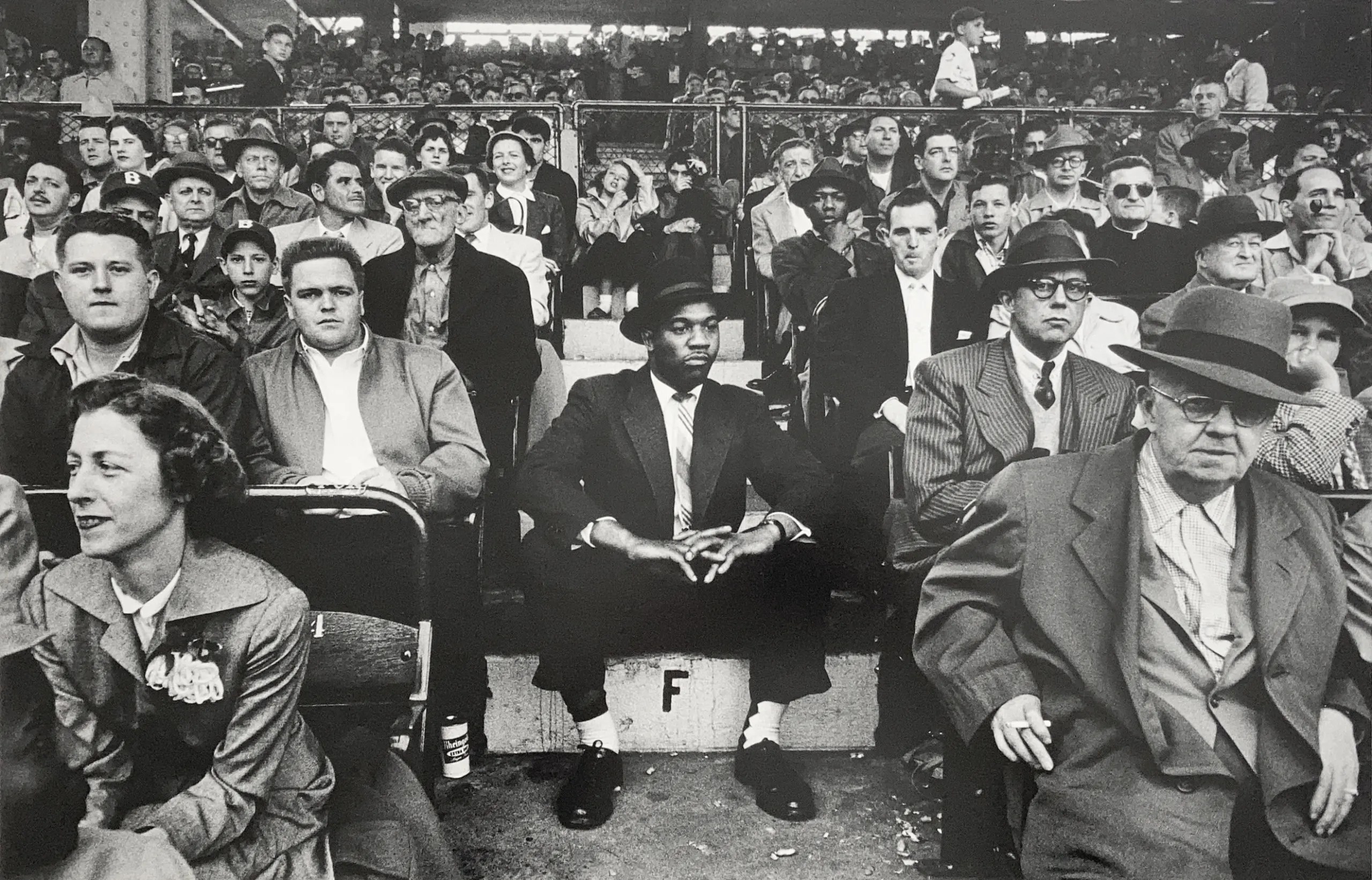
   “Harlem,” he said, getting in beside the driver. He knew sitting up front was like going to an afternoon matinee and sitting next to the only other person at the movies, but he liked riding shotgun. He was looking forward to seeing a show tonight. His favorite summer show was the Bums at Ebbets Field. He and a friend liked sitting in the lower section along the third base line, except Bumpy’s favorite place to park his behind was the concrete stairs between the seats. As soon as he could he sat there. The view was the best. There were never any fat heads or funny hats in front of him. Hardly anybody except the ushers complained. When they did he gave them a hard look with his indifferent green eyes.

   “Big night tonight. Nat King Cole is in town.”

   “Never heard of him, pal,” the cabbie said.

   “When I perform it’s like sitting down at my piano and telling fairy stories,” Nat King Cole said before a show in Birmingham, Alabama.

    It was five months since he had been attacked in Birmingham, during a show, when half-a-dozen white men jumped over the footlights and rushed him, grabbing his legs, wrenching his back, taking him down to the floor of the stage before the police were able to break up the melee and the baritone with perfect pitch was able to go back to telling fairy stories.

   “Alabama is no place for immoral nigger rock and roll music,” Willie Hinson said the next morning standing in front of the storefront office of the White Citizen’s Council. He had a slight sunburn lighting up his freckles and was wearing a tie. Bumpy had heard it all before. He had already killed one white man. It had not been an accident. He thought he might have to kill another one someday, if not for any particular reason, then on principle alone.

Excerpted from the crime novel “Cross Walk.”

Ed Staskus posts monthly on 147 Stanley Street http://www.147stanleystreet.com, Made in Cleveland http://www.clevelandohiodaybook.com, Atlantic Canada http://www.redroadpei.com, and Lithuanian Journal http://www.lithuanianjournal.com

“Cross Walk” by Ed Staskus

A Cold War Thriller

“Captures the vibe of mid-century NYC.” Sam Winchell, Beyond Fiction

Available on Amazon: https://www.amazon.com/dp/B0CRPSFPKP

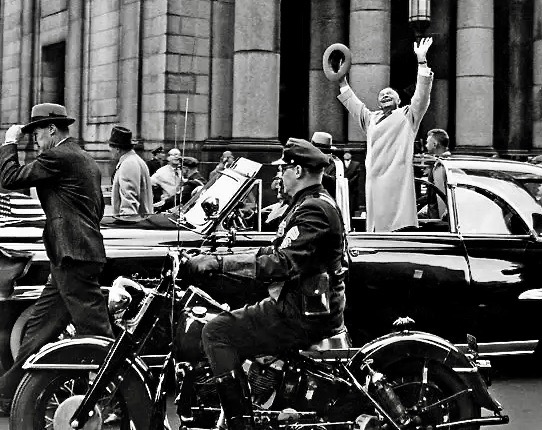
Late summer and early autumn, New York City, 1956. Stickball in the streets and the Mob on the make. President Eisenhower on his way to Ebbets Field for the opening game of the World Series. A killer waits in the wings. A Hell’s Kitchen private eye scares up the shadows.

A Crying of Lot 49 Publication

Gone to Flatbush

By Ed Staskus

   Tony de Marco had a bad headache. It got up to full speed the second he got up from an unsound sleep. When he stood up he was swept by a wave of nausea. He had to grab the headboard to keep from falling over. He felt sick and slaphappy eating breakfast. He was unhappy walking to the newsstand to get a copy of the Daily Mirror. He was unhappy riding the train to Ebbets Field. He hadn’t been able to jump the turnstile and had to pay the full fare.

   He couldn’t shake the headache off. Turning his head to either side even slightly made it worse. It felt like his brain had gotten too big for his head, like it was swollen. He closed his eyes. He tried to read the tabloid but couldn’t concentrate. He closed his eyes again. A minute later he was getting some shuteye, lulled to sleep by the rocking of the train. He slept through a ten-minute nightmare of Korea. It wasn’t hard. He had dreamt hundreds of them about what went on in the cold hills north of the border.

   He woke up when his station was called. He knew he wouldn’t miss the call when he dozed off, which is why he could doze off. He never missed his stop, even though his hearing was bad. It was like his mind screened out the talk of the passengers but was tuned in to hear the voice of the PA system. He felt better. He wasn’t on the sunny side of street, but he was out of the dark clouds. Stepping off the train, crossing Bedford Avenue, the ballpark came into sight. 

   “Goddamn that Robert Moses,” he cursed under his breath, a shadow crossing his face.

   Everybody knew somebody was going to have to blow up the Moses bus before the Dodgers ever got a new stadium. Ebbets Field was the smallest park in the National League. The seats were bad. The toilets were bad. Nobody ever went to the bathrooms unless it was an emergency. There was practically no parking anywhere. Even sold-out games didn’t help, although they helped. The Atlantic Yards was where the team wanted to go. But Moses wanted them to move to a city-owned stadium in Queens. Moses was the city’s all-powerful mover and shaker. If anybody could make it happen, he could make it happen.

   But for once what he wanted wasn’t going to happen. “We’re the Brooklyn Dodgers, not the Queens Dodgers,” the boss had said. Nobody in Brooklyn wanted to be a Queen Bum.

   Walter O’Malley was the boss. He was determined to get a bigger ballpark somewhere else. The stink of relocating was in the air. He’d been planning it for ten years. They were already playing some of their home games at Roosevelt Stadium in Jersey City. They had played the first one there almost two weeks ago, edging the Phillies by a run. 

   O’Malley was going to beat down Moses, no matter how many commandments he had to break. There was no doubt about it. The big man was going to move the team, that was for sure, maybe move out of Brooklyn, maybe even move to the west coast, even though there wasn’t a team anywhere west of Kansas City. It would be like moving to the moon.

   “Jeez, Jersey City, already!” Tony muttered and spat on the sidewalk.

   The King of Hanky-Panky of Jersey City was gone, he wasn’t the mayor anymore, but his gang was still running things, and he was still living like a millionaire. Anybody who said anything about it to him was told he was a rotten commie. Then he was punched in the nose. Then he was thrown out of town.

   The drive to the ballpark in Jersey City was terrible. There were no shoulders on the Pulaski Skyway over the Hackensack and Passaic rivers. The breakdown lane was in the middle of the bridge. Everybody called it the suicide lane. They were finally building a concrete median to put a stop to the head-on accidents. Once you got over the bridge everything smelled like soap and cheap perfume, especially the closer downwind you got to the Colgate Plant on Hudson Street.

   It was the first day of May. It was sunny, in the low 50s, the sky a faraway blue. By the time he got to work on the field it might hit 60. The team was in Cincy playing the Redlegs. The grounds crew had the rest of the week and more to get the home field in tip-top shape. After that it was nothing but rule the roost games the rest of the month. Tony was sure the Bums would be in first place the beginning of June.

   He walked past the ballpark, crossed Flatbush Avenue, and strolled into Prospect Park. He had a half-hour to kill. When he got to the shore opposite Duck Island, he found a bench and sat down, looking over the water. He pulled a pack of cigarettes and a Ronson lighter from his jacket pocket. His headache wasn’t any worse. It was probably a little better. He wasn’t sure but hoped so.

   “L & M filters are just what the doctor ordered!” is what the ads said. Maybe a smoke would make him feel better. He leaned back and lit up, watching a duck and a line of ducklings waddling into the water. One of the ducks stayed on the shore, standing sideways, keeping the business side of his eyes on him.

   There was a wall of six and seven-foot-high butterfly bushes flanking and to the back of the bench. In the summer, once it got good and hot and the red lilac-like flowers bloomed, the bushes attracted butterflies and hummingbirds. Now that the ducks were back in town, he would have to remember to bring a bag of stale bread to the park.

   Tony sometimes ate lunch in Prospect Park when the team was on the road. When they were at home there was too much work to do. He was on the work gang that rolled the tarpaulin out when rainstorms loomed, when it was all hands on deck, and he had his own assigned work, but he never did any mowing. The head groundskeeper made sure the grass was cut everyday if the team was in town. He might cut the infield grass shorter than usual if a bunt happy team was on the schedule. When Jackie Robinson had been younger and faster than just about anybody the grass was always kept long and the dirt in front of home plate watered down for him. The Colored Comet’s first ever hit for the Dodgers had been a bunt single.

   One of Tony’s jobs was laying the foul lines, the coaching boxes, and the batting boxes. Jackie Robinson still stole home two and three times a year. Tony made sure the chalk line from third base to home was straight as an arrow, leading the way to the promised land.

   He took a drag on his lung dart and felt better. He would have to tell the doc about his headaches. The medicine man had been able to help him with his bad dreams without shock treatments or talking about combat fatigue and all the rest of their psycho crap. He knew most of the VA shrinks yakked it up about hostility and neurosis aroused by warfare. They didn’t know anything about bad weather in Korea that never stopped, mud frozen solid, and no sunlight day after day. They didn’t know anything about gooks with burp guns that never stopped. They didn’t know anything about feast that never stopped. They didn’t know what the hell they were talking about. They didn’t know how goddamned horrible it was.

   He was lucky to have found Doc Baird, although when he thought about it, it was more like Doc Baird had found him. He couldn’t remember exactly how it happened. Besides the ear doctor in Japan, who told him he had lost some of his hearing, Doc Baird was the only medicine man he had talked to the past three years who made sure to face his good ear when they were talking.

   “They didn’t have earplugs or nothing for us,” Tony told Doctor Baird.

   “They’d say, you just have to live with it. Put paper or cotton in your ears. They didn’t care about us. I had to go to a MASH hospital one time. There was something wrong with me. I thought it might have been pneumonia. That night they brought in a bunch of guys who’d been in a firefight, crying and hollering, all mangled up, bleeding like stuck pigs. I couldn’t stand it. I left and hitchhiked back to my outfit.”

   The ducklings swam in a broken line behind their mother duck, who was putting up a racket to keep her brood together and safe. He had once seen a turtle rise up and gobble down a duckling. It was gone in the blink of an eye, just like that.

   “When did you serve in Korea?” Doctor Baird asked.

   “I was there from the start, at Inchon. I got drafted in 1949, right after I turned 21, when the new law said everybody over 18 had to register. I didn’t have any luck. Only ten thousand guys got drafted that whole year and I was one of them. I didn’t want to go. My doctor wrote them a letter saying I had a bad back and they couldn’t use me. My boss wrote a letter saying we can’t spare him, we need him for the team, but they didn’t listen to nothing.”

   “You didn’t want to join up?”

   “No, but when my number was up, I went down to the draft board. There was a big Marine there. He got us all lined up in a row. He’d hit a guy in the chest. Marine! A couple more guys, he would hit another one in the chest. Marine! When he got to me, he looked me up and down, and went to the next guy. He didn’t want me. I weighed less than 130 pounds then. They pushed me into the Army on a two-year plan and sent me to Fort Dix. We had a newspaper there, the Stars and Stripes. It said, ‘Fort Dix Turns Out Killers’. They called us killers. I didn’t know what it was all about. I wasn’t mad at anybody. I wasn’t any kind of killer.”

   The ducks dipped their heads underwater as they swam, scooping up plants and insects. The drake on the shore walked off looking for land bugs and dandelion greens. Waddling away he twisted his head around and grunted, then whistled at Tony. He didn’t hear the whistle, just like he didn’t hear birdsongs, not if they went into his bad ear.

   “You lost some of your hearing in the one ear while you were in the artillery?”

   “I lost a lot in the one ear, yeah. I wasn’t supposed to be in that racket, but that’s what happened,” said Tony. “Most of the guys I trained with went to Europe, where they didn’t have to do nothing. Three squads of us got sent to Korea. I had to fly to Seattle, wait thirty days, and then they put us on a ship across the Pacific, which took another twenty days. When we landed in Yokohama, we thought, maybe we’ll just stay in Japan, but the next thing I knew I was landing at Inchon in a barge. Nothing went right for me after that.”

   “What went wrong?” the doctor asked, doodling on a notepad with no notes in it. He was listening with half an ear. He knew everything about Tony he needed to know. The sessions were for show and reinforcement.

   “I was trained for the infantry, but after we landed, they said, we have enough infantry guys, we need guys in the artillery. They sent me to the 37th Field Artillery Battalion, the Second Division. They gave us a patch for our sleeves with a star and an Indian on it. We used to say, ‘Second to None!’ Right away they put me in a gun section, and we got orders for a fire mission. We had twelve guns, 105’s, loud as hell, just boom, boom, boom hour after hour. When it was over and the guys were talking, all I could hear was lips moving. I couldn’t hear a damn thing for a half hour. I wasn’t used to that kind of noise.”

   “How did you get captured?” asked Doctor Baird.

   “What happened, after about four months, after Inchon, they said, you’ve got infantry training, right, we’re going to make you a forward observer, so I had go back to the infantry. My job was to tell our guys where to shoot the stuff. If there were a thousand gooks in the open, we’d say, shoot the stuff that explodes in the air. It would rain down on those guys, the shrapnel getting them. Other times it was quick shells, the kind that explode the instant they hit the ground, or delays, the kind that stick in the ground and blow up later.”

   “You were fighting the North Koreans?”

   “No, we were fighting the Chinese, tough guys, small, always blowing bugles, padded up in quilt coats. They knew how to stay warm, not like us, with the summer outfits MacArthur sent us. They were good with mortars. If a round landed in front of you, and right away another landed behind you, we always said, get the hell out of the middle. There wasn’t anything but one hill after another in Korea. We would lob over the hills to the other side when our infantry was going up the near side to take it. We tried to shoot over them, down on the gooks, but sometimes it would land on our own guys.” It was friendly fire gone suddenly unfriendly fire.

   “That’s what happened to me and my buddy. We got caught in some wire. You always had to watch for incoming rounds. As long as you heard a whistle, you’re OK. The one that gets you, you never hear it. My buddy got killed, and I got all cut up. I couldn’t get off the wire. I still have scars on my arms. The Chinese picked me up. They had me for about three weeks. It was bad, and I got sick, something in my stomach, and when there was a prisoner exchange, they sent me back. I got flown to Japan and was in a hospital for a month, but I made it out alive.”

   Tony stubbed the L & M butt under his heel. He tucked his lighter away. It was time to go to work. He thought about the Greek kid. It was the kind of thing that happened when you were doing some killing while the other guy was trying to kill you at the same time.

   “There was a Greek kid in my outfit, he was a baseball player, but he got a leg blown off. They gave him an artificial leg. The thing hurt him where it was attached. He took aspirins all the time. He drank whiskey when he had to. He didn’t tell anybody about it and tried to get back into the game. He had an arm like a cannon, but what can you do on one real leg? He was still trying to make it in the minors after I got home, but, of course, he never made it.”

   The home plate entrance to Ebbets Field was an 80-foot rotunda made of Italian marble. Tony never went in the front door. He went around the back, to a door behind the bleachers in center field. He checked in with the watchman and went to his locker.

   “When I got healthy, they said, you can go home unless you want to re-up. We’ll give you $300.00 if you do that. We made $90.00 a month and they paid us $45.00 extra whenever we were in combat. But they didn’t want to pay me for the couple of months I still had left on my two years, so I said, no way.”

   “You went home after you got better?” asked Doctor Baird.

   “Yeah, I came home to Brooklyn, got my old job back, except my old job was turned into cleaning in the aisles and bleachers, but I worked my way back up. All the real bums sit in the bleachers. I’m doing maintenance work now, better pay.”

   After Tony changed into his work clothes in the grounds crew locker room, he walked out to the field. They were raking the sand clay mix today, including the infield, foul lines, and on-deck plot. His headache was gone, thank God. The ballpark was going to look good for the Giants next week.

   “Hey Tony, big night tonight with Phil?” asked one of the three men with rakes resting on their shoulders as he walked up to them with his own rake.

   “You bet,” he said. “It’s Bilko time tonight. He gets it over on the con men who try to gyp one of his guys. Ike’s going to like this one”

   Dwight Eisenhower was a big fan of “You’ll Never Get Rich.” Earlier in the season the Master of Chutzpah had gotten a telegram from Ike’s press secretary. “The Old Man missed last night’s show,” it said. A print of the show was immediately shipped to the White House.

   “I bet you saw it filmed,” one of the men said.

   “That would be a good bet. They made everybody roll around on the floor before the show, except for Silver, because their uniforms came in looking too crisp, too starchy, for them being in the motor pool. They looked scruffy enough when they were done.”

   The show was filmed live in Chelsea in a building that used to be the armory for the Ninth Mounted Cavalry. It was shot like a play and recorded to film. It was a comedy and Phil Silvers ad-libbed like a man lost in his own thoughts. Tony had been in the audience more than a dozen times. He always looked forward to the comedian coming up with something off the top of his cue ball head. It was why Tony de Marco’s nickname was Tony the Phil.

   Tony was a buff of Master Sergeant Ernest Bilko, who was named after Chicago Cubs first baseman Steve Bilko. “Bingo to Bango to Bilko” was the way the Chicago radio play-by-play man called double plays executed by shortstop Ernie Banks, second baseman Gene Baker, and Steve Bilko. Tony never missed a show, unless the Dodgers were playing under the lights, when it was Fernandez to Robinson to Nelson.

   He wasn’t the only fan of the show among the crew, but he was the show’s biggest fan among them. Sergeant Bilko was a crafty devil whose get-rich-quick schemes almost always fell flat on their face. His tips for success and riches never panned out either, but nobody ever bad-mouthed him for trying. They loved him for trying.

   “They always lose, sure, but they don’t blame me, because to a gambler a bad tip is better than no tip at all,” Phil Silvers said with a straight face..

   A short man wearing a plaid cap, a stogie stuck in his thick lips, standing on the far side of the pitcher’s mound in a pair of green knee-high rubber boots, waved a hand at Tony. “Hey, go out there and check the drainage in center,” said Max Ringolsby, the crew chief, pointing over the top of the second base bag. “Duke said something about the grass being damp out there. Maybe the drain is clogged.”

   The Duke of Flatbush was the team’s best outfielder, usually assigned to roam center field. He was money in the bank when a deep line drive had to be caught at all costs. The year before he had been the National League’s MVP runner-up. Nobody wanted to see him go head over heels on a slick spot.

   Tony walked off the infield, into the outfield, to the middle of center field, and found the drain. He got down on his hands and knees. The ground was more waterlogged than it should have been. Drainpipes crisscrossed the field and water flowed down a slight fall to a larger drainpipe that ran into the storm water system. The pipe was about four inches below the sand, clay, and gravel that was below the grass.

   Tony cut a block of sod from around the drain and dug down to the drain grate. It was stopped up with debris. He retrieved a screwdriver from the tool room and removed the cover. He put it on the ground beside him and started cleaning it. He had the feeling somebody was watching him. He looked around the field. Almost everybody was working at something. Nobody was watching him. He could smell a rat when he saw one.

   He bent forward and looked into the drain. A brown rat leaned up and looked back at him. He might have been a foot-and-half stretched out. His teeth were long but ground down. Rats chewed on anything, including cement, brick, and lead pipes. One of the guys fed scrambled eggs to the rats that hung around their locker room. Tony wondered what he was doing in the middle of the day, when he should have been napping. He didn’t wonder that the rat was in the sewer. They could tread water for days.

   They bred and lived and bred and died in Ebbets Field. They never left. Why would they leave? Everywhere except the ballpark was a menace. They had been there since the stadium was built in 1913, generation after generation of them, because there were always leftover hot dogs, soft pretzels, and Cracker Jack beneath the seats and around overflowing trash bins.

   “Boo,” Tony the Phil said softly.

   The brown rat blinked, twitched, and skittered back into the storm drain.

Excerpted from the crime novel “Cross Walk.”

Ed Staskus posts monthly on 147 Stanley Street http://www.147stanleystreet.com, Made in Cleveland http://www.clevelandohiodaybook.com, Atlantic Canada http://www.redroadpei.com, and Lithuanian Journal http://www.lithuanianjournal.com

“Cross Walk” by Ed Staskus

“Captures the vibe of mid-century NYC.” Sam Winchell, Beyond Fiction

Available on Amazon: https://www.amazon.com/dp/B0CRPSFPKP

Late summer and early autumn, New York City, 1956. Stickball in the streets and the Mob on the make. President Eisenhower on his way to Ebbets Field for the opening game of the World Series. A killer waits in the wings. A Hell’s Kitchen private eye scares up Cold War shadows.

A Crying of Lot 49 Publication

Red Hook Tough

By Ed Staskus

   It was a hot and humid day. The city as far as the eye could see smelled bad. The sky was dotted with dull clouds. The old hot dog Ezra Aaronson had wolfed down for breakfast was giving his stomach trouble. On top of that, the bunion topping his left big toe was throbbing in the new shoes he had forgotten to stretch beforehand. 

   It was a bad day to be having a bad day but that’s what it was turning into. Now the other penny was dropping. One of them was big and looked mean. The other one was smaller and looked meaner. He kept his eyes on the big bad penny. He kept his sense of preservation on the small bad penny. Ezra was sure nobody else was behind him to trip him up but running fast and far was going to be a problem with his bunion. He kept his hands at his sides, his right hand balled into a fist.

   “You can forget about that roll of pennies in your hand,” said the small bad man next to Big Paulie. 

   Luca Gravano was Big Paulie. He wasn’t tall as in tall. Instead, he was all around big, a dark suit, dark tie, and a white shirt. His face was sweaty and pockmarked. He wore browline glasses. The lenses looked like they were smeared with a thin film of Vaseline. His brown eyes were slippery behind the glasses. It was no picnic trying to focus on them. His shoes were spit shined. He stank of five-and-ten store cologne.

   “They’re not Lincoln’s,” Ezra said. “They’re Jefferson’s.” He could use a lucky penny. A rolled-up copy of the Declaration of Independence wasn’t going to get it done. Maybe Honest Abe might come around the corner with the axe he used to spilt logs back in the day. Maybe he could help. Ezra wasn’t going to hold his breath.

   “OK, let’s cut the crap,” Big Paulie said. “We ain’t going to get up to anything here, broad daylight, all these guys around, left and right.”  He waved a beefy hand over his shoulder. “We just wanna know what it is you wanna know.”

   Ezra looked past the big man. On the finger pier side of where he was a freighter lay at rest Hemp slings were lifting swaying pallets off the boat. In the distance he could see the Statue of Liberty. On the dockside was a two-story brick building. A loose group of longshoremen was coming their way, baling hooks swinging on their belts. They would be DD&B if anything did get up to something. 

   “I don’t know nothing about it,” they would all say, deaf, dumb, and blind after it was all said and done. But they might be the smoke screen Ezra needed to be on his way. He could see plainly enough he needed a way out.

   “I’m trying to get a line on Tommy Dunn,” Ezra lied. He never told anybody what he was really working on. He wasn’t working on these two goons. Why were they getting in his face?

   “Never heard of him,” Big Paulie’s small man said.

   “Fair enough,” Ezra said.

   “You a private dick?” Big Paulie asked.

   “Yeah.” 

   “Who you work for?” the small man asked. He had yellow fingernails and sharp front teeth. He wore a felt pork pie hat. He was in shirtsleeves. There were spots of spaghetti sauce on the pocket on the front of his shirt.

   “Ace Detectives,” Ezra lied again.

   “OK, I’ve heard of them.”

   “Best you beat feet,” Big Paulie said, staring at Ezra. It was a fixed look. “Tough Tony don’t like nobody nosing around for no good reason, know what I mean?”

   “I take your meaning,” Ezra said. 

   “Don’t forget what I said here today.”

    Ezra took a step back, smiling like warm milk, and walked away in stride with the group of longshoremen going his way. He hated shucking and jiving, but he knew enough to hedge his bets. The rackets ran the shaping-up, the loading, and the quickie strikes. They hired you for the day if you were willing to kick back part of your day’s pay. At the shape-up you let them know you were willing to play ball by putting a toothpick behind your ear or wearing a red scarf or whatever it was they wanted to see. If they liked you they saw it.

   They controlled the cargo theft, the back-door money stevedores paid to keep the peace, and the shylocking from one end of Red Hook to the other end. They didn’t steal everything, although they tried. The unions were hoodlums. The businessmen were hoodlums. The pols were hoodlums. The whole business was crooked left and right and down the middle.

   The Waterfront Commission hadn’t gotten much done since they got started, even though the State of New York and the Congress of the United States had gotten on board in thought and word. It was taking time finding the gang plank leading to deeds. It was just two-some years ago on Christmas week when a new union full of do-gooder ideas butted heads with the ILA. Tough Tony flooded the streets with the faithful. It took hundreds of club-swinging policemen from four boroughs to break up the riot at the Port of New York. Staten Island sat the melee out. In the end, only a dozen men were sent to Riker’s Island while emergency rooms filled up and mob rule continued to rule the roost on the docks.

   Ezra put the roll of nickels back in his pants pocket. He walked the length of the wire fence to the gate. Through the gate he turned his back on the Buttermilk Channel. He couldn’t settle himself down, a sinking feeling in his gut making him feel queasy. Red Hook was surrounded by water on three sides. A longshoreman leaning on a shadow stared at him. He crossed the street into the neighborhood. The houses, six-story brick apartment buildings, were less than twenty years old, but they had already gone seedy.

   “I need a drink bad,” he said to himself.

   Most days Ezra ran on caffeine and nicotine. Most nights he ran on alcohol and nicotine. Even though it was only late morning, today wasn’t most days. He found a bar and grill at the corner of Court Street and Hamilton Avenue. Sitting down at the bar he ordered a shot and a chaser. He looked up at the bartender. The man was broad and wearing a bow tie. He looked like a king-size mattress wearing a bow tie. 

   “What have you got on tap?” Ezra asked.

   “Ballantine, Schlitz, Rheingold.”

   Two longshoremen sat on stools a couple of stools away. Bottles of beer, most of them empty, squatted in front of them. Neither man had a glass. They ate pickles from a jar. The TV on a shelf behind the bar was on, although the sound had been turned down to nothing. A beer commercial was running. It was a ticker tape parade through Times Square, but instead of war heroes or celebrities everybody in the parade was a bottle of Rheingold. 

   “Nobody knew what that was about,” said one of the longshoremen, pulling a pack of Lucky Strikes out of his shirt pocket. The bartender knew what they were talking about. Ezra didn’t have a clue.

   “I got no trouble,” the other one said. “Me, I support my family. It’s good work, keeps me out of trouble. I got my old lady and three kids.”

   “Nothing changes,” the Lucky Strike man said lighting his cigarette. “You just live every day as if it’s your last.”

    “I’ll have that Rheingold now,” Ezra said after throwing his shot back, feeling it burn going down his throat. “Make sure the glass is as cold as can be.”

   “Sure thing, bud,” the man mattress said.

Photograph by Sam Falk.

Excerpted from the crime novel “Cross Walk.”

Ed Staskus posts monthly on 147 Stanley Street http://www.147stanleystreet.com, Made in Cleveland http://www.clevelandohiodaybook.com, Down East http://www.redroadpei.com, and Lithuanian Journal http://www.lithuanianjournal.com.

“Cross Walk” by Ed Staskus

“Captures the vibe of mid-century NYC, from stickball in the streets to the Mob on the make.” Sam Winchell, Beyond Fiction

Available on Amazon: https://www.amazon.com/dp/B0CRPSFPKP

Late summer and early autumn. New York City, 1956. President Eisenhower on his way to the opening game of the World Series. A hit man waits in the wings. A Hell’s Kitchen private eye scares up the shadows.

A Crying of Lot 49 Publication

Cheap Seats

By Ed Staskus

   It was hot and humid all up and down the east coast. It was hotter and more humid in Hell’s Kitchen. It was in the 90s and sluggish as an old bayou. The heat was trapping humidity in the air. It didn’t matter to Dottie Riddman. She was playing stickball in the street. That was all that mattered.

   The street wasn’t West 56th, which was her street. Her father had told her to never play stickball on their own street. The fronts of buildings were ruled home runs in the game of stickball. Stan Riddman didn’t want any broken windows near where they lived. Dottie and her friends always played on West 55th or West 57th.  She wasn’t about to break into a sweat about it.

   A boy bigger than her teased her about it the beginning of summer, knocking her over and pushing her to the ground. “You always do everything your old man tells you to do, boobie?” he said, straddling her with his legs. From where she lay he looked like Godzilla. “You going to wear that trainer of yours the rest of your life?” he asked, looking at her boobies.

   Dottie had her broom stick in her hands. She had moxie in her eyes. Looking up from the gutter she whacked him as hard as she could between his legs. When the boy’s father showed up at their apartment that night to complain that his son might never grow up to be a father, her father threw the man out, dragging him down the stairs by the collar, threatening him and his son with bodily harm if they ever laid hands on his daughter again.

   “You think I’m fooling, look up my police record,” he yelled, red in the face, inches from the  ashy face of the sputtering father when they were on the sidewalk. “Go back to where you came from.” He calmed down in an instant the instant he was back in the house. He jogged upstairs and sat his daughter down.

   “You did the right thing Dottie,” Stan said. “If somebody says something rotten to you, be a lady about it. Be the bigger man. But if somebody pushes you, or grabs you, or hits you, you hit them back as hard as you can. You always do that. That’s so they won’t push you again.”

   “OK, dad,” she said.

   It was a good day for stickball. Ten kids showed up, some her age, some younger. They picked their teams. Willy, her friend from Sacred Heart of Jesus Catholic School, brought a new pinky ball. It wasn’t a Pensy, either. It was the cream of the crop. It was a Spalding Hi-Bounce.

   “Spaldeen!”

   They drew a rectangle in chalk on the brick wall at the back of an empty lot on West 55th to represent the strike zone. The buildings on both sides were the foul lines. They chalked first base and third base onto the building walls and second base was a manhole on the sidewalk. If a batted ball hit any of the buildings across the street, it was a home run. If it hit a roof it was a home run-and-a-half. If it hit a window they ran like jackrabbits.

   “There ain’t no runs-and-a-half,” a kid from Chelsea, who was visiting his cousins, sneered, shooting his mouth off.

   “If you’re going to play stickball on West 55th, you better learn Hell’s Kitchen rules,” gibed Willy.

   Dottie was batter up. She smacked a hot grounder, but it was caught on the first bounce, and she was out. Willy got as far as third base, but three strikes and you’re out finished their inning. By the time they came back up in the second inning they were behind by five runs. It wasn’t looking good for the home team.

   “All right, all right, let’s pick it up, let’s get some roofies,” Willy yelled clapping his hands, urging his team on. “But chips on the ball. I mean it.” He meant that if his new Spaldeen was roofed, and couldn’t be found, everybody would chip in to pay for a new ball.

   Hal came up to the plate, wagging his broom handle menacingly, and planted his high-top rubber soled Keds firmly in the hot squishy asphalt. They were new and felt like Saturday shoes. His batted ball hit the side wall at third base where the wall met the ground and bounced back to home plate in a high slow arc.

   “It’s a Hindoo,” he shouted.

   “No, that ain’t a do-over, it’s a foul ball, so it’s a strike,” shouted back Dave Carter, who everyone called Rusty because his hair was red.

   “What do you know?”

   “I know what I gotta know.”

   “Go see where you gotta go,” Hal retorted.

   “No, you stop wasting my time,” Rusty said. “It was a foul ball.”

   “Ah, go play your stoopball,” Hal said, peeved.

   Stoopball was throwing a pinky against the steps of a stoop, and then catching it, either on the fly or on a bounce. Catching the ball was worth 10 points. Catching a pointer on the fly was worth 100 points. A pointer was when the ball hit the edge of a step and flew back like a line drive, threatening to take your eye out. When you played stoopball, you played against yourself.

   “You got a lotta skeeve wichoo,” Rusty yelled back at Hal.

   “All right, already, strike one,” said Willy, exasperated.

   He knew Rusty would never give in. He was a weisenheimer. He was somebody you had to keep your eyes on, too, or your Spaldeen might grow legs. It wasn’t that Rusty was a thief. He just kept his nickels in his pocket, and everything else, too. Willy had heard he was such a tightwad he still had his communion money from two years ago. Rusty had been born in Philadelphia. That was his problem. Willy sympathized, not too much, but slightly.

   Hal hit a cheap on the next pitch, a slow roller, but when Rusty let his guard down, reaching down leisurely for the Spaldeen, it went between his legs, and the next instant Hal was standing at first base, smirking.

   “Comeback stickball,” he shouted at Rusty. “Our game.” Eleven batters later Dottie’s team was on the plus side of the scoreboard. Rusty was beside himself. He  wasn’t going to complain, but he could have spit.

   The woman sitting on the stoop across the street, watching her windows, watched Dottie and her friends walk down the sidewalk when the game was over, one of them bouncing his pinky, all of them talking happily.

   “We killed them, just killed them,” Willy said.

   “We sure did,” Hal said.

   “What a game!” Dottie said.

   “Yeah, we were down, then you put some Chinese on that ball between Rusty’s legs, they got rattled, and then we score a boatload just like that, and it’s all over.”

   “Did you see him, the putz, pulling that long face?” Hal asked.

   “Oh, he’ll be back, no biggie, he loves playing on the street,” Dottie said.

   Dottie was beyond glad her team had fought hard and won. They scrapped for every run. It was worth it. She didn’t mind losing once in a while, but she liked winning better. She stripped off her sweaty clothes, rubbed down with a cool sponge, and put on a fresh pair of shorts and a t-shirt.  

   She put her broom stick away in a corner beside her bedroom window. In the summer she loved her friends, no matter what team they were on, and loved playing stickball with them more than anything in the world. When it was wet and cold, and the wind was windy, the pinky and chalk and sticks all stashed away, and they were clambaking the grapevine, the talk always made its way back to playing ball. It was the way of their world.

Excerpted from the crime novel “Cross Walk.”

Ed Staskus posts monthly on 147 Stanley Street http://www.147stanleystreet.com, Made in Cleveland http://www.clevelandohiodaybook.com, Atlantic Canada http://www.redroadpei.com, and Lithuanian Journal http://www.lithuanianjournal.com

A New Thriller by Ed Staskus

Cross Walk

“A once upon a crime whodunit.” Barron Cannon, Adventure Books

“Captures the vibe of mid-century NYC.” Sam Winchell, Beyond Fiction

Available on Amazon: https://www.amazon.com/dp/B0CRPSFPKP

Late summer and early autumn. New York City. A Hell’s Kitchen private eye. The 1956 World Series. President Eisenhower at the opening game. A killer in the dugout.

Pie in the Sky

By Ed Staskus

   Bettina Goertzen, Victoria Adams, and Dorothy Riddman were on their way to Coney Island. They were calling themselves Betty, Vicki, and Dottie for the day. They plunked down their ten cents apiece at a NYCTA booth and skipped down the stairs. Dottie stopped to look at a yellow sign trimmed in red on the wall at the entrance to the tunnel. “Please cooperate. When in doubt, ask any employee. Help keep the subways clean. Use receptacles for paper. Do not rush. Let ‘em off first. Move away from doors. Keep to the right on stairways. Always be courteous.”

   Why was them spelled ‘em, Dottie wondered? She didn’t think Sister Mary  Agnes would approve. “Run!” she suddenly called out, running up the platform. “It’s one of those air-conditioned cars!” Two months earlier the transit system had rolled out their first experimental air-conditioned cars on the East Side IRT line. They were fitted with deodorizers and filters and featured piped-in soft music. The temperature was maintained in the mid-70s. Signs on every third window said, “Air-Conditioned Car. Please Keep Windows Closed.”

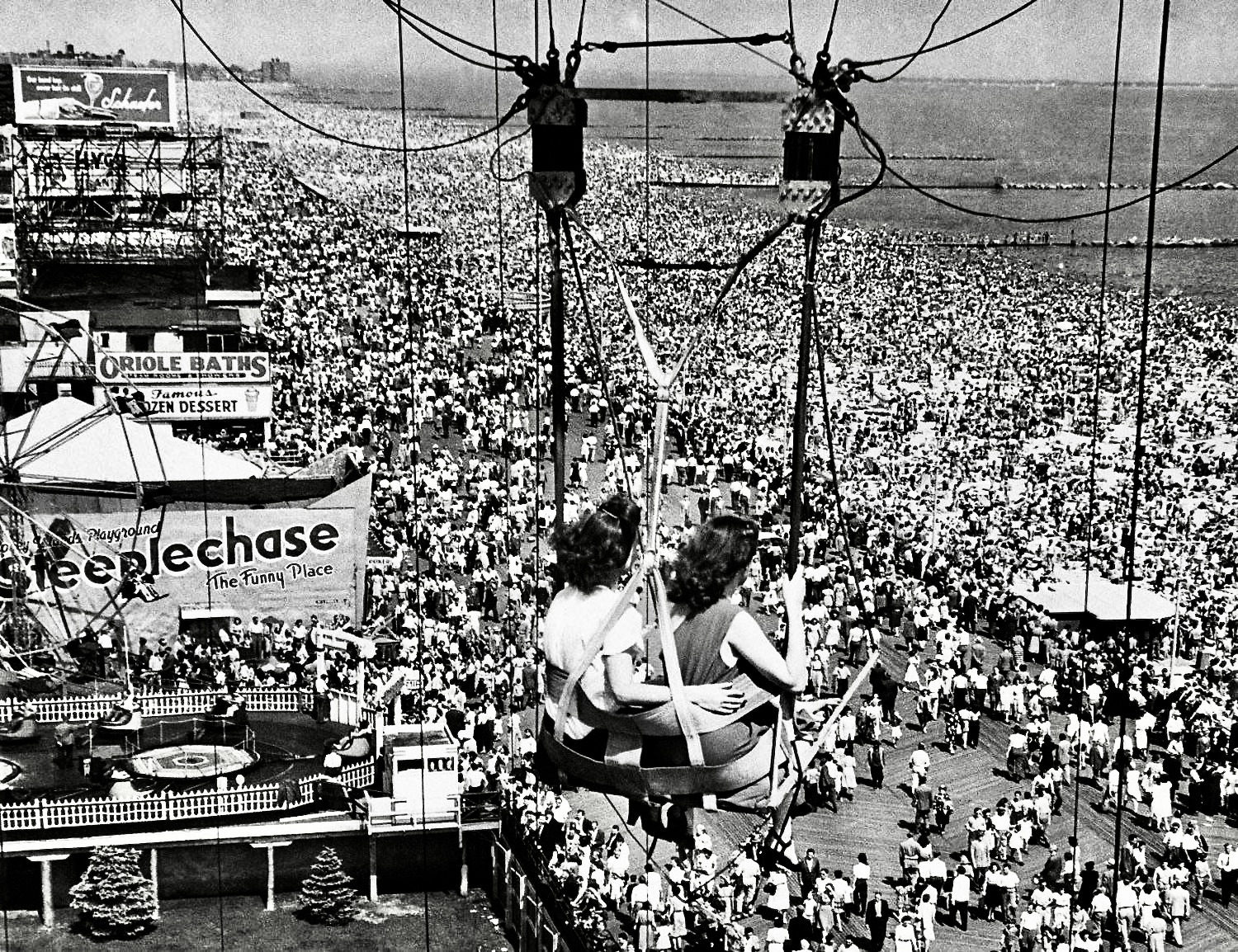
   They were taking the IND line across the river to Brooklyn, across Gravesend, to the end of the line. When they got off the train they walked, crossed Mermaid Avenue, and hoofed it to Coney Island Beach and the Boardwalk. Dottie felt light as lemonade.

   They stopped at the Sodamat on West 15th Street as they strolled on the Boardwalk. ‘Good Drinks Served Right. Skee Ball 5 cents.’ There were prize games, hammer games, rifle ranges, freak shows, and fortune-tellers up and down Coney Island. “Look, they have waffles,” Dottie said, pointing to a sign on the front of a counter behind which a man in a white jacket and soda jerk cap was making waffles.

   “I thought you wanted a Nathan’s,” Vicki said.

   “I do, but later,” Dottie said.

   “Did you know hot dogs were invented right here on Coney Island, almost one hundred years ago?” Betty asked.

   “Not so fast, how could Nathan have done that?” Dottie asked.. 

   “It wasn’t Nathan then, it was Charley Feltman, who used to boil sausages on a small charcoal stove inside his wagon and then slip them into a roll. He called them red hots at first, but later changed it to hot dogs.”

   “How about some ball hop before we eat?” Vicki asked, pointing into the arcade behind the food counter. “The word from the bird is that you’re good at it.”

   “My game is stickball,” Dottie said. “Skee ball is for jellyfish. They don’t even play stickball here. They play coop-ball. That’s for jellyfish, too.”

   “Do you only play stickball?” Vicki asked. 

   “Oh, no, we play ringolevio and skelly, too, although some kids call it scummy top. Skelly is fun, but all you’ve got are your chalk and the squares and your caps. Ringolevio is way more fun, we run all over, and there’s a jail, and jailbreaks, and everything.  Chain, chain, double chain, no break away!” 

   “Let’s break the chain and go eat,” Betty said. They ordered waffles.

   “That was the best waffle I ever had,” Dottie proclaimed when they were leaving.

    “You had two of them,” Vicki said.

   “She’s a growing girl,” Betty said.

   “Those were the best two waffles I ever had,” Dottie said.

   “Where to now?” Betty asked.

   “I want to jump off the Eiffel Tower!” Dottie exclaimed.

   The Parachute Jump at Steeplechase Park had been built for the 1939 World’s Fair and later moved to Coney Island. It stood 250 feet high, was open-frame, and everybody called it the Eiffel Tower of Brooklyn. Twelve cantilevered steel arms sprouted from the top of the tower, eleven of them supporting two-man canvas seats and parachutes. The riders were belted down, hoisted to the top, then released into a freefall, caught by the parachute, and floated to the ground. Shock absorbers were built into the seats, just in case.

   “I’m not going up on that thing,” Betty said.

   “Do you remember the parachute wedding?” Vicki asked her.

   “No, I never heard of it.”

   “A couple got married up there. The minister was in the seat next to them and the whole wedding party was on the rest of the seats. When the ceremony was over the married couple parachuted down first, and everyone else followed them, except for the minister. The cables on his seat got tangled and he was up in the sky for more than five hours before firemen could get him down. The tower is right on the ocean, and it was windy, and he got sick as a dog, puking on the wedding party who were watching from below.”

   “That cinches it,” Betty said.

   “You and me both, sister,” Vicki said. “Time to plow back through the crowd.”

   “Why do they call it Coney Island?” Dottie asked, taking a last look up at the parachute ride she wasn’t going to ride.

   “It’s because of the Dutch,” Betty said “When they were here, maybe three hundred years ago, there were lots of rabbits in the dunes, so they called it Konijnen Eiland, which means Rabbit Island. It became Coney Island when the English took over.”

   “How did they take over?”

   “Somebody always takes over.”

   “Why does somebody always take over?”

   “It’s the way of the world, child.”

   “I want to go on the Wonder Wheel.”

   “I think we’re up for that,” Vicki and Betty agreed.

   The Wonder Wheel at Luna Park was a Ferris wheel and a Chute-the Chutes and a slow-moving roller coaster all rolled up in one. It was once called Dip-the-Dip. Some of the cars were stationary, but more than less of them moved back and forth along tracks between a big outer wheel and a smaller inner wheel as the contraption rotated.   

   They walked past an eight-foot high neon sign spelling out “Wonder Wheel.” Shooting through the middle of the sign was an arrow blinking and pointing to the ride. “Thrills!” it said. Dottie sat between Vicki and Betty in one of the sliding cars. 

   “You can see Manhattan,” Vicki said when it was their turn at the top of the 150-foot-tall wheel and it stopped for a few seconds.

  “Look, you can see the Rockaway,” Betty said.

   “It takes you low and it takes you high,” Vicki said.

   “When you reach the top it’s like you can touch the sky,” Dottie said. “You can see the whole world from here.”

   “One minute you’re on top, the next minute down you go,” Betty said. “I say, stay in your seat, it’s going to get bumpy, and enjoy the ride.”

   “Top of the world, ma, top of the world,” Vicki cried out like a crazy woman, bulging her eyeballs, and throwing her arms up. Betty laughed. Dottie squinted at them, wondering what they were talking about.

   “One day he’s a mama’s boy mad dog killer and the next day, older and wiser, he’s Yankee Doodle Dandy.”

   Dottie wondered again, what are they talking about? The Wonder Wheel shuddered and started down.

   “Can we go fast now instead of slow?” Dottie asked when they were on the ground.

   The Cyclone was in Astroland at the corner of Surf Avenue and West 10th Street. It was almost 3000 feet long, with six fan turns and twelve drops. The lift hill was 85 feet high. Six years earlier a man who hadn’t spoken in fourteen years, riding the roller coaster for the first time, screamed while going down the first drop. “I feel sick,” he groaned when the train returned to the station. He dropped to the ground in a dead faint after realizing he had spoken.

   Dottie peeked over the front edge of the front car at the track of the Cyclone as the train creaked to the top of the lift hill, where it was going to curve over the rails and hurtle down. Vicki and Betty were in the car behind her, after she had pleaded with them to go on the coaster, and she was with her new friend, Ronald, a boy her age whose parents had stayed behind on the platform. 

   “I have a friend who counts the seconds until the ride is over,” Ronnie said. 

   “Why does he do that?”

   “He can’t stand it.”

   “What’s the point of riding it in the first place?” 

   “I dunno,” Ronnie said. “Every time I ask if he wants to go with me, he says, sure, as soon as I’ve lost my mind, but he always goes anyway.”

   “The Cyclone is for when you want to be scared and excited all at the same time. Maybe he should stick to the merry-go-round.”

   “Yeah,” Ronnie said. “You don’t want to ride the roller coaster when you’ve got diarrhea.”

   “No way,” Dottie said, making sure their buzz bar was locked in place.

   “Did you hear about that girl who got hit in the face by a pigeon and broke her nose going down this hill?” Ronnie asked.

   “No!” Dottie said.

   “She was alright,” he said. “She had some Kleenex and stuffed it up her nose holes to keep the blood out of her eyes. She went right back for another ride.”

   “Yikes!” Dottie said, as the Cyclone shook, shimmied, and roared down the other side of the lift hill. “If that happens, I don’t have any Kleenex!” They laughed up and down the trick hill, leaned into the banked turns that twisted and tipped the train, ducked beneath the head-choppers, and inside of two minutes pulled back into the station where everybody clambered off. 

   “My legs feel like fried bacon,” Ronnie said.

   “Yeah, that was the mostest fun,” Dottie agreed.

   “Bye.”

   “Bye to you, too.”

   “That was sketchy,” Vicki said, catching her breath.

   “Shoot low, they’re sending Shetlands,” Betty said. “Did you feel that tower sway when we got to the top?”

   “You bet I did, right in the pit of my stomach.”

   “I’m hungry,” Dottie said.

   “You’re always hungry,” Betty said. “Doesn’t the boss feed you? Do you have a hollow leg, or what?”

   “I’m on the same page, hollow and hungry,” Vicki said.

   “How about a red hot at Nathan’s?” Betty suggested. 

   “Whoopee!” Dottie belted out sounding like Yosemite Sam after a long day on the trail of Bugs Bunny.

Excerpted from “Cross Walk.”

Ed Staskus posts monthly on 147 Stanley Street http://www.147stanleystreet.com, Made in Cleveland http://www.clevelandohiodaybook.com, Atlantic Canada http://www.redroadpei.com, and Lithuanian Journal http://www.lithuanianjournal.com

A New Thriller by Ed Staskus

Cross Walk

“A once upon a crime whodunit.” Barron Cannon, Adventure Books

“Captures the vibe of mid-century NYC.” Sam Winchell, Beyond Fiction

Available on Amazon: https://www.amazon.com/dp/B0CRPSFPKP

Late summer and early autumn. New York City. A Hell’s Kitchen private eye. The 1956 World Series. President Eisenhower at the opening game. A killer in the dugout.

Mean Streets

By Ed Staskus

   When Stan Riddman took the stairs two at a time coming up from the basement of the Flatiron Building it wasn’t an old dark city, yet. The new night was still on its way. The sky was a hazy lemon and smoggy blue. It was the first day of the second week of fall, but felt more like the middle of summer, except for the shorter days. Stan wore a short sleeve shirt and linen trousers. The wallet in his back pocket was flush with more tens and twenties than it was with its usual ones and fives. 

   He gave the leather in his pocket a friendly pat. The seven-card stud he had played in the dingy room next to the furnace room had been good to him. He could buy his kid some new clothes, stash some away for the office rent for when work was slow, and score tickets for the Series.

   The Socialist Labor Party used to have offices in the Flatiron Building, but not down in the basement. They had their heads in the clouds. They thought they were in the cards back then. They didn’t know they were shooting snake eyes. He wondered if they would have banned poker, making it out like it was exploitive, if they had ever come to power. You took your chances at cards, but it was only exploitive if you had no skill at it. You deserved to be taken if you played dreamland. Stan never played dreamland. He never shot craps. He never put himself at the mercy of cubes of white resin bouncing around at random. He walked down 22nd Street to Lexington Avenue, turned right, walked through Gramercy Park to Irving Place, and looked for a phone booth.

   The reckoning for a Subway Series was coming up fast. The Yankees were in, and the Indians were out, that was for sure. The Redlegs were running on an outside track. The Braves were neck and neck with the Dodgers. The Bum’s ace Sal Maglie had no-hit the Phils earlier in the week at Ebbets Field and the Cardinals were going hard at the Braves out in the boondocks. It was going to come down to this weekend as to whether there was going to be a Subway Series, the same as last year, or not.

    Last year’s Fall Classic went seven games, and the queer thing about it was the Yankees won their three games at Ebbets Field and the Dodgers won their four games at Yankee Stadium. Neither team won on their home field. Nobody had taken that bet because it wasn’t in the cards. Nobody took the backside odds on the seventh game, either, especially since Jackie Robinson wasn’t penciled in to play the deciding nine innings. At least, nobody took the odds except Stan and Ezra Aaronson, and anybody else who flipped a coin.

   Who would have thought the Cuban would be the difference-maker in the deciding game when he took over the right field spot in the sixth inning last year? Stan was in the upper deck with his partner, Ezra. The Yankee dugout was on the first base side, so most of the Bum fans were on the third base side. A client who was a Yankee fan, after Stan had gotten him the black and white proof he needed to get his divorce done, gave him a pair of passes. They ended up on the wrong side of the rooting section, but by their lights were rooting for the right team.

   “Beggars can’t be choosers,” Ezra said, sitting in a sea of Bronx Bomber fans.

   When Yogi Berra hit an opposite field sure-fire double, Ezra sprang out of his seat, like everybody else, but suddenly the lightning-fast right fielder Sandy Amoros caught it coming out of nowhere. He fired a pill to Pee Wee Reese, who relayed it to Gil Hodges, who doubled up the retreating Gil McDougald off first, ending the last threat Stengel’s Squad made that afternoon. 

   Casey Stengel managed the Yankees. Back in his playing days, when he still had legs, he had been a good but streaky ballplayer. Fair bat, good feet, great glove. “I was erratic,” he admitted. “Some days I was amazing, some days I wasn’t.” When he wasn’t, he played it for laughs, catching fly balls behind his back. One afternoon he doffed his cap to the crowd and a sparrow flew out of it. Another day, playing the outfield, he hid under the grate of a storm drain and popped out of the drain just in time to snag a lazy fly ball.

   Whenever he stood leaning over the front top rail of a dugout, he looked like a scowling Jimmy Durante dressed up in pinstripes. He was called the “Ol’ Perfessor” even though he had stumbled through high school. He graduated only because his high school didn’t want him back for another year. He managed the Braves and Dodgers for nine years and chalked up nine straight losing seasons. Casey Stengel might not have been a for-real professor, but he knew enough not to give up. After the New York Yankees hired him in 1948, the only year he hadn’t taken them to the World Series was 1954.

   Stan and Ezra were the only men in their section who had not fallen back into their seats, stunned, after the Cuban snagged Yogi Berra’s liner. Stan had to pull the clapping and cheering Ezra down so there wouldn’t be any hard feelings. As it was, Ezra was so excited there were hard feelings, after all, and Stan had to drag him away to a beer stand.

   “This beer is bitter,” Ezra complained, looking down at the bottle of Ballantine in his hand. Ballantine Beer was featured on the Yankee Stadium scoreboard, its three-ring sign shining bright, flashing “Purity, Body, Flavor.” Whenever a Yankee hit a homer, Mel Allen, the hometown broadcaster, hollered, “There’s a drive, hit deep, that ball is go-ing, go-ing, gonnne! How about that?! It’s a Ballantine Blast!” 

   The Brooklyn Dodgers, Ezra and Stan’s team of choice, played at Ebbets Field in Brooklyn. Their scoreboard boasted a Schaefer Beer sign, with the ‘h’ and the ‘e’ lighting up whenever there was a hit or an error. Below the beer sign was an Abe Stark billboard. “Hit Sign, Win a Suit”. Abe Stark was a men’s wear man.

   “That’s some kosher beer, that Schaeffer’s,” Ezra said, giving his bottle of Ballantine a sour look. “The Yankees don’t know good beer from spitballs.” He threw the half-finished bottle towards a trash can. It bounced away but didn’t break. Nobody paid any attention to the bottle rattling and rolling past them.

   Stan had a home but not a home borough. His apartment was in Hell’s Kitchen, up from Times Square and down from the Central Park Zoo. He wasn’t from New York City. He was from Chicago, although he wasn’t from there, either. He had been born in Chicago, but when his mother died two years later, in 1922, his father moved the family, which was himself, his new Polish wife, two boys, two girls, two dogs, and all their belongings a year later to a small house behind St. Stanislaus Church in Cleveland, Ohio. It was in the Warszawa neighborhood south of the steel mills, where his father ended up working the rest of his life to provide for his family.

   The steel mills were where Stan worked for three years while still living at home. He volunteered for the armed forces the minute World War Two started. He wasn’t working on anything at the moment that he thought might get him free World Series passes this year like last year. As long as I put most of this away, he thought to himself, walking down Irving Place, thinking of the jackpot in his pocket, I can blow some of it tonight, and still have enough for ballgames and some more card games. Stan had stopped being his steel mill father’s son long ago.

   His daughter Dottie was at Marie’s for the weekend. Marie had once been Stan’s wife. Her taking an interest in Dottie happened about as often as the World Series. It wasn’t too early or too late tonight, and if Vicki hasn’t taken any work home, and is at home, and picks up the phone, maybe she could meet him for dinner. He found the phone booth he’d been looking for and called her. It rang almost twice before Vicki answered. That’s a good sign, he thought.

   “Hello.”

   “Hey, Vee, it’s Stan.”

   “Stan, my man,” she laughed.

   “How’s the Stuy tonight?” he asked.

   “Hot, quiet, lonely,” she said. What Stan liked about Vicki was she didn’t talk about what didn’t matter. She didn’t talk overmuch at all, even though her workday life revolved around words. She wasn’t a sexpot, but she liked sex well enough. Marie had been romantic as a pair of handcuffs. Towards the end she had taken to shaking her leg shaving razor at him.

  “How about meeting me at Luchow’s for dinner?” he asked. “I’m buying.”

   “Stan, I love you for the dear Polack or whatever you are, but the food at Luchow’s is not so good, even if you can ever get though that insanely long menu of theirs.” 

   “That’s what I’m for,” he said. “A sharp-eyed PI like me will make sure to look into everything the kitchen’s got to offer and find what’s edible.”

   “More like a dog-eared PI,” Vicki said. “All right, but the other thing is, since they seat more than a thousand people, how am I going to find you? And by chance, with that strolling oompah band of theirs, if we do bump into each other and maybe get a table in that goulash palace, we’ll only be able to make ourselves heard some of the time and not the rest of the time.”

   “We can always take our coffee and their pancakes with lingonberry over to the square after dinner and chew the fat,” he said. “It will be quiet enough there.”

   “Chew the fat? What it is I like about you? Sometimes I just don’t know.”

   “I’ll take that for a yes.”

   “Yes, give me a few minutes to change into something fun,” she said making merry. “I hope there’s no goose fest or barley pop festival going on.”

   “Meet me at the far end of Frank’s bar. He’ll find a spot in the back for us. He says the new herring salad is out of this world.”

   “Don’t push your luck, Stan, don’t push your luck,” she said. Herring always made her feel like throwing up. Just the thought of the silvery fish made her want to heave.

   Luchow’s was a three-story six-bay building with stone window surrounds, pilasters, and a parapet on top, while below a red awning led to the front door. The restaurant was near Union Square. It looked like the 19thcentury, or an even earlier century, dark and heavy Teutonic. A titanic painting of potato gatherers covered most of a wall in one of the seven dining rooms. Another of the rooms was filled to the rafters with animal heads, their offspring being eaten at the tables below them, while another room was a temple of colorful beer steins. There was a beer garden in the back.

   “Welcome back to the Citadel of Pilsner,” Frank the bartender said. He gestured Stan to the side. “Did anybody tell you Hugo died?”

  “No, I hadn’t heard, although I heard he wasn’t feeling well,” Stan said. Hugo Schemke had been a waiter at Luchow’s for 50 years. He always said he wasn’t afraid of death. He had firmly no ifs ands or buts believed in reincarnation.

   “Did he say he was coming back before he left?”

   “He did say that, but I haven’t seen him, yet.”  

   “How’s Ernst doing?” Stan asked. 

   Ernst Seute was the floor manager, a short stout man both friendly and cold-hearted. He had been at Luchow’s a long time, too, since World War One. He was deadly afraid of death. He didn’t believe in reincarnation.

   “He took a couple days off,” Frank said. “Remember that parade back in April over in Queens? They’ve got some kind of committee now, and he’s over there with them trying to make it an annual thing here in Little Germany, calling it the Steuben Parade.”

    “You going to be carrying the cornflower flag?”

   “Not me, Stan, not me.” Frank was from Czechoslovakia. “I’m an American now.”

   Frank led Vicki and Stan to a small table at the far end of the bar. He brought them glass mugs of Wurzburger Beer and a plate of sardines. Vicki ordered noodle soup and salad. “Hold the herring,” she commanded. Frank looked puzzled. Stan asked for a broiled sirloin with roasted potatoes and horseradish sauce on the side.

   “I saw Barney the other day,” Vicki said, cocking her head. “He told me you’ve made progress.”

  “I didn’t think there was anything to it the first day I saw him, that day you brought him over to the office,” said Stan. “I didn’t think there was much to it that whole first week. Then there was all that action, and Betty finally got the business end of it worked out, that it was the shrink. So, we know who did the thing to get Pollack to drive himself into that tree of his up in Springs. We know how they did it. What we don’t know is why they did it.”

   “Do you know who they are?”

   “No, I don’t, even though one of them, a sicko by the name of Ratso Moretti, who roughed up Ezra, is being held at the 17th. He doesn’t seem to know much, but what he does know says a lot. The head shrinker might be the key. He is going to tell me all about it soon, at least what he knows, and what he doesn’t know, too. He hasn’t gotten the news flash about the talk we’re going to have, yet, but he and I are going to have a sit down.”

   “You don’t think Jackson Pollack had anything to do with it?”

   “He was the wrong man in the wrong place, that’s all, if you look at it from his point of view. Betty and I think he was a test run. We think they’re up to something bigger. It’s hard to figure. It’s got to be big, but we can’t see the pay-off in it. You know Betty, though. She’ll piece it together if she has to tear it apart.”

   After dinner they looked at the dessert menu, but their looks only amounted to a glance. Vicki shook her head no. “How about coffee and dessert at my place?” Stan asked. “We can stop and get pastry at that Puerto Rican shop on the corner and eat up on the roof.” The smog had blown away. It was a clear starry night. 

   “I can’t pass up that tasty-sounding pass,” Vicki said.

   They hailed a Checker Cab. “Take us up 5th to 59th, to the corner of the park,” Stan told the driver. 

   “Gotcha, bub,” the cabbie said.

   He dropped them off at the Grand Army Plaza and they walked into the park, following the path below the pond towards the Central Park Driveway and Columbus Circle. Stan liked Vicki’s breezy walk. He liked everything about her. They didn’t notice the two teenagers, as they quietly strolled down a path south of Center Drive, until the two of them were in front of them, blocking their way.

   One was taller and older, the other one shorter and younger, their jet black hair oiled and combed back. Both of the dagos were wearing high tops, jeans, and white t-shirts, one of them dirtier than the other. They had left their leather jackets at home. The younger boy, he might have been fifteen, had a half-dozen inflamed pencil-thick scratches down one side of his face and more of them on his forehead. Small capital SS’s topped with a halo drawn in red ink adorned the left sleeve of his t-shirt. The older boy had LAMF tattooed on his neck above the collar line to below his right ear. Stan knew what it meant. It meant “Like a Mother Fucker.” He kept his attention fixed on LAMF’s eyes and hands.

   “Hey, mister, got a double we can have for the subway, so we can make it back home,” the older tattooed dago asked Stan, smiling like a hyena, his teeth big and white as Chiclets. One of his front teeth was chipped.

   They were Seven Saints, JD’s whose favorite easy pickings was holding open the door of a subway car just before it was ready to leave the station, one of them grabbing and running off with a passenger’s pocketbook, while the other one released the door so the woman would be shut tight inside the train as it moved away from the platform. Every Seven Saint carried either a knife or a zip gun for when the pickings weren’t easy.

   “Where’s home?” Stan asked, stepping forward a half step, nudging Vicki a half-step behind him with his left hand on her hip. 

   “You writing a book, or what?” LAMF asked. The other boy laughed, sounding like he was impersonating Sal Mineo on Halloween.

   Stan asked again, looking straight at the older boy.

   “East Harlem, where you think?”

   “Why do you need twenty dollars? The fare’s only ten cents.”

   “The extra is for in case we get lost.” 

   “It’d be best if you got lost starting now. “

   “I mean to get my dub,” LAMF said, smirking, reaching into his back pocket.

   Stan took a fast step forward, his right foot coming down on the forefoot of the boy’s sneaker, grabbing his left wrist as it came out of the back pocket a flash of steel, and broke his nose with a hard jab using his right elbow. He let him fall backward and turned toward the other boy, flipping the switchblade he had taken away from the gangbanger on the ground so its business end was facing front.

   “Go,” he said to the younger boy. “Go right now before you break out into a sweat and get sick.”

   The boy hesitated, looked down at the other Seven Saint on the ground, splattered with blood, and ran away like a squid on roller skates. Stan let the switchblade fall to the ground and broke the blade of the knife, stepping on it with his heel and pulling until it cracked at the hinge. He tossed it at the older boy who was getting up. It hit him in the chest and bounced away. 

   “The next time I see you,” he sputtered in a rage, on his feet, trying to breathe, his nose floppy, his mouth full of blood.

   “The next time you see me, you fill your hand with a knife, I’ll break your face again,” Stan said. He said it matter-of-factly. He took a step up to the boy, grabbed his ear, holding tight, and spoke into it. “Actually, it won’t matter what you do, nosebleed, what you’re doing, who you’re with, where you are. The minute I see you is when I’ll stack you up. Make sure you never see me again. Make sure I never see you.”

   He took Vicki by the arm, shoved the Seven Saint to the side, and they walked away.

   “You didn’t have to do that,” Vicki said. “You won plenty of hands at the Flatiron tonight. You might have given them a dollar-or-two.”

   “I know,” Stan said. “But they were working themselves up to be dangerous and that had to stop. The sooner the better.”

   “They are just kids.”

   “You saw the scratches on the face of the kid who ran away.”

   “Of course, the whole side of his face was gruesome.”

   “The Seven Saints have an initiation to get into the club,” Stan said. “They corral a stray cat and tie it to a telephone pole, about head high. The kid getting initiated has his hands tied behind his back and he gets to become a Seven Saint if he can kill the cat, using his head as a club.”

   “Oh, my God!” Vicki said, stopping dead in her tracks. “How do you even know that?”

   “I make it my business to know, so I don’t get taken by surprise,” Stan said. “I don’t give a damn about them. I care about you. They can go to hell.”

   They passed the USS Maine Monument. Stan pushed a memory of the war away. It had been more than ten years ago. “I don’t like psycho’s in my face when I’m off the clock,” he grumbled under his breath. He had gotten enough of them in Germany where he had been an Army M. P.  It had gotten to be non-stop the year after the war. The whole country was in ruins. Some cities had been reduced to rubble. Expanses of forest were bare. Most of the trees had been cut down for fuel. The black market was dangerous as an Arab bazaar run by lunatics. There were let-go prisoners of war and refugees everywhere. Faith healers popped up on street corners. It was a stew of good and evil.

   They walked out of the park under a quarter moon, crossing Columbus Circle and strolling down Ninth Avenue. At West 56th Street they turned towards the river, stopping in front of a four-floor walk-up with a twin set of fire escapes bolted to the front of the flat face of the brick building.

   “Anyway, maybe it will do those greasers some good,” Stan said, fitting his key into the front door lock. “Not everybody is as nice as I am. Someday somebody might go ballistic on them.”

   “Ballistic?” she asked.

   “Like a rocket, a missile that goes haywire.”

   “I wish we had a rocket to take us upstairs” she said, as they took the stairs up to the fourth floor. “Oh, darn, we forgot to get pastry.”

   “Next time,” Stan said. “The Boricua’s aren’t going anywhere, except staying here.” 

   At the door of the apartment, he slid his key into the lock, opened the door, reached for the light switch, and let Vicki go around him as he did. In the shadow at the back of the room there was a low menacing growl and a sudden movement. It was Mr. Moto. His eyes were glowing.

   Mr. Moto was no great sinner, but he wasn’t a saint, either. He thought saints were more honored after life than during their lifetimes. That wasn’t for him. He was alive and kicking and had his own code of honor. If push came to shove and he ever had to get his claws into a Seven Saint, there would be hell to pay for their sins. Mr. Moto meant what he said. He crossed the room fast. He lunged at Vicki’s lead leg as she stepped over the threshold.

   “Hey, watch my stockings,” she cried out. She was wearing Dancing Daters. “I’ll smack you right on your pink nose if you make them run.” Mr. Moto skidded to a sudden stop a whisker length from her leg. 

   “That’s better,” Vicki cooed, bending down to rub his head. The big black cat arched his back and purred.

Excerpted from the crime novel “Cross Walk.”

Ed Staskus posts monthly on 147 Stanley Street http://www.147stanleystreet.com, Made in Cleveland http://www.clevelandohiodaybook.com, Atlantic Canada http://www.redroadpei.com, and Lithuanian Journal http://www.lithuanianjournal.com

“Cross Walk” by Ed Staskus

“A once upon a crime whodunit.” Barron Cannon, Adventure Books

“Captures the vibe of 1950s NYC.” Sam Winchell, Beyond Fiction

Available at Amazon

Apple Books 
http://books.apple.com/us/book/id6502837788

Late summer and early autumn. New York City. A Hell’s Kitchen private eye. The 1956 World Series. President Eisenhower at the opening game. A killer in the dugout.

A Crying of Lot 49 Publication

Shake Rattle and Roll

By Ed Staskus

   On Monday morning the weather was good, in the high 50s, with no rain predicted the rest of the week anywhere east of the Mississippi River. It was the first of October. In two weeks to the day, it would be Dwight Eisenhower’s birthday. In six weeks to the day, it would be Mamie Eisenhower’s birthday. The presidential election was coming up fast. “We Like Ike” was the word of the day.

   By the time the sun was up Dwight and Mamie Eisenhower had been awake more than two hours. They arrived at the Terminal Station in Cleveland, Ohio, riding a 12-car campaign train on an overnight run from Washington. The Terminal Tower’s office building foundations were 250 feet deep. More than a thousand ramshackle buildings had been demolished making space for it in 1924.  When the ribbon was cut in 1927 it was the tallest building in the world outside of New York City. The first Nickel Plate Railroad train pulled into the station two years later to hurrahs.

   The station was in the prime of its life, but Dwight Eisenhower was putting intercity train travel and Cleveland’s Terminal Station, and all of its kind, slowly but surely out of business by federally subsidizing a network of interstate highways. “Neither a wise man nor a brave man lies down on the tracks of history to wait for the train of the future to run over him,” the president explained, without a doubt in his mind about the right-of-way of his road project. It had been in the back of his mind since the Louisiana Maneuvers in 1941. It was after his United States Army trucks got stuck all over the place because of the country’s bad roads that he said to himself, “We need better roads.”

   The Soldiers and Sailors Monument on Public Square, across the street from the Terminal Tower, glistened in the early autumn sun. The fire department had spray cleaned the monument over the weekend, showering it with hundreds of gallons of white vinegar, and then hosing off the bird droppings and grime. The hometown vermin didn’t appreciate it, but what could they do? They didn’t pay taxes or vote and so they didn’t count.

   The monument was built thirty years after the Civil War, a 125-foot granite shaft on top of a square base housing a memorial hall, larger than life bronzes lining the outside, and marble tablets inside with all the names of the more than nine thousand Union soldiers from Cuyahoga County, the county in which the city lay, who didn’t come back from the war with Johnny Reb. Most of them stayed where they fell.

   “Good morning, Mr. President,” said Robert Bridle, manager of the Hotel Cleveland. “Good morning, Mr. Mayor,” he said again, turning to Anthony Celebrezze, the city’s mayor. The manager’s mouth puckered like a kiss when he said “morning.” The Hotel Cleveland was shaped like an “E” opening onto Superior Avenue. The one thousand rooms were built in 1918 by the Van Sweringen brothers, who built the Terminal Station ten years later.

   Anthony Celebrezze was a Democrat, mayor of the fifth-largest city in the United States. He knew how to get things done. Dwight Eisenhower, a Republican, meant the keys to the federal purse-strings to him. He was going to try to loosen those strings. He knew it was a fight to the finish with every other city in the country. He knew how to roll with the punches if he had to. 

   The mayor’s father had been a shepherd in Italy, and then a track laborer on the Wheeling and Lake Erie after he emigrated to the United States. Tony Celebrezze put himself through John Carroll College by working as a truck driver and a boxer, beating the other’s guy’s brains out for peanuts in bitter undercards. The peanuts paid his school tuition.

   Dwight Eisenhower was giving a speech in the hotel to the faithful that day, taking a short break, and then giving another speech in front of Higbee’s beside the monument to friends, enemies, and the lunch crowd. Downtown Cleveland was spic and span. The commander-in-chief liked what he saw. The dummies in the window of a clothes shop on Euclid Avenue came to life and waved when he and Mamie passed by. He tipped his hat to them, smiling his trademark smile. He liked the mime.

   It was noon on the dot when he greeted more than nine hundred invited guests to the Sales Executive Group Luncheon in the Main Ballroom. He spoke briefly, shook hands with every extended hand, walked out of the hotel, and threw at look at the Soldiers and Sailors Monument. He strode up some stairs to the speaker’s platform. He was giving his second speech of the day at twelve-thirty.

   He was in the middle of two months of pressing the flesh, kissing babies, and giving the same stump speech day after day. His mouth had gone dry as a bone, and his palms had gone chapped. Flecks of baby spit littered his suits. He often had to rub somebody’s dandruff out of his eyes. It had gotten so he could tell the state anybody lived in by their body odor. When he looked, a dozen black and white Cleveland Police cars blocked off Euclid Avenue, Ontario Street, and every other street in sight.

   The rats Bert, Mert, and Luke scampered out of the Memorial Room of the monument to its roof, stopping at the base of the polished black stone column. They could have climbed to the top of the column, one hundred and twenty-five feet to the top, wending up the six foliated bronze bands listing the names of the thirty battles in which soldiers from Cuyahoga County fought, if they wanted to. Their eyesight wasn’t the best, not like their sense of smell, but their perch today was more than view enough, so they stayed where they were. 

   Since it was only a month to the election, Dwight Eisenhower got right to the point. “The opposition say that they alone truly care for the working men and women of America, and that Republicanism is a vague kind of political conspiracy by big business to destroy organized labor and bring hunger and torment to every worker in America,” he said to the overflow crowd. 

   “That’s right!” a loudmouth yelled from the front of the crowd. “The working man ain’t got a chance.” A Secret Service agent made his way through the crowd and stopped behind the man, watching his hands.

   Secret Service agents watched from the roofs of the May Company and Higbee’s, and from inside the twin steeples of the Old Stone Church. The Berea sandstone of the church had long since turned black from pollution wafting up from the Flats, the nearby industrial valley that sprawled along both banks of the Cuyahoga River. The sun twinkled on the terra cotta façade of the May Company. The faces of shoppers were pressed against the upper story windows of the department store, watching the soapbox serenade below them. 

   The pastor of the church across the square sat in a lawn chair outside his front doors, his sleeves rolled up, warm in the warm October day. He had a ploughman’s sandwich, cheese and pickles, wrapped in wax paper in his lap. He unwrapped his sandwich. He took a bite and chewed methodically. The sky over Public Square was dappled with small clouds. He stretched his legs out. His father had been the pastor once. He grew up in the Presbyterian church. He served on all the church committees, was a volunteer at all the events, and made all the hospital and home care visits. Thank God for Dwight Eisenhower, he thought, basking on a rare day off.

   Bert and Mert were Tremont twins. Luke was an orphan. He didn’t know where he came from. All his friends called him Eaka Mouse, even though he was a rat. The three friends usually slept during the day and foraged at night, avoiding owls, but this was a special occasion. They had never seen the top dog of the Grand Old Party up close. The birds were staying away because of the hullaballoo, but the rodents couldn’t contain their curiosity.

   “This is more than political bunk,” Dwight Eisenhower declared. “Those men are fretting fear and worried doubt. It is wicked nonsense. We have given to our nation the kind of government that is living witness to a basic virtue in a democracy, public morality, public service, and public trust. There is no special favoritism, cronyism, or laxity in our administration.”

   “That’s what they all say, “somebody bellowed from the middle of the crowd. Another Secret Service agent drifted his way.

   Luke had the best sense of smell of the three of them. He led the way when they went searching for food, which was fifteen and twenty times a day. Their favorite foods were seeds and grains, which made the monument an all-day dream diner for rats. It was visited by hundreds, sometimes thousands of people, many of whom left behind crumbs of whatever they were snacking on. The pickings today were going to be out of this world.

   In the wild the rats were vegetarians, but city life was different. They ate almost anything they could get. None of them liked cheese, though. No rat they knew liked cheese. They laughed at the traps filled with shavings of it. They weren’t looney tunes. They could smell the hand of man on carefully prepared bait cheese and knew to beware well enough.

   “The men of the opposition know perfectly well that one of the main reasons they were thrown out of office four years ago was their tolerance of the fire of inflation,” Dwight Eisenhower said. “Just in the final seven years of their tenure of office this economic fever had cut the value of the dollar by almost one-third, damaging the livelihood of the aged, the pensioned, and all salaried workers.”

   “What about the Bonus Army?” an old voice at the back called out. “Whadda ya got to say about that?” The Secret Service ignored the elderly man shaking his cane in the air.

   Luke had recently chewed up a front page of the Cleveland Press for bedding. He noticed a feature article about last month’s government index showing living costs had shot up to a record high. “The cost of living has been remarkably stabilized,” Dwight Eisenhower in his everyman’s brown suit earnestly proclaimed, “During the previous Democratic administration, the cost-of-living increase was twenty times as great.”

   Mert gave Bert and Luke the high sign. The rats had heard the grift and swindle of the campaign trail before. Shills came to Public Square all the time to spread their lies. The speechifying was making them sleepy. It was a lot of cutting corners and trying to corner the other guy. The three rodents stretched, groomed themselves briefly, curled up together, and were soon napping.

   Dwight Eisenhower wrapped up his speech, stepped down from the platform, and was in his limo in his motorcade on its way to Cleveland Hopkins Airport by one o’clock. He and Mamie boarded the Columbine and were airborne to Lexington, Kentucky by one-thirty. In two days, at about the same time of day, he would be tossing out the first pitch of the 1956 World Series at Ebbets Field instead of tossing out half-truths. There wasn’t much fresh air in New York City, but he would enjoy what he could get.

   The rodents ate most everything edible but avoided ice cream. They loved Canadian bacon more than anything. Most days, except Sundays, as long as the weather was good, they looked forward to the nut lady, the woman who looked more-or-less like Doris Day and Mammy Two Shoes rolled up in one. She was a middle-aged Slovenian woman with dark skin, dark hair, and dark eyes, She worked across the street from the square, at Morrow’s Nut House, near the revolving doors of the May Company. She brought them bits of bacon mixed with nuts when they took their mid-day break on the steps of the monument.

   The nut lady worked behind the display case at Morrow’s, selling warm and lightly salted cashews and redskin peanuts, Spanish peanuts, almonds, hazelnuts, pecans, and oily rich walnuts. Morrow’s Nut House was on the corner, on the intersection, behind a CTS bus stop where passengers lingered while waiting for their ride. The shop pumped the smell of roasting nuts out onto the sidewalk all day long.

   Bert, Mert, and Luke weren’t waiting for her today. There was a horn of plenty waiting for them on all sides of the Sailors and Soldiers Monument. Who said the Republican Party never did anything for the little man? They were ready to like Ike at a minute’s notice. But they had better things to do with their time. They were their own men. The three rats had girlfriends, Mary, Suzy, and Perla, waiting in the wings, ready to make nice.

   The faithful and the feckless dispersed when the talking was over. The lunch time office workers went back to work. The shoppers went back to the stores. The loafers went back to loafing. Only the loafers knew the country had the best politicians money could buy. They knew the only difference between the political parties was that Republicans excelled at raking in the greenbacks.

   “Hey guys, let’s shake it up,” Bert squeaked. “It’s time for the submarine races.” Eaka Mouse knew exactly what Bert meant. It was juice it up and hanky-panky time. They weren’t three blind mice, not now or ever.

   “Come on, snake, let’s rattle.”

Excerpted from the crime novel “Cross Walk.”

Ed Staskus posts on 147 Stanley Street http://www.147stanleystreet.com and Made in Cleveland http://www.clevelandohiodaybook.com. To get the site’s monthly feature in your in-box click on “Follow.”

Strike Zone

By Ed Staskus

   Mr. Moto knew a hepcat when he saw one, so when he saw Bumpy Williams stepping out of a cab and walking up to Stan Riddman’s Hell’s Kitchen digs, he didn’t sweat it. He had sweated the hoods who had kidnapped Dottie, and he had sweated the hurt they had put on him, but he was back to his old self. He could see black and white and blue colors best, like all cats. He wasn’t good with reds and greens. Bumpy looked like a blues man to him. Mr. Moto liked the blues. He could feel the crossroads in his bones whenever he heard 12 bars thrumming.

   He knew a thing or two about how baseball was played and knew for a fact he could steal home plate faster than the Colored Comet could blink. He knew Dottie was big on stickball. He didn’t know she was going to Ebbets Field this afternoon for the first game of the World Series between the Bums and the Bombers. Dottie was waiting downstairs on the inside stairs. When she saw Bumpy reaching for the door, the cab tailpipe spewing smoke behind him, she jumped up and barged her way outside.

   “I’m ready!”

   She was wearing a Brooklyn Dodgers pinback button on her shirt, had Pee Wee Reese’s 1956 Topps baseball card in her hand, and a blue cap with Chief Wahoo inside a red wishbone “C” on top of her head.

   “You got buck teeth on top of your head,” Bumpy said.

   “My dad is from Cleveland,” Dottie said. “He gave it to me. He said we have to stay true to our roots. I don’t let anybody say anything about it when I’m wearing it.” She gave Bumpy a pointed look.

   “Yes, ma’am,” he said, and pushed the brim of her cap down.

   “I’m hungry,” Dottie said, looking up.

   “So am I. How are you with waffles?”

   “I love waffles.”  

   “Me too. Let’s go.”

   When they drove past the Socony Mobil building, finished that year to stand at 42nd Street between Lexington and Third Avenue, Dottie pointed out the window of their cab.

   “It’s a shiny waffle building.”

   The world’s first stainless steel skyscraper was sheathed in thousands of panels studded with pyramid designs. The architectural critic Lewis Mumford, who wrote on high from Flushing, wrote that the building looked like it had the measles. He thought the ideal city was the medieval city. He didn’t say what living in that kind of city without indoor plumbing and running water and power at the push of a button might be like. If Dottie had known about his medieval mania, she would have told him to flush his crummy ideas down the toilet.

   “You said the ballpark, right?” the hook-nosed cabbie asked, the toothpick in his mouth staying still as a crack in cement, stuck between two close-set teeth.

   “Close enough but drop us off at Childs on Flatbush and Lincoln.”

   “Can do.”

   Childs Restaurant on the northwest corner was a two-story building with a grimy fish window featuring an urn. It faced Flatbush Avenue. A red-faced grill cook was in the window flap-jacking as fast as he could. He didn’t look up. Sweat from his face dripped onto the pancakes.

   “That’s where he’s going to make our waffles,” Bumpy said, swinging the front door open for Dottie. They sat in a booth. It was purple vinyl with an upside-down white triangle on the back rest. The table was pale green flecked with small white slashes.

   “No need for a bill of fare,” Bumpy said to the waitress. “Two big plates of waffles, butter and syrup, joe for me and lemonade for my baseball girl.”

   “I don’t want lemonade.” Dottie said.

   “What do you want?”

   “Squirt.”

   “That’s the same as lemonade.”

   “No, it’s not, it’s grapefruit, and it’s carbonated. And one more thing, please make mine a Belgian waffle.”

   The waitress went away, smoothing her white apron, which matched her white collar and her white trim around the sleeves. She looked like a maid in a big house. She checked her no-nonsense non-slip work shoes for coffee stains every half-hour.

   “Well cut my legs off and call me a duckpin if it isn’t Bumpy Williams,” a tall, handsome, more-or-less Negro man said stopping at their table. Bumpy and Dottie looked, taking the bait. 

   “If it isn’t my congressman who still has never done nothing for me,” Bumpy said. “How are you?”

   “Keeping the faith, baby, keeping the faith,” Adam Clayton Powell said.

   “How’s Hazel?” Bumpy asked, looking the leggy lady standing next to the congressman up and down and up again.

   “My secretary,” Adam Clayton Powell said, nodding at the curves next to him.

   “Does she make you work hard?”

   “All play and no work makes Adam a dull boy.”

   “Hazel?”

   “She’s better.”

   “See her much?”

   “Now and then,” the congressman said.

   Adam Clayton Powell’s wife Hazel had been summoned and appeared before the House Un-American Activities Committee six years earlier. She was a jazz piano player and singer and hosted a variety show on TV. She denied “ever knowingly being connected with the Communist Party or any of its front organizations.” She admitted being associated with socialists, a group she said “has hated Communists longer and more fiercely than any other.” 

   When the Red Scare in Congress leaned on her, she shot back that they should try “democratic methods to eliminate a good many irresponsible charges.” They didn’t like that and started huffing and puffing. Hazel lamented that entertainers were already “covered with the mud of slander and the filth of scandal” by congressional goons trying to disprove their loyalty to the United States. 

   Her TV show “The Hazel Scott Show” was cancelled immediately. She suffered a nervous breakdown. The next few years she played on and off with Charles Mingus and Max Roach, more often in Europe than in the United States. 

   “I think she might be on her way to France, maybe for good,” Adam Clayton Powell said.

   “Are you a Negro like Bumpy,” Dottie asked, looking into his hazel eyes.

   “No, honey, I’m a man who is part African, part American Indian, and part German.”

   “What part of you are you today?” Bumpy asked.

   “I’m all Bums today,” he laughed.

   Dottie pointed to the button on her shirt.

   “You and me both, sister,” he said.

   “I hear you came out for Ike,” Bumpy said.

   “I did, and I’ve been taking a lot of heat for it, but I got some great seats.”

   Bumpy could have told him to stay as far away from the president as possible but he didn’t. He was tight-lipped when it came to business, especially when business was a bomb. His job was to look out for Dottie, not for politicians who were always looking out for themselves, anyway. He looked away and saw waffles coming their way.

   “See you at the ballpark, then.”

   “How’s that? One of your numbers hit to pay for the ticket?”

   “No, that’s for chumps. Dottie here is going to be on the Happy Felton TV show before the game. I’m her escort.”

   “Good for you, young lady, and put a good word in for your congressman.”

   “She lives in Hell’s Kitchen, not Harlem,” Bumpy said.

   “Close enough,” the congressman said, and wrapping his arm around the waist of his secretary, walked to his table, where a table tent “Reserved” sign was waiting for them.

   “Why did he want me to say something about him?” Dottie asked.

   “He’s a politician, a Washington politician. He never spends his own money except by accident, so a good word free of charge on TV is like gold to him.”

   “Oh, he’s a government man. Dad gets sour as a mean old man when anybody talks about the government.”

   “Honey, just be glad we aren’t getting all the government we’re paying for,” Bumpy said, and dug into his stack of waffles, topped with fried eggs and bacon. Dottie pushed butter into the pockets of her plate-sized Belgian waffle and poured Sleepy Hollow syrup into what was left of the pockets, spreading it with her knife and licking the blade clean.

   “Hey, don’t lick that off your knife, you’ll cut your tongue,” Bumpy said. “How are you going to be able to talk to Pee Wee if that happens?”

   “Oh my gosh!” Dottie exclaimed, putting the knife down in a hurry.

   After their breakfast they walked up Flatbush to Empire Blvd. to Ebbets Field. The streets were full of cars and the sidewalks were full of fans. Vendors were doing gangbusters. Scalpers were peddling tickets. The Mounted Police Unit was out in force, their horses leaving piles of shit behind them. The ballpark stood on one square block. It was surrounded on all four sides by shops and apartments and parking lots. 

   “Did you know Bugs Bunny was born right here right down the left field foul line?” Bumpy asked Dottie.

   “He was not! Was he? Who says so?”

   “Warner Brothers says so, the outfit he works for. He was born there just before his first cartoon in 1940.”

   “He was born on the field, out in the open?”

   “That’s the way rabbits do it,” Bumpy said. “They build their nests out in the open, in plain sight, the last place anybody would expect, and that keeps them safe.”

   “So, they are right there but nobody can see them?”

   “That’s right, it’s like they’re invisible.”

   “But Bugs Bunny always pops up out of a hole.”

   “That’s just in the movies.”

   The stadium was named after Charlie Ebbets, who started his life’s work as a ticket taker for the team and grew up to become its owner. He laid the foundation for the new diamond by buying land in secret starting in 1905, more than a thousand small parcels of it, finally accumulating enough ground to build the ballpark eight years later.

   Fans bought tickets at gilded ticket windows, went into the marble rotunda through gilded turnstiles, and if they looked up saw a big gilded chandelier with twelve baseball bats supporting twelve baseball look-a-like lamps. Dottie flashed her Happy Felton pass at one of the turnstiles.

   “Who’s he?” the ticket taker, flanked by a policeman, asked, pointing at Bumpy.

   “That’s my Uncle Bumpy,” Dottie said.

   “You pulling my leg? That guy is your uncle?”

   “I work for Duluc Detective, and the boss asked me to watch his kid while she was here for the TV show, seeing as he couldn’t make it.”

   “All right, just don’t let the TV camera see you down there. You aren’t any Dark Destroyer, not on my beat,” the policeman said.

   “Yes, boss,” Bumpy said.

   “That policeman sounded mean,” Dottie said as they walked towards the field.

   “A happy raisin in the sun is a field of dreams, munchkin, a field of dreams.”

   Happy Felton was glad to see them, especially since they were on time. He explained the skit, where Dottie would stand, and where the camera would be. He showed her the certificate Pee Wee Reese would be handing her. “Hey, somebody roust Pee Wee, tell him we’re almost ready to go with the girl.” He told Dottie her time in the spotlight would last five minutes and to not be nervous.

   “I’m not nervous,” she said. “But I can’t wait to meet him.”

   He was more, not less, what she thought he was going to be. He was stronger and taller. He was top-notch.

   “You’re not a pee wee,” she said.

   “Not me, kid,” he said.

   Harold Reese was five-foot-ten in his bare feet and pushing nearly 170-pounds. He played small ball, bunting, slashing singles, and stealing bases, but he wasn’t a small man. He played shortstop in the hole, was the team captain, and wore number one on the back of his uniform shirt. 

   “He takes charge out there in a way to help all of us, especially the pitchers,” said Jackie Robinson, the team’s second baseman. “When Pee Wee tells us where to play or gives some of us the devil, somehow it is easy to take. He just has a way about him of saying the right thing,”

   Pee Wee and Jackie were aces in the hole, the men who plugged the gaps between the bags. Not many balls got by them. They played shoulder to shoulder turning double plays. They ignored the crackers and their insults on the road. They made themselves heard ending innings. When they did the KKK fell silent.

   “I like your button, but I don’t know about that cap,” Pee Wee said.

   “My dad is from Cleveland.” 

   “Well, that makes it all right then. It seems to fit you A-OK.”

   “I took a hot bath in it and wore it until it dried. Then I curved the bill and stuck it in one of my dad’s favorite coffee mugs overnight. The next morning, he was mad about it, and made me wash his mug out twice, but the hat came out swell.”

   Happy Felton took over, introducing the baseball player and the stickball player to each other and to the TV audience.

   “Your name is Dottie?” Pee Wee asked.

   “Yes.”

   “That’s my wife’s name. Not only that, you look a lot like her.”

   Dottie beamed, happy as could be.

   “Would you sign my baseball card?”

   “I sure will.”

   When he did, he congratulated her on her ball skills, said he appreciated her rooting heart and soul for the team, and presented her with an official Dodger’s Certificate of Achievement. She held it up for the camera. He pulled a big marble out of his pants pocket, handing it to her.

   “I played marbles when I was your age. This one is a shooter. The smaller ones are called ducks. You’ve heard about playing for keeps.”

   “That’s what my dad always says to do.”

   “That’s what you always do playing marbles, and baseball, and everything else. This shooter is yours to keep. You never know when it might come in handy.”

   Her five minutes were over in the blink of an eye. Pee Wee Reese walked away, Happy Felton eased her to the side, and Bumpy waved for her to come with him. As they went down the right field foul line Dottie looked toward the opposite dugout.

   “Look, there’s dad,” Dottie suddenly said, pointing past Bumpy.

   Stan and Ezra were in front of the third base home team dugout talking to a short thickset man smoking an old cigar. The man pointed down the left field line. Another man, who had been leaning over the dugout, waved, and shouted something, and the cigar waggled him onto the field. The man stepped onto the roof of the dugout and jumped down to the field. Stan, Ezra, the cigar man, and the man who jumped on the field put their heads together, and then went running up the foul line.

   “You stay here,” Bumpy said, starting to go around home plate. Dottie hesitated, but then ran straight across the field, cutting the corner in front of the pitcher’s mound, her heels kicking up a cloud of dust.

   “Oh, hell, “Bumpy swore under his breath, and broke into a sprint after her.

Excerpted from the crime novel “Cross Walk.”

Ed Staskus posts on 147 Stanley Street http://www.147stanleystreet.com and Made in Cleveland  http://www.clevelandohiodaybook.com. To get the site’s monthly feature in your in-box click on “Follow.”

Mr. Moto Thinks Fast

By Ed Staskus

   Even though Mr. Moto didn’t know how to think, he did his fair share of thinking. There was no sense of getting on the wrong side of the high priests. It was a breezy sunny morning. What he could see of New York City looked good. He squatted on the platform of the fire escape, checking out Hell’s Kitchen, and wondered, why is there something rather than nothing?

   There was a lot of everything in the big city, as far as he could see. It was true he slept more than not, sometimes sixteen hours a day, but between sightseeing on window ledges, visiting next-door stoops and roofs, and prowling the land, he saw enough. Where did it all come from? Where was it all going? What was it all about?

   “To be or not to be” was what he thought he knew. Where had he heard that? It might have been the junkie in the alley who was always mumbling to himself. Was that what it was all about? Was it all just something and not nothing and never mind everything in between? It was the simplest explanation, and the one he liked the most, but there was something about it that didn’t sit right with him. He never knew his father, but he remembered his mother. That was where he came from. He came from her. Everything had to come from somewhere. He flopped on his side, raised a hind leg, and started licking his butt. He kept himself clean as a whistle, even though he had never seen a clean whistle in his life.

   As far as he could tell, even though he couldn’t read, there were five concepts that philosophy revolved around, which were language, knowledge, truth, being, and good. He couldn’t talk, so it got whittled down to four in his world. The truth was always up for grabs, leaving three. There was no need wasting time arguing about what was right and wrong. He knew good and evil when he saw it. When it came to knowledge, he knew what he knew. “Real knowledge is to know the extent of one’s ignorance.” That left being, and being a cat, he was solid with that gospel truth. He was always being, no matter what he was doing. That’s what life was all about. Be true to yourself.

   It was about eating and drinking, too. He couldn’t think straight without food and drink. He was a stickler for fresh water in his bowl. He got cross if it was stale. Stan gave him canned fish in the morning, he ate all of it every morning, and the rest of the day nibbled on dry food. He had to throw his weight around every so often when Stan forgot about him. It paid to stay bulked up.

   Mr. Moto didn’t like “The unexamined life is not worth living.” If that were true, most lives weren’t worth living. Socrates was full of bull. Besides, who had the time to examine everything they did all the time? He never examined his own life. He didn’t know a single other cat, nor had he heard of any, who did. He didn’t believe the four-legged world ever did. He didn’t think many of the two-legged did, either, at least not in his neck of the world. Who was Socrates to say their lives weren’t worth living? No wonder 501 Athenians poisoned him when they got the chance. He must have been a pain in the ass.

   Mr. Moto lay on his stomach with his front paws stretched out. He looked like the Sphinx. He felt calm like Buddha. He purred deep in his throat like Felix the Cat. Some bluestocking said it is never right to lie. Should that idea be universally applied? If everybody lied, trust would disappear, so lying is wrong in all cases, is what the do-gooders said. What a lot of more bull! Mr. Moto distrusted almost everybody, and it stood him in good stead. He was able and willing to lie to anybody he didn’t trust, anybody who might be a menace to him. Whatever works was his motto. He only tipped the scales at fifteen pounds and had to watch his step. There were plenty of rats in the city bigger than him. His chief goal was survival. “We must all cultivate our own wisdom,” Voltaire said. That was more like it, more to his liking.

   He was taking the air on the fire escape, the wrought iron stairs bolted to the front of the building. It was where he did his best thinking. It was also where he stayed abreast of the street’s comings and goings. The World Series, whatever that was, was on everybody’s lips. Everybody was saying it was the Subway Series. It was starting tomorrow. He heard Dottie say she was going to be on the picture box, talking to one of the big men, although he was a small man, somebody by the name of Pee Wee Reese. Somebody sitting on the stoop next door was reading Sports Illustrated. Micky Mantle with a bat in his hands was on the cover.

   When he looked down at the sunlit pavement, watching Dottie come out the front door and start off to school, he didn’t like what he saw. A black Chevy panel truck was parked at the curb. Two men in dark suits, not overalls, wearing fedoras pulled down over their eyes, were getting out of the truck. They weren’t in the trades, that was for sure. He thought they looked like guinea gangsters.

   When they blocked Dottie’s way and reached for her, clamping a sweet-smelling damp handkerchief over her mouth, the black cat, his ears pinned back, sprang into action. He raced down the steps of the fire escape. He whirled on the sidewalk and ran straight at the struggle. Dottie was kicking furiously at the men. Leaping, he jumped over the back of the man holding her from behind, over the top of Dottie’s head, and on to the face of the man facing him. The man screamed as Mr. Moto raked his face with his razor-sharp claws.

   “Hey, what’s going on?” Sports Illustrated on the stoop shouted, standing up.

   The hoodlum grabbed at the cat, got hold of him, and flung him away. Blood gushed from his face and one eye. Mr. Moto pivoted and went at him again, coming up short but landing on his chest, where he grabbed with all his claws digging into the man’s shirt. The goon flung him off again, bellowing curses. The cat landed on all fours and glared up at him. The man’s face was gushing blood and his shirt was starting to ooze red, too.

   Dottie went limp from the chloroform on the handkerchief and the men dragged her to the back of the panel truck, tossing her inside, and slamming the doors shut. An empty bottle of Sneaky Pete rolled into the gutter. Mr. Moto went after them again but had to dodge bullets from the soon-to-be-Scarface, and skittered behind a trash can, more bullets ripping through the thin metal of the can and ricocheting off concrete.

   The man on the stoop threw himself flat, his magazine forgotten, cradling his head with his arms. When the truck started pulling away, heads appearing in windows, and shouts that it was gunfire, not backfire, Mr. Moto ran after it. When he jumped at one of the rear wheels, hoping to puncture it, all he got for his trouble was two ripped-out claws and bruised ribs when he was flung off the spinning steel belt to the curb.

   He looked up at the disappearing truck and in a flash memorized the license plate number. Back on the sidewalk he pulled a scrap of paper from the overturned trash can and wrote the letters and numbers on it in his own blood. Even though he didn’t know how to write, he could recreate symbols. He didn’t know what the symbols meant, but they had to mean something. Everything meant something. He would take the symbols to Stan. He would know what they meant.

   He heard a whistle. A policeman on the beat was running up the sidewalk. A woman yelled out her window, “It’s the Riddman girl!”

   “What happened?” the policeman yelled up to the woman.

   “I don’t know, two guys were dragging her. She looked like she was knocked out. They threw her into their truck, started shooting at some cat, and raced away.”

   “Did you see their faces?”

   “No.”

   “How about the plates?”

   “No.”

   “Which way did they go?”

   “It’s a one way only street. They went that way.”

   It wasn’t any better sledding with anybody else. Everybody had seen what happened, but nobody knew what the trail looked like. The patrolman wrote down what he heard and waited for the squad car he knew was coming. He could already hear a siren in the distance.

   Mr. Moto felt bad. If he wanted to be honest with himself, he didn’t feel up to snuff, at all. He had stanched the bleeding by licking his paw, but he was having a hard time breathing. His chest hurt like the devil. When he tried to walk, he felt like he had strained a tendon or a ligament in his right back leg. He was a mess. He limped up the walk. He kept a grip on the scrap of paper with his canine teeth. There wasn’t any way he was going to be able to scurry up the wood trim to the awning to the second-floor platform and back to the open window of the apartment. He waited at the front door until the woman in Apartment 1A came running out, slipped into the foyer, and through the quietly closing inner door.

   He dragged himself up to the fourth floor, to the hallway window, and gingerly hopped up on the sill. He went out to the fire escape and back into the apartment he shared with Stan and Dottie through the living room window. 

   The apartment was a living room, dining room, kitchen, bathroom, and two bedrooms. He went to his water bowl first, caught his breath, and lapped up enough to slake his dry mouth. He staggered to Dottie’s room, stopping inside the door to catch his breath again. His chest hurt something awful. He clawed his way up onto the bed, let the scrap of paper fall from his mouth, and lay there until his wheezing tapered off.

   A minute later he fell into a dreamless sleep, one more life gone.

Excerpted from the crime novel “Cross Walk.”

Ed Staskus posts on 147 Stanley Street http://www.147stanleystreet.com and Made in Cleveland  http://www.clevelandohiodaybook.com. To get the site’s monthly feature in your in-box click on “Follow.”

Hell Bent

By Ed Staskus

   “What the hell am I doing?” Jackson Pollack asked himself,, giving a once over to the rising road, driving up too fast toward the top of it for what was on the other side. He couldn’t dope it out. He wasn’t planning on going over the rainbow, or was he? He was driving like a crazy man, like what all the couch men he had ever gone to always told him he wasn’t.

   Not crazy, at least not exactly. One of them said, “You’re just in search of a nervous breakdown.” He didn’t tell that one about 1938. It didn’t matter. He knew he was raw on the inside. That’s why the work on the floor had worked. It was raw, just like him. He wasn’t a nutcase because he saw psychiatrists. But in the last five minutes he had twice caught himself steering the car straight at the soft shoulder.

   He might be a nutcase, but he was usually on the ball behind the wheel, even though he could be dangerous. He was the next-best driver in Springs, next to Harry Cullum, who told him he was second best on a late afternoon one day in mid-winter when the two of them were having cherry yellow pickled eggs and cheap beer at Jungle Pete’s. The eggs were spicy like Harry, who gulped them down twice as fast as Jack.

   “You’ll have the last laugh, just wait and see, Jack,” Harry said, laughing and clapping him on the back. “Maybe not on the road, but you’ll get ‘er done, son.”

   Jackson Pollock’s convertible didn’t have seat belts. Harry, the best driver in town, had recently outfitted his family car with belts. He told everyone it was for his wife’s sake. “In stock car racing we never used seat belts if there wasn’t a roll bar, suicide if you do,” he said. “Family life is different, different kind of suicide. You need a belt, for sure, for that.”

   The young woman in the middle of the front seat, squeezed between Ruth and him, was screaming. “Stop the car, let me out, let me out!” He wasn’t going to stop the car, he knew that, but he had a bad feeling. It was a clear night, splashed with stars and no moon dark, hot and muggy. The road felt spongy. He felt strange, not himself, not yours truly.

   It was the second weekend of August 1956. The car was an Oldsmobile Rocket 88. It was an open-air car, robust and fast. Jackson had taken his shoes off and was driving in his bare feet. It made him feel alive. He got his first convertible, a Cadillac, when his action paintings started to get some action, after Life Magazine put him on the cover almost exactly seven years ago. He was wearing denim pants and a denim jacket in the photograph showcasing him. The jacket was dirty and spattered. It was his high-octane light-of-day “look at me now ma” year of success. They said he was the new phenomenon of American art. 

   “I don’t know about that,” Willem de Kooning said. “He looks more like some guy who works at a service station pumping gas.” 

   When the year 1950 got done, the next month Art News published a list of the best exhibitions of the past year. The top three shows belonged to him. It wasn’t bad for somebody who never graduated from high school. He never talked to anybody about high school. It was a lifetime ago. It didn’t mean anything then and it didn’t mean anything now.

   Even though he purposely used to throw his car keys in the bushes whenever he was getting drunk at parties, he had smashed the Caddy after a party. He got off easy, only a citation and no broken bones. The car didn’t get off so lucky. It went to the graveyard.

   Action painting, he thought, and snorted, spraying saliva on the steering wheel. What the hell did that mean? There wasn’t any action, at least not the kind they meant. It was all just headlines. What critics didn’t know wasn’t worth a pot to piss in.  “If people would just look at my paintings, I don’t think they would have any trouble enjoying them,” he said. “It’s like looking at a bed of flowers. You don’t tear your hair out over what it means.” He had meant it when he said it. He’d say it again.

   Most of the art critics these days, if they saw him walking on water, crossing the Hudson River at Canal Street, would scribble something about him not being able to swim. All they wanted was to see the other guy go down. The only time he met Man Ray, at the Cedar Tavern when the Dadaist was on his way back to Paris, Man Ray told Jackson, over a boatload of drinks, that he hated critics.

   Franz Kline laughed across the table. “Manny, tell us what you really think.”

   “All critics should be assassinated,” Man Ray said. Jackson liked the Frenchman because he liked fast cars and beautiful women, like him. Jackson hated critics, too. He thought Man Ray wasn’t wrong.

   Lee Krasner wasn’t beautiful, but he had long since gotten over it. His wife called his work all over painting because he got it all over the flat canvases nailed down on the floor, the hard plank floor itself, and his boots and jeans and hands. Bugs and bits of litter and blackened shag from his cigarettes fell into the paint.

   “Is Jackson Pollock the greatest living painter in the United States?” is what Life Magazine asked, blowing the balloon up, with a picture of him slouching against a wall with a gasper dangling from his mouth, and a couple of pictures of his paintings. He looked good, like he didn’t have a care in the world, didn’t give a damn, like he had the world by the balls. Now it was different. He hadn’t made a painting in more than a year. He knew the ballgame was over. He was washed up. He didn’t have anything to say anymore. He was sure of it. There wasn’t a place for him at the art world table anymore.

   “She started to scream,” said Clement Greenberg, one of the city’s kings of culture. “He took it out on this pathetic girl by going even faster. Then he lost control on the curve. The screaming is what did the killing, finally.” The Clem had a strong opinion about everything, no matter whether he knew anything about it, or not. When he was done holding court about the killing he went on to the next thing.

   What was her name? Jackson chewed it over, tossing a glance at the woman next to him. He couldn’t remember. He had a headache. His headaches had been getting worse and worse for months. They were on the Fireplace Road in East Hampton, not far from his home. It couldn’t be more than a mile. Not much of a home anymore, though. Lee was in Paris with her friends. She said she was coming back, but he had his doubts. He thought she might have her own frogman across the ocean. He wanted her back, but it had all gone wrong.

   Hell-bent in his Rocket 88 with two broads in the car while his wife was gone free and easy to Europe wasn’t going to get it done, wasn’t going to get it all back. He had to get back on track. Maybe he could start painting again. Maybe the last analyst he’d seen was right, maybe there was something gumming up the works. “We are going to try a fresh approach,” that shrink said. He called it hypnotherapy.

   He was one of the top downtown brain doctors. “It’s not hypnosis, at least not how most people think of it,” Dr. Robert Baird said. “We’re not going to try to alter or correct your behavior. We’ll try to seed some new ideas, sure, but we’ll talk those out before we go ahead.” Jackson told Lee he was going to get his head clear this time. “He isn’t full of the old-time shit,” he said about his new man.

   Whenever his neighbors saw his car fast and sloppy coming down the road they laughed and said it was like his paintings. Most of them still thought he was nuts, even though they didn’t say so anymore to his face, not now that he was in galleries and museums. When he was a nobody, they looked down on him like he was a nobody.

   “I could see right away he wasn’t from here,” Frank Dayton said after he first bumped into Jackson Pollack. “I asked a fellow later who he was. ‘Oh,’ the fellow said, ‘that’s just a loony artist.’”

   “To some people he was a bum, just someone to laugh at,” Sid Miller said. “They didn’t think much of his work. They didn’t think he was doing anything.” Ed Cook said the same thing. “Folks said he painted with a broom. Near everybody made jokes about his paintings and never thought they’d amount to anything.”

   “To hell with them all,” Jackson said to Ruth, his elbow twitching on the shelf of the door. Ruth was a looker, that’s for sure, the kind of juice he needed to get him going again. He had gone dead inside. He knew he had. She was the kind of gal who could crank him up. What’s-her-name at his other elbow kept bawling.

   “What?” Ruth asked, leaning towards him, twisting around the screamer.

   “To hell with them,” he muttered to himself again. “What do they know?”

   “Slow down just a bit, Jack, the car’s a little out of control, take it easy,” Ruth said.

   The joke was on them. When he was painting, straddling a canvas, it was when he was most in control. It was when he didn’t have any doubts about himself or what he was doing. He knew exactly what he was doing. “I can control the idea, the flow of paint. There is no accident in the end, not by my hand,” he told anybody interested in listening to him.

   “He picked up a can and paint brush and started to move around the canvas,” Hans Namuth said. “It was as if he suddenly realized the painting was not finished, His movements, slow at first, gradually became faster and more dance-like as he flung black, white, and rust-colored paint onto the canvas. He completely forgot that Lee and I were there. Finally, he said, ‘This is it.’”

   “I work from the inside out,” he told Hans. “That’s when I’m in the painting, in the middle of life, but outside of it at the same time. I can see the whole picture.” A gallery owner told him his pictures didn’t have any beginning or any end. He didn’t mean it as a compliment, more like a sneer, but it was fine by him. It was a fine enough compliment. All the twisted lips who said it didn’t know what they were talking about.

   He knew what he was doing driving his Rocket 88, too, even when he was drunk as could be, which was what he was now. “He came in for his eye-opener, a double, just after breakfast before train time, the day it happened,” said the morning bartender at Jungle Pete’s. “Start your day the way he did sometimes, you’d be in the same fix he was. If you said he was half bagged, you’d be about right.”

   Doc Klein, his on-again off-again family doctor, said it was OK for him to drink and drive. Jackson liked that. He knew trees never hit cars except in self-defense. “But stay on the road,” said Doc Klein, a big man laughing his big laugh. “Goddamn right, I always stay on the road,” Jackson said. “Except when I’m pulling into Al’s or Pete’s, then I get off the road. I have to. There’s no trees in those parking lots, anyway, thank God.” If there had been they wouldn’t have lasted long.

   Everybody who was an artist in their neck of the woods was drunk at night, especially the writers and painters. They liked to drive around in their cars when the streets were more empty than alive. If Jackson was out in the dark, he was at the head of the parade.

   He wasn’t driving right tonight. He was driving wrong. The screamer grabbing at his arm was right. He usually lived it up driving. But tonight, instead of being sure handed with the steering wheel, like he was with paint out of a can, he was being clumsy, as though he was at cross-purposes, heavy and herky-jerky. The on-target gestures he put to use to stream paint from a stick when he was working were usually the same when he drove his car. Tonight, they were too big around, whiplash gestures, like they had a life of their own.

   “He had to be moving fast, 85 to 90, anyway,” Harry Cullum said. “There is a crown where the town tar road begins at the beginning of the left curve. Jeez, I almost lost my car a couple of times there when I was a kid, but finally you smarten up and ride that crown, the one they fixed after Pollock got killed.” It was after the fact, though, like an empty bottle of beer thrown out a car window at a stop sign that isn’t there anymore. “Jackson died of drink and the Town of East Hampton Highway Department,” Wayne Barker said.

   It was close to three years ago, the last week of November, when he had stormed over the crown of the road like a firecracker. He had come back from the city on a Friday, on the train. It snowed all morning and afternoon and it was still snowing at the end of the day when he found his wheels in the lot, brushing a mound of snow off the front window with his hands, rubbing the cold out of them at the car’s heating vent. When he finally got on the road to Springs, he was one of only a handful of cars. A nor’easter was blowing in off the ocean. The car shuddered whenever the road flattened out and he was sideways to the coast.

   “I crawled up there, I could barely see, and stopped when I saw the pile of snow,” he told Lee later at home, their windows in their sash frames rattling in the wind gusts. “There was a snowdrift, five feet, six feet high, down the other side blocking the way. I backed up a little, to where my rear tires could get a grip on a stretch of clear road and stomped on the gas. I went as fast as I could, hit the snow head on, everything went white, everything disappeared, no color, just white. By the time I came out the other side the car was barely moving, just crawling.” They laughed about it all night, over dinner, and later in bed, curling up close together under a pile of blankets.

   Pale lips beside him was still screaming. How long could she keep it up? She was driving him crazy. He was driving wrong, all wrong. There was a reason. He knew it, but he also thought, how can there be a reason? His head hurt. What was it? He could feel it. Where was it? He knew it was right there, right at the front of his brain. It was like the images behind the abstractions in his paintings, right there but hard to see. When he tried to think of why he was driving wrong his head hurt bad like a next day hangover, before he could get his hands on some hair of the dog.

   He had a hangover all the time now, more than five years-worth of hangovers, but it wasn’t just from booze. It was from having catapulted to fame, putting everything he had into it, until he didn’t have anymore, and he quit pouring paint. He quit cold turkey. It was all over. When it was over he couldn’t make a painting anymore that anybody wanted. The magic was gone. When he finished his black paintings, he couldn’t give them away. Even his fame wasn’t enough to prime the pump. Nobody thought they were any good. He knew they weren’t any good. He had gone round the bend for good.

   “An artist is a person who has invented an artist,” Harold Rosenberg burst out apropos of nothing one night near the tail end of a long night of poker and drinking.

   Rosie always thinks he is right, Jackson thought. “He got it wrong on the train the day we were riding into the city together,” he told Lee. “When I said the canvas was an arena, I meant it like it was a living thing, not a dead thing. I didn’t mean slugging it out in the ring. He thought I meant it literally, even though both of us were sober at the time, and the next thing I knew I was an action painter. At least he got the inventing part right at the card game.” 

   Not like Hoffman, who was like all the others. When Lee brought her teacher, Hans Hoffman, to Springs to meet Jackson, he saw the sour look on the great man’s face right away. Hans was a neat freak, everything in its place, clean as starch and orderly. His own studio was a mess. Nothing was in its rightful place, even though he knew where everything was. There wasn’t a sign of a still life or a life model anywhere.

   “You do not work from nature,” Hans complained. “You work by heart, not from nature. This is no good, you will repeat yourself.”

   “I am nature,” Jackson said, and left it at that.

   There wasn’t a drop of hope left in the sky or anywhere on the other side of his windshield. He finally got to the curve at the dip, where the concrete stopped and the town’s blacktop started. He veered off the road, suddenly aiming for the trees. What the hell was he thinking, he thought. He stopped thinking. The car skidded in the sand. He let it slide, its front-end dead set on the big oak tree to their left.

   Going into a skid in the dirt off the road didn’t surprise him. He was going too fast, that’s all. It didn’t mean anything. The screaming woman stopped screaming. She got small next to him and her eyes got big. She was squeezing her handbag in her hands with all her might. His hands felt dry and relaxed on the steering wheel. He didn’t tense up at the wheel even when he smashed into the tree head-on. 

   The Rocket 88 broke every bone in its body when it hit the one-hundred-year-old tree. The one-time painter was catapulted over the windshield and into the woods. The front end flipped over, tossing Ruth into the weeds. When the car landed upside down, splintering the windshield, the young woman with the handbag in her hands suddenly stopped gripping it. She let out a gasp. The car horn blared, stuck in place. Gasoline poured out of the punctured gas tank. The taillights blinked on and off and on and off.

   He hit the oak tree hard as a meteor. “I’m going to become one of my paintings,” Jackson Pollack realized in mid-air, no longer in the crosshairs, on the way to forever. “I’m going to splatter all over. I’m going to be in nature, be nature, once and for all.” 

   When he caromed, he landed with a wallop, even though it was soft ground. There was a jutting out of the ground lump of rock mottled with luminous moss that had waited a lifetime for him. His neck hit the rock like a falling star. Gravity had been the heaven-sent hand that gave life to the paint and flotsam that dripped splashed flowed down onto his canvasses. It was now the hand that dealt him a death blow. He had stuck his neck out and now it was broken. He lay there like a lopped-off tree branch, cracked in the head, shoeless, arms and legs every which way.

Excerpted from the crime novel “Cross Walk.”

Ed Staskus posts monthly on 147 Stanley Street http://www.147stanleystreet.com, Made in Cleveland http://www.clevelandohiodaybook.com, Atlantic Canada http://www.redroadpei.com, and Lithuanian Journal http://www.lithuanianjournal.com

“Cross Walk” by Ed Staskus

“A once upon a crime whodunit.” Barron Cannon, Adventure Books

“Captures the vibe of 1950s NYC.” Sam Winchell, Beyond Fiction

Available at Amazon

Apple Books 
http://books.apple.com/us/book/id6502837788

Late summer and early autumn. New York City. A Hell’s Kitchen private eye. The 1956 World Series. President Eisenhower at the opening game. A killer in the dugout.

A Crying of Lot 49 Publication