Category Archives: Constructed Reality

Tracks of My Tears

Bt Ed Staskus

   I didn’t watch much TV growing up because we didn’t have a TV. It wasn’t until a couple of years after we moved from Sudbury, Ontario to Cleveland, Ohio that my parents bought a used 1955 Philco Custom 400. It was a 21-inch model in a cabinet of white oak with a finger-tip tuning system. It had a Double Gated Automatic Picture Control tuner that never worked during sketchy weather of any kind, whether it was drizzling or thunder storming.

   At first, I wasn’t impressed with what I saw. The shows were the likes of “McHale’s Navy,” “Car 54, Where Are You,” and “My Three Sons.” I had no use for “Hazel” and “I Love Lucy” drove me nuts. Lucy was a fruit loop and everybody hollered and played pratfalls like there was no tomorrow. I liked watching baseball and football games, although baseball games went on forever and football games were only broadcast on Sundays. The Cleveland Browns were a powerhouse. Everybody citywide stayed patriotically stuck to the tube when they were playing.

   Cartoons were fun and westerns were my favorite, especially “Maverick,” “Bart Masterson,” and “Have Gun – Will Travel.” My parents enjoyed “Bonanza” and watched it every Sunday night which meant my sister, brother, and I watched it every Sunday night. I didn’t care for it, the Cartwright’s being irredeemable do-gooders, but I couldn’t and didn’t say anything to my parents about my point of view. They were always telling me to be a good boy.

   My favorite was “Route 66.” It was about two young men driving around the country in a Chevy Corvette convertible. Besides the adventures, what I liked about the show was that every episode was shot on location in a new state. It was my kind of geography.  I would have given my tooth fairy money to be them. I didn’t mind being good, but I didn’t want to be too good.

   I had been to the neighborhood Shaw-Hayden Theater many times and seen plenty of space adventure and monster movies. My friends and I always sat in the front row. Movies were the real deal and TV was lame compared to the big screen. Movies were stupendous while TV was furniture. At about the same time we were watching Godzilla movies on the big screen the chairman of the Federal Communications Commission gave a speech to the National Association of Broadcasters. After praising the professionals in the room, he said that television should uphold the public interest. Then he said TV was a “vast wasteland.” He didn’t stop there. “When television is bad, nothing is worse.” He was a starry eyed idealist who didn’t pay attention to the commercials.

   One summer when I started watching “Queen for a Day” I watched it every day. It didn’t matter that my friends were riding bikes, playing ball, and messing around outside. I watched it laying on my stomach on the floor a few feet from the TV. I only watched it for three or four weeks, although it was more than enough to make me sweat bullets. When I stopped watching it, I went cold turkey and never watched it again. I hadn’t grown much older watching the sob show, but I seemed to be growing up way too fast on the tracks of melodrama and avarice.

   The show was originally a local affair on radio in Los Angeles but became popular enough that NBC picked it up and started broadcasting it nationally on television. The broadcast was live from the Moulin Rouge theater restaurant in Hollywood. Its ratings got so high that the network increased its running time from 30 to 45 minutes so they could sell more commercials. They were raking in $4,000 a minute, a premium price nobody else was getting. Sponsorships poured in. Every single prize came from sponsors. Models in faux medieval outfits plugged the products. They looked more slutty than maidenly. They had to put up with the sad sack-looking host saying things like, “Let’s give Mary Ann a big hand for finally doing something right.” Pre-recorded commercials ran between segments. Naming all the sponsors at the end of the show took more than five minutes.

   The show went to ABC from 1960 to 1964 until it finally folded. The television writer Mark Evanier has called it “one of the ghastliest programs ever produced, tasteless, demeaning to women, demeaning to anyone who watched it, cheap, insulting, and utterly degrading to the human spirit.” After that nobody bothered asking him what he really thought.

   The idea behind the show was simple as dog eat dog. “Queen for a Day” was about four women sharing their stories of unhappiness and tribulation in front of an all-female audience. There was always a box of Kleenex on the table behind which the women sat. jack Bailey was the host. He was a pencil mustached man who always looked like he needed another drink. The stories were about dead husbands and sons crippled with polio. One woman wanted to win so she could repair the bullet holes in her bedroom walls where her husband had committed suicide. He missed several times before getting it right. Determined widows with healthcare problems were a staple. If they had a small dying child, to boot, they were sure to win. 

   “I had two handicapped sons,” one woman said. “I lost them, and then I took care of an elderly lady in a wheelchair. She passed away, along with my mother and my father, and then my husband passed away. I feel that I would like to have a vacation.” She got her vacation. Another woman related the tale of her legally blind uncle and cousins. They were a poor farm family in Kansas. Everybody in the family had serious vision troubles. She came in second place and so none of her relations got new eyeballs.

   “On the show when Jack Bailey introduced my mother, he made a big deal about her being a long-lost cousin because her last name was Bailey,” one woman’s daughter recalled. “Since she was a farm girl, he asked her if she milked cows, and she demonstrated on his fingers. She became the queen that day. My uncle was given everything my mother asked for and more. He got a complete piano tuning tool set and a scholarship to a piano tuning school in Seattle. My mom got a full set of living room furniture and an Amana freezer that lasted for twenty-five years.”

   “My husband died,” one contestant explained. “Then my children and I were evicted and were out in the cold with nowhere to turn.” The show was the forerunner of all the reality TV shows that came after it. “Well, ha, ha, ha!” Jack Bailey laughed like he was at a circus. “Today is your lucky day, getting to tell your story here and having the chance at being chosen QUEEN FOR A DAY!” Sometimes, unable to help himself, he guffawed at the sad stories and threw out sarcastic comments, immediately explaining that he was just kidding.

   After the ladies finished, the audience applauded for the woman they wanted to see become “Queen for a Day.” The winner was determined by a decibel-reading Applause Meter, what I called the Thing-O-Meter. I didn’t always agree with the contraption, but what did I know. The winner was fitted with a jeweled crown and robed in a sable-trimmed robe. She got money, appliances, clothes, and vacations, among other things.

   “I always thought losing was the worst,” said Bill Costello, who like me found himself glued to the boob tube. “Then you find out your life sucks, but not enough.”

   Not just anyone was picked to be on the show. They had to somehow appeal to the  producers before they ever got to a live audience and the tens of millions watching at home. One woman explained she wanted to be on the show because “it would help me to regain my identity, which I seem to have lost somewhere between the maternity ward and the washing machine.” The best approach was delivering enough pathos and bawling to turn the trick. One woman said she would give her right arm to be on the show.

   My mother spotted me on the living room floor one day staring up at the TV, engrossed in the black and white pathos. She put her dish towel away and sat down in a sofa chair behind me. When the day’s episode was over, she shut the TV off. “Don’t watch that show anymore,” she said. She had never forbidden me to watch anything before. I knew there was something wrong with the show but couldn’t put my finger on it. It held me in its sordid grip. The women told fantastic stories, whoever got the most applause for her miserable tale won, got crowned, and walked away with prizes up the wazoo. What could be better?

   One winner said her husband was killed in a car crash, the family ended up poor as church mice, their savings exhausted, and needed help bad. “My mother was 28, pregnant, my sister was 8, and I was 5,” her daughter remembered years later. “My father promised my sister that if she got good grades, he would buy her a pony. She did but he died before he could fill his promise. My mother won two bedroom sets, a living room set, a dining room set complete with dishes for a service for eight, a set of silver ware, a cook-set, a built in mixer, a hot water heater, a 7-piece patio set, a complete set of Tupperware, twelve complete outfits that included dress, matching shoes and handbags, twelve pairs of stockings, a complete set of Sarah Coventry jewelry, a complete set of rhinestone jewelry, a diamond encrusted watch, a four piece matching mother-daughter outfit, a swimsuit, a check for $1,000, and a Shetland pony.” 

   When she came up for air she checked the time on the jewel-encrusted watch.

   Jack Bailey had a trademark signoff, which was, “Make every woman a queen, for every single day.” He never said what the losers got, although I always assumed they got nothing. Once my mother came to grips with the show, she disliked it instantly. My parents were World War Two refugees from Lithuania and didn’t believe a word about getting something for nothing.

   “I was babysitting my aunt’s four children in 1944 when the Russians came,” my mother said. “We ran away on a cart pulled by a horse with a cow tied to the back. On our way through East Prussia, we had to sell the cow for food. There was no milk for the baby. We slept under the cart every night and every night either the Germans or Russians bombed us. After the war I lived in Nuremberg in one room with three other women and worked at the Army Hospital. When I went to Canada where I had gotten a visa and a job, the job was as a nanny for a family of thirteen. When your father joined me the next year, he had no money and went to work in a cement factory the next day. When we got married, we still had no money, but we had the three of you and bought a small house. It’s shameful to go on a TV show, telling all the world your troubles for prizes.”

   She hadn’t seen her parents, uncles, aunts, brothers, sisters, and cousins for almost twenty years. The Iron Curtain was locked up tight. My parents never complained about it. They both went to work weekdays and on weekends worked around the house when they weren’t doing something at the church or with the Boy Scouts. They didn’t help us with our homework or drive us to the library. We did our own homework and walked to the library.

   She wasn’t telling me anything about “Queen for a Day” I didn’t already know, although I couldn’t if my life depended on it have put it into words. I knew I didn’t like the clapping like crazy for the most miserable story of the day. “Sure, the show was vulgar and sleazy and filled with bathos and bad taste,” the show’s producer Howard Blake said after the program’s nine-year run ended. “That was why it was so successful. It was exactly what the public wanted.”

   He didn’t stop there. He knew it was a trashy show that played on people’s misery, while those same people played out their tearjerkers to cash in on the American Dream. “Everybody was on the make, NBC and later ABC, the producers, the sponsors, and the suppliers of gifts. And how about all the down-on-their-luck women who we used to further our money-grubbing ends? Weren’t they all on the make? Weren’t they willing to wash their dirty linen on coast-to-coast TV for a chance at big money, for a chance to ride in our chauffeured Cadillac, for the free tour of Disneyland and the Hollywood nightclubs? What about one of the most common wishes they turned in? ‘I’d like to pay back my mother for all the wonderful things she’s done for me.’ The women who made that wish didn’t want to pay back their mothers at all. They wanted us to do that.”

   We never clapped and cheered when anybody in our grade school class at St. George’s Catholic School had a bad day. None of us clapped and cheered when a nun slapped one of us and made him or her stand in the hall. Nobody clapped and cheered when somebody was a step slow getting to the CTS streetcar taking us home. We yelled and slapped on the windows for the driver to stop and pick the kid up. None of us wanted to be finks for a day, or any other day.

Ed Staskus posts on 147 Stanley Street http://www.147stanleystreet.com and Made in Cleveland http://www.clevelandohiodaybook.com. To get the site’s monthly feature in your in-box click on “Follow.”

Swimming With the Fish

By Ed Staskus

   There are thousands of restaurants in Cleveland Ohio. Captain Frank’s isn’t one of them anymore. It used to be and when it was it was one of the best places to eat if you liked seafood and Lake Erie waves and wind shaking the building on the E. 9th St. pier. Every so often somebody full of cheer and careless after a hearty meal, or simply drunk as a skunk, drove off the pier into the lake. 

   “It was always my last stop after a night of drinking in the Flats,” said Nancy Wasen. “Every night I was surprised no one fell off the pier and drowned.” It wasn’t for want of trying.

   In 1964 Mary Jane Jereb was 16 years old. She was in a car with her cousin and a neighbor and a driver’s education instructor. “He took us downtown, to prepare for city driving. I wasn’t driving, my neighbor was. He directed her to this particular parking lot.” It was Captain Frank’s parking lot. They drove straight to the edge of the slimy pier. Spray from the Great Lake spotted their windshield.

   “The instructor told my neighbor to turn around and head back to Parma. My short young life flashed before me as she pulled into a parking space and backed out and headed home.” They slowly carefully left the dark deep behind.

   Captain Frank’s was a “Lobster House” or a “Sea Food House” depending on the signage of the year. It changed now and then. There was a panhandler who called himself Captain Frank who hung around outside the restaurant day and night, his hand stuck out. Demoted cops who had kept quiet about hidden rooms in gambling joints and pocketed cash in job-buying schemes were assigned to seagull patrol on the pier, always in the dead of winter. They ignored the panhandler and did their best to walk the chill off. Sometimes they helped the innocent just to stay on the move.

   Francesco Visconti was the Captain Frank who ran the restaurant. He was a Sicilian from Palermo whose parents beat it out of Europe the year World War One started. At first, as soon as he could handle a horse, he sold fish from a wagon. After that he operated the Fulton Fish Market on E. 22nd St. He was 40 years old in 1940 and lived with his wife, Rose, a son, as well as three daughters.

   He bought a beat-up passenger ferry building on the E. 9th pier in 1953 and opened Captain Frank’s. I was a child living the easy life in Sudbury, Ontario at the time and missed the grand opening. Kim Rifici Augustine’s grandfather was the original chef at Captain Frank’s. “The wax matches he used for flambé caused a fire back in the 1958,” she said. The fish shack burned down. Frank Visconti built it back bigger and better the next year.

   By the late 1950s my family had emigrated from Canada to Cleveland Ohio. We lived nearby, but never went to the restaurant. My parents were Lithuanians and ate bowls of beetroot soup and plates of potato pancakes and meat-filled zeppelins at their own table. They didn’t know a Mediterranean Diet from Micky Mouse.

   In the Old Country they had feasted on pigs and crows. My mother’s father was a family farmer who kept porkers, slaughtering them himself, and smoking them in a box he built in the attic of the house, the box built around their fireplace chimney. “It was the best bacon and sausage I ever had in my life,” my mother said eighty years later.

   They hunted wild crows. “Those birds were tasty,” my mother said. The younger the birds the better. Those still in the nest and unable to get away were considered delicacies. Their crow cookouts involved breaking necks and boiling the birds in cooking oil over a bonfire. They served them with whatever vegetables they had at hand.

   Since I was part of the family, I ate with my parents, my brother, and sister. My mother prepared every meal. I ate whatever she made, even the fried liver and God-awful Baltic headcheese, although we never, thank God, had carrion-loving crows. Even if I had wanted to go to the Lobster House, I didn’t have a dime to my name

   Captain Frank’s boomed in the 1960s and 1970s. There were views of the lake out every window. There was an indoor waterfall. If you had water on the brain, it was the place to be. The food was terrific. Judy Garland, Nelson Eddy, and Flip Wilson ate there whenever they were in town doing a show. The Shah of Iran and Mott the Hoople partied there, although not at the same time. They weren’t any which way on the same wavelength, other than under the spell of Captain Frank. He never asked them to leave, no matter how late it was.

   There was a luncheonette behind the restaurant that doubled as a custard stand in the summer. When the Shah or Mott the Hoople stayed later than ever, they could sit in the back in the morning in the breezy sunshine with a cup of custard while lake freighters went back-and-forth. “I never went inside Captain Frank’s, but I remember the ice cream shop in the back well,” recalled Bob Peake, a homegrown boy who was a frozen sweets connoisseur.

   Frank Visconti was a made member of the Cleveland Mob. His criminal record dated back to 1931, including arrests for narcotics, bootlegging, and counterfeiting. The restaurant was frequented by high-echelon hoods and low-minded politicians alike. Many criminal family meetings were held there. 

   “It was the hangout for Cleveland Mafia Enterprises,” said Tom James on Cleveland Crime Watch.

   Longshoremen went to Kindler’s and Dugan’s to drink before and after work, but between their double shifts went to Captain Frank’s for power shots. When they were done it was only a short walk back to the docks. When the weather was bad, they were warmed up and sobered up by the time they clocked back in.

   The restaurant was a football field’s length from Lakefront Stadium, where Chief Wahoo and the Browns played. The ballpark sat nearly 80,000 fans. The Indians were always limping along, their glory days long gone, but the Browns were exciting, and on game day crazy loud cheering rocked the windows of the restaurant. Cold biting winds blew into the stadium in spring, fall, and winter. In the summer under the lights, swarms of midges and mayflies sometimes brought baseball games to a standstill.

   In 1966 the Beatles played the stadium and after that the Beach Boys, Pink Floyd, and the Rolling Stones showed up to rock the home of rock-n-roll. It was a walloping paycheck for a night’s work. In the 1980s U2 brought its big show to town, raking in millions singing about lovesickness and hope. Every so often they threw in something about social injustice.

   Even though I was grown-up by the 1970s, I still didn’t dine at Captain Frank’s. I was living in a rented house in a forgotten part of town, and it was all I could do to feed myself at home. I didn’t have pocket money to eat out. When I finally joined the way of the world and could afford to go whenever I had some spare change and wasn’t too tired from working with my hands all day, I ate out. Most of my friends were already racing to the top. I was starting at the bottom.

   There was a kind of magic eating at Captain Frank’s at night. I watched the lights of ships making their way slowly into Cleveland’s harbors while munching on scampi and warm rolls swimming in garlic butter. They served steaks the cooks seared, but the seafood was usually just threatened with heat and served. That’s why it was good. Students from St. John College on E. 9th and Superior Ave. walked there to have midnight breakfast because it was nearby and substantial

   The Friday night in September 1984 my friend Matti Lavikka and I treated my brother to dinner on his 31st birthday at Captain Frank’s was almost the last birthday he celebrated on this earth. We didn’t know Frank Visconti had died earlier that year, but in the car on the pier after dinner we thought my brother was dying. He was gasping for air. The dinner had been very good, but he looked very bad. We were afraid he might end up swimming with the fish.

   He was getting over a marriage to a Columbus girl that had lasted 56 days. We picked him up in Mentor, where he was living alone, and went downtown. It was a starry late summer evening. We ordered a bottle of Chianti, some pasta, and lots of shellfish. We didn’t know, and he didn’t know, that he was allergic to shellfish. 

   “I don’t know why, but I hardly ever eat fish,” he said. “It doesn’t usually agree with me.” Our dinner at Frank’s that night included scallops, oysters, shrimp, and lobster. He might not have been allergic to all of them, but he was allergic to one of them, for sure.

   Halfway through coffee and dessert, which was sfogliatelle, layers of crispy puff pastry that bundle together in a lobster-like way, he was itching, wheezing, and his head was swelling. His lips, tongue, and throat were like silly putty. He was breaking out into hives. He was getting dizzy and dizzier. It was like he had eaten a poisoned apple.

   Shellfish allergy is an abnormal response by the body’s immune system to proteins in all manner of marine animals. Among those are crustaceans and mollusks. Some people with the allergy react to all shellfish. Others react to only some of them. It ranges from mild symptoms, like a stuffy nose, to life-threatening.

   Matt was a fireman and paramedic in Bay Village. Looking at my brother he didn’t like what he was seeing. We frog-marched him to the car and made a beeline for the nearest hospital. Matti put the pedal to the metal. The Cleveland Clinic wasn’t far, and we had him at the front door of the emergency room in ten minutes. Five minutes later a doctor was injecting him with epinephrine and a half-hour later he was his old self.

   “Thanks, guys,” he said when we dropped him off at his bachelor pad in Mentor. He staggered away to bed.

   After Frank Visconti died the restaurant limped along. The service and food got worse and worse. The tables and chairs and walls looked like they needed to be scrubbed down. Fewer and fewer people went downtown for any reason other than work. I was working downtown near the Cleveland State University campus, where Matt and I had started a small two-man business. One evening when I got off work, I called my girlfriend and invited her to dinner at Captain Frank’s. I had seen her eat buffets of seafood. She had a hollow leg. I knew she wasn’t allergic to any of it. When we got there, however, the pier was dark in all directions. There were no parked cars in the lot and no lights in any of the windows.

   Rudolph Hubka, Jr., the owner the past five years, had given up the ghost and declared bankruptcy in 1989. Nobody said a word. Hardly anybody noticed. The building was demolished in 1994. The only thing left was dust and litter blowing around in the wind.

   We drove to Little Italy and snagged a table at Guarino’s, a woman out front pointing the way. Sam Guarino had died two years earlier, but his wife Marilyn was carrying on with the aid of Sam’s sister Marie, who lived upstairs and helped with the cooking in the basement kitchen. “Marilyn sat in front, and she was like the captain on a ship, making sure everything was just right,” said Suzy Pacifico, who was a waitress at the eatery for fifty-two years.

   We had a farm-to-table dinner before there was farm-to-table, red wine, and coffee with tiramisu. Mama Guarino asked us how we liked the cake. We told her we liked it very much. We didn’t see any fishy characters. When I drove my girlfriend home that night we were both happy as clams.

Ed Staskus posts stories on 147 Stanley Street http://www.147stanleystreet.com and Cleveland Ohio Daybook http://www.clevelandohiodaybook.com. To get the site’s monthly feature in your in-box click on “Follow.”

Feed Your Head

By Ed Staskus

   I was in my early 20s in 1973 the first time I visited Lake View Cemetery. I was in the back seat of a 1964 Oldsmobile Jetstar 88 convertible. Bill Neubert was driving and his wife Bonnie was beside him. Everybody called Bonnie Buck, although I called her Bonnie. It was a mid-summer day, warm, bright, and breezy. The top of the car was down. Bill stopped in front of an old headstone. We got out of the car and walked over to it. The name on the grave was Louis Germain DeForest. The dates were 1838 – 1870. There was moss on the base of the stone.

   “He was the first guy buried here,” Bill said.

   Captain Louis Deforest was from Cleveland, Ohio, one of ten children, served in the Union Army during the Civil War, and went home after Johnny Reb gave up the fruitless struggle. He married Theresa Luidham before the war, got her pregnant during the war, and again after the war. Once back in Cleveland he went into the jewelry business. The sparkle didn’t last long. He died unexpectedly at the age of 31.

   Two sites in the graveyard were on the National Register of Historic Places, the second one added that year. I didn’t know much about places with a past. I had enough trouble making sense of the present. Bill filled me in, even though he wasn’t interested in historic places. He was more interested in the flow of history.

   Bill and Bonnie were mimes clowns comedians, putting on shows around town, working out of town when they got offers. They were a few years older than me, friends of my roommate Carl Poston. That Saturday morning Carl begged off messing around town, leaving me the odd man out. Bill and Bonnie made me feel at home. Bill didn’t act or look anything like Humphrey Bogart, but he talked just like him. We drove to Little Italy and had pastries and coffee. Back in the car they both dropped acid and asked me if I wanted to try it.

   “All right,” I said.

   They didn’t call it LSD. They called it Uncle Sid. It was the first time I took LSD. A half hour later I was finding it and everything else incredibly interesting. Everything seemed fresh and bright. Uncle Sid wasn’t the disheveled uncle with yesterday’s stogie trying to take your picture with his dime store camera. He was my best friend that day.

   The Jefferson Airplane released “White Rabbit” in 1967. “One pill makes you large and one pill makes you small, feed your head,” Grace Slick sang with her eyes full of stars.. My head was full to the brim the rest of the day. Everything was freaky but close and personal.. No matter what it was, it all felt, looked, smelled, and sounded new. My eyes stayed wide open like a baby’s all day long.

  “What’s it like to be a child?” asked Robin Carhart-Harris of Imperial College in London. “That sense of wonder, that sense of awe is what you certainly see with psychedelics. Sometimes it’s framed in a sort of mystical or spiritual way. But it’s interesting if you look at some literature, someone like William Wordsworth, who talks about the infant state as being a kind of heavenly state where we’re closer to what you would call God.”

   LSD was first synthesized in 1938 in Switzerland. It was introduced as a psychiatric drug in 1947 and marketed as a psychotropic panacea, in other words “a cure for everything from schizophrenia to criminal behavior, sexual perversions, and alcoholism.” The abbreviation LSD is from the mouthful of the German word lysergsäurediethylamid. The drug was brought to the United States by the CIA. The spy agency bought the world’s entire supply for a quarter million dollars and promoted its use in clinics, research centers, and prisons. They administered it to their own employees, soldiers, doctors, prostitutes, the fruity, the mentally ill, the down and out, and plain folks to study their reactions, usually without those given the drug knowing what they were taking. The idea was that LSD is like psychoanalytical Drano.

   Lake View Cemetery is a graveyard straddling Cleveland, East Cleveland, and Cleveland Heights. It was founded in 1869. It was where the city’s wealthy buried themselves during the Gilded Age. There are many lavish funerary monuments and mausoleums. Little Italy up and down Mayfield Rd. was settled by stone masons from Italy who came to the United States to make monuments for God’s 280 acres. Many of the monuments they made were symbols. It’s better to be a symbol than a monument. Pigeons do bad things to monuments.

   In the 1960s Aldous Huxley, Alan Watts, and Timothy Leary got their hands on LSD and started advocating its use to the counterculture. It was supposed to be the drug of choice for consciousness expansion. Owsley Stanley got the blotter rolling in San Francisco. Ken Kesey and the Merry Pranksters popularized it during their road trips, giving it away to anybody who wanted it. Nick Sands created Orange Sunshine, the most pure, highest-quality LSD made at the time, better than the CIA’s. In 1966 the Psychedelic Shop opened, selling acid over the counter. It was legal as cookies and milk. If you were a gal, wearing a pants suit was problematical, but not downing the hallucinogenic.

   Bill drove his Olds 88 to Section 9 on Lot 14, to the marble gravestone of Francis Haserot and his family. The bigger than life tomb marker was “The Angel of Death Victorious.” The angel’s wings were outstretched, and she held an extinguished torch upside-down. I stepped up to her and saw what looked like black tears dripping from her eyes and down her neck. I wasn’t unnerved, but rather impressed with the sculptor’s skill, until I realized the tears were a result of rain and aging bronze.

   W. H. Auden wasn’t impressed with LSD. “Highly articulate people under it talk absolute drivel,” he said. After he tried it, he reported, “Nothing much happened but I did get the distinct impression that some birds were trying to communicate with me.” The Beatles jumped on the bandwagon with “Day Tripper” in 1966 and “Lucy in the Sky with Diamonds” in 1967. “The first time I took LSD, it just blew everything away,” said George Harrison. “I had such an incredible feeling of well-being.”

   Not everybody was all in. “We don’t take trips on LSD in Muskogee, we are living right and free,” Merle Haggard sang on “Okie from Muskogee.” Living free in the home of the brave is one thing. Living right is in the eye of the beholder. The city is on the Arkansas River in Oklahoma. It is home to a museum of Native American history and the USS Batfish, a WWII submarine with an onboard museum. Between 1858 and 1872 the Texas Rangers and U. S. Cavalry battled Creeks, Kiowa, and Comanche Native Americans in more than a dozen major engagements, eventually wearing them down, rounding them up, and telling them to stay the hell on the reservation. In the 1970s the USS Batfish was becalmed bewildered on the river, many miles from its native ocean hunting grounds.

   After we left the angel we drove to the Garfield Memorial. It’s the final resting place of assassinated President James Garfield, who was from nearby Mentor. The memorial is built of Ohio sandstone in a combination of Gothic, Byzantine, and Romanesque styles. It took five years to build and was dedicated on Memorial Day, 1890. James Garfield, and his wife, Lucretia, are entombed in the crypt.

   The circular tower is 180 feet high. We stood on the broad front steps and looked up. Before we went in, we gave the once-over to the bas-reliefs depicting President Garfield’s life and death, which included more than one hundred life-size figures. Inside was a gold dome and a statue of the main man. Below the Memorial Hall were two bronze caskets and two urns, the urns holding the ashes of the presidential couple’s daughter and her husband. I followed Bill and Bonnie up a stairway to a balcony with a view of Lake Erie. We stayed for twenty minutes, taking a long look at the downtown skyline before we left. It was like IMAX a year before IMAX happened, but without the motion sickness.

   “My feelings about LSD are mixed,” said Jerry Garcia of the Grateful Dead. “It’s something that I both fear and love at the same time. I never take any psychedelic, have a psychedelic experience, without having that feeling of, I don’t know what’s going to happen. In that sense, it’s fundamentally an enigma and a mystery to me.” 

   “The function of the brain is to reduce available information and lock us into a limited experience of the world” said the Czechoslovakian psychiatrist Stanislav Grof. “LSD frees us from this restriction and opens us to a much larger experience.”

   When he was dying of cancer Aldous Huxley asked his wife to inject him with LSD. The drug has analgesic properties for the terminally ill. When the acid trip was over so was his trip on earth. He died that night. The doors of perception closed on the man who wrote “The Doors of Perception.” Two years later Jim Morrison and Ray Manzarek named their new band The Doors.

   In the United States LSD was scaring the bejesus out of Washington D. C. They thought it was undermining American values and undermining the war effort in Vietnam. The Air Force might have dropped puff powder bombs of it on Charlie instead of napalm to keep the dominoes in place, but they didn’t. It was made illegal in the late 1960s. It was classified as a substance with no legitimate medical use and a lack of accepted safety. The DEA said it had a high potential for abuse. Although the drug had never caused any documented deaths, that was that. If you wanted to be in the sky with diamonds, once you landed back on earth your next stop might be prison.

   After we left Garfield’s Memorial we left the Olds 88 where it was and set off on foot. The memorial is on a hill which is the boneyard’s high point. We rambled downhill in the sunshine, making our way on twisty paths, stopping at the graves of Charles Brush, Elroy Kulas, John D. Rockefeller, and Garrett Morgan.

   Charles Brush was an inventor with fifty patents to his name. His arc lights were the first to illuminate Cleveland’s Public Square. When he later sold his company, it merged with the Edison Electric Co. to form General Electric. Elroy Kulas was the president of Midland Steel from the day it was organized in 1923 until his death in 1952. He was one of the driving forces behind the city’s steelmaking. During World War Two he built hulls for tens of thousands of M4 Sherman Tanks. The Nazis had a low opinion of them, but in the end the Sherman’s played chin music with the Panzer’s, blasting them to kingdom come. The Kulas Auditorium at the Institute of Music is named after him.

   We found John D. Rockefeller’s grave without any problem. It was at the base of an almighty obelisk. We didn’t stay long, only long enough to pay our respects to the Age of Oil. John D. Rockefeller was a son-of-a-gun, bleeding anybody and everybody who crossed him bone dry. It was how he made it to the top of the world, making himself the richest man in the world. He gave it away at the end so people would stop spitting in the gutter when they heard his name. 

   Garrett Morgan founded the Cleveland Call newspaper for the Negro community. He patented a breathing device that was used in 1916 during a mining disaster in gas-filled tunnels under Lake Erie to rescue workers and bring back those who died. Twenty-one men died. He and his brother rescued two of them and recovered four dead. He developed the modern traffic light and was the first black man in town to own a car.

   We went flaneur hoofing it around the graveyard, spending all day there. By early evening we were dog tired and coming down from the LSD. We needed bread and water. We hopped into the Olds 88 and drove back own to Little Italy. Instead of bread and water we had espresso, ham sandwiches, and biscotti.

   When Bill and Bonnie dropped me off back home it was nighttime. I ignored the mail, fed Ollie my Siamese cat, who was meowing up a storm, brushed my teeth, and got into bed. Ollie jumped up and got comfortable beside me.

   I had spent the day with the dead but felt incredibly alive. More than one hundred thousand men women and children are buried in Lake View Cemetery, their eyes closed forever. My eyes had never been more open. I didn’t drop much LSD after that, and when I did stuck to small doses. I didn’t think it was especially dangerous, but it is unpredictable stuff that can go wrong, like children one minute are laughing their heads off and the next minute bawling their eyes out. 

   I thought maybe I would take it again when I was dying, like Aldous Huxley, and go out on a high note.

Ed Staskus posts stories on 147 Stanley Street http://www.147stanleystreet.com and Cleveland Ohio Daybook http://www.clevelandohiodaybook.com. To get the site’s monthly feature in your in-box click on “Follow.”
Inside the Box

By Ed Staskus

   I started playing racquetball in my mid-20s, at Cleveland State University, while taking my mandatory physical education class. I got good enough to play on an intramural team and some small tournaments around town. By the time I had played enough and worked my way through the B and A divisions to the Open division, I was in my 30s and getting too old to play in the Open division. It took a year-or-so of beating my head against the wall, but when the discontent went away I started playing in the 30-plus division.

   Racquetball is played with a small rubber ball on an indoor 20-foot-wide by 40-foot-long court. It is basically a box made of concrete or laminate with a hardwood floor. A door is set flush in the back wall, the wall sometimes made of tempered glass. The floor, walls, and ceiling are legal playing surfaces, with the exception that the ball off the racquet must not hit the floor first. Hinders are interference. It happens when somebody gets in the way. Unlike tennis, there is no net to hit the ball over, and, unlike squash, there is no out of bounds tin at the bottom of the front wall requiring the ball be hit above it.

   The game’s roots are in handball and Squash 57, a British game sometimes called racketball.Joe Sobek invented what would become racquetball in 1950, adding a stringed racquet to the game of paddleball in order to increase velocity and control. At the start he called his new sport Paddle Rackets. He was the first person to be inducted into the Racquetball Hall of Fame.

   When I started playing, the school supplied racquets, which were warped antiques that generated little velocity. Controlling the ball with them was along the lines of magic realism. Playing a game took forever because nobody could score points, unless it was by accident. Fortunately, Ektelon was on the way.

   Founded by Frank “Bud” Held, it was one of the first manufacturers to go big in a still small sport. Working from his garage in San Diego, he got his start designing and patenting a new kind of stringing machine. Ektelon introduced their first racquetball racquet in 1970. The next year they made the first ever racquet of high-strength aluminum. Six years later they pioneered hand-laid composite racquets and six years after that the first oversized models. They became foremost in the hearts of racquetball players.

   Ektelon racquets made a fast game even faster. The leading amateurs and top pros regularly hitdrive serves in the 130-and-up MPH range. Even club players hit serves and set-up shots at 90 MPH and better. There is no outrunning the ball. Fortunately, given the parameters of the court, there isn’t far for the ball to run.

   Not only is it a flat out fast game, it works every muscle group known to man. The arms and upper body are involved in hitting the ball, legs are involved in getting to remote spots where the opponent has sent the ball, and the core is involved in keeping legs and arms on the same page. The more I played the better my balance became as my hip and leg strength improved. I became more flexible, too, stretching before and after matches so I could contort and lunge for difficult shots. My hand-eye coordination got better. I developed some playmaking skills.

   They weren’t classic life skills like reading, writing, and arithmetic, but they were classic skills for staying relevant on the racquetball court. The game is good for staying trim, too, since it is aerobic involving constant motion, burning up to 800 calories an hour. On the other hand, burning a boatload of calories isn’t so great at tournaments, which require not only playmaking to get to Sunday’s semi-finals and finals, but stamina to endure the Friday and Saturday matches and so make it to Sunday.

   I asked Danny Clifford, a heavy hitting high seeded Open player from Cincinnati, how he did it, usually  making his way to Sundays. He was about the same age as me. He never looked the worse for wear at tournaments. Whenever I made it to a Sunday, I looked bedraggled for days afterward.

   “You don’t want to see me Monday mornings,” he said. “I usually have to roll out of bed and crawl on all fours to the bathroom, where I run a hot bath and soak for as long as I can before I need to go to work. If I didn’t have a cushy enough job, I wouldn’t be playing in tournaments.” 

   Playing in an age division was the best thing I could have done. It wasn’t that anyone’s shot making was any the worse, but they were slowly and surely becoming slower like me and got sore and achy just as fast as me. They recovered slower, too. They didn’t party hardy Saturday nights anymore, opting for a good night’s sleep, instead. Dave Scott, my doubles partner when I played doubles, was an exception. His motor was along the lines of his Oldsmobile’s V8.

   Dave was the student at Cleveland State University with whom I started playing racquetball. I was an English and film major and he was in the accounting program, not that anybody could tell by looking at him. He wore his clothes loose and his hair long and smoked marijuana. When we started playing doubles together racquetball was the fastest-growing sport in America. Entrepreneurs around the country were busy building courts. Back Wall clubs popped up like mushrooms around northeast Ohio. The sport expanded internationally thanks to its fast pace and high intensity. The first world championship was held in 1981.

   “It’s the hottest recreational sport in America, spearheading the whole fitness craze,” said Marty Hogan, the world’s top-ranked player at the time.

   We didn’t know it was happening, but something happened to the hottest recreational sport over the course of the 1980s. Even though there were more than 12 million participants in 1982, the boom was over.  Aerobics and body building “had a definite impact” on racquetball, said Chuck Leve, editor of National Racquetball Magazine. “You have to understand that a lot of people do things that are ‘in.’ There was a time when racquetball was the thing to do. The people who played racquetball because it was a fad are long gone.”

   The morning Dave and I were scheduled to play a semi-finals doubles match at the Hall of Fame in Canton was a sunny mid-spring Sunday morning. it was a men’s Open match at one of Ohio’s biggest racquetball clubs. I got up early, drove to his house, parked on the street, and knocked on his back door. With one thing and another, by the time we got into his Rocket 88 it was 10 minutes after 9. Dave drove big cars with plenty of legroom and beefy engines. The match was scheduled for 10 o’clock. The club in Canton was an hour away.

   “Don’t worry, we’ll be there with time to spare,” Dave said. When we pulled onto the highway I found out why he was so confident. He flattened the accelerator pedal and sped to Akron at 90 MPH. He slowed down going through Akron, but once we were just south of it, he picked it up a notch, hitting 100 MPH an hour. Even though there were few cars on the road that early in the morning I gnashed my teeth and hung on to the ‘Oh God!’ handle above the passenger door. My takeaway coffee got cold. We walked into the club with 5 minutes to spare.

   The Hall of Fame was a large club with 25 racquetball courts, among other things like tennis courts, basketball courts, and a swimming pool. We were at one of the glass back walled courts ringing the lobby, putting on our sweatbands and sticky gloves, when Kelvin Vantrease strolled in. He had two blondes with him, one on each arm. Heads swiveled as he strolled towards the locker room. Only Kevin Deighan, an Open player from Mentor who hit line drives and nothing but line drives, kept himself to himself. He was a staunch Republican and didn’t suffer rascals, unless they were good for his wallet.

    Kelvin Vantrease looked like he had been up all night. He was scheduled to play on one of the two center courts in an Open semi-final singles match at the same time as us. He looked like he needed a nap, a shower and shave, and a fisherman’s breakfast. He didn’t look like he was going to unleash his vaunted forehand anytime soon. I couldn’t have been more wrong. There was thunder in his shot-making that morning and it was all over before his opponent knew what hit him.

   I played Kelvin in an Open quarter-final match once. He crushed me in the first game. I eked out the second game, mostly because he was horsing around and I wasn’t. I scored the first point of the tie breaker. Feeling my oats, I served again, tempting him with a lob serve. He didn’t take the bait, we rallied, with Kelvin hitting the ball harder and harder and me trying to match him. I don’t know what got into me, but I started diving for the ball whenever I couldn’t get to it on my feet. I finally left a  floater that hung around the front of the court. He attacked it, taking it out of the air hip-high, hitting a splat shot, and barking, “Return that!” I didn’t return it and didn’t score another point.

   A couple of years later the four-time Ohio junior racquetball state champion and 1984 United States doubles champion needed surgery. “When I had back surgery for a ruptured disc, the doctor told me I would never play sports again,” Kelvin said. ”I had never planned to go pro or even play much on the amateur level, but when someone tells you that you can’t do something, it makes you want to do it more.”

   He bought a motor home and supported himself giving lessons, churning out up to 40 of them a week. ”I’m like a rat,” he said. ”I can adapt. If I can live in a motor home for three years, I can live anywhere.” Half-Dutch, half-Cherokee Indian, he trimmed his Samson locks and cut down on the cornpone, like playing with a frying pan instead of a racquet and wearing swimming flippers instead of sneakers. He started playing tournaments again and by 1986 stood second in the men’s Open national rankings.

   Our doubles match turned out to be the match of the day. The men’s and women’s single’s finals were scheduled for the early afternoon. Other matches were going on, but ours went on and on and drew a crowd, in part because of the commotion.

   Our opponents were a lefty righty team, making it tough on us. Right from the start Dave did not like the lefty, who was a walking rule book. Hinders are inevitable when playing doubles and the rule book and his partner were no exception to the rule. They were worse. They were both hefty men and phlegmatic. They had no problem with never giving way. There were hinders galore. Dave took it in stride in the beginning. Then he started to seethe and smolder. Then he went off. He argued with them and started harping on the referee about blown calls. The referee put up with it for a while but finally ripped up the score sheet and tossed the crumbs down on the court, walking away. Another referee was rustled up.

   Refereeing was voluntary although the losers of the previous match on the same court were expected to referee the next match. The second referee did the best he could but wasn’t able to control or put up with the repeated flare ups, by now involving all four of us on the court. The crowd grew when a third referee had to be recruited. It was standing room only. There was cheering and catcalls, clapping and jeering, hoorays and laughter.

   We went to a tiebreaker game before finally losing by one point. It was an exciting match. The walking rule book was smug about their victory. Dave was gracious except on the ride home when he vented spleen for ten minutes before lighting up a blunt and calming down. I drank a bottle of Gatorade to keep from cramping up and took a toke to be companiable.

   I continued to practice and play and got a job at the Back Wall in Solon as an Activities Director so I could practice and play for free. I met others around town who were willing to play practice matches with me. Kevin Deighan and Gaylon Finch played in Mentor. Bobby Sanders and Jerry Davis played in Cleveland Heights. Steve Schade and Dominic Palmieri played in Middleburg Heights. At my home club I gave lessons, although there was no need to give lessons to local boy Doug Ganim, who was half my age and twice the playmaker. His t-shirts were emblazoned with “Eye of the Tiger” on the back. His backhand was already a rally killer. 

    Over the years he reached the finals of the National Doubles Championships eight times with four different partners, winning the national title four times. He is considered one of the best right-handed left-side players to have ever played the game, all the while promoting the sport as an executive for Head/Penn Racquetball for 28 years and as the President of the Ohio Racquetball Association for almost as long.

   I played racquetball through most of the 1980s, although not as much and not nearly as many tournaments as I had earlier in the decade. I started riding a mountain bike and was thinking of trying yoga. I began playing squash and one day put my racquetball gear away for good. Dave continued to play the game and play well with his old-school all-steel Dayton racquet. After a time it became the only one of its kind left in existence.

   My wife and I bought a house in Lakewood and I put my nose to the grindstone. I played squash whenever I could at the 13th Street Racquet Club in downtown Cleveland and found more than enough competition because many of the better players in the city played there. It was only a 10-minute drive from home instead of driving all over town looking for a skirmish inside the box. They had a Nautilus circuit and a running track. They had a sauna. They had food and drink at the bar for afterwards. It was a one-stop shop.

   The only thing squash didn’t have was a kill shot or a rollout. A kill shot in racquetball is hit low and bounces twice in the blink of an eye coming off the front wall. It is nearly impossible for an opponent to return. A rollout is hit so low that it rolls back flat after hitting the front wall, never bouncing at all. It is like a fingertip touchdown catch in the back corner of the end zone, irremediable and final.

   Although squash is a gentleman’s game, gentlemen with squash racquets can be hardhearted at the drop of a top hat. Some of them are patient wolves, the most dangerous in the animal world. The game has its own pleasures, like long rallies vying for position, but nothing like the pleasure of ending a rally with a perfect kill shot, rolling it out, and going Foghorn Leghorn.

   “Try and return that, son!”

Ed Staskus posts stories on 147 Stanley Street http://www.147stanleystreet.com and Cleveland Ohio Daybook http://www.clevelandohiodaybook.com. To get the site’s monthly feature in your in-box click on “Follow.”

Fallen Angel

By Ed Staskus

   The day we told Old Nick we were getting there as fast as we could was our day off. We were leaving Louisiana on our way home. Pete the painter, the Mexican, and I got it into our heads to head south, towards Garden Island Bay, before swinging back around to Cleveland. We got as far as Port Sulphur. It is on the Mississippi River, approximately 50 miles away from New Orleans by way of Route 23.

  We had stayed a week in Metairie, which is on the shore of Lake Pontchartrain, between New Orleans and Kenner. There were three of us on the crew, Pete, the Mexican, and me. We worked nights from about six in the evening to about two in the morning, electrostatically painting desks and filing cabinets. The week we spent in Metairie we spent at a ten-story office building on Causeway Blvd.

   Neighborhoods were always blowing up in Metairie, so we avoided the neighborhoods, sticking to the city center. Houses on concrete slab foundations tilted and buckled when laid down on the city’s drained swampland. Buried gas lines twisted and ruptured. Leaking gas accumulated in cavities and wafted into bedrooms and bathrooms. Cap guns and cigarette lighters ignited infernos.

   Since we worked nights, by the time we woke up it was always past breakfast. We made it a habit to have a substantial lunch. It was the only full meal we were going to get. Sometimes we had lunch at R & O’s, a family-owned place that was home to the Roast Beef Debris Po’ Boy. After lunch was our time to do what we wanted

   We went to the Clearview Shopping Center to see an over-sized photograph of a 600-pound birthday cake. One day we went to get a look at the John Calvin Presbyterian Church. There were churches all over, many of them Catholic. Another day we drove across the world’s longest bridge, the twin span 24-mile-long Lake Pontchartrain Causeway that connects Metairie to the north shore of the lake, just to say we had done it. When we got to Mandeville on the other side we turned around and went back the way we had come.

   I told Pete and the Mexican about the Metairie Cemetery in New Orleans, about the fancy burial plots, but they begged off, so I went alone.

   The cemetery is on the Metairie Ridge which follows the course of a bayou. It’s on high ground, away from the Mississippi River. A racetrack used to be there. At the time New Orleans was the numero uno horse racing city in the country. At the beginning of the Civil War the Confederate Army built a camp and supply depot there. After the Union Navy invaded and captured the city in 1862, Johnny Reb went somewhere else.

   Charles Howard was a rich man from the Northeast who got richer in New Orleans by running the lottery, but no matter how much money he made the big man couldn’t get his hands on a membership in the Matairie Jockey Club. He vowed, if he ever had the chance to get even, to buy the whole shebang, close it down, and convert it into a cemetery. In 1872 the social climber got his chance.

   He made his investment back in no time selling plots to the best families. The plots were on what he called Millionaire’s Row. Immigrants like Germans and Italians formed benevolent societies so they could build their own mausoleums. The Army of Northern Virginia, Louisiana Division, made a burial mound, burying their dead all together. They erected a 38-foot column at the top of it and hoisted a statue of Stonewall Jackson to the top of it.   

   The Army of Tennessee, Louisiana Division, wasn’t going to be outdone. They made their own burial mound near the entrance and put a statue of General Albert Sidney Johnston, who was killed at the Battle of Shiloh, up where everybody could see him. His pint-sized buddy P. G. T. “The Little Creole” Beauregard is buried beside him. 

   I could have driven right into the boneyard but parked on a side street and took a streetcar whose roll board said “CEMETERIES.” It dropped me off at the corner of Pontchartrain Blvd. and Metairie Rd. from where I stepped through the original front entrance and made my rounds. 

   I went to see the graves of “Marvelous Melvin” Ott the baseball player who was a small man with a big bat and Louis Prima the jazz musician, who was the orangutan king in Walt Disney’s 1967 movie “The Jungle Book.” I stopped at the headstone of Norman Treigle the opera singer who died unexpectedly in his hometown ‘The City That Care Forgot’ one night when he lost count of how many sleeping pills he was taking. I paid my respects to deLesseps Story Morrison, the long-time mayor of New Orleans in the 1940s and 50s. He got on the wrong plane at the wrong time in 1964. He thought he was going to Mexico. It crashed and he died.

   Rambling down a narrow canal lined with trees I saw a memorial statue that had fallen over sideways. It was a life-sized angel. One of its outstretched wings had stuck into the ground like a spear and stopped its fall. The other wing was pointing up into the sky.

   Pete and the Mexican usually went to Fat City after we knocked off work, where there were plenty of bars restaurants nightclubs and havens of vice that never closed. It was named for a small wooden snowball stand named Fat City Snowballs painted bright yellow that stood at Severn Avenue and Seventeenth Street. I went back to our motel room for seven hours of shut eye. They were able to burn the candle at both ends, but I wasn’t. Whenever we were done in one city and on our way to another city, I always did the driving while the two of them slept, sleeping off the burnt down candle.

   Our last day in Metairie was the day we went to Delerno’s in Old Metairie. It was on Pink St. There were lots of bright colors everywhere. The man who did the cooking was J. B. Delerno. Pete and I had turtle soup, seafood gumbo, and stuffed artichokes. The Mexican had a crawfish festival platter, which was jambalaya, crawfish pie, crawfish etouffee, crawfish salad, and fried crawfish tails. He washed it down with two glasses of home-style steam beer.

   The next day we slept in, packed up, and checked out. We weren’t due back for three days, so we went joyriding along the river, the Big Muddy, heading south before we were obliged to be northbound again.

   It was election day, the first Tuesday of November. Bedtime for Bonzo was going to kick the Peanut Farmer back to the red dirt of Plains. All the lawn signs said so. Some of the signs said, “Let’s Make America Great Again.” The Mexican spit out the side window. Pete was a G.O. P. man through and through but knew better than say anything. The Mexican had a hair-trigger temper. Ronald Reagan had made a deal with the towelheads, who hated Jimmy Carter more than anything. As soon as Dutch was elected President of the USA, Ayatollah the Iranian was going to release the hostages, and that was that. It was in the bag.

   We stopped at Nervous Ned’s Fireworks and All-Night Liquor Store. It was on the wrong side of the road in the middle of nowhere. We parked on the grass since there wasn’t a parking lot. We bought two dozen Texas Pop bottle rockets. Pete bought a bottle of Seagram’s VO while the Mexican and I went halves on a six-pack of Dixie in cans. Pete drank more and more often than the three of us put together.

   Port Sulphur is in Plaquemines Parish. It is one of only two parishes that have kept their same boundaries from the beginning of Louisiana’s parishes in 1807 to today. There wasn’t much to see especially since the Lake Grande Ecaille mine, the largest sulphur deposit in the world for almost fifty years, had closed two years earlier. There was a sprawling brick building right on Route 23 with a broad stand of oak trees next to it. It was the Plaquemines Parish Government building. We took a walk through the oaks.

   Pete smoked Marlboro cigarettes like the Marlboro Man was his best friend, even though he didn’t have any friends. He was a sourpuss with a pork belly. He didn’t like his wife and two kids or anybody. He was a hell of a painter, though, and neither the Mexican nor I had any problem with that since we got paid by the piece cleaned taped painted and put back in place.

   He wanted a smoke bad, so we stopped beside a bench where two older black men were sitting. He lit up. After a couple of minutes, I asked the men if they knew where we might get a bite a drink and maybe kick up our heels.

   “You boys aren’t from around here.”

   “No, we’re from Cleveland.”

   “That be up north?”

   “Yeah, just north of Kentucky.”

   “All right son, here’s what you do, go towards New Orleans on 23 there, until you get to a crossroad with no stop signs, about five six miles, take a left, first gravel road you see, turn left again, and keep going until you get to the juke joint. You’ll know it when you get there. They should have a band there tonight, it being election day and all.”

   “Thanks partner.”

   “I ain’t your partner, but you’re welcome.”

   Walking back to our truck Pete reached for another smoke. “That’s all they ever do is sit in the woodpile,” he said.

   When we found the place, we weren’t sure we had found it. It was a one-story weather-beaten place with a broad front porch. All the windows were boarded up. There wasn’t a sign that said it was a bar a restaurant or a juke joint. There wasn’t a sign of any kind. There were cars motorcycles bicycles and a horse drawn wagon in the dirt parking lot. The nag was tied to a post and had a feedbag on. 

   I parked our extended wheelbase Ford Econoline, even though Pete was complaining about “crazy drunk-ass niggers.” I was driving and stuck the keys deep into my back pocket. The closer we got to the front door the more signs of life we heard. There was a band inside playing Texas blues along the lines of Lil’ Son Jackson, but with a little bit of swing thrown in. I thought Ray Wylie Hubbard might be in the shadows with a double six domino snug in his inside pocket.

   Pete stopped dead in his tracks when we stepped onto the porch. There was no address and no mailbox. There was an ungodly big dried-up rooster claw nailed to the door. 

   “I’m not going in there.”

   The Mexican and I shrugged our way past him and went inside. Pete was hard on our heels. 

   “I’m not staying out there by myself,” he said.

   We crossed the threshold and looked around. The first thing we noticed was everybody inside the joint was black. We were the only whites. The second thing we noticed was that the band had paused in mid-note. The last thing we noticed was that everybody had stopped drinking and eating talking playing pool dancing messing around and were staring at us. We sat down at the bar on the first three vacant seats we came to. A bartender as big as a queen mattress walked up and looked down on us. 

   “We don’t see white boys around here much,” he said.

   “We don’t walk into tar pit bars much,” the Mexican said.

   The bartender shot us a wry grin.

   “How come there’s no sign or address?” I asked.

   “We don’t get no mail,” he said. “Don’t need none. What we got is white lightning in Mason jars buried at the four corners of the house. Nobody knows we are here except those who know. What’ll you have?”

   We ordered three Natty Boh’s from the tap and the joint came back to life. Behind the bar was a framed one-dollar bill. It looked ancient. It was a silver certificate from 1901. Martha Washington was on the face of it. The man sitting next to me was lanky and wearing a handsome jacket. We got to talking.

   “You play heads or tails?”

   “Sometimes,” I said. 

   “You ever win?”

   “Sometimes.”

   He flipped a penny in the air. 

   “You know what this is, boy?”

   “No.” 

   “This is an Indian Head penny made in a leap year.”

   “Does that make it special?”

   “Call heads or tails.”

   I called it ten or twenty times and was wrong every time.

   “My turn, boy.”

   He called it flipped it and was right ten or twenty times every time.

   “That’s my magic, son.”

   “More like black magic,” I said.

   When the pool table opened for next up the Mexican and I shot nine-ball. We ordered another draft of Natty Boh and sandwiches from a sandwich board. When we snagged a table, it was beside four men. One of them was standing in front of a cracked mirror on the wall pulling a comb through his oily hair.

   “Got to look good for the syndicating gals,” he said.

   “Syndicating?” I asked.

   “Yeah, gabbing gossiping,” he said, nodding at a table where four women were talking.

   “My old gal is slow and easy,” one of the seated men said. “I don’t never got to look good for her.”

   “Man, what I got is a mean woman,” another one said. “Thank God she ain’t here.”

   We listened to the band, who were a drummer, an electric bass, and a Fender Stratocaster. They were playing “Be Careful with a Fool.” The man on the Fender was playing it in a shuffle groove, the downbeats twice that of the upbeats. Two young women joined us. When we were done eating, we danced. I had never danced with a black woman. Pressed against me she felt just like a white woman. The slower we danced the better she felt. Something rubbed against my leg. When I looked down it was a cat the color of the dead of night.

   “We call him Snake Eyes,” my dancing partner said.

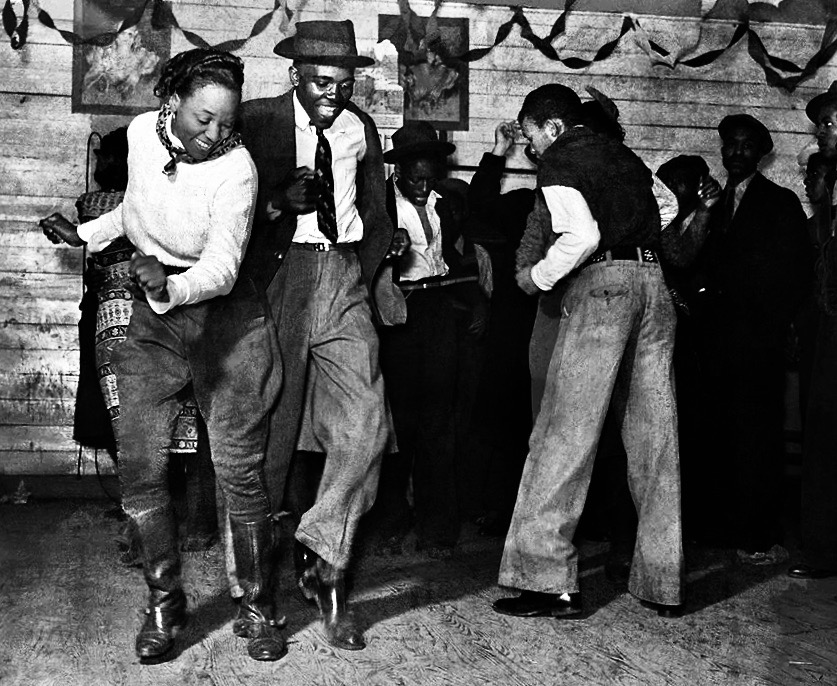
   When the band picked up the pace a woman wearing a white sweater and knee-high black boots and a man wearing a tie thin belt and snap brim fedora did some showing off. The man did the splits with a hi-ho. “Never give a pig sticker to a man who can’t dance,” the woman said.

   Towards the end of the night a fight broke out. A man cleaning gunk from under his fingernails with a switchblade got into it with another man. We didn’t catch what it was about, although the Mexican thought it had to be about a woman. They started by shoving each other and ended with the switchblade being knocked across the room and the switchblade man taking a right cross in the face.

   When the mattress-sized bartender came around the bar straightening his bow tie and carrying a baseball bat we left.

   I took Route 23 to I-10 and drove east through Biloxi and Pascagoula towards Mobile, where we planned to stop over.  Before we did, we crossed St. Louis Bay and stopped outside of Shaggy’s Pass Harbor. It was the three in the morning. There wasn’t a soul anywhere, except us.

   We lined up our Texas Pop bottle rockets in a field on the far side of the harbor and Pete went down the row lighting the fuses with his BIC lighter. The rockets zoomed into the night sky one after another They left a spark trail behind them as they went up. All of them except one stayed vertical, their fins guiding them. The one of them that went rogue performed several loop de loops and started back down. It headed right for us. It headed right for the Mexican. He noticed it at the last second and hit the deck.

   “Are you OK?” I asked running over to him.

   He nodded yes, tucking the gold crucifix he always wore back inside his Santana World Tour t-shirt.

   “That was a close call.”

   “Dios me poteja,” he said.

Ed Staskus posts stories on 147 Stanley Street http://www.147stanleystreet.com and Cleveland Ohio Daybook http://www.clevelandohiodaybook.com. To get the site’s monthly feature in your in-box click on “Follow.”
Katya in Asia Town

By Ed Staskus

   The Chinese started settling in the United States in the 18th century. Wherever whenever there were enough of them, they lived close to hand, building their own neighborhoods, appropriately called Chinatowns. There are more than 50 of them across the United States, including at least 16 in California alone.

   There are several of the towns within cities in New York City, the most famous one being in Manhattan. It’s the largest Chinatown in the country, spread out over 40 blocks and home to more than 150,000 Chinese-speaking residents.

   Cleveland, Ohio used to have a Chinatown, a colony at Rockwell Ave. near downtown. Immigrants settled in the area starting in the 1920s. After the Communist takeover of the mainland and into the 1960s more than 2,000 lived in the neighborhood. There was a row of Chinese restaurants, among them the Three Sisters, Golden Coin, and Shanghai, as well as two grocery stores between East 21st and East 24th. Storehouses in the district supplied native eateries one end of the city to the other. There was a temple and a meeting hall.

   Chinatown went into sharp decline in the early 1970s and a few years later, when I moved into what was becoming Asia Town, there wasn’t much left. Most of the residents moved to the suburbs and by the 1980s there were only two half-empty restaurants holding on, catering mostly to business folk and occasional tourists looking for the city’s historic Chinese quarter.

   Asia Town is roughly from East 18th St. to East 40th St. and from St. Clair Ave. to Perkins Ave. It has the highest percentage of Chinese, Koreans, and Vietnamese in Ohio. When I lived on East 34th St. between Payne Avenue and Superior Ave. in the mid to late 70s, there weren’t as many yellow faces yet but they were everywhere. There were dirt poor whites, dirt poor blacks, and a recent influx of college students. It wasn’t as present-day as it would become after the 1990s when Asia Plaza was built at East 30th St. and Payne Ave., when it became a business as well as a residential community.

   My roommate Carl Poston was tall, walked with a lanky slouch, and wore a mop of twisty black hair. Everybody called him Erby. He never said why, and I never asked. He liked to read, tearing through the Plain Dealer newspaper every morning, and liked to play chess, like me, but was better than me. He had a bad-ass motorcycle and several bad-ass friends with motorcycles. He worked downtown for the city helping crunch numbers and delivering bad news as Cleveland went under.

   In 1978 the city became the first one in the United States to go bust since the Great Depression. After the bankruptcy it became known as the Mistake on the Lake, a nickname nobody in the hometown liked. When Mayor George Voinovich showed up at a Cleveland Indians game against the New York Yankees in the 1980s wearing a t-shirt under his sports coat, the t-shirt said, “New York’s the Big Apple, but Cleveland’s a Plum.” Only the Asians liked the plum thing, since plums represent purity and perseverance to them. Nicknames come and go but when Cleveland later became ‘The Land,’ nobody shook their heads in despair. It was far better than the mistake and the plum.

   Our house on East 34th St. was behind another house. There was no backyard or garage. Almost all the houses on the west side of the street were that way. The houses across the street had backyards and most of the houses in the neighborhood had backyards. But there were some houses so tucked away one had to be looking right at them to see them. Our rent was more than reasonable, and my half was even better. The landlord lived in Strongsville. His grandmother lived in Asia Town, like me. In return for checking up on her at the beginning of the week and taking her to Dave’s Grocery at the end of the week, I lived almost rent-free.

   Her name was Katya, and she was hundreds of years old. She was five foot four something short and hunchbacked on top of that. She was always in her kitchen when I knocked on the side door, she always croaked “Come in, honey,” and when I went in, she always asked me what I wanted.

   She had three cats who I never saw. She kept a pan of water next to the door for them but no food bowls or litter. They were freeloaders, running down grub in the wild. She had a stack of old newspapers in a corner and the linoleum kitchen floor was usually covered with them. It was sketchy walking inside. The unfolded papers piled haphazardly on top of each other slid every which way. I had to walk like a duck to stay upright.

   “I keep my kitchen floor clean that way.” she said, peeling back the corner of a newspaper and showing me.

   She bought her clothes from third hand stores but bought her shoes new. She was crazy frugal, but she wasn’t crazy. She was built to last, and her feet had to lead the way.

   Katya was from Slovenia, from sometime back in the 19th century. Her parents were peasants from a village nobody ever heard of southeast of Ljublijana. They came to Cleveland to work in the steel mills in the 1890s. At first, they lived in Newburgh, but when a community started forming along East 30th St., from Lake Erie south to Superior Ave., they moved, finally landing on East 38th St. She still lived in the small house her parents bequeathed her.

   By 1910 there were so many Slovenes in Cleveland that it would have been the third-largest Slovenian city in the world if it was in Slovenia. The immigrants opened enough taverns to drown their New World blues and enough churches to repent their drinking. St Vitus was established in 1893, St. Lawrence in 1901, and St. Mary in 1906. Each had its own school. They published their own newspapers in their mother tongue and formed debating drama and singing clubs.

   The singing clubs were stamping grounds, as well. The Lira Singing Society, located in the St. Clair neighborhood, and adamantly Catholic, was opposed by the Zaria Singing Society, sponsored by atheists and socialists. Everybody knew what the arguments were about.

   Katya was married long enough to have two sons before her husband was shot by mistake by a policeman outside a Collinwood bank during a botched robbery. He bled to death before an ambulance could reach him. She buried him in Woodlawn Cemetery, never married again, raising her sons by herself. She took in sewing days and worked nights during World War Two. Her oldest son moved to Seattle and she never saw him again. Her younger son moved to the west side and had a family, but they didn’t want to visit her.

   “We aren’t going to your crazy grandmother’s house in that terrible neighborhood, and that’s final,” his wife said. What the woman didn’t know was that Katya kept a loaded Colt Pocket Hammerless in her kitchen table drawer. It was a single action blowback .32 caliber handgun.

   “Nobody going to shoot me by accident,” she said.

   Her eldest grandson loved her and made sure she had what she needed to stay afloat. She had a small pension and some social security, too. She told me she had silver dollars buried in the backyard, but quickly shot me a wily look.

   “Forget I say that.”

   When Katya’s husband Janez was buried in Woodlawn, it was the oldest cemetery in Cleveland, the first man being inhumed there in 1853. It was the worst cemetery in Cleveland, too. The Depression wrecked its finances. There were sunken graves, toppled headstones, grass never mowed, piles of rotting leaves, and broken tree branches all over the place. That was before the city found out Louise Dewald, who worked in the finance office, had stolen almost half a million in today’s dollars from the coffers as the Depression picked up steam.

   After that it got worse.

   The cemetery chapel roof and the rest of it collapsed in 1951 and was hauled away. The next year City Council thought about digging up and moving all the bodies somewhere else, but the public outcry was too great. Katya never stopped visiting Janez, no matter what, no matter what it took to get there. 

   One Friday walking her home from Dave’s Grocery she asked me if I could take her to the Slovenian National Home the next afternoon for a luncheon. 

   “I don’t have a car anymore, Katya, sorry.” My 1962 Rambler Custom Six, that I had gotten for free, was no more. When I got it, the car was already on its last legs. It was now rusting peacefully away in a junk lot somewhere up on Carnegie Ave.

   “Oh,” she said. “Maybe you walk with me there?”

   “It’s pretty far,” I said. I didn’t mention taking a bus. She distrusted the metropolitan buses getting to where they were going, ever since the city’s rail tracks had been torn up and the electric cars replaced with diesel transport. She believed half the drivers were addled from the fumes.

   The Home was almost thirty blocks away on East 64th St. and St. Clair Ave. At the rate she walked we would have to start as we spoke. After the luncheon we would have to walk the whole night to get back.

   “Oh, that too bad. Janez and I dance there all the time before he die.”

   “Let me see what I can do.”

   I asked my roommate Carl, in return for my washing the dishes, cleaning the house, and mowing our grave-sized plot of grass, if he would take her there and back.

   “It’s a deal,” he said.

   The next day he schlepped her to the Slovenian Home on his Harley, waiting outside smoking cigarettes and shooting the bull with passersby. She was a big hit with her cronies when they spilled outside after the gabbing and feedbag and saw her climb on the back of the hog, wrap her stumpy arms around Carl’s waist, and glide away.

   The Slovenian Home was where my Baltic kinsmen booked their big wedding receptions and celebrations. The Lithuanian Hall on Superior Ave. was too small in the 1960s and the new Community Center in North Collinwood wasn’t built yet. The Home opened in 1924, with two auditoriums, a stage, bar restaurant kitchen, meeting rooms, a gym, and a Slovenian National Library.

   The main auditorium was plenty big enough for any get together and the stage was plenty big enough for any band. The bar was big enough for even Lithuanians. Europeans drink more alcohol than anybody else in the world and Lithuanians are number one in Europe. Whenever I accompanied my parents to the Slovenian Home for a reception or gala, it was always a long night. There was a big dinner at big round tables, speeches, chatting it up, dancing, drinking, and as the drinking went on, singing. My father and his friends would booze it up well into one and two in the morning, singing “In the Sea of Palanga” and “The Old Roofs of Vilnius” and “Oh, Don’t Cry, Beloved Mother.”

   By then I was snoozing sprawled out in the balcony.

   Unlike our no backyard house Katya had a backyard where she grew Brussels sprouts cauliflower broccoli onions potatoes and anything else she could squeeze in. She liked prosciutto and bread for lunch. Sundays she made loads of yota with turnips beans cabbage and potatoes and a slab of meat loaf with hardboiled eggs in the middle. She kept it in the fridge all week, dinner at her beck and call.

   That fall I had to tell Katya that once the school quarter at Cleveland State University was over, I was going to have to take the next quarter off. I had found a job with an electrostatic painting outfit that was going to send me on the road, expenses like food and motels paid, for a couple of months. We were going to start in Chicago, swing out to the west coast, end up in Texas, and be back in time for the spring quarter at CSU. It was chance for me to earn good money and save almost all of it.

   “I going to miss you,” she said.

   We traveled in three-man crews and worked nights, from about 5:30 to about 1 in the morning. We worked in offices, painting office furniture like metal filing cabinets, desks, bookcases, and storage cabinets. The paint was loaded with a low voltage positive charge and the metal items magnetized negative. The finish was like new, no runs, no brush or roller marks, and there was almost no overspray.

   When I got back from my two-and-a-half months on the road, I picked up my cat Mr. Moto from my parents, did my laundry, and registered for classes for the spring quarter at CSU. I went to visit Katya that evening, but she wasn’t there anymore. The house was vacant. A “For Sale” sign was posted. I asked one of the neighbors, but he said he didn’t know much, just that a moving truck pulled up one morning and by the end of the day she was gone.

   I peeked through the windows. The ground floor rooms were all empty. The only thing left was a stack of old newspapers in a corner of the kitchen.

Ed Staskus posts stories on 147 Stanley Street http://www.147stanleystreet.com and Cleveland Ohio Daybook http://www.clevelandohiodaybook.com. To get the site’s monthly feature in your in-box click on “Follow.”

Sledgehammer Hill

By Ed Staskus

   The weekend my mother-in-law Terese and her husband Dick moved out of Reserve Square in downtown Cleveland, they moved out of twin Brutalist inspired apartment towers into a turn of the century house. They had lived in their apartment for more than twenty years, on the 17th floor facing Lake Erie. During the National Air Shows flying out of Burke Lakefront Airport they sat on their balcony and watched the Blue Angels streak past like roadrunners on the loose.

   There’s nothing like the sound of F/A-18 Hornets roaring a few hundred feet overhead and veering away at the last second from skyscrapers dead ahead. They are jets able to perform high angle of attack tail sitting maneuvers and can fly formation loops dirty, their landing gear down. The sound of silence once they’re gone is deafening.

   Terese and Dick bought an abundance of a house with four bedrooms and three bathrooms on the corner of East 73rd St. and Chester Ave., in the blighted Hough neighborhood, ten minutes from downtown. It was built in 1910 in the colonial style. When they got done restoring it, they had added an attached garage, put on a new roof, installed new vinyl windows and siding, a new interior staircase, and a new kitchen. It went from ghetto to gentrified as fast as the contractors could make it happen.

   Almost 100% of the people living in Hough in 1999 were black. Only 2% of them were white. Terese was Lithuanian and Dick was Italian. They were part of the 2%. She was from Cleveland. He was from Rochester. Everybody and their uncle tried to talk them out of buying the house. The racial make-up of the neighborhood was the stumbling block of all their opinions. The color barrier, however, was not a stumbling block to Terese.

   Terese was a self-taught chef who owned four restaurants in her time and made herself into one of the city’s top-notch confectioners. The opera star Luciano Pavarotti searched her out and pigged out on her cookies and cakes whenever he was in Cleveland. “That man can eat,” she said. When he was done eating he was good and ready for an aria.

   Her signature creation was a 17-layer cake based on a recipe that Napoleon brought to Lithuania during his ill-fated Russian campaign. Terese, Dick, my wife, brother-in-law, and I helped make them Novembers and Decembers, working out of her kitchen, freezing them, and selling them during the holidays through the Neiman Marcus catalog. I went home most nights needing to shower clouds of flour off me. 

   Terese and Dick bought the house in Hough because she had grown up nearby, when the neighborhood was more white than not, and wanted to go home again. It wasn’t the same, but she saw what she wanted to see. She remembered the neighborhood from her childhood and made the reality fit her memory. She had a streak of magic realism running through her.

   My wife and I lived in Lakewood. I had a red Schwinn mountain bike that I frequently rode in the Rocky River Metropark, on the paved trail, the horse trails, and the single tracks. I rode downtown sometimes, winding my way through Ohio City and across the Hope Memorial Bridge, especially on weekends when all the bankers, lawyers, and city workers were at home. I usually rode the Hope Bridge over the Flats so I could see the Guardians.

   The 6,000-foot-long art deco truss bridge crosses the Cuyahoga River. Four pairs of immense stone statues officially named the “Guardians of Traffic” are sculpted onto opposite-facing pylons at each end. Each of the Guardians holds a different vehicle in its hands, a hay wagon, a covered wagon, a stagecoach, a 1930s-era automobile, and four different kinds of trucks. I always crossed an index and middle finger while going by in hopes of keeping traffic away from me.

   I got it into my head that I wanted to ride around on the east side of town, through Cleveland Heights and Shaker Heights. I thought about East Cleveland but thought better of it. The city had gone to hell in a handbasket. I asked Terese if I could park my car in their driveway while I rode. She said yes but cautioned me to bring my rear-mounted rack into the garage. Law and order was sketchy in her neighborhood. When I had stored the rack away she invited me into the kitchen to snack on  croissants fresh out of the oven.

   She was in the middle of two projects. One was chocolate-covered plastic spoons that turned into a steaming drink when hot water was added. There were rows of the spoons on baking trays. The other project she was working on was perfecting a handy self-serve pan to make the dry, hard-textured Italian cookies called biscotti. I preferred croissants fresh out of the oven.

   Whenever I had ridden downtown with friends and wanted to push ahead into Cedar and Fairfax, what my friends called the black hole, they always turned back. “I don’t want my husband getting killed by some spade,” one of their wives told me. I didn’t bother trying to explain that hot under the collar rednecks driving pick-ups were far more dangerous. It wouldn’t have done any good.

   I rode up the hill to Little Italy and Lake View Cemetery. The riding was twisty throughout the graveyard. I couldn’t see the lake, no matter what. I stopped at the Garfield Monument. President Garfield was shot four months into his term of office and died two months later from infections caused by his medical staff. He was determined to live but stood no chance against his White House doctors. The shooter was hung the next summer. On the gallows he recited a poem he had written called “I Am Going to the Lordy.” He signaled he was ready for his fate by dropping the paper it was written on. The hangman kicked the paper aside and didn’t screw around securing the noose.

   There are thousands of trees and 100,000 graves in the 280-acre cemetery, from nobodies to moguls. One of the most striking grave markers is the life-sized bronze statue called The Angel of Death Victorious but known as Haserot’s Angel. The statue is seated on the gravestone of Francis Haserot, holding an extinguished torch upside-down. The man made his fortune canning foodstuffs and importing tea and coffee. 

   The angel’s wings are outstretched and looks like it is crying black tears. “They formed over time,” Terese told me. “It’s an effect of the aging bronze.” She had taken drawing and painting classes at the Cleveland Institute of Art. I took her word for it.

   I rode Fairmount Blvd. to Shaker Hts. and bicycled around the Nature Center at Shaker Lakes. The green space was created in 1966 to stop the Clark Freeway from going in. Those behind the effort called themselves ‘Freeway Fighters.’ Cuyahoga County Engineer Albert Porter called the Shaker Lakes a “two-bit duck pond” and vowed that the highway would get built come hell or high water. The highway never got built, regardless.

   The twenty acres of the Nature Center has eight mapped natural habitats, four gardens for native plants and insects, and two trails. I rode the trails and tried not to squash any insects. I wheeled out on the 7-mile long Shaker Blvd. to Beachwood and back. Shaker Hts. was built by Oris and Mantis Van Swerington, early 20thcentury developers. They modeled the suburb and the boulevard after examples of English Garden City planning. They laid rapid transit rail service down the middle of the boulevard. Broad tree-shaded lawns front the mansions on either side of the road. One of my cousins and her husband lived in one of the mansions, but I was crusty from sweat and didn’t stop to visit.

   The best thing about riding up Mayfield Rd. to the cemetery was riding down Mayfield Rd. from the cemetery. It was a long enough stretch that I could go as fast as I wanted, although I feathered the brakes all the way down. I didn’t want to end up laid out next to President Garfield.

   Terese always let me wash up when I got back to her house, made me a cup of coffee, and put something tasty she had baked on a plate. She had never gone to cooking school, instead learning her craft by getting the cooking done. Everything she made was as good as the cookbooks said it was supposed to be. In her time she had been the pastry chef at Max’s Deli in Rocky River and Gallucci’s Italian Foods in Cleveland.

   One weekend I rode my tricked-out Schwinn, which was equipped with front shock absorbers and disc brakes, and went looking for Sledgehammer Hill in Forest Hills Park. The city park is lodged between East Cleveland and Coventry Village. The sloping land rises to a plateau. It was where John D. Rockefeller’s private summer estate was in the 19th century. He could afford it because his estimated net worth was equivalent to 1.5% of America’s GDP at the time. He was and still is the richest man in American business and economic history.

   There were lakes and bridle trails. There was a racetrack and a golf course. Before John D. Rockefeller died the property went to his son, John, Jr., who transferred one third of it to Cleveland Hts. and two thirds to East Cleveland. His only stipulation was the land be used for recreation and nothing else. The new park opened in 1942. It was about half forest and half meadow. It has been improved over the years, with tennis courts, a swimming pool, picnic areas, as well as basketball courts, football fields, and baseball diamonds.

   When I was growing up we hardly ever went there summers, but went there many times in the winter. We lived at East 128th St. and St. Clair Ave. and getting there was no trouble. We went ice skating on the man-made lagoon and sledding down Sledgehammer Hill. That wasn’t its official name, if it even had one. It was what all of us called it because of the killer bump near the bottom.

   Skating was loads of fun. There was a boat house on the man-made lagoon. It was where we changed into skates. My father had taught us to skate growing up in Sudbury, Ontario. The mining town is north of the Georgian Bay and south of Wanapitei Lake. He would spray our front yard with a hose in the winter and the water froze hard as concrete in no time. When we moved to Cleveland in the late 1950s we took our skates with us. Neither my brother, sister, nor I were big leaguers on the ice, but we skated like dervishes, living it up as we tried to toe loop and pirouette.

   Sledgehammer Hill was a hill that started at the top of the plateau and ran down a wide treeless slope. When I went looking for it my memory of it was that it was long, fast, and deadly. I didn’t give my memory much credence, though, believing it must have really been short, slow, and safe. You never know when you’re making up the past.

   When I found it, thinking that I would ride down on my Schwinn, I was startled by what I saw. I backed away from the lip of the hill and got off my bike. I walked back to the edge and looked down. It looked even longer and more dangerous than I remembered. I saw the bump near the faraway bottom and remembered hitting it, going airborne, and landing like Godzilla had body-slammed me. Many kids veered away from the bump. None of us ever blamed them. We had all done the same thing one time or another. Only the innocent went over the bump full-bore the first time and lived.

   I don’t know how fast our sleds went, maybe 20 or 25 MPH, but they went fast as hell. We didn’t wear helmets. We wore knit caps. You were considered a sissy if you wore earmuffs. I started wearing earmuffs after one icy winter weekend my ears froze and almost fell off. Insults were easier to bear than frostbite.

   Our parents always went skating with us or watched from a bench, in case the ice started to  crack, but when we went sledding, they dropped us off and went on their way. My sister rarely sledded, my brother sometimes did, but I couldn’t get enough of it. We rode Speedaways, Yankee Clippers, and Flexible Flyers. Only the foolhardy among us rode Sno Wing Blazons. They were too fast for Sledgehammer Hill. Most of us wanted to go as fast as possible but not necessarily break our necks. We sledded until it started to get dark and our parents came back to pick us up. 

   I didn’t take a chance going down the hill on my Schwinn. I rode away from Sledgehammer Hill, roaming around the park plateau instead, taking in the highlights of the past. I rode to the north end of the hill where John D. Rockefeller’s mansion had stood. It burned to the ground under unexplained circumstances in 1917.

   It was early in the evening by the time I pedaled back to Terese’s house. After I told her about the hill she stepped into the middle of her kitchen, pretending to be standing on a snowboard, balancing with her arms stretched out, and racing to the bottom. 

   She had performed professionally as a ballet dancer when she was younger and taught the fine points of footwork to Cleveland’s Lithuanian folk dancing groups. I applauded her performance when she was done, but if she had tried that stunt on Sledgehammer Hill, professional dancer or not, she would have gone flying headfirst when she hit the killer bump, and there wouldn’t have been enough croissants in her kitchen to break her fall.

Ed Staskus posts stories on 147 Stanley Street http://www.147stanleystreet.com and Cleveland Ohio Daybook http://www.clevelandohiodaybook.com. To get the site’s monthly feature in your in-box click on “Follow.”
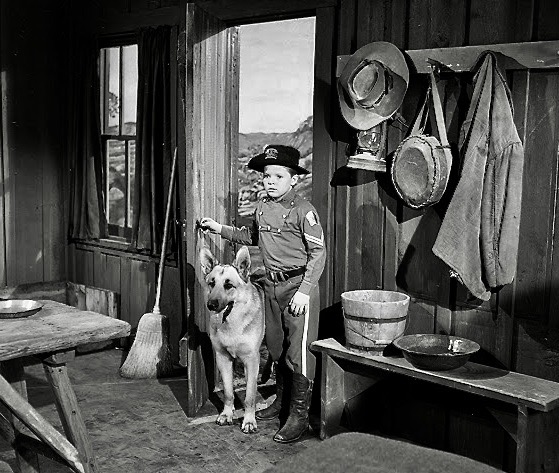
City on Fire

By Ed Staskus

   “It was like the sky blew up all at once with lightning bolts and thunder,” he said. Thick black smoke turned day to night. His dog Buddy bolted up the front steps and pawed at the door. It was every dog for himself. “Only the pen of a Dante could do justice to the sights and sounds that occurred in the St. Clair neighborhood that hellish afternoon,” local writer John Bellamy said.

   Hal’s mother ran out of the house. Buddy ran into the house. Hal ran to his mother on the front lawn. They looked up at the burning sky.

   “Captain Albert Zahler of the Cleveland Fire Department, Engine Company No. 19, was in his quarters at East 55th Street,” Cleveland Police Inspector Tim Costello’s said. “Suddenly the windows rattled, and the building began to shake. He ran outside and was met by a blast of extremely hot air. He observed hundreds of people running toward him and could see flames up over the tops of the buildings between himself and the fire. He hastened to the telephone in his quarters and caused a two-alarm to be sounded. Then with his men and apparatus he started out of the station and got as far as the apron in front but found the fire shooting up the street as though coming from a flame thrower such as is used by our armed forces.”

   The firemen fled back onto the station. Captain Zahler ran to his telephone again and revised the SOS to a five-alarm. When the flames moved away from the front of the station house, he and his men started out again. They didn’t get far.

   “They had gone but a short distance when they were met by more flame. They jumped from their apparatus and threw themselves on the ground until it had passed over. When they arose, they were tossed about as feathers in a wind, due to the brisance of the explosion creating a vacuum. One man sustained a broken leg and others received severe burns.”  

   The explosion and subsequent too many to count fires were caused when an East Ohio Gas liquefied gas tank started leaking. The gas flowed into the street and began to vaporize. It turned into a thick white fog. Nobody knows how it happened, but it ignited. It might have been a spark from a passing railcar or somebody lighting a cigarette. The thunderous bang wiped out the tank and everything else in its way, starting with two roofers.

   It happened at the foot of East 61st St near the New York Central Railroad tracks. When the gas blew up it blew up at about 25 million horsepower, the same as the combined output of all the hydroelectric plants west of the Mississippi River in 1944. Streets shook four miles away. Flames reached 3,000 feet high, and the heat reached 3,000 degrees Fahrenheit. After the war, a nuclear scientist estimated that the explosion released energy the equivalent of two and a half kilotons of dynamite, or about one-sixth the yield of the atomic bomb that destroyed Hiroshima.

   Tim Kelley’s father was home on leave from the armed forces after finishing basic training. He and a cousin were messing around the neighborhood when the big bang happened. “They took shelter under a box car to watch until they realized the steel wheels had gotten too hot to touch,” Tim said. They agreed It was time to go. They beat a hasty retreat.

   Hal, his kid brother Willie, and mother Agnes lived on East 66th St. and Lexington Ave., just a mile-or-so from the East Ohio tank farm. Agnes sprayed garden hose water on their house until the water pressure dropped to nothing. Standing on the front porch they watched a tangled mass of cars, busses, and townsfolk on foot going the other way. Police, fire, and civil defense cars and trucks raced towards the fire, which was spewing gas, molten steel, and rock wool into the sky. Birds turned to charcoal and fell out of trees. Hal’s dog Buddy snuck into the basement and didn’t come out for three days.

   When the storage tank, holding 90 million cubic feet of liquid natural gas in reserve for local war production, exploded, fire engulfed more than a square mile of city life, from St. Clair Ave. to the Shoreway, from East 55thSt. to East 67th St. The sky went red and orange then squid ink black. Fire boats poured water on factories along the shoreline of Lake Erie to keep them from burning down. 

   Sandy “Candy Man” Drago was checking a shipment of pipes at the tank depot that day. His candy was on his desk. His car was parked in a nearby lot. When the tank ruptured and exploded, he was knocked flat and the paperwork in his hands turned to ashes. When he looked himself over for damage, his clothes were gone. He was left wearing underpants with melted elastic. He ran for his life. His office and the candy on his desk caught fire. His Chevy caught fire. Two roofers replacing slates on top of the tank were blown to kingdom come. Not even a fragment of them was ever found.

   Mary Kolar was in her kitchen when a fireball smashed through the window, landing on her linoleum floor.  Her first thought was, “My God, the Nazis are here.” She swept up her children and ran for her life. Her house caught on fire. They passed a charred man caught on top of a fence. He was dead. “All that was left were his shoes.” When teenager Josie Mivsek rushed to her house, it was just in time to see it collapse. She later retrieved her marbles, being a marble-shooting champion, but they had all melted together into a lump.

   The smell of burning whiskey hung over streets as taverns and backyard stills went up in smoke. The copper lines and barrels of yeast melted. Cash money tucked away into drawers and under mattresses was set alight and lost forever. Some lost their life’s savings.

   Eleanore Karlinger was working on the Sunday bulletin at St. Vitus Catholic Church. When she was knocked off her feet she stayed there. It can’t be an air raid, she thought. She cradled her head just in case. Then she thought it must have been the devil. When she came to her senses, she thought about getting the hell out of the church. She started to run but went back to man the phones in case the house of God was needed for shelter. Mothers dragged their children into the church, which was still standing safe and sound, for safety.

   Housewives were caught unaware as flames raced through sewers and up their drains and their homes were suddenly on fire. “I was going to plug in my sweeper,” said Mrs. Charles Flickinger. “Suddenly it seems like the walls turned all red. I looked at the windows and the shades were on fire. The house filled with smoke. I think the furnace had blown up, then I see the fire all around.”

   Hal’s house didn’t catch fire. His brother, mother, and he didn’t have to shelter at Wilson School. It was where the Red Cross ended up taking in nearly 700 suddenly homeless men, women, and children. It was more than a week before anybody went back to school.

   Less than a half hour after the first explosion, a second tank exploded. Gas ran into the streets, into the gutters, and down catch basins into sewers, igniting and blowing up wherever it pooled. Telephone poles bent in the heat, smoking and igniting. Pavement was blasted into chunks and manhole covers sent flying. Fire trucks fell into sinkholes.  

   “Manhole covers were being blown up into the air like flipping pennies heads or tails,” Hal said. One of them was found in Glenville, miles away. One fell from the sky onto the heads of two men. All that day and the next day sirens never stopped wailing. More explosions followed, seven in all, smaller in scope but each one unleashing a fireball. When things died down “it looked like the end of the world,” a dismayed man said.

   Hal’s world had already been turned upside down twice. He was 2 years old when his father, who ran a corner store, was robbed, shot, and killed by two young hoodlums. His mother found out while in the hospital giving birth to his brother Willie. After she re-married, within a few short years, Hal’s stepfather died after a short sudden illness. Agnes Schaser never married again, going it alone, raising her two boys with no help from anybody. The land of dreams had turned into bad dreams. She was from Romania and would have gone back except for the war.

   When Albert Kotnik’s house shook like it was going to fall apart, he grabbed his two children and ran outside, followed by his wife. They looked towards the east side where it looked like hell had suddenly become real. They turned around when they heard all the windows of their house cracking and busting. The house was on fire all at once. It burned down to the ground in ten minutes. 

   Marcella Reichard’s house on Lake Court burned down to the ground. So did every one of the other twenty-three houses on her cul-de-sac. “I grabbed my mother and my little sister, and we knelt and prayed. Mother went out the back way, but I told her she would be running right into the flames. I told them to hold their hands over their eyes and run toward the lake. Then we just ran as fast as we could.” More than 10,000 people were evacuated from the neighborhood.

   Jack McLaughlin’s father died at the tank farm trying to rescue a great-uncle who worked for East Ohio Gas. Jack was the same age as Hal. “This was in God’s plans,” he said. Many who died worked for East Ohio Gas. Some of them were never identified, burnt so badly as to make identification impossible. Others were never found, their flesh and bone vaporized. Anthony Greenway worked for East Ohio Gas. He was killed almost immediately. “Uncle Anthony’s damaged watch was located and returned to the family. It was all they ever found of him,” said Kathy Chamberlain.

   Fatality figures for the burned are hard to come by eighty years later, although it is certain many of the severely burned subsequently died. “They didn’t have the tools and treatments in the 1940s we have today,” says Cleveland dermatologist William Camp. “They would have died of electrolyte loss, body heat loss, and infection.”

   Most of Cleveland’s fire companies and policemen attacked the immense blaze, as well as military personnel, utility workers, and civilian volunteer groups. Auxiliary police, auxiliary firemen, and air-raid wardens showed up by the hundreds. The Coast Guard and National Guard showed up. It was all hands on deck. Firemen and policemen worked non-stop shifts, grabbing a few minutes of shut eye when they could. They surrounded the fire and tried to keep it from getting away from them. They fought it all day and night dealing with consuming heat, explosions, and pumpers sinking into melting ground. Fire Engine No. 7 disappeared into a big hole in the ground.

   Cindy Greenwald’s father was working at a nearby war plant. “They were all let out of work to fight the fires,” she said. “He and some other guys worked all night long hosing down buildings on St. Clair. They watched a fire truck fall into a hole in the ground. When daylight came, they found out what they’d had their backs to the whole time. It was a gas station that was behind them.”

   By the end of Saturday morning, the fire department and the volunteers had almost all the fires under control. In the afternoon. Hal and his kid brother Willie went exploring. All the stop signs and traffic lights were gone, but there was no traffic, anyway. Burnt up hulks of cars and trucks lined the curbs. Fire hoses littered every intersection. Small still smoking fires lurked on every other front yard.

   “What happened to this place?” Willie asked. “It’s a mess. Do you think it was the Martians? Was it the Nazis?”

   “Before yesterday happened this mess was our place,” Hal said. “I don’t think it was the Martians. Why would they come all this way to do that? Mom said it must have been sabotage.”

   “This wouldn’t have happened if Superman had been here,” Willie said.

   “Yeah, him and Captain America, too,” Hal said. “They got the moxie.”

   Many of their friends, schoolmates, and relatives in the neighborhood were gone. They had gone somewhere anywhere safe. St Clair was like a ghost town. The fire destroyed homes, small apartments and boarding houses, factories, tractor trucks and trailers, and hundreds of cars. The death toll reached 130 while the burned and injured reached into the thousands.

   Hal and Willie slouched home, there being little to see except destruction. Besides, they had already been told twice by policemen to go home. Their mother always said three times is the charm. They didn’t want to tempt fate. When they got home, they checked on Buddy, who told them in no uncertain terms he was going to stay in the basement for another day or two, just in case.

   A month later there was a mass funeral at Highland Park Cemetery for the unidentified dead. Florists donated flowers and funeral parlors donated caskets. Thousands watched silently, wondering which one of the coffins held their missing father, mother, brother, or sister. The dead were lowered one by one into a concrete vault. The mayor ordered that no other funerals take place that day.

   “We want the nation to know that Cleveland looks after its own,” said Edward Sexton of the committee supervising the mass burial. “Usually, such victims would go to a potter’s field. That is not for Cleveland.” After the dead were buried the city began to rebuild itself. Rebuilding ground zero for the living is the way to recover from disaster.

Ed Staskus posts stories on 147 Stanley Street http://www.147stanleystreet.com and Cleveland Ohio Daybook http://www.clevelandohiodaybook.com. To get the site’s monthly feature in your in-box click on “Follow.”

Circle the Wagons

By Ed Staskus

   Rytas Kleiza was born in the same neighborhood the same day as his dog, on a Monday, at the start of the week. The Lithuanian Village, the new community center in their North Collinwood neighborhood, was built the same year. He could have seen it from his crib on Chickasaw Avenue if he had been ahead of his time enough to look. He was able to stand at an early age, although he couldn’t make out what was what.

   Ugne was his best friend, more good-hearted friendly closer to him than anybody except his parents. Unlike many of his friends she only tried to bite him once. Dogs never bit him, only people.

   “Stop messing with her,” his mother yelled from the kitchen where she was making cepelinai, spilling her sentences into the dining room. But he wouldn’t stop messing with her, and suddenly she growled, bared her teeth, and jabbed at his arm.

   They were under the dining room table. Ugne had a deadly scissors bite, but she looked up at him with her round eyes when he squawked, and didn’t squeeze her teeth into his skin, after all.

   “You deserved it,” his mom declared, rolling up another whopping-sized potato and meat dumpling, not realizing the dog hadn’t bitten him.

   Ugne, which means fire in Lithuanian, was a cross breed between a Cocker Spaniel and a Poodle, parti-colored, black with a white patch on her chest. One of his friends told him Poodles were a weird religious cult, but Ugne wasn’t like that. She was on the level. She was on the small side, big ears and big feet, and a wavy tail.

   Rytas got Ugne eleven months after he was born. His dad got Bandit, who was more-or-less a Beagle, two years later. Rytas grew up with both dogs. Ugne slept on his bed and Bandit slept underneath the bed, except when it was winter, when they slept together curled up around and on top of him.

   His mother Gaile and father Andrius were from Lithuania, where almost everybody had dogs. They ran away from their Russian overlords in the mid-1970s, burning down their little farmhouse before leaving, setting their dogs free, knowing they would find a new home fast enough, giving the thumb to the Reds. They stole a small sailboat in Ventspils and made for Gotland, more than a hundred miles away. They made it there in record time. They made it to the United States soon enough.

   Ugne and Bandit were his best pals. They laughed with their tails. They laughed it up every day and he gave both of them a brisk goodbye rub on the head every day before school.

   His dad got Bandit because he wanted a hunting dog. But at the end of the day Bandit was gun-shy. They never found out why, no matter how many vets they took him to. They all ended up scratching their heads, saying they couldn’t explain it, since he was the only hunting dog any of them had seen who was scared that way.

   Andrius had to put his guns away and learn to hunt with a bow and arrow. “Rupuze,” he swore under his breath. At least he didn’t bust out with “Goddamnit!” which meant real trouble. Rytas knew full well what “Goddamnit!” meant.

   Ugne got stopped in her tracks in their driveway on Thanksgiving Day when they were both 14-years-old. She was still full of life, still kicking around, other than being blind and deaf. One minute she was standing in the driveway and the next minute she had a heart attack and dropped dead. By the time his brothers and he rushed to her, she was lying on her side, quiet and still. They buried her in the backyard before the ground froze.

   They had to put Bandit down when spring broke the next year. After Ugne died he started to slip away. They were like an old couple that had always been together. He went from being a healthy dog to being a decrepit dog. He gained weight, but then lost his appetite, lost weight, and started dragging his hind legs behind him like a cripple. When they took him to the vet’s office, he told them there was nothing wrong with him.

   Bandit was just giving up on life. They all knew that. The house got quiet and sad.

   When his dad carried him into the vet’s office to be put down, Bandit lifted his head and looked at his mom standing next to the exam table. He looked Gaile right in the eye. Everyone could see that a thought was going back-and-forth between them.

   “That was hard,” his mom said, and after they buried Bandit next to Ugne, she said they couldn’t have any more dogs.

   But two years later his younger brother told all of them he wanted a dog. “Everybody else has dogs. I want a dog, too,” he said. Their neighbor’s Lab down the street played footsies with a Shepherd that summer. In the fall there was a bushelful of black puppies. Everyone they knew took one, including his brother, which meant their mom got a new dog.

   His dad named him Buddy, after the baseball player Buddy Bell. Andrius had been a big fan back in the day when the third baseman played for the Cleveland Indians. He grew up to be like a full-sized Lab with a delicate face, small ears, and a spotted tongue. When he was a puppy Buddy liked digging holes in the backyard, sitting in them, and staring out at everybody.

   Sometimes he was The Shining. Other times he was a one-man Tasmanian Devil.

   Whenever they left their shoes in the open by mistake Buddy would chew them to pieces. He gnawed on electric cords in the house and telephone wires on the outside of the house. Their phone once went dead for a week. He ripped the aluminum siding off the house, but couldn’t chew it, and so gave it up. But the garage was still sided in clapboard. He tore one side of it off, as far up as he could reach, and chewed the wood to shreds.

   “Seriously, I was only outside for five minutes,” was the look he gave Andrius when he confronted him about it. His father had to contract for aluminum siding and get the garage done up. Buddy calmed down after three years, but not before being the most destructive dog anyone in their neighborhood ever heard of.

   On his second Kucios they left him in a cage for the night while they went to Midnight Mass at St. George’s in the old neighborhood. The church was going on eighty years, the first church ever for Roman Catholic Lithuanians in Cleveland. Before that they went to Polish churches, even though there was never a lot of love lost between them and Poles.

   They stayed overnight with relatives and the next morning after Christmas Day breakfast drove home. Coming up the driveway they noticed all the windows were open. They weren’t actually open, they just looked open because most of the curtains in the house were gone.

   Buddy was in the kitchen and beyond happy to see them when they walked in. The cage he had been locked up in was still locked. His dad rattled the door and inspected the sides. He couldn’t understand how the dog had escaped. Buddy Bell never said because dogs never talk about themselves.

   The curtains were torn down and lay on the floor. In the second-floor bedrooms their beds were set beneath windows and Buddy had jumped up on them so he could reach those curtains, too, and pull them down.

   “He tore the curtains down so he could see us coming,” his dad figured out when he realized Buddy hadn’t put the snatch on all the curtains, only those in the windows facing the front yard and the driveway.

   His father bought padlocks to secure the crate door so Buddy couldn’t ever escape again whenever they had to lock him up, but he did, over and over, like he was the Houdini Wonder Dog, no matter how many padlocks Andrius put on the latches. There was never a scratch on him, either. He wasn’t squeezing out. But by then he was finding his way in the world and his Christmas Eve rampage turned out to be a turning point.

   When Buddy came of age Andrius started taking him hunting. Labs are bred to be bird dogs, but Buddy wasn’t the best retriever of all time. He loved running around outdoors, and chasing anything that moved, but was terrified of water. Labs are water dogs, but even giving Buddy a bath was a titanic struggle. He whined and cowered when they rinsed him off with the hose.

   His father felt like he was cursed, like it was Bandit all over again.

   When they found out what happened, how the curse came about, they didn’t like it. Their next-door neighbor Emma Jean, whenever they were away the first summer they had Buddy, not liking his barking in his own backyard, sprayed him with their own garden hose until he stopped. Every time he barked, she snuck into their yard and sprayed him full in the face again

   After they found out Rytas and his brothers, the day Emma Jean flew to Las Vegas with her husband to eat drink and lose money, broke every window of her station wagon with baseball bats. They left her husband’s car alone, since he was innocent. It was in the garage, anyway.

   At home Buddy was their around-the-clock guard dog. He could wake up from a dead sleep in the blink of an eye, ready to go. He mistrusted all other dogs. They always knew when one was on the loose, thanks to him. He mistrusted all strangers, too. If a stranger came by their house, he watched them closely, and if they came up the driveway, he barked to let them know there was a dog in the house.

   One summer a dog living two doors down started barking all the time and wouldn’t stop. Somebody called the police and complained, saying it was their dog. They were sure it was Emma Jean, but by then the families weren’t talking. When the animal warden came up the drive, Buddy sat in the living room window watching him. He didn’t bark once. When the warden came to the front door and rang the bell, Buddy went to the door and waited. Gaile answered the door. Buddy looked up at the animal warden and the animal warden looked down at him.

   He told Gaile about the complaint. “But that can’t be right,” he said. “He didn’t bark when I walked up, or when I rang the bell, and he’s not barking now.”

   “That’s right,” Buddy said to himself, giving the warden a soft eyed loopy grin.

   None of them understood how Buddy knew to be quiet the day the authorities came to their house. But Emma Jean was off the hook. The three brothers put their baseball bats away.

   Buddy was wild crazy for doggie treats. Whenever they gave him one, he wanted another one right away. He wanted more for the next minutes hours days. When they let him out of the house after treat time he would run right back in, barging through the door, his doggo tongue slobbering for more.

   “Show some dignity,” they scolded him. “Do you want to be a fatso?” They never were able to break him of it. It was all just grist for the mill to him. He never got fat, either.

   After graduating from college, Rytas moved away from home, to the other side of Cleveland, to the west end of Lakewood, living alone most of the time, except for an occasional girlfriend and weekends when one of his brothers dropped Buddy off. He missed having a dog in the house. Her had a busy life, between work, jogging in the valley, getting together with friends for a Cleveland Browns game, but at a certain point he wanted something anything in the house day-to-day.

   Buddy was growing old. He was getting thin shaggy grayer by the month and having a hard time walking. Rytas knew he was dying and wouldn’t be seeing him much longer. He hoped the dog didn’t know, like Bandit had known. He decided to go to the SPCA shelter in Parma and find a puppy, sooner or later.

   Rytas grew up with mutts. No matter what breed they dressed them up to be, Ugne was a mutt, Bandit was a mutt, and Buddy was a mutt. His family didn’t pay for dogs. They found them for free. He knew that, but his brothers had forgotten. His younger brother Matas bought a Victorian Bulldog for a thousand dollars. Since then, he had spent thousands more on special kennels, training, and designer food, not to mention weekly canine whisperer sessions.

   His older brother Lukas and his wife bought a long-legged Jack Russell terrier. His name was Hank and he looked like Wishbone in the TV series. The real Wishbone read books and dressed up like Shakespeare, but Hank couldn’t read and had epilepsy. Whenever he had seizures he twitched and lost all his motor skills.

   Hank was high-strung and drove Buddy crazy whenever Lukas brought him along for a visit. Hank would go at him like a puppy even though Buddy was already of a certain age, and it pissed him off. He would bare his teeth and remind Hank that he had once chewed up and spit out garages. Hank would just get crazier, crossing the line, barking like a madman.

   “You’re in time out,” Rytas would say, pointing at him, shoving him down on his haunches. “Sit down there and don’t move.” He never really liked the dog but tried to hide it.

   Hank couldn’t be left alone because he might have a seizure any minute. Rytas baby-sat him while he was in college, which was how he paid for his over-priced textbooks. No matter that Lukas complained, it was cash on the barrelhead. He had to have it. His brothers had done better with pork barrels than him.

   Hank’s medication came with an eyedropper and Rytas had to be careful because a drop of it could and would burn human skin. He never understood why it didn’t burn going down Hank’s throat. The infernal pooch was inhuman.

   Rytas knew when Hank was having a seizure because he always got stuck behind the sofa. There was a wall at one end. Something would happen in his fido brain, he would walk behind the sofa, and then couldn’t move backwards. He froze until Rytas noticed. With all his medication, vet bills, and emergency room visits, his sister-in-law told him, when Hank died at five years, he cost more than their first child.

   He wanted to get a puppy at the start of summer, since he was a high school teacher, and had summers to himself. Knowing he probably wanted a Lab mutt, and knowing how Labs can be, he knew it would be best getting one when he was going to have free time. He wanted to be at home with the dog for three months. It would make the training easier.

   Rytas called the animal shelter at nine o’clock in the morning the day his vacation started. They told him they had twenty-some new puppies just in from Tennessee. When he got there at in the afternoon there were only three left. Everybody wants puppies and snatches them up like snapping your fingers. He got that. Everybody wants to start with a new dog.

   He had been to several shelters on his side of town, but all they had was full-grown Labs other people had given up on. He lived on the second floor of a Polish double and Labs start to have trouble walking when they get older. They get hip dysplasia. He couldn’t take a 60 or 70 pound already older dog to his second-floor rooms without taking on grief right off the bat. He had to be realistic.

   Going up and down aisles of stacked cages in an animal shelter is a down in the dumps experience. It smells like underarms and hot dog water. There are signs on all the cages. “My name is Kimmy. I am a 7-year-old Labrador. I love playing with children.” Wanting to take them all home is a cheerless dead-end. It’s like walking through a prison where everybody is on death row and you can only pardon one of them.

   The three dogs that were left at the shelter at the end of the day were two Boxers and a Lab mix. He didn’t know much about Boxers, and some other people were looking at both of them, anyway, so he turned his attention to the Lab.

   Shelters say to lay the puppy you are interested in on its back. If it looks at you and shows submission, that’s a good dog. If they don’t, they might be headstrong. He put the 8-week-old mutt on his back. He held him down even though the dog wasn’t trying to go anywhere. He looked everywhere except up at him.

   Rytas loved the white on his chest, and his one white paw, and that he was missing his tail. He thought it was a unique personality trait, even though he could tell that the no tail was a deformity.

   “I’ll take the Lab,” he told the attendant at the counter.

   “Are you sure?” he said. “He’s shifty-eyed, and did you see his tail?” That bothered Rytas. Because of the tail he didn’t have, he might not make it. That’s why he took him, finally, because of his missing tail.

   He named him Bronislovas, which means glorious protector, but called him Bron, after LeBron James, who was bringing championship glory back to Cleveland. When he went to work in the fall, he enrolled Bron at Pawsitive Influence, a cage-free doggie day care. It took more than a week, but he warmed up to it. After the first month he got excited every time they drove there, passing landmarks like the Speedway gas station and Merl Park. A friend of his worked there. He paid special attention to Bron, clipping his toenails, training him to sit and heel, and keeping Rytas up to date on his progress.

   Rytas never knew what got into him, but he started to think Bron needed a companion. He went back to the animal shelter. It was October, rainy and cold. He thought to himself, you know what, the puppies are all going to get adopted, so I’ll look at some of the slightly older ones. But most of them were either too old or too big for him, until he came to a row of cages full of puppies, all jumping up and down. In a cage by himself was a bigger black pup about the same age and size as Bron.

   “No one’s going to look at me, and that’s OK, la, la, la,” the dog was thinking, laying there, his paws crossed in front of him.

   “Can I walk him,” Rytas asked, and was given a leash.

   He didn’t just walk when he walked. He pranced when we got going, which surprised Rytas because he was a stray, although not a common stray. He had been trucked up to Ohio from the south somewhere, where there are lots of strays and kill shelters, but he was different. Even though things had gone wrong for him, he hadn’t gone wrong.

   “We think he came from a dog-fighting ring, a big one that got broken up. Even though he’s young, he still has a few scars, his front and back dewclaws are missing, and his tail’s been clipped,” a vet technician cleaning a nearby pen told him.

   Tails are a weak point because they can be grabbed. When dewclaws are ripped off, they get infected, so psycho dog fighters surgically remove them. It’s painful if the dog is older than even a few weeks because dewclaws are more like an extra toe than a toenail.

   The inside of his mouth was scarred, and there were lesions on his snout. He was a little less than a year old and a wide smile was pasted on his face as Rytas walked him around the perimeter of the cages.

   “I’ll take him,” he said.

   “He’s got a lot of Pit Bull in him.”

   “That’s OK, I’m good with mixes.”

   “What about his tail?”

   “It will grow back.” It was the tail of two pups. It grew back better.

   The new dog was timid around Bron for weeks, even though they were almost twins. Rytas named him Sabonis, after Arvydas Sabonis, the best Lithuanian basketball player of all time, so he and Bron would get along, and they did, finally. Sometimes he called him Bonehead, but only when he had to. He stopped taking Bron to the doggie day care since he and Sabonis had each other all day.

   He bought leashes for them and took them for walks in the Rocky River Metropark. Off the leash they ran across the meadows and right to the river, and all that fall had a ball. Whenever another dog came near him, though, Sabonis would get skittish and aggressive, barking and feinting at them, although Rytas could see he was shaking. He was careful at the Lakewood Dog Park, making sure there weren’t too many other dogs for him to worry about.

   He was walking them down Rockway Avenue one day, a nearby side street, when he overheard talk on a front porch, talk about his dogs. “I think they’re mini-Doberman Pinschers,” a thick-set man with eel-like lips hissed, as though they were supersized rats. “Dude, you should shut up, you don’t know dogs, at all,” he said. He knew how to talk down to teenagers when he had to. He knew how to talk down to nitwits, too.

   Rytas had a vet look at Sabonis, but they weren’t sure what breed he was. He could have had him genetically tested, but that wasn’t going to happen. He needed a new hard-working vacuum cleaner before he paid for anything like that.

   Sabonis was black and, like Bron, looked like a Lab Pit Bull cross. When he pinned his ears back his face went sleek. Rytas got nervous about it sometimes because so many people are anti-Pit. Bron was Mister Independent, but Boner wanted attention. He wasn’t a biter, although if he did, there would be trouble. His jaws were ripcord dangerous. When he had a branch in his jaws, the branch didn’t stand a chance.

   Both of them loved ice cream. Rytas was not the guy who said, “No more ice cream.” He always had it in the house. If the dogs learned how to break into his fridge, they would.

   Whenever he took them to the neighborhood DQ, they were ready to lick it, life and ice cream. They drove to the cone shack in his drop-top Chrysler 200. There was an Iron Wolf, the Gelzinus Vilkas, decal sticker on the back bumper. Anybody can be in a sour mood even on a sunny day, but not in a convertible. The dog days of summer are the wind in your face days. When they were ready to go, Bron and Sabonis vaulted into their seats like the Dukes of Hazard.

   They both liked to have people around them and got excited when his friends come over. They enjoyed company. They barked and warned him about strangers, but the people they knew, they get beyond excited.

   His brother had a cage for Hank. It was bigger and sturdier than the one their father had for Buddy, the escape artist who couldn’t be stopped. “God, why did you buy that big-ass cage for that little dog?” he asked Lukas one day after Hank was gone. It looked like it cost the heavy end of a week’s pay, at least his pay.

   “I don’t know,” he said. “I think I felt it had to be escape-proof.”

   Rytas’s mutts were his best friends. They were the living breathing things he loved and spoiled. If it wasn’t for them, he would have spent too much time alone. They got him out of the house twice a day. There were fringe benefits, besides fresh air and exercise. Young women were always coming up to them, asking if the dogs were friendly, and he always said yes with a bright smile.

   He knew his roommates were freeloaders. They didn’t pay rent and he had to feed them and clean up after them, too. He knew some people said they were just dogs. Why go to the trouble? He didn’t care what they said. He made sure to come home after work every day, so they weren’t by themselves. He walked them in the morning before work, after work, and sometimes before bedtime on summer nights. He could have read the collected works of Dickens Tolstoy Pynchon and become a literate smart man given the amount of time he spent walking his dogs.

   At least they hardly shed. There was no problem with hair all over the house. He gave them a vigorous brushing twice a month, keeping them shiny and smooth.

   He made sure to always be home for Bron and Sabonis and take them with him whenever he had to leave for more than a day-or-two. He never put them in a shelter or a kennel, even for a weekend, even if it was clean modern beyond words, because in a kennel they would be shut up in a cage for twelve hours a day. It would be like being traded to the Cleveland Cavs with the Chosen One gone.

   His dogs were free of the grip of crates. They couldn’t handle it, locked up instead of down at the foot of his bed. They knew there was no safety at the wrong end of the leash. East or west, home is best. Whenever there was a thunderstorm, or a big snowstorm, it was circle the wagons at his house, rustle up the chuck wagon, and surf the flat screen for the most exciting NBA game they could find.

Ed Staskus posts stories on 147 Stanley Street http://www.147stanleystreet.com and Cleveland Ohio Daybook http://www.clevelandohiodaybook.com. To get the site’s monthly feature in your in-box click on “Follow.”

Up the Country

By Ed Staskus

   The morning Arunas Petkus and I left for California 2500-some miles from Cleveland, Ohio, the Summer of Love was a few years over. It had been a phenomenon in 1967 when as many as 100,000 people, mostly young, mostly hippies, converged on the neighborhood of Haight-Ashbury in San Francisco, hanging around, listening to music, dropping out, chasing infinity, and getting as much free love as they could.

   We were both in high school at the time and stumbled into the 1970s having missed the hoopla. The Mamas & the Papas released “San Francisco (Be Sure to Wear Flowers in Your Hair)” and it got to number four on the Billboard Hot 100. It stayed there for a month, a golden oldie in the making, while the parade across Golden Gate Bridge went on and on. The vinyl single sold more than 7 million copies worldwide. 

   Arunas found a bucket of bolts, a 1958 VW Karmann Ghia, somehow got it running, brush painted it parakeet green, and was determined to hit the open road to see what all the excitement had been about. He also wanted to visit the spot at Twin Peaks where Chocolate George’s ashes had been scattered.

   George Hendricks was a Hells Angel who was hit by a car while swerving around a stray cat on a quiet afternoon in as the Summer of Love was winding down, dying later that night from his injuries. He was known as Chocolate George because he was rarely seen without a quart of his favorite beverage, which was chocolate milk, usually spiked with whiskey. He was a favorite among the hippies because he was funny and friendly. His goatee was almost as long as his long hair, he wore a pot-shaped helmet when riding his Harley, and his denim vest was dotted with an assortment of  tinny pin badges.

   One of the badges said, “Go Easy on Kesey.” The writer Ken Kesey had been the de facto head of the Merry Pranksters. Much of the hippie aesthetic can be traced back to them and their Magic Bus. Arunas was an art student and liked the way the bus was decked out.

   The Karmann Ghia was a two-door four-speed manual with an air-cooled 36 horsepower engine in the back. The trunk was in the front. Unlike most cars it had curved glass all the way around and frameless one-piece door glass. My friend’s rust bucket barely ran, unlike most of the sporty Karmann Ghia’s on the road, but it ran. There was still some magic left in it.

   When Arunas asked me if I wanted to join him, I signed up on the spot. The two of us had gone to the same Catholic boy’s high school and were both at Cleveland State University. We threw our gear and backpacks in the front trunk of the car, sandwiches, apples, and pears in what passed for a rear seat, a bag of weed in the glove compartment, and waved goodbye to our friends at the Plaza Apartments.

   The Plaza was on Prospect Ave., on the near east side, near Cleveland State University. It was an old but built to last four-story apartment building. Secretaries, clerks, college students, bohemians, bikers, retirees, and musicians lived there. Arunas was still living with his parents in North Collinwood, while I was a part-time undergraduate and part-time manual laborer trying to keep my head above water in a one-bedroom on the second floor.

   We got almost as far as the Indiana border before an Ohio State Highway Patrolman stopped us. “Where do you think you’re going in that thing?” he asked after Arunas showed him his driver’s license. He wrinkled his nose looking at the car’s no-primer paint job.

   “California.”

   “Do you know you’re burning oil, lots of it?”

   We knew that full well. That was why we had a case-and-a half of Valvoline with us. We had worked out the loss of motor oil at about a quart every two hundred miles and thought our stockpile would get us out west before the engine seized up.

   “All right, either get this thing off the road or go back to Cleveland,” the patrolman said, waving us away with his ticket book.

   On the way back home, we decided to go to Kelly’s Island, since we had sleeping bags and could more-or-less camp out, staying under a picnic table in case of rain. We took the Challenger ferry out of Sandusky, leaving the Kharmann Ghia behind. We landed at East Harbor State Park and stayed here until the end of the week. There were a campground, beach, and trails at the park, which were all we needed. We bought homemade granola and a couple gallons of spring water at a small store and settled down on a patch of sunshine. We met some high-class girls from Case Western Reserve University and played volleyball with them.

   When we got back to Cleveland everybody marveled at our quick turnaround from the west coast and attractive tans. “We didn’t actually make it to California,” we had to explain to one-and-all.  “We didn’t even make it out of Ohio.” We had to endure many snarky comments. When Virginia Sustarsic, one of my neighbors at the Plaza, said she was going to San Francisco and invited me to try again, joining her, I jumped at the chance. My feet got tangled up coming down when she said she was hitchhiking there.

   “You’re going to thumb rides across the country?”

   “Yes,” she said, in her detached but friendly way. She was a writer, photographer, and cottage craftsman. Virginia was a raconteur when she wanted to be one. She made a living dabbling in what interested her. She lived alone. Her boyfriend was an unrepentant beatnik.

   “How about getting back?”

   She explained she had arranged a ride as far as Colorado Springs. She planned on going knockabout the rest of the way, stay a week-or-so with friends on the bay, and hitchhike back. When I looked it up on a map, she was planning on hitchhiking four thousand-some miles. I didn’t know anything about bumming my way on the highway. When I asked, she confessed to having never tried it.

   Our ride to Colorado Springs was a guy from Parma and his girlfriend in a nearly new T2 Microbus. Although it was unremarkable on the outside, the inside was vintage hippie music festival camper. It was comfortable and stocked. We stopped at a lake in Illinois and had lunch and went for a walk. I veered off the path and got lost, but spotted Virginia and our ride, and cut across a field to rejoin them. I tripped while running, fell flat on my face, but was unhurt.

   We got to Colorado Springs in two days. The next day I found out what I had fallen into in Illinois was poison ivy. An itchy rash was all over my calves, forearms, and face. I tried Calamine lotion, but all I accomplished was giving myself a pink badge that said, ‘Look at me, I’m suffering.’” Virginia’s friends where we were staying let me use their motorcycle to go to a clinic. The doctor prescribed prednisone, a steroid, and by the time we got to San Francisco I was cured.

   In the meantime, leaving the clinic, since it was a warm and sunny summer day, I went for a ride on the bike, which was a 1969 Triumph Tiger. I rode to the Pikes Peak Highway, 15 miles west, and about half the way up, until the bike started to dog it. What I didn’t know was at higher altitudes there wasn’t enough air for the carburetor. By that time, anyway, I had gotten cold in my shorts and t-shirt. It felt like the temperature had dropped thirty degrees. I turned around and rode down. There was a lot of grit and gravel on the road. I rode carefully. The last thing I wanted to happen was to dump the bike. I found out later that Colorado snowplows spread sand, not salt, in the winter. 

   All the way back to town, as dusk approached, I saw jumbo elk deer and walloping antelope. Even the racoons were enormous. I stayed slow and watchful, not wanting to bang into one of the beasts. We stayed a few days and hit the open road when my rash was better. There was no sense in scaring anybody off with my pink goo face. We had a cardboard sign saying “SF” and finally hit the jackpot when a tractor trailer going to Oakland picked us up.

   The Rocky Mountains, left behind when the glaciers went back to where they came from, were zero cool to see, although I wouldn’t want to be a snowplow driver assigned to them. The weather was fair but cold with a high easterly wind the day we crossed them. Every switchback opened onto a panorama.

   Virginia’s friends in San Francisco lived in Dogpatch, which was east of the Mission District and adjacent to the bay. It was a working class partly industrial partly residential neighborhood. They lived in a late nineteenth century house they were restoring. They went to work every day while we went exploring.

   We stayed away from downtown where there was an overflow of strip clubs, peep shows, and sex shops. Skyscrapers were going up, there were restaurants, offices, and department stores, but it still looked like the smut capital of the United States. Elsewhere, rock-n-roll, jazz fusion, and bongo drums were in the air, especially the Castro District and Haight-Ashbury. Dive bars seemed to be everywhere.

   Virginia went to Golden Gate Park and took pictures of winos, later entering one of them in a show at Cleveland State University. She had a high-tech 35mm Canon. When her photograph was rejected with the comment that it was blurry, she said, “That was the point.” I went to Twin Peaks and took a picture of the spot where Chocolate George’s ashes had been strewn. When Arunas saw it later on, he said there wasn’t much to see. I showed him some pictures from the summit facing northeast towards downtown and east towards the bay. “Those are nice,” he said, being polite. My camera was a Kodak Instamatic.

   Twin Peaks is two peaks known as “Eureka” and “Noe.” They are both about a thousand feet high. They are a barrier to the summer coastal fog pushed in from the ocean. The west-facing slopes get fog and strong winds while the east-facing slopes get more sun and warmth. The ground is thin and sandy. George was somewhere around there..

   We stayed for more than a week, riding Muni city  busses for 25 cents a ride. No matter where we went there seemed to be an anti-Vietnam War protest going on. We rode carousel horses at Playland-at-the-Beach and went to Monkey Island at the zoo. We ducked into Kerry’s Lounge and Restaurant to chow down on French fries. We stayed away from all the Doggie Diners. We listened to buskers singing for tips at Pier 45 on Fisherman’s Wharf. Jewelry makers were all over the place. Virginia was on Cloud 9, being an artisan herself.

   When we saw “The Human Jukebox” we went right over. Grimes Proznikoff kept himself out of sight in a cardboard refrigerator box until somebody gave him a donation and requested a song. Then he would pop out of the front flap and play the song on a trumpet. I asked him to play “Stone Free,” but he played “Ain’t Misbehavin’” instead.

   “I don’t know nothing about Jimi Hendrix,” he said.

   Everywhere we looked almost everybody was wearing groovy clothes made of bright polyester, which looked to be the material of choice. Tie-dye was on the way to the retirement home. Virginia dressed in classic hippie style while I dressed in classic Cleveland-style, jeans, t-shirt, and sneakers. I didn’t feel out of place in San Francisco, but I didn’t feel like I belonged, either. There were no steel mills and too many causes to worry about.

   When we left, we started at the Bay Bridge and got a ride right away. By the time we got to the other end of the bridge the man at the wheel had already come on to Virginia. We asked him to drop us off. When he stopped on the shoulder and I got out of the back seat, he pushed Virginia out the passenger door, grabbed her shoulder bag, and sped away. She didn’t keep her traveling money in it, but what did he know? We saw the bag go sailing out the car window before he disappeared from sight and retrieved it. We smelled a brewery on the breath of the next driver and turned him down. After that a pock-marked face stopped and  asked us if we were born again. When I said I had been raised a Catholic, he cursed and drove off.

   We liked talking to the people who gave us rides but avoided talking about race, religion, and politics. I carried a pocket jackknife but wasn’t sure what I would do with it if the occasion ever arose. We never hitchhiked once it got dark, because that was when lowlifes and imbeciles were most likely to come out.

   We went back the way we had come, to Nevada, through Utah, Nebraska, and Iowa to Chicago, and returning in the middle of the day to the south shore of Lake Erie. We thumbed rides at entrances to highways, at toll gates, and especially at off-the-ramp gas stations whenever we could. Gas stations were good for approaching people and asking them face-to-face if they were going our way. 

   One of the best things about hitchhiking is you can take any exit that you happen to feel is the right one. One of the worst things is running into somebody who says, “I can tell you’re not from around these parts.” We avoided big cities because getting out of them was time-consuming. We avoided small towns because we didn’t want to be the new counterculture archenemies in town. We got lucky when a shabby gentleman in a big orange Dodge with a cooler full of food and drink in the back seat picked us up outside of Omaha on his way to Kalamazoo. He listened to a border blaster on the radio all the way. We ate the sandwiches he offered us.

   Our last ride was in an unmarked Wood’s County sheriff’s car. He picked us up near Perrysburg on his way to Cleveland’s Central Police Station to pick up a criminal. It was the same station where Jane “Hanoi Jane” Fonda was put behind bars a couple of years earlier. She was famous and not a real criminal and so didn’t stay long.

   “They said they were getting orders from the White House, that would be the Nixon White House,” she said about the arrest. “I think they hoped the ‘scandal’ would cause my college speeches to be canceled and ruin my respectability. I was handcuffed and put in jail.” The day  she was arrested at Cleveland Hopkins Airport, she pushed Ed Matuszak, a special agent for the U. S. Customs Bureau, and kicked Cleveland Policeman Pieper in a sensitive place.

   The city policeman later sued Jane Fonda for $100,000 for the kick that made him “weak and sore.” The federal policeman shrugged off the shove. The charges and suit were eventually dropped.

   The Wood County sheriff was a friendly middle-aged man who warned us about the dangers of hitchhiking and drove us to near our home. When we got out of the car, he gave us ten dollars. “Get yourselves a square meal,” he said. We walked the half dozen blocks to the Plaza, dropped off our stuff, and walked the block and half to Hatton’s Deli on East 36th St. and Euclid Ave. where Virginia worked part-time. There was an eight-foot by eight-foot neon sign on the side of the three-story building. It said, “Corned Beef Best in Town.” We had waffles and scrambled eggs.

   The waitress lingered at our table pouring coffee, chatting it up while we dug into apple pie. We split the big slice. The butter knife was dull, so I used my jackknife. She asked how our cross-country trip had gone. I gave her the highlights while Virginia went into details. When the waitress asked why we hadn’t gone Greyhound, Virginia smiled like a cat, but I put my cards on the table.

   “I had an itch to go and the stone free way was the way to go.”

Ed Staskus posts stories on 147 Stanley Street http://www.147stanleystreet.com and Cleveland Ohio Daybook http://www.clevelandohiodaybook.com. To get the site’s monthly feature in your in-box click on “Follow.”