All posts by Edward Staskus

Edward Staskus is a freelance writer from Sudbury, Ontario. He lives in Lakewood, Ohio. His crime thrillers "Cross Walk" and "Bomb City" can be found on Amazon.

Riding the Om Bus

By Ed Staskus

“It was twenty year ago today, Sgt. Pepper taught the band to play, they’ve been going in and out of style, but they’re guaranteed to raise a smile.”  The Beatles

It was twenty years ago that Cyndi Lee opened the OM Yoga Studio. It prospered and grew to 25 teachers offering 65 hatha vinyasa classes weekly. The sunlit wood floor space took up an entire floor of Manhattan real estate near Union Square. It was the union of a faraway and long ago tradition with modernity. The trendsetting crowd had long since been won over to bending.

It was no mean feat. “In New York City people have way more opportunities to take classes than in most other cities,” she said. If you don’t enjoy a challenge, the Big Apple isn’t what you want to try sinking your teeth into. There are more than 8 million people speaking more than 200 languages in the 5 boroughs. It’s hard getting them on the same page.

The page turned fifteen years later when she lost her lease. “The landlord didn’t give us the option to renew,” said Cyndi. “She just didn’t want a yoga studio there anymore.” The only thing harder than winning shrewd New Yorkers over to your yoga studio is staying on the winning side of shrewd New York property owners.

She took it well.

“Yoga has a sly, clever way of short-circuiting the mental patterns that cause anxiety,” says Baxter Bell. Yoga practice is filled with exercises in respect to balance, not just physically, but inwardly, too. It’s all about holding on and letting go.

“Honestly I feel fine,” she said at the time. “I’m just super grateful that the conditions arose for me to build that yoga studio and that the community grew and developed. I feel proud because there has been no badness, only goodness.”

Only there was more around the bend. Her marriage of almost twenty years was coming to an end, too.

When you come to a fork in the road, take it. Or, as Cyndi Lee has said, “Everything we’re doing is planting a seed that will come to fruition at some point.” Never mind about making plans that hit the nail on the head, better to make options.

“The opposite if being active in yoga is not being passive,” she said. “It’s being receptive.”

She met someone who became her boyfriend. She and Brad moved to Ohio. It didn’t get off on the right foot. “I was a hardcore New Yorker,” said Cyndi. “What the hell am I doing?” she thought. New York is a fast-paced around-the-clock lifestyle. It’s the city that never sleeps.

“Ohio was so quiet and the food was terrible.”

They moved to Virginia. Her boyfriend became her husband. The energy and the food got better. She didn’t open another yoga studio. “We do need more yoga, but when people say to me, can you give me advice about starting a yoga studio, my advice is, don’t. Instead of making places where people have to come to us, we need to go out.”

She got her footing back on solid ground. Cyndi is a longtime Buddhist. Buddha was an aimless wanderer when he started out, but once he got his clear thinking together he devoted forty-five years to traveling and teaching the Dharma to anyone who would listen. Cyndi has been traveling and teaching all over the world the past six years, since OM closed, except last year when she wasn’t.

“When the orthopedist says, ‘You have no cartilage left, you’re bone on bone, that’s why it hurts so bad,’ that’s called end-stage arthritis, and you need a hip replacement,” said Cyndi.

Or two hip replacement surgeries, as the case might be, slowing her down that year. At least, until she was back on her own two feet. And back on the mat, back in action.

“I was a professional dancer for almost twenty years,” she said.

Twenty years of two-stepping is a long time. Dancers often sound like a box of Rice Krispies, snap, crackle, and pop. Ankles click and knees go crunch. In the morning, on the way to get a bowl of cereal, their joints click, clack, and squeak on the way to the kitchen.

“I wasn’t an aggressive yogi, I didn’t push it, but the vinyasa style that I practiced is a dynamic, rhythm-based movement system. There is a sense of carving space, of feeling wind and water on your face, of an earthy downward connection and an uplifted sense of goodness.”

Nevertheless, in the flow of time the on-the-go has morphed into slow flow. Cyndi Lee now offers a “practice you can carry with you for decades to come.” It has been reborn as Sustainable Vinyasa Yoga.

By the time OM Yoga closed its doors she had been practicing yoga for more than 40 years. She took her first class in 1971, her first year in college. “I don’t remember having a moment of great inspiration and knowing that I had found my path, but somehow I just kept doing yoga and meditation and I’ve been practicing steadily almost my whole life now.”

Cyndi has an MFA in Dance from the University of California at Irvine. Her graduate thesis was “Women, Spirituality, and Indian Dance.” She won an Art History Fellowship at the Whitney Museum of American Art.

She moved to Greenwich Village in 1978, footless tights in hand, to an animated dynamic dance scene. It wasn’t just the Funhouse, Club 57, and Paradise Garage, either, although you can’t beat clubs full of late 70s pointy-toed hipsters and girls in thrift-store stiletto heels at three in the morning. It was Twyla Tharp and Merce Cunningham and the modern dance scene.

“Yoga started out in dance, both in-depth studies of the integration of body, breath and heart,” she said. “They are opposite, too. As a performing dancer, the goal is to offer a visceral experience. But yoga is a personal practice, always.”

She became a professional dancer. She had been dancing since she was a tot. “I learned the waltz by standing on my dad’s feet,” she said. Hoofing it became her life. She danced up a storm. She became a professional choreographer. She performed with XXY Dance/ Music and Cyndi Lee Dance Company/Big Moves. In 1994 her own dance company staged its last performance. The show was called “Dharma Dances.”

It was influenced by meditation philosophy and the choreography referenced yoga poses. The performance featured Allan Ginsburg singing songs and accompanying himself on harmonium. The word of mouth about the show was good, although Allen Ginsburg’s singing was left unsaid. The less said the better, God rest his soul.

After “Dharma Dances” Cyndi Lee kicked up her heels and became a professional yoga teacher.

OM Yoga was a successful studio in arguably the most opinionated and competitive city in the country because it was authentic, clean and bright, with a diversified schedule, offered special events and teacher trainings, and featured a snazzy retail space. The teachers were hard-core enough to specialize in their craft and soft-core enough to connect one-on-one. The studio became a community and the community became the studio’s dedicated core. Over the years many people unrolling their mats at OM Yoga became the studio’s heralds and evangelists.

“Whenever I am feeling like crap I don’t mind making the long commute to OM because I know I will feel peaceful and happy afterwards,” said a woman from the Upper West Side.

“One of the better, more genuine experiences I’ve had in the city,” said a Manhattan native. “The instructors are knowledgeable and not pushy. If you’re a newcomer to yoga, take the beginner classes, as the intermediate classes are very, ahem, thorough. And they have showers!”

“Keeping this place open and going,” said Cyndi when the studio was open and going. “I get wrapped up in the business of it. But just having a yoga studio, it’s a real Dharma community, it helps a lot of people.”

“The only negative comment I have is that this place is a little too business-like, which, in my opinion is not very Buddha-like,” said a young woman across the river in Brooklyn, where capitalism is occasionally frowned upon.

“Work out your own salvation,” said Buddha. “Do not depend on others.”

But even he had to eat so he could get his message out. If most successful businesses are owned and operated by people who are the first to get to work and the last to leave, then OM Yoga was a successful business because someone did that, and Cyndi Lee was the person who opened the doors in the morning and turned off the lights at night.

As home away from home wrapped up its tenure, the e-mails started rolling in. “I’ve gotten hundreds,” said Cyndi after word about OM Yoga’s sign-off hit the streets. “I’m sitting there crying. The things that people are saying and sharing. I’m just feeling the love.”

When one door closes and your brick and mortar has been mortar and bricked up, it’s time to open a new door.

“We’re excited about our online presence expanding. We’re excited about putting classes and trainings online and developing an app. We’re going to go full speed ahead on that and develop our teacher network.”

At the same time the Cyndi Lee bus was moving ahead full speed, gathering momentum going from here to eternity, it was slowing down to Buddha-time. Between gangbusters and reflection she traveled and taught and put pen to paper.

Her think pieces, write-ups, and how-to articles have appeared in Yoga International, Yoga Journal, and Tricycle. The magazine isn’t about the three-wheel bike kids ride. It’s known as The Buddhist Review, or the independent voice of Buddhism. It’s won the Folio Award for “Best Spiritual Magazine” three times, which since Buddhism is a win or lose struggle, is faith in Buddhism manifested.

She has written several books, including “Yoga Body, Buddha Mind” and ”OM Yoga: A Guide to Daily Practice,” as well as the recent critically acclaimed “May I Be Happy: A Memoir of Love, Yoga and Changing My Mind.”

It was Buddha who said, “What we think, we become.”

She has been seen frequently on TV as herself, including The Dr. Oz Show, Live with Regis and Kathy Lee, and Good Morning, America. During her days on the dance scene she worked on music videos, choreographing for Rick James, Simple Minds, and Cyndi Lauper. She choreographed the ‘Girls Just Want to Have Fun’ music video.

The video won the 1983 MTV Best Female Video of the Year award. Cyndi’s just want to have fun and celebrate. When the working day is done Cyndi Lee just wants to ride her red bike. She rides with mindful awareness, however, mindful that a bike’s passenger is its engine and that to keep your balance you must keep moving.

Cyndi got started in the practice of Buddhism in 1990. Over time she became the first female yoga teacher in the western world to integrate yoga asana and Tibetan Buddhism in her practice and into her message. When asked what her aspirations were, she said, “To get better at balancing on time and off time and to get better at understanding that they can be the same thing, if I can live like a yogi/Buddha.”

The four points of order she brings to meditation practice might as well apply to smooth sailing on two wheels like it does to mindfulness. “Sit up nice and tall. Feel your seat on the cushion. Feel the space all around you. Slowly begin to deepen your breathing, little by little, breath by breath.” Meditating when out of sorts is recommended, but meditation when out of balance and out of breath is like a fish pedaling a bicycle.

She has recently been ordained as a lay Buddhist chaplain.

“I met a man at a retreat at Upaya and we hit it off. At the end of the weekend he said, ‘Why don’t you sign up for chaplaincy training with me?’ I wasn’t interested, but then I was. I decided to do it. That guy did not take the training and I haven’t seen him again. Somehow he was the catalyst, like an angel.”

One of the ideas embedded in the Four Noble Truths of Buddhism is that everyone should take responsibility for their own lives and actions. One of the right ways on the Eightfold Path is living honestly and helping others. One of the basic tenets of the practice is that everything in life is impermanent and always changing.

“One thing I’m good at is being brave and riding the winds of change,” said Cyndi. “To keep on keeping on with a real aliveness to how life changes and how I change.”

Life isn’t lived by mottoes, no matter how trenchant they are. Travel like a pro, not a hobo, is as good a motto as any. Cyndi Lee goes like a pro.

She doesn’t live by mottoes, but one of her favorites is, “Just show up.” When you show up day in and day out, whether at your big city studio or helping a hobo on your chaplain rounds, you’re staying true to yourself, not anybody else’s version of you. “In the end you’re still stuck with yourself,” she said.

“Knowing others is wisdom, knowing yourself is enlightenment,” said Lao Tzu.

In Cyndi’s case, when she shows up, it’s her good better best real self.

Ed Staskus posts stories on 147 Stanley Street http://www.147stanleystreet.com and Cleveland Ohio Daybook http://www.clevelandohiodaybook.com. To get the site’s monthly feature in your in-box click on “Follow.”

On the Wire

By Ed Staskus

   “For you,” Bettina Goertzen said, frowning, putting her hand over the handset. “He said it was about Dottie and you would want to talk to him. It’s not the school.”

   “Police? Hospital?”

   “I don’t think so, didn’t say, doesn’t sound like it.”

   “Young or old?”

   “Younger.”

   Stan Riddman glanced at his watch and noted the time. “Listen in to it, Betty.” He waited for her to pick up a pencil and pull a notepad close. When she quietly put the phone to her ear again, he picked up his receiver.

   “This is Stan Riddman,” he said, his voice flat.

   “We’ve got the girl,” the voice on the other end said. 

   “What girl?”

   “Your girl.”

   “Why do you want her?”

   “We want you to take the cure for the next couple of days, put everything on hold, don’t do nothing about nothing. You do that, you get your girl back. You don’t do that, you don’t ever get her back.”

   “Where is she?”

   The phone went dead.

   “Somebody’s got Dottie.”

   “Why? What we’re doing?”

   “They didn’t say, not exactly. They want me to sit on my hands for a few days, don’t do anything, and I’ll get her back. Or else. It’s got to be that wop we’re after. Nothing else that amounts to anything is going on except the Jackson Pollack business. Goddamn it to hell!”

   “What are you going to do?”

   Stan stood up and went into the utility room. He spun the combination on the office safe and removed two handguns. They were Colt Commander models, aluminum framed, with short barrels and rounded hammers. The plastic grips were brown. The guns were unloaded. He put four 7-round magazines in his pockets. He reached into the safe a second time.

   “Get hold of Ezra, tell him what’s going on, that I’ve got our .45’s, and to meet me at the house. If I’m not there, I’ll be talking to the neighbors, tell him to find me, the sooner the better.”

   “Be careful,” Bettina said.”

   “You too,” he said, handing her a snub-nosed .32 and six rounds. “If you have to, shoot first, never mind the questions.” She didn’t ask if she should call the police. She knew better than that. This had nothing to do with them, even though they would have to clean up the consequences afterwards.

   “Somebody’s a dead man,” Stan said. “They just don’t know it, yet.”

   There were two beat cops, two more uniforms standing beside their radio car, and a plainclothes car on the street when Stan’s taxi eased up to his Hell’s Kitchen walk-up.

   “We don’t know much,” one of the plainclothes men said. “Lots of people saw it happen, but nobody saw anything useful, except that there were two of them and they drove a black panel truck.”

   “Thanks,” Stan said, and walked up to his apartment. It was neat and clean, the windows open, an autumn breeze cooling the rooms. He walked into Dottie’s room and saw Mr. Moto lying in a heap on the bed. There was blood on the bedspread. The cat lifted his head and Stan saw the blood was from his paw. When he touched the cat, Mr. Moto hissed. Stan could hear his breathing was fast and choppy. He saw the bloodstained scrap of paper and the letters and numbers scrawled on it. When he picked it up, he knew in an instant that the cat had scratched out the message with his paw and it was the license plate number of the black truck.

   Stan got a bowl of milk and crumbled up a chunk of tuna, put it in the milk, and placed the bowl on the bed. “Ezra and I will take it from here,” he said to Mr. Moto. “You stay here and take care of yourself.” The cat eased himself over to the bowl and lapped up the milk, nibbled at the tuna, and went back to sleep, curling up into a ball.

   By the time Ezra came through the front door, Stan had the address the truck was registered to and was sitting in an armchair waiting for him. They talked it over for a minute and five minutes later were in a cab. Stan gave the cabbie an address in Gravesend three blocks away from where they were going. 

   It was a single-family house that had been converted into a two-family house. There were unkempt bushes on both sides of the concrete front porch. The only anything in the drive was a black panel truck. There were closed blinds in every window. “I make them on the ground floor, in case they have to leave quick,” Ezra said. “If they were upstairs, they might get stuck.”

   “You take the back door,” Stan said. “I’ll go in through the front. The doors will be locked, maybe chained. When you hear me shoot into the lock, you do the same, kick out the chain, go head over heels.”

   The two men, one of them his face slathered in iodine, barely had time to lunge up from the card table they were sitting at, reaching for their guns, when Stan and Ezra stopped them in their tracks. Their drop-in visit was breakneck. Nobody exchanged greetings.

   “Throw those on the floor in front of you and kick slide them to me.” Stan’s face was the hard face of the Old Man on the Mountain.

   The men did as they were told. One of the guns was an Orbea Hermanos, a Spanish handgun. It was a Smith & Wesson copycat. It was a piece of junk. The other one was a Smith & Wesson Centennial. Stan kicked the Spanish handgun under the sofa. He picked up the Centennial, opened the cylinder, saw it was loaded, put his own gun away, and trained the honest Smith & Wesson on the men.

   “Both of you on your knees, hands behind your backs,” Stan said. “Where is she?” 

   “Who the fuck is where, fuckface?” Iodine Face spit out. One of his eyes was swollen shut. The other eye was a cesspool.

   Stan whirled and shot him twice in the chest, the two shots following so fast upon the other it sounded like one gunshot. The man toppled over backward surprised and astonished, the sneer still on his lips, too late to say his prayers, a blink of an eye away from dying, which he did when he hit the floor, a puddle of blood forming under him, the two holes in his chest leaking the life out of him.

   “Jesus Christ!” the other man blurted, jumping to his feet, crazy to run, a stain forming at his crotch. “Why did you do that?”

   “It’s like they say in Chinatown,” Stan said, deadpan and wrathful. “Sometimes you’ve got to kill a chicken to scare the monkeys.”

   “What the fuck are you talking about?”

   Ezra clubbed him on the back of the head with the butt of his Colt and the man went down moaning with a concussion in the making. 

   “I said, where is she?” 

   “I don’t know.”

   Stan jerked the moaning man’s head up by a handful of hair. He held tight, shaking the man’s head, tearing out a tuft from the greasy thatch. Red and brown spittle ran down the man’s chin. His eyes started to focus slightly when Stan loosened his grip.

   “Last time, or you join your friend,” Stan said. 

   “Not my friend,” the man mumbled.

   “I’m not asking for explanations. Where is she?”

   “At Luca’s place.”

   “What place is that?”

   “The house, next to the mattress shop.”

   “Where?”

   “I don’t know the address.”

   “Let’s go, you can show us.”

   “Luca will kill me if he sees me.”

   “You’ve got the brains of a crayon. You’re halfway to the boneyard right now.”

   “My head hurts bad.”

   Stan wiped the handle of the Smith & Wesson clean and threw it to the side.

   “Where are the truck keys?”

   The still living man pointed to the dead man. “On him.”

   Ezra felt for the keys with the toe of his shoe, probing the dead man’s pockets.

   “I’ve got them,” he said.

   Ezra drove the panel truck, the hoodlum in the passenger seat, and Stan crouching behind the passenger seat, the barrel of his Commander pressing into the back of the man’s neck. The man was bound at the wrists and ankles.

   “Slow down and don’t bang into any potholes,” Stan said to Ezra. “We don’t want an accident.”

   “Business is booming,” Mario Pugo always said. His place was Always Tire Service on Atlantic Avenue. “The roads are good for my business but they’re bad for my customers. I repair blown tires and bent rims daily. One customer, he picked up his repaired car and drove straight into another pothole. He was back in five minutes.”

   “You know how this gun is, loose as a goose,” Stan said. “We blow a tire, it could go off just like that.”

   The man in the passenger seat stiffened. The truck hit a pothole and shuddered. Stan kept a grip on the man, his hand tight on his shoulder. His Colt stayed quiet. The man told them the store was a front. A steel door in the middle of the store led into the house where they lived. The brothers might or might not be there, but the mother was always there. 

   “She’s more them than all of them put together, including the lion in the basement,” he said.

   When Ezra drove past the Murphy Bed store across the street, Stan threw it a glance. It was flush to a three-story brick brownstone. Ezra downshifted into second, turned the corner, and found an alley. He parked and Stan dragged their hoodlum into the back of the truck. He found a pile of oily rags, stuffed one into the man’s mouth, gagged him to make sure, blindfolded him, and tied two rags together to fasten him to a u-bolt.

   “He might have trouble breathing,” Ezra pointed out.

   “That’s not my problem,” Stan said.

   Going towards the door of the store, Stan and Ezra had their handguns in their hands and their arms down at their sides. They moved slowly, but once they stepped across the threshold, they moved fast. Ezra flipped the open sign the other way, stayed at the door, his back to it, and Stan strode straight to the only man in the store, sitting behind a desk at the back of the store. He was a big man. It was Big Paulie. His hands silently slid off the top of the desk.

   “Don’t,” Stan said. “I won’t stand for it.” 

   Big Paulie eased the top drawer he had been sliding open back until it closed. He looked at Stan with hollow eyes. They were hollow with rage.

   “Get up, come around to the front of the desk, rest your ass on it, and talk to me like I’m looking for a better night’s sleep.”

   “The big sleep is what you’ll be getting,” Big Paulie hissed.

   “Shut the fuck up. I would just as soon finish you and walk away, but I want my girl back. Where is she?”

   “You don’t know what you’re getting mixed up in.”

   “I don’t know, and I don’t care. I want my girl. Where is she?”

   When Kid Blast came through the steel door briskly confident smug, he saw the two guns first, then the two men, and could have killed himself for not bringing his gun with him. He could have killed himself for not whirling and running, although that would have gotten him killed on the spot.

   “Next to the fat man, junior,” Ezra said. “Same rules.”

   Kid Blast joined Big Paulie, the young man’s face twisted, hatred burning in his eyes. There was a roar behind the back door, somewhere underneath them, followed by a loud yawn. It was Big Paulie’s lion, the beast he kept in the basement to preserve order in his world. Nobody moved, nobody looked anywhere else but where they had been looking. Stan took a few steps back, training his handgun on both gangsters.

   “Check the cat out,” he said to Ezra. “Be careful. And you two, squeeze a little closer together, and no lip.”

   Ezra opened the back door gently and immediately stepped away forced back by the rancid smell. He flipped the light switch and looked into the gloom, trying not to breath too much.  There was hay all over, a large cage, and a skinny-looking, tired-looking, sad-looking lion in the cage. 

   “She doesn’t look like much, like she needs sunlight and some fresh air. They’ve got a contraption beside the light switch, so they can open and close the cage from up here.”

   “Lots of people are breathing without living,” Kid Blast said. “You ain’t going to be doing either soon enough.”

   Stan stepped up to him. “I said no lip.” He hit him hard in the face with the butt of his Colt. It broke the young man’s jaw, some teeth, and laid him flat. Stan grabbed him by the scruff and threw him down the stairs into the basement. He sprang the cage door open and slammed the basement door shut, locking it with the skeleton key that was in the lock. 

   “Last time, big man, or you’re next. Where’s my girl?”

   “Upstairs,” Big Paulie said. Stan didn’t bother asking if anybody else was in the house. If there was anybody, it was going to be their problem.

   “Sit back down, hands on the desk,” Ezra said, seating himself at a table to the side, his gun nonchalant in his lap. “I don’t like what you did to me, so don’t tempt me with any monkey business.”

   Stan stepped into the house, up three steps, and into a dining room. To his left was a kitchen, to his right a living room, foyer, and a flight of stairs leading to the second floor. He knew the mother was in the house, maybe some more of her sons, and for sure somebody keeping the clamps on Dottie. He went up the stairs soundlessly. He smelled garlic seeping out from under one of the bedroom doors. A brown house spider made his way up the edge of the door frame. He watched the spider until it stopped. They both waited. He took a step, took a deep breath, and burst into the room.

   A late middle-aged mama in a black apron was feeding soup to Dottie, whose hands were free, but not free enough to throw hot soup in anybody’s face. The hand on the spoon was Raffaella Gravano’s hand. The gunsel was Italian, like the woman, but not one of the sons. He had the face of a ferret, not the family face. He was sitting in a chair next to the bed, and the instant he saw Stan he grabbed Dottie. The bowl of soup tipped and spilled all over the mattress. He lunged to his feet, Dottie held in front of him, a gun at her temple.

   “Drop the piece or the girl dies.”

   Stan lifted his gun until it was shoulder high, sighting it.

   “Put the gun down, or you go down.”

   “No, I’ve got the upper hand, you lay your no-hand down.”

   The stand-off lasted another few seconds before Stan fed the facts of life to the man. “You’ve got a losing hand. I can make another girl, but nobody is ever making another one of you,” he said, his Colt Commander pointed at the man’s forehead. “The only way you stay alive is the girl and I walk away together.”

   “Is that some kind of fucking joke?” the gunsel asked.

   When Stan shot and the bullet zipped whooshing past the man’s face so close he could feel the heat of it, and smell the burnt powder, it slammed into the plaster wall. Everyone in the room stopped hearing anything except the echo of the boom. The gunsel blinked. He kept his head, but his grip on the gun handle was tense and sweaty.

   “And you,” Stan said to the woman, “sit down on the bed and don’t move.” She had been slowly but surely moving. She sat down. “Turn so I can see your hands.” She turned slightly, her hands in her lap.

   “Whatever you’re thinking, stop thinking it.” He jabbed his eyes back at the gunsel.

   “Make up your mind.”

   The man hesitated. “Never get into a card game with the devil,” Stan said. “He will always deal you a bad hand.”

   The man wavered and finally lowered his gun. Dottie ran to Stan, clutching at him, bawling.

   “Dad, dad!” She was trembling.

   “You should be ashamed of yourself, taking a kid for a hostage,” Stan said to Rafaella. “Tear that bed sheet into strips.” He waited while the woman under his thunb did what she was told.

   “Stand outside the door, honey,” he said to Dottie prying her off of him. He hog-tied the gunman and Ma Gravano. He kicked the gunman as hard as he could. He heard something break. He didn’t give a damn. He spat on the floor an inch away from Ma Gravano’s face. He left both of them on the ground, slamming the door behind him.

   Down the stairs and through the house, keeping his daughter behind him, when he and Dottie stepped past the open steel door into the mattress shop, Ezra was alone. He saw the question in Stan’s face.

   “When I asked the big man who it was that we threw down into the basement, he said it was his younger brother. I thought he wouldn’t mind being his brother’s keeper, so I sent him down to join the family. The cat is harmless, anyway. It’s missing most of its teeth.”

   They left the store by the front door, shutting the lights off, walked to the alley, and rolled the tied-up man out the back door of the panel truck. Ezra found a scrap of paper. He wrote “I KIDNAP CHILDREN” on the paper and thumb tacked it to the man’s chest with tacks he found in the glove box. When they drove away a stray dog trotted up and sniffed at the hoodlum. When they spotted another alley, they abandoned the truck, wiping it clean, and hailed a cab on the street. 

   Dottie curled up in Stan’s warm embrace. Ezra stayed steadfast on her other side. “Dad, how did you find me so fast?” Ezra scanned the street behind them. He was ready to think slow and act fast if he had to.

    “Mr. Moto got the license plate number of the guys who grabbed you, and the rest was easy enough, once we knew where to go to find you.”

   “I saw Mr. Moto try to get at them, but it was two against one, and then they were shooting at him, and I was being gassed, and that’s all I remember. I woke up in that bed and that old witch came in with soup and then there you were. Dad, dad, I’m so happy, so happy you found me,” she said, squeezing him tight, crying again, a flood of tears. Stan let her cry, stroking her hair.

   When they got back to Hell’s Kitchen, after slowly wending up the stairs to their apartment, Dottie ran into her bedroom, and threw herself on her bed next to Mr. Moto. She reached for him. Startled, the cat jumped down to the floor, looked up at the girl, arched his back, yawned, and walked out of the room, his tail held high.

Excerpted from the crime novel “Cross Walk.”

Ed Staskus posts on 147 Stanley Street http://www.147stanleystreet.com and Made in Cleveland http://www.clevelandohiodaybook.com. To get the site’s monthly feature in your in-box click on “Follow.”

Jesus and Mary Chain

By Ed Staskus

   Steve De Luca and Maggie Campbell’s neighbors who have passed away lived in the house on the driveway side of them. The woman who was horrible to all the neighbors lived on the other side of them. The Romanian man and wife who loved them and their dogs lived behind them.

   Mary and Josephine, who were sisters, lived together in the two-story brick bungalow on the east side of West Park for 62 years. Neither of them ever married. Josephine cooked hot dogs, brought them to the fence, and fed them to Steve and Maggie’s dogs every day. They hardly ever saw Mary. She hardly ever came out of the house.

   After they died Steve fixed up a timer and security light in their living room and mowed their lawn every Saturday. He parked Maggie’s Honda Element in their driveway to make it look like it wasn’t vacant, at least until the house was cleaned and sold. It wasn’t the kind of neighborhood where vacant houses were safe. If they stayed vacant too long their world went tumbling down. The angel sky was only so good for so long.

   There were statues of Jesus and Mary in front of a red hydrangea. They stood in Mary and Josephine’s front yard for an eternity. There were chains attached to the bases of both statues. The chains were buried beneath woody mulch and led to a bolt fixed to the side of the house. Mary and Josephine were determined to keep the holy family where they were. They didn’t want them spirited away to a sinful place.

   Dawn lived with her husband Chuck on the left side of next door. She was no Mr. Rogers. She was all about nine million rainy days. Chuck bought his house long before Steve and Maggie bought theirs. He had been a confirmed bachelor until he made a mistake and got married. He was a calm polite man. Before Dawn moved in Chuck was their nice neighbor. She was not so nice, disagreeable, and noisome.

   “She’s from New Jersey,” Maggie said. “She started in on us right at the start. Whenever we waved to her, she would never wave back. If she caught Chuck talking to either of us, he had to pay the price. He would sneak over to say hello and chat. The things she says to him about us I don’t even want to imagine.”

   “All my time in Hell is spent with her,” Chuck said.

   Dawn called the dog warden on them every other week, even when the dogs were on vacation. It was always about their dogs barking. It didn’t matter that they hardly ever barked. What she didn’t know was that the dogs were licensed, all of them, all the time.

   “Here’s the thing,” the Cleveland dog warden finally told Dawn. “Their dogs are licensed, and everyone’s dogs bark sometimes, so stop barking us up.” She finally got tired of her fun and games.

   “Most of the rest of our neighborhood loves it when our dogs are out,” Maggie said. “It is Dawn who gives us the most trouble. I don’t care if you’re from the bottomless pit, or not. It doesn’t give you the right to be a son of a bitch. But that’s all changed now that she needs me. When she couldn’t afford to have her hair done at the Charles Scott Salon anymore, I became good enough for her.”

   “Chuck doesn’t pay for anything for the kids,” Dawn complained bitterly. She had two children from an earlier marriage. Her ex-husband had killed himself. “Everything falls on me. I have to pay for their school.” They went to the West Park Lutheran School, even though Dawn was an atheist. She didn’t have much money of her own anymore. She had blown through her dead husband’s life insurance in Atlantic City. She depended on the good graces of Chuck.

   Then, when Maggie started doing her hair, knowing that she didn’t have kids herself, it was kids in her chatterbox all the time. “Do you think you could come over and watch them for a few minutes?”

   “No,” Maggie said. “That’s why I don’t have kids of my own. I don’t want to sit yours.” She might have done it to be a good neighbor, but she knew Dawn would have started taking advantage of her, so she put a stop to it.

   The old Romanian couple behind them bought their house the year Maggie was born. That was almost fifty years ago. They were straight out of Transylvania, which was part of Romania. Steve and Maggie could hardly understand a word they said, her more than him. His name was Anthony, but they had never been able to understand what her name was. They always called her Mrs. Anthony.

   Everything in their big back yard was a farm. They grew everything they ate, except for animals, in the back yard during the summer. When Steve and Maggie first moved into the neighborhood, they had grandkids who fed their dogs doggie cookies.

   They would hear the pack of them while sitting on their back porch. “Can we go see the dogs?” they asked. “Go, go,” their grandpa said.

   The children had become teenagers, but they still came to visit their grandparents. The dogs always ran to the back fence and lined up, waiting. “You can’t stop the feedbag now. You have to keep giving them cookies,” Maggie told the teens.

    Steve showed the dogs the lay of the land every day. He stopped and talked to their neighbors. They asked him about the dogs, so a lot of them found out they rescued dogs, finding them better homes. “That is so cool,” one of them said. That’s how they came to be called the Dog People. That’s what they’re known as. One day a distraught lady was walking up and down the street looking for her lost Dachshund.

   “Did you try the dog people,” everybody asked.

   “Have you seen my dog?” she asked Maggie.

   “No, but I’ll keep an eye out for the wiener,” she said.

   Sometimes neighbors donated dog food to them. They found 40-pound bags of it left on their front porch. It was nice to have a little community support.

   They started taking their tail-waggers to the dog park in the Rocky River Metropark instead of walking them because their Husky was a screamer. The second they put a leash on him the wailing started. It sounded like somebody was ripping out his toenails. He screamed the whole way on the way. Neighbors came out to make sure they weren’t torturing their dogs. Explaining got to be so embarrassing, Steve put their excursions to a stop. He drove them to the Metropark, instead.

   But the Husky hated the dog park, too. He didn’t like other people or other dogs coming up to him, or even up to his folks. One day they thought they would hide from him so he would learn to run around with other dogs. They hid behind a tree. But what happened was unsettling. He ran around like a madman looking for them.

   “Steve, we can’t hide from him,” Maggie said. “He’s never going to relax.”

   When they came out from hiding and he saw them he ran over right away. “He’s back to guarding us again,” Maggie told Steve. “He’s giving us his warm glow.”

   One of their neighbors fell in love with Grayson, their silver Lab, after he sniffed out who had bolt cut the Jesus and Mary statues and stolen them. Steve set them in cement so it wouldn’t happen again. Grayson had a great nose and was a cutie patootie, too. The neighbor lady did everything she could to get them to give Grayson to her.

   “He’s not for sale,” Maggie said. “He’s my dog.”

   “But I love him,” she said.

   “We love him, too,” Maggie said.

   One morning they took Grayson to Project Runway on Whiskey Island to a fundraiser for dog shelters. From there, later in the afternoon, they did Doggies on the Patio, another fundraiser. It was a long day. Afterwards they took him out for gelato. He loved it, the whole day, and the gelato. Maggie could never sell him. She couldn’t see that happening. It didn’t matter that he kept trying to sneak upstairs to sleep on their bed.

   Besides, Grayson had issues with Dawn, and was their early warning system, barking up a storm whenever she was in range. When she was, the Lab got going to the firing range. He never said a prayer, knowing he could get it done without any divine help.

Ed Staskus posts monthly on 147 Stanley Street http://www.147stanleystreet.com, Made in Cleveland http://www.clevelandohiodaybook.com, Atlantic Canada http://www.redroadpei.com, and Lithuanian Journal http://www.lithuanianjournal.com

“Cross Walk” by Ed Staskus

“Captures the vibe of mid-century NYC, from stickball in the streets to the Mob on the make.” Sam Winchell, Beyond Fiction

Available on Amazon: https://www.amazon.com/dp/B0CRPSFPKP

Late summer and early autumn. New York City, 1956. Jackson Pollack opens a can of worms. President Eisenhower on his way to the opening game of the World Series where a hit man waits in the wings. A Hell’s Kitchen private eye scares up the shadows.

A Crying of Lot 49 Publication

Over Hill and Dale

By Ed Staskus

   When the Chevy Silverado pick-up in front of him swerved suddenly to the left, JT Markunas pushed on the brake pedal of his police car, slowing down. The pick-up stopped on the shoulder on the left side of Route 6 just as JT saw what it was that had made the driver swerve. It was a woman in a house dress crossing the road, looking steadily ahead but not for approaching traffic. She looked unsteady. He pulled off and turned on his flashers.

   The pick-up driver was leading the woman by the elbow away from the road.

   “She almost walked right into my truck,” he said.

   “Do you know who she is?” 

   “No, I don’t know,” he said. “I’m making a delivery to French River, coming up from Stratford. I thought I would go along the coast. Christ, I almost hit a dog down by Oyster Bed Bridge and now this. Next time I’m taking the highway.”

   JT put the woman in the front seat of his car and called in that he was going to try to find out where she lived and get her back to her home.

   “How are you feeling?” he asked.

   “Good, but I’m cold,” the woman said.

   He turned the car’s heating on, directing the vents at her.

   “Where do you live? Here in South Rustico?” 

   She pointed up Route 243 in the direction of St. Augustine’s. He swung his police car around turning in a tight circle and drove slowly up the road. 

   “Along here?” he asked.   

   “No,” she said. “Up that way.”

   When they got to the church he stopped and asked again.

   “I don’t know,” she said. “Somewhere that way,” pointing to their left.

   “What color is your house?”

   The woman looked at the church, ignoring his question. “Everybody went to church back when I was a girl. Especially here in a small community like this. My goodness, we all went. I just walked up the road from home to the church and the school. It was the same way we walked to the beach and went swimming. My teachers were Mother Saint Alphonse, Mother Saint Theodore, and Mother Saint Cyril, who was sort of icky. Kids came to our school from all over, from Hope River and Oyster Bed Bridge.”

   “You have a good memory,” JT said.

   “Oh, yes,” she said. “My school was run by the Sisters of Notre Dame. Most of them came from the islands.” The Magdalen Islands are an archipelago not far away in the Gulf of St. Lawrence. “There were four classrooms and eleven grades. The nuns were one hundred percent French. My French is fluid to this day.”

   South Rustico is where Route 6 and Church Road cross. There is a beach on Luke’s Creek, which is a bay on the far shoreline, near the National Park. The Rustico lands were some of the oldest communities established in La Nouvelle Acadie after the Treaty of Paris in 1763. 

   “I once went to mass at St. Augustine’s twice in twelve hours,” said the woman’s husband from the grave. Archie was the woman’s dead husband. “We were dating, I was on the island, and her mother insisted we go to church Saturday night before stepping out. So, OK, that’s it, we go. Sunday morning, they wake me up and say it’s time to go to church again. I say, what, did I die? When I did, I thought, I got to be desperate for a girlfriend.”

   “You must have really liked me,” his sweetheart said.

   Built in 1838, the oldest Catholic Church on PEI, St. Augustine’s was an old church when Ida Arsenault and Archie Thomson got married there in 1941. “Her foster mother hosted our dinner at the Charlottetown Hotel and the party afterwards was at their house,” said Archie. “The barn was behind the house, and they brewed homemade beer. Ida and I didn’t have five cents to rub together, but we were young and ready to go.”

   Ida Arsenault was born at home in 1917. She grew up in what became the Barachois Inn on the Church Road. A barachois is like a bayou, a coastal lagoon separated from the ocean by a sandbar. But the home she grew up in wasn’t where she was born, nor were her parents the parents she was born to.

   “When my twin sister and I were born, our mother died the next day,” she said. “It was too much for her.”

   Her father, Jovite Arsenault, a farmer with nine children, owned a house behind the church and the croplands between Anglo Rustico and the red sand shore. “Where the new school was built,” said Ida, “that was once part of his fields.” Suddenly a widower, he was unable to care for the newborns.

   Ida and her sister, Elsy, were placed with foster families. Her sister went to Mt. Carmel, on the southwest end of the island. Ida became a ward of the Boucher’s, a husband and wife in their 50s, who lived down the street, on the front side of the church. “It was just a few minutes away,” she said. “I saw my brothers and sisters, and my father, all the time, and my new parents made sure I saw my twin sister now and then.”

   The Boucher’s were islanders who had long worked in Boston as domestics, saved their money, and returned to Prince Edward Island, buying a house and farm. They kept cows and some horses. They were childless. “I was spoiled rotten since I was their only child,” Ida said. “They were older and well-to-do. We had a car, a black Ford. I didn’t do too much, although I might have milked a cow once-in-a-while.”

   Before mid-century most of the roads on Prince Edward Island were dirt or clay, muddy when it rained, dusty when it was dry. The first paved road, two miles of it, was University Avenue in Charlottetown in 1930. “They eventually paved the road up to the church,” said Ida. “We used to say, ‘Meet me at the pave,’ which was where the pavement ended.”

   One of her aunts lived a few miles away in Cymbria on Route 242. She washed clothes by hand in a washtub and dried them on the line. There were thirteen children in the family. They didn’t have running water or electricity. “When I went out to the well and pulled the bucket up, there was meat and butter in the bucket. That was their refrigeration.”

   “When did they get power and plumbing?” JT asked.

   “In the 1950s when they moved across the street into an old schoolhouse,” Ida said.

   “Where were you going when I found you on the road?”

   “I don’t know,” Ida said. “Maybe I was going to visit my auntie, but I’m not sure.”

   Archie was born in Thorold, Ontario a year after Ida. “My father worked on the boats all the time, Montreal to Thorold, where the locks are, and that’s where we moved,” he said. From Montreal the passage is down the St. Lawrence River and across the length of Lake Ontario to Niagara. The Welland Canal at Thorold, sitting on top of the Niagara Escarpment, is ‘Where the Ships Climb the Mountain.’ Standing on viewing platforms, anybody can watch cargo ships pass slowly by at eye-level barely an arm’s length away.

   He enlisted with the Royal Canadian Navy on his twenty-first birthday. It was 1939. During World War Two Canada commanded the fifth largest navy in the world. Archie met Ida when she was in nursing school in Halifax, where he was stationed with the fleet. “I was working a little job at the Charlottetown Hospital,” said Ida. “A friend of mine told me about the nursing course in Halifax. Right away I got the bug.” She and her friend enrolled, and her friend’s father drove them to Nova Scotia.

   After graduating, as part of her scholarship agreement, she worked at the Christie Street Veterans Hospital in Toronto. It was a Collegiate Gothic building originally built as the National Cash Register Company factory in 1913. “They gave us $45.00 a month to live on.” She and Archie dated long-distance by mail and phone. They got together when they could. When they did, they jumped into each other’s arms.

   “Whenever I got leave, I would pick her up in Toronto and take her to visit my parents in Thorold. That’s how I introduced her to my family.” At the same time, Ida was introducing Archie to Prince Edward Island. It was a long drive alone.

   “I took the S. S. Charlottetown across the strait when we were dating,” said Archie. “You had to sleep in your car if you missed the last one. We would be lined up single file down the road. There would be a hundred cars full of frozen men inching along in the morning trying to get on the first ferry.”

   In the gray of winter, crossing the Northumberland Strait from Cape Tormentine, New Brunswick, to Port Borden, Archie stood bundled up against the cold wind hands stuck in mittens leaning over the bow watching as the heavy boat broke through thick ice.

   “It would crunch blocks of ice and turn them over like ice cubes as it went across,” he said.

   One afternoon, making his way from Halifax to South Rustico, coming off the ferry in December and driving up Route 13 from Crapaud, he was stopped by a snowdrift in the road. “The road went down a valley and there was five feet of snow piled up,” Archie said. He reversed his 1935 Chrysler Airflow back to where the rear tires could get a grip on a stretch of clear road. “I hit the gas as hard as I could, went as fast as I could, hit the snow, everything disappeared, and I came out the other side. By the time I did the car was barely moving. I shut it off and caught my breath.”

   Archie gave Ida a ring. She gave him a stack of books for his next sea voyage. They hardly saw each other after that as her man sailed back and forth across the Atlantic Ocean. In June the S. S. Charlottetown sank on her way to a dry dock in Saint John for an overhaul. The boat was four miles off the coast of Nova Scotia. The crew rowed to safety in their lifeboats. Two tugs tried to get to the vessel but turned around in the heavy fog. When she was finally refloated the flow of water into her couldn’t be stemmed.

   “We were in Lisbon when I got a message from Ida that she and my mother had decided on December 8th for our marriage,” Archie said. The executive order said to be ready. “I went to the radio communications on board and sent a telegraph confirming my agreement.” They were married the day after Pearl Harbor was bombed by the Japanese.

   “Stay in the car, Ida,” JT said. “I’m going to the church for a minute.” He was hoping to find somebody who would know where she lived. But there was nobody to ask. All the doors were locked, and he didn’t see any parked cars anywhere. He went back to his police car.

   “That’s where I live,” Ida said pointing through the windshield at the Barachois Inn up the street from the church.

   “That’s a hotel,” JT said.

   “That’s where I live,” Ida repeated.

   When JT knocked on the door with Ida standing behind him, a woman wearing an apron answered.

   “Can I help you? she asked until she spotted Ida. “Where did you find her?”

   “Trying to cross Route 6,” he said.

   “Oh, dear.”

   “She said she lives here.”

   “She did when she was a child.”

   “Do you know where lives now.”

   “Yes,” the woman said, and gave him directions, describing the house. “She has a neighbor by the name of Bernie Doiron. He tries to keep an eye on her, but he’s a farmhand and works most days.”

   “Thanks for your help. If you don’t mind my asking, how old is this house?”

   “It was more than a hundred years old when we bought it,” the woman said. “It was built by a merchant back then, a man by the name of Joseph Gallant, so we call it the Gallant House. My husband and I had planned on living here, restoring it, which we still do, but we converted it into a bed and breakfast two years later.”

   Back in the car Ida said she was hungry.

   “We ate fish, mussels, potatoes, carrots, and turnips when I was a girl. That was about it. Whenever we went to Charlottetown we ate at a Chinese restaurant, but that was as much as I ever knew. Before I got married, I never had Italian food. After I got married, my cousin and a friend of hers said, we’re coming over to make dinner. We’re going to make spaghetti. I thought, yippee, what’s that?”

   JT found her house easily enough, helped get Ida inside, and boiled water for tea. He waited until she was resting easy in her easy chair before leaving. He shot her a two-finger salute off the brim of his cap.

   “Thank you, Mr. Policeman,” she said. “Can you come back soon and take me for another walk?”

Excerpted from “Ebb Tide.”

Ed Staskus posts stories on 147 Stanley Street http://www.147stanleystreet.com and Cleveland Daybook http://www.clevelandohiodaybook.com. To get the site’s monthly feature in your in-box click on “Follow.”
“Ebb Tide” by Ed Staskus

“A thriller in the Maritimes, out of the past, a double cross, and a fight to the finish.” Sam Winchell, Beyond Books

Available at Amazon: https://www.amazon.com/dp/B0CV9MRG55

Summer, 1989. A small town on Prince Edward Island. Mob money on the move gone missing. Two hired guns from Montreal. A constable working the back roads stands in the way.

A Crying of Lot 49 Publication

Until Triangle Do Us Part

By Ed Staskus

There are many reasons men and women become couples of all kinds, and even get married, even when they know better. They grow up, the clock is ticking, or they get cold feet about staying single. It seems like the next step, maybe there’s a baby on the way, and sometimes, best of all, they’re in love.

However, about half of all marriages in America end up in divorce, according to the United States Census Bureau. The separation rate for subsequent marriages is even higher. The unmarried break up faster than the married. Cohabitating parents are four times more likely to split up than those who are wed.

Couples stay together because they have made a family, or they’ve made their love last, or because they simply have shared interests. When they do have similar interests they always have something to share together. They are able to understand one another better during hard times and have great holidays and weekends. What’s better than having a mate who likes to explore for antiques or go rock climbing, just like you?

Or practice yoga?

“When you merge your practice with another’s, you fall into sync with that person,” said Michelle Fondin, a yoga teacher and member of the National Ayurvedic Medical Association. “Your breath, movement, and body positions find a rhythm together.”

Couples don’t and can’t do everything together. Even if they have the most fun of all fun times together, they still need to give it a rest now and again, and have some fun with their friends. They have their own lives, a life for each of them, even though they have a life with one another.

Although common interests don’t have anything to do with compatibility, it’s helpful to have interests in common. It may be true that two dog-lovers who don’t know how to communicate are probably not going to make it, but it’s more true that a dog-lover and a dog-hater are certainly not going to make it, no matter what their communication skills are.

Unlike sharing a tub of popcorn and a movie at the multiplex, sharing a yoga practice and traveling the same spiritual journey are more likely to join couples closer together, uniting them in a similar flow.

The word yoga, itself, means to yoke or join.

“When you focus on the breath, body, and movement of another person in yoga practice, your physical body will entrain with the other,” said Ms. Fondin. “It creates harmony within the couple.”

When couples get together on the mat, instead of “me” time on the elliptical it becomes “us” time at the yoga studio. Instead of focusing on the flat screen in front of the NordicTrack, they share the benefits of drishti, which in yoga means concentrated intention, or a focused gaze. Instead of being connected to iPod earbuds, they are connected to their partner, not Justin Belieber, I mean, Bieber.

“Both partners come away with feelings of synchronicity, cooperative spirit, and shared passion,” said Dr. Jane Greer, a marriage and family therapist. “Then you throw in some spicy endorphins and it can be a real a real power trip for the relationship.”

Maybe that’s why there’s a kind of practice called Power Yoga.

There is a yoga crafted specifically for couples, called Partners Yoga. Unlike some rites of Tantra, which are sexual in nature, it eschews those aspects, although it emphasizes intimacy through touch and movement.

“Partners rely on each other’s support to keep proper body alignment, balance, and focus in a posture,” said Elysabeth Williamson, a yoga teacher and author of The Pleasures and Principles of Partner Yoga. “When you feel physically supported, not only do you experience a yoga posture differently, but you also begin to allow yourself to trust someone else.”

When you grab a loved one and hit the mat together good things happen, and it’s not just about creating shared moments. The power of touch alone is powerful, whether it’s doing double downward dog or simply a partner twist, cultivating emotional as well as physical support in the relationship.

“Partner yoga is the medium for building stronger communication and intimacy between human beings in any relationship,” said Cain Carroll, co-author of Partner Yoga: Making Contact for Physical, Emotional and Spiritual Growth.

When partners expand beyond the mat, delving into the other seven of the eight limbs of yoga, they often deepen their connection with one another. When they dive into the spiritual side of yoga they find there’s a lot more below the lotus floating on the surface of the swimming pool.

In many senses asana, or yoga exercise, is largely an external practice, a device or technique of disposing the body in postures to satisfy a hankering for loose hamstrings or to alleviate back pain.

The rest of yoga, from meditation to the morals of the practice, is largely an internal practice. One of the eight limbs of yoga is even called dharana, which is commonly translated as introversion. Another, meditation, is about as private as it gets.

Yoga is partly about what goes on when touching your toes on the mat, but mostly about what goes on off the mat. Standing on your head is one thing, but what goes on inside your head is the rest of the thing. It isn’t nailing headstand that’s important, even though nailing it is nice. It’s about keeping your peace of mind when you fall out of headstand that’s important.

“Spirituality and the spiritual life give us the strength to love,” said the writer bell hooks. Everyone draws strength from the people they love and who love them in return. When couples are on the same page in body, mind, and spirit, it’s as good as gold.

Except when it isn’t. “You can make your relationship your yoga, but it is the hardest yoga you will ever do,” said Ram Dass, a spiritual teacher and the author of Be Here Now.

What happens when one of the partners falls off the yoga wagon? What happens when the shared awareness of yoga goes downstream? What happens when yoga becomes a triangle and something’s got to give?

There are many ways that yoga brings mindfulness to a relationship. One of them is the idealism of the practice. There are also many ways that people break up, separate, and file for divorce. They’re always squabbling, or lying to each other, or they simply fall out of love. Communication issues are a common problem and infidelity has long been a betrayal that can’t be forgiven.

Balance in the bedroom can be tricky.

Losing interest in shared hobbies or interests might throw a relationship out of whack, or not. How we spend out spare time doesn’t necessarily separate us. Losing interest in shared values, however, is usually deadly. Values are beliefs that are a fundamental part of who a person is. They are important in the sense that they are a man or woman’s rules of life.

“The mind endlessly grasps after things, clings to expectations, and resents your partner if he or she doesn’t share the same values,” said Philip Moffitt, founder of the Life Balance Institute.

Yoga on the mat is exercise, which is valuable, but the rest of yoga is a value system. Practicing yoga is a way of trying to lead a conscious, ethical life. Staying in a relationship with someone who behaves and relates to the world in a completely different way than you do would take a saint, and there ain’t many saints in this world.

Any couple can get healthy by practicing Core Yoga together. However, if their core values are mismatched, it’s doubtful whether they can have a healthy partnership.

But, if three’s a crowd, when it comes to yoga, two’s a crowd.

Yoga is not a solitary pursuit. It’s a way of staying present, not just on the mat, but off the mat, too. It’s a minute-to-minute experience. But, at the same time, it’s a solitary pursuit in the sense that no matter how open to the day it helps one to be, it’s a deeply private, self-centered practice.

Even though being self-centered is often thought of as bad, it’s not necessarily the case. “You can search throughout the entire universe for someone who is more deserving of your love and affection than you are, and that person is not to be found anywhere,” said the Buddha.

Most yoga classes start with a moment of focusing the mind and breath. It’s a way of centering, forfending the external and self-centering, setting a baseline for the practice. On the other hand, turning one’s attention during class to the birds and bees in the room will off-center anybody.

Triangles can be deadly, on and off the mat, but yoga isn’t just triangle pose, nor is it just a love triangle on which love can get caught on one dead side. Rather, if there’s anything that can help weather the loss of shared interests, shared values, and even the loss of a shared love, it’s the electric third rail of yoga, if only because it’s the practice of freedom.

Freedom for you and freedom for me.

A version of this story appeared in Rebelle Society.

Ed Staskus posts stories on 147 Stanley Street http://www.147stanleystreet.com and Cleveland Ohio Daybook http://www.clevelandohiodaybook.com. To get the site’s monthly feature in your in-box click on “Follow.”

Born on the Barachois

78851514_2540842416005947_3521062696621441024_O.jpeg

By Ed Staskus

“Everybody went to church back then,” said Connie Lott. “Especially in a small community like South Rustico. My goodness, we all went. I just walked up the road from home to the church and the school. It was the same way we walked to the beach and went swimming.”

Walking to the beach was easy. There is ocean to see and wade into on three sides of the school and church.

There were four classrooms to the school and eleven grades, overseen by the Sisters of Notre Dame. Many of the nuns came from the Magdalen Islands, an archipelago not far away in the Gulf of St. Lawrence. “They were one hundred percent French,” said Robin Lott. “Connie’s French is fluid to this day.”

“He means fluent,” said Connie.

“My teachers were Mother Saint Alphonse, Mother Saint Theodore, and Mother Saint Cyril, who was sort of icky,” she said, almost seven decades later. “Kids came to our school from all over, from Hope River and Oyster Bed Bridge.”

South Rustico is on the north-central shore of Canada’s Prince Edward Island, where Route 6 and Church Road cross. The Lion’s Club, caty-corner to the church, hosts ceilidhs featuring local talent in the summer. There is a handsome beach on Luke’s Creek, which is a bay on the far shoreline, near the National Park.

“I went to mass once twice in twelve hours,” said Robin, Connie’s husband. “We were dating, I was on the island, and her mother insisted we go to church Saturday night before stepping out. So, OK, that’s it, we go. Sunday morning they wake me up and say it’s time to go to church again. I said, what? I thought, I must be desperate for a girlfriend!”

“You must have really liked me,” said Connie.

Built in 1838, the oldest Catholic Church on PEI, St. Augustine’s in South Rustico was already an old church when Cornelia ‘Connie’ Doucette and Robert ‘Robin’ Lott got married there in 1960.

“Our wedding party was in Connie’s yard,” said Robin “The barn was behind the house and they brewed homemade beer. We didn’t have five cents to rub together.”

Connie Doucette was born at home in 1938. “I lived in what is now the Barachois Inn on the Church Road,” she said. A barachois is like a bayou, what Atlantic Canadians call a coastal lagoon separated from the ocean by a sandbar. But the home she grew up in wasn’t where she was born, nor were her parents the parents she was born to.

“When my twin sister and I were born, our mother died,” she said.

Her father, Jovite Doucette, a farmer with eight children, owned a house behind the church and croplands between Anglo Rustico and the red sand shore. “Where the new school was built,” said Connie, “that was once part of his fields.” Suddenly a widower, he was unable to care for the newborns of the family.

Cornelia and her sister, Camilla, were placed with foster families. Her sister went to Mt. Carmel, on the southwest side of the island, while she became a permanent ward of the Doucette’s, a husband and wife in their 50s, who lived down the street, literally down the street, on the front side of the church.

“It wasn’t traumatic,” said Connie. “I saw my brothers and sisters, and my father, all the time, and my foster parents made sure I saw my twin sister now and then.”

The Doucette’s she went to live with were islanders who had long worked in Boston as domestics, saved their money, and returned to Prince Edward Island, buying a house and farm. They kept cows and some horses. The Doucette’s were childless, and despite the surname, no relation to Connie’s family.

“I was spoiled since I was their only child,” said Connie “They were older and well-to-do. We had a car, a Ford. I didn’t do too much, although I might have milked a cow once in awhile.”

Before mid-century most of the roads on Prince Edward Island were dirt or clay, muddy when it rained, dusty when it was dry. The first paved road, two miles of it, was University Avenue in Charlottetown, the capital, in 1930. “They eventually paved the road up to the church,” said Connie. “We used to say, ‘Meet me at the pave,’ which was where the pavement ended.”

“Our generation, their children have built modern homes on the island, it’s not as basic as it used to be,” said Robin.

“Everybody’s got washers and dryers now,” said Connie.

Her mother’s sister washed clothes by hand in a washtub and dried them on the line. “We visited them in the late 1960s,” said Robin. “Their house didn’t have running water or electricity. I went out to the well and pulled the bucket up. There was meat and butter in the bucket.”

“That was their refrigeration,” said Connie.

“They finally moved across the road to an old schoolhouse that had power,” said Robin.

“They had thirteen children,” said Connie.

Although he was born in Quebec in 1936, Robin grew up in Ontario.

“My father worked on the boats all the time, Montreal to Thorold, where the locks are, and we ultimately moved there,” he said. From Montreal the passage is down the St. Lawrence and across the length of Lake Ontario to Niagara. The Welland Canal at Thorold, sitting atop the Niagara Escarpment, is ‘Where the Ships Climb the Mountain.’ Standing on viewing platforms, you can watch enormous cargo ships pass slowly by at eye-level a few feet away from you.

When he came of age Robin Lott joined the Royal Canadian Navy.

In the Second World War the Canadian Navy was the fifth-largest in the world. During the Cold War of the 1950s and 60s it countered emerging Soviet Union naval threats in the Atlantic with its anti-submarine capabilities. “We were off the coast of Portugal when my mother telegraphed me that she and Connie had decided I was going to get married,” said Robin.

The executive order said to be ready in October.

Robin and Connie met when she went to nursing school in Halifax, Nova Scotia, where Robin was stationed with the fleet. “I was working a little job at the Charlottetown Hospital,” said Connie. “A friend of mine told me about the nursing course in Halifax. Right away I got the bug.” It was 1956. She and her friend enrolled and her friend’s father drove them to Nova Scotia.

After nursing school, as part of her scholarship agreement, she worked at the Sunnybrook Military Hospital in Toronto. “They gave you $70.00 a month to live on.” She and Robin dated long-distance style. “Whenever I got leave I would pick her up in Toronto and take her to visit with my parents in Thorold,” said Robin. “That’s how I introduced her to my family.”

At the same time, Connie was introducing Robin to Prince Edward Island

One afternoon, making his way from Halifax to Rustico, coming off the ferry in January and driving up Route 13 from Crapaud, he was stopped by a snowdrift in the road.

“The road went down a valley and there was literally six feet of snow piled up,” said Robin. He reversed his 1955 Pontiac back to where his rear tires could get a grip on a stretch of clear road. “I hit the gas as hard as I could, went as fast as I could, hit the snow, everything disappeared, and I came out the other side. By the time I did the car was barely moving.”

Commuting between Nova Scotia and PEI, Robin rode the Abeigweit. Before the Confederation Bridge opened in 1997, the ferry was one of the busiest in Canada, the island’s lifeline to the mainland. Commissioned in 1947, ‘Abby’ was in its time the most powerful icebreaker in the world, capable of carrying almost a thousand passengers and sixty cars, or a train of 16 passenger cars. Its eight main engines drove propellers both bow and stern.

“I used to take the ferry across when we were dating,” said Robin. “You had to sleep in your car if you missed the last one. We would be lined up single file down the road, there were no parking areas back then, a hundred cars inching along trying to get on the first boat in the morning.”

In the dead of winter, crossing the Northumberland Straight from Cape Tormentine, New Brunswick, to Port Borden, Robin Lott stood bundled up against the cold wind hands stuck in mittens leaning over the bow watching ahead as the heavy boat broke through foot-thick ice.

“It would crunch gigantic pieces of ice and turn them over like ice cubes as it went across,” he said.

After they married the Lott’s didn’t stay on Prince Edward Island. “Both of the family farms were no longer farming,” said Robin. “I had an offer to partner in a fishing boat, but I didn’t take that up.” They moved to St. Catharine’s, the largest city in Canada’s Niagara Region, not far from Thorold. They rented an apartment and got busy.

By the time Connie was pregnant with the second of their four children they had bought a bungalow with a 185-foot deep backyard, near Brock University. “We had plans about moving, but we had a low mortgage on this house, so we never did,” said Robin.

They still live in the same house fifty-five years later.

“Those days we used to all climb in our station wagon on a Friday payday and go to the grocery store,” said Robin. There was a meat packing plant in the city and an adjacent store called Meatland. “They sold hot dogs in three-pound bulk bags.”

It’s been said you know you’re from St. Catharine’s if you know the difference between Welland and Wellandport, were in the Pied Piper Parade at some time in your childhood, ate fish and chips at the north corner of the Linwell Plaza, can drive through downtown without getting confused, pissed in the Lancaster Pool, hate Niagara Falls, and bought cold cuts at Meatland.

“When we went on holiday we took our four children and went camping,” said Connie. “We had a hard top tent. We went all over, as far south as the Teton Mountains near Yellowstone Park and as far north as Peace River.”

It is almost two thousand miles from St. Catharine’s to Peace River, and another forty miles to Girouxville. Towing their hard top trailer, their four children in tow, the family piled into their station wagon to visit Connie’s four uncles living there. Her natural father’s brothers had all long since moved from Prince Edward Island to Alberta.

The Peace River valley’s rich soil has produced abundant wheat crops since the 19th century. The town of Peace River, at the confluence of three rivers and a creek, is sometimes called ‘The Land of Twelve-Foot Davis.’ Henry Davis was a gold prospector who built a trading post in Peace River after he made a fortune on a tiny twelve-foot square land claim. After his death a 12-foot statue of him was erected at Riverfront Park.

“It was one of the highlights of our trip,” said Robin, about their excursion out west in 1976.

Girouxville is a small French-Canadian community surrounded by enormous farms. A hundred years ago the local Cree Indians called it ‘Frenchman’s Land.’ Every four years Chinook Days are celebrated. Besides farming, there are thousands of beehives, hunting for elk and moose, and good fishing on the Little Smoky River,

“Three of the brothers homesteaded, the three stronger ones,” said Robin. “In those years you could go up there, it was all bush, and if you cleared the land and farmed it, it was yours. They pulled out stumps and ended up with farms so big they weren’t described by acre, but by section.” Spring, durum, and winter wheat are grown on almost 7 million acres in Alberta. The average farm size is close to double the size of farms on PEI.

The fourth Doucette brother became a schoolteacher, opened and operated a store, married, and propagated a large family.

“We pulled into this little town with our trailer and kids,” said Robin. “Then it occurred to us we had no idea where they lived.” Spying the town’s tavern, they parked in front of it. Robin went into the tavern. He told the bartender he was looking for Emile Doucette. The bartender looked at Robin and bobbed his head at a table set along the back wall.

“Why don’t you ask his brother Leo over there,” he said.

“He was a single man, quite a drinker,” said Connie. “What else do you have to do after working all day on a farm? He eventually bought the tavern.”

That night Doucette’s gathered from far and wide for a reunion dinner. “Everybody came, everybody got together,” said Robin. “We talked long into the night and it was still light enough to see.” In northern Alberta in the summer the sun rises at five in the morning and doesn’t set until almost eleven at night.

The night before they left to go back to St. Catherine’s Uncle Leo invited them to his farm.

“We were having a beer when he said he wanted me to go into his bedroom and pull the suitcase out from under his bed,” said Robin.

“Open it up and count out some money for Connie and Camilla,” said Uncle Leo.

“It was full of cash, honest to God,” said Connie. “We just about died.”

“I was nervous, what if somehow or other he thought I had taken one dollar more than he told me to do,” said Robin. “But then on the mantle in his living room I saw checks for crops he had sold, thousands and thousands of dollars, none of them ever cashed.”

Robin and Connie have gone back often to Prince Edward Island, most recently the past summer when they traveled to the island for the marriage of a granddaughter. They enjoy eating the local seafood, especially oysters, mussels, and lobster. At one time they ate as much whitefish as they wanted.

“When we first started coming back here I would go out with friends who were fishermen and it was nothing to hand line 1500 pounds of codfish in the morning,” said Robin. “But that was all shut down thirty years ago.”

“We ate fish, potatoes, carrots, and turnips when I was a girl,” said Connie. “That was about it. Whenever we went to Charlottetown we ate at a Chinese restaurant, but that was as much as I ever knew. Before I came to St. Catharine’s I had never had Italian food. After I married, my cousin and a friend of hers said, we’re coming over to make dinner. We’re going to make spaghetti. I thought, yippee.”

In the years since, the Lott’s have discovered fare across Canada and the United States, in Spain, England, Austria, and Denmark. “I like to travel,” said Connie. “We’re going back to Mexico at the end of the year.”

“It all started when she came to St Catharine’s,” said Robin. “Our community has every nationality you can shake a stick at, Irish, Italians, Russians, because of the construction of the canal system. There are cabbage rolls and pierogies and souvlaki.”

When Connie’s daughter travels to Prince Edward Island on business, she has stayed at the Barachois Inn. “She told me my old house has changed a little bit, one of the rooms now has an en suite bathroom, but it’s still owned by the same people who bought it,” said Connie.

Not much is better than going from one home to another home to family and eating good food. When Robin and Connie Lott are on PEI they sometimes stop at Carr’s Oyster Bar in Stanley Bridge, zigzagging up the coast to the other side of the Rustico lands, and have lunch on the ocean.

“We love seafood,” said Robin. “It’s our heritage,” said Connie. They eat on the sunny open deck overlooking the dark blue water of the New London Bay. The dark water isn’t new. It’s been there a long time.

The being on the seaside, mind’s eye on the barachois, when it’s a living heritage, is like slipping into the long time ocean and being able to see how deep it is. Or it’s kicking back, having a plate of mussels lobsters white fish right now, watching kids jump off the Stanley Bay bridge. It might be both things at once.

Ed Staskus posts stories on 147 Stanley Street http://www.147stanleystreet.com and Cleveland Ohio Daybook http://www.clevelandohiodaybook.com. To get the site’s monthly feature in your in-box click on “Follow.”
Blinded By the Light

By Ed Staskus

There are many reasons men and women become couples of all kinds, and even get married, even when they know better. They grow up, the clock is ticking, or they get cold feet about staying single. It seems like the next step, maybe there’s a baby on the way, and sometimes, best of all, they’re in love.

However, about half of all marriages in America end up in divorce, according to the United States Census Bureau. The separation rate for subsequent marriages is even higher. The unmarried break up faster than the married. Cohabitating parents are four times more likely to split up than those who are wed.

Couples stay together because they have made a family, or they’ve made their love last, or because they simply have shared interests. When they do have similar interests they always have something to share together. They are able to understand one another better during hard times and have great holidays and weekends. What’s better than having a mate who likes to explore for antiques or go rock climbing, just like you?

Or practice yoga?

“When you merge your practice with another’s, you fall into sync with that person,” said Michelle Fondin, a yoga teacher and member of the National Ayurvedic Medical Association. “Your breath, movement, and body positions find a rhythm together.”

Couples don’t and can’t do everything together. Even if they have the most fun of all fun times together, they still need to give it a rest now and again, and have some fun with their friends. They have their own lives, a life for each of them, even though they have a life with one another.

Although common interests don’t have anything to do with compatibility, it’s helpful to have interests in common. It may be true that two dog-lovers who don’t know how to communicate are probably not going to make it, but it’s more true that a dog-lover and a dog-hater are certainly not going to make it, no matter what their communication skills are.

Unlike sharing a tub of popcorn and a movie at the multiplex, sharing a yoga practice and traveling the same spiritual journey are more likely to join couples closer together, uniting them in a similar flow.

The word yoga, itself, means to yoke or join.

“When you focus on the breath, body, and movement of another person in yoga practice, your physical body will entrain with the other,” said Ms. Fondin. “It creates harmony within the couple.”

When couples get together on the mat, instead of “me” time on the elliptical it becomes “us” time at the yoga studio. Instead of focusing on the flat screen in front of the NordicTrack, they share the benefits of drishti, which in yoga means concentrated intention, or a focused gaze. Instead of being connected to iPod earbuds, they are connected to their partner, not Justin Belieber, I mean, Bieber.

“Both partners come away with feelings of synchronicity, cooperative spirit, and shared passion,” said Dr. Jane Greer, a marriage and family therapist. “Then you throw in some spicy endorphins and it can be a real a real power trip for the relationship.”

Maybe that’s why there’s a kind of practice called Power Yoga.

There is a yoga crafted specifically for couples, called Partners Yoga. Unlike some rites of Tantra, which are sexual in nature, it eschews those aspects, although it emphasizes intimacy through touch and movement.

“Partners rely on each other’s support to keep proper body alignment, balance, and focus in a posture,” said Elysabeth Williamson, a yoga teacher and author of The Pleasures and Principles of Partner Yoga. “When you feel physically supported, not only do you experience a yoga posture differently, but you also begin to allow yourself to trust someone else.”

When you grab a loved one and hit the mat together good things happen, and it’s not just about creating shared moments. The power of touch alone is powerful, whether it’s doing double downward dog or simply a partner twist, cultivating emotional as well as physical support in the relationship.

“Partner yoga is the medium for building stronger communication and intimacy between human beings in any relationship,” said Cain Carroll, co-author of Partner Yoga: Making Contact for Physical, Emotional and Spiritual Growth.

When partners expand beyond the mat, delving into the other seven of the eight limbs of yoga, they often deepen their connection with one another. When they dive into the spiritual side of yoga they find there’s a lot more below the lotus floating on the surface of the swimming pool.

In many senses asana, or yoga exercise, is largely an external practice, a device or technique of disposing the body in postures to satisfy a hankering for loose hamstrings or to alleviate back pain.

The rest of yoga, from meditation to the morals of the practice, is largely an internal practice. One of the eight limbs of yoga is even called dharana, which is commonly translated as introversion. Another, meditation, is about as private as it gets.

Yoga is partly about what goes on when touching your toes on the mat, but mostly about what goes on off the mat. Standing on your head is one thing, but what goes on inside your head is the rest of the thing. It isn’t nailing headstand that’s important, even though nailing it is nice. It’s about keeping your peace of mind when you fall out of headstand that’s important.

“Spirituality and the spiritual life give us the strength to love,” said the writer bell hooks. Everyone draws strength from the people they love and who love them in return. When couples are on the same page in body, mind, and spirit, it’s as good as gold.

Except when it isn’t. “You can make your relationship your yoga, but it is the hardest yoga you will ever do,” said Ram Dass, a spiritual teacher and the author of Be Here Now.

What happens when one of the partners falls off the yoga wagon? What happens when the shared awareness of yoga goes downstream? What happens when yoga becomes a triangle and something’s got to give?

There are many ways that yoga brings mindfulness to a relationship. One of them is the idealism of the practice. There are also many ways that people break up, separate, and file for divorce. They’re always squabbling, or lying to each other, or they simply fall out of love. Communication issues are a common problem and infidelity has long been a betrayal that can’t be forgiven.

Balance in the bedroom can be tricky.

Losing interest in shared hobbies or interests might throw a relationship out of whack, or not. How we spend out spare time doesn’t necessarily separate us. Losing interest in shared values, however, is usually deadly. Values are beliefs that are a fundamental part of who a person is. They are important in the sense that they are a man or woman’s rules of life.

“The mind endlessly grasps after things, clings to expectations, and resents your partner if he or she doesn’t share the same values,” said Philip Moffitt, founder of the Life Balance Institute.

Yoga on the mat is exercise, which is valuable, but the rest of yoga is a value system. Practicing yoga is a way of trying to lead a conscious, ethical life. Staying in a relationship with someone who behaves and relates to the world in a completely different way than you do would take a saint, and there ain’t many saints in this world.

Any couple can get healthy by practicing Core Yoga together. However, if their core values are mismatched, it’s doubtful whether they can have a healthy partnership.

But, if three’s a crowd, when it comes to yoga, two’s a crowd.

Yoga is not a solitary pursuit. It’s a way of staying present, not just on the mat, but off the mat, too. It’s a minute-to-minute experience. But, at the same time, it’s a solitary pursuit in the sense that no matter how open to the day it helps one to be, it’s a deeply private, self-centered practice.

Even though being self-centered is often thought of as bad, it’s not necessarily the case. “You can search throughout the entire universe for someone who is more deserving of your love and affection than you are, and that person is not to be found anywhere,” said the Buddha.

Most yoga classes start with a moment of focusing the mind and breath. It’s a way of centering, forfending the external and self-centering, setting a baseline for the practice. On the other hand, turning one’s attention during class to the birds and bees in the room will off-center anybody.

Triangles can be deadly, on and off the mat, but yoga isn’t just triangle pose, nor is it just a love triangle on which love can get caught on one dead side. Rather, if there’s anything that can help weather the loss of shared interests, shared values, and even the loss of a shared love, it’s the electric third rail of yoga, if only because it’s the practice of freedom.

Freedom for you and freedom for me.

A version of this story appeared in Rebelle Society.

Ed Staskus posts stories on 147 Stanley Street http://www.147stanleystreet.com and Cleveland Ohio Daybook http://www.clevelandohiodaybook.com. To get the site’s monthly feature in your in-box click on “Follow.”

Scene of the Crime

By Ed Staskus

As the 21st century has come unspooled unravelled gone daffy, yoga has increasingly taken on the look of the after in a before and after crime-scene photo. One hundred years ago it looked like a lot of class. Fifty years ago, it got a makeover and looked better than ever. Today it looks like something dolled up to be better seen from a distance of a hundred years.

Yoga used to have something to do with simplicity and self-discipline, non-attachment, and the spiritual life. Hatha practice and karma in the world were means to an end, steps on the way to an expanding awareness. It had more to do with what went on off the mat, especially in your head, than the asana postures done on it.

“It’s been less than fifty years since the first group yoga class happened, but in that short time the content of those classes has veered so far off course that it falls well outside of even the most open and generous definitions of yoga practice,” wrote American Yoga School founder James Brown in ‘The Colossal Failure of Modern Yoga’.

In many respects awareness isn’t what it’s about anymore. It’s about exercise classes with folks all doing the same thing. It’s about a little bit of ad hoc spirituality and a lot of anatomical science. It’s about whatever works for me, never mind the past fifty centuries.

Sometimes it seems like modern yoga can’t get any respect, especially since it’s gone the way of mass merchandising, sticker shock sticky mats neat-o clothes to match cutting dreams down to size, the butter and egg man Bikram Choudhury, and the bigness of big events at big venues.

However, if you’re flying out to Burning Man, don’t bother bringing yoga attire, since loincloths and hot pants are more appropriate at the 70,000-man-and-woman festival.

There isn’t anything simple about organizing thousands of yogis to flip up on their heads at the Rock-n-Roll Hall of Fame in Cleveland or Times Square in New York City. It takes organizational skills and business smarts to assemble sound systems, food trucks, and port-a-potty’s.

Om’s and namaste’s ain’t going to get it done.

While the postmodern world streams ahead, the shape of yoga tradition has shifted, so that a CGI vision of the practice has morphed the once flesh-and-blood story to the flat screen. The new yoga body and new yoga lifestyle have become the new Truman Show.

Once people came to the practice looking like they’d just climbed out of a wreck. They were hungry as schoolboys. Now they come in Lexus SUV’s. They’ve had their grass-fed beef brisket sandwich and kale salad and aren’t hungry, at least not in the same way.

Even meditation, which was once a quiet practice meant to make silence even more silent, has become a for-profit enterprise, sold as a balm for the wailings of the wealthy. They empty their heads for an hour-or-so, making like a church collection plate on a Wednesday morning, and once refreshed it’s back to business as usual.

There is a business branch office of yoga, known as Padmini Vidya, which is devoted to one purpose, which is making money. It’s the yoga of pleasure and prosperity. “It is said that people who rapidly amass enormous wealth must have been yogis in previous lives who devoted themselves single-mindedly to Padmini Vidya,” Linda Johnsen wrote in ‘Be Wealthy, Be Wise: Yoga’s Guide to Prosperity’.

Although it’s true that there’s always some good in everybody, there is often only a little in those who never have enough. There’s hardly ever any sympathy in their smiles, like they’ve never forgiven anyone for anything.

It’s as though yoga has become an ever-smaller rowboat bouncing around in a squall while cruise ships sail in their own tranquil seas. Some cruise lines, such as Radisson Seven Seas, offer yogic-centric voyages starting at $2,987.00 a person, double occupancy only and no refunds.

After stretching and sweating on the mat, the ship’s four restaurants, where waiters and wine stewards outnumber passengers two to one, are a gangplank to champagne buckets and plates of sea bass. “As a luxury yogi I would never neglect dinner, indulging in everything,” wrote John Capouya, author of Real Men Do Yoga, in Travel and Leisure.

The travel destination of yoga used to be the union of oneself with the true self, which is why the word yoga is defined as union. It wasn’t the largely non-union staffed Royal Carnival dropping anchor in the Bahamas. It wasn’t a luxury. It was a necessity.

But, what used to be one man’s meat and potatoes is now another man’s indulging in everything. The sense of yoga’s purpose can go dark under more than a tropical moon, subsumed by the tastiness of a hundred-foot-long buffet spread. Just like yoga, luxury is a state of mind, although bloat can be a problem.

Yoga was once something that meant everything to somebody. Now it means anything to everybody, so long as the teacher is groovy and the soundtrack is rocking, or mellow, as the case may be. The catch-all phrase “It’s All Yoga” has become commonplace to the extent that it has become meaningless.

It’s like reaching for a life preserver and grabbing liquid nothing.

“The problem is that it is framed within a paradigm of self-improvement,” said Ed Conley, a meditation teacher in Blackstone, Virginia. Before posture practice became the rage the subtle body, not the mechanical body, was the rage. The transformation of yoga to YogaWorks is the transformation of a series of small things leading to equilibrium to The 7 Habits of Highly Effective People.

Yoga once had a longing at the heart of it, a mystery no one lived long enough to educe or forget, a reckoning of the right stuff the man and woman on the mat tried to find for themselves. It wasn’t conjuring up a laundry list of getting from ineffective to effective, which can be just another way of losing your way slowly.

“It has become space and time without the black hole,” said Mr. Conley.

Back in the day yogis slept on beds of nails, walked barefoot on hot coals, and even endured being buried alive. They meditated on mountaintops. They were loner mendicants who might or might not have had a ministry. Joining up with them was like hitching a hayride with Frankenstein.

It was a hard-core commitment, not a stop on the side of the road for a soft cone. Yoga was a risky business practiced by dodgy people. It was impossible to discourage them. They didn’t give a damn what anybody said. Anything could happen.

Today’s state-of-the-art yogis are bendy charming plausible entrepreneurs flying in jet liners to retreats at sunny resorts and arriving at Estes Park in Caddy SUV’s. The practice they preach is like a never opened box of razors, gussied up and bloodless. The business has got the face of an angel and a heart of silver dollars

Lady Gaga performs what looks like yoga, tattooed and hairless, in the nude, videotapes the antics, and posts the bright and flashy for one and all.

The hole at the heart of yoga is that it has been buffed polished sparkled and turned into a commodity. It’s not about anybody anymore. It’s on the grocery shelf for everybody, a sensible product packaged by sensible people for sensible consumers.

Once upon a time it was Hanuman, a great big daring jump into a burning sky, but now it’s a dancing monkey at the beck and call of an organ grinder. Progress isn’t possible without change, although that doesn’t necessarily mean historical revisionism is the lens back to the future. Sometimes it’s best to get a second opinion of the fast forward dreams you’re trying to make come true.

“Teachers tell their students all about the magical things that happen when you do as they say,” said James Brown of American Yoga.

It’s meant to make you roll over on your back with your paws in the air while your belly gets rubbed. “Don’t follow leaders, watch the parking meters,” warned Bob Dylan.

The black hole at the heart of yoga is the self.

In the workaday world the biggest mistake you can make is thinking you know who you are. It uses up the future. In the yoga world the biggest mistake you can make is thinking you can’t find out who you are. It leaves you teetering between the nothing that isn’t there and the nothing that is.

The Yoga Sutras of Patanjali propose that the body mind senses are not the self. The reason is that the body, mind, and senses all change over time. Although everyone has aspects of their lives that change in the ebb and flow, what the Sutras call the guide, the inner voice, or the true self, is unchanging.

“The most important relationship you will ever have is your relationship with the self,“ wrote Kate Holcomb, founder of the Healing Yoga Foundation, in ‘How to See Your True Self’.

Yoga classes are full of relationships, with the receptionist, the teacher, and everyone else in the class. Anyone can create or re-create themselves in the yoga room. No one can find themselves. There’s always somebody else telling you what to do. There’s always mind chatter as you peek through your legs in down dog at the person behind you. There’s always somebody snoring in corpse pose.

The true self is a loner. It’s not a version of somebody else. “Be that self which one truly is,” said the existentialist Soren Kierkegaard. It’s when you’re alone that you look at things differently than other people. Who finds their true self when they’re mashed up in the mosh pit? Everyone needs to be left alone when they’re lonely. It’s only when someone is most solitary that they are most exceptional, most themselves.

Nobody is ever lonely in a yoga exercise class, or eating a pastina salad, for that matter, because they both require so much attention to detail. Yoga is about a fire in the belly, but you can’t fill yourself up until you empty yourself out. Everyone breathes in yoga classes, although there’s never a minute to catch your breath in class because it’s so busy.

No man or woman can be unmistakable, can be their clear-cut self, can go to a place they’ve never been, if they tag along with the crowd. It’s been said that the loneliest place to be is lost in a crowd, like a case of mistaken identity, another face in the House of Mirrors. It’s like being alone without being alone.

In the postmodern 21st century many people think the past is like the scene of a crime, that there’s nothing left to find there. What matters are now the next now and the one after that.  But, it always catches up with you, like shoes that are a half-size too small. Sometimes it’s called karma, which can be a pair of tight shoes, cement shoes.

There aren’t many places to find your body mind spirit in the world as we know it. A good place might be wherever you are, because no matter where you go, there you are. A better place might be yoga, since that’s what the practice has always been about. The best place is probably what the Yoga Sutras call the true self. If you’re not there you’re not anywhere, not really all in.

“When the agitations of the mind are under control,” according to Patanjali, “it has the power of becoming whatever form is presented, the knower, the act of knowing, and what is known.” There is no ghost in the machine. The way in which yoga has been sliced and diced in the past fifty years is not the answer, assuming there is one.

Which begs the question, what is the answer?

The answer is right there, somewhere in the noise hubbub industriousness, where you don’t have to answer to anybody. It’s not on a store shelf or on TV, or even in a yoga class. You don’t have to be the Arrow or Iron Fist to dig it up, either. All you have to do is be quiet enough to hear it, and never mind the honky-tonk.

Ed Staskus posts stories on 147 Stanley Street http://www.147stanleystreet.com and Cleveland Ohio Daybook http://www.clevelandohiodaybook.com. To get the site’s monthly feature in your in-box click on “Follow.”
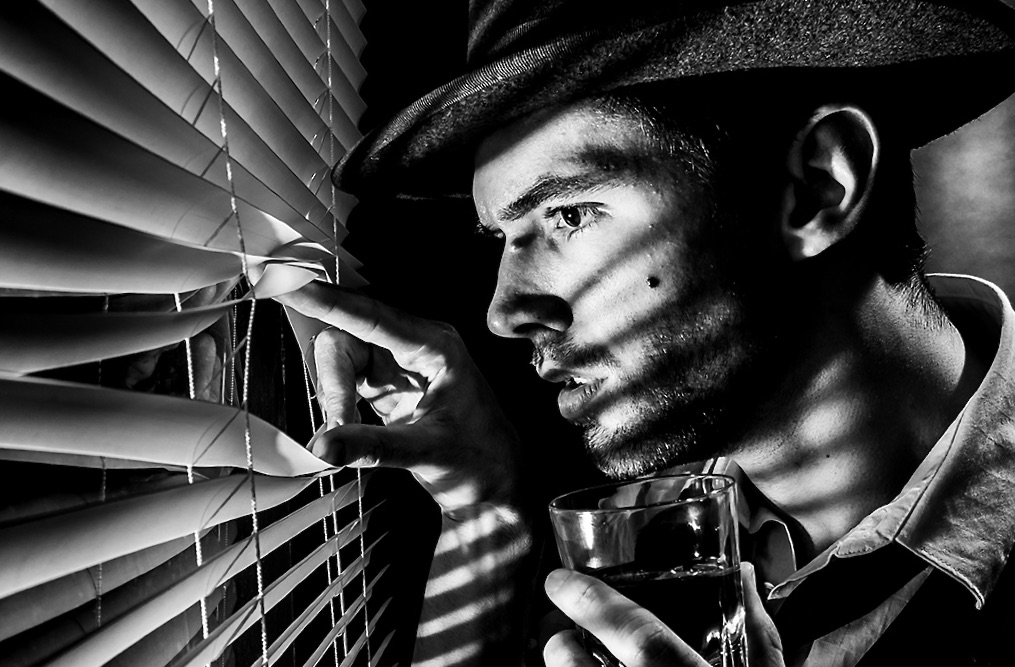
Kill Me Again

By Ed Staskus

Most people, unlike cats and their legendary nine lives, only die once when they pass away. There’s no going back for a do-over. The art of living well and the art of dying well are often thought to be the same thing. Kim Fowler is not most people. She lives well, but doesn’t die well, although if she were a cat she would be down to six lives and counting.

She is the founder and owner of YAS Yoga and Spinning Fitness Centers, with multiple locations in Costa Mesa, Venice, and Los Angeles, California. The first center opened in 2001 and featured the first fitness program wedding yoga and certified spinning. “Both together are an amazing combination of yin-yang,” she said.

Ms. Fowler’s Yoga for Athletes melds elements of Iyengar and Ashtanga practice to enhance athletic performance and reduce the risk of injuries. YAS classes are typically 30 minutes of indoor cycling followed by 30 minutes of yoga. “It helps you go deeper into and benefit more from each pose,” she said.

She is a successful innovator, teacher, and businesswoman. She is a resourceful yogi, and one tough cookie, too. She has learned to roll with the punches, literally.

In the early 1980s she was competing in a bicycle road race outside Dallas, Texas, when a car smashed into her. She rolled over the front of her bike.

“I bent the handlebar of my bike with my face.”

As late as 2013 there were close to a half million emergency room visits because of bicycle-related injuries and almost 900 bikers died. Texas is one of the deadliest states in America in which to ride a bicycle, ranking only behind Florida.

After recovering she worked with a physical therapist, a woman who happened to be an Inyengar Yoga instructor on the side. “She gave me yoga poses to help me.” A near death experience turned into a far and wide life experience.

“I guess yoga found me,” she said.

Whether it’s exercise or meditation, yoga is about trying to apprehend the inner being, what in the Yoga Sutras is called drastuh. It’s a burning away of what in the end doesn’t matter. Eternity isn’t something that happens after anybody dies. It’s happening all the time to everybody.

Kim Fowler was raised in an impoverished South Jersey neighborhood, the eldest of five children. “I grew up extremely poor. We didn’t have food or heat. My father had a bad car accident when I was young and ended up with 88 stitches in his face. He never pulled out of it. He became an alcoholic, didn’t work, and left us to fend for ourselves.” She had to make her own way.

Sometimes the freedom to be yourself comes from old-fashioned gumption.

After putting herself through school and earning a degree from Boston University she enrolled in law school. In her final year, in the middle of her final semester, she was diagnosed with a rapidly growing tumor the size of a golf ball in her brain.

“I had a bright career in front of me,” she said. Lawyers get a bad rap. Some people even believe most of the trouble with laws is lawyers. “No one wanted an attorney that had a brain tumor.“

Her doctors told her the problem was inoperable. “We could try to get it out,” one of the team of doctors told her. “But, you will lose your speech and sight. You probably won’t make it past thirty.”

Life can be rocketed into a new orbit by a doctor dispensing bad news from a clipboard in a bland voice. “I’m in my last year of law school!” she exclaimed. “This isn’t an option for me.” Once diagnosed, she had to decide whether or not to listen to their medical advice.

“I’m not going to let this happen to me,” she decided. “There’s got to be something else, something different.” She called a friend who helped her check herself out of the hospital. “Nurses and doctors were screaming. If I would have listened to them I would be dead by now.”

Dead again.

She refused, however, to give up the spirit and buy the farm.

“It’s mind over matter,” said Kim. She began training for and taking part in endurance contests. She ran marathons, rode all-day races on her bicycle, and finally progressed to triathlons. “Someone telling me I was going to die caused me to go the whole other route and become a pro triathlete.”

She also made making it on the mat a habit. “Practicing yoga while battling cancer taught me the importance of balancing strength with flexibility. Focusing on my breath helped me stay centered.”

She gradually recovered. “It was hard, but I was full of piss and vinegar at the time.”

Although doctors are often crucial, recovery is more often brought about not by them, but by the person in danger. In many respects we heal ourselves, by means of our thought and breath, and sheer will.

After graduating from South Texas College of Law she stayed in Houston, going to work for a law firm. In 1990 she moved overseas, practicing international business law in Monaco. Five years later, back in the United States, she joined Winning Combination, a health and wellness business, as their Chief Operating Officer.

Then one day she went hiking.

The Mt. Charleston Wilderness Area in Nevada is gnarly, riven by narrow slot canyons, and laced with steep hillsides. The mountain is called Sky Island because of its elevation and isolation. While free climbing she slipped on a patch of ice, lost her balance, and fell more than twenty feet. She landed on an old tree stump.

The stump stayed rooted. She took the brunt of the encounter.

She cracked several ribs, punctured a lung, and severely lacerated a kidney. “I’ve been through worse,” she thought. She was a half-hour away from the closest medical help. She dragged herself off the stump. ”I knew I had to get to the hospital. It was mind over matter and I just did it.”

The kidney on the side that had taken the blow from the fall was leaking urine and blood into surrounding tissue. At the hospital she was told it had to be removed.

“No,” she said.

Kim Fowler was, again, determined to go her own way. It took her a year to recover. The Winning Combination let her go long before year’s end. “I lost my job as COO.” Getting fired can be like a bomb going off. It can also be a way to get on with your life. You only get to make one mistake with bombs. Firing Ms. Fowler was the Winning Combination’s mistake, although for her it turned out to be liberating.

“When I was rehabbing I would go from a yoga class on one side of town to a spin class on the other,” she said. “I was very frustrated. I thought, why doesn’t someone put this together and open up a yoga and spinning studio?”

That someone turned out to be her.

She opened the first of her yoga and spinning studios in Venice, California. The day she opened the doors her new business began to fail. “We had opposite energies coming together.” Spinners were looking for an intense cardiovascular workout and yogis were looking for a workout to calm them down.

What do you do if your business plan isn’t working? “In my case I regrouped and changed, fast.” She created a new kind of yoga to fit the spinners and sold the yoga crowd on the complementary benefits of spinning. “It was the best thing I could have done.” She was designated a Nike Yoga Athlete by the athletic and fitness company two years later.

Winning acceptance in the yoga world, however, was another matter.

“I got blasted by the yoga community when I first did it because it wasn’t ‘real yoga’, rather my own style,” said Kim.

It was a matter of building a better mousetrap.

The concept of zen on wheels made it into Yoga Journal, the world’s largest mass circulation yoga magazine, “Spin and yoga have merged into a killer one-hour class, created by Los Angeles-based yoga instructor Kimberly Fowler. It’s cropping up across the country.” It named the now better mousetrap one of the hottest fitness trends of 2014.

Since then Ms. Fowler has expanded her brand, moving beyond company-owned locations, and franchising her fitness regimen. “Indoor cycling gives you the best cardio training and yoga provides the best stretching, relaxation, and peace of mind to prepare you for the challenges of life,“ said Hugo Auler, new owner of the franchised YAS Fitness Center in Manhattan Beach, California.

Resurrecting her life led to resurrecting her career, and led to finding her business partner, too. Sherri Rosen is her partner in life, as well. “We were set up on a blind date just a few months after I opened YAS,” said Kim. “We are still together.”

“I’ve stayed in an operator’s mode,” said Ms. Rosen, former vice president of a fashion company. “Kimberly is the visionary. It is amazing what she has accomplished.”

Even though Kim Fowler has gone from cutting edge to business-savvy, even though she has transformed her business model to an investor approach, and even though she has gone corporate, she still lives in her sweats.

“I basically live in workout clothes,” she said. “I only wear green, gray, black, and white. Well, with a smattering of skulls.” She is the designer of an apparel line whose tag line is “Two parts functional, one part bad ass.”

Kim Fowler continues to see her doctor once in a while. “I went and he looked at me like I was a freak when he realized I’d been off medication for 20 years, like I shouldn’t have the life I have. The mind is pretty phenomenal when it comes to its power over the body.”

At the end of exercise sequences on the yoga mat something called corpse pose is traditionally practiced. It’s the easiest and hardest pose. It’s easy because all you have to do is lay on your back with your eyes closed for 5 to 15 minutes. It’s hard because who wants to lie on their back like a dead person, doing nothing, for 5 to 15 minutes.

Corpse pose is about letting go. But, it’s not about zoning out or taking a nap. Even though it’s about letting go, it’s a pose meant to foster connection and clarity, or awareness. Many people struggle with it, however, and some classes look like popcorn popping the minute class ends and corpse pose is announced.

Other people have no problem with it. Kim Fowler is one of them. It keeps her in touch with life. “It’s a different awareness of your body,” she said. “I think for stress it’s amazing. Nothing’s better.”

She knows when to lie down and when to get back up. There are no surprises waiting for her in corpse pose. She’s been there before.

Ed Staskus posts stories on 147 Stanley Street http://www.147stanleystreet.com and Cleveland Ohio Daybook http://www.clevelandohiodaybook.com. To get the site’s monthly feature in your in-box click on “Follow.”

From Bogota to Bittergirl

kits-4-e1516833330679.jpg

By Ed Staskus

When “Bittergirl: The Musical” came back to the cabaret-style Mack Theatre in downtown Charlottetown, the capital of Prince Edward Island, it came back because it had played to laugh-out-loud crowds during its world premiere there in 2015, and everyone knew the home-grown Canadian merry-go-round about breaking up was worth seeing, or seeing again in 2017.

Based on a 1999 play lived died and written by Annabel Fitzsimmons, Alison Lawrence, and Mary Francis Moore, one of them divorced, one dropped like a hot potato, and one in the whirlpool of being dumped, and their later-on best-selling book, “BITTERGIRL: Getting Over Getting Dumped”, the musical is the best of the play and the book and 60s doo-wop mixed with 70s mega-hits.

“When he danced he held me tight, and when he walked me home that night, all the stars were shining bright, and then he kissed me.”

The show is a mash up of a live band song dance high emotion low comedy trenchant wisecracking and rip-roaring showcase performances. It’s about the one sure-fire way of hurting somebody’s feelings, which is to break up with them.

“Baby, baby, where did our love go? Ooh, don’t you want me, don’t you want me no more?”

Hooking up and heartbreak are as girl group as it gets. Taylor Swift’s ‘We Are Never Ever Getting Back Together’ was still fifty years in the making when Phil Spector’s Wall of Sound and Motown were going strong. The Shirelles were the first to hit number one on the HOT 100 in 1961 with ‘Will You Love Me Tomorrow’.

When the musical comedy wrapped up its second sold-out run at the end of August, and the last of more than 20,000 theatergoers had left the 200-seat Mack Theatre, the young woman putting away bottles of vodka and rinsing out cocktail glasses behind the bar on the far side of the stage was the one person who had seen the show more times than anyone else, save the cast, crew, and front of the house.

“I love the show,” said Natalia Agon, the Mack’s bar manager. “Sometimes on my nights off I go see it with my mom or my husband or my friends. It’s so fun and I’m so proud of it.” Since starting work at the theatre earlier in the summer she has seen “Bittergirl” close to 40 times.

The 25-year-old traced an improbable path to her first sighting of the show. She almost didn’t make it. A native of Bogota, Colombia, it took a death threat to shove her off Colombian soil and land her on the red dirt of Prince Edward Island. The threat to her family came from terrorists, in the mail, on embossed stationary, declaring them a military target.

“Bogota was good,” she said. “I grew up there. My dad worked hard, and my mom worked hard, to give us what we needed. Starting over from zero was definitely hard.”

Bogota is a 500-year-old city in the middle of Colombia, the capital city and largest city in the country. It sprawls across a high plateau in the Andes. More than 10 million people live in the metro area, the economic, political, and cultural center of northwestern South America. “Most Noble and Most Loyal City” is Bogota’s motto.

Natalia’s parents met in Panama City, Panama. “They were poor when they got together. They would buy clothes or cigarettes in Panama, where they didn’t have taxes, and bring it back to Colombia, and sell it,” she said. “They did every job on the planet.”

By the time she started school her parents had scrimped and saved and purchased and owned and operated a 1,000-acre beef and dairy farm four hours away from Bogota, while still living in the city. “We went there every weekend, my two brothers and me, whether you liked it or not.”

At the same time, “bittergirl” the stage play took off, playing from bliss to breakup and back to full houses in Toronto, traveling to London, England, and laughing its way to off-Broadway in NYC. It was the trifecta, the original recipe, extra crispy, and the Colonel’s special.

“I’ll make you happy, baby, just wait and see, for every kiss you give me I’ll give you three, oh, since the day I saw you, I have been waiting for you.”

It was a long way from the little Toronto café where the three writers dreamed up the loving and hurting story, based on themselves and everyone they knew. “We’ve had some adventures together!” said Mary Francis Moore.

“Every night our audiences were waiting for us as we came offstage with their very own stories,” the co-authors have said.

‘I got dumped in the hospital ten minutes after giving birth…’

‘He left me for my little sister and now he sits across from me at Christmas dinner…’

‘My husband worked for CSIS and said ‘You’ll never be able to find me’ and I never have…’

“Swear to God. All true.” Truth is stranger than it used to be. The snag about some hook-ups is that they’re not worth the break-up.

“My parents had a big problem with FARC,” said Natalia Agon. “It was because of the farm, about paying the vaccine.” Besides the coca trade, in other words, cocaine, which sustained the leftist group during Latin America’s longest running war, extortion ran a close second in the financial affairs of the rebels. The money payments were known as vacuna, or the vaccine.

Scottish Border Reivers ran a racket called black mal five hundred years ago, the Sicilian Mafia has always understood the protection trade, and there is little confusion about what the Russian Mafia means when they say krysha up.

The Revolutionary Armed Forces of Colombia, or FARC, was formed in 1964, a peasant army that grew to number almost 20,000 militants controlling close to 40 percent of the country. The 50-year civil war, recently ended, displaced 7 million people from their homes and resulted in 220,000 deaths, among them 11,000 people killed by land mines.

“My dad paid the vaccine for a long time,” said Natalia. “But, once they saw they could use you for other purposes, whether storing drugs or storing guns, it was a yes or no answer, no matter whether you wanted to do it or not.”

Pedro and Maria Agon said no to cocaine and guns.

Soon afterwards, just before Christmas 2007, they got a letter in the mail. “It was on thick white paper, official looking, super fancy, with their FARC logo on it. We just left, our house, the farm, all my friends I had known all my life. One day my mom said, pack a bag, you’re not going to school on Monday.”

She packed pictures and letters from her friends and the blanket she was swaddled in when she was brought home from the hospital when she was born. “You can’t do that, my mom said. You have to leave everything.”

They left almost everything.

“We got out of there fast.”

The Agon’s were able to transfer property to sisters brothers aunts uncles, as well as convert some assets to cash. They were uncertain about relocating anywhere else in South America. They considered the United States a safe haven, but Natalia’s mother nixed moving there.

“She just didn’t like it, even though she had traveled to the States many times. She never felt welcome. She always felt a racial discrimination, even though she was going there to spend money. So we looked at a map and there was Canada. There was no thought process behind it, we just went.”

“Bittergirl: The Musical” took the Charlottetown Festival by storm when it opened in 2015, a crowd-pleaser bringing the howls and selling out all summer. Bitterness never felt better, nor misery in the hands of singers and dancers belting it out and mansplaining how he’s lost his magic and you’ve got to go.

“He’s a rebel and he’ll never ever be any good, he’s a rebel ‘cause he never ever does what he should, but just because he doesn’t do what everybody else does, that’s no reason why I can’t give him all my love.”

It went on to become a north of the border success story, having since been produced coast to coast, Edmonton, Manitoba, Vancouver.

Nine months after landing in Toronto, the Agon’s got their Permanent Resident cards. “It was a hard process,” said Natalia. “There was a lot of scrutiny, but it was never the you don’t deserve to be here kind of scrutiny.” The family rented an apartment and Natalia graduated from high school in 2010. She attended Centennial College, majoring in Food and Nutrition Management, and worked part-time in a nursing home.

In 2014 she and her husband-to-be, Miguel Cervantes, moved to Prince Edward Island. “I knew I needed a school that was going to give me a lot of interaction with professors and where there were internships to become a registered dietician.” She has an internship on tap at Humber River Hospital in Toronto when she graduates next year.

Natalia Agon enrolled at UPEI in Charlottetown. Her husband worked his way up to become the executive chef at Mavor’s, a contemporary eatery part of the Confederation Centre of the Arts. The menu ranges from the Moona Lisa burger, featuring homegrown PEI beef, to four-course dinners paired with Scottish whiskies.

Early in 2017, as part of her studies at UPEI, she joined the group Farmers Helping Farmers, traveling to Kenya, where they worked with the Wakulima Dairy in the Mukerweini District. She also helped distribute female hygiene kits to the Karaguririo Primary School.

“We gave the students a girl empowerment talk,” she said. “Their eyes were bright with excitement.”

Last year, looking for work, she applied at the Mack Theatre. She got the job. “I run the day-to-day operations and I’m the head bartender,” she said. She trains and schedules the other bartenders, keeps a firm hand on the inventory and cash register, and trims the sails on show days. Above all, all summer long she mixed Cowards, Mounties, and Magic Men.

“Those are the names of the three ex’s of the show, and they’re our three feature cocktails. The definite crowd favorite is the Mountie. I always tell everyone, I think you’re going to like it even more once the show starts.” At the break, however, the strains of ‘Be My Baby’ dying away, most order the drink they can relate to the most. Magic Men and Cowards give the vodka-heavy Mountie a run for his money among the crowd pressing at the bar, no matter that Mounties are renowned for saving damsels in distress.

“Ain’t no mountain high enough, ain’t no valley low enough, ain’t no river wide enough, to keep me from getting to you, babe.”

“Things have changed a lot in Colombia since we left,” said Natalia.

She has since returned several times for visits. Nevertheless, when her father went back to South America, the farm he bought was on the Ecuador border with Colombia. “He’s in love with the land. He can’t get enough of it.” One of her older brothers, a doctor, lives in Mexico and the other older brother lives in Spain. Her mother spends divergent parts of her year with her husband and far-flung children.

The Agon’s are a family of expatriates by necessity, not by choice. “My husband is from Guatemala, but he came to Canada when he was a one-year-old and never went back,” said Natalia. “His Spanish is broken. But I was born in Colombia, raised in Colombia, and most of my values are from being raised there. I loved it. Leaving was an emotional struggle.”

Although it’s true that loss is the same as change, and the world is always going to keep changing, surviving and coping with loss is difficult, especially when a chunk of your childhood goes missing. It leaves a hole in the world. It’s the price everyone pays for everything they’ve ever had, or will have.

“Weren’t you the one who tried to break me with goodbye, did you think I’d crumble, did you think I’d lay down and die, oh no not I, I will survive.”

It doesn’t matter if it’s a boyfriend or your birthplace. It doesn’t matter whether it’s played for laughs on stage or it plays out in real life. There’s a thin line between humor and hurt.

“I never get tired of the show,” said Natalia. “The ex and the girls do a great job portraying everyone, our emotions, all we’ve been through. It’s happened to me, when you’re dumped for no reason, or it’s not you, it’s me. I’ve definitely heard that one before, and I’ve totally said it, too.”

Behind the bar she hears what everyone has to say about “Bittergirl”. When a case of nerves orders a cocktail she mixes up a Coward. “The moms, maybe when they’ve had one too many, remember ordering pizza, eating their feelings. It’s just heartbreak.”

One day can be sweet as can be and the next day bitter as all get out. “You don’t know if you should laugh or cry,” said Natalia. Everyone has their share of heartbreak. If you’re singing about it, you’ve lived it. Natalia Agon has lived it and sung along with songs about it, but isn’t recording a full album of it.

Whenever bitterness tries to get in on the act, she offers it a Magic Man. “That’s my favorite,” she said. The Magic Man is a south of the border blend of Kahlua, Pepsi, milk, and crème de cacoa.

Sometimes when husbands and boyfriends are at the bar at the Mack at intermission getting drinks for wives and girlfriends, but can’t remember what they want, she suggests they “go check with the boss.”

She’s not a bitter girl.

Ed Staskus posts stories on 147 Stanley Street http://www.147stanleystreet.com and Cleveland Ohio Daybook http://www.clevelandohiodaybook.com. To get the site’s monthly feature in your in-box click on “Follow.”