All posts by Edward Staskus

Edward Staskus is a freelance writer from Sudbury, Ontario. He lives in Lakewood, Ohio. His crime thrillers "Cross Walk" and "Bomb City" can be found on Amazon.

Fishing for Mr. Babadook

By Ed Staskus

   Emma was dozing in the back seat, her head slumped on her brother’s shoulder, the night they discovered the truth about Shadow Man. Oliver had heard of him, but since they were leaving Prince Edward Island in a few days, going home to Ohio, he had almost given up hope of running into him. Even though he was only ten years old, he was as a rule prepared for the worst when it came to monster hunting, but always hoped for the best.

   Oliver was an accomplished monster hunter. His older sister Emma was his right hand man. Their parents were in the front seats, their father driving and their mother scrolling through her cell phone. It was nearing eleven o’clock. They had been in Charlottetown, at the Irish Hall, where they had seen the band Fiddler’s Sons. They were returning to the Coastline Cottages in North Rustico, where the family had been staying for nearly two weeks.

   They took a wrong turn leaving Charlottetown and ended up on Rt. 15 instead of Rt. 223. “No matter,” their father said. “We’ll drive up to Brackley Beach and from there all we have to do is turn left to North Rustico.” Getting back to their cottage from there meant going through Rustico, Rusticoville, South Rustico, and Anglo Rustico, which were along the way.

   North Rustico was founded in the late 18th century. Nobody is sure exactly when. It is on a natural harbor on the Gulf of St. Lawrence. There is a food market, a hardware store, a Lions Club, and about six hundred people live there. René Rassicot, a French pioneer, was one of the first settlers in North Rustico. All the rest of the nearby Rustico towns take their name from him.

   They were driving down a stretch of Rt. 6 near South Rustico when the road was engulfed by green fog. Suddenly, out of nowhere, there was somebody in front of their car. He was a tall man wearing an old-fashioned flat brim hat and a long black coat. Their father slammed on the brakes but it was too late. The car hit the man and sliced through him like he was nothing.

   “Stay here,” Oliver’s father said, coming to a stop and jumping out of their Jeep Cherokee. He was shaken. He scanned the ground with a flashlight. Nobody was lying dead on the road or in the bar ditch. Oliver twisted around and peered through the rear window.

   Emma woke up. “What’s going on?” she asked.

   “I think dad hit something,” Oliver said. He climbed out of the back seat. Emma followed him. Their mother kept her hand on her cell phone, ready to call 911.

   “He came out of nowhere,” their father said. “He was in the middle of the road but now he’s nowhere.”

   “I have nowhere else to go,” a voice said.

   Oliver, Emma, and their father looked in all directions, looking for the voice. A man walked out of the fog towards them. He was still wearing his old-fashioned flat brim hat. He was more silhouette than flesh and blood. He didn’t look hurt in any way. He was carrying a mace in his right hand. It was an aspergillum, a liturgical implement used to sprinkle holy water. 

   “It’s my double-edged sword, in case my sacred water doesn’t work on the fiend,” he said. “In that case I will send him back to Hell by smashing him with God’s instrument.”

   “We thought we hit you in the road. Are you all right?”

   “Yes, I am all right,” the man said. He had a French accent. His voice had a slight echo to it

   “Who are you?”

   “He’s the Shadow Man,” Oliver said. He knew his phantoms.

    “I am the shade of Rene Rassicot, after who these lands are named,”  the man said, fog rolling off his shoulders. “Some call me the Shadow Man. I do not terrorize the living. I watch over those on my lands, especially at night, when their dreams leave them exposed to danger.”

    “Are you immortal, or something?” Emma asked.

   “All creatures, except for man, are immortal because they are ignorant of death. Being a man, I am not immortal, although I was once threatened with immortality, which is more terrible than being threatened with death.”

   “Are you alive now?”

   “Yes and no, my young girl. My advanced age has resigned me to being Shadow Man. I miss my wife. I miss my family. I miss the smell of coffee and tobacco.”

   “What are you watching out for?” Oliver asked.

   “I am watching out for Mr. Babadook. He prowls these coastal lands from Brackley Beach to Stanley Bridge. He is furtive and cold-hearted. He strikes a pose in a beaver pelt top hat. He wears black mouth paint and his long spindly fingers are knife-like claws. He feeds on bowls of worms.”

   “I’ve never heard of Mr. Babadook,” Emma said.

   “He is the fiend who has oppressed me these past one hundred years,” Shadow Man said. “I have sometimes been confused with him since 1925, when Mr. Babadook was brought to this island in a children’s book.”

   “He came here in a book?” Oliver asked.

   “Yes, a pop-up book.” 

   The first pop-up book was “Little Red Riding Hood” published in 1855. It was called a scenic book. Seventy years later the Big Bad Wolf had become Mr. Babadook. He and the wolf shared the same kind of teeth and unholy appetites.

   “What does he do?” Oliver asked.

   “He knocks on your door, disappears, but leaves behind his red pop-up book meant for children’s night stands.”

   “What happens if children read the book?”

   “When they open the book they read, ‘You can make friends with a special one.’ By the time they get to the middle of the book they read, ‘You cannot get rid of me!’ After that they can’t help turning page after page. When they finish the pop-up book Mr. Babadook moves into their basement and gains control of the house and the family. In the end what happens is madness.”

   “That sounds terrible,” Emma said. “Why hasn’t anybody stopped him?”

   Their father wanted to say there isn’t any such thing as dream police, although he conceded there were dream monsters. Before he could say anything, however, Oliver piped up.

   “Dad, can Shadow Man come with us? He could sleep in Cottage No.1 since it’s empty. We could search for Mr. Babadook tomorrow. Maybe if we put our heads together we could put a stop to what he has been doing. We don’t have anything planned, do we?”

   His mother was all set to say they had plenty planned and Shadow Man should go back to where he came from, but before she could get a word out her husband said, “Get in the back. My son and you can go look for Mr. Babadook tomorrow, although you should know you won’t have much time since we are going home to Ohio in a few days.”

   “What about me?” Emma said, knowing full well she would be in on the hunt, no matter what.

   “We three will find him,” Shadow Man said.

   What he didn’t say was that Mr. Babadook might find them first. The top-hatted bogeyman was always on the prowl for children. Shadow Man looked at the two youngsters in the car and thought he must make a plan.

   Oliver and Emma spent the next day at Cavendish Beach on the Green Gables Shore. That night they went to MacKenzies Brook. The Shadow Man was with them. Their parents were asleep at the Coastline Cottages in North Rustico, two miles away. Their father was snoring lightly. Their mother was dreaming. In her dream she was staring into a green fog and hoping nothing monstrous walked out of the sea fret. When something did she sprang awake in a cold sweat.

   Shadow Man, Oliver, and Emma had quietly left and gotten on the all-purpose path three hours earlier. It was now near dawn. The mice and rabbits were still asleep. The foxes who hunted them were asleep, too. The all-purpose path paralleled the Gulfshore Parkway that ran along the Gulf of St. Lawrence. MacKenzies Brook was on a bluff with a dirt track down to a beach. Fishermen often cast for sea bass there. Oliver and Emma weren’t after fish. They were after Mr. Babadook. When they had gotten there they looked for the Cactus Pot rock formation they had heard about, but it wasn’t there anymore. Hurricane Fiona had blown it down in 2022. It  was the most intense storm to ever hit Prince Edward Island. 

   “You said this was the best place to find Mr. Babadook on this exact day,” Oliver said to Shadow Man.

   “Yes,” Shadow Man said.

   “Why is that?”

   “Once a month a new moon rises above the eastern horizon at sunrise. On that day the moon then travels across the daytime sky with the sun. At the moment when night and day are evenly spaced is the moment when Mr. Babadook stands on the beach and makes his plans for the coming month. It is an order of business with him.”

   Mr. Babadook lived rent free eighteen miles away in a damp corner in the basement of the Haunted Mansion in Kensington. He lived rent free because nobody was aware he was there. The Haunted Mansion had been a potato warehouse when trains used to run past its back door. When the railways on Prince Edward Island were abandoned it was sold and converted into the Kensington Tower and Water Gardens.

   The new owners were anglophiles and rebuilt the potato warehouse into a Tudor-styled manor house. In the early 2000s it was sold to the owner of the Rainbow Valley Amusement Park. He converted it into a spook house. The one-time potato warehouse became spooky and scary.

   Mr. Babadook is a thoughtform that comes from the collective unconscious. He is like a living being who lives inside another living being’s head. He haunts those who read his pop-up book, which is disguised as a children’s book. He is a shape shifter, taking the form of any person, animal, or insect. He has been known to take the form of a woman’s dead husband and convincing her to give him her son so he can destroy him. Moving about at night he often takes the form of a Norwegian rat. 

   “If Mr. Babadook has been on the island for a hundred years, like you said yesterday, how old is he?” Emma asked.

   “As old as the bogeyman,” Shadow Man said. 

   Mr. Babadook was a bogeyman who wore a black coat and top hat. He was long in the tooth. He had claw-like hands and a chalky face. He haunted those who read the pop-up book that he hid inside of. As they became more frightened he became more real and horrible.

   “What are we going to do with him if he shows up?” Emma asked.

   “I don’t know,” Shadow Man said. “My plan didn’t get that far.”

   “I know,” Oliver said. “Since he’s a thought he can’t be whipped by ordinary means. But, since he’s an avatar of fear, Mr. Babadook can be put to an end through acceptance.”

   “What is an avatar?” Shadow Man asked, his 18th century brain drawing a blank about the word.

    “It’s sort of an impersonation created to manipulate others, like Mr. Babadook does,” Oliver said.

   “What do you mean when you say defeated through acceptance?”

   “What I think I mean, if you stop being scared of him, and come to terms with those bulging eyes of his staring you in the face, he loses his power over you. He‘s a master of inciting fear, so I’m not saying it’s easy to do. It can be like trying to hold back a flood with toothpicks.”

   Oliver, Emma, and Shadow Man were hiding inside a clump of Marram grass on the side of a dune when an Ambush Bug flew past them and landed on the beach. Ambush Bugs are part of the Assassin Bug family. They are yellowish things, usually living among sunflowers. They are not picky eaters, but prefer other insects. Any other insect that gets too close is grabbed with strong front legs and held fast. The Ambush Bug jabs its sharp peak into the other bug and sucks out its insides.

   As soon as the bug landed there was a flash and in an instant Mr. Babadook was himself. He pulled a pair of sunglasses out of an inside pocket and stood facing the rising sun. The sky was clear as glass. Oliver, Emma, and Shadow Man walked down the dune and stopped behind Mr. Babadook. Nobody said anything, although Shadow Man knew their archenemy knew they were there.

   When Mr. Babadook whirled around, lashing at them with his claw-like hands, Oliver and Emma jumped back. Shadow Man stood his ground, The claw-like hands went through him without leaving a scratch.

   “If I had known it was you I wouldn’t have wasted my time,” Mr. Babadook said. “But I have other ways of dealing with you, as soon as I’m done with these children.”

   “There isn’t going to be any dealing,” Oliver said. “You’ve overstayed your welcome on this island. It’s time for you to go.”

   “I’m not going anywhere, my young man, and that goes for your little sister, too.”

   “Hey,” Emma said. “I’m the older one, mister.”

   “Yes, you are going somewhere, because once we let everybody know there isn’t anything to fear but fear itself, your days here will be numbered,” Oliver said.

   “Where have I heard that before?”

   “I don’t know, but you’re going to hear a lot of it from today on.”

   Without warning, Mr. Babadook shape shifted into a wolf and snarled. He advanced on Oliver and Emma, who had a jackknife in her back pocket, but quickly realized it wasn’t going to do them any good.

   A fisherman had pulled into the parking lot a few minutes earlier. He had unpacked his gear from his pick-up truck. He was just starting down the dirt path to the beach when he spied the wolf threatening Oliver and Emma. He cast his line and hooked the butt of the wolf, who yelped in protest. There was a flash and the wolf shape shifted back into Mr. Babadook. 

   “Let me go if you know what’s good for you!” he roared.

   The fisherman knew what was good for him. He reeled the black-clad fiend in, dragging him through the beach sand and up the dirt path. A catch is a catch. When he had him at the top of the bluff he grabbed him by the scruff of the neck and tossed him into his wicker fish basket. Mr. Babadook raged inside the basket, trying to slash his way out of it, threatening doom to everyone seen or unseen, known or unknown. Before he could tear the bag apart the fisherman overturned it into a cooler and secured the lid.

   “What are you going to do with him?” Emma asked.

   “He’s going back into the deep, from where he came,” the fisherman said. He threw the cooler into the ocean. The tide took it. It floated up the Gulf of St Lawrence, past Red Bay and Port Hope Simpson, past Newfoundland and out into the Labrador Sea. It floated past Greenland and finally landed on the northwest coast of Iceland at Samuel Jonsson’s Art Farm at the tip of the Westfjords near the town of Selardalur. 

   Mr. Babadook spent the rest of his days there, having lost his pop-up book, fishing for herring, which he ate with caramelized potatoes, and  painting portraits of himself. He sold the paintings to the occasional tourist who took the time and trouble of driving the hundreds of miles from Reykjavik.

   The locals assumed he was a troll, come down from the mountains, since he only ate after it got dark. Everybody knew trolls had issues with sunlight. Since losing his pop-up book, he told anybody who asked that his mother was Gryla, the most feared troll in Iceland, so nobody messed with him. Parents warned their children to be vigilant around the top-hatted creature, and that is what all the children of the Westfjords did from then on, like they did with all trolls.

Ed Staskus posts monthly on 147 Stanley Street  http://www.147stanleystreet.com, Made in Cleveland http://www.clevelandohiodaybook.com, Down East http://www.redroadpei.com, and Lithuanian Journal http://www.lithuanianjournal.com. To get the site’s monthly feature in your in-box click on “Follow.”

“Cross Walk” by Ed Staskus

“A Cold War thriller that captures the vibe of mid-century NYC.” Sam Winchell, Beyond Books

Late summer, New York City, 1956. The Mob on the make and the streets full of menace. President Eisenhower on his way to Brooklyn for the opening game of the World Series. A killer waits in the wings. Stan Riddman, a private eye working out of Hell’s Kitchen, scares up the shadows.

Available on Amazon: https://www.amazon.com/dp/B0CRPSFPKP

A Crying of Lot 49 Publication

Kingpin of the T

By Ed Staskus

   The one and only time I met Daffy Dan was at a party in a fourth floor warehouse studio on Superior Ave. between downtown Cleveland and the Innerbelt. It was the ArtCraft Building. There was a car-sized freight elevator in the back, but the front stairs were what all the partygoers used. Nobody knew how to operate the old-fashioned elevator controls. They were ready for a drink by the time they got upstairs. The studio belonged to Joe Dwyer, somebody I had gone to high school with. He was an artist and was making artworks in the studio. He also threw parties there, especially on Halloween, which it was the night I met Daffy Dan. No sooner did I meet him than the lady friend I had come with wandered off.

   When I was introduced to Daffy Dan I realized who he was right away, if only because I had just seen the custom-made fifteen-foot tall caricature of him on the front of the warehouse building across the street. The sign next to the cut-out said, “The Creative Studio of Daffy Dan’s.”

   He was on the short side and wore his hair long, over his shoulders, and parted in the middle. He was 28 years old, slightly older than me. He had a handlebar mustache. It was the kind of mustache lawmen and outlaws wore in the 19thcentury. He wasn’t wearing a costume for the Halloween party. He had on faded blue jeans and a sports jacket over a  t-shirt. The t-shirt featured WWMS-FM, the city’s favorite rock ‘n’ roll radio station. Their buzzard logo, a top hat in one hand and a walking stick in the other hand, was in the middle of the t-shirt. “Ohio Tuxedo” was in bold red letters above the smiling blonde-haired buzzard.

   A campaign-style button was pinned to the lapel of his jacket. It said, “If your t-shirt doesn’t have a DD on the sleeve, it’s just underwear!!” The two exclamation points meant he meant business. Daffy had a can of beer he wasn’t drinking in his hand. Every few minutes somebody stopped and said hello to him.

   “How did you get into the t-shirt business?” I asked. I was interested because I wasn’t in any business of any kind. I floated from one job to another and was consequently relatively poor. Even though Daffy didn’t have a degree of higher learning, after a few minutes of talking to him it became clear he wasn’t a sandwich short of a picnic.

   “I dropped out of high school my senior year and went to work in the record store business,” he said. “I started to carry some rock group t-shirts. I got a catalog of shirts from who knows where. Other record stores started coming to me and asking me where I got them from, and rather than telling them, I looked up a dealer and started to wholesale them.”

   Even though he looked as counter cultural as the best of them, he was bright as a button when it came to commerce and capitalism. He was the city’s top dog of t-shirts. He knew how to circle his way around a dollar. Before long I started to realize, wait a minute, those dealers aren’t doing it right. I can do it better. The rock group t-shirts just took off like a rocket. We located our storefront over on Clifton and West 104th St., and that’s where we really started. From the beginning we marketed ourselves as Daffy Dan’s from Cleveland, Ohio. We opened a single store in 1973.” There were now five of them, with four more planned. “It isn’t tourists, either. It is Clevelander’s buying Cleveland-themed t-shirts and merchandise. It’s a phenomenon.”

   The slogan of Daffy Dan’s first store was, “If You’ll Wear It, We’ll Print It.” By the time I met the man behind the phenomenon he was moving more than forty thousand t-shirts annually. One of his most popular offerings displayed the legend “Cleveland: You Gotta Be Tough.” On another best seller Andy Gibb’s face was the hot potato plastered on bosoms far and wide. It was followed in popularity by Darth Vader and Farrah Fawcett-Majors. 

   “It’s not a fad,” Daffy said. “Blue jeans and t-shirts have become the American way of life.”

   Back in the day t-shirts were called tunics. Well into the 19th century they were simply called undergarments. The first t-shirt was created when a union suit was cut in half with the top long enough to tuck into a waistband. The U. S. Navy put them into circulation as crew-necked, short-sleeved undershirts during World War One. Naval work parties in steaming hot engine rooms took to wearing them all the time. Farmers adopted them during the Great Depression. They were cheap and lightweight. The first printed t-shirt was an Air Corps Gunnery School t-shirt issued in 1942. In the 1960s they got popular as souvenirs, advertisements, and self-expression billboards. A friend of mine had one, featuring an angry Micky Mouse, that said, “My parents went to Disneyland and all I got was this lousy t-shirt.”

   Plain t-shirts were going out of fashion, even though they are versatile, like a blank canvas. Everybody has got something to say. If you don’t get what’s on your chest out on your chest you end up looking like nobody. That’s why you get a t-shirt with an iron-on monkey and the caption, “Here Comes Trouble.” There is no sense messing around. One of Daffy Dan’s t-shirts went in the out door. It said, “I Am a Virgin. This Shirt Is Very Old.” Another one of them was an entreaty for hugs and kisses. “Turkeys Need Love Too.” One got right down to its own bad-tempered point. It said, “Go to Hell.”

   “I love you, Daffy Dan,” Marsha Greene said years later. “You were with me through my teenage hood. I loved wearing your t-shirts. They made me feel proud and you were considered one of the cool kids when you wore a DD t-shirt back then. They helped my self-esteem.” Like they say, is a hippopotamus a hippopotamus, or just a really cool opotamus?

   The Halloween party had gone into overdrive. There were no quiet corners. Smoke from marijuana and tobacco lowered the ceiling. Joe threw an LP by Bobby “Boris” Pickett & the Crypt-Kickers onto the turntable. They started in on their smash hit ‘Monster Mash.’ The singer had a British accent with a sniff of Transylvania. “They did the monster mash, it was a graveyard smash, it caught on in a flash, they did the monster mash.” The speakers weren’t the greatest, but they didn’t have to be. They just had to hold out until the end of the night.

   “You silk screen a lot of rock ‘n’ roll t-shirts,” I said, pointing out the obvious. 

   “Yeah,” he said. “When I was starting, the Agora was packing them in every night. I saw rock ‘n’ roll t-shirts as an absolute natural.”

   “Do you listen to much music? Do you go to shows?” Cleveland was often touted as the Home of Rock ‘n’ Roll.

   “I go to music clubs or concerts every night of the week,” he said. “The offerings are spectacular. The Agora, of course, is at the top of my list, but there are a hundred clubs and concert venues, the Hullabaloo Club, It’s Boss, the Viking Saloon, the Roundtable, Utopia, Atomic Alps, and the Plato. I go to them all. The music scene in Cleveland is like being a kid in a candy store.”

   Joe  slid another record on the turntable. It went round and round. It was the Rolling Stones belting out ‘Sympathy for the Devil.’ Mick Jagger was in fine form. “Just as every cop is a criminal, and all the sinners saints, as heads is tails, just call me Lucifer.” It was a kind of Halloween theme song for the times.

   “Did you really drop out of high school?” I asked. “I thought that’s something you’re not supposed to do anymore, unless the Devil makes you do it.”

   “I was walking down the hall between classes at Shaker Heights High School when the baseball coach grabbed me,” Daffy Dan said. “He grabbed me by the peace sign hanging around my neck on a leather strap and led me to the principal’s office proclaiming that I would not be allowed to graduate with my class in June without a haircut. Mind you, this is 1968, and my hair barely touched my collar and was just a tad over my ears, but according to the coach, not up to the school dress code. The gauntlet had been thrown down and I promptly withdrew from school. That was a proud moment in our household. Not! I was plumb nuts back then.”

   After the Summer of Love in the late 1960s became a fact, entrepreneurs in California started producing t-shirts featuring motifs and emblems, especially anything associated with hippies, the Grateful Dead, and Che Guevara. They silk screened their t-shirts, just like Daffy Dan was doing. When screen printing, a design is separated into individual colors. Water based inks are applied to the shirt through mesh screens, limiting the areas where ink is deposited. The most important factors are making sure the t-shirt is on a flat surface and that the stencil is positioned exactly where the artwork is supposed to appear.

   T-shirts with glow-in-the-dark charts of the periodic elements were silk screened by special order. “My customers are individualists and eccentrics who want something a little different from what you can buy off the rack,” Daffy said. “They want a work of art.”

   The lady friend I had come with was still sight seeing, God knows where. Story of my life. The smell of marijuana was everywhere, even though it was decidedly illegal. Richard Nixon had declared a ‘War on Drugs’ a few years earlier. He said drugs were Public Enemy Number One. He didn’t say what was Public Enemy Number Two, although I might have suggested Tricky Dick himself. Daffy and I had to raise our voices to be understood, especially when Jimi Hendrix got going. “Purple haze all in my brain.” We lowered our voices between songs.

   “How did you get your nickname?” I asked. He told me he had been at a friend’s house pitching his idea of imprinting t-shirts. He was trying to raise capital. His friend’s wife didn’t think much of his business plan. “You’re daffy, Dan,” she said. It made him, Daniel Roger Gray, sit up straight. 

   “I stopped, speechless for a moment. That was it, Daffy Dan’s!”

   It was going on midnight when Joe slipped some Screamin’ Jay Hawkins under the needle. “I put a spell on you because you’re mine, stop the things you do, watch out, I ain’t lyin’, I can’t stand no runnin’ around, I can’t stand no puttin’ me down, I put a spell on you because you’re mine.”

   I said good night to Daffy Dan and looked around for my lady friend. I didn’t find her. I didn’t care all that much. She was slumming, anyway. She was a rich girl with conservative suburban parents. I wouldn’t have minded being rich, but not on her father’s terms. She was going to become him sooner or later. I had dinner with her family one time and it was plain as day. 

   Out on the sidewalk it was starting to rain. I looked across the street at Daffy Dan’s Superior Ave. nerve center. His cut-out caricature was lit up by a floodlight. He had been lit up at the party, although not by marijuana or beer. He was glowing with going his own way. He had probably taken some wrong turns along the way but he seemed to have his eye on the prize. His path to flying colors looked somewhat different than most but that didn’t mean he was going in circles. He was no Daffy Duck, that was for sure.

Photograph by Heather Hileman.

Ed Staskus posts monthly on 147 Stanley Street  http://www.147stanleystreet.com, Made in Cleveland http://www.clevelandohiodaybook.com, Down East http://www.redroadpei.com, and Lithuanian Journal http://www.lithuanianjournal.com. To get the site’s monthly feature in your in-box click on “Follow.”

“Cross Walk” by Ed Staskus

“A Cold War thriller that captures the vibe of mid-century NYC.” Sam Winchell, Beyond Books

Available on Amazon: https://www.amazon.com/dp/B0CRPSFPKP

Late summer, New York City, 1956. The Mob on the make and the streets full of menace. President Eisenhower on his way to Brooklyn for the opening game of the World Series. A killer waits in the wings. Stan Riddman, a private eye working out of Hell’s Kitchen, scares up the shadows.

A Crying of Lot 49 Publication

Motor City Breakdown

By Ed Staskus

   Antanas Kairis was two years older than me, sure of himself, and quick on the uptake. He was even quicker when things took a twist. I met him at a party at a small mansion on Magnolia Dr. in University Circle, around the corner from the Music Settlement. Dalia and Algis Nasvytis, who were near my age and who I knew through the community, lived there with their younger sister, Julia, and their parents. It was two weeks before Christmas.

   They threw their house open occasionally, clearing the big room in the back for kids, teenagers, and young adults to dance to records. The grown-ups mingled, smoking and drinking and chatting. The house was brick, two stories with a front facing slate roof and gables and windows galore. Mid-December was cold and it had snowed for days. All lit up the house sparkled in the frosty night.

   Antanas was from Boston and had come to Cleveland, Ohio, to see his girlfriend, who was from Dearborn, Michigan. When I called him Antanas he said, “Call me Andy.” His girlfriend Aida was blonde and beautiful and visiting friends. She didn’t know our hosts, but her friends did, and she knew Andy.

   I didn’t know I was standing next to him until Aida sauntered off to dance with another boy. “What do you know, I drive all day, and she slips off with somebody else,” he grumbled, grinning devilishly. It took me a second to realize he was talking to me. I was wall flowering more than dancing. At least he had a girl to complain about. The field I was playing was empty. I didn’t often strike up conversations with strangers. Andy was more silver-tongued than me, by far.

   He wanted a cigarette. We went out on the back terrace and he lit up. He offered me one but I didn’t smoke. He did most of the talking. By the time we went back inside it seemed like we were fast friends. I didn’t see much of him the rest of the night. He had eyes only for Aida. He clapped me on the back when I was leaving with my ride, saying he hoped we would meet again. I said sure, even though I didn’t expect to ever see him again.

   I don’t know how Andy got my phone number but two months later I found myself on the phone with him. He was driving to Dearborn to see Aida the next weekend and wanted to know if I wanted to go along. I cleared it with my parents, even though they didn’t know him or his family. It was enough for them that he was Lithuanian. He picked me up the next Friday morning. When he arrived he looked like he had driven all night.

   He was driving an almost new hardtop GTO 428. GTO stands for Grand Turismo Omologato. It was red, what Pontiac called Montero Red. It was a cool car inside a hot color. It had street cred, and more. I waved goodbye and jumped in. When we got to the corner of our street, he asked me if I minded driving. I said I didn’t mind and drove all the way to Dearborn while he slept. Dearborn was one hundred and seventy miles away. We made it in record time in the smooth as silk muscle car. The engine had a throaty sound and handled like doing simple arithmetic.

   Henry Ford was born on a farm in Dearborn and later built an estate there. He pioneered the mass production of automobiles and his world headquarters was based there. He forged the River Rouge Complex there, the largest factory of his industrial empire. He had a reconstructed historic village and museum built nearby, immortalizing his youth. The back lot was planted with sunflowers and his favorite crop, which were soybeans. The crops were never harvested.

   There were lots of Poles, Germans, and Lithuanians in Dearborn. If there were any African Americans, I didn’t see them. “Negroes can’t get in here. Every time we hear of a Negro moving in, we respond quicker than reporters do to a fire,” said Orville Hubbard, the mayor of Dearborn for thirty two years. “As far as I am concerned, it is against the law for a Negro to live in my town.” 

   The Michigan Civil Rights Commission found him guilty of posting racist newspaper clippings on City Hall bulletin boards. However, he never saw jail time. He was an equal opportunity bigot. He complained that “the Jews own this country” and that the Irish “are even more corrupt than the Dagos.” When Middle Easterners started moving into Dearborn after the Six-Day War he said “the Syrians are even worse than the niggers.” In 1970 his son John Jay Hubbard ran for mayor against him but got beaten to a pulp. The unofficial slogan of the town was “The Sun Never Sets on a Negro in Dearborn.”

   We got to Aida’s house without too much trouble, except for stopping at several gas stations to ask for directions. Her parents had reservations about Andy but brushed me off as a harmless sidekick. They agreed to let us sleep in their furnished basement that night and Saturday night and made supper. It was cold beet soup with black rye bread and kugelis. I wasn’t surprised it wasn’t burgers and fries. They were true blue Baltic folks.

   We went out on the town, visiting the Automotive Hall of Fame. We went to the Henry Ford Museum and rode in a Model-T. We went to the Fairlane and sat in an old bus. We went to the movies and saw “In the Heat of the Night.” We stopped at a tavern with a neon sign in the window saying “EATS.” Andy explained I was with him and they let me in. We had burgers and fries. Andy had a beer. Aida and I had cans of Sprite.

   On the way back Andy and Aida rolled around in the back seat making out. We were at a stop light minding our own business, waiting for the green light, when a car pulling up next to us got too close and broke off the GTO’s sideview mirror. There wasn’t one to begin with on the passenger side which meant now we didn’t have any. The young woman driving the white Chevy Corvair looked at me, looking chagrined. She put the car in park and got out. I noticed her compact car didn’t had side mirrors from the get-go. The Corvair is on most lists of “The Ten Most Questionable Cars of All Time.” 

   I was standing beside the driver’s door looking at the broken mirror lying in the road when I noticed Andy bolting out of the back seat and making a beeline to who-knows-where. He hit the pavement running and disappeared down a side street. When the police appeared, I pointed to the broken mirror and explained what happened. Aida and I stood next to the GTO while they went about their business. They wrote a ticket and gave it to the guilty girl. She drove away in her Corvair waving goodbye.

   “We’ve called your parents and they’ll be here to pick you up soon,” one of the policemen told Aida. She looked stricken. 

   “Are your parents strict?” I asked. She nodded yes.

   “What about me?” I asked one of the policemen.

   “You’re coming with us,” the policeman said.

   “Where are we going?”

   “You’re going to jail,” he said.

   “Why? I didn’t do anything.”

   “This is a stolen car,” he said.

   The city hall, the police station, and the district court were all in a row on Michigan Ave. I was taken to the police station, photographed and fingerprinted. They put me in a holding tank. It smelled bad, like a toilet with a dead rat in it. A man in a suit showed up and took my statement. 

   “I didn’t steal that car,” I said. “Find Andy. He’ll tell you.”

   “We already found him.”

   “And?”

   “He said you stole the car.”

   “What! That’s not true. Why did he run away if he didn’t steal it? I didn’t steal anything. He did all the stealing, the rat.”

   “Have you ever been to Massachusetts.”

   “No, except once a couple of years ago when there was a Boy Scout Jamboree there.”

   “All right, sit tight,” he said.

   I sat tight that night and the next night and the night after that until my court appearance on Monday. I was stuffed into a cell with three other men, two of them there for drunk and disorderly and one of them, an African American, for being in Dearborn after the sun went down. He called us honkies every so often. After a while we ignored him.

   “I don’t trust anyone that hasn’t been to jail at least once in their life,” the movie director John Waters once declared. “You should have been, or something’s the matter with you.” I was in jail for the first time in my life, working on my trustability.

   I was suspicious of the two drunks and slept with one eye open. My fears were put to rest the next day when they sobered up. They built Ford Mustangs at River Rouge. The complex included ninety three buildings with nearly sixteen million square feet of factory floor space. It had its own docks on the dredged-our Rouge River, one hundred miles of interior railroad track, a private electricity plant, and an integrated steel mill. It was able to turn raw materials into complete cars all within its own space. 

   “You leave your brain at the door,” one of the men said. “Just bring your body, because they don’t need any other part. It’s a good thing, otherwise I would lose my mind. They tell you what to do and how to do it. No thinking allowed.”

   “Hey, there ain’t a lot of variety in the paint shop either,” the other one complained. “You clip on the color hose, bleed out the old color, and squirt. Clip, bleed, squirt, clip, bleed, squirt, stop and scratch your nose. Only now the bosses have taken away the time to scratch my nose.” 

   “Yeah, the line speed used to be forty-some cars an hour twenty years ago but now it’s working its way up to a hundred cars. A lot of the time I have to get into the car and do my job sitting on base metal. I was always going home with black and blue marks on the back of my legs. I made a padded apron to wear backwards so I would be more comfortable.”

   “I was a two-bolt man for a while,” the painter said. “There were two bolts and I put in one and secured it. Then I put in the other one and secured it. They came pretty fast, so it was time after time all of the time. I always had a sore shoulder. It just wears you down in your bones.”

   A rolling rack of paperback books came by and I grabbed a couple of Perry Mason mysteries. We were fed morning, noon, and night. I took naps whenever I wanted to. Being behind bars was better than it was cracked up to be. By Monday morning I had gained a pound or two, was working on my jailbird tan, and was well rested.

   On the way to the courtroom I saw Andy in another group and jumped him, only to be separated from him by force of arms. I spit out curses, calling him a dirty liar. He gave me the finger and that ended our so-called friendship on the spot. In the courtroom I saw my father, who had taken the day off and driven to Dearborn. He was poker-faced. When my turn came a police detective and an assistant district attorney talked to the judge. When they were done the judge crooked his finger at me to approach the bench.

   “Your friend has admitted stealing the car in Boston to go joyriding and so we are dropping all charges against you,” he said.

   “He’s not my friend,” I said.

   “In any case, you’re free to go.”

   Automobile theft was rampant all over the country, with almost a million of them going missing every year. Michigan was one of the states that led the way. My case was open and shut, thank God. Stealing cars was a trap door to prison. I left with my father, who wasn’t at all happy, but was happy I had been sprung loose.

   “I still can’t believe another Lithuanian would do that to me, especially lying about stealing the car,” I said on our way back to Cleveland.

   My father brushed my naivete aside. “In Lithuania, whenever anyone is driving, they are cautious of people on the side of the road trying to flag them down, trying to get them to pull over,” he said. “Those are usually up to no good.” The only time anybody had to stop, he said, no questions asked, was when a Russian in a uniform told them to stop.

   The Russians had their clamps on Lithuania in those years. They didn’t care whose car you stole, as long as it wasn’t one of their cars. When that happened they got their commie private eye kits out and went looking for the thieves. When they got their ma it was payback time.

   “More often than not it’s a trick to get you out of your car so that a second man can either steal what’s in it or drive off with it,” my father continued. “Everybody knows that if you absolutely must leave your car, let’s say you are involved in an accident, be sure to turn off the ignition, take the keys, and lock the car. Lithuanians are not all saints, believe me.”

   He was from the homeland. He knew the score better than me. He tapped out a Pall Mall, lit it, and drove in silence while he smoked.

   “What do you think the moral of your lost weekend might be?” he asked ten minutes later while stubbing out his cigarette.

   I looked at the pivoting globe compass and the small painted statue of St. Christopher on top of the dashboard, wiggling slightly on their magnetic bases. Even though the compass told him what direction he was going, my father was terrible with directions, often getting lost. He didn’t like asking for them, in any case, and relied on St. Christopher, the patron saint of travelers. Unfortunately, St. Christopher never said a word about anything.

   I couldn’t think what the moral of my weekend in Motor City might or might not be. I was sure there was going to be some kind of sermon. He surprised me, though, tempering sternness with advice.

   “Trust everybody, but always cut the cards.” He was a very good bridge player. He knew when to bid and when to pass. “Be careful when somebody calls himself your friend, no matter whether he’s Lithuanian, or not. You never lose when you lose a false friend.”

Ed Staskus posts monthly on 147 Stanley Street  http://www.147stanleystreet.com, Made in Cleveland http://www.clevelandohiodaybook.com, Down East http://www.redroadpei.com, and Lithuanian Journal http://www.lithuanianjournal.com. To get the site’s monthly feature in your in-box click on “Follow.”

“Cross Walk” by Ed Staskus

“A Cold War thriller that captures the vibe of mid-century NYC.” Sam Winchell, Beyond Books

Late summer, New York City, 1956. The Mob on the make and the streets full of menace. President Eisenhower on his way to Brooklyn for the opening game of the World Series. A killer waits in the wings. Stan Riddman, a private eye working out of Hell’s Kitchen, scares up the shadows looking for a straight answer.

Available on Amazon: https://www.amazon.com/dp/B0CRPSFPKP

A Crying of Lot 49 Publication
Dancing in Circles

By Ed Staskus

   When the Juventus Folk Dance Festival showed up towards the end of June, I didn’t brush off my dancing shoes or brush up on my steps. I never had many steps to begin with, even though I had once been in the game. I had done some stepping with a minor league folk dancing group who practiced at the Lithuanian Catholic church in North Collinwood, near where my family lived. I grew up in a household with one bathroom which everybody wanted to use at the same time in the morning. I picked up most of my ad lib two-steps waiting for my turn. In the end, which wasn’t long coming, I was kicked out of the minor league group. Being clumsy isn’t especially a problem bunny hopping by yourself, but it can be in a group of twenty-or-more in close quarters going in circles and branching out in all directions.

   Something on the order of three hundred dancers from five countries cut the rug at the show in the Berkman Hall Auditorium on the campus of Cleveland State University. “They represent every region of Lithuania,” said Ingrida Bublys, the Honorary Consul of Lithuania for Ohio, Indiana, and Kentucky. The event was sold-out and sponsored by the dance group known as Svyturys, which means Beacon. The Beacon has been lighting the way in Cleveland for twenty years.

   Although Lithuania has been around for ages, Lithuanian folk dancing has only been around for an age. It got started in the late nineteenth century during the National Awakening, when the country was under the thumb of Moscow. The native language and native writing were proscribed, but the Czar turned a blind eye to busting moves, so long as the busting didn’t have anything to do with treason and dynamite. The first Lithuanian folk dance, known as Suktinis, was performed in St. Petersburg in 1903. Suktinis means winding or twisting. The first down home dance festival was held in Kaunas, then the capital of the country, in 1937. There were 448 dancers hoofing it, most of them going around and around.

   Lithuanian folk dances are usually one of two kinds. There are sokiai, which are ordinary dances, and there are rateliai, which are ring dances. Sokiai are often accompanied by instrumental music and sometimes by songs. One of the most popular dances is called Malunelis, which means windmill. Ring dances are more-or-less walked, sometimes slowly, sometimes faster, sometimes in a slow trot. The secret is in the center of the ring for anybody who knows where to look. The movements are simple and usually repeated over and over. They take the form of circles and double circles, as well as rows, bridges, and chains. The circles transform into lines and snakes as the dancing progresses. The dancers sometimes break up into pairs. The high stepping that follows is usually of foreign origin, like the Polish polka.

   Raganaites, which means the Dance of the Little Witches, is performed by young girls wielding straw brooms. They pretend to ride them. They twirl them, do some mock jousting with them, and try not to poke anybody’s eye out. A witch taking time off from her cauldron must be at least a hundred years old and have memorized the 7,892 spells in the Great Book of Magic before being allowed to do the dance. But the rules are always waived for Lithuanian kids.

   If an honest-to-goodness witch ever threatened me by saying she planned on dancing on my grave, I would tell her, “Be my guest. Even though I’m the grandson of landed farmers, I plan on being buried at sea.” 

   Before there was Svyturys there was Grandinele, which means Little Chain, and before there was Grandinele there were six refugees who in 1948 performed at the Slovak Cultural Gardens. It was One World Day. Nearly 40,000 Lithuanians landed in the United States after World War Two. Four thousand of them landed in Cleveland, joining the 10,000-some who already lived in the northern Ohio city. Even though the Lithuanian Cultural Garden was officially dedicated in 1936, the garden was only big enough on its lower level to hold the bust of Jonas Basanavicius, a freedom fighter who never gave up fighting tyranny. Over time a middle and upper level were created. The upper level is where the Fountain of Birute is. She was a priestess in the Temple of the God of Thunder. In her day the Russians stayed away from the Baltics. Even the Golden Horde was known to warn freebooters, “Beware the Lithuanians.” The Grand Dukes weren’t anybody the Russians wanted to mess with. They kept to their dachas, which were dry except for cupboards full of vodka. There were lightning rods on the roofs.

   My sister Rita was a dancer in Grandinele, the by-then acclaimed folk dancing group, in the mid-1970s. My brother Rick was not in any dancing group. He was smooth with the spoken word, but had two left feet like me, except I could tell my two feet apart, while he couldn’t. He was banned for fear of kicking up his heels in too many directions. Rita danced in Grandinele for almost five years. During that time, she toured Argentina, France, and Germany with the group. “We danced in front of large audiences,” she said. “Before I went I had no idea there were so many Lithuanians in South America.” The group wasn’t allowed to perform in Lithuania, which was behind the Iron Curtain at the time. The Kremlin didn’t let anybody beat feet in Eastern Europe.

   Grandinele was formed by Luidas and Alexandra Sagys in 1953. The dancers were mostly high school and college students. They rehearsed twice a week at a YMCA in Cleveland Heights. A second group composed of tadpoles was formed in 1973, to teach them the basics and get them ready for the limelight. They didn’t perform in front of the public, but they performed in front of Luidas and Alexandra, which could be even more unnerving.

   “He was strict but creative,” Rita said. “Not everybody in the community liked him making up his own folk dances, which were almost like ballets with a story. She was strict and could be mean.” Alexandra was the group’s business manager. She took care of the costumes. Nobody wanted to get on the wrong side of her, unless they wanted to risk being dressed up like Raggedy Ann.

   Luidas Sagys had been a professional dancer with the National Folk Dance Ensemble in Lithuania before World War Two. He fled the country after the Red Army came back in 1944. They seemed to always be coming back, even though the Baltics were sick of them. The apparatchik’s thought Lithuania was theirs to do with as they pleased. Their revolutionary ideals were long gone and not coming back. They had turned into rats. Their reasoning was that since the Nemunas River rises in central Belarus and flows through Lithuania, it was Russian water and wherever it went the land was part of Mother Russia. They have applied the same reasoning to the flow of the Dnieper River, which rises near Smolensk before flowing through Ukraine to the Black Sea. Ukraine is still living with the consequences of Moscow’s crazy reasoning.

   When Luidas Sagys formed Grandinele he could shake a leg with the best of them. In 1963 he directed the Second American and Canadian Folk Dance Festival. He looked authentic as could be whenever he donned indigenous garb and got into the act. Even though his culture and imagination were the genesis of his art, the art of him was his body in motion for all to see. He ran the Folk Dance Festival in Cleveland for many years. He liked to wear bow ties and sported a puckish grin when he wasn’t working on new choreography. When he was done, he liked to have a drink or two.

   My wife and I were by chance in Toronto when the XI North American Lithuanian Folk Dance Festival was staged there in 2000. The quadrennial festival, known as the Sokiu Svente, which means Dancing Celebration, was first staged in Chicago in 1957. We found tickets at the last minute and hurriedly got our bottoms in place. We sat in the cheap seats of the big auditorium. We didn’t mind since the view was better, anyway. Zilvitis, a musical ensemble from Lithuania, accompanied the performance of 1,600 dancers.

   The show was a swirl of color and action. A couple of thousand dancers dressed in the red, green, and yellow colors of Lithuania is a lot to look at in the space of a few hours, not to mention the mass maneuvering and the music. The performers and jam-packed audience were more Lithuanians than I had ever seen in one place. On top of that most of them were speaking the natal tongue. I grew up with the lingo and was able to keep up.

  One of the dance groups at the show was Malunas, which means to mill. Back in the day, before they did much dancing, most Lithuanians were either peasants or farmers. There were grindstones far and wide. Baltimore was the dance group’s homestead. They had been performing up and down the East Coast for nearly thirty years. They have appeared on PBS-TV and at presidential inauguration festivities. Toronto was their fifth Sokiu Sevente.

   A tradition at every Sokiu Svente during the rehearsal before the big show is for every group to wear a distinguishing practice outfit. When silk-screened t-shirts became popular in the 1970s, groups began to design and wear custom t-shirts. They came up with their own silk-screened identities. After the last practice groups trade identities, which become mementoes. In Toronto, Malunas came up with a new idea. They were inspired by the Grateful Dead shirts of the 1992 and 1996 Lithuanian Olympic Basketball teams. One of their own, Michelle Dulys, dreamed up a design of skeletons as dancers rather than basketball players. The t-shirts were a knockout. The ones not exchanged were sold fast, faster than we could buy one. We watched the last skeleton sauntering off from the concession stand.

   The Lithuanian Folk Dance Festival Institute was formed soon after the Sokiu Svente became a going concern to liaison with dance groups worldwide. The institute hosts a week-long training course at Camp Dainava, in southeastern Michigan. Although it is an educational, recreational, and cultural summer camp for children and young adults, the name of the camp derives either from the past tense of the word sing, from a village in the middle of nowhere back in the homeland, or from a Lithuanian liqueur of the same name, made with grain spirits and fruit juices. The booze has a vibrant red color and a complex, sour-like flavor. Even though Lithuanians are ranked among the top ten barflies in the world, it is forbidden on all 226 acres of the campground.

   The two-and-a-half-hour divertissement that was the Juventas Festival started with a parade and a song. There was some speech-making. There was a violin, a couple of wind instruments, and a drummer, while an accordion led the way. There were costumes galore and faux torches. There was circle dancing. There was pairs dancing. The pairs dancing got fast and lively. There was more singing. Before every part of the show a young man and a young woman in civilian clothes explained, in both English and Lithuanian, what was coming up. A group of kids did their own version of a circle dance. Not one of them got dizzy and fell over. There was a courtship dance, the young men and women taking their wooden shoes off and going at the romance barefoot. Whenever the top guns came back, everybody sat up. They were good as gold. They had it going.

   In the end all the dancers somehow squeezed themselves onto all the parts of the stage. There was waving and rhythmic clapping. There were loads of smiles. A half dozen men lifted a half dozen women up on their shoulders and did an impromptu circle dance. It was a wrap.

   Most of June in Cleveland had been dry, so much so that lawns were going yellow. But it had rained a few days earlier. The smoke from the Canadian forest fires that had made the sky hazy gray for more than a week had gone somewhere else. Driving home everything smelled fresh and clean. The dancing had been traditional but not hidebound. It had been fresh and alive.

   Life can often be more like wrestling than dancing. Many people believe living has meaning only in the struggle. That’s just the way things are. But nobody can wrestle all day and all night. “The one thing that can solve most of our problems is dancing,” said James Brown, the boogaloo man known as Soul Brother No. 1. What he didn’t say was that, in a way, it’s like going to church. Nobody bends a knee in the sanctuary to find trouble. They go there and the dance hall to lose it.

Ed Staskus posts monthly on 147 Stanley Street  http://www.147stanleystreet.com, Made in Cleveland http://www.clevelandohiodaybook.com, Down East http://www.redroadpei.com, and Lithuanian Journal http://www.lithuanianjournal.com. To get the site’s monthly feature in your in-box click on “Follow.”

“Cross Walk” by Ed Staskus

“A Cold War thriller that captures the vibe of mid-century NYC.” Sam Winchell, Beyond Books

Late summer, New York City, 1956. The Mob on the make and the streets full of menace. President Eisenhower on his way to Brooklyn for the opening game of the World Series. A killer waits in the wings. Stan Riddman, a private eye working out of Hell’s Kitchen, scares up the shadows looking for a straight answer.

Available on Amazon: https://www.amazon.com/dp/B0CRPSFPKP

A Crying of Lot 49 Publication

Spaghetti House

By Ed Staskus

   The morning after my first night waiting tables at the New York Spaghetti House I got a call from the assistant manager to not come back. He was clear about what he meant to say. He said, “Don’t come back here.” I told him I understood. I couldn’t have done a worse job. It would have been better for all concerned if I hadn’t shown up at all. I was surprised when he called me back in the middle of the afternoon and asked me to come back. He was again clear about why I was being asked to return.

   “I am not able to find anybody else,” he said.

   When I went back that night I was demoted from waiter to busboy and one of the experienced busboys was promoted to waiter. I had told them I was experienced at waiting tables, which was a gross exaggeration. I had once waited tables for a few weeks at a greasy spoon on one of the corners of Five Points in South Collinwood, where all I had to do was pour coffee and shuffle plates of fried eggs and burgers. My first night had proven how thin my qualifications were.

   I worked at the New York Spaghetti House for a week-and-a-half because one waiter had gone to Las Vegas for a daughter’s wedding, where he stayed for several more days when he got on a winning streak, one was helping his mother move into a rest home, and another was coughing his head off with the flu. The restaurant was all of a sudden desperately short-handed. They had to take desperate measures, which was the only reason I was there. I was neighbors with one of the waiters. He was an older man, divorced, and lived in North Collinwood, like me. He had put the good word in about me. They paid me in cash, which I was good with.

   The New York Spaghetti House opened in 1927 in downtown Cleveland. Before it became a restaurant the building, built in 1870, had been the parsonage of the Zion Lutheran Church. After it wasn’t a parsonage anymore, sometime around 1900, a vaudeville promoter housed his actors there. The restaurant was opened by Mario and Maria Brigotti, who came from New York City, where Mario had worked as a waiter in several basement spaghetti houses. When they opened on E. 9th St. the neighborhood around them was overflowing with Greeks and Turks. They went to the New York Spaghetti House for Turkish coffee and hookahs. 

  The Brigotti’s served fresh warm bread and large bowls of pasta with a spicy brown sauce.  The sauce was made from a vegetable and plum tomato base, finely ground up beef, and a secret blend of spices. The brown sauce made their name in the city. 

   The waiters at the New York Spaghetti House were all men, middle-aged and older. They carried themselves with poker faces, as though on military parade. The busboys were slightly younger. I was one of the youngest busboys during my tenure there, even though I was in my late 20s. The waiters wore black pants, black shoes, and black ties. Some of them wore black vests. Their shirts were white. They took orders by memory, never writing anything down. That turned out to be my downfall. My memory played tricks on me all night long my first night there. The kitchen crew got sick and tired of replacing my mistakes.

   Once I got the hang of busing tables I didn’t mind it. At least I didn’t have to memorize anything. Bussing meant removing used plates, glasses, silverware, and napkins from tables, setting tables for new feeders with clean plates, glasses, silverware, and napkins, refilling drinks and delivering food if servers were busy, as well as keeping the dining room tidy, mopping up spills, and staying out of the way of the head waiter. He was a stern man and didn’t suffer fools among the workforce, although he was unfailingly polite among the diners.

   One evening a woman with Shaker Heights written all over her asked him if the cream in her coffee was fresh. “Yes, it is fresh,” he said. “This morning it was still grass.”

   “Oh, I’m so glad,” she said. 

   Bussing tables meant always being at hand, even though there wasn’t always anything to do. In between staying busy I listened in on the goings on at nearby tables. It was like going to the movies. There were first dates and wedding anniversaries. There were birthdays, graduations, and family reunions. There was plenty of glossy entertainment, there being plenty of lawyers, bankers, and politicians downtown.

   I listened in on a pair of yuppies. I worked out that they were both lawyers. I couldn’t work out the whys and wherefores behind their dinner date. They were a good-looking couple but sparred with mean-spirited conversation all through the appetizer, soup, and the principal meal. When they were done chewing their food they kept on chewing on each other.

   “You shouldn’t drink so much,” she said. “You’ve got be at work bright and early.”

   “Like they say, work is the curse of the drinking class,” he said.

   “You should know.”

   He got steamed up and looked like he was going to jump down his own throat, but instead poured some more booze down it.

   When vaudeville houses downtown were going strong in the 1920s performers like Jimmy Durante and W. C. Fields ate at the New York Spaghetti House all the time. After World War Two Mario’s brother Marino came from Rome to help out and stayed, eventually becoming the head chef. He was the boss of the kitchen during my short stint there. After my first day I avoided him, the same as I avoided the head waiter. I didn’t have a problem with authority, so long as it ignored me.

   The dining tables were draped with red-and-white-checked tablecloths and the walls were wood paneled, except where they were covered by murals. The murals were painted by John Cgosz, an expatriate Hungarian painter. They depicted gondoliers in Venice, the harbor at Naples, the Coliseum in Rome, and the island of Capri. The island was intensely sunlit in the dimly lit dining room. It was like a tour of Italy.

   Every so often somebody or other came in alone and ate alone, He was almost always a man. The life in his eyes was usually the color of something he’d forgotten. He drank Chianti while waiting for his spaghetti. He slurped coffee after dinner and never left much of a tip. He always looked the way somebody looks when he doesn’t know anybody at a party.

   One night a couple came in with twin six year olds. Children eating at the New York Spaghetti House weren’t entirely unusual, but it was uncommon. The twin girl started acting up during dinner and wouldn’t stop. Her brother soon joined her. Diners at two tables asked to be moved downstairs. The head waiter finally made an appearance and explained the children were being disruptive and they would have to leave. The father of the children, however, wasn’t prepared to leave his half-eaten dinner behind. He frog-marched the twins outside and came back alone a minute later. When the head waiter raised his eyebrows the man said, “I locked them up in the car.”

   The front of the restaurant was chalet-style, like something from the old country. Inside it was bigger than it looked from the sidewalk. It was 6,000 square feet big, which was 1,500 square feet bigger than an NBA basketball court. There was a long oak bar in the lounge. There was a floating staircase. The kitchen was small. The station chefs, sous chefs, and head chef were always cursing in Italian in the infernal heat.

   On a mid-week night a man and woman walked in. “They have great spaghetti here,”  the man said as they entered. They had gotten married over the weekend and were still celebrating. They were seated on the main floor and ordered a bottle of red wine and matching spaghetti plates with meatballs on the side. Shortly after being served dinner their waiter came over and said to the wife as politely as he could, “We do not cut our spaghetti here.”  Long spaghetti is designed to be twirled around a fork. It ensures a better distribution of sauce. The brown sauce at the New York Spaghetti House was their measure of craftsmanship. Cutting the spaghetti made it harder to twirl and reduced the lengthy surface for the brown sauce. It altered the aesthetic.

   The wife looked up at the waiter and said, ‘I’m from Baltimore and we cut our spaghetti there.” She didn’t put her knife down. The waiter didn’t want to insult Baltimore and so he  didn’t say any more. The waiters could be stiff-necked but knew when to be discerning.

   I got acquainted with the other busboys, since we were all in the same boat. One of them, whose name was Enzo, was my age and we got along fine, until he was sent home and I didn’t see him after that. What happened occurred on a Sunday night. It wasn’t especially busy. Enzo and I were busy doing nothing when a young man strode across the main dining room right at us. He was wearing a gray t-shirt, black pants, and a scowl on his face. His hair was black, slicked back, and his skin was olive. He was Italian like Enzo.

   When he got to us he ignored me and got into Enzo’s face. He was speaking in Italian. I didn’t understand a word of it, although I could tell he was angry. Before I knew it he grabbed Enzo’s shirt collar, twisted it, and pushed him hard against the wall. Enzo was pinned. He pulled the ears of the young man but to no effect, so he head butted him. Blood gushed from the young man’s forehead. He punched Enzo and broke his nose, but before anything else could happen a scrum of waiters and busboys broke it up. They dragged the young man out the back door and threw him into the alley.

  When they came back Enzo was sitting in a corner with his head thrown back and ice on his nose. There was blood all over his white shirt. I asked one of the waiters what it had all been about.

   “Enzo steal his girl,” the waiter said.

   A man in a dark suit and an angel face in a low cut dress were one of the last tables my last night. Thankfully, nothing had gone wrong that night, although closing time was still an hour away. The man was smoking a cigar. He looked like the Mob. After dinner he ordered decaf coffee for himself. The angel face was looking at herself in a hand mirror. She didn’t order anything. The waiter was  busy and asked me to serve the coffee. “Make sure it’s decaf, pal,” the man said. “If I’m still awake at three in the morning, I’m going to call you to complain.” I didn’t like his sense of humor, if that’s what it was. It was the end of my job of work at the restaurant and I decided one more mistake wasn’t going to kill me. I brought him straight-up coffee. I wasn’t worried about him calling me. He didn’t have my phone number, which was a good thing. I found out later he didn’t just look like a wise guy. He was a wise guy up the hill in Little Italy.

   I collected my pay, had dinner on the house, and went home. It was the last time I set foot in the New York Spaghetti House. After I got married and thought about going for dinner sometime, it had closed and moved to the suburbs. My wife and I didn’t go there because the suburbs are more flavorless than not.

   One day the next summer I was standing outside of Captain Frank’s on the E. 9th St. pier when a man in a dark suit approached the front door. He looked like the Mob. Another man in a dark suit, younger and bigger, held the front door open for him. He looked like Mob muscle. Captain Frank’s was a seafood house. Cleveland’s underworld ate there on a regular basis. I had gone for a long walk along the lakeshore to the Cleveland Public Power plant and back and was waiting for a friend of mine to pick me up.

   “Hey, don’t I know you from somewhere?” the Mob man said, pausing inside the doorway. ”Aren’t you a waiter here?”

   “No, sir, I don’t work here.” I didn’t say anything about the New York Spaghetti House.

   “I swear I remember you from somewhere and it’s a sour memory,” he said.

   Oh, oh, spaghetti-o’s. “I’m new in town,” I said. “I just came in, so it couldn’t have been me.”

   “All right,” he said and made his way into Captain Frank’s.

   I walked to the landward side of the pier and leaned on a telephone pole, waiting for my friend. I knew full well there were no sharks in Lake Erie, but I kept my eyes open for any more unexpected surprises.

Ed Staskus posts monthly on 147 Stanley Street  http://www.147stanleystreet.com, Made in Cleveland http://www.clevelandohiodaybook.com, Down East http://www.redroadpei.com, and Lithuanian Journal http://www.lithuanianjournal.com. To get the site’s monthly feature in your in-box click on “Follow.”

“Cross Walk” by Ed Staskus

“A Cold War thriller that captures the vibe of mid-century NYC.” Sam Winchell, Beyond Books

Late summer, New York City, 1956. The Mob on the make and the streets full of menace. President Eisenhower on his way to Brooklyn for the opening game of the World Series. A killer waits in the wings. Stan Riddman, a private eye working out of Hell’s Kitchen, scares up the shadows looking for a straight answer.

Available on Amazon: https://www.amazon.com/dp/B0CRPSFPKP

A Crying of Lot 49 Publication
Boss Man

By Ed Staskus

   It was ten minutes before five o’clock on a Friday when Dave Myers asked me to come into his office. I knew his plan was to get rid of me. Efficient Lighting was going downhill fast. There wasn’t much that was efficient about it anymore. I also knew I wanted to stick it out before it all went to hell and the doors closed for good. There was still some blood in the turnip. All I had to do was somehow convince the boss man to let bygones be bygones.

   That was going to be easier said than done. Dave’s bite could be worse than his bark. When I walked into his office and saw him with his wiener dog in his lap, sitting behind his St. Bernard-sized desk, I thought if I played my cards right, I might have a chance. He was high-handed but he could be flighty, too. The dog was the key.

   “You wanted to see me, Dave?”

   He was wearing a green checked shirt and a blue blazer. He gave me a sour look. He didn’t like me calling him Dave. I didn’t like calling him David. Some of the sales guys called him Corner Office. The two Vietnamese women who did the bookkeeping called him Big Daddy. The guys in the warehouse called him Big Cheese. 

   Efficient Lighting was the parent company of several offspring. We sold commercial lighting of all kinds for all kinds of uses, from illumination to disinfection. We sold heating bulbs and metal halide bulbs. We sold high-pressure sodium bulbs for parking lots. We sold plant grow bulbs and bulbs that made salt water coral grow. Our big seller was Light Sources tanning bulbs. We sold them by the boat load, although the boats had been slowly getting smaller since the start of the aughts, after tanning beds got mixed up with cigarettes. It was a slow death, but it was the kiss of death. Fewer and fewer people wanted to risk skin cancer for a drop-dead tan.

   The first time I met Dave Myers was at the Light Sources factory in Connecticut. Our sales guys were there for a tour of the plant, to see how fluorescent UV bulbs were made. I was one of the sales guys. When we were introduced to him, I couldn’t help noticing his office was spacious, something on the order of ten times the size of my cubicle. He was some kind of executive in charge of something. It seemed he was close to Christian Sauska, the head man of the operation. I found out later Dave Myers was married to a woman from the Sauska family.

   Light Sources went back to 1983, back to Hungary, when Christian Sauska and some long-gone buddies got the company off the ground. All the top guys in Connecticut, the site of their American factory, were Hungarians. Dave was enough Hungarian to count as one of the guys. When Light Sources engineered a takeover of Ultraviolet Resources International, the golden goose of Efficient Lighting, they sent Dave to us where we were in Brook Park, Ohio to run the show. He became our Dutch uncle.

   Doug Clarke was the owner of Efficient Lighting. He had built a state of the art 45,000 square foot warehouse and offices in Brook Park at the turn of the millennium, across the street from the Holy Cross Cemetery, after more than fifteen years in the light bulb business, most of them in a repurposed building in Lakewood. When Light Sources took control of Ultraviolet Resources everything stayed the same for a while. Everybody stayed right where they were. I stayed in my cubicle where everything was within arm’s reach. The only change was that Doug was kicked upstairs and Dave took over Doug’s ground floor corner office and day-to-day operations.

   I was a jack of all trades, working general lighting, salt water fish lighting, and tanning bulbs. Everybody was the boss of me at the same time nobody knew what to do with me. I kept my head down and kept moving, trying to stay out of the weeds. I went to all the sales and motivational meetings and tried not to doze off. I had trouble concentrating on the gasbags who did all the talking. 

   The second time I met Dave was at a trade show in Las Vegas. By the end of the day I thought, “This guy must get the same briefing the President of the United States gets every morning.” He seemed to know everything about everything. I never ventured an opinion about anything to him. I didn’t need him turning me over every chance he got.

   I was more-or-less civil to Dave from the day he showed up to the day he took Ultraviolet Resources to greener pastures. The family firm was splitting up and the day they would split up for good was fast approaching. Kathy Hayes, Doug’s wife, had brought her brothers and sisters into the business one after the other. They were all on the verge of jumping ship and signing on to the HMS Bounty. In the end that is what happened.

   Patty Hayes was our sales manager for the moment, but she was too mild-mannered to last and didn’t last. John Hayes, Kevin Hayes, and Maggie Hayes ran the show. They were mean-spirited and fit the bill. They rotated who was Beavis and who were the Buttheads on a daily basis. Maggie did her best to be Beavis as often as possible and took the trophy home more often than not. Kevin took personality lessons from Dave. John handled big accounts and tried to look too busy to care about trophies. What he cared about was his super-sized paycheck. Kevin’s wife was our long-time bean counter. She controlled the books with a left-handed smile.

   Dave and the Beavis and Butthead crew were on the verge of leaving Brook Park for a bigger building in Westlake. He was dreaming up a new business venture with Wisconsin-based Tan-U, a regional distributor in the upper Midwest. He had plans for becoming the top dog of the tanning bulb world.

   “As the indoor tanning industry evolves into a more mature market, consolidation makes a great deal of business sense,” he said. “I can’t think of another company which could result in a better fit and look forward to cementing the new company’s position as a major player in the market.” Dave could be on the level on occasion, but he was a big fan of corporate snake oil.

   He started by asking me if I liked my job.

   “Sure,” I said, stretching the truth.

   “Are you satisfied with how things are going?”

   “Sure,” I lied. 

   “What are your goals?”

   He was getting to be bothersome with his business school questions, but I played along. I made up some goals. Dave liked the sound of his own voice far more than he liked the sound of anybody else’s voice. I kept it short. The less said the better, unless I wanted to be treated like a country cousin.

   Dave nodded, stroking his wiener dog, considering my goals. He rubbed his chin and looked down his nose. I knew it was in one ear and out the other. His middle-aged dog was recovering from hip surgery. One of my middle-aged hips hurt. I was taking yoga classes, looking for relief. I was taking them two and three times a week. Along the way I was learning meditation and patience.

   Dave started explaining how the business world works. He was snarky and patronizing while talking at me. He told me that to understand how business works, you must have a firm understanding of how people think and behave, how people make decisions, act on those decisions, and communicate with others. At its core, he intoned, every enterprise is a collection of people whose work and processes can be reliably repeated to produce a particular result.

   “Do you understand what I’m getting at?” he asked after tossing me his guidance counselor crumbs.

   “Sure,” I said. “How is your dog doing?”

   “Much better,” he said. “Thanks for asking.” He described the limp the dog had had to live with, the operation, his recovery, and the first day the purebred Daschund had stepped out on grass and run a few steps, wagging its tail. He brought the dog to work every day. The dog slept in a custom-made bed in the corner. He ate a special diet catered to him in special doggie bowls. Dave encouraged the dog to follow at his heels whenever he went anywhere in the building in order to build its strength back up.

   “If there’s one thing that man loves without a shred of contempt, it’s that dog,” I thought.

   We talked about pets, animal cruelty and animal rescue, the companionship of dogs, the loyalty of dogs, and whether dogs were better people than people. By the time he was done, since he did most of the talking, it was past six o’clock and he said he had to pack up for a weekend trip. He gave me a bottle of wine from the walnut custom-made wine rack in his office. 

   “Thanks, Dave,” I said, hefting the bottle like a trophy. II was surprised. It was undoubtedly worth more than I made in a day. Dave had seventy or eighty bottles in his office. Maybe I could sell it on eBay. Maybe I would leave it out in the sun and let it turn to vinegar.

   He had forgotten to fire me, thanks to the dog. I slipped away to my cubicle, got my stuff, and left. In the parking lot I saw his four door luxury sedan and his natty ragtop sports car. They were parked on either side of my Saturn. I made sure to not dent, scratch, or otherwise molest one or the other of his rides. The last thing I wanted was a lecture from a clubhouse lawyer.

   When Westlake was ready for Ultraviolet Resources International, Dave, John, Kevin, Maggie, Kevin’s cagey accountant wife, somebody’s dodgy sister-in-law, and some others of the sales force went to the outer-ring suburb. Our building felt half-empty after that because it was half-empty. We were going to struggle for the next three years until all the downsizing that could be done was done and the building had to be sold. I was one of the last to be laid off, but I didn’t mind. There was hardly any work left for me to do by then, anyway. I had gotten tired of taking long lunches with nobody to talk to.

   The next thing I heard through the grapevine was that Dave wasn’t with Ultraviolet Resources reinventing corporate tricks anymore. He was up to his own tricks. He had set up an ISO Italia office near the Chagrin Highlands, selling glossy Italian tanning beds and shoddy Canadian-made Sylvania tanning bulbs. I was sure he could explain away the performance problems of his bulbs.

    The following year I read news that he had gone into the business of backdoor crookery. He had been charged by the Securities and Exchange Commission with insider trading. He had always been bullish on the stock market. I wasn’t sure he would be able to explain his actions away. Federal agents didn’t usually like it when their suspects talked down to them.

   “Baltimore-based consultant Brett Cohen received coded e-mails from a fraternity brother about two biotechnology companies and passed the information to an uncle, David Myers, of Cleveland, Ohio who traded on the tip,” the Securities and Exchange Commission said.

   The fraternity brother got the information from his real brother, who was a patent agent for California-based Sequenom, which made genetic analysis products. The patent agent passed along non-public information about the company’s plans to acquire Exact Sciences. Dave bought 35,000 shares of Exact Sciences on the sly before the acquisition was announced. The news sent Exact Sciences’ stock up 50 percent, setting Dave up to pocket first class profits by selling the stock over the next few weeks. “David Myers garnered more than $600,000 in profits trading on the inside information,” the Securities and Exchange Commission complained.

   The patent agent also passed on tips about an up-coming announcement that investors should no longer rely on Sequenom’s data about its Down syndrome testing. Dave bought Sequenom options just before the announcement, which caused a 75 percent drop in the company’s stock, according to the Securities and Exchange Commission complaint.

   “David Myers later sold that entire position for illegal profits of more than $570,000,” the complaint alleged. He knew how to put his nose to the grindstone when he had to. He knew how to generate cold hard cash out of nothing and spend it on himself, no problem. 

   On top of everything else, the United States Attorney for the Southern District of California filed criminal charges against Brett Cohen and Dave. My Dutch uncle was going to have to spend some of his profits on a mouthpiece. The mouthpiece was no great help. They both eventually pled guilty to conspiracy to commit securities fraud. 

   “Holy smokes,” I thought, shutting off my Apple iPad. I didn’t wish Dave any real harm, but it was nice to know he didn’t know everything after all. I didn’t care how much he knew because I knew he didn’t care what I thought. He had sometimes forgotten my name in mid-sentence. I had forgotten the wiener dog’s name but wished him the best, on and off the leash, although I thought he would be better off if he made a break for it, so long as his new hip was good to go. No good dog should end up being bad to the bone.

Ed Staskus posts monthly on 147 Stanley Street  http://www.147stanleystreet.com, Made in Cleveland http://www.clevelandohiodaybook.com, Down East http://www.redroadpei.com, and Lithuanian Journal http://www.lithuanianjournal.com. To get the site’s monthly feature in your in-box click on “Follow.”

“Made in Cleveland” by Ed Staskus

Coming of age in the Midwest in the 1960s and 1970s.

“A collection of street level short stories blended with the historical, set in Cleveland, Ohio. The storytelling is plugged in.” Sam Winchell, Beyond Books

Available on Amazon:

A Crying of Lot 49 Production

Brother From Another Planet

By Ed Staskus

   I wasn’t a sportswriter or a sports photographer at the time, but I had a media pass so I saw more Cleveland Cavalier games in the flesh during the 1980-81 season than I have ever seen in my life. I saw them from a better seat, too, even though I didn’t have a seat. I sat, stood, or knelt court side, sometimes under the baskets at the base of the stantions or beside the benches, and pretended to be doing something like taking notes. Nobody questioned my Kodak Instamatic Point & Shoot camera or schoolboy spiral notepad, even though the camera was rarely loaded with film and I often forgot to bring a pen.

   I got the media pass from my brother, who was a student at Lakeland Community College in Kirtland. He worked part-time for the school newspaper. He was their communications and media man. I had it laminated and wore it clipped on my belt. Whenever anybody bumped me jostling in or out of the arena I checked to make sure the pass was still on my belt. It was worth its weight in gold, getting me in to see the wine and gold whenever I wanted.

   The Cavaliers weren’t very good in 1980. Mike Mitchell was their best player. It was a steep drop-off from there. Bill Musselman, who was the coach, didn’t have much to work with and it showed on his game face game after game. The team finished the year twenty four games out of first place.

   My drive to the Richfield Coliseum in Richfield Township, twenty-five miles south of where I lived near downtown Cleveland, was long and longer, especially whenever they were playing a league-leading team like the Boston Celtics or Philadelphia 76ers. I soon enough learned to go early or get stuck in traffic. The Richfield Coliseum was Larry Bird’s favorite basketball arena, but he didn’t have to drive there. An interstate and a turnpike dumped cars onto a two-lane road in the middle of nowhere. It was a snail’s pace at the best of times. The traffic issues got worse the worse the weather got. In addition, the single level concourse made for massive congestion among the fans and nobody liked that, either. I had to pay for parking, which I didn’t like, although I brushed it off. Once I flashed my pass and strolled in without a hitch I was happy again.

   A lot went on at the Richfield, Coliseum, including concerts, truck pulls, rodeos, circuses, ice shows, wrestling, hockey, and indoor soccer. The arena hosted a championship boxing match between Muhammad Ali and Chuck Wepner in the mid-70s. The fight went to the bitter end, the human punching bag holding on for dear life but going down nineteen seconds before the final bell, losing in a TKO and inspiring Sylvester Stallone’s movie “Rocky.”

   The Cavaliers weren’t the first pro basketball team in Cleveland. The first three teams, starting in 1924, were the Rosenblums, the Rebels, and the Pipers. When the “Miracle of Richfield” happened during the 1975 season, the Cavaliers advancing to the Eastern Conference Finals, everybody forgot about the team’s basketball pioneers, if they had ever thought about them in the first place.

   The Richfield Coliseum opened in October 1974 with Frank Sinatra doing the honors. When he sang “My Way” the sold-out crowd roared its approval. “My friend, I’ll make it clear, I’ll state my case, of which I am certain.” Nobody roared louder than Nick Mileti. He had been a prosecutor in the inner-ring suburb of Lakewood, but then got the bug. “I want to have fun, make some dough, and leave a few footprints,” he told sportswriter Bob Oates of the Los Angeles Times.

   “Nick could sell you the Brooklyn Bridge, whether you wanted it or not,” said Bill Fitch, the Cavaliers coach from 1970 to 1979. The new arena in the middle of nowhere was the immigrant Sicilian son’s Brooklyn Bridge to glory. “My daddy was a machinist who came over as a teenager and had a dream that I was to wear a white shirt,” he said.

    He started by buying the Cleveland Arena and the city’s hockey team. He owned the Cleveland Indians baseball team for a while and then picked up the basketball team. He wasn’t using his own money, but he doctored it to look like it was his. After a while he took a good look at the 30-plus-year-old Cleveland Arena with its bad plumbing and a seating capacity of only 11,000. What he saw was money flying out the window. The players called it “The Black Hole of Calcutta.” They later called the new arena “The Palace on the Prairie.”

   “We met with the guy running the old arena,” Nick Mileti said. “On the wall, there was a calendar, and I said, ‘Why is it all white?’ They said, ‘Because we don’t have any events.’ It was an incredible situation. I bought the Barons and the arena, and after that, the first call I made was to Walter Kennedy, the commissioner of the NBA, and said I wanted a franchise. And two years later, I got one.”

   When in the early 1970s he decided on moving the basketball team halfway to Akron to do better business, every Cleveland politician and businessman was against the idea. They wanted to revitalize downtown, not vitalize someplace in the boondocks. They wanted the cash flow of twenty thousand fans driving in forty or fifty times a season. They wanted the countless concerts, circuses, and events the venue would host. They wanted the tax revenue. They didn’t get what they wanted. But that was what Nick Mileti wanted, and that was that.

   I didn’t get to know any broadcasters doing the games, but I got to know some of the writers and cameramen well enough to say hello. They were guys like Bill Nichols, Chuck Heaton, and Burt Graeff. One or the other of them was always giving me the fisheye. When I saw it happening, I pretended to be taking a picture with my Instamatic. The only newshound I was on more than hello and goodbye terms was Pete Gaughan. He was a sportswriter for the SunMedia suburban papers, writing about golf, high school, college, and pro sports, and anything else that involved hitting, kicking, throwing, or catching a ball. I met him while refereeing flag football Sunday mornings at Lakeland Community College.

   My brother had started a flag football league there with four teams. By 1980 he had two fields and fourteen teams. The teams were mainly made up of former high school players. He and I were the only two refs at first, but as more teams joined, he needed a second and third two-man crew. He paid $20.00 to each ref each game, but still had trouble recruiting and keeping crews for the Sunday morning games. When Pete Gaughan volunteered and my brother took him on, it was scraping the bottom of the barrel. Pete may have known all about local sports, but he didn’t know how to be on time and was indifferent about the rules.

   The first Sunday I met him he misjudged a parking space and brought his rust bucket to a stop on the wrong side of the curb. When the driver’s door swung open, the car still running, a half dozen empty Budweiser cans rolled out, a leg flopped here and there, and he finally staggered out of the car in a cloud of cigarette smoke. He looked like hell, like he hadn’t slept in a week. I turned his car off while my brother got him into ref’s clothes, gave him a whistle and a penalty flag, and decided he would work with me.

   “Thanks, bro,” I said while he trotted off to another field.

   Pete worked behind the offensive line while I worked downfield. He didn’t blow his whistle or throw his yellow rag once, not even when there was blood. One of the teams was made up of former Mentor High School players, and unlike most of the teams, they ran the ball more than they threw it. They were the number one team in the flag football league because they had played together in school and knew how to execute. One guy on the opposing team got tired of being battered by the relentless running attack, and when the halfback came through the line one more time the ball tucked under his arm, the other arm swatting hands away, he didn’t bother trying to reach for either of the flags on the runner’s waist. He raised his forearm head high and let the halfback’s nose run into it. He went down like a shot and blood gushed out of his nose. Pete spotted the ball at the spot and stepped to the side, lighting up a cigarette. 

   We called 911 and after an EMS truck showed up, they drove off with him, telling us his cheekbone was fractured along with his messed-up nose. We called the game. The Mentor boys were up by eight touchdowns anyway. Pete popped a Budweiser.

   By the 1980 season the “Miracle of Richfield” was five years in the dustbin and Nick Mileti had given up his title as president of the Cavaliers, sold his interest, and control of the team went to Ted Stepien, the King of Errors. There weren’t going to be any miracles under his reign. The NBA stayed busy writing rules addressing some of the crazy things he was prone to doing. He traded away five consecutive first-round picks. The wrote the Stepien Rule, which states no team can trade away consecutive first-round draft picks.

   In the meantime, I tried to see all the games involving the better teams in the league. The Cavaliers were a half-good team who could keep up with other half-bad teams. They had trouble with the cream of the crop. That year they went 1 and 4 against the Celtics, 1 and 5 against the Bulls, 0 and 5 against the Knicks, 0 and 6 against the Bucks, and 0 and 6 against the 76ers.

   The Philadelphia team was my favorite team. They were always in the hunt for the title. Maurice Cheeks and Doug Collins were the guards. Bobby “The Secretary of Defense” Jones cleaned up around the basket. Julius “Dr. J” Erving and Daryl “Dr. Dunkenstein” Dawkins led the scoring parade. When the doctors were in the house, they were good for almost fifty points. Julius Erving was menacing enough, but Daryl Dawkins was a menace unto himself.

   A year earlier in a game against the Kansas City Kings in KC, dunking the ball with enthusiasm, Daryl broke the backboard, sending both teams ducking. Three weeks later, he did it again at home against the San Antonio Spurs. The next week the NBA wrote a new rule that smashing a backboard to smithereens was wrong, so wrong that it would result in a fine and suspension.

   Daryl named his backboard-breaking dunks “The Chocolate-Thunder-Flying, Teeth-Shaking, Glass-Breaking, Rump-Roasting, Wham-Bam, Glass-Breaker-I-Am-Jams.” His other dunks earned their own names, like the Rim Wrecker, the In-Your-Face Disgrace, the Spine-Chiller Supreme, and the Greyhound Special, for when he went coast to coast. “When I dunk, I want to go straight up, and put it down on somebody.” 

   His nicknames were Sir Slam, Chocolate Thunder, and Dr. Dunkenstein. He wore a LoveTron t-shirt while warming up. He told the Cleveland sportswriters he was an alien from the planet LoveTron, where he spent the off-season practicing “interplanetary funkmanship” with his girlfriend Juicy Lucy. The reporters scribbled it down like it was sirloin.

   His coach asked him to tone it down. “All the talk and bravado, enough,” Billy Cunningham said. The next day at practice Daryl told his teammates, “I’m not talking today. Coach made me Thunder Down Under.” It didn’t last long. He went back to talking the next day.

   Daryl Dawkins was in his mid-20s, six foot eleven, and 260 pounds of beef, brawn, and swagger. The Cavalier centers were Kim Hughes and Bill Lambeer, both six eleven, but both slower and skinnier than Daryl, who wore gold chains during games. One of them featured a cross while another one proclaimed Sir Slam in gold script. Sometimes, he would shave his head and oil it, along with wearing a gold pirate’s earring. 

   The year before he had averaged almost 15 points and 9 rebounds, helping the 76ers to the NBA Finals, which they lost in six games to the Los Angeles Lakers. I watched him go coast to coast against a back-pedaling Bill Lambeer one night. If it had been the other Cavalier center, Kim Hughes, about 40 pounds lighter than Daryl, he wouldn’t have even bothered back-pedaling. Bill Lambeer was far more stubborn. All the way to the inevitable slam dunk Daryl’s gold chains swung one way and the other way slapping at Bill’s face until he finally ducked and covered. The next year the NBA forbade the wearing of any jewelry while playing ball.

   The last three games I saw at the Richfield Coliseum were the last three games of the season. The Cavaliers lost by 26 to the Bucks, by 21 to the 76ers, and by 35 to the Bullets. It had been a long year. The opening game of the next season boded another long year when the wine and gold lost to the 76ers by 24. But before that game was even played, I didn’t have a media pass anymore and wasn’t planning on going back to the Richfield Coliseum anytime soon. I didn’t have a dependable car and God forbid I break down in the cow pastures of Summit County in the middle of the night.

   I missed going out there, missed the lights and noise, groaning and cheering, being on the floor, the action and excitement, the coaches fuming and cursing, and the players putting up with venomous fans sitting behind them. Daryl Dawkins wasn’t big on putting up with anything. When he flaked on a dunk one night, hearing the catcalls, he kicked somebody’s extra-large Coke off the floor, sticky sugar water spraying on everybody in the big-ticket seats. He didn’t look back and didn’t apologize. I kept a firm grip on my jumbo soft pretzel.

   After the Cleveland Cavaliers returned to Cleveland to a new arena the Palace on the Prairie closed and the parking lot went to weeds and shadows. I walked to games downtown a couple of times, but the atmosphere was more corporate than cutthroat and I didn’t go back. Besides, they were charging corporate prices for the tickets, and I wasn’t about to bust my piggybank to cheer grown men in shorts bouncing a ball from one end of a hardwood floor to the other end. Besides, the last time I checked on Daryl Dawkins, he was playing for the Harlem Globetrotters. That was where the fun and games were.

Ed Staskus posts monthly on 147 Stanley Street at http://www.147stanleystreet.com, Made in Cleveland http://www.clevelandohiodaybook.com, Down East http://www.redroadpei.com, and Lithuanian Journal http://www.lithuanianjournal.com. To get the site’s monthly feature in your in-box click on “Follow.”

“Cross Walk” by Ed Staskus

“A Cold War thriller that captures the vibe of mid-century NYC.” Sam Winchell, Beyond Books

Available on Amazon: https://www.amazon.com/dp/B0CRPSFPKP

The end of summer, New York City, 1956. Stickball in the streets and the Mob on the make. President Eisenhower on his way to Ebbets Field for the opening game of the World Series. A torpedo waits in the wings. A Hell’s Kitchen private eye scares up the shadows.

A Crying of Lot 49 Publication
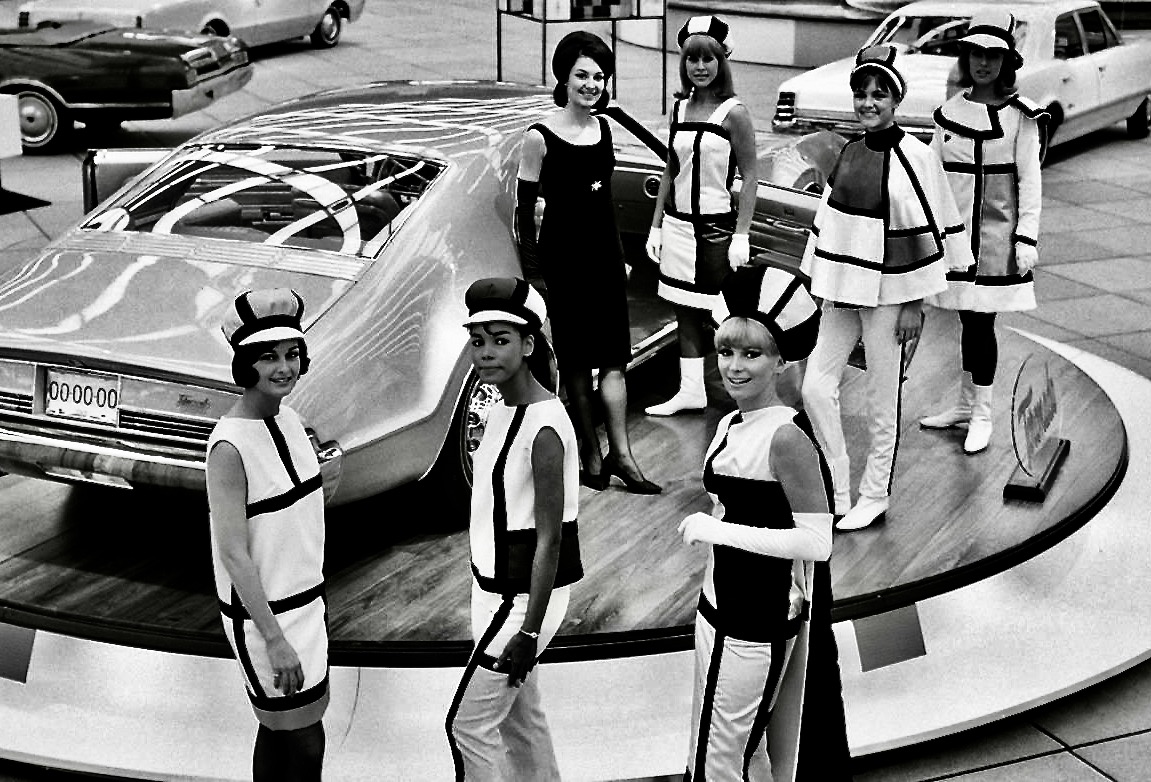
Never Look Back

NEVER LOOK BACK.jpeg

By Ed Staskus

   The new-style lightning war that started in 1939 won the Third Reich most of Europe and substantial parts of Russia. Five years later the Red Army was poised to take revenge on its enemy. When the Wehrmacht on the Eastern Front tried to weather the storm and fight out of encirclements, the Russians did what the Germans would have done, fed armor into the attack, maintaining mobility, forcing the issue deep into rear areas, faster than the enemy could respond. Their M4A2 Sherman tanks, built by the United States, could be replaced when destroyed faster than German factories could take a breath and say, “Gute trauer!”

   “The Russians came very quickly,” said Angele Jurgelaityte. “We listened to the radio every day. We could hear booming in the distance, which was their bombs and cannons. The Germans were all over the roads. The Russians were to the north and the east of us. Everybody knew they were coming.”

   The angel-face of her aunt’s family, the family Angele was staying with near Alvitas, Lithuania, didn’t know, but everybody else in the Baltics knew the Red Army was coming back and there was going to be hell to pay. “Everybody was worried and unhappy.” Most Lithuanians sided with the Germans. There were centuries of bitterness smoldering between Vilnius and the Muscovites.

   It was in the summer of 1944 that Soviet forces went on the offensive. The Germans were pushed back on a shifting front. Armored tank columns from both sides advanced on Vilkaviskis, four miles away from where Angele was. If it wasn’t for land mines she could have walked there in an hour. The Russian 33rd Army entered the town a few days later and then secured the rail depot at Marijampole. The Third Panzer Army mounted a counterattack, but after several grim tank battles was finally forced to retreat to Kybartai, rolling back to a last-ditch defensive line defending the Baltics. Neither the Germans nor the Russians listened to a single Lithuanian who said the land wasn’t their land to begin with.

   “It was one day in the afternoon that a lady, a teacher, who was one of my aunt’s friends, with two kids, a small boy and a small girl, came to our farm from Vilnius,” Angele said. The woman and Angele’s aunt, Ona Kreivenas, had studied and graduated together from a teacher’s college. She was in a horse drawn wagon with her children and what chattels and valuables she could pack and carry. She had come from the big city in a rush. She told them there was Russian armor hiding on the nearby farm tracks.

   The next morning Ona, Angele, and the children, Mindaugas, Carmen, Ramute, and the toddler Gema, loaded their wagon with clothes, blankets, and food. They hitched two horses to the wagon and tied a cow to the back. “We took milk with us when we left, for baby Gema, and hoped we would find more when we were gone.” They took whatever they could shoulder. They left their buggy and let the riding horse, the rest of the cows, and all the pigs and chickens loose. Ona’s friend followed behind them.

   “We let all the animals go. What could we do? The Russians would have just stolen all of them.”

   Ona took all her money and what jewelry she possessed with her in a handbag that she could keep close to the vest. She filled a trunk with her sewing machine, china, vases, artifacts, and family heirlooms. They lugged it behind the barn, where the remains of months of potatoes thrown down to feed the pigs were piled up.

   They cleared a space, dug a four-foot deep hole, and buried the trunk. They threw potato scraps back over the overturned ground. When they were done, they left in two wagons, two women, seven children, and a cow on the move, suddenly homeless in their own home.

   “We moved back about fifteen miles.”

   They went southwest towards East Prussia. “We stopped at a big farm. When we got there, there were already hundreds of people in the fields, with their wagons, and their families. The farmer there slaughtered and cut pigs up for us. All the women made food. Everybody was talking about the war, about what to do.”

   There was heavy fighting between German and Soviet troops in the Baltics. As the fighting raged, more than 130,000 Latvians escaped to Sweden and Germany. In total, the country lost almost 20% of its population during the war, either dead or gone. The Great Escape in Estonia started in the summer and continued through the fall. It is estimated 80,000 Estonians fled from the Red Army to anywhere else. Almost a 100,000 Lithuanians joined them, clogging the roads to Poland, Prussia, and Germany.

   Ona crept back to her farm during the week the Panzer divisions were holding their own. The countryside was nearly deserted. She discovered the trunk they had buried underneath the pile of potato scraps behind the barn had been dug up and was gone. “There was just a big hole. The Russians took it. They used metal sticks to poke into the ground. Her sewing machine was gone, all gone, everything gone.”

   They slept rough, out of doors, like everybody else. “We slept on blankets on the ground. When it rained, we slept under the wagon and stretched a tarp out to keep the water away.” Every day it got darker. Over the course of September, the length of the day in Lithuania rapidly decreases. By the end of the month the daylight is two hours less than it was at the start of the month.

   Their encampment stretched out for six weeks. They dug latrines and filled barrels with water. They picked apples off trees and blueberries from bushes. They took especial care of their horses. They greased the axles of their wagons, making sure the grease bucket was always full of animal fat and tar, and making sure they had a spare axle. Without one a broken axle would be a disaster, bringing them to a standstill.

   The children played games whenever they had idle time. “We played the ring game,” Angele said. “We all sat in a circle and passed around a pretend ring, like a twig or a pebble. Sometimes we passed it, but other times we didn’t. We just pretended to give it to who was next to us. One of us was it, like in tag, who had to guess who had the ring. If they were right, they got a prize, like a pencil. If they were wrong, they had to sing a song or do a dance in the middle of the circle.”

   When they finally left, they left in the early evening. They had heard over the radio that morning that the Russians had come closer. They spent the day packing and preparing. It was now or never. “Most of us left, although some stayed. Some of the farmers wanted their land back. They didn’t want to leave.” It was all they had. It was all they had ever known. They were loath to give it up. “My aunt had to go, no matter what. The farm didn’t matter. Her husband had already been taken by the Communists. She knew they would take her, too, if they caught her, send her away to Siberia, and her children would be left behind, orphans.”

   It rained that day and the rest of the night. “The road was crowded on both sides. There were thousands of wagons, wagon after wagon, all going one way. There wasn’t a single car or truck, just horses. We knew the Germans were somewhere ahead of us and the Russians somewhere behind us, but we didn’t see any soldiers anywhere, at all.”

   Ona was at the reins of the two-horse team, her seven-year-old daughter Ramute beside her holding the three-year-old Gema, and Carmen, Mindaugas, and Angele walking. Most of the refugees were walking, their wagons jam-packed with possessions and provisions. Their friend from Vilnius with her two small children stayed in line behind them.

   Before the war, Lithuania’s population was almost 3 million. After the war it was closer to 2 million. Some Lithuanians ended up dead. Many were deported. Others ran for their lives. The displaced were forced to make new lives in different countries all around the world, whatever country they could get to, whatever country would take them, whatever country they could sneak into.

   When the second Soviet invasion of the 1940s happened, some Lithuanians tried to flee across the Baltic Sea to the Nordic countries, but only a few were successful. Patrol boats apprehended them, and they ended up hauled off to labor camps. Most fled west, while others went south to Hungary, Romania, and the Balkans.

   “On the way we met my uncle on the road, Uncle Jankauskas and his family.” Her uncle’s wagon fell into line with them. The progression of wagons stretched as far as the eye could see, ahead and behind. They soon crossed into East Prussia. There were no guards. They had all fled. The borderland was a mess.

   “I was so sad leaving Lithuania,” Angele said.

   Russian warplanes strafed and bombed the column of evacuees several times. The Red Air Force was bombing and strafing at will, both German Army and refugee columns alike. Forest and brush on both sides of the road were set on fire. There was smoke in the sky day and night. Wagons and carts slowly wended their way around rain-filled craters.

   “It was all just wagons. They knew we were refugees They dropped bombs and shot their machine guns. I don’t know why they did that. Whenever we heard airplanes, we all ran and jumped into ditches beside the road. I was afraid, but somehow I knew I wouldn’t be hurt by them.”

   What was called the Baltic Gap had grown so menacing to the Reich that Adolf Hitler moved his headquarters from Berchtesgaden to Rastenburg in East Prussia. The German situation on the Eastern Front was desperate. The fighting was hard and bitter. It was a fight to the finish. The hinterland was torn up, abandoned and forlorn.

   “Most of the people on farms had run away. We would go into their houses and find dried fruit, pickles, mushrooms, pork, and wine.” They ransacked barns, pantries, and root cellars. “We took all the food we could find, all of it. It rained most of the time, it was cold, and we walked and walked. Everybody was hungry.”

   The rain and asphalt track were hurtful to their cow. The animal was careful as could be on the poor traction of the wet road, stepping timidly with its rear feet spread wide. It was compensating by walking with an arched back. They finally had to do something. They knew the long miles and pavement weren’t good for it. They thought she might be going lame. Angele’s uncle looked at the cow’s hooves and saw lesions. An ulcer was forming on one hoof.

   “Mindaugas and I found a family that hadn’t run away. We went to their farmhouse and sold the cow to them.” They gave the money to Ona and she hid it on her person with the rest of her money. She had plans for it.

   One cold night when they stopped to rest her uncle said, “Kids, jump up and down to warm yourselves up.” When Angele stopped jumping, he grasped her under the armpits. “He grabbed me. We were jumping up and down and he dropped me by accident.” She broke her wrist. “It hurt bad, but there were no doctors to help me.” When they got to a town with a railroad station, there weren’t any doctors there, either. The smart and the skilled had already left. Everybody else was hoping against hope. Angele’s wrist had to take care of itself.

   After the New Year the German population of East Prussia, most of whom had not yet cut and run, began to evacuate as the Red Army rapidly advanced. Within weeks it turned into helter-skelter flight as more than two million of the two-and-half million men women children of the enclave bolted into the Polish Corridor heading for Germany. The winter weather was bad, the roads were caving in, and the civil authorities were overwhelmed. There was panic and quagmire and many thousands died, some caught in combat, others swept away in the chaos.

   But before that happened, Ona Kreivenas had already sold their wagon and horses and everything they couldn’t carry and managed against the odds to get passage on a train going to Berlin. The Prussian Eastern Railway connected Danzig and Konigsberg to Berlin. A month later, the last week of January 1945, the last train to Berlin ran the rails. There was no traffic on the line after that.

   “The train was completely full. The corridors were full, too.” They stood in a tight group in the corridor. The passenger cars were red and had ten large windows on both sides. They were pressed against one of the windows. Some of the windows were smashed and the passageway was as cold as the outside. “We had a pillow for Gema, who slept on the floor, but we stood that night and the next day.”

   The twin locomotives pulling the long line of passenger cars and baggage cars and a caboose were in camouflage livery. On their front was painted the Hoheitsadler, an eagle, Germany’s traditional symbol of national sovereignty, holding a swastika in its talons. By the time they crossed Poland and entered Germany, the talons and swastika were obscured by coal soot.

   Lehrter Bahnhof was the Berlin terminus, adjacent to Hamburger Bahnhof, built in the late 19th century just outside of what was then Berlin’s boundary on the Spree River.  It was built in the French neo-Renaissance style, the façade covered in glazed tiles. The station had long been known as a “palace among stations.” But it had been severely damaged by Allied strategic bombing and was near to being a shambles.

   When they finally got off the train in Berlin, tired and stiff from standing, they were met on the platform by Bishop Brizgys. The clergyman was Ona’s husband’s cousin. Vincentas Brizgys had been the assistant to Juozapas Skvireckas, the archbishop of Kaunas. During the summer of 1944 he and the archbishop and more than two hundred other Lithuanian priests fled the country with several retreating German army divisions. Ona had somehow located him by telephone, and he arranged to meet them at the train station. He was wearing a dark suit and a homburg and carrying a basket of hot buns.

   “He gave one to each of us. I was so happy,” Angele said.

   She was 16-years old, somewhere between childhood and adulthood. Seven years later, and a  continent away, she gave birth to me, followed quickly by my brother and sister. In the meantime, hope for the future was the only thing keeping her on her feet.

   The Third Reich’s war economy was on the verge of collapse. The whole country was a sinking ship. There was a shortage of bread sausage cabbage beer, and everything else. When they looked around, the buns the bishop had brought were the only cheer they could see. There wasn’t going to be any traditional roast goose this holiday season.

   Angele looked at the four children and her aunt. She glanced up and down the platform. Their friend from Vilnius and her uncle were long gone, lost in the fog of war. Bishop Brizgys led them out of the station into the city. The Red Army numbering over four million men was massing on the Vistula River and along the East Prussian border. Their superiority was ten to one in infantry and twenty to one in artillery and planes. Berlin and its three million residents were already a wreck, the day and night Allied bombing taking a monstrous toll.

   The early afternoon was a gray haze. There was smoke in the sky. It was darkness at noon. She looked at the rubble in the street. When she looked ahead, she knew in her teenaged bones it was going to be a grown-up bare-bones winter on German soil.

Ed Staskus posts monthly on 147 Stanley Street at http://www.147stanleystreet.com, Made in Cleveland http://www.clevelandohiodaybook.com, Down East http://www.redroadpei.com, and Lithuanian Journal http://www.lithuanianjournal.com. To get the site’s monthly feature in your in-box click on “Follow.”

“Cross Walk” by Ed Staskus

“A Cold War thriller that captures the vibe of mid-century NYC.” Sam Winchell, Beyond Books

Available on Amazon: https://www.amazon.com/dp/B0CRPSFPKP

The end of summer, New York City, 1956. Stickball in the streets and the Mob on the make. President Eisenhower on his way to Ebbets Field for the opening game of the World Series. A killer waits in the wings. A Hell’s Kitchen private eye scares up the shadows.

A Crying of Lot 49 Publication

No Place Like Home

By Ed Staskus

   Sigitas Kazlauskas didn’t know J. Edgar Hoover from the man in the moon. He didn’t necessarily want to make his acquaintance, either. He wanted to go home, even though he knew he didn’t have nearly the funds for the passage. The passage was across the Atlantic Ocean and over the North Sea. His home was far away in Lithuania. He didn’t know the Justice Department man was going to be his ticket back.

   Sigitas was living in Cleveland, Ohio in 1919, where it was Thanksgiving week. He had left home in late 1914, dodging forced conscription into the Russian Army. He knew being drafted meant the meat grinder. He also knew his socialist views were hazardous to his health. The Czar didn’t brook his kind of man. He made his way to the United States on a tramp steamer. He was living in Dope Town, a neighborhood west of East 9thSt. and north of Superior Ave. Suicide Pier on the Cuyahoga River was down one end of the street and the town dump was down the other end of the street. Lake Erie was on the north side and Little Poland was on the south side. 

   None of his friends called him Sigitas. Everybody called him Dave. When he asked why, they laughed and said, “David and Goliath, like in the Bible.” They didn’t bother with his surname since they weren’t his kith and kin. They were Eastern Europeans like him who had ended up in Cleveland for the same reason as him, which was opportunity. His opportunity had come and gone, which was why he was living in Dope Town. It was the only place he could afford a furnished room. The wrist a Cleveland policeman had broken with a truncheon during the May Day Riot six months earlier hadn’t helped, making him unemployable for three months and draining his savings.

   Since then, he had been living on bread and homemade beer. When the beer was ready he called his Polish friends, “Hey Polska, come get your right piwo.” He was well-known for his beer, attracting friends who were as friendly with his brew as they were with him, maybe more. They sang, “In Heaven there is no beer, which is why we drink it here.” He was hoping somebody would invite him to their turkey feast on the big day. He needed a square meal with his suds.

   Cleveland was going strong in 1919. It was the fifth largest city in the country. Iron and steel dominated the economy. Foundries and machine shops were everywhere. Skyscrapers were being built. The population was nearing one million. A third of the population was foreign born, working in the steel plants and garment factories. They worked long hours for low pay, but it was better than where they had come from, where they worked longer hours for even less pay.

   More than a quarter million Lithuanians left the Russian controlled Baltics between 1900 and 1914. When World War One broke out all immigration from Europe to the United States was brought to a stop. The new labor force that came into being was from the American South. There had been fewer than 10,000 Negroes in Cleveland in 1910. Ten years later there were nearly 40,000. There was enough work for everybody, though. Commercial construction was booming. The problem Sigitas had wasn’t finding work. The problem he had was keeping the work he found.

   He was a socialist, which was his problem. He believed in social ownership of the means of production. He didn’t believe in private ownership of it. The word socialism comes from the Latin word “sociare” which means to share. The modern use of the word was coined by the London Cooperative Magazine in 1827. The First International was founded in 1864 in Great Britain. After that it was off to the races. The Second International was founded in 1889. Anarchists were banned as a practical matter. Socialists didn’t want bomb throwers in their ranks, if only because bombs can be unpredictable about who they blow up.

   The May Day Riot in Cleveland on May 1, 1919 pitted trade unionists and socialists against police and military troops. The city was bursting at the seams with blue-collar foreign-born laborers. The activist Charles Ruthenberg got it into his head to organize a mass demonstration on Public Square on International Workers’ Day. He had run for mayor on the Socialist Party ticket two years earlier, polling nearly a third of the vote. He was well-known among the disaffected. He marched at the head of the assembly.

   Sigitas and his friends heeded the call. They joined the more than 30,000 men and women who showed up for the demonstration. They marched from Acme Hall on Upper Prospect to Lower Prospect to Public Square. The marchers wore red shirts and waved red flags. A parallel procession of army veterans in full uniform clashed with the socialists. Fights broke out and the police were called, who then quickly called for reinforcements and mounted forces. Harry Davis, the city’s mayor, called for the National Guard, who mustered in front of a beer hall before going into action with fixed bayonets. Tanks led the way, even though the socialists were unarmed. When Sigitas’s wrist was broken, a lady standing beside him used the 8 inch ivory hatpin holding her hat to her hair bun to stab the policeman in the chest. It was how Sigitas managed to break loose and not get arrested. 

   Several marchers were killed, nearly a hundred were injured, and many hundreds more were arrested. The Socialist Party headquarters at Acme Hall was ransacked by a “loyalist” mob. The next day all of Cleveland’s newspapers blamed the marchers for the riot, labelling them as “foreign agitators” even though most of them were native-born or naturalized citizens. The fourth estate demanded their deportation. The Immigration Acts of 1921 and 1924 later restricted immigration of “undesirable” Southern and Eastern Europeans, whether they were socialists, or not.

   It was at Thanksgiving dinner with his friend Teodor Wojcik and his family that his friend hatched a plan about how to get Sigitas out of the United States and back to Europe. Agnieszka was Teodor’s wife. They had two children and were moving up in the world. Teodor went by Teddy and Agnieszka went by Agnes. They weren’t socialists, but didn’t argue with Sigitas about it. They believed the United States was a free country where everyone was free to believe what they wanted. They weren’t silly enough, however, to say so in public.

   “There’s a man at the Justice Bureau who is heading up the new Radical Division,” Teddy said. “He’s already gone after the Negroes.” J. Edgar Hoover was the new man. He was after what he called “terroristic and similar classes.” He was a District man born and bred. He was a law and order man schooled in bigotry. “Something must be done to the editors of Negro publications as they are beyond doubt exciting the darkie elements of this country to riot,” he said in the summer when white soldiers and sailors rioted in the District, killing more than a dozen men and women, after a rumor spread that a Negro man had raped a white woman. The rumor was false. The Negro deaths were real.

   J. Edgar Hoover turned his attention to anarchists and communists at the end of summer. He got busy sending the notorious Emma Goldman back to Russia. He helped engineer the arrest of more than a thousand radicals in early November, with the intent of deporting them. “The Communist Party is a menace,” he said. He meant to send them all back to where they had come from.

   “What does this new man have to do with me?” Sigitas asked.

   Agnes brought a plate of paczek to the table. They were deep-fried pastries filled with jam, caramel, and chocolate. The outer layer was sprinkled with powdered sugar and dried orange bits. They drank coffee the Polish way, which was strong with full-fat cream.

   “What you have to do is forget about socialism and become a communist,” Teddy said. “Join the Communist Party. Volunteer for the dirty work. Become a firebrand. Make yourself known to the Radical Division. Make enough trouble and you should be on a boat on your way back to Lithuania in no time. It won’t cost you a penny for the fare and they will feed you during the voyage, too, so by the time you get home you’ll be back to your old self.”

   “They won’t shoot me?”

   “Probably not.”

   “They won’t throw me in jail?”

   “They probably will for a month-or-so, but they don’t want to keep anarchists and communists in jail. They don’t want them here. They want to send them somewhere else, anywhere else, which will be easy enough in your case since you were never naturalized.” Sigitas had never forgotten Lithuania and had never become a full-fledged American.

   Becoming an official communist was easy as pie. Charles Ruthenberg had split from the socialists after the May Day Riot and joined several splinter groups to form Cleveland’s Communist Party. They allied with the Communist Party of America. The woman who had saved him during the May Day Riot was a close associate of Charles Ruthenberg’s. She put in a good word for him. He was brought into the circle of fellow travelers. He was given a revolver but no bullets. He gave the gun back. J. Edgar Hoover’s Radical Division had numerous informers and inside men. They put Sigitas on their list soon enough. He didn’t have to wait long for the Palmer Raids.

   Seven months earlier the anarchist Carlo Valdinoci had put a bomb on the doorstep of newly appointed Attorney General A. Mitchell Palmer’s house in Washington, D. C. When the bomb went off no one inside the house was hurt, although the anarchist mishandled the explosive and blew himself up, as well as the front of the house. Across the street where Franklin and Eleanor Roosevelt were sleeping the blast shook them out of bed. The attack was coordinated with  attacks in eight other cities on judges, politicians, and policemen. The Attorney General had his eye on the White House. He got to work hyping the Red Scare. He put J. Edgar Hoover in charge of identifying and arresting as many socialists, anarchists, and communists as he could and deporting them as fast as he could.

   The first raids in December filled a freighter dubbed the “Red Ark.” It sailed out of New York City bound for Russia. Its passengers were foreigners and suspected radicals. A month later the Justice Department went big. A series of further raids netted 3,000 men and women in 30 towns and cities in 23 states. Search warrants and habeas corpus were an afterthought. Sigitas was one of the communists swept up in the net.

   Once everybody was locked up in holding facilities, J. Edgar Hoover admitted there had been “clear cases of brutality” during the round-up. His admission was beside the point. His point-of-view was guilty until proven innocent. Not everybody agreed. “We appear to be attempting to repress a political party,” said the U. S. Attorney for the Eastern District. “By such methods, we drive underground and make dangerous what was not dangerous before.” A. Mitchell Palmer answered that he couldn’t arrest radicals one by one to treat an “epidemic” and claimed fidelity to constitutional principles. The Constitution didn’t necessarily see it that way, but it was just a piece of paper.

   Sigitas knew it was all hot air. He knew letting the cat out of the bag was easier than getting it back in. After he was arrested he couldn’t wait to be frog-marched onto a boat bound for the Old World. The New World wasn’t for him anymore. There was too much capitalism and double-dealing.

   He had been rousted out of bed in his furnished room in the middle of the night by two uniformed Flying Squad men and a Justice Bureau man. “Are you the Hoover men?” he asked. “The only Hoover here is the vacuum cleaner kind,” one of the policemen said. “We’re here to get you into the bag. You got one minute to throw some clothes on.” A minute later he was in the back seat of their Buick Touring squad car.

   More than a week passed before Teddy was allowed to visit Sigitas at the Champlain Avenue Police Headquarters, The complex of offices, jail cells, and courtrooms was overdue for replacement. A new Central Station was already on the drawing boards. “The moment the new station at E. 21st St. and Payne Ave. opens for business, the ancient Champlain Avenue mausoleum of crime, rats, and malodors which has been functioning as a police headquarters for perhaps twenty-five years too long will start to crumble before the wrecking engines,” is what the Cleveland Plain Dealer said.

   “How are you doing?” Teddy asked. “They do anything bad to you?”

   “No, except the food is terrible, which is bad enough. There’s no beer, either.”

   “They tell you what is going to happen?”

   “They are taking me to New York City on the train tomorrow. They made it sound like I will be on a boat soon after that.”

   “That’s what you want, right?”

   “That’s what I want, yes. I want to go home.”

   “Home isn’t just a place, Dave” Teddy said. “It’s a feeling. It’s where the heart is.”

   “There’s no place like home,” Sigitas said. “That’s where I feel the best. It’s my second chance.”

   “You’re taking a chance,” Teddy said. “The Russians are gone now, sure, but the new Lithuania doesn’t like socialists any more than they do here. Socialism is no good. Sooner or later, you run out of other people’s money.”

   “Capitalism is no good, either,” Sigitas said. “Sooner or later all the money has been sucked up by the tycoons.”

   “Good luck,” Teddy said.

   The next day Sigitas was taken to the New York Central depot. He was handcuffed to a police detective who rode with him the full day it took to get to Grand Central Station. A day later, in a courtroom deciding his fate, was the only time he ever saw J. Edgar Hoover, who was sitting with the prosecutors, but never said a word. 

   He was younger than Sigitas had imagined him, maybe in his mid-20s. His short hair was shaved even closer at the temples. Sigitas was five foot eight and trim. J. Edgar Hoover was slightly shorter and just as trim. He was a lifetime District man and a Freemason, although Sigitas didn’t know that, or anything else about the man. He looked him in the face repeatedly, but the Radical Division man never made eye contact with him. He left before the proceeding was over. He knew what the verdict was going to be before it was announced. 

   A week later Sigitas was on board a refitted troop carrier. It was a leaky old tub. It took twenty eight days to get to Finland. The deportees were assigned cabins in pairs. Sentries stood at the cabin doors day and night. Sentries patrolled the deck for the one hour every day they were allowed to walk in the outside air. Once they got to Finland everybody was taken to a special train, guarded by U. S. Marines and Finnish White Guards. They were put thirty men to an unheated boxcar fitted with benches, tables, and beds. Each boxcar had seven boxes of army rations, which included bully-beef and hard bread. They were taken to Terijoki, about two miles from the Russian border. Most of the men were being dumped into Russia like so much garbage. Sigitas was the only deportee going to Lithuania. The Russians dumped him out like garbage, too.

   He took a train from St. Petersburg to Riga, Latvia, and from there he hitched a ride on a sugar beet truck across the border to Lithuania. Sigitas walked the fourteen miles to the farmlands outside of Kursenai. It felt good to stretch his legs. He found his family home without a problem, as though he had never left. “Labas, mamyte,” he said when he stepped through the front door and saw his mother peeling potatoes at the kitchen table. After the kissing and crying, after he had sat his mother back down, and his brothers and sisters were peppering him with questions, he knew he had made the right decision in returning to the Old World.

   The worst feeling in the world is homesickness. Sigitas felt like a new man. He had shed all his theories on board the troop carrier. He could no longer determine which political way was the more bad way. Ideologies were full of lies. “Eik i velnius” was all he had to say about the matter. If he had still been in the New World it would have come out of his mouth as “Go to hell.” Lithuania was a free country again after more than one hundred years. The Russians were good and gone, except when they weren’t. They were grabby and unpredictable

   Sigitas worked on the family farm for twenty years. He harvested hay starting on St. John’s Day. He raised his own pigs and brewed his own beer. He always had enough to eat and drink, at least until before the Russians came back in force in 1944. The politics of the 20th century caught up to him. The Russians weren’t school style idealogues. They were barrel of a gun idealogues. Either you believed in them, or else. He fought them first with the Territorial Defense Forces and later with the Forest Brothers. They engaged the Russians in guerilla warfare in the woodlands surrounding their homes. Sigitas Kazlauskas was shot and killed in the Dainava Forest in late January of 1945. His body was abandoned on the battlefield and decomposed in the spring. He slowly sank into the bloom until there was nothing left of him.

Ed Staskus posts monthly on 147 Stanley Street at http://www.147stanleystreet.com, Made in Cleveland http://www.clevelandohiodaybook.com, Down East http://www.redroadpei.com, and Lithuanian Journal http://www.lithuanianjournal.com. To get the site’s monthly feature in your in-box click on “Follow.”

“Cross Walk” by Ed Staskus

“A Cold War thriller that captures the vibe of mid-century NYC.” Sam Winchell, Beyond Books

Available on Amazon: https://www.amazon.com/dp/B0CRPSFPKP

The end of summer, New York City, 1956. Stickball in the streets and the Mob on the make. President Eisenhower on his way to Ebbets Field for the opening game of the World Series. A torpedo waits in the wings. A Hell’s Kitchen private eye scares up the shadows.

A Crying of Lot 49 Publication

Elbow Grease

By Ed Staskus

   When Mike White was elected the 55th mayor of Cleveland in the fall of 1989 he became the city’s second youngest mayor. Everybody thanked their lucky stars he wasn’t Dennis Kucinich, who had been the youngest, and who had bankrupted the city in 1978. He also became the city’s second African American mayor. Blacks weren’t exactly Blacks then, although they were getting there. They were African Americans. When Frank Jackson finally retired in 2022, after serving four terms as the 57th mayor of Cleveland, Mike White became the second-longest-serving mayor. He had served three terms.

   The day he was sworn in he inherited a boatload of crime, poverty, and unemployment. The tax-paying population of the city was shrinking fast. Downtown was more a hotbed of boll weevils than hotties. There was no Rock and Roll Hall of Fame and no Gund Arena, which is now Rocket Mortgage Field House. The Indians and Browns were both still playing their ballgames in the decrepit Municipal Stadium on the south shore of Lake Erie, although the Browns were thinking of packing up and moving to Baltimore.

   My wife and I were living in Lakewood, which wasn’t Cleveland, although it was close enough. It was the big city’s next door neighbor, what in the day was called a streetcar suburb. Nearly half of Cleveland’s residents were African American. Less than 1% of Lakewood’s residents were African American. We lived on the west end of town where there were zero African Americans. There wasn’t a Berlin Wall keeping them out of town but there was a Berlin Wall.

   We lived off Riverside Ave. on the east side of the Rocky River valley, which had been transformed into the Rocky River Metropark. The river and the valley were just steps from our front porch. Cleveland’s racial divisions seemed like a distant problem. In the event, one day a man was apprehended throwing more than a dozen black bowling balls into the Rocky River at Eddys Boat Dock. He explained to the police officers, “I thought they were nigger eggs.”

   Being the mayor of a village is hard enough. Being the mayor of a city can be thankless. It can be worse than thankless when the top dog shows up. “I would not vote for the mayor of that town,” Fidel Castro once said while touring his island nation. “It’s not just because he didn’t invite me to dinner, but because on my way into town from the airport there were such enormous potholes.”

   There was only one reason Mike White wanted the job. He was a born and bred Cleveland man. He was a true believer and a do-gooder. He was bound and determined to make the city a better place to live. “I remember looking out at the crowd of Cleveland residents, black and white, and reflecting on how many children were there,” he said about his inauguration day in 1990. “I remember how they looked at me as a symbol of what could be. It speaks to the powerful responsibility of being the kind of leader people want to follow.” 

   Getting the job done was going to be a problem, if not Mike White’s man-sized burden. He presented himself on the stump as pro-business, pro-police, and an effective manager. He argued that “jobs are the cure for the addiction to the mailbox,” by which he meant once-a-month welfare checks. He didn’t win over any live and die by the mailbox voters. In the end he won 80% of the vote in the white wards, 30% of the vote in the African American wards, and 100% of the brass ring.

   “Caesar is dead! Caesar is dead!” the crowd in Cleveland Centre cheered when the result was announced. It was near midnight. “Long live the king! Long live Mike!” When the mayor-elect appeared, people stood on chairs and cheered some more. “I extend my hand to all of Cleveland whether they were with me or not” he said. It had been a bitter uphill campaign. “The healing begins in the morning!” There were more cheers. “We … shall … be… ONE … CITY!” He spent twelve years trying to make it happen.

   “Winning an election is a good-news, bad-news kind of thing,” Clint Eastwood, the movie star who was once the mayor of Carmel-by-the-Sea, has said. “Okay, the good news is, now you’re the mayor. The bad news is, now you’re the mayor.” He ran on a promise to roll back Carmel’s back-handed ban on ice cream cones. The law stated that take-out ice cream cones had to be in secure and foolproof packaging with a cover. “Eating on the street is strongly discouraged,” the suck all the fun out of it city fathers said. The actor beat the incumbent in a tight race. One of his first official acts was getting au naturel ice cream cones back on the streets. After his two-year term was over he never stood for elected office again. Politics was too dirty for even Dirty Harry.

   By the time Mike White took office I couldn’t have cared less about Cleveland. For one thing, I no longer lived there anymore. For another thing, I wasn’t working in Cleveland anymore. I was working for the Light Bulb Supply Company. They were in the Lake Erie Screw Building in Lakewood. I wasn’t attending Cleveland State University anymore, either. As much as I used to go to the asphalt jungle was as much as I didn’t go there anymore.

   The city in 1990 was a mess, literally. Nobody thought anything about throwing litter and trash into the street. The police had never been busier. The fire department had never been busier. The schools had deteriorated so much that everything educational looked like up to the teachers. The graduation rate was less than 40%. “It couldn’t have gotten much worse,” recalled James Lumsden, a school board member. Mike White likened the schools to the Vietnam War, where well-meaning people went to help, but ended up stuck in a nightmare.

   Manufacturing jobs were disappearing, the workforce hemorrhaging paychecks, labor costs being outsourced like nobody’s business. Only street cleaners felt secure in their employment. The No. 1 bank in the city, Cleveland Trust, which had become AmeriTrust, was being dragged down by bad loans and a collapsing real estate market. The iconic May Company was drawing up plans to close its downtown store, which had been on Public Square for nearly 90 years. 

   In 1950 the city was the 6th largest in the country. Forty years later it was the 23rd largest in the country. Everybody who could move away was moving to the suburbs. When the inner ring suburbs filled up, new outer ring suburbs popped up. When they filled up, exurbia became the next place to go. Nobody from nowhere was moving to Cleveland. It was hard to believe anybody wanted to be mayor.

   Mike White grew up in Glenville on Cleveland’s east side. It was a rough and tumble neighborhood, notorious for a 1968 shootout. Gunfire was exchanged one night for nearly four hours between the Cleveland Police Department and the Black Nationalists of New Libya. They were a Black Power group. Three policemen, three Black Power men, and a bystander were killed. Fifteen others were wounded. Lots of others were shoved into paddy wagons and locked up.

   The new mayor’s father was a machinist at Chase Brass and Copper. He was a union man and ran a union shop at home, too. “If not for the discipline at home, we would have been lost,” Mike’s sister Marsha said. The first summer Mike White came home from college in 1970 his father took one look at him and told him to cut his hair. He had grown it long and was fluffing it into an afro. While he was a student at Ohio State University in Columbus he protested against racial discrimination practiced by the capital city’s public bus system. He was arrested. He got involved with Afro-Am and led a civil rights protest march. He was arrested again. The charges were disorderly conduct and resisting arrest. He didn’t deny the charges. “I hated the sheets back then,” he said.

   He was sick and tired of being arrested. He put his thinking cap on and ran for Student Union President. When he won he became Ohio State University’s first African American student body leader.  He earned a Bachelor of Arts degree in 1973 and a Master of Public Administration degree in 1974. He began his professional political career as an administrative assistant for Cleveland’s city council in 1976 and was elected councilman from the Glenville neighborhood in 1978. From 1984 until he ran for mayor he represented Ohio’s 21st District in the State Senate, serving as assistant minority whip for the Democrats. 

   Mike White’s opponent in the race for mayor was the long-time politician George Forbes, who was also African American. The color of his skin turned out not to matter. Mike White had gone color blind. He described George Forbes as a “foul-mouthed, uncouth, unregenerated politician of the most despicable sort.” The Forbes campaign countered by accusing their opponent of abusing his wife and abusing the tenants of his inner-city properties by ignoring housing codes. The difference between a hero and a villain can be as slight as a good press agent.

   I didn’t pay too much attention to the character assassinations. My wife and I were working on our new house. It had been built in 1922, and although the previous owners had done what they could, it was our turn to do what we could. What we were doing first was ripping out all the shag carpeting and taking all the wallpaper down. When we were done with those two projects we painted all the walls and restored the hardwood floors. Our game plan was by necessity long-term. We started on the basement next, started saving for a new roof, and started making plans for everything else.

   Mike White didn’t give a damn about ice cream cones, but he gave a damn about the kids who ate ice cream cones. “We can spend our money on bridges and sewer systems as we must,” he said, “but we can never afford to forget that children remain the true infrastructure of our city’s future. We need to create a work program and show every able-bodied person that we have the time and patience to train them. And we should start people young. We want to guarantee every kid graduating from high school a job or a chance to go to college.”

   He put the city’s power brokers on notice. “We do not accept that ours must be a two-tier community with a sparkling downtown surrounded by vacant stores and whitewashed windows.  You can’t have a great town with only a great downtown. I’ve said to corporate Cleveland that I’m going to work on the agenda of downtown, but I also expect them to work on the agenda of neighborhood rebuilding.” He wasn’t above making deals, although he wasn’t selling any alibis. Safety became a mantra for him. “Safety is the right of every American,” he said. “A 13-year-old drug pusher on the corner where I live is a far greater danger to me and this city than Saddam Hussein will ever be.”

   He would prove to be true to his commitments. In the meantime, he put his nose to the grindstone. He worked Herculean hours. His staff worked Herculean hours. Anybody who complained they weren’t Hercules was advised to find work elsewhere. When he found out the Gulf War was costing the United States $500 million a day, he was outraged. “I’m the mayor of one of the largest cities in the country while we have an administration in Washington that is oblivious to the problems of human beings in this country,” he said. “I sit here like everyone else, watching CNN, watching a half-billion dollar a day investment in Iraq and Kuwait, and I can’t get a half-million dollar increase in investment in Cleveland.”

   Mike White was never going to be president of the United States. He probably didn’t want to be president. He had his hands full as it was, making it happen in his hometown. He wanted a Cleveland with dirtier fingernails and cleaner streets. The city was in a hole. His goal was to get it to stop digging. It wasn’t going to be easy. He didn’t always speak softly, but words being what they are, he made sure that as mayor he carried a big stick, the biggest stick in sight.

   He was going to need it, if only because President Lyndon Baines Johnson had said so. “When the burdens of the presidency seem unusually big, I always remind myself it could be worse,” LBJ said during his troubled administration. When asked how that could be, he said, “I could be a mayor.”

Ed Staskus posts monthly on 147 Stanley Street at http://www.147stanleystreet.com, Made in Cleveland http://www.clevelandohiodaybook.com, Down East http://www.redroadpei.com, and Lithuanian Journal http://www.lithuanianjournal.com. To get the site’s monthly feature in your in-box click on “Follow.”

“Cross Walk” by Ed Staskus

“A Cold War thriller that captures the vibe of mid-century NYC.” Sam Winchell, Beyond Books

Available on Amazon: https://www.amazon.com/dp/B0CRPSFPKP

The end of summer, New York City, 1956. Stickball in the streets and the Mob on the make. President Eisenhower on his way to Ebbets Field for the opening game of the World Series. A torpedo waits in the wings. A Hell’s Kitchen private eye scares up the shadows.

A Crying of Lot 49 Publication