
By Ed Staskus
I was ten years old the first time I saw a dead man. It was the morning of Holy Saturday. The sky was low and thick with clouds. It looked like it might rain any minute. My best friend Feliksas, a Lithuanian kid like me who everybody called Felix, and I had walked to the VFW hall behind the Gulf gas station at the corner of Coronado Ave. and St. Clair Ave. It was a log cabin-like building with dusty windows. We didn’t have anything in mind except seeing the sights and messing around. We liked to slip behind the steering wheels of unlocked cars waiting to be repaired in the lot next to the gas station and pretend adventures on dangerous roads.
When Felix noticed flashing lights on St. Clair Ave. we went around the corner to the front of the gas station. There were two black and white Cleveland Police Department prowl cars and an ambulance there. We called their rotating lights gumball machines. We called the sirens growlers. The black and white ambulance was a Ford station wagon that was both a police car and an ambulance. A policeman was standing around doing nothing while another one kept the crawling traffic on the other side of the street on the move. The traffic on our side was filtering down side streets. The ambulance men were standing beside their black and white station wagon smoking cigarettes.
We stood to the side of a cluster of grown-ups who were tossing glances at the dead man on the ground. Nobody was saying much. We stepped closer to the man until we were standing over him. We looked down at him. He was lying on his back, partly on the sidewalk and partly in the street. He was wearing a white shirt and a plaid jacket. One of his shoes was missing. The other one was a tasseled loafer. One of his front teeth was cracked from when his face hit the concrete going down.
The front of his white shirt, open at the neck, was a blob of red. Some of the red was damp while the edges of the blob were going lifeless. Flies were buzzing around him. We jumped when the dead man moaned.
“Do you need some help?” Felix asked
“Getting bumped off is the only help for being alive,” the dead man said in a low tone of voice.
Felix stepped up to the stone-faced policeman doing nothing. “That man is trying to say something,” he said.
“That man is dead,” the policeman said. “Leave him alone.”
“Who is he?” I asked. I had never seen him in our neighborhood before.
“He was a hoodlum.”
“Did you shoot him?”
“No, not us. He spun the big wheel and lost.”
“What’s the big wheel?”
“Never mind kid.”
There was a dark green car parked between the gas pumps and the station. It had white wall tires. We went over to look at it. The windshield was smashed, like somebody had thrown a rock through it. We looked inside. There was dried blood on the front seat. When I looked up I saw ‘Happy Motoring!’ stenciled on the plate glass windows of the station. We turned back to the street.
“Tell them not to bury me in the Glenville Cemetery,” the dead man said.
Glenville Cemetery was a graveyard next to the New York Central railroad tracks not far away. It lay in a triangle of land between St. Clair Ave. and Shaw Ave. We could walk there down E. 129th St. in ten minutes. We always passed it on our way to the Shaw Hayden Theater where we went to see monster movie matinees.
“Too many Jews,” the dead man said. “And now they’re burying niggers there.”
What does it matter, I thought, even though I didn’t know very much about Jews or niggers. I didn’t know much about graveyards, either. I always wondered what my father meant when he said he had to work the graveyard shift. How much work do the dead need done for them? I had never been to a funeral, except for two funerals at St. George Catholic Church, where I was training to be an altar boy. I had sat in a back pew those two times and observed the goings-on as part of my training. I dozed off during the second service.
I noticed the knot of grown-ups was gone. The stone-faced policeman and the ambulance men were still standing around waiting for something. The other policeman was standing on the corner waiting for the traffic light to change, except there weren’t any more cars. There wasn’t anybody in sight. There wasn’t a single person going into a single store even though it was shopping day. St. Clair Ave. was usually busy with women shopping at the A & P and all the other stores. Nobody seemed to be going home with a ham for Easter. Where was everybody?
A young woman came running down the street, pushed past the policemen, and threw herself on top of the dead man. Her hair rolled down her shoulders. The curls of her hair smelled like wet ashes. She started to cry, quietly rubbing the tears off her face with the sleeve of her dress.
The dead man wiggled a forefinger and motioned for me to come closer.
“Do a pal a favor, kid,” he said. “I don’t want her to cry over me and I don’t want her asking me for anything. Get her off me and help her home. It’s just around the corner. I was on my way there when I got mine.”
The two ambulance men lifted her off him, got her steady on her feet, and Felix and I helped her back to her apartment. She lived on the second floor of a two story brick building on Dedman Ct. a block away on the other side of Lancelot Ave. It looked like nobody lived there. Most of the windows and the front door were broken. The roof was partly caved in. The lawn was choked with weeds.
“Nobody lives here except me,” she said.
“Was that man your boyfriend?” Felix asked.
“No, my boyfriend disappeared two years ago, on the second day of 1959. I heard he joined the merchant marine, hauling ore on the Edmund Fitzgerald.” The Edmund Fitzgerald was the biggest boat on the Great Lakes. “Whoever that is lying on the cement over there looks like he’s got a free pass to the graveyard down the street.”
“He asked us to make sure he wasn’t buried there.”
“I don’t know why. He always said he was Italian, but he was half Jewish and half Negro, too.”
She turned to Felix. “Isn’t your name Feliksas?” she asked.
“Yes, how did you know?”
“Do you know your name means lucky?”
“No, I didn’t know, nobody ever told me. How do you know my name?”
“I know everybody’s names, everybody in this neighborhood, everybody on their way to the boneyard, where everybody is going, sooner or later, trying to not hear their own hollow footsteps. Forgiveness of sins and resurrection of the flesh.” Felix’s eyes got wide. I was getting spooked. A crow on top of the roof cawed three times.
“What was your boyfriend’s name?” Felix asked.
“I don’t know,” she said. “I think it was Frankie Paramo, but I’m not sure anymore. I’m starting to forget what he looked like.” She leaned against a shadow. Her face was going limpid. “May he rest in peace,” she said. Her voice was a thin lament. We went down the front walk to the sidewalk. When we turned to wave goodbye she wasn’t there anymore, like she had never existed.
The gas station was in front of us before we knew it. I felt torpid and restless at the same time. The dead man was where we had left him. We took a step over to where he was. He looked up at the sky and said, “Life, what did you ever do for me? It’s my turn now. I’m not going to do anything for you anymore.”
His words were muffled. His eyes were like dull marbles. Felix yawned like he was nervous. When we glanced at the dead man again he was blurry like there was an eclipse of wet moths around him flapping their wings. A dog barked monotonously in a backyard on Coronado Ave.
A four-door Oldsmobile raced down St. Clair Ave. “What the hell does he think he’s doing,” one of the policemen groused. Not everybody saw the big car go past. It was like trying to see a falling star during the day. Felix said it was his Uncle Gediminas. Most of the Lithuanians in Cleveland lived in Glenville, although all of them were moving to North Collinwood. I had heard my father tell my mother one night they would have to start looking for a new house soon, or urban renewal would make our family home worthless. I didn’t know what urban renewal meant, although it sounded bad. I knew worthless meant bad.
Uncle Gediminas was an middle-aged undersized man with an old man’s turkey neck. He was an accountant and could afford a new car whenever he wanted one, even though he unfailingly bought used cars that burned oil. “He’s always staring down his kids,” Felix said. “All his kids are afraid of him. He bosses them around day and night.”
The street was full of echoes, even though the few people on the street weren’t saying anything. It felt like somebody was following us. We looked everywhere but couldn’t spot anybody.
“Do you want to wait for him to die?” Felix asked.
“I don’t think he has much time left even though the policeman said he’s already dead.”:
“Not dead enough,” said a man walking past. His hair was shiny with Brylcreem and he was wearing a bowling alley shirt. He spit in the gutter before crossing St. Clair Ave.
“Let’s wait,” I said to Felix.” I don’t want to just sneak away.”
“You found out I’m not long for this world?” the dead man said. “I’ve known that for a while now, since the beginning. I don’t like it when people talk about me like I’m not here. You kids should go home where you belong.”
“Is your name Frankie?” Felix asked.
“Yeah.”
“Do you believe in Heaven?”
“I believe in Hell.”
The sky got dark. It started to rain. It was a steady rain. The ground got full of worms. The dead man started to melt. When he started melting there was no stopping him. Five minutes later he had come undone and was a pile of mud. One of the policemen stepped up to him. “There’s no sense in getting worked up about it. Call off the pathologist. Call the fire department instead. They can hose him down the drain. It will save the taxpayers the trouble of an autopsy and a burial.”
We were soaking wet after a minute of rain. We got chilled and goosebumps popped up on our arms and legs. Felix ran home down Coronado Ave. and I ran home down Bartfield Ave. Even though it was storming and had gotten darker, none of the houses were lit up. They were all shade and shape. We lived in a side-by-side Polish double that my parents bought on the cheap with my father’s sister and her family when they had emigrated to the United States.
Our front door was locked. I ran to the back door. It was locked. I knocked but nobody came to the door. I kicked at it but still nobody came to let me in. I went into the backyard to the tornado doors. They were never locked. One of the doors had a handle. I pulled on the handle. The doors were locked.
A German widow lived next door to us. Her husband was dead and her children had moved away. She was alone in the world. In a week she would be one hundred years old and her solitude would be full-fledged. I ran to her house. She was sitting on a lawn chair in the middle of her basement. A small storage room was where she kept her canned goods. She kept carrots, radishes, and potatoes in bins. She was writing in a spiral-bound memo pad.
Her memory was on the fritz. She wrote notes and Scotch taped pictures in her pad. There were pictures of my father, mother, brother, sister, and me, and our names in the pad. There were pictures of her fridge and stove and what they were called, which was fridge and stove. There were diagrams of all her rooms and everything in the rooms, what they were for and what they were called. There was a scrap of paper pinned to the front of her house dress. Her name, Agatha, was written on the paper in block letters.
“My stomach is shriveled up from hunger,” she said, even though she had enough food stored in the basement to last a year. She often forgot to eat. My parents checked up on her every few days.
“Where is everybody?” I asked.
“Your family is all in the house. They are watching the TV. They will be sorry if a tornado comes. I told them so, but they wouldn’t listen.”
“Can I borrow the key to get into our basement?”
She had it in a pocket of her apron. She handed it to me. I unlocked the doors and swung them open. The concrete steps led to the cellar. They were slippery with slime. It was where our father told us we had to go whenever there was a tornado. He told us about the last one in Cleveland in 1953 that killed nine people, injured three hundred, and left two hundred homeless when their homes were blown away. “The cellar will protect us from high-speed winds and flying debris,” he said.
I ran up the stairs to our kitchen. All the lights in the house were on. My brother and sister were arguing on the living room floor while my parents watched the weatherman on the TV. We had an old Zenith. The only time it worked right was when there was a clear sky. There was a clap of faraway thunder. The TV went fuzzy. I couldn’t understand a word the weatherman was saying.
“Where have you been?” my mother demanded. “You’re all wet. Go change your clothes before you catch your death of cold. And don’t touch the Easter ham. That’s for tomorrow.”
“I didn’t know you were home,” I said. “The house was dark and locked up.”
“What do you mean dark and locked up? Your father and I went grocery shopping but got back an hour ago. It was so busy out there. What with this gloom in the middle of the day, the house has been lit up since we got home.”
My brother, sister, and I slept upstairs in the front bedroom. Our sister slept in a corner. Our parents slept in the back bedroom. They needed privacy by night. There was a bathroom and a linen closet. I dried off with a bath towel. I changed my clothes and sat on my bed looking out on Bartfield Ave. All the houses on the street were suddenly bright in new sunshine. The police cars and ambulance in front of the Gulf gas station were gone. The pile of mud that had been the dead man was gone. A firemen had a hose on the ground, where he had flattened it, and was rolling it up to put back on the pumper.
I ran up the street and found Felix on his way to meet me. We got our bikes and rode down Eddy Rd. and through the village of Bratenahl to Gordon Park on the Lake Erie shoreline. The sun made the mist in the air sparkle and bent the light. We sat on the edge of an overhang on a steep bank of the lake and watched a rainbow hover in the sky until it vanished off the face of the earth.
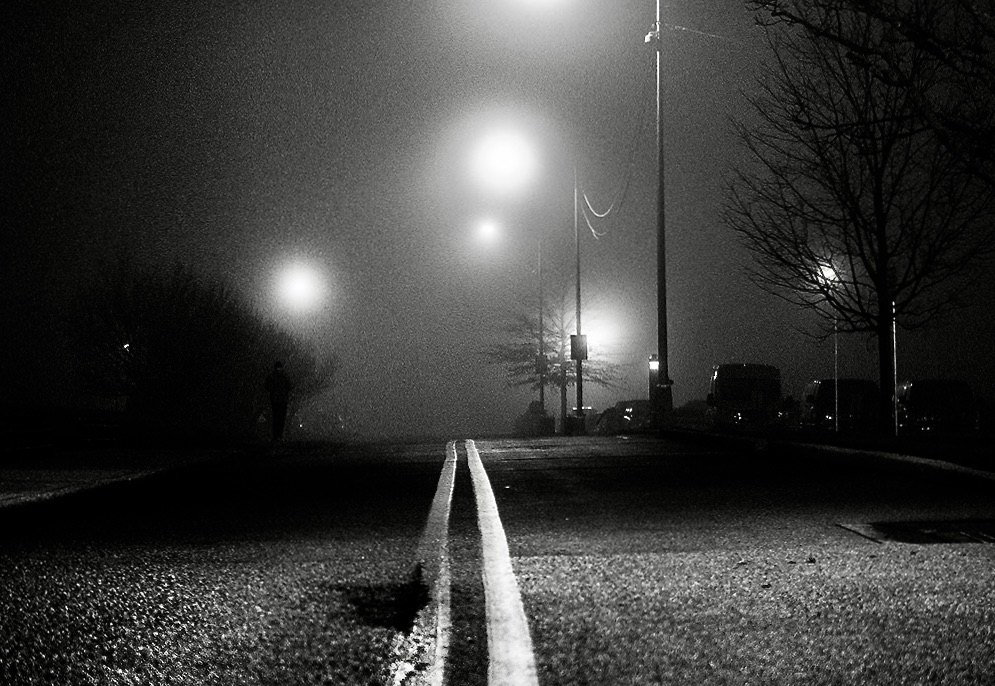
Photograph by Fred Lyon.
Ed Staskus posts monthly on 147 Stanley Street http://www.147stanleystreet.com, Made in Cleveland http://www.clevelandohiodaybook.com, Down East http://www.redroadpei.com, and Lithuanian Journal http://www.lithuanianjournal.com.
“Cross Walk” by Ed Staskus
“Captures the vibe of mid-century NYC, from stickball in the streets to the Mob on the make.” Sam Winchell, Beyond Fiction
Available on Amazon: https://www.amazon.com/dp/B0CRPSFPKP
Late summer and early autumn. New York City, 1956. President Eisenhower on his way to the opening game of the World Series. A hit man waits in the wings. A Hell’s Kitchen private eye scares up the shadows.
A Crying of Lot 49 Publication

 147 Stanley Street