
By Ed Staskus
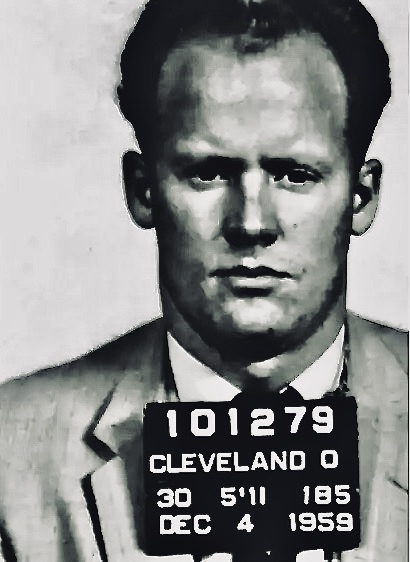
Everybody called Danny Greene the Irishman. He was almost forty two years old the summer of 1975 and somehow still alive. He had never looked his age, but that had changed, although he still didn’t look his age. He looked older. Water under the bridge hadn’t done him any favors. He grew a mustache to take attention away from his thinning hair. On top of that, at the moment, he felt bad. He didn’t feel bad about Lorcan Sullivan being blown up in Lakewood two days earlier. He was in a rage about that. That was different. His mouth hurt bad. A bum tooth was a different kind of misery. He called his dentist, who knew well enough to get him in no later than right away.
He lay down with his face on a pillow on the floor of the trailer home in Collinwood that had become the Celtic Club. His live-in girlfriend Denise Schmidt knelt over him and massaged his back. It had been tightening up every night the past two months. He was stiff as a board most mornings. He felt like an old man sometimes. Denise was a senior at Collinwood High School. She was on the young side of more than half his age. She made him feel younger. The bomb blast hadn’t slowed her down.
Two months earlier at four in the morning while they were sleeping on the second floor of their two-story storefront home on Waterloo Rd. somebody had thrown two bombs through the ground floor windows. The storefront was where Danny Greene had a phony consulting firm on the ground floor that went by the name of ‘Emerald Enterprises.’ The enterprise was mainly in the business of extortion. The Irishman’s other enterprises were gambling, embezzlement, loansharking, and leg breaking. Murder was taken for granted in his line of work.
When the sound of glass breaking woke him up, he slipped out of bed and into the kitchen. He had a gun in his hand. When the first bomb that came through the window exploded, he was crouching between the sink and the refrigerator. A cabinet was above him. He was safe in his improvised nook when timbers and bricks started to fall, but when the floor caved in he went down with it. Denise was still in bed. She and the bed went down, too. The bed ended up halfway down from the second floor, tilted and dangling from a beam. She hung on until she couldn’t hang on anymore.
“I felt the floor give out,” the Irishman said. “The next thing I knew I was in a heap of rubble. A busted icebox was beside me. Denise fell on top of me. I dug the two of us out. I heard dogs barking. I couldn’t hear my cats.”
“Danny Greene made out like Houdini,” Ed Kovacic, the Central Station police lieutenant investigating organized crime, told Frank Gwozdz and Tyrone Walker. “He was luckier than his cats.” Danny Greene had two street cats who nightly slept inside the building on the first floor. They were both killed. His new 1975 Lincoln Continental was destroyed. A second bomb was connected to a two-gallon can of gasoline. That bomb didn’t go off and the gasoline didn’t ignite. The Irishman had more lives than a clowder of cats.
The Bomb Unit got to work before dawn after the blast. Across the street a disheveled hippie sat on the curb waving a bottle of Boone’s Farm at anybody who gave him a glance. “You should a heard just what I seen,” he said to anybody who came within earshot. Nobody paid any attention to him. Even he had a hard time paying attention to himself.
When the rubble was cleared away Danny Greene set up shop in the same place, parking a trailer home there. A TV news crew interviewed him outside his new headquarters. He announced his new address and invited any other would-be bombers to try again. “I’m in between both worlds, the square world and the street world,” he said. “I think I have trust on both sides, but I have no ax to grind. If somebody wants to come after me, we’re over here at the Celtic Club. I’m not hard to find.” He was shirtless, bare-chested, and spilling over with contempt. He pointed to the medal of St. Jude he was wearing around his neck. “This is why nobody is going to get me.”
Parents in the neighborhood warned their children not to go near the trailer with the Irish flag flying in front of it. They told them it was best to stay away from that whole block, St. Jude medal or no St. Jude medal.
Danny Greene’s mother died when he was three days old. His father got drunk and stayed drunk after she was buried. He lost his job with Fuller Brush. When he did he dropped the baby boy off at the Parmadale Orphanage. Six years later, back on his feet, newly married, he took the boy back, but the first grader argued long and loud with his stepmother and ran away again and again. One night he ran away to his grandfather’s house in neighboring Collinwood and never went back.
His grandfather put him into St. Jerome’s Catholic School where he became an altar boy and all-star basketball player. He joined the Boy Scouts. After graduating from grade school he went to St. Ignatius High School. After that things started to go south. He was thrown out of the Boy Scouts for fighting with other scouts. He was expelled from St. Ignatius for fighting with the Italian pupils and everybody else. He transferred to Collinwood High School but was expelled for “excessive tardiness.” He explained he had to fight his way into the school, fighting the bullies blocking his way, but the principal didn’t believe a word of it and told him, “Leave and don’t ever come back.”
“He grew up hustling,” said his one-time friend Aggie who ran with Danny Greene when they were kids. “It’s hard to take the hustle and larceny out of somebody who grew up with nothing. Being an orphan and growing up with the nuns, you tend to grow up edgy, tough, and slightly mean.” Hardly anybody stayed friends with the Irishman for too long. The nuns put him in their prayers, to no great effect.
He enlisted in the Marine Corps. They liked his fighting spirit. He became an expert marksman. Before long he was training other marksmen on Sniper Garand rifles. When he was discharged he was honorably discharged. He went home to Cleveland to be his own man. He was done with running away. He had a brand-new plan. He started working on the waterfront. He was elected president of Cleveland’s Local 1317 International Longshoreman’s Association, the dock workers union, in 1962. The trouble started right away when he began embezzling union funds. He was living large and needed the money. Trouble picked up the pace when he started leaning on his longshoremen for more money.
“Danny was spending money hand over fist,” said Skip Ponikvar, vice president of the union. “His trips to the Theatrical Grill downtown, trips to Chicago, trips to New York. And he was picking the tabs up. There was only so much a few hundred men could support with dues. He got the idea to have some guys work the grain boats on the side and sign the checks over to the union. The guys started bitching and moaning about it. Well, if you worked on the grain boats, when it came to the hiring hall later on, those guys were given the better job, which is illegal.”
Longshoremen started shaking down employers for payoffs. One of them threatened to kill the children of a businessman who wouldn’t cooperate. His house had to be put under police protection and his children escorted to school by an armed guard. After one too many complaints, the Cleveland Police Department sent Ed Kovacic and his partner to set Danny Greene straight. It wasn’t a far drive to the union hall. They stopped for coffee and a smoke. Refreshed, they walked into the union hall quietly, looking for the back office. They didn’t mean it to be a pow wow. They hadn’t brought a peace pipe.
“When we walked in, I felt like I’d fallen in the Atlantic Ocean, because it was all green,” Ed Kovacic said. “Even the walls were green.” The only thing not green was the Irishman, at least from the neck up. “Everything was green except his hair and face. He handed us a pen, which had green ink in it. Everything was pleasant until he asked why we were there.” They told him why they were there. “He got up and started walking around the room. As he did, he got louder and louder. He started talking about how the Italians thought they ran Collinwood, and this was just a bunch of tough Irish and Slovenian kids who were going out there and telling them they didn’t run Collinwood anymore. I handed him our crime report and said, ‘How about this man? Your goons blinded a Chinese American man.’ Boy, that really set him off like a rocket! Finally, he said, ‘Get out. That’s enough. We’re done.’”
The policemen were done, too. “When we got in the car, I said, ‘That was like a scene from that waterfront movie. He was acting like Marlon Brando.’ My partner said, ‘Yeah, I was waiting for him to start hollering, ‘Stella! Stella!’” Ed Kovacic didn’t bother telling his partner he was getting his movies mixed up.
Danny Greene didn’t want or need anybody like Stella. Blanche was more his speed, at least if she had been half her age. He knew how to get what he wanted. He liked blondes who were blonde as sunlight. The nuns at St. Jerome’s had tried to teach him the difference between angels and demons, but he never learned his lesson.
“He was dynamic,” Skip said. “Dressed to the nines. You never saw him in jeans or street clothes. Suit and tie all the time. He negotiated a hiring hall for the union. It allowed us control. Total control. If you were my friend, I’d send you on a boat that’s going to work ten hours. And if you weren’t my friend, or just an average guy, I’d send you on a boat that’s going to work four hours. He had ‘Don’t fuck with me’ written all over him. You didn’t want to even challenge him. He was always in shape. He didn’t smoke. But when he drank, that was his weakness. He drank to excess, and when he drank to excess, bad things would happen, arguments, fights, all kinds of bad things.”
Danny Greene was in shape but couldn’t fight everybody in the union. He was outnumbered. Everybody finally wanted him gone. “The men wanted him out,” said John Baker, one of the dock workers. “They didn’t want to work the boats for nothing. When he got into his jam, he asked me for a vote of confidence, and I said, ‘Danny, I can’t do it.’ That was it. We never talked after that.”
The national union suspended him. He was done running Cleveland’s docks. Somebody drove past his house and pumped five bullets into the clapboard, just to make sure he got the message. When a TV reporter showed up the next morning the Irishman read from a scrap of paper, “Effective immediately, I have resigned as a member and officer of Local 1317. After nearly four years of devoting all my energies to get the dock workers in Cleveland a fair shake, I found that my only compensation is headlines in the newspaper and bullets through my window.” When push came to shove he pled guilty to falsifying union records and was fined $10,000. He never spent a day in jail and never paid a penny of the fine. By that time, he was a part-time FBI informant and the FBI didn’t care whether he paid his fine, or not. They had bigger fish to fry.
Danny Greene stayed on the floor for ten minutes after Denise was done with his rubdown, rolling over on his back, grasping his knees, and pulling them into his chest. He rocked forward and back. When he stood up he felt like his old self. He went outside and sat down a lawn chair in the dirt front yard in front of his trailer home. Two empty cans of Stroh’s lay at the feet of a plaster leprechaun beside the chair. He used to do next week’s drinking every day of the week but had put a stop to most of it. He had started jogging, gulping vitamins, and steaming vegetables for dinner.
His dentist’s appointment wasn’t for two more hours. The tooth yanker was in Lyndhurst, twenty some minutes away, so there was plenty of time to think things over between now and then. He had gotten a new Lincoln Continental and enjoyed driving it. What he didn’t enjoy was checking it from front to back and underneath it for anything that might blow its top. Denise wouldn’t go near the car until he was done.
He was going to make somebody pay for blowing up his building and killing his cats, never mind the car. He was going to make somebody pay for Lorca Sullivan’s death, too. He knew more about revenge than any man alive. He was going to make somebody pay for something, if it was the last thing he did. He was nothing if not a man of his word, no matter how many twists and turns his words might take.
Excerpted from there crime novel “Bomb City.”
Ed Staskus posts monthly on 147 Stanley Street http://www.147stanleystreet.com, Made in Cleveland http://www.clevelandohiodaybook.com, Atlantic Canada http://www.redroadpei.com, and Lithuanian Journal http://www.lithuanianjournal.com.
“Bomb City” by Ed Staskus
“A police procedural when the Rust Belt was a mean street.” Sam Winchell, Beyond Books
Cleveland, Ohio 1975. The John Scalish Crime Family and Danny Greene’s Irish Mob are at war. Car bombs are the weapon of choice. Two police detectives are assigned to find the bomb makers. It gets personal.
A Crying of Lot 49 Publication
 147 Stanley Street