Tag Archives: Prince Edward Island

Fishing for Mr. Babadook

By Ed Staskus

   Emma was dozing in the back seat, her head slumped on her brother’s shoulder, the night they discovered the truth about Shadow Man. Oliver had heard of him, but since they were leaving Prince Edward Island in a few days, going home to Ohio, he had almost given up hope of running into him. Even though he was only ten years old, he was as a rule prepared for the worst when it came to monster hunting, but always hoped for the best.

   Oliver was an accomplished monster hunter. His older sister Emma was his right hand man. Their parents were in the front seats, their father driving and their mother scrolling through her cell phone. It was nearing eleven o’clock. They had been in Charlottetown, at the Irish Hall, where they had seen the band Fiddler’s Sons. They were returning to the Coastline Cottages in North Rustico, where the family had been staying for nearly two weeks.

   They took a wrong turn leaving Charlottetown and ended up on Rt. 15 instead of Rt. 223. “No matter,” their father said. “We’ll drive up to Brackley Beach and from there all we have to do is turn left to North Rustico.” Getting back to their cottage from there meant going through Rustico, Rusticoville, South Rustico, and Anglo Rustico, which were along the way.

   North Rustico was founded in the late 18th century. Nobody is sure exactly when. It is on a natural harbor on the Gulf of St. Lawrence. There is a food market, a hardware store, a Lions Club, and about six hundred people live there. René Rassicot, a French pioneer, was one of the first settlers in North Rustico. All the rest of the nearby Rustico towns take their name from him.

   They were driving down a stretch of Rt. 6 near South Rustico when the road was engulfed by green fog. Suddenly, out of nowhere, there was somebody in front of their car. He was a tall man wearing an old-fashioned flat brim hat and a long black coat. Their father slammed on the brakes but it was too late. The car hit the man and sliced through him like he was nothing.

   “Stay here,” Oliver’s father said, coming to a stop and jumping out of their Jeep Cherokee. He was shaken. He scanned the ground with a flashlight. Nobody was lying dead on the road or in the bar ditch. Oliver twisted around and peered through the rear window.

   Emma woke up. “What’s going on?” she asked.

   “I think dad hit something,” Oliver said. He climbed out of the back seat. Emma followed him. Their mother kept her hand on her cell phone, ready to call 911.

   “He came out of nowhere,” their father said. “He was in the middle of the road but now he’s nowhere.”

   “I have nowhere else to go,” a voice said.

   Oliver, Emma, and their father looked in all directions, looking for the voice. A man walked out of the fog towards them. He was still wearing his old-fashioned flat brim hat. He was more silhouette than flesh and blood. He didn’t look hurt in any way. He was carrying a mace in his right hand. It was an aspergillum, a liturgical implement used to sprinkle holy water. 

   “It’s my double-edged sword, in case my sacred water doesn’t work on the fiend,” he said. “In that case I will send him back to Hell by smashing him with God’s instrument.”

   “We thought we hit you in the road. Are you all right?”

   “Yes, I am all right,” the man said. He had a French accent. His voice had a slight echo to it

   “Who are you?”

   “He’s the Shadow Man,” Oliver said. He knew his phantoms.

    “I am the shade of Rene Rassicot, after who these lands are named,”  the man said, fog rolling off his shoulders. “Some call me the Shadow Man. I do not terrorize the living. I watch over those on my lands, especially at night, when their dreams leave them exposed to danger.”

    “Are you immortal, or something?” Emma asked.

   “All creatures, except for man, are immortal because they are ignorant of death. Being a man, I am not immortal, although I was once threatened with immortality, which is more terrible than being threatened with death.”

   “Are you alive now?”

   “Yes and no, my young girl. My advanced age has resigned me to being Shadow Man. I miss my wife. I miss my family. I miss the smell of coffee and tobacco.”

   “What are you watching out for?” Oliver asked.

   “I am watching out for Mr. Babadook. He prowls these coastal lands from Brackley Beach to Stanley Bridge. He is furtive and cold-hearted. He strikes a pose in a beaver pelt top hat. He wears black mouth paint and his long spindly fingers are knife-like claws. He feeds on bowls of worms.”

   “I’ve never heard of Mr. Babadook,” Emma said.

   “He is the fiend who has oppressed me these past one hundred years,” Shadow Man said. “I have sometimes been confused with him since 1925, when Mr. Babadook was brought to this island in a children’s book.”

   “He came here in a book?” Oliver asked.

   “Yes, a pop-up book.” 

   The first pop-up book was “Little Red Riding Hood” published in 1855. It was called a scenic book. Seventy years later the Big Bad Wolf had become Mr. Babadook. He and the wolf shared the same kind of teeth and unholy appetites.

   “What does he do?” Oliver asked.

   “He knocks on your door, disappears, but leaves behind his red pop-up book meant for children’s night stands.”

   “What happens if children read the book?”

   “When they open the book they read, ‘You can make friends with a special one.’ By the time they get to the middle of the book they read, ‘You cannot get rid of me!’ After that they can’t help turning page after page. When they finish the pop-up book Mr. Babadook moves into their basement and gains control of the house and the family. In the end what happens is madness.”

   “That sounds terrible,” Emma said. “Why hasn’t anybody stopped him?”

   Their father wanted to say there isn’t any such thing as dream police, although he conceded there were dream monsters. Before he could say anything, however, Oliver piped up.

   “Dad, can Shadow Man come with us? He could sleep in Cottage No.1 since it’s empty. We could search for Mr. Babadook tomorrow. Maybe if we put our heads together we could put a stop to what he has been doing. We don’t have anything planned, do we?”

   His mother was all set to say they had plenty planned and Shadow Man should go back to where he came from, but before she could get a word out her husband said, “Get in the back. My son and you can go look for Mr. Babadook tomorrow, although you should know you won’t have much time since we are going home to Ohio in a few days.”

   “What about me?” Emma said, knowing full well she would be in on the hunt, no matter what.

   “We three will find him,” Shadow Man said.

   What he didn’t say was that Mr. Babadook might find them first. The top-hatted bogeyman was always on the prowl for children. Shadow Man looked at the two youngsters in the car and thought he must make a plan.

   Oliver and Emma spent the next day at Cavendish Beach on the Green Gables Shore. That night they went to MacKenzies Brook. The Shadow Man was with them. Their parents were asleep at the Coastline Cottages in North Rustico, two miles away. Their father was snoring lightly. Their mother was dreaming. In her dream she was staring into a green fog and hoping nothing monstrous walked out of the sea fret. When something did she sprang awake in a cold sweat.

   Shadow Man, Oliver, and Emma had quietly left and gotten on the all-purpose path three hours earlier. It was now near dawn. The mice and rabbits were still asleep. The foxes who hunted them were asleep, too. The all-purpose path paralleled the Gulfshore Parkway that ran along the Gulf of St. Lawrence. MacKenzies Brook was on a bluff with a dirt track down to a beach. Fishermen often cast for sea bass there. Oliver and Emma weren’t after fish. They were after Mr. Babadook. When they had gotten there they looked for the Cactus Pot rock formation they had heard about, but it wasn’t there anymore. Hurricane Fiona had blown it down in 2022. It  was the most intense storm to ever hit Prince Edward Island. 

   “You said this was the best place to find Mr. Babadook on this exact day,” Oliver said to Shadow Man.

   “Yes,” Shadow Man said.

   “Why is that?”

   “Once a month a new moon rises above the eastern horizon at sunrise. On that day the moon then travels across the daytime sky with the sun. At the moment when night and day are evenly spaced is the moment when Mr. Babadook stands on the beach and makes his plans for the coming month. It is an order of business with him.”

   Mr. Babadook lived rent free eighteen miles away in a damp corner in the basement of the Haunted Mansion in Kensington. He lived rent free because nobody was aware he was there. The Haunted Mansion had been a potato warehouse when trains used to run past its back door. When the railways on Prince Edward Island were abandoned it was sold and converted into the Kensington Tower and Water Gardens.

   The new owners were anglophiles and rebuilt the potato warehouse into a Tudor-styled manor house. In the early 2000s it was sold to the owner of the Rainbow Valley Amusement Park. He converted it into a spook house. The one-time potato warehouse became spooky and scary.

   Mr. Babadook is a thoughtform that comes from the collective unconscious. He is like a living being who lives inside another living being’s head. He haunts those who read his pop-up book, which is disguised as a children’s book. He is a shape shifter, taking the form of any person, animal, or insect. He has been known to take the form of a woman’s dead husband and convincing her to give him her son so he can destroy him. Moving about at night he often takes the form of a Norwegian rat. 

   “If Mr. Babadook has been on the island for a hundred years, like you said yesterday, how old is he?” Emma asked.

   “As old as the bogeyman,” Shadow Man said. 

   Mr. Babadook was a bogeyman who wore a black coat and top hat. He was long in the tooth. He had claw-like hands and a chalky face. He haunted those who read the pop-up book that he hid inside of. As they became more frightened he became more real and horrible.

   “What are we going to do with him if he shows up?” Emma asked.

   “I don’t know,” Shadow Man said. “My plan didn’t get that far.”

   “I know,” Oliver said. “Since he’s a thought he can’t be whipped by ordinary means. But, since he’s an avatar of fear, Mr. Babadook can be put to an end through acceptance.”

   “What is an avatar?” Shadow Man asked, his 18th century brain drawing a blank about the word.

    “It’s sort of an impersonation created to manipulate others, like Mr. Babadook does,” Oliver said.

   “What do you mean when you say defeated through acceptance?”

   “What I think I mean, if you stop being scared of him, and come to terms with those bulging eyes of his staring you in the face, he loses his power over you. He‘s a master of inciting fear, so I’m not saying it’s easy to do. It can be like trying to hold back a flood with toothpicks.”

   Oliver, Emma, and Shadow Man were hiding inside a clump of Marram grass on the side of a dune when an Ambush Bug flew past them and landed on the beach. Ambush Bugs are part of the Assassin Bug family. They are yellowish things, usually living among sunflowers. They are not picky eaters, but prefer other insects. Any other insect that gets too close is grabbed with strong front legs and held fast. The Ambush Bug jabs its sharp peak into the other bug and sucks out its insides.

   As soon as the bug landed there was a flash and in an instant Mr. Babadook was himself. He pulled a pair of sunglasses out of an inside pocket and stood facing the rising sun. The sky was clear as glass. Oliver, Emma, and Shadow Man walked down the dune and stopped behind Mr. Babadook. Nobody said anything, although Shadow Man knew their archenemy knew they were there.

   When Mr. Babadook whirled around, lashing at them with his claw-like hands, Oliver and Emma jumped back. Shadow Man stood his ground, The claw-like hands went through him without leaving a scratch.

   “If I had known it was you I wouldn’t have wasted my time,” Mr. Babadook said. “But I have other ways of dealing with you, as soon as I’m done with these children.”

   “There isn’t going to be any dealing,” Oliver said. “You’ve overstayed your welcome on this island. It’s time for you to go.”

   “I’m not going anywhere, my young man, and that goes for your little sister, too.”

   “Hey,” Emma said. “I’m the older one, mister.”

   “Yes, you are going somewhere, because once we let everybody know there isn’t anything to fear but fear itself, your days here will be numbered,” Oliver said.

   “Where have I heard that before?”

   “I don’t know, but you’re going to hear a lot of it from today on.”

   Without warning, Mr. Babadook shape shifted into a wolf and snarled. He advanced on Oliver and Emma, who had a jackknife in her back pocket, but quickly realized it wasn’t going to do them any good.

   A fisherman had pulled into the parking lot a few minutes earlier. He had unpacked his gear from his pick-up truck. He was just starting down the dirt path to the beach when he spied the wolf threatening Oliver and Emma. He cast his line and hooked the butt of the wolf, who yelped in protest. There was a flash and the wolf shape shifted back into Mr. Babadook. 

   “Let me go if you know what’s good for you!” he roared.

   The fisherman knew what was good for him. He reeled the black-clad fiend in, dragging him through the beach sand and up the dirt path. A catch is a catch. When he had him at the top of the bluff he grabbed him by the scruff of the neck and tossed him into his wicker fish basket. Mr. Babadook raged inside the basket, trying to slash his way out of it, threatening doom to everyone seen or unseen, known or unknown. Before he could tear the bag apart the fisherman overturned it into a cooler and secured the lid.

   “What are you going to do with him?” Emma asked.

   “He’s going back into the deep, from where he came,” the fisherman said. He threw the cooler into the ocean. The tide took it. It floated up the Gulf of St Lawrence, past Red Bay and Port Hope Simpson, past Newfoundland and out into the Labrador Sea. It floated past Greenland and finally landed on the northwest coast of Iceland at Samuel Jonsson’s Art Farm at the tip of the Westfjords near the town of Selardalur. 

   Mr. Babadook spent the rest of his days there, having lost his pop-up book, fishing for herring, which he ate with caramelized potatoes, and  painting portraits of himself. He sold the paintings to the occasional tourist who took the time and trouble of driving the hundreds of miles from Reykjavik.

   The locals assumed he was a troll, come down from the mountains, since he only ate after it got dark. Everybody knew trolls had issues with sunlight. Since losing his pop-up book, he told anybody who asked that his mother was Gryla, the most feared troll in Iceland, so nobody messed with him. Parents warned their children to be vigilant around the top-hatted creature, and that is what all the children of the Westfjords did from then on, like they did with all trolls.

Ed Staskus posts monthly on 147 Stanley Street  http://www.147stanleystreet.com, Made in Cleveland http://www.clevelandohiodaybook.com, Down East http://www.redroadpei.com, and Lithuanian Journal http://www.lithuanianjournal.com. To get the site’s monthly feature in your in-box click on “Follow.”

“Cross Walk” by Ed Staskus

“A Cold War thriller that captures the vibe of mid-century NYC.” Sam Winchell, Beyond Books

Late summer, New York City, 1956. The Mob on the make and the streets full of menace. President Eisenhower on his way to Brooklyn for the opening game of the World Series. A killer waits in the wings. Stan Riddman, a private eye working out of Hell’s Kitchen, scares up the shadows.

Available on Amazon: https://www.amazon.com/dp/B0CRPSFPKP

A Crying of Lot 49 Publication
My Aim is True

By Ed Staskus

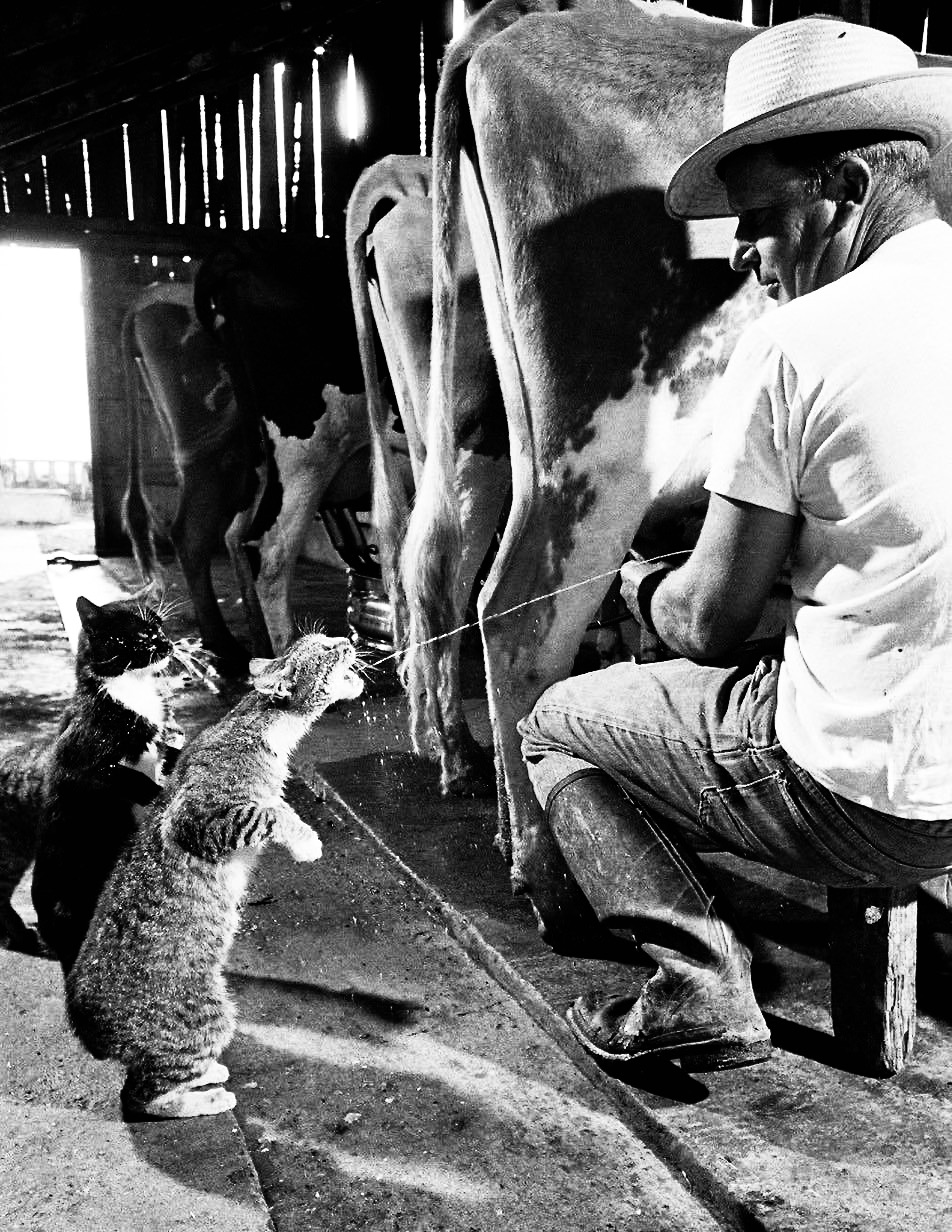
   “I think all the farmers on the island did it,” Linda Hewitt said. What all the farmers on Prince Edward Island used to do was squirt a stream of milk in the direction of whatever barn cat was hightailing it into the barn during milking time. “We used to enjoy watching them line up for their treat.”

   Even though milk is not ideal for grown-up cats, because it can cause gassiness once they are of age, squirt milk in the direction of a clowder of cats and they will come running. They drank milk non-stop when they were kittens. When they grow up they remember the familiar smell and taste of it. Their sense of smell is closely linked to memory, more so than the other senses, the same as in people. Straight from the source is their No. 1 comfort food. 

   “Granny Matheson my cousin’s grandmother squirted milk to the cats,” PEI native Anne Fuller said. “They loved it.” Seen from the sky Prince Edward Island lives up to its moniker “Million Acre Farm.” It is known by several different names, including Spud Island, but is most commonly called PEI. The natives including grandmothers on down the line call themselves islanders with a capital “I”.

   Almost all cows nowadays are milked by automatic suction machines. The devices increase the yield of milk and reduce the labor involved. Milking by machine draws about 5 liters of milk. Milking one cow takes between 5 and 7 minutes. Milking by hand draws about 3-and-a-half liters and one cow takes 15 to 20 minutes. The machines go back to the late 1800s. It took decades for them to gain the upper hand. Many cows in North America were still being milked by hand well into the 1940s. Some cows on Prince Edward Island were still being milked by hand even later than that.

   “I did that every time we milked the cows,” PEI native Cecil Wigmore said about the squirting.

   Milking cows on Prince Edward Island in the 21st century is a highly mechanized operation. The total number of cattle on the island is more than 60,000 head. 13,900 of those are dairy cows and 6,300 are dairy heifers. 170-some farms ship their milk to cooperatives and the volume amounts to 120-some million liters. The milk is known for its good taste and high quality.

   Cows Ice Cream makes some of the world’s best ice cream. They have been making it on the island since 1983 with island milk. They won the award for Canada’s Best Ice Cream in 2015. Their frozen confections were recently named the World’s Best Ice Cream by Tauck World Discovery. 

   “Yes, I sure do remember doing that for cats on visits to my grandfather’s farm,” PEI native Norma MacLean said. “I have many special memories.”

   One of dairy farmer Bloyce Thompson’s cows won the award for Top Holstein in the World in 2011. He is a third-generation farmer in Frenchfort, in the middle of the island, with a sizable herd of purebred cows. He serves as Deputy Premier of Prince Edward Island and has long opposed NAFTA-mandated dairy imports. Why mess with a good thing when you’ve already got the best?

   The dairy business on Prince Edward island is made up of dairy producers, who operate farms and produce raw milk, and dairy processors, who process raw milk into butter, cheese. yogurt, ice cream, and condensed milk. ADL is the major processor, by far. Island cheese is known and celebrated worldwide. Avonlea Clothbound Cheddar, made by Cows Creamery on the island, won the Super Gold of the World Cheese Awards at the 28th annual BBC Good Food Show in 2015. 

   Milking by hand isn’t rocket science. It is easy enough to do. “I used to do that,” PEI native Tom McSwigan said. While milking a cow he would wait for his cat to rise up on its hind legs and then give it a squirt right from the cow’s udder. “If I missed and hit the cow’s leg she kicked viciously. Not only that, if I got caught doing it I got the heavy hand of justice from my grandaunt, for because me doing it free of charge.”

   Neolithic farmers in northern Europe were among the first to milk cattle for human consumption. They put hand to teat about 6,000 years ago. It was around that time that the ability of human beings to digest milk was slowly but surely accomplished. It was accomplished by the spread of a genetic mutation called lactase persistence. It was what allowed post-weaned human beings to continue to drink and digest milk.

   Heath McLennan milked cows from the 1930s until his death in 2021.The family farm is in Port Hill on the west end of the island. Heath lived across the street. “He couldn’t wait to get over and that was the highlight of the day,” his son Hilton said. “It was in his blood.” The farm has thirty Holsteins who are milked by machine. “We used to milk them out in the field,” Heath said. “It wasn’t a very excellent job when it was raining. The water was running off the cows.”

   When asked if he ever milked cows by hand anymore, Heath said he wasn’t sure if it would be a good idea to try milking their cows that way anymore. “I wouldn’t want to touch them when they’re not used to it now. They might kick the head off you.”

   Hand milking is done one way or the other, by stripping or by full hand. When stripping the teat is held between thumb and forefinger and the hand glides in one smooth motion down the teat while applying pressure to draw the milk out. When employing the full hand method, the teat is held with all the fingers and the teat is pressed against the palm. The full hand method is thought to be the better of the two methods because it applies a more consistent pressure on the teat and simulates the sucking action of a calf.

   “I can still see my father doing it by hand,” PEI native Adele Shea said. “The cats loved it.”

   Before the machine age children played a big part doing what had to be done on the family farm. They gathered eggs, cleaned, fed, and watered the stock, made butter, made lard and soap, weeded the garden, and went berry picking. They helped with planting and harvesting. One thing they did all year round was milk the cows. When they did, sitting on a stool or balancing on their haunches, they made an immediate connection to one of their most important food sources. Kids being kids, they shared the food source with whatever was wandering in for a taste of white..

   “Me when I was younger did it to the cats,” PEI native Ken Macleod said. “I also did it to the dogs.” 

   Even though cows are by nature easygoing creatures, they can sometimes be buttholes. They can be irascible and stubborn. They can even be dangerous. A cow kick can be deadly. It takes the form of a sharp blow. Most cow kicks are brush-offs, but some lead to a trip to the Emergency Room, and a few are fatal. Always move slowly around cows. Always announce yourself when approaching a cow. Never approach a cow from behind. Always be patient. Never flap your arms. Stay a kick away is the way to be. Stay safe getting your glass of milk.

   “Daddy would squirt the barn cats when we were kids,” PEI native Joanne Creamer said. Cats are much faster than cows and even faster when a cow kicks at them. They are rarely overmuch bothered so long as they get their milk. “Me, when I was squirting milk, sometimes I hit the wrong end of the cat,” PEI native Dwight Llewellyn said.

   “I exactly do remember doing that,” PEI native Brian Trainor said. “The cats would sit there waiting while we milked.”

   Fathers milking cows by hand and directing squirts at cats was an island-wide practice back in the day. “Oh, yes, my dad did it all the time!” PEI native Helen Verhulp said. “My dad always done that and sometimes to us, too,” PEI native Caroline MacLean said. “My father did it,” PEI native Joan Coulthard said. “He did it to us kids as well. It was warm sweet milk.”

   Not all parents were as generous. “I always did it until my father caught me,” PEI native Erroll Jon Campbell said. Waste not want not was his father’s motto. The Scottish are notoriously thrifty. They preach the smart thing to do is be more frugal than not, cats or no cats.

   Milking machines are made of a vacuum pump, a vacuum controller, a pulsation system, a milk transport system, and a milker cluster. The machines apply constant vacuum pressure to the tips of a cow’s udder, mimicking the way milk is naturally drawn. The vacuum tubes are attached to a container where milk is collected. The machines also squeeze the udder periodically so that blood circulation is maintained.

   Milking by hand instead of techno milking is more time-consuming but it is simpler. What’s needed is a milking pail, a wash bowl ,white towel rags, a filter, a funnel, and storage jars. Mason jars are preferred. Glass jars are preferred. Plastic jars are discouraged. They are harder to disinfect. White wash rags are used to clean the udder. Wash bowls are used for cleaning the wash rags. Funnels are used to direct milk from the pail into the storage jar.

   Not all milk ends up where it should. “I remember being sprayed by Shawn and Brian Shea when Granny Trish still had cows,” PEI native Krista Dillon said. “Oh, my God, that was so long ago. I loved that house and farm.”

   Hand milking isn’t coming back anytime soon. Time marches on. Hand milking lives on in the memories of those who made it happen every morning and every afternoon, but there is no squirting anymore. Machine milking is more efficient. Dairy farmers don’t miss the good old days. Who misses the good old days are the island’s cats. The Industrial Age means nothing to them. A stream of warm cow’s milk straight from teat to mouth twice a day is what meant everything to them.

   “Oh my, yes,” PEI native Clara Ross said. “All the barn kitty’s loved it.”

Photograph by Nat Farbman.

Ed Staskus posts monthly on 147 Stanley Street http://www.147stanleystreet.com, Made in Cleveland http://www.clevelandohiodaybook.com, Atlantic Canada http://www.redroadpei.com, and Lithuanian Journal http://www.lithuanianjournal.com

A New Thriller by Ed Staskus

Cross Walk

“A once upon a crime whodunit.” Barron Cannon, Adventure Books

“Captures the vibe of mid-century NYC.” Sam Winchell, Beyond Fiction

Available on Amazon: https://www.amazon.com/dp/B0CRPSFPKP

Late summer and early autumn. New York City. A Hell’s Kitchen private eye. The 1956 World Series. President Eisenhower at the opening game. A killer in the dugout.

Rat in the Hat

By Ed Staskus

   Aksel was a Norwegian rat, although it would have been a matter of rough-and-tumble if anybody had tried to tell him that. He believed he was a Norman rat since his forebears had come to the New World aboard a French ship that sailed from Bayeaux long ago. The Normans were hardy explorers. Norwegians sat around their fjords moon eyed. It had been more than a hundred generations of his family saga since his ancestors landed on the island. He had never met a Norwegian. He had no idea about any Norwegians. He didn’t even know where Norway was.

   He didn’t know what day week or month it was. He didn’t know it was 1989. He didn’t know he was living in North Rustico on Prince Edward Island, either. He had no clue he was on the North American continent, for that matter, although if he had known it wouldn’t have mattered. He knew where Rollings Pond was. The pond was where he spent most of his nights. During the day he slept in the basement of the Stella Maris Catholic Church. He never went to mass or confession, though. It wasn’t that he was an atheist, not exactly. He simply couldn’t wrap his head around the idea of a Supreme Being who had his best interests in mind. Something was always out to get him. He always had to do everything for himself. He didn’t own anything, not even a fork, knife, or plate, but his bedroom was cozy. He stored some dried food there and had a bed of straw and a small pillow. He kept a handful of loose change he had found at Orby Head under his pillow for a rainy day.

   Aksel was known by the nickname of Left-Hand. How he came to be called Aksel the Left-Hand was beyond him, since he was right-handed. In the event, he didn’t gripe about it. It was better than some of the other rat nicknames he had heard in his neck of the woods, like Seaweed Neck and Foul Fart. He liked to think of himself as a man about town and sometimes wore a bowler hat.

   He wasn’t a farmer. He foraged for food instead of sowing seeds. He gleaned grub far and wide. He ate anything and everything. He thought he had probably eaten hundreds of different foods in his lifetime. He ate any discarded morsels he came across as well as all crops from all fields. He ate all the time, snacking on whatever came his way. Some people said he was a glutton. He didn’t bother disagreeing with them. He preyed on chicks, lizards, and other rodents. He caught fish on Fridays, just in case there was a God.

   His mother let it slip one day that their kind only lived two or three years. He was aghast. There was apparently no time to waste. His eyesight had always been bad. He needed glasses. He was colorblind, too. His other senses, smell, taste, touch, and hearing, were outstanding. He wasn’t especially Olympic Games agile, but he could run, jump, climb, and swim enough to keep danger at bay. He used his face whiskers to feel the world around him. He could wiggle each one of them individually, unlike cats like Snaps, who was from Murphy’s Cove and was always messing with him. He and Snaps were going to have it out one day. The cat was a menace. He was always lying in ambush for him. He had to find a way to cancel out the mouser’s claws, which were razor sharp and deadly. He had the scars to prove it. 

   Except for Snaps, cats rarely bothered Aksel. He was too big for most of them, feral or otherwise. Snaps was a different order of things. He was as big as cats come. The beast was a dangerous son-of-a-gun. The cat and the rat were a stop-and-go dance in the dark. When Aksel stopped, Snaps stopped. When he started up again, the cat was on his heels again, low-down and deadly quiet.

   Islanders didn’t always give Aksel his due. Some called him a street rat, even though he was a field rat. Others with college educations called him a Hanover rat. He tried to explain he was a Norman rat, but couldn’t speak the language of the learned. He didn’t like it whenever he was called a dirty rat. He was fastidiously clean. He washed and groomed himself ten times a day. He was a brown rat with a white underside. He was a big boy, his body length almost a foot long with a tail slightly shorter than a foot. All he had to do was flash his teeth and wiggle his tail at passersby to make them jump and lose their sandwiches.

   He  liked hanging out in the back room of Lorne’s Snack Shop, where out of work fishermen hung around looking for something to talk about. Aksel wore morning dress, a bowler hat, and pantomimed Charlie Chaplin on table tops for handouts.

   One night he met one of his own kind in the dumpster behind the co-op store next to Angie’s Eatery. After giving each other the secret handshake, after which both rats were sure the other one was legit, they chewed the fat and gossiped about local doings. His new-found friend, it turned out, had come off a cruise ship in Charlottetown three weeks ago, gone on a self-guided tour, been late getting back, and was now stranded until another boat rolled in. He had strayed up to North Rustico and was thinking of staying

   “I’m a free agent,” he said. “I can hi-jack myself back onto any boat anytime I want to. You know those round things they attach to mooring lines, what they call rat guards, and how they coat them with grease? First, I puff up my cheeks. Second, I suck up the grease. Third, I spit it out over my shoulder when I go over the rat guard.”

   Cruise ships had been docking in Charlottetown since just after the turn of the century, pulling into port to hearty welcomes. They let loose hundreds sometimes thousands of tourists all at once to stretch their legs, eat, drink, see the sights, and buy “Anne of Green Gables” dolls and effigies. They bought on-the-spur memories to put away in their closets.

   It was after midnight when Aksel and Yeoman Purser, which was what his  friend called himself, went their separate ways. “I know I’m just a rat and a mug, to boot, but I have got to say this seaside place here is something else, just beautiful, and everywhere I look there is food.” The hometown boy twitched one whisker in agreement.

   Aksel was more nocturnal than not, so when Bernie Doiron found something sticking out of the ground when he was plowing on the other side of the hill from Rollings Pond and every nearby cop car, ambulance, and fire truck descended on his stomping grounds, the noise that morning woke him up. He had just rolled over in his straw bed. He coughed and cleared his throat, blinking. He was curious and made his way to the top of the field where it was all happening to see what was happening.

   He had a love hate relationship with members of the human race. On the one hand, he preferred living near them since they were a rat’s number one fast food outlet. On the other hand, they were always trying to kill him. They checked his droppings unceasingly and tracked him by them. They were always putting out traps and bait stations. Whenever they found his nest they gassed it. He had gotten to be as cautious as an accountant. He knew full well what glue boards and snap traps were about. It didn’t matter if they were baited with his favorite fish and cereals. He gave them a wide berth.

   “My mama didn’t raise no fool,” he grumbled to himself.

   He saw what Bernie had seen and what the cops were seeing sticking out of the ground. It was an arm that had been chopped off. He guessed the rest of the body was still in the ground. It looked like they were digging it up, although why was beyond him. He knew they weren’t going to eat the remains, so what was the point? What the human race did day in and day out puzzled him more often than not.

   Aksel quickly lost interest in the unearthing. There wasn’t going to be a free meal in it for him anytime soon unless somebody dropped some crumbs. That was something else that baffled him about men and women. They seemed to never want to pick up food they had dropped, especially the women. In his world no rat did that. They ate everything, no matter what, no matter where it was., and no matter how small it was.

   He ran across the open ground behind him. He could run faster than any man alive. He could run six times his body length in a single second, but he couldn’t keep it up for long. When he got to the tree line and was out of sight, he slowed down and caught his breath. When he got to Church Hill Rd., he looked both ways before crossing to the Stella Maris Catholic Church. There was no sense in being run over on his own doorstep by a four wheel bucket of bolts rolling past.

Excerpted from “Ebb Tide.”

Ed Staskus posts monthly on 147 Stanley Street http://www.147stanleystreet.com, Made in Cleveland http://www.clevelandohiodaybook.com, Atlantic Canada http://www.redroadpei.com, and Lithuanian Journal http://www.lithuanianjournal.com

“Ebb Tide” by Ed Staskus

“A thriller in the Maritimes, out of the past, a double cross, and a fight to the finish.” Sam Winchell, Beyond Books

Available at Amazon: https://www.amazon.com/dp/B0CV9MRG55

Summer, 1989. A small town on Prince Edward Island. Mob money on the move gone missing. Two hired guns from Montreal. A constable working the back roads stands in the way.

A Crying of Lot 49 Publication

Queen and Country

By Ed Staskus

   Kieran Foyle was a black-haired careful man who knew how to get things done. It was why Prince Albert sent him to the Canada East outlands on the clipper ship “Antelope of Boston’” to wreak vengeance on the man who had tried to kill his wife. It didn’t matter that he was an Irishman sent to drop the hammer on an Englishman. When it came to killing each other the Irish and English were good at it.

   “Either bring the evil-minded rogue back to be hung or put him in the ground where you find him and spare us the trouble,” Queen Victoria’s consort said. He had had enough of assassination attempts.

   The Irishman nearly lost his chance for blood when he stepped out of the long boat landing him on the north coast of Prince Edward Island too soon for comfort and almost drowned. The water was deeper near the shore of the cove than anyone knew. He sank to the bottom not knowing how to swim and only made it back up on the back of one of the sailors who knew how to dog paddle, at least.

   The evil-minded man he was after was Thomas Spate, a disgruntled veteran of the Crimean War. He had known how to kill Russians. When he was awarded the Crimea Medal, he threw it in his rucksack and forgot about it. When he was one of the first soldiers to receive the Victoria Cross for bravery in action at the Battle of Balaclava, he thought about throwing it in his rucksack, too, but didn’t. He wore it every day pinned on his coat over his heart. He kept it brighter and cleaner than anything else he possessed.

   During the war Queen Victoria knitted woolens for the troops and inspected military hospitals, wearing a custom-made red army jacket. When the war ended, she threw a series of victory balls in her new ballroom. Tom Spate watched from the outside, driving himself crazy. He was alone and down on his luck. He blamed everybody except himself for the bad things happening to him. He walked incessantly, from one end of London to the other. He goose-stepped up and down Hyde Park. Small groups gathered to watch the performance. The queen saw him often enough to become familiar with him, although she never approached or spoke to him.

   During one of his walks around London he spied Queen Victoria and Prince Albert outside Cambridge House. As their carriage left, it came to a stop outside the gate. Tom Spate had taken to carrying two old-fashioned flintlock coat pocket pistols. They were always loaded. He walked up to the carriage and pulled them out. He didn’t ask himself what he was doing. He straightened one arm and pulled the trigger. Nothing happened. He brought the other pistol to bear and pulled the trigger. It misfired. He had just enough time to jump at his monarch and strike her on the head with the butt of one of the guns before Prince Albert grabbed him, shoving him off the carriage. Men on the walk swarmed the would-be assassin and beat him almost to death.

   Queen Victoria stood up in her carriage and proclaimed in a firm voice, “I am not hurt,” even though she was gushing blood from a penetrating gash on her forehead. The blood was crimson on her yellow crocheted shawl.

   Tom Spate was arrested imprisoned tried convicted and sentenced to transportation and twenty years of hard labor in the penal colony on Tasmania. There was no appeal. There was no changing anybody’s mind. By their calculations he got what he deserved. “I would have had the rascal drawn and quartered,” Prince Albert complained, speaking his mind about crime and punishment.

   When he escaped his jailers and disappeared, Prince Albert summoned Kieran Foyle, a mercenary who it was said always got his man. He told his monarch’s consort as much. It took almost a year, but in the spring of 1859, he was making his way soaking wet up the hill from the cove to the village of North Rustico. He knew where Tom Spate was and knew he could take his time. He needed to get out of his clothes. He needed a hot cider and dinner. He needed a good night’s sleep in a feather bed on dry land that didn’t heave-ho all night long. He found the only boarding house in North Rustico and took a room.

   Kieran Foyle’s prey was living on the far side of the Stanley River, nine miles northwest up the coast. The Irishman had grown up calling miles chains. His man was 720 chains away. It would take him about three hours to walk there on the coastal footpath. He had no intention of dragging anybody back to England. The voyage itself took a month. “Jesus and Mary chain,” he grumbled. He had every intention of collecting his bounty.

   Tom Spate lived in a rough-and-ready hut he had thrown together, living in it with his new wife and new baby. He had no land to farm and no craft to make his way. He made his way by operating a ferry service from one side of the Stanley River to the other. In the winter he closed it down when the water froze, and folks either walked or ice skated across. In January the ice got thick enough that horses and wagons could cross. He bought ice skates, carved sticks with a curve at the bottom by hand, and made homemade pucks. His wife rented them to youngsters with eggs, butter, salt cod, and potatoes to trade for playing shinny on the ice. It was a game of fast skating and trying to hit the puck between two sticks of wood marking the goal.

   Most of North Rustico was Acadian French, and Catholic like Kieran Foyle. The north coast was the religious hub of the church. St. Augustine’s had been built twenty years earlier. It boasted an 80-foot-high tower. A man could see everything from the top of it. The harbor was filled with boats and the fishing was good. There were cattle and horses grazing and fields of turnip and cabbage. Piles of mud dotted the fronts of fields. On his way to introduce Tom Spate to his maker, stopping to rest, he asked a passing man what it was.

   “It is mussel mud,” the man, a farmer, said. “The land needs lime to breathe new life into it. We use the mud from bays and riverbeds. It’s filled with oyster shells.”

   Kieran didn’t ask why they called it mussel mud instead of oyster mud. “Do you dig it up?” he asked.

   “We go out in canoes at high tide and dam up a small space so we can dig it from the bottom. When we are full, we go back and unload it at low tide.”

   “It sounds like a great deal of work.”

   “It is, but without the mud we would starve on the farms, both man and beast. I couldn’t keep one horse but for it. Your cow needs at least a ton of hay to survive the winter. We have been doubling our harvests with the mud. We will have more of it soon.”

   “How’s that?” 

   “We have got a man engineering a mechanical digger to harvest the mud in the winter through holes in the ice and carry it across the island by sleigh. There’s talk that we will be able to increase our crops of hay five and ten times. And then there’s the ice besides. We cover it in sawdust and put it into an icehouse, and we can preserve foods that go bad in the summer’s heat.”

   Kieran Foyle parted with the farmer, shaking his hand. He liked what he heard about mussel mud. It was a sunny day and the uplands looked fine to him. When he got to the Stanley River, he rang a bell hanging from a post. Tom Spate’s face appeared at a window on the other side. He waved and the next minute was guiding his flatboat across the water, using a rope anchored to oak trees. He pushed with a pole along the riverbed. Kieran paid him his two pennies and put his back to a pillar as Tom Spate pushed off.

   Near the middle of the river the Irishman felt for the sidearm in his pocket. He carried the new Beaumont-Adams percussion revolver. The cylinder held five rounds, although he knew he wasn’t going to miss his man with his first shot. He intended to be standing face to face with him when he dispatched the villain. He walked up to Tom Spate.

   “Thomas Spate, I have a message for you from your queen,” he said.

   Tom Spate’s face went white as a carcass when the barrel of the gun pressed into his chest, pressing against his Victoria Cross.

   “For God’s sake, I have a wife and child.”

   “For crown and country,” Kieran Foyle said and pulled the trigger. The bullet rocketed out of the barrel slamming and driving the medal into Tom Spate’s heart, ripping the spirit and strength out of it, and putting an end to the unhappy war veteran’s life.

   Kieran stood over him and decided in a flash that he was going to stay on Prince Edward Island. There was nothing in Ireland or the rest of the United Kingdom for him other than more killing and waiting for the day he would be the one killed. He had neither wife nor family. He would find a colleen here, he thought. He would have sons. He would raise horses fed with abundant hay grown in the goodness of mussel mud. He didn’t love his fellow man, but he loved horses. 

   He bent a knee and using both hands pried open the hole in Tom Spate’s chest. He stuck his fingers into the man, feeling for the bullet and the medal. He couldn’t find the bullet at first but found the Victoria Cross easily enough. He yanked the medal out. It had been cast from the cascabels of two cannons captured from the Russians at the siege of Sevastopol. He searched for the bullet until he found it. He washed the blood on his hands off in the water. He pushed the body off the ferry with his boot. It bobbed in the river and slowly floated out to the ocean.

   He poled the ferry back to the side he had come from and walked back to North Rustico. In his room he packaged the bullet, the medal, and a letter in a stout envelope. The letter didn’t have a word in it about what he had done, only asking for land on the shoreline where he had landed, and the right to name the cove “Foyle’s Cove.”

   He posted the letter in Charlottetown, paying an extra penny to make it a “Registered Letter.” It would sail on the Gazette to Liverpool the next week. He hoped to have a reply by the fall. In the meantime, he would start building a house on the western side of the cove. The land might already be owned by somebody, but it was nearly all forest. Whoever the landlord was, it was still waiting for a tenant, or the man in the moon. When and if he showed up, the Irishman was sure he could set him straight.

   He sat in his room and fired up his Meerschaum pipe. When he was young and poor, he smoked spone. It was coltsfoot mixed with wild rose petals. Now he carried good tobacco in his purse. The smoke curled up from the Irish clay. The kitten he had found and brought back with him from the no-contest on the Stanley River watched the smoke, jabbing at it with his paws.

   “All the old haunts and the dear friends, all the things I used to do, the hopes and dreams of boyhood days, they all pass me in review.” It was a song they still sang in military barracks. He had been dragooned into the army while still a lad after being plied with drink by a sergeant in a pub. He took the “Queen’s Shilling” and there was no going back, especially after he deserted and went to work for himself, plying his trade. 

   The window of his room faced west. The setting sun slanted in, the orange glow warming his face. When he was done with his pipe he would go downstairs for haddock, potatoes, and beer. He would bring some fish and milk back for the kitten. Until then, he would smoke and let his plans slowly unwind themselves from the back of his mind.

Excerpted from “Ebb Tide.”

Ed Staskus posts on 147 Stanley Street http://www.147stanleystreet.com and made in Cleveland http://www.clevelandohiodaybook.com. To get the site’s monthly feature in your in-box click on “Follow.”

“Ebb Tide” by Ed Staskus

“A thriller in the Maritimes, out of the past, a double cross, and a fight to the finish.” Sam Winchell, Beyond Books

Available at Amazon: https://www.amazon.com/dp/B0CV9MRG55

Summer, 1989. A small town on Prince Edward Island. Mob money on the move gone missing. Two hired guns from Montreal. A constable working the back roads stands in the way.

A Crying of Lot 49 Publication

It Takes 2 to Tango

By Ed Staskus

   “I’ve always been obsessed by weddings,” said Marsha Weeks. “I used to buy wedding magazines when I was 7-years-old and dream about planning a wedding.” We have to dream before our dreams come true.

   Most kids don’t grow up to be the firemen and rock stars, much less the heroes and explorers they dreamt about. It’s a long shot when it comes to becoming a hero, or even a wedding planner. Most children, because of ups and downs, twists and turns, turn out becoming and doing something else, mechanics, working in stores, teachers, and doctors.  

   Marsha Weeks grew up in Fredericton, a small community in Queens County on Prince Edward Island. The province is Canada’s most bantam, made up of only three counties. It is the only province with a capital that isn’t a metropolis. Most islanders live in the country and small towns.

   After graduating from high school, she moved west, almost three thousand miles west, enrolling at the Southern Alberta Institute of Technology. She stayed for ten years. “I did hospitality management and managed restaurants,” she said. When she moved back to PEI she worked in hotels in Charlottetown, the capital, then went into sales and marketing at the Stanley Bridge Resort, not far from where she grew up.

   “I now work for the Children’s Wish Foundation,” she said. She is a wish coordinator. “We grant wishes to children from the ages of 3 to 17 who have been diagnosed with life-threatening illnesses.” Founded in 1983, the charitable organization has chapters in every province and territory of Canada. It has granted more than 25,000 wishes. The most popular ones include travel and meeting celebrities.

   Super-heroes are splashed across the pages of comic books and IMAX screens, battling super-villains and saving the world. Real heroes are usually real people helping another real person. She helps kids hitch their wagons to a shooting star.

   She also helps grown-ups get hitched to their sweethearts. Since returning to Prince Edward Island, she has become a licensed marriage commissioner and officiant. Dreaming about weddings and watching re-runs of “Say Yes to the Dress” has finally paid off.  

   “The provincial government started licensing it in 2006, because there was a demand for same-sex marriages,” said Marsha. “There was the church, too, which doesn’t allow marriages outside of the church. A priest wouldn’t be allowed to marry somebody on the beach.”

   When 90 people flew to the island last summer for the wedding of Matthew MacDonald and Katie Shaver, they landed at a wedding officiated by Marsha Weeks and staged on a red cliff overlooking the Northumberland Straight. “It was important to us to showcase the island and have a real east coast feel,” said Katie.  

   “We were blessed with perfect weather, a great late summer PEI day!” 

   Although you have to take the birds and bees into consideration, as well as inclement weather and the buffet table surviving the wind, nothing beats tying the knot outdoors. Unless you mistake the lay of the land and your car gets waylaid. “Someone from Ontario coming to a wedding here decided to drive over the dunes on to the beach,” said Marsha. “They got stuck in the sand and had to be towed out.”

   In any event, the flowers are already there – pink and purple lupins line the fields, roads, and ditches in June and July – and your photos will look great.

   Almost 900 marriage certificates were issued in the province in 2018, according to PEI Vital Statistics, nearly 400 of them going to couples with a relationship to the island, but not necessarily living there. The Marriage Act was simplified in 2016, allowing people off-island to wed with passports alone, doing away with the need for birth certificates. There are almost one hundred marriage commissioners licensed to conduct a legal marriage ceremony. Marsha Weeks is one of the busiest of them.

   One summer day last year she officiated five weddings on one Saturday.

   “I started at Cavendish, a destination wedding, went to Fox Meadows Golf Course, a farmer’s field in Brookfield, into the woods at Clinton Hills, and ended up on a back road on the Trout River, at a private residence.” 

   For once, she hired somebody to drive her. “I didn’t want to risk being late, and I wanted to be able to give them as much attention as I could,’ she said. “I didn’t want to just jump out in time for their ‘I do’s’”

   It isn’t only traditional wedding season bells, either.

   “I officiated a large wedding in western PEI,” she said. “The bride and groom chose to incorporate their children with a sand ceremony to symbolize the blending of their two families into one and presented the children with necklaces as their own special gifts. It was a reflection on how important a big happy family meant to the couple.”

    Most people, as recently as ten years ago, used to get married in a church. Nowadays most people get married in a civil ceremony. “I think it’s going to continue that way,” said fellow commissioner Marlo Dodge. “You can get married wherever you want, whenever you want. You can tailor the ceremony to the way you want.”

   So long as you include the legal parts, you can write your own ceremony. 

   Not many people, however, write their own music. There are scores of wedding ceremony songs, from the traditional to the modern. “All You Need Is Love” by the ever-popular Beatles is still popular, as are Josh Groban’s “The Prayer” and “Fairytale” by Enya. “The Wedding March” by Felix Mendelssohn has stayed a Top 10 on the soul music charts since it was first played in 1858 as a recessional for a royal wedding.

   Marsha started making soul music on her own when she moved back to Prince Edward Island. She had gotten the hang of the pump organ as a tot sitting at her grandmother’s feet. “One of the fondest memories I have growing up is of her playing hymns. She loved playing for herself. I’m like that. I get something out of it on the inside.” She started taking fiddle lessons six years ago from Gary Chipman.

   “Someone recommended him,” she said.

   She couldn’t have tied the bowstring knot with anybody better. Gary Chipman learned to play the fiddle when he was 5 years old. His father, a well-known Charlottetown-area fiddler, taught him his first tunes. By the 1960s he was being featured at local dance halls. He toured with Stompin’ Don Connors and is well known for his down east Don Messer style of fiddling.

   “The Cape Breton style is rhythmic, with Scottish cuts,” said Marsha. “The down east style is melodic, it flows, it’s a lot faster.” If Don Messer played with little ornamentation and great assurance, Gary Chipman plays with expressiveness and great assurance.

   “I was taking lessons from him, but I had not heard him play,” said Marsha. She heard him one afternoon at Remembrance Day. “I couldn’t see the stage, but I could hear a person playing. That is amazing, I thought. Who is playing that fiddle?”

   It was her music teacher. She had only ever heard him play scales. She didn’t know he had played on the folk musical TV variety show “Don Messer’s Jubilee” when he was still a youngster. “My chest swelled so much I thought it would burst, it was so exciting,” said Gary. The half-hour show at the time was second in viewership only to “Hockey Night in Canada.”

   “These are the good old days, today,” said Gary. “I’m going to keep playing until I can’t play anymore.” What Louis Armstrong said is, “Musicians don’t retire. They only stop when there’s no more music in them.”

   “The Don Messer show was near and dear to a lot of people in Atlantic Canada,” said Marsha. ”When they cancelled it, there was a huge protest. Not riots, but a huge uproar.”

   Since brainstorming is the marriage of ideas, Marsha put on her thinking cap. She went to the beach on the national seashore. She went for a walk by herself. She went home and took a hot shower. It’s where some people do their best thinking. She let her thoughts take center stage. 

   “I’ve always had an element of promotions and event planning in my career. Gary’s natural ability to play music, my entrepreneurial spirit, it was a kind of natural fusion, and I decided I wanted to organize a show.”

   They put together a performance, and then did another one, and ”it kind of blossomed after that.” They spent two seasons doing shows at Avonlea Village and two seasons after that at Stanley Bridge.

   Avonlea Village is in Cavendish, the small town that Lucy Maud Montgomery called Avonlea in “Anne of Green Gables.” It is a re-creation of the 19th century village, merging purpose-built with heritage buildings. The Women’s Institute in Stanley Bridge is 4 miles up the main drag on Route 6. There are ceilidhs at the community hall six days a week in the summer. 

   “The Stanley Bridge hall has such a soul,” said Marsha.

   Two years ago Gary Chipman spent summer nights there playing with Keelin Wedge, a hairpin turns wizard on the fiddle, and Kevin Chaisson. Last year he played Mondays with the Chaisson Family Trio and Wednesdays with the Arsenault Trio. Jordan Chowden, a world-class step-dancer, made the stage boards go percussive. The Chaisson’s from Bear River have deep roots in PEI’s music scene They are part of the spearhead keeping traditional fiddling alive and well on the island.

   Marsha hosted the shows, joining in when the opportunity arose, although keeping up with the Arsenault’s was no mean feat.

    “Their liveliness is amazing,” she said. “If we are playing ‘St Anne’s Reel,’ they definitely add more notes to it. They put their own spin on everything. It’s their Acadian style and it’s fast.” 

   Before the shows Marsha does all of the social media, organizes the schedule, takes notes during rehearsals, and types up the play list in capital letters. She makes sure the doors of the hall are open, the lights are on, and the soundboard is right on.  “I’m always so proud to hand them their play list, although by the end of the night they might have done only a few songs on the page,” she said. “It’s just the way it is. Most of the time it works.”

   During the shows Marsha is the emcee and stage manager. “Everybody likes the sound of their instruments through the monitors a certain way. They’ve got to have water. Gary has to have his guitar on his right side, or else he gets all tangled up.”

   She is also the timekeeper. “It seems like I’m the boss of it, but that’s only because they never think to look at the clock. They would keep going all night if they could. Gary is the biggest offender. I don’t necessarily want the music to stop, either, but I’m the one who knows the show has to end at 9:30.”

   Marsha’s own fiddle has become an extension of her. “I understand now what I was missing,” she said. “It’s a part of me, a part of who I am. It’s a part of what makes myself me. You don’t have to be the best. You just have to feel it.”

   It’s her own soul music.

   “I make soul music,” explained Louis Kevin Celestin, a Montreal DJ and partner in the hip hop duo the Celestics. “I don’t think of it as a genre. It’s more of a feeling.” 

   “Don Messer was my idol when I was a kid,” said Gary Chipman. “I thought his band was the best kind in the world.  I had a dream of doing my own tribute show.”

   The dream came true in 2015 when he did a tribute show at Winsloe United Church, on the road between Oyster Bed Bridge and Charlottetown. Gary’s daughter was in the band and the Charlotte Twirlers, a square dance group, hoofed it up.

   Two years later Marsha and Gary took “A PEI Salute to the Music of Don Messer and His Islanders” farther down the road. They took the toe-tapping jigs and reels to National Fiddling Day in Charlottetown and the Harbourfront Theatre in Summerside. They took the show to Harvey, New Brunswick, Don Messer’s hometown.

   “It’s of real sentimental importance to me, having tried to emulate the sounds of Don Messer my entire fiddling career,” said Gary. 

   “The older the fiddle, the sweeter the sound,” is what they say.

    In September 2017 they took the show to Walter’s Dinner Theatre in Bright, Ontario. “I didn’t even know where Bright was, but we found it,” said Gary. When they got there, they sold out all the nine performances they did during their week’s run at the show hall and watering hole.

   “Gary plays old tunes in new ways,” said Marsha. “He’s the real deal. He puts his own twist on things.” 

   Sometimes Marsha puts her own twist on weddings. Sometimes stepping up to the altar and step dancing happen all on the same day. Sometimes somebody’s first dance is in the center aisle at the Stanley Bridge community hall, to the soul music of three or four island fiddlers getting the action going.

   “There were the two moms, the couple, their son, and me,” said Marsha. “It was an intimate wedding.” The couple from Alberta had come especially to PEI the middle of last summer to get married. 

   “I try to personalize it. I want them to have an amazing experience when they’re making their forever promises to each other.” There’s a diverse high kind of happiness in commitment. The first event many couples plan together is their wedding. There’s nothing unfun about it, either.

   “Marsha brought a genuine joyful vibe that is priceless. We felt she was truly happy for us. We are so glad we chose her to officiate our ceremony. That joy is something one can’t pay for.“

   Even though the sunny season is generally mild thanks to the warm water out in the Gulf of St. Lawrence, summer is short, and winter is long on Prince Edward Island. When it starts to snow it lasts until April. Harbors can be frozen solid into May. 

   “I’m a bit of an old soul,” she said. “I work full-time, but in the winter, I slow down and recharge. I write, do projects, and plan for the spring. I practice my fiddle. I practice every day.” Winter is when wishes are made and organized and saved up.

   “If I could just do weddings and fiddles all the time, it would be my perfect life,” said Marsha Weeks.

Ed Staskus posts stories on 147 Stanley Street http://www.147stanleystreet.com and Cleveland Ohio Daybook http://www.clevelandohiodaybook.com. To get the site’s monthly feature in your in-box click on “Follow.”