
(Black Flag) Back to the Mat

By Ed Staskus

“Anarchy is the only slight glimmer of hope.”  Mick Jagger

In the 21st century yoga has flipped over onto its head. It has gone the voice on a soapbox. It has gone bully pulpit. It’s gone do-gooder.

It has lost its mind.

After more than five millennia of minding its own business, it has lately been sticking its nose into everyone else’s business. The first of the eight limbs of yoga are about giving peace a chance, don’t steal the other guy’s stuff, truthfulness, the right use of energy, and self-reliance. There isn’t a word about consciously deliberately engaging with the wider world through good deeds.

Salvation through good works is a Judeo-Christian conceit, not a yoga concept. The Epistle of James makes it plain that “faith without works is dead.” That’s the profit in doing good. In the Jewish tradition, mitzvah means doing something kind charitable beneficial from religious duty. Even the Puritan work ethic is conceptualized as a duty that benefits both the man and his society as a whole.

In the beginning yoga was about looking up at the stars. Then it became suppressing the activities of body mind and will so that the self could realize its distinction from them and find liberation. Later it became a discipline that involved meditation, breath control, and bodily exercise postures for life, liberty, and the pursuit of happiness.

Now it’s connect participate get involved.

“Yoga is something we do to connect and engage with the world,” says Kate Saal, a teacher and educator at One Flow Yoga in California.

When did that happen?

It happened when yoga sprang to life in the Land of Californiacs in the 1970s, but it happened more than ever in the new millennium when Seane Corn, Hala Khouri, and Suzanne Sterling dreamed up Off the Mat Into the World. It is marketed as a bridge between yoga and community action and a broader expression of service on the planet. The organization works tirelessly to “train leaders worldwide in social change.”

Although worldwide is everywhere, and everywhere is too much to handle, the activist Seane Corn believes everyone needs to start somewhere. “What are you doing for the people in your own backyard” she asks, getting you started. It’s not just hashtag activism, either. She means make things actually happen in real life.

Off the Mat Into the World is Karma Yoga writ large for the brave new world.

Karma Yoga is doing your duty, whether “as a homemaker, carpenter, or garbage collector, with no thought for one’s own fame, privilege, or financial reward, but simply as a dedication to the Lord,” says Harold Coward, a scholar of bioethics and religious studies.

It is the “disinterested action” idea found in Hinduism, Buddhism, and Jainism, as well as in yoga. However, in the yoga tradition, it is derived from the Bhagavad Gita, an epic poem composed for the benefit of the warrior class back in the day. Its goal was to get the troops back on the battlefield for the next day’s fighting. The reasoning was simple cunning brazen.

“Set firmly in yourself, do your work, not attached to anything. Remain even minded in success, and in failure. Even mindedness is true yoga,” says Krishna with a straight face.

It’s Uncle Sam, paws on the reins, in a golden chariot.

The truth often depends on a walk around the lake, or a good nap, not necessarily blood and guts, as gods and world leaders would have it. It isn’t always what’s right, either, no matter the medals on the chest of the madman at the front. The truth isn’t always the gospel truth.

The reason we have breakfast lunch dinner and practice on our own mats is so we don’t die of true yoga.

Yoga used to have its hand on the gospel plow. Now it’s full speed ahead, two hands on the steering wheel. Instead of making you a better person, it’s make the world a better place. The small portrait of the guy or gal on the mat has been replaced by “See the big picture!”

There’s the Purple Dot Yoga Project battling domestic violence. There’s the Yoga Bridge supporting those healing from cancer. There are the Yoga Gangsters who “utilize their thoughts, words, and actions to empower humanity.” It’s a tall order, but desperate times demand desperados.

Yoga supports many causes, giving back to the community, helping those who are less fortunate, such as the St. Jude Medical Center, Advance Housing, Ronald McDonald Charities, iFred, and Prevention Works. The practice has even offered a helping hand to the Council for Prostitution Alternatives.

Searching out alternatives, however, begs the question, why is it punishable to get paid for an act that is legal if done for free?

Off the Mat Into the World has expanded yoga from transforming ourselves to transforming our neighborhoods, nation states, and the world. “Rooted in compassion and connection,” they say, “we are called to awaken to suffering and take action in response, creating a peaceful, just, and connected global community.”

Although get up stand up is yoga, getting up and standing up for a just peaceful connected global community is not necessarily yoga practice, unless you say it is and go on missions of mercy no matter what. In the past fifty years-or-so yoga has been co-opted by corporations, the military, and western culture. The latest Johnny-on-the-spot is the Good Samaritan.

What yoga has to do with the global community is moot, open to debate. What yoga has to do with a person’s essential being is an open and shut case. Yoga is more in the way of an anarchic undertaking than a recipe book of groupthink or mother knows best. The practice is not a team game, no matter how many yoga studios and retreats get us all on the same page.

Even the Boy Scouts, paradoxically, believe the same, even though they gather in troops. “Character training is to put responsibility on the individual,” said Robert Baden-Powell, the founder of the scouts. Individuals have to make the effort to define values and principles for themselves, apart from man-made authority and teamwork.

Anarchists, like yogis, at least the one who used to stare up at the stars in the sky, do not believe the collective needs of the group are head and shoulders ahead of their individual interests. When you’re one of the gang, you’re in a gang. Who needs gangsters? Playing the gangster game is the same as playing the society game, just with slightly different rules.

Although anarchy has long been regarded as mayhem, nihilism, and lawlessness by the forces of law and order, it is more the case that it is a belief in the absolute freedom of the individual, regarded as a societal and political ideal. The Catholic Encyclopedia defines anarchy as “an absence of law.” That is even though, if there was ever an anarchist on the planet, Jesus was the one.

The brain wave of anarchy is that individuals aren’t made to widen the scope of society, but that society is made to widen the choice of individuals. Anarchism strives to dream up a society as efficient as possible, leaving it at that, so that society can provide individuals with the widest range of choices. Anarchy comes from the word anarchia, meaning the absence of government. Anarchists believe they don’t need policemen to make them behave.

In other words, good people don’t need laws, while bad people won’t obey them. Spend enough time on a yoga mat by yourself and you’ll become an anarchist sooner or later. If everybody got down dog there wouldn’t be any need for laws line-ups judges jails the end of the line.

The flaw of the Good Samaritan is that they, like the state, like its agents the agencies of government, like its enforcers the forces of law and order, like its arbiters the halls of justice, believe they know what is best for you. Anarchists, on the other hand, don’t stick their noses into other people’s business. They don’t make causes out of thinking they know what is best for one and all.

“God helps those who help themselves,” said the political theorist Algernon Sidney.

The same as anarchia, Sidney’s well-known phrase originated in ancient Greece, the first democracy. Athenian direct participation democracy had more in common with anarchy than any modern bourgeois democracy. It was bottom up. Today’s state is top down. Even our day-to-day sustenance is contrived as the result of trickle down. Everyone, even the rich, is trying to help you out, our leaders proclaim. Republicans and Democrats alike fight it out for the right to say the same thing.

Fight for your right to belong to the wrong party.

Yoga practice is a party of one. On the mat doesn’t have anything to do with anyone else, not your neighbor, not the brightly colored flag you wrap yourself in, and not the world.  When Off the Mat Into the World says it is getting off the mat, they mean exactly that, however much they don’t mean it. Socially conscious causes have nothing to do with yoga, which is a living current of consciousness within the individual self.

Just like yoga isn’t exercise, chaturanga and vinyasa and twisting and turning, it isn’t something you do for others, either, jetting off to third-world countries to eradicate malaria, or digging wells in sub-Saharan Africa. Yoga is who you are, or who you want to become, like the anarchist looking for freedom. It isn’t feeling good because you’ve done something, done good works, made the world a better place to live in.

It isn’t the narcissism of accomplishment. It’s about making you a better person from the inside out. It’s better to be self-made than letting somebody else cook you up.

Even though we all live out in the open, yoga is not about shifting the perspective of the world. It’s not about doing right. It’s about getting right with yourself.

It’s about focus strength stamina all together tilting at windmills toward an inner shift of perspective. It’s letting Krazy Kat Krishna go his own way. It’s missing the big picture, but hitting the bull’s-eye.

It’s not about standing on your head. It’s about standing on your own two feet.

Ed Staskus posts stories on 147 Stanley Street http://www.147stanleystreet.com and Cleveland Ohio Daybook http://www.clevelandohiodaybook.com. To get the site’s monthly feature in your in-box click on “Follow.”

Bad Man on Vinegar Hill

By Ed Staskus

   Egidijus and Rokas watched the two U. S. Navy ensigns, young men in the no-man’s land between lieutenant and chief warrant officer, step into Connor’s Public House. The sailors paused in the doorway, the long evening going dark over their shoulders. They both wore white pants, a white shirt over a white t-shirt, a white belt, and a white cap with a black bill. They wore black shoes. There was a single gold bar on their shoulder boards.

   “Hey, shut that door, you live in a barn?” somebody at the bar shouted at them.

   The next minute, their eyes locking on the main prize, they took stools on both sides of a curvy redhead at the bar. They both gave her a smile. There wasn’t anything in her face that doubted her looks. She looked the sailors over with contempt to spare. 

   “Drift,” she said to the one on her left. 

   “We just want to buy you a drink,” the one on the other side of her said.

   “You, too, driftwood, get lost if you know what’s good for you,” she said. They thought she would be good for them. She knew they would only be trouble.

   “Butterbars,” Giles said, eavesdropping on the pick-up lines. “Nieku nezino.”

   “Yeah, they probably play with toy boats at night,” Rocky said.

   “As close to water as they’re going to get,” Giles said. 

   Egidijus had become Giles the minute he landed on Ellis Island. Rokas had been behind Egidijus in line and became Rocky on the spot. Neither of them minded. They were out of the frying pan. They were busy learning English, or what passed for English, in the Big Melting Pot.

   Sam Ellis never meant his island in New York Harbor to be a welcoming place unless it was a last welcome. Before the first immigrant ever set foot there, it was where pirates and criminals were hung out to dry. New Yorkers called it Gibbet island, for the wooden hanging post where the dead were left on display for weeks at a time as a warning to others.

   “She’s got a classy chassis, though,” Rocky said, eyeing the chassis. “If she ever goes back to the fabric store, she might be able to finish that dress of hers. Our man is not going to like us snatching him, ruining his night in more ways than one.” 

   A longshoreman walked in, skank-eyed the redhead, glanced at the sailors, and parked himself midway down the bar. The bartender poured a glass of Schlitz from the tap without asking. Schlitz had a brewery across the river in Brooklyn. The beer was as fresh as it could be. The longshoreman sloshed half the glass down his throat.

   “Did you say something to that guy I just saw outside?” he asked the bartender after wiping his mouth clean with his shirt sleeve.

   “The guy with the feather in his hat?” 

   “Yeah, that one, who said this joint stinks.”

   “That one comes in, wants a glass of water, and asks me what’s the quickest way to Mount Kisco,” the bartender said. “I ask him if he’s walking, or does he have a car? He says, getting huffy, of course I have a car. So, I tell him, that would be the quickest way.” 

   “He was chunky about it, that’s for sure. Hey, isn’t that redhead there Ratso’s girl?” 

   “Yeah.” 

   “Didn’t she tell those boys the gate is locked tight?” 

   “Yeah, but they didn’t give it any mind.” 

   “Oh, boy, they don’t know from nothing.” 

   “Stay outside the foul lines is what I say,” the bartender said, tapping his temple with two fingers.

   “You said it, brother.”

   Conner’s Public House was on the corner of Pearl Street and Plymouth Street. The Manhattan Bridge over the East River was a stone’s throw away. The Brooklyn Navy Yard was a cannon shot away. The new Con Edison Hudson Avenue substation, north of John Street facing the river between Jay Street and the Navy Yard, was a light switch away.

   “Did you see the game on TV Friday?” Giles asked.

   “I saw the problem crystal clear in black and white,” Rocky said. “No matter that Mickey is going to win the Triple Crown, no matter how many runs they score, if they keep giving up a dozen, they are not going anywhere in October, no matter who they play.”

   The New York Yankees had been in Boston for the weekend, for their last season series at Fenway Park. On Friday night Mickey Mantle hit a home run that tape measured more than five hundred feet. The Bronx Bombers, though, set a dubious club record by stranding twenty runners on base. Yogi Berra threw a man out at the plate. Mickey Mantle threw a man out at the plate. The Yankees crossed the plate plenty enough themselves. But the Red Sox still beat them, sending almost twice as many runners safely across the plate, 13 to 7 at the final count. 

   The Mick had three hits. Bill Skowron had five hits. The only time the Moose failed to reach base was when Bean Town’s Ted Williams made an all-out running diving catch of a screaming line drive in left field. “He was running like a bunny with his tail on fire,” Red Barber told his listeners, after the outfielder got up, checking his body parts for damage.

   “That ball is go-ing, go-ing, gonnne!” Mel Allen blared when Mickey Mantle hit his tape ribbon blast. “It’s got to be one of the longest homers I’ve ever seen! How about that!” Mel Allen and Red Barber, who was known as ‘The Ol’ Redhead,’ called the night game on WPIX. The station’s transmitter was on top of the Empire State Building from where it spread the play-by-play to the five boroughs. The next morning it would be Officer Joe’s turn. The year before, the weather forecaster Joe Bolton had put on a policeman’s uniform and started hosting shows based around the Little Rascals and the Three Stooges. Gotham’s kids loved Officer Joe’s taste in comedy.

   Rocky had watched the game at Conner’s Public House, on Friday night two nights earlier, at the far end of the bar, where one of the bar’s two RCA Victor portable TV’s squinted down at him from high up on the wall.

   “Did you say something?” one of the sailors said, turning to Giles and Rocky in the booth opposite them. “And turn that boob tube down,” he demanded of nobody and everybody.

   “Mind your own business,” somebody at the bar watching the TV shouted.

   “Hello there everybody,” Mel Allen said on the televised live baseball game broadcast. “This is Red Barber speaking,” Red Barber said. “Let me say hello to you all. Mel and I are here in the catbird seats.” The game went into extra innings. The cats curled up under the seats and the birds flew back to their nests.

   “Hey, did you hear me? I’m talking to you.” The sailor with a chip on his shoulder turned his Tab Hunter face to stone while he waited.

   “Three and two. What’ll he do?” Mel asked as the game neared its end and the last Yankee hitter squared up in the batter’s box. 

   “He took a good cut!” the broadcaster exclaimed when the pinstriped slugger struck out to finish the game. “Tonight’s game was yet another reminder that baseball is dull only to dull minds. Signing off for WPIX, this is Red Barber and Mel Allen.” 

   “Hey, you, did you say something about toy boats?” the sailor demanded, standing up, his friend standing up, too. In the meantime, Ratso Moretti was  walking the length of the bar from the men’s room towards them, having spotted shore leave buzzing around his queen bee. The redhead swung her stool around to the bar, uncrossed her legs, and played with the swivel stick lolling in her gin martini glass.

    “Who the fuck are you two rags?” Ratso barked at the sailors, glaring up at them from under the brim of his black pork pie hat, baring his sharp front teeth. “Why are you sitting with my lady friend? You two achin’ for a breakin’?” 

   Giles and Rocky leaned back on their seat cushions, their backs against the wall. Rocky stretched his legs out. Giles popped a toothpick into his mouth. The show in front of them was better than anything on TV.

   “Do you plan on doing the breaking by yourself, little man?” asked the bigger of the two sailors. Ratso wasn’t a midget, but he was far from tall. The sailors were both tall. Ratso took one step back, reached for his fly, unzipped it, and pulled out the handle of a Smith & Wesson Chief’s Special. It was the kind of gun carried by plainclothes and off-duty policemen. He kept his hand on the gun while looking straight at the two sailors.

   “Hit the road, Clyde,” he said. “You, too, whatever your name is.”

   The sailors backed away, keeping their eyes on Ratso’s groin, and backed out of the bar.  Nobody paid any attention, but everybody kept all their attention on the tactical retreat out of the corner of their eyes. When the white uniforms were gone, and he had zipped his pants back up, Ratso sat down next to his lady friend and wrapped his arm around her waist.

   “Meanwhile, back at the ranch,” Rocky said.  

   “At least now we know where he hides it,” Giles said.

   Bartek and Karol were at the far end of the bar. The Poles had come with Rocky and Giles, the Lithuanian boys, but gone into the bar separately. They didn’t want anything to happen just now. They wanted Ratso to stay cozy with his lady friend, drinking like closing time was never going to happen. They wanted him to waste the night and get wasted doing it. There were four of them and only one of him, but he was a psycho killer. Karol knew it for sure, and told the others, and it was the number one thing, he said, that they had to remember. There was no sense in letting their back door appointment go down the drain.

   “Did you find a plumber this morning?” Rocky asked Giles.

   “No, because not only does God rest on Sundays, so do all the plumbers in Brooklyn.”

   “What did you do?

   “I fixed it myself.” 

   One of the toilets in the women’s bathroom in the parish hall next door to St. George’s Catholic Church on York Street sprang a leak after mass. The Lithuanian Roman Catholic house of worship was around the corner from the Irish Roman Catholic St. Ann’s church on the corner of Front and Gold Streets. Lithuanians made up more than half of everybody who lived in Vinegar Hill, but they had never been welcomed by the Irish, who were there first, so they built their own. 

   St. George’s had three arched doorways, three arched second-story window assemblages, and a stepped façade with a cross on top. It looked first-class when the sun was shining on it. It looked first-class in a thunderstorm. It looked first-class every midnight mass on Christmas Eve.

   “What was the problem?”

   The parish priest had dragooned Giles on his way out of the parish hall. “Prasome, gali padet?” the priest asked. 

   “The wax ring, that’s all it was,” Giles said.   

   “Where did you find a wax ring on a Sunday?”

   “My old man. He’s always loaded for bear. He had two of them.”

   “Did you miss breakfast?” 

   “No, mom warmed it back up for me, fried some more eggs, fresh coffee, and a torte.” 

   When Ratso hopped off his bar stool, and his lady friend slid off hers, and they walked out the front door, Karol and Bartek went out the back door. Giles and Rocky followed Ratso out the front door. The bartender knew something was up, but he didn’t know what it was. Whatever it was he hoped the gun crazy Ratso didn’t come back anytime soon. The man was a menace.

   “Goddamn it!” Ratso cursed turning the corner into the quiet side street next to Conner’s Public House. It was where he had parked his new car. He looked down at the driver’s side front tire Karol had stuck his switchblade into just before going inside. 

   “Motherfucker!”

   “What’s the matter mister?”  Giles asked. 

   “Flat tire,” Ratso said. He recognized the young man and the other one from the bar.

   “Need a hand?”

   “I’ve got all the hands I need,” Ratso said.

   “Suit yourself.”

   Giles fired up a cigarette, watching and waiting. Rocky leaned against a lamp pole. Ratso opened the trunk of the car, looking over his shoulder at them, and hunched down next to the tire to loosen the lug nuts.

   “This ain’t no show,” he said.

   “It is to us.” 

   “Suit yourself.”

   As Ratso struggled with the last stubborn lug nut, Giles flicked his still lit cigarette butt at the redhead, who was staring into space, bouncing it off her midriff. She squealed in surprise and outrage. Ratso turned toward her. Giles, Rocky, Karol, and Bartek rushed him, two from the front and two from the back. As Ratso started to stand up, Karol kicked him as hard as he could in the groin, the holstered gun he was reaching for adding insult to injury. He doubled over, grabbed his stomach, fell over, and lay squirming on the ground in a fetal position. His eyes ran with pain and he threw up half-digested pickles mixed with whiskey.

   Karol tied his hands behind his back with clothesline. Bartek reached into the front of Ratso’s pants and pulled out the small revolver. He threw a muslin cloth bag over the man’s head and tightened the drawstring. He went to the passenger side front door of the new Chevy and tossed the gun into the glove box.

   While Giles and Rocky hauled him to Karol’s 1947 Kaiser Special behind Connor’s Public House, Bartek turned to the redhead. He looked her over one last time. She would be worth going to confession for.

   “Vamoose,” he said. “And keep your mouth shut, or we’ll take you next.”

   She backed away, smoothed her skirt, gave him a smile, cute snaky cunning, light on her feet, and went back into Conner’s Public House.

   “Durna mergaite,” Giles said.

   “Yeah, but steamy hot,” Rocky said.

   “Going to make a hell-wife.”

   “Thanks, boys, we’ll settle up tomorrow,” Karol said when Ratso was safe and sound in the trunk, his feet tied together and hog-tied to his bound wrist. He lay like a sad sack of potatoes on his side limp and groaning. Giles touched his forefinger to his thumb and pointed the remaining three fingers of his right hand straight up.

   At the mouth of the intersection, the Kaiser Special backfiring down the street, they heard a bullhorn on the corner. “Get your knishes, I got to send my wife on vacation, get your hot knishes.” The street vendor’s truck was light blue, dented, and dirty. It was three-wheeled, a cab pulling a cart, with a Saint Bernard-sized pretzel on top. A sign on the side said, ‘Hot knishes & pretzels, 10 cents, 3 for $.25.’

   “Hey, what kind of knishes do you have?”

   “I have kasha and potato.”

   “I’ll take three potato.”

   “Sorry, all I have is kasha.”

   There was a tin saltshaker secured by a string to the cart. The pastry was hot with buckwheat groats inside of it. The brown bag the street vendor put them into instantly became saturated with enough oil to deep fry three or four more knishes. He poured in a handful of salt.

   “You’re outside of your neighborhood, working late,” Giles said. 

   “It’s my wife,” the Jew said. “ She has dreams of going to the Browns Hotel in the Catskills where it’s all-you-can-eat.” Giles and Rocky both got bottles of Orange Crush. They tossed the bottle caps into the street. When they finished their knishes they threw the bags into the street, too.

   Karol and Bartek drove to Sunset Park, turned onto 53rd Street at 3rd Avenue, and finally pulled into and parked behind a three-story abandoned brick building. On the side of the building a painted billboard advertising “LuSair & Sons, Men’s Clothes” was fading away. The storefront’s windows were boarded up. The other windows on every floor were dark. They bull rushed Ratso through a back door and into a dank room. A table lamp on the floor tried to make sense of the dark. Stan Riddman was standing in a corner in the gloom smoking a cigarette. They dropped Ratso on the floor. Bartek went to the door and stood guard.

   “Let him loose, except for his hands,” Stan said.

   Karol untied Ratso’s feet, yanked the bag off his head, and moved away to stand next to Bartek at the door. Stan stayed where he was, in the shadows. Ratso stayed where he was, too. He felt better, but he still felt horrible. He had an awful stomachache. His nuts hurt like hell.

   “Tell me about Jackson Pollack,” Stan said.

   “I don’t know no Polacks,” Ratso said, struggling to get to his knees. 

   “You know us now, brother,” Karol said under his breath.

   “Not Polacks. I said Pollack, as in Jackson Pollack, the painter.” 

   “I don’t know no painters.”  

   “Why did you jump my associate the other night?”

   “I don’t know no associates,” Ratso hissed. “Who the fuck are you, anyway?”

   “I don’t know how your sack is feeling, but if it was me, I wouldn’t want it to happen again, especially not now, not so soon,” Stan said. “Know what I mean?”

   “What do you want?”

   “What were you doing in the middle of the night outside the shrink’s office? Why did you jump my man? What does Jackson Pollack have to do with Big Paulie?”

   “You’re a dead man when Luca finds out,” Ratso exploded, quivering with rage.

   Stan stepped forward, bent down, and framed an inch with his fingers. He put his fingers within an inch of the mob man’s washed-out face.

   “You’re this close to being a dead man,” he said.

   Stepping away from the Ratso, he aimed a kick at his groin. The yobbo weasel rolled over like a seal. Stan kicked him in the side, aiming for his kidney. Ratso gasped in pain and rage. Stan stepped over him, bent down again, and went man to man with the pain and rage. 

   “You’re going to tell me what I want to know,” Stan said.

   It didn’t take long. Stan had learned some things during the war that made him a quick and  effective interrogator. After Ratso ratted out Big Paulie and Park Avenue and they had hog-tied him again, Stan and his Polack’s left. Stan whistled down a cab. He stopped at a phone booth on his way home. The cab driver waited at the curb. He called the desk sergeant at the 17th Precinct. He told him where to find Ratso, told him he wanted to confess to assaulting Ezra four nights earlier, and wanted to be held in custody for his own safety.

   “Does he need medical attention?” the desk sergeant asked.

   “No, he’ll be fine, just a few bumps and bruises.” 

   “What do I tell the captain? Is anybody going to be looking for this Morelli, trying to spring him?”  

   “Nobody except his bedroom girl knows anything, but she was a good girl the last time we saw her and promised to stay quiet as a lamb. Ratso’s Chevy is just outside Conner’s Public House in Vinegar Hill. His gun is in the glove box. It’s a Chief’s Special.”

   “You don’t say.”

   “You ought to have that gun checked out. Ballistics might find it matches something.”

   “OK, we’ll have a car there in five minutes-or-so.”

   Five minutes later three policemen and a plainclothes officer spilling out of two cars flash-lighted their way into the building, hauled Ratso Moretti out, untied him, handcuffed him, tossed him face first into the back of one of the radio cars, and drove him to the 17th Precinct. They manhandled him into a basement cell at the end of a hallway and forgot about him for the rest of the next week.

   A half hour later Stan was home in Hell’s Kitchen, leaning back in one of his two orange wingback armchairs, a bottle of Blatz on the coffee table, while Mr. Moto groomed his hindquarters on the sofa on the other side of the table. Stan took a pull on his bottle of beer and watched the cat. He had considered getting another one to keep him company, but Mr. Moto didn’t seem to mind his solitary life. 

   The black cat slept and ate and slept some more every day. He went on the prowl. Sometimes he sat on the fire escape, seeming to be thinking. When it came to chow, Mr. Moto liked Puss ’N Boots best, and fish followed by chicken followed by beef followed by any other meat. He wasn’t picky. He didn’t think it did any harm to ask Stan for what he wanted, since the story of cats was the story of freeloaders. Stan kept the tomcat happy with his poker winnings.

   Mr. Moto wasn’t a mixed-up cat. He lived day-to-day, every day a new day, taking what came his way. He liked fresh water and food in the morning. “Puss ‘N Boots adds the Plus!” He liked taking a long nap from late morning into the late afternoon, and liked a clean box of kitty litter when he couldn’t get down to the flowerbeds.

   “Ask Kitty about the new Kitty Litter. She knows! It absorbs and deodorizes. Takes the place of sand.” 

   Stan had stopped at Manganaro’s Grosseria on his way home for a slice of Hero-Boy. The mom and pop and family was a grocery, sandwich shop, and restaurant on 9th Avenue. The end-to-end six-foot Hero-Boy, if you wanted it, was 22-pounds and cost $16.50. The in-bred wait staff was surly, but the sandwiches were worth the wait. He took a bite, chewed, and washed it down with his beer.

   Ezra Aronson was out of the hospital. He would stop and see him in the morning, tell him they had snatched Ratso, who had spilled his guts, but that it still wasn’t clear what was going on. It looked like Dr. Baird had engineered Jackson Pollack’s death somehow, but why? Where was the pay-off in it? Vicki Adams said that since Jackson Pollack died young there weren’t going to be any more paintings by him. Since there weren’t going to be anymore, and since he was well known, by collectors and museums, prices for his art were going to go up. 

   “He was in demand, now he’s in big demand, especially the drip paintings,” Vicki said. “But nobody kills a painter to make a profit on his art, not even here in New York. It’s a long-term investment, not like kidnapping somebody today for the ransom tomorrow.”

   He and Betty would sort it out soon enough. He finished his sandwich, finished his bottle of beer, and went to bed. Mr. Moto followed him, curling up just inches from Stan’s face, and was asleep fast faster fastest. He had never been bothered by insomnia. He could fall sleep in the blink of an eye.

   In the middle of the night, in the middle of a dream, he pricked up his ears. Mr. Moto could smell mischief when something was afoot. When he went to the bedroom window, though, it was just a ladybug on the sill. It was red with black spots. He stretched up on his hind legs and sniffed the bug, which opened its wings, flew in circles, and landed on his nose.

   “Ladybug! Ladybug! Fly away home. Your house is on fire. Your children shall burn!”

   Mr. Moto believed ladybugs were lucky bugs. He believed when a ladybug landed on you your wishes would be granted. He also believed it was unlucky to harm them. He licked the bug off his nose and spat it out through the open window. He jumped on the ledge, crouched, and watched the bug fly away into the big city.

   In his jail cell at the bottom of nowhere, Ratso Moretti tried to stare down the foot-long rat staring back at him. The rat wasn’t having any of it. Nobody was going to stare him down in his own kingdom. He and Ratso spent the rest of the night keeping tabs on one another.

   Four hours later, near the end of the night, near the break of dawn, while a dead on his feet policeman watched, now that it was all over and the car had been searched and dusted for fingerprints, a tow truck hooked the new Chevy with a flat tire and dragged it off Vinegar Hill to the NYPD Tow Pound.

Excerpted from the crime novel “Cross Walk.”

Ed Staskus posts stories on 147 Stanley Street http://www.147stanleystreet.com and Cleveland Ohio Daybook http://www.clevelandohiodaybook.com. To get the site’s monthly feature in your in-box click on “Follow.”

Outer Ring Inner Bliss

By Ed Staskus

The been around the block practice of yoga, nowadays practiced by tens of millions of Americans, recently found its way to Westlake, an old outer-ring but rebranded suburb of Cleveland, Ohio. In its time, when it was a village by another name, it seceded from Bay Village, a nearby town, parts of it later allied themselves with North Olmsted, another neighbor, and finally appropriated parts of Olmsted Township, yet another neighbor, for itself.

It changed its name and became a city of its own in 1957.

As recently as 50 years ago, after a black pastor’s home was firebombed, the mayor of Westlake responded by complaining that “no one was notified so the community could be prepared to accept a Negro family.” Although Westlake remains overwhelmingly white, median family income has risen to more than $80,000.00, and firebombing has gone out of style.

Westlake is a quiet tidy affluent town of 30 thousand–some people and more high-end cars than you can bat an admiring eye at. Crocker Park, an instant oatmeal mash-up of apartments offices stores and restaurants based on small French town-type living, is the crown jewel of the community. ‘It’s All Happening Here’ and ‘A Life Well Planned’ are the bookend slogans of the lifestyle center.

Inner Bliss Yoga, more than a decade down the road connecting body and mind in Rocky River, one suburb east of Westlake, recently expanded westward to a second location inside the halo of Westlake’s lifestyle. Doubling down to a second location, the new Inner Bliss Yoga 2 (IBY2, as it is called) also doubled up on exercise rooms.

The larger of the two spaces accommodates up to 75 and features a furnace system with the capacity to bring the studio to 95 degrees and 50% humidity for Hot Yoga classes. Although hot yoga doesn’t burn any more calories than a brisk walk, external heat and sweatiness have become the norm in the yogacersize of the times.

Old school yoga built internal heat with pranayama, or breath work. Modern yoga gets the carbon burners going. It makes it easy to believe in the intensity of your practice, if nothing else. It’s been said gold medals aren’t really made of gold, but of determination, hard work, and sweat. On the other hand, George Carlin once said, “Don’t sweat the petty things and don’t pet the sweaty things.”

“It has all the ‘om’ and good feelings. The studio is big and they do amazing stuff with the lighting. I don’t know what it is about this place, but it’s addictive,” said an IBY2 devotee about where bliss happens.

“As you walk into the blissful sanctuary of Inner Bliss, you will feel a warmth hug you,” says Team IBY. Both practice spaces feature state-of-the art cooling and fresh air systems continuously flushing outside air in and stale air out. It is a kind of breath work. The smaller of the spaces accommodates 20 and is kept at a balmy 72 degrees.

The Rocky River IBY yoga studio has long been popular on the south coast of Lake Erie. “This place is legit, totally soaked in yogic vibrations. The best teachers in Cleveland,” said one man. “There is great energy here and the people you practice alongside are dedicated to the practice,” said a woman. “A great experience at Inner Bliss, seems like a great tight-knit group of people,” said a visitor from NYC.

Inner Bliss proffers an eclectic blend of Vinyasa Yoga, Hot Powerful Flow, and Beginner classes, among others. Students at all levels are encouraged to work at their own pace and ability. Some less well-known practices like Kundalini are also offered, as well as workshops featuring famous teachers, such as Max Strom and Janet Stone.

Max Strom travels high and low. He has recently spoken at the Inner Peace Conference, the World Government Summit, and the Lululemon Management Summit, covering the trifecta of the personal, the political, and the plutocratic. “You will feel better after only 10 minutes,” he has said about his events.

He doesn’t mind touting his powers.

Getting your third eye and handstand on for fame and fortune is big business in the yoga world. No one has to pay for the rights to uplifting quotes from the Dalai Lama or Buddha. Everyone has to pay the admission price at the door of the event.

Already featuring specialty classes like Kid’s Yoga, Prenatal Yoga, and Restorative Yoga, the new larger Westlake location plans to offer even more in the same vein of the future in the future. Modern yoga has splintered into a mixed bag of different styles, from go-for-broke Ashtanga Yoga to the loony tunes of Beer Yoga.

The hallmarks of the new Inner Bliss in Westlake are abundant natural light, recycled bamboo floors in both of the studios, three changing rooms, and spacious bathrooms. There is ample parking.

A perennial Top 5 finalist on TV Fox 8’s Hot List, Inner Bliss recently celebrated its crystal anniversary. Many of its talented group of teachers, some of whom have been at Inner Bliss for most of its years, have branched out and teach at the new Westlake location, as does the studio owner.

Tammy Lyons, a Yoga Alliance certified teacher and Bay Village resident, where she lives with her husband and children, came to yoga after many years of endurance sports. The problem with some endurance sports is that they are slow-motion calamities that can only be overcome by endurance.

“I was searching for a sweeter physical expression and a fuller way to live in my body,” she said.

After receiving her 200-hour Yoga Teacher Certification at Silver Lotus Yoga Institute in the fall of 2001, Tammy opened Inner Bliss in a small second-story former office in Lakewood, Ohio. A green gritty groovy inner-ring suburb on the lake, Lakewood is just east of Rocky River, across the bridge spanning the river. Quickly outgrowing the space, riding the wave of yoga’s growth at the turn of the century, the studio moved to larger quarters in the Beachcliff Market Square across the bridge.

In 2005, when Beachcliff Square was redeveloped, Inner Bliss moved to a still-larger leasehold in Rocky River on Lake Road. Since then the studio has grown to offer over 50 regularly scheduled classes a week.

“The intention of Inner Bliss,” said Tammy, “is to encourage a vibrant yoga community on the west side of Cleveland that supports a safe, nurturing environment for the exploration of the self through the practice of yoga.”

Tammy Lyons has, by any measure, realized her intention. IBY’s customer base is large and vibrant, and the practice of yoga pitched is professional, safe, and nurturing. Exploring the self is generally left up to yourself, since much of what goes on is sun salutations-and-more.

“It was 17 years ago that I fell in love with the practice,” she said during an interview with Andrea Vecchio for the video series “Driving Cleveland”. The program is sponsored by Porsche and involves noteworthy folks like Coach Lue of the Cleveland Cavaliers and Josh Tomlin, a star player for the Cleveland Indians, among others, being chauffeured around town in a Porsche Macan and interviewed during the sightseeing tour.

“I was gigantically honored, and Andrea let me drive that car!” said Tammy.

Yoga comes from the Sanskrit word “yoj”, which means to unite or yoke. In traditional terms yoga means the union of individual consciousness and the universal consciousness. Yoking an individual by their seatbelt to the leather seat of a Porsche can be a universally spendid experience, be they a tour guide or a yoga businesswoman.

When Tammy first started taking classes, leaving endurance sports behind her, it was at Bhumi’s Yoga Center, one of the only places in Cleveland to offer yoga at the time. Bhumi, otherwise known as Harriet Russell, taught at the Rocky River Presbyterian Church. Yoga was on a low-key track then in the Rock and Roll Capital of the World.

“After a practice-or-two I was in love with breathing and moving,” said Tammy. “I fell in love with how I felt afterwards.”

The practice of yoga is multi-faceted, ranging from the prosaic to the divine. It has something to do with the day-to-day as well as the metaphysical. It includes such branches as Bhakti, the yoga of devotion, and Jnana, the yoga of the mind. Unlike capitalism communism church state and heroes, it eschews worship at the altar of something somebody somewhere else getting it done for you.

Modern yoga has thrown its hat into the commercial ring of exercise and fitness. Hatha, or the yoga of postures, is the basis of most styles practiced in the world today. It is a popular branch of yoga centered on physical poses, breathing techniques, and a modicum of meditation to achieve better health, both physically and mentally.

“Many people come to yoga because their hamstrings are tight, they want to get in shape, they are stressed out, or their body simply hurts,” said Tammy.

The deep stretching, muscle endurance, and physical postures of yoga improve strength and flexibility. A study on low back pain by Alternative Therapies noted that yoga poses help lessen muskuloskeletal pain by “focusing on the control of voluntary nervous system and muscle functions using a series of postures that leads to a state of relaxation.”

Sometimes misconceived as only a spiritual or way of living practice by those not in the know, the practical regimen of yoga exercises, breathing, and mindfulness, which is replacing meditation, can relieve, and in some cases alleviate, muscle and joint pain. Over time the increased flexibility and core strength developed from the practice enhances body awareness, encouraging the body to sit and stand tall.

A 2008 Temple University study found that a control group of women aged 24 to 65 on average added nearly a half-inch to their stature after nine weeks of regular yoga practice. Another of the most studied benefits of yoga is its effect on the heart. It has long been known to lower blood pressure and slow heart rates, benefitting people with high blood pressure and heart disease.

Yoga is a stress buster, but it is also a workout for fighting fat. Studies show that yoga lowers levels of stress hormones and increases insulin sensitivity, which is a signal to burn food as fuel rather than store it as fat.

“There are many physical reasons people come to yoga,” said Tammy. “But, I think they stay out of love for the practice that goes above and beyond the physical. I think they come to open up their tight hamstrings, but they stay because they are opening up their minds.”

The mantra of many yoga teachers is that it exercises not just your body, but also your mind, and ultimately your spirit. It’s a mantra harking back to long ago. Nevertheless, Inner Bliss has worked with Cleveland’s professional sports teams to help keep their bodies in shape to torment the minds and crush the spirits of opposing teams.

“In my third season in the NFL the head coach at the time introduced yoga to the whole team, made it mandatory in the off-season,” said Joe Thomas, a ten-time All-Pro offensive lineman for the Cleveland Browns. “He brought in the girls from Inner Bliss, taught yoga to the whole team.”

Pro athletes of all kinds seeking a competitive advantage have gotten on the yoga mat. “It’s therapy for my muscles, and my muscles need that more than anything,” said Joe Johnson, a seven-time NBA All-Star. LeBron James, arguably the most competitive and best basketball player on the planet, credits yoga with improving his performance on the court.

The Cleveland Cavaliers have been to the NBA Finals three years in a row. The Cleveland Indians last season set the record for the longest winning streak with no ties in Major League Baseball History. The Cleveland Browns broke a record this year, as well, slogging their way to the worst 47-game stretch in NFL history. Since November 2014 through mid-December 2017 the Browns have notched four wins and 43 losses.

Two out of three on the yoga mat ain’t bad.

According to the American Academy of Orthopedic Surgeons, to avoid injury and learn the proper way to perform the exercises, yoga practice is best learned in a studio with experienced and credentialed instructors. All of Inner Bliss’s teachers are certified, having graduated from 200-hour or better yoga teacher training classes.

They are generous in fellow feeling as well as knowledge.

“My number one priority is to make each and every person who walks through our door feels comfortable and welcome, just as if they were coming into my home,” said Michelle Hunt, Yoga Manager of Bliss. Home is where the heart is, unless you believe a warm kitchen is what makes a house a home. Home is where the hot cross buns are after class, after you’ve worked up an appetite.

“We believe in breath and movement,” said Tammy. “We breathe deeply to soften where we are hard, get strong where we are weak, and get lit up from the inside out.”

In the meantime, Inner Bliss Yoga has expanded to a third location, the city’s newest brightest suburb, which is downtown Cleveland. Once thought long dead, the downtown district has found new life, enlivened by a theater district, new sports arenas, a new rail line, loads of specialty stores and restaurants, a casino, and loads of Millennials moving into converted warehouses and new condos.

Not far from Quicken Loans Arena, where the Cleveland Cavs play their championship-style basketball, the new IBY3 has a fun urban chic groove to it. A chalkboard at the entrance explains, “Today is a New Day!”

“This is the very best yoga studio in Cleveland,” said a woman from Avon, a far west exburb of the city. “It’s a sacred space filled with smiling faces, soulful music, heart-opening smells, warm hugs, sacred words, life lessons, deep breaths, and new friends.”

Taking a breath, she added, “And, of course, fabulous yoga!”

“We believe in yoga,” said Tammy Lyons.

“Well done is better than well said,” said Benjamin Franklin. “Just do,” said K. Pattabhi Jois, the mastermind behind the flow style of yoga.

Getting it done, getting yoga done, in the modern age isn’t so much a departure from the way yoga was way back when as it is paying attention to the moment at hand. The moment of brand building is here to stay. At least for now. It might stall out, but that’s a different day.

Inner Bliss Yoga impacts the lives of its customers. Down dog done right shows everyone that you care. Down dog done today is what matters. The business savvy Cleveland Magazine-saluted “Most Interesting” Tammy Lyons keeps contemporary yoga on the fast track in Cleveland.

Ed Staskus posts stories on 147 Stanley Street http://www.147stanleystreet.com and Cleveland Ohio Daybook http://www.clevelandohiodaybook.com. To get the site’s monthly feature in your in-box click on “Follow.”
Near and Far

DSC00230

By Ed Staskus

Prince Edward Island, the smallest Canadian province, is off the Atlantic Canada coast in the Gulf of St. Lawrence, east of New Brunswick and north of Nova Scotia. Its land mass is less than 2200 square miles. Victoria, a village on the southern edge of the island on the Northumberland Straight, isn’t measured in square miles. It is measured in square feet.

Six months of the year, from about the middle of spring to the about the middle of autumn, Olivier Sauve, who was born and bred and lives and works in Victoria, spends almost all of his time inside those square feet.

“I don’t go far,” he said. “I might go to the liquor store once a week, do a pick-up, and if Doug and Rachel need a day off, I’ll do the food run.” Rachel is his sister and Doug is her boyfriend. The pick-ups and runs for food and drink are for the family business.

“I’m working 14 hours a day, 7 days a week. I go from the house to the restaurant and from there back to the house. Sometimes I go to the post office.”

Olivier’s parents, Julia, a Manhattanite, and Eugene, a Quebecois, met and married on PEI, opening the Landmark Café catty-corner to the Victoria Theatre 28 years ago, when he was six.

“I grew up in Victoria, played ball hockey, jumped off the wharf, ate dirt all summer. We’ve got everything here, friends, neighbors, home.”

The other six months of the year Olivier goes globetrotting. The earth is 197 million square miles, which is too many square feet to try counting. Over the past 15 years the 34-year-old Olivier Sauve has bussed boated walked the length and breadth of 52 countries. “I know because I can name them all,“ he said.

“I’m a good counter, too.”

In 2015 he hiked from southern to northern Spain and then pivoted west to Portugal. He walked almost a thousand miles in 40 days, averaging close to the equivalent of a marathon every day.

“I’m into walking, hiking, being outside,” he said. “I’ve hiked the Andes, the Himalayas, Adam’s Peak in Sri Lanka.”

He stopped in San Lorenzo in central Spain for the hot springs and dinner.

“The thermal spring baths in the middle of the town have been flowing out of a mountain for 2000 years,” he said. ”There was a pizzeria around the corner from my hostel. After walking 20, 25 miles, there’s nothing like a big pizza.”

“It’s the way you ride the trail that counts,” said the singing cowgirl Dale Evans.

Although at home Olivier’s days and nights are framed by village life and work, travel is in his blood. “We moved to Montreal when I was two, but then my parents bought a house here when I was three. Every winter we would visit mom’s family in New York City and dad’s family in Vancouver.”

The family went Canadian winters to Florida or Jamaica, too. “I made sure we went somewhere,” said Eugene Sauve.

“We’re not like some PEI families that have a thousand cousins in a 10 mile radius, said Olivier. “It’s just us, no cousins, aunts, or uncles on the island.”

Traveling is getting past what’s in plain sight, becoming alert to the secret strange out-of-the-way parade of the rest of the world. It’s going somewhere else that you find out that nearsightedness isn’t the great again agenda it’s cracked up to be.

“There’s one thing about traveling,” said Olivier. ”You don’t want to give people too much advice. Everybody’s got to make their own trip, their own experiences. You don’t want to go on somebody else’s trip.”

One traditional way of traveling is to make sure you see what you have gone to see. The other way is to see whatever it is you are seeing. The sightseers who circle around journey’s end often see the most because they’re always on the way. It’s not necessarily about stockpiling souvenirs, but about keeping watch, sea to shining sea.

“My parents continually traveled. My father has been all over the world. I remember laying around in Costa Rica when I was ten-years-old, saying to myself, I can’t wait until I turn 18 and can get that little book that says Canada Passport.”

After his parents separated Olivier’s mother moved to New Hampshire with the children. He went to five different schools in five years. “You don’t get to know people well, but you get to know yourself well,” he said. When they moved back to Prince Edward Island they moved back to Victoria. He started working at the Landmark Café no sooner than reaching thirteen.

“He’d get a bench, get up to the sink, and wash dishes,” said Eugene Sauve. “He wanted to do it.”

Like father, like son.

Eugene Sauve left home when he was 16, moving from Montreal to Vancouver “My first job was at a Greek restaurant, washing dishes. The owner was a macho man, always wore a brown jumpsuit and a Santa Claus belt, wife in a fur coat, dripping with jewelry.”

“Washing dishes should be a perquisite for life,” said Olivier. “If you were in a sweaty dish pit, everybody screaming and throwing greasy pans, that would suck. But, here, we have music playing, JR’s hair is blue this week, and everybody helps out.”

It isn’t possible for anyone to help everyone. At the Landmark Café everyone helps someone. The homegrown menu, meat pies, pasta, salad, down to the salad dressing, has long been recommended by ‘Where to Eat in Canada’.

“The restaurant business is awesome. It’s high-paced, fun, frustrating. It isn’t for everyone, not if you can’t multi-task, aren’t sociable, and don’t appreciate food. Food can be anything. If you’re going to make a cheeseburger, get some awesome meat, throw in some salt and pepper, and make an awesome cheeseburger.”

When he turned 19 Olivier Sauve flew overseas by himself for the first time.

“I took off for six months. Eugene met me in Bangkok, We went down to Vietnam and Cambodia together for a few weeks.” After they separated Eugene Sauve planned on going to Africa. But, a week later, Olivier was crossing a street in Ho Chi Minh City when a man crossing in his direction called out.

“Ollie!” he said.

“Dad!” said Olivier.

“After that dad went to Africa and I spent the next five months running around Thailand, Indonesia, and Malaysia.”

The next winter, back on Prince Edward Island, Olivier enrolled at UPEI. “I was in for a couple of weeks, but I said, no, I don’t want to do this.” He and a friend began planning a trip to the far end of South America. Itinerant, rambling, backpacking, over the course of six months they traversed North and Central America.

While crossing the forest and swampland of the Darien Gap between Panama and Colombia on foot an army patrol stopped them and sent them both back to Panama. They boarded an old boat. “It took us 18 days to make 150 kilometers.” Back on dry land on foot again they were picked up by an army patrol again, who this time escorted them over a mountain range into Colombia, warning them about rebel FARC forces.

“We had no problem,” said Olivier. “We don’t know if we saw any FARC. We don’t think we did, but if we did, they were the people giving us crackers and coconuts while we walked.” They made it as far as Ecuador.

Four years later Olivier flew back to Ecuador, to the same spot where he had stopped four years earlier, and bussed and backpacked to Tierra de Fuego. “When you take off like that,” he said, “every single day is brand new. I used to run away when I was a kid, for fun, knowing I’d be coming back, just to get lost.”

It’s an unfailing good idea to see more than you can remember.

Setting foot outside your house, even going to the grocery, is always at the crossroads of promise and peril. Anything can happen. You might find something yummy. You might stub your toe on the stairs. Going halfway around the world, suspecting what might and often does happen, some people go right back home.

Other people don’t worry about the potholes in the road. They cut the string on the tin can telephone, kicking the can down the street.

“For me, it’s a mosh pit. I’m going to jump,” said Olivier.

“I’ve been close to being robbed, been in accidents, been in an earthquake. I was taking pictures in Morocco when an old man made a fuss, got all his friends involved, and it turned into a big ordeal. The cops came, threw me into a no window unmarked van and took me to a no window concrete building.”

The police went through his camera. “They asked me my story ten times and finally just laughed it off. They let me go. I didn’t know where I was, so when I asked, they dropped me off at the beach. I’m good with orientation whenever I’m in a city on the water.”

When he started taking pictures he wasn’t a good photographer. “I’m still not the best photographer,” he said. What he is, camera-in-hand, is a good street photographer. Street photographers shoot unmediated encounters in public places. Olivier Sauve’s pictures are clean clear straightforward. He specializes in on-the-spot portraits.

“I get right up in there, so I can get the right shot, no holds barred, from prostitutes on a shitty side of town to someone’s face after they’ve just burnt the body of their husband and now want to jump in the fire with him.”

After photographing a festival in Kathmandu, Nepal, back on Prince Edward Island he had large-scale reproductions printed on canvas and installed a show at Victoria’s Lobster Barn. “It’s a big open room and they had all the wall space. It became a gallery. We sold some pictures.”

Many of his photographs have been assembled in a self-published book. “So many people I’ve known for years, they stop at the Landmark to eat, and ask me about my winter, where I went.” But, in the meantime, he has six or seven tables he is waiting, letting everyone know what the specials are, making sure the soup stays hot, mixing Mohito cocktails and tossing Caesar salads.

On top of that something might need to be suddenly washed, JR is doing something else, and the show at the Victoria Theatre across the street starts in an hour. “The book helps. Here’s where I did this, take a look through it.”

Flipping through his pictures of the Kumbh Mela, India’s festival of faith, where he mixed for a week with tens of millions of pilgrims, for whom a colossal temporary city of tents roads hospitals toilets police stations is constructed, diners soon find their drinks and seafood specials delivered and their questions answered.

One of Olivier’s favorite countries in the world is Spain. One of his favorite areas in Spain is northwestern Spain. His favorite aspect of northwestern Spain is the Camino de Santiago, or the Way of St. James, the pilgrimage routes that lead to the Cathedral of Santiago de Compostela. He has hiked the Caminos a half-dozen times over the course of a half-dozen years.

“It’s religious, although some people do it for exercise, to just prove they can do it, or because they’re at a crossroads. It’s a beautiful walk. I make sure to pack light, but I’m still packing smarter than my last time.”

Two years ago a teacher from PEI’s Holland College, where Olivier graduated in 2008, contacted him about the Camino de Santiago. “We’re going on a study tour to Spain. I’d like to pick your brain,” he said. In the end Olivier became the group’s guide translator chaperone. He booked the busses, the hotels, and planned the route. Four teachers and he led a group of thirty students for two weeks from Madrid to Barcelona to Pamplona, and finally on to the Camino.

“No one got into trouble and no one got sick,” he said.

Olivier Sauve has made himself into an expert on the trails, hostels, and eateries of Spain. “I know where to find a chunk of bread, fish, dessert, a bottle of wine, and where to get to sleep by 9 o’clock.” He speaks the language and his two cents are worth their weight in Euros.

He has since started making plans to lead other groups on the Camino, but groups on a smaller scale, four five six people. One of his game plans is corporate team-building, bird-dogging businesspeople on an adventure travel trek. Another is path-finding youth-at-risk. “Kids who are screwed up, getting expelled from school, whose parents are done,” he said. “I would take them for a month and bring them back different, better.”

No matter where he has gone global-wide he has come back to Victoria. “I travel all over the world, where no one knows me, but I live in a tight-knit community where everybody knows me. This is home, our own little bubble.”

Olivier Sauve isn’t somebody who sits at home, but home is where everybody feels most at home.

He bought a lot in town last year and plans on building his own house in the next couple of years. “I’m a Victoria villager, finally, after thirty years.” After being by-passed by the Tran-Canada Highway in the 1980s, and slowly but surely downsizing, the community is again growing. “All my friends live here, they’re all having kids, young families.” Although his plans also include starting a family, he admits he has an inherent underlying literal problem.

“I don’t have a girlfriend, not yet, not right now,” he said. “I’m looking, sending out surveys, and it’s going to happen.

“You never know what’s going to walk into your life.”

Ed Staskus posts stories on 147 Stanley Street http://www.147stanleystreet.com and Cleveland Ohio Daybook http://www.clevelandohiodaybook.com. To get the site’s monthly feature in your in-box click on “Follow.”
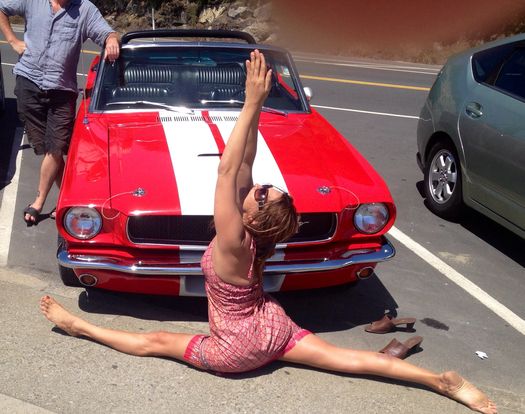
Time is Candy

Superman

By Ed Staskus

   Three hundred and sixty-four days of the year parents tell their children to never take candy from strangers. Then, on the last day of every October they dress those same children up in masks and weird costumes and tell them to go out on the streets at night and either threaten or beg strangers to give them candy.

   Halloween is traditionally a holiday observed on the eve of the Christian feast of All Hallows, or All Saints Day. In the Middle Ages it was believed that restless souls of the recently dead wandered during the year until All Saints Day, when their fate would be decided. All Hallows Eve was their last chance to get revenge on their enemies before entering the next world. Some people, fearing the consequences, would wear masks to disguise themselves.

   It wasn’t until the first decade of the 20th century that Halloween began to be celebrated in the United States and not until the 1930s that children began trick-or-treating. Since then costume parties, haunted house attractions, and watching horror films have also become popular.

   When I was a child Halloween was a special night after a long day filled with anticipation. My brother and sister and our friends and I couldn’t wait for nightfall to head out onto the dark streets and ring as many doorbells as we could.

   On the night of the last Halloween, postponed several days by thunderstorms, my wife and I and a neighbor sat out on our porch, on the top lip of the stairs, on a cold but dry night, with our cauldron of chocolate treats. We long ago learned that anything mostly chocolate was “the good stuff”.

   As we put fun-size Milky Ways and Kit Kats into plastic pumpkins, coffin containers, and grab-and-go pillowcases, we started asking some of the kids in cute spooky super hero disguises coming and going up and down our walk what they liked about Halloween.

   “The most fun is dressing up,” said one girl, dressed as the Material Girl. “I’m an 80s rock star. I love Madonna.”

   We wondered if she wasn’t chilly because of the weather.

   “I’m not cold,” she said. “I’m insulated.”

   One boy was a walking bundle of towels.

   “Some safety pins and a lot of old towels and you’re warm,” he said.

   We asked a puffed-up little boy in white what he was.

   “I’m a cloud!”

   “What is that on your pants?”

   “Lightning!”

   “What are those spots?”

   “Rain!”

   “Is that your mom?”

   “She’s a rainbow. We go together!”

   A girl dressed as a witch said she liked seeing other kids in costumes.

   “It’s a time for them to dress up like they’re not, to just be someone they never could be before.”

   Others take a minimalist approach. When we asked one boy why his friend wasn’t wearing a costume, he said, “See, he’s on his cell phone. He’s not wearing a costume because he’s a businessman.”

   Some children delight in the scary side of Halloween, the ghost stories, monsters, and gory special effects.

   “I like Halloween because it’s fun, “said a boy dressed in a Warrior Wasteland costume. “People scare you a lot. It’s so amazing. I just like the horror of it.”

   Other children take delight in seeing their heroes in the flesh.

   A stocky six-year-old in black pants, a red over-sized jacket, a red hat, and an enormous black mustache told us he was Super Mario.

   “Because I am,” he said. “My happy time, it was when I saw BATMAN! I love Halloween!”

   Another boy dressed as Spiderman said Halloween was fun because “Kids dress up!”

   “I like Spiderman because he’s red and white. If I was Spidey, I would sling my webbing and save all the people.”

   In an MSNBC poll, adults were asked what their favorite part of Halloween was. More than 50 percent said it was seeing little kids dressed in costumes, while just 10 percent said it was eating candy. Our own unscientific poll revealed the exact opposite. Nine out of ten kids told us it was all about the candy.

   “Candy is the best thing that ever happened to me on Halloween,” said someone in KISS regalia

   “It’s my favorite season. You get all the candy. I’m a vampire,” said a girl with bloody fangs.

   “They should have more Halloween weekends, and pass out a lot more candy,” said a boy dressed as a pirate, waving a rubber sword. “I would put it all in my treasure chest.”

   Many children walked the streets in groups, the smaller ones accompanied by their parents. But one teenager rode up alone on a bicycle, wearing a Beavis and Butt-Head latex mask. He jumped off his bike, which clattered to the ground, and ran up our walk. We tossed chocolate bars into his bag, asking him what he liked about Halloween. Sprinting back to his bike, he turned around and shouted,

   “Can’t talk, time is candy.”

   Our chocolate bars moved briskly all night, followed by the lollipops our neighbor had brought.

   “You just wolf down candy bars,” said a girl dressed as Fluff N Stuff, “but you can play with suckers, click them against your teeth.”

   I asked several children what were the least-liked least-desired treats they had gotten. Among the worst offenders were Mary Janes, Necco Wafers, and Christmas ribbon candy.

   “I don’t even know what Mary Janes are,” said a boy dressed as Luigi, in blue overalls, a hat two or three sizes too big, and white gloves.

   “They taste like molasses sawdust.”

   The worst offender, however, turned out to be money. Towards the end of the night, we ran out of candy, and since all we could see on the street were some stragglers, we gathered up our loose change to hand out rather than race to the corner store.

   A small girl dressed as Popstar Keira, with a tiara on her head, came bouncing up the stairs smiling. My wife put some dimes and nickels into her extended hand. The girl looked at the coins and then up at us. She threw the coins down stamped her feet and started crying.

   “I don’t want money! I want candy!”

   She refused to be consoled until we finally found a full-size Hershey bar in our kitchen and brought it out to her.

   After the streets were finally empty and Halloween was over, my wife and I popped a big bowl of popcorn and watched George Romero’s “Night of the Living Dead.” The moon was big and round and the sky clear. The last of the thunderstorms were past.

   When my wife, who had never seen the old black-and-white horror movie, finally realized what the zombies were after, she said, “Oh, man, it’s the undead trick-or-treating.”

Ed Staskus posts on 147 Stanley Street http://www.147stanleystreet.com and Made in Cleveland  http://www.clevelandohiodaybook.com. To get the site’s monthly feature in your in-box click on “Follow.”

Face in the Bunker Gear

bunker-gear-e1530712094879.jpg

By Ed Staskus

Bunker gear is what a firefighter wears, boots pants jacket, and more modern apparatus, like masks and breathing cylinders, to stay safe and be effective when responding to an emergency. It is also called turnout gear, which is what firefighters do, turning out when there’s an alarm. The protective clothing is triple-layered and fire resistant. It is sometimes stowed beside or under a firefighter’s bunk at the station.

It all weighs more than 50 pounds, and that’s before picking up an ax or an extinguisher. Two hundred-some years ago headgear was a felt cap meant to keep water out of your eyes. Today’s helmet, high-peaked with a long rear brim, was first introduced in the 1830s. The New York City luggage maker who designed it was also a volunteer fireman.

Fighting fires means a lot of stepping up and down bending crawling, as well as working with your arms both in front of and over your head. When a firefighter bends at the knee or waist they need added length in their pants and jacket to accommodate their movements. Although bunker gear isn’t necessarily oversized, it’s oversized for mobility’s sake.

When a firefighter is in full bunker gear it’s hard to tell if the reflective-striped all-suited-up hulk pulling hose off a truck is a man or a woman. If it’s the fire chief of North Rustico in the Canadian province of Prince Edward Island doing the work, it’s a woman.

It is Alison Larkin. A member of the town’s fire department since she was 18-years-old, she is in charge of the 30-man-and-woman volunteer company.

Before being appointed fire chief in the spring of 2016, the 28-year-old Ms. Larkin was and remains a full-time paramedic with Island EMS, where she has worked for seven years. But, before becoming a professional lifesaver, after graduating from high school, she had to first apply to the paramedic program at PEI’s Holland College.

She didn’t get in.

“My high school marks were terrible,” she said. “I loved school, all my friends, but I did just enough to pass.”

Regrouping, she took Adult Education classes, upgrading her math, science, and English scores. “I had no problem working on my own,” she said. “Healthcare was something I wanted to do and my best friends weren’t around to influence me about going or not going to class.” In the meantime, she filled out an application and was accepted as a member of the North Rustico Fire Department.

There are more than 125,000 volunteer firefighters across Canada, most of them serving in countryside that can’t afford to staff a full-time career department. Volunteer firefighters date to the year 6 in the city of Rome.

North Rustico is a small town of fewer than 600 year-round residents on the central north shore of the province, on a natural harbor along the Gulf of St. Lawrence. The National Park shoreline is a short walk from the harbor.

Although her family lives in the town of Rusticoville, her hometown is within a few miles driving on rising and falling rural roads of Rustico, Anglo Rustico, and South Rustico, as well as North Rustico. “I pretty much knew everyone in the department from being around here.” She spent her first year learning the ropes.

Alison’s plan was to bring her new marks and newfound experience in the fire department to bear in petitioning for admission to Holland College. “They save some seats in each course for people who have upgraded their marks,” she said. The next year she applied to the paramedic program again.

She didn’t get in.

She went to work at Lorne’s Snack Bar in North Rustico. “I waited tables, cooked, cleaned, everything. They had the best poutine and gravy in town.” Lorne’s was a stone’s throw from the Irving service station owned by her parents. “My dad does all the mechanics at the back and mom manages the front. You see a pretty lady walking around, that’s my mom.”

One day the following year her mother walked over to Lorne’s from the service station and dropped off a letter addressed to her. She slid the poutine she was making to the side. She opened the letter.

“I remember freaking out behind the counter,” she said. Alison Larkin had finally gotten into Holland College.

It’s when first and second chances haven’t played out that the third time’s a charm.

”I’m happy it took that long,” said Alison. “It can be a crazy job, seeing all the stuff you see. I wasn’t mentally prepared for it. How do you help people when you have no life experience?”

When first responders get to where they’re going there’s no waiting. They’re always stepping into something that’s gone wrong. When stepping into the middle of some emergencies they hear see smell things that most people never do, and don’t want to. Their job is to help people, sometimes people whose lives are hanging in the balance.

“It’s stressful, very stressful” said Alison. “I don’t carry a lot of the calls with me. If you hold on to it, get personal with it, you’re never going to last. My brain just lets me do the call and let it go.”

It was after Alison Larkin prevailed and became a paramedic and found work that she was able to stay in the Land of Rustico, stay on the North Rustico Fire Department, and stay on Prince Edward Island. “It’s a beautiful place, a great place to be, but it’s hard to make a living.”

Recent data released by Statistics Canada suggests that PEI natives have been moving to other provinces in search of work at a rate not seen in 30 years. “Five thousand people in Prince Edward Island declare Prince Edward Island as their home, but work in Alberta,” said Workforce and Advanced Learning Minister Richard Brown.

“There‘s not a lot of work here, you can’t make any money,” said Alison “It’s hard to buy farms and lobster gear, it’s so expensive, so finding a good well-paying job was the biggest thing, definitely.”

In the meantime she became more involved with her town’s fire department. “I fell in love with the firefighting side of things, almost changed my career to it.” She trained at the PEI Firefighters School “I loved it, got right into it. I loved hanging around with the guys.” She trained in fire and search simulators, climbed real ladders, and hauled high-pressure hoses. She aced the question and answer test at the end.

The men and women sitting in a fire truck speeding to the scene of a calamity do one of the most physically demanding of all jobs. No emergency call they go on is ever the same, from chain sawing holes in a steep roof ventilating it to dragging someone out of something smoky hot dark on fire to safety.

The first fire Alison Larkin fought was her helping handle a hose cooling off a propane tank that was next to a burning building. “It was a total adrenaline rush. It’s not boring. Every day is different.” It takes steady nerves. Half-hour bottles of air can empty fast if you lose your composure.

“Not every woman can do it, but not every man can do it, either,” said Alison. “There are definitely people who are built for it, man or woman. It’s hard, but I can do it. I’ve only ever been pushed further by the guys.”

The first female firefighter, a young slave from New York City, was Molly Williams, described in 1815 “as good a fire laddie as many of the boys.” When Emma Vernell’s husband died in the line of duty in the 1920s, she took his place on Westside Hose Company #1, becoming the first firewoman officially recognized by New Jersey.

The first female career firefighter was hired by the Arlington County Fire Department in Virginia in 1973. By the middle of the 1980s about 1% of all firefighters were women. Today more than 3% of them are women. On Prince Edward Island 65 of the approximately 1,000 firefighters are female, twice the national average. In 2016 Toronto Fire Services, the largest Canadian municipal fire department, made history when its top three graduates were women.

Alison Larkin made history when she was appointed fire chief.

“The job came up, so I put my name in,” she said. The chief who was stepping down recommended the stepping-stone of standing for deputy chief. “Why don’t you go for chief,” some of the members suggested. “If you’re going to help me, if I have your support, I will do it,” she said. The members voted her in and at a Committee of Council Meeting the town confirmed her appointment.

“The opportunity came up and I just took it.”

She is the first woman on Prince Edward Island to hold the post and one of only three women in the Maritimes who are fire chiefs. Making history is being who you are, not being your past history, not letting anything in your past keep you from doing something in the present.

“A woman fire chief fifty years ago? No, definitely not, but there are now,” said Alison. “I don’t know what changed. Maybe women decided, yeah, we can do it, and men decided, yeah, women can do it. Back then it would have been crazy. I think the culture has changed.”

Jane Ledwell of PEI’s Advisory Council on the Status of Women agrees, adding that Alsion Larkin is a “terrific role model. We are so thrilled to see she has been named PEI’s first female fire chief.”

After finishing her paramedic courses and finding work with Island EMS, Alison went back to PEI Firefighters School for more training. She is the first woman in the province to gain Level II accreditation and the next year was sought out to become a part-time instructor. “They really built up my confidence. I never thought I’d be teaching there.”

The North Rustico Fire Department is an all-volunteer force. Nobody gets paid, “I know a lot of people can’t understand that, but what we do we do for this community,” said Alison. Not everything that counts is just counting what’s in your wallet.

“We get calls to people’s homes on their worst day. That’s what we’re there for, to turn a bad situation into something manageable, try to make them feel a little bit better. The most rewarding part of the job is when someone thanks us, says we turned their crisis into not a crisis.”

The new fire chief has put a new emphasis on training. ”It’s a big thing. We’re always working on that.” The department meets every Tuesday night. One Tuesday is maintenance night on the rescue vehicle, the tanker truck, and the two fire trucks. Two of the Tuesday nights are devoted to training.

“It was more known as a boy’s club long ago, you come and hang out, when really now it’s more geared toward training, and doing a lot of work and making sure everyone knows what’s going on and what they’re doing.”

Safety is the cornerstone of firefighting. Although firefighters die at a rate barely greater than the rate for cashiers, when trouble comes it’s not a dollar bill paper cut, it’s a chain saw gone haywire. At the end of the day training is what keeps you from putting your life on the line. “You never want to put people into situations you feel they’re not trained for,” said Alison.

Just like cauliflower is just cabbage with a higher education, firefighters are just men and women who put their bunker pants on one leg at a time, except that before they’re even in their gear they know what to do next. Practice may not make perfect, but it makes getting it wrong less likely.

At the North Rustico fire station the department’s emphasis on training has gone the extra mile, extending to family pets. Atlantic Vet College recently schooled the members on animal first aid and rescue, reviewing facets from cardiac arrest to breathing distress.

One of the firefighters volunteered his unsuspecting dog as a guinea pig. “We found out how much oxygen we needed to turn the masks on to, what flow rate for what animal,” said Alison “They gave us pointers in how to go up to a scared dog or cat and get them to come to us.”

Besides getting everyone’s training up to speed, getting to where they have to go in a timely fashion is another goal she has set. “Our old trucks are just old. It’s time for new ones. After 25 years you need to upgrade your equipment.” Like roads and bridges, trucks don’t upgrade themselves. It takes someone to make it happen.

Although firefighters are faceless in their bunker suits and breathing masks, when Allison Larkin is off the truck and back at the North Rustico station after an emergency call, stripping off her gear, helmet pants jacket boots, there‘s no mistaking who she is.

She’s the firefighter with her toenails painted purple.

Ed Staskus posts stories on 147 Stanley Street http://www.147stanleystreet.com and Cleveland Ohio Daybook http://www.clevelandohiodaybook.com. To get the site’s monthly feature in your in-box click on “Follow.”

Lord of the Fishes

By Ed Staskus

The  North Rustico beach slivers itself at the mouth of the harbor of the town, on Prince Edward Island, Canada’s smallest province. The crescent shaped island is tucked into the shoulders of New Brunswick and Nova Scotia, across the Northumberland Strait. On the far side of the Gulf of St. Lawrence is Newfoundland. Europe is the farther landfall across the Atlantic Ocean.

North Rustico is on the north-central coast, on Route 6, between Cavendish and Rusticoville. Some of it can be seen from the deck of Pedro’s Eatery, where Route 6 dips and curves through the middle of town, the market and gas station, the bakery and the credit union, the lobster restaurant and the post office. The rest of it is within a few minutes, down the harbor road and up some side roads.

It’s all within easy sight of the flocks of seagulls who fly up and down the coast.

Frank and Vera Glass, staying at the Coastline Cottages just outside of town, drove the mile-or-so from their cottage along the parkway, past Rollings Pond to the parking lot at the back of the beach, where a creek empties, up the dirt road to the other lot, parked in front of a sign saying the beach was unattended by life guards, walked up and then down the path to the beach, and made fast at a nice spot on the sand not far from the shoreline.

It was sunny and fair, the sun behind them, as they unfolded their low-slung blue canvas chairs, plopping into them, pulling books from their Pedro, a yellow and black re-purposed bicycle messenger bag.

Vera was reading an autobiography of Agnes de Mille.

Frank was reading “The Durrels of Corfu.” He interrupted Vera every few minutes with something funny he had just read. Vera thought, you’re slowing me down, dude, even though she was a slow reader, anyway.

“Did you see that sign?” she asked Frank.

“No, what sign?”

“The sign beside the lifeguard cabana, the one that said, ‘Caution! Attention!’”

“There are no lifeguards, not until next week,” said Frank. “I saw that sign when we parked.”

“It’s the North Rustico Beach welcome sign, the big red and white sign when you walk onto the beach, the one that says rip currents, strong offshore winds, beware of large surf, and don’t use inflatables.”

Frank looked out at the flat quiet water, the spaghetti surf, and the wide sky dotted with puffy clouds standing still.

“No, I didn’t see that sign,” he said. “Anyway, it seems beside the point today.”

“It does, doesn’t it,” said Vera, smiling at her husband.

They read their books, watched couples walking by barefoot, children running, and a head down in a cell phone shuffling past. A family set up camp nearby, Vera took a nap, and Frank rolled out of his canvas chair and practiced a half-hour of yoga on the warm sand. He didn’t have a mat, but it didn’t matter. He turned and pulled and released and twisted one way and the other.

When he was done he rolled back into his low-slung chair.

“That felt good,” he said.

“I’m glad, honey,” said Vera. “What was that last thing you did, the twisty thing? I haven’t seen you do that before.”

“It’s called Lord of the Fishes,” he said. “It’s supposed to be good for your lower back.”

Vera didn’t do yoga in any of its forms, although she was glad Frank did. He had a bum back and the exercises kept him on his feet. The thinking behind the practice – Frank liked to call it that – also seemed to be good for him, keeping him on the tried and true straight and narrow.

“Do you remember the last time we had dinner with Barron at Herb’s Tavern, and he spent coffee and dessert railing about how steady as it goes has gone big top high wire?” Frank asked Vera.

“Yes, I do,” said Vera, remembering the carrot cake she had not been able to fully enjoy.

Barron Cannon owned and operated and taught at a small yoga studio near where Frank and Vera lived in Lakewood, Ohio, an inner ring suburb on the shores of Lake Erie, west of Cleveland. He was between young and middle-aged, married but divorced – what woman could stand living with him, Vera wondered – a post-modern sensibility with a PhD in philosophy, but a yoga traditionalist. He taught the exercise poses, but always in the context of the other arms of yoga, which he considered the essential parts of the practice.

Whenever he was in high dudgeon he complained about the 21st century western emphasis on the physical aspects of yoga.

“Everywhere you go, everywhere you look, it’s asana on the mat, in a hot room, an hour of hard work and it’s back to whatever else you are up to. When did yoga become work hard, no pain, no gain? When did it become just another something on the checklist, getting fit, staying ahead? When did it become competitive, a race to the finish, another rat bastard in the rat race?”

Barron was Frank’s friend. Vera tolerated him for her husband’s sake. She didn’t dislike Barron, but she disliked it when he said things like, “Nobody worth their salt is nice.”

“I was going to tell Barron about Eric Young, mention his ideas, but I didn’t,” said Frank. “We would never have gotten out of Herb’s, at least not until after closing time, if then.”

“Who’s Eric Young?” asked Vera.

“A Baltimore guy, a lot like Barron in some respects, teaches some yoga, aerial style, a big fan of the Baltimore Orioles, which is too bad,” said Frank.

“Why were you going to bring him up to Barron?” asked Vera.

“Because he’s on the other side of the teeter totter,” said Frank.

“What’s too bad about the Orioles?”

“You don’t want to know.”

“Competitive yoga started in India, not the west, but that’s a minor detail,” said Eric. “I am curious, though, at the idea of the physical becoming the more dominant focus, and so many people feel the need to tell other people that’s not yoga when there is no agreed upon definition. If we are all properly practicing an inward journey, shouldn’t that remove the need to be concerned what others do and what they call or label the activity in which they are doing it?”

“That makes sense to me,” said Vera.

“There’s more,” said Frank.

“Setting aside the definitions of yoke and some of the more deeper translations and interpretations of yoga from the Upanishads, the Bhagavad Gita, and setting aside the atman and seer ideas, for the average practitioner they will have no understanding, or care to,” said Eric.

“In my yoga teacher training class, I would say half had no idea there was anything beyond the physical. To many, yoga is a down dog, a bird of paradise, with a glass of wine after, and for some, a puppy or a baby goat wandering by. I say more power to them, for at least two reasons. First, if they are truly in the present, they are doing a lot of the work, even if not labeled as such, and if they do it enough, the work will pay off one way or another. Second, if I am doing my yoga, in whatever form that means to me, then I should not be bothered one way or another. As no one owns the term and there are so many different facets, it’s arrogant for me to say you’re wrong.”

“I’m not sure Barron would be good with that,” said Vera.

“You know how Barron is. He would have plenty to say,” said Frank.

“I will concede if your business is teaching, and I set up shop next door spouting I know as much and am as good a teacher, which I don’t and am not, you have every right to be bothered by this, but that’s business, not yoga,” said Eric. “I don’t think the gurus of yore were bothered by what another one did on the other side of the country. But for those who say because it’s not four thousand years old, only two hundred years, and it’s not authentic, I call that bullshit.”

“He speaks his mind,” said Vera.

“There is wisdom and there is gray hair,” said Eric.

“I wouldn’t put Eric and Barron in the same room,” said Vera.

“I don’t know about that,” said Frank. “They’re both on the same yoga planet.”

“What planet are you on?”

“What do you mean?”

“I mean, don’t put them in the same room, for God’s sake. They may be on the same planet, but they’re not coming from the same place. That would be a head-on collision.”

Vera and Frank heard a sudden loud squarking from the shoreline, and when they looked towards the sound, they saw a herring gull dragging a rock crab out of the surf. The crab latched onto the bird with large claw, swinging side-to-side as the seagull flapped up. The bird shook the crab off, dropping it into the surf, and going after it again, pecking and pecking. When the seagull dragged the crab out of the water it began to slash at it, killing it, if the crustacean wasn’t already dead, pulling it landwards whenever the surf rolled it back towards the ocean.

“I thought their shells protected them from birds,” said Frank.

“Maybe the shell was cracked already,” said Vera.

“One of the guys at the harbor told me that gulls will pick up shellfish, fly them up in the air, and drop them on rocks so their shells crack when they land.”

“I didn’t know seagulls had it in their pea brains to be able to think that out,” said Vera.

“It’s a dog eat dog world,” said Frank. “Seagulls are intelligent. They can unlock trash bins. They’re omnivores and they’ll eat anything. I read about a black-backed gull down on Cape Cod that snatched up a miniature chihuahua, right off the beach, and the dog has not been seen since.”

They watched the seagull rip legs off and pull goopy innards out of the crab, until there wasn’t anymore left to be had. The big white and gray bird arched its neck, cawed several times, and flew away. The remains of the crab slowly but surely rolled back into the ocean.

“What time does Doiron’s close?” asked Vera.

“Six,” said Frank.

“What time is it now?”

Frank looked at his iPhone.

“Quarter of six,” he said.

“Drive me over me there” said Vera. “You can drop me of and I’ll walk back to the cottage.”

“All right, maybe I’ll drive up the parkway, go for a walk around Orby Head, and we can meet back at the cottage,” said Frank.

He dropped his wife off at the fish market.

Doiron Fisheries is on the wharf on Harbourview Drive. It’s been there since the 1950s.  It’s a small storefront with a big sign over the door, a long shallow front room chock full of haddock, hake, halibut, salmon, mackerel, oysters, mussels, scallops, and cooked crab.

Frank drove up Church Hill Road, past the Stella Maris church and the graveyard, and down to the National Park kiosk. They had a seasonal pass attached to the stem of the rear view mirror of their Hyundai Tucson, and when the attendant in the kiosk glanced up and waved him through, Frank swung the car to the left up the hill into the seashore park.

He had once stopped and asked the teenager in a National Parks shirt behind the drive-through window, “What do you call this building?”

“We call it the gate,” she said.

“The gate?”

“That’s it, yup, the gate.”

Frank drove past Doyle’s Cove and the Coastline Cottages. The cottages are in the Prince Edward Island National Park, but aren’t a part of the park. The Doyle’s kept their land, in the family for a dog’s age, not selling it to Canada when the park was established. There are a handful of their houses, one nearly a hundred years old, another one newly built last year, within sight. They are the only homes in sight.

He drove the two miles-or-so up the Gulf Shore Way, pulled off the road at Orby Head, and went for a walk along the red sandstone cliff. He lay down face forward on the other side of the rope fence and looked down at the waves churning and breaking on the narrow rocky landing far below.

A group of cormorants in a v formation flew past, nearly at eye level. He closed his eyes and breathed evenly for a few minutes. He heard a car pull in, its tires crunching on the gravel. He opened his eyes, got up, and walked back to his car.

When he stepped into the cottage the lowering sun was lighting up the kitchen window, and Vera was at the stove.

“What are you making for dinner?” he asked.

“Crab cakes,” she said.

Ed Staskus posts stories on 147 Stanley Street http://www.147stanleystreet.com and Cleveland Ohio Daybook http://www.clevelandohiodaybook.com. To get the site’s monthly feature in your in-box click on “Follow.”
Opening Act

maxresdefault

By Ed Staskus

Before they turned the Victoria Hall into the Victoria Playhouse, and before they spent the next thirty years transforming the theater into ‘PEI’s Longest Running Little Theatre’, Erskine and Pat Smith bought a house in Victoria. The house, in which Pat Smith lives to this day, had bathrooms, running water, and electricity.

Their house in Point Deroche, where they had been living for three years, had no bathroom, no running water, and no electricity.

Victoria is a village on a sheltered harbor on the south shore of Canada’s Prince Edward Island. It is an arts community of family-run businesses. The year-round population is just a few heads above a hundred. Point Deroche is a pocket-sized community on the north shore. There are some summer cottages and a quiet gulf-side beach.

No one knows exactly how many people live in Point Deroche.

“Erskine and I homesteaded there,” said Pat. “We lived in a house that had been built in one day.”

Reggie and Annie McInnis, a brother and sister whose home burned down, built the emergency house in Point Deroche. “They were subsistence farmers. They had no money. They were poor people, but kind and generous.”

The McInnis’s gathered driftwood, had it milled, and cobbled the house together. They nailed the roof down when the sun was shining. It served as shelter against a rainy day.

“It was unfinished on the inside,” said Pat. “You could see all the wormholes from the sea worms that had eaten into the wood.” As small as the house was, there were three rooms and two more upstairs. There was a well and the Smiths built an outhouse.

“Erskine hauled in a Silver Moon wood cook stove.” In the wintertime the stove never went cold. “That’s how we heated the house.”

Erskine Noble Smith, a native PEI-man, lived the length and breadth of Canada. His father was in the Armed Forces and was routinely transferred from base to base. Military brats are time and again drawn to the stage because they’ve learned how to make a fast impression at the drop of a hat.

Pat Stunden Smith moved to Prince Edward Island from Montreal to work at the Confederation Centre in Charlottetown, the provincial capital. “I applied to work in the art gallery, but ended up as a tour guide,” she said.

After graduating from university she applied again and was accepted as an assistant curator. She worked at the gallery for several years.

“Then I got itchy feet.”

She traveled, lived in Toronto, and returned to Prince Edward Island. She enrolled at Holland College School of Visual Arts and trained in weaving and silver work. Erskine Smith met his wife-to-be the one and only time she ever appeared on stage.

“I had just moved back to the island, and I thought I needed to meet people, so I joined the Drama Club. I never wanted to be on stage after my first show, which was Brigadoon, but Erskine was in the audience, and we met at a party afterwards.”

Brigadoon is a musical about a mysterious village that appears out of thin air only one day once every one hundred years, and where a man and woman stumble onto each other and fall in love.

“There’s a nice little house in Victoria for sale,” Erskine said to his wife one night after work. He was working in children’s theater, lunchtime performances, and cadging shows around the island. He had taken on the role of Ronald McDonald, as well, becoming the jump suited big shoe big heart clown character for the whole of the Atlantic Canada region.

“He went to every parade and every hospital for seven years,” said Pat. “Kids loved him and he loved kids. He could just touch people. He had children die in his arms.”

The next day the family drove the family car through the heart of the crescent-shaped island to Victoria.

“After my daughter Emily turned three, and I got pregnant with my son Jonathan, no running water became an issue. We were young, but I was tired of washing diapers by hand, and my parents were desperate to help us find another house.”

The Smith family looked at, walked through, and ran the taps in the house. “Yeah, this is a good move for us,” they all agreed.

Victoria is a handful of blocks one way and a handful of blocks the other way. The Victoria Hall, built by a local carpenter between 1912 and 1914, was built at the exact center of the village. It is a wood shingled building with a gambrel roof. For more than seventy years it was where lobster suppers, quilting bees, and community council meetings were held.

It was home to the Red Cross and the Women’s Institute.

“The identity of Victoria is in the buildings that have been here for generations,” said Stephen Hunter, for many years the chef and owner of the Victoria Village Inn.

But, the Trans Canada Highway bypassed Victoria in the 1960s and many businesses left. The village declined as people moved in search of work. “It went into a lull for about two decades,” said Henry Dunsmore, owner of the Studio Gallery.

“When we moved here the hall was a community hall, but it wasn’t being used by the community,” said Pat. “It was empty.” Except for the New York City performing arts troupe that came some summers and put on shows.

“The village loved them, but they left a mess. They were kids, renting an old house, and living the life of Riley, although they had nothing. They raided the Women’s Institute room in the hall and took everything, dishes, silverware.”

While Erskine Smith tromped up and down the Maritimes in his red oversized Ronald McDonald shoes, Pat Smith started up a kindergarten, which she soon moved into the basement of the Victoria Hall.

“Don’t quit your day job,” play-actors are often warned. Pat went on to teach kindergarten for fifteen years. Since so many entertainers are the voices of cartoon characters on TV and in the movies, her classroom might have been a kind of informal inadvertent in-house training ground.

One day in 1981 Frieda and Loren McLelland, who owned a craft shop in the village, visited the Smiths. “Is there any way you could get the theatre going again?” they asked. “It would be good for the community.”

“It hadn’t occurred to us,” said Pat.

“Yeah, I think we can do it,” said Erskine.

“Actor people, do we want any of them?” asked the community council cross-examining the proposal.

“It wasn’t all easy sailing. What made the difference was that we were living in the community,” said Pat. “If they weren’t happy they knew where we lived.”

Where they lived was a few minutes walk from the Victoria Hall.

Erskine Smith recruited himself as actor and Artistic Director. “He looked after everything that happened on stage. Storytelling was who he was.” Charlene McLean and Bill McFadden came on board. Pat Smith became the General Manager, running the box office, searching for funding, writing press releases and programs, and everything else. “It’s a small community theatre. When things need to get done everybody needs to be on board 100%.”

They strategized, developed a mission statement, and opened a bank account. They recruited a Board of Directors.

Then they took a close look at the hall.

“It looked completely different,” said Pat.

The stage was painted black. The Women’s Institute had been using the stage for their suppers. The walls were painted, too, and the ceiling was false. “They had an oil furnace up in what is now our parts room and they pumped the heat down through the ceiling. We took that false ceiling out.“

The seats were hardwood pressed-back chairs. They were attached to two-by-fours because the floor was raked. The back legs of all 153 seats had been sawed down three inches and bolted to the two-by-fours. “The back legs had to be shorter so the seats would be level,” said Pat.

“We had a fund-raiser and auctioned off those chairs. I don’t know where, but they all actually went.”

The theater lacked a proscenium, which is the arch that frames the stage. It is the metaphorical fourth wall, a kind of window around the set. They are helpful to actors because on the other side they can pretend to not hear what the audience is saying, or not saying. It helps the company to mind their own business.

The proscenium was fashioned by chain saw and grinder. David Bennett, a set designer, did the job on his own after everyone else had gone home. “He was a creative guy. He marked the pine boards with a magic marker, did the initial cuts with a chain saw, and then used a small grinder,” said Pat.

“Everybody pitched in to make sure things worked.”

They tracked summer sunset times to make sure they knew when the theater’s windows could be opened during a performance. “We didn’t get air conditioning until 2004,” said Pat. “The windows were darkened and as soon as it got dark outside we would open them so there would be a cross draft in the auditorium.”

The Victoria Playhouse mounted its first show the summer of 1982. “All there was on the island at that time was the Confederation Centre of the Arts in Charlottetown, and then we did what we needed to do and there was the Victoria. It was a very different landscape back then.”

Opening nights only happen once. After all the preparations and rehearsals you’re on your own. The lights go down and the curtain goes up. It helps, however, that opening night is for your friends and community. There were just enough seats in the new theater for them.

The Victoria Playhouse’s first season ran two months. It featured three plays running in repertory. The plays were Dear Liar, The Belle of Amherst, and The Owl and the Pussycat. “The Owl and the Pussycat want to get married – but they’re in the middle of the sea! They reach the land where the Bong Trees grow, and alight to find a vicar and a ring.”

Everybody was on board and everybody was all in. Everything came alive. Pat and Erskine Smith pulled it off.

Theatergoers go to plays because they want to have a great time at the theater. The best show halls, like the Victoria Playhouse, are more like verbs than they are nouns. It’s an event as much as it’s a place. It’s where the drama comedy musical happens, bold funny truthful. You can’t bail out of a story once it’s gotten going, even though most shows at small theaters are just a few characters in a room living it up.

What happens in a lifetime can sometimes be random and disordered. The walk of life is learning about the going by going. In performance on stage the story about what’s happened is put into order and fleshed out. When the season ended Erskine Smith went to work reading plays for the next season, which in time came to mean eighty performances seven days a week all summer long. He continued to do so for thirty years until his untimely death in 2013.

“Erskine was a real storyteller,” said Pat. “Oh, yeah, he loved stories. As long as I knew him, we would go to parties and all of a sudden everyone’s in the kitchen and there’s Erskine telling stories.”

Erskine Smith was the glow in the kitchen, the man in the smoke of the campfire, the storyteller who loved the stage. Pat Smith made sure the nuts and bolts were in all the right places. Today their son and daughter, Jonathan, set carpenter and scenic painter, and Emily, Assistant General Manager, spend the off-season on Prince Edward Island getting ready for the next season.

Standing in the wings Erskine Noble Smith would be happy to see who’s working in the wings. 

Ed Staskus posts stories on 147 Stanley Street http://www.147stanleystreet.com and Cleveland Ohio Daybook http://www.clevelandohiodaybook.com. To get the site’s monthly feature in your in-box click on “Follow.”

The Laughing Yogi

By Ed Staskus

“I am thankful for laughter, except when milk comes out of my nose.”Woody Allen

Yoga is a dead serious body mind spirit rubber mat hits the road adventure.

It is a rigorous undertaking when you are trying and trying to get asana poses just right, much less trying and trying to achieve the higher state of being and thought the practice aims at. Meditation and its hardball goal of spiritual insight is a life-long commitment, not just the old college try. The concentration and stern self-discipline needed to get to moksha are no laughing matter.

Or is it really all that long-faced?

Since the mid-90s a practice called Laughter Yoga has gainsaid the notion that yoga is cold sober no-nonsense by the book, and humorless. The brainchild of Dr. Madan Kataria, an Indian doctor now informally known as the ‘Laughter Guru’, it is premised on the idea that laughing is good for you.

Their motto is a few ha ha ha’s are a boon boon boon.

What did the yoga mat say to the yoga student? I will catch you if you fall.

It’s long been said that laughter is the best medicine. It strengthens immune systems, boosts energy levels, and protects from the damaging effects of stress. Laughing enhances blood flow, which is a factor in cardiovascular health. It releases endorphins, which are the body’s natural feel-good chemicals.

“Laughter is the tonic, the relief, the surcease for pain,” said Charlie Chaplin.

It’s priceless and it’s free, too.

Not only that, no matter whether it is real or feigned, it works, although, if you’re laughing for no reason at all, you might need either counseling or medicine.

“The mind does not know that we’re faking it,” explained Mary Wilson, a news reporter for ABC/Fox in New York who practices yuks on the mat. Dr. Kataria based his brainstorm on the concept that canned laughter yields the same results as spontaneous laughter.

“In Laughter Yoga there is no need to wait until something funny happens. You can laugh intentionally whenever you want,” said Dr. Kataria.

When it’s real it’s even better, as any belly laugh will testify. A new study at Loma Linda University demonstrated that adults shown a funny 20-minute video scored better on short-term memory tests than a control group. Their levels of cortisol, a stress hormone, were also significantly decreased.

“Learning ability and delayed recall become more challenging as we age,” said Dr. Gurindor Bains, the Ph.D candidate in Rehabilitation Sciences who led the study. “Laughing with friends or even watching 20 minutes of humor on TV, as I do daily, helps me cope with my daily stressors.”

A rose is a rose is a rose, Gertrude Stein famously observed, but when is a yoga studio not a yoga studio not a yoga studio, even though tens of thousands of people have taken classes there. That would be a Laughter Yoga studio, which is usually in a park or on a beach.

The American School of Laughter Yoga promotes Laughter Clubs that are free and open to the public. “Thousands around the world volunteer their time to make them happen, freely and unconditionally, from the heart as an act of service.”

Laughter Yoga is practiced in more than 8,000 clubs and in more than 65 countries. “Laughter is the tool. Yoga is the end,” said Sebastien Gendry of the American School of Laughter.

Some people crack a yoga joke and everyone laughs. But, some people make a joke of yoga and laugh all the way to the bank, with wads of other people’s money.

Bikram Choudhury of eponymous Bikram Yoga fame was having lunch with friends when a cell phone on the table rang. He answered and put it on speaker.

Bikram: “Hello!”

Woman: “Hi Honey, it’s me. Are you having lunch?”

Bikram: “Yes.”

Woman: “I’m at the shops now and found this beautiful mink coat. It’s only $9,000. Is it OK if I buy it?”

Bikram: “Sure, go ahead if you like it that much.”

Woman: “I stopped at the Lexus dealership, too, and looked at the new models. I saw one I really liked.”

Bikram: “How much?”

“$120,000.”

Bikram: “OK, but for that price make sure you get it with all the options.”

Woman: “Great! I was just talking to Janie and found out that house I wanted last year is back on the market. They’re asking four-and-a-half million for it.”

Bikram: “Well, go ahead and make an offer of four million. They’ll probably take it. If not, you can go the extra half-mil if that’s what you really want.”

Woman: “Oh, thank you! I’ll see you later! I love you so much!”

Bikram: “Bye! I love you, too.”

He hung up.

Everyone at the table was staring at him in wonder and astonishment at his generosity.

Bikram turned and asked, “Anyone know whose phone this is?”

Sometimes yoga is said to cure everything except the common cold.

Bikram Yoga claims that 30 days of his hot yoga will transform anyone, making them strong and buff, and those who say during steam class “Please, kill me now” have got it all wrong.

Laughter Yoga says a week without laughter will make a man weak.

“This stuff really works!” said Harry Hamlin, at the far end of hunkdom, about Laughter Yoga after high-stepping the cha-cha-cha on ‘Dancing with the Stars’.

Others, like John Friend, the former founder and former chief guru of the former Anusara Yoga, think they’re laughing all the way to the bank until they find out what’s in their wallet is all a can of worms.

John Friend was praying to Krishna.

“Krishna,” he said, “I would like to ask you a question.”

Krishna responded, “No problem. Go ahead.”

“Krishna, is it true that a million years to you is but a second?”

“Yes, that is true.”

“Well, then, what is a million dollars to you?”

“A million dollars to me is but a penny.”

“Ah, then, Krishna,” said John Friend, “may I have a penny?”

“Sure,” said Krishna. “Just a second.”

The laughter of the gods is sometimes the upshot of setting yourself up as the arbiter of your own schemes. Some people say laughter is God’s blessing. Or, conversely, as Lord Byron put it, “Nothing can confound a wise man more than laughter from a dunce.”

Still others, like Jeff Briar, the founder of the Laughter Yoga Institute, laugh daily in their yoga practice for the fun and friendship of it. A professional comedic actor for more than 30 years, Mr. Briar is a certified Laughter Yoga Teacher and in 2006 was appointed by Dr. Kataria as an International Laughter Ambassador. He has published manuals, written books, and shot videos, including ‘Gibberish Sets You Free! Five Films on the Power of Talking Nonsense’.

Comedians often have the gift of shtick, but Laughter Yoga posits chuckles and chakras as the joy cocktail, and a great workout, too. “We laugh as a form of exercise,” said Mr. Briar. Want a toned tummy? Stomach muscles expand and contract when you laugh. A night at the comedy club can start you on the way to a rack of six-pack abs.

“Start laughing for no reason and watch yourself feel better,” said Mr. Briar on the Oprah Winfrey Show. “Laughter relieves all the negative effects of stress.”

What did the meditating yogi say to the other meditating yogi? Are you not thinking what I’m not thinking?

Ha ha ha…

What did the breathless yogi say to his yoga teacher? It turns out I’ve been inhaling when I should be exhaling and exhaling when I should be inhaling.

Ha ha ha…

What did the cat say to the other cat while watching their pet owners practice yoga? Who knows how many years of yoga and they still can’t lick their own butts.

Ha ha ha…

What did the man say to his friend about going to yoga class? Nah, I’m down, dog.

Ha ha ha…

What ran through the mind of the young yogi in Warrior Pose? Am I doing this right? Am I doing anything right? What is my life’s purpose? Am I happy? What do I want? Should I get chips for dinner? Is everyone looking at me? Do my boobs look weird in this top?

Ha ha ha…

Standing on one leg in yoga class doesn’t make you a yogi any more than standing in a garage makes you a car.

That’s not a joke.

T cells are white blood cells that fight infections and are the mechanism essential for human immunity. When you laugh you activate T cells, getting them on the go from where they are stored in the lymph system. Biophysical research has demonstrated that belly laughing generates a negative pressure in the body that increases the speed and flow of lymph up to 15 times the normal rate.

“Believe it or not, a hearty chuckle can help,” said Dr. Andrea Nelson of the University of Leeds. “This is because laughing gets the diaphragm moving and this plays a vital role in moving blood around the body.” She stopped short of saying take two aspirins and go watch an Adam Sandler movie.

A woman reported her husband’s disappearance to the police. They asked for a description and she said, “He takes an Ashtanga Yoga class every day, he’s toned, tall, amazingly energetic, with thick curly hair.”

Her friend said, “What are you talking about? Your husband is five-foot-four, bald, lazy, and has a big belly.”

The woman said, “Who wants that one back?”

A good sense of humor won’t cure everything that ails you, but giggles and guffaws are a great RX, nevertheless. “Laughter can stimulate circulation and aid muscle relaxation,” says the Mayo Clinic. “A laugh fires you up and can increase your heart rate and blood pressure. The result? A good relaxed feeling.”

Laughter activates the body’s relaxation response. You forget your troubles when you’re laughing. “People who are laughing report being less bothered by the pain they do experience,” according to the Chopra Center.

Yoga is an eight-fold path to wonder. Maybe watching reruns of ‘The Wonder Years’ should be part of the eight-fold path.

There are many different ways of going on the long strange winding road trip of yoga. Although it’s probably true no one can change their destination, everyone can change their way of travel. “It is a direction, not a destination,” said Carl Rogers, a founder of  humanism in psychology practice.

Getting there can be Sturm und Drang. Getting there can be a hoot. Getting there can be gotten to on foot, in a shiny new SUV, or on the Furthur bus.

No one wants to die, but everyone wants to go to heaven. The psychedelic painted school bus Ken Kesey and the Merry Pranksters called Furthur, painted in laugh-out-loud splashes, would be as good a way to go as any other.

A man arrives at the gates of heaven.

St. Peter asks, “Religion?”

The man says, “Methodist.”

St. Peter looks down his list, and says, “Go to room twenty-eight, but be very quiet as you pass room eight.”

Another man arrives at the gates of heaven. “Religion?”

“Baptist.”

“Go to room eighteen, but be very quiet as you pass room eight.”

A third man arrives at the gates. “Religion?”

“Jewish.”

“Go to room eleven, but be very quiet as you pass room eight.”

The man says, “I can understand there being different rooms for different religions, but why must I be quiet when I pass room eight?”

St. Peter says, “The yogis are in room eight and they think they’re the only ones here.”

Everyone next in line had to wait a minute from here to eternity while St. Peter rolled around the pearly gates in paroxysms of laughter.

A version of this story appeared in Rebelle Society.

Ed Staskus posts stories on 147 Stanley Street http://www.147stanleystreet.com and Cleveland Ohio Daybook http://www.clevelandohiodaybook.com. To get the site’s monthly feature in your in-box click on “Follow.”

Swept Away

By Ed Staskus

   Jimmy LaPlante’s neighbors either didn’t know a thing about him or thought he was R. B. Bennett’s double with a nice dog. Since they hardly ever saw Jimmy, they knew for sure he was a recluse. The dog was a Labrador Retriever, young and friendly, ready and able to chase any stick thrown by anybody into the bay. Jimmy didn’t especially like dogs, but he had gotten the black puppy last fall to keep him company and be a first alarm. He wasn’t worried about his neighbors. He was worried about Montreal. He was from Quebec but had lived on St Peter’s Bay the past eleven years, He kept himself to himself for good reason. The reason was Montreal.

   Nobody on Prince Edward Island knew anything about him except his dog and his niece. Now it was only the dog. He had made sure Montreal didn’t know where he was. He had made absolutely sure of it. He was sure they still didn’t know. He was careful talking to them on the pay phone outside the fish and chip shop down the street, never talking for long, always cutting it short. He knew they knew how to trace calls.

   He hadn’t been especially close to his niece, but he didn’t like it when he read in a newspaper that she was dead. At least he now knew something. Until then all he had known was that Becky was gone. She had been found buried in a potato field up around Rustico. What was she doing there? The cops weren’t saying much. The newspapers weren’t reporting much of what they didn’t want to say.

   What the hell happened? She had delivered the hundred grand of good cash from Montreal and long since was supposed to have delivered the two million dollars of bad cash to them, although he knew all winter long she hadn’t. He wasn’t returning his hundred grand, though. He told Montreal that and told them to find the girl themselves. He had done his part. When they found her, they would find their money, he said. They didn’t like it and told him so. He told them to drop dead and hung up. He knew it was the wrong thing to say, but what could he say? 

   He knew somebody would be showing up soon enough, looking for him and their money. The newspapers said Becky had been found with a briefcase but no identification. It didn’t say anything about what was in the briefcase. He knew without thinking about it that it had been empty just like he knew from now on he was going to have to be very careful. That’s the way the Quebecois men were. He didn’t think they would find him but started sleeping with his dog at the foot of the bed and a Colt .38 Super under his pillow.

   Jimmy was 16 years old when he made his first counterfeit bill. By his late teens he was making fake one hundred dollar bills that his friends spent everywhere without any of them bouncing. By his early 20s he was flooding the market with so many of the fakes that many businesses stopped accepting them. The Bank of Canada was forced to change the design to put their currency back on the right track.

   He got good at reproducing security holograms on banknotes and earned the nickname of “Hologram Tom.” His middle name was Tom. When he took a break from forgery, he took up impersonation. He masqueraded as a pilot for Air Canada so he could fly on courtesy passes. Over the next five years he pretended to be a doctor and a lawyer, among other things. One man died and another man was disbarred, but Jimmy left his mistakes behind him. He moved on to bank checks. In the end he went back to hard cash. It was what he knew best.

   What had happened to his niece? It had to be something to do with that biker boyfriend of hers, who he disliked and distrusted the minute he saw him and whose name he never was able to remember. He thought he was probably an islander, although he wasn’t sure. He didn’t know where he lived, but guessed it had to be Summerside or Charlottetown. He didn’t even know what kind of motorcycle the boyfriend rode, although he knew it was red.

   If push came to shove, he might tell the men from Montreal what he knew but make sure he told them from the back of his handgun. He wouldn’t let them get their hands on him. If they did, he stood no chance. He knew that as well as he knew anything. He wasn’t planning on leaving Prince Edward Island. There was no point to it. It would just make them testy and not believe anything he might tell them later on. He would sit tight until if and when they showed up. He had moved to Prince Edward Island to get away from a life of crime, although crime was how he made his living. He knew the everyday risks, which was why he left Quebec for Atlantic Canada. The past years had been peaceful and quiet, the occasional briefcase of phony money traded for real money keeping him in plenty of ready money.

   It had blown up in his face, but he put a brave face on it and took his dog for a walk. He pulled on a pair of rubber boots. His house was just past Bay Shore Rd. where it turned toward Greenwich Rd. The dog and he walked on the thin strip of beach on the bay past some cottages until there weren’t any more cottages.

   St. Peter’s went back to 1720 when the village of Saint Pierre was established. It was one of the most important settlements on the island then because it had a good harbor and good fishing grounds full of clams, oysters, quahogs, lobsters, trout, and schools of salmon. Many of the French considered it to be the commercial capital of Isle St. Jean. When the Fort of Louisbourg on Cape Breton surrendered to the British it was the end of Isle St. Jean. The French were all deported in 1758 and the English helped themselves. The land became Prince Edward Island. St. Pierre became St. Peter’s. 

   The British weren’t overly interested in fish. They were more interested in boats. They turned St. Peter’s into a shipbuilding hub, building 27 big craft between 1841 and 1850. There were three shipyards, all controlled by Martin MacInnis and William Coffin. They couldn’t launch their ships fast enough. The north shore had long been a graveyard for ships. They needed to be replaced.

   Passenger steamers between the mainland and Prince Edward Island sank all the time. When they did new ones had to be built. In 1859 the Fairie Queene from Nova Scotia didn’t make it. The bells of Saint James Church in Charlottetown tolled eight times of their own accord on the morning of the disaster, foretelling the deaths of the eight passengers on board the steamer. “Keen blows the bitter spirit of the north,” is what everybody said.

   The Turret Bell was driven ashore by a violent storm in 1906 at Cable Head. It stayed beached for more than three years and became a tourist attraction. Picnickers sat in the dunes staring at the rotting hulk, eating apples, drinking cold tea, and chatting. Their dogs ran up and down the beach barking up a storm.

   The first sawmill was Leslie’s Mill near Schooner Pond. There were lobster factories on the northside. A starch factory opened in 1880 and stayed open until 1945. A trotter track opened in 1929. It was still there. Jimmy wasn’t a betting man and never went there. He liked horses but disliked racing. If God had meant horses to pull two-wheel carts for sport, he would have created two-wheel carts. If he had gone to the track he wouldn’t have bet real money, anyway, but that was beside the point. 

   Jimmy lit an Export-A and blew smoke out through his nose. He wasn’t interested in the past. He was only interested in what was in front of him. A seagull flew past looking for scraps. He and his dog went as far as Sunrise Ave. and took a break. Sitting on the sand leaning back against a mound he watched the dog run into the water after a stick. Whenever a stick went flying the dog became a creature of habit. 

   He watched a man and a woman coming his way. They were both in shorts. The man had a camera slung around his neck. It bounced on his chest with every step he took. He looked fair and sunburned. The woman was slightly shorter than the man. She was dark skinned. She carried a kind of messenger bag over her shoulder. She could have carried a man over her shoulder if she had a mind to. She was a hefty gal. Tourists, Jimmy thought, and thought about something else.

   They stopped a few yards away and watched the dog lunge out of the water and run up to Jimmy. He shook himself dry, the water spraying on all three of them. The woman reached into her bag. She pulled a Colt .38 Super out of the bag and shot the dog twice. The dog yelped, groaned, staggered backwards, and fell over, shaking uncontrollably until the shaking stopped. The dog’s last thought before giving up the ghost was, “What did I ever do to you?”

   Jimmy tried to get up.

   “Stay where you are. Don’t be the dog.”

   “Jesus Christ, why did you do that?” His ears were ringing from the blasts. He didn’t care about the dog, but was shaken.

   “Dogs are a man’s best friend,” the woman said. “I’m not a man. He wasn’t my best friend.” She threw the gun down at his feet. “That’s yours.”

   In that moment Jimmy understood they were from Montreal. He understood they had found him. He understood his life was in danger. He didn’t reach for the handgun. There was no point in trying. If he tried, he would be as dead as the dog in no time flat.

   “What you need to do, Jimmy, is print another batch of bills for us,” the man said, taking a picture of the counterfeiter with his camera. “If you don’t, what happened to your dog will happen to you. The sooner you print them, the better. In the meantime, we are going to find whoever stole our first batch and take care of that business. When we do, we will be back to get what is ours before we leave. Do you understand?”

   “I understand,” Jimmy said.

   “If anybody asks about the dog, just say he dropped dead,” the woman said. “And put that gun away somewhere safe, so nobody gets hurt on this shitty island.” They walked away, going up the bay the way they had been going. 

   “You’ve had a hell of a bad attitude ever since we got here,” Jules Gagnon said as they walked away. “There was no need to shoot that dog. What is the matter with you?”

   “Shut the fuck up,” Louise Barboza said.

   “And that’s another thing. You’ve been cursing up a storm everywhere we go. You’ve been cursing in Portuguese in your sleep.” Louise was Quebecois, like Jules, but her grandmother was Portuguese. The old woman cursed like a sailor and taught Louise everything she knew. The two killers were sharing a motel room with two queen beds. Jules avoided Louise’s bed the same as if a tarantula was lurking under the covers. “Tone it down. We’ve got to stay low profile.”

   “Yeah, yeah, yeah,” she muttered, sullen and swellheaded.

   Waiting until the man and woman were smudges in the distance, Jimmy stood up and looked down at the dead dog. “Goddamn it,” he said to himself, and turned around to go back the way he had come. When he was gone gulls and crows started nosing around the still warm Lab. A fox crept out of his burrow to investigate. Flies put the word out and were soon gathering. Jimmy came back and waved them away. He pushed the dead dog into the bay. By that night the carcass had floated past Morell and the lighthouse. 

   Kulloo hung in mid-air high in the sky watching over him, watching him sink. When the moon came out the dog was gone out to sea. Kulloo had a bad taste in his mouth. There is going to be blood, he thought.

   The next day Jimmy drove to a farm outside Saint Catherine’s and got a new dog. It was a Pit Bull almost full grown and trained to bite on command. It took a week, but he taught the dog to hate guns. When he was done, the Pit Bull knew full well to bite any hand not Jimmy’s that had a gun in it.

Excerpted from the book “Ebb Tide.”

Ed Staskus posts stories on 147 Stanley Street http://www.147stanleystreet.com and Cleveland Ohio Daybook http://www.clevelandohiodaybook.com. To get the site’s monthly feature in your in-box click on “Follow.”

“Ebb Tide” by Ed Staskus

“A thriller in the Maritimes, out of the past, a double cross, and a fight to the finish.” Sam Winchell, Beyond Books

Available at Amazon: https://www.amazon.com/dp/B0CV9MRG55

Summer, 1989. A small town on Prince Edward Island. Mob money on the move gone missing. Two hired guns from Montreal. A constable working the back roads stands in the way.

A Crying of Lot 49 Publication

Design a site like this with WordPress.com
Get started