Born on the Barachois

78851514_2540842416005947_3521062696621441024_O.jpeg

By Ed Staskus

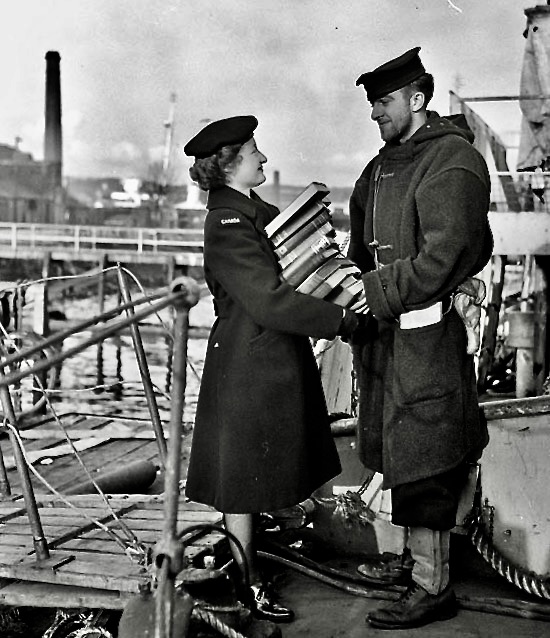
“Everybody went to church back then,” said Connie Lott. “Especially in a small community like South Rustico. My goodness, we all went. I just walked up the road from home to the church and the school. It was the same way we walked to the beach and went swimming.”

Walking to the beach was easy. There is ocean to see and wade into on three sides of the school and church.

There were four classrooms to the school and eleven grades, overseen by the Sisters of Notre Dame. Many of the nuns came from the Magdalen Islands, an archipelago not far away in the Gulf of St. Lawrence. “They were one hundred percent French,” said Robin Lott. “Connie’s French is fluid to this day.”

“He means fluent,” said Connie.

“My teachers were Mother Saint Alphonse, Mother Saint Theodore, and Mother Saint Cyril, who was sort of icky,” she said, almost seven decades later. “Kids came to our school from all over, from Hope River and Oyster Bed Bridge.”

South Rustico is on the north-central shore of Canada’s Prince Edward Island, where Route 6 and Church Road cross. The Lion’s Club, caty-corner to the church, hosts ceilidhs featuring local talent in the summer. There is a handsome beach on Luke’s Creek, which is a bay on the far shoreline, near the National Park.

“I went to mass once twice in twelve hours,” said Robin, Connie’s husband. “We were dating, I was on the island, and her mother insisted we go to church Saturday night before stepping out. So, OK, that’s it, we go. Sunday morning they wake me up and say it’s time to go to church again. I said, what? I thought, I must be desperate for a girlfriend!”

“You must have really liked me,” said Connie.

Built in 1838, the oldest Catholic Church on PEI, St. Augustine’s in South Rustico was already an old church when Cornelia ‘Connie’ Doucette and Robert ‘Robin’ Lott got married there in 1960.

“Our wedding party was in Connie’s yard,” said Robin “The barn was behind the house and they brewed homemade beer. We didn’t have five cents to rub together.”

Connie Doucette was born at home in 1938. “I lived in what is now the Barachois Inn on the Church Road,” she said. A barachois is like a bayou, what Atlantic Canadians call a coastal lagoon separated from the ocean by a sandbar. But the home she grew up in wasn’t where she was born, nor were her parents the parents she was born to.

“When my twin sister and I were born, our mother died,” she said.

Her father, Jovite Doucette, a farmer with eight children, owned a house behind the church and croplands between Anglo Rustico and the red sand shore. “Where the new school was built,” said Connie, “that was once part of his fields.” Suddenly a widower, he was unable to care for the newborns of the family.

Cornelia and her sister, Camilla, were placed with foster families. Her sister went to Mt. Carmel, on the southwest side of the island, while she became a permanent ward of the Doucette’s, a husband and wife in their 50s, who lived down the street, literally down the street, on the front side of the church.

“It wasn’t traumatic,” said Connie. “I saw my brothers and sisters, and my father, all the time, and my foster parents made sure I saw my twin sister now and then.”

The Doucette’s she went to live with were islanders who had long worked in Boston as domestics, saved their money, and returned to Prince Edward Island, buying a house and farm. They kept cows and some horses. The Doucette’s were childless, and despite the surname, no relation to Connie’s family.

“I was spoiled since I was their only child,” said Connie “They were older and well-to-do. We had a car, a Ford. I didn’t do too much, although I might have milked a cow once in awhile.”

Before mid-century most of the roads on Prince Edward Island were dirt or clay, muddy when it rained, dusty when it was dry. The first paved road, two miles of it, was University Avenue in Charlottetown, the capital, in 1930. “They eventually paved the road up to the church,” said Connie. “We used to say, ‘Meet me at the pave,’ which was where the pavement ended.”

“Our generation, their children have built modern homes on the island, it’s not as basic as it used to be,” said Robin.

“Everybody’s got washers and dryers now,” said Connie.

Her mother’s sister washed clothes by hand in a washtub and dried them on the line. “We visited them in the late 1960s,” said Robin. “Their house didn’t have running water or electricity. I went out to the well and pulled the bucket up. There was meat and butter in the bucket.”

“That was their refrigeration,” said Connie.

“They finally moved across the road to an old schoolhouse that had power,” said Robin.

“They had thirteen children,” said Connie.

Although he was born in Quebec in 1936, Robin grew up in Ontario.

“My father worked on the boats all the time, Montreal to Thorold, where the locks are, and we ultimately moved there,” he said. From Montreal the passage is down the St. Lawrence and across the length of Lake Ontario to Niagara. The Welland Canal at Thorold, sitting atop the Niagara Escarpment, is ‘Where the Ships Climb the Mountain.’ Standing on viewing platforms, you can watch enormous cargo ships pass slowly by at eye-level a few feet away from you.

When he came of age Robin Lott joined the Royal Canadian Navy.

In the Second World War the Canadian Navy was the fifth-largest in the world. During the Cold War of the 1950s and 60s it countered emerging Soviet Union naval threats in the Atlantic with its anti-submarine capabilities. “We were off the coast of Portugal when my mother telegraphed me that she and Connie had decided I was going to get married,” said Robin.

The executive order said to be ready in October.

Robin and Connie met when she went to nursing school in Halifax, Nova Scotia, where Robin was stationed with the fleet. “I was working a little job at the Charlottetown Hospital,” said Connie. “A friend of mine told me about the nursing course in Halifax. Right away I got the bug.” It was 1956. She and her friend enrolled and her friend’s father drove them to Nova Scotia.

After nursing school, as part of her scholarship agreement, she worked at the Sunnybrook Military Hospital in Toronto. “They gave you $70.00 a month to live on.” She and Robin dated long-distance style. “Whenever I got leave I would pick her up in Toronto and take her to visit with my parents in Thorold,” said Robin. “That’s how I introduced her to my family.”

At the same time, Connie was introducing Robin to Prince Edward Island

One afternoon, making his way from Halifax to Rustico, coming off the ferry in January and driving up Route 13 from Crapaud, he was stopped by a snowdrift in the road.

“The road went down a valley and there was literally six feet of snow piled up,” said Robin. He reversed his 1955 Pontiac back to where his rear tires could get a grip on a stretch of clear road. “I hit the gas as hard as I could, went as fast as I could, hit the snow, everything disappeared, and I came out the other side. By the time I did the car was barely moving.”

Commuting between Nova Scotia and PEI, Robin rode the Abeigweit. Before the Confederation Bridge opened in 1997, the ferry was one of the busiest in Canada, the island’s lifeline to the mainland. Commissioned in 1947, ‘Abby’ was in its time the most powerful icebreaker in the world, capable of carrying almost a thousand passengers and sixty cars, or a train of 16 passenger cars. Its eight main engines drove propellers both bow and stern.

“I used to take the ferry across when we were dating,” said Robin. “You had to sleep in your car if you missed the last one. We would be lined up single file down the road, there were no parking areas back then, a hundred cars inching along trying to get on the first boat in the morning.”

In the dead of winter, crossing the Northumberland Straight from Cape Tormentine, New Brunswick, to Port Borden, Robin Lott stood bundled up against the cold wind hands stuck in mittens leaning over the bow watching ahead as the heavy boat broke through foot-thick ice.

“It would crunch gigantic pieces of ice and turn them over like ice cubes as it went across,” he said.

After they married the Lott’s didn’t stay on Prince Edward Island. “Both of the family farms were no longer farming,” said Robin. “I had an offer to partner in a fishing boat, but I didn’t take that up.” They moved to St. Catharine’s, the largest city in Canada’s Niagara Region, not far from Thorold. They rented an apartment and got busy.

By the time Connie was pregnant with the second of their four children they had bought a bungalow with a 185-foot deep backyard, near Brock University. “We had plans about moving, but we had a low mortgage on this house, so we never did,” said Robin.

They still live in the same house fifty-five years later.

“Those days we used to all climb in our station wagon on a Friday payday and go to the grocery store,” said Robin. There was a meat packing plant in the city and an adjacent store called Meatland. “They sold hot dogs in three-pound bulk bags.”

It’s been said you know you’re from St. Catharine’s if you know the difference between Welland and Wellandport, were in the Pied Piper Parade at some time in your childhood, ate fish and chips at the north corner of the Linwell Plaza, can drive through downtown without getting confused, pissed in the Lancaster Pool, hate Niagara Falls, and bought cold cuts at Meatland.

“When we went on holiday we took our four children and went camping,” said Connie. “We had a hard top tent. We went all over, as far south as the Teton Mountains near Yellowstone Park and as far north as Peace River.”

It is almost two thousand miles from St. Catharine’s to Peace River, and another forty miles to Girouxville. Towing their hard top trailer, their four children in tow, the family piled into their station wagon to visit Connie’s four uncles living there. Her natural father’s brothers had all long since moved from Prince Edward Island to Alberta.

The Peace River valley’s rich soil has produced abundant wheat crops since the 19th century. The town of Peace River, at the confluence of three rivers and a creek, is sometimes called ‘The Land of Twelve-Foot Davis.’ Henry Davis was a gold prospector who built a trading post in Peace River after he made a fortune on a tiny twelve-foot square land claim. After his death a 12-foot statue of him was erected at Riverfront Park.

“It was one of the highlights of our trip,” said Robin, about their excursion out west in 1976.

Girouxville is a small French-Canadian community surrounded by enormous farms. A hundred years ago the local Cree Indians called it ‘Frenchman’s Land.’ Every four years Chinook Days are celebrated. Besides farming, there are thousands of beehives, hunting for elk and moose, and good fishing on the Little Smoky River,

“Three of the brothers homesteaded, the three stronger ones,” said Robin. “In those years you could go up there, it was all bush, and if you cleared the land and farmed it, it was yours. They pulled out stumps and ended up with farms so big they weren’t described by acre, but by section.” Spring, durum, and winter wheat are grown on almost 7 million acres in Alberta. The average farm size is close to double the size of farms on PEI.

The fourth Doucette brother became a schoolteacher, opened and operated a store, married, and propagated a large family.

“We pulled into this little town with our trailer and kids,” said Robin. “Then it occurred to us we had no idea where they lived.” Spying the town’s tavern, they parked in front of it. Robin went into the tavern. He told the bartender he was looking for Emile Doucette. The bartender looked at Robin and bobbed his head at a table set along the back wall.

“Why don’t you ask his brother Leo over there,” he said.

“He was a single man, quite a drinker,” said Connie. “What else do you have to do after working all day on a farm? He eventually bought the tavern.”

That night Doucette’s gathered from far and wide for a reunion dinner. “Everybody came, everybody got together,” said Robin. “We talked long into the night and it was still light enough to see.” In northern Alberta in the summer the sun rises at five in the morning and doesn’t set until almost eleven at night.

The night before they left to go back to St. Catherine’s Uncle Leo invited them to his farm.

“We were having a beer when he said he wanted me to go into his bedroom and pull the suitcase out from under his bed,” said Robin.

“Open it up and count out some money for Connie and Camilla,” said Uncle Leo.

“It was full of cash, honest to God,” said Connie. “We just about died.”

“I was nervous, what if somehow or other he thought I had taken one dollar more than he told me to do,” said Robin. “But then on the mantle in his living room I saw checks for crops he had sold, thousands and thousands of dollars, none of them ever cashed.”

Robin and Connie have gone back often to Prince Edward Island, most recently the past summer when they traveled to the island for the marriage of a granddaughter. They enjoy eating the local seafood, especially oysters, mussels, and lobster. At one time they ate as much whitefish as they wanted.

“When we first started coming back here I would go out with friends who were fishermen and it was nothing to hand line 1500 pounds of codfish in the morning,” said Robin. “But that was all shut down thirty years ago.”

“We ate fish, potatoes, carrots, and turnips when I was a girl,” said Connie. “That was about it. Whenever we went to Charlottetown we ate at a Chinese restaurant, but that was as much as I ever knew. Before I came to St. Catharine’s I had never had Italian food. After I married, my cousin and a friend of hers said, we’re coming over to make dinner. We’re going to make spaghetti. I thought, yippee.”

In the years since, the Lott’s have discovered fare across Canada and the United States, in Spain, England, Austria, and Denmark. “I like to travel,” said Connie. “We’re going back to Mexico at the end of the year.”

“It all started when she came to St Catharine’s,” said Robin. “Our community has every nationality you can shake a stick at, Irish, Italians, Russians, because of the construction of the canal system. There are cabbage rolls and pierogies and souvlaki.”

When Connie’s daughter travels to Prince Edward Island on business, she has stayed at the Barachois Inn. “She told me my old house has changed a little bit, one of the rooms now has an en suite bathroom, but it’s still owned by the same people who bought it,” said Connie.

Not much is better than going from one home to another home to family and eating good food. When Robin and Connie Lott are on PEI they sometimes stop at Carr’s Oyster Bar in Stanley Bridge, zigzagging up the coast to the other side of the Rustico lands, and have lunch on the ocean.

“We love seafood,” said Robin. “It’s our heritage,” said Connie. They eat on the sunny open deck overlooking the dark blue water of the New London Bay. The dark water isn’t new. It’s been there a long time.

The being on the seaside, mind’s eye on the barachois, when it’s a living heritage, is like slipping into the long time ocean and being able to see how deep it is. Or it’s kicking back, having a plate of mussels lobsters white fish right now, watching kids jump off the Stanley Bay bridge. It might be both things at once.

Ed Staskus posts stories on 147 Stanley Street http://www.147stanleystreet.com and Cleveland Ohio Daybook http://www.clevelandohiodaybook.com. To get the site’s monthly feature in your in-box click on “Follow.”

Blinded By the Light

By Ed Staskus

There are many reasons men and women become couples of all kinds, and even get married, even when they know better. They grow up, the clock is ticking, or they get cold feet about staying single. It seems like the next step, maybe there’s a baby on the way, and sometimes, best of all, they’re in love.

However, about half of all marriages in America end up in divorce, according to the United States Census Bureau. The separation rate for subsequent marriages is even higher. The unmarried break up faster than the married. Cohabitating parents are four times more likely to split up than those who are wed.

Couples stay together because they have made a family, or they’ve made their love last, or because they simply have shared interests. When they do have similar interests they always have something to share together. They are able to understand one another better during hard times and have great holidays and weekends. What’s better than having a mate who likes to explore for antiques or go rock climbing, just like you?

Or practice yoga?

“When you merge your practice with another’s, you fall into sync with that person,” said Michelle Fondin, a yoga teacher and member of the National Ayurvedic Medical Association. “Your breath, movement, and body positions find a rhythm together.”

Couples don’t and can’t do everything together. Even if they have the most fun of all fun times together, they still need to give it a rest now and again, and have some fun with their friends. They have their own lives, a life for each of them, even though they have a life with one another.

Although common interests don’t have anything to do with compatibility, it’s helpful to have interests in common. It may be true that two dog-lovers who don’t know how to communicate are probably not going to make it, but it’s more true that a dog-lover and a dog-hater are certainly not going to make it, no matter what their communication skills are.

Unlike sharing a tub of popcorn and a movie at the multiplex, sharing a yoga practice and traveling the same spiritual journey are more likely to join couples closer together, uniting them in a similar flow.

The word yoga, itself, means to yoke or join.

“When you focus on the breath, body, and movement of another person in yoga practice, your physical body will entrain with the other,” said Ms. Fondin. “It creates harmony within the couple.”

When couples get together on the mat, instead of “me” time on the elliptical it becomes “us” time at the yoga studio. Instead of focusing on the flat screen in front of the NordicTrack, they share the benefits of drishti, which in yoga means concentrated intention, or a focused gaze. Instead of being connected to iPod earbuds, they are connected to their partner, not Justin Belieber, I mean, Bieber.

“Both partners come away with feelings of synchronicity, cooperative spirit, and shared passion,” said Dr. Jane Greer, a marriage and family therapist. “Then you throw in some spicy endorphins and it can be a real a real power trip for the relationship.”

Maybe that’s why there’s a kind of practice called Power Yoga.

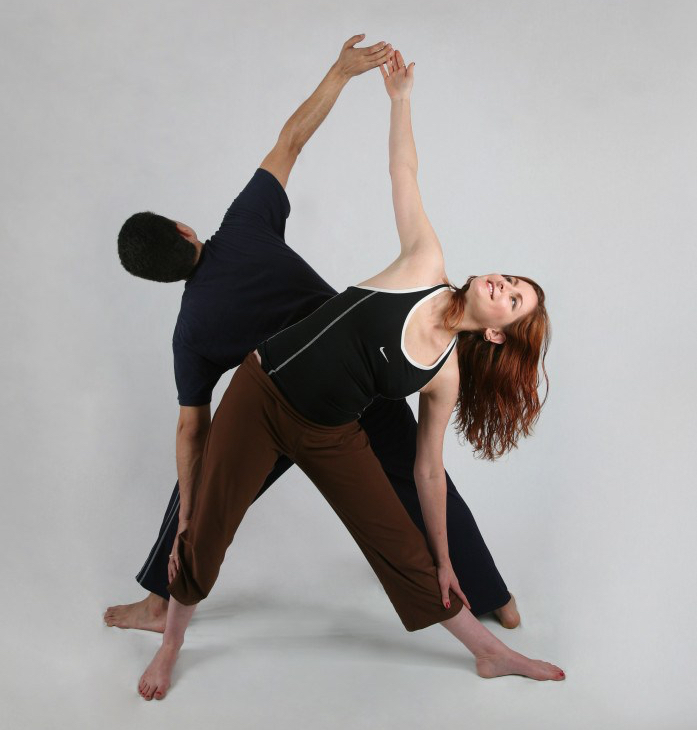
There is a yoga crafted specifically for couples, called Partners Yoga. Unlike some rites of Tantra, which are sexual in nature, it eschews those aspects, although it emphasizes intimacy through touch and movement.

“Partners rely on each other’s support to keep proper body alignment, balance, and focus in a posture,” said Elysabeth Williamson, a yoga teacher and author of The Pleasures and Principles of Partner Yoga. “When you feel physically supported, not only do you experience a yoga posture differently, but you also begin to allow yourself to trust someone else.”

When you grab a loved one and hit the mat together good things happen, and it’s not just about creating shared moments. The power of touch alone is powerful, whether it’s doing double downward dog or simply a partner twist, cultivating emotional as well as physical support in the relationship.

“Partner yoga is the medium for building stronger communication and intimacy between human beings in any relationship,” said Cain Carroll, co-author of Partner Yoga: Making Contact for Physical, Emotional and Spiritual Growth.

When partners expand beyond the mat, delving into the other seven of the eight limbs of yoga, they often deepen their connection with one another. When they dive into the spiritual side of yoga they find there’s a lot more below the lotus floating on the surface of the swimming pool.

In many senses asana, or yoga exercise, is largely an external practice, a device or technique of disposing the body in postures to satisfy a hankering for loose hamstrings or to alleviate back pain.

The rest of yoga, from meditation to the morals of the practice, is largely an internal practice. One of the eight limbs of yoga is even called dharana, which is commonly translated as introversion. Another, meditation, is about as private as it gets.

Yoga is partly about what goes on when touching your toes on the mat, but mostly about what goes on off the mat. Standing on your head is one thing, but what goes on inside your head is the rest of the thing. It isn’t nailing headstand that’s important, even though nailing it is nice. It’s about keeping your peace of mind when you fall out of headstand that’s important.

“Spirituality and the spiritual life give us the strength to love,” said the writer bell hooks. Everyone draws strength from the people they love and who love them in return. When couples are on the same page in body, mind, and spirit, it’s as good as gold.

Except when it isn’t. “You can make your relationship your yoga, but it is the hardest yoga you will ever do,” said Ram Dass, a spiritual teacher and the author of Be Here Now.

What happens when one of the partners falls off the yoga wagon? What happens when the shared awareness of yoga goes downstream? What happens when yoga becomes a triangle and something’s got to give?

There are many ways that yoga brings mindfulness to a relationship. One of them is the idealism of the practice. There are also many ways that people break up, separate, and file for divorce. They’re always squabbling, or lying to each other, or they simply fall out of love. Communication issues are a common problem and infidelity has long been a betrayal that can’t be forgiven.

Balance in the bedroom can be tricky.

Losing interest in shared hobbies or interests might throw a relationship out of whack, or not. How we spend out spare time doesn’t necessarily separate us. Losing interest in shared values, however, is usually deadly. Values are beliefs that are a fundamental part of who a person is. They are important in the sense that they are a man or woman’s rules of life.

“The mind endlessly grasps after things, clings to expectations, and resents your partner if he or she doesn’t share the same values,” said Philip Moffitt, founder of the Life Balance Institute.

Yoga on the mat is exercise, which is valuable, but the rest of yoga is a value system. Practicing yoga is a way of trying to lead a conscious, ethical life. Staying in a relationship with someone who behaves and relates to the world in a completely different way than you do would take a saint, and there ain’t many saints in this world.

Any couple can get healthy by practicing Core Yoga together. However, if their core values are mismatched, it’s doubtful whether they can have a healthy partnership.

But, if three’s a crowd, when it comes to yoga, two’s a crowd.

Yoga is not a solitary pursuit. It’s a way of staying present, not just on the mat, but off the mat, too. It’s a minute-to-minute experience. But, at the same time, it’s a solitary pursuit in the sense that no matter how open to the day it helps one to be, it’s a deeply private, self-centered practice.

Even though being self-centered is often thought of as bad, it’s not necessarily the case. “You can search throughout the entire universe for someone who is more deserving of your love and affection than you are, and that person is not to be found anywhere,” said the Buddha.

Most yoga classes start with a moment of focusing the mind and breath. It’s a way of centering, forfending the external and self-centering, setting a baseline for the practice. On the other hand, turning one’s attention during class to the birds and bees in the room will off-center anybody.

Triangles can be deadly, on and off the mat, but yoga isn’t just triangle pose, nor is it just a love triangle on which love can get caught on one dead side. Rather, if there’s anything that can help weather the loss of shared interests, shared values, and even the loss of a shared love, it’s the electric third rail of yoga, if only because it’s the practice of freedom.

Freedom for you and freedom for me.

A version of this story appeared in Rebelle Society.

Ed Staskus posts stories on 147 Stanley Street http://www.147stanleystreet.com and Cleveland Ohio Daybook http://www.clevelandohiodaybook.com. To get the site’s monthly feature in your in-box click on “Follow.”
Scene of the Crime

By Ed Staskus

As the 21st century has come unspooled unravelled gone daffy, yoga has increasingly taken on the look of the after in a before and after crime-scene photo. One hundred years ago it looked like a lot of class. Fifty years ago, it got a makeover and looked better than ever. Today it looks like something dolled up to be better seen from a distance of a hundred years.

Yoga used to have something to do with simplicity and self-discipline, non-attachment, and the spiritual life. Hatha practice and karma in the world were means to an end, steps on the way to an expanding awareness. It had more to do with what went on off the mat, especially in your head, than the asana postures done on it.

“It’s been less than fifty years since the first group yoga class happened, but in that short time the content of those classes has veered so far off course that it falls well outside of even the most open and generous definitions of yoga practice,” wrote American Yoga School founder James Brown in ‘The Colossal Failure of Modern Yoga’.

In many respects awareness isn’t what it’s about anymore. It’s about exercise classes with folks all doing the same thing. It’s about a little bit of ad hoc spirituality and a lot of anatomical science. It’s about whatever works for me, never mind the past fifty centuries.

Sometimes it seems like modern yoga can’t get any respect, especially since it’s gone the way of mass merchandising, sticker shock sticky mats neat-o clothes to match cutting dreams down to size, the butter and egg man Bikram Choudhury, and the bigness of big events at big venues.

However, if you’re flying out to Burning Man, don’t bother bringing yoga attire, since loincloths and hot pants are more appropriate at the 70,000-man-and-woman festival.

There isn’t anything simple about organizing thousands of yogis to flip up on their heads at the Rock-n-Roll Hall of Fame in Cleveland or Times Square in New York City. It takes organizational skills and business smarts to assemble sound systems, food trucks, and port-a-potty’s.

Om’s and namaste’s ain’t going to get it done.

While the postmodern world streams ahead, the shape of yoga tradition has shifted, so that a CGI vision of the practice has morphed the once flesh-and-blood story to the flat screen. The new yoga body and new yoga lifestyle have become the new Truman Show.

Once people came to the practice looking like they’d just climbed out of a wreck. They were hungry as schoolboys. Now they come in Lexus SUV’s. They’ve had their grass-fed beef brisket sandwich and kale salad and aren’t hungry, at least not in the same way.

Even meditation, which was once a quiet practice meant to make silence even more silent, has become a for-profit enterprise, sold as a balm for the wailings of the wealthy. They empty their heads for an hour-or-so, making like a church collection plate on a Wednesday morning, and once refreshed it’s back to business as usual.

There is a business branch office of yoga, known as Padmini Vidya, which is devoted to one purpose, which is making money. It’s the yoga of pleasure and prosperity. “It is said that people who rapidly amass enormous wealth must have been yogis in previous lives who devoted themselves single-mindedly to Padmini Vidya,” Linda Johnsen wrote in ‘Be Wealthy, Be Wise: Yoga’s Guide to Prosperity’.

Although it’s true that there’s always some good in everybody, there is often only a little in those who never have enough. There’s hardly ever any sympathy in their smiles, like they’ve never forgiven anyone for anything.

It’s as though yoga has become an ever-smaller rowboat bouncing around in a squall while cruise ships sail in their own tranquil seas. Some cruise lines, such as Radisson Seven Seas, offer yogic-centric voyages starting at $2,987.00 a person, double occupancy only and no refunds.

After stretching and sweating on the mat, the ship’s four restaurants, where waiters and wine stewards outnumber passengers two to one, are a gangplank to champagne buckets and plates of sea bass. “As a luxury yogi I would never neglect dinner, indulging in everything,” wrote John Capouya, author of Real Men Do Yoga, in Travel and Leisure.

The travel destination of yoga used to be the union of oneself with the true self, which is why the word yoga is defined as union. It wasn’t the largely non-union staffed Royal Carnival dropping anchor in the Bahamas. It wasn’t a luxury. It was a necessity.

But, what used to be one man’s meat and potatoes is now another man’s indulging in everything. The sense of yoga’s purpose can go dark under more than a tropical moon, subsumed by the tastiness of a hundred-foot-long buffet spread. Just like yoga, luxury is a state of mind, although bloat can be a problem.

Yoga was once something that meant everything to somebody. Now it means anything to everybody, so long as the teacher is groovy and the soundtrack is rocking, or mellow, as the case may be. The catch-all phrase “It’s All Yoga” has become commonplace to the extent that it has become meaningless.

It’s like reaching for a life preserver and grabbing liquid nothing.

“The problem is that it is framed within a paradigm of self-improvement,” said Ed Conley, a meditation teacher in Blackstone, Virginia. Before posture practice became the rage the subtle body, not the mechanical body, was the rage. The transformation of yoga to YogaWorks is the transformation of a series of small things leading to equilibrium to The 7 Habits of Highly Effective People.

Yoga once had a longing at the heart of it, a mystery no one lived long enough to educe or forget, a reckoning of the right stuff the man and woman on the mat tried to find for themselves. It wasn’t conjuring up a laundry list of getting from ineffective to effective, which can be just another way of losing your way slowly.

“It has become space and time without the black hole,” said Mr. Conley.

Back in the day yogis slept on beds of nails, walked barefoot on hot coals, and even endured being buried alive. They meditated on mountaintops. They were loner mendicants who might or might not have had a ministry. Joining up with them was like hitching a hayride with Frankenstein.

It was a hard-core commitment, not a stop on the side of the road for a soft cone. Yoga was a risky business practiced by dodgy people. It was impossible to discourage them. They didn’t give a damn what anybody said. Anything could happen.

Today’s state-of-the-art yogis are bendy charming plausible entrepreneurs flying in jet liners to retreats at sunny resorts and arriving at Estes Park in Caddy SUV’s. The practice they preach is like a never opened box of razors, gussied up and bloodless. The business has got the face of an angel and a heart of silver dollars

Lady Gaga performs what looks like yoga, tattooed and hairless, in the nude, videotapes the antics, and posts the bright and flashy for one and all.

The hole at the heart of yoga is that it has been buffed polished sparkled and turned into a commodity. It’s not about anybody anymore. It’s on the grocery shelf for everybody, a sensible product packaged by sensible people for sensible consumers.

Once upon a time it was Hanuman, a great big daring jump into a burning sky, but now it’s a dancing monkey at the beck and call of an organ grinder. Progress isn’t possible without change, although that doesn’t necessarily mean historical revisionism is the lens back to the future. Sometimes it’s best to get a second opinion of the fast forward dreams you’re trying to make come true.

“Teachers tell their students all about the magical things that happen when you do as they say,” said James Brown of American Yoga.

It’s meant to make you roll over on your back with your paws in the air while your belly gets rubbed. “Don’t follow leaders, watch the parking meters,” warned Bob Dylan.

The black hole at the heart of yoga is the self.

In the workaday world the biggest mistake you can make is thinking you know who you are. It uses up the future. In the yoga world the biggest mistake you can make is thinking you can’t find out who you are. It leaves you teetering between the nothing that isn’t there and the nothing that is.

The Yoga Sutras of Patanjali propose that the body mind senses are not the self. The reason is that the body, mind, and senses all change over time. Although everyone has aspects of their lives that change in the ebb and flow, what the Sutras call the guide, the inner voice, or the true self, is unchanging.

“The most important relationship you will ever have is your relationship with the self,“ wrote Kate Holcomb, founder of the Healing Yoga Foundation, in ‘How to See Your True Self’.

Yoga classes are full of relationships, with the receptionist, the teacher, and everyone else in the class. Anyone can create or re-create themselves in the yoga room. No one can find themselves. There’s always somebody else telling you what to do. There’s always mind chatter as you peek through your legs in down dog at the person behind you. There’s always somebody snoring in corpse pose.

The true self is a loner. It’s not a version of somebody else. “Be that self which one truly is,” said the existentialist Soren Kierkegaard. It’s when you’re alone that you look at things differently than other people. Who finds their true self when they’re mashed up in the mosh pit? Everyone needs to be left alone when they’re lonely. It’s only when someone is most solitary that they are most exceptional, most themselves.

Nobody is ever lonely in a yoga exercise class, or eating a pastina salad, for that matter, because they both require so much attention to detail. Yoga is about a fire in the belly, but you can’t fill yourself up until you empty yourself out. Everyone breathes in yoga classes, although there’s never a minute to catch your breath in class because it’s so busy.

No man or woman can be unmistakable, can be their clear-cut self, can go to a place they’ve never been, if they tag along with the crowd. It’s been said that the loneliest place to be is lost in a crowd, like a case of mistaken identity, another face in the House of Mirrors. It’s like being alone without being alone.

In the postmodern 21st century many people think the past is like the scene of a crime, that there’s nothing left to find there. What matters are now the next now and the one after that.  But, it always catches up with you, like shoes that are a half-size too small. Sometimes it’s called karma, which can be a pair of tight shoes, cement shoes.

There aren’t many places to find your body mind spirit in the world as we know it. A good place might be wherever you are, because no matter where you go, there you are. A better place might be yoga, since that’s what the practice has always been about. The best place is probably what the Yoga Sutras call the true self. If you’re not there you’re not anywhere, not really all in.

“When the agitations of the mind are under control,” according to Patanjali, “it has the power of becoming whatever form is presented, the knower, the act of knowing, and what is known.” There is no ghost in the machine. The way in which yoga has been sliced and diced in the past fifty years is not the answer, assuming there is one.

Which begs the question, what is the answer?

The answer is right there, somewhere in the noise hubbub industriousness, where you don’t have to answer to anybody. It’s not on a store shelf or on TV, or even in a yoga class. You don’t have to be the Arrow or Iron Fist to dig it up, either. All you have to do is be quiet enough to hear it, and never mind the honky-tonk.

Ed Staskus posts stories on 147 Stanley Street http://www.147stanleystreet.com and Cleveland Ohio Daybook http://www.clevelandohiodaybook.com. To get the site’s monthly feature in your in-box click on “Follow.”
Kill Me Again

By Ed Staskus

Most people, unlike cats and their legendary nine lives, only die once when they pass away. There’s no going back for a do-over. The art of living well and the art of dying well are often thought to be the same thing. Kim Fowler is not most people. She lives well, but doesn’t die well, although if she were a cat she would be down to six lives and counting.

She is the founder and owner of YAS Yoga and Spinning Fitness Centers, with multiple locations in Costa Mesa, Venice, and Los Angeles, California. The first center opened in 2001 and featured the first fitness program wedding yoga and certified spinning. “Both together are an amazing combination of yin-yang,” she said.

Ms. Fowler’s Yoga for Athletes melds elements of Iyengar and Ashtanga practice to enhance athletic performance and reduce the risk of injuries. YAS classes are typically 30 minutes of indoor cycling followed by 30 minutes of yoga. “It helps you go deeper into and benefit more from each pose,” she said.

She is a successful innovator, teacher, and businesswoman. She is a resourceful yogi, and one tough cookie, too. She has learned to roll with the punches, literally.

In the early 1980s she was competing in a bicycle road race outside Dallas, Texas, when a car smashed into her. She rolled over the front of her bike.

“I bent the handlebar of my bike with my face.”

As late as 2013 there were close to a half million emergency room visits because of bicycle-related injuries and almost 900 bikers died. Texas is one of the deadliest states in America in which to ride a bicycle, ranking only behind Florida.

After recovering she worked with a physical therapist, a woman who happened to be an Inyengar Yoga instructor on the side. “She gave me yoga poses to help me.” A near death experience turned into a far and wide life experience.

“I guess yoga found me,” she said.

Whether it’s exercise or meditation, yoga is about trying to apprehend the inner being, what in the Yoga Sutras is called drastuh. It’s a burning away of what in the end doesn’t matter. Eternity isn’t something that happens after anybody dies. It’s happening all the time to everybody.

Kim Fowler was raised in an impoverished South Jersey neighborhood, the eldest of five children. “I grew up extremely poor. We didn’t have food or heat. My father had a bad car accident when I was young and ended up with 88 stitches in his face. He never pulled out of it. He became an alcoholic, didn’t work, and left us to fend for ourselves.” She had to make her own way.

Sometimes the freedom to be yourself comes from old-fashioned gumption.

After putting herself through school and earning a degree from Boston University she enrolled in law school. In her final year, in the middle of her final semester, she was diagnosed with a rapidly growing tumor the size of a golf ball in her brain.

“I had a bright career in front of me,” she said. Lawyers get a bad rap. Some people even believe most of the trouble with laws is lawyers. “No one wanted an attorney that had a brain tumor.“

Her doctors told her the problem was inoperable. “We could try to get it out,” one of the team of doctors told her. “But, you will lose your speech and sight. You probably won’t make it past thirty.”

Life can be rocketed into a new orbit by a doctor dispensing bad news from a clipboard in a bland voice. “I’m in my last year of law school!” she exclaimed. “This isn’t an option for me.” Once diagnosed, she had to decide whether or not to listen to their medical advice.

“I’m not going to let this happen to me,” she decided. “There’s got to be something else, something different.” She called a friend who helped her check herself out of the hospital. “Nurses and doctors were screaming. If I would have listened to them I would be dead by now.”

Dead again.

She refused, however, to give up the spirit and buy the farm.

“It’s mind over matter,” said Kim. She began training for and taking part in endurance contests. She ran marathons, rode all-day races on her bicycle, and finally progressed to triathlons. “Someone telling me I was going to die caused me to go the whole other route and become a pro triathlete.”

She also made making it on the mat a habit. “Practicing yoga while battling cancer taught me the importance of balancing strength with flexibility. Focusing on my breath helped me stay centered.”

She gradually recovered. “It was hard, but I was full of piss and vinegar at the time.”

Although doctors are often crucial, recovery is more often brought about not by them, but by the person in danger. In many respects we heal ourselves, by means of our thought and breath, and sheer will.

After graduating from South Texas College of Law she stayed in Houston, going to work for a law firm. In 1990 she moved overseas, practicing international business law in Monaco. Five years later, back in the United States, she joined Winning Combination, a health and wellness business, as their Chief Operating Officer.

Then one day she went hiking.

The Mt. Charleston Wilderness Area in Nevada is gnarly, riven by narrow slot canyons, and laced with steep hillsides. The mountain is called Sky Island because of its elevation and isolation. While free climbing she slipped on a patch of ice, lost her balance, and fell more than twenty feet. She landed on an old tree stump.

The stump stayed rooted. She took the brunt of the encounter.

She cracked several ribs, punctured a lung, and severely lacerated a kidney. “I’ve been through worse,” she thought. She was a half-hour away from the closest medical help. She dragged herself off the stump. ”I knew I had to get to the hospital. It was mind over matter and I just did it.”

The kidney on the side that had taken the blow from the fall was leaking urine and blood into surrounding tissue. At the hospital she was told it had to be removed.

“No,” she said.

Kim Fowler was, again, determined to go her own way. It took her a year to recover. The Winning Combination let her go long before year’s end. “I lost my job as COO.” Getting fired can be like a bomb going off. It can also be a way to get on with your life. You only get to make one mistake with bombs. Firing Ms. Fowler was the Winning Combination’s mistake, although for her it turned out to be liberating.

“When I was rehabbing I would go from a yoga class on one side of town to a spin class on the other,” she said. “I was very frustrated. I thought, why doesn’t someone put this together and open up a yoga and spinning studio?”

That someone turned out to be her.

She opened the first of her yoga and spinning studios in Venice, California. The day she opened the doors her new business began to fail. “We had opposite energies coming together.” Spinners were looking for an intense cardiovascular workout and yogis were looking for a workout to calm them down.

What do you do if your business plan isn’t working? “In my case I regrouped and changed, fast.” She created a new kind of yoga to fit the spinners and sold the yoga crowd on the complementary benefits of spinning. “It was the best thing I could have done.” She was designated a Nike Yoga Athlete by the athletic and fitness company two years later.

Winning acceptance in the yoga world, however, was another matter.

“I got blasted by the yoga community when I first did it because it wasn’t ‘real yoga’, rather my own style,” said Kim.

It was a matter of building a better mousetrap.

The concept of zen on wheels made it into Yoga Journal, the world’s largest mass circulation yoga magazine, “Spin and yoga have merged into a killer one-hour class, created by Los Angeles-based yoga instructor Kimberly Fowler. It’s cropping up across the country.” It named the now better mousetrap one of the hottest fitness trends of 2014.

Since then Ms. Fowler has expanded her brand, moving beyond company-owned locations, and franchising her fitness regimen. “Indoor cycling gives you the best cardio training and yoga provides the best stretching, relaxation, and peace of mind to prepare you for the challenges of life,“ said Hugo Auler, new owner of the franchised YAS Fitness Center in Manhattan Beach, California.

Resurrecting her life led to resurrecting her career, and led to finding her business partner, too. Sherri Rosen is her partner in life, as well. “We were set up on a blind date just a few months after I opened YAS,” said Kim. “We are still together.”

“I’ve stayed in an operator’s mode,” said Ms. Rosen, former vice president of a fashion company. “Kimberly is the visionary. It is amazing what she has accomplished.”

Even though Kim Fowler has gone from cutting edge to business-savvy, even though she has transformed her business model to an investor approach, and even though she has gone corporate, she still lives in her sweats.

“I basically live in workout clothes,” she said. “I only wear green, gray, black, and white. Well, with a smattering of skulls.” She is the designer of an apparel line whose tag line is “Two parts functional, one part bad ass.”

Kim Fowler continues to see her doctor once in a while. “I went and he looked at me like I was a freak when he realized I’d been off medication for 20 years, like I shouldn’t have the life I have. The mind is pretty phenomenal when it comes to its power over the body.”

At the end of exercise sequences on the yoga mat something called corpse pose is traditionally practiced. It’s the easiest and hardest pose. It’s easy because all you have to do is lay on your back with your eyes closed for 5 to 15 minutes. It’s hard because who wants to lie on their back like a dead person, doing nothing, for 5 to 15 minutes.

Corpse pose is about letting go. But, it’s not about zoning out or taking a nap. Even though it’s about letting go, it’s a pose meant to foster connection and clarity, or awareness. Many people struggle with it, however, and some classes look like popcorn popping the minute class ends and corpse pose is announced.

Other people have no problem with it. Kim Fowler is one of them. It keeps her in touch with life. “It’s a different awareness of your body,” she said. “I think for stress it’s amazing. Nothing’s better.”

She knows when to lie down and when to get back up. There are no surprises waiting for her in corpse pose. She’s been there before.

Ed Staskus posts stories on 147 Stanley Street http://www.147stanleystreet.com and Cleveland Ohio Daybook http://www.clevelandohiodaybook.com. To get the site’s monthly feature in your in-box click on “Follow.”

From Bogota to Bittergirl

kits-4-e1516833330679.jpg

By Ed Staskus

When “Bittergirl: The Musical” came back to the cabaret-style Mack Theatre in downtown Charlottetown, the capital of Prince Edward Island, it came back because it had played to laugh-out-loud crowds during its world premiere there in 2015, and everyone knew the home-grown Canadian merry-go-round about breaking up was worth seeing, or seeing again in 2017.

Based on a 1999 play lived died and written by Annabel Fitzsimmons, Alison Lawrence, and Mary Francis Moore, one of them divorced, one dropped like a hot potato, and one in the whirlpool of being dumped, and their later-on best-selling book, “BITTERGIRL: Getting Over Getting Dumped”, the musical is the best of the play and the book and 60s doo-wop mixed with 70s mega-hits.

“When he danced he held me tight, and when he walked me home that night, all the stars were shining bright, and then he kissed me.”

The show is a mash up of a live band song dance high emotion low comedy trenchant wisecracking and rip-roaring showcase performances. It’s about the one sure-fire way of hurting somebody’s feelings, which is to break up with them.

“Baby, baby, where did our love go? Ooh, don’t you want me, don’t you want me no more?”

Hooking up and heartbreak are as girl group as it gets. Taylor Swift’s ‘We Are Never Ever Getting Back Together’ was still fifty years in the making when Phil Spector’s Wall of Sound and Motown were going strong. The Shirelles were the first to hit number one on the HOT 100 in 1961 with ‘Will You Love Me Tomorrow’.

When the musical comedy wrapped up its second sold-out run at the end of August, and the last of more than 20,000 theatergoers had left the 200-seat Mack Theatre, the young woman putting away bottles of vodka and rinsing out cocktail glasses behind the bar on the far side of the stage was the one person who had seen the show more times than anyone else, save the cast, crew, and front of the house.

“I love the show,” said Natalia Agon, the Mack’s bar manager. “Sometimes on my nights off I go see it with my mom or my husband or my friends. It’s so fun and I’m so proud of it.” Since starting work at the theatre earlier in the summer she has seen “Bittergirl” close to 40 times.

The 25-year-old traced an improbable path to her first sighting of the show. She almost didn’t make it. A native of Bogota, Colombia, it took a death threat to shove her off Colombian soil and land her on the red dirt of Prince Edward Island. The threat to her family came from terrorists, in the mail, on embossed stationary, declaring them a military target.

“Bogota was good,” she said. “I grew up there. My dad worked hard, and my mom worked hard, to give us what we needed. Starting over from zero was definitely hard.”

Bogota is a 500-year-old city in the middle of Colombia, the capital city and largest city in the country. It sprawls across a high plateau in the Andes. More than 10 million people live in the metro area, the economic, political, and cultural center of northwestern South America. “Most Noble and Most Loyal City” is Bogota’s motto.

Natalia’s parents met in Panama City, Panama. “They were poor when they got together. They would buy clothes or cigarettes in Panama, where they didn’t have taxes, and bring it back to Colombia, and sell it,” she said. “They did every job on the planet.”

By the time she started school her parents had scrimped and saved and purchased and owned and operated a 1,000-acre beef and dairy farm four hours away from Bogota, while still living in the city. “We went there every weekend, my two brothers and me, whether you liked it or not.”

At the same time, “bittergirl” the stage play took off, playing from bliss to breakup and back to full houses in Toronto, traveling to London, England, and laughing its way to off-Broadway in NYC. It was the trifecta, the original recipe, extra crispy, and the Colonel’s special.

“I’ll make you happy, baby, just wait and see, for every kiss you give me I’ll give you three, oh, since the day I saw you, I have been waiting for you.”

It was a long way from the little Toronto café where the three writers dreamed up the loving and hurting story, based on themselves and everyone they knew. “We’ve had some adventures together!” said Mary Francis Moore.

“Every night our audiences were waiting for us as we came offstage with their very own stories,” the co-authors have said.

‘I got dumped in the hospital ten minutes after giving birth…’

‘He left me for my little sister and now he sits across from me at Christmas dinner…’

‘My husband worked for CSIS and said ‘You’ll never be able to find me’ and I never have…’

“Swear to God. All true.” Truth is stranger than it used to be. The snag about some hook-ups is that they’re not worth the break-up.

“My parents had a big problem with FARC,” said Natalia Agon. “It was because of the farm, about paying the vaccine.” Besides the coca trade, in other words, cocaine, which sustained the leftist group during Latin America’s longest running war, extortion ran a close second in the financial affairs of the rebels. The money payments were known as vacuna, or the vaccine.

Scottish Border Reivers ran a racket called black mal five hundred years ago, the Sicilian Mafia has always understood the protection trade, and there is little confusion about what the Russian Mafia means when they say krysha up.

The Revolutionary Armed Forces of Colombia, or FARC, was formed in 1964, a peasant army that grew to number almost 20,000 militants controlling close to 40 percent of the country. The 50-year civil war, recently ended, displaced 7 million people from their homes and resulted in 220,000 deaths, among them 11,000 people killed by land mines.

“My dad paid the vaccine for a long time,” said Natalia. “But, once they saw they could use you for other purposes, whether storing drugs or storing guns, it was a yes or no answer, no matter whether you wanted to do it or not.”

Pedro and Maria Agon said no to cocaine and guns.

Soon afterwards, just before Christmas 2007, they got a letter in the mail. “It was on thick white paper, official looking, super fancy, with their FARC logo on it. We just left, our house, the farm, all my friends I had known all my life. One day my mom said, pack a bag, you’re not going to school on Monday.”

She packed pictures and letters from her friends and the blanket she was swaddled in when she was brought home from the hospital when she was born. “You can’t do that, my mom said. You have to leave everything.”

They left almost everything.

“We got out of there fast.”

The Agon’s were able to transfer property to sisters brothers aunts uncles, as well as convert some assets to cash. They were uncertain about relocating anywhere else in South America. They considered the United States a safe haven, but Natalia’s mother nixed moving there.

“She just didn’t like it, even though she had traveled to the States many times. She never felt welcome. She always felt a racial discrimination, even though she was going there to spend money. So we looked at a map and there was Canada. There was no thought process behind it, we just went.”

“Bittergirl: The Musical” took the Charlottetown Festival by storm when it opened in 2015, a crowd-pleaser bringing the howls and selling out all summer. Bitterness never felt better, nor misery in the hands of singers and dancers belting it out and mansplaining how he’s lost his magic and you’ve got to go.

“He’s a rebel and he’ll never ever be any good, he’s a rebel ‘cause he never ever does what he should, but just because he doesn’t do what everybody else does, that’s no reason why I can’t give him all my love.”

It went on to become a north of the border success story, having since been produced coast to coast, Edmonton, Manitoba, Vancouver.

Nine months after landing in Toronto, the Agon’s got their Permanent Resident cards. “It was a hard process,” said Natalia. “There was a lot of scrutiny, but it was never the you don’t deserve to be here kind of scrutiny.” The family rented an apartment and Natalia graduated from high school in 2010. She attended Centennial College, majoring in Food and Nutrition Management, and worked part-time in a nursing home.

In 2014 she and her husband-to-be, Miguel Cervantes, moved to Prince Edward Island. “I knew I needed a school that was going to give me a lot of interaction with professors and where there were internships to become a registered dietician.” She has an internship on tap at Humber River Hospital in Toronto when she graduates next year.

Natalia Agon enrolled at UPEI in Charlottetown. Her husband worked his way up to become the executive chef at Mavor’s, a contemporary eatery part of the Confederation Centre of the Arts. The menu ranges from the Moona Lisa burger, featuring homegrown PEI beef, to four-course dinners paired with Scottish whiskies.

Early in 2017, as part of her studies at UPEI, she joined the group Farmers Helping Farmers, traveling to Kenya, where they worked with the Wakulima Dairy in the Mukerweini District. She also helped distribute female hygiene kits to the Karaguririo Primary School.

“We gave the students a girl empowerment talk,” she said. “Their eyes were bright with excitement.”

Last year, looking for work, she applied at the Mack Theatre. She got the job. “I run the day-to-day operations and I’m the head bartender,” she said. She trains and schedules the other bartenders, keeps a firm hand on the inventory and cash register, and trims the sails on show days. Above all, all summer long she mixed Cowards, Mounties, and Magic Men.

“Those are the names of the three ex’s of the show, and they’re our three feature cocktails. The definite crowd favorite is the Mountie. I always tell everyone, I think you’re going to like it even more once the show starts.” At the break, however, the strains of ‘Be My Baby’ dying away, most order the drink they can relate to the most. Magic Men and Cowards give the vodka-heavy Mountie a run for his money among the crowd pressing at the bar, no matter that Mounties are renowned for saving damsels in distress.

“Ain’t no mountain high enough, ain’t no valley low enough, ain’t no river wide enough, to keep me from getting to you, babe.”

“Things have changed a lot in Colombia since we left,” said Natalia.

She has since returned several times for visits. Nevertheless, when her father went back to South America, the farm he bought was on the Ecuador border with Colombia. “He’s in love with the land. He can’t get enough of it.” One of her older brothers, a doctor, lives in Mexico and the other older brother lives in Spain. Her mother spends divergent parts of her year with her husband and far-flung children.

The Agon’s are a family of expatriates by necessity, not by choice. “My husband is from Guatemala, but he came to Canada when he was a one-year-old and never went back,” said Natalia. “His Spanish is broken. But I was born in Colombia, raised in Colombia, and most of my values are from being raised there. I loved it. Leaving was an emotional struggle.”

Although it’s true that loss is the same as change, and the world is always going to keep changing, surviving and coping with loss is difficult, especially when a chunk of your childhood goes missing. It leaves a hole in the world. It’s the price everyone pays for everything they’ve ever had, or will have.

“Weren’t you the one who tried to break me with goodbye, did you think I’d crumble, did you think I’d lay down and die, oh no not I, I will survive.”

It doesn’t matter if it’s a boyfriend or your birthplace. It doesn’t matter whether it’s played for laughs on stage or it plays out in real life. There’s a thin line between humor and hurt.

“I never get tired of the show,” said Natalia. “The ex and the girls do a great job portraying everyone, our emotions, all we’ve been through. It’s happened to me, when you’re dumped for no reason, or it’s not you, it’s me. I’ve definitely heard that one before, and I’ve totally said it, too.”

Behind the bar she hears what everyone has to say about “Bittergirl”. When a case of nerves orders a cocktail she mixes up a Coward. “The moms, maybe when they’ve had one too many, remember ordering pizza, eating their feelings. It’s just heartbreak.”

One day can be sweet as can be and the next day bitter as all get out. “You don’t know if you should laugh or cry,” said Natalia. Everyone has their share of heartbreak. If you’re singing about it, you’ve lived it. Natalia Agon has lived it and sung along with songs about it, but isn’t recording a full album of it.

Whenever bitterness tries to get in on the act, she offers it a Magic Man. “That’s my favorite,” she said. The Magic Man is a south of the border blend of Kahlua, Pepsi, milk, and crème de cacoa.

Sometimes when husbands and boyfriends are at the bar at the Mack at intermission getting drinks for wives and girlfriends, but can’t remember what they want, she suggests they “go check with the boss.”

She’s not a bitter girl.

Ed Staskus posts stories on 147 Stanley Street http://www.147stanleystreet.com and Cleveland Ohio Daybook http://www.clevelandohiodaybook.com. To get the site’s monthly feature in your in-box click on “Follow.”

Massage in a Bottle

By Ed Staskus

When the Bengali monk Vivekananda stepped up to the lectern at the World’s Colombian Exposition in Chicago in 1893, he was nervous about the speech he was going to give to an audience of more than seven thousand, a speech that would plant a new seed of yoga in America. On another stage at the same time at the same World’s Exposition, the ex-cowboy and self-styled Rattlesnake King was squeezing oil from snakes he had just killed.

He used the squeeze in his patent medicines.

Clarke Stanley, one of the most successful and colorful tonic barkers of the 19th century, was an even bigger attraction than the exotic little brown-skinned man from India. He wasn’t nervous. He wasn’t skittish. He was charming. He claimed his Snake Oil Liniment gave immediate relief to both man and beast for everything from toothaches and sore throats to sciatica and rheumatism.

It never went rancid, either, said the Snakeman.

“Ladies and gentlemen come up close where everyone can see. It even cures squinting.” The crowd looked for their wallets and purses. Clarke Stanley looked through the wide open end of their pipe dreams. It was a fool’s paradise.

Patent medicines are as old as Daffy’s Elixir, first blended in England in 1647, and popular in the United States into the late 19th century. The alcohol-fortified and drug-laced remedies were peddled by grocerymen goldsmiths tinkers traveling salesmen. They were available for almost any ailment, including colic cuts bruises baldness boils nerve damage lame backs deafness and “those painful complaints and weaknesses so common to our female population.”

Almost all of them were concoctions fortified with alcohol and cocaine or simply thin air.

The Pure Food and Drug Act of 1906 led to the end of Joy to the World Pain Killer, laced with opium, Fowler’s Arsenic Solution, which was iron mixed with arsenic for heart ailments, and the wildly popular Dr. Kilmer’s Swamp Root, meant to treat something called “internal slime fever.”

The many medical advances of the 20th century and into the 21st, however, did not put an end to quackery. Empty nutritional and supplement schemes, fraudulent arthritis products, and spurious cancer clinics have led the way. In 2017 the FDA warned stem cell clinics about their cure-all claims.

“Stem cell clinics that mislead vulnerable patients into believing they are being given safe, effective treatments that are in full compliance with the law are dangerously exploiting consumers and putting their health at risk,” said FDA Commissioner Scott Gottlieb.

More than a hundred years ago Vivekananda, in traditional Hindu monk garb, and known as the black pagan in orange clothes, traveled across the United States on a lecture tour. He often spoke about good health giving a leg up to making it down the yellow brick road to liberation.

“He who wants to become a Bhakta must be strong, must be healthy,” he said. “Build up your health. As long as the body lives there must be strength in the body. Yoga staves off disease.”

A Bhakta is a devotee of God. Bhakti Yoga, also known as Bhakti Marga, is largely a spiritual path. It employs yoga practice and discipline to help get to where it wants to go.

Although Vivekananda always believed in yoga, he never said it was the be all and end all of body mind spirit, that it was a tonic that cured all ills. If you don’t do yoga there’s no need to stress out about it. He seems to have believed the best cure was a quiet mind, like the best cure for sleeplessness is getting a good night’s sleep.

That’s not what contemporary yoga in our marketplace world says. It says there is a remedy for every problem and the remedy is yoga. Step right up! Right here for the song and dance! There’s something for everybody!

There are “4 Yoga Poses to Cure Diabetes” and “5 Top Yoga Poses to Cure Gallstones” and “6 Effective Yoga Poses for Autism.”

There are “8 Easy Yoga Poses That Will Cure Fibromyalgia Quickly” and “9 Yoga Poses for Arthritis Relief” and “10 Yoga Poses to Heal Migraines.” Yoga has become a dime-a-dozen commodity on the midway and the magazines, on You Tube and Facebook, at the corner store.

There are yoga poses to re-grow hair, alleviate and prevent nerve pain, fight epilepsy, help you poop, treat skin problems, restore irregular periods to a timely basis, improve heart health, lower blood pressure, calm down restless leg syndrome, ease ankylosing spondylitis, overcome PTSD, relieve neck shoulder lower back hip flexor pain, and resolve anxiety disorder and build your confidence.

There is even a kind of yoga to fatten up your wallet and lots of yoga to reduce your dress size.

There is “Pranayama Yoga Cures Almost All Incurable Diseases!”

The only thing yoga doesn’t seem to be able to take care of are gunshot wounds and compound fractures. Emergency rooms are still needed for that.

Writing in The Telegraph in a recent feature article called ‘Why Yoga Cures Everything,’ Lucy Fry asked, “My big question is no longer why are so many people doing yoga. It’s why isn’t everyone?”

On the other hand, Thomas Browne, a 17th century writer, argued against doing anything at all. “We all labor against our own cure, for death is the cure of all diseases.”

Tara Stiles is not Thomas Browne, but she has sold many many more books than him. Thomas Browne was an English polymath influenced by the scientific revolution of Baconian enquiry. Tara Stiles is an American model turned yoga instructor. In her book “Yoga Cures: Simple Routines to Conquer More Than 50 Common Ailments and Live Pain-Free”she tackles everything from “arthritis to fibromyalgia to jiggly thighs and hangovers.”

Jiggly thighs are flabby thighs that can’t be slid into skinny jeans or look sexy in a pair of shorts. The usual remedy is to do cardio-vascular exercises that involve your legs, like walking and running, and stop eating oily fatty sugary processed foods. Or try “Yoga Cures,” on sale on Amazon, free shipping, and read it sitting around on the sofa.

“If you’ve got an ache, pain, or ‘ism, she’s got the natural answer. So dump the over-the-counter pills and pop open Yoga Cures,” recommends Kris Carr, author of her own “Crazy Sexy Diet.”

It takes one to know one.

Cure-alls are remedies that resolve all evils, cure all diseases, and restore the self. The cure for everything, the miracle panacea, is driven by a belief that the humors or the liver or the spine is the root cause of all maladies.

In the past in the West leeches and bloodletting were used to balance the four humors, while in the East needles and acupuncture were used to balance the life force. As near as today chiropractors believe something called sublaxtions block the flow of something-or-other, which when unblocked will let your body heal whatever it is that ails you. Many well-meaning but hare-brained pilgrims still believe sticking needles along chi channels makes everything better.

Cure-all approaches neglect to take into account causes of disease ranging from genetic to infectious to biochemical to traumatic to degenerative to metabolic to autoimmune, never mind all the environmental and man-made toxic things in the world.

Poison ivy grows everywhere in the United States, except Alaska and Hawaii. If you get the rash, draw hot water and find some soap, lather, rinse, repeat, wash, rinse, soak, and then go to the drug store and buy a bottle of calamine lotion. Don’t go to a yoga class. You’ll only spread the itchy poisonous stuff on your skin to others.

If you go to India, the birthplace of yoga, don’t drink the tap water. Drink bottled water instead. More than half of India’s population, more than 500 million people, practice open defecation. Most of the country’s water is contaminated by biological and chemical pollutants, which cause cholera, among other things.

Clean water and sanitation prevent cholera. No known yoga pose or sequence or mudra has any effect on its spread. It is endemic because the water is foul, not because you haven’t read “Yoga Cures.” Oral rehydration solutions, when promptly administered, treat the disease easily.

As good as yoga is as a mindset a practice and a way of life, it is not the cure for much, certainly not cardiovascular disease, stroke, diabetes, cancers of any kind, multiple sclerosis, epilepsy, asthma, or gallstones. It doesn’t matter whatever it was Bikram Choudhury ever said. He is a liar. If you’ve got stones either take a wait-and-see approach, hoping the stone dissolves or dislodges, or join the nearly one million Americans who annually get their gallbladders surgically removed.

You need a tripwire gallbladder like you need Bikram Choudhury feeding you baloney..

If you have cancer of any kind it would be best to ignore Dr. Joel Brame, a self-styled Cancer Prevention Consultant, when he professes that yoga can reverse cancerous tumors. He seems to believe that exercising in a Hot Room oxygenates the blood “creating an environment in which cancer cannot grow,” restores the immune system, and generally purifies the body, which in his world is good because cancers can only metastasize in a toxic body.

“Attend your yoga class on a regular basis and feel the magic happen!” he said.

Black magic, maybe, when hell freezes over.

Until that happens, sitting around in the waiting room, it would be worth anyone’s while to page through Timothy McCall’s “Yoga as Medicine: The Yogic Prescription for Health and Healing.” A board-certified physician who has long practiced Iyengar Yoga and has been the medical editor for Yoga Journal since 2002, he describes yoga therapy as “a systematic technology to improve the body, understand the mind, and free the spirit.”

“Yoga as Medicine” is largely a practical guide about how to use therapeutic yoga tools, from exercise to meditation, as complements and occasionally alternatives to medical care and medication. It’s about getting in tune with your body, which is what health is all about. It’s about being aware, staying aware, staying in tune with beware.

Yoga therapy doesn’t treat the disease, exactly. It treats the person who has the disease. It’s about learning ways of making and maintaining body mind spirit health.

Gary Kraftsow of the American Viniyoga Institute describes yoga therapy as a practice to help people “facing health challenges at any level manage their condition, reduce symptoms, restore balance, increase vitality, and improve attitude.”

He doesn’t blare, blare, blare on and on about cure, cure, cure. Brenda Feuerstein has pointed out that it might be more helpful if the practice was regarded as something that “may be helpful in the treatment of something, but not yoga cures.”

Well-being is often the result of practicing yoga on a consistent basis. Yoga therapy isn’t a cure for acute conditions, but it is an aid in treatment and augmenting clinical care. Georg Feuerstein believed it was a way to integrate yogic techniques and concepts with medical know-how.

The difference between Snake Oil Yoga and Therapy Yoga is that one sells what purports to work for everybody while the other teaches what is appropriate to the individual and respects the differences in different people. Snake oil men shoot magic elixir bullets. Yoga therapists try to gauge the capacity and direction of mind of the person before they draw any conclusions. They don’t quick draw. They don’t try to kill anyone with cold-blooded make-believe kindness.

Why does it matter?

In the British art critic John Berger’s TV series “Ways of Seeing,” broadcast at about the same time that today’s yoga came around the bend in the early 1970s, he argued that where when and how we are directed to look at something, to pay attention to it, determines what we see. How something is framed often makes what matters, and what doesn’t matter.

When we pay attention to snake oil salesmen we get sucked down into their wormholes. It becomes believing what you want to believe, the easy answer, one size fits all. When we practice yoga therapy there is no rabbit in the hat, just a lot of work on the mat, day after day. It’s not the easy answer. There have long been and still are plenty of mad hatters and carnival sandbaggers trying to pickpocket the out-on-a-limb with their cooked-up promises.

Don’t drink the Kool-Aid. Don’t drink the brightly colored tonic water spiked with raw profit motive. There’s no yogi genie lightning in a bottle.

Yoga never was and never was intended to be a cure-all for ill health. “We must all pay attention to your health first, but we must not forget that health is only a means to an end,“ said Vivekananda.

“If health were the end, we would be like animals. Animals rarely become unhealthy.”

How the practice of yoga can effectively help those in need is being brought to bear by men like Sat Bir Singh Khalsa, an Assistant Professor of Medicine at Harvard Medical School, not the flimflam men of the internet and cunning analytic advertising. Dr. Khalsa’s research focuses on the clinical effectiveness and psychophysiological mechanisms underlying the practice of yoga and meditation techniques.

His approach advocates yoga as a way of enhancing proprioception, the awareness of where you are in space, and interoception, the awareness of the sensations of your body in space. He believes awareness is what changes lifestyles, and since many diseases are lifestyle diseases, brings the commonness of those diseases under control.

“People change their diets,” he said. “They change their behaviors to ones that make them feel better, because now, for the first time in their lives, they’re actually feeling better.”

It is feeling better, not by staring down to the bottom of a bottle of snake oil, but rather straight ahead in cobra pose, firming the shoulders against the back, lifting through the top of the sternum. It’s not a song and dance. It’s not a skin game hustle. It’s not a bill of goods, but rather a bill of fare from the inside out. It’s a message in a bottle.

When Vivekananda stepped up to the stage at the World’s Exposition in Chicago in 1893 it was one small step for a man. Thankfully, there weren’t any drips globs greasy ointment or snake oil left behind by the Snakeman on the stairs to slip up the small man from India. Otherwise, the big step that was ultimately taken that day might never have happened.

Ed Staskus posts stories on 147 Stanley Street http://www.147stanleystreet.com and Cleveland Ohio Daybook http://www.clevelandohiodaybook.com. To get the site’s monthly feature in your in-box click on “Follow.”
Down the Bay Boys

image_c688b052-e6cf-4f98-9bbc-0684f8d89202_grande

By Ed Staskus

“I’m going up the country, babe, don’t you wanna go…”  Canned Heat

“We’re always around here,” said Denver McCabe, casting a glance over the chairs and tables on the deck on the sparkling summer water.

Carr’s Oyster Bar is on the New London Bay, in Stanley Bridge, on Prince Edward Island, the Atlantic Canada province where Canada happened about 150 years ago. Opened in 1999, from the deck, kicking back with a pint on a warm day, you can see the wharf across the bay where oysters are landed.

They’re shucked when you order them, served with a fresh lemon slice, or you can order clams mussels quahogs. Last year the restaurant won the Restaurants Canada Shellfish Excellence Award. “I’m happy to showcase the best shellfish in the world,” said Phyllis Carr.

Whenever she slides a sharp knife into an oyster and pries it apart at the hinge “it’s the best one ever.”

“He was a bold man that first ate an oyster,” said Jonathan Swift.

Life is too short to not have oysters. But, they are best eaten with friends family anybody somebody else. Although oysters keep themselves to themselves, they’re a weird thing to eat by yourself.

Native North Americans harvested them for thousands of years. In the 19th century New York City was filled with oyster saloons. Today no oysters anywhere taste as good as those found on the north shore of PEI.

Denver McCabe and Brenden Carr are ten-year-old boys born and bred on Prince Edward Island. Until recently both lived in Stanley Bridge, a small town of fewer than 300 on the north central coast of the island on the Gulf of St. Lawrence.

“He swarms me when I come home from Edmonton,” said Denver. “I go to his house every day.”

They have spent all of their summers on the bay, along the Stanley River, and making the scene daily on the deck of Carr’s Oyster Bar. ”We grew up together,” said Brenden. “He’s my best friend.”

You can’t Madison Avenue anybody to be your best friend. Denver and Brenden have known each other since they were anklebiters. What do you do with your best friend when you’re both ten-years-old? A good time doing a whole lot of nothing, eyeing and gabbing about everything, cruising doing me, making fish faces, making mischief, making your summer jump, and jumping rocks.

“Most of the time we go on the rocks,” said Denver. “That’s how I get my energy up.”

The riverbank and along the shoreline are protected by piled rocks, riprap revetments.

“We go to my house and play on the trampoline, too,” said Brenden.

“I do flips,” said Denver. “I know how.”

“On the rocks we do hard core technical stuff. We jump rock to rock. He challenges me,” said Brenden.

“Sometimes I jump from one rock to the third one,” said Denver.

“So do I. I never fall down.”

“Me neither,” said Denver. “The other day I fell. Did I fall?”

“Unless you were faking me,” said Brenden.

Even though they aren’t yet preteens, they talk like old friends, the same as thinking out loud, their thoughts like toppings that can’t always be fathomed into a pizza.

“I fell once or twice, probably. It was because I jumped from one rock to a far, far one. I just got back up.”

Many people do all their playing when they’re children, all their working when they’re grown up, and all their retiring when they reach old age. When you play, no matter how old you are, you can be a kid as long as you want. Just watch out for the rocks.

“He jumps off the bridge,” said Brenden.

The Route 6 main street bridge crosses the Stanley River at the New London Bay. On one side of the bridge is Carr’s Oyster Bar and on the other side of the bridge is the Race Trac gas station and Sterling Women’s Institute community hall. Jumping off the bridge thirty feet into the bay is summertime chill in Stanley Bridge.

“We go to the bridge and tell them to jump, hurry up, don’t be scared,” said Denver. “I did it when I was eight. They’re teenagers, but they’re scared.”

“They never jump when we tell them,” said Brenden.

“I jump with my crush, Jess,” said Denver. “She’s a waitress here at Carr’s.”

“She’s my crush, too.”

“I got engaged to her,” said Denver.

“Me, too,” said Brenden.

“Whenever we tap our cheeks she has to come over and give us a kiss on the cheek.”

They tapped with their index fingers, the both of them. They’re not shy on their home turf on the Stanley River. They believe in their flyness.

Jessica Gillis, twice their age and more than a foot taller than the boys, walked over to where they were warming seats at a table on the deck on the bay eating nachos and sipping from childproof Shirley Temples.

They looked up. “Oh, my God, now what?” said Jessica, looking down at them. It was like ‘The Attack of the 50 Foot Woman’.

They tapped their cheeks again.

“No,” she said.

Even though both boys are in love with Jess, they don’t actually hang out with her. It’s not complicated. Most boys don’t like girls hanging around when they’re doing their own boy things.

“I never jump the bridge,” said Brenden. “I can’t swim.”

“I learned when I was four,” said Denver.

“I took lessons for a year,” said Brenden. “But, I don’t like people bossing me around.”

“It’s kind of weird because he lives right beside the water,” said Denver.

“I almost floated away one day,” said Brenden.

“It was a windy day and it blew his splash meter away,” said Denver. “He was trying to get it back, but the wind blew him away, too.”

“I floated to where it was just to my cheeks.”

“He needed my help, but I couldn’t swim fast because there were oyster traps everywhere.”

“My brother and dad were there, but then they went on their boat,” said Brenden.

“He stayed in the water and it became fine,” said Denver.

Brenden’s father David Carr is an oysterman. “He has his own boat,” said Brenden. “He catches eels, too. When he goes eel fishing he goes with his brother Stan.”

Eels are nocturnal, hiding during the day. Fishermen hunt them at night. Few fish put up the fight that a good-sized eel does. An eel held by the tail is not necessarily caught, yet. They can swim backwards as well as forwards.

“We went to the sand and I got a bad, bad sunburn,” said Brenden.

“Same with me, on the same day.”

“Yeah, but mine was worse.”

“That’s why you didn’t catch Jacob.”

“He’s sketchy,” said Brenden, making a face.

“He said my friends run away because of my ugly face. That pissed me off. I ran after him and pushed him. He ran to the park where there were booths being set up for Canada Day and got under one. I couldn’t bend down because my back was burnt from the sunburn. I would have given him a big one.”

After his sunburn got better Brenden had an airbrush tattoo of a barcode stencilled across his chest. It was at the Canada Day parade festivities concert fireworks day in nearby North Rustico. “It’s because I’m funny talented a good actor good singer good dancer and handsome and beautiful.”

Denver had a red maple leaf tattooed on his cheek. “I’m hot,” he said, looking out from under the brim of his bright orange Bass Pro Shop baseball cap.

“When I walk into a sauna I make it even hotter.”

“Dreams, Denver, dreams,” said Brenden.

Trying to tag along with the stream of consciousness of ten-year-olds can be like trying to play putt putt during an earthquake.

Lucy Maud Montgomery, who grew up on PEI and wrote “Anne of Green Gables” a hundred-or-so years ago, wrote that Stanley Bridge “used to seem quite a town to my childish eyes. It was the hub of the universe then – or of our solar system at the very least.”

“Brenden and I are cousins,” said Denver.

“My great-uncle, Granny Phyllis’s husband, is his grandfather,” said Brenden. “Phyllis was my cousin before she married, so I’m related to Denver both ways.”

“My grandpa is a Carr and Granny Gallant was a Doiron before she changed to Gallant,” said Denver. “Everybody in Granny’s family was a Gallant. My grandfather was Tommy Gallant. He found the Marco Polo. He’s famous on the island. He’s famous in heaven now.”

“He’s my great-uncle,” said Brenden, “I took dancing from him.”

Given enough time and left to their own genealogical devices they would likely conjure everyone on the island a cousin in the 9th degree, and discover a common ancestor in steerage on the St. Jehan, one of the first passenger ships sailing to the New World back in the 1630s.

“We’re from here,” said Suzanne McCabe, Denver’s mother.

“Cory, my husband, is from Rustico. We moved to Edmonton for the work. My grandmother and Brenden’s grandmother are sisters and my dad and his grandfather are brothers.”

The first explorers to land on PEI were the French, who called it Isle St. Jean. They fished for cod and traded for furs. The first settlers were Acadians. After the Seven Years War it was re-named Prince Edward Island. Scots, English, and Irish emigrants sailed to the British colony and built their own close-knit communities. Doirin and Gallant are Acadian surnames. McCabe and Carr are English Irish Scottish surnames.

Most Acadians are bilingual, but nowadays some speak English with a French accent, even though, for one reason or another, they no longer speak French.

“When I wake up I go on my phone, track what time it is, eat breakfast, and brush my teeth,” said Denver.

“I don’t have a phone. Sometimes I have your phone in my pocket,” said Brenden.

“It’s dead,” said Denver.

“I was cranky this morning. My brother woke me up early. I usually get up at six, but there’s no school anymore,” said Brenden.

Denver and Brenden help out at Carr’s Oyster Bar peeling potatoes and washing windows.

“I do everything,” said Denver.

“I help my father get fish,” said Brenden.

“Me and Brenden used to go to the sand dunes and collect hermit crabs,” said Denver. “But, he hasn’t come to his job, the last time was a year ago.”

“Me?”

The most freedom most people ever have is when they misspend most of their free time as children.

“More than a year ago, actually.”

“I don’t know about that,” said Brenden.

“You’ve never come since you handed out menus and got no money.”

“I got paid five dollars and I got another five dollars when you won the 50/50.”

“Oh, yeah,” said Denver. “My aunt is religious and prayed to win the 50/50. When she did she gave me some of it and I gave some to him.”

“Do you remember when I peeled the carrots in the shed?” asked Brenden.

“Look at my muscles,” said Denver, flexing a bicep.

“You don’t have any.”

“I definitely feel something on my arm. What do you think this is?” said Denver, pointing.

“Is that like a pimple?” asked Brenden.

Denver McCabe is an aspiring hockey player in Edmonton, Alberta, playing for the Mellwood Icebreakers. “I might go to Double A soon,” he said. “It depends on how good I am. My team wasn’t good. They wouldn’t pass the puck, so I was the one who had to pass the most.”

Brendan Carr has studied judo and plays ball hockey. “On my own time, not with a team,” he said. “I played soccer, too, once.”

The kicking heading game is beyond the pale for some. They believe if God had wanted boys to play soccer he wouldn’t have made them with arms. Brenden is a step dancer, like soccer got done sans hands.

Step dance is a dance style in which footwork is by far the most important part of the performance. At ceilidhs in community halls across Prince Edward Island it is accompanied by toe-tapping fiddle tunes. Children often learn it at an early age.

“Tommy Gallant taught me,” said Brenden.

“But, I mostly taught myself. I was in a class for a year and then I watched and followed Robbie, who’s my uncle. I dance at all of my Uncle Leon’s music shows at the hall. I don’t dance at every one of his concerts, just every one when I’m there. I’ve never been to one since I was four-years-old that I haven’t danced up on stage.”

“I never get called up on stage,” said Denver.

“That’s because you never ask,” said Brenden.

“I asked Leon once, he said yes, but he didn’t even call me up.”

When they’re not jumping rocks, step dancing, or trying to cadge kisses from waitresses, they spend some of the summer at summer camps. Denver goes to a Bible camp in Malpeque and Brenden goes to a rock-n-roll camp in Charlottetown.

“My first son slept in a surplus Canadian Army tent,” said Suzanne McCabe. “He never went back to camp ever again.”

“Denver doesn’t like rock-n-roll,” said Brenden.

“We were all at the beach, everybody had matching towels, somebody went under a dock, and there they saw a rock, it wasn’t a rock, it was a rock lobster, rock lobster, rock lobster…”

“I only like pop and country,” said Denver.

“Ain’t much an old country boy like me can’t hack, it’s early to rise, early in the sack, thank God I’m a country boy…”

Brenden probably wouldn’t mind being the lead guitarist in a wildly successful band. He has a guitar. But, he doesn’t play it. He sings. “I do like to sing,” he said. “I only get nervous when I have to sing in front of my friends.”

“KISS is the worst band ever,” said Denver.

“I listen to KISS a lot,” said Brenden.

When Canada Day finally got dark on July 1st and they craned their necks to watch fireworks exploding over the North Rustico harbor, Denver and Brenden still had nearly two more months of summer to spend in Stanley Bridge before going back to school.

It’s only when you’re still a kid and the long summer is stretching out in front of you that doing practically nothing all day becomes respectable.

“Are you going to the barbeque?” Brenden asked the next day.

“I’ll probably go with you,” said Denver. “Where is it?”

“It’s right here. Stanley Bridge is a wonderful place. I can see trees and the church from our kitchen window,” said Brenden.

Right here is the hub of the universe, re-mixed.

“I like the water. I like walking in it. Everyone should come to Carr’s Oyster Bar, where we are, sometimes, when we’re around here, if you live close,” said Denver. “It’s beside the main road.”

Water is always trying to get back to where it came from.

“Believe it, have fun and love life,” said Brenden, with a chuck of the head over his black sleeveless t-shirted shoulder, as he and Denver ran off opening the flyness throttle keeping their energy up jumping rocks, dashing off plans for the rest of the summer. 

Ed Staskus posts stories on 147 Stanley Street http://www.147stanleystreet.com and Cleveland Ohio Daybook http://www.clevelandohiodaybook.com. To get the site’s monthly feature in your in-box click on “Follow.”
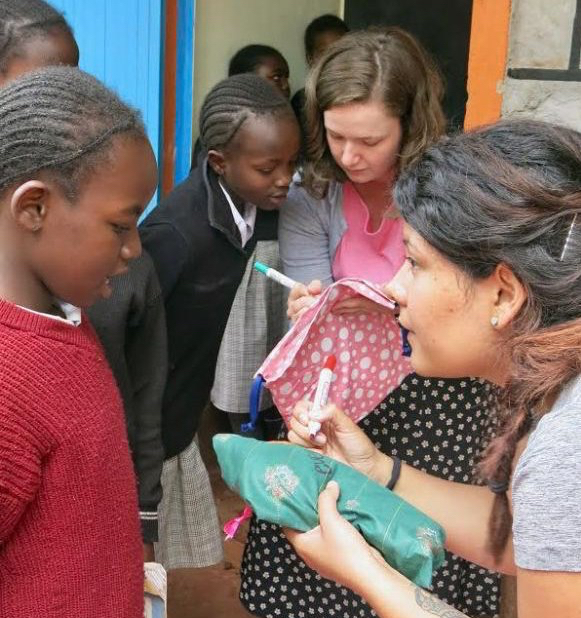
Breathing Room

bryde-maclean

By Ed Staskus

If you can breathe, then it’s working.” Lemony Snicket

Many actors swear by yoga, from Matthew McConaughey to Naomi Watts to Robert Downey, Jr., because acting is largely a movement art and yoga on the mat is mostly about body awareness. Unless the role is Frankenstein or you’re Vin Diesel, more wooden than a talking tree isn’t usually in the script.

When Russell Brand dedicated himself to Kundalini Yoga he said, “these things are right good for the old spirit.” Gwyneth Paltrow wakes up every morning at 4:30 to practice, according to People Magazine. “It kind of prepares you for everything, honestly,” said Jennifer Aniston.

God knows, Iron Man could use all the yoga he can get.

Rock-n-Roll Hall of Fame superstar dancer singers plug in to the practice, too. Madonna has unrolled her mat down the aisle of jumbo jets. The spectacle of the Queen of Pop in down dog pose is worth the plane fare, given that the average ticket price to one of her shows is upwards of $400.00.

Even though yoga is great for mobility stability control, it doesn’t always work out according to plan. When the singer Rod Stewart was trying a beginner’s balancing pose at home, he lost his balance and fell into a fireplace. “Surely, if God had meant us to do yoga,” he said afterwards, ”he’d have put our heads behind our knees.”

Not many yoga teachers swear by acting. They usually swear about you not being your authentic self, pretending to be somebody else. One of the eight limbs of the practice is all about self-observation. In some respects all of the practice is designed to be an expression of your true self.

Bryde MacLean, a native of Prince Edward Island, an Atlantic Canada province, is an actor and a Moksha Yoga teacher. Two Canadian teachers founded the practice in 2004, focusing on strength, therapeutic flexibility, and calming the mind. It is in the vein of hot yoga, although not as hot as Bikram Yoga, nor as rigid in its sequencing.

“It’s built with the long-term health of your spine in mind,” said Bryde.

Moksha Yoga, which means freedom from the cycle of death and rebirth, is environmentally active, one of its pillars of purpose being ‘Live Green’, and active in its communities, as well. There are more than 70 studios, most of them in Canada. They offer weekly karma classes with all the profits, currently more than $3 million, going to groups supporting human rights and holistic health.

“I was 21-years-old, working in a bar, hanging with my friends, having a lot of anxiety”, said Bryde. “Ryerson University had turned down my application. My sister recommended yoga. I had never taken a class in my life. Tara was dating Ted Grand, and he recommended it, too.” Ted Grand, her future brother-in-law, was at the time creating what became Moksha Yoga.

Bryde MacLean took her first class in the basement of a church in Charlottetown, the capital of Prince Edward Island. “It was myself and a bunch of women who were much older than me, in a definitely not heated space. We did lots of slow breathing and long stretches. It was a powerful experience. I decided I could get behind that.”

When Ted Grand offered her the opportunity to join his team and go to Thailand for yoga teacher training, she made sure she didn’t miss the team bus. “I wanted to travel and I wanted a skill I could travel with. I jumped right into the hot room. I loved it.”

She taught full-time in Toronto for a year before moving to Montreal, where she also taught, as well as attending Concordia University. “I had a full course load, but I wanted to study what I’m passionate about, so I applied to Ryerson again, and got in.”

Ryerson is a public university in Toronto, its downtown urban campus straddled by the Discovery District and Moss Park, focusing on career-oriented education. Bryde Maclean enrolled in the 4-year Performance Acting program. Long before she wanted to be a yoga teacher she had wanted to be an actor. She was scripting performing directing shows from the time she was six.

“We’d haul out Halloween costumes and my parent’s old clothes and dress up. We’d write fantastical stories and use construction paper to build our sets.” She and her friends play acted in garages, attics, and basements. Her parents encouraged her.

“They inspired me.”

Her parents were Sharlene MacLean and Bill McFadden. Her mother was pregnant with Bryde the summer of 1984 at the same time she was stage-managing ‘Blythe Spirit’ at the Confederation Centre in Charlottetown. As an actor Sharlene MacLean has played the maniacal Lady MacBeth in ‘Macbeth’ and the prattling Minnie Pye in ‘Anne of Green Gables’, working on stage and on film, working around the births of her four children.

Her father worked and performed long and often at the Victoria Playhouse. Victoria is a seacoast village on the south shore of Prince Edward Island. “I spent a lot of time in that theater as a little person,” said Bryde “My dad and I lived in the building down the street that is now the Chocolate Factory.”

Her parents played the aging couple in ‘On Golden Pond’ in 2012 at the Victoria Playhouse. They had both starred in ‘The Owl and the Pussycat’ during the theater’s first season in 1982, thirty years earlier. “I had never seen them on stage together, not as an adult,” said Bryde.

By the time she graduated from Ryerson University in 2011 she was teaching other people how to be yoga teachers. “I didn’t know what I was doing when I started, other than enough about teaching classes myself and being a good listener,” said Bryde. She became Manager of Yoga Teacher Trainings for Moksha International for 3 years.

“I dove into that. There’s a big community vibe. It pushed me to learn how to do things I didn’t consider myself capable of.”

2011 was a big year in more ways that one. She graduated with a BFA, got a full-time job, and got married, too. Jeremie Saunders, her boyfriend fiancée husband-to-be, was in the same class in the same program in the same university as her. One thing led to another. After graduation he trained to become a Moksha Yoga teacher.

“So, there we are, we do all the same things,” said Bryde.

They do all the same things, but with a difference. Yoko Ono once said the most important thing in life was, “Just breathe.” When Bryde wakes up in the morning she breathes free and easy. When her husband wakes up in the morning it’s with the thought, at least I’m still breathing.

Born with cystic fibrosis, Jeremie Saunders is in a lifelong fight with the inherited life-threatening disease. It is a genetic disorder that mostly affects the lungs. Infections and inflammation lead to a host of problems. 70 years ago, if you were born with it, you were likely to die within the year.

Even today, while cystic fibrosis has been made livable, there is no cure. No matter exercise regimens treatments antibiotics, median survival is less than 50 years. “I’m living with this terminal illness,” said Jeremie. “I know that my life expectancy is significantly shorter than most people.”

Two years ago he ran an idea for a new podcast by two of his friends. A month later they recorded their first episode of ‘Sickboy’. The podcast is about the day-to- day of living with an illness. Four months later it officially launched and three months after that it was included on iTune’s Best of 2015 list.

Although it is the essence of innovation to fail most of the time, when time is of the essence it’s better to succeed as soon as possible.

“It’s a comedy podcast,” said Bryde. “It’s laughing about the absurdities that happen when you’re sick, all the embarrassing and difficult things people usually don’t talk about.”

“I’ve always been a fan of honesty,” said Jeremie. All good comedy comes from a place of honesty. He doesn’t try to keep the beach ball underwater. “Every time I would talk to someone about being sick, this fog of awkwardness would fall over the conversation. It’s empowering to drop that, let it go, and not feel confined or chained down by your circumstance.”

Living in Halifax, Nova Scotia, teaching Moksha Yoga, co-starring in short films by Tiny Town Media, in early 2015 Bryde spied a last minute casting call for a summer show in Charlottetown. “I was lucky to see that.” She landed the role of the mom in ‘Hockey Mom, Hockey Dad’ in the Studio 1 Theatre at the Confederation Centre. She and the show were a hit. “Sets, characters, director score a hat trick,” wrote The Guardian in its review.

“Bryde MacLean says much with her guarded, often wordless reactions, like a smile tucked into her shoulder.” It was her first professional appearance on stage.

When actors unroll their mats it’s to learn to control movement. It helps them be more aware of where their physical bodies are in space and the dynamics of change in that space. “Yoga helps me get very present with my body and what’s going on with it,” said Jennie Olson Six, who is, like Bryde MacLean, an actor and yoga teacher.

It also helps develop command over one’s breath. But, that kind of command can be a double-edged sword.

“Yoga helps, definitely, as an actor But, I think in some ways, because I did my yoga training before my actor training, it has hindered me.”

Actors practice breath control so that they can manipulate the range, volume, and speed of their speaking. They might breathe in to the count of four, just like in yoga classes, but when they exhale they do it through their teeth with an sssssss sound. When they come back to four they cut the exhale crisply. It’s a way of practicing ending speech on an exact syllable, making it toe the mark.

When it doesn’t, sometimes actors will flap their lips, making a brrrrrrr sound.

“When you breathe in yoga it’s to create a steady, measured breath, focusing on it, calming your nervous system,” said Bryde. “You don’t want that when you’re acting. You want your breath connected to your voice. When you breathe to speak you want your breath to come from a place that’s connected to your impulse. Yoga is about observing your impulses, but not reacting. Acting is reacting.”

In Shakespeare’s day acting was called a performance of deeds. It’s the same today. “Acting is reacting in my book,” said Morgan Freeman. Where actors want to go in their work, even though they’ve walked through it a hundred times, is to express feeling by following an instinct, not by controlling it. Magic on film and stage is created, not by staying in the rehearsal hall, but by being in the moment.

“You need to have a cool head, however, not get caught up in whatever you’re working on, and go off into another dimension and never return,” said Bryde.

“Yoga has been good for me in terms of focus, my ability to concentrate, and be able to handle my anxiety. It keeps my feet on the ground. It rebalances my body, too, which is the only thing I have to work with.”

While at Ryerson University she played King Richard the 2nd in a student production. “He’s a hunchback, crooked. After two hours of him every day I had to balance out that side of me. Maintaining a healthy body is a super important thing for a performer. Otherwise, you end up with injuries.”

She went back to her roots in 2016, appearing in ‘Blythe Spirit’ at the Watermark Theatre on Prince Edward Island. It was her second professional appearance on stage. It was the same show her mother managed on the same island thirty-two years earlier when she was carrying her daughter-to-be. If anyone was ever born to play one of the leads in the Noel Coward play it was Bryde MacLean.

That same summer her husband starred in the comedy ‘The Melville Boys’ at the Victoria Theatre, the theater she had roamed explored left no stone unturned as a tyke. The Watermark Theatre seats about a hundred people. The Victoria Playhouse seats about fifty more than that.

Spectacle sells, splashy musicals, casts driven by stars. But, small gatherings at indie theaters can have a big impact. Little theaters, summer stock, some in your own backyard, often have big talent. “Bryde MacLean has probably the most difficult role to play – the straight woman – and she carries it like a pro,” wrote theater critic Colm Magner. “She has great fun combusting before our eyes later in the play.”

“I love small, intimate performances,” said Bryde. “I like to be right in there with the audience.” It works for her because she often works in film. “I tend to be a little smaller in my performance size. You can do the subtlest things, so subtle, but so real.”

She kept up her practice all summer at a Moksha studio in Charlottetown, taking bar classes, a mixture of ballet, pilates, and yoga. “I love it, but it kicks my butt.”

There are many reasons people take up yoga, among them stress relief, flexibility, and physical fitness. “They come to yoga to get a cute butt, but you can’t escape all the other benefits of it,” said Bryde. “They stay because they get more mindful, awake, in touch a little bit more.” If they stick with it, the reasons for doing yoga change. The focus shifts from the physical body to the subtle body. Almost 70% of people and 85% of teachers say they have a change of heart over time, changing their focus to self-actualization and spirituality.

“Their buns still get really tight,” she added with a teacher’s keen eye.

After ‘Blythe Spirit’ closed Bryde worked on a 5-week shoot of a horror film called ‘But What Are You Really Afraid Of’. She wasn’t an actor in a trailer waiting to be called for her next scene. She was one of the workers who serviced the trailer. “A craft services job takes care of all the food on the set, the crew that does the dirty work,” she said. “It’s not for the faint of heart.”

Although she continues to teach Moksha Yoga in Halifax, and continues acting, on stage and film, she is writing a screenplay for a feature film, producing a play she hopes to get on the road in 2018, and has launched another new podcast with her husband.

‘Turn Me On’ is a show based on sharing the couple’s sex life with others through interviews, candid conversations, and discussions about sexual orientation. “I don’t need crazy shock value to be interested,” said Bryde. In any case, guests on the podcast are free to talk about their sex lives “whether they’re whacky or not.”

“We are definitely having conversations that feel taboo,” said Jeremie Saunders.

Franklin Veaux, an author and sex educator, believes that what Bryde and Jeremie are doing is doing their audience a good service. “Sexual shame undermines people’s happiness and self-esteem, prevents them from being able to understand what they need and advocate for it and hinders intimacy,” he said.

Although ‘Turn Me On’ is not necessarily about heavy breathing, sex has always been a bestseller. It is often more exciting on stage and screen than it is between the sheets, but it is still emotion in motion, and a big part of nature and human nature. “I couldn’t have imagined we’d have over 12,000 listeners so quickly. It’s very cathartic for me.”

If it is about anything, yoga is about slowing down, slowing down your breath, your body, and your brain. It’s been said once you slow down you will connect with your heart. As many irons that Bryde MacLean has in the fire is enough to take your breath away.

“I wrestle with attachment and detachment,” she said.

Although detachment is a linchpin of yoga, nobody ever sincerely does it without a strong feeling of attachment to doing it. Almost everything we do is invented, so that detachment can be a kind of freedom. But, getting on the mat or breathwork or meditation is about involvement. Pattabhi Jois, who created Ashtanga Yoga a generation ago, on which most of today’s yoga is based, once said it is 99% practice and 1% theory. ,

“Lazy people can’t practice yoga,” he pointed out.

The way to get started is to get going get doing, opening doors, working hard at work worth doing. “I’m casting a net out for a bunch of potential opportunities. What matters is doing what you’re passionate about,” said Bryde MacLean.

Not much is ever accomplished without energy and passion, but to get anywhere you have to act it out.

“When you are inspired by some extraordinary project all your thoughts break their bounds and you discover yourself to be a greater person than you ever dreamed yourself to be,” said Pattabhi Jois. “Just do and all is coming.”

Catching your breath will take care of itself.

Ed Staskus posts stories on 147 Stanley Street http://www.147stanleystreet.com and Cleveland Ohio Daybook http://www.clevelandohiodaybook.com. To get the site’s monthly feature in your in-box click on “Follow.”

Out on a Limb

By Ed Staskus

I found myself tagging along to yoga in the first place because my neighbor Vera had started taking classes. Vera told me she was stiffening up. She was dropping in to the neighborhood studio because her husband Frank had taken classes for a long time.

“He said he went to yoga because he’s a counterculture kind of guy, even though yoga is a 5,000-year-old culture, and everybody does it nowadays, anyway,” said Vera. “Besides, his lower back hurt.”

Yoga never fixed his back, but Vera said he still gets on his mat every day, although mostly at home now.

I meant to start right after the New Year, but with one thing and another didn’t take my first class until the first week of February. February is the month I was born and the same month and year the Beatles first number one hit “I Want to Hold Your Hand” hit number one.

Vera picked me up and we drove to the yoga studio across the bridge in Rocky River. She didn’t hold my hand walking through the front door, not that I wasn’t nervous.

The owner of the yoga studio was teaching the beginner’s class. We all had to say our names and then tell a story. “Tell your story,” said Lindsey. I had no story. “Oh, my gosh!” I said. What story do I have? I thought. “My name is Liz Drake and Frank Glass is my friend’s husband,” I said, pointing to Vera.

Lindsey started laughing. “He’s the funniest guy I’ve ever met,” she said.

What? I thought. There are lots of funnier people than Frank, but since Lindsey was smiling up a storm I didn’t say anything. She was a good teacher, but I had no idea what was happening. I had no idea we had to go into poses. I had nothing. I didn’t know anything about yoga.

I had never done it, never seen a class, only a few minutes of it on TV. I had some idea about the mats, but no idea about the blocks and straps.

I thought it was going to be easier than what it was. You’re just stretching, right? We had to sit there, had to close our eyes, breathe, and I thought, is this what it’s going to be like? This is going to be easy. But, then you start doing poses. My God! It was a lot harder than I thought it was going to be.

I didn’t realize it, but I thought everyone was there for the first time, just like me. When we told our story I should have added I had never done yoga before. I forgot to add that. I had no idea what I was doing. Lindsey would say do this, do that. She had names for all the poses. What is that? I thought. What? I looked around, trying to do it, although I felt I was goofing on everything.

Although everyone else looked like they knew what they were doing, I didn’t even know what downward dog was. It was like when my Israeli ex-boyfriend-to-be convinced me to take Hebrew lessons. He said it was a beginner’s class for people who didn’t know Hebrew, but when I got to the class everyone was speaking Hebrew.

All during the yoga class I pretended like I was on the right track. I didn’t want to look like a total beginner. Lindsey would say, now everybody do this, go into this pose, and everybody would do it. I didn’t want to look like a total beginner, but I didn’t know what I was doing.

After some classes with Lindsey I started going Sunday mornings. Gina was the teacher. The room was always filled with incense at eight in the morning and we had to do weird breathing exercises. I thought I was going to pass out. Maybe I should fake it, I thought. I’m going to pretend I’m breathing, but I’m not going to, because I’ll get dizzy, get flashbacks.

“Pull it up from your core,” she said. Where is that core? I wondered. I never understood what that kind of breathing meant. It didn’t feel natural. Gina seemed to think we had to breathe differently to do yoga.

I liked Gina, but one morning I said I felt like I was doing most of the poses left-handed.

“I don’t even know the names of them. I just look around and hope I can copy somebody.”

“Oh, no, not the D word,” said Gina.

“What? What D word?”

“Discouragement.”

Everybody in the class was so sincere, so serious. They dressed like yogi people with their yoga costumes, special clothes, while I wore a t-shirt and sweat pants. At the end of class we sat cross-legged while Gina told us to imagine drifting down a river, putting all our bad thoughts on a leaf, and then letting the leaf float away. What are you talking about? I wanted to ask.

I moved on to a Tuesday beginner’s class with Tracy. It was at night right after a hot flow class. While we waited in the lobby to go in they were coming out completely drenched. Pools of sweat water were everywhere on the wood floor when we walked into the yoga room. You had to dodge around the pools.

Tracy was good at teaching us the actual poses. She took her time, walking around to help us all, although sometimes I would be in a pose waiting and waiting for her to get to me. I learned every pose as perfectly as could be since she was into perfect alignment.

One day there was a big guy who came to Tracy’s class. He was wearing funny plastic pants. Our class was usually mostly women. Sometimes there might be a guy or two, but after one or two times you never saw them again. Before we started, the plastic pants man said, “This is easy.” Once the class began he started sweating to death. He’s never coming back, I thought.

I never saw him again.

I never sweated, although I drank a lot of water.

I liked the crazy twists, for some reason, but standing on one leg was hard. I don’t have good balance because I can only see out of one eye. Whenever we did balancing poses the picture I got was, I’m going to fall down!

By the middle of summer I was ready to move up the yoga ladder. Tracy told me I should try Monica’s’s Basic Hatha Flow class. I bought a thicker mat. It was great for my knees. Some of the poses are hard on your bones, but that’s what you have to cut your teeth on. At least, that’s what Monica said.

She was tough, almost like a man, but I went to both of her weekly evening classes for five months the rest of the year. Most teachers had a soft voice, but Monica’s was never that soft. It became my main class, even though I dragged myself there. The whole drive to the yoga studio, even though it was only a few minutes, I would complain to myself. She’s going to come and push, she’ll walk around looking for me, I thought. She would push you down, sideways, all ways.

One time she pulled me when I was in a standing pose and I fell down. I just started laughing. You don’t want to be the center of attention, but I couldn’t stop laughing.

She made us hold poses incredibly long until my legs would burn and shake. I remember my thighs burning. I couldn’t even control them.

“What’s wrong with that, that’s good,” she said, “It’s good that your legs are shaking.”

I kept going back. She was top-notch.

One day she stood behind me and pulled my shoulders.

“How does that feel?” I started laughing, thinking, are you kidding me? Go to somebody else.

It didn’t feel good. But, it was a good pain. I liked being stretched.

A small man came to class and acted like he knew everything. “I’m doing this really great, aren’t I?” he said. But, he was just jumping around, moving fast. Afterwards he asked Monica about taking a more challenging class. “You have to be careful, basics would be best for the time being,” she said.

He wouldn’t listen, even though it was Monica telling him what for.

He had heard about Ashtanga Yoga and that’s where he went. I remember thinking, OK, buddy, you’re almost twitchy in this class, sweating, crawling out of the place. The next time I heard about him was when a story went around about a newcomer to the Ashtanga Yoga class who fell and cut his head and had to get stitches.

I was laughing.

Monica was the kind of teacher you were kind of scared of. When she told us we were going to be standing on our heads, I thought we had to do it, no question about it. But, I said to myself, Oh, Jesus! I don’t even know where to start. I never stood on my head in my life. She tried to get all of us to do it, but finally said, “If you don’t feel comfortable, you can sit this one out.”

“I’m glad you said that,” I said. Until then I had been ready, even though I was scared. I just give in and do it. I found out later that standing on your head is an advanced pose.

The one advanced pose I liked was wheel, especially when Monica walked over, got her hands under my back, and pulled up. It’s so hard on your back and hands. How much can you lift yourself? I remember thinking keep your hands there, right there, that feels great.

The whole thing about yoga was that I felt great at the end of class. Otherwise, why would anyone go and do it? I felt better, felt taller, all smoothed out. You had to take the pain of doing it to feel good once it was all over. That’s why I went back week after week, even though I knew Monica was going to push, make us stay in poses until it hurt.

It was because I felt darn good afterwards.

I didn’t want to give up on it, but it was so expensive after awhile. I went for a long time, almost a year, but then I thought I could do it at home. Frank Glass was doing it at home. Vera said he practiced yoga almost every day. If he could do it I could do it, for sure.

I started, but then stopped after a few weeks.

You have to be disciplined to do yoga at home. Whenever Monica saw anybody in her class slacking off she would say, “What’s wrong with you, get going.” At home you can say I’m not doing this pose today. The next day you can say I’m tired and won’t do anything today. I finally didn’t do much for more than a month, and when spring came I started working in the yard and going for walks in the park with my fox terriers.

That was the end of yoga for me.

Ed Staskus posts stories on 147 Stanley Street http://www.147stanleystreet.com and Cleveland Ohio Daybook http://www.clevelandohiodaybook.com. To get the site’s monthly feature in your in-box click on “Follow.”

Cutting Dreams Down to Size

By Ed Staskus

“I want to get physical, let’s get into physical, let me hear your body talk, your body talk.”   Olivia Newton-John

There have been several religious revivals in the United States. There was one while it was still British America and another one in the early 19th century. They are called Great Awakenings, outpourings of the Holy Spirit, in other words. One sermon by Jonathan Edwards in 1741 was entitled “Sinners in the Hands of an Angry God”.

It immediately breathed new life into godliness in the colonies.

The third Great Awakening of the second half of the 19th century was centered on the rise of contemporary churches, missionary work, and an emphasis on social issues.

The last more-or-less Great Awakening happened in the 1950s, when among the post-war baby-booming moms and dads of an expanding confident Pax Americana there was a revival of interest in religiosity, especially among conservative denominations, sparking theological battles and the rise of politically powerful evangelicals.

The Great Decline began in the 1970s when prayer, church membership, and service attendance started to take a nosedive. Although most Americans still claim to believe in God, they largely sleep in on Sundays. Maybe that’s what some evangelicals mean when they talk about “Soul Sleep”.

At the same time that interest in the spirit was fading away in the United States, a practice centered on the spirit started gaining traction. It was the practice of yoga. It first appeared on the coastlines of the country, the most secular places in the land, but it was a new awakening.

Although yoga today has been mainstreamed manhandled merchandised into cute outfits twisting themselves into perfect poses and posting the results on social media, Yogananda, author of “Autobiography of a Yogi” and the man who brought the practice to the land of opportunity in the 1920s, thought it was something else.

“It is a profound science of unfolding the infinite potential of the human mind and soul,” he said. He thought the purpose of yoga was not asana exercise, even though health is an important component of the discipline, but rather union with the spirit, largely through meditation.

Yogananda wasn’t big on milk and honey. He didn’t necessarily believe cloud nine was going to be got to by wrapping yourself up in a lululemon heart opener knit wrap, the perfect light layer to wear to and from your practice. He might have thought they are great clothes, colorful and moisture-wicking, albeit tight-fitting for his plus-sized figure from a different fashion time.

The Great Decline was long in coming, set in motion by modern philosophy, questioning everything, modern ideas like agnosticism, deism, and evolution, and societal rebellion. Modern times have been trending to the secular for several centuries. It may not be true that when we stop believing in God we’ll believe in anything, but it is true we all believe in Wall Street and Main Street more than God nowadays.

The Decline of Awe also came into play in the steam age industrial age atomic age digital age. The heavens are full of stars photographed by Hubble. They aren’t portents of success or failure, victory or disaster, Heaven or Hell, anymore. Awe has been replaced by high camp comic drama self-promotion hurly-burly send-ups. The proof is in the pudding, in Facebook YouTube Twitter Instagram.

The four top social network amusement parks have almost 5 billion users between them. On the other hand, maybe 20 percent of Americans go to church on a regular basis, maybe less. The rest are on their cell phones. “Ask most pastors what percentage of inactive members they have, and they’ll say anything from 40 – 60 percent,” said sociologist Penny Long Marler in ‘An Up Close Look at Church Attendance in America’.

There are far more No Church-affiliated Americans than Catholic Americans or mainline Protestant Americans. Only evangelicals are holding their own, probably because they believe in a success-oriented culture. Or maybe because they got their own haunted house ogre elected to the White House.

When yoga was getting its legs under it in the 1970s and 80s many Americans said they were spiritual, but not necessarily religious. What they meant was they weren’t organized religious. Even though arena-style mega-churches were springing up, seeming to be bursting at the seams, the writing was on the wall.

Just when the spiritual was fading away, along came yoga over the horizon, a ray of sunshine. A new kind of post-religious spirituality was on the way to a studio near you, brought to you from the East, where all religions have their roots. Sooner or later, everything old becomes new again.

Vivekenanda got the ball rolling in the 1890s, Yogananda popularized Kriya Yoga in the 1920s, and Yogi Bhajan inspired a large following in the 1960s with his Yoga of Awareness. At their core the practices were all spiritual. However, the spiritual aspect of yoga was not sustainable in the 20th century, not in a society becoming ever more secular and materialistic.

After World War Two greed rapidly outstripped need. By the turn of the new century the United States had become the most materialistic society in the history of the world. Yoga’s ethical guidelines, behaviors like non-excess, non-possessiveness, and self-discipline, were rapidly becoming irrelevant, even as the practice boomed.

Boomers and GenX’ers are less religious and spiritual than the Silent Generation. Millennials are the least religious and spiritual of any American generation. Americans are more focused on the freedom to do whatever they want more than ever before. The sense of spirit as the gospel truth has been tossed into the dustbin of history.

The problem for the bread and butter of yoga in the 1990s and 2000s was what to do. The union of the individual self and universal consciousness wasn’t going to pay the rent. In fact, being on the side of the spirit was being on the wrong side of the balance sheet.

The solution to the problem was to go back to Patanjali, who codified the system of yoga about two thousand years ago, and turn him over on his head. Modern yoga stepped up, dropped back, and threw a spiral for a touchdown. From the perspective of Head Coach Patanjali on the sidelines, the forward pass might have been thrown backwards into the wrong end zone. But, that was neither here nor there.

It was B. K. S Iyengar to the rescue.

He wrote a book all about yoga exercise, which was a blend of hatha, gymnastics, British Army calisthenics, Indian wrestling, and alignment. “Light on Yoga” was and still is a hit. “When teachers refer to the correct way to do a posture, they’re usually alluding to the alignment Mr. Iyengar instructs and expertly models in his book,” wrote ‘Yoga Journal’ in a tribute after his death.

Since then, streaming into the 21st century, yoga has become as body conscious as it can possibly be. Five of the eight limbs of yoga have been lopped off and left for dead, leaving posture poses and breathing exercises in control. Meditation has been repurposed as mindfulness.

Mindfulness is about fully minding what’s happening, minding what you’re doing, and minding the space you’re moving through. It used to be called paying attention. The best thing about the new practice is you don’t have to sit around meditating for hours anymore.

Yoga is a practice that fills in the space between now and forever, or at least it used to. It has since expunged the forever side of things and made the now side the happening side. It was once something between the nothing that isn’t there and the nothing that is. But, times have changed. Now it’s elbow grease, and any sense of wonder is beside the point.

“I don’t believe in all that spiritual mumbo jumbo,” or words to that effect, are routinely heard in yoga studios from coast to coast. It’s like hearing not the door slamming shut, but its echo.

Yoga has become a choreographed sequence of squirming facts on a rectangular rubber mat. Nuts and bolts were once baffled by imagination, but now studio classes are full of them. Yoga used to know what facts not to bother with. Now facts are confused with reality.

When modern yoga stripped away most of the limbs of the practice it was doing what it had to do to cash in on a good thing. Physical fitness was never the purpose of yoga, but physical fitness is what most people will pay $15.00 an hour for, not instruction in the benefits of the spirit. Intangibles are not the point of gruntwork.

Who goes to a gym for enlightenment?

Before the Great Split the dichotomy was, it’s either yoga, or it’s exercise. It didn’t matter what you were doing, bicep curls or sun salutations. What mattered was the ethical motivation non-competiveness spiritual orientation and where whatever you were doing was heading. If tight buns were the goal, it was exercise. If the subtle body was the goal, it was yoga.

It doesn’t matter anymore. Yoga has become whatever you want it to be, whatever you say it is, whatever pays the best in the marketplace. Deconstructing the structural unity of the practice has become constructing the fast food drive-thru of the obvious on a bland burger bun.

When yoga studios add profit centers to their footprint – mats branded apparel props essential oils lifestyle items – it’s because they need the real McCoy to stay in business. Retail can add 20 to 30 percent to the bottom line. Trying to make money off the spiritual is like trying to give fish a bath.

Yoga businesses need to be profitable. All earnings are dependent on shoppers, since if there weren’t any shoppers there wouldn’t be any stores or studios. It doesn’t matter whether it’s the groove on the mat they’re looking for or simply looking groovy. It doesn’t matter whether shoppers want an awakening or tight buns. The customer is always right.

“The act of shopping is a form of stress release,” wrote Rebecca Kotch in ‘Managing Your Yoga Retail Space’. “Shopping within a yoga studio environment seems to be an exceptional antidote to everyday stresses,” she said.

It obviates the need for wasting your time in corpse pose, as well. It begs the question, however, whether the new yoga is yoga by another name, or is it something different altogether? Is the old yoga dead and gone? Does it matter?

“Do I believe that yoga can be imparted without being grounded in its cultural and spiritual heritage? No. Whatever that is, it isn’t yoga,” Kavita Das wrote in ‘Any Practice of Yoga That Isn’t Spiritual Isn’t Really Yoga’.

Although there is no disagreeing with the sentiment, there is no doubt Kavita Das is completely wrong. Yoga has a cultural and spiritual heritage and the practice was, within the last one hundred years, grounded in that tradition. That is not the case anymore. Yoga today is whatever most people say it is.

Even before the Great Decline the idea that we are compelled to create meaning had been crashing into the past, redefining modernity. Everybody has to create meaning for themselves and create their own outlook. Life used to be what other people said it was. Life nowadays is whatever you say it is. Hanging onto the coattails of yoga’s heritage doesn’t get it done in an age of engagement and commitment to the now.

Although it is true the present is like an egg that was laid by the past, the present is never like the past. When you’ve got the present in the driver’s seat, running the show, you control both the past and the future. What we dream up now is tomorrow’s reality.

Most yoga today is branded, delivered, and consumed in a commercial setting, and has no spiritual aspect to it. The cultural heritage of the practice has become beside the point, except for the yoga tourists who pay homage to it by going to the sub-continent on vacation. However, what they practice at the fountainhead is ironically a mostly Westernized form of the discipline.

The Great Dream of yoga used to be awareness, self-control, and higher consciousness. The way it was gotten to was by training the body and the mind. Even though teachers were helpful, neither gym nor studio memberships were necessary. The best teachers didn’t explain or demonstrate, rather they inspired. They didn’t confuse things with their names.

The next step used to be about going beyond the physical, beyond the mind, even, and straight to the spirit. Stop making sense. There’s no time for words. Feel a little more alive. Stop making sense.

Most modern practice, however, has evolved so that it’s never mind anything except the physical. Modernity has given the heave ho to thousands of years of meaning, and replaced it with the provisional, so that essence is what you make of it, once you have come into being. The physicality of existence is what matters more than anything else.

It may be reductive to do yoga as a workout, but the other paths have been largely washed away in the Great Flood of rationalism secularism commodification. Besides, yoga has been decontextualized to the point that anything goes, anyway. Who really believes in the past anymore?

Traditional yoga was an enterprise after states of insight. Modern yoga is an enterprise after health and wealth along material planes. Traditional yoga espoused detachment from physical pleasures, or at least many of them. Modern yoga is a shopping mall of physical pleasures. Traditional yoga was then and modern yoga is now.

We all dream up our own reality, although now and then it’s fine to pause in our pursuit of yoga and just do it.

Ed Staskus posts stories on 147 Stanley Street http://www.147stanleystreet.com and Cleveland Ohio Daybook http://www.clevelandohiodaybook.com. To get the site’s monthly feature in your in-box click on “Follow.”

Design a site like this with WordPress.com
Get started