Category Archives: Paperback Yoga

Lord of the Fishes

By Ed Staskus

The  North Rustico beach slivers itself at the mouth of the harbor of the town, on Prince Edward Island, Canada’s smallest province. The crescent shaped island is tucked into the shoulders of New Brunswick and Nova Scotia, across the Northumberland Strait. On the far side of the Gulf of St. Lawrence is Newfoundland. Europe is the farther landfall across the Atlantic Ocean.

North Rustico is on the north-central coast, on Route 6, between Cavendish and Rusticoville. Some of it can be seen from the deck of Pedro’s Eatery, where Route 6 dips and curves through the middle of town, the market and gas station, the bakery and the credit union, the lobster restaurant and the post office. The rest of it is within a few minutes, down the harbor road and up some side roads.

It’s all within easy sight of the flocks of seagulls who fly up and down the coast.

Frank and Vera Glass, staying at the Coastline Cottages just outside of town, drove the mile-or-so from their cottage along the parkway, past Rollings Pond to the parking lot at the back of the beach, where a creek empties, up the dirt road to the other lot, parked in front of a sign saying the beach was unattended by life guards, walked up and then down the path to the beach, and made fast at a nice spot on the sand not far from the shoreline.

It was sunny and fair, the sun behind them, as they unfolded their low-slung blue canvas chairs, plopping into them, pulling books from their Pedro, a yellow and black re-purposed bicycle messenger bag.

Vera was reading an autobiography of Agnes de Mille.

Frank was reading “The Durrels of Corfu.” He interrupted Vera every few minutes with something funny he had just read. Vera thought, you’re slowing me down, dude, even though she was a slow reader, anyway.

“Did you see that sign?” she asked Frank.

“No, what sign?”

“The sign beside the lifeguard cabana, the one that said, ‘Caution! Attention!’”

“There are no lifeguards, not until next week,” said Frank. “I saw that sign when we parked.”

“It’s the North Rustico Beach welcome sign, the big red and white sign when you walk onto the beach, the one that says rip currents, strong offshore winds, beware of large surf, and don’t use inflatables.”

Frank looked out at the flat quiet water, the spaghetti surf, and the wide sky dotted with puffy clouds standing still.

“No, I didn’t see that sign,” he said. “Anyway, it seems beside the point today.”

“It does, doesn’t it,” said Vera, smiling at her husband.

They read their books, watched couples walking by barefoot, children running, and a head down in a cell phone shuffling past. A family set up camp nearby, Vera took a nap, and Frank rolled out of his canvas chair and practiced a half-hour of yoga on the warm sand. He didn’t have a mat, but it didn’t matter. He turned and pulled and released and twisted one way and the other.

When he was done he rolled back into his low-slung chair.

“That felt good,” he said.

“I’m glad, honey,” said Vera. “What was that last thing you did, the twisty thing? I haven’t seen you do that before.”

“It’s called Lord of the Fishes,” he said. “It’s supposed to be good for your lower back.”

Vera didn’t do yoga in any of its forms, although she was glad Frank did. He had a bum back and the exercises kept him on his feet. The thinking behind the practice – Frank liked to call it that – also seemed to be good for him, keeping him on the tried and true straight and narrow.

“Do you remember the last time we had dinner with Barron at Herb’s Tavern, and he spent coffee and dessert railing about how steady as it goes has gone big top high wire?” Frank asked Vera.

“Yes, I do,” said Vera, remembering the carrot cake she had not been able to fully enjoy.

Barron Cannon owned and operated and taught at a small yoga studio near where Frank and Vera lived in Lakewood, Ohio, an inner ring suburb on the shores of Lake Erie, west of Cleveland. He was between young and middle-aged, married but divorced – what woman could stand living with him, Vera wondered – a post-modern sensibility with a PhD in philosophy, but a yoga traditionalist. He taught the exercise poses, but always in the context of the other arms of yoga, which he considered the essential parts of the practice.

Whenever he was in high dudgeon he complained about the 21st century western emphasis on the physical aspects of yoga.

“Everywhere you go, everywhere you look, it’s asana on the mat, in a hot room, an hour of hard work and it’s back to whatever else you are up to. When did yoga become work hard, no pain, no gain? When did it become just another something on the checklist, getting fit, staying ahead? When did it become competitive, a race to the finish, another rat bastard in the rat race?”

Barron was Frank’s friend. Vera tolerated him for her husband’s sake. She didn’t dislike Barron, but she disliked it when he said things like, “Nobody worth their salt is nice.”

“I was going to tell Barron about Eric Young, mention his ideas, but I didn’t,” said Frank. “We would never have gotten out of Herb’s, at least not until after closing time, if then.”

“Who’s Eric Young?” asked Vera.

“A Baltimore guy, a lot like Barron in some respects, teaches some yoga, aerial style, a big fan of the Baltimore Orioles, which is too bad,” said Frank.

“Why were you going to bring him up to Barron?” asked Vera.

“Because he’s on the other side of the teeter totter,” said Frank.

“What’s too bad about the Orioles?”

“You don’t want to know.”

“Competitive yoga started in India, not the west, but that’s a minor detail,” said Eric. “I am curious, though, at the idea of the physical becoming the more dominant focus, and so many people feel the need to tell other people that’s not yoga when there is no agreed upon definition. If we are all properly practicing an inward journey, shouldn’t that remove the need to be concerned what others do and what they call or label the activity in which they are doing it?”

“That makes sense to me,” said Vera.

“There’s more,” said Frank.

“Setting aside the definitions of yoke and some of the more deeper translations and interpretations of yoga from the Upanishads, the Bhagavad Gita, and setting aside the atman and seer ideas, for the average practitioner they will have no understanding, or care to,” said Eric.

“In my yoga teacher training class, I would say half had no idea there was anything beyond the physical. To many, yoga is a down dog, a bird of paradise, with a glass of wine after, and for some, a puppy or a baby goat wandering by. I say more power to them, for at least two reasons. First, if they are truly in the present, they are doing a lot of the work, even if not labeled as such, and if they do it enough, the work will pay off one way or another. Second, if I am doing my yoga, in whatever form that means to me, then I should not be bothered one way or another. As no one owns the term and there are so many different facets, it’s arrogant for me to say you’re wrong.”

“I’m not sure Barron would be good with that,” said Vera.

“You know how Barron is. He would have plenty to say,” said Frank.

“I will concede if your business is teaching, and I set up shop next door spouting I know as much and am as good a teacher, which I don’t and am not, you have every right to be bothered by this, but that’s business, not yoga,” said Eric. “I don’t think the gurus of yore were bothered by what another one did on the other side of the country. But for those who say because it’s not four thousand years old, only two hundred years, and it’s not authentic, I call that bullshit.”

“He speaks his mind,” said Vera.

“There is wisdom and there is gray hair,” said Eric.

“I wouldn’t put Eric and Barron in the same room,” said Vera.

“I don’t know about that,” said Frank. “They’re both on the same yoga planet.”

“What planet are you on?”

“What do you mean?”

“I mean, don’t put them in the same room, for God’s sake. They may be on the same planet, but they’re not coming from the same place. That would be a head-on collision.”

Vera and Frank heard a sudden loud squarking from the shoreline, and when they looked towards the sound, they saw a herring gull dragging a rock crab out of the surf. The crab latched onto the bird with large claw, swinging side-to-side as the seagull flapped up. The bird shook the crab off, dropping it into the surf, and going after it again, pecking and pecking. When the seagull dragged the crab out of the water it began to slash at it, killing it, if the crustacean wasn’t already dead, pulling it landwards whenever the surf rolled it back towards the ocean.

“I thought their shells protected them from birds,” said Frank.

“Maybe the shell was cracked already,” said Vera.

“One of the guys at the harbor told me that gulls will pick up shellfish, fly them up in the air, and drop them on rocks so their shells crack when they land.”

“I didn’t know seagulls had it in their pea brains to be able to think that out,” said Vera.

“It’s a dog eat dog world,” said Frank. “Seagulls are intelligent. They can unlock trash bins. They’re omnivores and they’ll eat anything. I read about a black-backed gull down on Cape Cod that snatched up a miniature chihuahua, right off the beach, and the dog has not been seen since.”

They watched the seagull rip legs off and pull goopy innards out of the crab, until there wasn’t anymore left to be had. The big white and gray bird arched its neck, cawed several times, and flew away. The remains of the crab slowly but surely rolled back into the ocean.

“What time does Doiron’s close?” asked Vera.

“Six,” said Frank.

“What time is it now?”

Frank looked at his iPhone.

“Quarter of six,” he said.

“Drive me over me there” said Vera. “You can drop me of and I’ll walk back to the cottage.”

“All right, maybe I’ll drive up the parkway, go for a walk around Orby Head, and we can meet back at the cottage,” said Frank.

He dropped his wife off at the fish market.

Doiron Fisheries is on the wharf on Harbourview Drive. It’s been there since the 1950s.  It’s a small storefront with a big sign over the door, a long shallow front room chock full of haddock, hake, halibut, salmon, mackerel, oysters, mussels, scallops, and cooked crab.

Frank drove up Church Hill Road, past the Stella Maris church and the graveyard, and down to the National Park kiosk. They had a seasonal pass attached to the stem of the rear view mirror of their Hyundai Tucson, and when the attendant in the kiosk glanced up and waved him through, Frank swung the car to the left up the hill into the seashore park.

He had once stopped and asked the teenager in a National Parks shirt behind the drive-through window, “What do you call this building?”

“We call it the gate,” she said.

“The gate?”

“That’s it, yup, the gate.”

Frank drove past Doyle’s Cove and the Coastline Cottages. The cottages are in the Prince Edward Island National Park, but aren’t a part of the park. The Doyle’s kept their land, in the family for a dog’s age, not selling it to Canada when the park was established. There are a handful of their houses, one nearly a hundred years old, another one newly built last year, within sight. They are the only homes in sight.

He drove the two miles-or-so up the Gulf Shore Way, pulled off the road at Orby Head, and went for a walk along the red sandstone cliff. He lay down face forward on the other side of the rope fence and looked down at the waves churning and breaking on the narrow rocky landing far below.

A group of cormorants in a v formation flew past, nearly at eye level. He closed his eyes and breathed evenly for a few minutes. He heard a car pull in, its tires crunching on the gravel. He opened his eyes, got up, and walked back to his car.

When he stepped into the cottage the lowering sun was lighting up the kitchen window, and Vera was at the stove.

“What are you making for dinner?” he asked.

“Crab cakes,” she said.

Ed Staskus posts stories on 147 Stanley Street http://www.147stanleystreet.com and Cleveland Ohio Daybook http://www.clevelandohiodaybook.com. To get the site’s monthly feature in your in-box click on “Follow.”

The Laughing Yogi

By Ed Staskus

“I am thankful for laughter, except when milk comes out of my nose.”Woody Allen

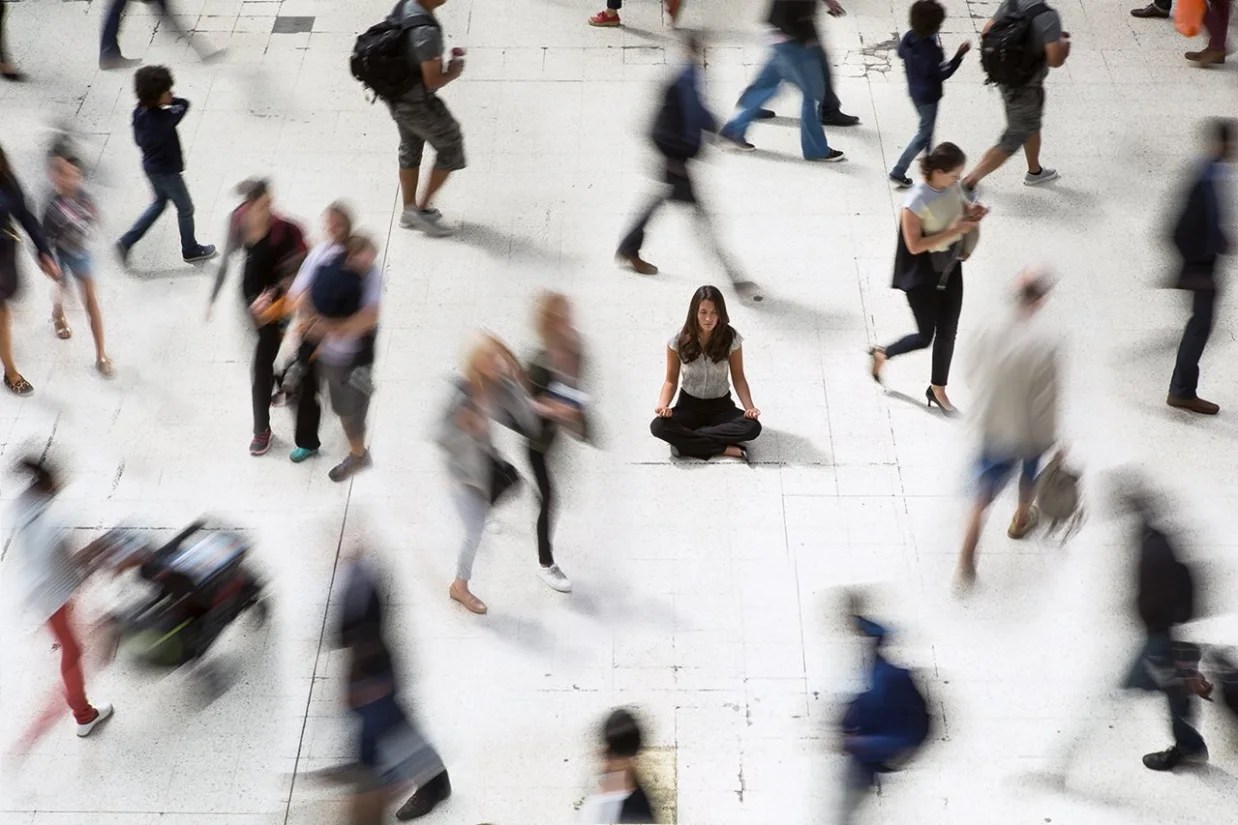
Yoga is a dead serious body mind spirit rubber mat hits the road adventure.

It is a rigorous undertaking when you are trying and trying to get asana poses just right, much less trying and trying to achieve the higher state of being and thought the practice aims at. Meditation and its hardball goal of spiritual insight is a life-long commitment, not just the old college try. The concentration and stern self-discipline needed to get to moksha are no laughing matter.

Or is it really all that long-faced?

Since the mid-90s a practice called Laughter Yoga has gainsaid the notion that yoga is cold sober no-nonsense by the book, and humorless. The brainchild of Dr. Madan Kataria, an Indian doctor now informally known as the ‘Laughter Guru’, it is premised on the idea that laughing is good for you.

Their motto is a few ha ha ha’s are a boon boon boon.

What did the yoga mat say to the yoga student? I will catch you if you fall.

It’s long been said that laughter is the best medicine. It strengthens immune systems, boosts energy levels, and protects from the damaging effects of stress. Laughing enhances blood flow, which is a factor in cardiovascular health. It releases endorphins, which are the body’s natural feel-good chemicals.

“Laughter is the tonic, the relief, the surcease for pain,” said Charlie Chaplin.

It’s priceless and it’s free, too.

Not only that, no matter whether it is real or feigned, it works, although, if you’re laughing for no reason at all, you might need either counseling or medicine.

“The mind does not know that we’re faking it,” explained Mary Wilson, a news reporter for ABC/Fox in New York who practices yuks on the mat. Dr. Kataria based his brainstorm on the concept that canned laughter yields the same results as spontaneous laughter.

“In Laughter Yoga there is no need to wait until something funny happens. You can laugh intentionally whenever you want,” said Dr. Kataria.

When it’s real it’s even better, as any belly laugh will testify. A new study at Loma Linda University demonstrated that adults shown a funny 20-minute video scored better on short-term memory tests than a control group. Their levels of cortisol, a stress hormone, were also significantly decreased.

“Learning ability and delayed recall become more challenging as we age,” said Dr. Gurindor Bains, the Ph.D candidate in Rehabilitation Sciences who led the study. “Laughing with friends or even watching 20 minutes of humor on TV, as I do daily, helps me cope with my daily stressors.”

A rose is a rose is a rose, Gertrude Stein famously observed, but when is a yoga studio not a yoga studio not a yoga studio, even though tens of thousands of people have taken classes there. That would be a Laughter Yoga studio, which is usually in a park or on a beach.

The American School of Laughter Yoga promotes Laughter Clubs that are free and open to the public. “Thousands around the world volunteer their time to make them happen, freely and unconditionally, from the heart as an act of service.”

Laughter Yoga is practiced in more than 8,000 clubs and in more than 65 countries. “Laughter is the tool. Yoga is the end,” said Sebastien Gendry of the American School of Laughter.

Some people crack a yoga joke and everyone laughs. But, some people make a joke of yoga and laugh all the way to the bank, with wads of other people’s money.

Bikram Choudhury of eponymous Bikram Yoga fame was having lunch with friends when a cell phone on the table rang. He answered and put it on speaker.

Bikram: “Hello!”

Woman: “Hi Honey, it’s me. Are you having lunch?”

Bikram: “Yes.”

Woman: “I’m at the shops now and found this beautiful mink coat. It’s only $9,000. Is it OK if I buy it?”

Bikram: “Sure, go ahead if you like it that much.”

Woman: “I stopped at the Lexus dealership, too, and looked at the new models. I saw one I really liked.”

Bikram: “How much?”

“$120,000.”

Bikram: “OK, but for that price make sure you get it with all the options.”

Woman: “Great! I was just talking to Janie and found out that house I wanted last year is back on the market. They’re asking four-and-a-half million for it.”

Bikram: “Well, go ahead and make an offer of four million. They’ll probably take it. If not, you can go the extra half-mil if that’s what you really want.”

Woman: “Oh, thank you! I’ll see you later! I love you so much!”

Bikram: “Bye! I love you, too.”

He hung up.

Everyone at the table was staring at him in wonder and astonishment at his generosity.

Bikram turned and asked, “Anyone know whose phone this is?”

Sometimes yoga is said to cure everything except the common cold.

Bikram Yoga claims that 30 days of his hot yoga will transform anyone, making them strong and buff, and those who say during steam class “Please, kill me now” have got it all wrong.

Laughter Yoga says a week without laughter will make a man weak.

“This stuff really works!” said Harry Hamlin, at the far end of hunkdom, about Laughter Yoga after high-stepping the cha-cha-cha on ‘Dancing with the Stars’.

Others, like John Friend, the former founder and former chief guru of the former Anusara Yoga, think they’re laughing all the way to the bank until they find out what’s in their wallet is all a can of worms.

John Friend was praying to Krishna.

“Krishna,” he said, “I would like to ask you a question.”

Krishna responded, “No problem. Go ahead.”

“Krishna, is it true that a million years to you is but a second?”

“Yes, that is true.”

“Well, then, what is a million dollars to you?”

“A million dollars to me is but a penny.”

“Ah, then, Krishna,” said John Friend, “may I have a penny?”

“Sure,” said Krishna. “Just a second.”

The laughter of the gods is sometimes the upshot of setting yourself up as the arbiter of your own schemes. Some people say laughter is God’s blessing. Or, conversely, as Lord Byron put it, “Nothing can confound a wise man more than laughter from a dunce.”

Still others, like Jeff Briar, the founder of the Laughter Yoga Institute, laugh daily in their yoga practice for the fun and friendship of it. A professional comedic actor for more than 30 years, Mr. Briar is a certified Laughter Yoga Teacher and in 2006 was appointed by Dr. Kataria as an International Laughter Ambassador. He has published manuals, written books, and shot videos, including ‘Gibberish Sets You Free! Five Films on the Power of Talking Nonsense’.

Comedians often have the gift of shtick, but Laughter Yoga posits chuckles and chakras as the joy cocktail, and a great workout, too. “We laugh as a form of exercise,” said Mr. Briar. Want a toned tummy? Stomach muscles expand and contract when you laugh. A night at the comedy club can start you on the way to a rack of six-pack abs.

“Start laughing for no reason and watch yourself feel better,” said Mr. Briar on the Oprah Winfrey Show. “Laughter relieves all the negative effects of stress.”

What did the meditating yogi say to the other meditating yogi? Are you not thinking what I’m not thinking?

Ha ha ha…

What did the breathless yogi say to his yoga teacher? It turns out I’ve been inhaling when I should be exhaling and exhaling when I should be inhaling.

Ha ha ha…

What did the cat say to the other cat while watching their pet owners practice yoga? Who knows how many years of yoga and they still can’t lick their own butts.

Ha ha ha…

What did the man say to his friend about going to yoga class? Nah, I’m down, dog.

Ha ha ha…

What ran through the mind of the young yogi in Warrior Pose? Am I doing this right? Am I doing anything right? What is my life’s purpose? Am I happy? What do I want? Should I get chips for dinner? Is everyone looking at me? Do my boobs look weird in this top?

Ha ha ha…

Standing on one leg in yoga class doesn’t make you a yogi any more than standing in a garage makes you a car.

That’s not a joke.

T cells are white blood cells that fight infections and are the mechanism essential for human immunity. When you laugh you activate T cells, getting them on the go from where they are stored in the lymph system. Biophysical research has demonstrated that belly laughing generates a negative pressure in the body that increases the speed and flow of lymph up to 15 times the normal rate.

“Believe it or not, a hearty chuckle can help,” said Dr. Andrea Nelson of the University of Leeds. “This is because laughing gets the diaphragm moving and this plays a vital role in moving blood around the body.” She stopped short of saying take two aspirins and go watch an Adam Sandler movie.

A woman reported her husband’s disappearance to the police. They asked for a description and she said, “He takes an Ashtanga Yoga class every day, he’s toned, tall, amazingly energetic, with thick curly hair.”

Her friend said, “What are you talking about? Your husband is five-foot-four, bald, lazy, and has a big belly.”

The woman said, “Who wants that one back?”

A good sense of humor won’t cure everything that ails you, but giggles and guffaws are a great RX, nevertheless. “Laughter can stimulate circulation and aid muscle relaxation,” says the Mayo Clinic. “A laugh fires you up and can increase your heart rate and blood pressure. The result? A good relaxed feeling.”

Laughter activates the body’s relaxation response. You forget your troubles when you’re laughing. “People who are laughing report being less bothered by the pain they do experience,” according to the Chopra Center.

Yoga is an eight-fold path to wonder. Maybe watching reruns of ‘The Wonder Years’ should be part of the eight-fold path.

There are many different ways of going on the long strange winding road trip of yoga. Although it’s probably true no one can change their destination, everyone can change their way of travel. “It is a direction, not a destination,” said Carl Rogers, a founder of  humanism in psychology practice.

Getting there can be Sturm und Drang. Getting there can be a hoot. Getting there can be gotten to on foot, in a shiny new SUV, or on the Furthur bus.

No one wants to die, but everyone wants to go to heaven. The psychedelic painted school bus Ken Kesey and the Merry Pranksters called Furthur, painted in laugh-out-loud splashes, would be as good a way to go as any other.

A man arrives at the gates of heaven.

St. Peter asks, “Religion?”

The man says, “Methodist.”

St. Peter looks down his list, and says, “Go to room twenty-eight, but be very quiet as you pass room eight.”

Another man arrives at the gates of heaven. “Religion?”

“Baptist.”

“Go to room eighteen, but be very quiet as you pass room eight.”

A third man arrives at the gates. “Religion?”

“Jewish.”

“Go to room eleven, but be very quiet as you pass room eight.”

The man says, “I can understand there being different rooms for different religions, but why must I be quiet when I pass room eight?”

St. Peter says, “The yogis are in room eight and they think they’re the only ones here.”

Everyone next in line had to wait a minute from here to eternity while St. Peter rolled around the pearly gates in paroxysms of laughter.

A version of this story appeared in Rebelle Society.

Ed Staskus posts stories on 147 Stanley Street http://www.147stanleystreet.com and Cleveland Ohio Daybook http://www.clevelandohiodaybook.com. To get the site’s monthly feature in your in-box click on “Follow.”

Two’s a Crowd

By Ed Staskus

“It’s like having, you know, your phone has a charger, right? It’s like having a charger for your body and mind. That’s what meditation is.”  Jerry Seinfeld

Meditation is not a huge undertaking. Anybody can do it anywhere they are, anytime they want, sitting somewhere familiar or even on the fly. It’s often thought that meditation is thinking about nothing. It’s not, since thinking is one thing and nothing is another thing.

If you’re trying to think about nothing, you are still thinking, giving your best shot to making something out of nothing. But, trying to think of nada is like trying to nail Jell-O to a wall. Only nothing comes from nothing. The black hole of meditation isn’t the dark side of the void.

The practice is about being somebody somewhere in a state of being less and less distracted, especially by thoughts. That’s why there are walking and sitting meditations, in the park or on a park bench. It’s not about the moving body. It’s about the non-moving mind. It’s about slowing down the brain on the train.

“If you’re impatient while waiting for the bus, tell yourself you’re doing bus waiting meditation,”” said Gretchen Rubin, author of ‘The Happiness Project.’

It’s about knowing everything without thinking about anything, at the same time that it’s about paying close attention to one thing, the one thing you’re doing on the bulls-eye spot you’re doing it.

It’s about being alone.

But, who wants to be alone? Many people hate being alone. It makes them feel insecure anxious depressed. They get into relationships and marriages and stay related and married because they’re afraid of being alone. We seek family, work, and obligations to stave off loneliness. Social isolation poses health risks and is associated with an increased risk of death.

Most people avoid being alone as much as possible because who wants to hear the voices in their own head all day long, their own internal monologue. You can’t get away from yourself. It would drive anyone crazy.

Even the Bible says it’s not good for man to be alone, although Jean-Paul Sartre, the existentialist writer, once said hell was other people. Whenever you’re left alone you have fewer problems. It’s harder to find someone else to blame, though.

Meditation is an old practice, prehistoric, mentioned in some Hindu texts more than three thousand years ago, and practiced by pagans, Christians, and Muslims. The Romans said, “Do what you are doing.” Japan’s Zen is meditative, Sufis practiced meditative breathing controls, and a meditative tradition is implicit in the Jewish Tanakh.

The bones of it all come from the Buddhists. “Many techniques commonly practiced today originate from ancient Buddhist meditation texts,” explained Susan Chow, a science writer and editor. For most of its long history it was a religious approach. Even when it wasn’t it played a top spot in many religious and spiritual practices.

Believers went to churches temples mosques for many years centuries millennium to affirm and reaffirm their beliefs. They prayed and meditated because it was the person-to-person way to talk to God. It was the direct line to heaven. If you wanted to go to heaven you went to church first.

But, who goes to church anymore? Religion was once called the opiate of the masses. However, denominations and church attendance have slowly and steadily declined the past thirty years, so that today, according to The Journal for the Scientific Study of Religion, only about 52 million worshipers go to a weekly service.

Yoga is the new opiate of the masses. It has grown by leaps and bounds the past thirty years, so that today, according to Yoga Journal, about 37 million Americans practice it. Getting on their rubber mats about twice a week, at a studio or at home, means that more people practice yoga than go to church every week.

Spiritual practice has gone rubber soul secular.

Nobody wants to climb the Holy Staircase of the Scala Santa in Rome on sore knees anymore. Everybody wants to get down on healthy knees for cat cow pose. Nobody wants to chant a mantra to a complicated-sounding deity. Everybody wants to go ecstatic kirtan dancing at Wanderlust. Nobody wants to meditate like old-school Buddhists, for whom meditation was a cog in the machinery of enlightenment, along with virtue and wisdom.

Virtue and wisdom don’t get it done anymore, dude, not in the machine age.

What does get it done is mindfulness meditation.

“Meditation is not religion, not spirituality, it’s a technology of upgrading the mind that can enrich one’s life,” wrote Jay Michaelson in ‘Evolving Dharma: Meditation, Buddhism, and the Next Generation of Enlightenment’.

Mr. Michaelson cut to the chase, limning his perspective on meditation and its offspring, modern mindfulness meditation. “There are a lot of same-old, same-old Buddhist books out there. I wanted to write the book I wanted to write, for my circle of serious practitioner friends, all of whom are either Gen-X or Millennial, and none of whom have any patience for those clichés.”

“All men’s miseries derive from not being able to sit in a quiet room alone,” wrote Blaise Pascal, the French mathematician and philosopher, coining a cliché.

But, three hundred years after Blaise Pascal, nobody needs to sit in a musty quiet same-old room meditating all by themselves. Besides, it’s not a quiet world anymore, not when the nagging question of the age for the Gen-X and Millennial body politic is, “Where’s my iPhone?” We have turned our backs on silence, even though it’s only silence that can express the inexpressible.

The idea used to be to get in touch with the silence within you. Now the idea is to get in touch with your social media account to see what it’s saying about you. The sounds of silence were once golden. Although the world is never quiet, it used to be much quieter. Chattering is the new knowledge.

Silence is scary.

Fortunately, there is little need to meditate alone anymore. Wherever you are we can all go to mindfulness meditation seminars, classes, and studios. MNDFL in New York City offers 30-minute sit-down sessions for $15 and 45-minute classes for $25. For those aware that MNDFL fills up fast, endless meditation is available at $200 a month.

The Awakening Series at Cleveland’s Mindful Moments is $200, while the Deepening Series is $280.00. Austin’s Meditation Bar offers an unlimited monthly pass, with a 3-month commitment, for $99 a month. At the Kadampa Meditation Center in San Francisco, “perfectly suited for busy modern people,” drop-in classes are $15 and there is a bargain coupon offer of 4 for $50.

“Having a dedicated space where you can go to meditate really brings the practice to life for people,” said Rinzler Lodro, one of MNDFL’s founders. Otherwise, at home, he added, “They’re always going to be distracted by the stain on the carpet.” Carpet stains can be a bane to the tidy and distraction is the archenemy of meditation.

Before meditation was mindfulness meditation it was meditation. It was a way of shaping the mind so that it could be cognizant of content without identifying with content. It was an exercise in generating energy, sometimes called life force, and developing patience, generosity, and compassion. It could also simply be about sustaining a single-pointed concentration as an end in itself.

“The simplest definition of meditation is learning to do one thing at a time,” wrote Tony Schwartz in The New York Times.

The complexity of mindfulness meditation, on the other hand, is that it wants to do everything at once: it lowers stress, enlarges your brain, elevates your school grades, makes music sound better, lowers your health care bill, reduces depression risk, supports weight-loss goals, comes in handy during cold season, and finally, among much, much more, basically makes you a totally terrific person, according to Amanda Chan, editor of ‘Healthy Living’.

What doesn’t it do?

Brain, Behavoir and Immunity Journal Proves Meditation Reduces Risk of Alzheimer’s and Premature Death!

Wake Forest Baptist Medical Centre Reveals Meditation Better than Morphine for Pain!

University of Wisconsin-Madison Demonstrates Meditation Effective in Relieving Inflammatory Bowel Disease!

Whew, it’s time to take a breath!

However, not everyone is all-in with the one-size-fits-all outsize role of mindfulness meditation. “Mindfulness practice has its benefits,” noted Catherine Ingram, author of ‘Passionate Presence’“But, there came a point when mentally noting my breath, thoughts, and sensations became wearisome, a sense of always having homework and of constantly chopping reality into little bits.”

Even Jack Kornfield, the American author and Buddhist teacher, believed there were limits to what meditation could accomplish. “While I benefitted enormously from training in the Thai and Burmese monasteries where I practiced,” he wrote, “there were major areas of difficulty in my life that even deep meditation didn’t touch.”

One major area in which meditation has undergone a sizable transformation is in the world of business. Not only is meditation, like yoga, like spirituality, like all things ingenuous, being transformed into a commodity, businesses are co-opting meditation for their own purposes.

Fortune 500’s as diverse as Nike, Prentice Hall Publishing, and Proctor & Gamble have gotten behind the meditation-at-work wave. “You cannot out-work a problem, you have to out-meditation it,” said P & G’s CEO A. G. Lafley, who has his own mindfulness practice.

Apple and Google offer meditation space and courses on a regular basis. Google’s ‘Search Inside Yourself’ program is designed to teach employees how to breathe mindfully and listen closely to their coworkers. Steve Jobs often meditated, was married in a Zen ceremony, and the technology titan he created affords employees 30 minutes a day to meditate.

It is no fad in Silicon Valley, since many techies believe it is the kind of thing that rewires your brain, all to the good of the bottom line. “The woo-woo mystical stuff, that’s really retrograde,” said Kenneth Folk, a meditation teacher in San Francisco. “It’s about training the brain.”

In the Digital Age in the New World it’s the kind of thing that can make or break your career. Many companies are concerned with employee motivation, or what they call emotional intelligence. “Every company knows that if their people have emotional intelligence, they’re going to make a shitload of money,” said Google’s Mindfulness Coach and ‘Jolly Good Fellow’ Chade-Meng Tan, sounding like a squid on a skateboard.

At Google there are bi-monthly ‘Mindful Lunches’ where everyone eats in total silence, the only sound the sounds of munching crunching digesting, and the tolling of prayer bells. They have built a labyrinth, too, for walking meditations, although it’s not clear what getting lost has to do with being found. Nevertheless, it isn’t “hippie bullshit,” said Bill Duane, who designs meditation classes for the industry giant.

Meditation used to be one man or woman in one place somewhere on Main Street doing one thing, doing their own thing. There was no bullshit to it. Now it’s walking in circles to get the Wall Street share price of your employer’s stock going in the right direction. There are many kinds of bullshit to it.

Meditation for a long time was an individual enterprise, the seventh element of the Buddhist Noble Eightfold Path. It was about being attentive to everything as-it-is. It wasn’t about being attentive to your co-workers making sure they were on the same path to profits as everyone else.

It wasn’t goal-oriented mindfulness meditation and data-driven wisdom conferences at resorts with executives from Cisco and Ford among the headliners.

“Are we there yet?” asked the man at the Journey to Enlightenment class.

Individualism is the idea that an individual’s life belongs to him or her. The Declaration of Independence is largely about individualism. Collectivism is the idea that an individual’s life belongs to the pack company society of which he or she is a part. The Constitution is largely about collectivism.

According to collectivism the group is real and the individual is an abstraction, clear as dishwater. When meditation is reduced to its lowest common denominator, a dollar sign for a breath of life, individuals are reduced to consumers and notional values on an Excel spreadsheet. According to individualism men and women are an end in themselves. They are not a means to an end for Apple, Google, and Proctor & Gamble, although, God knows, everybody needs soap.

Nobody needs to meditate about that, not even the P & G soap makers.

Mindfulness meditation, as conceived by spiritual entrepreneurs, sharp-eyed businessmen, and post modernists, is a collectivist endeavour, full of hearty healthy happiness on the menu. Meditation as conceived by the old-school sit-down tradition is a breath and point-of-focus practice to get you to a new state of consciousness, out of time, back to the future.

Maybe you got there and maybe you didn’t. In any event, back-in-the-day the results weren’t going to show up on your pay stub. They were going to show up in something that money can’t buy. They were going to show up in a brain and body sitting quietly by itself, the showing up as much the big bang of consciousness as consciousness itself.

When men and women fall in love they rarely want a third wheel along for the ride. Nobody takes collectivism that far, neither back-in-the-day nor today. The dynamic of love is two minds two bodies two individuals melding into what makes the ride worthwhile.

Three’s a crowd.

Meditation can be practiced anywhere, by yourself or in a crowd. All you have to do is be quiet and go inward. No one can do it to you or for you. You have to do it yourself, all by yourself. In the end, when the effort is intentional and the end is unintentional, everyone meditates alone, just like everyone is born alone and everyone dies alone.

Meditation is as solitary as your own reflected light in a mirror. It’s minding your own business.

“Travel light, live light, be the light,” said Yogi Bhajan. When it comes to meditation, and its modern soul mate, mindfulness meditation, two’s a distraction from the solitary practice. It’s me and my shadow.

Other than that, two’s a crowd.

Ed Staskus posts stories on 147 Stanley Street http://www.147stanleystreet.com and Cleveland Ohio Daybook http://www.clevelandohiodaybook.com. To get the site’s monthly feature in your in-box click on “Follow.”

Never Trust a Yoga Teacher Under 30

By Ed Staskus

Back in the 1960s Jack Weinberg, one of the founders of the Free Speech Movement, said, “Never trust anyone over 30.” What he meant was that a great gap existed between those over 30 and under 30. The gap was credibility, to use the term of the day.

The expression was both celebrated and ridiculed. Today the Baby Boomers of yesteryear, for many of whom the catchphrase was a rallying cry, have become the way over 30s and are not trusted by anyone, at least not anyone who suspects that My Generation is the most partisan and self-serving generation of modern times.

Yoga practice is built on trust. Whether it’s the study of yoga ethics, or the concepts of introversion and concentration, or the 800-pound gorilla in the corner, which is yoga exercise, trusting in one’s teachers is important.

Having faith in their teachers motivates students to examine themselves and encourages them to grow.

If you can’t trust a yoga teacher, who can you trust?

“It’s the integrity and awareness that the teacher brings to class that is most important,” said Joe Palese, a Georgia-based teacher trainer who conducts workshops both nationally and internationally.

The problem is, there are boatloads of yoga teachers whose qualifications amount to 200 hours of training. In fact, 85% of Yoga Alliance’s more than 40, 000 registered teachers are registered at the 200-hour level. It’s when the front of the room gets sketchy.

Joe Palese has seen some of these teachers in action.

“The instructors were cool people and they’d play good music,” he said. “But, students didn’t know they were being taught poorly.”

Yoga can be traced back about 5, 000 years, although some researchers believe it may be 10, 000 years old. The first hatha yoga schools date back about 90 years. A 200-hour Yoga Alliance certified teacher expends an effort equivalent to one hour of study for every 25 years of yoga’s existence, based on the 5, 000 year mark, or about two hours of study for every year of modern hatha yoga’s existence.

That’s like stubbing your little toe on the base of Mt. Everest instead of climbing it.

Is there anyone who would hire a plumber, for example, to install a sink or toilet in his or her home, a plumber who bragged he had 200 hours of training?

Plumbers train at trade schools and community colleges. Their apprenticeships typically span 4 – 5 years. In most states they must have 2 – 5 years of work experience before they can take an exam and obtain a license.

A yoga enthusiast can train for 200 hours, earn their Yoga Alliance Registered Yoga Teacher (RYT) title, and open their own studio the next day. They can even offer their own “Teacher Training” program not long after the paint has dried, or after 500 hours of experience, whichever comes first, according to Yoga Alliance Standards. Although YA registration is not a certification, it is a listing of those “who meet our minimum requirements for teaching experience,” explains the organization.

There’s something to be said for setting the bar a little higher, or at least approaching something like elementary school.

The men and women who teach first graders must have a bachelor’s degree from a teacher education program and are typically required to complete a supervised student teaching internship. Then, in order to actually teach their first six-year-old, they need to get a state license.

First grade coursework involves learning to read simple rhymes, beginning to count by 2s and 5s, and science experiments such as how pushing and pulling affects a wooden block. Sometimes a child will throw another child out of a chair to illustrate how forces at work can propel something at rest.

It does not involve complex dispositions of the body on a mat, concentration of energy in one place, or lessons on how to achieve a unified state of mind.

Yet, it seems, anyone can teach yoga, from simple down dog to enlightenment, after training for the equivalent of five full-time weeks. They do not need a license of any kind. No state regulates yoga. The one state that did, Colorado, in May 2015 relaxed its regulations to practically nothing after a storm of yogic protests.

“I get pretty fired up about this,” said Annie Freedom of the Samadhi Center for Yoga and Meditation in Denver. “How can you have people who know nothing about yoga regulating yoga schools?” Which begs the question of why teacher training facilities like the Samadhi Center continue to churn out new 200-hour teachers who know next to nothing about yoga.

“Sadly, ‘Do a headstand if you want to,’ is the norm for beginning yoga teachers now,” said James Brown of the American Yoga School.

In fact, no one even needs a Yoga Alliance anything to teach headstand and inner peace. Anyone can open up shop anywhere, on their own say so, whether they know anything about yoga or not. Many in the yoga business argue that because they are teaching love and compassion they should be exempt from state regulation.

It is basically a free-for-all in the free market, buyer beware.

Self-appointed yogis like Bikram Choudhury claim whatever they want, such as that hot yoga flushes toxins from the body (false), cures cancer (false), and keeps you going all night long in the sack (doubtful after 90 minutes of Bikram “Torture Chamber” Yoga).

“Cootchi, cootchi,” said Bikram Choudhury. “You can have seven orgasms when you are ninety.”

No matter the funny dada-like sense of it, it is coldly calculated, some yoga masters laughing all the way to the bank.

“The class was so bad I can’t even explain it to you,“ wrote Lauren Hanna in ‘Licensing Yoga: Who the F*ck Let You Become a Yoga Teacher?’

“It made no sense. The teacher should be arrested it was that bad.”

She may have meant having to listen to a newly minted 200-hour graduate explain how “hips hold deep-seeded feelings of guilt and resentment” or some other mumbo-jumbo, meanwhile offering up the new age mantra of “channel your inner child” as they try to encourage a fifty-year-old a few months shy of beginner class to do crow or handstand.

There is a reason why William Broad of The New York Times has written articles and a book about how yoga can wreck bodies, from torn cartilage to causing strokes. “There are no agreed-upon sets of facts and poses, rules and procedures, outcomes and benefits,” he said.

There are some in the yoga world who want it that way. “Things are not uniform by tradition,” said Gyandev McCord, the Director of Ananda Yoga in Nevada City, California.

As for rules and procedures, Gyandev McCord believes yoga should be left alone to self-govern itself, saying those “who don’t understand the landscape of yoga aren’t qualified” to regulate it.

Yoga Alliance opposes government regulation of yoga, including teacher training programs, saying it “would simply serve no benefit to the public or yoga community.” They believe regulation of any kind is unnecessary because yoga is “a safe activity, licensure would inevitably reduce consumer choice, government authorities are not qualified, and it may compel teachers to stop offering instruction.”

Although it is certainly laudable of Yoga Alliance to be mindful of the yoga community, it may be equally lamentable that fledgling 200-hour teachers are only able to grasp a little of the big landscape of yoga.

Training of any kind is optional.

“It’s not illegal to teach without training as a teacher,” explained Gyandev McCord. Maybe not, but maybe it should be, given that minimally-educated teachers instructing the uninformed in flow-based yoga to the soundtrack of their rocking iPods may be doing more harm than good.

“It’s an embarrassing charade that looks kind of like something called yoga that one saw in a book once or twice,“ said James Brown of the American Yoga School.

“Teaching any of the yoga poses requires an understanding that comes from deep study and long-term practice.”

But, instead of promoting “deep study” Yoga Alliance has gone the way of Trip Advisor, saying on their website: “Past trainees provide social ratings and comments about their training experience, which may be shown on our public directory.”

That’s a Little League home run. Hooray for babes in toyland and social media!

Given the way things are, and the way things seem to be going, it may be best to simply not trust any teacher under 30 and instead opt for older seasoned teachers who have gained their experience from even older well-seasoned teachers.

Although it is true that experience is gained by making mistakes, and real knowledge comes from direct experience, which under 30 teachers are doing, it is also true that experience is a brutal teacher. When it comes to rolling out one’s mat it might be better to do so in front of someone who’s already learned all about drawing without an eraser, someone who’s spent more than a few weeks of training getting prepared organized off on the right foot for a lifetime.

Better to do wheel pose in the hands of someone who’s not re-inventing the wheel.

A version of this story appeared in International Yoga Journal.

Ed Staskus posts on 147 Stanley Street http://www.147stanleystreet.com and Made in Cleveland http://www.clevelandohiodaybook.com. To get the site’s monthly feature in your in-box click on “Follow.”
Walk of Life

By Ed Staskus

“War is hell.”  William Tecumseh Sherman

Wars are armed conflicts. We have been marching off to them for the past 14,000 years. Since the rise of the nation-state as we know it tens of thousands of wars have been fought, costing more than 3.5 billion human lives. Other deaths, like those of horses, mules, and camels are incalculable.

The Confederate cavalryman J. O. Shelby had 24 horses shot out from under him in two-and-a-half years during the Civil War. He survived every warhorse he ever rode. General Shelby died of old age in 1897.

Nearly all people all societies all states have gone to war with one another. 95% of all known societies have either fought wars or fought wars constantly. In the past 14,000 years there have been only approximately 300 years of non-raising Cain.

“The condition of man is a condition of everyone against everyone,” said Thomas Hobbes some 400 years ago. When it comes time to taking care of business it’s about banging heads with iron and blood, no matter what century it is. “Force and fraud are in war cardinal virtues.” In other words, no one gives a hoot for the other man, woman, or child. It’s every Man for himself and God against all.

It’s every horse mule camel for himself, too.

All faiths beliefs persuasions have crossed swords, from Jews to Buddhists to Christians. The European Wars of Religion in the 16thand 17th centuries cost more than 15 million souls. Islam has been at it since just about Day 1. In Sri Lanka the Tamil Tigers and hard-line Buddhists have been fighting tooth and nail for several years.

They were and are fighting for their beliefs, their beliefs being a ball and chain. Non-violence can be a disaster when it doesn’t work. The only bigger disaster is violence when it works.

More than 230 million people died in the wars of the 20th century. “It was a beastly century,” said Margaret Drabble. It’s impossible to say how many were injured displaced disappeared. At the end of the day, at the end of the century, who’s to say who was right and who was wrong? Whoever is left is who says.

The verdict is still out on the 21st century.

In the 5,000-year history of yoga, however, there are no recorded battlefield deaths of any man or woman true-blue to the eight limbs of the practice. There are no war stories of getting off the mat and duking it out with someone across the street who doesn’t see it your way. Even though there is a standing pose called Warrior, there are no thrust and parry, no AK-47’s, no nuclear arsenal. There are no bronze memorials of stern men on horseback sword in hand in any yoga studio anywhere.

Wars are fought for many reasons, but those reasons can be boiled down to nationalism, revenge, and material gain, both economic and territorial. The wages of war are swinish dark bottomless. Yoga is practiced for one reason, uniting body spirit mind. The wages of yoga are breath light energy.

Going to war may be the easiest thing to explain and the hardest thing to do. “Battle is an orgy of disorder. There is only attack and attack and attack some more,” said George ‘Old Blood and Guts’ Patton, who commanded the U. S. Third Army during WW2. Yoga may be the hardest thing to explain and the easiest thing to do. “Just do,” said K. Pattabhi Jois, the man who originated Ashtanga Vinyasa Yoga.

General Patton often said battle was the “most magnificent” undertaking known to man. It can be one hell of an undertaking. A chest full of medals sparkles when you’re successful. Six feet of loose dirt covers up your failures.

“The real trouble with modern war is that it gives no one a chance to kill the right people,” said Ezra Pound.

Old Blood and Guts died in an automobile accident. The Army private chauffeuring his Cadillac limousine was uninjured. K. Pattabhi Jois died of natural causes. “He was fearless about combining the path of yoga with the path of the participant “ said David Life, the co-founder of Jivamukti Yoga.

Since yoga doesn’t self-identify with any nation-state, doesn’t live by the eye for an eye of the tiger, and isn’t interested in looting all your stuff, it doesn’t issue declarations and ultimatums. It doesn’t blow its stack, launching smart bombs, armed drones, and coming to your world soon, fully autonomous weapons systems.

Practicing yoga is practicing getting your hands on freedom, no matter how elusive it may be. It’s not about getting your hands on the other guy’s cargo, no matter how bright and shiny and phenomenal it is. More cargo more loot more territory means keeping your nose to the grindstone in order to keep it all in your corner of the world. Yoga means sloughing off the wet dream of more glory more prizes more pride in victory.

Freedom isn’t about riding the merry-go-round and grabbing grasping snatching at the brass ring. Hell, what would you do with it anyway?

The Totenkopf military hat features a human skull, mandible, and two crossed long bones. The black-clad Hussar cavalry of Frederick the Great were the first to wear them. The death-head hats scared the hell out of the other guys, making it clear what was at stake.

Even though the Dalai Lama has said, “Awareness of death is the very bedrock of the path,” death-head hats are never worn by anyone at any time anywhere in any yoga class.

If Germany’s Kaiser Wilhelm II had taken off his skull and crossbones hat in 1902, put his hair up into a bun, and gotten on a yoga mat instead of scowling all the time, he might not have walked off the plank right into WW1. But, he didn’t, and 12 years later it was Time for Trench Warfare. Since WW2 was a direct consequence of the War to End All Wars, maybe that wouldn’t have happened, either.

In 1938, just before the start of WW2, French biologist Jean Rostond said, “Kill one man, and you are a murderer. Kill millions of men, and you are a conqueror. Kill them all, and you are a god.”

What a difference a hat can make, not just in fashion, but in what determines the fate of birds on the wing, too. The last German Emperor abdicated in 1918, grew a beard, and spent the rest of his life chopping wood and hunting birds. He bagged tens of thousands of them in the next twenty years. The neighborhood flocks thought he was an avenging angel.

Only one man has ever returned Uncle Sam’s Medal of Honor.

Charlie Liteky, a combat chaplain, without a weapon, flak jacket, or helmet, dragged 23 wounded soldiers out of a Viet Cong ambush in 1967, evacuating them to safety. He later opposed the war, and other wars, such as the invasions of Iraq. “I think it’s more of a patriotic duty of citizens of this country to stand up and say that this is wrong, that this is immoral,” he said.

But, one man’s immorality is another man’s morality, especially if those men are Raytheon, Lockheed Martin, and Northrop Grumman. The three largest defense companies in the world are USA companies. “You fasten all the triggers, for the others to fire,” sang Bob Dylan in ‘Masters of War’.

The United States controls more than 50% of the global weaponry market. Yoga controls 100% of the global yoga mat market. Only you control whether the world that’s always trying to make you something else gets its way.

Violence is the bread and butter of war. Warfare is a dangerous world filled with rough men, and lately, rough women, too. It is a world where the end justifies the means. Ahimsa, or non-violence, is the bread and butter of yoga The practice does not abjure self-defense, but it doesn’t propagate violence as a means, no matter what the end might be.

Non-violence is the first article of the first limb of yoga. Ahimsa in action is not doing harm. It’s simple enough, but easier said than done. The first step is to do unto others as you would have them do unto you. Unless you’re a psychopath, the doing will be non-violent. The next step might be to not march in ideological lockstep with anybody’s army. It doesn’t matter if it’s President Trump or President Putin or President Xi Jinping. Their interests are not necessarily in your best interest.

It’s pointless to complain about the weather. War is a longtime turmoil as old as the weather, as old as our gods. “May God have mercy on my enemies, because I won’t,” said George Patton. Sometimes it seems like there is no resisting the winds of war. It would be like trying to win a hurricane. When the Junior Bush and Elder Cheney administration wanted to invade Iraq over nothing Iraq had done, there was no stopping it.

If it all sounds like a shell game, that’s because it is. The shells of rockets’ red glare, the litter of shells the damage done, and political military industrial hacks shelling out pipe dreams of heroism. When you’re dead as a doornail it doesn’t matter who won the war.

The side of the moon facing away from the earth is the far side, the flip side. It is the side facing out to the cosmos. The bright side is what makes some moonstruck, making them go crazy when there’s a full moon.

John Bell Hood was a General in the Civil War on the Confederate side. He was notoriously brave and aggressive, and a madman. His troops routinely suffered staggering losses staging frontal assaults they were routinely ordered into. During the Seven Days Battle in 1862 every single officer in his brigade was either killed or wounded. In 1863 at Gettysburg Hood’s left arm was severely injured and he lost use of it for the rest of his life. In 1864 at Chickamauga his right leg had to be amputated just below the hip.

For the rest of the Civil War he rode into battle with his left arm tied to his body and his body tied to the body of his horse. “He has body enough left,” one witness remarked, watching Johnny Reb lock horns with the Yankees again.

The macabre spectacle of the one-armed one-legged Hood, trailed by an orderly carrying his replacement cork leg, was not his alone. Hundreds of thousands of soldiers on both sides of the Civil War lost arms and legs. That’s the damage all wars do, civil or not so civil, lopping off limbs, scrambling brains, filling up cemeteries.

Yoga, on the other hand, is not only a practice intent on keeping your arms and legs attached to your body, it is a practice that conjures additional limbs to those willing to take up the mantle of the mat. The discipline in the classic sense is an eight-limb practice. The limbs are restraint, observance, posture, breath control, sense withdrawal, concentration, meditation, and samadhi, which means standing inside of.

The walk of life can be hard enough with two arms and two legs. It’s much harder when missing an arm or a leg, or both. It’s much easier with eight extra limbs.

“When we talk about war we’re talking about peace,” said President George W. Bush. In the world of doublespeak slavery is freedom and war is known as peace. In the world of yoga freedom is freedom and non-war is known as peace. No fooling. Only fools try to fool themselves.

The masters of war would have you believe that taking up the gun will solve all the problems of taking up the gun. “The crueler it is, the sooner it will be over,” said William Tecumseh Sherman. General Sherman is known for the Savannah Campaign of 1864, slashing through Georgia and South Carolina, innovating what is now known as scorched earth warfare. “Yoga is not easy!” said K. Pattabhi Jois. “But, it leads to freedom.” He is known for inspiring and influencing the way yoga is taught and practiced all over the world.

Warrior pose on the yoga mat is about fighting the good fight, not fighting the other guy. It’s about challenge strength fortitude.

Standing on one leg in a yoga class may be cruel and unusual punishment, but at least you’re standing. Not only that, the standing is getting you somewhere. Getting anywhere in the Fog of War is up for grabs, at best, and on a collision course with Hell, at worse.

When it comes to getting on the good side of the Pearly Gates, war doesn’t have a leg to stand on.

A version of this story appeared in International Yoga Journal.

Ed Staskus posts stories on 147 Stanley Street http://www.147stanleystreet.com and Cleveland Ohio Daybook http://www.clevelandohiodaybook.com. To get the site’s monthly feature in your in-box click on “Follow.”
800 Pound Gorilla

By Ed Staskus

Theatre patron: “Say, what is it, anyhow?” 2nd Theatre patron: “I hear it’s a kind of gorilla.” Theatre patron: “Gee, ain’t we got enough of them in New York?”  King Kong

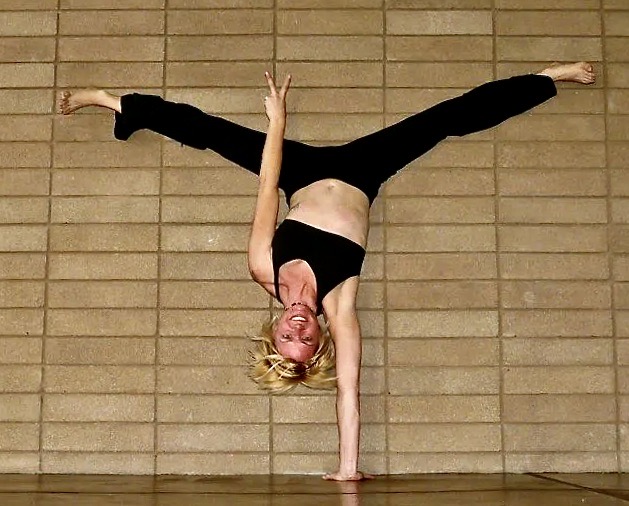
I never thought I would see an 800-pound gorilla in headstand, but then again, I never thought I would see a fleet of gold SUV’s filling up the parking lot of the yoga studio in Rocky River, Ohio, that I sometimes practice at, either.

The car repair lot next door, where no one is supposed to park, was filled, too. I parked across the street. It was early March, but winter had been mild, either because of climate change or El Nino, and there were no snowdrifts to climb over or icy sidewalks to flat foot across.

The SUV’s were parked in a line along the front of the building. As I squeezed past the lead one I glanced inside and saw a red baseball cap on the passenger seat.

Donald Trump? I thought.

I knew the Ohio GOP primary was coming up soon, I knew it was Donald Trump’s chance to derail John Kasich, our governor still in the race, and I also knew what Marco Rubio had said about Donald Trump during the FOX News debate in Detroit a few days earlier.

“He’s very flexible,” said Marco Rubio, pointing out that Donald Trump was primed for yoga because of his cherry picking politics. I wasn’t sure I agreed with Senator Rubio. Donald Trump’s policy positions seemed more like blobs of mercury, impossible to pin down and toxic, too.

At the top of the stairs, the yoga studio being on the second floor, two burly security men in dark glasses and darker suits looked me up and down. They asked me to unroll my mat for their inspection.

“Democrat or Republican?” they asked as I was rolling up my mat again.

“Canadian,” I said, lying.

They smiled, grimly.

I stepped into the studio wondering if Canada might ever build a wall from their side of the border to keep out their scary neighbors. When did the United States become the scary neighbor?

The yoga room was packed to the gills.

I had several times attended workshops staged by celebrity teachers, one with Janet Stone and another led by Max Strom, and thought then that the room was packed to the gills. I was wrong. If it all comes down to turnout, as is often said about elections, it was “Mission Accomplished”.

Both of my favorite spots in the yoga room were overflowing. The only available spot I saw was one in front, my least favorite place to be, but beggars can’t be choosers. I set up camp next to a vacant, extra-thick, extra-long, tangerine-flecked purple mat that faced the teacher’s mat.

Where do 800-pound gorillas practice yoga?

Anywhere they want to.

Donald Trump was in the center of the room. He wore a gold Speedo and nothing else, not even a headband. He was surrounded by a crowd and speaking, waving his arms as he spoke.

“I was always a good athlete,” he said. “I was always the captain of my teams. Staying in shape is very important. If you’re physically happy and healthy, it’s a lot easier to keep a relationship going. Taking care of your body is a great thing for love.

“Don’t even think about Marco Rubio saying my hands are small, and if they’re small something else must be small. My fingers are long and beautiful, as, it has been well documented, are various other parts of my body.” He pointed to the front of his Speedo. “I guarantee you there’s no problem.”

Some of the women in the crowd being regaled by Donald Trump lifted their eyes from his gold Speedo, gathered up their mats, and left the yoga room. One of them stopped and asked the teacher, “What is that?”

“That’s Donald Trump, the Republican running for president.”

“I know,” she said. “Did you lose a bet?”

“Of course not. This is part of our yoga on and off the mat program.”

“This is the same man who said women were dogs, slobs, fat pigs, and disgusting animals, right?”

“It’s all yoga,” said the teacher, looking increasingly uncomfortable.

“Blah,” said the woman, slipping out the door.

Since the yoga room was less crowded at the start of class than it had been beforehand, everyone rearranged their mats. The teacher cued her iPod and class began.

“Before we start,” said the teacher, “I’d like to welcome Donald Trump to our studio and say that I really believe in the essential goodness of Republicans.”

“Wait a minute, not all goodness,” exclaimed Donald Trump, jumping up out of Easy Pose. “There’s Lying Ted, he’s an unstable person. His whole deal is he will lie. He will lie and after the lie takes place he will apologize. Little Marco, he’s always hiding his palm sweat. Once a choker always a choker. Kasich, he’s a nice guy, but he’s a baby. He can’t be president.”

My mat was next to Donald Trump’s, giving me an up-from-your-bootstraps view of the man as he stood straddling his mat. He was tall, over six foot, and big, well over 200 pounds. He had large feet, size 12 or 13. It was clear he had recently gotten a pedicure.

As he sat back down I heard muttering behind me. I glanced over my shoulder and saw another dozen-or-so people leaving the yoga room. “Mitt Romney was right when he talked about your bullying and absurd third grade theatrics,” said a middle-aged man, pausing as he passed by.

“Get him out of here,” said Donald Trump, tilting his chin up to one of his security men. “They’re always sticking a certain finger up in the air. I love the old days. You know what they used to do to protestors like that when they got out of line. They’d be carried away on a stretcher, folks.”

There was a low moan from the back and a few more people walked out. The yoga room had gone half empty and class hadn’t even actually started. Our teacher, looking out at what had been a multitude just minutes earlier, hurriedly got us on our feet for sun salutations, a traditional warm-up.

We were midway through our second sequence of sun salutations when Donald Trump jumped out of down dog to the front of his mat, but instead of staying in the sequence he stood upright and began flapping his arms.

“What language is that?” he demanded to know.

The teacher had been speaking partly in Sanskrit, the classical Indian language used in yoga to define poses.

“Is that Mexican? That’s bad. When Mexico sends people, they’re bringing drugs. They’re bringing crime. They’re rapists. I will build a great wall. Nobody builds walls better than me. I’ll make Mexico pay for that wall. Mark my words.”

“Oh, man, that’s all I can take.” It was a voice I recognized, although I hadn’t seen her in the room. When Lola stormed to the front I was sure there was going to be a confrontation. She grew up in a Polish-American neighborhood on Cleveland’s south side and taught high school in Lorain, a nearby rust belt town. Many of her students were either first or second-generation immigrants, mostly from Mexico and Central America.

“It’s scary to actually think about what you in office would mean for equality,” she said, standing high on her toes to get up into his suntanned face. Although, when I looked closely, it looked like he was using a self-tanner. The color was orangey.

“The truth is that all men having power ought to be mistrusted,” said James Madison.

“Nobody’s done so much for equality as I have,” said Donald Trump. “When it comes to my $100,000.00 membership club, Mar-a-Lago in Florida, it’s totally open to everybody. I set a new standard in Palm Beach.”

“Yikes,” she said and stormed out, followed by what was now a throng.

“How did she get that close to me?” asked Donald Trump, glaring at his security men. “You could see there was blood coming out of her eyes, blood coming out of her wherever.”

He turned to face what was left of the class. “We need strong borders. We need a wall. I’m the king of building buildings, the king of building walls. Nobody can build them like Donald Trump.” He was starting to slip into the third person, as though there were two of him. “I’m opposed to new people coming in. We need Predator drones.”

By this time there weren’t many darker-skinned people of any kind left in the room, only a handful of women, and no one who practiced yoga for more than the exercise. Most of the remainder, scattered in the corners and shadows, were either younger men or older men. They began chanting, but not OM, the chant most commonly heard in yoga classes.

“USA! USA! USA!”

“We’re going make our country rich again,” Donald Trump shouted over the din. “We’re going make our country great again and we need the rich in order to make the great.”

“USA! USA! USA!”

“It’s better to live one day as a lion than one hundred years as a sheep,” he shouted, even louder. “I know who said it, Mussolini, OK. But what difference does it make?”

“USA! USA! USA!”

The teacher tried to regain control of the class, but it was too late, in more ways than one. If yoga is about focus, the focus of everyone left in the room was elsewhere. All eyes were on Donald Trump. He whirled on the teacher.

“You’re fired, done,” said the King of Skull Island. “What a moron, lightweight.”

He gathered up his mat and unfurled it where the teacher’s had been, perpendicular to the class.

“I promise you I’m much smarter than her. I focus exclusively on the present. I’m speaking with myself,” said Donald Trump.

“I’m the super genius of all time. I was a great student. I was good at everything. We need a president with tremendous intelligence, smarts, and cunning. My whole life is about winning. I don’t like losers. Everybody loves me. The haters and losers refuse to acknowledge it, but I do not wear a wig. My hair may not be perfect, but it’s mine.

“It’s all about living your words, walking your talk, and talking your walk.”

Our yoga class was almost over. Since he had flipped the GOP head over heels this campaign season, Donald Trump said we were going to finish by doing an inversion. He spun his hair into a bun and to my astonishment lifted up into a pinpoint headstand, his new updo making a comfy cushion.

Most people who practice headstand hold the pose for about a minute. If they stick with it and get seasoned, some hold headstand for up to five minutes. Donald Trump’s eyes were open and his gaze straight ahead. His legs were parallel and butt tucked in.

Five minutes later everyone had rolled up their mats and left the room. Donald Trump was still in headstand. His security men stared out the windows. Ten minutes later the yoga receptionist cracked open the door and peeked in.

“Mr. Trump, I don’t mean to interrupt,” she said. “Our next class is scheduled, we’re running late, and everyone’s waiting out here in the lobby.”

“That’s so inappropriate,” he said. “You’re a flunkie, treating me very badly.”

She closed the door softly behind her.

I lay on my mat in corpse pose. I could hear Donald Trump’s breathing next to me, slow and steady. When I was finished I rolled my mat up, nodded to the bored-looking security men, and left the yoga room. Everyone’s eyes fell on me as I stepped into the lobby.

“Is he still in there?” someone asked.

“Yes,” I said.

“When is he going to be done?”

If there’s an 800-pound gorilla in the room, the yoga class is over when the beast says so.

Ed Staskus posts stories on 147 Stanley Street http://www.147stanleystreet.com and Cleveland Ohio Daybook http://www.clevelandohiodaybook.com. To get the site’s monthly feature in your in-box click on “Follow.”
The 4th Om

By Ed Staskus

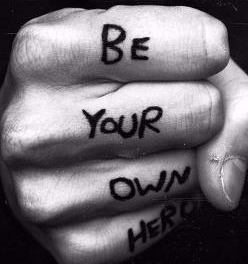
The biggest and brightest OM I know is the OM Kristen Zarzycki begins and ends her ‘Follow the Yogi’ class with at Inner Bliss on Sunday afternoons, joined by many if not everybody in what is usually the biggest and most popular class of the week. Kirby is a young teacher with an OM voice like an ocean liner steaming into port through a thick fog. The first time I heard her I realized what the talk about the sound of OM being a primordial vibration was all about.

I could feel the vibration in the room and I wasn’t even chanting.

I began thinking about yoga in my early fifties, when decades-long issues with arthritis had advanced so my knees and hips either hurt all the time or really hurt all the time. At first, I tried yoga at home, checking out videotapes about one practice and another, checking them out from our local library. I even bought a purple sticky mat. After a year I felt stalemated, as though I had no idea what I knew. I was aware of yoga studios and thought professional instruction a good idea. But, I was reluctant to go because of my impression yoga classes were chock-full of lissome young women and the certainty I would look like an oaf.

One afternoon towards the end of summer, at the counter of our company’s lunchroom, while waiting for our marketing director Maria Kellem to make tea, yoga somehow came up as we talked. I was surprised to find out she not only practiced, but taught yoga part-time, as well. For the next several months she never tired of leaning into my cubicle and encouraging me to take a class.

I finally did, partly to appease her, partly because I didn’t see any other way to learn more, but mostly just to do it, at least once. From the end of my first novice class on a dark and wet October morning, slapping my hand to my temple in the car as I drove away, surprised it had taken me so long, I was attracted to the practice, simply because I felt surprisingly good afterwards.

The first two years I practiced was at a once-a-week beginner’s class, to which I eventually added a second evening class. Although my focus was on the physical postures, I began to notice our classes often began with a homily and a chant, usually OM. Preferring my own uneasy grown-up postmodern skepticism, I ignored the spiritual advice. I was drawn to the chanting, but when I participated, which wasn’t often, it was with a small uncertain voice from the back of the room.

After another year of moderate flow under my belt, I started taking on more physically challenging classes, time-distorting vinyasa practices with unnerving names like ‘Hot Power Yoga Challenge’. One evening near the end of an especially hard class, at least for me, after our teacher reminded us yet again to breathe with mindfulness, I asked her if it was the same as breathing desperately.

She was kind enough to say it was.

As the year wore on I began to buy into the spirit of yoga, reading about its principles and way of life, and listening to our teachers with a newfound openness. I took a workshop about meditation and another about the chakras – to which I reacted at the time with both incredulity and admiration for the teacher who tried with all her might, I thought, to explain the fantastic and unexplainable. I was even chanting OM more often, but still with a dry small pinched voice.

When I began to OM with more than less frankness was at the end of the first class Kimberly Payne taught at Inner Bliss, the yoga studio in Rocky River, Ohio, where I had started and where I still often practiced. By then I was emboldened by what I knew, which later turned out to be less than I thought, to try new kinds of classes, like Kundalini, and diverse teachers. Kim Payne’s class, a different kind of powerful flow, turned out to be more than I bargained for.

On the way to the studio that evening, gathering storm clouds darkened my rearview mirror as I crossed the beam bridge over the heavily forested Rocky River valley. A red-orange light from the sun setting over Lake Erie slanted between the houses across the street onto the black asphalt parking lot as I walked to the two-story loft-style brick building, the studio being on the second floor. Inside, I unrolled my mat, facing across the wide room towards the dusk. As we started our practice I was quickly thrown off balance by the unfamiliar sequence and difficulty of the asanas.

Then the noise started.

First one and then another double-stacked freight train rumbled past on the CSX tracks on the abutment behind the building towards downtown Cleveland. At both public grade crossings – one block to the west and four blocks the other way – the diesel’s compressed air horns let loose blasts of 15-second warnings.

Next the two men working late at Mason’s Auto Body next door started cutting sheet metal with what sounded like a gigantic Sawzall, a high-pitched gnashing pouring in through the closed windows as though they were not closed at all.

No sooner had they finished than the wind rain deluge started, a gusting thunderstorm that lasted through an interminable series of unsettling balancing poses and to the end of class.

Coming out of corpse pose I suddenly noticed the studio was quiet, the factory-style windows no longer lashed by rain. We sat cross-legged in the dark, and chanted three long, slow OM’s, the asanas all done and the noise, too, and the only thing mattering just then and there being the chant. Our voices echoed in the still damp air when we finished.

It was the first time I practiced OM with sincerity.

The loudest OM I ever heard was the OM Kristen Zarzycki’s class chanted for her the Sunday before she ran her first marathon. In Chicago. In the tropics on Lake Michigan.

Kristen describes her flow classes as “funky and challenging.” Challenging they are, so much so I nicknamed her Kirby, after Jack Kirby, the Marvel Comics artist who created Sgt. Fury, the snarling but tenderhearted NCO who led the First Attack Squad the “Howling Commandos” in the short-lived 1960’s comic book series. Although a head shorter than the cigar-chomping bandoleer-draped Sgt. Fury, she seamlessly morphs him as she leads –and herself practices – her ‘Follow the Yogi’ class centering on core asanas, for what she insists is our own good, and watches out so we all survive her ruthless boot camp approach.

At the close of her classes Kristen invites everyone to a “big and huge” OM to seal the practice. That Sunday someone impulsively interrupted and said, “Let’s chant for Kristen running the marathon next week.“

So prompted the whole class did. The OM was loud and long and heartfelt. The chant was so long I almost ran out of breath. Kristen seemed flushed with emotion when we were finally done.

The next Sunday she ran in record-setting heat and smothering humidity. More than ten thousand of thirty five thousand participants dropped out, hundreds more were treated by medical teams, and the organizers tried to shut down the course twenty-one miles into the event. Kristen was one of the runners who finished, and sometimes I think what kept her safe and sound was the big and huge OM we chanted for her.

The car repair OM incident happened on a clear mid-summer evening as we sat cross-legged at Inner Bliss, palms together, thumbs at the heart center, at the tail end of Tammy Lyons’s hot flow class. The casement windows overlooking the flat roof and cords of firewood stacked against the yellow outside wall of Mason’s Auto Body were tilted open, and I could sense a breeze. We chanted OM once, breathed in, and chanted OM a second time.

“There they go again,” said a body shop man unseen below us somewhere beside the umbrella table between our two buildings, more than loud enough to be heard throughout the studio.

“Whatever floats your boat,” a second man said.

Tammy Lyons paused, and paused again. She has the patience of a mother of two small boys and the forbearance of a small-business owner – namely the yoga studio – yet when she paused I glanced warily at the windows. Then we chanted OM a third time. The class over she thanked the twenty-or-so of us for coming, told us it was privilege to share her practice with us, and updated everyone on the studio’s schedule.

Then said in a clear, firm voice more than clear firm loud enough to be heard outside, “Yes, it does float our boats.”

Later that night, nursing a bottle of beer in my backyard beneath the Milky Way obscured by the city’s lights, I thought about the sarcastic guys at Mason’s. They weren’t really all that different from Tammy Lyons, although maybe they thought they were. Just like she worked on our bodies by leading us in asana sequences, they worked on the bodies of automobiles.

Cars like SUV’s and bodies like ourselves are not only uniquely themselves, but they are vessels as well. Practicing yoga exercises is like taking care of your body in the same way a skilled mechanic will take care of a car, both with the same idea in mind – so our bodies and our cars will be better able to take us where we want to go, whether it’s to a meditation practice or Disneyland.

But, if the body shop men were indeed different, maybe it was because they didn’t know where they were going.

The 4th OM unfolded on a quiet April Sunday when Max Strom, an itinerant yoga teacher, came to Inner Bliss. Neither the workshop nor he was what I expected, even though I couldn’t have said what I expected. Dressed all in black with a grayish ponytail and a gregarious manner, Max Strom was built more like a football player than a tightrope walker. Other than a few warm-up exercises and moving around now-and-then, we sat on our mats and he devoted most of the sold-out two-hour workshop to breathing, both explaining his ideas about it and leading us in exercises of it.

He seemed to think asanas alone were inadequate as a way of making a kind of spiritual connection, which he defined as the goal of yoga. He thought asana practice could and did serve a purpose, but to arrive at some meaning beyond simple exercise the next step was to connect with one’s breath.

He said yoga appeared to be primarily physical, but that it wasn’t. Rather, it was a practice meant to harmonize the body and the mind, our inner body, which he formulated as mental focus and intention, and breath, which he further defined as emotional focus and concentration on spirit, or the divine.

We practiced lots and lots of breathing exercises, breathing fast and breathing slow, holding our inhales and then our exhales, alternate nostril breathing, bellows breath and breath of fire, and long slow breathing until even sitting cross-legged for all that time became less and less distressing, even restful. Mr. Strom instructed us to breathe into the heart center, to breathe in the present and breathe out the past.

After a break, when we were all back on our mats, he unfurled a 10-minute OM. He explained we were to all start together, but as we finished an OM to go on to the next one, not waiting for the others in class. He said in a minute or so we would all be intoning separately, but it would in the long run resolve itself into a single continuous chant, which is exactly what happened.

It turned into a long rolling resonant OM.

As we chanted I found myself subsumed by the sound, and then midway through the OM’s I suddenly had a distinct feeling of emptiness within me, from the sacrum to the collarbone. It wasn’t that I felt full of hunger or filled with yearning; I just felt empty. As we chanted it seemed my body was like a hollow shell lit up from within by a bright but diffused light.

I was conscious that the quiet, bright emptiness was only a feeling, that my heart was beating slowly and I was breathing rhythmically, but for all that it was a remarkable sensation. I didn’t feel better, or worse, I just felt light and lit up. It was an experience that lasted about a minute.

Max Strom’s message to us at the end of class was to breathe with intention, and he sent us on the way with a simple namaste and hearty endorsement for his new DVD being sold in the lobby.

Since then I have not again felt the interesting bright emptiness I did during his workshop, but as a result of it have added a little breath training and meditation to my at-home practice. What has surprised me is the patience it takes to learn to sit quietly, not thinking of nothing or something or anything, and breathe mindfully.

What hasn’t surprised me is what I still don’t know about yoga, even the simplest things like chanting the simple sound of OM.

A version of this story appeared in Integral Yoga Magazine.

Ed Staskus posts on 147 Stanley Street http://www.147stanleystreet.com and Made in Cleveland http://www.clevelandohiodaybook.com. To get the site’s monthly feature in your in-box click on “Follow.”

Soap Box Saviors

By Ed Staskus

“We don’t get fooled again.”  The Who

The difference between policies and principles is the difference between Santa, saviors, and savasana, or what is known as corpse pose in yoga practice. Santa and our many saviors, ranging from Islam to Christianity, much like our Messiah-like political leaders, have a heavy hand. They lay down policy like train tracks.

It’s my way or the highway. They enjoin the carrot and stick approach to order the reality they’ve carefully resolutely ruthlessly constructed. It’s often the kind of reality that even when you stop believing in it, it won’t go away.

Savasana is practiced at the end of yoga exercise classes. It’s a simple thing. You lie down on your back on the mat with your arms at your sides, close your eyes, and breathe naturally. When you surrender to Santa and the Savior you agree to live by their rules. When you surrender to savasana it’s just you as you are, not as what anybody else says you should be, not surrendering to somebody else’s magic kingdom.

Savasana only works when you’re being honest about it.

You don’t have to be an honest man or woman to live in the world of Santa and the Savior. You only have to do what you need to do to get along and get what you want. It’s playing hardball with a wiffle ball. It’s OK to lie to yourself. Who cares about the spirit of the thing?

“Next to a circus there ain’t nothing that packs up and tears out faster than the Christmas spirit,” said Kin Hubbard a hundred years ago.

You have to be an honest man and woman to dive into the ocean of yoga. Otherwise, what would be the point? It’s sink or swim. There’s no one looking over your shoulder. There’s no lifeguard.

In the making of the modern age of mass media, mass merchandising, and mass more-of-everything, Claus and Christ are staples from about the beginning of November until the Big Day. The Savior once had pride of place, since Christmas used to be about celebrating his birth, but Santa is the Top Dog in the 21st century.

“Christmas is a baby shower that went totally overboard,” Anthony Borowitz has pointed out.

Sometimes it seems like the celebration is more about the birth of Santa Claus than Jesus Christ. Even though he doesn’t exist, Santa is everywhere during the holiday season, selling jewelry electronics cars, whatever. Besides cash checks credit cards, there are even Christmas Club bank accounts to pay for last year’s presents.

A capitalist is someone who loves his fellow man and woman in groups of a million-or-more. The Money Markets and Scrooge never had it so good. They are laughing all the way to their McMansions, golden arches and all.

Santa Claus is a portly red-clad man who brings gifts to good straight arrow well-behaved children on Christmas Eve, or the morning of Christmas Day. He spends most of the rest of the year supervising elves in his workshop and making out a list of kids who have been naughty or nice. You don’t want to be on Santa’s shit list.

Children who have been on the up and up get gifts. Children who have stepped off strait is the gate and narrow is the way do not get gifts, unless it’s a lump of coal. Santa Claus can be judgmental. There are some roofs he won’t land on.

Santa Claus is everywhere, in California in shorts, in Nigeria shooting off knockouts, which are like firecrackers, and in China playing the saxophone. Most Chinese reenactor Santa Claus’s, ubiquitous on street corners and at the entrances to shopping malls, are almost always jamming on a sax.

No one, not even the Chinese, seems to know the reason why. The Beijing-based Helen Gao thinks it might be because “the saxophone is portable so Santa can  make Christmas music anywhere.” Santa Claus used to have the right idea, which was to only visit people once a year.

Not anymore – he’s all over creation nowadays.

You don’t want to be the only one who doesn’t believe in Santa Claus, because then you’d ruin everyone else’s Christmas. Some black people are on the fence about him because they don’t believe a white dude would ever come to their neighborhood after dark. If he did dare, they ask, what’s in that pipe he’s smoking?

In any event, nobody shoots at Santa Claus.

Many children believe in him, up to a point. Shirley Temple’s faith was shaken at the age of six when her mother took her to a department store and the bearded legend asked her for an autograph.

Christmas was once the first step to getting safely home to your Loving Father in Heaven.  It was the start of the story, the starting gate in the stable. Over time it became more a state of mind, a tradition of good cheer for communities, retaining most of its original values. Today it’s a mash-up of visiting family and friends, of the economic miracle of gift giving “Make It a December to Remember With a Lexus,” and the NBA national broadcast on Christmas Day.

The Cleveland Cavs stormed back late in the 4th quarter in 2016 and beat the Golden State Warriors by a point in the last seconds. Some broadcasters said it was a miracle. It was The Miracle on the Corner of Ontario Street in Cleveland, Ohio. Other broadcasters said what Cavs forward Richard Jefferson did to Warriors forward Kevin Durant on the sidelines at game’s end was a sin.

But, when it comes to professional sports, and many other professions, sins don’t matter, one way or the other. They don’t actually affect the reckoning under the tree as long as you believe whatever works is what works. Who soldiers on when there’s no hope of a payoff?

The problem with Christmas has always been God the Old Testament at the front and center of it, not just Christ, the New Testament third arm of God the Father, God the Holy Ghost, and God the Son. If Santa is a judgmental old man, then God is an infinitely more judgmental, eternally older man. Santa Claus may not give you a gift this year, but there’s always next year. When it comes to Heaven and Hell, however, we all get one chance at it and the outcome is forever. There are no last-second miracles.

To accept the Savior, or any savior, into your fibre being life is to accept the belief that God has a plan for you. Hearing from him about the big picture is vital, the cog in the wheel of life. Listening following obeying the plan is everyone’s own personal decision. That’s why God grants us Free Will. Many people believe it’s in their own best interest to stick to the game plan both chapter and verse.

Blaise Pascal, a French mathematician, proposed a bet about God. Sensible folk should live as though God exists. If he doesn’t exist you lose very little, maybe a roll in the hay and some good times on this earth. However, if he does exist and you live by his rules, you stand to win the Grand Prize of Heaven. You also avoid the Big Bust, namely eternity in Hell.

In the end, if you bet against God you bet against yourself.

Like it says in the Bible, “Whoever believes in him should not perish, but have eternal life.” You can say no to God’s way of doing things, but, come hell or high water, God will have his way, one way or the other.

The snag in this approach is inherent in the story of the angel walking down a road of good intentions with a bucket of water in one hand and a torch in the other. When someone asks the angel what he is going to do with them, he says that with the torch he will burn down the mansions of Heaven and with the bucket of water he intends to put out the fires of Hell.

“Then,” the angel says, “we’ll see who really loves God.”

Santa and the Savior rule from the top-down. They don’t necessarily care if you love them, or not. They didn’t get to where they are with a ho, ho, ho or a free ride. Santa Claus’s doppelganger is Krampus and God has many millennia of the Old Testament behind him, not just some forward-looking centuries of the New Testament.

The consequence of breaking the rules is dire risky consequential. The naughty are denied the sparkly magic of Christmas and sinners are turned away at the Gate of Heaven. “He who breaks the law goes back to the House of Pain,” said Dr. Moreau to the Beast-Men in the “Island of Dr. Moreau.”

Students follow rules. They have to please their teachers. Until recently women followed the rules because men made the rules. Dogs follow the rules. That’s why they’re man’s best friend. Women have recently been changing the rules, getting out of the dog pound.

There’s only one rule worth following. That’s the Golden Rule. Treat other people the way you want to be treated. It’s a homespun peg to hang your hat on, outside of school outside the workshop outside the law courts.

Santa Claus and Saviors, like everyone who has ever wielded power, are puppet masters pulling the strings. God is all-loving, but he’s all-powerful, too. A bag full of loot coming down the chimney is one thing. The power to fill the bag is another thing. “If you must break the law, do it to seize power,” said Julius Caesar a long time ago. Like Jesus Christ, Julius Caesar was worshipped as a God.

From then until now the love of power has more often than not trumped the power of love.

However, there are no puppet masters in yoga, no Santa Claus and no Savior.

The reason the practice is puppet master-less is that the power of the practice doesn’t flow from the top-down. It’s not just another kind of trickle down from on high, economic or otherwise. It flows from the bottom-up.

“You cannot believe in God until you believe in yourself,” said Vivekananda, a key figure in the introduction of yoga to the western world in the late 19th century.

Power lives and dies in a hierarchical tradition. There is no hierarchy in yoga, no Wizard of Oz. Power is like the Trump Tower. There is a penthouse at the top and a mailroom at the bottom. The Great Wizard is in the penthouse and the monkeys are in the mailroom. Yoga is more like a 5000-year-old tree with many branches. Power never stops blowing its bugle. Yoga quiets the body and mind.

The fly in the ointment of top-down power is when was the last time anyone at the top had a good idea? When was the last time Tim Cook Bill Gates Jay Y. Lee wrote computer code? When was the last time Barrack Obama Vladimir Putin Xi Jinping reduced their country’s armed forces? When was the last time Mark Cuban Dan Gilbert James Dolan sank a three-pointer from the corner office with time running out?

Savasana is sometimes thought of as the most important pose of yoga practice on the mat. It comes at the end of class and no one needs a teacher at the head of the room to tell them what to do. It is the nonpareil bottom-up posture, since you have to lie down on your backside to do it.

Corpse pose is about the self, and the non-self, and self-discovery. It’s about letting go of rewards and reincarnation and an afterlife in Heaven or Hell. When you’re in dead man’s pose nobody, not even the Downpresser Man, can boss your better half. You’re not doing something that somebody else told you to do. Nobody can tell you what to do because there’s nothing to do.

Letting Santa and the Savior read the riot act is a backwards way of living life, from the outside in, rather than from the inside out. Yoga is a practice of learning who you are by exploring yourself, not by reading the manual written by The Man. Marching in the ranks is fine on a parade ground, but who wants to be marching to a drill sergeant’s drumbeat all day and night?

“The question of whether or not there is a God or truth or reality, or whatever, can never be answered by books, by priests, philosophers or saviors,” said Jiddu Krishnamurti. “Nobody and nothing can answer the question but you yourself, and that is why you must know yourself.”

Be your own hero, not a moving part in the puppet show.

Anybody can do hero pose, even though it’s on the challenging side of the practice. You just have to have faith in yourself. It’s better to challenge yourself than be dogged by gods and monsters and the ruling class always trying to cut you down at the knees.

It’s never question and answer time in corpse pose, because it’s the end of yoga class, and you’re tired, and everybody and their brother is just going to have to wait while you and your breath take a break and recharge.

Putting Santa and the Savior and all the self-appointed Messiahs and their sticks and carrots on the back burner is to be up front, at the front of the class, knowing and being your own self, yourself as you are from the inside out.

Ed Staskus posts stories on 147 Stanley Street http://www.147stanleystreet.com and Cleveland Ohio Daybook http://www.clevelandohiodaybook.com. To get the site’s monthly feature in your in-box click on “Follow.”

Bye Bye Babs

By Ed Staskus

When the wiseacres known as the Babarazzi, a New York City-based black-clad collective devoted to getting in their two cents’ worth about commercial yoga culture, called it quits in January 2014, after a two-year run, they announced their closing by saying, “We have decided to finally set the monkeys who write our pieces free.”

They were being unduly modest. It’s well known monkeys have always refused to read and write so they won’t be forced to work for a living.

Starting with their first posts during the debacle that became the end of John Friend and Anusara Yoga, the Babarazzi raised the skull and crossbones, firing broadsides at a yoga community they saw as a “silly cocktail party.”

Yo-ho-ho and a bottle of rum.

Their TMZ approach targeted what they called yogilebrities, or ”those who trade in the likes of such stupidity as yoga image, yoga fashion, and yoga lifestyle.” said Aghori Babarazzi, the official unofficial spokesman of the group.

“That’s how cheap yoga marketing works. It turns the seeker into a consumer.”

Reactions in the yoga community ran the gamut. One puzzled reader wrote, “I don’t understand this blog or the writer’s intention.” Another wrote, “Hey, it’s all yoga.” At the same time a curmudgeon wrote, “It’s high time someone shone light on the turd-fest of shameless, salivating self-promotion that has infiltrated the yoga world.”

The tag line of the web site was “giving contemporary yoga the star treatment.” It might as well have been Richard Pryor’s gag line, “I ain’t no movie star, man. I’m a booty star.”

But, behind the trash talk and cutting edge sarcasm was an earnest attempt to point out the many disconnects between the principles of yoga and the actual bread and butter practice of it in America.

“What goes on behind the scenes in yoga studios is the stuff daytime soap operas are made out of,” said Aghori Babarazzi about the wild and wacky world of modern yoga.

“Students who have never crossed that line in the studio have no idea how pig-ish some of the more fame-oriented teachers can be,” he said. “And I’m not talking about the nice piggies that live on farms.”

Although celebrities worry about illnesses and mortgages like everyone else, the magician Penn Jillette has pointed out that “we celebrities are desperate pigs.”

No sooner had the Babarazzi gotten their feet wet than they ran afoul of yogi entrepreneur Sadie Nardini and Elephant Journal by posting an article on Elephant Journal’s site titled ‘Is YAMA Talent More Harmful to the Yoga Community Than John Friend’s Penis Pursuits?’

YAMA Talent is a New York City-based management consultant and booking agency for teachers and brands seeking to be front of the line life of the party and profitable as possible in the yoga marketplace.

Sadie Nardini saw the piece as a below the belt blow aimed at her, YAMA Talent cried foul – “How dare we waste time criticizing our fellow yogi’s?” – while Elephant Journal disappeared the piece from its site, protesting its lack of attribution, arguing that the Barbarazzi was not a person, so could not have an opinion.

This was before the Supreme Court ruled in the recent Citizens United case that corporations are people, just like real people.

“What we do here at Babarazzi HQ is intentionally provocative,” the collective answered the back seat drivers who had forgotten to buckle up for the ride.

For the next year-and-a-half they posted, every three or four days, stories like ‘Whatever Western Yogi’s Touch Turns to Gold (Or Pooh?)’ about the big money leanings of bigger-than-life yoga events; ‘What’s More Boring than Athletic Wannabee Yoga Companies Suing One Another?’ about companies like Yogitoes and Lululemon keeping their steely eyes firmly on their spreadsheets; and ‘Snowshoeing and Yoga: Obviously You Need to Do This in Order to Be a Better Person’ about the endless proliferation of hybrids as subjects for yogic workshops.

The tabloid-style havoc of the Babarazzi’s journalism raised the ire of many in the American yoga community, from Colleen Staidman Yee to Tara Stiles, from Off the Mat Into the World to YogaNation. It’s difficult to take criticism. It’s difficult to take without resentment. It’s difficult to take without lashing back, no matter how much breath control meditation third-eye concentration you’ve done. Standing on your head is easier.

It can be painful, but it’s meant to be. It serves the same function as pain, calling attention to something unhealthy.

“The Babarazzi is a great asset for yoga in this modern world where concerns for what yoga is are increasingly tempered with concerns over what yoga isn’t,” said Paul Harvey of the Centre for Yoga Studies.

Although the Babarazzi seemed to reject the notion that there is one true pure twenty-four carat yoga, they also spurned the cult of personality, the sideshow of personal appearances and trade shows, and the endless merchandising of a practice for which stuff and more stuff is ultimately valueless.

In the commercial world it is a truism that men exploit men for the supposed greater good of everyone. In the world of yoga self-awareness is the same as doing good. Exploitation of oneself and others isn’t the yellow brick road to anywhere. Yoga is more on the order of being between the nothing that isn’t there and the nothing that is, not shopping for something everything anything.

“The Babarazzi does a good job at pointing out the hypocrisies of so many self-proclaimed gurus,” said Jacob Kyle, a philosophy graduate student and yoga teacher in New York City, “and reminds us, in its own way, that the true teacher lies within each of us.”

The bad boys of mindfulness “drew a bead on the wide-ranging techniques and linguistic gimmicks being used to advertise, market, and sell yoga to middle class consumers,” wrote Stewart Lawrence in ‘Yoga’s Court Jesters’.

For all its wit and whistle blowing the Babarazzi were tilting at windmills. The imperative to exploit yoga in America is too strong. There are tens of millions of customers. Lululemon isn’t a multi-billion dollar company because it failed to notice the commodity yoga could be transformed into.

It’s a yoga rave with see-through pants!

Bikram Choudhury, for example, thinks he owns thirty five Rolls Royce cars, but isn’t sure of the exact number. Other than the YogaLife Institute few, if any, yoga companies are Certified B Corporations, or for-profit companies certified as being motivated by more than just a hunger for profit. Hand over fist has long been a fundamental pose on the mat.

Yoga Journal, notwithstanding its endless proselytizing, is not a fair trade concern. It is an arm of Active Interest Media, a privately held company. The principals of the company are privateers, not necessarily interested in the public good. The bottom line, not the eight limbs of the practice, rules. After B. K. S. Iyengar died in August 2014 Yoga Journal celebrated his long life by immediately e-mail blasting advertisements far and wide selling Iyengar DVD’s.

The cult of personality, the creation of an idealized and heroic image, has long been a trick of tyrants. Not anymore. Constant media exposure has changed all that. It’s all fair game now. The practice of yoga is not free of its charms. When Helen Hunt gave credit to Mandy Ingber, a popular LA yoga instructor, for getting her body “Oscar-ready”, out came more cool contemporary yoga advice called ‘Yogalosophy’.

“It’s truly cool!” gushed the magazine Glamour.

Emma Watson and Ryan Kwanten have become certified yoga teachers, completing the circle of yoga teachers becoming celebrities to celebrities becoming yoga teachers.

The Babarazzi’s announcement that they were publishing their last post and desisting from further antagonizing celebrity yoga teachers and organizers of national yoga events both celebrated and snarked the status quo.

“The Babs is Closing Up Shop. Everything Must Go. Crazy Sales and Deals.”

Even though it is uncertain whether the Babarazzi ever had a bunch of monkeys pecking away on keyboards, writing their material, it is certain they never sold out to buy bananas for the monkeys. They doubtless were chronically short on greenbacks, since they never had anything to sell other than their dismantling iconoclasm, which is rarely a commodity in any marketplace.

Ed Staskus posts stories on 147 Stanley Street http://www.147stanleystreet.com and Cleveland Ohio Daybook http://www.clevelandohiodaybook.com. To get the site’s monthly feature in your in-box click on “Follow.”÷≥,mnbvbnm

The Other End of the Leash

By Ed Staskus

Whenever Padma, a white and tan hound dog, hears her master’s namaste marking the end of class at Blue Lotus in Raleigh, NC, she stirs from her Mexican blanket pile, shakes, stretches in urdhva mukha svanasana, better known as upward-facing dog, and with her long nose in full gear makes the rounds of the yoga studio, sniffing out the sweaty yogis.

“It’s like clockwork,” says Jill Sockman. “She thinks namaste is her release command. If I am at the studio she is with me. On the rare occasion I am working and she’s not with me, people come in the front door, look to her empty bed, and the first thing they say isn’t ‘Hello’ or ‘I’m here for class’, but ‘Where is the dog?’ “

“She is my one true love and constant companion.”

The canine has been mankind’s best friend for a long time.

DNA research suggests gray wolves and dogs split into separate species around 100,000 years ago. Domestication began 30,000 years ago, based on archaeological evidence from caves in Europe, and our herding and hunting relationship with them dates back to the end of the Pleistocene Age. Initially tolerated as scavengers of bones and animal remains, over time dogs were co-opted as guardians and trained helpmates.

“It takes only a short journey to get from dogs guarding the village to a personal house dog,” writes Stanley Coren in The Intelligence of Dogs.

There are more than 400 million dogs in the world.  Approximately 78 million of them are in the United States. Almost forty percent of American households own at least one. Among them are many yoga households. Although it is difficult to determine with any accuracy, it often seems like every other-and-more yogi has a dog.

“Almost all the yoga teachers that come to my mind have dogs,” says Dawn Schroeder, a Kundalini Yoga teacher in Cleveland, Ohio. “I have two dogs, both of them rescued.”

For some people, such as the handicapped, dogs are lifesavers. Helen Keller, the deaf and blind social activist, introduced the Akita to the United States and described the dog as an “angel in fur.” For others, like police, farmers, and even corporations, dogs are working partners. The runways of airports like Southwest Florida International are kept clear of large birds by Border Collies. For most people they are better known as pets and companions.

Although more physically diverse than any other land animal, resulting from centuries of intentional breeding, dogs are generally loyal and gregarious by nature, running to the door at the sound of familiar footsteps, not caring whether their owners are young or old, fat or fit, rich or poor. Money can’t buy the wag of a dog’s tail.  They rarely run in packs anymore and nowadays consider people to be part of their posse.

With the rise of suburbanization in the 1950s dog populations boomed and they made the transition from the doghouse to the home, becoming increasingly integrated into the lives of their owners. The modern dog became part of the family. Today many people feel like their pets are their favorite people.

“Our dog Zoe, a Westie terrier, is the light of our lives,” says Regan Burnett, who teaches yoga at the Greater Atlanta Christian School in Norcross, Georgia. “She does a perfect down-dog and up-dog every morning upon waking and practices Centering Prayer with me in the evenings.

“She is very special.”

“Increasingly,” says Jon Katz, the author of The New Work of Dogs, “we are treating them as family members and human surrogates.” Some single people and childless couples, among others, anthropomorphize their pets to the standing of an honorary child. They are called ‘fur babies’. Even families are challenged by children who know the best way to get a puppy is to ask for a baby brother.

“People are leaning on pets to fill the gap in social support mechanisms that earlier might have come from their families or tight-knit neighborhoods,” says Michael Schaffer, author of One Nation Under Dog.

Americans have fallen in love with their dogs. Since the mid-1990’s spending in the United States on pets has almost tripled, from $17 billion to $43 billion, which is nearly seven times as much as is spent on contemporary yoga and its related products. Yesterday’s Fido and Spot are today’s Jake and Bella, part of the family.

Tammy Lyons of Inner Bliss in Rocky River, Ohio, believes yogis engage especially with dogs. “I’m not sure why,” she says. “My guess is our desire to connect with all living beings and to share the vibrational quality of love that is unconditional and undefined. My husband and I rescued an amazing dog eleven years ago. She just passed away late last year, and I still miss her with my whole entire being. I would look into her eyes and know she could see all of me, without words. And she loved me no matter my flaws, failures, or even my not so attractive qualities.”

Dogs hop, skip, and jump when their owners come home. The Odyssey, the second of the two epic poems ascribed to Homer, is the story of a man who returns home after being gone for more than twenty years and is recognized only by his dog, Argos. Once known for his speed and tracking, but now neglected and lying on top of a pile of trash, after waiting ninety-three dog years for Odysseus to come back he wags his tail once and dies.

They lay their heads in our laps and stare up into our eyes, a heartbeat at our feet. They invite our attention and affection.  Never mind that Fred Metzger of Pennsylvania State University, who studies the human-animal bond, believes dogs are highly skilled at parsing social behaviors, especially those having to do with hearth and the food bowl.

“Dogs make investments in human beings because it works for them,” he says.  According to Dr. Metzger they act according to what makes humans happy to get what they want and need. They are den animals just like us integrated into the hubbub of the household, adaptable and attuned to the moment.

“Dogs give to get back,” says Brenda Motsco of Town and Country Veterinary Hospital in Warren, Ohio, who when not rescuing dogs is a feisty Bikram Yoga aficionado.

Unlike most other animals whose lives are not necessarily dependent on people, and whose existences are in some sense solipsistic, the dog is a different breed. When hailed a cat may or may not get back to you that day, but a dog will bust its butt to heed its master’s beck and call.

“Your dog kind of lives for you,” says David Bessler, senior emergency clinician at NYC Veterinary Specialists in New York City. Other than adoption, acquiring a dog may be the only opportunity a person has to choose a relative.

Dogs are social animals, like people, and so need and rely on emotions to bond with other dogs and people. According to Marc Beckoff, a behavioral biologist at the University of Colorado, emotion is one of the foundations of social behavior and connects individuals, whether in society, family, or pack. Dogs have an evolutionary need for close emotional ties.

The dog world intersects that of people in many ways. They almost always feel like doing whatever you feel like doing, whether snoozing while you nap or walking in the woods with you and chasing sticks. The other side of a door is always the wrong side of the door to a dog. They rarely hang out a “Do Not Disturb” sign.

“My Chihuahua is always with me at the studio and is our mascot,” says Ellen Patrick of Yoga Sanctuary in Mamaroneck, NY. “She greets all my students and then sleeps next to me while I’m teaching. People tell me they come more for ‘Chi’ therapy than for the yoga because she has such a sweet spirit.”

Over the course of centuries, through the process of domestication, dogs have come to understand people the better than all other animals, and have most easily adapted to our social circumstances. The average dog may be a better person than the average person. Yogis find their dogs through adoption, rescue, and accidentally, like everyone else, but sometimes their dogs come to them in dreams, figuratively and literally.

“I was searching for a companion dog to my older Cathula Leopard Hound,” says Connie Murphy of Yoga Village in Arroyo Grande, California, “but whenever I found one and did my pendulum on getting them or not, I was always told no. Then I started dreaming about a black and white dog. A few days later a black and white stray, part terrier and part cattle dog came into our yard. Cold, wet, starving, filthy, and afraid. It took several days before he would allow us to touch him. We left the garage open for shelter, and fed him, and after we put out fliers and no one answered, he became part of our family. It’s amazing what food and a bath and love can accomplish.”

Although some people find themselves loving dogs more the more they get to know people, it isn’t always the best of all worlds for dogs in the modern world. In the past dogs hunted with men and were their guardians, but today they are acquired for many other reasons. Children pressure their parents to bring home the cute puppy they saw at the store; the lonely get them to relieve stress and anxiety; others buy intensively bred dogs because it is prestigious.

But, even though dogs may be so smart they can do anything short of calculus, they still rely on their human families for everything, including shelter, groceries, water, exercise, and veterinary care. “The way they think about their world is that people are super important and they can solve any problem if they rely on people,” says Brian Hare, professor of Evolutionary Anthropology at Duke University. Domestic dogs also need social interaction to the degree that without a master and family they grow unhappy and even lost.

Many dogs are abandoned by their owners because of management problems, the pet’s old age, or simply because it is more expedient than taking care of the dog over the course of its 12 or 14-year-life. More than 5 million dogs enter shelters every year, according to the Humane Society of the United States, and those same shelters euthanize several million more when the dogs aren’t rescued. Puppy mills overproduce pets, annually dumping millions of them on the market, according to the ASPCA, marketing their lovability to the ill prepared.

Many people who practice yoga, and live by its ethical guidelines, rescue rather than buy dogs. “As a person’s awareness expands they are more likely to acquire a dog from a shelter as opposed to buying a dog from a pet store or breeder,” says Cassandra Wallick of Gilbert Yoga in Gilbert, Arizona. “As we begin to see things more clearly we may realize that the breeding of animals for pets is somewhat inhumane when in fact there are thousands of animals being euthanized because of careless owners and over-breeding.”

Television shows like the ‘Dog Whisperer’ on the National Geographic Channel and ‘It’s Me or the Dog’ on Animal Planet have grappled with the biting, barking, and bad behavior of dogs made insecure, neurotic, and bullying by uncaring or uninformed breeding practices and by inappropriate human-to-dog interactions. Less than two generations ago neither Lassie nor Rin Tin Tin ever required a dog behaviorist. Today it seems like all our purebreds and even mutts need a couch.

“Ending or preventing suffering should be the main goal of a real animal lover,” says Val Porter, the author of Faithful Companions: Alliance of Man and Dog. Dogs are trusty and vigilant sidekicks to man. Lassie and Rin Tin Tin were always pulling families out of burning buildings and saving the cavalry from marauders. They deserve the reciprocal care and loyalty of committed human companions.

“To live in harmony with all beings, including dogs, is a truly yogic principle,” says Julie Lawrence of the Julie Lawrence Yoga Center in Portland, Oregon. Judging from the principles they live by, known as the yamas and niyamas, the man or woman who practices yoga may be a dog’s best friend.  Dogs probably don’t need yoga, better known as doga, but running with yogis may be good for their health. “Because dogs are pack animals, they are a natural match for yoga’s emphasis on union and connection with other beings,” writes Bethany Lytle in ‘Bonding With Their Downward-Facing Humans’ in The New York Times.

The intersection of dog and man can be fraught with misunderstanding and neglect. But, if there is a yogi at the crossroads, the dog is likely in good hands, since the goal of yoga practice is to be as good a person as your dog already thinks you are. ”In my lifetime I have had rabbits, turtles, a mallard duck, fish, parakeets, many cats, and a wonderful dog,” says Marcia Loffredo of Yoga 4 Health in East Hampton, Connecticut. “I believe we love, honor, and respect all of God’s creation based on what we learn and experience in our yoga practice.”

The way of the yogi encompasses animal rights as well as human rights, because that is the way of the whole human being. “My gut reaction is that yogis are good for dogs because through practice they learn to be more caring and compassionate,” says Brenda Motsco. Even though dogs exist for their own reasons, indifference and callousness results in suffering in dogs, and impoverishes the human spirit, as well.

Yogis seemingly gravitate towards dogs and dogs likewise towards yogis. “I have seen this,” says Mandy Grant of Juluka Yoga in Hillsdale NJ.  “I have a dog who comes to my studio and students love him. Yoga creates compassion and understanding, and the practice of ahimsa, and the knowledge that we are all linked, makes people like dogs more after practicing yoga.”

Dogs have an unrivaled sixth sense, as any dog will tell you. They can predict thunderstorms and earthquakes, epileptic and diabetic seizures, their owner’s imminent return, and whether or not your friend is really your friend. In 1975 Chinese officials, fearing a catastrophe based in part on observation of the alarming behavior of dogs, ordered the evacuation of Haicheng, a city of one million people, just days before a 7.3 magnitude quake, saving an estimated 150,000 lives. Japanese researchers, in one of the world’s most earthquake-prone countries, have long studied the usefulness of dogs as prediction tools.

Seizure-alert dogs are trained to react to the smell, reminiscent of nail polish remover, of the metabolic changes before a seizure induced by low blood sugar. “They are masters of observation,” says Nicholas Dodman of the Animal Behavior Clinic at Tufts Cummings School of Veterinary Medicine. “Their sense of smell is second to none and is beyond our comprehension.”

Sometimes it’s better to have a dog than a doctor in the house.

Dogs have more than 200 million smell sensors in their noses, compared to the 5 million of the average person. Smelling is a dog’s special sense. They discriminate their world through a predominant olfactory cortex and can sniff out fear and friendliness. If a dog snuffs you up and down but will not come to you, it may be time to examine your conscience.

“A dog can sense the softy in us,” says Ginny Walters, an Ashtanga Yoga teacher in Rocky River, Ohio. “They know when a good soul will do no harm”

At a bed and breakfast she and her husband built in Costa Rica, featuring a fifteen-mat deck overlooking the lowlands along the Pacific coast, Ginny Walters hosts yoga retreats every winter, and two years ago found her second home adopted by a dog.

“He appeared one morning with buggy eyes and famished. He had a sore on his ear that would heal for a day and then bleed all over again. I really didn’t know what the retreat participants would say. I figured if we didn’t feed him he would go away. But, he stayed. The retreat group would look out the window and he would immediately go into upward dog and as if on cue downward dog. He would never try to come into the house, just stay on the threshold and look at us. Two years later Rahm the dog is getting fat. He is our protector even though he doesn’t belong to anyone. When we leave the house he goes to his other place and stays until we return. He knows the sound of our car. We had an open heart to accept him. We didn’t give off the sweat of fear or anger. Ahimsa is all he asked for and with the yogis he found it.”

Most pet owners satisfy the fundamental requirements of hunger, thirst, and shelter for their dogs. Many of them tend to their social needs and sense of belonging, making them part of the family. Some address the needs that even dogs have for esteem, recognition, and status, fostering strength and self-confidence in their companion animals. A very few understand that dogs may be candidates for self-actualization.

“At one point in my spiritual growth I began to realize the soul of my dog was simply in a four-legged embodiment,” says Cassandra Wallick. “That soul was evolving just like mine. The attainment of oneness, unity, and self-realization is the ultimate path of the soul, and my dog was on his journey just the same as I was. After this epiphany I looked at my dog very differently. Not as a lesser creature, not even as a ‘dog’ anymore, but as a friend soul who was living out one of his incarnations in a dog’s body.”

Many people, even animal lovers, believe dogs have less potential for freedom than humans, so we are free to feel less compunction about denying it to them. But, since our standards for humane treatment of others is constantly expanding, it may be that every dog will have his day. If the dog’s companion is someone who practices yoga, a person whose core values are freedom and actualization, that dog will probably have its day sooner than later.

A version of this story appeared in Elephant Journal.

Ed Staskus posts stories on 147 Stanley Street http://www.147stanleystreet.com and Cleveland Ohio Daybook http://www.clevelandohiodaybook.com. To get the site’s monthly feature in your in-box click on “Follow.”