Category Archives: Paperback Yoga

Shouting Out the Om

By Ed Staskus

Om can be whatever you want it to be, since it represents the past, present, and future. It is both a symbol and a sound. It is omega, omniscient, and omnipresent, all words that start with Om. It’s the same as omelet, all your eggs and veggies on one plate.

Nobody knows exactly how old Om is, although everyone agrees it is along in years. It’s the sound that was never new and never gets old. It is sustainable energy that thrives and survives.

It’s the sign next to the door that says “Inquire Within”.

“In the beginning was the Word.”

Except in the beginning was the vibration.

“If you want to find the secrets of the universe, think in terms of energy, frequency, and vibration,” said Nikola Tesla, best known for spearheading the design of today’s electrical supply systems.

String Theory, a kind of theory of everything, says matter is made of small wriggling bits of energy that look like strings. It’s the vibration of life. It’s what ties it all together.

“All matter originates and exists only by virtue of a force which brings the particle of an atom to vibration and holds this most minute solar system of the atom together,” said Max Planck, who discovered energy quanta and won the Nobel Prize for it in 1918.

We are all electromagnetic fields, our own little solar systems. Just like the Big Bang. The big paradox about the Big Bang has always been the chicken or the egg question. It’s the same with Om. Do we make vibrations when we chant, or do the vibrations of our chanting make us, or does it matter?

Someone once asked their yoga teacher how long it would take to gain enlightenment if they practiced Om faithfully.

“Ten years,” said the teacher.

“How about if I really work at it and double my efforts?”

“Twenty years.”

It might take ten minutes to chant Om 108 times. At that rate you’ve got the rest of your life. Or, at least, you’ve got right now.

Why chant Om 108 times? Because 1 represents one thing, zero represents nothing, and 8 represents infinity. It’s the whole ball of wax wrapped up in one package, bound up by a red string.

Om is like getting a big bright box with a bow on it for your birthday. You open the box and find out it is empty inside.

“Aha!” you say. “Just what I wanted.”

It’s got that old time religion, the hand on the plow. It’s got the flow, the vibe. There’s no lip-synching it. It doesn’t even have to do anything, just be in the room. When you’re chanting there’s suddenly more air in the air, like you’re at the seashore, back before the Machine Age, back before the air got sucked out of everything.

“We know that all things in the world are electric forces at their root,” said Swami Krishnananda.  “Every object is an electromagnetic field. Om is a vibration. The whole world is made of subtle vibrations. Everything in the world is made of energy. When we chant Om we are generating energy.”

Om is energy breath life. The basic building blocks of everything are strings particles atoms molecules. Prana is life sustaining life-force lifetrons. Om gets your lifetrons moving up and down your spine. When the energy gets to the top of your head, you get perception discernment awareness.

It puts you in the groove. It’s the sound that puts you in tune with the old, but that keeps you young. It’s the virgin spring and the end of time. When you chant Om 108 times you’re on the road back to the Big Bang and looking ahead to the Big Kablooey.

The distance between the earth and the sun is about 108 times the sun’s diameter. The diameter of the sun is about 108 times the earth’s diameter The distance between the earth and the moon is 108 times the moon’s diameter.

There are no coincidences, unless you believe every single moment is a coincidence. It is no coincidence Om is the Tibetan Hum, the Muslim Amin, and the Jewish Protestant Catholic Amen. Om is the seed mantra, long before there were forks in the road.

Om is a one-syllable word made up of three syllables. It’s the three-in-one lunchbox. It’s like the Holy Trinity, except you don’t have to worship it, just do it.

A-U-M. Aweooommm.

Awe, when it vibrates in your belly. Ooo, when it vibrates in your chest. Mmm when it vibrates in your mind. Say it loud and say it proud. There’s a fourth syllable, the sound of silence at the end, but that’s just merging into nothingness. It’s the sound of the universe.

The Om frequency has been likened to the sound of the sun as recorded by NASA several years ago. It took NASA 40 days and 40 nights to do it. 432 Hz is the sound of nature, of the earth, of everything. Let the sunshine in. It’s better than being lost in the dark, lost in space.

The rhythmic pronunciation of Om slows down the nervous system and focuses the mind on one thing, slowing down, getting meditative, concentrating energy in one place. Chanting Om means being fully present. Be here now is one of the eight limbs of yoga.

Meditation is not concentration, but concentration is meditation.

Om may have only one lyric, but it’s the chart-busting song of all time, the ‘Rock of Ages’ without the blood and judgment.

“If you give it good concentration, good energy, good heart and good performance, the song will play you,” said the Band’s Levon Helm.

Om gets best when the sound goes down, from out loud to an undertone to stillness to the void, as silent as a sunbeam.

You are what you think. That is the basic principle of existentialism. When you chant Om you find out who you are. Om is home sweet home. It’s getting back to where you came from. It’s the sign in the front yard that says you’re on the right track.

“If you lived here you’d be Om now,” is what the sign says.

Ed Staskus posts stories on 147 Stanley Street http://www.147stanleystreet.com and Cleveland Ohio Daybook http://www.clevelandohiodaybook.com. To get the site’s monthly feature in your in-box click on “Follow.”
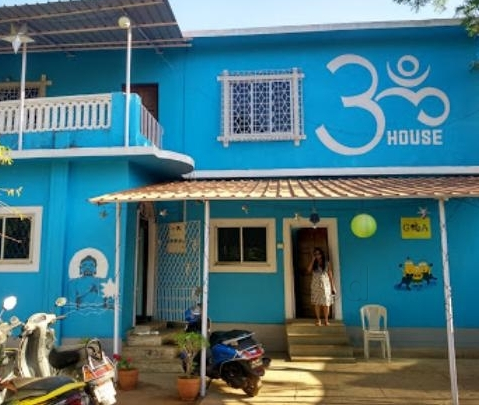
Hand on the Plow

By Ed Staskus

“Keep your hand on the plow, hold on, hold on.” Mahalia Jackson

Yoga is one of those things in this world that’s between the nothing that isn’t there and the nothing that is, except that somebody is always trying to make it into something. Although it’s true God made everything out of nothing, it’s also true the Big Bang will one day become the Big Crunch, when everything will collapse into a final singularity of nothing.

Hold on, it’s going to be a wild ride.

There’s a lot to like about the practice. There always has been. There will probably be a lot to like about it for a long time to come. It’s a practice with a get it done now point-of-view and a going going gone view of things, too. It is practical and spiritual, hands on about what is right in front of you, and tuned in to the bigger picture at the same time. It is getting physical and metaphysical, all on one plate, without blinking an eye.

There’s a boatload of tradition to it, but it isn’t necessary to know everything about it to practice it. Teachings and teachers are a big help, but past the point of breathing and meditation and concentration and staying on the good side of the Golden Rule, it is a practice accessible to everyone because it is within everyone.

Everybody knows it’s better to be considerate rather than merciless, generous rather than greedy, rock steady rather than raging. It’s only the wise guys, our politicos machine gunners bankers power brokers movers and shakers and parade makers, who don’t have the wisdom to see past their noses.

One of the reasons they are horse blinkered is because their noses have grown so long they can’t see around them anymore. It ain’t the yellow brick road anymore when it leads to Orange Julius in the Oval Office.

The practice of yoga doesn’t demand you sign on the dotted line. It doesn’t squeeze you into any forgone conclusions. It doesn’t ask for your loyalty. What you get out of it is what you put into it, not the other way around. There’s no Church of Yoga or Chamber of Commerce of Yoga or Supreme Court of Yoga. It’s a way of life anyone can practice in their backyard, at work, and out in the wide blue yonder.

It is lucid able-bodied eye-opening. It is living and breathing with your heart in the right place. What’s not to like?

The fly in the ointment is asana practice. If the other seven limbs of the eight limbs of yoga make all the sense in the world, why does what passes as yoga on the mat pass itself off as the by the book way to work out in order to sustain health and fitness so that our minds spirit energies stay strong and on track?

There’s always something sketchy about orthodoxy.

When did you start needing a fitness membership at a yoga studio in order to practice yoga?  Why are there so many yoga classes at Planet Fitness Gold’s Gym Anytime Fitness? Does anybody just make it up at home for themselves anymore, or not?

Where did the idea come from that performing an ordained sequence of physical postures will get you closer to equilibrium? It’s as though your doctor wrote you a prescription for the up dog side angle touch your toes pill as a catch-all remedy for what ails you.

Why does Yoga Journal spit out articles like ’38 Health Benefits of Yoga’ month after month?

If not a cure-all, yoga is often touted as the Swiss Army knife of fitness.

The idea behind today’s yoga exercise sequences seems to be that what makes “a true yogic practice unique is that its focus is on sustained feeling of freedom and wholeness,” according to Alanna Kaivalya, author of “Myths of the Asanas: The Stories at the Heart of the Yoga Tradition”.

In step with that definition, however, anybody with a million dollars in the bank is having a true yogic experience, because that much money in the bank is a no-brainer for feeling free and whole, no matter how you got the greenbacks or what you plan on doing with them.

The only problem with having a million dollars is that there are always a million guys trying to take it away from you. That’s where aparigraha comes in handy. It is one of the ten yamas and niyamas, the guidelines of the practice. It basically translates to non-greed, non-possessiveness, and invokes the frugal gene.

Since the rich are always complaining that being rich is harder than it looks, yoga might be a big help for them.

Yoga is like an old-time religion, even though it isn’t a religious practice. It is old-school. It’s got it’s hand on the gospel plow. But most of what is known as yoga today is largely about being led through a workout on a mat, with an emphasis on paying attention to your breath, and maybe a dollop of meditation to round things out. There’s no magic to it, but there is a healthy dose of hocus pocus involved.

For a long time, as yoga was booming in the modern world, the third limb of the practice was extolled for its timelessness. It was said the postures were thousands of years old. They had been burnished honed systematized to perfection. When Mark Singleton wrote “Yoga Body: The Origins of Modern Posture Practice” several years ago the genie was out of the bottle. It turns out almost everything being done on yoga mats had been invented in the past one hundred years-or-so.

A hundred years ago what is today taught and practiced on yoga mats far and wide was something else. It was Danish calisthenics British Army exercises YMCA strength work and Indian wrestling. It was a little bit of everything.

The “Hatha Yoga Pradipika” – written about six hundred years ago – enumerates fifteen physical postures. That’s all of them. Fifteen. The legendary text “Yoga Korunta” that Krishnamacharya and K. Pattabhi Jois based the Ashtanga Series on remains to this day legendary. In other words, undiscovered, unhistorical, and unverifiable, largely because ants supposedly ate the text. It was written on banana leaves.

Practicing the series, which is hard in the doing and fulfilling in the accomplishment, may land you on cloud nine, but the origin of the series is pie in the sky.

One of the only yoga sutras mentioning anything about asana practice simply says one of the most important aspects of it is that it should entail “appropriate effort.” There isn’t anything in any traditional yogic text that says headstand or handstand or standing in tree pose for five minutes is what you need to do to get fit.

All you need to do is show some gumption.

“Yoga practice is supposed to make us structurally stable, enable us to move with grace and ease, free us from physical suffering and enable us to withstand changing circumstances,” wrote Olga Kabel in ‘Traditional Goals of Asana Practice’.

Yoga exercise is part of the package, not the whole package, as it has been    misconstrued while being repackaged as a fitness regimen, another get fit quick commodity in the long line from Nautilus to jazzercise to spinning. It isn’t even clear that yoga is best for stability, best for enabling us to move with grace and ease, and best for alleviating suffering.

It is beyond doubt best for helping us adapt and deal with change, but that isn’t because of the exercise, but because of the rest of it. Yoga is 90% mental and the other half is physical.

“Traditionally, the practice of asana was always considered as an integral part of a holistic practice, never as an isolated fitness system,” said Gary Kraftstow, founder of the American Viniyoga Institute.

When it becomes a fitness system is when it starts selling monthly memberships.

“Many gyms that offer yoga emphasize the physical exercise without teaching the essential self-awareness that differentiates yoga from any exercise,” said David Surrenda, founding dean of the Graduate School of Holistic Studies at John F. Kennedy University.

“The result of an emphasis on exercise misinterprets what the real intention of yoga practice is. Yes, one can increase muscle mass and decrease waist size, but that’s not the real goal. Much of the yoga practiced today has actually become the antithesis of yoga as it is meant to be.”

Yoga might be whatever you want it to be in its post-modern guise. Whatever it was meant to be way back when is neither here nor now. Maybe that’s the beauty of the practice, shape-shifting to suit our intentions. You’ve got to stay on your toes to stay in the present, be in the moment, which is an integral part of the practice.

Nevertheless, even though lunges and twists and jump backs on the mat are good for you, so are riding a bike and lifting weights. In fact, yoga doesn’t even crack Harvard Medical School’s Top 5, which are walking, swimming, strength training, Tai chi, and kegel. The best fitness exercises are still basic hip and hamstring stretches, push-ups, sit-ups, squats, dumbbell rows and presses, and burpees.

As part of an overall fitness regimen, yoga exercise is by all accounts a Top 10. Everyone does push-ups and sit-ups on the mat without even realizing it. The burpee is a foundation of all vinyasa sequences. When it comes to flexibility, yoga is certainly Number 1 on the Hit Parade. Sometimes people say they aren’t flexible enough to do yoga, but that’s like saying you’re too dirty to take a bath.

Getting all the poses on the mat right is keeping your eye on the wrong prize.

Anyone who subscribes to the eight aspects of the practice is doing yoga, but no one who just does stuff on the mat is doing yoga. They are doing something, but it’s like soda pop to a scotch straight up. They are fooling themselves when they believe the bright shining proposition that they are achieving some greater good by doing what they’re told to do on the mat. Anyone will get fit if they spend enough time at a yoga studio, but they will get fit if they spend enough time walking around in circles, too.

Yoga is about mastering the modifications of your mind, not just the modifications of your body. When exercise is the be-all and end-all, it is a good thing in and of itself, but it’s not yoga. When exercise is linked to the breath, the breath to the mind, the mind to the spirit, in a kind of virtuous circle, it’s yoga whether you’re in a studio or walking the dog in the park.

Like K. Pattabhi Jois said, “Just do.”

Hatha yoga is what leads to physical health mental clarity and a cool as a cucumber spirit. When practiced alongside the yamas amd niyamas, the ten principles of daily life, it’s the second to none way of transforming yourself from the outside in and the inside out. There’s no monkey business to it.

The fitness aspect of yoga doesn’t have to be the dogma of what has come to be standardized in how-to books youtube videos and studios. It can be cobra and down dog and corpse pose. It can be power lifting. It can be archery. As long as your mind and spirit are one-pointed and your aim is true, whatever we do with gumption and purpose will gird us for where we want to go.

All anyone needs to do is keep their hand on the gospel plow.

Ed Staskus posts stories on 147 Stanley Street http://www.147stanleystreet.com and Cleveland Ohio Daybook http://www.clevelandohiodaybook.com. To get the site’s monthly feature in your in-box click on “Follow.”

Devil’s Right Hand

By Ed Staskus

   For half a century, from 1916 to 1966, until Charles Whitman, an ex-Marine, shot and killed 16 people, wounding 31 others, shooting from the top of an observation deck at the University of Texas at Austin, there were just 25 public mass shootings in the United States in which four-or-more people were killed. The young ex-soldier redefined homegrown massacres. He brought to bear a Remington 700, a .35-caliber Remington, a M1 carbine, a Sears semi-automatic shotgun, a .357 Magnum, a Luger, and a .25-caliber pistol.

   During the rampage a police sharpshooter in a small plane circling the 27-story building was repeatedly driven back by return fire. The first person killed was the eight-month-old not-yet-born baby of an 18-year-old pregnant student when she was shot in the abdomen leaving the Student Union.

   Finally, two policemen stormed the observation deck, one firing his revolver, but missing, and the other killing Charles Whitman instantly with two blasts from his shotgun. The policeman with the revolver emptied his gun into the body at point-blank range, making dead sure. He ran to the parapet yelling, “I got him, I got him.” He was almost shot himself by police on the ground, who didn’t at first realize he wasn’t the shooter.

   It remains to this day one of the deadliest mass shootings in the United States.

My parents grew up in Lithuania. When they were still teenagers, they saw plenty of guns. Between 1940 and 1944 first the Russians invaded, then the Germans, then the Russians again. When they fled to Germany in 1944, they saw even more weapons during the furious last months of the collapse of the Third Reich. By the time they emigrated to Canada they had seen enough guns to last them a lifetime, more than most people ever see in a lifetime.

   During the Second World War the United States fabricated 2,679,840 machine guns and 11,750,000 infantry rifles. Twenty-nine other countries were a part of the deadliest war in history. Only God knows how many guns, and mortars and cannons and tanks, they manufactured, among other things, resulting in 70 to 85 million military and civilians done in for good.

   In the 1980s, the FBI defined mass shootings as four-or-more people, not including the mass murderer, being killed in a single incident, typically in a single location. Since 1966 there have been thousands of them. Before 1966 there was a mass shooting about once every 100 weeks, Today, there is a mass shooting about once every day.

   Between 1999 and 2013 there were 31 mass murders per year on average. In 2015 there were 220 days of mass shootings and only 145 with none. In the first ten months of 2018 there were 307 mass shootings, almost as many as there were days.

   It doesn’t bode well for the 2020s with the Grand Old Party still chock full of crazy people, the National Rifle Association still rampant with crazy people, and millions of crazy people still armed to the teeth. The NRA, with reasoning crooked as a corkscrew, has re-interpreted the 2nd Amendment, disappearing some of its language and all of the intent, to suit their agenda. They and their supporters equate success with goodness. It doesn’t matter that rightness ends where ammo begins. They are all in with Mao, who said, “Power grows out of the barrel of a gun.” Wayne LaPierre, the Grand Dragon of the NRA, says “We need national carry.”

   It would be like giving AK-47’s to monkeys.

   There are more guns than people in the United States. There are almost 400 million guns in the country. There are 12 million guns in Canada. There are 3 million guns in England. There are fewer than half-a-million guns in Japan. US citizens own 40% of all the guns in the world, more than the next 25 countries combined.

   When I grew up in Sudbury, Ontario, the only people who had guns were the police, hunters, and folks who lived on the outskirts. They kept shotguns near their back doors to fend off marauding bears. My parents didn’t have any guns. After the war my father never owned a gun.

“Guns kill people,” he said. He was a miner and saw things in black and white terms. If it looks like a volcano, blows its top like a volcano, it’s a volcano. He knew since he was a dynamite man a mile down, before he saw the light and started using his head instead of his hands.

   Yoga studios seem immune to gun violence. Whoever saw a security guard at the front door of a yoga studio? At least, not until two years ago, when a man walked into Hot Yoga in Tallahassee, Florida, and shot to death Nancy Van Versen, a faculty member at Florida State University, and Maura Binkley, a student at the same university.

   The young woman’s father said his daughter had planned on becoming a teacher. “She truly lived a life really devoted to peace, love, and caring for others,” said Jeff Binkley. She didn’t live long. She was 21 years old.

   It doesn’t take long to go packing in Florida. There is no waiting period to buy an assault rifle or anything else. In Iowa no one needs a license to sell guns online. If you plan on selling lemonade in Iowa, however, even if you’re a 7-year-old and your storefront is your front yard, you need a business permit. In Texas, if you want to sell guns, go right on ahead, partner. It is the most heavily armed state in the country.

   But, if you want to cut hair in Texas, you must, no if buts or maybes, log 1,500 hours at hairdressing school. Scissors don’t kill people, people do. It’s best to beware Texans bearing gifts.

   Buying a gun almost anywhere in the United States is easier than getting a license to drive, filling out your tax return, or talking to tech support. It’s harder to pay off student debt, which typically takes about 21 years, than it is to buy a gun, which typically takes about 10 minutes. Anyone can walk into a gun store, pass a background check in record time, and walk out with a persuader. In some states no one has to even do that. They can buy a gun from a private seller, no background check needed.

   In Lithuania there isn’t an arsenal in every basement. In order to own a gun an exam and license are required. They keep a lid on the bubbling stew, at least. The murder rate is 9 times higher in the United States than in Lithuania. You are 128 more times more likely to be involved in a gun related crime in the United States than Lithuania. The USA has gone gun crazy since the 1960s. It’s not just mass shootings, either. It’s one bullet at a time. In 2016, there were hardly any people murdered with a handgun in Japan, England, Canada. and Lithuania. All their coffins put together were a fraction of the 11,004 murdered in the USA.

   Mass shootings have happened at casinos, nightclubs, hotels, music festivals, libraries, factories, airports, shopping malls, courthouses, sorority houses, apartment buildings, Waffle Houses, backyard parties, Planned Parenthood clinics, movie theaters, churches, synagogues, the Empire State Building, nursing homes, baseball fields, grade schools, high schools, community colleges, and universities. In Dangerfield, Texas, a man walked into a church and killed 5 people and wounded 10 others after members of the congregation earlier declined to be character witnesses for him at a trial.

   Besides the mortally wounded at Hot Yoga, four others were shot and one of them, a young man who, among others, resisted the murderer, was pistol-whipped.

   “Several people inside fought back and tried to not only save themselves but other people,” said Police Chief Michael DeLeo. “It’s a testament to the courage of people who don’t just turn and run.” One of them who didn’t turn and run, even though unarmed, was shot nine times.

The killing spree broke out on a Friday night as the class was starting. Scott Beierle pretended to be a student, then pulled a semi-automatic handgun from his duffle bag and started blasting anybody female in sight without warning.

   When the gunfire momentarily stopped, Joshua Quick took action.

   “I don’t know if it jammed, or what,” he said. “So, I used that opportunity to hit him. I picked up the only thing nearby to hit him with, which was a vacuum cleaner, and I hit him on the head.” The shooter was staggered, but recovered his footing, pummeling Joshua on the forehead with his gun. The yoga student fell to the floor, bleeding bad, but got back up.

   “I jumped up as quickly as I could, ran back, and the next thing I know I’m grabbing a broom, you know, anything I can, and I hit him again.”

   “Thanks to him,” said Daniela Albalat, “I was able to rush out the door, slipping and bleeding.” She was shot in the upper legs. “I want to thank that guy from the bottom of my heart because he saved my life.”

   Joshua Quick did what the Dalai Lama would have done, except the Dali Lama would have gone heavy. He wouldn’t have used a broom. Arguably one of the most peaceable men on the planet, when asked by a child at the Educating Heart Summit in Oregon what he would do if someone came to his school with a gun, he replied without hesitation, “If someone has a gun and is trying to kill you, it would be reasonable to shoot back with your own gun.”

   Three minutes after the first 911 call, sirens were wailing, and police were showing up. The killer cleared the gun’s chamber, turned it on himself, and shot himself straight to hell.

   He lived in Deltona, Florida, about 250 miles from Tallahassee, and had no connection with the yoga studio or anyone he gunned down. He had been a substitute teacher at the Volusia County Schools, even though he had a master’s degree in public administration from Florida State University. He was arrested several times for groping women on the FSU campus. He was fired for unprofessional conduct, feeling up teenage students not being in his job description.

   The gunslinger was an amateur musician who posted his songs online. On “American Massacre” he sang, “If I cannot find a decent female to live with, I will find many indecent females to die with. I find that if I cannot make a living, then I will turn, I will make a killing.”

   Mass murderers are all different, except most of them are men. It’s a man’s world. They have their reasons for doing what they do, although none of them are good reasons, and many, if not all, mass murderers suffer from psychological problems. Mental health is not compatible with murdering people.

   Although they and their reasons are variable, the one constant among them is the fast fire weapons they deploy. None of them carries a cap and ball Colt. It would knock them off their feet, anyway. They bring the blessing and imprimatur of the NRA, the gun champions who have successfully lobbied one Congress after another for decades to limit research by the Centers for Disease Control into gun-related violence.

   A few days after a mass shooting at a high school in Parkland, Florida, in March 2018, House Speaker Paul Ryan said his ruling Grand Old Party planned on keeping restrictions on gun research in place. “We don’t just knee-jerk before we have all the facts and the data,” said the longtime opponent of gun control laws.

   So long as his kneecaps weren’t getting popped he wasn’t going to knee-jerk it.

   “We are saddened and angered by the senseless shooting at Hot Yoga Tallahassee,” said Tasha Eichenseher, speaking for Yoga Journal. “Studios are sacred places where we go for self-care and to feel safe.”

   After Sandy Hook and Tree of Life Synagogue and First Baptist Church, it is doubtful there are any safe places left. It is undoubtedly true there are no sacred places left. If even Fort Hood, the biggest active-duty and most secure army base in the United States, couldn’t prevent Nidal Hasan, an Army major, from going postal and fatally shooting 13 soldiers, while wounding more than 30 others, there might not be safe and sacred and secure anywhere.

   “You have a whole generation with this being more and more normal,” said Jeff Binkley. “That cannot happen.”

   When I was a kid in Sudbury our mom never bought us toy guns. “No,” she said whenever we asked. We stayed busy dodging the trains hauling ore and wailing on all sides of town. It wasn’t until we moved to the United States that I found out all kids had toy guns. After that there was no going back.

   In any event, so long as the politicians we elect to rule our state and national legislatures, and the politicians we elect to our state and national capital houses, are the same vote-stuffing wallet-stuffing puff ’n’ stuffers allied hand-in-hand with gun manufacturers and Second Amendment agitprops, no-nonsense gun-reform legislation and public-health funding are not going to happen.

   The gunrunners don’t give it a first thought. They don’t give it a second thought, either. The devil’s right hand is all right with them.

   The silk stockings perform to the grass roots who believe they need guns to make it in this world. Their faith is in the ruling class’s Punch and Judy show even though the second estate’s grass roots are fertilized at a thousand country clubs where a thousand lobbyists dine and drink. Their security guards carry sidearms, since they no more believe in responsible gun owners than they believe in the Constitution and aren’t taking any chances. No 2nd Amendment-toting mob is getting through their country club doors.

   Two-and-a-half centuries later we don’t live in 1780s buildings anymore, we don’t travel in 1780s horse and buggies anymore, and we don’t turn on the lights with 1780s whale oil anymore. We don’t read one-page pamphlets and the penny press anymore. We don’t use 1780s medicine, like arsenic and leeches, anymore. There is no reason why a 1780s amendment to the Constitution, written to enable a militia in a time of crisis, should enable everybody to buy whatever guns whenever and wherever they want for whatever reason.

   But that’s the world we have made and the world we live in. Carrie Lightfoot and Yosemite Sam guns a-blazing aren’t going anywhere anytime soon. Americans love their guns, guys gals and the movies. They don’t believe liberty gets handed to them unleaded. They believe it will get stripped away the wrong way around if they aren’t vigilant. It’s been said fences make for good neighbors. Locked and loaded makes for tried-and-true neighbors.

   It’s like the Lithuanian proverb says, “When you are in the devil’s wheel, you must learn how to spin.”

Ed Staskus posts on 147 Stanley Street http://www.147stanleystreet.com and Made in Cleveland http://www.clevelandohiodaybook.com. To get the site’s monthly feature in your in-box click on “Follow.”

Stressed Out Zeroed In

By Ed Staskus

   It is hardly surprising that most lists of the toughest jobs in the United States routinely list flying planes, fighting fires, and nabbing bad guys as the most stressful occupations. They are life-and death careers, just like being a paramedic or an atomic energy repairman, jobs with tension built in. Sometimes the work means there are no do-overs when getting it wrong.

   What is surprising is that many lists routinely flag some day-in day-out professions, such as teacher, social worker, and corporate executive. The corner office has gotten so nerve-racking, apparently, executives need to take a year off to sail their yachts to Greece. Teachers and social workers get to take a sick day-or-two.

   Even event coordinators have gotten into the act. They cracked the Forbes Top 10 list in 2017. The magazine’s stress score for airline pilots was 60.5 and for police officers it was 51.6. The stress score for event coordinators was 50.1.

   Who knew planning weddings and conferences and coordinating with on-site staff could be such a hassle? It points out that stress can be more real than the real jaws of death, like when bullets are whizzing by your head, and can simply be in the eye of the beholder. Sometimes hell is a foxhole. Other times hell is other people. Once in a while hell is just hell.

   Even though stress is primarily a physical response, more often than not what we are responding to in the modern world is what we have made of it. For millions of years, it was see the predator in the wild, there’s the potential danger, fight or flight, right now! Adrenaline, cortisol, and norepinephrine flooded the body to focus one’s attention on the danger. It was beat the bully or beat feet to get away. 

   The Napoleonic Wars and the two World Wars were extremely stressful, especially if you were involved in them, which hundreds of millions of people were. More than fifty million alone died during the Second World War. Today armed conflicts are more in the line of conflicts. Unlike the world wars when everyone was all in, relatively few people in terms of sheer numbers are on the firing lines of the War on Terror. It doesn’t make it any less stressful for those involved, but most of us aren’t involved.

   Nowadays it’s the kids won’t stop screaming, the boss won’t stop screaming, and the bill collectors won’t stop screaming. Not to mention losing your job, getting divorced, moving, and, worst of all, making a speech. Many people say they fear standing at a lectern in front of an audience more than they fear death. 

   There are many ways of coping with stress. Eat healthy, exercise regularly, and get plenty of sleep. Avoid drugs and drink, take a break, and share your problems, although taking a break and listening to somebody else’s problems without some booze at hand is problematic, at best. Have a drink, after all. Like W. C. Fields said, “I never worry about being driven to drink. I just worry about being driven home.”

   Some of the most popular 21st century techniques for reducing stress are meditation, mental imagery, and controlled breathing. When those techniques are rolled into one package, and girdled with specific physical movements, presto change-o, you get today’s yoga.

   There are many benefits to the strongman side of yoga. It keeps you active. It keeps you limber. It keeps you healthy. Besides the physical fitness benefits, it keeps you mentally fit. Yoga makes you more alert, less fatigued, and revs up cognitive function. It produces endorphins. You feel better in spite of yourself. It is tailor made for dealing with stress. 

   Lunges, bends, twists, inversions, down dogs, and whatever else is on the agenda are all good for you. They’re good for you every day, even if it’s only happy baby pose when you’re tired and winding down.  Seven out of ten adults in the United States say they are stressed out daily. That’s why ten out of ten of them should get on a yoga mat. Nobody stressed out left behind.

   When your brain’s feel-good neurotransmitters start to flow it puts pep in your step. Yoga exercise practiced regularly increases self-confidence and reduces the symptoms of anxiety and depression. It helps you sleep better, too. Tossing and turning aren’t what you want to be doing in bed, at least not that kind of tossing and turning.

   Guided imagery is a stress management technique that has been shown to reduce blood pressure and symptoms of PTSD. It relieves physical tension. It’s a simple technique, simply using your imagination to take you to a calm place. It involves getting comfortable, closing your eyes, and imagining yourself in a peaceful setting – like a tropical beach, bright blue water, surf, sand, and sun – which helps you relax and relieves stress. Yoga teachers do it all the time, especially when they are at yoga conferences at South Sea resorts.

   All yoga classes end with savasana, what is called corpse pose. It’s a relaxation thing, done flat on your back. What’s more relaxing than being flat on your back? Teachers croon the experience. “Soften your face, your shoulders, arms. Breathe. Soften your abdomen as it rises and falls. Breathe. Soften your thighs down to the tips of your toes.” Or they script the experience, leading the class in a systematic relaxation, conjuring images like a leaf floating down a stream or weaving a narrative about walking through a dappled forest.

   No one can avoid stress completely, not cavemen in tooth and claw days, nor up-to-the-minutemen. It’s not even certain doing so would be a good idea. But, how we react to stress is up there with all good ideas. Stress is a common trigger for headaches, from the tension kind to the migraine kind. Fighting it all day leads to high blood pressure, a risk factor for heart disease. It suppresses the immune response. It can make you literally sick as a dog. 

   Take a breath. Controlled breathing, also called diaphragmatic breathing or paced respiration, is a tried and true stress reduction technique. It is the cornerstone of the relaxation response, first developed in the 1970s at the Harvard Medical School. It encourages full oxygen exchange, slowing down the beat of the heart and stabilizing blood pressure.

   Take a deep breath. Deep abdominal breathing stimulates the parasympathetic nervous system, promoting calm. It’s easy to do whenever you want, at a scheduled time every day, any time you have a time out, or waiting during your appointment with your tax accountant. “It’s the fastest way to calm down,” said Time Magazine. It’s a stress eraser. It doesn’t cost a cent and can’t be taxed.

   Breath control is one of the eight limbs of yoga. It has been since the beginning of the practice, long before worry, anxiety, and stress became the bugaboos of modern life. According to the National Institute of Mental Health, about 10 percent of Americans suffer from anxiety disorders. If they went to a yoga class they would hear from the word go to breathe consciously, control the breath, and connect to your breath. 

   We all breathe 10 to 15 times a minute, which is about how many times yoga teachers use the word breathe in their speechmaking. Unconscious shallow breathing is part and parcel of the primitive part of the brain. Conscious breathing comes from the cerebral cortex. Conscious breathing is about controlling the mind. Connecting with the breath, since we breathe all the time, is connecting with the now. It’s a way of being in the present, not in the past where something has already happened, nor in the future where something might or might not happen. 

   Whatever bad thing might or might not happen today, time spent worrying about  it is a waste of time, since it’s already tomorrow on the other side of the world. Besides, what most people worry about never happens, anyway. Don’t worry about the horse going blind. Just get the kids loaded on the wagon for the hayride. 

   A big part of the practice of yoga is controlling prana – which can be imagined as energy, life force, or breath – through pranayama, or various methods of controlling the breath. The goal is to raise one’s energy, or prana. It’s an essential part of meditation, another of the eight limbs of yoga. 

   When it comes to breathwork, yoga is soup to nuts: bellows breath, breath of fire, and lion’s breath. Going all out, if you are especially stressed, skull cleanser is where to go. It’s a cleansing breath to raise your energy level. It also involves a fun hand sign, which is making your hands look like a dog’s head by resting your ring and middle fingers on your thumb while sticking your pointer fingers and pinkies up like ears.

   The power tool in the toolbox of stress busters is meditation. “Anyone can practice meditation,” says the Mayo Clinic, “It’s simple and inexpensive. It can wipe away the day’s stresses, bringing with it inner peace.” The relaxed breathing and focused attention of meditation clear away the overload of contemporary life, from eight-lane highways to information superhighways. Meditation helps you be self-aware, not simply aware of your surroundings.

   The port of call on the eight-fold path of yoga is meditation. It isn’t just about solving problems, be it stress, or anything else. It’s about getting into a state of consciousness different than either the waking or sleeping states. It’s about pivoting and positioning the mind inward. The mind often has a mind of its own. Meditation is designed for it to find stillness. If you can find it, there’s no stress there.

   Meditation is a practical way of calming yourself down, slowing down the endless sturm und drang, leaving distractions behind and focusing all your attention on one thing, be it your breath or an object. It’s not about thinking about nothing. It’s about paying attention. Or you can just hum along.

   It is practiced in the space between the nothing that isn’t there and the nothing that is. When you’re stressed out, get on a yoga mat. It will zero you in.

Ed Staskus posts on 147 Stanley Street http://www.147stanleystreet.com and Made in Cleveland http://www.clevelandohiodaybook.com. To get the site’s monthly feature in your in-box click on “Follow.”

Between Sixes and Sevens

By Ed Staskus

In grade school there is always one kid in class who, when he has to stand up and give a book report, bumbles and stumbles around until it becomes obvious he hasn’t read the book, but the CliffsNotes, or maybe only skimmed the CliffsNotes. If he’s the class clown, it is a lot of fun. If he’s just a schlemiel in the back, it’s sad.

In college or university, you either know your stuff, the stuff your major is all about, or you don’t. There’s no use reading the CliffsNotes, because the teachers have seen it all before, and they just give you an F and move on. They don’t care if you’re an idiot, or not.

If you are at a trade school, forget it, there are no CliffsNotes. The diploma they give you is fitting and necessary. Then when you have your plumber’s toolbox in hand you have to fix the toilet. If you don’t get it right, there is a flood and instead of an F you get fired.

If you are a yoga teacher and you get it wrong, you could hurt somebody, put them in the hospital, or even, if you get it hopelessly wrong, kill somebody. The human body is supple and strong, but it can go haywire. That’s why yoga teachers have a grave responsibility. A plumber can replace a toilet, but yoga teachers can’t replace a life gone down the drain.

Pierre Bibby, chief executive of the British Wheel of Yoga, the national governing body in the UK, says, “Yoga is not bad for you, but bad teaching is.” Bad teaching is fiddling while you work.

CliffsNotes, which used to be called Cliffs Notes, are study guides. They used to only come as pamphlets, but nowadays they are online, too. It got started in 1958 when a Nebraska man and his wife set up shop in their basement. Six years later they were selling a million of their shorthand guides a year. Not reading the real thing turned out to be real big business.

Thirty years later a media and events company paid $15 million for CliffsNotes, pumped up the volume, got on the internet, and produced 60-scond videos about the major literary works of the world. “CliffsNotes lives on today,” they say, “as part of the global learning community, and its mission of changing lives by fostering passionate, curious learners.”

Sixty second bursts of passion, living on crumbs.

If you have a passion for plumbing, welding, or pipefitting, it takes considerably longer than an infomercial to fulfill your passion. It takes a long time. The reason is does take years is that there is no fooling around with those trades.

Like Abraham Lincoln said, “You can fool all the people some of the time, and some of the people all the time, but you cannot fool all the people all the time.”

Becoming a plumber starts with about two years of training at a trade school. After finishing an apprenticeship, which usually takes three to five years, and passing an exam, you can become a journeyman. A journeyman is someone who has served an apprenticeship at a trade and is certified to work at it under another person.

Another three or four years as a journeyman gets you enough flush master experience to let you take the test to become a master plumber.

Welders attend a technical school or community college to learn their trade. Nobody wants a welder without certification because they work with extremely hot high-energy electric arcs. On-the-job experience is important. They customarily work several years as an apprentice. Certificate programs typically last up to two years. Some go right to work after that while others   continue their education, pursuing degree programs in welding.

A pipefitter is somebody trained in organizing, assembling, and maintaining mechanical piping systems that are meant to withstand high pressure. The systems are usually industrial, including heating and cooling, and involve work with steam, ventilation, hydraulics, chemicals, and fuel.

They have to get it right so that nothing blows up.

Trade schools offer courses on pipe system design, safety, and tool use. Apprenticeships are four-year programs involving work full-time and learning the trade on the job. Apprentice pipefitters work about 2,000 hours a year under the supervision of experienced fitters.

Yoga has a different spin on things.  Teacher training consists of some coursework in yoga history and philosophy, basic anatomy and physiology, and instructional techniques. Hands-on experience is gotten by observing teachers and helping teach classes. Students usually become certified in CPR since fitness centers often require the skill of their instructors.

Most teachers graduate with a 200-hour certificate. They may not be Maxwell “Agent 86” Smart, but they’ve missed it by that much, if not more. You’ve got to be quick on the uptake to miss becoming Maxwell.

Then it’s off to work we go. After the graduation ceremony, out in the workaday world, trying to make a living, networking with other teachers, getting a gig, distinguishing yourself, making yourself into a teacher your students like and respect and look to for guidance.

It is all well and good, but in many yoga studios there is always the new 200-hour Yoga Alliance-certified teacher who barely knows what they are doing. They are not simpletons, exactly, because they have invariably been into yoga for a while, taking classes, reading about the practice, and going to seminars. But when it comes to their body of skill and knowledge, it is bare bones, a skeleton not fleshed out with either learning or experience.

That’s a problem.

Some yoga moves, taught to beginners by beginners, are problematic if done wrong.  William Broad, the science writer for the New York Times who wrote a book called “The Science of Yoga,” gathered evidence that some asanas can be risky business.

“This is not anecdotal, and they are not freak accidents,” he said. “Postures like the shoulder stand, in which you lie on your back and raise your legs into the air, and the plough, in which you lie on your back and put your feet over your head on the floor behind you, that are widely performed, can crank the neck around in a risky way.’”

Postures that reduce blood flow to the basilar artery can cause strokes in some people and can be dangerous. “If the clots that form go to the brain, you can have a stroke,” said William Broad. “And one in twenty people who have these vertebral artery problems can die.”

In 1972 Oxford University neurologist Professor Ritchie Russell wrote in the British Medical Journal that some yoga postures could cause strokes in young healthy people. The New England Journal of Medicine published an article in 2001 citing yoga as something that had the potential to provoke arterial damage.

What are the chances that a yoga teacher who has graduated with only five full-time weeks of training, with a 200-hour certificate, is going to be fully aware of the hazards of shoulder stand and upward bow and all the other upside poses? There is an outside chance, but who wants to bet the bank on an outside chance? Yoga teachers should be able to get to the bottom of everything they do, not be taken by surprise.

The Orthopaedic Journal of Sports Medicine published a study in 2016 that revealed there were close to 30,000 yoga-related injuries that required emergency room visits from 2001 to 2014 in the United States. The rate of “I need to go to a hospital!” injuries per 100,000 people who practice yoga grew from 9% to 17%. There is no telling how many people got hurt and simply nursed themselves back to health at home.

“I see quite a bit of yoga-related injuries,” said Robert Chhabra, an orthopedic surgeon at the University of Virginia Health System. “Mostly it’s overuse injuries like tendinitis and sprains.” He noted it was unusual for anyone to suffer a traumatic injury.

“You have to be smart about it, though” he said. “If a pose bothers you, don’t do it.”

There is a condition doctors call “yoga foot drop.” It results from staying in kneeling postures too long, which keeps oxygen from reaching a branch of the sciatic nerve that runs from the lower spine through the butt and legs. The nerve becomes temporarily deadened, causing considerable discomfort.

Yoga foot drop is rarely, if ever, mentioned in 200-hour trainings.

Experienced yoga teachers will tell you it is more important how a pose feels than how it looks. Inexperienced teachers often cookie cutter the class, trying to get everybody to look the same. Bikram Yoga classes were notorious for that approach. How you look in downward dog is far less important than how you feel. It is good if you are getting a stretch in your hamstrings. It is bad if you are getting a pain in your shoulders. It is good if your teacher can correct you at a glance. It is bad if the teacher has to think and think about it, trying to think what the CliffsNotes said.

It is terrific when teachers have the eyes of a hawk, spotting problems wherever and whenever they happen. 200-hour teachers are babes in the woods, however. That is bad if they are your teacher. Babes in the woods tend to bubble. If there was a hawk in the class, the hawk would hunt them down. That would be bad, but good at the same time.

Yoga isn’t meant to be competitive. It shouldn’t be, but it is an ambitious aggressive world we live in, since we are all competitive. Nobody wants to just be mediocre. “People push themselves too far,” said Mollie McClelland, a yoga teacher at the Alchemy Centre in London, England. “There are such huge egos in yoga that everyone wants to prove a point.”

Experienced teachers will slow it down. Inexperienced teachers are slow on the uptake and will encourage it under the assumption that trying hard is a good thing. It isn’t always, but it’s always hard to tell anybody that. The practice shouldn’t have a killer instinct, especially if you want to stay injury-free.

“It’s a myth that it’s safe to do an asana without awareness and consciousness,” says Glenn Black, a yoga teacher with forty years under his belt. He has gone so far as to say that the “vast majority of people” should give up yoga since they are getting it all wrong.

The problem with many of the 200-hour, and even 500-hour, Yoga Alliance-certified yoga teachers out in the world on their first jobs is that they are like the kid in school who didn’t read the book but has to give a book report.

They want to hit a home run, but they are second-string. When it comes to playing hardball, they’re more likely to strike out, and when they do, everybody strikes out with them. Tenderfoot classes are loads of fun and enthusiasm, playlists booming, but they come up short.

Why do pipefitters train like it is life and death but yoga teachers train like it’s a game of schoolyard ball? Why don’t yoga teachers take the same pride of professionalism in what they do as do plumbers, welders, and pipefitters? They train for years. Yoga teachers train for weeks.

Pipefitters lay weld and cement pipes, joining them together. They install automatic controls for whatever is flowing through those pipes. Yoga teachers join body mind and spirit together. They would be better served if they were better equipped to do so, so the blood of the body flowed better, enlivening the mind and spirit.

Many teachers are well equipped to do their work, but it’s only because they have gained experience in the school of hard knocks, not at a trade school or formal apprenticeship. It’s hard to say what the attitude is in Ecuador, Russia, or India, but in the United States yoga teachers get a pass because making a buck at yoga is so ridiculously easy. Five weeks in and you’re good to go. In the land of the fast buck why bother going to the trouble of cracking the books when you can rake it in with a scratch pad of jargon?

Even fitness instructors, who many yoga teachers resemble, usually have a college degree in the field before they hang out their shingles.

The men and women running industries that need pipefitters aren’t amateurs at what they do and won’t stand for amateurs working for them. An unprepared fitter isn’t going to get anywhere, so they have to be well-prepared. An amateur teacher with a bouncy personality a good voice fit good-looking perky balanced and believable can get bosom buddy with their ambition without getting too deep-sea with yoga, at all.

Most people who go to studio classes are amateurs and don’t know the difference between a chakra and a chocolate bar. They deserve a pro, but too often get a greenhorn at the front of the class. Until the standards are upgraded, and yoga teachers are required to get more training, that is what they will keep getting.

Yoga classes aren’t nursery schools. When nursery rhyme-style teachers run the classes, it does a disservice to the practice. Short cuts are taking without thinking. Yoga is a thinking man’s game. It’s the get smart game. The well-spent hard-beaten path is always the easiest in the long run.

Yoga is a long path, not a buttercup. There is no racing to the finish line. It’s more like a big bolt torque, getting it snug, slow and steady, not the latest hip hop playlist gambol. It’s like mountain men tracking dinner, not snacks. There isn’t any nutrition in Ho Hos. The good better best yoga teachers are master craftsmen who have made themselves what they are. Theirs is the shingle on the door to look for, not the certificate from the College of CliffsNotes.

Photograph: Kaylin Oligino, a junior in the plumbing program at Smith Vocational and Agricultural High School, practices on an oil burner.

Ed Staskus posts stories on 147 Stanley Street http://www.147stanleystreet.com and Cleveland Ohio Daybook http://www.clevelandohiodaybook.com. To get the site’s monthly feature in your in-box click on “Follow.”

Backbend Bombshell

By Ed Staskus

Breaking with rigid societal control, secretive totalitarianism, and his own familial tradition, North Korea’s Supreme Leader Kim Jong-un has proclaimed his nation will cease to be a Stalinist throwback and alternately intends to adopt yoga as its ruling ideology.

“We will no longer be a Cold War relic,” he asserted while making his stunning announcement.

When asked if the unprecedented changeover would be immediate or phased in over time, he proclaimed August 15th, Liberation Day, as the day yoga would officially become the new law of the land.

Liberation Day commemorates the independence of the Korean Peninsula after the defeat of the Japanese by the Allies during World War Two. It is the only official holiday celebrated in both South and North Korea.

Several immediate changes were made public.

“We are dissolving the Worker’s Party of Korea, demobilizing 90% of the Korean People’s Army, and abandoning all atomic bomb and guided missile development,” said Kim Jong-un in his role as Supreme Commander of the Korean People’s Army and Chairman of the Central Military Commission.

Under the decades-long Songun – “military first” – policy of the country there are almost 6 million paramilitary personnel on duty, nearly 25% of North Korea’s population. The regimen emphasizes the military over all other aspects of state and society. Decommissioning 90% of the military and reservists will return more than 5 million men and women to civilian life.

Junta power was quickly brought to an end. The arrest and detention of numerous vice-marshals, generals, and flag officers of the ground forces, navy, air force and rocket services was reported concomitant to Kim Jong–un’s statement.

A North Korean spokesman said the Supreme Leader would brook no dissent regarding his revolutionary about-face.

“A revolutionary party is, in its essence, the party of its leader that carries out his ideology and cause, and the main thing in its building is to ensure the unitary character and inheritance of his ideology and leadership,” said Kim Jong-un, asserting his authority.

Radio and television sets, pre-tuned to government stations that until the announcement delivered a steady stream of propaganda, began broadcasting yoga philosophy lectures and youtube videos of the practice.

When asked about his prospects of success in transforming North Korea from an armed military camp to a nationwide yoga studio, Kim Jong-un replied, “It is a proud tradition and fighting trait of out people to rise up like mountains and go through fire and water to unfailingly carry through the party’s orders and instruction.”

Stepping away from the podium, he deftly demonstrated Mountain Pose.

World leaders were flummoxed.

Theresa May, Prime Minister of the United Kingdom, who has been quoted as saying North Korea needed to “change paths” and put the interests of its people first, was speechless, deferring comment.

“We will continue to work closely with the international community to ensure that pressure on North Korea continues and sanctions are strictly enforced until Kim Jong-un matches his words with concrete actions,” said an official spokesman for Mrs. May.

“Kim Jong-un is shrewd and mature,” said Russian President Vladimir Putin. “He has stated his strategic task. He has outplayed his rivals. I think he has obviously won this round.”

President Putin recently admitted he admires those who achieve results in yoga. “Even though I prefer to look at yoga from the outside, I very much envy those who achieve some tangible results. This just shows the character of the people who achieve such results in this activity. Sometimes you look and just cannot believe your eyes.”

“Fake news, fake news,” said Donald Trump, who was recently derided as a “mentally deranged dotard” by Kim Jong-un.

John Bolton, Donald Trump’s national security advisor, who has described the North Korean state as a “hellish nightmare,” reserved response, saying the matter required further analysis.

“We all agree on one goal, a denuclearized North Korea,” said Nikki Haley, the United States Ambassador to the United Nations, applauding the implications of the announcement.

The hermit kingdom’s nuclear saber-rattling had been on the rise since its young leader came to power in 2011. During the Obama administration Secretary of State John Kerry said, “What Kim-Jong-un has been choosing to do is provocative, it is dangerous, reckless, and the United States will not accept North Korea as a nuclear state.” Since then North Korea has conducted at least three successful nuclear tests and developed intercontinental ballistic missiles capable of reaching the United States mainland.

In late 2017 President Trump threatened North Korea with “fire and fury” if it refused to abandon its nuclear ambitions and “totally destroy” it if pushed to the brink.

Kim Jong-un’s unexpected pivot away from launching pad politics and nuclear blackmail has made the extreme scenario of atomic retaliation moot. ”There can be neither today without yesterday nor tomorrow without today,” he said.

“It is our party’s unshakeable stand to prevent a new war from breaking out on the Korean peninsula and accelerate economic construction in a peaceful environment, thus resolving at an early date the problems related with the people’s livelihood.”

“I’ll believe the Little Rocket Man when I see it,” tweeted President Trump.

“The North Korean leader was ‘very aware’ of his image and reacted to comments made about him in a ‘relaxed manner’ by joking about himself from time to time,” according to Reuters, the international news service.

Ironically, as the United States has demanded nuclear disarmament from North Korea, it has overhauled its existing arsenal and spent billions of dollars expanding the Savannah River Site in South Carolina. On the same day the White House announced Donald Trump was on again for the on-again off-again meeting with Kim Jong-un in Singapore in June, the Pentagon revealed plans to both revitalize America’s weapons and create a next generation of them.

According to a report released In February the Pentagon highlighted North Korea’s “illicitly producing nuclear warheads” as grounds for the advanced undertakings at both Savannah River and the Los Alamos National Laboratory in New Mexico.

In “The Yogi and the Commissar” – a collection of essays by Arthur Koestler published the same year that the only atomic bombs ever deployed as weapons of mass destruction were detonated – the commissar is the man who wants to change society by any means necessary, while the yogi is the man who wants to change the individual through an emphasis on yoga.

The 34-year-old Supreme Leader with the Fred Flintstone haircut appears to have shed his commissar cloak and donned basketball shorts and a muscle tee. Dennis Rodman, who has made multiple visits to North Korea, advised the country’s commander-in-chief on proper attire for the yoga mat.

“For some reason, he trusts me,” the former NBA star and flamboyant cross-dresser said, sporting a white PotCoin shirt with images of Donald Trump and Kim Jong-un on the front.

“My job is to be a human being, to try and connect us with him.”

He was unable, however, to explain the elusive leader’s taking up yoga and declaring it the national belief and value. “What makes him tick? He’s always smiling, man, with his people, his sister, his brother. Just like regular people. Maybe that’s it.”

When asked what led to the unexpected change of heart, Kim Jong-un said, ”The year 2016 was a year of revolutionary event, a year of great change, worthy of note in the history of our party and country.”

In the latter half of 2016 the Obama administration sanctioned Kim Jong-un and ten other regime officials for human rights abuses. Before year’s end South Korea announced it had elite troops on standby to assassinate the North Korean despot if the need arose.

It seems unlikely, however, that threats were the impetus for change. “I will surely and definitely tame the Trump with fire,” declared Kim Jong-un after the American election season. Nevertheless, since then he has unexpectedly met with President Xi Jinping of China, who is his closest ally, visited South Korea, the only member of North Korea’s ruling dynasty to do so since the Korean War, and parlayed with CIA Director Mike Pompeo.

“Our cause is just, and the might of Korea that is united with truth is infinite,” he said.

A State Department spokesman, requesting anonymity, speculated the North Korean leader had taken up yoga as a solution for his health problems.

Four years ago the North Korean leader disappeared from sight for several months with what was described as “an uncomfortable physical condition.” At various times he has been reported to be suffering from gout, diabetes, hypertension, and heart disease. Last year his weight appeared to balloon to almost 300 pounds. While visiting a cosmetics factory he had to be helped off his feet and onto a folding chair, his face bathed in sweat.

“Kim’s health is something out own intel community is trying to gain every possible insight on,” said Harry Kazianis, director of defense studies at the Center for the National Interest.

Regardless, no matter still fluffy and pudgy-cheeked, he has this year, by all accounts, looked slimmer and more active and cheerful.

There are many physical benefits to the practice of yoga, from muscle strength, endurance, and flexibility, to cardiovascular effects, to weight loss. “Researchers have found that people who practice yoga have lower body mass indexes compared to those who do not practice yoga,” according to the Harvard Medical School.

Yoga develops awareness, including mindful eating, which may have helped Kim Jong-un develop a more self-assured relationship with food and eating, according to several experts. However, whether he achieves a svelte yoga body in the next few years is both an open question and beside the point.

Whether or not he moves beyond the mat is what matters.

“True yoga is not about the shape of your body, “said Aadil Palkhivala. “It is about the shape of your life. Yoga is not to be performed. It is to be lived. Yoga doesn’t care about what you have been. It cares about the person you are becoming.”

Very few, if any, dictators have ever practiced yoga in its long history. The practice is antithetical to tyranny, or buffoonery.

In our own time the glamorous daughter of Uzbekistan’s dictator has posted pictures of herself on a yoga mat. A broadcast on Radio Free Europe pointed out her “skimpy workout clothes and the prurient nature of some of the yoga poses overstepped the boundaries of propriety.”

The children of the powerful usually believe they know everything.

Kim Jong-un making the eight limbs of yoga government policy in North Korea is anybody’s guess.  “Suddenly, the whole country is engulfed with happiness and the people endlessly inspired,” the Supreme Leader said. Observers have been hard-pressed to believe the newfound true believer yogi will be able to execute his ambitions, given the unwonted transformation.

“Kim can presume a benevolent dictatorship provided he is the dictator, and he is the ultimate dictator,” said a White House senior advisor. “However, his coterie, his family, the military, and the senior members of the government, all have to benefit, otherwise he risks being overthrown.”

Just slightly more than a year removed from the Oval Office, Barack Obama pointed out the difficulty of making wholesale changes.

“Sometimes the task of government is to make incremental improvements or try to steer the ocean liner two degrees north or south so that ten years from now we’re in a very different place than we were,” he said. “Some people may feel like a we need a 50 degree turn. They say, if I turn 50 degrees, the whole ship turns. But, you can’t turn 50 degrees.”

Nevertheless, even though Kim Jong-un has proposed turning his ship of state 180 degrees, there is a chance he can make it happen.

“There is a tremendous sense of optimism by the leadership and by the people I met with and hopes that they will be turning a new chapter in history, a new page,” said David Beasley, the executive director of the World Food Program, a United Nations agency. He visited North Korea the first week of May. He said he saw “a genuine desire to be more open.”

Former First Lady Michele Obama introduced yoga to the White House. In 2009 it became part of the annual White House Easter Egg Roll on the South Lawn. The Obama’s were the only presidential couple to have ever practiced yoga.

Kim Jong-un may have laid an egg with his proclamation.

On the other hand, when it comes to yoga, as K. Pattabhi Jois once said when asked what it was all about, “Just do.”

Ed Staskus posts stories on 147 Stanley Street http://www.147stanleystreet.com and Cleveland Ohio Daybook http://www.clevelandohiodaybook.com. To get the site’s monthly feature in your in-box click on “Follow.”

Cooling Off the Cops

By Ed Staskus

It’s never easy working on the slopes of a live volcano. There’s molten lava, debris-flow avalanches, volcanic gases, not to mention pyroclastic density currents, which are gravity-driven, rapidly-moving, ground-hugging mixtures of rock fragments and fluid as hot as 1700 degrees That’s why most volcanologists study either dormant or dead volcanoes.

They don’t go hiking up into harm’s way.

Policemen don’t usually work anywhere near volcanoes, either, except when some excitable dumb-ass with one of America’s 357 million guns goes trigger happy. At that point the arm of the law might as well be on the lip of Mt. Vesuvius, staring down into a maw of lava.

Your body armor best be fire-proof, your aim true.

Since 1784, the year the Revolutionary War ended and the United States became the United States, there have been 708 volcano-related deaths in the country. In that same time 21,541 police officers have been killed in the line of duty. Policemen put their badges on in the morning not being completely sure they’ll be taking them off that same night at home.

Even though only a small percentage of the nation’s nearly one million police officers are ever killed by criminals, nearly one out of every ten are attacked every year, for one reason or another. There’s a reason they wear bullet proof vests and carry guns.

It’s a dangerous beat. It comes with a lot of risk and hazard. It’s not just punching a clock. There’s a load of stress built into it. It’s a wonder more cops don’t blow their tops. Even still, the suicide rate among policemen is one-and-a- half times higher than the general population.

The thin blue line can get thin ragged worn out.

Recruits train like nobody’s business at police academies to learn their trade. They study state and national laws, computers and patrol procedures, first aid, cop car driving, and drill with firearms. They get physically fit. Contrary to the myth of the boys and girls in blue stuffing their faces with donuts, because police work is physically demanding, almost all officers routinely work out their capacity for the work.

They ain’t flatfoots, if they ever were.

Policing in the real world is physically and mentally demanding. Officers have to enforce the law of the land, but have to be flexible, as well, when serving the public. Yoga is a mind-body practice based on strength and flexibility. That’s why some police officers have been turning to it and meditation as a kind of continuing education.

It’s yoga mats in the squad room, calming down the cops.

“Police officers are suffering,” said Richard Goerling, a lieutenant on the Police Department in Hillsboro, Oregon, outside Portland. “There are so many stressors to being a police officer today. The job is incredibly complicated. The organizations are complicated. The legal climate is complicated, and our relationship with our public is complicated.”

He started a meditation and mindfulness program for his department in 2013.

“We’re driving fast, we’re riding with sirens. It’s game on. Mindfulness teaches us to mitigate the stress response. I started looking at what professional athletes and what elite performers in the military do. That led me to yoga.”

It works, which is why professional athletes from the NBA’s LeBron James to the NFL’s Travis Benjamin to the NHL’s Jared Boll have added yoga to their fitness regimens. Except when it doesn’t work. When Shaquille O’Neal, a former NBA all-star, got on the mat he wasn’t able to down dog it, much less slam dunk it.

“I’m the worst yoga student in the history of yoga,” he admitted.

He’s still trying to touch his toes.

On the yoga mat at the floor level, the practice brings together physical and mental disciplines in one place at one time. It is physical postures breathing being aware of the moment without judgment. It is improved strength range of motion fitness and reduced stress anxiety blood pressure. It’s multifunctional.

It is an ice cream swirl that feels guaranteed good.

It might be the silver bullet lawmen need in their holsters, to serve, protect, and breathe, shifting from police officers to peace officers.

“It is meant for them,” said Olivia Kvitne of Yoga for First Responders. She founded and directs the program, addressing common problems policemen face. It has been estimated 30 percent of police officers have stress-based physical health problems and 40 percent suffer from sleep disorders.

“Why is it meant for them? It’s because the original and true intents of yoga are to obtain a mastery of the mind and achieve an optimal functioning of the entire being, from the subtle nervous system to the whole physical body. They become more resilient in the face of adversity.”

When it comes to policework, adversity isn’t a question of whether it’s going to get in your face, it’s when and where. Even though crime rates are at historic lows, policemen on the street deal with people who have mental problems, people round the bend on drugs and drink, and people crazed by anger or desperation and carrying weapons that are dangerous.

The daily tour of duty can be a front row seat to despair.

“Not everybody likes police officers,” observed Oskaloosa, Iowa, Police Officer Blaine Shutts. “We see them at their worst times and we are used to that. But we have to watch out so that they can’t take a swing, punch, kick, or hit us with anything.”

Safety is the number one priority of all lawmen.

“We say everybody comes to work and everybody goes home,” said Officer Shutts.

The training intensives of Yoga for First Responders focus on tactical breathing, physical postures for fleshing out muscular stability, and “neurological reset exercises to return the system to a balanced state.”

Everyone is in a safe spot when they’re balanced, their legs under them, stretching out into Warrior Pose.

Resilience is a trait shared by all warriors. It’s a necessary aspect of the breed. But a lack of empathy is not. Policemen are prone to expecting the worst and becoming cynical, given the day–to-day rough-and-tumble they encounter every day and night.

Police officer Richard Goerling found himself questioning his approach to encounters with the public almost ten years ago. “I’d leave a radio call thinking, ‘Hmm, I probably could have been more kind’ and really questioning whether or not the abrasive approach was an appropriate response,” he said.

When he proposed a yoga program for his Hillsboro department it was because he wanted “to cultivate an empathetic warrior culture that allows a police officer to see someone holding a sign that says ‘I can’t breathe’ and instead of responding with some defensive statement, it’s really an interrogative, tell me more about that.”

Yoga is about showing up when you fit the description, about fitting the bill, standing out in the line-up. It is about listening to your body, listening to yourself, and listening to others. It is about opening your heart a little and lending an ear

“I wish the community had a greater understanding of why the police do what we do, and sometimes we have to do a better job of putting ourselves in their shoes, as well,” said Don De Lucca, the chief of police in Doral, Florida, and president of the International Association of Chiefs of Police.

“We’re at a crossroads, and we both need to be willing to listen.”

Yoga fosters mindful listening. Police are trained to sort out, advise, and clean up things that have gone wrong. Yoga trains us to listen with openness and your whole attention. When policemen listen actively they get things right more often than not. When they practice buddhi, which is witnessing, mindful listening, they are able to listen with less judgment and more understanding.

The same goes for members of the body politic.

“As much as police need to learn to listen, listening to police is the simplest way to avoid conflicts with them,” said South Florida Law Enforcement Officer Jay Stalien.

Listening to what the other side has to say is good all around. It is a sincere kind of respect. The opposite of talking shouldn’t be waiting for your turn to talk. It should be about being present, not rummaging around in your bag of tricks for what you’re about to say next. Listening is active. It’s about paying attention. If you’re not listening, you’re not looking at what is right in front of you and you’re not learning.

“Officers are faced with life-and-death situations daily,” said Shayleen Halloran, a yoga instructor and wife of a Chicago-area patrolman.

They are always being confronted by bad ideas gone wrong. “That kind of stress can have a huge impact on their emotional and physical health. Yoga can help even out the roller coaster.”

Whether you’re writing out a parking complaint, running after a suspect, picking somebody up for shoplifting, pointing your firearm at somebody else, you’re on the incident coaster, sharply winding trestles, steep inclines, and speedy plunges.

“It’s a good way to limber up and to bring you back down from that hyper vigilance,” said her husband. It’s packing handcuffs and yoga mats.

Lawmen often drive alone in police cars working 10-hour shifts. Sitting and driving all day is not good for your back. Not only is yoga a proven remedy for stress, it’s great for lower back pain. Rolling out your standard issue peacemaker mat at the end of a long day is like Car 54 to the rescue.

“There’s a holdup in the Bronx, Brooklyn’s broken out in fights. There’s a traffic jam in Harlem, that’s backed up to Jackson Heights. There’s a Scout troop short a child. Car 54, Where Are You?”

“As an officer, you’re supposed to go in and do your job, handle the call and leave,” said Michele Garcia, an Arizona policewoman for more than twenty years. “After a few months of doing yoga, I noticed I was nicer to the people I was dealing with every day.”

It’s like karma lawmen on the beat. If yoga makes cops better lawmen, there’s no reason for them to cop out on the next yoga class.

The next time you’re involved in toil and trouble, have need of assistance out in the wide world, or just scratched the surface of lawbreaking and are pulled over for something, like turning on red when you haven’t seen the sign saying not to, and the peace officer lets you off with a warning, try saying “Namaste” as he walks away.

If he’s a policeman who shapes himself, personally professionally, whose beat is in his head as much as it is out there, he might know what you’re talking about.

Ed Staskus posts stories on 147 Stanley Street http://www.147stanleystreet.com and Cleveland Daybook http://www.clevelandohiodaybook.com. To get the site’s monthly feature in your in-box click on “Follow.”
In Your Face

By Ed Staskus

Attendance at church services in the United States has been steadily declining for more than sixty years. Today, scarcely one in four Americans go to church, at all. When they do go, they don’t go, since more and more of them are going to online rites by way of app. Churchome Global – the brainchild of celebrity pastor Judah Smith – has set everyone free to worship in their bathrobes, thumbing bright icons and releasing glowing hearts to float around their laptop screens.

Jonathan Edwards, the Colonial Christian preacher who declared we are all sinners in the hands of an angry God, is rolling over in his grave right now. “What the hell happened?” he cries out. “What happened to the Wrath of God?”

In Europe and Australia fewer than 20% say religion is relevant to them. The Japanese and Chinese barely even respond to the question. Only in the Middle East and Third World countries do more than less respondents believe religion is important in their lives.

The yoga project, on the other hand, has been growing by leaps and bounds the past half century in the United States, Europe, Australia, and even Russia, once the motherland of godless Communism, where it has ballooned to a billion-dollar-and-more industry. Even though India, the birthplace of the practice, remains a hotbed, the rest of the world, especially the Islamic World and the Third World, has kept its cool.

When bead-wearing hippies began doing yoga in the 1960s they were drawing on a vibrant yoga culture that had thrived in the USA in the early 20th century, but which by their time had run its course. In the 1940s and 1950s the practice was nothing if not holding down the fort, what there was of it.

In the next 50 years the fort would grow to an arsenal overflowing with blocks, straps, and yoga mats, until today almost 40 million Americans say they do yoga. Nine out of ten of everybody say they have heard of yoga, no doubt far more than have ever heard of Jonathan Edwards, or want to hear anything he ever had to say.

Older Americans, the kind of people who once filled pews, are more likely than most to be found on mats. The number of them over 50 tromping to studios has tripled in the past five years. They believe “yoga is good for you.” They do it for their aches and pains. They do it to smooth out the rough patches, to tamp down the stress, to slow their breathing. It’s a way of counting to ten. They do it because it makes their lives better.

Even though yoga is a good fit when it comes to improving health, from flexibility to cardiovascular fitness, from reducing stress and pain, from overall quality of body to overall quality of life, they might be fooling themselves that yoga in its overall aspects is compatible with the way we have structured our lives and fortunes in the modern world.

Yoga made a lot of sense when it washed up on the shores of America in the Progressive Era, during the progressivism of the New Deal, and when Flower Power was free and easy, but it is questionable whether it is or ever will be relevant in our own age of post-modern capitalism, an age long since devoted to the idea that nature is a commodity to be marketed and consumed, that consumption must be encouraged at all costs, that unrestrained competition is a free market fundamental, and accumulation of wealth is the best of all possible worlds.

Talk to the cold hard cash fist full of money ’cause the face ain’t listening.

When the Grand Coulee Dam was proposed in the 1930s, there were myriad problems, not the least of which was that there were long-standing Native Americans living on the land that would be flooded, there were no manufacturers who needed the power and barely any farmers who needed the water, and the salmon and steelhead that ran the river would end up being cut off from their spawning grounds. It was the mid-30s, too, the middle of the Great Depression, and money was tight.

But the power that would be generated, its promoters promised, and the irrigation created would stimulate a need for itself. It would, just like the cutting-edge economists of the day said, create its own demand. And it did. The fish ended up swimming with the fish.

Fifteen years ago, as we were rounding into the new millennium, the richest 10% of the world got 55% of the world’s income, according to the World Bank. The poorest 50% got about 6%. Since then the only thing that has changed is that wealth concentration, especially among older Westerners, has grown faster than poverty reduction.

Non-greed and non-possessiveness are markers and moral guidelines on the path of yoga practice. Nevertheless, who wants to give up their two cars in the garage, their flat screens and stainless steel, their expanding portfolios and growing non-limit line on their credit cards. The good life has become what you’ve got in this life, not what you might get by making a life meditating on the mat.

Cold hard cash can buy you a fine warm purebred puppy. It’s uncertain a king’s ransom can make him wag his tail. You can offer your dog $10 million dollars and he might or might not wag his tail. Offer him $50 million and he might or might not do the same thing. Pat him on the head and say “Let’s go for a walk” and you will get his tail wagging, for sure.

In the same way that one of yoga’s core principles is non-violence, one of the core principles of today’s world is funding armed forces. United States defense expenditures are projected to rise from $682 billion dollars to $1335 billion dollars in the next 25 years, China’s from $251 to $1270 billion, India’s from $117 to $654 billion, and Russia’s from $113 to $295 billion.

When you add nine zeros to a number, you are talking real money. The human brain has approximately 100 billion neurons. Putting a gun to your head puts every one of those neurons in mortal danger.

Every neuron in every brain is connected to ten thousand other neurons. The aim of yoga is to get all of them firing in unison, all on the same page, all together now. The aim of the world’s armed forces is to keep their hands steady on the butts of their guns.

It’s talk to the gunhand ‘cause the face ain’t listening.

The essential aims of military might and yoga practice aren’t on the same page, no matter that the same millions of people who do yoga also pay for and support their armed forces. Everyone rallies around the flag. Nobody wants their patriotism questioned, no matter what. Wrong may be wrong, no matter who says it, but when it comes to patriotism, it means supporting your government and country all the time, no matter what anybody says.

“A patriot is the person who can holler the loudest without knowing what he is hollering about,” said Mark Twain.

Yoga is about finding your own way to knowing what you are all about. It’s not about hollering it up. It’s not about getting on a soapbox, or taking the word of some blowhard on his soapbox. Patriots are enemies of the rest of the world. The practice of yoga is about becoming a compatriot to the rest of the world. You don’t necessarily have to love everybody else, but you don’t necessarily have to hate them, either.

If yoga is about letting go of judgment, it is a problematic undertaking today. The rise of social media has led to the rise of a judgmental culture. It has long been thought judgment is inherently genetic, along with free will and the ability to choose, although it is much more probable that it is a learned behavior. It’s a way of living that goes back a long way, back to when we had to protect ourselves from harm on a day-to-day basis.

It was talk to the fist ’cause the face ain’t listening.

Even though snap judgments are no longer necessary for survival, at least not most of the time, it has morphed into our social behavior. Yoga advocates empathy and compassion. Social media is as much about pigeon holing as it is about cross-culturalism. For every curious explorer there is an angry nationalist. The practice of yoga is about creating a purposeful existence. The practice of judgment is living in lockstep with prejudice and bigotry.

Yoga isn’t a religion, there aren’t any churches or cathedrals, there are no martyrs or jihads, no shrines or wailing walls, no holy men or holy books. It is, however, a spiritual practice. It wasn’t a bad fit a hundred years ago, but it’s awkward today. The best thing that could have happened to the business, stripping it of all its aspects except for the physical dimension, is what has happened, and is why it is as popular as it is in the modern world.

It flies in the face of reason to believe that yoga can make it in the new world, at least not old world old school old fashioned yoga. It has little to no chance of making it in the Amazon Wall Street White House Big Oil Big Banking Big Corporations Big Ego scheme of things. When you throw in Big Tech, it becomes a Big Scheme.

Almost all of the principles of yoga are at odds with the way we live today. Something had to give. What gave was the last five thousand years. What broke into the open the past fifty-or-so years is the yoga we know works, the yoga we need, and the yoga we deserve. “You can’t always get what you want, but if you try sometime you find, you get what you need,” the Rolling Stones sang at about the same time the 1960s Flower Children got yoga going in the USA.

The future of yoga was always uncertain because the future ain’t what it used to be. But, there’s no living life backwards. We all have to look ahead, because that’s where from here to eternity is. Maybe the memory of what yoga was, and might be, will be the key not to the past, but to what is in the future.

After all, no fist can stay clenched forever, not in the face of the Wrath of God, which might be forever, or just simply more than the Hand of Man, just like every face has to face up to what it really wants and needs when rafting down the big river of time space and your own backyard.

Ed Staskus posts stories on 147 Stanley Street http://www.147stanleystreet.com and Cleveland Ohio Daybook http://www.clevelandohiodaybook.com. To get the site’s monthly feature in your in-box click on “Follow.”
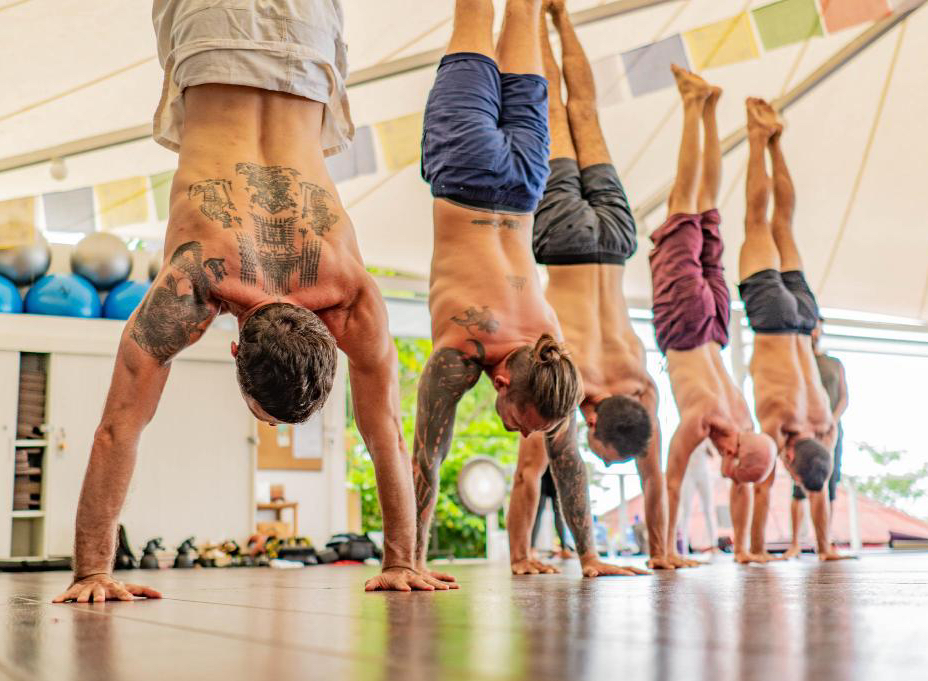
Crashing Into Paradise

By Ed Staskus

When we were kids my brother, sister, and I went to two resorts every summer, except they weren’t called resorts. One was two weeks with other Boy and Girl Scouts and the other one was two weeks with first-generation immigrant boys and girls like us at a Lithuanian Franciscan camp. They were called summer camps.

It was how our parents packed up their troubles and sent them away. The scout camps were usually in the middle of a forest somewhere in the middle of nowhere. The Franciscan camp was in Wasaga Beach, on Canada’s Georgian Bay, in the wind and sunshine. The longest freshwater beach in the world was a 10-minute walk away.

We never had any trouble making the most of summer camp, even though sometimes there were bedbugs and some kids didn’t shower, even when the showers worked. One summer somebody’s parents wouldn’t let their son in the car when they came to pick him up when camp was over.

“Go hose yourself off! What is wrong with you?” his mother complained, pushing him away.

We waited all year to go to camp and never regretted the wait. In the morning on the day to go we pestered our parents, who drove us there, to hurry up. We were always ready to crash into paradise.

A few years after I started taking yoga classes I started hearing about yoga retreats and resorts. The first one I heard about was Kripalu in the Berkshires in Massachusetts. More than 30,000 people visit there, attending more than 700 programs annually. The holistic health and yoga retreat is housed in a former Jesuit seminary.

On our way to Canada’s east coast Prince Edward Island, passing through the Berkshires on the I-90 Mass Pike, my wife and I veered off at Stockbridge, and instead of going south to the Norman Rockwell Museum, drove north to the Kripalu Center for Yoga and Health. The drive on the rolling wooded road was a welcome change after nine hours on the interstate.

The Berkshires emerged as a summer resort for the rich during the Gilded Age. At first, what would become Kripalu was a 100-room mansion. Andrew Carnegie lived there in fair weather. It was his summer retreat. “Mr. Carnegie wanted a quiet place where he could meditate,” wrote a local newspaper. At the height of his career he was the second-richest man in the world.

Rich is loud. Wealthy is quiet. Andrew Carnegie never needed to say a word.

He was known as the “Emperor of Industry” and believed in staying calm by staying focused. “The first man gets the oyster, the second man gets the shell,” he said, meaning focus on the oyster. Andrew Carnegie is the best-known philanthropist in American history. He gave away more money, adjusted for inflation, than just about anybody.

“The rich man who gives steals twice over,” countered Edvard Munch. “First he steals the money and then the hearts of men.” It’s enough to make your eyes cross, or make you reconsider the merits of economic Marxism.

Andrew Carnegie died in his summer mansion. It burned to the ground in 1956 and the Society of Jesus built a large brick seminary building just down the hill the next year. But then the 1960s happened and in 1970 the Jesuits moved on. The Kripalu Center bought and renovated the building in 1983.

At the front desk we got the bad news. Two days and nights of their popular R & R Retreat, in a room with a bath, albeit a room fronting a small lake, would cost us more than $1,200.00. The good news was the cost included a daily yoga class and all the “delicious all-natural” food we could eat. The yoga class sounded good. However, there was only so much food we could eat.

The two-bedroom cottage with a kitchen and front porch deck on the north shore of Prince Edward Island, on a 100-acre slope overlooking the Atlantic Ocean, where we were going to be staying for two weeks, was going to cost us $2000.00 for the two weeks, although no food was included. There was, however, a grocery store and a fish shack on the harbor, a liquor store up the hill,  and plenty of outdoors where to do yoga.

There are no parking meters on the red dirt cliff-lined coast. Stop anywhere, unroll a mat, practice, or just lay in the sun. There is more than one way to find enlightenment.

“I went for R & R with my sister and it was perfect,” said Jayne Murphy, a recent visitor to the Kripalu Center. “Vinyasa yoga when we needed it, plus wonderful clean food. I’d live there, if possible!”

It would only be possible if you had about $200,000.00 a year to pay for your room and board. However, if you put that same money into U. S. T-Bonds, in ten years you would be able to buy a million-dollar home, live like Andrew Carnegie, and have plenty left over for grub.

Retreats are group withdrawals for instruction, study, and meditation. Buddhists have gone on retreats since Buddha. Christian retreats date from the 16th century when St. Ignatius of Loyola, the man who founded the Jesuits, got the ball rolling with what he called Spiritual Exercises. Sufism, the mystical path of Islam, has been retreating for a millennium.

Yoga retreats used to be about getting out of the rut, the daily routine, or what is called dinacharya, recharging and getting deeper into the practice. They were usually more ascetic than aesthetic. That has changed. Modern yoga retreats are more along the lines of a recreational holiday. There’s a slice of yoga on the plate, but there’s no real need to resort to it at the resort.

When Shiva Rea invites one and all to Rhythmia, a yoga and wellness retreat, she is inviting one and all to a “new kind of all-inclusive vacation experience luxury resort” in Guanacaste, Costa Rica. When she says all-inclusive, she means boffo it all, on the mat, meditation, life coaching, healing touch, mud baths, massage, juice bar, farm-to-table food, and colon hydrotherapy, just in case someone is about to bust a gut.

“Come get your miracle,” proclaims Rhyhmia. Miracles are events of divine intervention in human affairs. A good masseuse kneading out the knots in your shoulders is an outstanding accomplishment, but it’s doubtful a divine phenomenon. The chef at the resort, however, is said to have come down from the clouds.

Once you get to Costa Rica the “life transforming vacation” will cost you in the neighborhood of $3,000.00 a week. According to the Retreat Guru at the resort it is well worth it. “It is a beautiful way to reconnect to our basic sanity and health. Our aspiration is to inspire people to reconnect with their innate wisdom, strength, and kindness,” he says.

The Retreat Guru’s ideas about reconnection only work if your wisdom strength kindness originally stem from growing up and living in a resort. Otherwise, maybe you are connecting with those virtues when you fly down to Costa Rica, but you’re not reconnecting with the font of it, no matter how wonderful the weather and spa services are.

When did yoga resorts become the zenspirational way to go for those with a medicine bag full of hard cash to go to their OM class? Have mat will travel. Crashing into paradise was never so easy, no begging your parents to get the car on the road, just show up at your local airport,

Resorts were once the James Bond lifestyle. There are more of them nowadays than ever. Resorts are places people go to for rest relaxation recreation, letting it all hang out. Yoga retreats were once about brushing up on the eight limbs, not just getting your limbs all buffed up. Except when the retreats go hand in glove with resorting.

The first resorts were the public baths of Rome. Many of them included gyms, theaters, and snack bars. In the 14th century a large resort area grew up around the iron-rich waters of a town called Spa in Belgium. Seaside resorts became popular in the United States in the late 19th century, followed by mountainside ones in the west.

Even the Dust Bowl had a resort in the 1930s, in Arkansas, featuring the two largest log buildings in the world. Resorts are self-contained and are all about food, drink, lodging, shopping, recreation, and entertainment. There are resort towns all around the world, for yoga and everything else.

The Chiva-Som International Health Resort in Thailand offers ‘Yoga for Life’, featuring exercise classes, breath work, and meditation, as well as mood mists. When you get off the mat there are naturopaths, acupuncturists, massage therapists, and skin-care specialists to take care of the aftermath. “I was on a mat getting a Thai massage – in Thailand. Life was good,” wrote Meghan Rabbit in her ‘Escape’ travelogue in Yoga Journal.

An ocean side room for a week of the good life runs about $5,000.00 per person. Off-season rates are better, but that’s when it rains most of the time, which is called the monsoon. The good life, unfortunately, gets flooded away. Temperatures zoom into the high 80s and the humidity is usually 100%-or-more.

The peak season is the best season. That’s when the countryside opens up like an oyster. The slimy shells fall away.

“A yoga retreat to some amazing locations gives practitioners the opportunity to explore some mouth-watering scenery, such as the serene countryside, panoramic views of stunning mountains, and the opportunity to embrace nature at its finest.” pointed out Ledan Soldani in ‘Yoga Retreats Are Transformational.’

Every season hundreds of thousands of people burn up the carbon flying off to exotic places to yoga retreats. The beautiful locations are one reason they go, but there are other reasons, too. They go to take a break from obligations, relax and de-stress, make new friends, surround themselves with inspiring people, open up free time for breath work and meditation, and expand their asana practice. Two classes a day are often offered, and when it comes to the buffet table to sustain your practice energy appetite, all the work is done for you.

It’s time out for you and yourself.

‘Yoga Is for Every Body’ is a five-day retreat at the Kalani Oceanside resort on the Big Island of Hawaii. The retreat includes active and restorative practices, meditation, writing contemplations, and storytelling games. “This retreat will connect with your highest potential for alignment and restoration,” explains Kimberly Dark, the facilitator.

The all-inclusive cottage cost is $2,375.00, which includes sauna, hot tubs, and a clothing-optional pool. Maybe some yoga can be accomplished poolside, but anyone contemplating writing would be best served staying away from clothing optional. That goes for the spectacularly beautiful coastline, and tropical paradises. too. Mouth-watering scenery is distracting.

Yoga and writing are similar to the extent they’re best done in private. “All you do is sit down at a typewriter and bleed,” Ernest Hemingway said about writing. Practicing yoga and bleeding on the page are about discovering what you think and believe. The problem with trying to look inward while at a resort is that the temptation to look outward is immediate tempting eye-popping overwhelming.

“Going on my first yoga retreat five years ago was a major turning point in my life,” said Gigi Yogini. “So much so that now I lead yoga adventures for others around the world in places like Joshua Tree, Costa Rica, and Bali. Those are truly transformative experiences.”

Who wouldn’t want to be transformed in Hawaii and Switzerland, among other places? Who wouldn’t want to go to the Alpina Gstaad resort in Switzerland, a resort of Tibetan healing practices, a resort where you can practice meditation and yoga with monks who have been at it forever? Relax in a faux Himalayan salt cave. Throw in massages and the resort’s signature golden latte. Drink your latte on a post-modern deck nestled in the Alps. Chill in the Swiss sunlight.

What Yoga Journal called a “sanctuary” was profiled in their June 2017 issue. Sign me up, man! I mean, sign me up if I had the money. Alpina Gstaad was built by the developer Jean-Claude Mimran. He is known as the ‘Sugar King of Africa.’ The Panorama Suite is $21,000.00 a night in high season, 40% off in the off-season. The glacier view is a priceless outdoor experience at your fingertips, just don’t leave home without your Gold Card from American Express.

Budgets have a lot of numbers in them. So do yoga resorts. Some have too many numbers.

Yoga retreats were once intensives. Meditation was followed by morning practice by some classes on theory by lunch on fruits and snacks by evening practice by dinner by self-reflection. In time it got mixed up with wellness and recreation. Now there are retreats that fuse yoga and music, yoga and dance, yoga and massage, yoga and detox, yoga and surfing sailing cycling hiking paddle boarding mountaineering, yoga and relationships, yoga and gardening, as well as yoga and food. There is yoga and ganja.

There is the five-day Cannabliss retreat in Ojai, California. The $1,200.00 all- inclusive price has all the black light yoga and marijuana on the menu you want. “This is a new frontier,” said founder Sari Gabbay. Munchies, however, are bring your own.

Our Boy Scout camps were about raising the flag, working on merit badges, marching off for the day, collecting wood cooking cleaning with your patrol, and since our camps were often near water, swimming and canoeing. We followed the Outdoor Code. Be clean in outdoor manners. Be careful with fire. Be considerate in the outdoors. Be conservation minded.

But Boy Scout camping was more than being a good citizen. Camping was about “the trees, the tree-top singers, the wood-herbs, and the nightly things that leave their tracks in the mud,” said Ernest Thompson Seton, the first Chief Scout. We bumped into trees in the dark. That’s why every tent had a first-aid kit handy.

We played mumble the peg with our pocketknives, standing opposite another scout, feet shoulder-width apart, throwing our knives to stick in the ground as near your own foot as possible. Whoever stuck the knife closest won the game. If you stuck the knife in your own foot you won on the spot.

We played other variations like Chicken and Stretch. We raided the Girl Scout tents, making off with their training bras, running them up the flagpole. We crept into other Boy Scout tents, coaxing a sleeping scout’s hand into a bowl of warm water, trying to make him pee.

The trouble with our summer camps from a scouting perspective was that they were so much fun. Who could pay attention to Robert Baden-Powell’s maxims? Be prepared for every order. Make sure to think out beforehand anything that might happen. Know the right thing to do at the right moment. It might have been possible, except our camps were full of crazy curious high-energy 12-year-olds with pocketknives, which made thinking clearly difficult.

The trouble with yoga resorts is that they are sensual delights, from the food to the spa services to the sunny locales. Who can pay attention to the eight limbs of the practice when there are limbs in and out of bikinis at the pool? Who wants to meditate when they can nap in a hammock in the warm breeze? Who strives to be a better person when they’re in the best of all possible worlds?

You would have to be a saint. Who wants to be a saint? Who wants to go on vacation surrounded by saints?

Although it’s true that most people practice yoga only by engaging in the physical postures, work on the mat brings attention to your breath, stilling your mind, and getting you to be present. The movement of the body, the quieting of the brain, which is usually in constant motion, and the rhythm of your breathing get you going on the way. When you breathe and center your attention, any place you are is where you are.

Anyone can play the Game of Fives wherever they happen to be sitting standing in hero pose. It costs zero dollars. Zero in on five things in your immediate environment. Look at them, smell them, and listen to them. Focus on your attention. When all of your attention is focused it is clear skies and smooth sailing. You don’t have to resort to anything else to practice yoga.

When you go somewhere far, far away to find yoga you might or might not find what you’re looking for. You almost surely will have a good time, unless a monsoon rolls in. Exploring communing schmoozing with nature in Bali and Big Sur is fun and organic and rejuvenating. We did it every summer as kids at Boy and Girl Scout camps. But when you’re connecting with nature you’re not connecting with yourself.

“The greatest explorer on this earth never takes voyages as long as those of the man who descends to the depth of his heart,” said Julien Green.

Yoga is an inside out practice, not an outside in practice. It’s not about getting on a jet plane and going out into the wide world looking for it. It’s hard to find out there, no matter how far up whatever country you go. The best place to look for your heart’s desire is inside yourself. What Yogananda said was, “To work with God’s happiness bubbling in the soul is to carry a portable paradise within you wherever you go.”

You don’t need a telescope. It’s not over every horizon. Ship ahoy! Home is where the heart is.

Riding the Om Bus

By Ed Staskus

“It was twenty year ago today, Sgt. Pepper taught the band to play, they’ve been going in and out of style, but they’re guaranteed to raise a smile.”  The Beatles

It was twenty years ago that Cyndi Lee opened the OM Yoga Studio. It prospered and grew to 25 teachers offering 65 hatha vinyasa classes weekly. The sunlit wood floor space took up an entire floor of Manhattan real estate near Union Square. It was the union of a faraway and long ago tradition with modernity. The trendsetting crowd had long since been won over to bending.

It was no mean feat. “In New York City people have way more opportunities to take classes than in most other cities,” she said. If you don’t enjoy a challenge, the Big Apple isn’t what you want to try sinking your teeth into. There are more than 8 million people speaking more than 200 languages in the 5 boroughs. It’s hard getting them on the same page.

The page turned fifteen years later when she lost her lease. “The landlord didn’t give us the option to renew,” said Cyndi. “She just didn’t want a yoga studio there anymore.” The only thing harder than winning shrewd New Yorkers over to your yoga studio is staying on the winning side of shrewd New York property owners.

She took it well.

“Yoga has a sly, clever way of short-circuiting the mental patterns that cause anxiety,” says Baxter Bell. Yoga practice is filled with exercises in respect to balance, not just physically, but inwardly, too. It’s all about holding on and letting go.

“Honestly I feel fine,” she said at the time. “I’m just super grateful that the conditions arose for me to build that yoga studio and that the community grew and developed. I feel proud because there has been no badness, only goodness.”

Only there was more around the bend. Her marriage of almost twenty years was coming to an end, too.

When you come to a fork in the road, take it. Or, as Cyndi Lee has said, “Everything we’re doing is planting a seed that will come to fruition at some point.” Never mind about making plans that hit the nail on the head, better to make options.

“The opposite if being active in yoga is not being passive,” she said. “It’s being receptive.”

She met someone who became her boyfriend. She and Brad moved to Ohio. It didn’t get off on the right foot. “I was a hardcore New Yorker,” said Cyndi. “What the hell am I doing?” she thought. New York is a fast-paced around-the-clock lifestyle. It’s the city that never sleeps.

“Ohio was so quiet and the food was terrible.”

They moved to Virginia. Her boyfriend became her husband. The energy and the food got better. She didn’t open another yoga studio. “We do need more yoga, but when people say to me, can you give me advice about starting a yoga studio, my advice is, don’t. Instead of making places where people have to come to us, we need to go out.”

She got her footing back on solid ground. Cyndi is a longtime Buddhist. Buddha was an aimless wanderer when he started out, but once he got his clear thinking together he devoted forty-five years to traveling and teaching the Dharma to anyone who would listen. Cyndi has been traveling and teaching all over the world the past six years, since OM closed, except last year when she wasn’t.

“When the orthopedist says, ‘You have no cartilage left, you’re bone on bone, that’s why it hurts so bad,’ that’s called end-stage arthritis, and you need a hip replacement,” said Cyndi.

Or two hip replacement surgeries, as the case might be, slowing her down that year. At least, until she was back on her own two feet. And back on the mat, back in action.

“I was a professional dancer for almost twenty years,” she said.

Twenty years of two-stepping is a long time. Dancers often sound like a box of Rice Krispies, snap, crackle, and pop. Ankles click and knees go crunch. In the morning, on the way to get a bowl of cereal, their joints click, clack, and squeak on the way to the kitchen.

“I wasn’t an aggressive yogi, I didn’t push it, but the vinyasa style that I practiced is a dynamic, rhythm-based movement system. There is a sense of carving space, of feeling wind and water on your face, of an earthy downward connection and an uplifted sense of goodness.”

Nevertheless, in the flow of time the on-the-go has morphed into slow flow. Cyndi Lee now offers a “practice you can carry with you for decades to come.” It has been reborn as Sustainable Vinyasa Yoga.

By the time OM Yoga closed its doors she had been practicing yoga for more than 40 years. She took her first class in 1971, her first year in college. “I don’t remember having a moment of great inspiration and knowing that I had found my path, but somehow I just kept doing yoga and meditation and I’ve been practicing steadily almost my whole life now.”

Cyndi has an MFA in Dance from the University of California at Irvine. Her graduate thesis was “Women, Spirituality, and Indian Dance.” She won an Art History Fellowship at the Whitney Museum of American Art.

She moved to Greenwich Village in 1978, footless tights in hand, to an animated dynamic dance scene. It wasn’t just the Funhouse, Club 57, and Paradise Garage, either, although you can’t beat clubs full of late 70s pointy-toed hipsters and girls in thrift-store stiletto heels at three in the morning. It was Twyla Tharp and Merce Cunningham and the modern dance scene.

“Yoga started out in dance, both in-depth studies of the integration of body, breath and heart,” she said. “They are opposite, too. As a performing dancer, the goal is to offer a visceral experience. But yoga is a personal practice, always.”

She became a professional dancer. She had been dancing since she was a tot. “I learned the waltz by standing on my dad’s feet,” she said. Hoofing it became her life. She danced up a storm. She became a professional choreographer. She performed with XXY Dance/ Music and Cyndi Lee Dance Company/Big Moves. In 1994 her own dance company staged its last performance. The show was called “Dharma Dances.”

It was influenced by meditation philosophy and the choreography referenced yoga poses. The performance featured Allan Ginsburg singing songs and accompanying himself on harmonium. The word of mouth about the show was good, although Allen Ginsburg’s singing was left unsaid. The less said the better, God rest his soul.

After “Dharma Dances” Cyndi Lee kicked up her heels and became a professional yoga teacher.

OM Yoga was a successful studio in arguably the most opinionated and competitive city in the country because it was authentic, clean and bright, with a diversified schedule, offered special events and teacher trainings, and featured a snazzy retail space. The teachers were hard-core enough to specialize in their craft and soft-core enough to connect one-on-one. The studio became a community and the community became the studio’s dedicated core. Over the years many people unrolling their mats at OM Yoga became the studio’s heralds and evangelists.

“Whenever I am feeling like crap I don’t mind making the long commute to OM because I know I will feel peaceful and happy afterwards,” said a woman from the Upper West Side.

“One of the better, more genuine experiences I’ve had in the city,” said a Manhattan native. “The instructors are knowledgeable and not pushy. If you’re a newcomer to yoga, take the beginner classes, as the intermediate classes are very, ahem, thorough. And they have showers!”

“Keeping this place open and going,” said Cyndi when the studio was open and going. “I get wrapped up in the business of it. But just having a yoga studio, it’s a real Dharma community, it helps a lot of people.”

“The only negative comment I have is that this place is a little too business-like, which, in my opinion is not very Buddha-like,” said a young woman across the river in Brooklyn, where capitalism is occasionally frowned upon.

“Work out your own salvation,” said Buddha. “Do not depend on others.”

But even he had to eat so he could get his message out. If most successful businesses are owned and operated by people who are the first to get to work and the last to leave, then OM Yoga was a successful business because someone did that, and Cyndi Lee was the person who opened the doors in the morning and turned off the lights at night.

As home away from home wrapped up its tenure, the e-mails started rolling in. “I’ve gotten hundreds,” said Cyndi after word about OM Yoga’s sign-off hit the streets. “I’m sitting there crying. The things that people are saying and sharing. I’m just feeling the love.”

When one door closes and your brick and mortar has been mortar and bricked up, it’s time to open a new door.

“We’re excited about our online presence expanding. We’re excited about putting classes and trainings online and developing an app. We’re going to go full speed ahead on that and develop our teacher network.”

At the same time the Cyndi Lee bus was moving ahead full speed, gathering momentum going from here to eternity, it was slowing down to Buddha-time. Between gangbusters and reflection she traveled and taught and put pen to paper.

Her think pieces, write-ups, and how-to articles have appeared in Yoga International, Yoga Journal, and Tricycle. The magazine isn’t about the three-wheel bike kids ride. It’s known as The Buddhist Review, or the independent voice of Buddhism. It’s won the Folio Award for “Best Spiritual Magazine” three times, which since Buddhism is a win or lose struggle, is faith in Buddhism manifested.

She has written several books, including “Yoga Body, Buddha Mind” and ”OM Yoga: A Guide to Daily Practice,” as well as the recent critically acclaimed “May I Be Happy: A Memoir of Love, Yoga and Changing My Mind.”

It was Buddha who said, “What we think, we become.”

She has been seen frequently on TV as herself, including The Dr. Oz Show, Live with Regis and Kathy Lee, and Good Morning, America. During her days on the dance scene she worked on music videos, choreographing for Rick James, Simple Minds, and Cyndi Lauper. She choreographed the ‘Girls Just Want to Have Fun’ music video.

The video won the 1983 MTV Best Female Video of the Year award. Cyndi’s just want to have fun and celebrate. When the working day is done Cyndi Lee just wants to ride her red bike. She rides with mindful awareness, however, mindful that a bike’s passenger is its engine and that to keep your balance you must keep moving.

Cyndi got started in the practice of Buddhism in 1990. Over time she became the first female yoga teacher in the western world to integrate yoga asana and Tibetan Buddhism in her practice and into her message. When asked what her aspirations were, she said, “To get better at balancing on time and off time and to get better at understanding that they can be the same thing, if I can live like a yogi/Buddha.”

The four points of order she brings to meditation practice might as well apply to smooth sailing on two wheels like it does to mindfulness. “Sit up nice and tall. Feel your seat on the cushion. Feel the space all around you. Slowly begin to deepen your breathing, little by little, breath by breath.” Meditating when out of sorts is recommended, but meditation when out of balance and out of breath is like a fish pedaling a bicycle.

She has recently been ordained as a lay Buddhist chaplain.

“I met a man at a retreat at Upaya and we hit it off. At the end of the weekend he said, ‘Why don’t you sign up for chaplaincy training with me?’ I wasn’t interested, but then I was. I decided to do it. That guy did not take the training and I haven’t seen him again. Somehow he was the catalyst, like an angel.”

One of the ideas embedded in the Four Noble Truths of Buddhism is that everyone should take responsibility for their own lives and actions. One of the right ways on the Eightfold Path is living honestly and helping others. One of the basic tenets of the practice is that everything in life is impermanent and always changing.

“One thing I’m good at is being brave and riding the winds of change,” said Cyndi. “To keep on keeping on with a real aliveness to how life changes and how I change.”

Life isn’t lived by mottoes, no matter how trenchant they are. Travel like a pro, not a hobo, is as good a motto as any. Cyndi Lee goes like a pro.

She doesn’t live by mottoes, but one of her favorites is, “Just show up.” When you show up day in and day out, whether at your big city studio or helping a hobo on your chaplain rounds, you’re staying true to yourself, not anybody else’s version of you. “In the end you’re still stuck with yourself,” she said.

“Knowing others is wisdom, knowing yourself is enlightenment,” said Lao Tzu.

In Cyndi’s case, when she shows up, it’s her good better best real self.

Ed Staskus posts stories on 147 Stanley Street http://www.147stanleystreet.com and Cleveland Ohio Daybook http://www.clevelandohiodaybook.com. To get the site’s monthly feature in your in-box click on “Follow.”