Category Archives: Cross Walk

On the Wire

By Ed Staskus

   “For you,” Bettina Goertzen said, frowning, putting her hand over the handset. “He said it was about Dottie and you would want to talk to him. It’s not the school.”

   “Police? Hospital?”

   “I don’t think so, didn’t say, doesn’t sound like it.”

   “Young or old?”

   “Younger.”

   Stan Riddman glanced at his watch and noted the time. “Listen in to it, Betty.” He waited for her to pick up a pencil and pull a notepad close. When she quietly put the phone to her ear again, he picked up his receiver.

   “This is Stan Riddman,” he said, his voice flat.

   “We’ve got the girl,” the voice on the other end said. 

   “What girl?”

   “Your girl.”

   “Why do you want her?”

   “We want you to take the cure for the next couple of days, put everything on hold, don’t do nothing about nothing. You do that, you get your girl back. You don’t do that, you don’t ever get her back.”

   “Where is she?”

   The phone went dead.

   “Somebody’s got Dottie.”

   “Why? What we’re doing?”

   “They didn’t say, not exactly. They want me to sit on my hands for a few days, don’t do anything, and I’ll get her back. Or else. It’s got to be that wop we’re after. Nothing else that amounts to anything is going on except the Jackson Pollack business. Goddamn it to hell!”

   “What are you going to do?”

   Stan stood up and went into the utility room. He spun the combination on the office safe and removed two handguns. They were Colt Commander models, aluminum framed, with short barrels and rounded hammers. The plastic grips were brown. The guns were unloaded. He put four 7-round magazines in his pockets. He reached into the safe a second time.

   “Get hold of Ezra, tell him what’s going on, that I’ve got our .45’s, and to meet me at the house. If I’m not there, I’ll be talking to the neighbors, tell him to find me, the sooner the better.”

   “Be careful,” Bettina said.”

   “You too,” he said, handing her a snub-nosed .32 and six rounds. “If you have to, shoot first, never mind the questions.” She didn’t ask if she should call the police. She knew better than that. This had nothing to do with them, even though they would have to clean up the consequences afterwards.

   “Somebody’s a dead man,” Stan said. “They just don’t know it, yet.”

   There were two beat cops, two more uniforms standing beside their radio car, and a plainclothes car on the street when Stan’s taxi eased up to his Hell’s Kitchen walk-up.

   “We don’t know much,” one of the plainclothes men said. “Lots of people saw it happen, but nobody saw anything useful, except that there were two of them and they drove a black panel truck.”

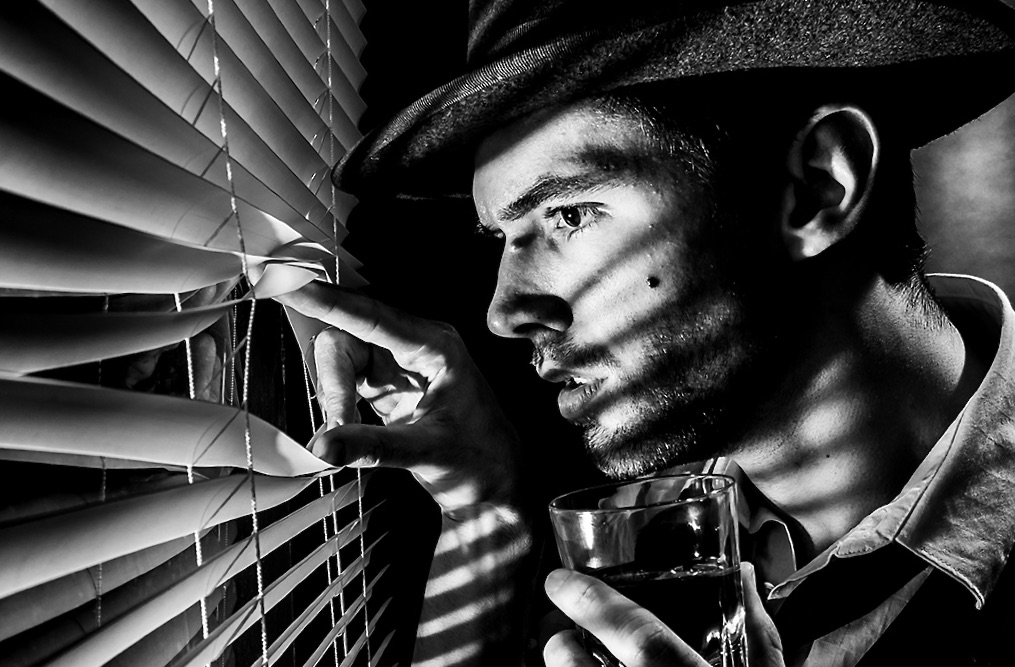
   “Thanks,” Stan said, and walked up to his apartment. It was neat and clean, the windows open, an autumn breeze cooling the rooms. He walked into Dottie’s room and saw Mr. Moto lying in a heap on the bed. There was blood on the bedspread. The cat lifted his head and Stan saw the blood was from his paw. When he touched the cat, Mr. Moto hissed. Stan could hear his breathing was fast and choppy. He saw the bloodstained scrap of paper and the letters and numbers scrawled on it. When he picked it up, he knew in an instant that the cat had scratched out the message with his paw and it was the license plate number of the black truck.

   Stan got a bowl of milk and crumbled up a chunk of tuna, put it in the milk, and placed the bowl on the bed. “Ezra and I will take it from here,” he said to Mr. Moto. “You stay here and take care of yourself.” The cat eased himself over to the bowl and lapped up the milk, nibbled at the tuna, and went back to sleep, curling up into a ball.

   By the time Ezra came through the front door, Stan had the address the truck was registered to and was sitting in an armchair waiting for him. They talked it over for a minute and five minutes later were in a cab. Stan gave the cabbie an address in Gravesend three blocks away from where they were going. 

   It was a single-family house that had been converted into a two-family house. There were unkempt bushes on both sides of the concrete front porch. The only anything in the drive was a black panel truck. There were closed blinds in every window. “I make them on the ground floor, in case they have to leave quick,” Ezra said. “If they were upstairs, they might get stuck.”

   “You take the back door,” Stan said. “I’ll go in through the front. The doors will be locked, maybe chained. When you hear me shoot into the lock, you do the same, kick out the chain, go head over heels.”

   The two men, one of them his face slathered in iodine, barely had time to lunge up from the card table they were sitting at, reaching for their guns, when Stan and Ezra stopped them in their tracks. Their drop-in visit was breakneck. Nobody exchanged greetings.

   “Throw those on the floor in front of you and kick slide them to me.” Stan’s face was the hard face of the Old Man on the Mountain.

   The men did as they were told. One of the guns was an Orbea Hermanos, a Spanish handgun. It was a Smith & Wesson copycat. It was a piece of junk. The other one was a Smith & Wesson Centennial. Stan kicked the Spanish handgun under the sofa. He picked up the Centennial, opened the cylinder, saw it was loaded, put his own gun away, and trained the honest Smith & Wesson on the men.

   “Both of you on your knees, hands behind your backs,” Stan said. “Where is she?” 

   “Who the fuck is where, fuckface?” Iodine Face spit out. One of his eyes was swollen shut. The other eye was a cesspool.

   Stan whirled and shot him twice in the chest, the two shots following so fast upon the other it sounded like one gunshot. The man toppled over backward surprised and astonished, the sneer still on his lips, too late to say his prayers, a blink of an eye away from dying, which he did when he hit the floor, a puddle of blood forming under him, the two holes in his chest leaking the life out of him.

   “Jesus Christ!” the other man blurted, jumping to his feet, crazy to run, a stain forming at his crotch. “Why did you do that?”

   “It’s like they say in Chinatown,” Stan said, deadpan and wrathful. “Sometimes you’ve got to kill a chicken to scare the monkeys.”

   “What the fuck are you talking about?”

   Ezra clubbed him on the back of the head with the butt of his Colt and the man went down moaning with a concussion in the making. 

   “I said, where is she?” 

   “I don’t know.”

   Stan jerked the moaning man’s head up by a handful of hair. He held tight, shaking the man’s head, tearing out a tuft from the greasy thatch. Red and brown spittle ran down the man’s chin. His eyes started to focus slightly when Stan loosened his grip.

   “Last time, or you join your friend,” Stan said. 

   “Not my friend,” the man mumbled.

   “I’m not asking for explanations. Where is she?”

   “At Luca’s place.”

   “What place is that?”

   “The house, next to the mattress shop.”

   “Where?”

   “I don’t know the address.”

   “Let’s go, you can show us.”

   “Luca will kill me if he sees me.”

   “You’ve got the brains of a crayon. You’re halfway to the boneyard right now.”

   “My head hurts bad.”

   Stan wiped the handle of the Smith & Wesson clean and threw it to the side.

   “Where are the truck keys?”

   The still living man pointed to the dead man. “On him.”

   Ezra felt for the keys with the toe of his shoe, probing the dead man’s pockets.

   “I’ve got them,” he said.

   Ezra drove the panel truck, the hoodlum in the passenger seat, and Stan crouching behind the passenger seat, the barrel of his Commander pressing into the back of the man’s neck. The man was bound at the wrists and ankles.

   “Slow down and don’t bang into any potholes,” Stan said to Ezra. “We don’t want an accident.”

   “Business is booming,” Mario Pugo always said. His place was Always Tire Service on Atlantic Avenue. “The roads are good for my business but they’re bad for my customers. I repair blown tires and bent rims daily. One customer, he picked up his repaired car and drove straight into another pothole. He was back in five minutes.”

   “You know how this gun is, loose as a goose,” Stan said. “We blow a tire, it could go off just like that.”

   The man in the passenger seat stiffened. The truck hit a pothole and shuddered. Stan kept a grip on the man, his hand tight on his shoulder. His Colt stayed quiet. The man told them the store was a front. A steel door in the middle of the store led into the house where they lived. The brothers might or might not be there, but the mother was always there. 

   “She’s more them than all of them put together, including the lion in the basement,” he said.

   When Ezra drove past the Murphy Bed store across the street, Stan threw it a glance. It was flush to a three-story brick brownstone. Ezra downshifted into second, turned the corner, and found an alley. He parked and Stan dragged their hoodlum into the back of the truck. He found a pile of oily rags, stuffed one into the man’s mouth, gagged him to make sure, blindfolded him, and tied two rags together to fasten him to a u-bolt.

   “He might have trouble breathing,” Ezra pointed out.

   “That’s not my problem,” Stan said.

   Going towards the door of the store, Stan and Ezra had their handguns in their hands and their arms down at their sides. They moved slowly, but once they stepped across the threshold, they moved fast. Ezra flipped the open sign the other way, stayed at the door, his back to it, and Stan strode straight to the only man in the store, sitting behind a desk at the back of the store. He was a big man. It was Big Paulie. His hands silently slid off the top of the desk.

   “Don’t,” Stan said. “I won’t stand for it.” 

   Big Paulie eased the top drawer he had been sliding open back until it closed. He looked at Stan with hollow eyes. They were hollow with rage.

   “Get up, come around to the front of the desk, rest your ass on it, and talk to me like I’m looking for a better night’s sleep.”

   “The big sleep is what you’ll be getting,” Big Paulie hissed.

   “Shut the fuck up. I would just as soon finish you and walk away, but I want my girl back. Where is she?”

   “You don’t know what you’re getting mixed up in.”

   “I don’t know, and I don’t care. I want my girl. Where is she?”

   When Kid Blast came through the steel door briskly confident smug, he saw the two guns first, then the two men, and could have killed himself for not bringing his gun with him. He could have killed himself for not whirling and running, although that would have gotten him killed on the spot.

   “Next to the fat man, junior,” Ezra said. “Same rules.”

   Kid Blast joined Big Paulie, the young man’s face twisted, hatred burning in his eyes. There was a roar behind the back door, somewhere underneath them, followed by a loud yawn. It was Big Paulie’s lion, the beast he kept in the basement to preserve order in his world. Nobody moved, nobody looked anywhere else but where they had been looking. Stan took a few steps back, training his handgun on both gangsters.

   “Check the cat out,” he said to Ezra. “Be careful. And you two, squeeze a little closer together, and no lip.”

   Ezra opened the back door gently and immediately stepped away forced back by the rancid smell. He flipped the light switch and looked into the gloom, trying not to breath too much.  There was hay all over, a large cage, and a skinny-looking, tired-looking, sad-looking lion in the cage. 

   “She doesn’t look like much, like she needs sunlight and some fresh air. They’ve got a contraption beside the light switch, so they can open and close the cage from up here.”

   “Lots of people are breathing without living,” Kid Blast said. “You ain’t going to be doing either soon enough.”

   Stan stepped up to him. “I said no lip.” He hit him hard in the face with the butt of his Colt. It broke the young man’s jaw, some teeth, and laid him flat. Stan grabbed him by the scruff and threw him down the stairs into the basement. He sprang the cage door open and slammed the basement door shut, locking it with the skeleton key that was in the lock. 

   “Last time, big man, or you’re next. Where’s my girl?”

   “Upstairs,” Big Paulie said. Stan didn’t bother asking if anybody else was in the house. If there was anybody, it was going to be their problem.

   “Sit back down, hands on the desk,” Ezra said, seating himself at a table to the side, his gun nonchalant in his lap. “I don’t like what you did to me, so don’t tempt me with any monkey business.”

   Stan stepped into the house, up three steps, and into a dining room. To his left was a kitchen, to his right a living room, foyer, and a flight of stairs leading to the second floor. He knew the mother was in the house, maybe some more of her sons, and for sure somebody keeping the clamps on Dottie. He went up the stairs soundlessly. He smelled garlic seeping out from under one of the bedroom doors. A brown house spider made his way up the edge of the door frame. He watched the spider until it stopped. They both waited. He took a step, took a deep breath, and burst into the room.

   A late middle-aged mama in a black apron was feeding soup to Dottie, whose hands were free, but not free enough to throw hot soup in anybody’s face. The hand on the spoon was Raffaella Gravano’s hand. The gunsel was Italian, like the woman, but not one of the sons. He had the face of a ferret, not the family face. He was sitting in a chair next to the bed, and the instant he saw Stan he grabbed Dottie. The bowl of soup tipped and spilled all over the mattress. He lunged to his feet, Dottie held in front of him, a gun at her temple.

   “Drop the piece or the girl dies.”

   Stan lifted his gun until it was shoulder high, sighting it.

   “Put the gun down, or you go down.”

   “No, I’ve got the upper hand, you lay your no-hand down.”

   The stand-off lasted another few seconds before Stan fed the facts of life to the man. “You’ve got a losing hand. I can make another girl, but nobody is ever making another one of you,” he said, his Colt Commander pointed at the man’s forehead. “The only way you stay alive is the girl and I walk away together.”

   “Is that some kind of fucking joke?” the gunsel asked.

   When Stan shot and the bullet zipped whooshing past the man’s face so close he could feel the heat of it, and smell the burnt powder, it slammed into the plaster wall. Everyone in the room stopped hearing anything except the echo of the boom. The gunsel blinked. He kept his head, but his grip on the gun handle was tense and sweaty.

   “And you,” Stan said to the woman, “sit down on the bed and don’t move.” She had been slowly but surely moving. She sat down. “Turn so I can see your hands.” She turned slightly, her hands in her lap.

   “Whatever you’re thinking, stop thinking it.” He jabbed his eyes back at the gunsel.

   “Make up your mind.”

   The man hesitated. “Never get into a card game with the devil,” Stan said. “He will always deal you a bad hand.”

   The man wavered and finally lowered his gun. Dottie ran to Stan, clutching at him, bawling.

   “Dad, dad!” She was trembling.

   “You should be ashamed of yourself, taking a kid for a hostage,” Stan said to Rafaella. “Tear that bed sheet into strips.” He waited while the woman under his thunb did what she was told.

   “Stand outside the door, honey,” he said to Dottie prying her off of him. He hog-tied the gunman and Ma Gravano. He kicked the gunman as hard as he could. He heard something break. He didn’t give a damn. He spat on the floor an inch away from Ma Gravano’s face. He left both of them on the ground, slamming the door behind him.

   Down the stairs and through the house, keeping his daughter behind him, when he and Dottie stepped past the open steel door into the mattress shop, Ezra was alone. He saw the question in Stan’s face.

   “When I asked the big man who it was that we threw down into the basement, he said it was his younger brother. I thought he wouldn’t mind being his brother’s keeper, so I sent him down to join the family. The cat is harmless, anyway. It’s missing most of its teeth.”

   They left the store by the front door, shutting the lights off, walked to the alley, and rolled the tied-up man out the back door of the panel truck. Ezra found a scrap of paper. He wrote “I KIDNAP CHILDREN” on the paper and thumb tacked it to the man’s chest with tacks he found in the glove box. When they drove away a stray dog trotted up and sniffed at the hoodlum. When they spotted another alley, they abandoned the truck, wiping it clean, and hailed a cab on the street. 

   Dottie curled up in Stan’s warm embrace. Ezra stayed steadfast on her other side. “Dad, how did you find me so fast?” Ezra scanned the street behind them. He was ready to think slow and act fast if he had to.

    “Mr. Moto got the license plate number of the guys who grabbed you, and the rest was easy enough, once we knew where to go to find you.”

   “I saw Mr. Moto try to get at them, but it was two against one, and then they were shooting at him, and I was being gassed, and that’s all I remember. I woke up in that bed and that old witch came in with soup and then there you were. Dad, dad, I’m so happy, so happy you found me,” she said, squeezing him tight, crying again, a flood of tears. Stan let her cry, stroking her hair.

   When they got back to Hell’s Kitchen, after slowly wending up the stairs to their apartment, Dottie ran into her bedroom, and threw herself on her bed next to Mr. Moto. She reached for him. Startled, the cat jumped down to the floor, looked up at the girl, arched his back, yawned, and walked out of the room, his tail held high.

Excerpted from the crime novel “Cross Walk.”

Ed Staskus posts on 147 Stanley Street http://www.147stanleystreet.com and Made in Cleveland http://www.clevelandohiodaybook.com. To get the site’s monthly feature in your in-box click on “Follow.”
Bad Man on Vinegar Hill

By Ed Staskus

   Egidijus and Rokas watched the two U. S. Navy ensigns, young men in the no-man’s land between lieutenant and chief warrant officer, step into Connor’s Public House. The sailors paused in the doorway, the long evening going dark over their shoulders. They both wore white pants, a white shirt over a white t-shirt, a white belt, and a white cap with a black bill. They wore black shoes. There was a single gold bar on their shoulder boards.

   “Hey, shut that door, you live in a barn?” somebody at the bar shouted at them.

   The next minute, their eyes locking on the main prize, they took stools on both sides of a curvy redhead at the bar. They both gave her a smile. There wasn’t anything in her face that doubted her looks. She looked the sailors over with contempt to spare. 

   “Drift,” she said to the one on her left. 

   “We just want to buy you a drink,” the one on the other side of her said.

   “You, too, driftwood, get lost if you know what’s good for you,” she said. They thought she would be good for them. She knew they would only be trouble.

   “Butterbars,” Giles said, eavesdropping on the pick-up lines. “Nieku nezino.”

   “Yeah, they probably play with toy boats at night,” Rocky said.

   “As close to water as they’re going to get,” Giles said. 

   Egidijus had become Giles the minute he landed on Ellis Island. Rokas had been behind Egidijus in line and became Rocky on the spot. Neither of them minded. They were out of the frying pan. They were busy learning English, or what passed for English, in the Big Melting Pot.

   Sam Ellis never meant his island in New York Harbor to be a welcoming place unless it was a last welcome. Before the first immigrant ever set foot there, it was where pirates and criminals were hung out to dry. New Yorkers called it Gibbet island, for the wooden hanging post where the dead were left on display for weeks at a time as a warning to others.

   “She’s got a classy chassis, though,” Rocky said, eyeing the chassis. “If she ever goes back to the fabric store, she might be able to finish that dress of hers. Our man is not going to like us snatching him, ruining his night in more ways than one.” 

   A longshoreman walked in, skank-eyed the redhead, glanced at the sailors, and parked himself midway down the bar. The bartender poured a glass of Schlitz from the tap without asking. Schlitz had a brewery across the river in Brooklyn. The beer was as fresh as it could be. The longshoreman sloshed half the glass down his throat.

   “Did you say something to that guy I just saw outside?” he asked the bartender after wiping his mouth clean with his shirt sleeve.

   “The guy with the feather in his hat?” 

   “Yeah, that one, who said this joint stinks.”

   “That one comes in, wants a glass of water, and asks me what’s the quickest way to Mount Kisco,” the bartender said. “I ask him if he’s walking, or does he have a car? He says, getting huffy, of course I have a car. So, I tell him, that would be the quickest way.” 

   “He was chunky about it, that’s for sure. Hey, isn’t that redhead there Ratso’s girl?” 

   “Yeah.” 

   “Didn’t she tell those boys the gate is locked tight?” 

   “Yeah, but they didn’t give it any mind.” 

   “Oh, boy, they don’t know from nothing.” 

   “Stay outside the foul lines is what I say,” the bartender said, tapping his temple with two fingers.

   “You said it, brother.”

   Conner’s Public House was on the corner of Pearl Street and Plymouth Street. The Manhattan Bridge over the East River was a stone’s throw away. The Brooklyn Navy Yard was a cannon shot away. The new Con Edison Hudson Avenue substation, north of John Street facing the river between Jay Street and the Navy Yard, was a light switch away.

   “Did you see the game on TV Friday?” Giles asked.

   “I saw the problem crystal clear in black and white,” Rocky said. “No matter that Mickey is going to win the Triple Crown, no matter how many runs they score, if they keep giving up a dozen, they are not going anywhere in October, no matter who they play.”

   The New York Yankees had been in Boston for the weekend, for their last season series at Fenway Park. On Friday night Mickey Mantle hit a home run that tape measured more than five hundred feet. The Bronx Bombers, though, set a dubious club record by stranding twenty runners on base. Yogi Berra threw a man out at the plate. Mickey Mantle threw a man out at the plate. The Yankees crossed the plate plenty enough themselves. But the Red Sox still beat them, sending almost twice as many runners safely across the plate, 13 to 7 at the final count. 

   The Mick had three hits. Bill Skowron had five hits. The only time the Moose failed to reach base was when Bean Town’s Ted Williams made an all-out running diving catch of a screaming line drive in left field. “He was running like a bunny with his tail on fire,” Red Barber told his listeners, after the outfielder got up, checking his body parts for damage.

   “That ball is go-ing, go-ing, gonnne!” Mel Allen blared when Mickey Mantle hit his tape ribbon blast. “It’s got to be one of the longest homers I’ve ever seen! How about that!” Mel Allen and Red Barber, who was known as ‘The Ol’ Redhead,’ called the night game on WPIX. The station’s transmitter was on top of the Empire State Building from where it spread the play-by-play to the five boroughs. The next morning it would be Officer Joe’s turn. The year before, the weather forecaster Joe Bolton had put on a policeman’s uniform and started hosting shows based around the Little Rascals and the Three Stooges. Gotham’s kids loved Officer Joe’s taste in comedy.

   Rocky had watched the game at Conner’s Public House, on Friday night two nights earlier, at the far end of the bar, where one of the bar’s two RCA Victor portable TV’s squinted down at him from high up on the wall.

   “Did you say something?” one of the sailors said, turning to Giles and Rocky in the booth opposite them. “And turn that boob tube down,” he demanded of nobody and everybody.

   “Mind your own business,” somebody at the bar watching the TV shouted.

   “Hello there everybody,” Mel Allen said on the televised live baseball game broadcast. “This is Red Barber speaking,” Red Barber said. “Let me say hello to you all. Mel and I are here in the catbird seats.” The game went into extra innings. The cats curled up under the seats and the birds flew back to their nests.

   “Hey, did you hear me? I’m talking to you.” The sailor with a chip on his shoulder turned his Tab Hunter face to stone while he waited.

   “Three and two. What’ll he do?” Mel asked as the game neared its end and the last Yankee hitter squared up in the batter’s box. 

   “He took a good cut!” the broadcaster exclaimed when the pinstriped slugger struck out to finish the game. “Tonight’s game was yet another reminder that baseball is dull only to dull minds. Signing off for WPIX, this is Red Barber and Mel Allen.” 

   “Hey, you, did you say something about toy boats?” the sailor demanded, standing up, his friend standing up, too. In the meantime, Ratso Moretti was  walking the length of the bar from the men’s room towards them, having spotted shore leave buzzing around his queen bee. The redhead swung her stool around to the bar, uncrossed her legs, and played with the swivel stick lolling in her gin martini glass.

    “Who the fuck are you two rags?” Ratso barked at the sailors, glaring up at them from under the brim of his black pork pie hat, baring his sharp front teeth. “Why are you sitting with my lady friend? You two achin’ for a breakin’?” 

   Giles and Rocky leaned back on their seat cushions, their backs against the wall. Rocky stretched his legs out. Giles popped a toothpick into his mouth. The show in front of them was better than anything on TV.

   “Do you plan on doing the breaking by yourself, little man?” asked the bigger of the two sailors. Ratso wasn’t a midget, but he was far from tall. The sailors were both tall. Ratso took one step back, reached for his fly, unzipped it, and pulled out the handle of a Smith & Wesson Chief’s Special. It was the kind of gun carried by plainclothes and off-duty policemen. He kept his hand on the gun while looking straight at the two sailors.

   “Hit the road, Clyde,” he said. “You, too, whatever your name is.”

   The sailors backed away, keeping their eyes on Ratso’s groin, and backed out of the bar.  Nobody paid any attention, but everybody kept all their attention on the tactical retreat out of the corner of their eyes. When the white uniforms were gone, and he had zipped his pants back up, Ratso sat down next to his lady friend and wrapped his arm around her waist.

   “Meanwhile, back at the ranch,” Rocky said.  

   “At least now we know where he hides it,” Giles said.

   Bartek and Karol were at the far end of the bar. The Poles had come with Rocky and Giles, the Lithuanian boys, but gone into the bar separately. They didn’t want anything to happen just now. They wanted Ratso to stay cozy with his lady friend, drinking like closing time was never going to happen. They wanted him to waste the night and get wasted doing it. There were four of them and only one of him, but he was a psycho killer. Karol knew it for sure, and told the others, and it was the number one thing, he said, that they had to remember. There was no sense in letting their back door appointment go down the drain.

   “Did you find a plumber this morning?” Rocky asked Giles.

   “No, because not only does God rest on Sundays, so do all the plumbers in Brooklyn.”

   “What did you do?

   “I fixed it myself.” 

   One of the toilets in the women’s bathroom in the parish hall next door to St. George’s Catholic Church on York Street sprang a leak after mass. The Lithuanian Roman Catholic house of worship was around the corner from the Irish Roman Catholic St. Ann’s church on the corner of Front and Gold Streets. Lithuanians made up more than half of everybody who lived in Vinegar Hill, but they had never been welcomed by the Irish, who were there first, so they built their own. 

   St. George’s had three arched doorways, three arched second-story window assemblages, and a stepped façade with a cross on top. It looked first-class when the sun was shining on it. It looked first-class in a thunderstorm. It looked first-class every midnight mass on Christmas Eve.

   “What was the problem?”

   The parish priest had dragooned Giles on his way out of the parish hall. “Prasome, gali padet?” the priest asked. 

   “The wax ring, that’s all it was,” Giles said.   

   “Where did you find a wax ring on a Sunday?”

   “My old man. He’s always loaded for bear. He had two of them.”

   “Did you miss breakfast?” 

   “No, mom warmed it back up for me, fried some more eggs, fresh coffee, and a torte.” 

   When Ratso hopped off his bar stool, and his lady friend slid off hers, and they walked out the front door, Karol and Bartek went out the back door. Giles and Rocky followed Ratso out the front door. The bartender knew something was up, but he didn’t know what it was. Whatever it was he hoped the gun crazy Ratso didn’t come back anytime soon. The man was a menace.

   “Goddamn it!” Ratso cursed turning the corner into the quiet side street next to Conner’s Public House. It was where he had parked his new car. He looked down at the driver’s side front tire Karol had stuck his switchblade into just before going inside. 

   “Motherfucker!”

   “What’s the matter mister?”  Giles asked. 

   “Flat tire,” Ratso said. He recognized the young man and the other one from the bar.

   “Need a hand?”

   “I’ve got all the hands I need,” Ratso said.

   “Suit yourself.”

   Giles fired up a cigarette, watching and waiting. Rocky leaned against a lamp pole. Ratso opened the trunk of the car, looking over his shoulder at them, and hunched down next to the tire to loosen the lug nuts.

   “This ain’t no show,” he said.

   “It is to us.” 

   “Suit yourself.”

   As Ratso struggled with the last stubborn lug nut, Giles flicked his still lit cigarette butt at the redhead, who was staring into space, bouncing it off her midriff. She squealed in surprise and outrage. Ratso turned toward her. Giles, Rocky, Karol, and Bartek rushed him, two from the front and two from the back. As Ratso started to stand up, Karol kicked him as hard as he could in the groin, the holstered gun he was reaching for adding insult to injury. He doubled over, grabbed his stomach, fell over, and lay squirming on the ground in a fetal position. His eyes ran with pain and he threw up half-digested pickles mixed with whiskey.

   Karol tied his hands behind his back with clothesline. Bartek reached into the front of Ratso’s pants and pulled out the small revolver. He threw a muslin cloth bag over the man’s head and tightened the drawstring. He went to the passenger side front door of the new Chevy and tossed the gun into the glove box.

   While Giles and Rocky hauled him to Karol’s 1947 Kaiser Special behind Connor’s Public House, Bartek turned to the redhead. He looked her over one last time. She would be worth going to confession for.

   “Vamoose,” he said. “And keep your mouth shut, or we’ll take you next.”

   She backed away, smoothed her skirt, gave him a smile, cute snaky cunning, light on her feet, and went back into Conner’s Public House.

   “Durna mergaite,” Giles said.

   “Yeah, but steamy hot,” Rocky said.

   “Going to make a hell-wife.”

   “Thanks, boys, we’ll settle up tomorrow,” Karol said when Ratso was safe and sound in the trunk, his feet tied together and hog-tied to his bound wrist. He lay like a sad sack of potatoes on his side limp and groaning. Giles touched his forefinger to his thumb and pointed the remaining three fingers of his right hand straight up.

   At the mouth of the intersection, the Kaiser Special backfiring down the street, they heard a bullhorn on the corner. “Get your knishes, I got to send my wife on vacation, get your hot knishes.” The street vendor’s truck was light blue, dented, and dirty. It was three-wheeled, a cab pulling a cart, with a Saint Bernard-sized pretzel on top. A sign on the side said, ‘Hot knishes & pretzels, 10 cents, 3 for $.25.’

   “Hey, what kind of knishes do you have?”

   “I have kasha and potato.”

   “I’ll take three potato.”

   “Sorry, all I have is kasha.”

   There was a tin saltshaker secured by a string to the cart. The pastry was hot with buckwheat groats inside of it. The brown bag the street vendor put them into instantly became saturated with enough oil to deep fry three or four more knishes. He poured in a handful of salt.

   “You’re outside of your neighborhood, working late,” Giles said. 

   “It’s my wife,” the Jew said. “ She has dreams of going to the Browns Hotel in the Catskills where it’s all-you-can-eat.” Giles and Rocky both got bottles of Orange Crush. They tossed the bottle caps into the street. When they finished their knishes they threw the bags into the street, too.

   Karol and Bartek drove to Sunset Park, turned onto 53rd Street at 3rd Avenue, and finally pulled into and parked behind a three-story abandoned brick building. On the side of the building a painted billboard advertising “LuSair & Sons, Men’s Clothes” was fading away. The storefront’s windows were boarded up. The other windows on every floor were dark. They bull rushed Ratso through a back door and into a dank room. A table lamp on the floor tried to make sense of the dark. Stan Riddman was standing in a corner in the gloom smoking a cigarette. They dropped Ratso on the floor. Bartek went to the door and stood guard.

   “Let him loose, except for his hands,” Stan said.

   Karol untied Ratso’s feet, yanked the bag off his head, and moved away to stand next to Bartek at the door. Stan stayed where he was, in the shadows. Ratso stayed where he was, too. He felt better, but he still felt horrible. He had an awful stomachache. His nuts hurt like hell.

   “Tell me about Jackson Pollack,” Stan said.

   “I don’t know no Polacks,” Ratso said, struggling to get to his knees. 

   “You know us now, brother,” Karol said under his breath.

   “Not Polacks. I said Pollack, as in Jackson Pollack, the painter.” 

   “I don’t know no painters.”  

   “Why did you jump my associate the other night?”

   “I don’t know no associates,” Ratso hissed. “Who the fuck are you, anyway?”

   “I don’t know how your sack is feeling, but if it was me, I wouldn’t want it to happen again, especially not now, not so soon,” Stan said. “Know what I mean?”

   “What do you want?”

   “What were you doing in the middle of the night outside the shrink’s office? Why did you jump my man? What does Jackson Pollack have to do with Big Paulie?”

   “You’re a dead man when Luca finds out,” Ratso exploded, quivering with rage.

   Stan stepped forward, bent down, and framed an inch with his fingers. He put his fingers within an inch of the mob man’s washed-out face.

   “You’re this close to being a dead man,” he said.

   Stepping away from the Ratso, he aimed a kick at his groin. The yobbo weasel rolled over like a seal. Stan kicked him in the side, aiming for his kidney. Ratso gasped in pain and rage. Stan stepped over him, bent down again, and went man to man with the pain and rage. 

   “You’re going to tell me what I want to know,” Stan said.

   It didn’t take long. Stan had learned some things during the war that made him a quick and  effective interrogator. After Ratso ratted out Big Paulie and Park Avenue and they had hog-tied him again, Stan and his Polack’s left. Stan whistled down a cab. He stopped at a phone booth on his way home. The cab driver waited at the curb. He called the desk sergeant at the 17th Precinct. He told him where to find Ratso, told him he wanted to confess to assaulting Ezra four nights earlier, and wanted to be held in custody for his own safety.

   “Does he need medical attention?” the desk sergeant asked.

   “No, he’ll be fine, just a few bumps and bruises.” 

   “What do I tell the captain? Is anybody going to be looking for this Morelli, trying to spring him?”  

   “Nobody except his bedroom girl knows anything, but she was a good girl the last time we saw her and promised to stay quiet as a lamb. Ratso’s Chevy is just outside Conner’s Public House in Vinegar Hill. His gun is in the glove box. It’s a Chief’s Special.”

   “You don’t say.”

   “You ought to have that gun checked out. Ballistics might find it matches something.”

   “OK, we’ll have a car there in five minutes-or-so.”

   Five minutes later three policemen and a plainclothes officer spilling out of two cars flash-lighted their way into the building, hauled Ratso Moretti out, untied him, handcuffed him, tossed him face first into the back of one of the radio cars, and drove him to the 17th Precinct. They manhandled him into a basement cell at the end of a hallway and forgot about him for the rest of the next week.

   A half hour later Stan was home in Hell’s Kitchen, leaning back in one of his two orange wingback armchairs, a bottle of Blatz on the coffee table, while Mr. Moto groomed his hindquarters on the sofa on the other side of the table. Stan took a pull on his bottle of beer and watched the cat. He had considered getting another one to keep him company, but Mr. Moto didn’t seem to mind his solitary life. 

   The black cat slept and ate and slept some more every day. He went on the prowl. Sometimes he sat on the fire escape, seeming to be thinking. When it came to chow, Mr. Moto liked Puss ’N Boots best, and fish followed by chicken followed by beef followed by any other meat. He wasn’t picky. He didn’t think it did any harm to ask Stan for what he wanted, since the story of cats was the story of freeloaders. Stan kept the tomcat happy with his poker winnings.

   Mr. Moto wasn’t a mixed-up cat. He lived day-to-day, every day a new day, taking what came his way. He liked fresh water and food in the morning. “Puss ‘N Boots adds the Plus!” He liked taking a long nap from late morning into the late afternoon, and liked a clean box of kitty litter when he couldn’t get down to the flowerbeds.

   “Ask Kitty about the new Kitty Litter. She knows! It absorbs and deodorizes. Takes the place of sand.” 

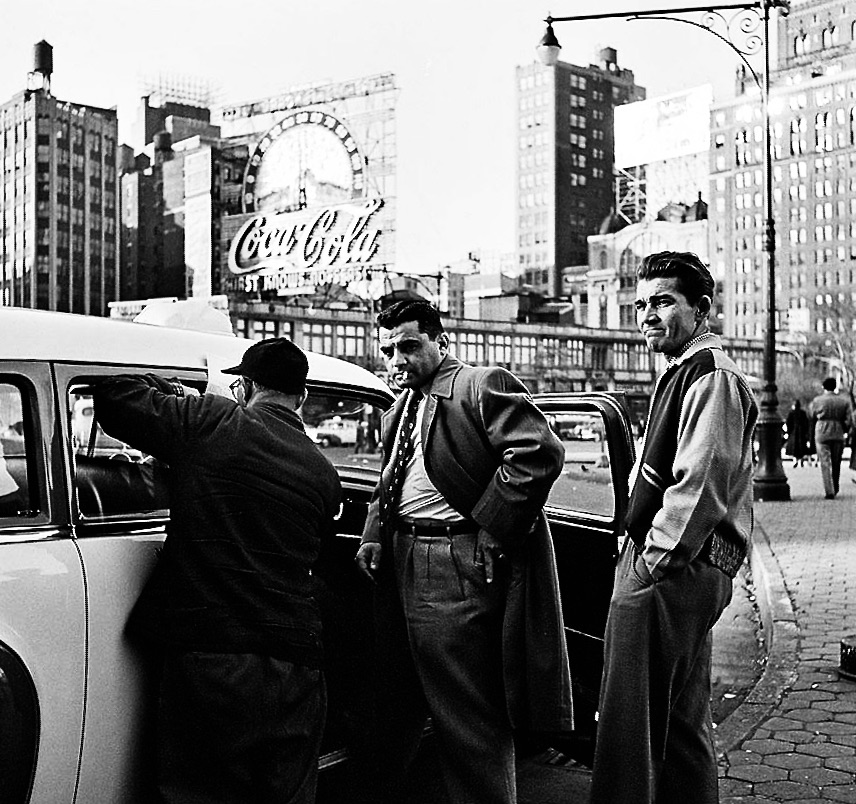
   Stan had stopped at Manganaro’s Grosseria on his way home for a slice of Hero-Boy. The mom and pop and family was a grocery, sandwich shop, and restaurant on 9th Avenue. The end-to-end six-foot Hero-Boy, if you wanted it, was 22-pounds and cost $16.50. The in-bred wait staff was surly, but the sandwiches were worth the wait. He took a bite, chewed, and washed it down with his beer.

   Ezra Aronson was out of the hospital. He would stop and see him in the morning, tell him they had snatched Ratso, who had spilled his guts, but that it still wasn’t clear what was going on. It looked like Dr. Baird had engineered Jackson Pollack’s death somehow, but why? Where was the pay-off in it? Vicki Adams said that since Jackson Pollack died young there weren’t going to be any more paintings by him. Since there weren’t going to be anymore, and since he was well known, by collectors and museums, prices for his art were going to go up. 

   “He was in demand, now he’s in big demand, especially the drip paintings,” Vicki said. “But nobody kills a painter to make a profit on his art, not even here in New York. It’s a long-term investment, not like kidnapping somebody today for the ransom tomorrow.”

   He and Betty would sort it out soon enough. He finished his sandwich, finished his bottle of beer, and went to bed. Mr. Moto followed him, curling up just inches from Stan’s face, and was asleep fast faster fastest. He had never been bothered by insomnia. He could fall sleep in the blink of an eye.

   In the middle of the night, in the middle of a dream, he pricked up his ears. Mr. Moto could smell mischief when something was afoot. When he went to the bedroom window, though, it was just a ladybug on the sill. It was red with black spots. He stretched up on his hind legs and sniffed the bug, which opened its wings, flew in circles, and landed on his nose.

   “Ladybug! Ladybug! Fly away home. Your house is on fire. Your children shall burn!”

   Mr. Moto believed ladybugs were lucky bugs. He believed when a ladybug landed on you your wishes would be granted. He also believed it was unlucky to harm them. He licked the bug off his nose and spat it out through the open window. He jumped on the ledge, crouched, and watched the bug fly away into the big city.

   In his jail cell at the bottom of nowhere, Ratso Moretti tried to stare down the foot-long rat staring back at him. The rat wasn’t having any of it. Nobody was going to stare him down in his own kingdom. He and Ratso spent the rest of the night keeping tabs on one another.

   Four hours later, near the end of the night, near the break of dawn, while a dead on his feet policeman watched, now that it was all over and the car had been searched and dusted for fingerprints, a tow truck hooked the new Chevy with a flat tire and dragged it off Vinegar Hill to the NYPD Tow Pound.

Excerpted from the crime novel “Cross Walk.”

Ed Staskus posts stories on 147 Stanley Street http://www.147stanleystreet.com and Cleveland Ohio Daybook http://www.clevelandohiodaybook.com. To get the site’s monthly feature in your in-box click on “Follow.”

In the Rough

mv5bmtyzndk4ota5m15bml5banbnxkftztcwndq2odaymw-_v1_-e1541716884822.jpg

By Ed Staskus

   “It’s a good day for it,” Dwight Eisenhower said, smiling his disarming trademark smile.

   It was going to be his first full round of golf since June. He had suffered a heart attack last year. Then when this summer rounded into shape, he needed surgery for ileitis. The past week had been filled to the brim with the Republican National Convention at the Cow Palace in San Francisco, Even though he had been unopposed, no need for a stampede, there had been some hard campaigning trying to get Richard Nixon off the ticket, to no avail.

   Dwight Eisenhower wasn’t overly enthusiastic about being president. He did it because he thought of the work as a duty. “This desk of mine is one at which a man may die, but from which he cannot resign,” he said. Richard Nixon wanted to be president. He didn’t think of it as a duty. He wanted it for himself, himself in the executive’s chair, at the top, giving orders and being obeyed. The conniving public official didn’t think it had anything to do with civil service.

   “Any man who wants to be president is either an egomaniac or crazy,” Dwight Eisenhower told Turk Archdeacon, his caddy standing next to him with a bag of clubs. Turk thought he was simply shifty, but didn’t say so. It wasn’t his place.

   Nat King Cole the Negro singer had spoken at the Cow Palace yesterday, the last day of the convention, to some cheers and more jeers. The president made the speech happen, no matter the carping about it. He knew he had to give in on his second-in-command, who was a hardline anti-Communist, who the rank-and-file supported with cheers and campaign donations. “I don’t want those Commie bastards to be successful,” Richard Nixon always said. But the president knew he didn’t have to give in to Jim Crow, at least not always. He could take the high road and leave the jeering to the dirty tricks gang.

   They drove up to Pebble Beach before the convention ended, before his VP could invite him to dinner. Besides, Richard Nixon’s father was seriously ill. The president urged him to go see him before it was too late. The VP mumbled something and in the end was almost too late. The night he visited his father, Frank Nixon said, “Good night, Dick. I don’t think I’ll be here in the morning.” He died in the morning. Dick wasn’t there. The funeral was three days later at the East Whittier Friends Meeting House. Richard Nixon had to ask for directions. The Quakers had become a lost heritage to him.

  There were three cars full of Secret Service men fore and aft. Charlie Taylor, who’d been at it for many years, was in one of the cars. One night when the president was having trouble opening his safe, and asked for help, his agents told him safecracking wasn’t part of their training. He was beside himself, giving them his ten-pound hammer look. Charlie got the cranky combination to give in without a struggle. He had been an anti-submarine officer during the war. Safes weren’t safe when he got his hands on them.

    “I won’t know whether to trust you, or not, after this,” Dwight Eisenhower told him, glancing at the trim crew-cut man.

   Dwight Eisenhower was driven to his golf outing in a black Lincoln Cosmopolitan. It was one of ten presidential touring cars. They all had extra headroom to accommodate the tall silk hat the president wore on formal occasions. The cars were almost 20 feet long, with Hydra-Matic transmissions, and heavily armored, weighing in at close to ten thousand pounds. One of them, a convertible, a 1950 model built for Harry Truman, had been fitted with a Plexiglas top. The president called it the Bubble Top. Charlie Taylor called it a pain-in-the-ass. Mamie Eisenhower didn’t like sitting under a plastic dome, but she put up with it, like she did with everything else.

   It was a clear day, sunny, the high sky dotted with seashore clouds. A steady breeze blew up from the water. It was refreshing. Dwight Eisenhower nodded at the man standing behind him.

   “It’s a pleasure, Mr. President,” Turk said.

   “Why, that’s fine,” President Eisenhower said.

   Turk had been caddying at Cypress Point since he was nine years-old, from almost 40 years ago. They walked to the practice tee. The president started whacking balls into the distance. He played Bobby Jones woods with his official five-star insignia engraved on their heads. At the putting green he lined up three balls 20-some feet away from the cup. He sank all three.

   “I should quit right here,” he grinned.

   “Yes, sir,” Turk said.

   Dwight Eisenhower had been practicing on a green on the White House grounds, hitting wedges, irons, and 3-woods, sometimes sending balls sky-high over the south fence. Whenever he did, he sent his valet to retrieve them. The squirrels that prowled the lawn dug up his putting green, burying acorns, nuts, and hardtack. When they buried their loot they left small craters behind. One morning the president finally had enough. “The next time you see one of those goddamned squirrels go near my putting green, take a gun and shoot it!” The Secret Service asked the groundskeepers to trap the squirrels, instead, and release them in a park somewhere far away.

   In a week August would be come and gone.  He would be 66 years-old soon. “I’m saving my rocker for the day when I feel as old as I really am,” he said, pointing to the rocker in the Oval Office. More days than not, he felt like that day was creeping closer, step by step, and there was no stopping it.

   His birthday was in October. CBS was planning a “Person to Person” TV show the night beforehand. Eddie Fisher was going to sing ‘Counting Your Blessings Instead of Sheep.’  Kathryn Grayson and Howard Keel were going to sing ‘Down Among the Sheltering Palms.’ Nat King Cole, with the Nelson Riddle Orchestra, was going to sing ‘It’s Just a Little Street Where Old Friends Meet.’ He was looking forward to it.

   In six weeks, he would be throwing out the first pitch for the first game of the World Series. There were five or six teams in the hunt, although the New York Yankees looked like a lock, at least to get there. If he were a betting man, which he was, he would be putting his money on the Bronx Bombers to take the kaboodle. He wouldn’t be at the game in the Bubble Top, either, but in the Cream Puff, which didn’t have a dome. He would be  getting some sunshine and fresh air, at least what there was of it in New York City.

   He liked Cypress Point because it was set in coastal dunes, wandered into the Del Monte forest along the front nine, and then reemerged on the rocky Pacific coastline. The last holes played right along the ocean. He’d played golf on many courses around the world. This was one of the best of them.

   Dwight Eisenhower looked out over the par-5 10th hole. He had taken off his tan sweater, but still had a white cap on his head. Seven months ago, Ben Hogan and Byron Nelson, professional living legends, had taken on the talented amateurs Ken Venturi and Harvie Ward in a white-knuckle not-so- friendly foursome at the same Cypress Point. The same 10th hole turned out to be the key to unlocking the contest.

   “I bet they can beat anybody,” said San Francisco car dealer Eddie Lowery about the two amateurs, who were his employees. He was talking to fellow millionaire George Coleman. The bet and the match were on in that minute. The bet was in the four figures.

   Harvie Ward was a two-time U.S. Amateur champion. Three months later Ken Venturi came within one stroke of winning the Masters. The cypress-strewn rolling dunes of the course on the wind-swept coast, the deep ravines, knee-deep grass, sand on all sides of the fairways, weren’t redoubtable, not to them.

   Ben Hogan turned the corner on the 10th when he rolled in a wedge shot for a 3. The eagle and 27 overall birdies testified to the competiveness of the match. The drinks at the bar afterwards rubber-stamped the camaraderie. There were backslaps about made shots and groans about missed shots.

   Dwight Eisenhower was playing with Harry Hunt, the president of Cypress Point, Sam Morse, a one-time football star who had developed Pebble Beach, and John McCone, a businessman who had been the undersecretary of the Air Force. He was partnered with Harry Hunt. They were playing a dollar-dollar-dollar Nassau bet. It was even-steven at the halfway mark, even though the president had stunk up the 8th hole.

   “Where is it?” he asked getting there, searching for the green on the 8th somewhere across the dogleg.

   He sliced his tee shot into sand. When he got to it, he hit it less than ten feet further on. Then he hit it fat, the ball limping head-high less than twenty feet, and falling into somebody’s heel print.

   “I’ve had it, pick it up,” he said.

    “Having a little trouble?” Sam Morse asked.

   “Not a little,” he said. “A lot.”

   On the tee of the 17th hole Dwight Eisenhower lined up his shot. Sea lions on the rocks below him barked. “It’s hard to hit a shot and listen to those seals at the same time,” he complained, but not so either of the Secret Service agents with them could hear him. He didn’t want them taking unnecessary potshots at the seals.

   Dwight Eisenhower was accustomed to having bodyguards around him, during the campaign in North Africa, and later as commander of the Allied Army in Europe. The Nazis had tried to kill him several times. Secret Service agents near his person nearly every minute of the day felt like a second skin. He knew what it took to save his skin. When he moved into the White House he didn’t mingle mindlessly, shake hands in crowds, or do anything foolish.

   “Protecting Ike works like clockwork,” said agent Gerald Blaine.

   Mamie Eisenhower gave her Secret Service men nicknames. One of them, who was a good dancer, was called ‘Twinkletoes.’ He asked Mamie to keep it between themselves. Some of the bodyhuards called her mom. Other bodyguards had never had mothers and called her Mrs. President.

   “You don’t have to worry about me, but don’t let anything happen to my grandchildren,” the president told Secret Service chief U. E. Baughman. The Diaper Detail guarded the four kids. Dwight Eisenhower changed the name of the presidential retreat in Maryland from Shangri-La to Camp David in 1953. “Shangri-La is just a little fancy for a Kansas farm boy,” he said. He renamed it in honor of his 5-year-old grandson, David. When Nikita Khrushchev, the Soviet Union boss man, visited the retreat he said the name sounded like a place where “stray dogs are sent to die.” 

   Dwight Eisenhower looked for the fairway on the 18th hole. “Where do we aim here?” he asked.

   “Keep it away from the left,” Harry Hunt said. There was a stand of pine trees on the left. “That’s the Iron Curtain. You’ll never get through that stuff.” The president laughed and hit a long drive. His next shot was a 4-iron and he nailed it onto the green, 20 feet short of the pin. He was going out with a bang.

   In 1954 eighty people were convicted of threatening the president and sent to prison or locked away as madmen. In 1955 nearly two thousand threats were made against Dwight Eisenhower’s life. The year before, the Russian KGB officer Peter Deryabin, after defecting, told the CIA about a Soviet plot to kill the president in 1952. “We were preparing an operation to assassinate Eisenhower during his visit to Korea in order to create panic among the Americans and win the war there.”

   Whenever he played golf, bad-tempered men with good eyesight and high-powered rifles took up vantage points on hills, surveying the course with telescopic sights. Other men, dressed in golf clothes, carried guns and ammo in their golf bags as they tagged along. The Queen Mary, a specially outfitted armored car, was their rolling command center.  

   Shortly after Mother’s Day the Secret Service had investigated a threat to plant two boxes of explosives at a baseball park where the president was planning on taking in a game. “Demoralize the enemy from within by surprise, terror, sabotage, and assassination,” Adolf Hitler had said not very many years before. “This is the war of the future.” Dwight Eisenhower and the Allied Army derailed the Nazi night train. No one was going to take him by surprise. He was planning on sitting in his rocking chair one day, rocking back and forth, watching his grandchildren trundle on the carpeting.

   He served in the armed forces from one end of his adult life to the other. After he retired, he was dean at Columbia University, and then president of the country. He was still the president and, he was sure, he was going to beat Adlai Stevenson like he had four years ago. Adlai didn’t know how to get close to folks. He was full of sanctimonious bull.

   Even though he’d commanded millions of men in the last war, Dwight Eisenhower thought war was rarely worth going to war for. He hated it. “I hate war as only a soldier who has lived it can, only as one who has seen its brutality, its futility, its stupidity.”

   “Didn’t you once say that we are going to have peace even if we have to fight for it?” Harry Hunt slyly asked.

   “When we have to, but always remember, the most terrible job in the world is to be a second lieutenant leading a platoon when you’re on the battlefield. There is no glory in battle worth the blood it costs. When people speak to you about a preventive war, you tell them to go and fight it themselves.” 

   The Cold War wasn’t nearly as hot as it had been ever since Nikita Khrushchev denounced Joseph Stalin’s cult of personality earlier in the year, as well as admitting the Man of Steel’s crimes, and the outrages committed against Mother Russia. The iron door had been cracked open. The president had long thought war settles nothing, even when it’s all over. He was worried about the arms race, which was a race towards nuclear catastrophe.

   “You just can’t have that kind of war,” he told his inner circle. “There aren’t enough bulldozers in the world that could ever scrape all the bodies off the streets.”

   “Disarmament, with mutual honor and confidence, is a continuing imperative” is what he had written in his daybook and wanted to say at the Cow Palace, but didn’t, not with Richard Nixon and the Red Scare and the military hand-in-hand with industry. He wanted to call it what it was, a military-industrial complex that was always crying “fire” in a crowded theater. But he couldn’t, at least not until after he was re-elected. In the meantime, he planned on speaking softly and carrying a big stick, even if it was only a long shaft wood driver, the biggest stick he had in his golf club bag.

Excerpted from the crime novel “Cross Walk.”

Ed Staskus posts on 147 Stanley Street http://www.147stanleystreet.com and Made in Cleveland http://www.clevelandohiodaybook.com. To get the site’s monthly feature in your in-box click on “Follow.”