Category Archives: Barron Cannon

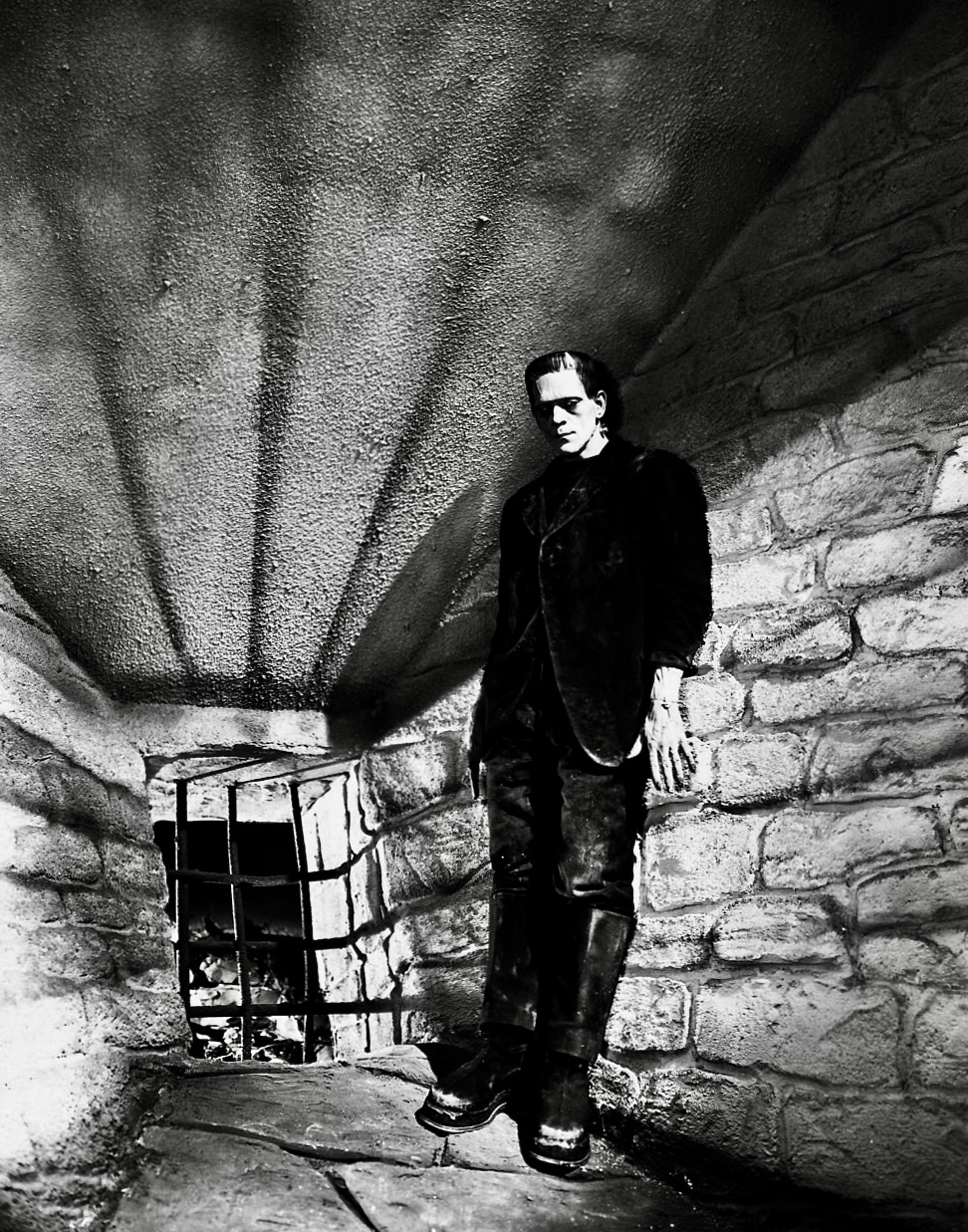
Fixing the Frankenstein

By Ed Staskus

   The day Frankenstein walked into Barron Cannon’s yoga studio in Lakewood, Ohio, Barron could tell he wasn’t a happy monster. He walked as though he had never gotten over the rigor mortis of all his lives and deaths before being resurrected by Victor Frankenstein. He was dirty as all get out and wet. His boots were caked with muck and mire. He needed a haircut and a shave. He looked like he could use ten or twelve square meals all at once.

   “You look like hell,” Barron said. 

   “I feel like hell,” Frankenstein said.

   “I thought you were dead and gone, and only alive in the movies,” Barron said. “The story is you killed yourself up on the North Pole after Victor died. That would have been a couple hundred years ago.”

   After being chased and pelted with rocks, flaming stave torches shoved into his face, shot at and thrown into chains, Frankenstein had sworn revenge against all mankind. They hated him so he would hate them. He had hated himself, as well, for a long time.

   “I was going to end it all when I floated off on an ice floe, but I froze solid, and it wasn’t until twenty summers ago that I defrosted.”

   A heartwarming result of global warming, Barron thought to himself.

   “After defrosting I lost track of time,” the creature said. “It’s either all day or all night almost all the time. I built an igloo and learned to hunt seals. I caught and beat their brains out with my bare hands. I meant to go back to Geneva. But after living on the ice safe and sound, I changed my mind. There wasn’t anybody anywhere trying to kill me, which was a blessing. But then I got lonely.”

   “How did you get here?” Barron asked.

   “I walked.”

   “It’s got to be three, four thousand miles from the pole to here. How long did it take you?”

   “I meant to go back to Germany, but I took a wrong turn at the top of the world. Canada looked like Russia until I got to Toronto. By then I didn’t want to turn around. I had been at it for five months. I kept walking until I reached Perry, on Lake Erie. I met a boy and girl there. They were riding pedal go-karts on the bluffs. The girl said her brother was the Unofficial Monster Hunter of Lake County. It was hard to believe. He’s nothing more than a tadpole. When I asked him whether he thought I was a monster, he said I looked monstrous, but was sure I wasn’t a monster.”

   Frankenstein had seen his own reflection in water. He was aware of what he looked like. He didn’t like it any more than passersby did, throwing him wary nervous glances and scuttling away. 

   “Was his name Oliver?”

   “Yes.”

   “You didn’t throw him and his sister down a well, or anything like that, did you?”

   “No, and I’m glad I didn’t. They helped me. They gave me some of their homemade granola bars.”

   “Don’t underestimate the boy. He’s taken on banshees and trolls, the 19 virus, Bigfoot, Goo Goo Godzilla, and the King of the Monsters himself. I don’t know how he does it, but he’s no ordinary child to mess with.”

   “He told me to come here and talk to you, that you were a yoga teacher and could unstraighten me. I’m stiff as a board all the time.”

   “I can see that,” Barron said.

   “I want to be able to touch my toes. I want to be a better man.”

   “I can help you with that,” Barron said. “Except the better person part. That’s up to you.”

   “I was benevolent and good once,” Frankenstein said. “Misery made me a fiend. Make me happy, and I shall again be virtuous.”

   “I’ll do my best.”

   For once, Frankenstein had the feeling he had found a true friend.

   After Barron got back from the Goodwill store with XXL shorts and muscle t’s, pants and shirts, and threw away Frankenstein’s clothes, which hadn’t been washed in centuries, they got started on the yoga mat. Barron told him to get barefoot. When he did the smell was bad. Barron turned on the studio’s fans and opened both the front and back doors. He took the creature’s boots outside and tossed them in the dumpster. The dumpster burped and spit the boots back out. They landed in the parking lot with a clomp. Barron doused them with gasoline and burned them.

   “We’ll start with the twelve must-know poses for beginners,” Barron said.

   Frankenstein had no problem doing the mountain and plank poses, but that was the beginning and end of what he could do. He couldn’t do down dog or a lunge to save his life. Triangle, dancer’s pose, and half pigeon pose might as well have been rocket science. When he tried seated forward fold, he folded forward an inch or two and farted.

   “More roughage in those granola bars than you’re used to?”

   “I lived on seal blubber for a long time,” Frankenstein said.

   He could do some of the hardest poses easily, like headstand. He balanced on his flat head like nobody’s business. He chanted like a champ, his baritone voice deep and rich.. He did dead man’s pose like he was born to it. 

   When the lesson was over, however, he wasn’t able to get up out of laydown. His muscles were in knots. Barron pulled out his Theragun and went to work. It took all the percussion device’s battery power to get Frankenstein on his feet and into the storeroom, where Barron prepared a bedroll.

   “It doesn’t look like you’re in any condition to go anywhere, but make sure you stay here. I have three classes back-to-back-to-back. I don’t want you barging through the door and causing any heart attacks.”

   Frankenstein groaned and rolled over. He slept the rest of the day, that night, and part of the next day. Barron took him to the barber shop next door. Frankenstein had never gotten a haircut. His hair was halfway down his back and his beard down to his belly button. The barber gave him a taper fade crew cut and a shave. He trimmed his eyebrows and the tufts of hair growing out of his ears. He unscrewed the electrodes in the creature’s neck.

   The incisions around his neck, wrists, and ankles had long since healed. Barron found a pair of size 34 sneakers and second-hand bifocals for him. Frankenstein was out of practice, but he enjoyed reading. Barron bought two dozen thrillers, biographies, histories at the Friends of the Library sale.

   Monday morning dawned warmand bright. Barron and Frankenstein walked to Lakewood Park, where they could unroll their mats outdoors on the shore of Lake Erie. Barron had sewn two mats together for the big guy. Barron’s one goal was to make the creature more flexible. His unhappiness with the human race would have to wait. He wasn’t killing anybody anymore, at least. Frankenstein’s problem wasn’t a desk job and never exercising. He wasn’t rigid with chronic tension. He had been on an all-blubber diet for decades but enjoyed the plant-based diet Barron was converting him to. They started having breakfast at Cleveland Vegan. 

   He had never stretched in his life, which contributed to his discomfort and stiffness. His poor muscles were as short as could be. On top of everything else he was close to three hundred years old, counting his own lifetime and the lifetimes of the men he was made of. His synovial fluid was thick as mud.

   Barron and Frankenstein worked on standing forward bend hour after hour day after day. At first the creature could only bend slightly, placing his hands on his thighs. He did it a thousand times. He huffed and puffed. When he was able to touch his knees, he did it two thousand times. He broke out into a sweat. One day Barron brought blocks, setting them up on the high level. Frankenstein folded and got his fingertips to the blocks. The day came when Barron flipped them to their lower level.

   “Don’t be a Raggedy Ann doll, just flopping over,” Barron told him. “Do it right.”

   The gold star moment finally arrived when Frankenstein folded forward without blocks. His upper back wasn’t rounded, his chest was open, his legs were straight, and his spine was long. He was engaged but relaxed. He took several steady breaths as the space between his ribs and pelvis grew.

   “Great job, Frank,” Barron said with encouragement.

   Frankenstein did the pose three thousand times. He was looking lean and not so mean. His skin was losing its yellow luster. He was getting a tan in the sunshine at the park. According to B.K.S. Iyengar, Uttanasana slows down the heartbeat, tones the liver spleen kidneys, and rejuvenates the spinal nerves. He explained that after practicing it “one feels calm and cool, the eyes start to glow, and the mind feels at peace.”

   They walked to Mitchell’s Homemade Ice Cream in Rocky River. Barron had a scoop. Frankenstein had eight scoops. Children gathered around him asking a million questions, asking for his autograph, and asking for selfies with him in the picture. He was a ham with glowing eyes and never said no.

   From standing forward bend it was on to more beginner poses, then intermediate poses. By the end of the month Frankenstein wasn’t a yogi, yet, but he was more human than he had ever been. He joined Barron’s regularly scheduled classes. He was two and three feet bigger than anybody else. Barron put him in a back corner by himself where he wouldn’t accidentally clobber anybody while doing sun salutations.

   When the time came for Frankenstein to move out of Barron’s storeroom into his own apartment, Barron made him a gift of B.K.S. Iyengar’s book “Light on Yoga.”

   “This is the book that will make you a better person, Frank. I’ve read it twice.”

   “I’ll read it a hundred times,” Frankenstein said.

   “What do you plan on doing with your life?” Barron asked.

   Frankenstein thought about becoming a barber like the man who tended to him but bending over the tops of heads all day long would lead to lower back pain sooner or later. He knew full well he had arthritis. He threw that idea away. He thought about becoming a house painter. He could reach more areas compared to a shorter man. He could cut in walls and ceilings without using a ladder. That would save hours over the course of a job. The downside was having to paint low, like skirting boards. Stooping would do a number on his back. He threw that idea out the window, too.

   When he finally decided what to do, he was surprised he hadn’t thought of it earlier. It was a natural. It was how he had been granted a second life. He would be become an electrician.

   An electrician is a tradesman who repairs, inspects, and installs wires, fixtures, and equipment. Much of the job involves installing fans and lights into ceilings. Being tall would free him from the need to go up and down a ladder for every install. It turns the work from a two-man job into a one-very-tall-man job. Homeowners in Lakewood were always restoring and upgrading their houses. He would advertise himself as “Call Frank – He Knows the Power of Electricity and Will Save You Money.”

   If he ever made a mistake, he knew he could absorb the bust-up of voltage. He had already been hit with more of the hot stuff than any mortal man and lived to tell the tale. He would look for another Bride of Frankenstein, too, a nice girl with a slam-bam bolt of lightning in her hair. They would make little Frankie’s.

Ed Staskus posts stories on 147 Stanley Street http://www.147stanleystreet.com and Cleveland Ohio Daybook http://www.clevelandohiodaybook.com. To get the site’s monthly feature in your in-box click on “Follow.”

Sunny Side Up

By Ed Staskus

“Here comes the sun, doo doo doo, and I say, it’s all right.” The Beatles

The temperature was in the 90’s, like it had been for weeks, and the humidity was swampy Louisiana, which it had been for weeks, when Frank and Vera Glass went for a walk on the multi-purpose path in the Rocky River Reservation, about a mile south of Lake Erie and the mouth of the river.

The Metroparks, more than a hundred years in the making, are a series of nature preserves, more than 21,000 acres, which encircle Cleveland, Ohio, and its suburbs. There are hundreds of miles of paths and horse trails, picnic areas and fishing spots, and eight golf courses.

Their home sat on a side street on the east side of the Rocky River valley. If there is ever another Great Flood, the river would have to rise more than one hundred and fifty feet up the cliff to threaten them. Turkey vultures nest in the cliff face and soar all summer like gliders in wide circles on the currents rising up from the valley. The Glass house, a dark gray Polish double, is ten minutes by foot from the park, cooler mid-summer in the shade of the forest and along the riverbank.

They walked down the Detroit Road entrance, past the marina, the dog park and the soccer fields, as far as Tyler Field, before turning around. As they neared Hogsback Hill, an isolated high point on the near bank of the Rocky River, Frank suggested they go up to see his friend Barron Cannon, whom they hadn’t seen recently.

It was a month earlier that they had gotten back from a month on the east coast of Canada. Barron had spent more than two months protesting on the east coast of Manhattan.

“You know I don’t want to,” said Vera.

“I know,” said Frank, turning up Hogsback.

Barron Cannon is a trim young man in his 30s who lives in an orange Mongolian yurt he built in the backyard of his parent’s ranch-style house at the top of Hogsback Hill. He has a master’s degree in Comparative Philosophy and is a committed yogi, as well as a radical vegan.

He practices yoga for two hours a day and meditates for another half-hour. Sometimes he chants or plays his harmonium. He’s thankful they have no nearby neighbors, and the house is slightly off the edge of park land, so the park rangers can’t bother him. His parents have long since thrown up their hands. They pray he’ll find a girlfriend and move away, but aren’t holding their breath.

“He needs to be committed,” Vera has said to Frank on several occasions, usually right after they have visited him and are out of earshot.

“Why couldn’t he stay and occupy Wall Street instead of his mom’s backyard?” she added.

Barron does not have a job or a car or a television. He reads books. He has never voted.

“I’ll vote when anarchists are on the ballot,” he told Frank.

Frank wanted to remind him that anarchists who vote are like atheists who pray, but he thought, what was the point?

They found Barron Cannon in the backyard, lying face-up in the sun on an Elmo Sesame Street blanket, on the south side of his yurt. He was naked except for a fig leaf covering his private parts.

It was a literal fig leaf.

Vera looked away when Barron propped himself up on his elbows and the fig leaf rolled away.

“Sorry,” he said, pulling on a pair of cargo shorts. “I was getting my daily dose of sunshine here on the acropolis.”

He was tan, from tip to toe. Frank could see he hadn’t been using an SPF lotion of any kind anywhere on himself.

“You should be careful,” he suggested. “Too much sun isn’t good for you.”

“That’s where you’re right, but even more wrong,” Barron replied.

“Too much sun may be bad, depending on your skin and heredity, but avoiding the sun is not good for anyone. Remember, we evolved in the sun, living outdoors for almost all of our two million years on this planet.”

He flipped on a pair of Ray-Ban sunglasses and leaned towards Frank.

“Then, not very long ago, we started messing with Mother Nature and started avoiding the sun. When you avoid the sun, you may not get rickets, because you can always take a pill, but all the pills in the world can’t replace the real thing.”

He pointed up to the sky.

”When you avoid the sun, like it’s life and death, you increase the risk of dying from internal cancers,” he said slowly solemnly.

Frank must have looked skeptical, because Barron tilted his dark glasses down his nose Lolita-style and exhaled.

“Look it up,” he said.

It turns out, when Frank looked it up, Barron was right.

“I really hate it when he’s right about anything,” said Vera.

The Journal of Epidemiology, more than 30 years ago, reported that colon cancer rates are nearly three times higher in New York than in New Mexico. Since then many other studies have found solar UVB induced vitamin D is also associated with reduced risks of breast and rectal cancers.

“When the government and our medical monopoly started telling us to avoid the sun, they forgot to remind us we would need to get our vitamin D somewhere else,” Barron said.

By this time Vera had wandered off and was commiserating with Barron’s mother about the flower garden her son had torn out, except for a small plot she had saved at the last minute, coming home from the grocery and discovering what he was about. He had thrown her flowers into a compost pit and replaced them with rows of root vegetables.

“Vitamin D is a hormone,” said Barron “and it’s produced naturally when skin is exposed to UVB in sunlight.”

Frank noticed a yoga mat rolled up and leaning against the alligator skin bark of a sweet gum tree.

“You’re still doing yoga outside?”

“I am.”

“In the buff?”

“You bet. It was good enough for the Greeks, it’s good enough for me.”

Barron told Frank vitamin D sufficiency is linked to a reduction in 105 diseases, including heart disease and diabetes. Some researchers believe vitamin D deficiency contributes to nearly 400,000 premature deaths and adds a one hundred billion dollar burden to the health care system.

By many estimates vitamin D deficiency is a worldwide epidemic, with some studies indicating greater than 50 percent of the global population at risk.

Three out of four Americans are considered vitamin D deficient, according to government data.

“Do you know why?” Barron asked him.

“No,” he said.

“It’s because of overzealous sun avoidance, which has led to a 50 percent increase in that figure in the past 20 years,” he said, slapping a fist into his palm for emphasis.

“I take a vitamin D supplement every morning,” Frank said. “I don’t have to go out in the sun. Besides, it’s been unbearably hot and there are lots of bugs, since we had such a mild winter.”

“You think our time and space is complete and knows everything,” he said. “You assume science understands all the benefits of sunlight and that the only good it does is make vitamin D.”

“Yes,” Frank said.

“That isn’t true,” Barron said. “Let me give you an example.”

He told Frank about a recent study at the University of Wisconsin and published in Proceedings of the National Academy of the SciencesThey discovered that something in ultraviolet light retarded progression of an animal model of multiple sclerosis, which is a painful neurological disease for which there is no cure. While vitamin D suppressed progression of the animal model, ultraviolet light worked even better. The report concluded that UV light was having an effect independent of vitamin D production.

“If it’s true in humans, it means that sunlight, or UV light, contains something good in addition to vitamin D,” he said. “We just don’t know what it is.”

Our ancestors evolved naked, full frontal. Barron waved his fig leaf.

“The sun was directly overhead. We have a long evolutionary bond with the sun. Humans make thousands of units of vitamin D, and who knows what else, within minutes of  life and limb exposure to sunlight. It is unlikely such a system evolved by chance. When we sever the relationship between ourselves and sunlight, we proceed at our own peril.”

Barron Cannon gave Frank a sharp look and leaned back on his elbows

At a loss for words, Frank was grateful when his wife reappeared.

“I’m getting a little toasty in all this sunlight,” she said.

They agreed that they should be going. They bid Barron goodbye, Vera waved to Barron’s mother, and they made their way home.

After dinner that night, as Vera watched “Lawrence of Arabia” on Turner Classic Movies, while sitting on the front porch in the orange-yellow light of a quiet sunset, Frank skimmed a review of a paper in the British Medical Journal.

“Some people are taking the safe sun message too far,” wrote Professor Simon Pearce. “Vitamin D levels are precarious in parts of the population. They stay at home on computer games. It’s good to have 20 to 30 minutes of exposure to the sun two to three times a week.”

As he put his iPad down, he thought, I might give it a try in our backyard, without slathering on any sunscreen as I normally do, but definitely wearing a pair of shorts.

Inside the living room, on the flat screen, Lawrence and his Arab allies were charging across a sun-blasted desert outfitted from head-to-toe in long loose robes.

Where did Barron Cannon get fig leaves, anyway, Frank wondered?

Ed Staskus posts stories on 147 Stanley Street http://www.147stanleystreet.com and Cleveland Ohio Daybook http://www.clevelandohiodaybook.com. To get the site’s monthly feature in your in-box click on “Follow.”

When Hell Freezes Over

By Ed Staskus

   “The Hells Angels are so much aware of their mad-dog reputation that they take a perverse kind of pleasure in being friendly.”  Hunter S. Thompson

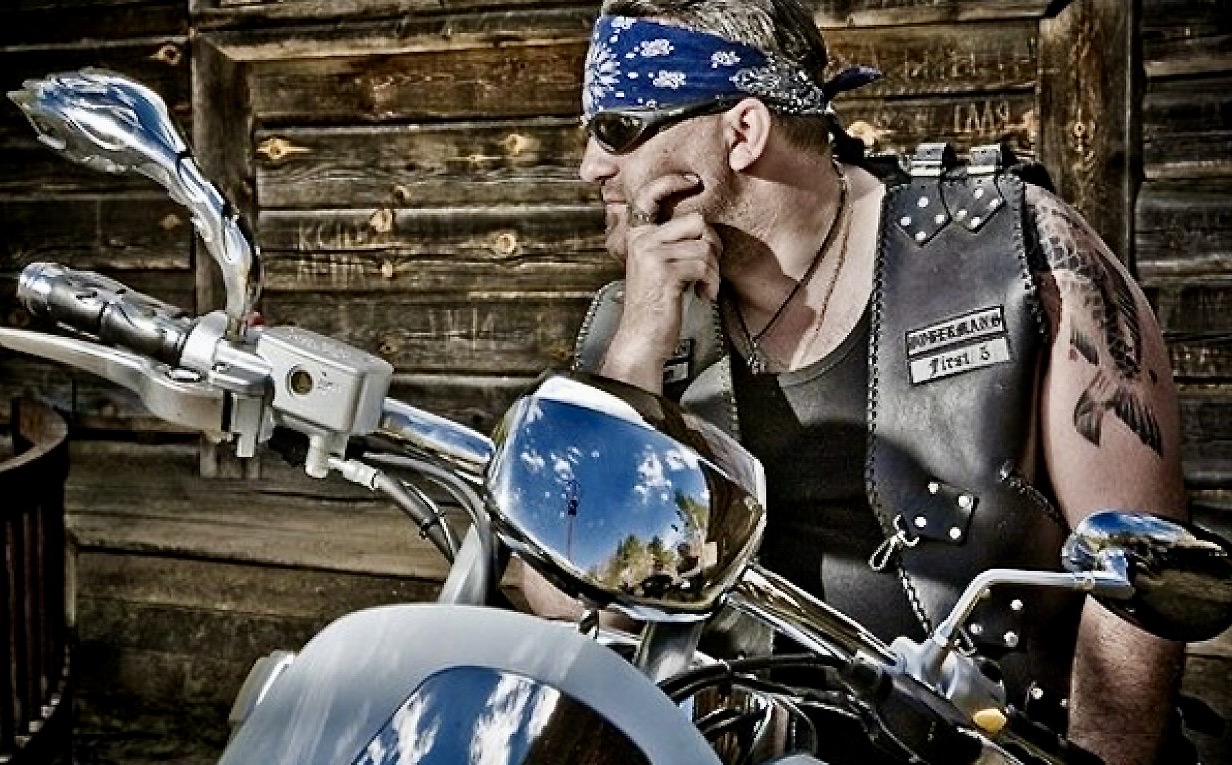
   When Frank Glass pulled his Hyundai into the back lot of Barron Cannon’s pop-up yoga class, on the border of Lakewood and Cleveland, Ohio, getting out with his rolled-up mat under his arm, he was brought up short by a fleet of Harley Davidson motorcycles parked outside the door. Inside, he peeked into the practice space, where a mob of muscled-up bare-chested men was in awkward cross-legged poses on rental mats. The denim vests and jackets hanging on coat hooks bore the Hells Angels colors and moniker, red lettering displayed on a white background.

   The bikers are sometimes called “The Red and White.” They are also known as “The Filthy Few.” Inside the club house among themselves they are “The Club.”

   The Angels are the best known of what are known as outlaw motorcycle gangs. The name comes from the P-40 squadrons of Flying Tigers who flew in Burma and China during World War Two. The pilots were known as “Hells Angels” because the combat missions they flew were dangerous courageous literally death-defying.

   Skulls scowled from the middle of the back of the biker vests and jackets.

   Frank took a seat, instead of taking the class, seeing he was late for it, anyway, and the room was full. He might as well, he thought, read the book he was halfway through, and go to lunch with Barron, as they had planned, when the class was over. The book he was reading on his iPhone was David Halberstam’s “The Fifties.” Even though the Hells Angels were formed at the turn of the decade, and ran riot in the 1950s, there wasn’t anything about them in the book.

   Yoga in the United States got going in the same decade, although it didn’t run riot. It kept a low profile until the next decade, the 1960s, when hippies made the scene, and adopted yoga as one of their motifs. Even so, from then until now as yoga has grown exponentially, it has never run riot.

   The Hells Angels and yoga have diametrically opposing outlooks on duty focus liberty life in general. The bikers are noted for violence, brawling, and fighting with fists pipes guns. They are notorious for being ruthless. They will cut the legs out from under you at the slightest provocation. One of the legs yoga stands on is ahimsa, or non-violence. Yoga stands up for its own values but doesn’t go out of its way to chop anyone else down to size.

   When the class ended the Hells Angels filed out of the studio. It had only been them in Barron Cannon’s morning class. They slugged back bottled water, toweled off, and got back into their denims and Red Wings.

   “I’ll be damned if that was a beginner’s class,” one of them said.

   The biker standing next to him, his bald mottled head glistening, said, “That was a hell of a workout.”

   “Workout?” another one exclaimed. “That was some kind of a torture.”

   The Hells Angels are the biggest biker gang in the world. There are 444 chapters on six continents. They are banned in some countries, like the Netherlands, where they have been labeled as a “menace to public order.” The Angels don’t give a fig about the Dutch, so it’s a wash. 

   There are only a few requirements for becoming a Hells Angel. First, you have to have a driver’s license and a seriously badass motorcycle, preferably a chopped Harley Davison. Second, you have to ride it a minimum of 12,000 miles a year. Third, if you were ever a policeman, or even ever thought of being a policeman, you cannot join the club. Fourth, you have to undergo a semi-secret initiation, resulting in being “patched.” Being patched is like getting tenured at a university. Lastly, you have to be a man, and a renegade, to boot, no women allowed.

   It’s best to be a white man when applying for membership.

   In 2000, Sonny Barger, one of the sparkplugs of the gang, said, “if you’re a motorcycle rider and you’re white, you want to join the Hells Angels. If you’re black, you want to join the Dragons. That’s how it is whether anyone likes it or not. We don’t have no blacks and they don’t have no whites.” When asked if that might ever change, he answered, “Anything can change. I can’t predict the future.” He was being sarcastic.

   As many Hells Angels as there are, there are many more folks who practice yoga, about 300 million worldwide. It’s easy to do, too. You don’t need a $20 thousand-dollar two-wheeler, you don’t need to ride it all day and night, and there are no initiation rites, half-baked or otherwise. You can be whatever race creed color gender you want to be. You don’t have to be amoral bloodthirsty ungovernable, either, although yoga is good for resolving those problems.

   “What did you say?” asked one of the Hells Angels.

   “Who, me?” asked Frank

   “Yes, you,” the biker said, looming over him.

   “I didn’t say anything. I’m just sitting here reading, thinking.”

   “Keep your thinking to yourself,” the Hells Angel said, stalking out of the pop-up. Some of the other bikers glared at him but left without incident. One of them gave him a friendly wave and a wink. Frank breathed a sigh of relief.

   There was a roar of 1690 and 1870 cc engines starting up in the parking lot. In a minute the bikers were swaggering down Clifton Boulevard towards downtown Cleveland. Frank had overheard one of them mention the Rock ‘n’ Roll Hall of Fame. He wondered whether there was an exhibit commemorating the Rolling Stones concert at Altamont, where the Hells Angels had been hired to provide security, and 4 people were killed during the show.

   Barron Cannon stepped out of the studio space, wearing loose black shorts and a tight-fitting Pearl Izumi jersey. He looked cool as a cucumber. Frank jumped up.

   “What in the goddamn Sam Hill was that all about?” he asked blurting it out.

   “Missionary work,” said Barron, as unflappable and insufferable as a post-graduate in philosophy can be. Barron had a PhD, although he eschewed academics in favor of his own leanings, which were economic Marxism, idealistic anarchy, vegetarianism, and yoga. He had grown up on the other side of Lakewood, camped in a yurt in his parent’s backyard while he was in school, been briefly married, and lived in a small 80-year-old vaguely modernized apartment close by Edgewater Park, a short bike ride away.

   Barron owned a Chevy Volt, but often rode his bicycle, shopping for groceries, visiting nearby friends, and training aerobically on the multi-purpose path in the Rocky River Metropark.

   “Missionary work? What do you mean?”

   “Let’s go across the street to Starbucks, get some coffee, some wraps or egg and cheese protein boxes,” said Barron.

   Sitting down inside the Starbucks, which had transformed a vacant Burger King the year before, their food and coffee in front of them, Frank again asked Barron, “What are you up to?”

   “Off the mat into the world.”

   “The last time that came up you derided the idea, saying yoga had to stay close to the individual, close to its roots, and not try to reform the world.”

   “Times change, bud,” said Barron.

   “Trying to teach yoga to Hells Angels isn’t a hop skip and jump.”

   “No,” said Barron. “It’s a great leap forward, man.”

   Barron Cannon took secret pleasure in conflating things like the moon landing and Chairman Mao, as though the past was play dough.

   “How did it go?”

   “Not bad, they got engaged in what we were doing. I think they might follow up on the class.”

   “When hell freezes over,” thought Frank.

   Barron Cannon laughed.

   “That’s mostly true, but not entirely true,” he said. “No one is absolutely unsuited for yoga practice.”

   “Are you reading my mind?”

   “Sometimes.”

   “Are you sure they weren’t just grandstanding?”

   “If there’s anything uncertain about yoga, it’s certainty,” said Barron.

   Many law enforcement agencies worldwide consider the Hells Angels the numero uno of the “Big Four” motorcycle gangs, the others being the Pagans, Outlaws, and Bandidos. They investigate and arrest the bikers for engaging in organized crime, including extortion, drug dealing, trafficking in stolen goods, and violent battery of all kinds. They raid their clubhouses and haul the Filthy Few off to jail.

   The police never bust up yoga studios, which are generally spic and span.

   Members of the Hells Angels say they are a group of enthusiasts who have bonded to ride motorcycles together, organizing events such as road trips, rallies, and fundraisers. They say any crimes are the responsibility of the men who committed them and not the club as a whole, despite many convictions for racketeering, riots, mayhem, and shootings.

   One of their slogans is, “When in doubt, knock ‘em out.”

   “How did you get them into the studio in the first place?”

   “I was at the Shell station up on the corner, filling up, when a Hells Angel pulled in behind me. He moved like a wooden Indian. He had to lean on the gas tank getting off his motorcycle.”

   “And you suggested yoga?” 

   “You should try yoga,” Barron said to the biker. “It’s good for your back.”

   “What the fuck?” said the biker, his arms tattooed from wrist to shoulder. “Who the hell are you?”

   “I teach yoga just down the street. You should come in for a beginner’s class. You might be surprised what a big help it can be.”

   “Fuck off,” said the biker.

   “So, what happened?” asked Frank. 

   “The next thing I knew, there they were this morning. They took over the class, one of them standing outside turning everyone else away, saying the class was full, until I got started.”

   “How did it go?”

   “They wouldn’t chant, and they didn’t want to hear much beforehand. They told me to get down to business, so what happened was that it turned into a plain and simple asana class.”

   “How did they do?”

   “They’re strong men, but most of them can’t touch their toes to save their lives. They tried hard, so I will give them that. They were terrific doing the warrior poses, but things like triangle, anything cross-legged, and some of the twists were beyond them. Most of them were stiff as boards.”

   Yoga plays an important role in reducing aggression and violence. It helps you by becoming more thoughtful about your actions. It makes you more flexible in tight spots. The brain-addled in prisons have been specifically helped by the practice.

   “Attention and impulsivity are very important for this population, which has problems dealing with aggressive impulses,” says Oxford University psychologist Miguel Farias about inmates

   Simple things like pranayama breathing techniques release tension and anger. Doing headstand is a good way to get it into your head that you can’t stay mad when you’re on your head. Mindfulness and awareness flip the misconceptions of anger.

   “We can see anger in terms of a lack of awareness, as well as an active misconstruing of reality,” says the Dalai Lama.

   Even the yoga concept of non-attachment can be a big help. No matter what patches you wear, you aren’t that patch. You are an individual who is free to make individual choices. The Hells Angel skull’s head is a reminder of the transitory nature of life. Make the most of it. Don’t be always punching your way out of a paper bag.

   Frank and Barron finished their coffees and stepped outside. At the crosswalk they paused at the curb. The traffic was light on Clifton Boulevard, but a biker was approaching. He was a trim young man on a yellow Vespa. He pulled up and stopped at the painted line of the crosswalk. He was wearing a turquoise football-style helmet. Both his arms up to the sleeveless of his black t-shirt were heavily tattooed. He waved at them to go. They went over the edge of the curb into the street.

   Stepping up to the curb on the other side, Barron said, “There you are, Frank, not all angels are bats out of hell.”

Ed Staskus posts stories on 147 Stanley Street http://www.147stanleystreet.com and Cleveland Ohio Daybook http://www.clevelandohiodaybook.com. To get the site’s monthly feature in your in-box click on “Follow.”
Stumbling On Barron Cannon

By Ed Staskus

   It was an early May morning when Frank and Betty Glass went visiting Barron Cannon, who they hadn’t seen much since they first ran into him picketing a vegan restaurant near where they lived in Lakewood, Ohio. They had dropped by his yurt, which was on a bluff overlooking the Rocky River Metropark Reservation, several times in October and November, but once winter got cold and snowy had not paid him a social call, not that Betty minded, or even gave it a thought.

   The first time they ever saw Barron had been the past September, when they were attracted by the flashing lights of two Ford Police Interceptors at the vegan eatery, and were greeted by the sight of a slender pony-tailed man in his early 30s bearing a picket sign on a stick. Faces peered through the plate glass windows. Passersby stopped to see what was going on. There was a single word scrawled on the placard.

   HYPOCRITES! It was in capital letters. It was written in blood red crayon. Barron was waving it around in circles.

   The policemen who had been called to the scene by one of the outraged waitresses were telling him he had to call it a day. They told him protesting without a permit wasn’t permitted. Although he maintained he had more than enough reason, and cited his first amendment rights, and made a speech about animal rights, he finally agreed to go home and strode off, his picket sign bouncing up and down on his shoulder.

   The bemused policemen walked away shaking their heads. “He’s like the cranky old guy who’s always on his front porch and yells at the neighborhood kids,” one of them said before they got into their separate Ford Police Interceptors.

   Barron was going the same way as Frank and Betty, up West Clifton Blvd., and after falling into step with him, they were astonished to learn he was himself a vegan. “Eating is an act of nourishing my body and soul,” he said. “I choose to do no harm to myself.”

   He did not eat animals, drink their milk, or wear their hides. He eschewed all animal products. He didn’t eat anything deep-fried and never snacked on refined sugar. He eschewed Worcestershire sauce because it contained anchovies. He considered eating honey exploitive and avoided it.

   “I don’t abide people who eat animals,” he said, “and since that’s just about everybody, and since that is not changing anytime soon, that’s that, and there I am, a lonely voice in the wilderness. At least I don’t have to live with them.” 

   At least as long as they weren’t his parents. Although he lived alone, he lived with his parents. He lived in their backyard.

   “My parents are among the worst,” he said. “They are always bringing chicken, pork, and ground beef home from the grocery. I see them in their kitchen every day, sticking forks into decomposing flesh and animal secretions. They chew on Slim Jim’s while they watch the news, which is full of lies and misery, on TV.”

   Barron lived in a yurt outside the kitchen window of his parent’s house overlooking the Rocky River Metropark Reservation, about a mile-and-a-half south of Lake Erie. He had built the orange Mongolian-style dwelling himself. He didn’t have a job, a car, a refrigerator, a TV, a wife, or any pets.

   “Don’t even get me started on pet slavery,” he said.

  Betty gave him a sharp glance. She and Frank had two house cats, who were Mr. Moto and Sky King, who slept with them on their bed most nights. The cats were rescues. She didn’t think of them as slaves and was sure they didn’t think of themselves as slaves, either.

   “Have we met before?” Frank asked as they stopped at the corner of their side street off Riverside Dr. while Barron was going to continue his ramble back to his lodgings.

   “I don’t think so,” said Barron. “I would know. I have an excellent memory.”

   A college graduate with a master’s degree in philosophy and a hundred thousand dollars in unpaid federal student debt, Barron was unqualified for nearly any job, even if he had been remotely interested in seeking employment. He didn’t vote, although he enjoyed political antics whenever he heard about them. “Whenever I hear about a grift, or I hear about a politician, but I repeat myself,” he said. He disdained pro sports, calling the athletes “millionaires throwing, catching, and kicking some kind of damn fool ball.”  He didn’t read best sellers or know anything about current trends. He dressed like the 21st century had never happened.

   He didn’t take any drugs, over or under the counter. “By FDA requirement,” he explained, “each and every pharmaceutical is tested on animals.” He was a vegan purist, pursuing his ideals to their logical conclusion. Betty thought of his pursuit as a dead end, but didn’t say so.

   Barron didn’t have a bank account or any credit cards. He had few friends, other than several bicycle-riding neo-hippies and a handful of retirees in the neighborhood for whom he did odd jobs on a cash basis. He only worked for them if they could prove they didn’t have cars and agreed never to talk about their problems, especially their health problems.

   “Insurance, HMO’s, meds, doctors, it’s all a racket,” he said.

   The few times Frank and Betty had visited Barron they always walked, because if he knew they had driven to see him, he would refuse to see them. Burning fossil fuels was anathema to him. “That is some queer duck who lives at the top of Hogsback Lane,” Betty said. Hogsback Ln. was an entry road down to the river valley.

   “Can’t we just drive and park a block away?” she asked, reminding Frank of the three-mile round-trip hike from their house.

   Barron lived on an allowance his parents begrudged him. He shopped at a once-a-week farmer’s market. He had recently gotten his yurt connected to his parent’s power supply. Unbeknownst to them, he had gone on-line at the Lakewood Library, read about the work he had in mind, and dug a trench from the back of their house to his yurt, into which he buried a transmission wire.

   “They got a solar roof last year and got off the butane and coal, which I will tell you is a blessing,” he said. “It gets dark and cold in this yurt in the middle of winter. I used to heat it with firewood from the park. I had to collect it at night, otherwise the park rangers gave me grief. I don’t think they like me.”

   He now heated his yurt with a 5,000 BTU infrared quartz heater and LED’s were strung in a kind of loopy chandelier. He put his vegan candles, made of plant-based wax, away. He cooked on a Cuisinart 2-burner cast iron hot plate. He had previously refused to employ either electricity or natural gas, on the premise that both are petroleum products, in which are mixed innumerable marine organisms.

   “That’s one of the things I can’t stand about those leaf-eaters at the restaurant, cooking their so-called vegan cuisine with gas made from the bodies of dead fish,” he said. “They’re too busy ringing up the cash register to know or care.”

   Vegetarians drew his ire, too, although he tolerated them. “I can put up with vegetarians if I have to,” he said, which Frank reluctantly admitted to being when Barron quizzed them. Barron gave Frank a mirthless grin. “At least they’re only half lying to themselves.”

   Betty, who described herself as an omnivore, on the side of free range and organic, directed a bright smile at Barron, keeping her eating habits to herself while gnashing her teeth at the same time. Frank knew his wife was a wise woman who knew when to bite her tongue.

   As they approached Hogsback Ln. they saw a sea of green treetops in the valley below, always a welcome sight after a long winter. Barron’s yurt was on the backside of a sprawling backyard on the edge of the valley, where the long downhill of the road intersects with Stinchcomb Hill, named after the founder of the park system. It is a bucolic spot in the middle of the big city.

   Frank was reluctant to mention that William Stinchcomb had been a pork roast and beef tenderloin man in his day, as well as president of the Cleveland Automobile Club, so he didn’t mention it.

   “Vegans are as bad as my parents, the whole lot of them,” Barron said.

   “Show me a vegan who isn’t an elitist, or someone who spouts veganism who is not a do-gooder, or making boatloads of money from it, explaining how it’s all one big happy equation, yoga and veganism and new-age capitalism, and flying to their immersions in the Bahamas, and everywhere else around the planet on their holiday retreats, never mind the carbon footprint, and I’ll show you the sanctimonious side of who’s burning up the planet.”

   Since Barron didn’t have a doorbell, they were glad to find him out of doors, although Betty was less happy about it than Frank. Barron was laying out rows of seeds and tubers outside his yurt. They joined him, sitting down on canvas field chairs. He had opened the flap over the roof hole of the yurt. Betty poked her head inside the yurt, remarking how pleasant and breezy it was inside his house.

   “Inside your tent, I mean,” she said.

   “It’s a yurt,” he said.

   It was round, orange, and fronted by a half-circle of large white stones, like what children do at summer camps in front of their tents.

   “Whatever,” Betty said under her breath.

   Frank was nonplussed to see a new Apple laptop on a small reading table.

   “I keep up, especially now that I have power,” Barron said. “It’s not like I’m a caveman.”

   Frank noticed a yoga mat rolled up.

   “Where do you practice yoga?” he asked.

   “Here in the backyard, every day, and sometimes at the studio on Lake Rd. in Rocky River. The owner and I trade cleaning the studio for classes.”

   “That’s probably where I’ve seen you before,” Frank said.

   “Maybe,” Barron said, not bothering trying to remember.

   “I thought you were down on yoga.”

   “I’m down on the phony’s who practice it, not the practice itself,” Barron said.

   He led them to his new garden. He had dug up most of his mother’s backyard, dislodging her wild roses and rhododendrons and was planting rows of root crops, including beets, onions, and potatoes. He was especially proud of his celery.

   “I cover my celery with paper, boards, and loose soil. They will have a nutty flavor when I dig them up at the end of the year. I don’t eat anything from factory farms. In fact, I am getting away from eating anything from any farms anymore, at all. Farms, whether big or small, are not good ideas. They make you a chattel to the supermarket. Freedom is the way to go, although it’s challenging trying to free fools from the chains they worship.”

   Neither Frank nor Betty knew what to say. As they got ready to leave, Barron scooped handfuls of birdseed from a large barrel into a brown paper bag and handed the bag to Frank. He was still unsure about Betty. She seemed to always be giving him the stink eye.

   “You should take every chance to feed the birds and other animals you see outside your house,” he said. “Give them good food, organic food, not processed. It will make such a difference in their lives.”

   On the driveway of his parent’s ranch-style house at the top of Hogsback Ln., looking across the valley towards the Hilliard Bridge, Barron tapped the brim of his Chief Wahoo baseball cap in farewell.

   “Be a real vegan,” he said. “That’s the best thing any of us can do.”

   Frank and Betty walked the long way around before circling back to home, first crossing the Hilliard Bridge to Rocky River, from where they would make for Lakewood. The nine hundred foot long concrete bridge wasn’t the first one at that spot. The earliest one was known as the “Swinging Bridge.” It was a rope bridge with wooden planks that was used by school children and pedestrians back then to cross the river. It hung thirty feet above the water and swayed in strong winds. Sometimes a child fell into the river and had to be saved.

   Betty was unusually quiet. She was usually a talkative woman. Frank gave her an inquisitive glance. As they passed the Erie Island Coffee Co. on Detroit Rd., where there was outdoor seating, she suggested they stop for refreshments, since Barron hadn’t offered them any.

   “Man, oh man, I know chocolate brownies have eggs in them,” Betty said, “and cappuccino has milk in it, and I know Barron would have a cow, but right now I think I need to sit down and enjoy myself for a few minutes, not thinking about that guy.”

   They agreed that the vegans they knew were ethical and compassionate, their lives complementing their health, humanitarian, and environmental concerns. They could not agree on whether Barron Cannon was a determined idealist, a mad ideologue, or simply lived in an alternate universe. Or maybe he was just his own incarnation of the cranky old guy on the porch.

   They sat at a table outside the entrance door. They had espresso and cappuccino, scones with gobs of butter, and chocolate brownies. They watched the sun slip in and out of the springtime clouds and walked the rest of the way home in the late afternoon in a sated buzzy state-of-mind.

Ed Staskus posts monthly on 147 Stanley Street  http://www.147stanleystreet.com, Made in Cleveland http://www.clevelandohiodaybook.com, Down East http://www.redroadpei.com, and Lithuanian Journal http://www.lithuanianjournal.com. To get the site’s monthly feature in your in-box click on “Follow.”

“Cross Walk” by Ed Staskus

“A Cold War thriller that captures the vibe of mid-century NYC.” Sam Winchell, Beyond Books

Late summer, New York City, 1956. The Mob on the make and the streets full of menace. President Eisenhower on his way to Brooklyn for the opening game of the World Series. A killer waits in the wings. Stan Riddman, a private eye working out of Hell’s Kitchen, scares up the shadows looking for a straight answer.

Available on Amazon: https://www.amazon.com/dp/B0CRPSFPKP

A Crying of Lot 49 Publication

Loose as a Goose

By Ed Staskus

Godzilla came to yoga late in life. He was 68 years old and getting long in the tooth. His rear end hurt. He thought it might be sciatica. He had trouble twisting to see who was gaining on him. When he tried to touch his toes, it seemed like they were miles away, even though they were only a couple of hundred feet away. He was losing his vim and vigor. He was on the edge of losing his edge. He knew it better than anybody. He had to do something about it.

   The first thing he had done after being accidentally brought up from the deep in the 1950s and getting on his land legs was stomp on Tokyo. When he was done, he lapped up all the spilled milk he could find. Then he took a long nap, sleeping all day and part of the next day.

   No sooner did Tokyo rebuild itself than he destroyed it again and again. In the ensuing years he destroyed New York City three times. He destroyed Osaka and Paris twice. In between he traveled extensively and destroyed London, Moscow, Sydney, and Las Vegas, among others.

   It seemed like his pulverizing days might be over. He tried supplements and new-fangled devices. He tried long walks and strength training. He tried massage and acupuncture. He tried leafy vegetables, even though his favorite meal was eating cars and transmission towers.

   When he went to a wellness clinic, they told him there wasn’t anything they could do for him. First of all, he didn’t have medical insurance. On top of that he had never worked a day in his life and didn’t have Medicare. No cash no wellness. Don’t let the door slam on your way out. Besides, there wasn’t anything fundamentally wrong with him, except for his advancing years.

   He didn’t like their answers and stomped on the building, flattening it like a pancake. His best days might be behind him, but he still had his trademark stomp. However, he lumbered away with a pronounced limp.

   “Man, oh man,” he muttered. “I think I hurt my back.”

   He was ready to take advice from anybody, including his grandson Goo Goo Godzilla, who was an insufferable know-it-all. He thought he knew everything just because he could ask the Gods of Google anything. Whenever Godzilla saw a cell phone tablet laptop desktop he chewed it up and spit it out because it tasted so bad. That was what he thought about knowing everything all the time.

   “You can’t turn back the hands of time, pops, but you can slow them down,” Goo Goo said. “I’ve heard one way to do that is by doing yoga.”

   Godzilla had never heard of yoga.

   “It’s a mind spirit body discipline,” Goo Goo said. “It’s thousands of years old. Ask Oliver, the Monster Hunter in Perry, my pal in Ohio. They have a friend of the family who’s a yoga teacher. His name is Barron Cannon.”

   “There’s nothing wrong with my mind or spirit,” Godzilla said. “It’s my body that needs a tune-up. I’m ready to try anything, even if it’s mumbo jumbo.”

   Although few were aware he could fly, Godzilla could fly. When he let loose an atomic breath of fire he could blast off like a missile and rocket himself anywhere in the world. In the summer one of his favorite places for R & R was Middle Sister Island. It was one of the Lake Erie islands. It was small but big enough for him. It was uninhabited. It was quiet. Goo Goo didn’t know where it was, and Godzilla meant to keep it that way. His grandson was a busybody.

   One evening it rained hard. In the middle of the night fog rolled in. The next morning, he woke up stiff and achy. It had been happening lately, too often for comfort. He was finally determined to do something about it. He blasted off for Perry, where Oliver the Unofficial Monster Hunter of Lake County lived. Unfortunately, the shades were drawn. A neighbor told Godzilla the family had gone on vacation. 

   Godzilla took off and headed back towards Cleveland.  When he landed, he looked for a phone book to locate a yoga studio, but there were none to be had. The Yellow Pages had disappeared. Phone booths had disappeared. He put his quarter away.

   He roared off again, circling the city, and with his still keen eyesight located a studio on the west side of town. So long as he could see and stomp, he was still the boss man. He just had to limber up his old bones, get lean and mean again.

   He signed up for a complimentary class at the front desk. He didn’t have a mat, so the yoga instructor unfurled a hundred studio mats for him. The first pose, mountain pose, was just the right one for him. He was, after all, as big as a mountain. After that it was all downhill. Midway through class, frustrated and peevish, he let loose a breath of atomic fire and accidentally burnt the studio down. All the men and women fled, and the fire department raced to the scene.

   The same thing happened at the next yoga studio and the one after that. Cleveland’s yoga owners called a hasty business meeting and quickly resolved to ban the monster from all their places of business. They were, however, undecided about how to keep him out. He was as big as a forty- story building. He wasn’t hiding in any corners. He weighed in at 90,000 tons

   Godzilla was determined to learn the moves and carry the lessons away with him. He had too many mean streets to cross to adopt yoga as a lifestyle, but he had too many enemies to not do yoga. He had to be able to do to his archenemies what they wanted to do to him.

   “How about if we offer him free private lessons, somewhere outdoors, somewhere there is plenty of outdoors?” one teacher offered.

   Everybody thought it was a good idea, but nobody wanted to be the teacher doing the teaching. One false move and they might get squashed. After much hemming and hawing all eyes turned to Barron Cannon. He was a single man, didn’t have a family who would mourn him, and was an anarchist to boot. Most of Cleveland’s yoga teachers avoided him, his social and political views making them fit to be tied, no matter how much they meditated and tried to think the better of their fellow man. It struck them he was the perfect candidate. He was self-centered and hot-tempered and would give Godzilla as good as he got. 

   What Barron thought was that he had never met anyone worth a damn who wasn’t irascible.

   “How about it, Barron?” one of the teachers asked.

    “Sure,” he said and left the meeting to find Godzilla.

   Barron was notoriously tight-lipped when it came to small talk. Another teacher once bet him two dollars that she could get him to say more than two words.

   “You lose,” he said.

   The behemoth wasn’t hard to find. It was like looking for a skyscraper. He wasn’t hard to convince, either. He thought one-on-one lessons were just the ticket. 

   “I’ve heard of you,” the monster said to Barron. “Do you know the Monster Hunter?”

   “I know the little rascal,” Barron said.

   Godzilla motioned for him to hop on his back, and when he was hanging on tight, Godzilla rocketed back to Middle Sister Island. Before he did, he landed in the parking lot of a Heinen’s grocery store so Barron could stock up on protein bars and bottled water.

   They were no sooner airborne again than they heard sirens and watched police cars and SWAT teams from Cleveland, Lakewood, Rocky River, and Fairview Park descend on the grocery store, where shoppers were scattering in every direction. It wasn’t often that the King of the Monsters visited and didn’t destroy your city. They should have counted their blessings, but they were all boomers and echo boomers and felt as blessed as they were ever going to feel.

   On the island Barron got to work early the next day, even though Godzilla was cranky, wanting to sleep in. Hour after hour, day after day, he led Godzilla through endless sun salutations, until he could do them in his sleep. When he tried to beg off, Barron tongue lashed him.

   “Do you think Ghidora is laying around gazing at his navel? Do you think Mothra is lounging around eating grapes? Do you think Destoroyah is gaping the gals at a dance hall?”

   Godzilla had to admit none of them were doing any of that. They were all probably on the prowl. They were all like him. None of them had a friend in the world, only enemies. King Kong was the only creature Godzilla was remotely close to. They had fought to a draw several times and harbored a sullen respect for each other. 

   “I’m not going to bother you with the beliefs and principles of yoga,” Barron said. “I’m not going to read to you from ‘The Light of Yoga.’ It’s not because I don’t think it’s vital to the practice, but because that’s the nature of the yoga beast these days. You’re only interested in what yoga can do for you right now. I get it. We’re going to move on to intermediate practice next, and after that to Ashtanga Yoga. You’re a quick study, big guy. Another week-or-so and I think you’ll be ready to make these exercises your own.”

   Godzilla whooped his approval. Barron dodged the monster’s inadvertent bad breath. At the end of the day Godzilla curled up and Barron curled up inside Godzilla’s curl, staying warm. At the end of the week Barron pinned a gold star on Godzilla’s chest and declared him ready to go. The monster touched his toes with ease and beamed his appreciation. He was loose as a goose.

   After dropping Barron off at his apartment in Lakewood and promising to never destroy his hometown no matter what so long as Barron lived there, Godzilla got ready to blast off back to Japan. He had some scores to settle. He had nothing left to prove, but he thought he might destroy Tokyo again, just to show he could still do it.

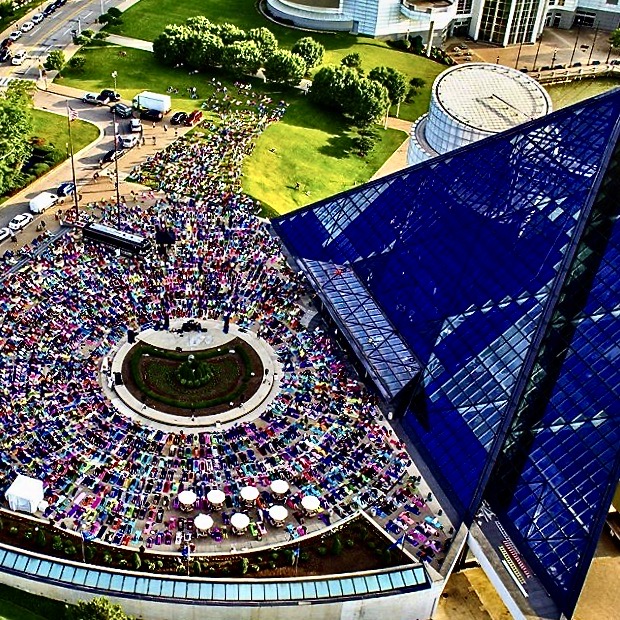
   He circled over downtown Cleveland before turning west for the Pacific. Below him was the Rock & Roll Hall of Fame. Thousands of people on thousands of mats were doing sun salutations in the sunshine on the plaza in front of the blue glass tent. It was the annual Believe in Cleveland yoga love-in. He swooped low and belched fire. Everybody looked up and saluted his mighty yogic Breath of Fire.

   His enemies were going to pay for all the slanderous things they had been saying about him, things like blobby slow and over the hill. With his newfound reptilian quickness, he was going to make mincemeat of them. He was as physically fast and aware as he had ever been, slimmed down to 80,000 tons.

   He couldn’t wait to put the moves on his glib grandson Goo Goo, either. He would show him the path to Hell was paved with good intentions, even though he knew no monsters, not even his kith and kin, had anything but bad intentions. Barron Cannon had been right to not bring up the “Light of Yoga.” The light in Godzilla’s eyes had nothing to do with yoga.

Ed Staskus posts stories on 147 Stanley Street http://www.147stanleystreet.com and Cleveland Ohio Daybook http://www.clevelandohiodaybook.com. To get the site’s monthly feature in your in-box click on “Follow.”