All posts by Edward Staskus

Edward Staskus is a freelance writer from Sudbury, Ontario. He lives in Lakewood, Ohio. His crime thrillers "Cross Walk" and "Bomb City" can be found on Amazon.

Bat Out of Hell

By Ed Staskus

   What I didn’t expect the hot summer night my wife, brother-in-law, and I went to the Lorain County Speedway was how loud the cars were going to be when the drivers stepped on the fast pedal, how bad the oil, gasoline, and rubber smelled in the humidity, how many crashes there were, and the fight that broke out on the track immediately after one of the crashes.

   The minute my brother-in law Matt sat down he pulled a pair of earplugs out of his pocket and pushed them firmly into his ears. We tried asking him where ours were, but he couldn’t hear a word we were saying. My wife and I finally decided to soak in the full experience, not like some people who couldn’t bear to enjoy the primal roar of engines going all out.

   The Lorain County Speedway is more-or-less in South Amherst, 30-some miles west of Cleveland, Ohio. It opened in 1949 as a third of a mile dirt oval. It was paved over in 1960. The night we were there the track had long since been upgraded to a 3/8-mile oval with 12-degree banking in the turns and a slight bank on the straightaways. It wasn’t NASCAR by any means, although NASCAR was the reason we were there.

   The racing at the Speedway that night was billed as street stock. I had never been closer to race cars than a TV screen, and the only reason I had ever gotten that close was because Matt came over our house every Saturday afternoon during the racing season, plopped himself down on our sofa, and for the next three, four, five hours watched brightly decaled handmade cars built from sheet metal with engines assembled from a bare block and frames constructed from steel tubing take tight left turns over and over and over at 200 MPH. The NASCAR four-wheelers resembled street stock about as much as cheetahs resemble wart hogs, even though both kinds of cars were essentially doing the same thing.

   The big story that summer was Jeff Gordon going up against Dale Earnhardt until it became the only story. Dale Earnhardt had won his seventh Winston Cup Championship in 1994 tying Richard Petty’s record for Cup Championships. Everybody was looking for him to win his eighth in 1995 and make history. It wasn’t to be, not with Jeff Gordon burning up the tracks.

   Jeff Gordon was young, only 24, but he had won the Coca-Cola 600 and the Brickyard 400 the year before. He wasn’t exactly wet behind the ears. He was off to the races. He landed in victory lane in three of the first six races of 1995. As the season wore on, he racked up 14 straight top ten finishes. Earnhardt was game, but the game was up. Gordon finished at the top of the board, the youngest champion since 1971. He toasted “The Intimidator” with a glass of milk instead of champagne, a nod to being barely legal.

   When he wasn’t watching NASCAR on TV, Matt and a school friend of his spent weekends driving to and camping out at nearby NASCAR events. They went to the Miller Genuine Draft 400 at the Michigan International Speedway, the Bud at the Glen at Watkins Glen, and the Mountain Dew Southern 500 at the Darlington Raceway. One weekend Matt asked if we wanted to go see some slam bang racing. We said alright, we’re not doing anything tonight, so long as it’s not out of state. He said it was close-by.

   The grandstand at the Lorain County Speedway was right on top of the racing. The bleacher seats were half full, like a high school football game where the fans are family and friends. There was a protective screen between the front row and the track. When I looked it up and down, I thought it might keep a flock of seagulls from assaulting us, but not a crate engine or the whole 3000-pound car. 

   “If one of those cars rolls and flips and comes up into the stands, that screen is going to stand the same chance as toilet paper,” I told my wife.

   “What?” she asked trying in vain to hear me over the noise.

   Five years earlier a man was killed and five people hurt when a race car went out of control and crashed into the pit area of the Lorain County Speedway. The man who was killed was another driver from another race. The driver of the wayward car said the accelerator on his car stuck, causing him to lose control on a turn. Eight years earlier at Talladega, Bobby Allison’s car going at the speed of light ran over debris and a tire burst. His car went airborne and smashed into the safety catch wall. Shrapnel sprayed the fans. From then on restrictor plates, which cap engine speeds from climbing too high and keep all race cars at around the same speeds, were made mandatory.

   The thought of shrapnel gave me the heebie-jeebies. My brother-in-law must have thought it through because he had led us to the second-to-last row. Even though the stands were only some twenty rows deep, it was better than nothing. The group of guys in front of us had their own cooler of hop juice. They offered us some. My brother-in-law didn’t drink, and my wife didn’t drink beer.

   “What the hey,” I said, accepting a Budweiser, my least favorite beer. Beggars can’t be choosers. In the heat of the night, to my surprise, the cold tasteless suds were delicious.

   My brother-in-law was a chemical engineer working in a General Electric lab in Willowick, but was transitioning to mechanical engineering, which meant going back to school part-time. He didn’t have a girlfriend, which meant he had time outside of work and school to take up a hobby. He bought a hulk of scrap metal that was once a 1970 Monte Carlo. His plan was to tear it apart piece by piece and rebuild it. Unfortunately, he didn’t have the space to get it done. Unfortunately, we did. The next thing I knew our two-car garage was a no-car garage. The hulk of scrap metal took up all the space. What space was left was devoted to a worktable, a tool locker, and an air compressor.

   He took the engine out. He took the seats out. He took the dash out. He took everything out and off the car. He built a rotisserie on wheels and fitted the frame to it, so he could wheel it in and out of the garage, working on it in our driveway. He sanded all the rust away and primed it. When the time came, he had the car hauled away and professionally painted. The color was Tuxedo Black.                                               

   When the weather turned foul, he turned a room in our basement into a work room, working on the engine and God knows what all else. He fabricated a new dash from scratch. He slowly but surely bought original parts and started to put the Monte Carlo back together. It took years and tens of thousands of dollars. Some nights, drifting off to sleep, we could hear him through our back window still working in the driveway in the glow of a bank of lights he had fixed up for the purpose.

   NASCAR race cars have almost nothing in common with street cars. By the 1990s they were being built to optimize aerodynamics. The focus was on speed. They stopped looking like stock cars. Stock car racing uses production models somewhat customized for racing purposes. It got started in the 1930s when moonshiners transporting white lightning souped up their Fords to evade revenue agents. One thing led to another, and they started racing each other on weekends on tracks carved out of corn fields.

   Street stock is racing a car that can be bought off a dealer’s lot. It is sometimes called hobby stock or showroom stock. Most of the tracks are short ovals, less than a mile. The speeds at the Lorain County Speedway that night hit 80 to 90 MPH on the straightaways, but slower in the turns. There were crashes galore in the turns. One of them happened in the turn coming around to the grandstand, when two cars bumped, tangled, and tore into each other. The driver on the outside track ran out of talent halfway through the turn. They both slid skidded to a stop in front of us. The drivers got out of their cars unhurt. When they did one of the drivers got hurt. 

   What happened was, when the two drivers got out of their banged-up cars, they started arguing. “What the hell, bumping me like that,” one of them yelled, his face red and splotchy.

   “I didn’t bump you,” the older of the two drivers said, calm as a fighting fish swimming back and forth in a tank. “I rubbed you. Rubbin’, son, is racin’.”

   They started pushing each other The younger driver got pushed too far out on the track and a car going slowly by under the caution flag ran over his foot. He fell to the ground and banged his head. Blood flowed down his chin. When he fell a woman bolted out of the stands, down the stairs, over the catch wall, and onto the track. She made a beeline for the older driver still standing.

   “This here is going to be trouble,” one of the men in front of us said cracking open another King of Beers.

   My brother-in-law’s 1970 two-door Chevrolet Monte Carlo was on a 116-inch wheelbase A-body platform with the longest hood Chevy had ever made. It stretched from the windshield to tomorrow. The styling was influenced by the Cadillac Eldorado, which came out in 1967. The Monte Carlo borrowed its firewall, dashboard, windshield, decklid, and rear window from the Chevelle. Matt’s model was an upgrade with a console-shift four-speed manual and a four-barrel-topped Turbo-Fire V-8 350 rated at 300 horsepower. It weighed in at 4,000 pounds curbside. It wasn’t built for baby showers. Shotgun weddings were more its speed. When I first heard the engine fire up so did all my neighbors within two or three blocks. Some of them came outside, standing on their lawns and in the street, looking up our driveway.

   “Mommy, what is that?” a boy driving a Little Tikes Cozy Coupe asked his mother.

   When the angry woman running onto the track got to the spot of the crash, she leapt onto the back of the driver who had pushed the other driver, screamed like a banshee, wrapped her legs around his midsection, and started to pummel the top and back of his head with her fists. It took half a dozen drivers and security staff to pull her off and keep her off. A policeman finally handcuffed her to a fence post.

   An ambulance showed up, the driver with the pancaked foot was put on a stretcher and put in the ambulance, wreckers drove onto the track, removed the damaged cars, and before we knew it the race was back on like nothing had ever happened. A policeman came back mid-way through the rest of race to retrieve the fists of fury, still handcuffed, who everybody had forgotten about. They put her in a squad car, legs kicking and lips flapping, and drove away, lights flashing. Everybody gave her a King of Beers salute.

   Thirteen years after Matt started work on the Monte Carlo it was ready to go. It was 2003. The day he put license plates on it was the day he asked me if I wanted to go for a ride. 

   “Sure,” I said.

   It looked like a new car inside and out. It smelled like a new car. He turned the key in the ignition and flipped a rocker switch. It was like cracking a bullwhip. The car rumbled to life. It sounded like something going after prey. He backed it out of the driveway and set off for Lake Rd. We went west through Rocky River, Bay Village, nearly to Avon Lake, and then to the Huntington Reservation, where we turned around. When we got to the Clifton Blvd. bridge that crosses the Rocky River, he pulled over to the shoulder.

   “Do you want to drive it?” he asked.

   “You bet,” I said.

   As I got out of the car to walk around to the driver’s side, I noticed a red fire extinguisher bolted down in the back. It was a Kidde dry chemical vehicle extinguisher. “Are you expecting something?” I asked.  “Great balls of fire?”

   “You never know,” he said. “If it happens, pull, aim, squeeze, and sweep.”

   I buckled up, buckling the five-point harness belt. The car was a bat out of hell of muscle and acceleration, but no matter how fast it went I wasn’t going anywhere. The five-point belt was the kind used to restrain madmen. I waited until there was no traffic. I put the car in first, got started, burned rubber, put it in second, third, then fourth, and flew across the bridge. The engine was just as loud driving the car as it was standing next to the car. I got it up to sixty in about ten seconds before starting to down shift. The bridge was far behind us by then.

   “That was fun,” I said. 

   It was like being Buckaroo Banzai for a couple of minutes. I checked for flashing red lights in the rearview mirror. We drove halfway through Lakewood before turning around. Heads turned when we approached, and heads followed our progress. At a red light a graybeard next to us said through his open window, “That is some meat and potatoes.” 

   “So long as you don’t mind getting nine miles to the gallon,” I said. He was driving a brand-new Toyota Prius. The Monte Carlo was AC/DC to its folk singing purr. 

   We got the car back in our garage without a scratch. That would have been a nightmare. My brother-in-law was fussy as a newborn with his old car made new. Even though he kept it bedded down indoors, he secured a waterproof car cover over it, just in case.  As the garage door was closing itself, I noticed the vanity license plate mounted on the chrome rear bumper.

   “NGHTMRE,” is what it said.

Ed Staskus posts on 147 Stanley Street http://www.147stanleystreet.com and Made in Cleveland http://www.clevelandohiodaybook.com. To get the site’s monthly feature in your in-box click on “Follow.”

Mean Streets

By Ed Staskus

   When Stan Riddman took the stairs two at a time coming up from the basement of the Flatiron Building it wasn’t an old dark city, yet. The new night was still on its way. The sky was a hazy lemon and smoggy blue. It was the first day of the second week of fall, but felt more like the middle of summer, except for the shorter days. Stan wore a short sleeve shirt and linen trousers. The wallet in his back pocket was flush with more tens and twenties than it was with its usual ones and fives. 

   He gave the leather in his pocket a friendly pat. The seven-card stud he had played in the dingy room next to the furnace room had been good to him. He could buy his kid some new clothes, stash some away for the office rent for when work was slow, and score tickets for the Series.

   The Socialist Labor Party used to have offices in the Flatiron Building, but not down in the basement. They had their heads in the clouds. They thought they were in the cards back then. They didn’t know they were shooting snake eyes. He wondered if they would have banned poker, making it out like it was exploitive, if they had ever come to power. You took your chances at cards, but it was only exploitive if you had no skill at it. You deserved to be taken if you played dreamland. Stan never played dreamland. He never shot craps. He never put himself at the mercy of cubes of white resin bouncing around at random. He walked down 22nd Street to Lexington Avenue, turned right, walked through Gramercy Park to Irving Place, and looked for a phone booth.

   The reckoning for a Subway Series was coming up fast. The Yankees were in, and the Indians were out, that was for sure. The Redlegs were running on an outside track. The Braves were neck and neck with the Dodgers. The Bum’s ace Sal Maglie had no-hit the Phils earlier in the week at Ebbets Field and the Cardinals were going hard at the Braves out in the boondocks. It was going to come down to this weekend as to whether there was going to be a Subway Series, the same as last year, or not.

    Last year’s Fall Classic went seven games, and the queer thing about it was the Yankees won their three games at Ebbets Field and the Dodgers won their four games at Yankee Stadium. Neither team won on their home field. Nobody had taken that bet because it wasn’t in the cards. Nobody took the backside odds on the seventh game, either, especially since Jackie Robinson wasn’t penciled in to play the deciding nine innings. At least, nobody took the odds except Stan and Ezra Aaronson, and anybody else who flipped a coin.

   Who would have thought the Cuban would be the difference-maker in the deciding game when he took over the right field spot in the sixth inning last year? Stan was in the upper deck with his partner, Ezra. The Yankee dugout was on the first base side, so most of the Bum fans were on the third base side. A client who was a Yankee fan, after Stan had gotten him the black and white proof he needed to get his divorce done, gave him a pair of passes. They ended up on the wrong side of the rooting section, but by their lights were rooting for the right team.

   “Beggars can’t be choosers,” Ezra said, sitting in a sea of Bronx Bomber fans.

   When Yogi Berra hit an opposite field sure-fire double, Ezra sprang out of his seat, like everybody else, but suddenly the lightning-fast right fielder Sandy Amoros caught it coming out of nowhere. He fired a pill to Pee Wee Reese, who relayed it to Gil Hodges, who doubled up the retreating Gil McDougald off first, ending the last threat Stengel’s Squad made that afternoon. 

   Casey Stengel managed the Yankees. Back in his playing days, when he still had legs, he had been a good but streaky ballplayer. Fair bat, good feet, great glove. “I was erratic,” he admitted. “Some days I was amazing, some days I wasn’t.” When he wasn’t, he played it for laughs, catching fly balls behind his back. One afternoon he doffed his cap to the crowd and a sparrow flew out of it. Another day, playing the outfield, he hid under the grate of a storm drain and popped out of the drain just in time to snag a lazy fly ball.

   Whenever he stood leaning over the front top rail of a dugout, he looked like a scowling Jimmy Durante dressed up in pinstripes. He was called the “Ol’ Perfessor” even though he had stumbled through high school. He graduated only because his high school didn’t want him back for another year. He managed the Braves and Dodgers for nine years and chalked up nine straight losing seasons. Casey Stengel might not have been a for-real professor, but he knew enough not to give up. After the New York Yankees hired him in 1948, the only year he hadn’t taken them to the World Series was 1954.

   Stan and Ezra were the only men in their section who had not fallen back into their seats, stunned, after the Cuban snagged Yogi Berra’s liner. Stan had to pull the clapping and cheering Ezra down so there wouldn’t be any hard feelings. As it was, Ezra was so excited there were hard feelings, after all, and Stan had to drag him away to a beer stand.

   “This beer is bitter,” Ezra complained, looking down at the bottle of Ballantine in his hand. Ballantine Beer was featured on the Yankee Stadium scoreboard, its three-ring sign shining bright, flashing “Purity, Body, Flavor.” Whenever a Yankee hit a homer, Mel Allen, the hometown broadcaster, hollered, “There’s a drive, hit deep, that ball is go-ing, go-ing, gonnne! How about that?! It’s a Ballantine Blast!” 

   The Brooklyn Dodgers, Ezra and Stan’s team of choice, played at Ebbets Field in Brooklyn. Their scoreboard boasted a Schaefer Beer sign, with the ‘h’ and the ‘e’ lighting up whenever there was a hit or an error. Below the beer sign was an Abe Stark billboard. “Hit Sign, Win a Suit”. Abe Stark was a men’s wear man.

   “That’s some kosher beer, that Schaeffer’s,” Ezra said, giving his bottle of Ballantine a sour look. “The Yankees don’t know good beer from spitballs.” He threw the half-finished bottle towards a trash can. It bounced away but didn’t break. Nobody paid any attention to the bottle rattling and rolling past them.

   Stan had a home but not a home borough. His apartment was in Hell’s Kitchen, up from Times Square and down from the Central Park Zoo. He wasn’t from New York City. He was from Chicago, although he wasn’t from there, either. He had been born in Chicago, but when his mother died two years later, in 1922, his father moved the family, which was himself, his new Polish wife, two boys, two girls, two dogs, and all their belongings a year later to a small house behind St. Stanislaus Church in Cleveland, Ohio. It was in the Warszawa neighborhood south of the steel mills, where his father ended up working the rest of his life to provide for his family.

   The steel mills were where Stan worked for three years while still living at home. He volunteered for the armed forces the minute World War Two started. He wasn’t working on anything at the moment that he thought might get him free World Series passes this year like last year. As long as I put most of this away, he thought to himself, walking down Irving Place, thinking of the jackpot in his pocket, I can blow some of it tonight, and still have enough for ballgames and some more card games. Stan had stopped being his steel mill father’s son long ago.

   His daughter Dottie was at Marie’s for the weekend. Marie had once been Stan’s wife. Her taking an interest in Dottie happened about as often as the World Series. It wasn’t too early or too late tonight, and if Vicki hasn’t taken any work home, and is at home, and picks up the phone, maybe she could meet him for dinner. He found the phone booth he’d been looking for and called her. It rang almost twice before Vicki answered. That’s a good sign, he thought.

   “Hello.”

   “Hey, Vee, it’s Stan.”

   “Stan, my man,” she laughed.

   “How’s the Stuy tonight?” he asked.

   “Hot, quiet, lonely,” she said. What Stan liked about Vicki was she didn’t talk about what didn’t matter. She didn’t talk overmuch at all, even though her workday life revolved around words. She wasn’t a sexpot, but she liked sex well enough. Marie had been romantic as a pair of handcuffs. Towards the end she had taken to shaking her leg shaving razor at him.

  “How about meeting me at Luchow’s for dinner?” he asked. “I’m buying.”

   “Stan, I love you for the dear Polack or whatever you are, but the food at Luchow’s is not so good, even if you can ever get though that insanely long menu of theirs.” 

   “That’s what I’m for,” he said. “A sharp-eyed PI like me will make sure to look into everything the kitchen’s got to offer and find what’s edible.”

   “More like a dog-eared PI,” Vicki said. “All right, but the other thing is, since they seat more than a thousand people, how am I going to find you? And by chance, with that strolling oompah band of theirs, if we do bump into each other and maybe get a table in that goulash palace, we’ll only be able to make ourselves heard some of the time and not the rest of the time.”

   “We can always take our coffee and their pancakes with lingonberry over to the square after dinner and chew the fat,” he said. “It will be quiet enough there.”

   “Chew the fat? What it is I like about you? Sometimes I just don’t know.”

   “I’ll take that for a yes.”

   “Yes, give me a few minutes to change into something fun,” she said making merry. “I hope there’s no goose fest or barley pop festival going on.”

   “Meet me at the far end of Frank’s bar. He’ll find a spot in the back for us. He says the new herring salad is out of this world.”

   “Don’t push your luck, Stan, don’t push your luck,” she said. Herring always made her feel like throwing up. Just the thought of the silvery fish made her want to heave.

   Luchow’s was a three-story six-bay building with stone window surrounds, pilasters, and a parapet on top, while below a red awning led to the front door. The restaurant was near Union Square. It looked like the 19thcentury, or an even earlier century, dark and heavy Teutonic. A titanic painting of potato gatherers covered most of a wall in one of the seven dining rooms. Another of the rooms was filled to the rafters with animal heads, their offspring being eaten at the tables below them, while another room was a temple of colorful beer steins. There was a beer garden in the back.

   “Welcome back to the Citadel of Pilsner,” Frank the bartender said. He gestured Stan to the side. “Did anybody tell you Hugo died?”

  “No, I hadn’t heard, although I heard he wasn’t feeling well,” Stan said. Hugo Schemke had been a waiter at Luchow’s for 50 years. He always said he wasn’t afraid of death. He had firmly no ifs ands or buts believed in reincarnation.

   “Did he say he was coming back before he left?”

   “He did say that, but I haven’t seen him, yet.”  

   “How’s Ernst doing?” Stan asked. 

   Ernst Seute was the floor manager, a short stout man both friendly and cold-hearted. He had been at Luchow’s a long time, too, since World War One. He was deadly afraid of death. He didn’t believe in reincarnation.

   “He took a couple days off,” Frank said. “Remember that parade back in April over in Queens? They’ve got some kind of committee now, and he’s over there with them trying to make it an annual thing here in Little Germany, calling it the Steuben Parade.”

    “You going to be carrying the cornflower flag?”

   “Not me, Stan, not me.” Frank was from Czechoslovakia. “I’m an American now.”

   Frank led Vicki and Stan to a small table at the far end of the bar. He brought them glass mugs of Wurzburger Beer and a plate of sardines. Vicki ordered noodle soup and salad. “Hold the herring,” she commanded. Frank looked puzzled. Stan asked for a broiled sirloin with roasted potatoes and horseradish sauce on the side.

   “I saw Barney the other day,” Vicki said, cocking her head. “He told me you’ve made progress.”

  “I didn’t think there was anything to it the first day I saw him, that day you brought him over to the office,” said Stan. “I didn’t think there was much to it that whole first week. Then there was all that action, and Betty finally got the business end of it worked out, that it was the shrink. So, we know who did the thing to get Pollack to drive himself into that tree of his up in Springs. We know how they did it. What we don’t know is why they did it.”

   “Do you know who they are?”

   “No, I don’t, even though one of them, a sicko by the name of Ratso Moretti, who roughed up Ezra, is being held at the 17th. He doesn’t seem to know much, but what he does know says a lot. The head shrinker might be the key. He is going to tell me all about it soon, at least what he knows, and what he doesn’t know, too. He hasn’t gotten the news flash about the talk we’re going to have, yet, but he and I are going to have a sit down.”

   “You don’t think Jackson Pollack had anything to do with it?”

   “He was the wrong man in the wrong place, that’s all, if you look at it from his point of view. Betty and I think he was a test run. We think they’re up to something bigger. It’s hard to figure. It’s got to be big, but we can’t see the pay-off in it. You know Betty, though. She’ll piece it together if she has to tear it apart.”

   After dinner they looked at the dessert menu, but their looks only amounted to a glance. Vicki shook her head no. “How about coffee and dessert at my place?” Stan asked. “We can stop and get pastry at that Puerto Rican shop on the corner and eat up on the roof.” The smog had blown away. It was a clear starry night. 

   “I can’t pass up that tasty-sounding pass,” Vicki said.

   They hailed a Checker Cab. “Take us up 5th to 59th, to the corner of the park,” Stan told the driver. 

   “Gotcha, bub,” the cabbie said.

   He dropped them off at the Grand Army Plaza and they walked into the park, following the path below the pond towards the Central Park Driveway and Columbus Circle. Stan liked Vicki’s breezy walk. He liked everything about her. They didn’t notice the two teenagers, as they quietly strolled down a path south of Center Drive, until the two of them were in front of them, blocking their way.

   One was taller and older, the other one shorter and younger, their jet black hair oiled and combed back. Both of the dagos were wearing high tops, jeans, and white t-shirts, one of them dirtier than the other. They had left their leather jackets at home. The younger boy, he might have been fifteen, had a half-dozen inflamed pencil-thick scratches down one side of his face and more of them on his forehead. Small capital SS’s topped with a halo drawn in red ink adorned the left sleeve of his t-shirt. The older boy had LAMF tattooed on his neck above the collar line to below his right ear. Stan knew what it meant. It meant “Like a Mother Fucker.” He kept his attention fixed on LAMF’s eyes and hands.

   “Hey, mister, got a double we can have for the subway, so we can make it back home,” the older tattooed dago asked Stan, smiling like a hyena, his teeth big and white as Chiclets. One of his front teeth was chipped.

   They were Seven Saints, JD’s whose favorite easy pickings was holding open the door of a subway car just before it was ready to leave the station, one of them grabbing and running off with a passenger’s pocketbook, while the other one released the door so the woman would be shut tight inside the train as it moved away from the platform. Every Seven Saint carried either a knife or a zip gun for when the pickings weren’t easy.

   “Where’s home?” Stan asked, stepping forward a half step, nudging Vicki a half-step behind him with his left hand on her hip. 

   “You writing a book, or what?” LAMF asked. The other boy laughed, sounding like he was impersonating Sal Mineo on Halloween.

   Stan asked again, looking straight at the older boy.

   “East Harlem, where you think?”

   “Why do you need twenty dollars? The fare’s only ten cents.”

   “The extra is for in case we get lost.” 

   “It’d be best if you got lost starting now. “

   “I mean to get my dub,” LAMF said, smirking, reaching into his back pocket.

   Stan took a fast step forward, his right foot coming down on the forefoot of the boy’s sneaker, grabbing his left wrist as it came out of the back pocket a flash of steel, and broke his nose with a hard jab using his right elbow. He let him fall backward and turned toward the other boy, flipping the switchblade he had taken away from the gangbanger on the ground so its business end was facing front.

   “Go,” he said to the younger boy. “Go right now before you break out into a sweat and get sick.”

   The boy hesitated, looked down at the other Seven Saint on the ground, splattered with blood, and ran away like a squid on roller skates. Stan let the switchblade fall to the ground and broke the blade of the knife, stepping on it with his heel and pulling until it cracked at the hinge. He tossed it at the older boy who was getting up. It hit him in the chest and bounced away. 

   “The next time I see you,” he sputtered in a rage, on his feet, trying to breathe, his nose floppy, his mouth full of blood.

   “The next time you see me, you fill your hand with a knife, I’ll break your face again,” Stan said. He said it matter-of-factly. He took a step up to the boy, grabbed his ear, holding tight, and spoke into it. “Actually, it won’t matter what you do, nosebleed, what you’re doing, who you’re with, where you are. The minute I see you is when I’ll stack you up. Make sure you never see me again. Make sure I never see you.”

   He took Vicki by the arm, shoved the Seven Saint to the side, and they walked away.

   “You didn’t have to do that,” Vicki said. “You won plenty of hands at the Flatiron tonight. You might have given them a dollar-or-two.”

   “I know,” Stan said. “But they were working themselves up to be dangerous and that had to stop. The sooner the better.”

   “They are just kids.”

   “You saw the scratches on the face of the kid who ran away.”

   “Of course, the whole side of his face was gruesome.”

   “The Seven Saints have an initiation to get into the club,” Stan said. “They corral a stray cat and tie it to a telephone pole, about head high. The kid getting initiated has his hands tied behind his back and he gets to become a Seven Saint if he can kill the cat, using his head as a club.”

   “Oh, my God!” Vicki said, stopping dead in her tracks. “How do you even know that?”

   “I make it my business to know, so I don’t get taken by surprise,” Stan said. “I don’t give a damn about them. I care about you. They can go to hell.”

   They passed the USS Maine Monument. Stan pushed a memory of the war away. It had been more than ten years ago. “I don’t like psycho’s in my face when I’m off the clock,” he grumbled under his breath. He had gotten enough of them in Germany where he had been an Army M. P.  It had gotten to be non-stop the year after the war. The whole country was in ruins. Some cities had been reduced to rubble. Expanses of forest were bare. Most of the trees had been cut down for fuel. The black market was dangerous as an Arab bazaar run by lunatics. There were let-go prisoners of war and refugees everywhere. Faith healers popped up on street corners. It was a stew of good and evil.

   They walked out of the park under a quarter moon, crossing Columbus Circle and strolling down Ninth Avenue. At West 56th Street they turned towards the river, stopping in front of a four-floor walk-up with a twin set of fire escapes bolted to the front of the flat face of the brick building.

   “Anyway, maybe it will do those greasers some good,” Stan said, fitting his key into the front door lock. “Not everybody is as nice as I am. Someday somebody might go ballistic on them.”

   “Ballistic?” she asked.

   “Like a rocket, a missile that goes haywire.”

   “I wish we had a rocket to take us upstairs” she said, as they took the stairs up to the fourth floor. “Oh, darn, we forgot to get pastry.”

   “Next time,” Stan said. “The Boricua’s aren’t going anywhere, except staying here.” 

   At the door of the apartment, he slid his key into the lock, opened the door, reached for the light switch, and let Vicki go around him as he did. In the shadow at the back of the room there was a low menacing growl and a sudden movement. It was Mr. Moto. His eyes were glowing.

   Mr. Moto was no great sinner, but he wasn’t a saint, either. He thought saints were more honored after life than during their lifetimes. That wasn’t for him. He was alive and kicking and had his own code of honor. If push came to shove and he ever had to get his claws into a Seven Saint, there would be hell to pay for their sins. Mr. Moto meant what he said. He crossed the room fast. He lunged at Vicki’s lead leg as she stepped over the threshold.

   “Hey, watch my stockings,” she cried out. She was wearing Dancing Daters. “I’ll smack you right on your pink nose if you make them run.” Mr. Moto skidded to a sudden stop a whisker length from her leg. 

   “That’s better,” Vicki cooed, bending down to rub his head. The big black cat arched his back and purred.

Excerpted from the crime novel “Cross Walk.”

Ed Staskus posts monthly on 147 Stanley Street http://www.147stanleystreet.com, Made in Cleveland http://www.clevelandohiodaybook.com, Atlantic Canada http://www.redroadpei.com, and Lithuanian Journal http://www.lithuanianjournal.com

“Cross Walk” by Ed Staskus

“A once upon a crime whodunit.” Barron Cannon, Adventure Books

“Captures the vibe of 1950s NYC.” Sam Winchell, Beyond Fiction

Available at Amazon

Apple Books 
http://books.apple.com/us/book/id6502837788

Late summer and early autumn. New York City. A Hell’s Kitchen private eye. The 1956 World Series. President Eisenhower at the opening game. A killer in the dugout.

A Crying of Lot 49 Publication

Law of the Land

By Ed Staskus

   When I moved from the near east side of downtown Cleveland to Carpenter, Ohio the post office there had been gone more than ten years. The Baptist church was still standing, but the minister didn’t live in the whistle-stop. He drove in on Sundays, performed his mission, and drove away after shaking a few hands. I went to the service one morning, but the minister looked like the talent scout for a graveyard, and it was the last time I went. The general store had closed even before the post office, which was good for Virginia Sustarsic and me, because that is what we moved into, staying the spring summer and into the early fall.

   The post office was opened in 1883 and stayed there until 1963. Nobody knew who the town was named for, although three men who had been natives of the place took credit. There was Amos Carpenter, an old geezer who talked too much, Jesse Carpenter, a farmer who hardly ever talked, and State Senator J. L. Carpenter, who only talked when it counted. He brought tracks and a railroad station to the town. Those were long gone, too.

   It wasn’t my idea to go live local yokel on the banks of Leading Creek, but Virginia argued living in the country was the way to go. She was a hippie and wore its ethos of going back to the roots on her sleeve. I countered that the hippies happened in coastal cities like San Francisco and New York, flowered in college towns like Austin and Ann Arbor, and were trucking along in cities like Omaha, Atlanta, and Cleveland. We were both from Cleveland, born of immigrant stock, she Slovenian and me Lithuanian.

   My reasoning fell on deaf ears.

   A friend of ours with a van drove us and our stuff to Carpenter, dropped us off, and waved goodbye. I had never been there before. Virginia had been there twice, having a friend who lived in that neck of the woods. It took less than ten seconds to look the town over. There wasn’t much to see. We stashed everything away in the sturdy but dilapidated 19th century-era store and walked up Carpenter Hill Rd. to Five Mile Run, detouring down what passed for a driveway to a small house where Virginia’s friend and his bloodhound lived.

   He was somewhere between not young and middle-aged, lean and scraggly, literate and friendly. He was the kind of man who was a hippie long before there were hippies. He read lots of books and smoked lots of weed. There was a Colt cap and ball pistol on his coffee table, laying there as relaxed as could be. It was a Walker .44. It was big, old as dirt, spic-n-span workable. 

   “That’s an imposing handgun,” I said.

   “They call it the Peacemaker,” he said. “Even though it can get you into a load of trouble the same as not. I call it the Devil’s Right Hand.”

   He shot rabbits with it for his stew pot. The large percussion revolver could have taken deer in season. He let me shoot it at a tree later that summer. It was heavy when I lifted it. I shot it stiff-armed expecting more recoil, which turned out to be modest. What I didn’t expect was the “BOOM!” at the end of my arm. I was glad I missed the tree. Even though it was a full-grown maple the ball hitting it might have put it on the woodpile.

   We spent a week sweeping dusting cleaning arranging the ground floor front room of the general store. There were two storerooms in the back and an upstairs we didn’t mess with. Two long broad oak tables served as platforms for working and preparing food. We ate in rocking chairs we set up at one of the windows. We found a braided round rug in a closet, beat the hell out of it, and rolled it out in the middle of the floor.

   After laying in a garden, we stuck a scarecrow of Grace Slick on a stick to guard the plot. The scarecrow, however, fell down on the job. Birds shat on her and rabbits ran riot. We ended up hunting and gathering.

   A kitten walked in out of the blue one morning, worn out and hungry as a horse. He was white with a black blob on his chest and a masked face. Virginia gave it a bowl of water, but we didn’t have cat food. “We should go into town, get some, and some food for us, too,” I said.

   Virginia was a genius at living off the land, but we still needed some store-bought stuff, salt pepper coffee pasta peanut butter and pancake mix, as well as toilet paper. The outhouse was bad enough without the comfort of Charmin.

   There were two municipalities within driving distance, Athens, which was 15 miles northeast of us, and Pomeroy, which was 17 miles southeast. Ohio University was in Athens, had several grocery stores, and plenty of citizens our own age. Pomeroy was on the Ohio River, was notorious for being repeatedly destroyed, and there was nobody our age there. We never went to Pomeroy except once to look around.

   The town was consumed by fire in 1851, 1856, 1884, and 1927. The floods of 1884, 1913, and 1937 were even more disastrous. 1884 was an especially bad year, what with fire and flood both. Why the residents kept rebuilding the place was beyond us, although we speculated they must have been plain stubborn.

   We stopped at the courthouse to lay eyes on the excitement. We had read in “Ripley’s Believe or Not!” that there is a ground floor entrance to each of its three stories, the only one of its kind in the world The sight of the phenomenon wasn’t all that exciting. A plaque explaining that the courthouse served as a jail for more than 200 of Morgan’s Raiders after their capture in the Battle of Buffington Island during the Civil War caught our attention. It was exciting to learn that Ohio boys had gotten the better of Johnny Reb when they ventured north.

   The county seat of Meigs County is mentioned in Ripley’s a second time for not having any cross streets. We took a stroll and didn’t see any. It didn’t seem deserving of mention in Ripley’s, but what did we know?

   Once he had a steady supply of food, out kitten got better and bigger. He spent his days outside and after sunset inside. He learned fast there were plenty of hungry owls, racoons, and coyotes in the dark. At first, when he was a tyke, he slept on top of my head at night. As he grew, I had to move him to the side. It was like wearing a Davey Crocket racoon hat to bed. 

   Meigs County, in which Carpenter lay, is 433 square miles with a population of around 20,000, or 54 people per square mile. Where we came from, Cuyahoga County, it was more like 3,000 people per square mile. At night in the middle of Meigs County it often seemed like 2 people per square mile, Virginia and me.

   There wasn’t much crime in the county, thank goodness, because the law enforcement amounted to one sheriff, one lieutenant, one sergeant, and six deputies. We had been in town a week-or-so when the sheriff stopped by to say hello. He was a pot-bellied man with fly belly blue eyes. He made sure we had the cop and fire department phone numbers even though we didn’t have a phone. He warned us not to mess around with the marijuana market. Virginia made roach clips for sale in head shops, but only smoked so much, and said so. 

   “No, I don’t mean that girlie,” he said. “I don’t care what you do on your own time. What I mean is, don’t mess with the growers. They’ve got it tucked in all around here. Some of them have been to Vietnam and back, and they learned a thing or two from Charlie. Even the DEA is careful when they chopper around these hills spraying their crop.”

   He pronounced Vietnam like scram.

   Meigs County is on the Allegheny Plateau. It is especially hilly where we were. The soil isn’t the greatest. The top crop by far is forage, followed by soybeans and corn. Layers and cattle are the top livestock. The marijuana growers hid their fruitage in corn fields, where it was hard to spot.

   Moonshine was made from the first day Meigs County was settled, for themselves and for whenever a farmer needed hard cash in a hurry, as long as they were near water and could haul a barrel of yeast and a hundred feet of copper line to the still. The yeast is stirred with sugar and cracked corn until it ripens. When the mash is ready it’s poured into an airtight still and heated. When it vaporizes it spirals through copper pipes, is shocked by cold water, returns to its original liquid form, and drips into a collection barrel.

   After that it is ready to go and all anyone needed was a fast Dodge to get it to market.

   The marijuana growers were mostly young, a loose-knit group known as the Meigs County Varmits, which was also the name of their championship softball team. They drove Chevy and Ford pick-ups. They stopped by and said hello, just like the sheriff. One of them told us to keep our heads down the middle of October.

   “What’s that all about?” I asked.

   “That’s when we harvest our green and that’s when the state cops and Feds get busy. You’ll see their cars and spotter planes. They ask you any questions, play dumb. You hear any noise, ignore it.”

   They had a hide-out in the woods where they had private stoner parties. Hardly anybody knew where it was, although everybody called it Desolation Row. It was some bench car seats thrown down on the ground and a rude shelter.

   Meigs County Gold was high quality highly sought weed. It was the strain of choice for the Grateful Dead and Willie Nelson when they toured Ohio and West Virginia. Meigs County folk learned to not lock their cars and to keep their windows partly rolled down when they went to the Ohio State Fairgrounds in Columbus or Kings Island near Cincinnati.

   When I asked why, a man said, “Because people see the Meigs County tag and it’s almost for sure you’ll have busted windows if you don’t. They will be looking for your pot.”

   Our pots and pans were always filled with grub Virginia gleaned in the forest lands where she found nuts greens fruits and tubers. She collected walnuts chestnuts papaws raspberries blueberries and strawberries. She dressed up salads with dandelions fiddleheads and cattails. In the late summer she hunted for ginseng, selling it to a health food store in Athens.

   She kept two goats in a shed. I fed them and cleaned up after them. They were more trouble than they were worth, especially after one of them head butted the minister who walked over late one Sunday morning inquiring about my spiritual frame of mind. The goat lowered his head and got him from behind, in the butt, knocking him down. He scuffed up his hands breaking his fall and got mad as the devil. He told the sheriff about it and the sheriff had to stop by and warn us to keep our goats civil.

   “Yes, sir,” I said.

   Carpenter was the kind of place where tomorrow wasn’t any different than a week ago. But it had its moments. A week-or-so after the sheriff paid us his official visit, we watched him drive slowly past our grocery store summer home on State Route 143 dragging an upright piano on rollers behind him, chained to his rear bumper. A deputy was walking beside the piano trying to keep it from falling over. It looked like a bad idea on the way to going wrong. We waved but didn’t ask any questions.

   Our nearest neighbor was Jack, his two brothers, and their mother, on the other side of Leading Creek, a quarter mile down the state route. Velma looked like she could have been their grandmother, but Jack Jerome and Jesse called her mam. It was a one-story house with a front porch. They had running water and a bathroom, but no cooking stove or furnace. Velma did the cooking in the fireplace and they heated the house with the fireplace and a cast-iron potbelly stove. It was more than we had, which was just the potbelly thing.

   “Food cooked in a fireplace tastes better than food cooked any other way, including charcoal grills,” Velma said. It was big talk, but she backed it up. She might not have been able to whip up a cake or a souffle, but she made just about everything else. We never turned down an invitation to dinner.

   There were always half-dozen-or-more barely alive cars and trucks in their backyard, which was more like a field. There was a chicken house and a pen for pigs. They slaughtered and smoked their own pork. There was a big deep pond near enough to the house and they let us go floating and swimming in it whenever we wanted. They had an arsenal of rifles and shotguns, even though they didn’t mess around with marijuana. Moonshine might have been a different matter. 

   “How come you’ve got all those guns?” I asked Jack.

   “That’s how our daddy raised us,” he said.

   They were born and bred right there. The folks in the ranch-style houses up Carpenter Hill Rd. avoided them. Sometimes when we went swimming the sheriff’s car was there. I had the impression he wasn’t there on lawman business, but rather visiting.

   By the end of summer, we realized we couldn’t stay. The Velma family already had enough cords of dried wood beside their house to keep themselves warm if winter went Siberian in Ohio. We didn’t even have a pile of twigs. We could have ordered coal, which was plentiful, but neither of us had ever started and stoked a coal furnace. We didn’t know anything about air vents. All we knew was dial-up thermostats for gas furnaces.

   Our friend returned with his van and helped us move back to the Plaza Apartment in Cleveland. Prospect Avenue was the Wild West, but winter was coming, and it would be quiet for a while. We wouldn’t need a Peacemaker. We said goodbye to Virginia’s hippie friend and his bloodhound, and to Jack up the hill. Jerome and Jesse had gone hunting waterfowl, the first day for it. Velma gave us an apple pie for the drive home.

   The cat, who was left-handed and so went by Lefty, decided to stay. He wasn’t a city boy. He wouldn’t have been able to make sense of the Cuyahoga River catching fire. Lefty had made friends with all the cats and dogs a half-mile in every direction, knew how to sneak into the grocery store closed doors or no doors, and had grown up enough to take care of himself. We slit open the 20-pound cat food bag and opened it like a book. We left it on the floor so he and his friends could have a party.

   When we drove away, he was sitting on his haunches on the gravel in front of the store’s double front doors. I watched him in the rearview mirror and Virginia waved goodbye through the open passenger window. The last I saw of him he was sauntering into the high Meigs County grass.

Ed Staskus posts stories on 147 Stanley Street http://www.147stanleystreet.com and Cleveland Daybook http://www.clevelandohiodaybook.com. To get the site’s monthly feature in your in-box click on “Follow.”

Jumping the Traces

By Ed Staskus

   Maggie Campbell’s father was a stockbroker, an investment advisor, and a vice president at Prudential Bache in the 1980s. He worked downtown with the other moneymakers. He believed in capitalism but didn’t let it go to his head. He was shrewd, keeping his greed engaged, although not always prudent. Sometimes he tripped over his sense of humor.

   Everybody called him the Margin King. His wife called him the King of Fools. When Fred and Alma got married, he was a gambling man, but Alma didn’t want him doing that after the wedding. She said it was time he became a family man. “The gambling stops now,” she declared, stamping her little feet.

   Fred Campbell decided to become a stockbroker. That way he could still gamble, except now it would be with other people’s money. He raked in a boatload of loot. He bought a house in Bay Village due west of Cleveland near Lake Erie. He wasn’t just one-sided about the almighty dollar, though. He told jokes all the time. He was a shaggy dog man. Getting a good laugh was like hitting the jackpot to him.

   He was a prankster as well as a jokester. He appeared on the “Hoolihan and Big Chuck” TV show now and then, doing skits with them. Hoolihan was Bob Wells. He was Hoolihan the Weatherman on the CBS affiliate. After Ghoulardi left Cleveland for Hollywood, Hoolihan still did the weather, but became the other half of the “Hoolihan and Big Chuck Show.” It was what replaced Ghoulardi’s “Shock Theater.” They showed low-budget science fiction and cheesy horror movies late at night and did comedy skits in between the commercials.

   The show always started with the Ray Charles song “Here We Go Again” and ended with the Peggy Lee song “Is That All There Is.” Hoolihan played a trumpet with a toilet plunger mute and Big Chuck played a small uke. That’s where Maggie’s dad came in. Fred couldn’t carry a tune, so was never invited to raise his voice in song. He brought his gorilla suit instead.

   The Soul Man, Lil’ John, and Mushmouth were on the show, too, more than Fred was. That’s how he met them. Once they met, they became fast friends in no time. Fred and Alma went to Hoolihan and Big Chuck’s house parties. They used to have Lil ‘John over to their house for spaghetti dinners. Lil’ John was a small man who could eat many plates of spaghetti. He was a hungry Hank.

   They did skits on the show like Ben Crazy, from the “Ben Casey” TV series, Parma Place, which was like “Peyton Place,” and the Kielbasa Kid, which was like a Polish cowboy misadventure. The skit Fred was most famous for was the “When You’re Hot You’re Hot” skit, which was based on a Jerry Reed song.

   “Well now me and Homer Jones and Big John Taley, had a big crap game goin’ back in the alley, and I kept rollin’ them sevens, winnin’ them pots,” was how the song went. “My luck was so good, I could do no wrong, I just kept on rollin’ and controllin’ them bones, and finally they just threw up their hands and said, when you hot, you hot.”

   They acted out the words to the song. Big Chuck rolled the dice. He had a Kirk Douglas face, if Kirk Douglas had been Polish. Fred was the sheriff. He had an honest face. The Hoolihan no-goods would be shooting craps on the street and Fred busts them. Later when they are in court the judge tells them he is going to throw the book at them, except when he throws the book, he hits Fred, who is the sheriff, in the head by mistake.

   “That hurt!” he shouts.

   “You’re out of order.” the judge declares, pounding his gavel like a madman. “Arrest that man immediately!”

   Shake and Bake Nights were when there were double features featuring first-class movies like “Earthquake” and “The Towering Inferno” back-to-back. That was when Alma got into the act. She was in a skit with Big Chuck. They are sitting on a park bench on a first date under a full moon and he turns into a werewolf. He reaches for her. She starts screaming and runs away, but falls face first into a cream pie. He shrugs and turns back into sheepish Chuck.

   Fred did most of his skits wearing a gorilla suit. But not all the skits were on the “Hoolihan and Big Chuck Show.” Some of the time it was unscripted. It was their own unreality show. He would wiggle into his suit and he and Big Chuck drove around Cleveland in a Buick Regal Sedan looking for hitchhikers. Big Chuck handled the wheel while Fred hid in the back seat. They would pick somebody up and after a few minutes Fred would suddenly pop up out of nowhere with a roar, reaching for their passenger’s neck.

   That always scared the hell out of the hitchhiker in the front seat. One of them passed out. Another one jumped out of the car while it was still moving. Maggie remembered being a youngster listening to their scarefest stories and thinking, “You guys are really strange.” It felt funny to say it about her own father.

   Sometimes they would go out at night and roof jump in Lakewood. The houses and apartments are close together, often separated only by a driveway. They would run across the roofs, swinging from the chimneys, jumping from one roof to the other. They whooped it up as householders in for the night wondered what the thumping above them was all about.

   As they got older and wiser the gang got more socially correct. They had mystery parties, which were parties on a bus on which they would have dinner and drinks with their friends, not knowing where they were going, and at the end of the night everyone would have to guess where they were. The winner got to be on the show. It was the Me Decade. Everybody wanted to be seen and heard.

   Maggie’s dad was a prankster even at home, which was quiet Bay Village. He played jokes on the neighbors on their street. He hired the Bay Village High School Marching Band to wake up one of their neighbors at five in the morning. They did it by marching up and down their driveway and playing a fight song. All the other neighbors for blocks around woke up, too. Some of them thought it was funny. Most of them didn’t. They called City Hall, even though City Hall wasn’t open for business that early in the morning.

   One of their neighbors had dogs like them and Maggie dog sat them when they were out for dinner or at a show. “Can you take care of our babies?” Mrs. Butler would ask. One day Fred took advantage of Maggie having the Butler family house keys. He snuck into their house and filled every glass, cup, vase, sink, whatever it was, with water and a single goldfish. When they got home there was a glut of goldfish waiting for them, even in the toilets.

    From then on it was buttheads on the loose at the Butler house every few months. Once when they were taking a walk on Huntington Beach after dinner, Fred and his friends got into their garage, picked up their car, and turned it sideways. The man of the house couldn’t go to work the next morning.  There wasn’t anything he could do. Everybody on the street thought he might have to tear the garage down.

   “I am going to sue that son-of-bitch,” he roared. He was a corporate lawyer. His funny bone was more along the lines of a crazy bone. He couldn’t prove who had done it and had to resort to fuming.

   Fred crept into their house late on a summer night wearing his gorilla suit and scared their kids so much they screamed their heads off and peed on the floor. He thought it was great laughs, giving them nightmares. That was fun to him. It didn’t matter what anybody thought or threatened. Whatever he thought of doing he did it. He was always pranking the poor Butlers. When they complained to the Bay Village Police Department, the cops just shrugged it off.

   Maggie and her sisters and little brother were never out of prankster range. Their father would crawl under their beds at night and wait silent as a snake until they got warm and cozy and dozed off. When he was good and ready, he reached up and around and suddenly grabbed their arms or legs, yanking.

   “Oh, yeah, while we were sleeping!” Maggie said. ”I found out your worst fears can come true at any minute. I’m a grown woman and I still can’t hang my feet out over the edge of my bed at night to this day.”

Ed Staskus posts on 147 Stanley Street http://www.147stanleystreet.com and Made in Cleveland http://www.clevelandohiodaybook.com. To get the site’s monthly feature in your in-box click on “Follow.”
Summertime Blues

By Ed Staskus

“Well, I called my congressman, and he said I’d like to help you, son, but you’re too young to vote, there ain’t no cure for the summertime blues.”  Eddie Cochran

   “Mom said you’re not leaving and you’re coming to my birthday party this year,” Maggie said, putting down her ear of corn, her lips peppered with flecks of salt and smeary with   butter.

   “That’s right,” said Frank Glass.

   Vera Glass’s brother, sister-in-law, nephew and niece, Frank’s sister and her new boyfriend, a policeman who lived nearby, were visiting on the Fourth of July, in the backyard, a breezy sunny day in the shade, crowded around a folding table-clothed table doing double duty, food and drink and board games.

   Independence Day has been a federal holiday since 1941, but the tradition goes back to the American Revolution. Since then it’s been celebrated with festivities like fireworks parades concerts big and small and family barbecues. This year the fireworks parades concerts were scratched.

   Maggie was born seven almost eight years earlier. She was due to officially come to life the third week of September, four five days after Frank and Vera expected to be back from Atlantic Canada but was born on the first day of the month.

   She was a once in a blue moon baby. To do something once in a blue moon means to do it rarely. It is the appearance of a second full moon within a calendar month, which happens about once every three years.

   “Where do you go in the summer?” Maggie asked.

   “We go to Prince Edward Island, a small town called North Rustico, but we stay in a cottage in the National Park, a family owns the land, they’ve been there for almost two hundred years. We leave in mid-August and stay through the first couple of weeks of September, which is why we miss your birthday party.”

   “You always send me a present. I like that. But last year you sent me a sweatshirt with a red leaf on it that was ten times too big.”

   “You’ll grow into it,” said Frank.

   “Maybe I will, but maybe I won’t,” said Maggie. She was a genial child but could be a testy cuss. She thought she knew her own mind rounding out her seventh year, although it could go both ways.

   “Do you like it there?”

   “Yes, we like it a lot.”

   “Why aren’t you going? Is it the virus?”

   The 20th century was the American Century. The United States led the way socially economically brain-wise learning-wise and in every other wise way. In 2020 it led the way in virus infections, far outpacing the next two contenders, Brazil and India. The flat tires in charge nowadays can’t get anything right, from building their useless wall, all three miles of new wall, to securing a useful virus test.

   North Korea and Iran keep making atom bombs, there’s no China trade deal, the deficit has skyrocketed, and race relations have gotten worse. All that’s left is for the other shoe to drop. On top of that, Hilary Clinton still isn’t in jail.

   “Yes, the bug,” said Frank. “The Canadian border is closed, and even if we could get into Canada somehow, the bridge to the island is closed except for business.”

   In May President Trump said, “Coronavirus numbers are looking MUCH better, going down almost everywhere, cases are coming way down.” In June he said the pandemic is “fading away. It’s going to fade away.” On July 2nd he said, “99% of cases are totally harmless.” Four days later, on July 6th, he said, “We now have the lowest Fatality Rate in the World.”

   John Hopkins University subsequently reported that the United Sates has the world’s ninth-worst mortality rate, with 41.33 deaths per 100,000 people. It was a bald-faced report. They didn’t capitalize the numbers.

   “Are you sad that you can’t go?”

   “Yes.”

   “They built a new bridge to our house. I know all about it, we drove over it two weeks ago. Mom was so happy. It’s a big bridge, too, the other one was small and always breaking.”

   “You know the bridge you go across from downtown, when you go up the rise past the baseball stadium where the Indians play ball, on your way to Lakewood?”

   “That’s a long bridge.”

   “It’s called the Main Avenue Bridge and it’s two miles long. The bridge that goes from Canada to Prince Edward Island is almost 5 times longer than that. It’s as long as the distance from downtown to our house.”

   “That’s far!”

   “That can’t be,” Frank’s nephew Ethan blurted out. “That bridge is too long!”

   “How do you know, Bud, you can hardly count,” said Maggie. She called Ethan Bud. They were buddies, although they didn’t always see eye-to-eye.

   “I can so count, I know all the dinosaurs, there are a million of them,” said Ethan.

   “I’m going into third grade and we’re going to learn division. You’ve been learning to finger paint.”

   “What’s a million and a million?”

   “2 million.”

   “OK, what’s the biggest dinosaur ever?”

   “The Brontosaurus.”

   “No! It’s the Argentinosaurus, and he weighed a million pounds.”

   “That can’t be,” said Maggie.

   “My math is my math,” Ethan simply said.

   “If you can’t explain it simply you don’t understand it well enough,” said Albert Einstein.

   As of July, there were more than 300,000 cases of the virus reported in children since the start of the pandemic. The Executive Office of the Federal Government has repeatedly maintained it poses almost no threat to them. “The fact is they are virtually immune from this problem,” President Trump said.

   “How do you know about the virus?” Frank asked.

   “Everybody knows about it. The whole world knows.”

   “They even know in Antarctica,” said Ethan.

   “Do you know anybody who got it?”

   “A girl in school got it from her mom,” Maggie said. “I took piano lessons with her.”

   “That’s too bad,” Frank said.

   “Are there going to be fireworks tonight?” Maggie asked.

   “No, the city cancelled them.”

   “Where we live, too.”

   “Here there were fireworks last night, we sat on the front porch, until after midnight, but it was just people in the street or their yards. There were some big pops over there by Madison Avenue. I think they were shooting them off from the empty lot. We could see bottle rockets over the trees.”

   “Wow!”

   “You said you knew about the virus, but how do you know?” asked Frank.

   “The news about it is on every day on TV,” said Maggie.

   “That’s right,” said Ethan.

   “We have a TV, but we don’t have TV,” said Frank. “We only have a couple of streaming services for movies.”

   “We have real TV,” said Maggie, “and it’s on all the time. The news is on every single hour every single day and all the news is about the virus.”

   “Do you watch TV all the time?”

   “We don’t watch TV, but we watch it all day,” said Ethan.

   “We don’t really watch it, but it’s always there,” said Maggie.

   Parents are urged to pay attention to what their children see and hear on radio online television. They are cautioned to reduce screen time focused on the virus since too much information on one topic can lead to anxiety in kids. Talk to them about how stories on the web might be rumors and wildly inaccurate.

   “That’s OK, it’s all in your head, anyway,” said Maggie.

   “All in your head?”

   “That’s what dad says.”

   “Well,” Frank said, “your father knows best.” He wasn’t going to get into a no-win argument with his brother-in-law. His sister’s boyfriend was a policeman at Metro Hospitals. Frank didn’t want his ears pricking up. He wouldn’t understand it’s all in your head.

   “Are you worried about the virus?” Frank asked.

   “Would that help?” Maggie asked, biting into a burger. “This is yummy good.”

   “No, it would probably just make you crazy.”

   “Dad said your name wasn’t always Frank Glass.”

   “Yes and no,” said Frank. “My given name has always been Frank, which is short for Francis, like we call you Maggie even though your name is Margaret, but my family name, what they say is your surname, used to be Kazukauskas.”

   “What happened to it?” asked Maggie. “Why is it different now.”

   “When my father came here, to America after World War Two, the immigration people said he should change it to something other people could pronounce, that they could say without too much trouble, so he changed it to Glass.”

   “Where did he come from?”

   “Lithuania, a little country, north of Germany.”

   “That’s a nice name,” Maggie said. “I like Glass.”

   “At least he didn’t have to climb another brick in the wall once he got here.”

   “What does that mean?”

   “I’ll tell you when you’re older. Are you staying home more because of the virus?”

   “Yes!” both of them exclaimed.

   “Do you have to wear a mask when you go somewhere?”

   “We cover up,” Maggie said. “My face gets hot, my head gets hot, and my hair get hot. It makes my glasses fog up.”

   “I have a tube mask with rhino’s and bronto’s on it,” Ethan said. “But I can’t breathe, so I just rip it off until mom sees.”

   There was a box of Charades for Kids on the table. “Three or More Players Ages Four and Up.” Frank pointed at it.

   “Are you ready to play?”

   Maggie rolled around on the lawn, flapped her arms, rolled her eyes, and hugged herself. Nobody had any idea what she was doing.

   “Going to bed!” she yelped.

   Ethan did a somersault.

   “Somersault?”

   “Yes!”

   Maggie rolled on the ground holding her head and grimacing like a mad chipmunk. Everybody watched with blank faces, stumped.

   “Headache!” she blared.

   Ethan slashed the air with his hands.

   “Karate?”

   “Yes!”

   Maggie jumped, waved her right arm in circles, flapped it back and forth, and licked her lips. As the one-minute hourglass dropped the last grain of sand to the bottom, she fell down on the grass. Everybody was stumped again.

   “Frosting a cake! I can’t believe nobody got it.”

   Ethan got on all fours like an anteater, pretended to be eating something with great chomping motions, and clomped to the driveway and back.

   “Argentinosaurus?”

   “Yes!”

   Summer signals freedom for children. It’s a break from the structure of school days, a time for more days spent at the pool, a time for more play, for exploring the outdoors.

   One day his mom asked Ethan if he wanted to go out on his scooter.

   “So much,” he said. “I have got to get out of this house.”

   “Every single day I see the Amazon truck and the FedEx and the white trucks go past me,” said Maggie. “They turn around at the cul-de-sac thing, they just rush back, driving crazy. I run to the backyard.”

   “There’s a big field and woods past our backyard,” Ethan said.

   “We’re stuck at home but it’s summer, it’s nice outside, the sun is shining, and we all go for walks,” Maggie said.

   She hadn’t been to school since April, studying remotely. Ethan hadn’t been to pre-school for just as long.

   “Are you going back to school in the fall?” asked Frank.

   “I hope so,” said Maggie. “I miss it.”

   “I’m supposed to start first grade,” said Ethan.

   About two months away from hopes there will be a return to school, many parents were looking to new findings which suggest children are less likely to get and spread the virus. In late June the American Academy of Pediatrics, which advocates for “having students physically present in school,” published reopening guidelines. They stated that children “may be less likely to become infected” with the coronavirus and to spread the infection.

   Living and breathing in-person face-to-face time is what makes school a school. “Better than a thousand days of diligent study is one day with a great teacher,” is what a Japanese proverb says.

   “I want to play something else,” Maggie said. “Can you teach us how to play Pictionary?”

   “Sure,” Frank said.

   They put the never-ending news of the pandemic away, cleared one end of the table, and unfolded the game board, setting out the pencils note pads special cards. “Quick Sketches, Hilarious Guesses” is what it said on the yellow box, and that is what they did the rest of Independence Day, the clear sky going twilight, lightning bugs flashing on off on off, and neighborhood kids shooting off Uncle Sam Phantom fire flowers in the alley behind them.

   There wasn’t a dud in the caboodle, not that they saw. Uncle Sam got it right, rockets red glare.

Ed Staskus posts stories on 147 Stanley Street http://www.147stanleystreet.com and Cleveland Ohio Daybook http://www.clevelandohiodaybook.com. To get the site’s monthly feature in your in-box click on “Follow.”

From the Ground Up

By Ed Staskus

   By the time Dave Bloomquist set foot on Prospect Ave. the street had been there for more than a century. It is one block south of Euclid Ave. Between 1870 and 1930 Cleveland’s Euclid Ave. was known as Millionaire’s Row. Nearly 250 houses ran along its four miles. Some of the mansions were as big as 50,000 square feet on lots of six acres. One of them owned by Sam Andrews employed one hundred servants to make sure the mansion made it through the day.

   On Sundays everybody paraded to church dressed in their best. At the time Euclid Ave. was called “The Most Beautiful Street in America.” High-spirited sleigh races in winter attracted thousands, lining the thirty blocks between East 9th and East 40th Streets to watch. In the spring children busted out to the many small parks within running distance.

   Prospect Ave. was a second cousin to Euclid Ave., but the cousin was well-to-do in its own right. It housed the upper middle class, lawyers, doctors, and businessmen. Rowhouses were built between 1874 and 1879 near East 36th Street in Gothic Revival, Italianate, and Second Empire styles. A grand house was built in 1883 for Sarah Benedict, the widow of Cleveland Herald publisher George Benedict. The five-story Plaza Apartments, acquired by Dave Bloomquist in 1973, was built in 1901.

   Dave grew up in Sandusky, in northern Ohio on the south shore of Lake Erie, midway between Toledo and Cleveland. Back in the day the native Wyandots called his hometown Soundustee. It means cold water. Today Sandusky is known for the Cedar Point amusement park and its many roller coasters.

   “I was recruited my senior year in high school by Findlay University on a basketball scholarship, but was disciplined and dismissed after the winter semester of 1968,” he said. He quickly pulled up his dorm room stakes and went to Colorado. “I was avoiding arrest on a possession and sales charge but was eventually picked up and extradited back to Ohio. When I got out on bond I petitioned for probationary enrollment to Cleveland’s Tri-C community college.”

   It was one of the only higher education schools of any kind in Ohio that offered that kind of re-entry opportunity. Keeping his nose clean and finishing with a 3.5 GPA he was able to transfer to Cleveland State University. In the meantime, in between classes, he needed a job. When the Auditorium Hotel posted a stock boy position on the community college’s job board, he went downtown.

   “The manager’s assistant assumed I was there for another posting, for night auditor, since I showed up in a jacket and tie. I fabricated math and accounting skills on the spot.” He was hired on the spot.

   The 10-story hotel built in 1927 was on the corner of East 6th Street and St. Clair Ave. There were 420 rooms. It was close to everything because everything was close-by. “Most of the rooms stayed mostly empty, except when the Metropolitan Opera came to town,” Dave said. “That’s when my limited skills with the NCR auditing machine and the Lilly Tomlin-style switchboard became obvious. The three manual elevators were operated by retired prostitutes. The second shift bell captain was a city supervisor during the day, but at night became the procurer for all the shady desires of the guests. The hotel had off-duty policemen moonlighting as security. They were good at raiding the restaurant refrigerators for steaks and regaling me with crook stories.”

   He was the last night auditor at the Auditorium. Six months after he started the hotel closed. Soon after that it was demolished. Married and with an infant son, Dave dropped out of school for a quarter to work full-time. When he went back to Tri-C, he worked as a student assistant in the Art Department and the night shift at a local psychiatric hospital. When he moved on to Cleveland State University, he found work in their Art Department and became director of the university’s daycare, as well.

   The psychiatric hospital hadn’t driven him crazy. Infant crying and irritability at the daycare didn’t tip the scales, either. When he became the janitor at the Plaza, it tested him. The work can be messy and the mess is always back the next day. It can drive a good man crazy. Janitors work odd hours and are prone to a high risk of trips, slips, falls, repetitive motion misery, and musculoskeletal injuries caused by overexertion. More than 46,000 janitors suffer work-related mishaps every year requiring time off, according to the National Safety Council.  

   “Ruby and David, the janitors at the Plaza, had moved out and Betty Basil, the manager, offered me the job. I had to sweep the halls, shovel the snow, cut the grass, and empty the three big trash barrels. I was also paid $50 for every room that I painted. Overall, most things were dutifully taken care of. It just took patience.” When you have the patience to do simple things well you get the hang of doing the dirty work.

   Keeping the grounds and premises clean gave him a window into the workings of the Plaza. When he met Allen Ravenstine, he knew as much about the building as anybody. Allen was mulling over what to with the inheritance he had secured after both his parents died in an accident. He had since abandoned college life and was re-inventing himself as a musician.

   “It started the day Bob Bensick moved into the suite below me in a house in Lakewood,” Allen said. “Bob used to take these fuzztones and rewire them so they were oscillators. He had these little black boxes and he played them for me. They made neat noises. I had tried to be a guitar player but I hated all that crap of putting up with bloody fingertips until they got calluses. But I liked the idea of playing music. So, I fooled around with Bob’s black boxes. After a while there were three or four of them. One day Bob said, ‘Hey, you know when you get a whole bunch of these little black boxes in one big box, they call it a synthesizer.’”

   Music wasn’t the only thing Allen was engaged with. “He was keen on being more personally engaged with his recent windfall,” Dave said. “He was concerned that his investments were helping IBM and other blue-chip corporations that were supporting a government and a war.”

   The Vietnam War had gone fire and brimstone. The ten-day Christmas Bombing of 1972, targeting Hanoi and Haiphong, was accomplished by B-52 Stratofortress’s. They were the biggest strikes launched by the United States Air Force since the end of World War Two. During the Asian war more tonnage was dropped on Vietnam than all the tonnage dropped on everybody everywhere during World War Two. Other than blowing up lots of earthlings and infrastructure it didn’t get anything done to end the hostilities. 

   After all the blood spilled, and the countryside a wreck, 1973 dawned with a new peace agreement. It was repeatedly violated by both sides as the struggle for power and control continued. Nobody figured that by the end of the year there would hardly be any American combat forces left in the country. When that happened, it was just a matter of time before Charlie won the war.

   Dave and Allen brainstormed all that winter. “With the help of some wine and some smoke, Allen and I discussed a wide variety of investments. We talked about publishing and selling stories and poetry like City Lights, opening an art gallery, or getting an experimental music venue in the works. But as these interests were unlikely to go beyond a hobby that drained Allen’s resources, which were meant to sustain him into full adulthood, and some kind of career, one by one they were tabled.”

   After more talk and more ideas tabled as no good, Dave floated the notion of buying the Plaza and using the revenue from it to support their art enterprises.  At the time it was owned by the family who also owned Blonder Paints at East 39th St. and Prospect Ave. Blonder Paints went back to 1918 when a cigarmaker and a paperhanger teamed up and got it off the ground. They sold paint, varnish, and paperhanging supplies, both wholesale and retail. By the 1950s it was the country’s 6th largest wholesaler of wallpaper. 

   “We learned the family might be open to a purchase offer, so we got started,” Dave said. “It was the days of red lining and white flight. We had difficulty finding an appraiser who would even look at the building. Of course, no banks would talk to us.” A white shirt and tie didn’t obscure his Grateful Dead full beard and shoulder-length hair.

   Working with an inner city realtor and appraiser with an office on Cedar Ave., they got a number on which to base an offer. “Everett Pruitt helped us draft a land contract that was reviewed by Allen’s attorney and his older brother, who both thought we were nuts. We then manned up, dressed up, and made an offer. After a little back and forth we struck a deal. We got the Plaza, the Victorian house next door, and the parking lot for $62,500.  I put in every penny my wife Ann and I had, which was $1,000, and Allen contributed the remaining amount, which was $9,000. The balance was amortized over 15 years. We formed Corona Unlimited, a partnership agreement based on a handshake and a toast.”

   They paid themselves $75.00 a week and lived rent-free. When a six-room front apartment on the top floor came open, Dave, Ann, and their son moved into it from their small second floor rooms. It didn’t pay to have a bad memory at the Plaza and have to go up and down the stairs all the time for something you forgot, although that was how the family got their exercise.

   “Mike Roccini had been living in that suite,” Dave said. “He was a writer, some magazine articles and a novel. He graduated from the University of the Americas in Mexico City with a degree in pharmacology and a taste for tequila and cigars. After coming down with a heart ailment he retired from dispensing drugs and spent most of his time at the Plaza in what he called his Moose Hall writing, with breaks to check the mail and report to his off-the record office at the bar of the Sterling Hotel.”

   His wife Speedy was a schoolteacher.She kept him flush in pencils and paper. It was when the fourth-floor walk-up became too much for Mike that he and Speedy moved to a chicken farm east of Cleveland. None of the chickens complained about his cigar smoke, fearing for their heads. Dave opened all the windows and aired out his new digs.

   To make ends meet Dave tended bar weekends at the Viking Saloon, helped out at the Mistake Saloon, and filled in at the Library Saloon when they were short-staffed. The best thing for a case of nerves is a case of beer. The Library was popular with Cleveland State University students and local bohemians. It was at East 37th and Prospect, in what had been the Benedict House. It was long past its glory days. The students who went there tried to pick up girls, drank too much, and got into arguments, even though it never mattered who won or lost the wrangling. The girls usually steered clear of polemics. The bohemians stayed chill.

   He found work at the Round Table, an old downtown German restaurant. “It had become a tired-out attorney’s bar with most of the grand old rooms empty. A young hustler from Lakewood convinced the owner to convert all three floors to a music venue. It was wildly successful. But bar tending was tailor made for my increasingly flagrant infidelities. After we purchased the Plaza, my wife Ann grew tired of it and found sympathy and comfort with Allen.”

   Even so, infidelities notwithstanding, the partnership continued for a dozen-and-more years. They used the rental income from the 48 apartments for operating expenses and renovations. With a 30% vacancy rate, a mortgage at 17%, insurance for a troubled building, taxes and utilities, it ate up most of their income. Renovations meant DIY for almost everything. 

   “There was an old hardware store on Euclid just east of 55th Street, owned by a Mr. Weiss. Before buying the Plaza, I got to know him and his helpmate Jimmy in my role as janitor of the building. Their stock of plumbing and building supplies dated back at least 50 years, which is a great resource when keeping an 80-year-old building alive.” It was the kind of old-school hardware store where you could buy dynamite fuse by the foot. “Since I was limited in my knowledge of trade skills it meant I would frequently go to there for information on how to sweat pipe or wire a switch. They were  generous with their knowledge, if sometimes humored by my ignorance. They knew we were committed to the neighborhood.”

   The downside of living it up on the late-night bar life roller coaster finally proved to be too much. He left his old haunts to tend bar at the Elegant Hog on Playhouse Square. “It had an older crowd that tipped much better and they closed much earlier.” He put his nose to the grindstone and the Plaza got one step ahead month after month. The vacancy rate went down and the waiting-to-rent list went up.

   Taking risks doesn’t mean shirking responsibilities. It rather means embracing possibilities. Dave Bloomquist wasn’t Lord of the Manor, not by a long shot. Upper Prospect wasn’t anybody’s magic kingdom. Those days were done and gone. He was more like the Prince of Prospect, a hammer, wrench, and screwdriver on his coat of arms. When the roof leaked or the boiler faltered, he put on his dab hand gloves and got down to work.

Ed Staskus posts stories on 147 Stanley Street http://www.147stanleystreet.com and Cleveland Ohio Daybook http://www.clevelandohiodaybook.com. To get the site’s monthly feature in your in-box click on “Follow.”

Kitchen Party

HOMESPUN.jpeg

By Ed Staskus

Some years later living in a Polish double in Cleveland, Ohio, the last winter we lived in the old neighborhood off St. Clair Ave., before moving to the new neighborhood in North Collinwood where a school and convent adjoining the Lithuanian church had just been built, I watched my 9-year-old sister Rita walk up the stairs in her new American winter coat and remembered the blimp-style snow suit my mother made for her in Canada.

   She looked like one of the astronauts in ‘Destination Moon.’ I had seen the Technicolor sci-fi movie on a 15” black and white “Atomic Age” Zenith. It had a sharp picture, at least until it warmed up, when it would sooner or later start arcing and hissing. It was always on the verge of blasting off.

   It was space, the new frontier, brought to life by space the old frontier, at least until the TV went black. Rockets were hot. Project Mercury was done and gone, launching the first American astronaut on a suborbital flight in 1961. John Glenn lifted off on an Atlas rocket in 1962 to become the first American to orbit the Earth.

   Rita wore her space suit winters in Sudbury, Ontario. It was where my mother Angele Jurgelaityte married Vytas Staskevicius in 1949 and gave birth to me in 1951, my brother in 1952, and my sister in 1954. It was the trifecta. When she did, she gave up her job as a nanny for the Lapalme’s, known as “The Largest Family in Sudbury.” The Lapalme’s had 13 kids. She went to work raising her own family in her own house. 

   “I spent all my time cooking, cleaning, doing laundry, and watching my kids,” she said.

   The day she got married she was good at boiling pork and making soup. That was about it. “I didn’t know how to make any other food.” The first time she bought ground meat for a meatloaf, she bought too many pounds by far of it. “We didn’t have a refrigerator and I had to ask one of our neighbors to keep it for me.” She learned to stick to the basics, fruit in season, fresh meat from a butcher shop, eggs, cheese, bread, milk, and coffee.

   “No matter how much I ate I couldn’t put on weight,” she said. “I was thin as a pencil.” She saw a doctor who told her not to overthink nor overeat her slender figure. “You’ll want it back some day,” he told her.

   My mom and dad rented an upstairs room to a German couple who were recently arrived in the country, Bruno and Ingrid Hauck, in order to bring in some income. They charged $11.00 a week and soon converted a second upstairs bedroom to accommodate more boarders. There was a half bath.

   “I don’t know where they went for a real bath,” my mom said. Our family lived on the ground floor. We had a full bath. Once a week in the tub was de rigueur at our house.

   “I loved having kids, but we still had to go out sometimes,” she said. My dad bought her a fur coat after Rita’s birth. Fur was more a north country necessity than a big city luxury, and didn’t cost an arm and a leg, especially since it wasn’t mink and came from the nearby outdoors.

   They couldn’t afford a babysitter but made friends with the Hauck’s, who helped out. “Ingrid loved the kids, especially Rick. She watched them so we could go out.” They walked to the movie theater on Elm Street on Saturday nights. After the movie they took a stroll.

   When she worked for the Laplame’s it was as a mother’s helper for a year. J. A. Lapalme, a local businessman, promised her he would help get boyfriend out of Germany and into Canada. He went to his office every day and every day she waited for word about the sponsorship.

   “One week he was in Montreal,” she said. “When he got home, he didn’t say anything about it. I was in the kitchen washing dishes. I asked him if he had done it, sponsored Vytas, but he said he forgot. I got so mad I threw the washcloth on the floor.”

   She ran upstairs, down the hallway to the back, into her room, slammed the door, and threw herself on the bed.

   He knocked on the door a minute later, came in, and said, “I’ll fix it tomorrow.”

   “He did it the next day,” she said.  

   Vytas went to work in the nickel mines. Sudbury was a mining town. Either you worked underground, or you worked in an ancillary business. He wasn’t low man on the totem pole, like pick-axe men, but he had to watch his step in the 3,000-foot-deep dim damp mineshafts. A wrong step could be a last step. His first job was packing black powder. He worked as a blaster, the man responsible for loading, priming, and detonating blastholes, breaking rock for excavation, creating rock cuts.

   Sudbury is the regional capital of northeastern Ontario, 230 miles north of Toronto and 140 miles east of Sault Ste. Marie. It lays in a 200-million-year-old crater, surrounded by the Canadian Shield, and has hundreds of lakes within its boundaries. Lake Wanapitei is the largest city-contained lake in the world.

   Sudbury’s economy went boom and bust through the years as demand for nickel fluctuated. It was high during World War One, fell sharply when the war ended, and rose again in the 1920s and 30s. It was one of the richest and fastest-growing cities in Canada through the 1930s. During World War Two one mine alone accounted for all the nickel used in Allied artillery. With the advent of the Cold War Sudbury supplied the United States with most of its military grade nickel.

   Angele and Vytas lived in an old two-story clapboard house on Pine Street after their wedding and a one-day honeymoon at a nearby lakeshore park and local hotel. They saved everything they could and couldn’t afford, and with the help of a loan from J. A. Lapalme, were able to buy a new house on a new dead-end stretch of Stanley Street.

    Stanley Street stretched four blocks from Elm Street, a commercial thoroughfare, past Pine Street to Poplar Street. When it was extended to the nearly sheer rock face on top of which the Canada Pacific ran hauling ore, it became five blocks. Several new homes were built. All of them had basements and coal furnaces.

   “There were three on our side of the street and three on the other side when we moved in,” said Angele. There were no sidewalks. “One of the houses on the other side was bigger. It was the builder’s home.”

   Storm windows had been neglected on their new house, regardless of the long winters.  “We hadn’t signed for the house, yet, and Vytas insisted he put in second windows. He put them right in.” They might have been immigrants, DPs from Eastern Europe, but they didn’t need a weatherman to know which way the icy wind blew.

   The builder had four children, two of them boys. I played with them in the summer, climbing the sloping rock hills behind our house, and planning on how to someday climb the steep cliff at the end of the street. Our parents forbade us the fantasy, while we bided our time, waiting for them to turn their backs for a second.

   My mother spoke Lithuanian fluently, Russian and German competently, English just barely, and French not at all. Everybody in Sudbury spoke English and French. It was hearing it on the grapevine and listening some more for her to be able to go shopping.

   “I listened to people. I learned English by talking to them.”

   The first Lithuanians came to Canada in the early 1900s to work in Nova Scotia’s mines. They established a parish and built a church in 1913. Another wave of immigration, tens of thousands, took place after World War Two. Most of them went to Ontario. They spread out to London, Hamilton, and Toronto. Some of them went to Sudbury. There was ready employment there.

   For all its work and prosperity, the mining town was known as one of the ugliest cities in Canada. Logging for the reason of roasting ore on open fires and the smoke that resulted despoiled the landscape, leaving behind scattered poplars and birches, the only trees able to endure the harm. The small city and its vast environs were often compared to the landscape of the moon. What birds there were carried their nut and seed lunch boxes from tree to tree because the trees were so far and few between. They never said goodbye, though. The nest is where the heart is.

   “The summers were short and steamy,” my mom said. “There were no trees anywhere. There was one here and there. The rocks got hot and made everything hotter. Winter started in October, and it was cold.”

   When spring came, there wasn’t much to it. Decades of indiscriminate logging, massive mining operations, and smelter emissions had wiped out almost all the vegetation. The pollution poisoned lakes and streams. The dearth of trees meant a dearth of mulch, leading to widespread soil erosion. As a result, frost was severe in the winter, and it was too summery in the summer.

   It was colder than cold in winter. The average temperature was below zero. “Our best friends, Henry and Maryte Zizys, had to go home on the bus one weekend after visiting us and it was 45 degrees below zero.” The average snowfall was above average for northern lands. The last frost in spring was in May. It came back early in autumn, if it had ever gone away in the first place.

   In the winter, once she got the hang of it, my mom sewed clothes. When she started, she had sewn little except a button back on a shirt or skirt. “But when you have to do something, I did it,” she said. She learned to sew the same way she learned to speak English. She rummaged cheap clothes from second-hand stores and took them apart to see how they had been put together. She cut up adult pants, reusing the zippers, and made children’s pants. “The zipper in pants was hard to figure out.” She learned by doing what she was doing.

   “I found out it was just common sense,” she said.

   She bought a used foot-powered Treadle Singer sewing machine in good condition. A rubber belt operated it. It stretched from the balance wheel to a flat metal bigfoot pedal at the bottom. The power came from the rhythm of the sewer’s feet. The stitch length couldn’t be adjusted. Only a single straight stitch is possible with treadle machines. But once she got into the swing of things, both delicate and durable stiches become more workable. Within a few years she was making curtains and tablecloths for herself and her neighbors.

   She sewed dresses for her friends. She made a dress for Irma Hauck. “I sewed a coat for Maryte Zizys and other Lithuanians.” She learned to make pants for the men, cuffs and all. She sewed winter suits for us. I got a German army winter field coat and matching wool pants. Rick got a Space Cadet zip up one-piece suit. Both of us wore snug form-fitting hats based on “Atomic Rulers of the World.”  Rita’s snow suit was puffed up like a dirigible, cinched at the waist, and paired with a white rabbit furry hat. She was “The Thing from Stanley Street.” We chased her with make-believe ray guns.

   When my father learned how to ice skate at a local rink, he bought us skates. He flooded the front yard with hose water, and when it froze solid taught us how to skate. Whenever Rita fell she never felt a thing, her puffy suit protecting her. But sometimes she couldn’t get back up, lacking leverage, the sharp gusty wind rolling her over and over.

   “When I lived in Nuremberg, at the Army Hospital, one of my roommates, Monica, read my palm, and said I would have three children, but one of them would die young,” my mom said. “When it was time to take the taxi to the hospital for Rita, my third child, I was so scared I fell down on the living room floor and couldn’t go.”

   Vytas got her to her feet and inside the car. In the event, my sister survived, fortune teller or no fortune teller, ray guns or no ray guns, rock solid rink ice or not.

   In the spring, between pregnancies and births, Angele performed in plays resurrected from the homeland. She danced with a folk-dance group. They practiced in the church hall and did turns on local stages, once going to Sault Ste. Marie for an outdoor dance jamboree.

   “Rimas Bagdonas was always my partner,” she said. “He was tall and a good dancer.”

   Vytas and Angele met Rimas and Regina Bagdonas in Sudbury. They met everyone they knew for the first time in Sudbury, since everybody else they had known in Lithuania was either stuck behind the Iron Curtain or had emigrated to one corner of the wide world-or-other. Many of them died in the war.

   Rimas worked for Murray Mines and hosted a Lithuanian radio program in his spare time on Sundays. He sang and danced and played the piano, violin, harmonica, and accordion. He was one of the church organists and one of the accordionists for folk dancing performances.

   He worked deep down in the rock for eight years. In 1957 he was told in order to get promoted he would have to change his last name. A manager suggested Rimas Bags or Rimas Bagas. He didn’t like the idea, at all. He worked in the dark but was beginning to see the light.

   “My dad told them he was born a Bagdonas and would die a Bagdonas,” his daughter Lele said. “So, a family decision was made that he would leave to find a job. We stayed in Sudbury. That November after he found work, we moved to Hamilton. My dad’s first job was at the Ford plant in nearby Oakville.”

   By 1957 most of the Lithuanians in Sudbury were thinking about talking about planning on leaving or had already left for greener pastures. They were moving to Toronto Montreal and the northern United States. My father made a foray south of the border, exploring where we might go to live and work.

   Mining has been and is one of the most dangerous occupations in the world. Some of the worst workplace disasters ever have been collapses and explosions. The most common accidents are the result of poisonous or volatile gases and the misuse of explosives for blasting operations. Especially dangerous below ground is mine-induced instability. It is a major threat for all miners. None of the DP diggers wanted to be dug out of rubble after surviving WW2.

   At the start of the 1950s Sudbury had a population of about 40,000 and of the 14,000 men in the labor force more than 8,000 of them worked in mining and smelting. Ten years later, due to the high demand for labor, the population of the city doubled. But at the outset of the 2000s Sudbury had the smallest proportion of immigrants of any city in Ontario, the Italians, Ukrainians, and Lithuanians almost all gone.

   In the meantime, Sudbury modernized its mining and reclaimed its landscape. They changed the climate. Nearly 9 million trees were planted over a 30-year period. It was one of the largest re-greening projects in the world. Better late than never.

   “I hated my husband having to work in the mines,” my mom said. “Whenever a miner died, you never heard it on the news or read about it in the newspaper. We only ever found out by word- of-mouth.”

   My sister’s godfather moved to Chicago. My brother’s godfather moved to San Diego. My godfather moved to Los Angeles. Henry and Maryte Zizys moved to Montreal. The Hauck’s moved to Detroit. Almost every DP who came to Sudbury for the chance to get out of Europe and for the available work went somewhere else.

   “My husband worked nine hours a day for two weeks and then nine hours a night for two weeks,” Angele said. His days of getting up, shoveling coal into the furnace on bitter mornings, having breakfast, walking or hitching a ride to the mine, working his shift, getting home, having dinner, seeing his kids for few minutes, took up most of his day. 

   “When he worked nights, we barely saw him. He would come home in the morning, have a bite to eat, and go to bed.”

   Refugees and displaced people believe in hard work as the way to get ahead. It’s often the only thing they have to believe in. Everything else has been left behind.

   “When the men were working day shifts, we had parties on weekends at our house,” my mom said. “We had a big living room and the Simkiai, Povilaiciai, and Dzenkaiciai would come over.” Rita, Rick, and I got shoved into a bedroom to fend for ourselves.

   The husbands played bridge in the kitchen long into the night, drinking beer and homemade krupnickas, which is a kind of Lithuanian moonshine, smoking Export “A” and Player’s Navy Cut cigarettes until the card table was under a pall of smoke. The wives put food out, mixed cocktails, and kibitzed the card players. They danced to records. They kicked back and talked.

   “We didn’t have TV’s so we talked.”

   They talked about their kids, their neighbors and friends, their baznycia and bendruomene, who was getting married and who was getting dumped, the movies, shopping cooking the butcher baker and candlestick maker. They talked about the local doings. The men talked about their jobs, who knew and didn’t know what they were doing. They put us back to bed when they spotted us listening. They talked long into the night in the living room.

   When it got dark outside, and started snowing, the black rock face of Sudbury got muffled in white. When the wind picked up drifts built up against the side of the house and the windows. After that there wasn’t much to see. They didn’t talk about what had been, but about what was going to be. Up ahead was what mattered to them.

   “One day a door will open and let the future in,” Angele said. In the meantime, she made sure the front door was securely latched. There was no sense in letting Old Man Winter crash the party.

Photograph by Vytas Staskevicius.

Ed Staskus posts feature stories on 147 Stanley Street http://www.147stanleystreet.com and Cleveland Ohio Daybook http://www.clevelandohiodaybook.com. To get the site’s monthly feature in your in-box click on “Follow.”

It Takes 2 to Tango

By Ed Staskus

   “I’ve always been obsessed by weddings,” said Marsha Weeks. “I used to buy wedding magazines when I was 7-years-old and dream about planning a wedding.” We have to dream before our dreams come true.

   Most kids don’t grow up to be the firemen and rock stars, much less the heroes and explorers they dreamt about. It’s a long shot when it comes to becoming a hero, or even a wedding planner. Most children, because of ups and downs, twists and turns, turn out becoming and doing something else, mechanics, working in stores, teachers, and doctors.  

   Marsha Weeks grew up in Fredericton, a small community in Queens County on Prince Edward Island. The province is Canada’s most bantam, made up of only three counties. It is the only province with a capital that isn’t a metropolis. Most islanders live in the country and small towns.

   After graduating from high school, she moved west, almost three thousand miles west, enrolling at the Southern Alberta Institute of Technology. She stayed for ten years. “I did hospitality management and managed restaurants,” she said. When she moved back to PEI she worked in hotels in Charlottetown, the capital, then went into sales and marketing at the Stanley Bridge Resort, not far from where she grew up.

   “I now work for the Children’s Wish Foundation,” she said. She is a wish coordinator. “We grant wishes to children from the ages of 3 to 17 who have been diagnosed with life-threatening illnesses.” Founded in 1983, the charitable organization has chapters in every province and territory of Canada. It has granted more than 25,000 wishes. The most popular ones include travel and meeting celebrities.

   Super-heroes are splashed across the pages of comic books and IMAX screens, battling super-villains and saving the world. Real heroes are usually real people helping another real person. She helps kids hitch their wagons to a shooting star.

   She also helps grown-ups get hitched to their sweethearts. Since returning to Prince Edward Island, she has become a licensed marriage commissioner and officiant. Dreaming about weddings and watching re-runs of “Say Yes to the Dress” has finally paid off.  

   “The provincial government started licensing it in 2006, because there was a demand for same-sex marriages,” said Marsha. “There was the church, too, which doesn’t allow marriages outside of the church. A priest wouldn’t be allowed to marry somebody on the beach.”

   When 90 people flew to the island last summer for the wedding of Matthew MacDonald and Katie Shaver, they landed at a wedding officiated by Marsha Weeks and staged on a red cliff overlooking the Northumberland Straight. “It was important to us to showcase the island and have a real east coast feel,” said Katie.  

   “We were blessed with perfect weather, a great late summer PEI day!” 

   Although you have to take the birds and bees into consideration, as well as inclement weather and the buffet table surviving the wind, nothing beats tying the knot outdoors. Unless you mistake the lay of the land and your car gets waylaid. “Someone from Ontario coming to a wedding here decided to drive over the dunes on to the beach,” said Marsha. “They got stuck in the sand and had to be towed out.”

   In any event, the flowers are already there – pink and purple lupins line the fields, roads, and ditches in June and July – and your photos will look great.

   Almost 900 marriage certificates were issued in the province in 2018, according to PEI Vital Statistics, nearly 400 of them going to couples with a relationship to the island, but not necessarily living there. The Marriage Act was simplified in 2016, allowing people off-island to wed with passports alone, doing away with the need for birth certificates. There are almost one hundred marriage commissioners licensed to conduct a legal marriage ceremony. Marsha Weeks is one of the busiest of them.

   One summer day last year she officiated five weddings on one Saturday.

   “I started at Cavendish, a destination wedding, went to Fox Meadows Golf Course, a farmer’s field in Brookfield, into the woods at Clinton Hills, and ended up on a back road on the Trout River, at a private residence.” 

   For once, she hired somebody to drive her. “I didn’t want to risk being late, and I wanted to be able to give them as much attention as I could,’ she said. “I didn’t want to just jump out in time for their ‘I do’s’”

   It isn’t only traditional wedding season bells, either.

   “I officiated a large wedding in western PEI,” she said. “The bride and groom chose to incorporate their children with a sand ceremony to symbolize the blending of their two families into one and presented the children with necklaces as their own special gifts. It was a reflection on how important a big happy family meant to the couple.”

    Most people, as recently as ten years ago, used to get married in a church. Nowadays most people get married in a civil ceremony. “I think it’s going to continue that way,” said fellow commissioner Marlo Dodge. “You can get married wherever you want, whenever you want. You can tailor the ceremony to the way you want.”

   So long as you include the legal parts, you can write your own ceremony. 

   Not many people, however, write their own music. There are scores of wedding ceremony songs, from the traditional to the modern. “All You Need Is Love” by the ever-popular Beatles is still popular, as are Josh Groban’s “The Prayer” and “Fairytale” by Enya. “The Wedding March” by Felix Mendelssohn has stayed a Top 10 on the soul music charts since it was first played in 1858 as a recessional for a royal wedding.

   Marsha started making soul music on her own when she moved back to Prince Edward Island. She had gotten the hang of the pump organ as a tot sitting at her grandmother’s feet. “One of the fondest memories I have growing up is of her playing hymns. She loved playing for herself. I’m like that. I get something out of it on the inside.” She started taking fiddle lessons six years ago from Gary Chipman.

   “Someone recommended him,” she said.

   She couldn’t have tied the bowstring knot with anybody better. Gary Chipman learned to play the fiddle when he was 5 years old. His father, a well-known Charlottetown-area fiddler, taught him his first tunes. By the 1960s he was being featured at local dance halls. He toured with Stompin’ Don Connors and is well known for his down east Don Messer style of fiddling.

   “The Cape Breton style is rhythmic, with Scottish cuts,” said Marsha. “The down east style is melodic, it flows, it’s a lot faster.” If Don Messer played with little ornamentation and great assurance, Gary Chipman plays with expressiveness and great assurance.

   “I was taking lessons from him, but I had not heard him play,” said Marsha. She heard him one afternoon at Remembrance Day. “I couldn’t see the stage, but I could hear a person playing. That is amazing, I thought. Who is playing that fiddle?”

   It was her music teacher. She had only ever heard him play scales. She didn’t know he had played on the folk musical TV variety show “Don Messer’s Jubilee” when he was still a youngster. “My chest swelled so much I thought it would burst, it was so exciting,” said Gary. The half-hour show at the time was second in viewership only to “Hockey Night in Canada.”

   “These are the good old days, today,” said Gary. “I’m going to keep playing until I can’t play anymore.” What Louis Armstrong said is, “Musicians don’t retire. They only stop when there’s no more music in them.”

   “The Don Messer show was near and dear to a lot of people in Atlantic Canada,” said Marsha. ”When they cancelled it, there was a huge protest. Not riots, but a huge uproar.”

   Since brainstorming is the marriage of ideas, Marsha put on her thinking cap. She went to the beach on the national seashore. She went for a walk by herself. She went home and took a hot shower. It’s where some people do their best thinking. She let her thoughts take center stage. 

   “I’ve always had an element of promotions and event planning in my career. Gary’s natural ability to play music, my entrepreneurial spirit, it was a kind of natural fusion, and I decided I wanted to organize a show.”

   They put together a performance, and then did another one, and ”it kind of blossomed after that.” They spent two seasons doing shows at Avonlea Village and two seasons after that at Stanley Bridge.

   Avonlea Village is in Cavendish, the small town that Lucy Maud Montgomery called Avonlea in “Anne of Green Gables.” It is a re-creation of the 19th century village, merging purpose-built with heritage buildings. The Women’s Institute in Stanley Bridge is 4 miles up the main drag on Route 6. There are ceilidhs at the community hall six days a week in the summer. 

   “The Stanley Bridge hall has such a soul,” said Marsha.

   Two years ago Gary Chipman spent summer nights there playing with Keelin Wedge, a hairpin turns wizard on the fiddle, and Kevin Chaisson. Last year he played Mondays with the Chaisson Family Trio and Wednesdays with the Arsenault Trio. Jordan Chowden, a world-class step-dancer, made the stage boards go percussive. The Chaisson’s from Bear River have deep roots in PEI’s music scene They are part of the spearhead keeping traditional fiddling alive and well on the island.

   Marsha hosted the shows, joining in when the opportunity arose, although keeping up with the Arsenault’s was no mean feat.

    “Their liveliness is amazing,” she said. “If we are playing ‘St Anne’s Reel,’ they definitely add more notes to it. They put their own spin on everything. It’s their Acadian style and it’s fast.” 

   Before the shows Marsha does all of the social media, organizes the schedule, takes notes during rehearsals, and types up the play list in capital letters. She makes sure the doors of the hall are open, the lights are on, and the soundboard is right on.  “I’m always so proud to hand them their play list, although by the end of the night they might have done only a few songs on the page,” she said. “It’s just the way it is. Most of the time it works.”

   During the shows Marsha is the emcee and stage manager. “Everybody likes the sound of their instruments through the monitors a certain way. They’ve got to have water. Gary has to have his guitar on his right side, or else he gets all tangled up.”

   She is also the timekeeper. “It seems like I’m the boss of it, but that’s only because they never think to look at the clock. They would keep going all night if they could. Gary is the biggest offender. I don’t necessarily want the music to stop, either, but I’m the one who knows the show has to end at 9:30.”

   Marsha’s own fiddle has become an extension of her. “I understand now what I was missing,” she said. “It’s a part of me, a part of who I am. It’s a part of what makes myself me. You don’t have to be the best. You just have to feel it.”

   It’s her own soul music.

   “I make soul music,” explained Louis Kevin Celestin, a Montreal DJ and partner in the hip hop duo the Celestics. “I don’t think of it as a genre. It’s more of a feeling.” 

   “Don Messer was my idol when I was a kid,” said Gary Chipman. “I thought his band was the best kind in the world.  I had a dream of doing my own tribute show.”

   The dream came true in 2015 when he did a tribute show at Winsloe United Church, on the road between Oyster Bed Bridge and Charlottetown. Gary’s daughter was in the band and the Charlotte Twirlers, a square dance group, hoofed it up.

   Two years later Marsha and Gary took “A PEI Salute to the Music of Don Messer and His Islanders” farther down the road. They took the toe-tapping jigs and reels to National Fiddling Day in Charlottetown and the Harbourfront Theatre in Summerside. They took the show to Harvey, New Brunswick, Don Messer’s hometown.

   “It’s of real sentimental importance to me, having tried to emulate the sounds of Don Messer my entire fiddling career,” said Gary. 

   “The older the fiddle, the sweeter the sound,” is what they say.

    In September 2017 they took the show to Walter’s Dinner Theatre in Bright, Ontario. “I didn’t even know where Bright was, but we found it,” said Gary. When they got there, they sold out all the nine performances they did during their week’s run at the show hall and watering hole.

   “Gary plays old tunes in new ways,” said Marsha. “He’s the real deal. He puts his own twist on things.” 

   Sometimes Marsha puts her own twist on weddings. Sometimes stepping up to the altar and step dancing happen all on the same day. Sometimes somebody’s first dance is in the center aisle at the Stanley Bridge community hall, to the soul music of three or four island fiddlers getting the action going.

   “There were the two moms, the couple, their son, and me,” said Marsha. “It was an intimate wedding.” The couple from Alberta had come especially to PEI the middle of last summer to get married. 

   “I try to personalize it. I want them to have an amazing experience when they’re making their forever promises to each other.” There’s a diverse high kind of happiness in commitment. The first event many couples plan together is their wedding. There’s nothing unfun about it, either.

   “Marsha brought a genuine joyful vibe that is priceless. We felt she was truly happy for us. We are so glad we chose her to officiate our ceremony. That joy is something one can’t pay for.“

   Even though the sunny season is generally mild thanks to the warm water out in the Gulf of St. Lawrence, summer is short, and winter is long on Prince Edward Island. When it starts to snow it lasts until April. Harbors can be frozen solid into May. 

   “I’m a bit of an old soul,” she said. “I work full-time, but in the winter, I slow down and recharge. I write, do projects, and plan for the spring. I practice my fiddle. I practice every day.” Winter is when wishes are made and organized and saved up.

   “If I could just do weddings and fiddles all the time, it would be my perfect life,” said Marsha Weeks.

Ed Staskus posts stories on 147 Stanley Street http://www.147stanleystreet.com and Cleveland Ohio Daybook http://www.clevelandohiodaybook.com. To get the site’s monthly feature in your in-box click on “Follow.”
Stairway to Heaven

By Ed Staskus

   Zenius Petrauskas would have traded any day in the real world, whether it was reheated meatballs with his folks the slow drumbeat of his sophomore year at St. Ed’s or hanging out with the boys doing nothing special nowhere special, for five minutes of summer camp. After the next two summers were come and gone, after his last year in Cabin 6, when he couldn’t be a camper anymore, he was determined to go back as a counselor. 

   “That’s a sure thing,” Zen said. “I’ll be on my way to being a senior by then and I’ll know a thing-or-two. I’ll be older and wiser. I’ll know how to handle the boys who are on track and off track, no wool over my eyes.”

   Camp is different than being at home. There are fewer grown-ups, which is a good thing, and nobody’s parents are there, even better. The teenage counselors are almost like the vassals. They let them run amok and hope no one dies. Everybody’s friends are together again and there are more of them than anywhere else. Nobody yells at you for two weeks. The counselors don’t like it if somebody does something stupid, but nobody gets yelled at for doing something wrong just by mistake.

   “Even when it happens, it’s all over in a minute, not like back home, where it never ends,” Zen said, looking glum. “No sir, it never ends, it just goes on and on. You’re on the bottom, mom is on top, and you’ve got to keep your trap shut.”

   The summer sky at camp is big and fresh and windy. It’s a bird in the hand. There are swallows, thrushes, woodcocks, and buffleheads. It’s in Canada, on the Georgian Bay, at Wasaga Beach, the world’s longest freshwater beach. It takes all day to drive there from Lakewood, Ohio, across the border at Buffalo, through Toronto, and to Barrie, where you take a sharp left at Lake Simcoe.

   It was never spic and span, not like the Dainava summer camp in Michigan where the Lithuanian righteous gather on their bantam pond, but clean enough. Some boys didn’t shower when they were at Kretinga and that could be disgusting, although nobody cared too much about it. 

   Somebody’s parents wouldn’t let their boy in the car when his two weeks were over, and he hadn’t showered even once. “No, go back, go hose yourself off, and brush your teeth!” his mother coughed through her nose. “What is wrong with you?” The Kretinga summer camp used to be the Ausra summer camp. In the pioneer days there were latrines but no showers. After two weeks everybody had to use a hose.

   Kretinga is named after a city of the same name, where Franciscan monks first hunkered down in Lithuania. At the time the natives were pagans. The camp is owned by the religious order. It includes a small chapel and a pet cemetery. The Franciscans have a habit of keeping a pet in their monastery in Toronto and the camp is where their dogs and cats are buried after dying.

   One year Zen’s cabin had bedbugs. The boys caught them with scotch tape and pushed them into a glass jar. Zen tried to kill some of them with poison spray, because when they sucked blood, they left itchy clusters behind, but the bugs didn’t seem to care. They shrugged the poison off. When the camp commander found out about it, he hired a sniffing dog.

   It was a Beagle, just a little bigger than Rufus, Zen’s Beagle at home. The scent hound was lean, with floppy ears and a loopy smile. He knew what was up, though, stepping into the cabin Chuck Norris in his eyes.

   He was a scent dog, not like Rufus, who was a hearing dog. Rufus heard all, searching out BS wherever it was, like up in Jack’s room. Jack was Zen’s older half-brother who thought he knew everything and talked down to him. The family lived on a better-off street in Lakewood, wide tree lawns and a concrete roadway, but Rufus still stayed on his haunches on the front lawn looking both ways, ready to bark. He knew the future might not be what it used to be. 

   The search-and-destroy flea bag was so good he sniffed out a bedbug hiding behind the plastic cover of an electric outlet. The next day everybody stuck their stuff into big black garbage bags and threw them inside the cars at camp, in the hot sun, with the windows closed. 

   All the bugs died. They didn’t get buried in the pet cemetery. Zen set fire to some of them and scattered their ashes.

   He and his friends were in the smallest of the nine boy’s cabins. The only free floor space they had was just enough to shuffle back and forth to their beds. Matias was number one with Zen. He had shiny blue eyes like buttons and was stick slender. They liked to run around, not get too uptight, and soft chill at the end of the day. They had roomed together in the same cabin for seven years.

   Lukas was Zen’s second-best friend. He was a little taller, all funny smiles and chunky. He chewed green frog gummies and spit them out on the cabin floor where they got squashed flat like pancakes. By the end of camp, the floorboards were dried goo. He was strong as a bull, but not loud or belligerent. He suffered from in-grown toenails. 

   “Don’t step on them, or else!” Zen explained to newcomers. “It can be big trouble. One night he punched somebody who accidentally stepped on his bad toe.”

   They were at the ‘Night of the Super Starz’ in the mess hall. They were sitting there watching the show when the misstep happened. Lukas stood up and pushed the boy. “Watch out, dude!” He got punched in the stomach for it. He punched him back in the face. The goat started bleating when Lukas did him. He had a bruise on his cheek and a black eye.

   There was a special midnight mass after the show, but Lukas wasn’t allowed to stay. He had to go back to his bunk, although all that happened the next day was the counselors made him sweep the mess hall. The camp commander noticed Lukas waving a broom and thought he had volunteered. He came back to the cabin with serious points pinned to his chest.

   Lukas liked being hip hop rundown. He was from Toronto and lived uptown, although Zen didn’t know where that was. He said he lived in a neighborhood of chinksters. He smoked weed sometimes, even though he wasn’t good at it. He and his dope friends went to a creek on the far end of camp one night and smoked some. He got funky and dreamed up disasters.

   “I thought I was going to die,” he said.

   Story time with Lukas at the head of the cabin was always gut-busting. When he spit out a gummy, ready to go, it was a high old time. He knew a lot of dirty jokes, too. At night they talked about movies, TV shows, and their favorites on YouTube. They talked about girls, some of them more than others. They talked about video games a lot, even though they didn’t have any at camp. They weren’t allowed. The one boy in their cabin who didn’t talk much was Titus, who they called Tits. 

   “He just sits in his corner all secluded,” Zen said. “He does play some kind of video game, so I talk to him about that, sometimes, but not much.”

   Nobody knew what was wrong with Titus. “We love Tits, but he’s quiet. He doesn’t do anything, which is the problem. At night when we’re all laying around in our cabin he’ll start crying. His eyes get soggy, and his hair tuft goes limp. He will just sit teary-eyed on his bed, looking at the floor. When we ask him what’s wrong, he says, ‘I don’t know. My head hurts.’”

   They didn’t ignore him all the time, and they never did much of anything to him. “We punch him sometimes, but not hard, just on the arms. Mostly when he’s looking, but sometimes when he’s not looking.” He got pinkeye every summer. They didn’t make fun of him about it, though. But then he got double pink eye. That was too much for everybody. They were all, “Damn it, Tits!” Everybody made fun of him, and he cried and got mad.

   The girl cabins were on the other side of the flagpoles, up a sandy hill. Amelia, who was part of Natalie’s tootsie tribe, had a reddish birthmark on her face, in the shape of a dog. Zen thought she was self-conscious about it because she always turned to her left whenever anybody took her picture, away from the birthmark.

   They never said anything about it to her. They dabbled the birthmark in their own cabin, but nothing bad, although sometimes somebody said, “What’s that thing crawling on her face?” One night, Titus was laid out on his bunk in the corner while everybody was telling home stories when out of nowhere, he said, “Did somebody have their period and rub it on Amelia’s face?”

   Everybody stopped dead quiet for a minute. Who says that? Matias looked embarrassed. Then he got mad. “Shut up!” he yelled. Zen knew his best friend had the hots for Amelia. It was a brutal thing to say, especially coming from Tits. Everybody called him that because he had them. He had always been flabby and lately was getting flabbier. 

   “He doesn’t play sports or chase girls, that’s his problem. He’s going to grow up a fatso.”

   Kajus slept in the corner opposite Titus. He thought he could play guitar, but all he did was play the same part of ‘Stairway to Heaven’ over and over. Everybody except Titus was always yelling at him to stop. Zen and Lukas finally took matters into their own hands and broke his guitar. The rest of the cabin blew off the commotion. They all knew it was a piece of junk, anyway.

   They broke the new fan his parents got him, too. Lukas was frustrated, and angry, his toes hurt, and he started taking it out on the fan. They took it out behind the cabin and beat it with a hockey stick. It was hanging on a paper clip when they were done. The spiny part was smashed, chunks were missing, but they just kept beating it. They threw bottles of water at it. Kajus wasn’t happy when he found out. He complained and gave them a sour look. He pushed the busted fan under his bed.

   When his parents came mid-week from Toronto, they asked him what happened to it. He told them Zen and Lukas did it, but they didn’t believe him. When they left, he tipped a Mountain Dew over on Zen’s bunk. Zen grabbed it and poured the rest on Kajus’s bed, pushing and shoving started, Kajus elbowed Zen, he elbowed him back harder but not crazy hard, and they both stopped when they got tired of it.

   There was a food-eating contest every summer after the ‘Counselor Staff Show.’ The small fry had to go to bed, but the boys and girls stayed up late to play the game. Whoever volunteered was blindfolded and had to eat whatever was on their plate. Everybody had to keep their hands behind their backs and lap it up like a dog. Sometimes the others puked, but Zen never did.

   There were bowls of moldy Rice Krispies with ketchup mustard strawberry jelly lots of salt and all mashed together like potatoes. It was horrible. It was like eating last place on one of his stepmom’s cooking shows on TV. Everybody cheered the belly brave and they had to eat as fast as they could if they wanted to win.

   The counselors woke the camp up every morning at seven-thirty for calisthenics. They marched everybody to the sports field and made them do a butt load of jumping jacks, push-ups, and crunches, and the boys and girls had to run the track, even though the sun was barely breaking the tops of the trees. The small fry got to do their own thing, whatever that was.

   If the counselors saw somebody was slacking, they made them do more. Everybody jumped on the used tire jungle gym and messed around whenever they could, having fun. The counselors made whoever overstayed their welcome do pull-ups on it, but it was a small price to pay.

   “We get up every morning to music,” Zen said. “It’s always Katy Perry or Duck Sauce, or whatever the big cheeses want, played from loudspeakers hidden in the trees. Sometimes I don’t hear anything because I’m dead asleep. The counselors carry water blasters. If they say you have twenty seconds to wake up, and you don’t jump right out of bed, they start spraying you. They shake your bed and jump on you, but they’re always on the way to the next bed, so it doesn’t last long.”

   After they were done exercising, they went back to their cabins, cleaned up, and raised the flags before breakfast. There are three flags, American, Canadian, and Lithuanian. “But sometimes we’re too tired to clean up and instead fall back asleep in our cabins and are late for the flag-raising. When that happens it’s time to swallow the pill. Whoever is late has to step into the middle of everybody on the parade ground and do the chicken dance. All the boys on their side of the parade ground do the chop, swiveling their arms like tomahawks and chanting. Nobody knows what it means. They all do it, and the girls stand there watching. Then they do their own dance, like cheerleaders, except they aren’t cheering for you.”

   All the cabins had to keep a diary for the two weeks of camp. Everybody got graded on it every day. If anybody wrote something stupid, like “Ugi Ugi Ugi” or anything that didn’t make sense, they got a bad grade. The counselors told them to “Be yourselves, be sincere.”

   “What does that mean?” Lukas asked, but they just laughed.

   Matias always wrote their diary because everybody agreed they were all retards. Titus wrote something dumb once, even though he said it was sincere, and at the flag lowering that night they had to do the Rambo, running down the slope to the flagpoles with no shirts on and singing “Cha Cha Cha” while everybody did the chop. That night, in the middle of the night, they rolled Tits down the same slope wrapped up in a scratchy old blanket.

   They wrestled in the oldest boy’s cabin. It was the biggest cabin, too, so it had space for fighting. They moved the beds and duct taped a sleeping bag to the wood floor. There was no punching allowed, no hammer blows, but kicking and throwing each other on the ground was fair game. They weren’t supposed to fight, because the camp commander didn’t like it, but everybody wrestled and got poked bruised blooded.

   One night at their Wrestlemania, Donatas and Arunas were locked up when Donny grabbed Arnie’s head and flipped him over. Arnie slammed hard into a bedpost and got knocked out. They let him lay there, but when he didn’t wake up, even though they screamed in his face, they threw wet dirt on him. He jumped up and was fine after that.

   The next day they were walking to New Wasaga Beach, which is where the whole camp went every afternoon for a swim, and Arnie jumped on Donny’s back and almost cracked it. But they didn’t punch each other. It was just a couple of seconds of retaliation. They weren’t haters. Besides, the counselors were watching, and that would have been trouble. They always said, “Only we can get physical.” The grown-ups stood near and far in the water and made sure nobody drowned. The boys and girls and small fry never noticed. They were busy splashing swimming splurging in the sunshine.

   Every year another year went by and when Zen was back at camp it was like he had never left. As soon as he got there, he unloaded everything he’d brought, his clothes flip flops sleeping bag. All his stuff had his initials written on it with a Sharpie. Everybody found their cabins and claimed their beds, and then all the parents were gone before anybody knew it. 

   They saw their friends again, everybody in their cabin, and everybody they had ever camped with. “What’s up dude!” There were high-fives knuckle-touches bro-hugs all around. They fake punched each other and laughed it up.

   They reunited with the girls and got overdue squeezes from them. When all the moms and dads that nobody in his right mind thought about from that moment on were gone, they had sandwiches in the mess hall. The priest said a prayer and the camp commander made a speech. He wrote the camp rules in big block letters on a chalkboard.

   He was big on shaming boys but not girls when his rules were broken. There was a bonfire most nights. They acted out skits, sang songs, whooped it up, but if you were on his list, he called you out in front of everybody and you had to try to explain why you did what you did when you did it. Most of the time the explanations were lame as diarrhea. Zen believed in never explain, never complain, although it was hard facing a determined grown-up.

   The best night of summer camp was every night, but the best night was the night they played their manhunt game. Sometimes it was called ‘Fugitive’ or ‘Stealing Sticks’ or ‘Capture the Flag.’ It was always the same, although it was always different. Lukas told everybody he saw a movie about Jews battling Nazis in Warsaw, chases in the dark ghetto and shoot-outs, but nobody could understand what he was talking about. Nobody else had seen the movie. 

   Lukas said, “Let’s play it that way.” 

   Everybody said, “OK, that’s what it is.” They were the good guys, and the counselors were the bad guys. Some of the counselors thought it was sketchy but didn’t disagree. It was as much fun as ever. It was like ‘Bunnytrack’ with no holds barred. 

   Tits never played, and he didn’t play ‘Nazis and Jews,’ either. He said it was wrong and started explaining about Lithuania, where their parents and grandparents were from, and how terrible things had happened there. He said it was a holocaust, not a fun run around, but they told him to shut up, and he got sulky. Nobody knew what’s wrong with Titus. Zen knew what was wrong with him. 

   “Titus knows he’s low man on the totem pole and nobody cares what he says.”

   The game started when the counselors led them to the mess hall. They turned the lights off and made everybody sit on the damp concrete floor. After they left it got super quiet. It was eerie. When the counselors came back, they were dressed in black, charcoal from the cold bonfire rubbed on their faces. They split everybody into groups and spit out the rules. They had to find books and save them from being burned. They weren’t real books, just pieces of paper. The more papers they dug up the more Liberty Dollars they got for the next day’s auction. The more of them in their group who got caught the more their Liberty Dollars were taken away.

   The papers were scattered around the camp in the hands of three counselors, who were hidden in the woods, and who kept moving around. They had to find them and when they did, they were supposed to hand over the prize. But sometimes they had to beg them for it. Other times they had to fight tooth and nail for the paper.

   If the counselors who were the Nazis caught anyone, they took their papers away, ripped them up, and it was back to square one. Many of the boys and girls hid them in their shoes, or their underwear.

   “It gets dirty, in more ways than one,” Zen said. “The dirtiest I got was when I was by myself, not far from the sports field, but on the edge of the woods. One of the counselors came walking past and I dropped flat fast. I lay in a bunch of leaves, twigs, mud, bugs, worms, and moldy stuff and he just walked right past me.”

   Anybody could try to get away when the counselors caught somebody, but it’s hard to do because the ones who catch you are the strong ones, while the other ones can’t catch a breath. The strong ones don’t like it when anybody makes them look bad by breaking away. It doesn’t matter what the other ones think. The bold could try to break free when no one was looking, but if they were captured, they had to stay even longer in the lock-up. The more sitting the less chance there was to win Liberty Dollars.

   Matilda, who played for a college basketball team, decked Zen, blind-siding him out of the blue, just when he thought he was home free. At first, he wasn’t sure what happened. When he got up, he tripped her, and started running away. When she caught him, he fell on the ground like he was wiped out. She was forced to drag him by his arms and legs. While she was dragging him, he noticed a large lump on her chest. When he asked her what it was, she gave him a sly look.

   “It’s a tumor,” she said. “I have cancer.” 

   “I couldn’t believe it. She seemed so healthy. I jumped to my feet so she wouldn’t have to drag me. While we were walking the tumor started to jerk back and forth. I didn’t know what to do. Was she going to die? Then, just as we walked into the lock-up, her baby gerbil poked its head out of her bra.”

   One summer the lock-up was inside the art house, where supplies and costumes are stored. It’s at the farthest end from the sand dunes. Makayla was the guard, and although she wasn’t musclebound, she was strong and determined. There were two rooms. She had to patrol them by herself.  She carried a broom, pacing back and forth, her head swiveling in all directions. Everybody had to sit in straight chairs and be quiet. If you talked too much you had to stay longer. If you got up from your chair you had to stay longer. If you messed with her in any way at all you had to stay longer.

   Campers could try to escape, but it wasn’t easy. Makayla would hit you, not hard, but hard enough. She hit everybody with her broom, although usually with the soft twine end. But when anybody got nervy, she jabbed the broom handle down on them and yelled, “Shut the hell up!”

   It was not a good idea to try escaping too many times, because if anybody tried a couple of times and they caught you both times, they would kick you out of the game. It wasn’t fair, but that’s what they did if they got annoyed about it. If you sat there quietly and sweet-talked Makayla, “I’ll be good,” she would smile and let you out before the others. 

   That’s what Zen did. “I was good. I play it smart. It’s the only way.”

   He broke off from his group right away. He had planned to run with his Cabin 6 friends, anyway. They made it to one of the storage sheds and hid there, catching their breath, and then started running around. They searched for the counselors with the scraps of paper and dodged all the others.

   “The counselors are fast,” Zen said. “Make no mistake about it. They aren’t sludges and even the sludges have some fast up their sleeves. The girl counselors can catch you if you don’t see them right away and they are sprinting straight at you. You can push them away, but not punch them, although you can punch them, just not all of them, only the ones who don’t care. Your friends can help you, and if the counselor is alone, you have a good chance of getting away. He can’t catch both of you at the same time, no matter how big and fast he is.”

   The counselors tackle hard when they want to. They can be bottle rockets and they don’t mess around. If somebody is your cabin’s counselor, they’ll cut you some slack. They’ll use you as a distraction. The trick is to act like you’re getting caught when somebody else is walking by, yelling, “Help me!” Then your counselor will throw you to the side and get them, instead.

   Another summer the lock-up was the boy’s bathroom. They took out the light bulbs. It was dark dank soggy clammy. There was only one door, so it was hard to escape. They had to sit in there with the bad smells and daddy long-legs crawling all over them. Titus stayed snug in the cabin with a package of Oreos.

   The summer they played ‘Nazis and Jews’ the lock-up was on the edge of the sports field under a pole lamp. It was a pressboard box used to store basketball backboards. The box wasn’t big, the size of a dining room table, but high and deep going backwards. The counselors squeezed them in, and then made more of them stand in the middle. They nailed two-by-fours to the sides so they wouldn’t spill out. Everybody was packed in like rats. Somebody could try to crawl out, but they would have already gotten you by then, dragging you back.

   All of Cabin 6 escaped when counselors nabbed a pack of new runners and were bringing them in, but there wasn’t any space because it was so crowded. They got pushed sideways to make room. They had a couple of seconds of daylight. There weren’t enough counselors to grab everybody, so they ran into the woods to the Hill of Crosses.

   It was on a sandy knoll modeled after the Hill of Crosses in Lithuania. One of the crosses was the Ateitininkai symbol and one had fallen over. Nobody knew what the other ones were about. Everybody’s parents knew all about the crosses. It had something to do with their past, the old country, where there are tens of thousands of them on a big hill in Siauliai. 

   They went there sometimes at night for horseplay. It was secluded and private. Everything has its good points, Zen thought. When some of their dry as tinder crosses caught fire the Wasaga Beach Fire Department had to drag their spray hoses to the knoll and take care of business.

   They were cutting through, talking about what they were going to do next, when Lovett the Loose Goose, who was fit and fast, jumped out of a sand dune. He was waving a flashlight like a crazy man. Somebody smashed into him. He singled out Nojus for it, running after him. Everybody flipped, scattering, none of them going the same way.

   Dovydas sprinted to the border of the camp where there was an old crappy barbed wire fence. It was his first year at camp and he didn’t know it was there. When he tried to jump it, he got tangled. He ended up stuck, his t-shirt ripped, and his hands scratched. He couldn’t get off the sharp wire.

   After they found each other, they saw Lovett again with his flashlight. He was still looking for Nojus. Everybody lay down in the sand, quiet as moles, and he ran right past them. They stayed behind a little hill where they usually hung their clothes after coming back from the beach, and later snuck back into Cabin 6. All of them were sitting on their beds, laughing it up in the dark, when Nojus started freaking out.

   “See what happens,” Titus said.

   Nojus was so worked up and down at the mouth he got on his knees, put his hands together in front of his bunk bed, and started praying. He was praying out loud, crying, and saying “I don’t feel good” when the Loose Goose walked in with the flashlight stuck in his back pocket.

   “What’s wrong with him?” he asked.

   “I don’t feel good,” Nojus said, walking outside the cabin and throwing up. He tried to throw up in a bin, but his aim was way off. The next morning, everybody heckled him about it, but all he wanted to say was he just didn’t feel good during the manhunt and didn’t want to talk about it anymore.

   Zen almost broke his neck playing that night. It happened when Big Al started chasing him. He was ripped out of his mind and jacked up. He climbed trees and survived out on the tundra. Zen had been jogging lazily away from Ned, who was a lard and slow, when Big Al jumped him. Zen screamed and went into adrenaline mode. When he saw Big Al’s even bigger girlfriend waiting at the fork in the path, he sprinted the other way into the woods.

   He got away clean, but it was when he lost them that a madman came out of nowhere and found him. Ginty was wearing a bandana and waving a basketball in his hands. Zen knew he was going to throw it straight at his shins, because that’s what he was doing to everybody. It was a basketball he had inflated crazy hard. He could sling it like a lightning bolt. It smashed boys on the legs. Runners were face planting and giving up.

   Zen was running all out and jumped when Ginty threw the ball. He jumped right into the low-lying branch of a pine tree. It bruised him, a branch raking across his neck. It felt like his main man artery was going to pop.

   “That really hurt!” Zen cried out. “I kept running, but I was suddenly scared, so I stopped. My neck was gashed and bleeding, but not gushing blood, thank God. When Ginty found me, he took his bandana off and wrapped it around my neck.”

   “You’ll be fine,” Ginty said.

   “Then he grabbed me and tried to drag me to the lock-up. You can always trust a counselor to be a sly dog. But I got away. I kept the bandana wrapped around my neck so he couldn’t track me down by any drops of blood. I made sure the Liberty Dollars I had collected were still in my pocket. I slept with them curled up in my fist and my fist tucked under my pillow.”

   The next morning, he ran to the front row of the manhunt auction. The camp commander stood at a podium with a wooden mallet. There was a pegboard behind him full of a boat load of the things everybody might get, and everybody started bidding. There were t-shirts and baseball hats, breakfast in bed, and true-blue God-fearing counselors having to clean your cabin.

   There was stargazing with a girl cabin of your choice.  But Zen put everything he had on the first shower of the night. It was the day of the big night at the end of camp dance in the mess hall and he wanted to look his best for it. He made sure nobody outbid him because it was do-or-die for the hot water.

   You got to shower first, all by yourself, for as long as you wanted. The camp commander posted a counselor to stand guard at the door and they didn’t let anyone in except you. It was only you and a bar of soap, and you could gush as much of the hot water as there was. There was only so much of it at camp, the tanks not being the best or biggest, and you could take it all. Everybody else was left with cold leftovers.

   “Oh, yeah, that’s what you always do, because everybody else would do it to you.”

Ed Staskus posts stories on 147 Stanley Street http://www.147stanleystreet.com and Cleveland Daybook http://www.clevelandohiodaybook.com. To get the site’s monthly feature in your in-box click on “Follow.”
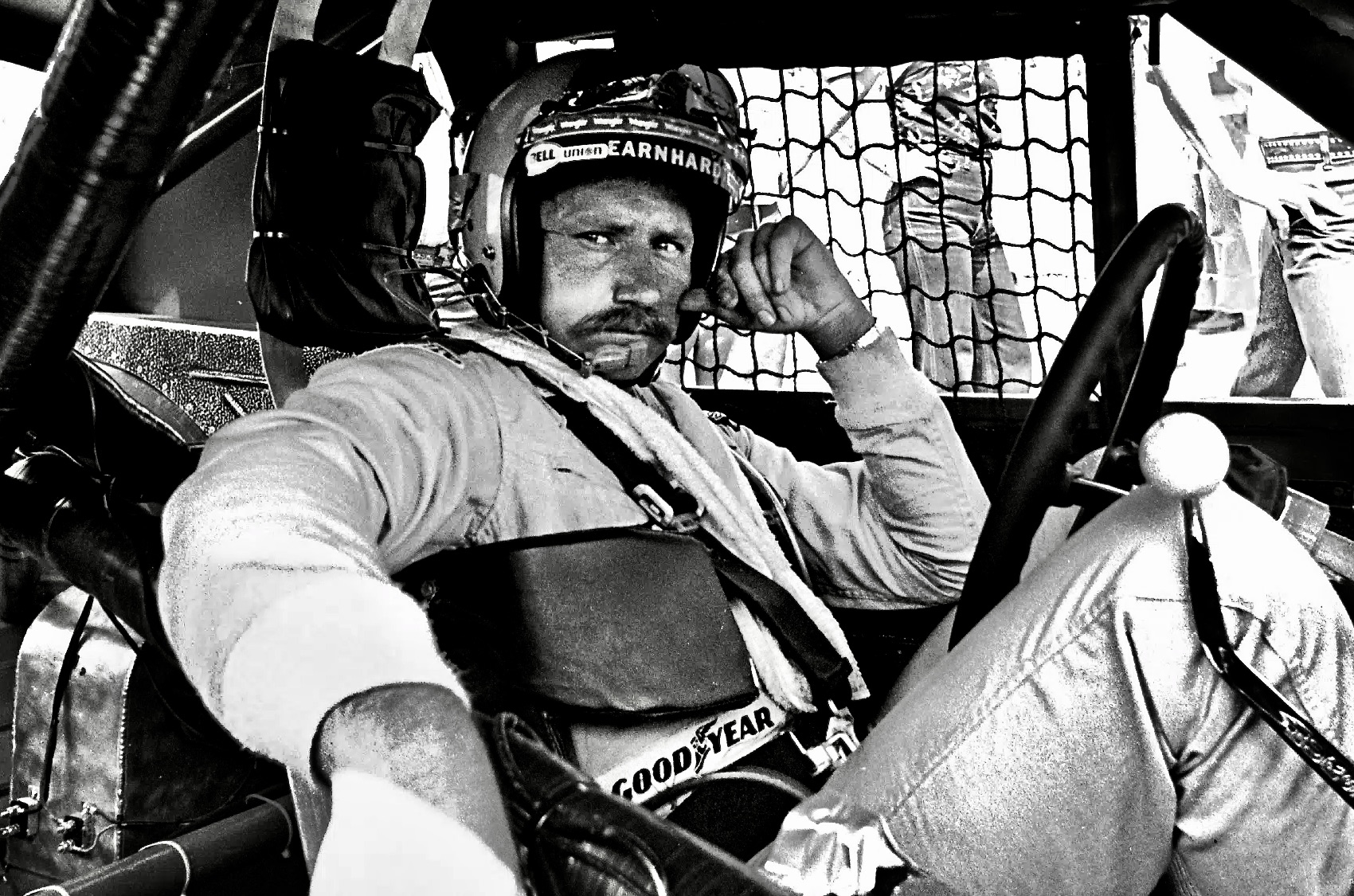
The End of the Marco Polo

By Ed Staskus

   William Murphy, Jr. was 21 years old the day the Marco Polo was run aground at Cavendish. She was a three-masted three-deck clipper ship built at Marsh Creek in Saint John, New Brunswick 32 years earlier. During its construction the frame was disheveled and blown all over the shipyard by a storm and the skeleton had to be reassembled. When the shipbuilding was done the launch didn’t go well. The boat grazed the bank of the creek while sliding down the slipway, got stuck in a mudflat, and went over on her side. A week later a high tide lifted her up, but she got stuck in the mud again. Two weeks later she finally floated free and was fitted with rigging.

   The big boat carried emigrant men and women from England to Australia for many years. She set the world’s record for the fastest voyage from Liverpool to Melbourne, doing it in 76 days. More than fifty children died of measles on her maiden voyage and were buried at sea. Coming back, she carried a king’s ransom in gold dust and a 340-ounce gold nugget. It was a gift to Queen Victoria from the colonial government. Pulling into its home port, the ship unfurled a banner claiming it was the “Fastest Ship in the World.”

   The gold was delivered to the queen by a fast coach guarded by the King’s Men.

   During the gold rush the ship carried loads of standing room only men to Australia. Nobody died of measles, although some of them died of bad moonshine and fights. Fire is the test of gold. Many of the men died of typhus, what they called ship fever, burning up in their hammocks in the South Atlantic Ocean, Indian Ocean, and Tasman Sea. Many of the original settlers laying claim to aboriginal land, the oldest, flattest, and driest inhabited continent with the least fertile soil anywhere, got there on the Marco Polo. 

   When she was retired from the passenger trade, she was refitted for the coal, timber, and bat shit trade. The hull was rotting and wasting away. Chains were wrapped around it and drawn tight trying to keep it together. A windmill-driven pump was installed to send leaks back where they came from.

   It was a late July morning, clear sunny warm after the storm that had driven the ship to Cavendish. Bill Murphy was in the dunes watching the crew wade ashore. They had been on the way from Montreal to England loaded with pine planks when they got caught in a gale. They plowed ahead but started to take on water. Two days later wind and waves were still pommeling them, and they were still taking on water. The ship was flooding from stem to stern and the hands couldn’t plug the leaks well enough or fast enough. The windmill blew away and the pumps gave a last gasp. Captain Bull decided to try saving the crew and cargo. He put the clipper into full sail and wheeled it straight at Cavendish’s sandy beaches.

   The closer they got the better their chances looked until, three hundred feet from shore, he ordered the rigging cut. The masts groaned wanting to snap and the bottom of the boat scraped the bottom. Everybody stayed where they were, staying awake all night, until dawn when the storm finally wore itself out and they rowed ashore. There were 25 of them, Norwegians Swedes Germans. They were tough men. There was a Tahitian, too. It was the beginning of only his second sea voyage. He was barely half-tough but looked tougher than he was. He was speckled with tattoos and wore his hair in long braids tied up at their ends with small shiny fishhooks.

   Lucy Maud Montgomery was a pale slim 8-year-old girl, her long crimson hair in braids with choppy bangs, when she and everybody else in Cavendish watched the crew abandon the boat. She wore a white flower hairpiece on one side of her head and took notes on scraps of paper. Nine years later her short story “The Wreck of the Marco Polo” was published. Sixteen years after that her book “Anne of Green Gables” was published.

   Bill Murphy was hired by the salvage company stripping the boat. It was welcome work before harvest time. As soon as they started on the grounded vessel, another storm rolled in. Bill was on the boat and had to stay where he was. Trying for the shore was too dangerous. They battened whatever hatches were still left and spent the night being battered. Captain Macleod from French River showed up the next morning. The wind beat him back the first time he tried to reach the Marco Polo, but he made it the second time, saving all the men except one. He and his shipmates got gold watches for their courage. Bill went home wet as a wet dog.

   He didn’t go home empty-handed, though. There were twin figureheads of Marco Polo, depicting the boat’s namesake, spearheading the boat. A man from Long River hauled one of them away and hung it in his barn. Bill hauled the other one away and hung it in his barn. It was the end of the road for the far-ranging ship.

   Bill was back on the boat two days later as the salvage work went apace. He was taking a break on the poop deck leaning against a gunwale above the captain’s cabin when a young dark-skinned man joined him.

   “I am Teva the Tahitian,” he said.

   “I am Bill the Murphy,” Bill said.

   Teva was the only one of the crew who signed on to help salvage the ship. The rest stayed in Cavendish drinking and chasing farmgirls. The Tahitian and the Irishman worked together for the rest of the week and into August. Teva told Bill he was putting his purse together to get to Maine and sign on as a whaler.

   “My grandfather Queequeg was a harpooner,” he said. “He was the best in the world. You could spit on the water, and he could split your floating spit from the deck with one throw. He shaved with his harpoon and smoked from a tomahawk. He was a cannibal, but his favorite food was clam chowder.”

   “He was a cannibal?” Bill asked, taken aback. 

   “Him, not me,” Teva said. “I never met him, but my father told me about him before he went whaling. He never came back, either.”

   “They both went to sea and never came back?”

   “Both, never. A friend of my grandfather’s stopped on our island when I was a boy and told us about what happened to him. He was a white man. He and grandfather sailed and slept together.”

   “In the morning his arm was thrown over me in the most loving and affectionate manner,” Ishmael said. “You had almost thought I had been his wife. Better sleep with a sober cannibal than a drunken Christian, I always say.”

   Teva asked the white man what his grandfather had been like, what he was about.

   “There was no hair on his head, nothing but a small scalp-knot twisted up on his forehead, large, deep eyes, fiery black and bold. He looked like a man who had never cringed and never had a creditor. His bald purplish head looked for all the world like a mildewed skull. His body was checkered with tattoo squares. He seemed to have been in a war, and just escaped from it with a sticking-plaster shirt. Still more, his legs were marked, as if dark green frogs were running up the trunks of young palms.”

   Teva lapped up water from a barrel with his hands and spat on the deck.

   “Grandfather saved Ishmael’s life when their ship was head-butted by a white whale they were hunting. The coffin they had built for him when he was dying during the hunt was thrown overboard and Ishmael hung on to it like a buoy. He was the only sailor who survived when Captain Ahab the crew my grandfather and the Pequod all sank to the bottom.”

   “Since your father and grandfather both went whaling and never came back, why are you going southways to take up whaling?” Bill asked

   “It’s in my blood,” Teva said. “There will be blood.”

   Every day when the day was fair and the sun shining families picnicked on the beach at Cavendish, watching launches with two-masted ketch rigs go back and forth, taking what they could to Alexander MacNeill’s for auction.

   It was a Sunday when Sinbad the Sailor walked up to Bill Murphy, looked him up and down, and meowed. “They say our boat had no rats the whole last year,” Teva said. “This cat drove them off and those who thought they could stand up to him, they disappeared.” Teva tossed a piece of salt pork at Sinbad, who snagged it midair and gulped it down.

   Sinbad was a two-tone Norwegian Forest cat.

   “One of the Vikings brought him aboard,” Teva said.

   Sinbad was a twenty-pound bruiser with long legs and a bushy tail. His coat was a thick, glossy, water-repellent top layer with a woolly undercoat. It was thickest at the legs, chest, and head. His ears were large, tufted, wide at the base, and high set.

   “He’s a good climber, very strong,” Teva said. “He can climb rocks and cliffs.” 

   When he leaned on Bill and reached up stretching flexing his front legs, his claws extended themselves slightly. They were sharp as razors. Bill rubbed Sinbad’s head. 

   “He’s big enough to be a man-eater,” Bill said. “What’s going to happen to him when our work is finished?”

   “I don’t know,” Teva said. “The Viking left him behind.”

   That evening, when Bill was walking back to the rude shelter he had thrown up for himself behind the dunes, Sinbad the Sailor followed him. Bill put a bowl of fresh water out for the cat but left breakfast lunch dinner up to him. He was sure Sinbad was not going to starve. He was a vole shrew deer mouse snowshoe hare red-bellied snake widow maker. Even racoons, coyotes, and foxes gave him a wide berth.

   Sinbad went back and forth to the boat with Bill the rest of the month and into August while the vessel decayed and fell apart piece by piece until a wild thunderstorm barreled up from the United States. It broke up along the coast, going down to the bottom of the sea, to Davy Jones’ Locker. It was the end of the Marco Polo. 

   When Bill packed up his bedroll and shelter and walked home, Sinbad walked beside him the five miles back to Murphy’s Cove and North Rustico. Biddy and Kate were shucking oysters on the porch, a pot at their feet. The oysters were from Malpeque Bay. Hundreds of boats were in the fishery there and at St. Peter’s Bay. Until the 1830s oysters were plentiful and few people ate them. They were spread over land as fertilizer. The shells were burned, too, for the lime they produced.

   After the Intercolonial Railway got rolling in 1876 new markets for Prince Edward Island oysters opened in Quebec and Ontario. But oyster stocks started to fall and kept falling as more boats joined the harvesting. Oysters fled for their lives. They didn’t like being eaten alive. Biddy and Kate didn’t know anything about overfishing or the deep-seated fears of shellfish, and didn’t much care, either, so long as they got their fair share.

   “Oh my gosh, what a beauty!” Kate exclaimed when Bill walked up to the porch with Sinbad the Sailor beside him. 

   “He landed here on the Marco Polo,” Bill explained. “The ship broke up yesterday in the storm and he needed a new home, so here he is.”

   Sinbad walked straight past the girls to the pot and started pulling oysters out, gulping them down without a single word of hello.

   “Hey, stop that,” Biddy scolded, covering the pot. “You’ll ruin your appetite, silly goose.”

   Sinbad’s ears pricked up. He had taken goose for dinner last Christmas, and it was delicious. He shot a look in all directions. He didn’t see any birds, but had no doubt there had to be one or two somewhere nearby. He was by nature a nomad, but as there was a pot full of oysters and silly slow geese to eat, he thought, I’ll stay for the time being.

   He was a back door man, but when the front door was wide open, that was the door he went through. God probably didn’t believe in the easy way, but he was a cat. When there was an easy way of doing things, that was always the garden path he took.

Excerpted from “Ebb Tide.”

Ed Staskus posts monthly on 147 Stanley Street at http://www.147stanleystreet.com, Made in Cleveland http://www.clevelandohiodaybook.com, Down East http://www.redroadpei.com, and Lithuanian Journal http://www.lithuanianjournal.com. To get the site’s monthly feature in your in-box click on “Follow.”

Help support these stories. $25.00 a year (7 cents a day). Contact edwardstaskus@gmail.com for details

“Ebb Tide” by Ed Staskus

A Prince Edward Island Thriller

“A stem-winder in the Maritimes.” Sam Winchell, Beyond Fiction

Available at Amazon: https://www.amazon.com/dp/B0CVDP8B58

Summer, 1989. A small town on Prince Edward Island. Mob money on the move gone missing. Two hired guns from Montreal. One RCMP constable stands in the way.

A Crying of Lot 49 Publication