Riding the Red Line

By Ed Staskus

   The last summer we lived in the immigrant neighborhood around Eddy Rd. was the last summer my friends and I took Cleveland’s Rapid Transit on Saturdays to mess around downtown and go to the movies. It had been twenty-some years since the city-owned train system had gotten a move on. It wasn’t much older than us. The newspapers were all about civil rights and Vietnam, two issues we hardly knew anything about and cared about even less. What we cared about was whatever was right in front of our eyes.

   It was 1963. Beatlemania was on the way, although we didn’t know what it was, yet. Stevie Wonder released his first live album, “The 12 Year Old Genius,” that year. We were all twelve and thirteen years old. None of us were geniuses, not by a long shot, although some of us went on to be able to think more or less clearly.

   A vaccine for measles had been approved that year. It didn’t do me any good since I had gotten the measles years before. Push-button telephones were new, first class postage cost five cents, and President John F. Kennedy visited West Berlin, delivering his famous “Ich bin ein Berliner” speech. We went around calling each other Berliners and saluting Nazi-style. All of us had voted for JFK in a mock election at St. George’s Catholic School. Our nuns told us to stop saluting and pay attention to his good deeds, but they need not have. He was young, energetic, and handsome, while Richard Nixon was old, slow, and shifty with a five o’clock shadow. 

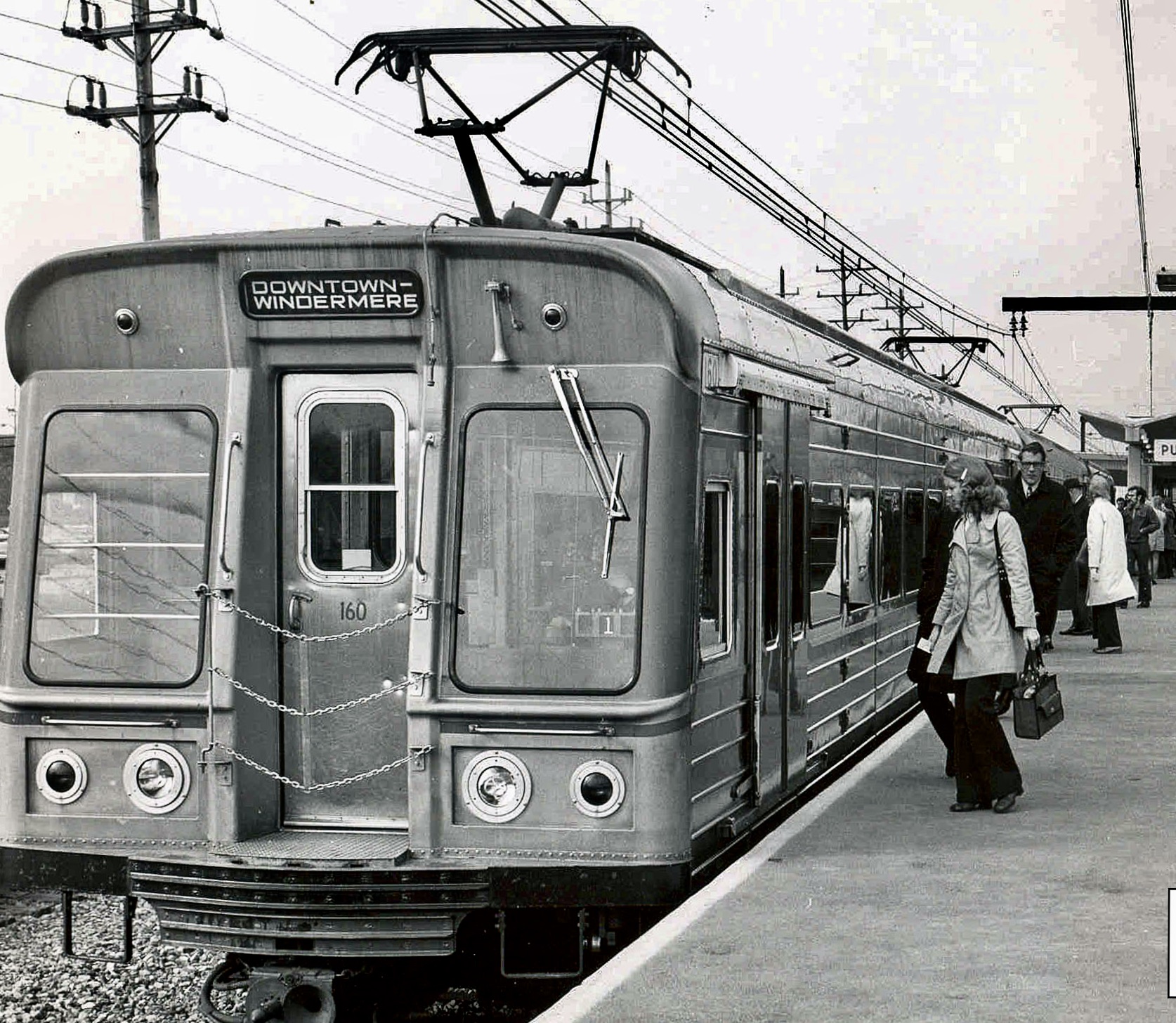
   The CTS Rapid Transit was a light rail system, what we called the wagon train. Tens of millions of riders rode it every year, especially on Saturdays, when it seemed like all of them were riding the Red Line at once to go shopping downtown. We had to stand most of the time. Even when we got a seat, we had to soon give it up to pregnant women and old folks. Standing and swaying and holding on to a pole was carefree. We were excited about roaming around downtown and seeing a big-time movie.

   All we had known in our youth was the neighborhood Shaw-Hayden Theater, which we could walk to. They showed monster movies, cowboy movies, and rocket ship movies on weekend afternoons. Cartoons and a double bill cost fifty cents. We ignored the newsreels. Popcorn cost fifteen cents, but since we were chronically short on hard cash, we brought our own in brown paper bags hidden under our jackets. Sometimes we stopped at Mary’s Sweet Shoppe and bought some penny candy.

   There was a playground around the corner behind the local fire station with Saturday Sandbox contests, but we never went, being too old for sandboxes. There were dances at the Shaw Pool every Saturday night, but we never went to those either, being too young to care much about girls and their goings-on.

   Before the movie matinee there was sometimes a drawing for prizes. One of my friends won two thousand sheets of paper one winter afternoon. He was beside himself hauling the reams home in the snow. He complained about frostbite, but he was a griper at heart, so we ignored him. The Shaw-Hayden was big, more than a thousand seats. We usually went early so we could sit in the front row, stretching our legs out, kicking each other, horsing around, and whooping it up during the movie.

   Going downtown meant hoofing it from where we lived off St. Clair Ave. down E. 128th St. to Shaw Ave. to Hayden Ave. and following a no-name foot path to the Windermere station. We scrambled up the embankment, crossed the tracks at the rear of the station, and waited on the platform for the downtown bound train. Windermere was the end of the line for the Red Line.

   The Red Line ran at ground level, alongside railroad rights-of-way. There were no grade crossings with streets or highways. All of the stations along the way had high platforms. Unlike most transit lines, it was powered by an overhead electric catenary instead of a third rail. We knew things were going well when we heard the corona discharges of the high voltage.

   When the wheels finally rolled into the underground station downtown we dusted ourselves off and ran upstairs, running through the Terminal Tower lobby and overflowing outside, rain or shine. We made tracks around Public Square until there was nothing left to see. We liked walking to the movies on one of the three main avenues, which were Prospect, Euclid, and Superior. Our parents warned us to stay away from Prospect Ave. where there were prostitutes and burlesque houses. It was because of their words of wisdom that we took Prospect Ave. most of the time, although we never talked to the prostitutes and never went into the bars and strip clubs. We weren’t interested in smut, and besides, we wouldn’t have been able to pay for the cheap thrills. All the money we had we hoarded for the train, snacks, and the movie.

   There was a cluster of theaters between E. 14th and E. 17th. Four of them faced Euclid Ave. while one faced E. 14th St. The three blocks were known as Playhouse Square, although none of us were aware of that. We didn’t pay attention to signs unless they had something to do with the movies. All of us had our own money, cobbled together from allowances, paper routes, altar boy service at weddings, and some thievery from our siblings if push came to shove and our Saturday was threatened.

   The Ohio and State theaters were built by New York City plutocrat Marcus Loew in the early 1920s, followed by Charles Platt’s Hanna Theater. The Hanna was named for Mark Hanna, Cleveland’s wheeler-dealer senator in Washington. The Pompeiian-style Allen Theater opened at the same moment in time. 

   The Palace Theater got up and running at the end of the next year, in the Keith Building, the tallest skyscraper in the city at the time. The biggest electric sign in the world was fabricated and turned on the night of the Palace Theater’s grand opening. It was billed as the “Showplace of the World.” The opening night entertainment was headlined by a famous mimic and featured dancing monkeys. Everybody said it was “the swankiest theater in the country.” 

   It wasn’t swank anymore when we started going to Saturday matinees there, but we didn’t notice the wasting away. It had wide seats and a gigantic screen and that was all that mattered. The movies cost seventy five cents and we were glad to pay it. It was where we saw “Son of Flubber” and afterwards pretended to defy gravity like Fred MacMurray. We saw “It’s a Mad, Mad, Mad, Mad World” and laughed until we cried. We loved stories about lost treasure. The movie was perpetual motion and shouting. Ethel Merman was the most likable loudmouth we ever heard. We saw it twice and it was just as good the second time around.

   We saw “Cleopatra” and agreed afterwards that we had all gotten sick of Elizabeth Taylor. “Why is she even in the movie?” we wondered. Rex Harrison and Richard Burton were more like it. Thousands of Romans with swords, spears, and shields fighting each other were even more like it.

   We wanted to see “Psycho” but weren’t allowed. We were warned it was too intense and inappropriate for boys our age. We were offended, but when we heard what it was about, we asked each other what all the fuss was. It sounded like a sicko stabbing people, which was right up our alley. We had all seen plenty of horror movies, like “Carousel of Souls” and “Village of the Damned.”

   When “The Raven” was playing we saw it right away, even though none of us knew Edgar Allen Poe from the Man in the Moon. There’s a black bird. There’s a tapping at the door. The night is dark and the wind is howling. When the door is opened there’s nobody there. “Watch your back!” we shouted at the screen.

   The stars in that movie were Vincent Price, Boris Karloff, and Peter Lorre, even though Peter Lorre was a half-pint. He had a sinister voice, hooded eyes, and a dodgy way about him, which made up for his lack of height. Vincent Price was disappointing, despite being the tallest. He spoke and acted like a sissy, even though he was supposed to be a big bad magician. In the end the whole business was disappointing. It was more laughable than scary, and once we realized how it was going, we enjoyed it for the laughs. We took a chance and asked for our money back, claiming intense disappointment, but a grouch in a red jacket ushered us out and told us where to go.

   We heard about “Seven Wonders of the World” on WERE-AM radio before we ever saw it on the marquee of the Palace Theater. We didn’t go see it, even though we saw it on the marquee week after week and even though it was in Cinerama. We saw everything in a kind of Cinerama, anyway, since we always sat in the front row. A gigantic screen always made a bad movie twice as good.

   The movies were spellbinding to us. They were like a dreamland in waking life. It didn’t matter if the story was real or unreal. We were dazzled by the moving images and the music. It was disorienting stepping out of a dark auditorium after the movie magic into bright sunlight, like after a midday nap when daydreams had come fast and furious.

   Our real life hometown was where we went to see the real wonders of the world. We wandered around in the industrial valley, what everybody called the Flats, light-headed and amazed, gazing up at the steel plants, looking down on the greasy Cuyahoga River, watching the up and down bridges go up and down as freighters hauling ore made their way. Six years later the river caught on fire, flames and plumes of black smoke turning day to night. We walked along the shoreline of Lake Erie where fishermen pulled walleye and crappie out of the polluted water that nobody was supposed to swim in. 

   We snuck into Municipal Stadium, called the Mistake on the Lake, whenever we knew the fire-balling Sam McDowell was pitching. He was twenty years old and tall as a tree. Hardly anybody went to see the back of the pack team and we often had most of the eighty thousand seat stadium to ourselves, cheering on the Tribe. We sat wherever we wanted. When ushers asked to see our ticket stubs, we hemmed and hawed and changed sections. Whenever we ended up in the bleachers there were never any ushers to roust us. If it was hot, we pulled our shirts off. We lobbed popcorn to the pigeons and threw pebbles at them when they were finished with their free goodies.

   The weekend before our summer vacation was going to be over and we had to go back to school we saw our last movie at the Ohio Theater. It was “Lord of the Flies.” It was about boys our age who were marooned on a desert island. We knew what made a boy’s life. We didn’t know anybody who ever did the crazy things they did. We didn’t like grown-ups making up art about us. We appreciated great trash but not great art. All of us wrote it off as hokum with a message. We were instinctively wary of messages.

   Going home on the Red Line after the movie we saw a fight break out. Two men had been talking, then shouting, then shoving each other in the aisle, until one of them pulled a knife and stabbed the other one in the arm. Real blood gushed and stained his clothes. A woman screamed. Two men grabbed the knifer and held him down, while another man took his own tie off and tied a tourniquet on the upper arm of the stabbed man. When we got to the Windermere station there were police cars and an ambulance there. We watched, fascinated, until a policeman told us “there’s nothing to see here, break it up and go home.” We went home more breathless than any movie had ever made us.

   John F. Kennedy was shot and killed that fall, which put a pall over everything. A fire broke out in the Ohio Theater the next year and the other theaters were hit by vandalism. All of them closed between the summers of 1968 and 1969 except for the Hanna. We were juniors and seniors at St. Joseph’s High School by then and the only movies we went to were at the LaSalle Theater in our North Collinwood neighborhood. 

   By then, when we went to the movies, we were more interested in girls than whatever was playing, although we soon found out horror movies were the way to go. There was never any doubt about what to do with your hands when you were with your main squeeze and the scary parts burst onto the screen.

Ed Staskus posts monthly on 147 Stanley Street at http://www.147stanleystreet.com, Made in Cleveland http://www.clevelandohiodaybook.com, Down East http://www.redroadpei.com, and Lithuanian Journal http://www.lithuanianjournal.com. To get the site’s monthly feature in your in-box click on “Follow.”

“Bomb City” by Ed Staskus

“A Rust Belt police procedural when Cleveland was a mean street.” Sam Winchell, Beyond Fiction

Available on Amazon: https://www.amazon.com/dp/B0F1LM1WF9/ref=sr_1_1?crid=2MYAQAOZIC2U9&dib=eyJ2IjoiMSJ9.hTm7BGbiQbSe5ZapFwYPPfcwOpTe-Vdg6VLE4aGyTyk.Z0R-VNBWWEcvKcNaO9LdCOUnNIOOXgvYkRS_FXiXuHk&dib_tag=se&keywords=bomb+city+ed+status&qid=1742136726&sprefix=bomb+city+ed+staskus%2Caps%2C84&sr=8-1

Cleveland, Ohio 1975. The John Scalish Crime Family and Danny Greene’s Irish Mob are at war. Car bombs are the weapon of choice. Two police detectives are assigned to find the bomb makers. Nothing goes according to plan.

A Crying of Lot 49 Publication
Clown Car

By Ed Staskus

   Ronald the Borgia wanted to be the mayor of some place. Wherever the place was didn’t matter. He wanted it bad. He was the richest man in Oklahoma. He knew that just like he knew he was smarter than everybody else in the state. They were rubes and easily led by the nose. They didn’t eat so much as swallow what you fed them. Even though he was already an old man, he had plenty of energy and so he ran for mayor of Oklahoma City. He told anybody who would listen, “I’m the only candidate who can save us. If I win, wonderful things will happen. If I lose, awful things will happen.” 

   He put everything he had into the campaign, crisscrossing the state, whipping up his audiences, doing jigs to Kid Rock songs, and showcasing pro wrestlers who endorsed him as better than blubber. He was sure he was going to be the next bossman of the little people. When he lost, garnering less than 20% of the vote, he was very angry.  He declared the election had been rigged and stolen from him.

   His hot as a hooker wife tried to console him. Natasha was from the Balkans but spoke passable English.

   “I am sorry for your loss, honeykins,” she said. “Maybe you find comfort in the hard work you make.”

   “Hard work doesn’t count,” Ronald the Borgia said. “Winning is the only thing that counts. Another word out of you and I’ll go looking for wife number four.”

   “I zip my lip.”

   Ronald the Borgia tossed her a handful of one hundred dollar bills.

   “Go doll yourself up,” he said.

   The man who would be mayor came from old Oklahoma stock. His great-great-great-great grandfather Frederick the Borgia had been one of the original Sooners. The original Sooners were men who knew full well that the only thing that counts is winning. Every Borgia descendant after 1889 got up every morning enthusiastically chanting the mantra of victory.

   “One, two, three, four, why are we here for? Five, six, seven, eight, what do we appreciate? Go Borgia World!”

   Before 1889 they were no-account cattle rustlers and occasional bank robbers. What transformed them was the Oklahoma Land Rush. The Federal Congress in Washington had decided to renege on an 1830 treaty with tribes living there and take back the two million acres the natives had been granted. The land was called Indian Territory until it suddenly became the Unassigned Lands. President Benjamin Harrison proclaimed all two million acres of the Unassigned Lands open for settlement. Anybody could claim 160 acres of public land if they could stake it out.

   The Borgia’s had other plans. They weren’t interested in 160 acres. They gathered together all their relations and as many footloose cowboys as they could. They planned to get a head start and stake out as much land as they could. After that they planned on getting into the real estate business with money they didn’t have. They knew they would get the money by hook or by crook.

   The Land Rush began at noon on April 22, 1889. 50,000 men, and a few hardy women, on horses and buggies were let loose by a blue-clad army officer firing his pistol into the air. The Borgia’s didn’t hear the pistol shot. They were far away. They had staked their many claims the day before. They weren’t Boomers at the starting line. They were Sooners.

   For the next ten years Sooner was a fighting word. It meant somebody who had cheated and so deprived land from the Boomers. After the dust settled, however, the University of Oklahoma football team quixotically adopted the nickname Sooner and in the 1920s the state was officially nicknamed the Sooner State. That was neither here nor there to the Borgias.

   They were able to stake out more than three thousand acres adjoining what would become Oklahoma City. The day after the Land Rush there were already 5,000 people living in tents on land that would become the place. By the early 20th century it was a full-fledged modern city of 64,000 people. The Borgias bided their time. When their time came and the city came to them, they made a fortune. They continued to make money hand over fist for the next one hundred years.

   But that was then and Ronald the Borgia was now. After losing his bid to become mayor of Oklahoma City he took a long vacation at a friend’s mansion in southern Florida and sulked. When he was done sulking he moved to Ohio. He abandoned the Sooners for the Buckeyes. He ran for mayor of Mentor, northeast of Cleveland, and lost big again. He ran for mayor of Parma, southwest of Cleveland, and lost big there, too.

   Ronald the Borgia cried foul again, crying the voting was rigged, but bit the bullet and hired a political consultant. Steve Brandman was grizzled and blunt spoken. He washed his voluminous hair every day. He never washed out his mouth. He got right to the point.

   “You’ve got to get God on your side and you’ve got to get yourself a Devil on the other side,” Steve Brandman said.

   “I don’t believe in God.” 

   “That doesn’t matter, just say you do. Lip sync a prayer or two, even if you don’t know the words. Wave a Bible in the air. Tell everybody you’re a big fan of the Ten Commandments.”

   “What are the Ten Commandments?”

   “We’ll get into that later.”

   “What about this Devil thing?”

   “That’s so there’s something really bad you can oppose with your great godliness.”

   “Like what?”

   “Migrants would be a good choice, especially the wetback kind. They’ve been whipping boys on and off for a long time. Whip up some fear and loathing. Whip up some frenzy. Whip up some hatred.”

   “I can do that with my eyes closed.”

   “There you go, be a Christian soldier, go strong and put your foot on the neck of the weak.”

   “I’ve been doing that my whole life. I’m a pro at it. Migrants won’t stand a chance when I get going. Where should I run next?”

   “Lakewood, right here next to Cleveland.”

   “Lakewood? That dumb-ass suburb is about as liberal as it gets.”

   “You’re right about that.”

   “If I’m right about that then you’re wrong about me running there next.”

   “You’re a three time loser but you think you know better than me? See you later.”

   “No, no, I’ll do whatever you say, but why Lakewood?”

   “One big reason. So far you’ve campaigned against three incumbents, all men, and lost three times. The mayor of Lakewood is an incumbent, too, but it’s a woman. Catch my drift?”

   “I’m with you,” Ronald the Borgia said. “There’s no way I’m losing to some broad. Is she ugly?”

   “What does that matter?”

   “It matters to me.”

   “Whatever,” Steve Brandman said. “Lakewood is just the start. If you can win there you’ll be able to win anywhere, and I mean anywhere.”

   “All right, all right.”

   “One last thing.”

   “What’s that?”

   “My fee is payable in advance, and on top of that, I don’t start working until the check has cleared.”

   “You know I’m good for it.”

   “I don’t know anything of the kind.”

   Steve Brandman knew his man. He got his check. After it cleared the Borgia for Mayor campaign office opened in Lakewood. The election for the mayor’s seat was in two months.

   “That’s not enough time,” Ronald the Borgia complained.

   “You let me worry about that, big guy,” Steve Brandman said. “You do the complaining and explaining. Leave the rest to me.” The big guy waved his hands in the air.

   When Steve Brandman looked at Ronald the Borgia’s hands they seemed unusually small for a man his size. He wondered what else was small on the man. It couldn’t be that, could it? He had it on reliable gossip that his man was a many happy returns customer at many Houses of the Rising Sun. He put his idle thoughts aside and got to work.

   It was a rough and tough campaign. The incumbent mayor campaigned on ethics and efficiency. She campaigned on principle and safe streets. She campaigned on all the new schools being built in town and all the upgrades to the water and sewage systems. She promised to continue the good work of her administration.

   Ronald the Borgia ignored all the issues except two, what he called the “waste of space” in the mayor’s office and the threat of migrants. 

   “She’s slow, she’s got a low IQ, and she’s lazy,” he said. “She’s dumb as a rock. She’s a horrible person. Does she drink? Does she take drugs? I wouldn’t be surprised. She has no respect for the American people and takes voters for granted. She’s on the radical side of the radical left. She’s a retard, mentally disabled, we all know that. She lies all the time. I believe she was born that way. She needs a doctor. Thousands of migrants from the most dangerous countries are destroying the character of Lakewood and leaving the community a nervous wreck. She doesn’t care that migrants are eating people’s dogs and cats, skinning them and barbequing them. I’m very angry about that. Vote for godliness, vote for me, and tell her, you’re fired, get the hell out of here.”

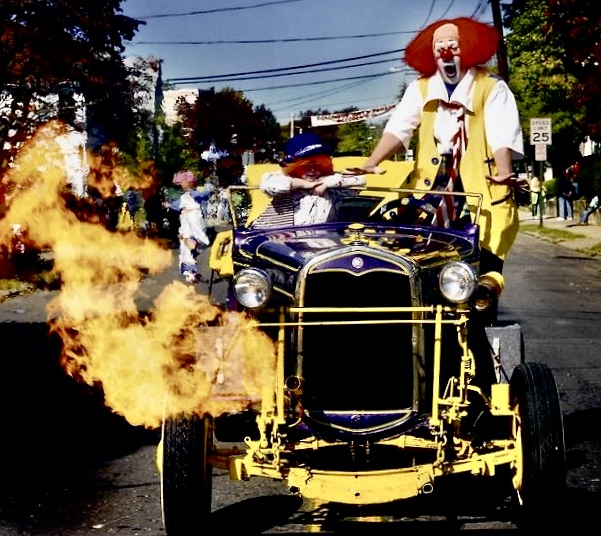
   He began appearing on the campaign trail as a Knight Templar, wearing a white cloak emblazoned with a red cross. He wore chainmail and a great helm with a narrow visor on his head. He carried a one-handed sword and a white Templar shield. His assistants dressed like monks in brown robes. They had to run to McDonalds in their sandals whenever their boss wanted a Big Mac. 

   “I love God, sure, but I really love my Big Mac’s,” he said before returning to a rant about migrants. “We have thousands of migrants overflowing into Lakewood from you know where. Many of those people have terrible diseases and they’re coming here. And we don’t do anything about it, we let everybody come here. It’s like a death wish for our town. They’re rough people, in many cases from prisons, from mental institutions, insane asylums. You know, insane asylums, that’s ‘Silence of the Lambs’ stuff. Hannibal Lecter, everybody knows Hannibal Lecter, right? Do you want him living next door to you? My opponent says, ‘Please don’t call them animals. They’re humans.’ I say, ‘No, they’re not humans. They’re animals.’ God doesn’t want us to live like animals. He wants us to live like gods. I’m already a god, so make sure you vote for me.”

   A week before the election the race was neck-to-neck. Ronald the Borgia seemed calm enough, but was sweating bullets. He called Steve Brandman into his office.

   “You said I was a sure thing,” he said wearing out the carpet.

   “Don’t bother putting words into my mouth,” Steve Brandman said. “I’m not the other side.”

   “I don’t care what you said, but do something, for God’s sake.”

   “It’s in the bag. The polls open on Tuesday. Wait for Monday. You’ll see.”

   Monday morning a fleet of Tesla Cybertrucks wound its way into Lakewood, They drove slowly so the body panels of the Cybertrucks wouldn’t fall off. Emil of Croesus was at the head of the fleet. The fleet stopped in front of City Hall. When Emil of Croesus got out of his stretch limo version of a Cybertruck an aide set up a golden card table and a golden folding chair for him in the middle of the street. Another aide put a cushion on the seat of the chair. Emil of Croesus sat down. A third aide massaged his neck. Traffic ground to a halt. Passersby gathered and gawked.

   “Get Your One Thousand Dollars By Voting the Right Way” a portable marquee sign declared blinking on and off. Emil the Croesus had a stack of one thousand dollar bills in front of him. It wasn’t long before the line stretched from the middle of Lakewood to all the corners of town.

   The next day the neck-to-neck-race became a rout. Ronald the Borgia won in a landslide. Lakewood’s many bars and eateries were full of people celebrating, eating and drinking their fill, at least until they tried paying with Emil the Croesus’s one thousand dollar bills, which nobody would accept. President Grover Cleveland’s face used to be the face on the denomination, at least until 1969 when the U. S. Treasury discontinued it. Emil the Croesus’s bill had the face of Bernie Madoff on it. The money was fake as fake could be.

   It was no matter to Doanld the Borgia, He had gotten what he wanted. He was the new mayor of Lakewood and everybody was going to have to do whatever he said. From now on the God’s truth was going to be coming out of his mouth. “If I don’t like somebody or something and need to get it straightened out, I’ll send in my clowns, I mean my law enforcement, and it’ll get done,” he said. He meant forget the saints above and the fiends below. 

   “Winning is the most important thing in life,” Ronald the Borgia said when Steve Brandman asked how he liked the result. “Losing is for suckers. Suckers are losers. I am the way. I am a winner. Winning first, no matter how, no matter what, everything else way back behind.” He smoothed his red tie. He made his little hands into fists. He pasted a left-handed smile on his face and smirked for all the world to see.

Ed Staskus posts monthly on 147 Stanley Street at http://www.147stanleystreet.com, Made in Cleveland http://www.clevelandohiodaybook.com, Down East http://www.redroadpei.com, and Lithuanian Journal http://www.lithuanianjournal.com. To get the site’s monthly feature in your in-box click on “Follow.”

“Telling of Monsters” by Ed Staskus

“21st century folk tales for everybody, whether you believe in monsters, or not.” Sam Winchell, Beyond Fiction

Available on Amazon:

Oliver and Emma live in northeast Ohio near Lake Erie. The day they clashed with their first monster he was six years old and she was eight years old. They fought off a troll menacing their neighborhood. From that day on they became the Monster Hunters.

A Crying of Lot 49 Publication