Cheap Seats

By Ed Staskus

   It was hot and humid all up and down the east coast. It was hotter and more humid in Hell’s Kitchen. It was in the 90s and sluggish as an old bayou. The heat was trapping humidity in the air. It didn’t matter to Dottie Riddman. She was playing stickball in the street. That was all that mattered.

   The street wasn’t West 56th, which was her street. Her father had told her to never play stickball on their own street. The fronts of buildings were ruled home runs in the game of stickball. Stan Riddman didn’t want any broken windows near where they lived. Dottie and her friends always played on West 55th or West 57th.  She wasn’t about to break into a sweat about it.

   A boy bigger than her teased her about it the beginning of summer, knocking her over and pushing her to the ground. “You always do everything your old man tells you to do, boobie?” he said, straddling her with his legs. From where she lay he looked like Godzilla. “You going to wear that trainer of yours the rest of your life?” he asked, looking at her boobies.

   Dottie had her broom stick in her hands. She had moxie in her eyes. Looking up from the gutter she whacked him as hard as she could between his legs. When the boy’s father showed up at their apartment that night to complain that his son might never grow up to be a father, her father threw the man out, dragging him down the stairs by the collar, threatening him and his son with bodily harm if they ever laid hands on his daughter again.

   “You think I’m fooling, look up my police record,” he yelled, red in the face, inches from the  ashy face of the sputtering father when they were on the sidewalk. “Go back to where you came from.” He calmed down in an instant the instant he was back in the house. He jogged upstairs and sat his daughter down.

   “You did the right thing Dottie,” Stan said. “If somebody says something rotten to you, be a lady about it. Be the bigger man. But if somebody pushes you, or grabs you, or hits you, you hit them back as hard as you can. You always do that. That’s so they won’t push you again.”

   “OK, dad,” she said.

   It was a good day for stickball. Ten kids showed up, some her age, some younger. They picked their teams. Willy, her friend from Sacred Heart of Jesus Catholic School, brought a new pinky ball. It wasn’t a Pensy, either. It was the cream of the crop. It was a Spalding Hi-Bounce.

   “Spaldeen!”

   They drew a rectangle in chalk on the brick wall at the back of an empty lot on West 55th to represent the strike zone. The buildings on both sides were the foul lines. They chalked first base and third base onto the building walls and second base was a manhole on the sidewalk. If a batted ball hit any of the buildings across the street, it was a home run. If it hit a roof it was a home run-and-a-half. If it hit a window they ran like jackrabbits.

   “There ain’t no runs-and-a-half,” a kid from Chelsea, who was visiting his cousins, sneered, shooting his mouth off.

   “If you’re going to play stickball on West 55th, you better learn Hell’s Kitchen rules,” gibed Willy.

   Dottie was batter up. She smacked a hot grounder, but it was caught on the first bounce, and she was out. Willy got as far as third base, but three strikes and you’re out finished their inning. By the time they came back up in the second inning they were behind by five runs. It wasn’t looking good for the home team.

   “All right, all right, let’s pick it up, let’s get some roofies,” Willy yelled clapping his hands, urging his team on. “But chips on the ball. I mean it.” He meant that if his new Spaldeen was roofed, and couldn’t be found, everybody would chip in to pay for a new ball.

   Hal came up to the plate, wagging his broom handle menacingly, and planted his high-top rubber soled Keds firmly in the hot squishy asphalt. They were new and felt like Saturday shoes. His batted ball hit the side wall at third base where the wall met the ground and bounced back to home plate in a high slow arc.

   “It’s a Hindoo,” he shouted.

   “No, that ain’t a do-over, it’s a foul ball, so it’s a strike,” shouted back Dave Carter, who everyone called Rusty because his hair was red.

   “What do you know?”

   “I know what I gotta know.”

   “Go see where you gotta go,” Hal retorted.

   “No, you stop wasting my time,” Rusty said. “It was a foul ball.”

   “Ah, go play your stoopball,” Hal said, peeved.

   Stoopball was throwing a pinky against the steps of a stoop, and then catching it, either on the fly or on a bounce. Catching the ball was worth 10 points. Catching a pointer on the fly was worth 100 points. A pointer was when the ball hit the edge of a step and flew back like a line drive, threatening to take your eye out. When you played stoopball, you played against yourself.

   “You got a lotta skeeve wichoo,” Rusty yelled back at Hal.

   “All right, already, strike one,” said Willy, exasperated.

   He knew Rusty would never give in. He was a weisenheimer. He was somebody you had to keep your eyes on, too, or your Spaldeen might grow legs. It wasn’t that Rusty was a thief. He just kept his nickels in his pocket, and everything else, too. Willy had heard he was such a tightwad he still had his communion money from two years ago. Rusty had been born in Philadelphia. That was his problem. Willy sympathized, not too much, but slightly.

   Hal hit a cheap on the next pitch, a slow roller, but when Rusty let his guard down, reaching down leisurely for the Spaldeen, it went between his legs, and the next instant Hal was standing at first base, smirking.

   “Comeback stickball,” he shouted at Rusty. “Our game.” Eleven batters later Dottie’s team was on the plus side of the scoreboard. Rusty was beside himself. He  wasn’t going to complain, but he could have spit.

   The woman sitting on the stoop across the street, watching her windows, watched Dottie and her friends walk down the sidewalk when the game was over, one of them bouncing his pinky, all of them talking happily.

   “We killed them, just killed them,” Willy said.

   “We sure did,” Hal said.

   “What a game!” Dottie said.

   “Yeah, we were down, then you put some Chinese on that ball between Rusty’s legs, they got rattled, and then we score a boatload just like that, and it’s all over.”

   “Did you see him, the putz, pulling that long face?” Hal asked.

   “Oh, he’ll be back, no biggie, he loves playing on the street,” Dottie said.

   Dottie was beyond glad her team had fought hard and won. They scrapped for every run. It was worth it. She didn’t mind losing once in a while, but she liked winning better. She stripped off her sweaty clothes, rubbed down with a cool sponge, and put on a fresh pair of shorts and a t-shirt.  

   She put her broom stick away in a corner beside her bedroom window. In the summer she loved her friends, no matter what team they were on, and loved playing stickball with them more than anything in the world. When it was wet and cold, and the wind was windy, the pinky and chalk and sticks all stashed away, and they were clambaking the grapevine, the talk always made its way back to playing ball. It was the way of their world.

Excerpted from the crime novel “Cross Walk.”

Ed Staskus posts monthly on 147 Stanley Street http://www.147stanleystreet.com, Made in Cleveland http://www.clevelandohiodaybook.com, Atlantic Canada http://www.redroadpei.com, and Lithuanian Journal http://www.lithuanianjournal.com

A New Thriller by Ed Staskus

Cross Walk

“A once upon a crime whodunit.” Barron Cannon, Adventure Books

“Captures the vibe of mid-century NYC.” Sam Winchell, Beyond Fiction

Available on Amazon: https://www.amazon.com/dp/B0CRPSFPKP

Late summer and early autumn. New York City. A Hell’s Kitchen private eye. The 1956 World Series. President Eisenhower at the opening game. A killer in the dugout.
Raising Cain

By Ed Staskus

Many cities have a nickname. Detroit is “Motor City.” Las Vegas is “Sin City.” New York City is “The Big Apple.” Atlantic City is known as “Always Turned On” although it has been turning itself off for years. Even suckers lose their taste for losing sooner or later. Cleveland was once known as “Forest City” and “Sixth City.” In the 1960s it was the “Mistake on the Lake” and in the 1970s it became the “Rock and Roll Capital of the World.” Nowadays it is known as “The Land.”

Cleveland has never been known as a hotbed of anarchy, although at the beginning of the 20th century that is what it was. It was where the anarchist Emma Goldman struck a match. After the match sparked and flared to life the run-up to the end of the life of the 25th President of the United States started.

When Emma Goldman gave a blistering speech at Cleveland’s Franklin Club in December 1900 she knew she was throwing gasoline on fire. She didn’t know the White House was where the fire were going to spread. Leon Czolgosz was in the audience. He was born in Detroit but lived in Cleveland most of his life after his immigrant family moved there. As soon as the speech was over he started putting spare change aside to buy a handgun. He hadn’t held down a job for three years. Money was hard to come by but he made sure to come by it, by hook or by crook.

In the meantime, he tried joining Cleveland’s Liberty Club, a local anarchist group, but they said no. They said he was mad as a hatter and couldn’t join their club. All Leon could do was roll his eyes. “I no need to belong to no damn club, not me,” he grumbled. He probably would have refused to join any club that would have him. The lone wolf hoped his aim would be true when the time came.

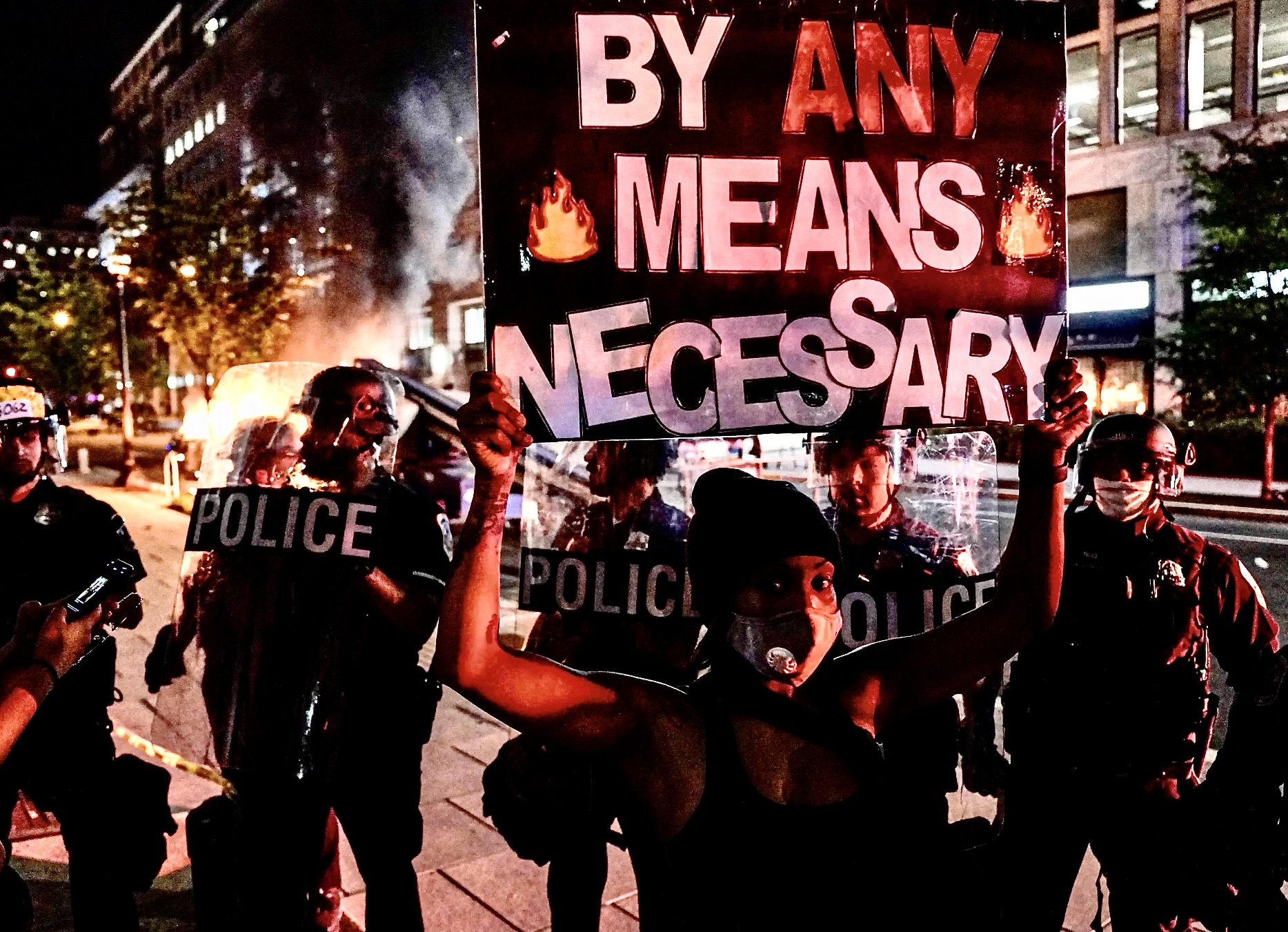
Anarchism is a philosophy that believes the state is both unnecessary and undesirable. It advocates the end of hierarchical government. “Anarchism is founded on the observation that since few men are wise enough to rule themselves, even fewer are wise enough to rule others,” Edward Abbey said. What is desirable is a stateless society. Anarchists believe in organizing society on a voluntary basis without recourse to compulsion. They refuse to rely on authority. It is the farthest left of anything on the political spectrum. Anarchism is not for or against anything but it stands for liberty. “I say, liberate yourself as far as you can,” is what Max Stirner said. They have always believed in defunding and dismantling the police.

Capitalists and communists hate anarchists as much as they hate each other. Law and order everywhere in the world puts them in jail at the drop of a hat. Most people don’t understand them and don’t want to understand them. Many of them believe the worst thing in the world, next to government, is anarchy.

Not long before Emma Goldman, who was billed as the “High Priestess of Anarchy,” lit up Cleveland, New York’s Supreme Court ruled that the act of identifying oneself as an anarchist in public was a breach of the peace and liable to prosecution. The state later passed the Criminal Anarchy Law, which said nothing prevents the government from punishing political speech that advocates its violent overthrow. Theodore Roosevelt, after taking over from William McKinley, proclaimed that anarchists were criminals and malefactors. “Their perverted instincts lead them to prefer confusion and chaos to the most beneficent form of social order.” Before he was president, Teddy Roosevelt was the police chief of New York City. In 1903 Congress passed a law that said no immigrants who were anarchists with “foreign-sounding” names were welcome.

Go back to Germany. Go back to Russia. Go back to where you came from and don’t come back.

Emma Goldman wasn’t a windshield wiper kind of anarchist, mincing her words to suit her listeners. She said the same thing to bomb throwers and the judges who put bomb throwers away. What she said in Cleveland was, “Anarchism stands for liberation from the dominion of property and liberation from the shackles of government. The political arena leaves one no alternative. One must either be a dunce or a rogue. Politicians promise you heaven before election and give you hell after. There’s never been a good government. A man has as much liberty as he is willing to take for himself.”

She brought the house down at the Franklin Club. “My head nearly split with the pain,” Leon Czolgolsz said after the speech. “She set me on fire.” He made up his mind to take down the top dog at the top of bad government. He circled the Pan-American Exposition in Buffalo in September on his calendar.

In the beginning the Franklin Club was the Union Labor Club. It was organized to promote the “brotherhood of humanity.” By 1896 the club was meeting at Forester’s Hall near downtown Cleveland and had changed its name to the Franklin Club. They had two motto’s. The first one was “error is harmless if truth is free to combat it.” The second one was “labor produces all wealth.” When they met their lectures and discussions revolved around ethics, economics, religion, free love, and anarchy. After Leon Czolgolsz got done doing what he was planning on doing, the club’s records were seized by the Cleveland Police and the group disbanded.

   Anarchists had been busy in the years leading up to the new millennium. They believed that since the state was an instrument of violence it was appropriate to employ violence against the state. In Chicago in 1886 an anarchist threw a bomb at a group of policemen, killing seven of them. Four anarchists were hanged. In 1893 an anarchist tossed two bombs into a theater in Barcelona, Spain, killing 20 people. That same year an anarchist detonated a nail bomb in the French Parliament. He went to his death by guillotine shouting, “Death to bourgeois society! Long live anarchy!” Over the years they assassinated more and more European monarchs, including the Tsar of Russia, the Kings of Italy, Portugal, and Greece, and the Empress of Austria.

Not all anarchists advocated violence, but nobody paid much attention to those who didn’t. There will be blood is what front page news is all about. When Luigi Galleani, who was the leader of an anarchist group dedicated to terrorism, published a manual for bomb-making, which included a do-it-yourself guide to nitroglycerin, everybody paid attention. He wasn’t hiding his hopes and dreams. His rants about class warfare and tips about bomb-making were published in his magazine “Chronicle of Subversion.” After one of his followers blew up a Milwaukee police station, he was deported back to Italy, even though the Italians didn’t want him back. Who wants to be re-gifted a bomb-making bomb-thrower? In retaliation his followers mailed letter bombs to thirty six mayors, governors, congressmen, and the U. S. Attorney General. The Attorney General was A. Mitchell Palmer. Before he was done retaliating, ten thousand foreign-born radicals had been arrested and more than five hundred deported.

When Leon Czolgosz took a train from Cleveland to Buffalo in late August 1901 he had just enough money to rent a room for a few days, load his handgun, and wait for his chance. He got his chance on September 6th when President William McKinley was at the Temple of Music at the Pan-American Exposition. He hid his handgun by wrapping a handkerchief around his hand. The president was shaking hands with well-wishers. When the anarchist stepped up to shake the president’s hand, he fired two shots instead. The first bullet hit a button over the president’s sternum and bounced away. The second bullet hit him in the abdomen. He went down gutshot and died eight days later. His last words were, “It is God’s will. Goodbye to all.”

   The gunman was arrested on the spot. He told the Secret Service men dragging him away his name was “Fredrich Nieman.” It meant “Fred Nobody” in German. “You’re somebody now, you son-of-a-bitch,” one of the Secret Service men said. It didn’t take long for the State of New York to deal with the assassin. He was tried by the Supreme Court in Albany and found guilty in two days. He was electrocuted on October 29th. His last words were, “I killed President McKinley because I done my duty. He was the enemy of the good people, the good working people. I am not sorry for my crime.” His body was tossed into a lead casket and disintegrated when sulfuric acid was poured into the coffin. He was buried in an unmarked grave. All his personal possessions were burned. Everybody in Cleveland said, “Good riddance.”

Emma Goldman was arrested on suspicion of being involved, but later released. There was insufficient evidence she had helped plan or execute the murder. She couldn’t help herself, though, and published “The Tragedy at Buffalo.” She compared Leon Czolgosz to Marcus Brutus, the assassin of Julius Caesar. She said tyrants had to go, one way or the other. She called William McKinley the “president of the money kings and trust magnates.” She was later deported for shooting off her big mouth.

Anarchism didn’t go away after William McKinley’s death and all the crackdowns that followed. The Los Angeles Times Building was bombed in 1910 during a bitter labor dispute. A series of bombings in 1919 targeted anti-immigration politicians and businessmen. Judges who had sentenced anarchists to prison were singled out. An anarchist parked a horse-drawn cart in front of the J. P. Morgan building in the heart of Wall Street on a mid-September day in 1920. He walked away. A minute later at 12:01 PM 100 pounds of dynamite in the cart exploded, spraying 500 pounds of metal ball bearings in all directions. The horse pulling the cart was killed instantly. More than 30 people died and more than 300 were injured.

The anti-anarchist lockups and interdictions of the 1920s were the effective end of movement. It wasn’t the end of terrorism, though. In the 1930s terrorism became the preferred tool of Adolf Hitler and Josef Stalin. Both were fascists in their own way. They hated almost everything except themselves and their cronies. After World War Two terrorism was the preferred tool of nationalist anti-colonial forces. In the 1960s the Red Brigade and the Weather Underground employed old methods in new ways. They kidnaped and killed people who they blamed for economic exploitation and political repression. Towelheads took up the sword in the 1980s. After 9/11 they discovered they hadn’t thought through the consequences.

   Terrorism means getting more bang for your buck. Northern Ireland suffered more than its fair share of terrorist bombings for decades during “The Troubles.” Even Canadians got in on the action. Quebec separatists robbed armories and set off bombs throughout the 1960s. In 1970 they murdered a Quebec cabinet minister.

In Cleveland anarchism has largely faded away but hasn’t entirely gone away. Not long ago, five local anarchists were arrested by the FBI for trying to blow up a four-lane bridge. They knew they wanted to blow something up but at first weren’t sure what. They talked about blowing up a Ku Klux Klan picnic ground in the suburbs. They talked about blowing up the Federal Reserve Bank building downtown. “We wanted to send a message to big business and the government,” 20-year-old Brandon Baxter said. They finally settled on the bridge.

They planted C-4 explosive charges at the base of the high-level bridge crossing the Cuyahoga Valley National Park south of downtown. They planned to set the explosives off the next day when anti-government protests were planned to happen in Cleveland. They changed their minds and drove to a nearby Applebee’s, where they sat down to cheap draft beer and tried to set off the bombs by cellphone. The restaurant was on a bluff overlooking the valley and the bridge. Nothing happened. When they did FBI agents rushed them, handcuffed them, and frog marched them to the Justice Center. They had been infiltrated by an informant. The C-4 was fake. The plot was a bust.

   The FBI had been on to the anarchists for almost a year. The informant met the five suspects at a Wall Street Occupy Cleveland rally. He told lawmen about their plans. The lawmen paid him $5,000 to get the goods on them. Supporters of the “Cleveland Five” gathered outside the Justice Center after the arrests carrying signs calling for the arrest of the man who was the informant. The FBI ignored them. The informant laughed all the way to the bank.

Four of the anarchists pled guilty and were sentenced to long prison terms and lifetime probation. The fifth anarchist pled ignorance and declared his innocence. He testified he was only along for the ride and that he thought his friends wanted to tag the bridge with paint.

   “All I really wanted to do was help my friends,” 24-year-old Joshua Stafford said.

Lying turned out to be a mistake. He was found guilty as charged after a three-day trial. “The defendant’s callous disregard for our community, all in the name of making his ideological views known, reinforces the need to work diligently to stop terrorists from committing violent acts,” said Stephen Anthony, the FBI Special Agent in Charge. Joshua Stafford squirmed and bit his tongue. He wasn’t facing deportation. He was facing life in prison, never mind probation.

The root of the word anarchy is archos, which means no leaders. It’s not about chaos and confusion. It is about taking personal responsibility for yourself. When it comes to leaders, it’s buyer beware. The world’s poohbahs have beyond any doubt proven that and continue to prove it. Back in the day Bob Dylan didn’t celebrate anarchism, but warned, “Don’t follow leaders, watch the parking meters.”

Ed Staskus posts monthly on 147 Stanley Street http://www.147stanleystreet.com, Made in Cleveland http://www.clevelandohiodaybook.com, Atlantic Canada http://www.redroadpei.com, and Lithuanian Journal http://www.lithuanianjournal.com

A New Thriller by Ed Staskus

Cross Walk

“A once upon a crime whodunit.” Barron Cannon, Adventure Books

“Captures the vibe of mid-century NYC.” Sam Winchell, Beyond Fiction

Available on Amazon: https://www.amazon.com/dp/B0CRPSFPKP

Late summer and early autumn. New York City. A Hell’s Kitchen private eye. The 1956 World Series. President Eisenhower at the opening game. A killer in the dugout.