Message in a Bottle

By Ed Staskus

   When Frank Gwozdz and Tyrone Walker sat down in front of Lieutenant Ed Kovacic’s desk, Tyrone had a thick sheaf of files with him. Their ranking officer behind the desk looked at them. Tyrone looked at his ranking officer. Frank looked at the windows. It was windy and raining hard. The Central Station wasn’t what it used to be. Frank watched rain leaking in through the windows. He believed in keeping the out of doors where it belonged, which was out of doors. It wasn’t his problem, though. The city’s solution to  problems was often as bad as the problem. He turned his attention back to the matter at hand.

   “These are files of all the bombings the past five years in northeast Ohio, including the Youngstown bombings, which are almost as everyday as ours,” Tyrone said. Youngstown had long since been dubbed “Crime Town USA” by the Saturday Evening Post. Their gang wars had been going on as long as those in Cleveland. 

   “You can keep those on your lap for now, son,” Lieutenant Kovacic said. “Never mind about northeast Ohio. Forget about Youngstown. Concentrate on Cleveland.” A close second to Tyrone not liking being called nigger was not liking being called son. He did a slow burn but didn’t say anything. Saying something would have been a mistake. He bit his tongue.

   Ed Kovacic wasn’t born a police officer. He was born a Slovenian and baptized at St. Vitus Catholic Church, but everybody knew he was going to die a police officer. When he did the funeral mass was going to be at St. Vitus. Whenever anybody called him a cop, he reminded them with a stern look that he was a police officer. He hardly ever had to say it twice. When he did have to say it twice, his fellow police officers took a step away from whoever had called him a cop one too many times.

   “We don’t mind the Irish and Italian mobs blowing each other up, it keeps our cells spick and span, but they’ve started killing bystanders,” he said. “We can’t stand for that, which is why we are adding men to this investigation.”

   When Ed Kovacic graduated the police academy the first assignment he had was to walk a beat in the 6th District. He worked his way up to the Decoy Squad, the Detective Bureau, and finally the Bomb Squad. He married his high school sweetheart in 1951 before shipping off to the Korean War. When he got back he and his wife got busy in bed making six children. After that his wife stayed busy raising them. They lived in North Collinwood. 

   “We want to get them before they get more civilians. That’s your number one job from now on. When you’ve got the goods on one of them report to me. Make sure the charges are tight as a drum so we don’t wind up wasting our time. If you apprehend somebody red-handed, do what you have to do. Try to get him back here in one piece so we can question him.” He gave his police detectives a sharp look. 

   “Are we clear about that?”

   “Yes, sir,” Tyrone said. He knew his rulebook inside and out. Frank nodded. He had his own rule book spelling out what one piece meant. It meant still breathing.

   “The first thing I want you to do is go over to Lakewood. I talked to the chief there and he’s expecting you. After you see him, I want you to find Richie Drake and find out what he knows, or at least what he’s willing to tell you. He’s one of our on-again off-again informers. He’s a west side man. I understand he spends most of his life at the Tam O’Shanter there in Lakewood.”

   “I know the man and I know the place,” Frank said. He knew every stoolie in town, just like he knew every bar on every side of town that served food and drink to wrongdoers.

   “Which reminds me, the Plain Dealer boy who saw it happen, his father called, said the boy has something to tell us. Here’s the address.” He handed Frank a slip of paper.  “Stop there while you’re on that side of town and find out what he has to say.”

   Lakewood City Hall, its courtroom, and the police department, were on Detroit Ave., closer to Cleveland than the rest of the near west side suburb. Frank parked in the back. He and Tyrone went inside and waited. When they met with the police chief there wasn’t much he could tell them, other than to say his department would do all it could do to help. 

    “We believe in law and order here,” he said. “You point them out, we’ll lock them up.”

   Lakewood’s first jail was in the Halfway House, which was a bar on Detroit Ave., in one of the back rooms that had a locking door. It was soon relocated to a barn where lawbreakers were kept in two steel cages. After that they were kept in the basement of a sprawling house at the corner of Detroit Ave. and Warren Rd.

   After World War One Lakewood’s main streets, like Detroit Ave. and Clifton Blvd., began to be paved. When they were, speeding problems surfaced. The police force grew, adding two motorcycle men, to patrol Clifton Blvd. and Lake Ave., the streets where the better half lived. A Friday Night Burglar plied his trade on those streets, forcing the police to work overtime while those they were protecting were out on the town. The burglar was never caught. The better half bought more valuables to replace those that went missing.

   When Frank and Tyrone walked into the Tam O’Shanter the late afternoon crowd was starting to fill it up. They made their way to the bar. The bartender asked them what they would have.

   “Don’t I know you?” Frank asked.

   Jimmy Stamper was the bartender. “Maybe, but I don’t know you,” he said, wiping his hands with a damp rag.

   “Are you in a band?”

   “I’m a drummer, been in plenty of bands,” Jimmy said.

    “Are you in a band called Standing Room Only.”

   “You have a good memory,” Jimmy said. “That would have been around 1969, maybe 1970. It sounds like you liked our sound.”

   Frank didn’t tell Jimmy he had been tailing a suspect who was at a bar the band was playing at. The man stayed there until closing time which meant Frank stayed there until closing time. Surveillance was the easiest but most time-consuming part of his job. He had never liked rock and roll and after that night he disliked it even more. Standing Room Only played rock and roll covers. The only one Frank liked was their cover of the Venture’s tune “Hawaii Five-O.”

   “We’re looking for Richie,” Frank said, flashing his badge just long enough for Jimmy to get a peek of it. The bartender hitched his thumb over his left shoulder. “Last booth over there by the men’s toilets. He’s got a blonde with him. He should still be sober. At least he’s still doing all the sweet talking.”

   Frank sat down on the other side of Richie Drake after giving the blonde the thumb. “Drift” is what he said to her. She sat at the bar sulking. Tyrone stood to the side, neither near nor far, but close enough so that Richie knew he was between him and the door. Pinball machines and their pinball wizards were making a racket opposite the booth.

   “What can I do for you?” Richie Drake asked.  He didn’t bother asking who they were.

   Somebody slid a dime into the Rock-Ola jukebox. “It’s just your jive talkin’, you’re telling me lies, yeah, jive talkin’” the Bee Gees sang in their trademark falsetto style. Frank thought they sounded like pansies.

   “That business last Sunday down the street,” Frank said.

   “What business?”

   “You can either tell me here or out back while my partner has a Ginger Ale.”

   “Hold your horses,” Richie said. “Everybody knows it was the Italians.”

  Why?”

   “I don’t know, exactly, but it had something to do with the Irishman. The guy who got it was a bog hopper. They can’t get to the main man, but they got to him.”

   “One more time, why?”

   “So far as I know, it was a message more than anything else.”

   “A message from who exactly?”

   “The way I hear it, it was Jack White.”

   Frank let it go at that. It seemed to him that Richie Drake didn’t know a hell of a whole lot. The police detective stood up and walked away. He stopped at the Rock-Ola jukebox and glanced at the playlist. He walked back to the booth. “I need a dime,” he said. Richie gave him a dime. He selected a song by B. J. Thomas. The juke box was playing the tune when he and Tyrone left.

   “Hey, wontcha play another somebody done somebody wrong song, so sad that it makes somebody cry, and make me feel at home.”

   Frank and Tyrone drove to Ethel Ave. They stopped and looked at Lorcan Sullivan’s corner house but didn’t bother getting out of the car. They drove to Tommy Monk’s house, parking across the street. Frank pressed the doorbell. When nobody answered they walked up the driveway to the backyard. The family was grilling out and having burgers and corn at a picnic table. A sweet gum tree kept them shaded. Chain link fencing and Japanese yews kept the yard private. Tommy’s father Einar invited them to sit down, bringing two lawn chairs out from the garage. Einar had changed the Old World family name but kept his given name. For all that, everybody and his wife called him Eddie.

   “How did you know the man in the corner house?” Frank asked Tommy. 

   “I delivered his paper every day,” Tommy said. “I knew him better than most because he tipped me better than most.”

   “Did you see anything before it happened?”

   “No, it was like any other Sunday morning, except it wasn’t raining or snowing.”

   “Did you see anything special after it happened?”

   “No.”

   “What is it you have to tell us?”

   “Mr. Sullivan asked me to keep an eye out for anybody prowling our street who didn’t look right. He always gave me a big bonus at Christmas. He told me what to look for. I never saw anybody until yesterday. The man I saw was just like what Mr. Sullivan said he might be. I memorized his license plate.”

   “What is it?”

   “Wait a minute,” Tommy said. “I need a copy of the newspaper.”

   He ran to the back door. A minute later he burst back through the door and ran to the picnic table. He had the front page of yesterday’s Cleveland Plain Dealer with him. He crossed out the headline and in its place wrote down the license plate number. He handed it to Frank.

   “Are you sure this is the number?”

   “I never make a mistake whenever I memorize anything this way.”

   “Good work, son,” Frank said. “If you see that man again, be careful. Don’t draw any attention to yourself. Tell your father right away.”

   He gave Eddie Monk his number. “Call me if your son spots anything else. I don’t think there’s any danger to him, but you never can tell. Make sure he knows not to talk to strangers.”

   “All my children already know that,” Eddie Monk said.

   “Good,” Frank said.

   The police detectives walked back to their car. Tyrone called in the license plate number. Frank smoked a cigarette while they waited. Tyrone had already formed  the impression Frank wasn’t big on small talk. He seemed to keep most talk to himself. When they got the license plate’s street address, Tyrone wrote it down and handed it to his partner.

   “That’s in South Collinwood,” Frank said. “Let’s go there and pay Earnest Coote a visit.”

Excerpted from the crime novel “Bomb City.”

Ed Staskus posts monthly on 147 Stanley Street http://www.147stanleystreet.com, Made in Cleveland http://www.clevelandohiodaybook.com, Atlantic Canada http://www.redroadpei.com, and Lithuanian Journal http://www.lithuanianjournal.com

“Bomb City” by Ed Staskus

“A police procedural when the Rust Belt was a mean street.” Sam Winchell, Beyond Books

Available on Amazon: https://www.amazon.com/dp/B0F1LM1WF9/ref=sr_1_1?crid=2MYAQAOZIC2U9&dib=eyJ2IjoiMSJ9.hTm7BGbiQbSe5ZapFwYPPfcwOpTe-Vdg6VLE4aGyTyk.Z0R-VNBWWEcvKcNaO9LdCOUnNIOOXgvYkRS_FXiXuHk&dib_tag=se&keywords=bomb+city+ed+status&qid=1742136726&sprefix=bomb+city+ed+staskus%2Caps%2C84&sr=8-1

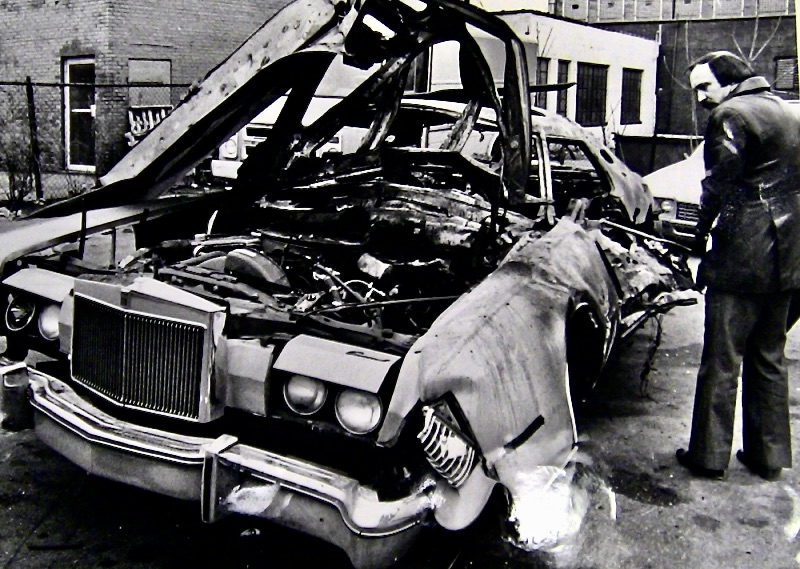
Cleveland, Ohio 1975. The John Scalish Crime Family and Danny Greene’s Irish Mob are at war. Car bombs are the weapon of choice. Two police detectives are assigned to find the bomb makers. It gets personal.

A Crying of Lot 49 Publication
Dracula at the Door

By Ed Staskus

   Some folks turn on the porch lights Halloween night and wait for the doorbell to ring. Others sit on their front steps or stoop, while still others plop themselves down on lawn chairs at the base of the driveway. Those who don’t want to bother make sure all their lights are off. They sit sulking in silence or watching whatever is on their phones and tablets. They think Halloween is just for kids and that grown-ups have better things to do.

   When I was a kid and went trick or treating with my sister, brother, and our friends it was, next to Christmas, the biggest show of the year. It was one for the money and two for the show. ”Don’t be a chiseler! Give me some Twizzlers!” It didn’t matter what horse opera was on TV or what homework was due the next day. What mattered was making sure we stuck to our battle plan. We planned our route days beforehand, which was left out of our house on Bartfield Ave., left on E. 128th St., left on Locke Ave., left on E. 127th St., down Coronado Ave. to Lancelot Ave. and back home. We knew we had about two hours and if we banged on one door every minute we would have gotten to more than a hundred houses and hit the jackpot. When we did we ran home to survey what we had gotten.

   My sister and I always hid our loot from our brother. We had to. He had a non-stop sweet tooth. “Give me a break! You know it’s the Kit Kats I want to take!” He believed in sharing, like us, but Sharing Street to him was a one-way street.

   All of us hated dark houses. Was the dark inviting us to the spookiness or telling us to stay away? Time is candy, we reckoned, and wasting time evaluating a dark house was time lost. We imagined grumpy old men and women lived there, better left unseen, although we also thought they could have shown their faces at least once a year.

   We weren’t scared about anything anybody threw into our pillow cases, except when it was pennies and apples. If it was candy corn we put a curse on their house. The day of crazy people putting razor blades and poison into candy hadn’t arrived yet. We didn’t want pennies and we got more than enough apples at home. Our mother fed one to us every day to keep the doctor away. When we got sick she gave us Ginger Ale and slices of liver and onions. The soda was bubbly. The liver and onions were sickening.

    The term “Trick or Treat” was first used in a Red Hook, Alberta newspaper in 1924. “Hallowe’en night was observed in the usual manner by the young bloods in town. Fun is fun and tricks are tricks, but when such public buildings as school and Memorial Hall are molested with no option for Trick or Treat, we cannot see where either fun or trick is enjoyed.”

   A high school boy next door told us there hadn’t always been any such thing as Halloween. We were aghast. How could it be? We ignored him. We found out later he was right, although by that time we weren’t trick or treating anymore, so it didn’t matter.

   I didn’t know a thing about Halloween until after we got to the United States. It’s not a traditional holiday in Lithuania, where both my parents came from after World War Two. It was only introduced there after the country kicked the Russians out in 1990. It wasn’t much of anything in Sudbury, Canada, where I was born and bred, either. There was often snow on the ground by the end of October in northern Ontario and nobody went out dressed as a skeleton in zero weather sponging for sweets. 

   In Romania the holiday is Dracula Day. In China it is the Hungry Ghost Festival. In Mexico it is the Day of the Dead. In the Middle Ages in England ‘soulers’ went around begging for round cakes or ‘souls’ during All Hallows Eve as a way to remember the dead. It was the soul kitchen. Turn me out and I’ll wander forever.

   Before there was Halloween there was nothing, just the end of the month and the beginning of the next month. Then the Irish Potato Famine happened, and millions of Irishmen came to the Land of Plenty. They didn’t have much to go around, but they had culture. They brought Samhein with them. The Irish New Year started on November 1st and Samhein was the day before that. It was when the spirits of the dead returned to the world of the living for one night. Paddy lads and lassies dressed up in costumes and went door to door begging for food and money. Their parents carved ghoulish faces on turnips to ward off evil. They put candles inside the turnips to let kids know they could bang on their door for treats.

   Many youngsters without a drop of Irish blood in them got into the spirit of it but the powers that be didn’t like it. They blanched at the complaints of vandalism, houses splattered with eggs, and strips of newspaper littering shrubs and trees. Enough is enough, they said, and put a stop to it wherever whenever they could. They didn’t care that some parents spent hours wrapping their kids up in rolls of toilet paper to look like mummies. After the post-WW2 baby boom many families made demands to make the holiday official, and city fathers were forced to bow to the popular will. Halloween broke out all over.

   It busted loose just in time for the candy companies. Old timers used to parcel out nuts, fruits, and trinkets. They thought we would have fun bobbing for apples. They were wrong, just like everybody who gave us candy corn was wrong. Candy corn was originally sold in the 1880s. It was like chicken feed with rooster images on the boxes. Nobody ever ate it unless they wanted a jelly belly. It didn’t matter that the last pyramid-shaped penny candy had been slurried during the Roaring Twenties. Every year it was repackaged and redistributed. By the mid-50s real candy became the treat of choice. We were all in on the new tradition. We didn’t know it would grow into the second-largest commercial holiday in the country, raking in more than $6 billion dollars.

   It doesn’t do it in on the shoulders of kids going door to door anymore. These days only a third of everybody hands out candy. Another third leave candy out in a bowl, while the rest keep their lights off. One year my wife and I were going out to dinner with friends. We left a big plastic bowl full of goodies on the front porch with a sign saying, “TAKE ONE.” We were pleased to see it empty when we got home, until we ran into one of our neighbors the next day.

   “Two boys just ten minutes after you left wiped you out. They turned the bowl over and poured everything into their bags. When I went up to them to say something they ran away.”

   When we trick or treated back in the day we loved getting Clark Bars, which were peanut butter and spun taffy, Zag Nuts, which were peanut butter and toasted coconut, and Mary Janes, which were peanut butter and taffy molasses. We had a soft spot for peanut butter. Treacle was a close second. We hated Necco Wafers. They were tasteless except when they tasted bad. We liked candy cigarettes, which we could pretend to smoke and eat at the same time.

   Many more than less of Halloweeners stay home nowadays and watch a scary movie instead of trick or treating. “Hocus Pocus” is the number one movie followed by “Friday the 13th” and “It’s a Great Pumpkin Charlie Brown.” In the late 1950s and early 1960s nobody stayed home watching any movies unless they were deathly ill. Everybody beat feet the second it got dark enough for the starting gun to go off. When it did we raced outside and took a left.

   A decade later, when my trick or treating days were behind me, I was living in Asia Town. The old school Cleveland neighborhood had plenty of Chinamen, Eastern Europeans, and Puerto Ricans. There were the working class, trailer trash, beatniks and hippies, and college students. I fit in somewhere between beatnik and college student. I joined the working class whenever I ran out of money. It was an affordable place to live with all of life’s necessities within walking distance, which worked for me because most of the time I didn’t have a car. The rest of the time I had a car that didn’t work most of the time.

   Joe Dwyer was one of my friends who lived one block over. We had gone to high school together and were both some-time students at Cleveland State University. We were dodging the draft as much as we were reading textbooks. At least I was reading. I was majoring in English with a minor in Unemployment. Joe was an art student and didn’t read anything unless it was necessary. He painted houses whenever he had to keep the wolf away from the door.

   His digs were on East 33rd St. between Payne Ave. and Superior Ave. The 100-year-old house was narrow as a one-lane street and as cluttered as a Victorian parlor. He smoked marijuana like nobody’s business. He made sure it was nobody’s business. In those days cops were always throwing young adults into jail for smoking weed. Dying in Vietnam was OK. Smoking weed was not OK. He had two white cats with mismatched blue and green eyes. There was a disheveled garden in his postage-stamp size yard. He collected gourds, decorating them in fantastical colors.

   One day in mid-October, passing by his house, I heard hammering. When I took a look-see I saw two sawhorses and a pile of plywood. He was sawing and hammering a coffin together in his backyard.

   “Who died?” I asked. I didn’t put anything ad hoc past him. He was crafty in more ways than one.

   “Nobody died, not yet, at least,” he said. “This is for Halloween.” He was a red-blooded Irishman and had first dibs on Samhein.

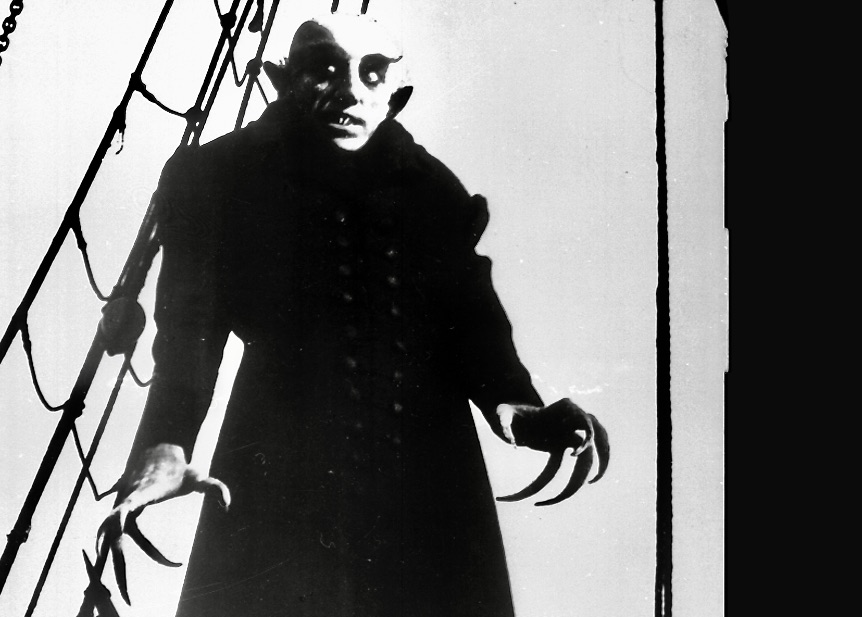
   He was making the coffin so it could stand on its hind legs. He painted the outside a glossy black and the inside a glossy fire engine red. He was going to park it in his open front door on the big day. When kids came up his stairs they would have to approach the vertical lid of the coffin in the doorway. When they did, spotting them through a peephole, he slowly opened the lid, dressed as Dracula, and handed out treats.

   Nobody in our neighborhood took a pass on Halloween, especially not that year. The holiday was on a Friday and that made it Halloweekend. It didn’t matter if the child was from China or West Virginia. Every child who could walk hit the mean streets of the near east side running. Every teenager did the same thing. Even some old Slovenian women dressed up as themselves went out, their babushkas tied tight under their chins. I sat on a front porch next door to Joe’s house with some college friends. We had a family-size bag of Lay’s potato chips and a 12-pack of Stroh’s beer for ourselves and tossed Home Run gumballs into everybody’s bags, but not before getting our two cents in about every costume we saw. The gumballs were right up our alley, costing us close to nothing..

   Joe had rigged up a mirrored stardust ballroom light. It strobed, throwing shards of colored light on the ceiling, walls, and the deck of the front porch. Once the trick or treaters were on the porch there was no missing the coffin, especially since a purple floodlight was making it look creepier than coffins usually do.

   At first, everybody was cautious about approaching the coffin. Some kids didn’t even try. They took one look at it and left for greener pastures. Some kids recoiled when Joe slowly swung the lid open, the hinges creaking, extending Nips in assorted flavors. Nips were pint-sized Coke bottles made of food-grade paraffin filled with colored syrup. Some kids fell backwards in alarm when Joe’s hand floated forward reaching for them, landing on their behinds. A few screamed to high heaven and ran for their lives. Joe’s vampire get-up featured pancake make-up, fangs, and fake fingers a foot long. His lips and eye sockets were blackened. He was dressed in a stitched together tuxedo, a starched white shirt, and a black bow tie. There were few parents accompanying their children so there were few irate parents to give Joe a piece of their minds.

   Not that it mattered. When word got out, Joe’s house became the place to go to for fun and fear in Asia Town. At first the line was down the front walk. Then it was down the sidewalk. Then it was around the block. Everybody had to see the coffin for themselves. When Joe ran out of Nips I ran to Stan’s Deli on the corner and got more of anything he had.

   Stan was a Polack who ran a meat counter and beverage store on Payne Ave. He was short and heavy-set and always wore a white apron. It always had flecks of ground beef on it, which wasn’t surprising since he so seldom washed it. He sold a grab bag of wares besides protein and beer. He had a box of old flavored wax lips he said I could have at a big discount. I bought those. He had bags of old cotton candy. He slashed the price. I bought those, too. He had wads of old Orbit chewing gum. I bought those and rushed back to Joe’s house.

   He was still there, standing outside his coffin, telling ghost stories in lieu of handing out treats. We dished out what I had brought back until it was all gone and then called it a day. “Hey mister, you got any candy corn to go with that gum?” a pint-sized Long John Silver asked. We told him to walk the plank. The next morning Joe told me he was so tired at the end of the night that he threw himself down on his sofa still clad in his Bela Lugosi outfit and fell right asleep. “I slept like the dead last night,” he said.

   At the end of the first “Halloween” movie, after Dr. Sam Loomis pumps six bullets into Michael Myers, he catches his breath on the balcony and looks down at the sidewalk. He doesn’t see the boogeyman lying there. He’s gone! When that happened, everybody knew there was going to be a sequel, just like everybody knows after the big night that the next big night is exactly one year away.

Ed Staskus posts monthly on 147 Stanley Street http://www.147stanleystreet.com, Made in Cleveland http://www.clevelandohiodaybook.com, Down East http://www.redroadpei.com, and Lithuanian Journal http://www.lithuanianjournal.com

“Cross Walk” by Ed Staskus

“Captures the vibe of mid-century NYC, from stickball in the streets to the Mob on the make.” Sam Winchell, Beyond Fiction

Available on Amazon: https://www.amazon.com/dp/B0CRPSFPKP

Late summer and early autumn. New York City, 1956. President Eisenhower on his way to the opening game of the World Series. A hit man waits in the wings. A Hell’s Kitchen private eye scares up the shadows.

A Crying of Lot 49 Publication