
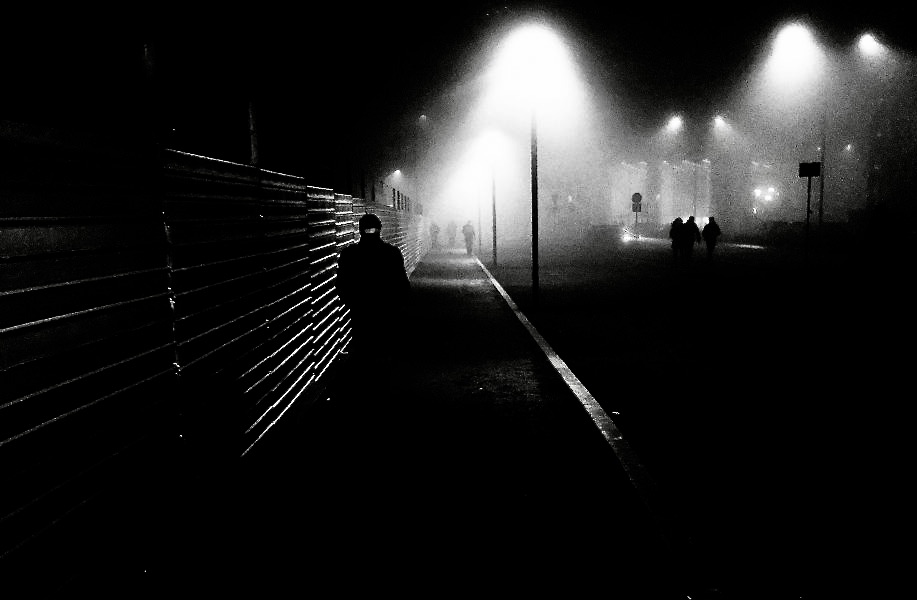
By Ed Staskus
Uncle Ernie worked for Danny Greene and nobody else. He didn’t have to work at all, if he didn’t want to, but he liked staying busy. He was busy sniffing around looking for who had blown up Lorcan Sullivan. He put on the wig and fake glasses he always wore when sniffing around. He tried to catch the drift in both Lakewood and Cleveland. It didn’t do him any good. Nobody he knew, who would talk to him, knew anything, while nobody in the know would talk to him. They told him to get lost. None of the working stiffs from the Cleveland Press and Cleveland Plain Dealer who he drank with occasionally could fill him in on anything solid.
He always told anybody who asked that he was a pipefitter. He wasn’t a full-time fitter but did belong to the Pipefitters Union. He occasionally worked for Blanton Pipe Valves and Fittings. It was more for show than not. It was so he could show income to the IRS. His real earnings were always in cash. He was a private contractor. He was a bomb maker.
He was sure the Italians had done it, but the boss wanted to know exactly which one of them had done it. When he found out, the Irishman would expect him to take care of business. Uncle Ernie was an expert at what he did. When he took care of business it stayed taken care of. He never made a mistake, especially never the mistake of blowing himself up, like Art Sneperger had done four years ago.
Art Sneperger had been standing outside the back door of Swan’s Auto Service on the corner of Mayfield Rd. and Coventry Rd. four years ago. He was holding a bomb he had assembled when it suddenly went off in his hands. There was the flash of a falling star and a sonic boom. Swan’s Auto Service collapsed in a heap. All the cars in the lot waiting to be repaired were laid to waste. Every window in every house adjacent to the building was broken by the blast. The Bomb Unit found what little was left of Art under a pile of bricks the next day. His ex-wife withdrew what there was of his savings account and moved out of town.
Mike Frato, with whom Danny Greene was having a dispute, was part-owner of Swan’s Auto Service. He and the Irishman were going to have it out sooner or later. Everybody on the wrong side of the tracks knew one of the two was going to go belly up. When Danny Greene was questioned about the bombing at Swan’s he said he didn’t know anything about any dispute or any explosion. Both of the police detectives interviewing him knew they were being lied to, but there wasn’t anything they could do about it.
“You weren’t sending a message?” they asked.
“What message would that be?” he asked, grinning like a leprechaun.
What the police detectives and Uncle Ernie didn’t know was that Danny Greene had been around the corner and detonated the bomb by remote control. Art and Danny had grown up together and worked together as longshoremen, but Art had ratted Danny out. He was in the hole to loan sharks and bookmakers. He couldn’t pick a nag to save his life. He was rewarded by officialdom when he turned canary. He knew he was fixing to die, but what could he do? The squeeze was on.
“I’m coming out of work one day,” said Skip Ponikvar, a longshoreman’s union vice president. “A car pulls right up. It’s Danny Greene. He jumps out of the car. The other guy, a Hells Angel, jumps out of the car. Danny says, ‘He’s going in there to pay his water bill. How you doing?’ I say, ‘I’m good.’ He says, ‘I heard that Snep is making statements about me!’ I say, ‘Oh, Danny, I don’t know nothing about that.’ Then he starts talking about something else for five or ten minutes. All of a sudden he says, ‘You know that Snep said I killed so and so’ I say, ‘Aw, he never said that.’ He says, ‘I got ya! You told me you didn’t know about that statement!’”
Uncle Ernie drove up to Lorcan Sullivan’s house on Ethel Ave. and parked across the street. Everything was a mess and other than the mess there wasn’t much to see. All the broken windows on the back side of the house had been boarded up with sheets of plywood. What was left of the garage was being torn down. A small tree in the back yard lay on its side and shrubs that had stood in a line at the rear of the driveway didn’t exist anymore.
Tommy Monk rode slowly past on his bicycle as Uncle Ernie flicked his cigarette butt out of his open car window. Tommy looked as the butt, what his dad called coffin nails, fly out the open window. Sparks scattered when it hit the asphalt. He looked at the man behind the wheel. What he saw was a big beak and a funny looking hat. The man’s face looked like it was made of putty. He took a good look at the license plate and turned it into a Plain Dealer banner headline. It was what he did whenever he absolutely had to remember something. He rode home. He would tell his father about the man in the car after dinner.
Whoever it was he must have made a dent in the armory to cinch the job, Uncle Ernie thought, and knew in a flash who it was who set the bomb. Only Joey Bag of Donuts doubled down on his targets. He started the car, turned around, got on Clifton Blvd., took Rt. 2 through downtown, and merged onto I-90 to Collinwood. Neither Danny Greene nor his girl Denise were at the Celtic Club. He had been wanting to have some fun with Denise, but she didn’t seem to want to give him the skin off a plum. He parked and waited. When school let out and students filled the street, he noticed all of them walked on the side of the street across the street from the trailer home.
After the sidewalks had cleared of school kids and a half hour passed, Uncle Ernie got out of his car and went for a walk, stretching his legs. He walked around the block and another block. When he got back there still wasn’t any sign of life at the Celtic Club. He didn’t want to sit in the car. It was a hot humid afternoon. He took a few steps backwards into a dim space between two storefronts, leaning on a shadow and smoking a cigarette. He was quiet and unnoticeable, except for the glow of the tip of his Pall Mall every time he sucked on it.
Uncle Ernie was bald and wore a black bucket hat all the time. Most people never saw his pate. He didn’t sleep well, tossing and turning, and had bags under his eyes. He wheezed going up and down stairs. He knew the Pall Malls were killing him but couldn’t stop. His fingertips were yellow from nicotine. Whenever he tried to stop smoking he lit up another one to mull over whether to stop.
When the Irishman pulled up, parked, and went inside the trailer home, Uncle Ernie waited for five minutes. When nothing happened he crossed the street, walked up to the only door, and knocked. He always tried to never surprise Danny Greene, who didn’t like surprises. The Irishman let him in. Denise was nowhere in sight. They sat down in what passed for a living room. Even though Danny Greene dressed well, and was always neat as a pin, the trailer home was disordered.
“What have you got for me?” he asked.
“I think I know who did the job,” Uncle Ernie said.
“Do you think or do you know?”
“I’d be surprised if I was wrong.”
“All right, spill it.”
“It may not be the God’s truth, but I don’t think it could have been anybody else other than Joey Bag of Donuts.”
“All right, now that you know, take care of that fucking Dago.”
“You want it done right away?”
“What the hell do you think?”
“Got it,” Uncle Ernie said.
It didn’t take him long to get home. He lived in Collinwood just like Danny Greene did. He lived on Midland Ave. south of I-90 and the Collinwood Railroad Yard. There were one hundred and twenty miles of track in the yard and two locomotive repair roundhouses. The sound of trains was always in the background. His house was a two-story single home with a garage and a deep backyard. His bomb-making workshop was in the basement.
Uncle Ernie had been married three times and three times his wives left him. Even though he was responsible enough, always paying his taxes and never running a red light, he had several bad habits that no woman could put up with for long. His non-stop smoking was one of them. His hardly ever talking was another one of them. When it came to women he only talked to the buttons on their blouses. His watching cops and robbers reruns on TV every night was another one. All three marriages were over within two years. One of them ended less than a year in. After the last one left he gave up. That had been twenty years ago. He knew no woman would have him anymore and had stopped trying to find one.
His house had been shipshape twenty years ago when the last of his Zsa Zsa’s left. He was convinced all three of them had read the real Zsa Zsa Gabor’s book “How to Get Rid of a Man.” Twenty years later his house was a pigsty. He never opened the fridge for fear of what he might find. He had started cleaning his bathroom a couple of years ago but then gave up. He hadn’t made his bed for more than a decade, although he changed the sheets every couple of months. Every ashtray in every room was overflowing with butts. Old newspapers were stacked in corners. He meant to tie them up and put them on the tree lawn someday.
He put his bucket hat away and made coffee. He lit a cigarette. He took his coffee black and took the mug down to the basement with him. He had a workroom there. It was as unlike the rest of the house as it could be. The cement floor was smooth as a baby’s bottom. He had painted it an industrial gray which had sealed it. The paint kept the dust down, too. The floor supported two heavy workbenches and a fixed saw. One pegboard was on the wall at the back of his main workbench while another bigger peg board covered most of another wall. He had two sets of freestanding shelves. Everything was close to hand, including ash trays and fire extinguishers.
Dampness was a problem he had solved partly with a dehumidifier. He solved the rest of the problem by installing an exhaust fan high up on a wall. It was next to the egress window he had put in, if ever he had to get out fast. He had more than enough tools to build anything, even a dining room set, although all he ever built were bombs. He had spares in a cabinet of all the tools he used the most. He was like an old maid when it came to his job of work.
He put his mug where he could reach it easily and stubbed his cigarette out. The bomb he was going to make was a simple one of a few sticks of dynamite and a detonator. That would take care of Joey Bag of Donuts. He bought his explosives in New Hampshire. Everything else he bought in Valley View on the south side of town. He would have to set the bomb off by remote control rather than a timer or tilt fuse.
Nobody knew where Joey Bag of Donuts lived, although everybody knew he didn’t own a car. He went to where his targets were by city bus. He carried schedules in his pocket. He never worked outside the city. Uncle Ernie had heard he frequented the cemetery next to Little Italy. He had heard the greasy turnip liked to take naps at the base of Haserot’s Angel. He would hide the bomb in the weeds there and wait nearby. When the greasy turnip showed up and was napping he would set the bomb off and send the little man to the big sleep he deserved.
Uncle Ernie was a professional. He hated amateurs like the Weather Underground and their wacky friends. They had gone from throwing Molotov cocktails now and then in the late 1960s to a steady campaign of protest bombings that stretched from New York City to San Francisco. The FBI had gotten to calling San Francisco the “Belfast of North America.” From 1971 through 1972 there were more than two thousand terrorist bombings on American soil. Most of them happened at night, targeting buildings, and most of them didn’t cause any serious injuries. What Uncle Ernie hated about the radicals was their sincerity. They had a boatload of fervor, too, which he hated almost as much. He had no use for true believers throwing bombs for the sake of a better world. He believed in the kind of bomb throwing that put cold cash into his wallet.
Making bombs was his cash cow. “I’m not a goddamned anarchist,” he said to himself. No one heard him say it. He didn’t have any friends. Both of his next door neighbors and the immediate neighbors across the street avoided him. “I’m a businessman, no bullshit,” he reminded himself.
When he was done he put the bomb in a lunch pail. The pail was a Black Dome. It had been his father’s when his father had been a coal miner in West Virginia. “The devil put the coal in the ground,” his father always said. He kept a lump of it on the mantle in their living room. “That is gonna be a diamond someday, son, even though I ain’t gonna see that day.” He carried his lunch underground with him every day until the day black lung stopped him in his tracks. He coughed himself to death the rest of the year. When he died he didn’t have a diamond to buy his way into paradise, where they don’t take lumps of coal.
Uncle Ernie put the lunch pail on the floor under his workbench. He did it carefully. He went upstairs and put his hat back on. Blowing up Joey Bag of Donuts was going to take some time, most of it waiting for the weasel to show up. In the meantime, he would do some dining and drinking at the Flat Iron Café. The place was an Irish watering hole. They had meat loaf and mashed potatoes, corned beef and cabbage, and Pride of Cleveland on tap. It. They had Lake Erie Yellow Perch every Friday. It was Friday, so he was going to have fish with his beer. He would go fishing for donuts on the weekend.
Excerpted from the crime novel “Bomb City.”
Ed Staskus posts monthly on 147 Stanley Street http://www.147stanleystreet.com, Made in Cleveland http://www.clevelandohiodaybook.com, Atlantic Canada http://www.redroadpei.com, and Lithuanian Journal http://www.lithuanianjournal.com.
“Bomb City” by Ed Staskus
“A police procedural when the Rust Belt was a mean street.” Sam Winchell, Beyond Books
Cleveland, Ohio 1975. The John Scalish Crime Family and Danny Greene’s Irish Mob are at war. Car bombs are the weapon of choice. Two police detectives are assigned to find the bomb makers. It gets personal.
A Crying of Lot 49 Publication

 147 Stanley Street