Bat Out of Hell

By Ed Staskus

   What I didn’t expect the hot summer night my wife, brother-in-law, and I went to the Lorain County Speedway was how loud the cars were going to be when the drivers stepped on the fast pedal, how bad the oil, gasoline, and rubber smelled in the humidity, how many crashes there were, and the fight that broke out on the track immediately after one of the crashes.

   The minute my brother-in law Matt sat down he pulled a pair of earplugs out of his pocket and pushed them firmly into his ears. We tried asking him where ours were, but he couldn’t hear a word we were saying. My wife and I finally decided to soak in the full experience, not like some people who couldn’t bear to enjoy the primal roar of engines going all out.

   The Lorain County Speedway is more-or-less in South Amherst, 30-some miles west of Cleveland, Ohio. It opened in 1949 as a third of a mile dirt oval. It was paved over in 1960. The night we were there the track had long since been upgraded to a 3/8-mile oval with 12-degree banking in the turns and a slight bank on the straightaways. It wasn’t NASCAR by any means, although NASCAR was the reason we were there.

   The racing at the Speedway that night was billed as street stock. I had never been closer to race cars than a TV screen, and the only reason I had ever gotten that close was because Matt came over our house every Saturday afternoon during the racing season, plopped himself down on our sofa, and for the next three, four, five hours watched brightly decaled handmade cars built from sheet metal with engines assembled from a bare block and frames constructed from steel tubing take tight left turns over and over and over at 200 MPH. The NASCAR four-wheelers resembled street stock about as much as cheetahs resemble wart hogs, even though both kinds of cars were essentially doing the same thing.

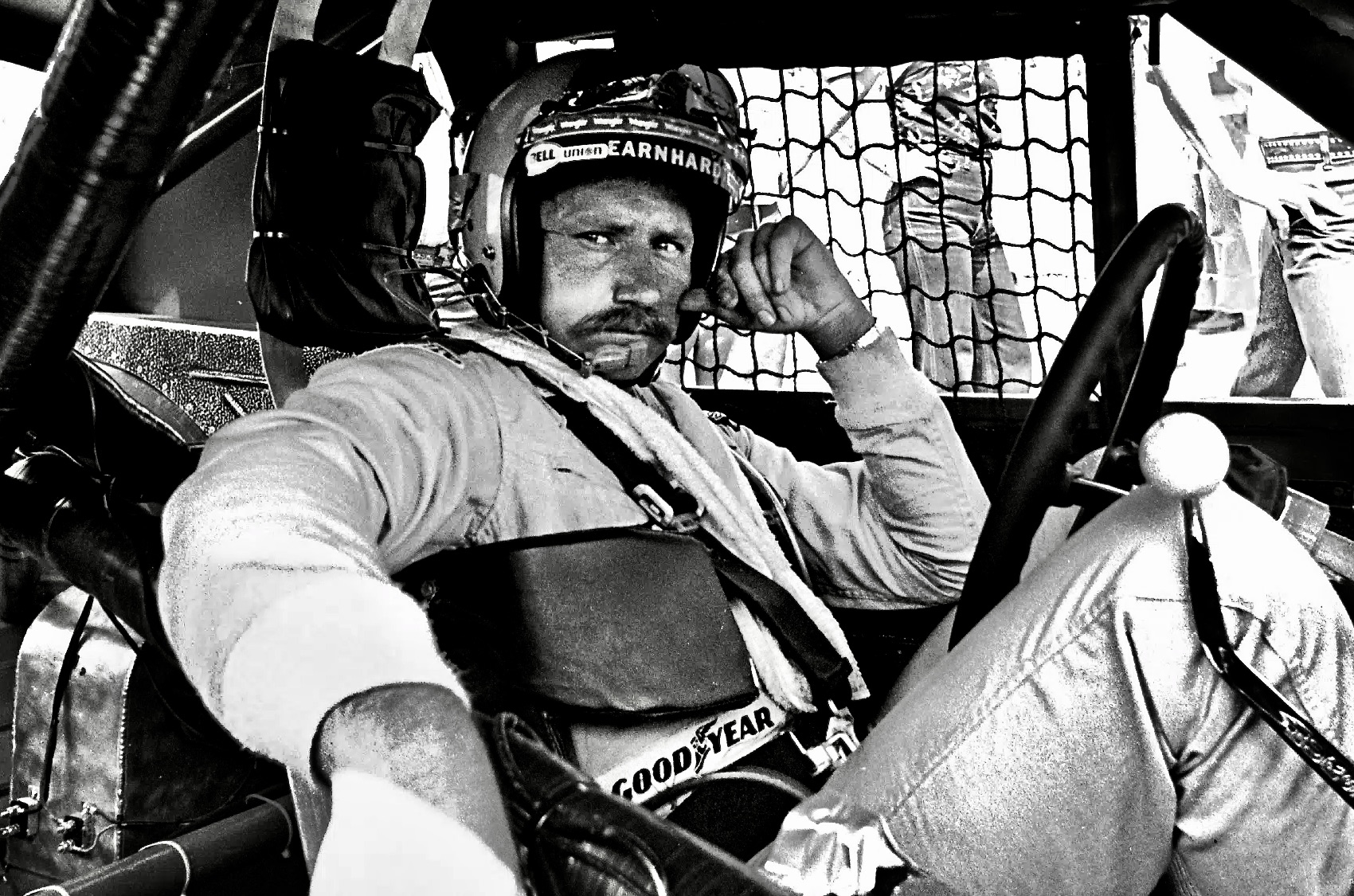
   The big story that summer was Jeff Gordon going up against Dale Earnhardt until it became the only story. Dale Earnhardt had won his seventh Winston Cup Championship in 1994 tying Richard Petty’s record for Cup Championships. Everybody was looking for him to win his eighth in 1995 and make history. It wasn’t to be, not with Jeff Gordon burning up the tracks.

   Jeff Gordon was young, only 24, but he had won the Coca-Cola 600 and the Brickyard 400 the year before. He wasn’t exactly wet behind the ears. He was off to the races. He landed in victory lane in three of the first six races of 1995. As the season wore on, he racked up 14 straight top ten finishes. Earnhardt was game, but the game was up. Gordon finished at the top of the board, the youngest champion since 1971. He toasted “The Intimidator” with a glass of milk instead of champagne, a nod to being barely legal.

   When he wasn’t watching NASCAR on TV, Matt and a school friend of his spent weekends driving to and camping out at nearby NASCAR events. They went to the Miller Genuine Draft 400 at the Michigan International Speedway, the Bud at the Glen at Watkins Glen, and the Mountain Dew Southern 500 at the Darlington Raceway. One weekend Matt asked if we wanted to go see some slam bang racing. We said alright, we’re not doing anything tonight, so long as it’s not out of state. He said it was close-by.

   The grandstand at the Lorain County Speedway was right on top of the racing. The bleacher seats were half full, like a high school football game where the fans are family and friends. There was a protective screen between the front row and the track. When I looked it up and down, I thought it might keep a flock of seagulls from assaulting us, but not a crate engine or the whole 3000-pound car. 

   “If one of those cars rolls and flips and comes up into the stands, that screen is going to stand the same chance as toilet paper,” I told my wife.

   “What?” she asked trying in vain to hear me over the noise.

   Five years earlier a man was killed and five people hurt when a race car went out of control and crashed into the pit area of the Lorain County Speedway. The man who was killed was another driver from another race. The driver of the wayward car said the accelerator on his car stuck, causing him to lose control on a turn. Eight years earlier at Talladega, Bobby Allison’s car going at the speed of light ran over debris and a tire burst. His car went airborne and smashed into the safety catch wall. Shrapnel sprayed the fans. From then on restrictor plates, which cap engine speeds from climbing too high and keep all race cars at around the same speeds, were made mandatory.

   The thought of shrapnel gave me the heebie-jeebies. My brother-in-law must have thought it through because he had led us to the second-to-last row. Even though the stands were only some twenty rows deep, it was better than nothing. The group of guys in front of us had their own cooler of hop juice. They offered us some. My brother-in-law didn’t drink, and my wife didn’t drink beer.

   “What the hey,” I said, accepting a Budweiser, my least favorite beer. Beggars can’t be choosers. In the heat of the night, to my surprise, the cold tasteless suds were delicious.

   My brother-in-law was a chemical engineer working in a General Electric lab in Willowick, but was transitioning to mechanical engineering, which meant going back to school part-time. He didn’t have a girlfriend, which meant he had time outside of work and school to take up a hobby. He bought a hulk of scrap metal that was once a 1970 Monte Carlo. His plan was to tear it apart piece by piece and rebuild it. Unfortunately, he didn’t have the space to get it done. Unfortunately, we did. The next thing I knew our two-car garage was a no-car garage. The hulk of scrap metal took up all the space. What space was left was devoted to a worktable, a tool locker, and an air compressor.

   He took the engine out. He took the seats out. He took the dash out. He took everything out and off the car. He built a rotisserie on wheels and fitted the frame to it, so he could wheel it in and out of the garage, working on it in our driveway. He sanded all the rust away and primed it. When the time came, he had the car hauled away and professionally painted. The color was Tuxedo Black.                                               

   When the weather turned foul, he turned a room in our basement into a work room, working on the engine and God knows what all else. He fabricated a new dash from scratch. He slowly but surely bought original parts and started to put the Monte Carlo back together. It took years and tens of thousands of dollars. Some nights, drifting off to sleep, we could hear him through our back window still working in the driveway in the glow of a bank of lights he had fixed up for the purpose.

   NASCAR race cars have almost nothing in common with street cars. By the 1990s they were being built to optimize aerodynamics. The focus was on speed. They stopped looking like stock cars. Stock car racing uses production models somewhat customized for racing purposes. It got started in the 1930s when moonshiners transporting white lightning souped up their Fords to evade revenue agents. One thing led to another, and they started racing each other on weekends on tracks carved out of corn fields.

   Street stock is racing a car that can be bought off a dealer’s lot. It is sometimes called hobby stock or showroom stock. Most of the tracks are short ovals, less than a mile. The speeds at the Lorain County Speedway that night hit 80 to 90 MPH on the straightaways, but slower in the turns. There were crashes galore in the turns. One of them happened in the turn coming around to the grandstand, when two cars bumped, tangled, and tore into each other. The driver on the outside track ran out of talent halfway through the turn. They both slid skidded to a stop in front of us. The drivers got out of their cars unhurt. When they did one of the drivers got hurt. 

   What happened was, when the two drivers got out of their banged-up cars, they started arguing. “What the hell, bumping me like that,” one of them yelled, his face red and splotchy.

   “I didn’t bump you,” the older of the two drivers said, calm as a fighting fish swimming back and forth in a tank. “I rubbed you. Rubbin’, son, is racin’.”

   They started pushing each other The younger driver got pushed too far out on the track and a car going slowly by under the caution flag ran over his foot. He fell to the ground and banged his head. Blood flowed down his chin. When he fell a woman bolted out of the stands, down the stairs, over the catch wall, and onto the track. She made a beeline for the older driver still standing.

   “This here is going to be trouble,” one of the men in front of us said cracking open another King of Beers.

   My brother-in-law’s 1970 two-door Chevrolet Monte Carlo was on a 116-inch wheelbase A-body platform with the longest hood Chevy had ever made. It stretched from the windshield to tomorrow. The styling was influenced by the Cadillac Eldorado, which came out in 1967. The Monte Carlo borrowed its firewall, dashboard, windshield, decklid, and rear window from the Chevelle. Matt’s model was an upgrade with a console-shift four-speed manual and a four-barrel-topped Turbo-Fire V-8 350 rated at 300 horsepower. It weighed in at 4,000 pounds curbside. It wasn’t built for baby showers. Shotgun weddings were more its speed. When I first heard the engine fire up so did all my neighbors within two or three blocks. Some of them came outside, standing on their lawns and in the street, looking up our driveway.

   “Mommy, what is that?” a boy driving a Little Tikes Cozy Coupe asked his mother.

   When the angry woman running onto the track got to the spot of the crash, she leapt onto the back of the driver who had pushed the other driver, screamed like a banshee, wrapped her legs around his midsection, and started to pummel the top and back of his head with her fists. It took half a dozen drivers and security staff to pull her off and keep her off. A policeman finally handcuffed her to a fence post.

   An ambulance showed up, the driver with the pancaked foot was put on a stretcher and put in the ambulance, wreckers drove onto the track, removed the damaged cars, and before we knew it the race was back on like nothing had ever happened. A policeman came back mid-way through the rest of race to retrieve the fists of fury, still handcuffed, who everybody had forgotten about. They put her in a squad car, legs kicking and lips flapping, and drove away, lights flashing. Everybody gave her a King of Beers salute.

   Thirteen years after Matt started work on the Monte Carlo it was ready to go. It was 2003. The day he put license plates on it was the day he asked me if I wanted to go for a ride. 

   “Sure,” I said.

   It looked like a new car inside and out. It smelled like a new car. He turned the key in the ignition and flipped a rocker switch. It was like cracking a bullwhip. The car rumbled to life. It sounded like something going after prey. He backed it out of the driveway and set off for Lake Rd. We went west through Rocky River, Bay Village, nearly to Avon Lake, and then to the Huntington Reservation, where we turned around. When we got to the Clifton Blvd. bridge that crosses the Rocky River, he pulled over to the shoulder.

   “Do you want to drive it?” he asked.

   “You bet,” I said.

   As I got out of the car to walk around to the driver’s side, I noticed a red fire extinguisher bolted down in the back. It was a Kidde dry chemical vehicle extinguisher. “Are you expecting something?” I asked.  “Great balls of fire?”

   “You never know,” he said. “If it happens, pull, aim, squeeze, and sweep.”

   I buckled up, buckling the five-point harness belt. The car was a bat out of hell of muscle and acceleration, but no matter how fast it went I wasn’t going anywhere. The five-point belt was the kind used to restrain madmen. I waited until there was no traffic. I put the car in first, got started, burned rubber, put it in second, third, then fourth, and flew across the bridge. The engine was just as loud driving the car as it was standing next to the car. I got it up to sixty in about ten seconds before starting to down shift. The bridge was far behind us by then.

   “That was fun,” I said. 

   It was like being Buckaroo Banzai for a couple of minutes. I checked for flashing red lights in the rearview mirror. We drove halfway through Lakewood before turning around. Heads turned when we approached, and heads followed our progress. At a red light a graybeard next to us said through his open window, “That is some meat and potatoes.” 

   “So long as you don’t mind getting nine miles to the gallon,” I said. He was driving a brand-new Toyota Prius. The Monte Carlo was AC/DC to its folk singing purr. 

   We got the car back in our garage without a scratch. That would have been a nightmare. My brother-in-law was fussy as a newborn with his old car made new. Even though he kept it bedded down indoors, he secured a waterproof car cover over it, just in case.  As the garage door was closing itself, I noticed the vanity license plate mounted on the chrome rear bumper.

   “NGHTMRE,” is what it said.

Ed Staskus posts on 147 Stanley Street http://www.147stanleystreet.com and Made in Cleveland http://www.clevelandohiodaybook.com. To get the site’s monthly feature in your in-box click on “Follow.”
Mean Streets

By Ed Staskus

   When Stan Riddman took the stairs two at a time coming up from the basement of the Flatiron Building it wasn’t an old dark city, yet. The new night was still on its way. The sky was a hazy lemon and smoggy blue. It was the first day of the second week of fall, but felt more like the middle of summer, except for the shorter days. Stan wore a short sleeve shirt and linen trousers. The wallet in his back pocket was flush with more tens and twenties than it was with its usual ones and fives. 

   He gave the leather in his pocket a friendly pat. The seven-card stud he had played in the dingy room next to the furnace room had been good to him. He could buy his kid some new clothes, stash some away for the office rent for when work was slow, and score tickets for the Series.

   The Socialist Labor Party used to have offices in the Flatiron Building, but not down in the basement. They had their heads in the clouds. They thought they were in the cards back then. They didn’t know they were shooting snake eyes. He wondered if they would have banned poker, making it out like it was exploitive, if they had ever come to power. You took your chances at cards, but it was only exploitive if you had no skill at it. You deserved to be taken if you played dreamland. Stan never played dreamland. He never shot craps. He never put himself at the mercy of cubes of white resin bouncing around at random. He walked down 22nd Street to Lexington Avenue, turned right, walked through Gramercy Park to Irving Place, and looked for a phone booth.

   The reckoning for a Subway Series was coming up fast. The Yankees were in, and the Indians were out, that was for sure. The Redlegs were running on an outside track. The Braves were neck and neck with the Dodgers. The Bum’s ace Sal Maglie had no-hit the Phils earlier in the week at Ebbets Field and the Cardinals were going hard at the Braves out in the boondocks. It was going to come down to this weekend as to whether there was going to be a Subway Series, the same as last year, or not.

    Last year’s Fall Classic went seven games, and the queer thing about it was the Yankees won their three games at Ebbets Field and the Dodgers won their four games at Yankee Stadium. Neither team won on their home field. Nobody had taken that bet because it wasn’t in the cards. Nobody took the backside odds on the seventh game, either, especially since Jackie Robinson wasn’t penciled in to play the deciding nine innings. At least, nobody took the odds except Stan and Ezra Aaronson, and anybody else who flipped a coin.

   Who would have thought the Cuban would be the difference-maker in the deciding game when he took over the right field spot in the sixth inning last year? Stan was in the upper deck with his partner, Ezra. The Yankee dugout was on the first base side, so most of the Bum fans were on the third base side. A client who was a Yankee fan, after Stan had gotten him the black and white proof he needed to get his divorce done, gave him a pair of passes. They ended up on the wrong side of the rooting section, but by their lights were rooting for the right team.

   “Beggars can’t be choosers,” Ezra said, sitting in a sea of Bronx Bomber fans.

   When Yogi Berra hit an opposite field sure-fire double, Ezra sprang out of his seat, like everybody else, but suddenly the lightning-fast right fielder Sandy Amoros caught it coming out of nowhere. He fired a pill to Pee Wee Reese, who relayed it to Gil Hodges, who doubled up the retreating Gil McDougald off first, ending the last threat Stengel’s Squad made that afternoon. 

   Casey Stengel managed the Yankees. Back in his playing days, when he still had legs, he had been a good but streaky ballplayer. Fair bat, good feet, great glove. “I was erratic,” he admitted. “Some days I was amazing, some days I wasn’t.” When he wasn’t, he played it for laughs, catching fly balls behind his back. One afternoon he doffed his cap to the crowd and a sparrow flew out of it. Another day, playing the outfield, he hid under the grate of a storm drain and popped out of the drain just in time to snag a lazy fly ball.

   Whenever he stood leaning over the front top rail of a dugout, he looked like a scowling Jimmy Durante dressed up in pinstripes. He was called the “Ol’ Perfessor” even though he had stumbled through high school. He graduated only because his high school didn’t want him back for another year. He managed the Braves and Dodgers for nine years and chalked up nine straight losing seasons. Casey Stengel might not have been a for-real professor, but he knew enough not to give up. After the New York Yankees hired him in 1948, the only year he hadn’t taken them to the World Series was 1954.

   Stan and Ezra were the only men in their section who had not fallen back into their seats, stunned, after the Cuban snagged Yogi Berra’s liner. Stan had to pull the clapping and cheering Ezra down so there wouldn’t be any hard feelings. As it was, Ezra was so excited there were hard feelings, after all, and Stan had to drag him away to a beer stand.

   “This beer is bitter,” Ezra complained, looking down at the bottle of Ballantine in his hand. Ballantine Beer was featured on the Yankee Stadium scoreboard, its three-ring sign shining bright, flashing “Purity, Body, Flavor.” Whenever a Yankee hit a homer, Mel Allen, the hometown broadcaster, hollered, “There’s a drive, hit deep, that ball is go-ing, go-ing, gonnne! How about that?! It’s a Ballantine Blast!” 

   The Brooklyn Dodgers, Ezra and Stan’s team of choice, played at Ebbets Field in Brooklyn. Their scoreboard boasted a Schaefer Beer sign, with the ‘h’ and the ‘e’ lighting up whenever there was a hit or an error. Below the beer sign was an Abe Stark billboard. “Hit Sign, Win a Suit”. Abe Stark was a men’s wear man.

   “That’s some kosher beer, that Schaeffer’s,” Ezra said, giving his bottle of Ballantine a sour look. “The Yankees don’t know good beer from spitballs.” He threw the half-finished bottle towards a trash can. It bounced away but didn’t break. Nobody paid any attention to the bottle rattling and rolling past them.

   Stan had a home but not a home borough. His apartment was in Hell’s Kitchen, up from Times Square and down from the Central Park Zoo. He wasn’t from New York City. He was from Chicago, although he wasn’t from there, either. He had been born in Chicago, but when his mother died two years later, in 1922, his father moved the family, which was himself, his new Polish wife, two boys, two girls, two dogs, and all their belongings a year later to a small house behind St. Stanislaus Church in Cleveland, Ohio. It was in the Warszawa neighborhood south of the steel mills, where his father ended up working the rest of his life to provide for his family.

   The steel mills were where Stan worked for three years while still living at home. He volunteered for the armed forces the minute World War Two started. He wasn’t working on anything at the moment that he thought might get him free World Series passes this year like last year. As long as I put most of this away, he thought to himself, walking down Irving Place, thinking of the jackpot in his pocket, I can blow some of it tonight, and still have enough for ballgames and some more card games. Stan had stopped being his steel mill father’s son long ago.

   His daughter Dottie was at Marie’s for the weekend. Marie had once been Stan’s wife. Her taking an interest in Dottie happened about as often as the World Series. It wasn’t too early or too late tonight, and if Vicki hasn’t taken any work home, and is at home, and picks up the phone, maybe she could meet him for dinner. He found the phone booth he’d been looking for and called her. It rang almost twice before Vicki answered. That’s a good sign, he thought.

   “Hello.”

   “Hey, Vee, it’s Stan.”

   “Stan, my man,” she laughed.

   “How’s the Stuy tonight?” he asked.

   “Hot, quiet, lonely,” she said. What Stan liked about Vicki was she didn’t talk about what didn’t matter. She didn’t talk overmuch at all, even though her workday life revolved around words. She wasn’t a sexpot, but she liked sex well enough. Marie had been romantic as a pair of handcuffs. Towards the end she had taken to shaking her leg shaving razor at him.

  “How about meeting me at Luchow’s for dinner?” he asked. “I’m buying.”

   “Stan, I love you for the dear Polack or whatever you are, but the food at Luchow’s is not so good, even if you can ever get though that insanely long menu of theirs.” 

   “That’s what I’m for,” he said. “A sharp-eyed PI like me will make sure to look into everything the kitchen’s got to offer and find what’s edible.”

   “More like a dog-eared PI,” Vicki said. “All right, but the other thing is, since they seat more than a thousand people, how am I going to find you? And by chance, with that strolling oompah band of theirs, if we do bump into each other and maybe get a table in that goulash palace, we’ll only be able to make ourselves heard some of the time and not the rest of the time.”

   “We can always take our coffee and their pancakes with lingonberry over to the square after dinner and chew the fat,” he said. “It will be quiet enough there.”

   “Chew the fat? What it is I like about you? Sometimes I just don’t know.”

   “I’ll take that for a yes.”

   “Yes, give me a few minutes to change into something fun,” she said making merry. “I hope there’s no goose fest or barley pop festival going on.”

   “Meet me at the far end of Frank’s bar. He’ll find a spot in the back for us. He says the new herring salad is out of this world.”

   “Don’t push your luck, Stan, don’t push your luck,” she said. Herring always made her feel like throwing up. Just the thought of the silvery fish made her want to heave.

   Luchow’s was a three-story six-bay building with stone window surrounds, pilasters, and a parapet on top, while below a red awning led to the front door. The restaurant was near Union Square. It looked like the 19thcentury, or an even earlier century, dark and heavy Teutonic. A titanic painting of potato gatherers covered most of a wall in one of the seven dining rooms. Another of the rooms was filled to the rafters with animal heads, their offspring being eaten at the tables below them, while another room was a temple of colorful beer steins. There was a beer garden in the back.

   “Welcome back to the Citadel of Pilsner,” Frank the bartender said. He gestured Stan to the side. “Did anybody tell you Hugo died?”

  “No, I hadn’t heard, although I heard he wasn’t feeling well,” Stan said. Hugo Schemke had been a waiter at Luchow’s for 50 years. He always said he wasn’t afraid of death. He had firmly no ifs ands or buts believed in reincarnation.

   “Did he say he was coming back before he left?”

   “He did say that, but I haven’t seen him, yet.”  

   “How’s Ernst doing?” Stan asked. 

   Ernst Seute was the floor manager, a short stout man both friendly and cold-hearted. He had been at Luchow’s a long time, too, since World War One. He was deadly afraid of death. He didn’t believe in reincarnation.

   “He took a couple days off,” Frank said. “Remember that parade back in April over in Queens? They’ve got some kind of committee now, and he’s over there with them trying to make it an annual thing here in Little Germany, calling it the Steuben Parade.”

    “You going to be carrying the cornflower flag?”

   “Not me, Stan, not me.” Frank was from Czechoslovakia. “I’m an American now.”

   Frank led Vicki and Stan to a small table at the far end of the bar. He brought them glass mugs of Wurzburger Beer and a plate of sardines. Vicki ordered noodle soup and salad. “Hold the herring,” she commanded. Frank looked puzzled. Stan asked for a broiled sirloin with roasted potatoes and horseradish sauce on the side.

   “I saw Barney the other day,” Vicki said, cocking her head. “He told me you’ve made progress.”

  “I didn’t think there was anything to it the first day I saw him, that day you brought him over to the office,” said Stan. “I didn’t think there was much to it that whole first week. Then there was all that action, and Betty finally got the business end of it worked out, that it was the shrink. So, we know who did the thing to get Pollack to drive himself into that tree of his up in Springs. We know how they did it. What we don’t know is why they did it.”

   “Do you know who they are?”

   “No, I don’t, even though one of them, a sicko by the name of Ratso Moretti, who roughed up Ezra, is being held at the 17th. He doesn’t seem to know much, but what he does know says a lot. The head shrinker might be the key. He is going to tell me all about it soon, at least what he knows, and what he doesn’t know, too. He hasn’t gotten the news flash about the talk we’re going to have, yet, but he and I are going to have a sit down.”

   “You don’t think Jackson Pollack had anything to do with it?”

   “He was the wrong man in the wrong place, that’s all, if you look at it from his point of view. Betty and I think he was a test run. We think they’re up to something bigger. It’s hard to figure. It’s got to be big, but we can’t see the pay-off in it. You know Betty, though. She’ll piece it together if she has to tear it apart.”

   After dinner they looked at the dessert menu, but their looks only amounted to a glance. Vicki shook her head no. “How about coffee and dessert at my place?” Stan asked. “We can stop and get pastry at that Puerto Rican shop on the corner and eat up on the roof.” The smog had blown away. It was a clear starry night. 

   “I can’t pass up that tasty-sounding pass,” Vicki said.

   They hailed a Checker Cab. “Take us up 5th to 59th, to the corner of the park,” Stan told the driver. 

   “Gotcha, bub,” the cabbie said.

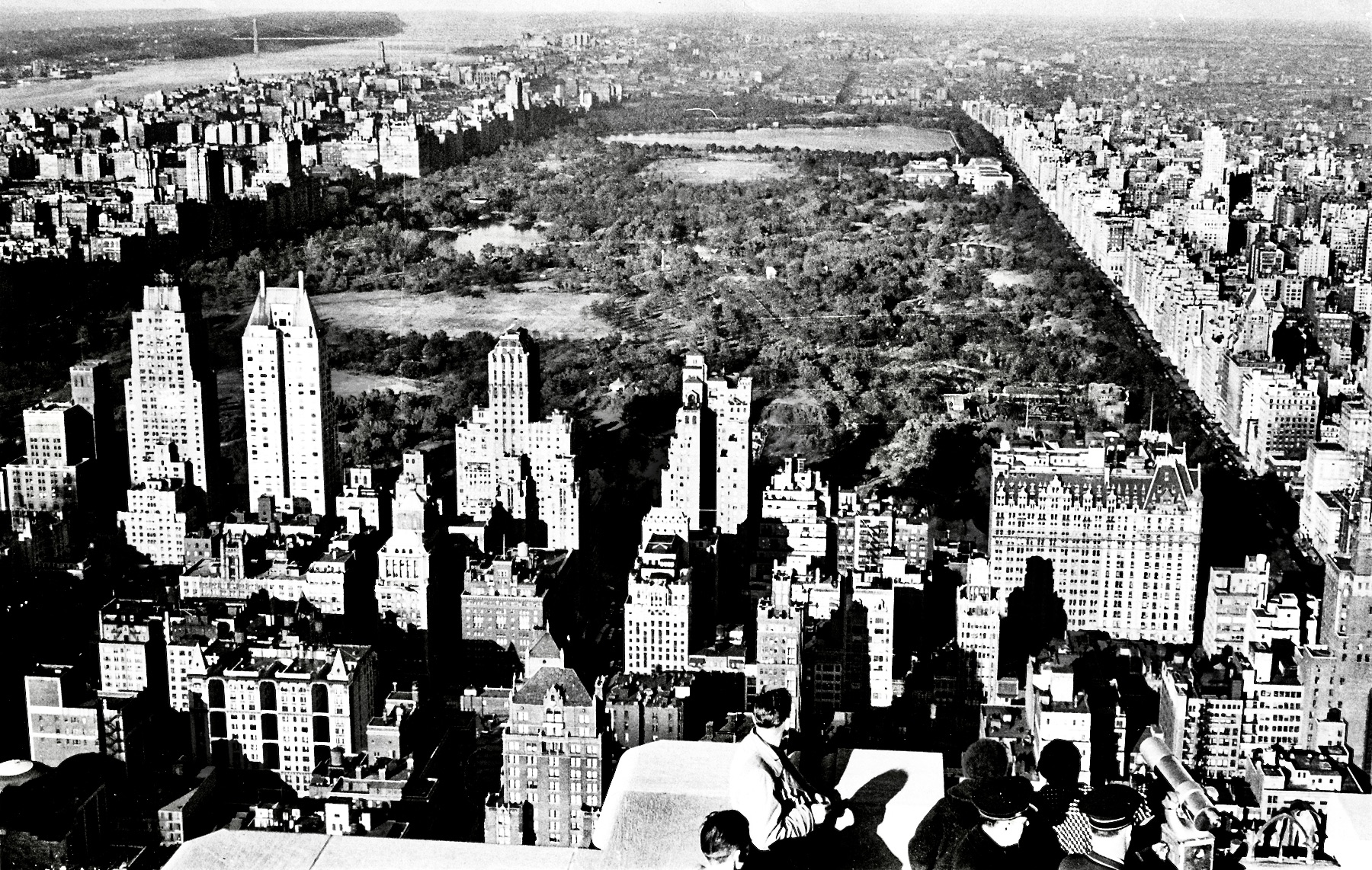
   He dropped them off at the Grand Army Plaza and they walked into the park, following the path below the pond towards the Central Park Driveway and Columbus Circle. Stan liked Vicki’s breezy walk. He liked everything about her. They didn’t notice the two teenagers, as they quietly strolled down a path south of Center Drive, until the two of them were in front of them, blocking their way.

   One was taller and older, the other one shorter and younger, their jet black hair oiled and combed back. Both of the dagos were wearing high tops, jeans, and white t-shirts, one of them dirtier than the other. They had left their leather jackets at home. The younger boy, he might have been fifteen, had a half-dozen inflamed pencil-thick scratches down one side of his face and more of them on his forehead. Small capital SS’s topped with a halo drawn in red ink adorned the left sleeve of his t-shirt. The older boy had LAMF tattooed on his neck above the collar line to below his right ear. Stan knew what it meant. It meant “Like a Mother Fucker.” He kept his attention fixed on LAMF’s eyes and hands.

   “Hey, mister, got a double we can have for the subway, so we can make it back home,” the older tattooed dago asked Stan, smiling like a hyena, his teeth big and white as Chiclets. One of his front teeth was chipped.

   They were Seven Saints, JD’s whose favorite easy pickings was holding open the door of a subway car just before it was ready to leave the station, one of them grabbing and running off with a passenger’s pocketbook, while the other one released the door so the woman would be shut tight inside the train as it moved away from the platform. Every Seven Saint carried either a knife or a zip gun for when the pickings weren’t easy.

   “Where’s home?” Stan asked, stepping forward a half step, nudging Vicki a half-step behind him with his left hand on her hip. 

   “You writing a book, or what?” LAMF asked. The other boy laughed, sounding like he was impersonating Sal Mineo on Halloween.

   Stan asked again, looking straight at the older boy.

   “East Harlem, where you think?”

   “Why do you need twenty dollars? The fare’s only ten cents.”

   “The extra is for in case we get lost.” 

   “It’d be best if you got lost starting now. “

   “I mean to get my dub,” LAMF said, smirking, reaching into his back pocket.

   Stan took a fast step forward, his right foot coming down on the forefoot of the boy’s sneaker, grabbing his left wrist as it came out of the back pocket a flash of steel, and broke his nose with a hard jab using his right elbow. He let him fall backward and turned toward the other boy, flipping the switchblade he had taken away from the gangbanger on the ground so its business end was facing front.

   “Go,” he said to the younger boy. “Go right now before you break out into a sweat and get sick.”

   The boy hesitated, looked down at the other Seven Saint on the ground, splattered with blood, and ran away like a squid on roller skates. Stan let the switchblade fall to the ground and broke the blade of the knife, stepping on it with his heel and pulling until it cracked at the hinge. He tossed it at the older boy who was getting up. It hit him in the chest and bounced away. 

   “The next time I see you,” he sputtered in a rage, on his feet, trying to breathe, his nose floppy, his mouth full of blood.

   “The next time you see me, you fill your hand with a knife, I’ll break your face again,” Stan said. He said it matter-of-factly. He took a step up to the boy, grabbed his ear, holding tight, and spoke into it. “Actually, it won’t matter what you do, nosebleed, what you’re doing, who you’re with, where you are. The minute I see you is when I’ll stack you up. Make sure you never see me again. Make sure I never see you.”

   He took Vicki by the arm, shoved the Seven Saint to the side, and they walked away.

   “You didn’t have to do that,” Vicki said. “You won plenty of hands at the Flatiron tonight. You might have given them a dollar-or-two.”

   “I know,” Stan said. “But they were working themselves up to be dangerous and that had to stop. The sooner the better.”

   “They are just kids.”

   “You saw the scratches on the face of the kid who ran away.”

   “Of course, the whole side of his face was gruesome.”

   “The Seven Saints have an initiation to get into the club,” Stan said. “They corral a stray cat and tie it to a telephone pole, about head high. The kid getting initiated has his hands tied behind his back and he gets to become a Seven Saint if he can kill the cat, using his head as a club.”

   “Oh, my God!” Vicki said, stopping dead in her tracks. “How do you even know that?”

   “I make it my business to know, so I don’t get taken by surprise,” Stan said. “I don’t give a damn about them. I care about you. They can go to hell.”

   They passed the USS Maine Monument. Stan pushed a memory of the war away. It had been more than ten years ago. “I don’t like psycho’s in my face when I’m off the clock,” he grumbled under his breath. He had gotten enough of them in Germany where he had been an Army M. P.  It had gotten to be non-stop the year after the war. The whole country was in ruins. Some cities had been reduced to rubble. Expanses of forest were bare. Most of the trees had been cut down for fuel. The black market was dangerous as an Arab bazaar run by lunatics. There were let-go prisoners of war and refugees everywhere. Faith healers popped up on street corners. It was a stew of good and evil.

   They walked out of the park under a quarter moon, crossing Columbus Circle and strolling down Ninth Avenue. At West 56th Street they turned towards the river, stopping in front of a four-floor walk-up with a twin set of fire escapes bolted to the front of the flat face of the brick building.

   “Anyway, maybe it will do those greasers some good,” Stan said, fitting his key into the front door lock. “Not everybody is as nice as I am. Someday somebody might go ballistic on them.”

   “Ballistic?” she asked.

   “Like a rocket, a missile that goes haywire.”

   “I wish we had a rocket to take us upstairs” she said, as they took the stairs up to the fourth floor. “Oh, darn, we forgot to get pastry.”

   “Next time,” Stan said. “The Boricua’s aren’t going anywhere, except staying here.” 

   At the door of the apartment, he slid his key into the lock, opened the door, reached for the light switch, and let Vicki go around him as he did. In the shadow at the back of the room there was a low menacing growl and a sudden movement. It was Mr. Moto. His eyes were glowing.

   Mr. Moto was no great sinner, but he wasn’t a saint, either. He thought saints were more honored after life than during their lifetimes. That wasn’t for him. He was alive and kicking and had his own code of honor. If push came to shove and he ever had to get his claws into a Seven Saint, there would be hell to pay for their sins. Mr. Moto meant what he said. He crossed the room fast. He lunged at Vicki’s lead leg as she stepped over the threshold.

   “Hey, watch my stockings,” she cried out. She was wearing Dancing Daters. “I’ll smack you right on your pink nose if you make them run.” Mr. Moto skidded to a sudden stop a whisker length from her leg. 

   “That’s better,” Vicki cooed, bending down to rub his head. The big black cat arched his back and purred.

Excerpted from the crime novel “Cross Walk.”

Ed Staskus posts monthly on 147 Stanley Street http://www.147stanleystreet.com, Made in Cleveland http://www.clevelandohiodaybook.com, Atlantic Canada http://www.redroadpei.com, and Lithuanian Journal http://www.lithuanianjournal.com

“Cross Walk” by Ed Staskus

“A once upon a crime whodunit.” Barron Cannon, Adventure Books

“Captures the vibe of 1950s NYC.” Sam Winchell, Beyond Fiction

Available at Amazon

Apple Books 
http://books.apple.com/us/book/id6502837788

Late summer and early autumn. New York City. A Hell’s Kitchen private eye. The 1956 World Series. President Eisenhower at the opening game. A killer in the dugout.

A Crying of Lot 49 Publication